
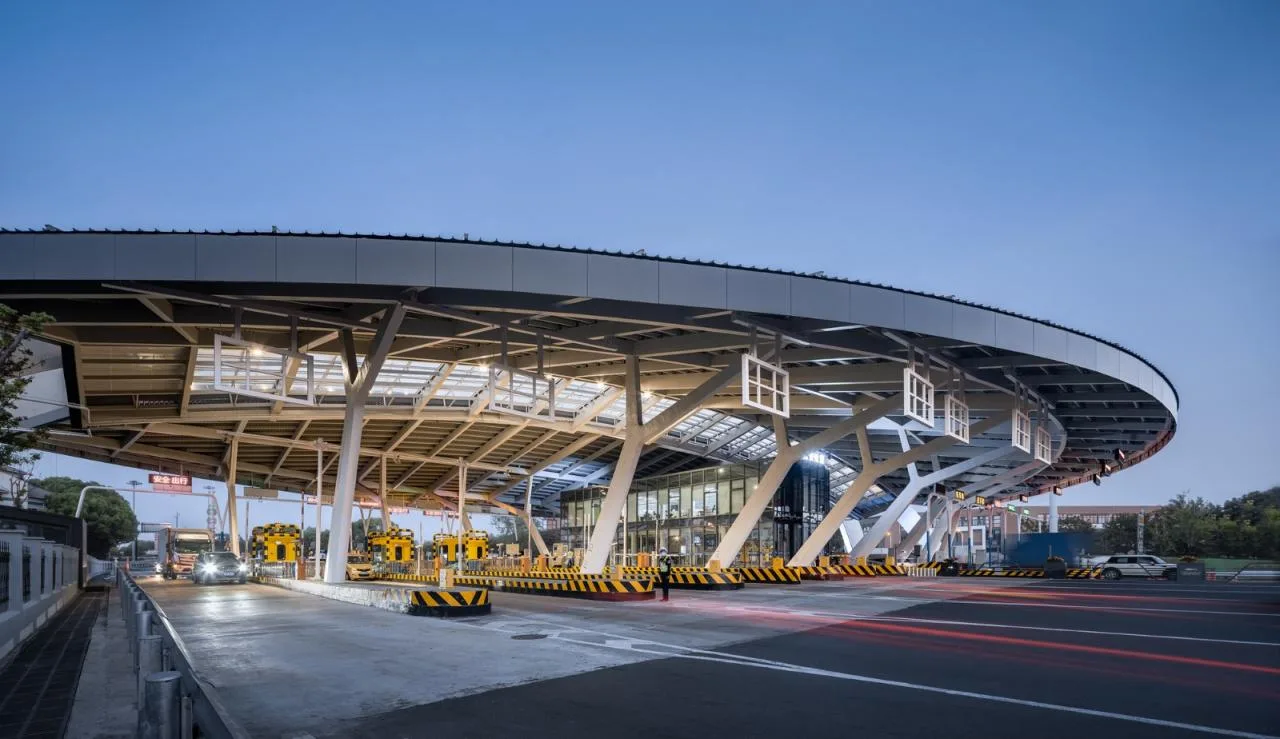
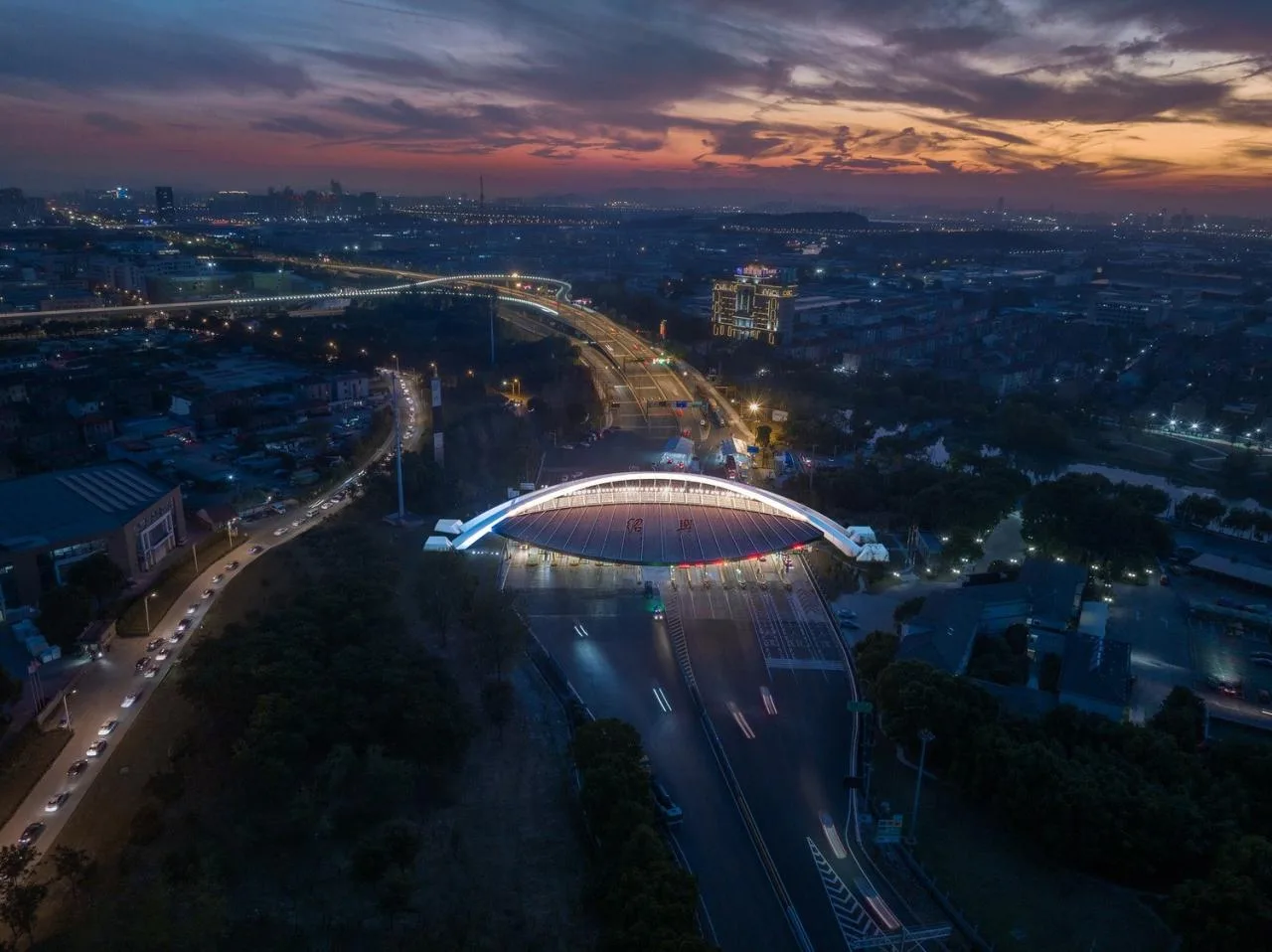
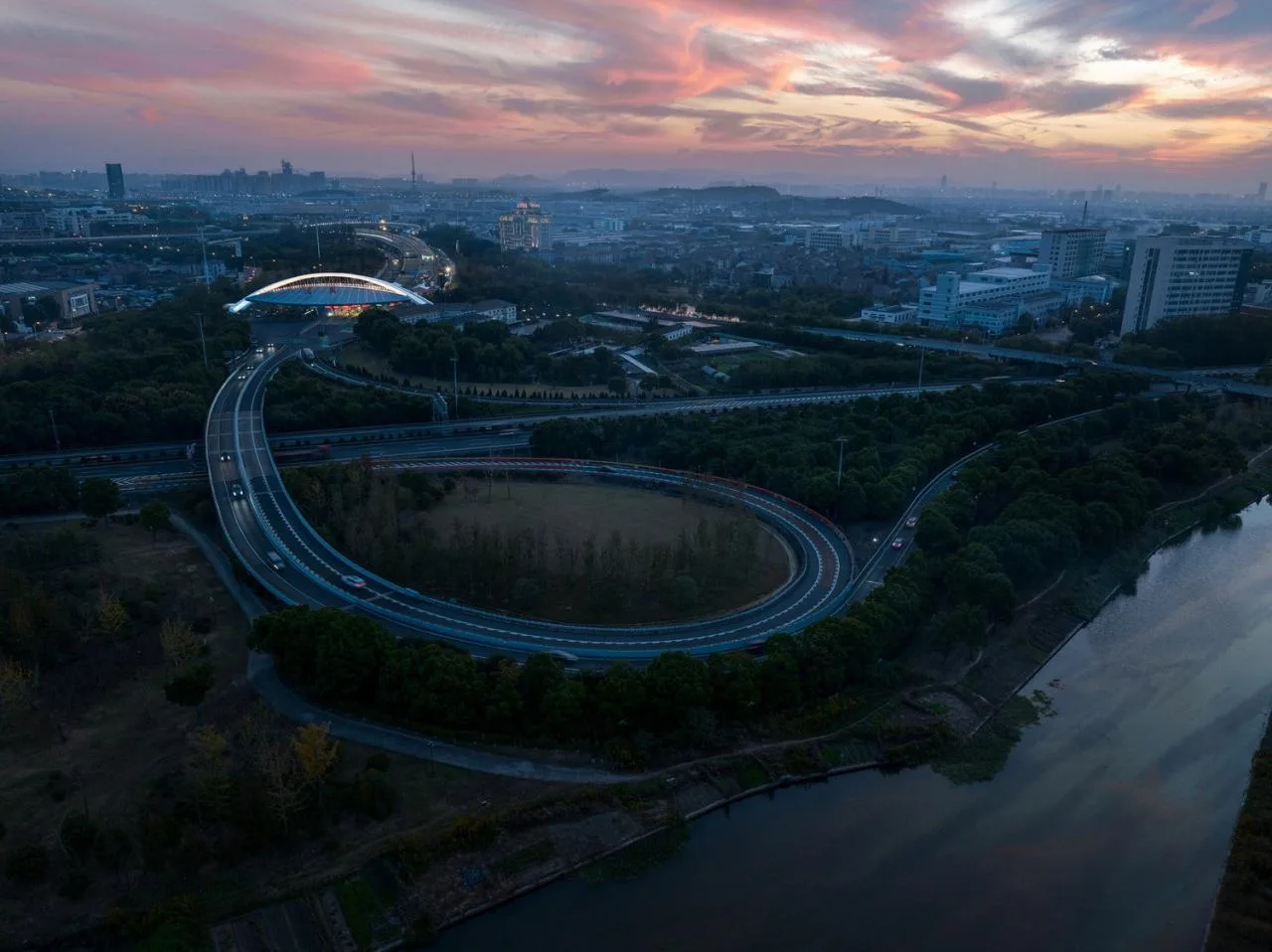
Located on the east side of Zhongxing Avenue in Yuecheng District, Shaoxing City, this project serves as the entrance and exit for the G92 Hangzhou Ningbo Expressway in Shaoxing. As the busiest highway interchange in the city, the Hangzhou Ningbo Expressway Shaoxing Toll Station handles an average daily traffic volume ranging from 20,000 to 30,000 vehicles. It acts as a crucial transportation hub connecting Shaoxing with Hangzhou, Ningbo, and Shanghai. Beyond its functional role, the toll station also aims to embody the rich history and pioneering spirit of the ancient city of Shaoxing.
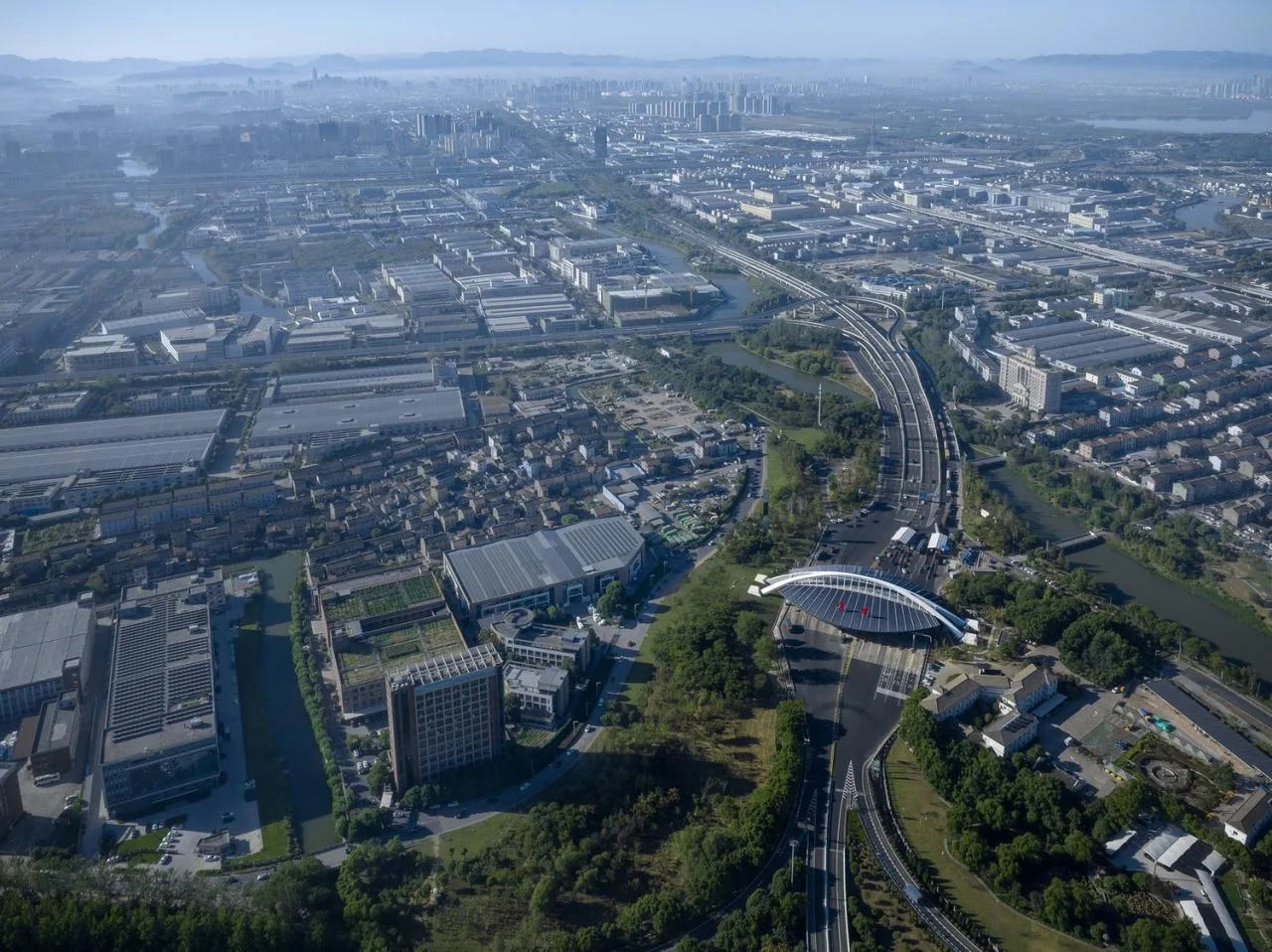
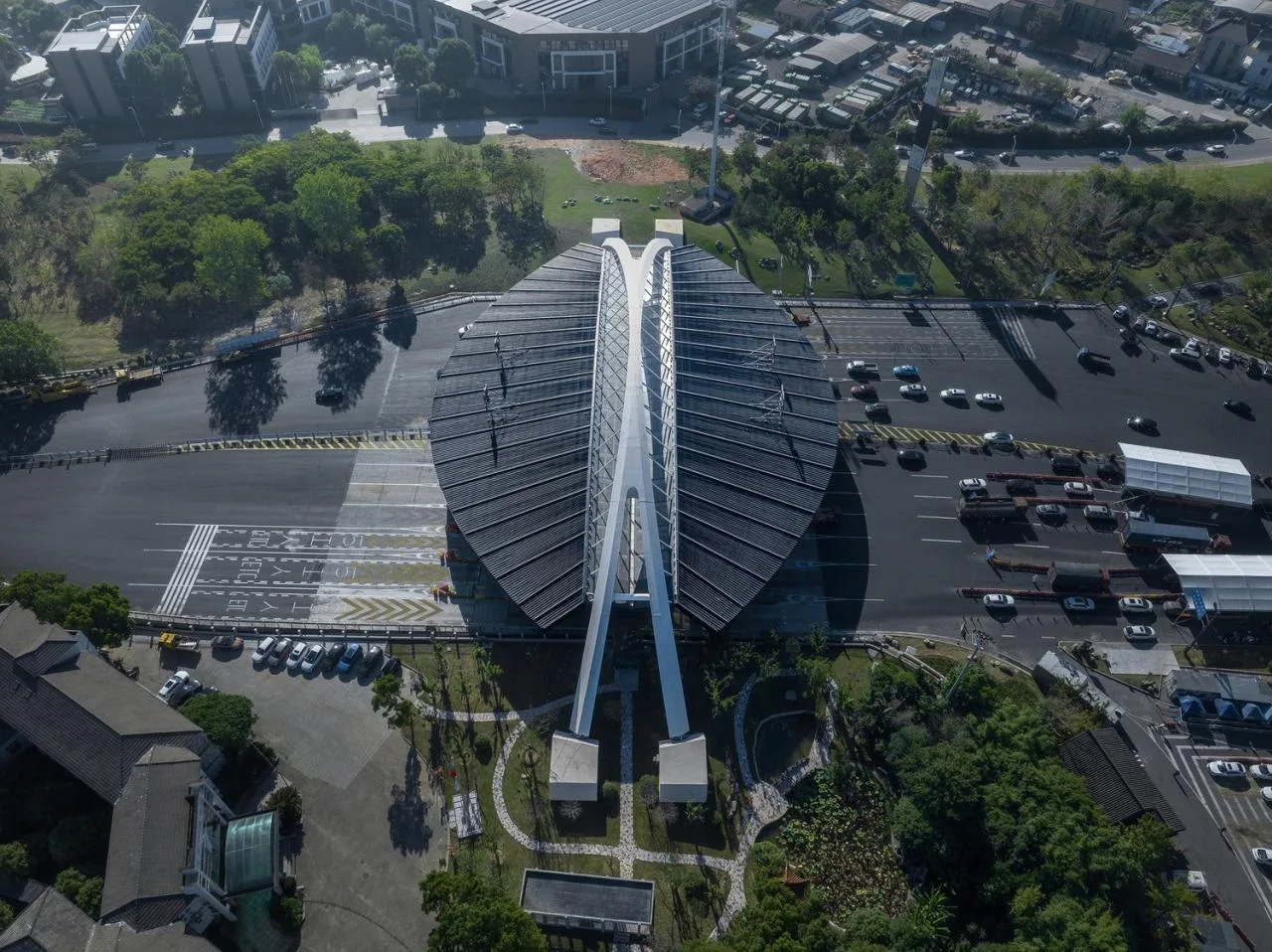
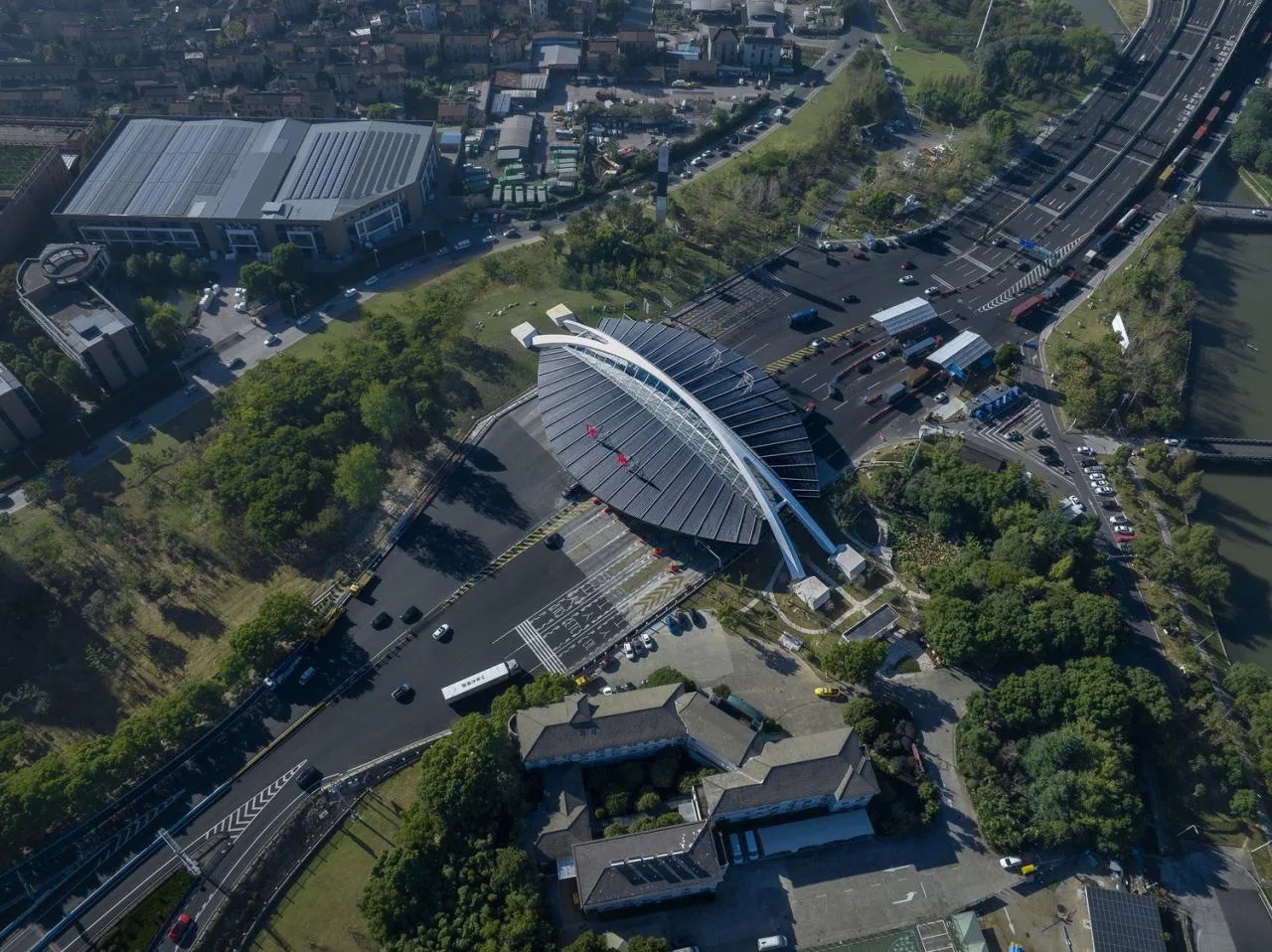
The recent renovation focused on both functional and visual enhancements. Originally equipped with 12 lanes, the toll station could no longer accommodate the heavy daily traffic and operational demands. An additional lane was added, bringing the total to 13. Moreover, to meet inspection requirements during the Asian Games and the pandemic, intermediate public security inspection and epidemic prevention stations were incorporated.
Visually, Shaoxing ranks second only to Hangzhou in hosting Asian Games events. Sports such as basketball, volleyball, rock climbing, and baseball are held here, with athletes residing in the Asian Games Village and commuting daily via the highway to venues. This toll station is a mandatory checkpoint for athletes and participants worldwide, serving as Shaoxing’s gateway to international visitors. The redesign addresses these unique needs comprehensively.
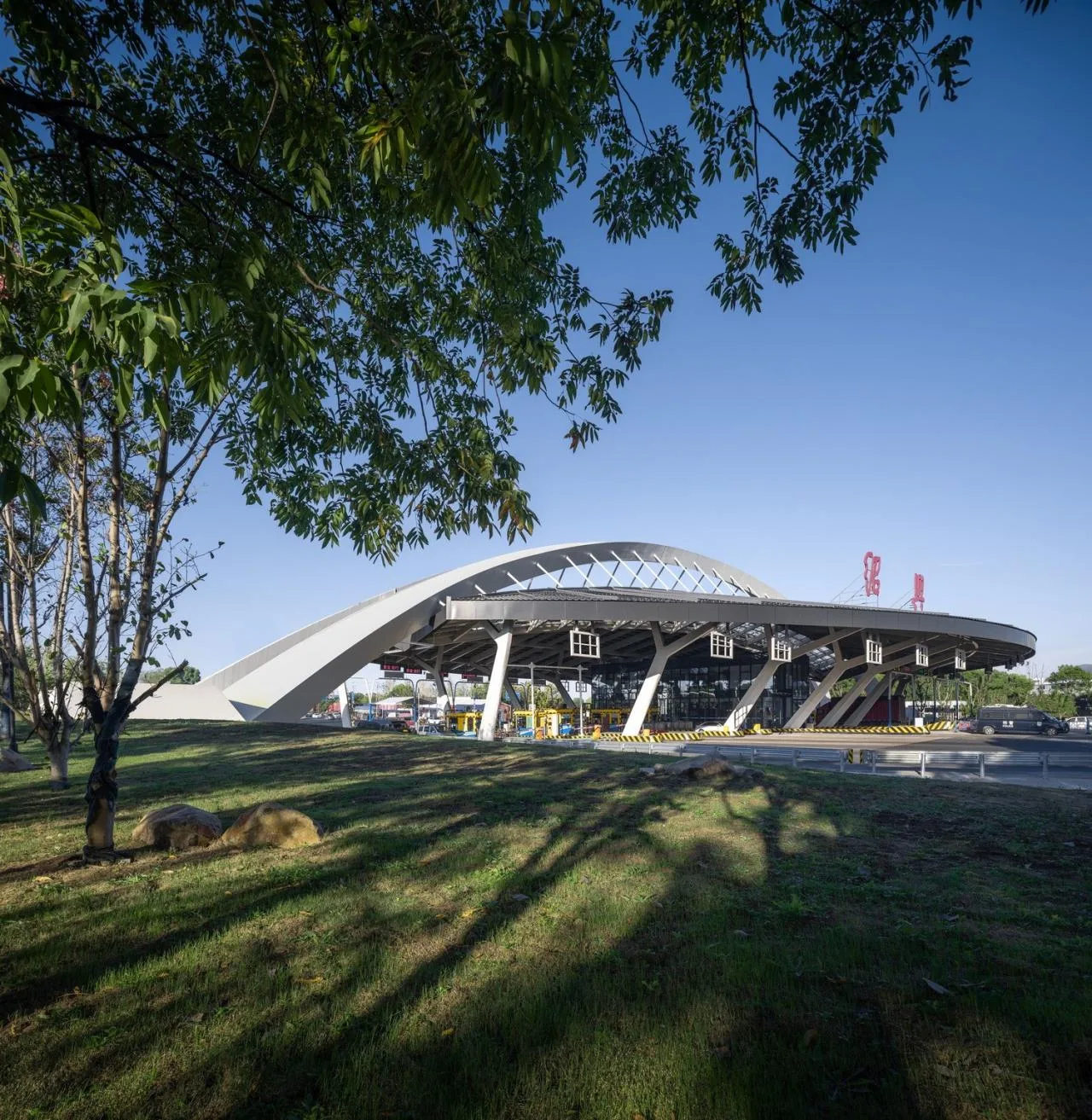
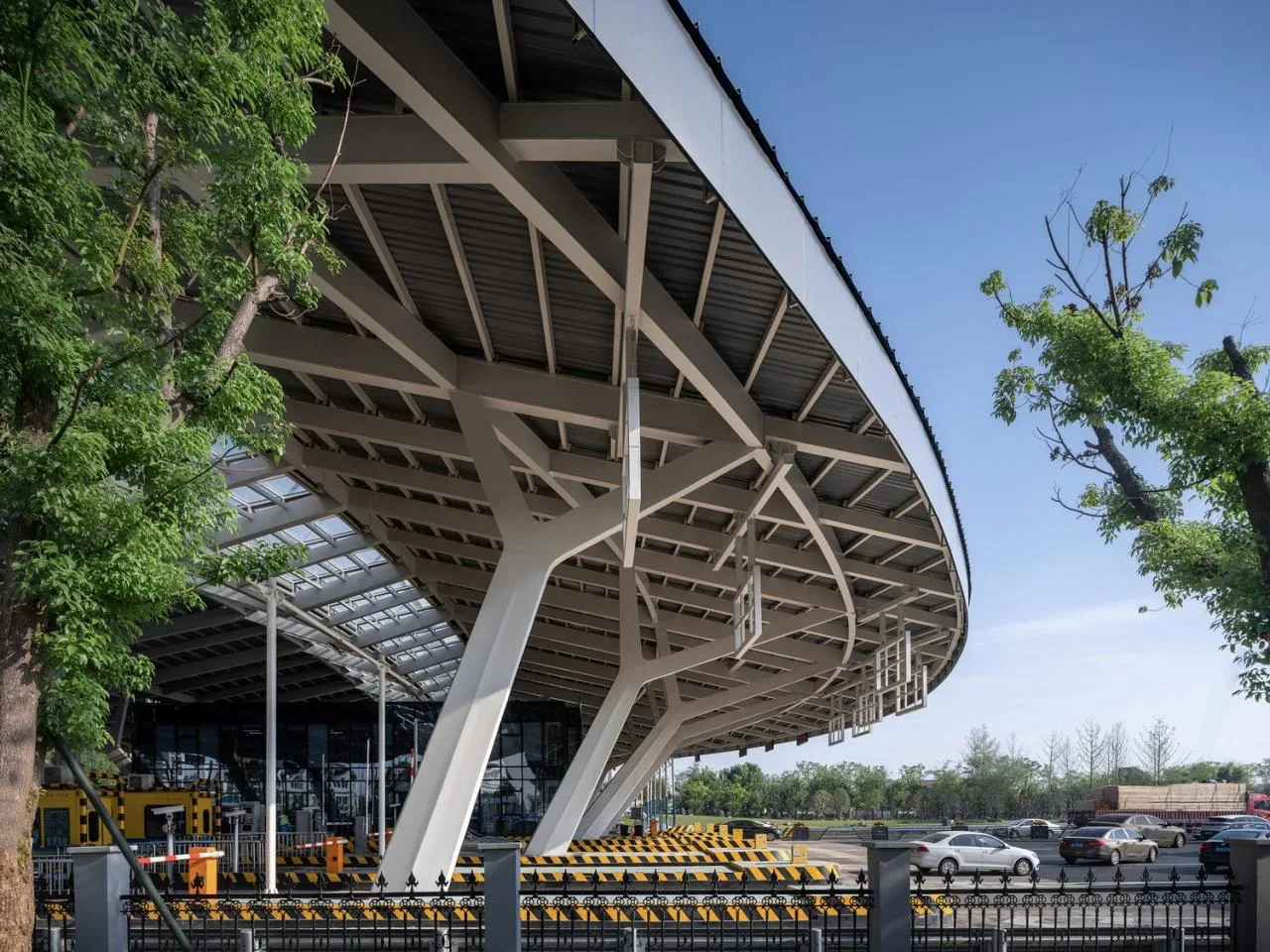
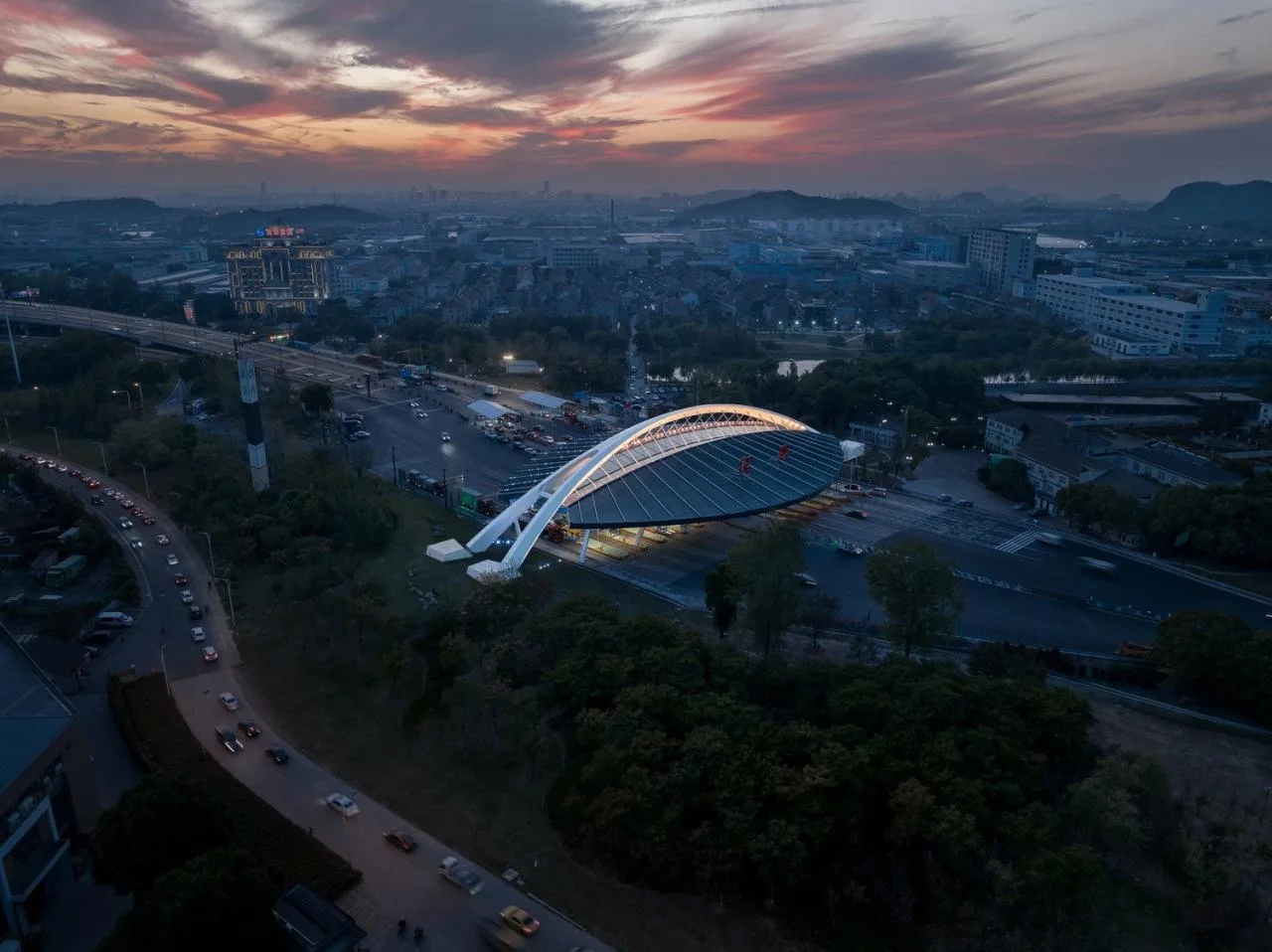
In the design, the lanes were reconfigured by removing two central lanes to make way for security buildings. Three additional lanes were added on the east side, expanding the overall span of the toll station by approximately 20 meters. The ceiling width now reaches 124 meters. To accommodate outer security check areas for each lane and to provide shelter from wind and rain for duty personnel, the ceiling has been extended to 67 meters on both the north and south sides.
To satisfy quarantine and Asian Games security requirements during the pandemic, a two-story glass space was introduced at the center of the toll station. This space integrates office, security, and epidemic prevention functions.
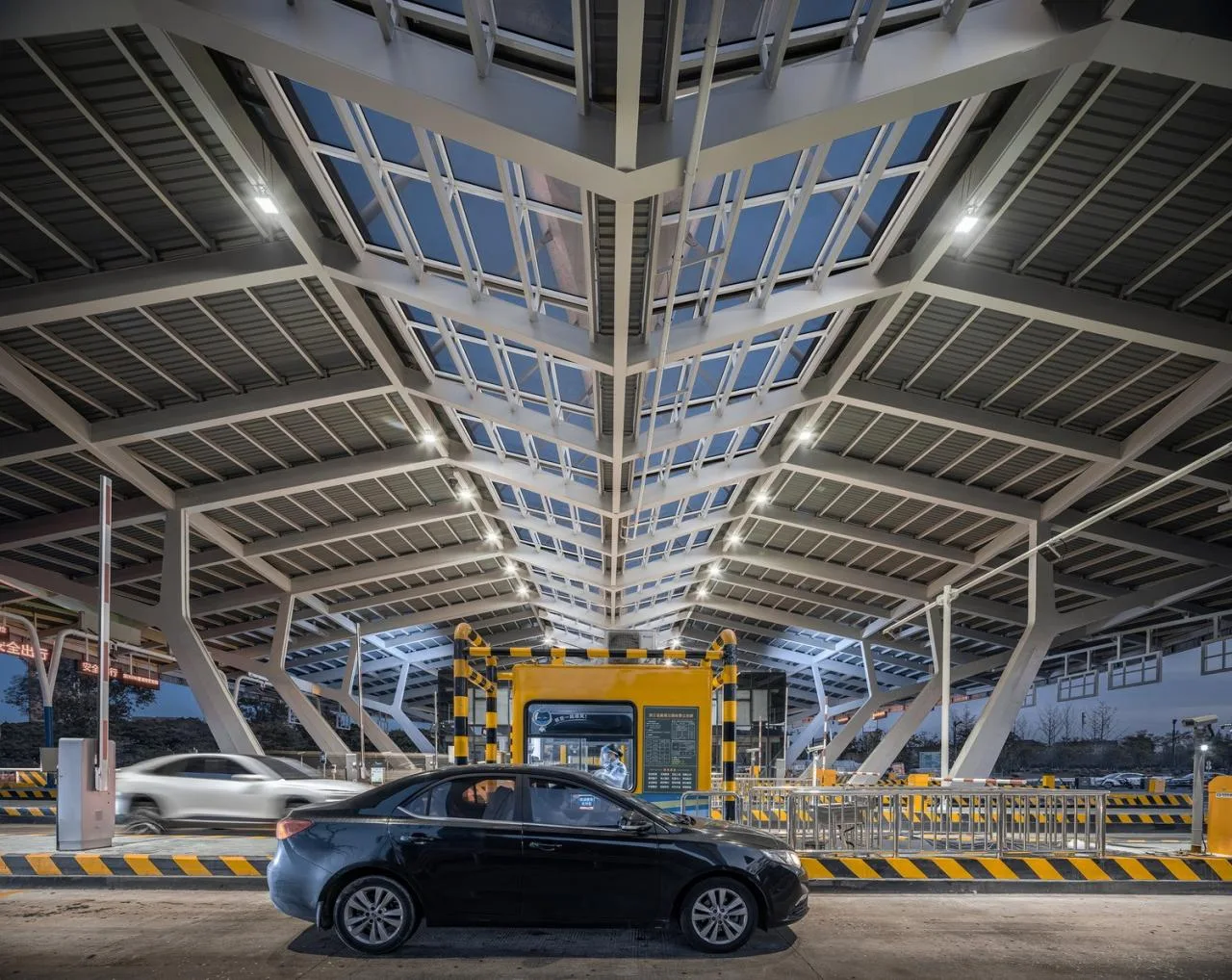
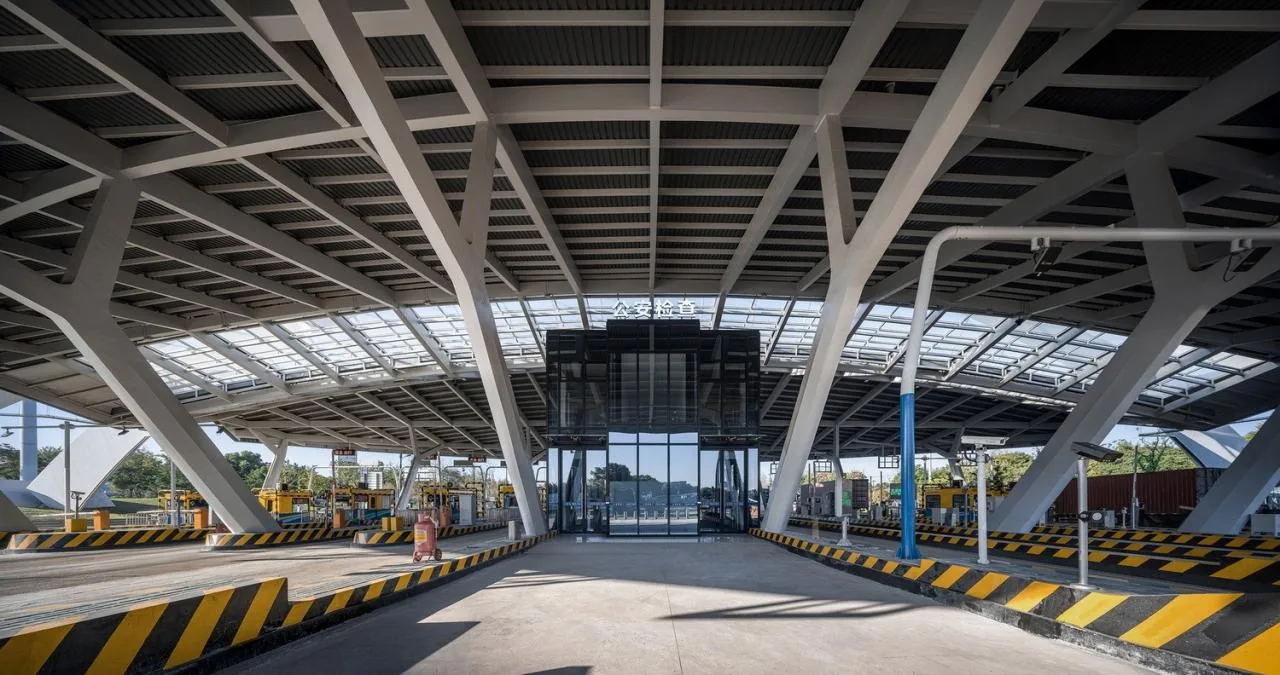
Shaoxing, an ancient city with a 2,500-year history, is often called the “Venice of the East” due to its unique water town culture in the Jiangnan region. The city is a living museum without walls, characterized by an intricate network of waterways and rivers. It evokes the image of a city intertwined with water, where life flows as naturally as the canals themselves.
Reflecting this cultural heritage, the design abstractly incorporates two iconic elements: the stone arch bridge and the black-roofed boats that are emblematic of Shaoxing’s water culture. A black canopy symbolizes the canopy of the black boats, while an arched structure echoes the shape of the stone bridges spanning the water. The vehicles moving beneath the 120-meter-long structure resemble boats navigating the waterways, symbolically connecting Shaoxing to the wider region.
This design not only honors the city’s historic identity but also looks forward to the future. By embedding distinctive cultural elements, it fosters a strong sense of belonging while employing contemporary architectural language to express regional character.
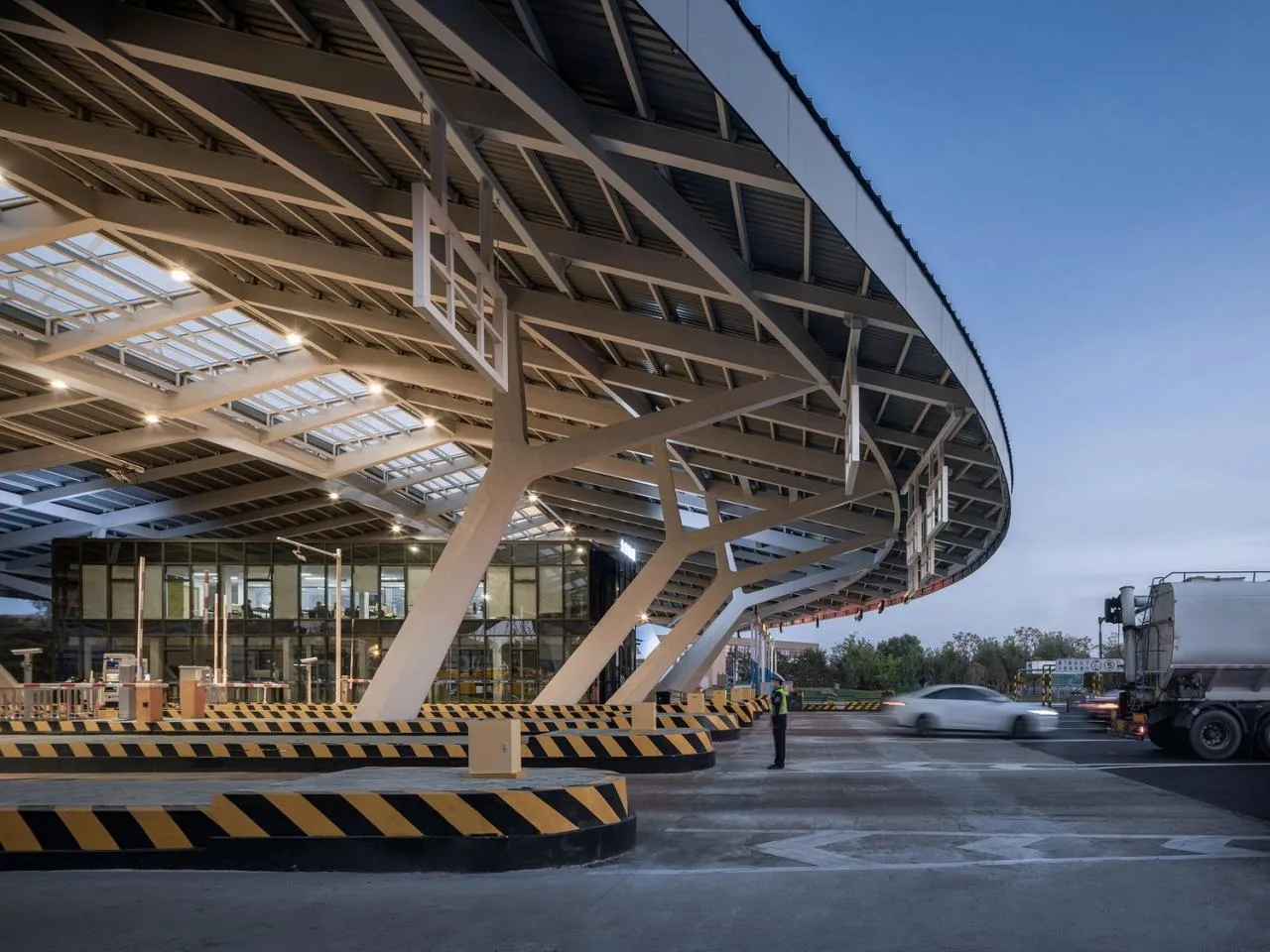
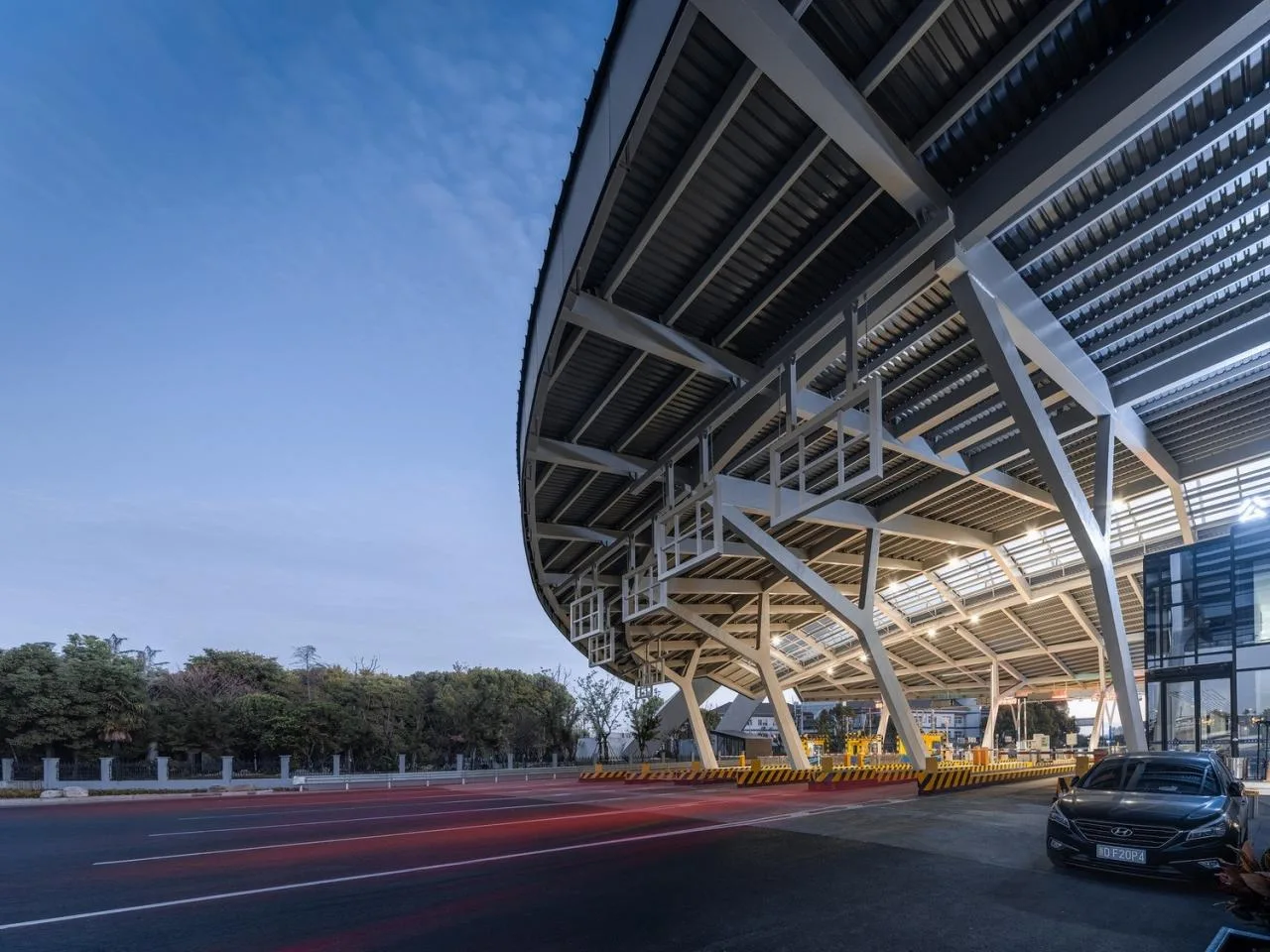
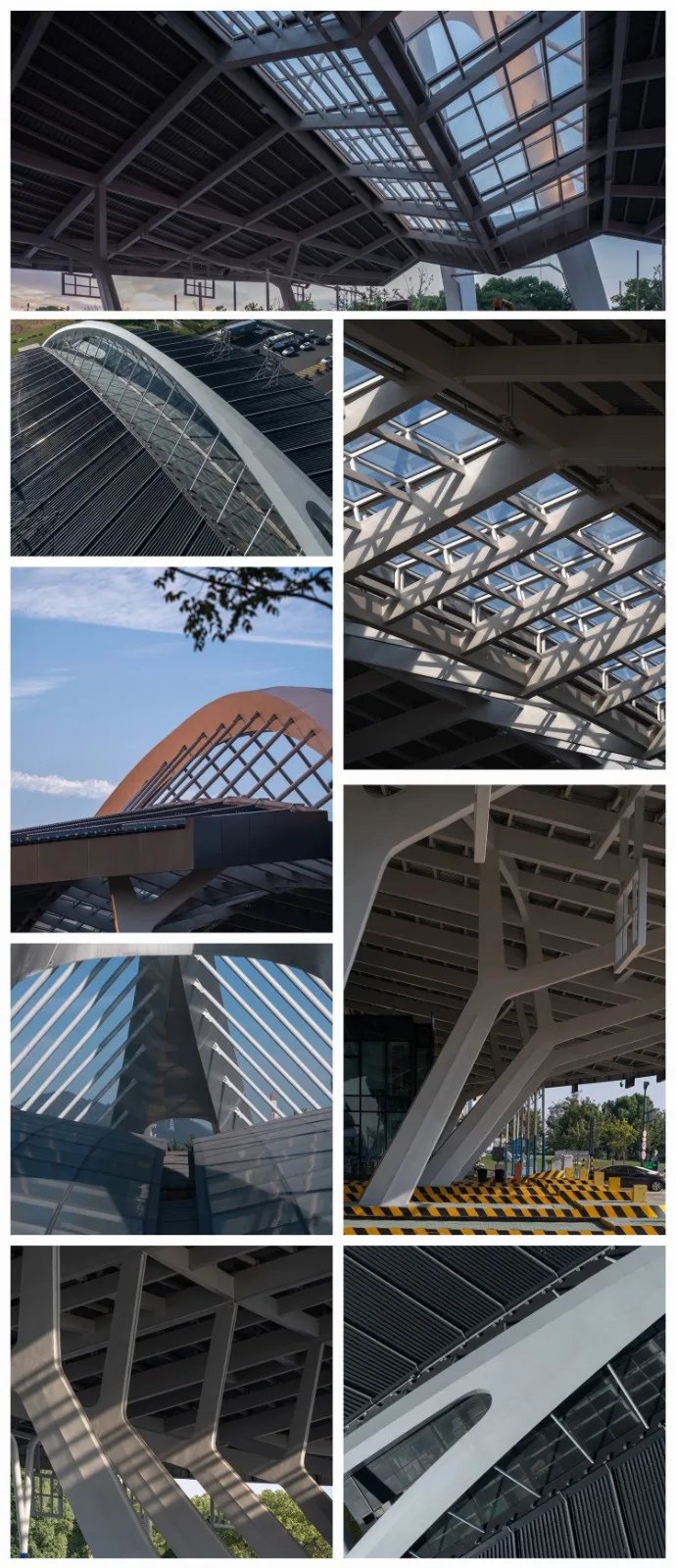
The entire steel structure was prefabricated and welded. Due to the curved gradient shape of the building, each column varies in inclination and size. Parametric design techniques were employed to optimize the overall form through structural calculations, striking a balance between aesthetics and cost efficiency.
A skylight glass roof between the two side ceilings allows dynamic lighting and shadow effects within the space. Given the complexity and public nature of the toll station, the design process involved extensive consultations with various stakeholders including public security, Hangzhou Ningbo Expressway authorities, municipal agencies, investors, fire protection, maintenance teams, government leaders, and experts.
Integrating the diverse requirements and feedback from all parties was a significant challenge, requiring architects to balance and coordinate multiple disciplines carefully and promptly respond to necessary adjustments.
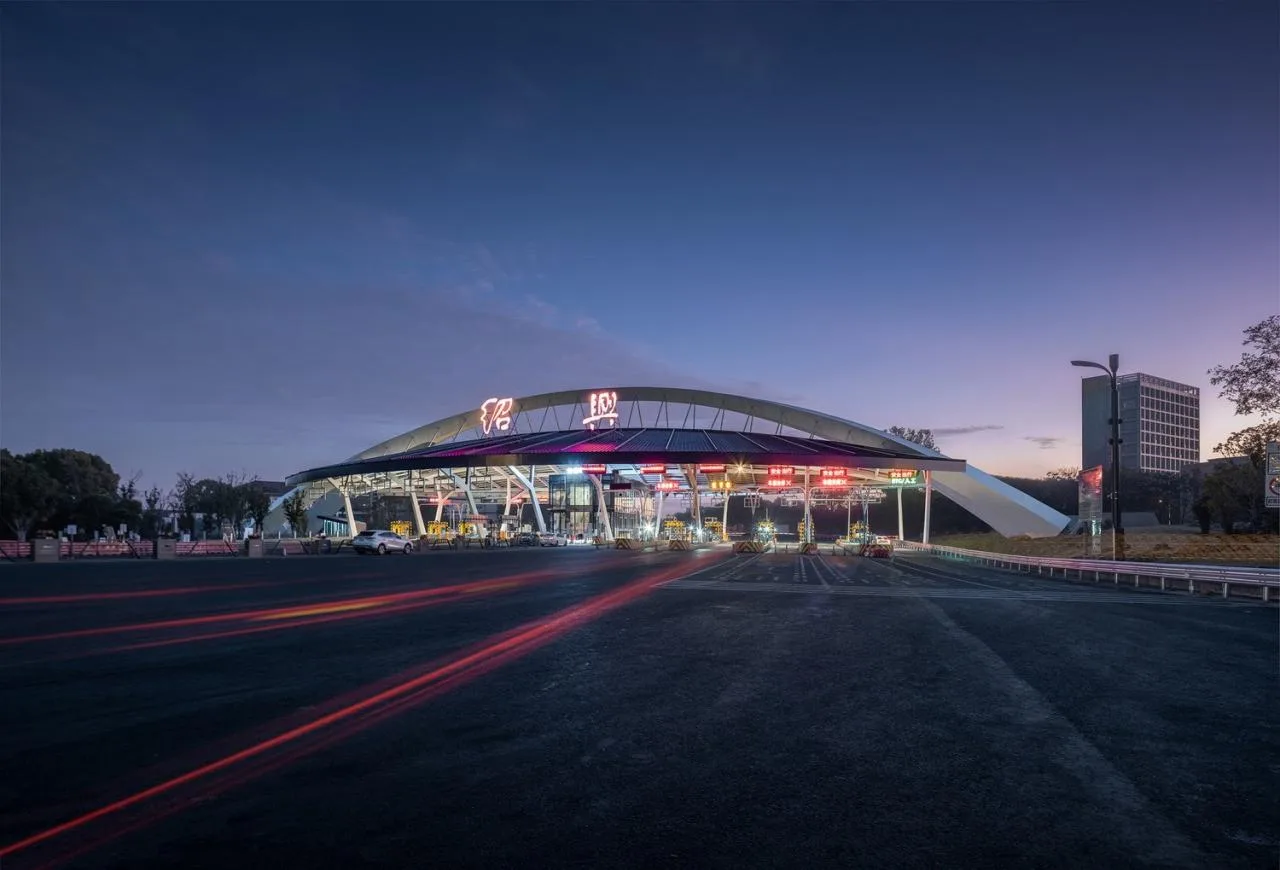
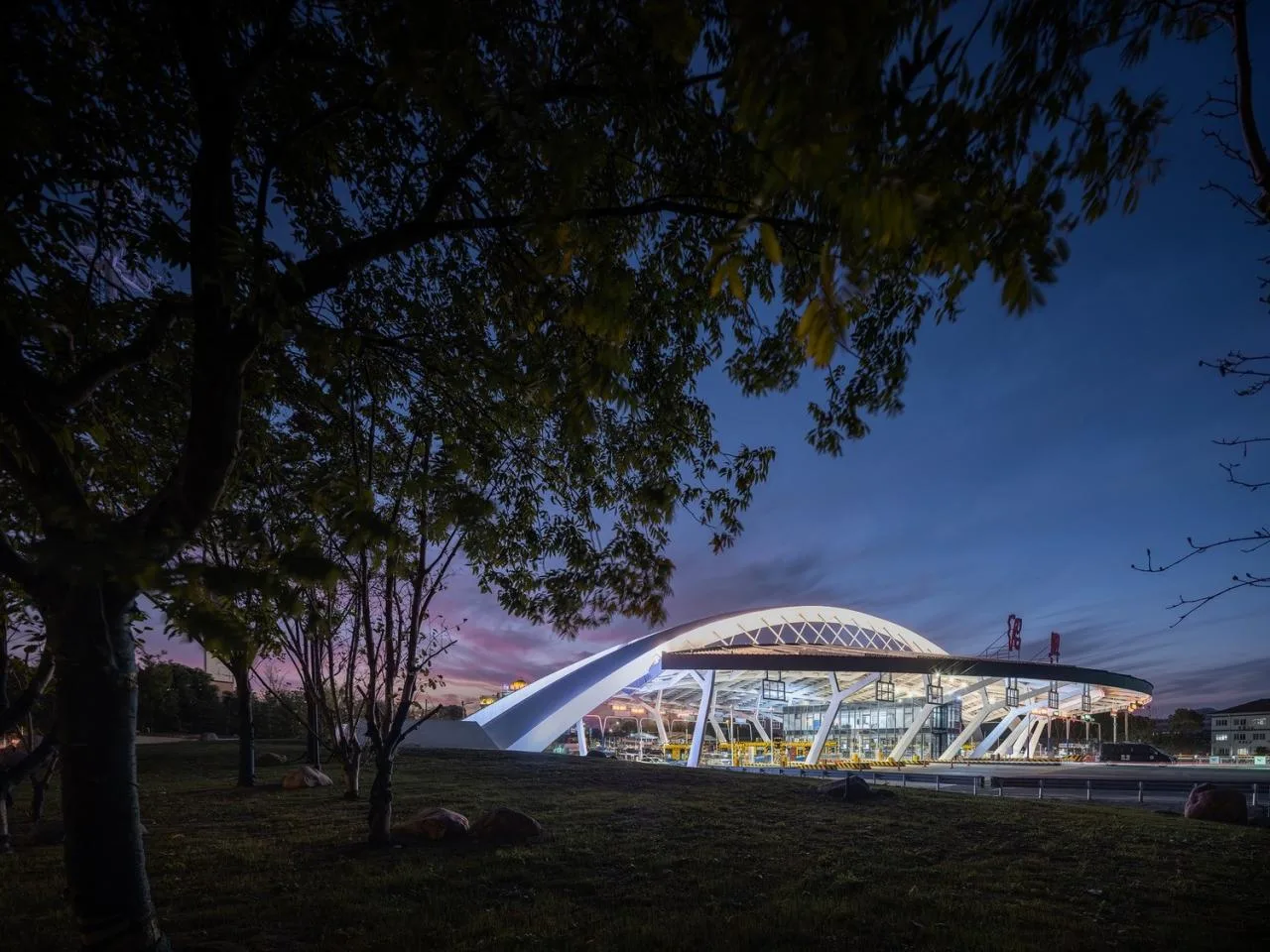
The structural design was completed by Ouben Structure from the Landscape Academy of the China Academy of Art. Jinggong Steel Structure handled the steel construction, and Tongchuang Engineering oversaw the EPC general contracting. Our studio managed the project from proposal through initial stages and remained deeply involved during the EPC phase to ensure the design intent was faithfully executed.
After a year of operation, the toll station has successfully fulfilled its design goals, establishing itself as a distinctive gateway to Shaoxing. We are proud to have played a role in supporting the smooth hosting of the Asian Games.
Project Drawings
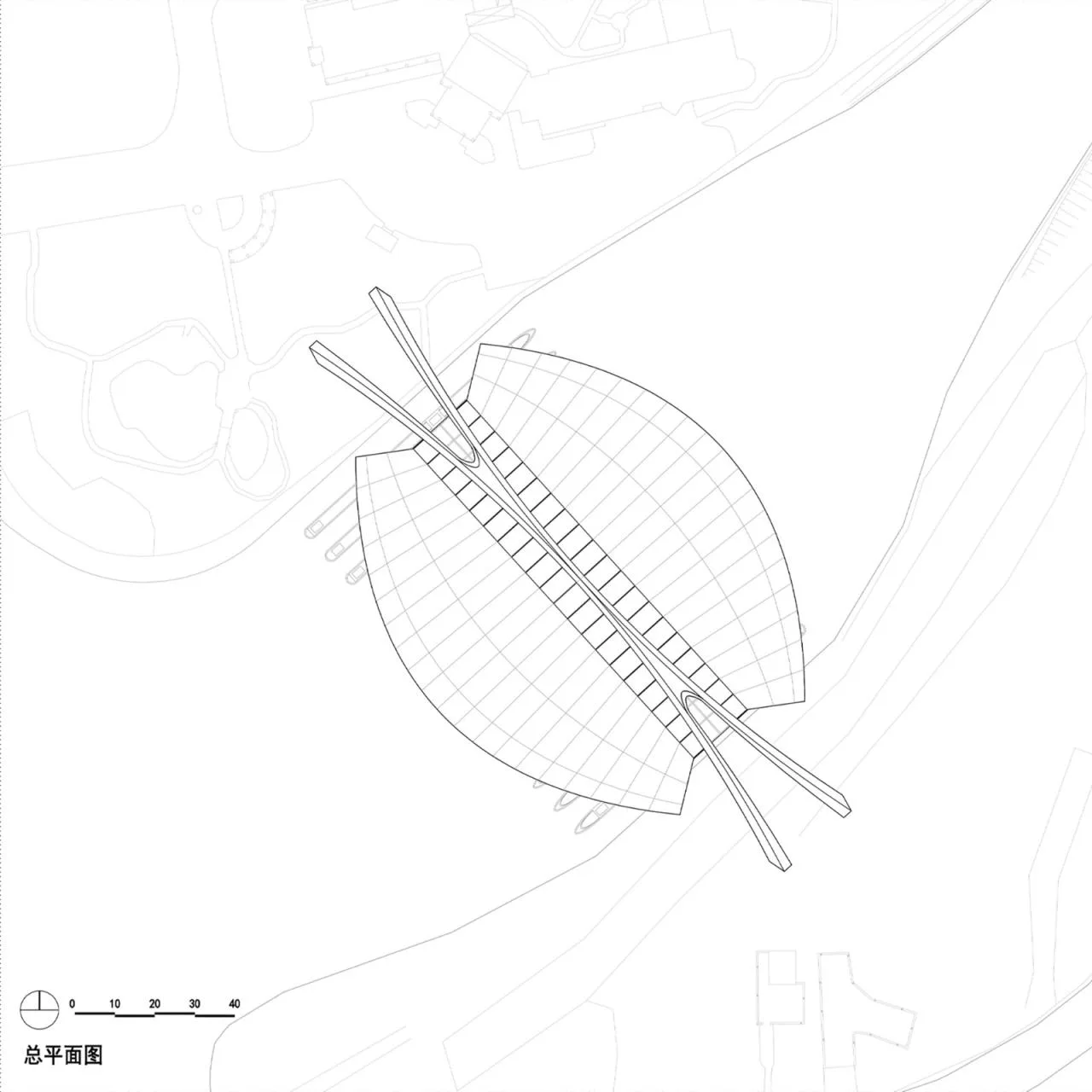
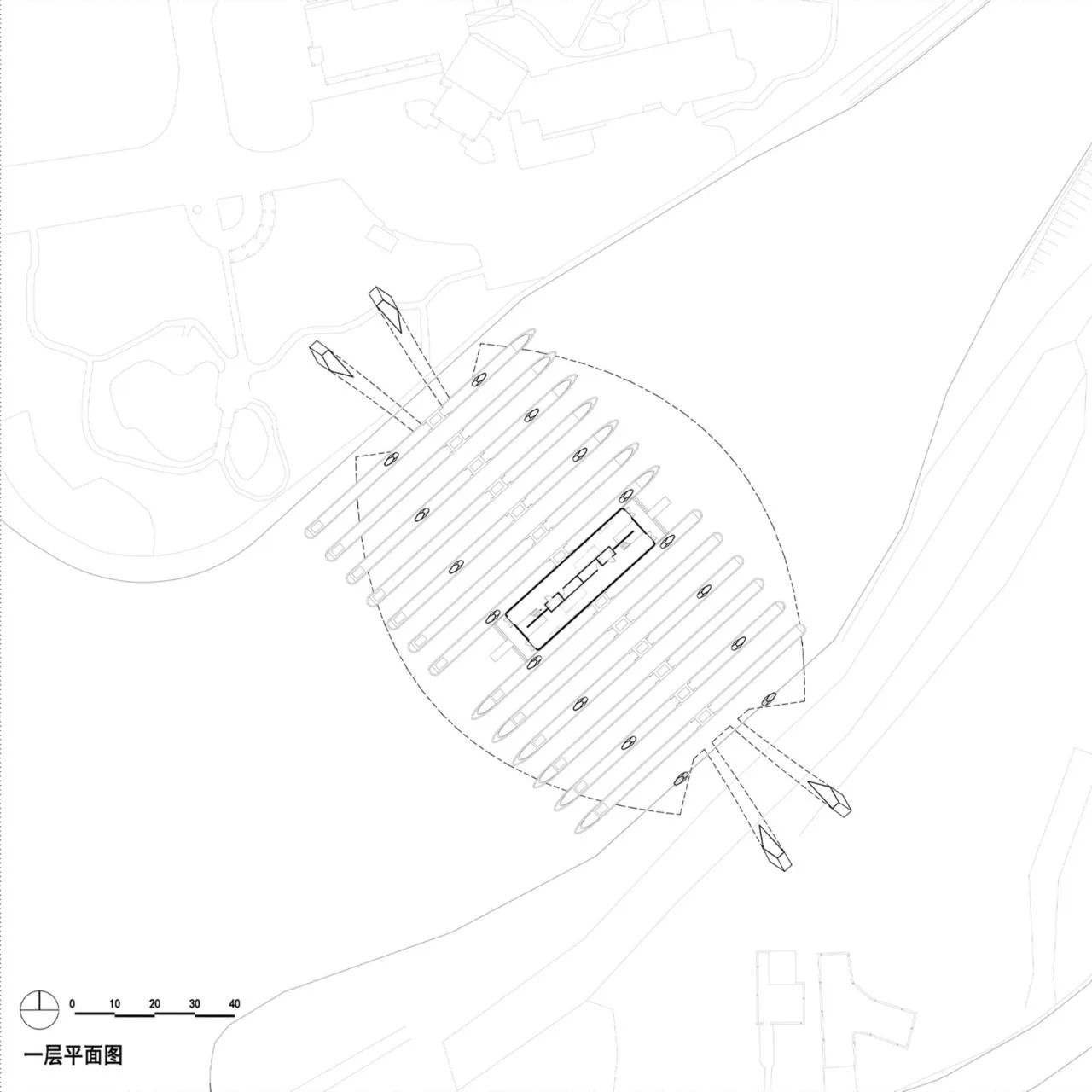
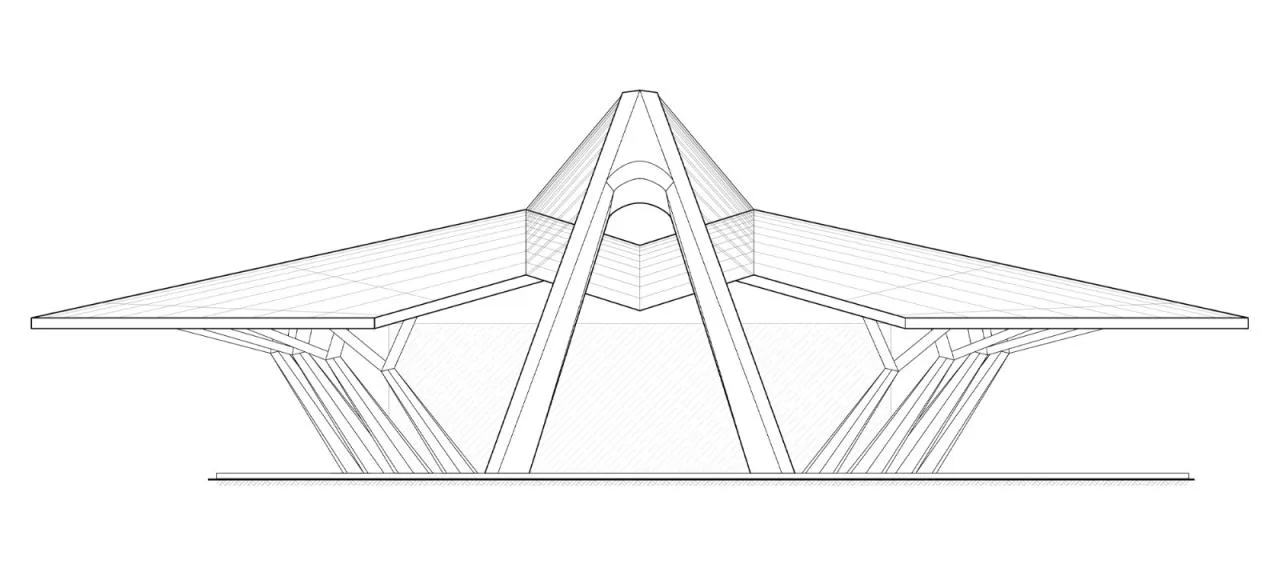
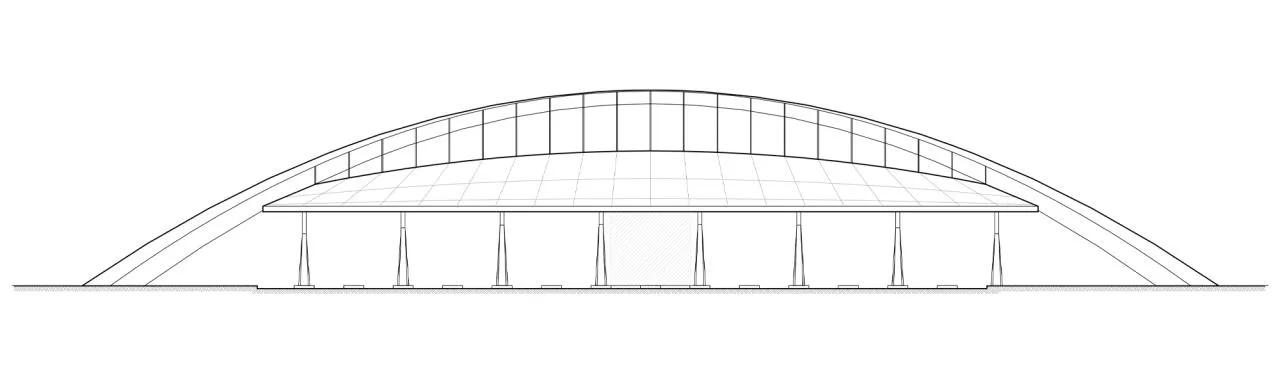
△ Elevation Drawing
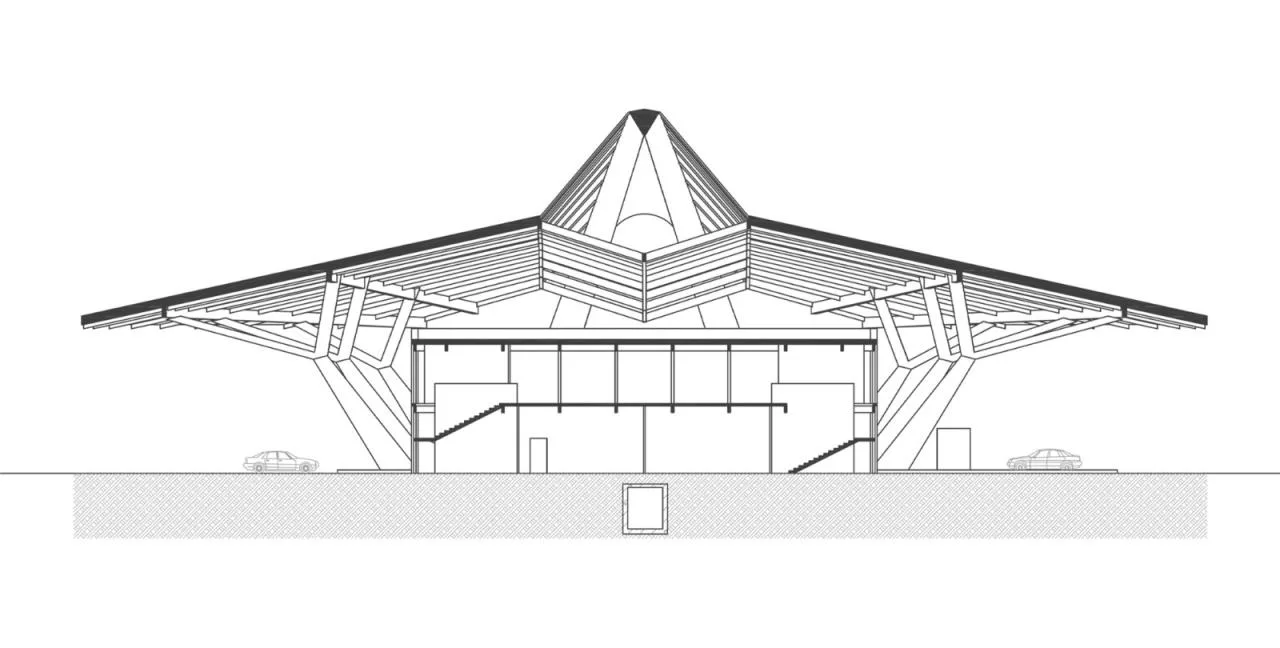
△ Section Diagram
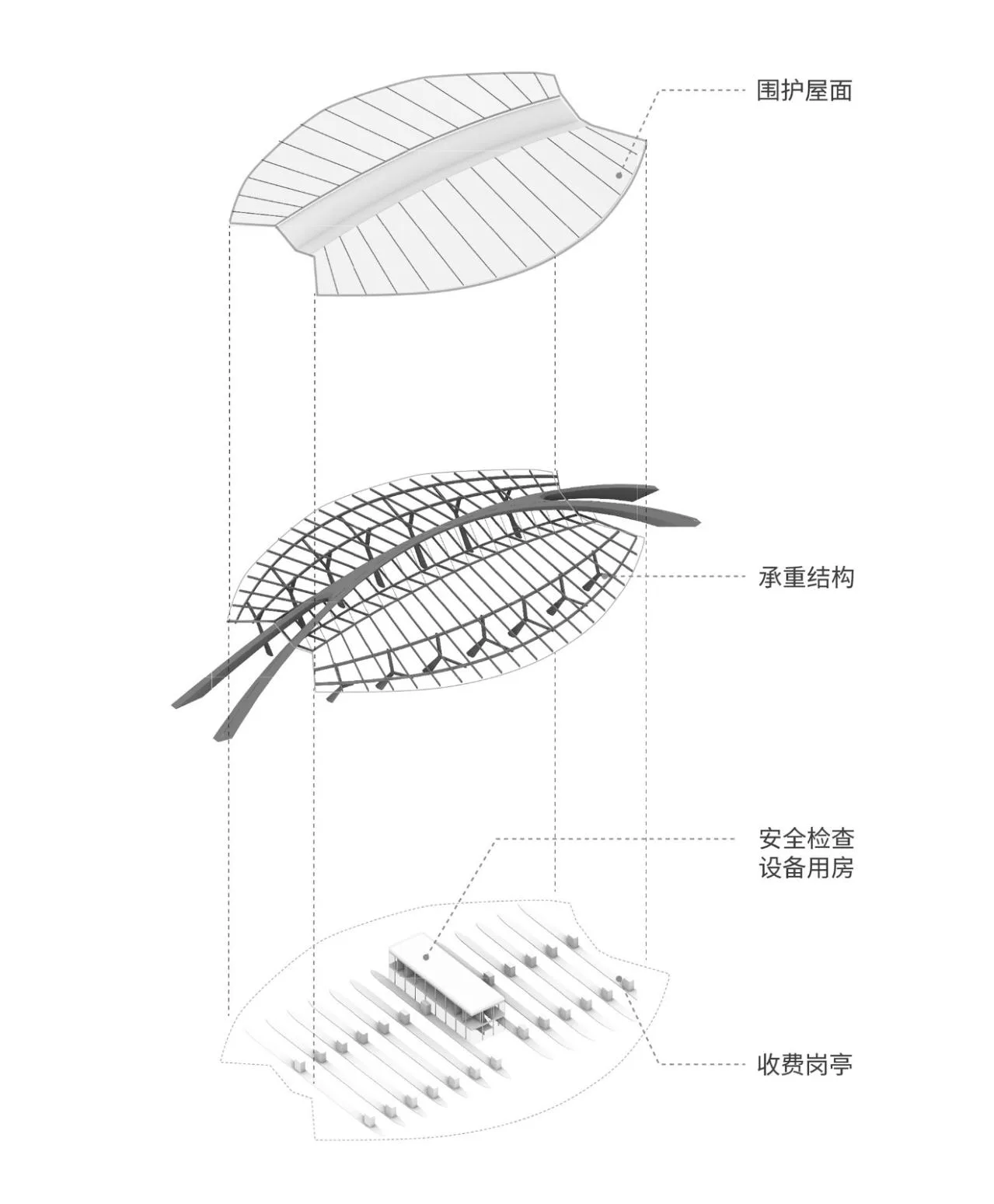
△ Analysis Chart
Project Information
Architect: Ren Tian Architecture Studio
Area: 493 square meters
Project Year: 2022
Photographer: Mountain Imagery
Chief Creative Designer: Ren Tian
Design Team: Lin Weiyi, Wang Jiwei
Collaborative Designer: China Academy of Art Landscape Architecture Design and Research Institute Co., Ltd
Principal: Shaoxing Yuecheng District Urban Development and Construction Group Co., Ltd
Function: Transportation and Architecture
Construction Party: Tongchuang Engineering Design Co., Ltd
Structural Design: Ouben Design
Steel Structure Construction: Jinggong Steel Structure Group
Location: Shaoxing















Must log in before commenting!
Sign Up