
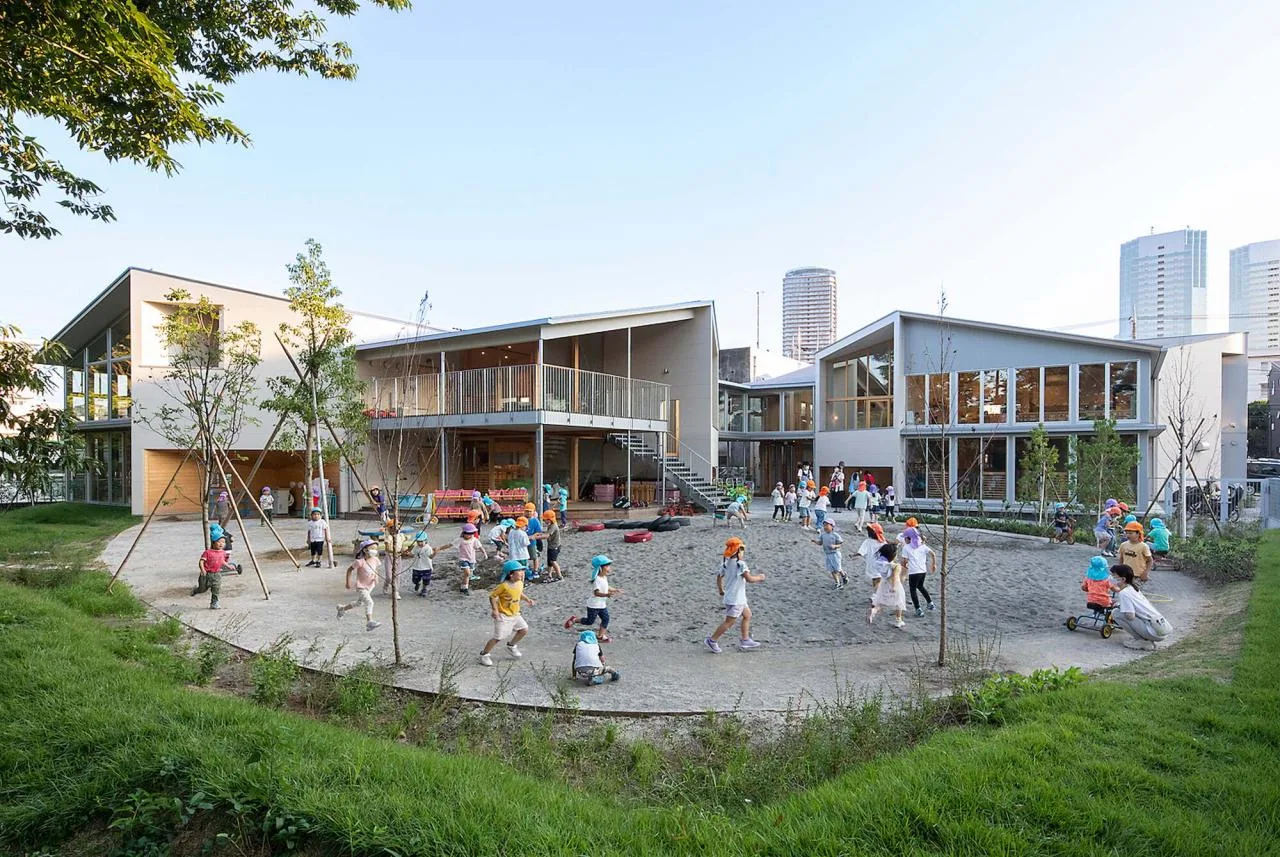
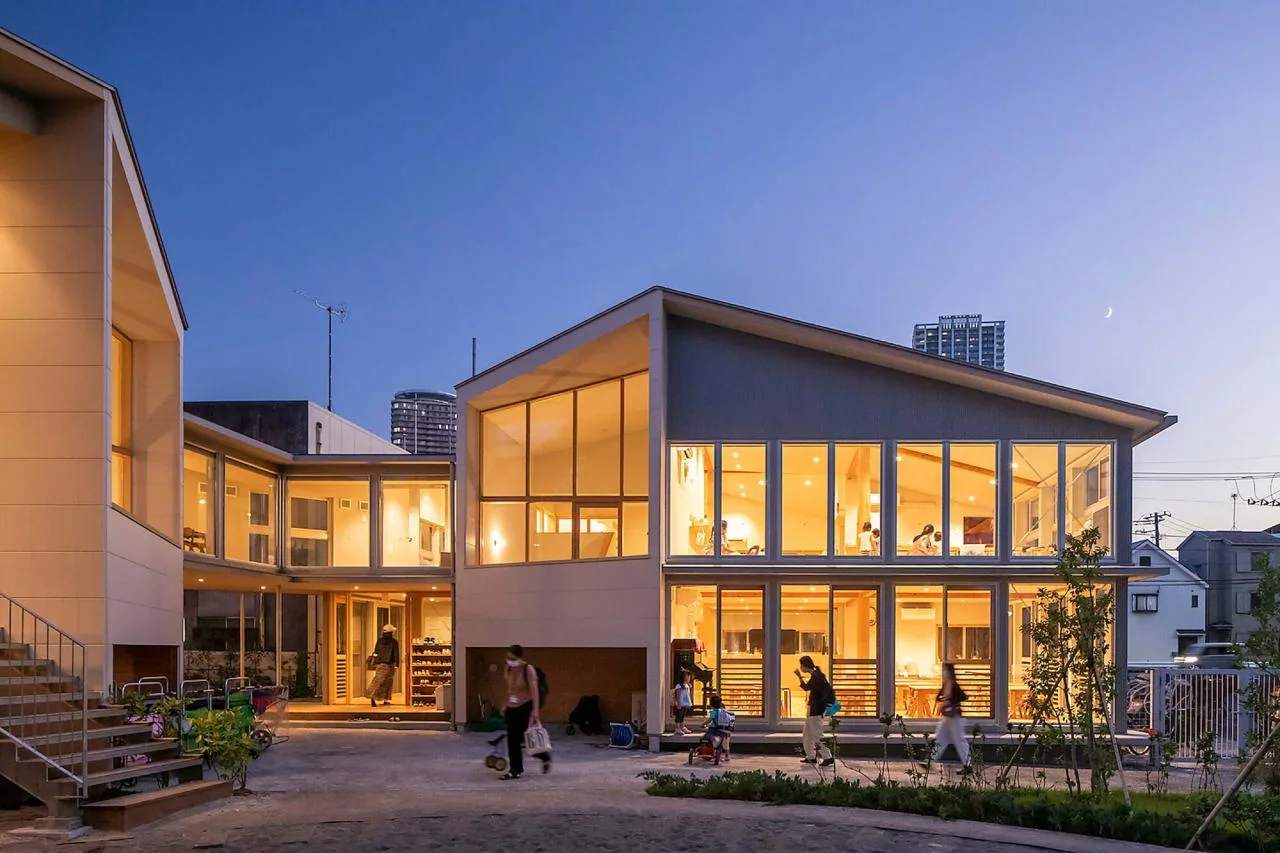
The kindergarten is situated in Kashima Field, a suburban area near Tokyo popular among families with children. It borders an industrial zone and is surrounded by residential buildings. The site lies between a busy street and a tree-lined pedestrian pathway cherished by local residents. Nearby public facilities include fire stations and water stations, complementing the residential neighborhood.
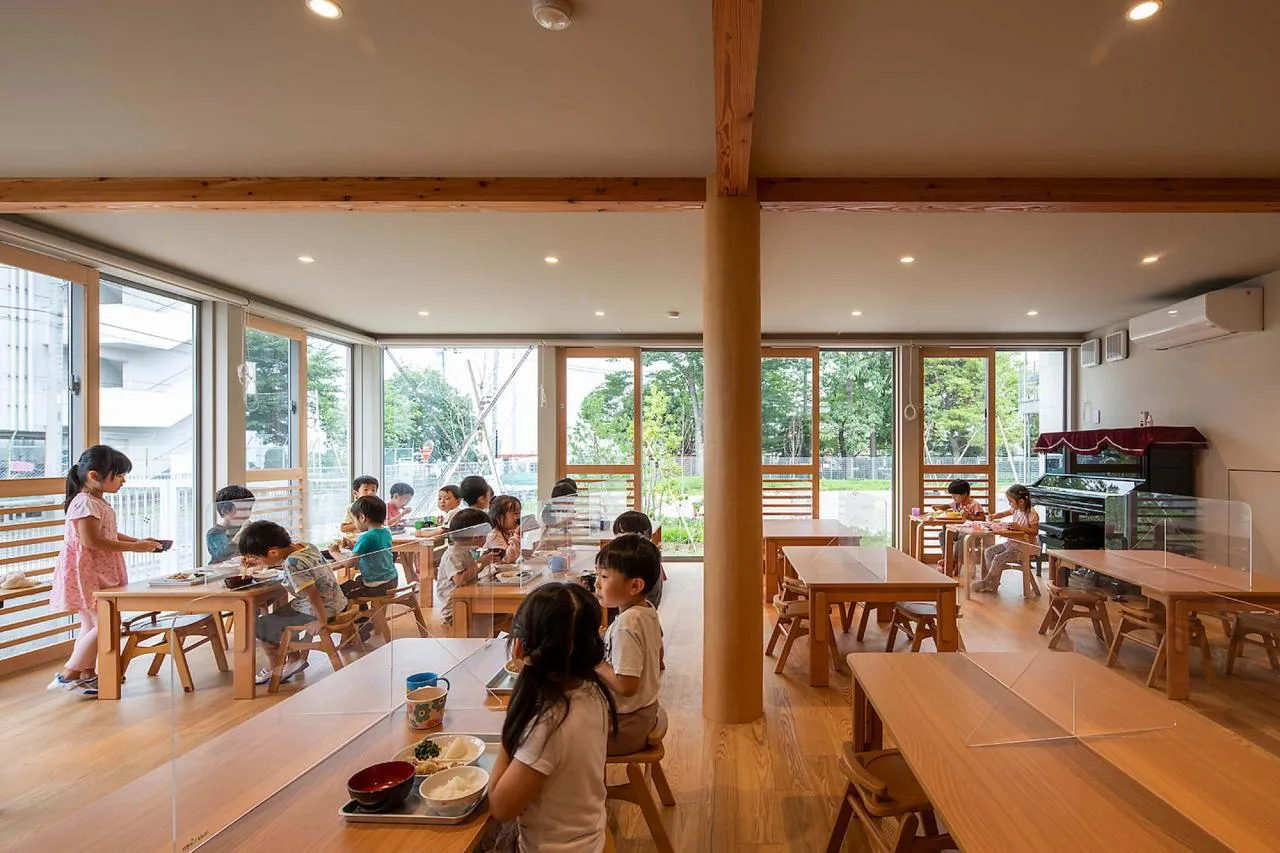
This two-story wooden structure was built on the former site of a water distribution station, carefully avoiding the circular foundation remains of the old reservoir. Along the adjacent green walkway, large deciduous trees and benches create inviting spaces where children play on the playground and enjoy activities on the terrace. Parents and children interact during drop-off and pick-up times, while elderly residents and other children often stroll nearby. The kindergarten embraces the preservation of local history while fostering community development.
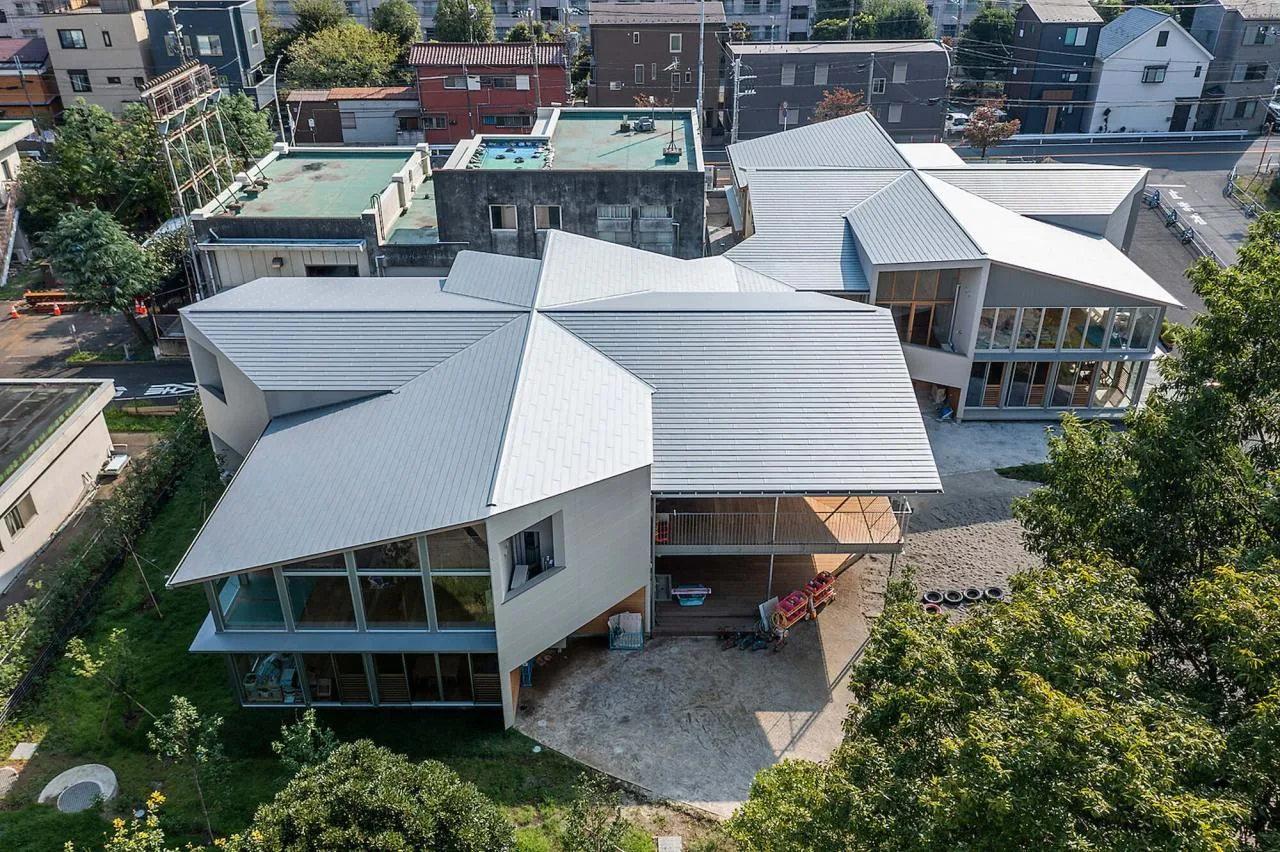
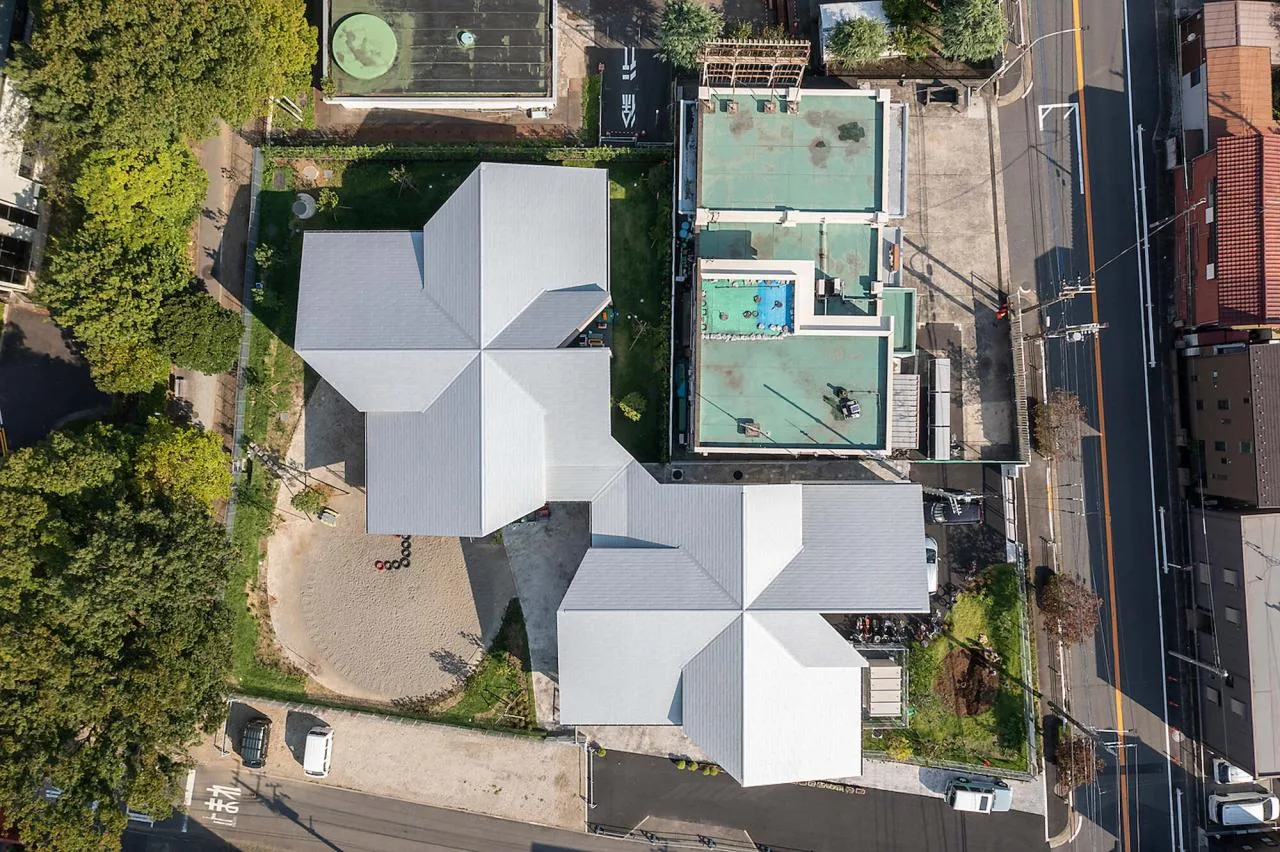
Material dimensions in Uganda are limited, and through experience gained on multiple projects there, it was found that specific wooden structural dimensions—3 meters, 4.5 meters, and 5 meters—based on Ugandan standards work effectively for kindergarten buildings as well. After extended interaction with young children, it became clear that the size and area formed by eight “hachijyo ma” units align well with their body proportions and ground-level movements.
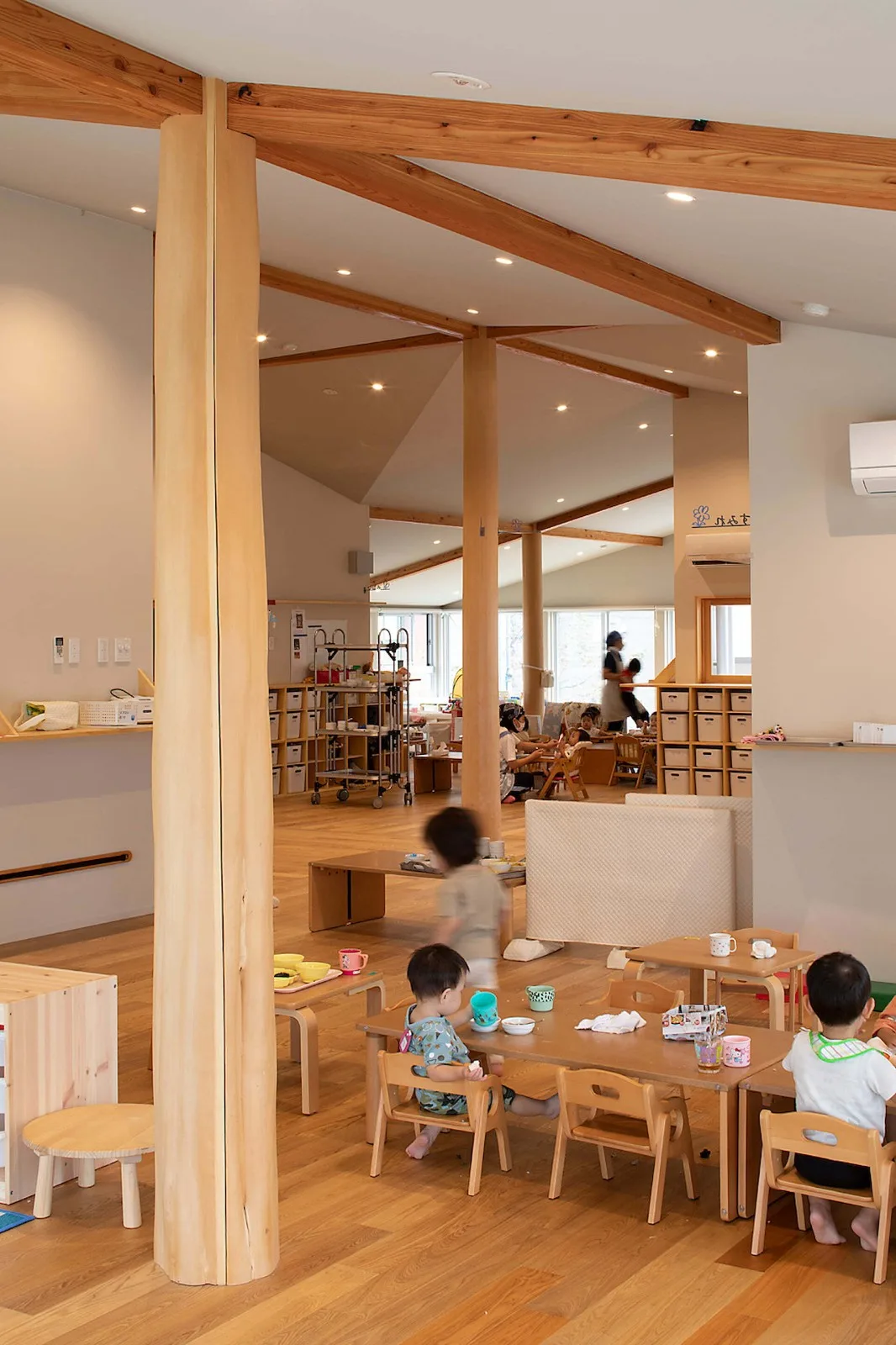
Each nursery room consists of four “hachijyo ma” units arranged around a central pillar, spaced 3640 millimeters apart—the length equivalent to two tatami mats (futa ma)—creating a windmill-shaped floor plan.
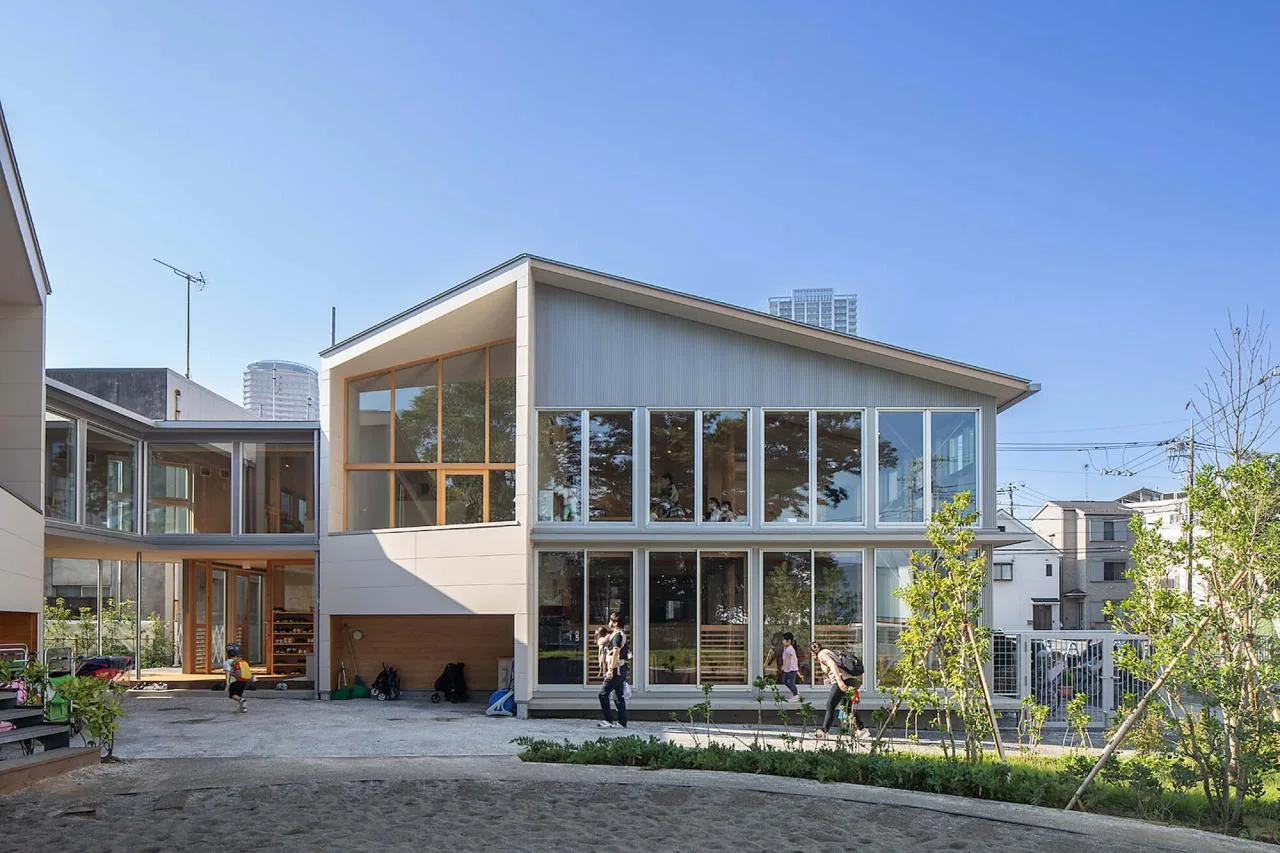
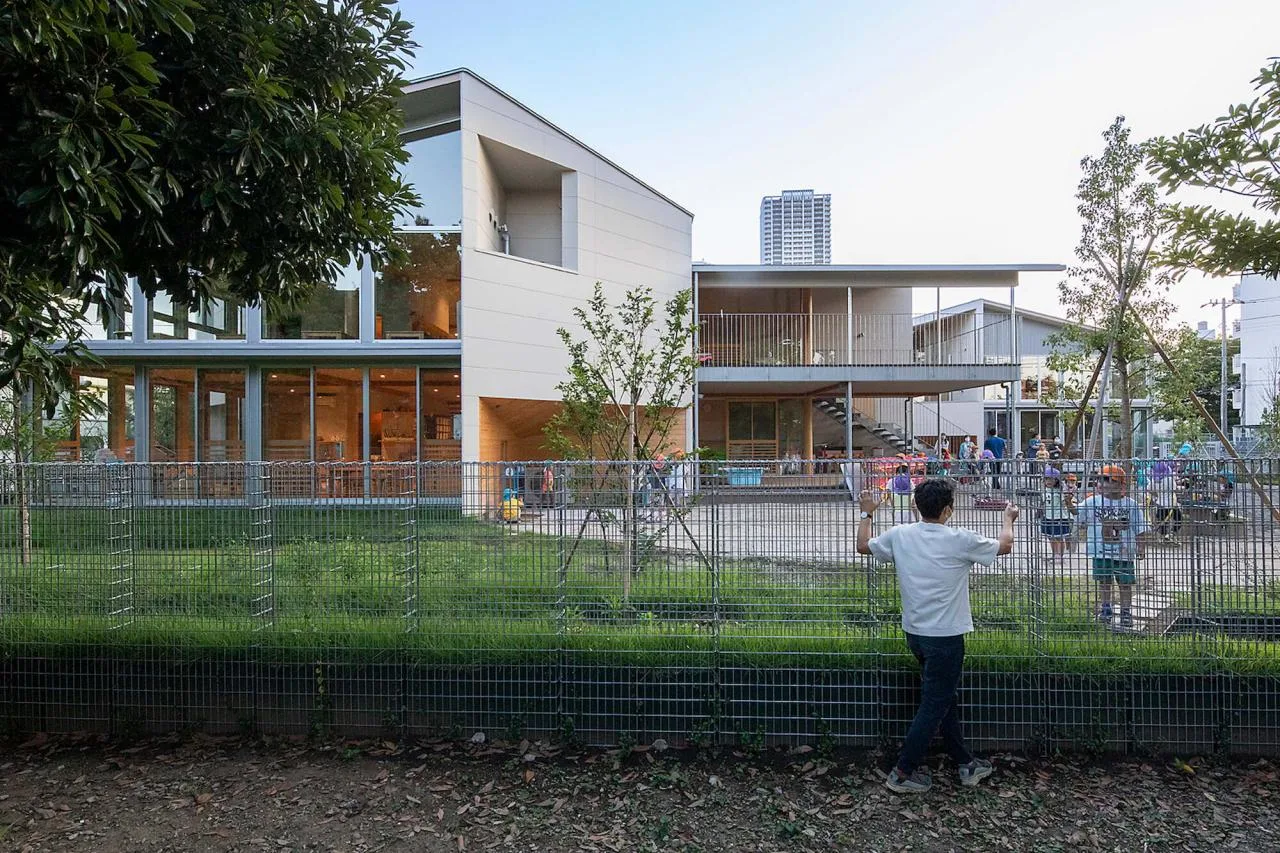
This gentle spatial sequence composed of futa ma units provides an important sense of scale, resonating deeply with sensory experiences involved in childcare.
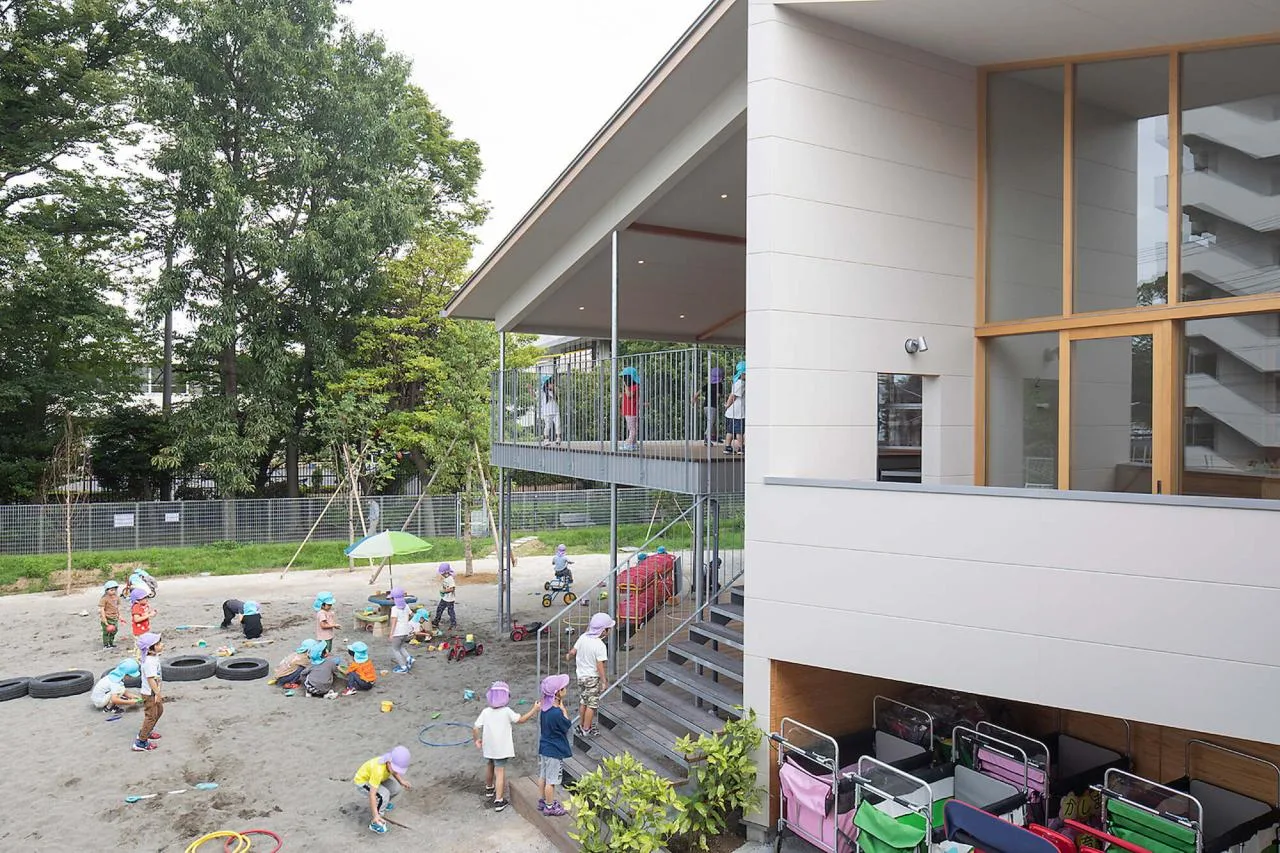
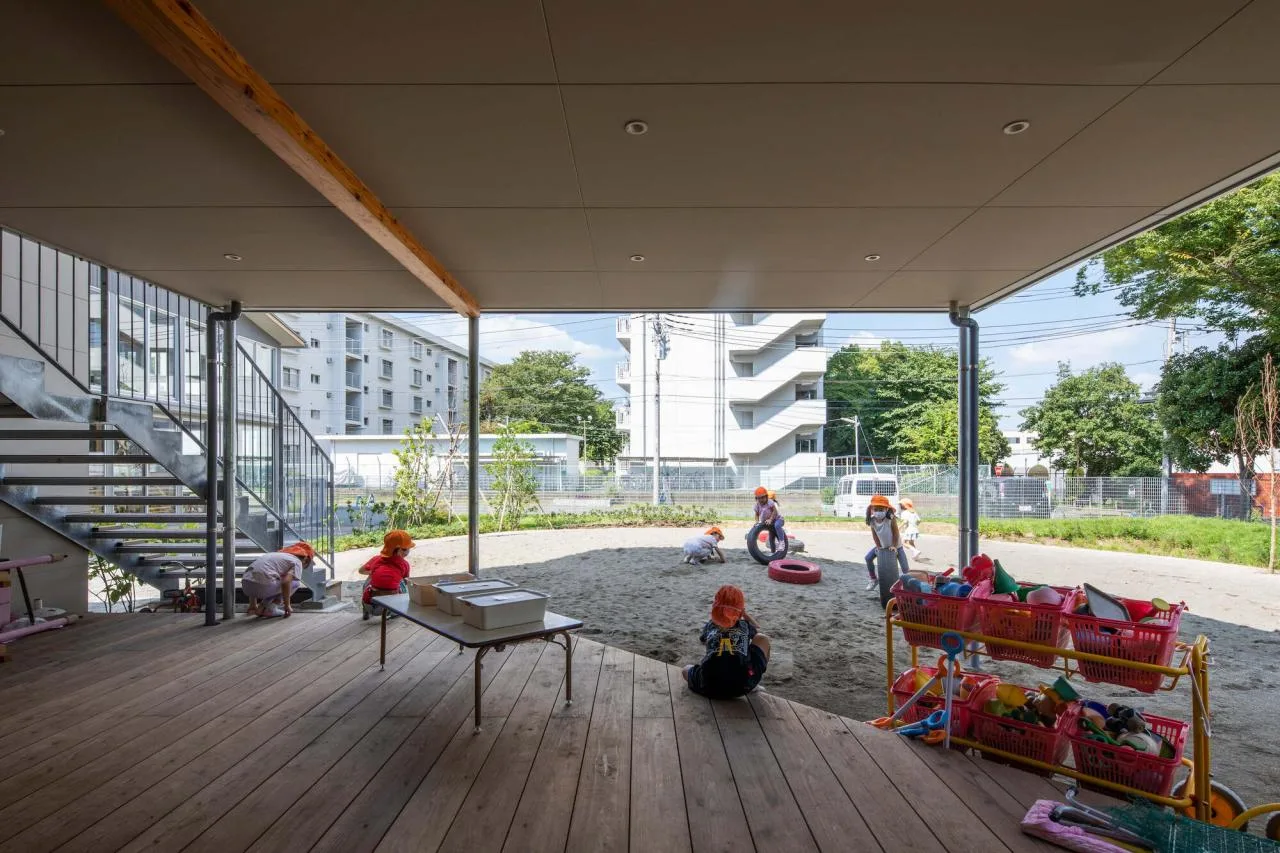
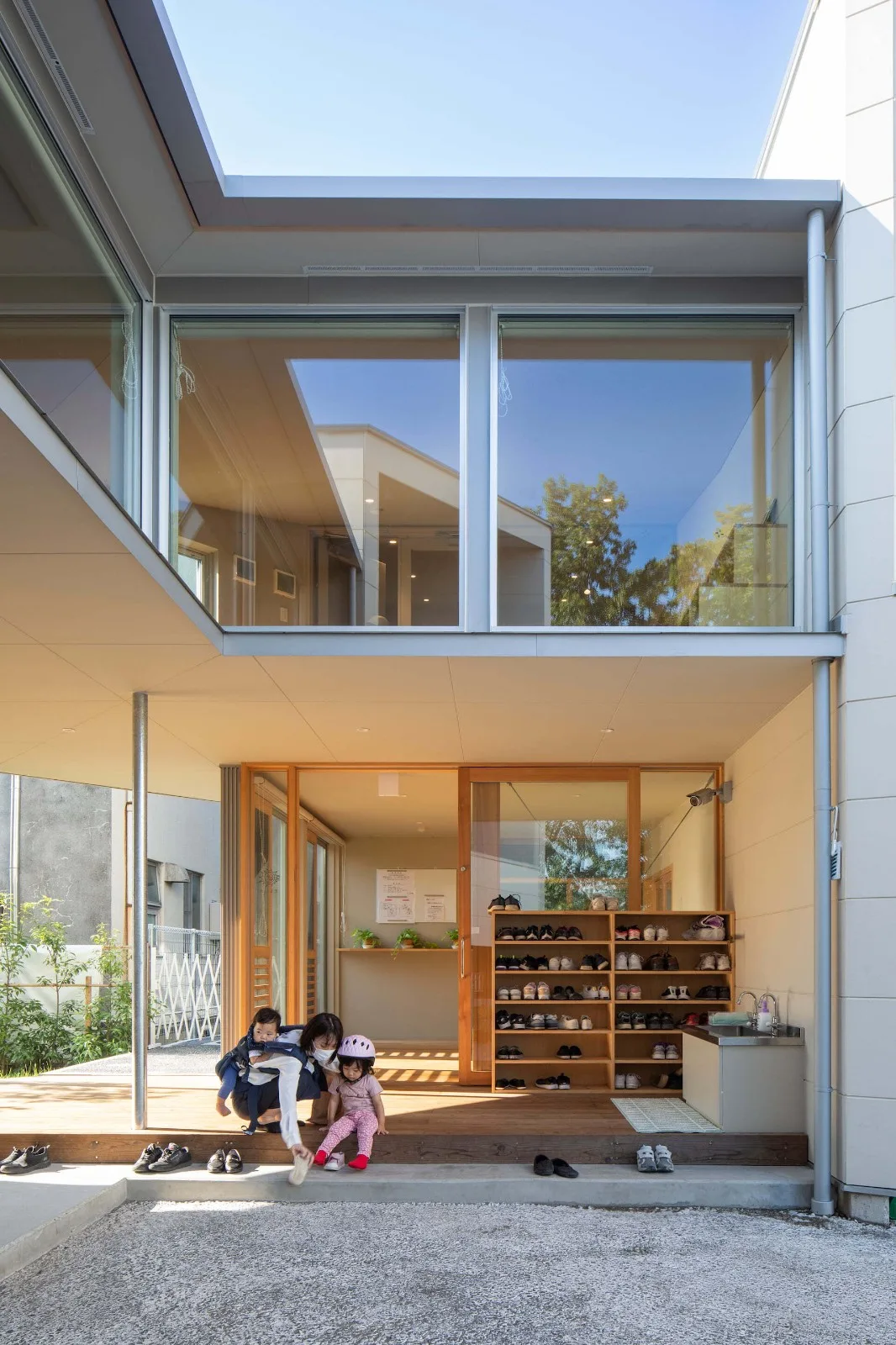
Additionally, the four daycare centers share a room called the “Junk Box.” This space preserves the essence of the public kindergarten’s textbook storage area prior to relocation. Inside, various small items are stored, including tools that facilitate access to stationery and picture books both inside and outside the storage area, arranged at heights visible but unreachable by children. The space also accommodates other service facilities such as toilets and acts as a corridor connecting two kindergarten rooms.
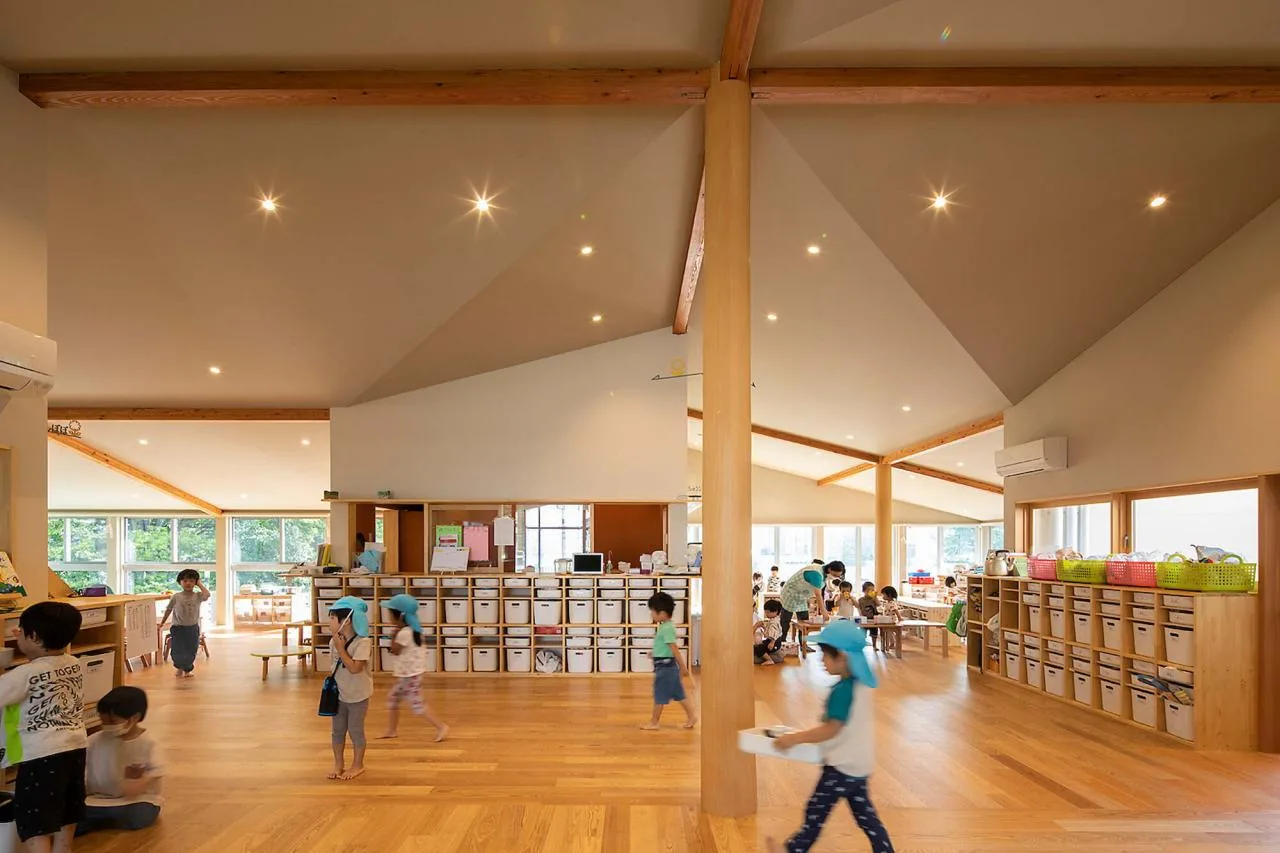
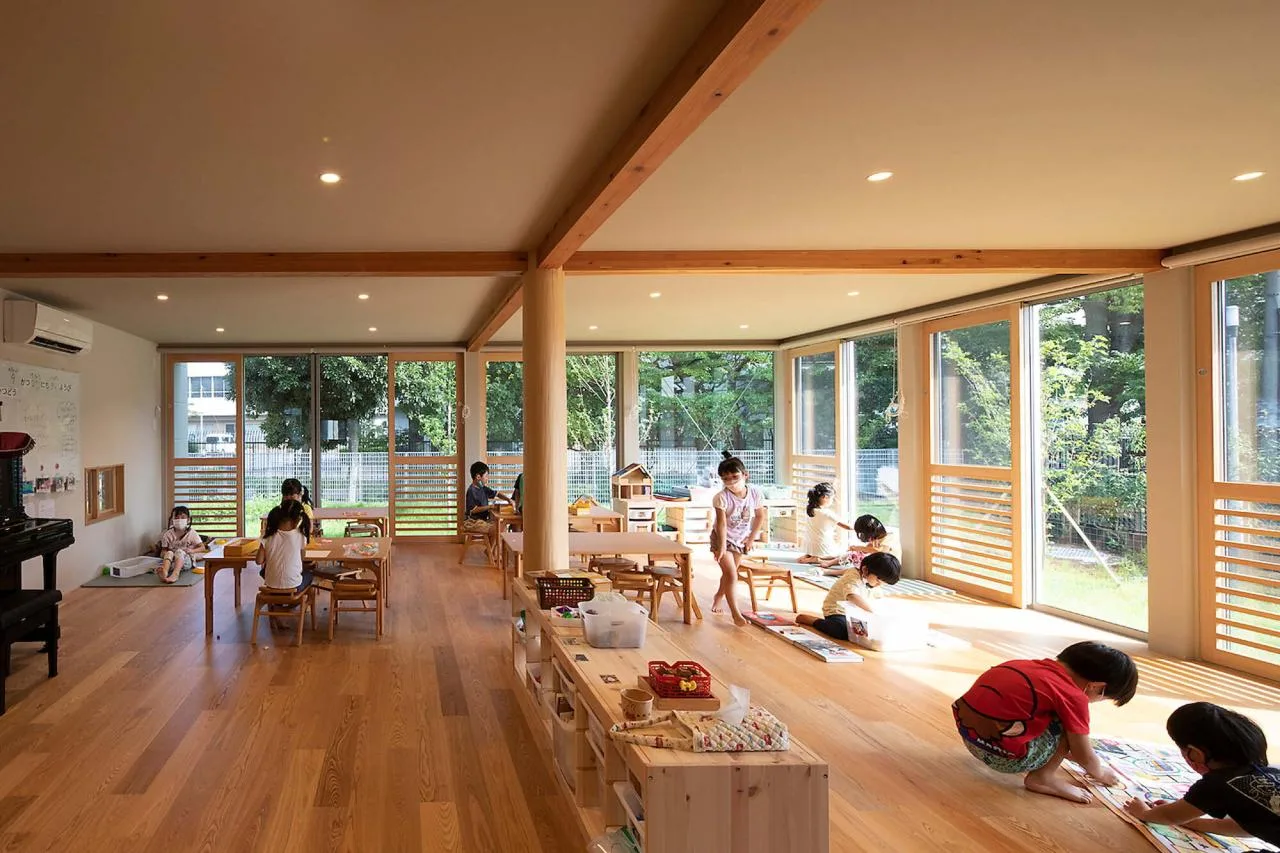
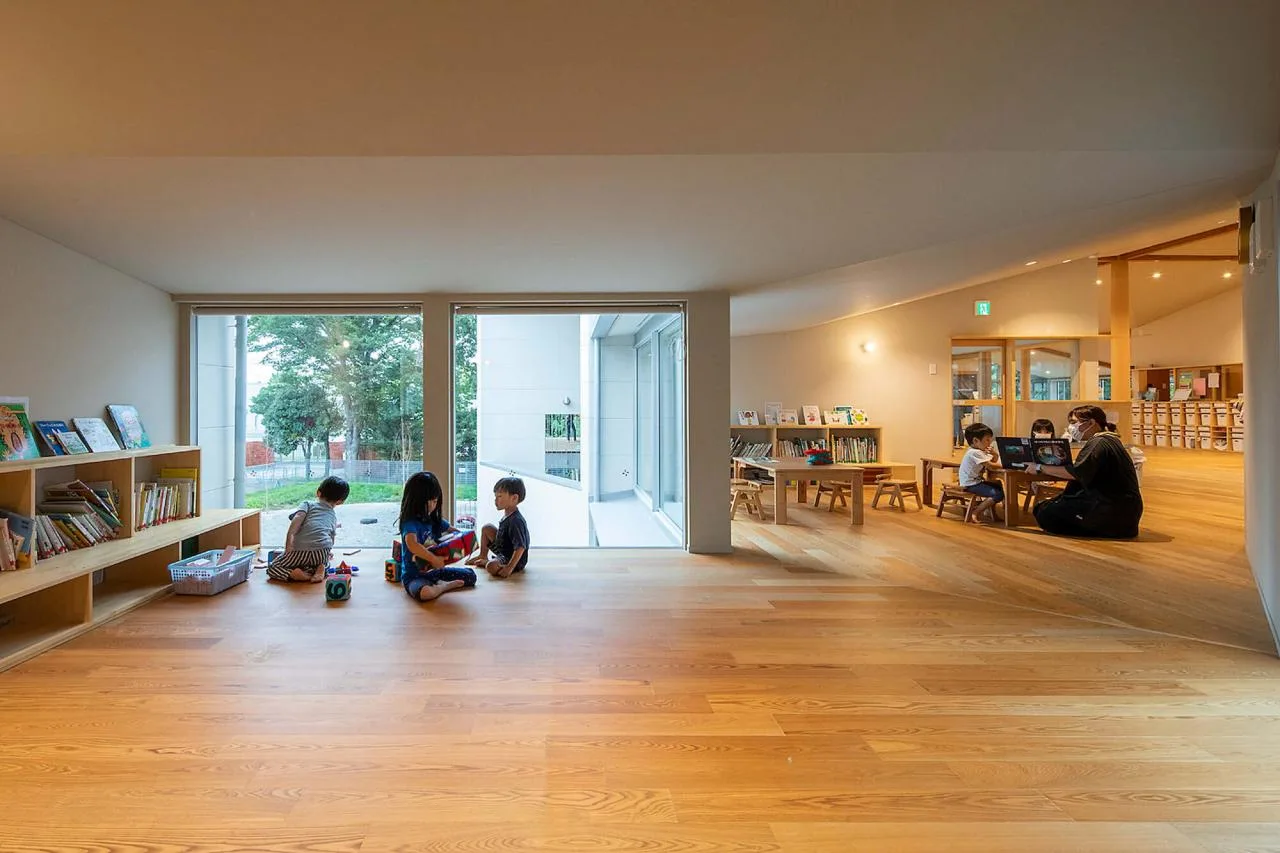
The entire complex features two windmill-style, single-pitched roofs connected at their centers. The ground floor serves as the entrance, while the first floor, linking the two buildings, provides a cozy space for reading picture books.
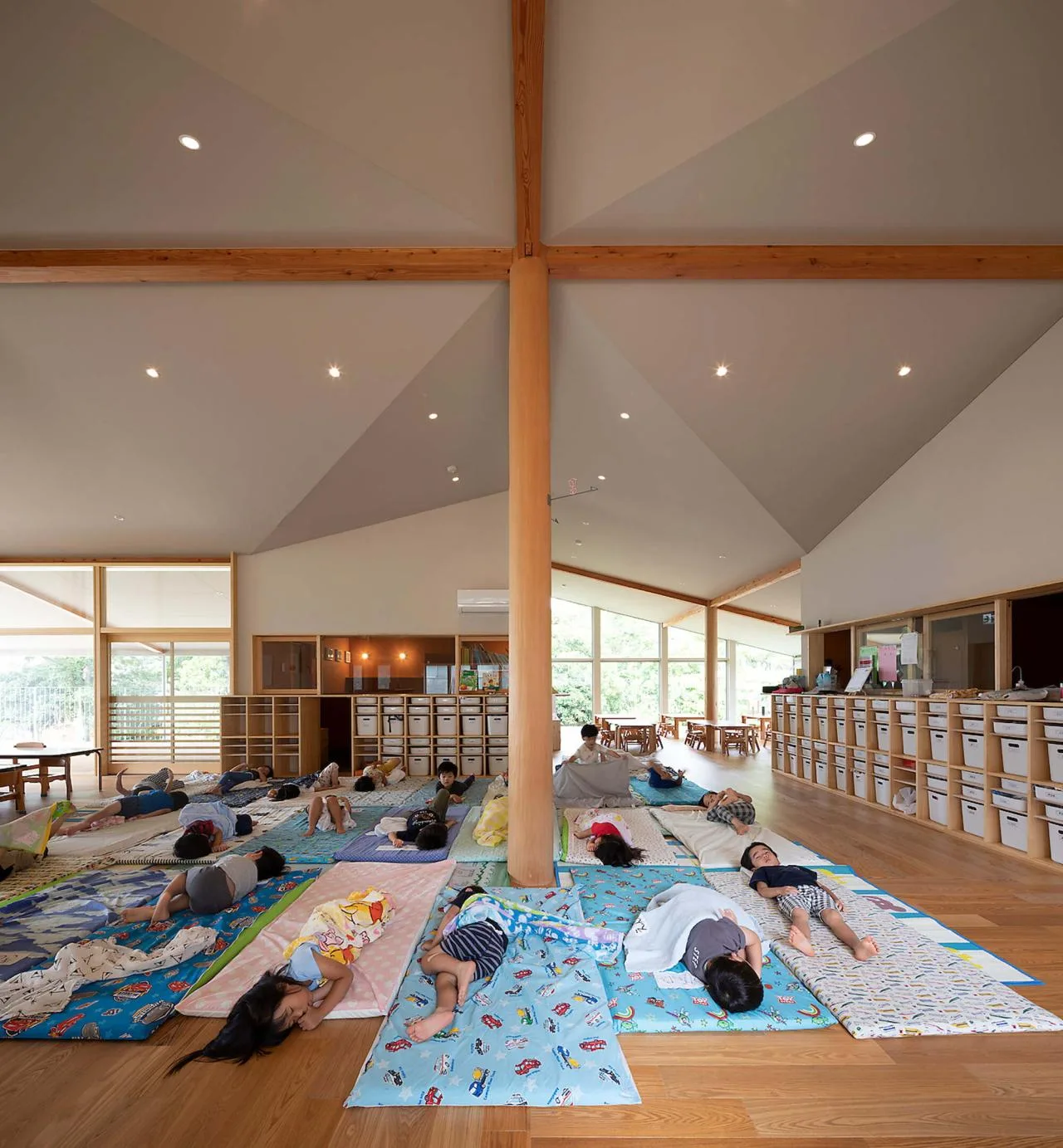
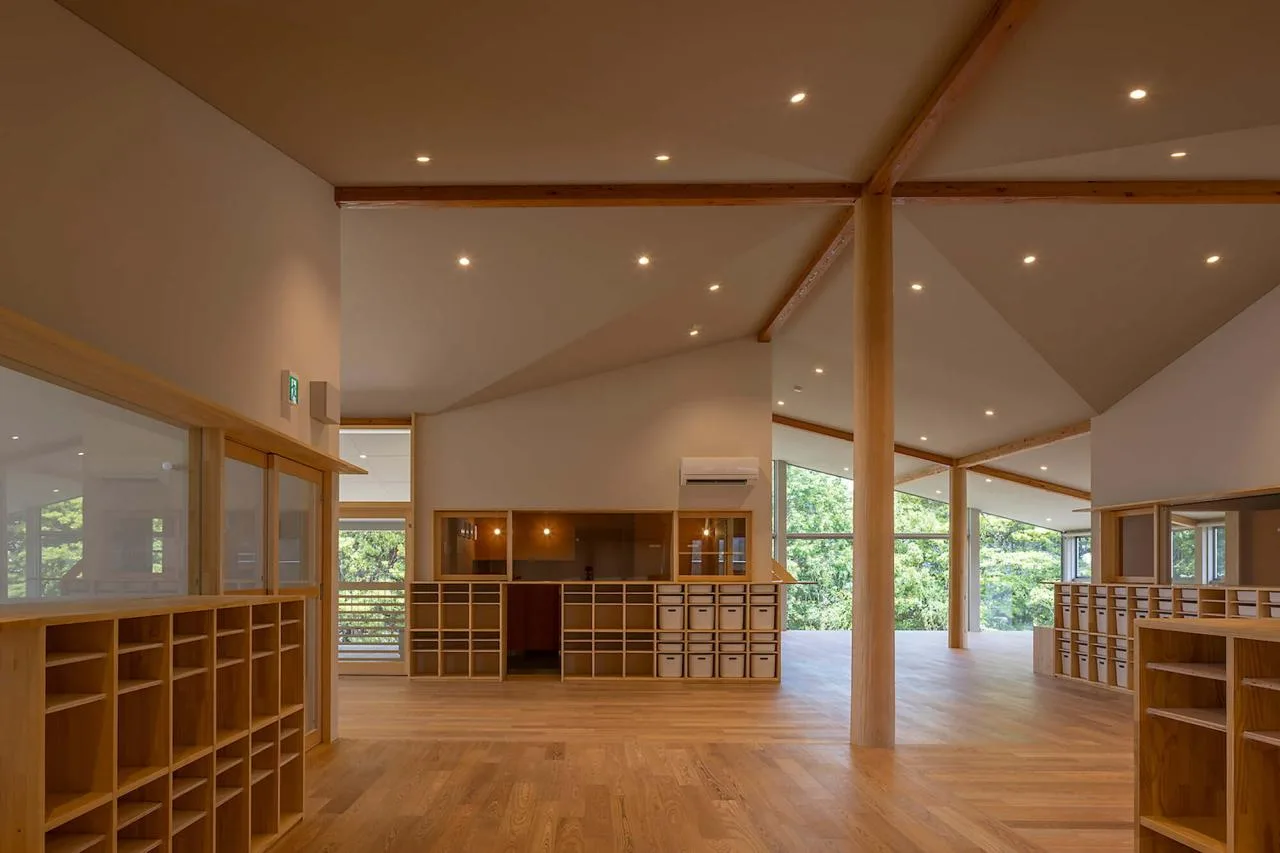
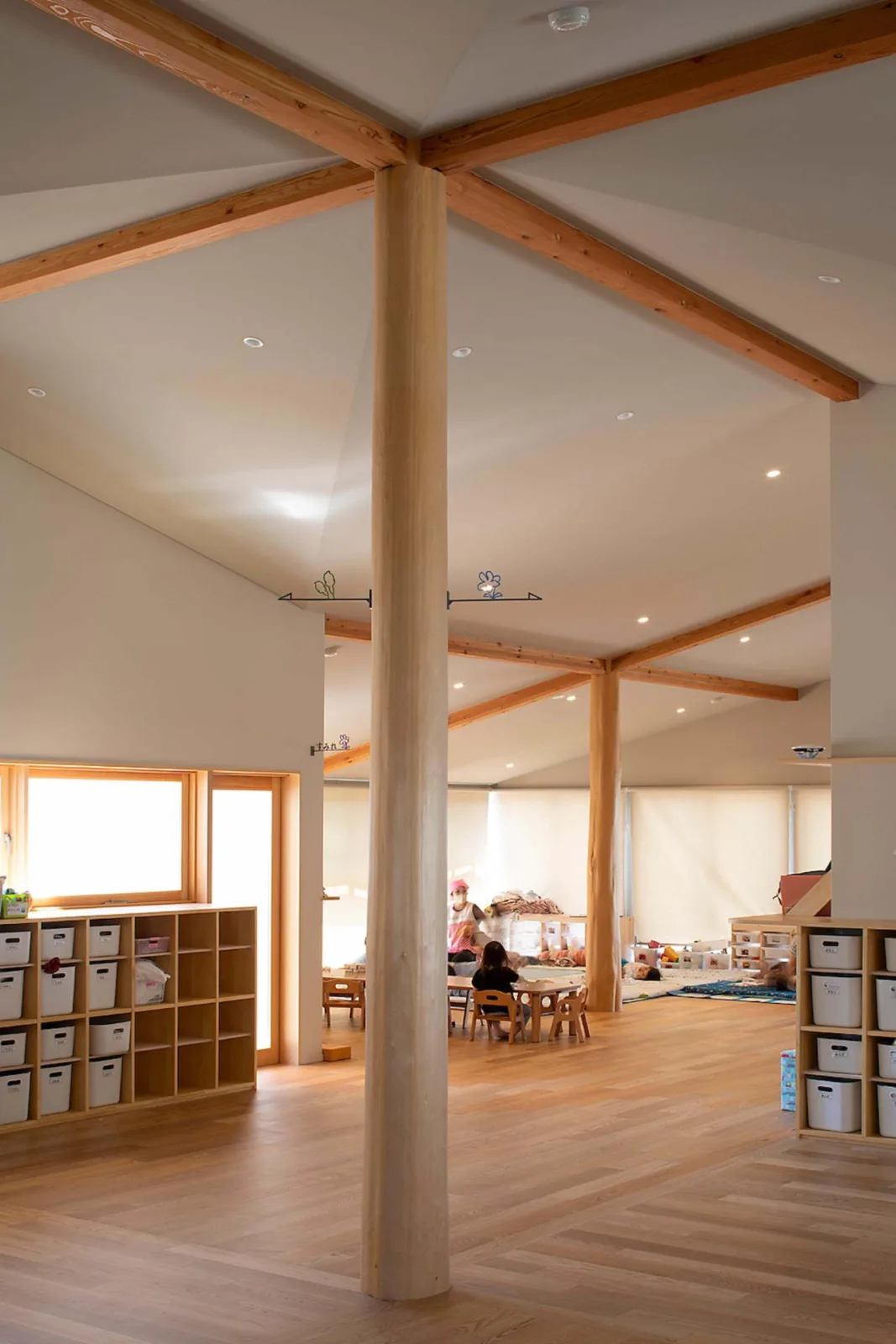
The design consists of two equally sized buildings connected by a narrow corridor. Each building is structurally independent but follows the same construction principles. Load-bearing walls are strategically placed around the “garbage bin” area, which functions as a storage or core service space. This layout creates seamless connections between outdoor and indoor environments, including gardens, walkways, and daycare centers.
Instead of using fixed walls to limit children’s movement, structural elements like logs and beams are employed to subtly suggest activity zones and spatial boundaries through their framing presence.
Project Drawings
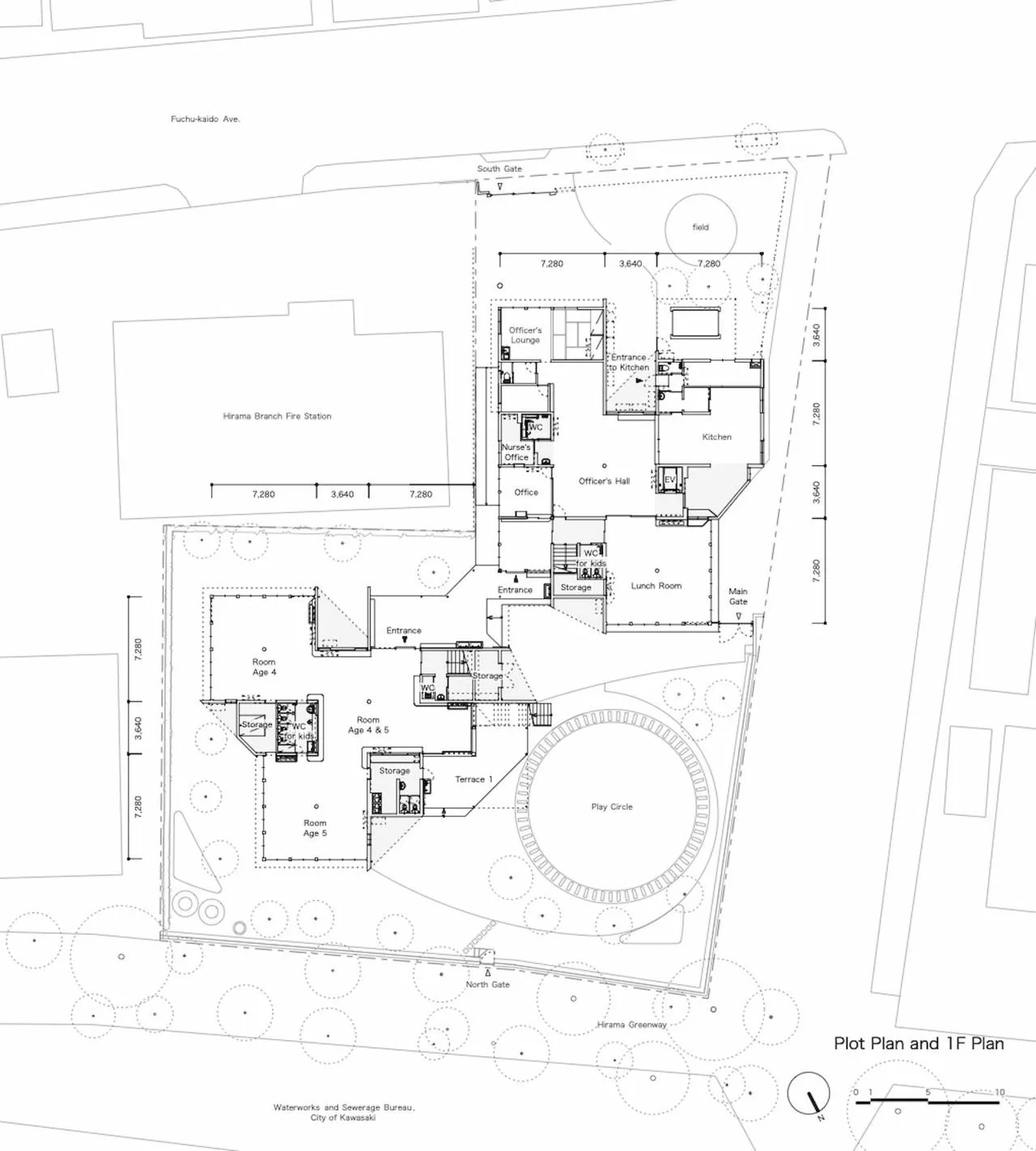
△ First Floor Plan
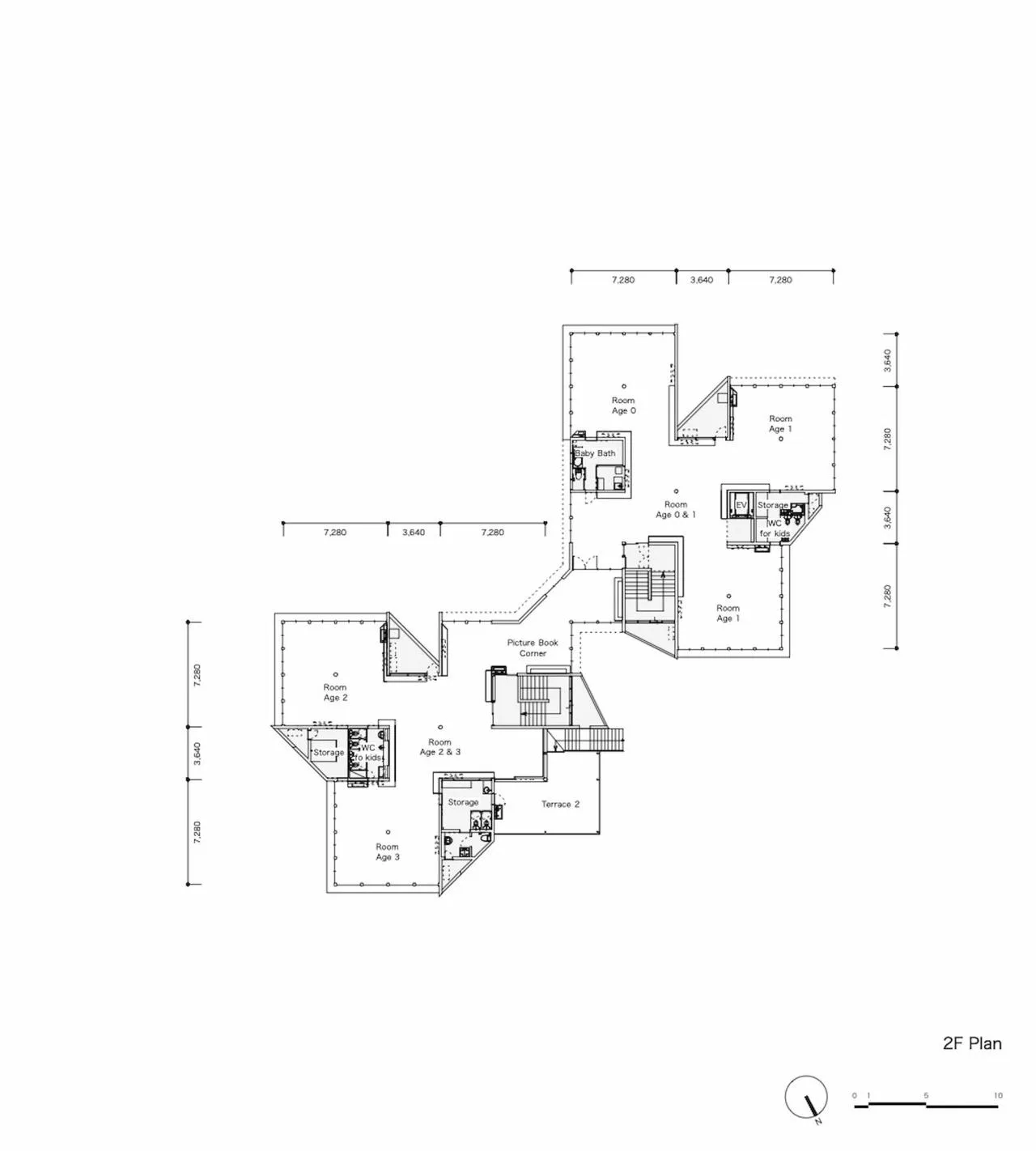
△ Second Floor Plan
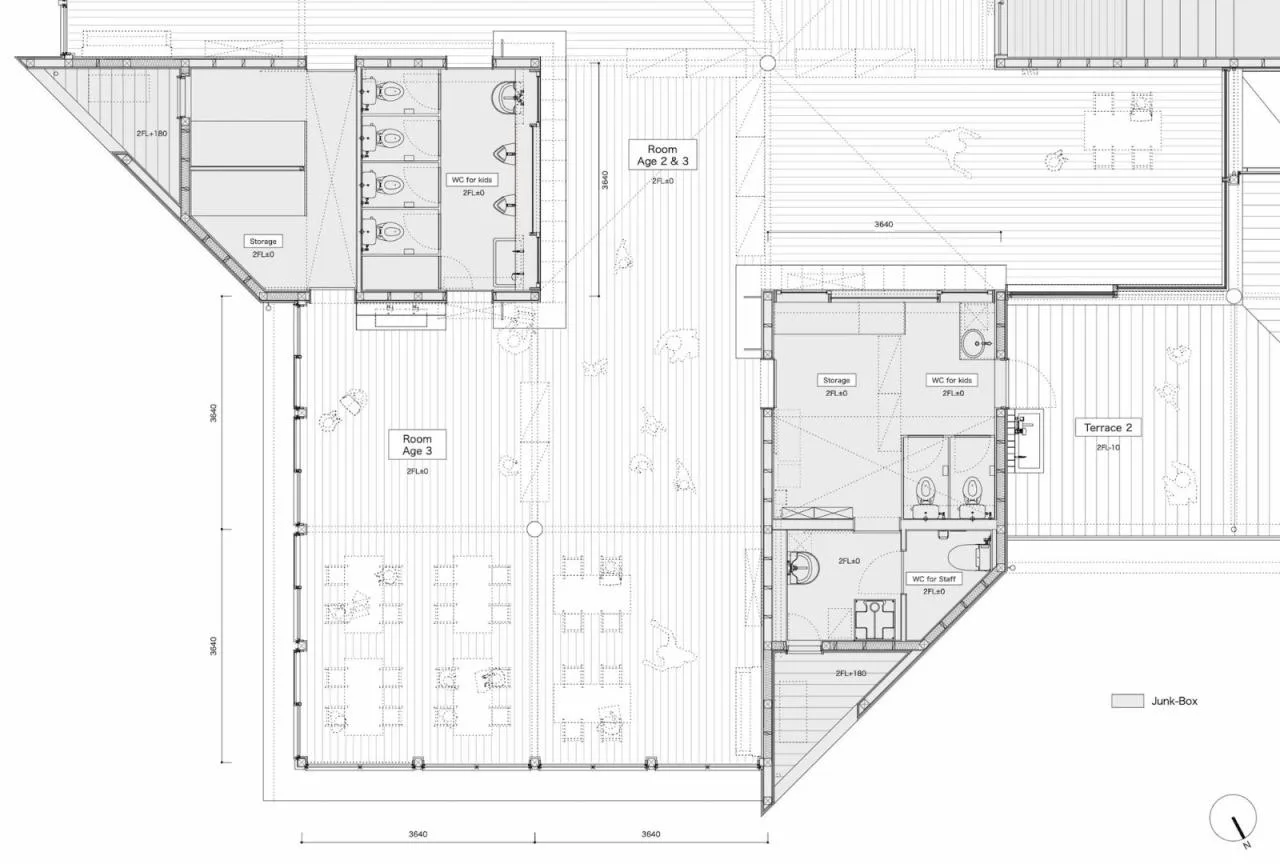
△ Plan Details
Project Information
Architect: TERRAIN Architects
Area: 1,219 m²
Year Completed: 2022
Photographer: Yuichi Higurashi
Lead Architects: Ikko Kobayashi, Fumi Kashimura
Structural Designer: Ryotaro Sakata Construction Design Firm
Equipment Design: Architectural Energy Research Institute
Landscape Designer: HUMUS
Contractor: Satohide Corporation
Location: Kawasaki, Japan













Must log in before commenting!
Sign Up