
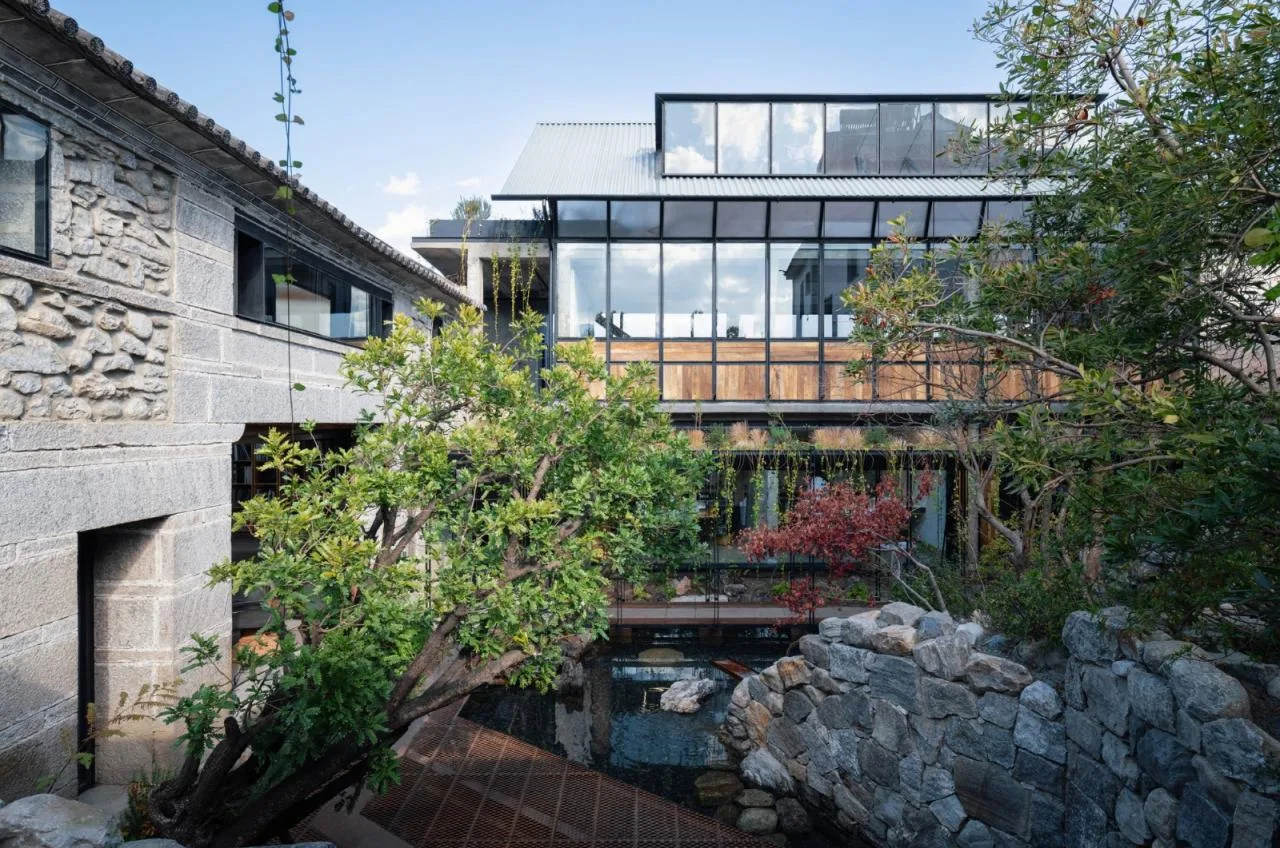
Long-time residents of Dali intimately understand the mountains, lakes, and ruins that define this region. It makes sense that ancient people chose to build their capital and settle on the west dam of the sea. Unlike the luxurious “Dali Fuzhou” style vacation experience in Haidong, the expansive Haixi Dam at the foot of Cangshan Mountain nurtures its people.
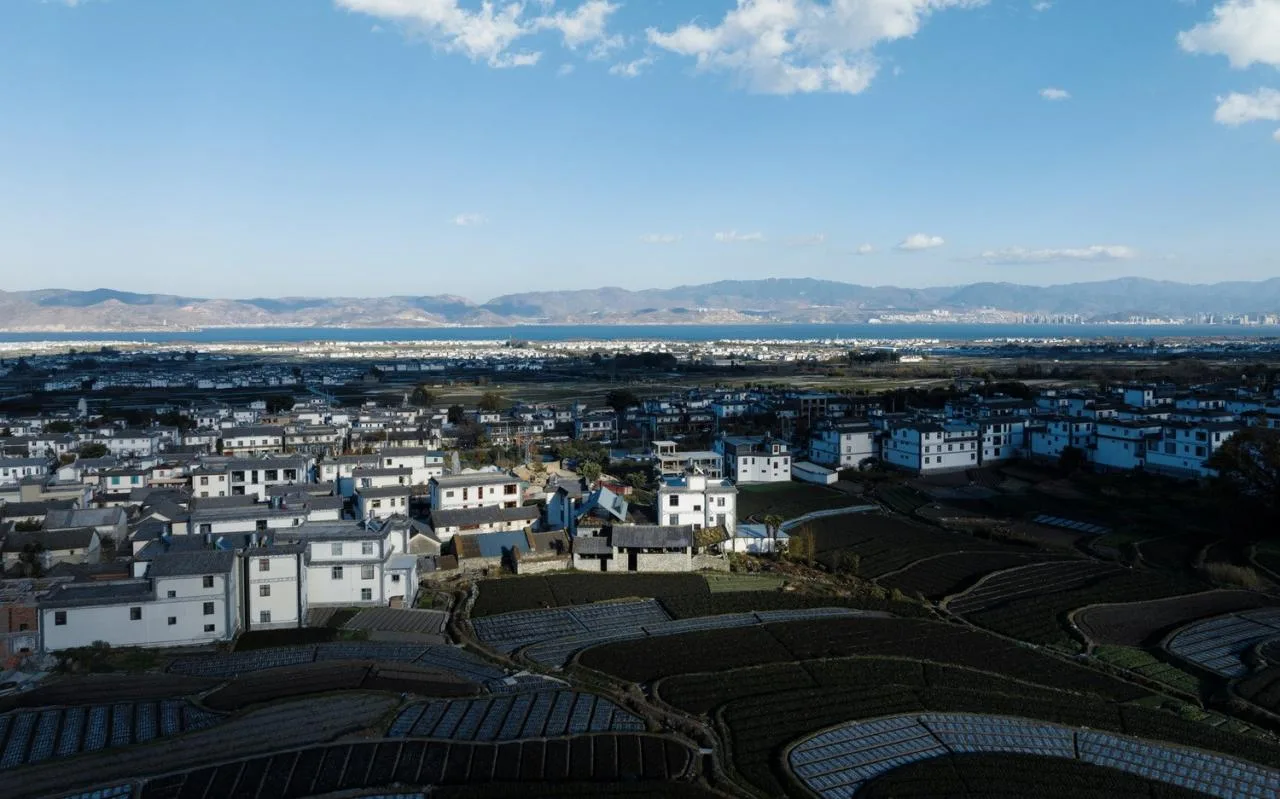
The Nineteen Peaks of Cangshan, located at the southern tip of the Hengduan Mountains, stretch in a classic north-south alignment. Parallel to them, the Eighteen Streams flow west to east, irrigating the entire Haixi Dam area. This abundant water nourishes rich vegetation and vibrant agricultural civilization before merging into Erhai Lake.
Throughout Haixi, villages of various sizes are scattered amid fertile fields. Traditional houses here prioritize the “mountain-sea relationship”: facing west and east, with mountains and water at their backs. This orientation not only welcomes morning sunlight and shields from harsh afternoon sun but also defends against the fierce southwest winter winds known locally as the “Xiaguan wind”. The inward-facing layout around a central courtyard further filters seasonal winds and sunlight, fostering a protected, natural lifestyle centered around the courtyard.
Xuxiuyuan is situated at the southwest corner of a village at the foot of Cangshan, nestled against fields with mountain views. This new studio, built for ourselves, represents an exploration of a lifestyle and workspace harmonizing with nature.
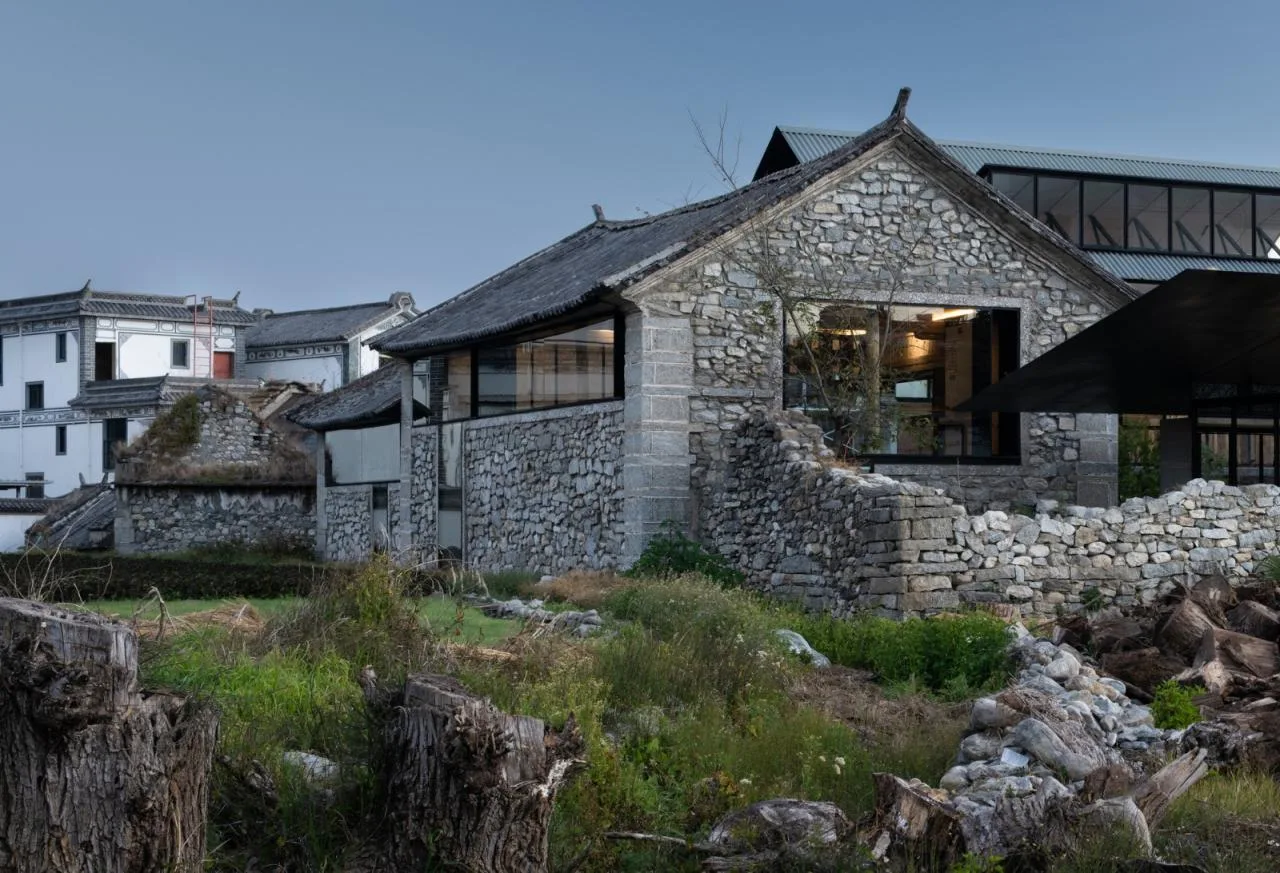
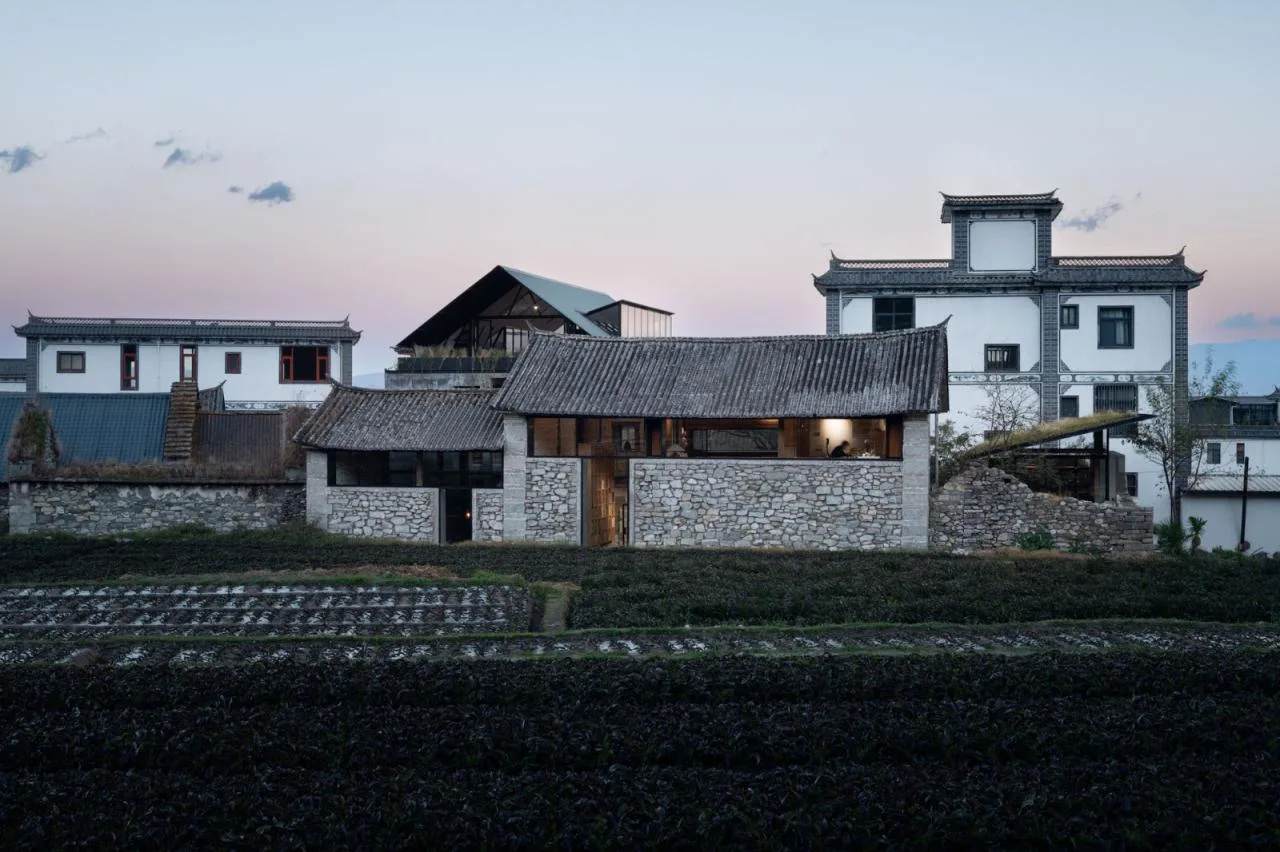
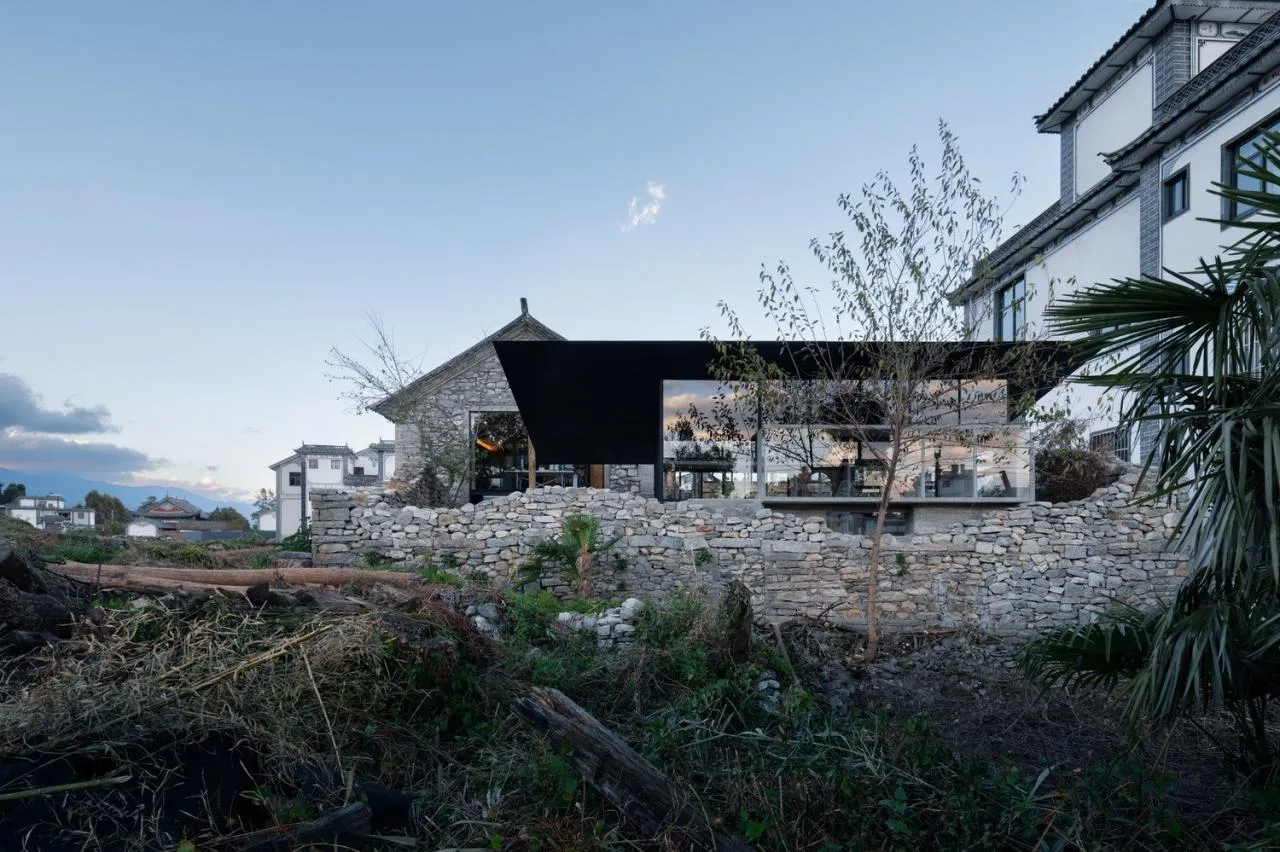
Upon first visiting the site, the old stone and wood courtyard stood silently among newly built concrete Bai ethnic residential buildings. Some abandoned stone houses and courtyard walls were overgrown with weeds, evoking a poignant sense of ruins where humanity and nature coexist.
Inside the courtyard, the west main room is a traditional stone and wood “earth storage room” built in the 1980s, while the north wing is a brick-and-stone structure from the 1990s, both well-preserved. The south wing, originally a traditional Bai “earthen warehouse,” had collapsed into ruins, with scattered stones and wooden beams covered in vegetation.
From the courtyard center looking southwest, the collapsed south wing opens up views of Cangshan. The wild plants growing on the ruins blend with the distant verdant mountain range, creating a compelling spatial dialogue between the inward-focused courtyard and the outward landscape. This experience quickly highlighted a core design challenge: how to reconnect the inward-oriented residential courtyard with the vast external mountains, seas, and fields.
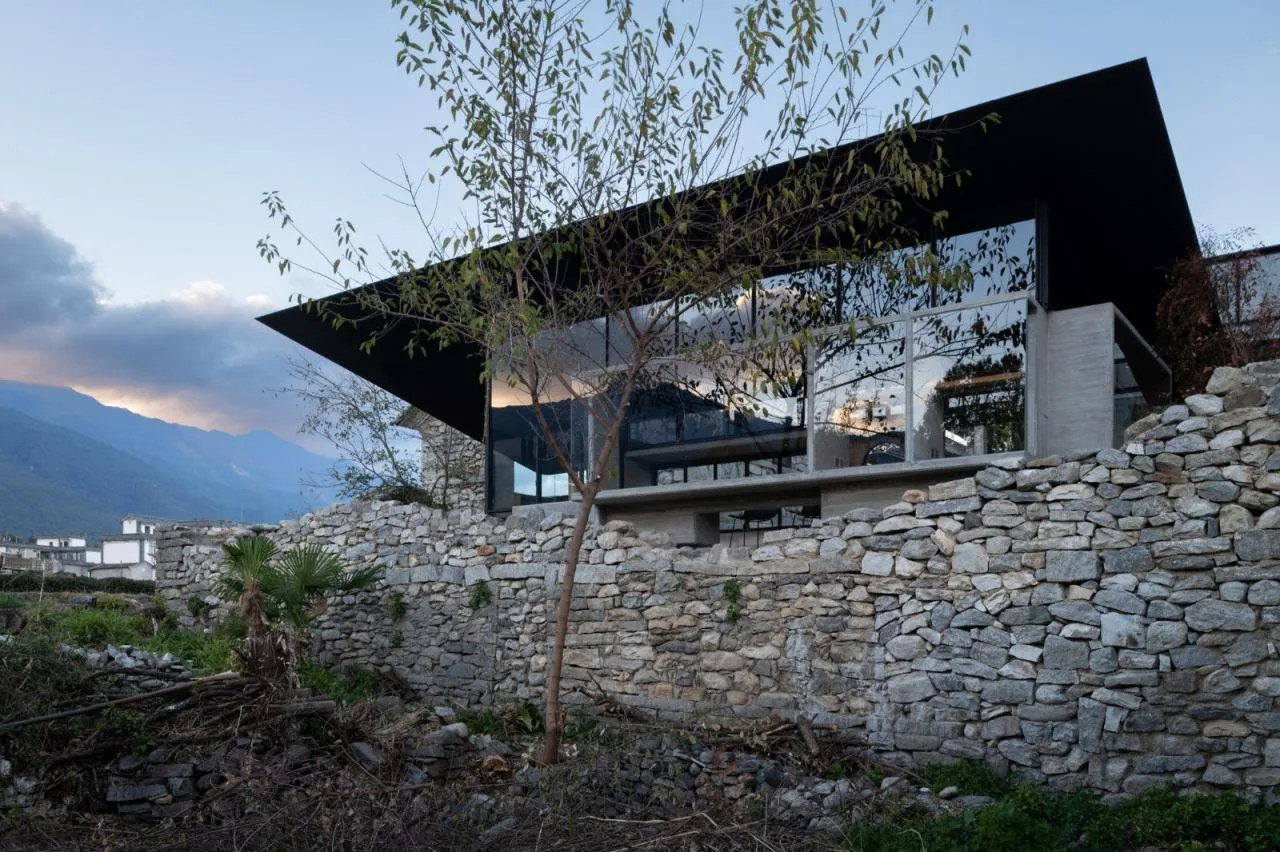
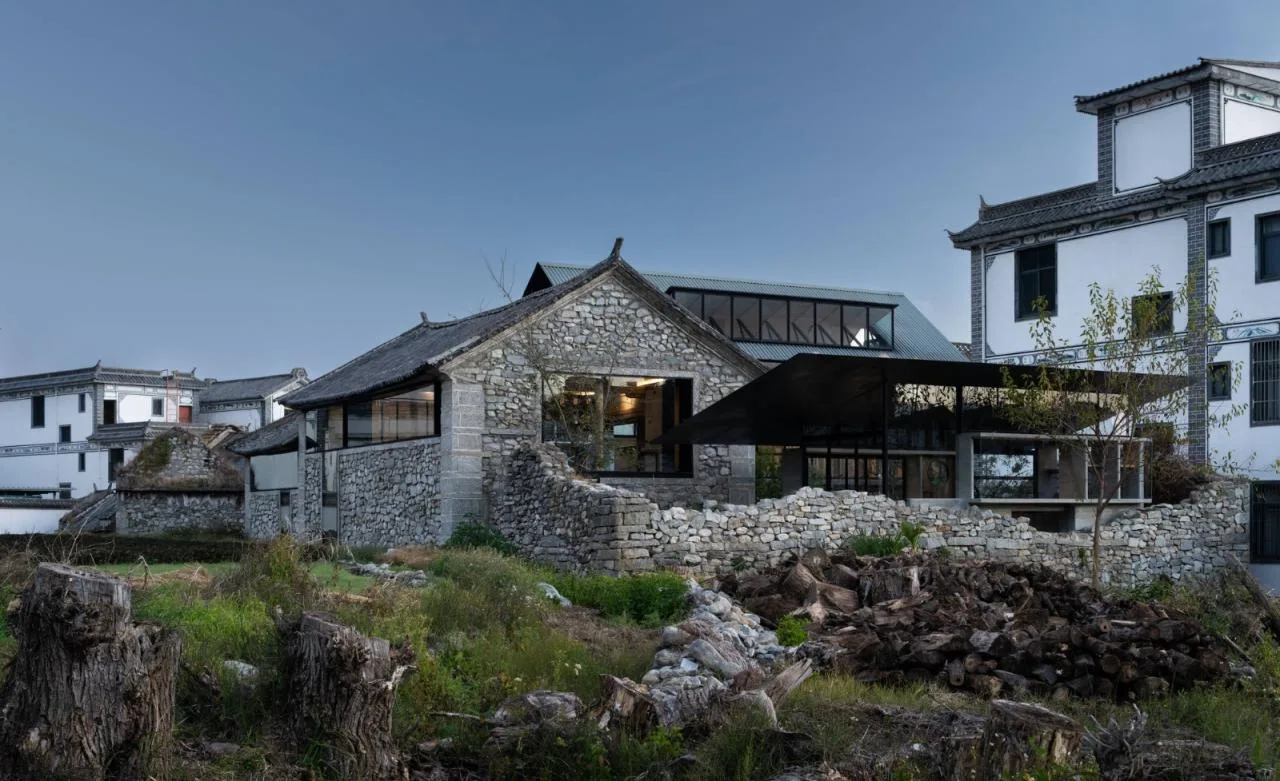
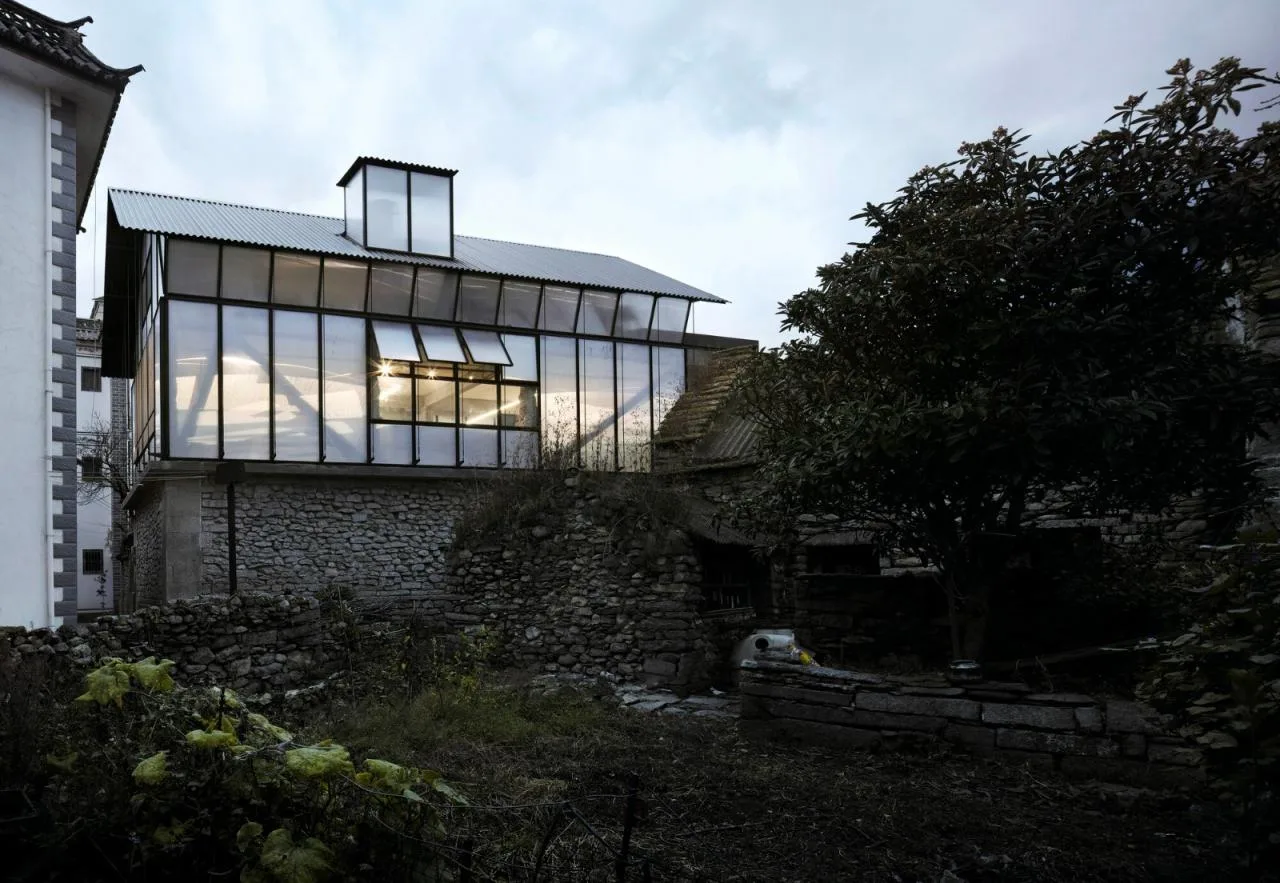
To move in before the old studio lease expired next year, the renovation was rapidly completed in just eight months. This tight deadline forced us to abandon our usual mature design process. Instead, we adopted a more local, responsive approach: starting demolition and construction after setting the main design strategy, then continuously refining the design through daily site visits and hands-on experience during demolition.
Besides addressing site strategy derived from the ruins, functionality was a key concern. The existing residential buildings had many small rooms with limited natural light—unsuitable for a studio. We aimed to transform these into more open, flowing office spaces, carefully organizing the diverse functions an architectural studio requires.
Construction was divided into two phases: first, renovating the original main buildings—the west stone warehouse and the north brick-and-stone structure. We moved in July 2021 while the yard was still under construction. Afterwards, Phase II focused on designing the coffee shop, corridor, and courtyard within the ruins garden. Monitoring construction became a daily routine, with every detail, stone, and plant felt intimately on site, making it a luxurious experience of “staying.”
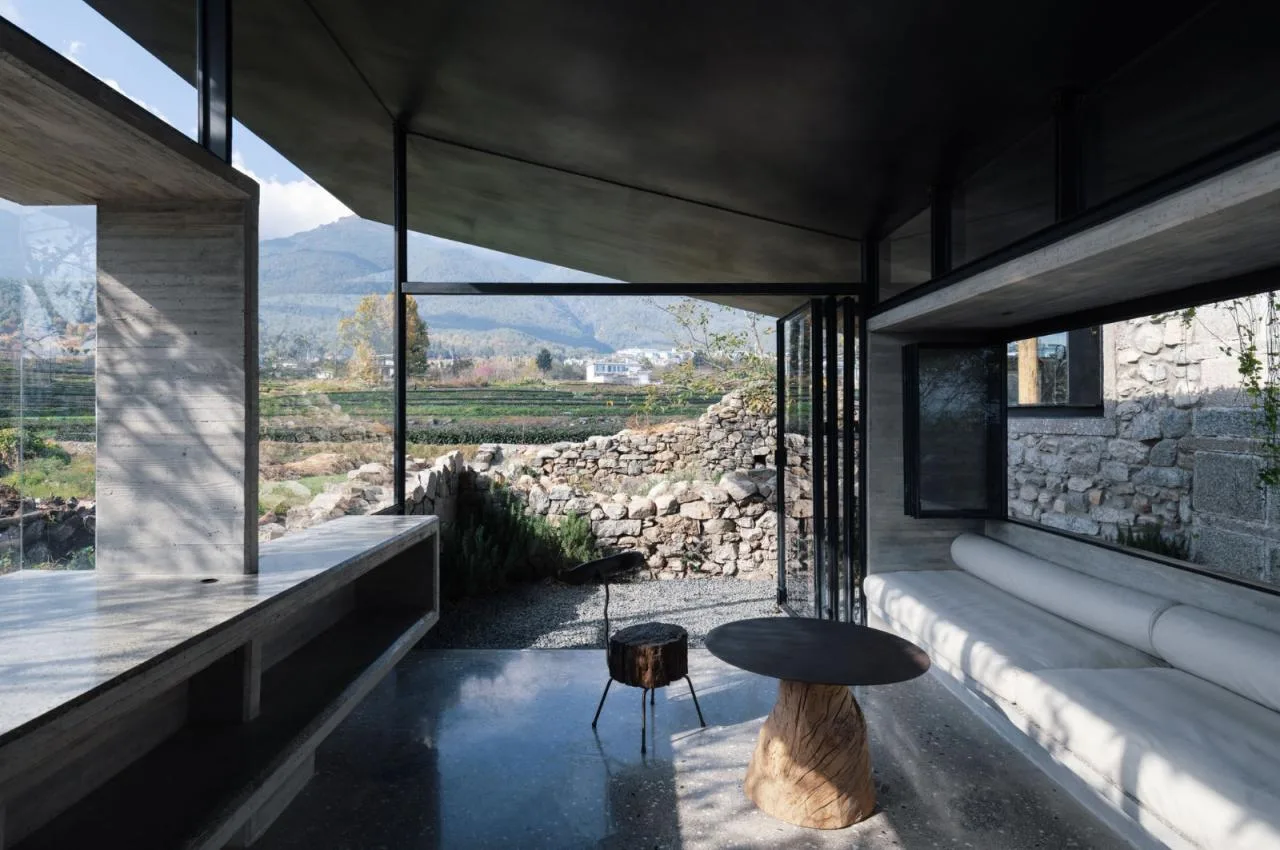
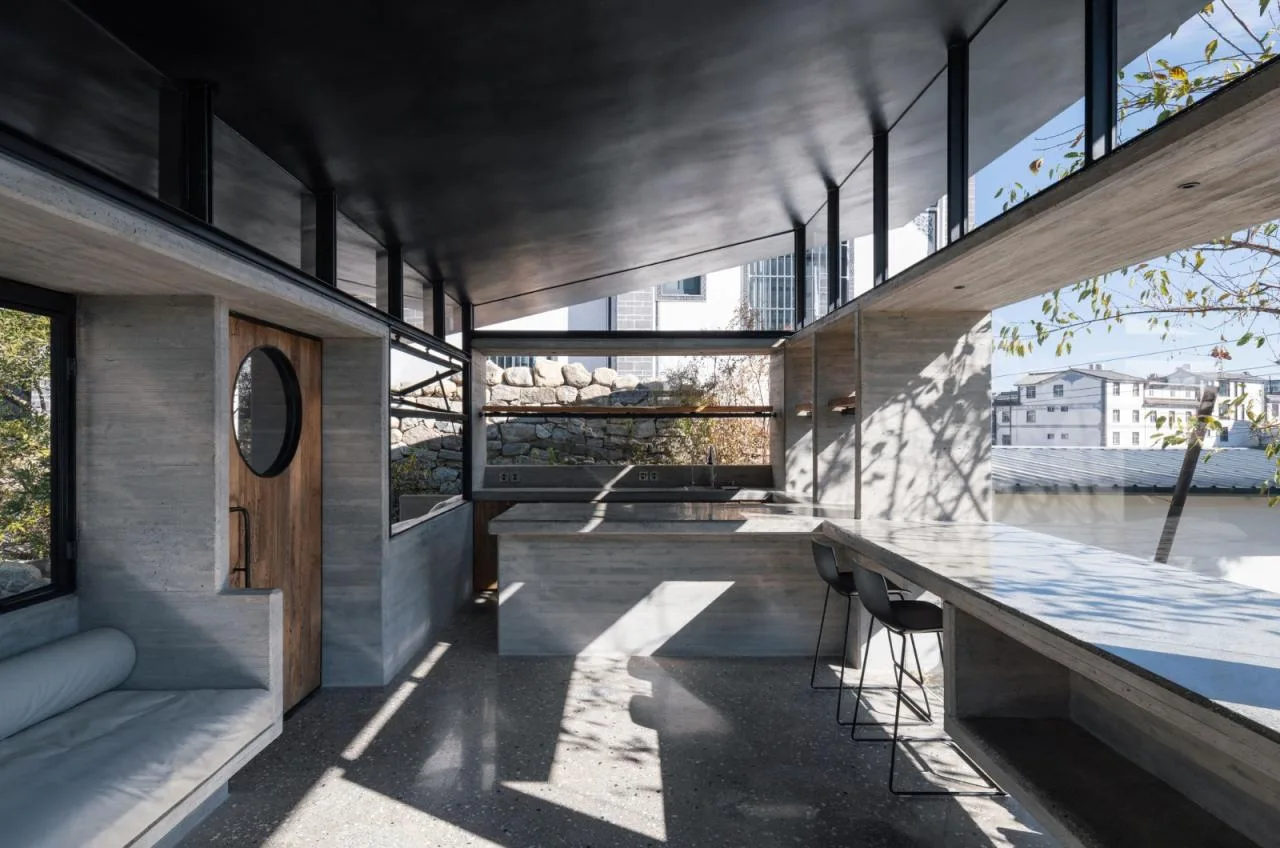
The stone house features a precise and exquisite stone wall construction on its west facade, with a sturdy wooden interior structure that shows no signs of decay. This traditional wooden framework creates a warm indoor atmosphere, evoking the unique spatial experience characteristic of the Dali region.
We placed the studio’s most interactive functions here: the first floor houses a public meeting room and book area, while the second floor serves as a private reception and workspace. The northwest corner “ear room” functions as a kitchen and communal dining area.
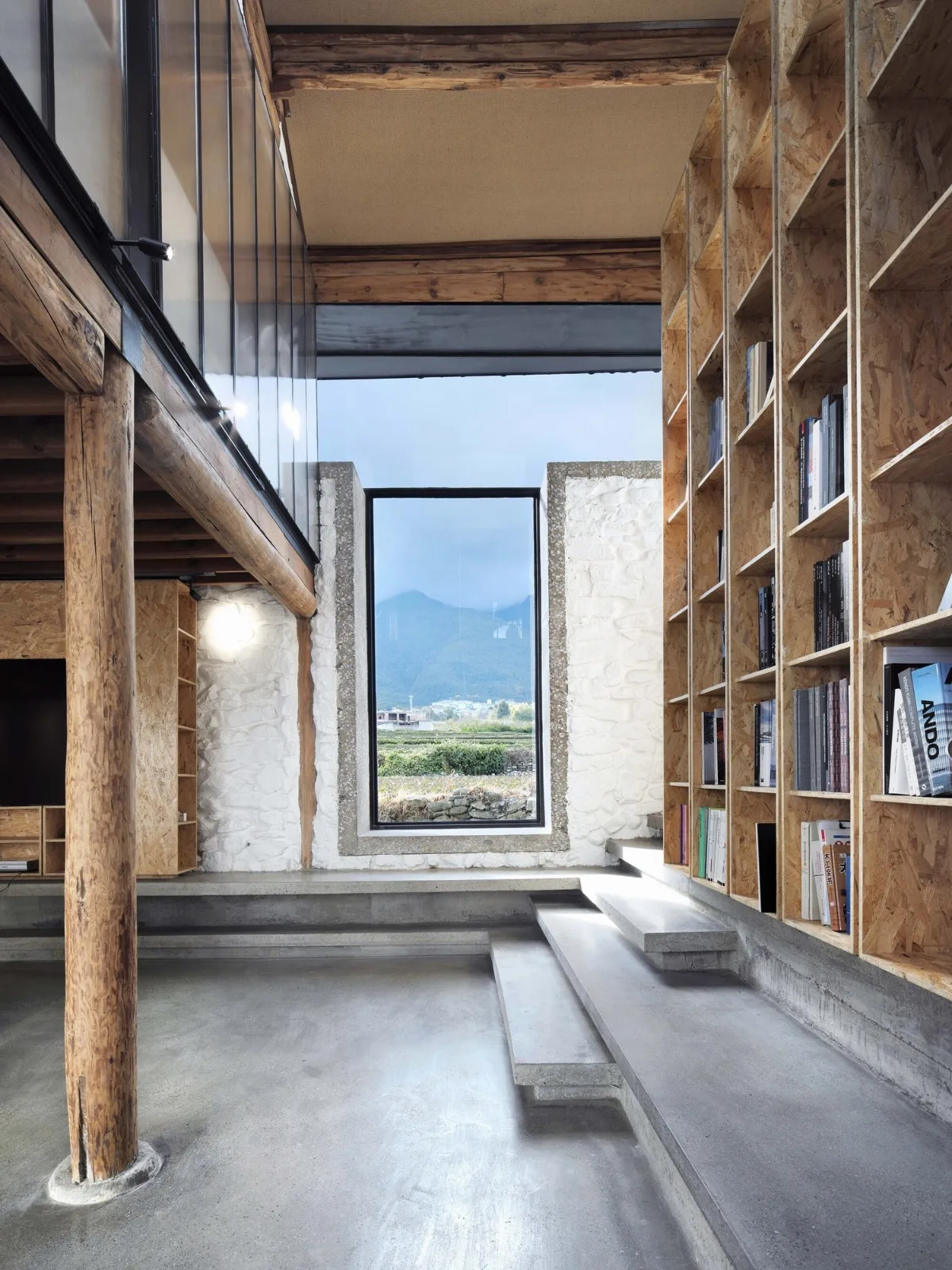
Openings in the stone walls connect the interior directly with the distant mountains, enhancing comfort and lighting. A T-shaped window on the west facade frames two distinct views of Cangshan. The vertical section aligns with the tall book area, echoing the grand Northern Song Dynasty landscape paintings with its majestic mountain silhouette and soaring bookshelves. The horizontal long window corresponds to the second-floor reception and workspace. Positioned just 1.9 meters high, it offers seated views of the terraced fields, unfolding the nineteen peaks of Cangshan like a horizontal scroll. This dual portrayal of Cangshan captures the literati landscape painting styles of “high and far” and “flat and far.”
Traditional Dali stonemasons are highly meticulous about exterior stone construction. In old houses, only corner stones, closing stones, and platform stones are chiseled flat and square, while the rubble walls in between are covered with thick “grass tendon ash” and decorated with Bai ethnic motifs.
The large openings introduced for modern use disrupted the original facade design of the earthen warehouse, leaving some decorations awkwardly positioned. We chose to remove all cultural ornamentation on the stone house facade, exposing the previously hidden stones beneath the grass and gravel. This stripped-back expression returns the building to a simpler, ancient “stone house” aesthetic.
To reinforce the new openings, we installed concrete window frames, which also served as a base for steel window frames. After rough grinding, the concrete’s texture complements the rustic cobblestone wall. The steel-framed glass aligns flush with the stone wall, juxtaposing rough stone with smooth reflective glass to soften the traditional stone wall’s heaviness.
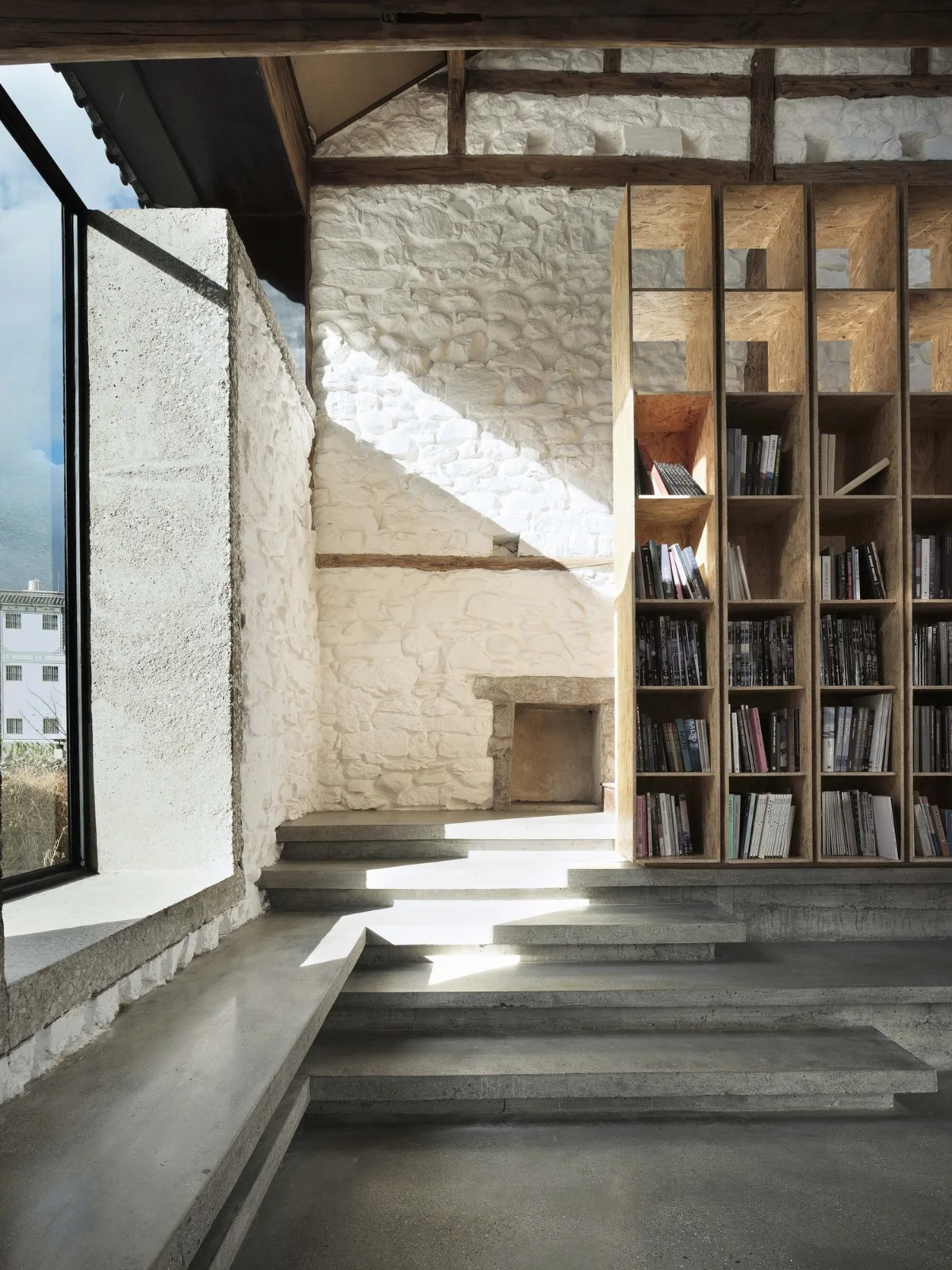
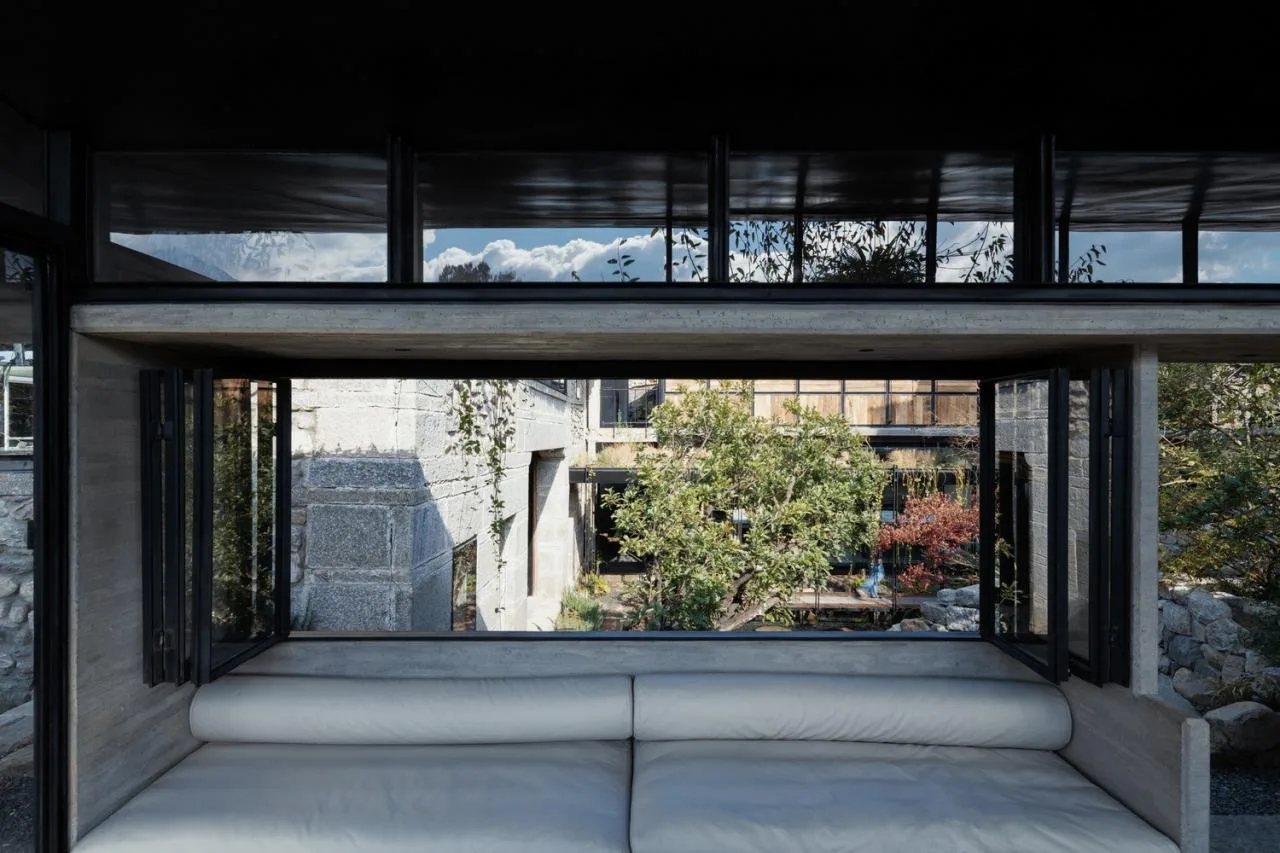
The thick 600mm stone walls create deep window recesses inside, offering a “cave-like” spatial experience. A key design move involved removing the second-floor wooden floor in the book area to introduce daylight from the east and vertical mountain views from the west, crafting a spiritually rich reading space.
The corner staircase blends terrain and furniture: the first half forms a concrete terrain base echoing the external terraced fields, abstracting the landscape indoors. This terrain extends into furniture elements, guiding users to a hidden staircase behind a bookshelf that leads to the private reception on the second floor.
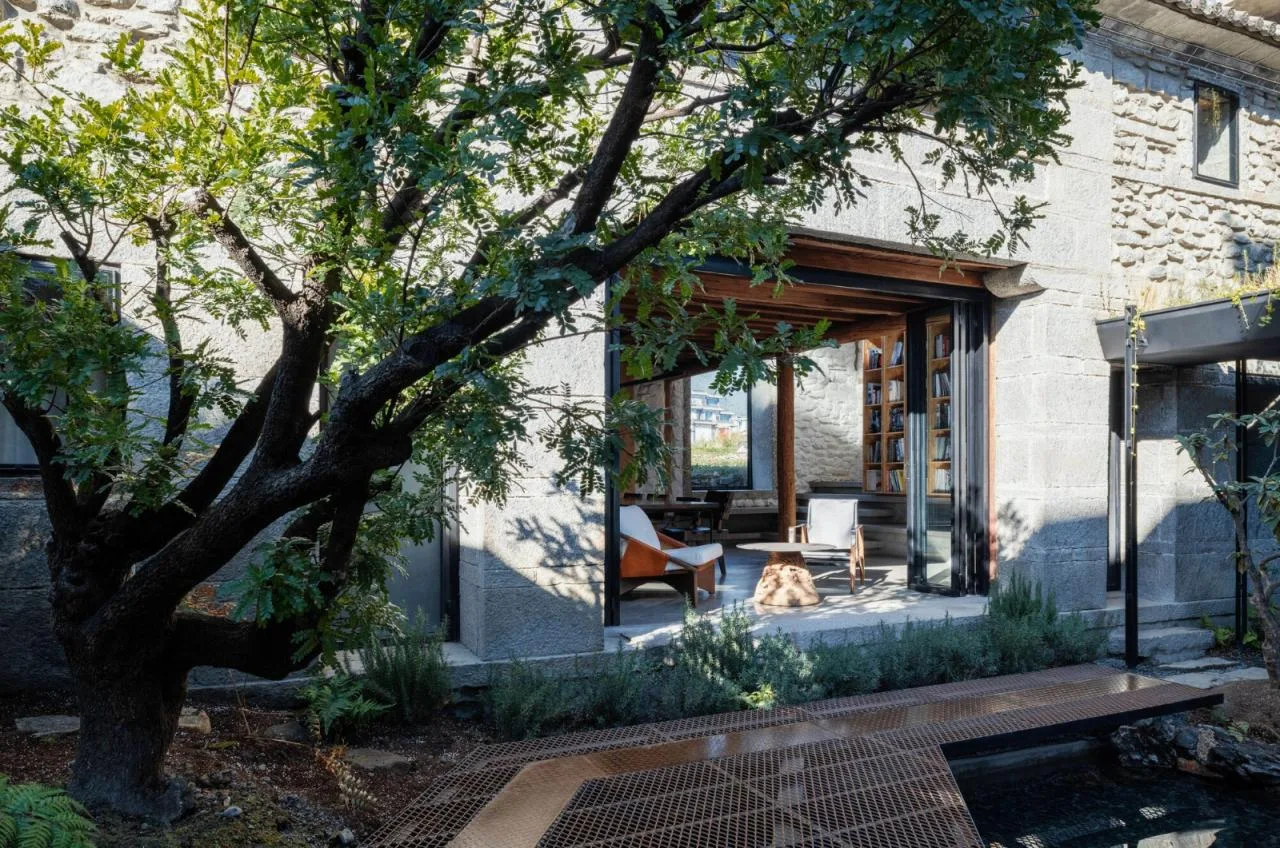
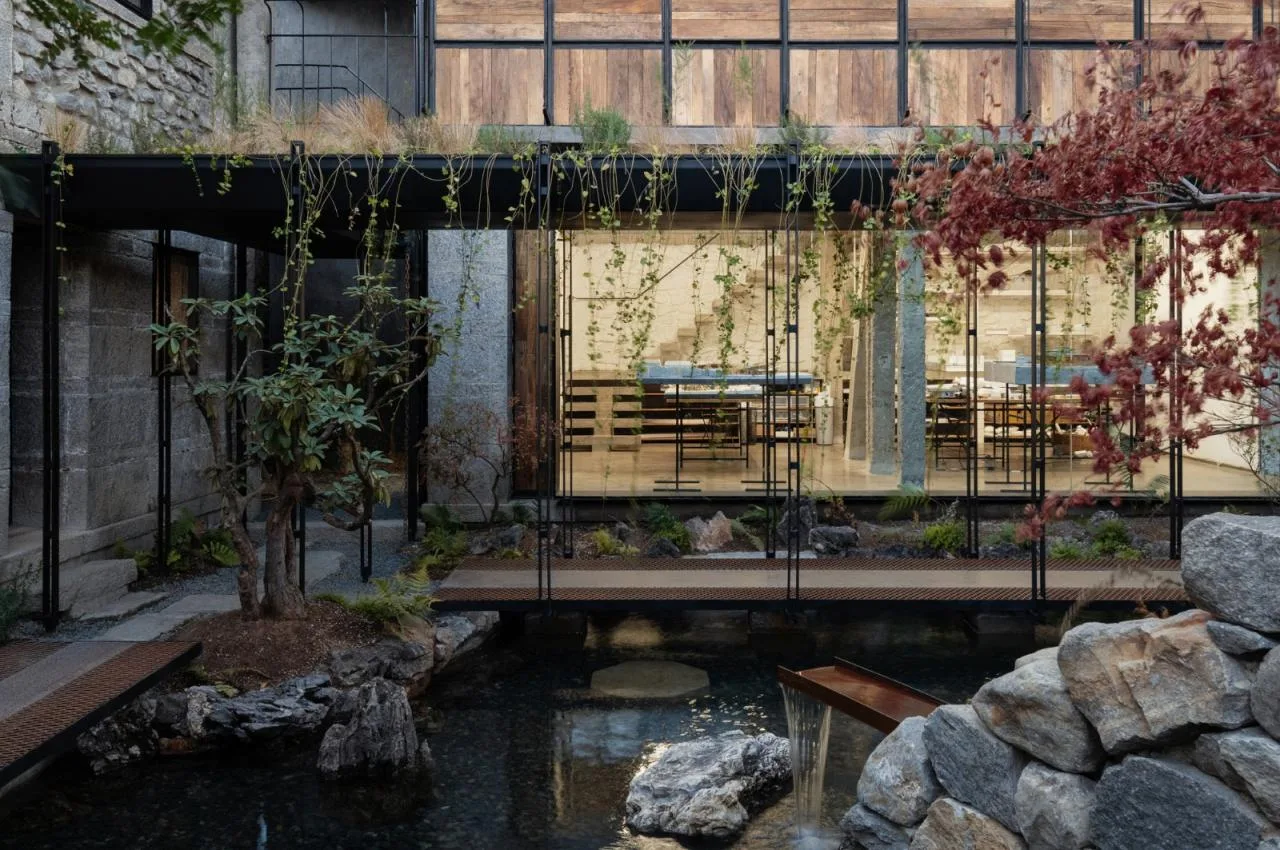
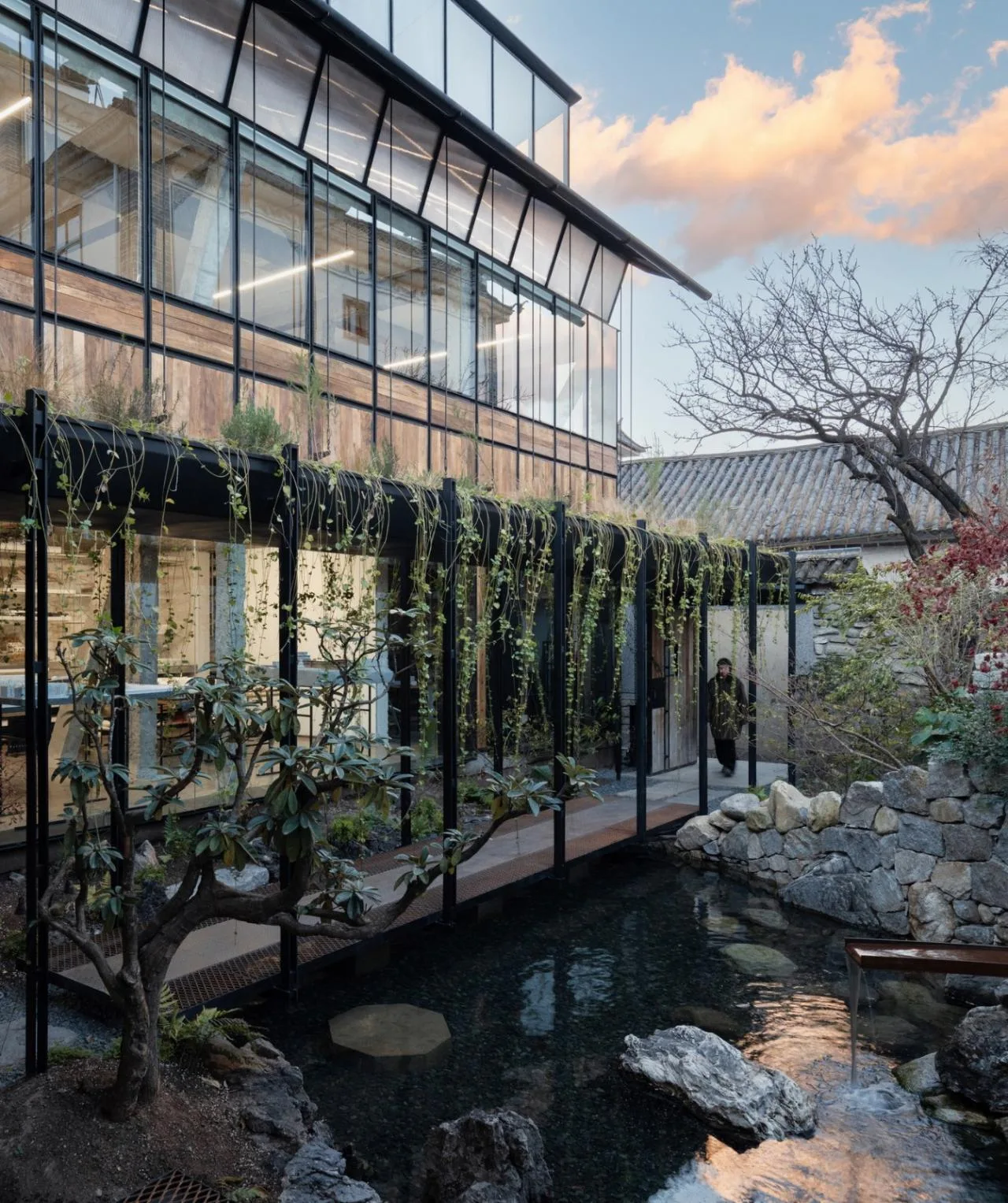
The North Building’s transformation from garden cave to attic reflects a spatial evolution from interior to exterior experience. Its first floor features thick 600mm stone walls on three sides with no windows facing outward, creating a semi-underground cave-like atmosphere focused inward toward the courtyard.
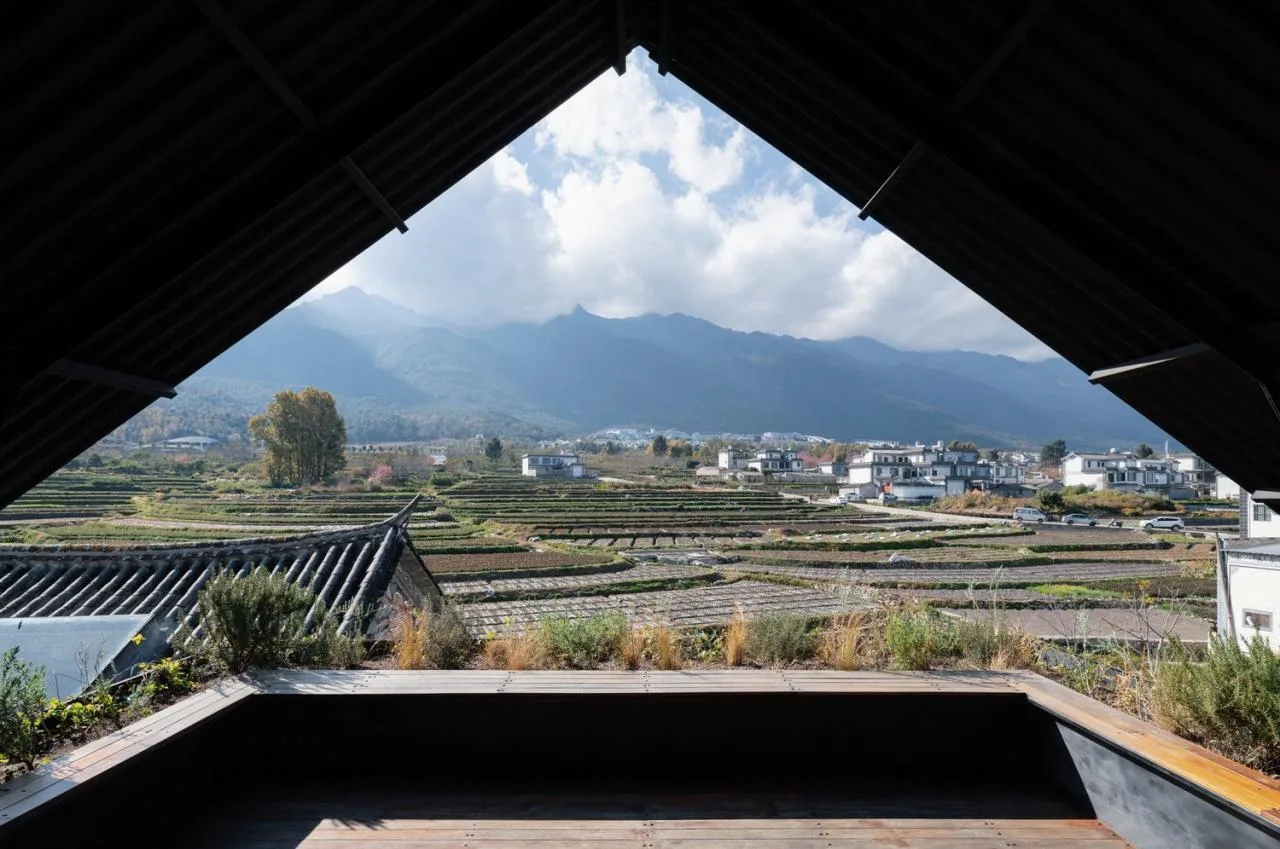
The second floor, a typical brick and concrete structure, offers better lighting and open space, with a horizontal long window framing the southern facade as a framed structure. The roof terrace provides panoramic views of the 19 peaks of Cangshan to the west and Erhai Lake to the east. However, Dali’s climate makes such an open terrace impractical, necessitating a three-story roof addition.
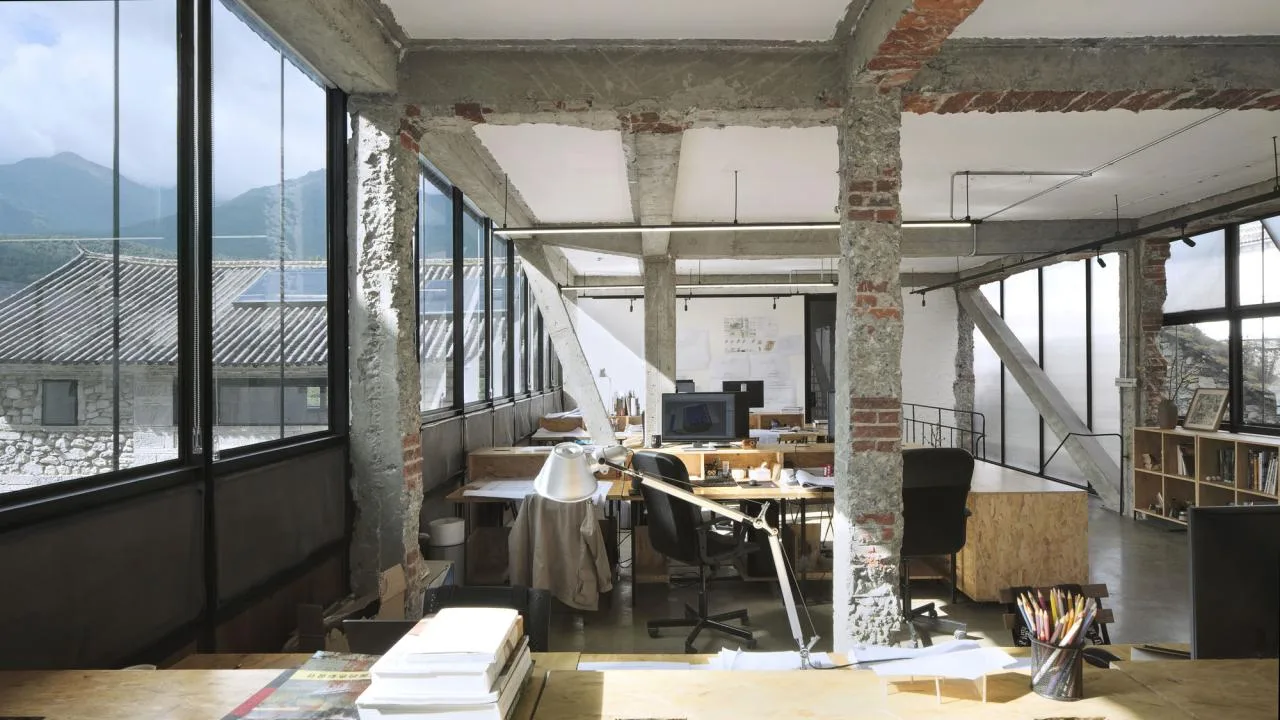
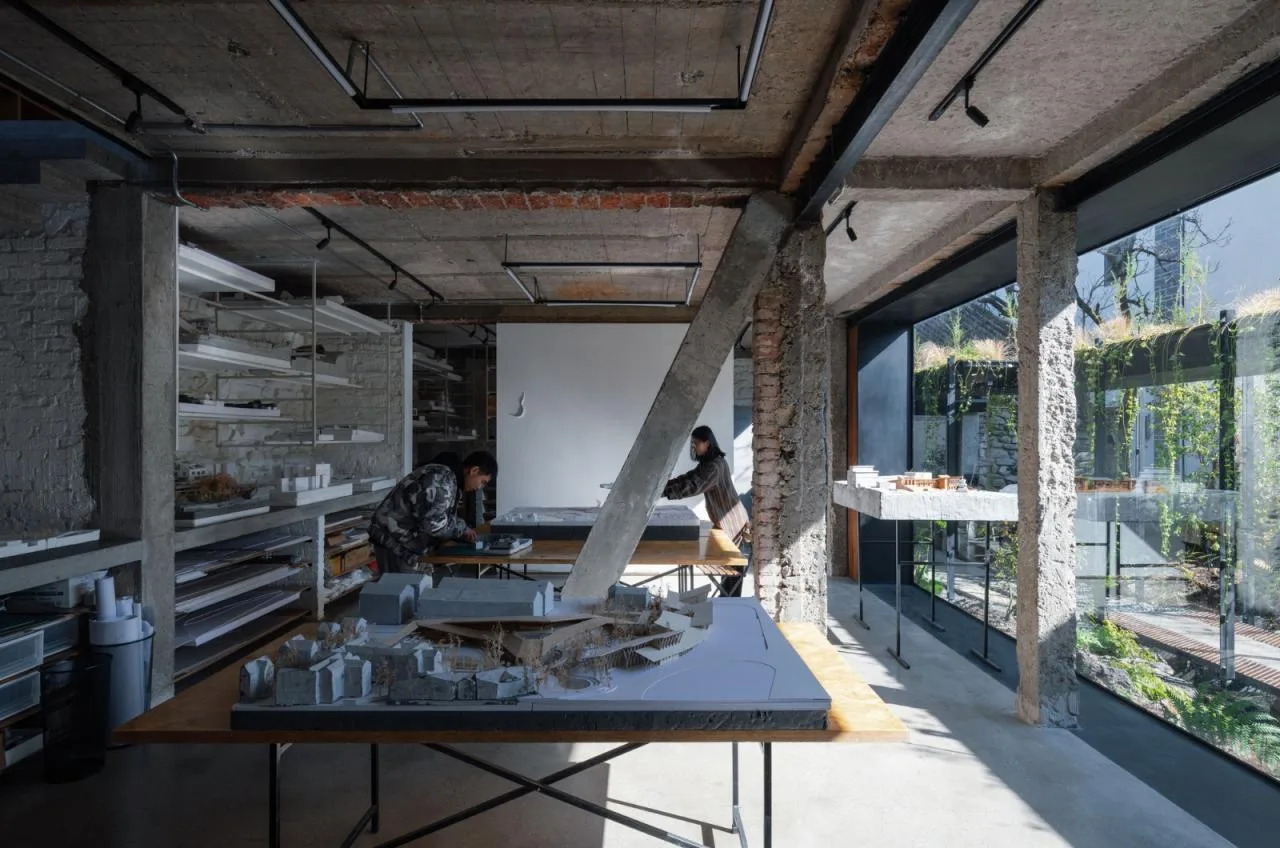
We initially desired to remove all internal brick walls in the North Building to create an open office space. Structural analysis indicated that in Dali’s high-intensity seismic zone, removing many walls risks lateral stability. To counter this, concrete slanted support columns and horizontal stiffening beams were introduced.
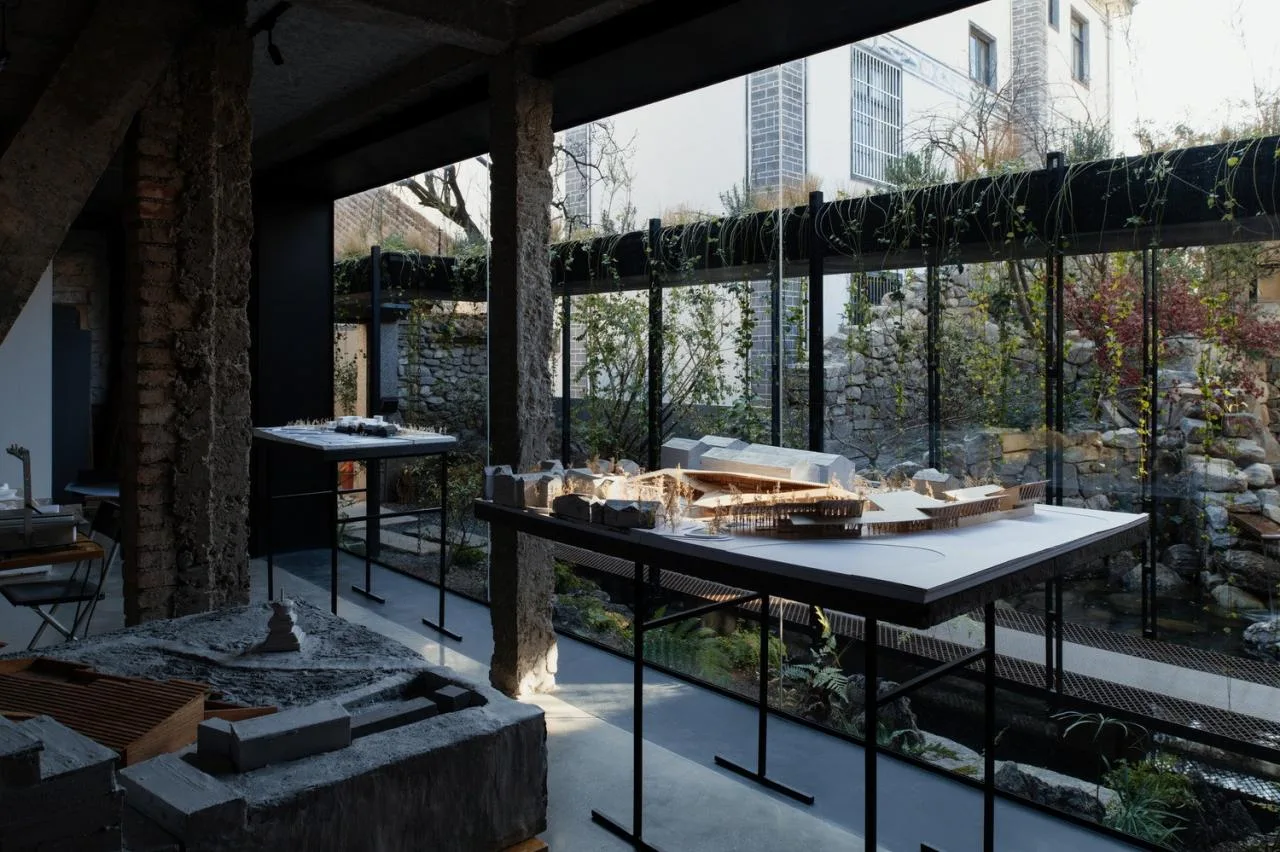
Following structural guidance and spatial considerations, we preserved three exterior stone walls on the first floor, demolished internal brick walls, and added a central slanted support column. The rough stone walls paired with concrete beams and columns maintain the cave atmosphere. Large hidden-frame glass floors bring in garden views, forming a “garden cave” mold workshop.
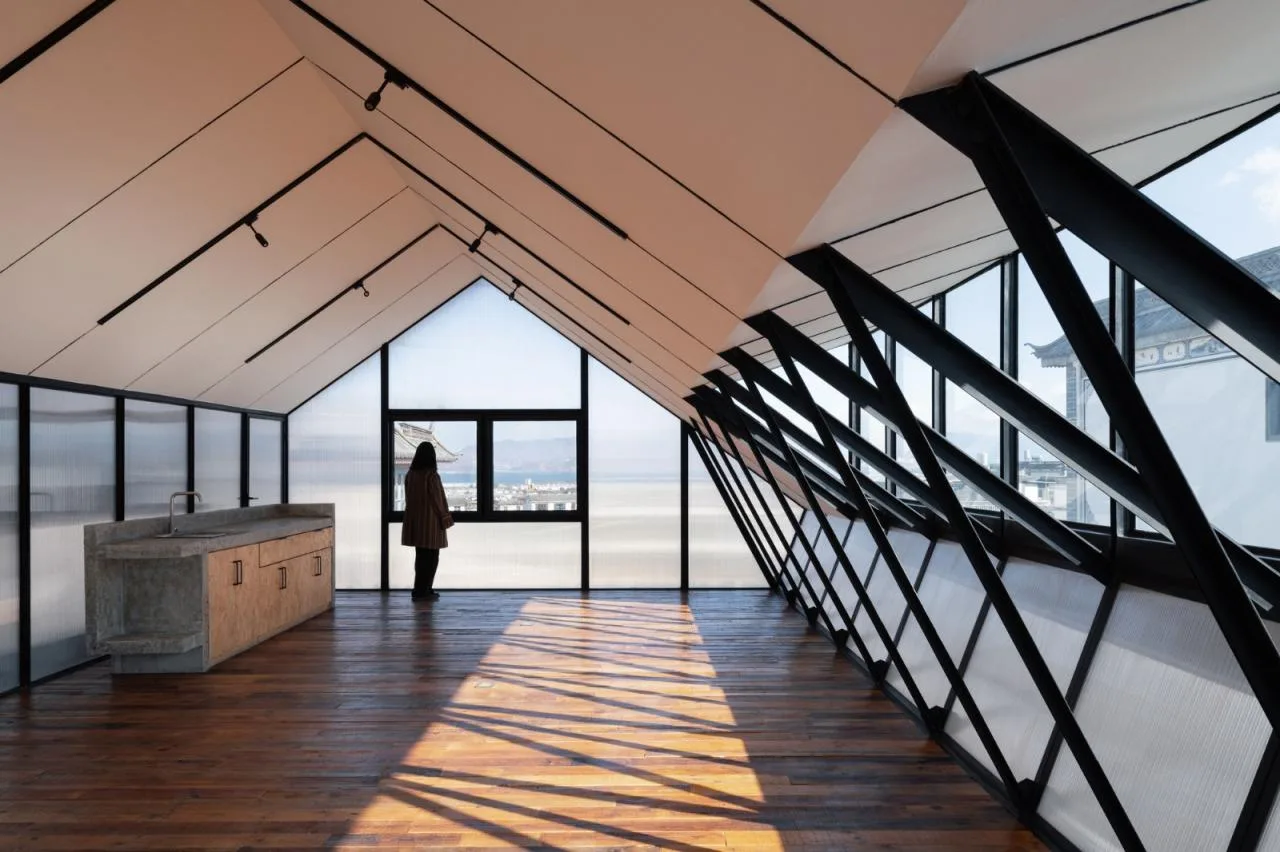
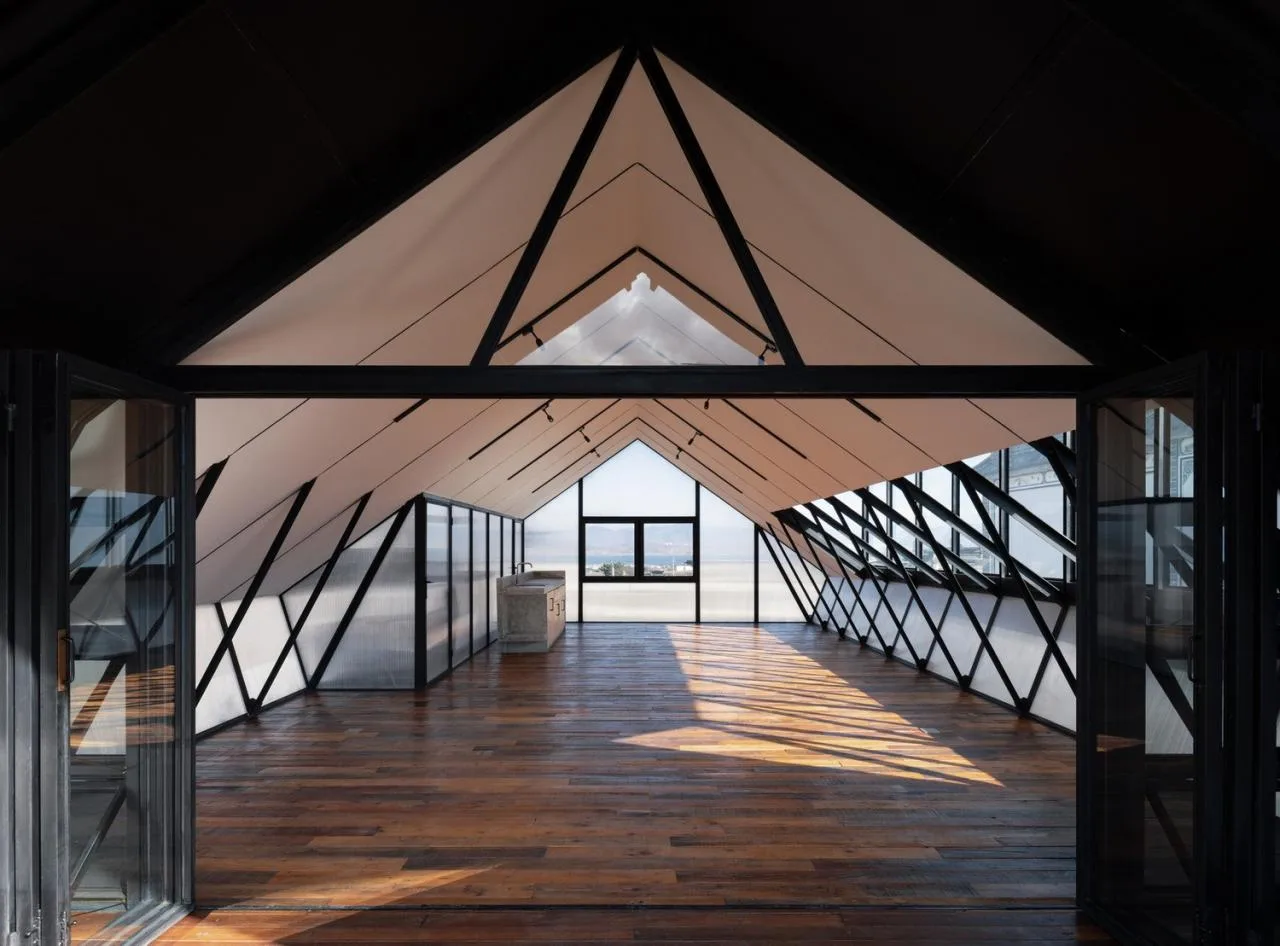
The second floor serves as the main office, with all but one brick wall removed and five slant support columns reinforcing the perimeter. Steel-framed glass and polycarbonate panels provide even, ample light. A lightweight steel attic on the third floor creates a public leisure and reception area connecting mountains, sea, and sky.
The reception room’s west folding sliding door opens onto a panoramic Cangshan terrace, while a semi-transparent east facade filters cluttered foreground buildings, subtly revealing Erhai Lake in a small window. A horizontal tiger window on the south side frames distant mountain views, inviting quiet contemplation.
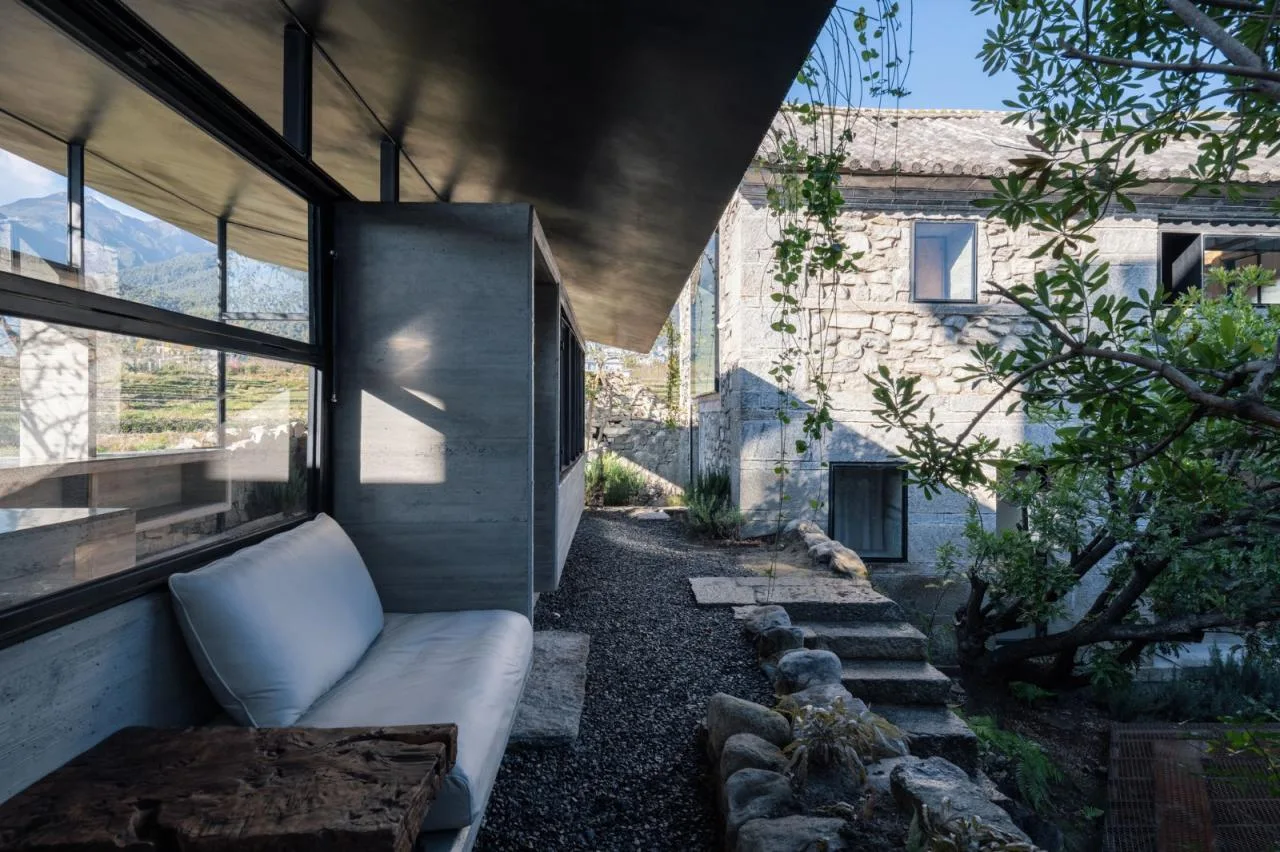
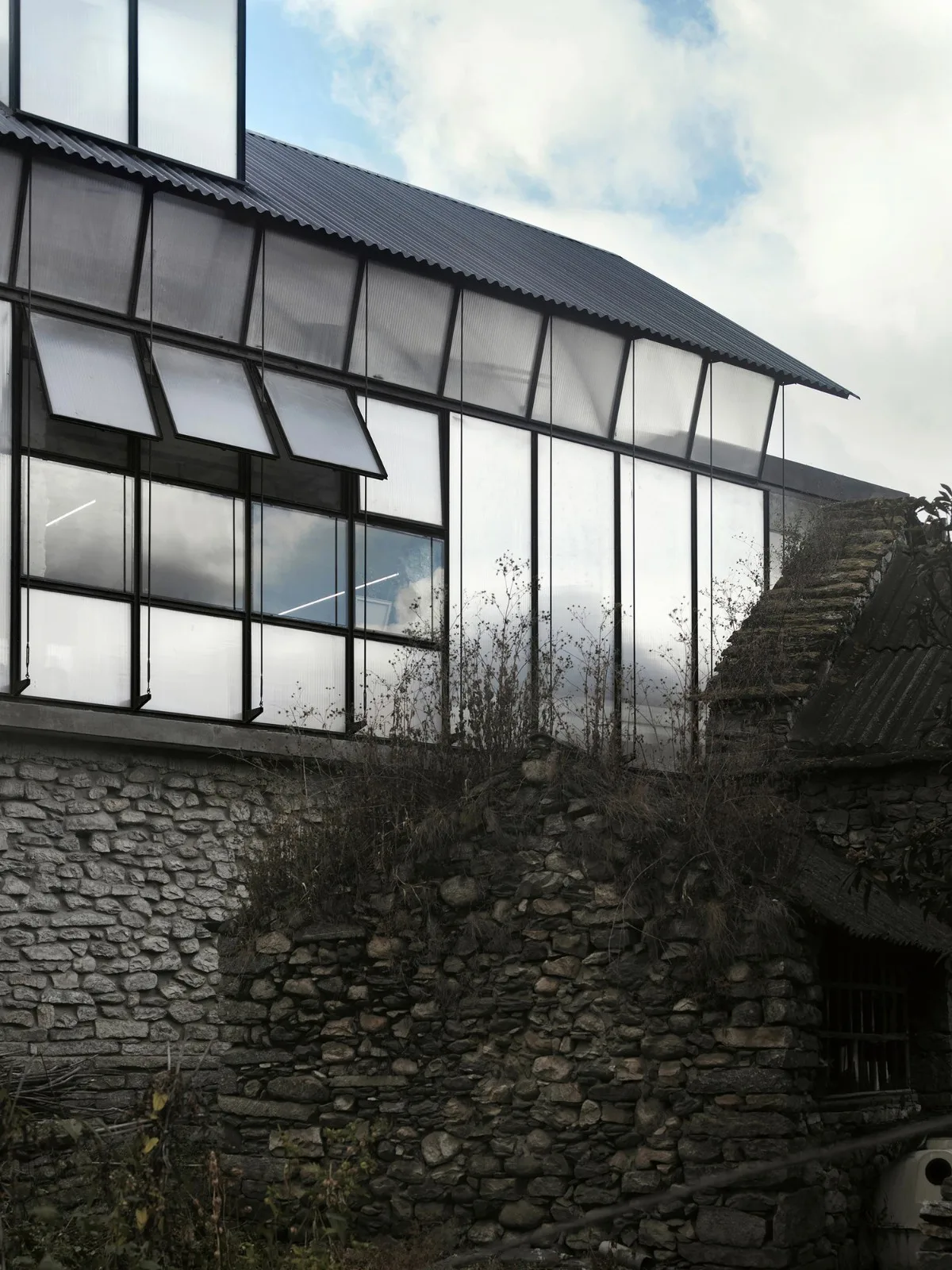
Complementing the internal renovations, the North Building’s upper two and three floors form a lightweight, semi-transparent steel double-pitched volume resting atop the stone base of the first floor. From a distance, this contemporary sloping roof appears to emerge lightly from the surrounding textured old stone roofs.
Constructed with steel bent beams spaced one meter apart—matching the steel window frames on the second floor facade—this increased structural density allowed smaller section sizes. The three-story steel slant support columns were reduced to slender window-frame dimensions, integrating seamlessly with the facade to create a unified, delicate steel structure across the second and third floors.
Given Dali’s strong winter winds, we added a row of φ20 round steel rods outside the second and third floors, tightly binding the steel roof structure to the first floor’s top plate. These slender rods further enhance the facade’s lightness while improving lateral wind resistance.
After transforming the stone house and North Building from isolated structures into interconnected spaces, we moved in July the following year. While the nature-integrated work environment thrilled everyone, the semi-completed site revealed challenges with the overall spatial experience.
The early “garden strategy” was interrupted by the rushed main building renovation, only to be reawakened by daily discomfort in the yard. Firstly, the stone house and North Building felt disconnected due to their differing construction systems; their isolated presence needed softening to strengthen the courtyard’s overall spatial experience.
Secondly, the scale felt unbalanced. Traditional Bai courtyard houses are one and a half stories high, but the current North Building’s two and a half stories and the neighboring three and a half story Bai houses created an oppressive inner courtyard.
Finally, the courtyard felt bare and unfinished, with a plain cement floor undermining the envisioned natural lifestyle. These “semi-finished” issues required resolution through a garden-centered spatial design in Phase II.
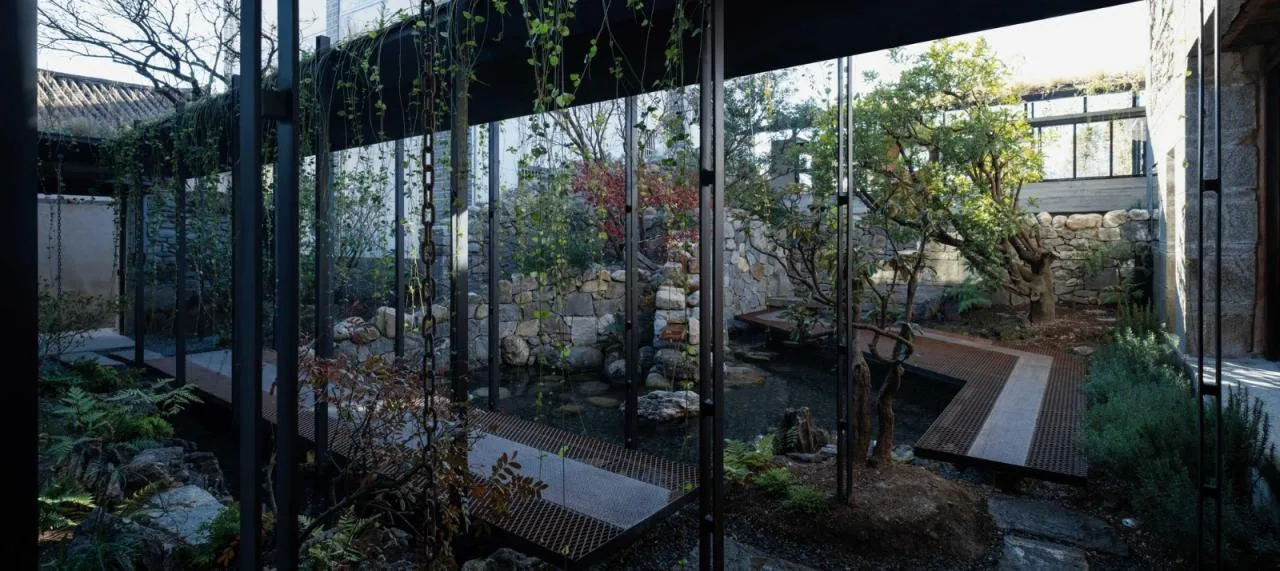
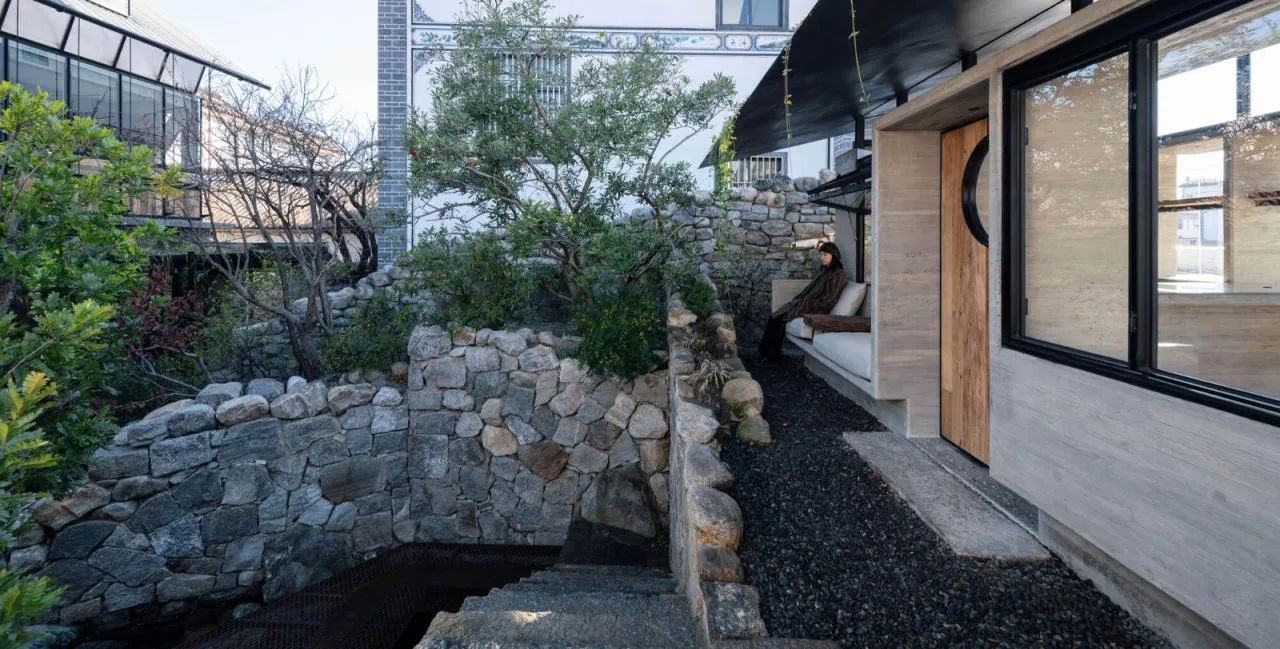
The ruins remained the starting point for breakthroughs. Their towering presence defined two spatial prototypes: the “inward courtyard” beneath and the “outward platform” above. Leveraging this height difference, we extended the neighbor’s three and a half story building northwards with a micro-terrain approach, stepping down into the inner courtyard to create a “stone mountain” planted with vegetation. This softens the oppressive scale of the tall building to the east and draws attention toward nearby mountains, forests, and greenery.
The neighbor’s tall white painted wall recedes into a backdrop, while the semi-collapsed rubble walls of the ruins, adorned with wild grasses and moss shaped by rain and sunlight, evoke a powerful sense of time. The abundant Cangshan hemp stones buried in the ruins became the natural “mountain” material, avoiding the need for artificial carving.
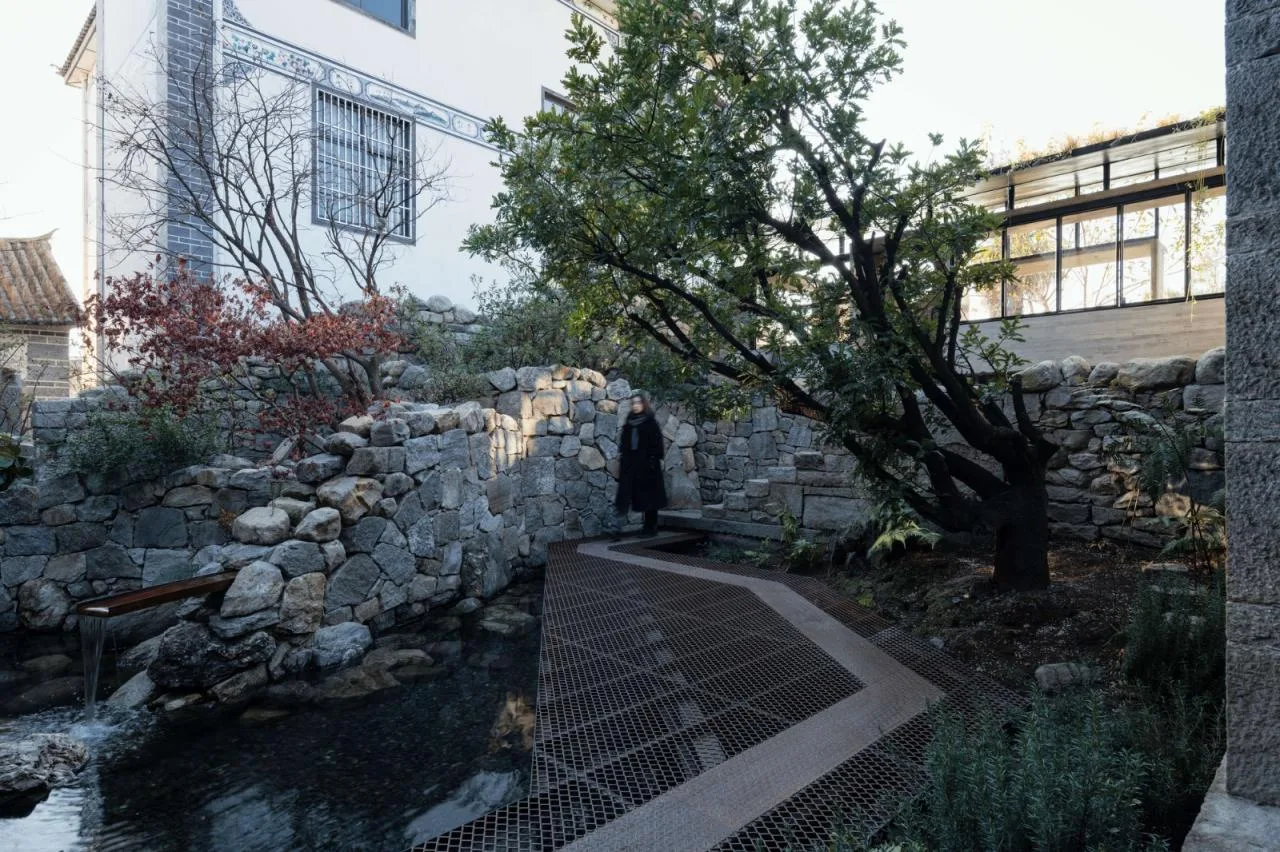
At the foot of Cangshan, groundwater is plentiful. Digging 20–30 cm in the courtyard causes seepage, and a well stands in the courtyard center. This abundance made water features a natural choice for shaping the inward courtyard beneath the ruins. Excavated soil was backfilled on the ruins, completing the simple “stacking mountains and organizing water” terrain framework, setting the stage for further garden elements to emerge.
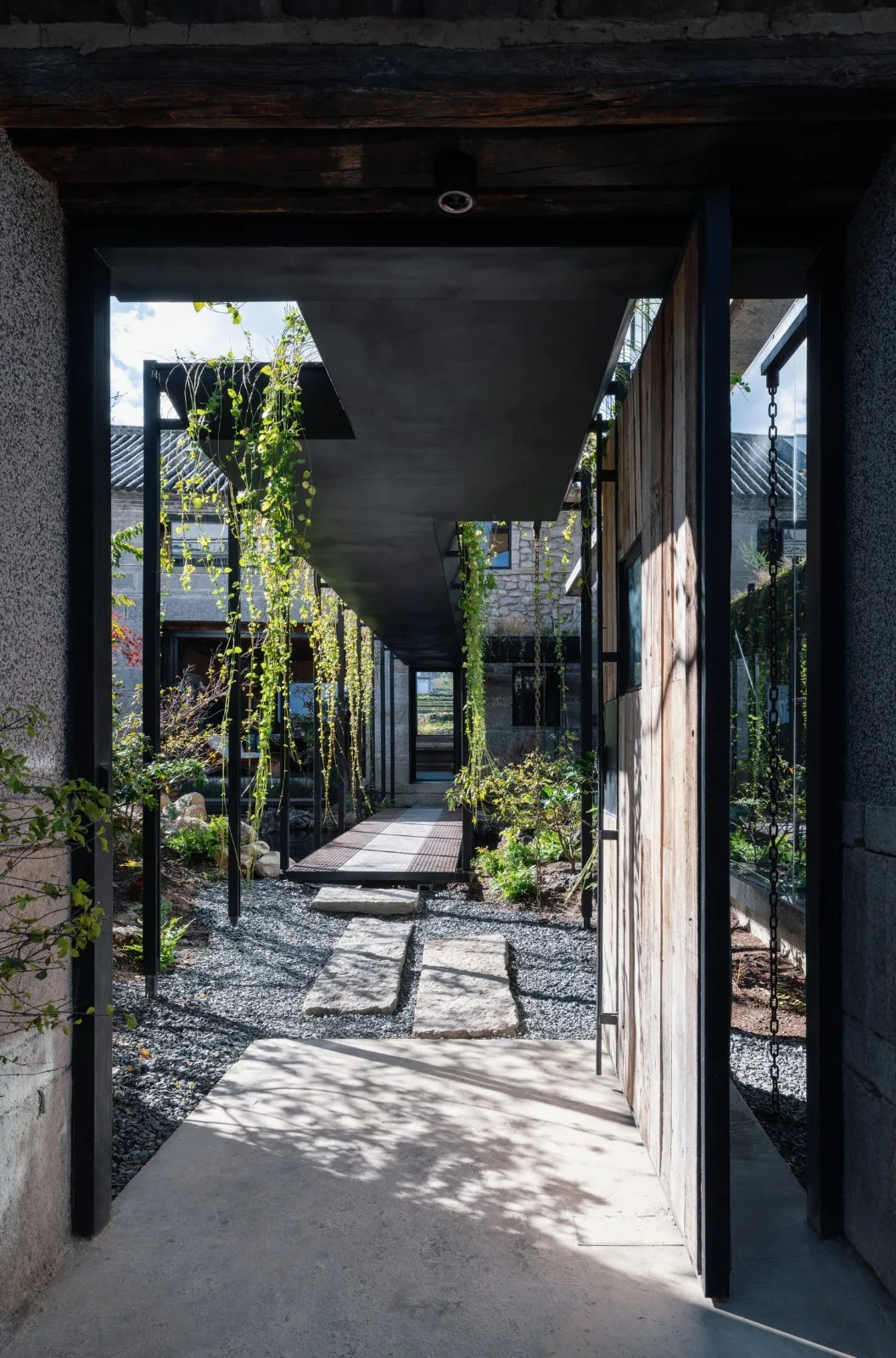
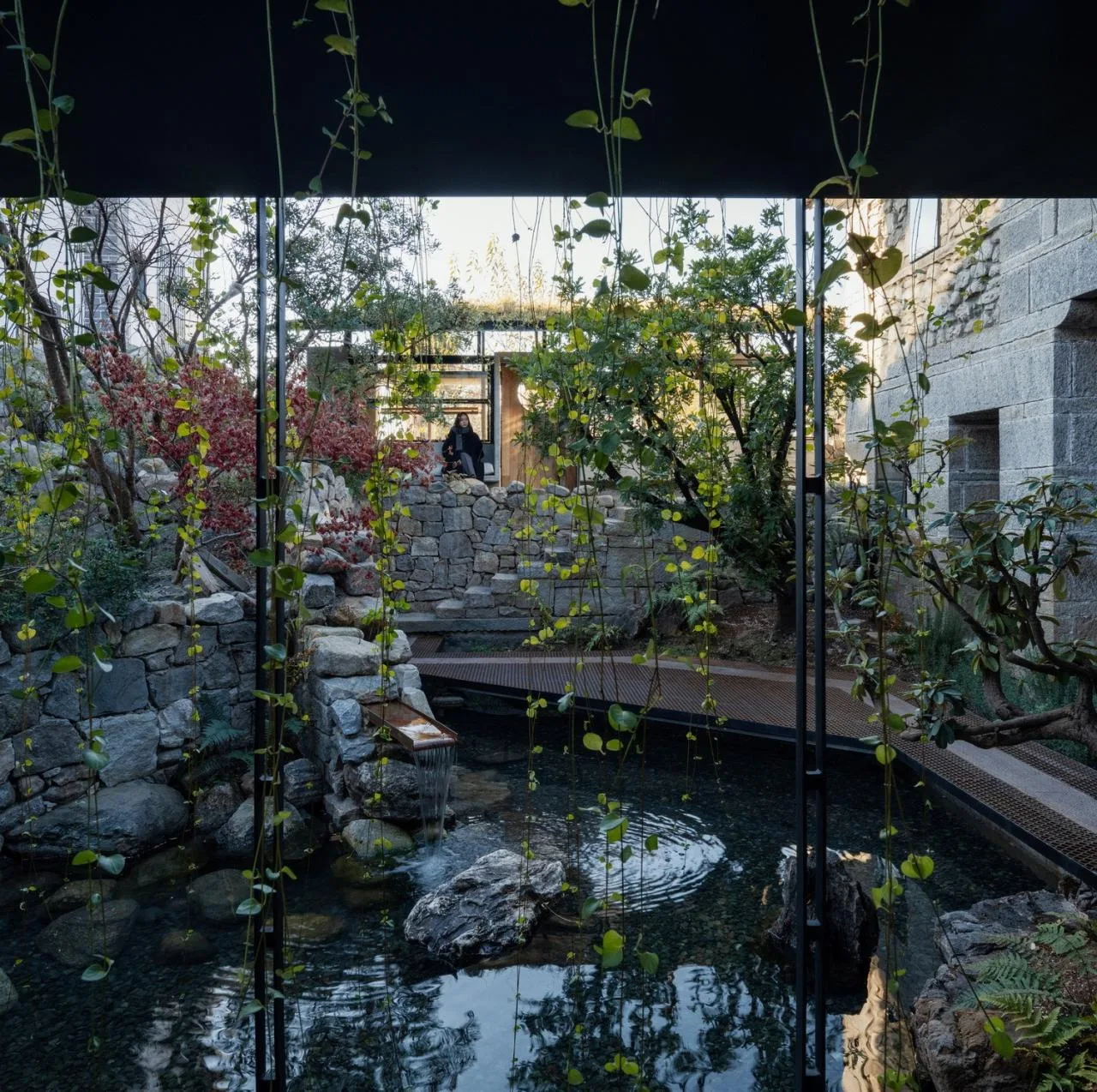
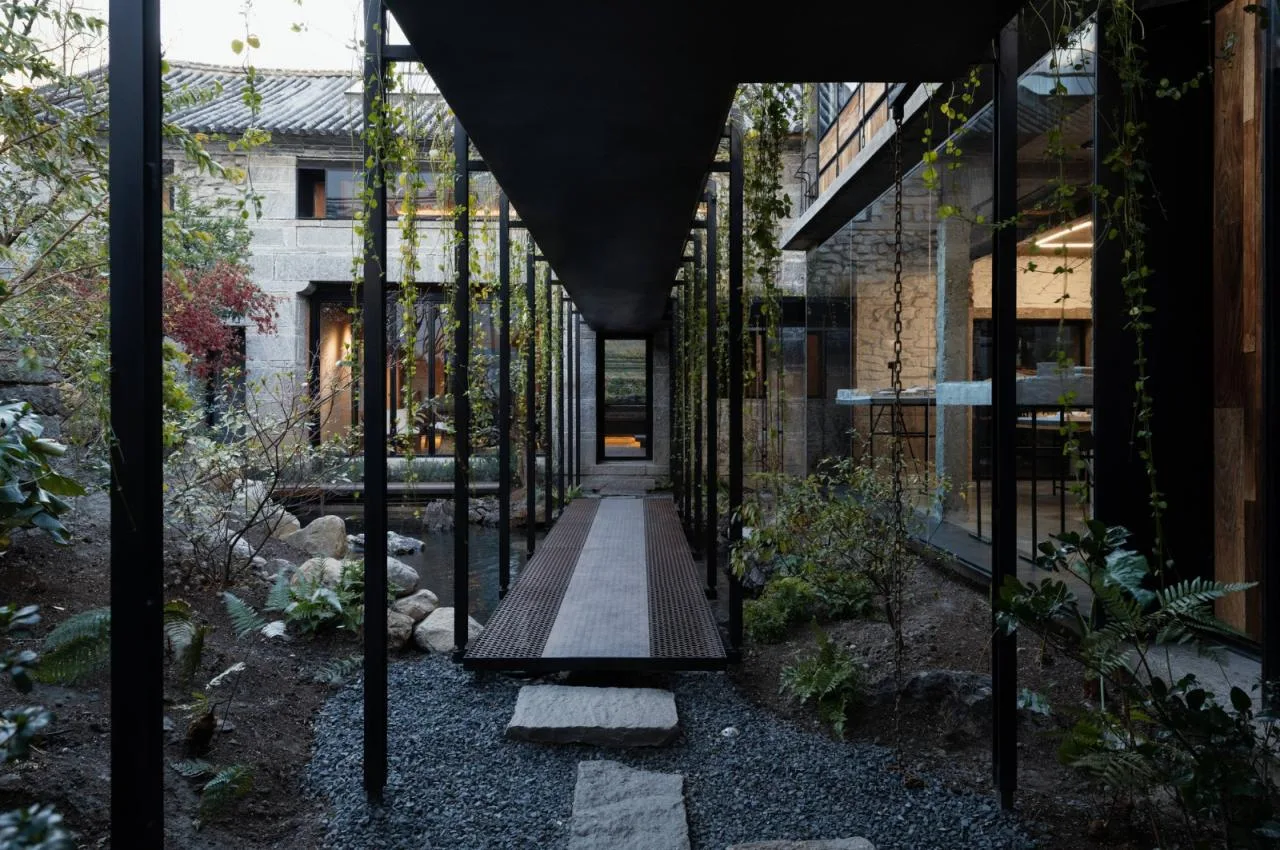
The corridor acts as a bridge, connecting the courtyard gate to the main building entrance, and forming the first structure of Phase II: the “corridor bridge.” Entering the courtyard, the bridge blocks views of the towering buildings on both sides, redirecting attention to plants and rocks. This visual shift reduces the oppressive feeling of the surrounding tall buildings.
By obstructing full views of the North Building and stone house facades, the corridor bridge dissolves their isolated presence, shifting the experience from observing individual buildings to wandering through the garden. Steel column arrays along the corridor guide visitors toward the stone house entrance and the vertical landscape window framing Cangshan beyond.
Designed to emphasize transparency and lightness, the corridor bridge’s columns are formed by sandwiching two flat steel pieces (60mm wide, 10mm thick) into lattice columns. Viewed from the courtyard, these columns appear slender and almost invisible. Support beams suspended from concrete piers use a flat steel grid structure. The bridge deck incorporates anti-slip steel plates, bordered by transparent tension steel mesh, allowing visitors to see water beneath and experience a thrilling sensation of floating above the surface.
Passing through the entrance, enveloped by dense vegetation, visitors step onto the bridge deck and gradually discover the garden’s water features and rock formations on the left, while the North Building’s expansive glass facade reflects lush greenery on the right. These subtle physical sensations awaken the body, initiating the garden experience.
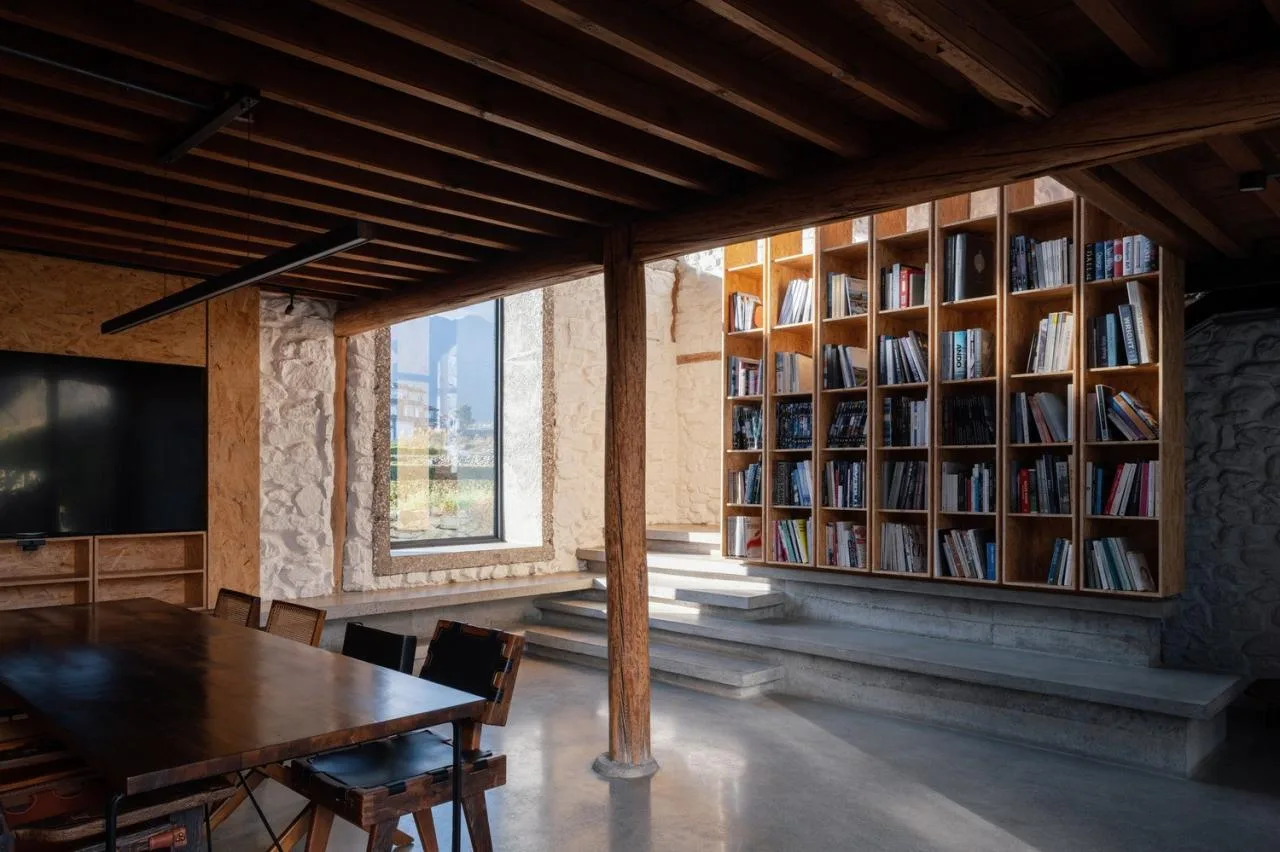
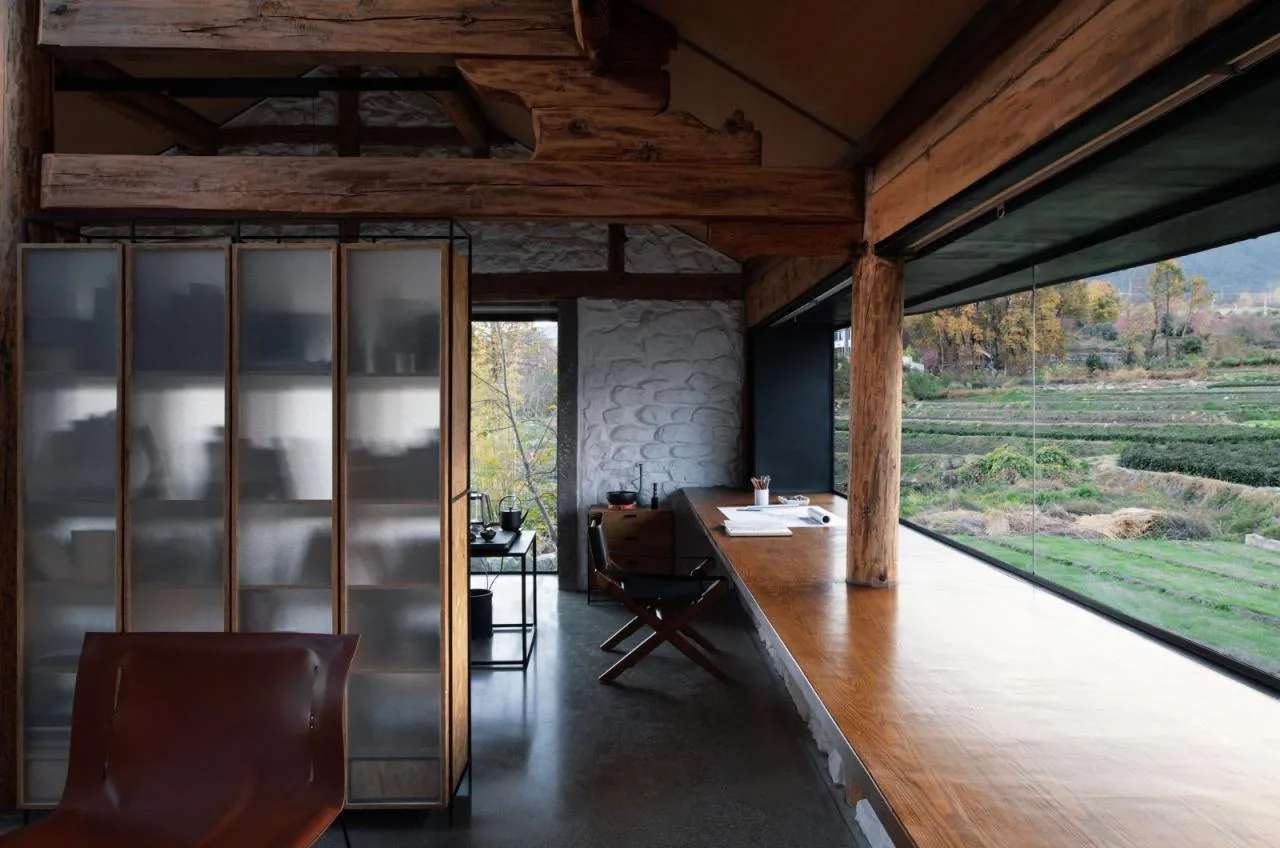
At the corridor bridge’s end, old stone slabs on the ground lead in three directions: west to the stone house, north along a short corridor branch to the North Building’s entrance foyer, and south into the heart of the garden experience.
Extending the bridge deck’s tensioned steel mesh, a lightweight, transparent hydrophilic resting platform sits at the southwest corner of the water feature. A fragrant wood tree leans diagonally over the water, creating a shaded nook for sitting and quiet reflection. Flowing water from a weather-resistant steel spout on the rocky mountain, combined with tree shadows and stone walls, offers a tranquil moment amid the garden’s sounds and textures.
On pleasant days, opening all folding doors on the stone house’s first floor behind the waterfront platform blends the interior with the garden, with indoor seating next to the courtyard offering prime views of the water. Proceeding beyond the fragrant wood and ascending stone steps to the ruins, the inward garden experience gradually transitions into the expansive outward landscape.
Ruins Garden Coffee – A Scale Connector Between Inner Courtyard and Distant Mountains
Perched on a high platform above the ruins, visitors can simultaneously appreciate the intimate courtyard and the vast external landscape. To the southwest, the peaks and fields of Cangshan spread out, while to the north, the inner courtyard unfolds.
Here we added a light, open pavilion-like ruins garden coffee shop linking the inner courtyard with the distant mountains. To balance the contrasting scales, the coffee shop’s single sloping roof lowers the eaves to 2 meters on the courtyard side, creating an intimate human scale, while raising them high on the Cangshan side to maximize expansive views.
This roof slope also responds to Dali’s sunlight: the raised south eaves welcome low winter sun indoors, while the lowered north eaves shade from intense summer heat.
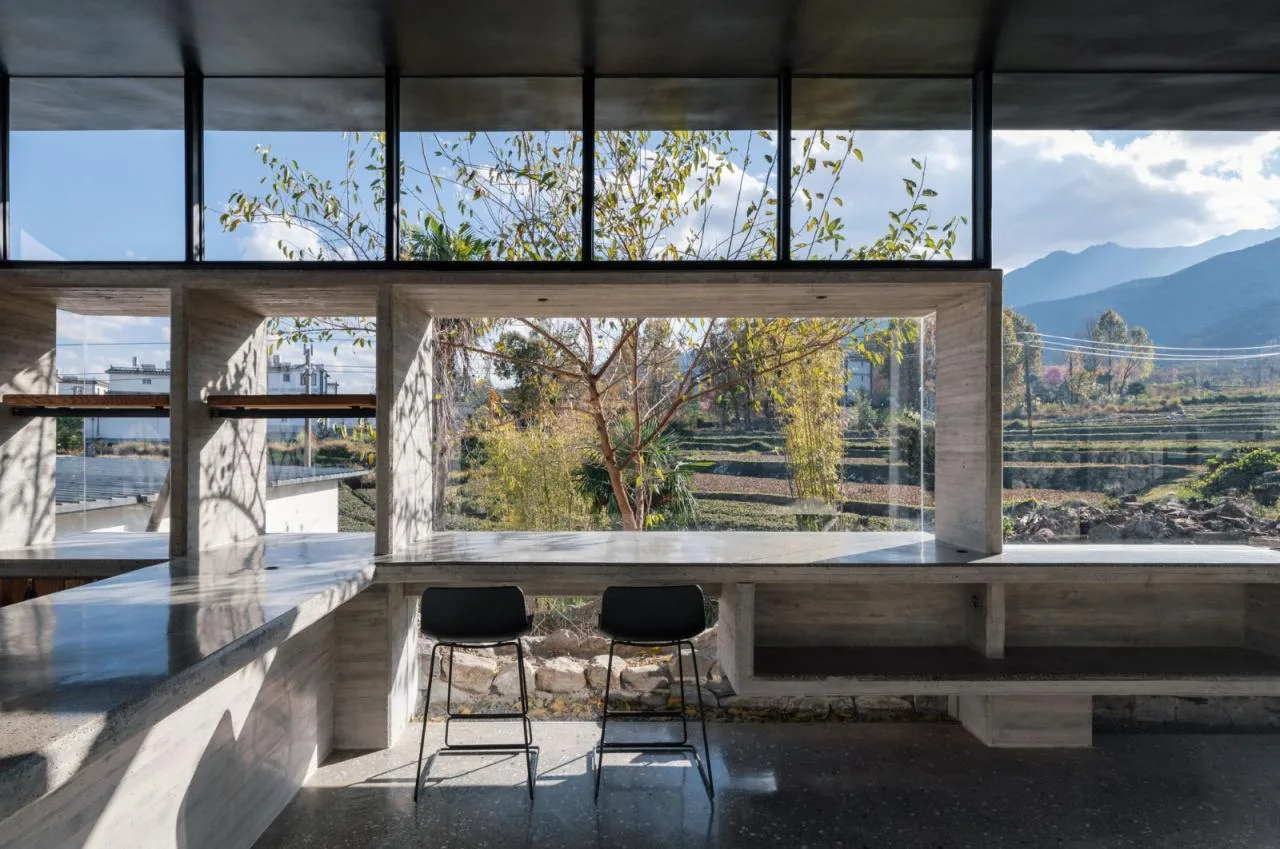
The coffee shop’s lower structure consists of concrete pedestals at furniture scale, undulating to metaphorically represent the original ruins. These “concrete furniture” elements physically engage visitors.
Under the north eaves, the concrete pedestal forms a 1950mm high entrance doorway and two family-sized seating nooks on the east and west sides. The west nook faces inward, serving as the main seating area with distant views of Cangshan, while the east nook blends into the garden and overlooks water features and shaded plants.
On the east side, the pedestal transforms into the coffee bar and storage racks, extending southward with high stools overlooking the Cangshan bar counter.
All concrete walls, roofs, and countertops are 80mm thick with 45-degree chamfered corners, giving the concrete a furniture-like scale and tactile quality.
The upper structure features a ribbed steel roof fully welded with 6mm steel plates, insulated with planted roofs hidden above. To observers, only a slightly reflective dark metal surface with a sharp steel plate edge is visible, creating the illusion of an impossibly thin floating roof.
Channel steel welded atop the concrete bases forms the lower window frames, working structurally with the concrete. Short columns scattered atop these frames consist of two 10mm thick flat steel plates sandwiching 20mm square steel, resembling slender window frames and enhancing the floating roof illusion.
These intricate structural details create an unfamiliar and disorienting bodily experience. Every guest entering the coffee shop is intrigued by how such a thin roof is supported.
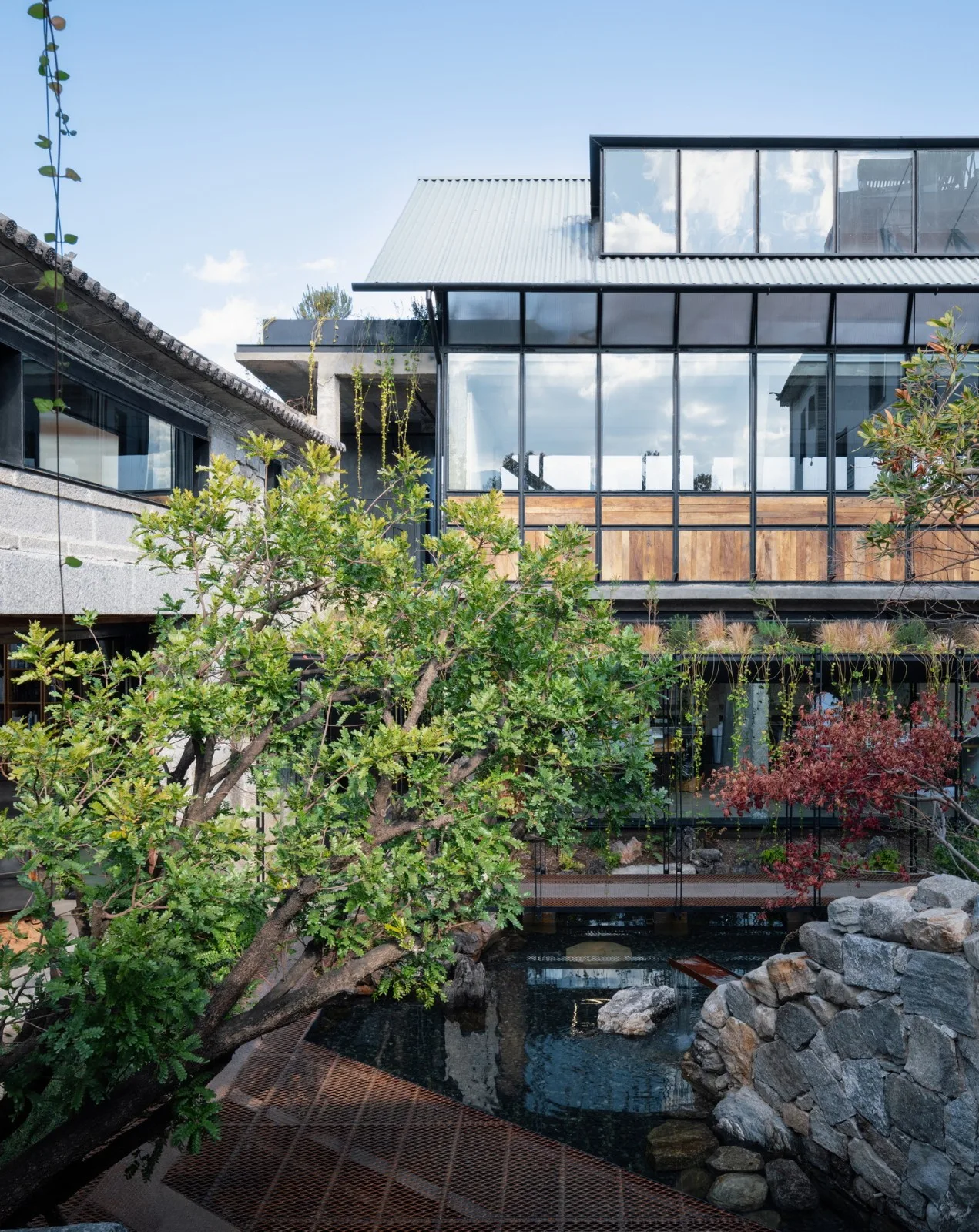
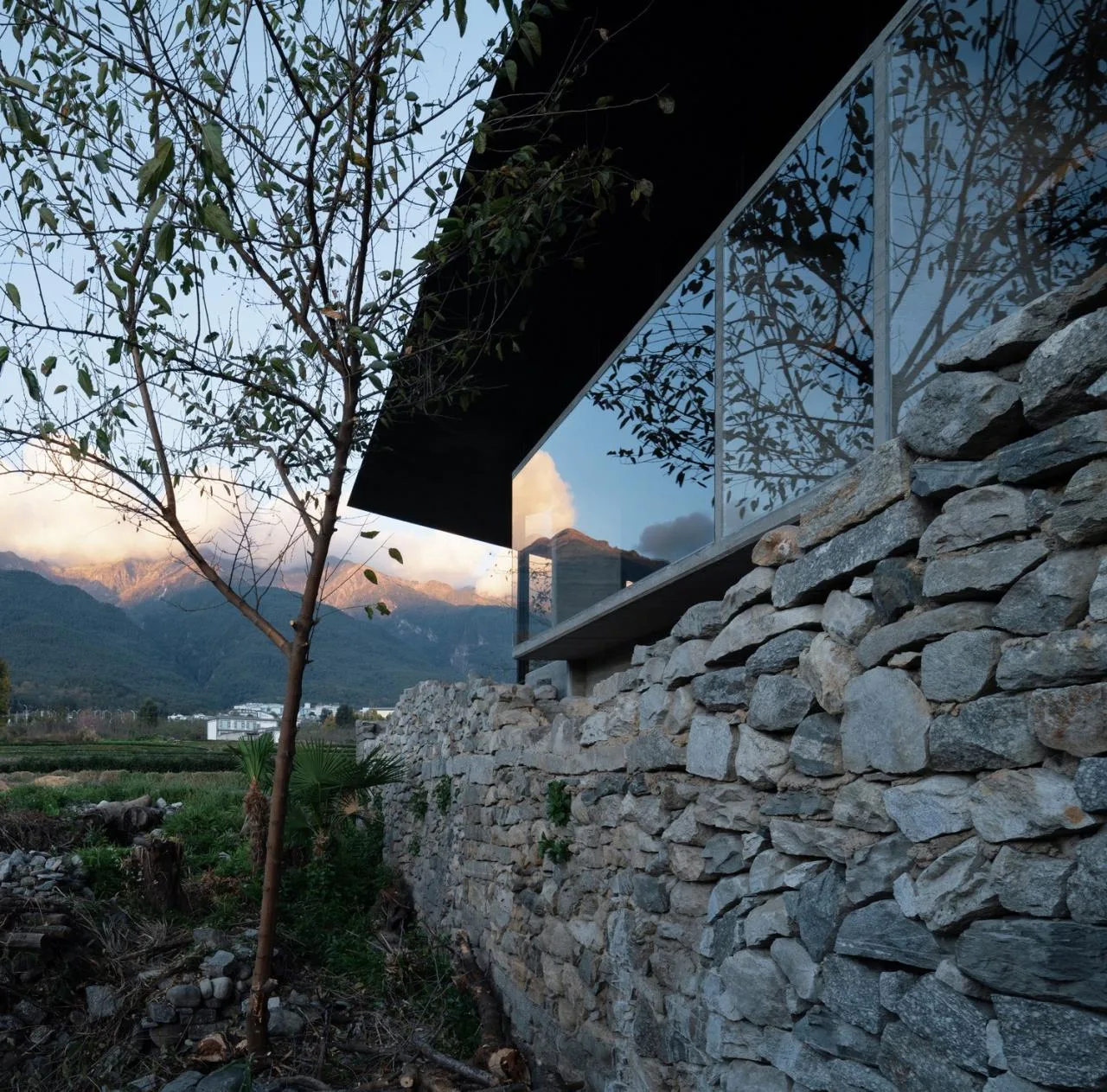
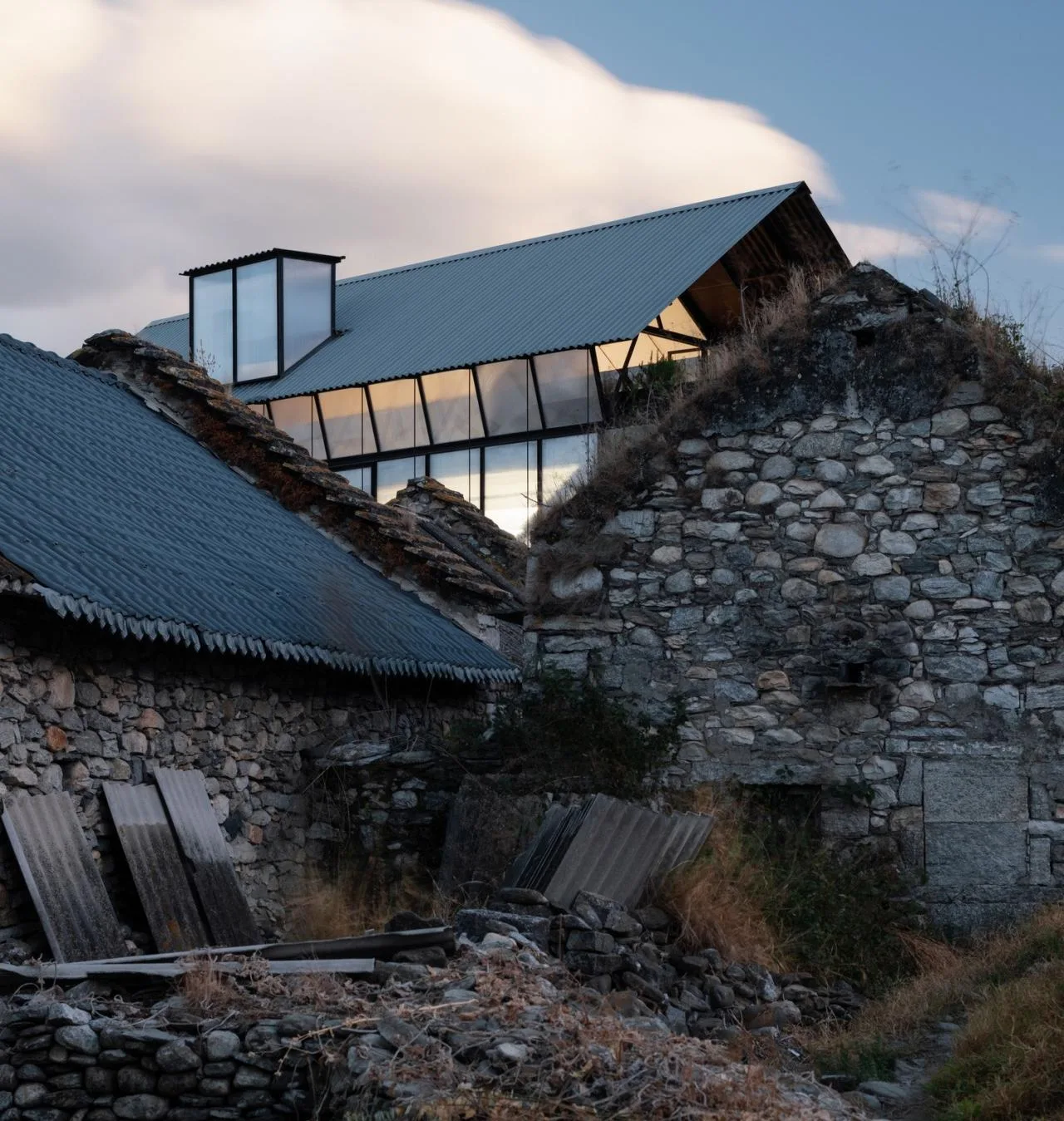
The Xuxiuyuan Garden tour concludes atop a high platform in the ruins garden coffee shop, offering views of distant mountains and moments to reflect on the inner courtyard. The initially isolated stone house and North Building have been woven into a unified spatial experience through wandering, pausing, gazing, climbing, and the interplay of indoor and garden spaces.
Building a personal home often challenges architects to reconcile lofty professional ideals with the tangible dimensions of life. It requires using the body to measure what truly moves them, learning to settle comfortably, empathize with others, and design spaces that nurture people.
In Yunnan dialect, “settling down comfortably” means “good.” Good architecture should not only fulfill its purpose but also nourish its inhabitants.
Earlier this year, we named the new studio “Xuxiuyuan,” combining three concepts: “Xu”—the micro terrain and stone ruins that inspired the new spatial pattern; “Xiu”—the cave-like internal experience created by thick stone walls and intimate physical interactions; and “Yuan”—the garden strategy weaving internal and external experiences, embodying the harmony between body and nature.
Xuxiuyuan is an experimental creation of a natural way of life informed by years of living in Dali.
Project Drawings
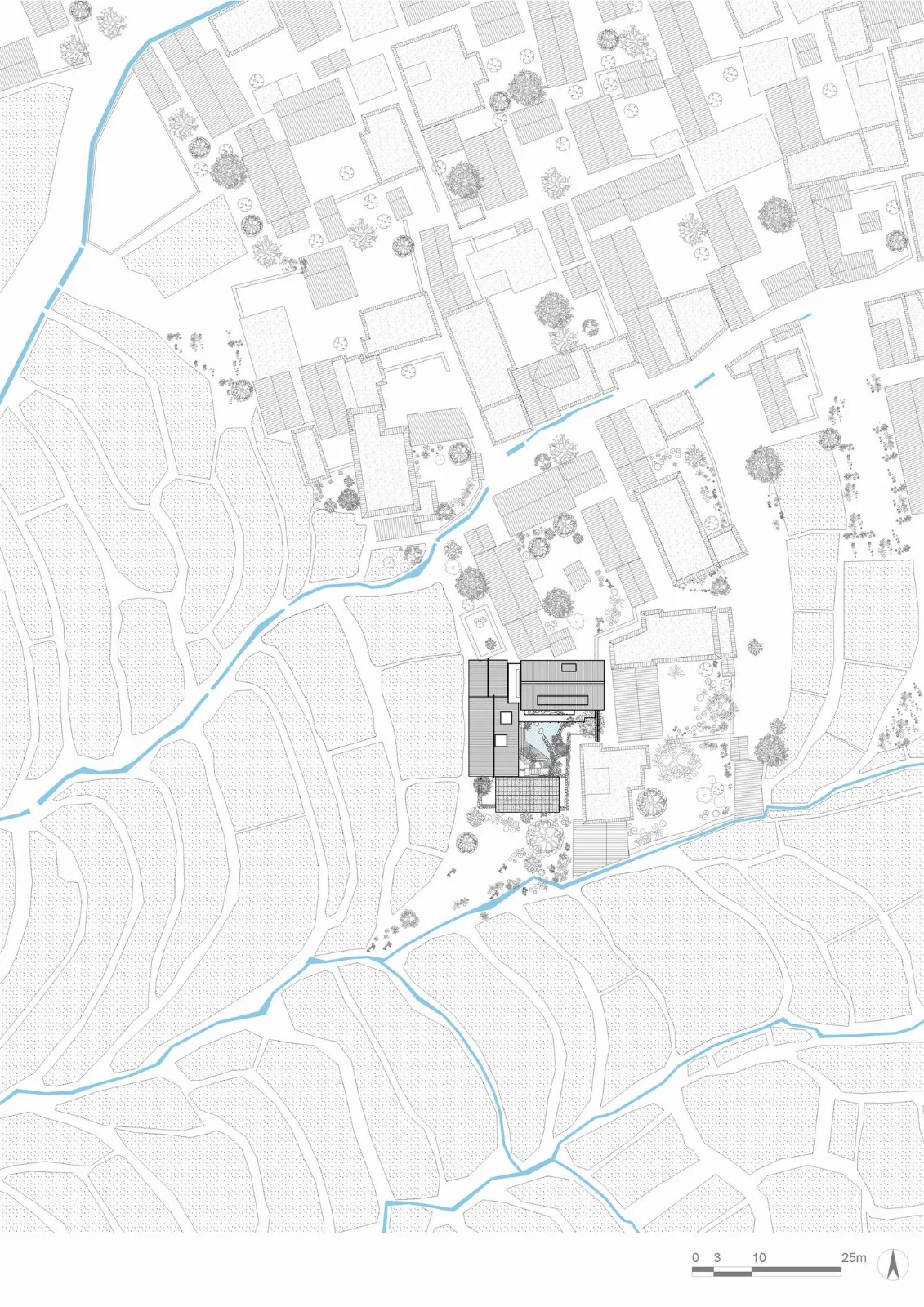
△ General Layout Plan
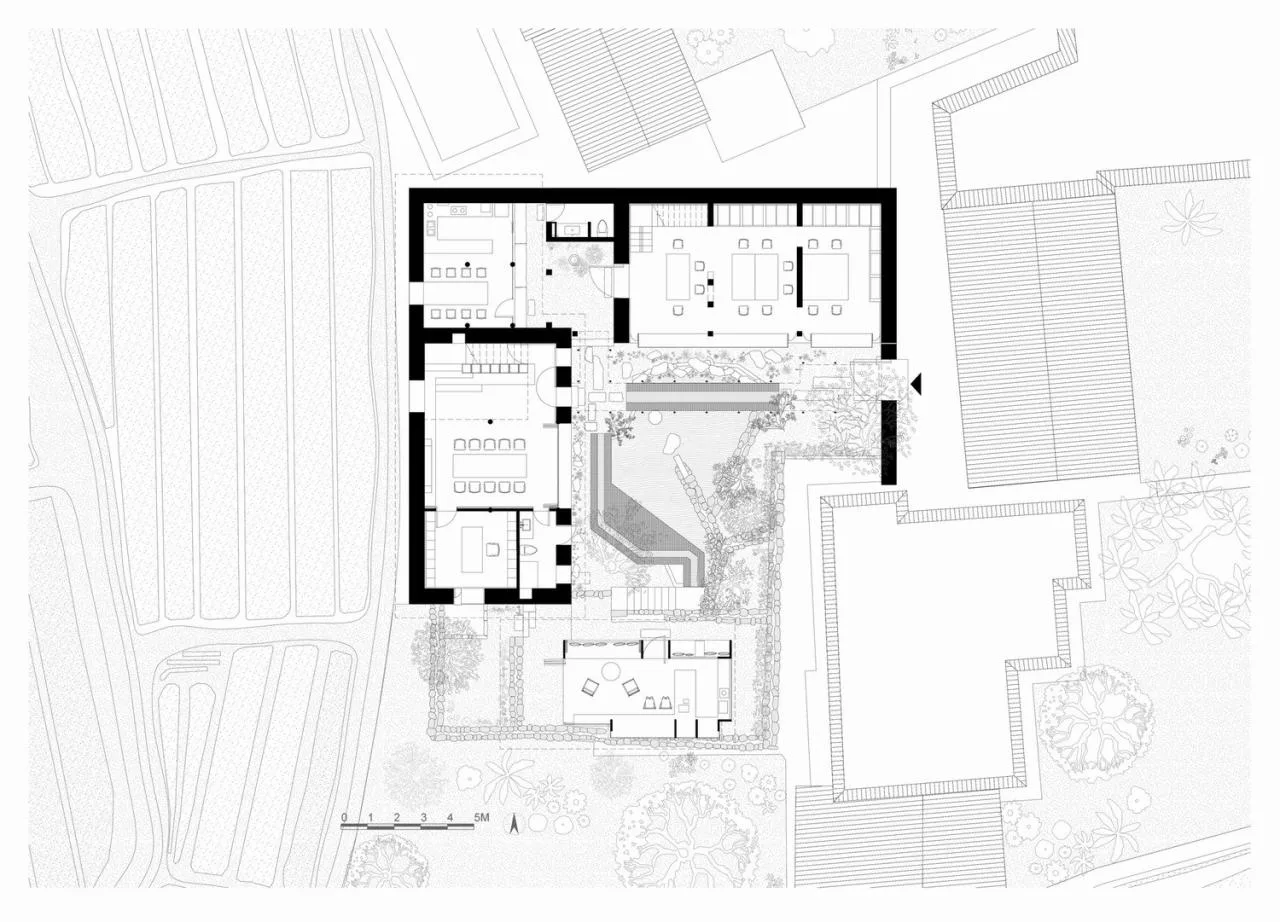
△ First Floor Plan
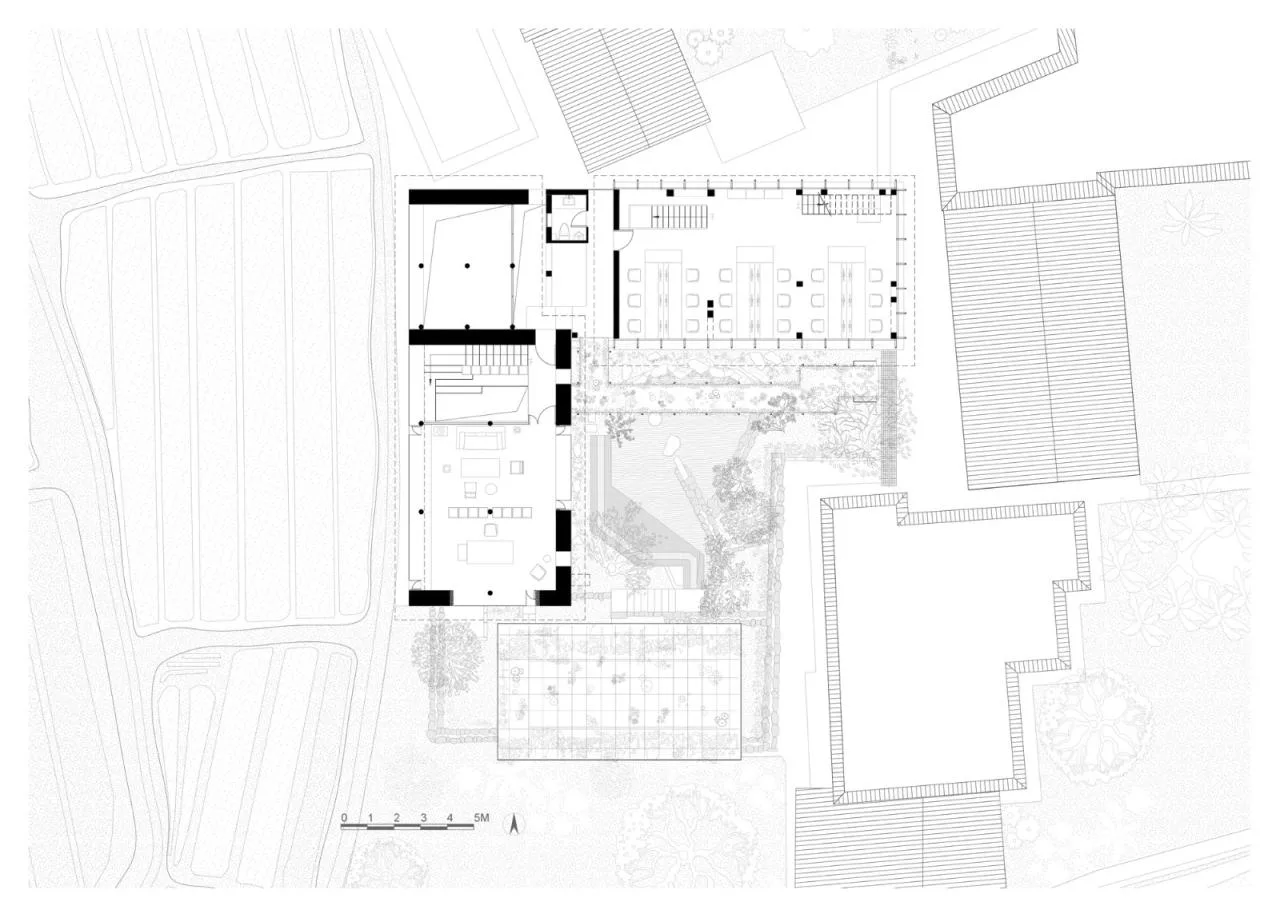
△ Second Floor Plan
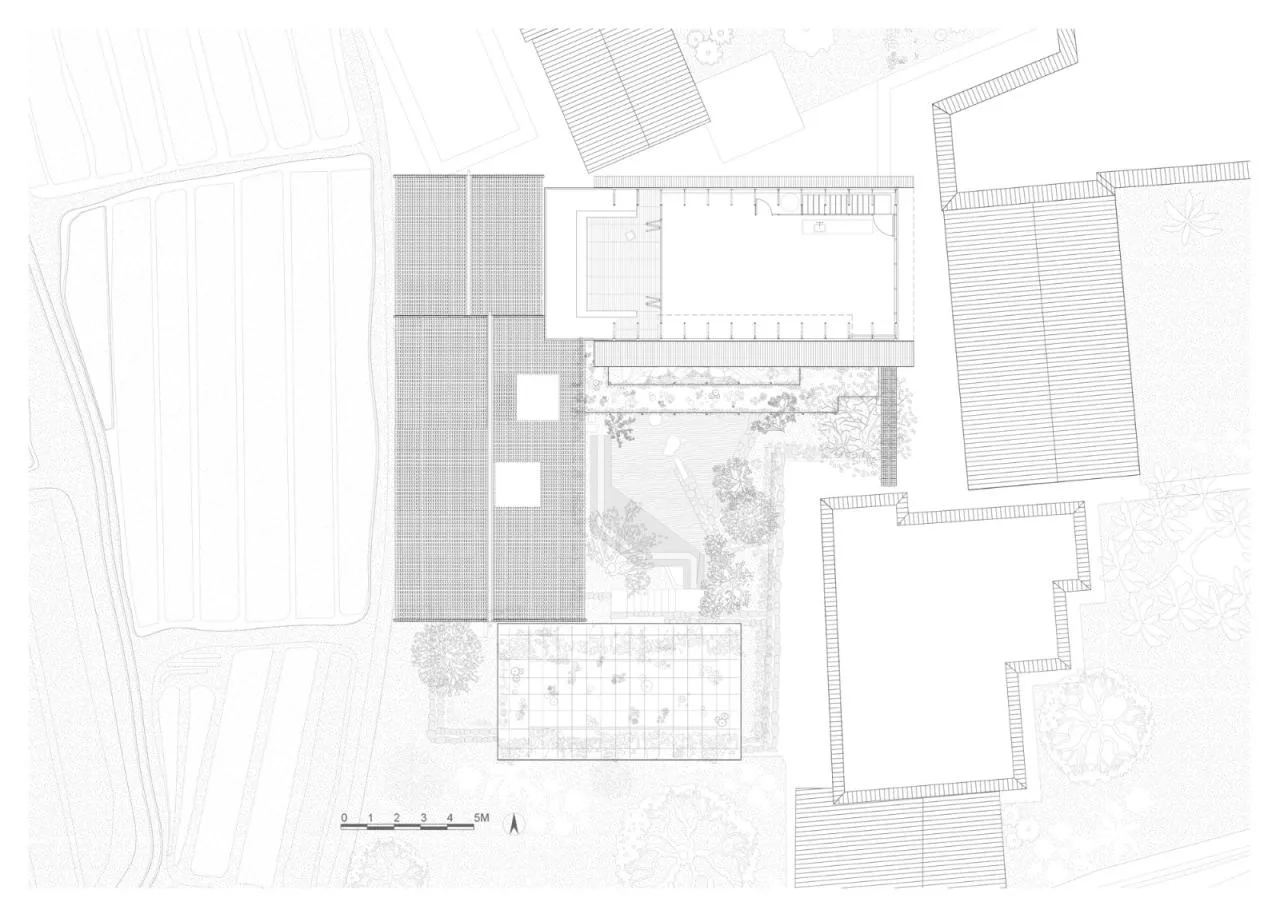
△ Roof Plan
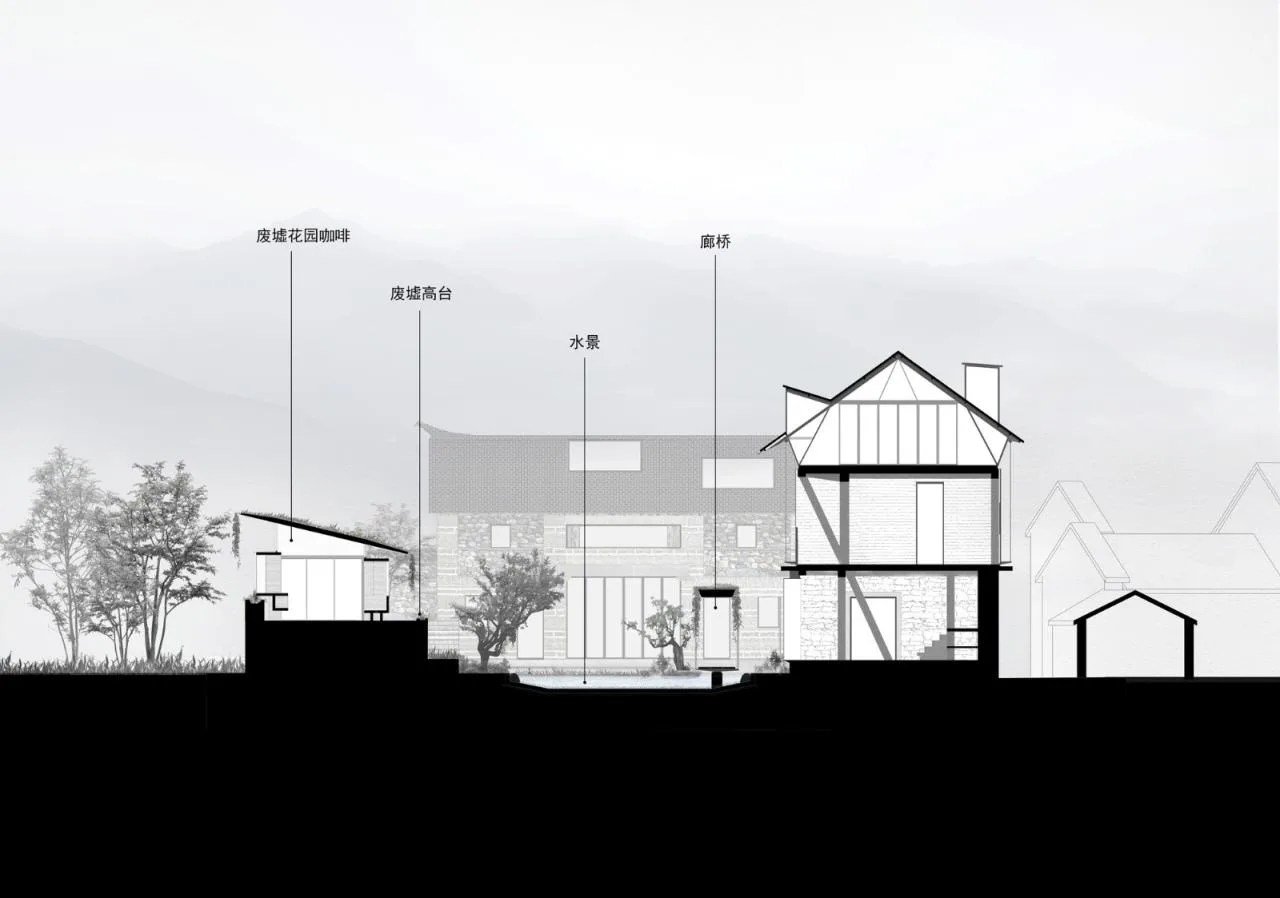
△ Function Diagram
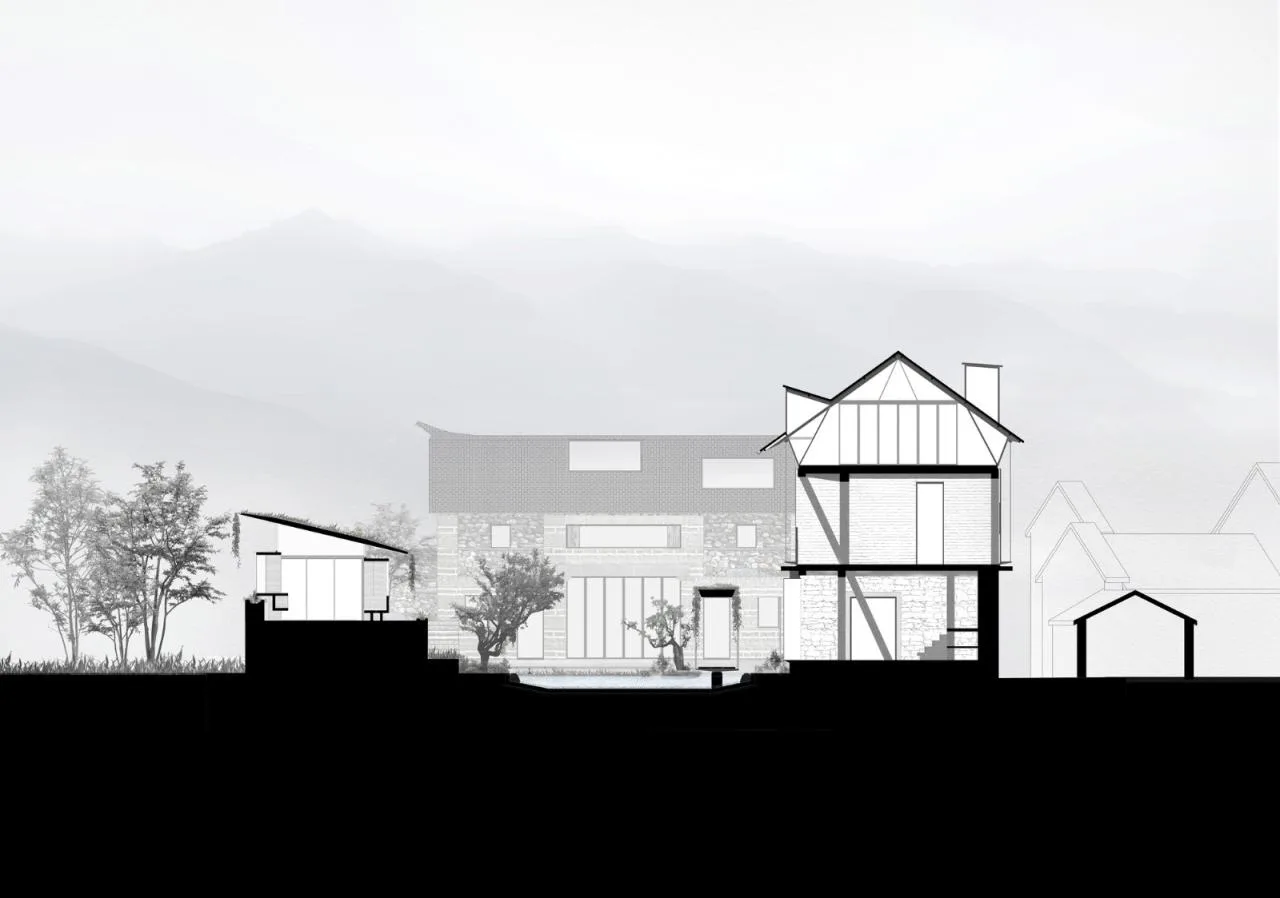
△ Section Diagram
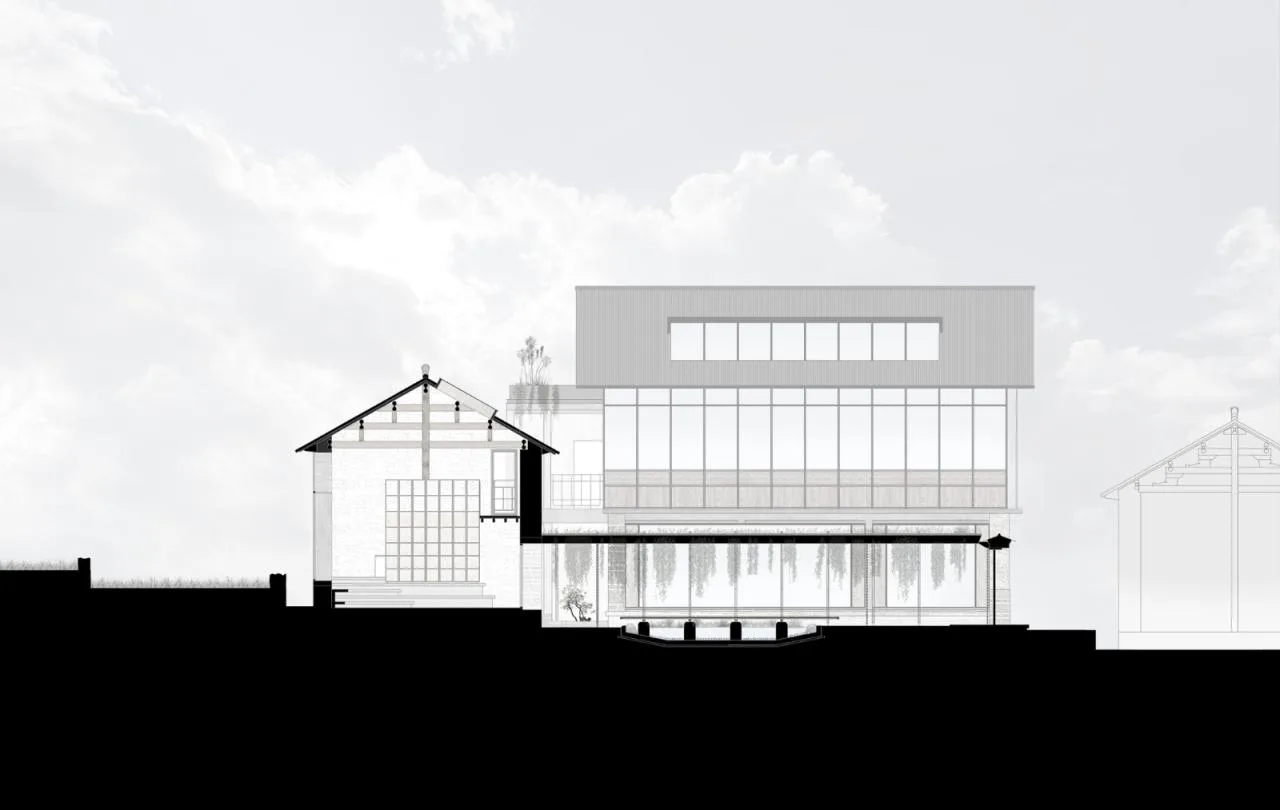
△ Section Diagram
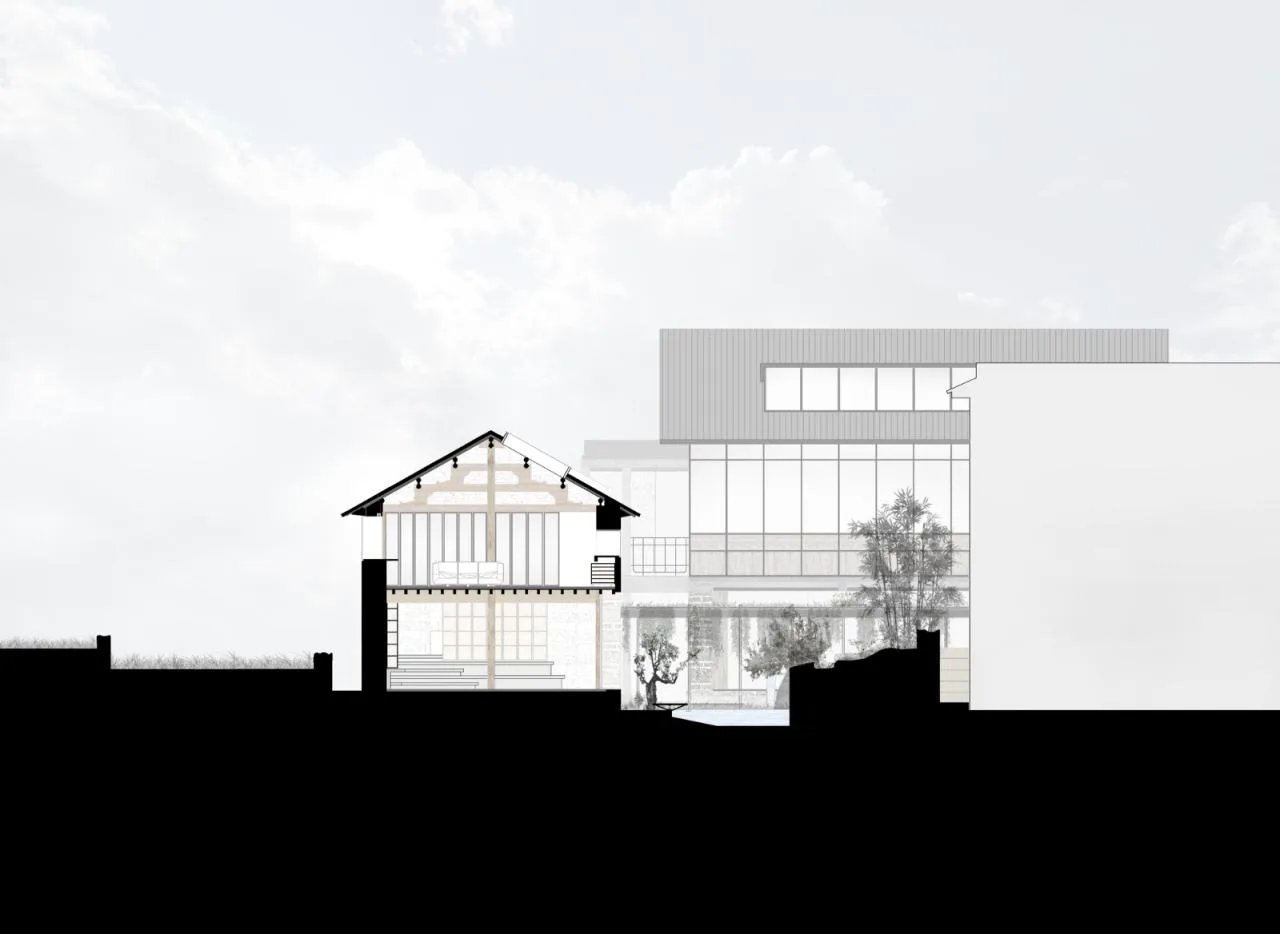
△ Section Diagram
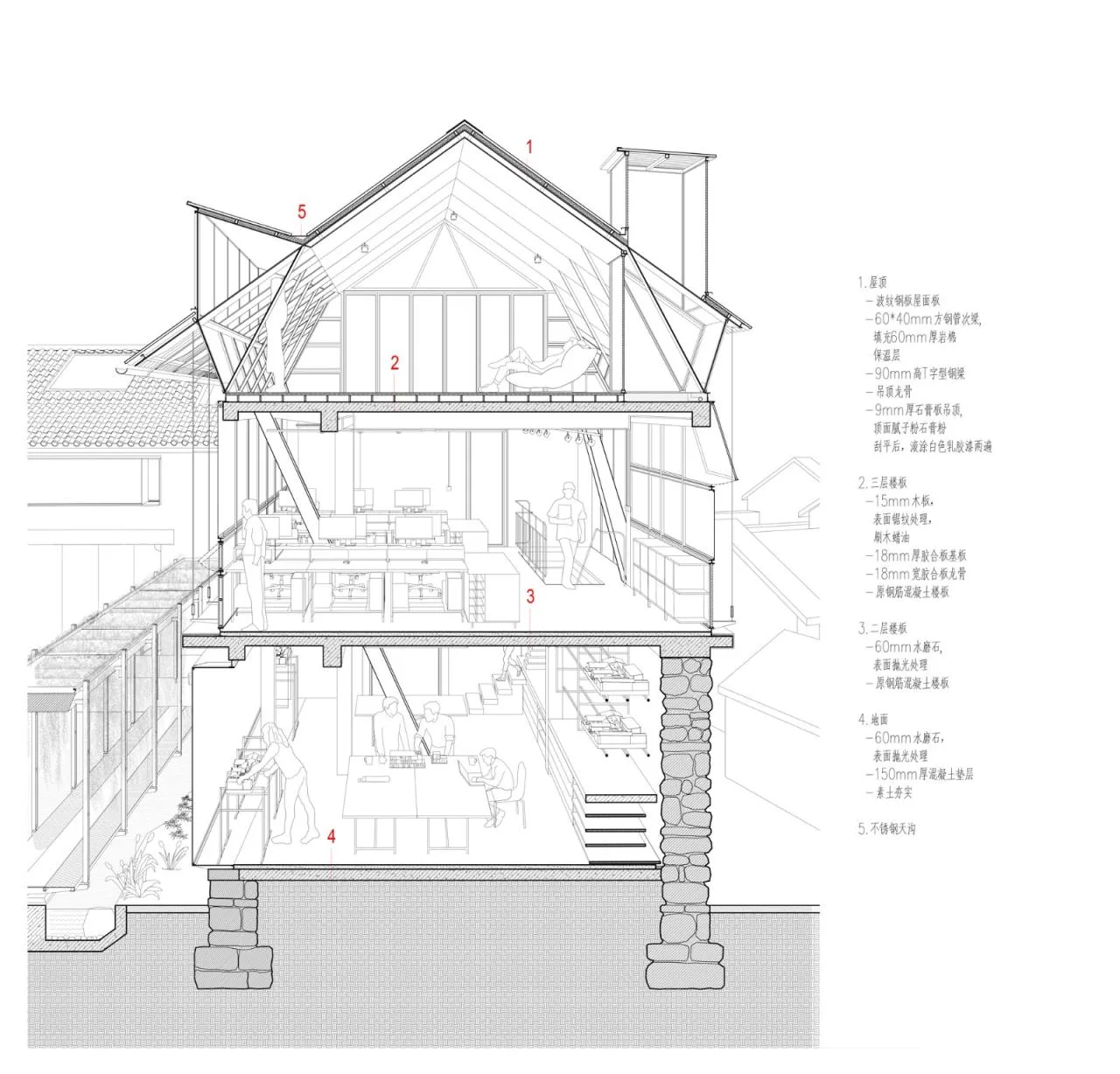
△ Sectional Perspective View
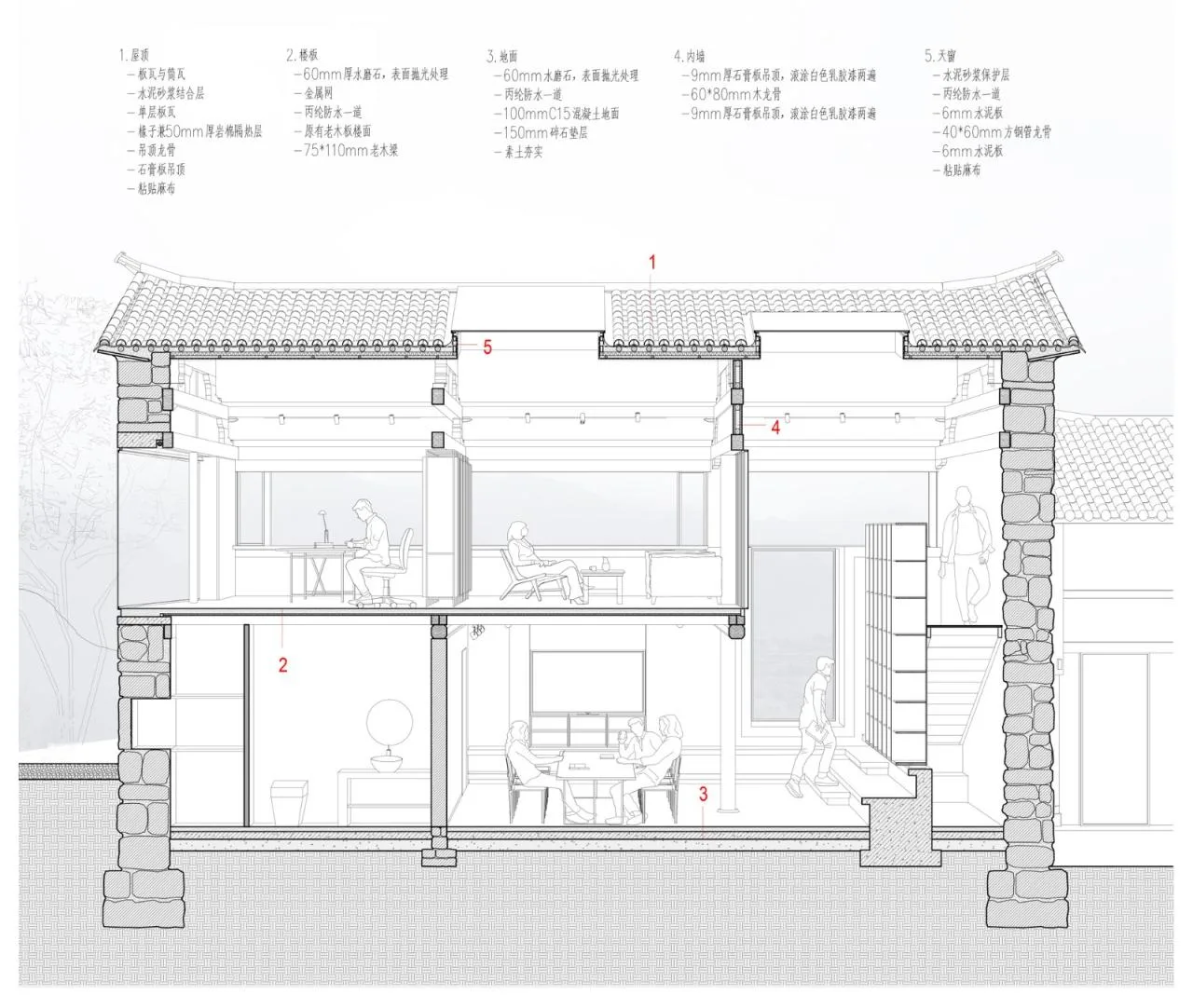
△ Sectional Perspective View
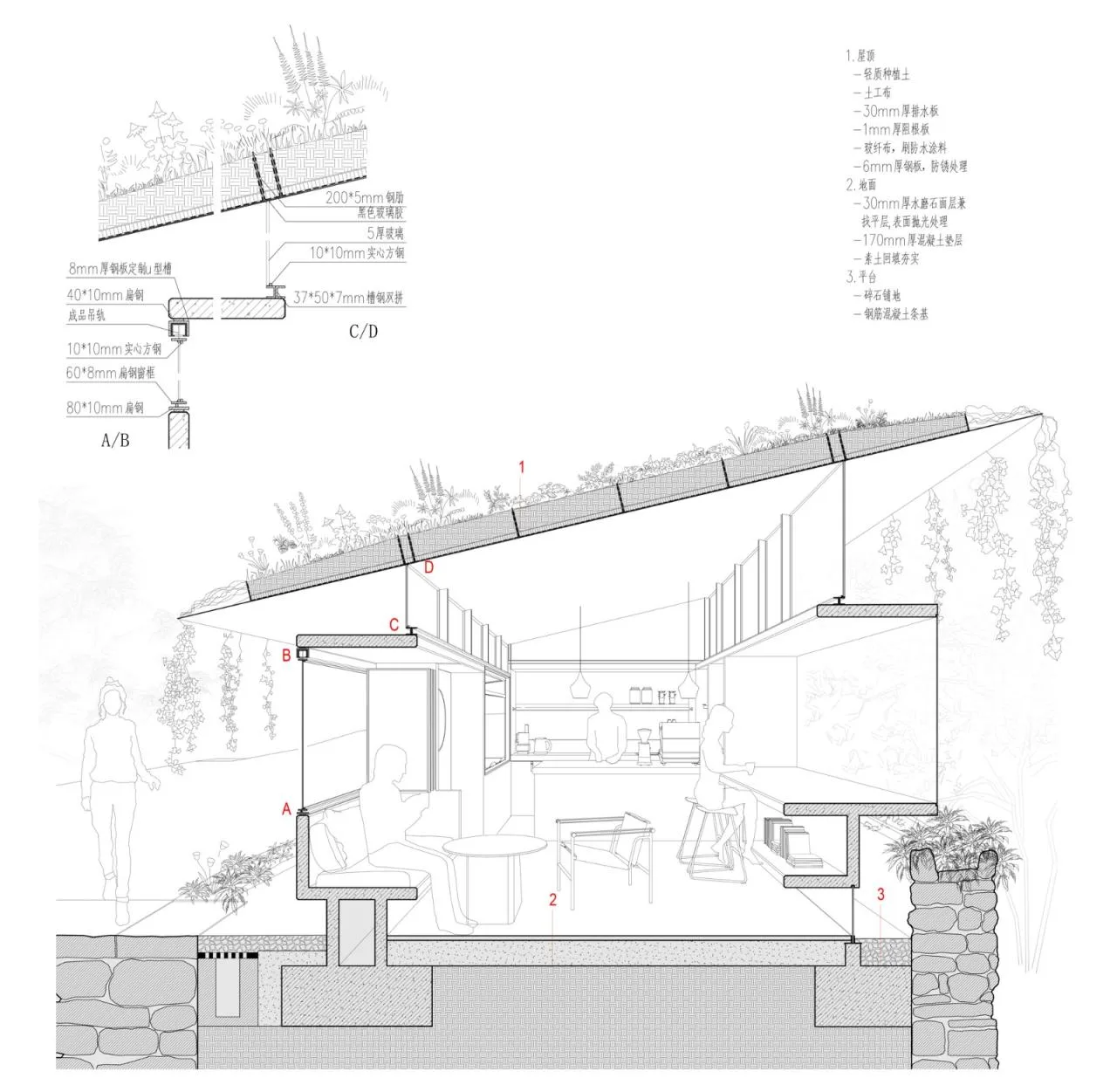
△ Detailed Drawing
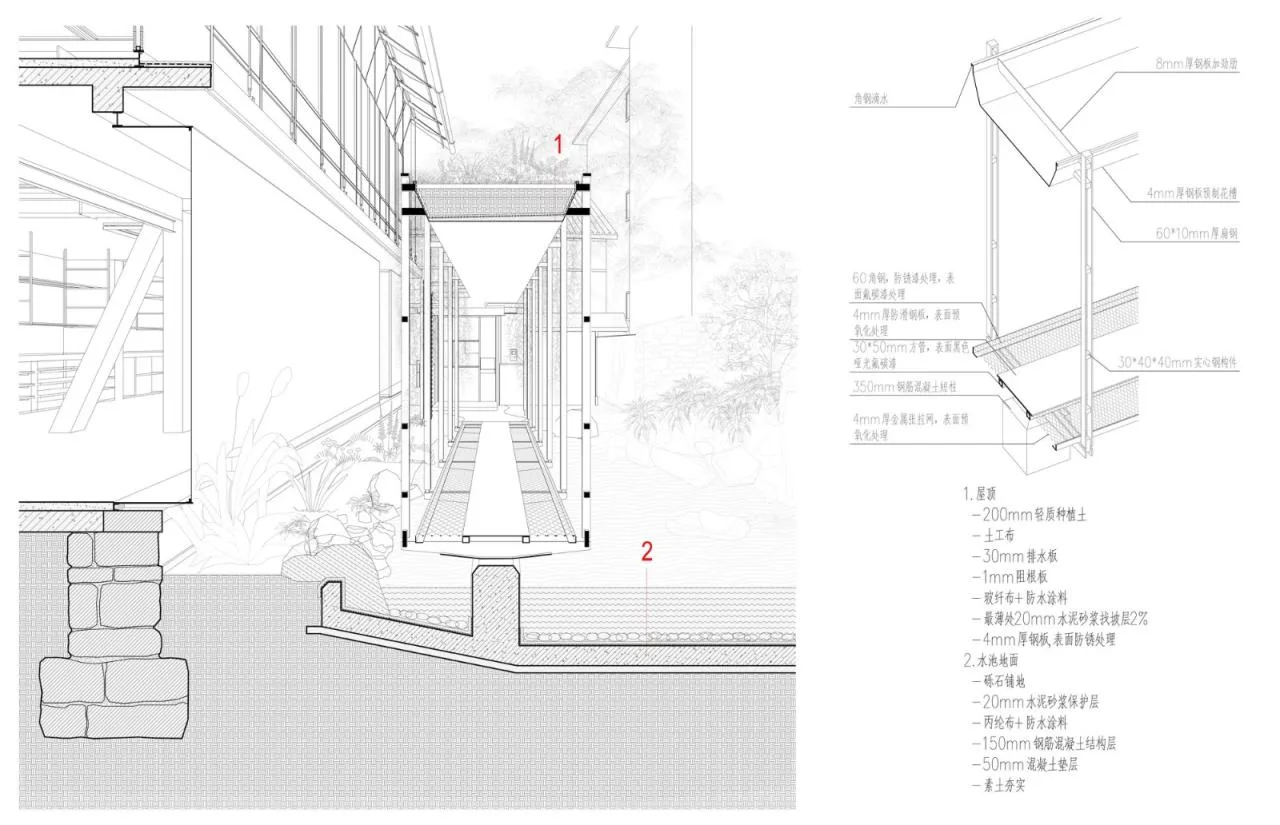
△ Detailed Drawing
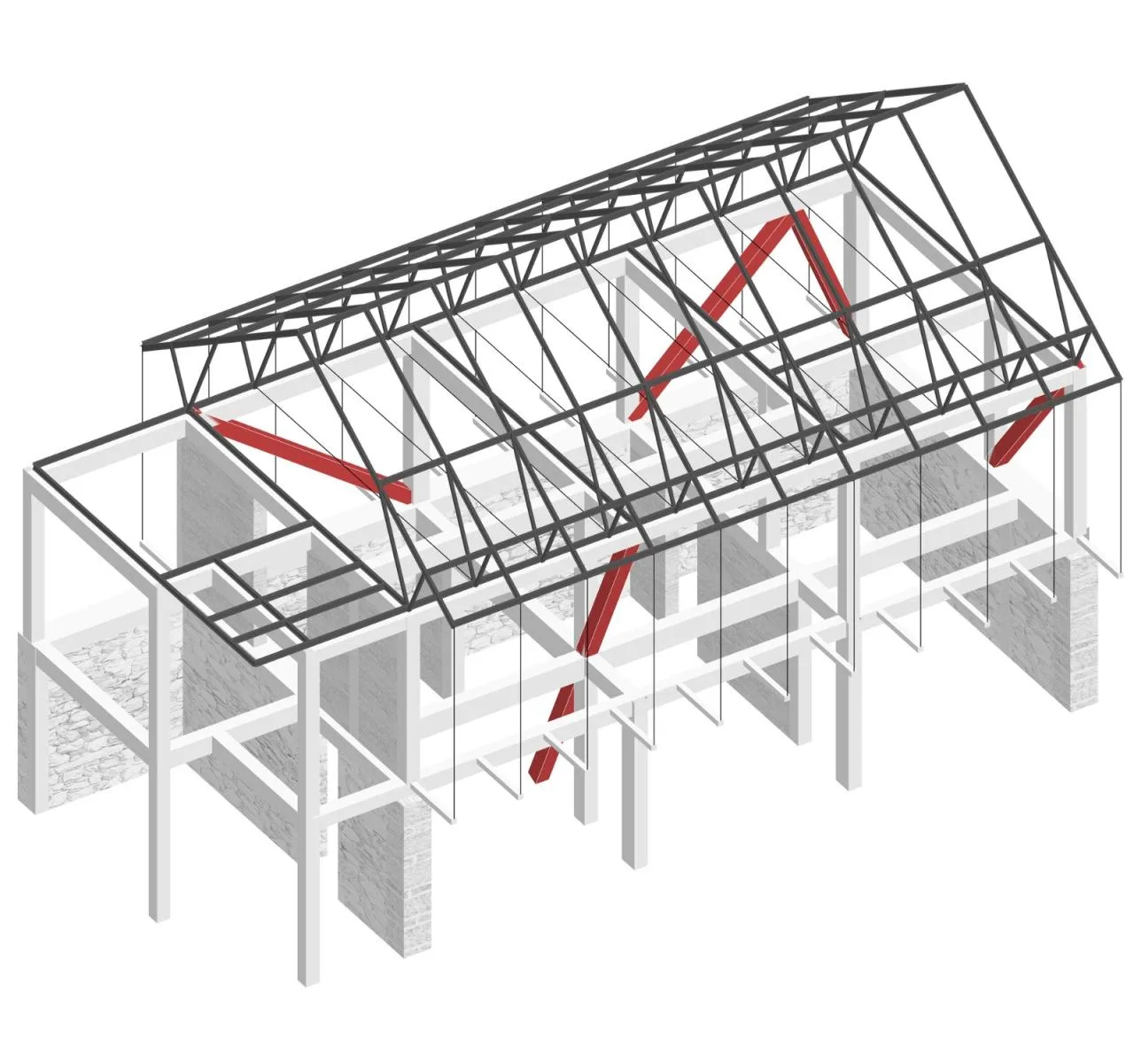
△ Structural Schematic Diagram
Project Information
Architect: ArCONNECT Architectural Firm
Area: 448 square meters
Year: 2023
Photographers: Chen Hao, Wang Pengfei
Lead Architect: Wuzhou
Landscape Design: Liu Ju, Wuzhou
Structural Engineer: Cai Yanming
Design Team: Chen Nuo (Project Architect), Ye Xinmiao, Cai Huangyai, Liu Changrui, Bai Haowen, Tang Zhiting, Hu Jiaqi, Chen Yunxiang, Sun Yiqi, Zhou Chunxiang, Mu Ziqi, Chen Ziyao, Zhang Huaxin, Deng Weirui, Chen Xiaoyong, Wang Huiyan
Resident Architects: Chen Nuo, Ye Xinmiao
Phase I Renovation and Decoration: Dali Sicheng Decoration Co., Ltd
Phase II Steel Structure: Guo Hanwen’s Team
Phase II Stonemasons: Yang Maozhong, Yang Maoze, Li Xilin, Yang Gengyi (Bai ethnic group from this village)
Phase II Carpenters: Yang Jin, Yang Xueyou, Yang Shesong, Shui’an (Bai ethnic group)
Phase II Civil Engineering and Miscellaneous: Ao Guoxiang Team (Yi ethnic group)
Phase II Terrazzo: Yang Zhilin Team
Phase II Hydropower: Chen Sheng’s Team
Consultant for Plain Concrete: Su Zao Architectural Firm
Location: Dali















Must log in before commenting!
Sign Up