
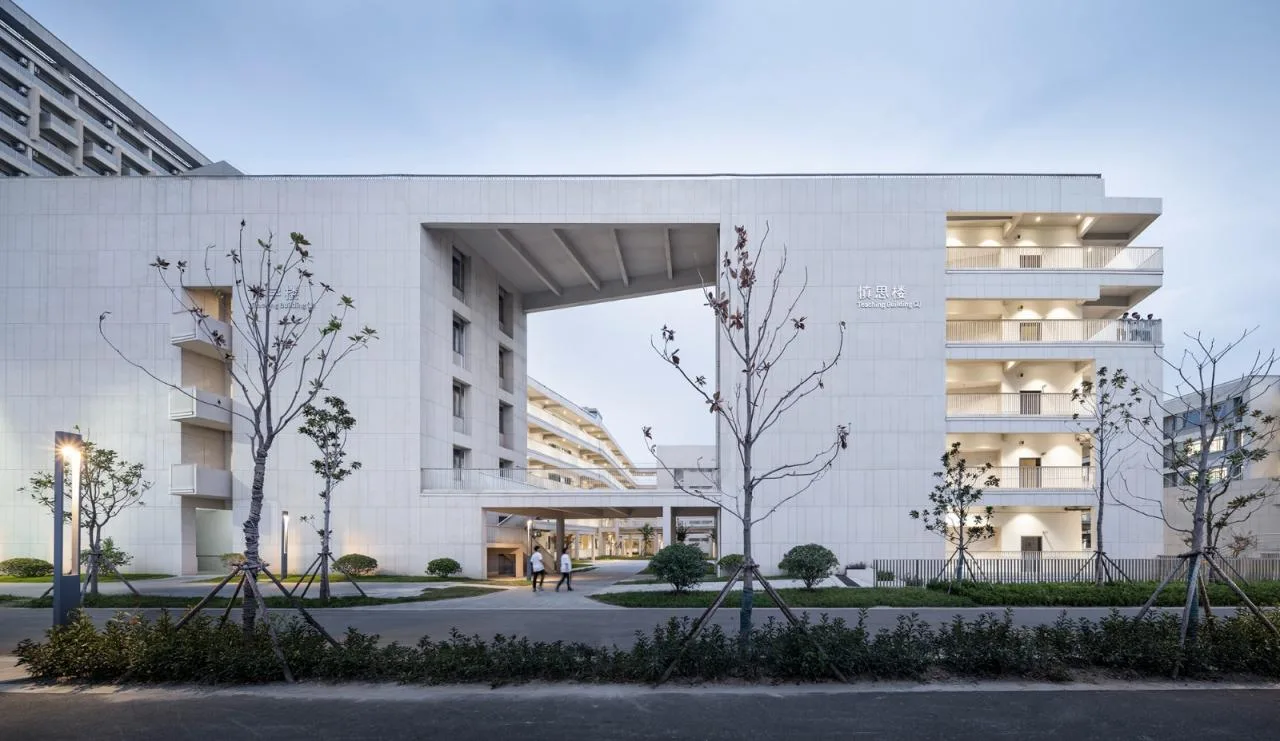
How should one approach designing schools that embrace redundant relationships? What drives continuous innovation and research in this field? We believe the key lies in shifting focus from external “system redundancy” to internal “relationship redundancy.” Architecture becomes a composition of countless elements, each designed around specific activities. This layering naturally creates architectural “transparency.”
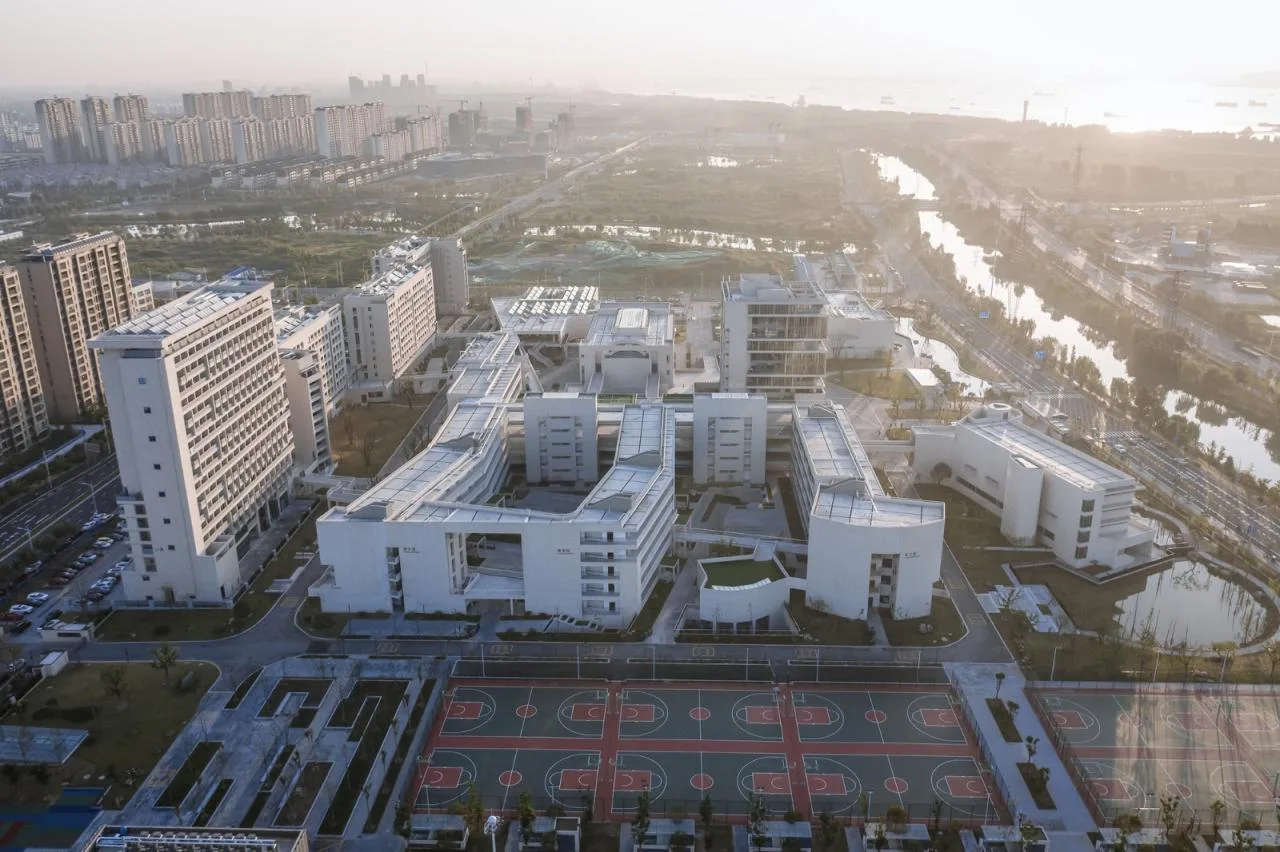
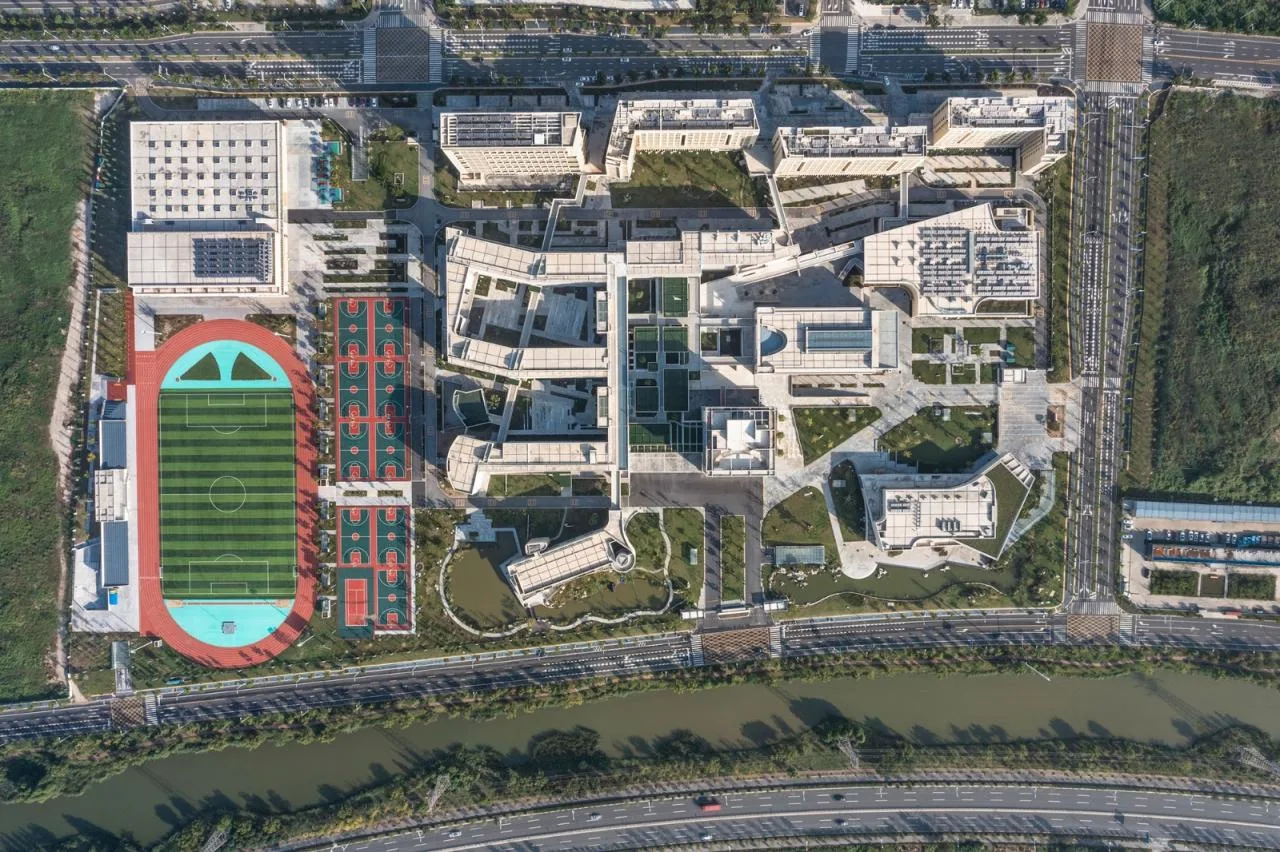
Density is essential to creating meaningful spaces in a school; an empty space without people loses its purpose. “Space heat” refers to the number of people within a space over time and how long they stay. The public spaces of the new campus at Jingjiang Senior High School in Jiangsu Province were designed with this principle. By analyzing students’ movement patterns, spatial hotspots naturally form at key intersections.
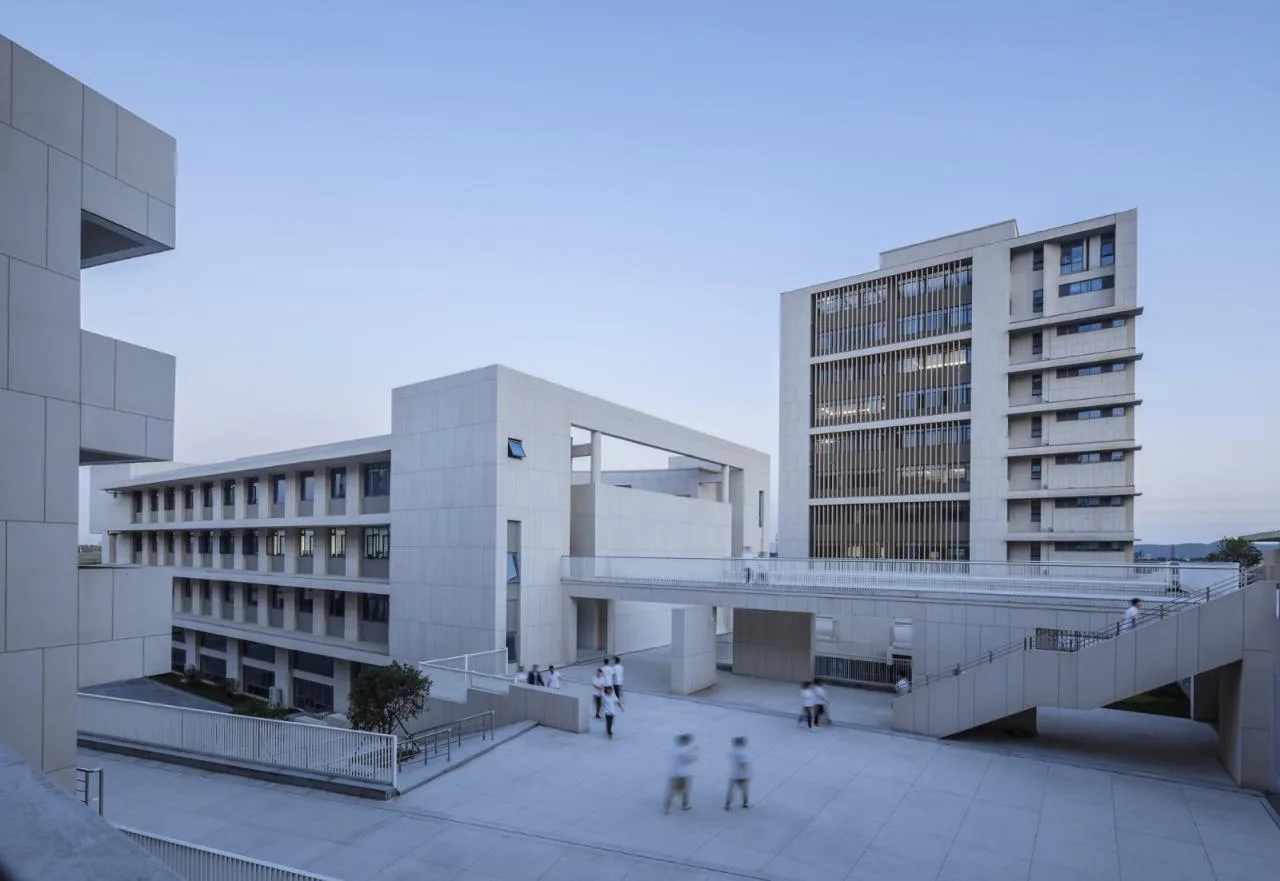
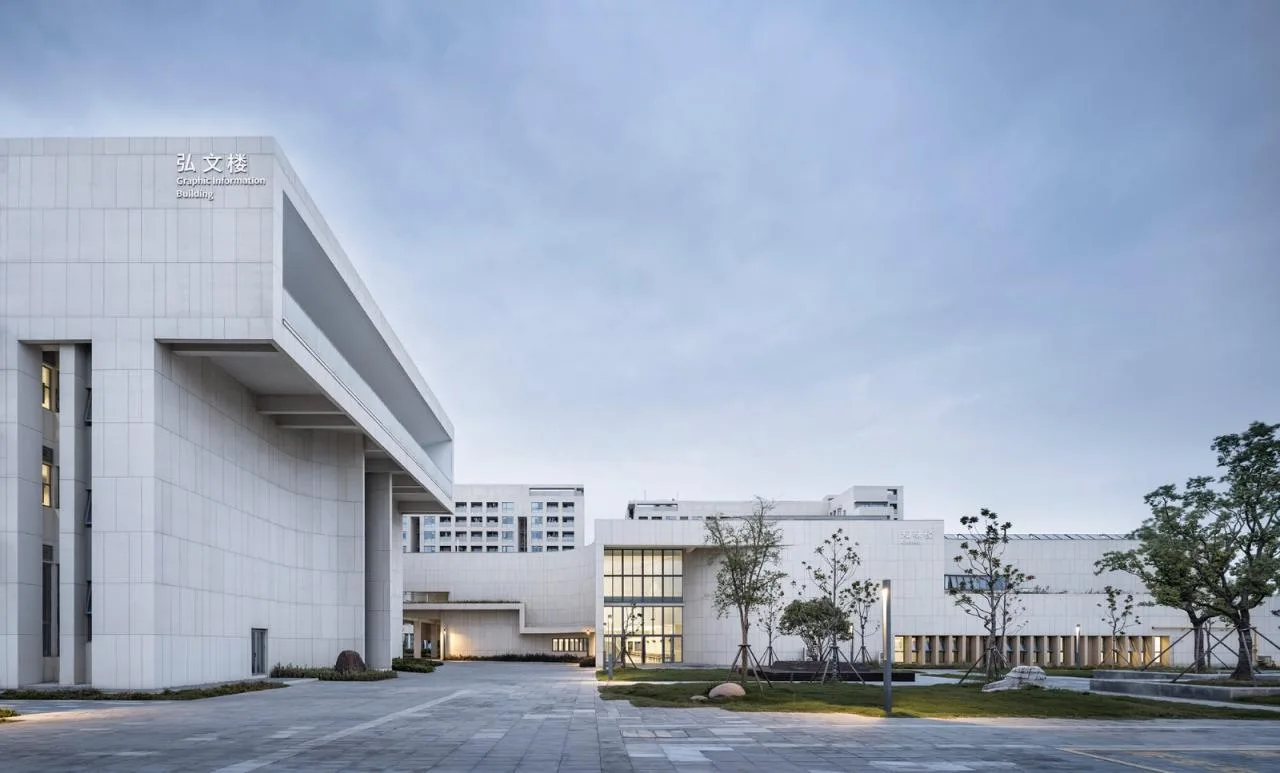
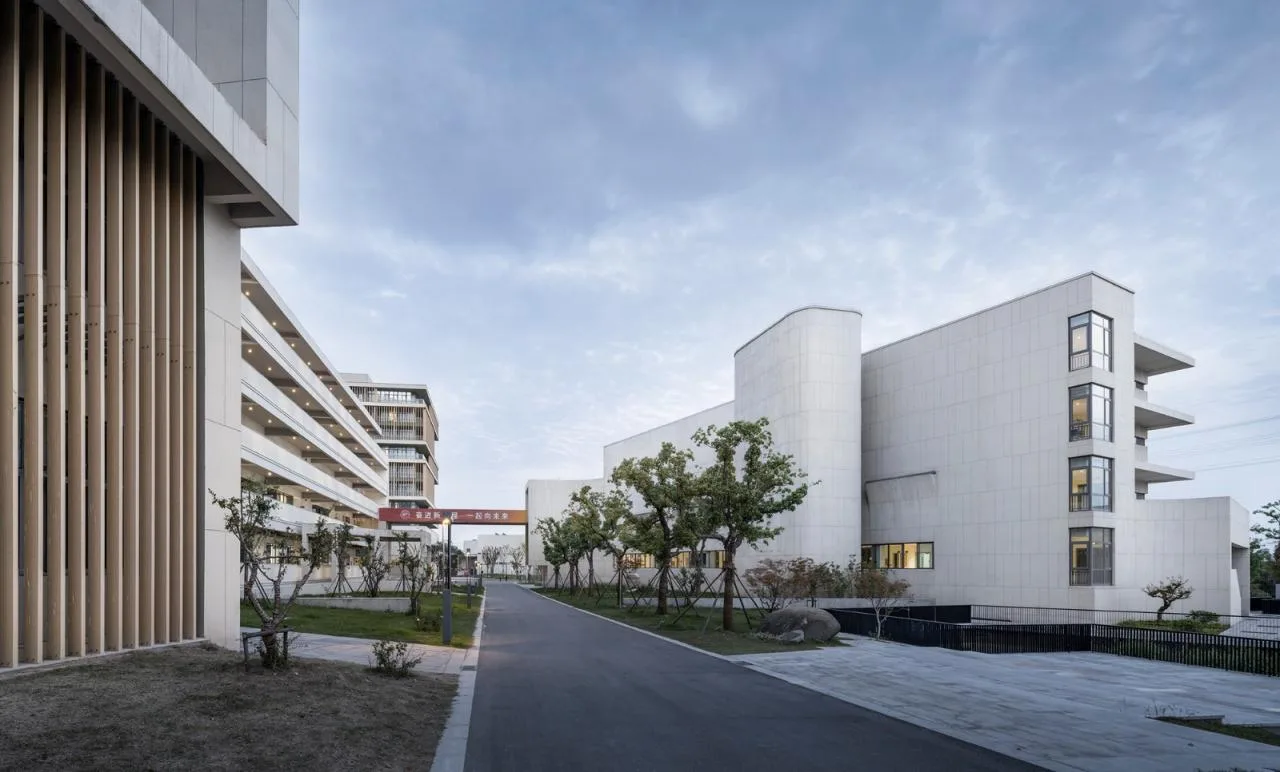
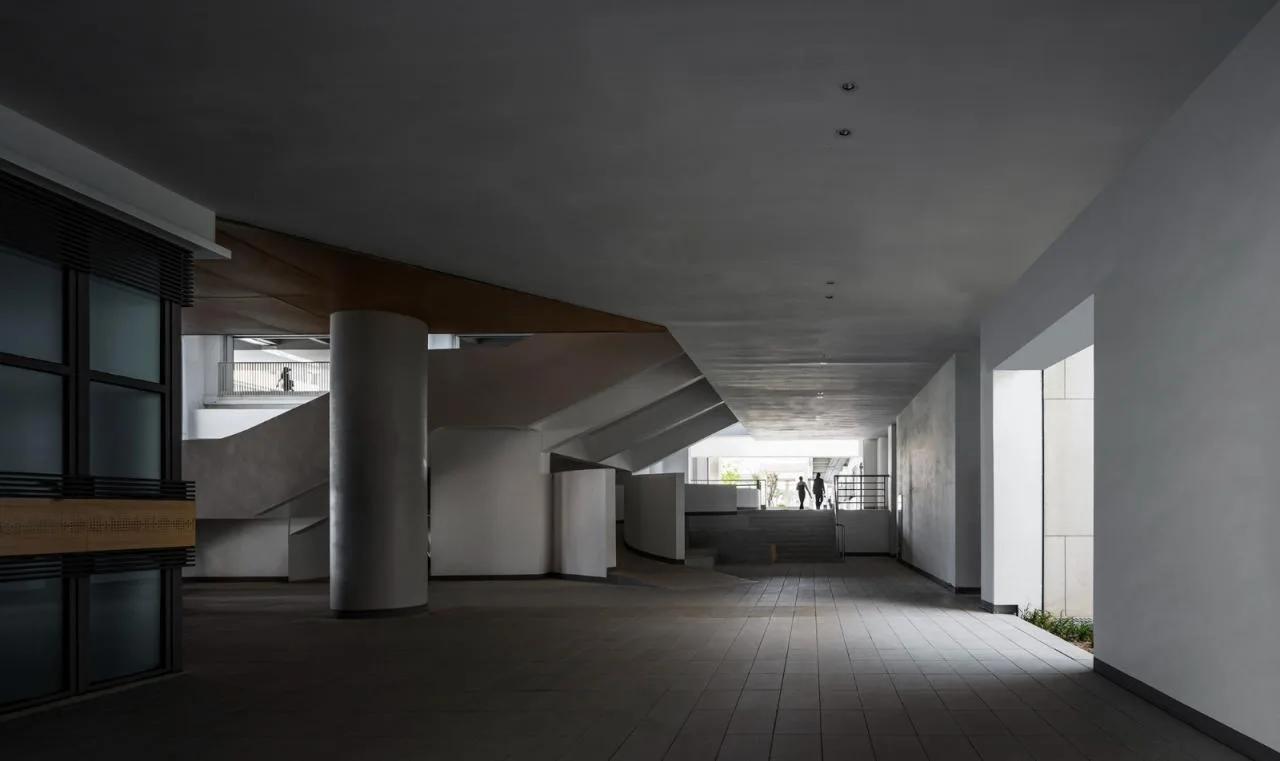
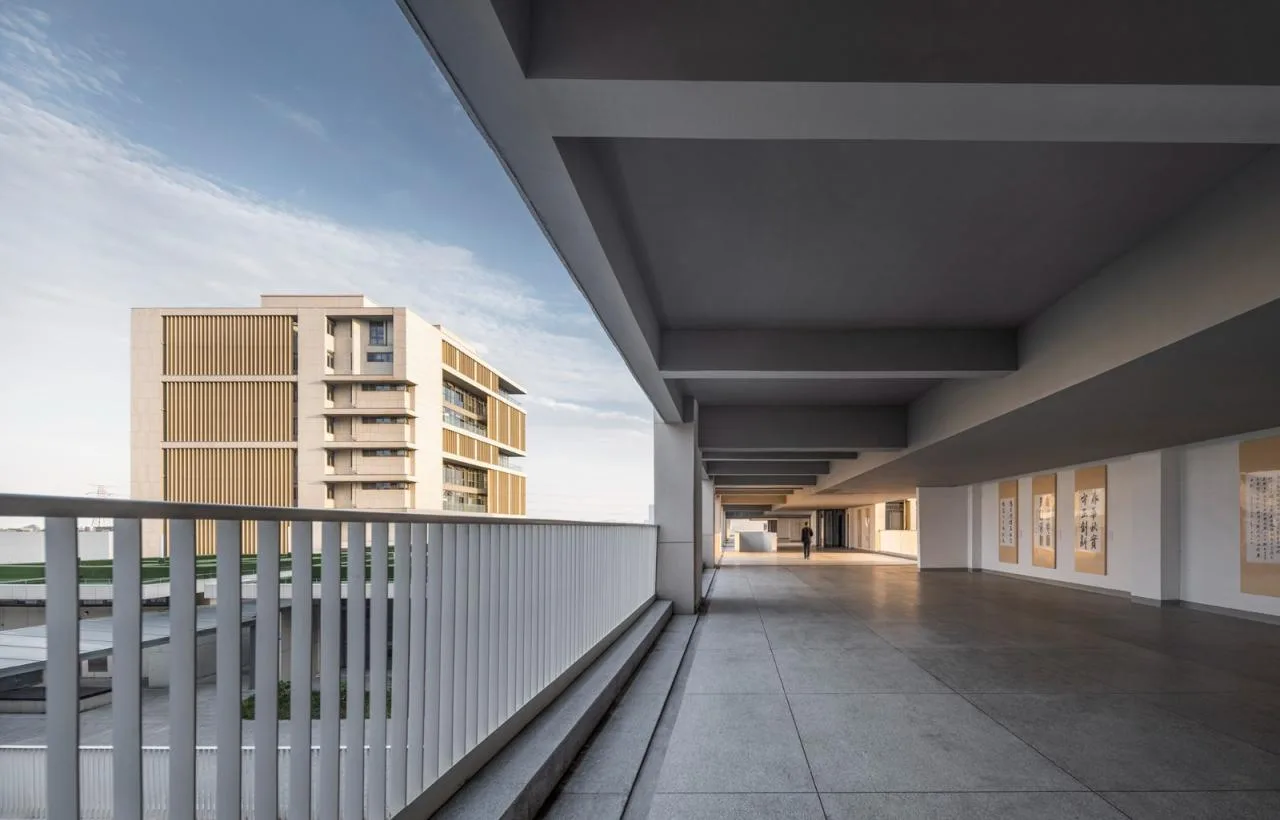
Jingjiang Senior High School features a sectional structure with a multi-level platform. By blurring the boundaries of building facades, the design creates an ambiguous interaction between buildings and between people and buildings. The concept of “ground level” within the teaching area is intentionally vague, as multiple ground levels are stacked upon each other.
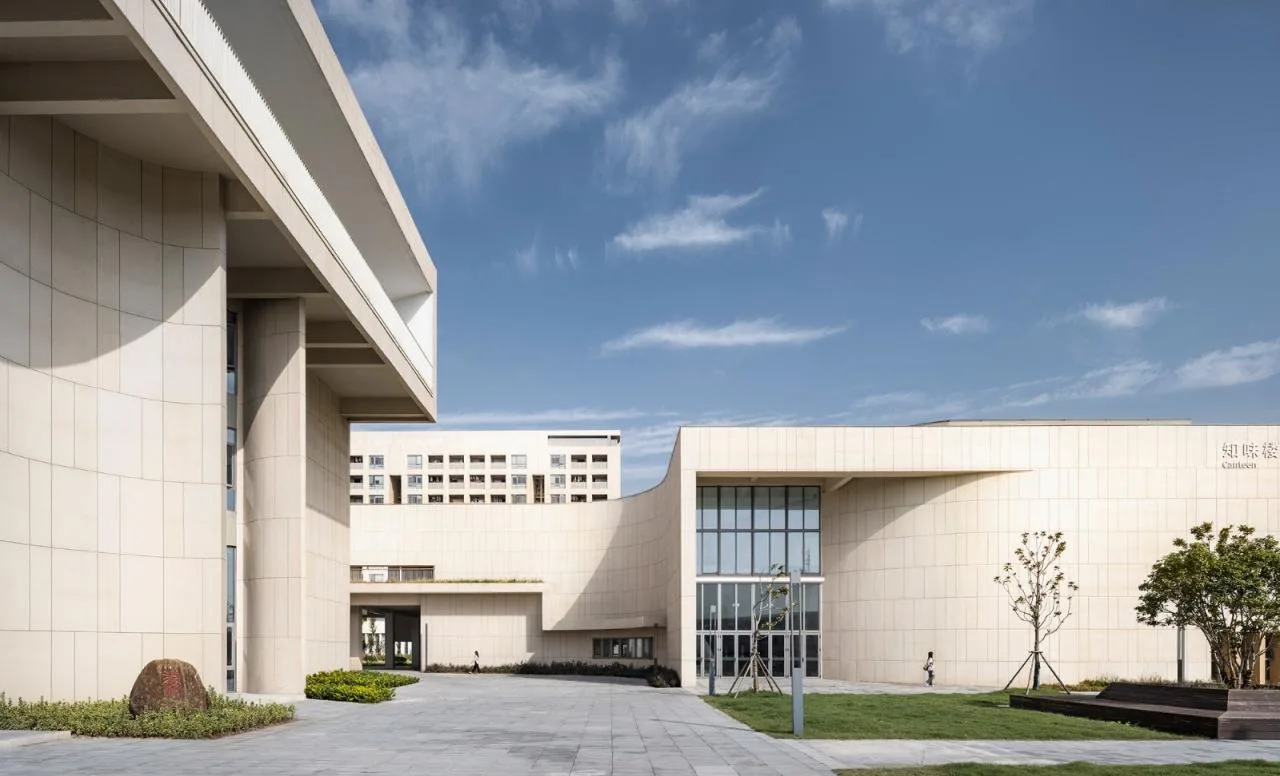
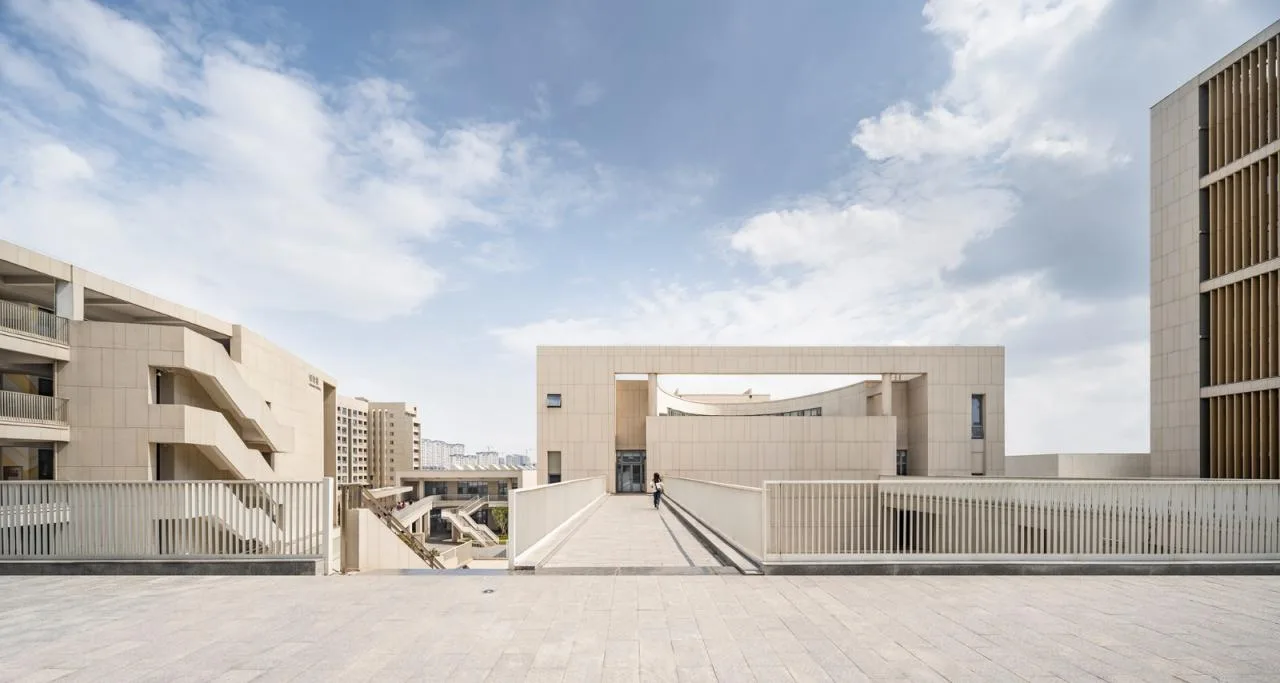
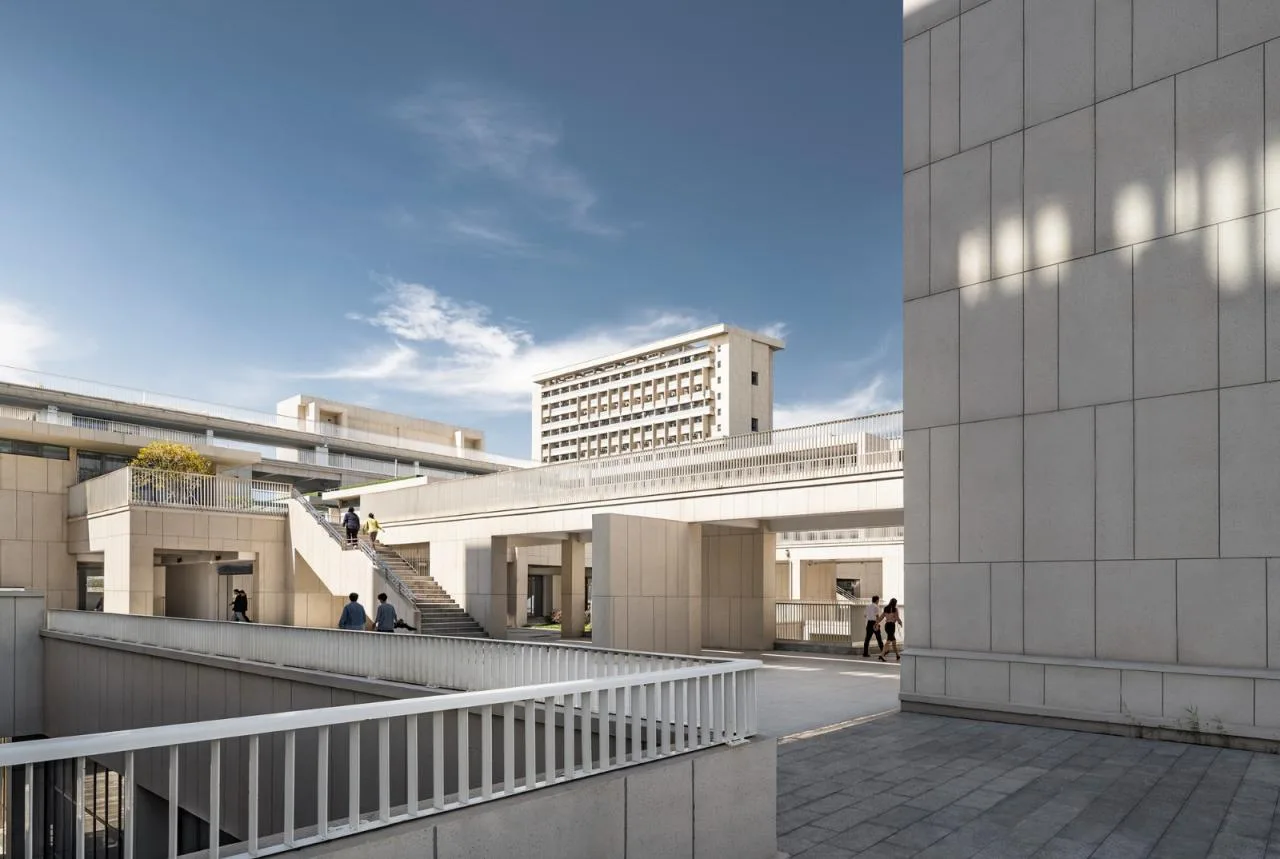
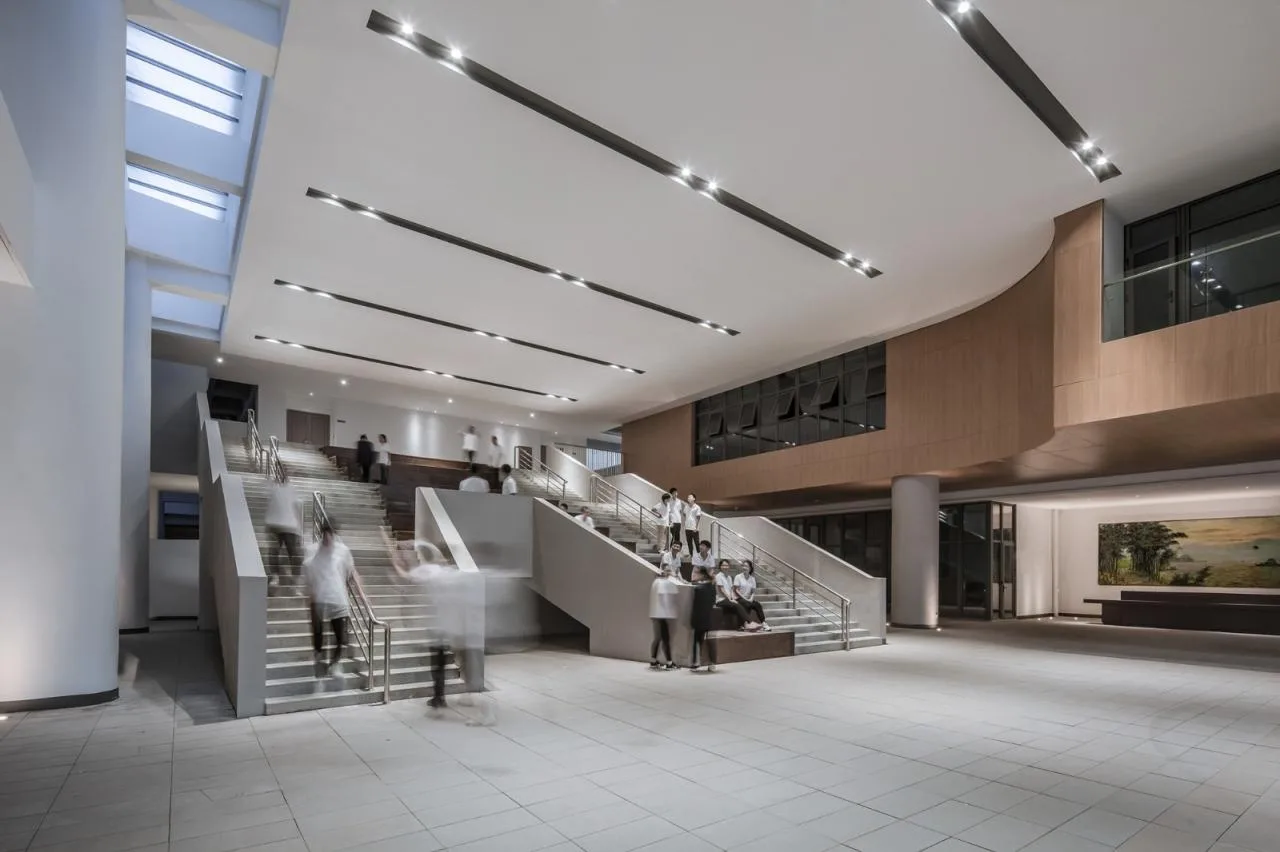
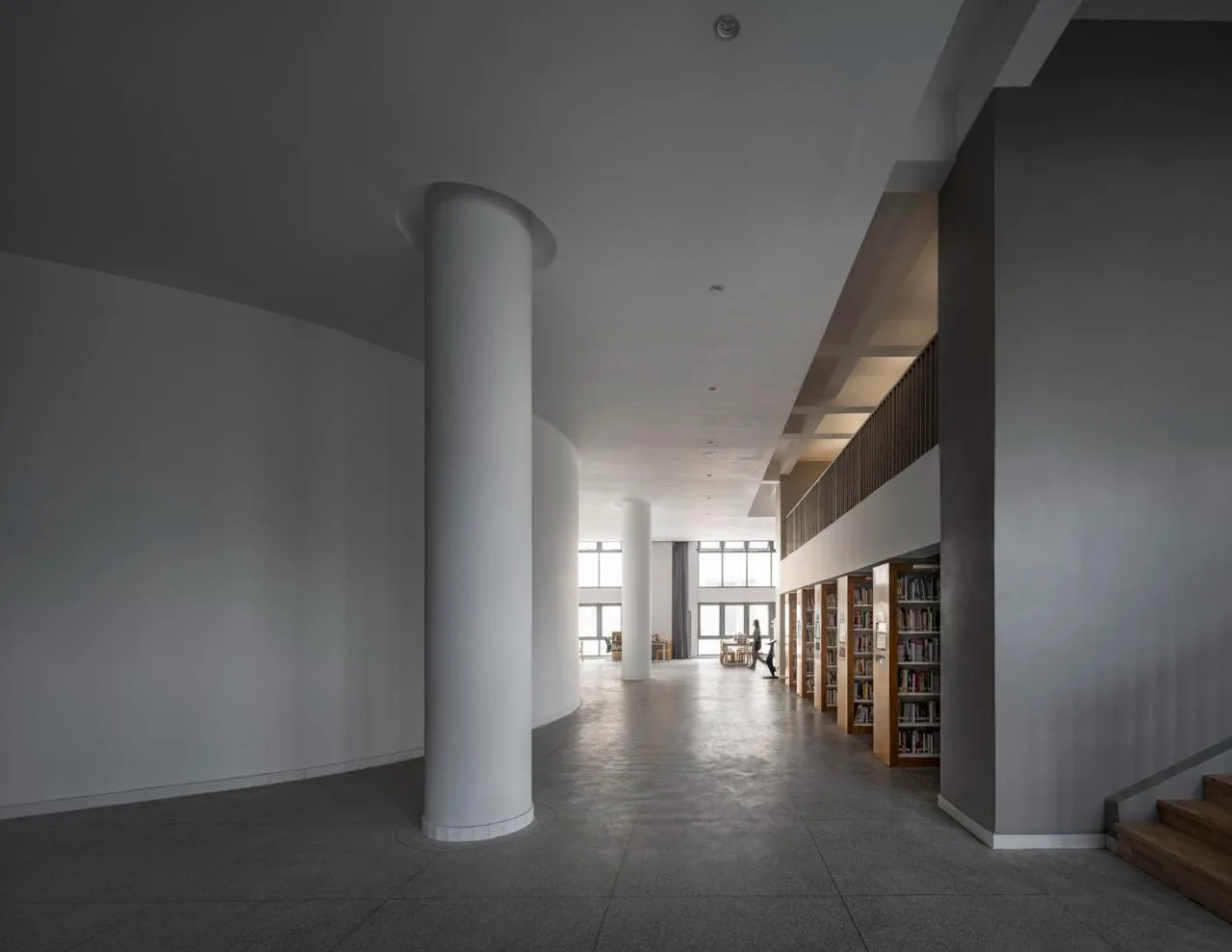
The multifunctional learning center serves as the vibrant heart of the campus. Its two-story semi-open entrance hall leaves a strong first impression. This composite space embodies the characteristics of an urban public place, fostering a near-social atmosphere within the learning center.
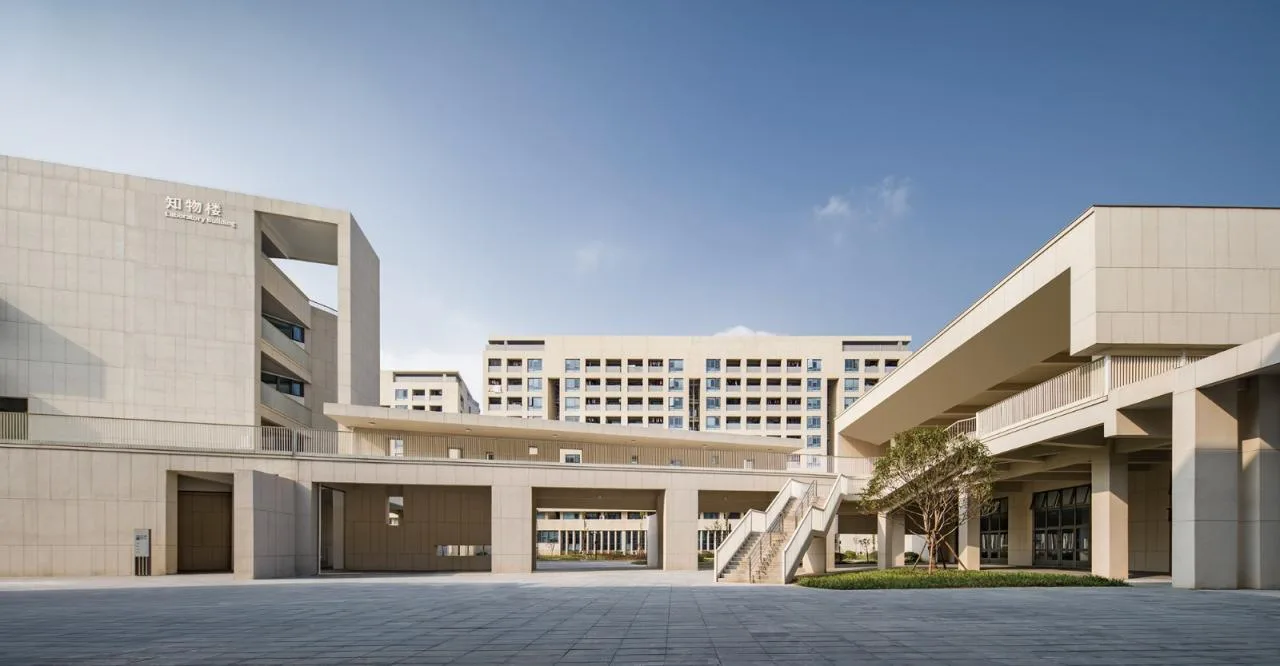
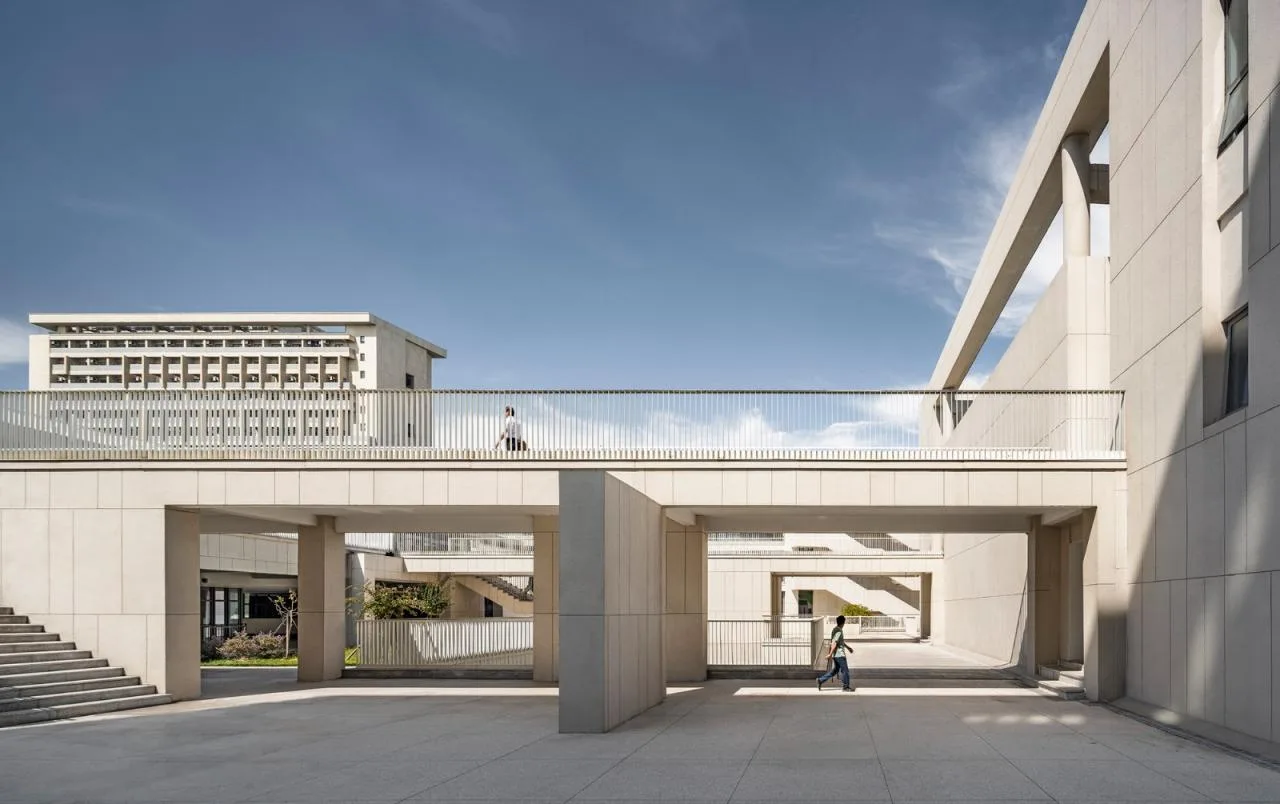
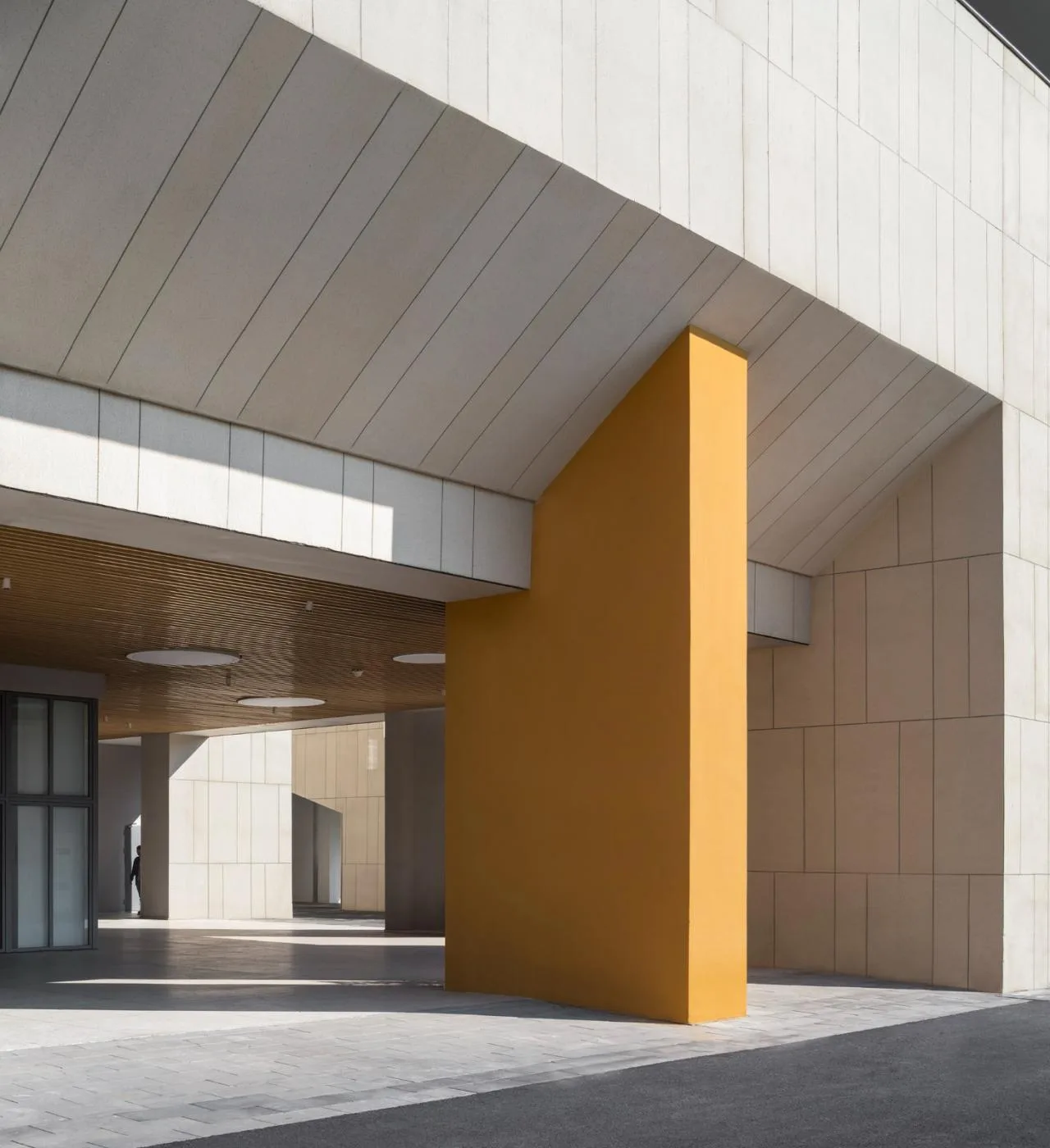
The dynamic interplay between virtual and real elements on the exterior facade of Jingjiang Senior High School sets it apart from the uniform facades typically found on campus buildings. This design approach imbues the architecture with power and a distinct artistic character.
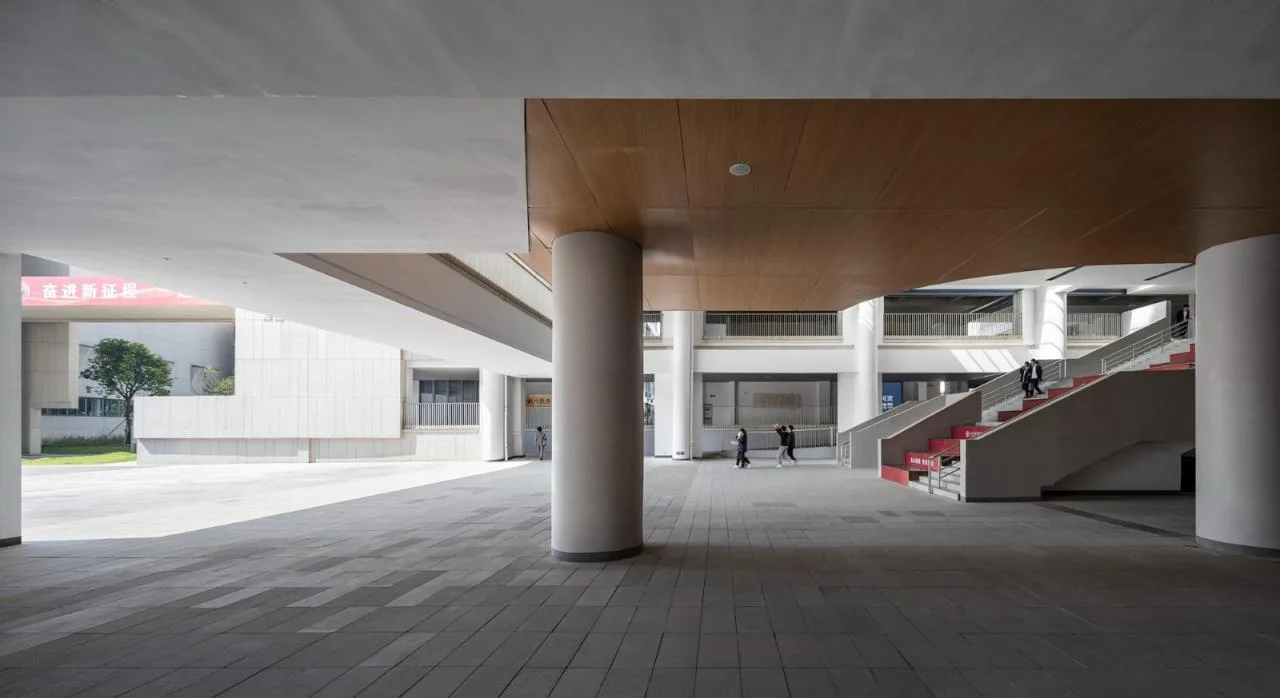
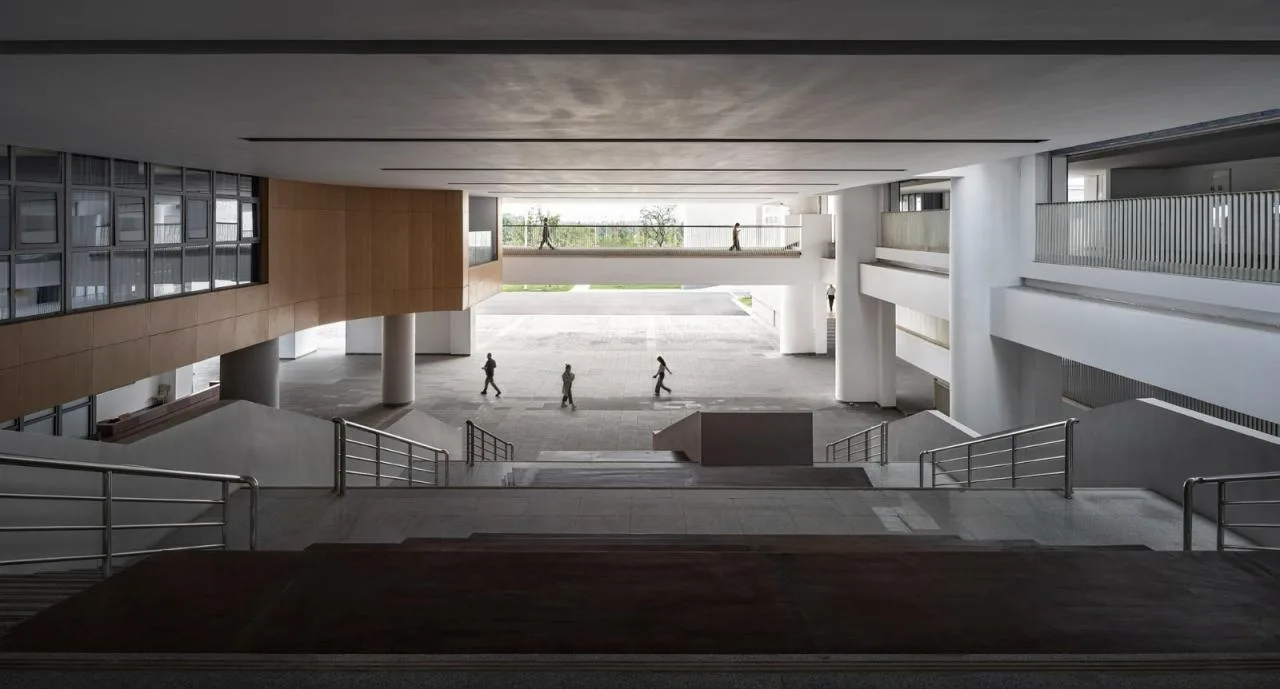
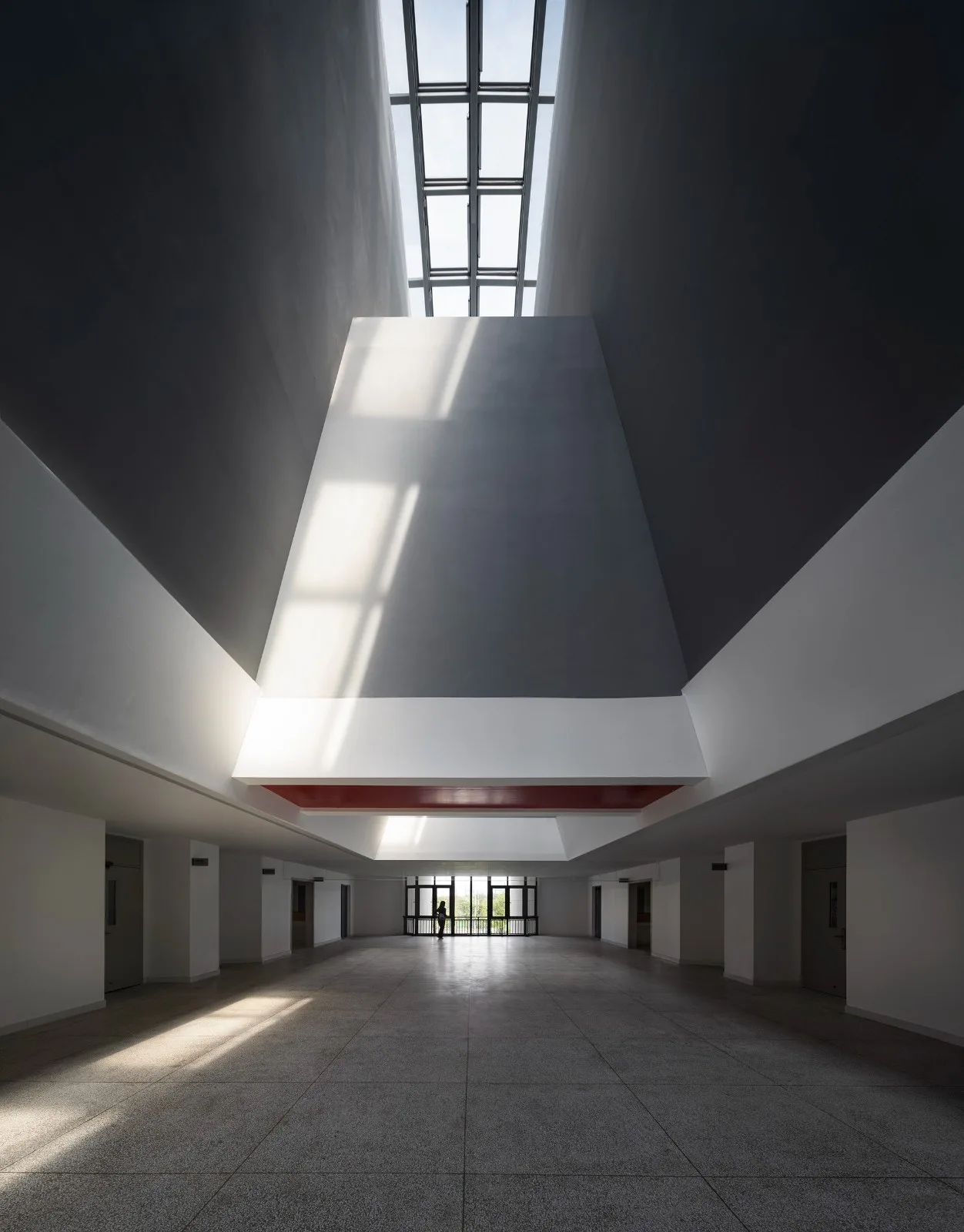
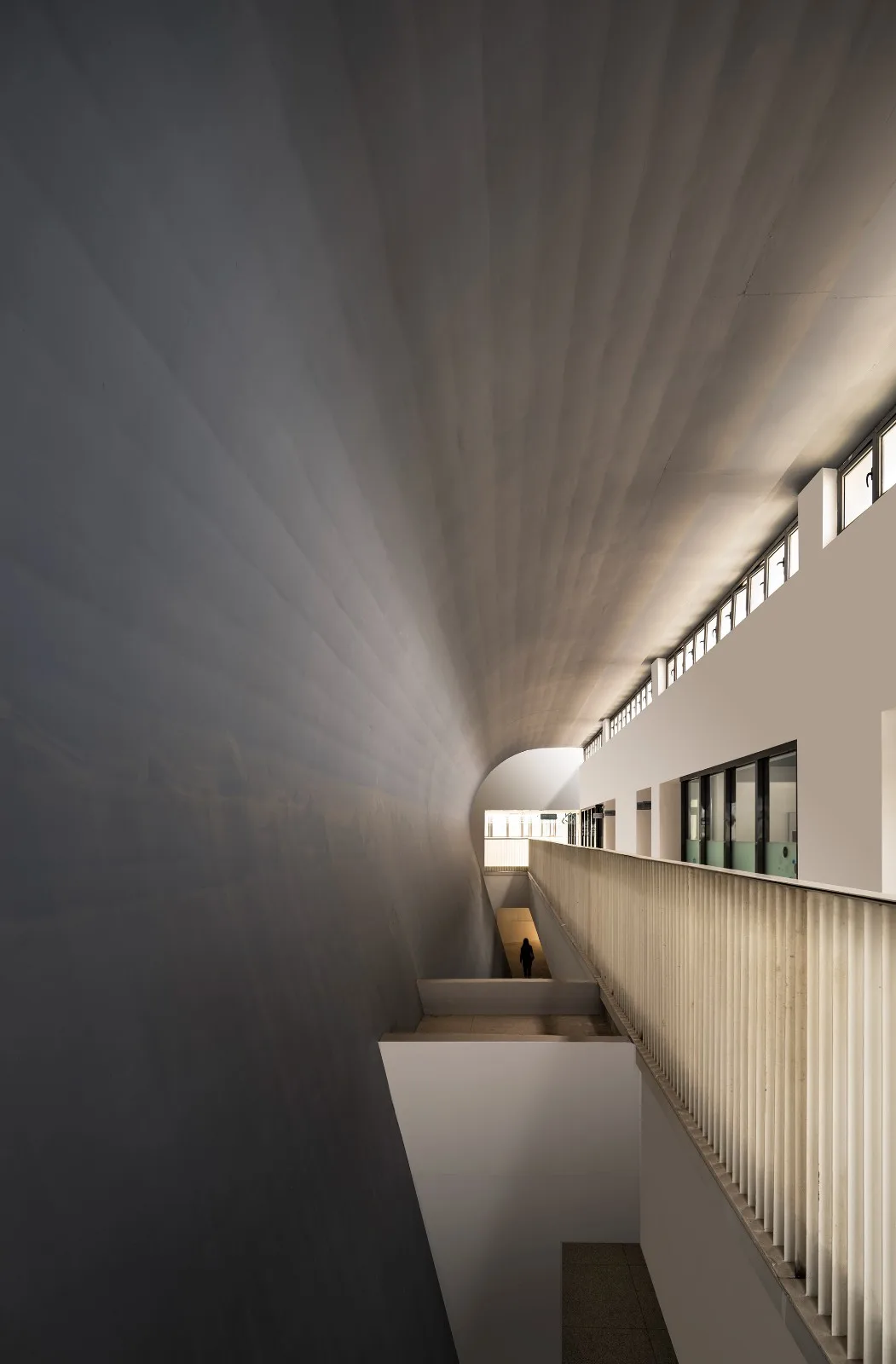
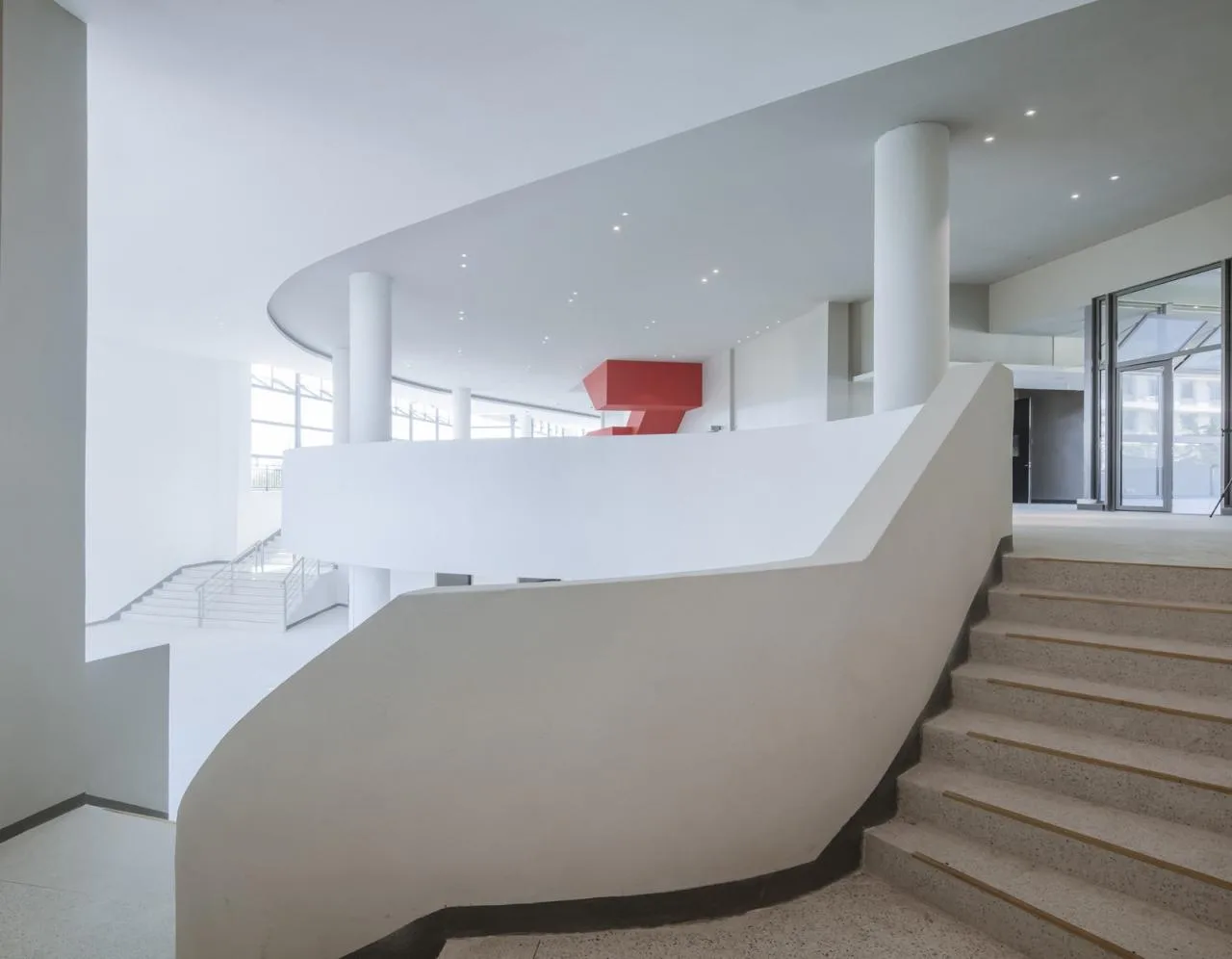
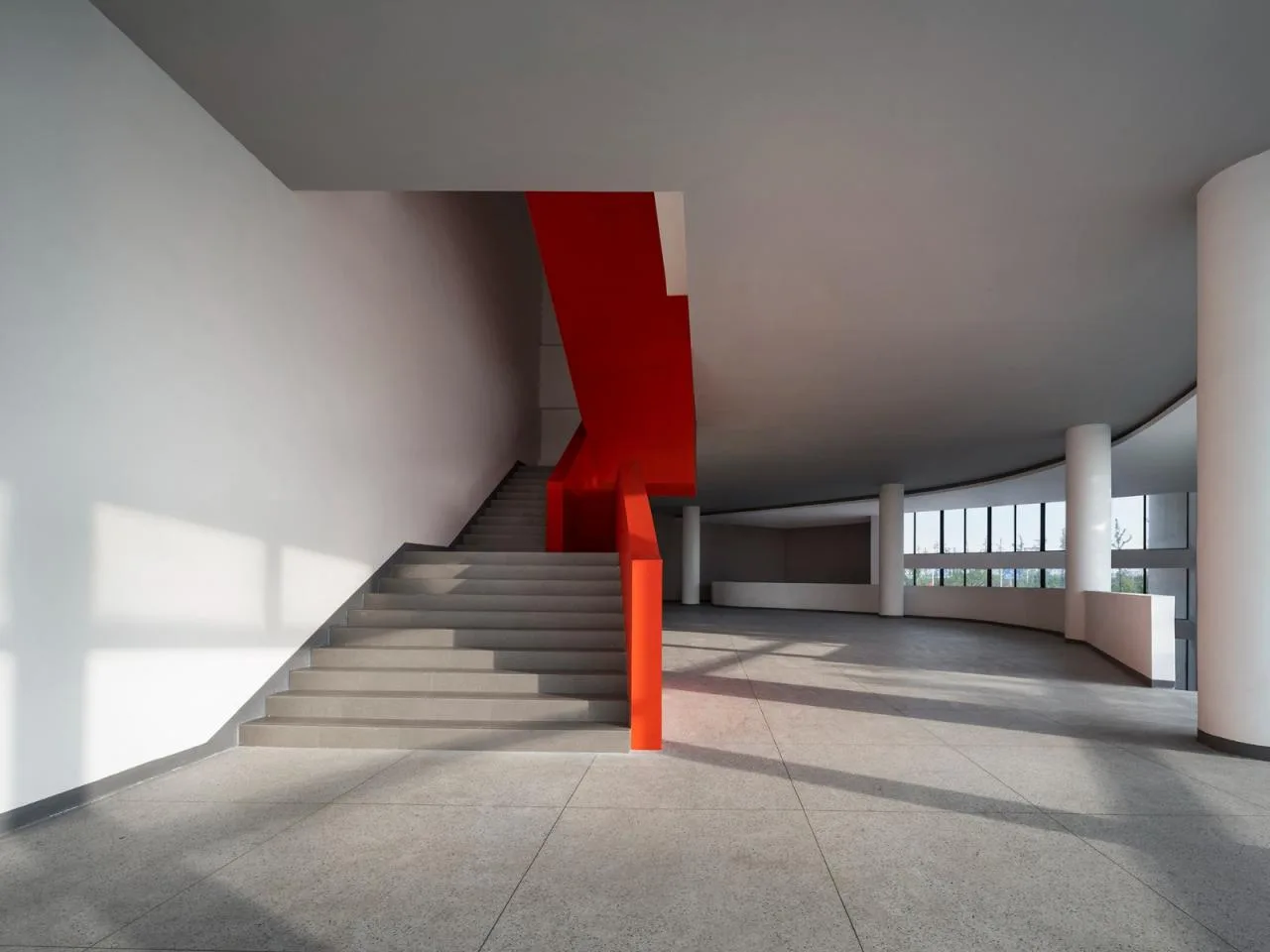
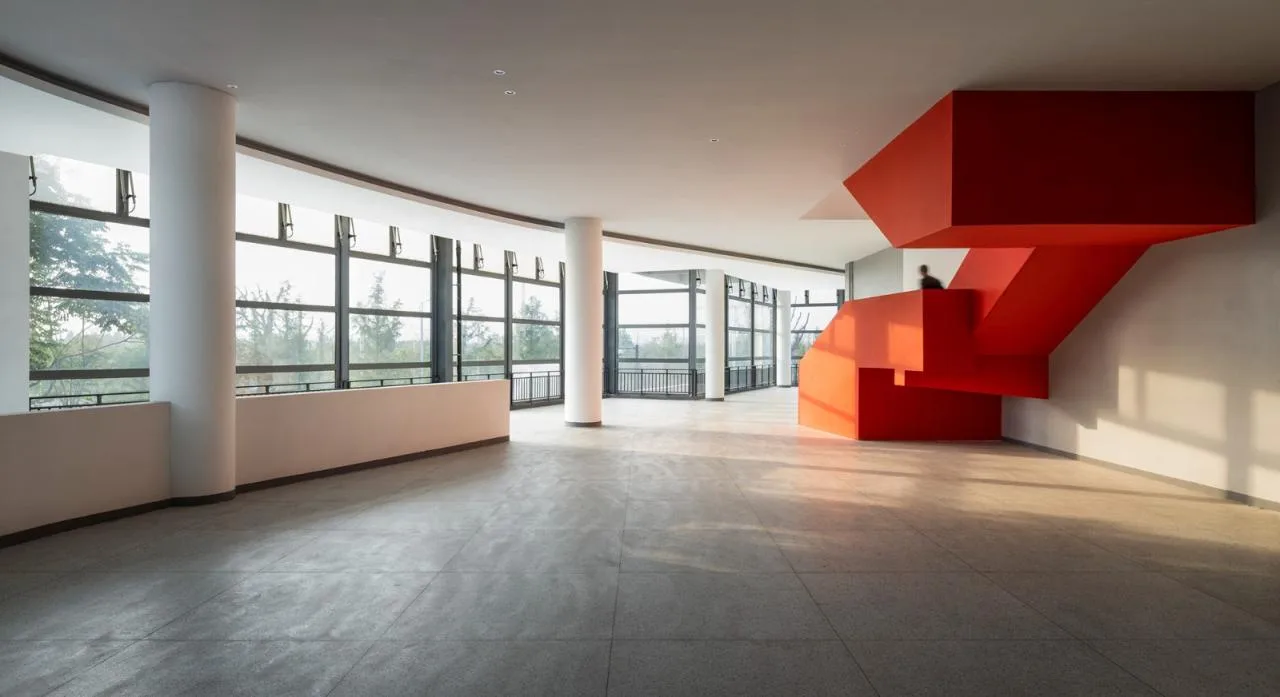
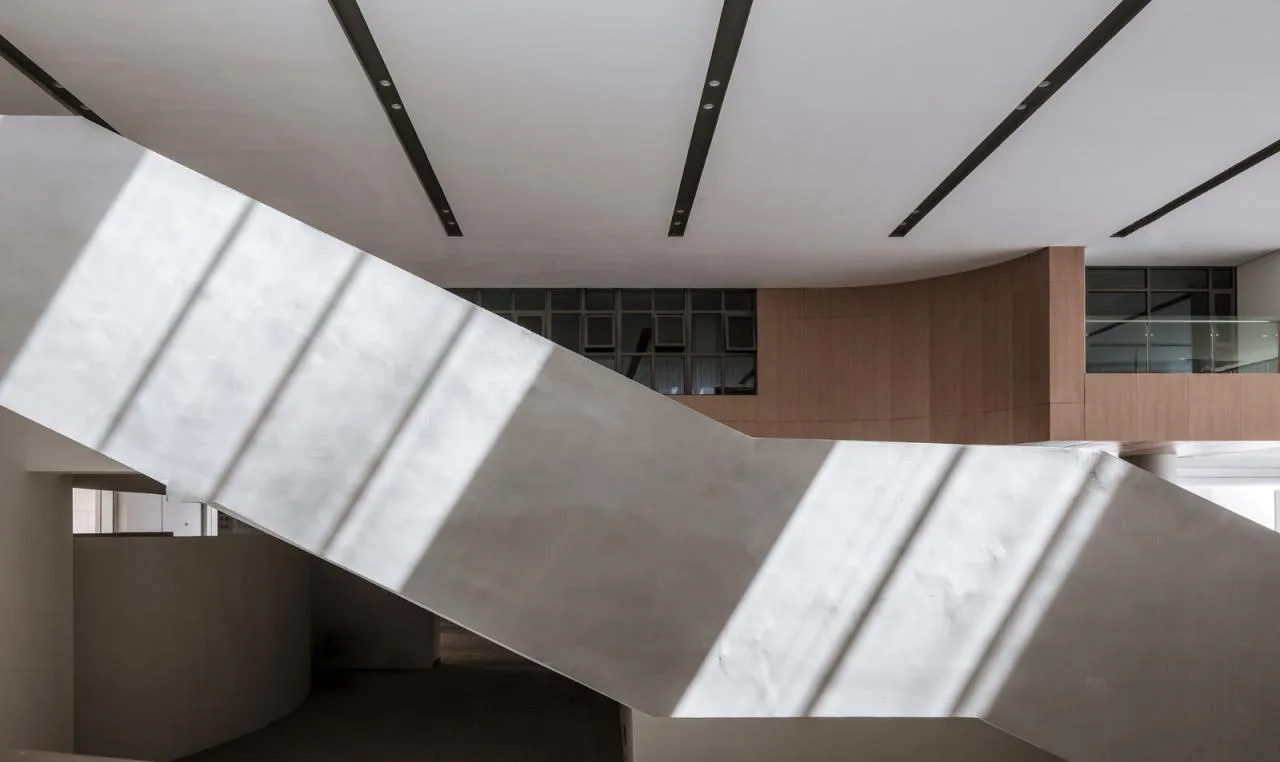
The use of artistic flair and natural light evokes strong emotions. In the library’s atrium, two curved walls flow down from the skylight, defining the space. These walls not only address fire safety but also serve as daylighting elements themselves. The theater lobby transforms the staircase into an artistic centerpiece through thoughtful design and color application. The west facade of the teaching building incorporates auxiliary functions, liberating it from the rigid constraints of linear expressions.
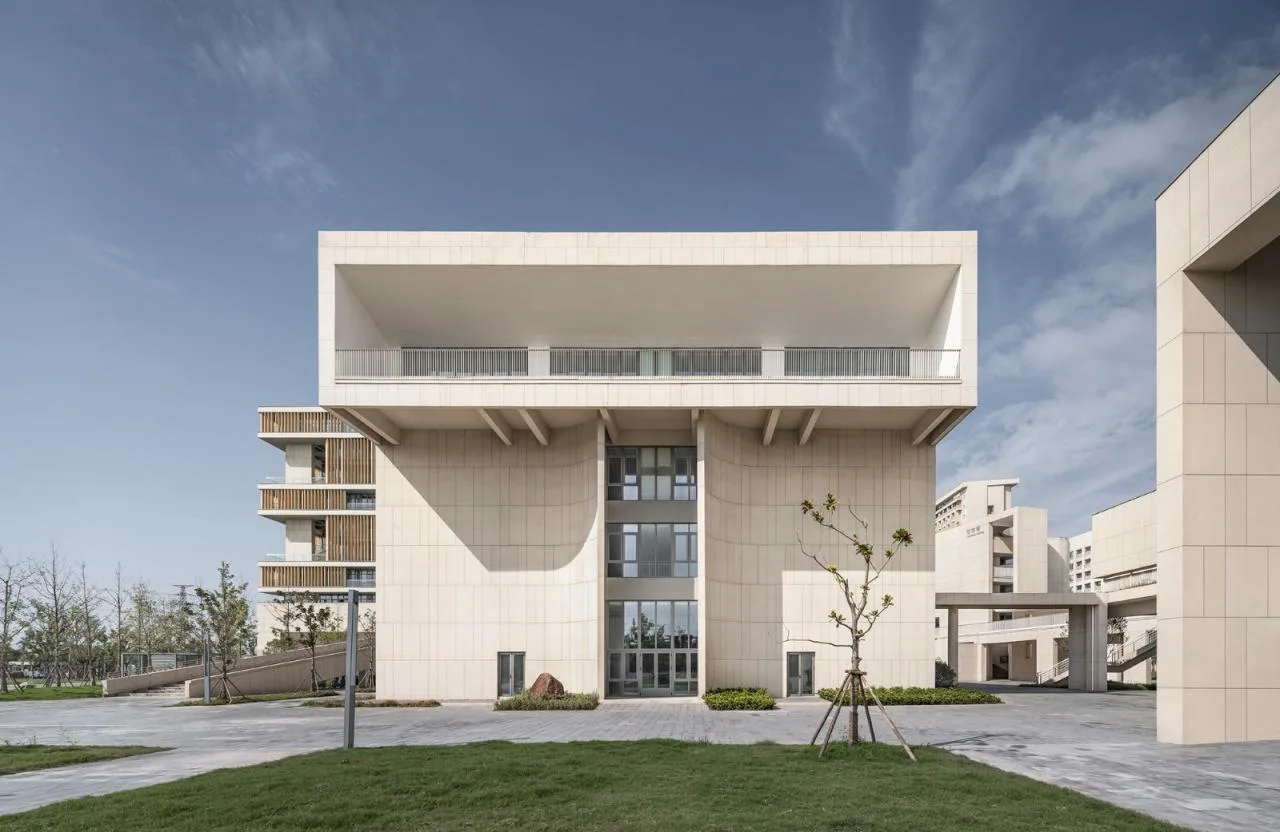
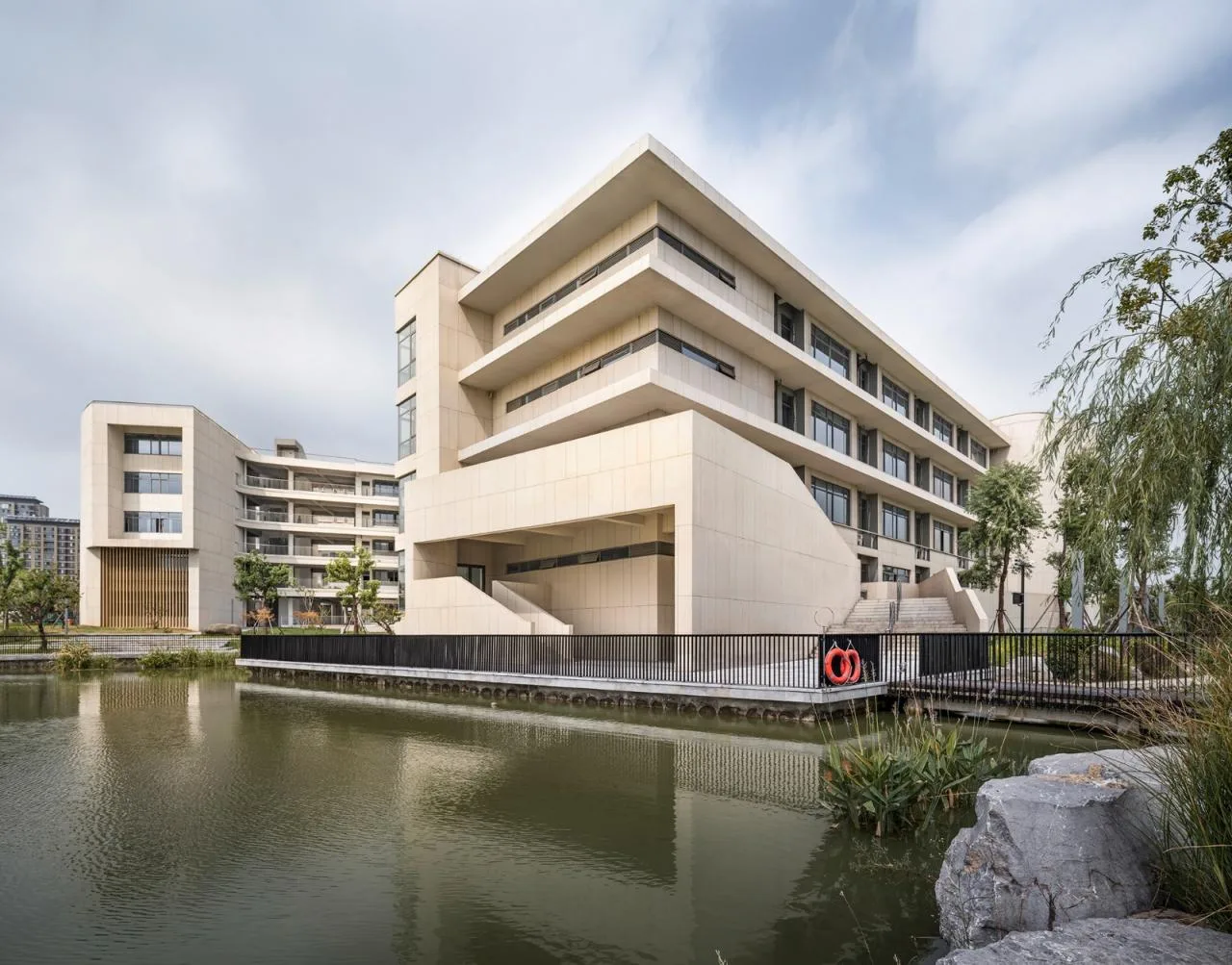
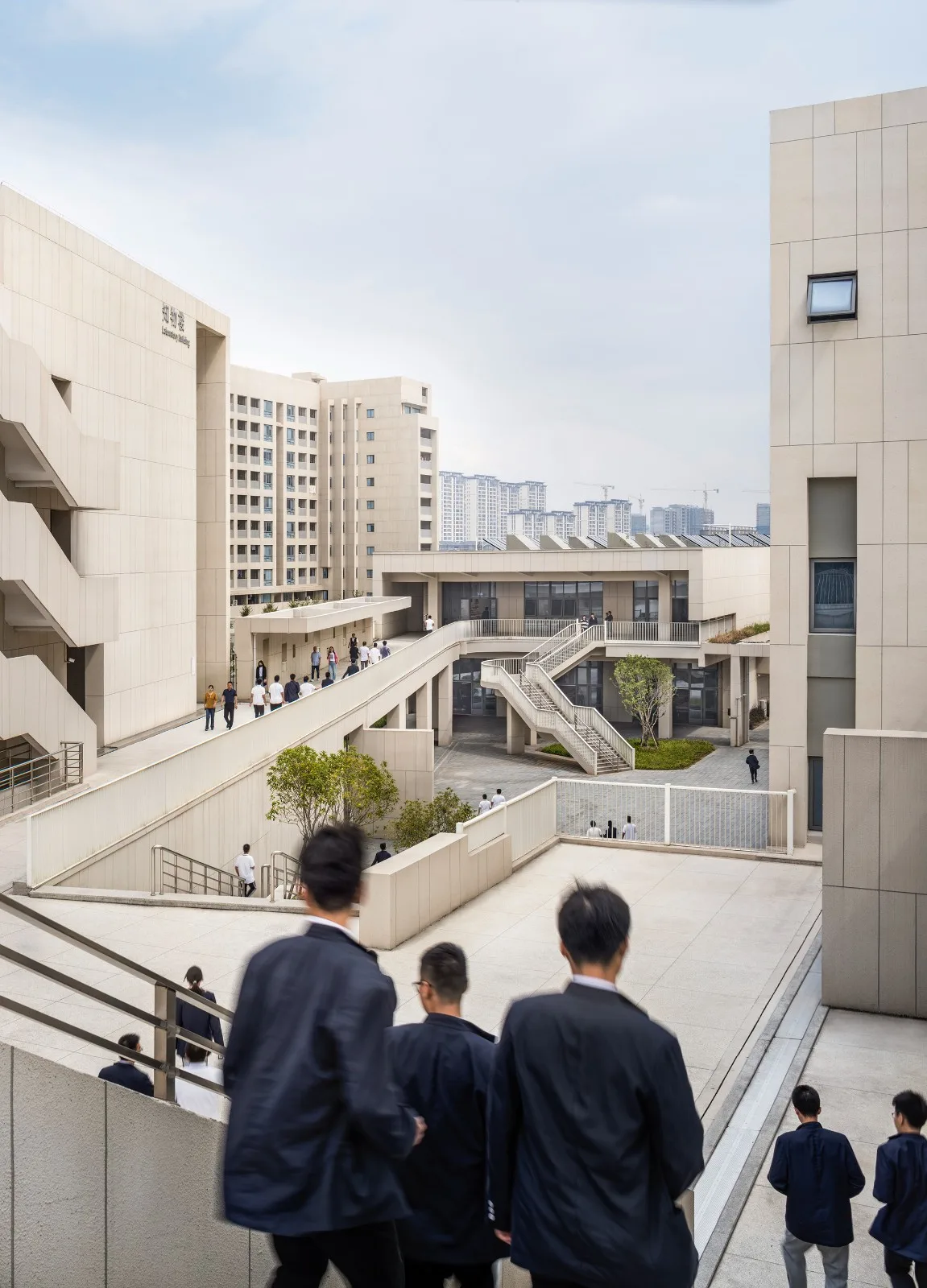
Collective memory is rare in high-rise school buildings, but here the southern side offers a distant view of the Yangtze River. The school’s innovative curriculum has helped shape this unique environment. The presence of senior officials makes this area the focal point of the entire teaching community and a collective memory for the provincial Jingzhong. Student apartments resemble the family-style living of Marseille apartments, creating warm, memorable experiences that students will cherish.
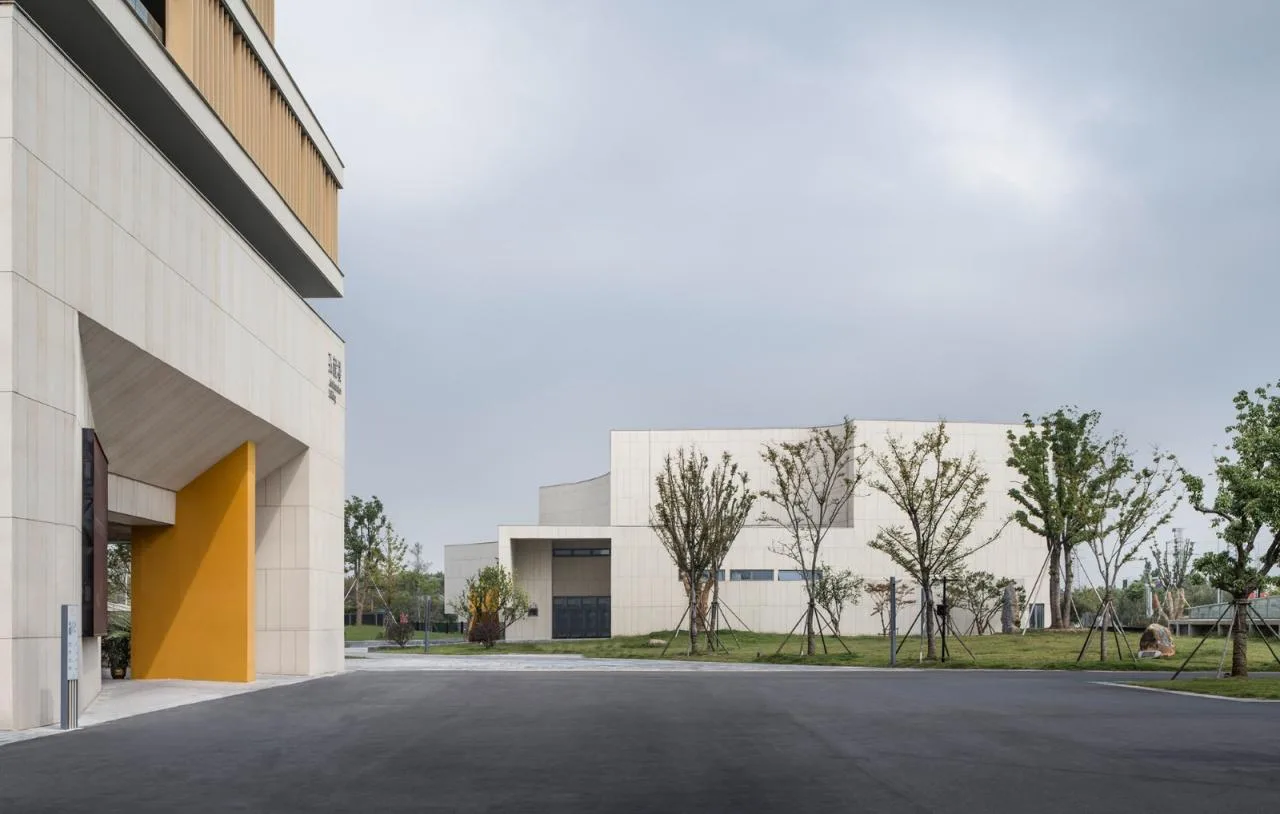
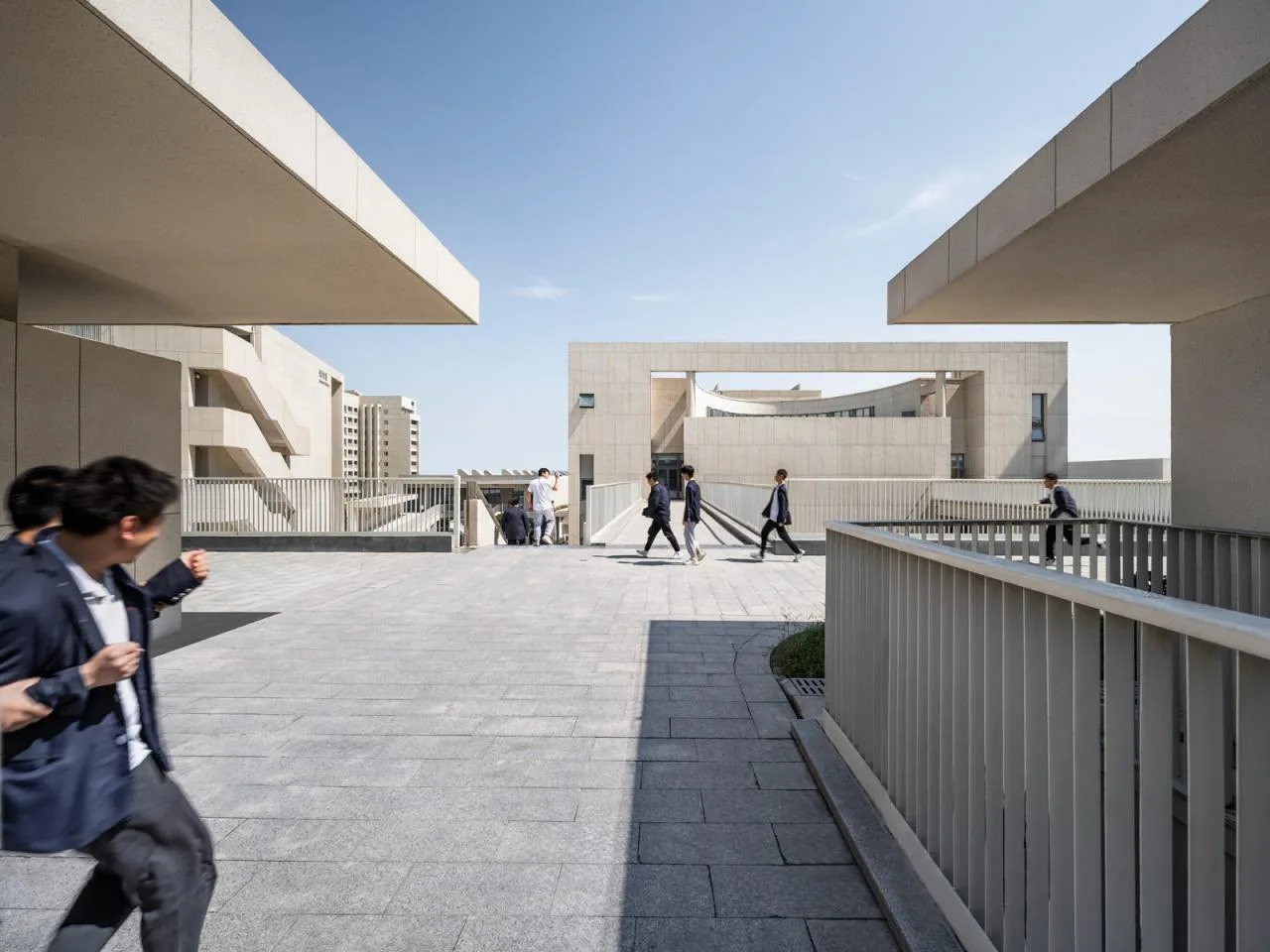
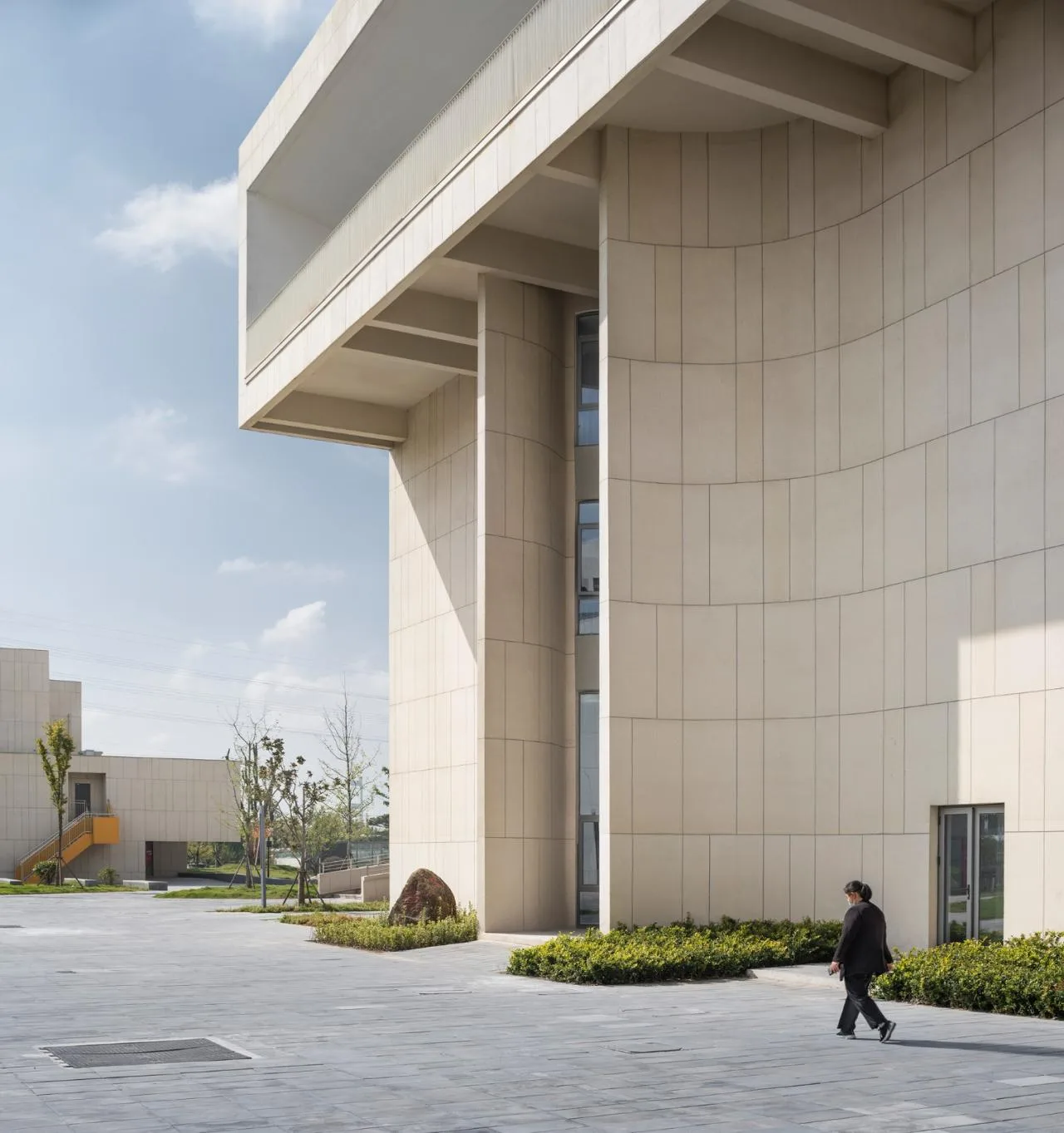
The design of the Life Square at Provincial Jingzhong University highlights the cafeteria as a critical public space on campus. A flowing, cohesive area on the cafeteria’s south side, along with the library, creates a leisure square at the school’s east entrance. The living square on the west side connects the teaching area and cafeteria, serving as a spatial hub for future campus life. The three-dimensional link between the cafeteria and teaching areas offers multiple dining routes for students.
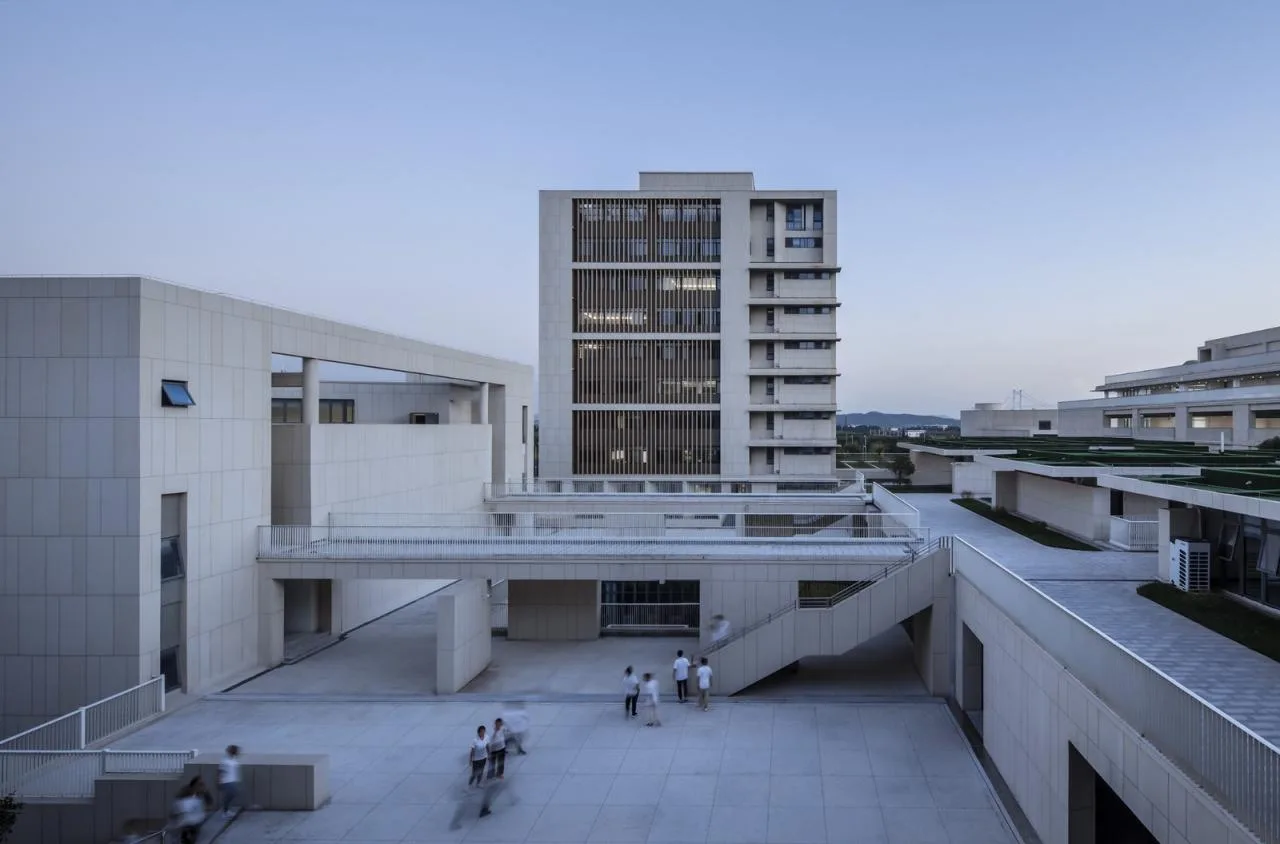
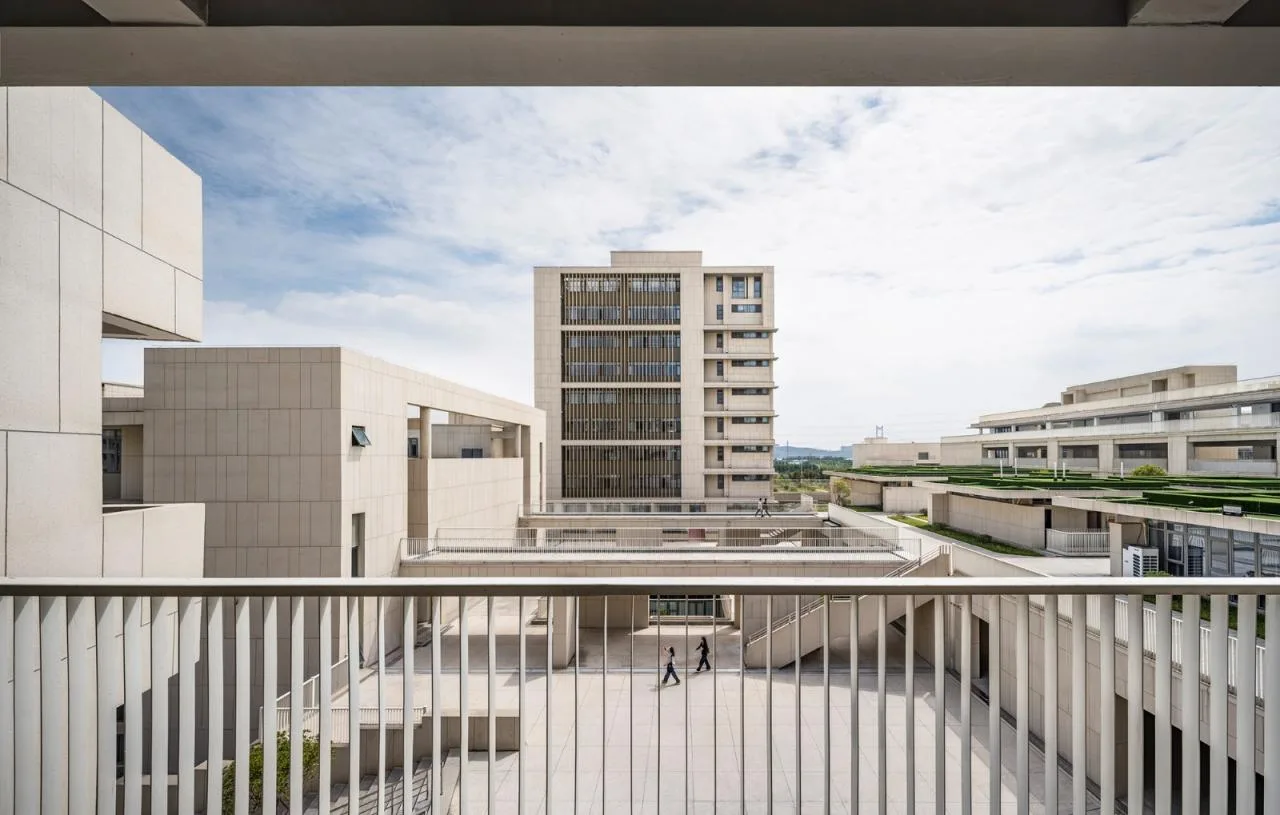
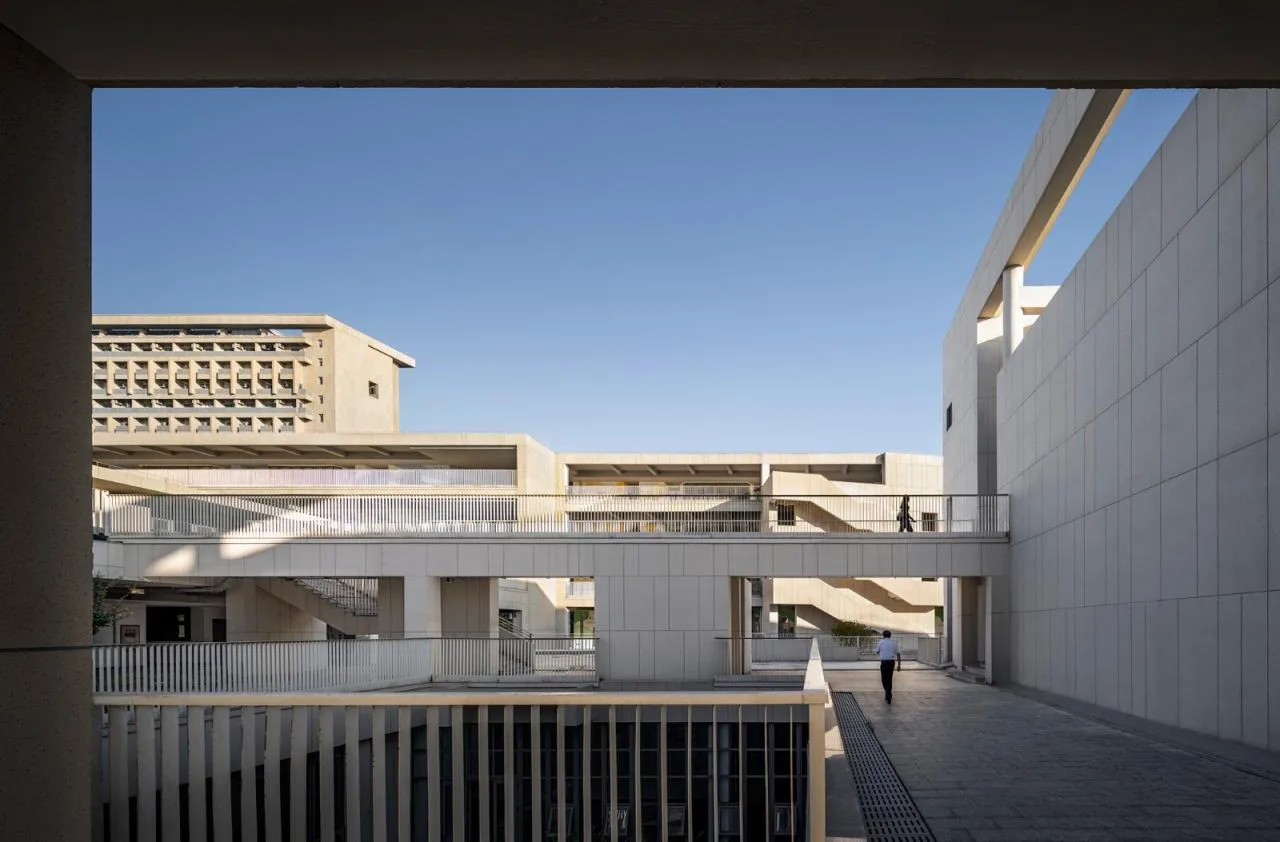
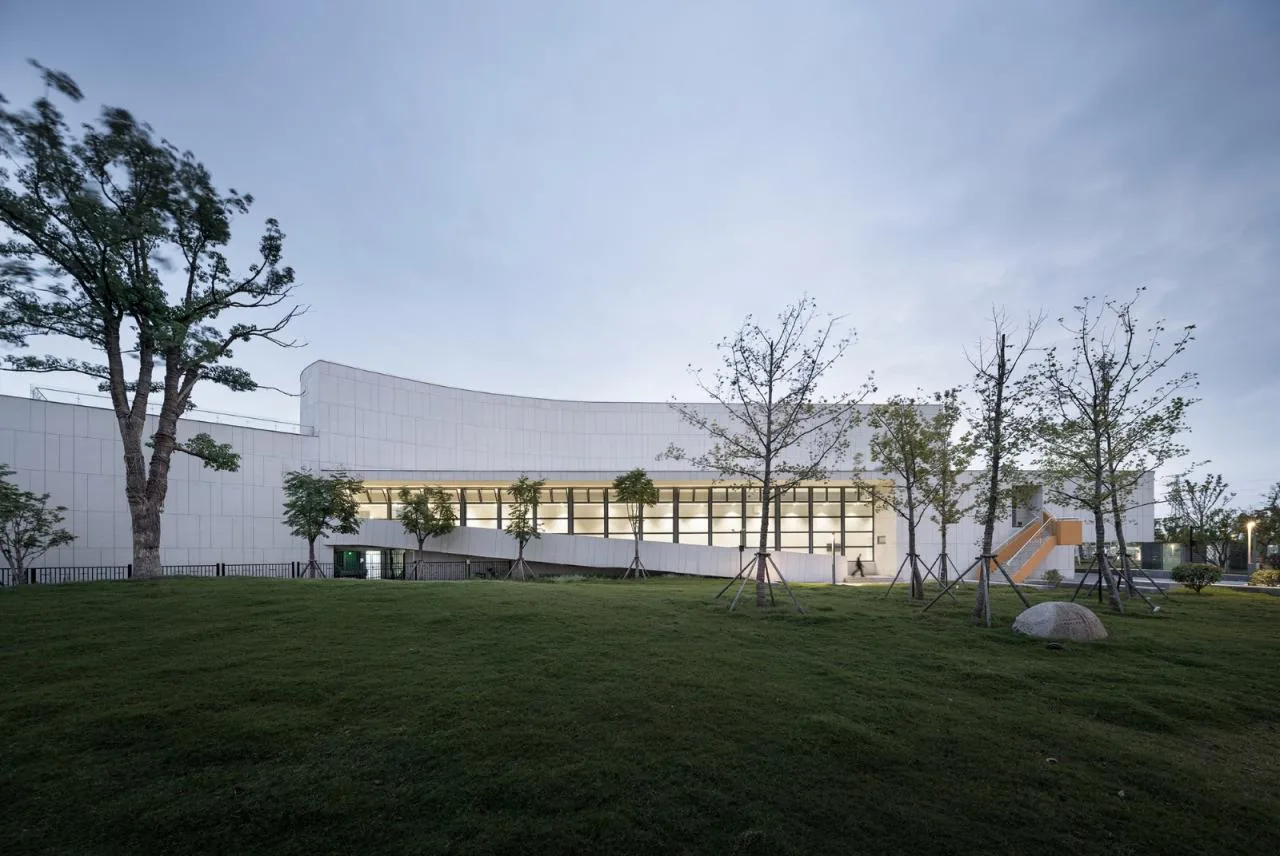
The theater and art buildings are positioned on the periphery, loosely connected to the main teaching building. Guided by the concept of introspection, these structures form a solid, scale-free wall through the combination of large blocks and lighting. This creates a strong contrast with the teaching complex. Designing from the perspective of “inner view” and emphasizing redundant relationships adds a humanistic touch to the architecture.
Project Drawings
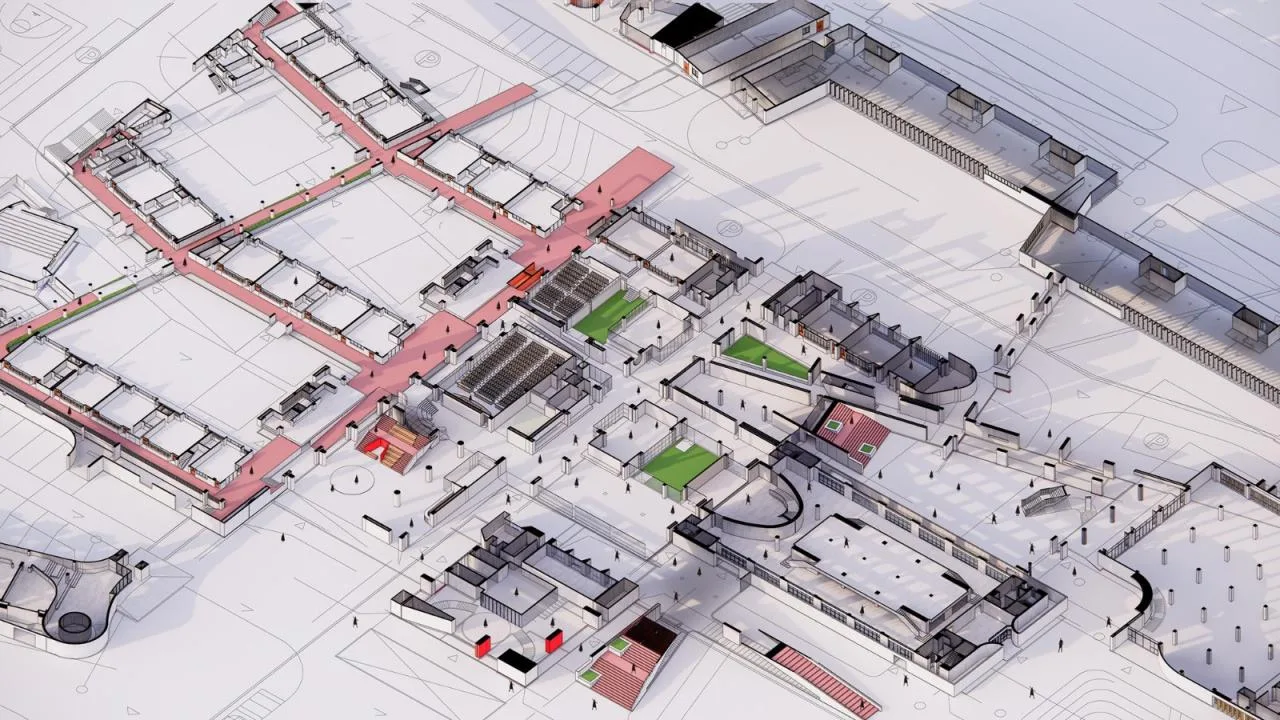
△ First Floor Space Diagram
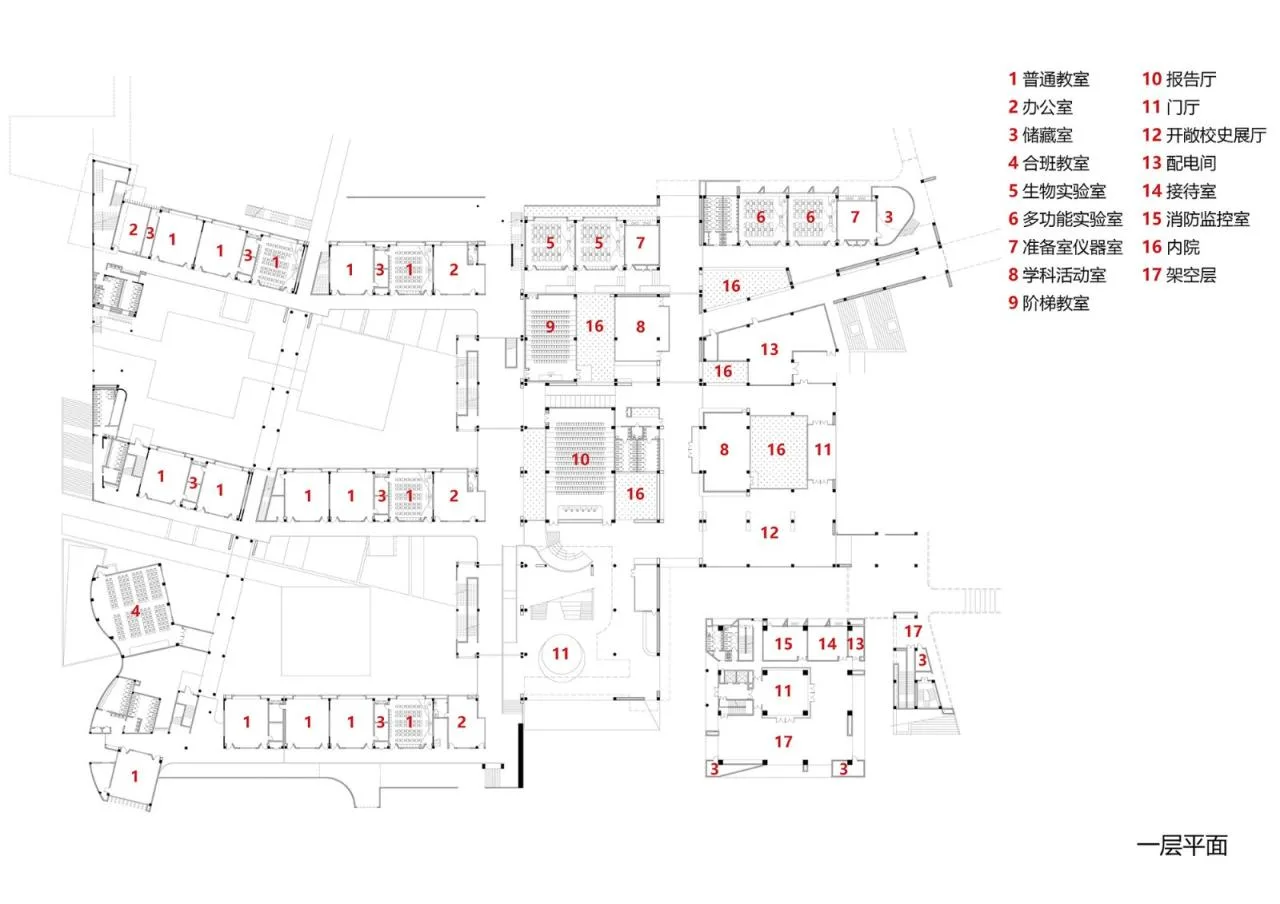
First Floor Plan of Teaching Area
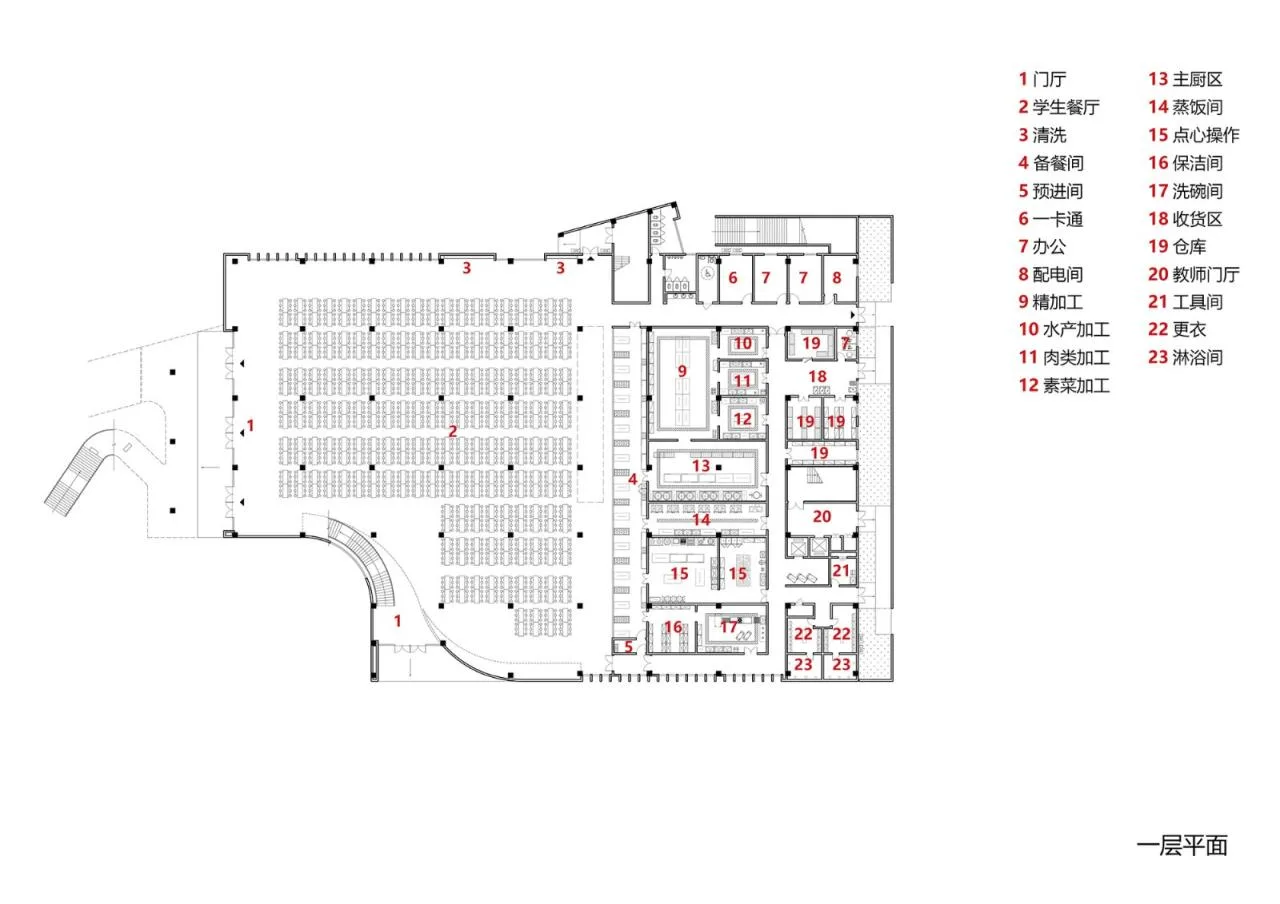
First Floor Plan of Cafeteria
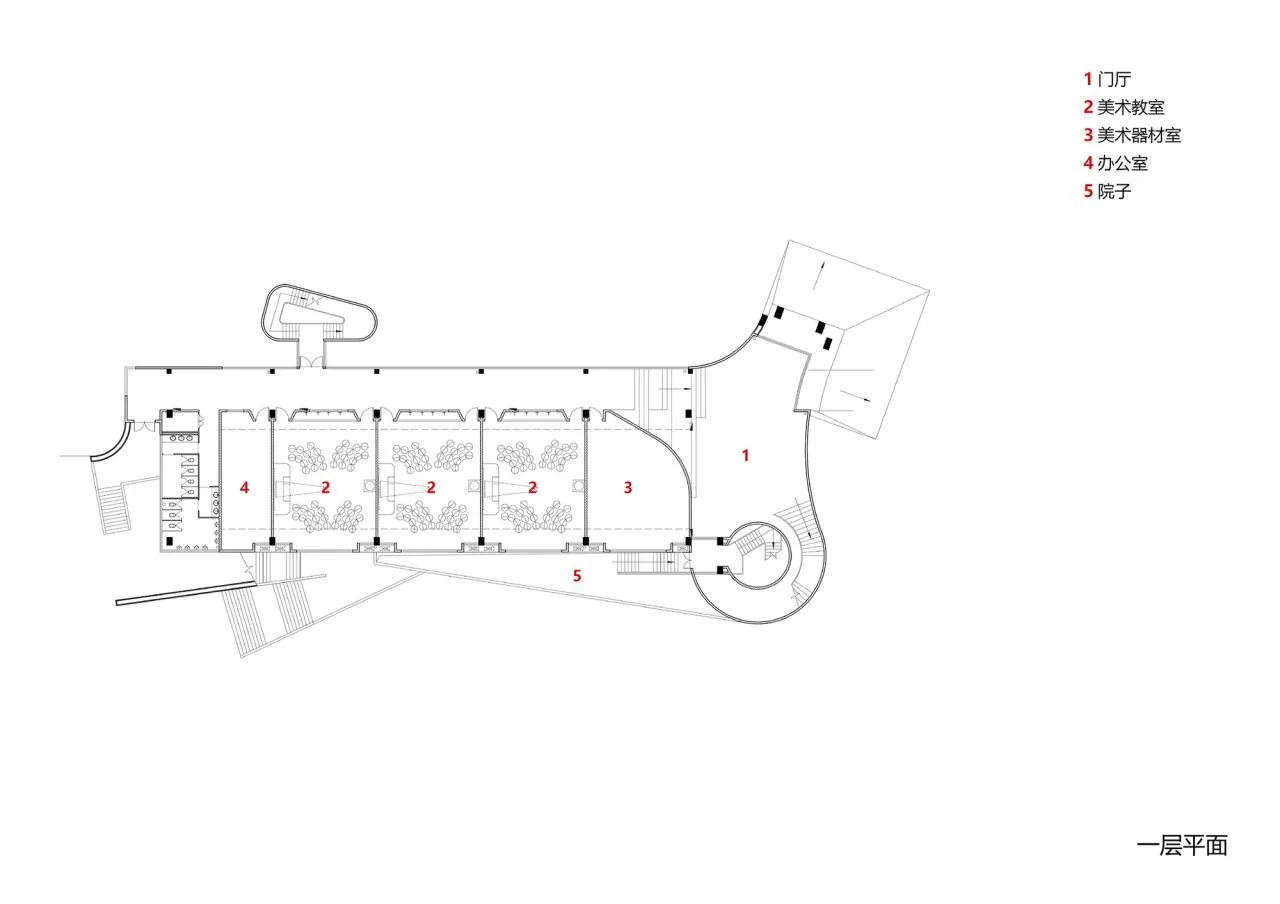
△ First Floor Plan of Art Building
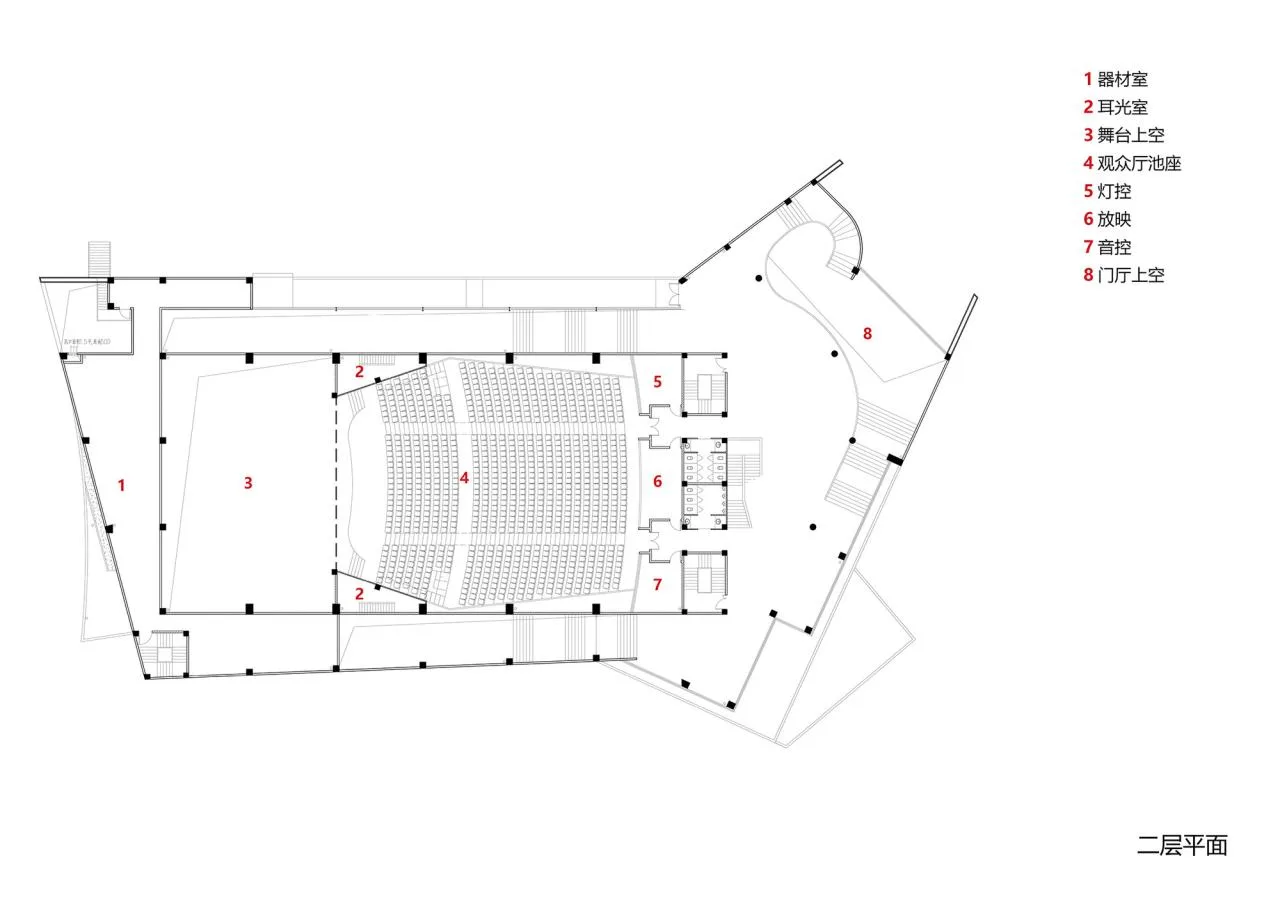
Second Floor Plan of Auditorium
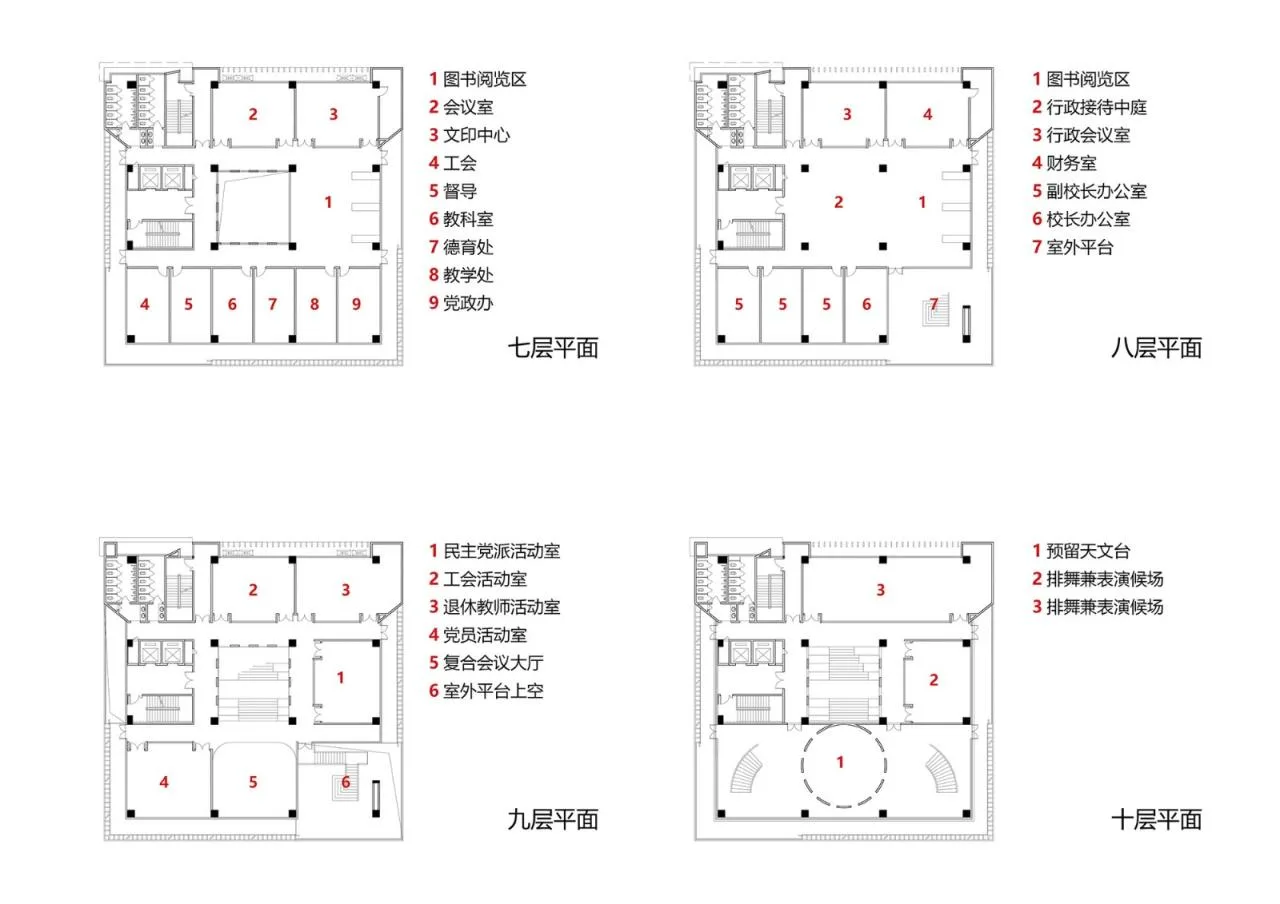
△ Office and Course Innovation Center Plan
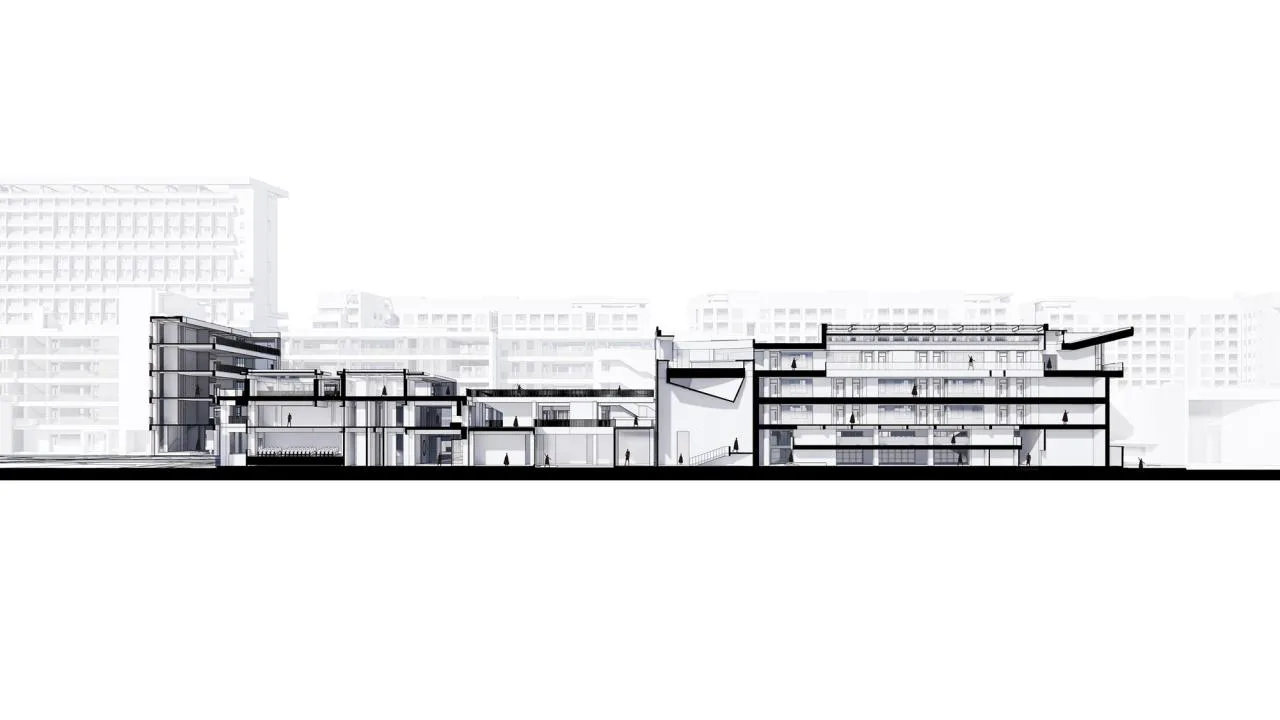
△ Activity Plan and Section
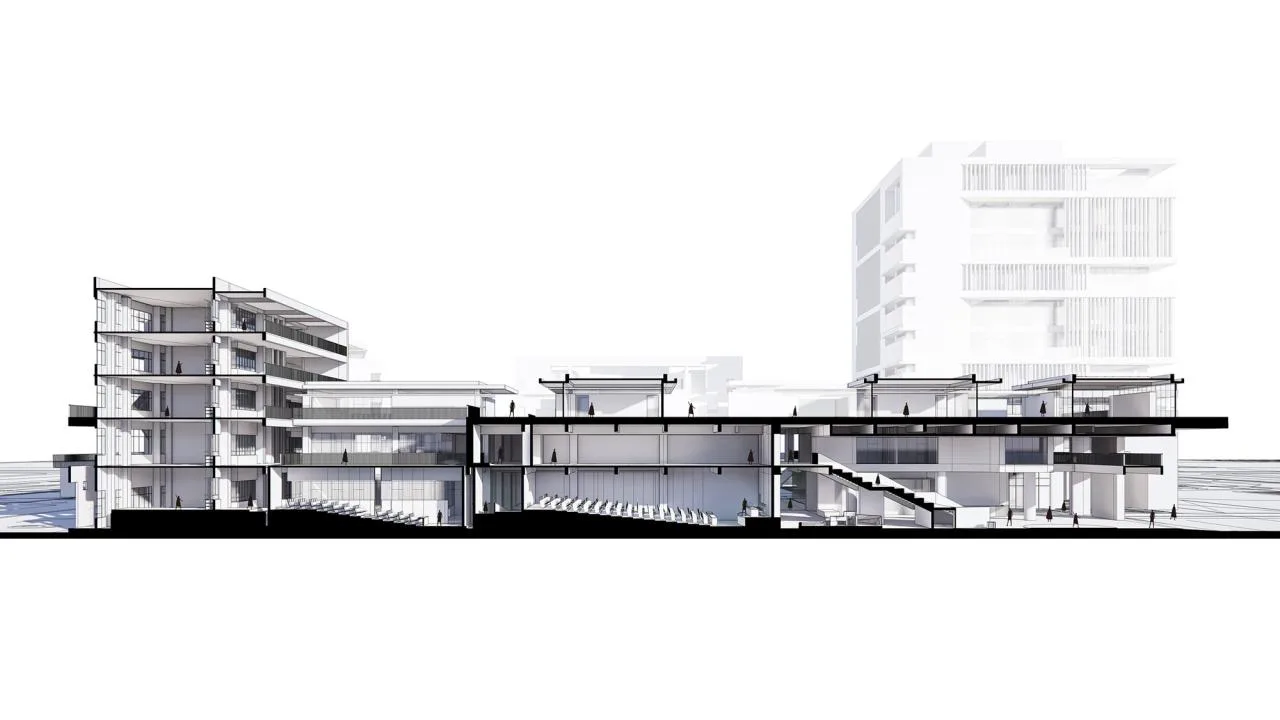
△ Activity Platform Profile
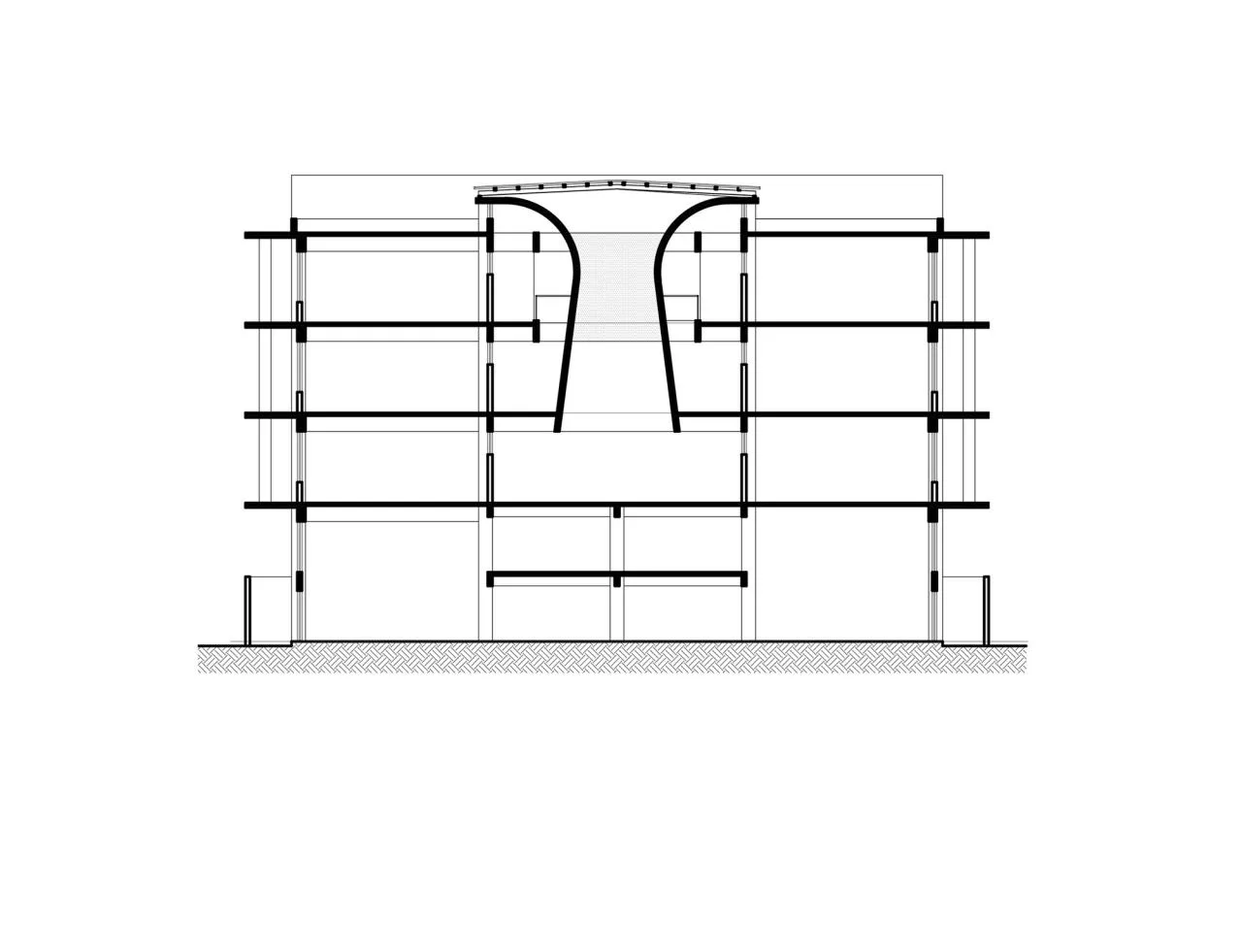
△ Sectional View of Library Atrium

△ System Redundancy and Relationship Redundancy
Project Information
Architect: Rong Chaohui Studio
Area: 210,000 m²
Project Year: 2021
Photographers: Hou Bowen, Hu Yijie
Manufacturers: Three Trees, Yashi, Hawk
Principal Architect: Rong Chaohui
Design Team: Sun Xinfeng, Gu Aitian, Wang Xuefeng, Liu Hu, Zuo Yuchen, Tong Zhen, Liu Yongping, Zhou Xiaping, Chen Zhengwei, Yu Yifan, Chen Lili, Lin Chen
Partner: Arkomixing (Sports Center Design)
Client: Jingjiang Senior High School, Jiangsu Province
Structural Design: Jiangsu Zhongrui Huadong Architectural Design and Research Institute Co., Ltd
Landscape Design: Roland Landscape
Construction: China Construction Eighth Engineering Division Third Construction Co., Ltd
Location: Taizhou















Must log in before commenting!
Sign Up