
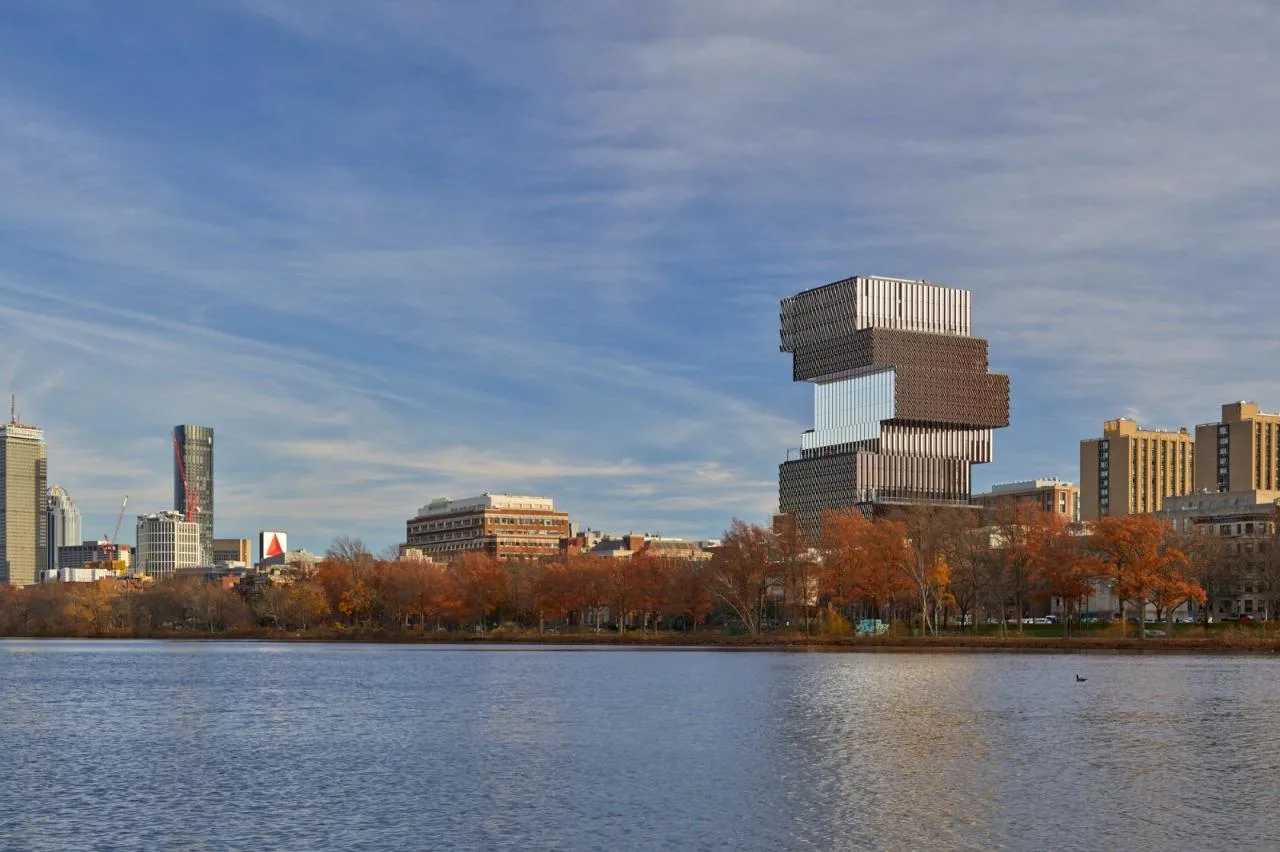
The Boston University Center for Computing and Data Science is a landmark structure that has transformed the university’s skyline. It embodies impressive sustainable development goals while emphasizing human-centered design to foster collaboration and connectivity. This project unites the departments of mathematics, statistics, and computer science into a vibrant community for 3,000 students and faculty, creating a vertical campus experience.
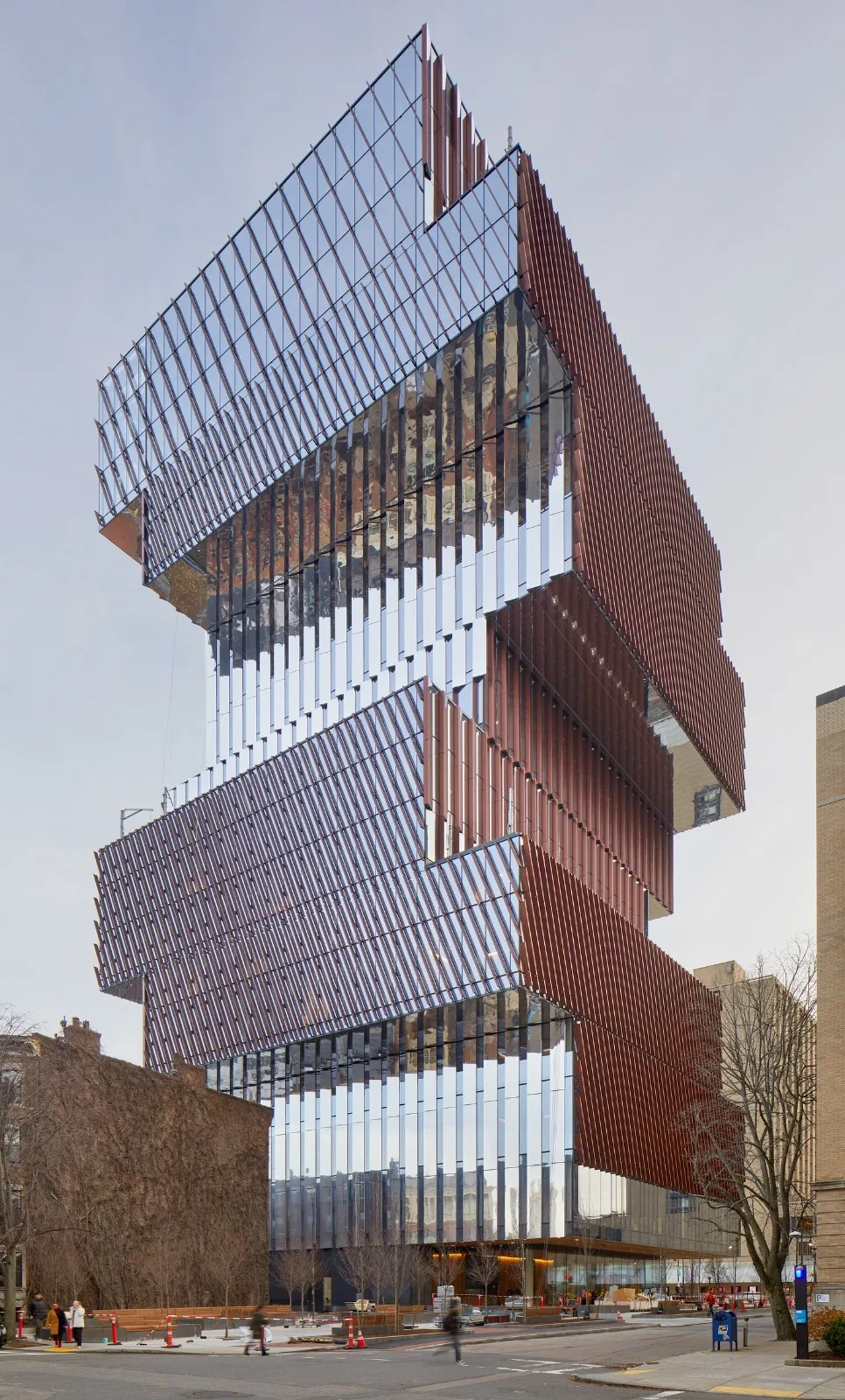
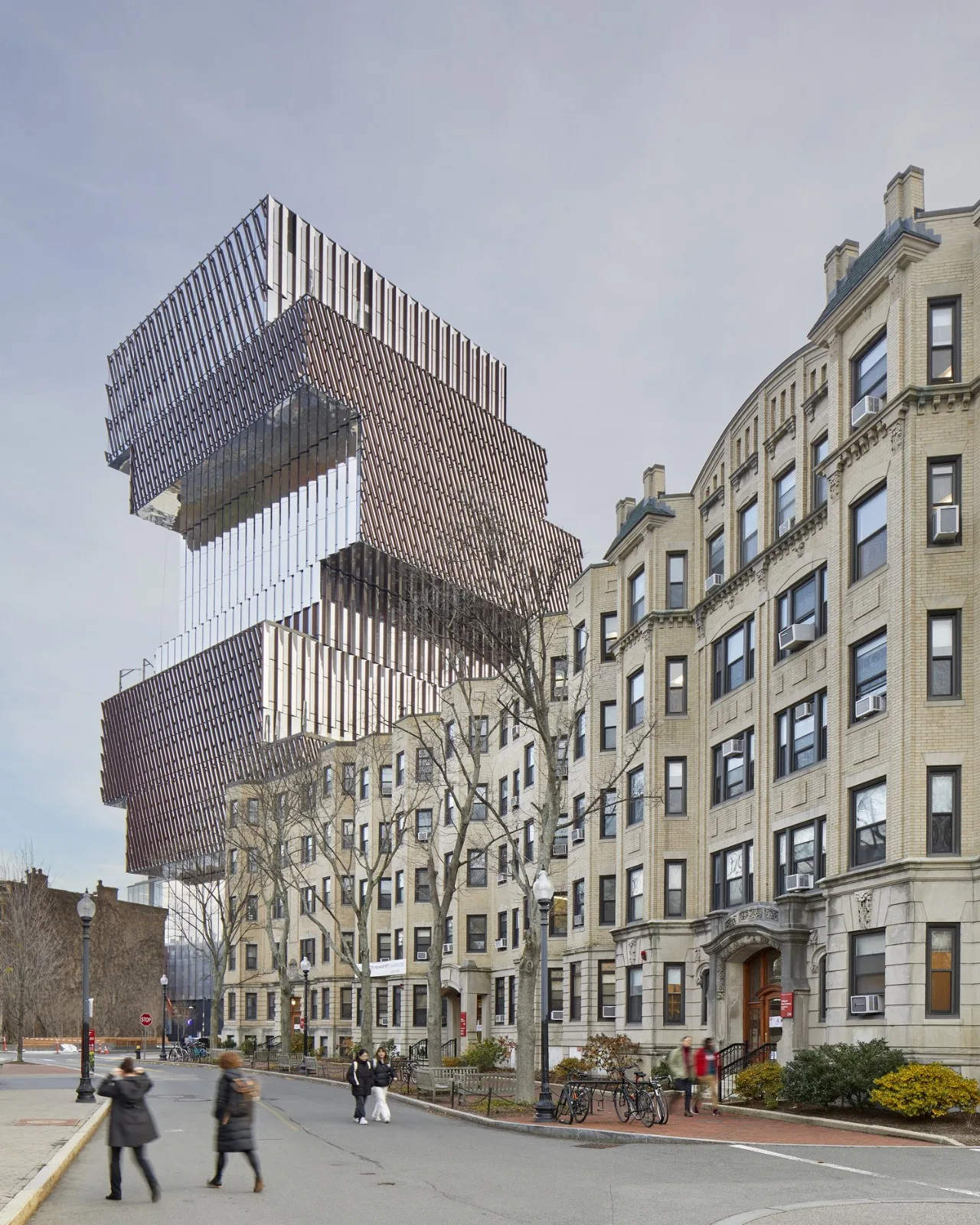
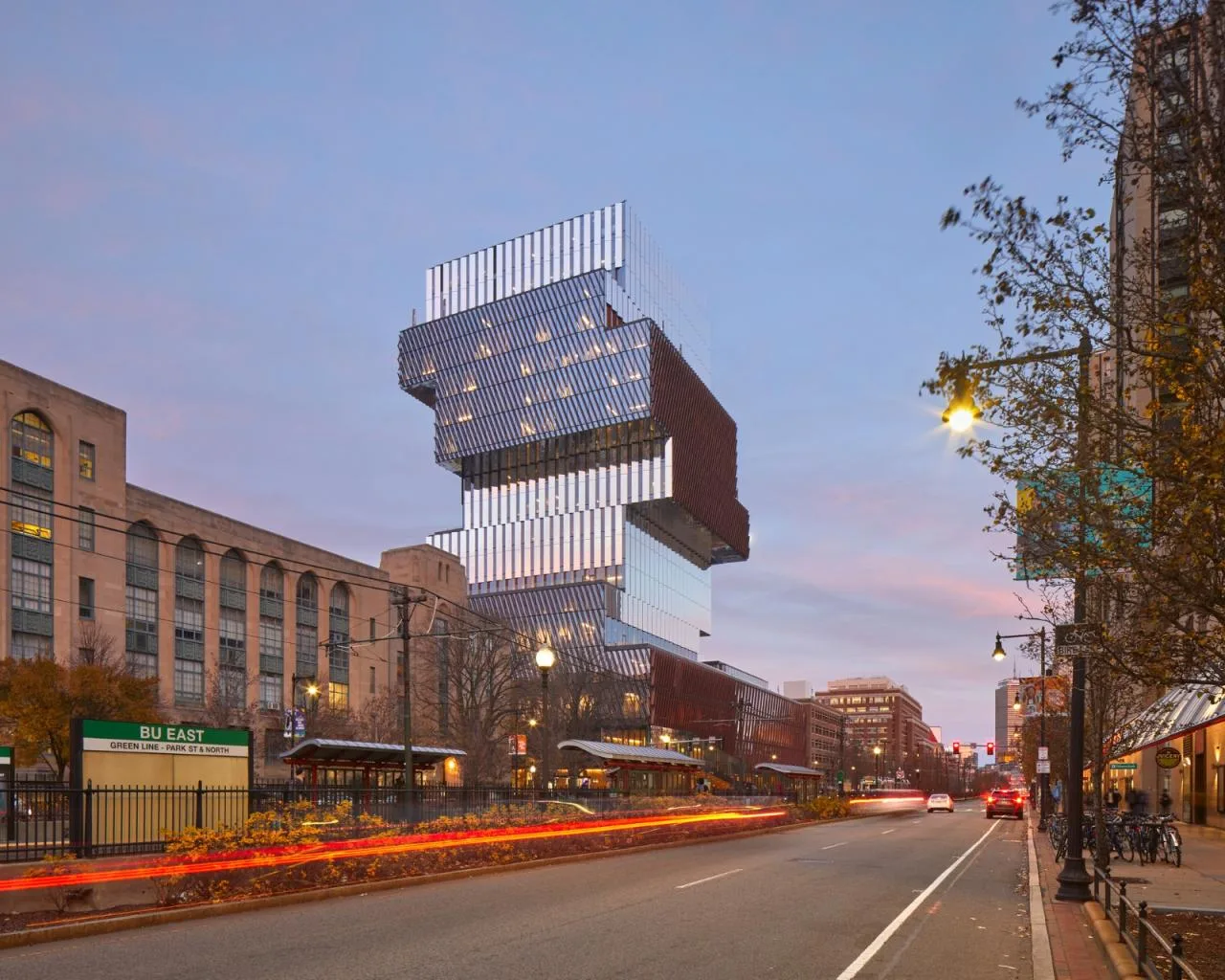
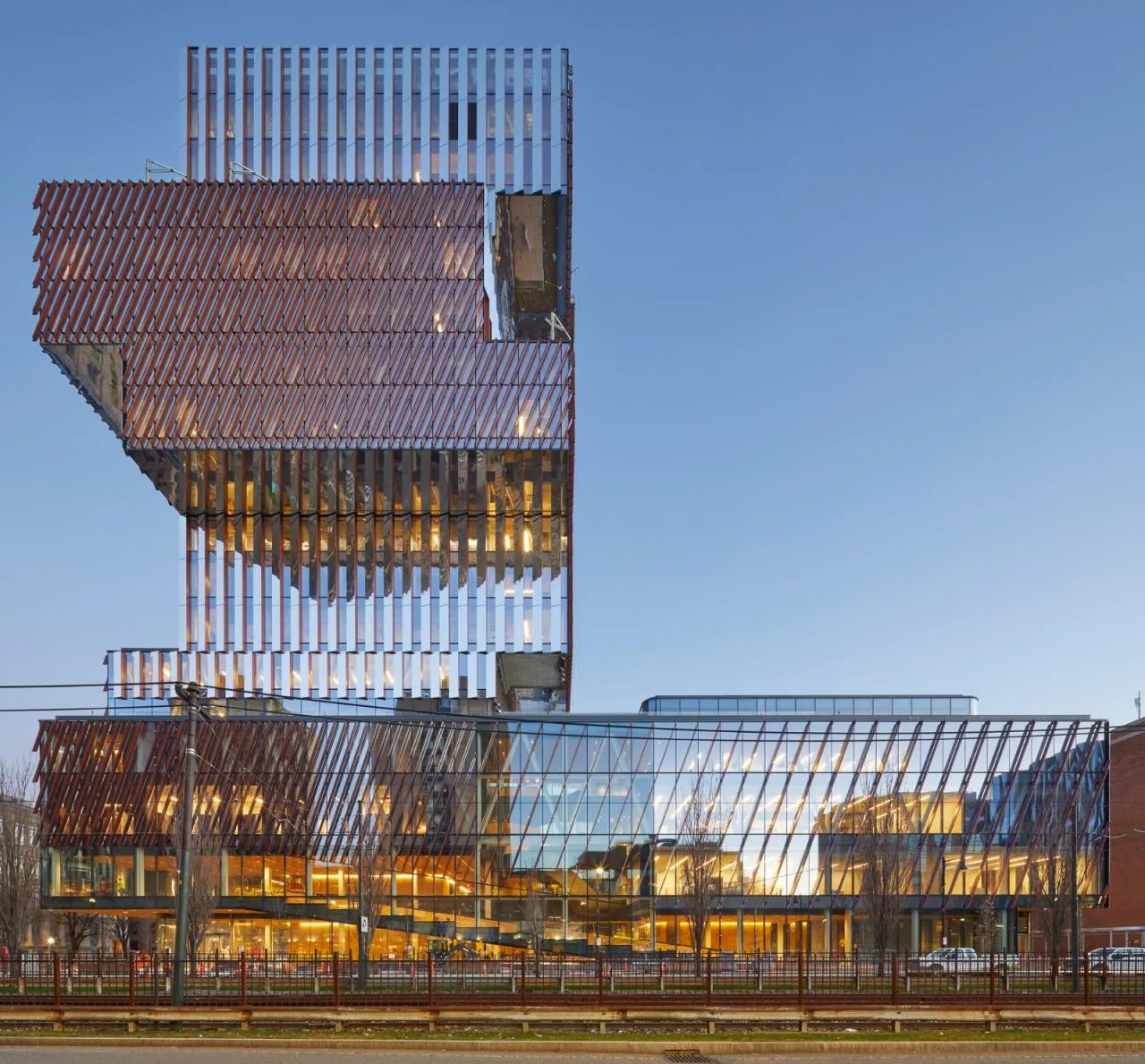
Situated prominently on the Charles River bank, the center rises 19 floors with a total area of 345,000 square feet, making it Boston’s largest sustainable building free from fossil fuels. Its cantilevered volume features reddish-brown diagonal louvers that reduce solar heat gain while maximizing shading. The sparkling mirrored, serrated exterior walls sit atop a three-story glass curtain wall, lending the building a unique linear aesthetic while enhancing comfort and sustainability—keeping interiors warm in winter and cool in summer.
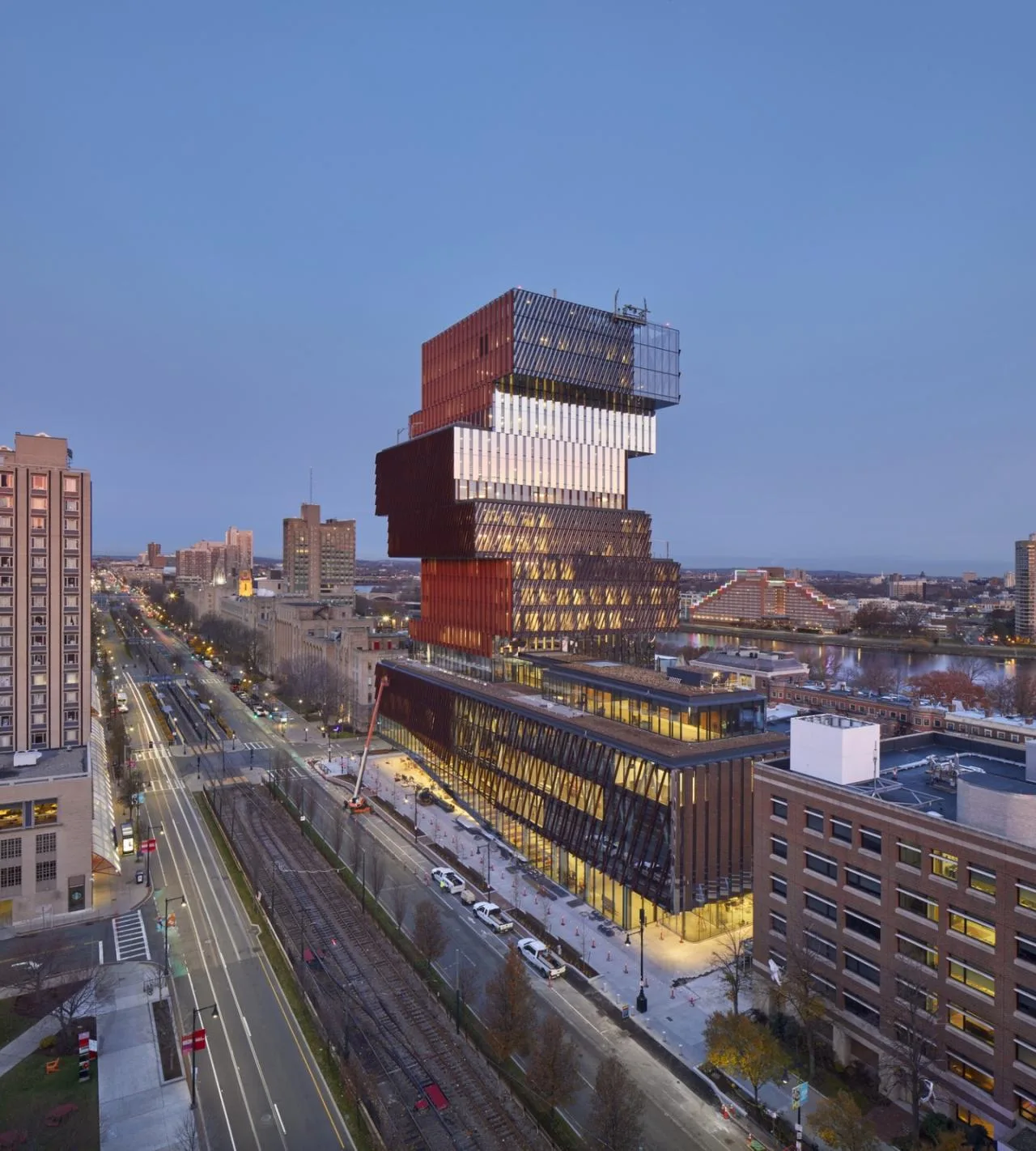
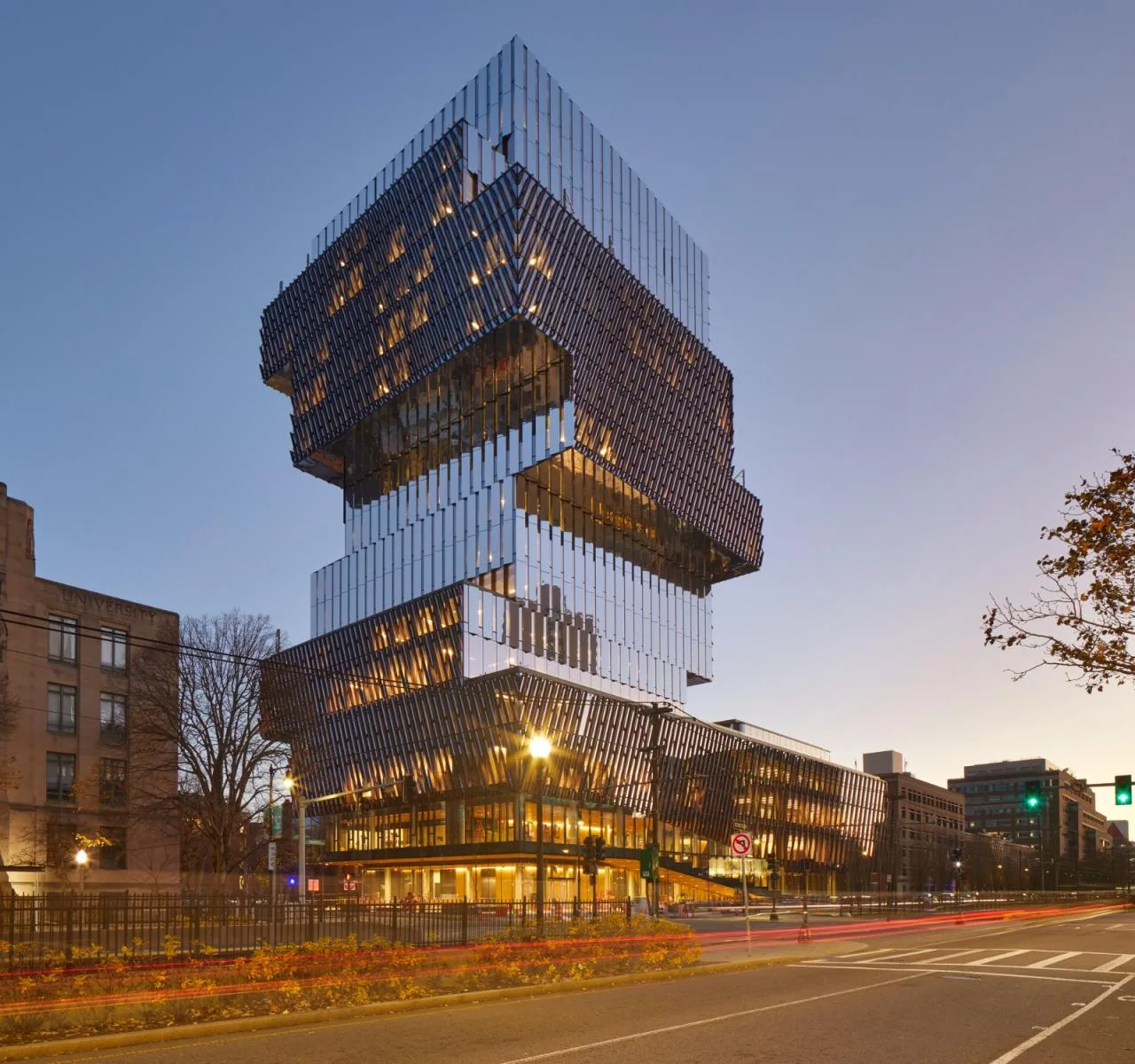
The podium tower dramatically overhangs Federal Avenue, enhancing the streetscape and energizing the avenue’s lower levels. The building’s transparent design and multiple openings create a ‘city porch’ that invites access, learning, and social gatherings. Conceptually, the center functions as an academic vertical community: the lower floors house mathematics and statistics, the middle floors are dedicated to computer science, and the upper floors accommodate interdisciplinary work and public spaces.
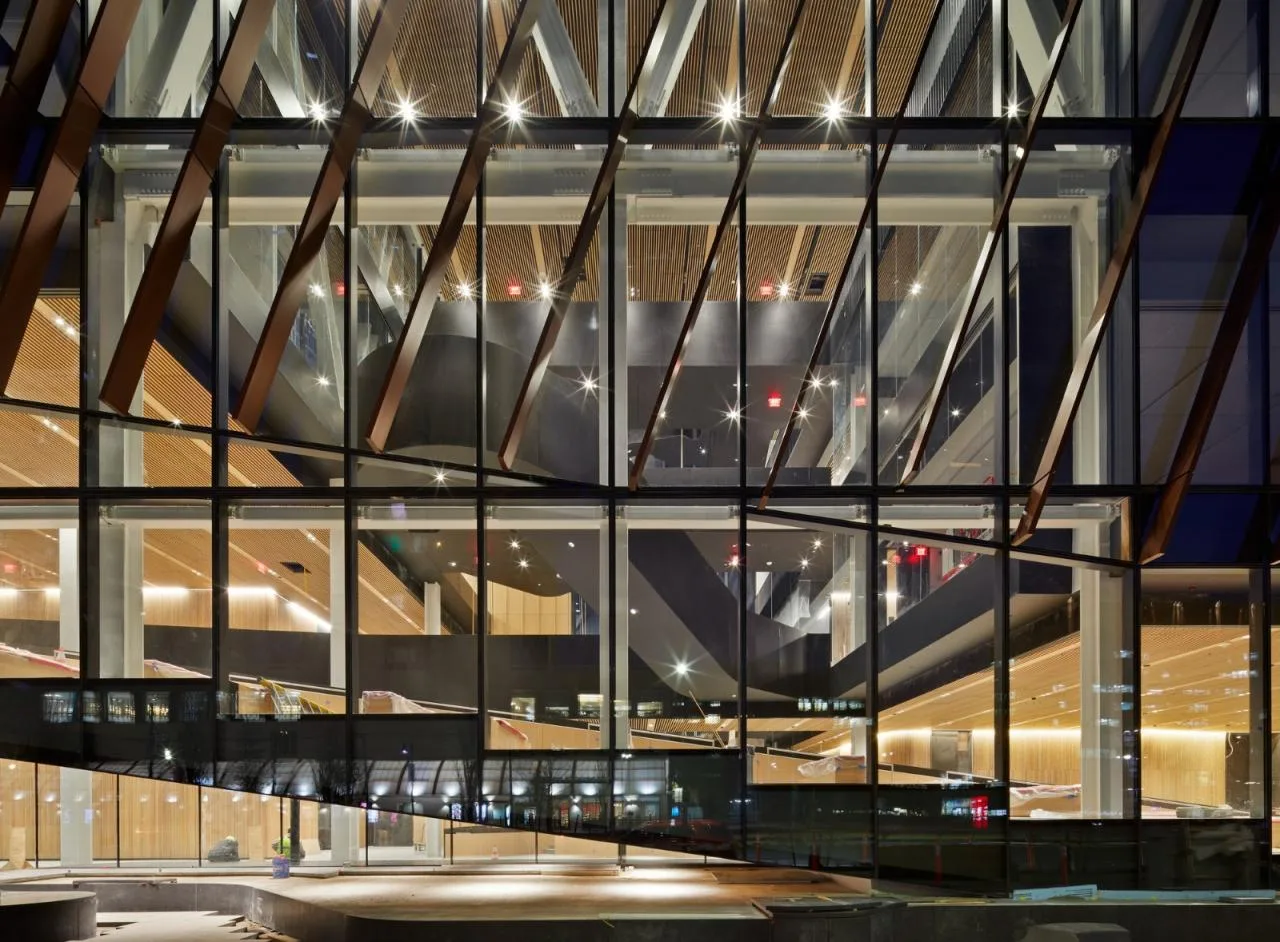
At the heart of the building, the central atrium fosters collaboration between students and faculty. An interconnected staircase runs through this space up to the 13th floor, linking different academic areas, encouraging the exchange of ideas, and facilitating spontaneous encounters.
This design sets a bold new standard for sustainable academic buildings in Boston and beyond. Aligned with Boston University’s Climate Action Plan to achieve zero carbon emissions by 2040, the center targets LEED Platinum certification. It uses a geothermal closed-loop system to provide heating and cooling through ground source heat pumps, ensuring 100% fossil fuel-free operation.
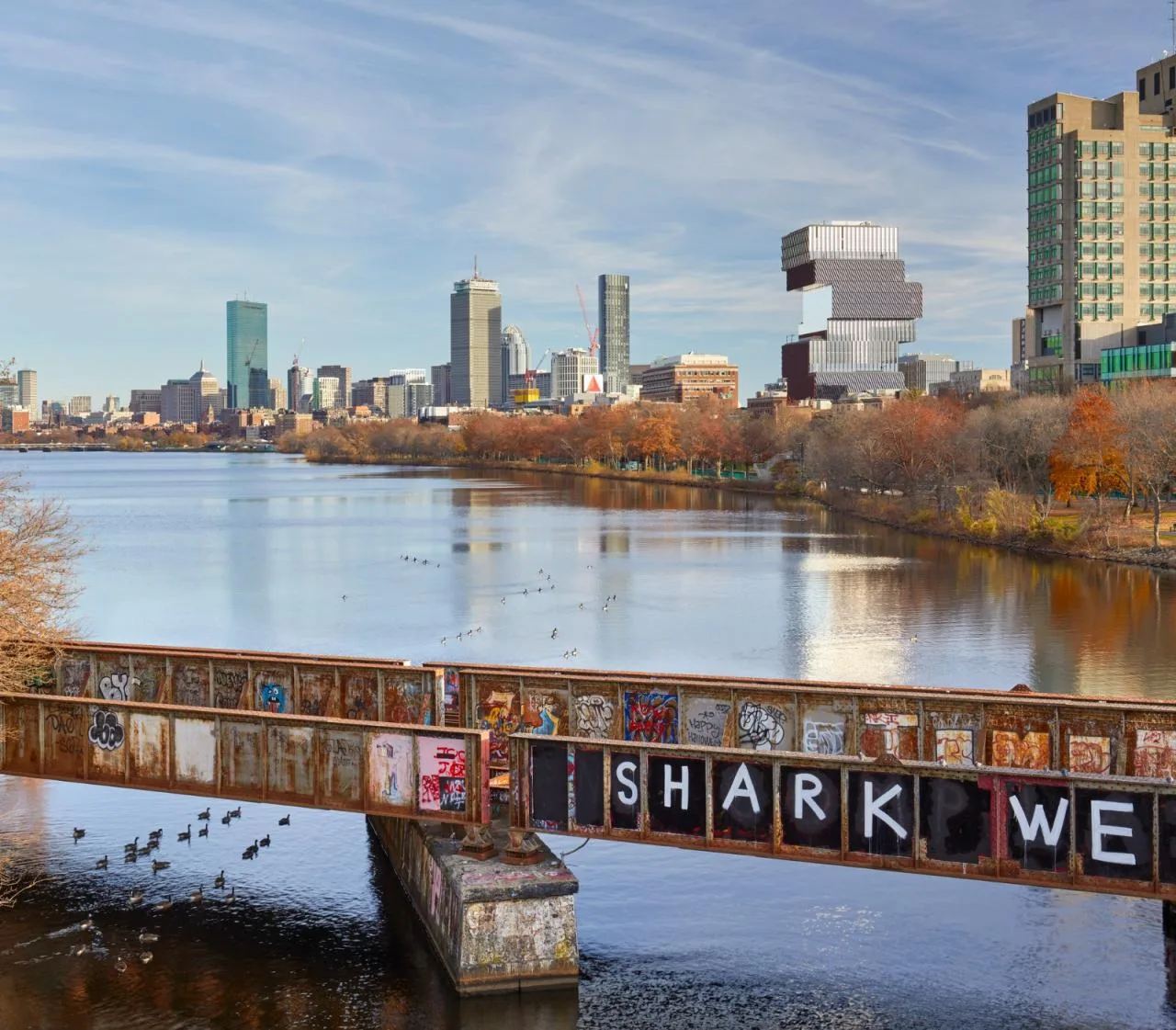
The building harnesses renewable and alternative energy sources, including groundwater recharge and advanced external shading systems. Its open interior spaces take full advantage of the center’s downtown Boston location, offering expansive river views on three sides. Classrooms and collaborative areas feature floor-to-ceiling glass windows, flooding spaces with natural light and encouraging students immersed in the digital realm to continually draw inspiration from the natural world, emphasizing the connection between technology and humanity.
A whiteboard wall in the core area stimulates collaboration and showcases students’ creative processes.
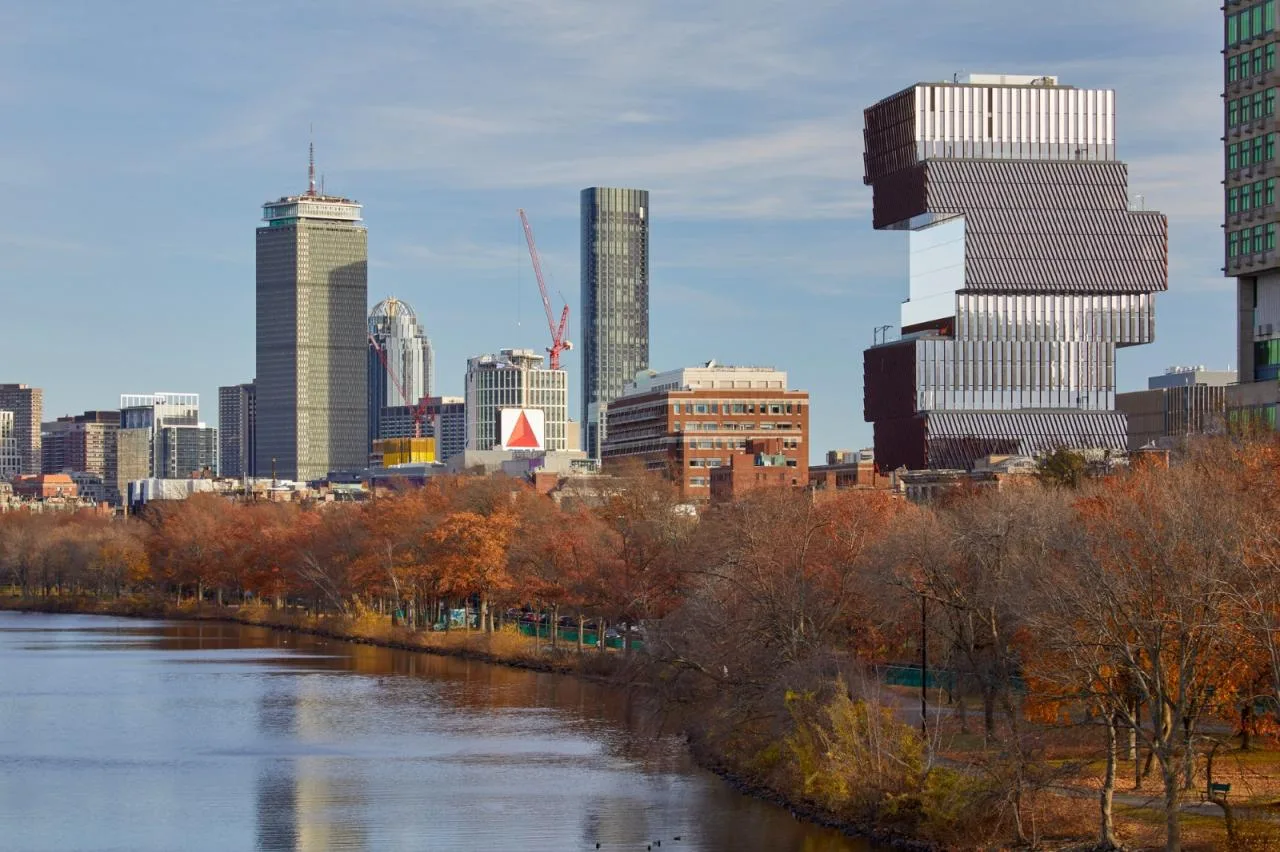
The state-of-the-art facility includes 12 classrooms, two computer labs, a first-floor coffee shop, multiple collaborative spaces, and a plaza with a bike shed. Atop the building is an activity area and a three-story outdoor pavilion, featuring green roofs and terraces that span the entire center. These outdoor spaces foster connections between students, faculty, and staff while providing stunning views of the cityscape. The open areas have strengthened interdepartmental collaboration throughout the center.
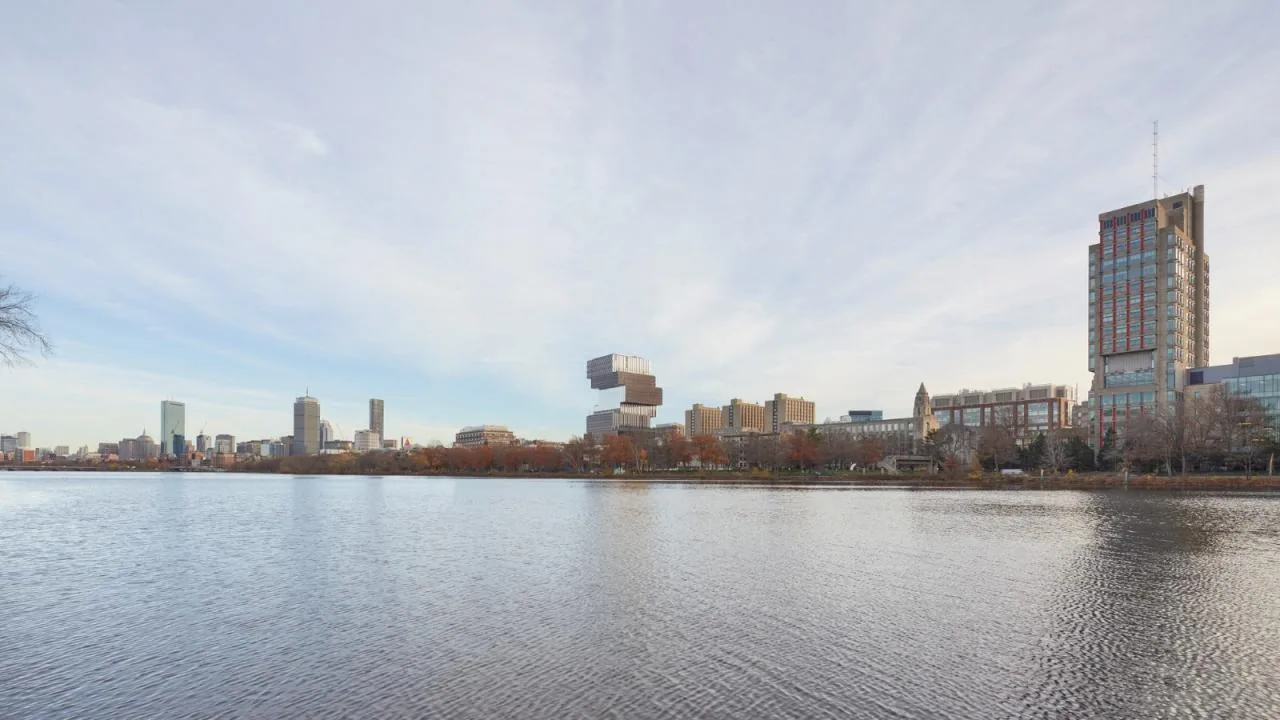
Project Drawings
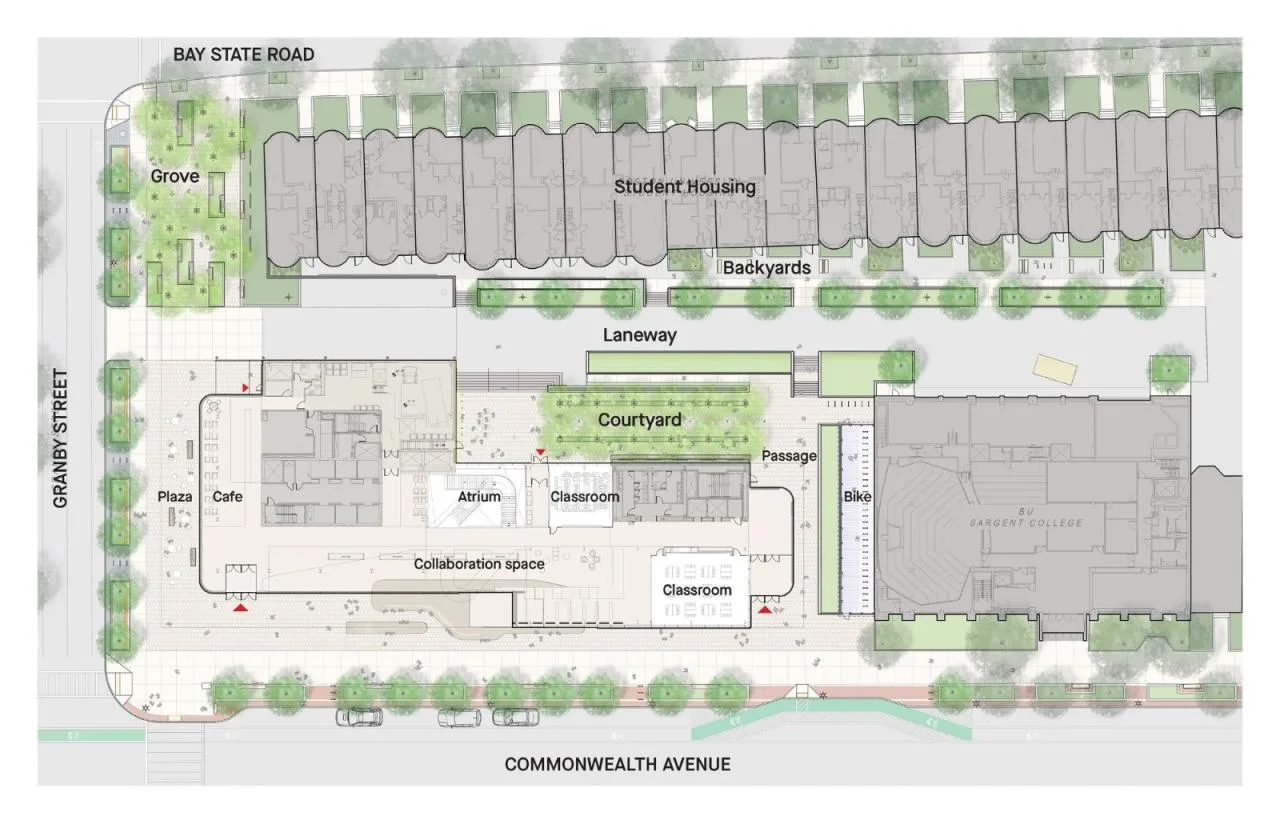
△ General Layout Plan
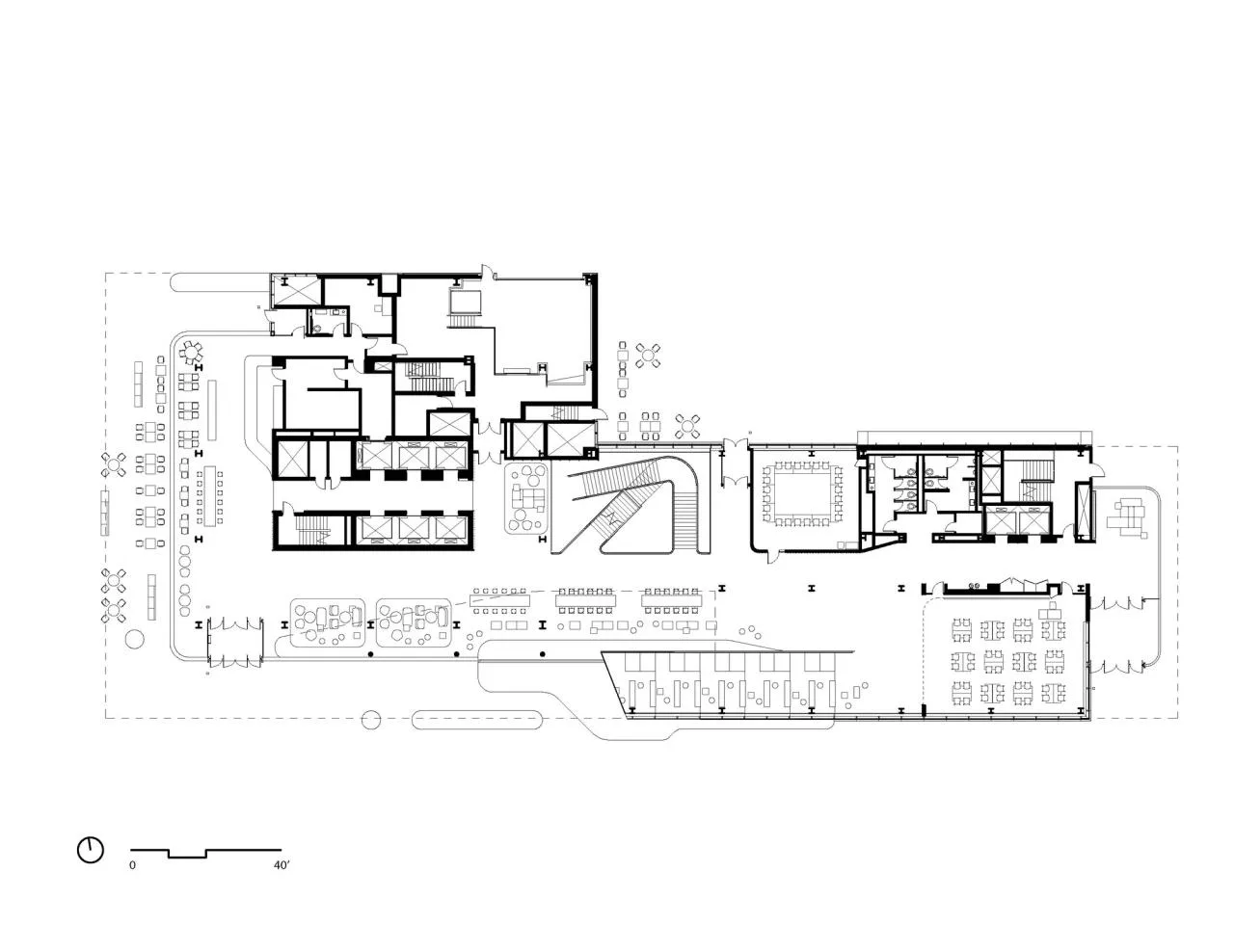
△ First Floor Plan
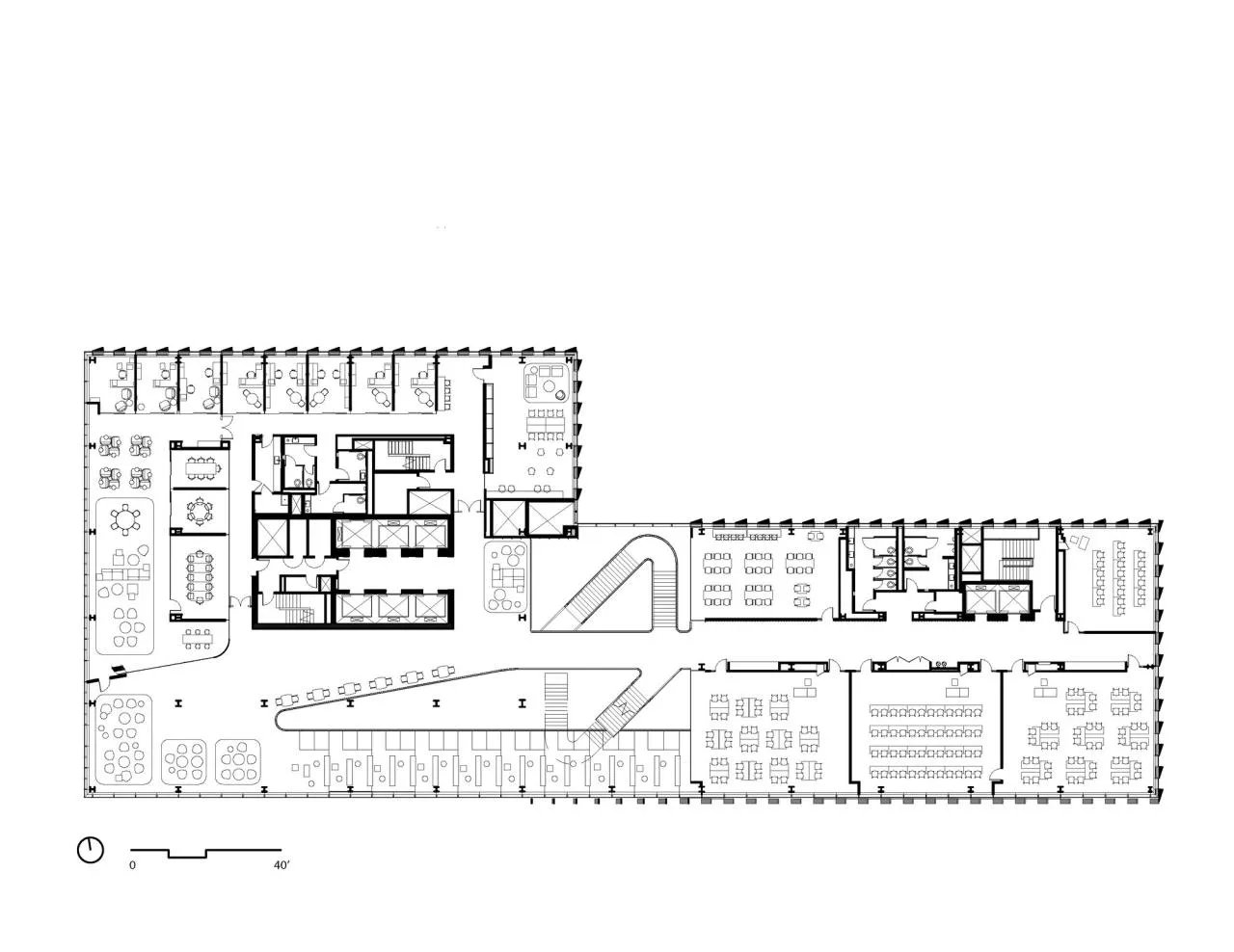
△ Second Floor Plan
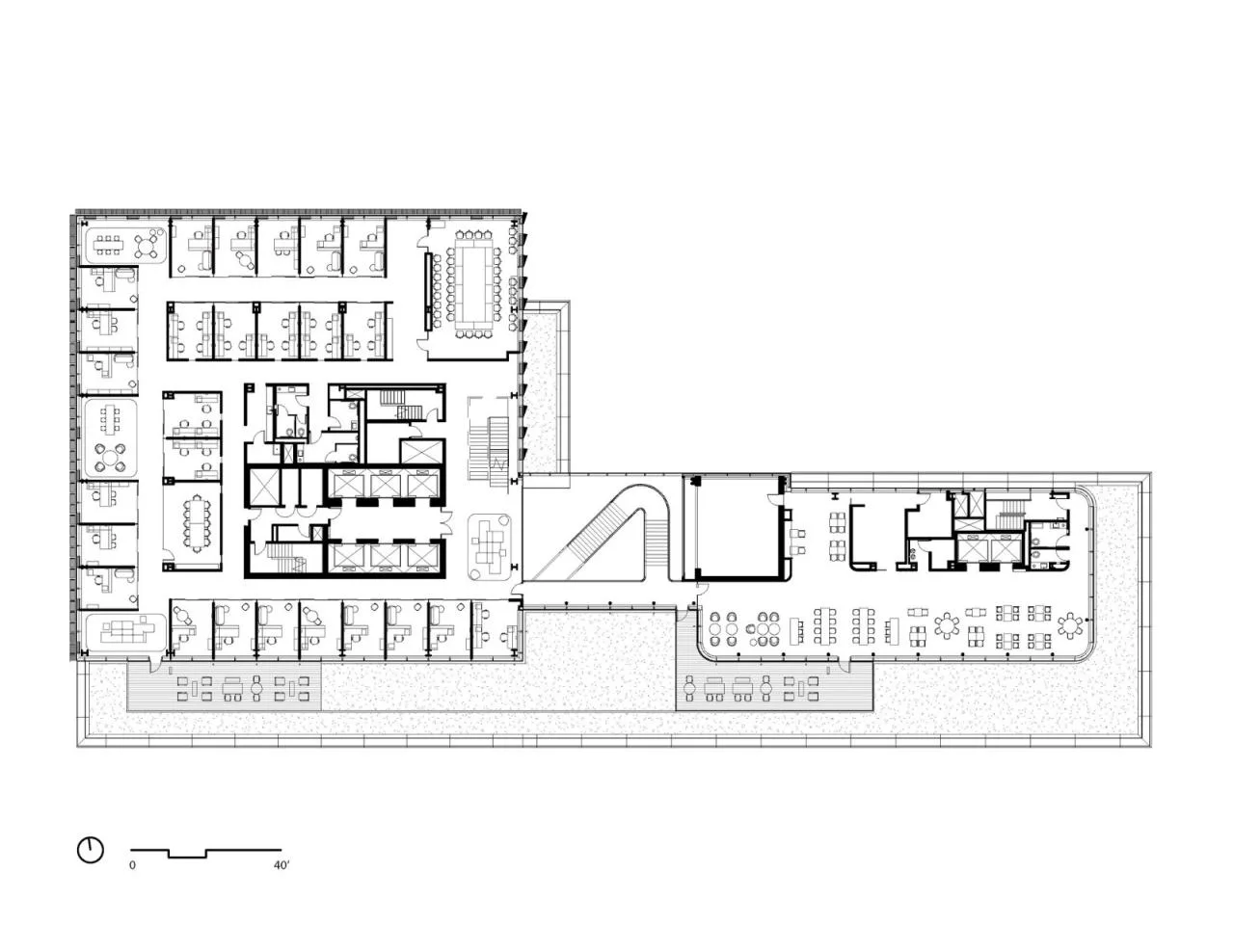
△ Fifth Floor Plan
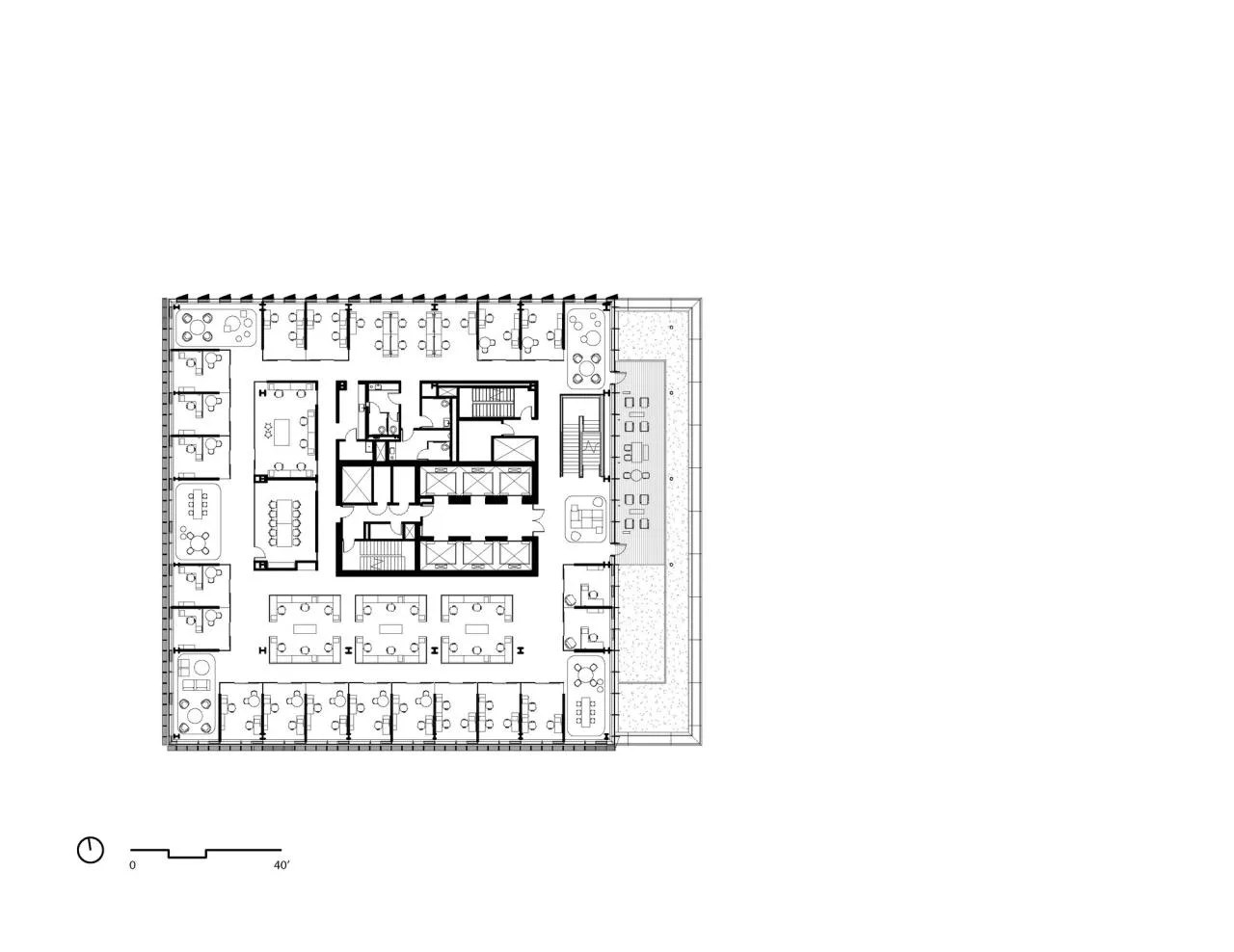
△ Twelfth Floor Plan
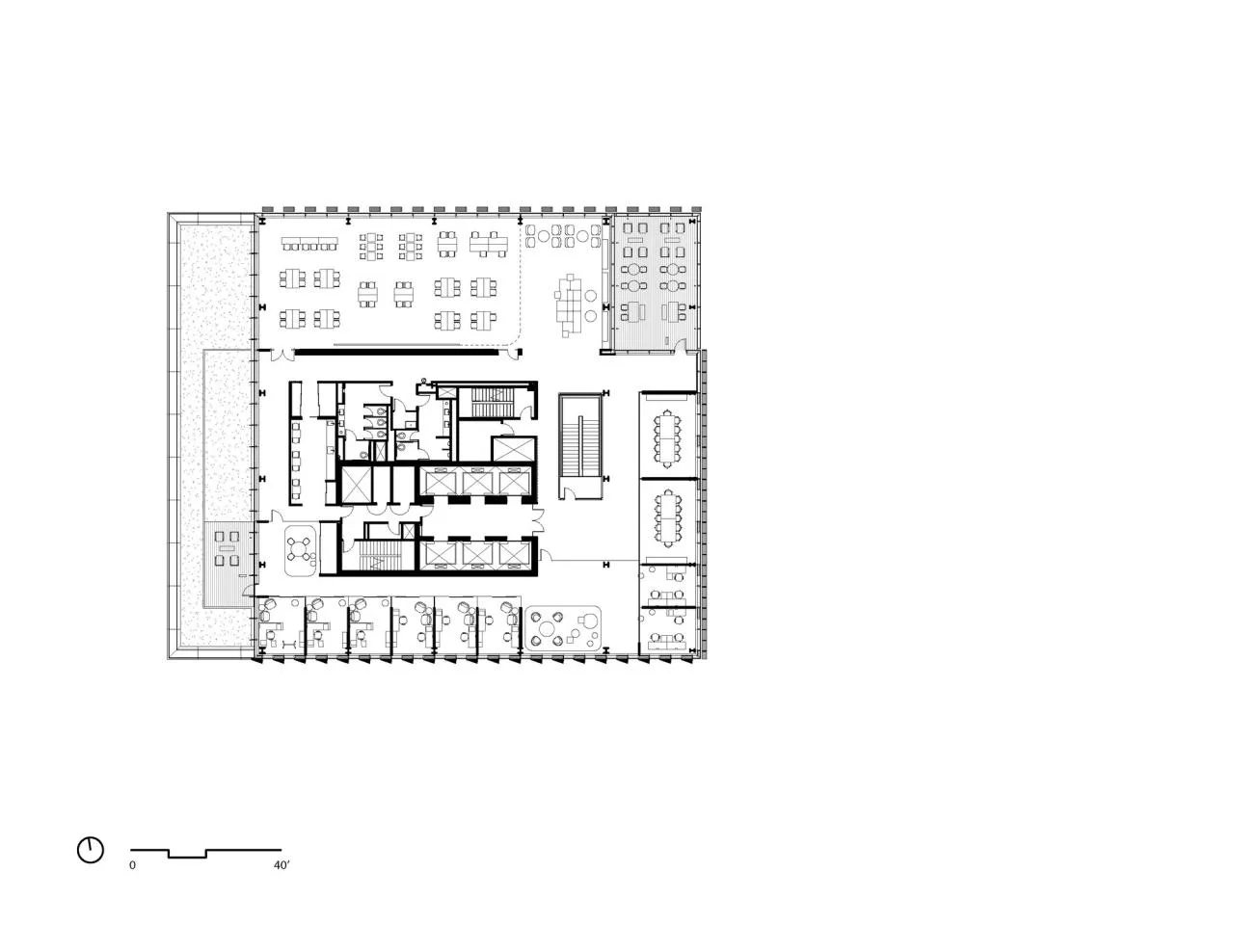
△ 17th Floor Plan
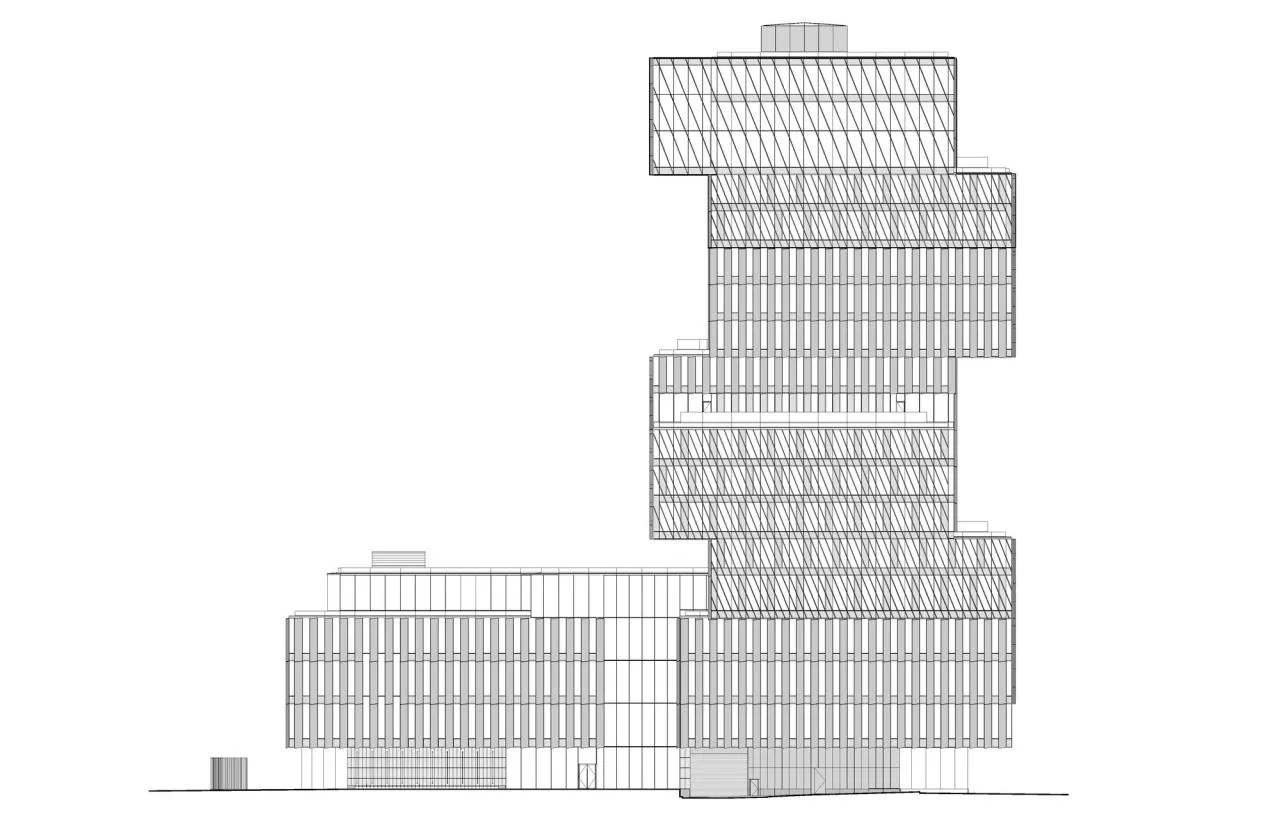
△ Elevation Drawing
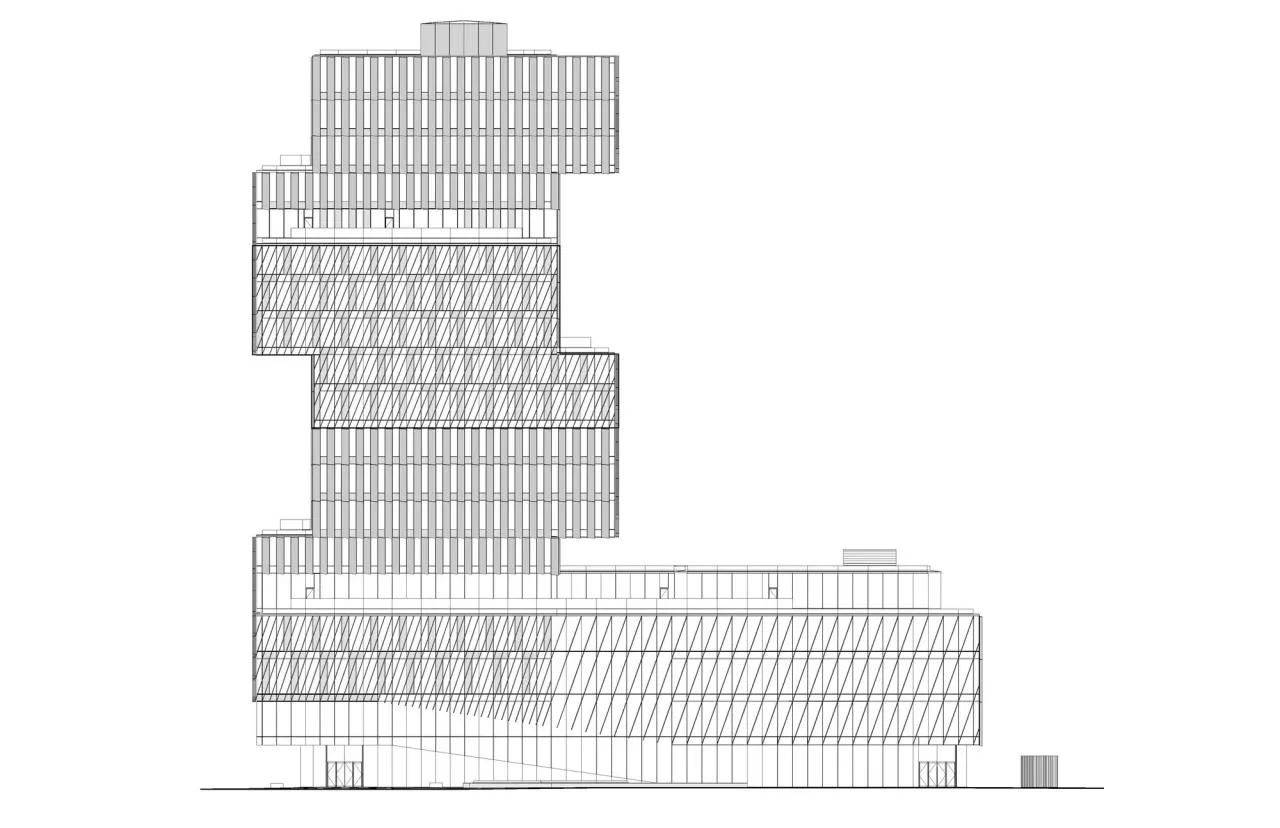
△ Elevation Drawing
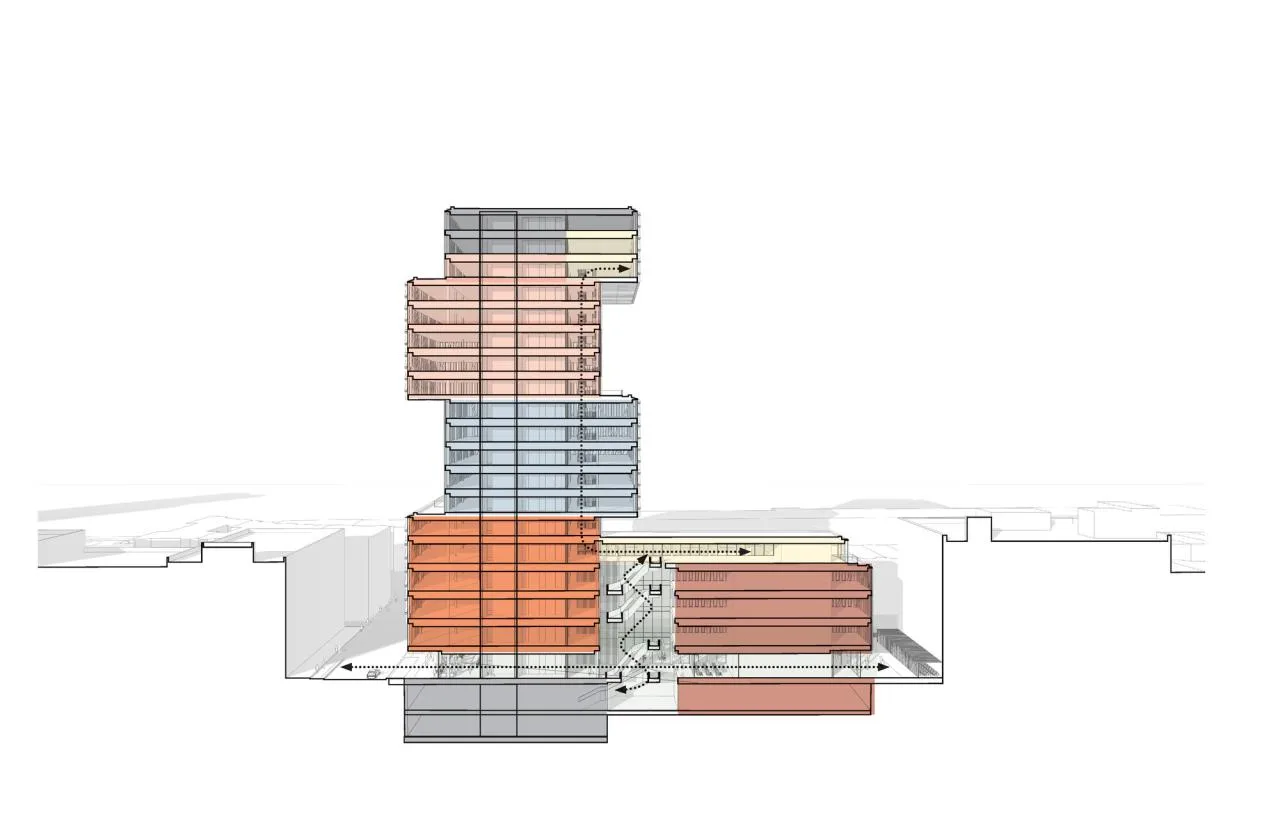
△ Section Diagram
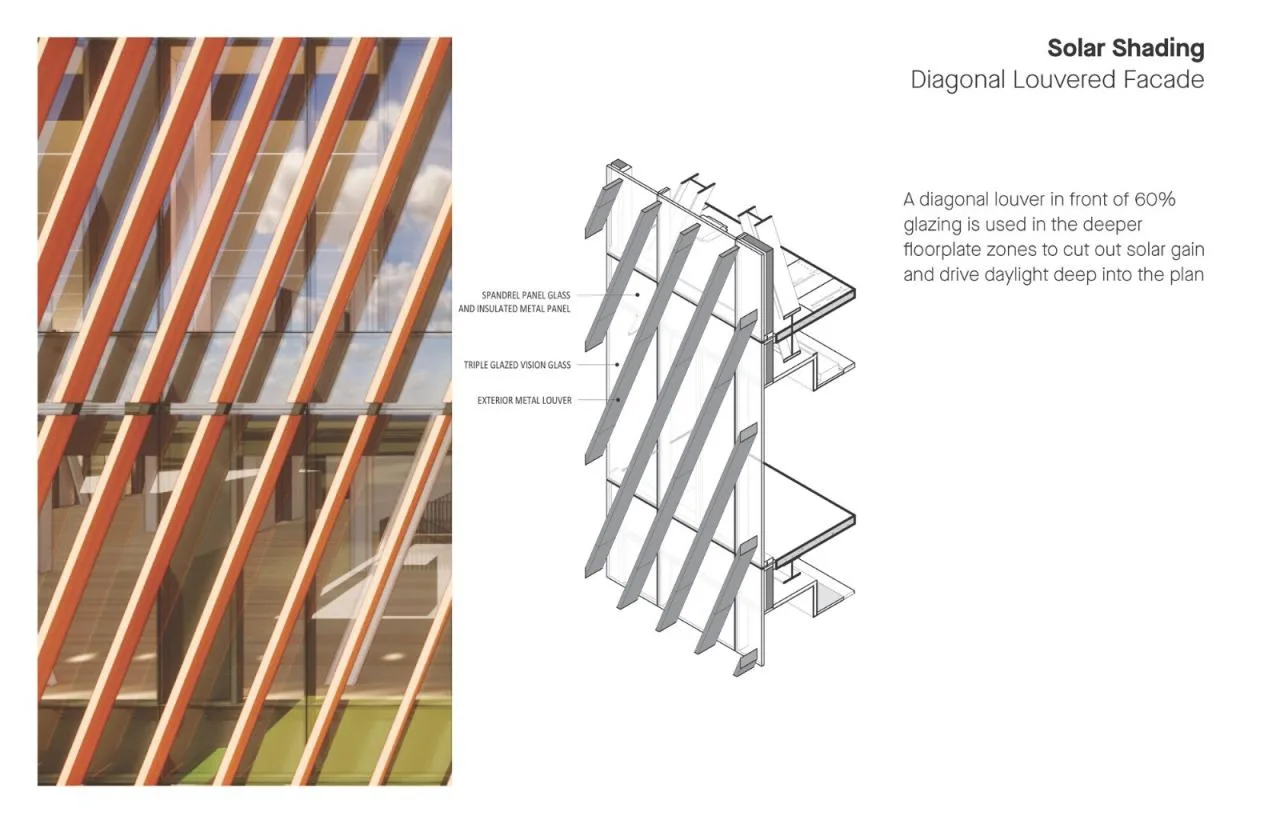
△ Detailed Drawing
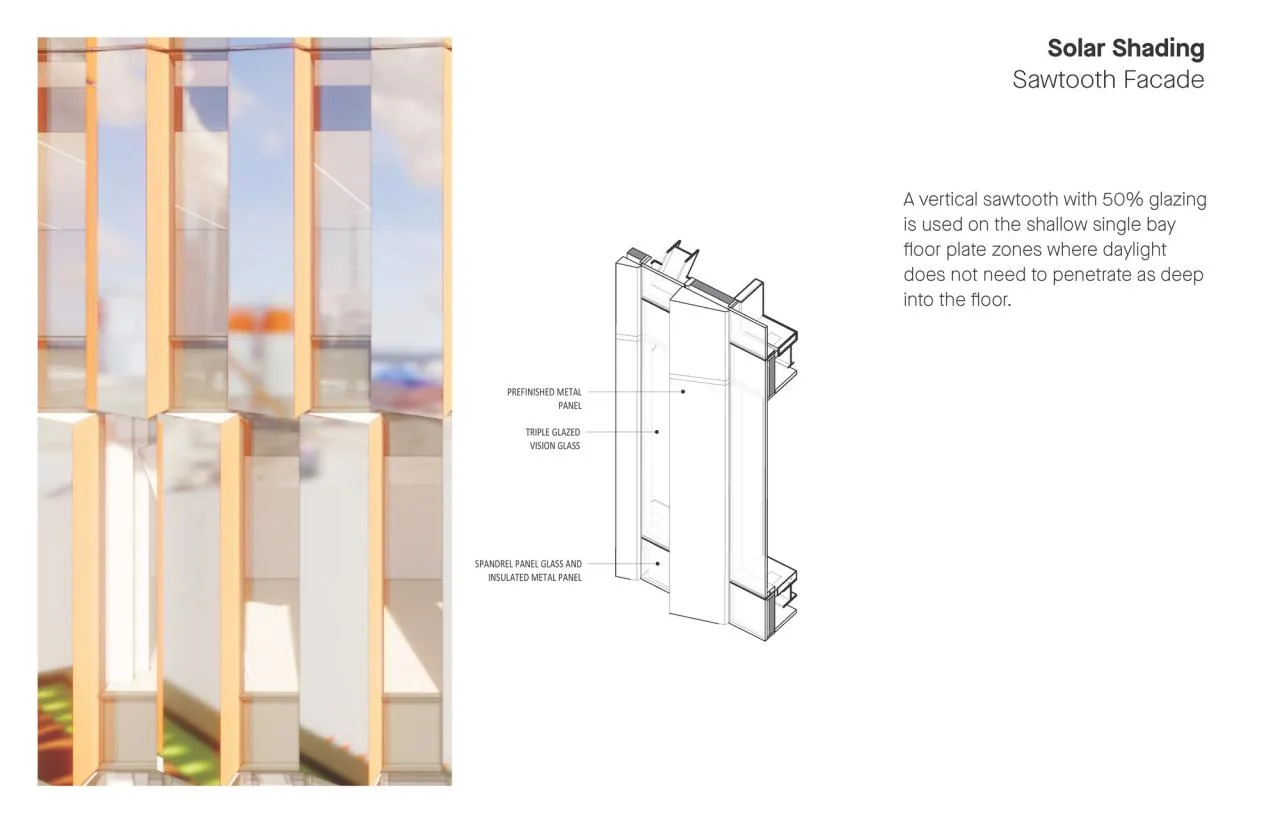
△ Detailed Drawing
Project Information
Architect: KPMB Architects
Area: 345,000 ft²
Project Year: 2022
Photographer: Tom Arban
Manufacturers: Aarco, Armstrong Ceilings, Dadanco, Millworks Custom Manufacturing (2001) Inc., UniFor
Lead Architects: Bruce Kuwabara, Marianne McKenna, Luigi LaRocca, Paulo Rocha, Lucy Timbers, David Smythe, Kael Opie, Tyler Loewen, Melissa Ng, Matt Krivosudsky, Tyler Hall, Amin Monsefi, Victor Garzon, Samantha Hart, Nicholas Wong, Olivia di Filice, Jason Chang, Fotini Pitoglou, Carolyn Lee, Kayley Mullings, Arminé Tadevosyan
Host and Collaborator: Marianne McKenna
Senior Assistants: Lucy Timbers, David Smythe, Kael Opie, Carolyn Lee, Kayley Mullings, Arminé Tadevosyan
Assistants: Tyler Loewen, Matt Krivosudsky, Tyler Hall, Melissa Ng, Amin Monsefi, Victor Garzon, Samantha Hart, Nicholas Wong, Olivia di Filice, Jason Chang, Fotini Pitoglou
Collaborative Designers: Bruce Kuwabara, Paulo Rocha
Conceptual Design: Luigi LaRocca
MEP Engineers: BR+A Consulting Engineers
Structural Design: Entuitive + LeMessurier Consultants
Building Exterior Wall: Entuitive
Cost Engineering: Turner & Townsend
Landscape Design: Richard Burck Associates Inc
Lighting Design: Dot Dash
Climate Engineering: Transsolar
LEED Consulting: The Green Engineer
Civil Engineering: Nitsch Engineering Inc
Elevator Engineering: Soberman Engineering
Fire Safety: Jensen Hughes
Geotechnical Engineering: Haley & Aldrich
Acoustics / AV / IT: Acentech
Environmental Engineering: RWDI Inc
Facade Consulting: Learch Bates
Hardware Design: Robbie McCabe Consulting
Food Service: Ricca Design Studios
Identification System: Entro Communications
Specification Consultant: Brian Ballantyne Specifications













Must log in before commenting!
Sign Up