
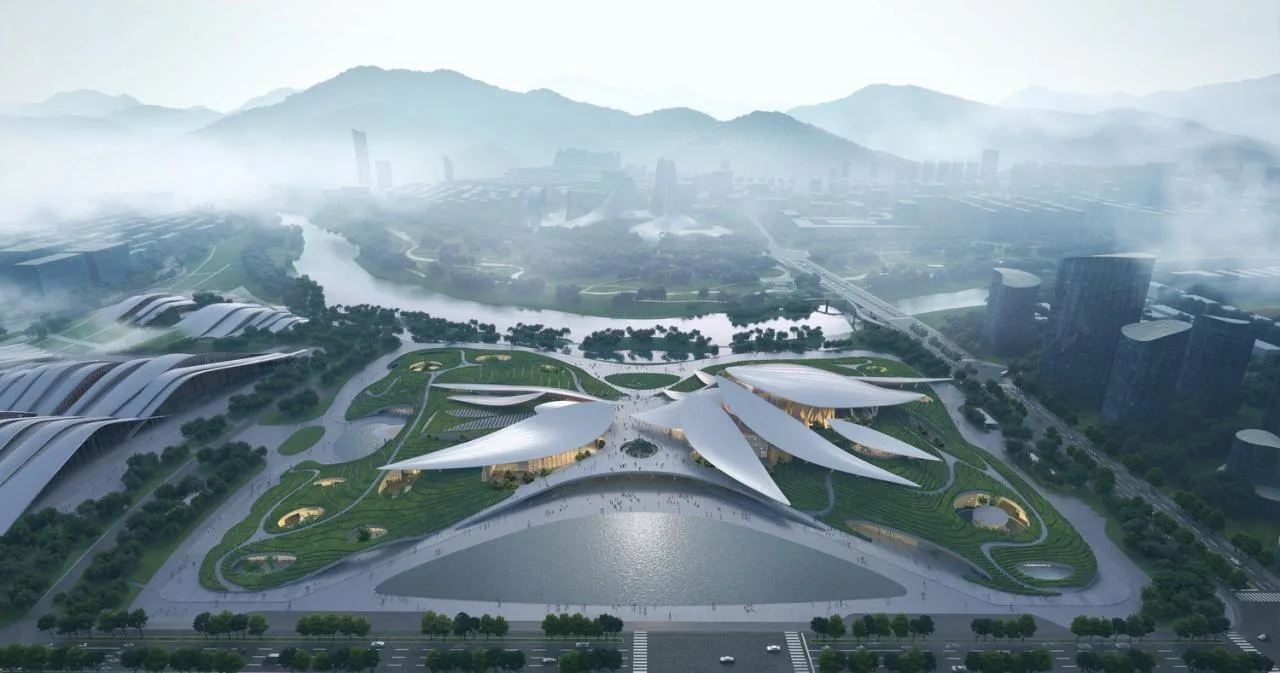
MAD Ma Yansong has revealed the design for the “Two Mountains” Future Science and Technology City Cultural and Art Center in Anji, Zhejiang. Construction began in March 2023.
Located in Anji, Zhejiang, this site lies near key cities and regions in the Yangtze River Delta, including Hangzhou, Shanghai, and Nanjing. Anji is the only county to have received the United Nations Human Settlements Award, recognized for its exceptional natural environment. It is famously known as “China’s Bamboo Town” and “China’s White Tea Town,” and the origin of the saying “Green mountains and clear waters are as valuable as mountains of gold and silver.”
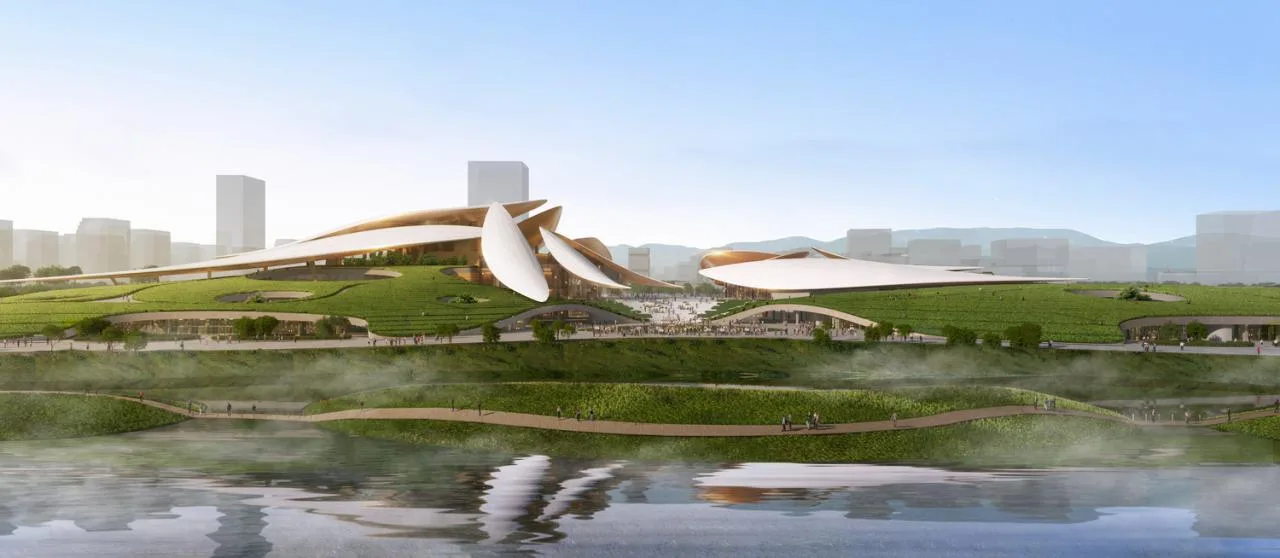
The Anji Culture and Art Center is situated near Shuiwangshan, at the core development zone of Anji’s “Two Mountains” Future Science and Technology City. It is adjacent to the Anji International Convention and Exhibition Center and the Fortune Center (CBD). The project spans approximately 149,000 square meters with a total construction area of about 120,000 square meters.
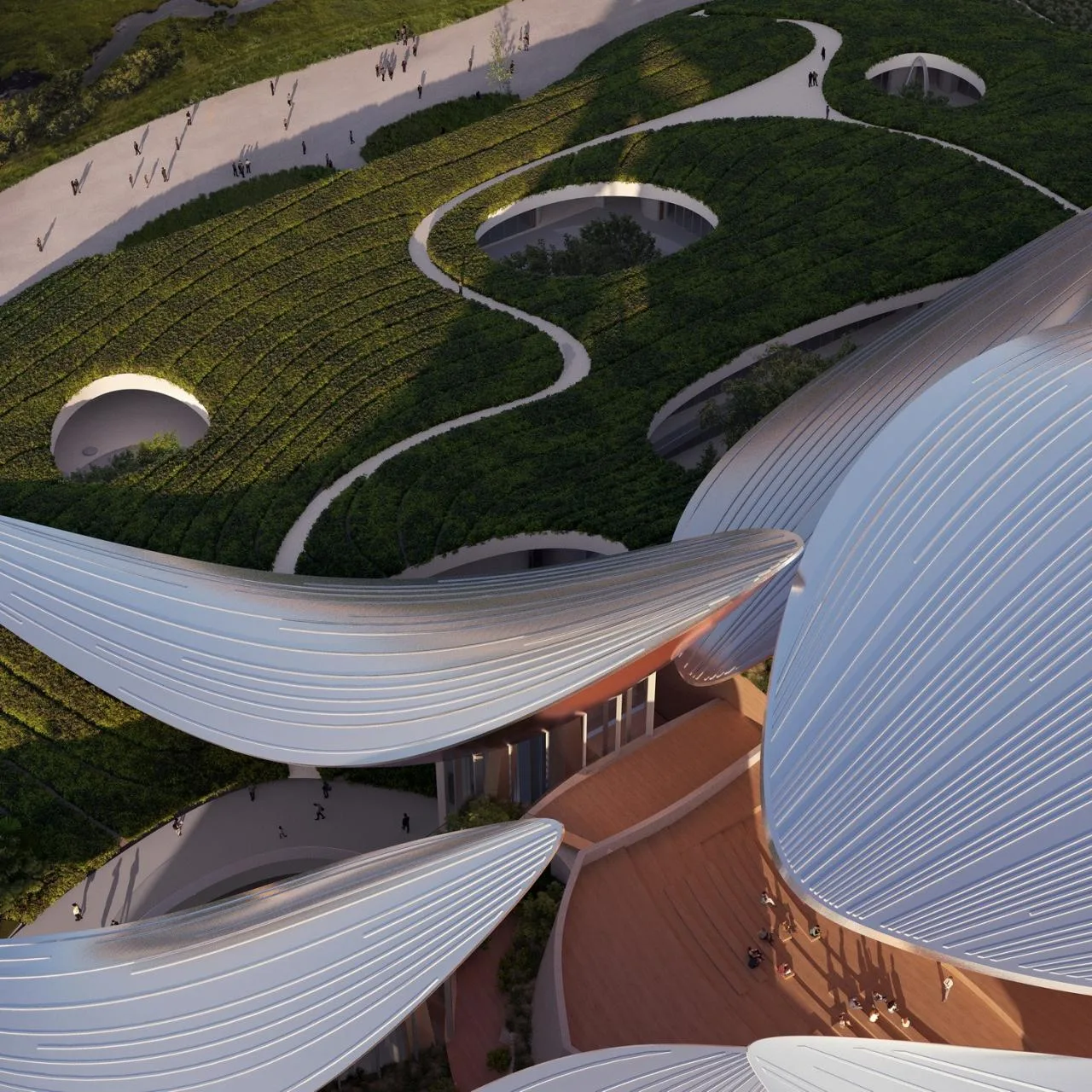
Within the complex are six venues: the Grand Theater, International Conference Center, Cultural Center, Workers’ Cultural Palace, Youth Activity Center, and Art Education Center. These are gracefully dispersed beneath green tea fields and roofs inspired by “bamboo leaves,” creating an artistic landscape that blends with the earth. This center will serve as Anji’s city living room, where culture, lifestyle, art, education, and nature come together.
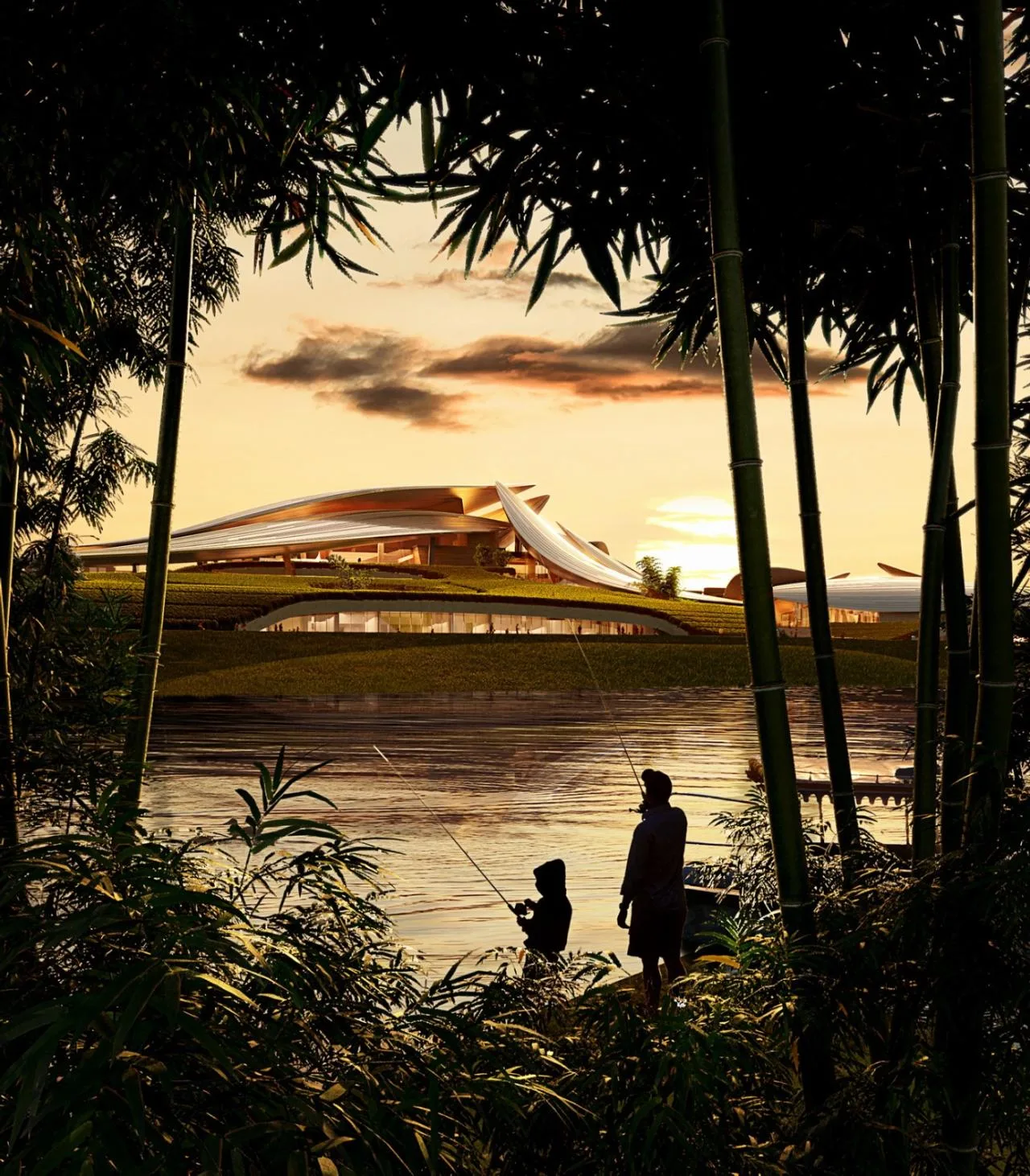
Ma Yansong commented, “We aim to capture the dynamic charm of Jiangsu and Zhejiang and weave it into everyday life.”
The site lies between the city on the east and the river with distant mountains on the west, creating a transitional space between urban life and nature. The center is designed as an open public space accessible from all directions, welcoming visitors at any time.
The overall artistic landscape softens the site’s atmosphere, offering a clean and pure environment.
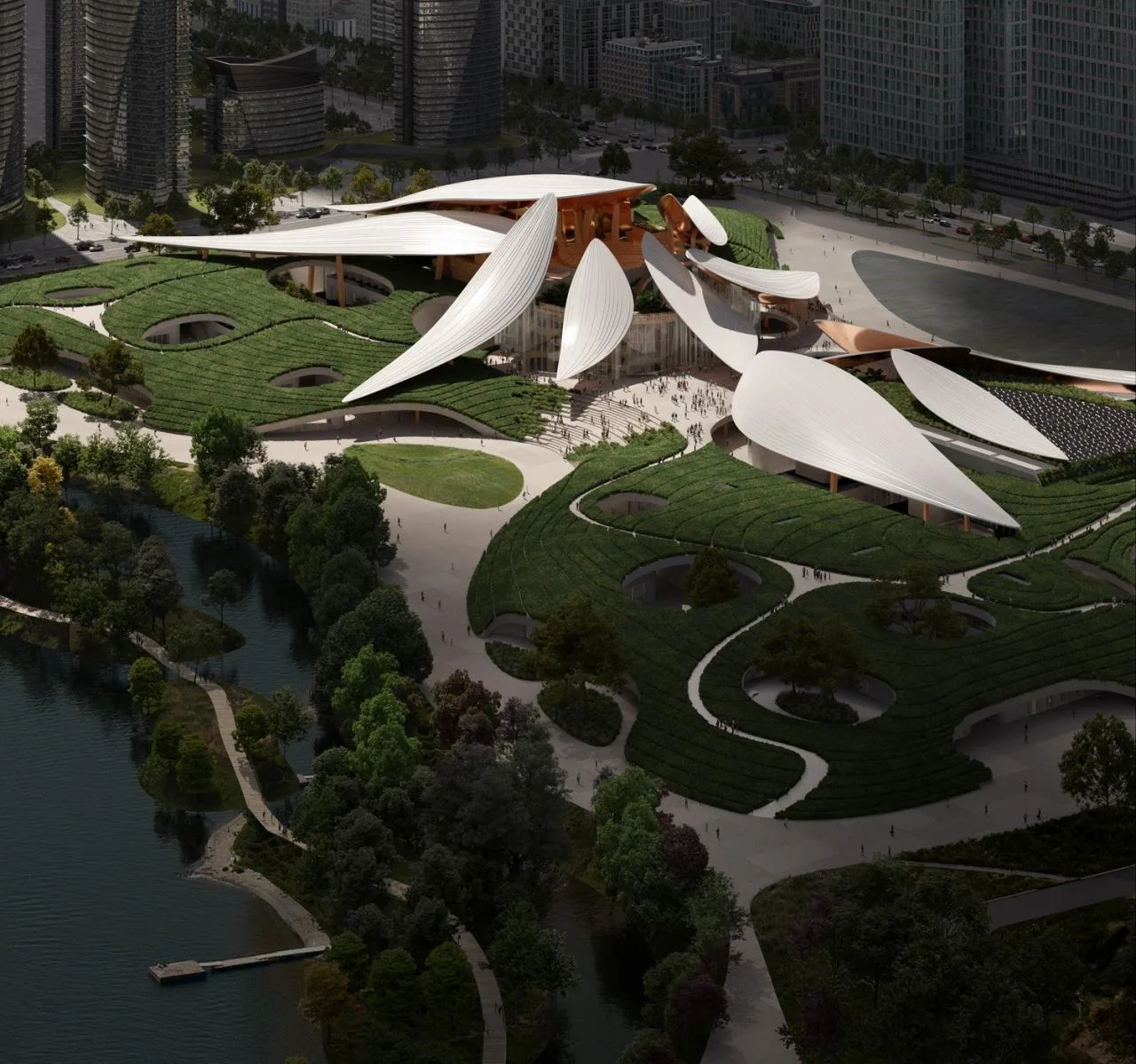
The design centers around visual corridors flanking both sides of a strait. Notably, no tall buildings occupy the center of the site. Instead, an open outdoor platform along the central axis provides a welcoming space for public activities and sightseeing. At the horizon, distant mountains, clouds, and sky create a ceremonial ambiance.
The Linxi Stage, located on the west side of this axis, functions as an outdoor venue for performances, concerts, and exhibitions, serving as a vibrant stage for city life.
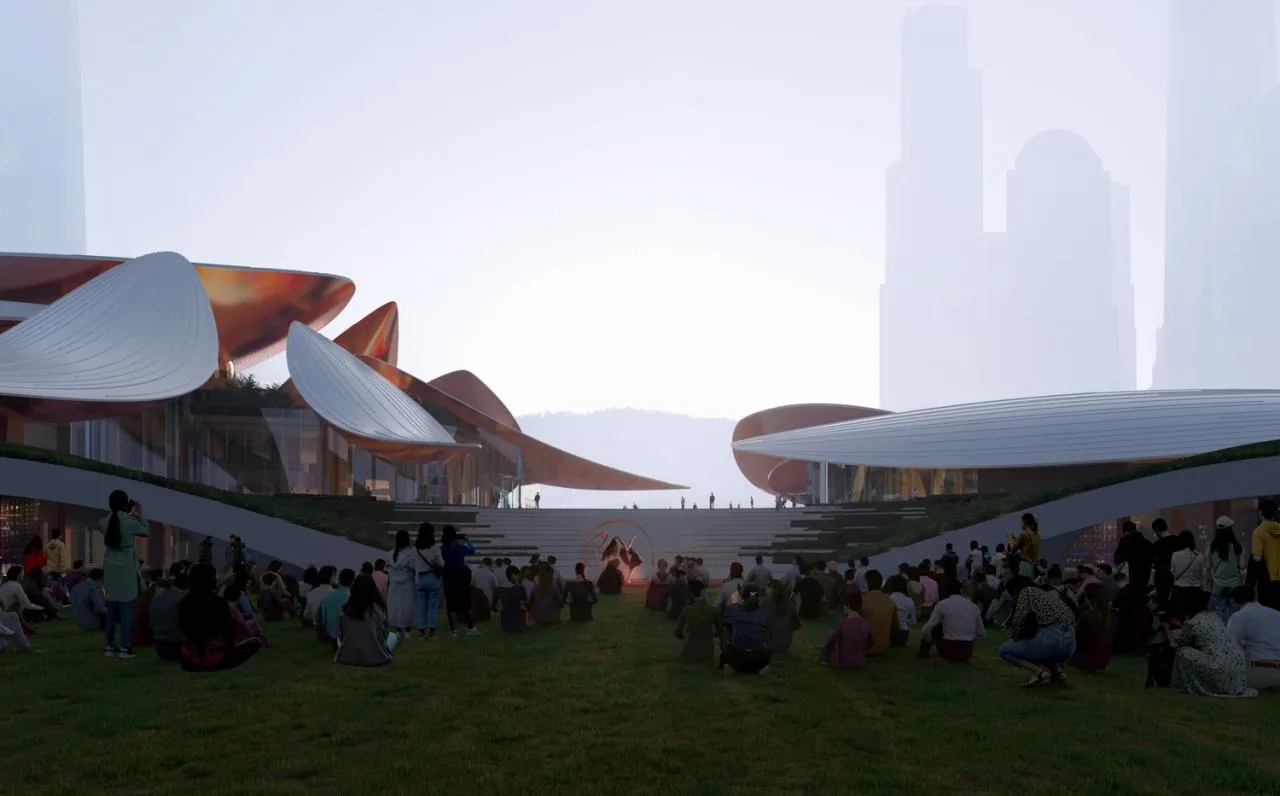
The building volumes are evenly distributed at ground level and tucked beneath the roof. The innovative roof design fulfills functional needs while also serving as a landscape element, enhancing the site’s atmosphere.
Echoing the rolling shape of tea mountains, the building’s form lies gently beneath the roof. The tea fields are planted with the renowned Anji white tea, offering residents and visitors an immersive nature experience and the joy of tea picking within the city.
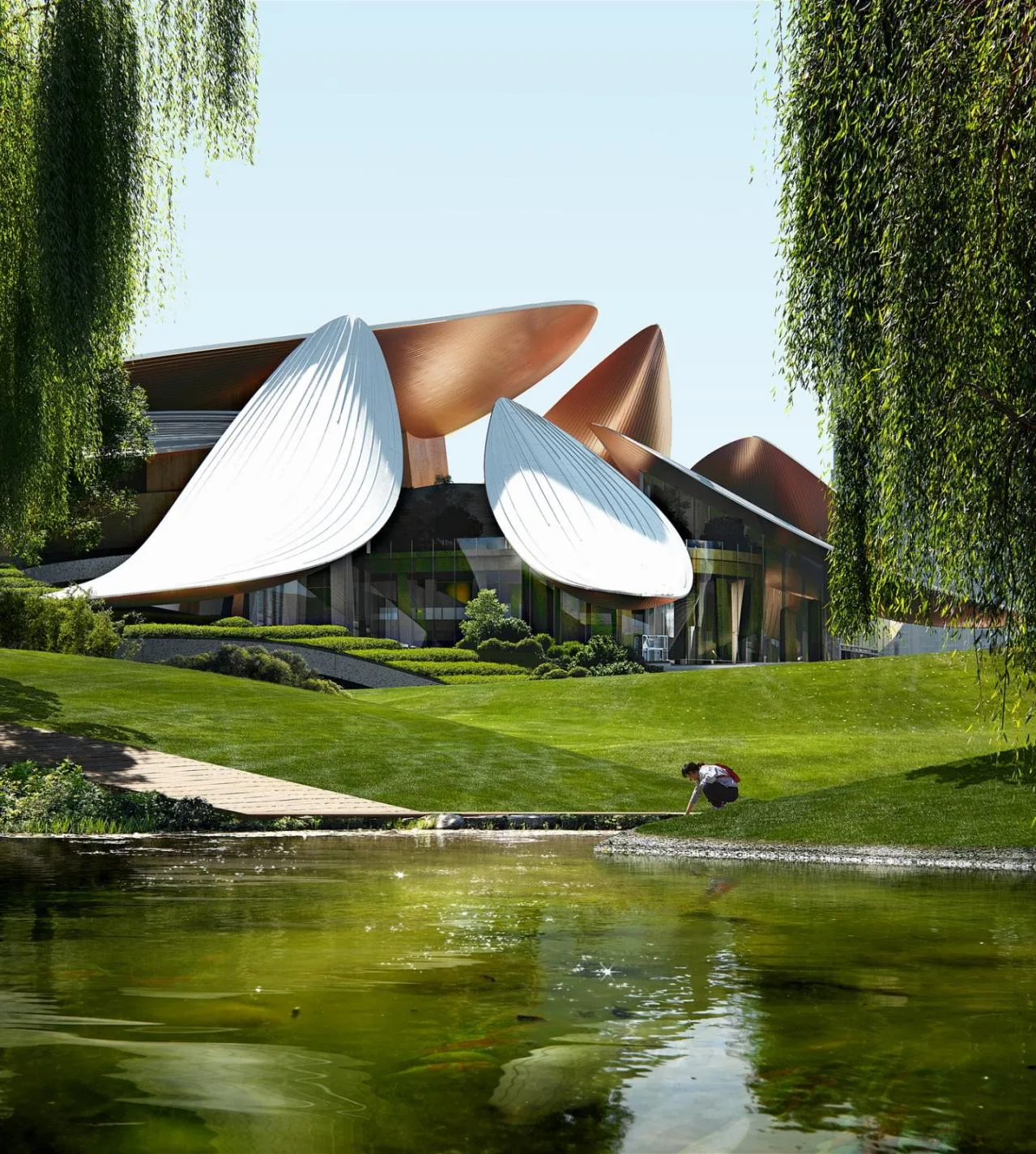
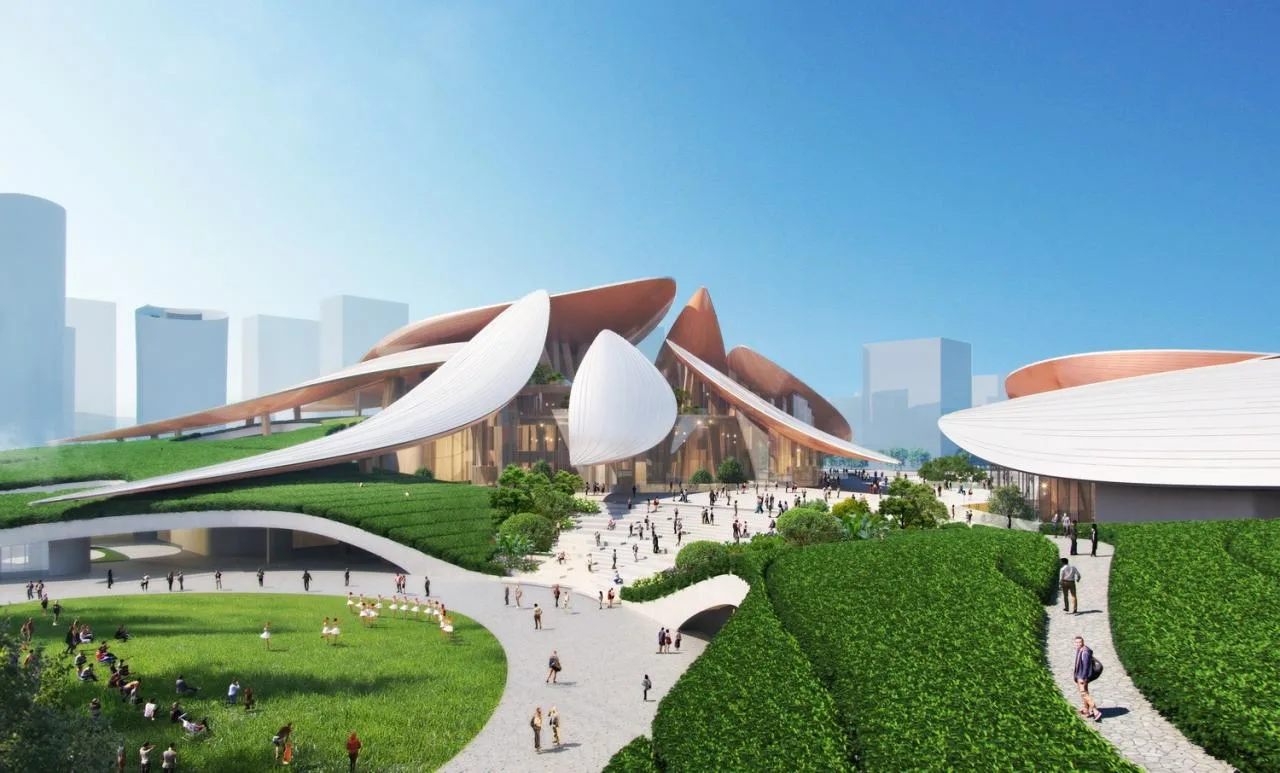
Several courtyards nestled within the tea mountains act as breathing spaces, blurring the boundaries between indoor and outdoor areas.
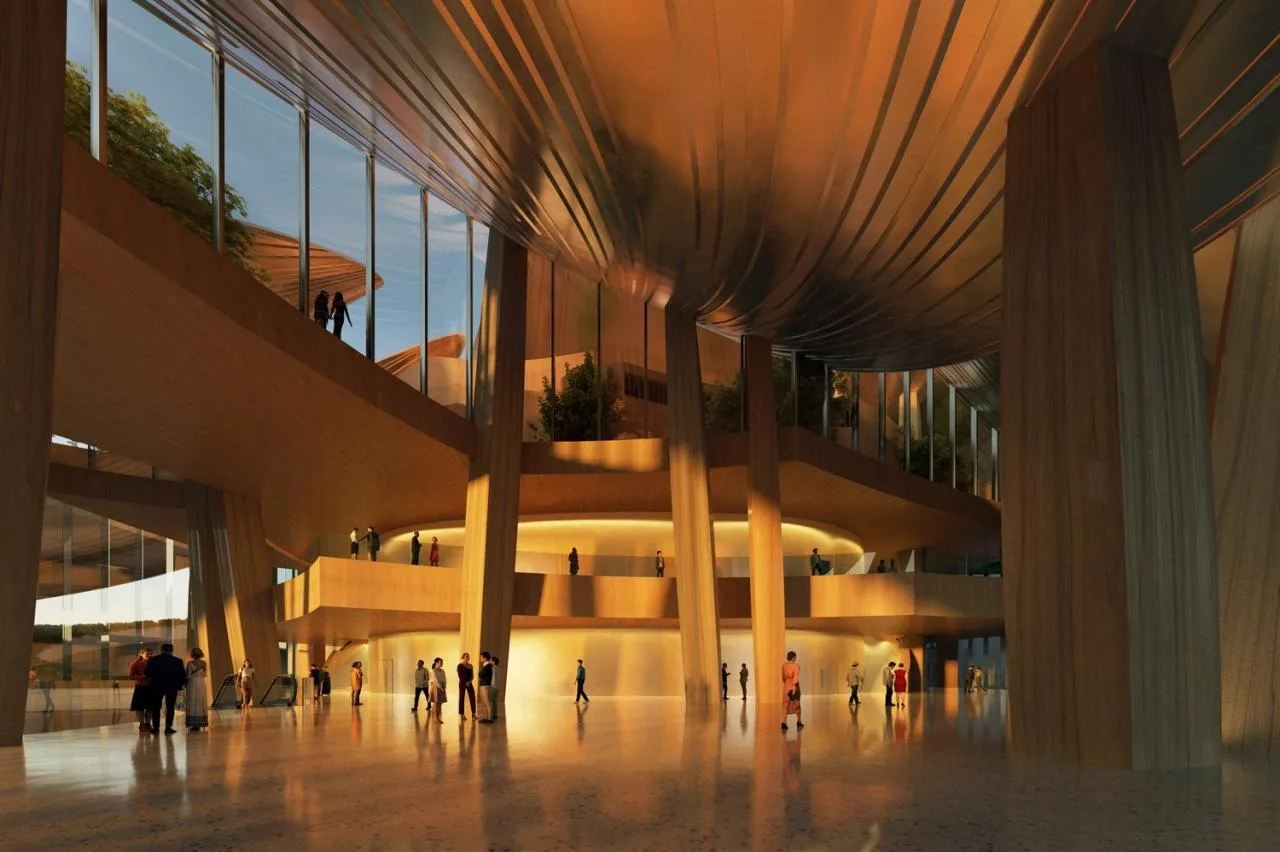
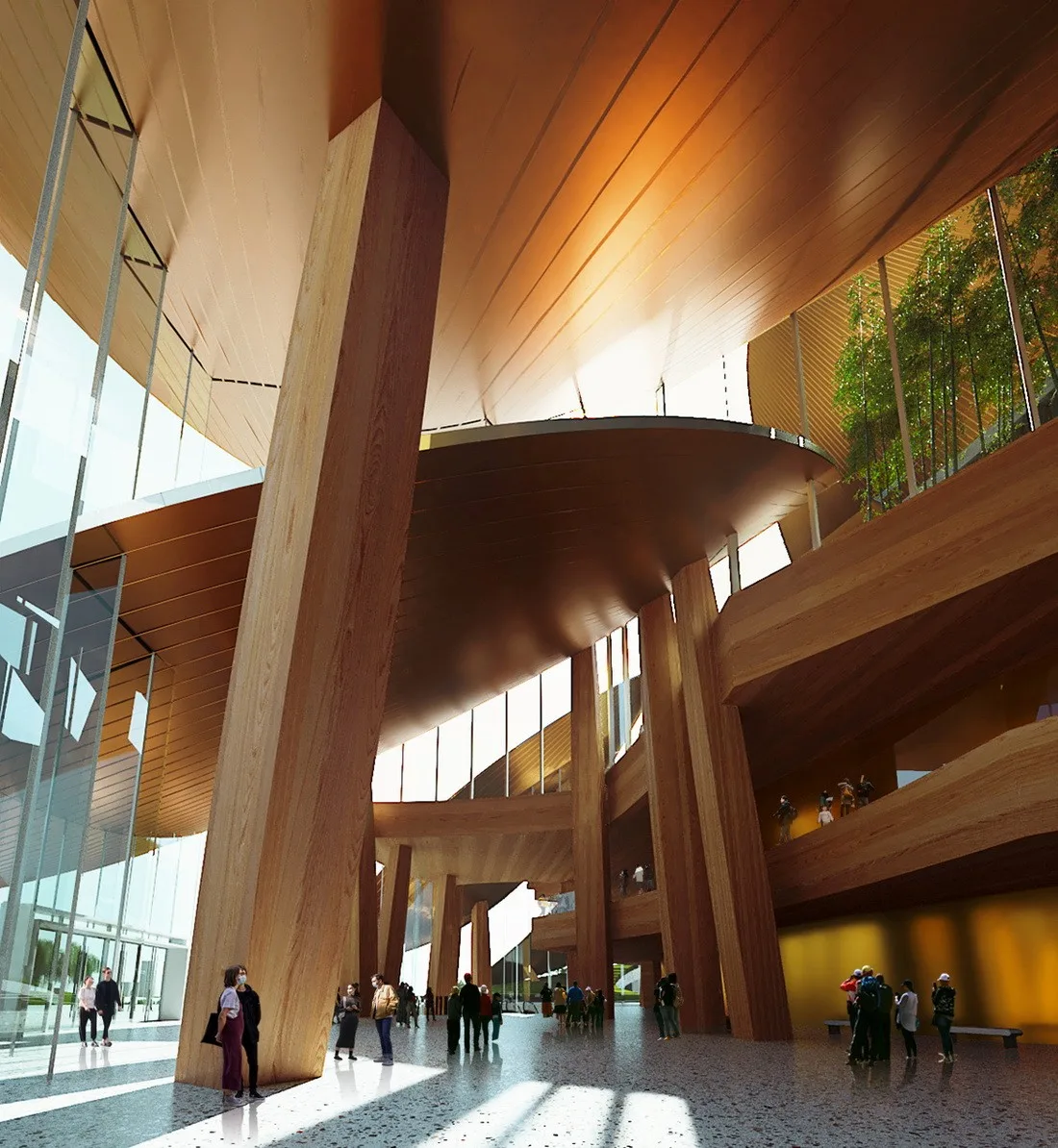
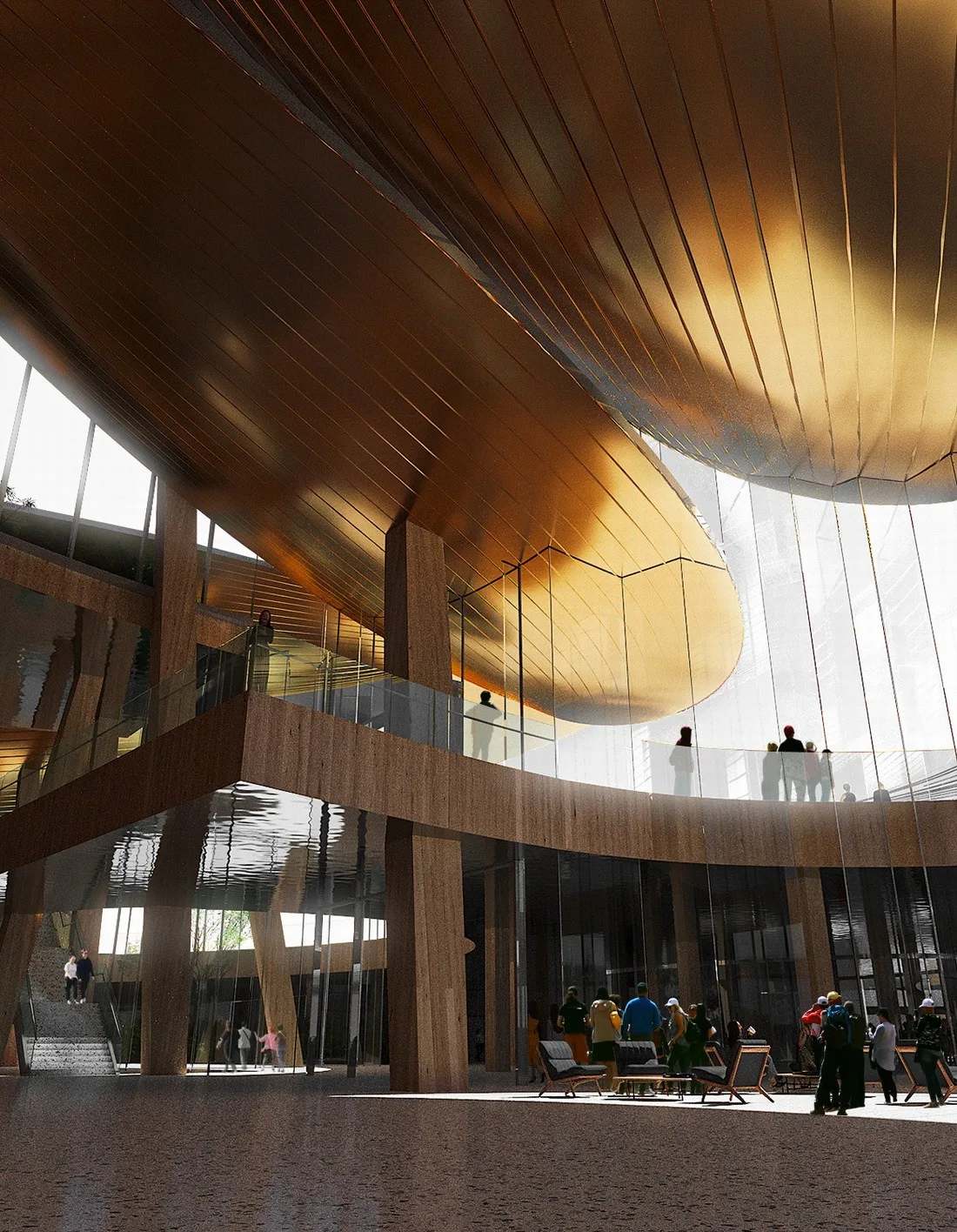
At the site’s highest point, multiple scattered “bamboo leaves” form layered, staggered coverings over the tea fields. This sculptural roof design conveys a sense of lightness and agility. The metal “bamboo leaf” panels feature vein-like patterns, adding a vivid, natural atmosphere.
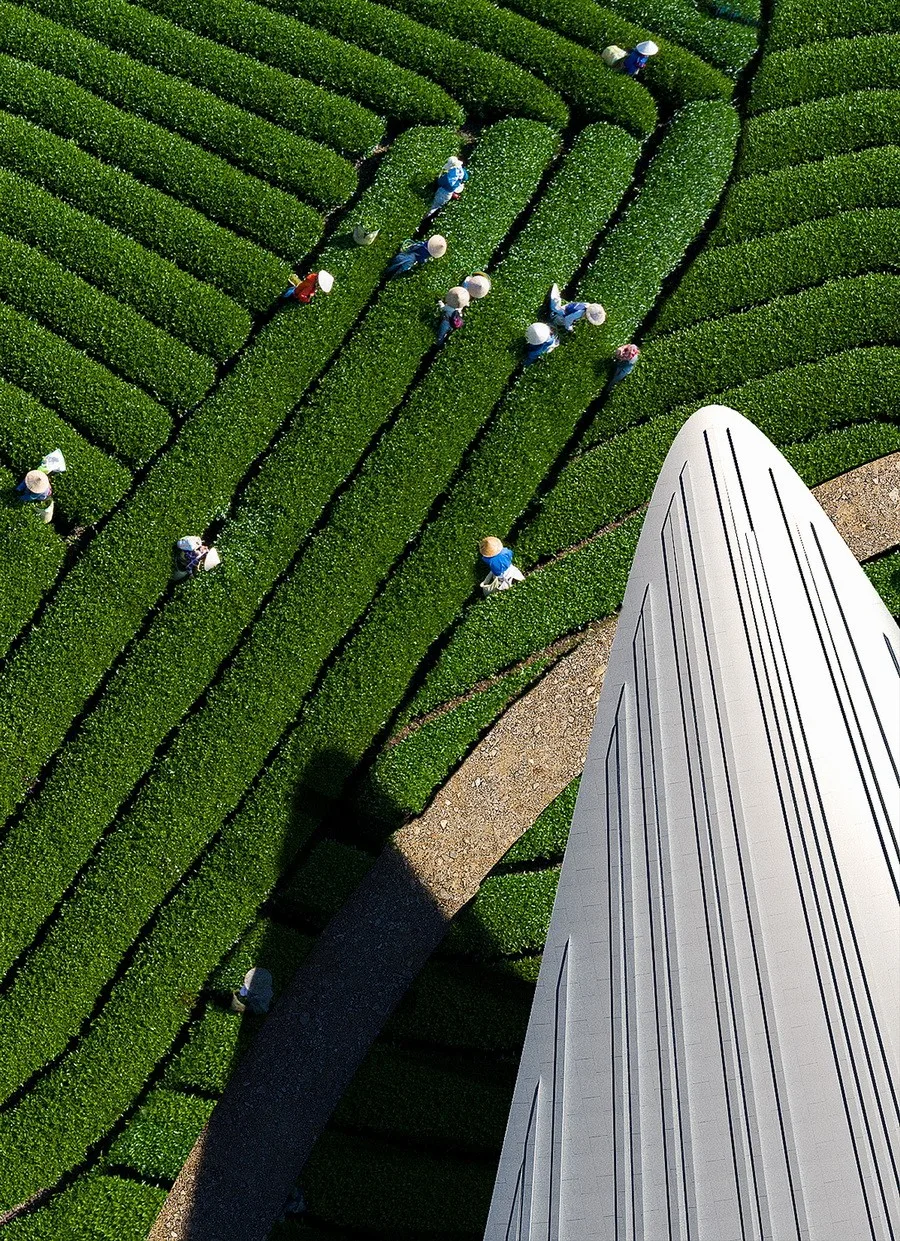
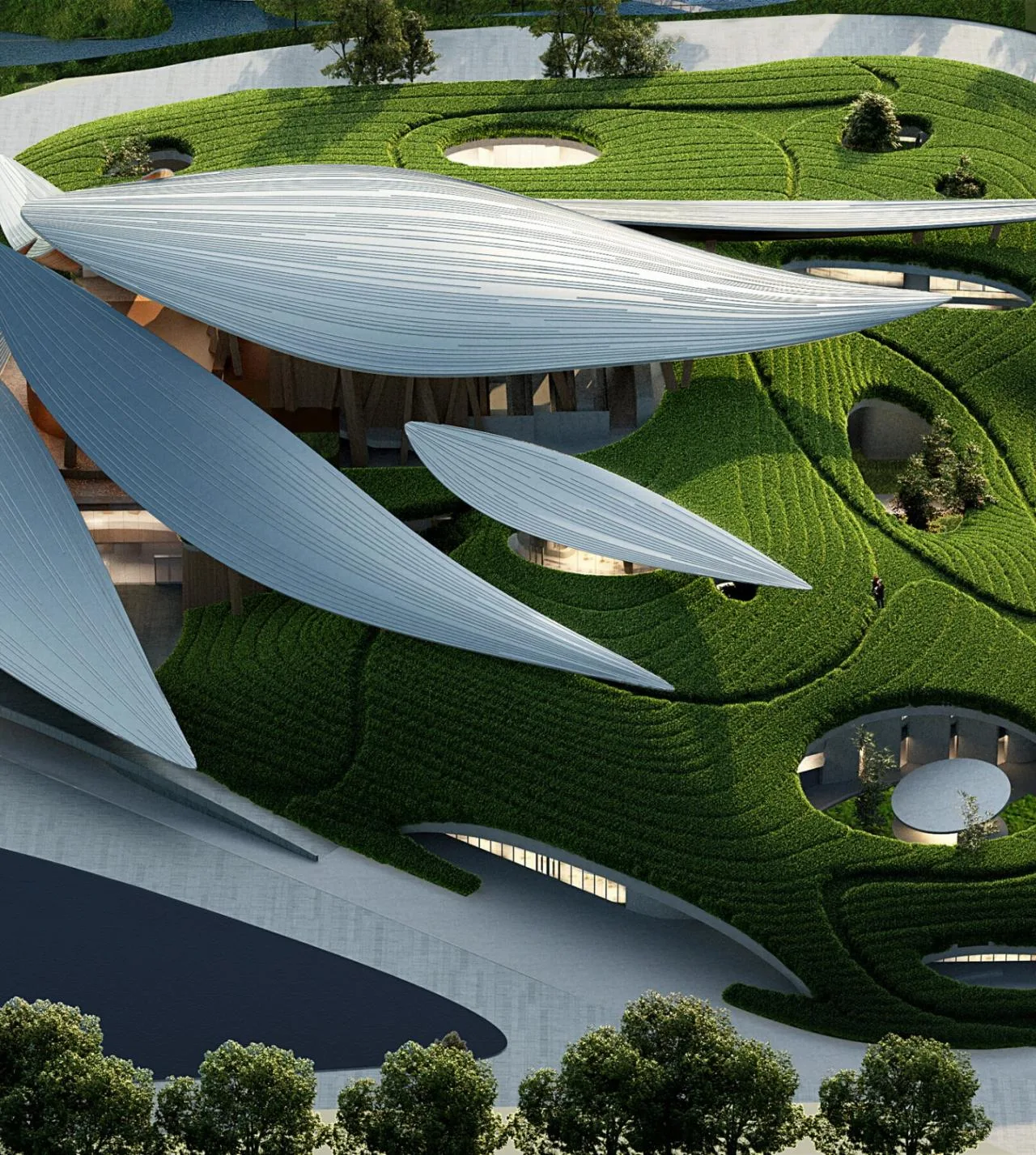
The staggered gaps between the “leaves” allow natural sunlight to illuminate the interior, creating bright indoor spaces and improving the building’s energy efficiency. The main facade features a self-supporting folded-line full glass curtain wall, towering up to 17 meters—the tallest of its kind in China to date.
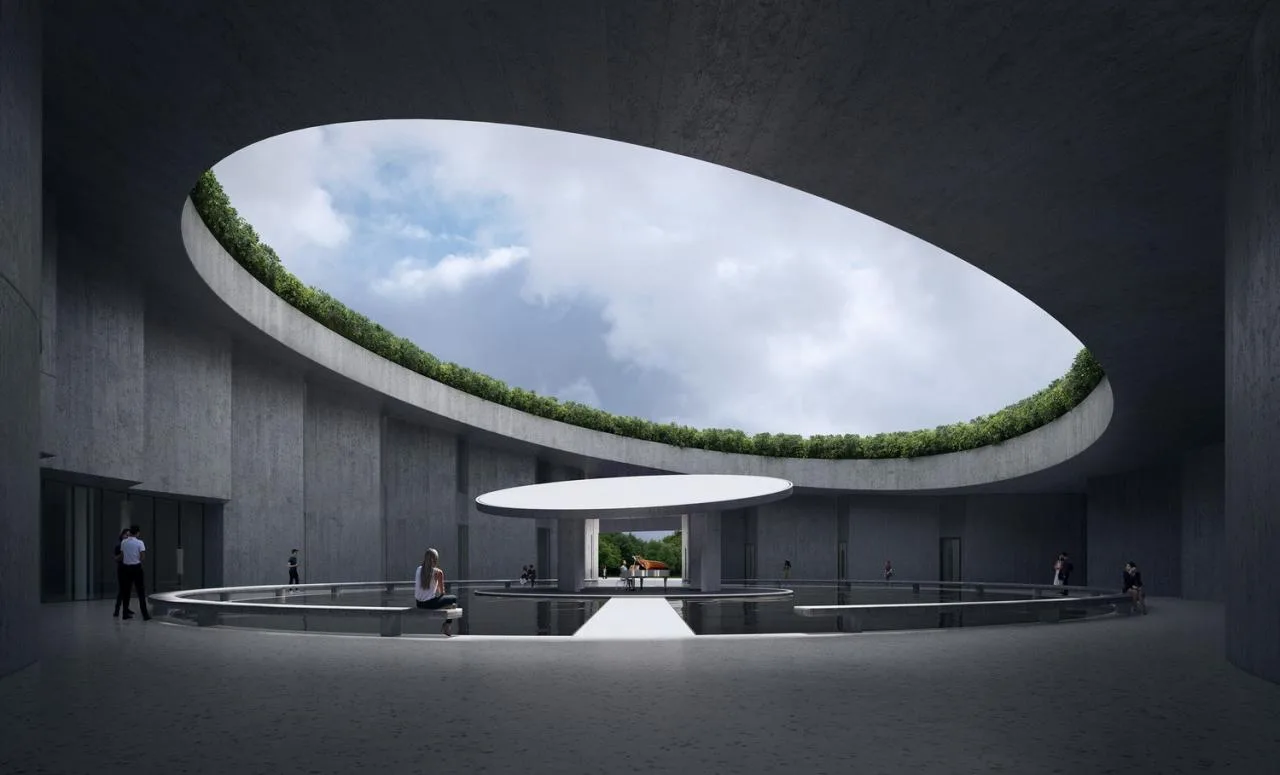
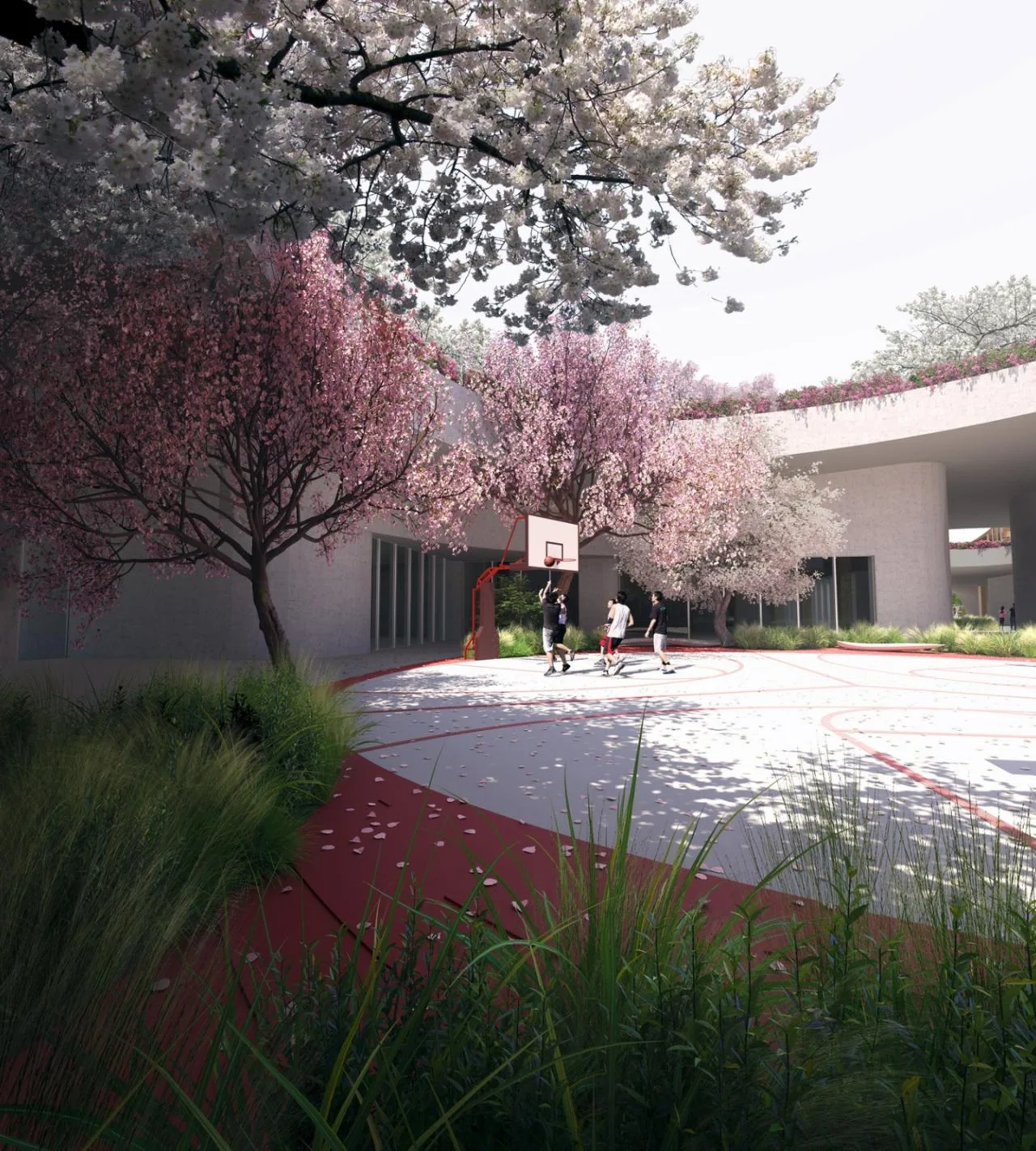
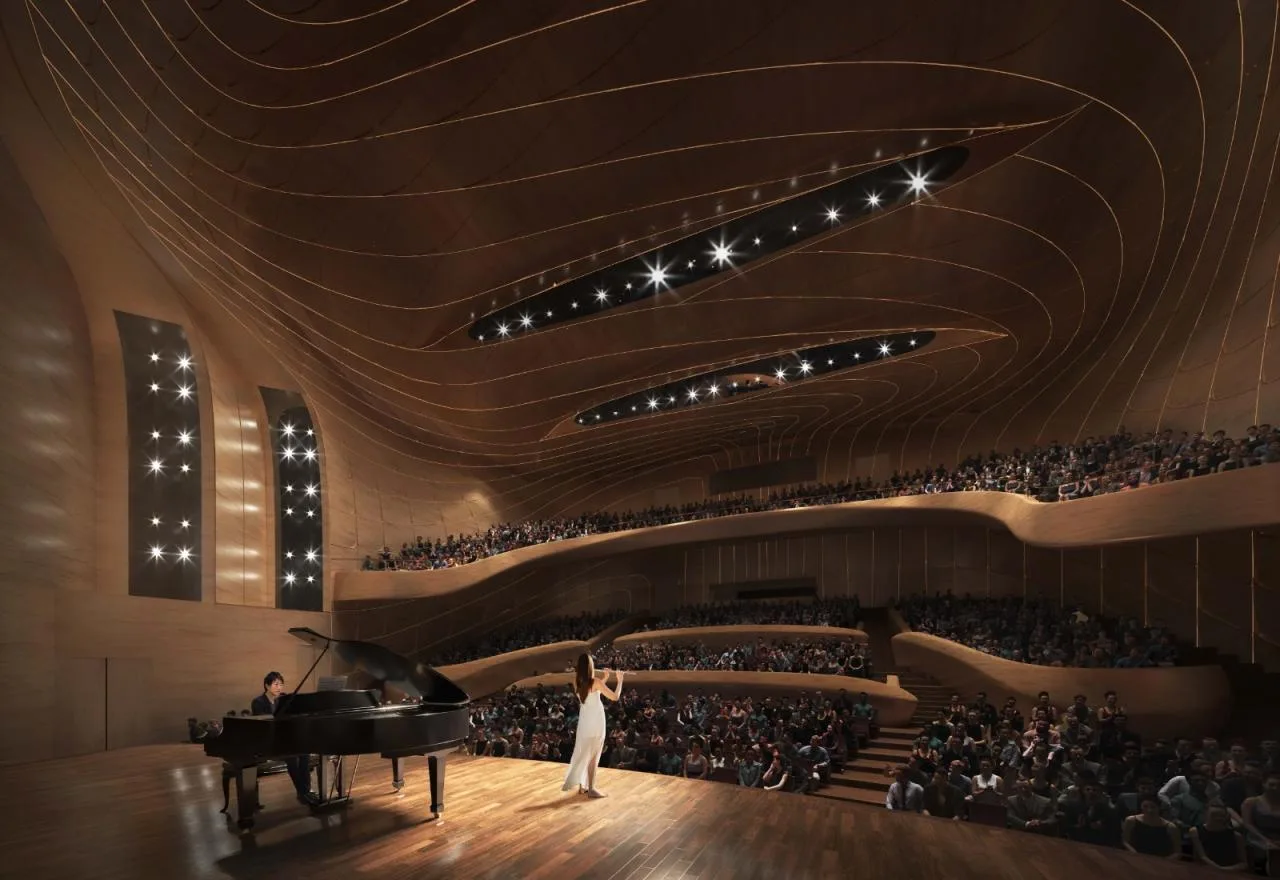
The main indoor spaces of the Grand Theater and Conference Center are located on the second and third floors, while the other four halls occupy the first floor and part of the second floor. The Grand Theater auditorium seats 1,300, and the International Convention Center’s main venue can host up to 2,000 attendees for events and conferences.
The project incorporates sustainable features such as green roofs, permeable pavements, sunken green spaces, rainwater harvesting, and vertical site design. These elements work together to manage rainwater runoff comprehensively—from source to transmission and discharge—supporting the goal of sponge city development.
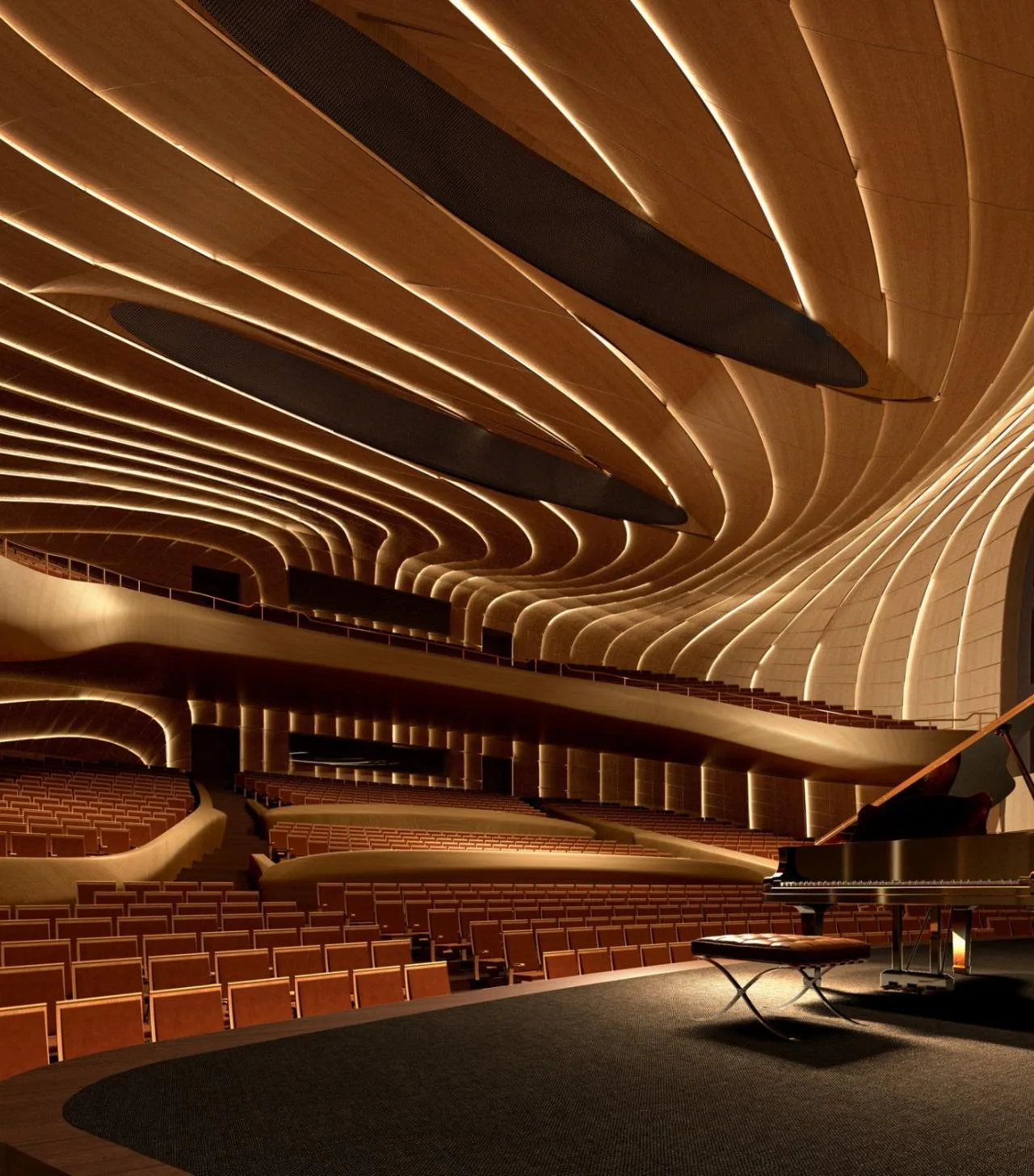
Construction of the Anji Culture and Art Center began in 2023 and is expected to be completed and operational by 2025.
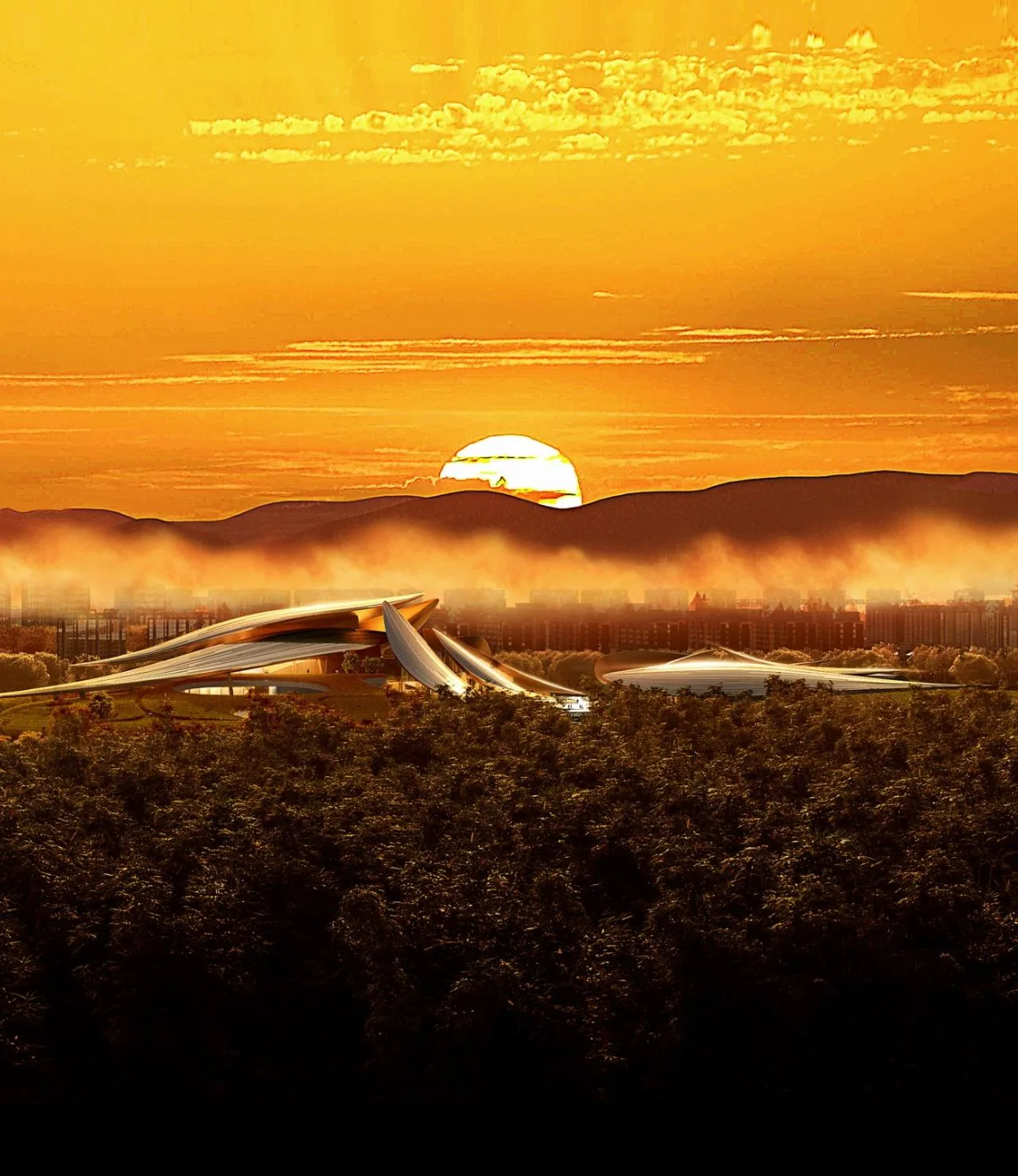
Project drawings
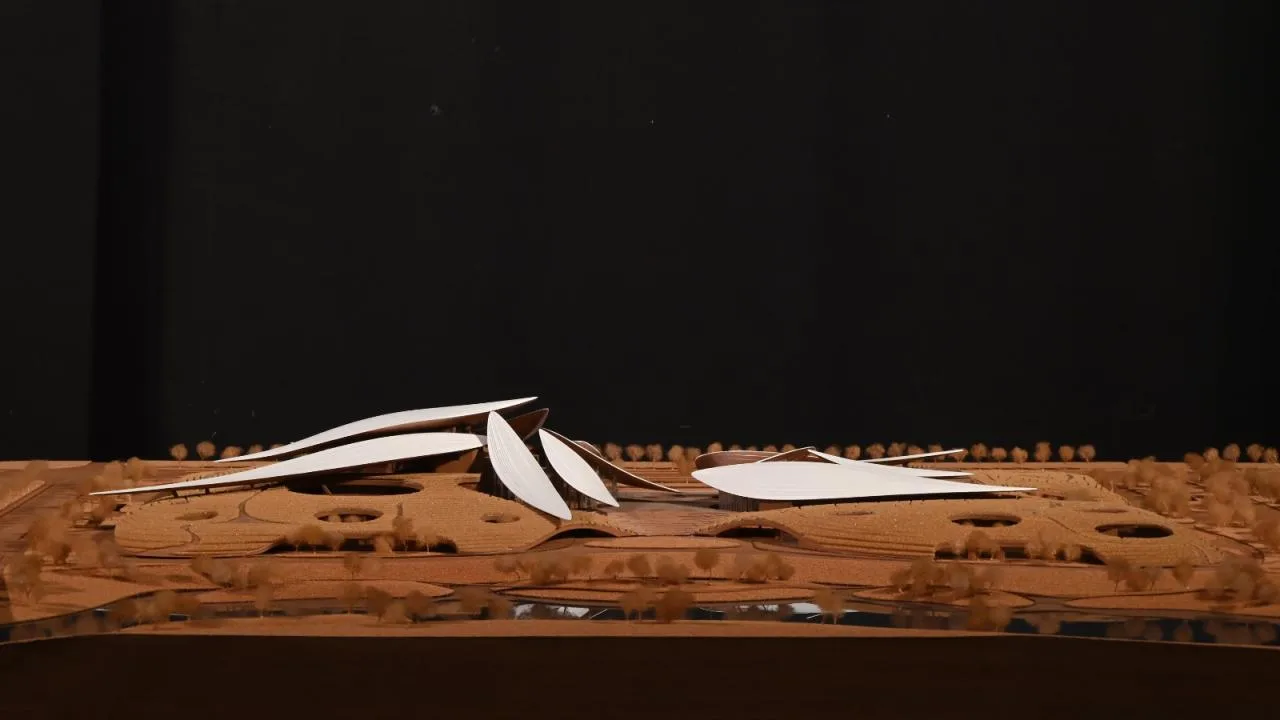
△ Model Diagram
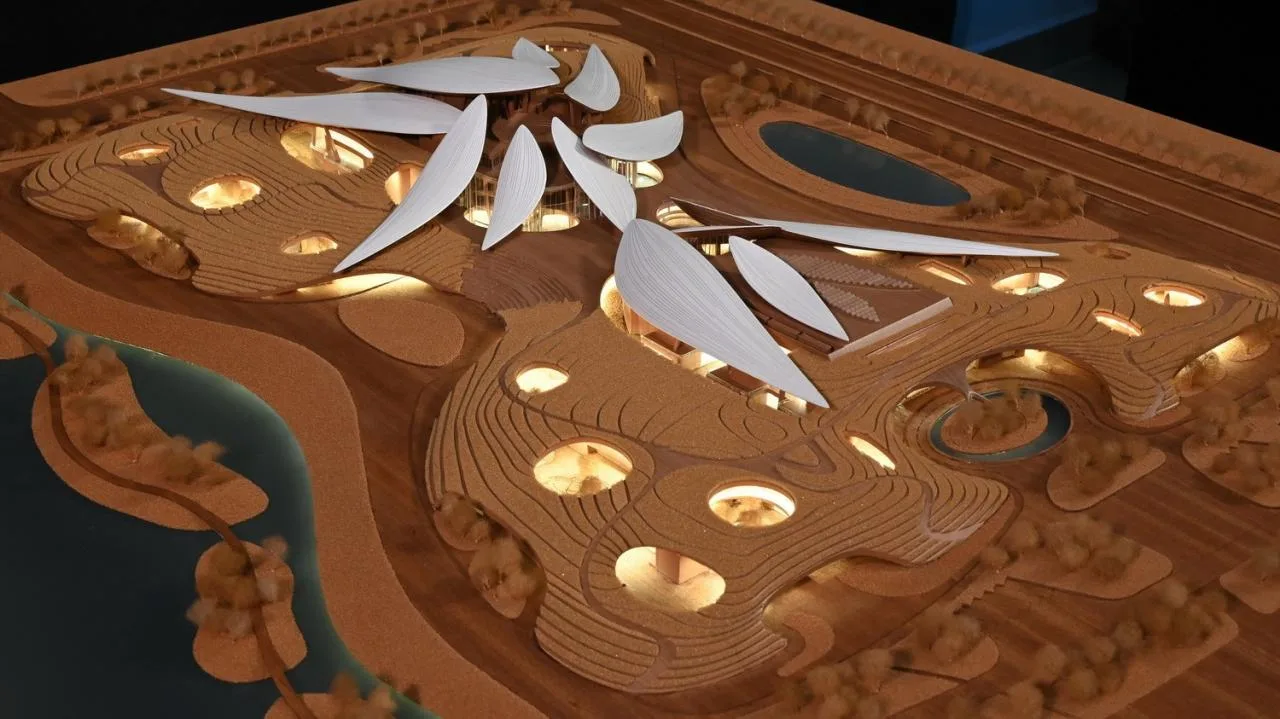
△ Model Diagram
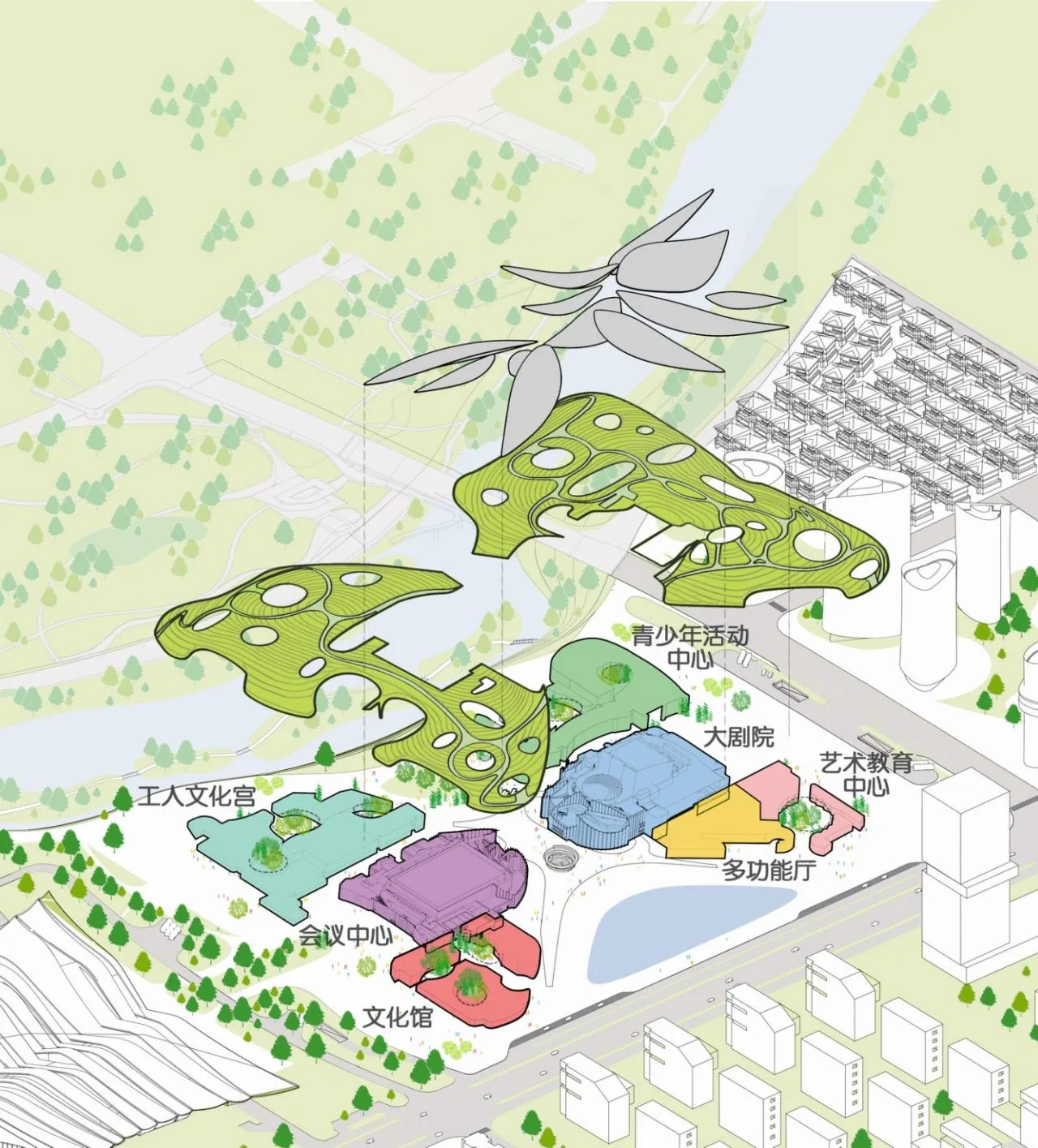
△ Functional Zoning Diagram
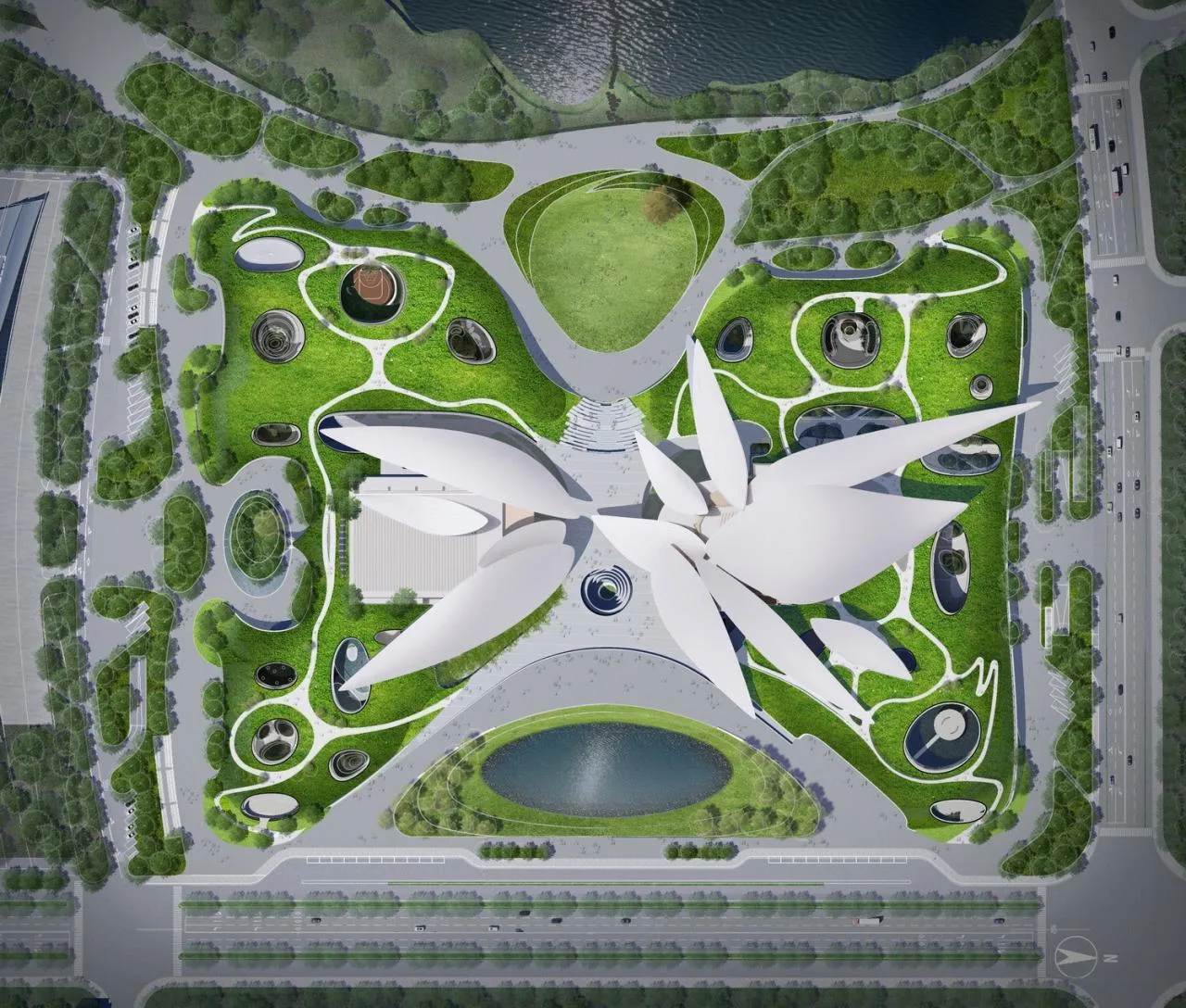
△ General Layout Plan
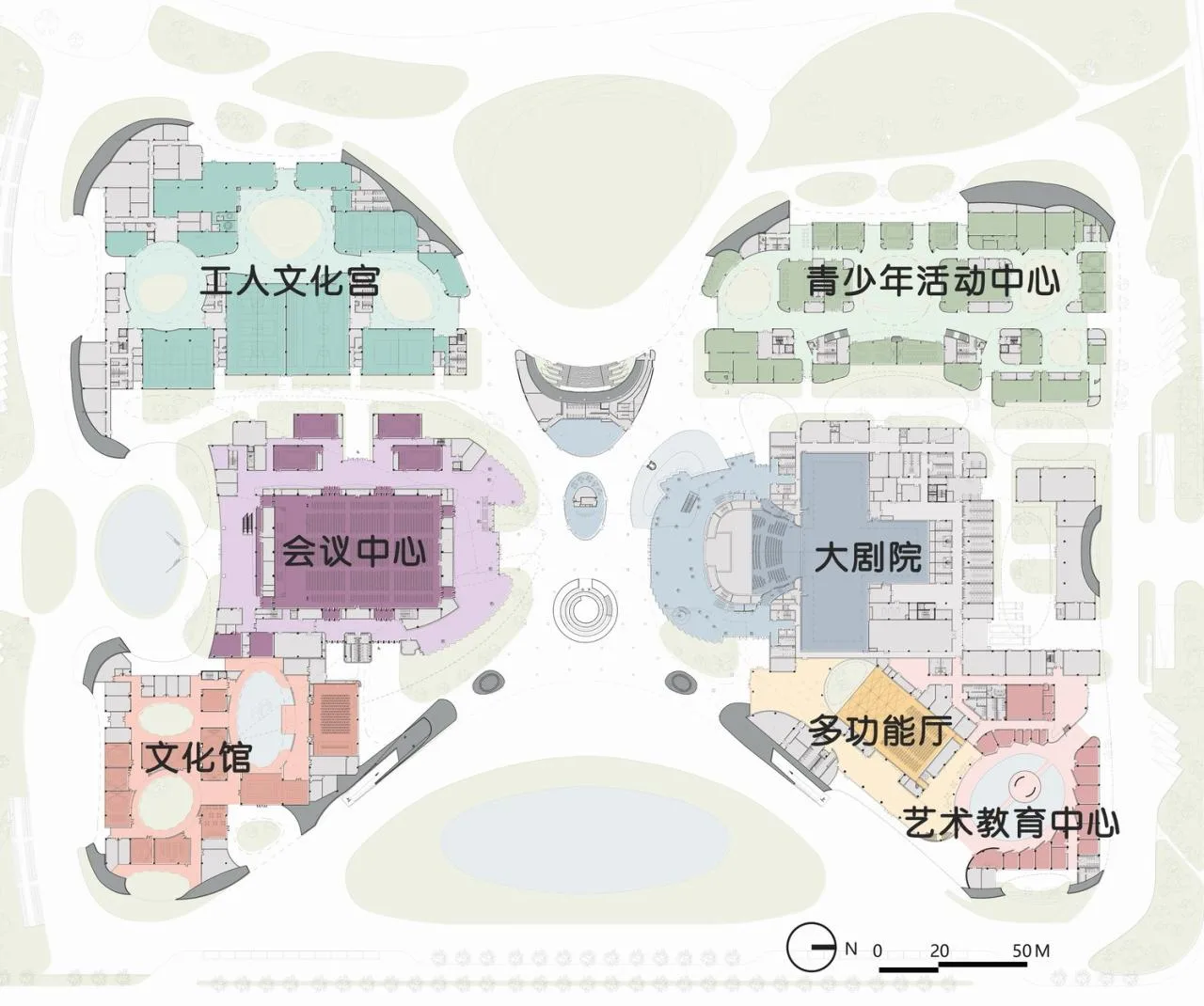
Project Information
Type: Cultural Architecture
Site Area: Approximately 149,000 square meters
Building Area: Approximately 120,000 square meters
Lead Partners: Ma Yansong, Party Masses, Yokosuke Hayano
Lead Vice Partners: Li Jian, Liu Huiying
Design Team: Sun Shouquan, Dong Xue, Li Cunhao, Li Guangchong, Zhang Xiaomei, Wang Xianbo, Xi Kaiyu, Chen Bohan, Zhao Lilu, Deng Wei, Lin Yijun, Liu Yiqing, Qiao Xuantong, Hao Yue, Zou Dengyu, Jose Maria Urbiola, Wang Zhuyun, Shang Li, Wu Aoqian, Song Chi, Zeng Tianxing
Owner: Zhejiang Anji Construction Holdings Group Co., Ltd.
EPC Engineering General Contracting Consortium: Tongji University Architectural Design and Research Institute (Group) Co., Ltd., China Construction Eighth Engineering Division Co., Ltd.
Curtain Wall Consultant: Tongji University Architectural Design and Research Institute (Group) Co., Ltd.
Landscape Design (Tea Field + Inner Courtyard): Pan Asia Landscape Design (Shanghai) Co., Ltd., Beijing Yunhai Tiancheng Landscape Design Consulting Co., Ltd.
Landscape Design (Site): Beijing Xiangye Landscape Design Co., Ltd.
Acoustic Consultant: East China Architectural Design and Research Institute Co., Ltd. – Acoustic and Theater Special Design and Research Institute
Interior Design: MAD Architecture Firm, Jianfeng Construction Group Co., Ltd.
Theater Technology Consulting, Stagecraft, and Conference System Design: Poly (Beijing) Theater Construction Engineering Consulting Co., Ltd.
Lighting Consultant (Overall + Theater): Beijing Ningzhijing Lighting Design Co., Ltd.
Lighting Consultant (Conference + Podium): Shanghai Ruiyi Environmental Design Co., Ltd.
Identification Consultant: Beijing Dasi Advertising Co., Ltd., Chengdian (Shanghai) Architectural Design Consulting Co., Ltd.














Must log in before commenting!
Sign Up