
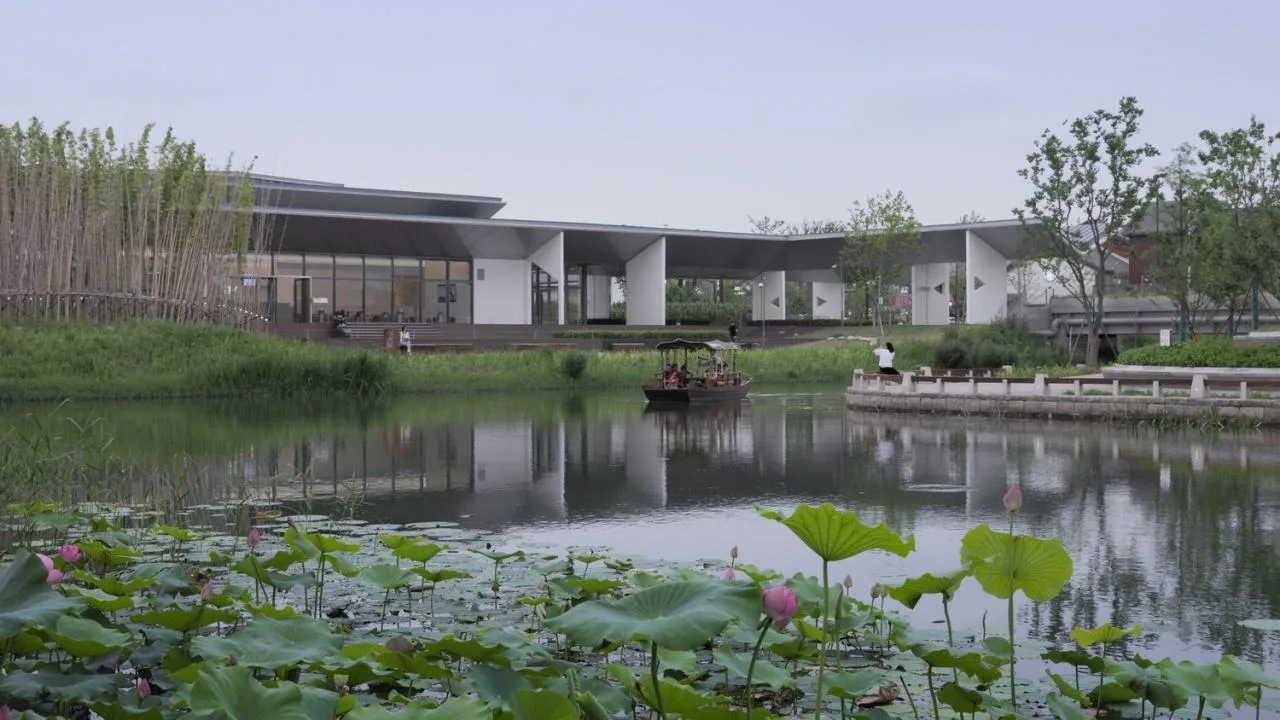
Town and Field
Twenty years ago, during early spring, I traveled through various towns in Jiangnan. One morning, I woke early and strolled along a stone path beside the river, eventually wandering into the fields just outside the town. Bathed in the western light and mist, I observed the crisscrossing paths, the lingering bridges resting on the waves, and the fresh green spring vegetation. Looking back at the ancient town, its pink walls and black tiles floated atop this layer of green. In this moment, standing at the edge where town meets field, I lingered, reluctant to leave.
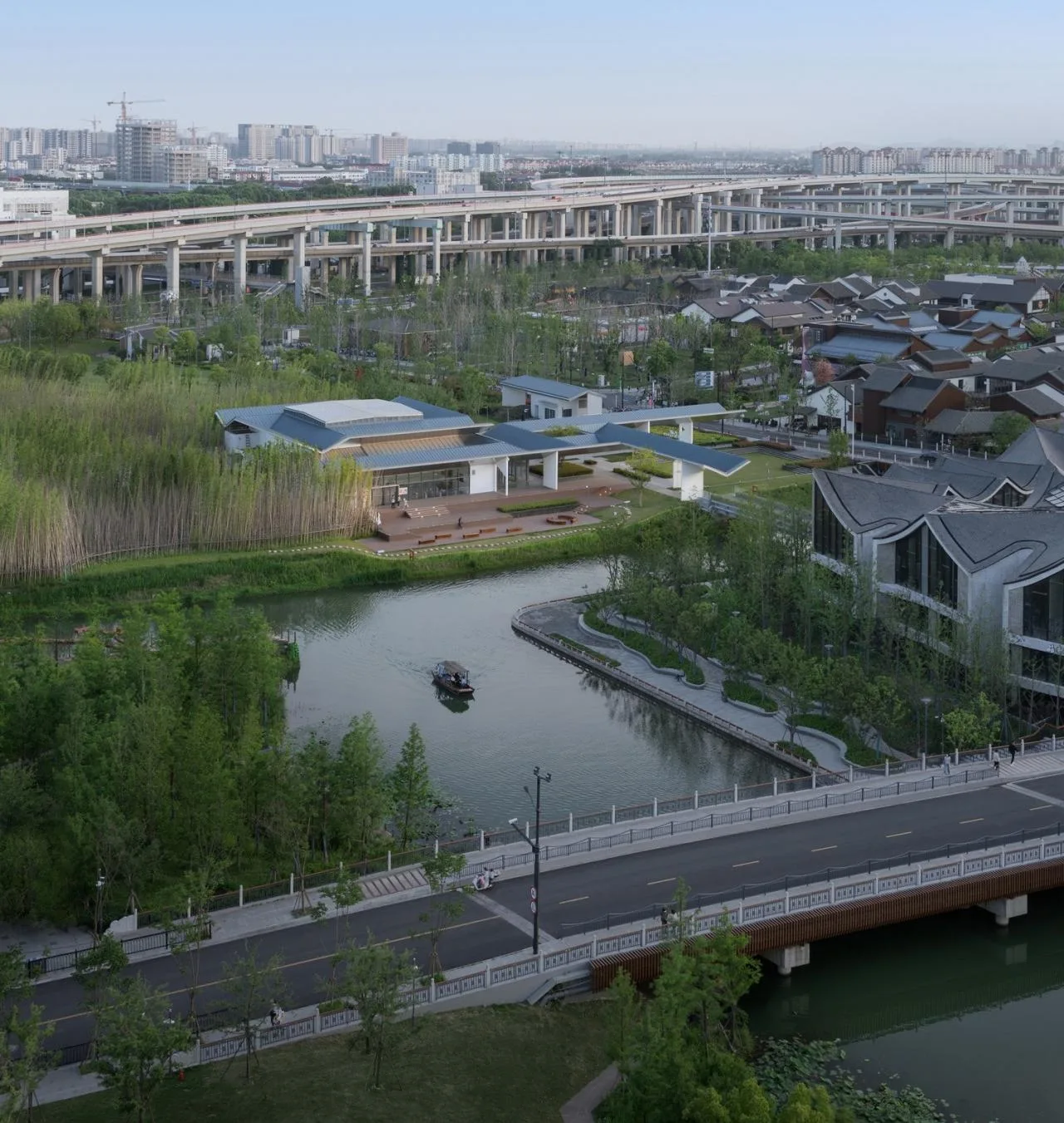
In the agricultural era, fields seamlessly bordered villages and towns, naturally tying daily life to production. Today, although ancient Jiangnan towns are carefully preserved as heritage sites, their surrounding fields and forests face rapid urbanization driven by tourism. These towns are increasingly encircled by highways and residential developments, turning them into isolated islands, more like exhibits than living communities. Fields and nature retreat quickly, pushed to the outskirts. The evocative scenes once common outside towns like Luzhi have quietly vanished.
In 2018, Rui’an planned to redevelop Panlong Ancient Town, once a simple village, located west of Hongqiao Hub. The redevelopment centers around a pedestrian street, surrounded by a green belt park, with real estate developments at its edges. Shanshui Xiu was commissioned to design an art museum within the green ring of Zhendong. Reviewing the overall plan, I realized that the new Panlong Town is a cultural, tourism, and commercial hub. While its reconstructed “water town” style mimics the past appearance, it cannot restore the symbiotic relationship between town and fields in social production. Yet, the green circle around the town remains prominent on the plan, reminding me of that quiet morning outside Luzhi Town. I believe Panlong Ancient Town, with its history as a rice market and its natural surroundings adjacent to the new town, offers a unique setting for this contemporary art museum.
Inside and Outside
Since the art museum is located outside the town, it naturally establishes the first layer of the internal-external relationship: the museum within the green ring stands independently from the town. To emphasize this independence, we placed the museum’s main indoor structure on the east side of the green ring, about 60 meters from the town’s east entrance, creating a buffer zone between the town and museum. This intentionally softened boundary resembles the natural transition where fields once met the edge of Luzhi Town.
This space allows visitors to experience a moment before entering the museum: for those coming from town, it signals the town’s end, the start of green space, and the art museum’s atmosphere, inviting calm and a seamless continuation of their artistic journey. For the museum, this space acts as a prelude to the visit, an external temperament, and an outward expansion.
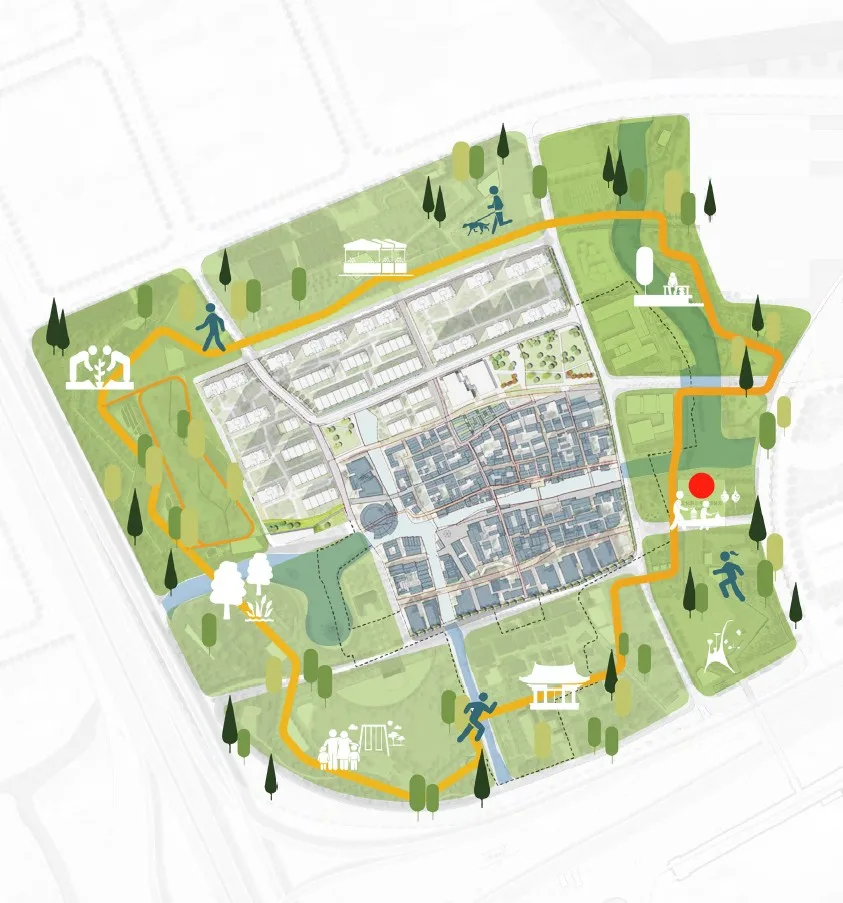
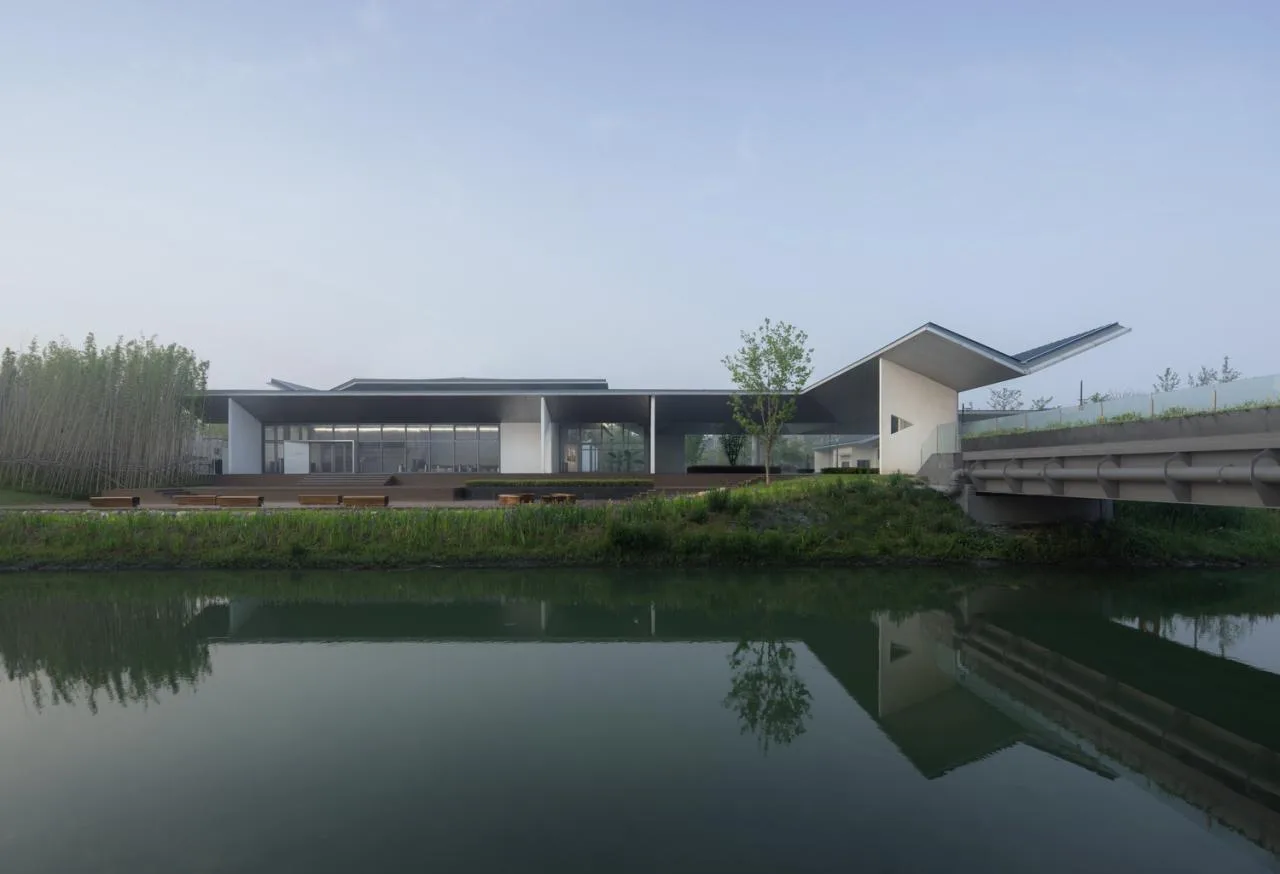
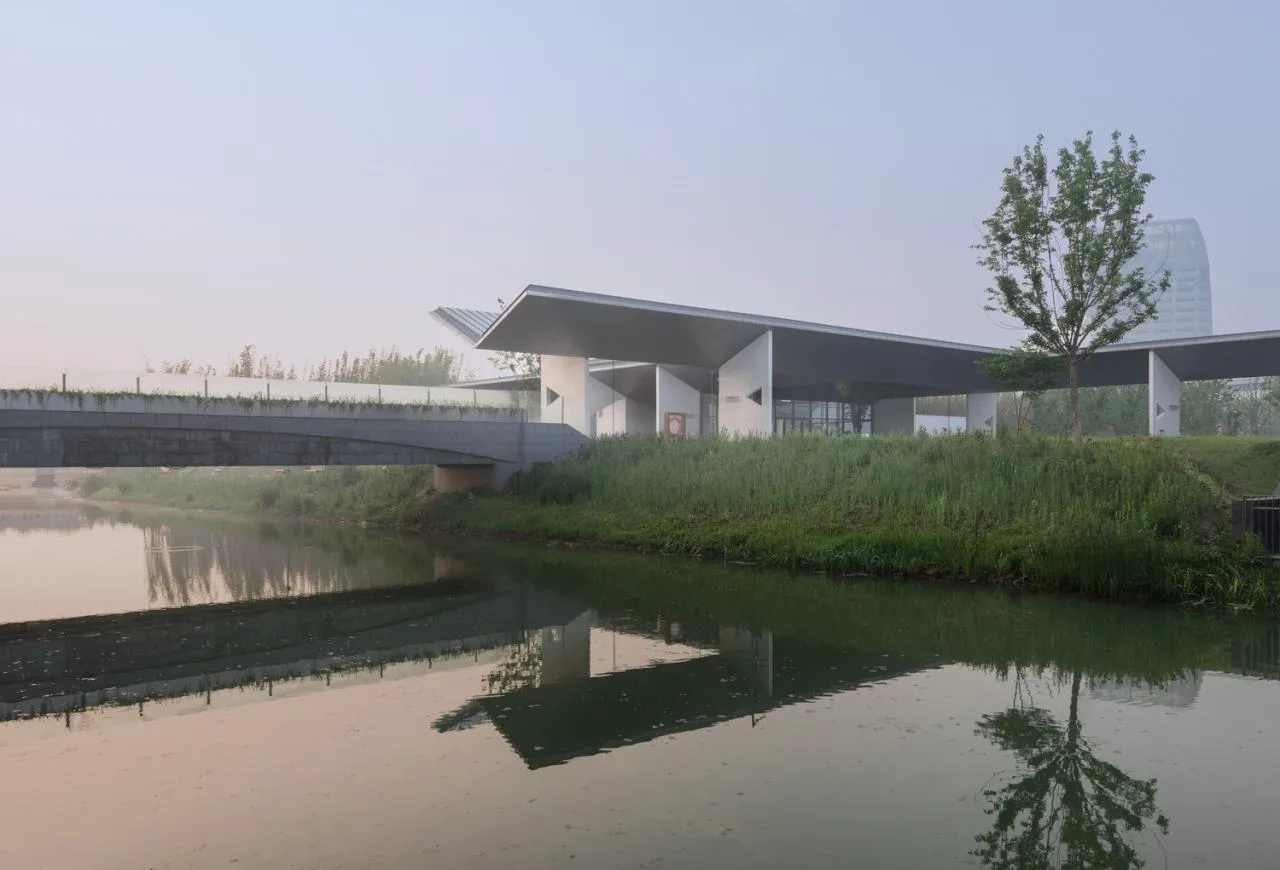
The influence of the art museum extends outward through spatial language, particularly along the north-south green spaces. The park to the south and the pedestrian bridge crossing the river to the north will engage with the museum’s pedestrian flow. Additionally, freight and logistics access from the east allows potential expansion or connectivity in multiple directions, including southeast, northwest, and east.
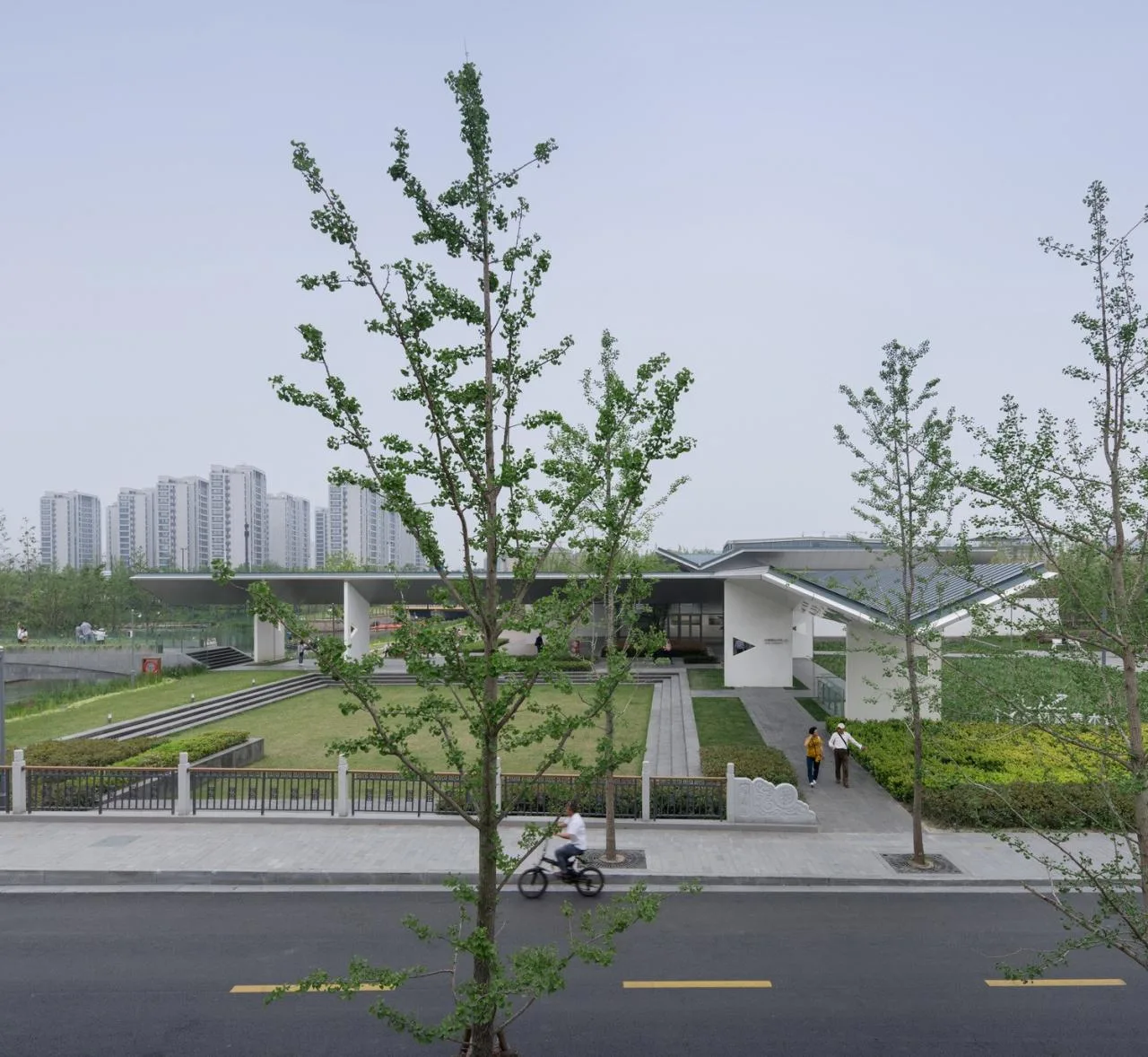
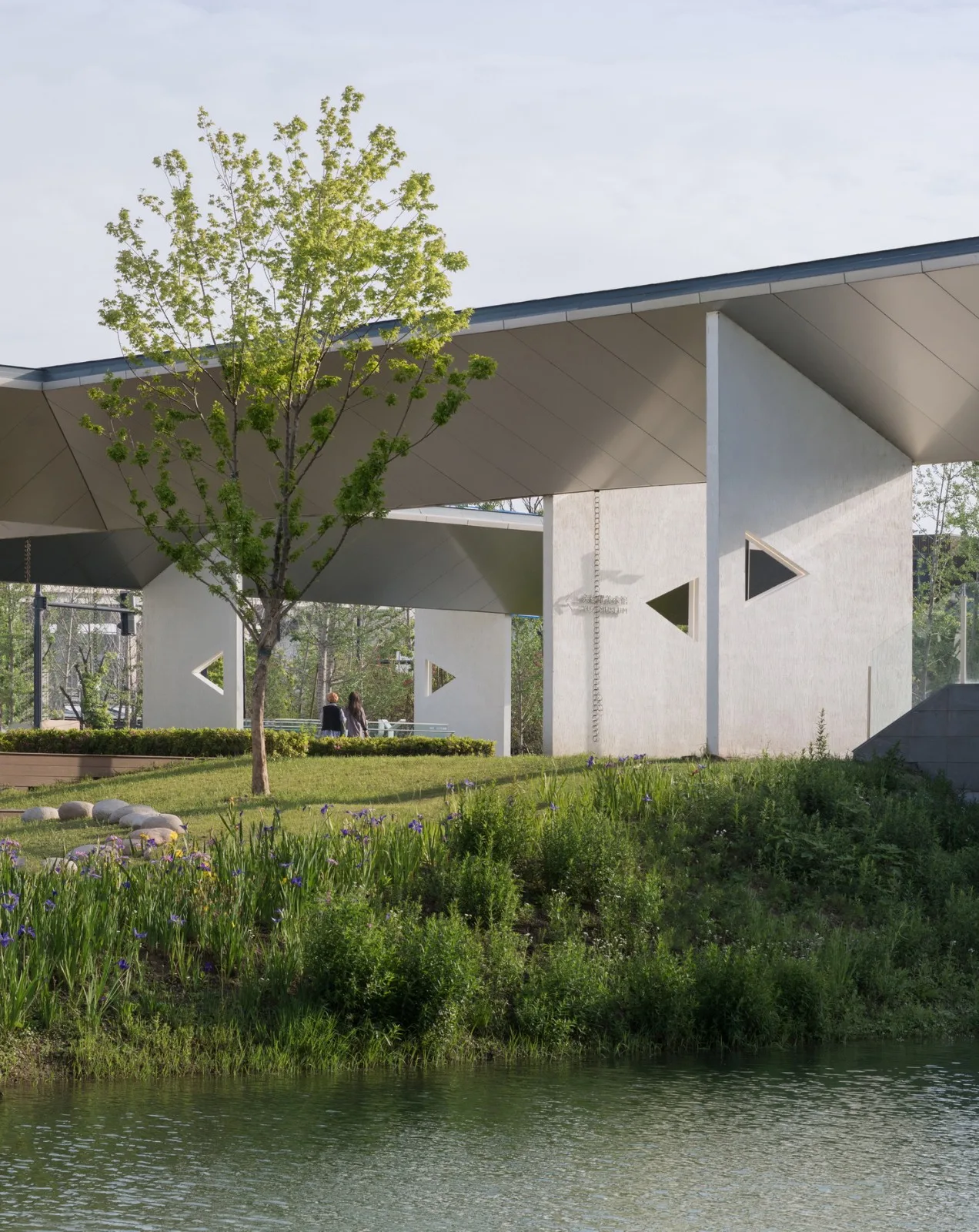
Mapping the relationship between town and green belt, we situated the art museum with the riverside to the north, green space to the south, and bamboo screen to the east. A deliberate distance from the town to the west blurs the usual clear boundary between interior and exterior, allowing the bustling town and tranquil museum to coexist in distinct yet visible spaces.
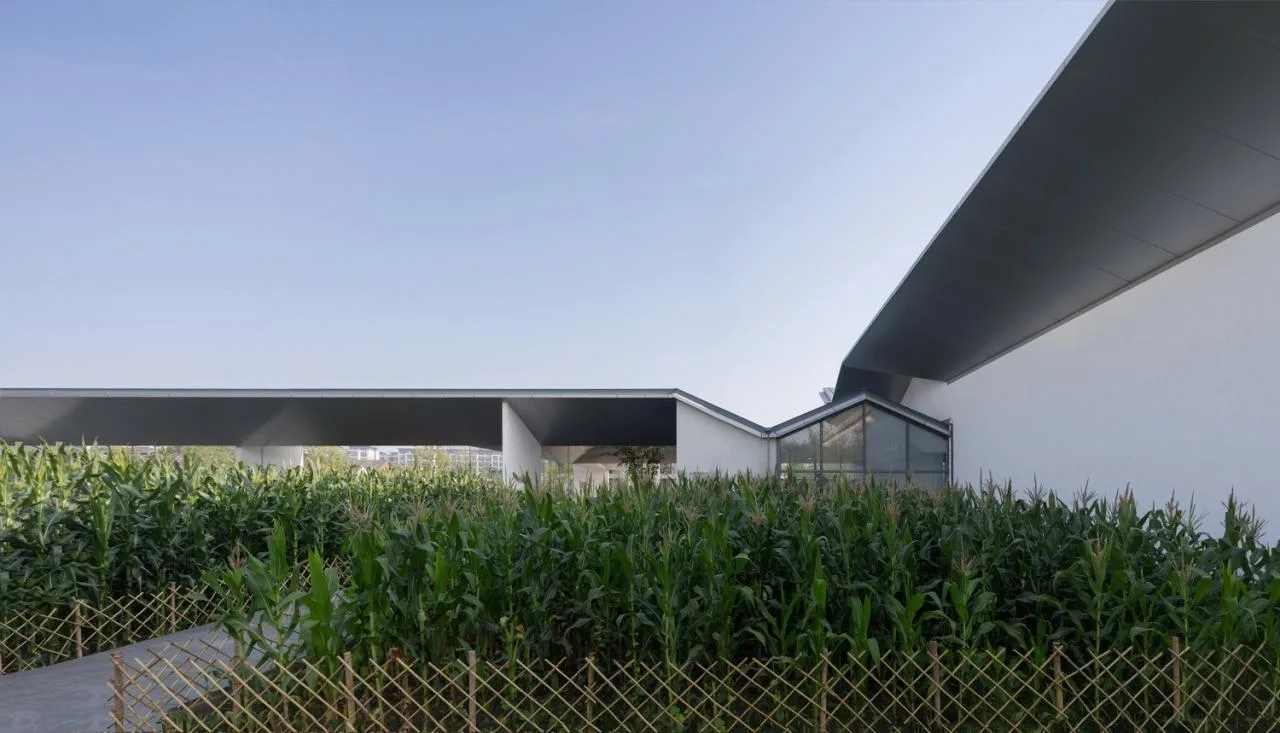
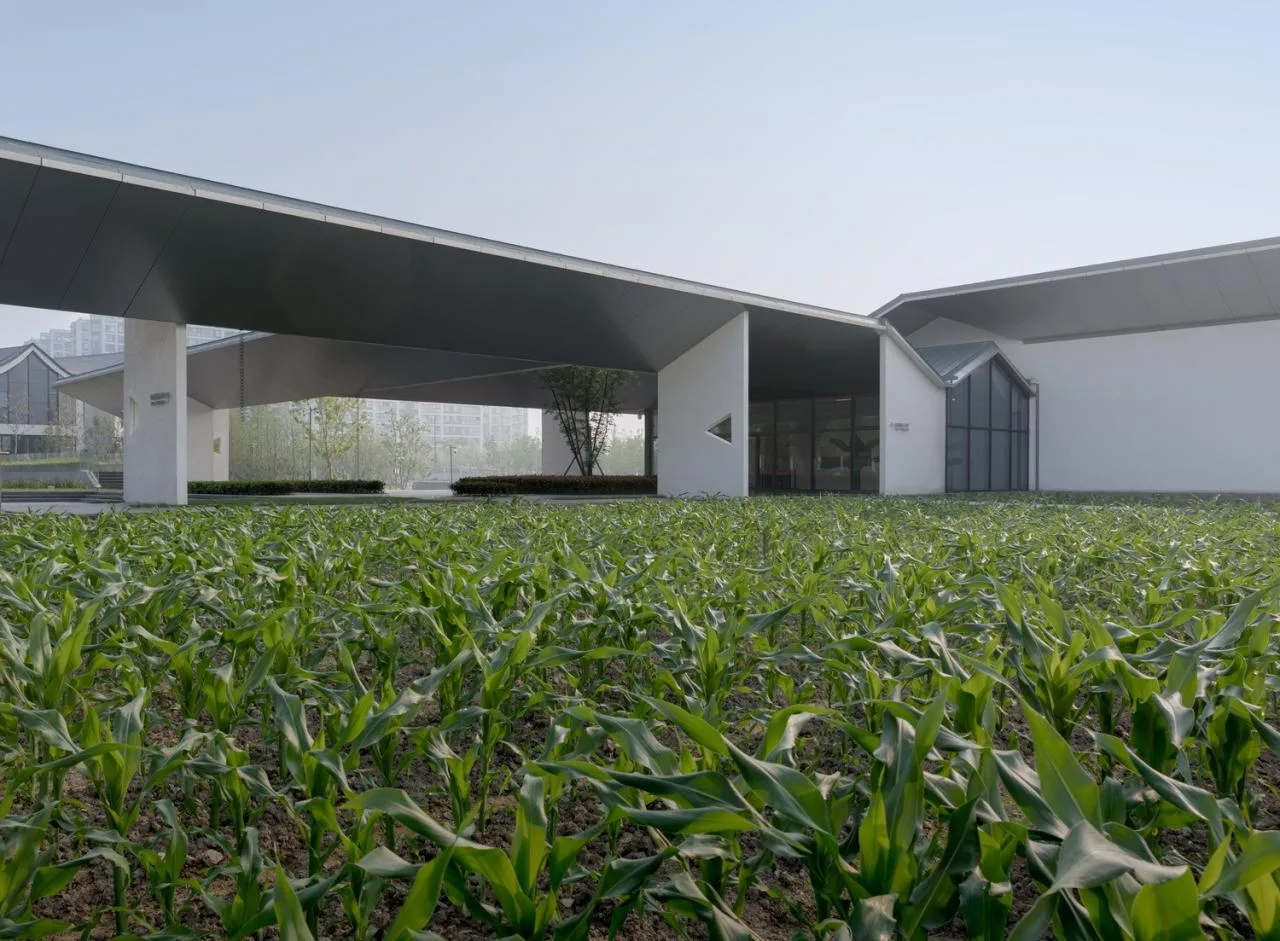
Architecture and Corridor Courtyard
How do we manage the transition between the art museum and Panlong Town? Memories from Luzhi remind me of the importance of green fields as a foundation, while regional intuition guides me to weave spaces through courtyards and corridors.
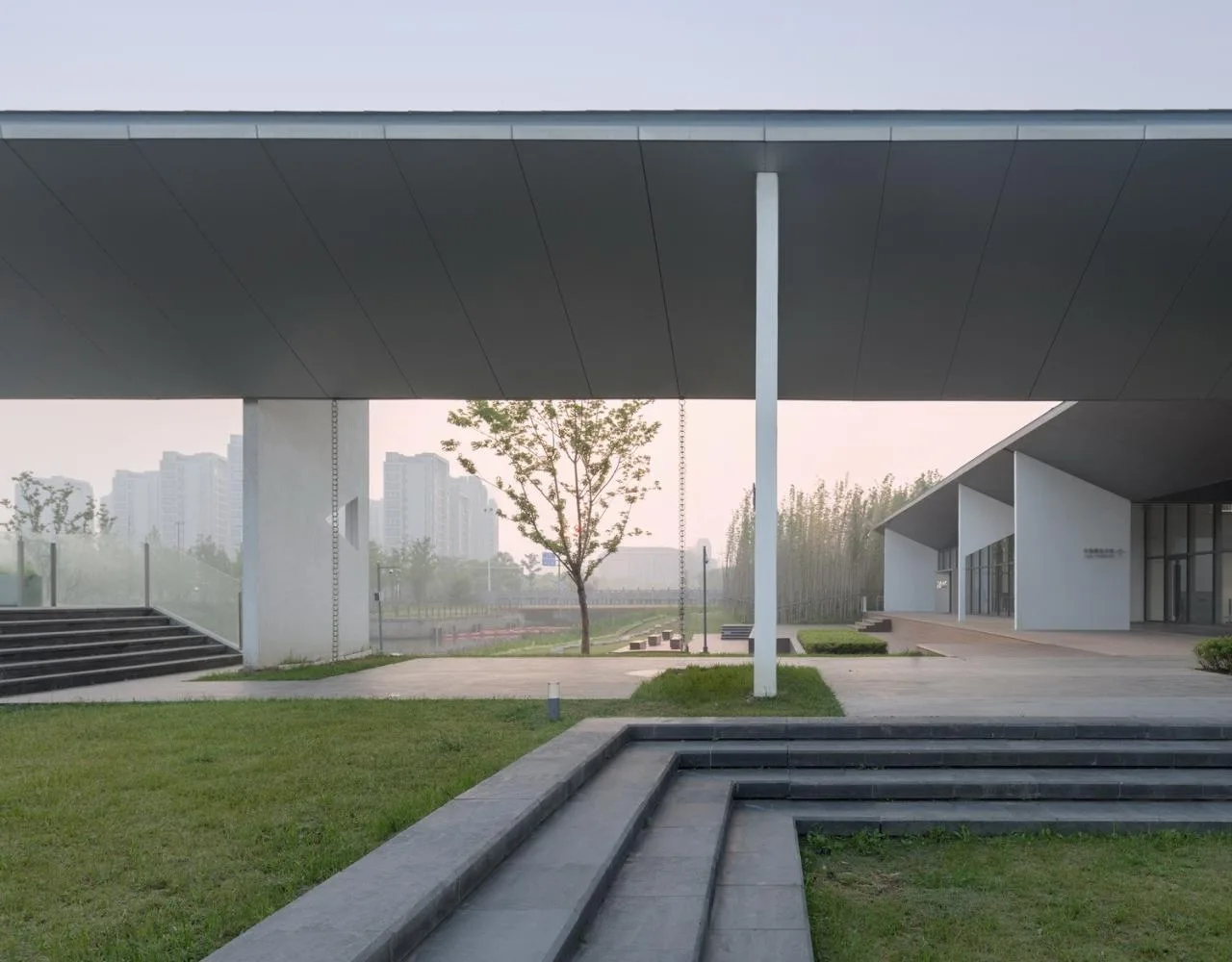
Initially, to revive Panlong Rice City’s historical memory, using the entire rice field as the green foundation was ideal. Yet, an open space was also necessary at the northern bridgehead for public art and agricultural events. Balancing these needs, rice paddies were planted in the south, while lawns occupied the north, evoking the overall image of green fields outside the town.
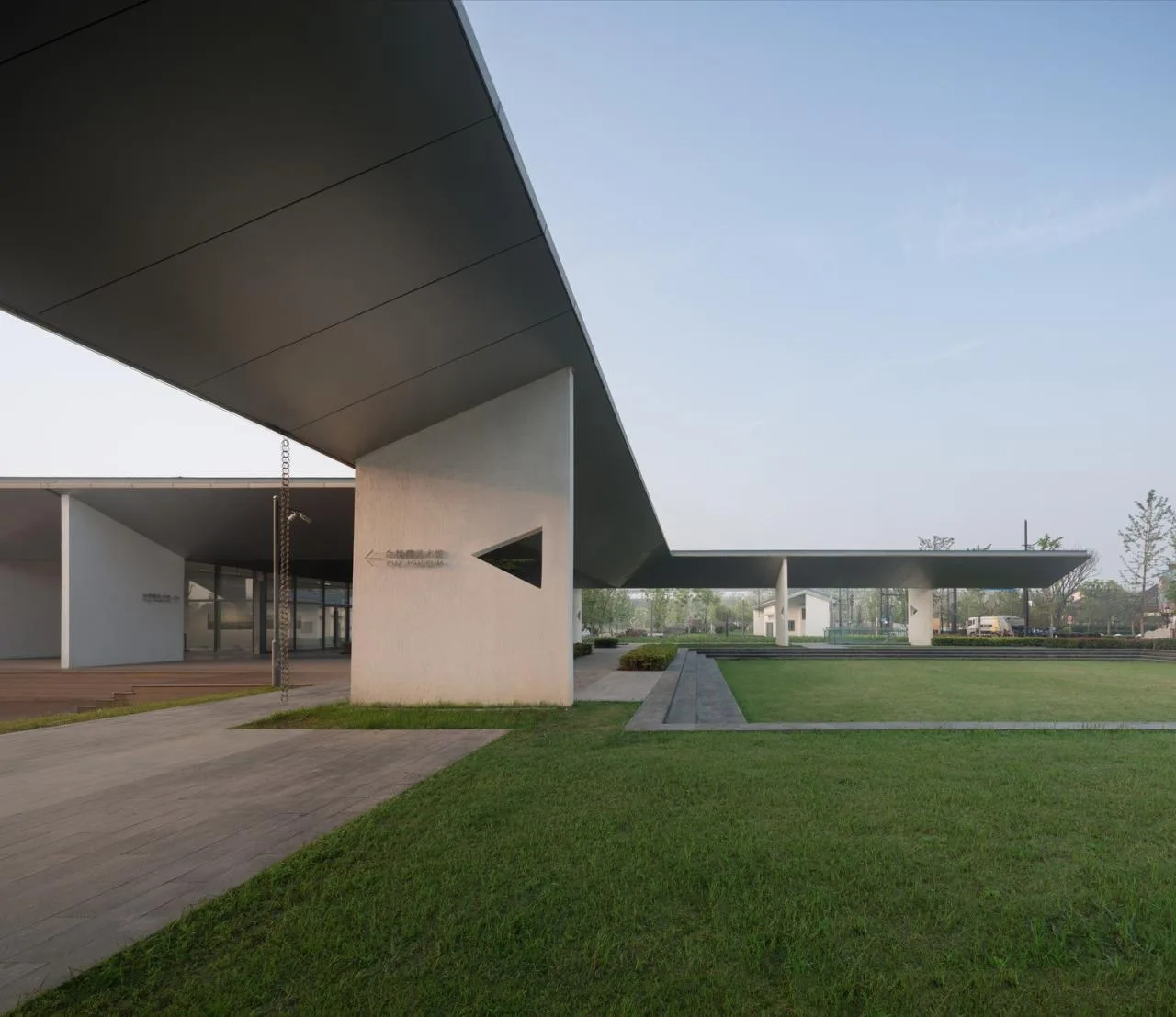
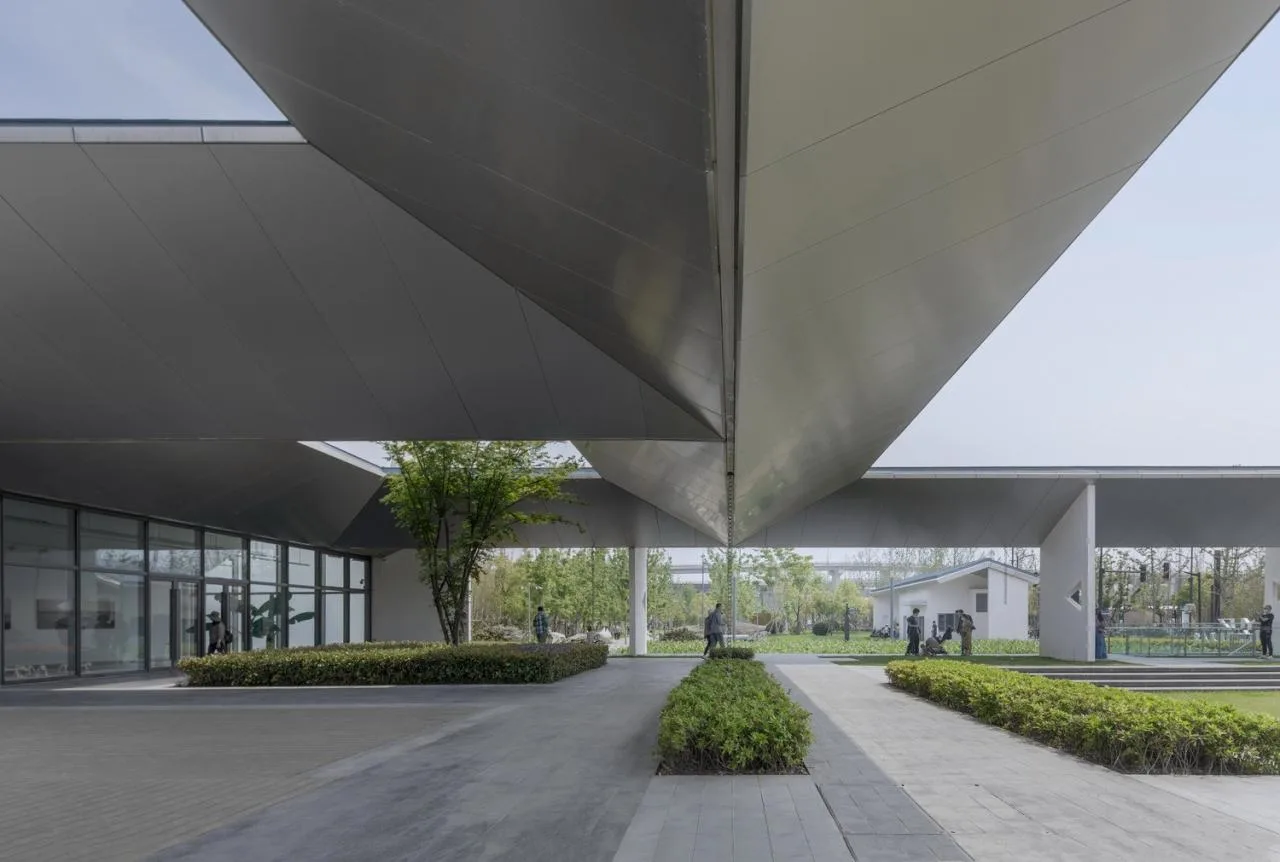
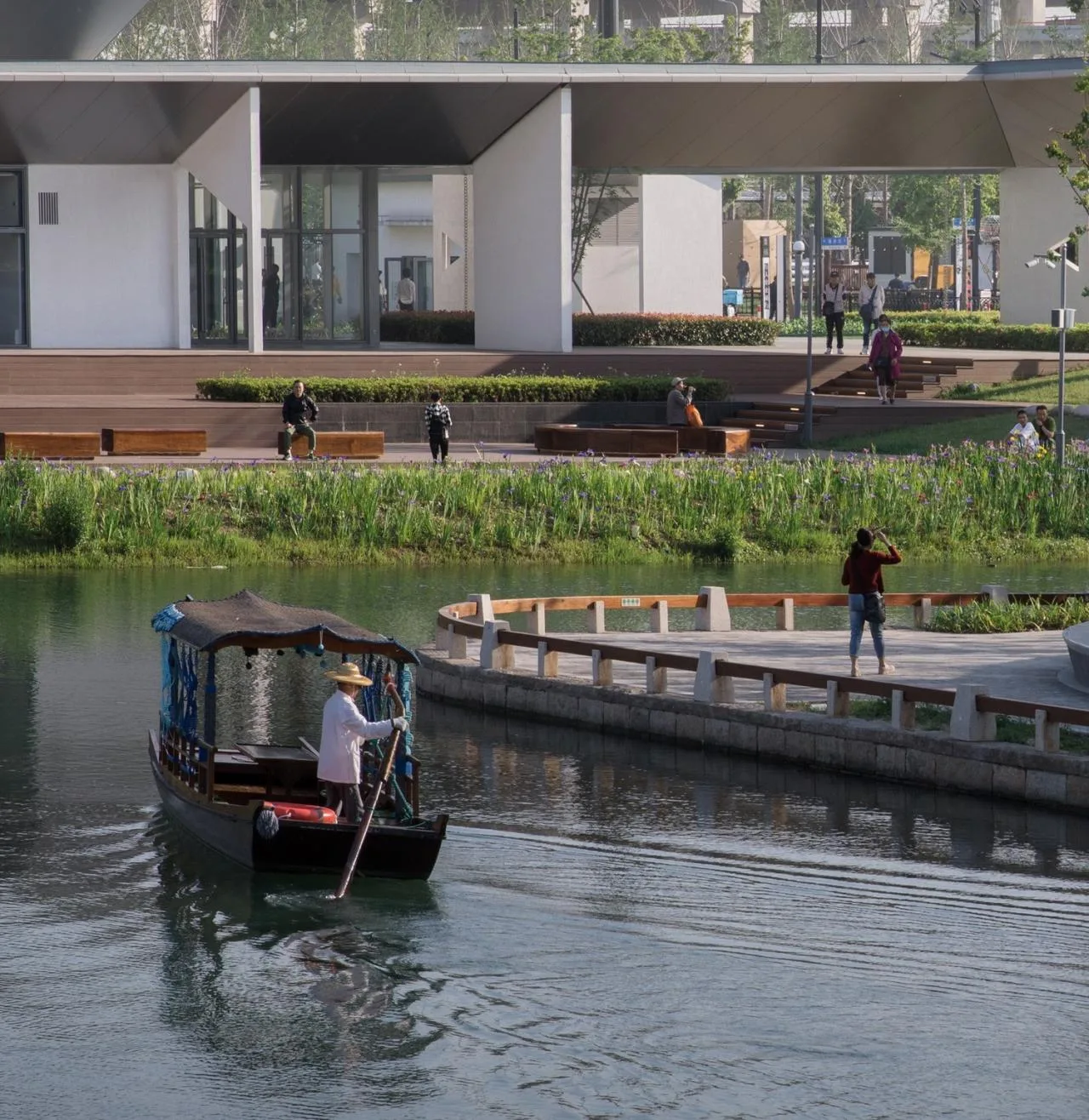
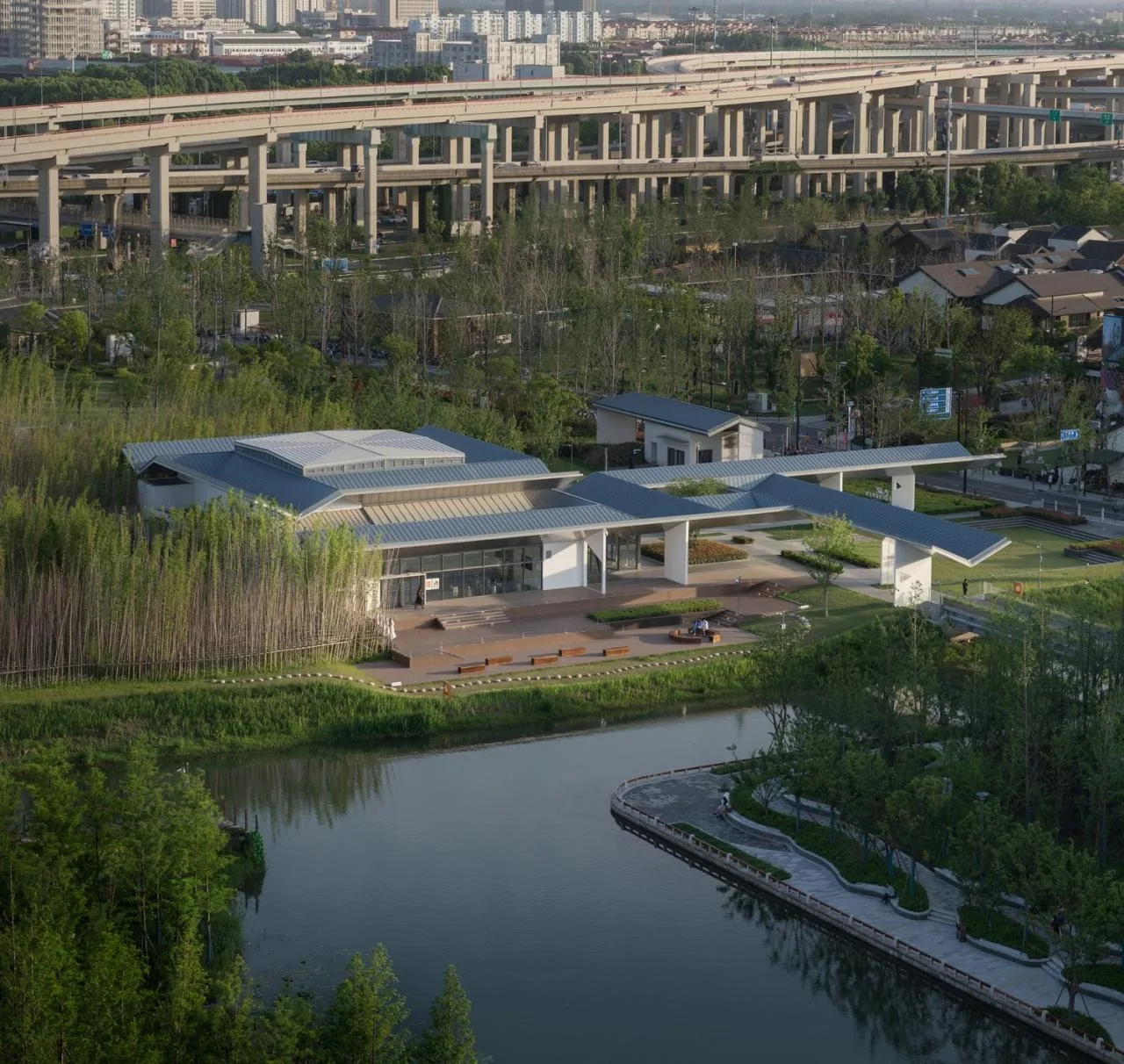
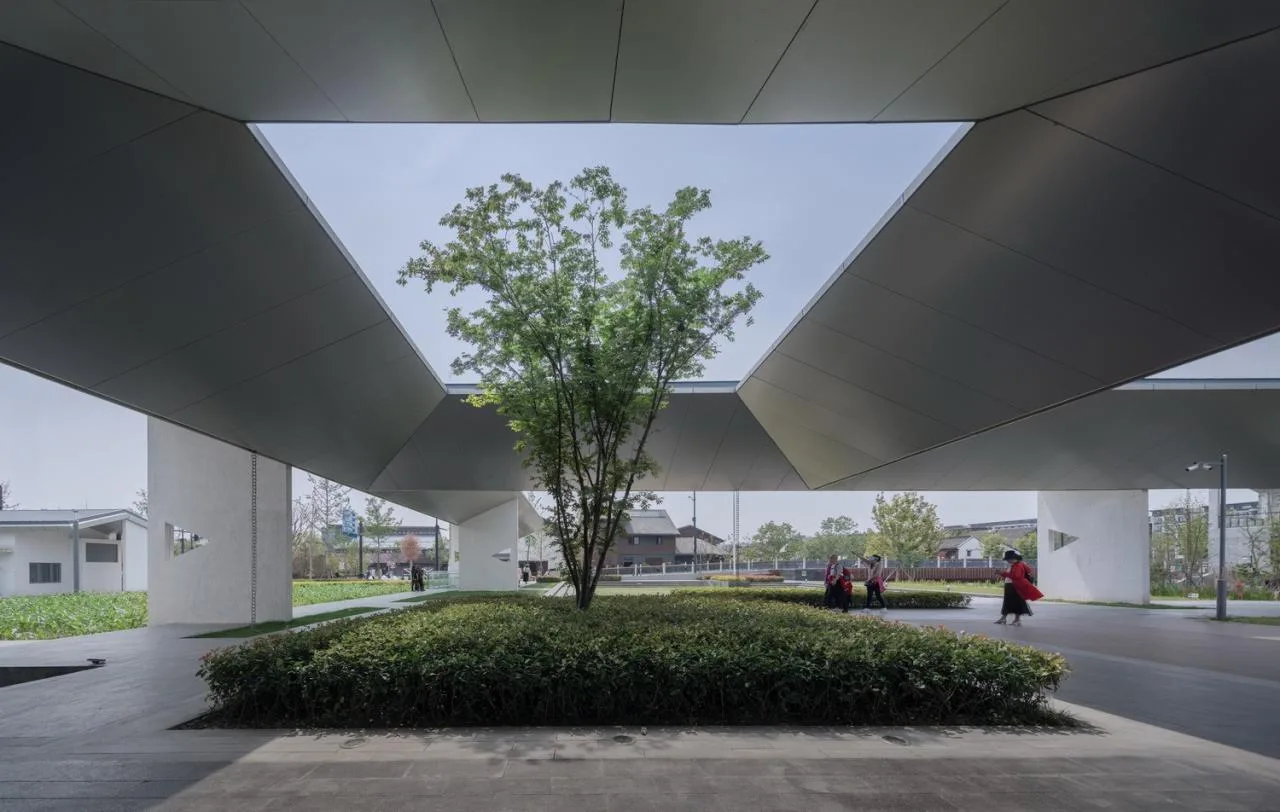
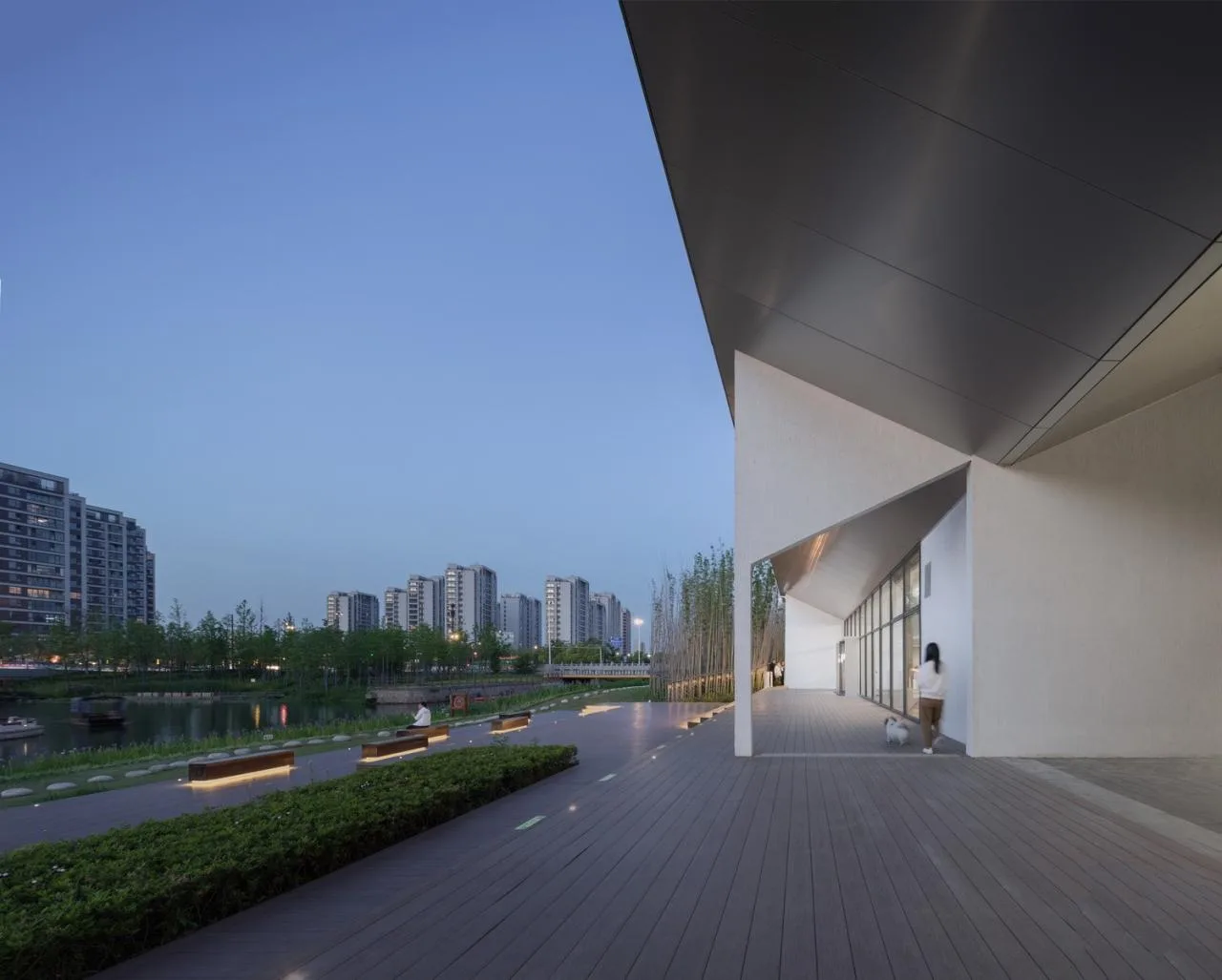
From the west, south, and north, visitors enter the green field, encountering a set of windmill-like corridors that connect the town (west), green space (south), river bridge (north), and waterfront (east). These corridors divide the site into four sections: Southwest Rice Field, Northwest Lawn Field, Northeast River Wharf, and Southeast Art Museum. At their intersection, the staggered corridors form a courtyard that serves as the semi-outdoor entrance to the art museum.
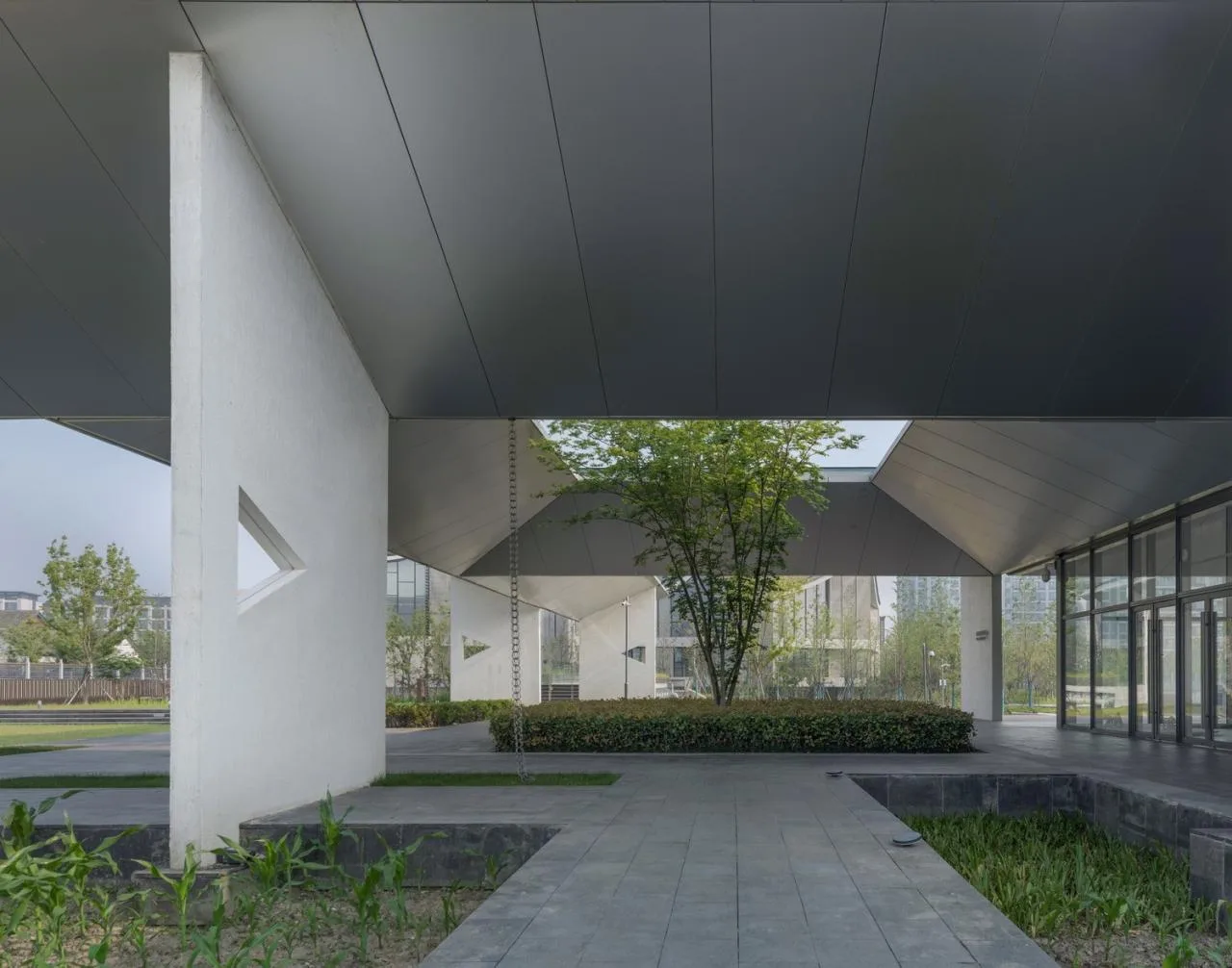
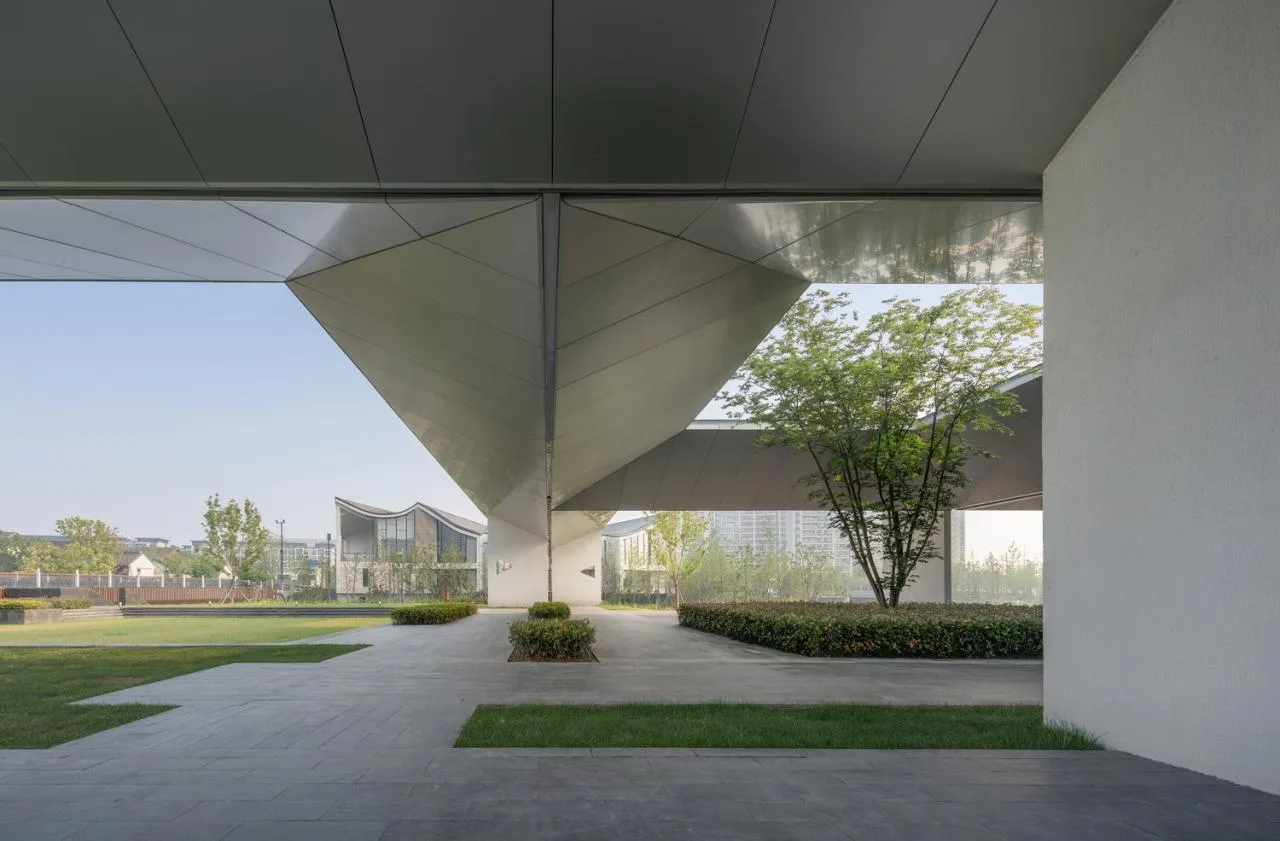
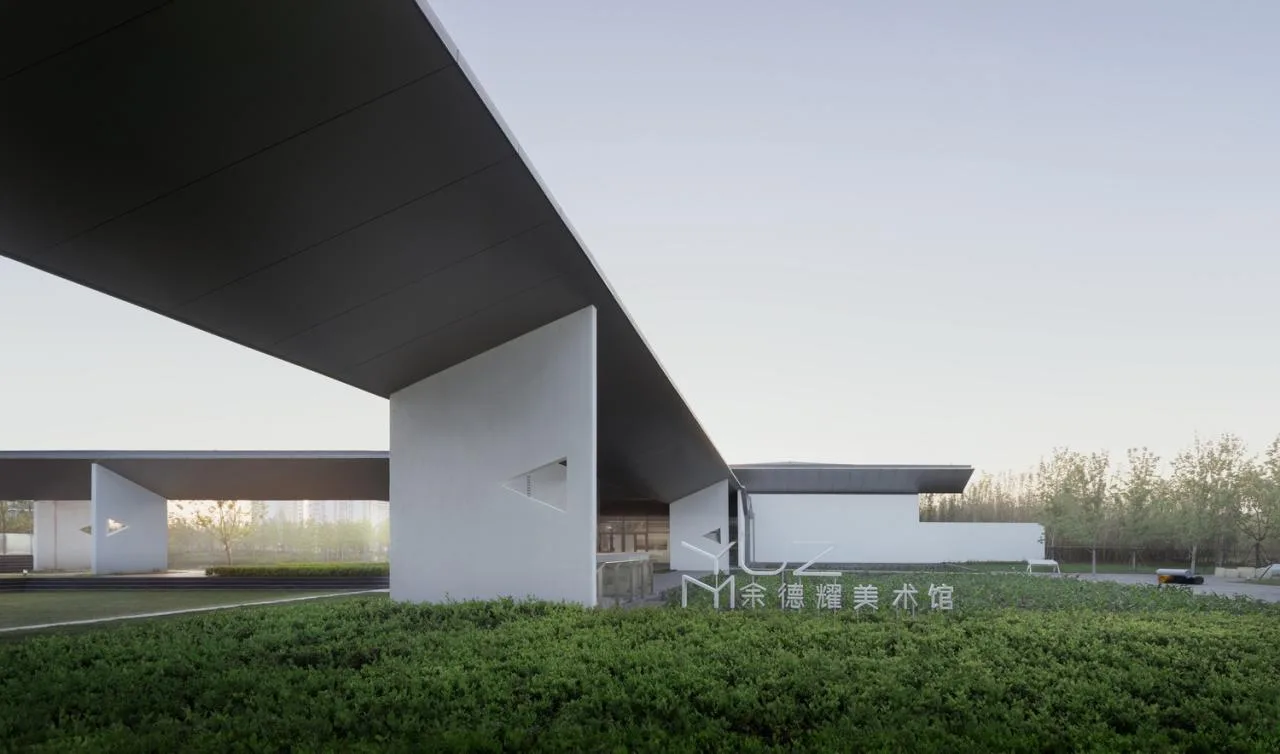
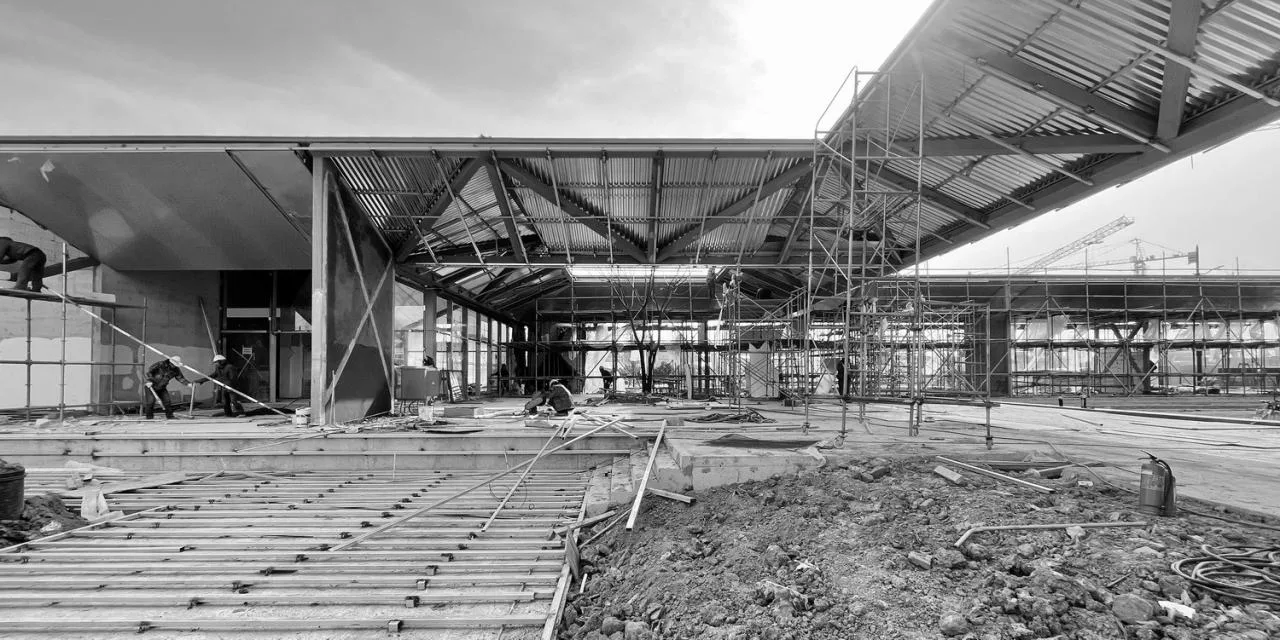
How are these corridors constructed? Jiangnan’s traditional dwellings offer endless inspiration. We start with two fundamental architectural elements: the “mountain wall” and the “double-sloped roof,” then reinterpret and reorganize them. The structural support “mountain wall” is divided into two halves, forming a “semi mountain wall.” The double-sloped roof changes direction at the top into a reverse inner slope, creating an outward-facing “double eaves” formed by two truss-folded plates. Rainwater flows down a central groove chain.
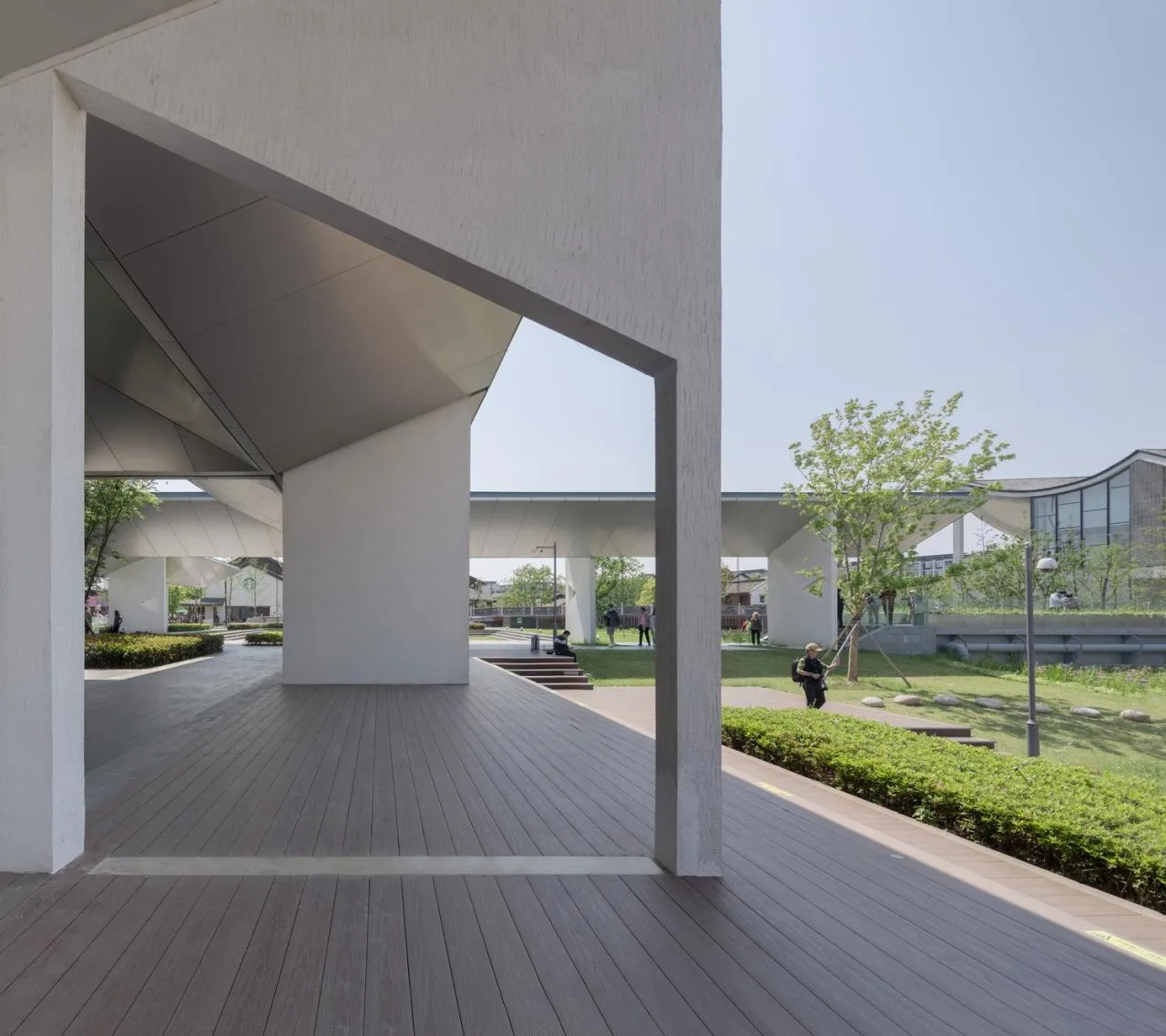
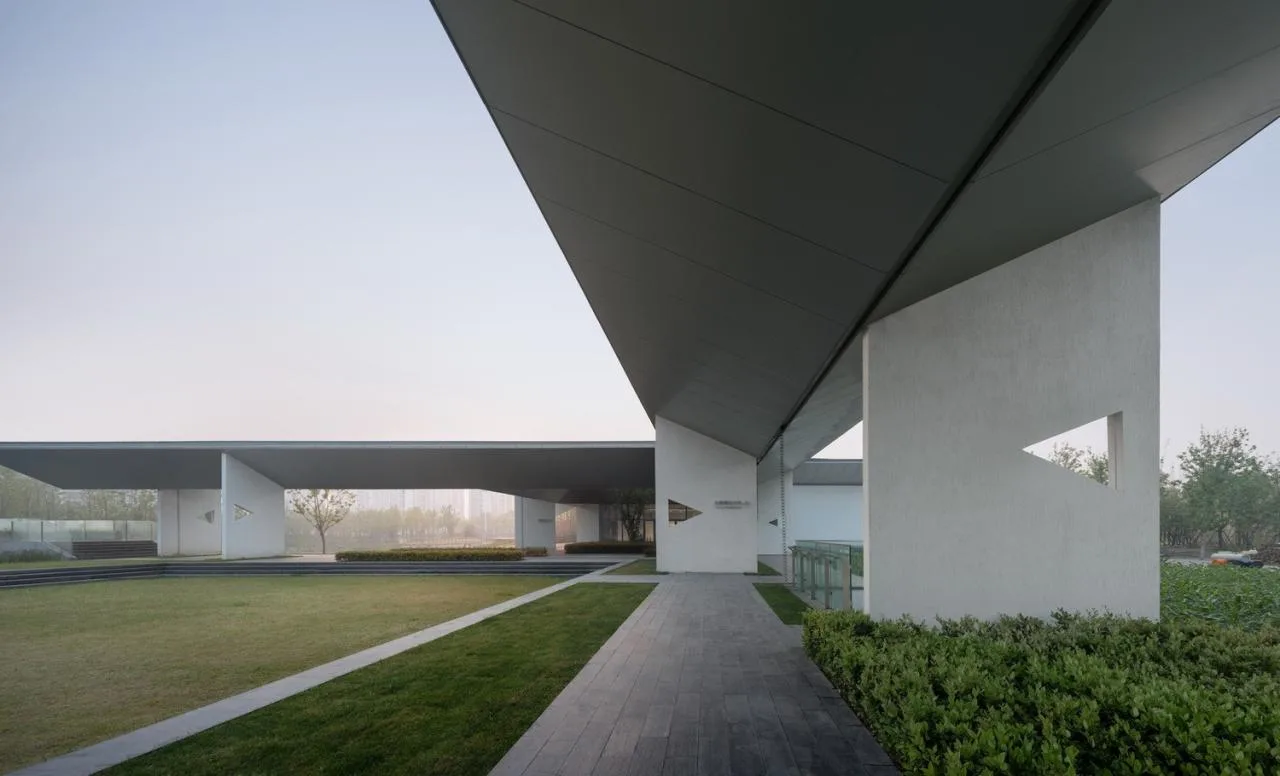
These two architectural variants relate directly to traditional construction but differ in their agility and outward expression. Their combination forms new architectural language, constituting the corridors. The double flying eaves corridor, alternately supported by half walls on both sides, interweaves into the entire courtyard system. The corridor roof spans 7.2 meters, while the 2.4-meter-wide walkway below guides visitors through the interlocking half walls, slowing pace and directing views toward the landscapes in the four quadrants.
After designing the external gallery, I considered whether a similar structural system could shape the art museum’s interior spaces.
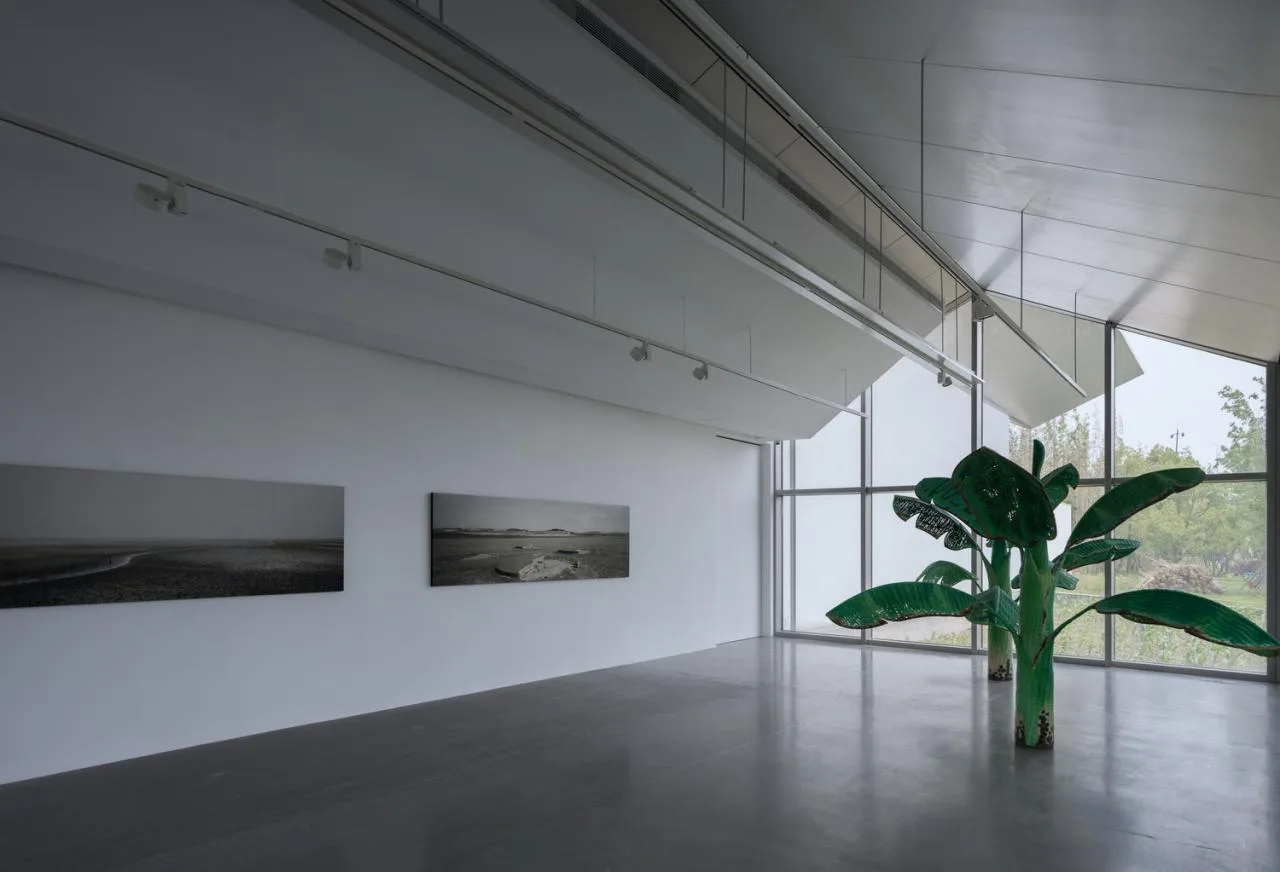
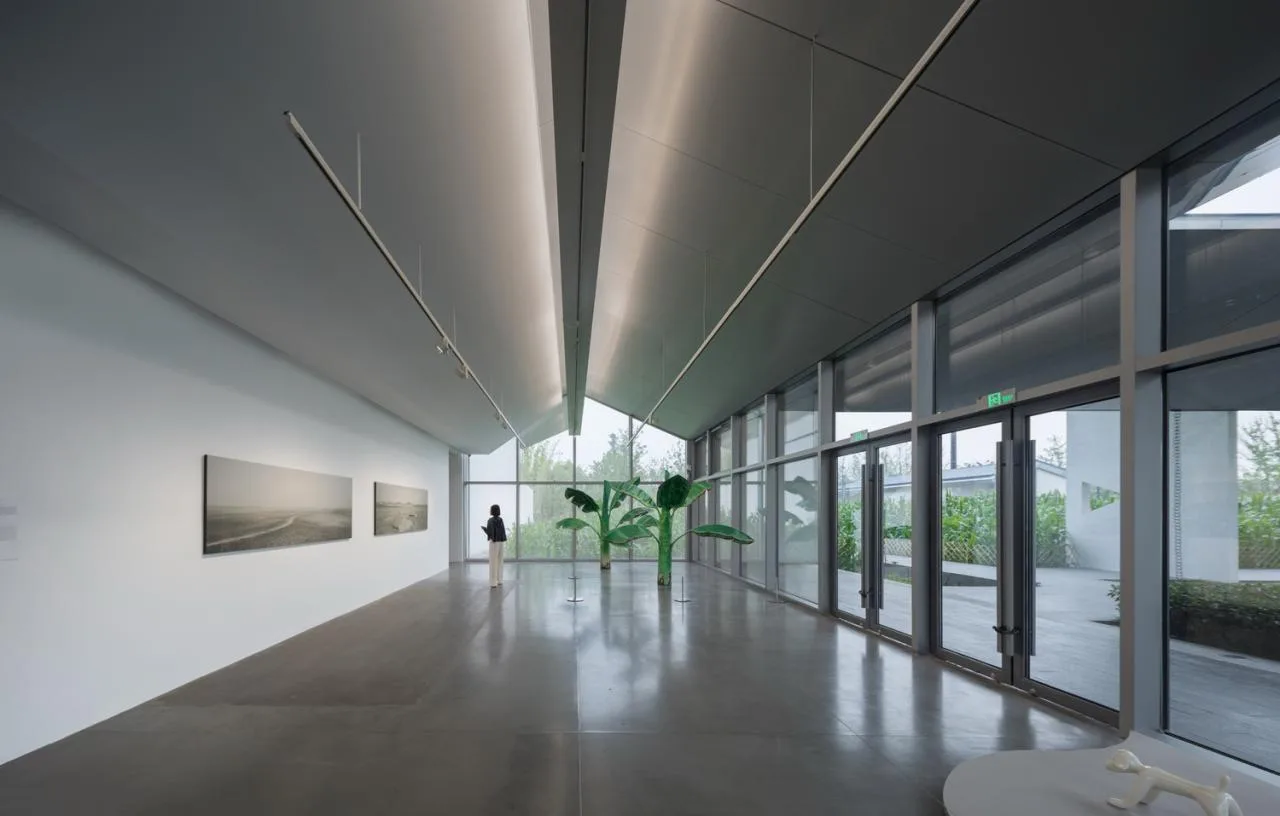
The outdoor corridor’s cross-section matches typical Jiangnan residences. Inside, we continue using half mountain walls to support the 7.2-meter-wide folded sloping roof, creating a small exhibition hall and an entrance hall aligned with the south and east corridors. The small exhibition hall faces west toward the outdoor courtyard, offering panoramic views of farmland and town. The entrance hall opens north to the riverside, featuring a 3.6-meter half mountain wall to the south that houses a single staircase under a skylight, leading to the underground exhibition hall, offices, and restrooms. Both spaces reflect the common double-sloped roof and use the corridors as external eaves, blurring boundaries between museum interior and exterior. Alongside the logistics area to the east, they surround the main exhibition hall.
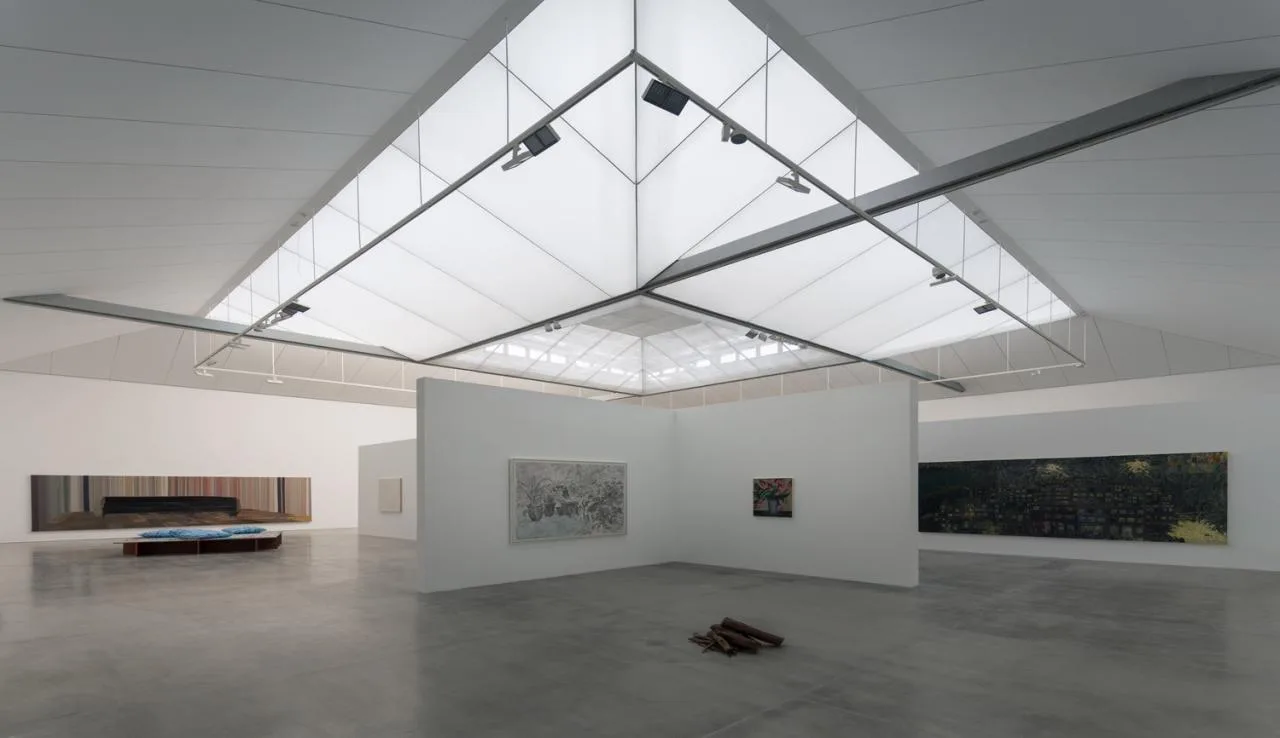
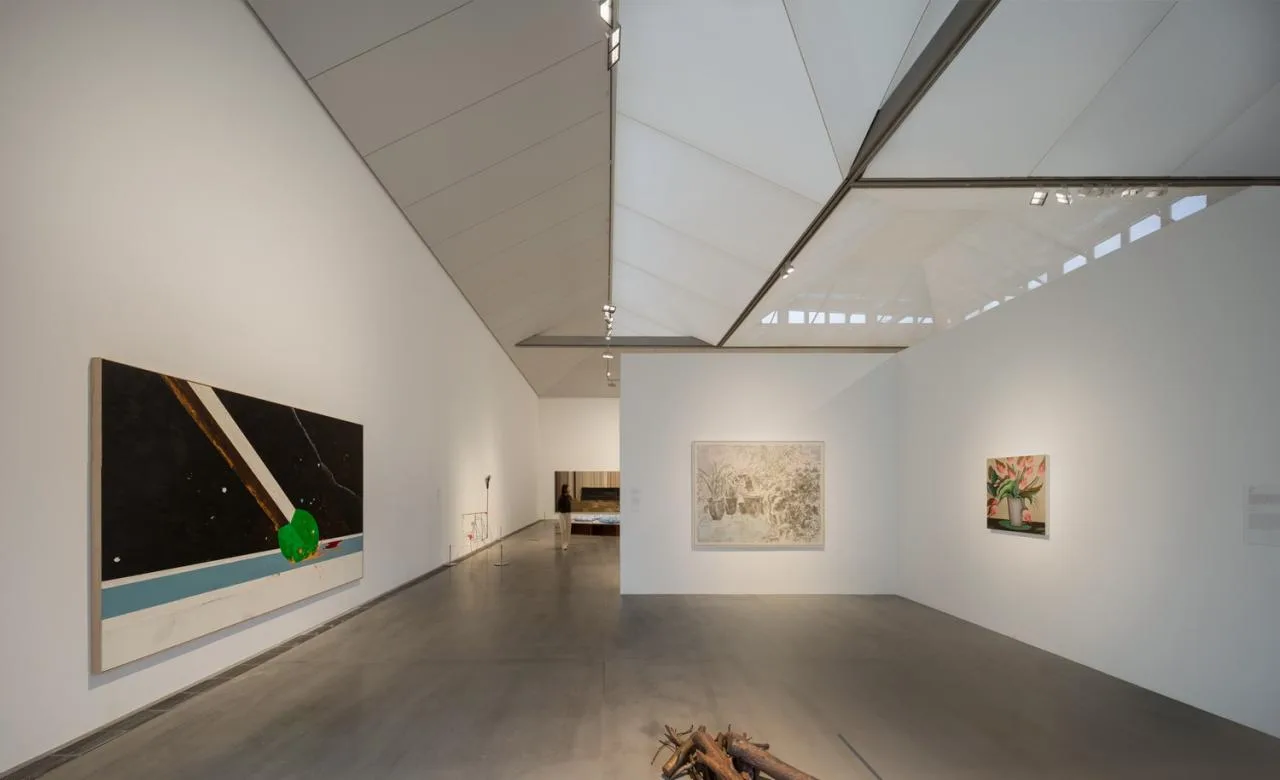
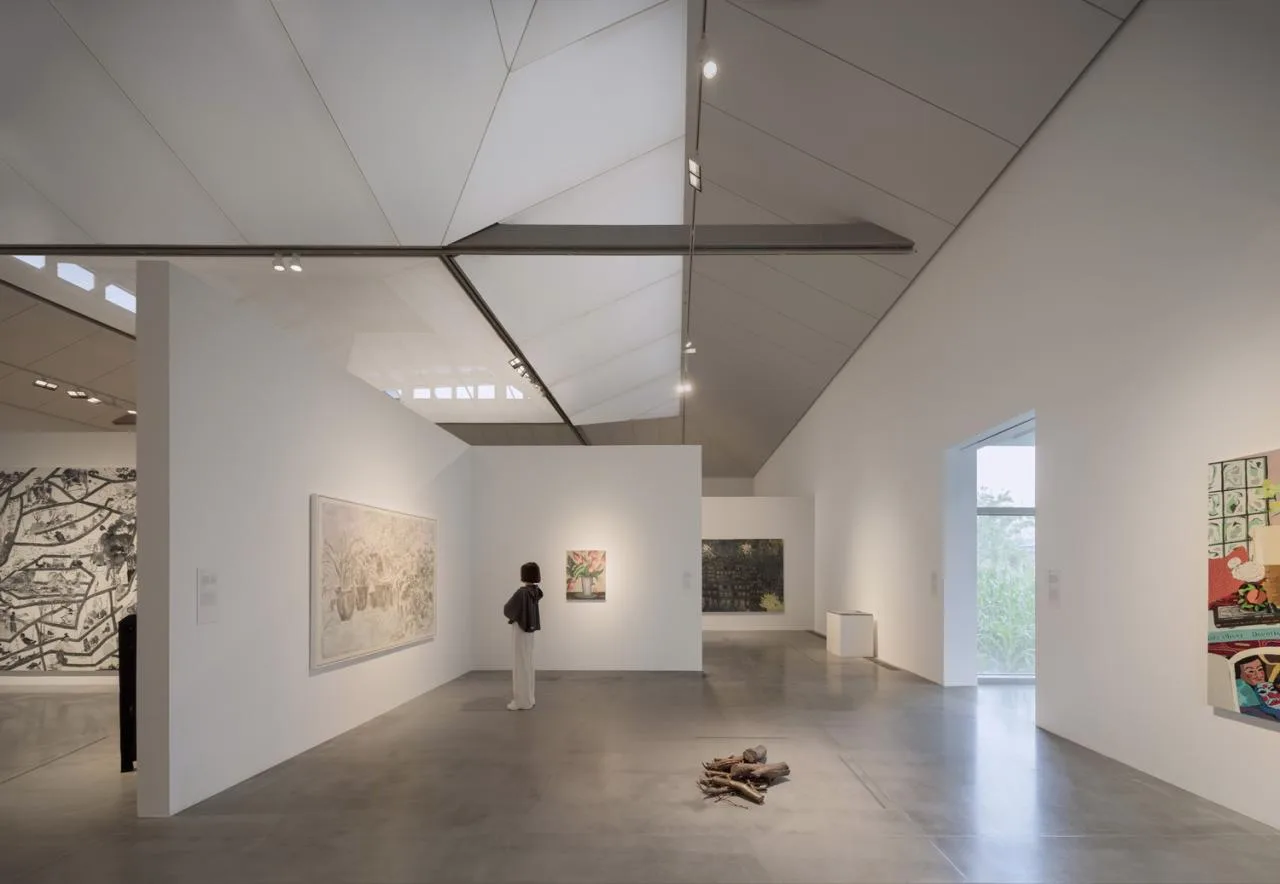
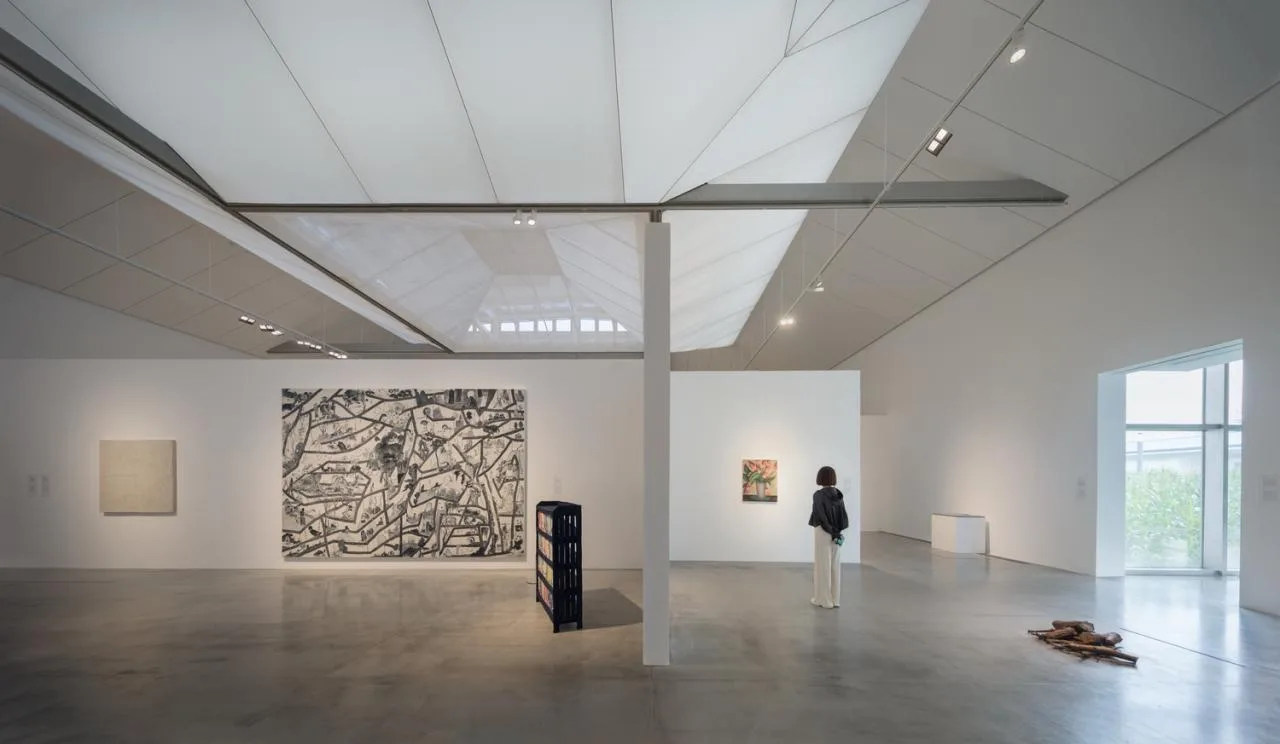
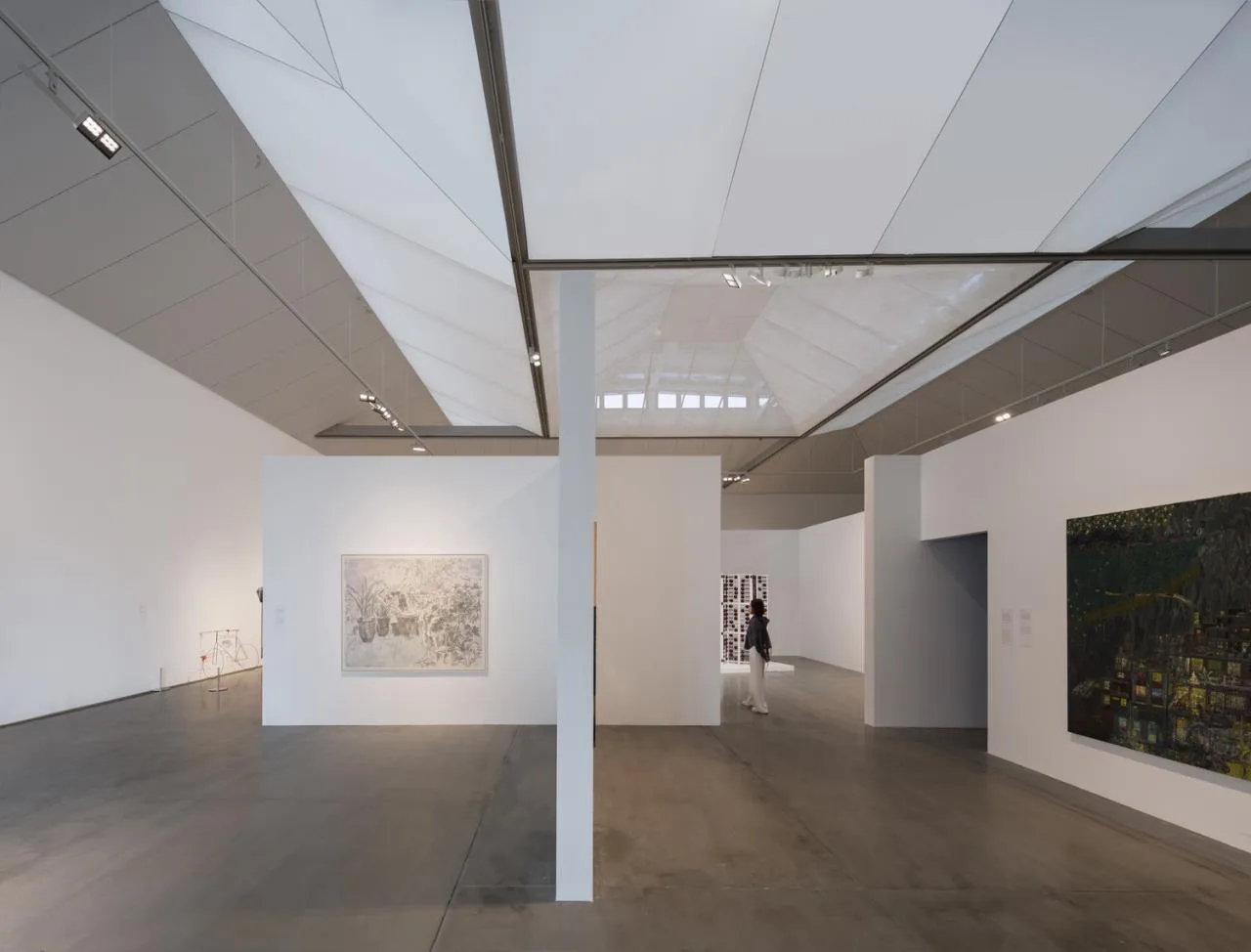
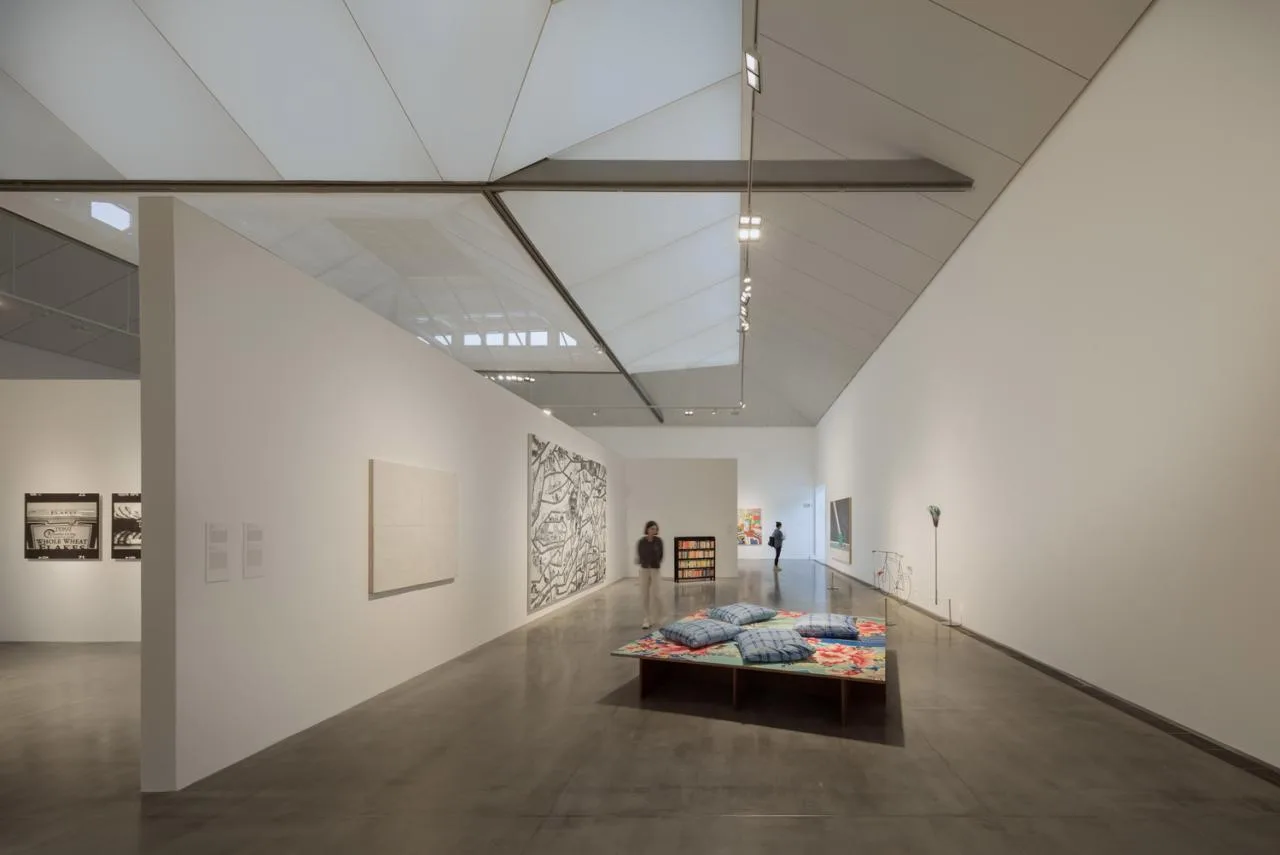
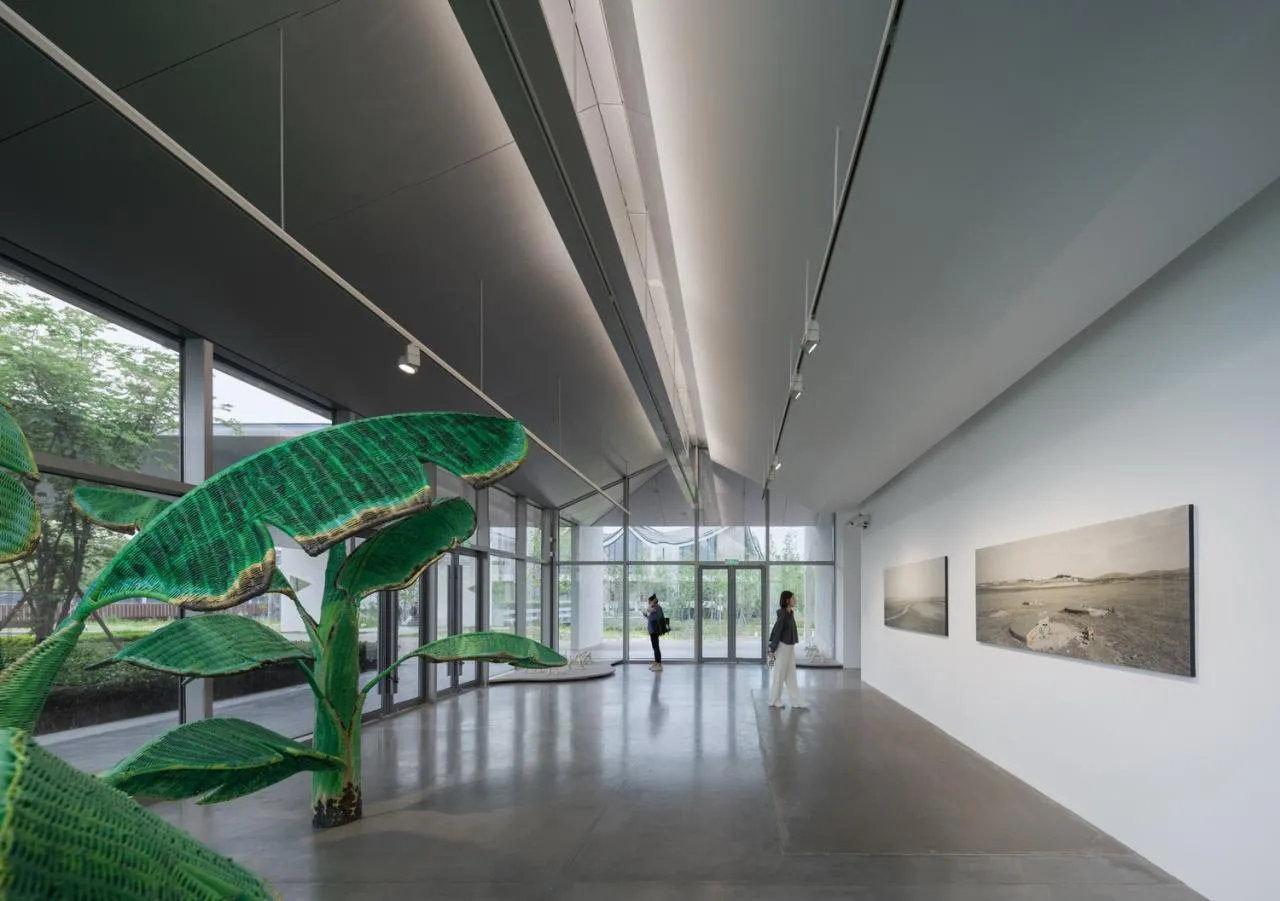
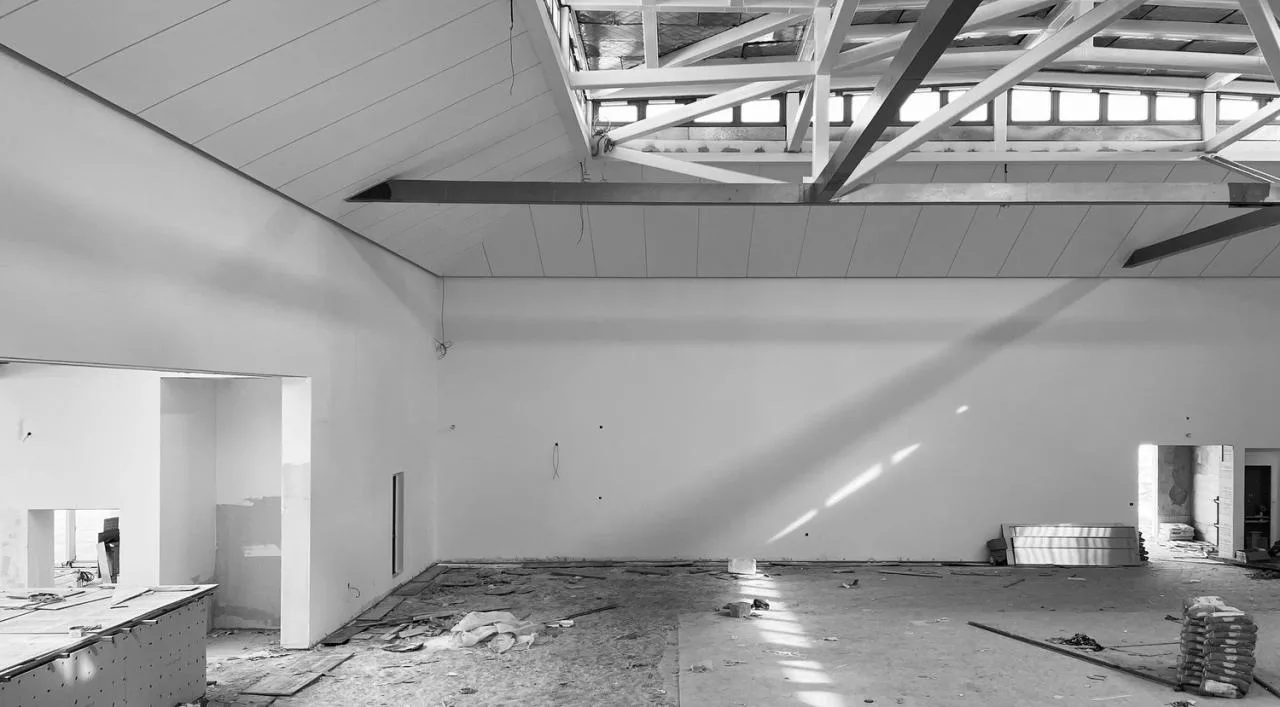
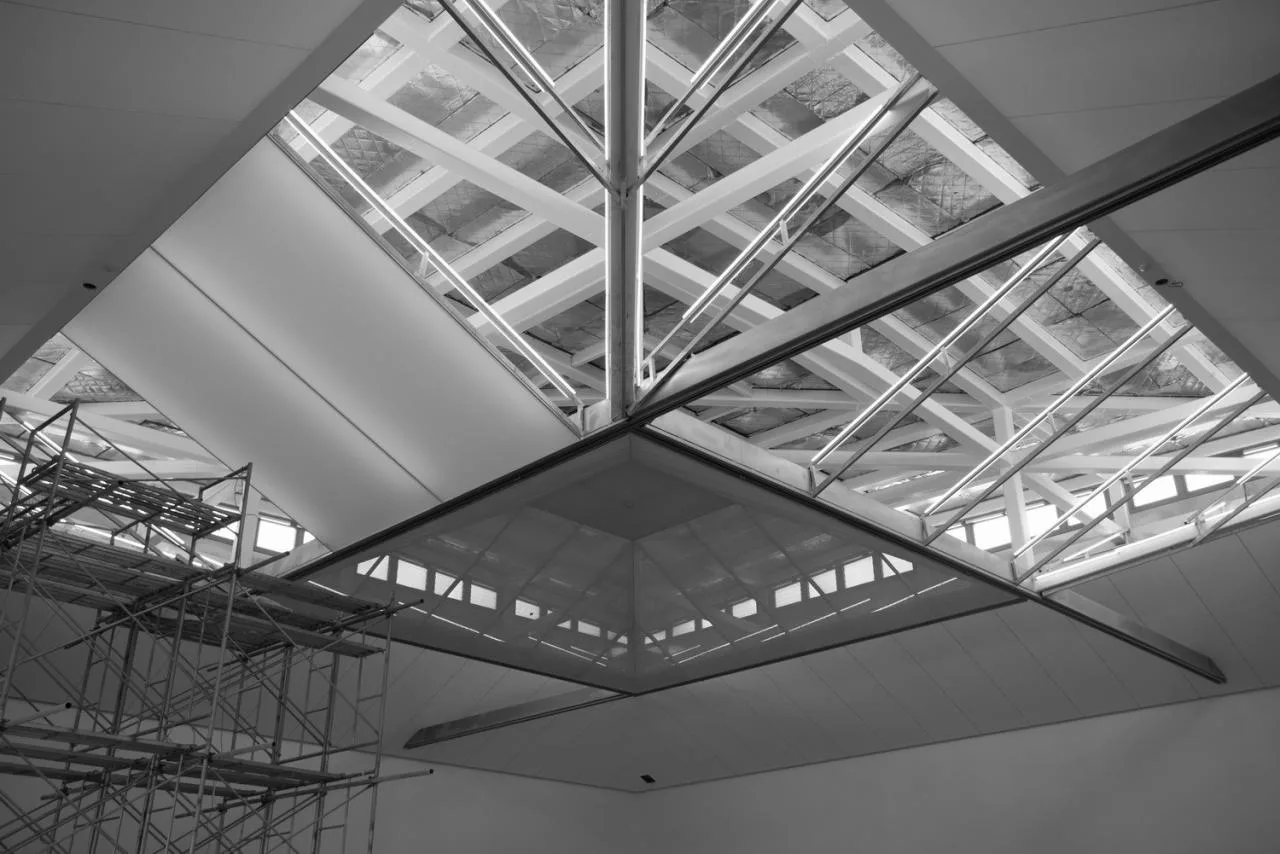
The main exhibition hall, the museum’s largest space, has a clear height of 6 meters. Using a 7.2-meter module repeated vertically and horizontally three times, we created a 21.6-meter square area spanning 466 square meters. Four 7.2×14.4 meter double-sloped roofs, formed by truss folded plates, are arranged in a windmill pattern covering this open, column-free space. The central 7.2-meter square roof is raised to allow smoke exhaust and admit natural light. Along the lower chords of the windmill trusses, we installed suspension rails for movable display walls and lighting, supporting flexible space division and lighting arrangements.
Lighting and Atmosphere
The main exhibition hall’s lighting combines artificial and natural sources. Sunlight enters through a central high window, filtered by conical perforated panels and sloping light films, evenly diffusing across the four windmill-shaped roofs. This creates soft, nuanced light that defines the architectural form while bathing the space. During exhibitions and filming, I prefer standing in a corner with spotlights off, watching the filtered sunlight cast gentle shadows that add subtle highlights to the artwork.
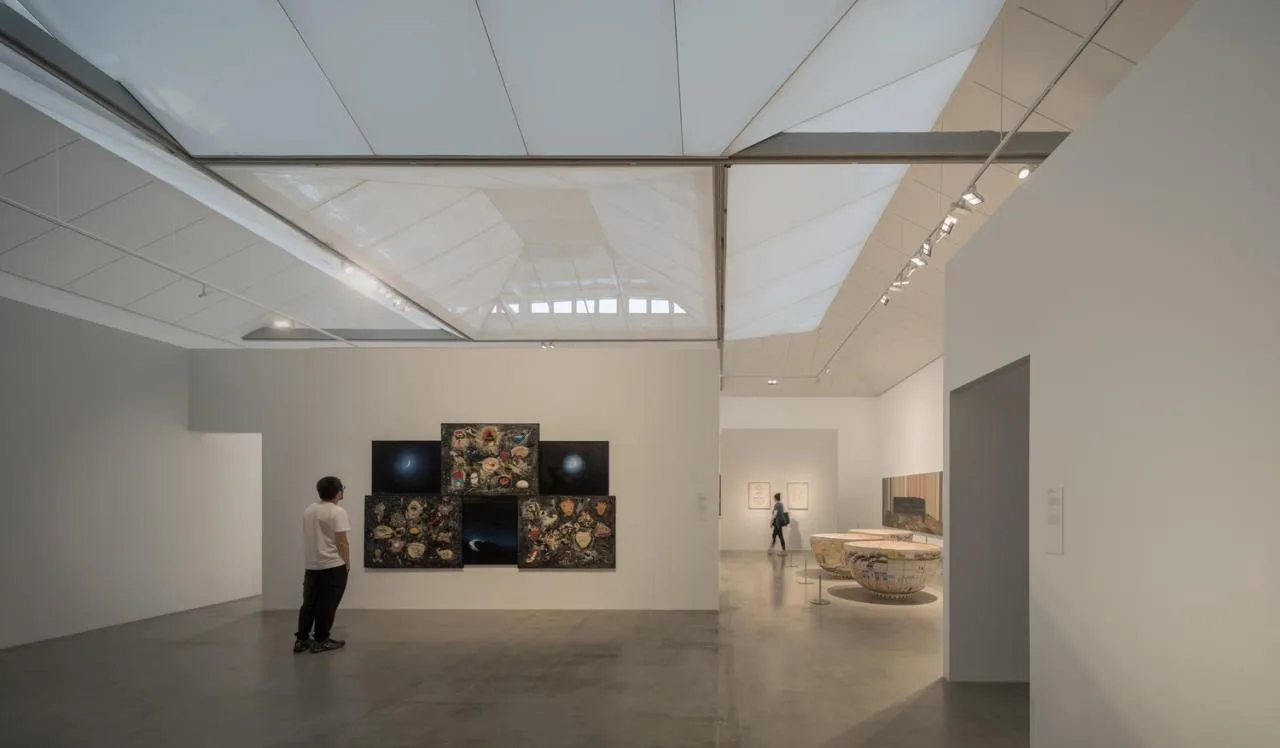
In the small exhibition hall and café adjacent to the main hall, we introduced more natural light and views through French windows facing west and north. On the south and east sides, semi-transparent surfaces shield external views. For this, we designed printed glazed glass featuring rice grain patterns angled to match the sloping roof.
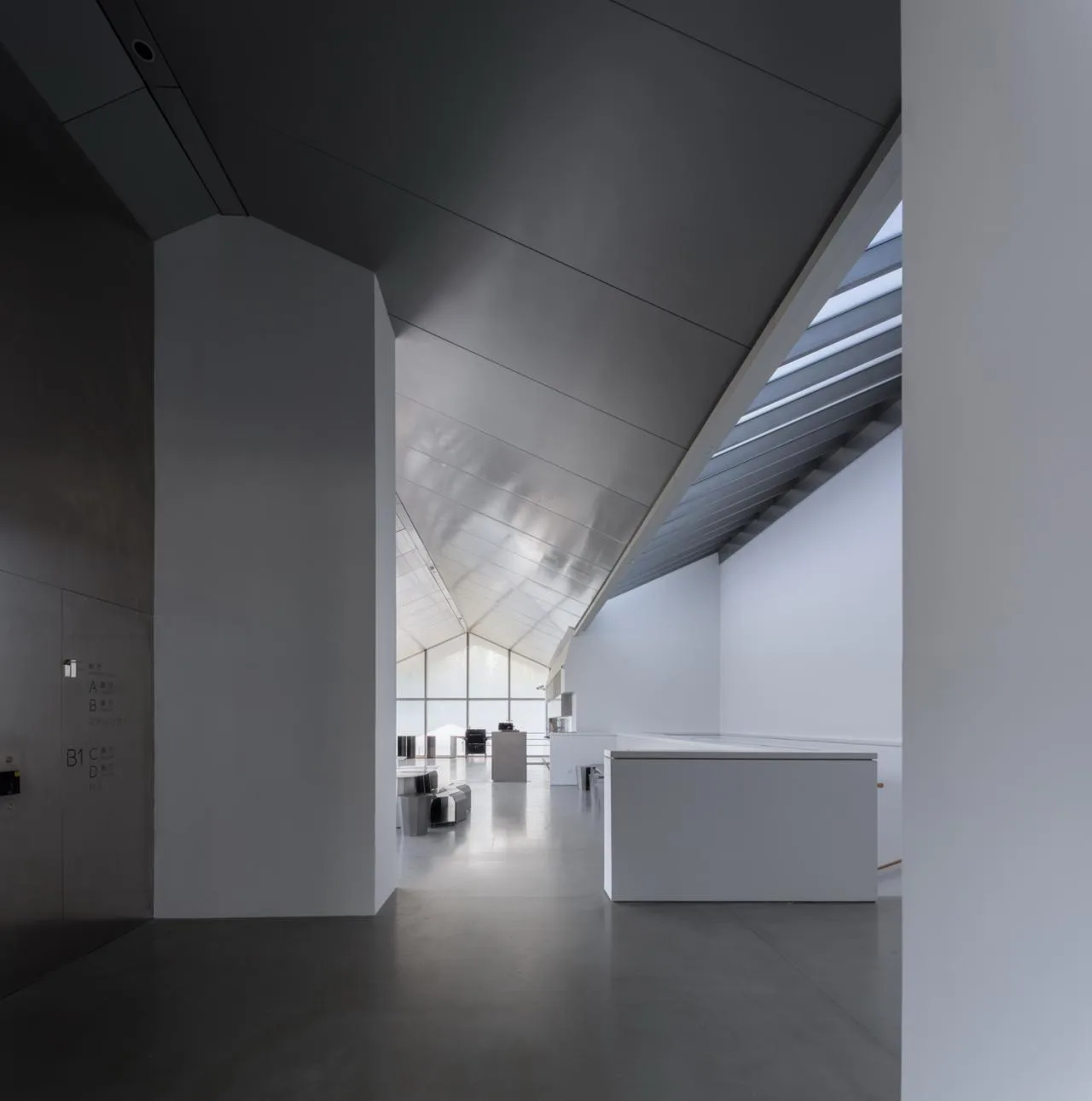
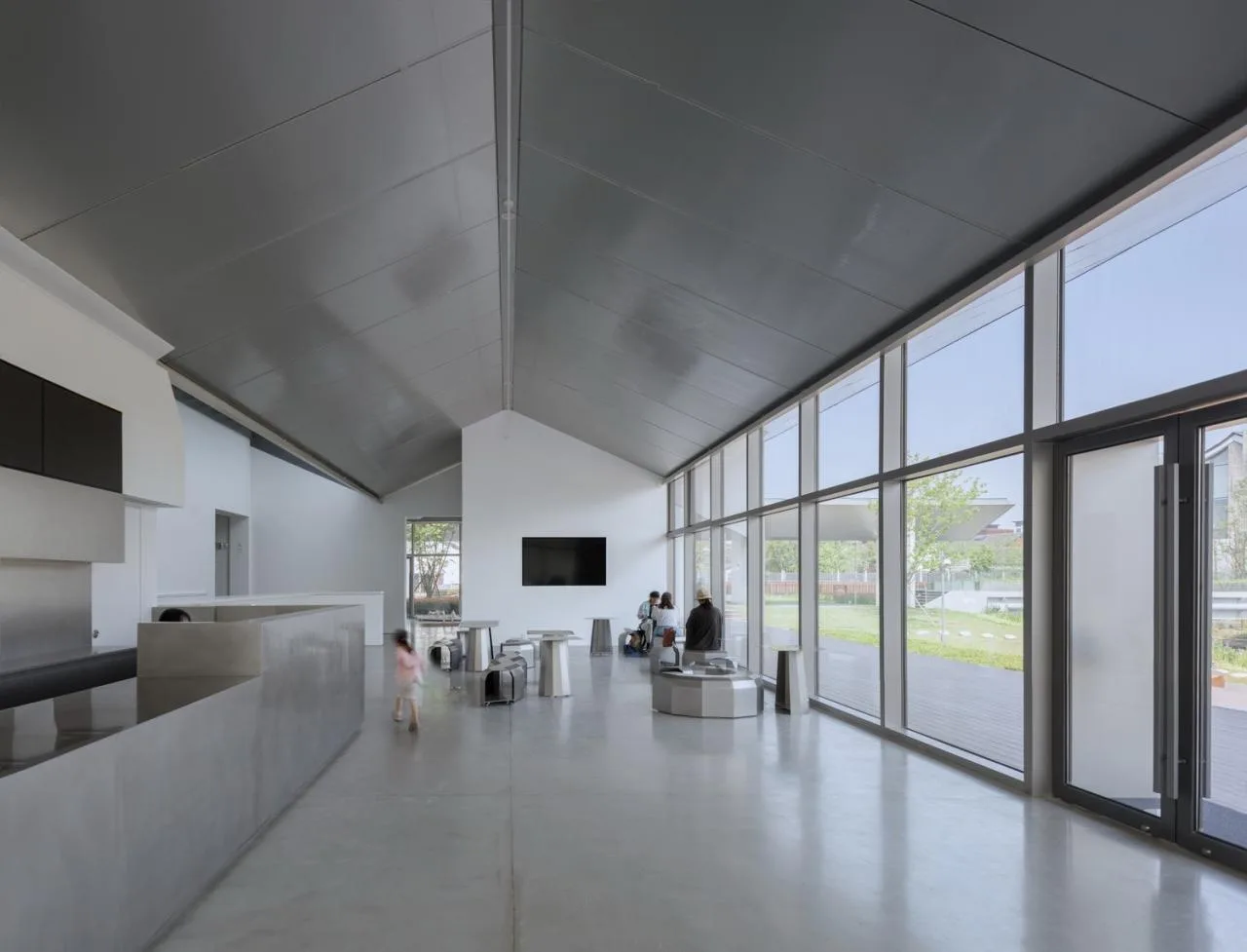
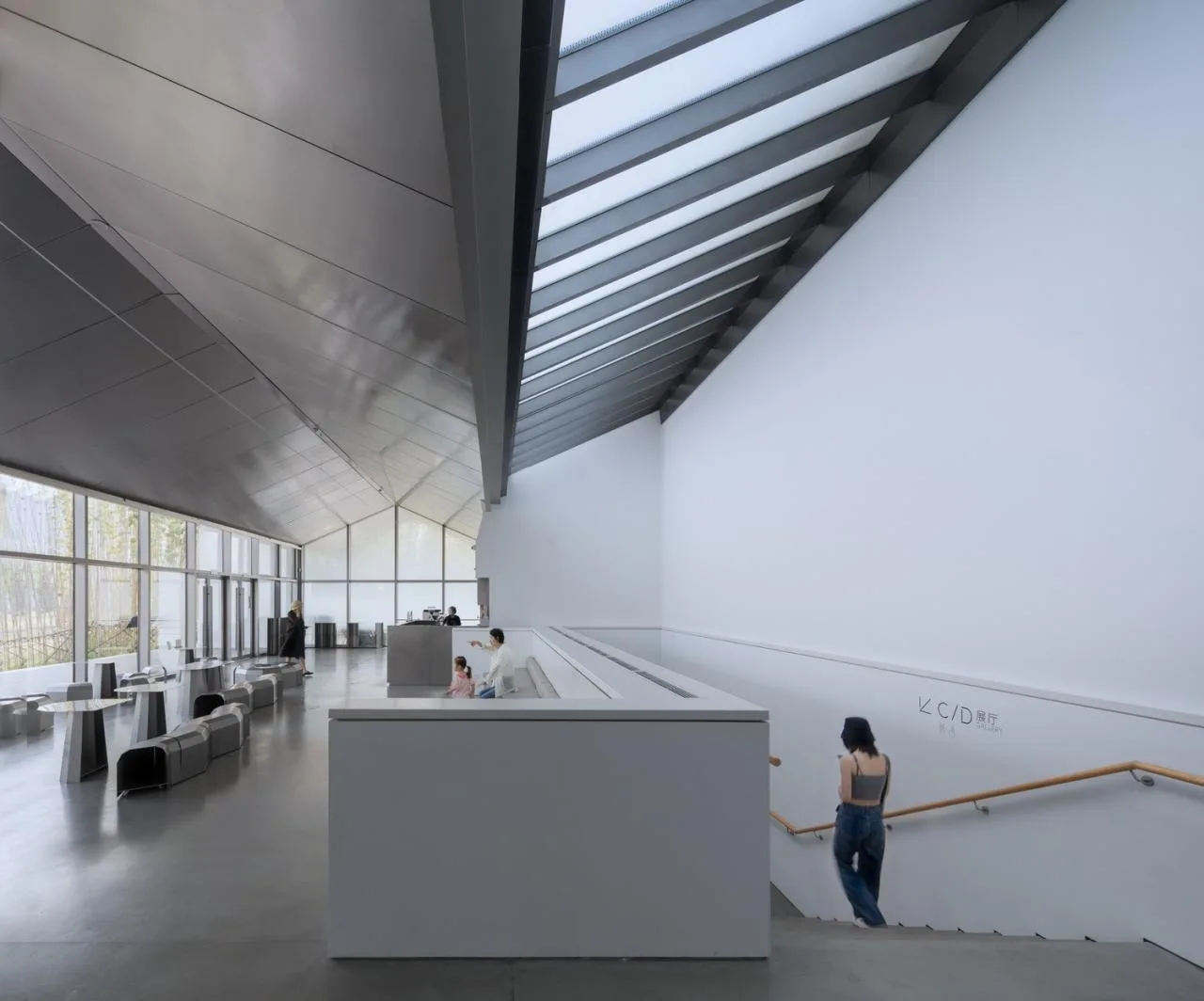
The indoor spaces and outdoor gallery function as inseparable wings of the museum. To create continuity and unity, we unified the interior and exterior boundaries. Both the internal space and external corridors share the same geometric module and truss folded plate roof structure. The roofing material is consistent: titanium zinc plates on top and anodized honeycomb aluminum panels underneath. The blue-gray titanium zinc roof contrasts with the traditional small blue tiles typical of the town’s architecture. The silk-anodized aluminum ceiling softly reflects green shades, ripples, rice shadows, and visitors moving through the corridors, creating a dynamic and immersive experience. The half mountain walls supporting the folded roof panels feature handmade vertical textured paint, evoking the delicate raindrops of Jiangnan.
Time and Fate
Due to development delays and the pandemic, the art museum welcomed its first operator two years after completion. In 2020, Mr. Yu Deyao personally reviewed the design and construction photos, expressing deep admiration for the museum’s location within the green field outside the town, its thoughtful regulations, drainage through farmland and corridors, and its modern interpretation of Jiangnan’s new form. He decided to relocate the Yu Deyao Art Museum here from the west bank riverside.
Following the operational plan, the Shanshuixiu team continued close collaboration with Rui’an and the museum. The completed building largely preserved its original appearance and interior design, complemented by interior renovation teams optimizing details such as gable openings, lighting rails, and furniture. This allows the Yu Deyao Art Museum to stand proudly east of Panlong Town with a refreshed presence.
Farmers who leased the rice fields outside the museum reported that unusual spring rains made early rice planting difficult, so they switched to corn. Curator Yu Zhirou embraced this change, believing that forcing rice paddies is unnatural and that planting what suits the current environment aligns with farming’s harmony with nature. On opening day, walking along Panding Road between the town and museum, the corn stalks towered above people’s heads. Though not rice, the corn lined the corridor eaves with fullness and vitality. I recall that Mr. Yu Deyao began his career in agriculture. The first letter “Y” of the YUZ logo at the Corn Field Art Museum is inspired by the half mountain wall and double eaves—symbolizing the coexistence of nature and history, tradition and modernity. Perhaps this embodies the relationship between time and fate.
Project Drawings
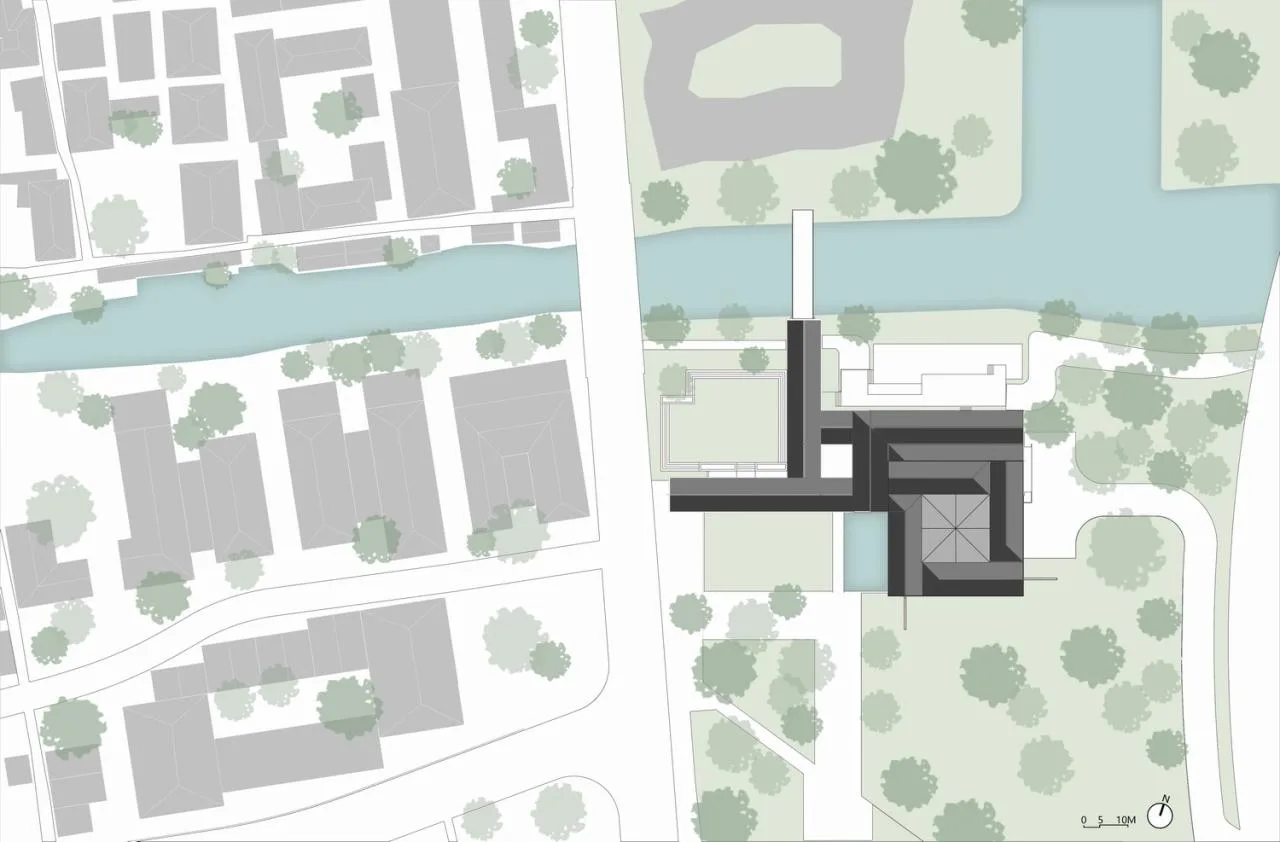
△ General Layout Plan
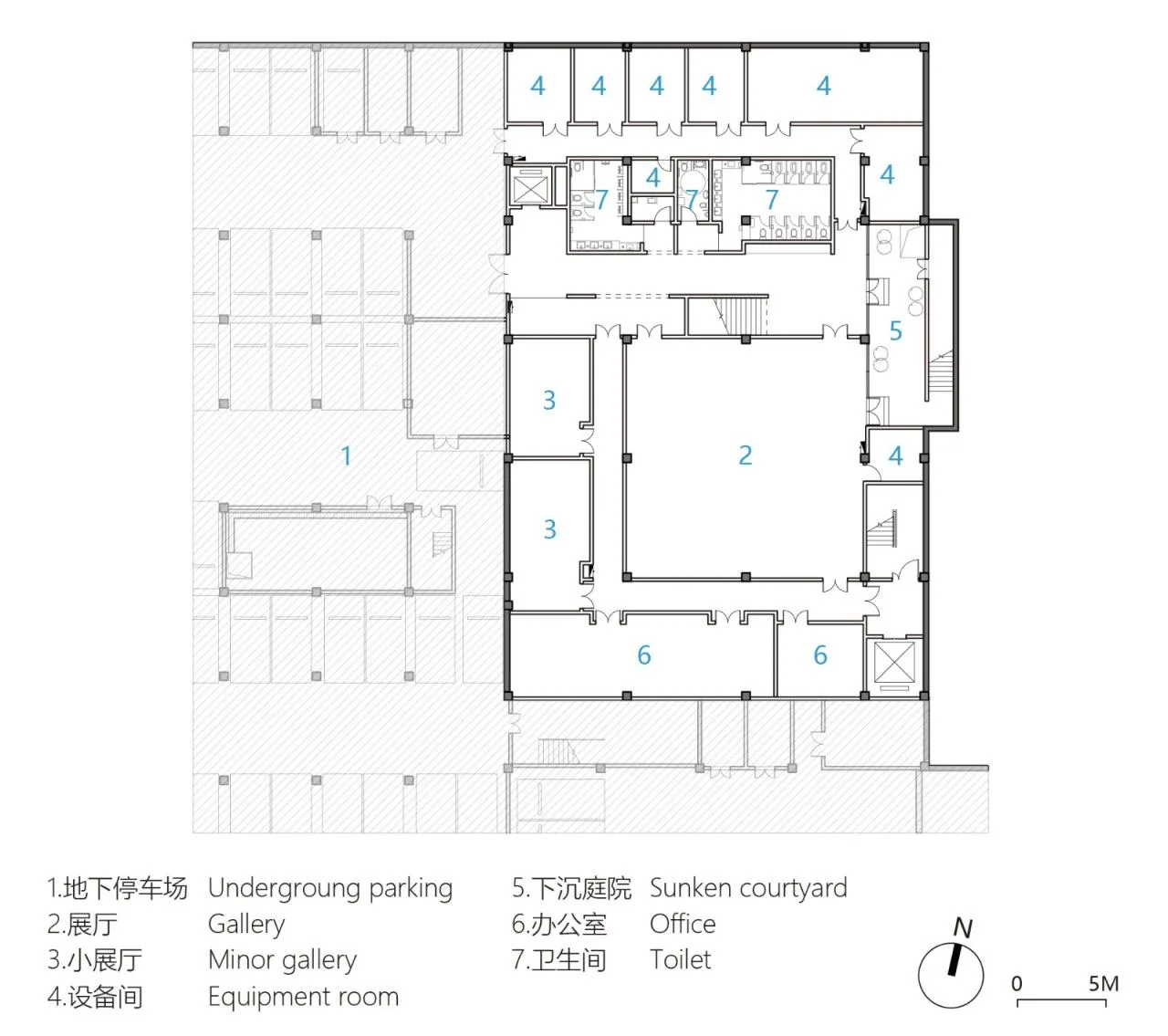
△ Underground Floor Plan
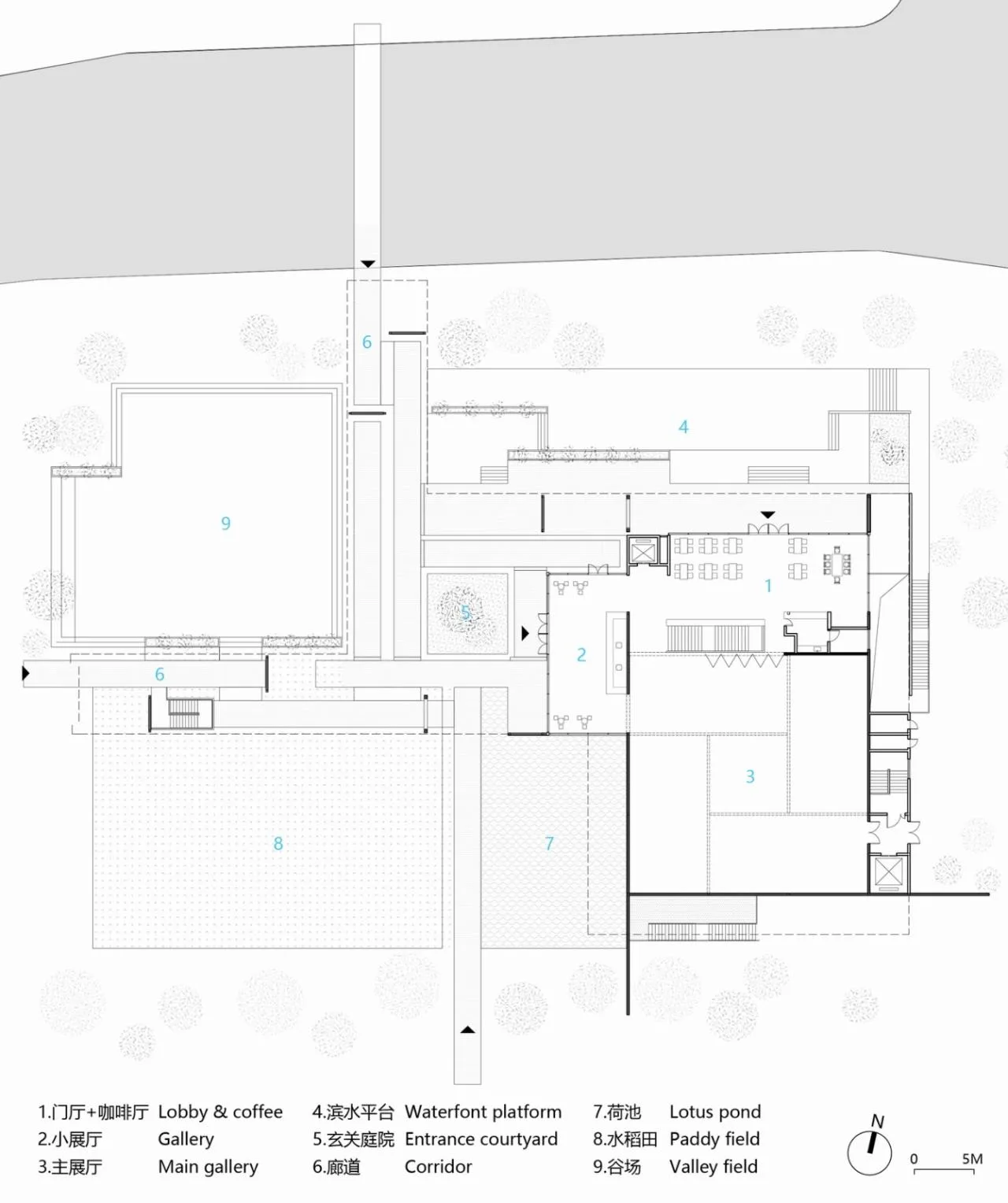
△ First Floor Plan
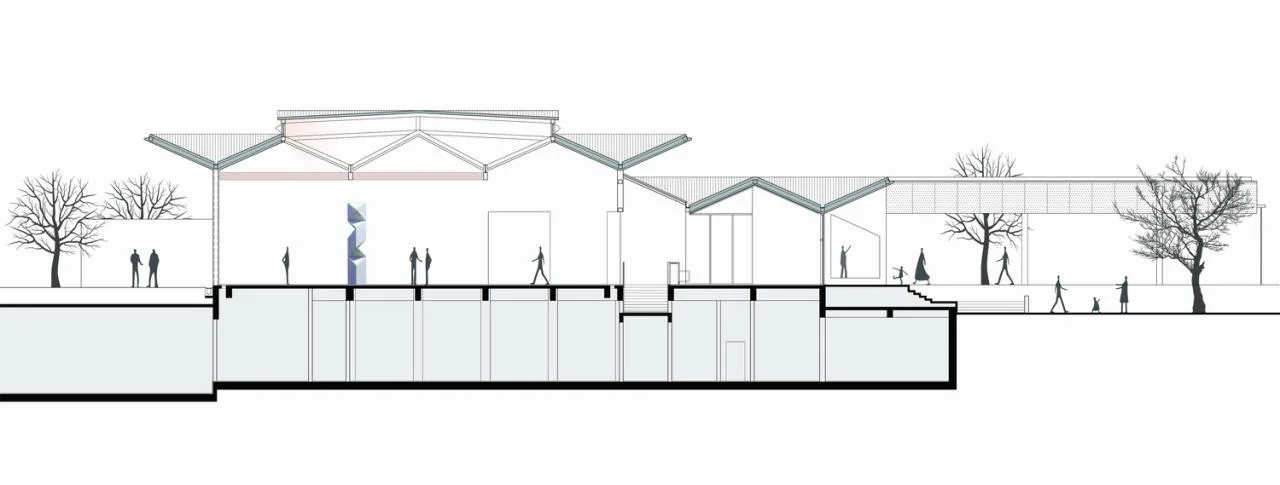
△ Section Diagram
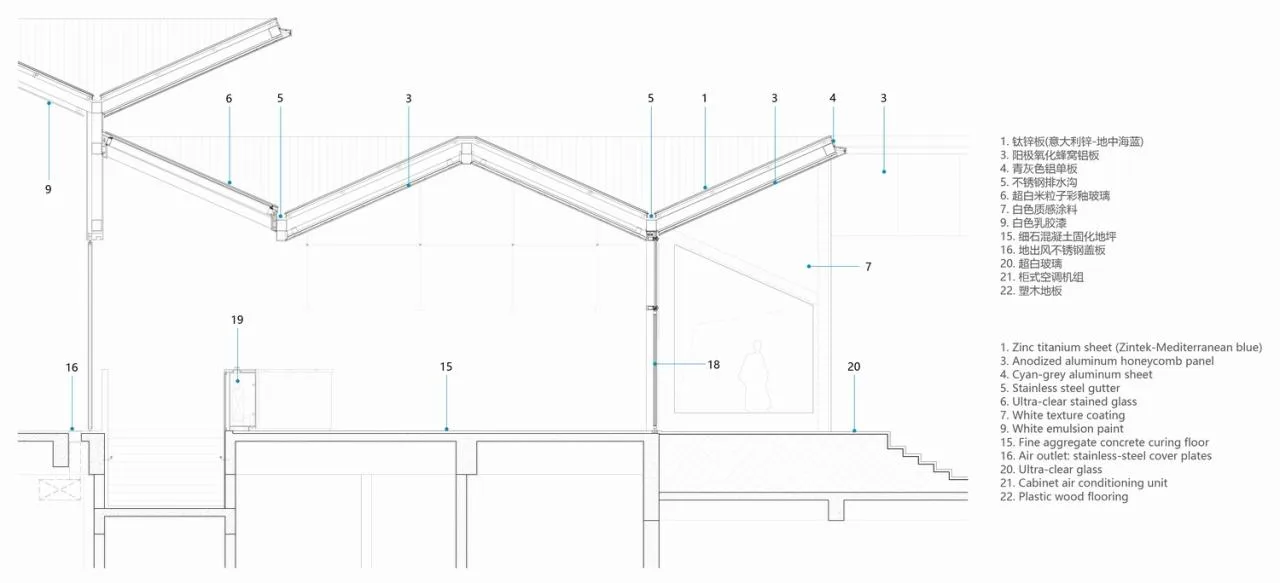
△ Detailed Structural Drawing
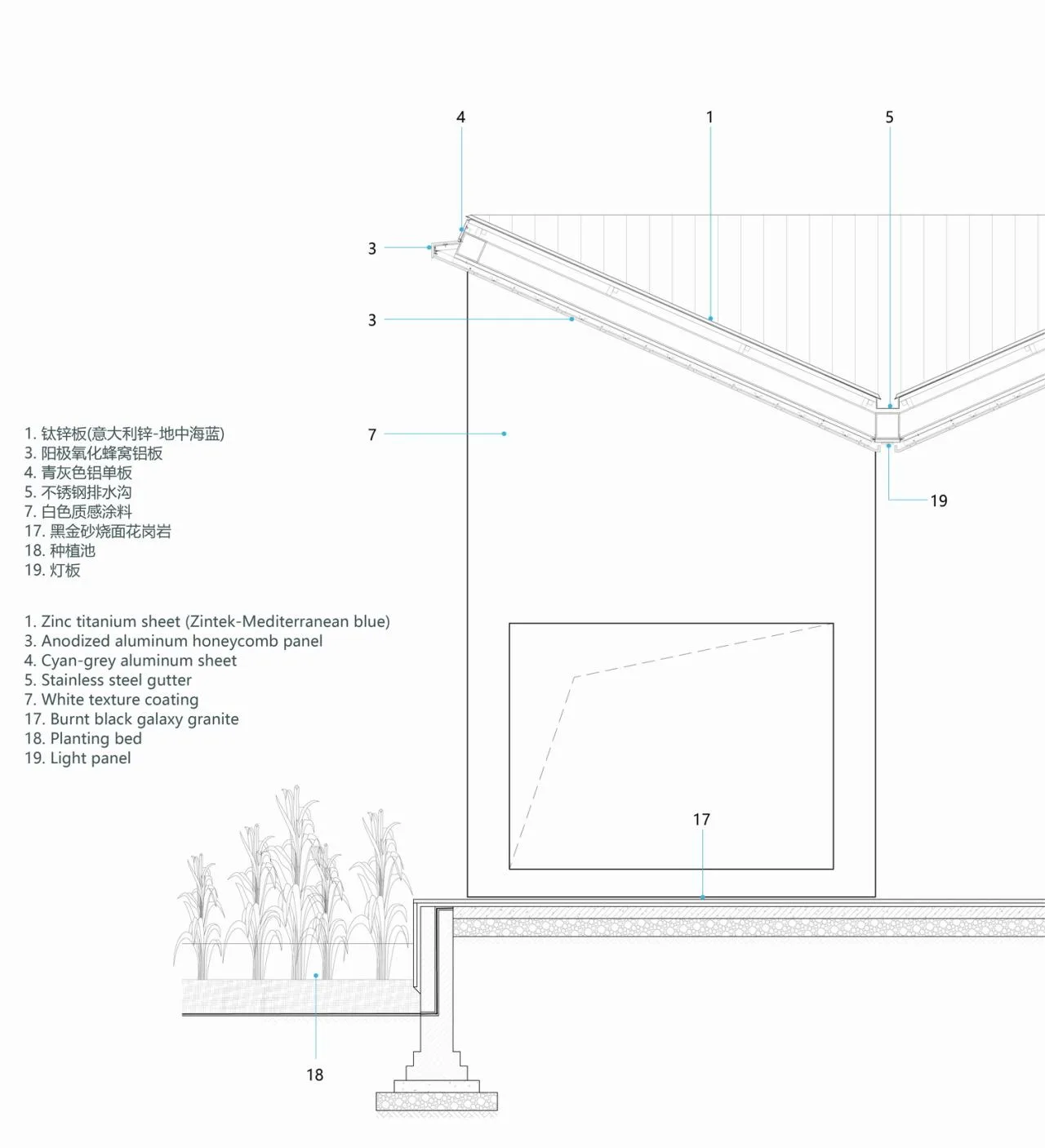
△ Detailed Structural Drawing
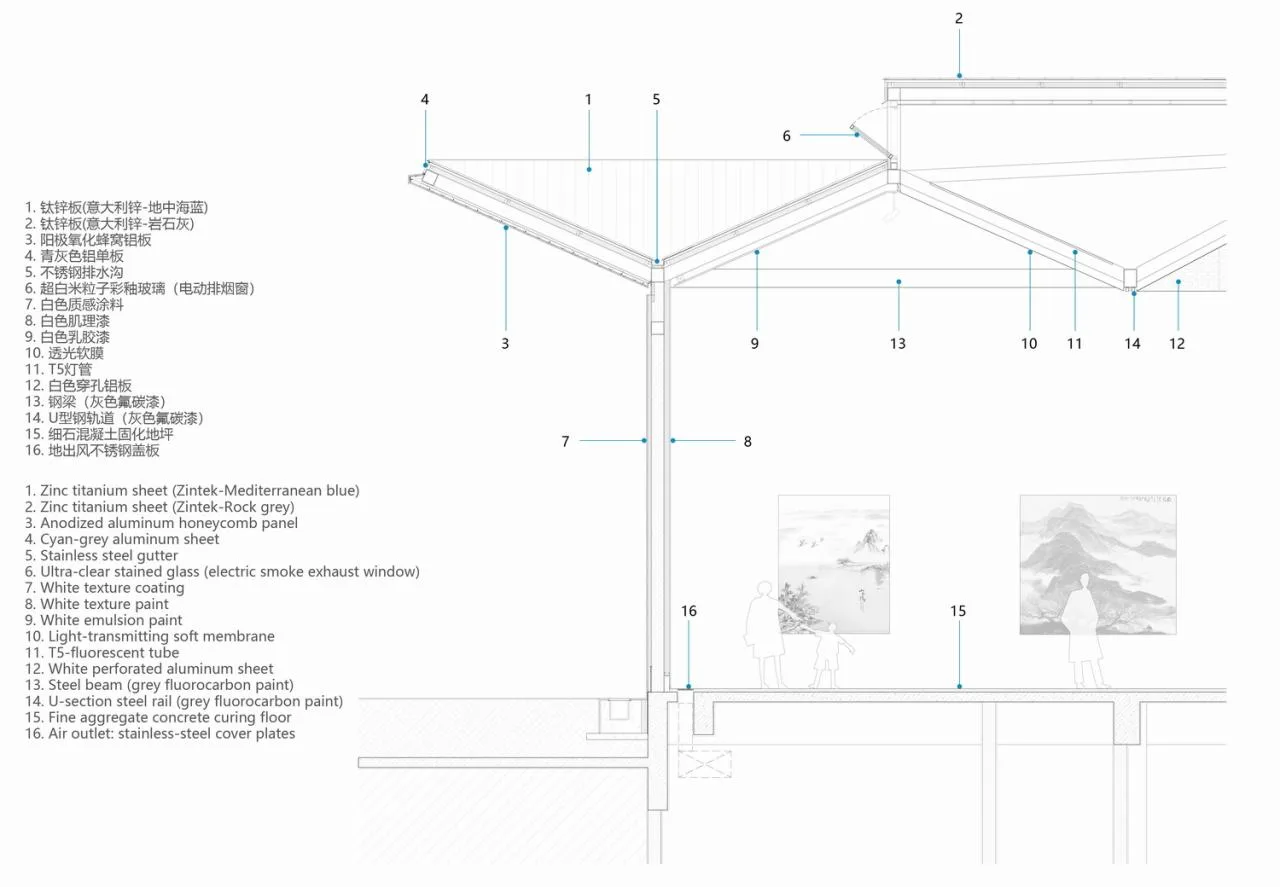
△ Detailed Structural Drawing
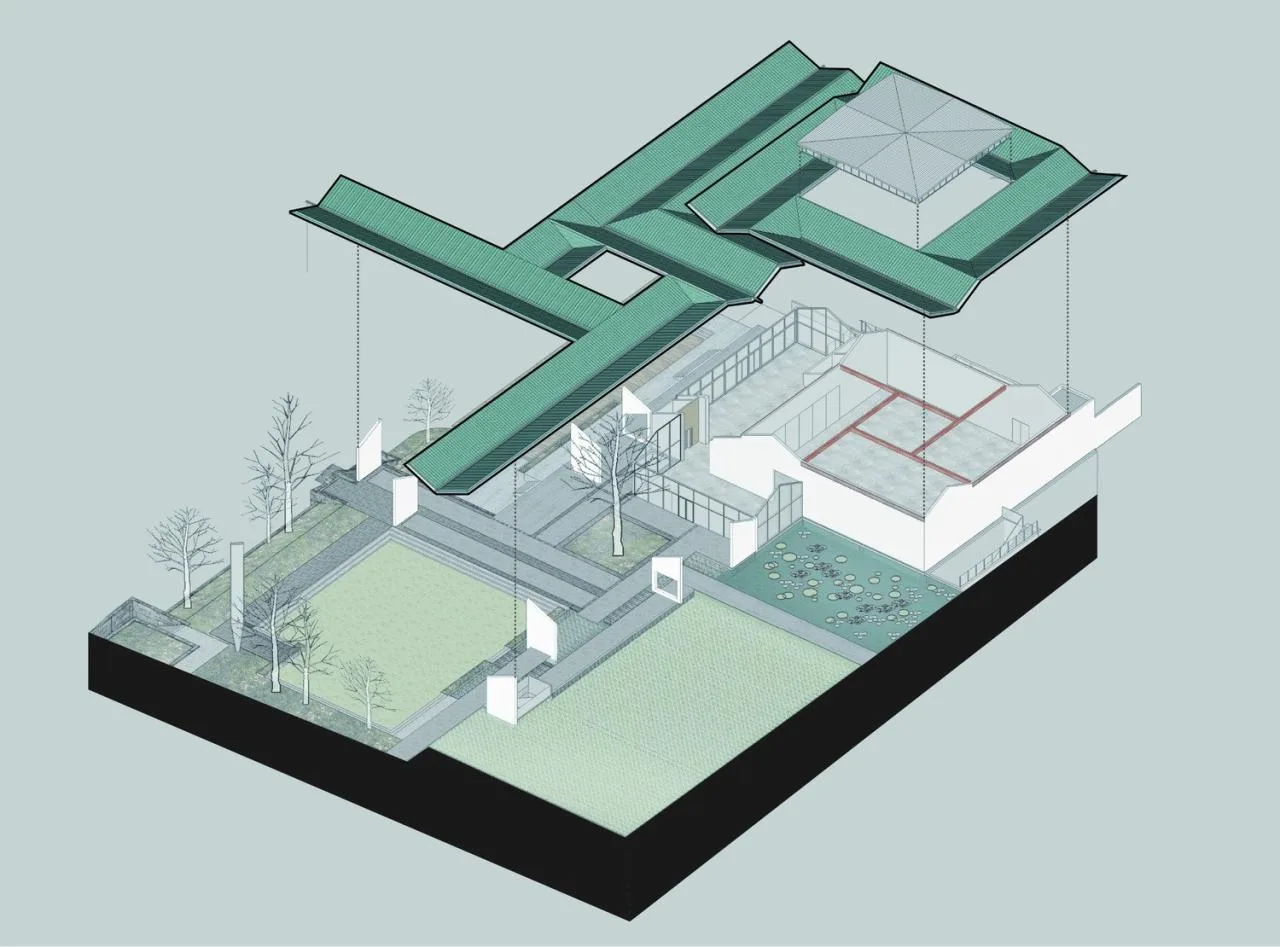
△ Axonometric Diagram
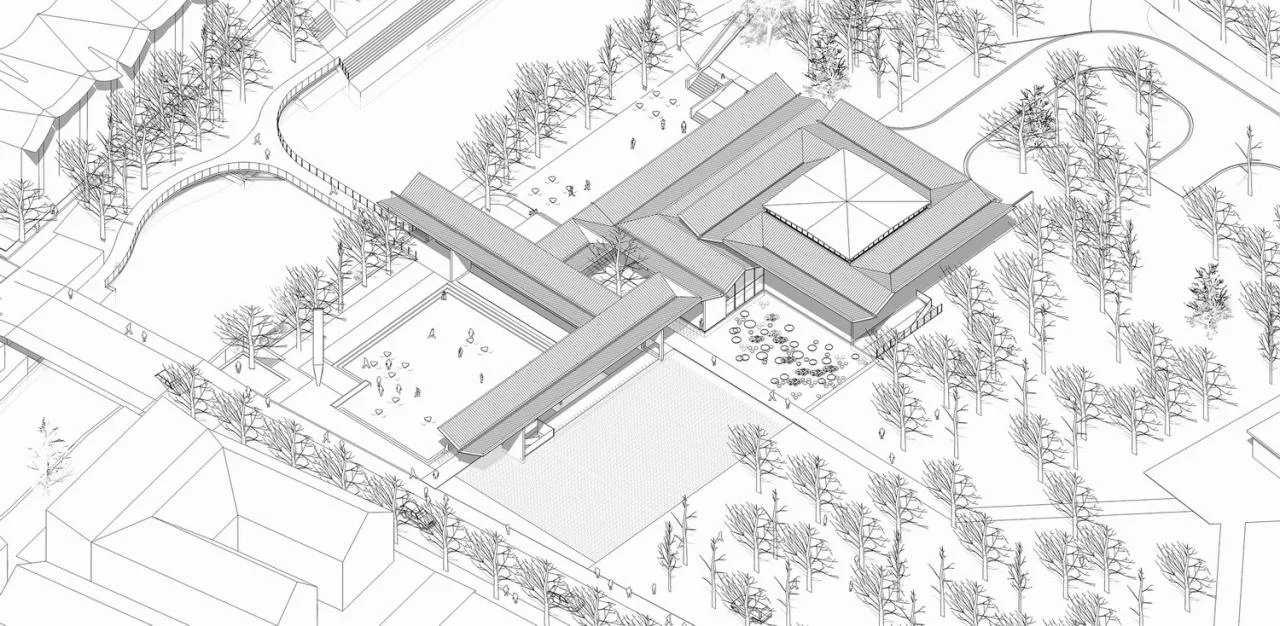
△ Axonometric Diagram
Project Information
Project Name: Yu Deyao Art Museum New Building
Owner: Rui’an Real Estate (Shanghai Panlong Tiandi Co., Ltd.)
Location: Panlong Tiandi, Shanghai
Architecture and Interior Design: Shanshui Xiu Architectural Firm
Design Director: Zhu Xiaofeng
Project Manager: Li Qitong
Project Architect: Pi Liming
Design and Construction Period: 2018–2023
Building Area: 1868.5 m² (889.9 m² above ground, 978.6 m² underground)
Structural Consultant: Hezuo Structural Architecture Research Institute / Zhang Zhun
Structural Design: Shanghai Zhuzhi Architectural Design Consulting Co., Ltd. / Chen Zeju, Sun Hassun
Mechanical and Electrical Design: Shanghai Chengkai Architectural Design Co., Ltd. (Water Supply and Drainage: Wan Huajun / HVAC: Liu Jianping / Electrical: Pan Yue)
Interior Construction Drawing Design: Shanghai Jingye Architectural Design Firm / Jiang Chen, Shi Xuyan, Xu Xin
Lighting Design (Renovation Phase): DLX Yushao Lighting Design
Interior Renovation Design: HBAarchitecture / Zeng Weihao, Hao Tingxuan, Han Yinghua
Furniture Design: MMR Studio / Zhang Zhongyu
Visual Design: IMI STUDIO / Ma Zhenhao, FYI / Huang Cancan
Structural Form: Steel frame support structure with an interlocking spatial steel truss roof system
Main Building Materials: Zintek Mediterranean / rock grey titanium zinc panels, anodized aluminum honeycomb panels, aluminum veneers, white textured coatings, weather-resistant steel, rice particle-patterned glazed glass, and others
Interior Materials: Anodized aluminum honeycomb panels, transparent soft films, metal expansion nets, white textured coatings, white glazed tiles, sound-absorbing boards, fine stone concrete floors, white oak flooring, etc.
Photography of Completed Construction: Liangshan
Construction Photography: Pi Liming















Must log in before commenting!
Sign Up