
Site and Project Overview
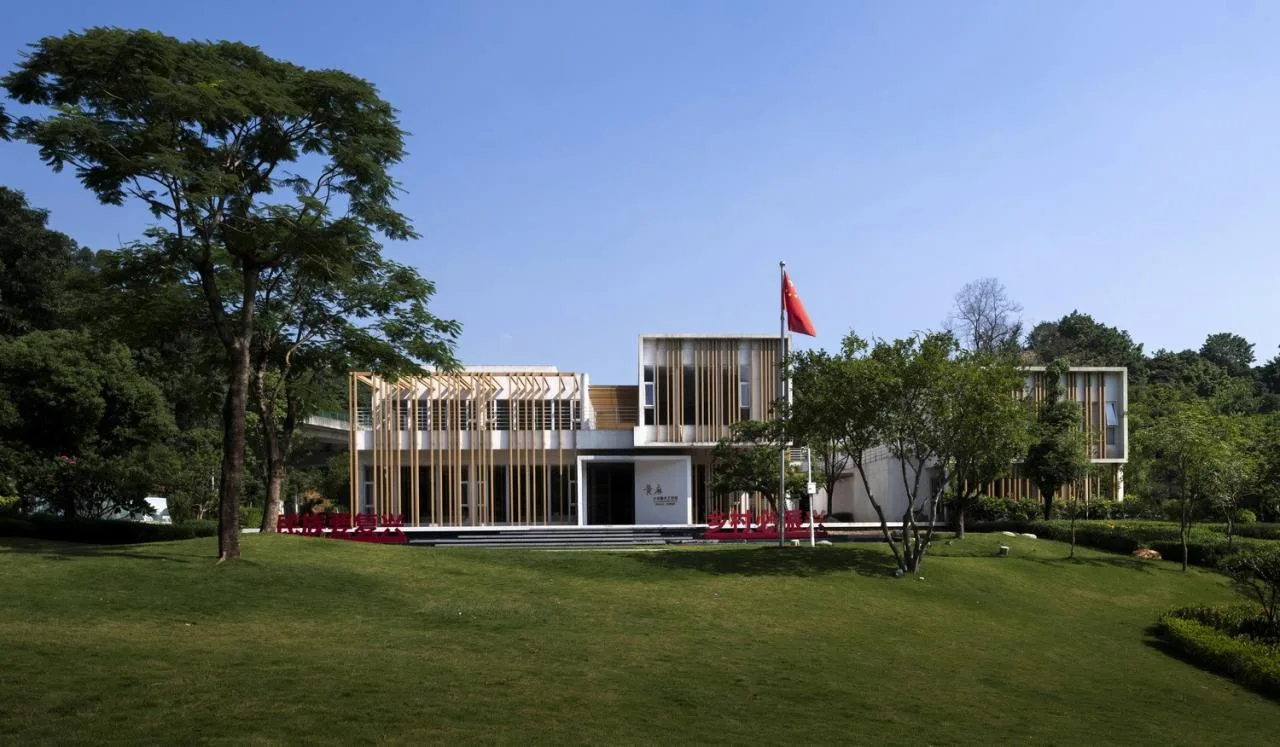
The project is situated at the entrance of Huangma Village, Changling Street, Huangpu District, Guangzhou, precisely where Huangma Road intersects with Guangshan Highway—a key passage for those entering the village. The site slopes from north to south, with an elevation difference of approximately one meter. To the south lies a major city road, the west borders a road and elevated bridge leading into the village, and the east is adjacent to forest land and a temporary parking area. The Turtle Mouth Creek runs through the site, dividing it into eastern and western sections.
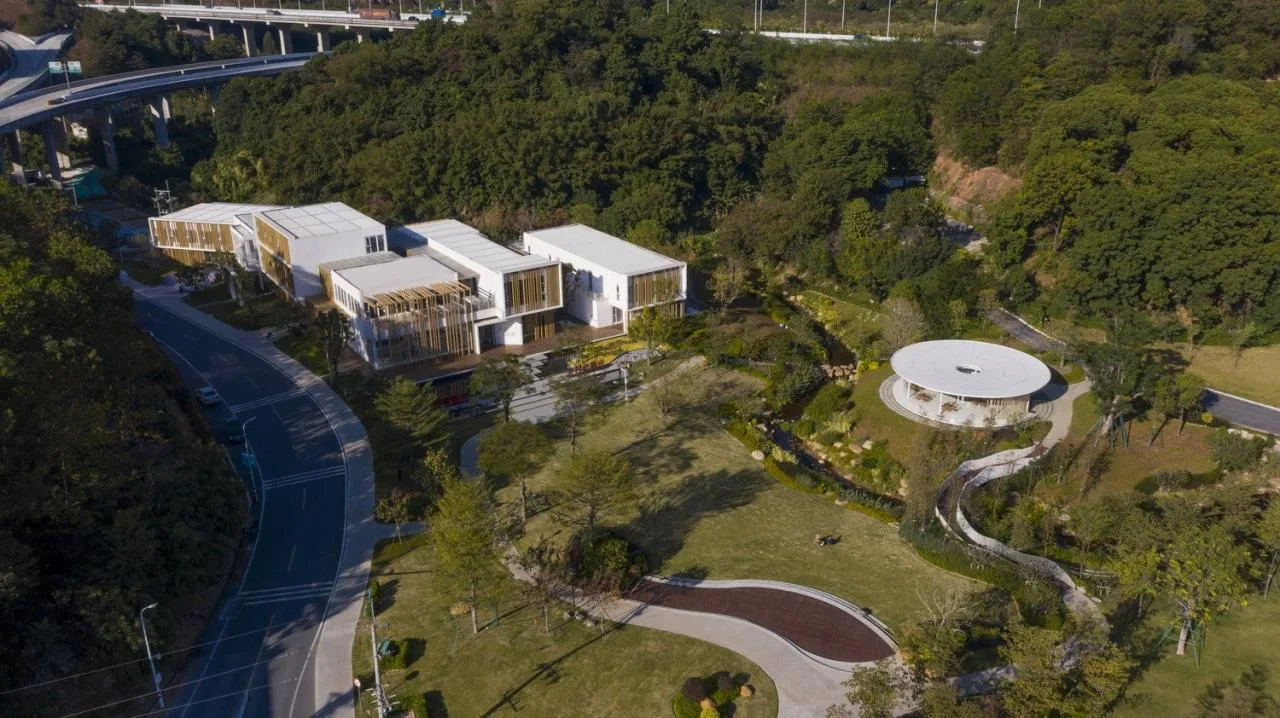
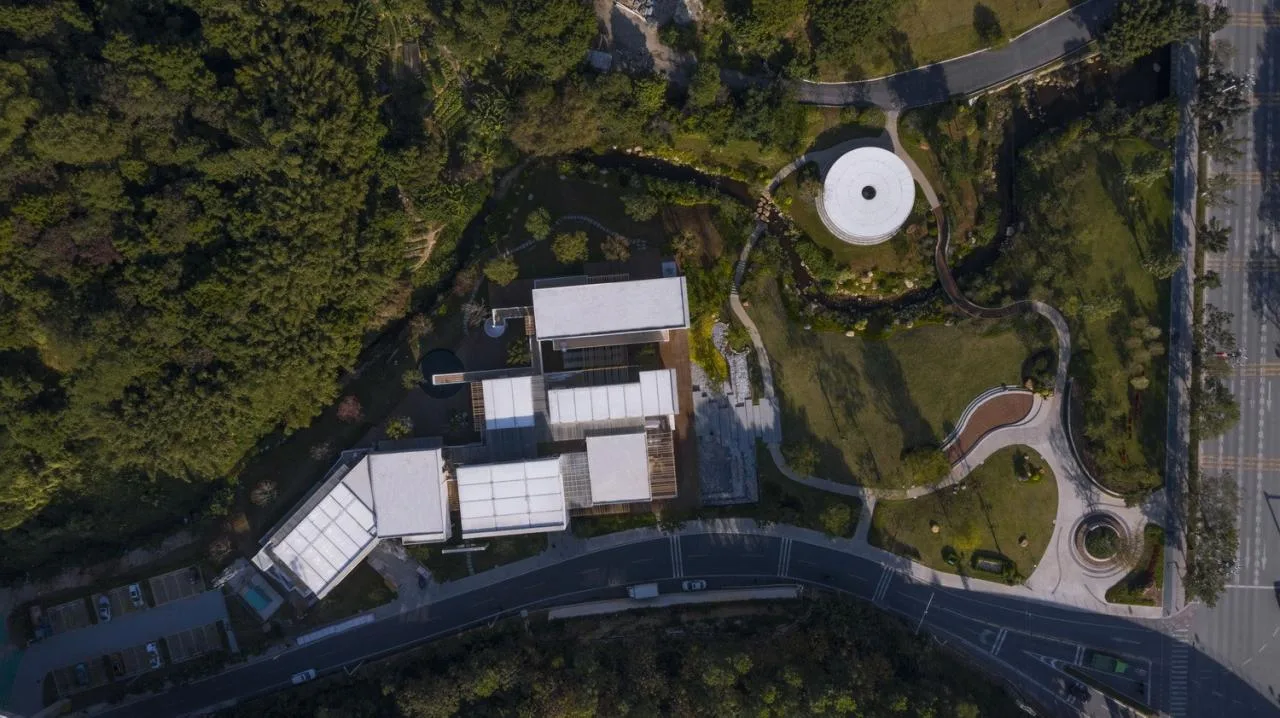
This project is a significant part of Huangma Village’s rural revitalization and renovation efforts. Its main functions include exhibition halls, support offices, reception services, and a new village committee building. The project is divided into two sections based on use: the rural reception hall located east of the Turtle Mouth Creek (completed in October 2021), and the rural revitalization workstation situated in the north of the site (completed in October 2022). Beyond the buildings themselves, the surrounding environment has been designed and enhanced to meet the recreational and leisure needs of both village residents and nearby communities, while also contributing to the urban landscape of Huangpu District.
Design Concept and Overall Layout
Following discussions with the client, the architect and owner agreed that the rural revitalization workstation should be simple and functional, avoiding luxury while maintaining quality. The buildings were designed to be as lightweight as possible, minimizing environmental impact. Prefabricated construction methods were chosen to reduce the construction timeline. Additionally, the buildings were designed to be potentially removable, allowing the site to be restored to its original condition if needed.
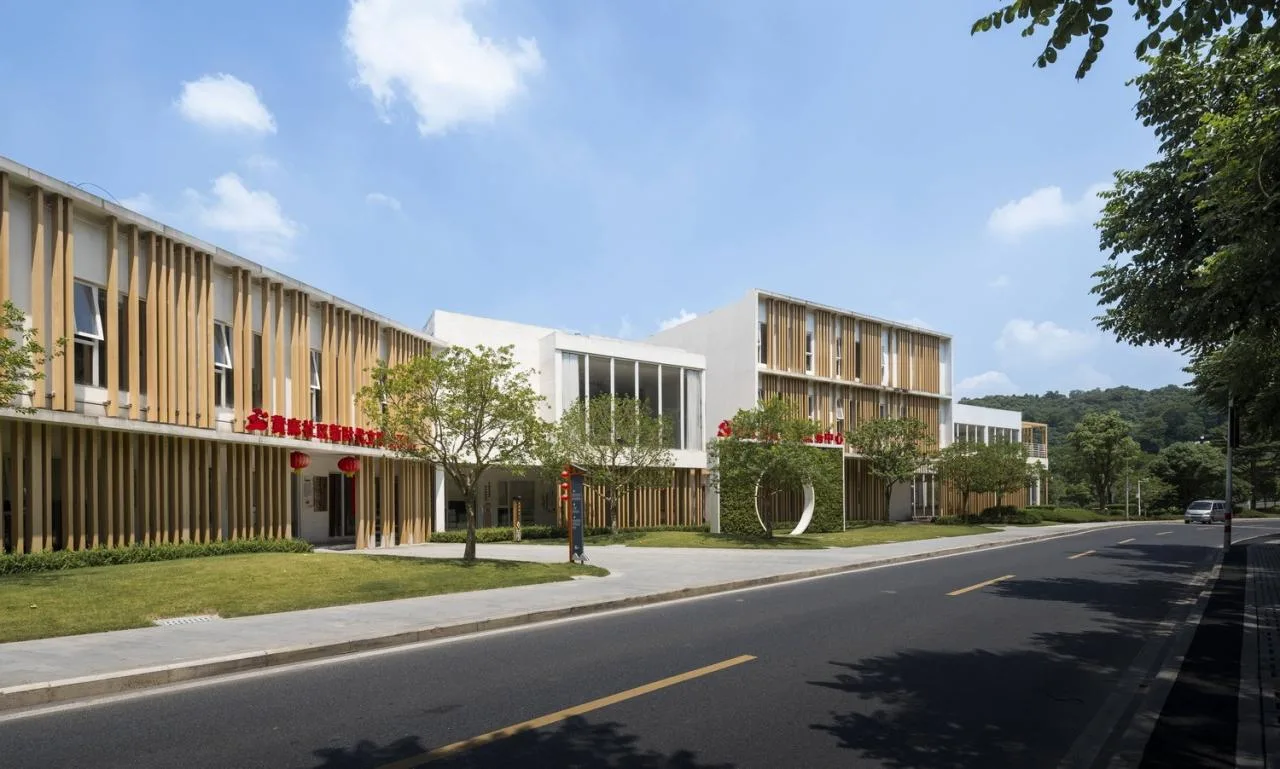
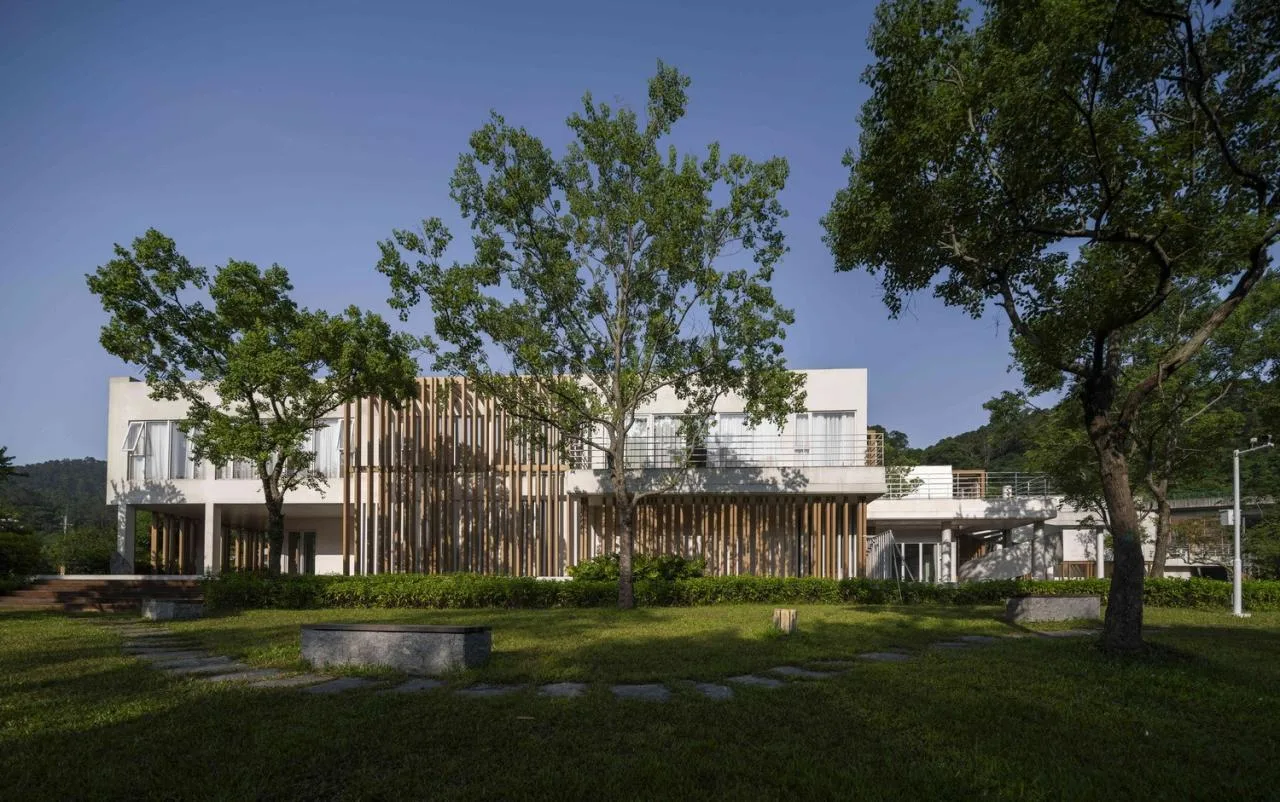
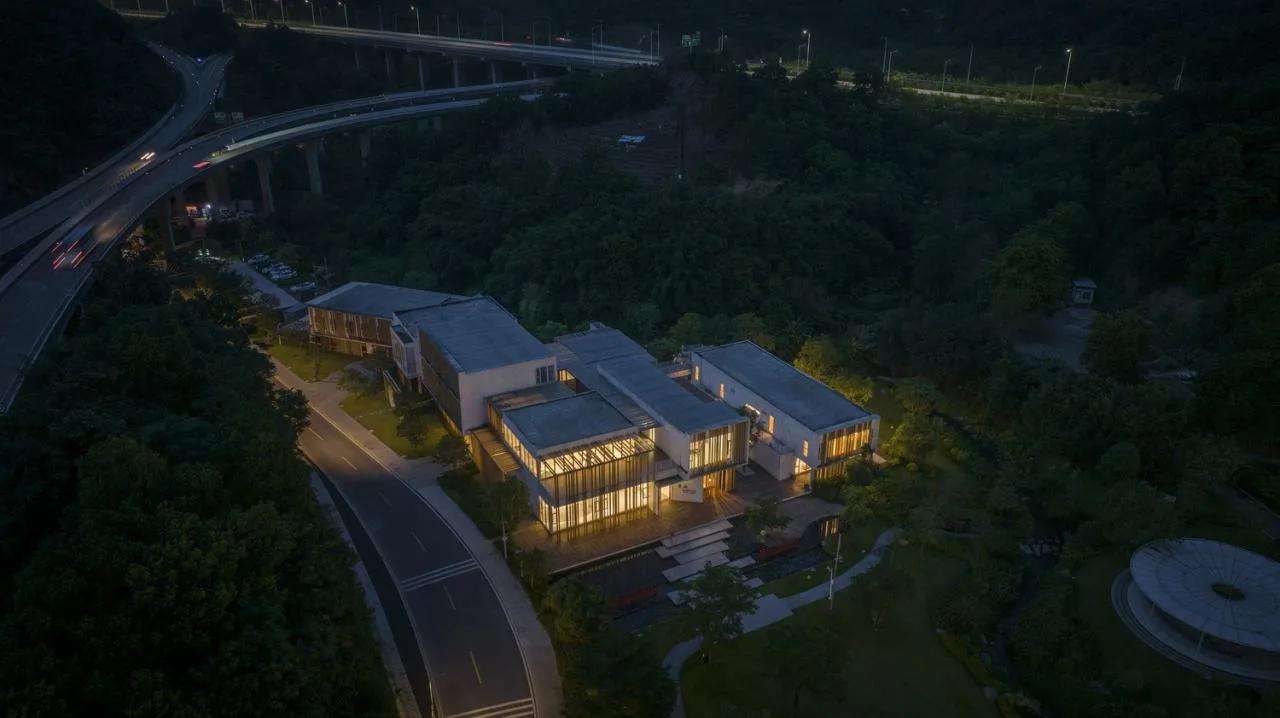
The rural revitalization workstation occupies the northern, higher terrain of the site and includes an exhibition hall, guest reception area, and a new village committee building. Due to the presence of an elevated bridge to the west—an urban expressway linking Guangshan Highway and Guangfozhao Expressway—the building is set back 10 meters from the western boundary to reduce traffic noise impact. To protect the stream and forest on the west side, the main building aligns along the east side of the stream, retreating as far as possible to preserve the natural environment.
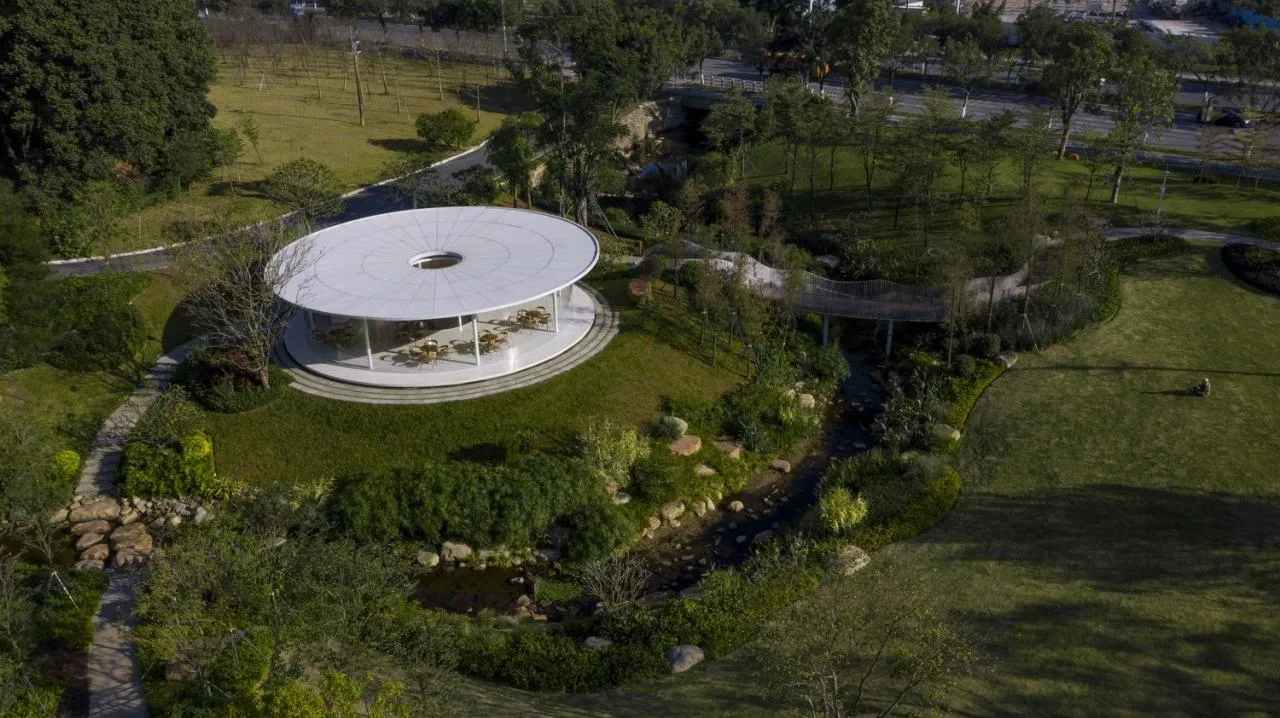
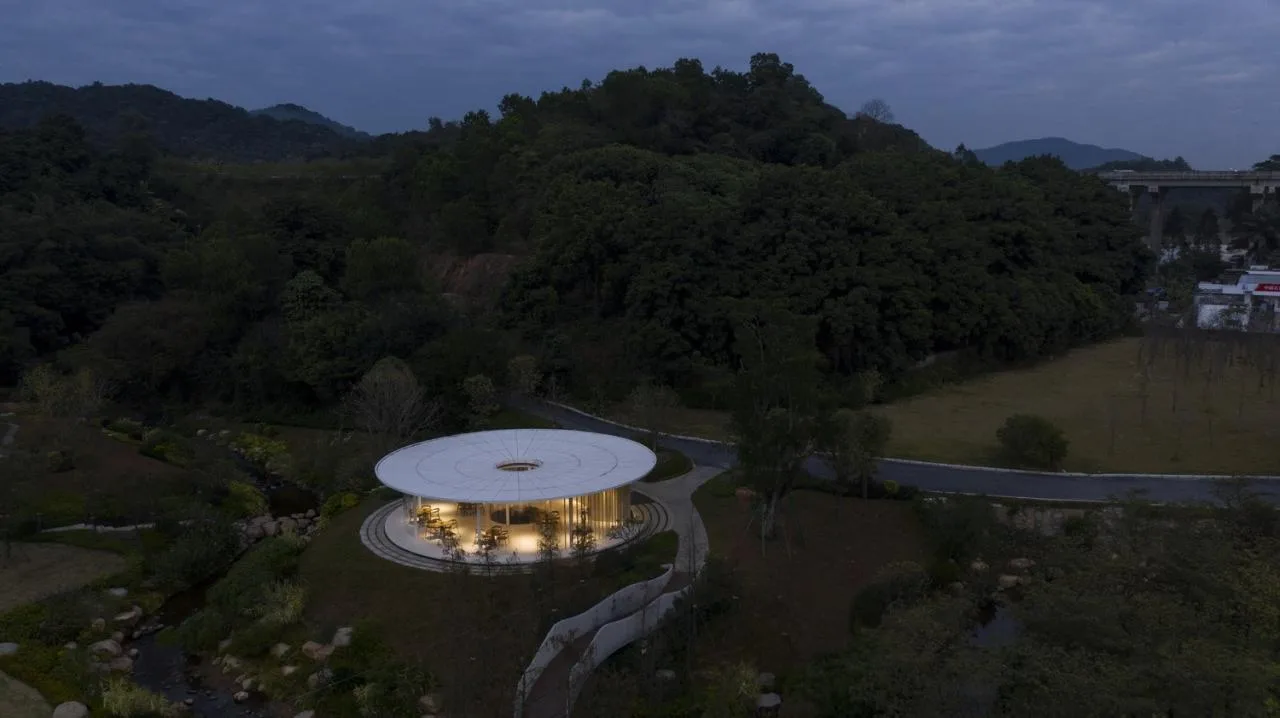
Directly across the stream lies the rural reception hall, a small circular building primarily serving as a tea room.
Rural Revitalization Workstation
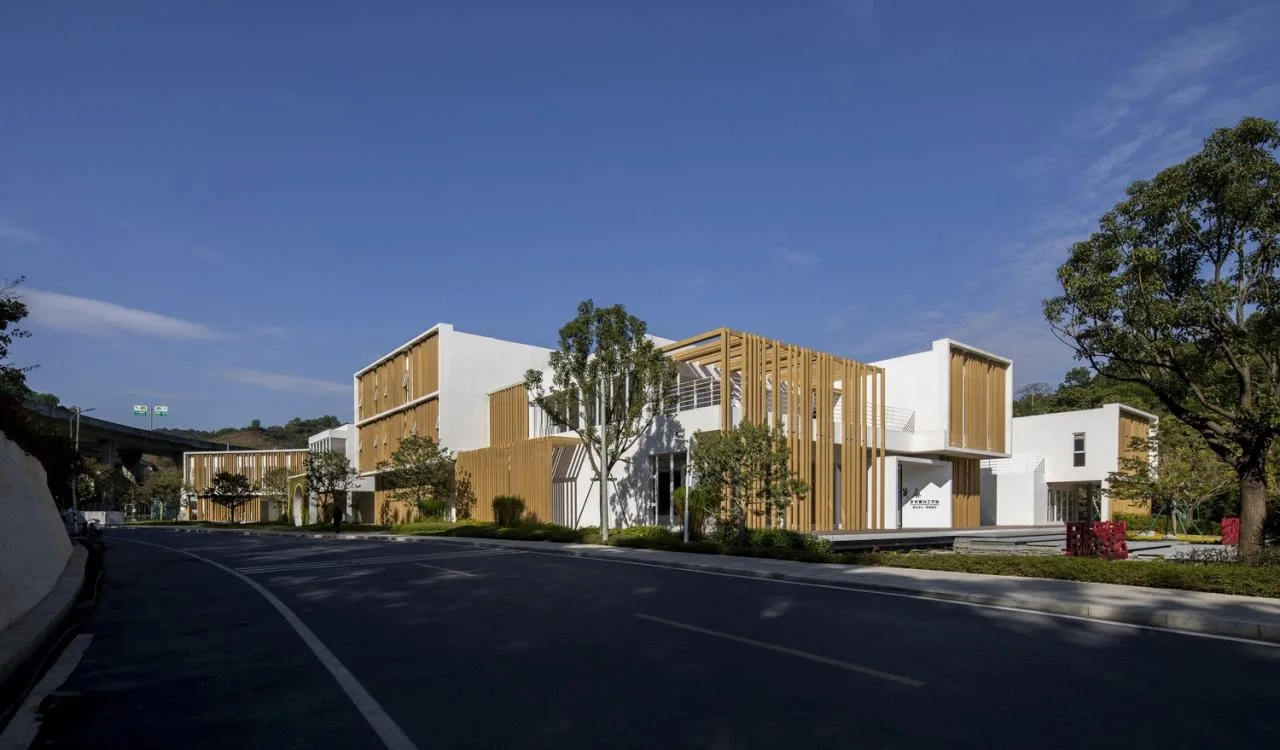
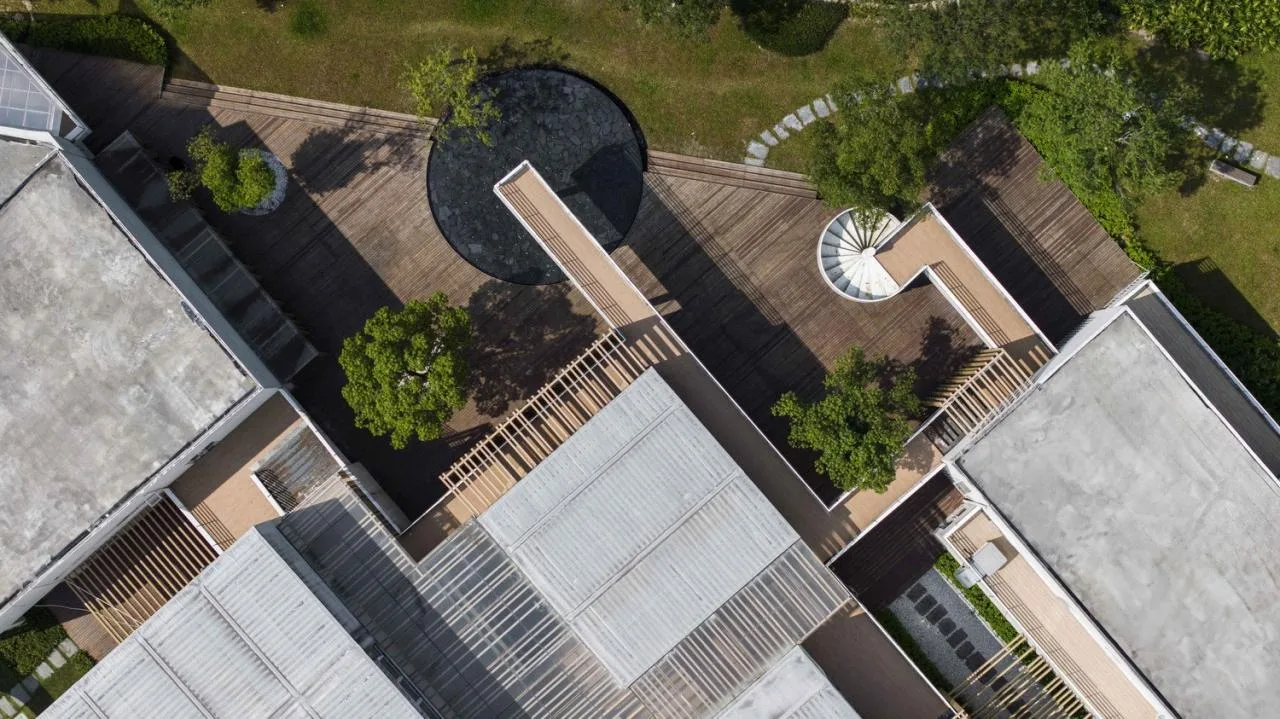
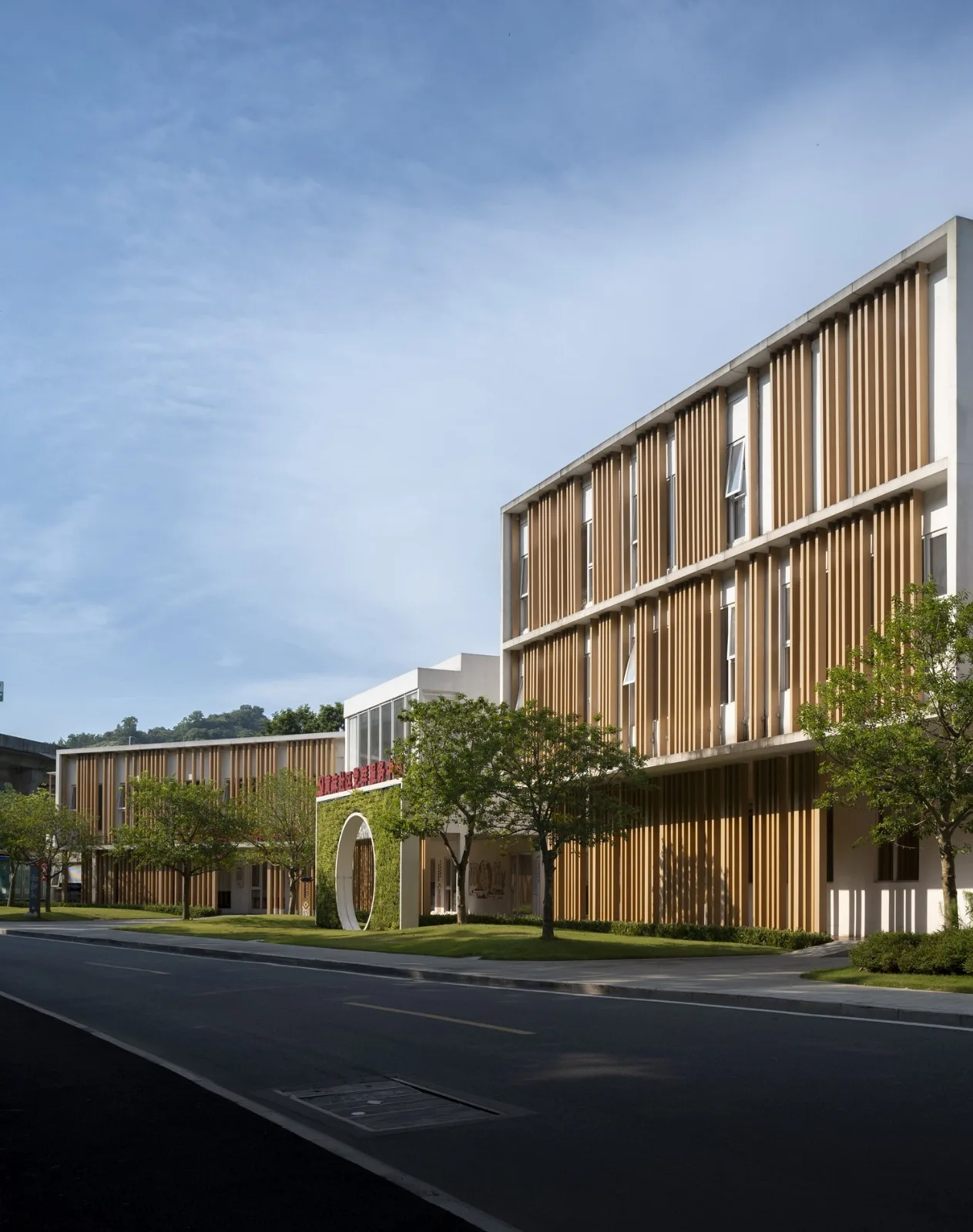
The workstation is constructed with a container-style layout, supported by prefabricated steel frames and equipped with prefabricated facades and flooring. It is divided into three functional zones: exhibition hall, guest reception, and village committee, each featuring separate entrances and exits that can be used independently or combined. The building heights vary according to function, with the exhibition hall reaching 9 meters and the other sections having a floor height of 3.6 meters. This modular design allows the building to adapt seamlessly to the terrain. While the south and west sides of the building have flat boundaries, the east side integrates naturally with the environment, creating a harmonious relationship.
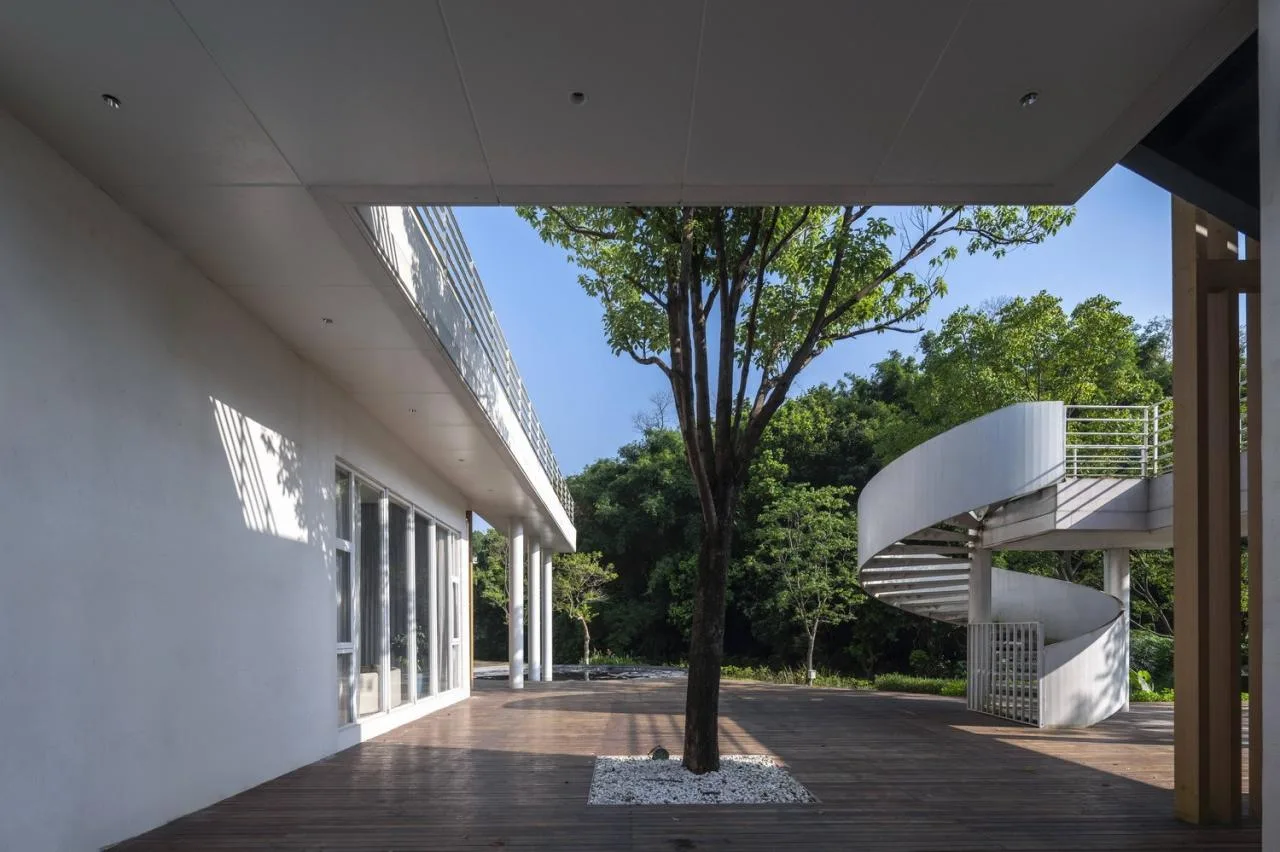
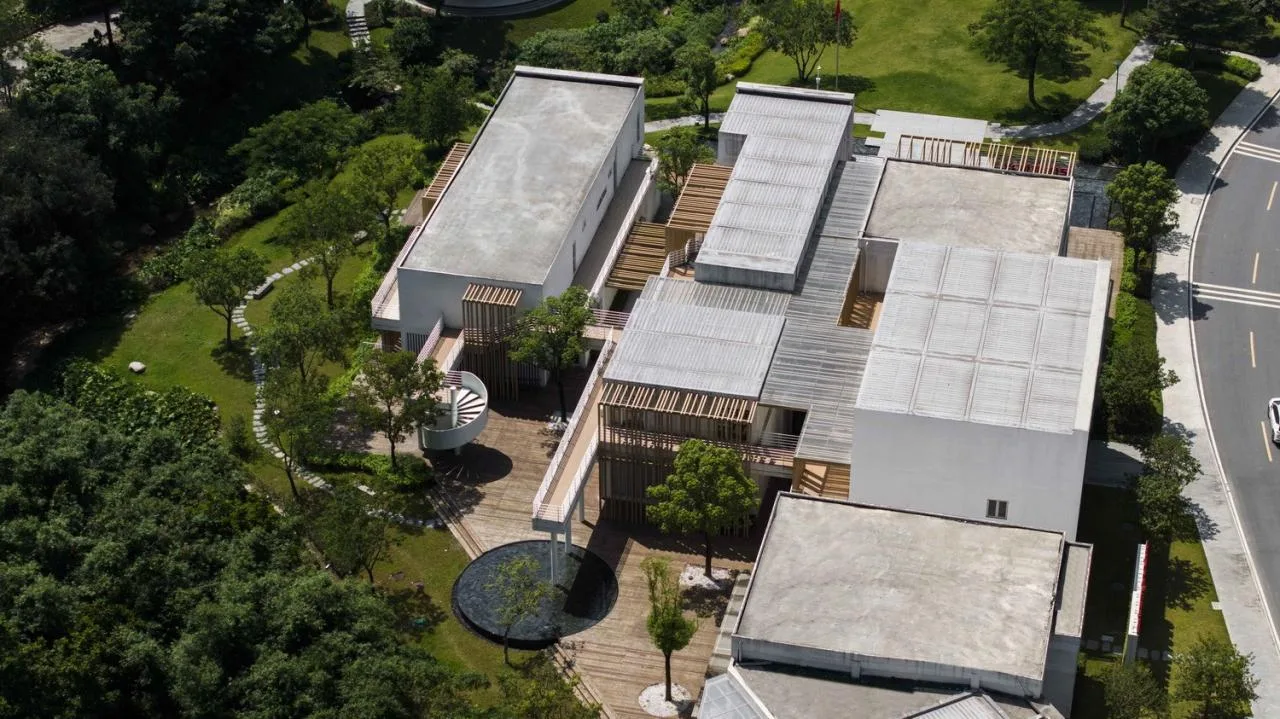
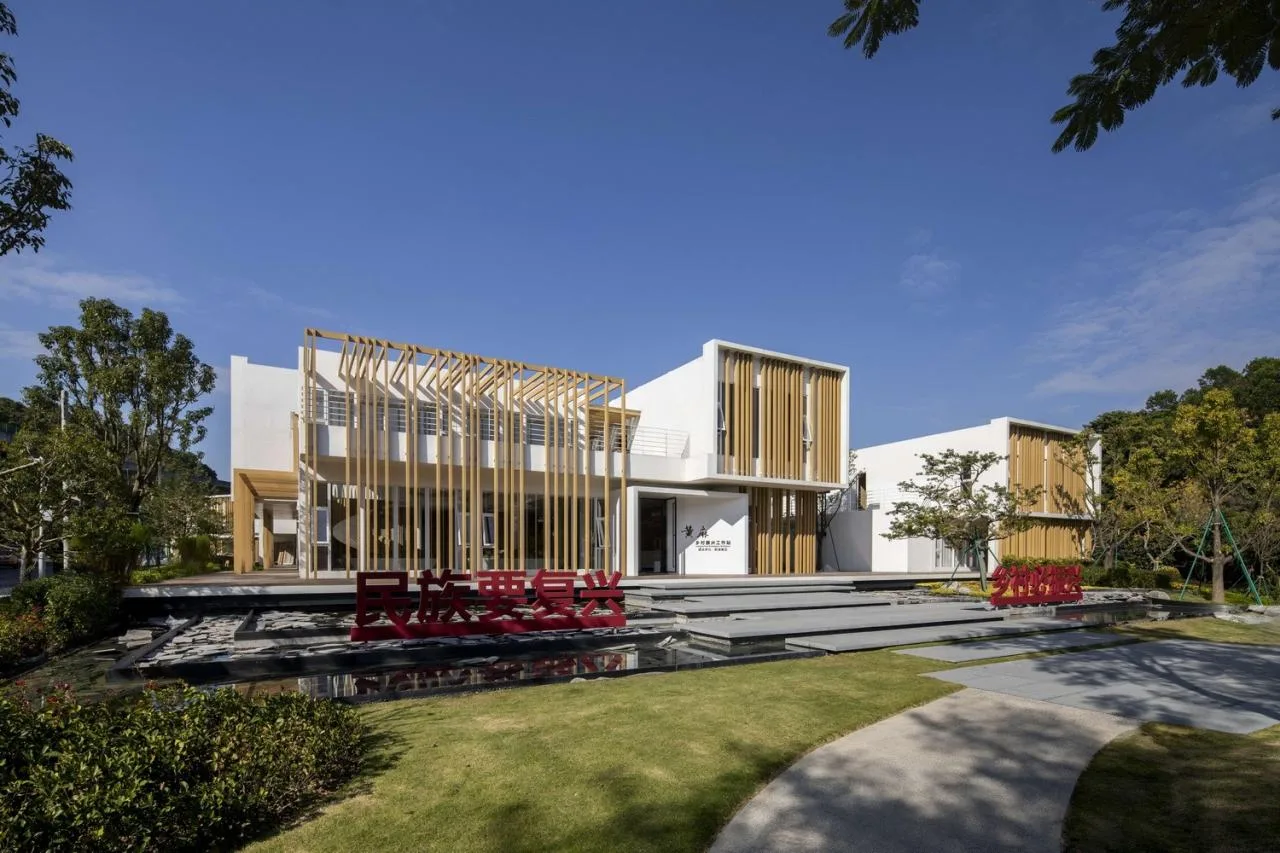
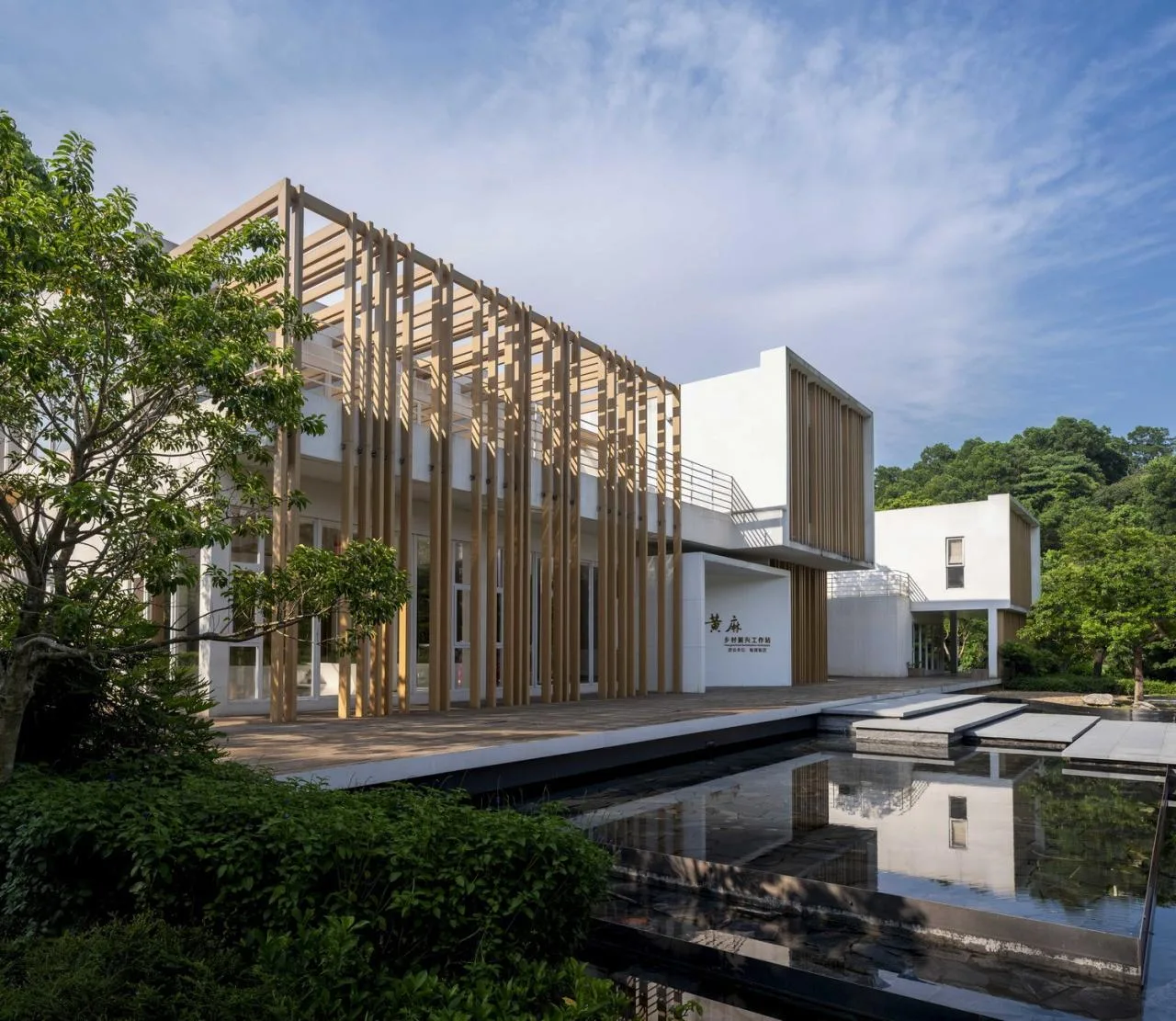
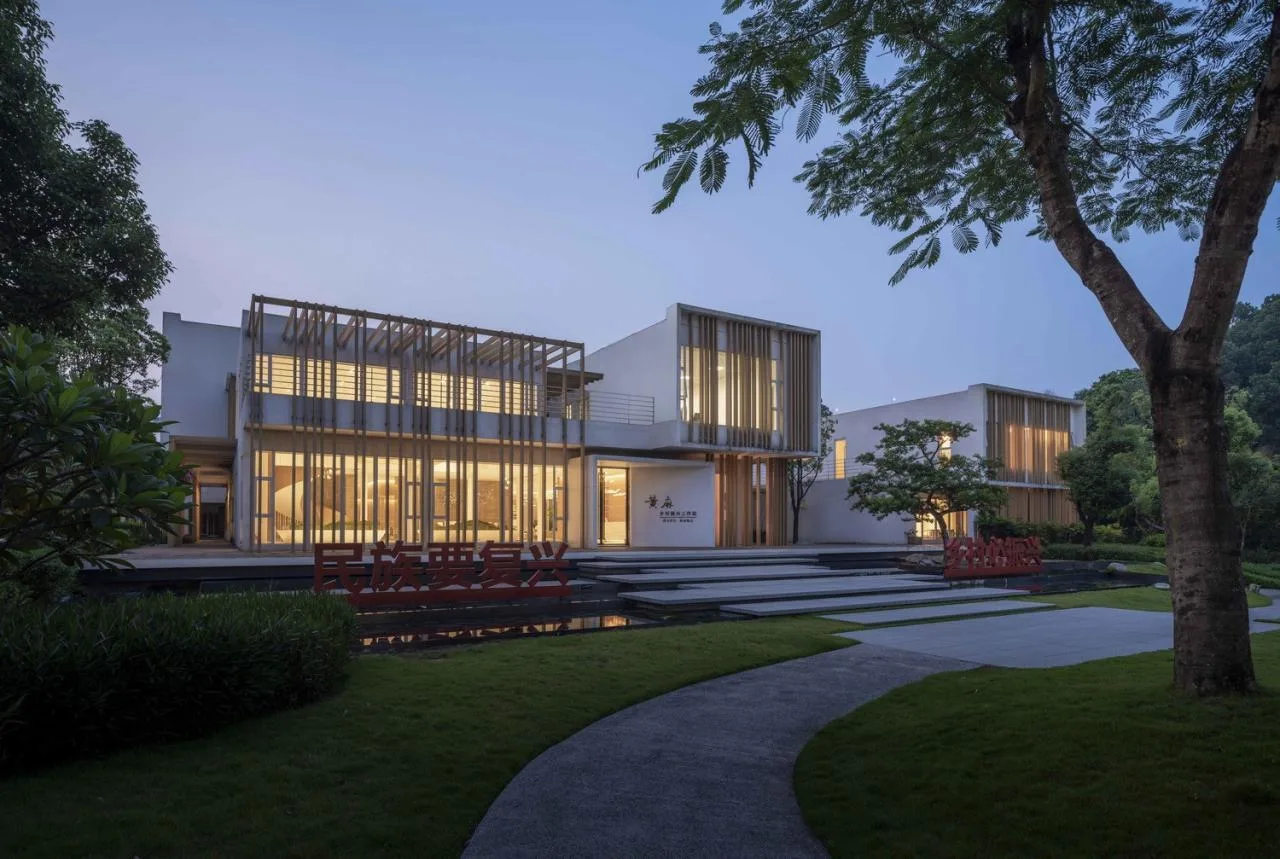
The entrances to the exhibition hall and guest reception face south toward a green space. A shallow water pool at the exhibition hall’s entrance serves as a welcoming landscape feature, enhancing the sense of ceremony. Combined with gently varied terrain and tall trees, this design integrates the building into the southern landscape, effectively making the workstation part of a small park. The village committee is located in the northern section, with its entrance facing Huangma Road on the west side, offering convenient access for villagers. A passage separates the exhibition hall, guest reception, and village committee, while a small courtyard north of the guest reception divides visitor and resident traffic. Adjacent to the courtyard’s east side are streams and forests, featuring a pool and trees. A spiral staircase connects this courtyard to the second-floor corridor, forming a pleasant and diverse landscape.
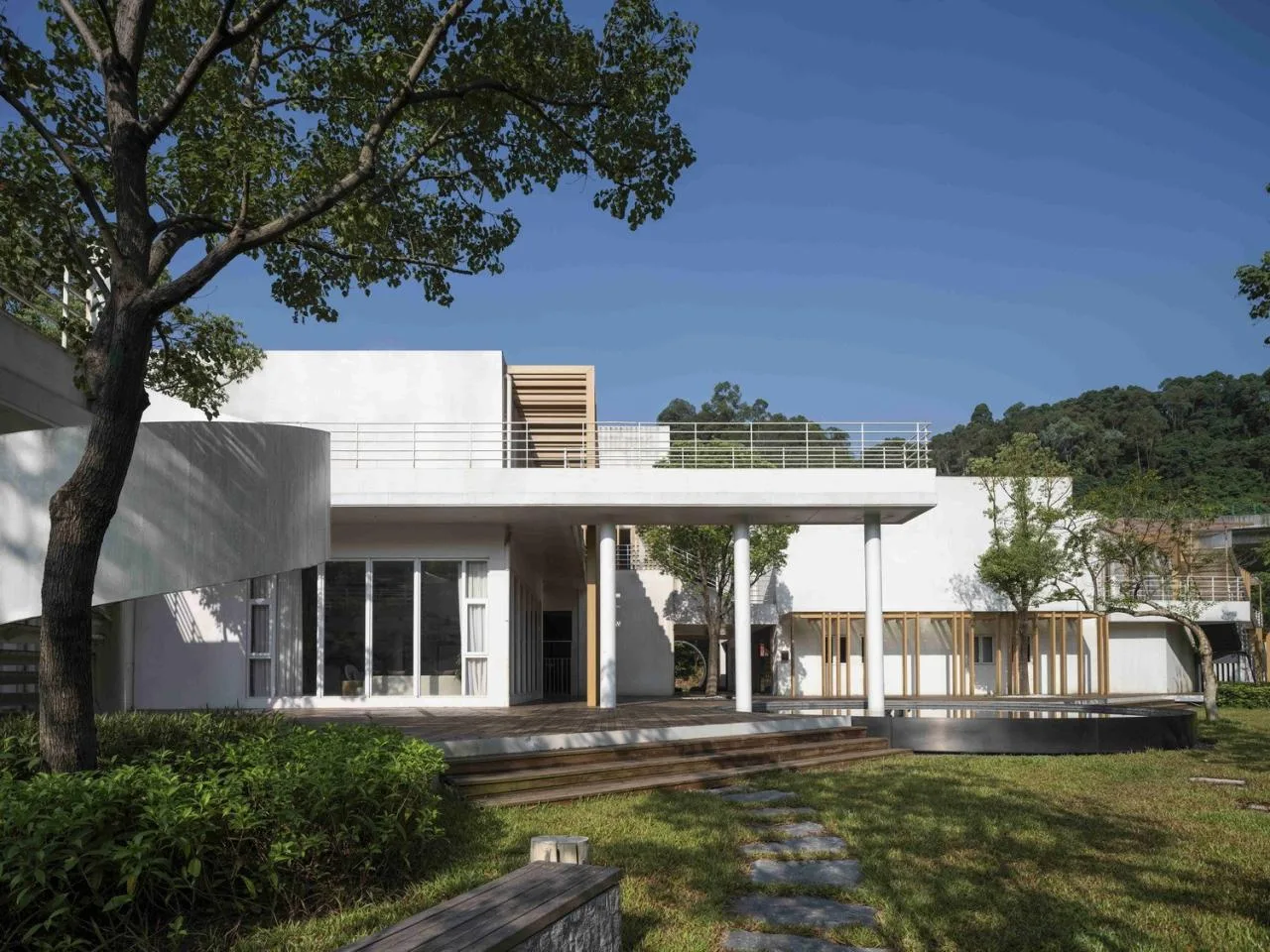
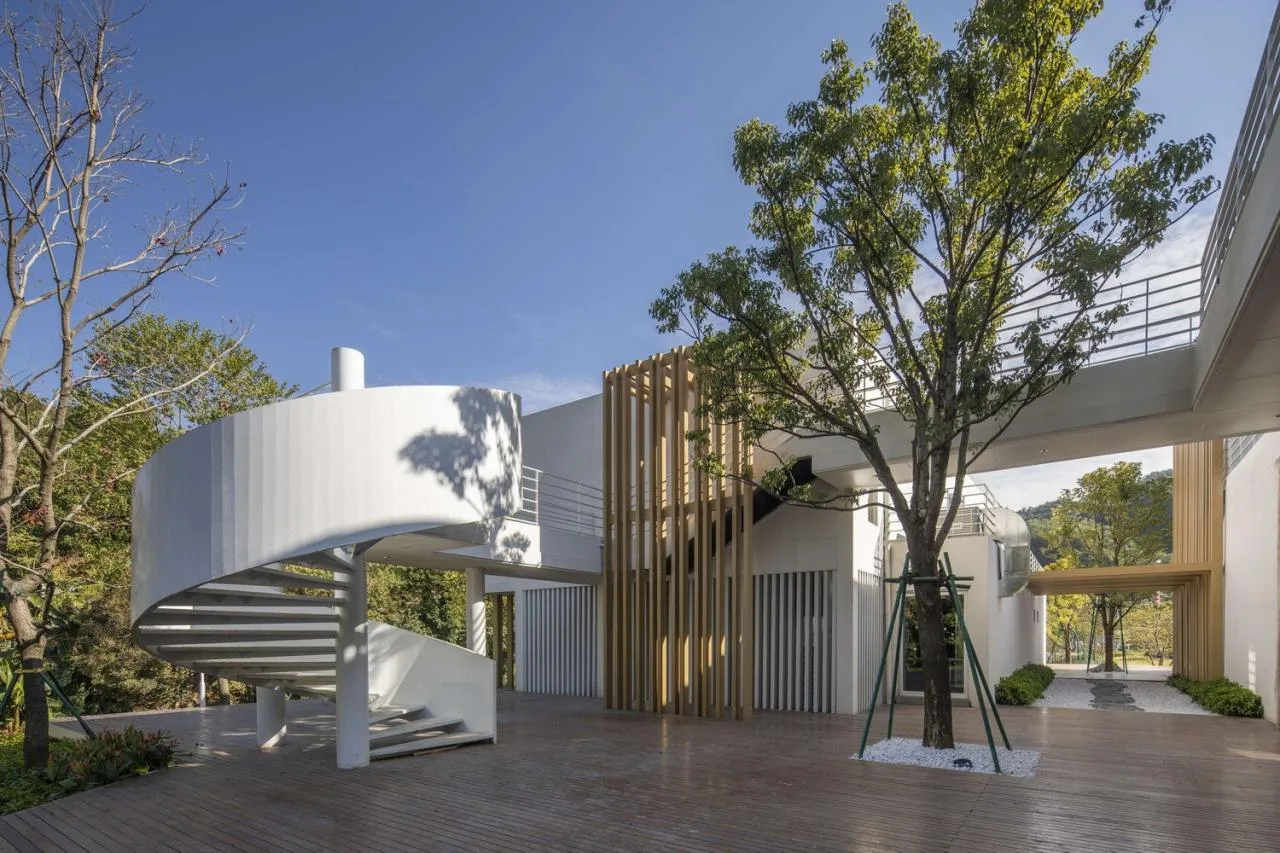
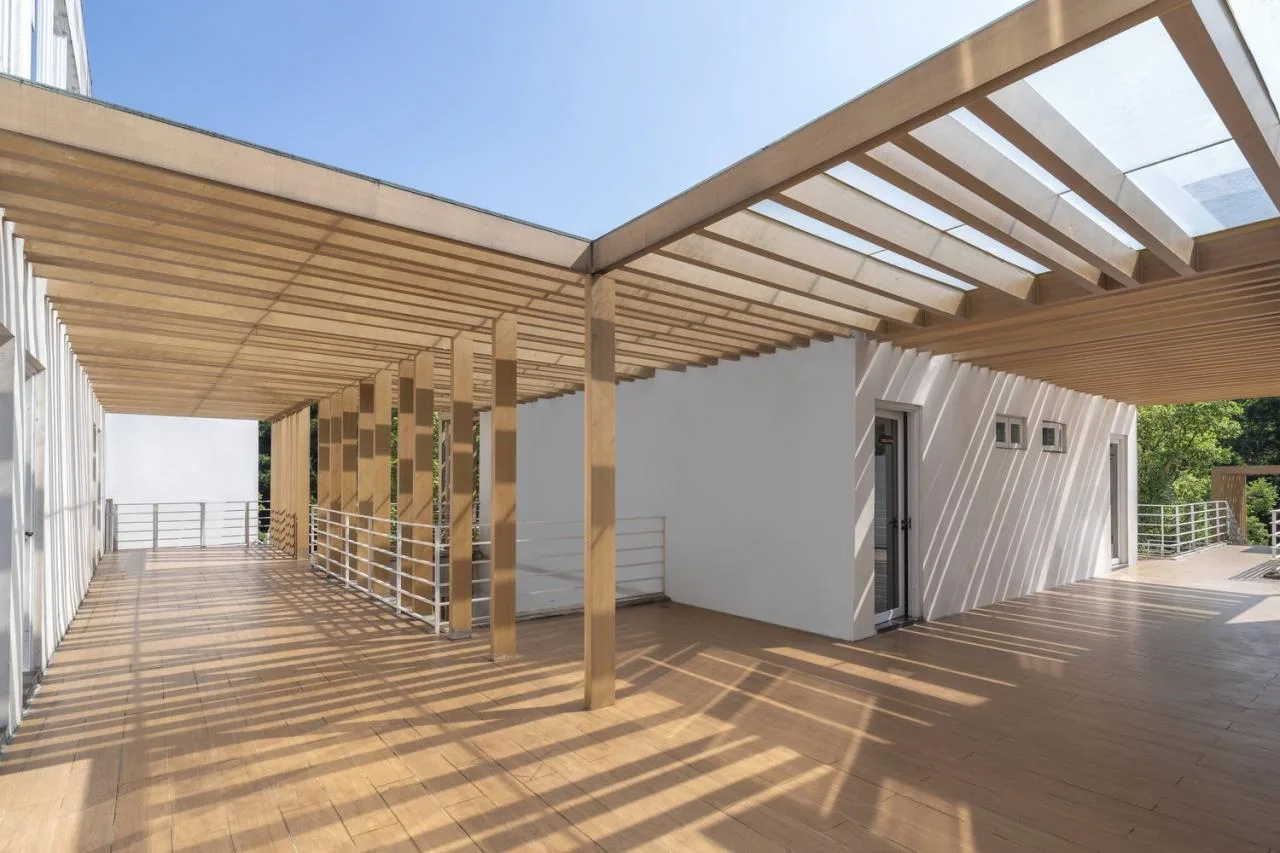
The first floor makes extensive use of corridors, which not only separate the three functional areas but also respond to Guangzhou’s hot and rainy climate by creating natural ventilation paths. Elevated foundations and raised wooden floors further enhance climate adaptability. The floor is designed to avoid hard surfaces as much as possible, using point foundations and anti-corrosion wooden flooring. This elevation allows rainwater to permeate the ground, supporting a natural water cycle.
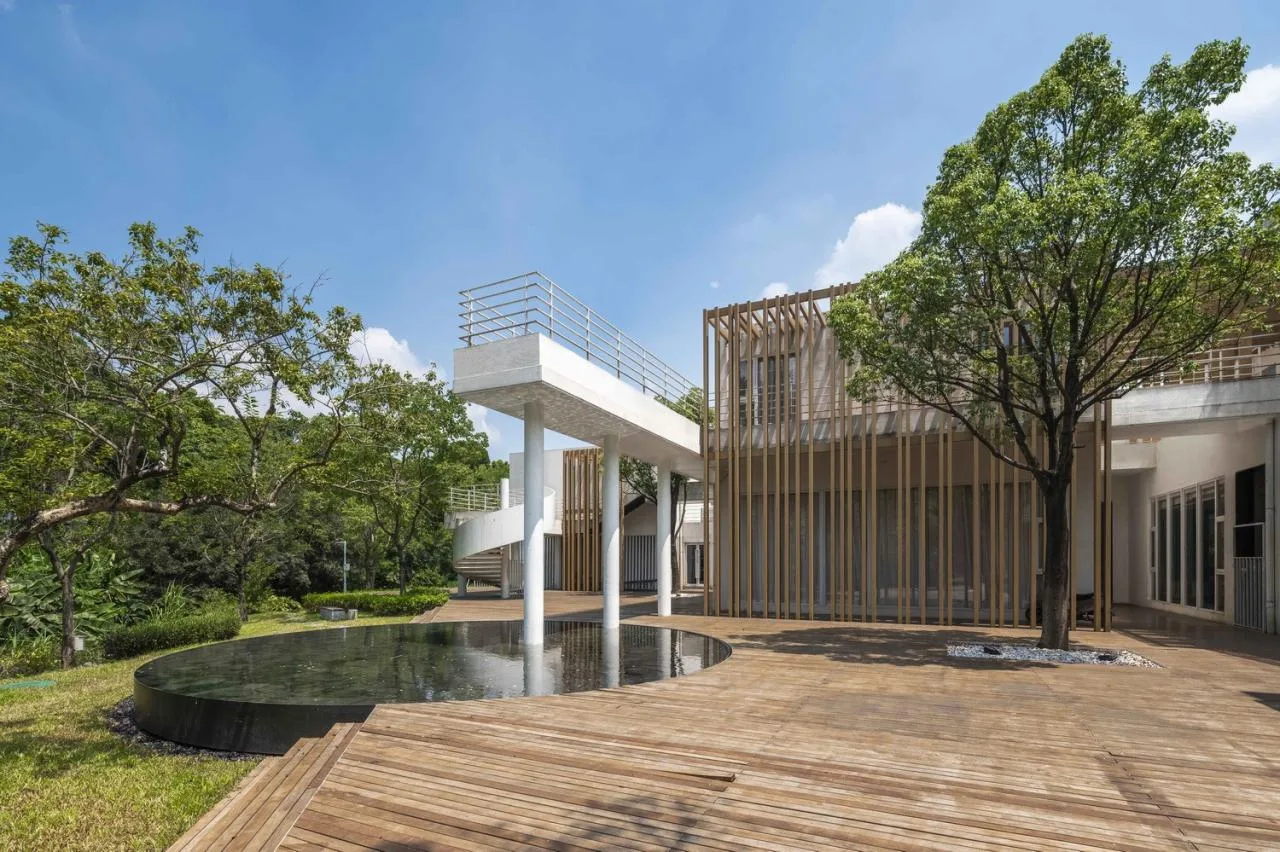
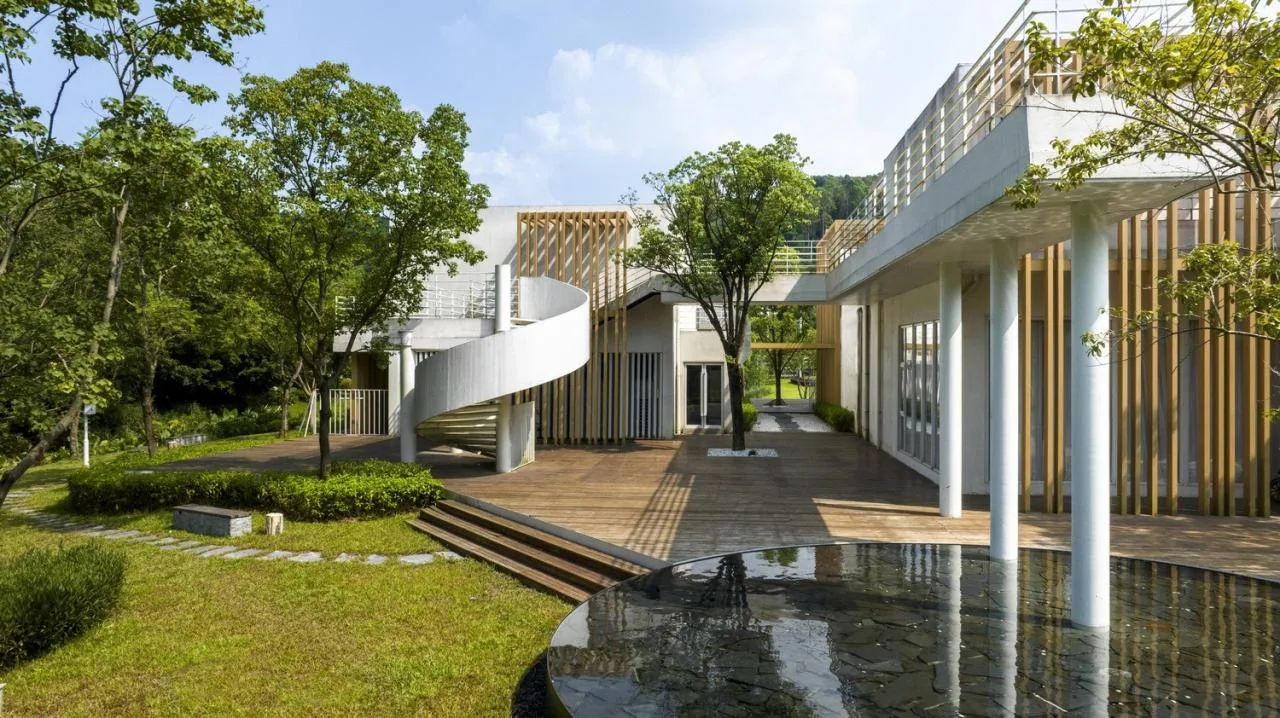
On the second floor, the three areas are linked by corridors that alternate between narrow boardwalks and wider platforms. These spaces not only connect different zones but also provide semi-outdoor areas for various activities. The second-floor corridor does not align directly over the first-floor corridor, creating a staggered effect that enriches the building’s spatial experience both horizontally and vertically. Though roof greening and vertical facade planting were initially planned, these features were omitted later due to budget constraints.
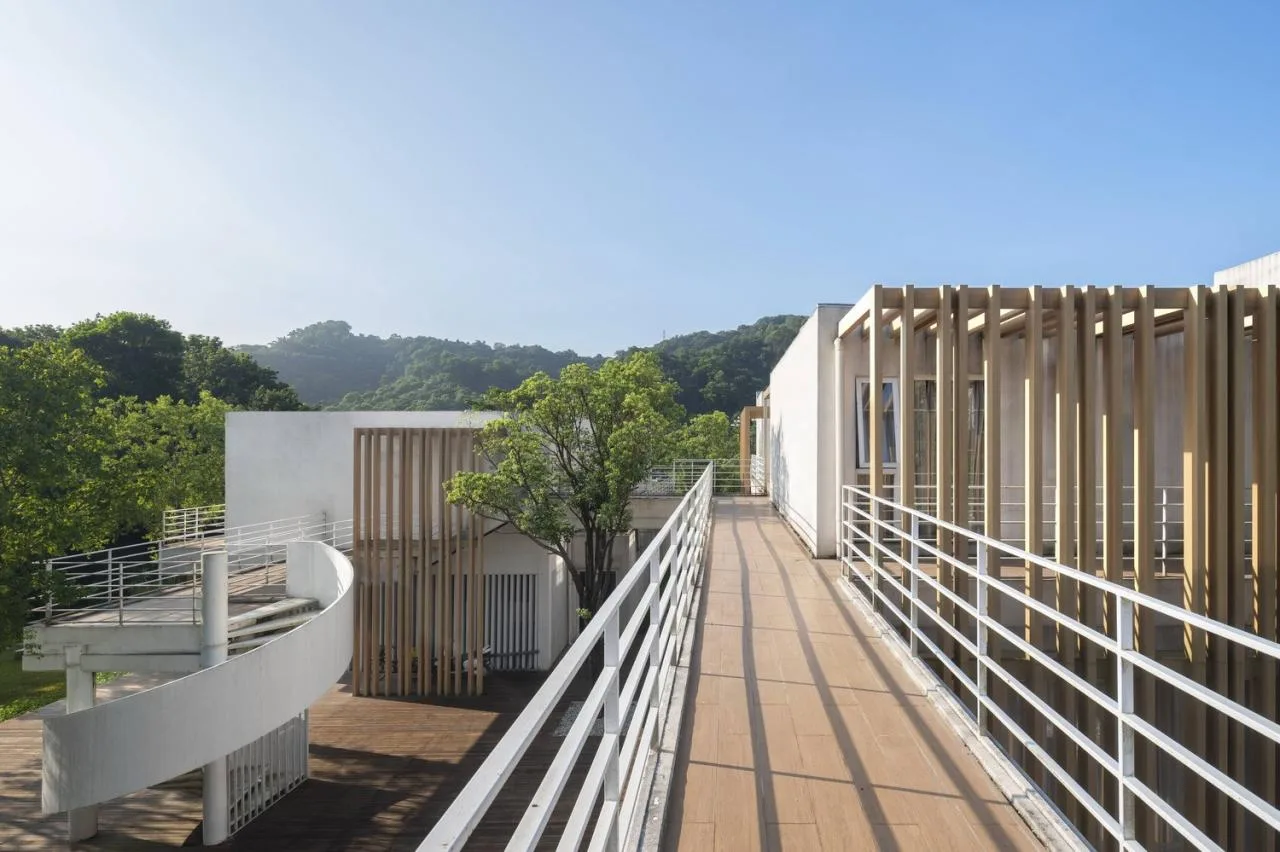
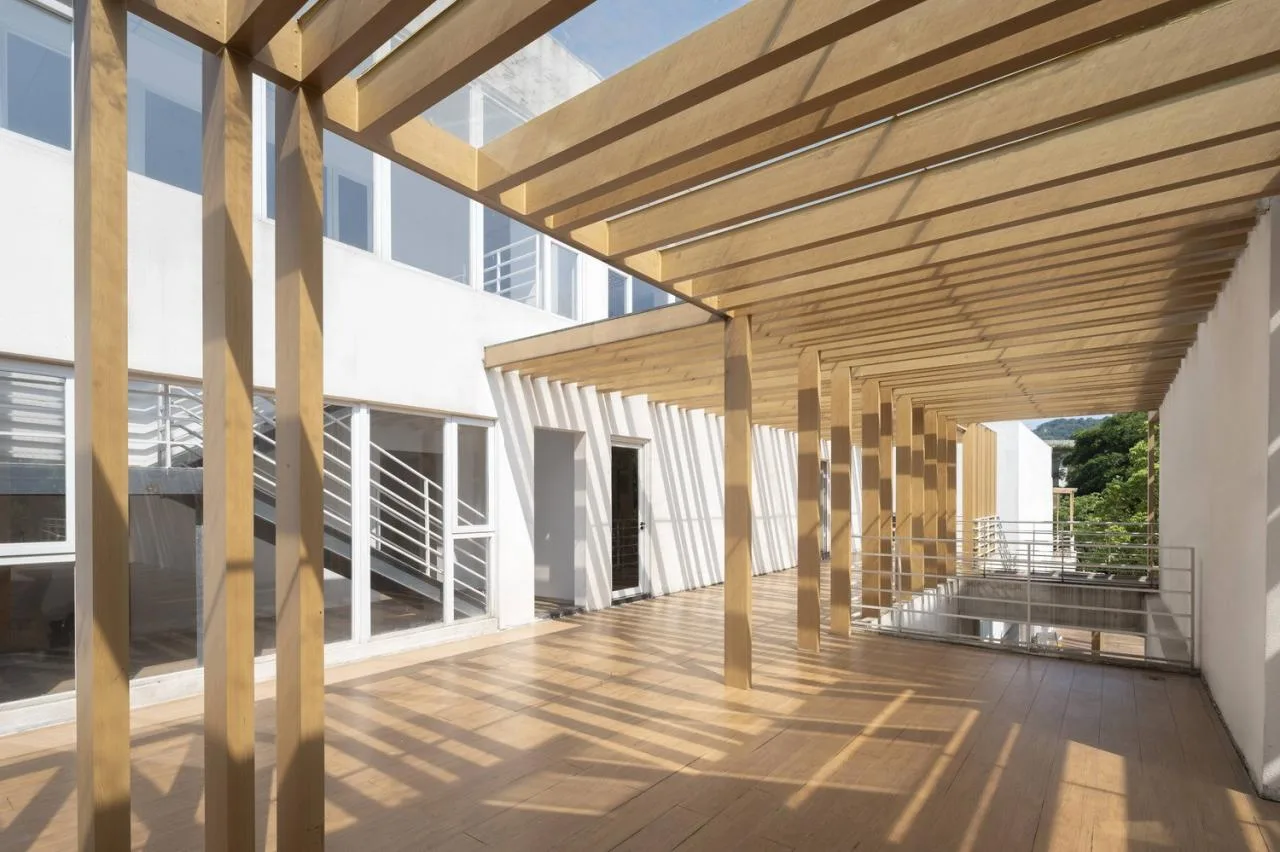
The building’s exterior features a simple and clean design, primarily using white real stone paint combined with a wooden lattice screen. This wooden grid acts as a secondary skin, providing shade while adding depth and texture to the facade. The minimalist approach delivers a fresh aesthetic that balances the building’s temporary nature with artistic expression.
Rural Reception Room
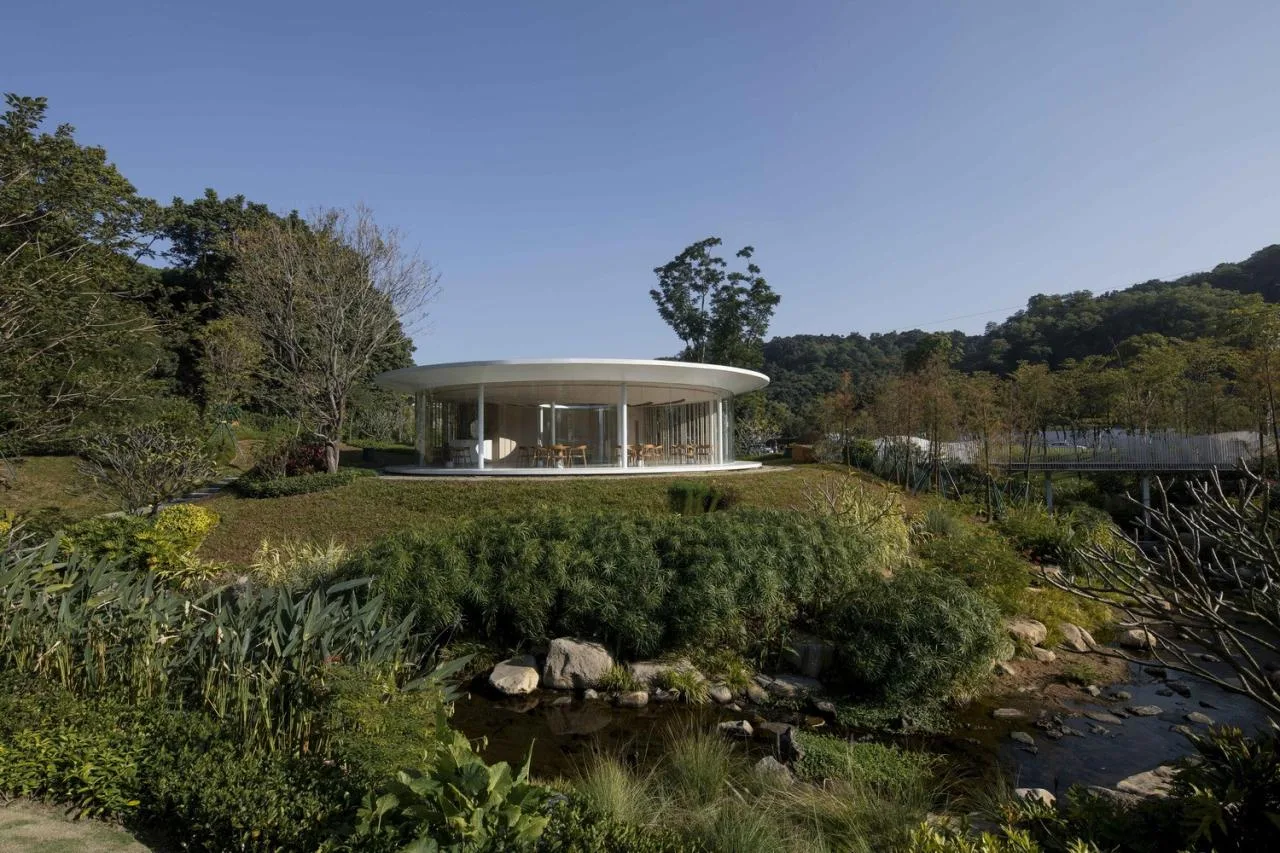
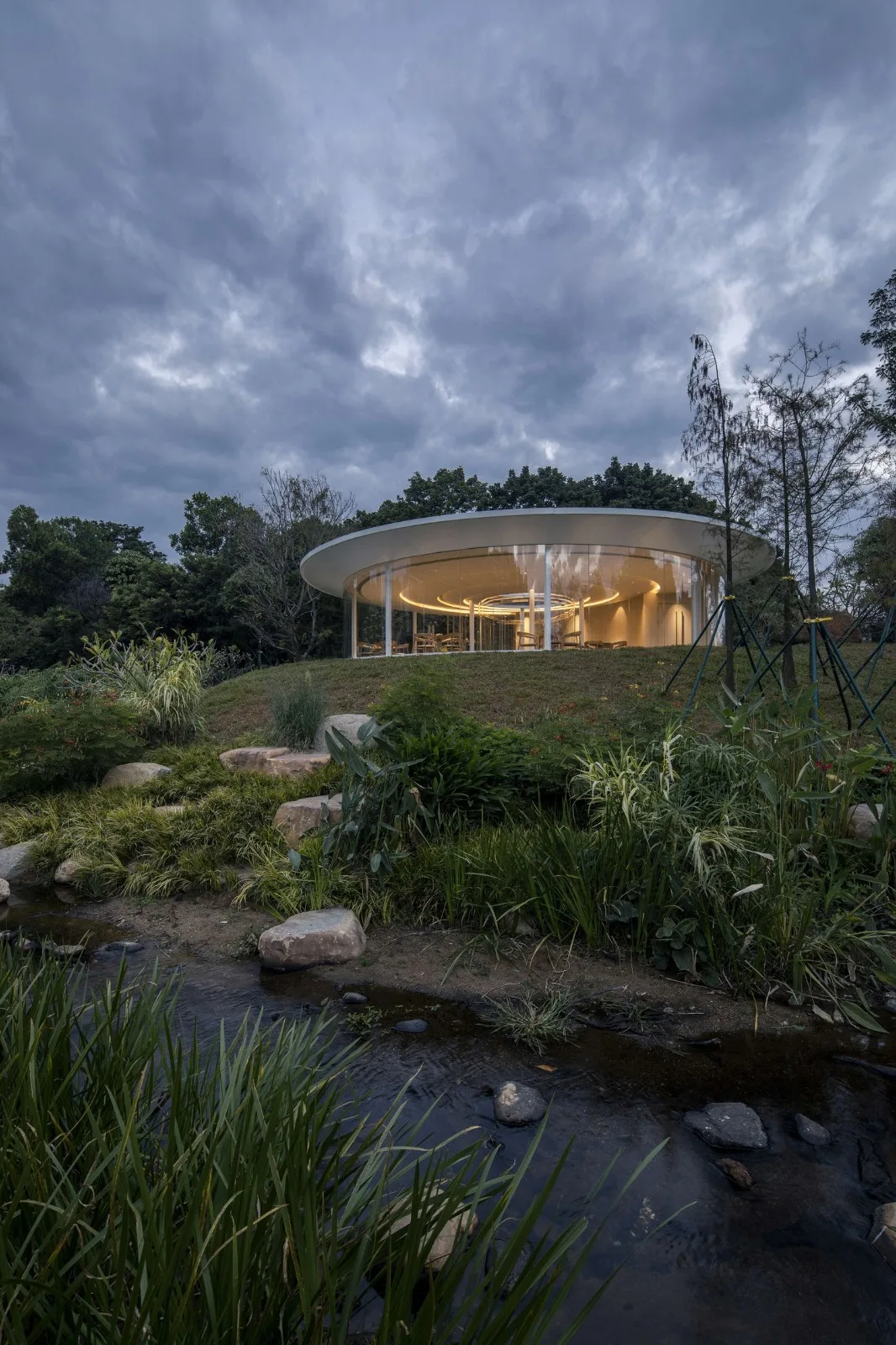
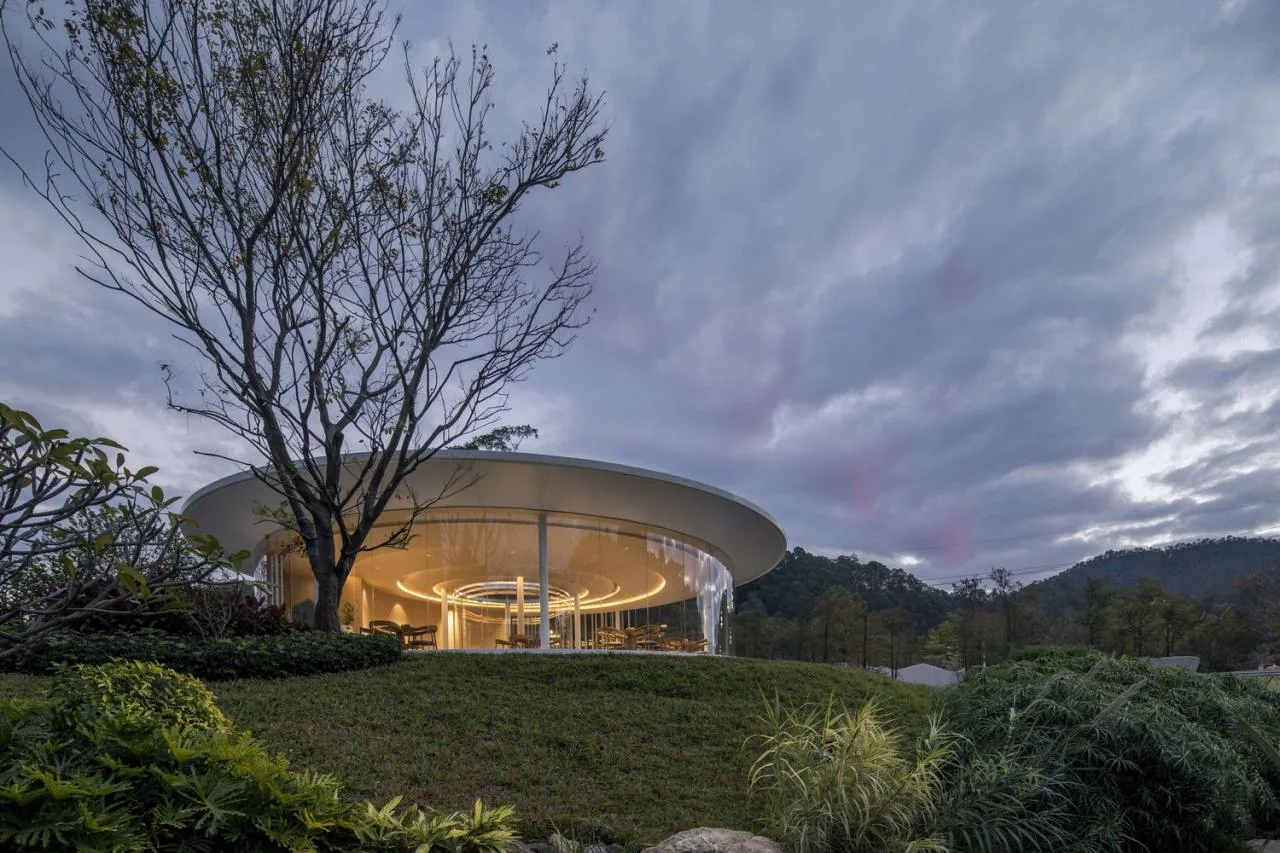
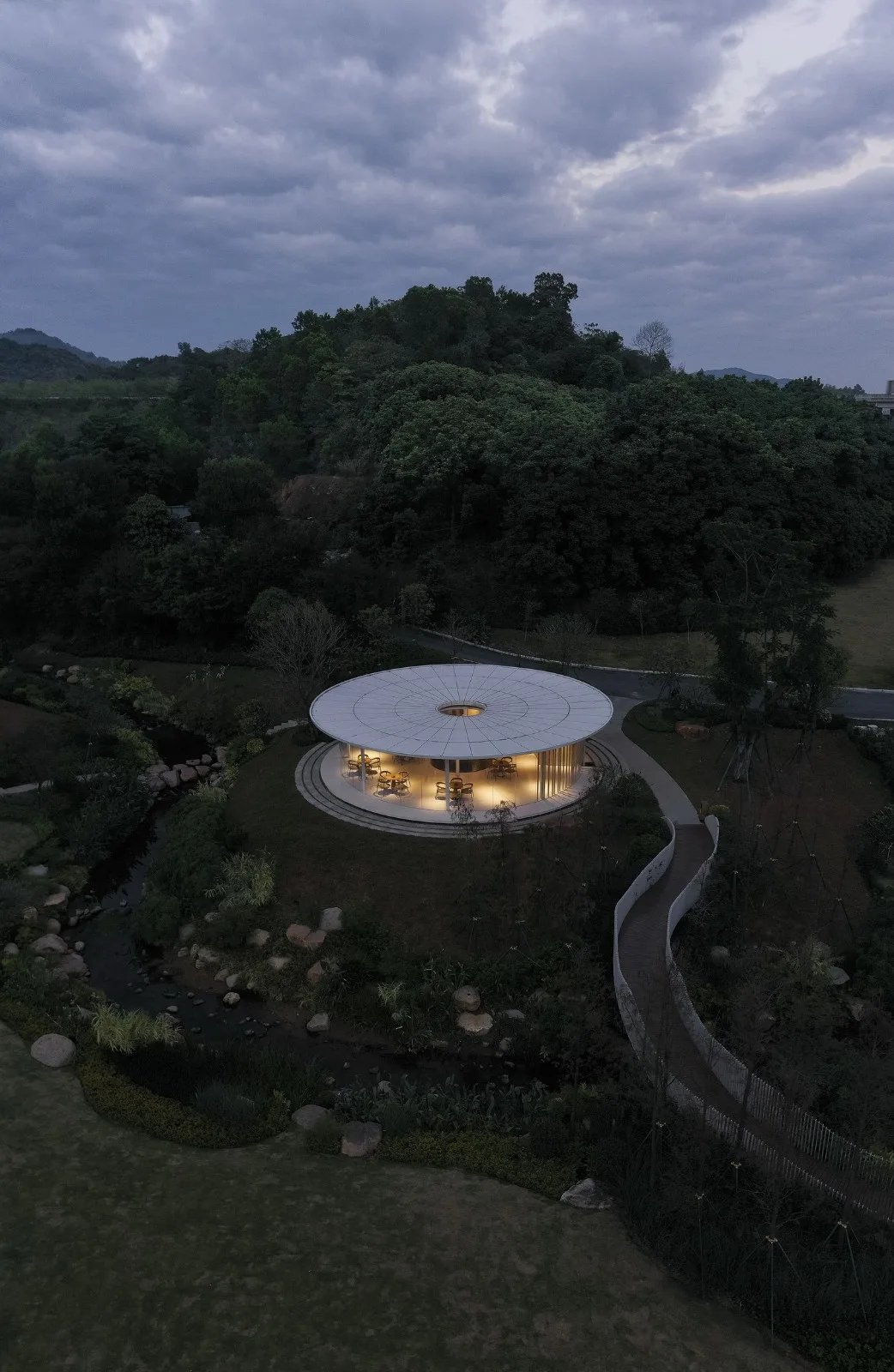
Located on the east side of Guizui Creek, the rural reception room primarily functions as a tea room. The building is modest in size but features a spacious roof and a transparent facade that blends seamlessly with the surrounding landscape, giving it the character of a modern pavilion.
The design is circular, centered around an inner courtyard. The roof slopes downward from the outside to the center, directing rainwater toward the hall in four directions. The exterior facade facing the workstation and park is composed of floor-to-ceiling glass, creating a strong visual connection between indoors and outdoors, and fostering communication between the workstation and the reception area. Some glass panels incorporate interior wooden lattice screens, providing shade while echoing the rural revitalization workstation’s exterior design.
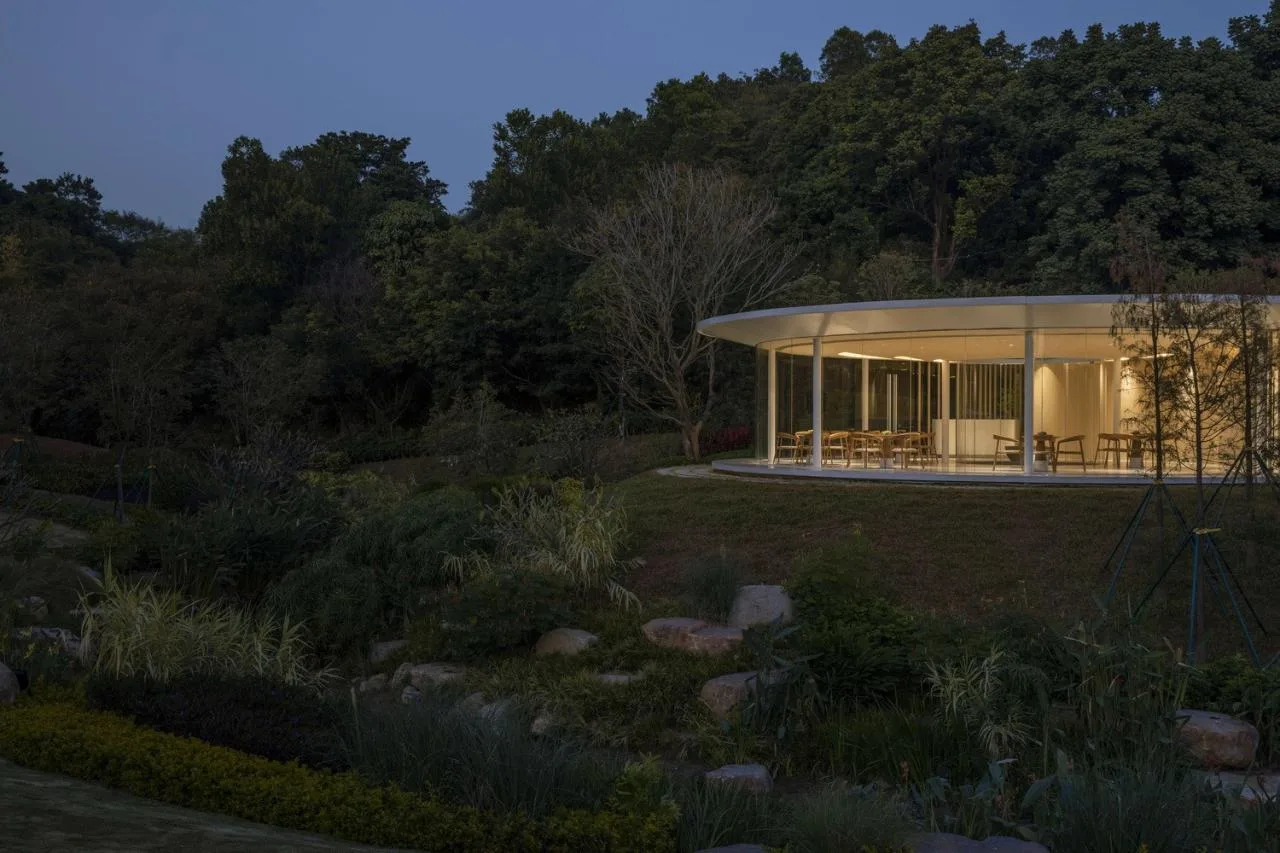
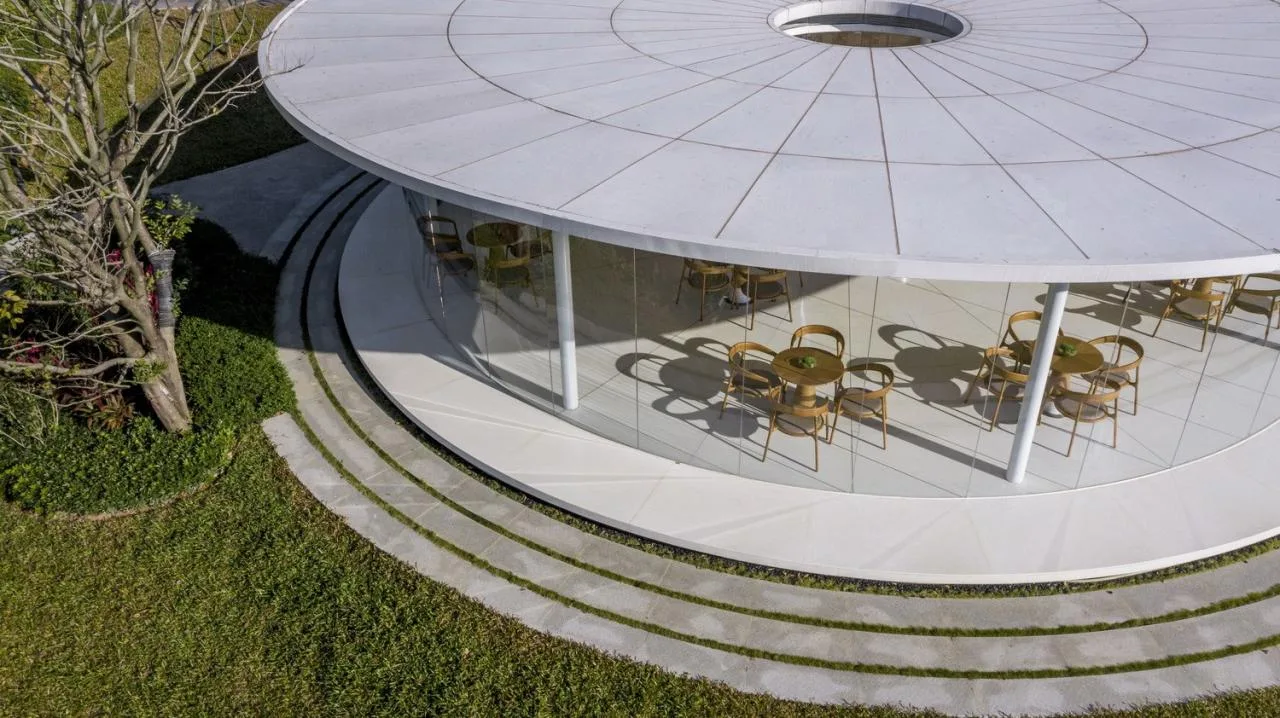
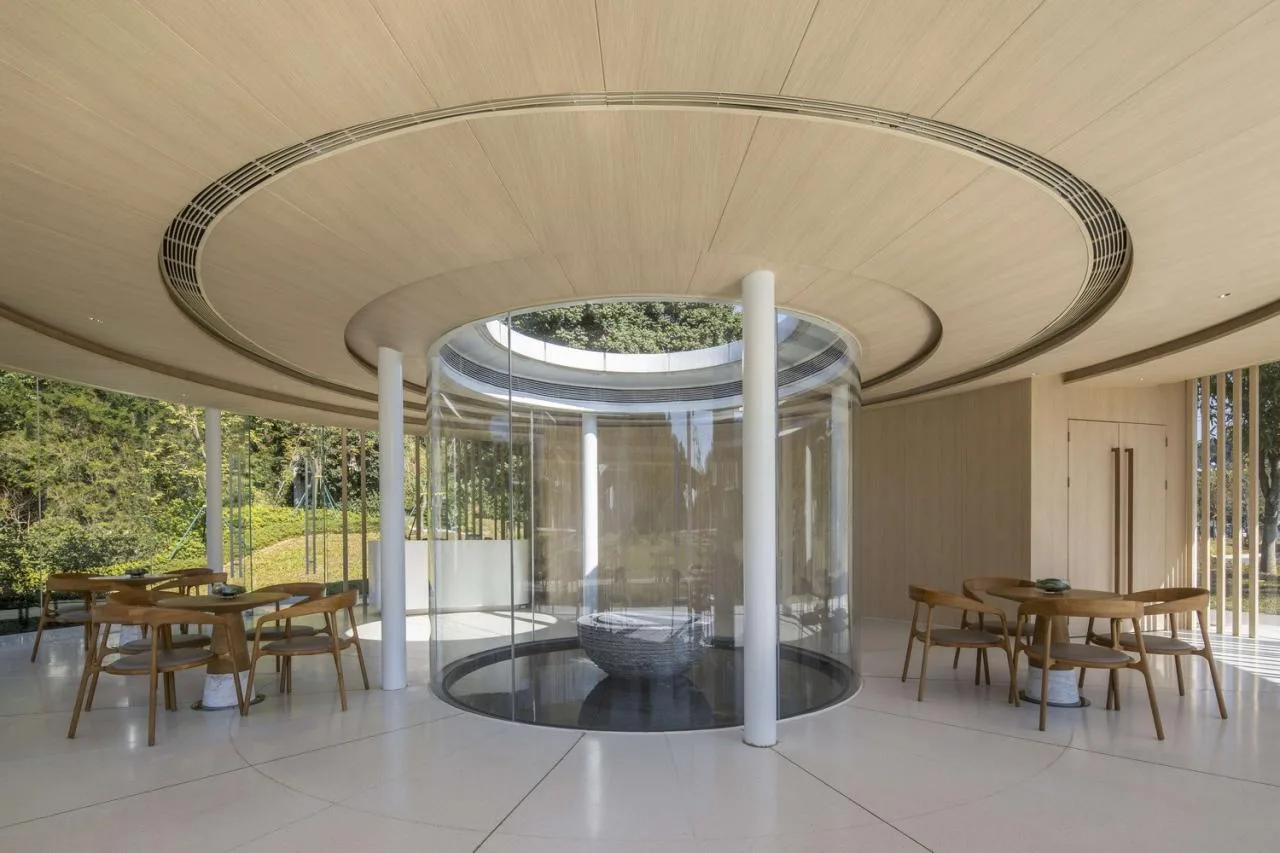
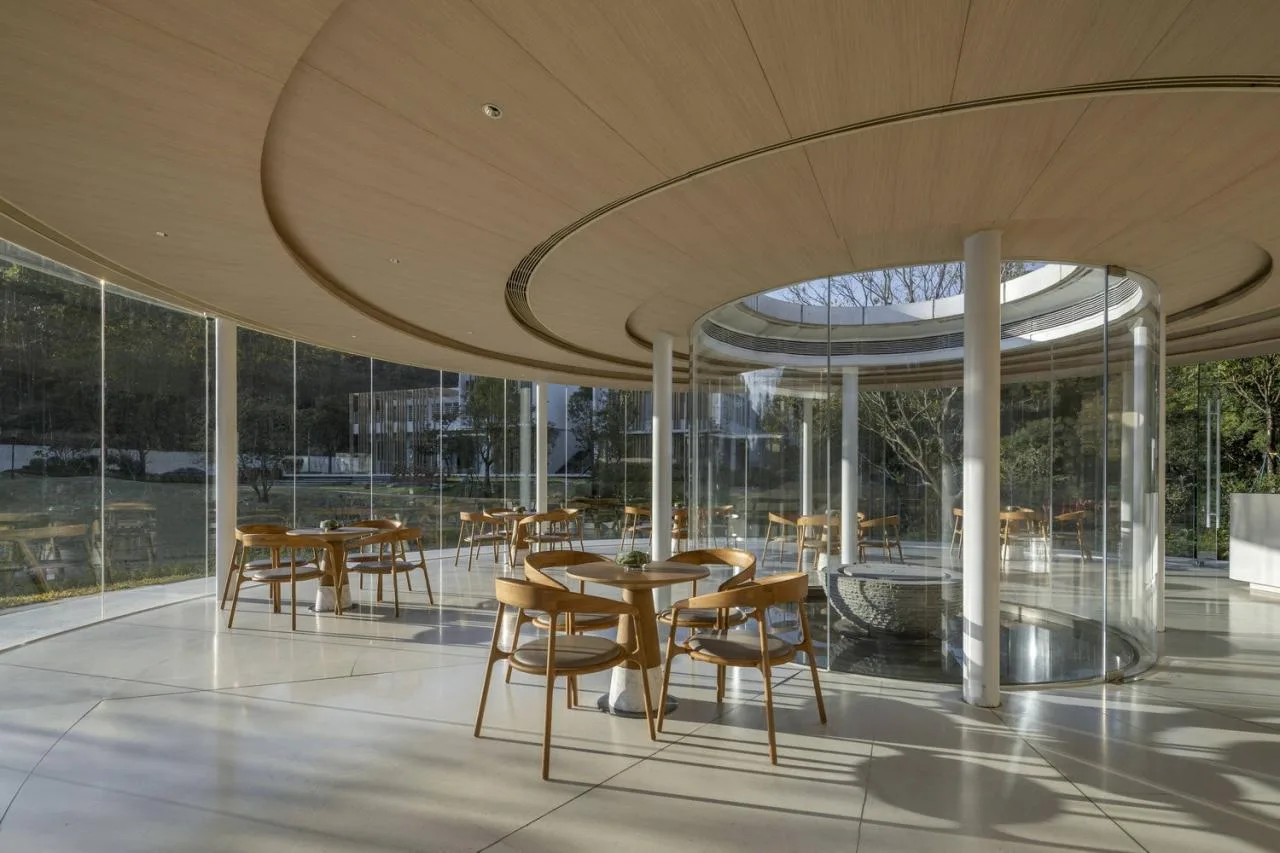
To enhance the sense of lightness and transparency, the living room structure employs steel framing. Architects and structural engineers collaborated to minimize the number of columns. The steel columns form two rings: the outer ring, positioned just inside the outer facade, consists of eight columns; the inner ring surrounds the courtyard with only four columns, reducing the overall column count by half compared to the outer ring.
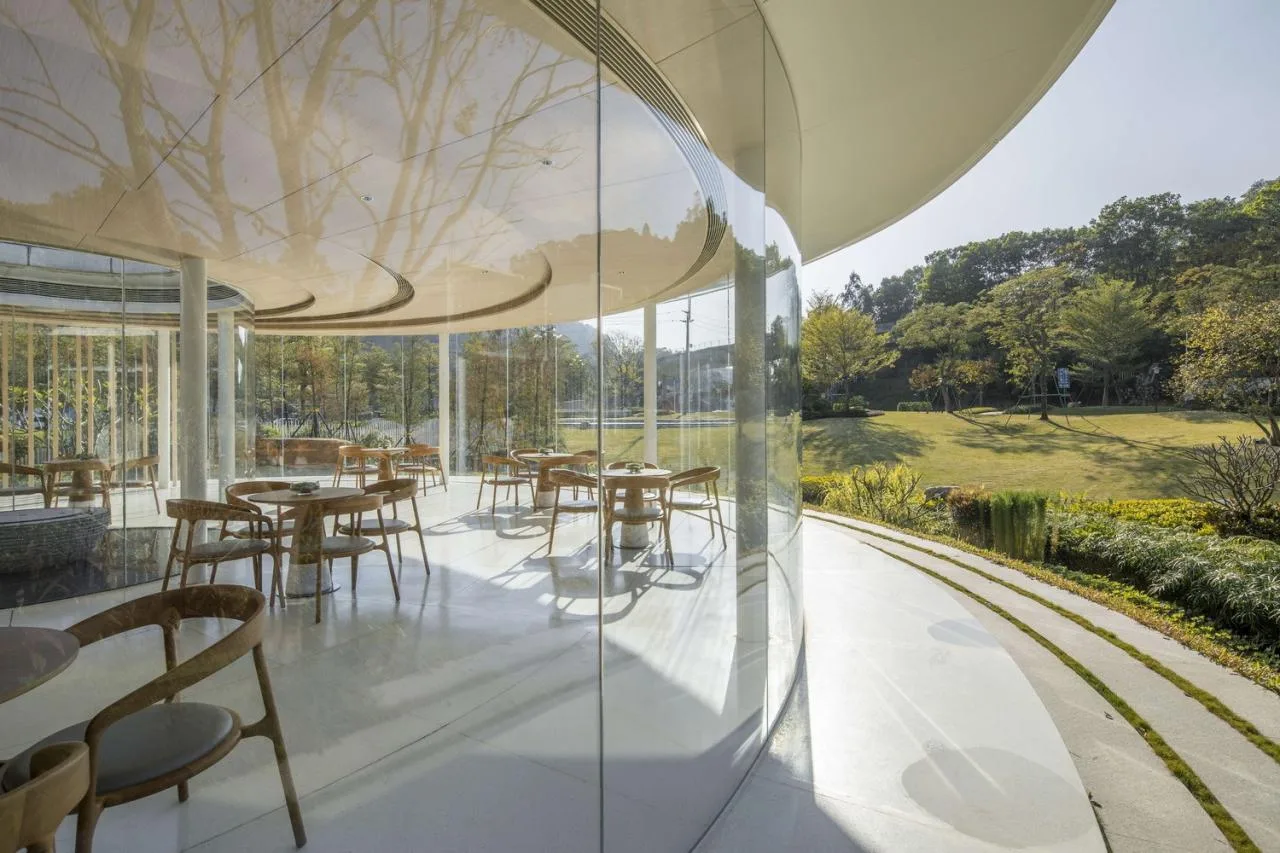
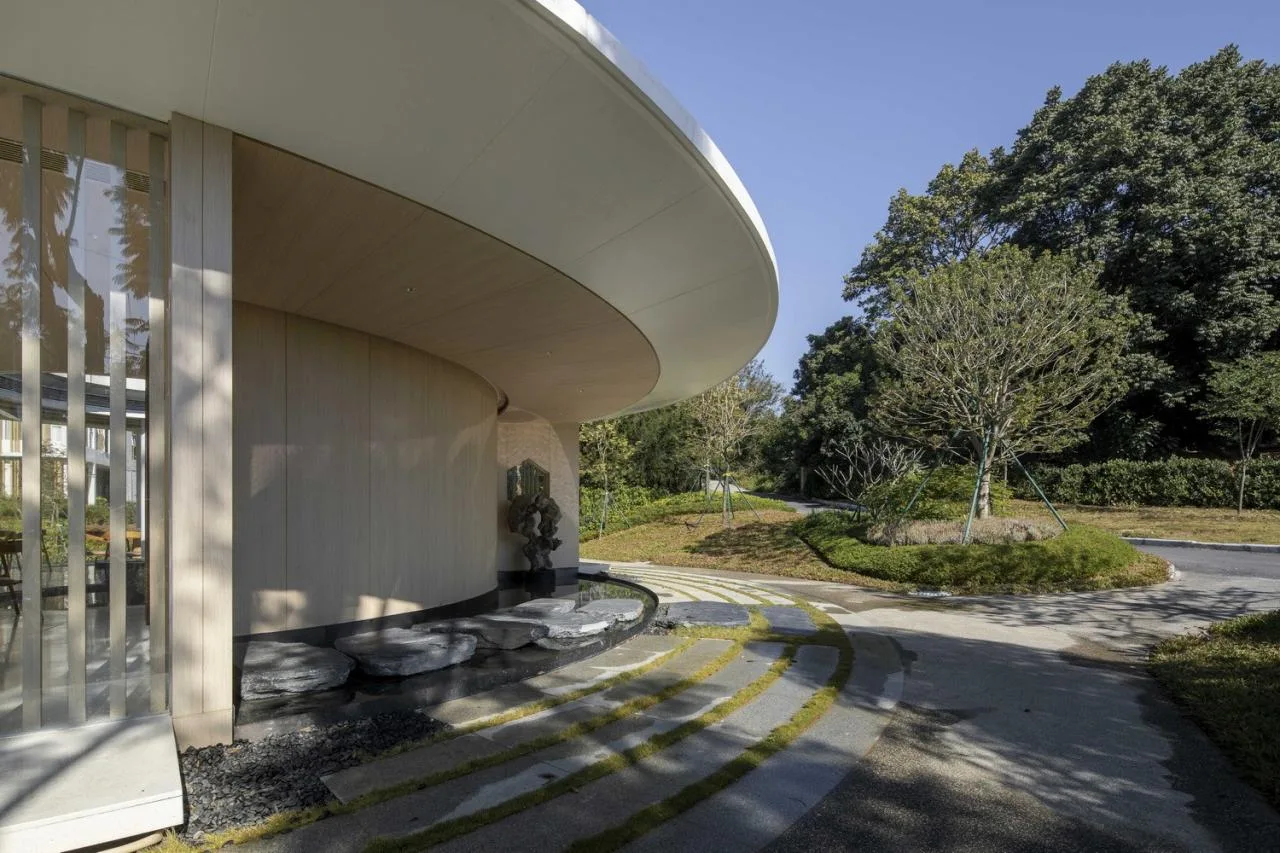
The entrance is designed with a recessed facade featuring a shallow water pool and stepping stones, inviting visitors to “step on water” as they enter. This area has a solid wall adorned with traditional Chinese hexagonal windows and rockeries, evoking the essence of classical Chinese garden architecture and adding cultural depth to the space.
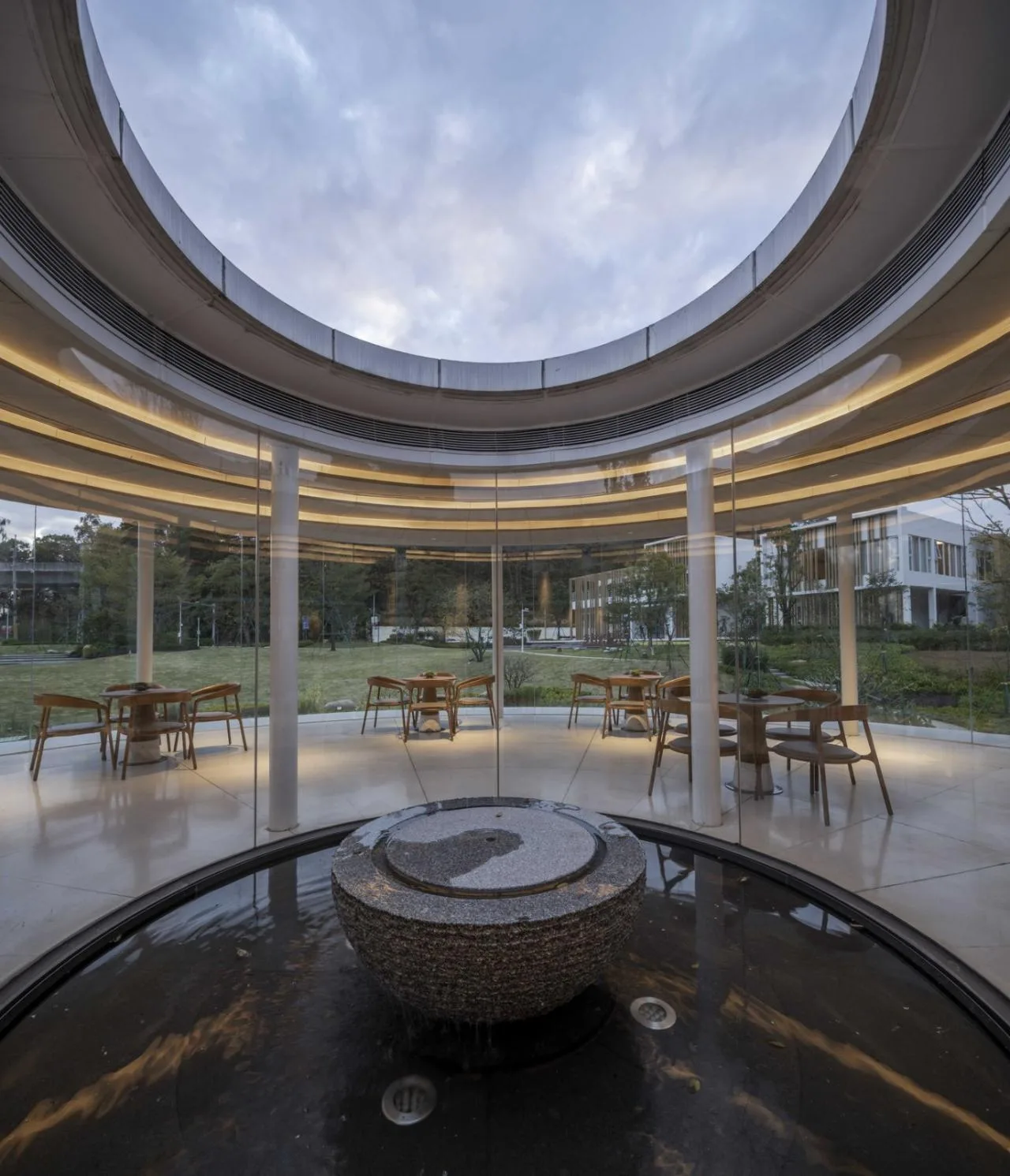
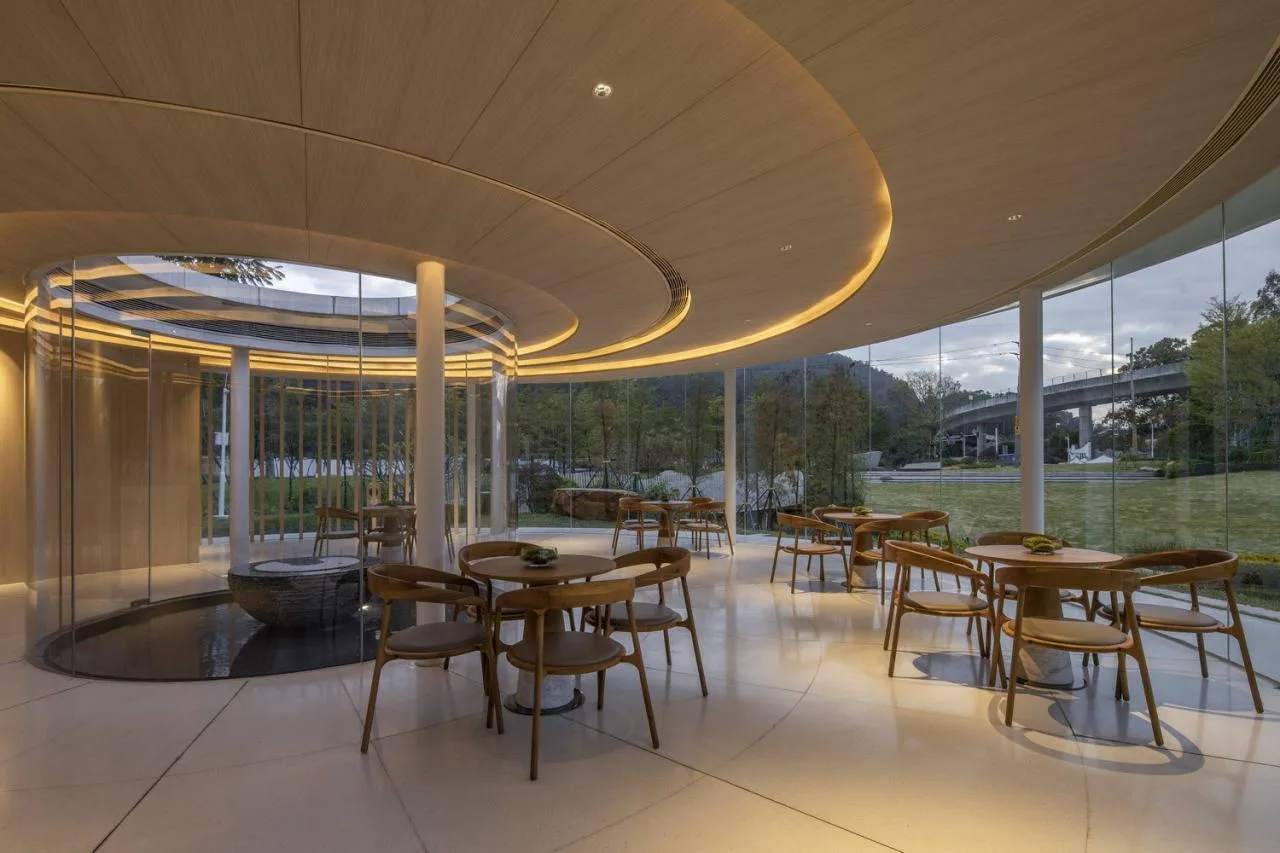
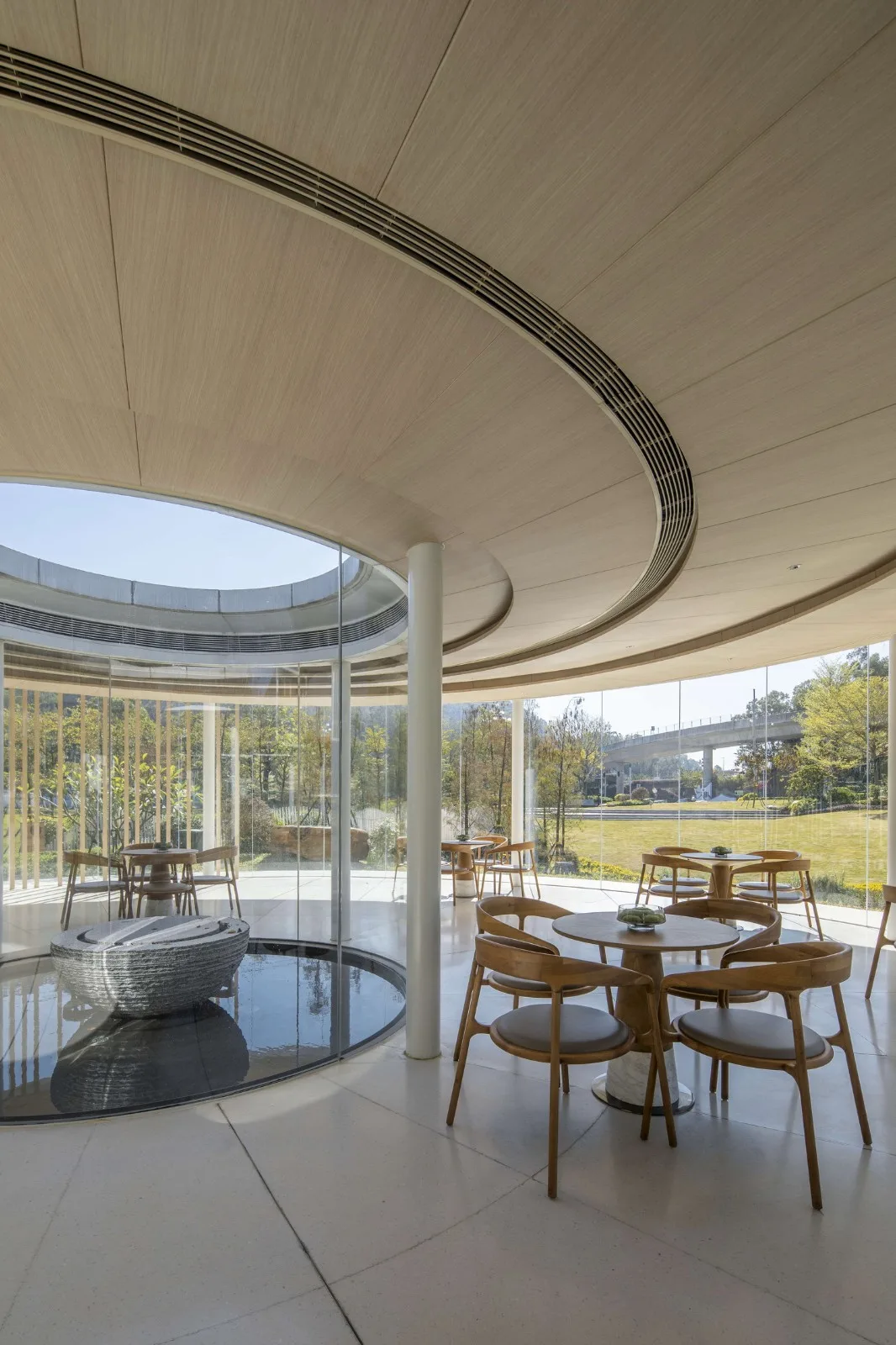
The reception room’s interior design emphasizes freshness and simplicity, featuring a flat terrazzo floor with fan-shaped dividing lines that complement the architectural form. The bowl-shaped wooden ceiling integrates lighting and air conditioning vents seamlessly within its design, preserving spatial integrity. The curved roof extends outward to form overhanging eaves, which correspond with a raised circular platform encircling the building’s exterior. This platform provides outdoor seating and gives the impression that the building “floats” above the ground, enhancing its sense of lightness.
Conclusion
“Lightness” is the defining design concept of this project. It is reflected in the relationship between the architecture and its environment, the construction style of the workstation, the form and texture of the rural reception room, and the treatment of structure and details in both buildings. The architects aimed to express different dimensions of “lightness,” encompassing not only physical lightness in form and structure but also an architectural attitude towards light, interaction, and harmony with the land and environment.
Project Drawings
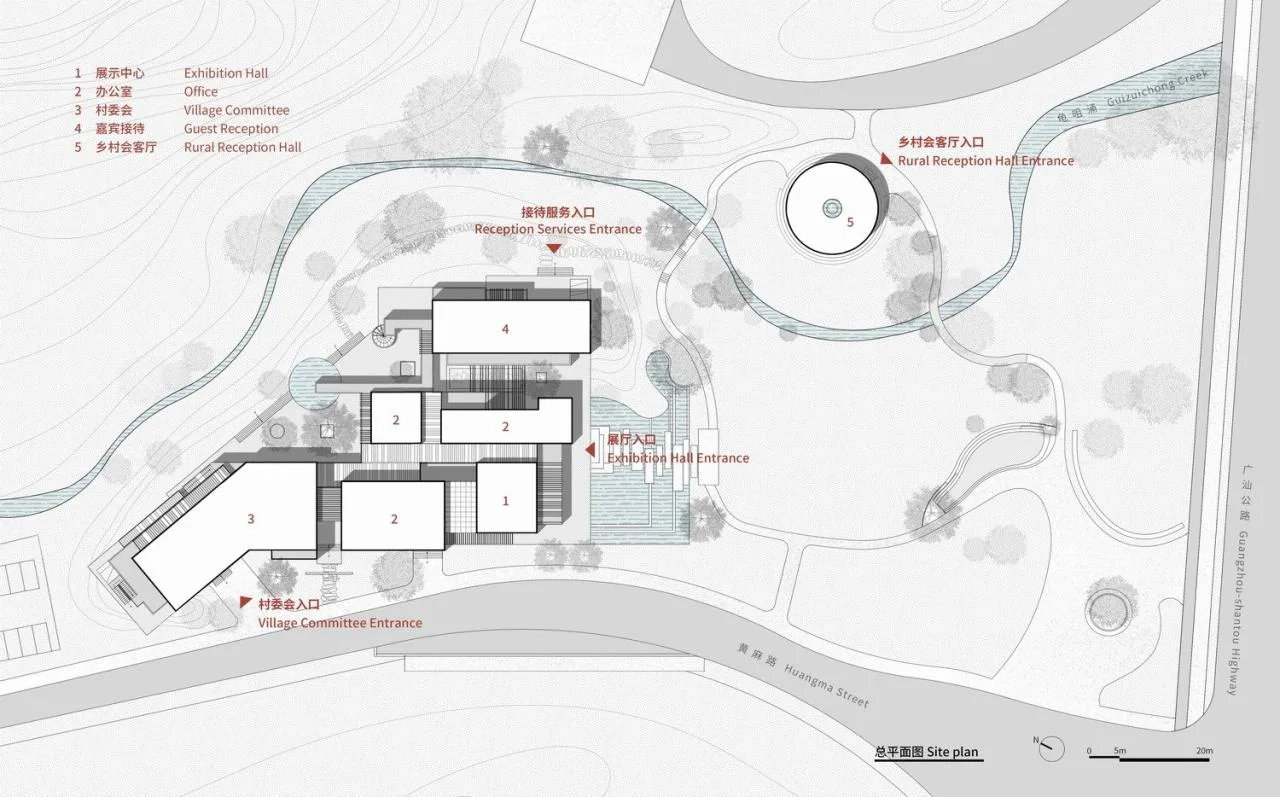
△ General Layout Plan
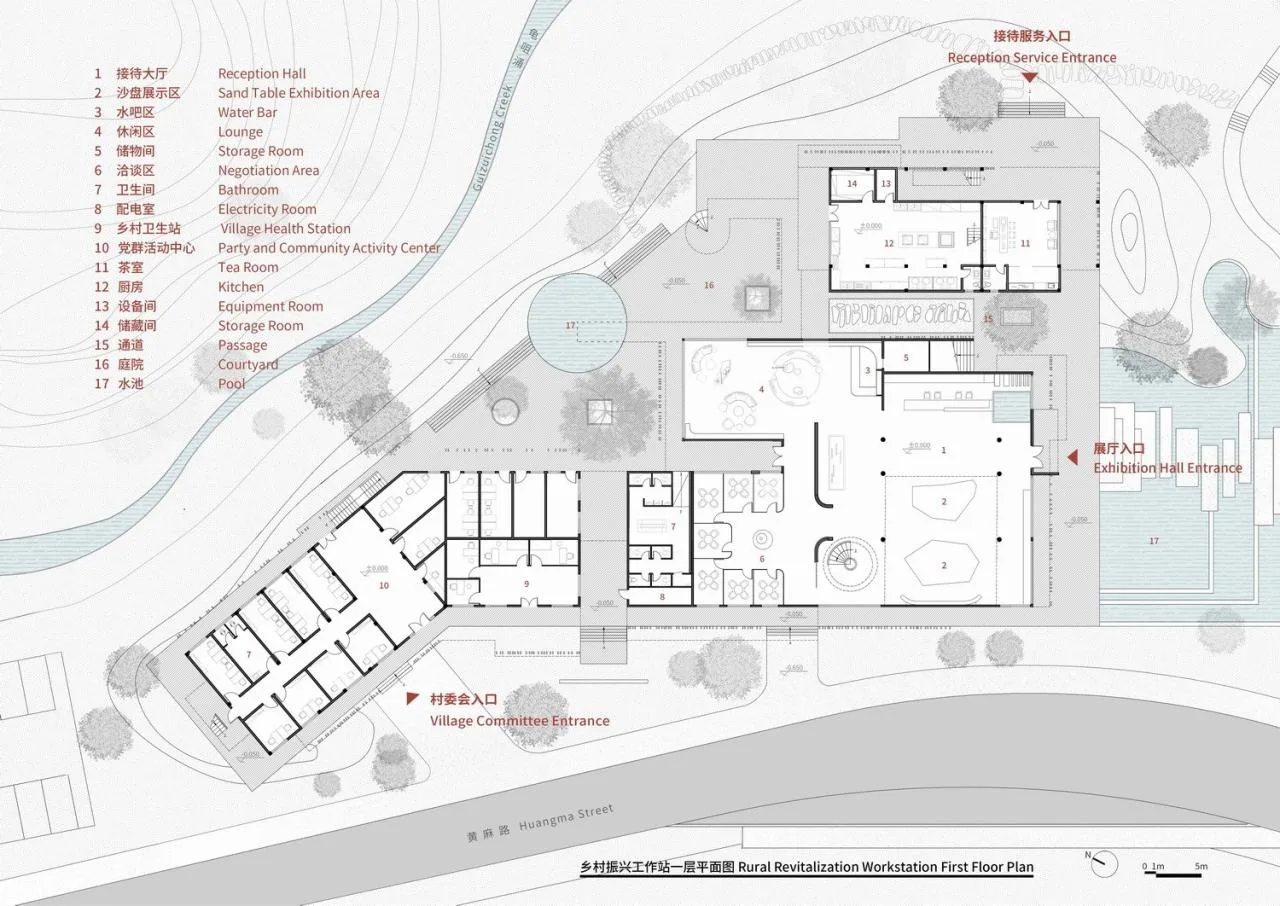
△ First Floor Plan
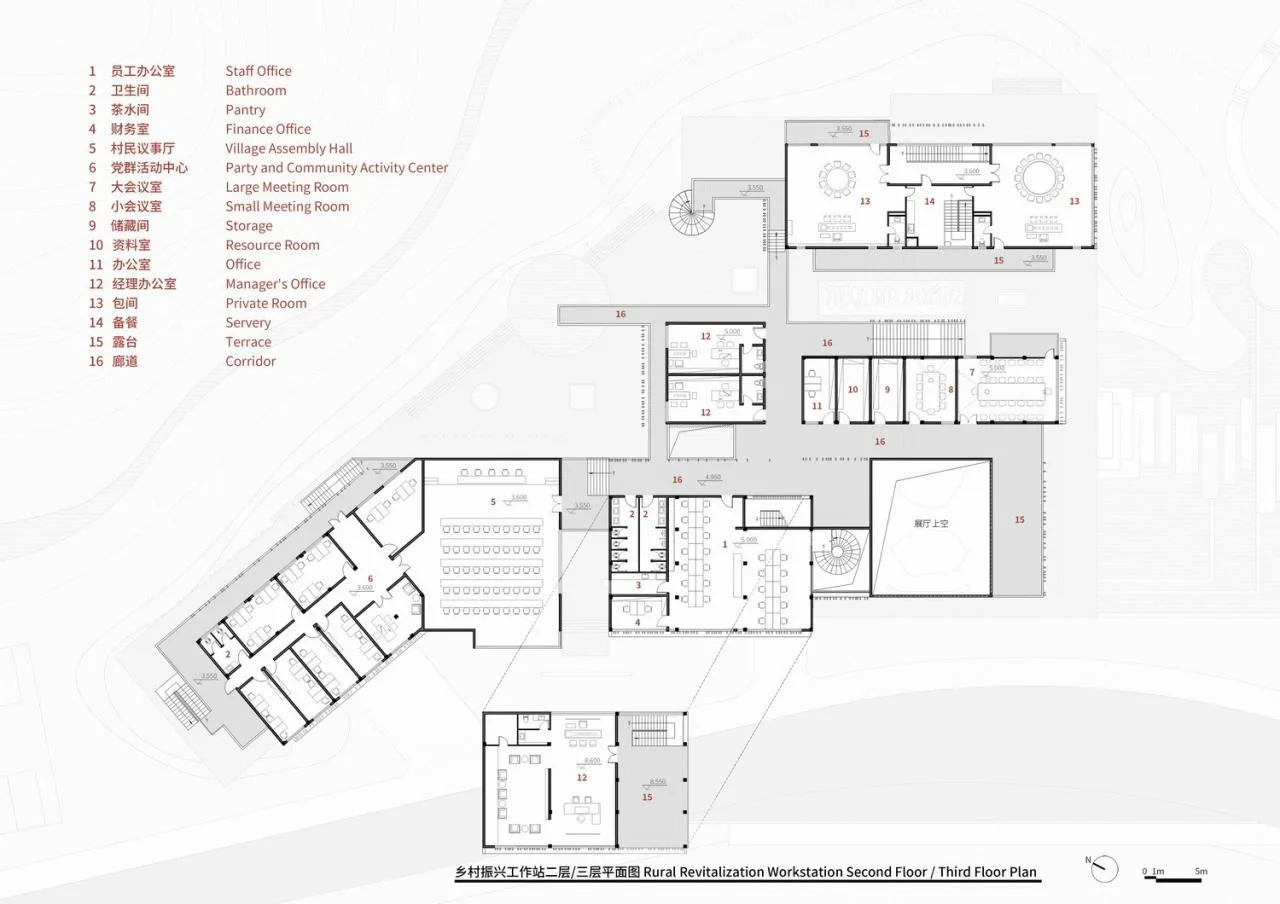
△ Second and Third Floor Plans
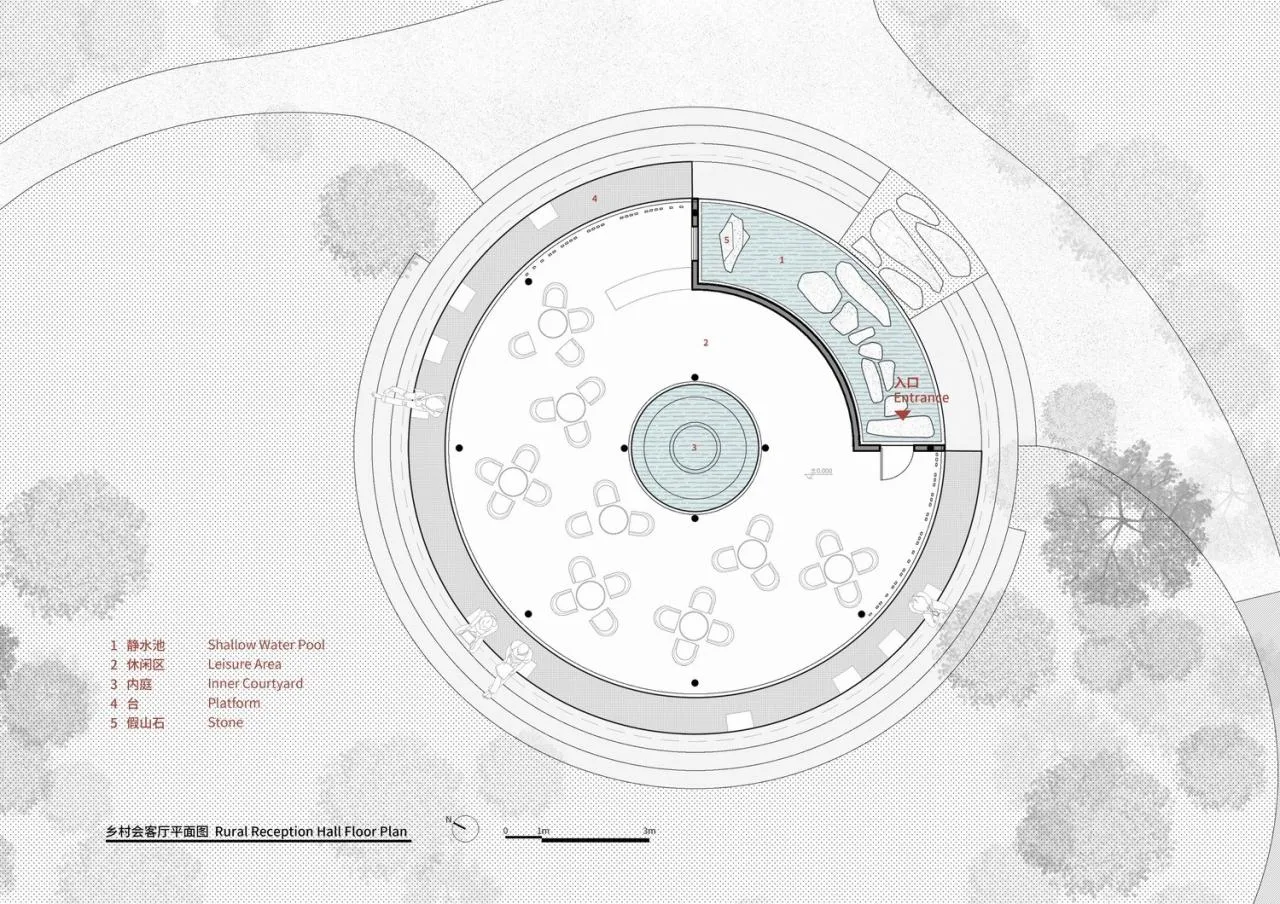
△ Plan of Rural Reception Room
Project Information
Name: Huangma Rural Revitalization Workstation and Rural Reception Room
Location: Huangma Village, Changling Street, Huangpu District, Guangzhou City, Guangdong Province
Owner: Agile Group
Architecture and Interior Design: Three Literature Architecture
Lead Architects: He Wei, Chen Long
Team Members: Tang Jing, Wang Ziyi, Meng Xiangting, Zhou Junjie, Wang Dongsheng, Liu Yong, Zhu Yanming
Design Period: March 2021 to July 2021
Construction Date: October 2022
Land Area: 8,000 square meters
Building Area: 5,200 square meters for rural revitalization workstation and 210 square meters for rural reception room
Photography: Jin Weiqi














Must log in before commenting!
Sign Up