
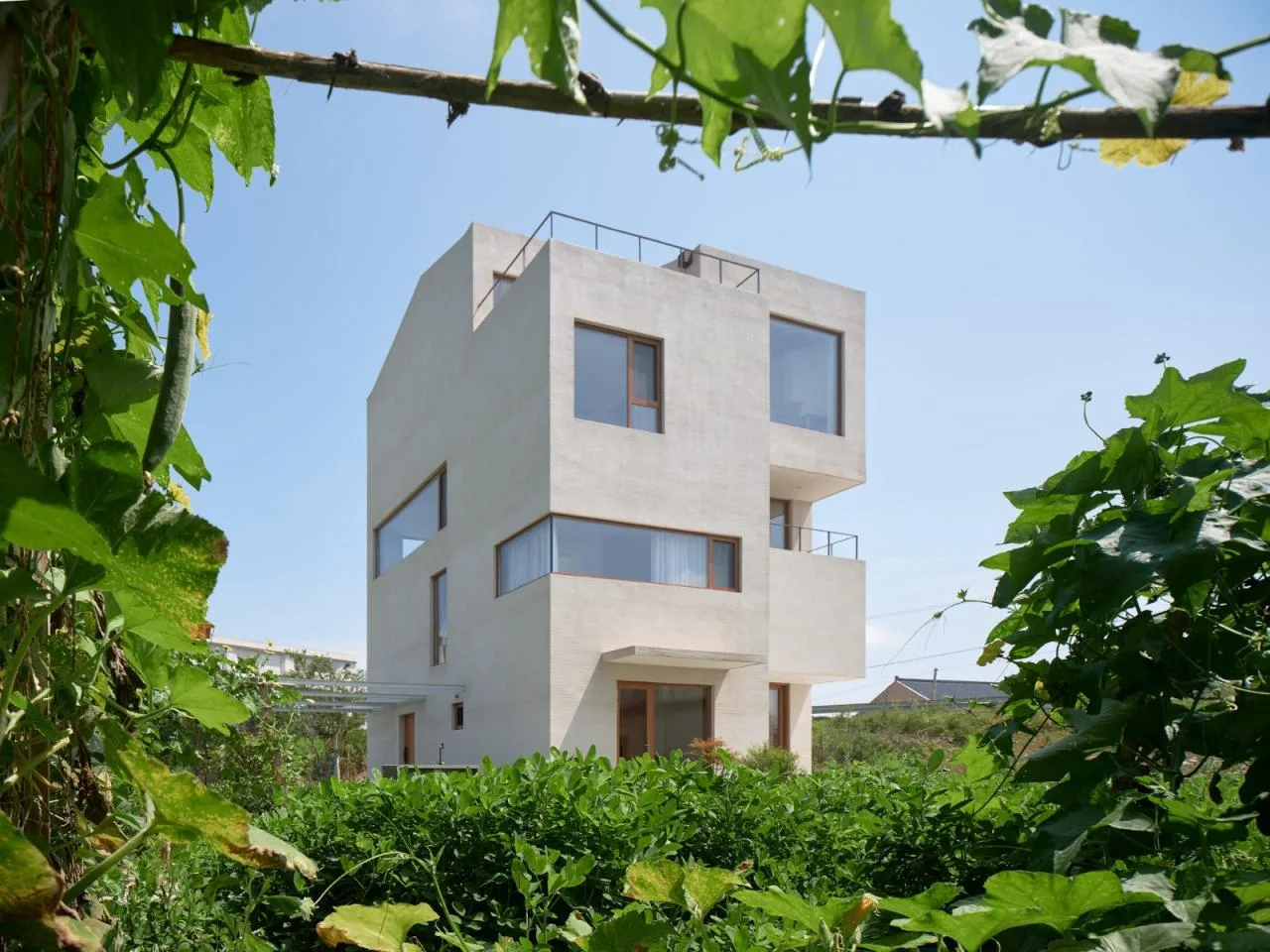
After embracing FIRE (Financial Independence, Retire Early), Mr. Peng, born in the 1980s, chose to return to his hometown with his wife and children to live alongside his parents. Renovating the old family home in rural Qidong became a priority. The redesigned Xinpeng Mansion needed to accommodate the vastly different lifestyles of two generations, seamlessly blending rural and urban living while maintaining a clear distinction between the two.
Qidong’s rural construction regulations are strict, requiring the renovation to stay within the original footprint of 90 square meters and to preserve the house’s original “matchbox” appearance. The old house, built in the 1980s, is a typical rural structure emblematic of its era, known for its economic practicality and common across northern and southern China. This project posed a unique challenge — it was not simply an urban upgrade or a modern rural improvement, but a carefully crafted, comfortable living space for three generations, all within a constrained framework.
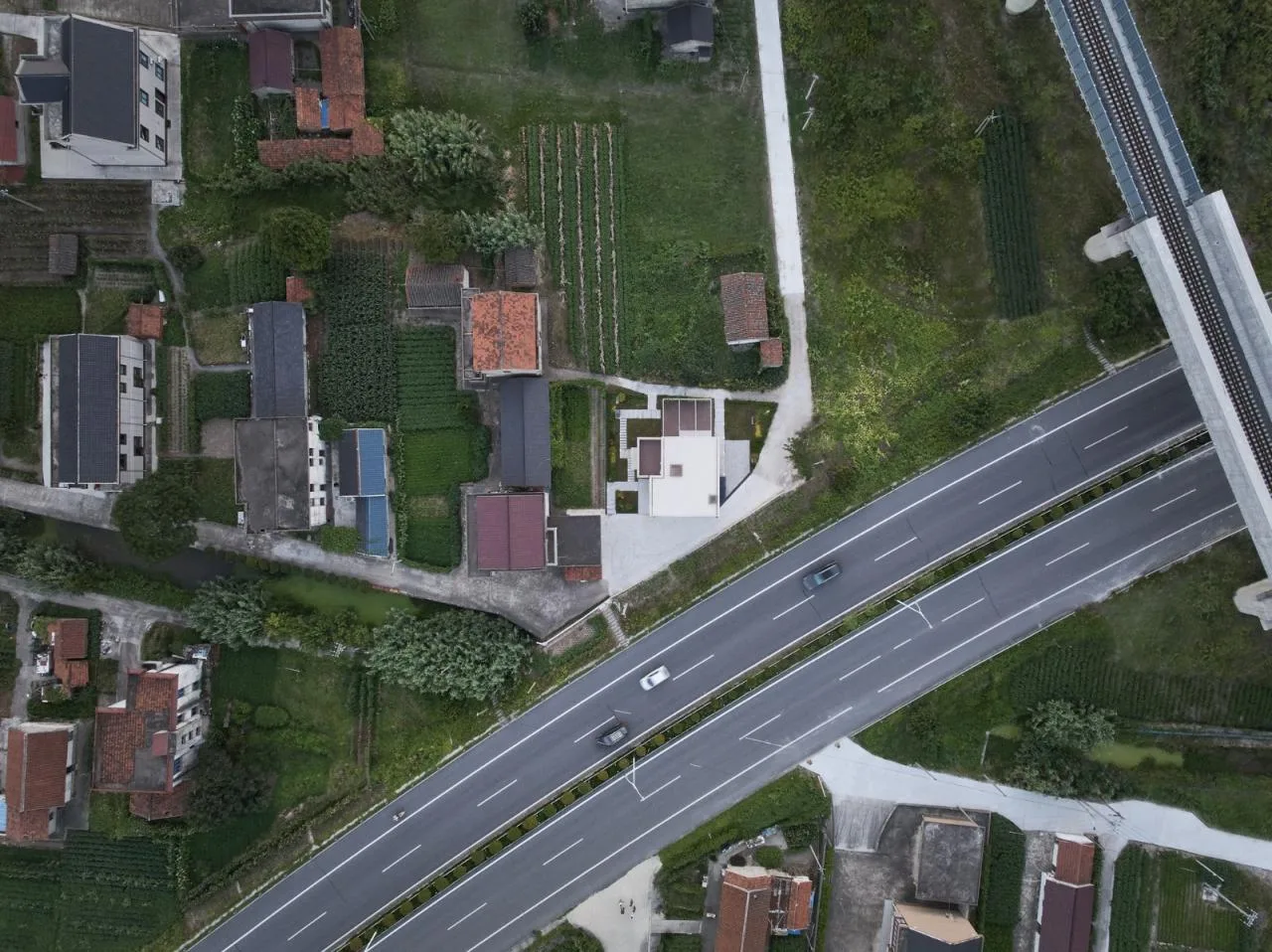
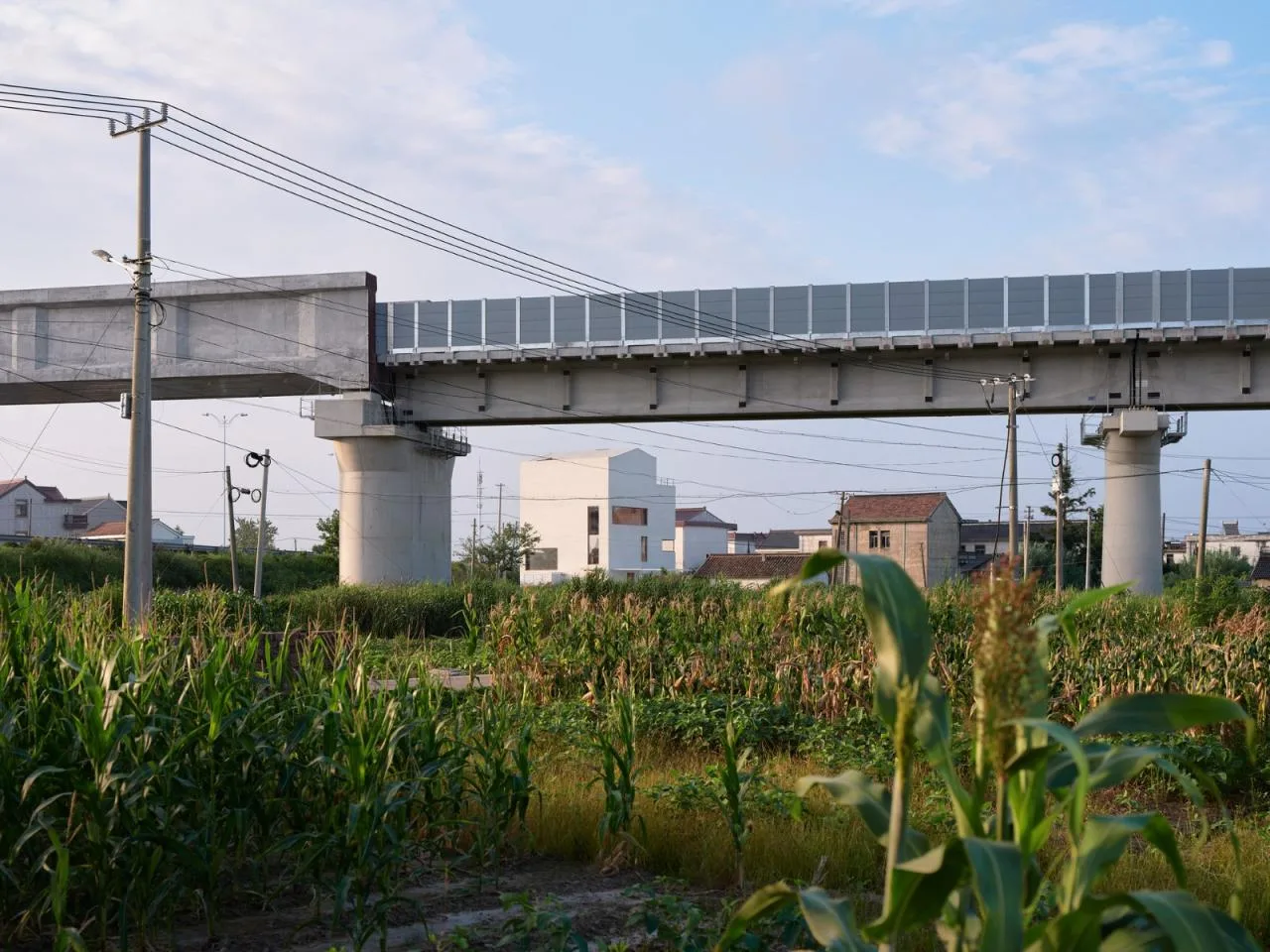
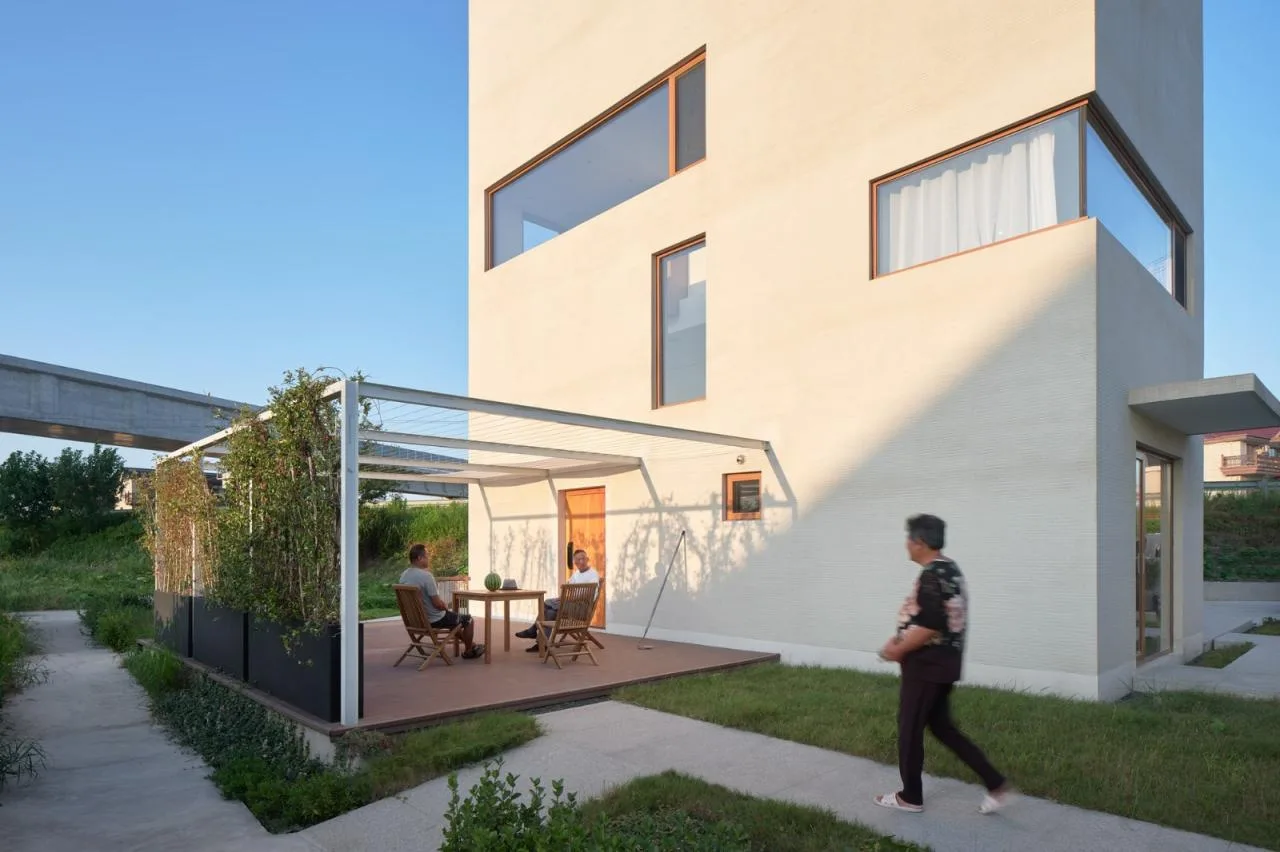
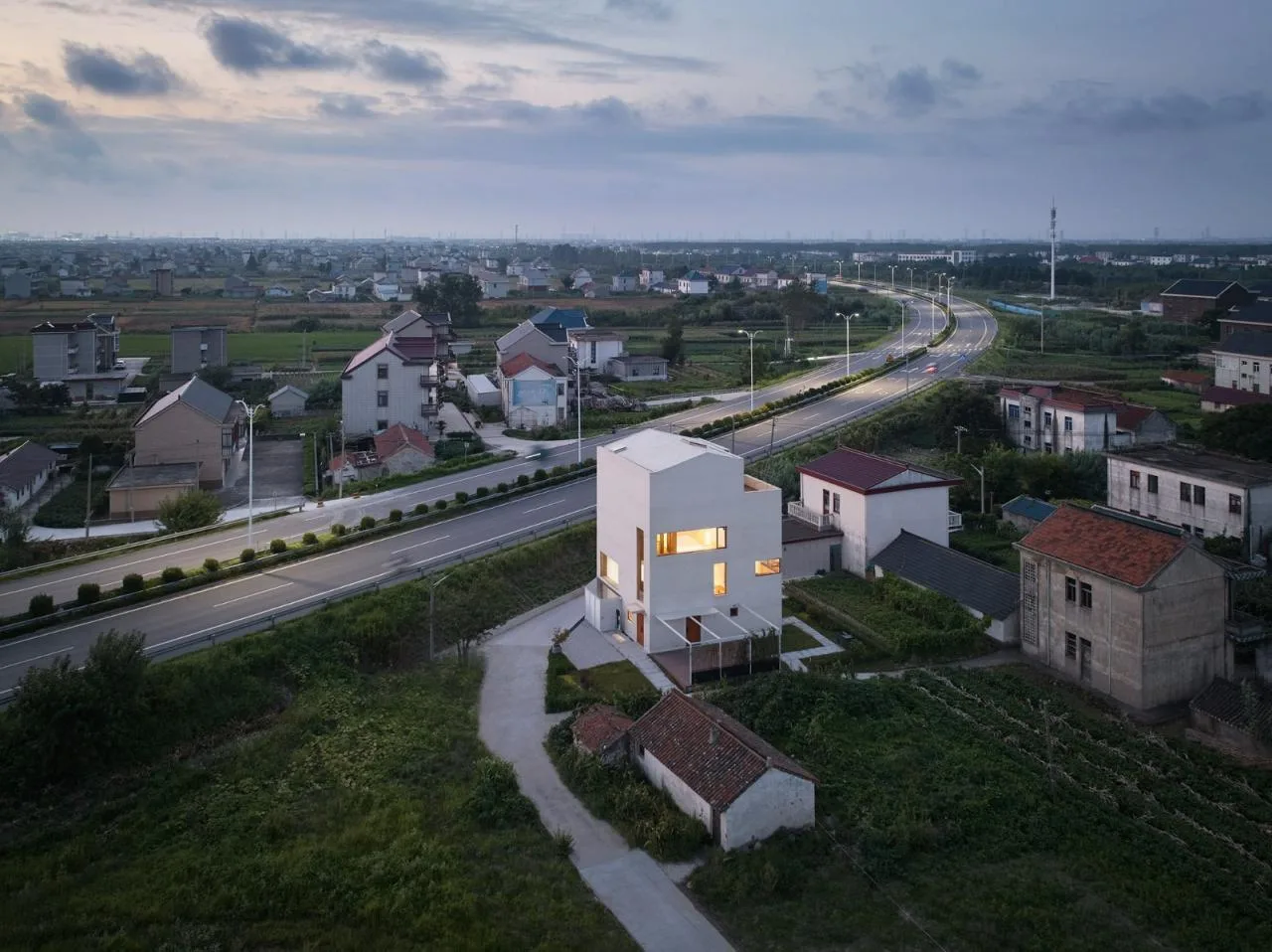
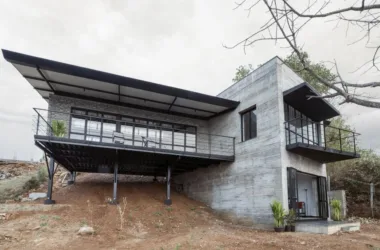
The site is located at the edge of the village, bordered by high-speed trains and highways, with the constant noise of passing vehicles. Consequently, the east and north sides of the house—facing the highway and railway—feature almost no windows, giving the home a fortress-like appearance that resists urban encroachment. Instead, windows are placed on the west and south sides, facing the village, to foster a connection with the rural environment.
To avoid potential complaints from neighbors that could halt construction indefinitely, the building strictly adheres to the original base outline without any extensions. Mr. Peng navigated this familiar yet changed landscape cautiously, like a traveler returning home.
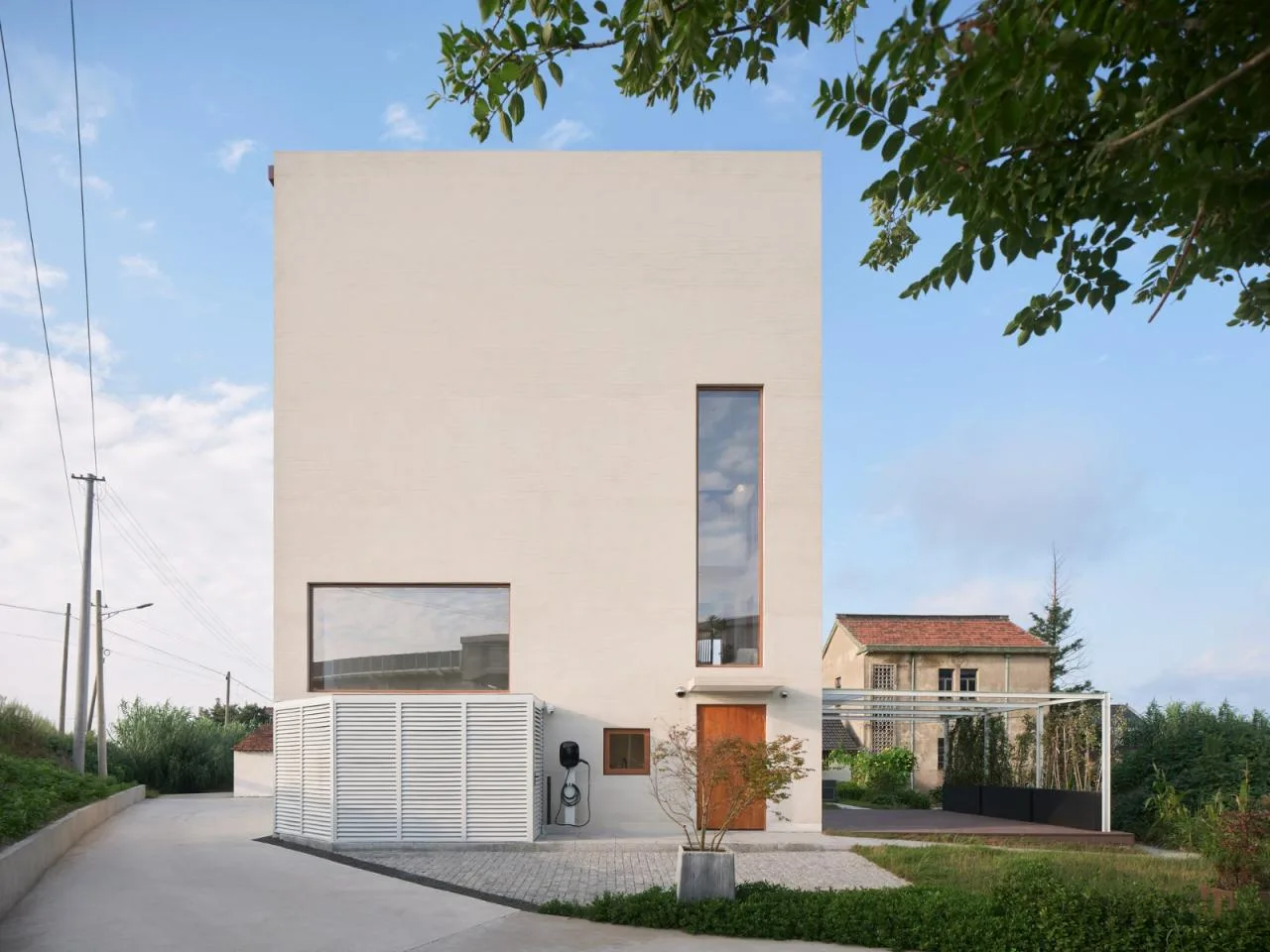
Despite complying with all regulations, experienced rural architects advised a “half demolition, half rebuild” approach. This approach increased construction complexity and costs, while influencing the entire planning logic, starting from the building’s profile.
With rural society becoming more fragmented, neighborhood relationships have grown delicate, dominated by overlapping interests and kinship ties in a loosening social fabric. Initially confident, Mr. Peng expected smooth progress, given the familial ties with some neighbors and warm greetings exchanged door-to-door. However, complaints and disputes arose as anticipated. Ultimately, the small attached structures like the chicken coop and firewood room could not be preserved despite multiple efforts, as photos and remote sensing images failed to verify their existence. Fortunately, the main building was able to be renovated by combining two sections.
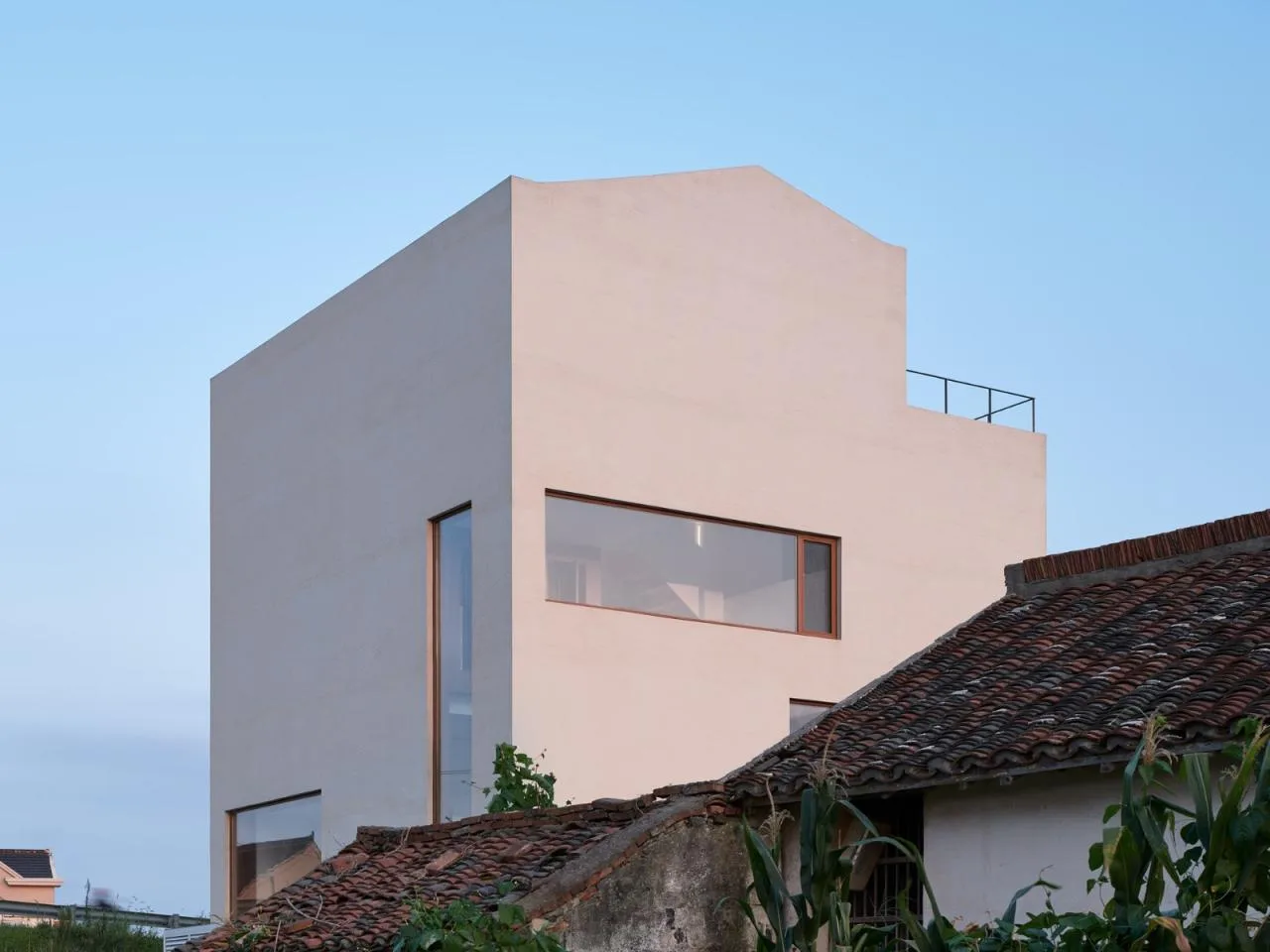
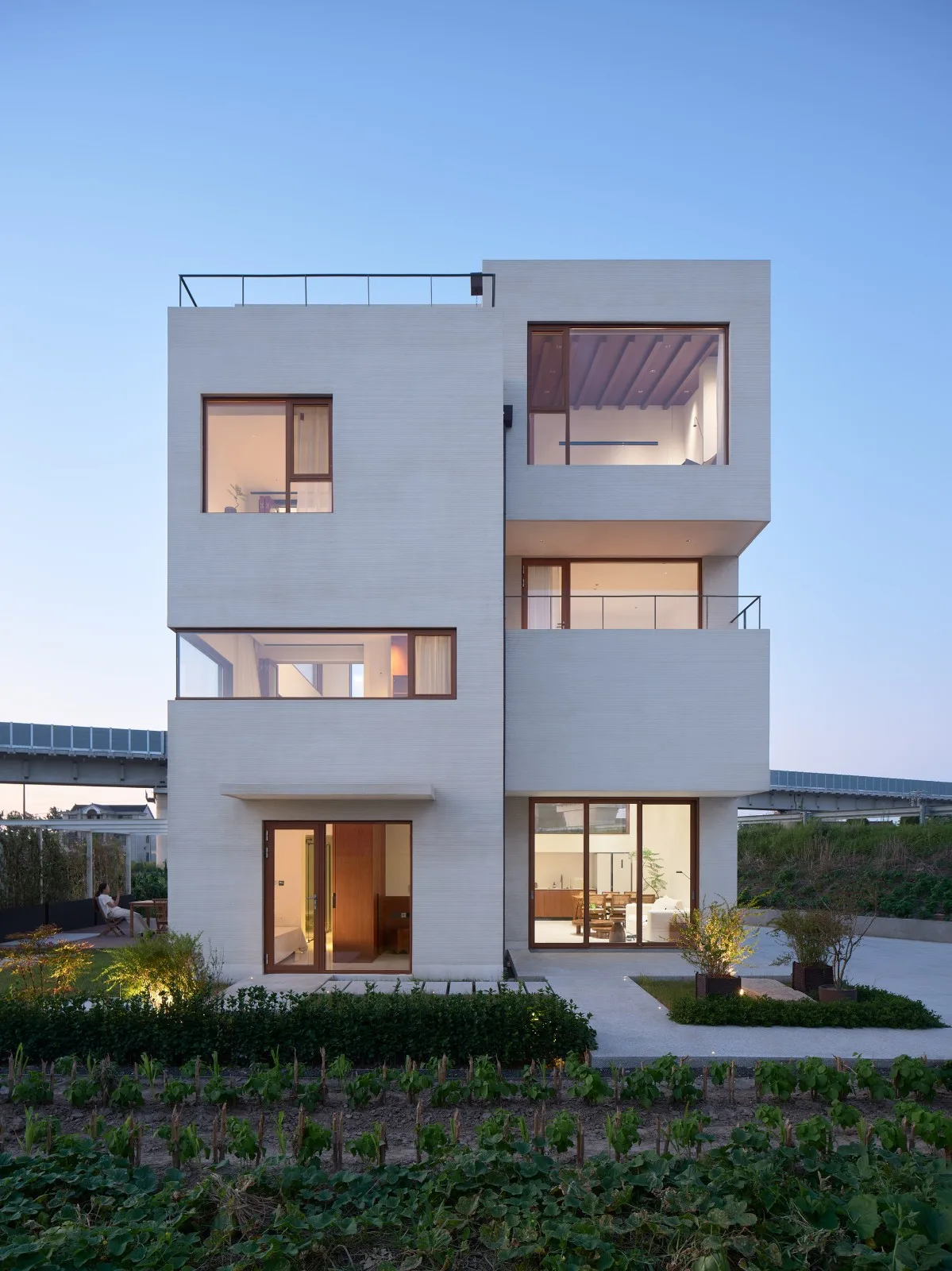
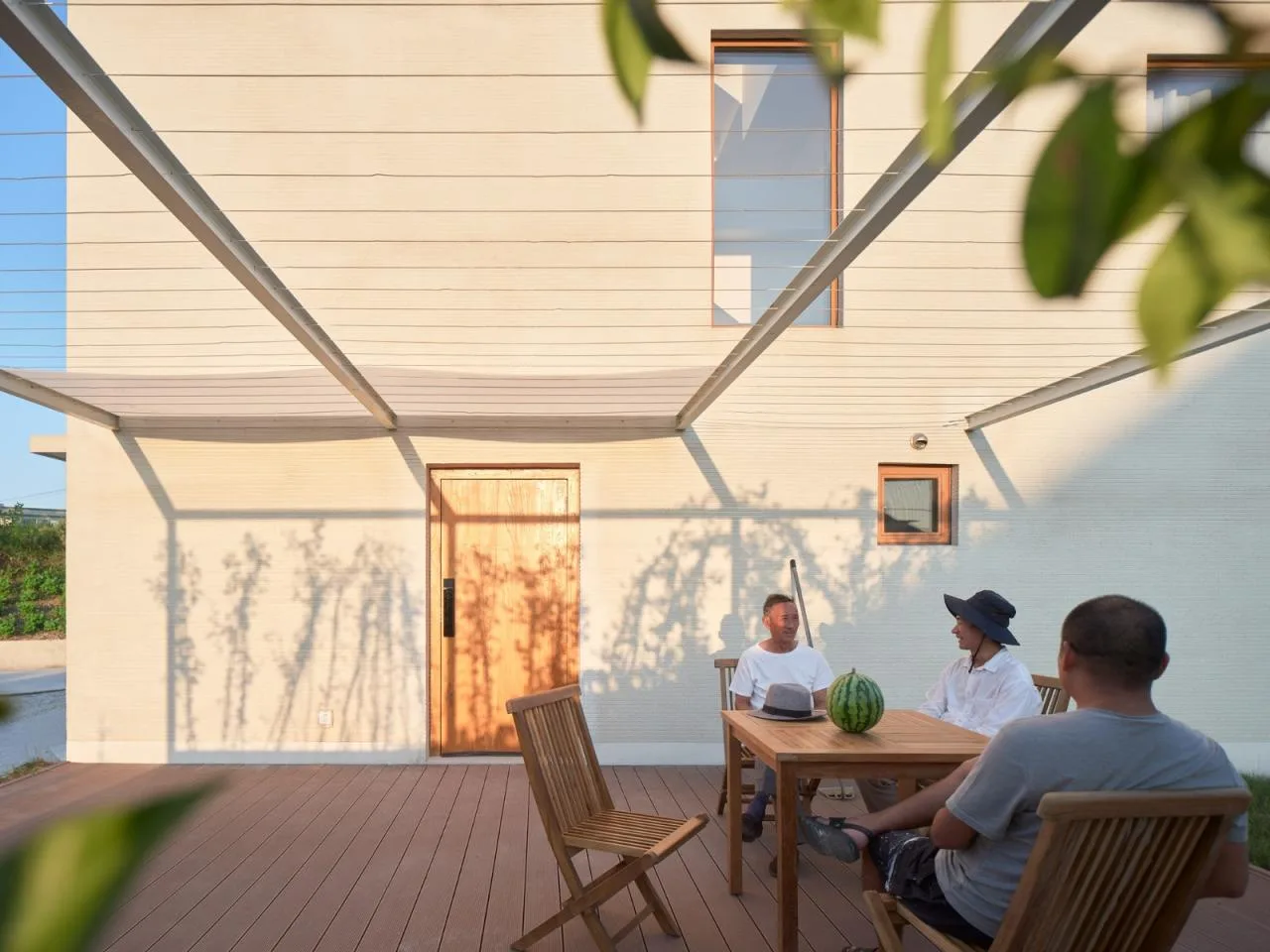
After losing the small attached bungalow, the house took on a colder, more austere character. Ultimately, this slightly lonely and dignified home was accepted. The originally planned annex, intended as a mahjong room, was reimagined as a grape trellis where Mr. Peng can still enjoy games with neighbors. Though it lacks a roof and enclosure, this space maintains its original purpose and symbolizes the family’s “Return to Garden and Field Residence.” Composed of pieced-together sections arranged vertically and horizontally, the building reflects an urban-rural hybrid identity. It looks familiar yet is fundamentally different from the old house.
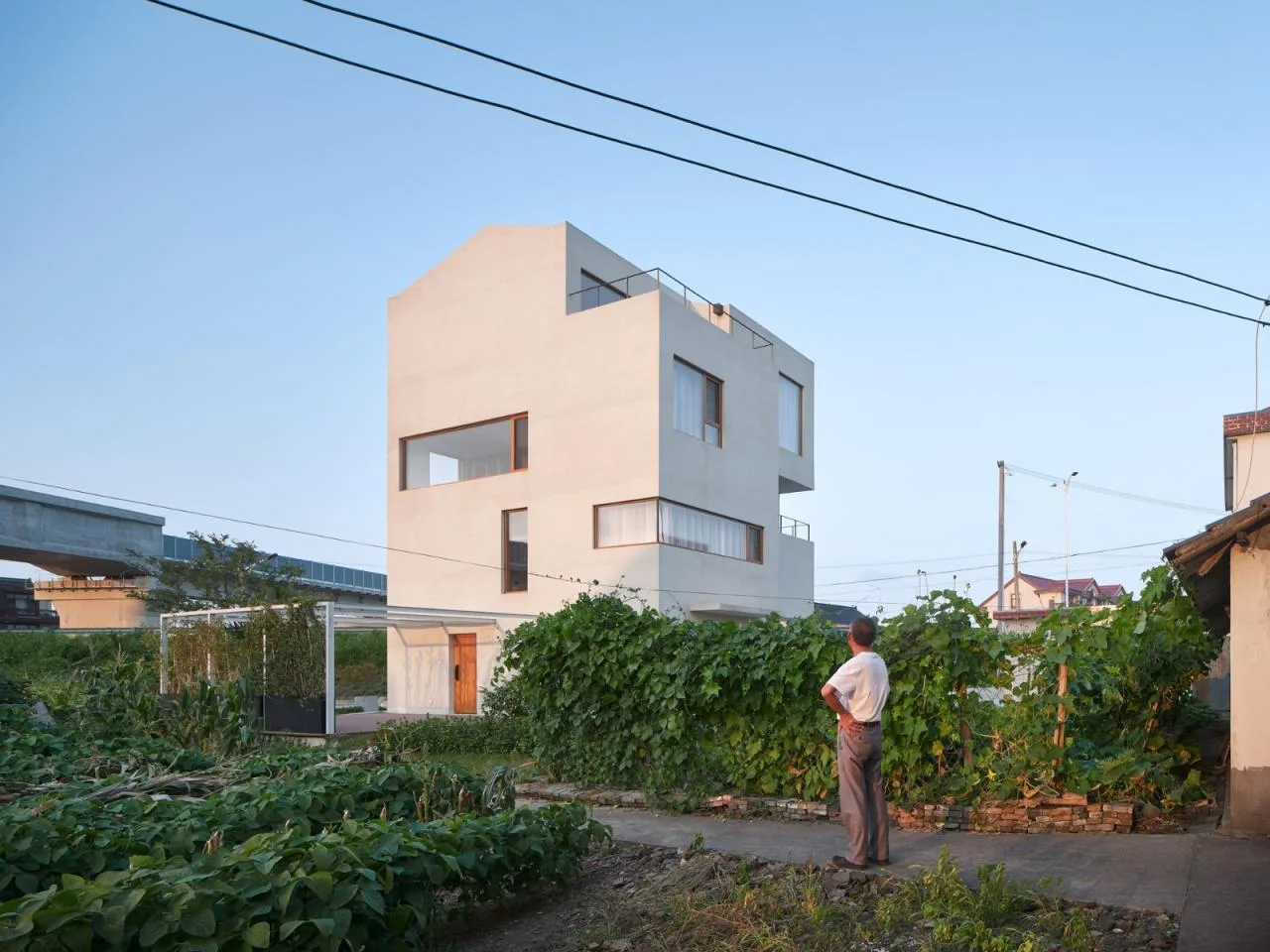
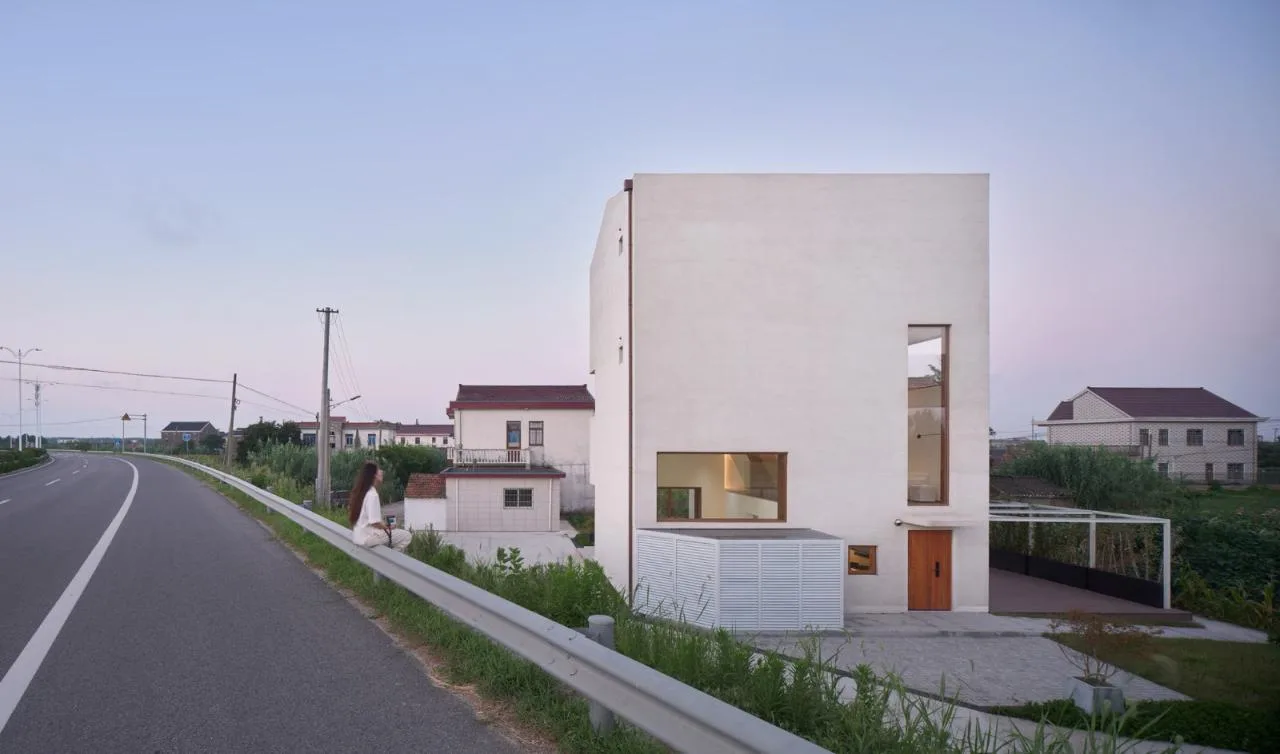
A unique design requirement for the project was to accommodate the place where the elderly would hold their funeral after passing—a distinction that sets Peng’s mansion apart from villas or homestays.
Before renovation, the old house featured one main hall and one wing: the main hall served ceremonial purposes, while the wing’s first floor housed the elderly, and the second floor was the children’s bedroom. This layout was typical of the 1980s, fitting local customs.
The hall functioned as a traditional ceremonial space for honoring ancestors and deities, worshipping heaven and earth, and celebrating weddings, funerals, and birthdays. In rural China, weddings and funerals are key social events. While younger generations have adopted more western-style weddings outside the home, elderly funerals remain traditional. After a family member passes, their spirit is enshrined in the hall, with ritual dates calculated by a feng shui master. The whole village participates in hospitality duties, highlighting the importance of dignified funeral arrangements and respect for guests and neighbors—central concerns for Mr. Peng.
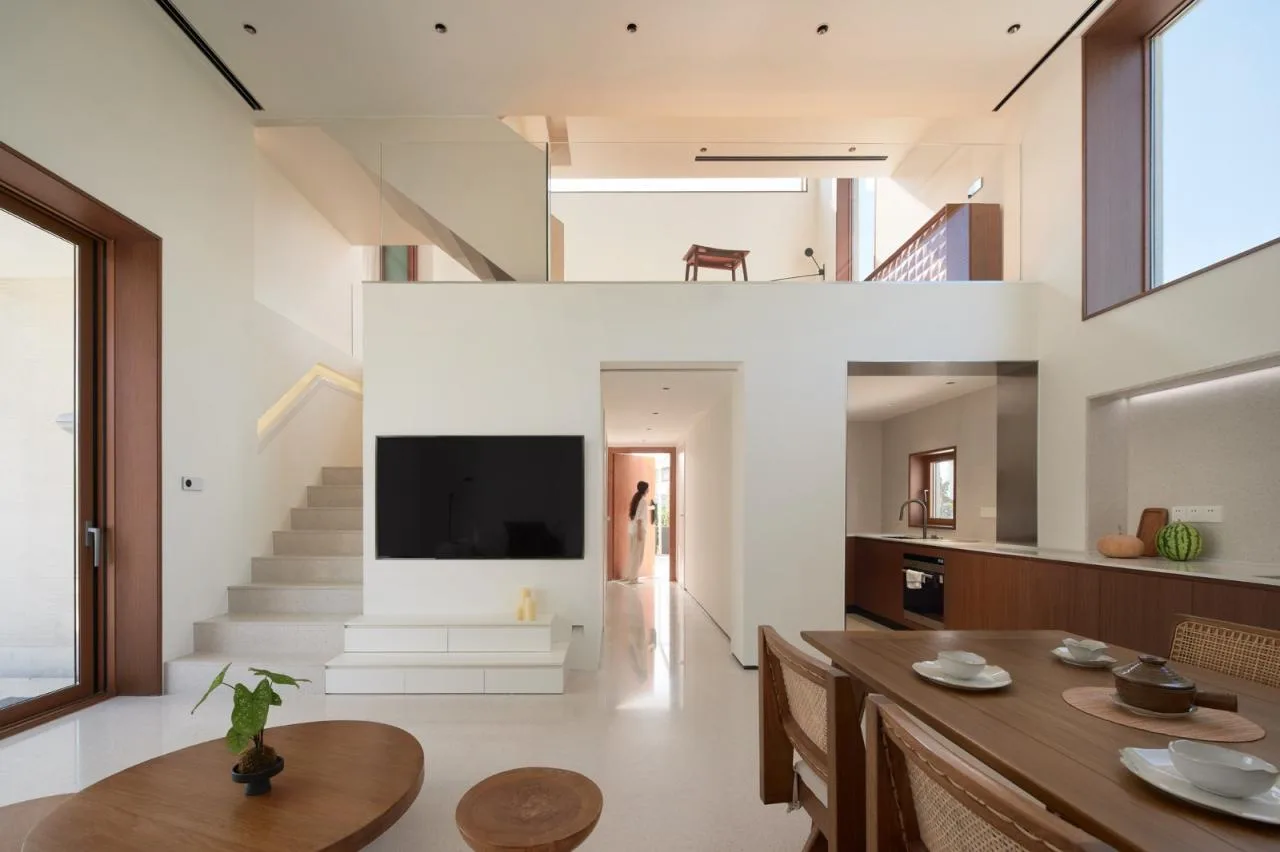
Rural life leaves little room for privacy, with neighbors visiting freely. Reflecting this, Peng’s house has no courtyard walls, fostering openness.
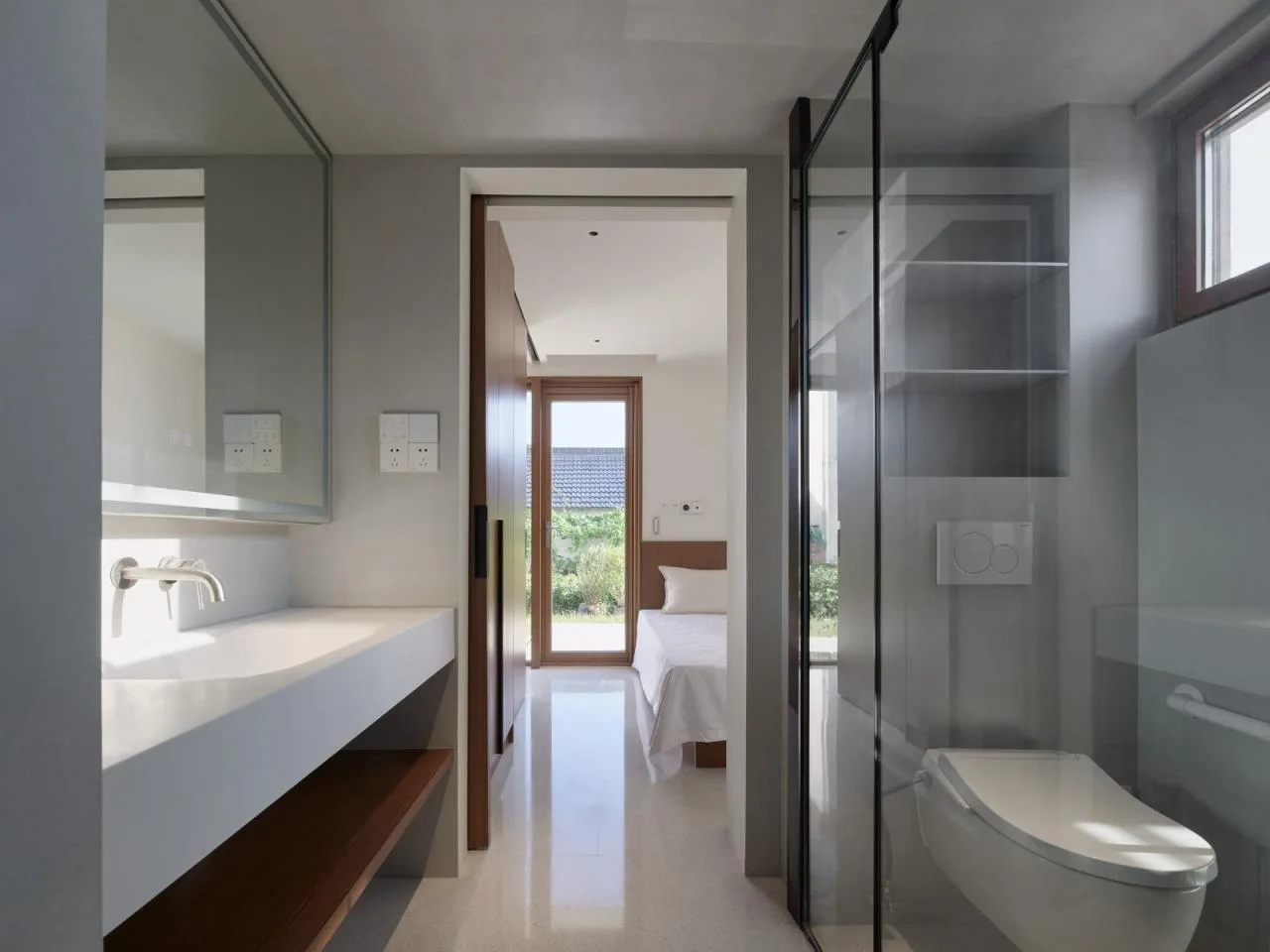
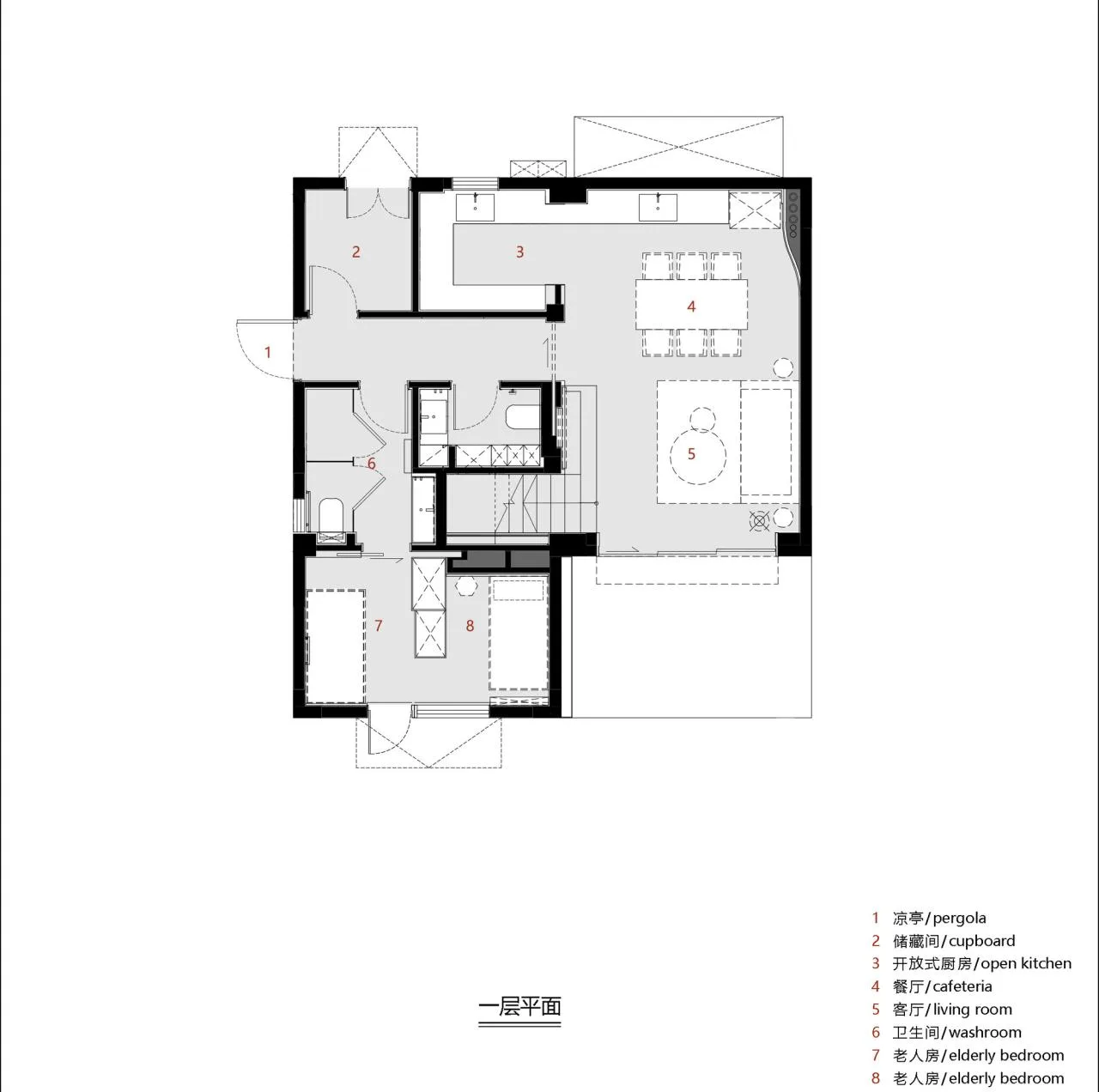
The first floor’s design preserves the traditional combination of the main hall and wing, with the main hall’s door often left open and the wing serving as the elderly’s living room. This “one hall, one wing” layout suits the older generation’s daily routine, with thoughtful adaptations to improve accessibility and comfort.
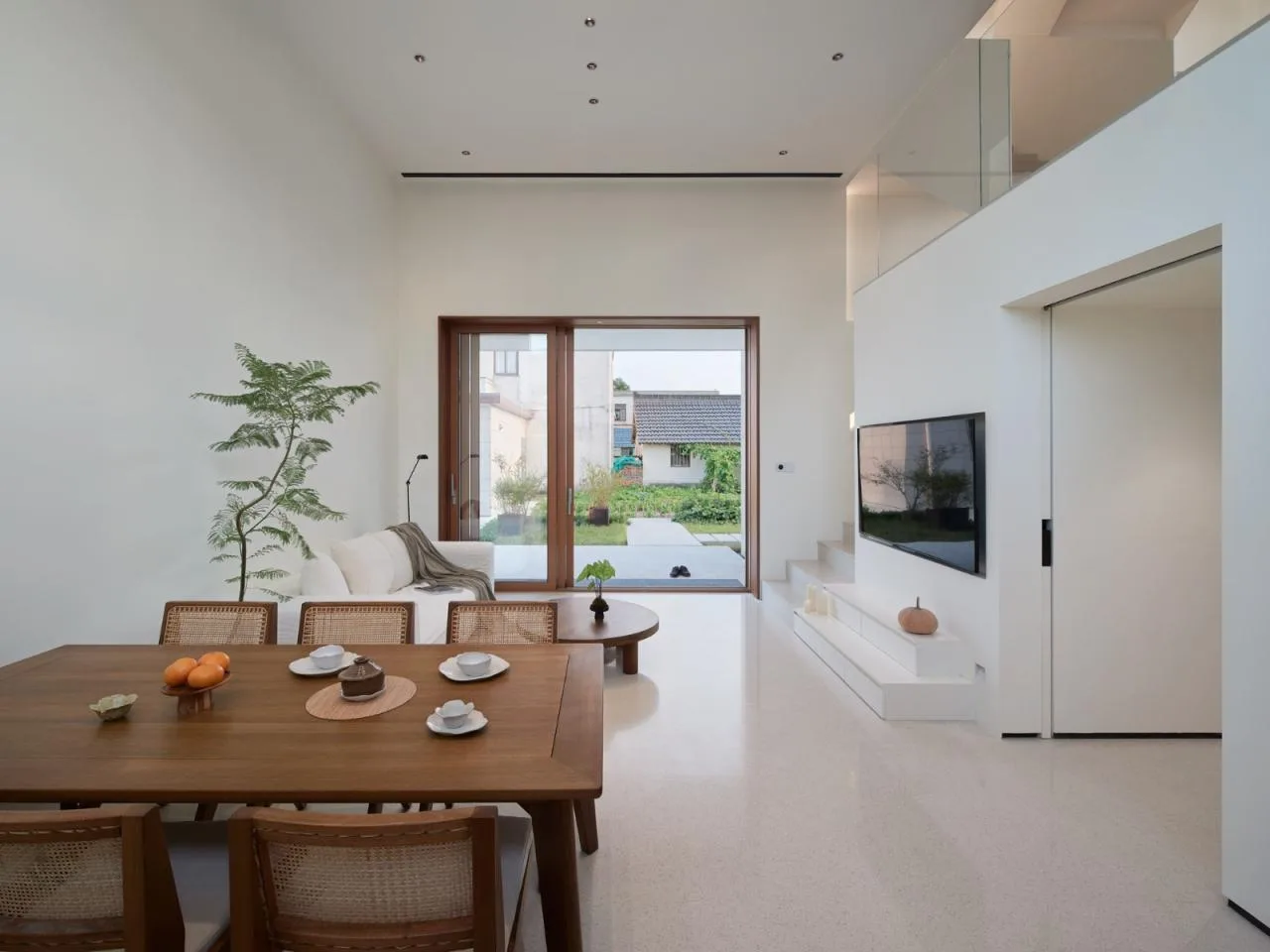
Traditionally, the hall’s centerpiece was an incense altar and worship paintings. However, Xinpeng Mansion replaces these with a western-style kitchen and high windows framing the blue sky and clouds, providing both symbolic imagery and soft lighting.
The terrazzo flooring on the first floor matches that of the original house, chosen for its durability and ease of maintenance, as many elderly and neighbors enter on muddy shoes. The two bedrooms adjacent to the senior living room have separate external doors, often open during the day, and connect directly to the grape trellis through the west door—encouraging neighborly interaction. Walking through the hall and chatting with the breeze is a cherished lifestyle for the older rural generation, embodying the close-knit acquaintance society.
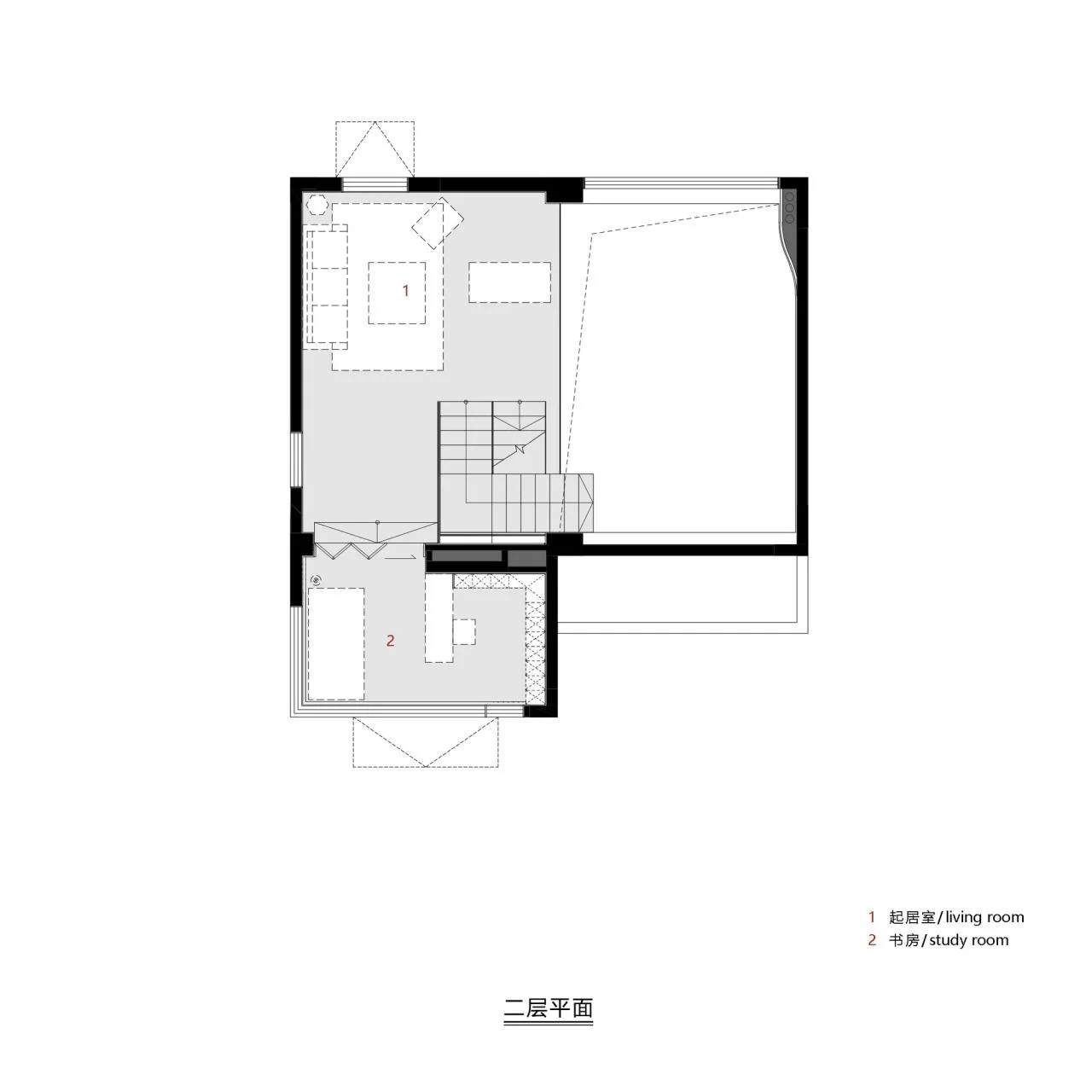
The second floor and above house the private living spaces for the family born in the 1980s. A simple ritual of changing shoes marks the transition to this more private area, where unexpected visitors are politely declined.
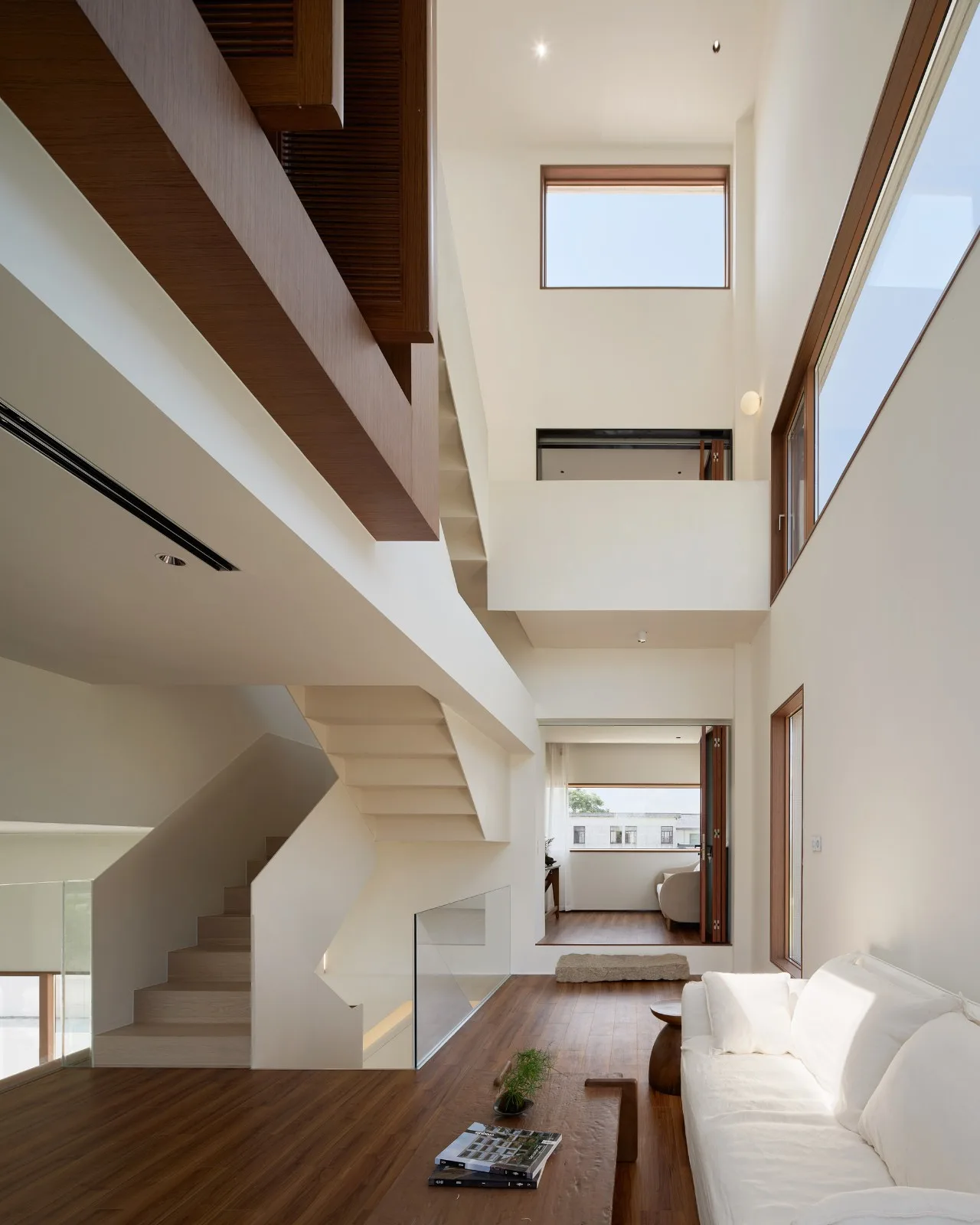
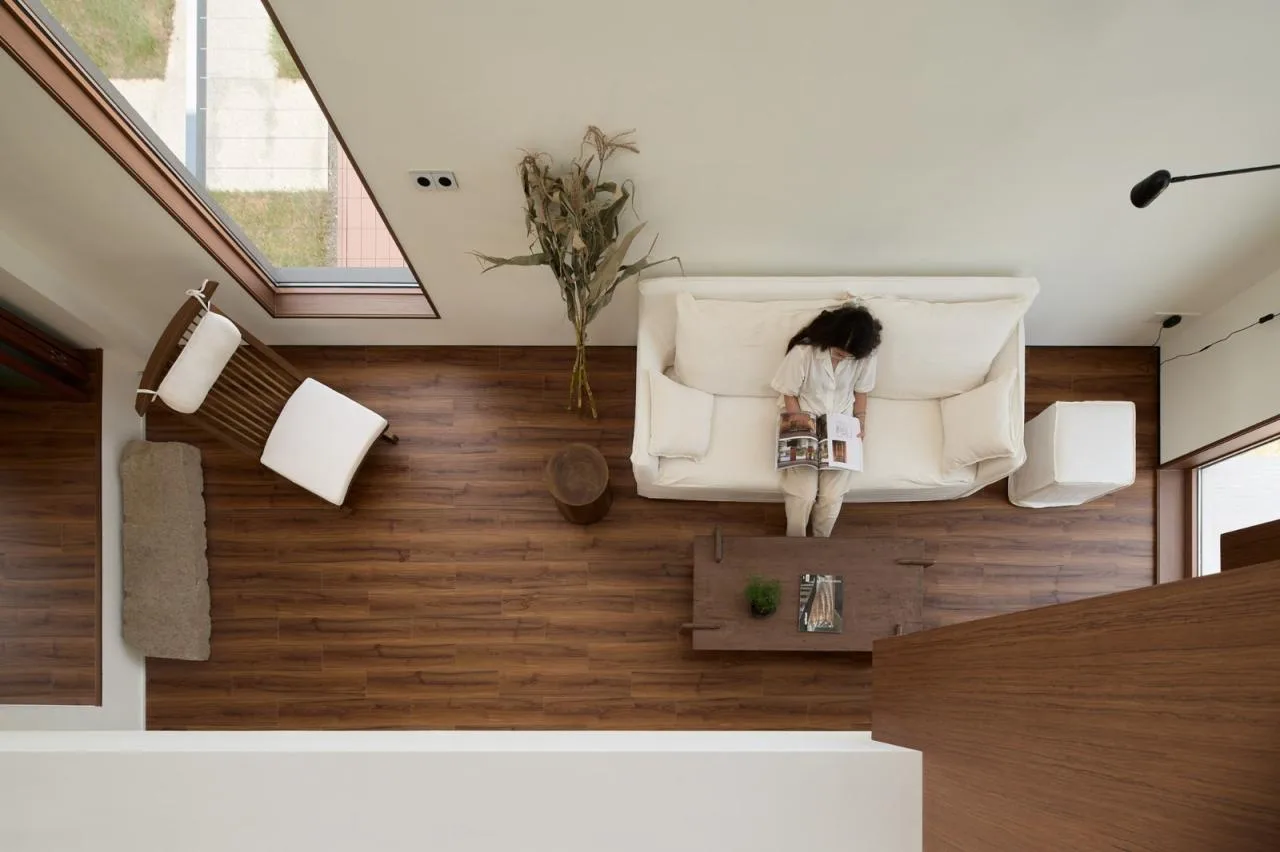
Here, the modern living room and study provide practical spaces for family activities and hosting guests. The living room connects the upper and lower courtyards, symbolizing the intersection between city and countryside life.
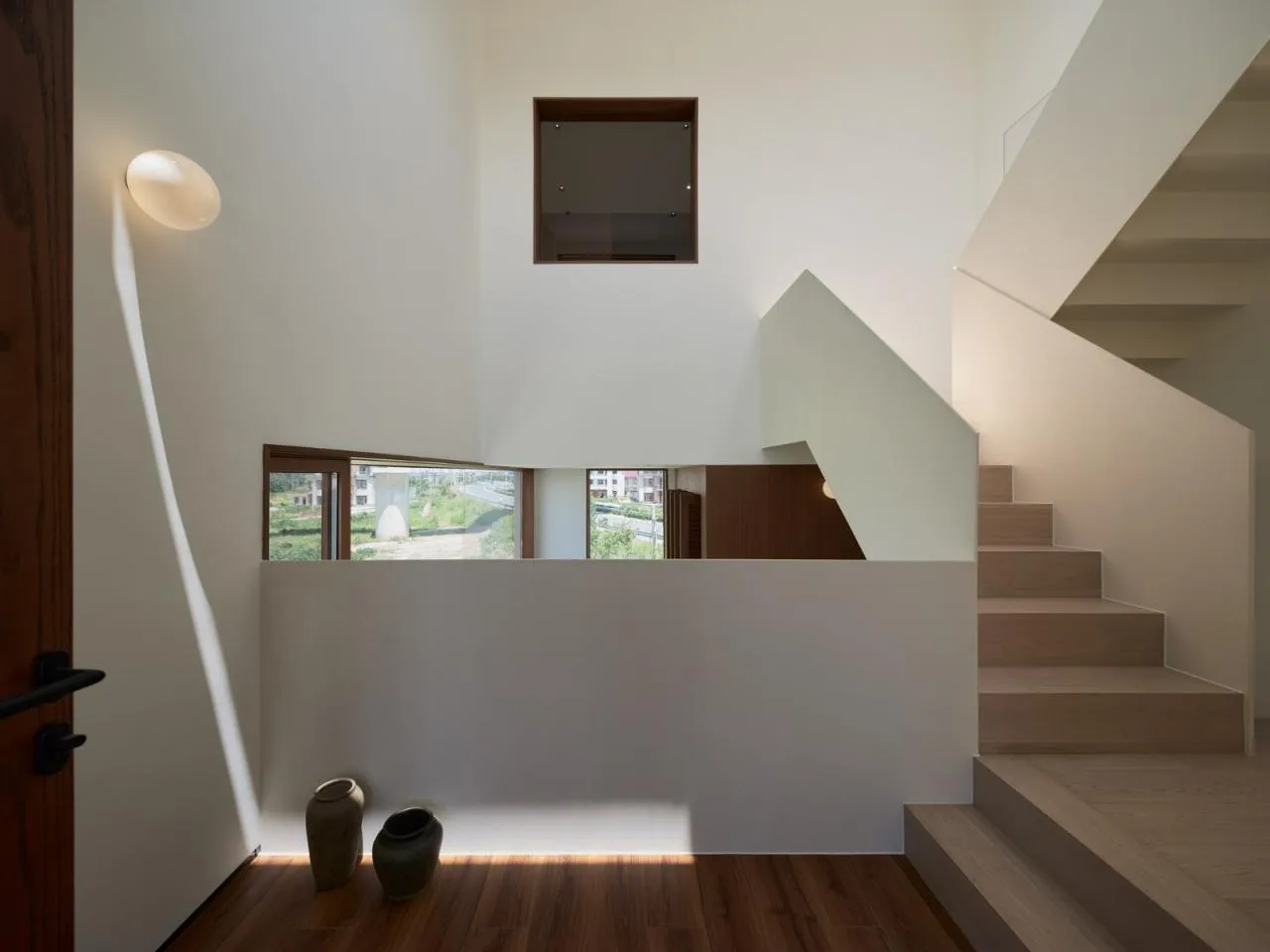
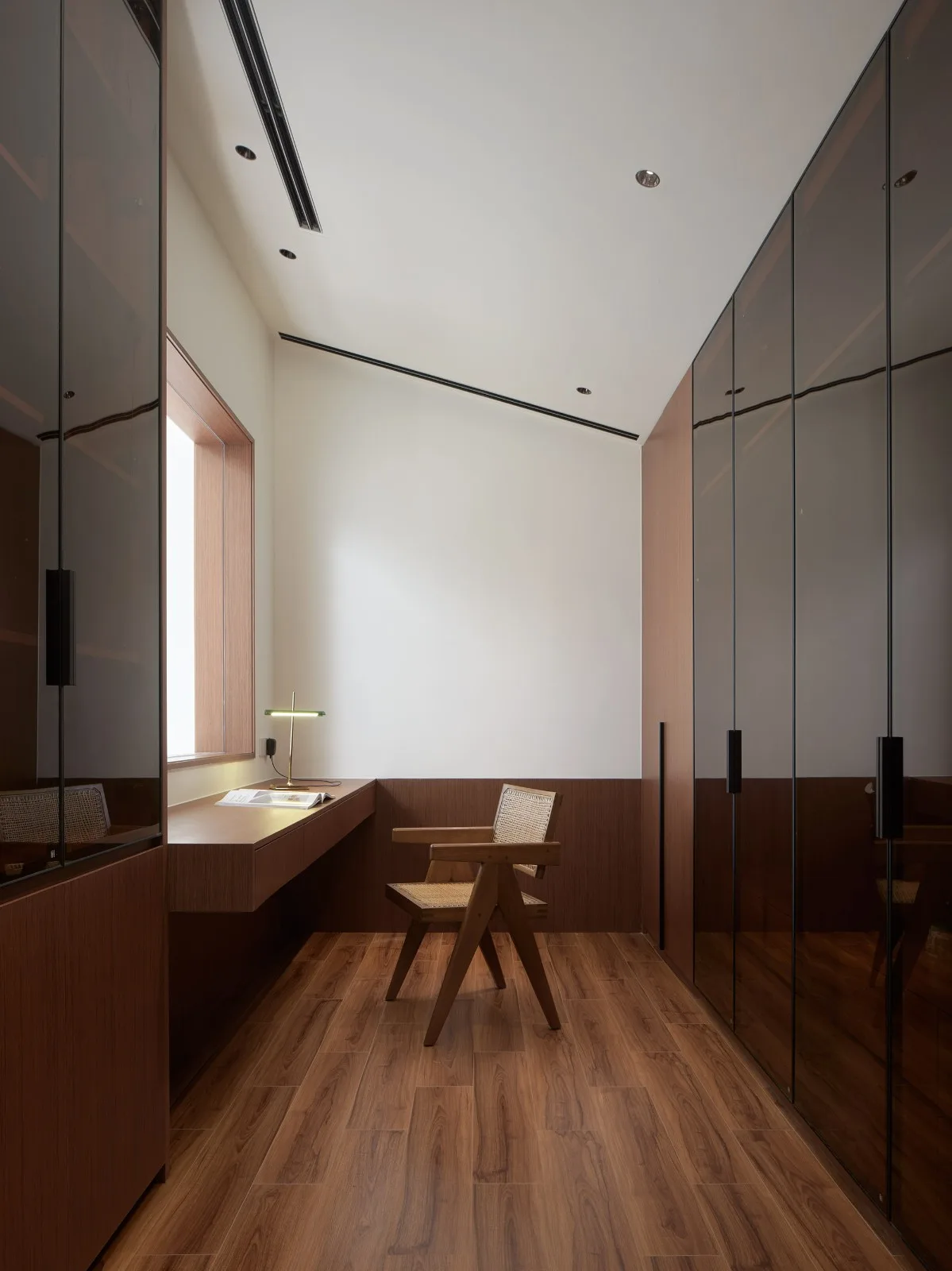
Though the house appears to have only two and a half floors from the outside, the interior’s staggered design creates four distinct levels. The study, children’s bedroom and study, master bedroom, and wife’s study are separated to ensure privacy and independence for each family member.
Every floor includes a study room, providing spaces for work, reading, and entertainment—reflecting the modern family’s preference for personal, electronic-device-centered leisure over traditional family television viewing.
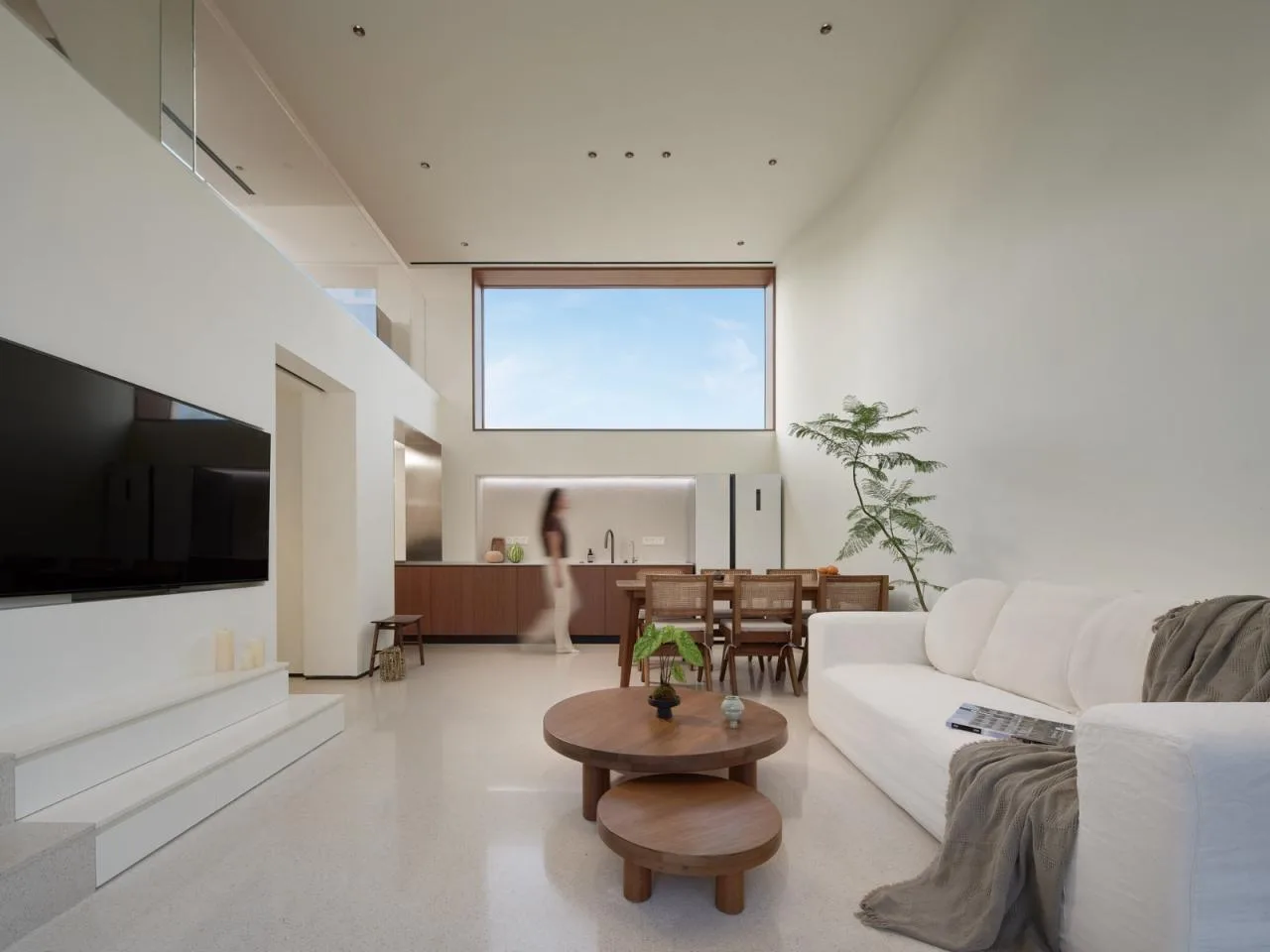
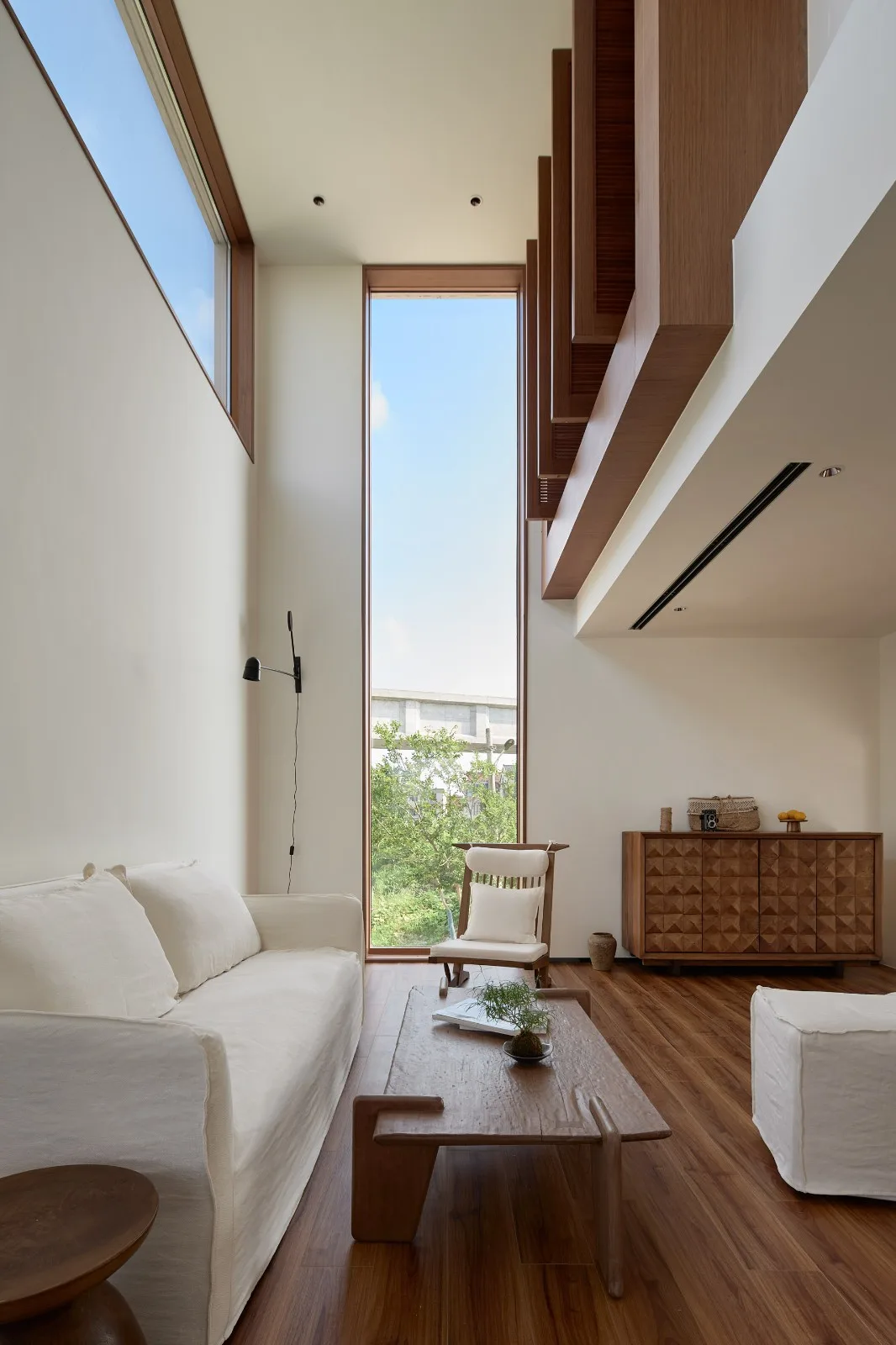
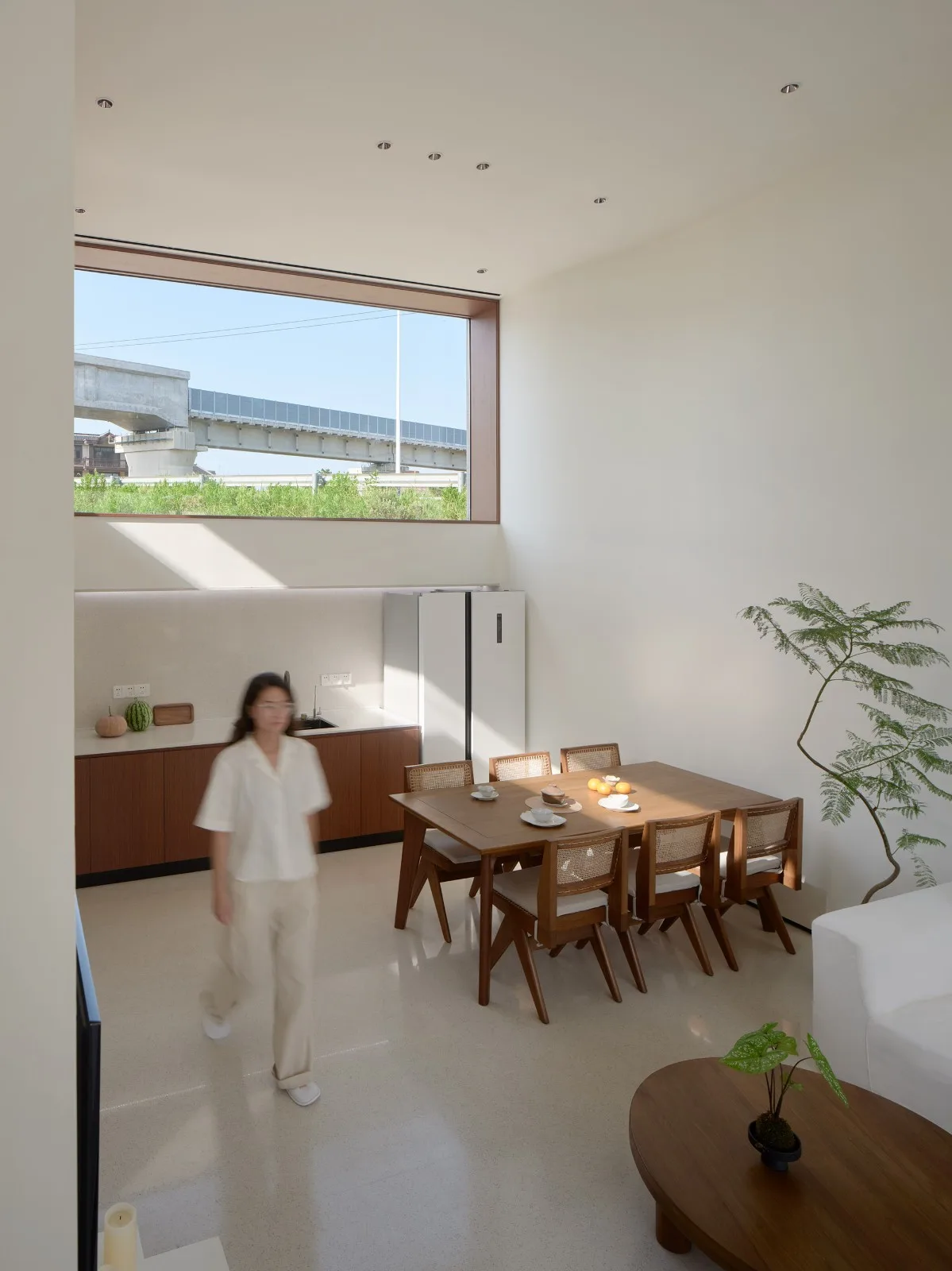
Despite the private nature of upper floors, the design preserves visual connections and shared interactions through a series of continuous spatial links. Compared to the open and communal first floor, these interactions on the upper levels are more nuanced and indirect.
After retirement, Mr. Peng and his family engaged in stock trading, leading friends to nickname the house the “limit up home” after the relentless upward curve in stock charts—a feng shui-inspired symbol of prosperity and good fortune.
The residence is named “Crossing House,” reflecting its bird’s-eye view position at an intersection. It stands at the crossroads between a countryside one cannot fully return to and a city one cannot fully embrace, embodying a home that bridges two very different lifestyles.
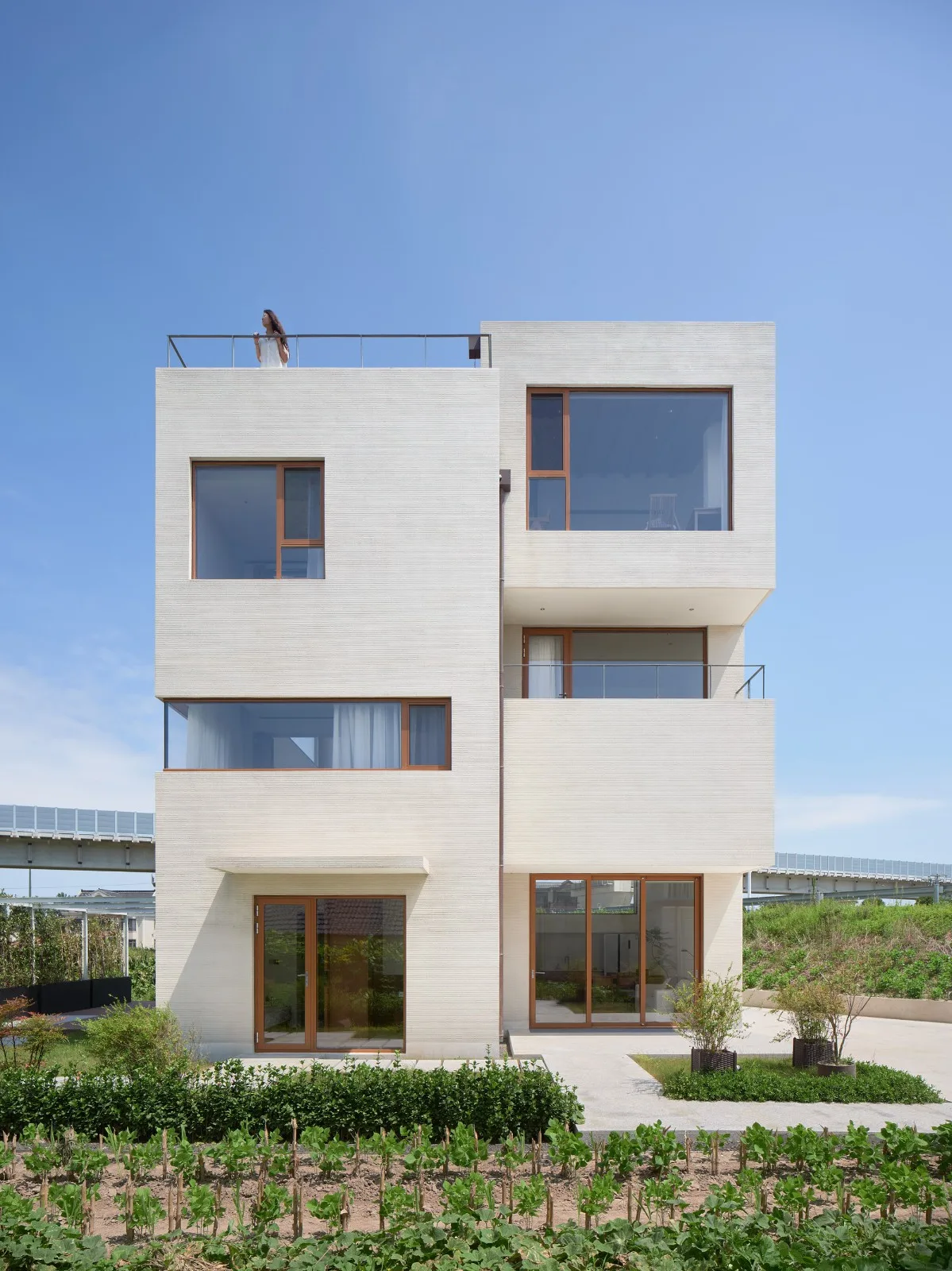
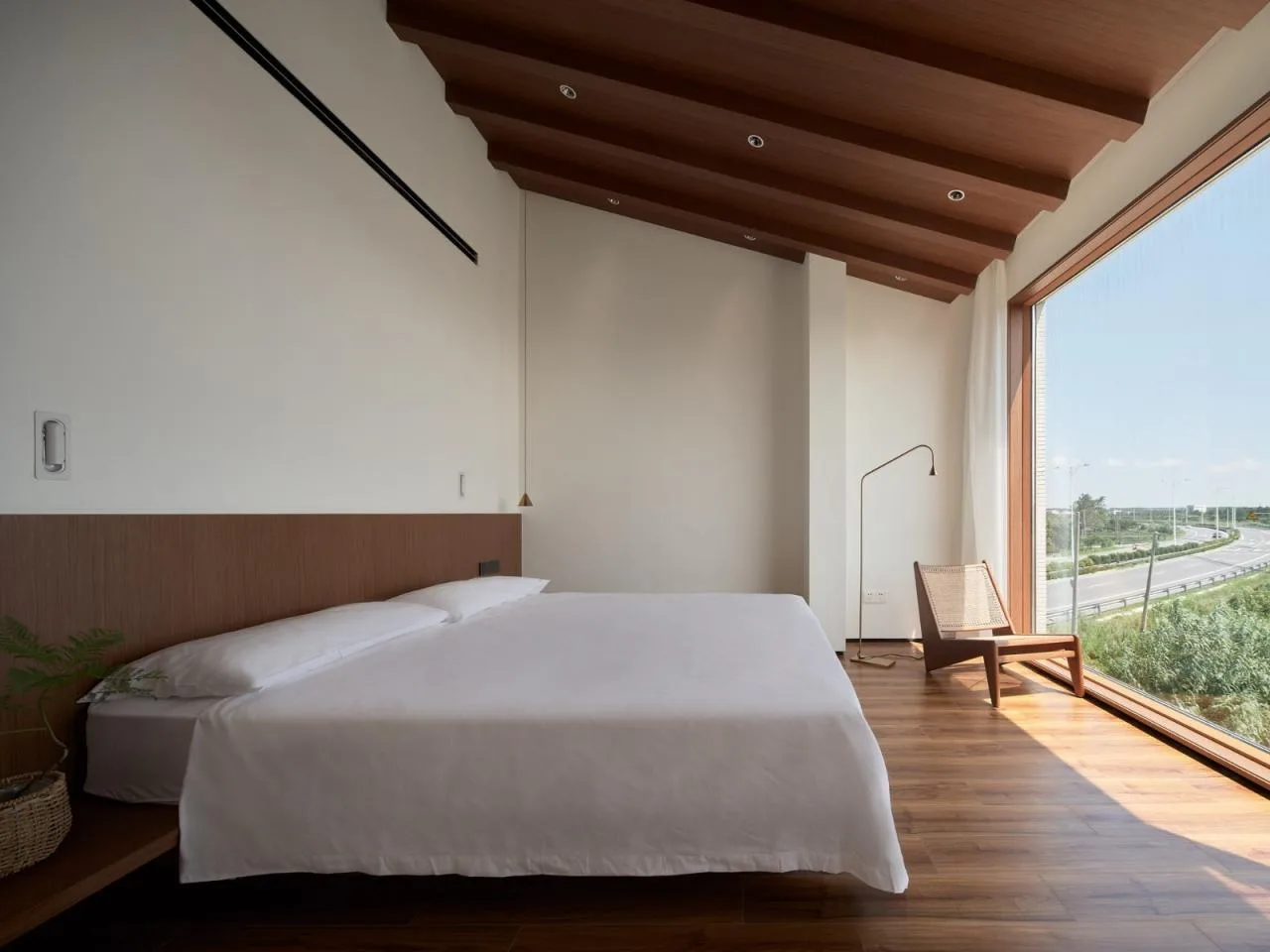
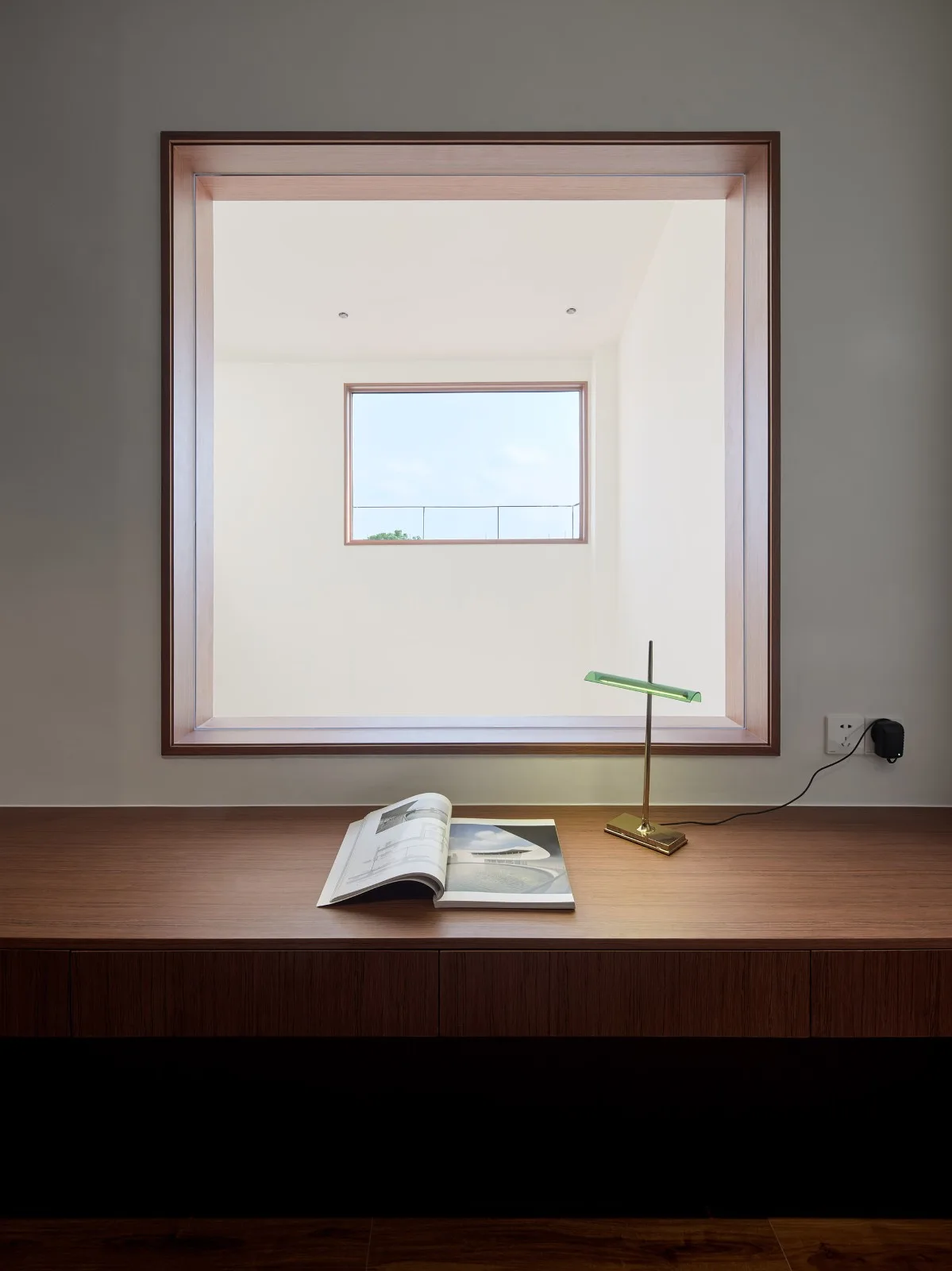
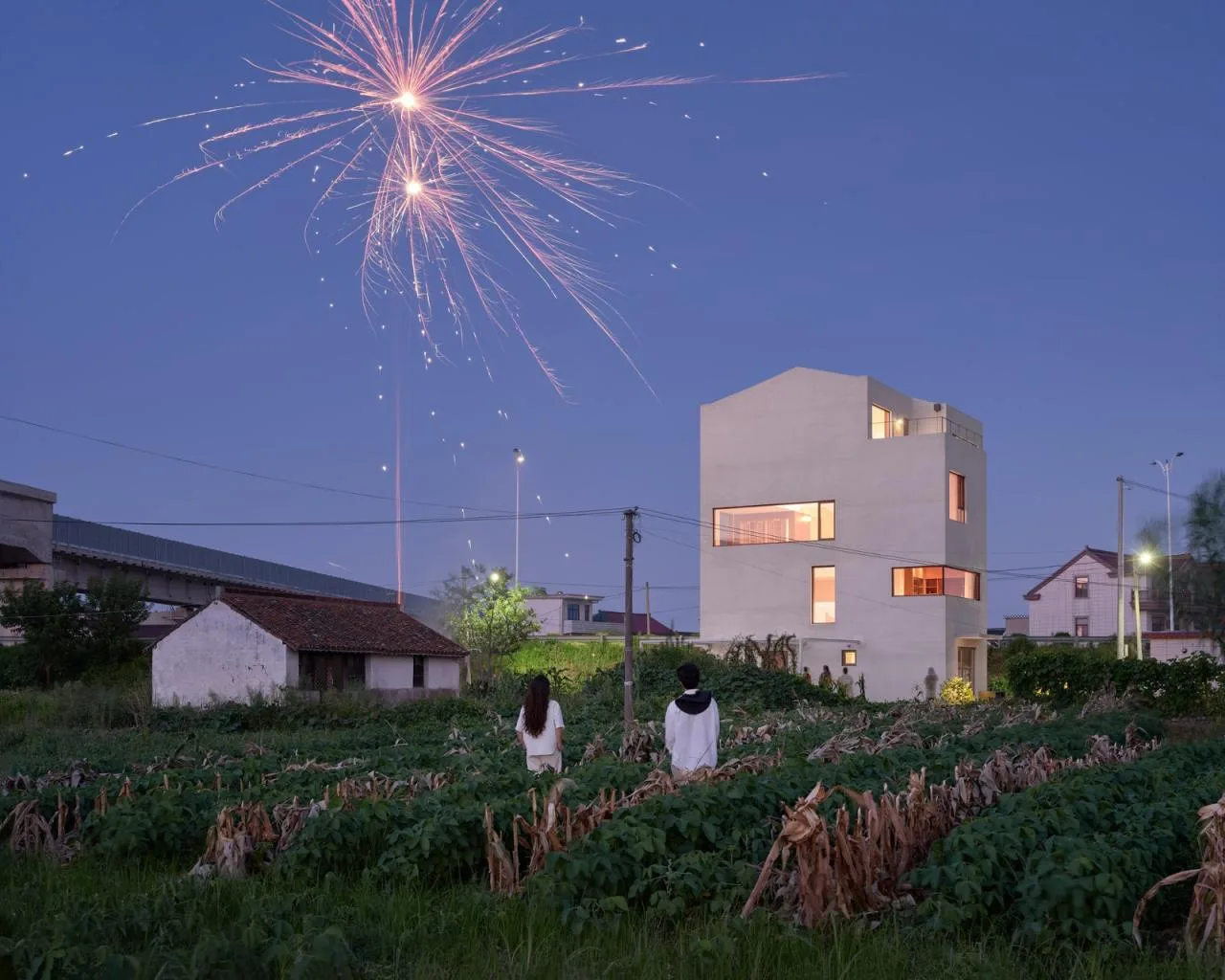
On the building’s south side, the third and fourth floors create a “crossing” facade featuring two interlocking, staggered balconies. The third-floor children’s room balcony and the fourth-floor master bedroom terrace are diagonally aligned, forming an “X” with the square glass windows of the third-floor guest bedroom and fourth-floor master bedroom, also set diagonally.
This vertical layering enriches the views from different rooms, creating a poetic “pouring in” effect that blurs boundaries between horizontal, vertical, diagonal, and indoor-outdoor spaces. It softens the solid “matchbox” silhouette imposed by the limited base area.
While the architecture presents a sturdy and detached profile towards the unfamiliar city, it faces the aging village with a softer, more open demeanor.
A corner glass window on the south side’s second-floor study extends westward with a transparent opening resembling a window or door, followed by a horizontal long window on the third floor. These geometric variations on the west facade reduce the visual mass of the mountain wall and bring in views for the three-story children’s room study.
The only openings on the north side correspond to the living rooms on the first and second floors, reflecting the building’s internal spatial relationships through straightforward geometric language on the facade. This design also borrows from the nearby outdoor plain tree landscape.
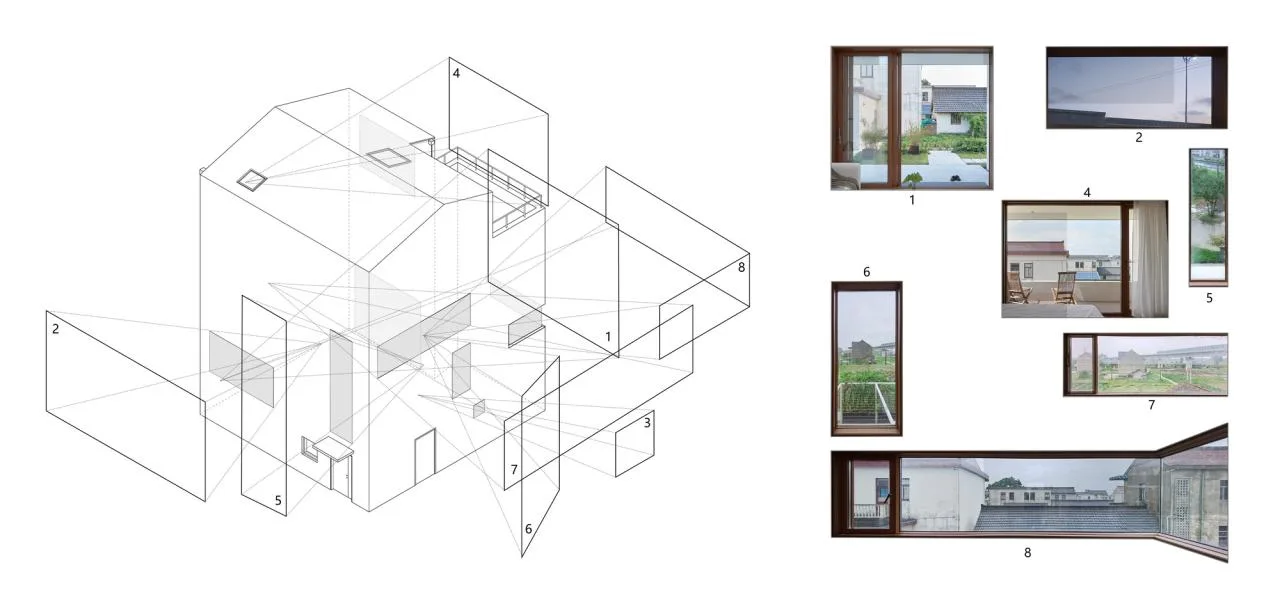
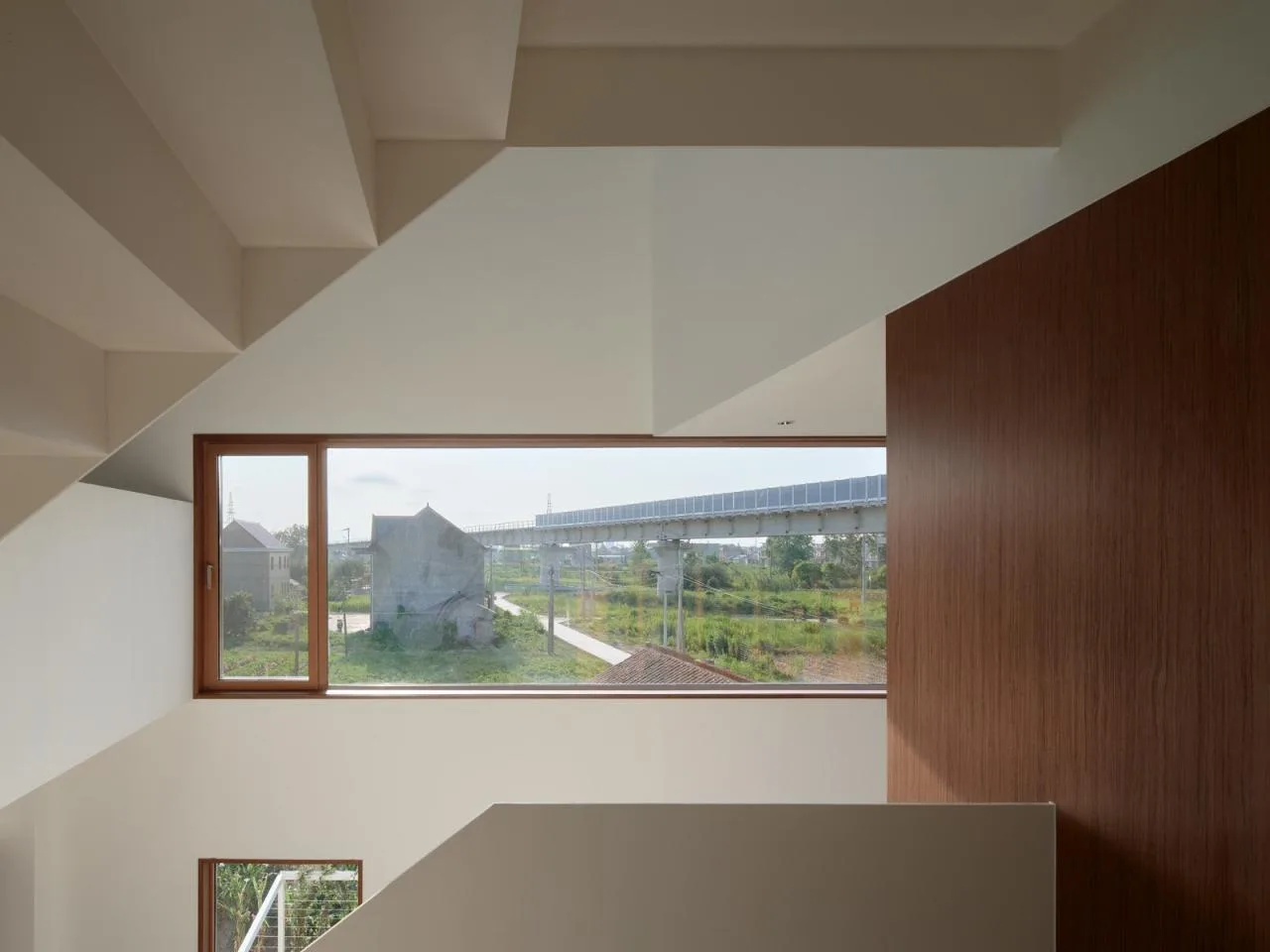
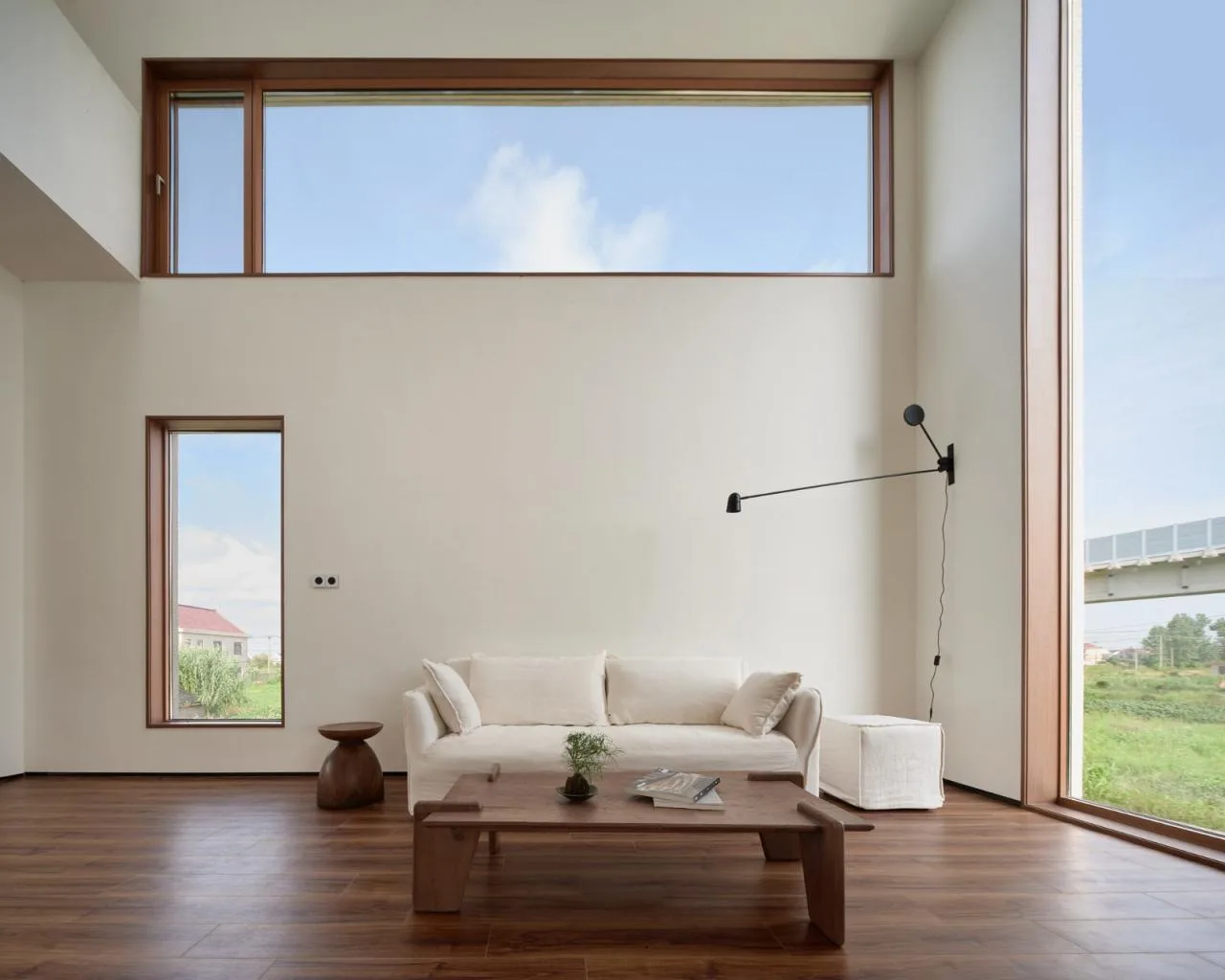
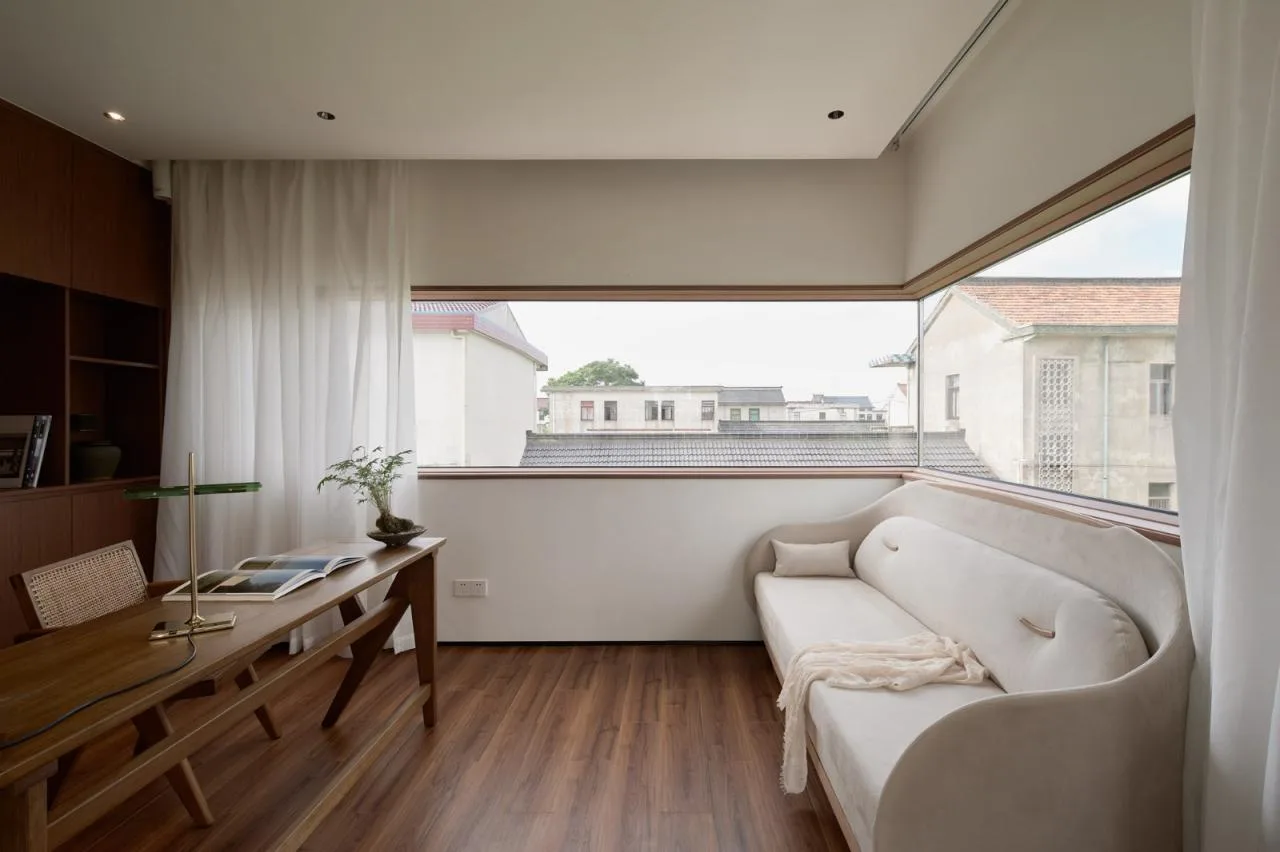
Xinpeng Mansion’s design blends rural and urban lifestyles, weaving together the complex life networks of large and small families and two generations, culminating in a simple, rational architectural whole.
As times rapidly change, with generations evolving from the post-50s to post-80s and post-2010s, lifestyles transform accordingly. The only constant is change itself.
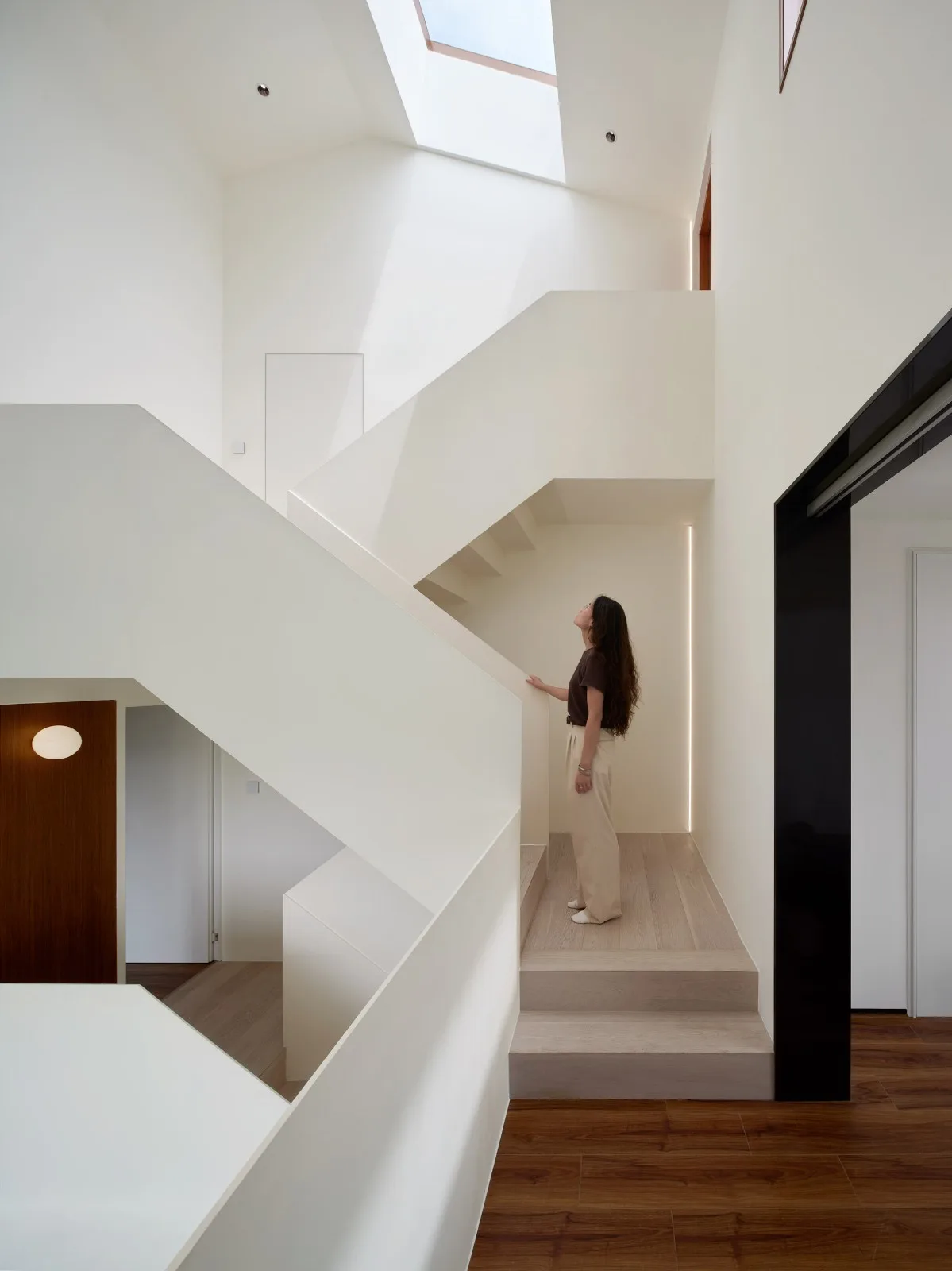
Project Drawings
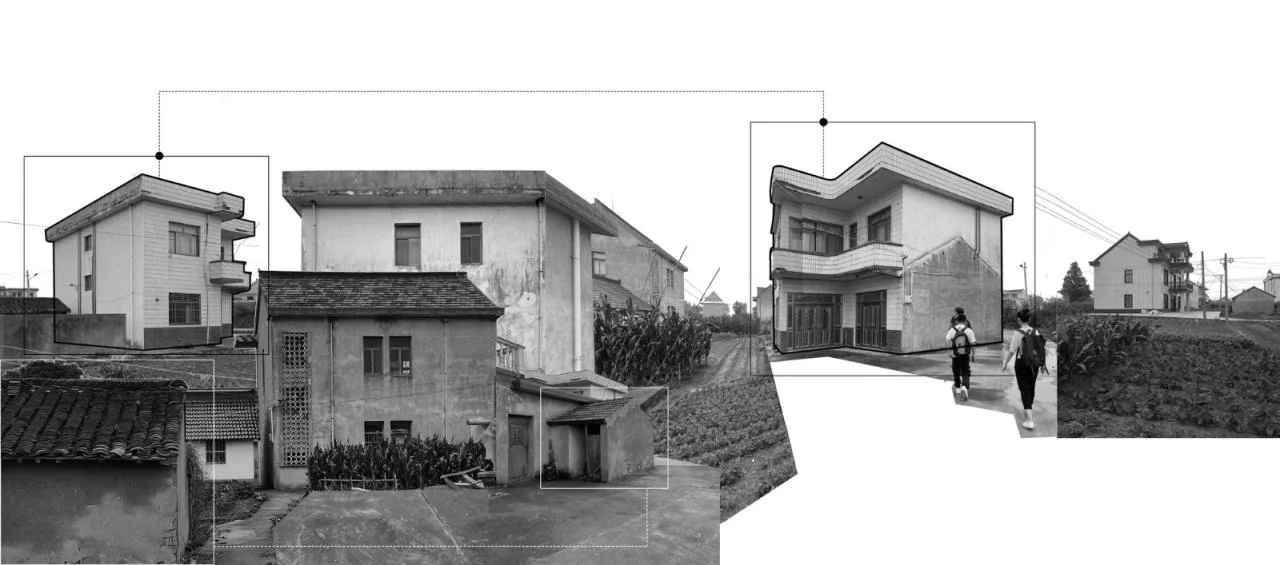
△ Original Building Schematic
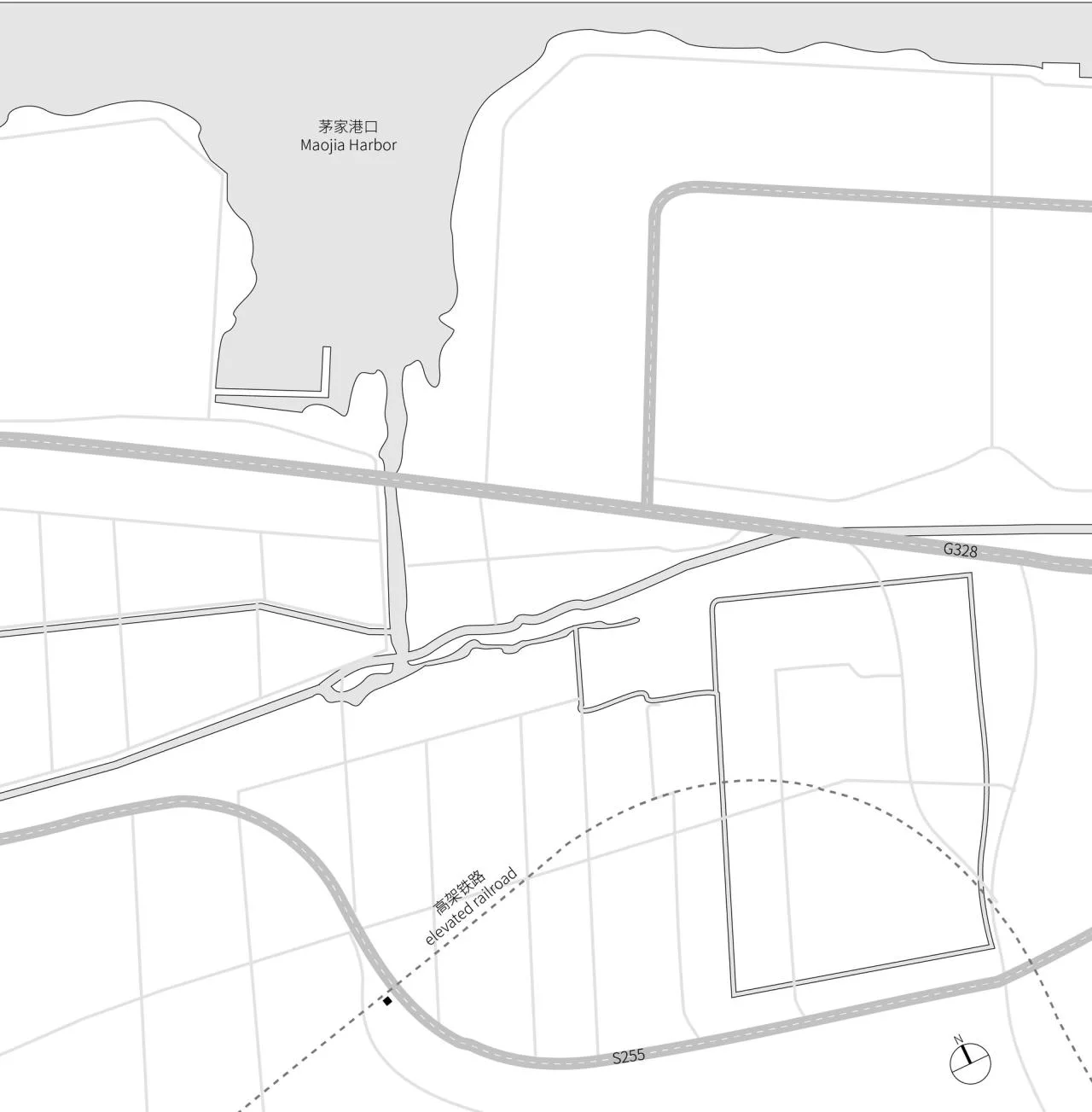
△ Site Base Diagram
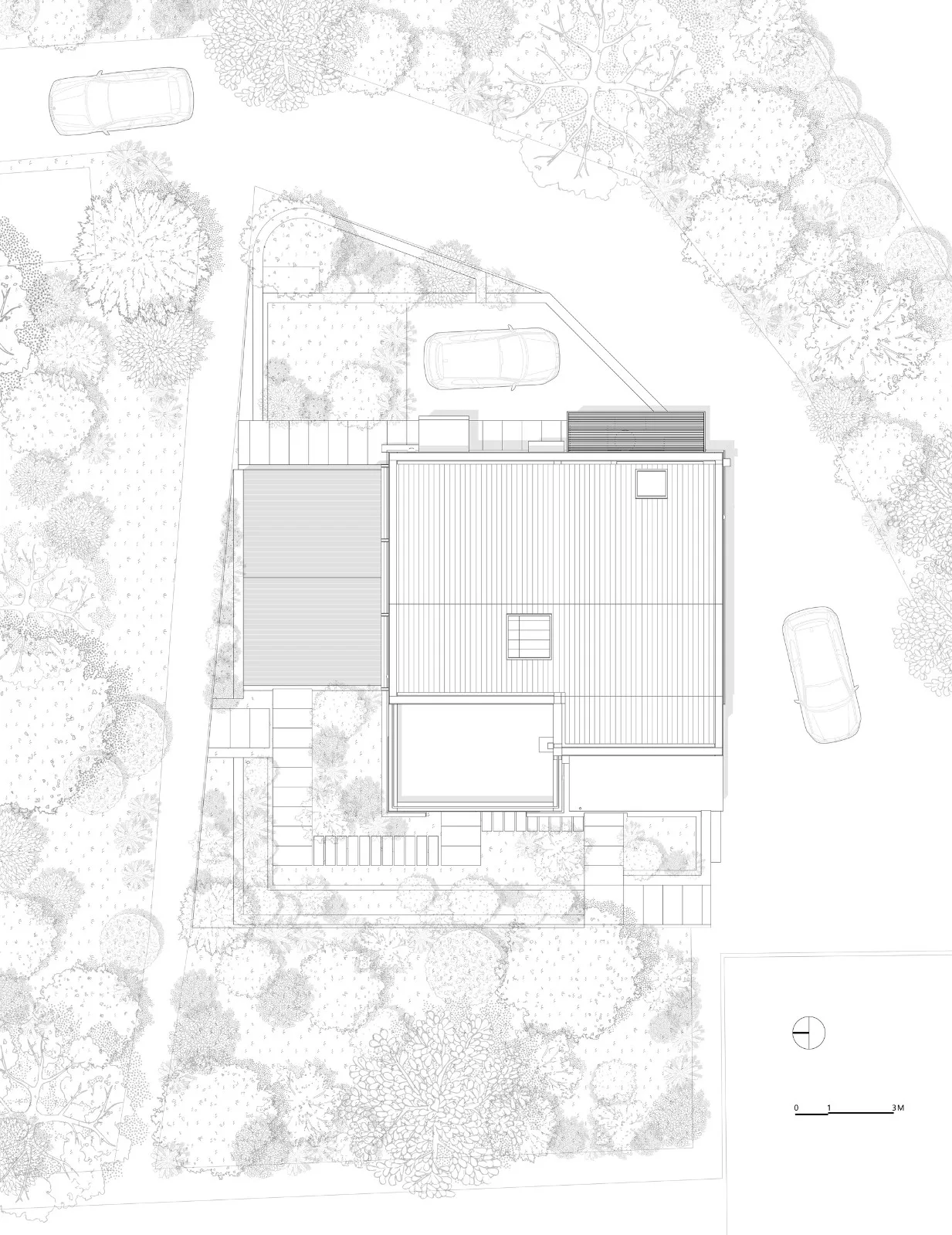
△ General Layout Plan
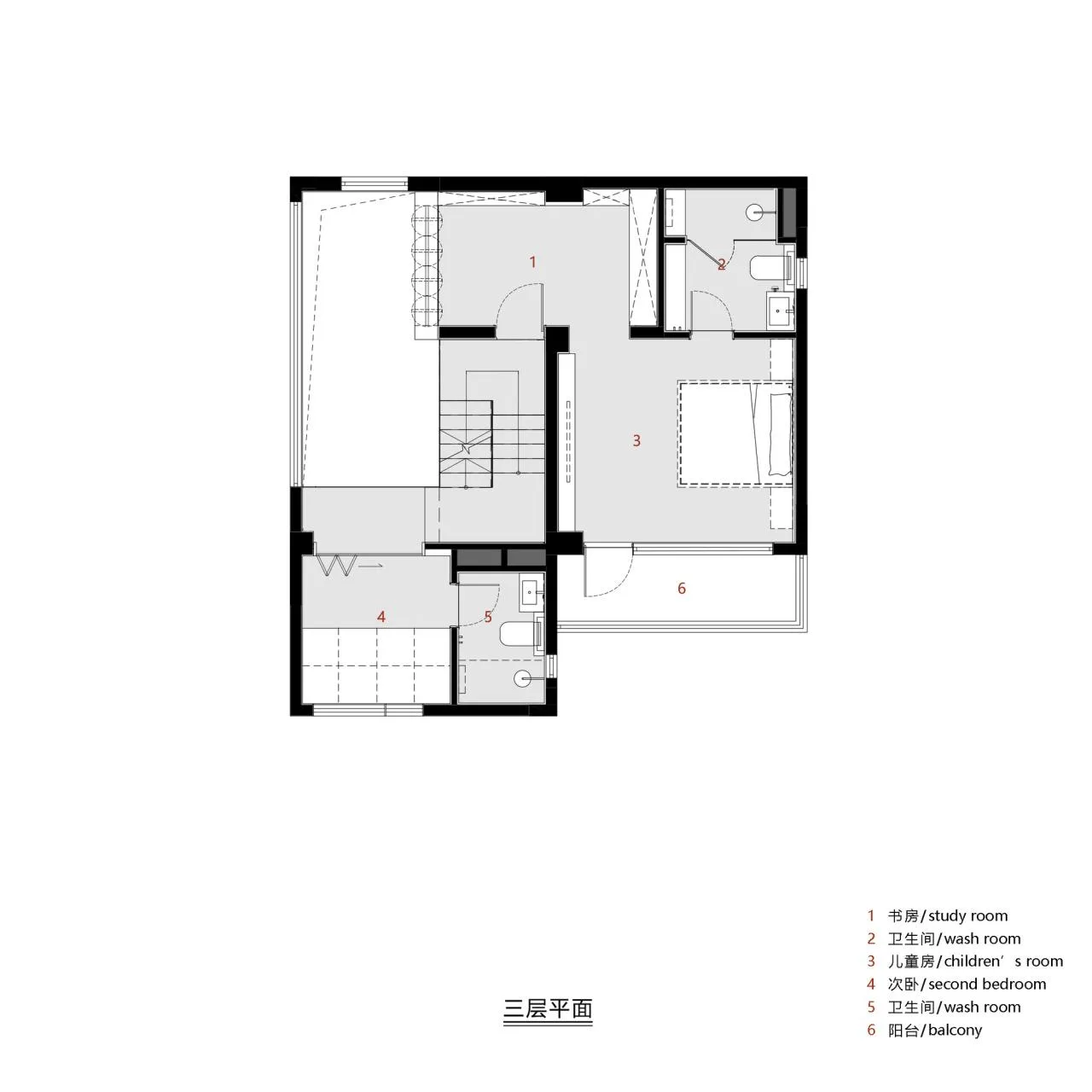
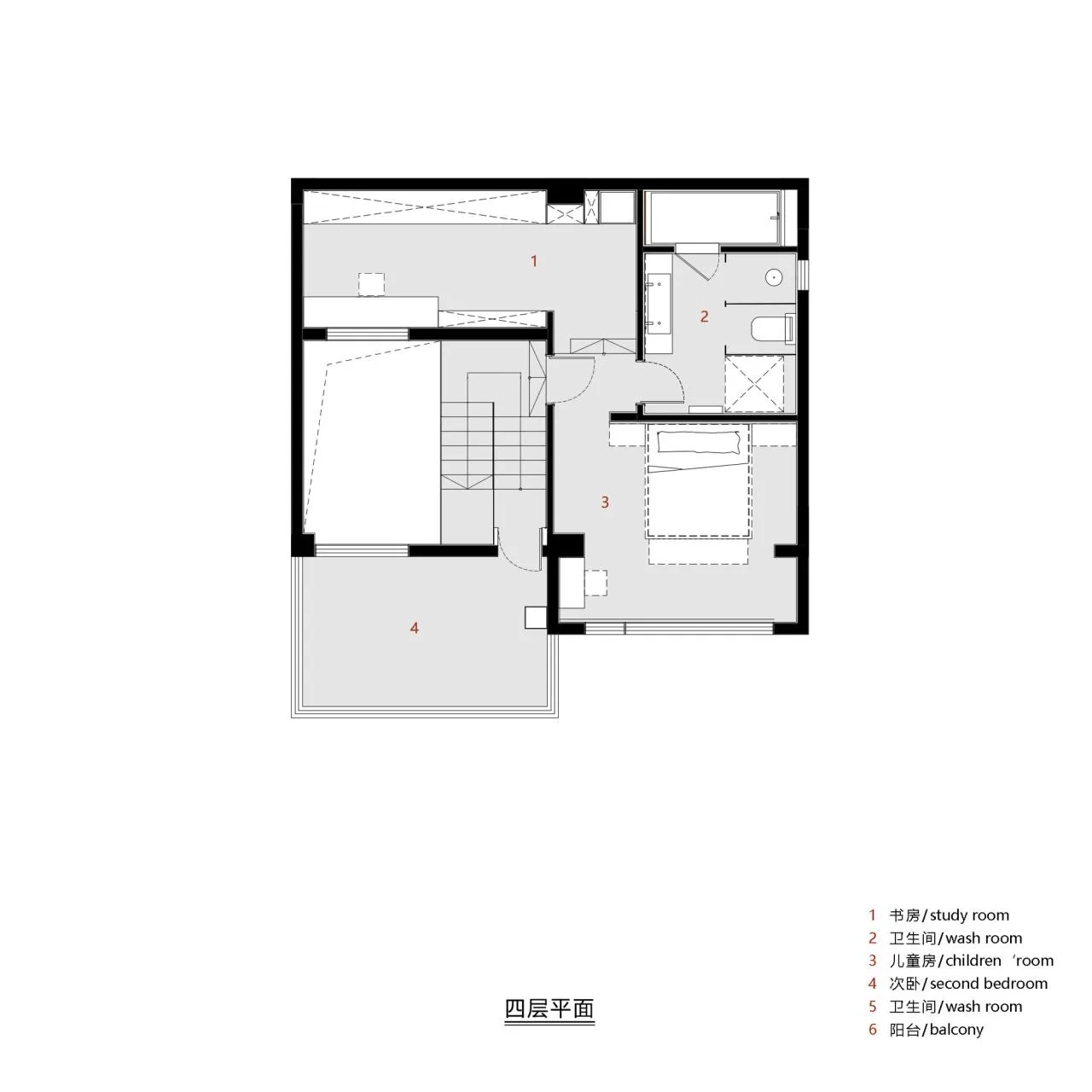
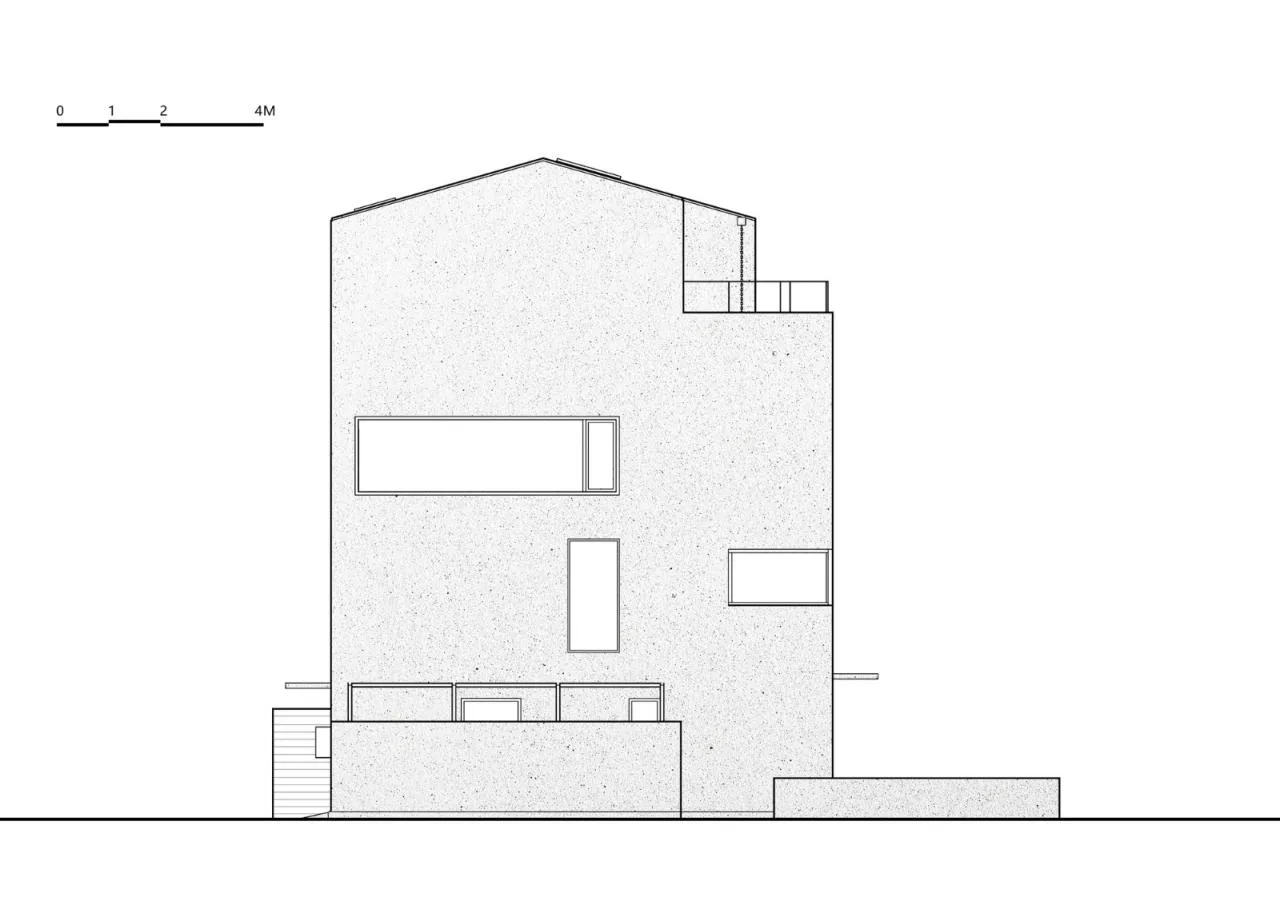
△ Elevation Drawings
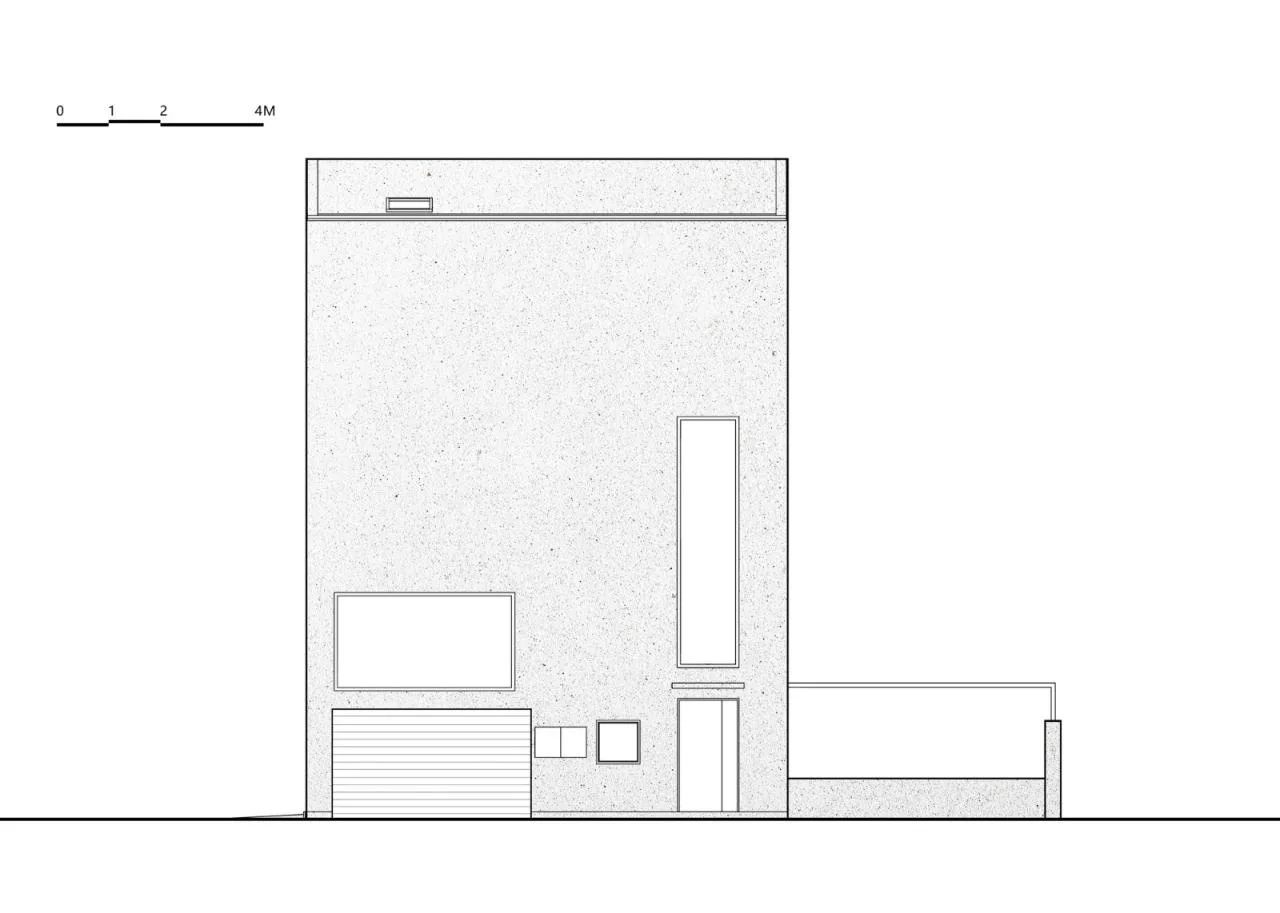
△ Elevation Drawings
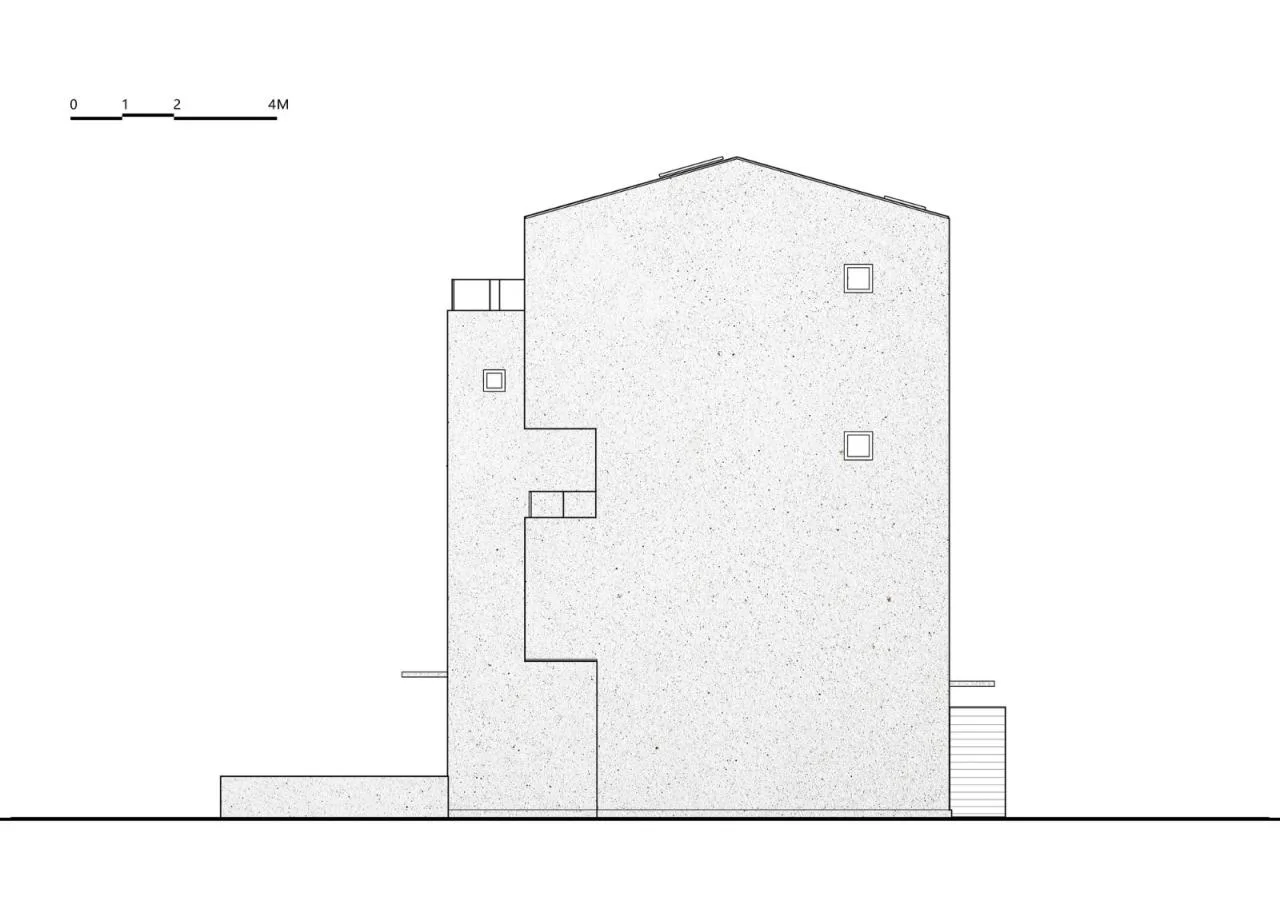
△ Elevation Drawings
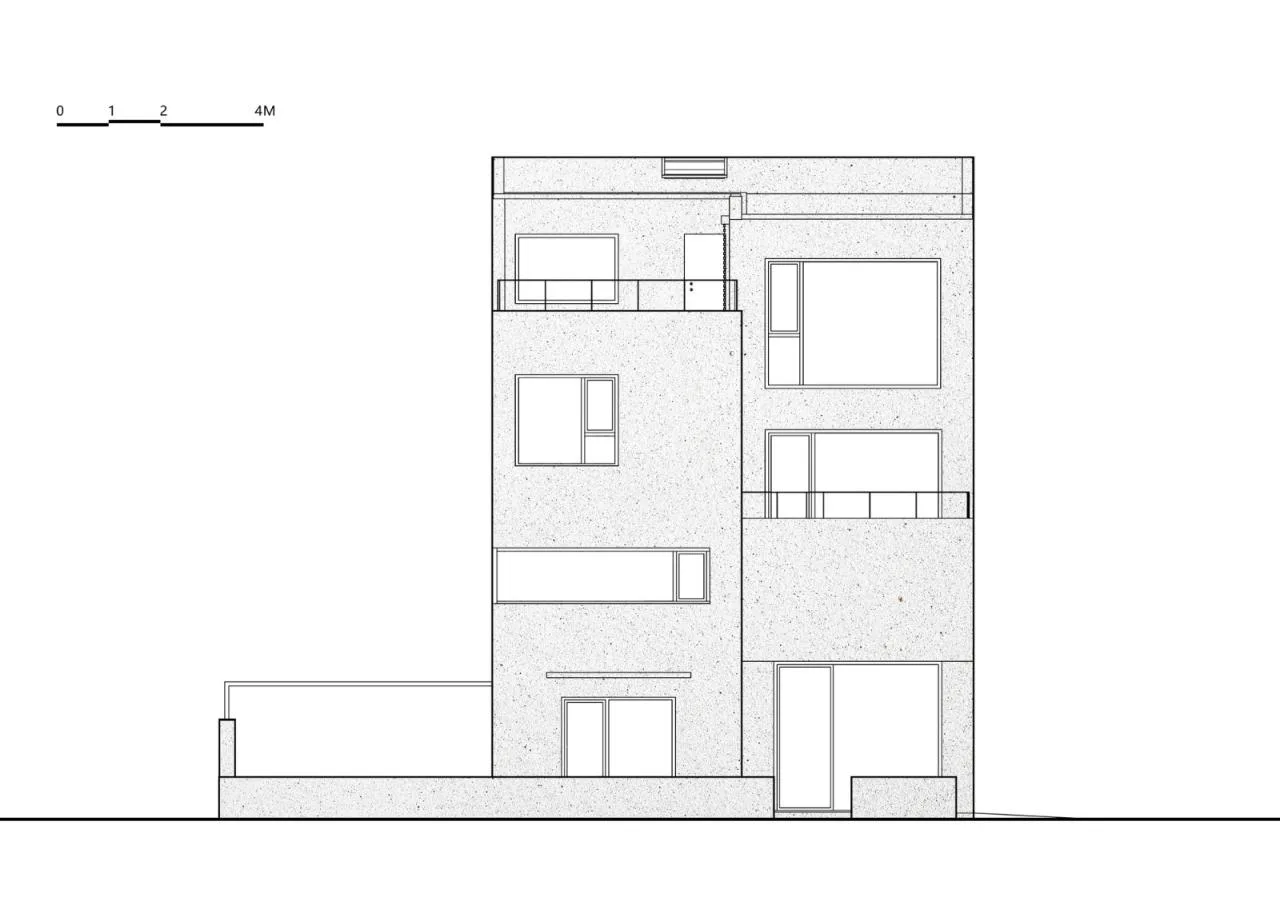
△ Elevation Drawings
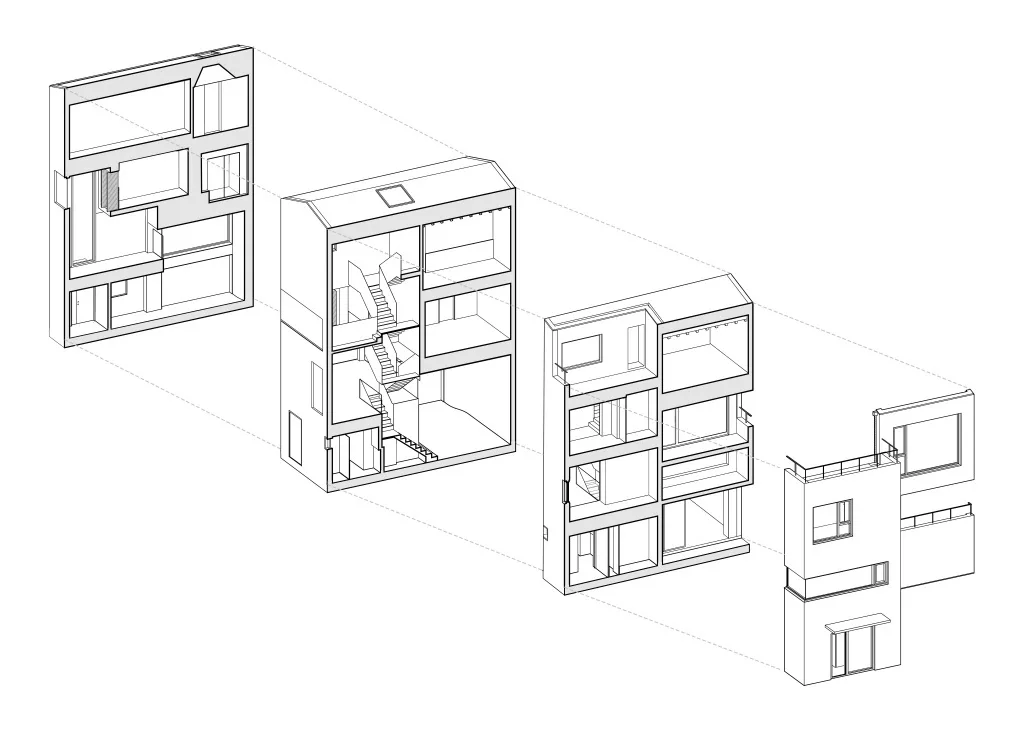
△ Sectional Diagram
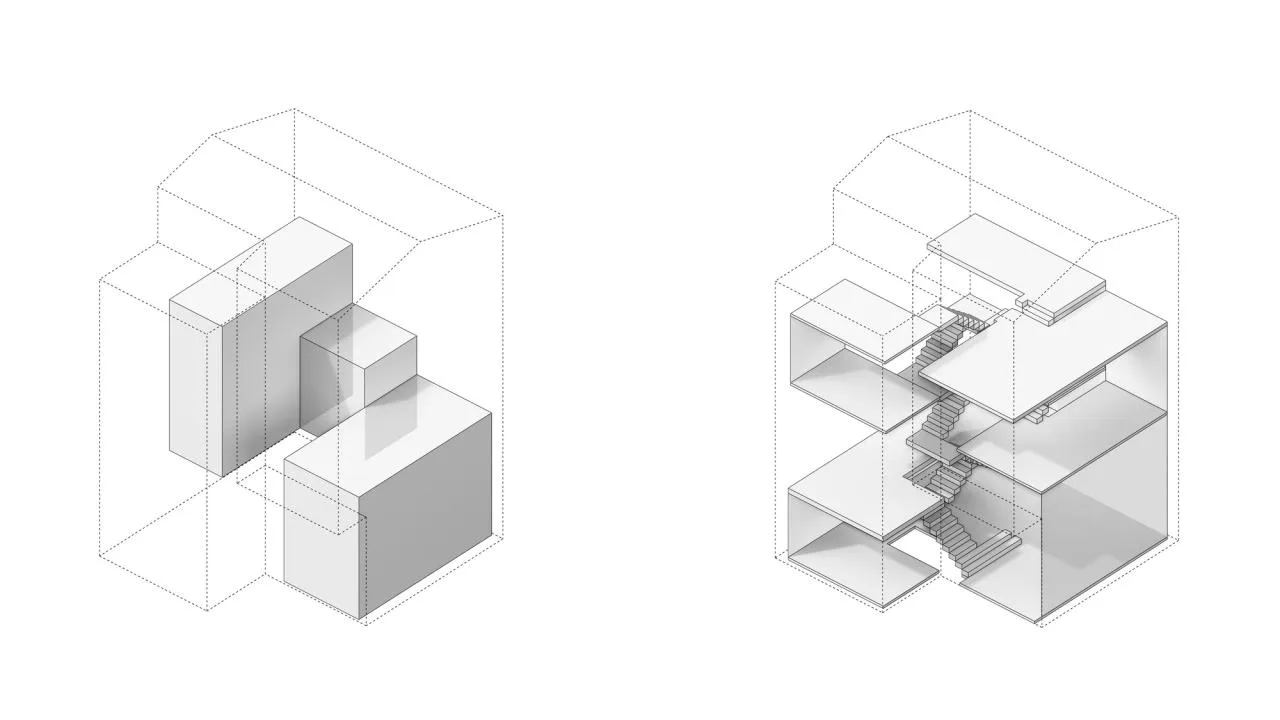
△ Analysis Diagram
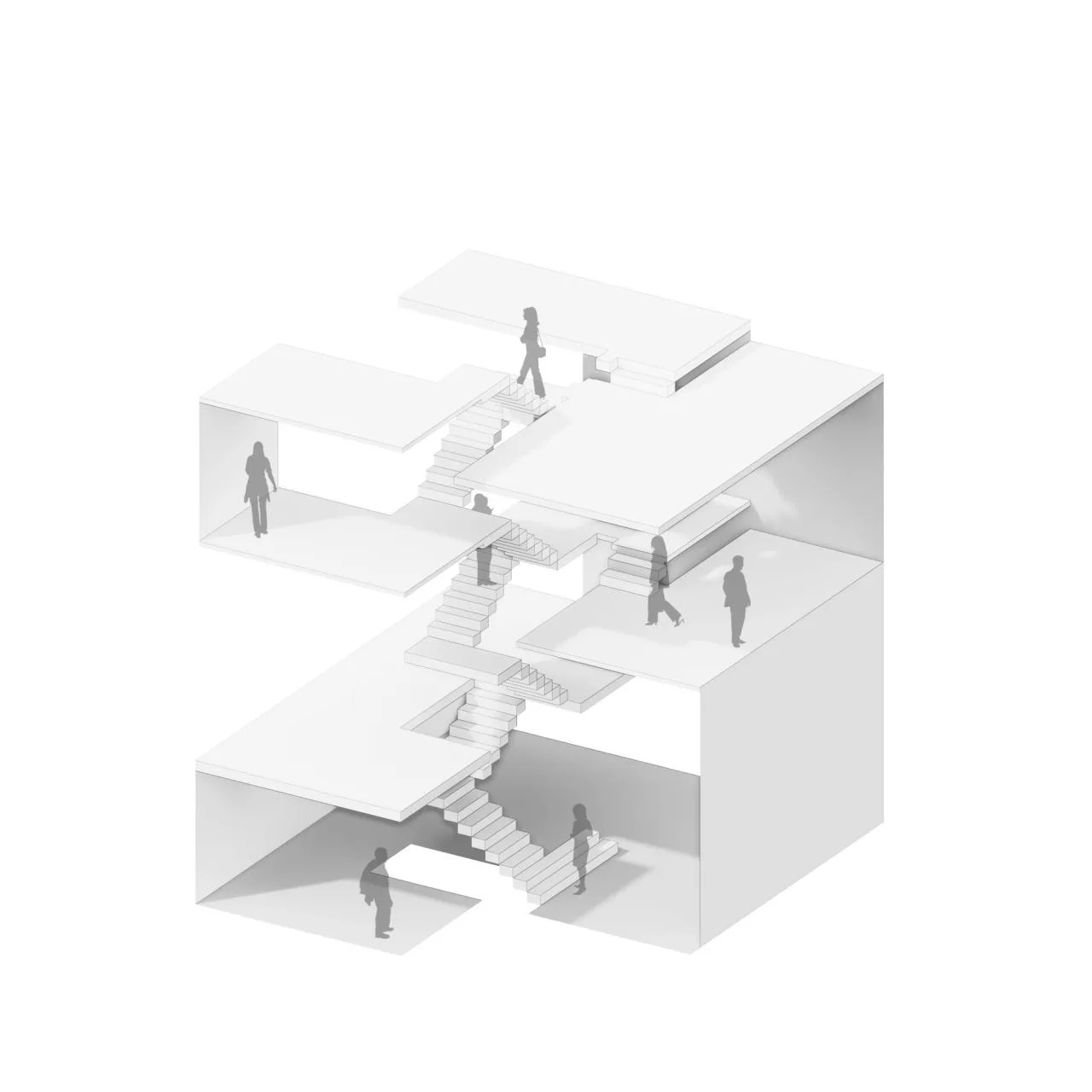
△ Traffic Flow Analysis
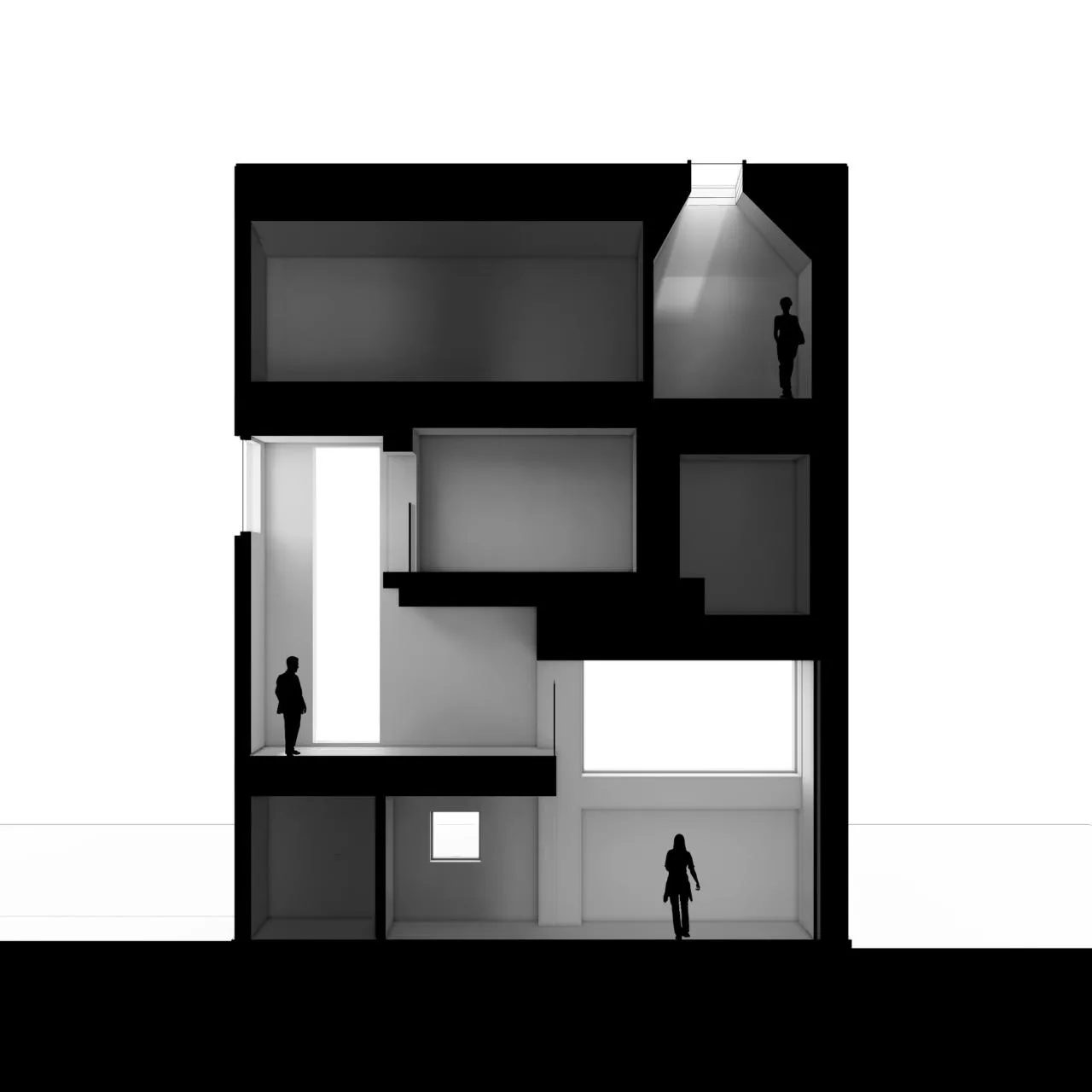
△ Section Diagram
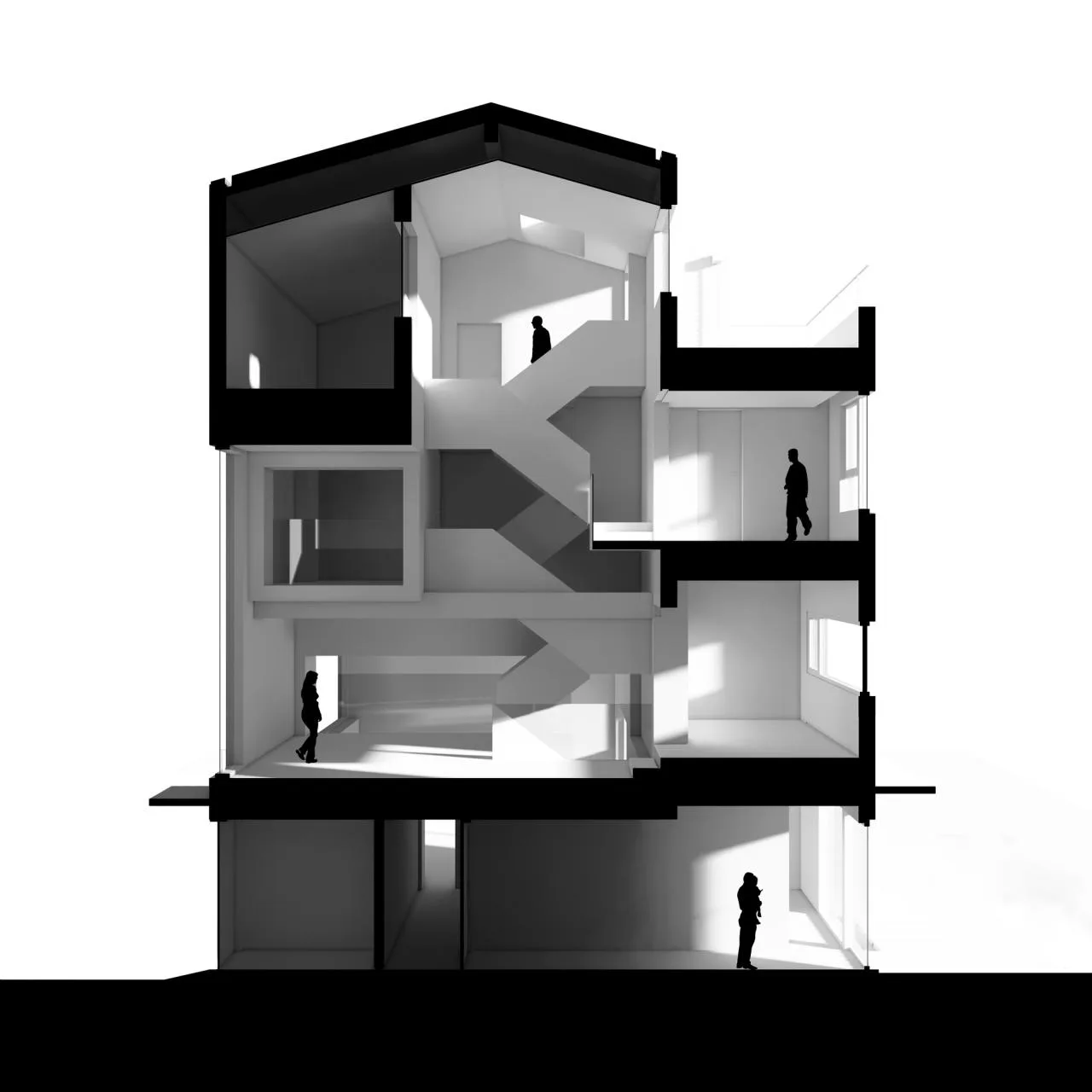
△ Section Diagram
Project Information
Architect: Standing Wood Design Research Laboratory
Area: 250 square meters
Project Year: 2023
Photographer: Zhu Qingyan
Suppliers: Denison, Duoyi, Lipang, Terrazzo & Marble, Texture Coating, Wood Veneer
Lead Designers: Liu Jinrui, Zou Mingxi
Design Team: Li Jiayan, Li Chunyao, Xun Yu, Cheng Miao, Xie Shunbing, Liu Minghao, Guan Haoting, Xiao Luoqin, Chen Ziqian, Zou Chengxing, Xu Fengjie, Wang Liuyang
Indoor Construction Drawing Design: Yibuchuan
Indoor Construction Drawing Team: Xiao Chongge, Xin Linkai, Wang Yunfa, Wang Desheng, Wan Yuyi
Project Residents: Li Xiang, Xun Yu
Design Consultant: Shen Peng
Structural Consultants: Tang Xi, Liu Chengliang
HVAC Consultant: Rui Wen
Project Manager: Guo Lan
Location: Nantong














Must log in before commenting!
Sign Up