
Changtou Ancient Village, located in the northern suburbs of Guangzhou, has a history spanning over 600 years. Known as a renowned “bookish village,” Changtou boasts a wealth of well-preserved architectural heritage, including academies, ancestral halls, traditional residences, and ancient alleyways.
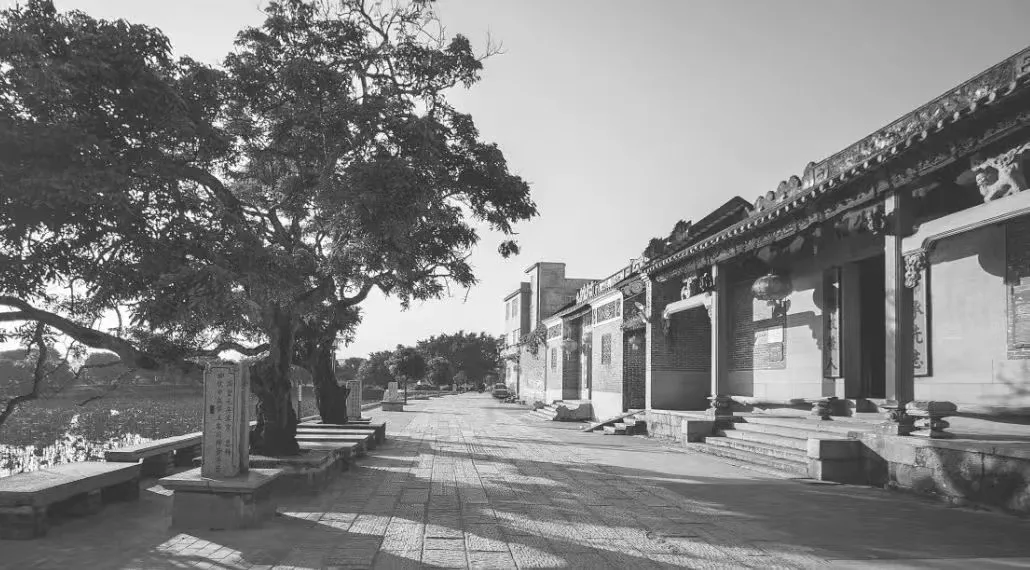
△ Changtou Ancient Village
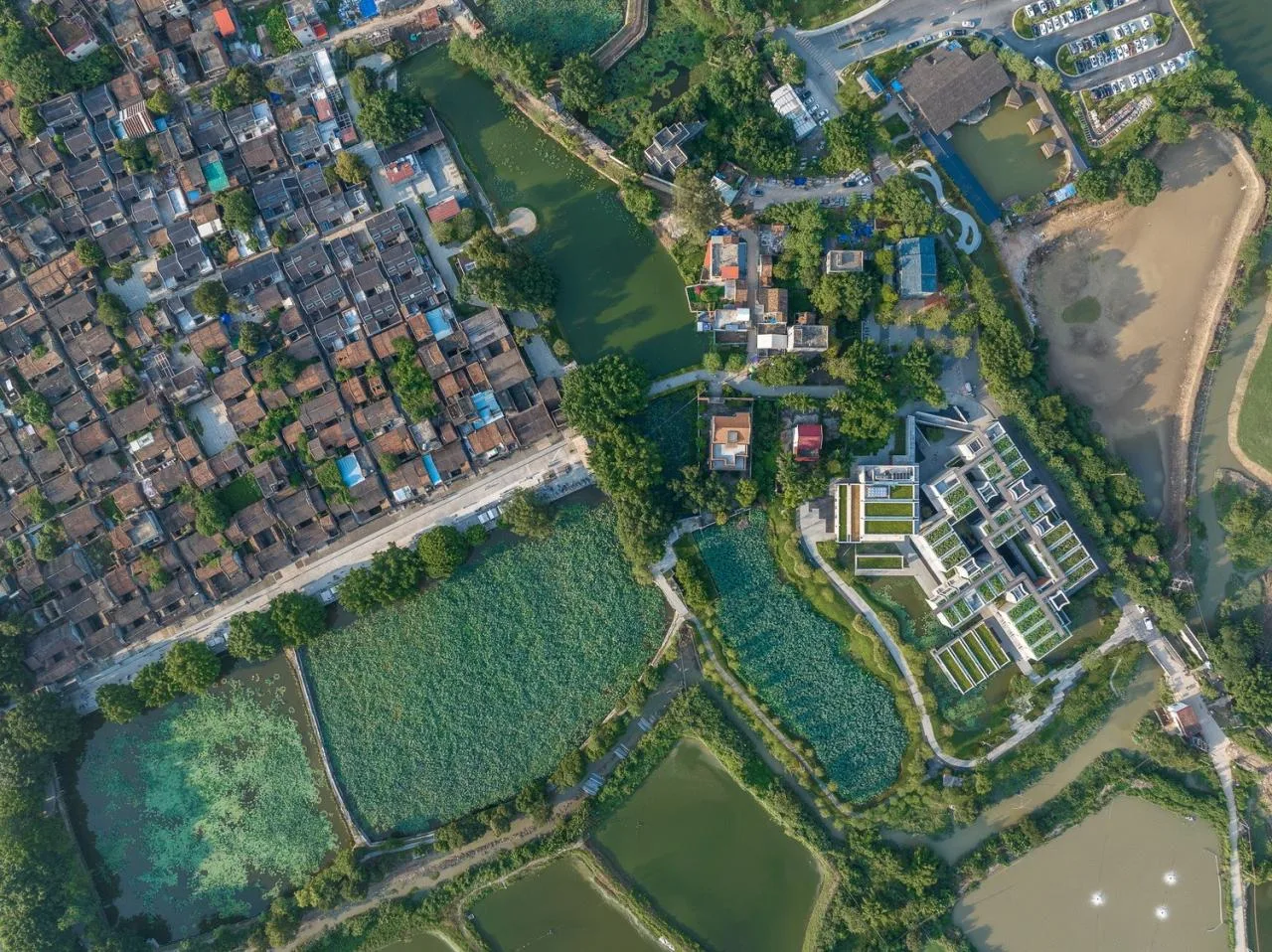
△ The Art and Culture Center of Bilin Ancient Village
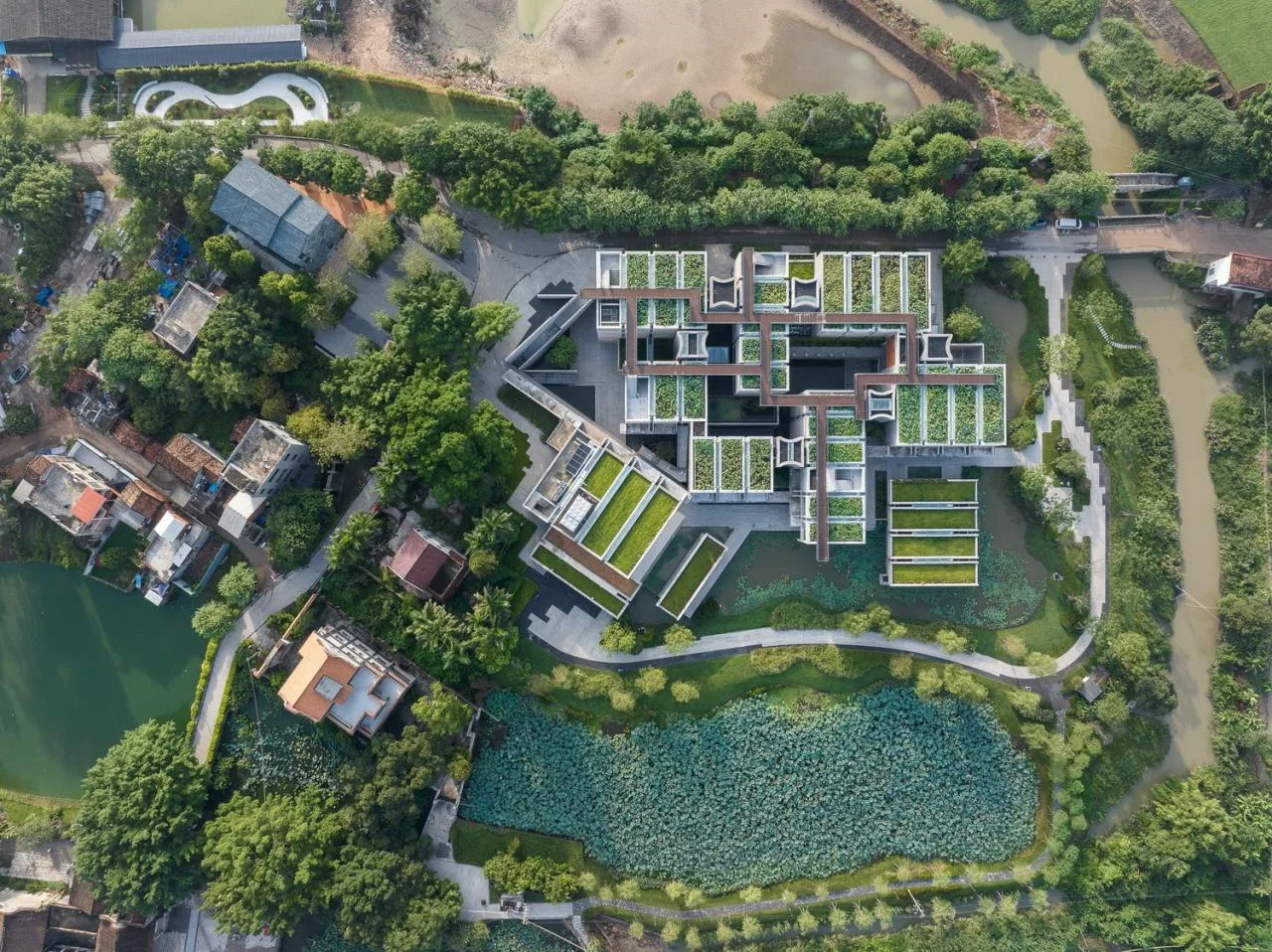
The pedestrian bridge crossing over the lotus pond connects the Art and Culture Center to the ancient village.
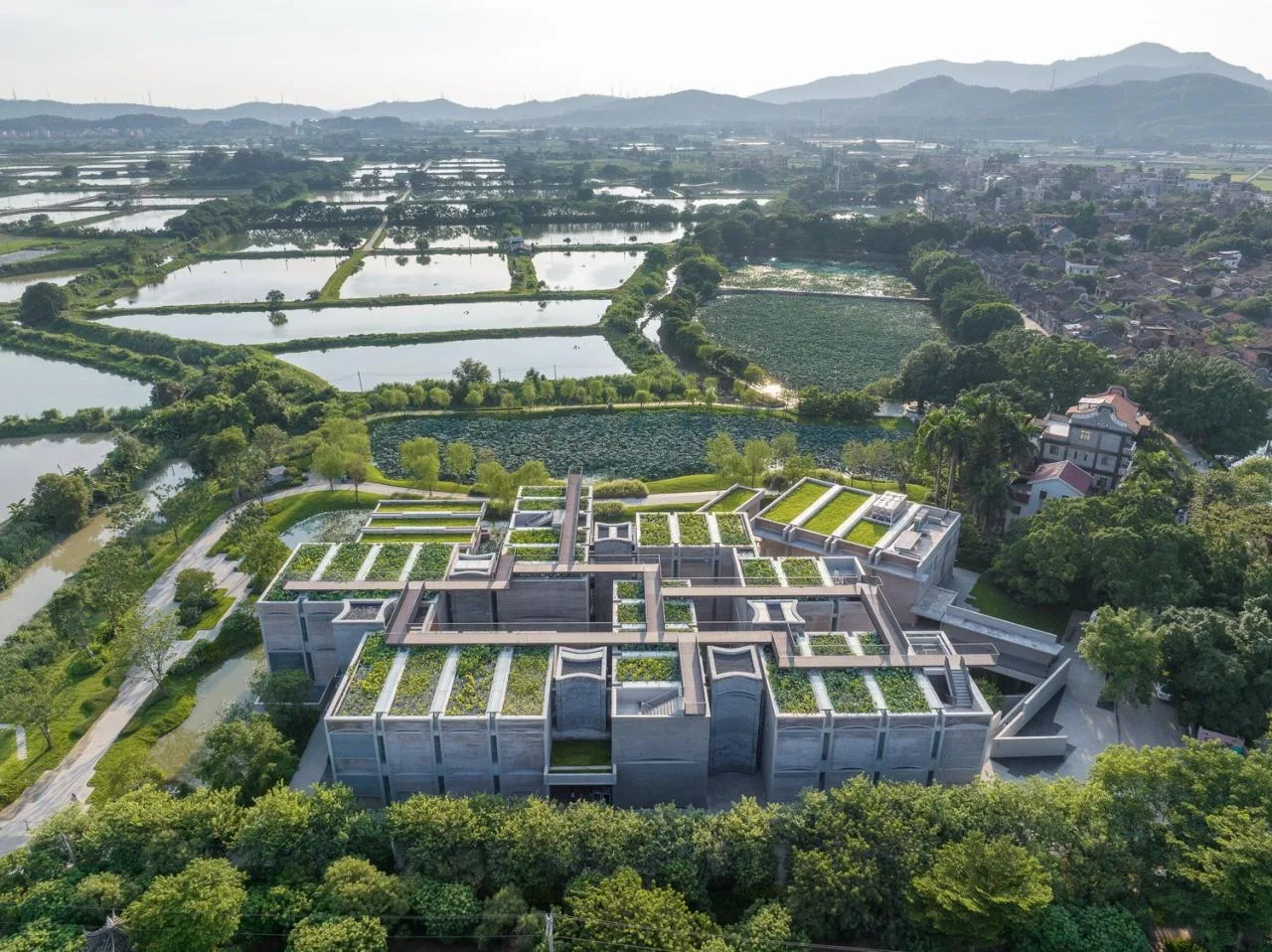
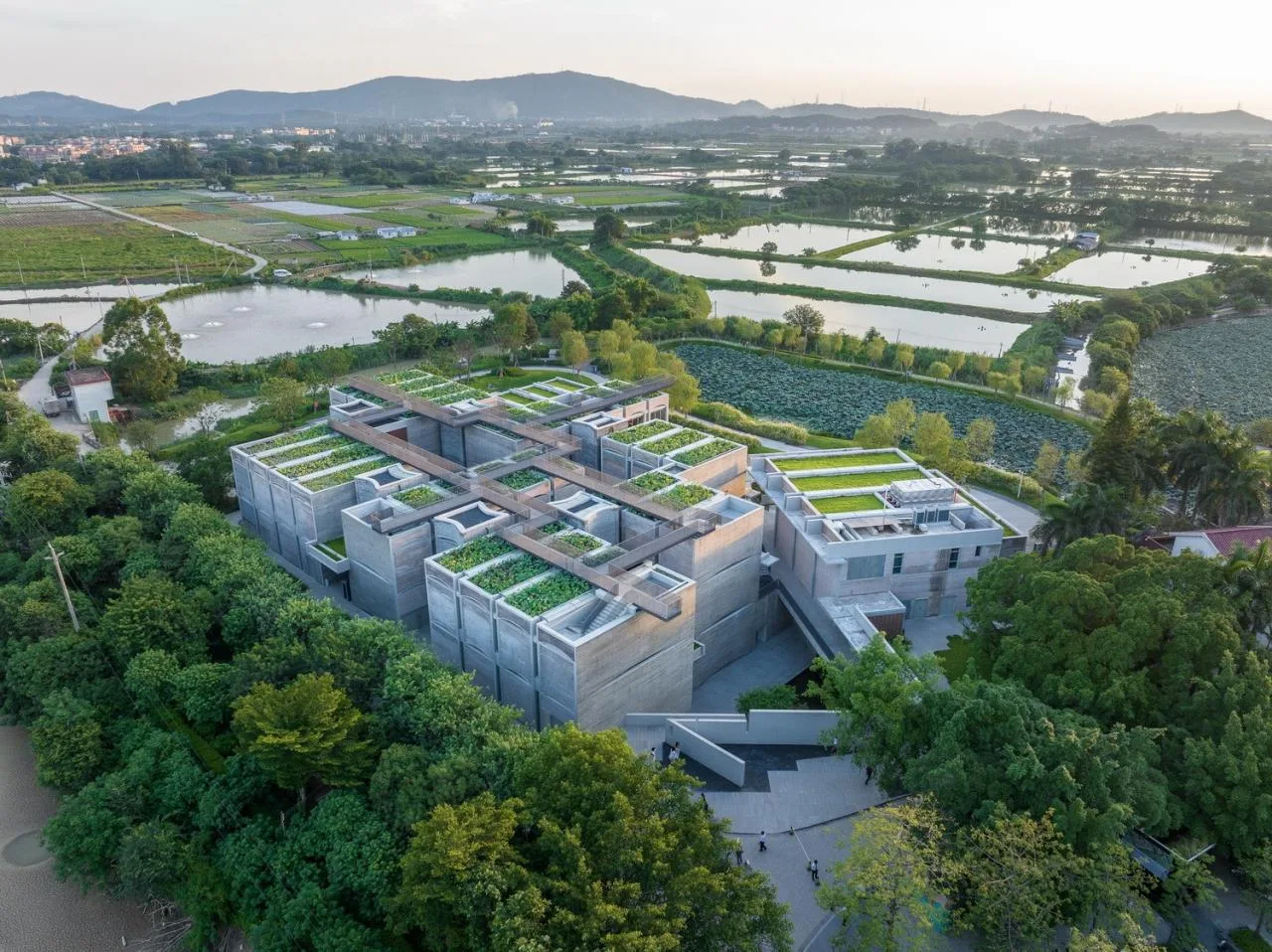
△ The architecture harmoniously integrates into the picturesque local natural environment.
The character ‘Long’ originally refers to a low-lying area beside a river, extending to lakes, marshes, and ponds. Changtou Ancient Village is surrounded by numerous ponds, including lotus ponds, fish ponds, and feng shui ponds. The gentle breeze rustling the lotus leaves creates a charming Lingnan water town atmosphere. Our design for the Longtou Art and Culture Center, named “Chunyang Terrace,” is situated within a lotus pond at the village entrance.
View of the spring balcony from the entrance side
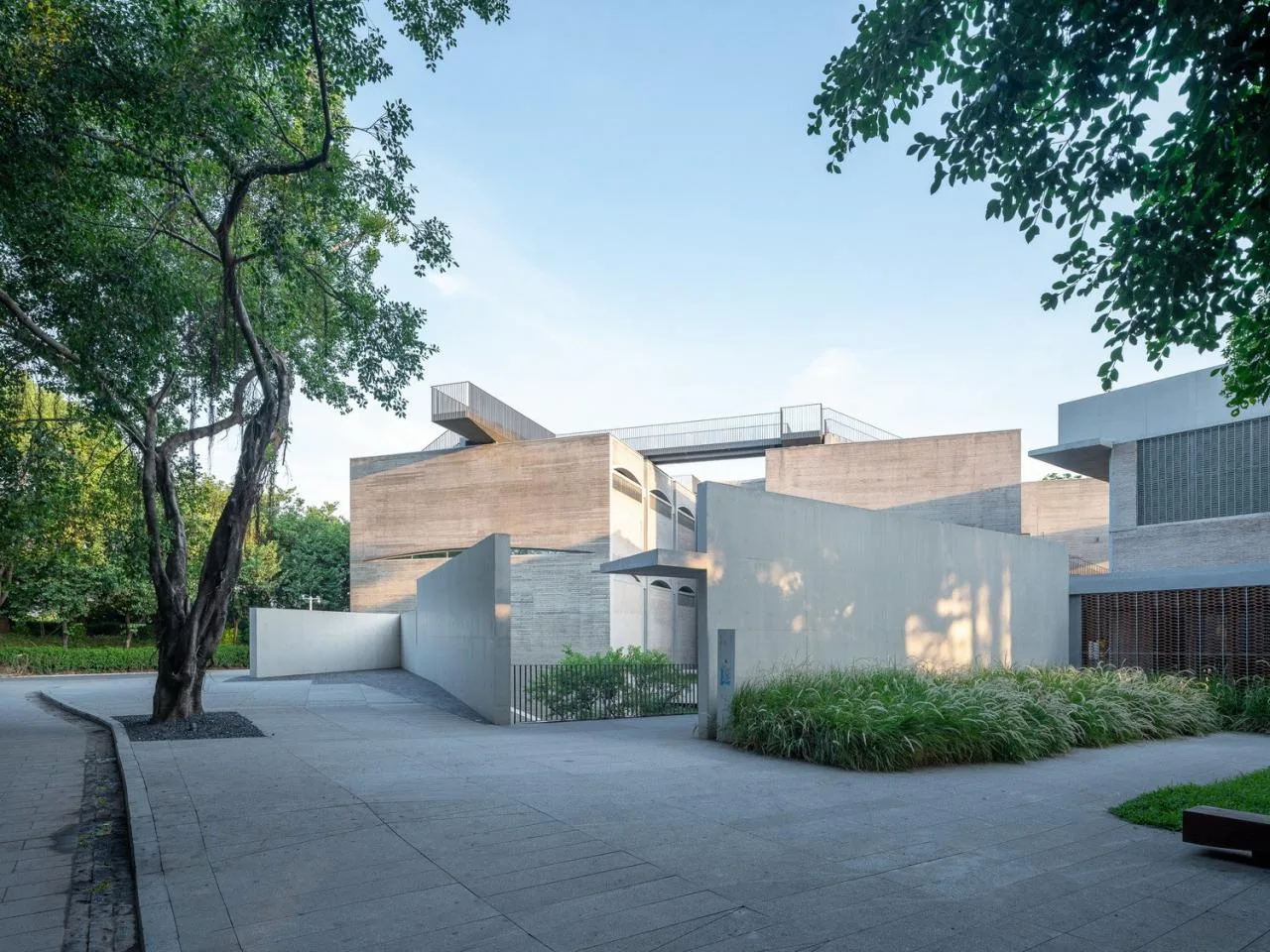
△ Main Entrance
Echoing Historical Scale
To resonate with the scale and layout of the ancient village, the building adopts a settlement-style arrangement. The various functions required—exhibition, reading, performance, study, dining, and more—are distributed among ten small, individual structures.
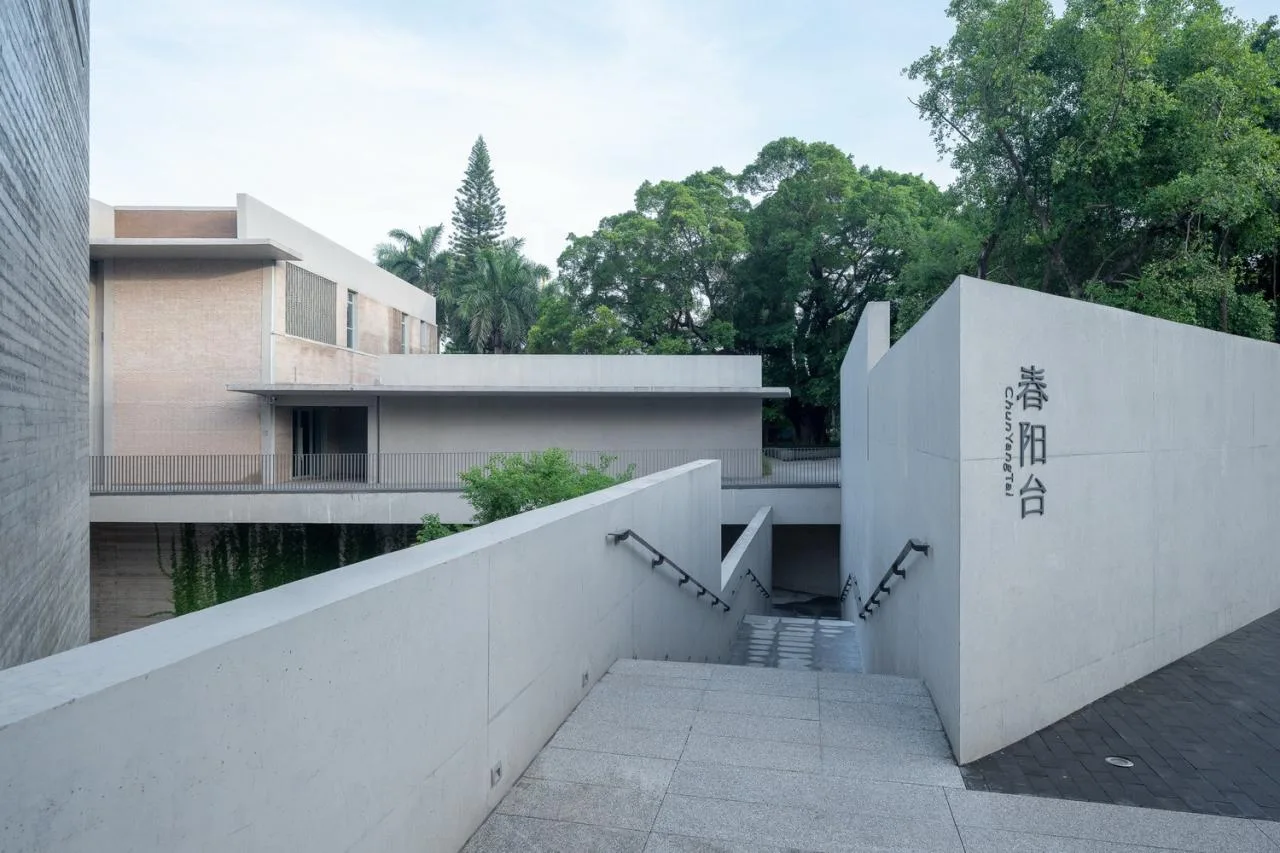
△ Entrance Staircase
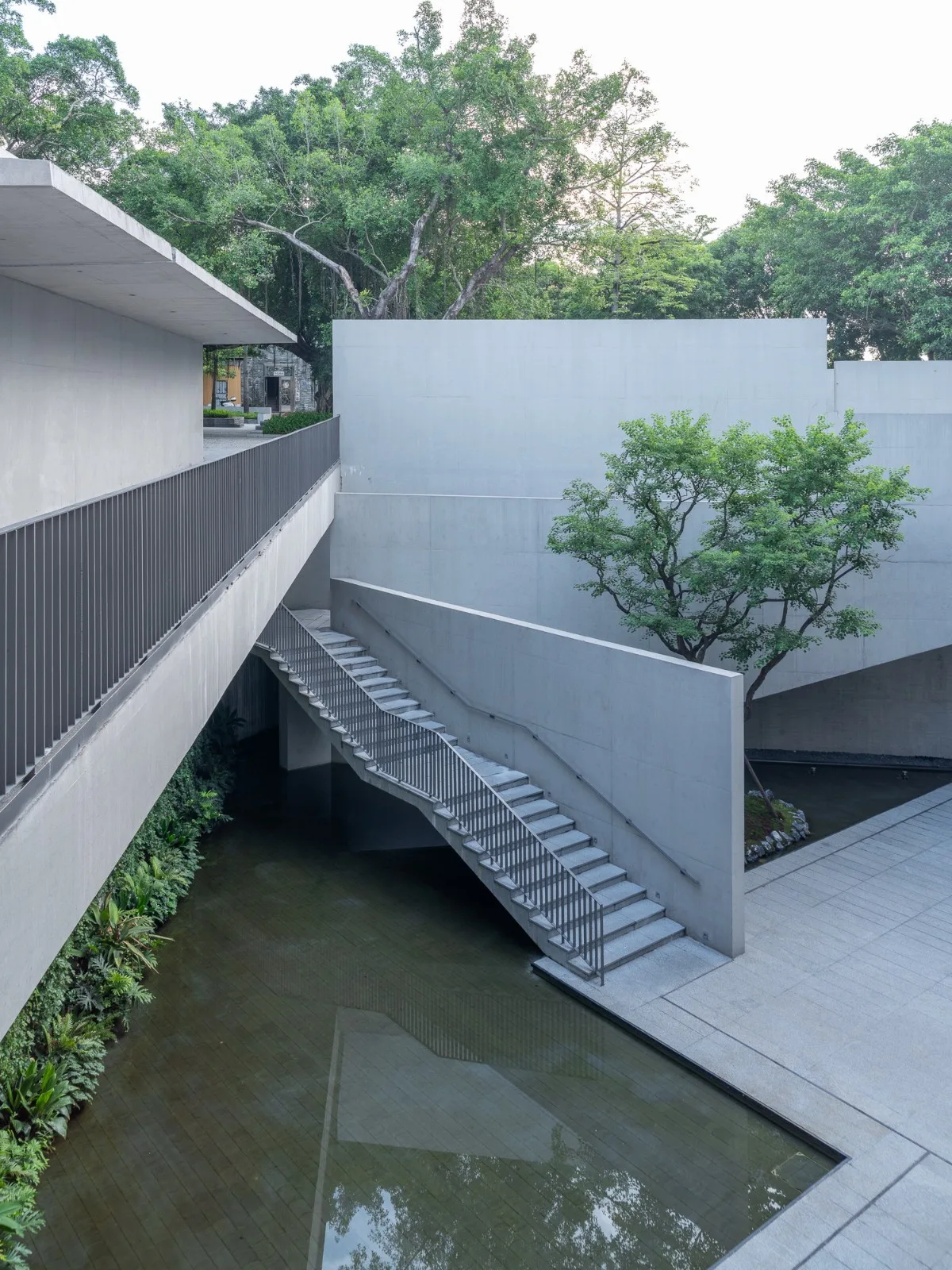
View overlooking the sunken courtyard
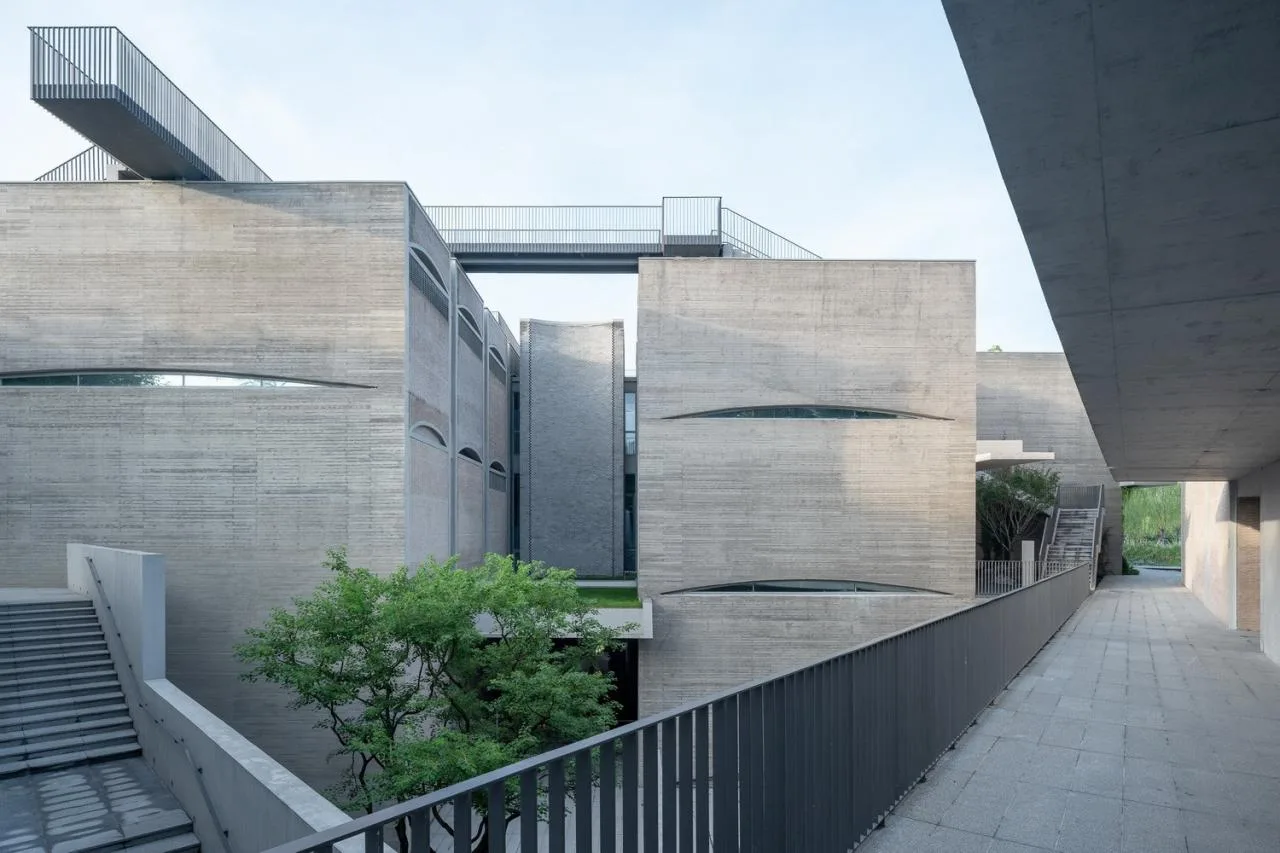
Curved “buildings” link the individual structures together
The individual buildings are connected by curved corridors, enclosing charming streets, alleys, and courtyards.
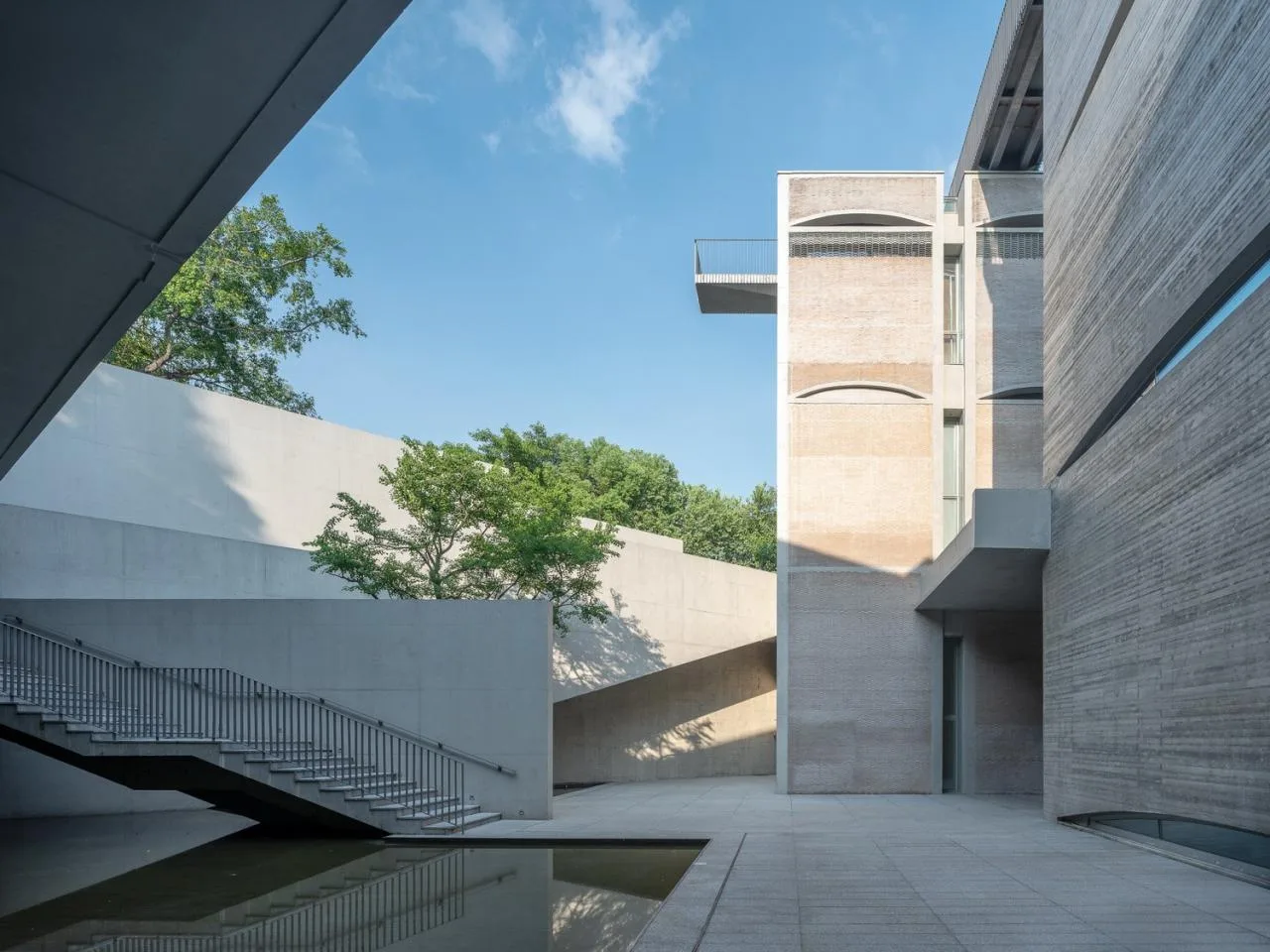
△ Exhibition entrance (right) within the sunken courtyard
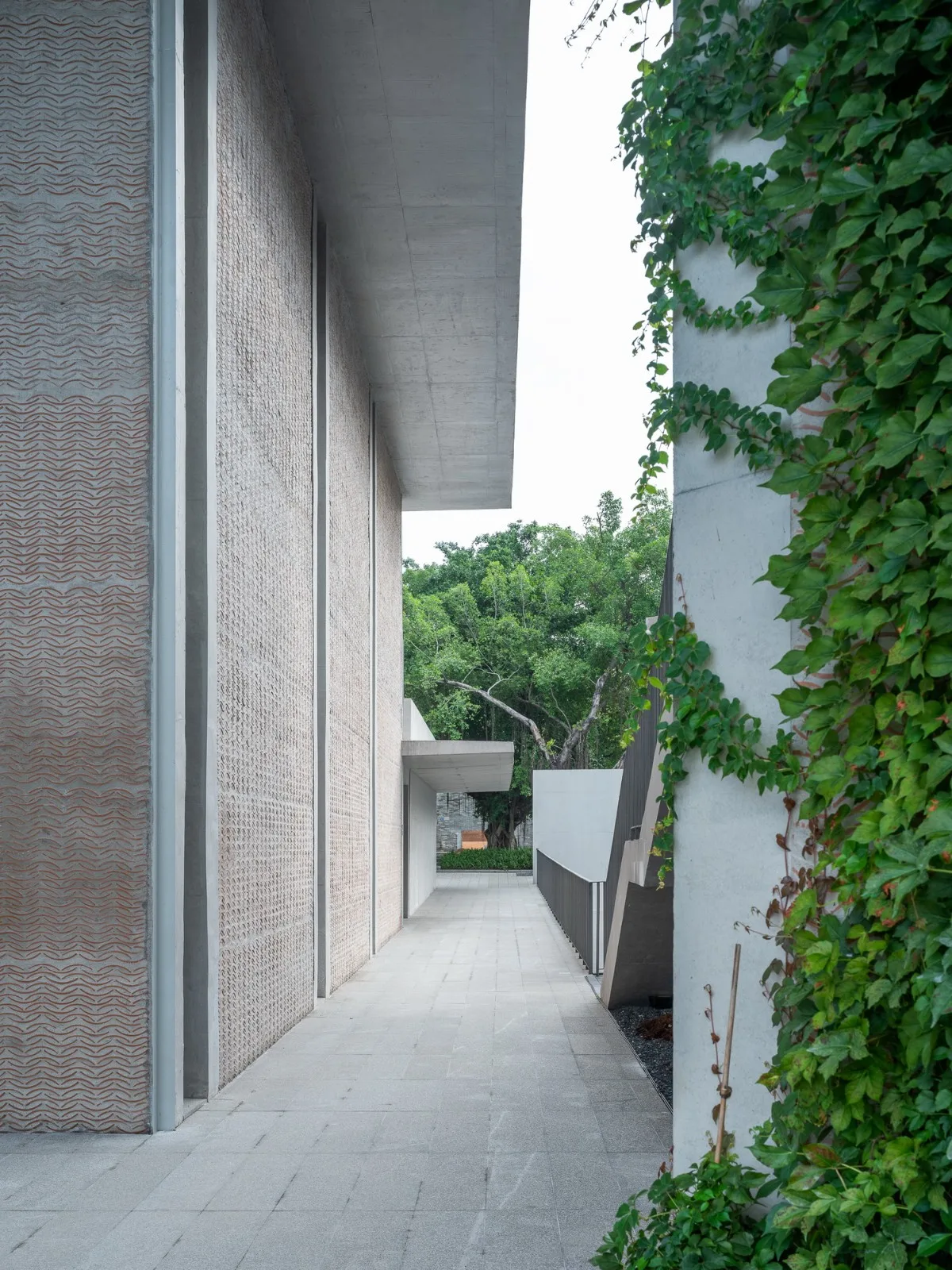
△ Streets and alleys
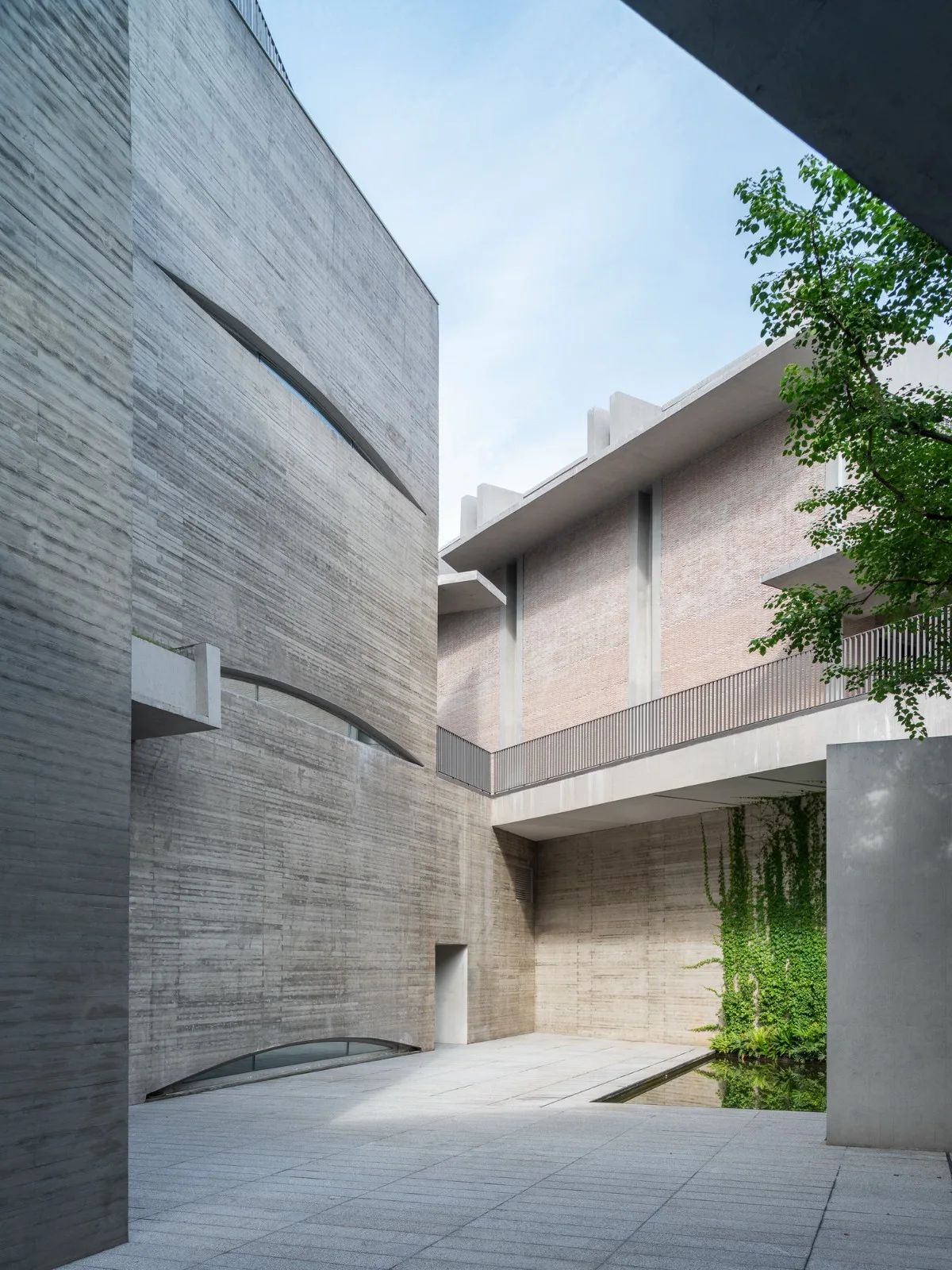
△ Courtyard
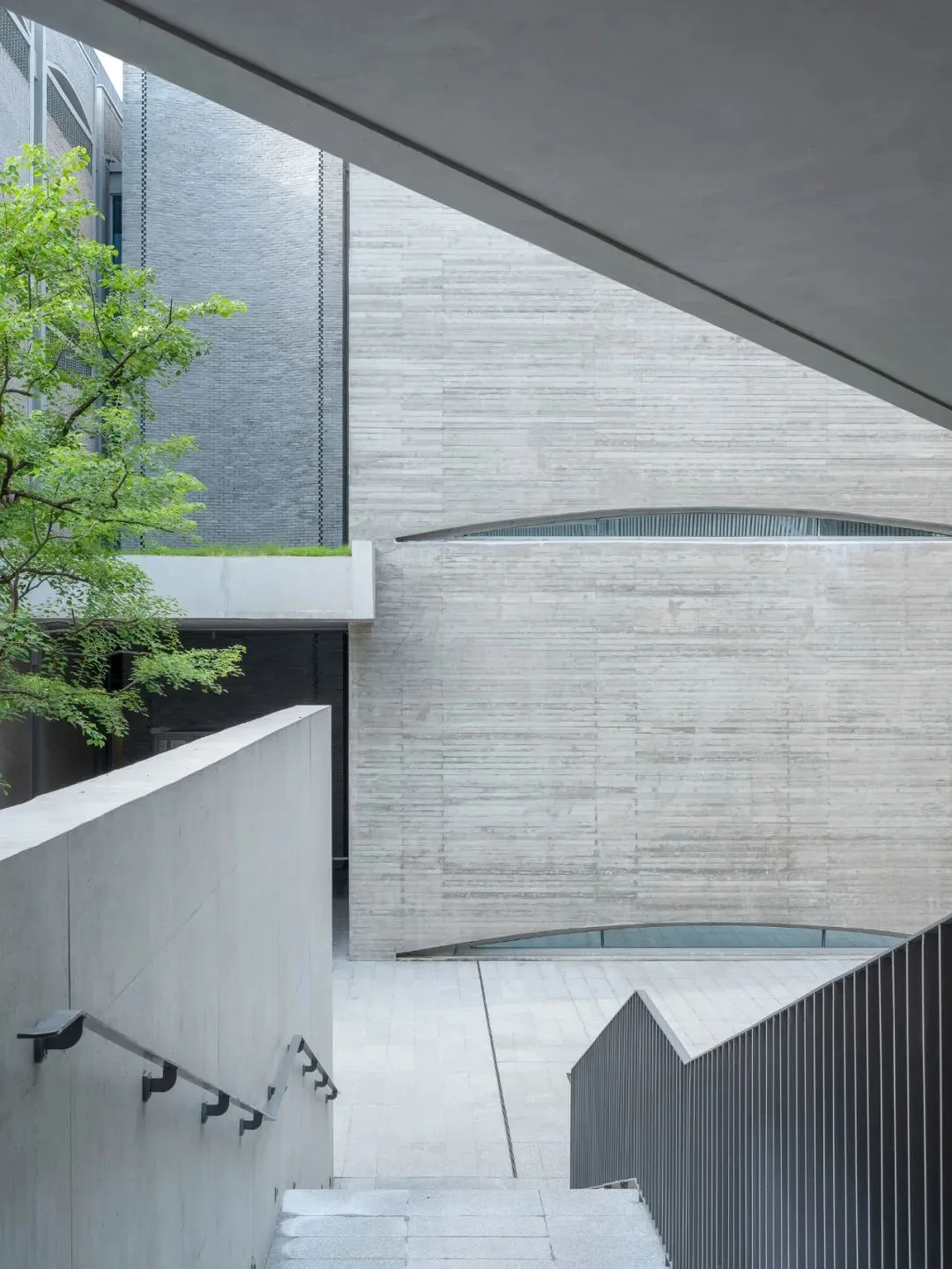
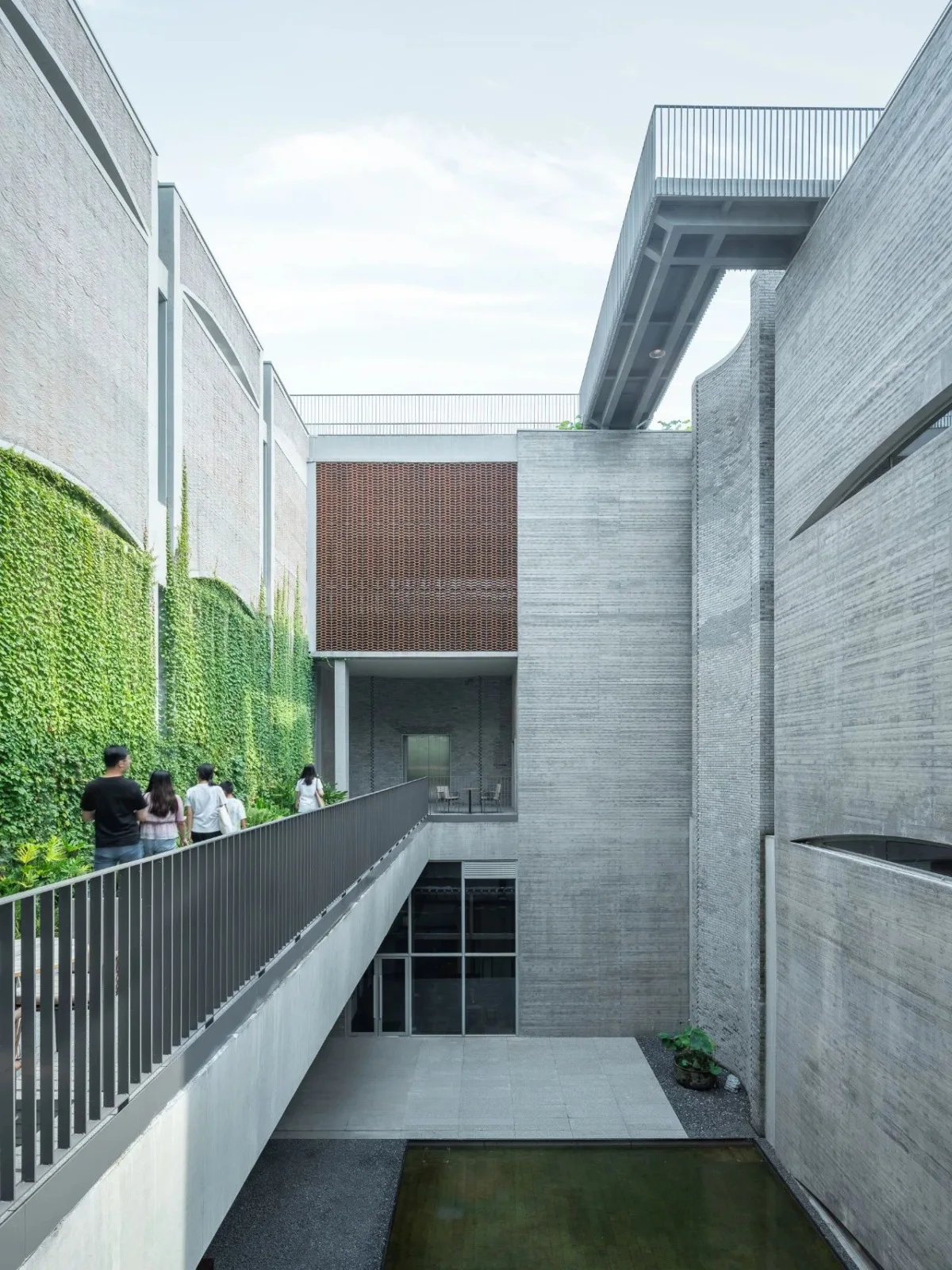
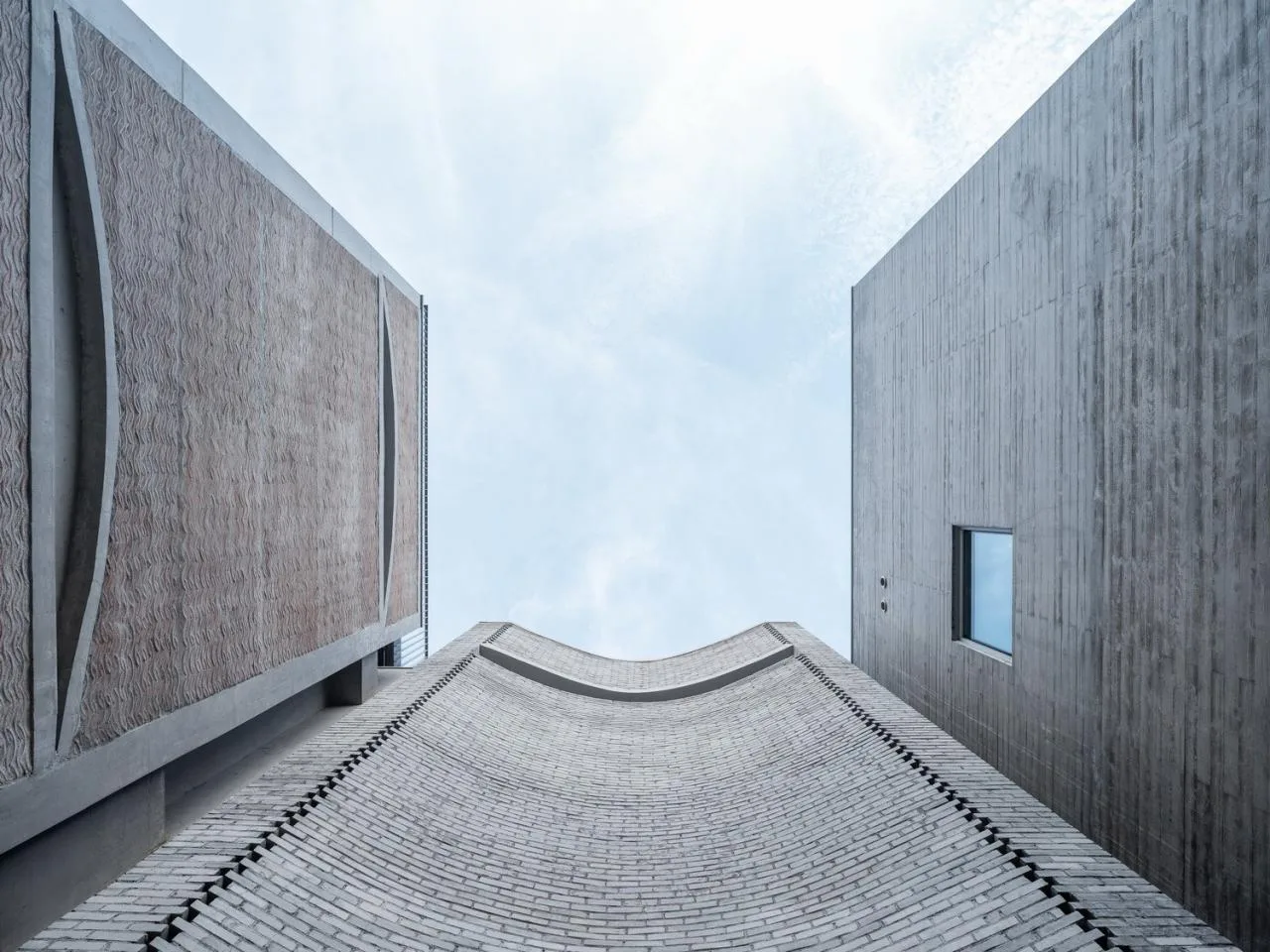
The curved connecting structures serve as smooth transitions between individual buildings.
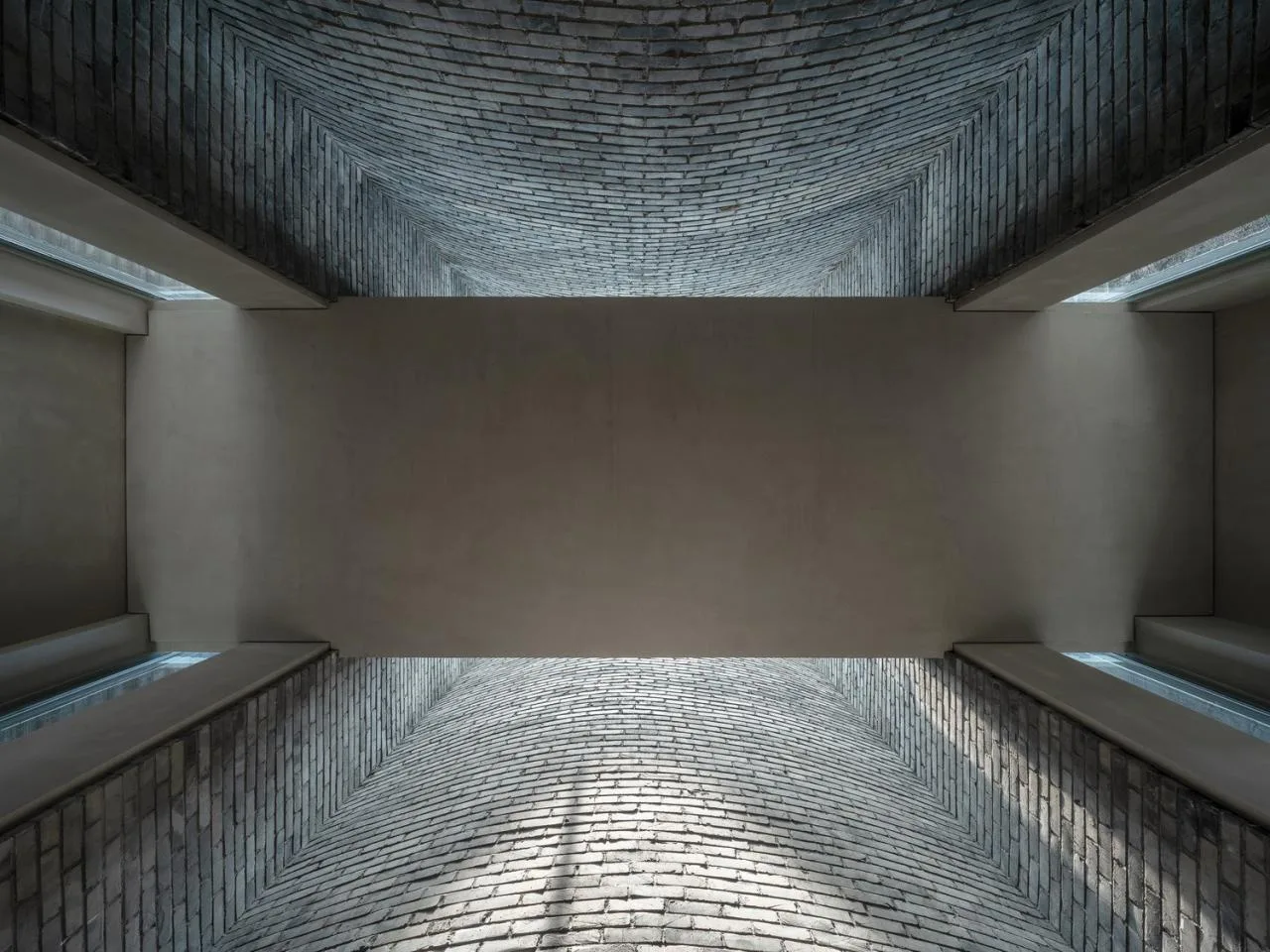
Looking upward from inside the building
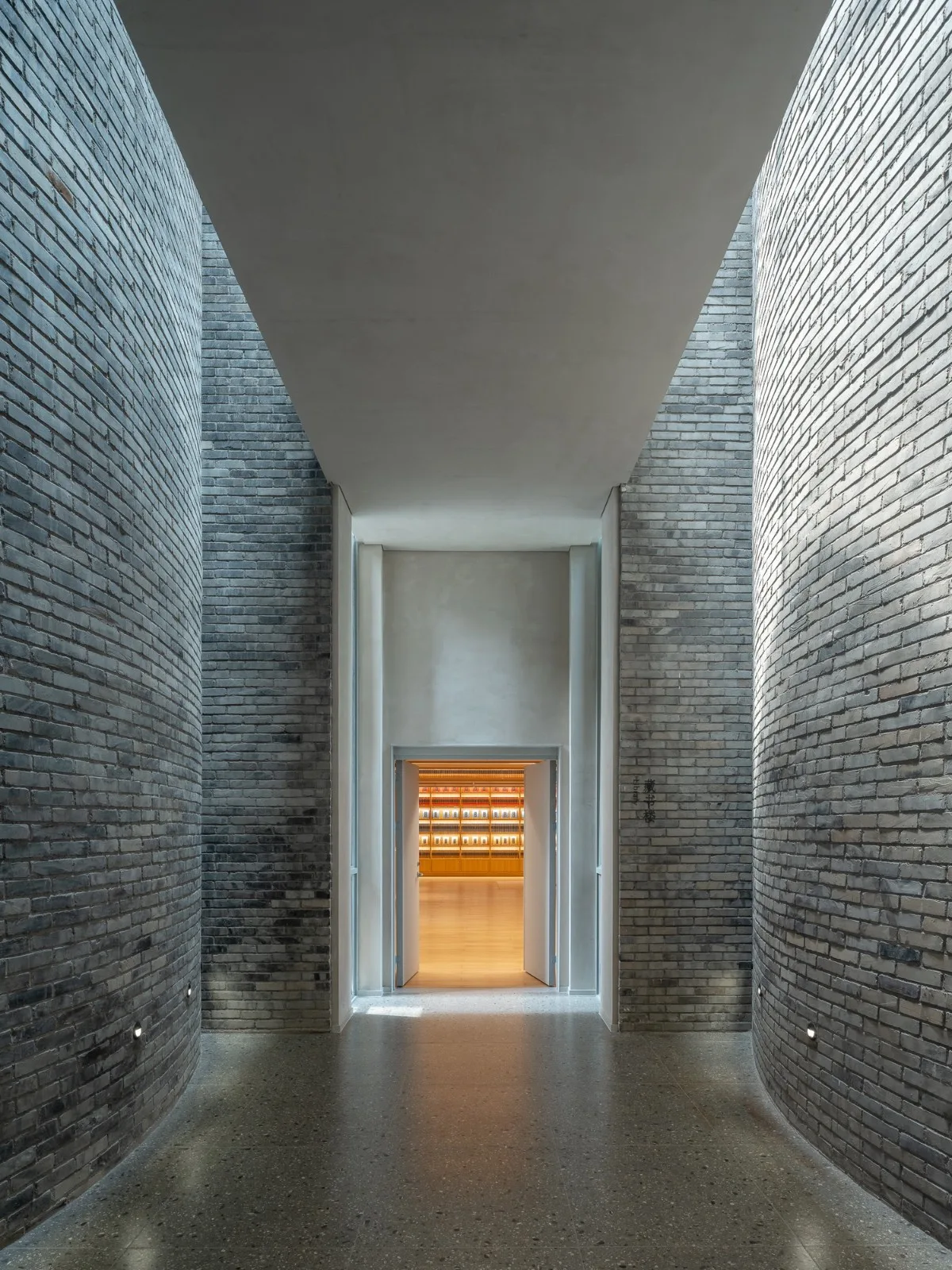
△ Interior spaces
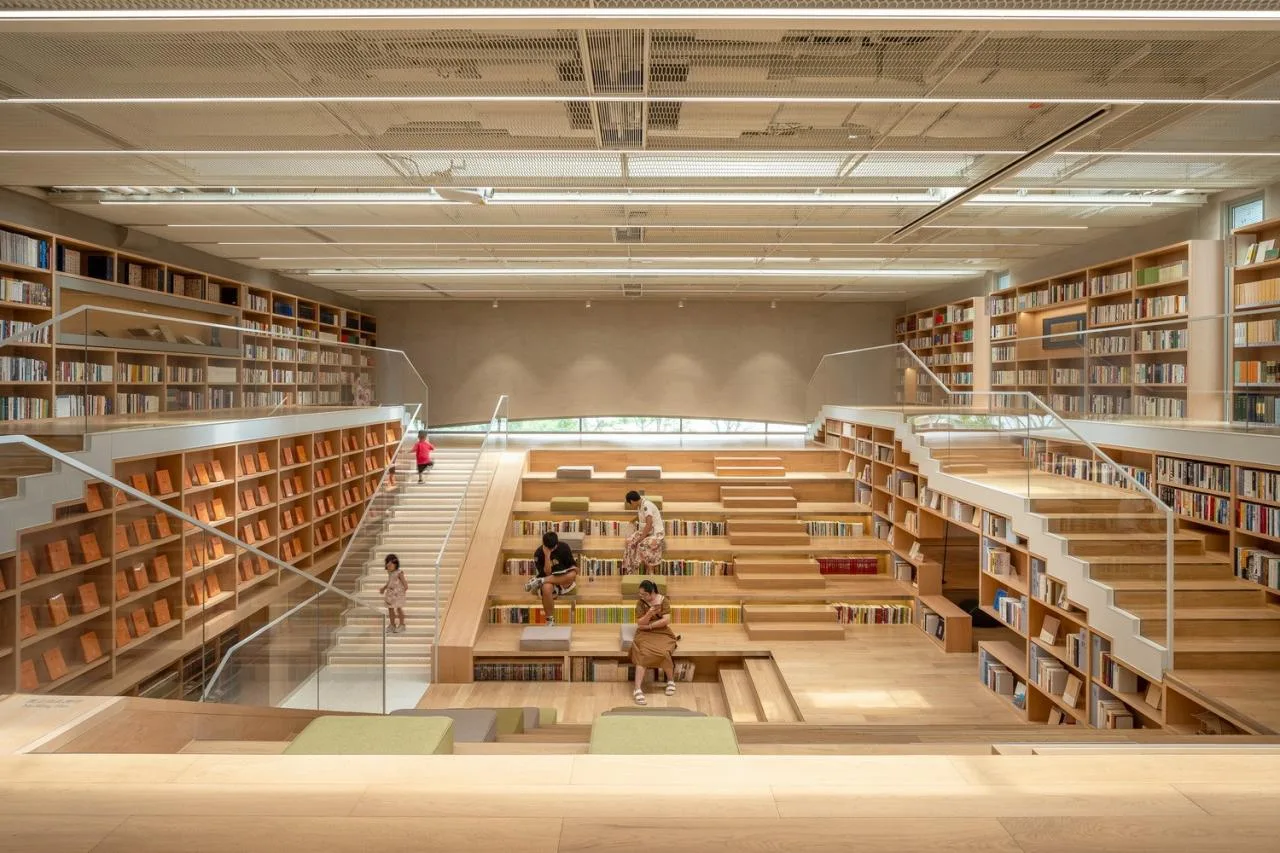
△ Library
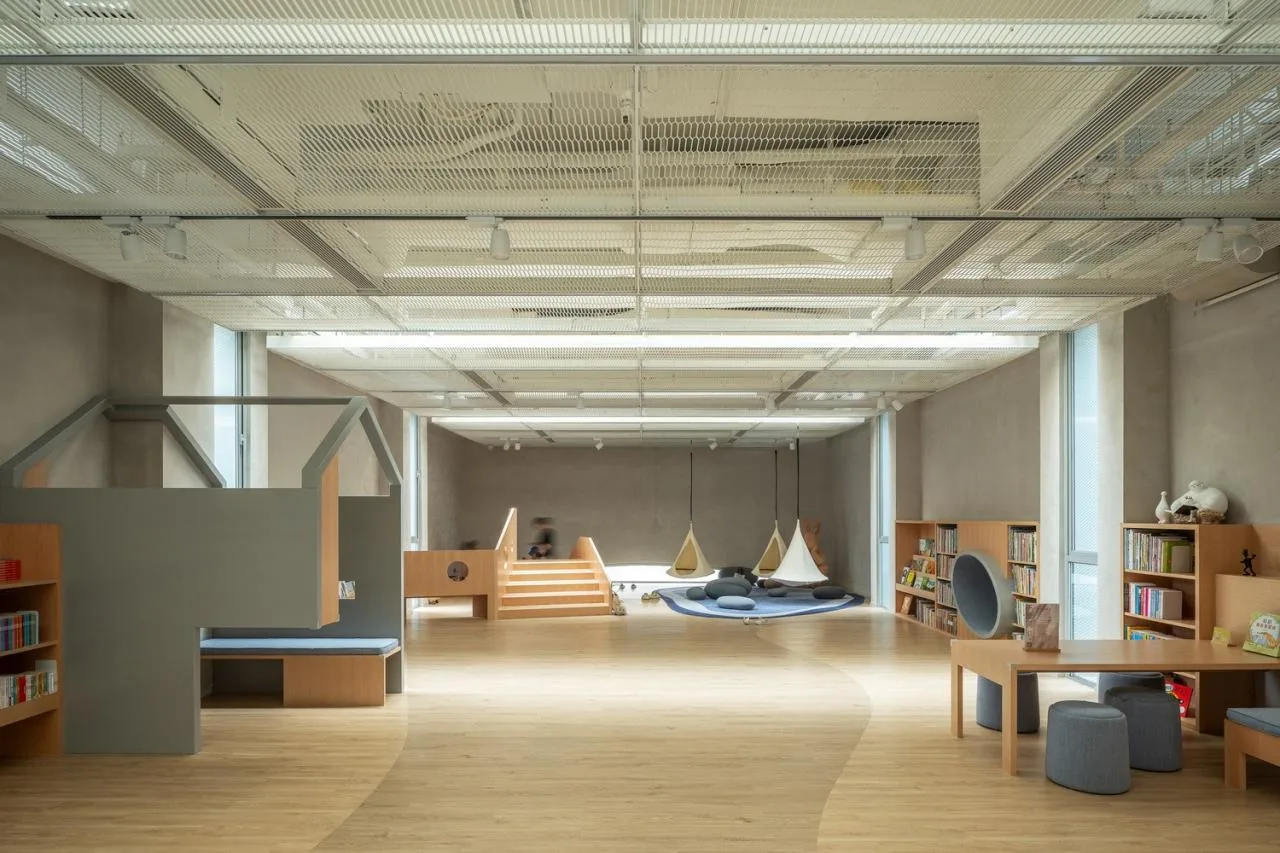
△ Parent-Child Experience Room
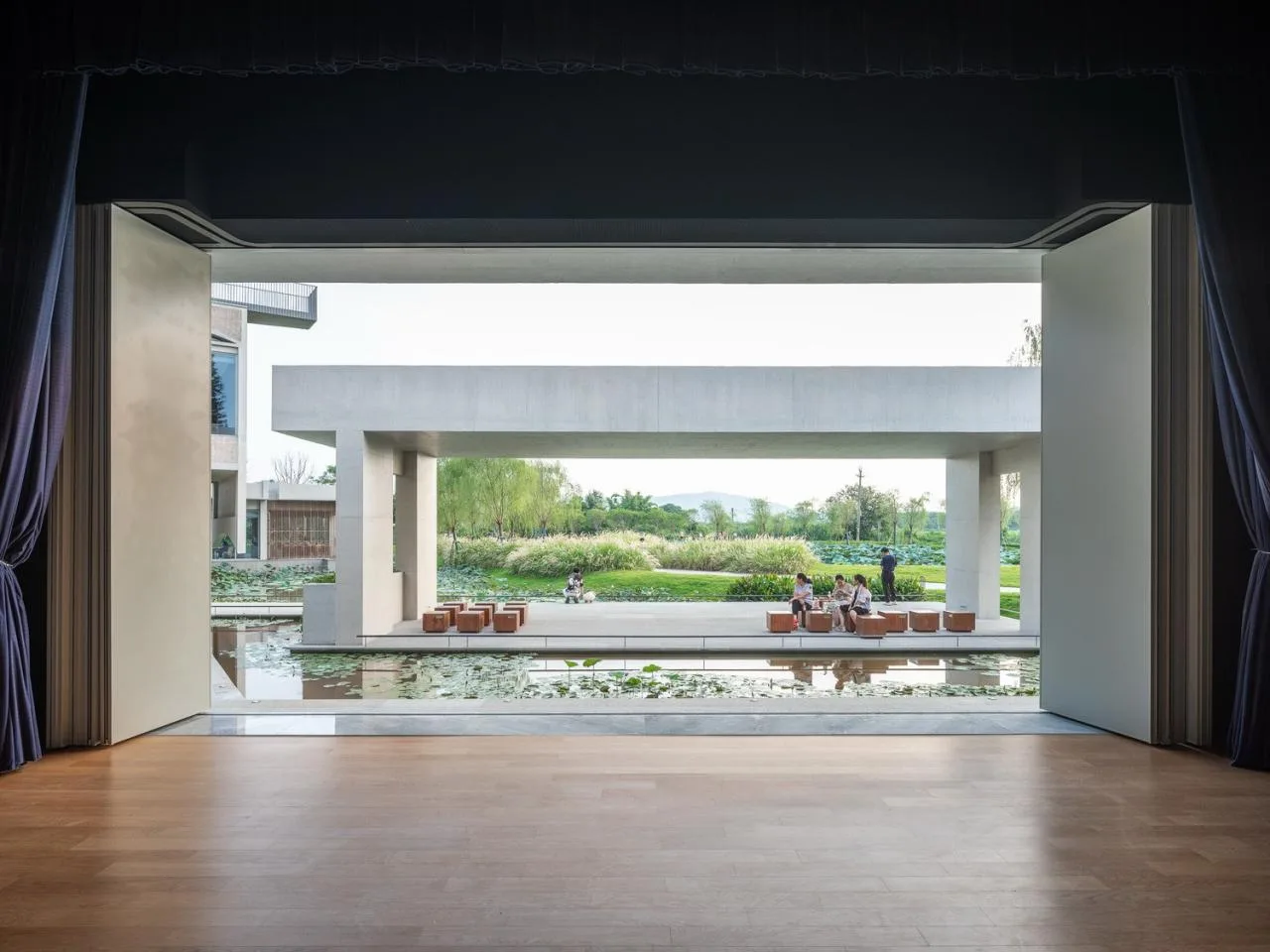
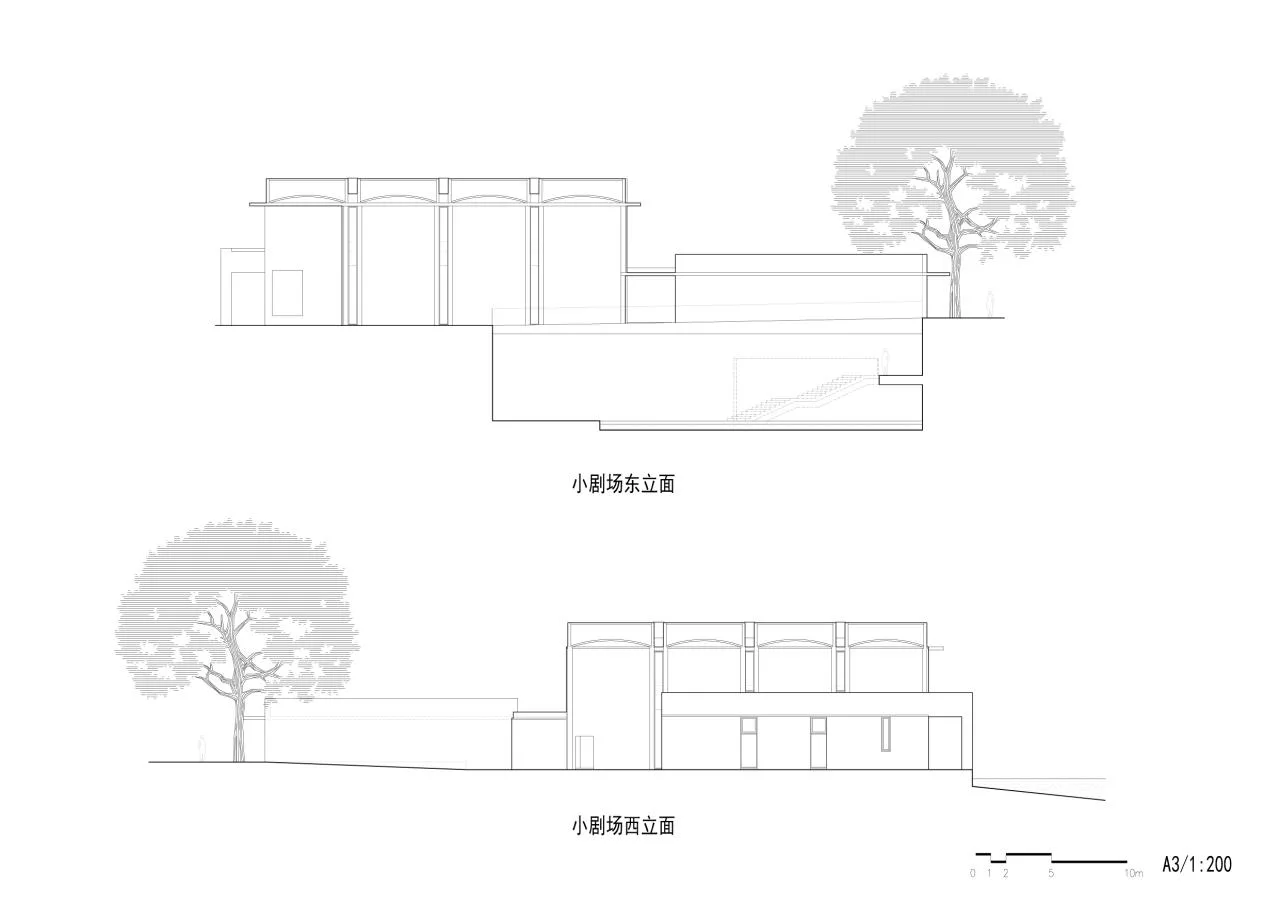
From the theater room, the lotus pond acts as a versatile amphitheater, functioning both as seating for the audience and as a stage.
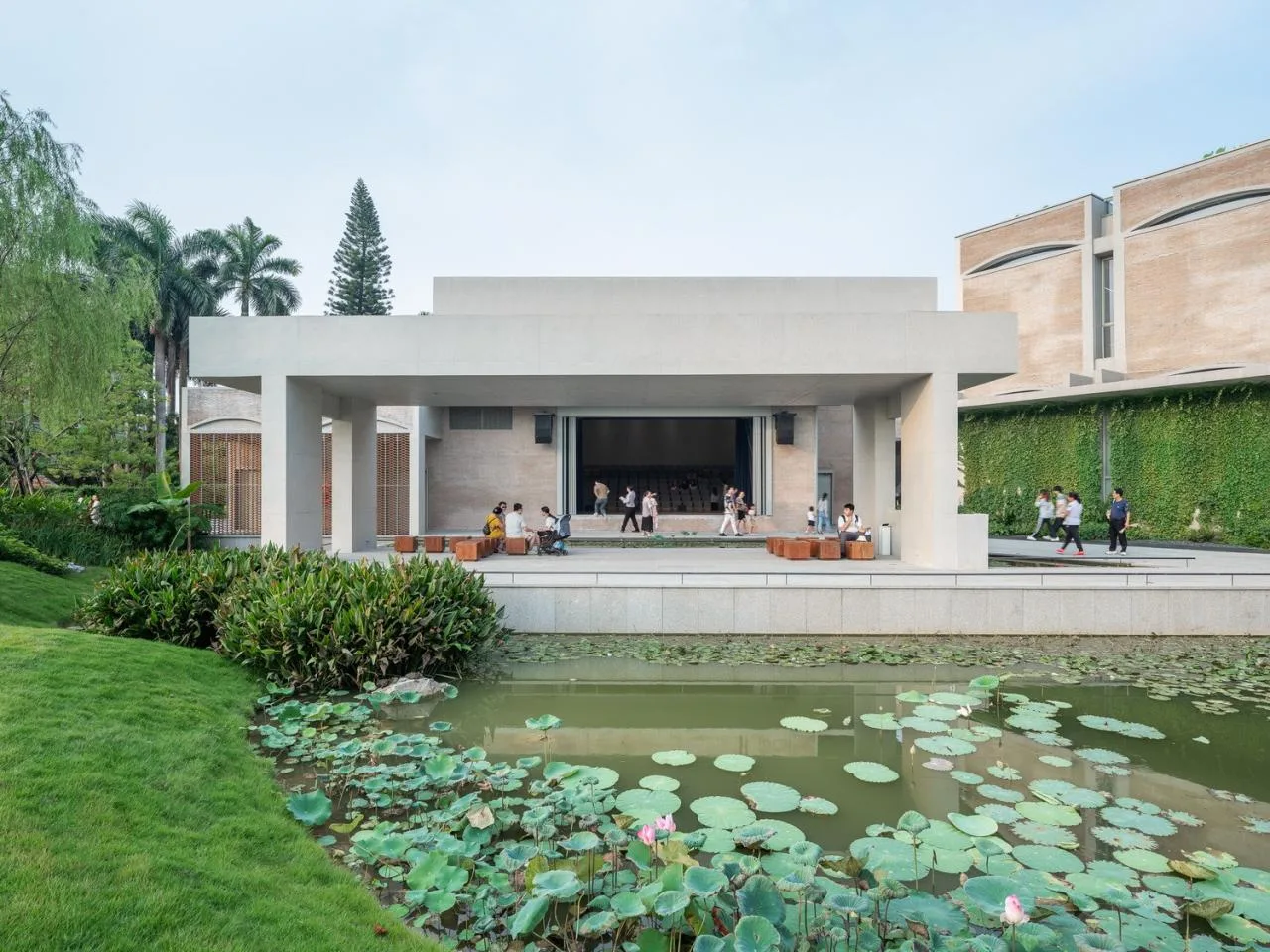
△ Theater with connection to the outdoors
△ Theater stage background door opening
Integration with Natural Surroundings
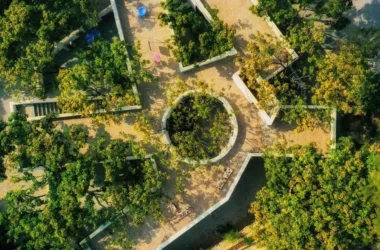
Nearly thirty planting ponds of various sizes are installed on the building’s roof, featuring lush aquatic plants that not only create a natural landscape but also help reduce the building’s energy consumption. A winding walkway traverses the rooftop, where the planting ponds visually connect with the sunken courtyard and the surrounding natural lotus pond. This design creates a three-dimensional lotus pond effect on the spring balcony, blending the structure seamlessly into the environment with varied heights.
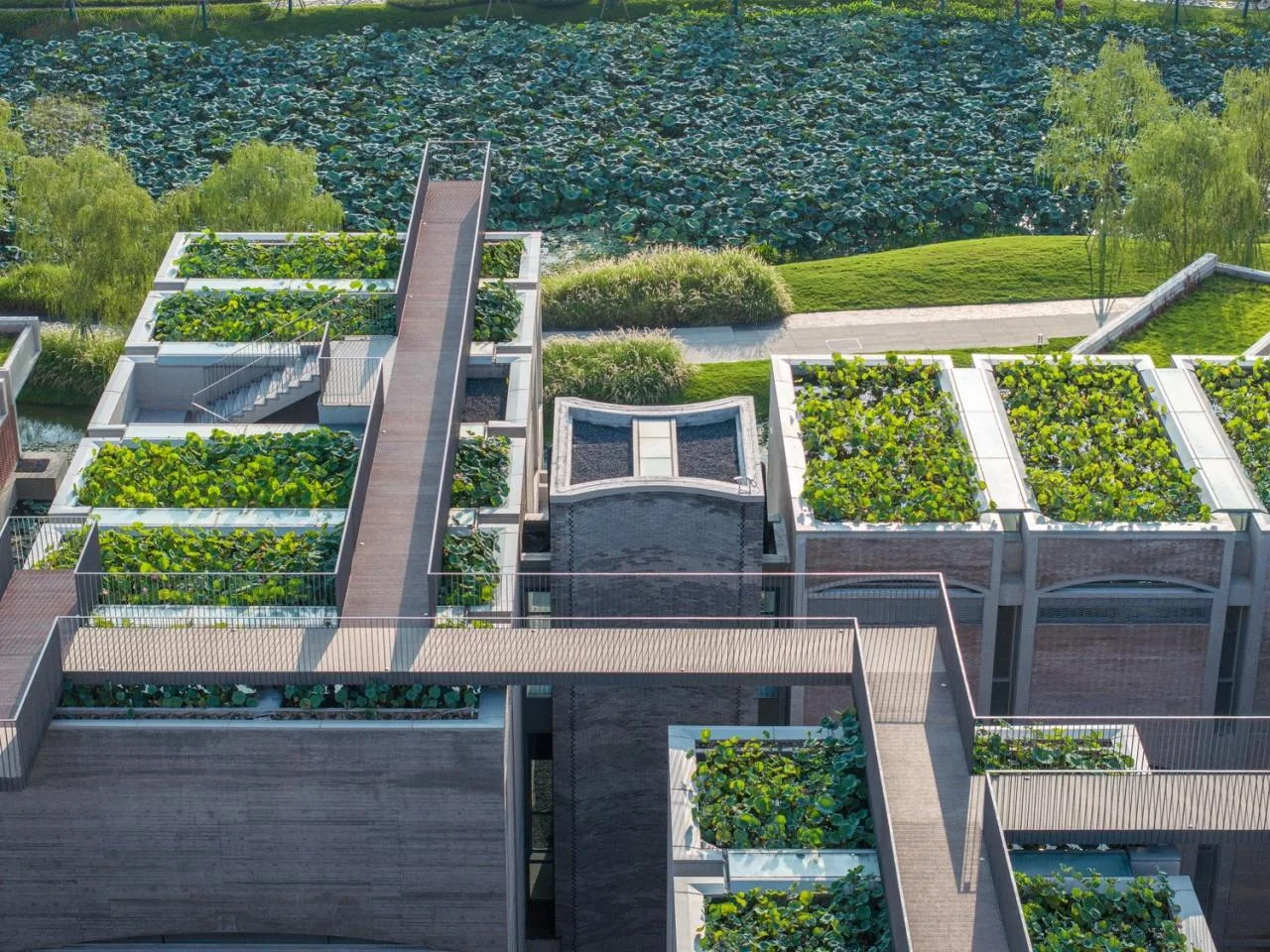
△ Elevated pedestrian walkways extending vertically and horizontally across the roof
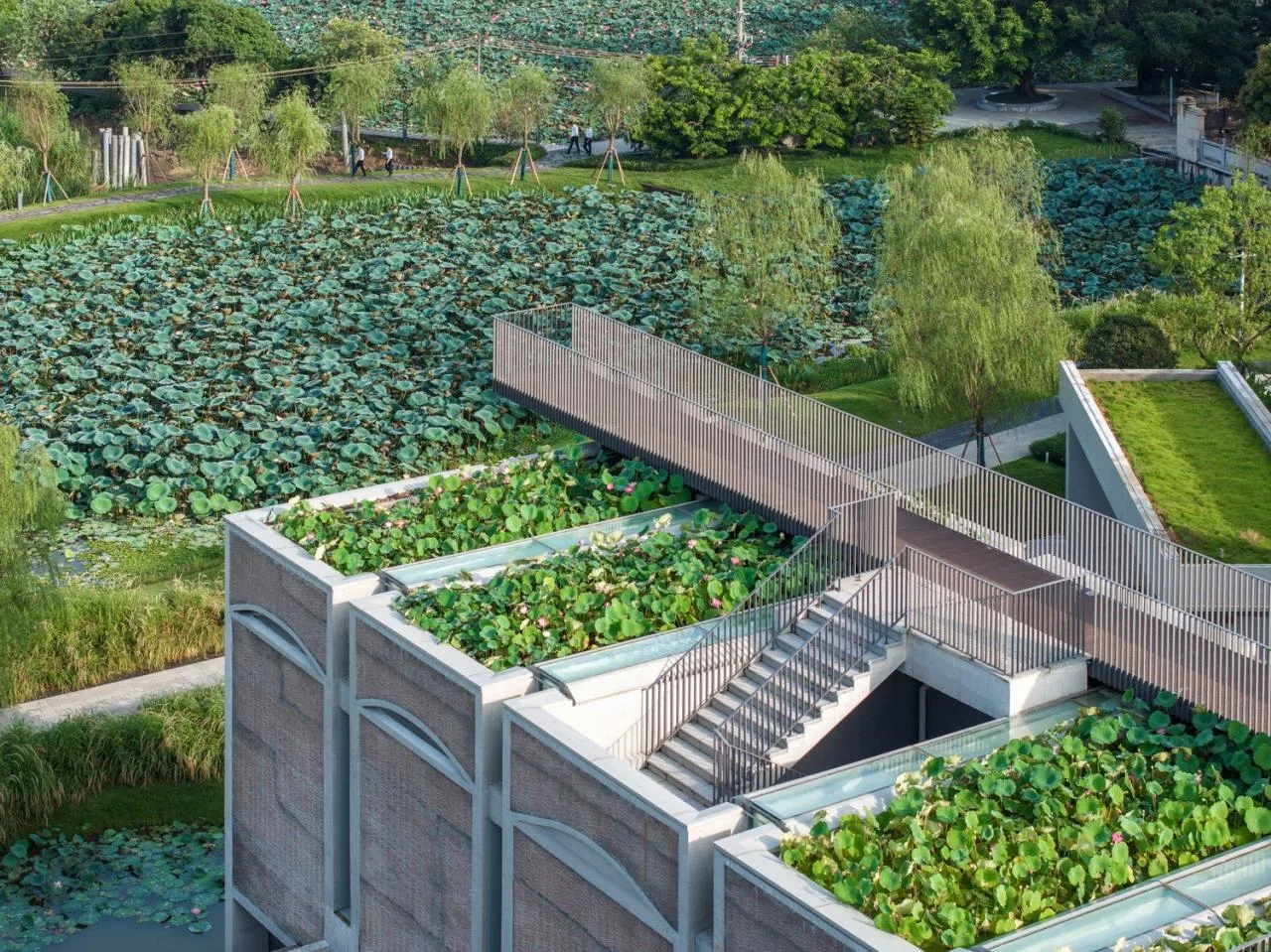
The rooftop lotus planting pools seamlessly integrate the building with the natural lotus pond below.
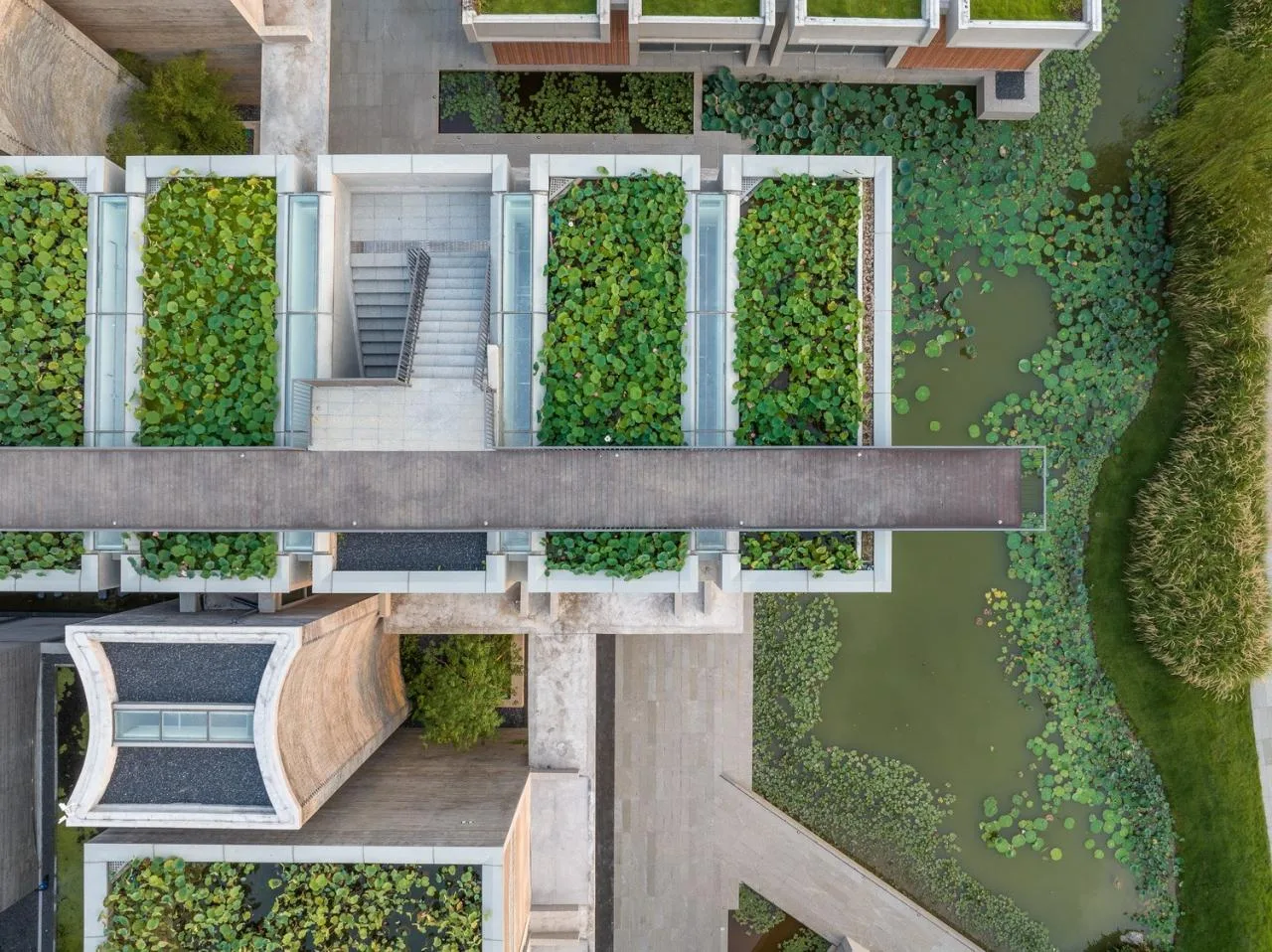
The pathway leads visitors directly into the surrounding natural landscape.
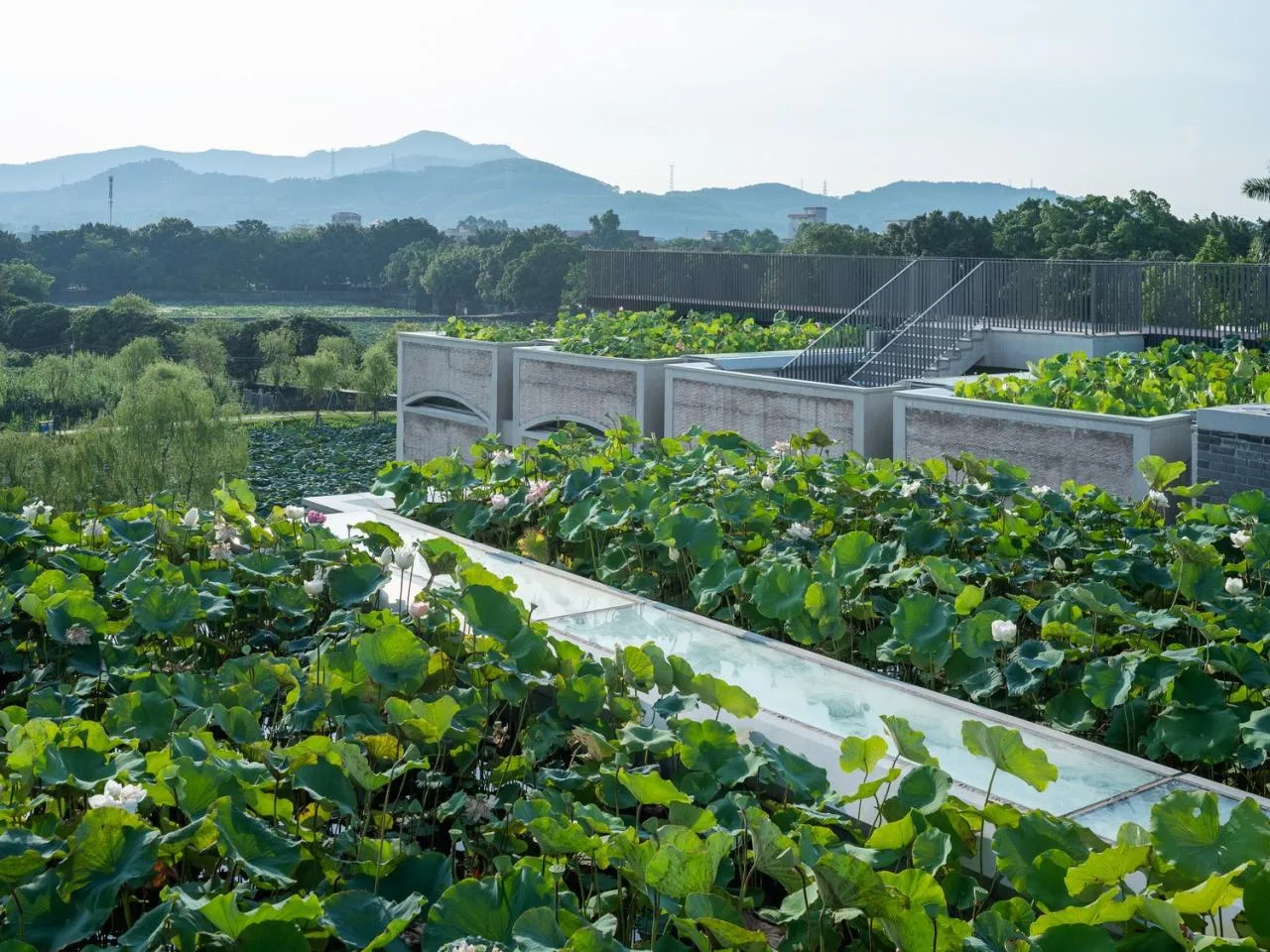
△ View of the lotus pond and nearby village from the overhead rooftop pedestrian path
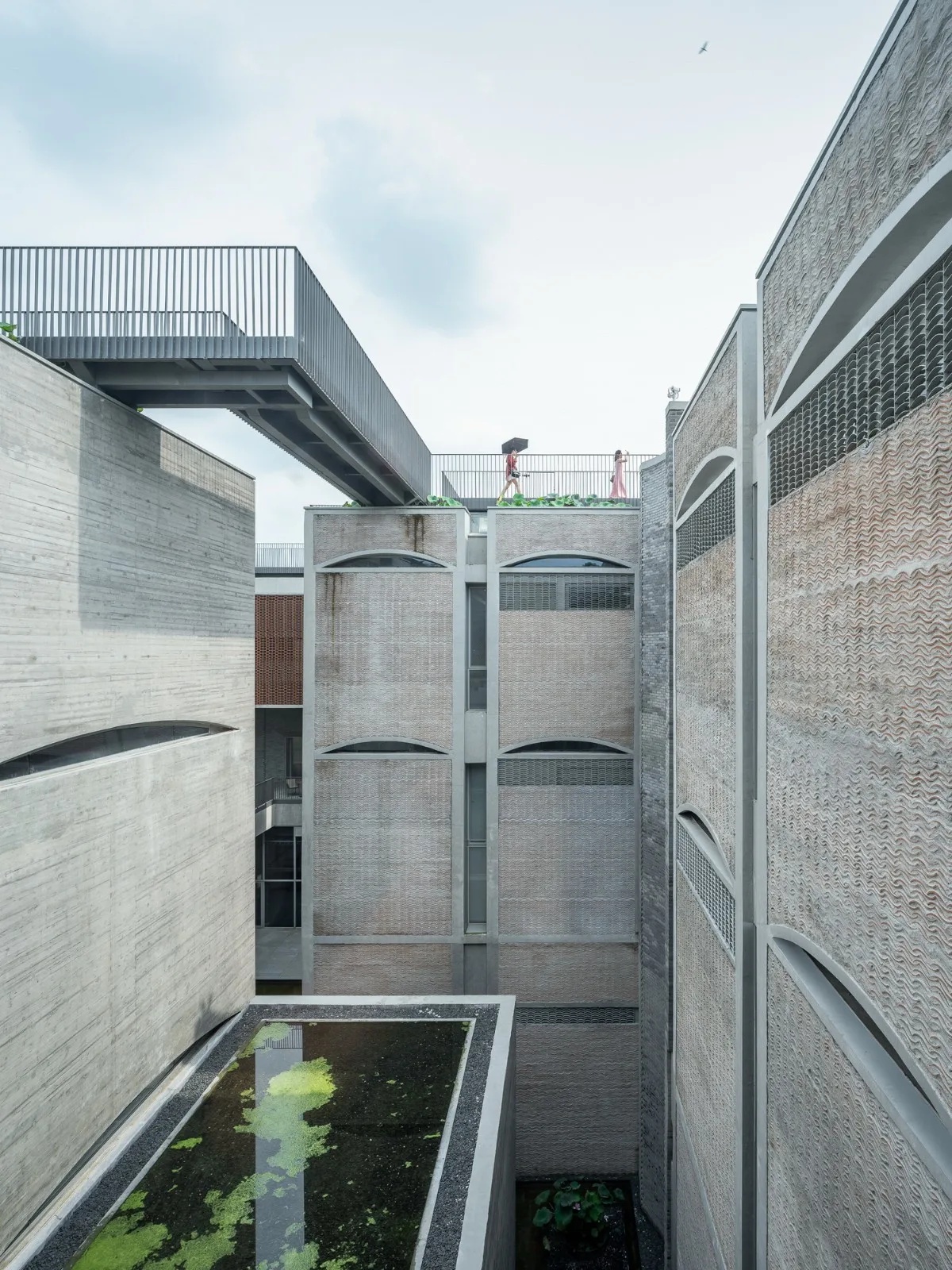
A three-dimensional lotus pond with varying elevations
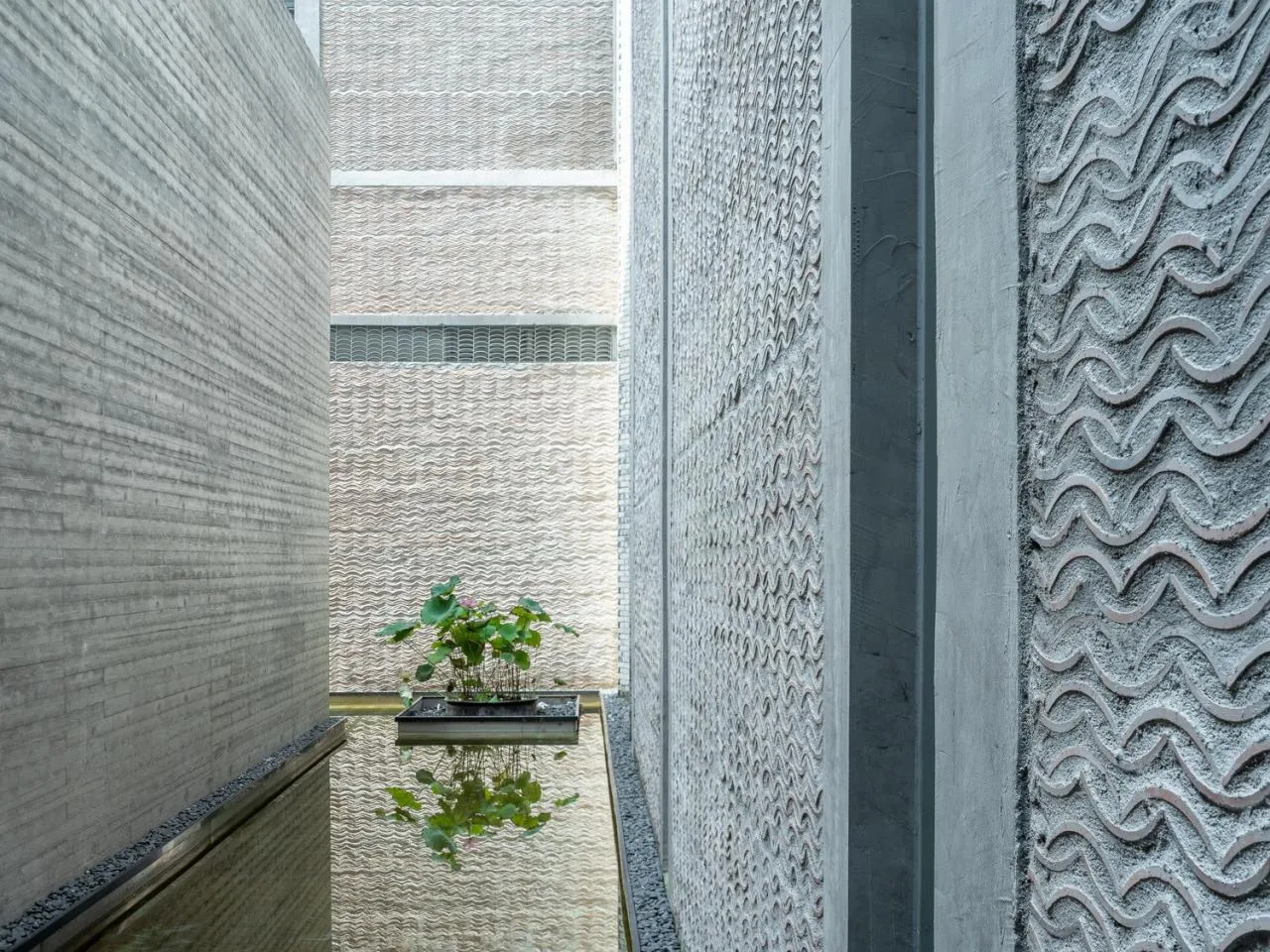
Water features situated between buildings
Preserving Regional Culture
The building materials include traditional red tiles and blue bricks commonly found in ancient villages, combined with simple concrete. This approach aims to create a cultural facility deeply rooted in the heritage of Longtou.
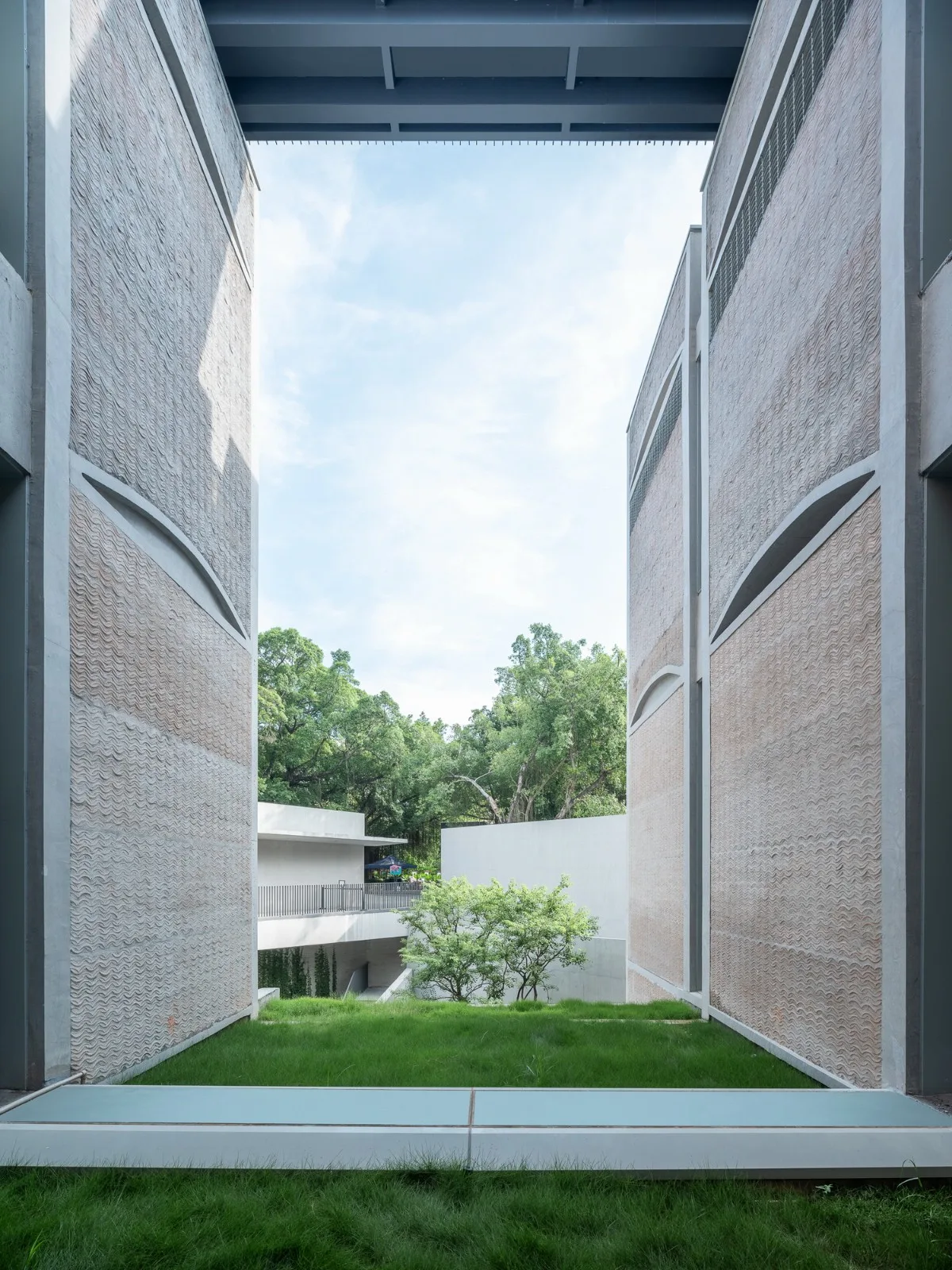
△ Red tile facade
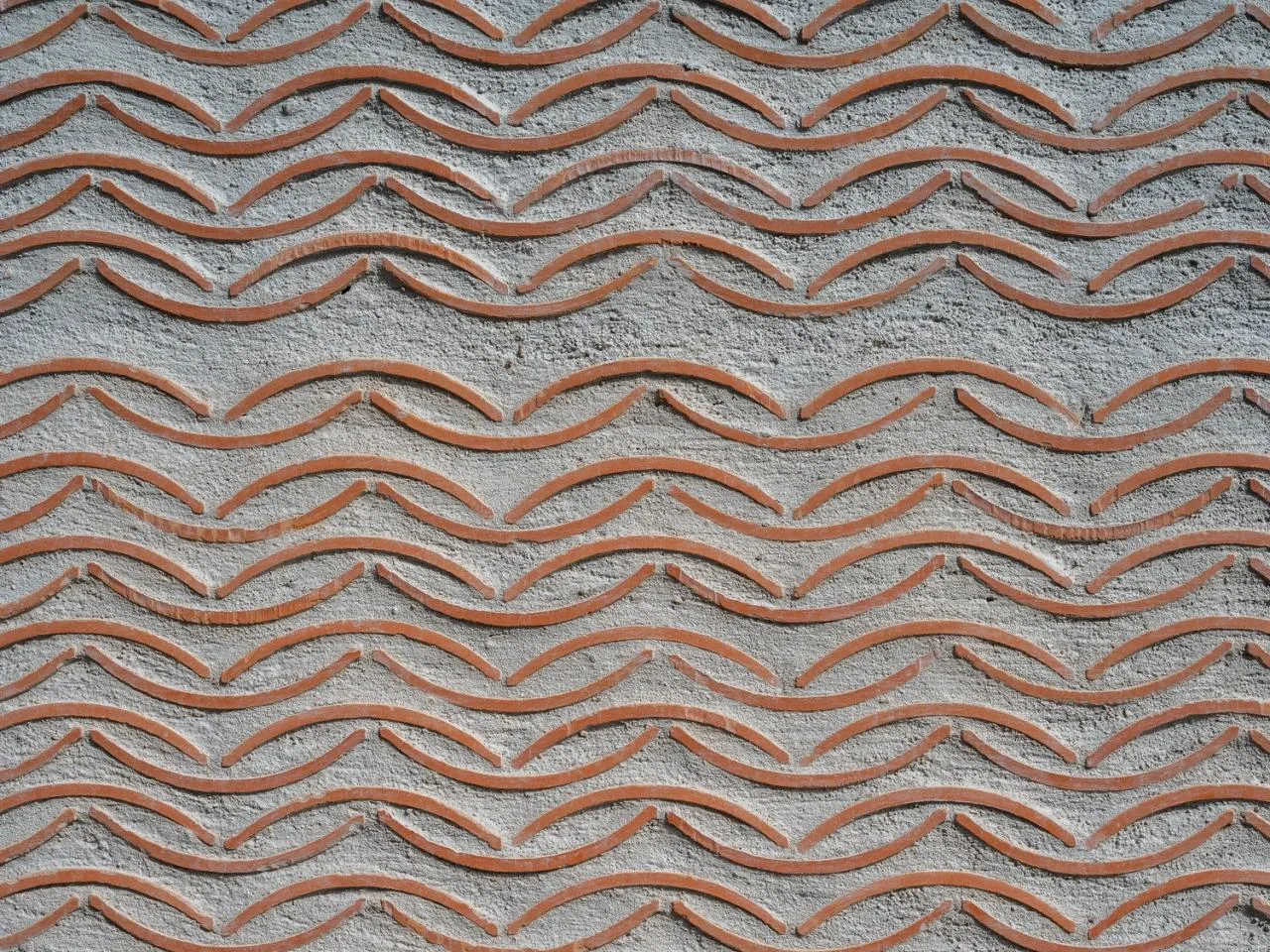
Close-up of the red tile wall surface
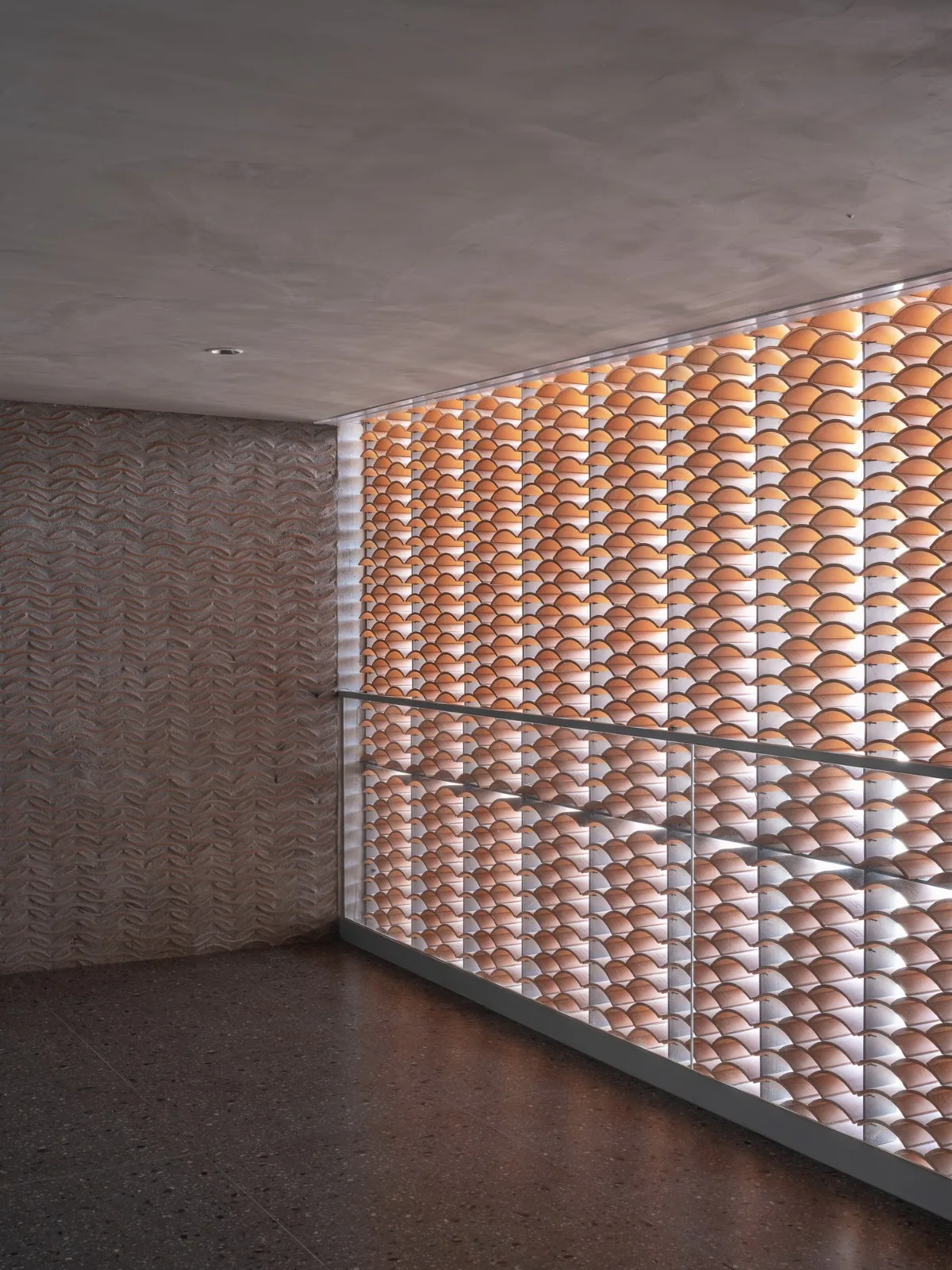
△ Interior view of hollowed-out red tile wall
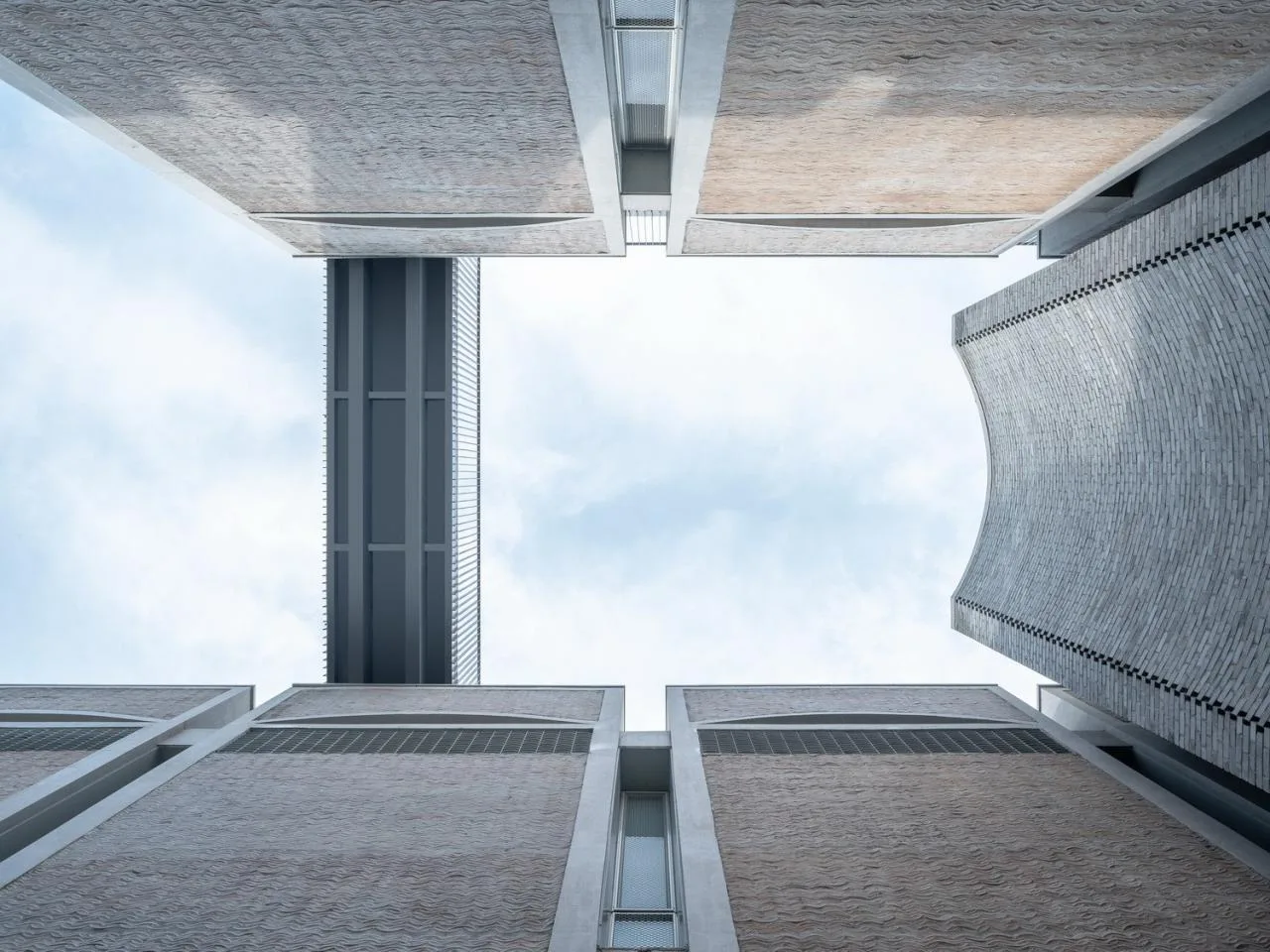
△ Exterior surfaces of red tile and blue brick
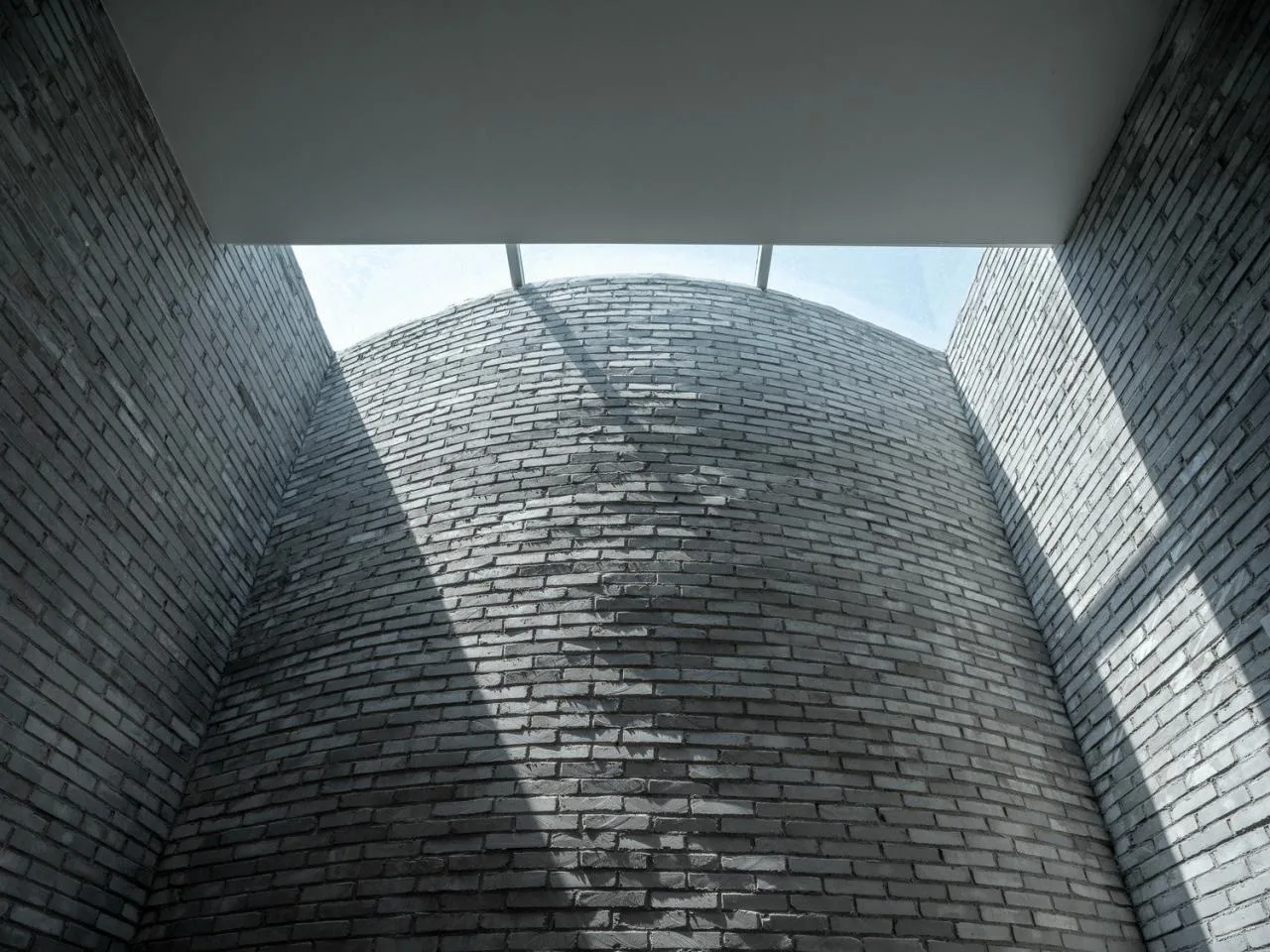
Indoor blue brick wall with skylight
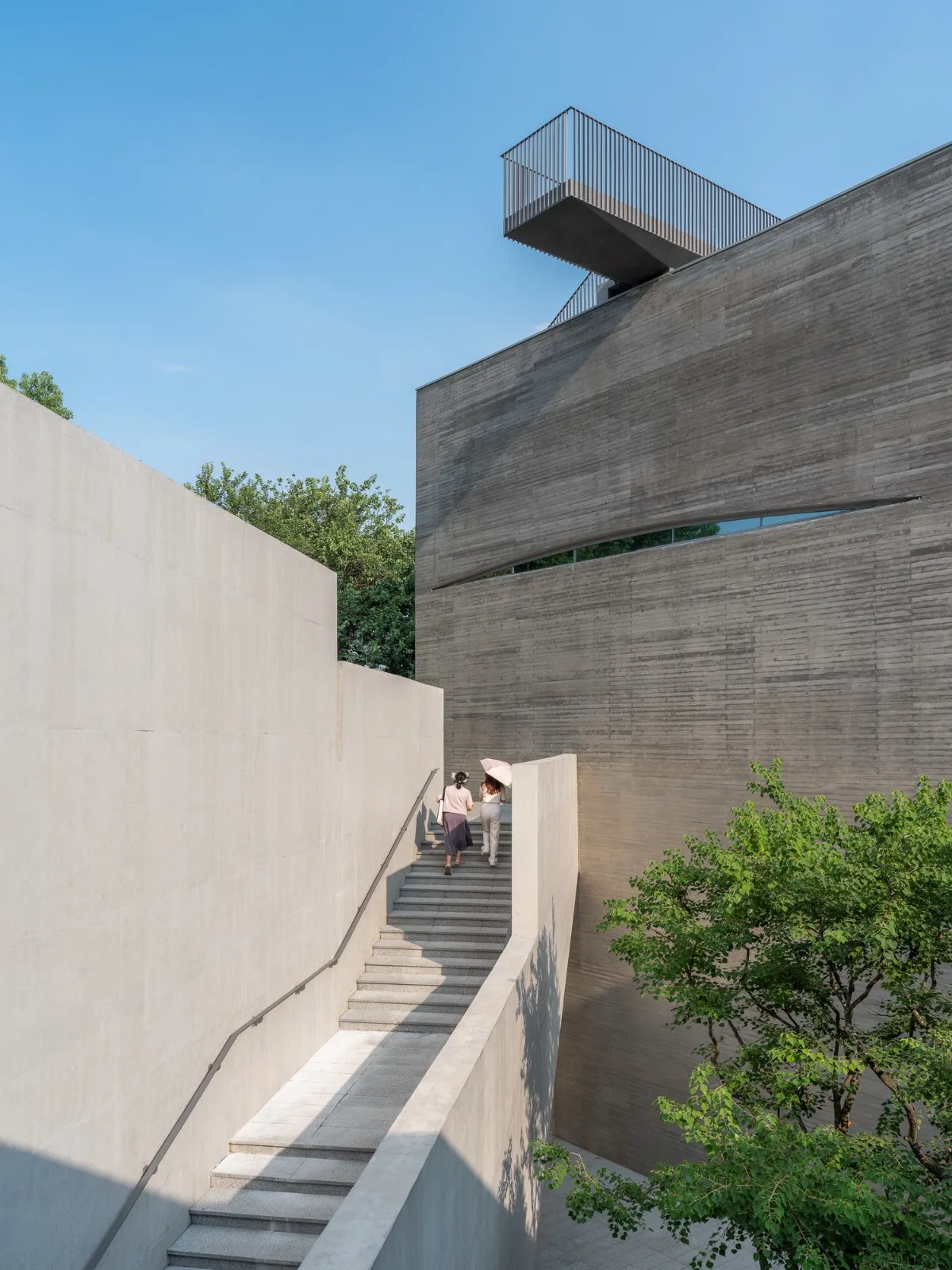
△ Concrete stairs and facades
As a contemporary interpretation of Lingnan architectural elements such as the “Dragon Boat Ridge” and “Moon Beam,” the crescent-shaped windows on the facade provide soft, nuanced interior lighting. These windows also frame views of the surroundings and serve as the iconic architectural symbol of Chunyang Terrace.
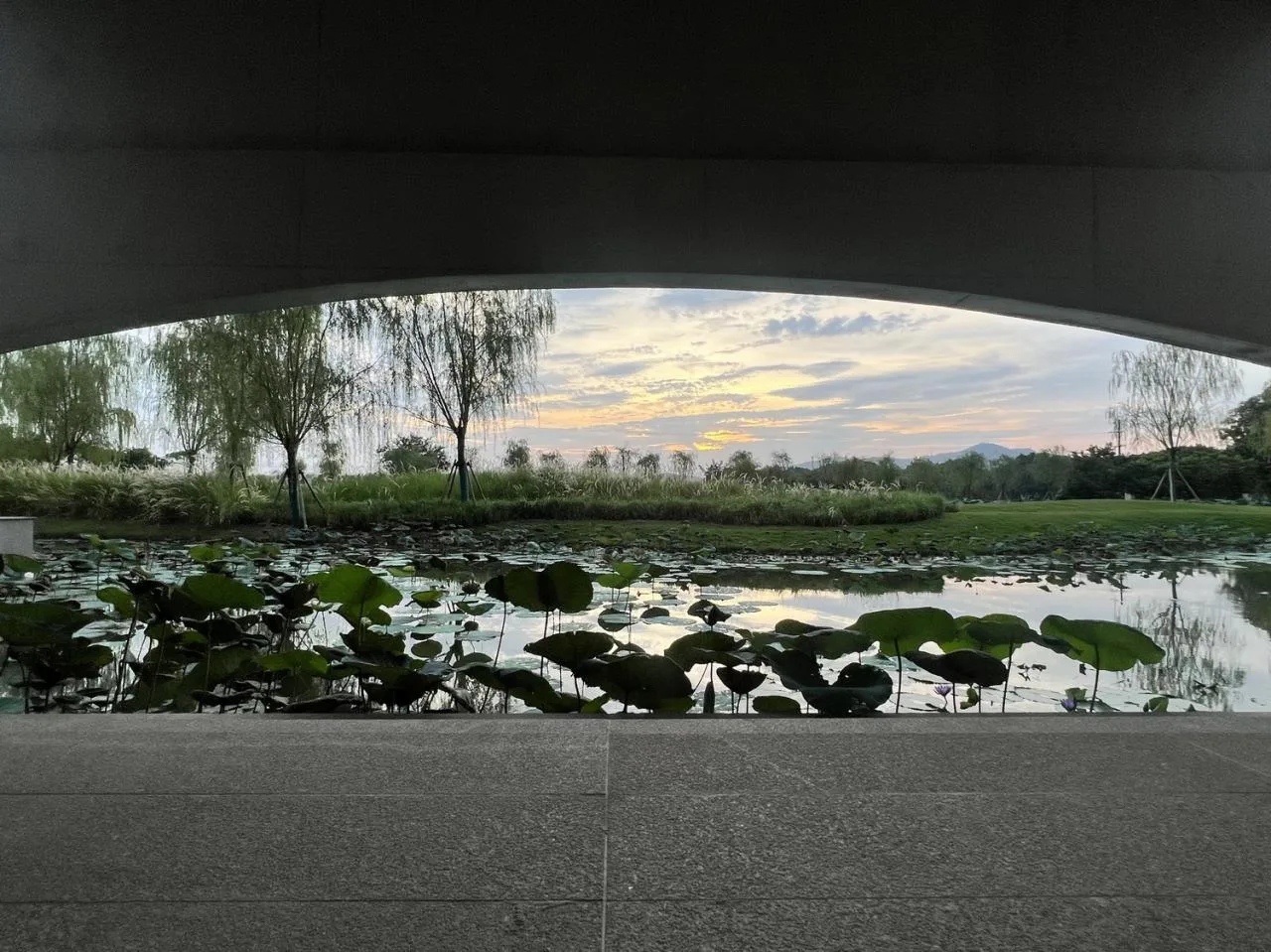
View of the lotus pond through the crescent-shaped wall © Pan Hong
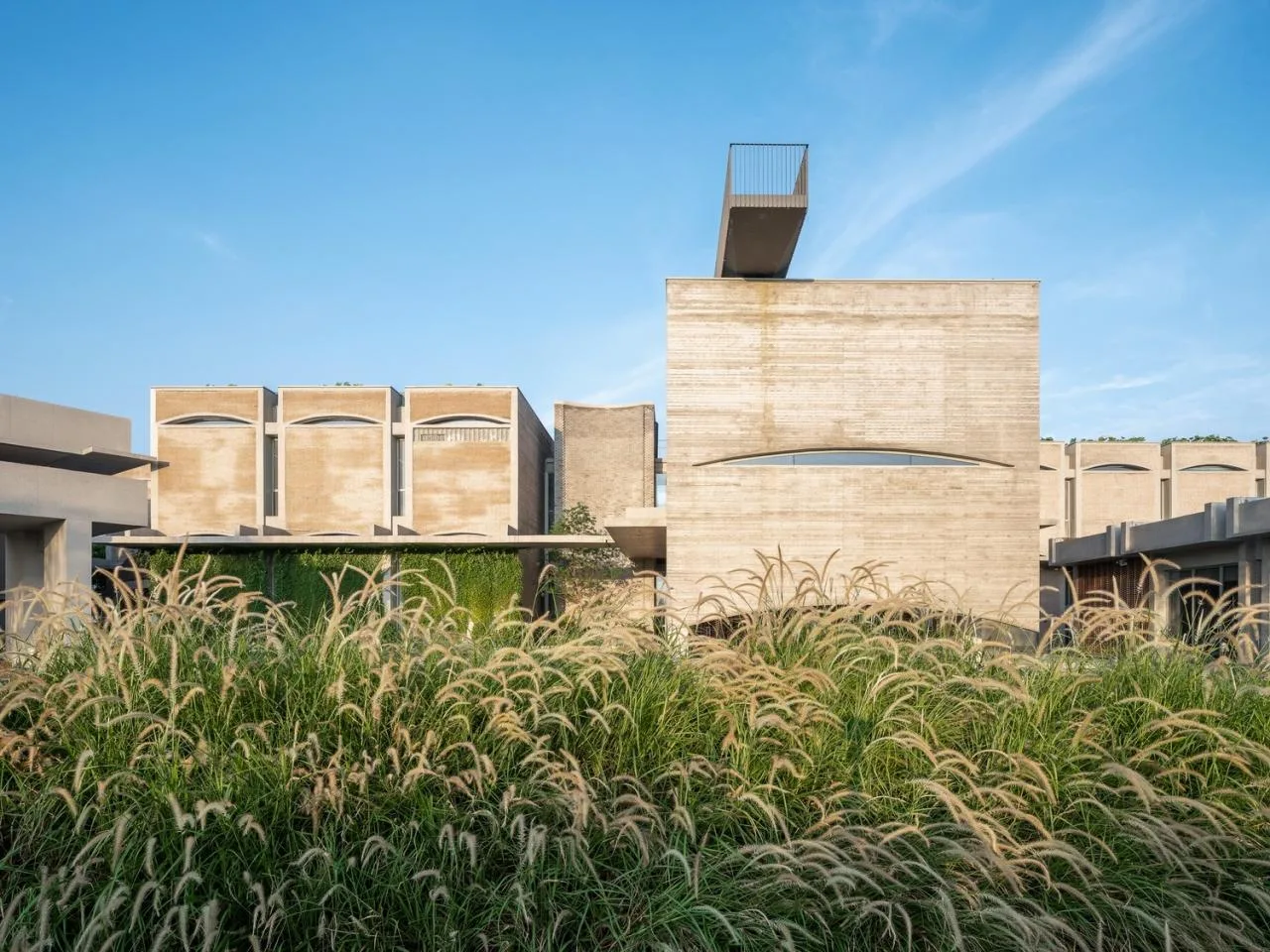
△ Crescent-shaped window
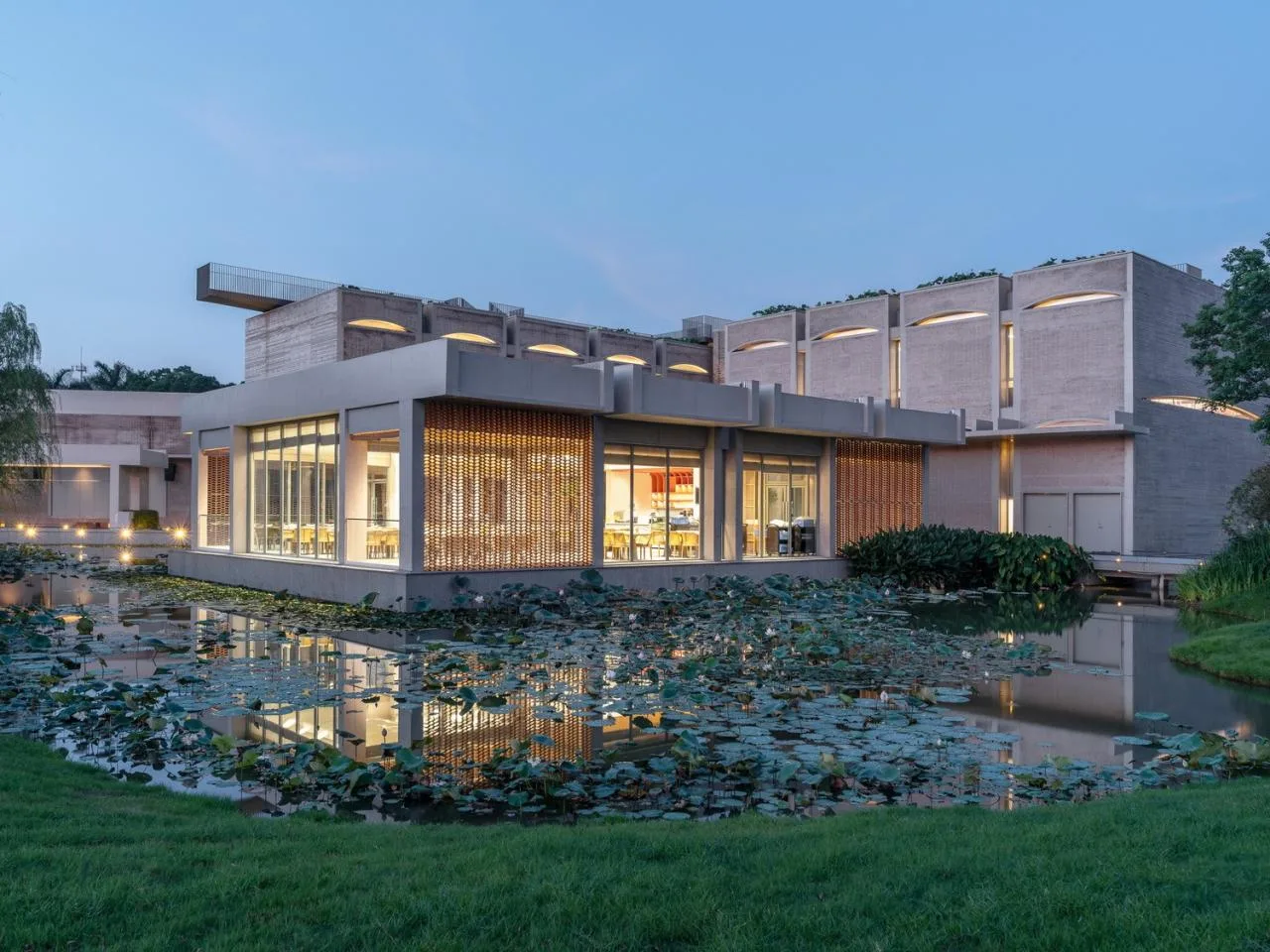
△ Restaurant illuminated at night
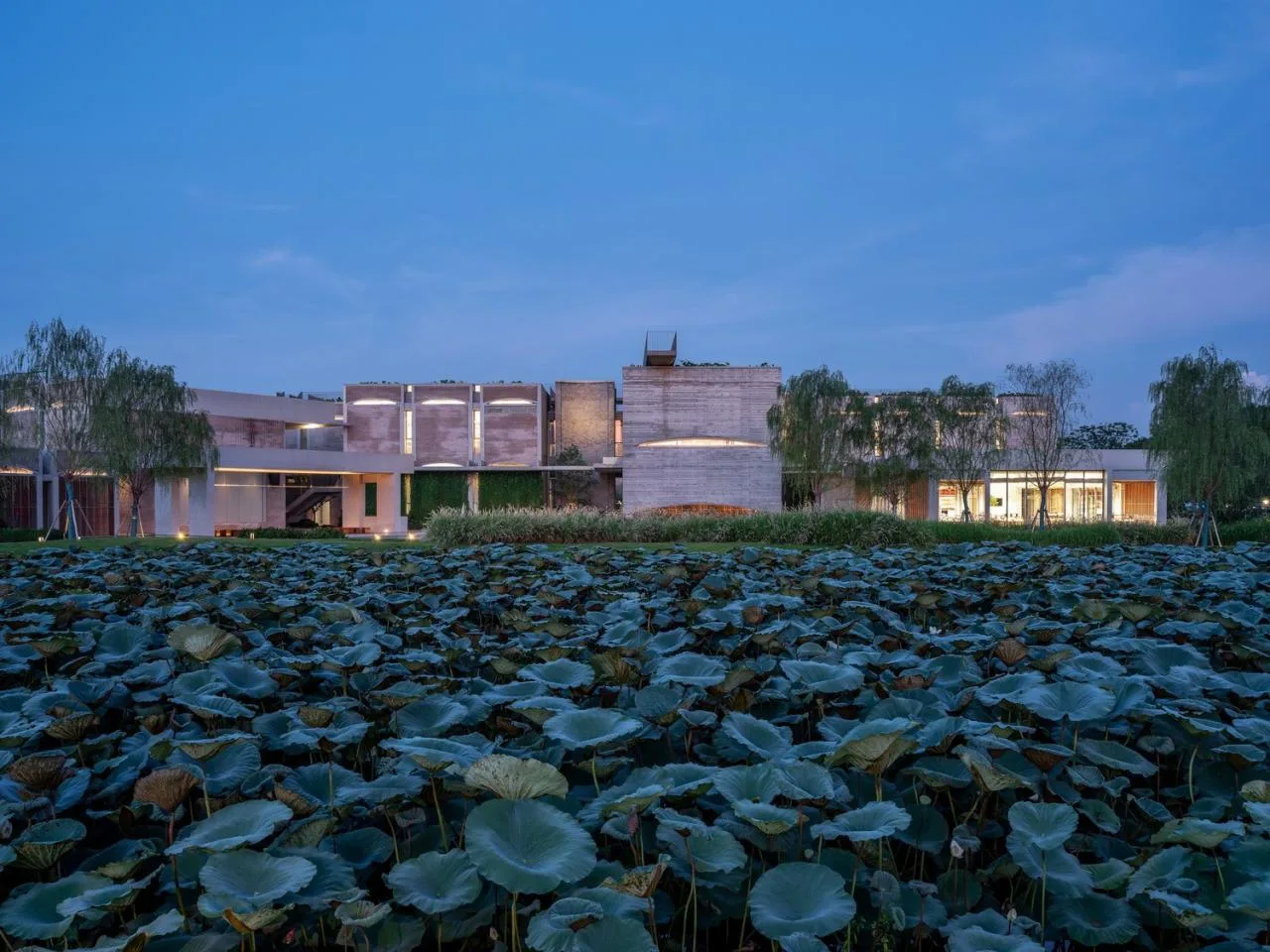
△ View of Spring Terrace from the lotus pond
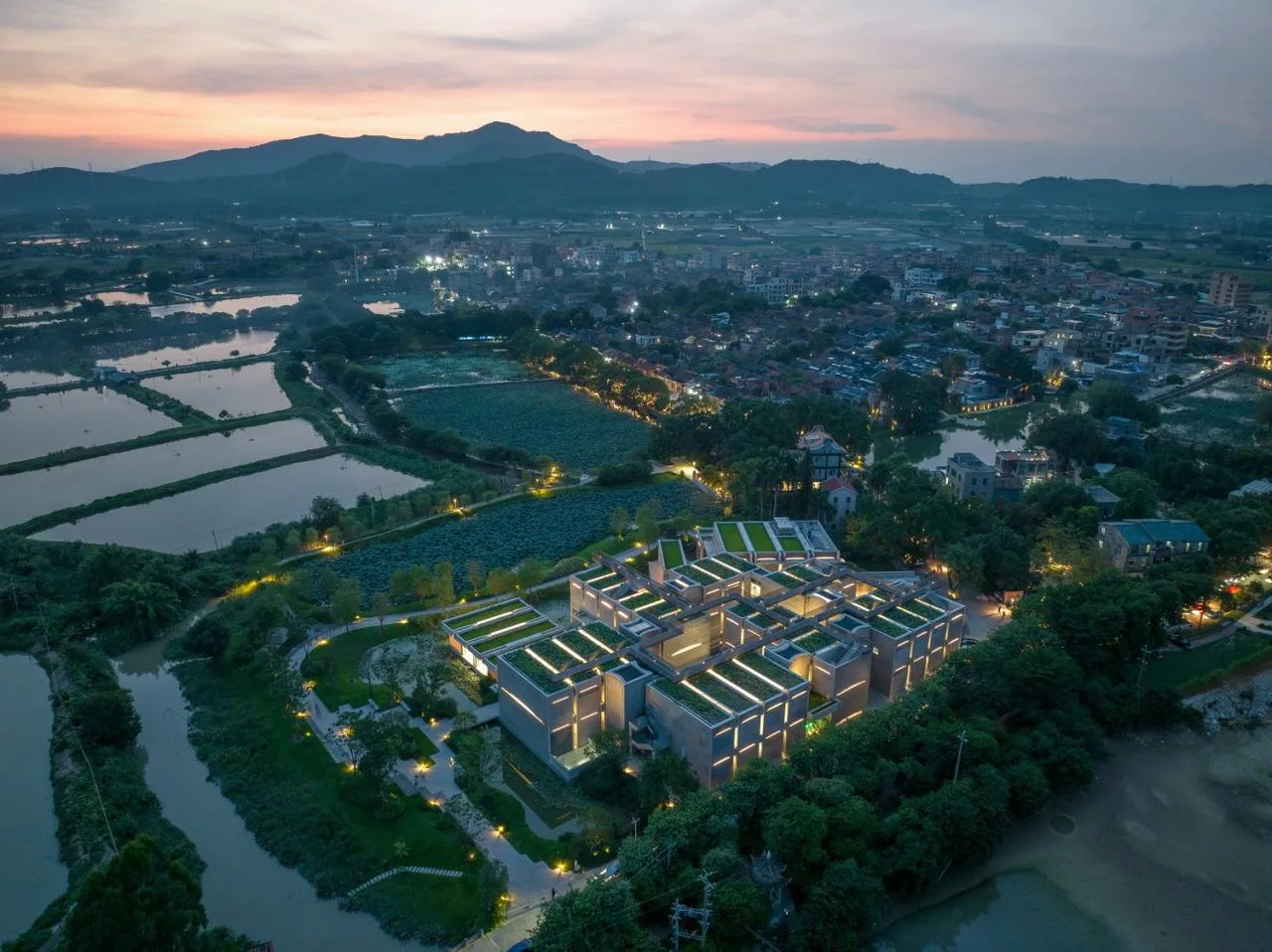
Spring Terrace at dusk
Project Drawings
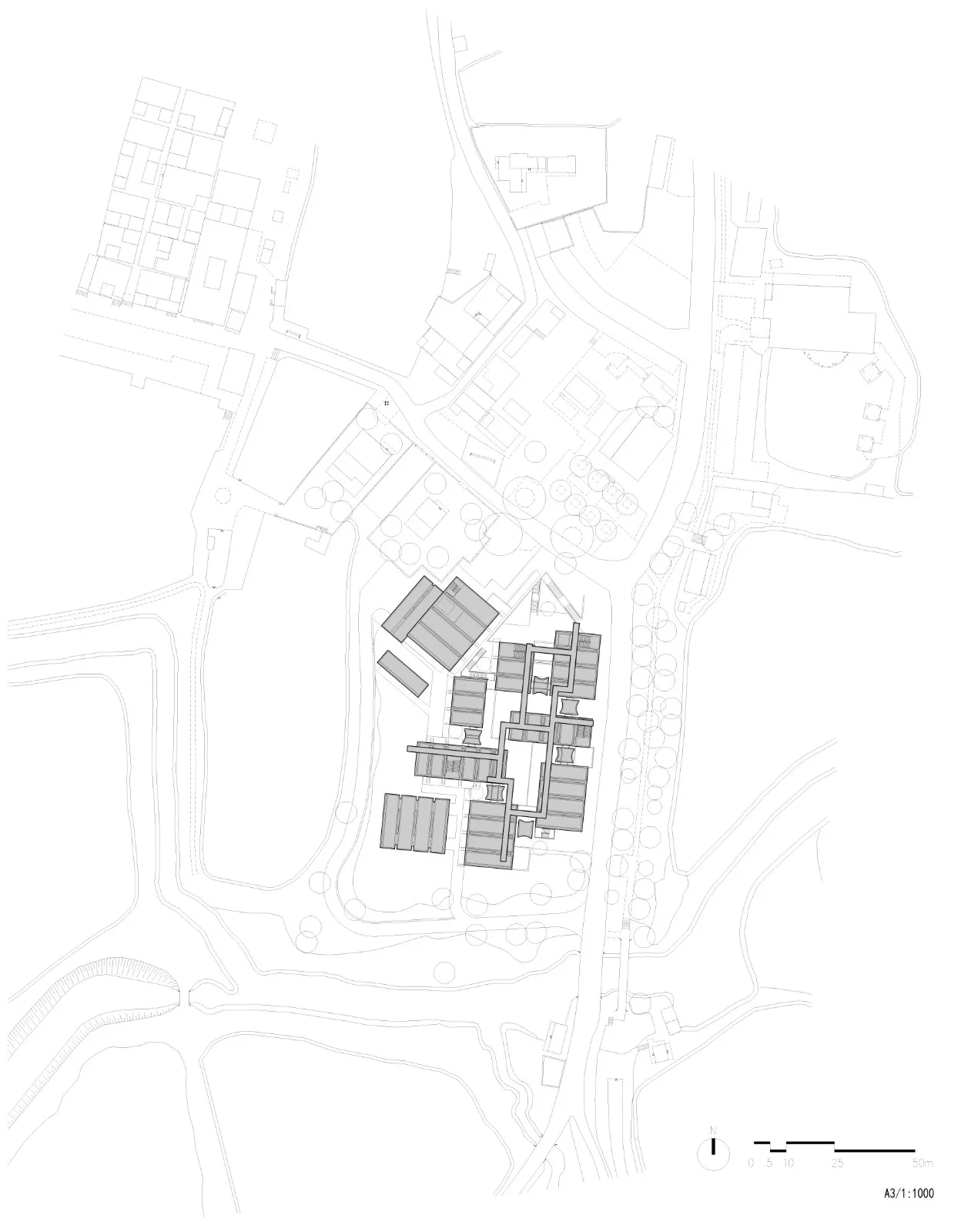
△ General layout plan
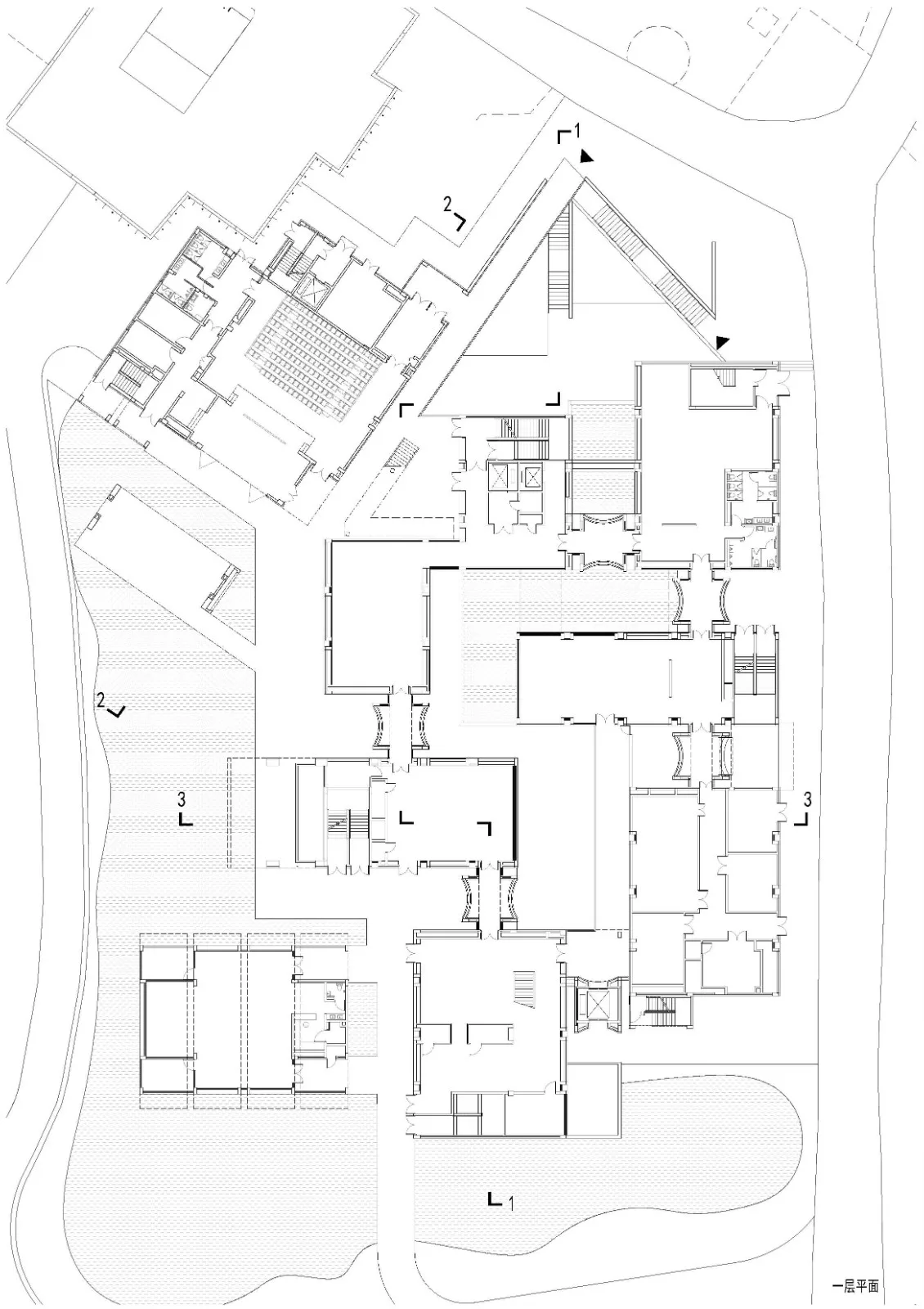
△ First floor plan
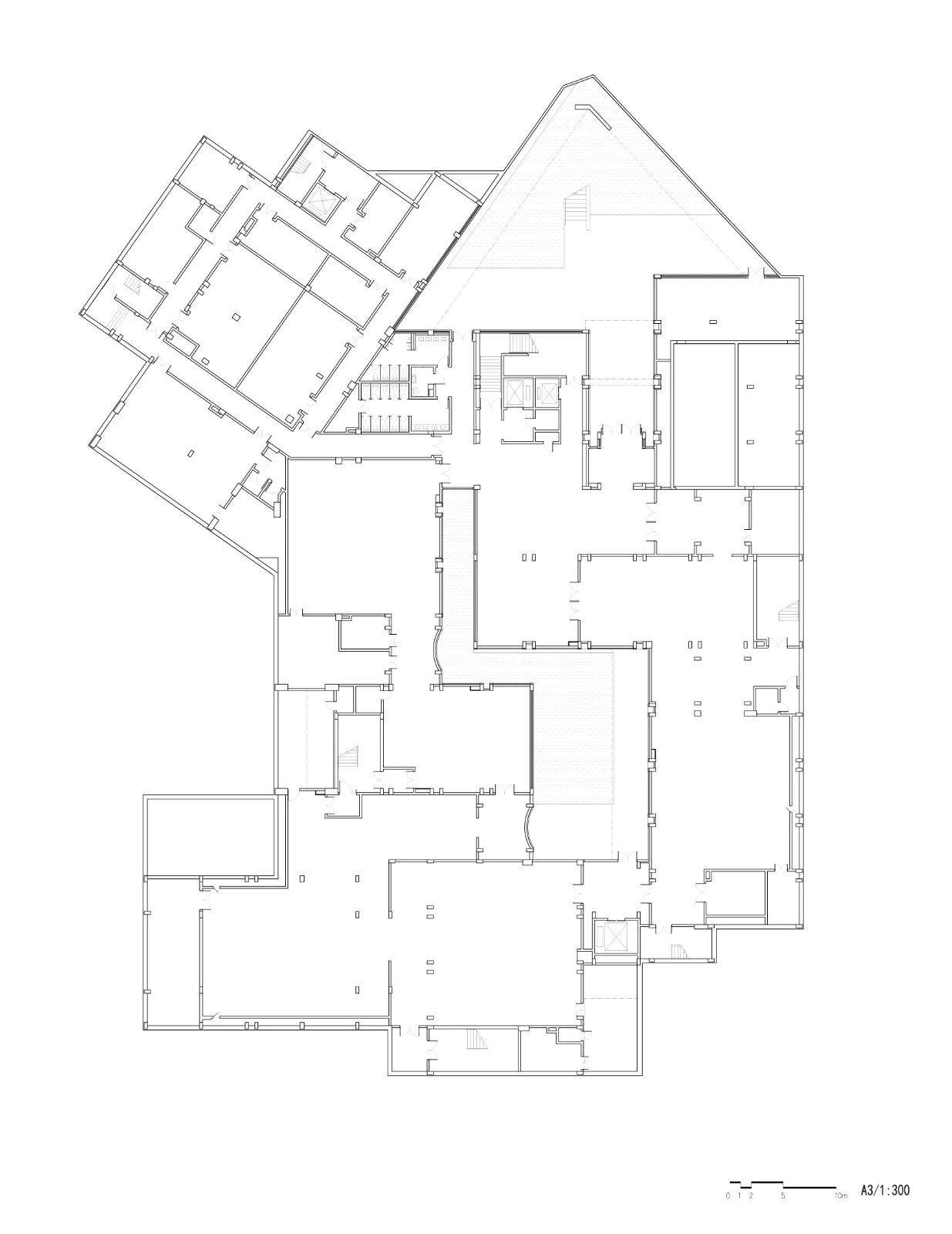
△ Underground floor plan
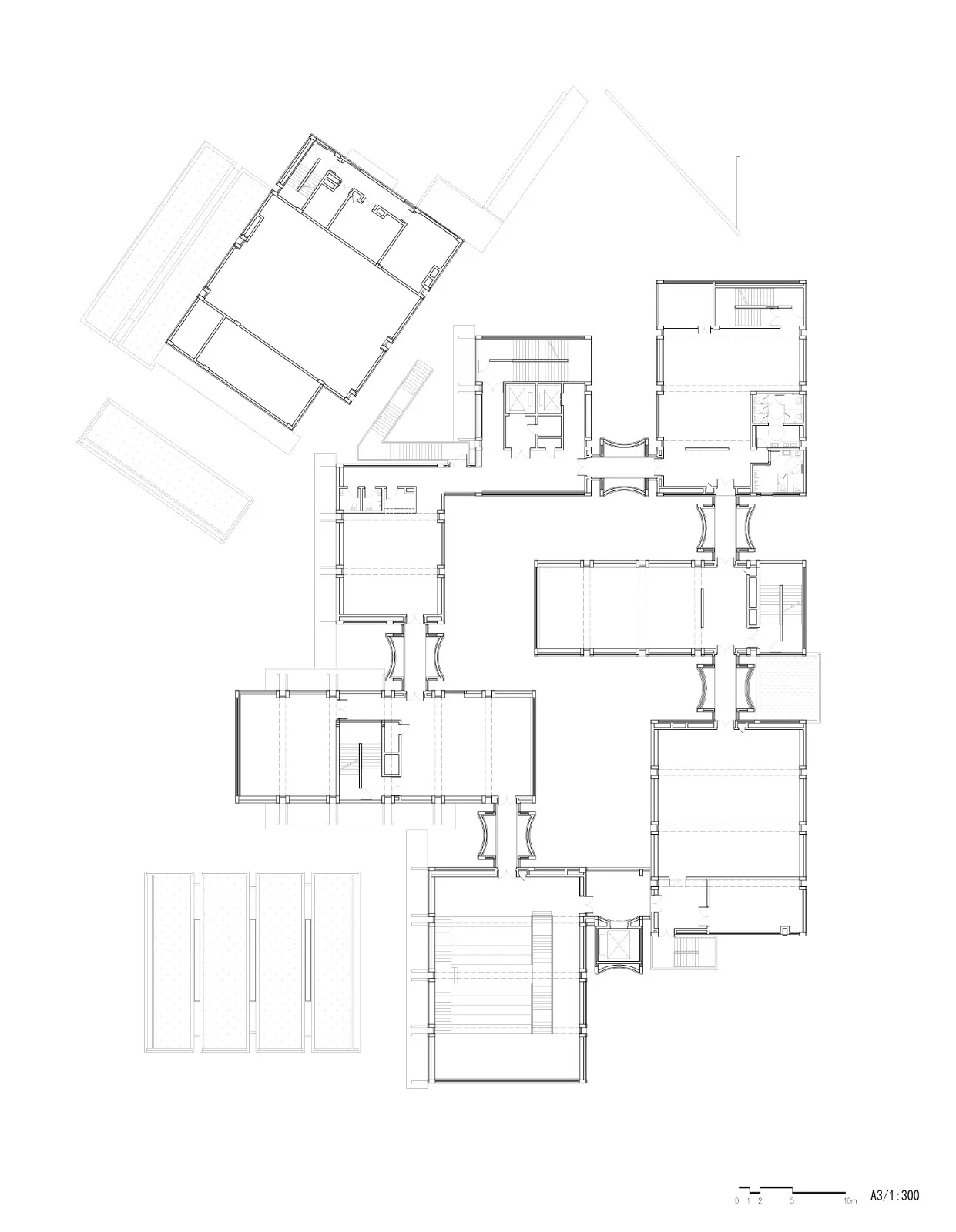
△ Second floor plan
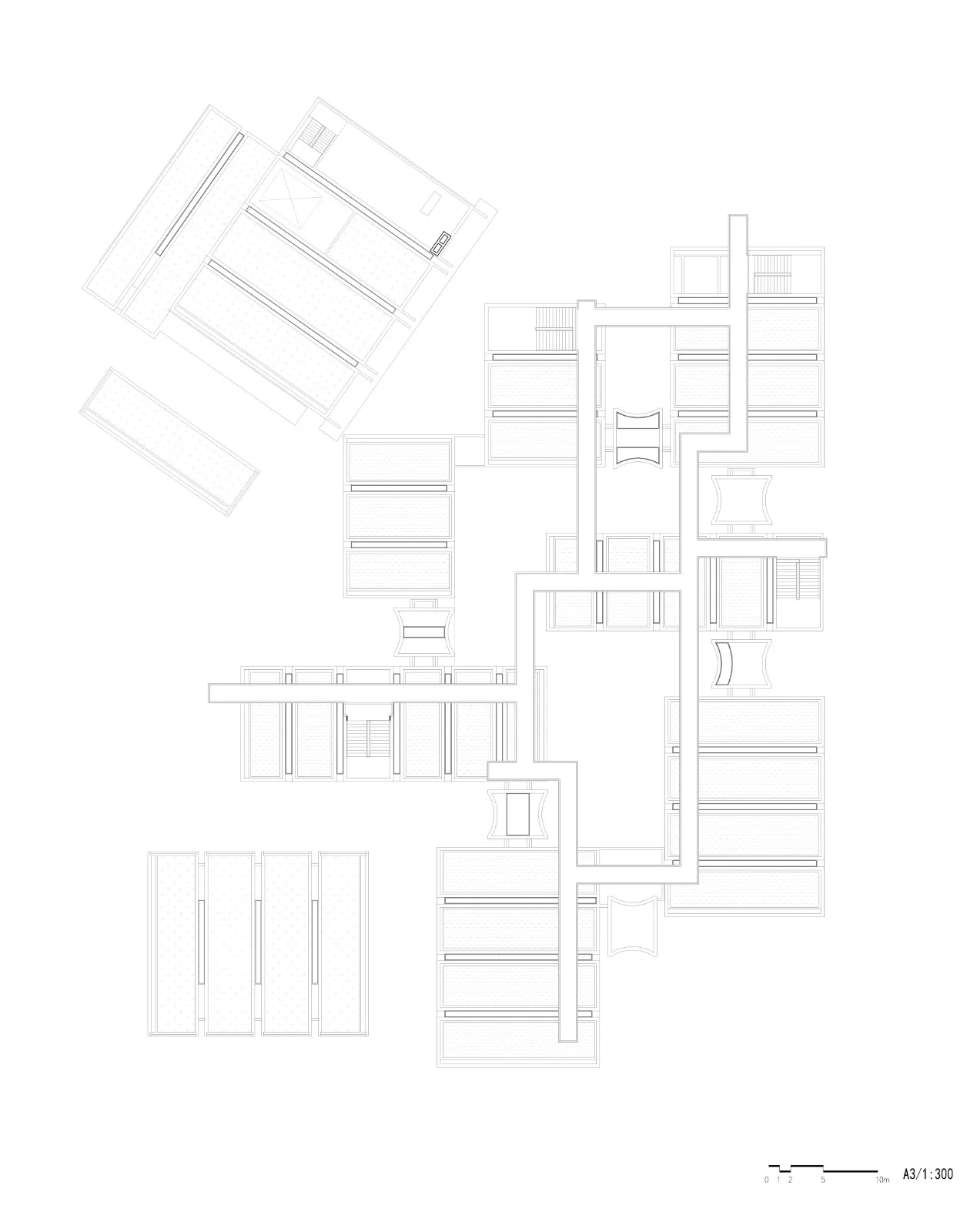
△ Roof plan
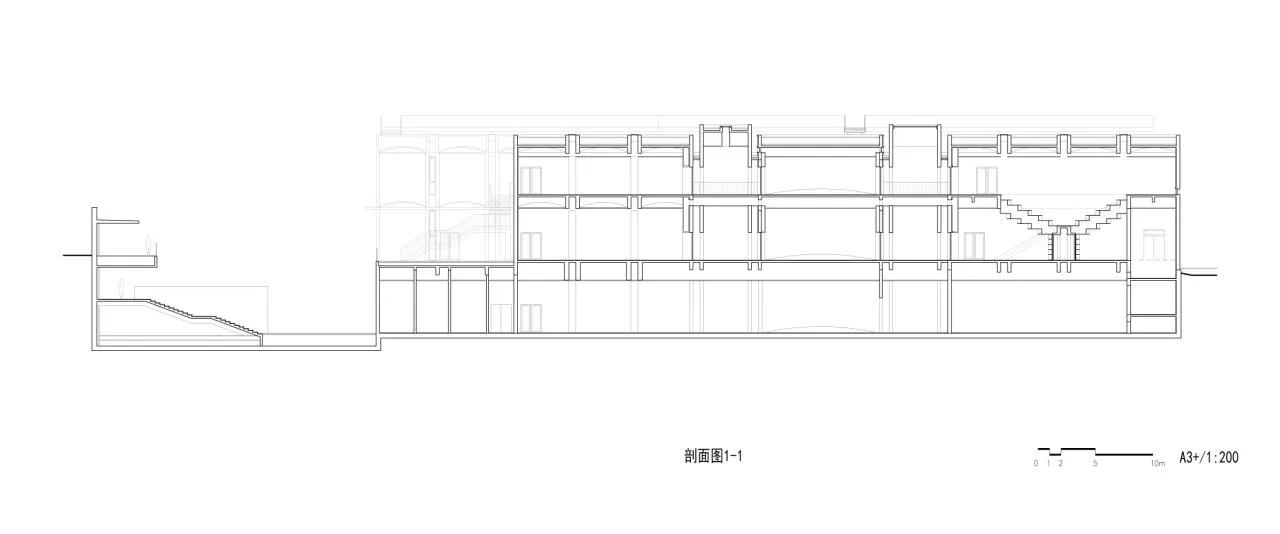
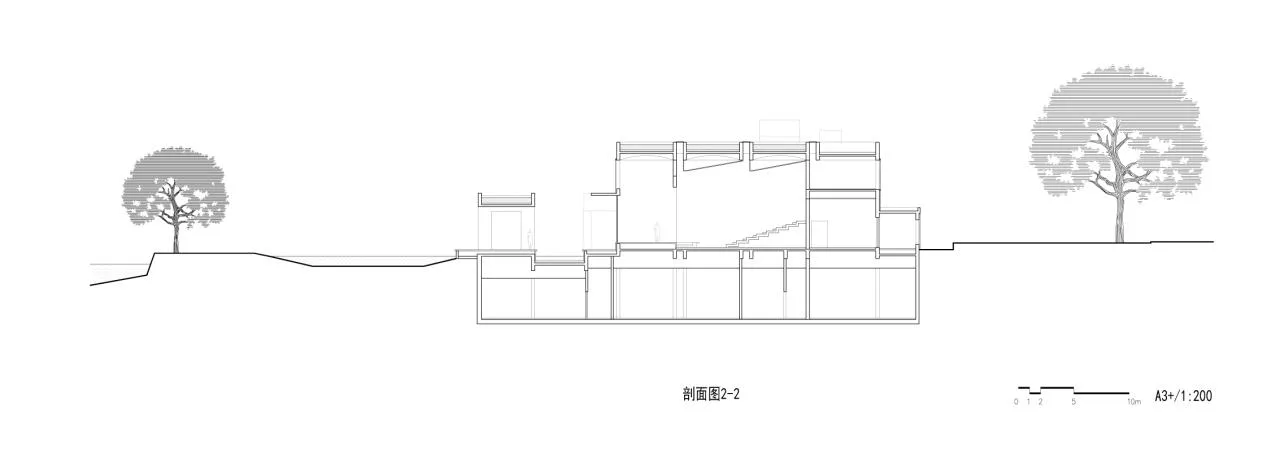
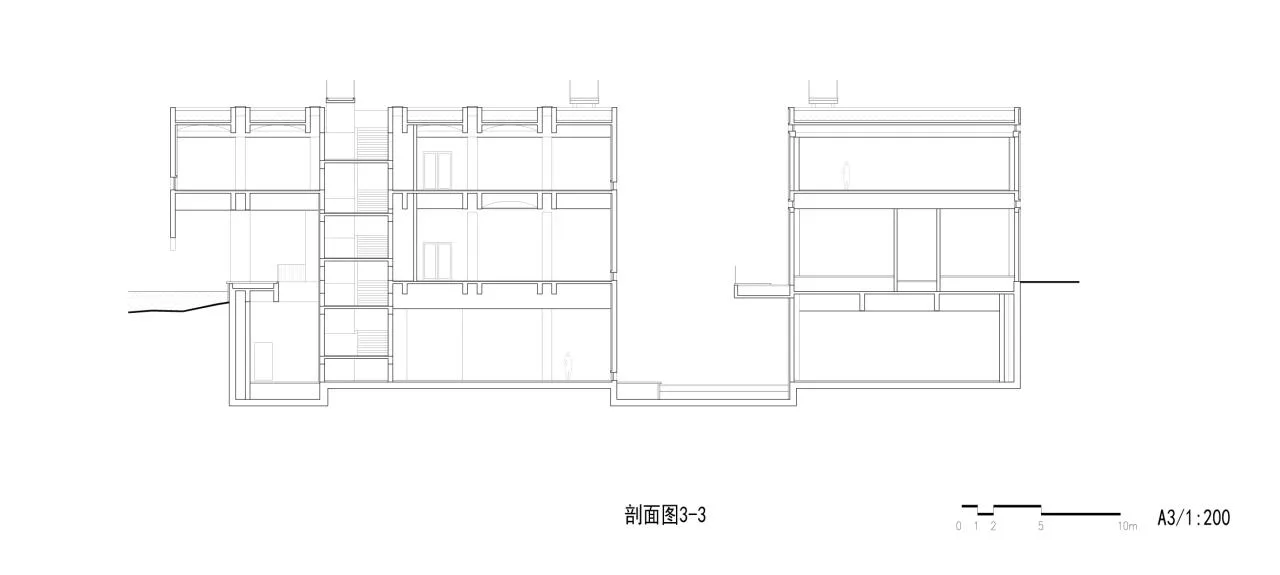
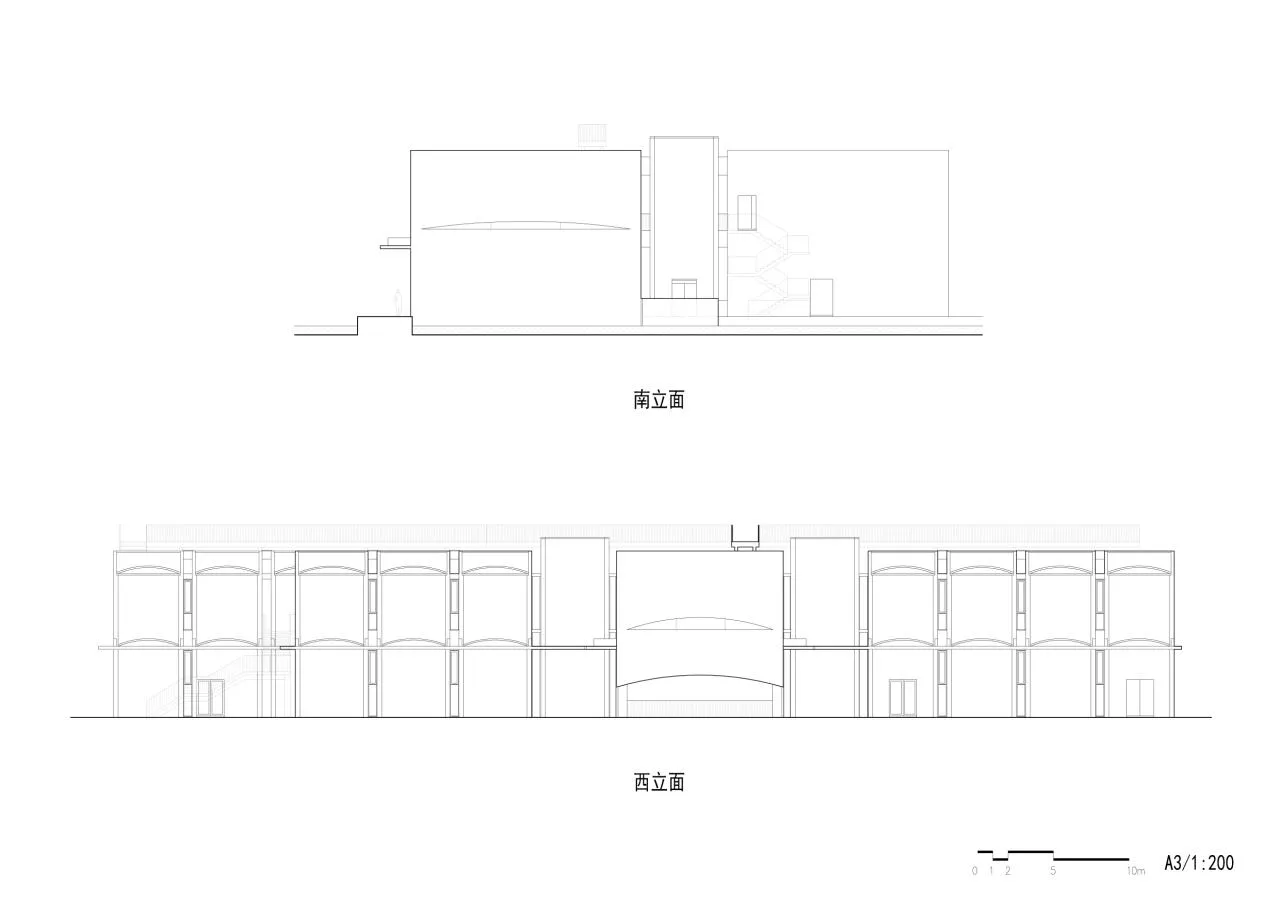
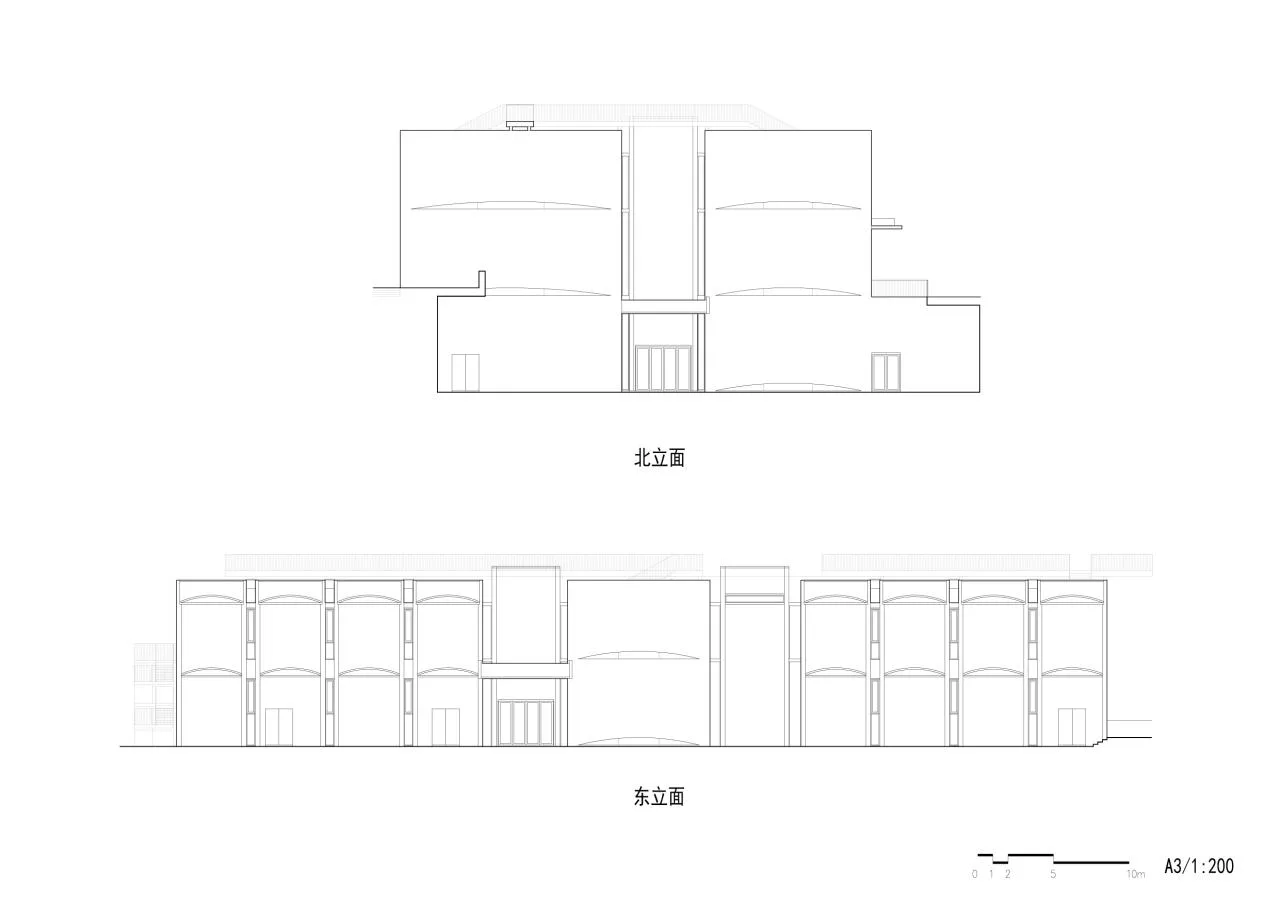
Project Information
Client: Vipshop Charity Foundation of Guangdong Province
Location: Changtou Ancient Village, Tanbu Town, Huadu District, Guangzhou City
Lead Designers: Zhang Yonghe, Lu Lijia
Project Team: Cheng Yi, Shiliang, Xiaoning, Ye Dongqing
Design Collaboration: Architectural Design and Research Institute of South China University of Technology
Interior and Permanent Exhibition Design: Studio Lu, XL Studio, New Era – Cheng Studio, Visit Luo Studio
Landscape Design: Guangzhou Yijing Landscape Design Co., Ltd.
Lighting Design: Dongliang International Lighting Design
Photographer: Tian Fangfang
Building Area: 8,602 square meters
Base Area: 7,217 square meters
Building Height: 12 meters
Design Year: 2021
Completion Year: 2023












Must log in before commenting!
Sign Up