
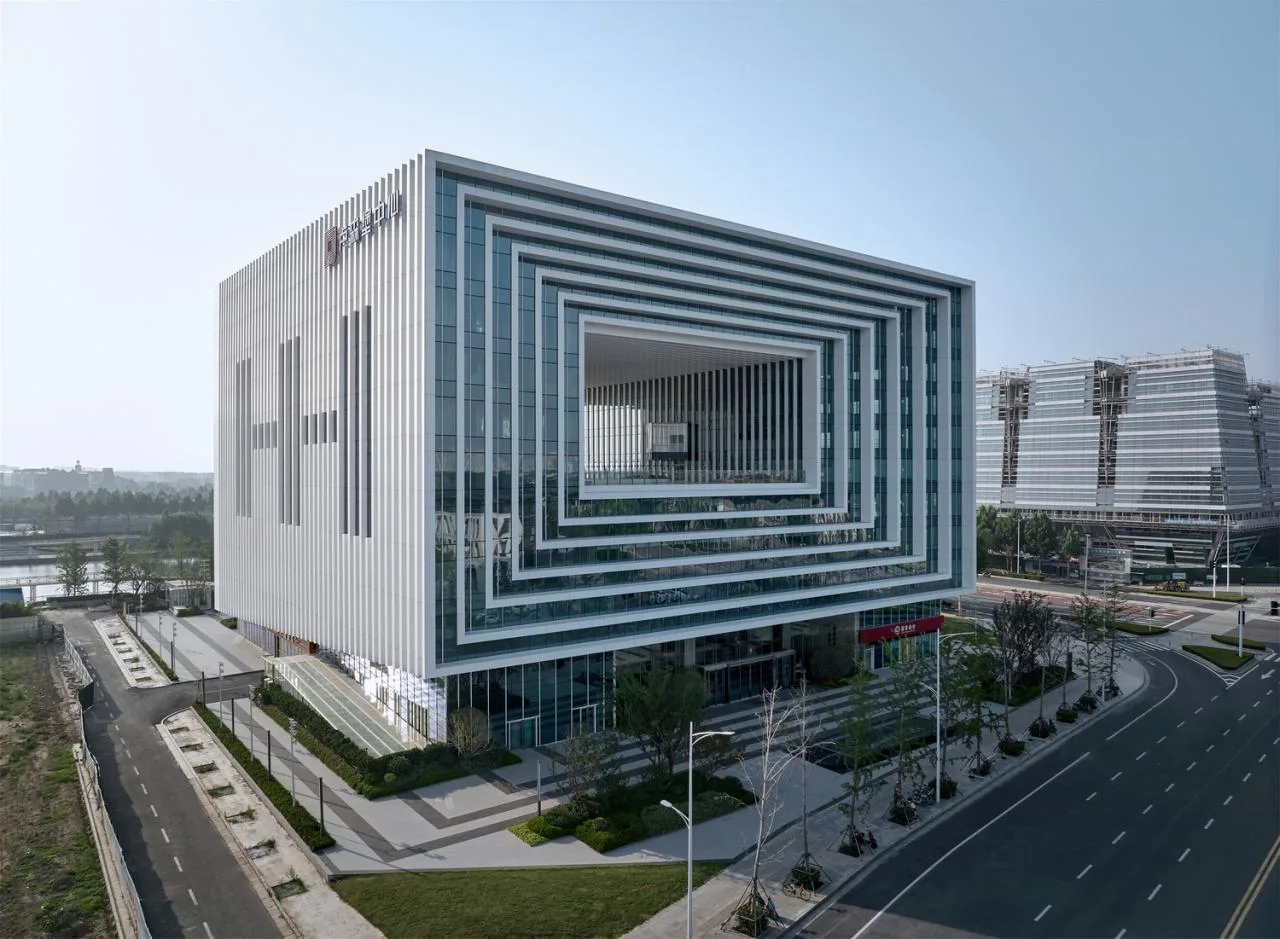
In 2018, a consortium formed by Huadu Design (HDD) and Shanghai Tongji Urban Planning and Design Institute (TJUPDI) won the bid for the Henan Luxembourg Center project. This large-scale, foreign-related service complex integrates foreign affairs services, business and finance, cross-border trade, cultural tourism, and more. It was developed under the strategic guidance of the Henan Provincial Party Committee and Government, following the important instructions of General Secretary Xi Jinping to support the construction of the Zhengzhou Luxembourg “Air Silk Road”. The project serves as a new platform for Henan’s opening to the world, a cultural exchange window between China and Luxembourg, and a key hub for the China-Europe “Air Silk Road.”
Overview of the Henan Luxembourg Center Project
The Henan Luxembourg Center is situated in the southern part of the Longhu area within Zhengdong New District, at the intersection of the Ruyi River Development Axis and the Central Ring Road Public Vitality Axis. Benefiting from the dual influence of the Longhu Financial Center and Zhengdong CBD, the project functions both as a landmark node and a key axis enhancer.
Covering a total land area of 13.65 hectares, the site is divided into five plots with a combined construction area of 402,000 square meters. Inspired by concepts of multi-dimensional space and time, cultural integration, and platform sharing, the design strategy focuses on building landmarks, guiding blocks, constructing ring corridors, and developing green parks. This creates a layout model featuring dual center guidance, dual axis rings, and three-zone coordination. The development forms a multifunctional cluster of international exchange windows, innovative development platforms, and ecological humanistic blocks. The “Window of Time and Space” — Longhu International Center — and the “Charm of Thousand Forts” — Luxembourg Visa Center — serve as cultural landmark nodes, blending internationalization, complexity, and ecological sustainability.
Of these, the Longhu International Center, primarily serving as the headquarters for international business and finance, has been completed and is operational. The Luxembourg Visa Center is expected to be completed by the end of 2023.
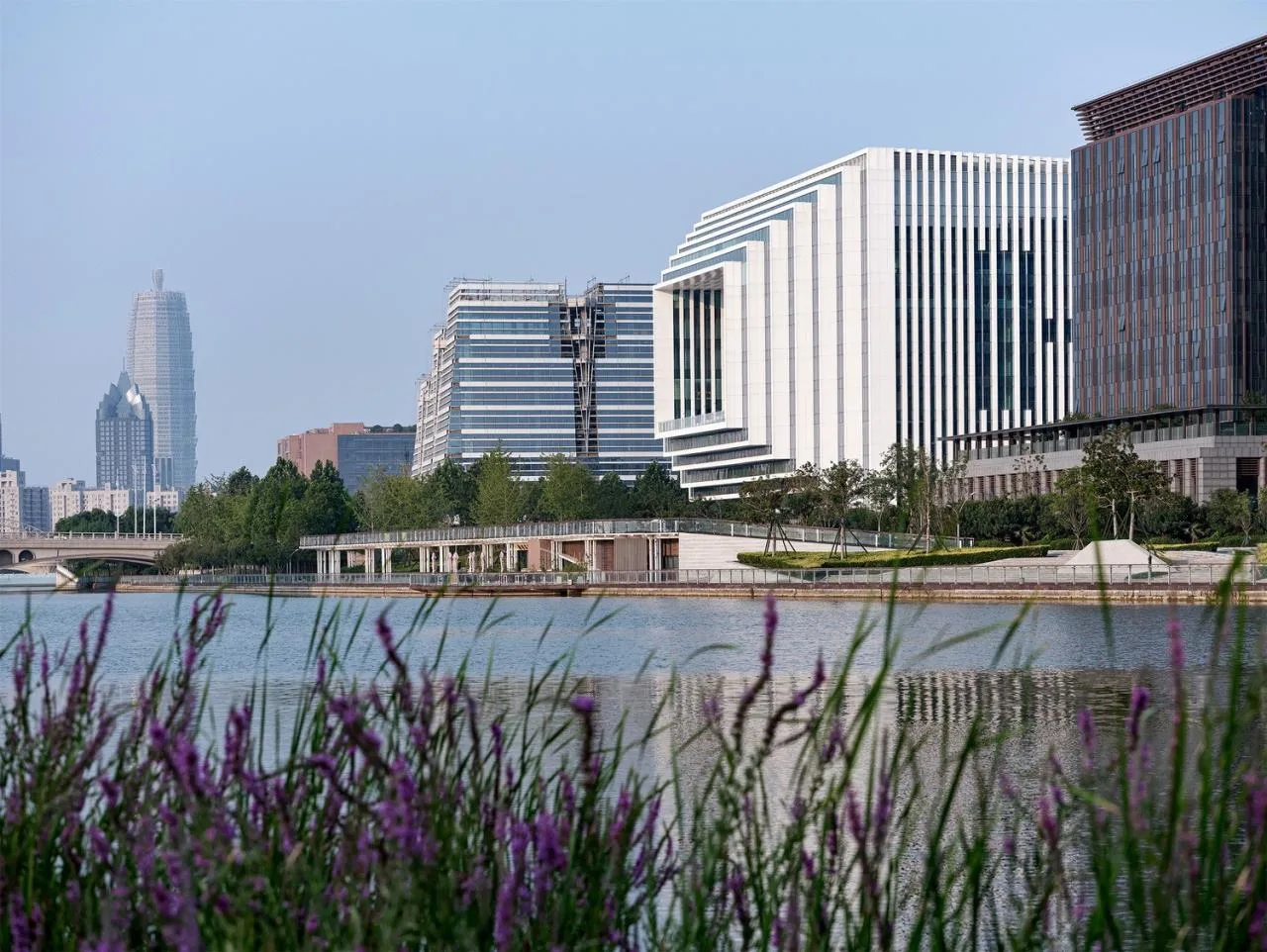
△ View of Ruyi River
Longhu International Center | Plot 1 of the Henan Luxembourg Center Project
As the flagship landmark of the Henan Luxembourg Center, the Longhu International Center is strategically located at the gateway of North Longhu – Plot 1. It faces the Aviation Service Center office building to the north, the Luxembourg Visa Center across the Central Ring Road to the south, the ecologically rich west bank of the Ruyi River to the east, and the foreign service and trade centers (Plots 4 and 5) to the west, arranged in a coherent axis.
The site covers 11,775 square meters, with a total construction area of 60,036 square meters. The building includes 11 above-ground floors designated as 5A-grade office spaces and 2 underground floors serving as parking garages. This project consolidates various foreign-related resources from Zhengzhou and Henan province, enhancing the business and office environment within the Longhu Cluster International Financial Business Service Area in Zhengdong New Area, while strengthening internationalization and industrial cohesion.
△ Aerial view
# Time and Space Crossing
The design concept, “Window of Time and Space,” highlights the cultural and commercial leap between ancient and modern times, bridging Chinese and Western traditions. The ancient Silk Road historically linked trade and cultural exchange between East and West, while the modern aerial Silk Road continues this legacy in a new era. The “four-dimensional space” concept symbolizes time travel and the progression of eras.

△ Design Concept
The vertical façade features a beige gradient combined with high-transparency low-e glass, creating a simple yet elegant spatial form. At night, dynamic circular lighting on the building exterior presents a vivid display of time and space travel.
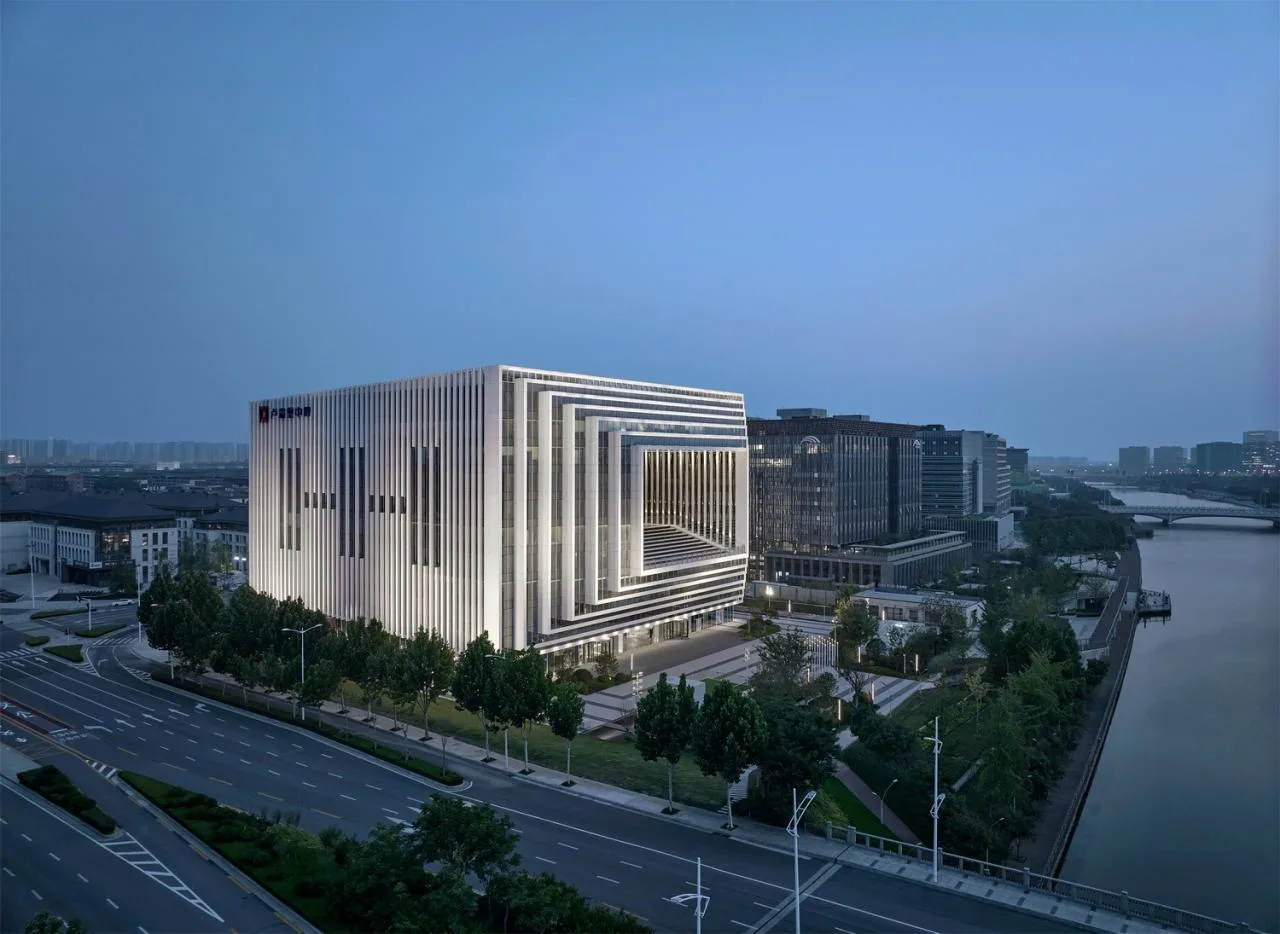
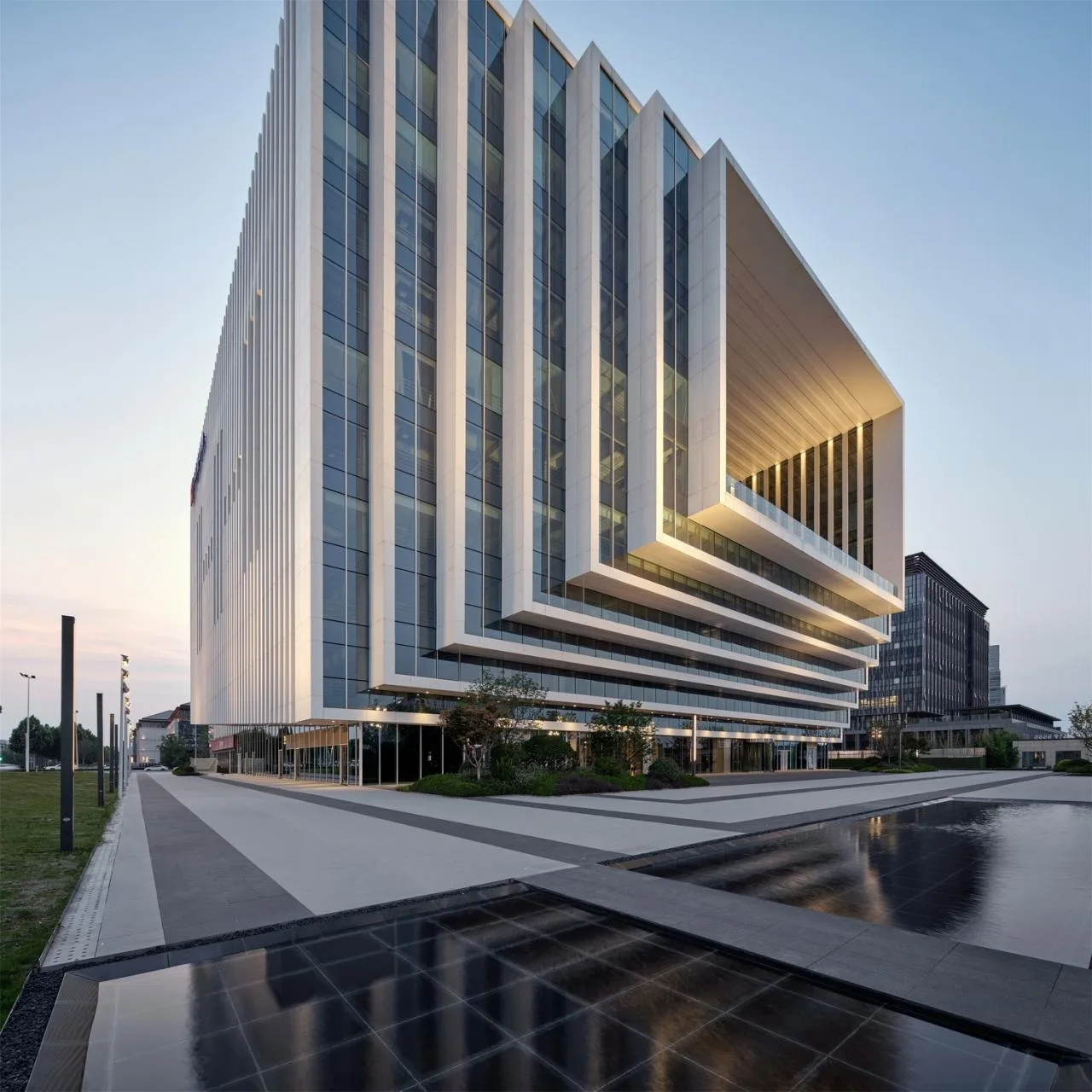
△ Night view of Longhu International Center
# Multidimensional Interaction
The “Hui” character-shaped design not only delivers a striking visual impact transcending time and space but also fosters multidimensional interaction between the architecture and urban environment. By connecting the central part of the east-west building to form an open atrium, the east-west axis extends from the Ruyi Riverside westward to office and commercial blocks 4 and 5, establishing a vibrant spatial landscape and a three-dimensional humanistic block.
Additionally, the layered staircase and outdoor observation deck in the inner courtyard seamlessly integrate the picturesque natural river scenery into the building experience.
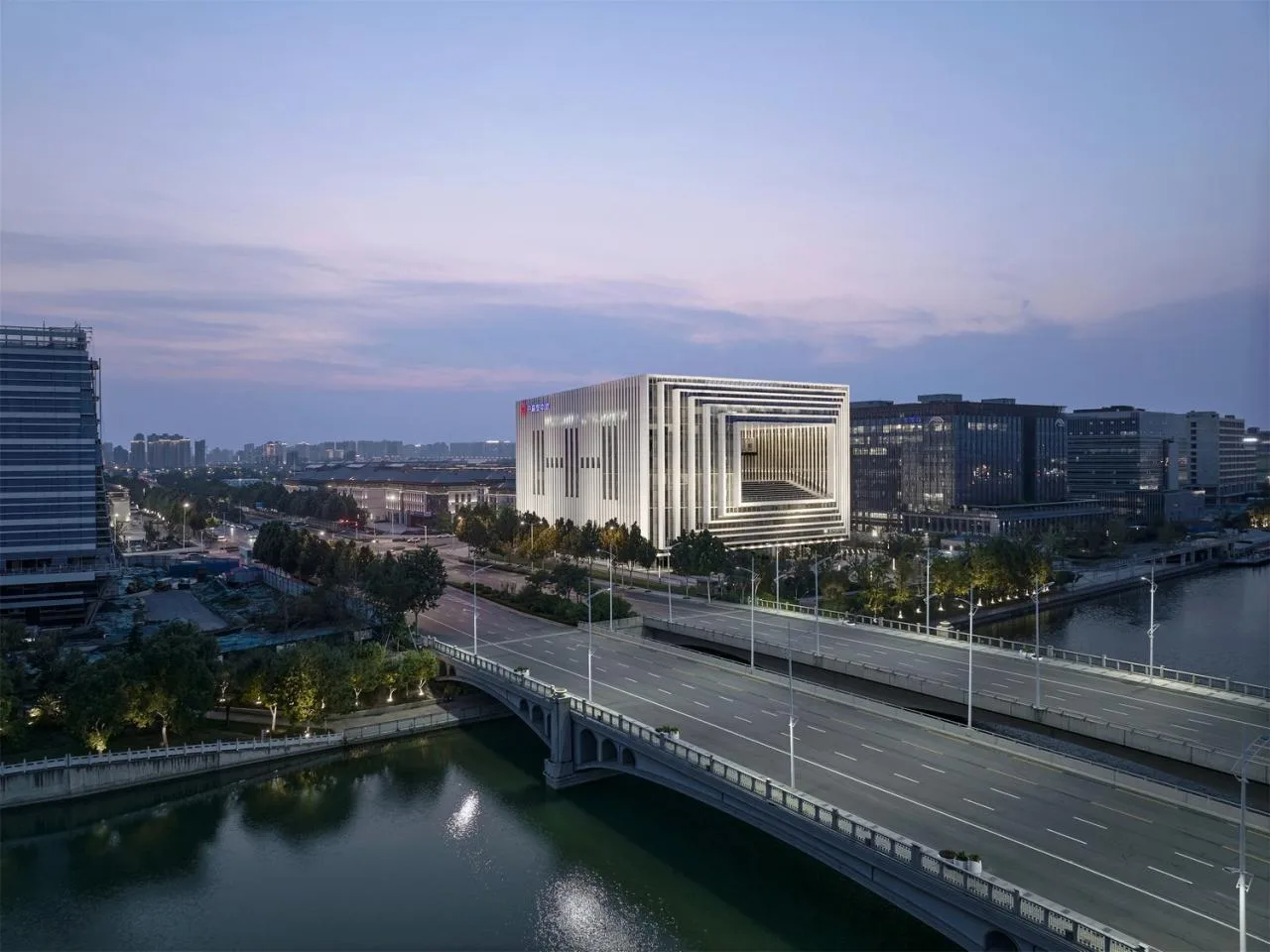
The development axis extends westward from the Ruyi River.
The building’s overall layout, combined with the surrounding environment, emphasizes openness to the city. External city squares are designed at both entrances and exits, with the western side serving as the main entrance, featuring a two-story high-rise lobby that accentuates the ceremonial feel.
The building’s base opens to the east, where urban water features and vegetation already exist. To complement this, a landscape water system was created at the west entrance, establishing a harmonious connection between the east and west landscape elements.
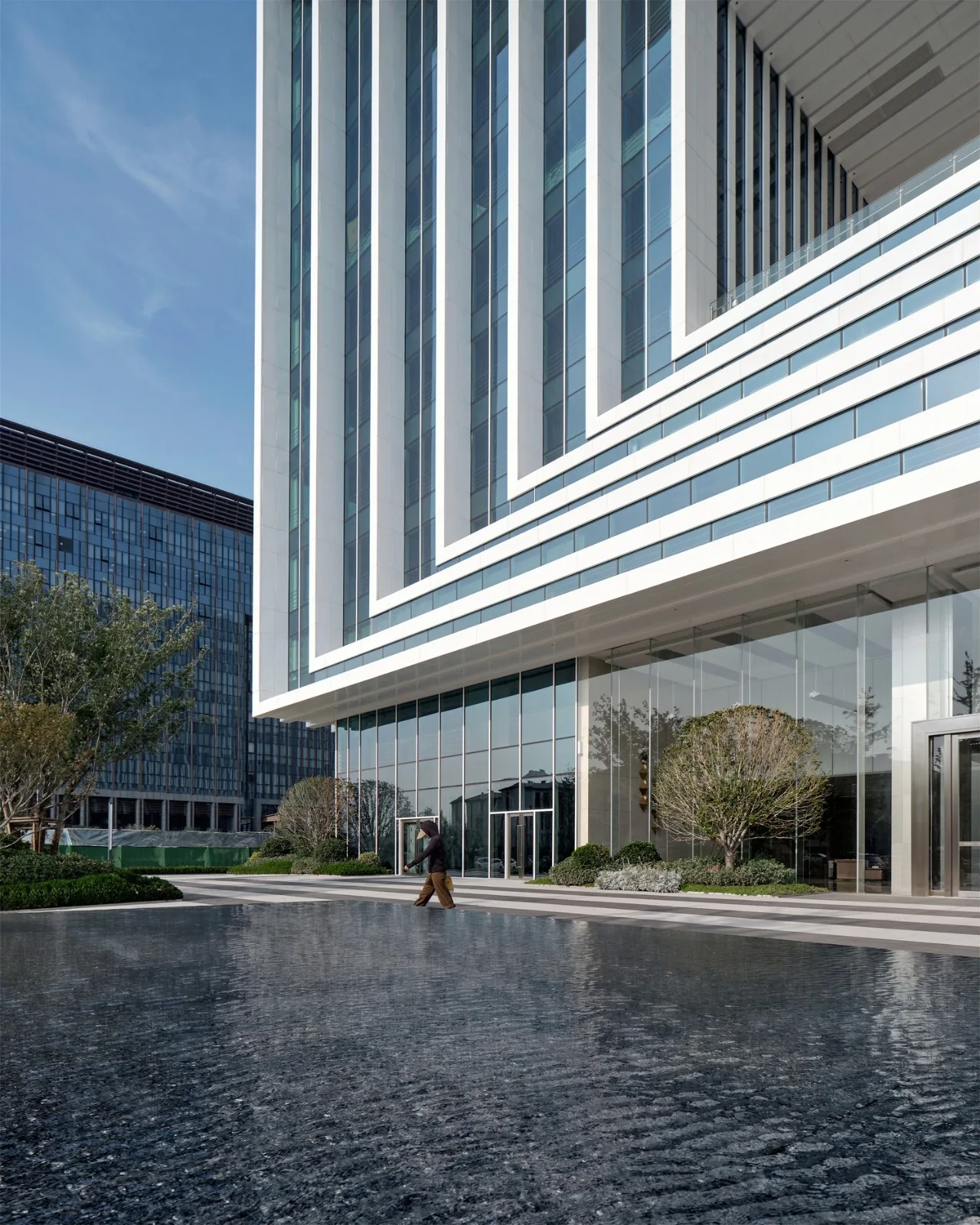
△ Landscape water system at the western entrance
The “back-shaped” layout challenges the typical closed form of office buildings. With 11 above-ground floors, the first four floors accommodate commercial, dining, conference, and office support services. Floors 5 through 11 provide high-end headquarters office spaces with open shared platforms, while two underground floors are designated for parking.
The lower floors’ office support services are connected in a loop around a central square courtyard. Within this space, flexible workstations, leisure green areas, commercial dining, reception zones, conference centers, and indoor gardens are conveniently arranged. This design maximizes adaptability, blurring the lines between work, leisure, lifestyle, and park environments.
A central transparent space, measuring 30 meters in length and 15 meters in height along the east-west axis, is created in the headquarters office area on floors 6 to 9. The flowing, continuous lines form a hollow window scene, establishing an open, shared platform symbolizing the crossing of time and space and cultural integration — named the “Window of Europe”. The courtyard garden and tiered sky garden provide a unique urban viewing experience, naturally interacting with the Ruyi River and surrounding parkland.
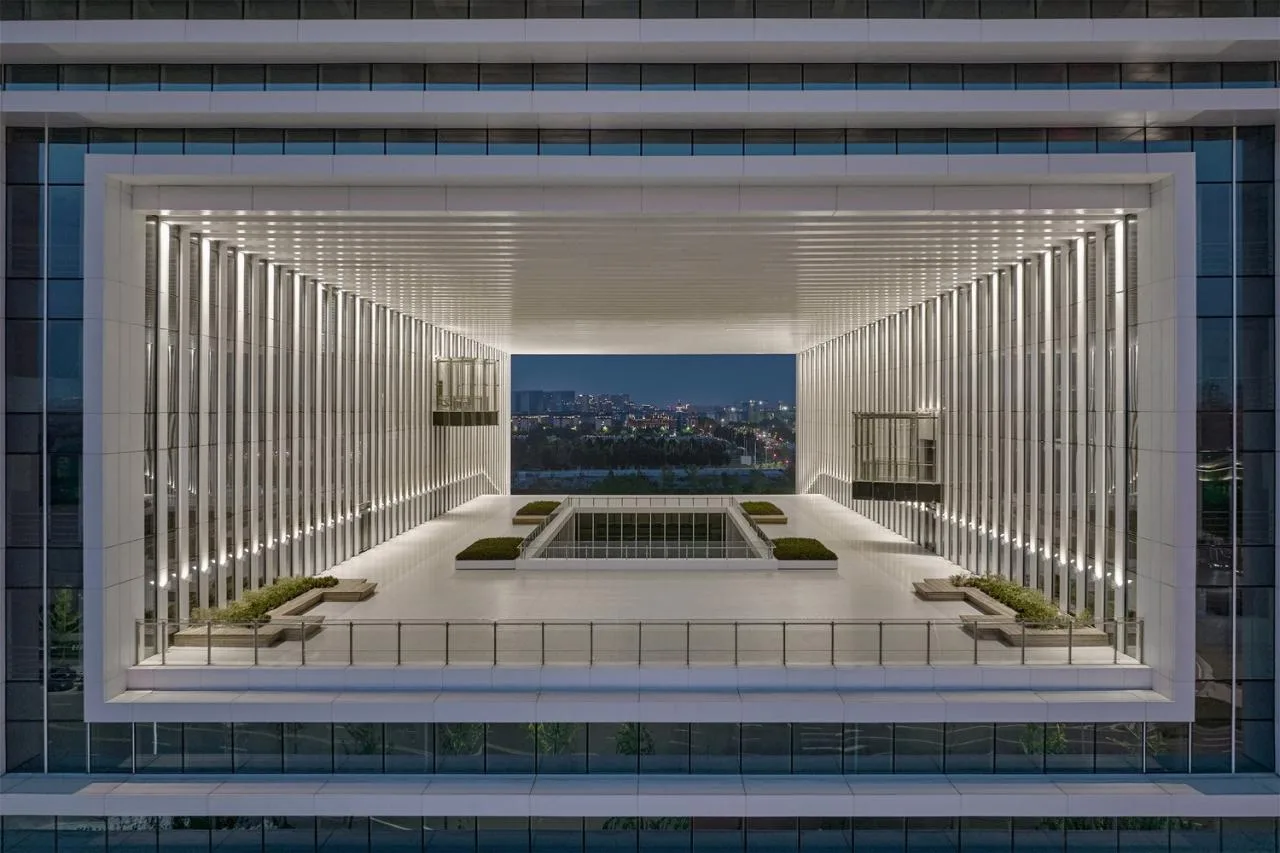
△ Window of Europe
To accommodate various user behaviors and maintain the building’s transparency and openness, a layered staircase is positioned on the courtyard garden side facing the Ruyi River. This outdoor river-view space encourages communication and relaxation. The flexible design of the shared space, combined with diverse window styles, creates a dynamic visual experience, offering a comfortable and inviting environment for interaction throughout the building.
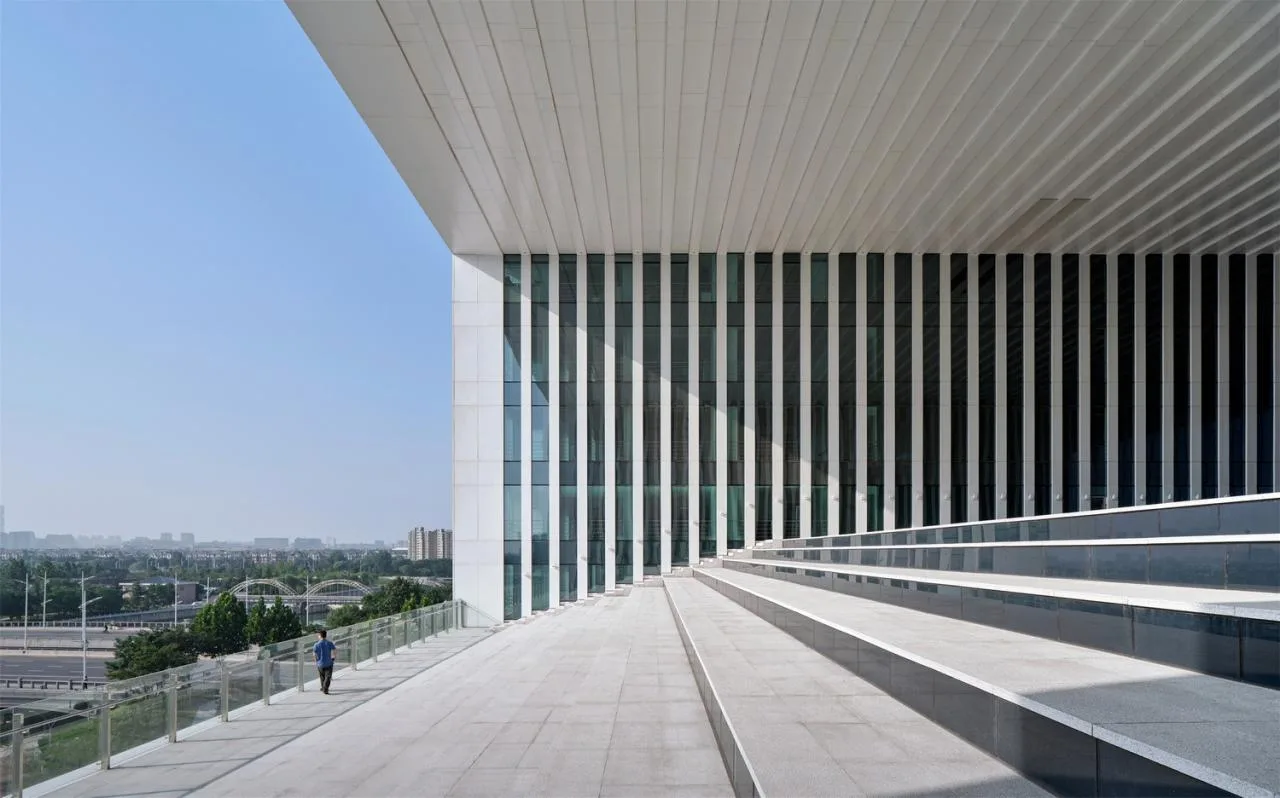
△ Communication staircase space
By combining holistic and iconic design elements, the Henan Luxembourg Center aims to create a contemporary masterpiece that integrates Chinese and Western cultures, fosters vibrant mixed-use vitality, and prioritizes ecological sustainability and low carbon footprint. With its theme of transcending time and space and multidimensional interaction, the project adds a new landmark to the Longhu Ruyi River area.
Project Information
Project Name: Longhu International Center
Design Unit: Shanghai Huadu Architectural Planning and Design Co., Ltd. (HDD)
Collaboration Unit: Shanghai Tongji Urban Planning and Design Institute (TJUPDI)
Location: Zhengzhou, Henan, China
Land Area: 11,775.14 square meters
Building Area: 60,036.37 square meters
Chief Designer: Kuang Xiaoming
Planning and Design Team: Zhang Yunxin, Yu Yang, Chen Peng
Architectural Design Team: An Xiaoguang, Yang Yushan, Gao Qinmei, Hou Jiahui, Liu Guangzhe, Yu Yongyong, Wang Chao, Xu Yixin, Zhao Min, Lu Jing
Structural Design Team: Yuan Zhili, Qi Xiaozhe, Zhou Zhen, Hu Jianjun, Yue Feng, Zhong Junjie, Kong Lingwei, Li Meiqi, Zhang Chao, Ji Chen
Water Supply and Drainage Design Team: Jiang Yi, Chen Luhua, Zhang Ting, Liu Miaomiao, Yu Xinguang
HVAC Design Team: Chai Yunliang, Xue Xiaofeng, Liu Jiakang
Electrical Design Team: Jia Lin, Ren Fusheng, Zhang Yi, Cao Yuhao, Chen Yu, Yuan Jiangfeng, Wan Danqi
Landscape Design Team: Zhu Yiyu, Wang Dandan, Fu Xiao, Yang Gang, Fei Yidong
Design Period: March 2018 – June 2019
Completion Date: August 2022
Photographer: Zhang Yong (Octopus Jian Zhu)














Must log in before commenting!
Sign Up