
MVRDV Architecture Studio, based in the Netherlands, has revealed the design for a 140,000-square-meter library in Wuhan, China. The building’s overall form is inspired by the surrounding landscape.
Wuhan Library is set to become one of China’s largest libraries and a prominent landmark in the city’s central business district, located adjacent to Baofeng Overpass. The building features a hexagonal base that extends into a sweeping, curved façade, peaking on the shortest side facing south.
The exterior walls are designed with large windows spanning three sides of the multifaceted façade. The other three sides will feature a unique ‘bookshelf façade,’ composed of louvers resembling bookshelves. These glass curtain walls offer diverse indoor views of the city, including the skyline of the business district, nearby parks, and surrounding plazas.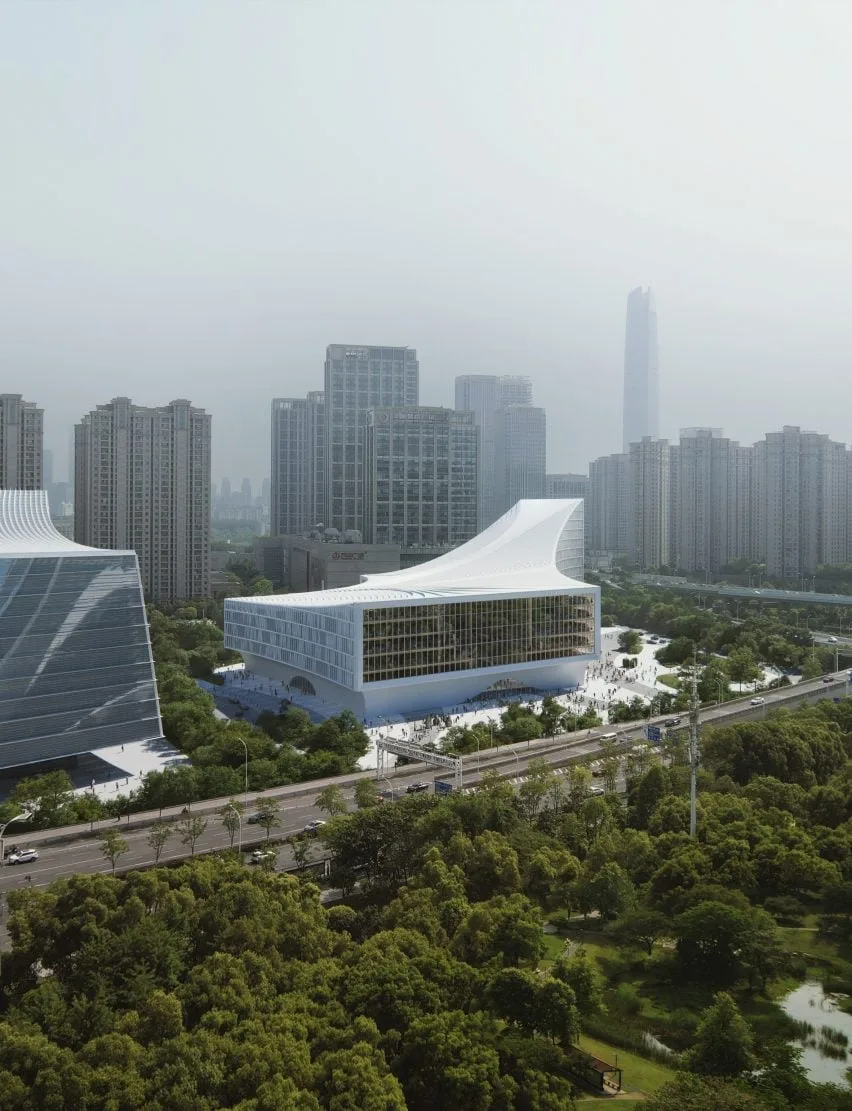
Inside, a series of stepped terraces housing books and activity zones run along the building’s interior sides. The ground-level passageway divides these terraces into two accessible public spaces. According to MVRDV Studio, the stepped design and underlying public areas reference Wuhan’s river landscape.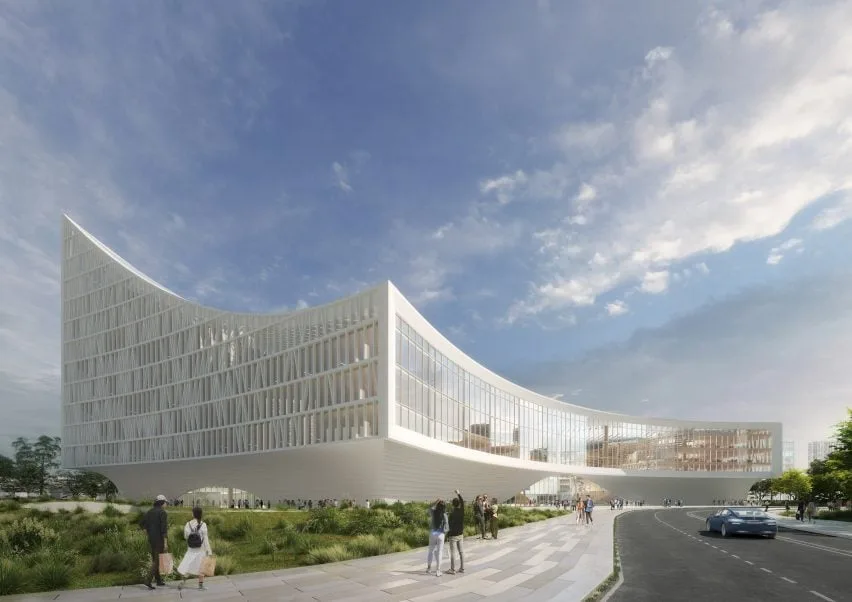
The library’s reading spaces, public work areas, and expansive bookshelves spread across different staircases, creating a canyon-like environment. MVRDV explains, “The interior concept reinforces Wuhan’s identity as a city at the confluence of rivers and urban landscapes. The stepped book terraces evoke sculptural canyon lines, while the first floor offers a spacious public area for visitors to enjoy throughout the day.”
Jacob van Rijs, founding partner of MVRDV Studio, commented, “This design reflects the contrast between nature and the city, which architecture partly embraces. Wuhan’s terrain inspired us significantly: there’s a horizontal view facing the lake and a vertical view looking towards the city’s high-rise skyline.”
MVRDV’s design won the Wuhan Library Design International Competition, launched in April 2022. The surrounding landscape will enhance the local environment and climate, featuring low-maintenance native plants and tall trees to provide shaded outdoor areas.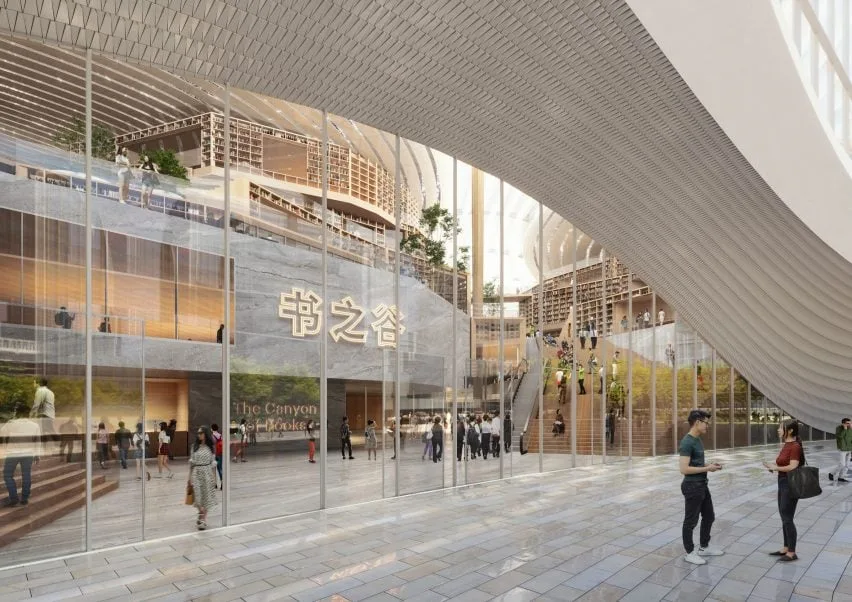
The louvers on the bookshelf façades are designed to control sunlight entering the building while providing shade inside. Supported by a column foundation, the building’s cantilevered edges obscure its base. The studio also plans to install multiple solar panels on the roof to supply renewable energy.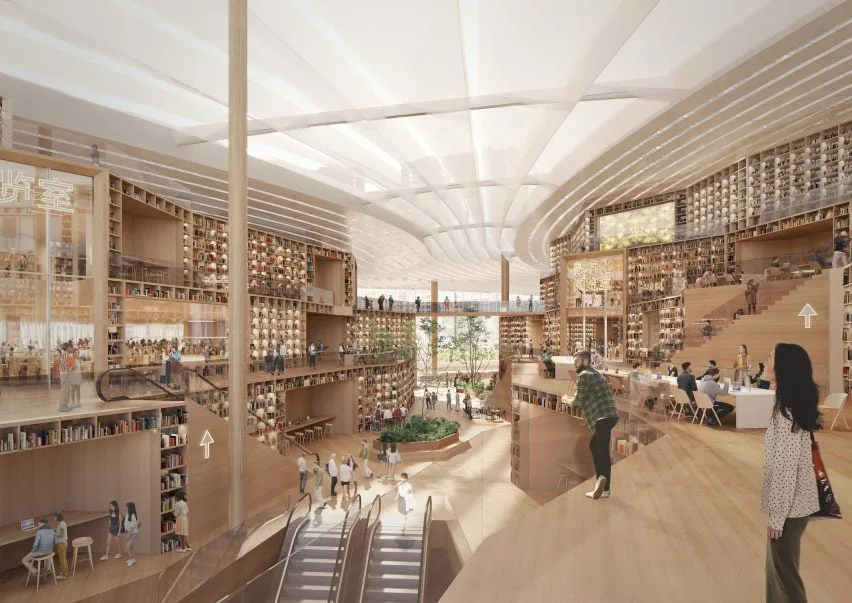
Recently, MVRDV also revealed its design for the Oasis Tower in Nanjing, China — a pair of L-shaped skyscrapers characterized by sharp, cliff-like façades.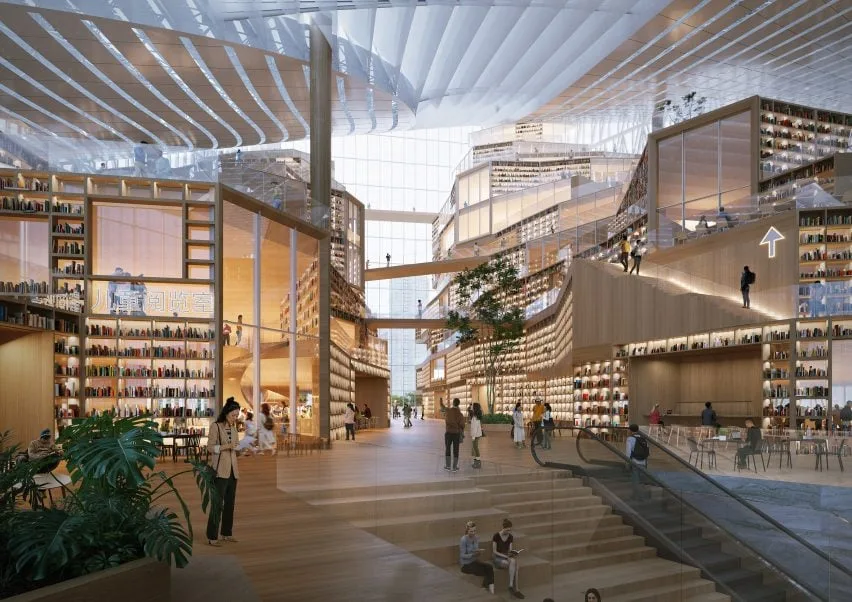














Must log in before commenting!
Sign Up