
The Canadian architecture firm KPMB Architects has completed a new campus building in Boston featuring a series of cantilevered structures. This project is recognized as the city’s largest “fossil-free building.”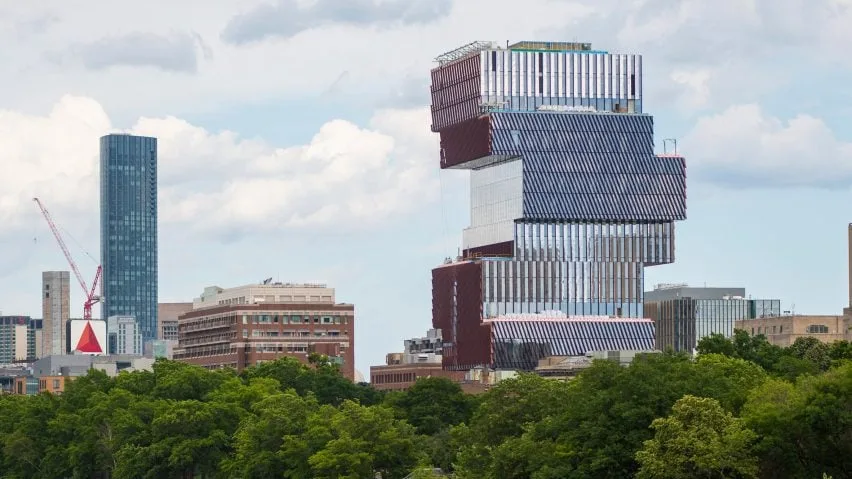
KPMB Architects designed the Boston University Center for Computing & Data Science, situated along the Charles River, standing at 305 feet (92 meters) tall. The building is composed of multiple structures stacked at an angle, with cantilevers extending from all sides of the 19-story tower. Boston University (BU) describes it as “the largest sustainable fossil fuel-free building in Boston.” The vertical campus rises dramatically from the Charles River bank, reshaping Boston’s skyline.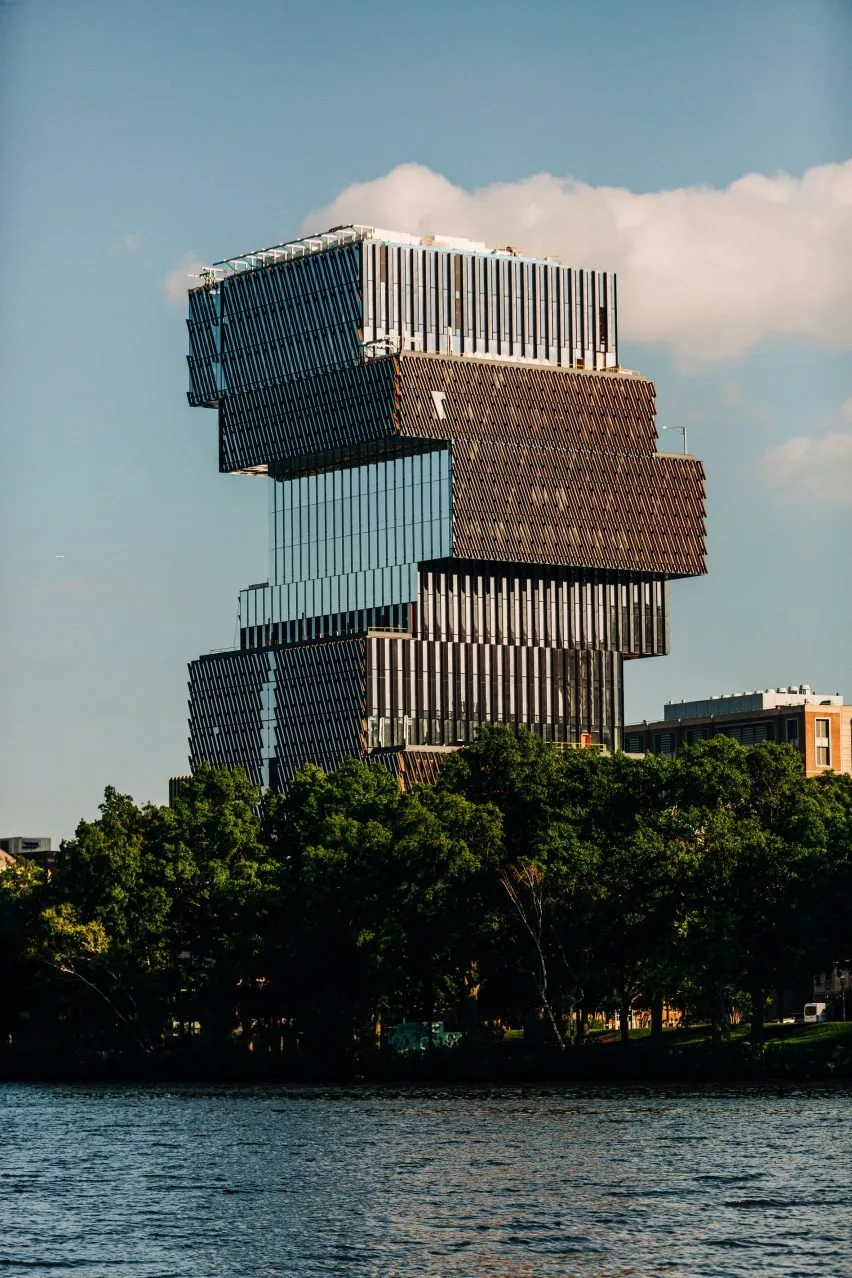
The base of the building features a four-story podium that extends along the river, functioning as a “city porch.” This podium leads to a central staircase that ascends into the tower, which includes an eight-story atrium. The building’s facade is distinguished by its cantilevered design and a series of diagonal louvers, positioned based on solar orientation, located atop the three-story glass curtain wall that encloses the structure.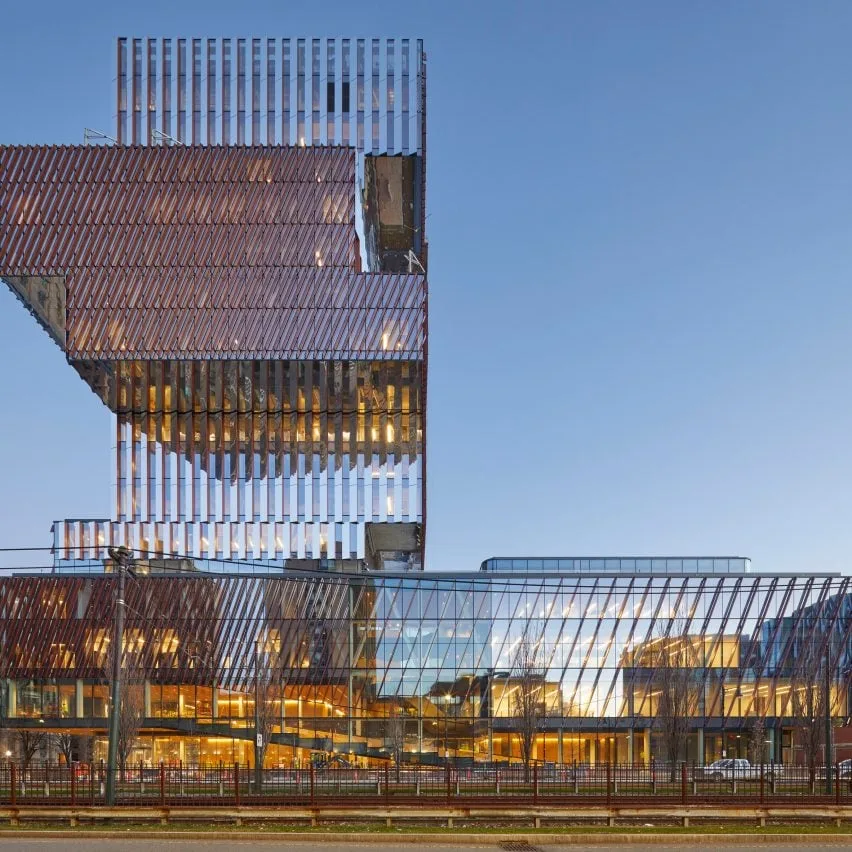
The cantilevered design creates eight green terraces, offering outdoor spaces for occupants while also facilitating rainwater collection. Inside, the building is organized by academic disciplines.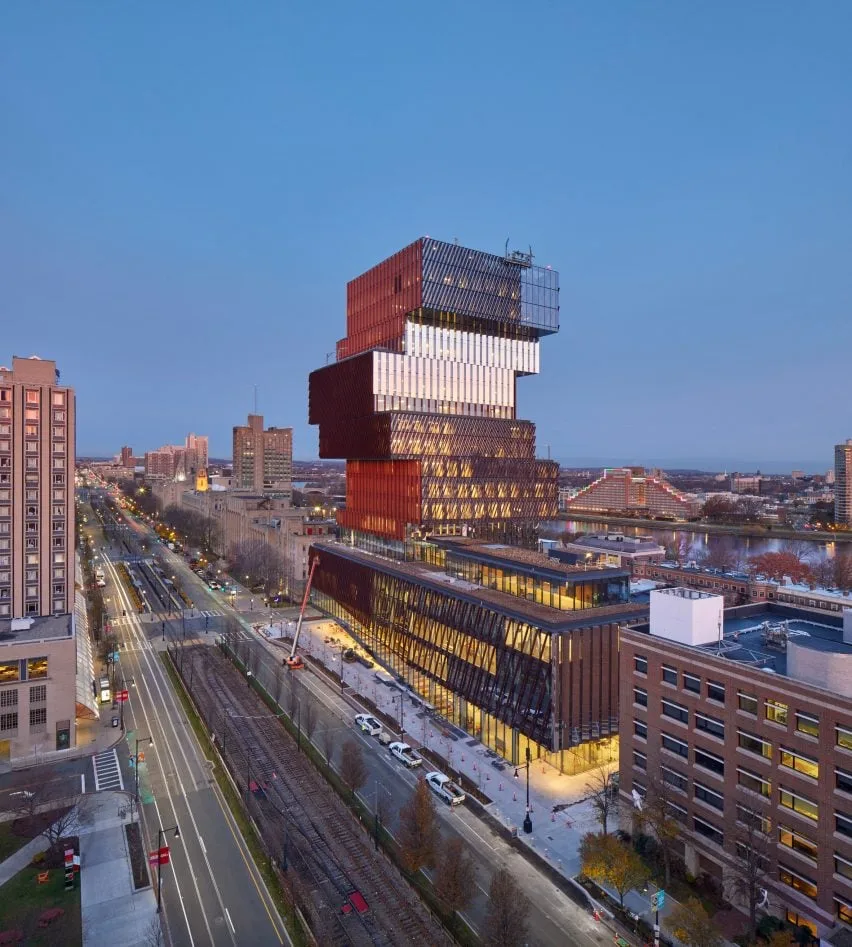
The university explains that the center is designed as a vertical academic community. The ground floor is dedicated to mathematics and statistics, the middle floors house computer science, and the top floors are reserved for interdisciplinary work and public spaces. The interior includes 12 classrooms, two computer labs supporting the computer science department, and a coffee shop on the first floor.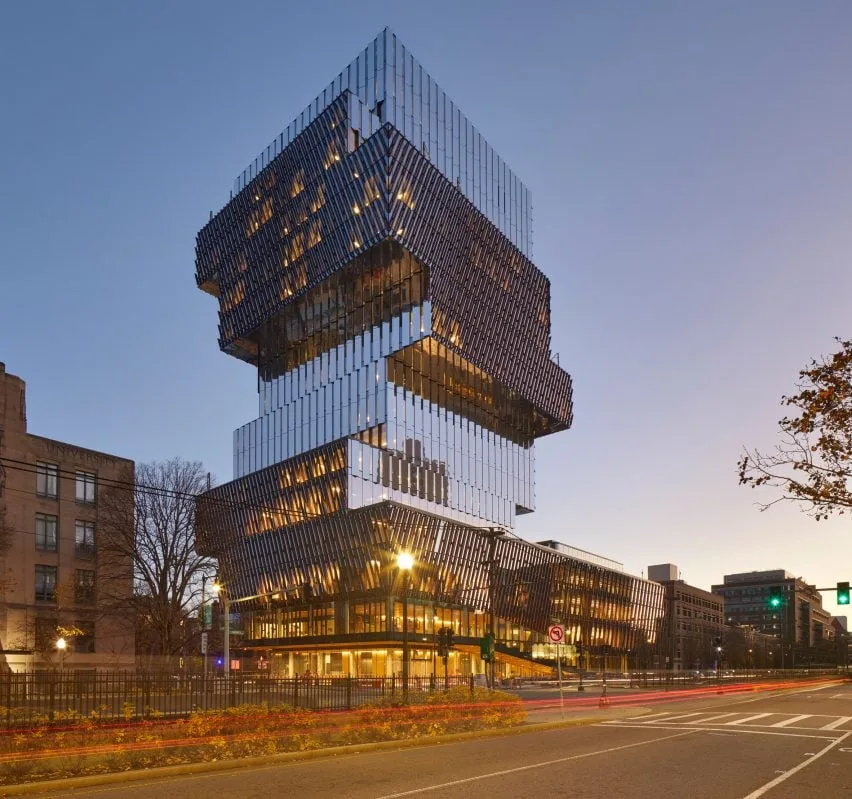
At the top of the building, a pavilion and activity space provide additional communal areas. According to the design team, the building achieves its fossil-free status through a closed-loop geothermal heating system combined with optimized shading provided by solar panels and adjustable blinds.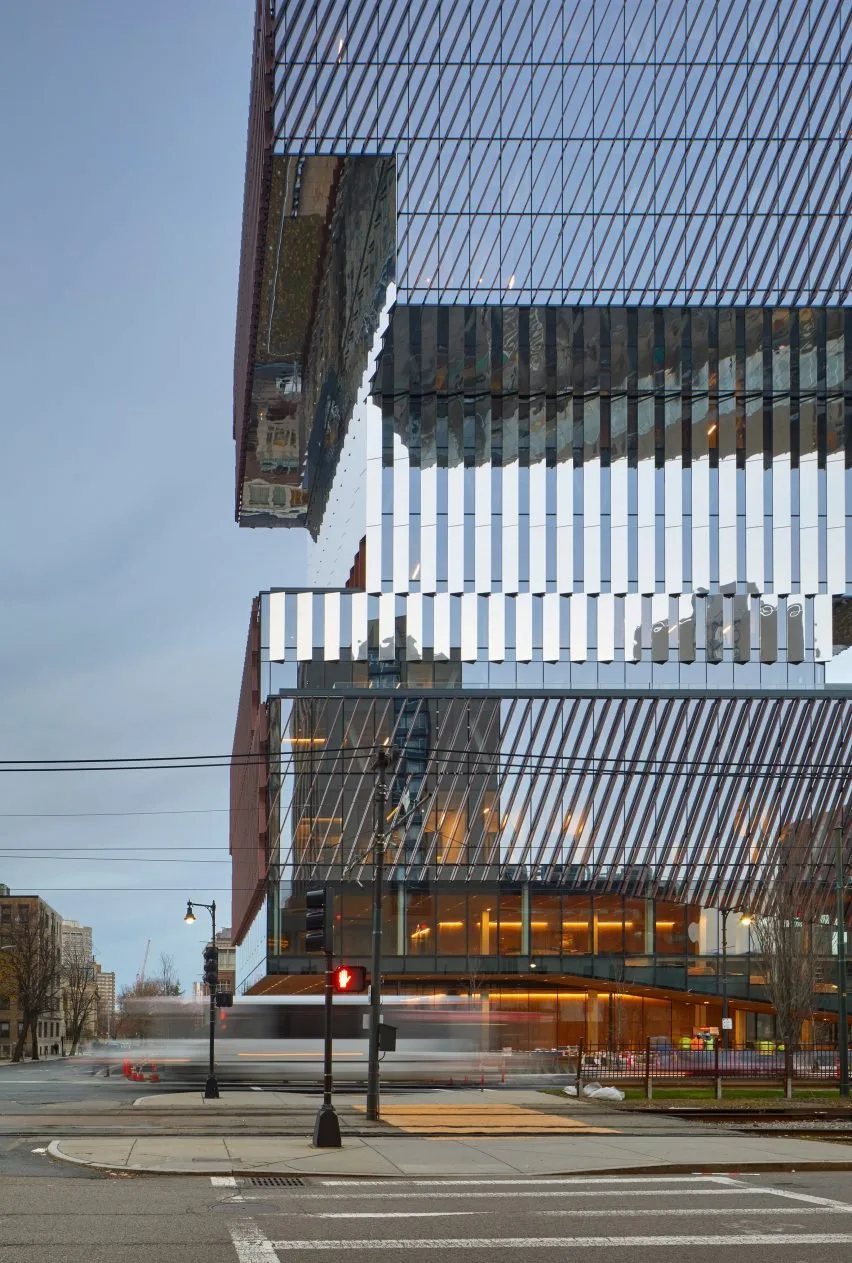
The geothermal heat pumps deliver 300 tons of heating and cooling capacity to the building without relying on gas pipelines. Dennis Carlberg, Vice President of Sustainable Development at Boston University, stated, “The drive for energy efficiency has encouraged a shift from burning fossil fuels to harnessing the Earth’s thermal capacity for heating and cooling.” He added, “This building serves as a strong example of how to construct a carbon-free future.”
The building’s structure incorporates Portland cement and steel. The team noted that through “optimized” construction methods and sourcing steel from low-impact production sites, the project achieved a 6% reduction in carbon emissions.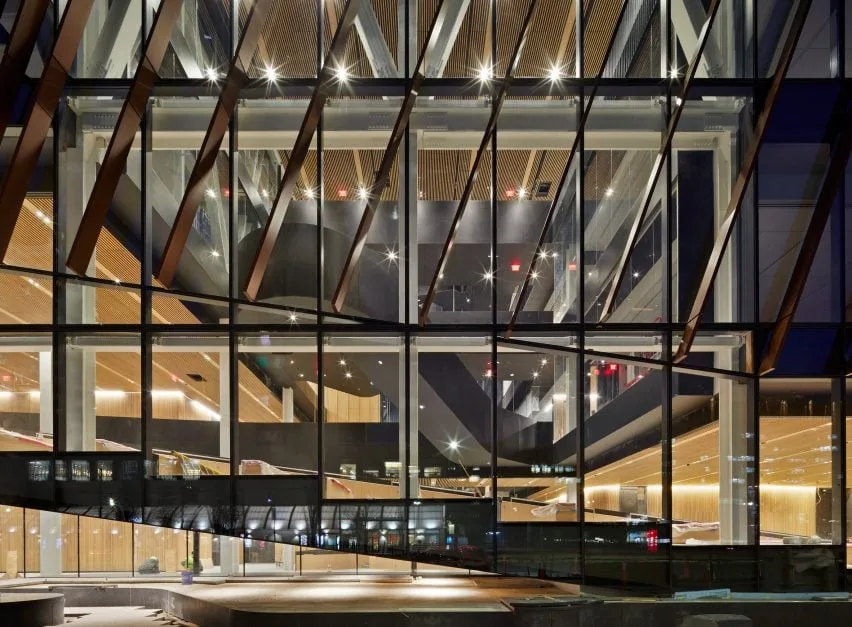
Boston University also credits its partnership with a wind farm in South Dakota for further carbon reductions. This collaboration has cut the university’s carbon emissions by 53%, moving it closer to its goal of achieving carbon neutrality by 2040.
KPMB Architects, founded in Toronto in 1987, recently announced plans to transform an airport in Toronto into a smart city, continuing their commitment to innovative and sustainable design.












Must log in before commenting!
Sign Up