
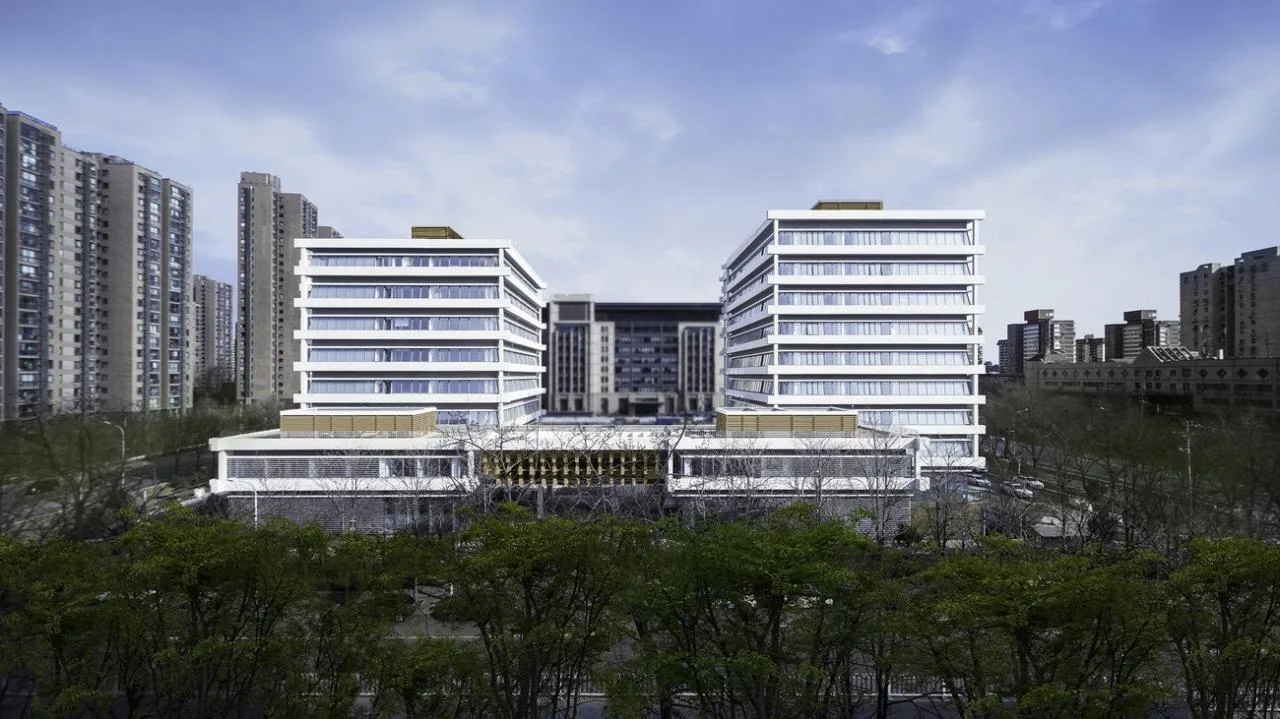
The Beijing Massage Hospital Expansion Project is situated on Wusheng North Road in Chaoyang District, Beijing. It covers a construction land area of 10,289 square meters, with a total built-up area of 39,899 square meters. The site is bordered by the Chaoyang District Comprehensive Medical Service Center to the east, Nanmofang Road to the south, Wusheng North Road to the west, and Barkeyang South Street to the north. Conveniently located adjacent to Metro Line 10 on the west, the project benefits from excellent transportation access.
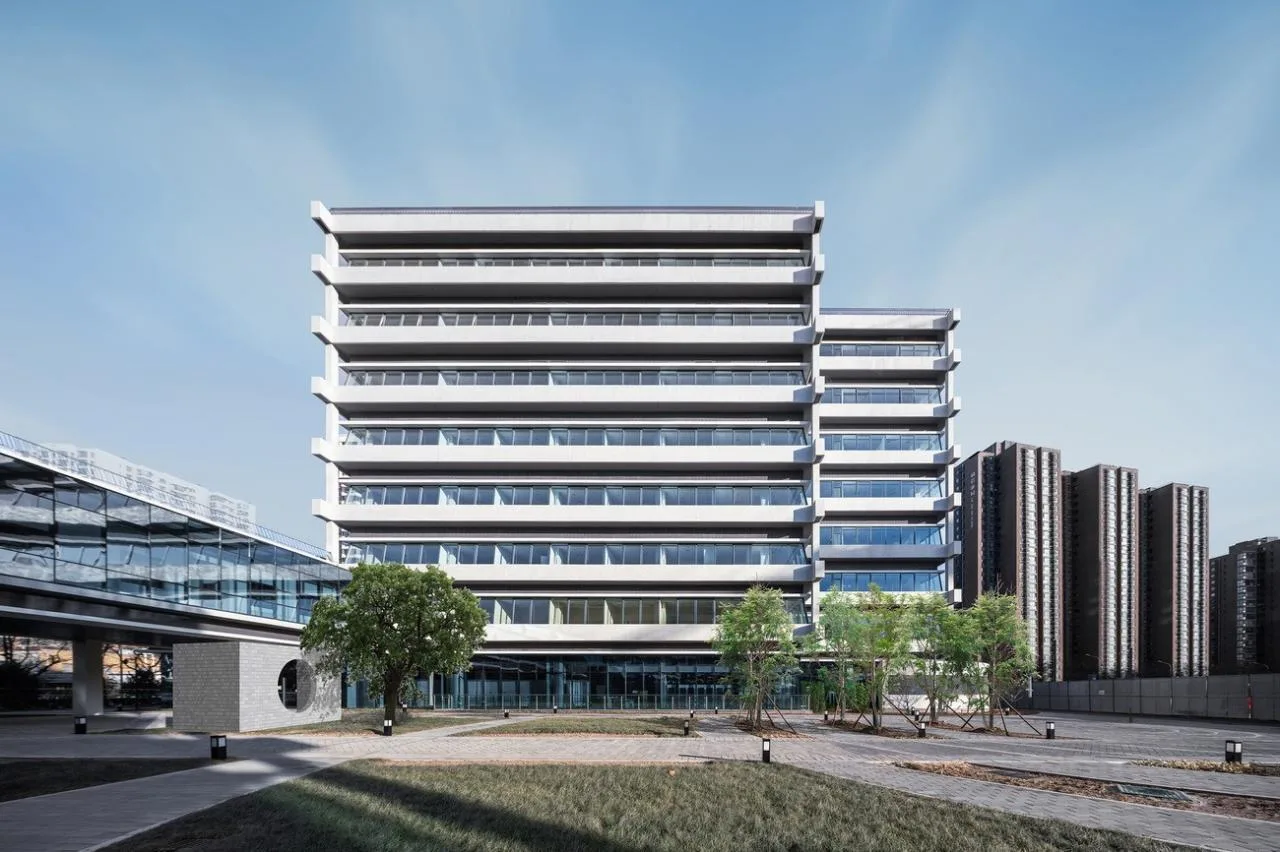
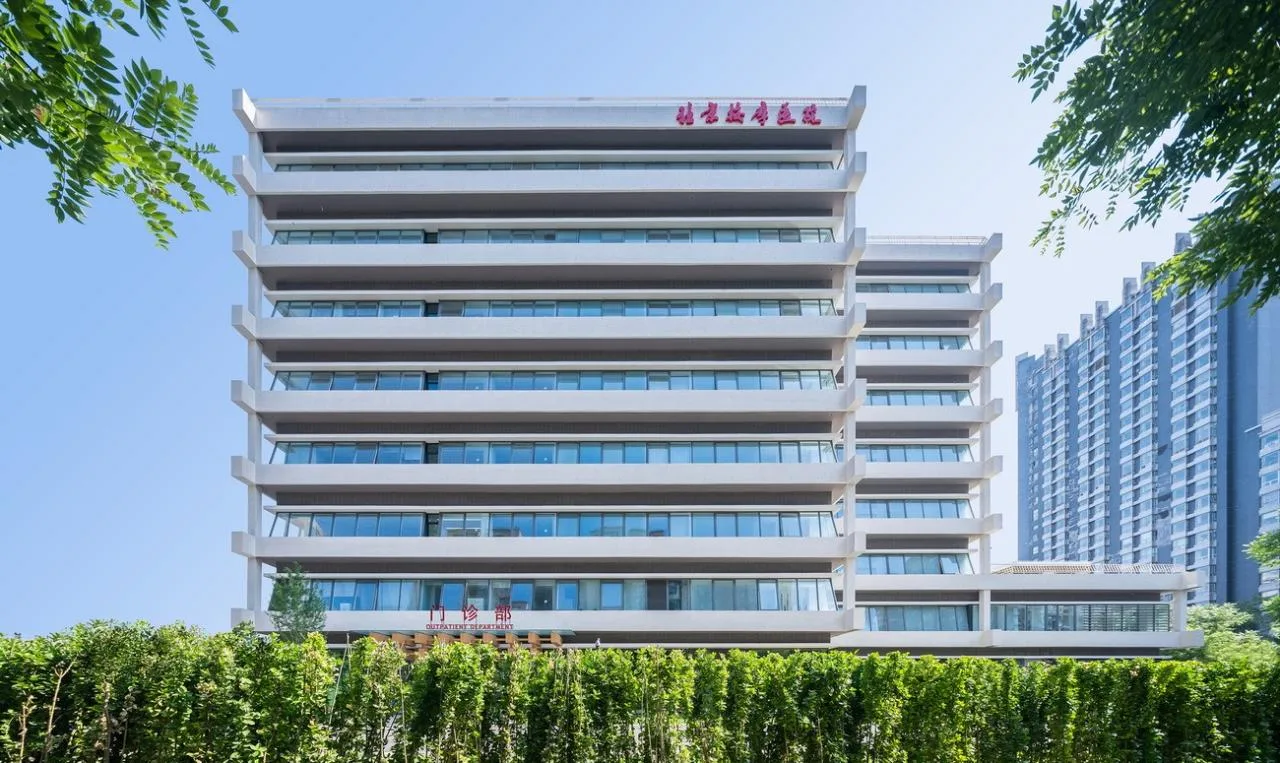
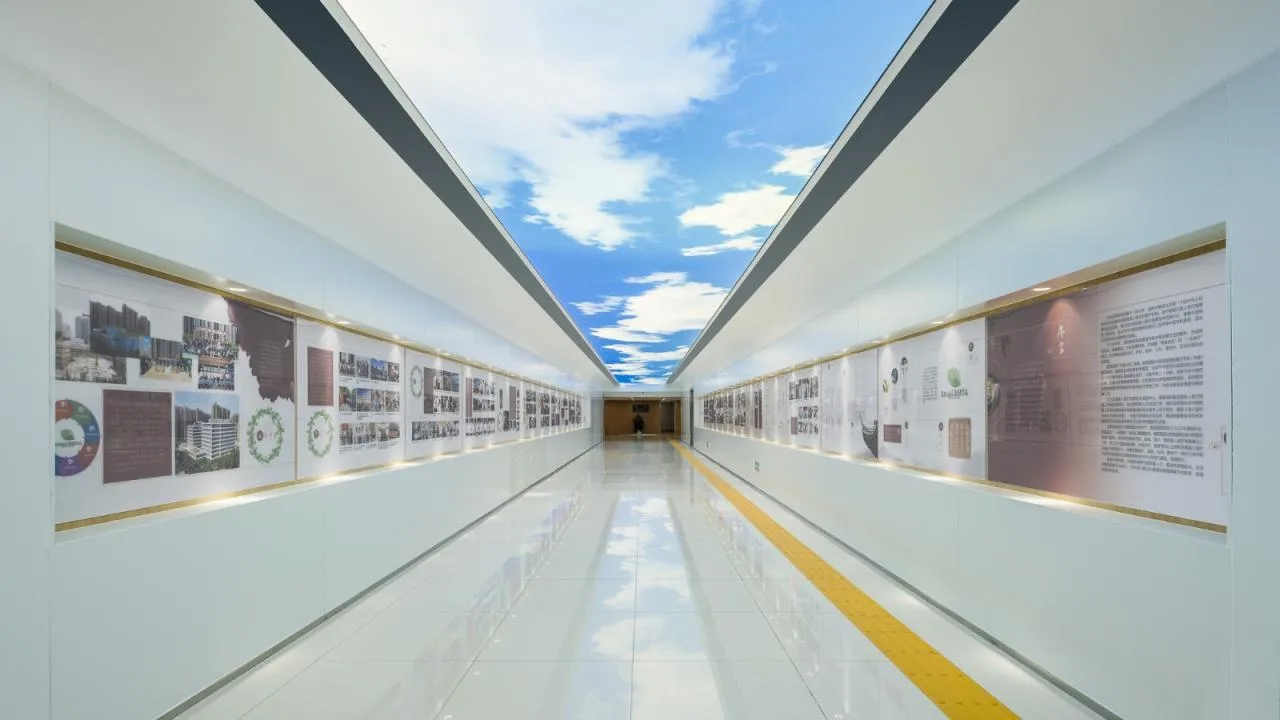
This project aims to establish China’s first traditional Chinese medicine massage and rehabilitation hospital built to Class III standards. It also serves as a showcase for China’s disability initiatives on the global stage, featuring cultural exchange and human rights exhibitions. Furthermore, it is a model project adhering to the accessibility standards of the China Disabled Persons’ Federation.
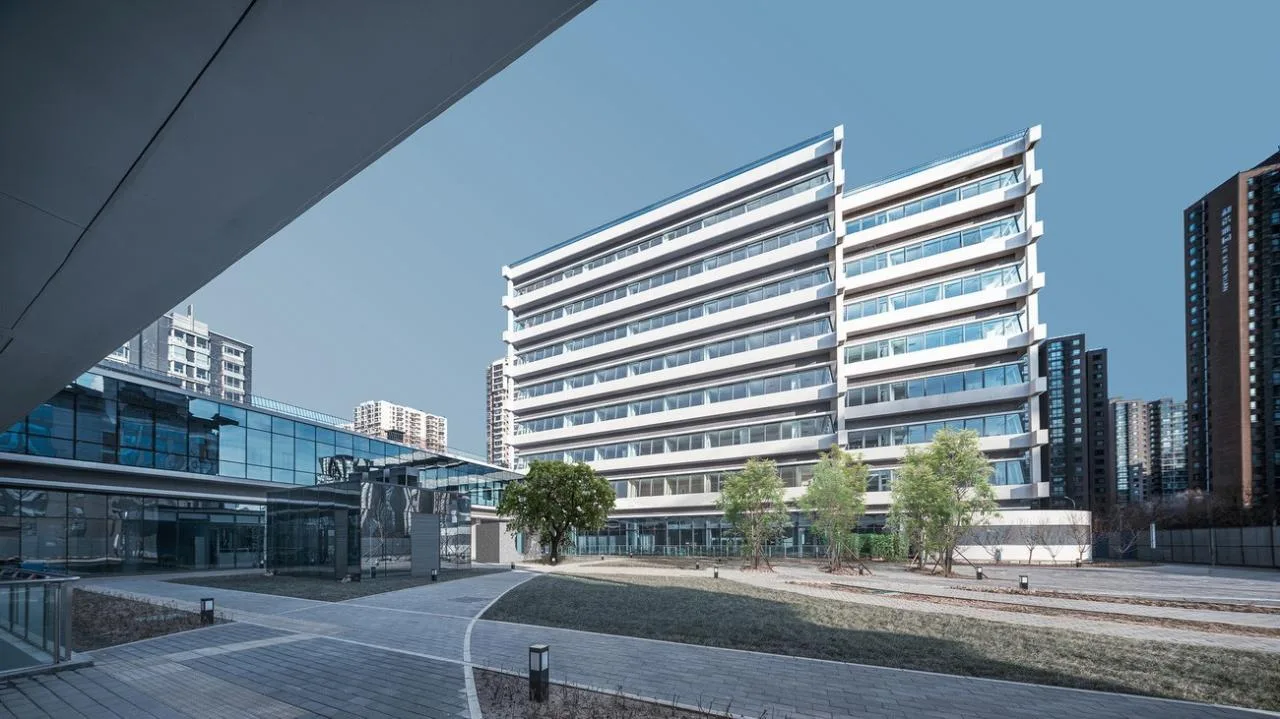
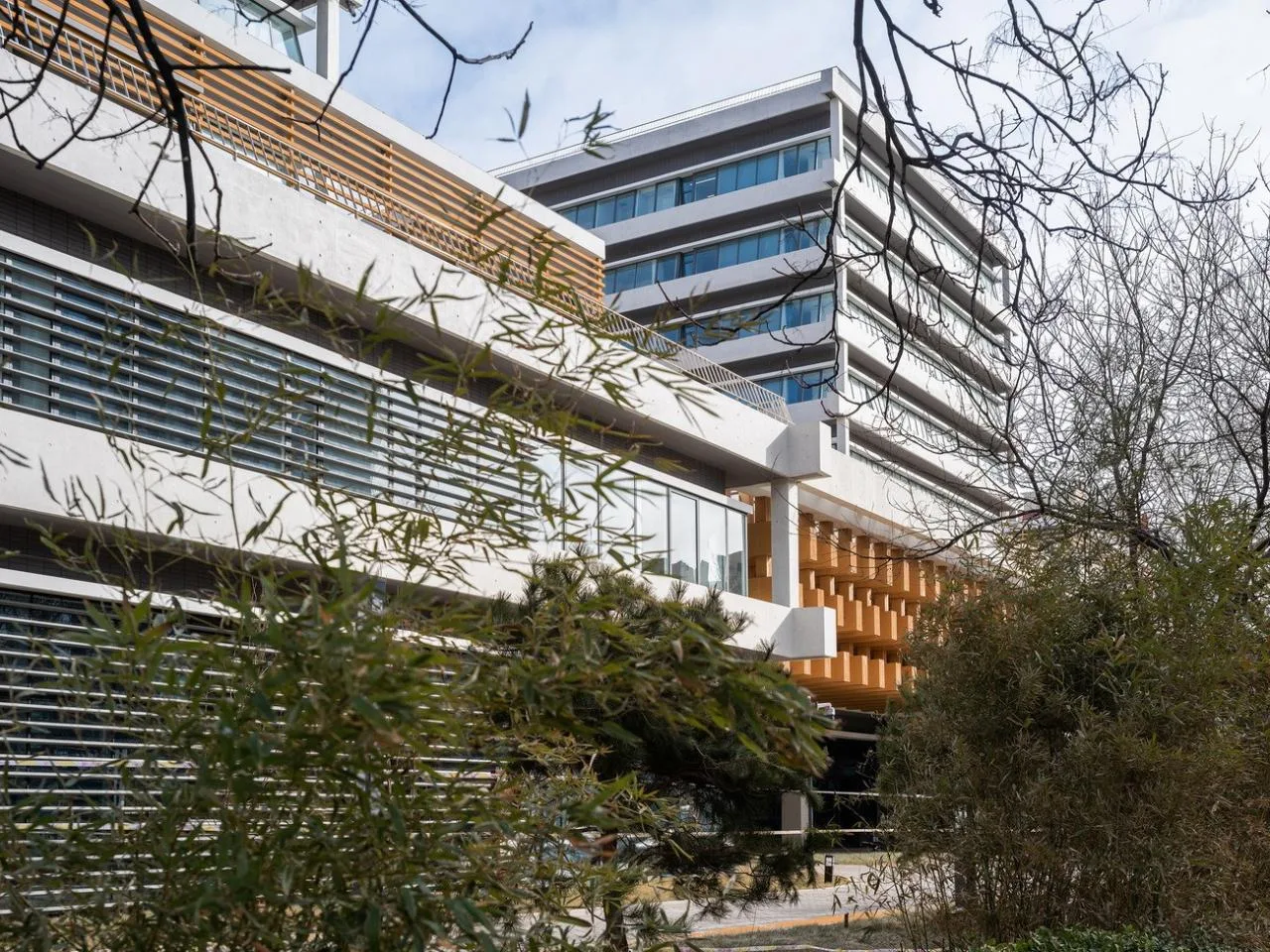
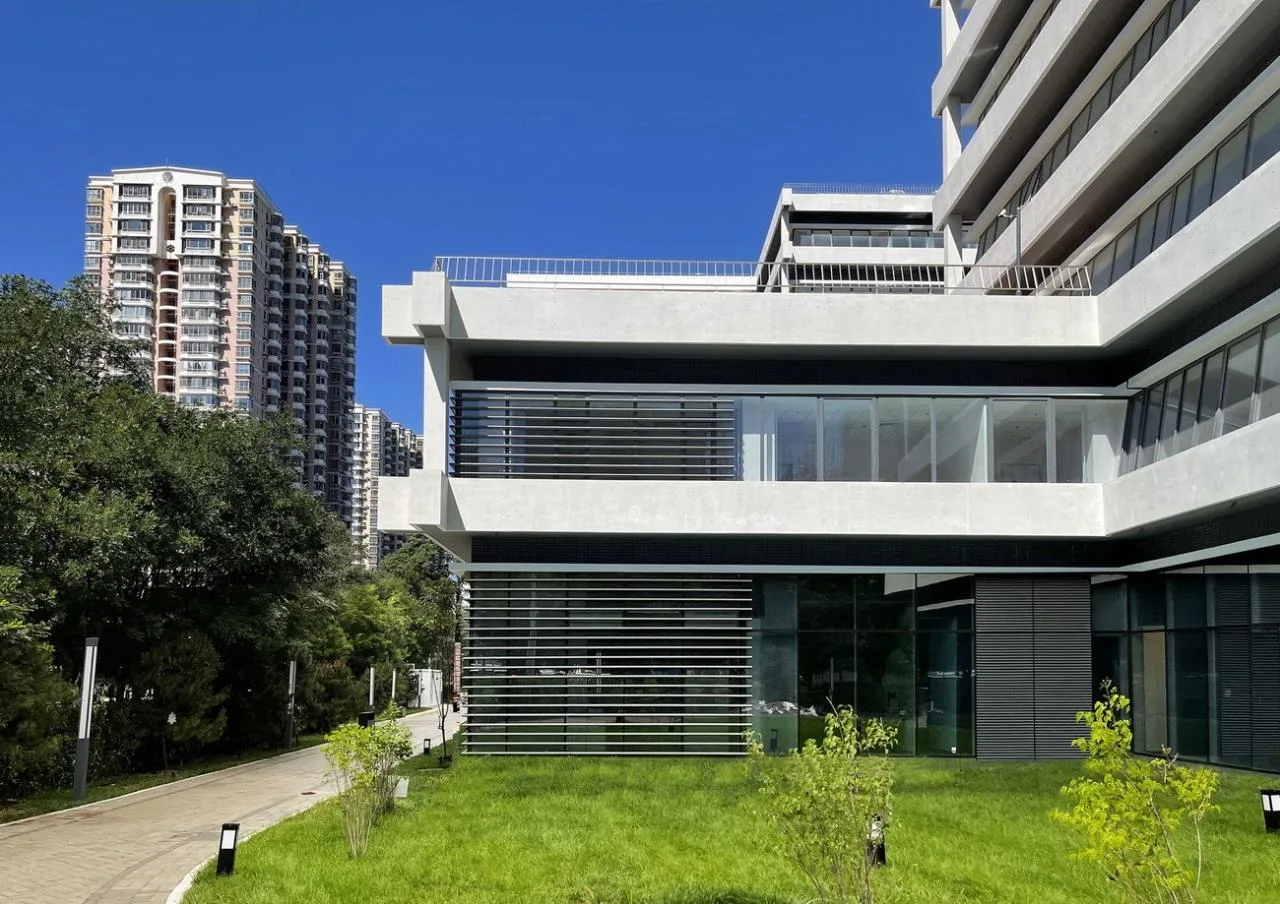
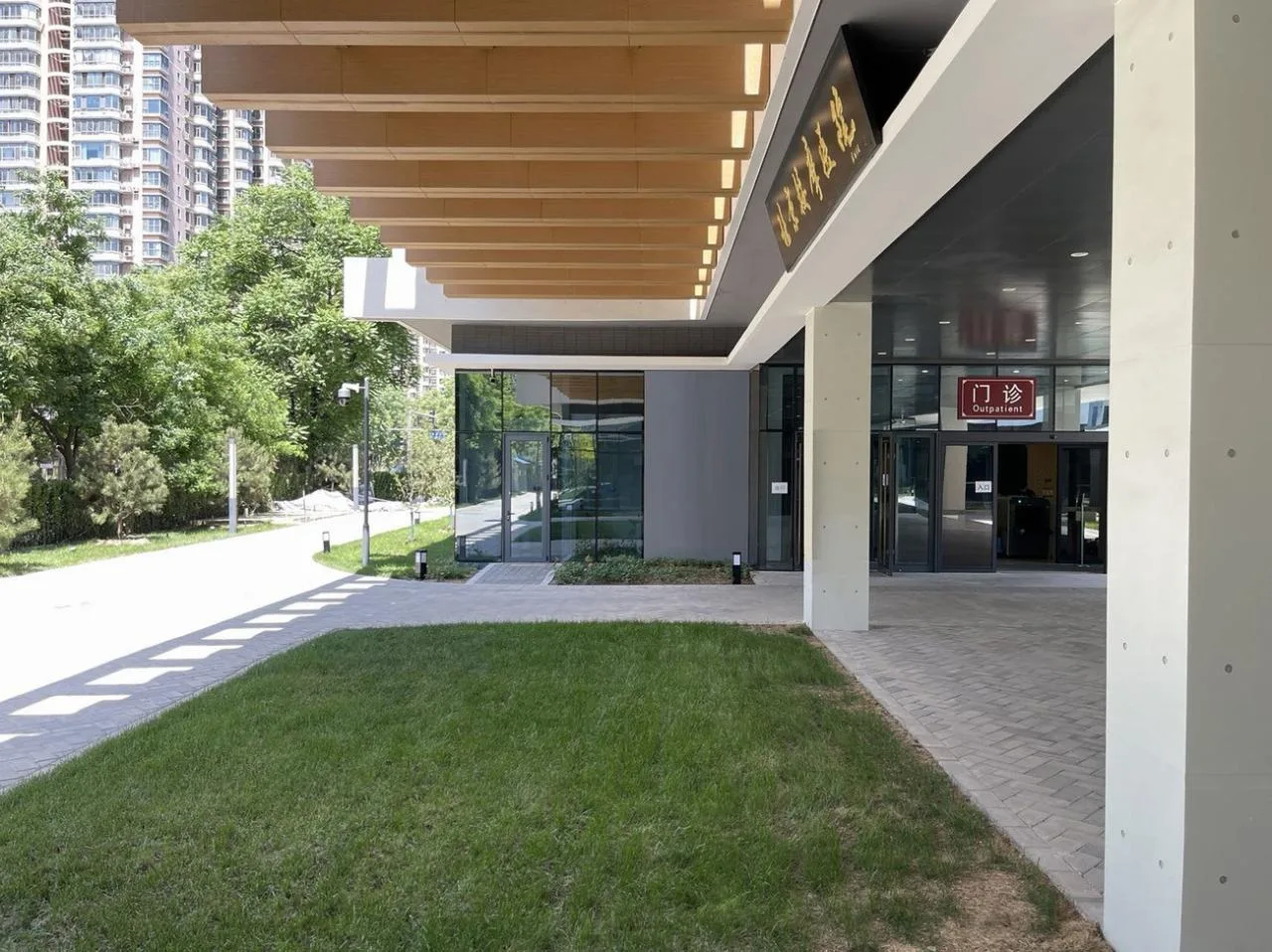
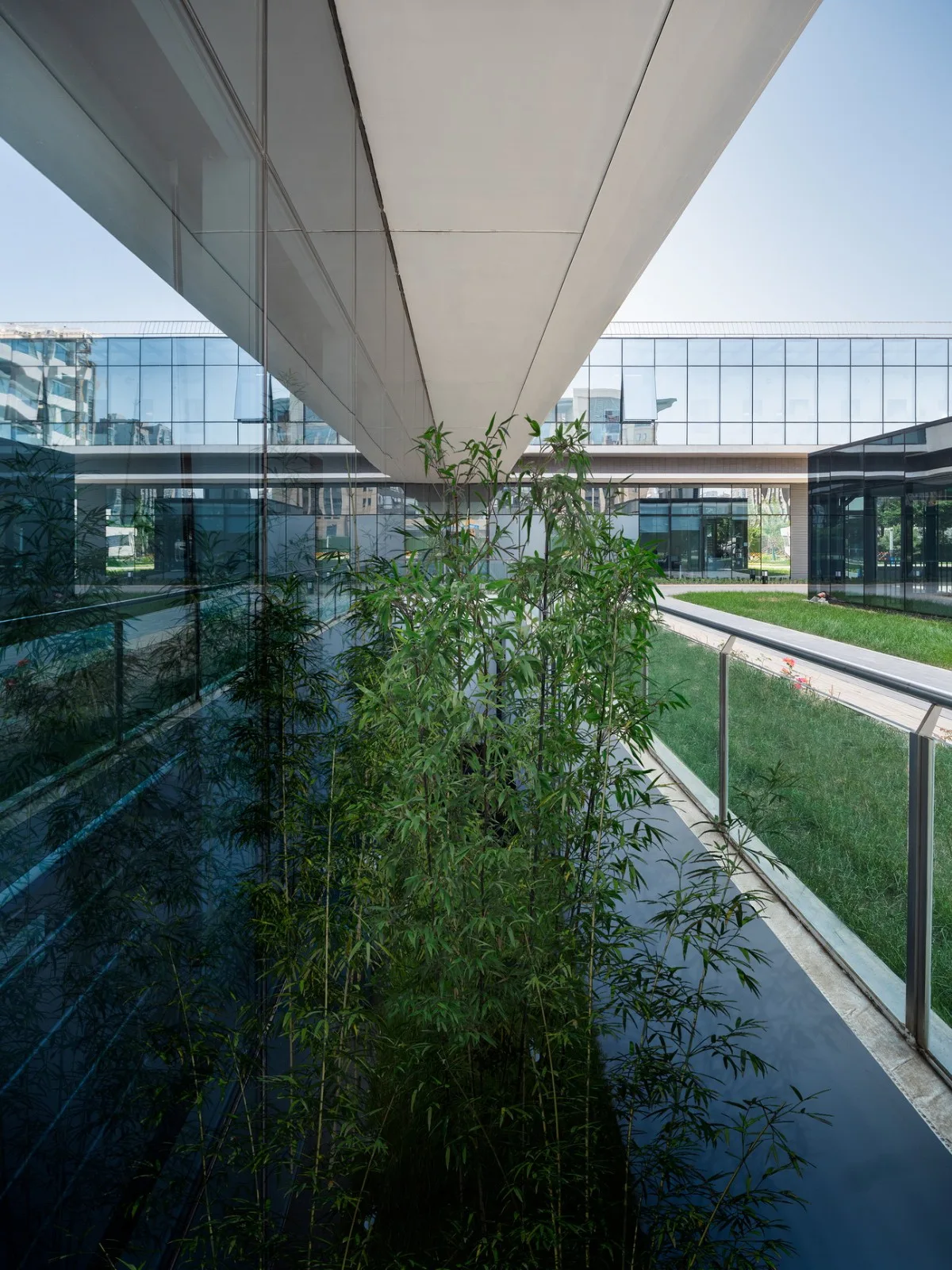
Given the hospital’s rich cultural and historical background alongside its unique functional requirements, the design draws inspiration from classic elements of traditional Chinese architecture—such as “eaves,” “beams,” and “columns.” These elements are abstracted and reinterpreted into a new architectural language that seamlessly integrates with the building’s functions. The result is an innovative, forward-looking, and sustainable modern traditional Chinese medicine hospital.
Through the concept of “inheritance and improvement,” the design aims to evoke the distinctive regional and local spirit of massage hospitals. It honors traditional Chinese culture while reflecting the development and modernization of traditional Chinese medicine. The project reshapes and integrates abstract architectural elements from classical Chinese design, adhering to the principle that form follows function. This approach is applied from the overall massing down to specific construction details such as the entrance’s grey space, achieving a harmonious architectural complex.
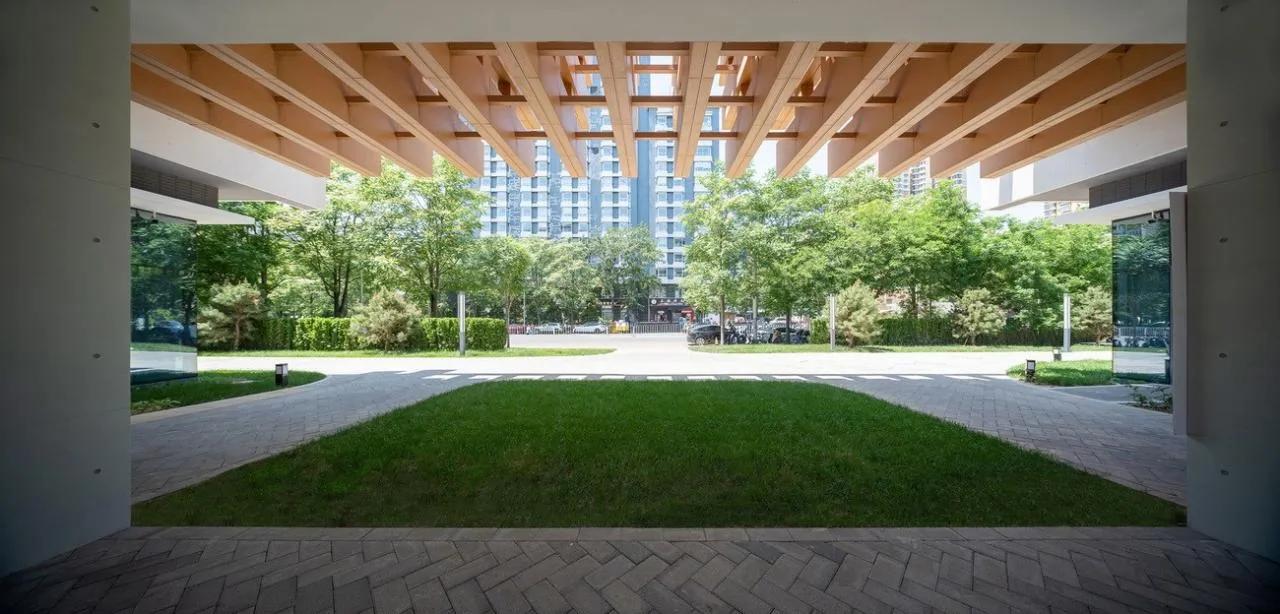
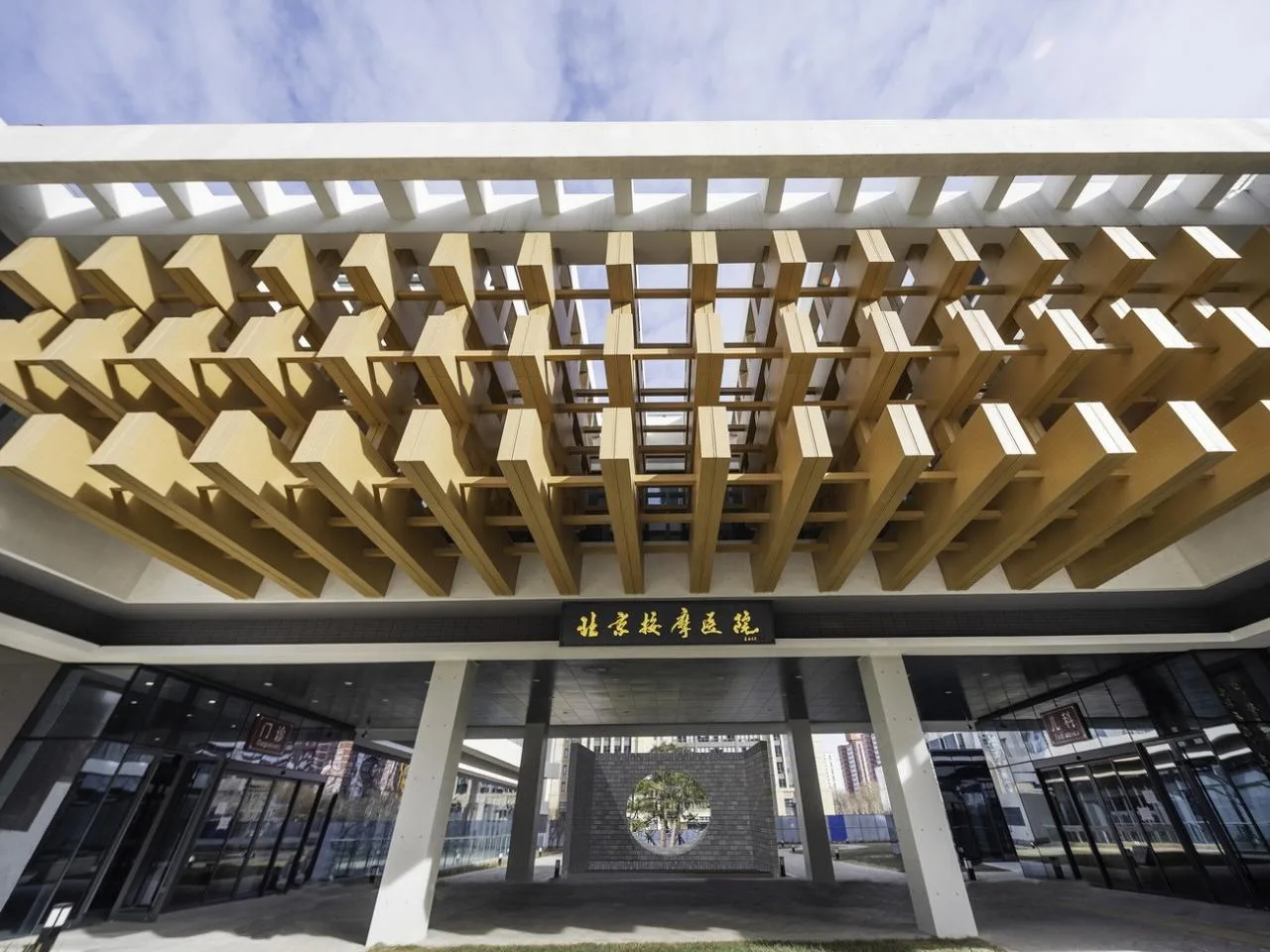
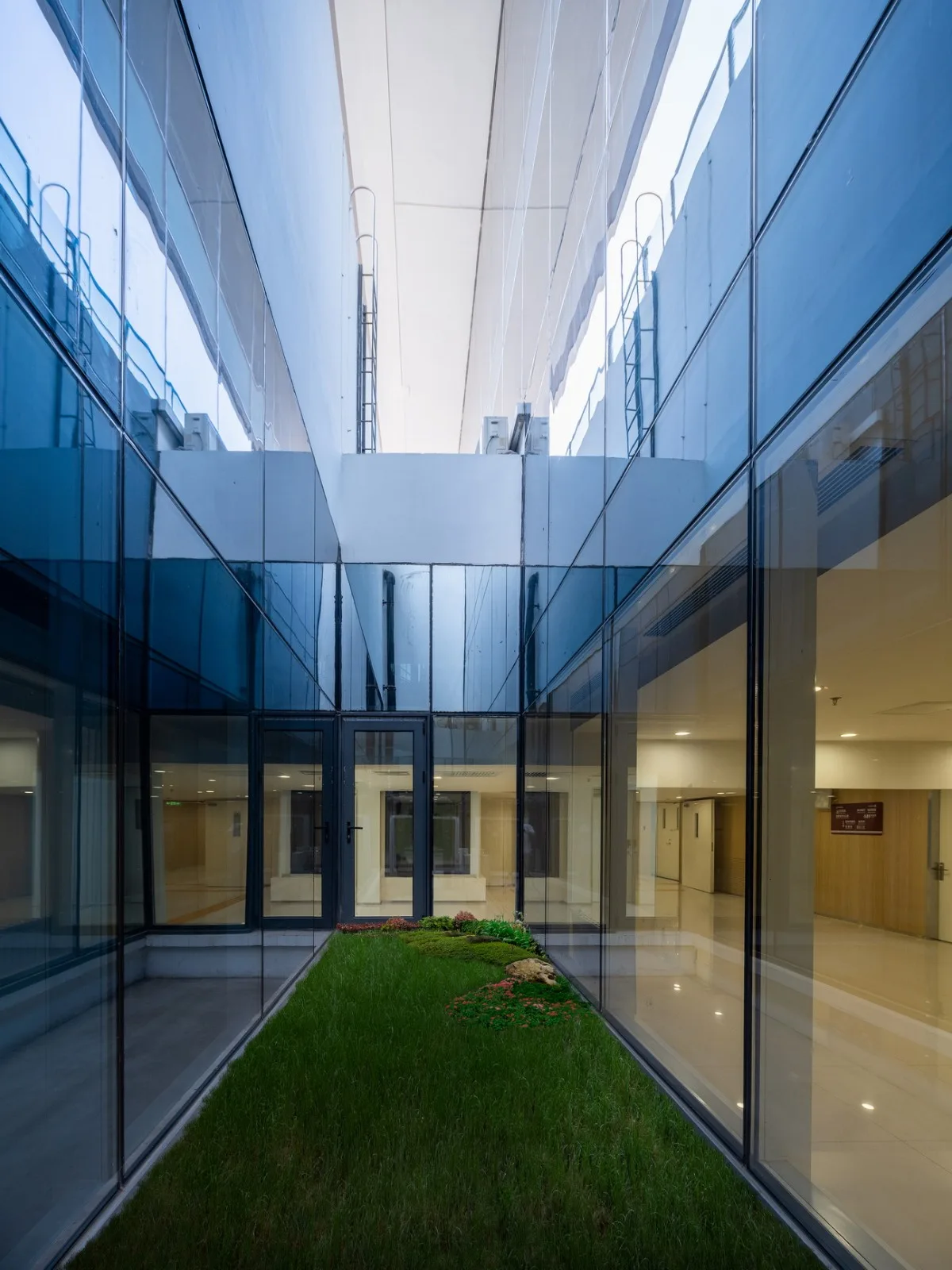
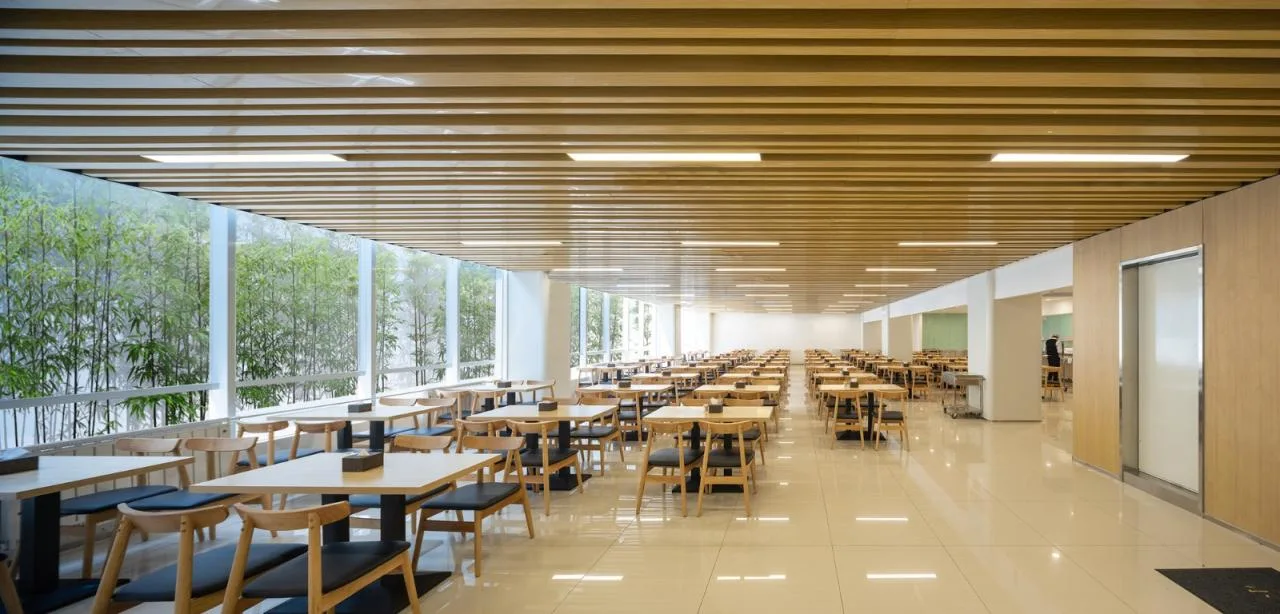
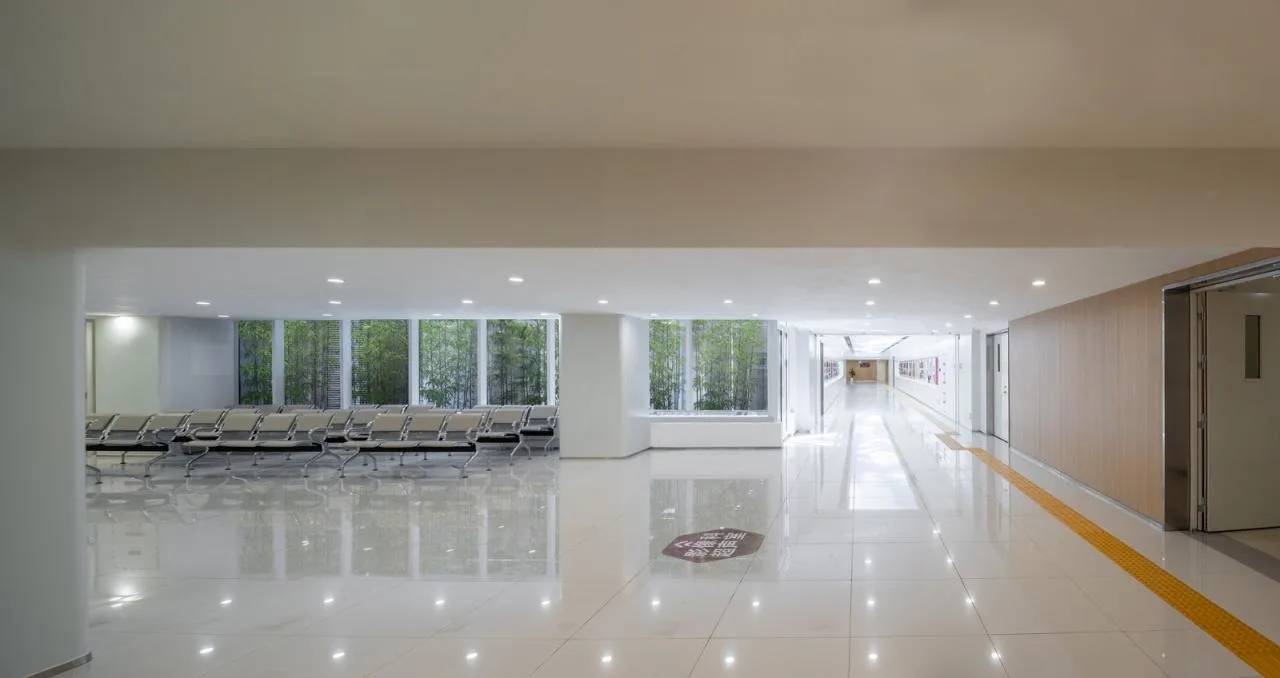
A notable feature of this project is the introduction of an underground courtyard designed to enliven the subterranean space. This “above-ground” underground area complies with strict planning regulations. Positioned beneath the outdoor eaves, the side courtyard connects the upper and lower levels. Its vertical barrier wall directs natural light into the underground functional areas through multiple refractions, ensuring ample daylight and ventilation.
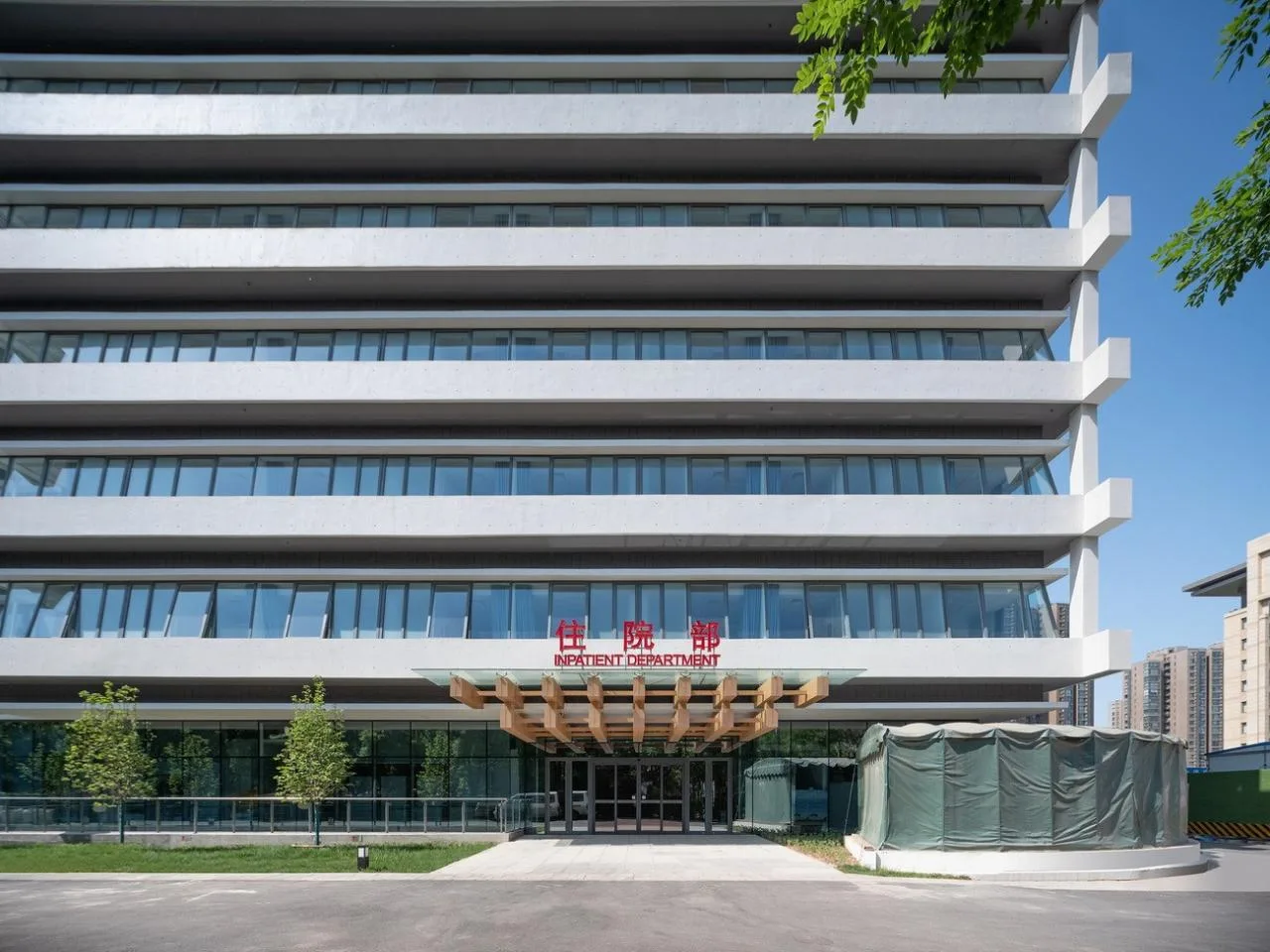
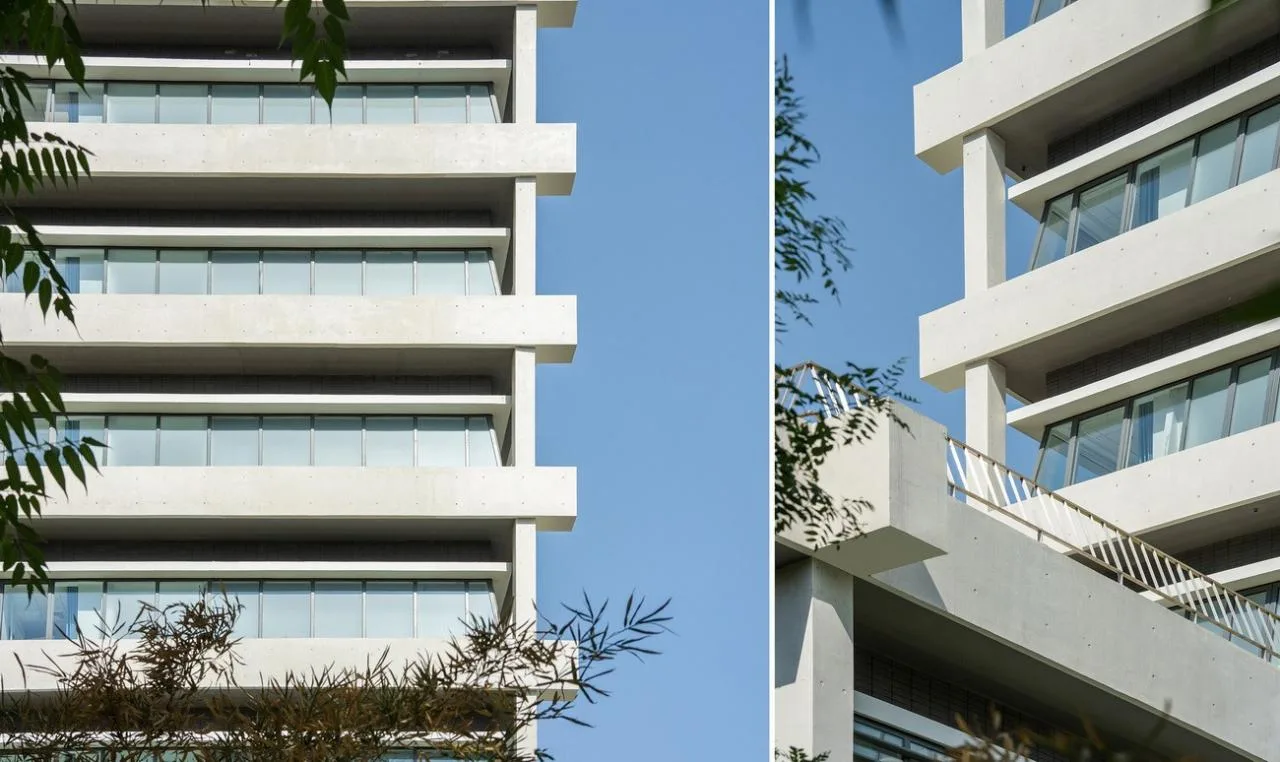
The use of gray tiles, gray walls, and wooden components reflects the traditional colors found in Beijing’s hutongs, old streets, and quadrangle courtyards, establishing the city’s distinctive urban palette. The simple gray and wood tones symbolize the rich, peaceful cultural heritage of this ancient capital.
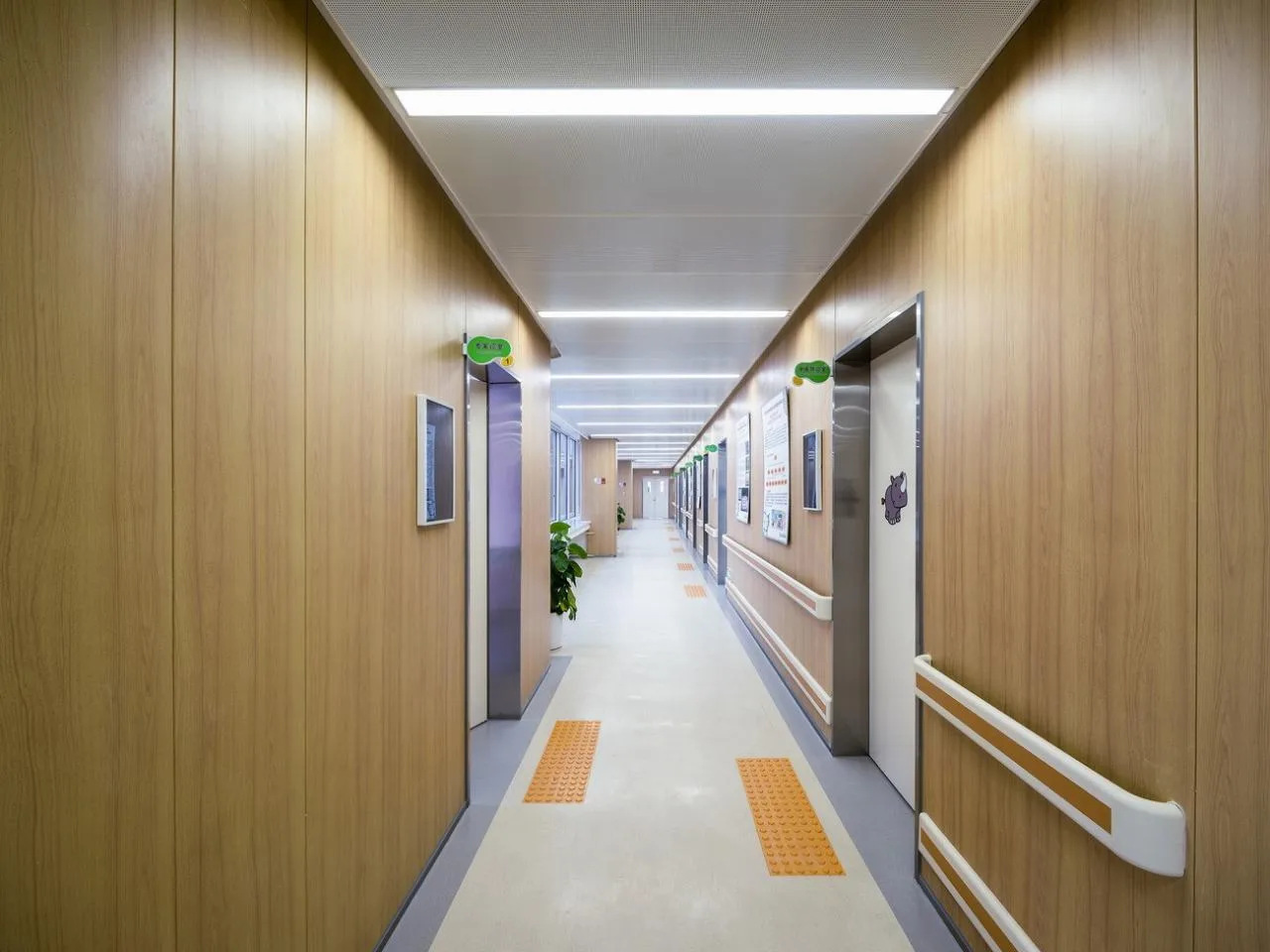
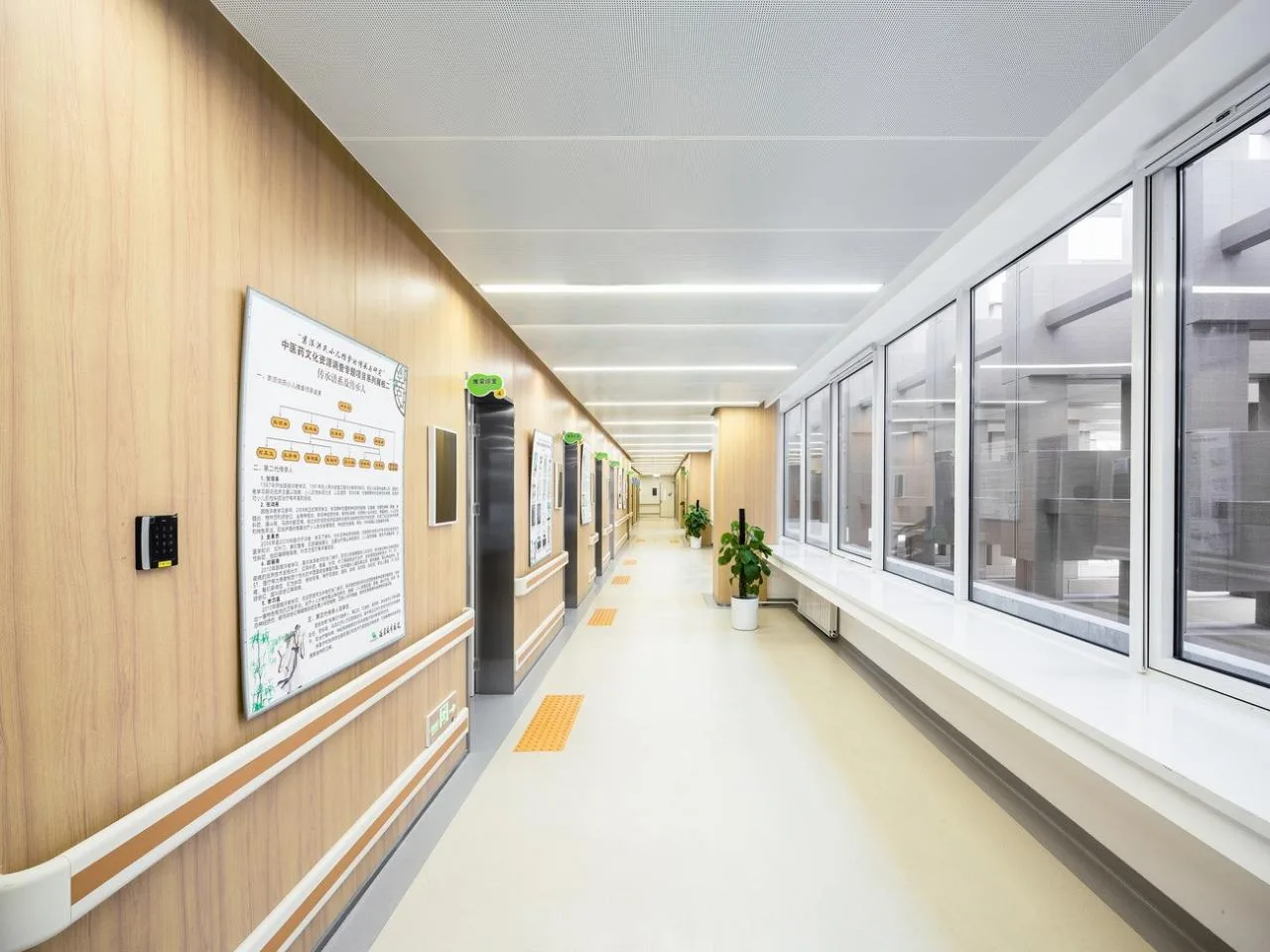
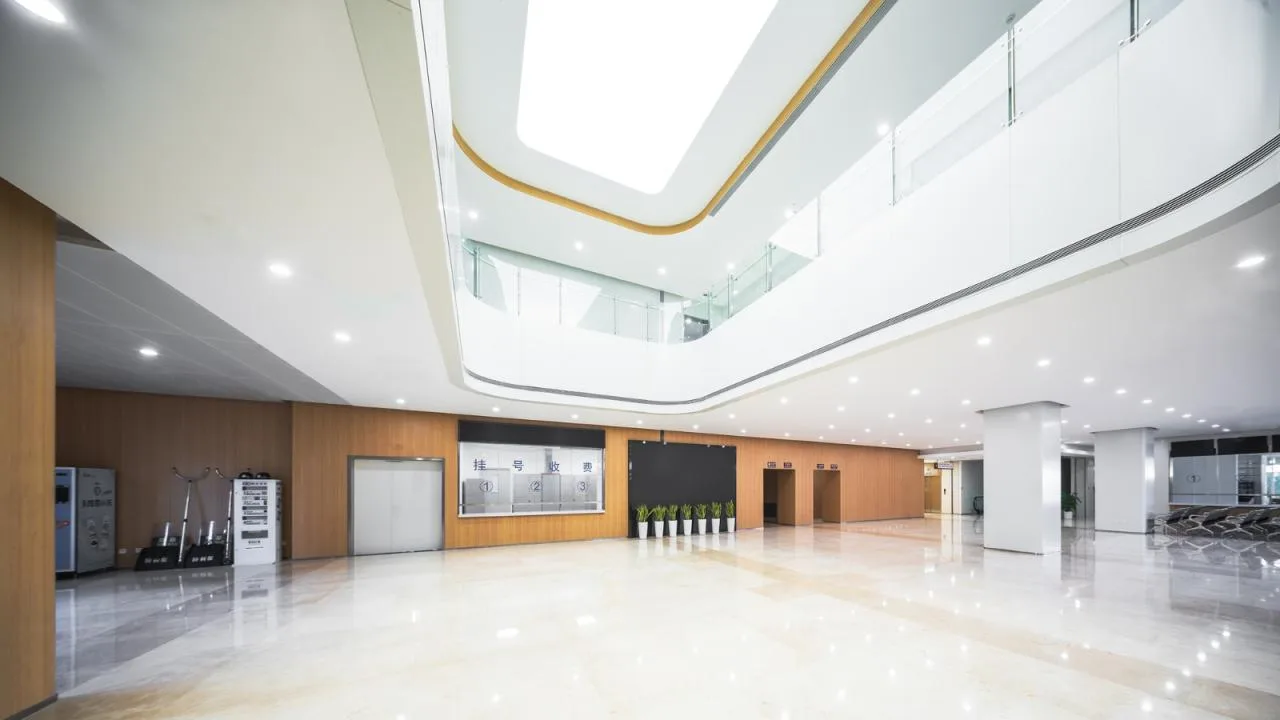
The building materials primarily include plain concrete, wooden panels (Pares board), wood-veneered louvers, and gray clay bricks. The abundant use of wooden veneers indoors is intended to foster a tranquil and healing atmosphere.
Project Drawings
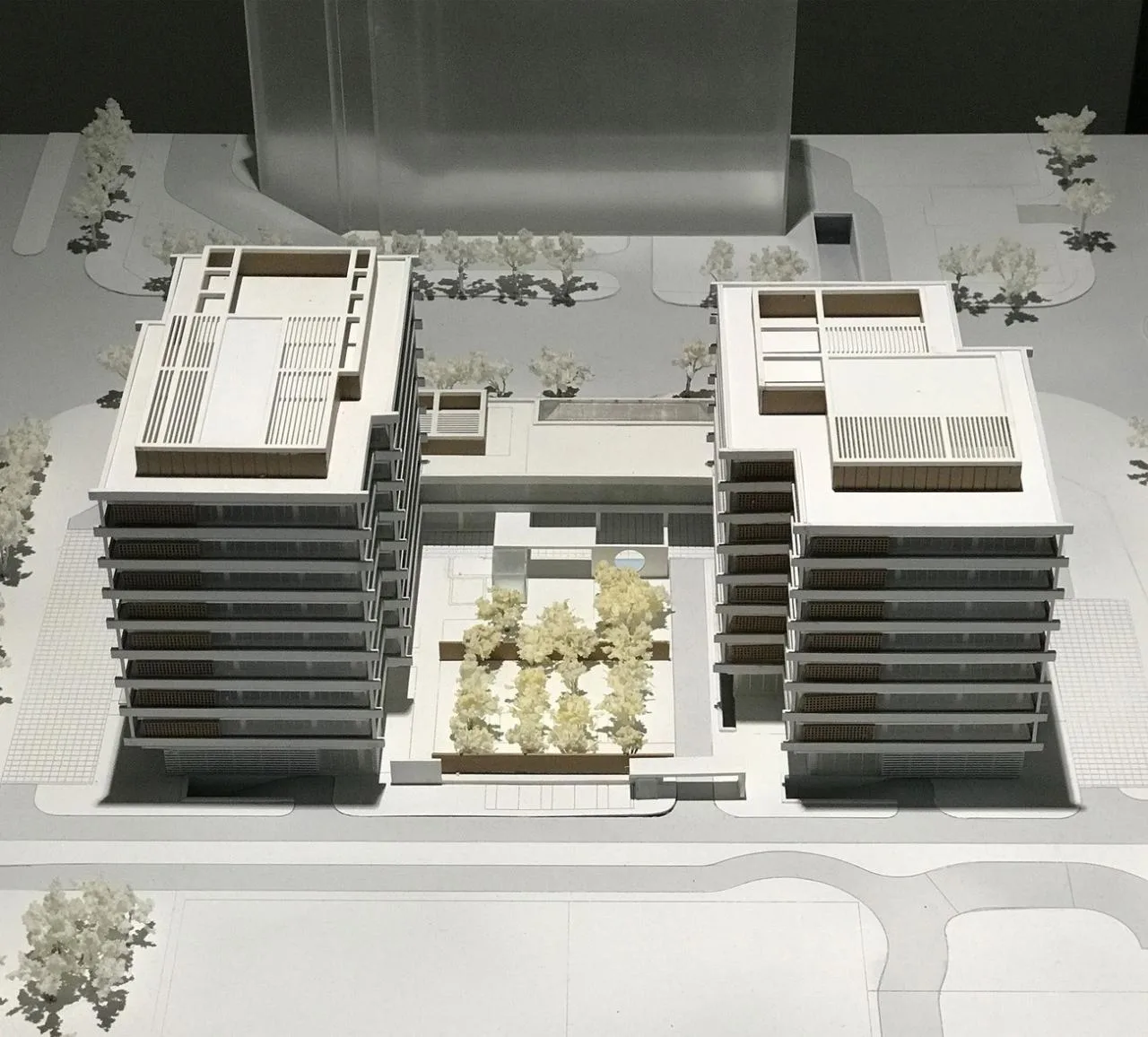
△ Project Model
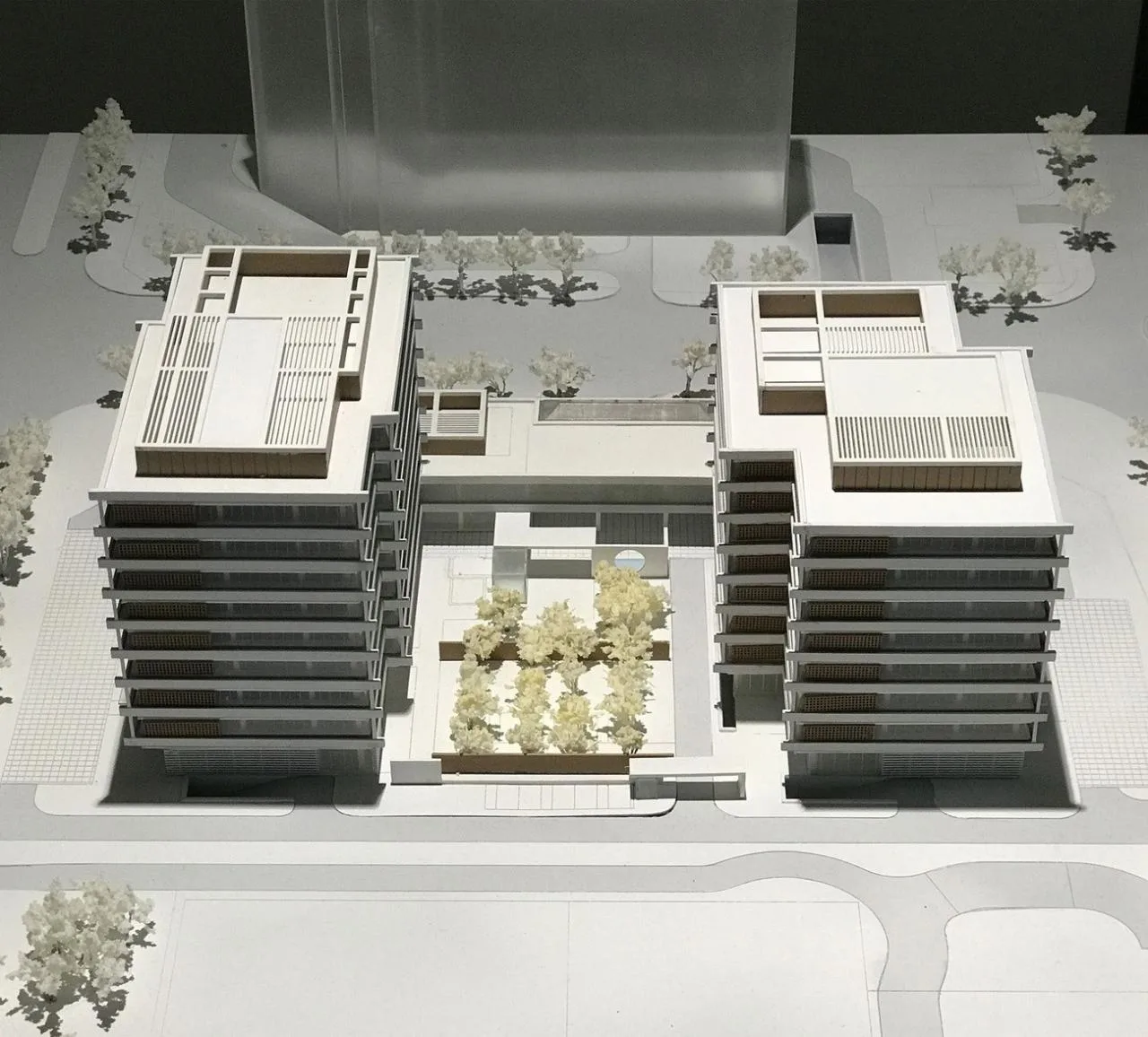
△ Project Model
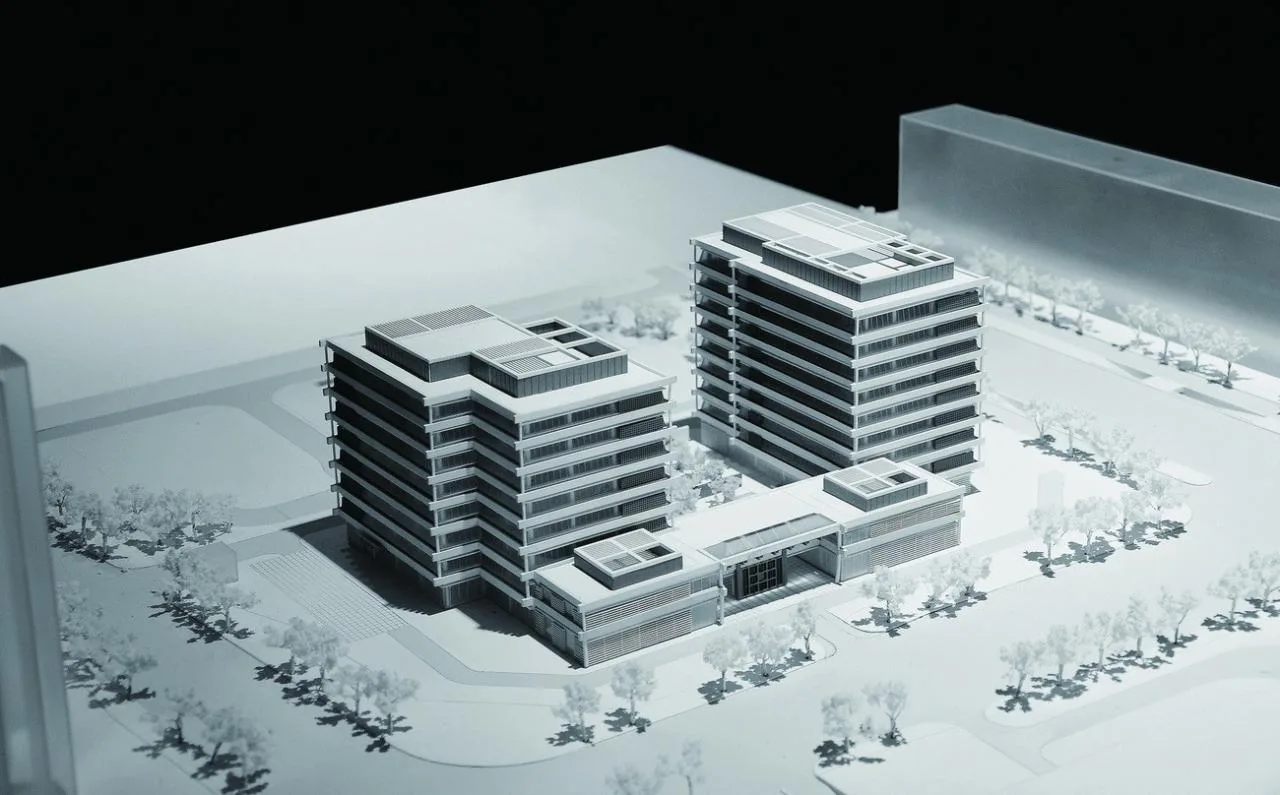
△ Project Model
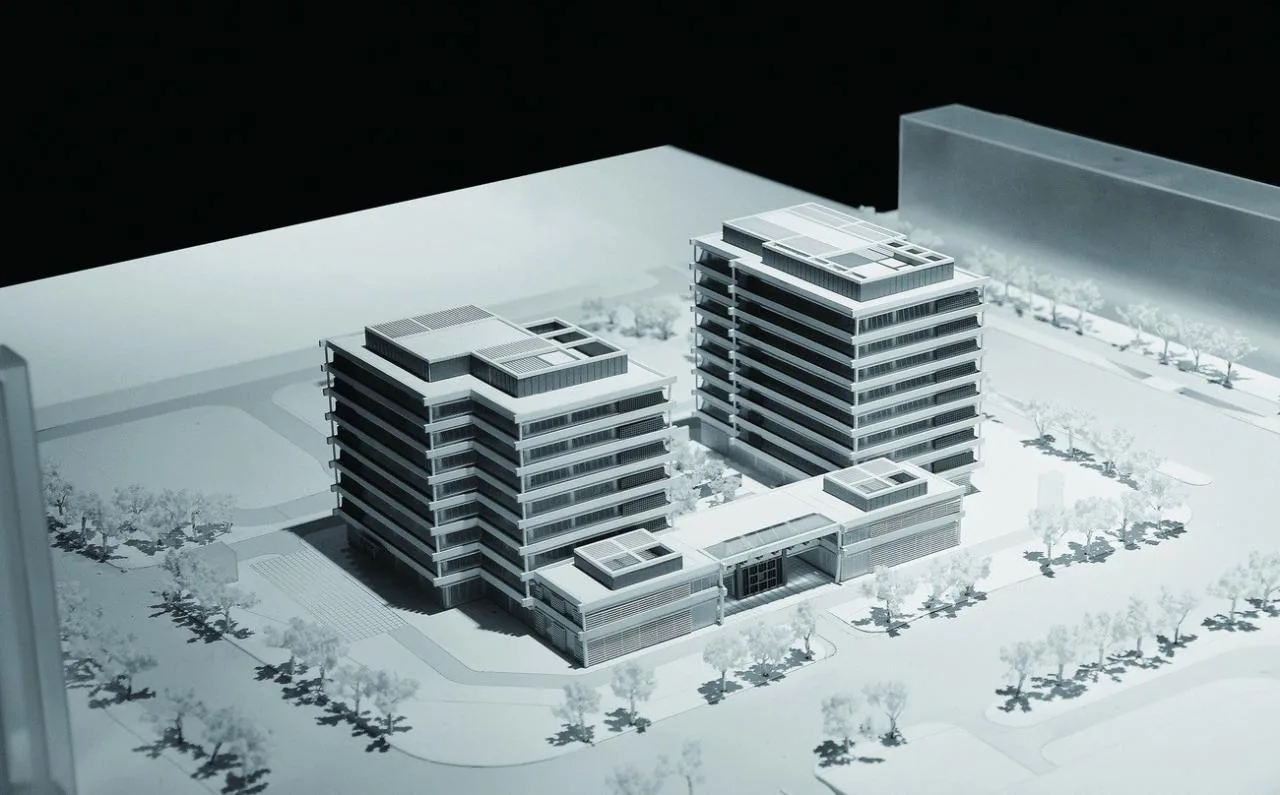
△ Project Model
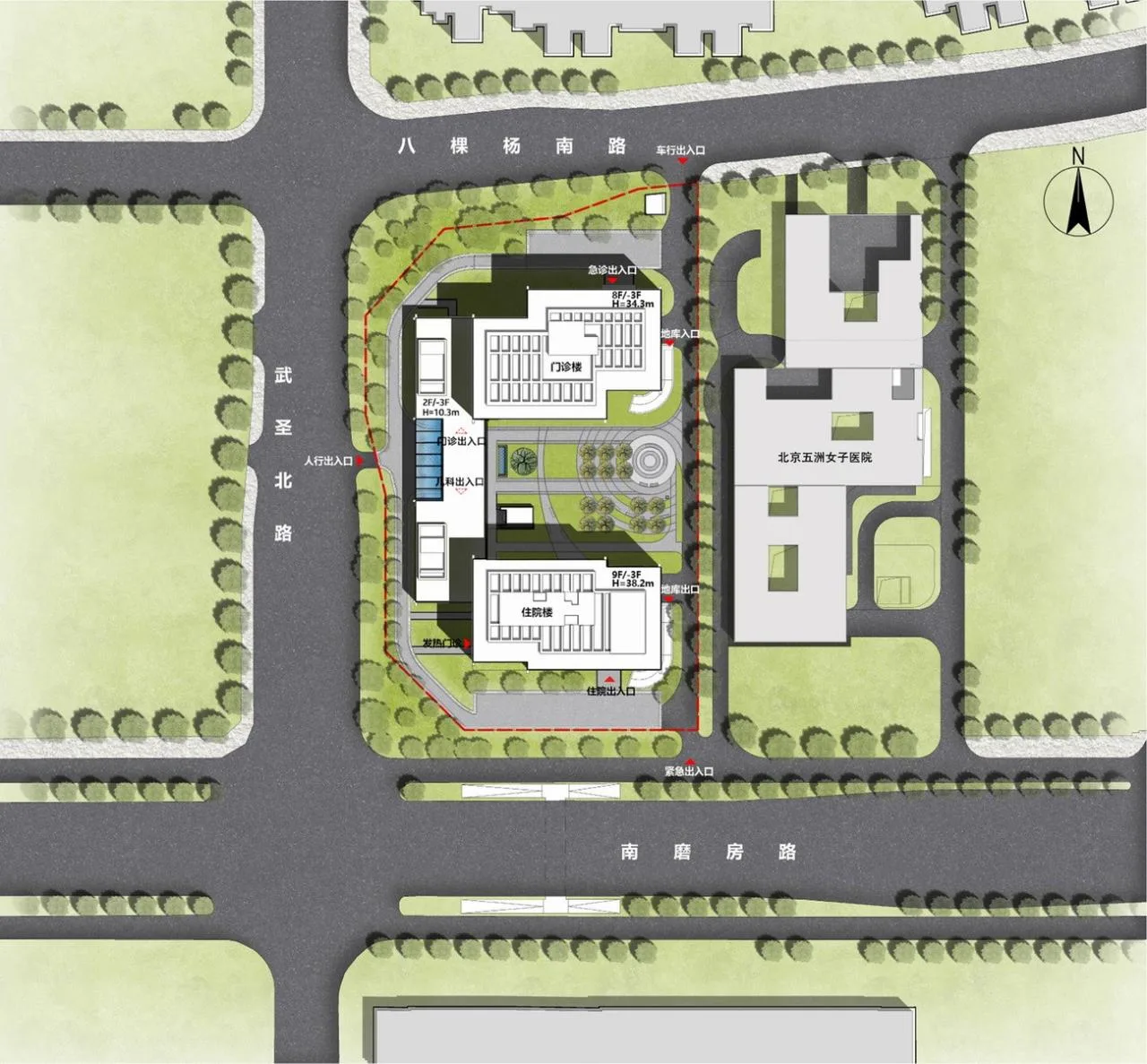
△ General Layout Plan
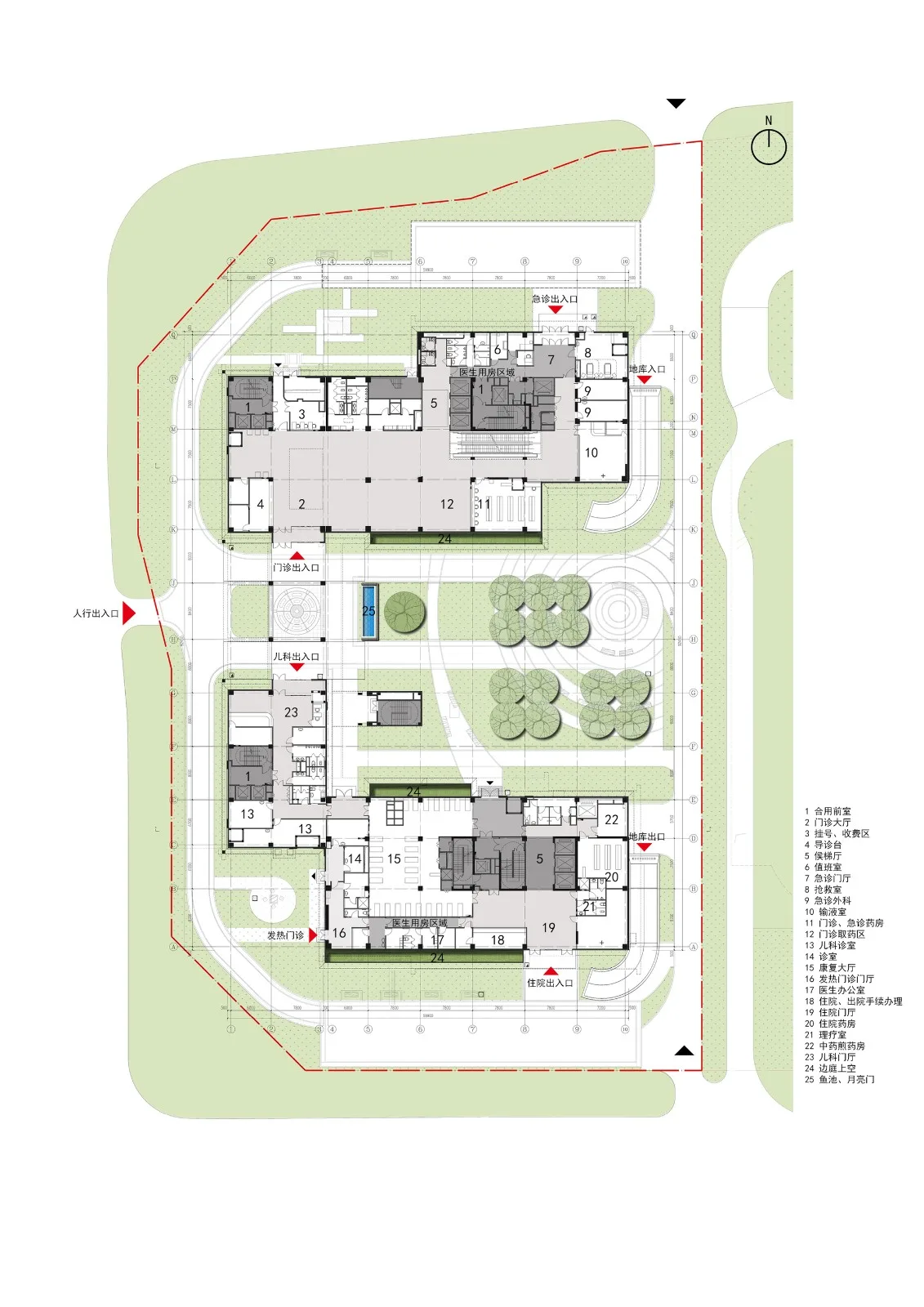
△ First Floor Plan
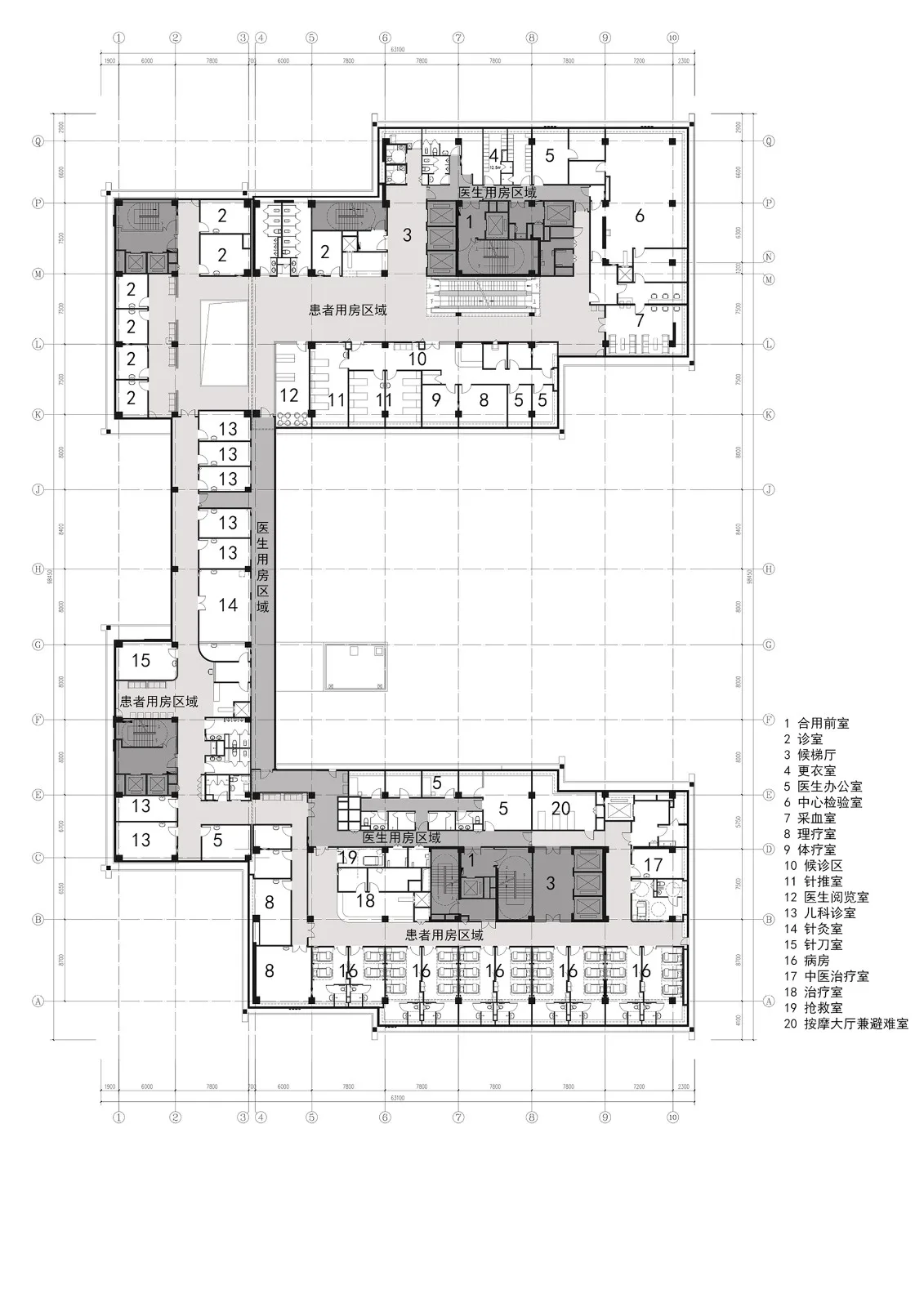
△ Second Floor Plan
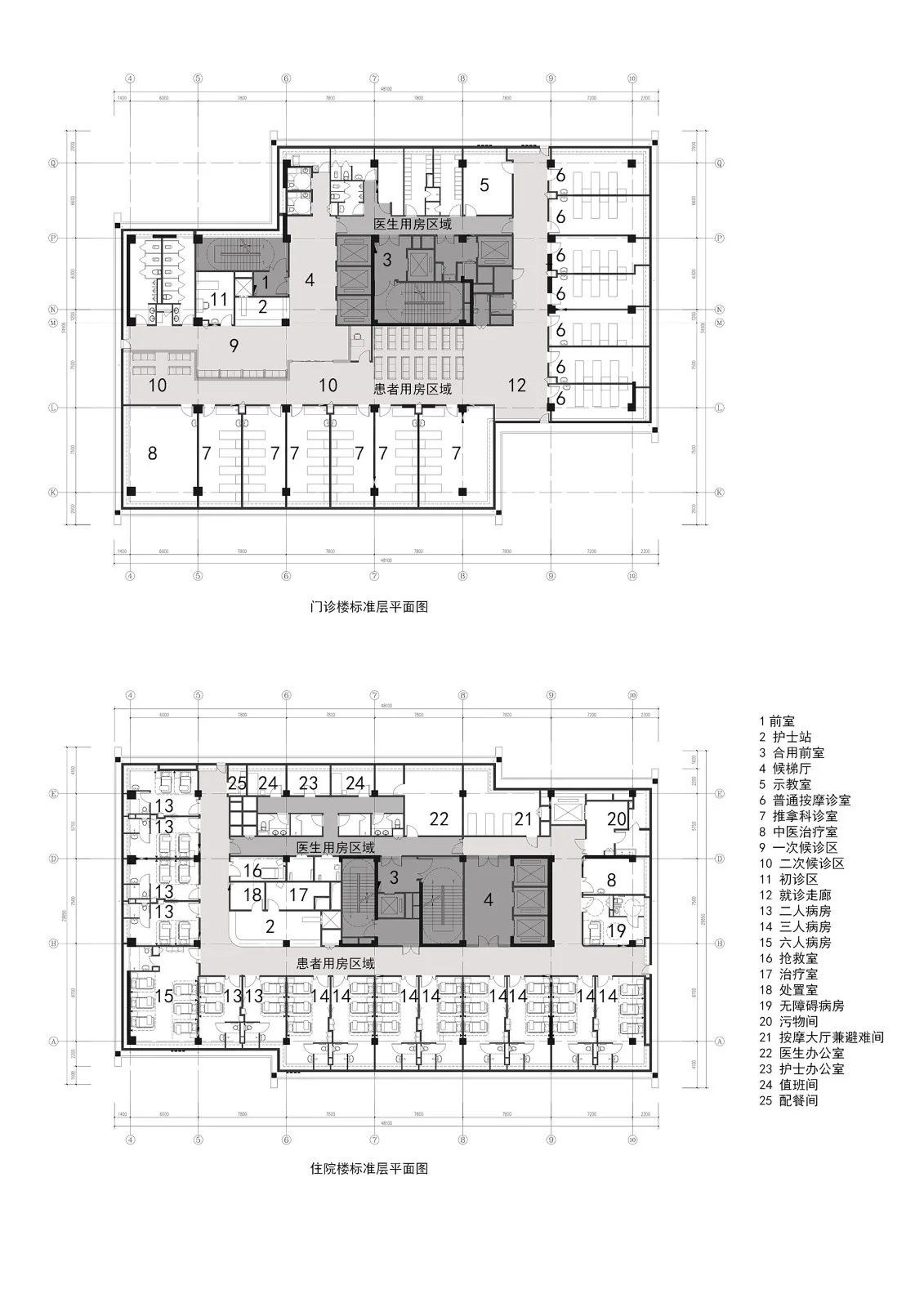
△ Plan View
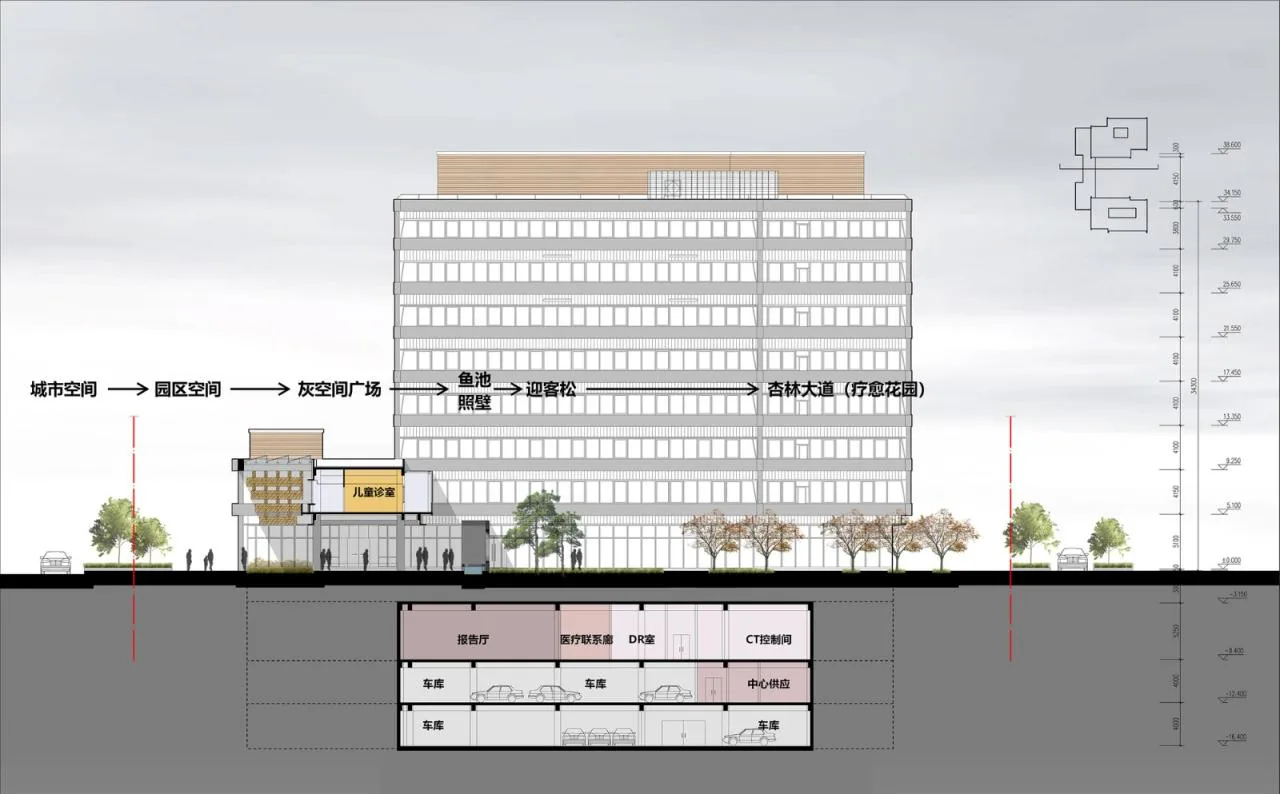
△ Section Diagram
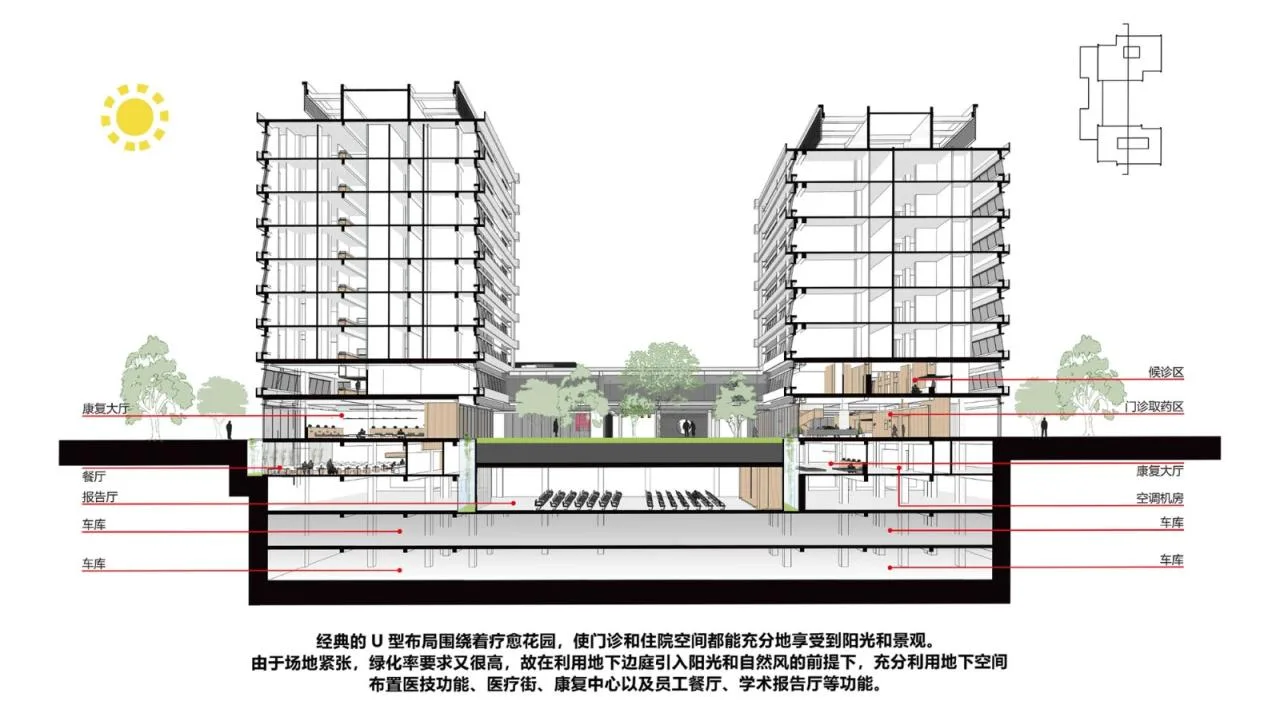
△ Section Diagram
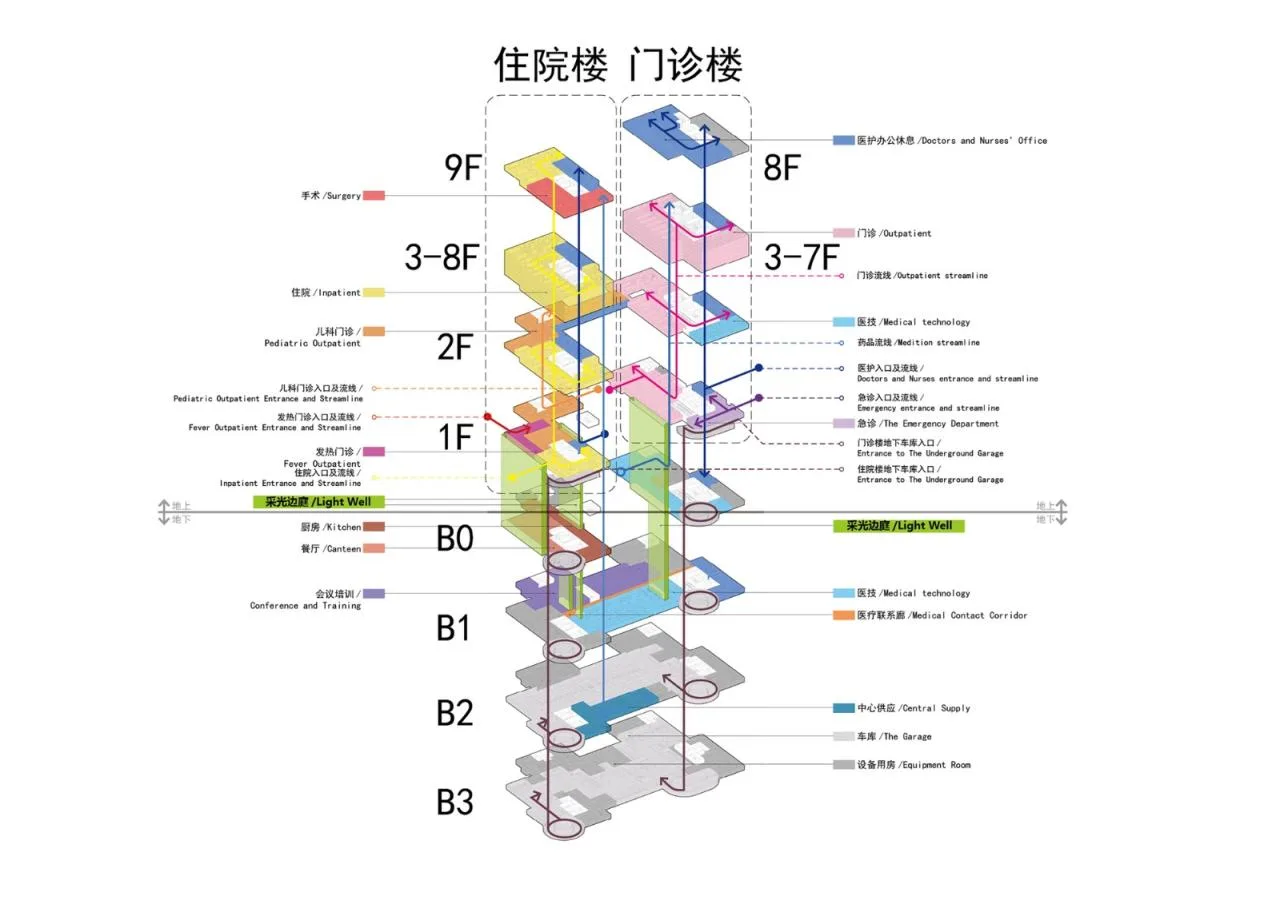
△ Analysis Chart
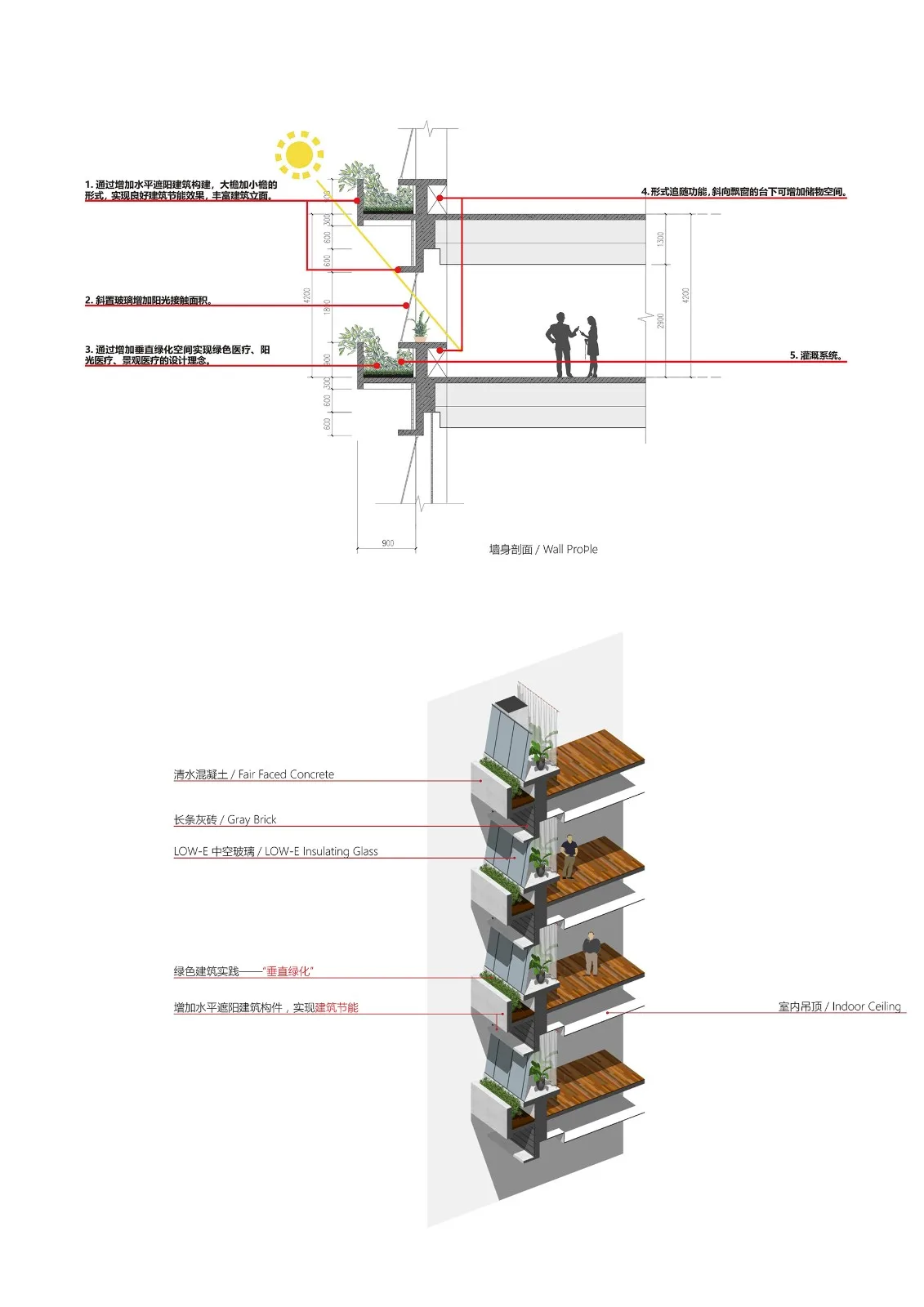
△ Analysis Chart
Project Information
Architect: China Electronics Engineering Design Institute
Area: 39,899 m²
Year: 2022
Photographer: Zhou Hantao, WZJ Studio
Lead Architect: Wang Zhenjun
Design Team: Sun Chengwei, Chen Long, Li Da, Xia Lu, Bao Yilin, Wang Shuyue, Xu Tong, Zhu Qiao, Mou Bingfeng, Zhao Weilu, Deng Tao, Shi Fei, Li Shiyi
Construction: Beijing Urban Construction Group
Client: Beijing Massage Hospital
Location: Beijing, China















Must log in before commenting!
Sign Up