
Today, let’s explore the differences between 2D floor plans and BIM models. While 2D floor plans represent buildings, they often contain blind spots that can lead to construction errors and financial losses. In contrast, models created using BIM technology provide clearer engineering drawings, improve communication between design and construction teams, and help reduce mistakes.
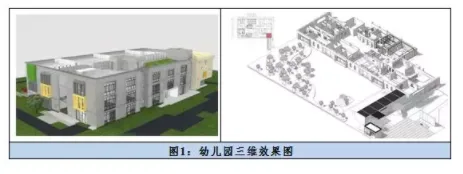
BIM’s 3D models offer a significant advantage over traditional paper-based 2D drawings. Non-engineering professionals can easily relate to these visual digital models, making communication more effective. The 3D visualization provided by BIM compensates for the lack of realism found in 2D views, resulting in clearer and more precise engineering drawings.
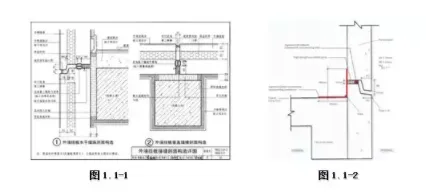
By integrating BIM elements—architecture, mechanical, electrical, and structural systems—it becomes possible to switch between 3D models and sectional views in real time. This enhances spatial review, allowing for quicker error detection. Using only 2D plans to represent building entities often leads to simplifications and omissions, creating blind spots and potential disputes. Such oversights can cause costly changes, delays, and losses during construction. BIM components are drawn and edited in 3D views, not just from a top-down perspective but also from elevations, increasing accuracy.
The 3D transformation of building components within BIM enables logical and flexible adjustments during communication. Thanks to parametric settings, BIM greatly advances visualization and coordination. The BIM parameter engine links various components, allowing synchronous updates when changes occur, which significantly reduces the need for repetitive engineering information exchange.
BIM also maintains a comprehensive internal database of building information. This database allows for more accurate data analysis by tracking quantities, materials, and other details. If duplicate components arise during modeling, the system flags them to avoid repeated calculations. The parametric engine supports intelligent interaction and adjustment of spatial components, backed by a dedicated database engine managing complex model information.
Using BIM models helps identify and resolve conflicts and inefficiencies among buildings, structures, and mechanical and electrical systems. It also offers improvement suggestions and boosts spatial efficiency. The finalized BIM model then serves as the foundation for construction completion and operational management. Traditional methods relying on graphics and text to convey design concepts face challenges when multiple disciplines work simultaneously in the same space, often leading to coordination issues and errors. Different professionals may hold inconsistent versions or conflicting spatial arrangements, causing scheduling problems.
In summary, BIM’s 3D models, along with their derived 2D construction details and linked documentation, are tightly interconnected through the parameter design engine. This allows for synchronized updates during changes, greatly minimizing the need for redundant engineering information reproduction and exchange. The BIM collaborative platform is a powerful tool that eliminates information inconsistencies across project stages and disciplines, ensuring smooth vertical data flow and horizontal communication throughout the project.
That’s all for today’s discussion on the differences between 2D floor plans and BIM models. I hope this overview proves helpful to everyone.














Must log in before commenting!
Sign Up