
Fine decoration projects represent the final phase in a building’s life cycle. During the CAD era, producing detailed decoration drawings was inefficient, prone to errors, and plagued by duplicated efforts, causing frustration for all project stakeholders. However, with the emergence of BIM technology, its capabilities in visualization, collaboration, and simulation have significantly boosted productivity within the construction industry. As a result, fine decoration projects have started adopting BIM. Let’s explore how BIM is applied in fine decoration.
1. Visualization
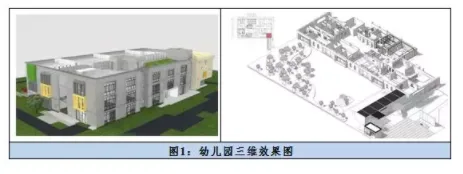
BIM technology transforms traditional CAD drawings—such as walls, surfaces, floors, ceilings, and partitions—by replacing professional symbols with realistic 3D components. This allows all project participants to better grasp design concepts, fosters improved communication, enhances the accuracy of information sharing, and streamlines coordination among parties. The result is increased work efficiency and effective collaborative communication.
2. Collision Detection
In traditional decoration workflows, the limited expressiveness of 2D drawings combined with individual experience limitations often leads to numerous undetected conflicts between building components and disciplines. These issues typically surface late in the project, requiring extensive labor and resources to resolve, which causes rework, increased costs, and project delays. Now, BIM software enables comprehensive collision detection within the model. Generated reports clearly highlight conflicts among components and structures, simplifying adjustments and modifications for all parties, and drastically improving both efficiency and accuracy.
3. Automated Generation of Construction Drawings and Detailed Lists
Previously, construction drawings and detailed lists had to be manually created alongside CAD drawings. Given the volume—often hundreds or thousands—errors and omissions were inevitable during this process. Even experienced draftsmen sometimes struggled due to limited spatial imagination. With BIM, multiple drawings can be integrated into a unified model. Since all views derive from this single source, inconsistencies are avoided. By inputting data once, drawings can be automatically generated. Moreover, any changes are seamlessly updated across the model, enhancing overall accuracy.
4. Realistic Simulation
Before BIM, design and construction effects were primarily visualized using 3D MAX software. Although visually impressive, these lacked integrated data and practical guidance. BIM’s simulation capabilities allow model components to include detailed data for realistic demonstrations, enriching the project experience. Stakeholders can truly visualize the final result, and any issues identified during simulation can be addressed simply by adjusting model parameters.
That concludes our overview of BIM applications in fine decoration. I hope this provides you with a clearer understanding of how BIM is transforming the industry. While BIM adoption remains limited in China, recent efforts by central and local governments have accelerated its promotion. Its rapid development promises to make BIM a powerful tool for building informatization in the country’s future.














Must log in before commenting!
Sign Up