
With the widespread adoption of BIM technology in China, an increasing number of projects are beginning to explore its potential. Beyond typical building projects, landscape architecture is also embracing BIM. Landscape engineering has always been a large and complex field, so what benefits can BIM bring to it? Today, we will explore the various applications of BIM technology in landscape architecture.
1. Minimizing Errors in Drawings
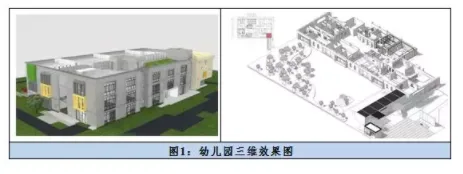
Traditional CAD models often suffer from errors in 2D drawings, such as pipeline clashes and conflicts between structures and pipelines during construction. Landscape designers must conceptualize three-dimensional spaces mentally, which relies heavily on individual skill and experience, leading to inevitable mistakes. By adopting BIM technology, traditional 2D drawings are transformed into 3D visual models. This allows for detailed visualization of roads, trees, pavilions, sprinkler systems, and irrigation pipelines, significantly enhancing drawing accuracy and reducing errors.
2. Enhancing Coordination Among Designers
Previously, landscape projects depended on one person overseeing the overall plan, while numerous others collaborated on different parts. Due to varying expertise, experience, and skills, coordination was often challenging. Even highly capable leaders struggled to manage large teams effectively. With BIM, all team members work within a unified model, shifting from traditional sequential workflows to collaborative ones. This real-time communication and cooperation enable immediate problem identification and resolution, boosting efficiency and reducing wasted time and costs.
3. Reducing Cost Estimation Errors
Cost estimation in landscape architecture traditionally relied on CAD drawings combined with Excel spreadsheets—a time-consuming and error-prone process. Errors could range from tens of thousands to millions in large projects, causing difficulties for investors and complicating construction. BIM inherently supports cost estimation by integrating relevant data such as quantities, prices, and dimensions directly into the model. It can automatically generate cost quotations and expand into multidimensional models by incorporating 4D (time) and 5D (cost) elements to simulate construction schedules and expenses, minimizing errors.
4. Improving Communication Channels
Effective communication between clients, designers, and construction teams has always been a challenge in both landscape and architectural projects, given their differing perspectives, expertise, and goals. BIM technology creates a unified collaborative platform where all parties can interact within a shared workspace. Additionally, the model’s visualization reflects real-world components, making it easier for even non-experts to understand the project.
5. Simplifying Drawing Modifications
In the CAD era, modifying drawings was notoriously difficult. When errors arose, local adjustments were impossible because the relationships between components were unclear, often requiring complete redraws—wasting time and effort. BIM allows for flexible modifications through its associative model features. Changes to one component automatically update related elements, ensuring consistency and greatly facilitating project corrections while reducing errors.
That concludes our overview of BIM technology applications in landscape architecture. I hope this information proves helpful. With BIM, landscape projects can save valuable social resources and assume greater social responsibilities, similar to those in the construction industry.














Must log in before commenting!
Sign Up