
International architectural firm 10Design, a member of the Egis Group, has won the design competition for the Hangzhou Qianjiang New City Phase II large-scale campus project. They have envisioned a green, open, and shared innovative campus to accommodate 2,000 primary school students. This educational center spans a total construction area of 74,000 square meters and will also function as a child-friendly public space, serving the surrounding community.
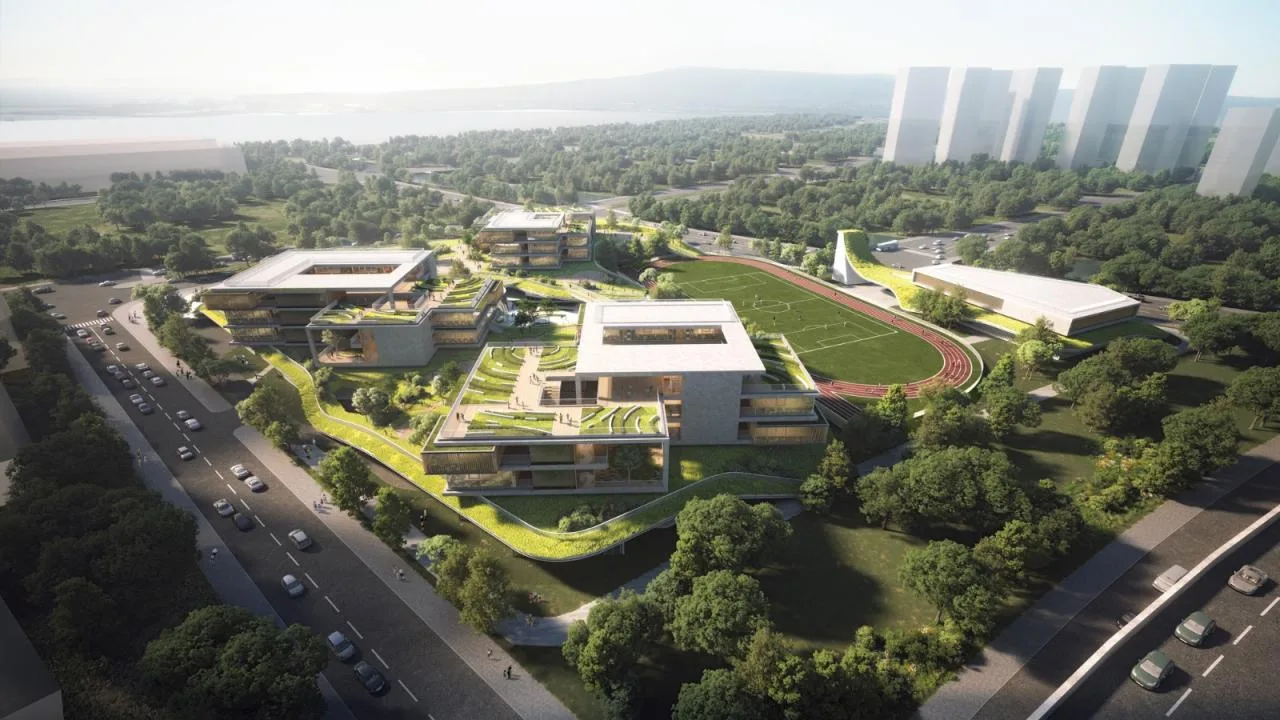
△ Aerial view of the northeast corner of the project
Led by design director Peby Pratama, the design team developed a future-focused educational platform in Hangzhou that respects children’s nature and blends elements of nature, culture, and technology. The concept, called “Green Field Town,” breaks away from traditional primary school layouts by introducing architectural forms and scales reminiscent of fields, streets, and squares found in a town. This approach creates a series of open learning and activity spaces that foster interaction.
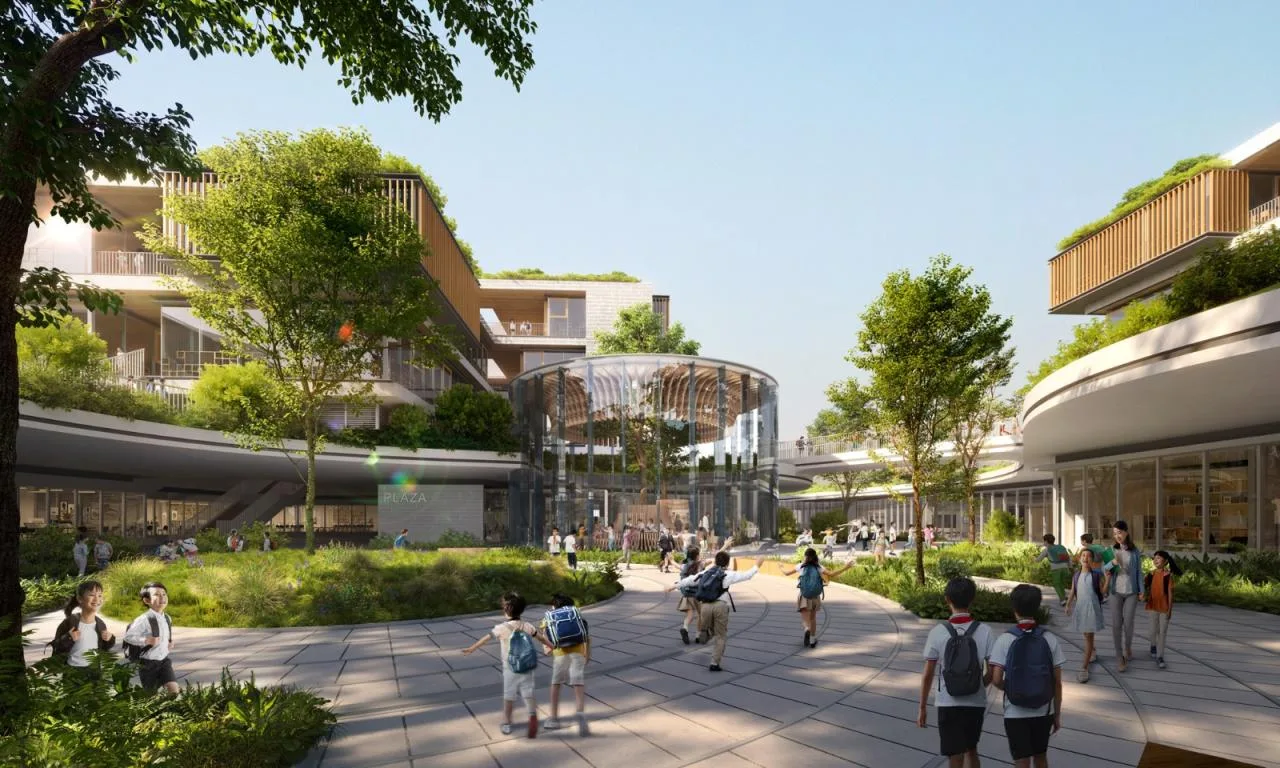
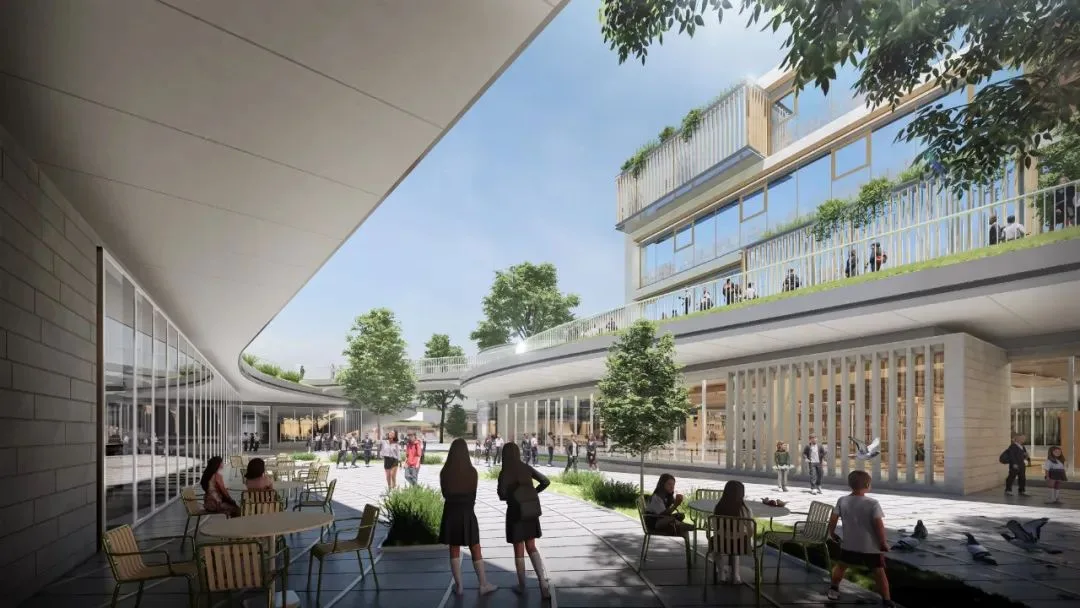
△ An open learning and activity space designed like a small town square
The campus takes full advantage of its riverside location, centering around a dynamic, undulating green platform. This green space stretches from north to south, linking various campus functions while offering abundant outdoor areas to encourage interaction between teachers, students, and nature. Serving as an extension of urban green space, the platform provides a natural transition from the western urban greenery to nearby high-rise residential communities, creating a floating oasis within Hangzhou’s dense urban environment.

Overall Planning and Architectural Form
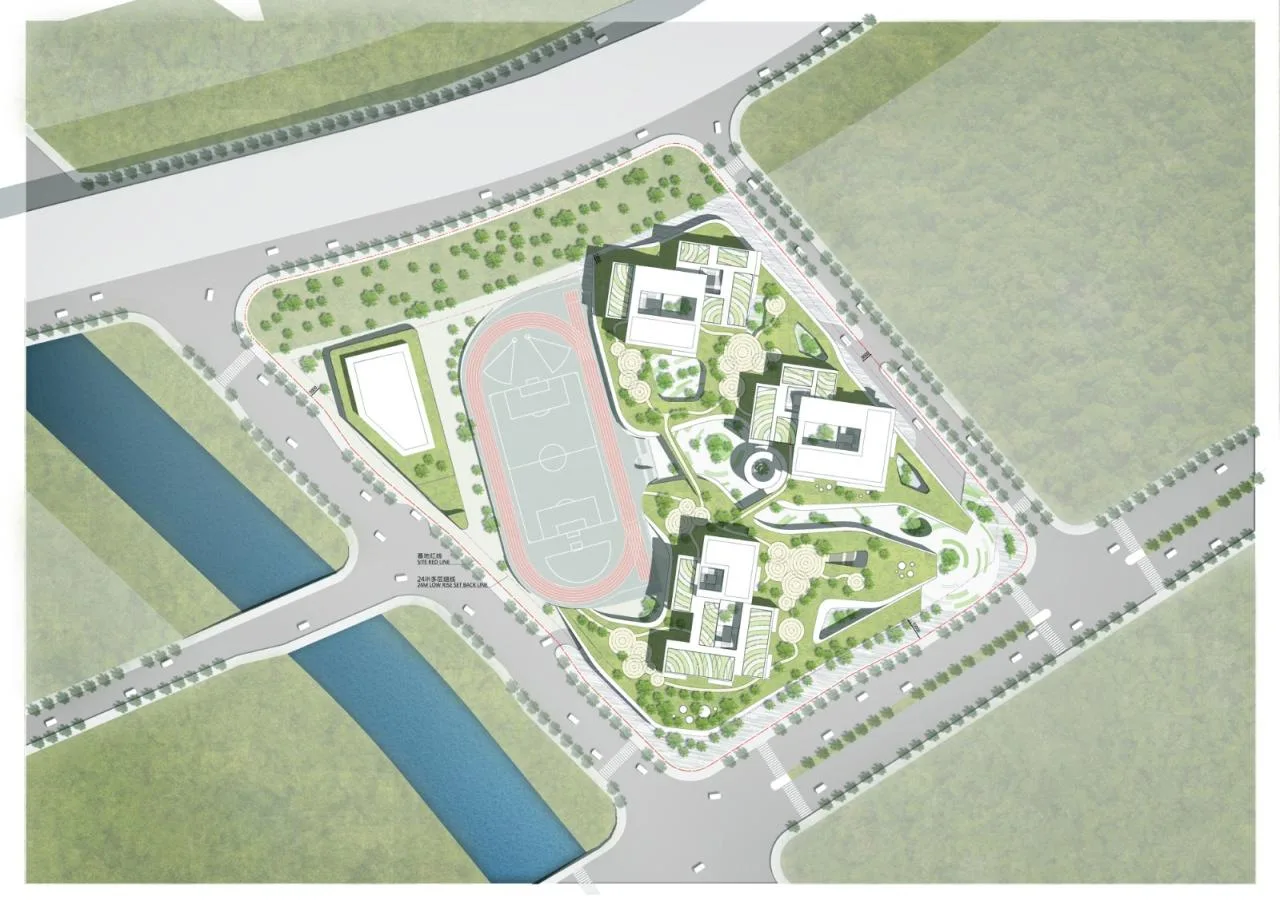
The campus plan features 48 teaching units alongside specialized facilities for science, art, sports, information technology, and performing arts. Three grade-divided teaching buildings are situated on the southeast side of the green platform, strategically positioned away from the highway to reduce traffic noise impact on classrooms.
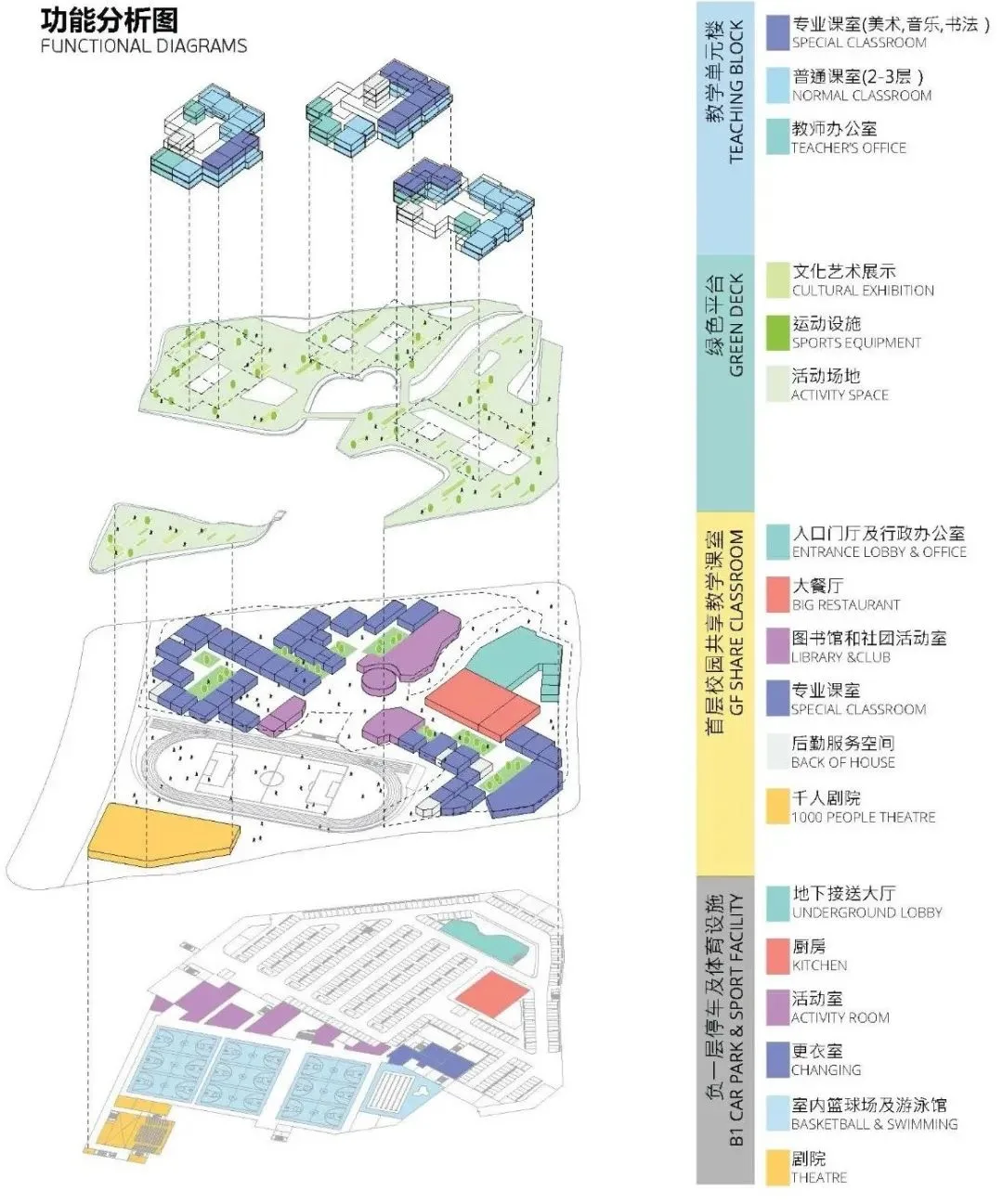
△ Functional analysis
Shared facilities such as libraries, cafeterias, and activity rooms are located beneath the platform, arranged along a central east-west corridor. This main passageway spans the entire campus horizontally, linking above- and below-platform functions via vertical circulation. It serves as the primary transit route and a vital public space that encourages active student interaction. Classrooms are arranged around a skylight courtyard behind this corridor, allowing ample natural light to fill the spaces while creating a series of courtyards and recreational zones.
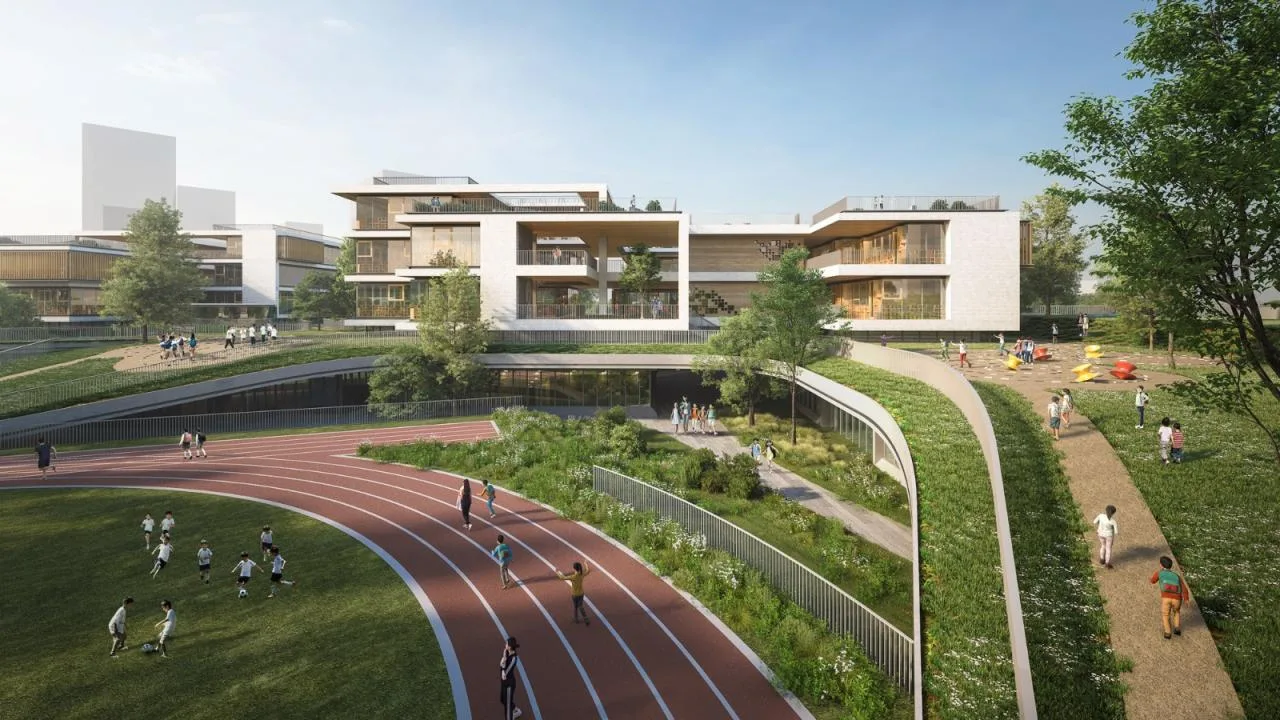
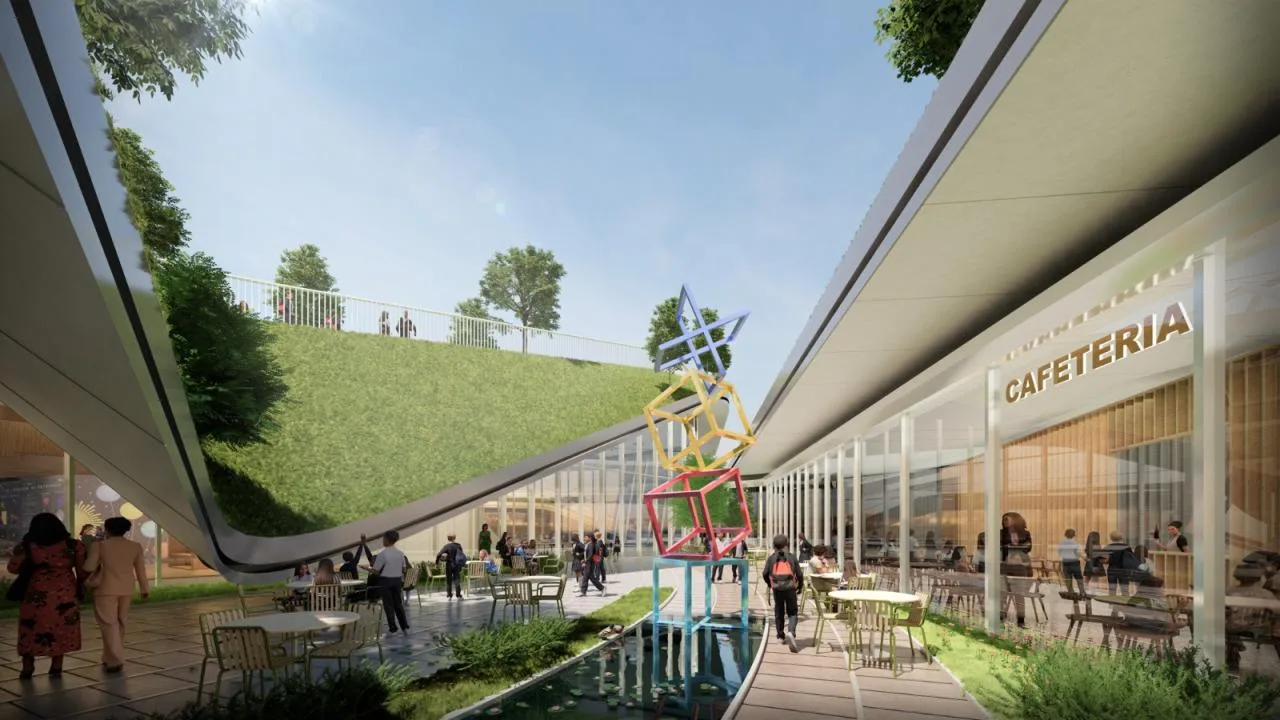
Green platform connecting diverse functional areas
The design encourages interaction, communication, and collaborative learning among students of the same age, embracing children’s natural instincts to run and play. The campus features varied and engaging spatial experiences that support physical and mental development. Additionally, an 800-seat performance theater is planned for the northwest corner of the campus, intended for shared use by the local community.
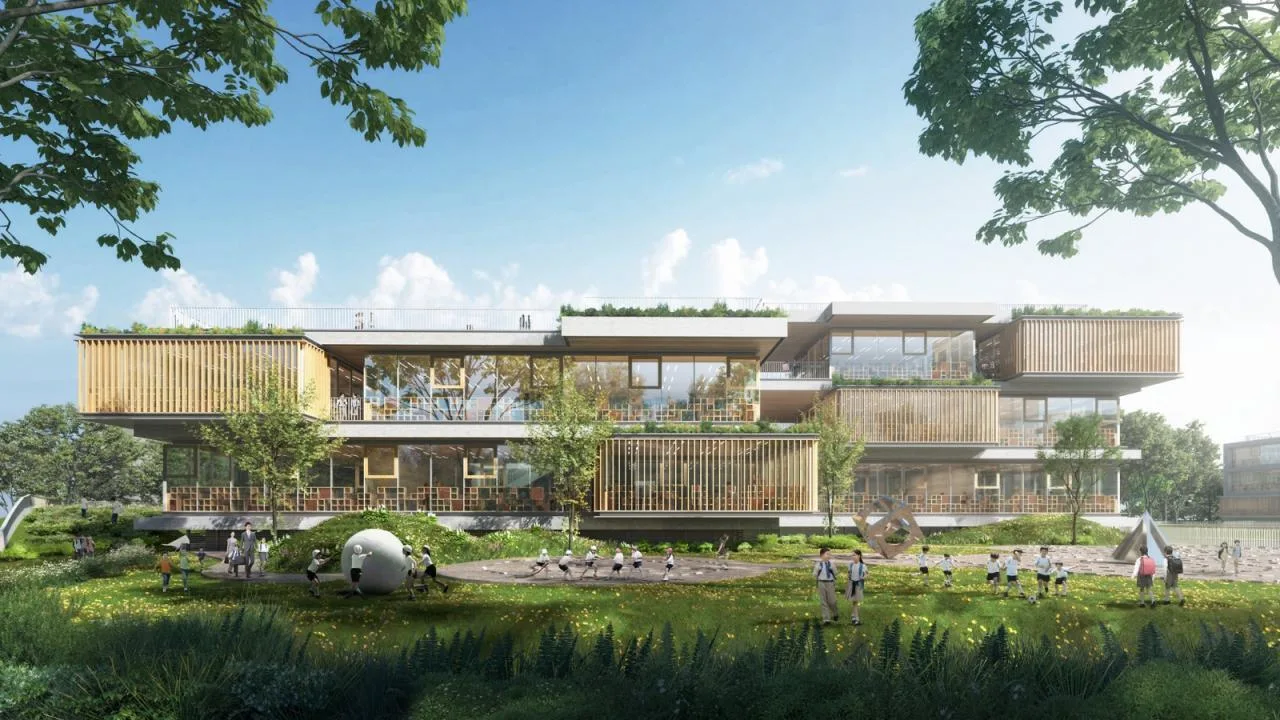
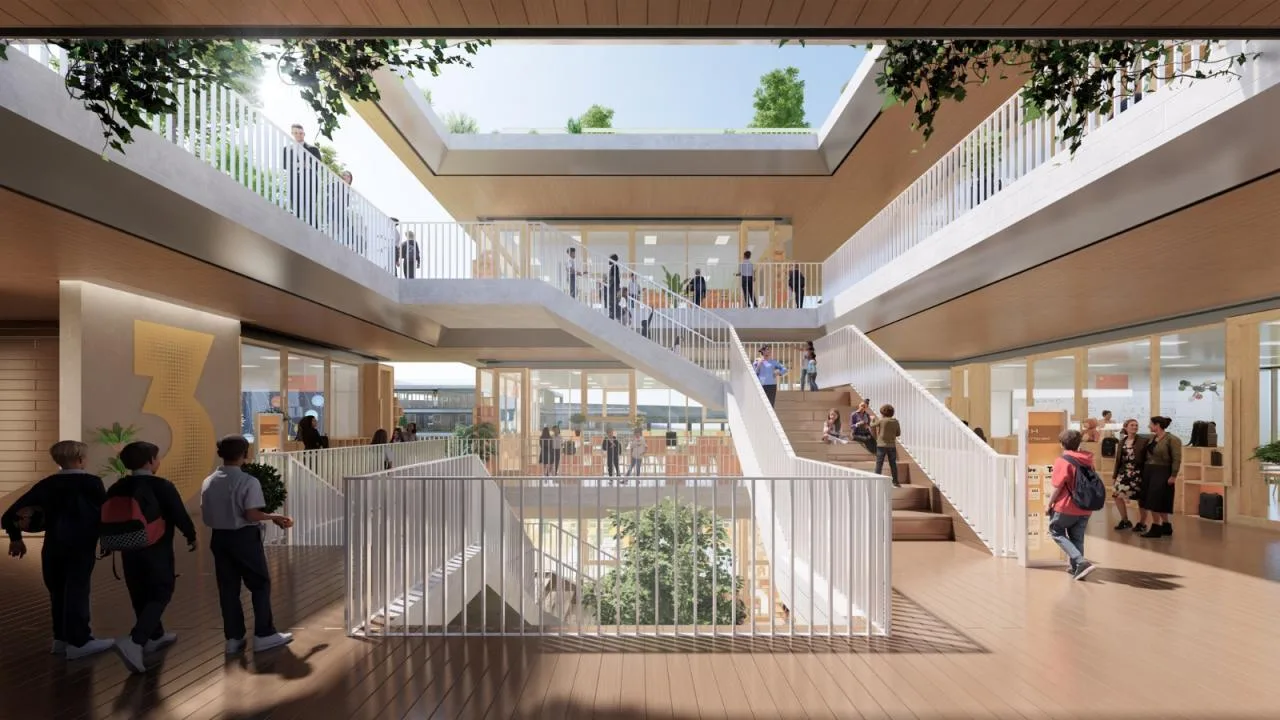
A Safe and Healthy Green Campus
The building exteriors use natural color tones and textures to convey the concept of a safe, healthy, and green campus. The open design and classroom orientation maximize natural sunlight, ventilation, and views of the landscape. The student drop-off and pick-up area is planned in the basement level, equipped with an intelligent queue guidance system to prevent traffic congestion on the surface.
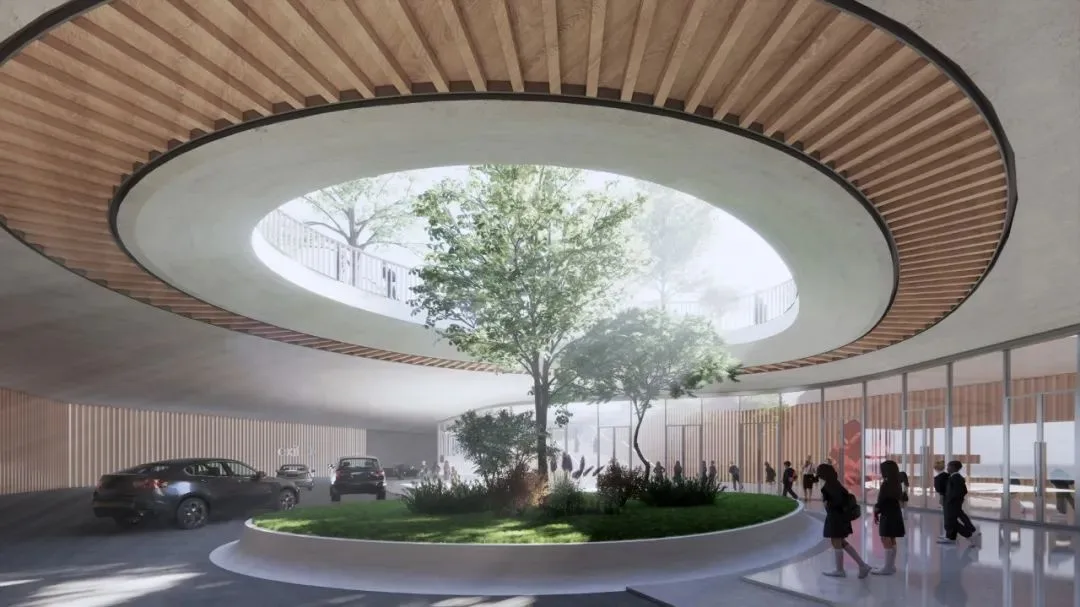
△ First floor shuttle hall
Design Director Peby Pratama shared:
“We aim to create a learning environment that supports environmental education and social interaction for the next generation. Our design highlights openness, inclusiveness, vitality, health, and green sustainability. It is not only a natural response to the environment but also embodies Hangzhou’s philosophy of green humanism.”
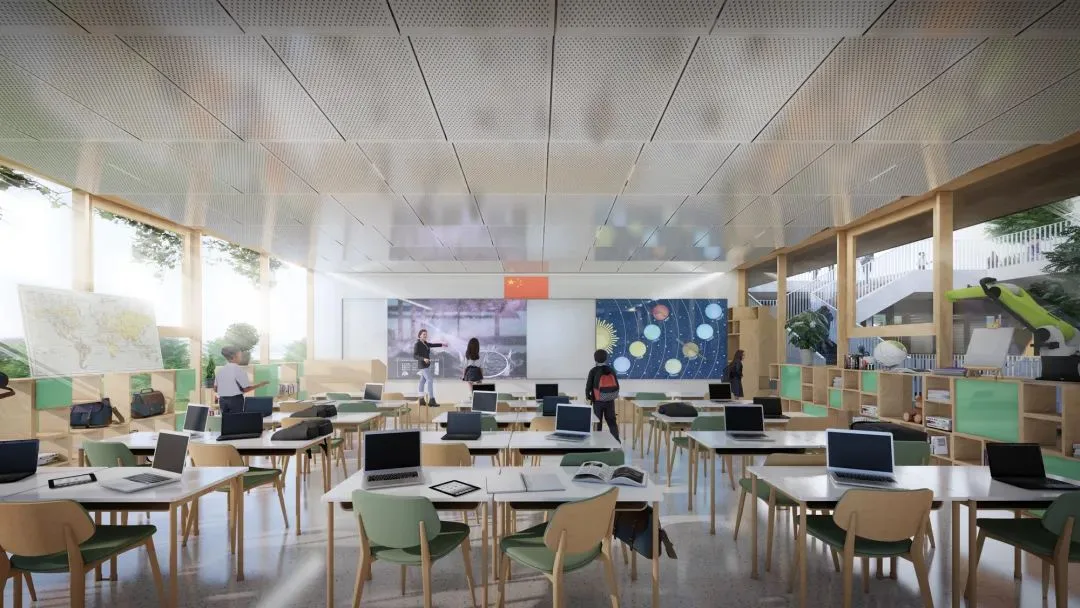
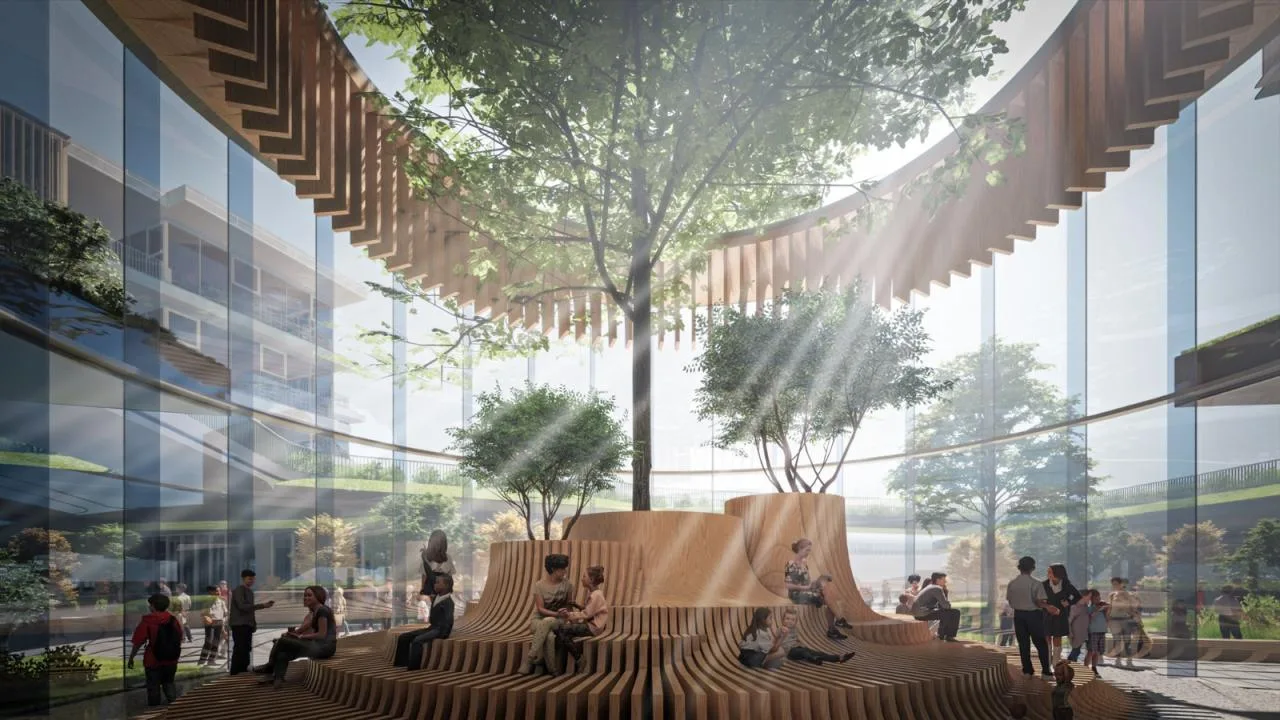
A bright and inviting learning and reading space
This project sets a new standard for community schools, featuring a high-specification, low-density teaching environment. It also aims to become a significant international landmark for Hangzhou, complementing the city’s reputation as a “paradise on earth” and reinforcing its economic growth driven by high-tech industry clusters.
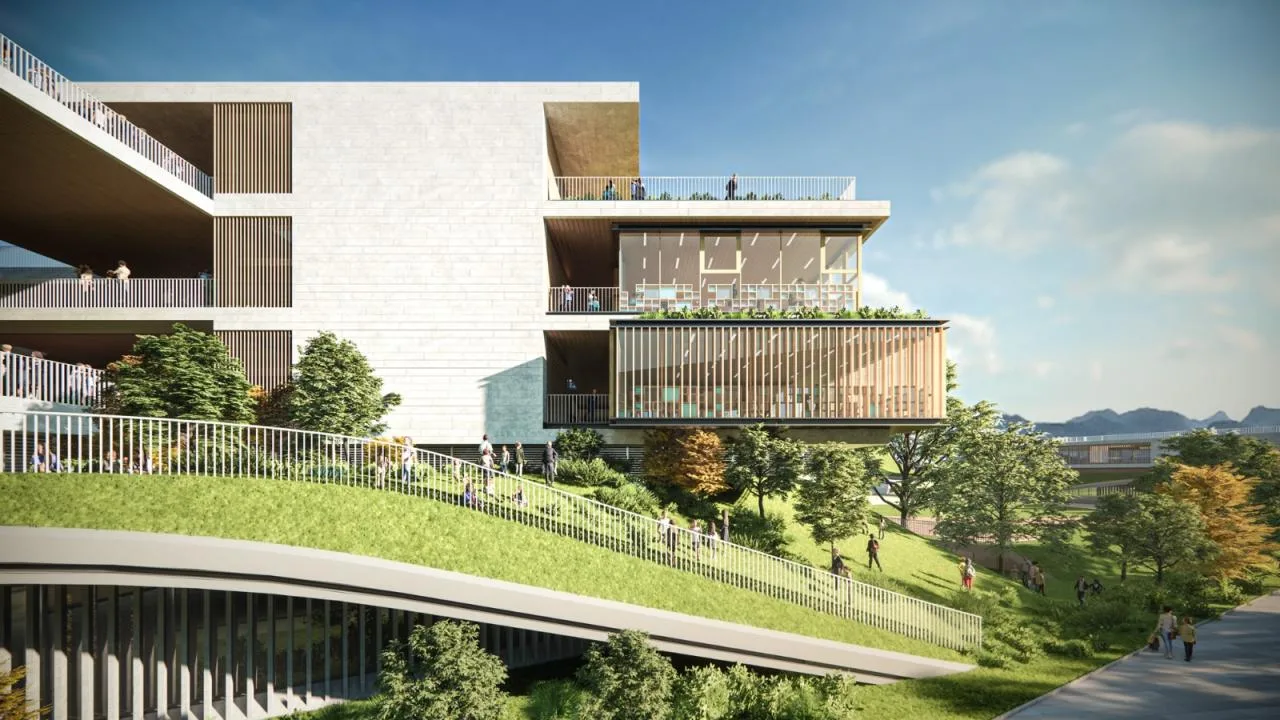
Project Drawings
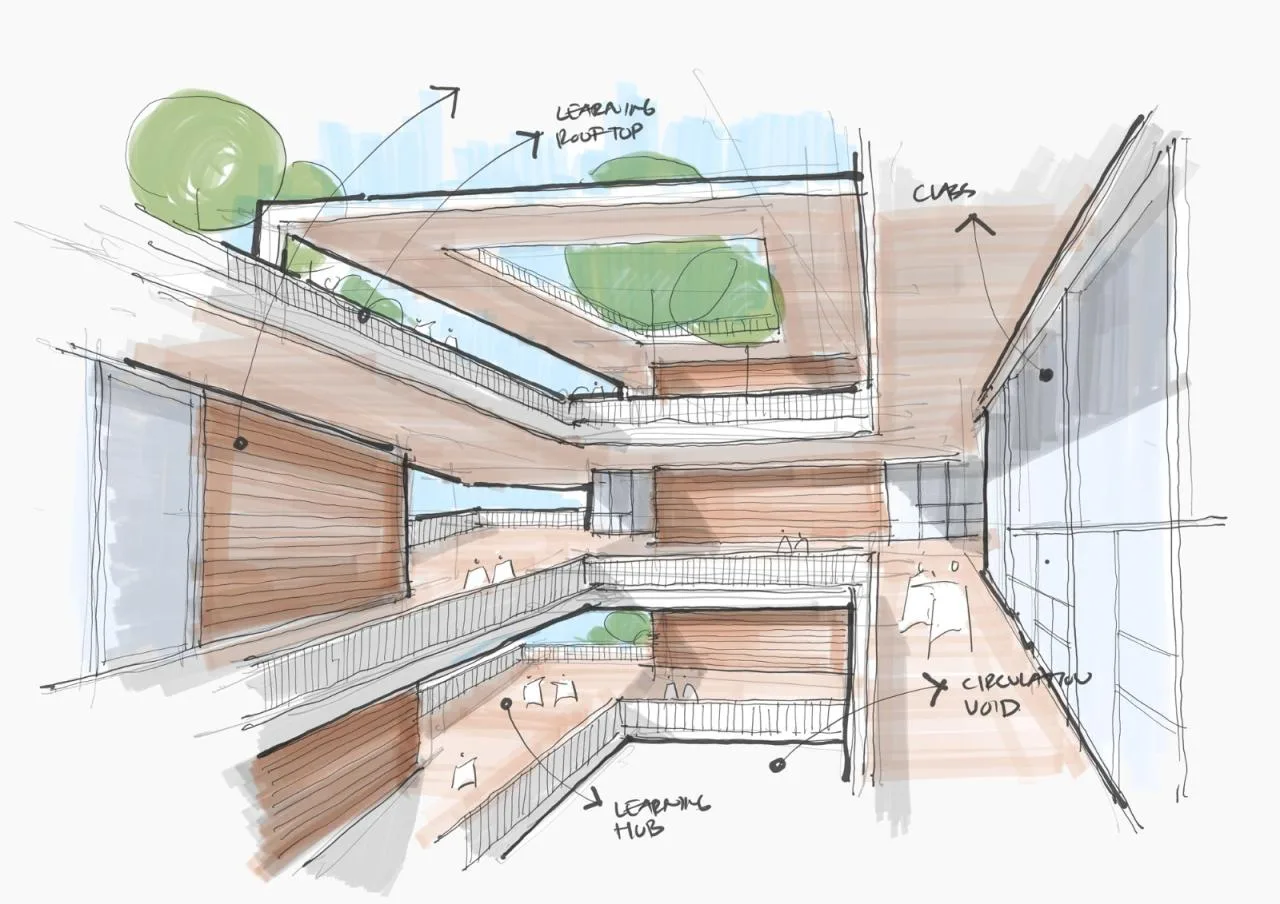
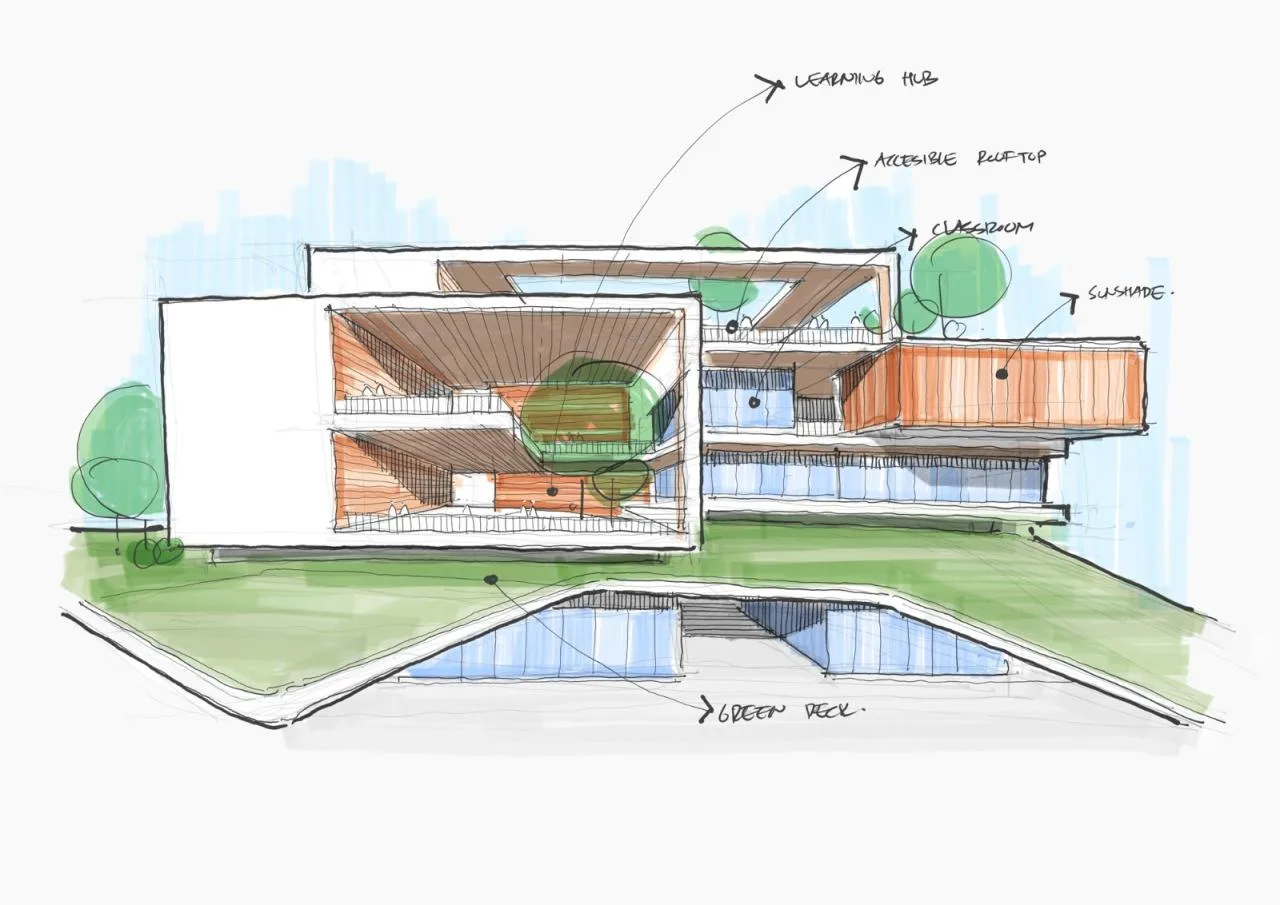
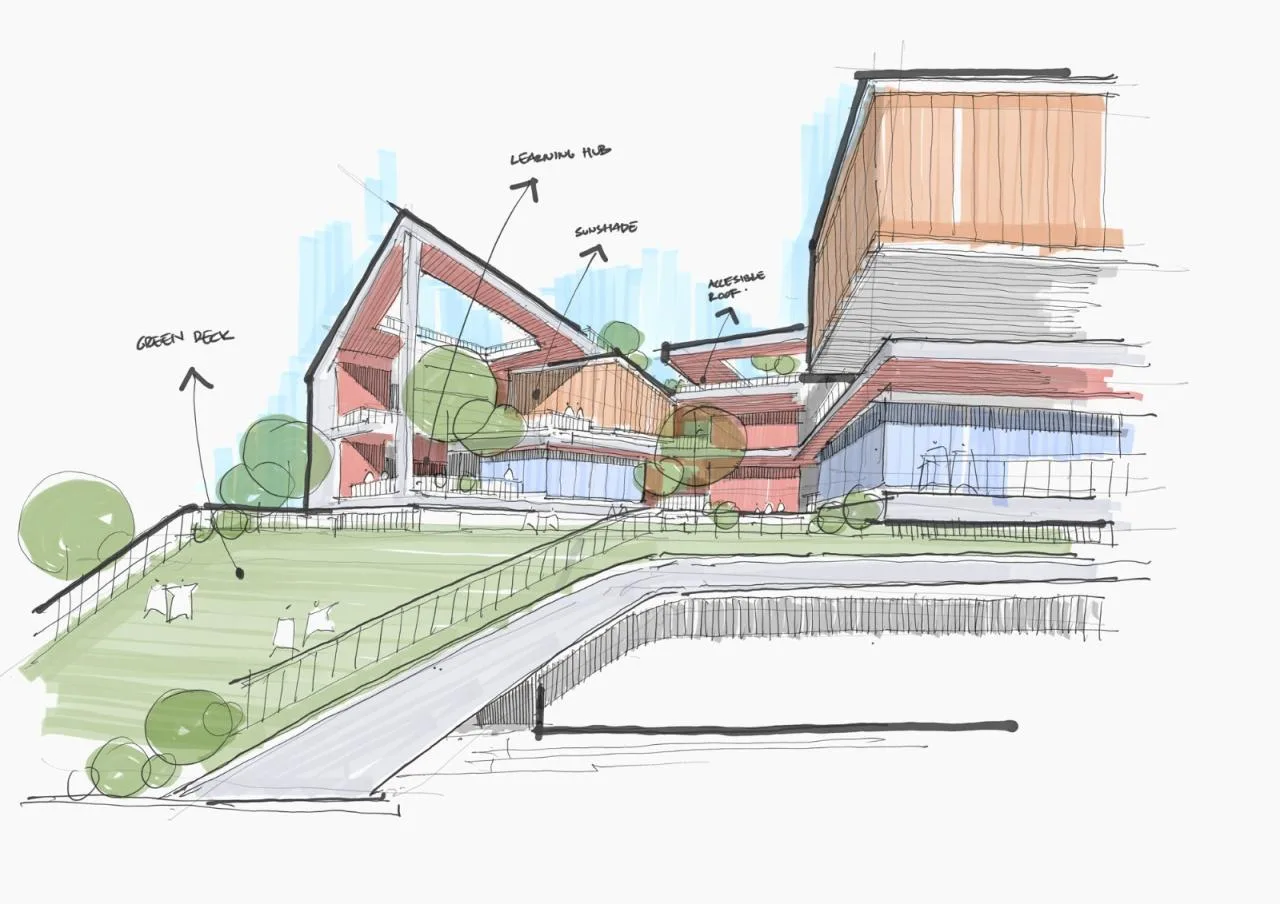
△ Hand-drawn sketches
Project Information
Project Name: Qianjiang New City Phase II Future Campus Project
Owners: Hangzhou Chengdong New City Construction Investment Co., Ltd., District Education Bureau
Project Type: Culture and Public Facilities, Education
Land Area: Approximately 41,000 square meters
Building Area: Approximately 74,000 square meters
Scope of Services: Overall planning and architectural design
Status: In Progress
Design Team: 10Design
Design Director: Peby Pratama
Project Managers: Joey Qu, Qu Xiaozhou, Shuo Zhang, Zhang Shuo
Architectural Team: Yan Liu, Liu Huiyan, Luke Santoso, Grace Zhang, Zhang Boya, Bethany Huang, Huang Yuan, Ryan Zhao Yan, Gillian Du, Du Xiaojie, Jiaxing Lu, Lu Jiaxing, Siyi Li, Li Siyi
Rendering: Frontop















Must log in before commenting!
Sign Up