
“Life is as beautiful as summer flowers, and death is as beautiful as autumn leaves.” — Tagore’s Stray Birds
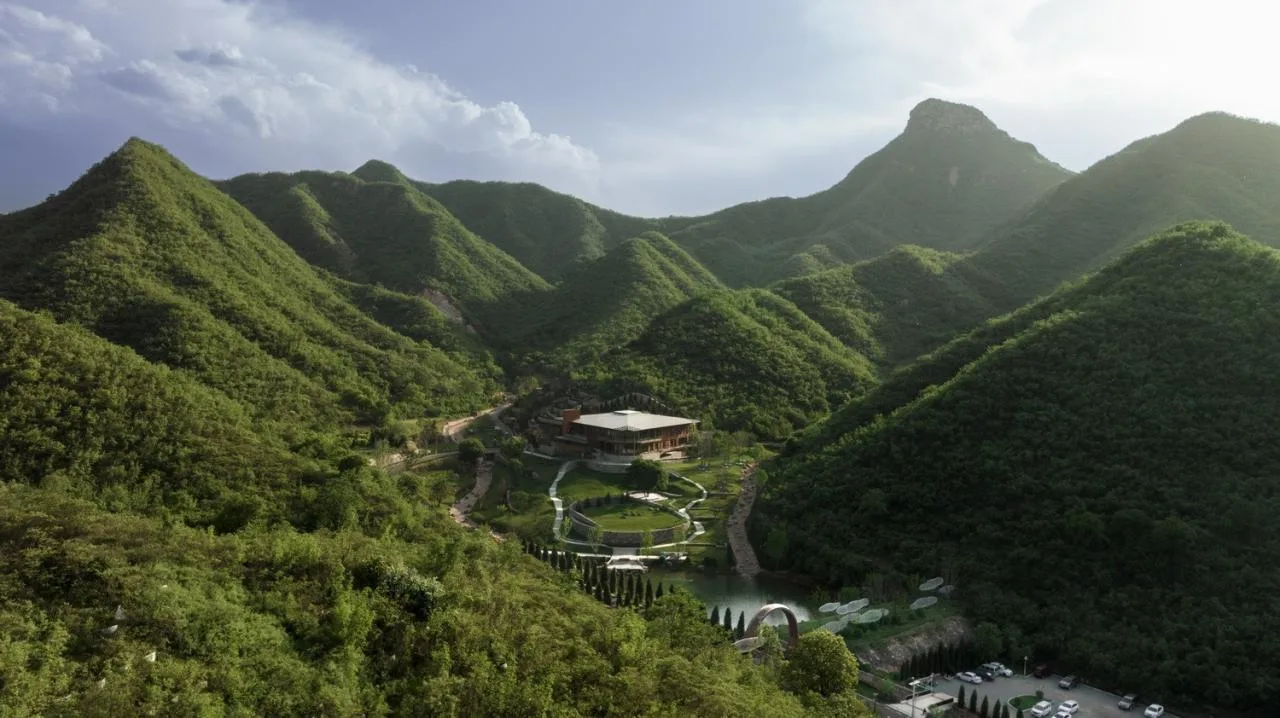
▲ Cloud Mirror, nestled in a Feng Shui treasure land
“Chisel through the moss and steal a piece of his sky.
In the white cloud mirror, before the moon sets on the steps.”
— Du Mu, Basin and Pool, Tang Dynasty
In the film Coco, it is said that a person dies three times: the first when their heartbeat stops and breathing ceases; the second at the funeral, when society declares they no longer exist; and the third when the last person who remembers them forgets.
Thus, death is not truly the end—forgetting is.
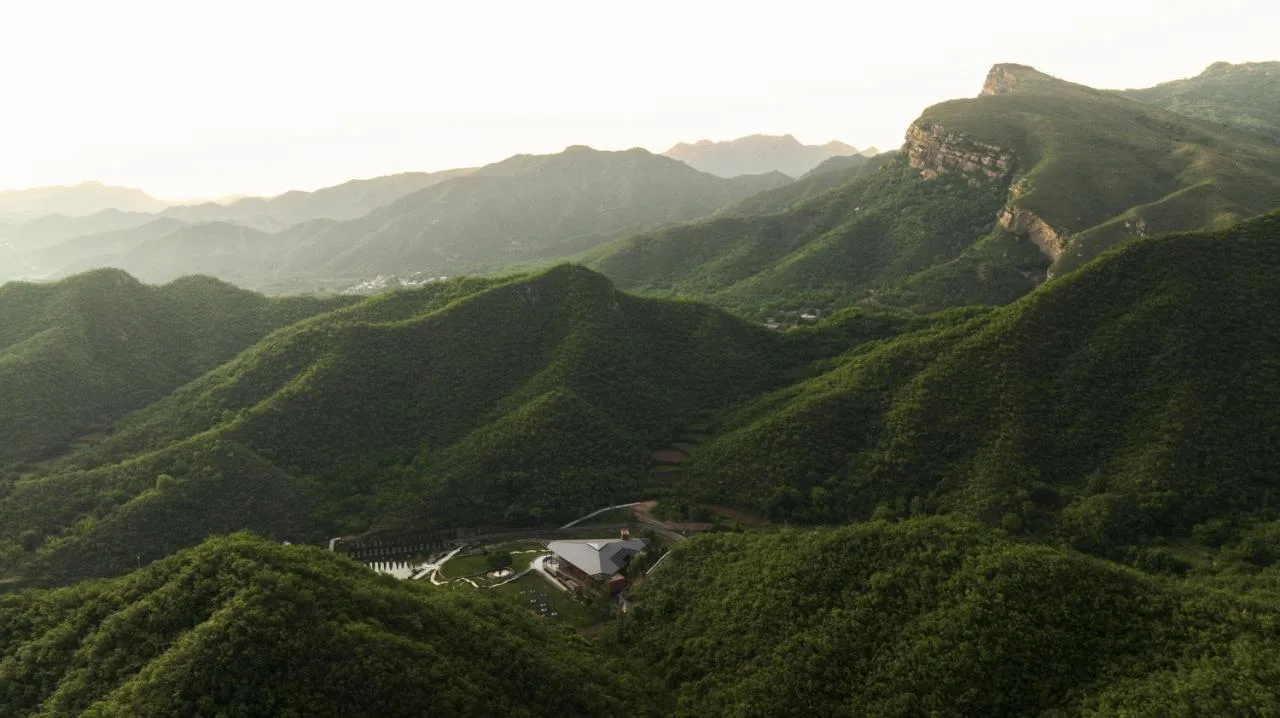
The Cloud Mirror floats like a massive star within the valley
In traditional Chinese culture, discussing “death” is often avoided. Instead, euphemisms like “nirvana,” “passing away,” “ascending to heaven,” “rest in peace,” “eternal sleep,” or “departure” are used to soften the topic. Yet, death remains an inevitable part of life. Accepting it is a lifelong lesson we all must learn.
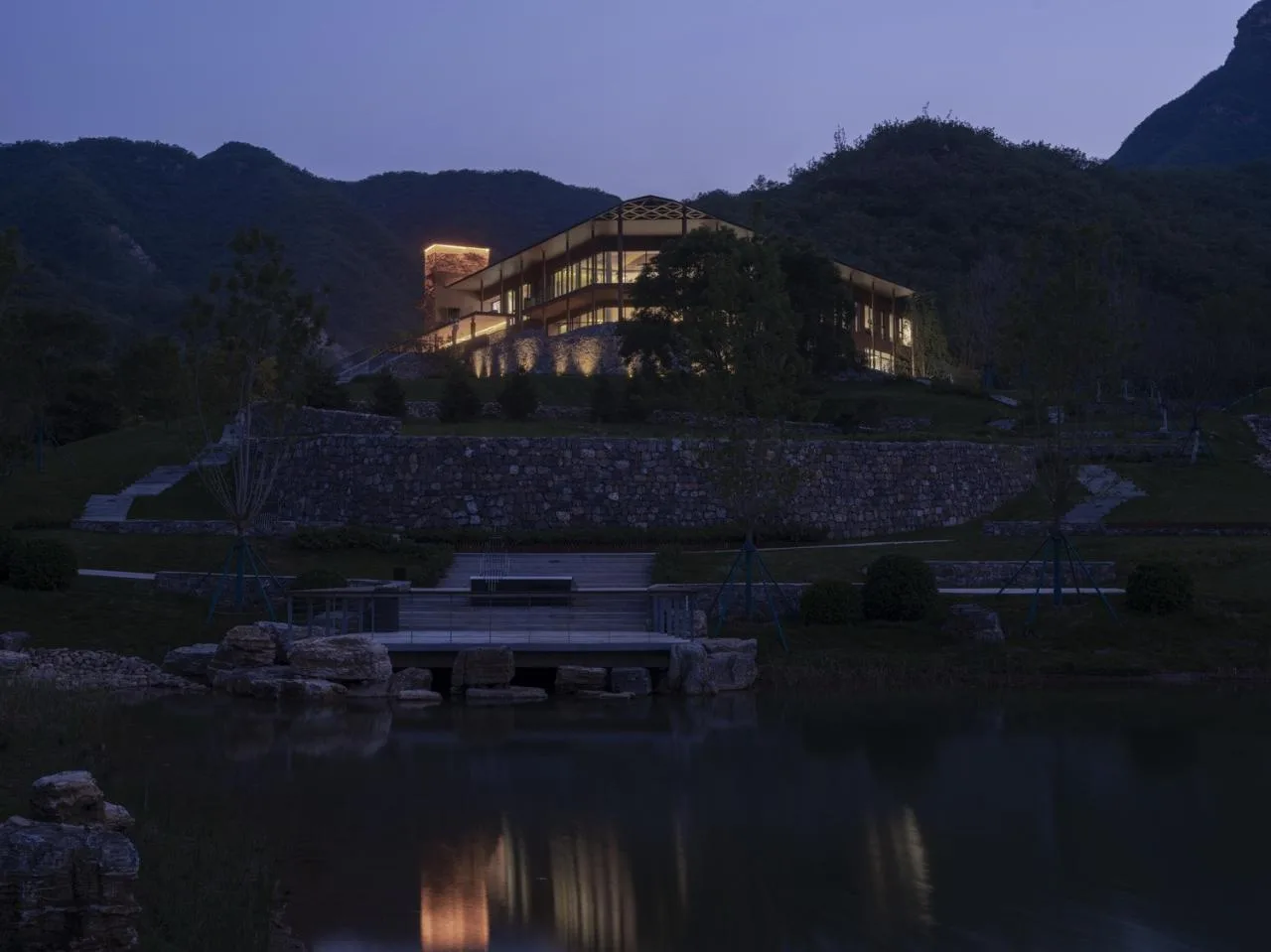
▲ Spring of Life, Tree of Life, and Cloud Mirror in Summer
Chinese traditions deeply influence the perception of death, blending Confucianism, Buddhism, Taoism, Feng Shui, and traditional living environments. There is a strong emphasis on “returning to the roots” where fallen leaves settle into the soil. Over time, cemeteries have become sacred places of remembrance. However, traditional Chinese cemeteries often incorporate antiquated, heavy, and somber architectural styles, evoking feelings of oppression and even fear.
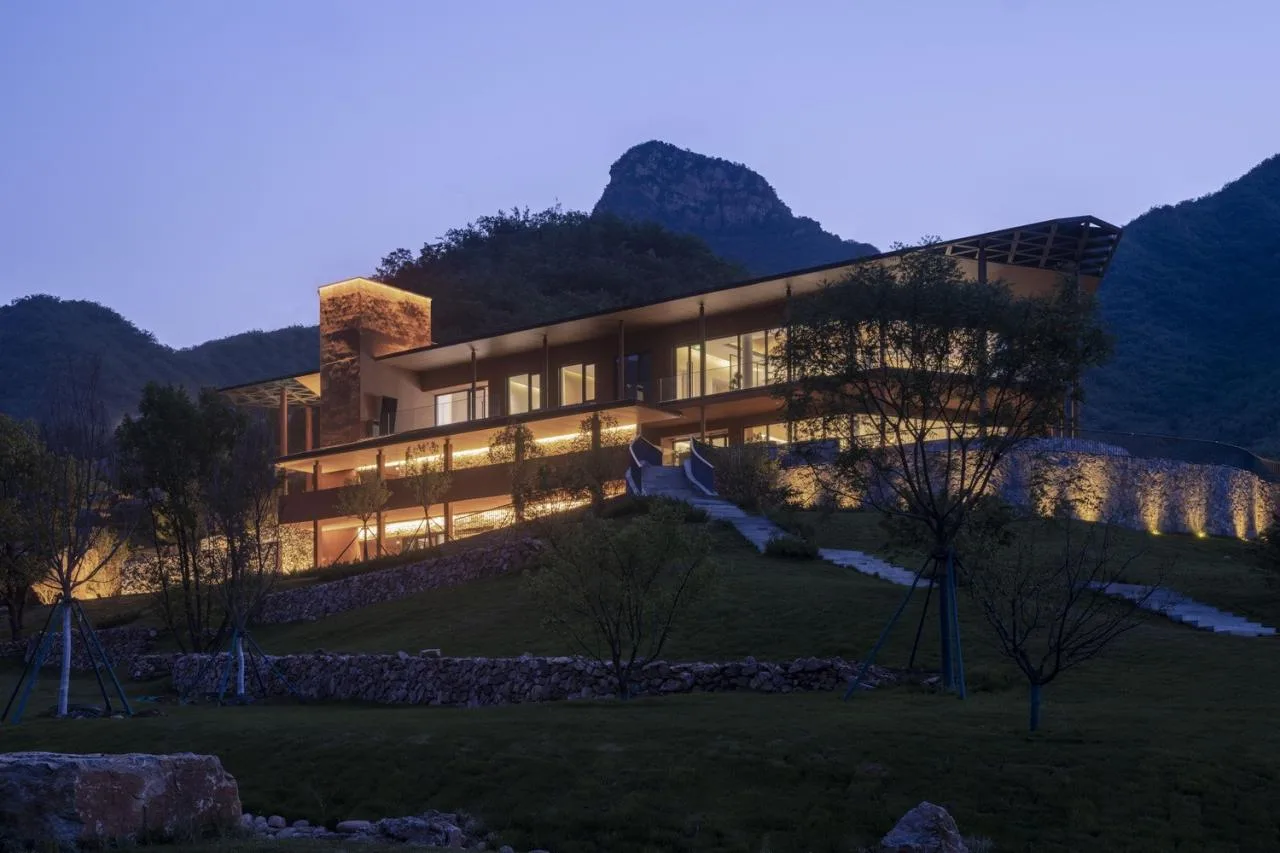
▲ Cloud Mirror Night Scene
The Cloud Mirror architectural project invites deeper reflection on death. When viewed through the lens of time, pain and fear are transient, leaving behind memories instead. In 2021, this design aimed to ease the sorrow caused by death and the heavy traditions burdening the living. Facing death raises profound questions: How will one die? What form will the burial take? Where will one rest? Who decides? How will loved ones honor the deceased? Will memories fade? These questions inspire thoughtful design solutions.
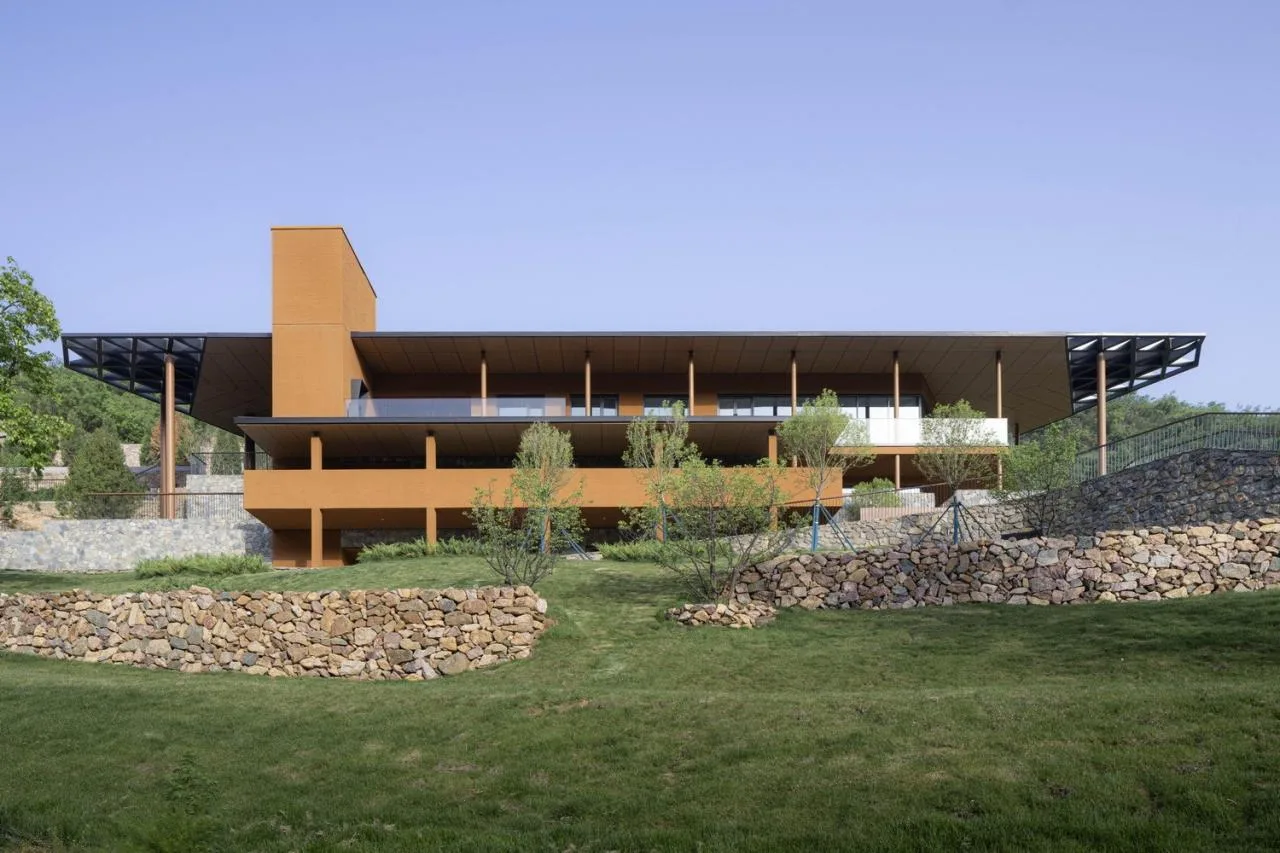
The warm and inviting brown rammed earth contrasts beautifully with the surrounding grasslands
Throughout life, we seek a “better place to live.” When facing death, many hope to rest in a Feng Shui treasure trove, continuing their ideal residence in another realm. For the departed, it represents the spiritual continuation of a beautiful life; for the living, it serves as a blessing for descendants. Some even select their burial sites during their lifetime, searching for their perfect resting place a century ahead. Cemeteries thus become vital emotional bridges between the living and the deceased—spaces not only for the dead but sanctuaries for the living.
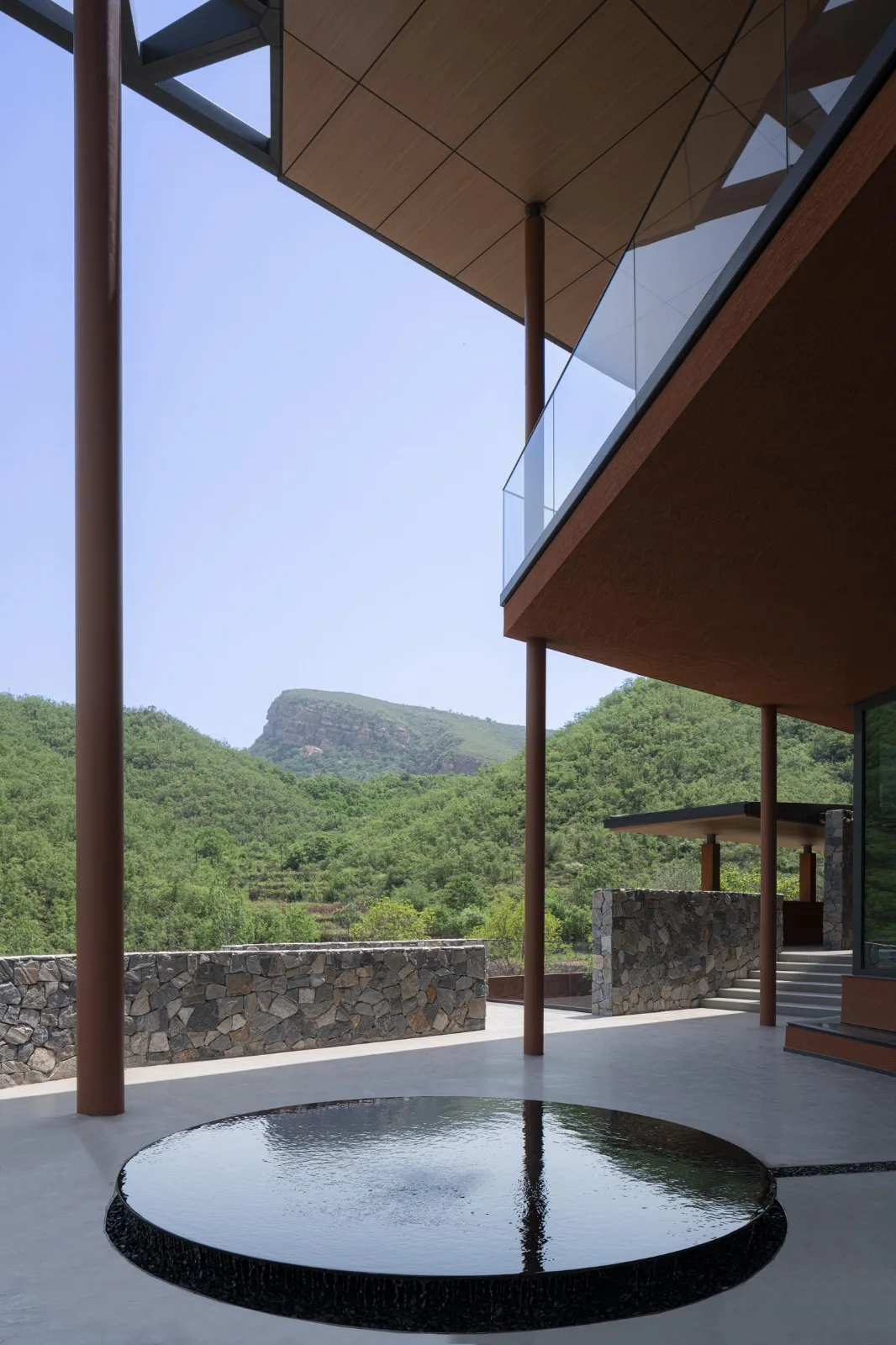
▲ Architecture and distant mountains reflected in the Cloud Mirror water installation
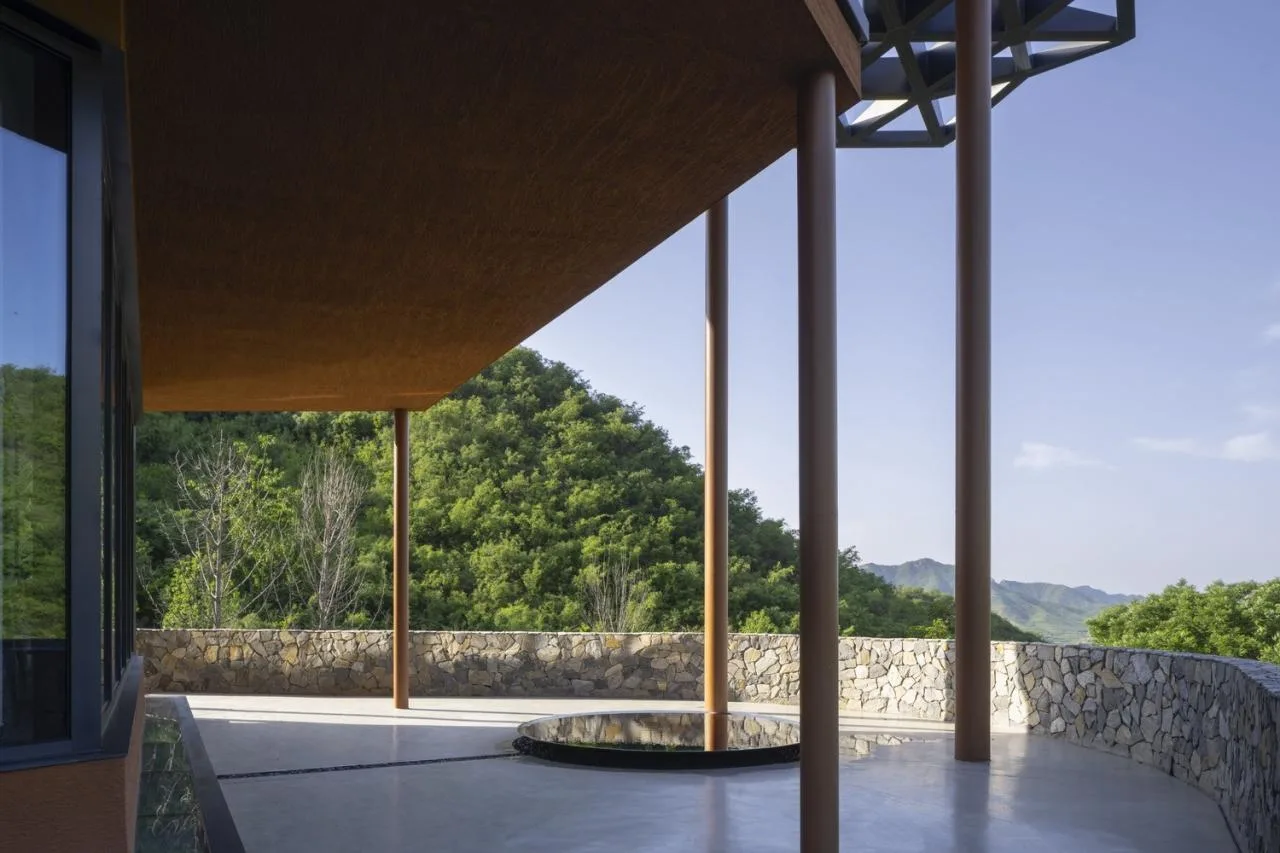
▲ Cloud Mirror water feature beneath the grand entrance eaves
Shijiazhuang Ande Life Memorial Park sits at the eastern foothills of Taihang Mountain, surrounded by natural scenic wonders. The site boasts lush greenery and embodies a harmonious blend of Feng Shui elements such as green dragons, white tigers, Xuanwu, vermilion birds, and sparrows, making it an auspicious location. Yunjing’s design reimagines the traditional cemetery concept, honoring funeral culture while introducing landscape artistry and personalized design. The goal is to create a harmonious, peaceful, warm, and ceremonious atmosphere—offering a space where the living can find solace and the deceased can rest in peace, achieving a joyful coexistence with nature.
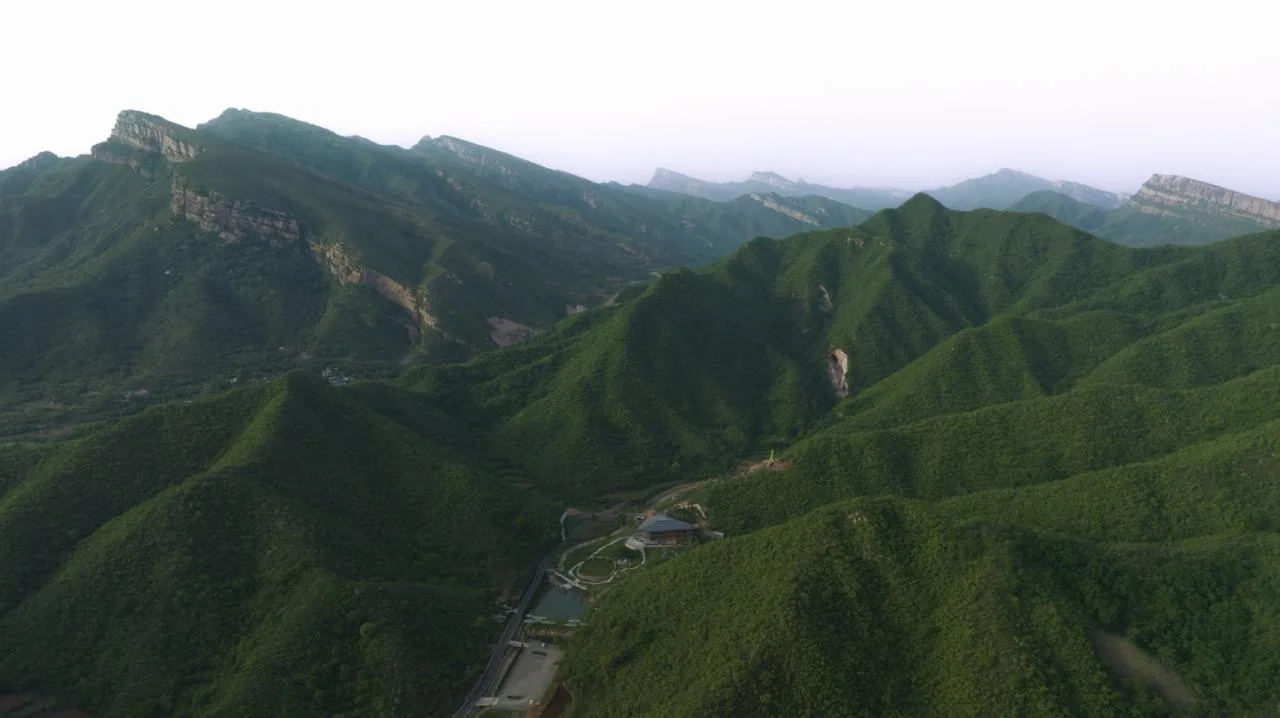
▲ Clouds reflecting the distant mountains
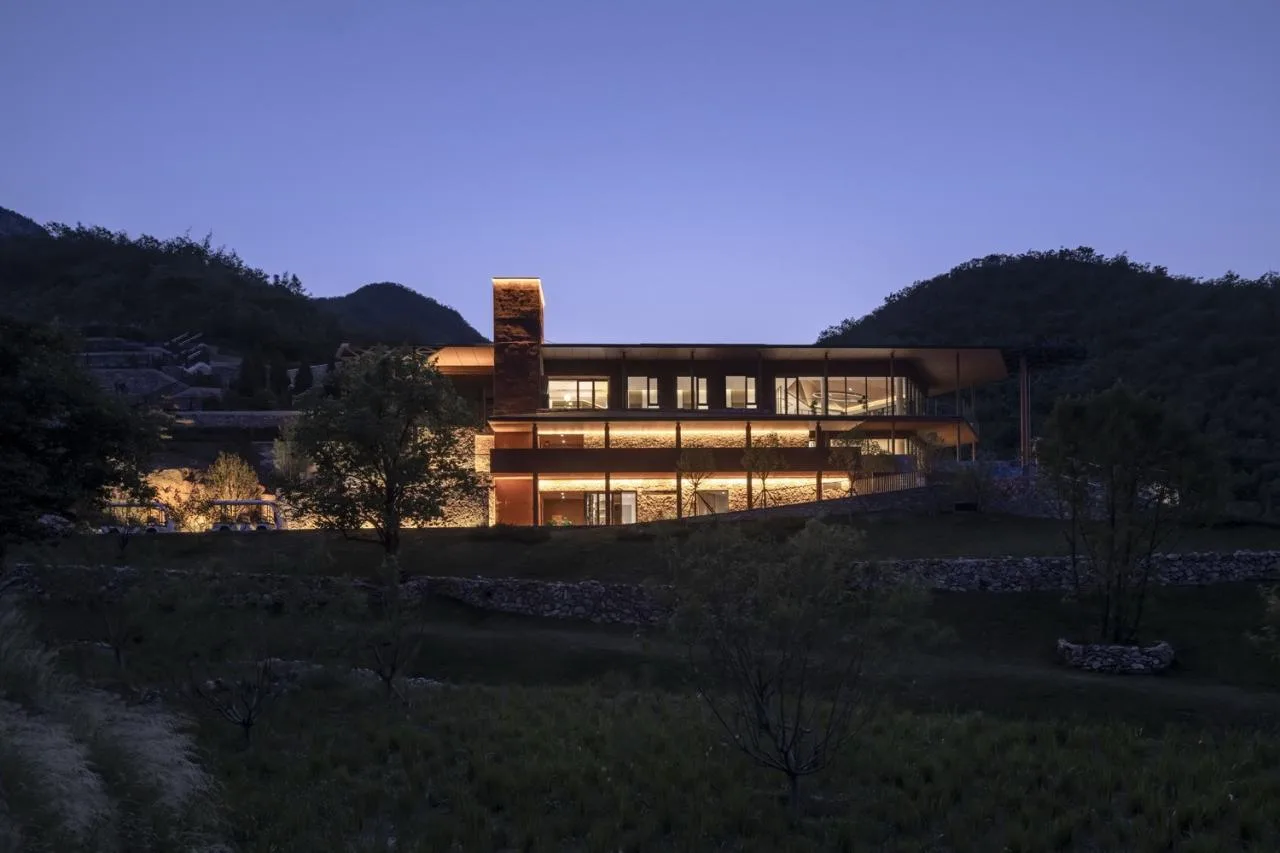
▲ Cloud Mirror embedded within the mountain at night
I’ve heard that every soul who departs becomes a star in the sky.
I’m grateful our light cones once overlapped, forever altering my orbit.
Though we may never meet again, you remain the reason my galaxy stays intact—the eternal thread in my cosmic web.
Love endures, and the departed never truly leave.
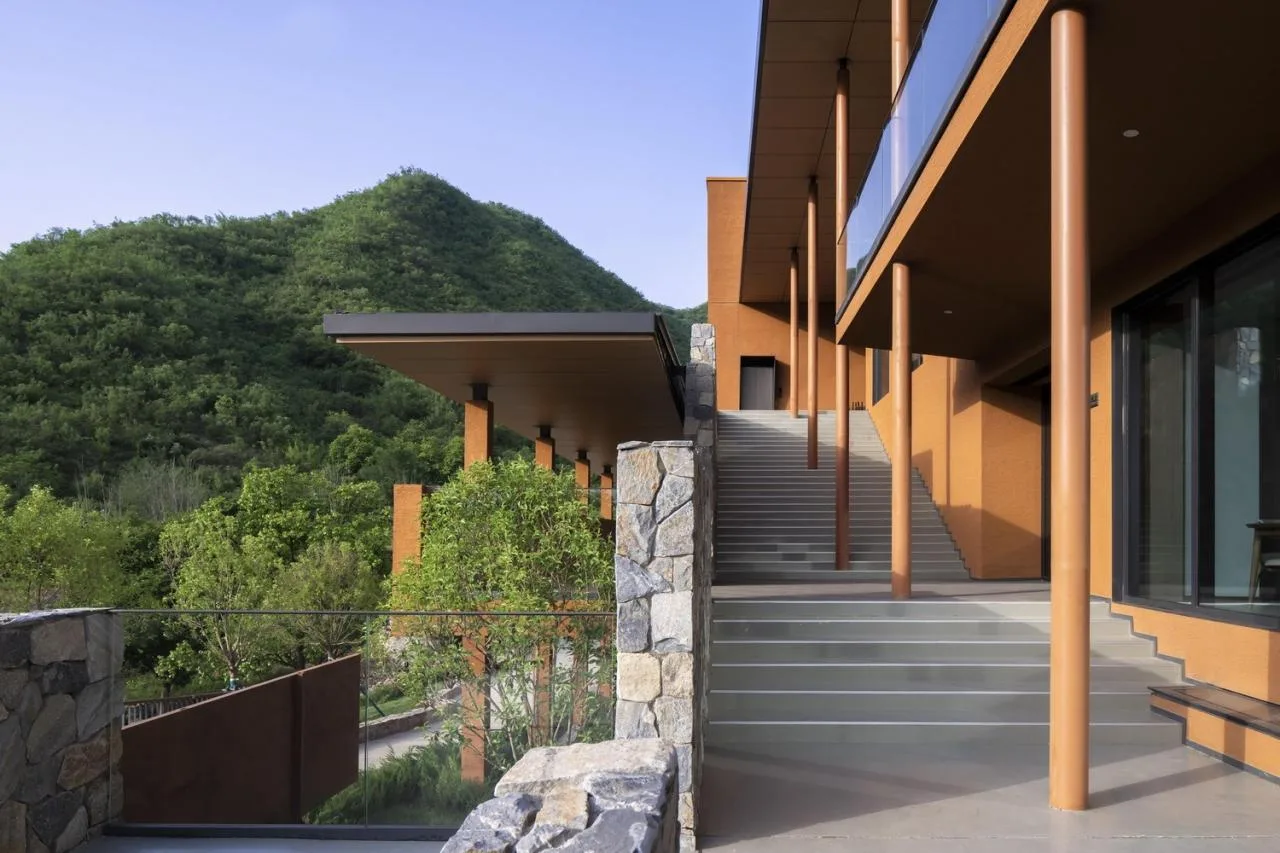
▲ Entrance staircase, observation gallery, and 28 constellation columns
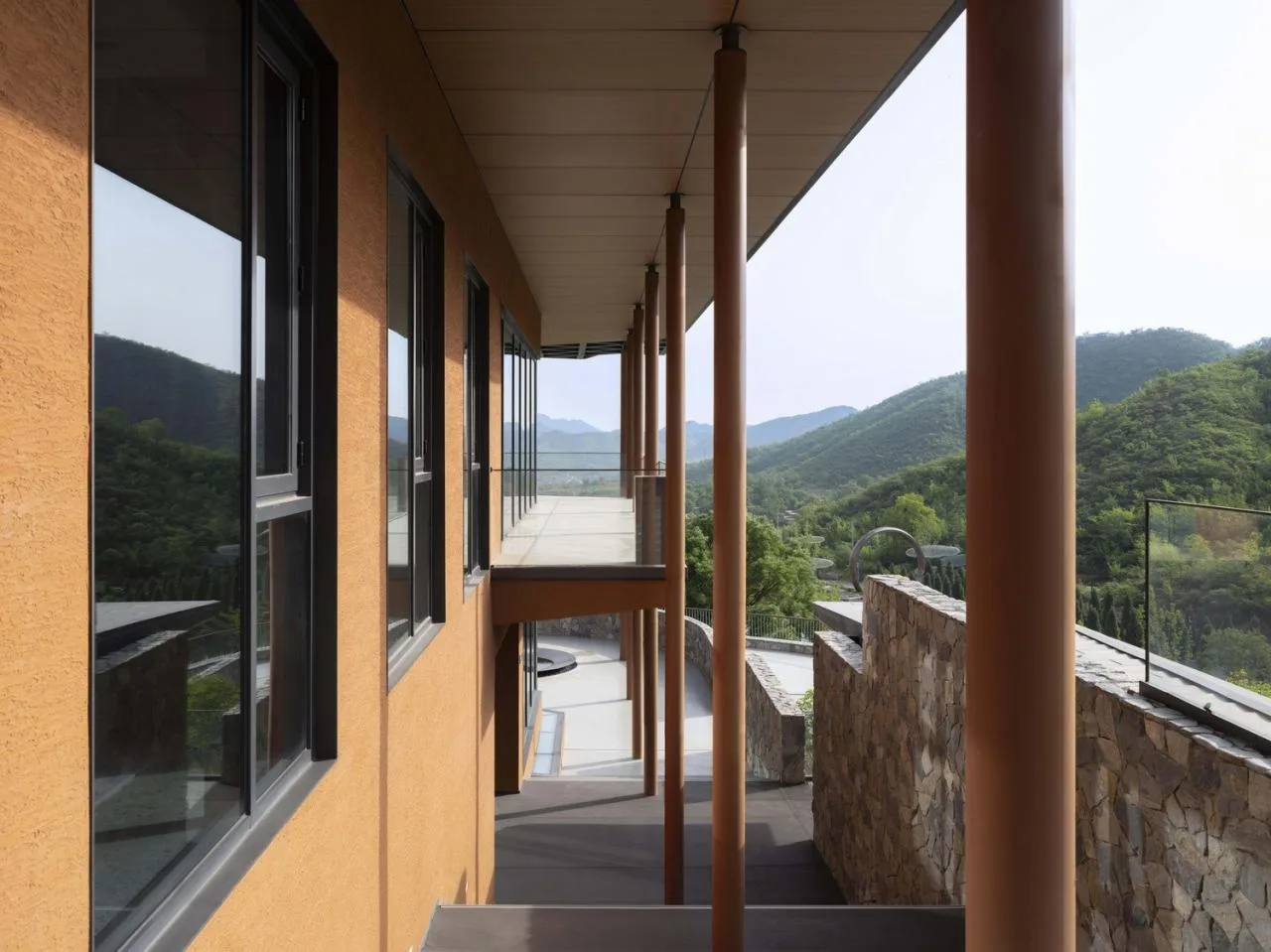
▲ Entrance staircase and twenty-eight star columns
The rise and fall of stars is one of the universe’s most mysterious and beautiful phenomena. Different cultures and belief systems attribute varied meanings to stars. The Babylonians saw planets as gods, each representing a deity; the ancient Greeks connected stars into mythic stories and heroic legends; and the ancient Chinese developed a sophisticated celestial classification system based on harmony between heaven and humanity, featuring three walls, four symbols, and twenty-eight constellations.
Our ancestors’ imagination of the starry sky was influenced by their lives, environments, and cultures, resulting in a rich and diverse star culture. Today, stars are not only natural celestial bodies but also carriers of deep cultural and emotional significance. Throughout history, poets and visionaries worldwide have described stars as symbols of eternity, loneliness, separation, longing, hope, and dreams.
To honor diverse beliefs, Yunjing’s design adopts a neutral architectural language centered on star imagery to express its emotional core.
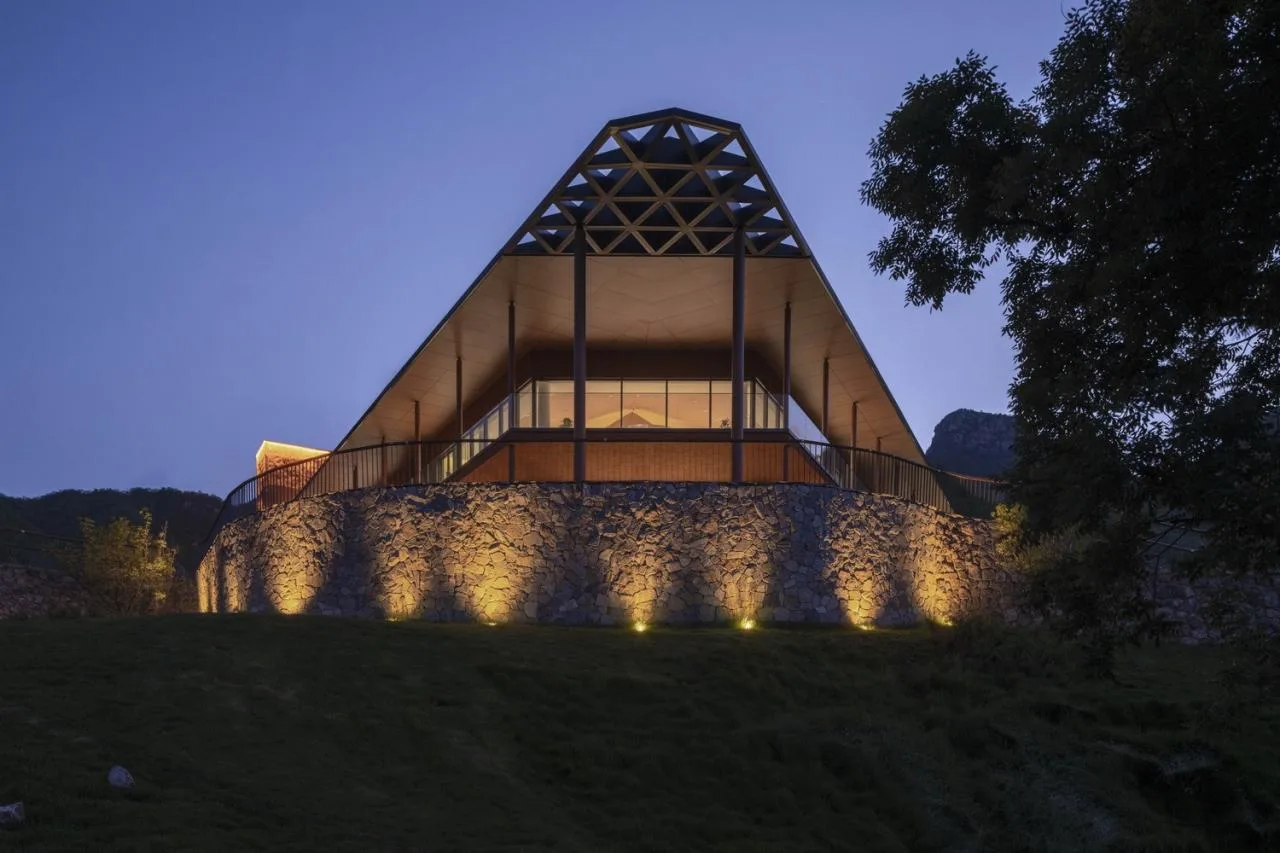
▲ Triangular star motif of Cloud Mirror
The triangle, a fundamental geometric shape and symbol of stability, is used to represent stars. Equilateral triangles form the core image of Cloud Mirror. Extending from star imagery, nebulae, the twenty-eight constellations, and particularly the Big Dipper—a celestial official of Ziweiyuan—become key elements in the narrative of Cloud Mirror.
In traditional Chinese culture, the Big Dipper is the maker of heaven and earth’s order and the center of all transformations.
▲ Stars constructed from equilateral triangles
Inspired by the Big Dipper’s star map and cultural significance, Yunjing’s landscape features emerged. The main entrance showcases the “Gate of Time and Space,” symbolizing Tianxuan. A large circular spray gate and cloud devices on either side create an artistic vision of “two worlds embracing and hidden in clouds.”
Adjacent to the entrance, the pond—representing the Heavenly Pivot—has been refined into a large “basin pool,” restoring the spirit of the local “Vermilion Bird.” Two rows of tall cypress trees border the pool, forming a ceremonial green corridor.
Visitors enter the “Platform of Wisdom,” suspended above the pool, symbolizing heavenly power. To the east, the “Gate of Time and Space” reflects in the emerald waters alongside sky cypress trees. Beyond lies the expansive grass slope—the site’s soul—known as the “Tree of Life,” culminating at the “Nirvana Realm” nestled in the mountain.
The landscape embraces simplicity and originality, blending ponds, cypress trees, broad lawns, dry streams, and native plants to craft a serene, natural, and ceremonious environment.
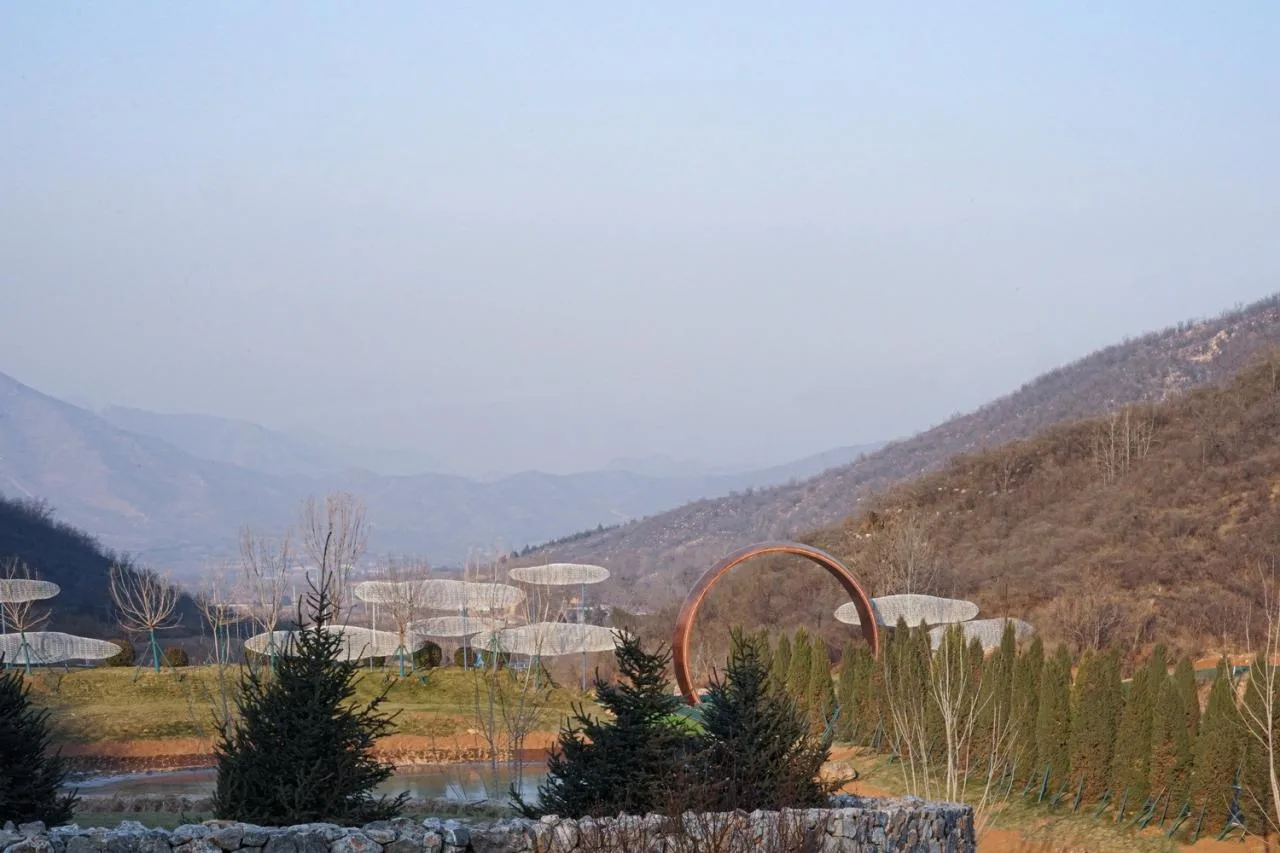
▲ Portal of Time and Space with cloud installation
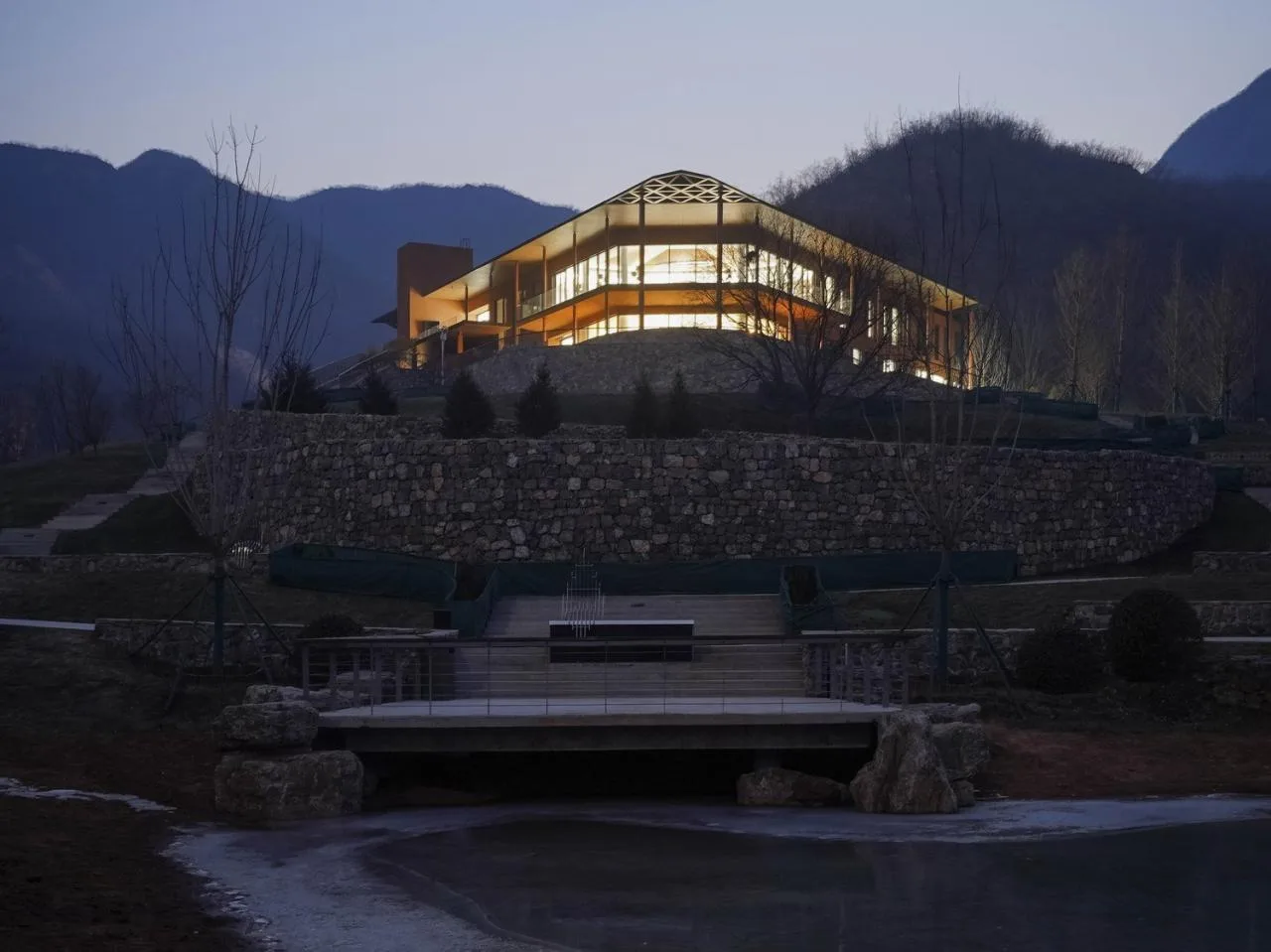
▲ Spring of Life and Cloud Mirror in Winter
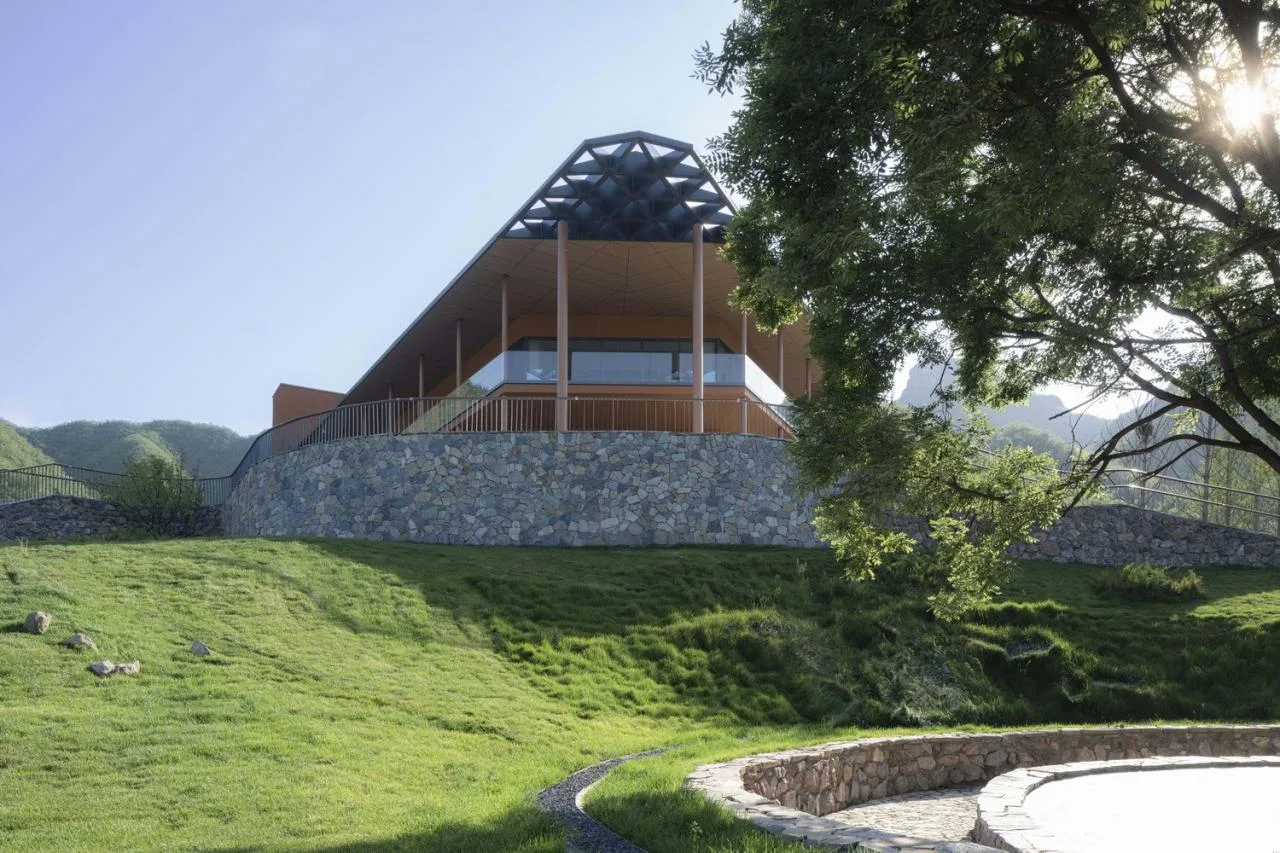
▲ Tree of Life gazing up at Cloud Mirror
The Tree of Life is a towering Chinese locust tree at the site’s center. Its lush foliage changes with the seasons, symbolizing the endless cycle of life. Weathered by centuries of wind and rain, it stands resilient, bearing witness to the long history of Nangou Valley in Biao Village.
This majestic tree embodies the site’s spirit, akin to the brightest jade in the Big Dipper. It represents vitality, endurance, and symbolism—a spiritual anchor for visitors who may gather beneath it for heartfelt conversations or quiet meditation. It offers comfort to those crossing the river of time, becoming a sanctuary in the face of death.
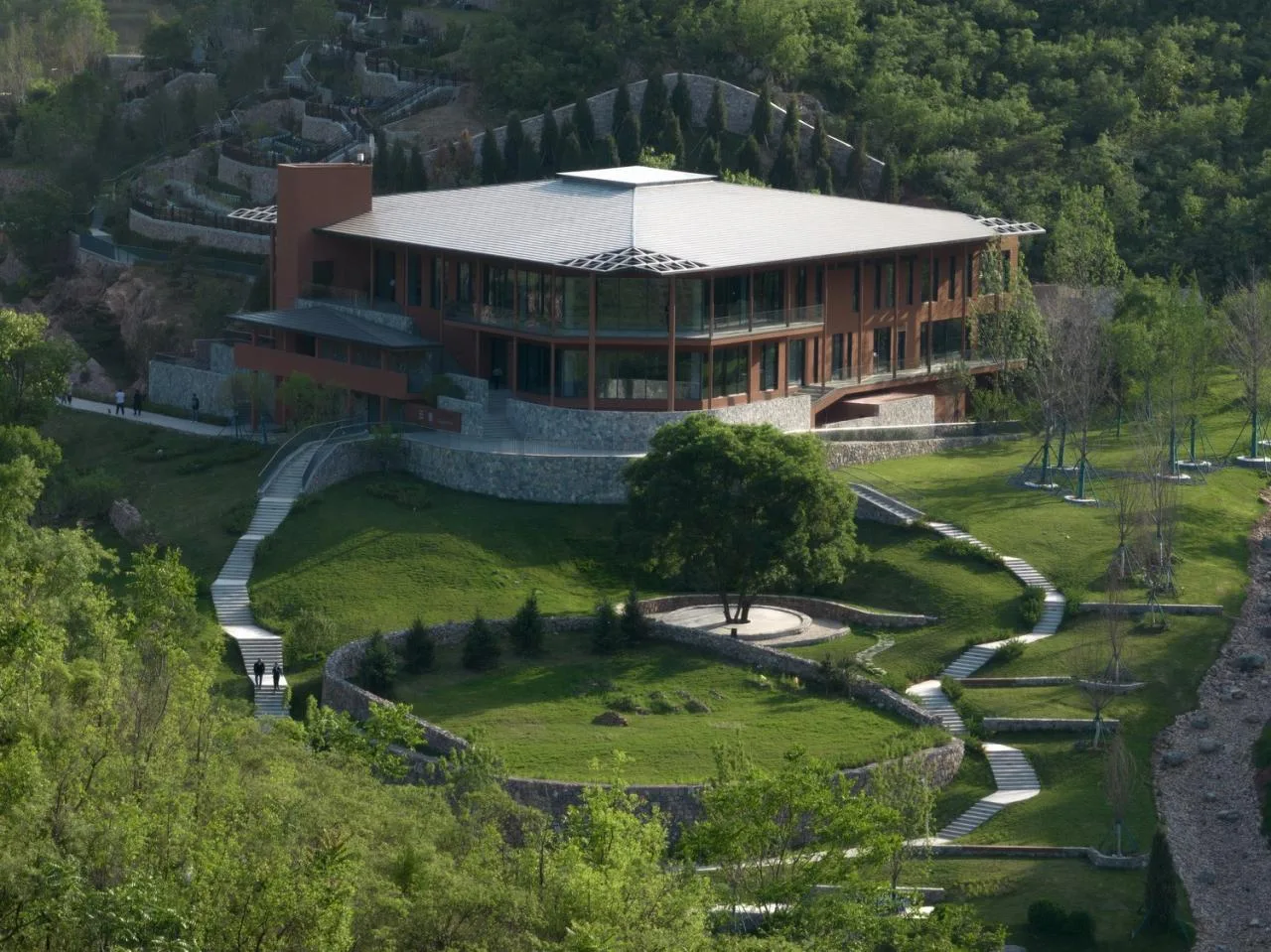
▲ The lush Tree of Life in front of Yunjing Gate
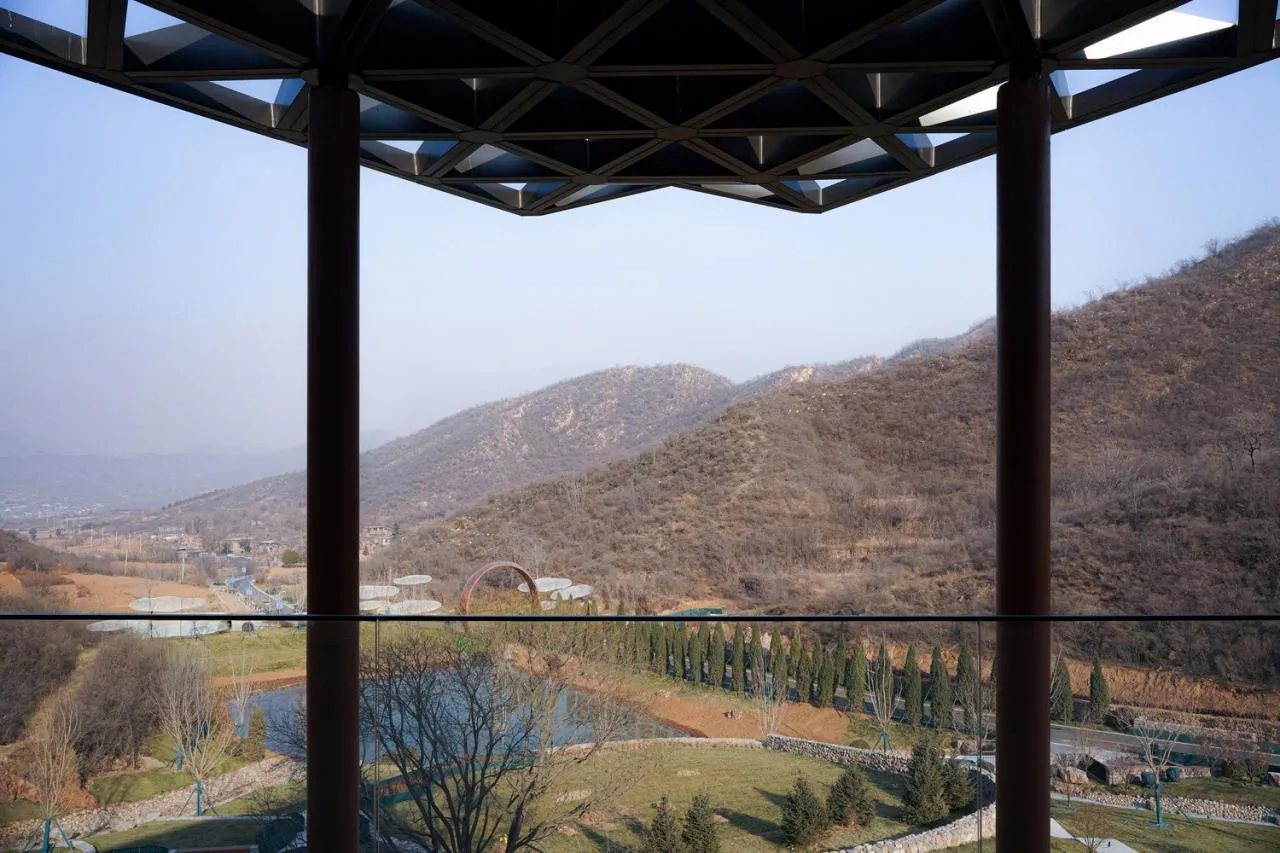
▲ The Tree of Life in winter
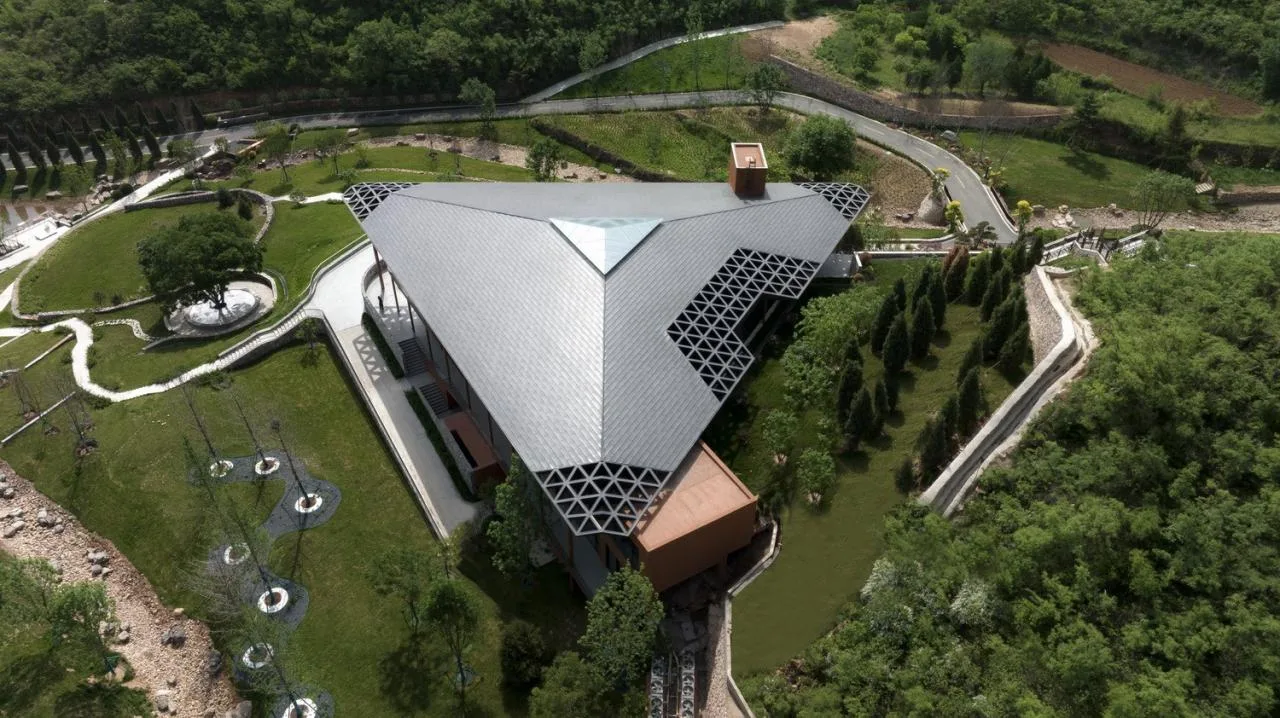
Cloud Mirror serves as the Memorial Park’s primary building, integrating multiple functions: Cemetery Service Center, Memorial Hall, Ash Storage, Meditation Courtyard, Restaurant, Burial Product Exhibition and Sales, Flower Shop, Cemetery Management Office, and more.
Located at the end of the Big Dipper’s handle—known as the Broken Army Star and an ancient symbol of auspiciousness, fearlessness, and rebirth—the Cloud Mirror occupies a triangular plot at the mountain’s foot. The star imagery is expressed through equilateral triangles of various scales, making the building resemble a massive star floating in the valley, radiating eternity, longing, protection, and strength.
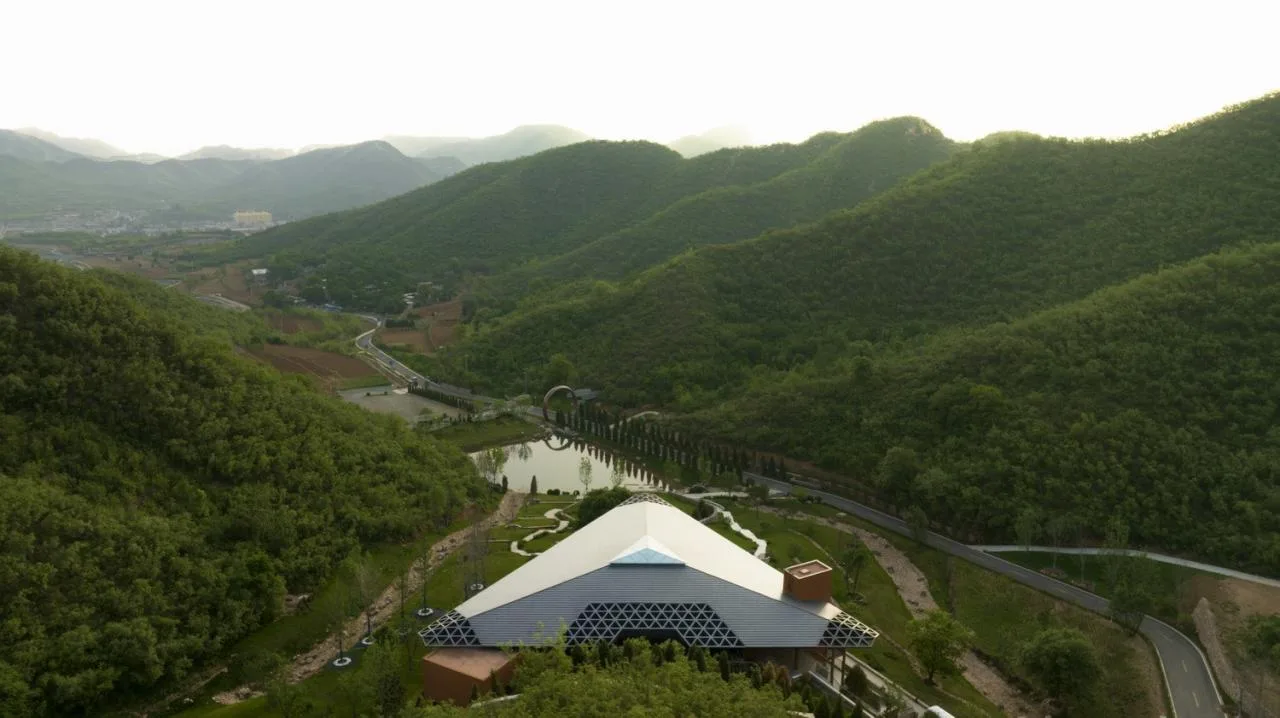
▲ Aerial view of Cloud Mirror
The design centers on a triangular skylight, with the building’s layout, form, and structural details emphasizing the interplay of triangles with light and shadow. The triangular roof skylight and corner frameworks bathe the service hall and courtyards in sacred, rich illumination.
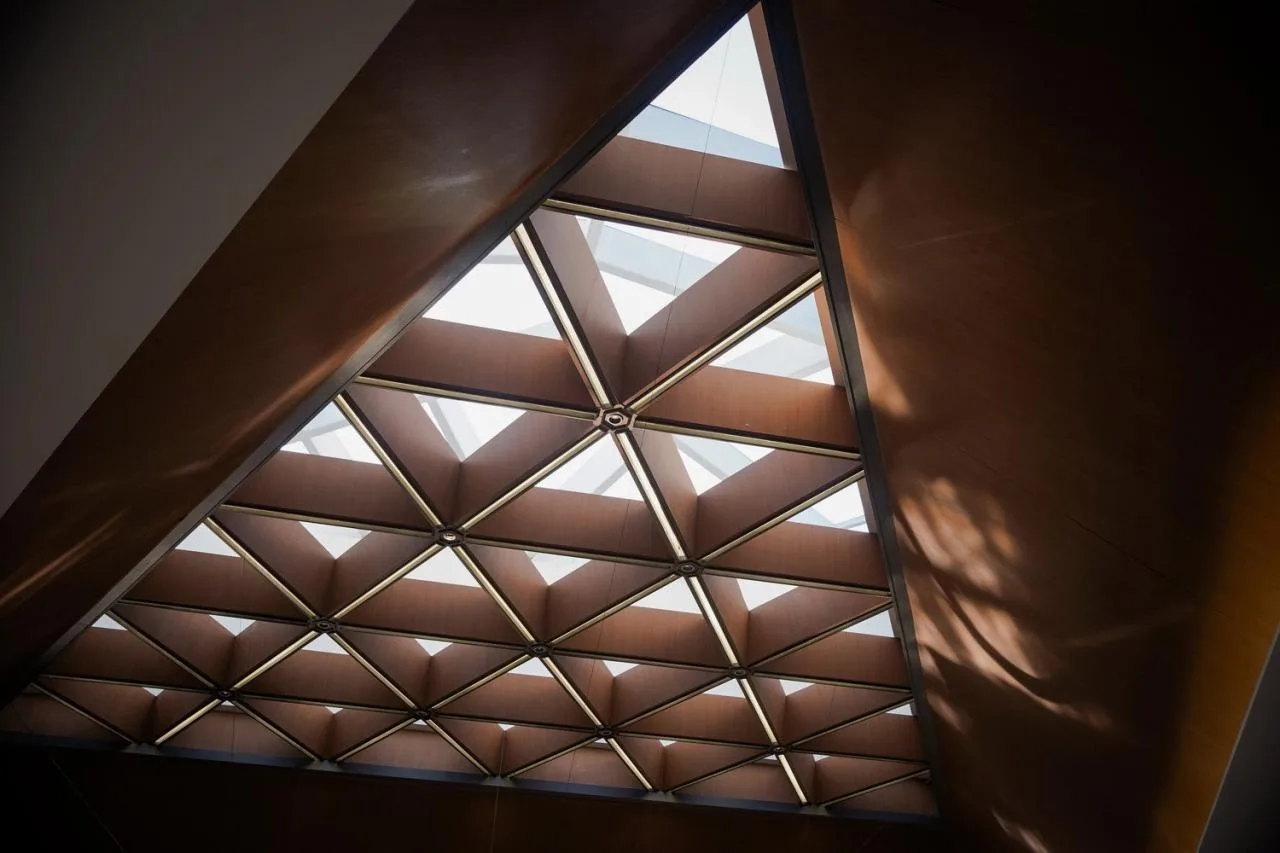
▲ Light and shadow through the skylight triangle
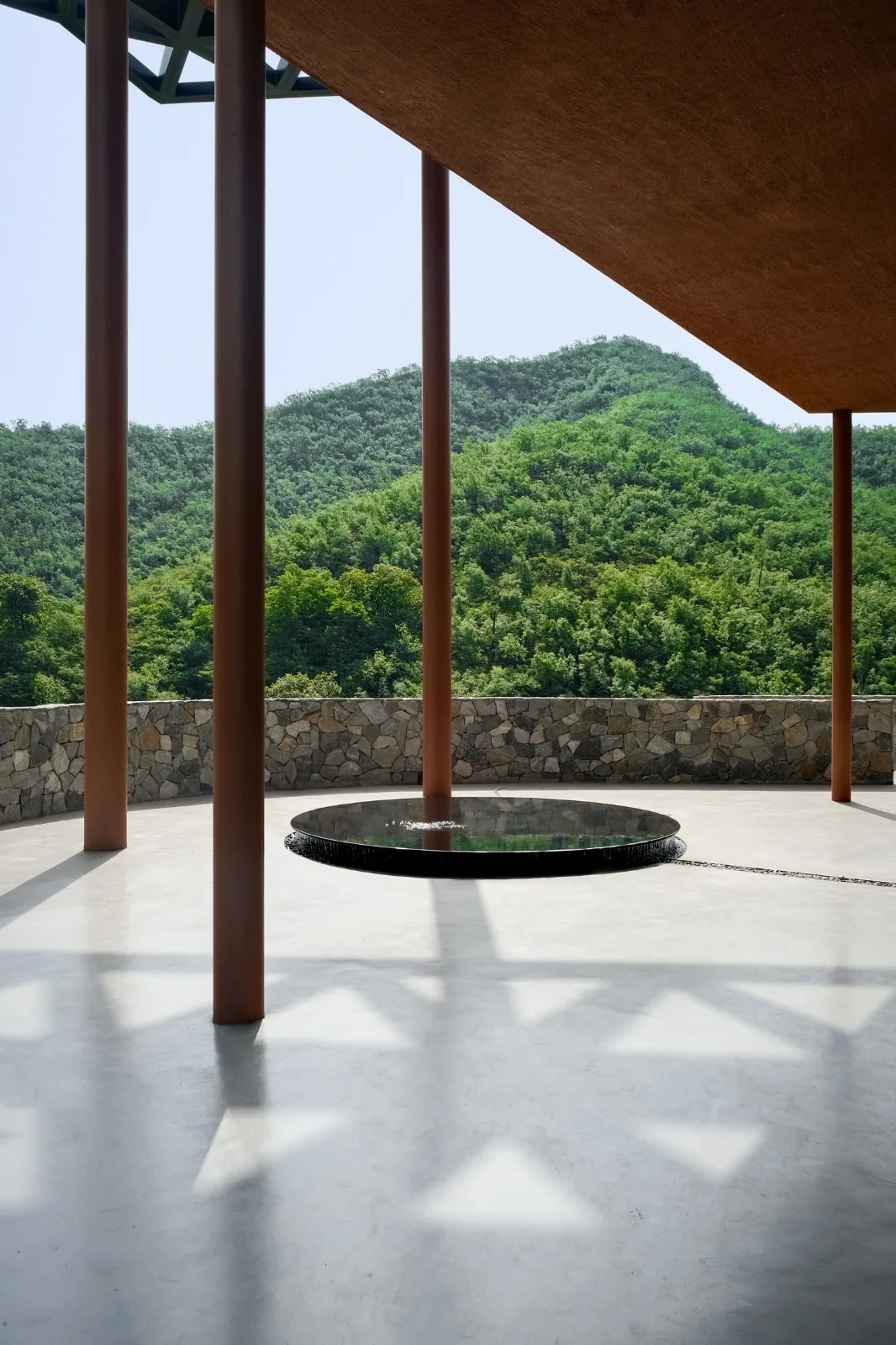
▲ Triangular eaves in the front yard play with light and shadow
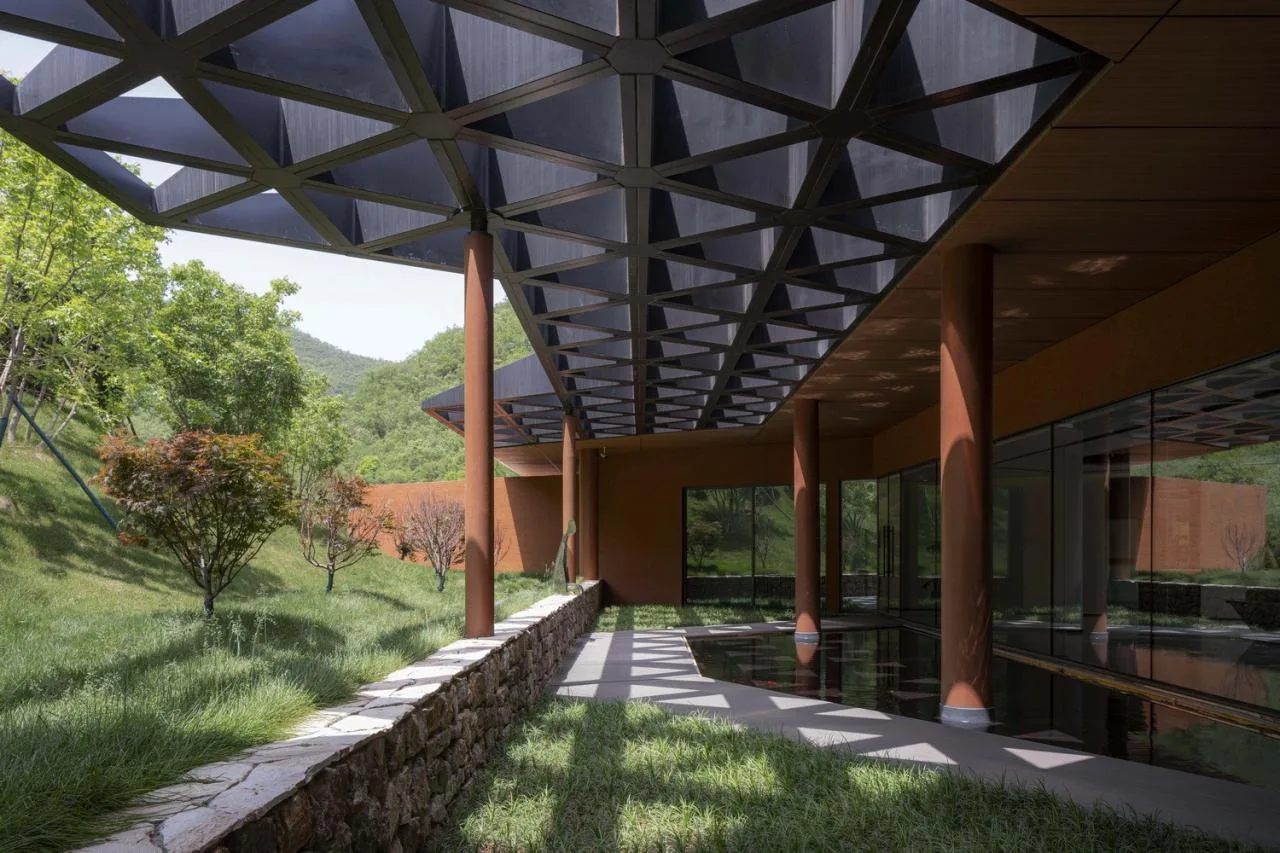
▲ Triangular eaves in the backyard with shifting light and shadow
Every noon, sunlight streams through the roof’s glass skylight, piercing the glass floor of the service hall and cascading down through the falling leaves installation in the central skylight courtyard. The light passes through the restaurant’s crystal-clear glass brick wall, illuminating the memorial hall’s lower courtyard. This beam bridges heaven and earth with yin and yang, creating a sacred, serene, and ceremonious atmosphere, while adding warm, colorful light.
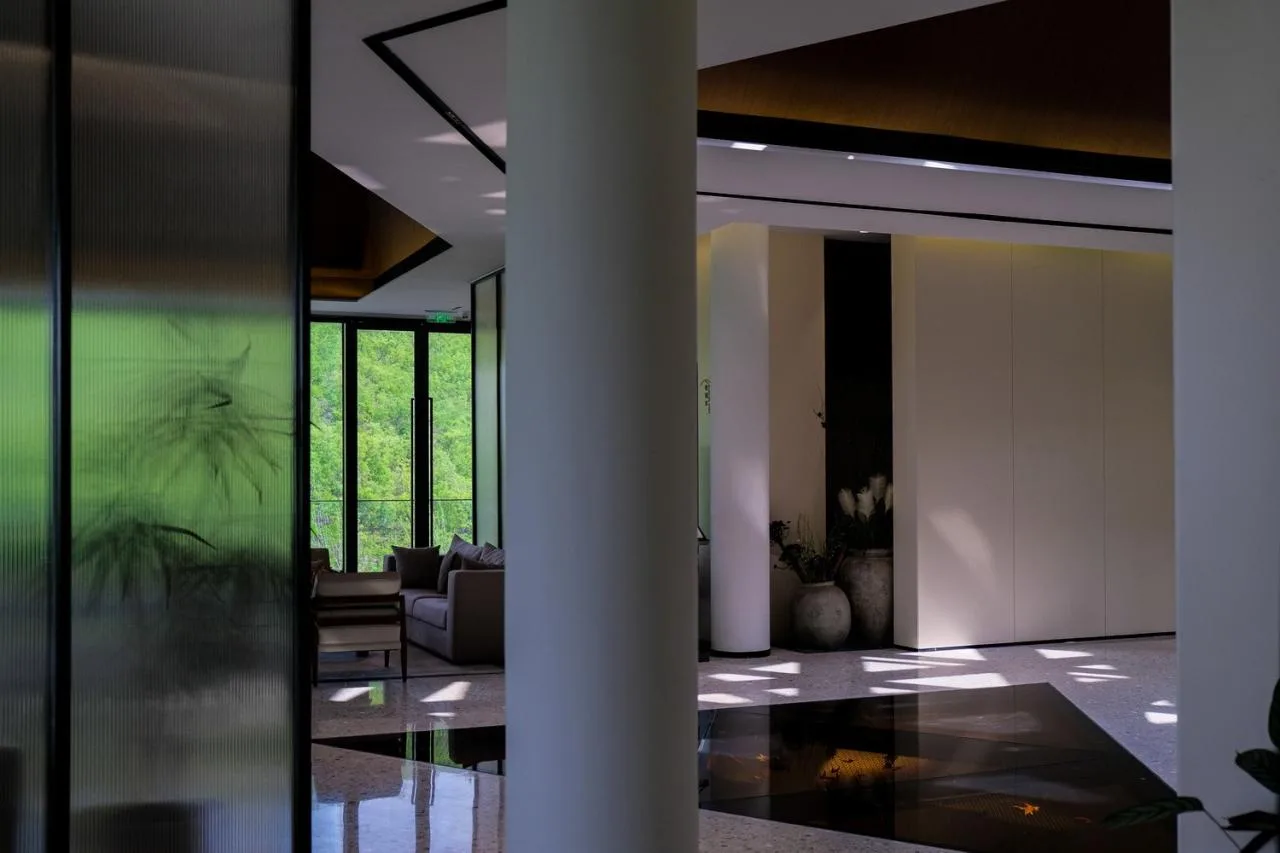
Sunlight filtering through the glass floor of the service hall
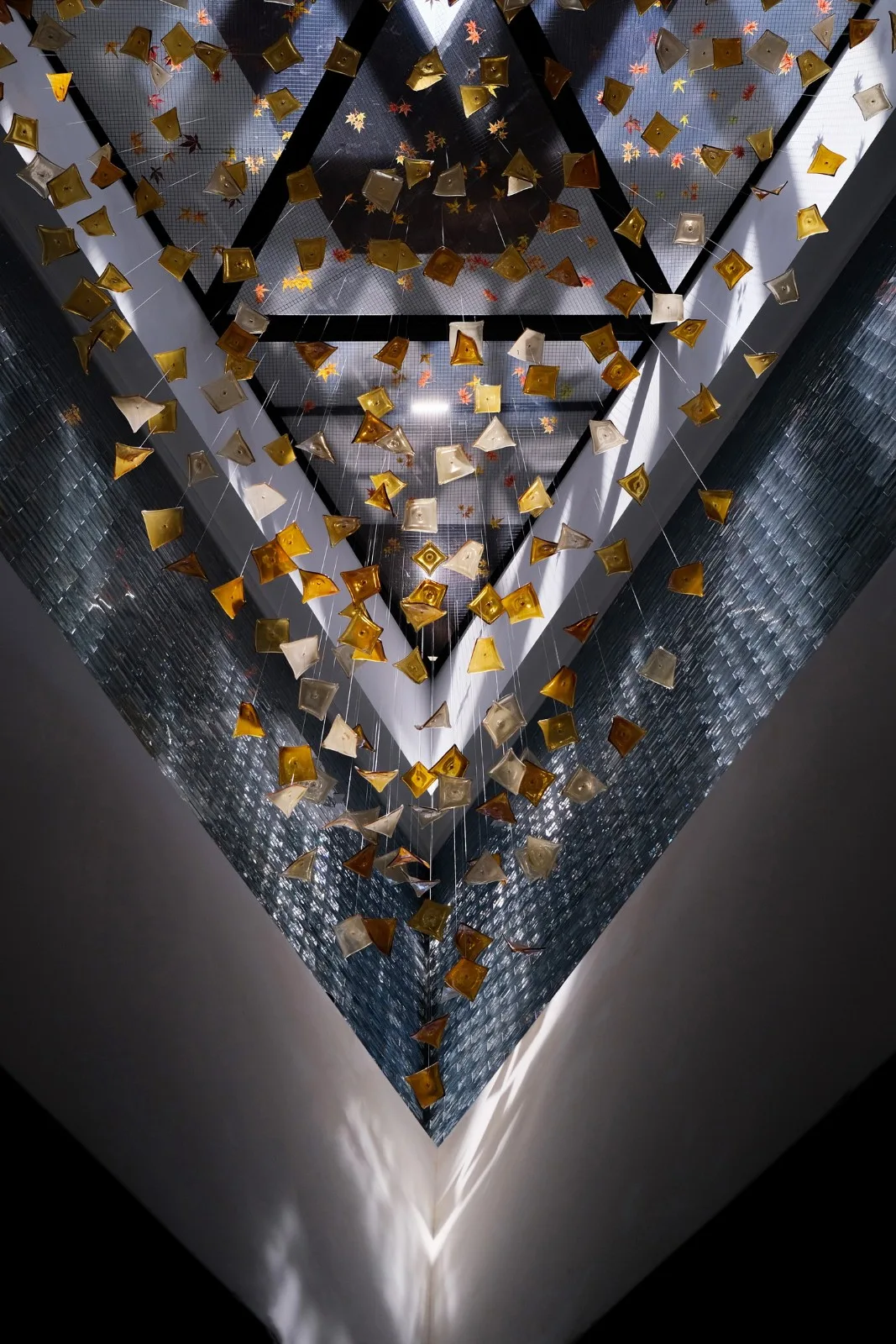
▲ Sunlit “falling leaves returning to roots” installation in the courtyard
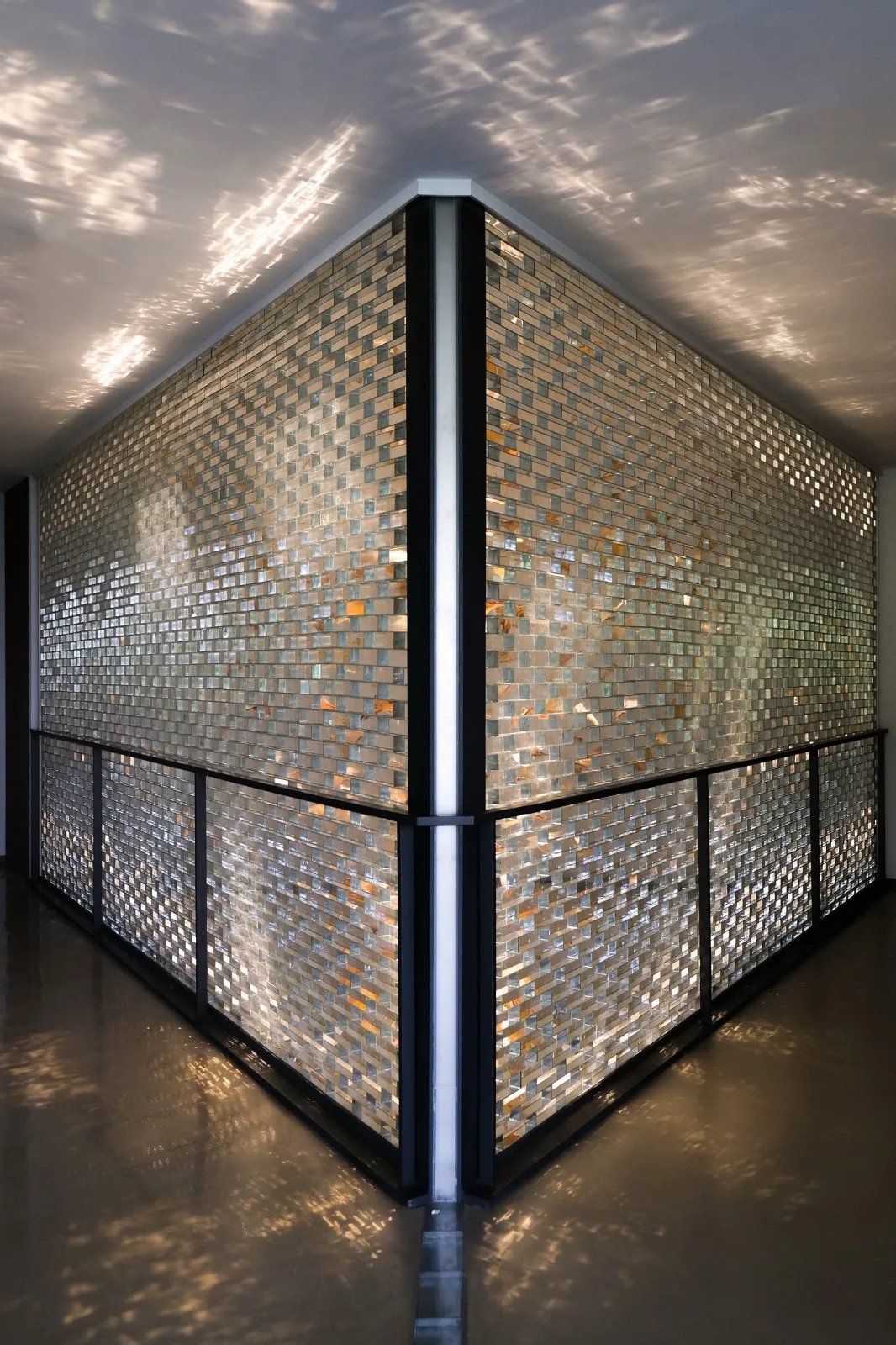
▲ Sunlight gleaming through glass bricks inside the restaurant
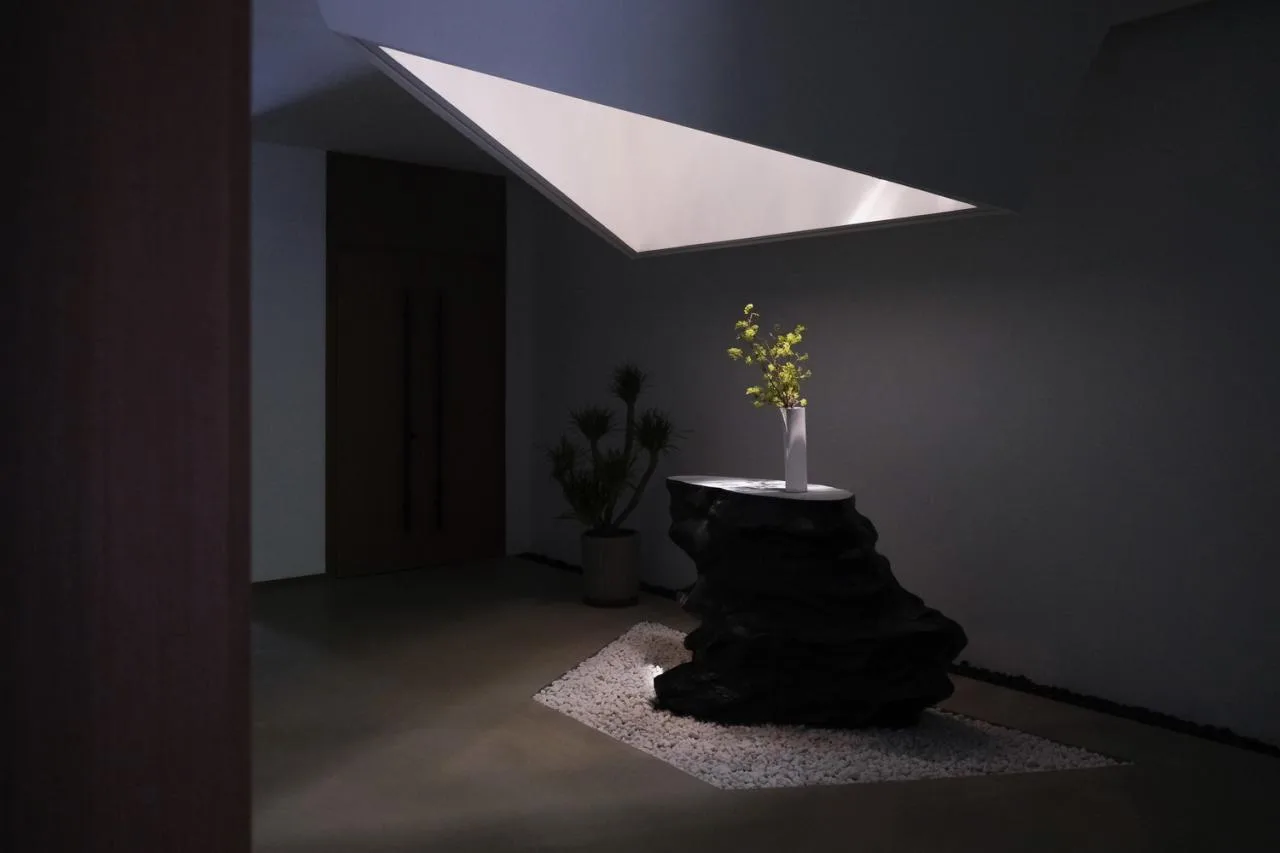
▲ The sky illuminates the memorial hall courtyard
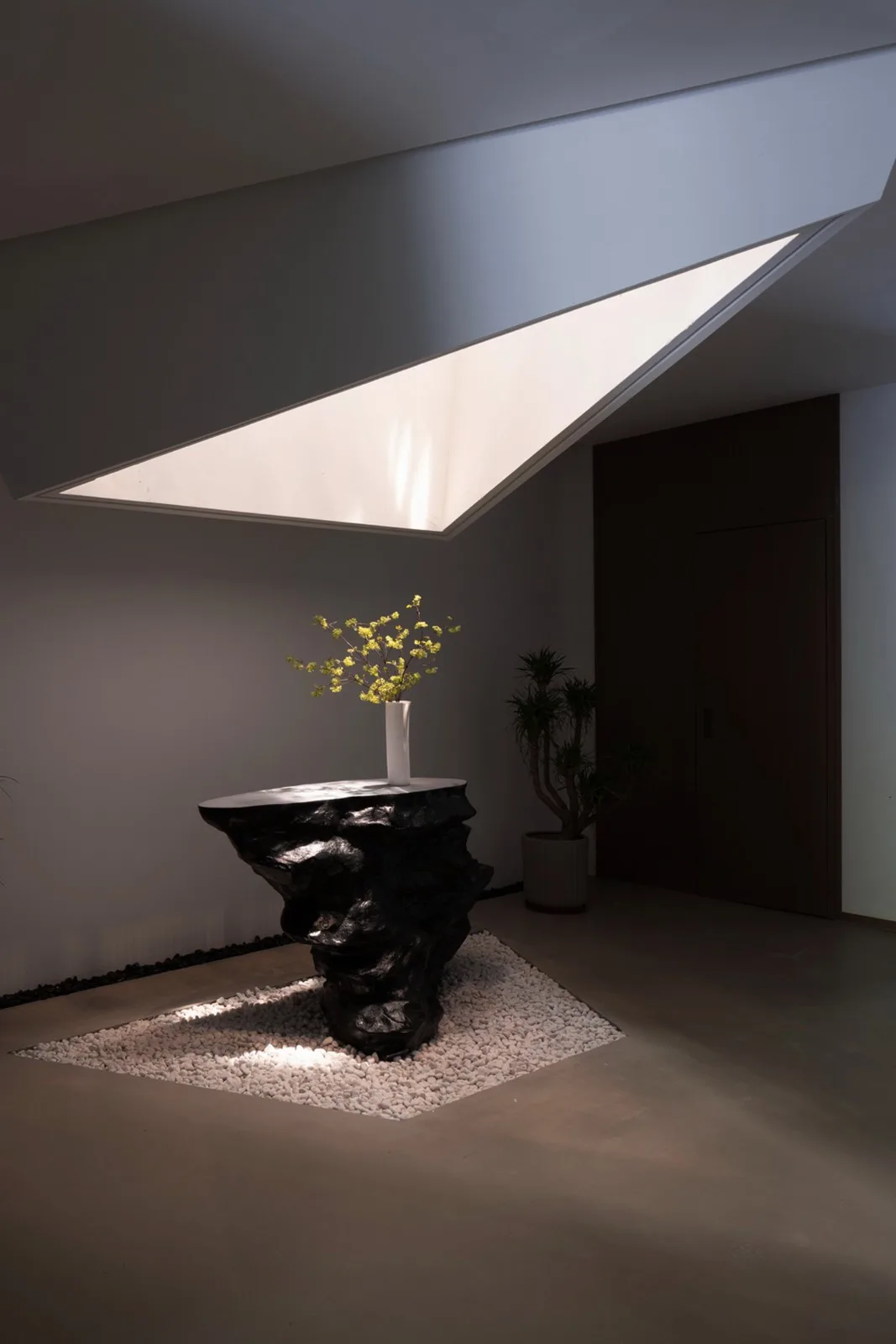
▲ The sky illuminates the memorial hall’s small courtyard
The triangular skylight courtyard at Cloud Mirror’s center symbolizes China’s “unity of heaven and humanity,” with its three sides representing the Ziwei Wall, Taiwei Wall, and Tianshi Wall. To amplify the building’s ceremonial atmosphere, 28 columns encircle the triangle’s center, representing the 28 constellations of traditional Chinese culture and symbolizing the four seasons and the natural life cycle.
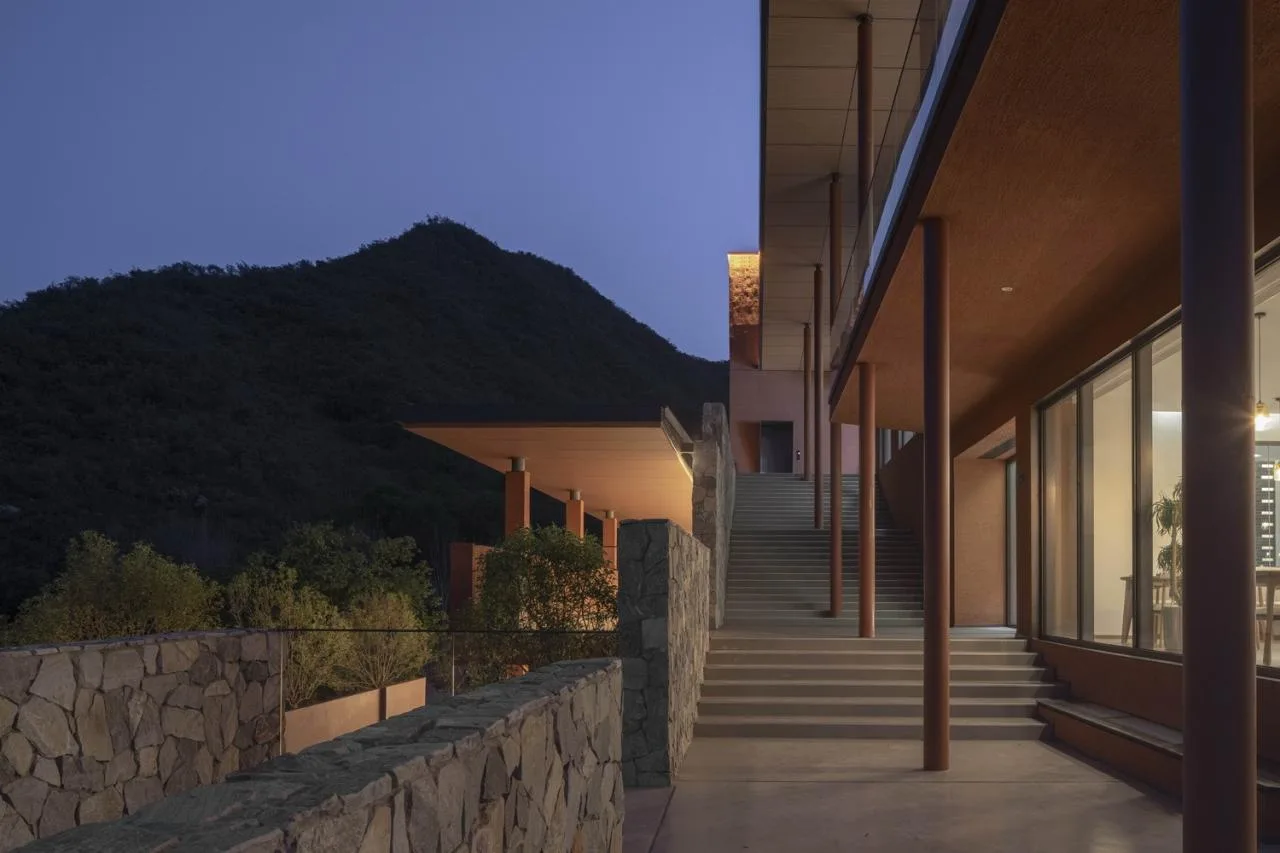
▲ Soft lighting fills the north entrance staircase and constellation columns
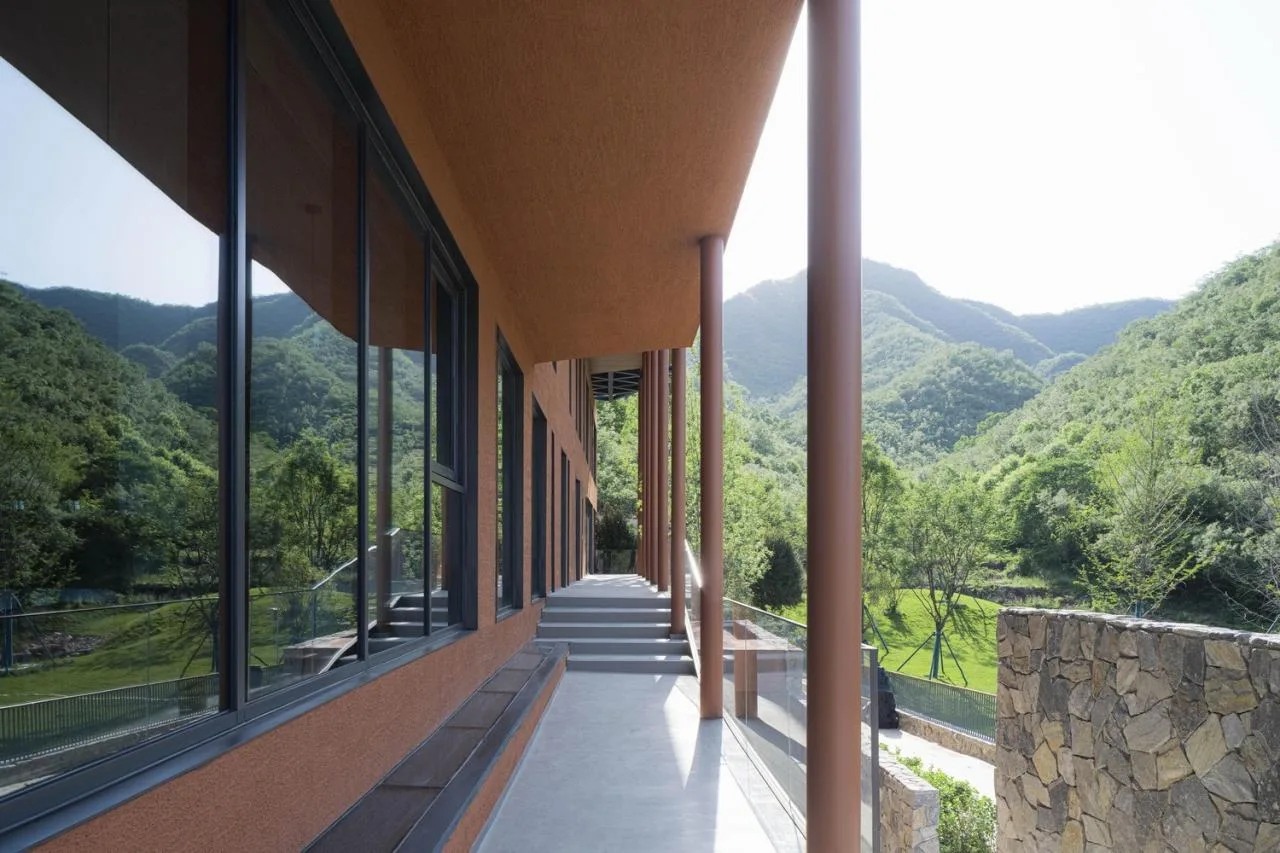
▲ Column corridor leading to the southern office area
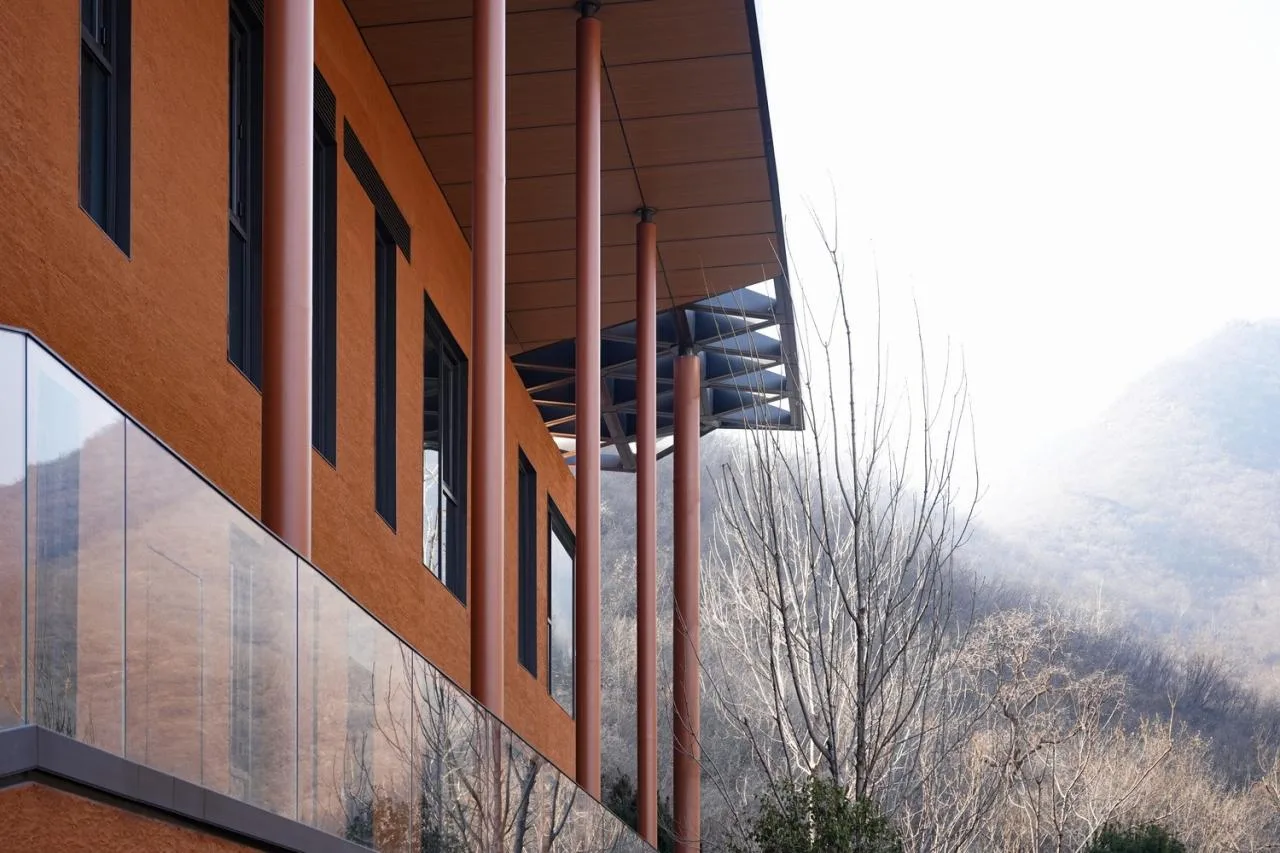
In winter, the vibrant red colonnade stands warmly amid the barren landscape.
Three semi-outdoor spaces are set along Sanyuan’s boundaries, offering places to pause, enjoy the scenery, meditate, and reflect. These areas serve as unique sites for dialogue with nature, self, and the departed, providing healing environments.
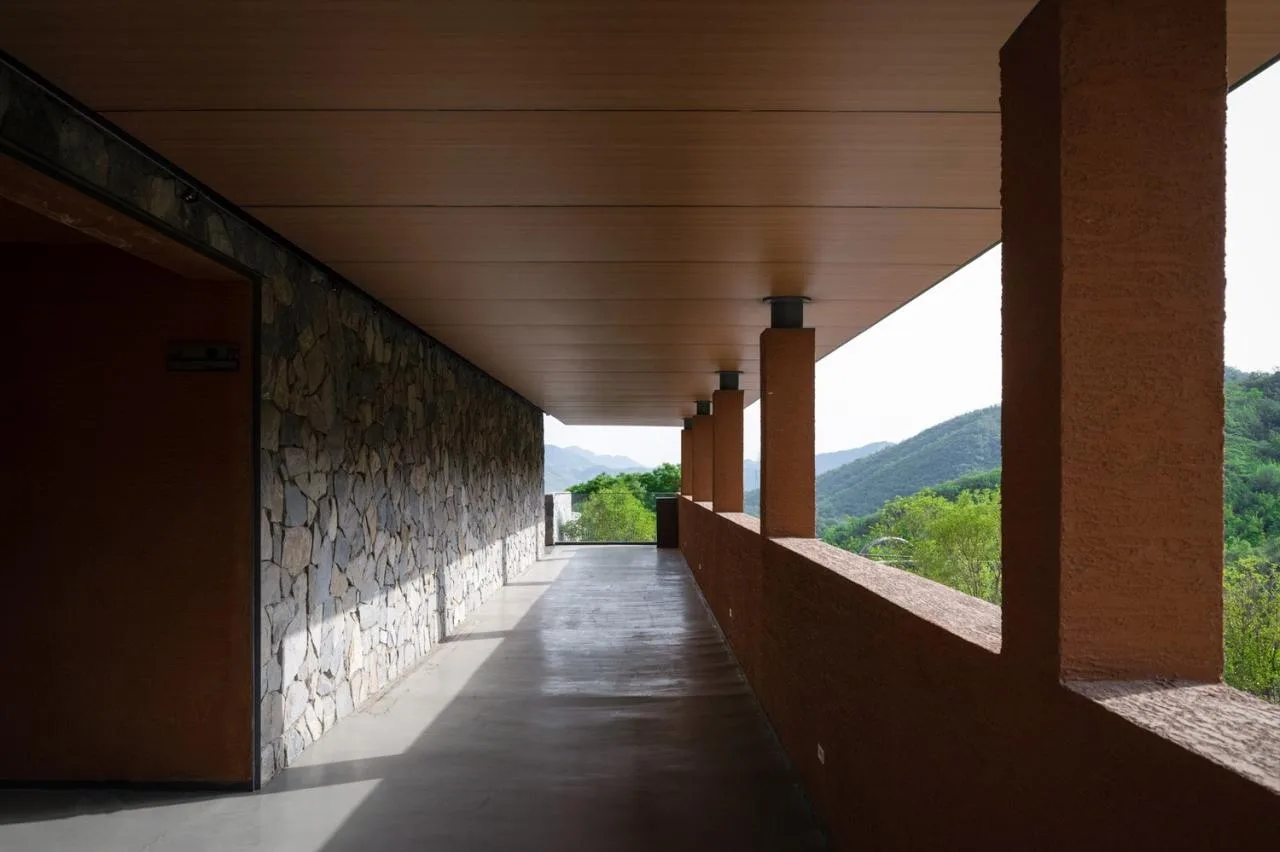
▲ Dialogue with Nature Viewing Gallery
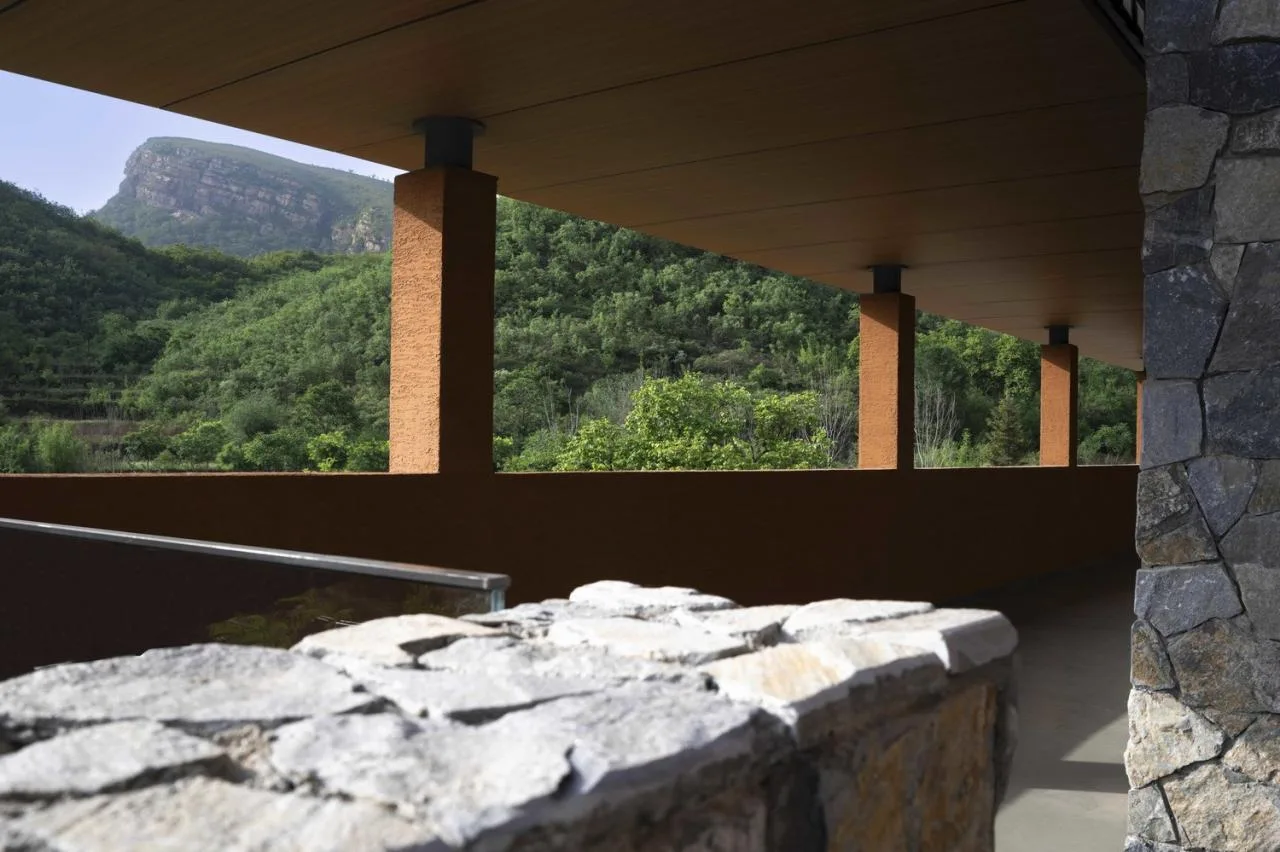
▲ Dialogue with Nature Viewing Gallery
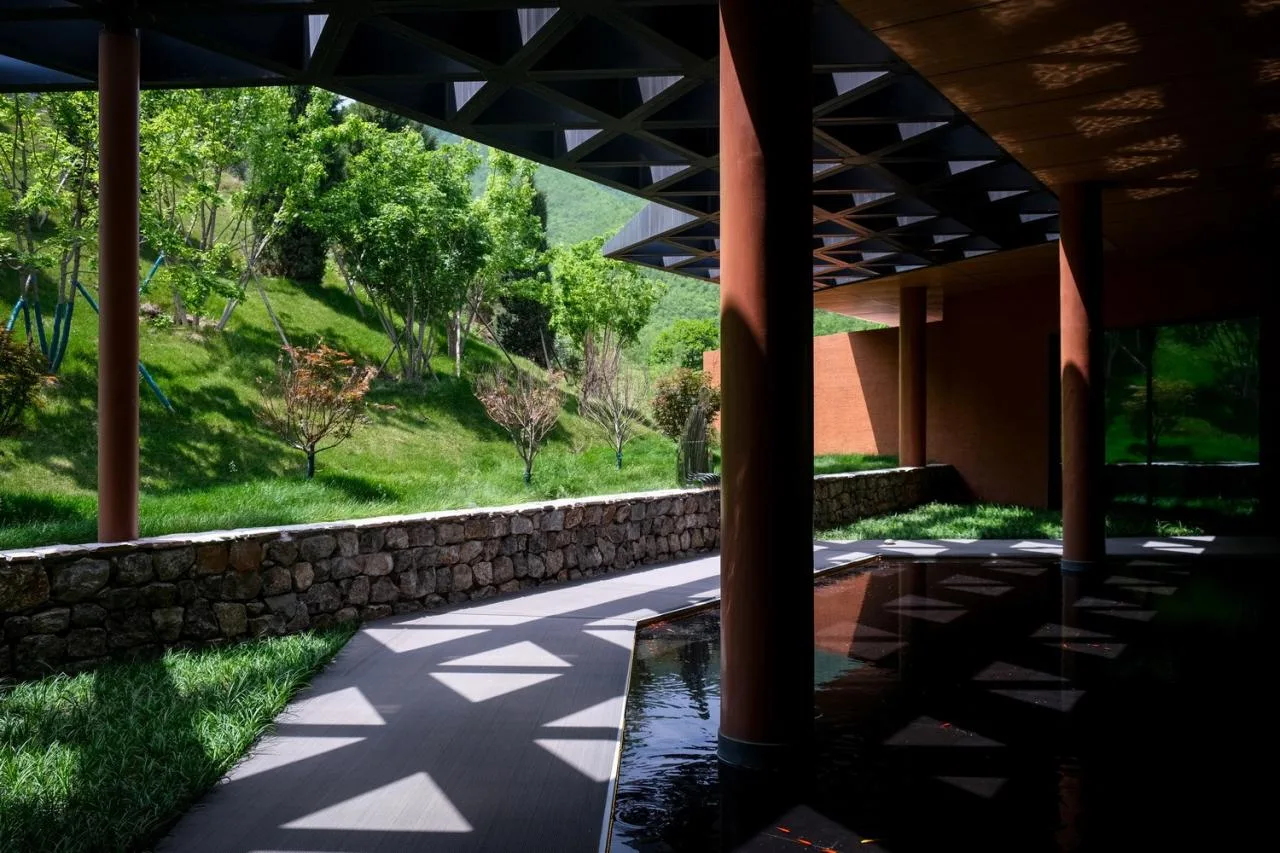
▲ The tranquil backyard of the service center bathed in rich light and shadow
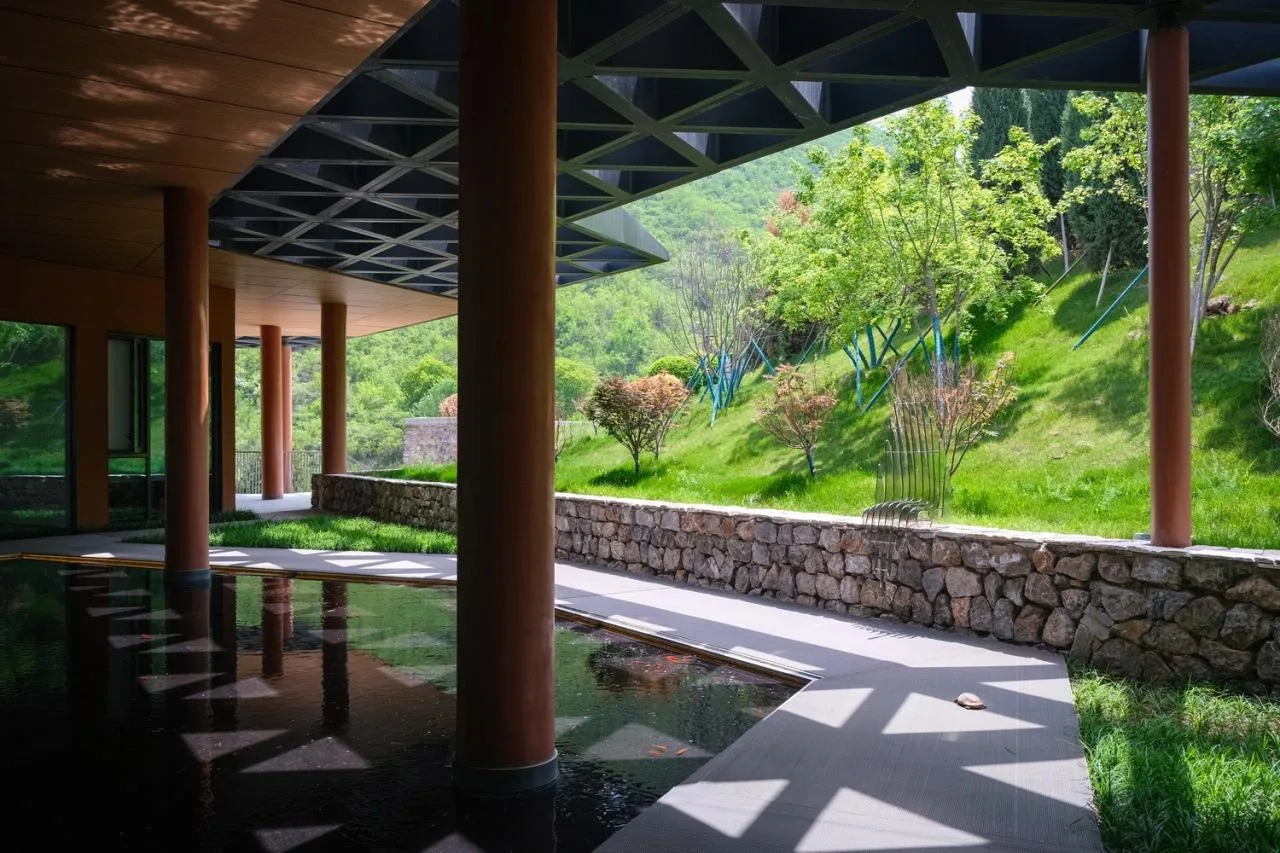
▲ The serene backyard of the service center filled with light and shadow
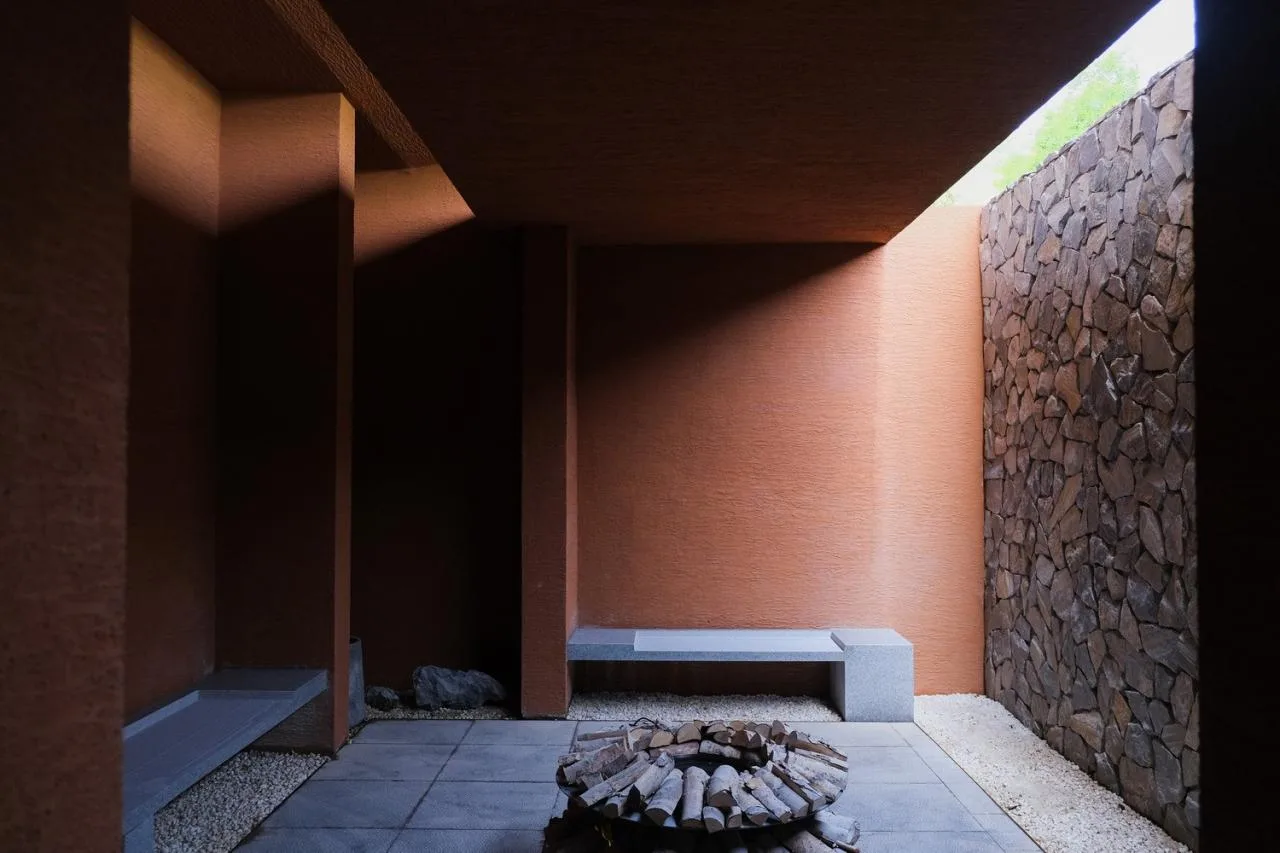
▲ Meditation courtyard outside the memorial hall
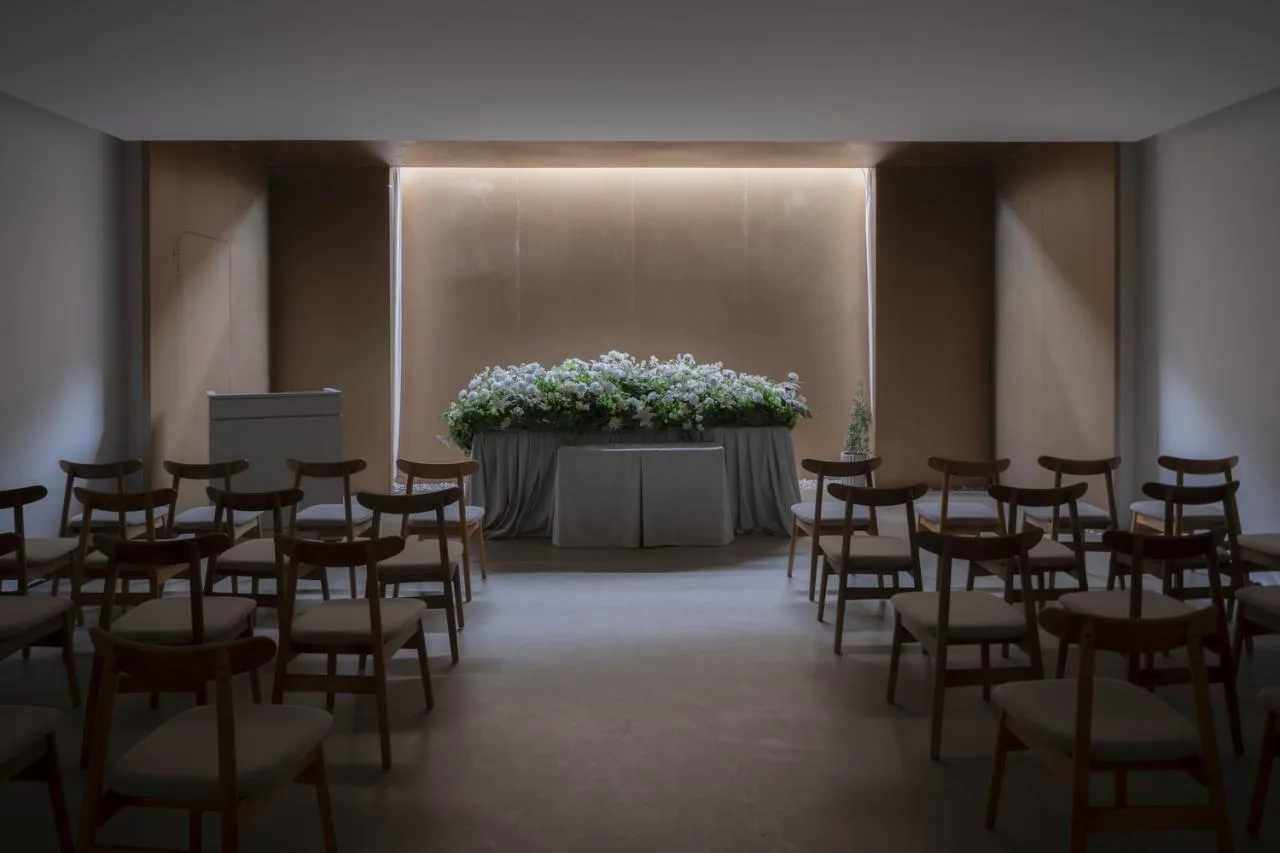
▲ The memorial hall reaching towards the sky
Along the path to the cemetery lies a small village of rubble and rammed earth houses with traditional blue tile roofs. Low buildings nestle between mountains and towering trees, almost hidden within the valley.
To blend Cloud Mirror harmoniously with the valley, its exterior walls feature rubble at the base and warm straw-colored paint above, matching local soil tones. The sloped roof is replaced by a gray aluminum-magnesium-manganese metal roof instead of traditional tiles. The building extends horizontally and nestles low against the carved mountain.
Its natural-looking walls combine rough stone and straw paint, complemented by slender eaves, warm wood-grain ceilings, and abundant transparent glass, creating a simple, bright, peaceful, and refined atmosphere.
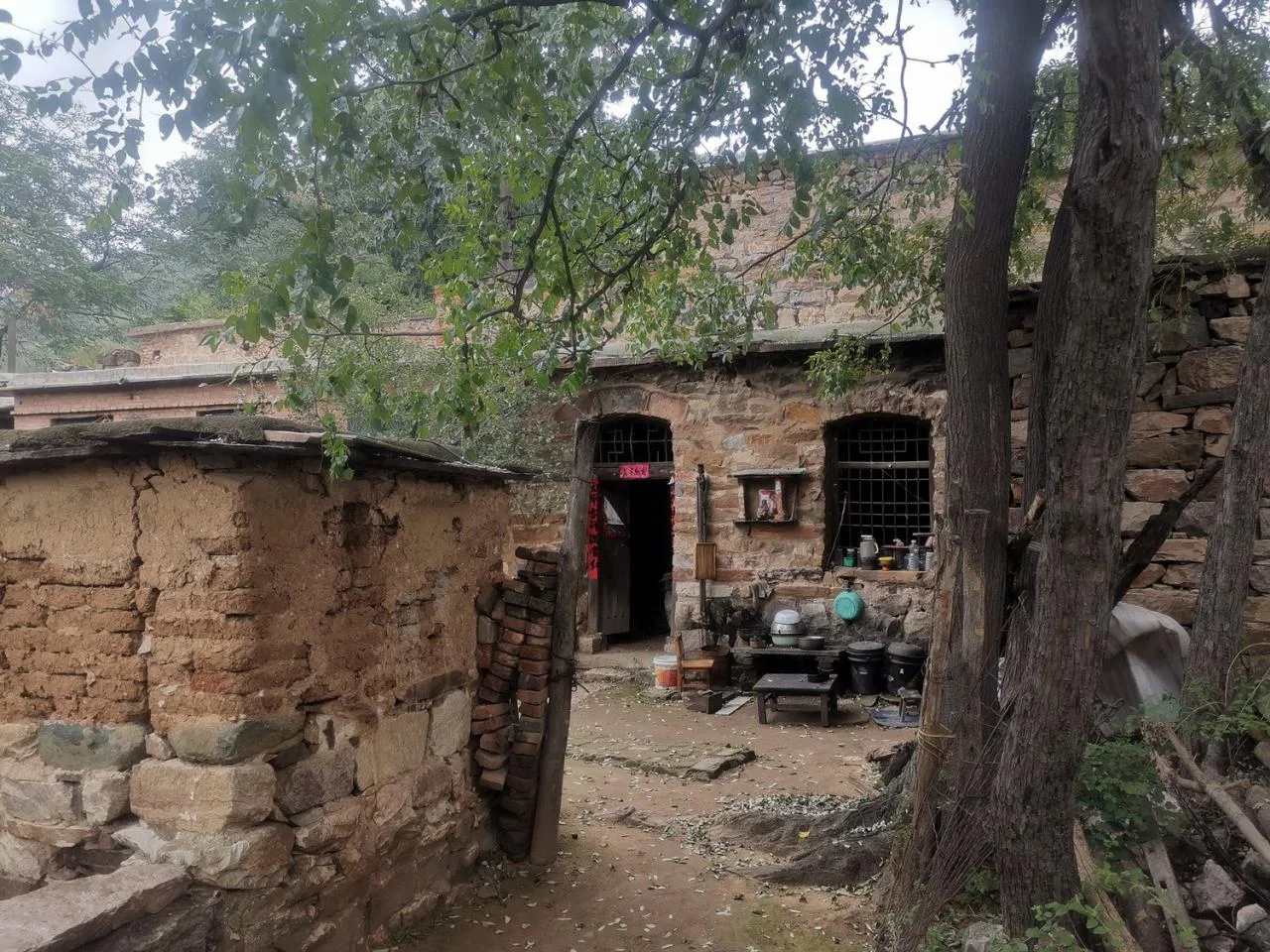
▲ Residential houses in nearby villages
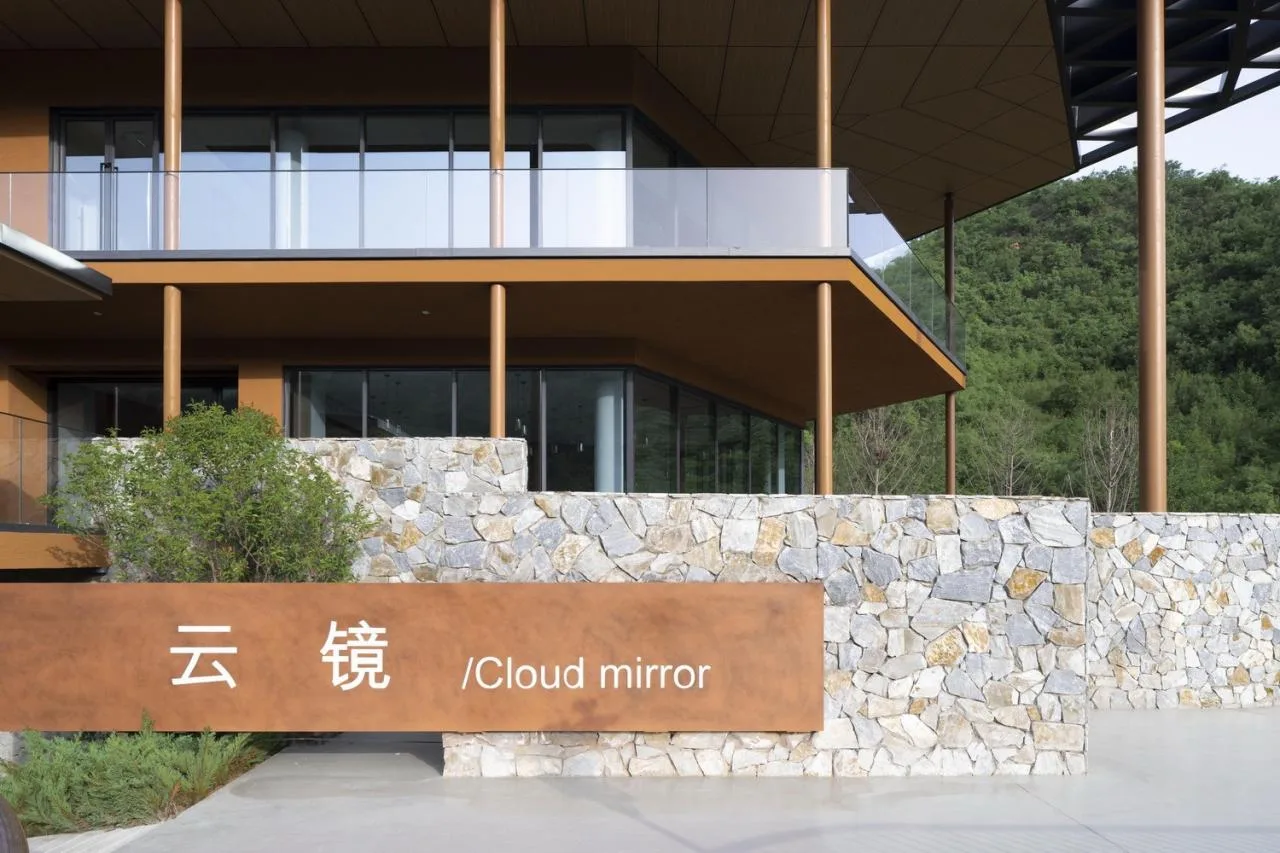
▲ Cloud Mirror entrance exterior with earth-red straw paint and rubble walls
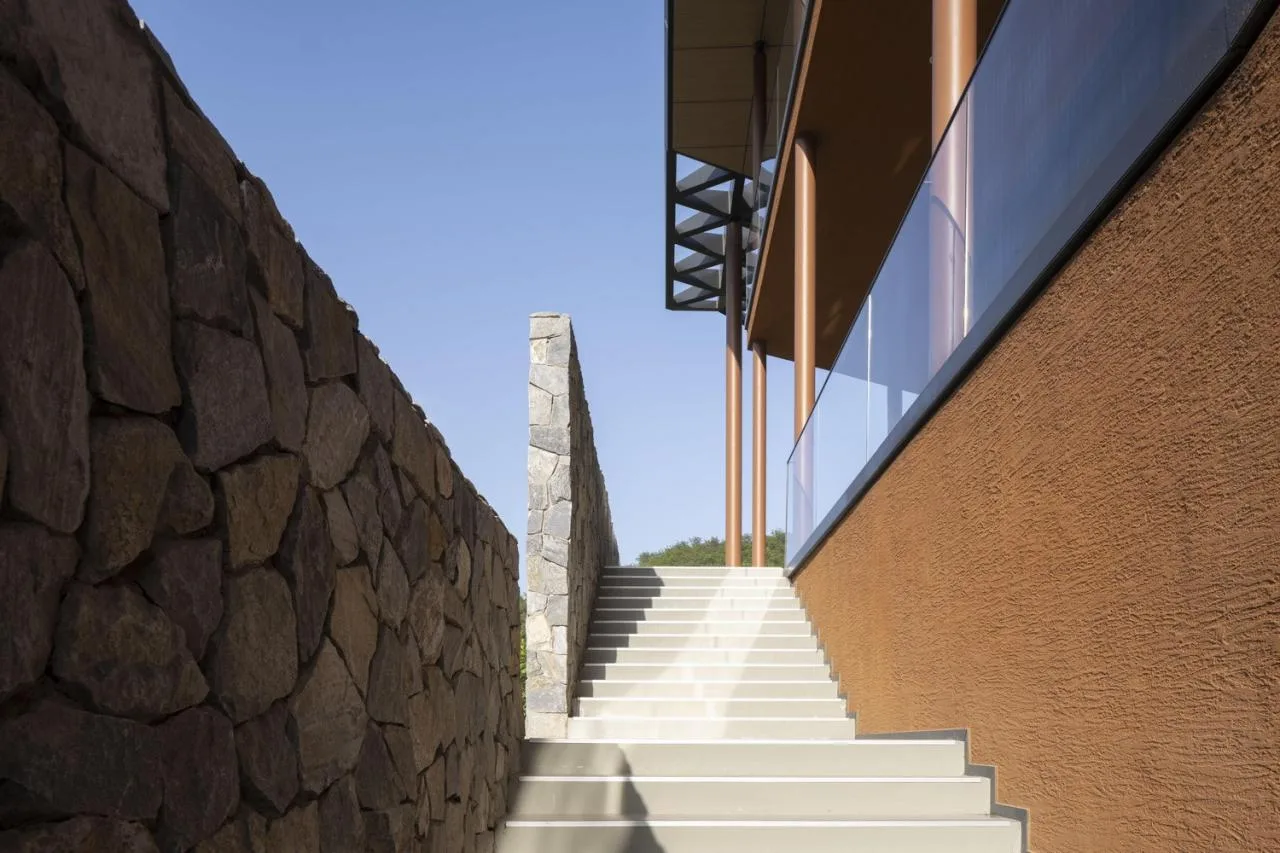
▲ Rubble and straw paint detail
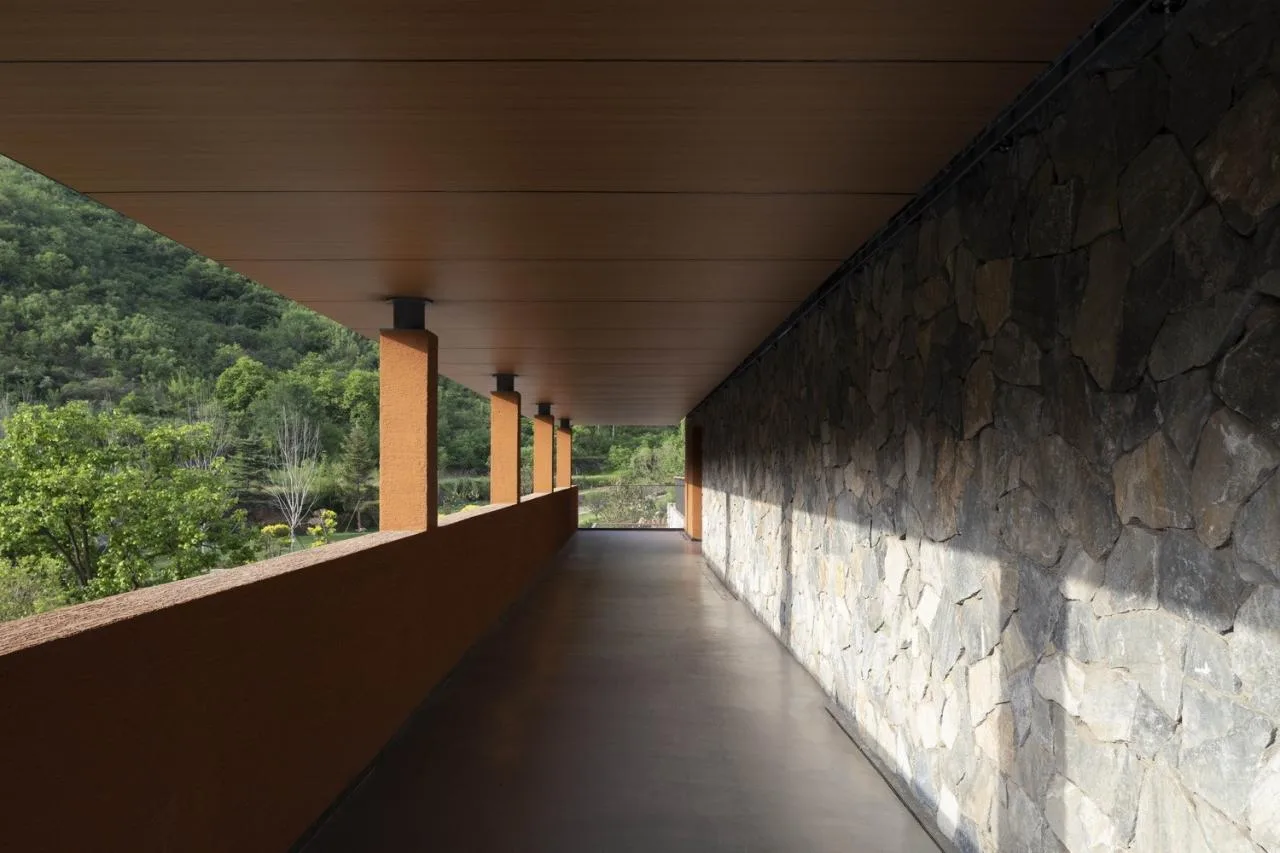
▲ Rubble walls, straw paint, and wooden ceilings
The service center, restaurant, funerary goods exhibition, and cemetery exhibition spaces all face the site’s best views. Lush mountains and bright sunlight flood these areas through full-floor glass walls, creating natural, relaxed, and warm environments.
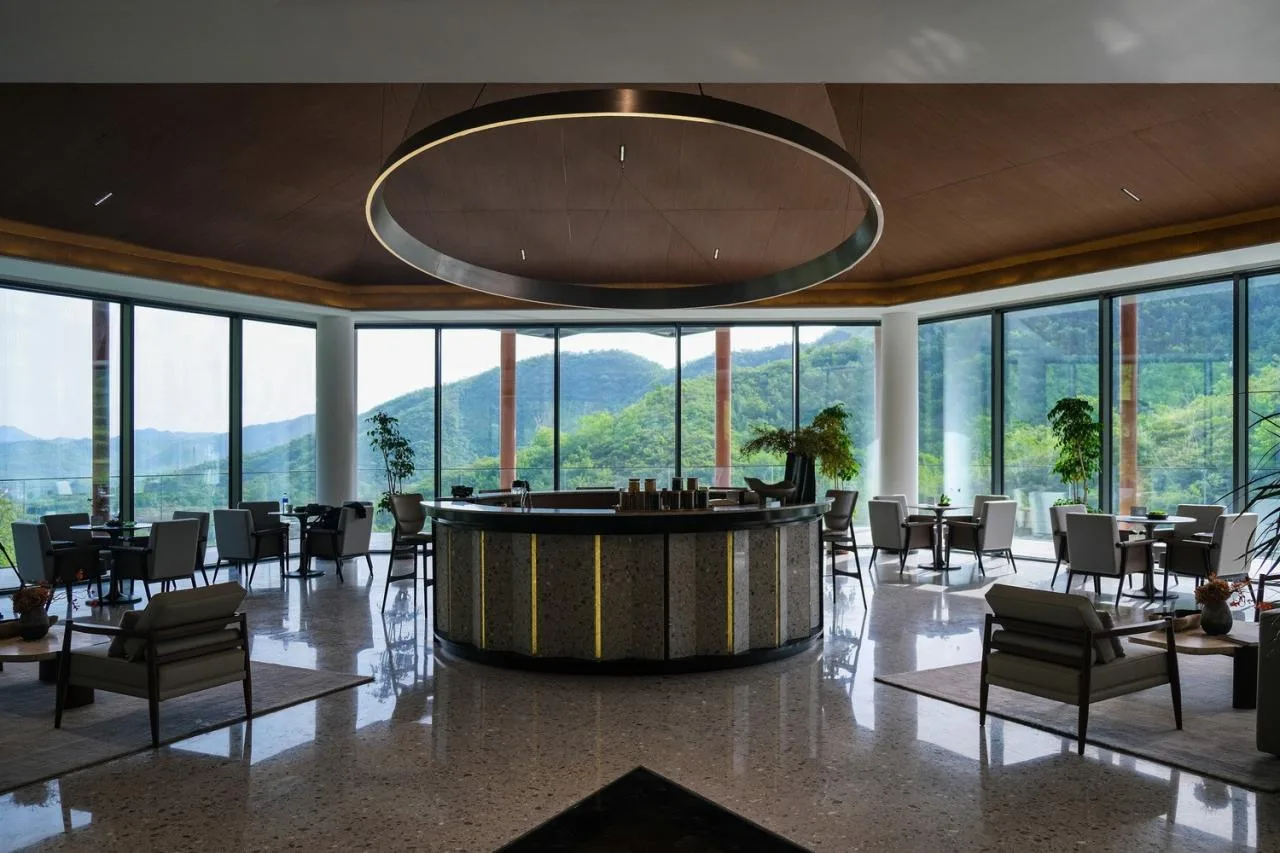
▲ Service Center Hall
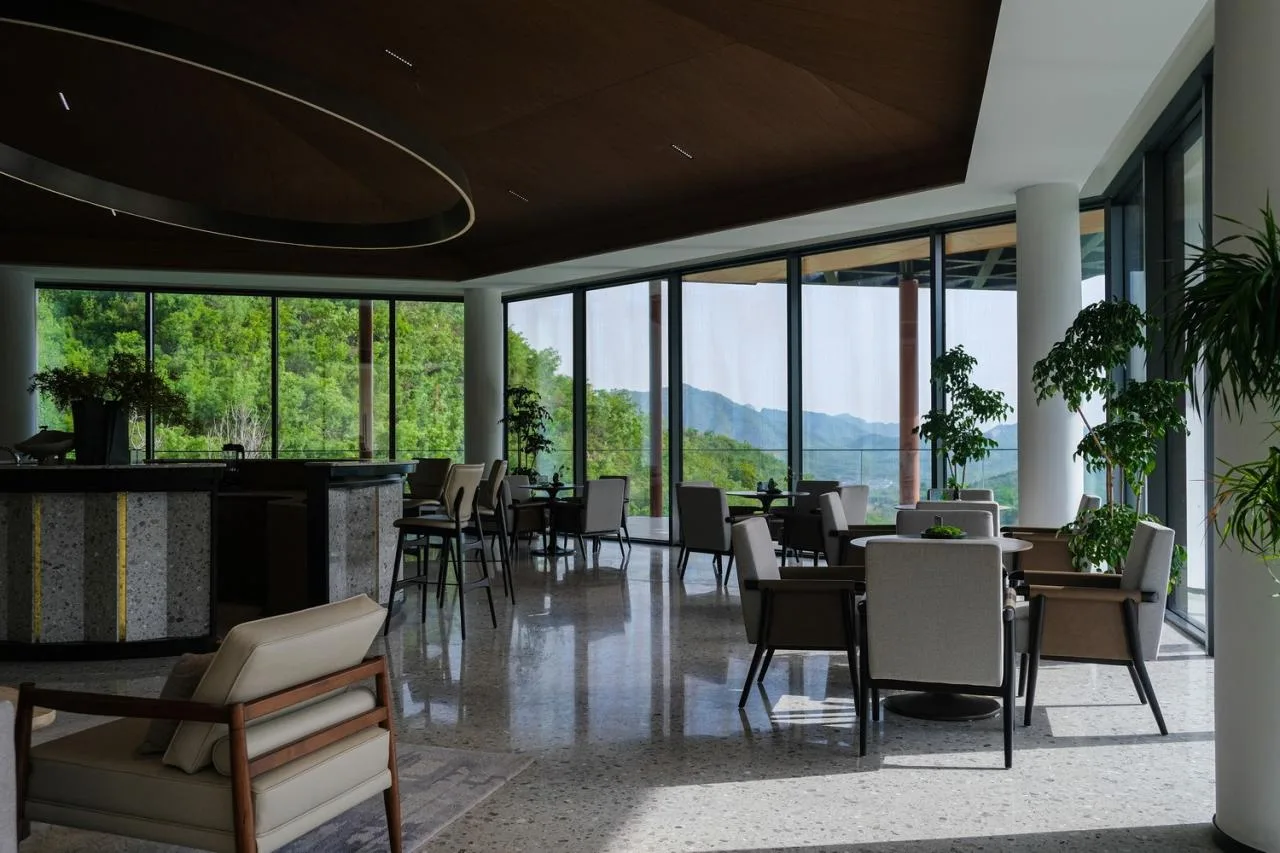
▲ Service Center Hall
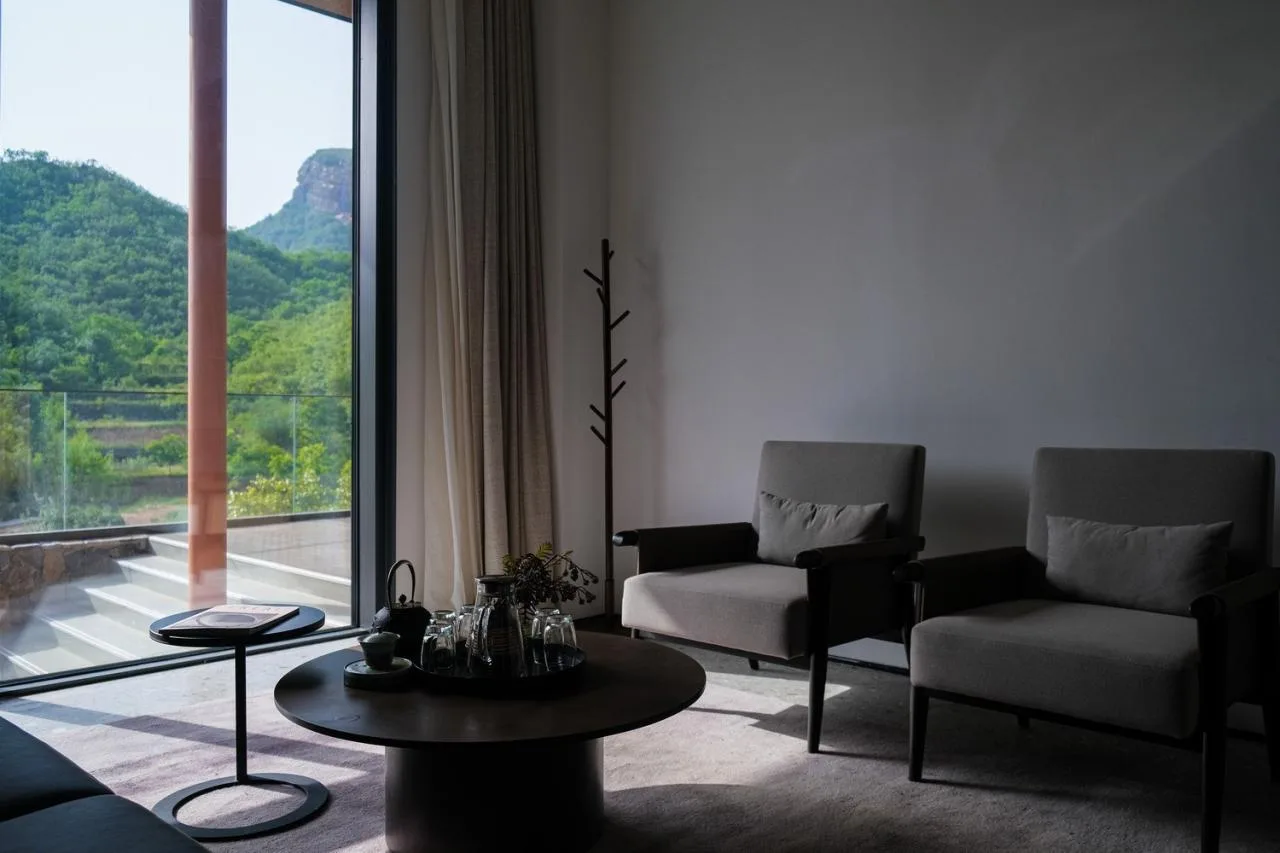
▲ Consultation and Negotiation Room
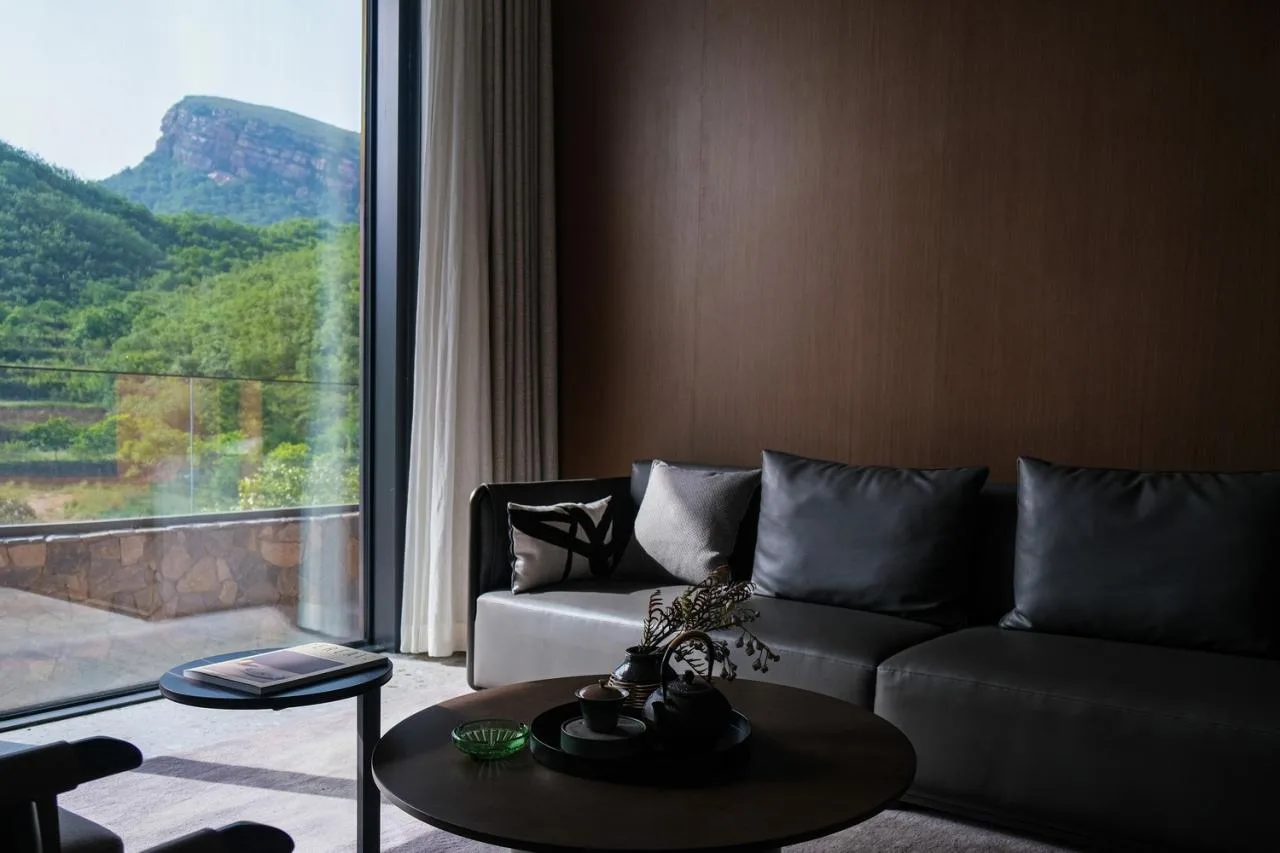
▲ Consultation and Negotiation Room
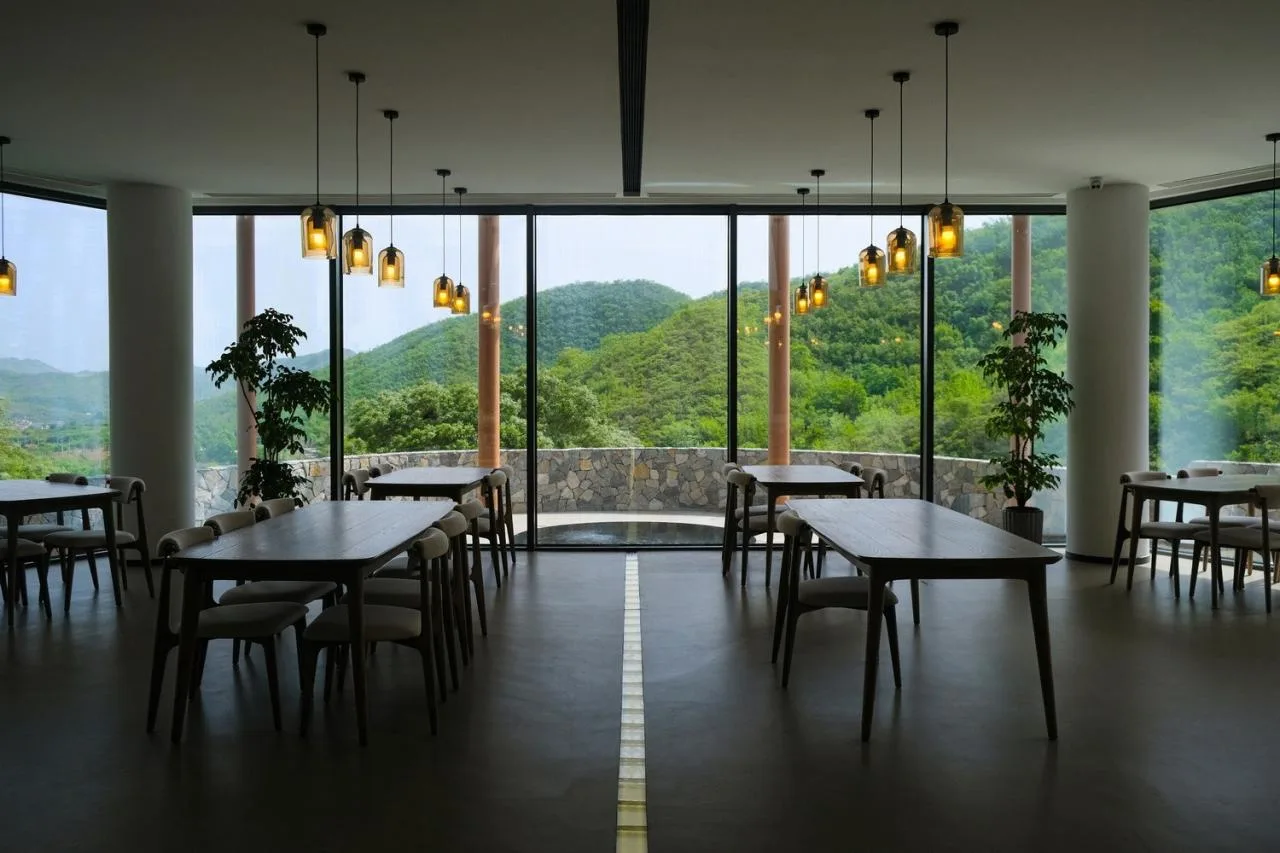
▲ Restaurant Hall
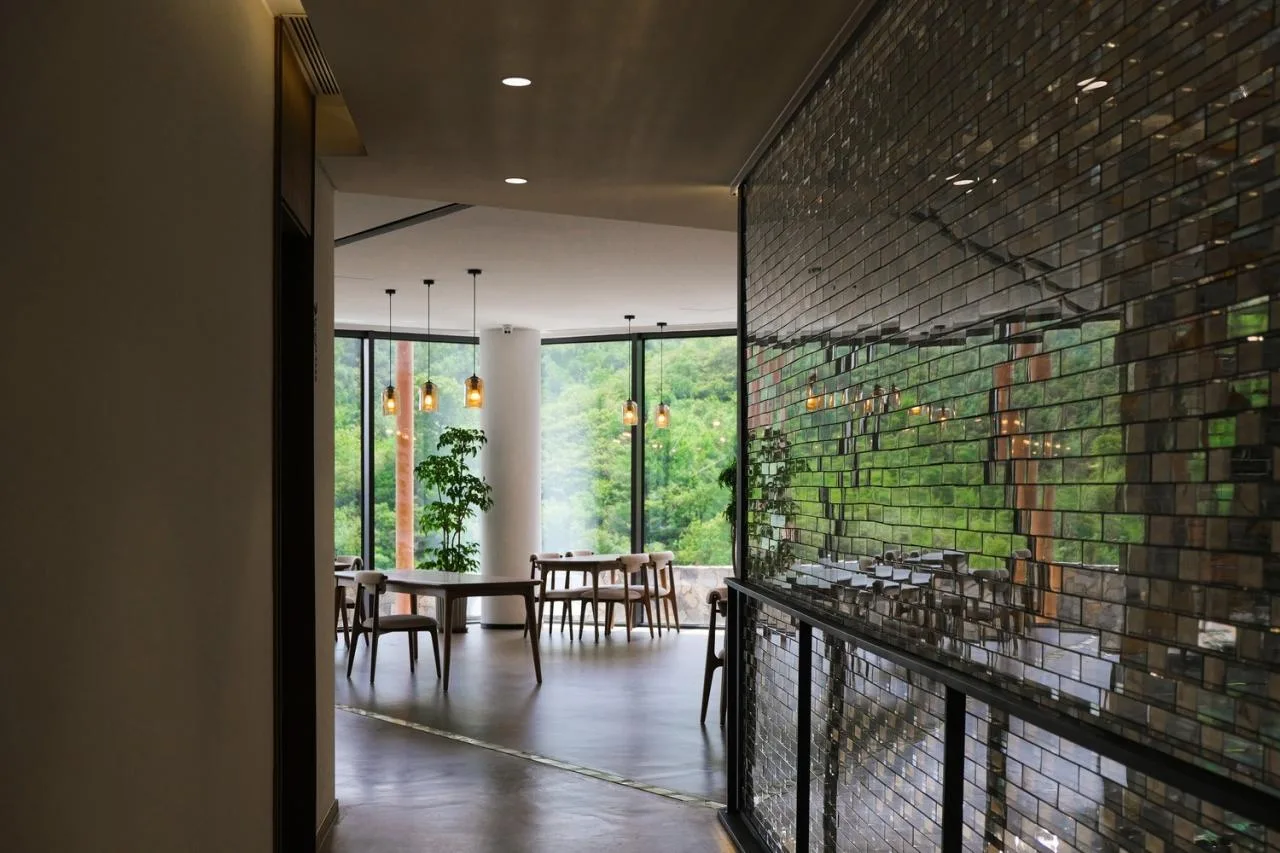
▲ Restaurant Hall
Cemeteries serve as vital connections between the living and the deceased. This architectural project seeks to bring warmth and comfort to the heavy subject of death through thoughtful design, offering healing to those who grieve. It envisions cemeteries as another form of life—spaces with ecological, emotional, and artistic value that reflect the humanistic and practical significance of modern memorial parks.
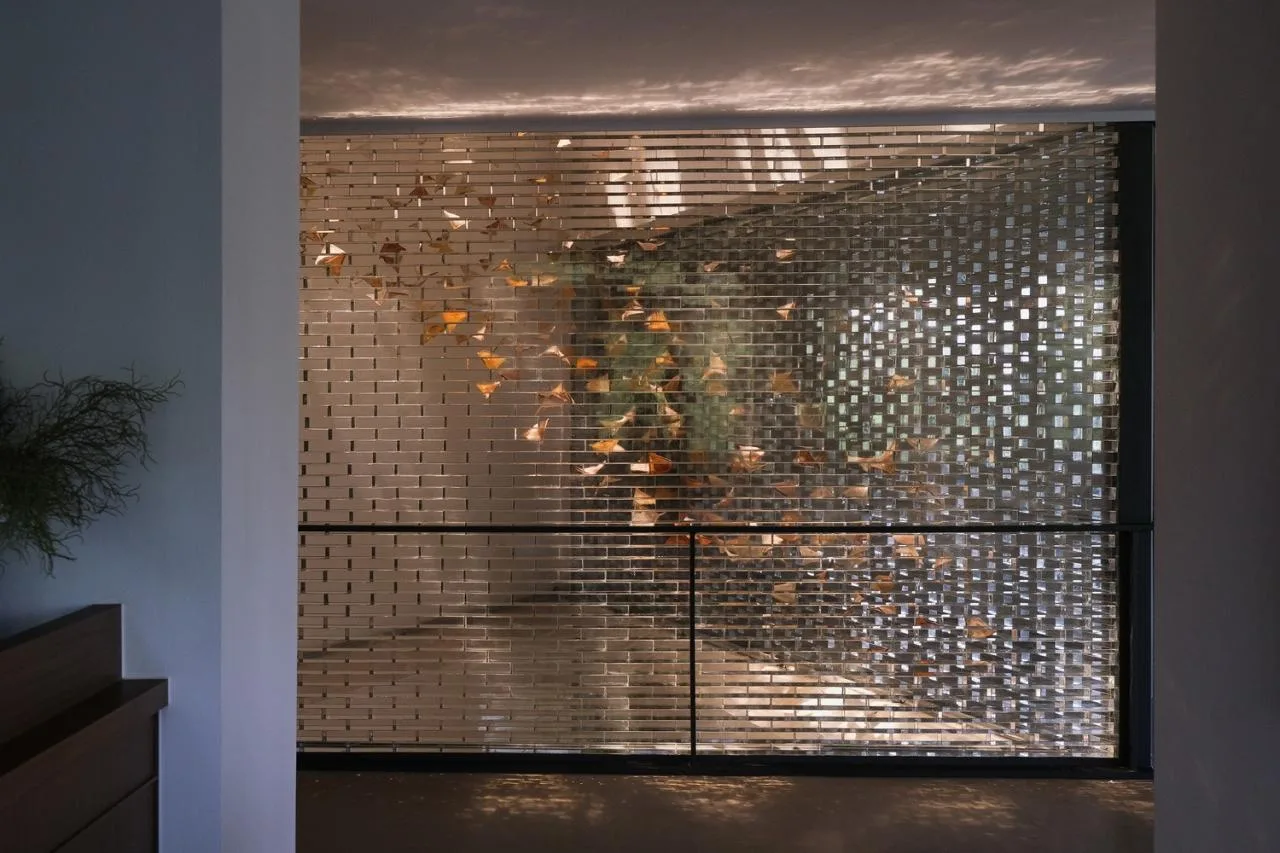
▲ Colorful courtyard of the restaurant
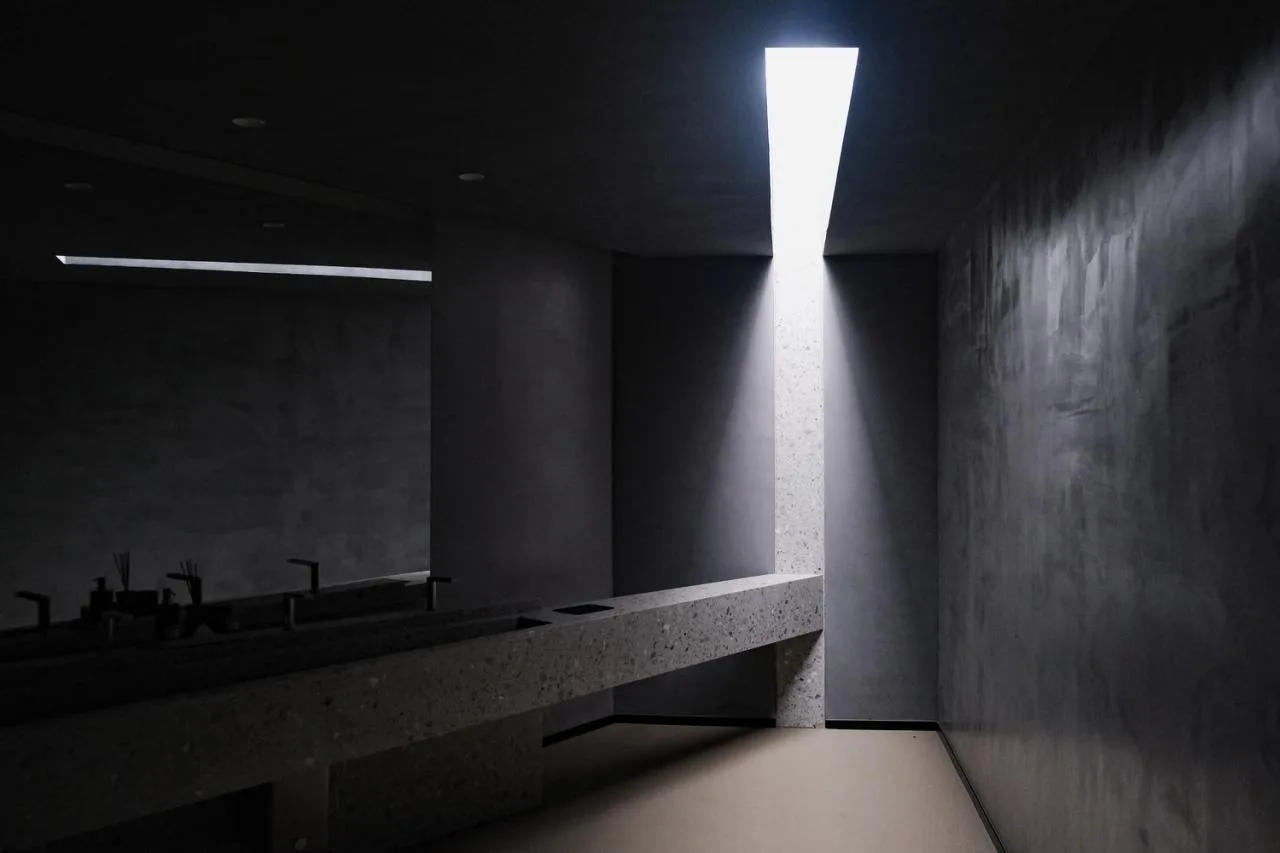
▲ Sunlight in the memorial hall’s bathroom
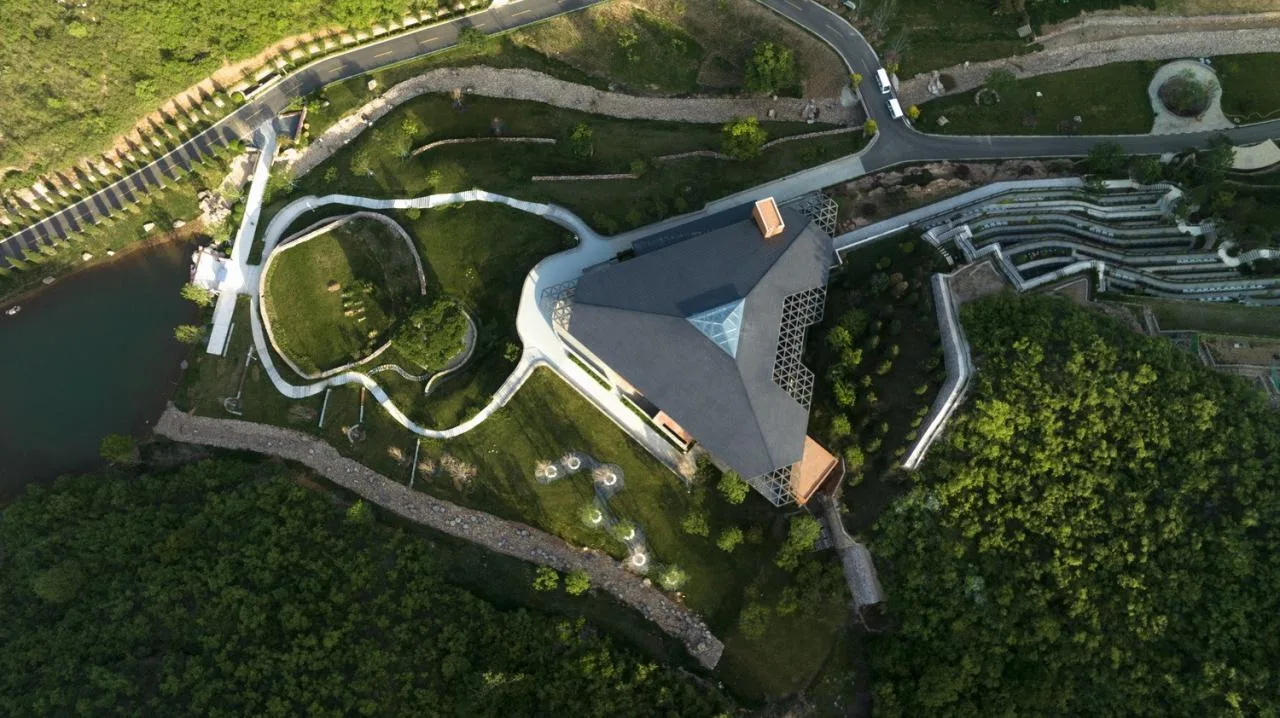
▲ Triangular imagery of Cloud Mirror
Project Drawings
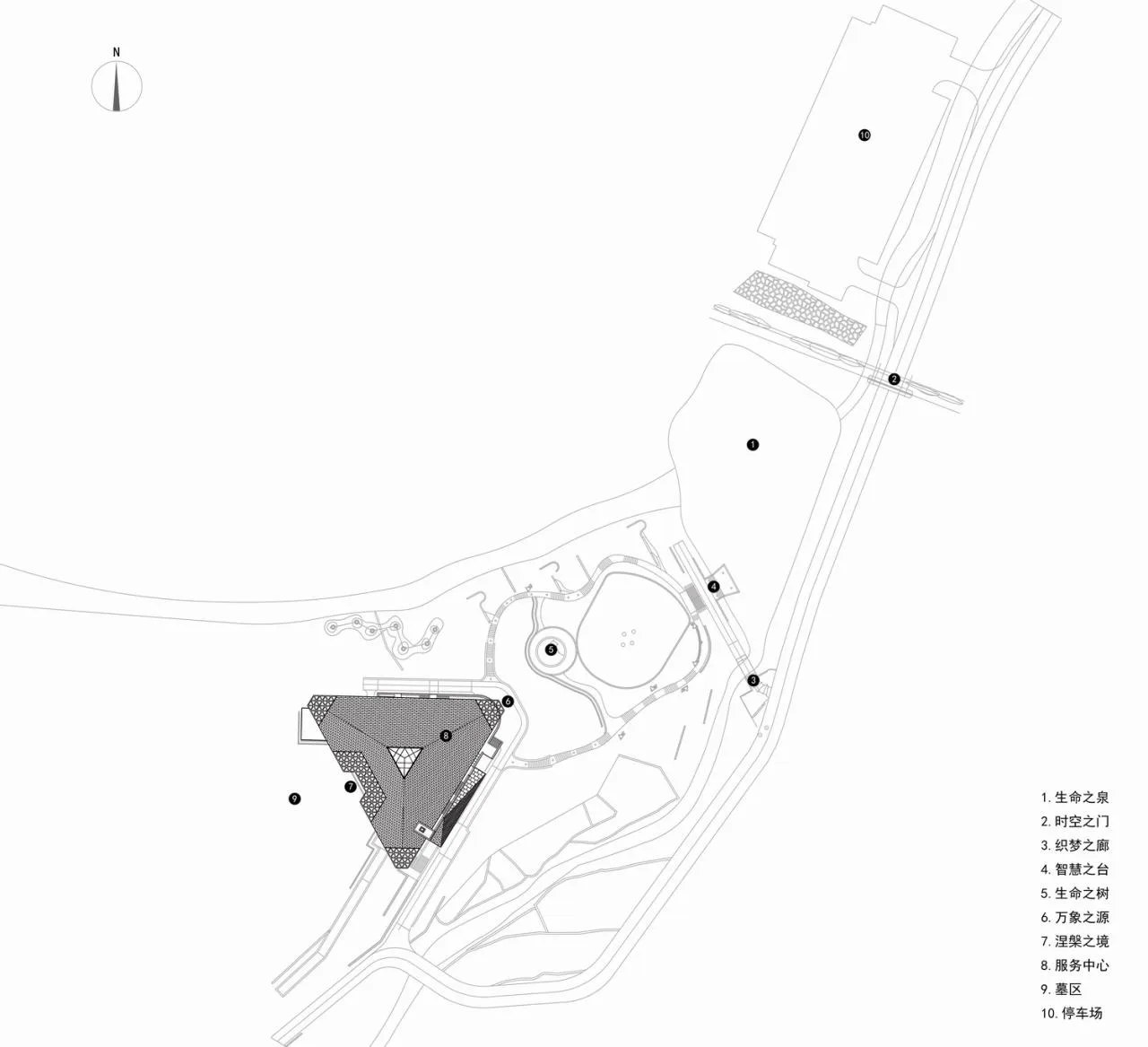
▲ Overall plan of Cloud Mirror
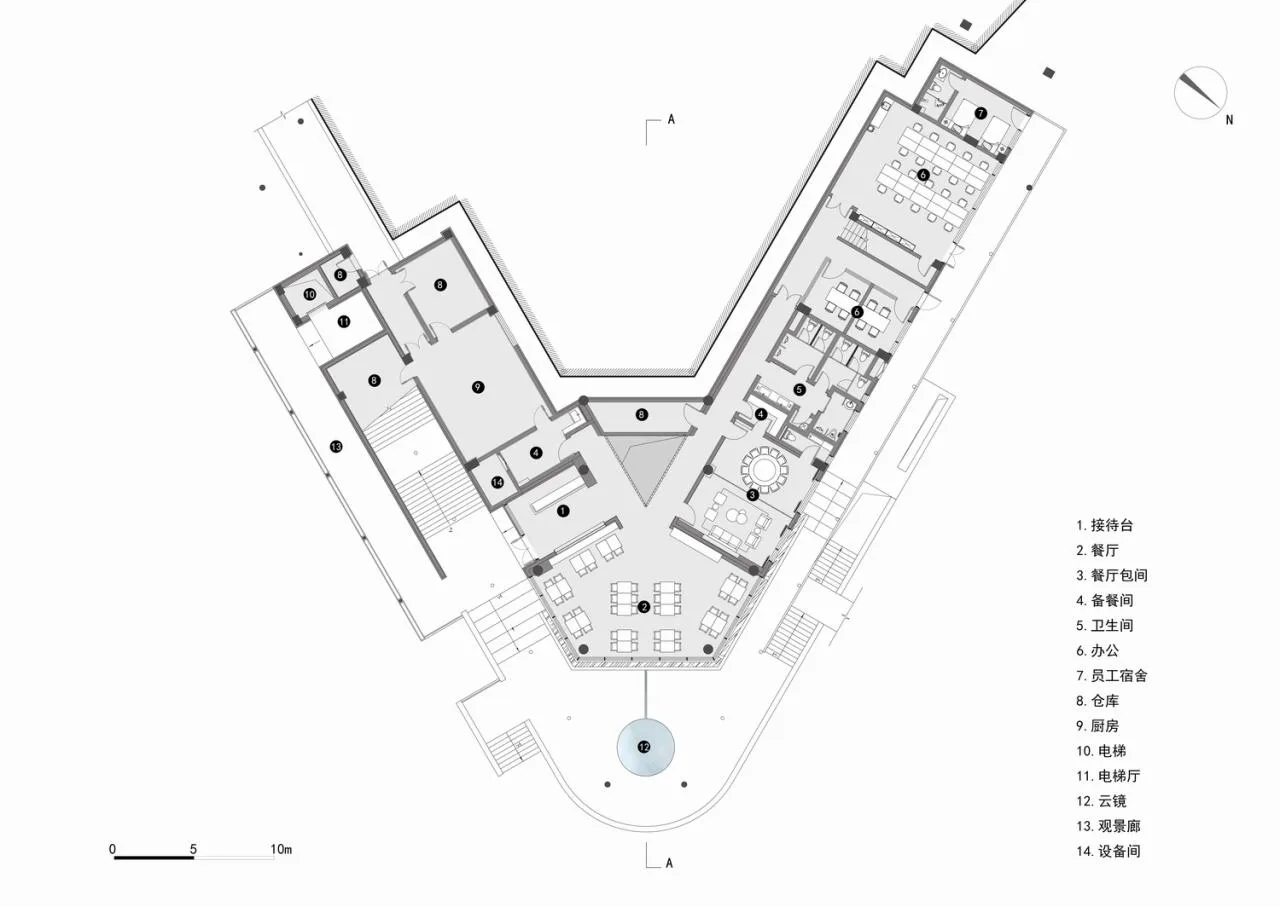
▲ Cloud Mirror first floor plan
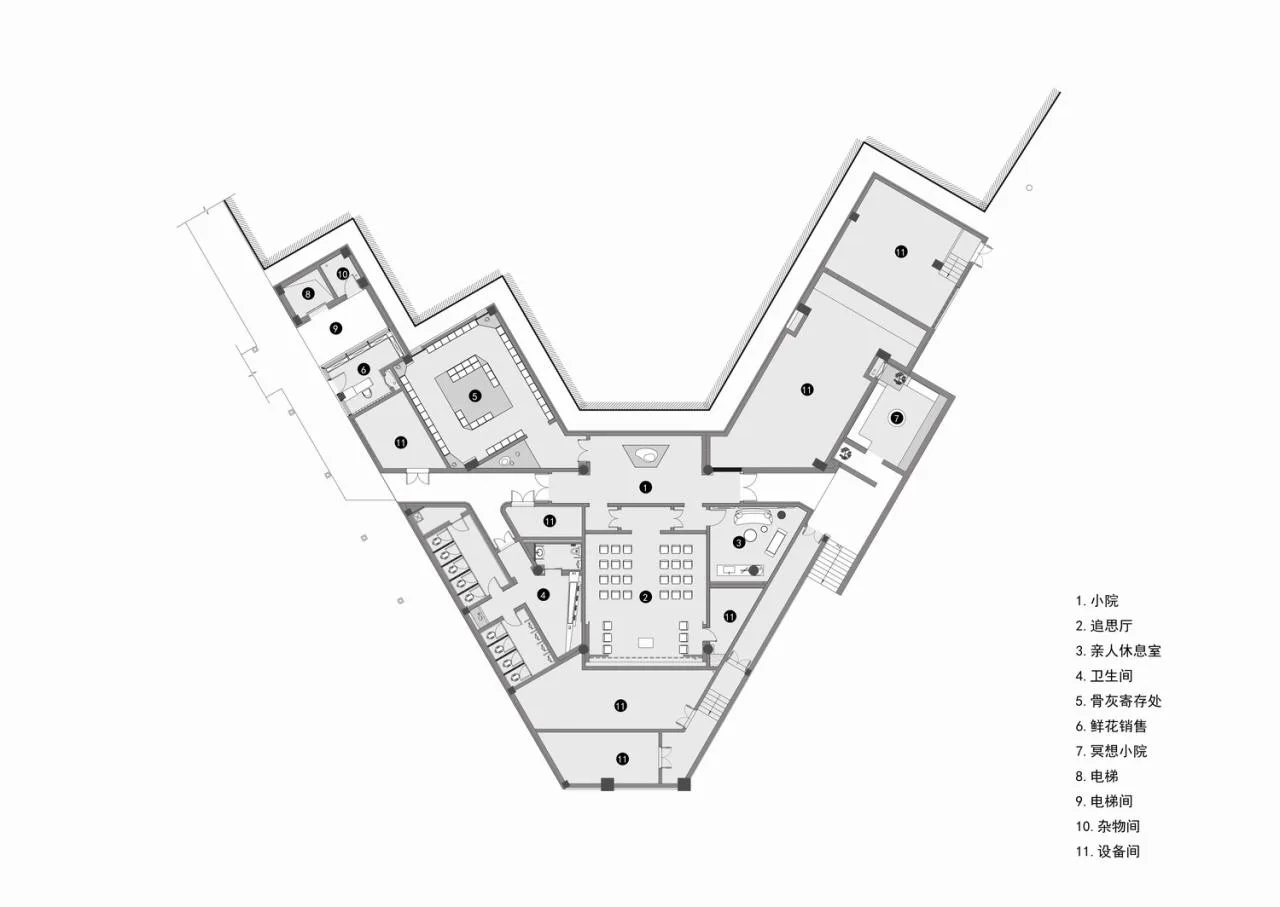
▲ Cloud Mirror basement level plan
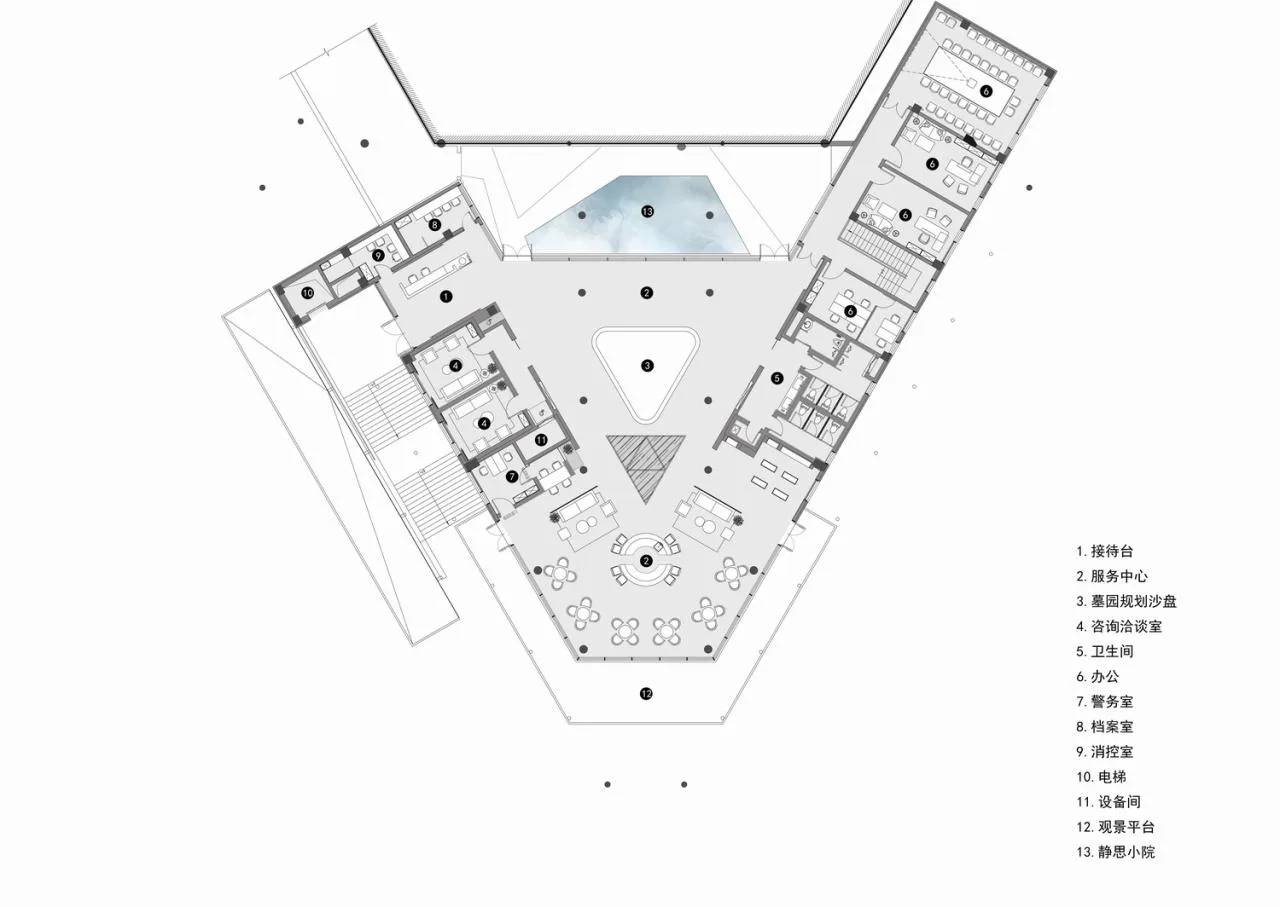
▲ Cloud Mirror second floor plan
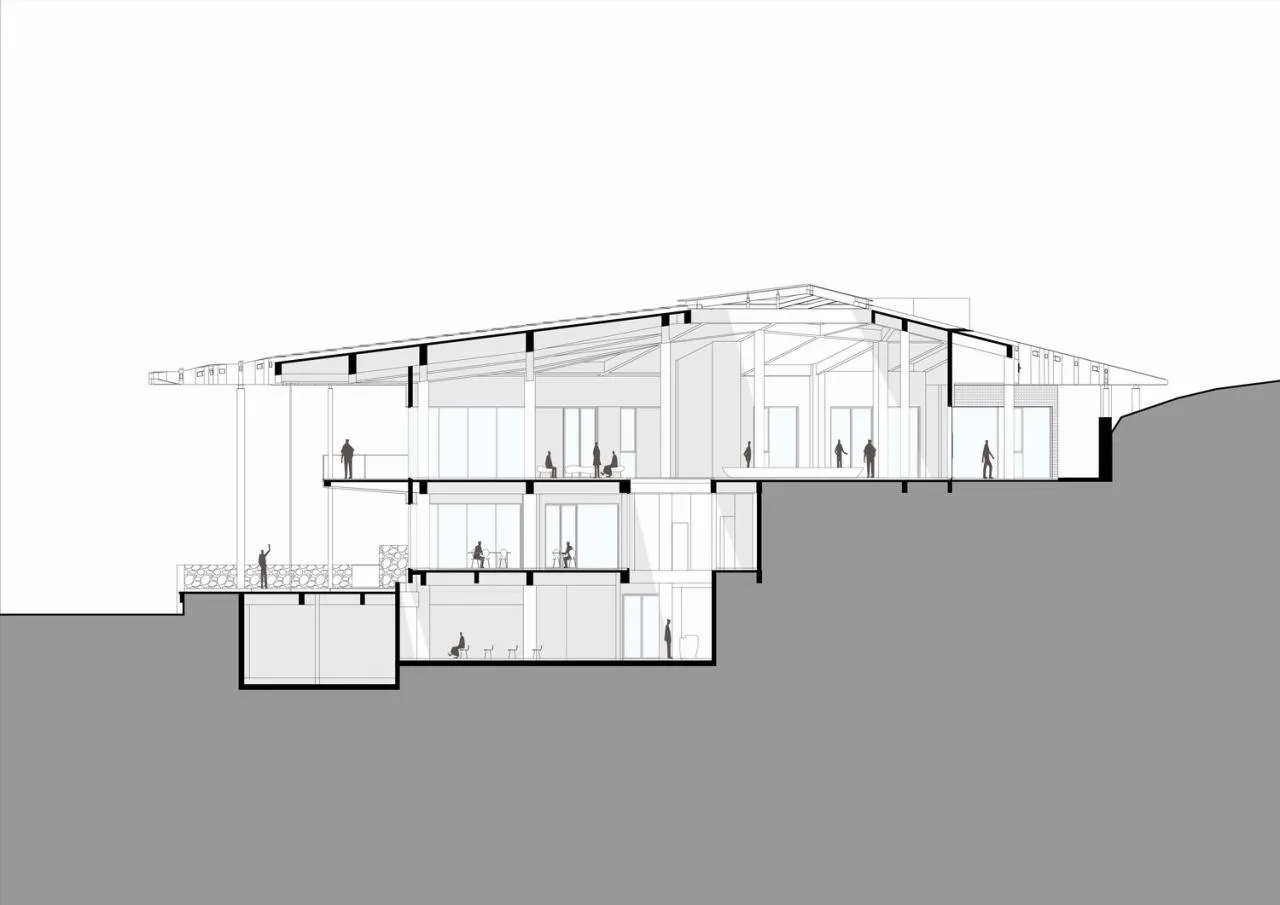
▲ Cloud Mirror sectional view
Project Information
Main Creative Team: Xiaoyin Architectural Firm
Lead Architect: Pan Youcai
Design Director: Yang Zhe (Partner)
Technical Director: Chen Renzhen (Partner)
Structural Engineer: Du Xu
Design Team: Zhao Yaxian, Hu Qinmei, Yang Rui, Gou Yuanjun, Huang Yuting, Liu Zixuan, Song Zhiying, Feng Yutao
Construction Drawing Team: Hangzhou Zhejiang Architectural Planning and Design Co., Ltd. (Hebei Branch)
Owner: Shijiazhuang Ande Cemetery Management Co., Ltd.
Construction General Contractor: Ocean International Construction Co., Ltd.
Landscape Construction: Shengjing Guoxin (Beijing) Ecological Landscape Co., Ltd.
Curtain Wall and Interior Decoration: Ocean Decoration Engineering Co., Ltd.
Photography: Existence of Buildings
Writing: Pan Youcai, Ge Xiangxin
Project Address: Nangou, Biao Village, Wujiayao Township, Jingxing County, Shijiazhuang
Building Area: 2,219 square meters
Materials: Straw paint (Huacai), rough stone, wood grain composite board (Gangshunbao), aluminum-magnesium-manganese metal tiles (Leju Lezhu), dark gray aluminum veneer (Huajian profile), Low-E insulated glass (South Glass)
Construction Start: January 2023















Must log in before commenting!
Sign Up