
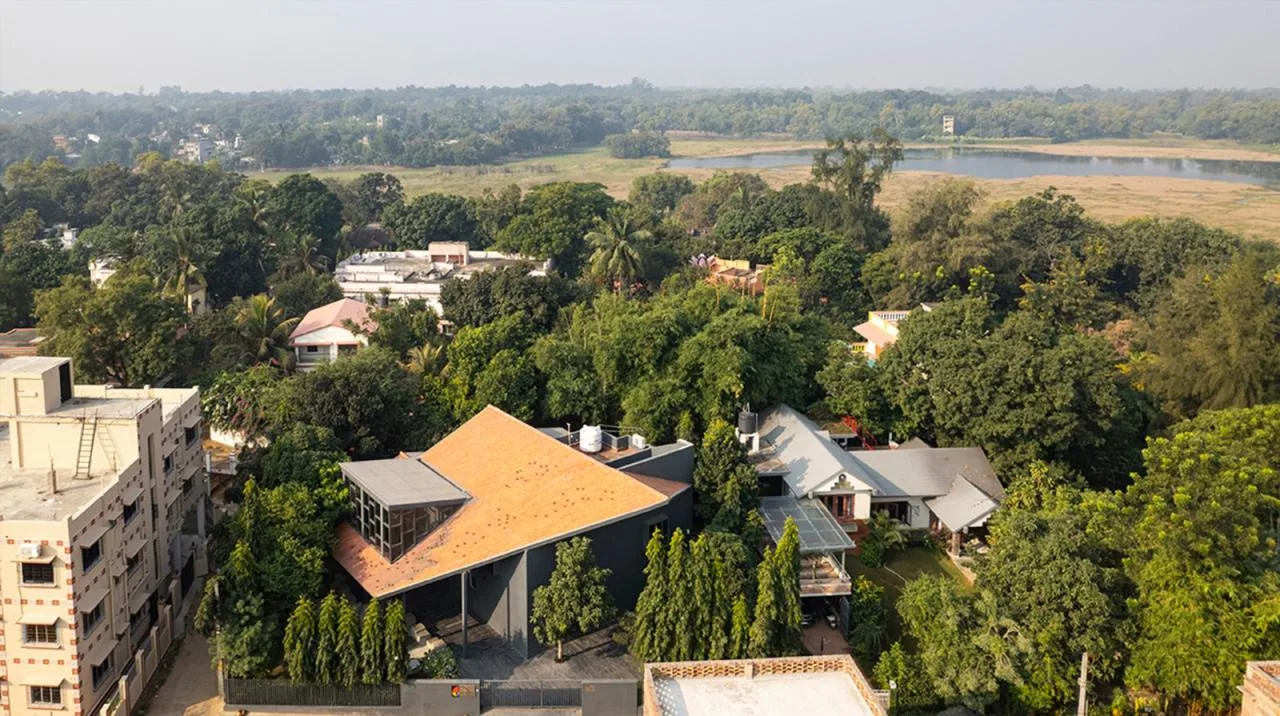
Santiniketan town is renowned as the birthplace of the Bengali Renaissance, largely due to its close ties with Rabindranath Tagore, the first Asian Nobel Laureate in Literature. This town is imbued with a rich atmosphere where the red soil and air resonate with music, art, and culture. Inspired by this unique cultural environment, the Arthshila Cultural Center has emerged as a landmark of heritage and cultural expression, reflecting the diverse Bengali ethnic communities.
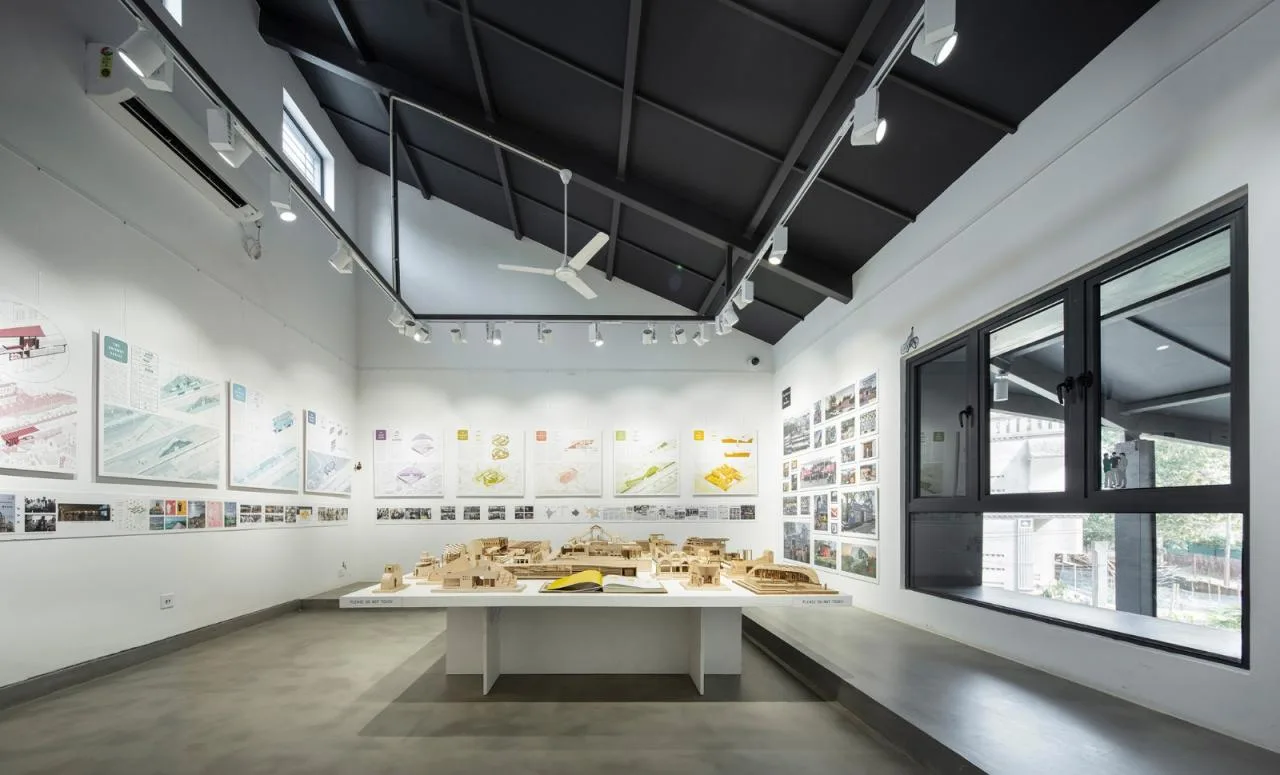
Arthshila is the first venue in the region that combines a studio, exhibition space, and both indoor and outdoor art galleries, creating a dynamic cultural hub.
Years ago, a young architect, then just 22, with guidance from his professor, envisioned a residential building featuring a sloping concrete roof. Decades later, when the founder of the Taxila Education Association approached Abin Design Studio to convert the 3-bedroom residence into a cultural center, that early vision began to take shape.
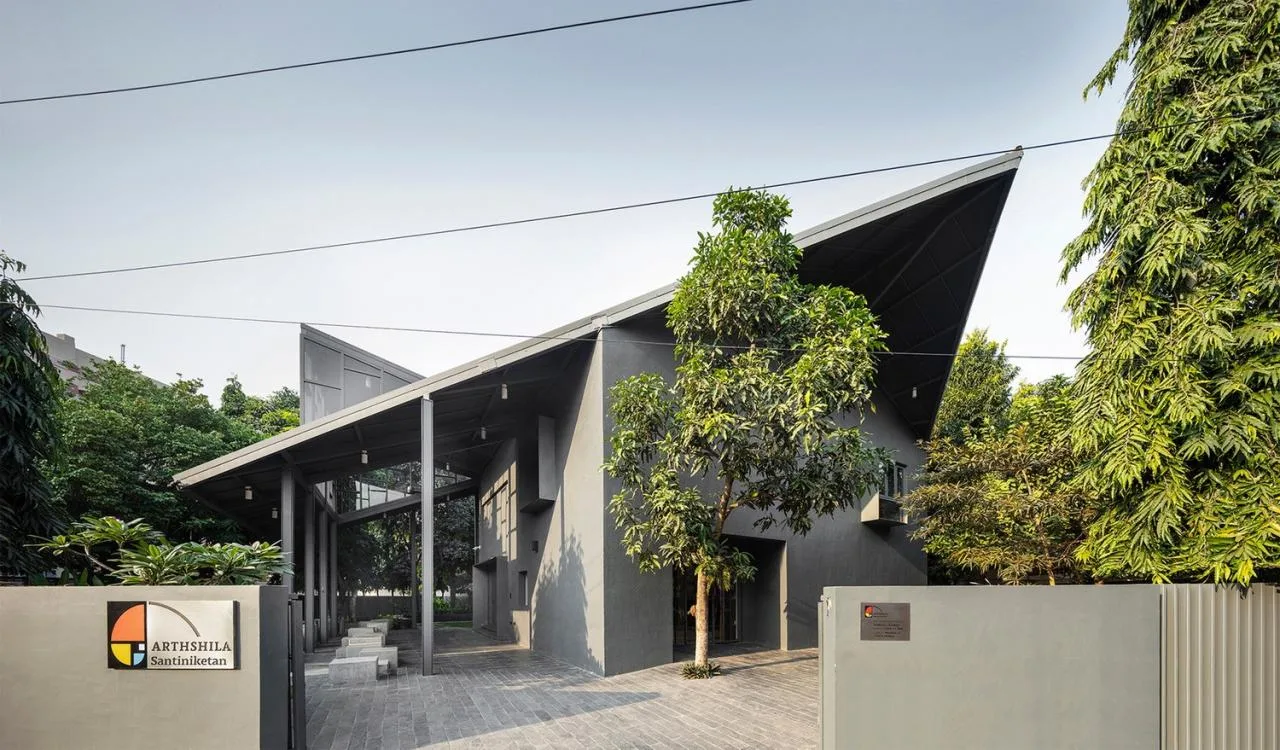
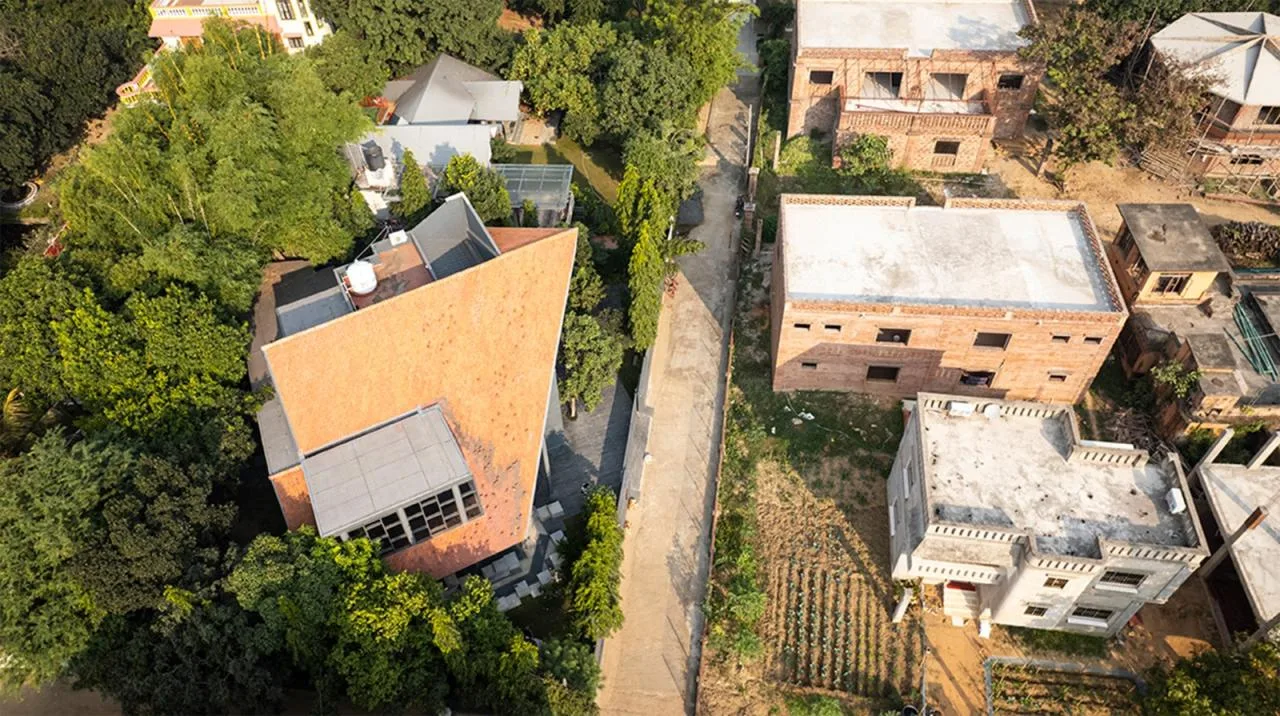
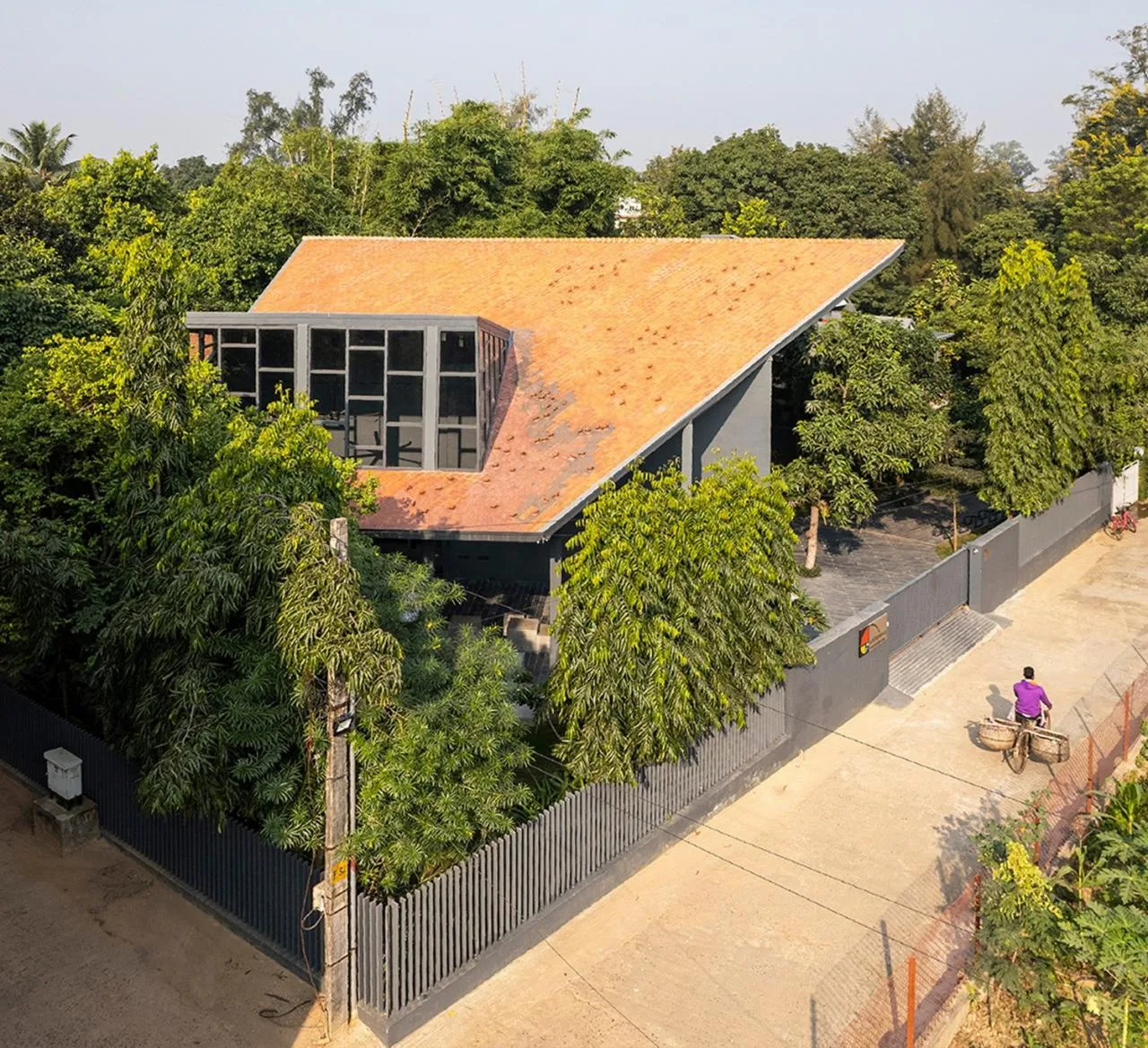
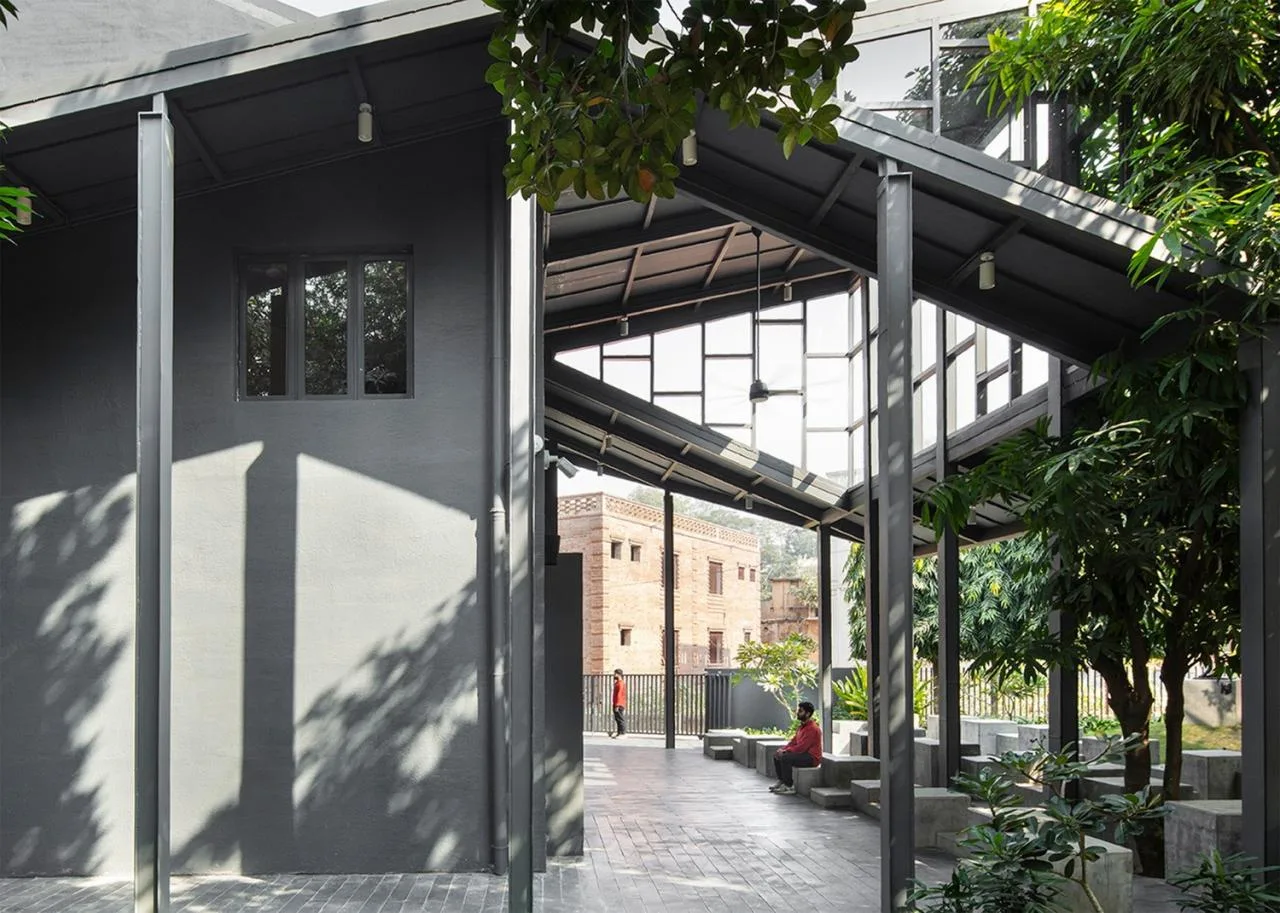
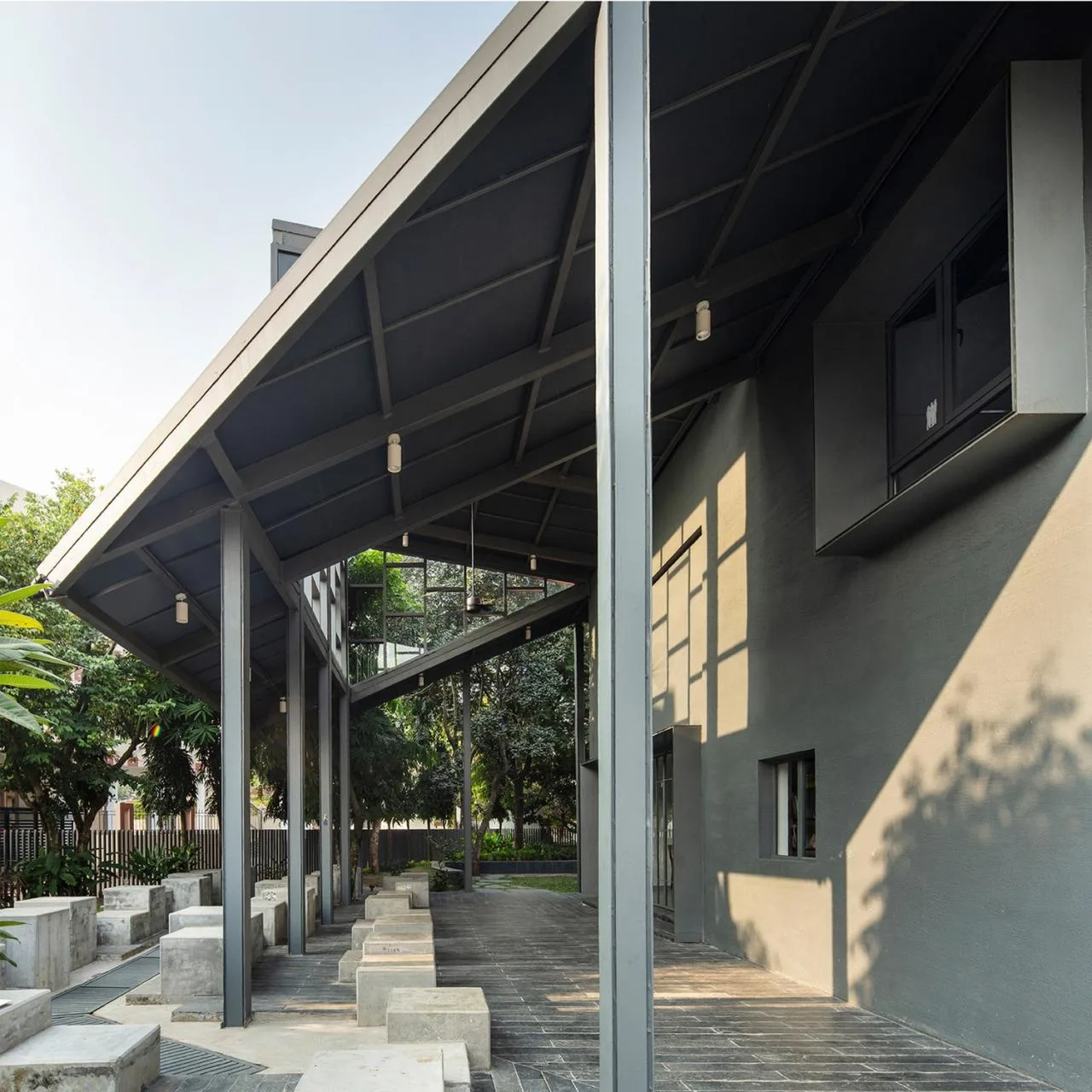
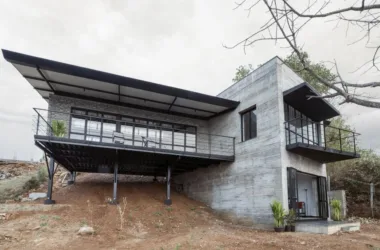
For any architect, adapting a single building to serve multiple functions is a remarkable challenge. This project embraced a straightforward strategy: preserving the original house’s outline while extending it along the same slope as the existing roof. This extension creates a thoughtfully designed shading device over the open square, shielding it from intense summer sun and persistent monsoon rains.
The expanded roof serves a dual purpose—it not only provides shade but also becomes a distinctive architectural feature that narrates spatial language and adds cultural significance. This transformation elevates the modest residence into a grand exhibition hall suitable for public gatherings.
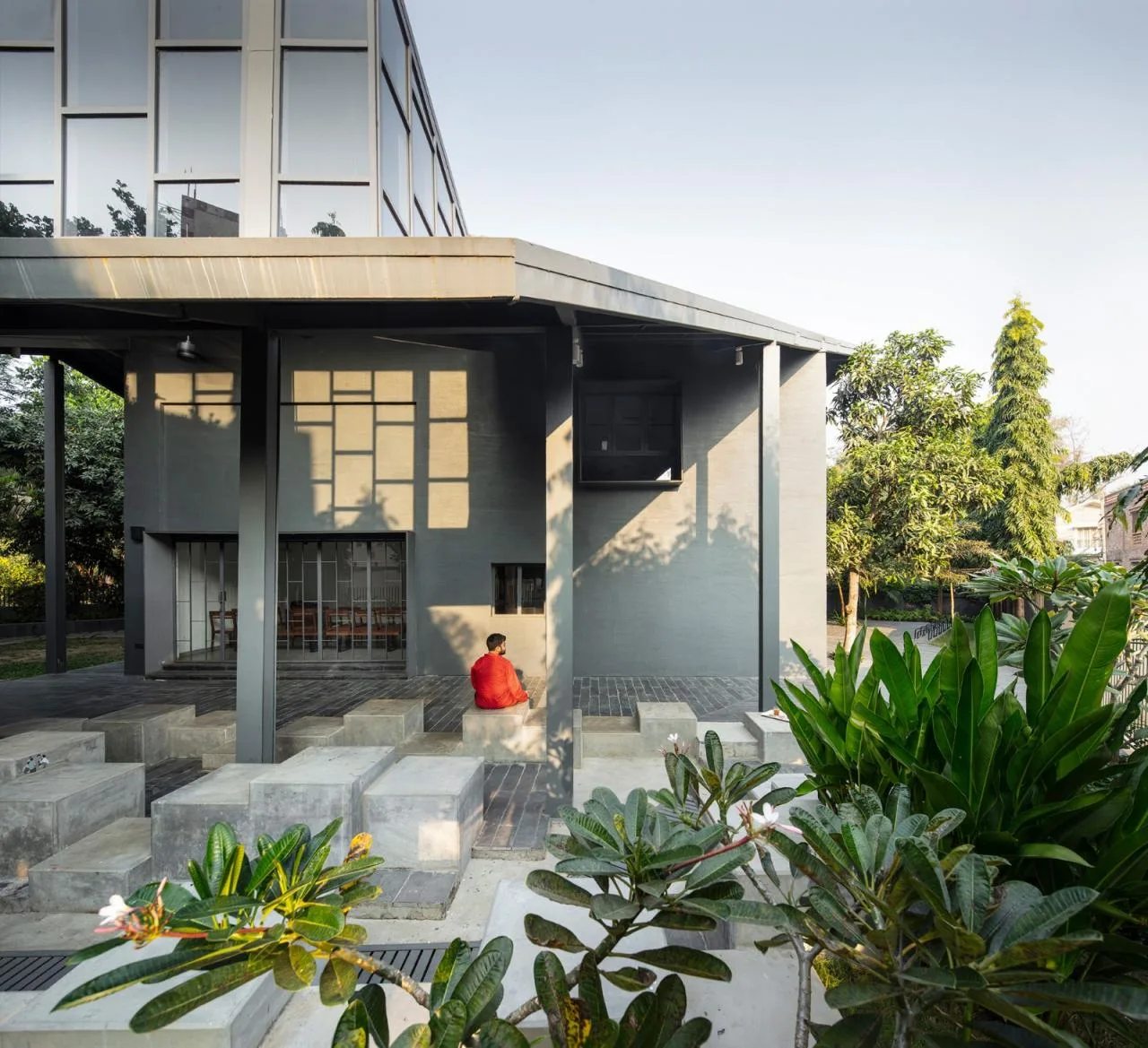
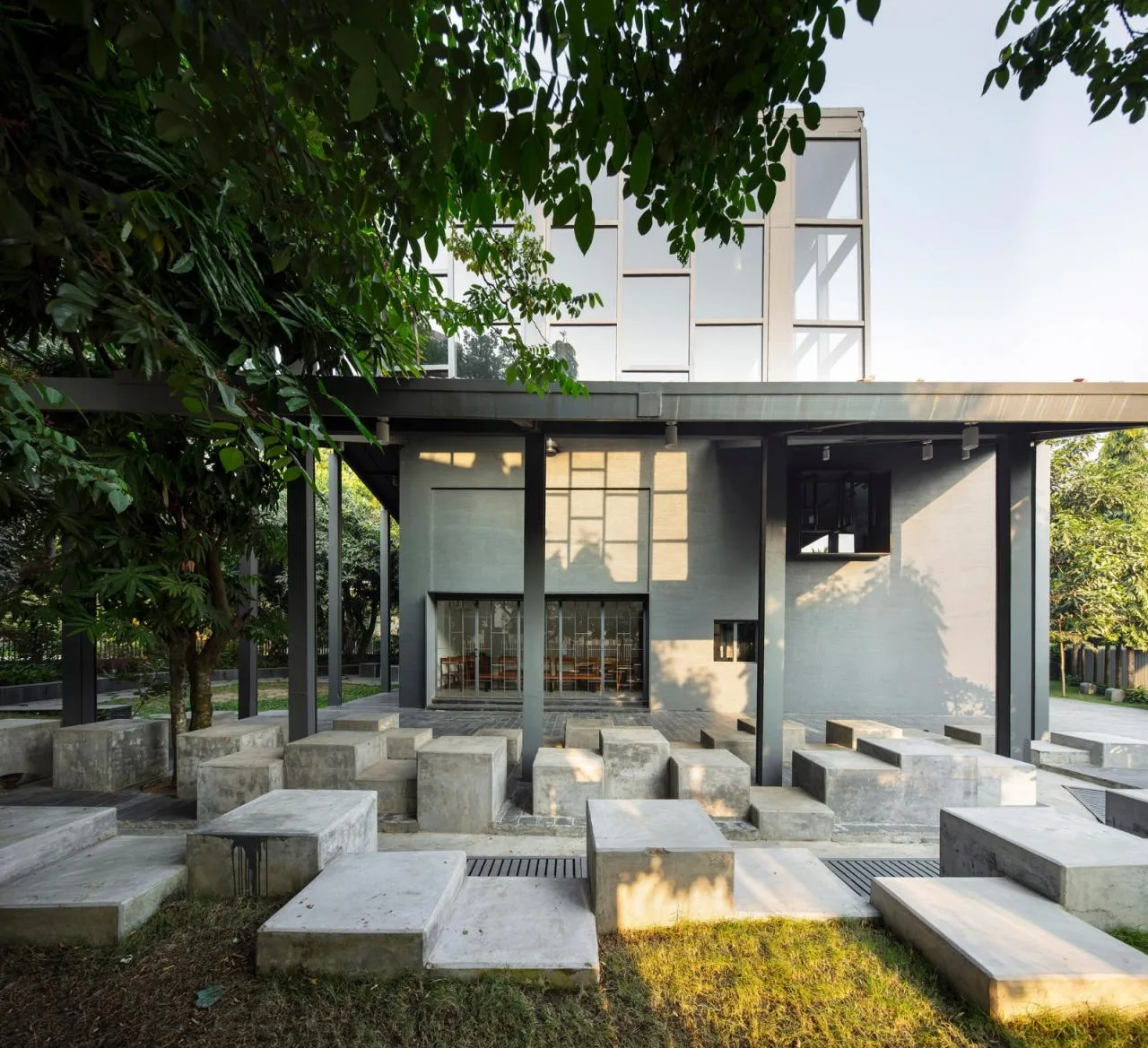
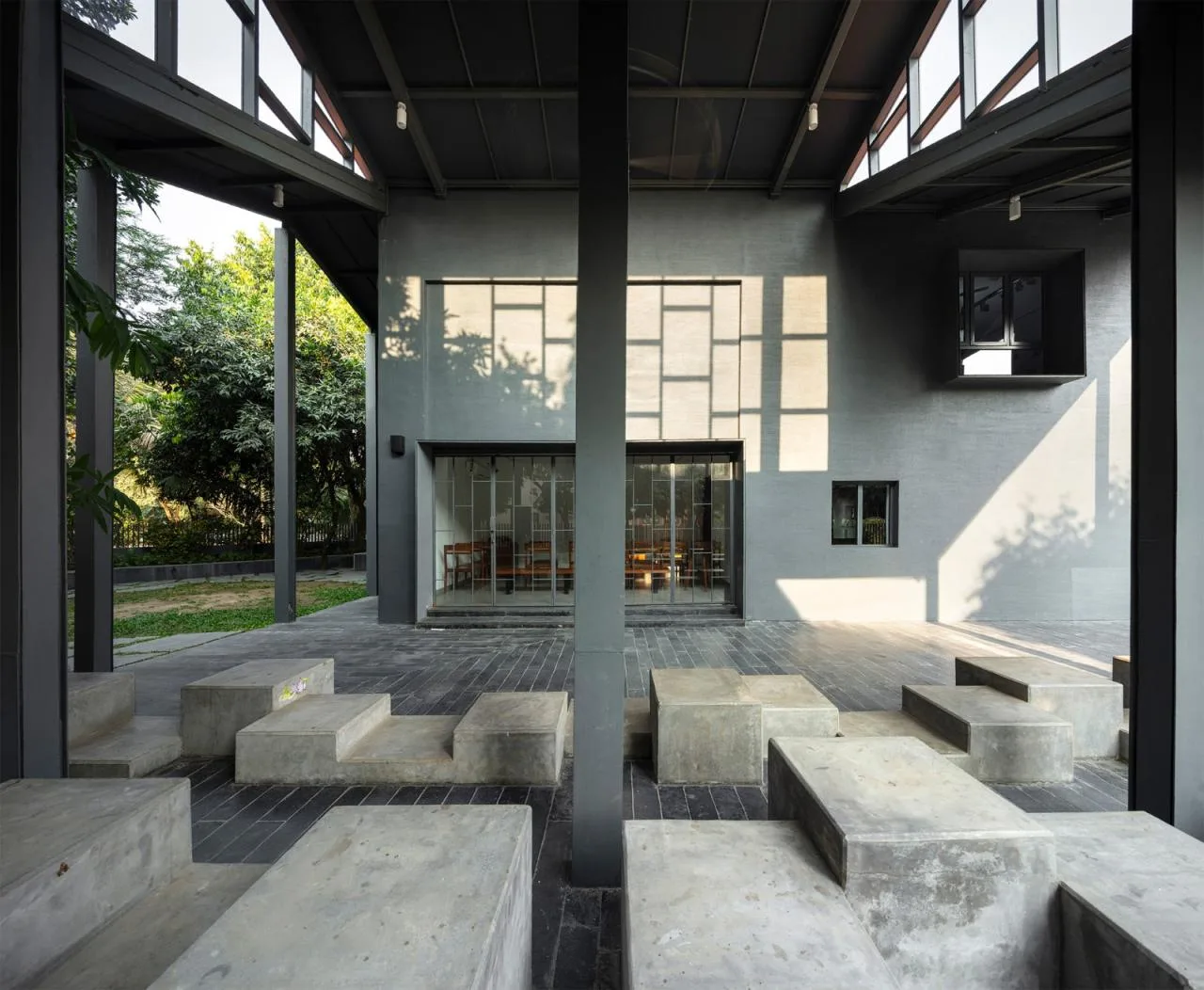
The ground floor’s interior rooms have been converted into galleries, while the upper floor’s rooms and terraces now serve as libraries, additional galleries, and guest accommodations. To harmonize with the natural surroundings, the project preserved the original mature trees following the expansion, raised the roof to cast broad shadows, and introduced natural light through skylights.
Key materials include ceramic tiles and a low-carbon steel (MS) structure on the roof. The interior features German Pandomo flooring, while the exterior walls are clad in black Kadappa stone.
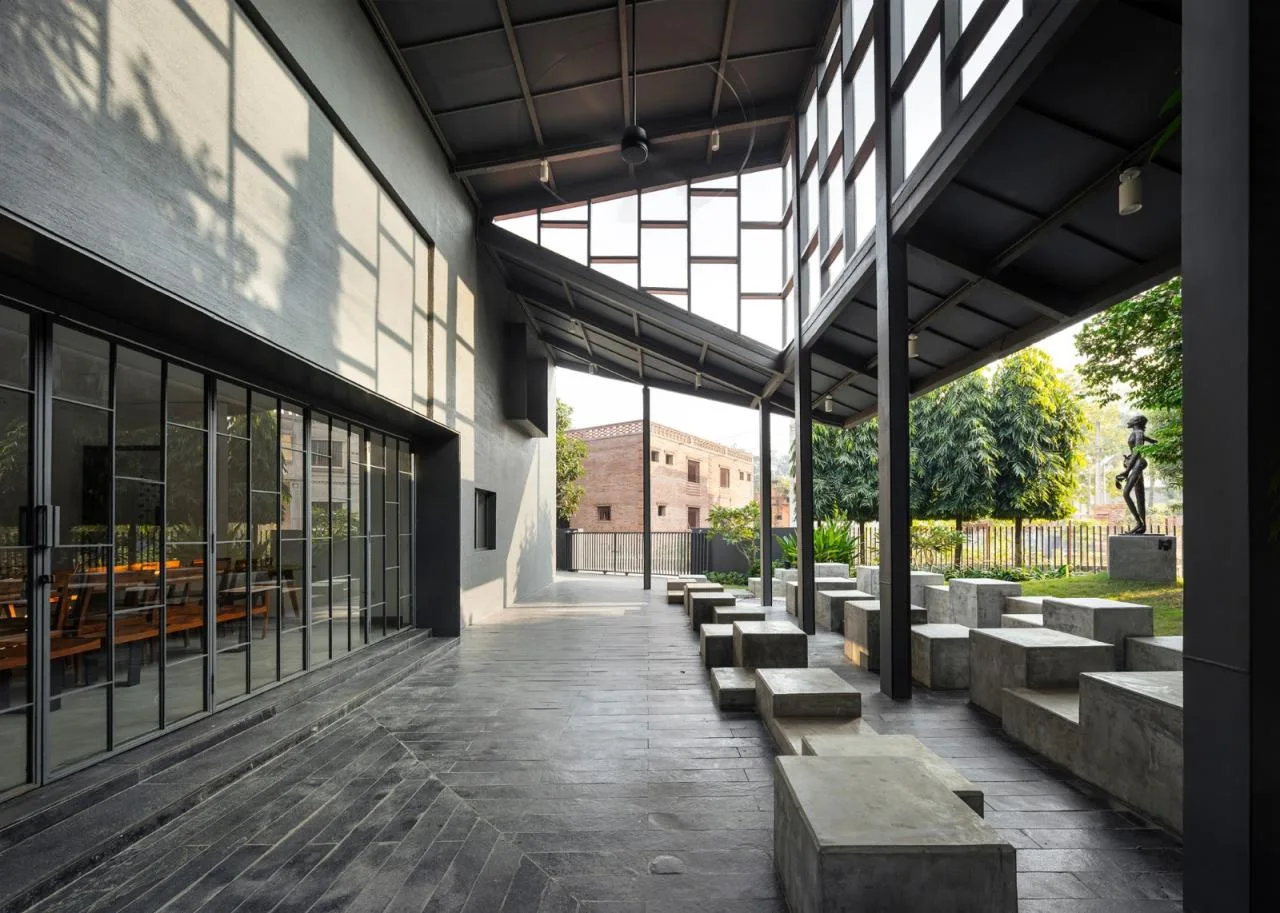
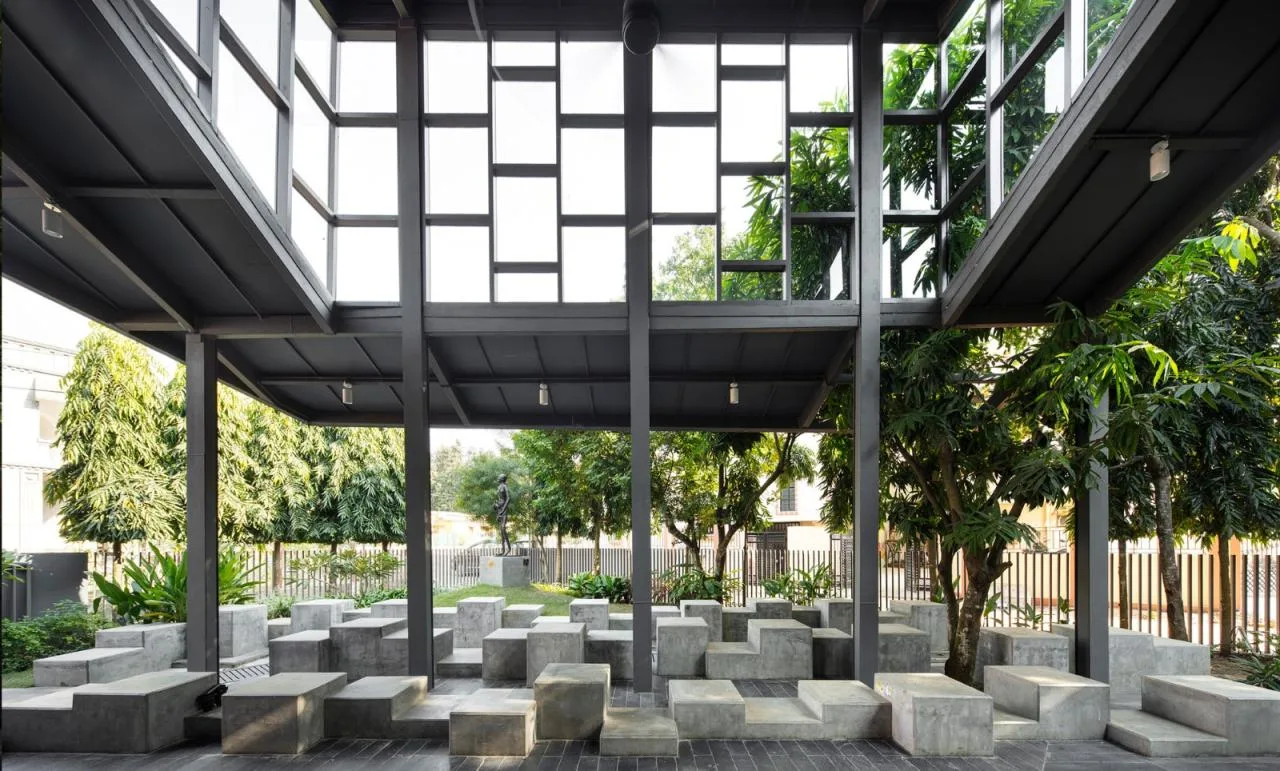
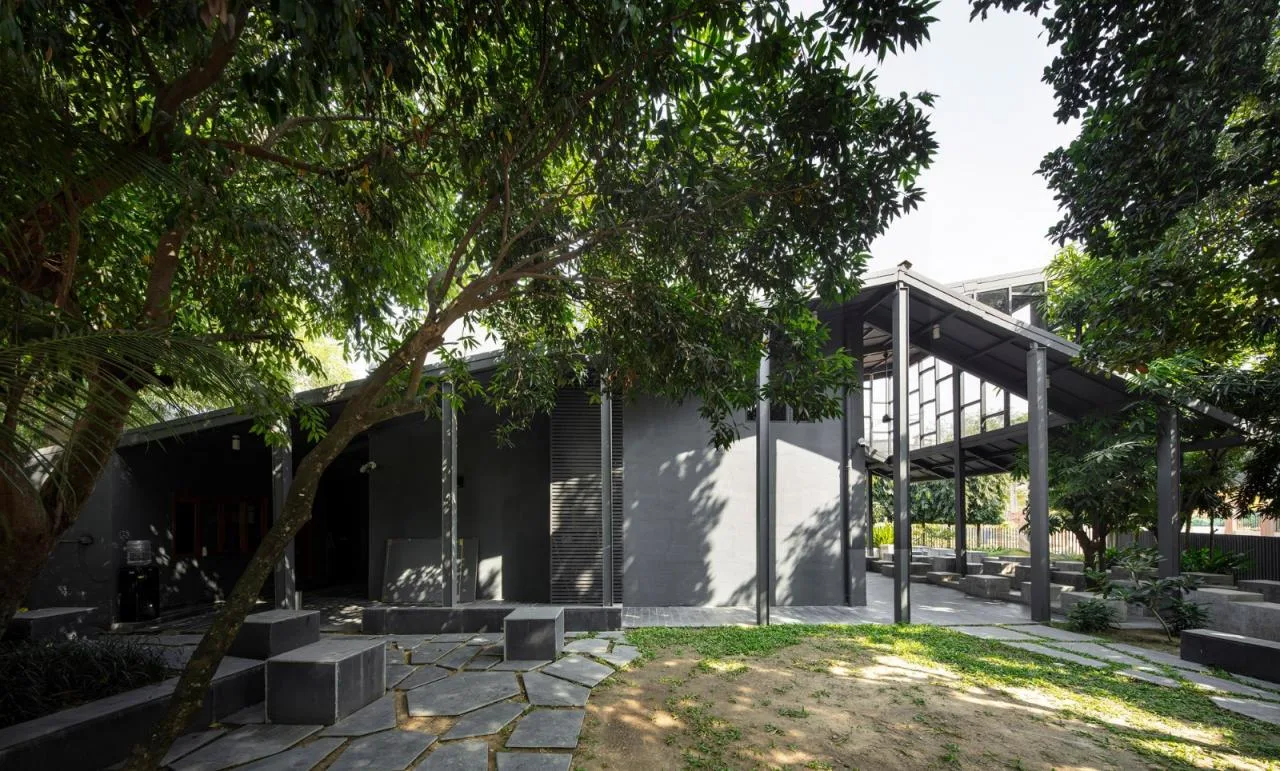
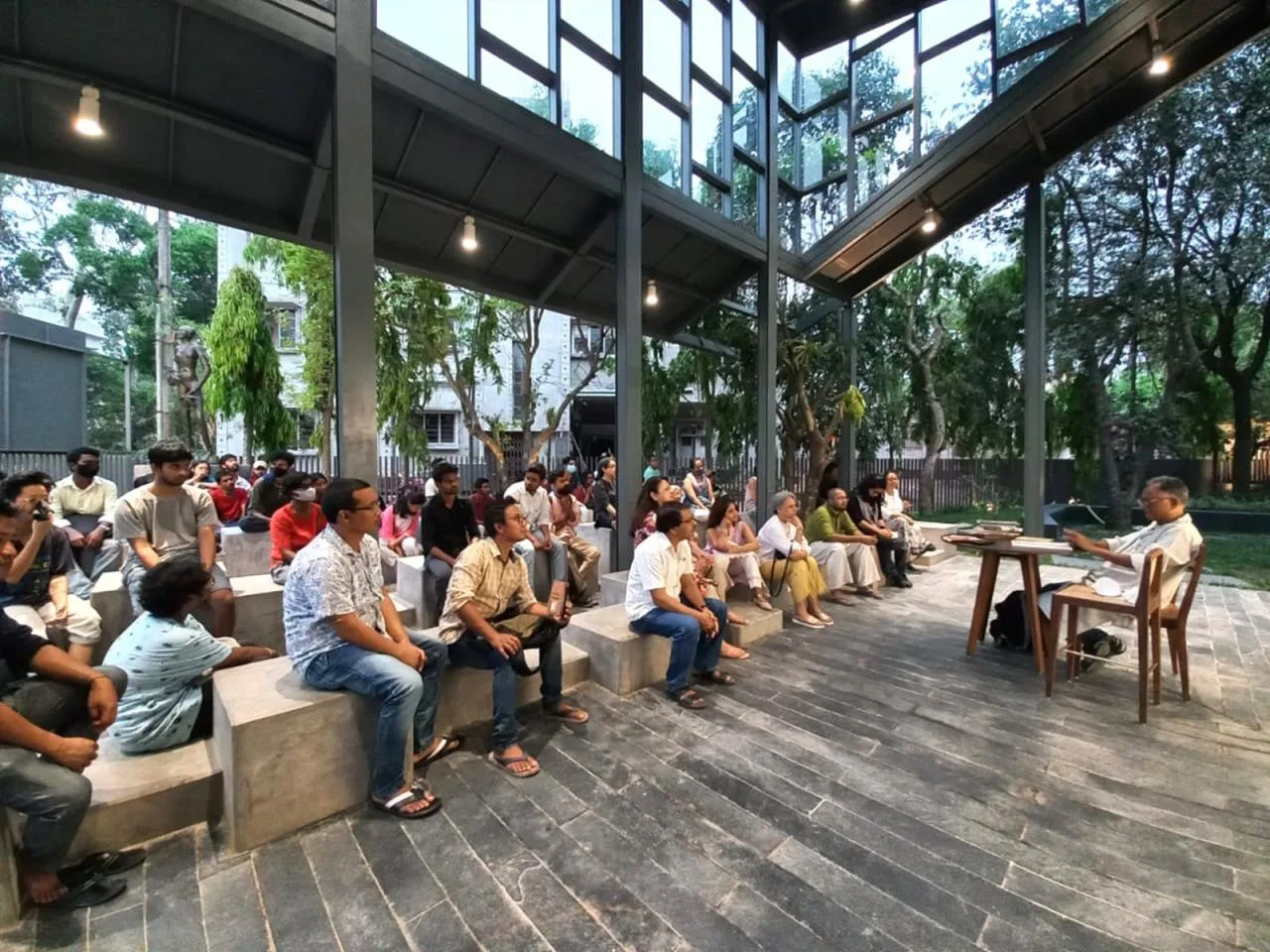
The outdoor landscape is seamlessly integrated with the building, creating a ‘sculpture courtyard’—a versatile lawn used for exhibitions. Nearby, there are food storage rooms and outdoor seating areas that can be repurposed as performance venues or audience seating for events held in the audiovisual room. The seating arrangements, both inside and out, are creatively organized to blur the boundaries between spaces.
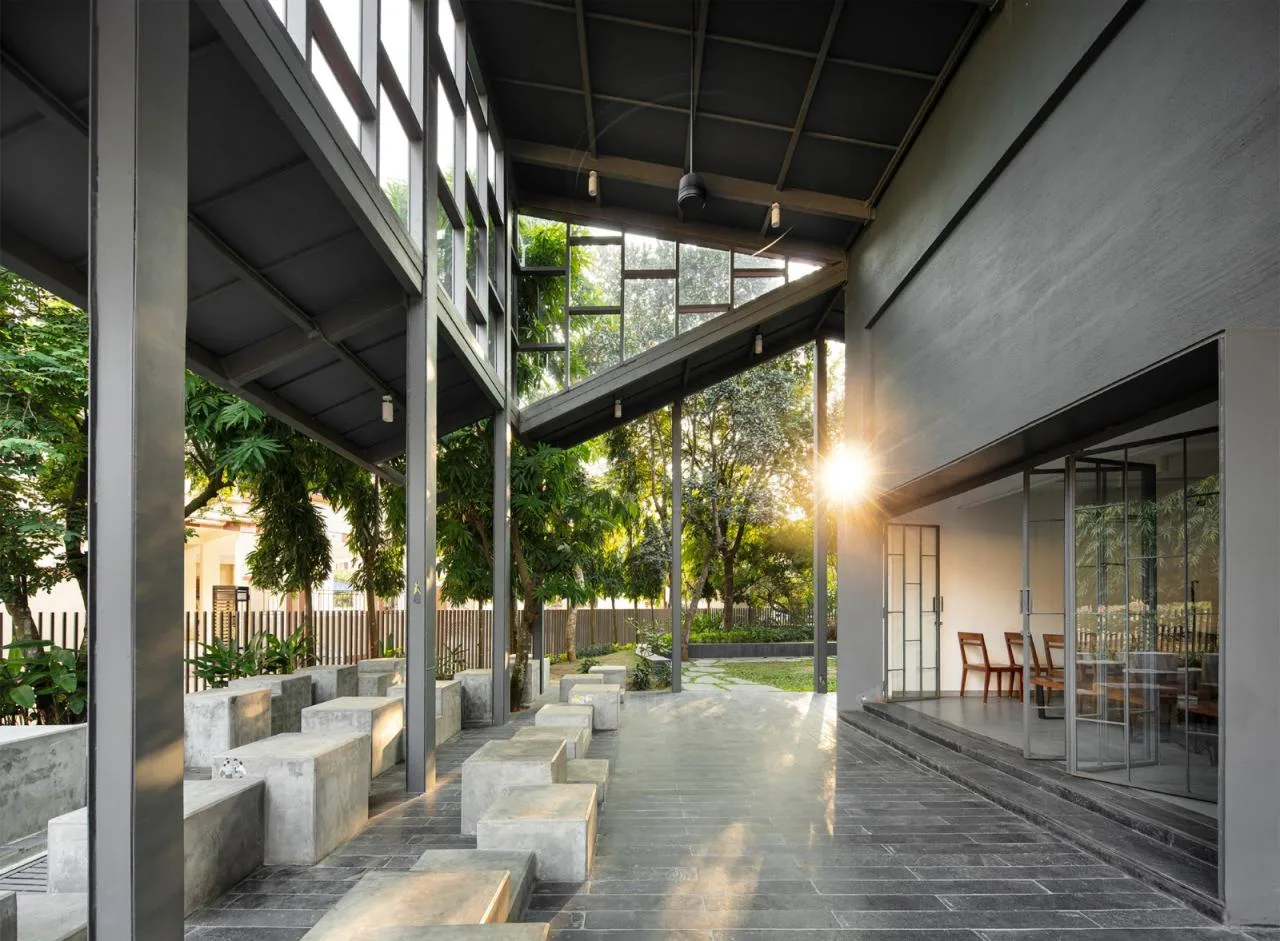
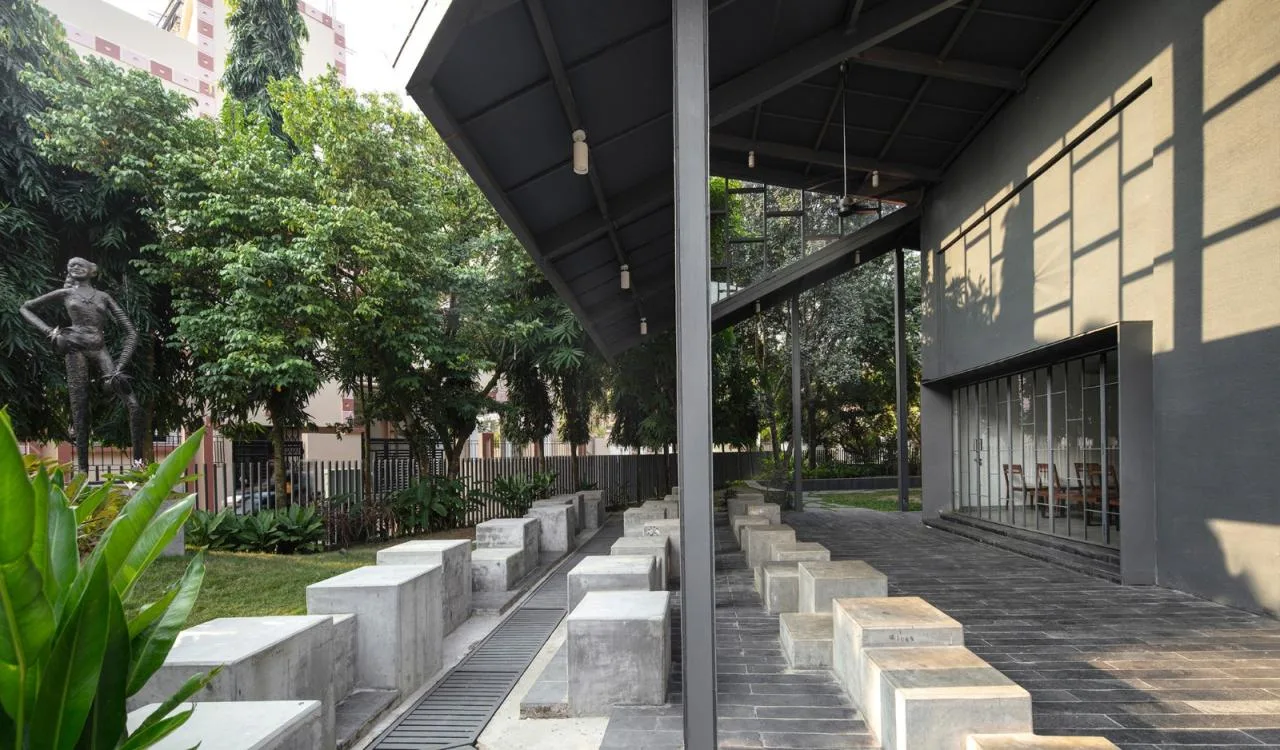
Through this subtle design intervention, the architects have transformed the old house into a versatile space capable of hosting more visitors without sacrificing the home’s original charm and essence. Today, Arthshila stands as a vital cultural venue within Santiniketan, serving as a public forum for cultural activities.
This project exemplifies the thoughtful transformation of an old residence into a cultural center that blends seamlessly with the rural landscape while honoring the region’s unique architectural heritage.
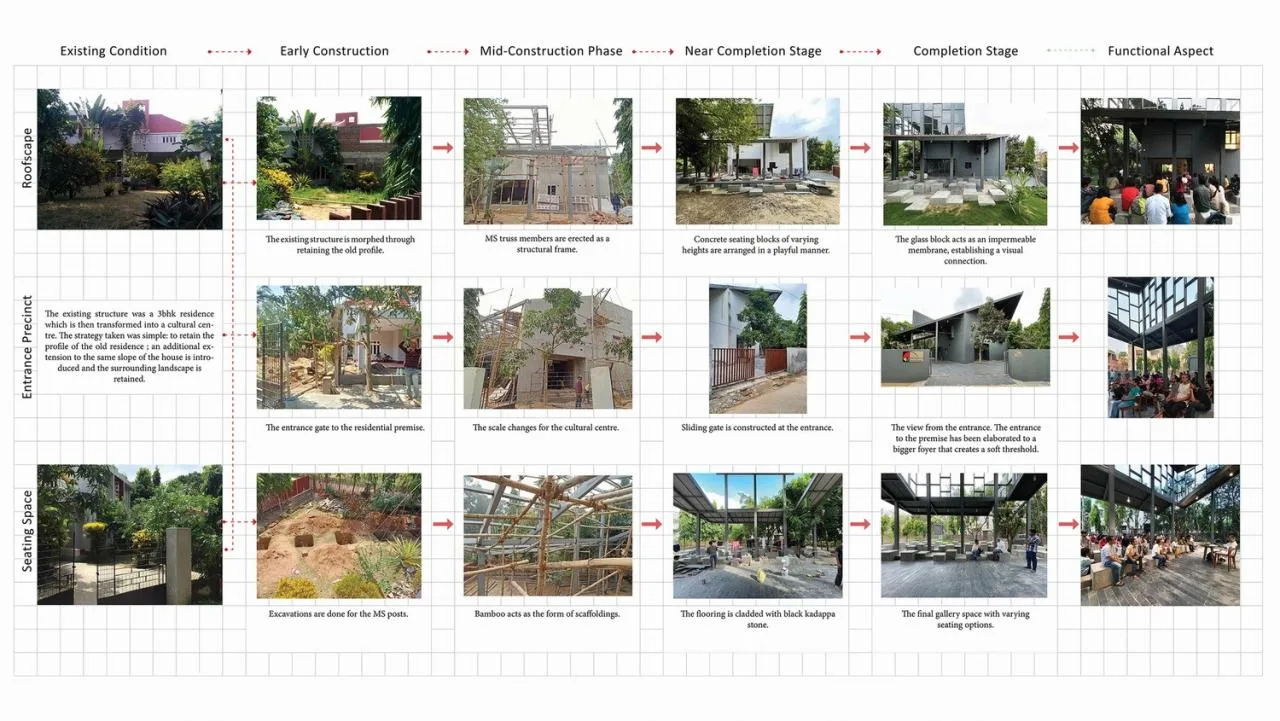
Project Drawings
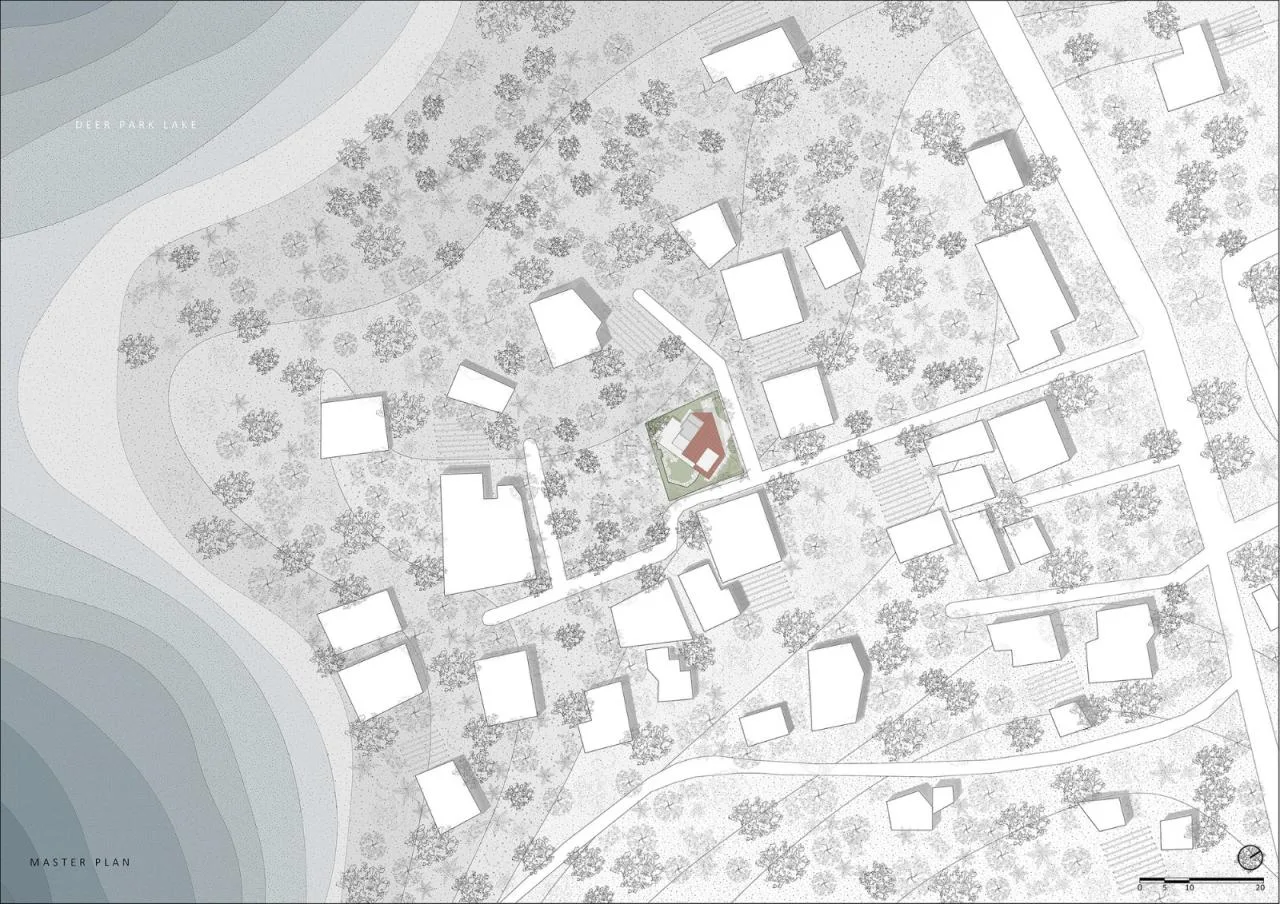
△ Base schematic diagram
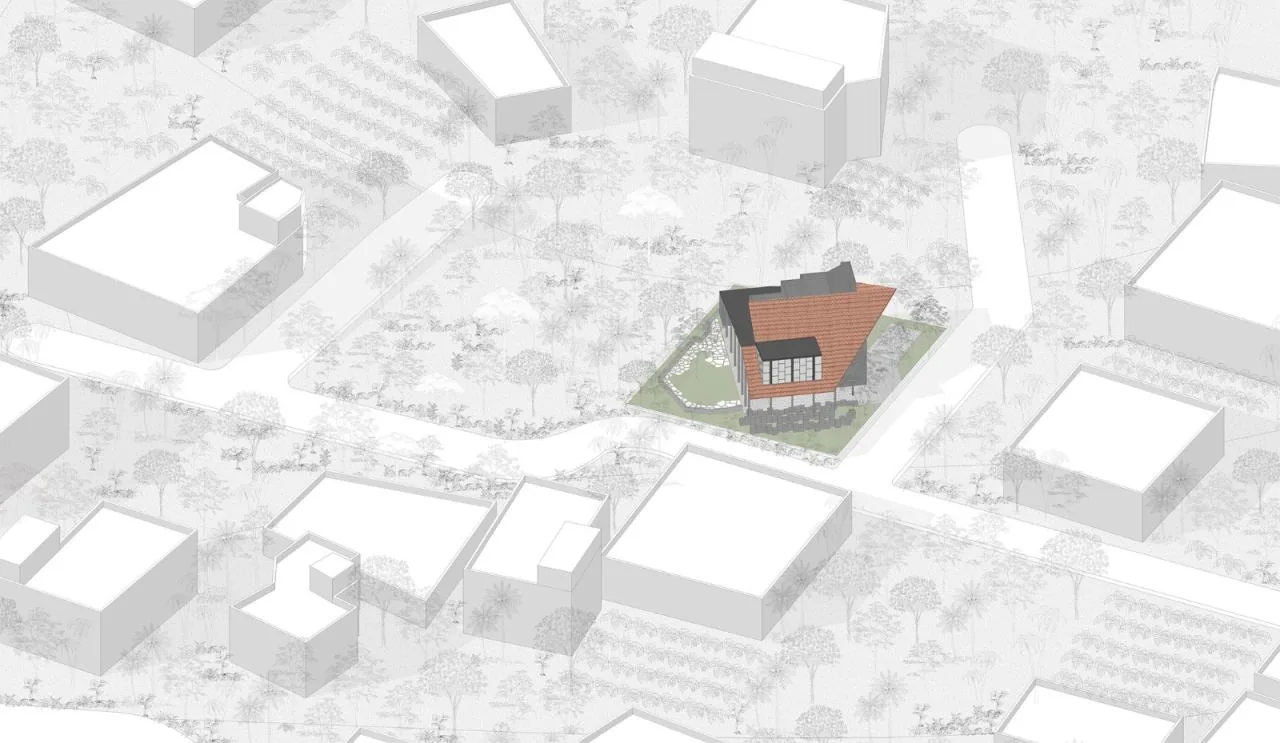
△ Aerial view
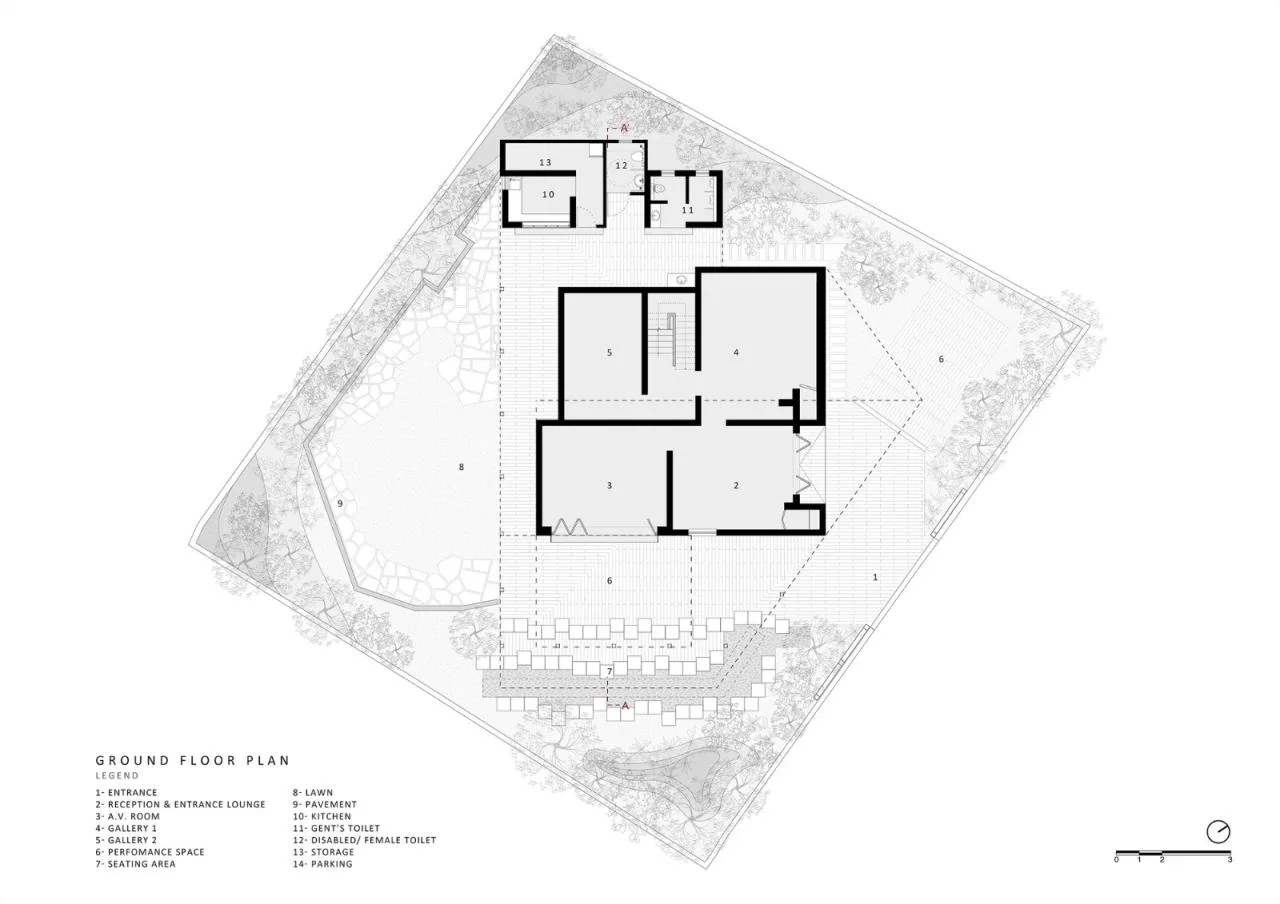
△ First floor plan
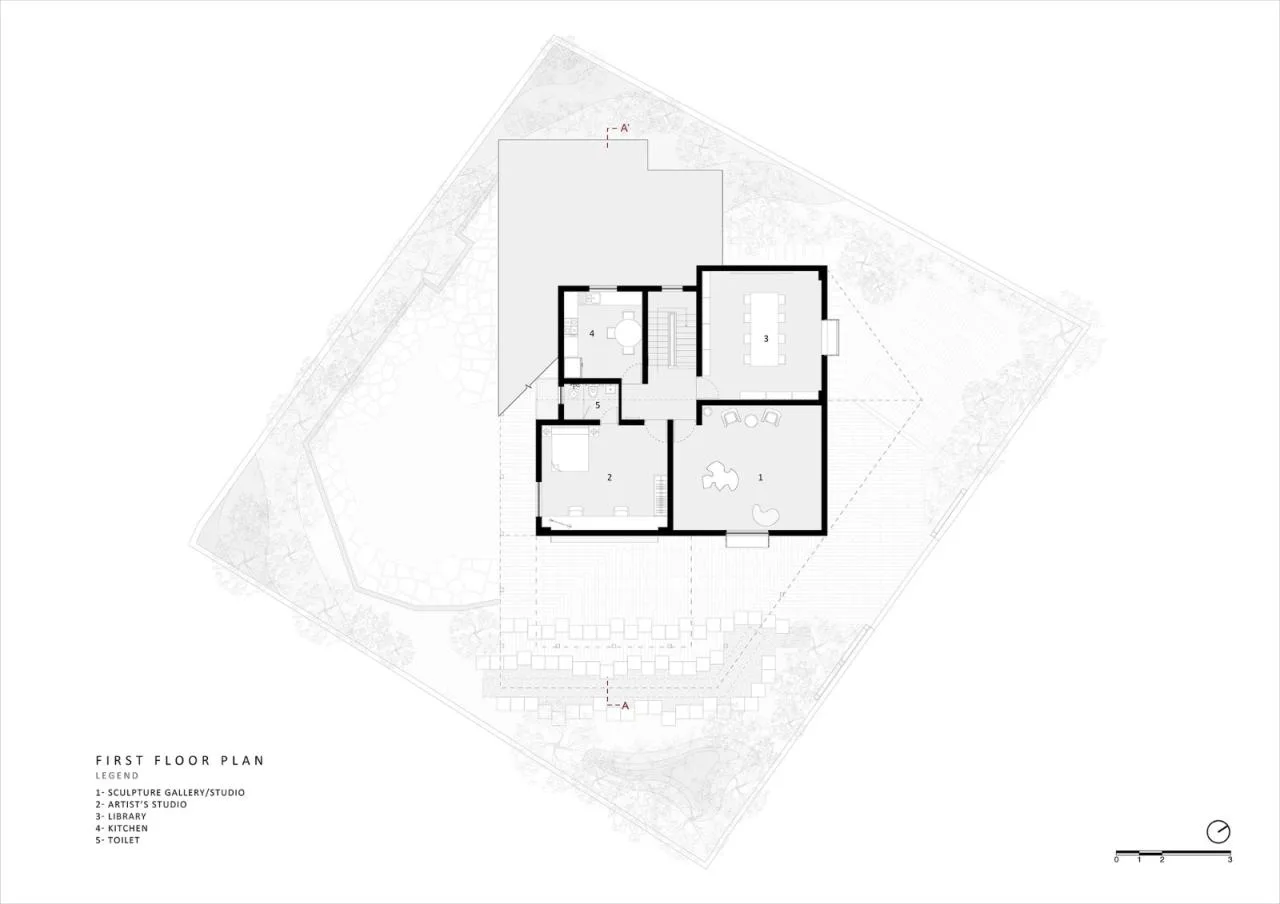
△ Second floor plan
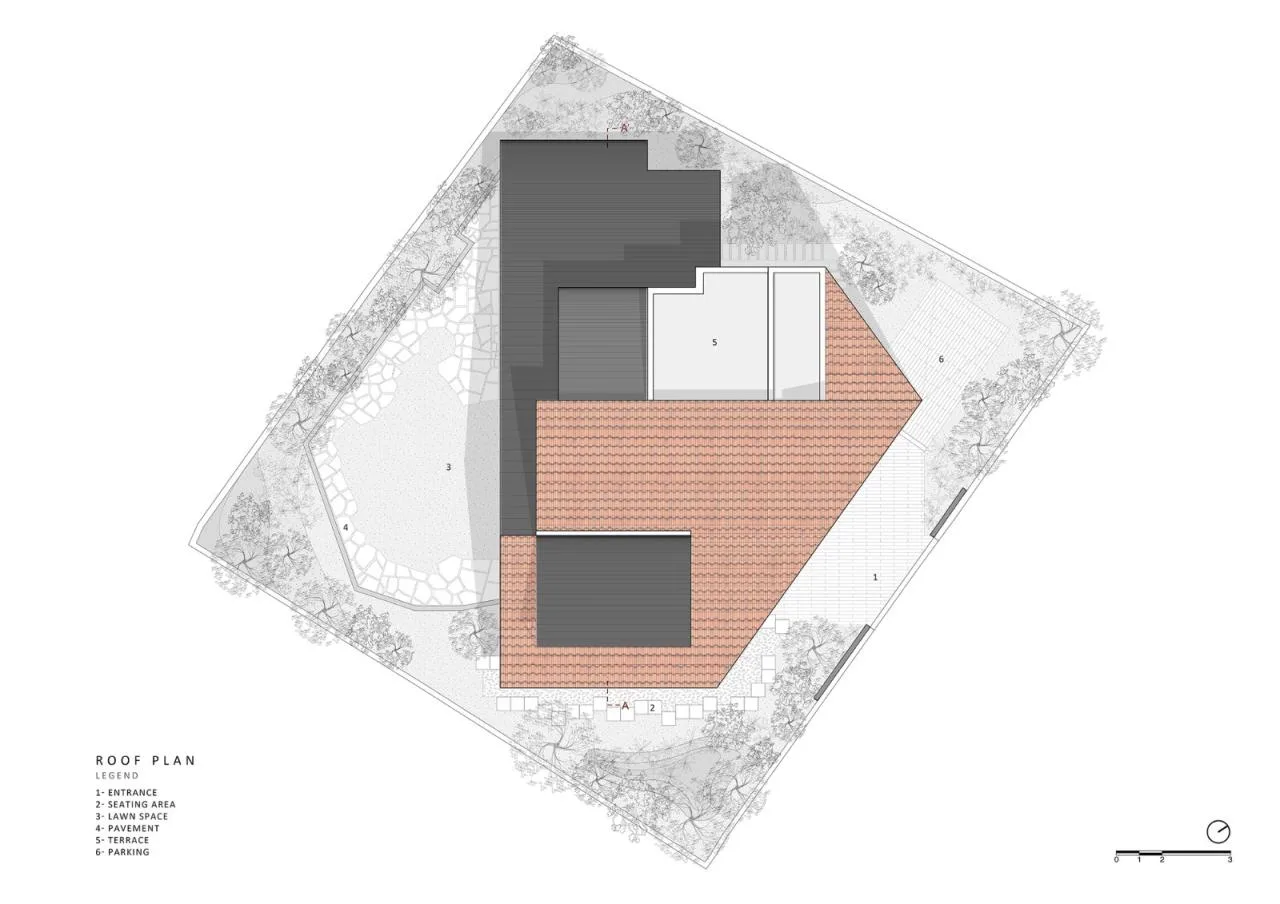
△ Roof plan
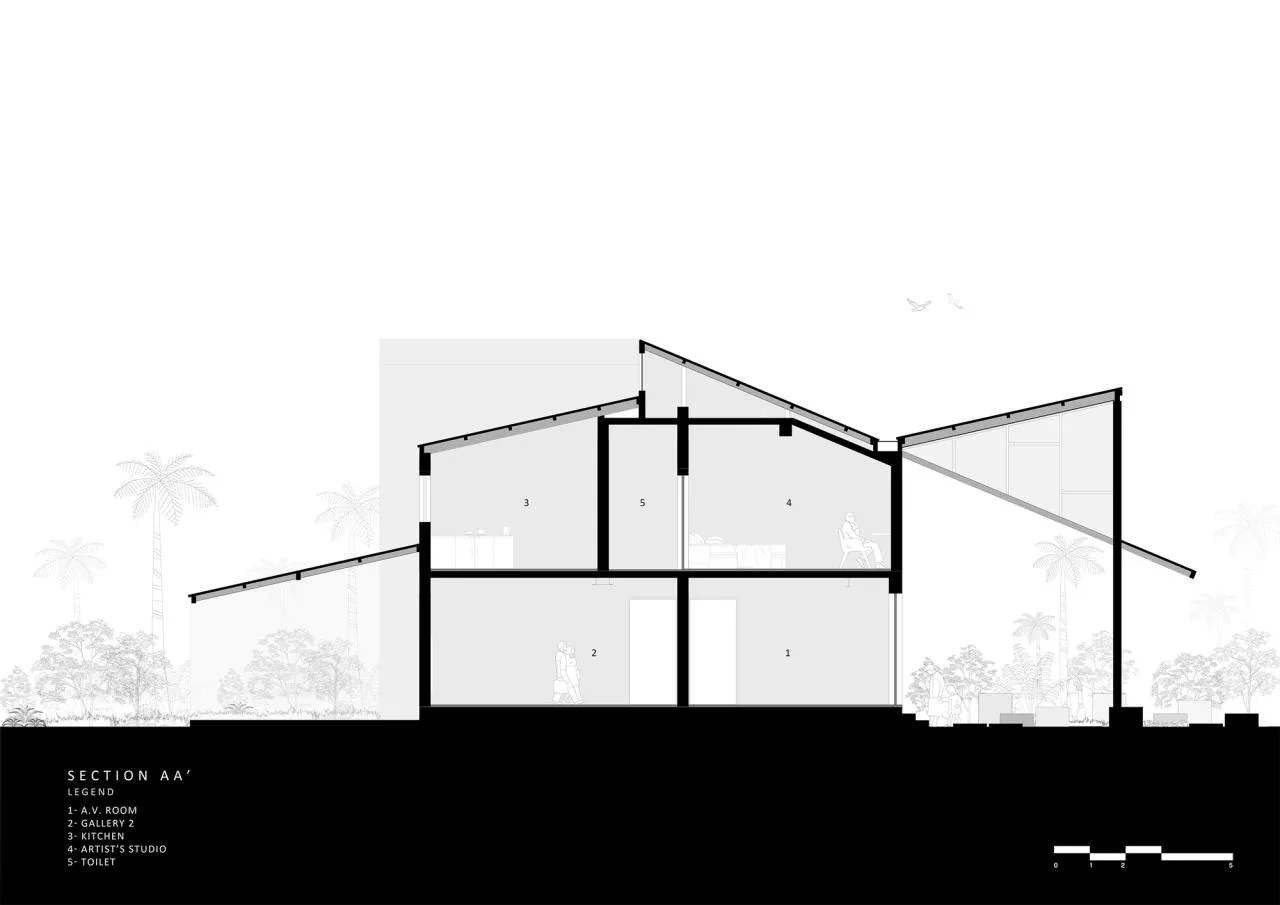
△ Section diagram
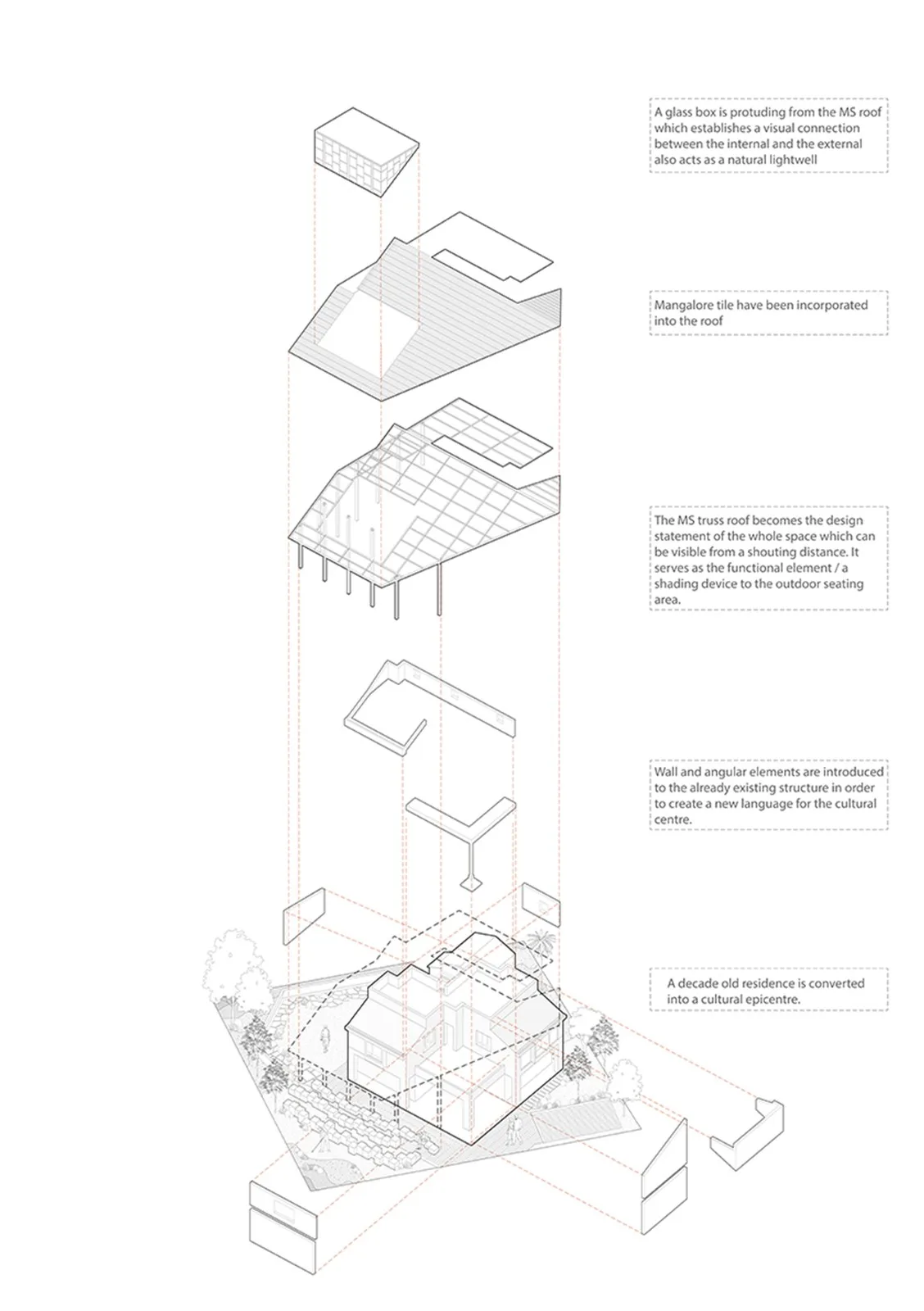
△ Exploded diagram
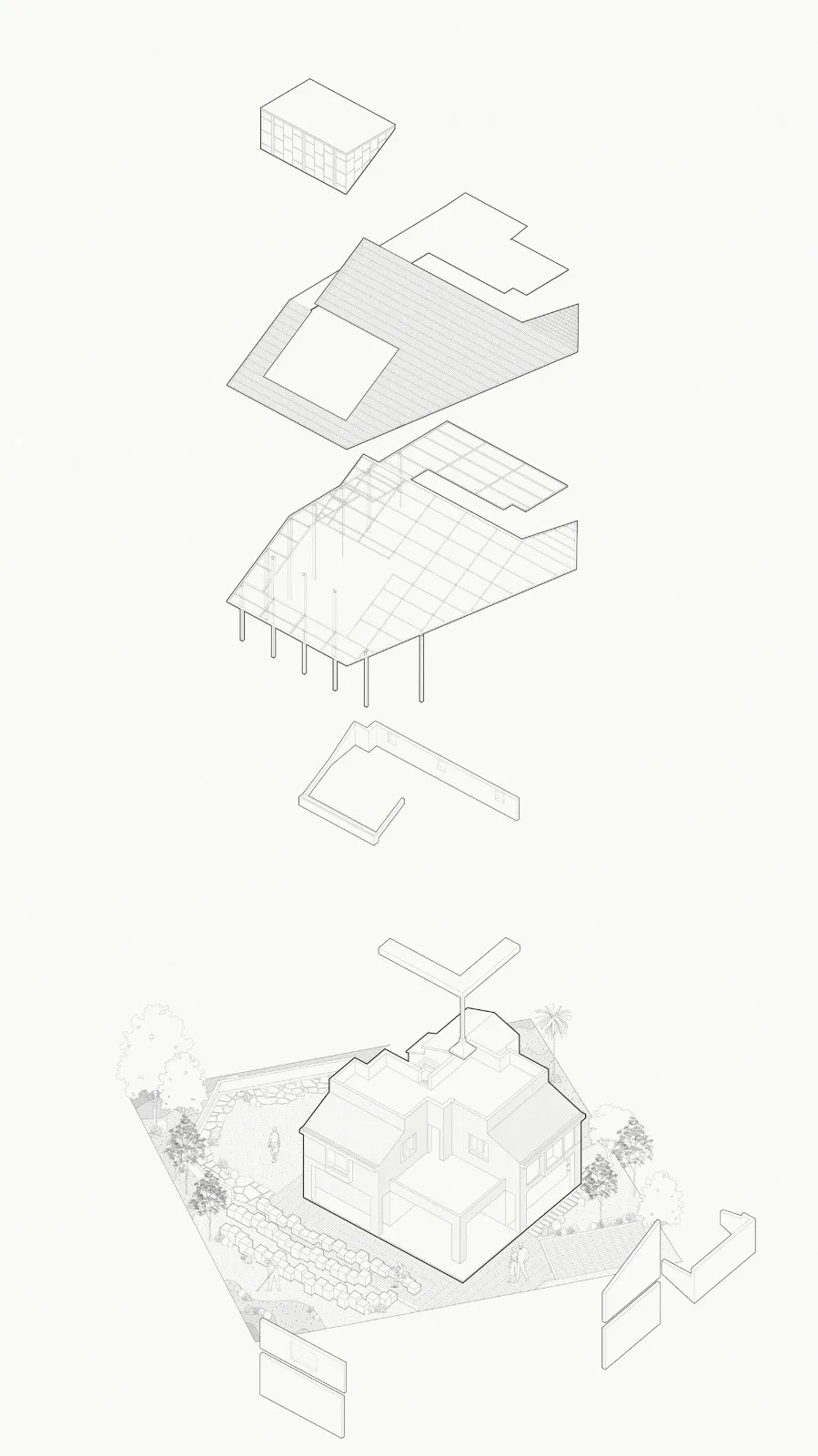
△ Analysis chart
Project Information
Architect: Abin Design Studio
Area: 425 m²
Year: 2022
Photographer: Niveditaa Gupta
Lead Architect: Subhasish Dey
Design Team: Abin Chaudhuri, Subhasish Dey, Mayank Nigam, Sreemoyee Ray, Rukmini Mukherjee
Ceramic Artist: Partha Dasgupta
Structural Consultant: Subhranaryan Shil
Project Type: Educational Space
Location: Santiniketan, India












Must log in before commenting!
Sign Up