
Today, let’s explore the benefits of adopting Building Information Modeling (BIM) in construction engineering. BIM has transformed various engineering disciplines from traditional linear communication and information exchange into a collaborative workflow centered around BIM models and shared information. Architects, structural engineers, and mechanical, electrical, and plumbing (MEP) engineers can now integrate their designs within a unified platform.
Initially, architects perform building volume planning and design. Structural engineers then apply structural design software to conduct structural analysis and stress evaluations. Meanwhile, MEP engineers handle equipment placement, pipeline configuration, energy efficiency, and HVAC design. Using the BIM environment, these disciplines collaborate closely—reviewing and discussing designs, identifying and correcting flaws, significantly reducing rework costs and time, and avoiding poor-quality design solutions.
The process where architects and engineers create design models for their respective responsibilities using BIM software is known as modeling. Designers either build BIM models directly from the start or first develop the design in 2D drawings and then delegate the BIM modeling to others.
In China, BIM adoption is still relatively new, and many architects and engineers are not yet familiar with BIM’s environment and software operations. As a result, most architects continue to design using traditional 2D methods before handing over their work to construction companies for BIM modeling, usually after the project owner contracts the work. Construction contractors may either commission BIM consulting firms to develop these models or establish dedicated in-house BIM teams.
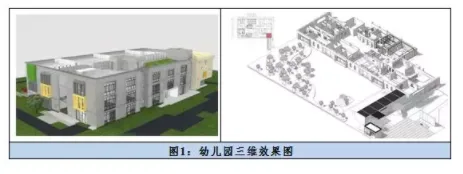
Once a basic BIM model is created, the platform not only facilitates collaboration among original designers but also enables construction companies to showcase and market the project even before construction begins. After modeling, contractors can schedule construction activities based on site conditions and available resources. By integrating schedule data with building component locations in the BIM model, they create a 4D model.
Using 4D models, construction teams can simulate the entire construction process. This simulation helps plan and review the feasibility of construction schedules, as well as evaluate the safety and efficiency of various operational arrangements. When cost data is incorporated into the model alongside building components, it evolves into a 5D BIM model, providing managers with insights on the timing, location, and cost of construction activities.
Furthermore, by including equipment management details for post-construction facility management, a 6D BIM environment is established. This advanced model supports property management functions, extending BIM’s usefulness beyond design and construction.
In fact, BIM technology is not limited to design and construction phases. It can also support early-stage feasibility assessments and planning, including quantity estimation, preliminary cost evaluation, selection of building shapes and colors, comparison of building materials and equipment, and intelligent facility assessments. The integration of natural environment factors and materials with information and communication technology (ICT) to enhance building performance has become a significant focus in the construction industry.
In summary, beyond the collaborative benefits of BIM, having a BIM model allows for comprehensive performance analyses—such as energy consumption, acoustics, lighting, and temperature—using common BIM energy analysis software. This capability provides a more objective and detailed evaluation of green building effectiveness in achieving sustainable environmental protection, energy conservation, and carbon reduction goals.














Must log in before commenting!
Sign Up