
BIM and CAD represent two distinct eras in architectural design. While CAD dominated the last century, the rapid growth of the construction industry and the rise of large-scale buildings have revealed its limitations. Although the concept of BIM was introduced decades ago, it couldn’t be widely adopted due to technological constraints at the time. Today, with significant advancements in information technology, BIM has seen rapid development. So, what advantages does BIM offer over CAD?
In architecture, traditional building plans have been created using computer-aided design (CAD) tools, which display floor plans in two-dimensional (2D) formats. Autodesk’s AutoCAD is among the most popular software in this field. However, since AutoCAD is a general-purpose drawing platform rather than one tailored specifically for construction, it relies on basic commands like lines and arcs to build floor plans. This approach lacks convenience and fails to provide complete structural information about buildings.
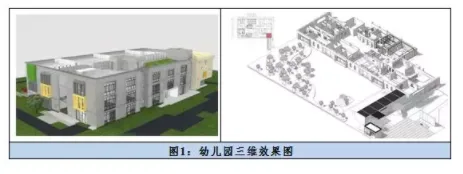
To address these shortcomings, BIM software was developed. It introduces the concept of a “project” by integrating various views such as plans, elevations, sections, and perspectives—something CAD tools handle separately. Building Information Modeling (BIM) uses 3D visualization by combining graphics and surfaces to present comprehensive details about a building, including materials, piping systems, and more. The 3D model also offers a clearer understanding of the building’s structure and layout.
Unlike CAD drawings, which are composed of points, lines, and surfaces, BIM constructs buildings as objects. Elements like walls, openings, and ceilings are treated as independent objects with their own properties, such as dimensions and materials. This object-oriented approach allows surveyors to access detailed information about each space during the surveying process.
BIM consolidates multiple drawings—floor plans, elevations, and perspectives—into a single project, providing investigators with simultaneous access to various types of building information in a three-dimensional format. This greatly assists technical personnel in integrating spatial relationships and resolving issues such as soft and hard clashes. BIM also enables spatially-based recording and analysis of survey data, defining attributes for spaces and objects within those spaces, like walls and fixtures. As a result, BIM allows interactive comparisons of building spaces and objects to accurately identify problem areas.
Through this explanation, it becomes clear why BIM holds advantages over CAD. The replacement of older technologies by newer ones is a natural progression. While it may be premature to declare the end of CAD—since it still represents an important era—BIM is steadily becoming the preferred platform for building design and management.














Must log in before commenting!
Sign Up