
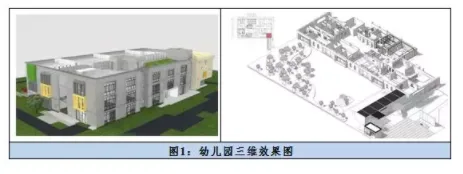
BIM (Building Information Modeling) is a parametric approach for creating detailed 3D models of buildings. Beyond just the architectural design, it encompasses comprehensive building information such as plans, elevations, sections, detailed drawings, 3D visuals, material lists, and lighting simulations. BIM integrates geometry, spatial relationships, geographic information systems, as well as properties and quantities of various building components. It captures the entire building lifecycle, including construction and operation phases. The building’s mechanical, electrical, and structural systems can be presented together or separately, providing a vital communication bridge between designers, builders, owners, and operators. This enables real-time access to essential information required throughout the project lifecycle. Today, we will explore BIM’s application across the entire building lifecycle.
The unique features of BIM allow project owners, engineers at different stages, and even non-construction professionals to quickly grasp project details. During the design phase, construction teams can continuously verify the appropriateness of their plans by performing spatial correlation analyses, evaluating construction methods, verifying quantity calculations, clarifying interfaces, and planning hypothetical scenarios before construction begins. If any issues are detected, the project model can be promptly updated and reviewed through BIM’s data linkage capabilities. This proactive error detection helps prevent miscommunication and construction errors, significantly reducing material waste and lowering costs.
Here is how BIM is applied throughout the entire building lifecycle:
Planning Stage
BIM’s 3D models and visualizations facilitate communication between owners and designers by clearly conveying project requirements. This enhances subsequent design processes and supports marketing efforts for the project owners. The model also contains embedded data that allows for accurate cost estimation, helping owners understand project scope and enabling more effective discussions.
Design Phase
Energy Analysis: BIM provides energy consumption assessments and evaluates alternative materials and design methods to optimize sustainability.
Conflict Detection: By analyzing component interactions, BIM identifies design clashes early, preventing costly revisions.
Feasibility Analysis: Examines the construction process and environmental conditions to ensure project viability.
Construction Sequence Simulation: A 4D model simulates the construction timeline, improving scheduling and coordination.
Cost Estimation: Integrating the BIM model with cost databases allows for precise budget forecasting.
Construction Phase
BIM models enable virtual construction simulations before actual work begins, assisting in managing construction processes and controlling costs.
Replacing traditional 2D drawings with BIM enhances communication, resolves coordination issues, plans construction sequences efficiently, and detects design errors early.
Operation and Maintenance Phase
Operation Management: BIM components provide detailed maintenance information, supporting efficient facility management.
Process Control: BIM helps manage HVAC systems, analyze energy consumption, oversee security systems, control access, and streamline manufacturing processes throughout the building’s operation.
In conclusion, BIM plays a crucial role throughout the entire building lifecycle. As construction projects grow larger and more complex, the amount of associated information increases dramatically. Creating models only at the design stage is no longer sufficient. Instead, BIM must be integrated throughout the lifecycle to improve communication and preliminary cost estimation during planning. During design, the building model needs thorough analysis and review for conflicts, energy efficiency, and constructability. During construction, BIM visualization and early schedule simulations support operations and coordination, ultimately saving costs and shortening project timelines.














Must log in before commenting!
Sign Up