
BIM, or Building Information Modeling, represents a modern approach to architectural design. Unlike traditional computer-aided design methods, BIM relies on three-dimensional spatial mapping as its foundation. More importantly, it enriches every building component with detailed attribute information, addressing diverse needs throughout the design and construction phases. Once a building reaches completion and enters the operation and maintenance stage, the data stored in the BIM software remains unchanged, reflecting the finalized appearance and internal structure of the building. Today, we will explore the role of data in BIM.
With the rapid advancement of information technology, the BIM model—using the IFC (Industry Foundation Classes) format as the standard for data exchange—has gained significant recognition in the Architecture, Engineering, and Construction (A/E/C) industry. Its main advantage lies in integrating both graphical and non-graphical information within a single model, minimizing redundant data conversions and paper documentation. This integration enhances consistency and efficiency in information processing while enabling seamless data exchange and sharing throughout the entire project lifecycle.
In recent years, under the guidance of the U.S. General Services Administration (GSA), the National 3D-4D-BIM Program, led by the Public Buildings Service (PBS) Office of Chief Architect (OCA), has developed a comprehensive set of guidelines for BIM standards and applications. These guidelines cover all project phases—from planning and design to construction and facility maintenance management.
However, current GSA research and initiatives primarily focus on BIM usage during planning and design stages and on establishing BIM information exchange standards. There remains a lack of specific development regarding BIM’s application in project planning and construction management. To address limitations of the IFC format—particularly its inability to extend to work processes and standards—and to enhance BIM’s practical use, the International Alliance for Interoperability (IAI) proposed the Information Delivery Manual (IDM) 【BuildingsMART Website】. IDM aims to define procedures, information requirements, and deliverables throughout construction, serving as a reference for creating BIM information models. Although IDM was designed to fill gaps in BIM planning and construction management, its development has been slow, and concrete results have yet to emerge.
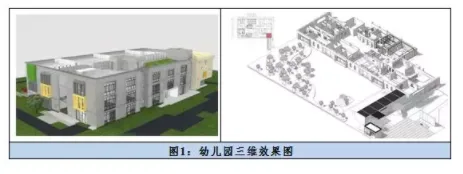
At its core, BIM can be viewed as a digital 3D geometric model of a building. Beyond geometric dimensions, the model contains extensive data about the building or project components. This comprehensive data enables software systems to perform accurate calculations automatically, providing the precise information users need.
The types of information available through BIM are diverse, including floor plans, elevations, sections, detailed drawings, 3D and perspective views, material lists, and performance analyses. For example, BIM can be used to calculate natural lighting effects in each room, determine the necessary air conditioning ventilation volume, and estimate heating and cooling power requirements for different seasons.
That concludes our overview of data in BIM. We hope this information proves useful to you.














Must log in before commenting!
Sign Up