
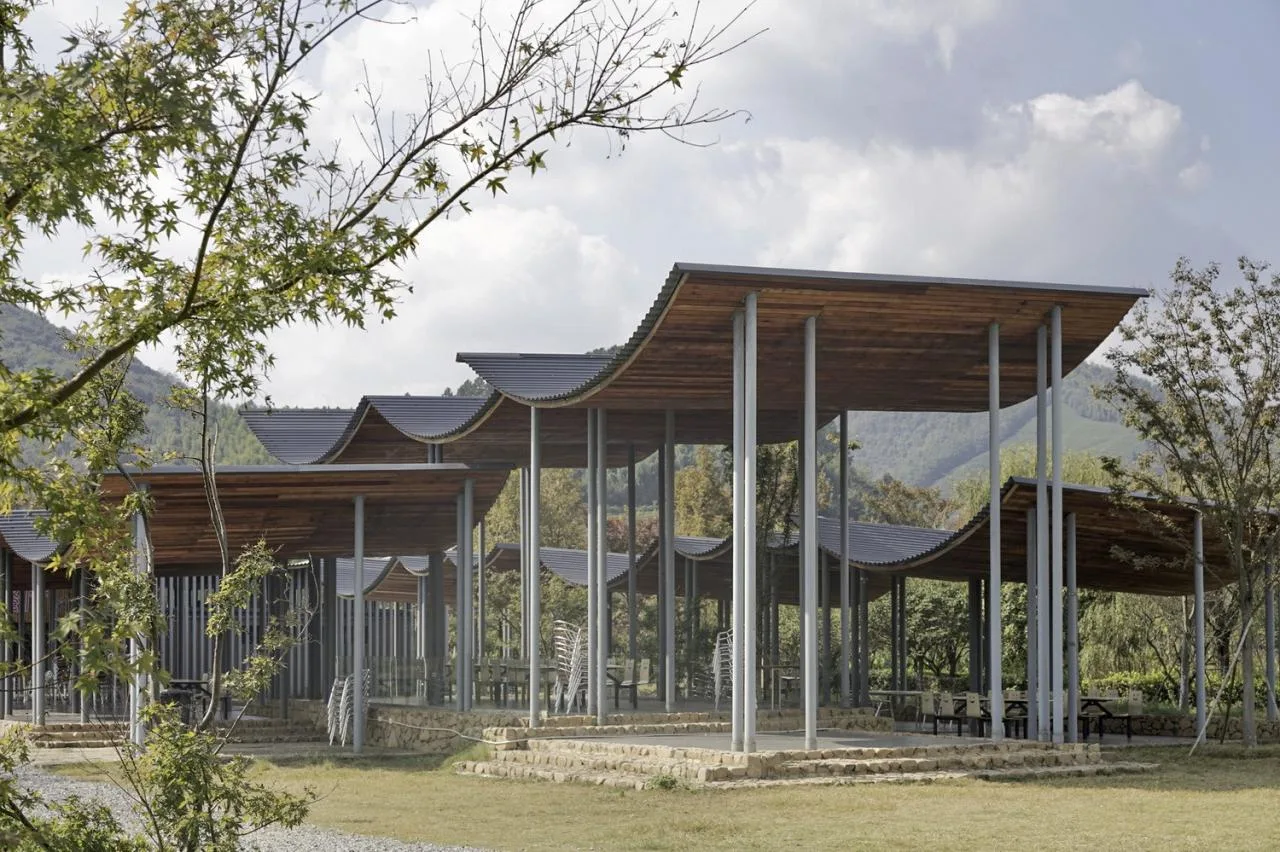
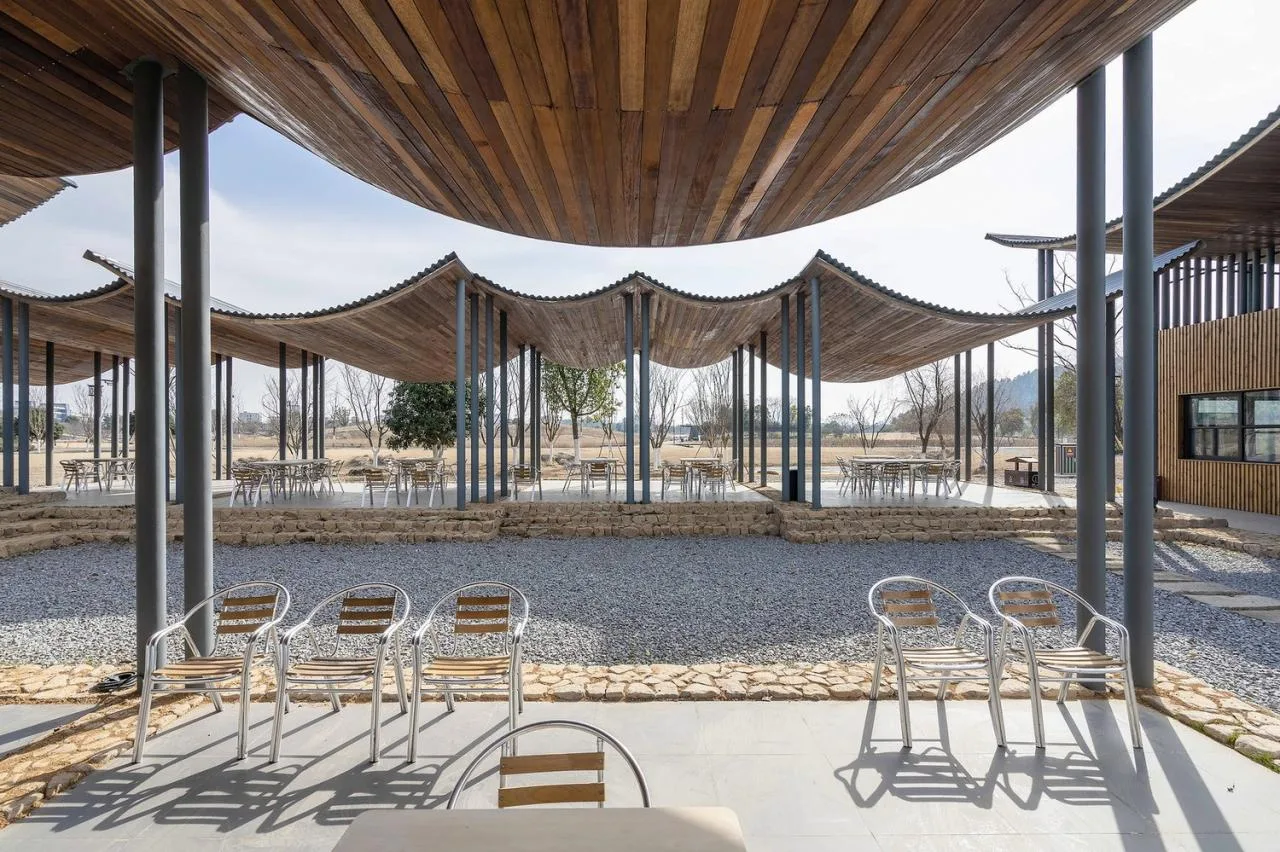
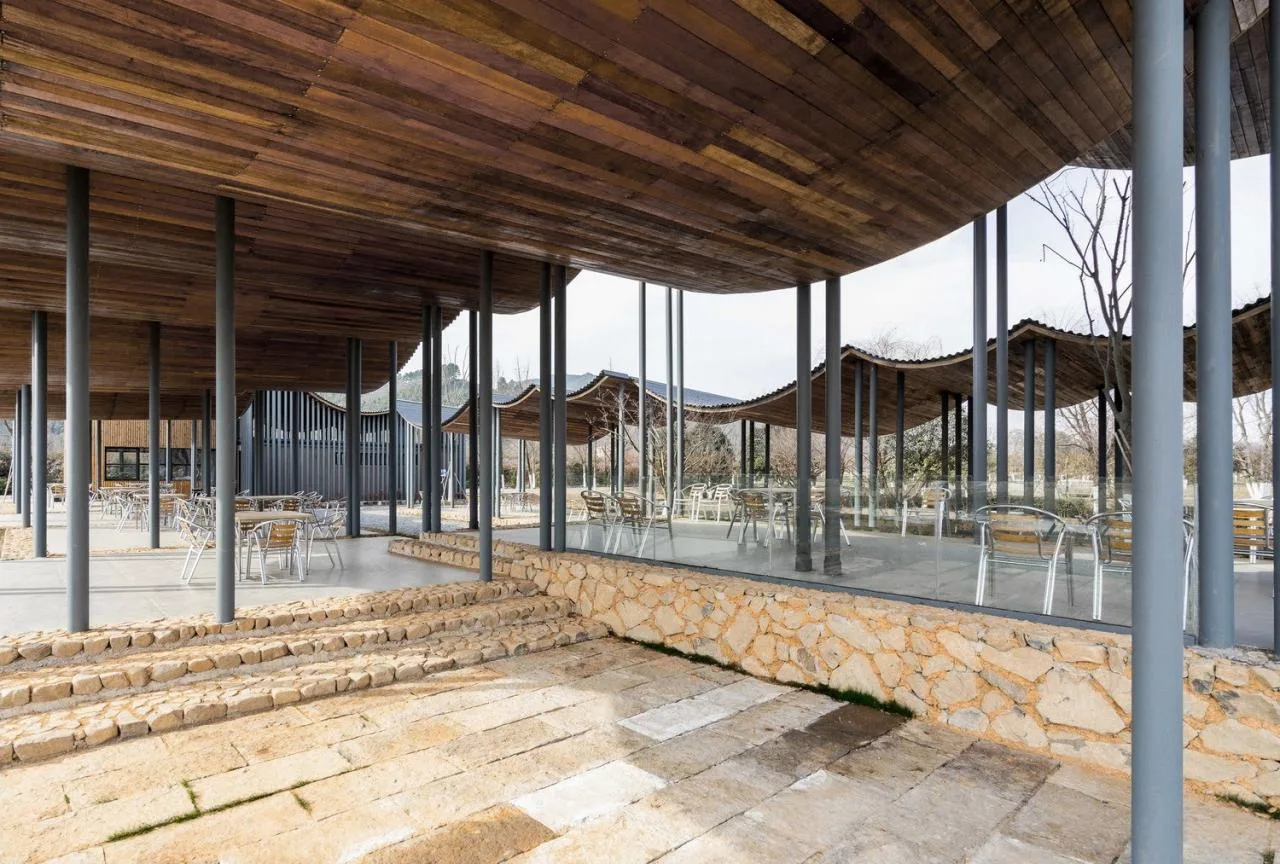
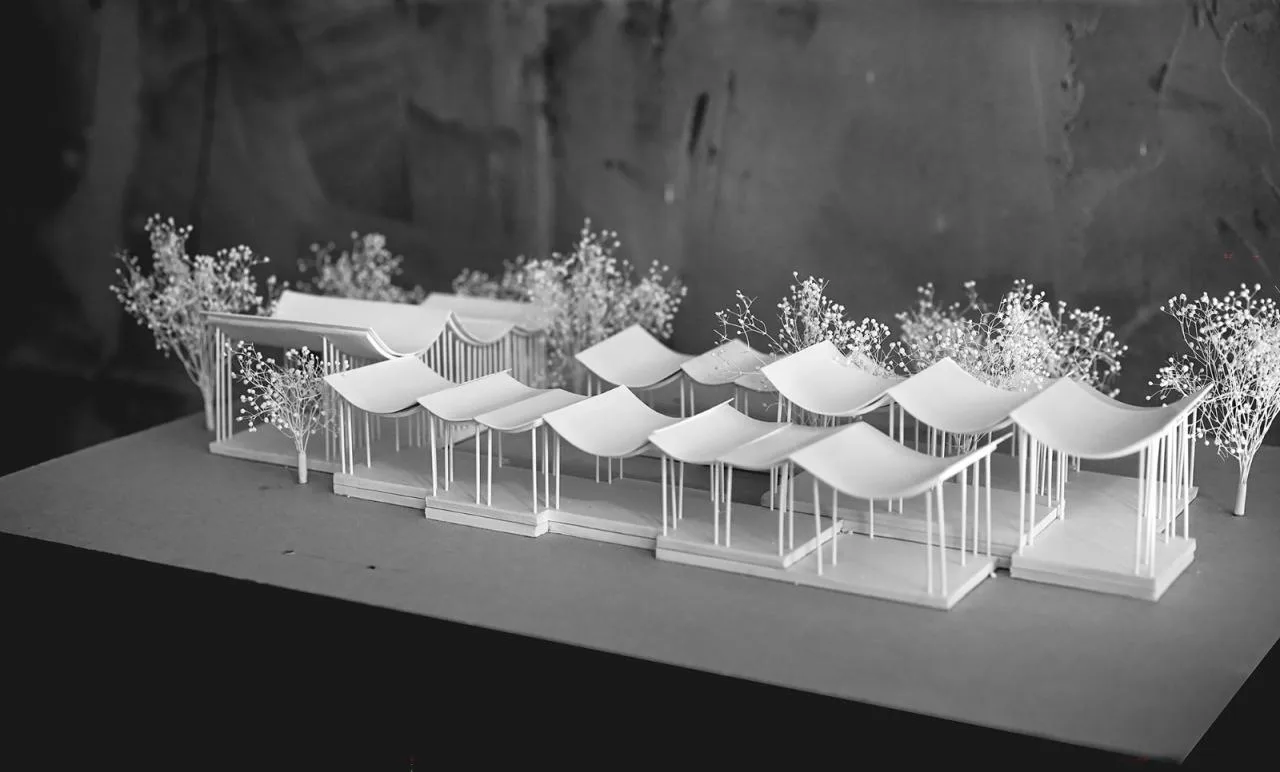
Located on Jingshan Mountain in Yuhang, Hangzhou, the Flower Sea Pavilion is renowned for its Zen tea culture and surrounding mountain forests. The design embraces the fundamental relationship between humans and nature, aiming for simplicity and openness. To evoke a primitive spatial experience, the pavilion features a suspended roof that naturally forms a stretched skeleton and skin structure, reminiscent of the straightforward tea sunshades commonly seen across the tea mountains of Jingshan.
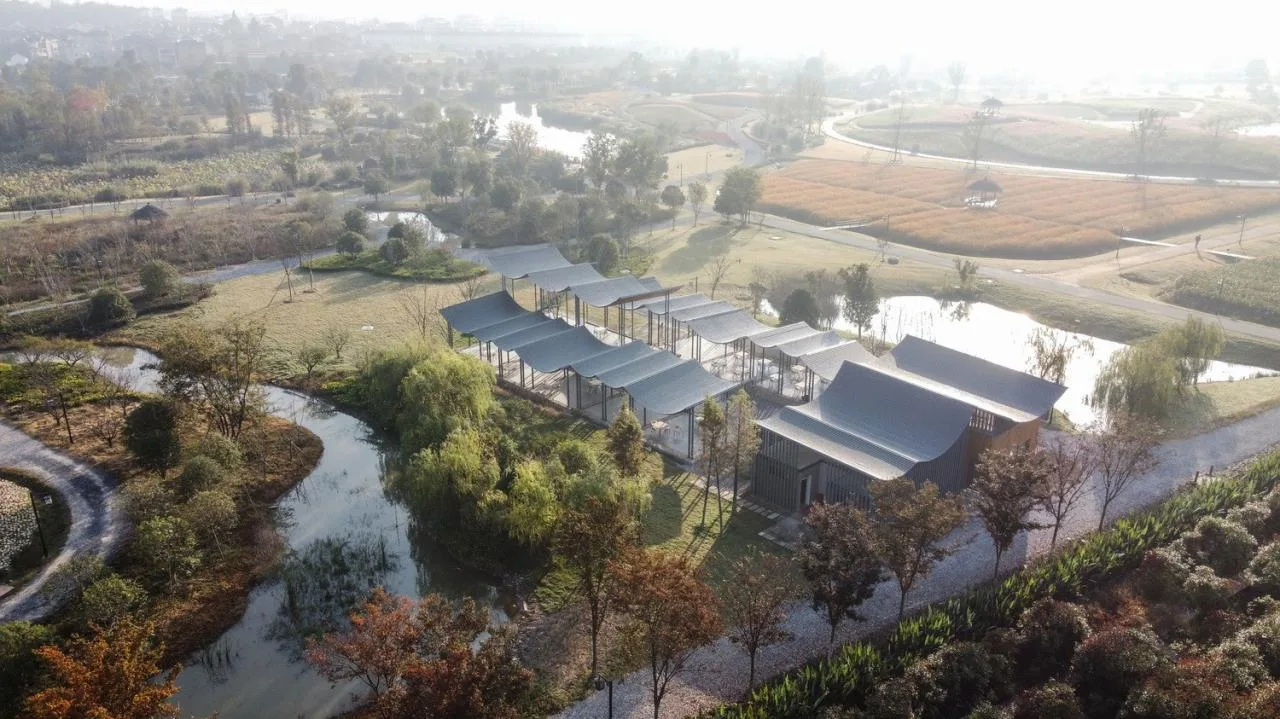
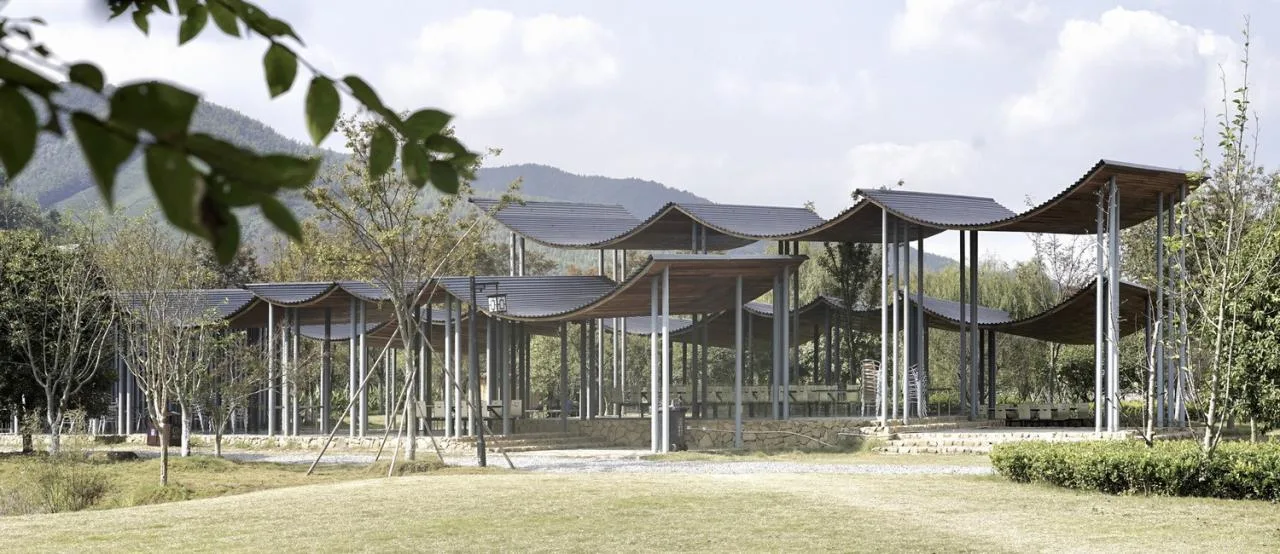
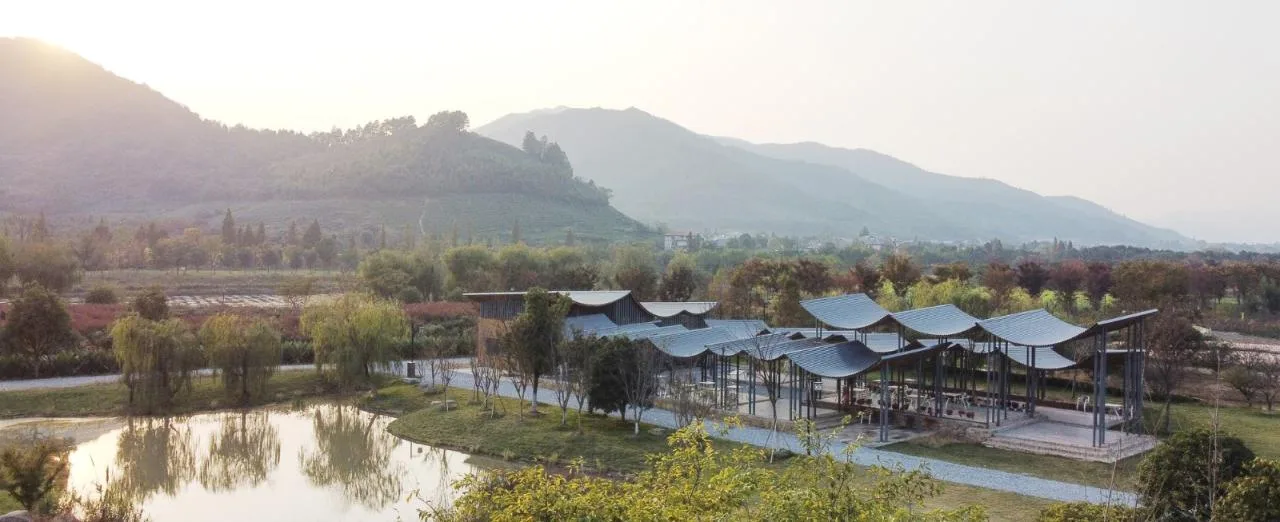
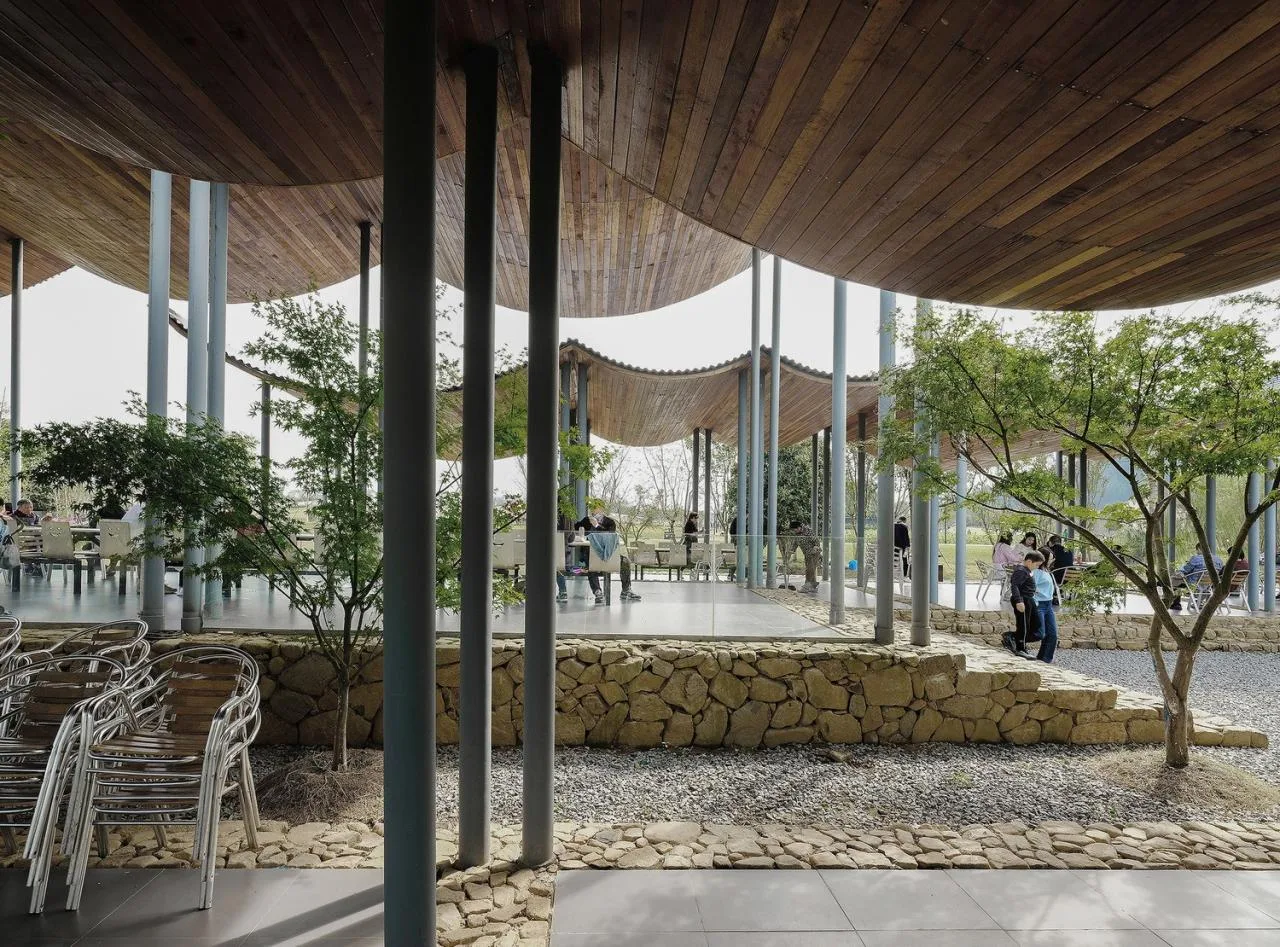
Hangzhou experiences cold winters and hot summers, making outdoor visits challenging during these seasons. Moreover, the flower sea lacks blossoms in these periods. Hence, the pavilion’s tents are primarily used in spring and autumn. Beyond serving simple meals, teas, and coffee, the Flower Sea Pavilion doubles as an open classroom for children’s plant cognition research courses. Considering seasonal climate and versatile usage, the building avoids rigid climatic boundaries, instead offering an open pavilion-like space gently supported like a tent or hammock, stretching across the flower sea on the ground.
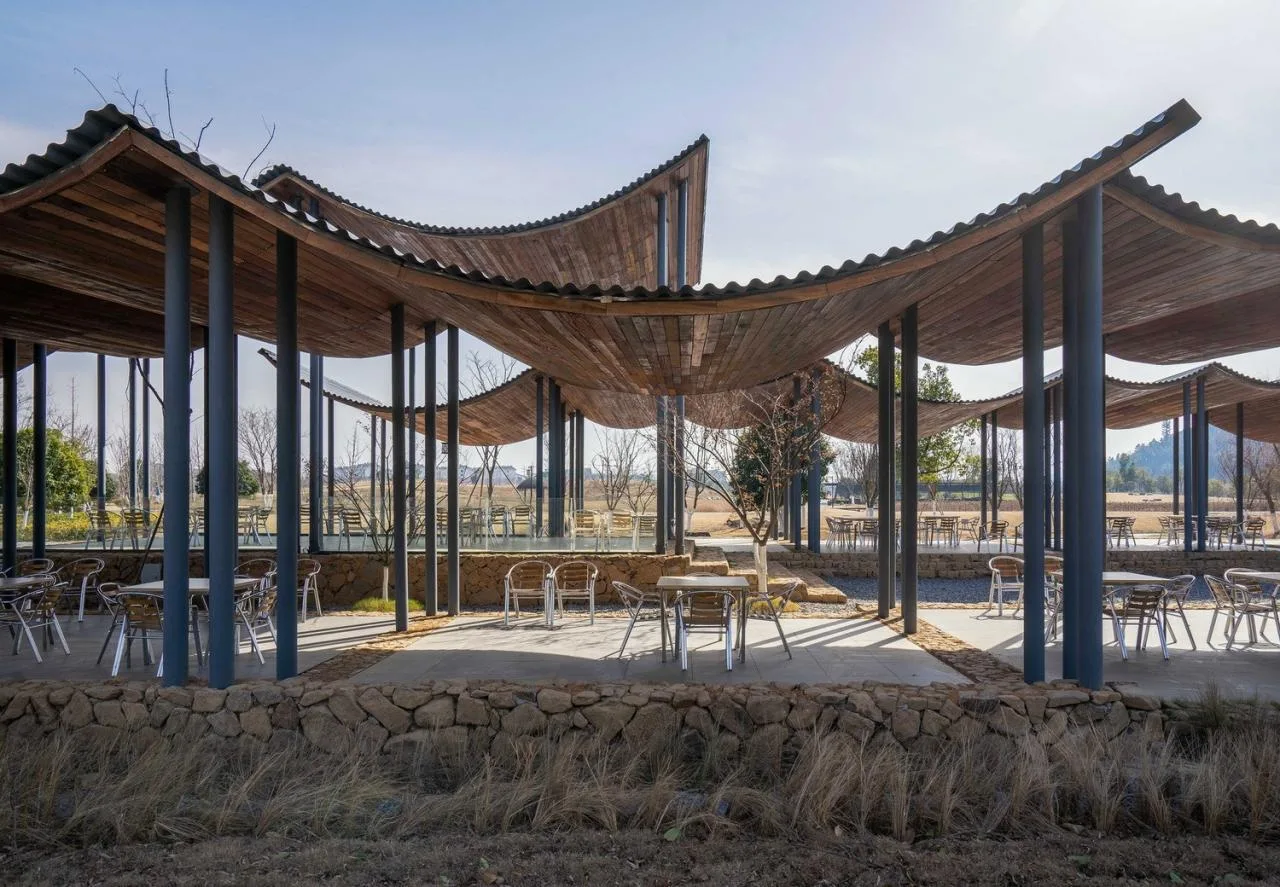
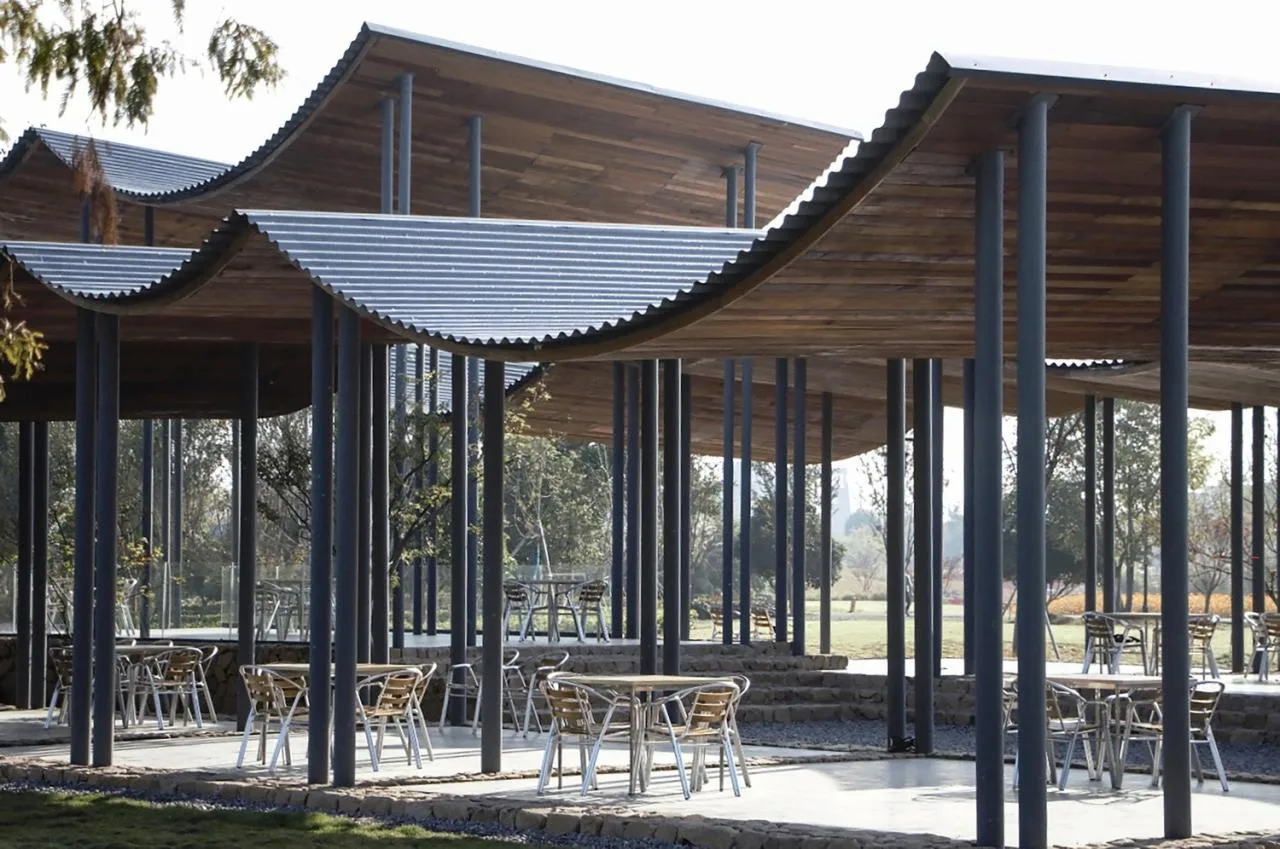
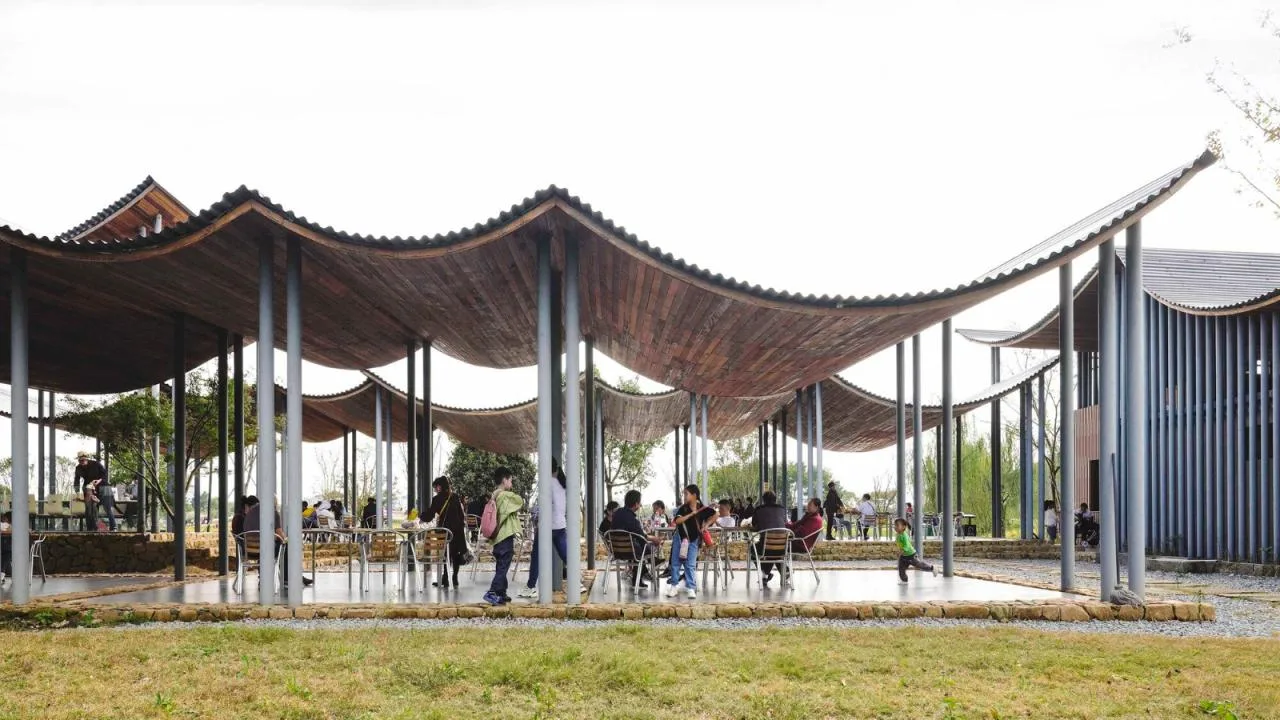
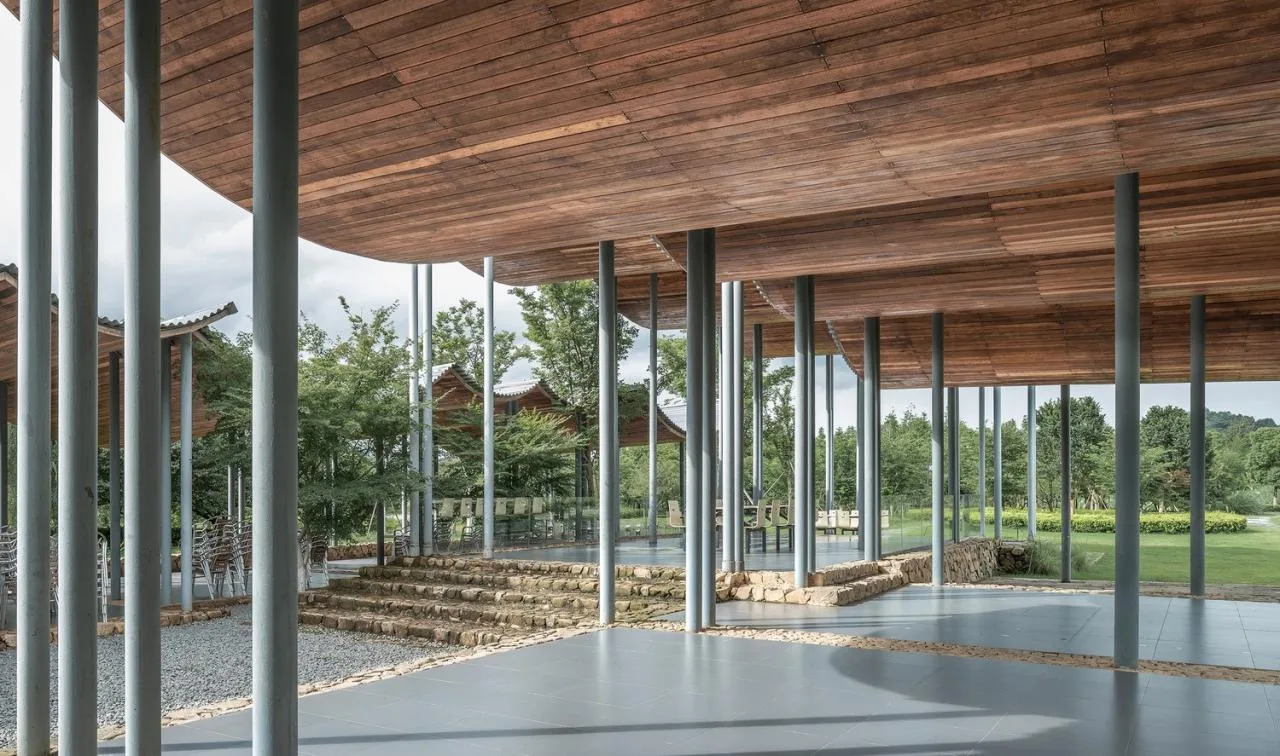
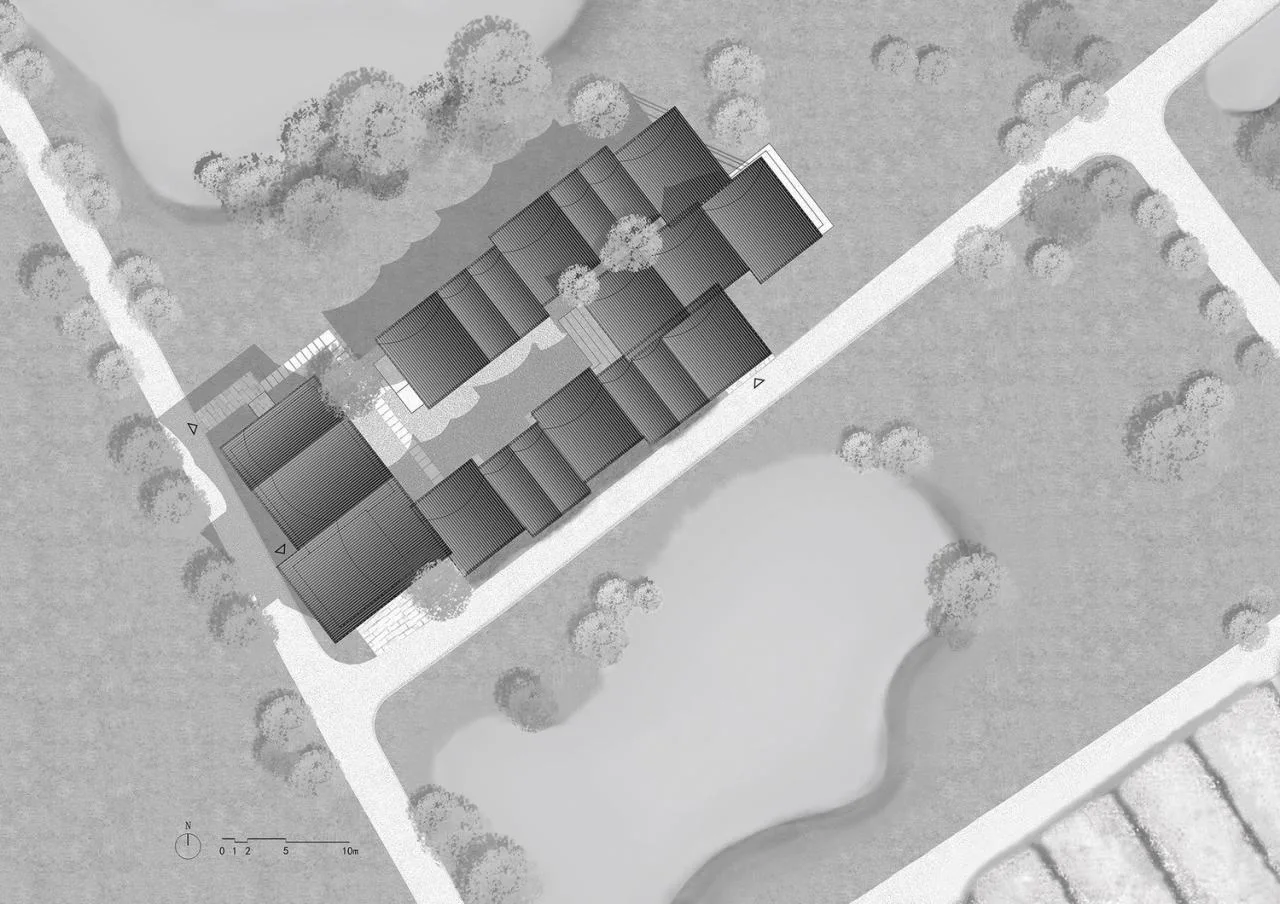
The pavilion is organized into activity and logistics zones, using flat modules measuring 6 × 6 and 6 × 3 meters. Four staggered strip-shaped pavilions enclose a small area designed for ceremonies or intimate performances. The modular approach simplifies structural control and roof fabrication. The multiple suspended roofs appear to float and fall in a dynamic pattern. Columns placed at the roof corners conceal their joints within the overhanging roof, creating an expansive sense of space above. These pillars, seemingly scattered beneath wooden “curtains,” evoke the feeling of walking through a forest. At dawn and dusk, the slender pillars gradually fade from top to bottom, offering visitors a serene experience as if holding up a piece of heaven and earth.
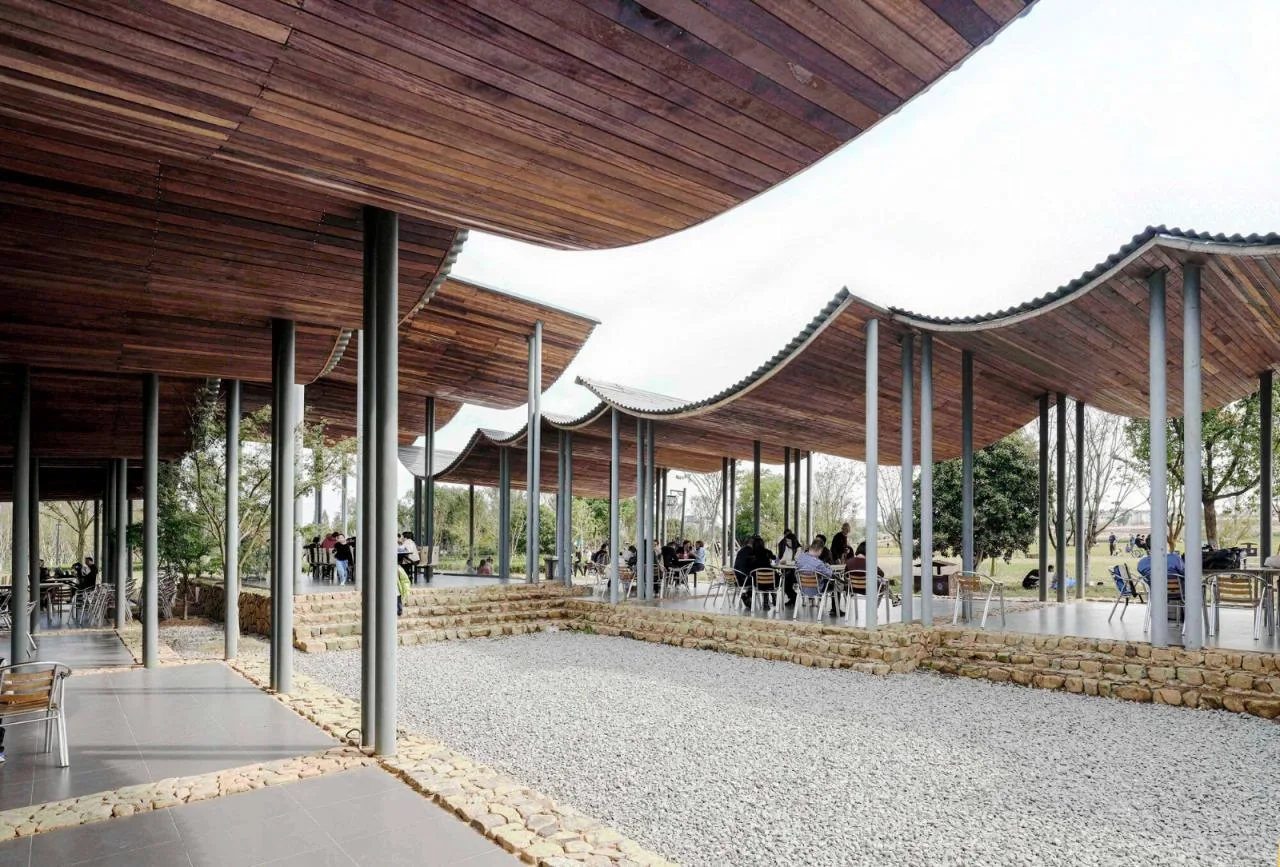
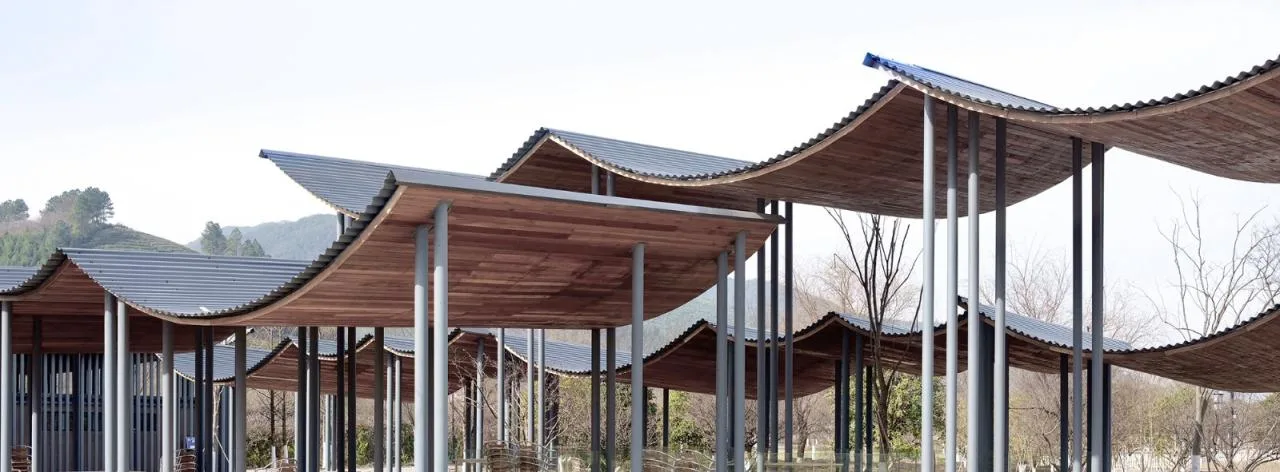
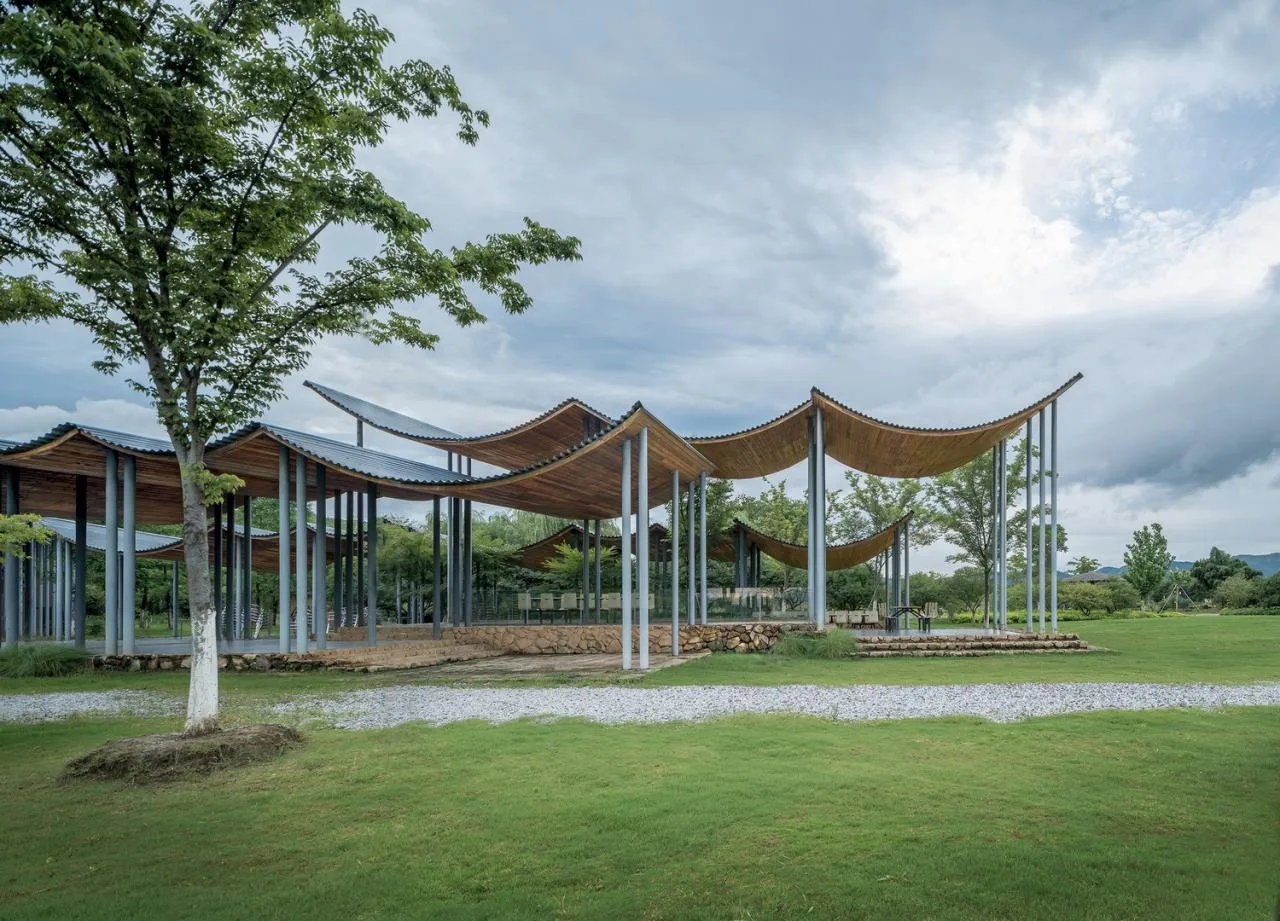
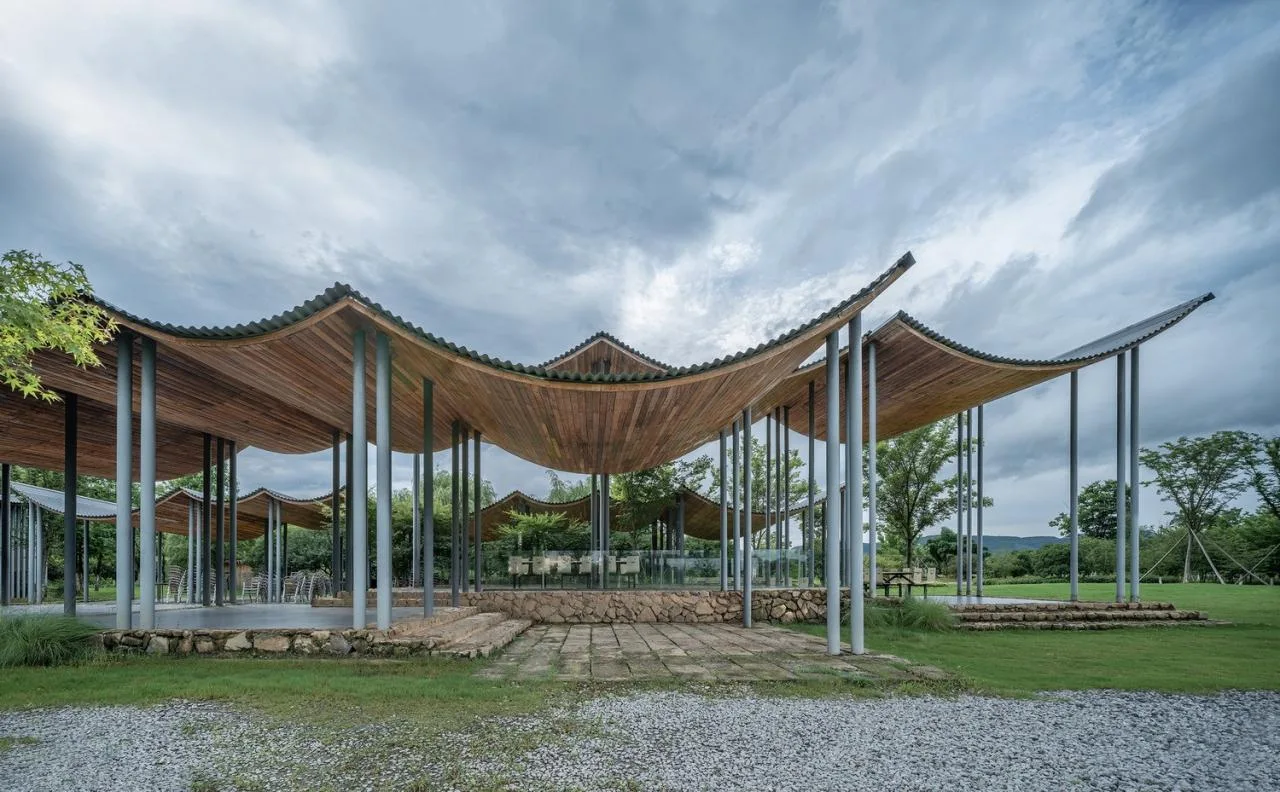
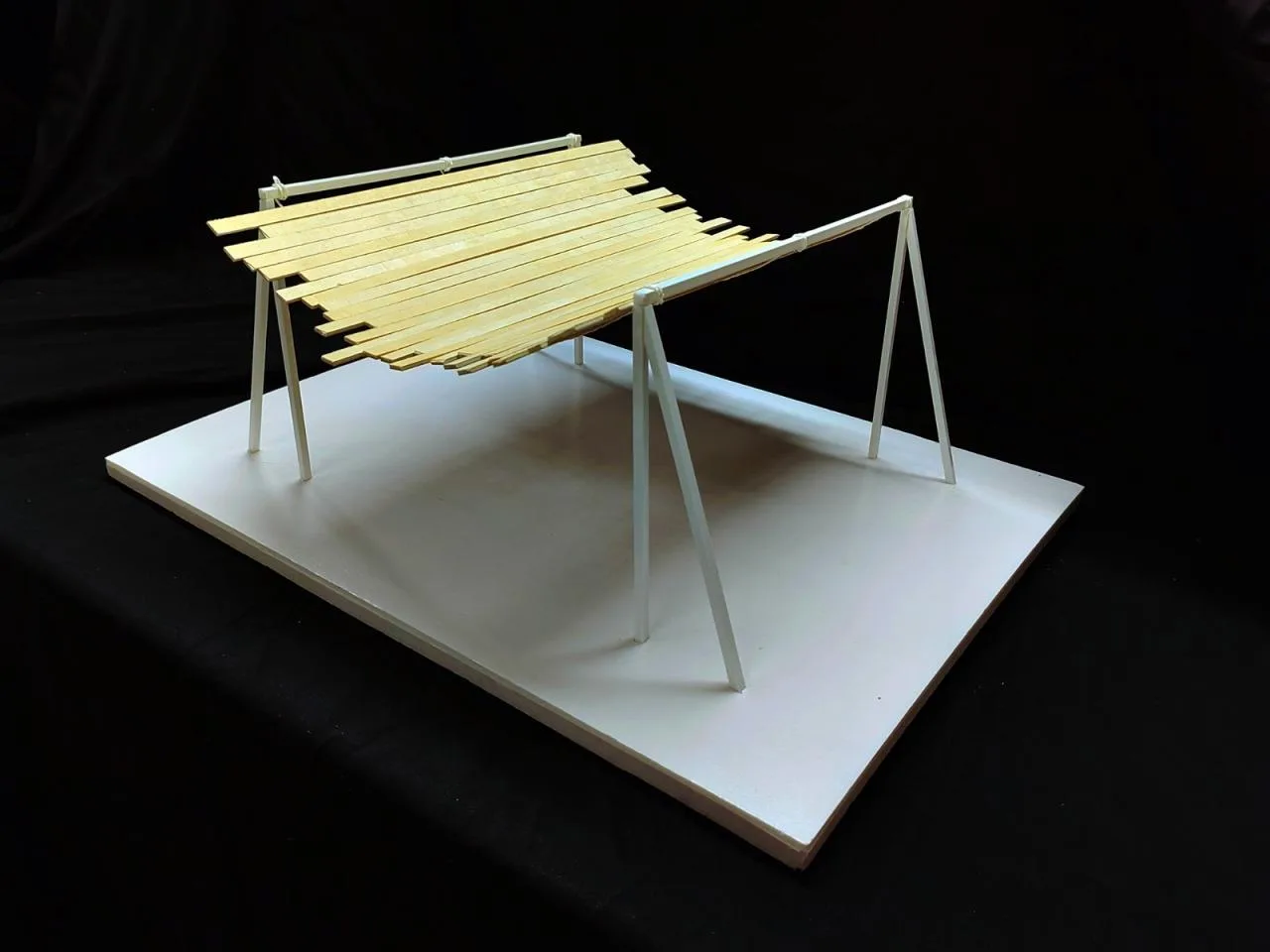
The original concept for the “rigid suspended roof” drew inspiration from suspension bridges. Steel cables would pass through wooden square bars and be anchored to steel portal frames at both ends, with the roof fixed via post-tensioning. However, challenges emerged during development, including wood’s weak compressive strength and difficulties performing high-altitude post-tensioning on continuous curved surfaces. As a result, a flexible steel-wood hybrid roof structure was adopted, forming a curved ceiling.
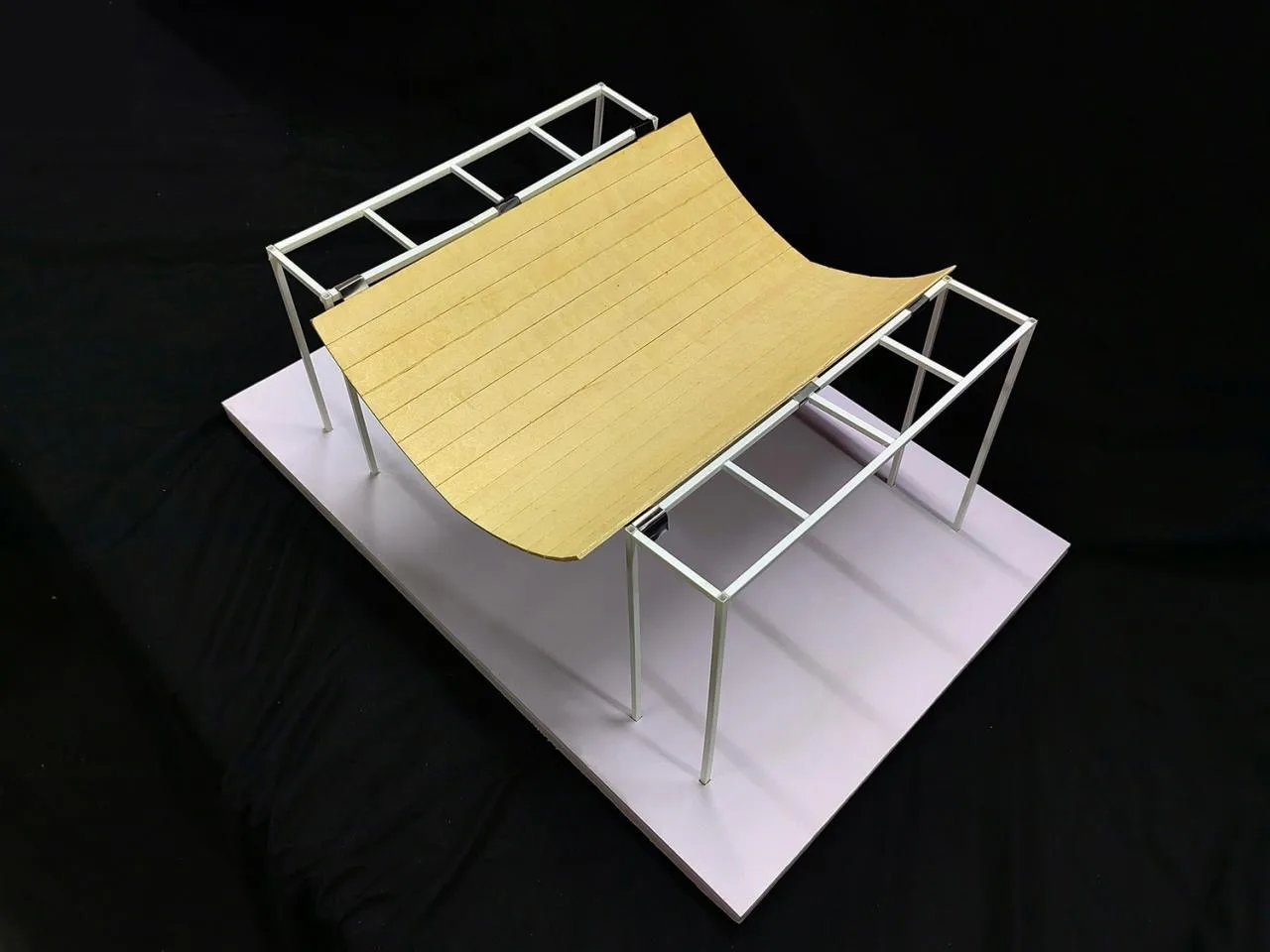
Prefabricated wooden shell units rest on 4–6 steel suspension strips stretched between portal frames. The curved cylindrical shells act as elastic membranes, transmitting loads via in-plane stiffness while disregarding out-of-plane stiffness. The self-weight and external loads like wind and snow transfer from the wood shells to the steel strips, then to the ridge crossbeam. The ridge beam’s pointed shape and sloped surface create a folded rigid frame with bending and shear stiffness, supporting the truss system.
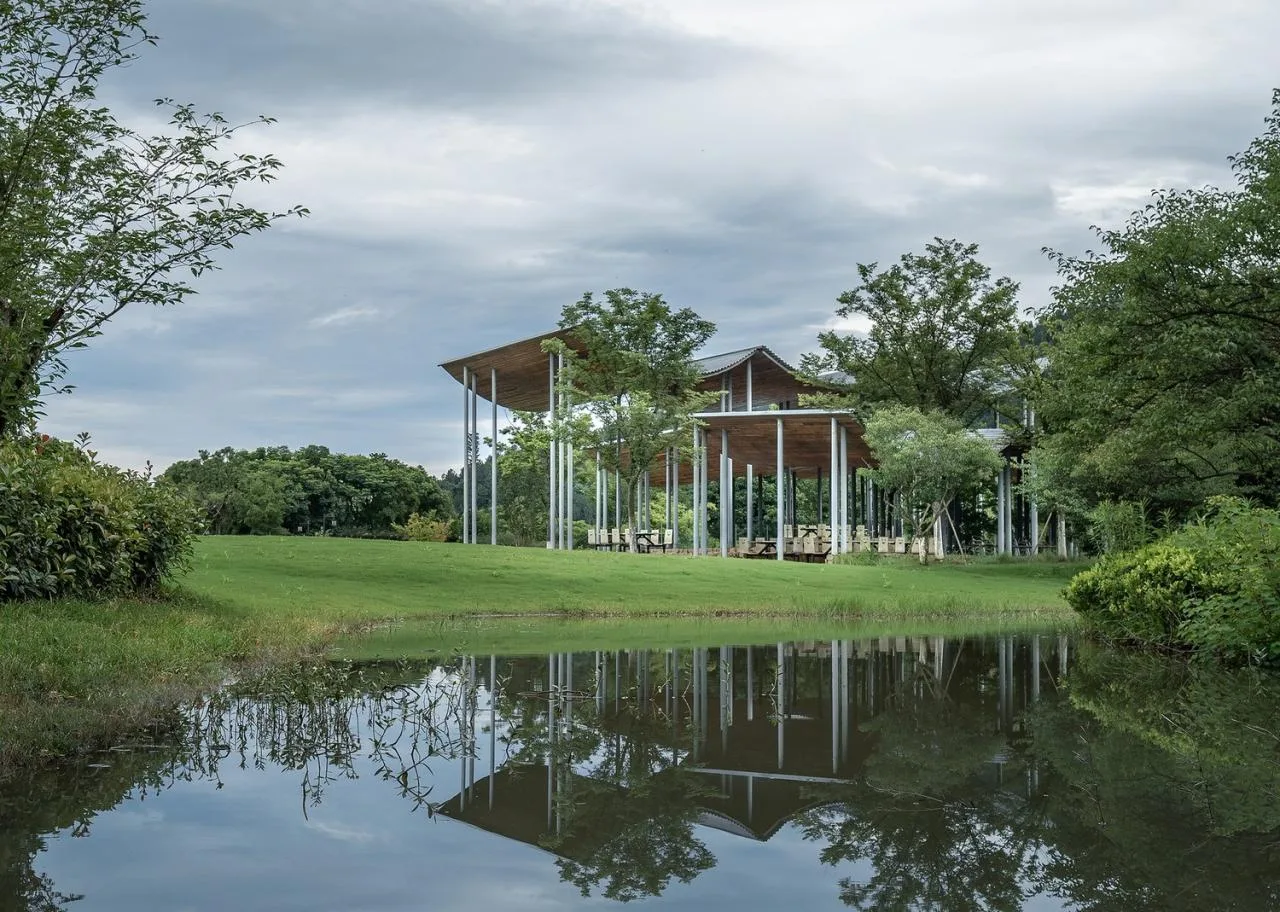
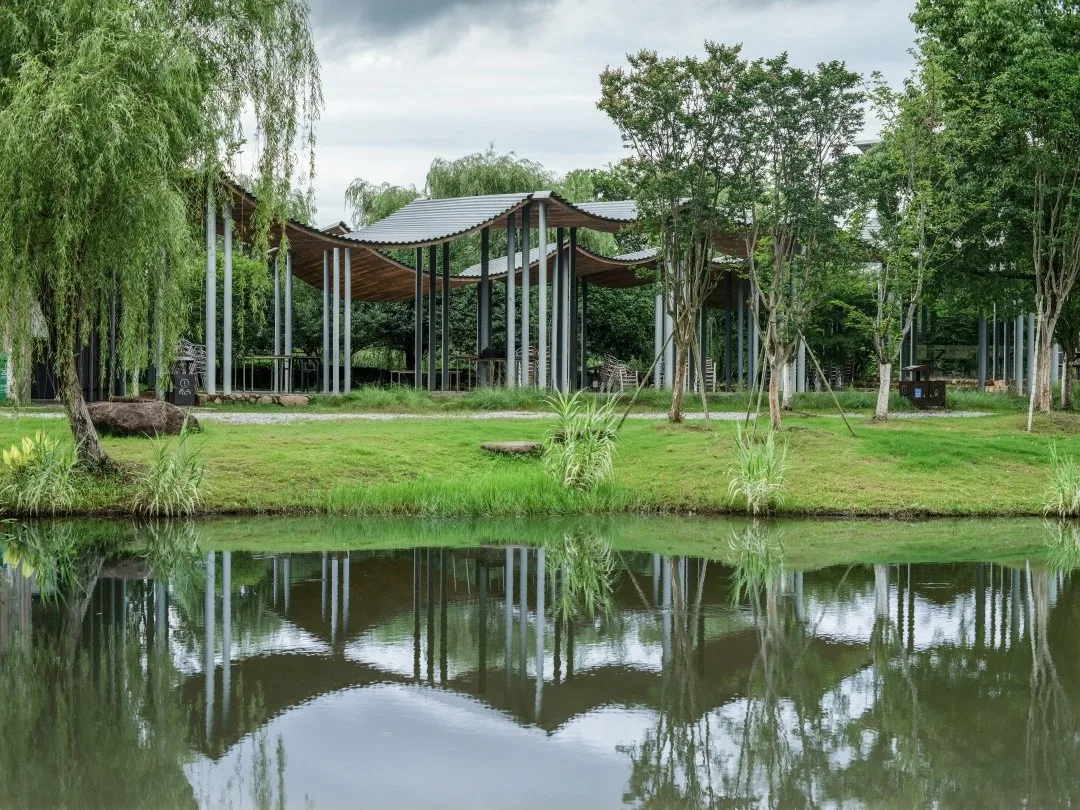
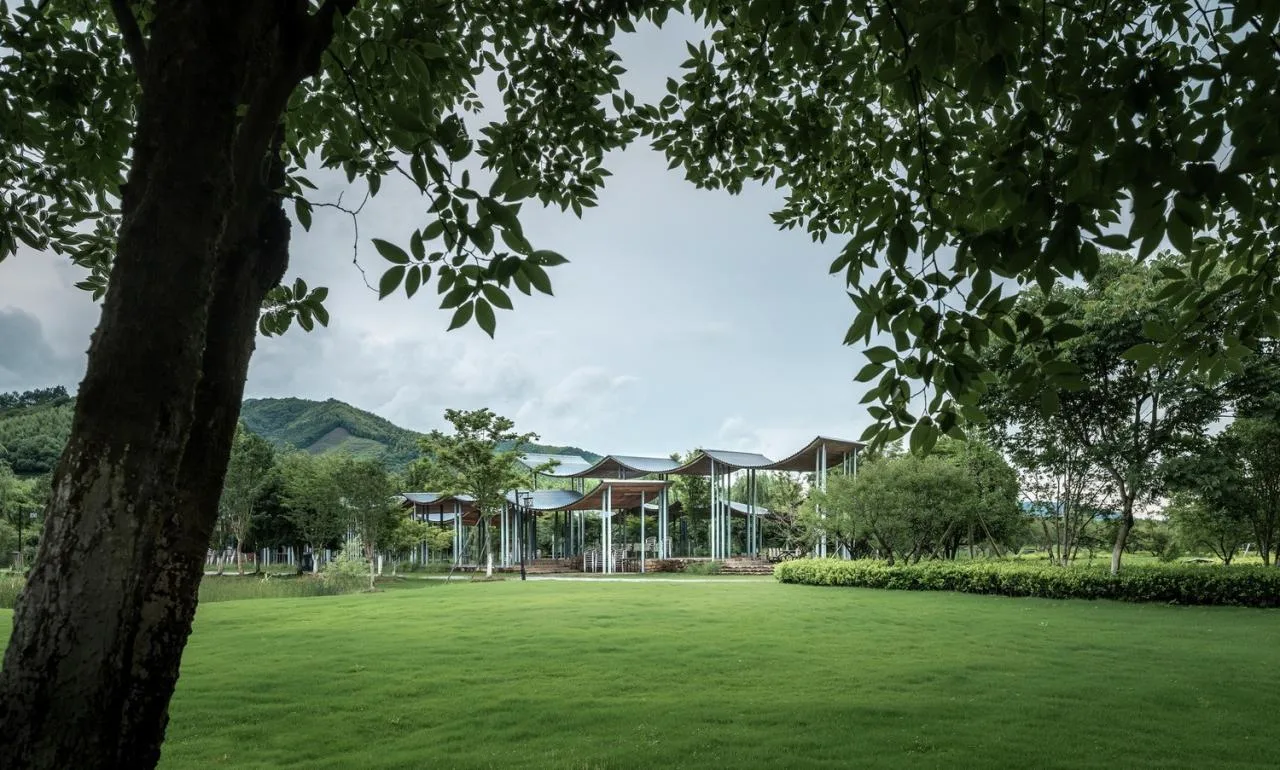
The Flower Sea Pavilion features a single-layer, open-style weak roof system supported by slender steel columns acting as flexible cantilever rods. These columns typically struggle with high compressive and lateral forces, and the single-span structure lacks redundancy, posing inherent safety concerns. To address this, additional columns were added in critical areas. Groups of three to four adjacent thin columns connect at the top via a three-dimensional steel frame at the ridge, forming a robust anti-lateral unit with a door-frame system capable of balancing roof loads. This arrangement aligns with the “jungle” aesthetic formed by the seemingly random distribution of steel columns throughout the space.
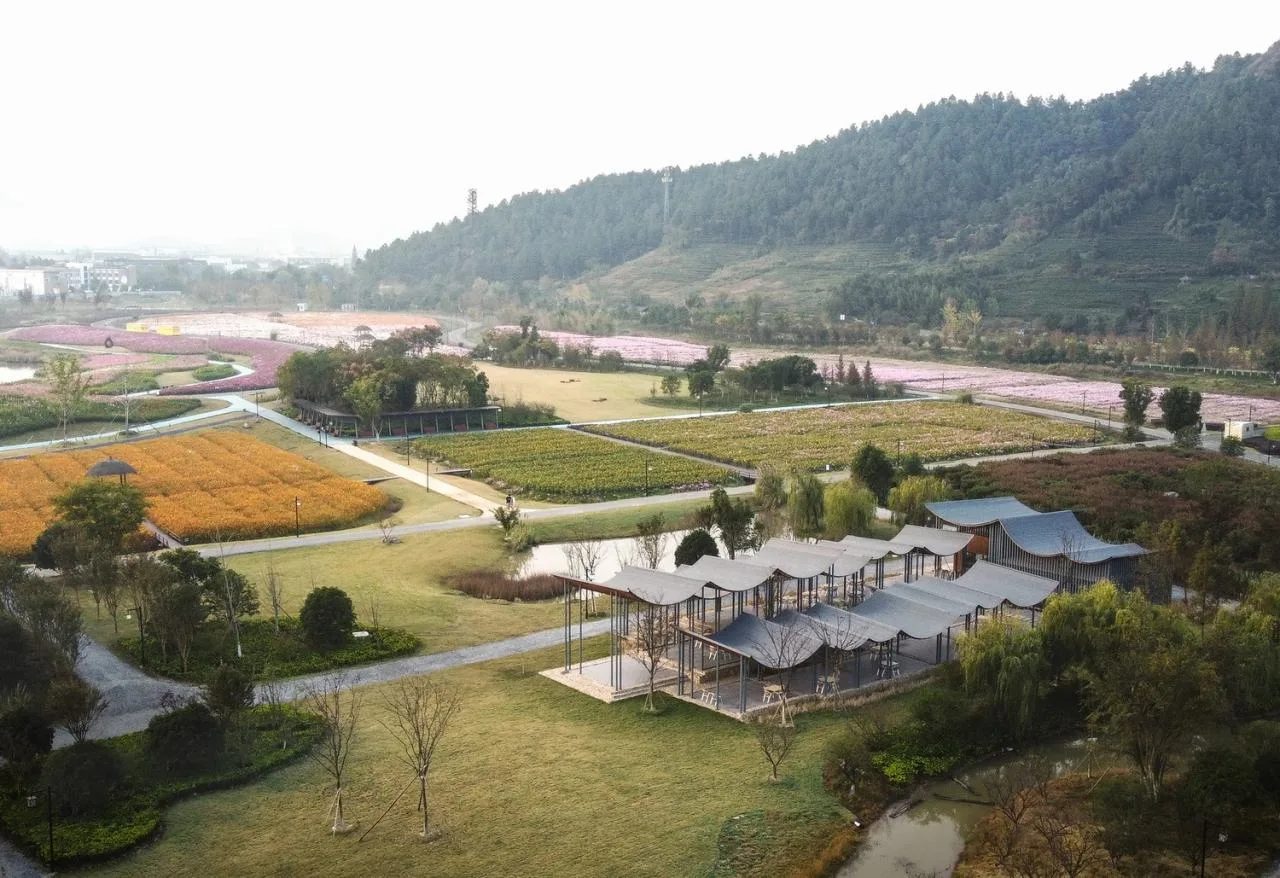
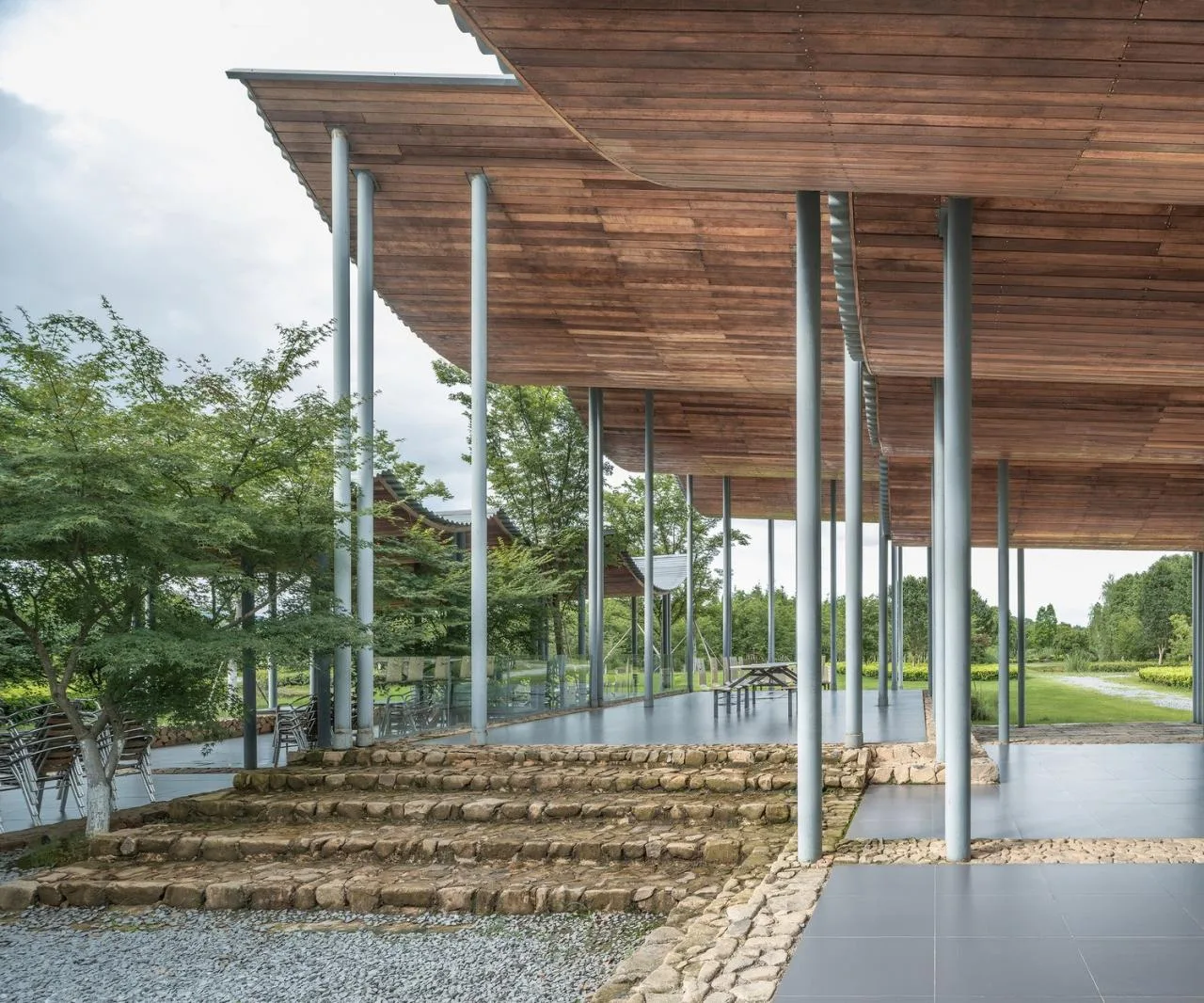
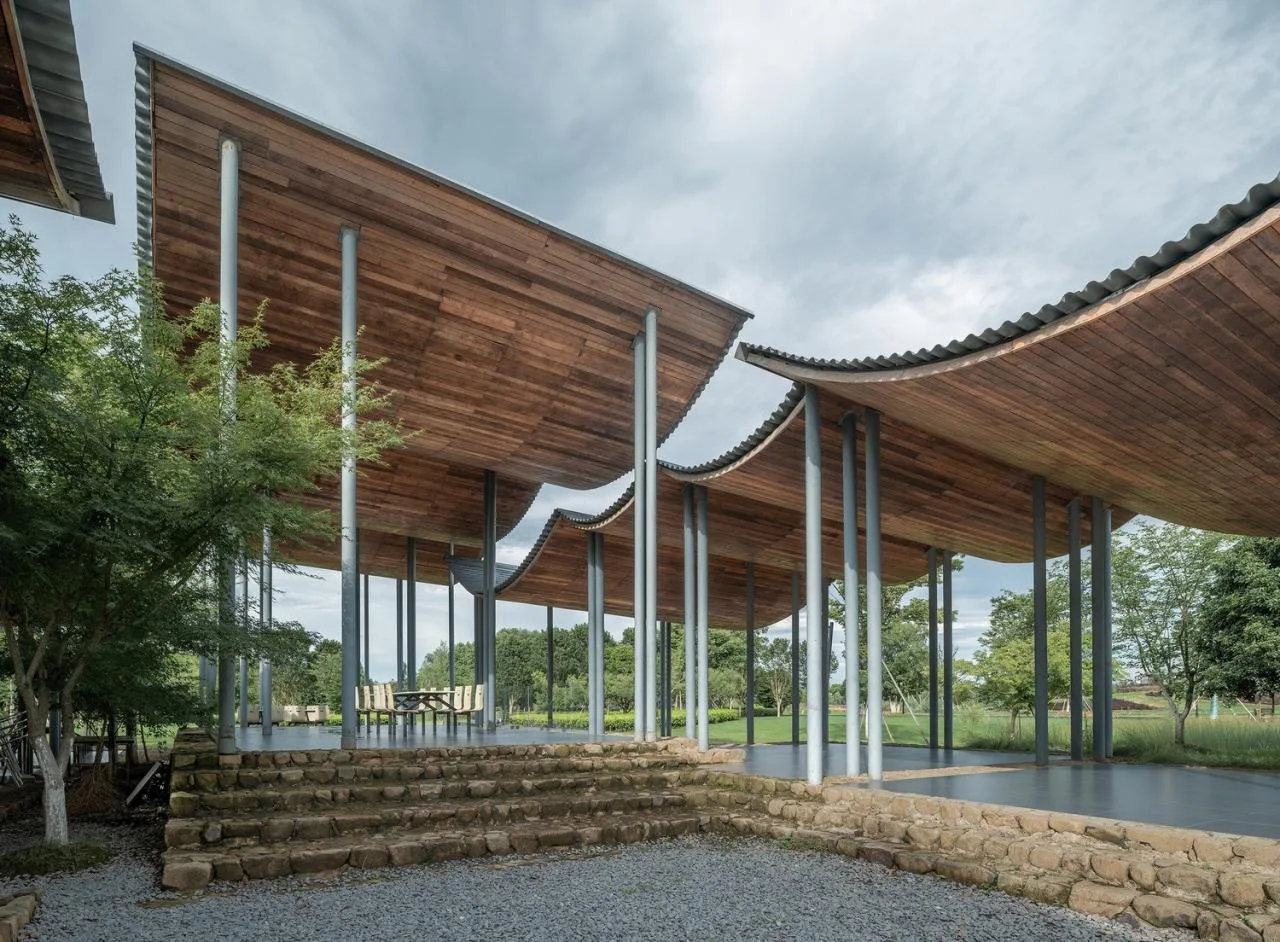
For the middle span, the tension in the steel plate strips between spans can generally self-balance. However, at the side spans, the inclined eaves bear unbalanced unilateral tension and lack the double slope conditions of the middle span ridge, preventing the formation of bending stiffness in the eaves’ crossbeam. This also applies to corner columns. To counteract these unbalanced forces, additional steel columns were installed mid-span on the side spans, with a uniform outward reverse inclination angle applied to these columns. This configuration converts diagonal roof tension into axial forces within micro diagonal columns. This design echoes the traditional “lateral foot” found at the bases of outer ring columns in ancient architecture, translating structural mechanics into the outward-tilted top cross beams on the Flower Sea roof.
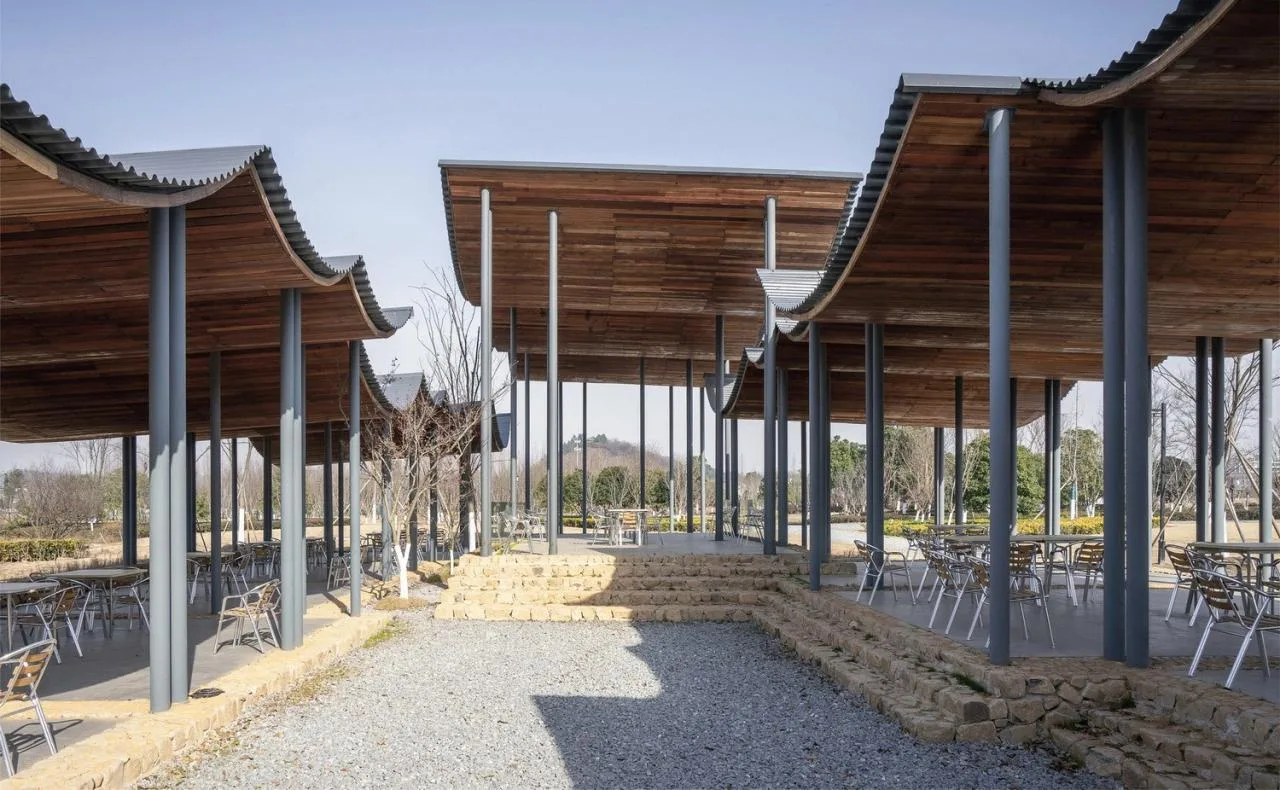
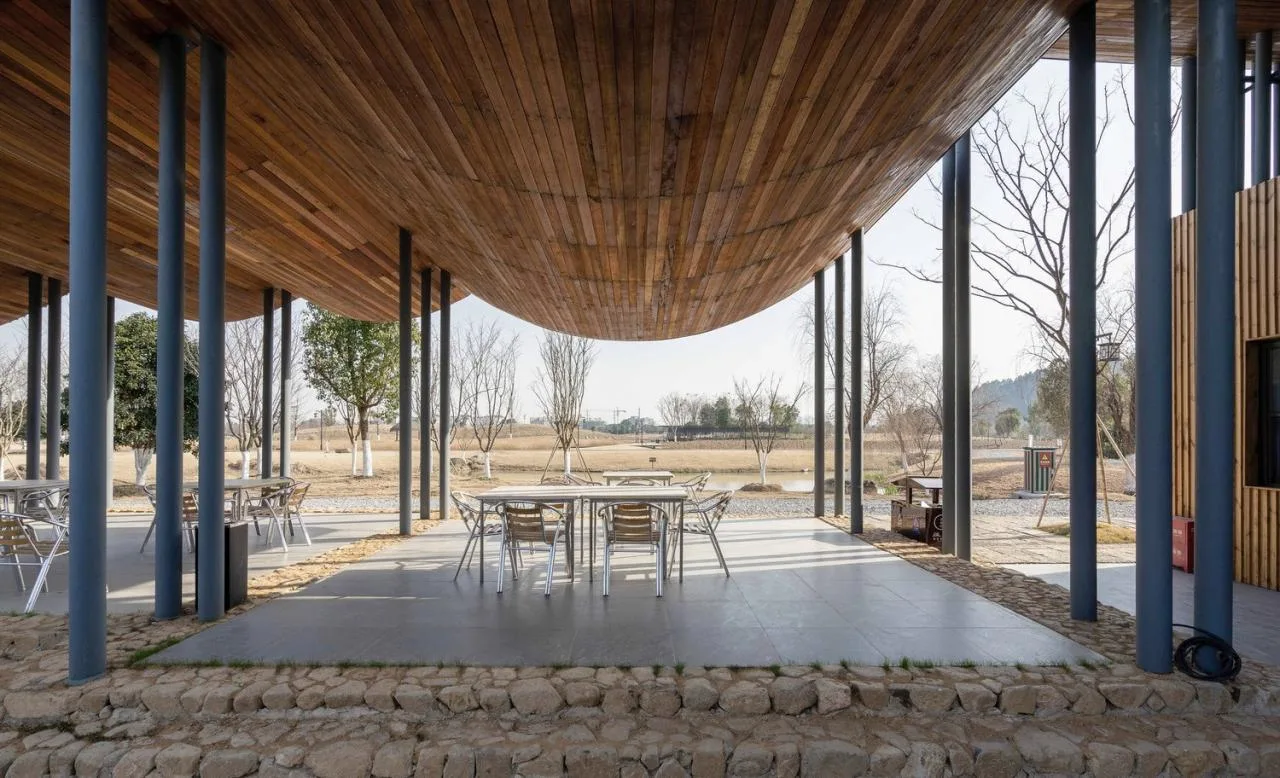
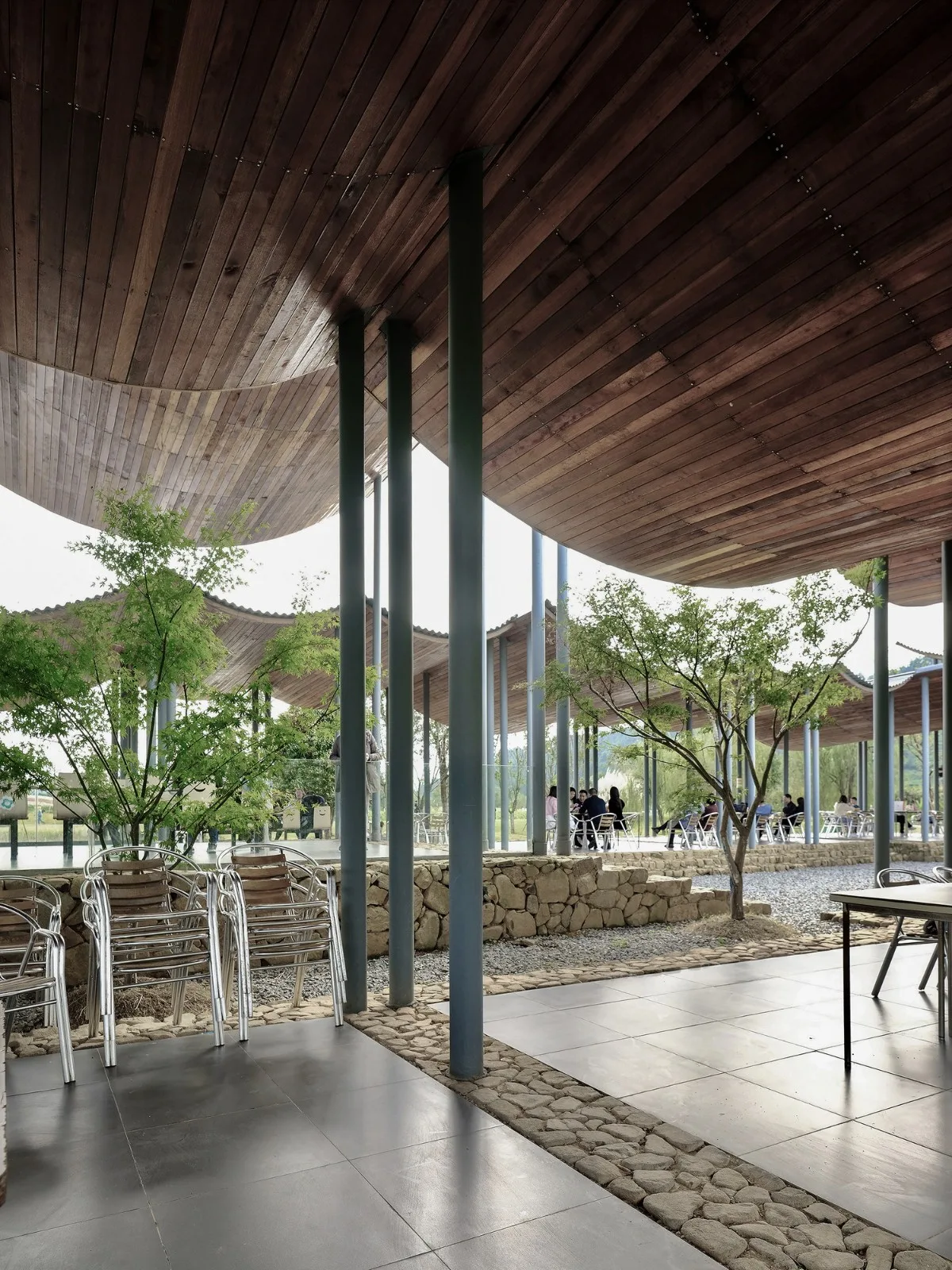
Unexpected Adjustments: Due to budget limitations, the originally planned laminated wood was replaced by conventional eucalyptus wood. Although the wooden roof’s design thickness was 100mm, the large 6m x 6m wooden shell roof struggled to support its own weight during lifting. Consequently, the construction team decided to use custom curved steel grid keels instead of wooden keels. This modification transformed the flexible system of steel plate strips and wooden shells into a curved steel grid with wooden skin, providing enhanced rigidity. The steel grid combined with full-length wooden boards created a stable in-plane structure, improving both in-plane and out-of-plane stiffness of the shell surface. Additionally, the steel plate strip beneath the wooden barrel shell was removed, resulting in a cleaner presentation of the wooden curtain’s inner surface without steel strip obstruction.
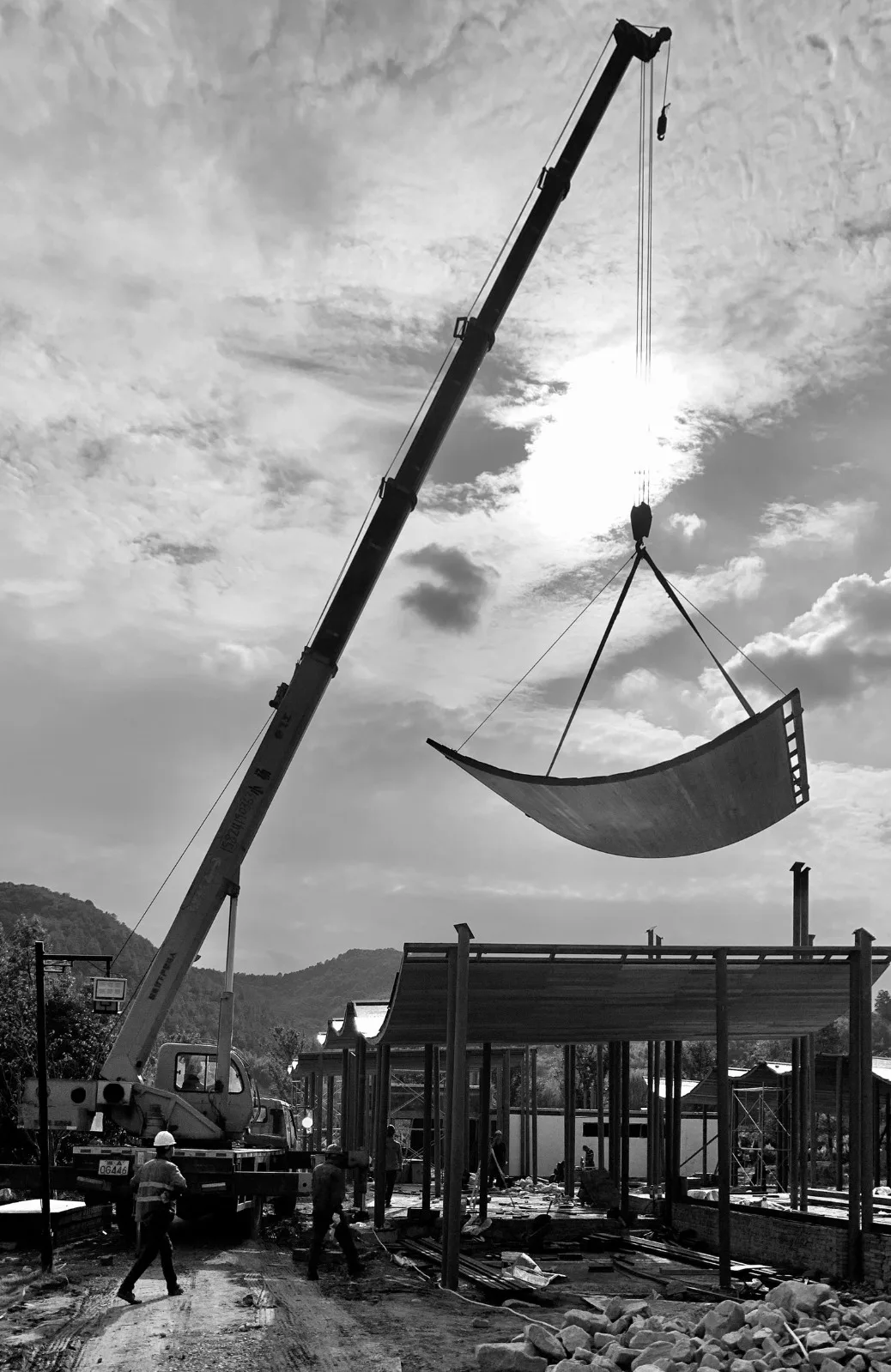
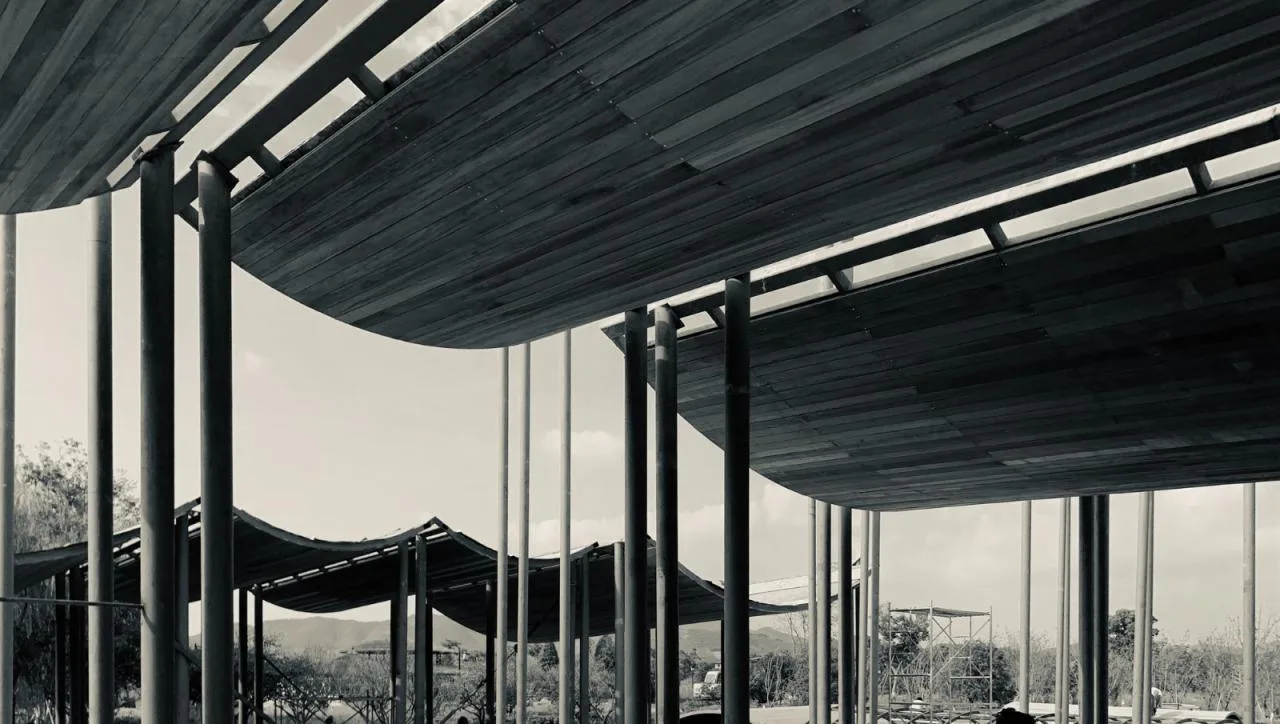
Project Drawings
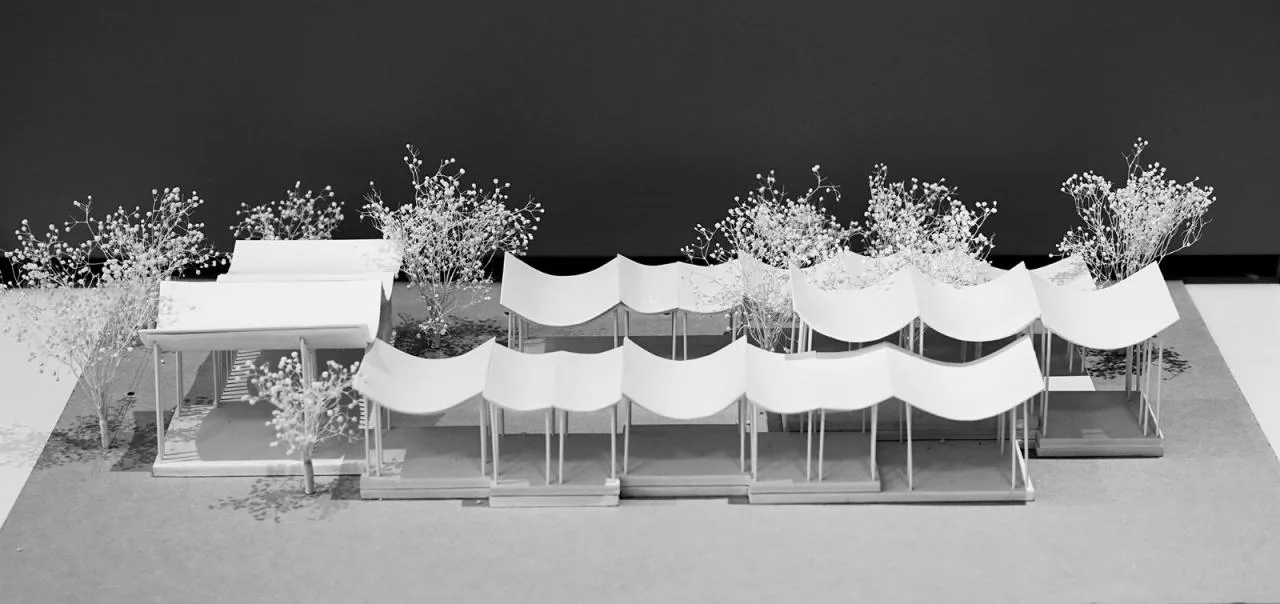
△ Model Diagram
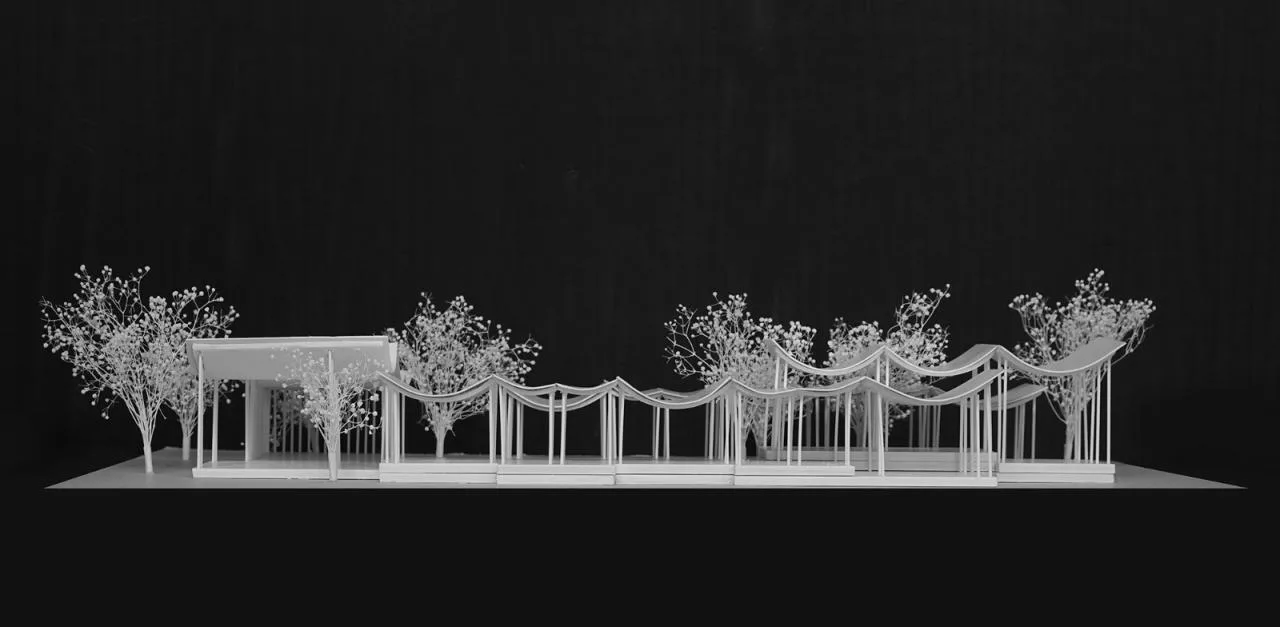
△ Model Diagram
△ Model Diagram
△ Model Diagram
△ Model Diagram
△ General Layout Plan
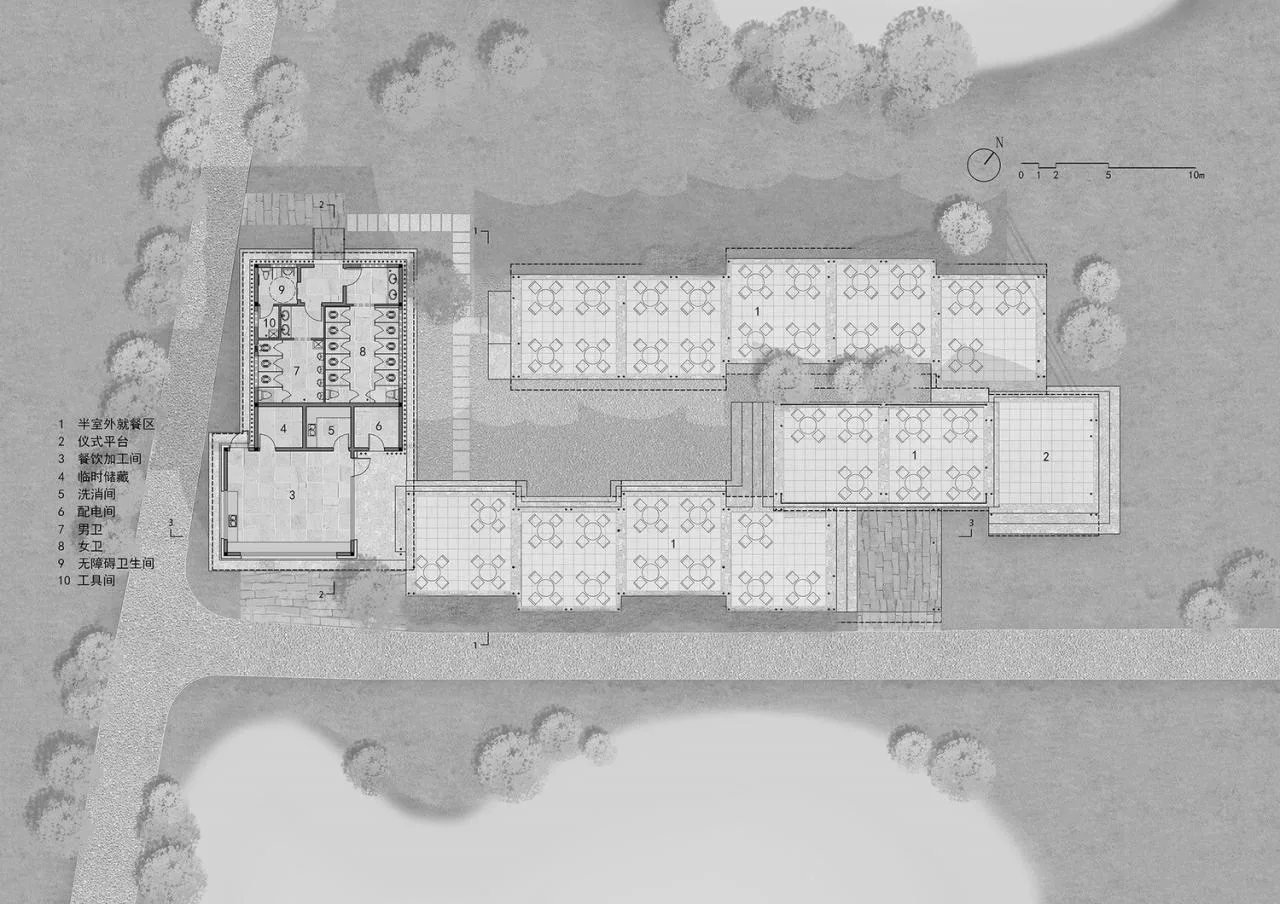
△ Plan View
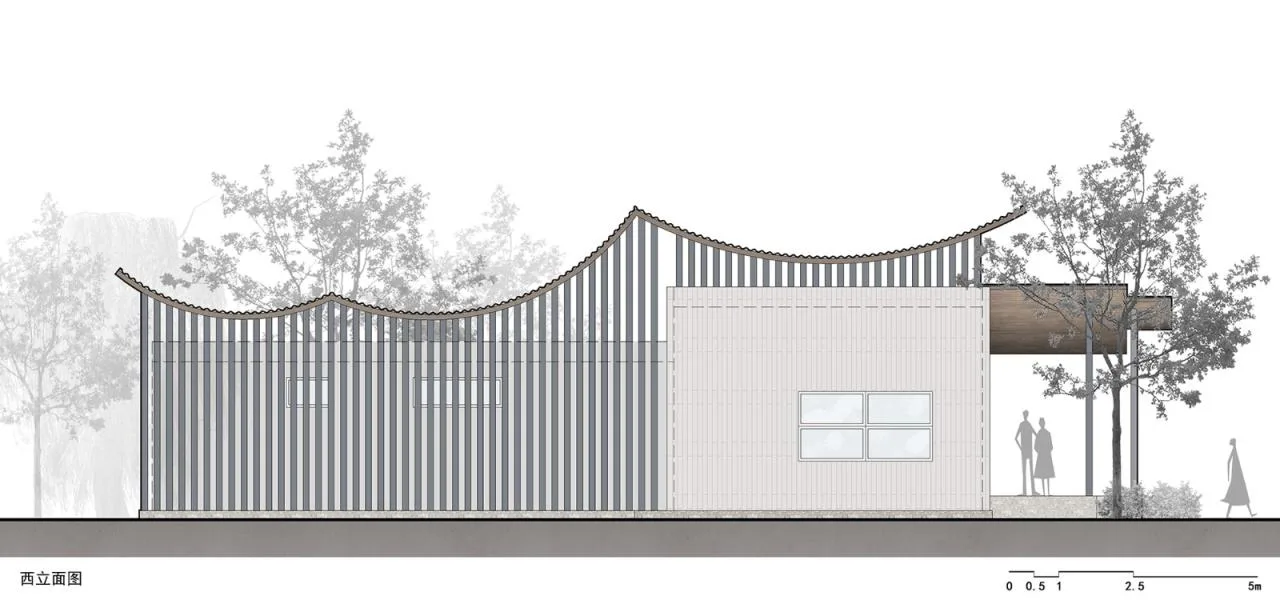
△ Elevation Drawing
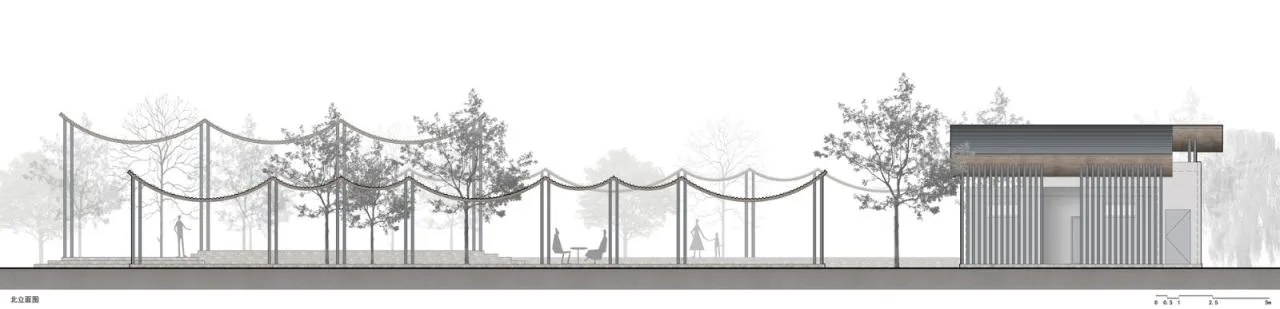
△ Elevation Drawing
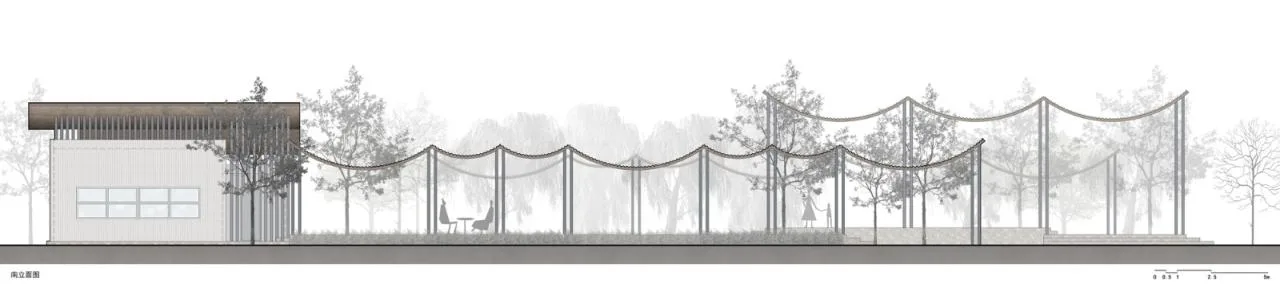
△ Elevation Drawing
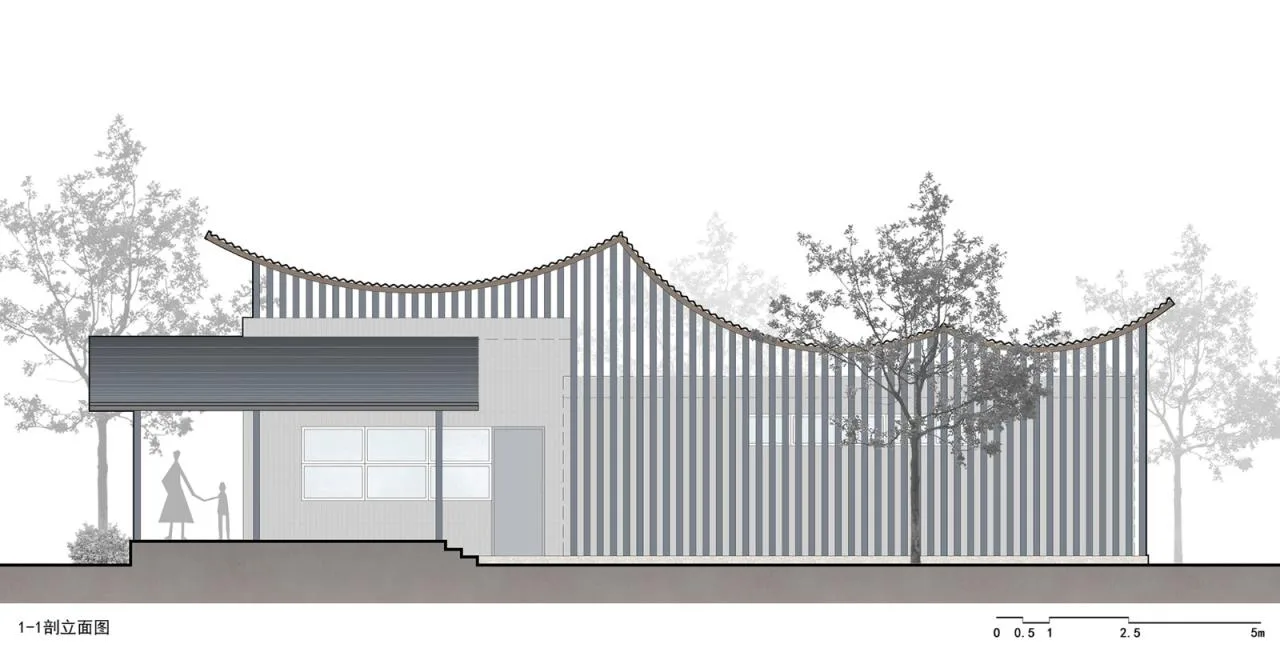
△ Section Diagram
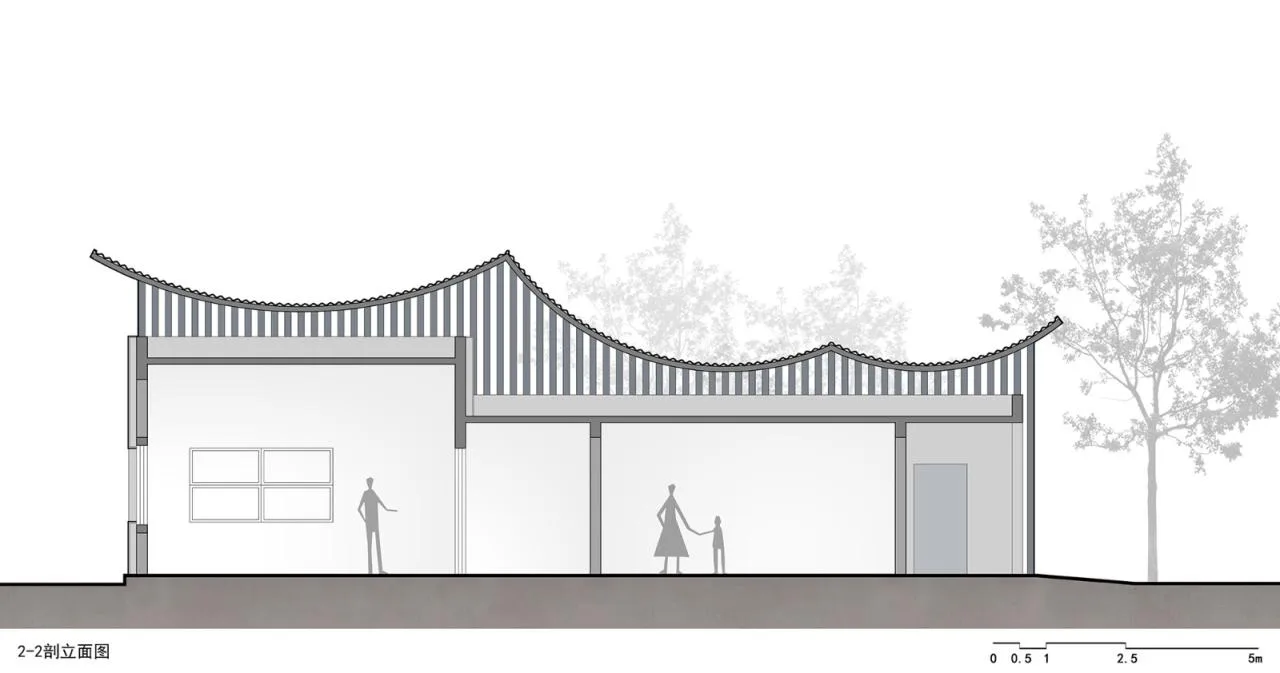
△ Section Diagram
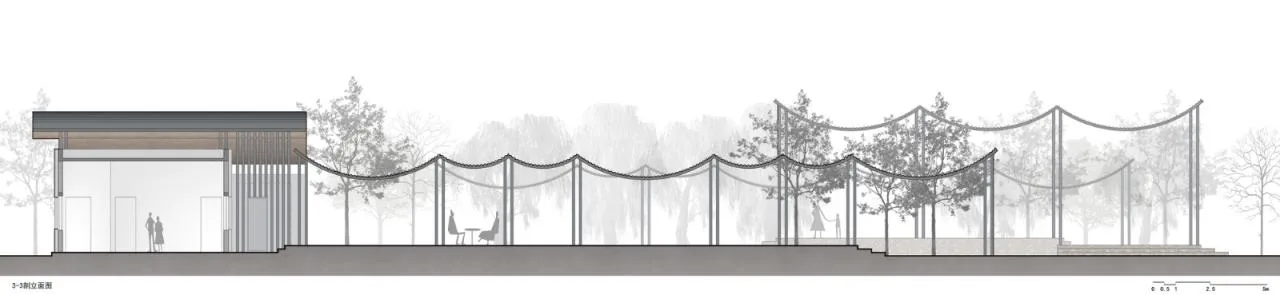
△ Section Diagram
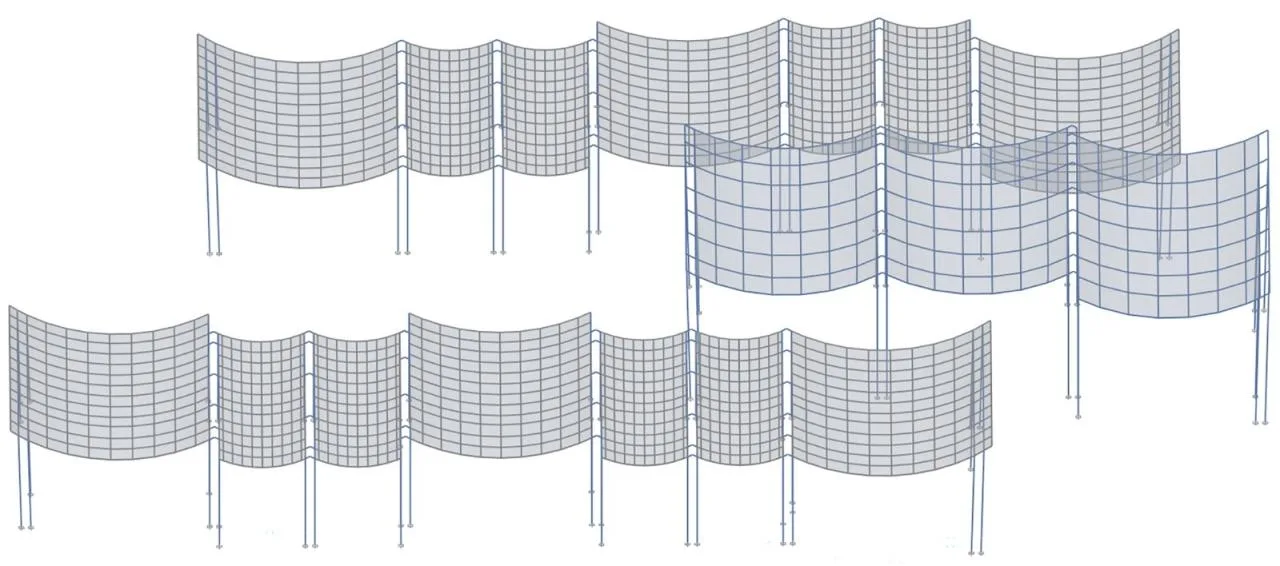
△ Analysis Chart
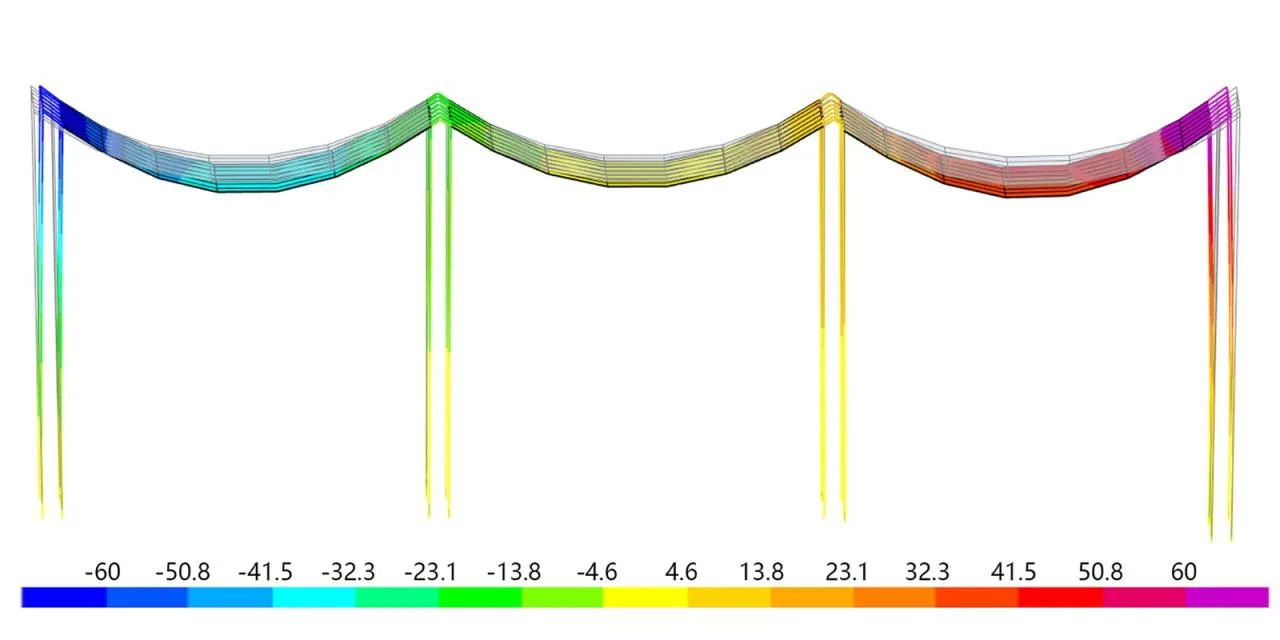
△ Analysis Chart
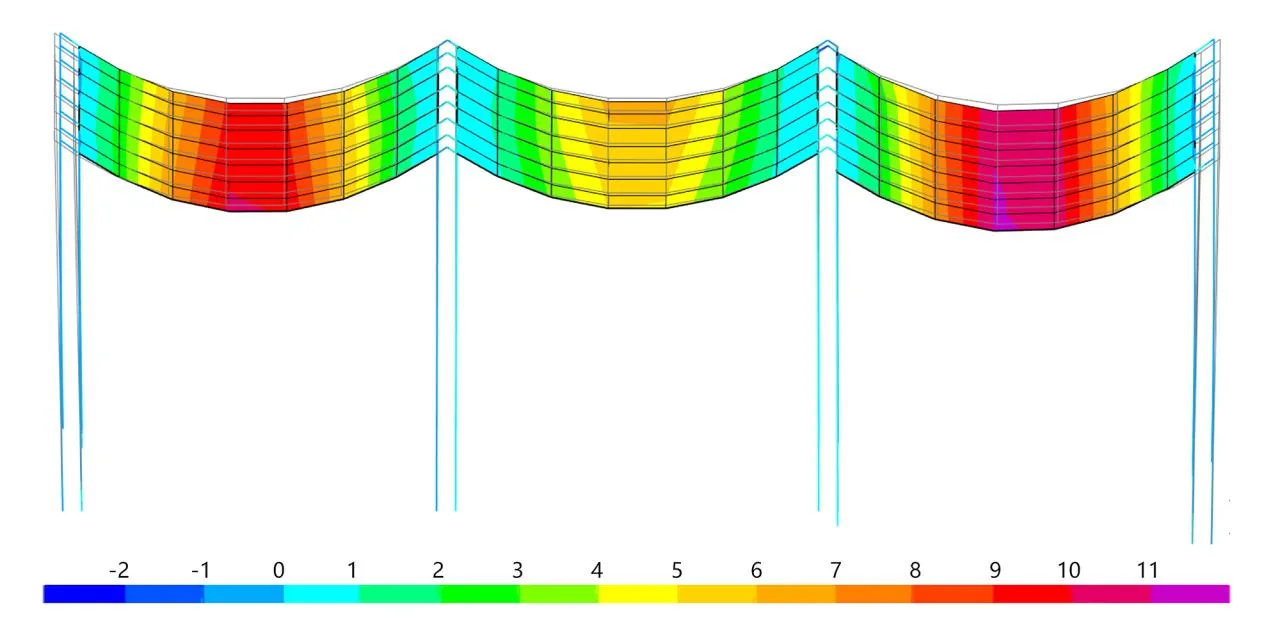
△ Analysis Chart
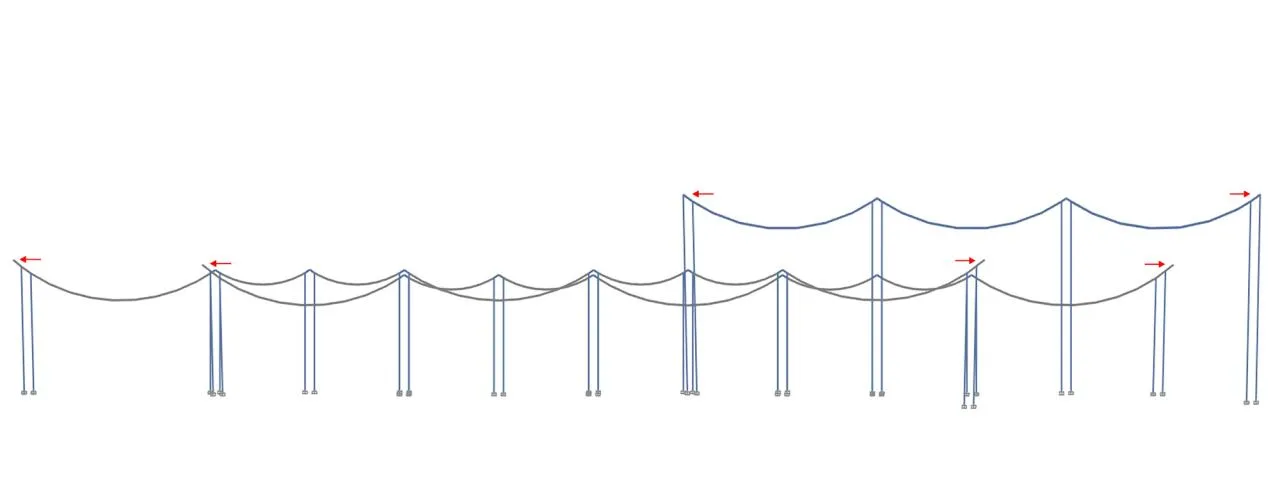
△ Analysis Chart
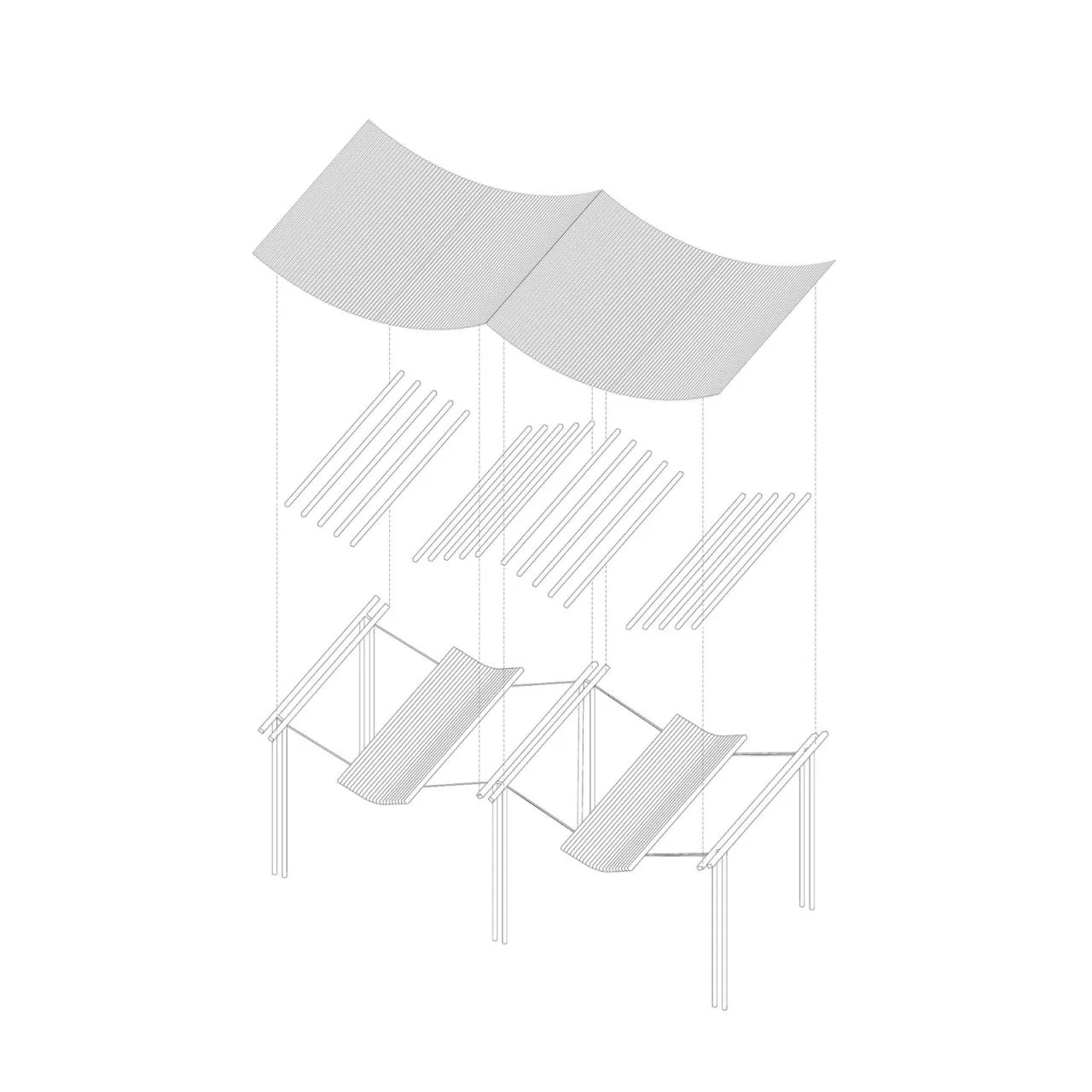
△ Structural Schematic Diagram
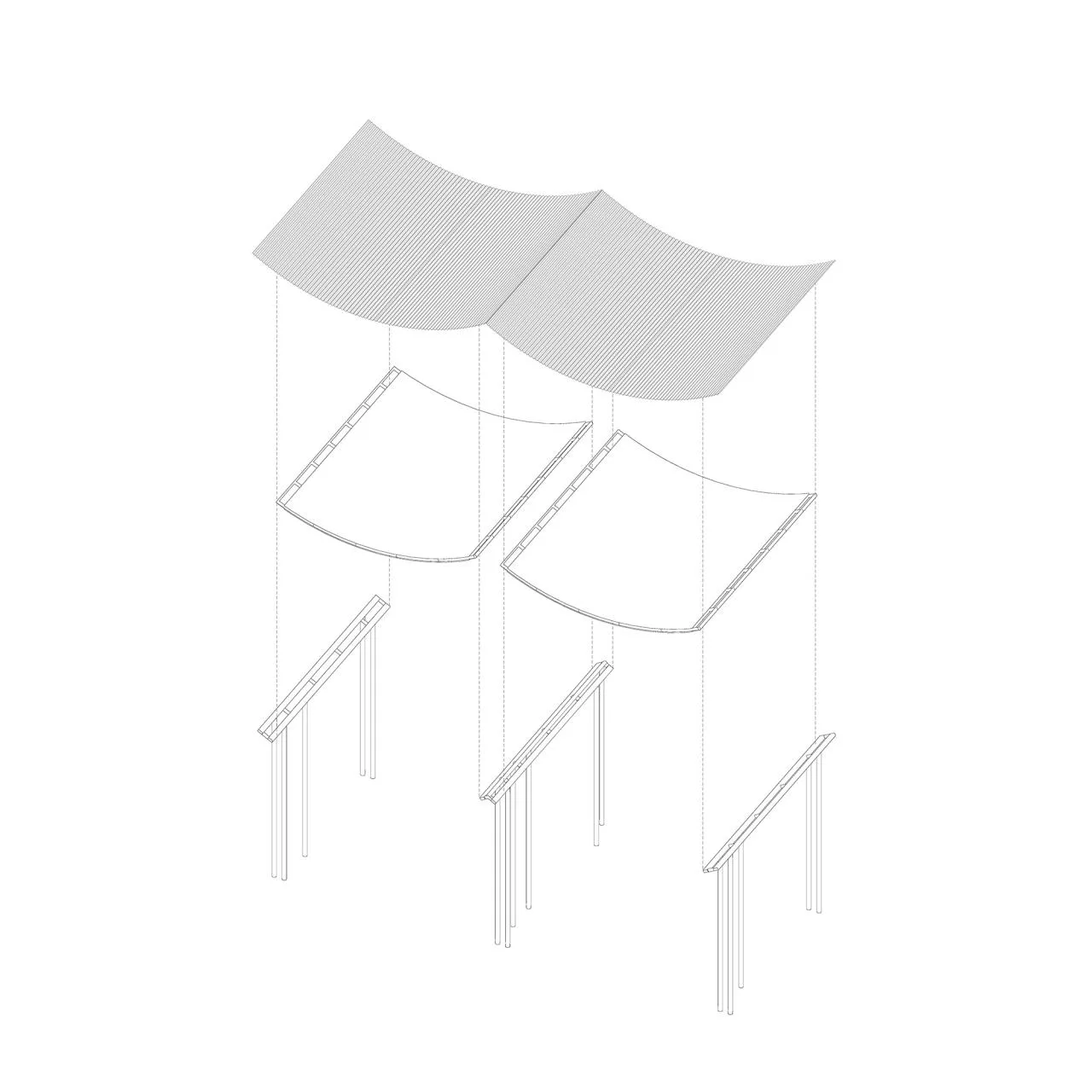
△ Structural Schematic Diagram
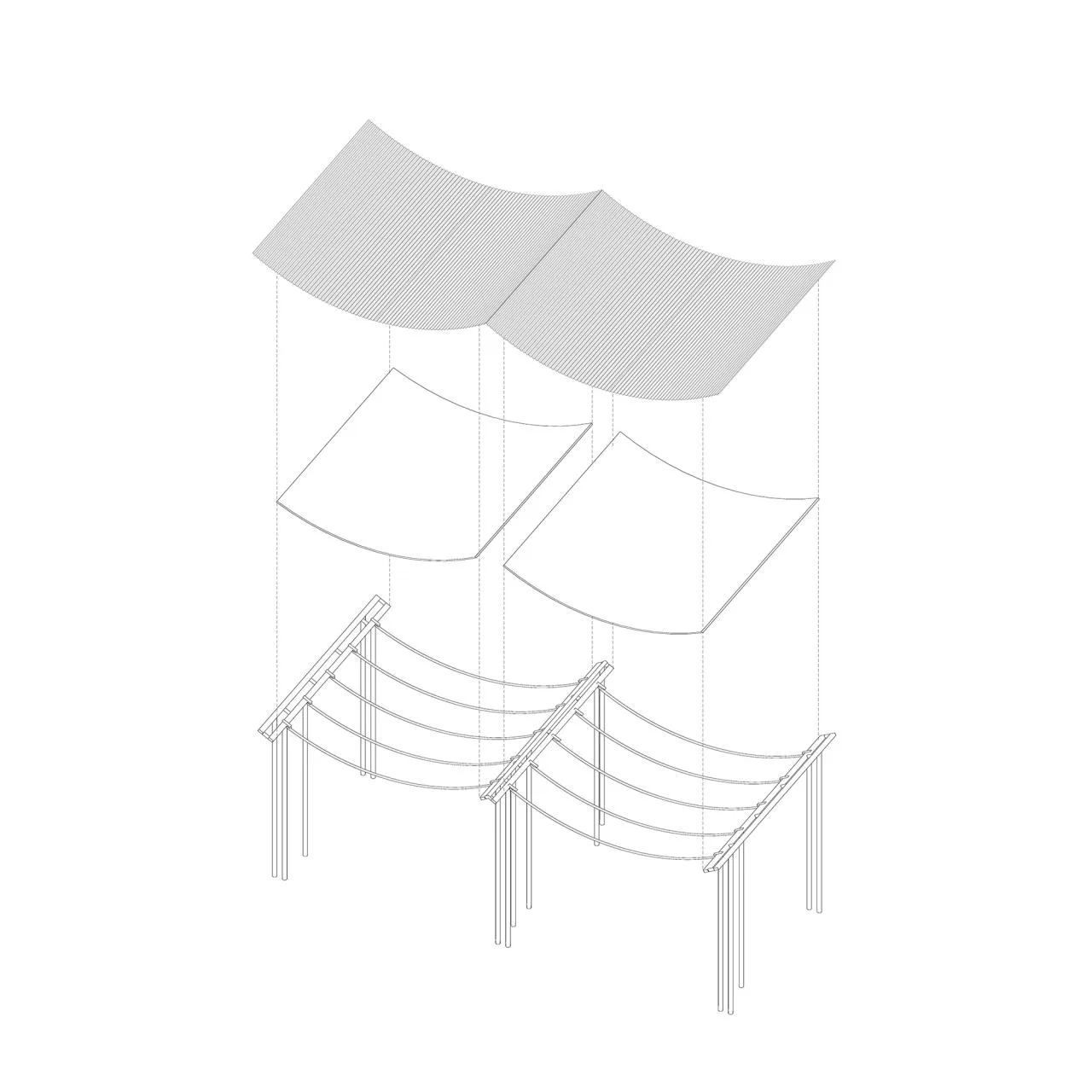
△ Structural Schematic Diagram
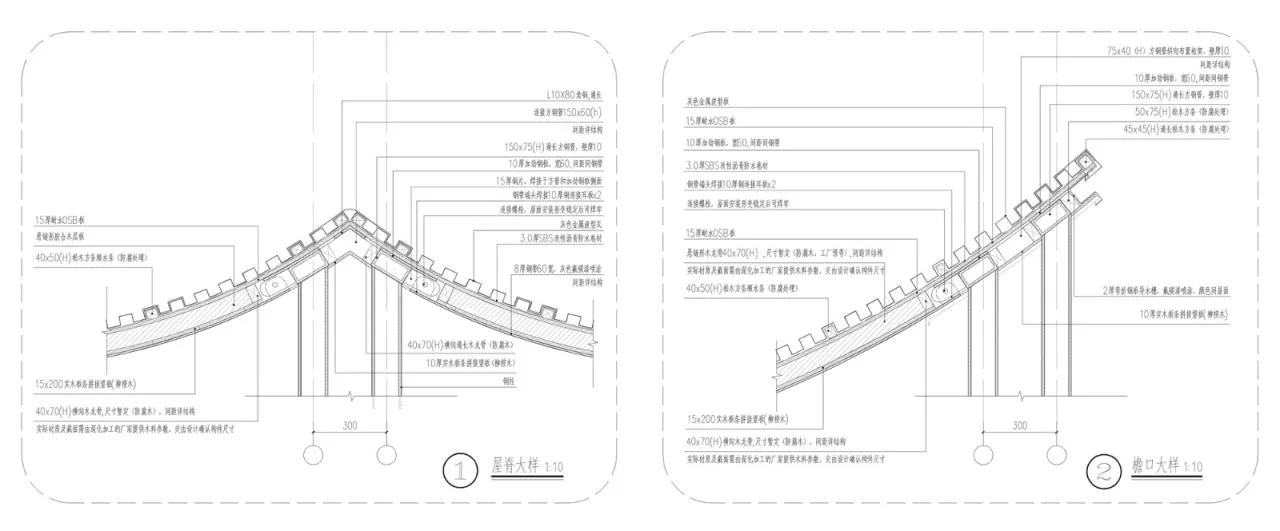
△ Detailed Drawing
Project Information
Architect: Hangzhou Dongwei Architecture
Landscape Design: Landscape Design Institute of Zhejiang Agriculture and Forestry University
Area: 700 m²
Project Year: 2020
Photographers: Dongwei Architecture, Lu Weijie, Jingmu Studio
Principal Architect: Huang Guanglong
Design Team: Yang Liwei, Wu Li, Zheng Miaoling, Fang Chao, Chen Xi, Zhang Qili, Xu Zihang, Cai Yunzhong, Li Huijin, Xu Yicheng
Structural Design: Zhang Chongchong
Landscape Design: Wu Xiaohua (Landscape Design Institute of Zhejiang Agriculture and Forestry University)
Client: Hangzhou Yuhang Tourism Group
Location: Hangzhou















Must log in before commenting!
Sign Up