
Community public life extends beyond merely fulfilling diverse and vibrant activities; it aims for spiritual renewal. In today’s fast-paced, decentralized world, I hope to use “light” as a medium to reconnect close relationships—between people and between people and nature—through what I call “daily centrality.”
—Meng Fanhao
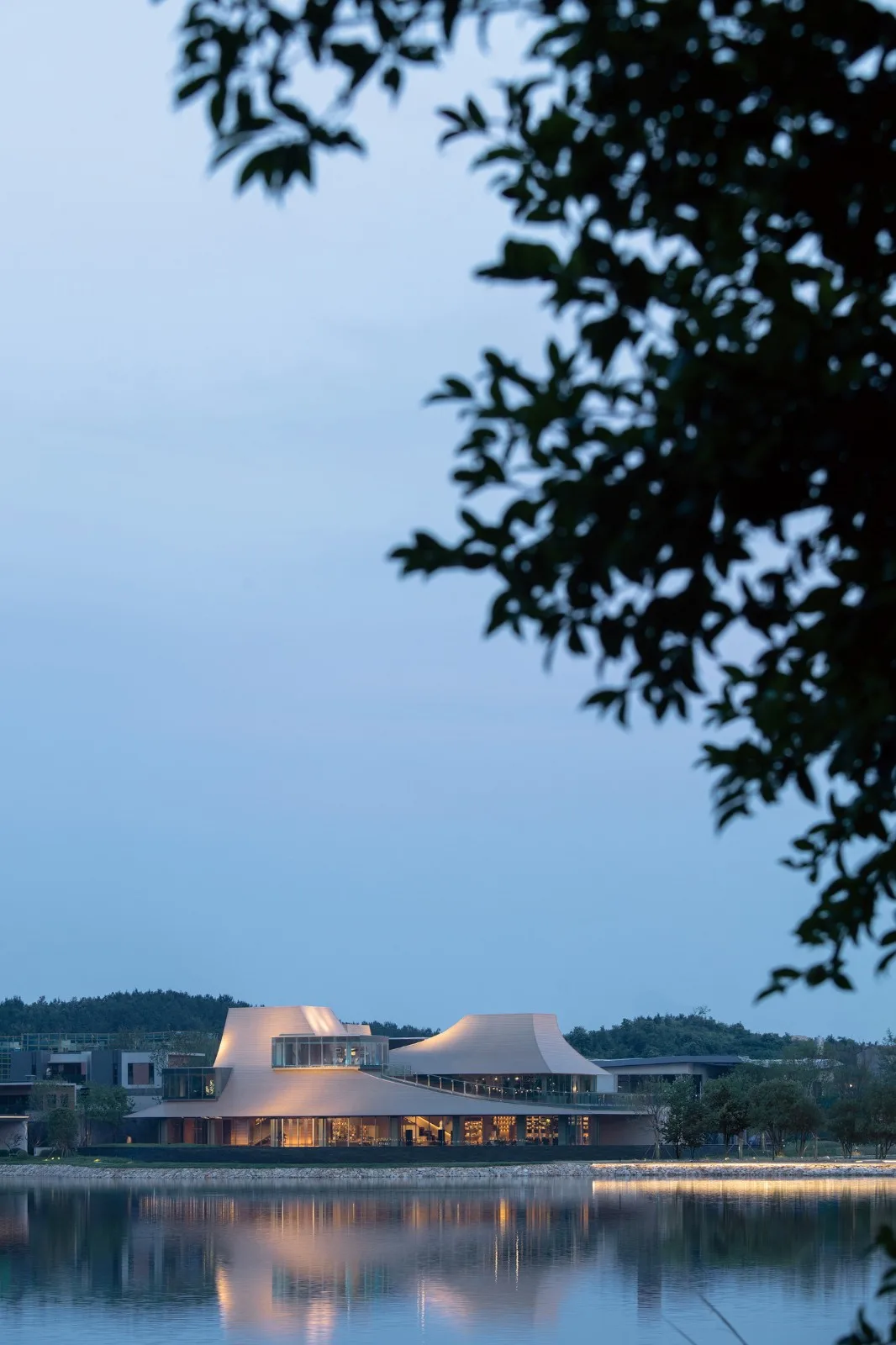
Smoke drifts over the mountains, and the sunset glows through the bamboo.
Birds soar above the eaves, while clouds drift past the window.
—From “Miscellaneous Poems in the Mountains” by Wu Jun, Southern Dynasty
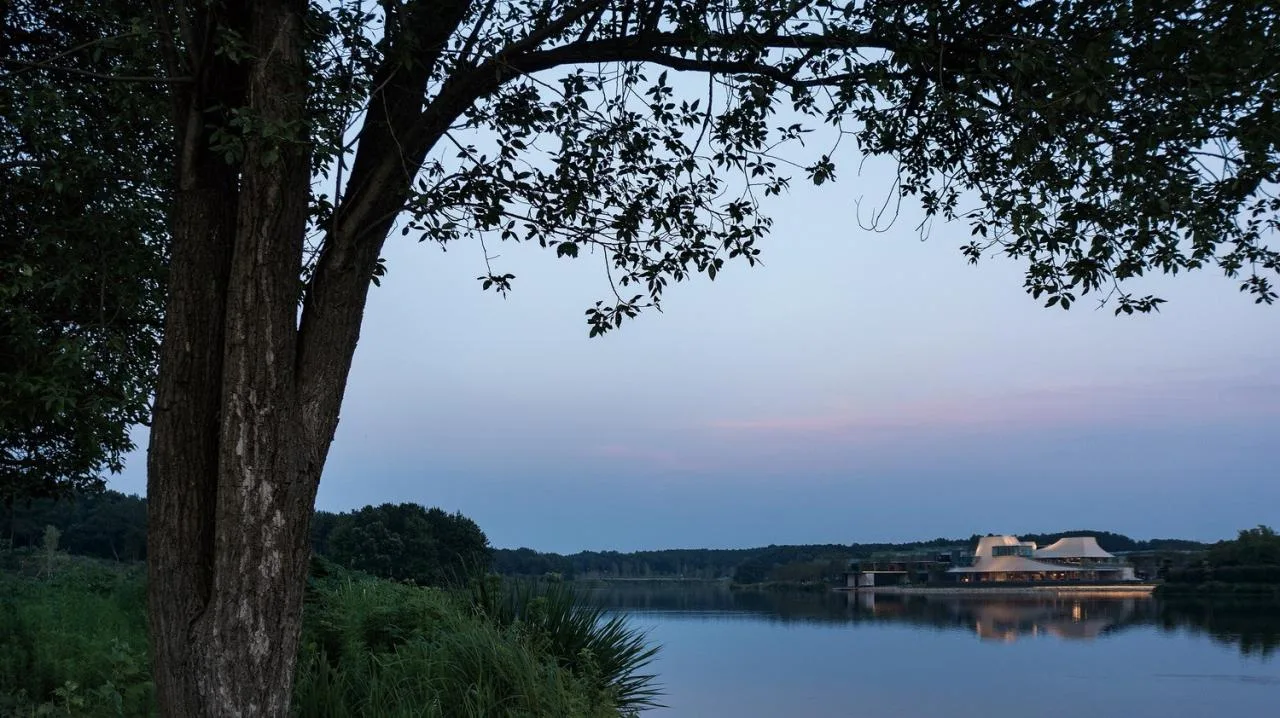
Boxinyu is a cultural and tourism resort community located north of Wuhan, surrounded by wilderness and lakes. Meng Fanhao, co-founder and lead architect of Line+, was invited to design the community’s first public building—the Boxin Community Neighborhood Center.
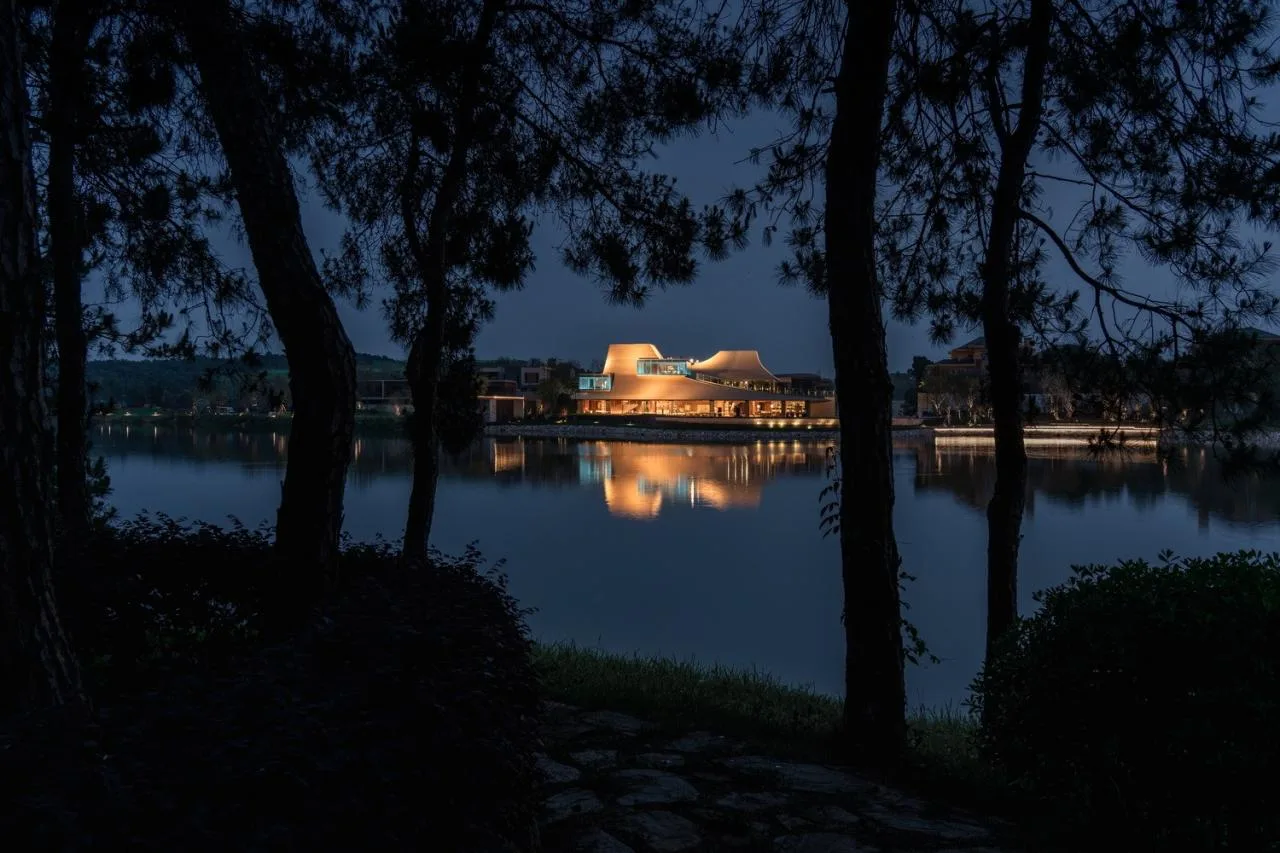
Breaking from traditional community centers, Line+ introduces a community complex concept tailored to the lifestyle of today’s youth. By integrating diverse spatial functions and scenarios, it creates a habitat for spiritual support and community connection. The architectural design explores the dialectic between “introversion and extroversion,” seeking internal spiritual resonance while embracing the natural scenery outside. This coupling of interior space and environment captures natural light, encourages group activities and personal reflection, and blends vibrant community life with the breathtaking sunsets of Wuhan.
01 Cohesion and Expansion
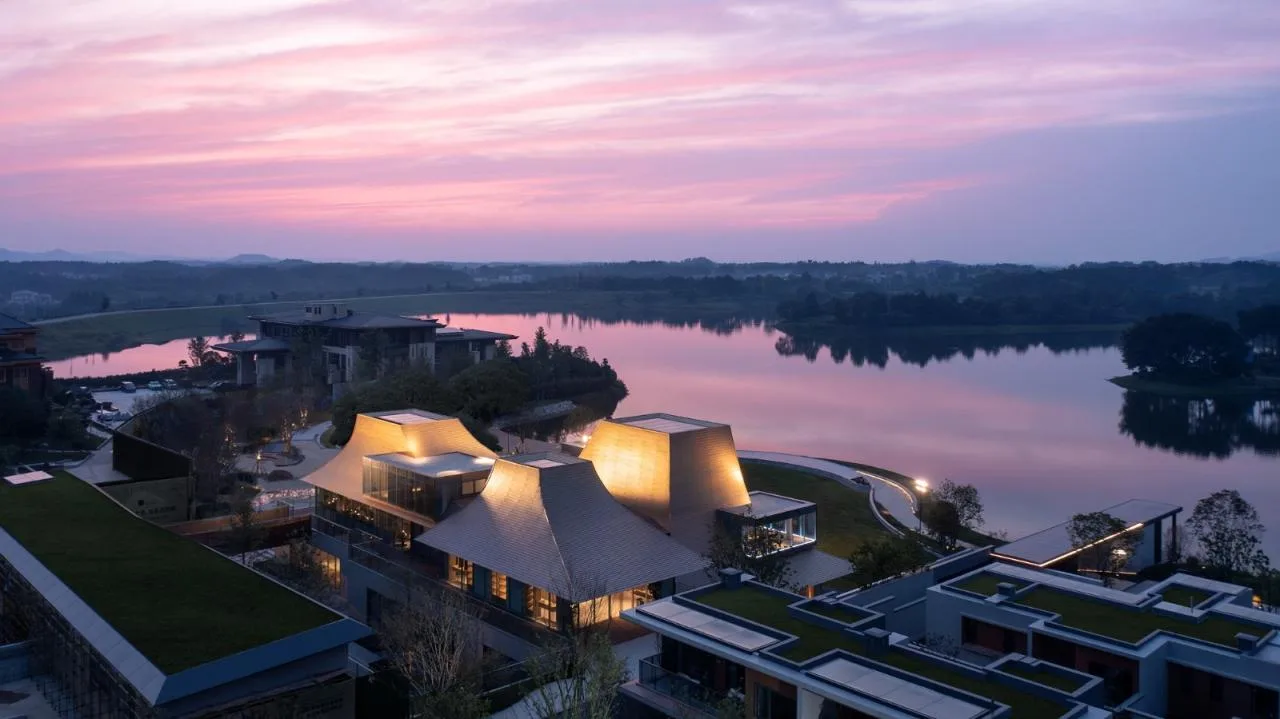
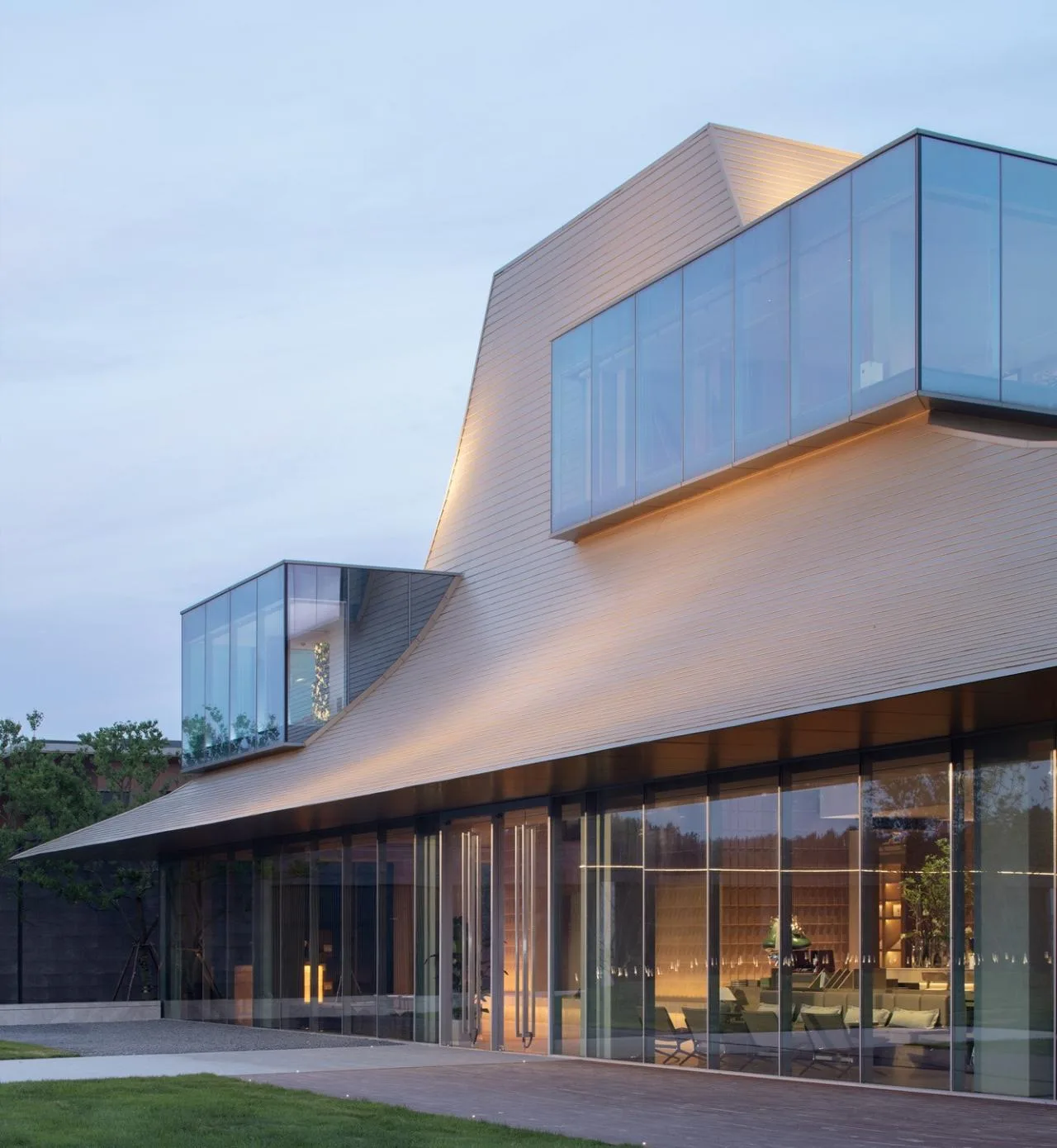
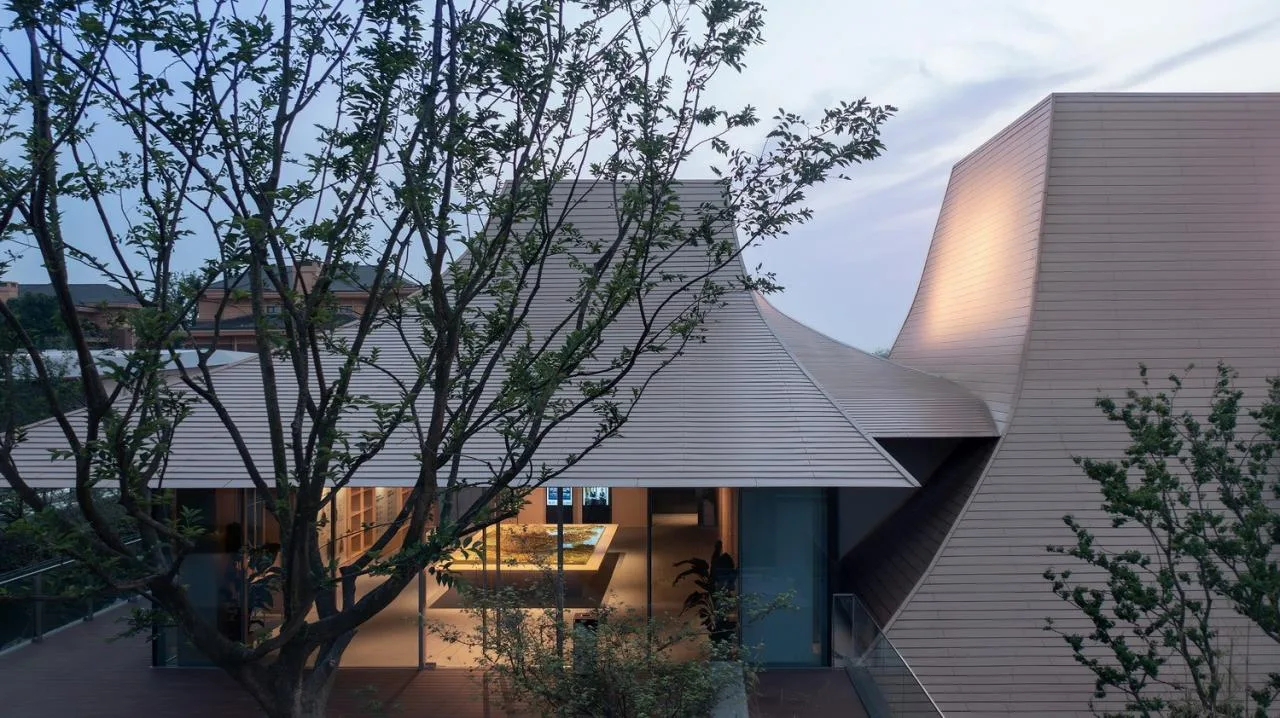
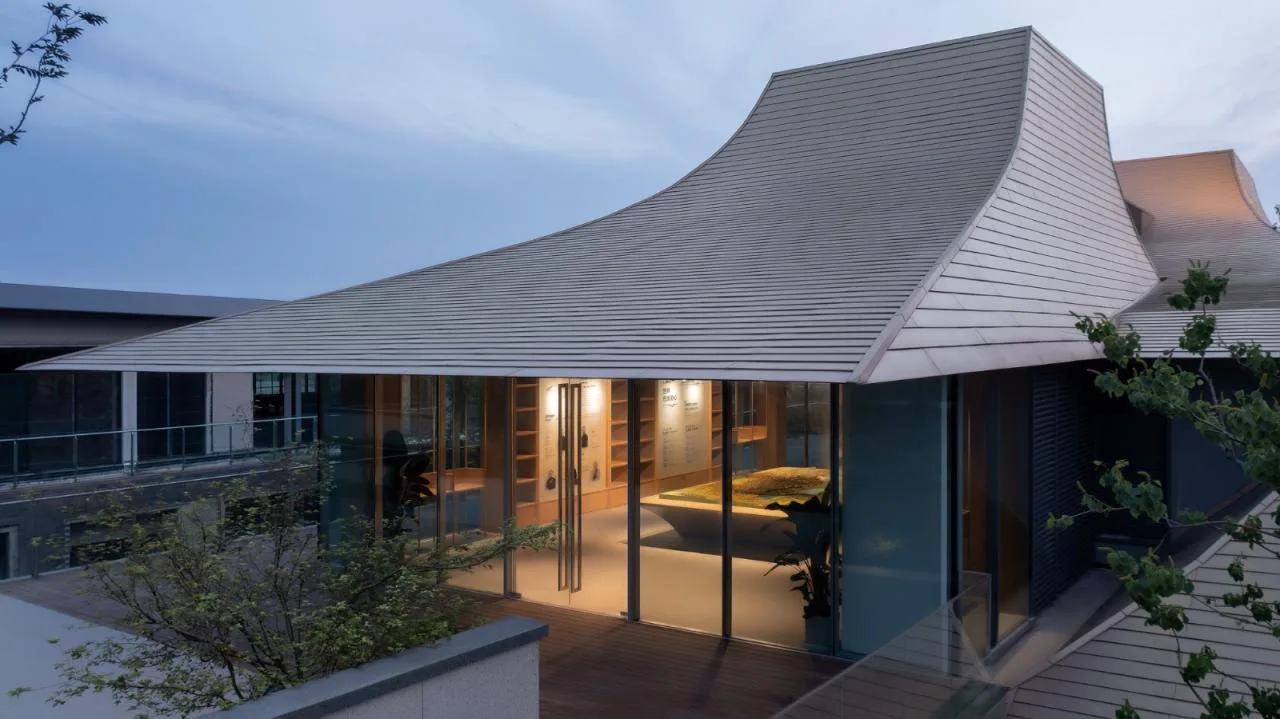
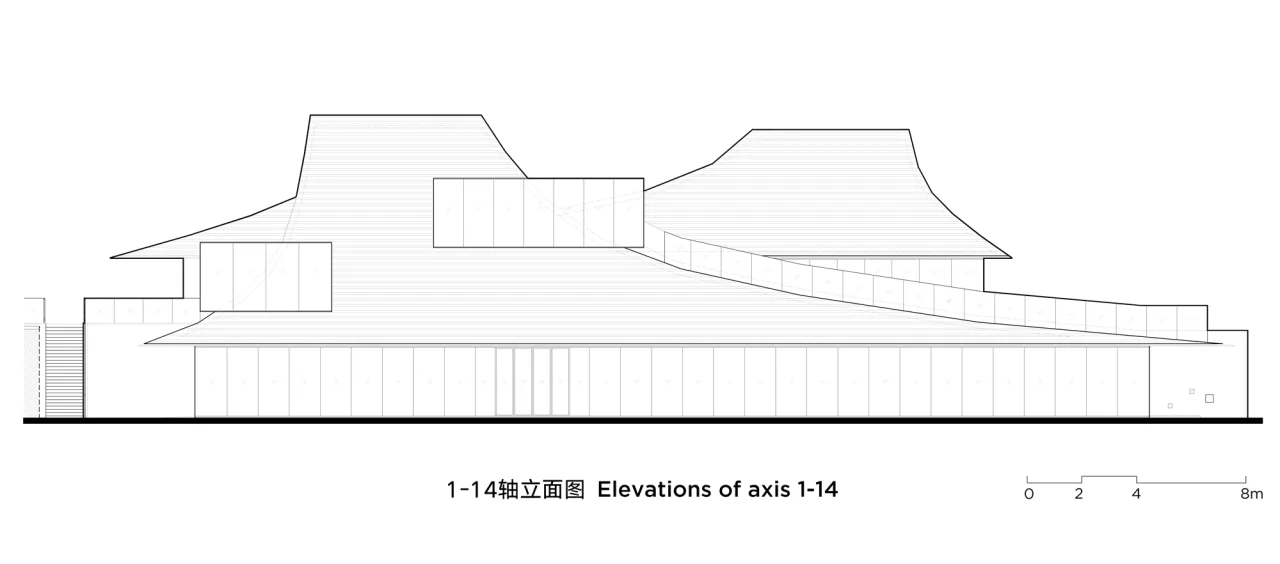
The architectural form of the Dapo roof draws inspiration from Jingchu culture. Key elements such as the eaves shapes and color tones of the Yellow Crane Tower and local traditional buildings were abstracted and evolved into a roof design featuring floating eaves and viewing platforms. This roof not only defines the community’s central identity but also serves as a spiritual medium, shaping the interior space through its form and skylights.
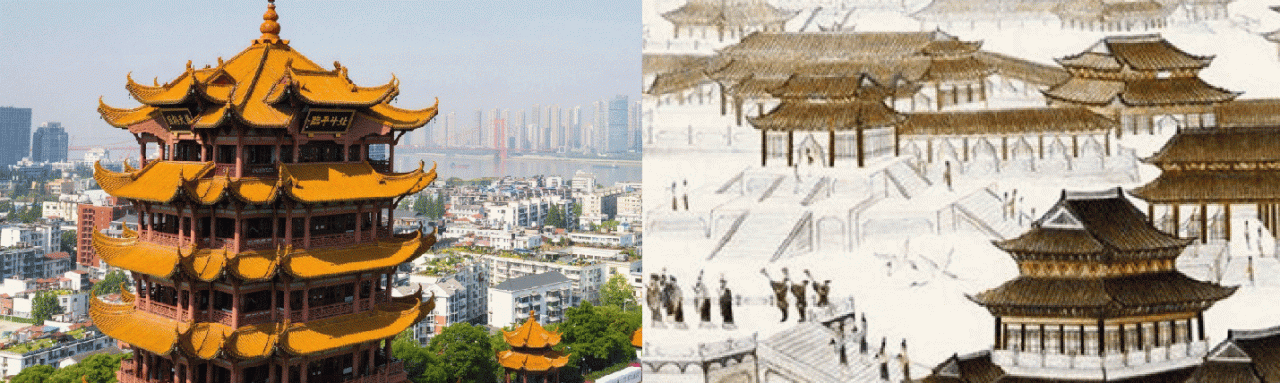
Extraction of local cultural elements
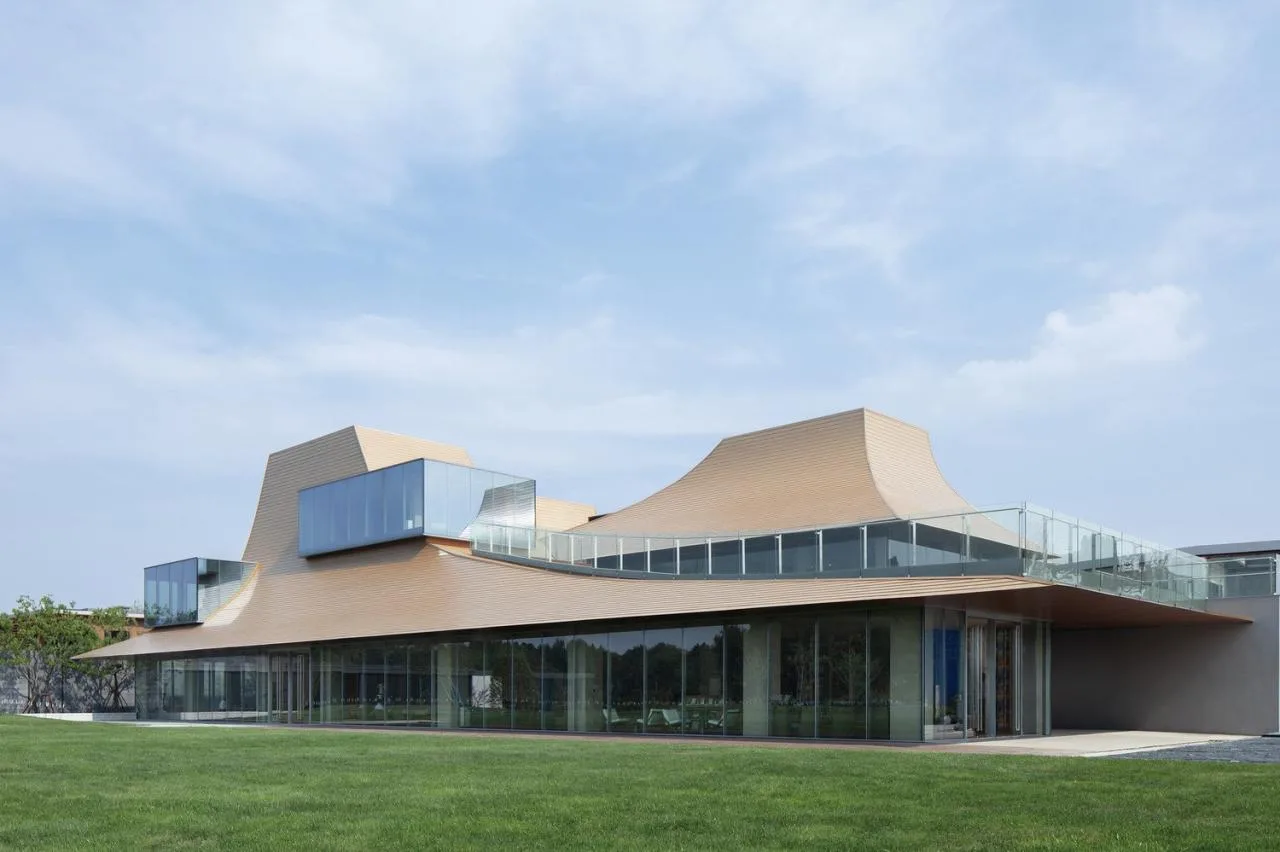
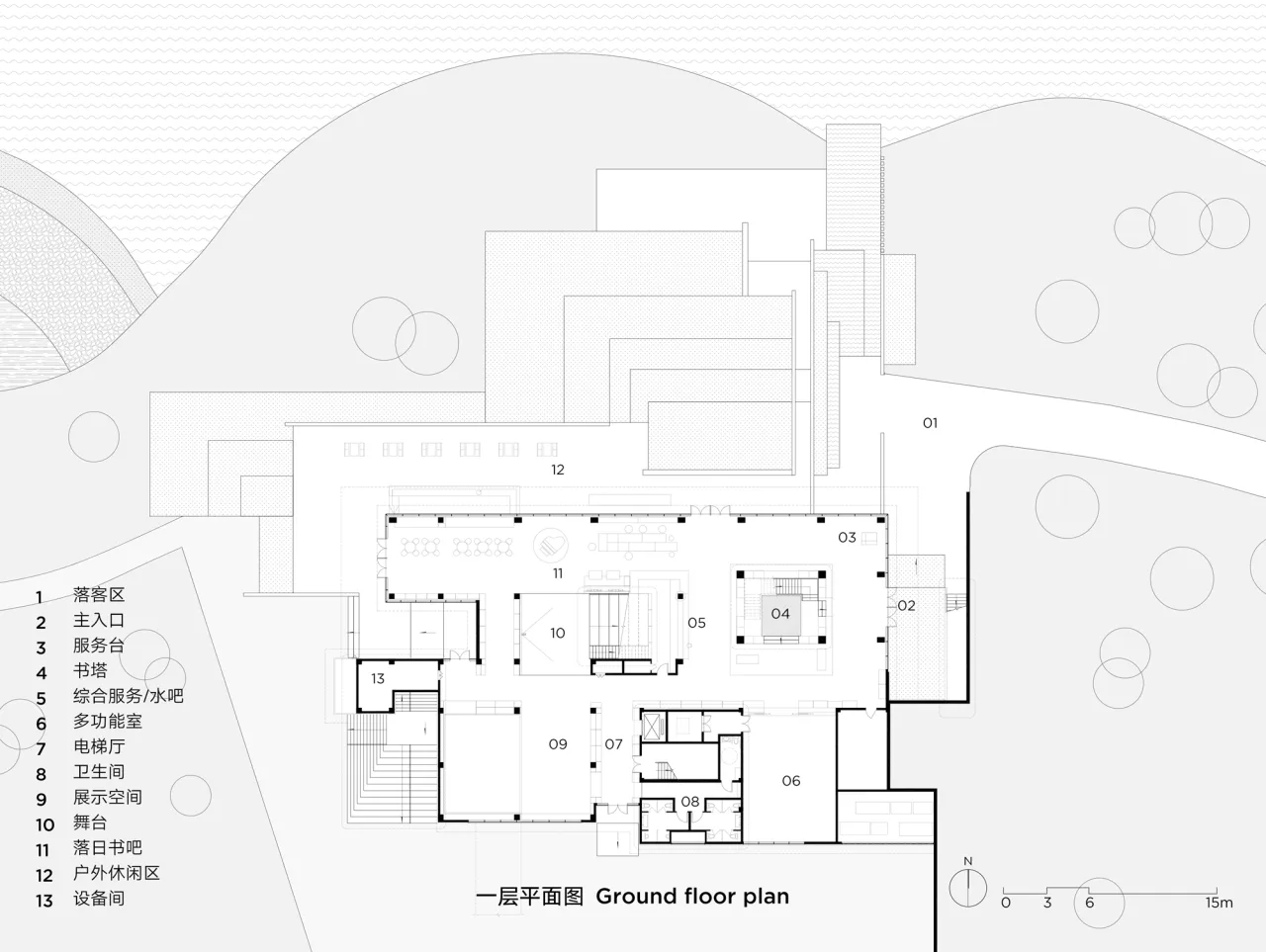
The site faces a winding, dynamic lakeshore surrounded by forest, with community access from the east and south. The broad waterfront lies to the north, while the west borders a distribution square offering ideal sunset views. These natural features guided the architectural orientation—facing northwest to connect with nature, backed by the southeast to guide the community layout. The design organizes functional modules for reading, communication, exhibitions, and theater beneath continuous sloping roofs that both gather inward and extend outward.
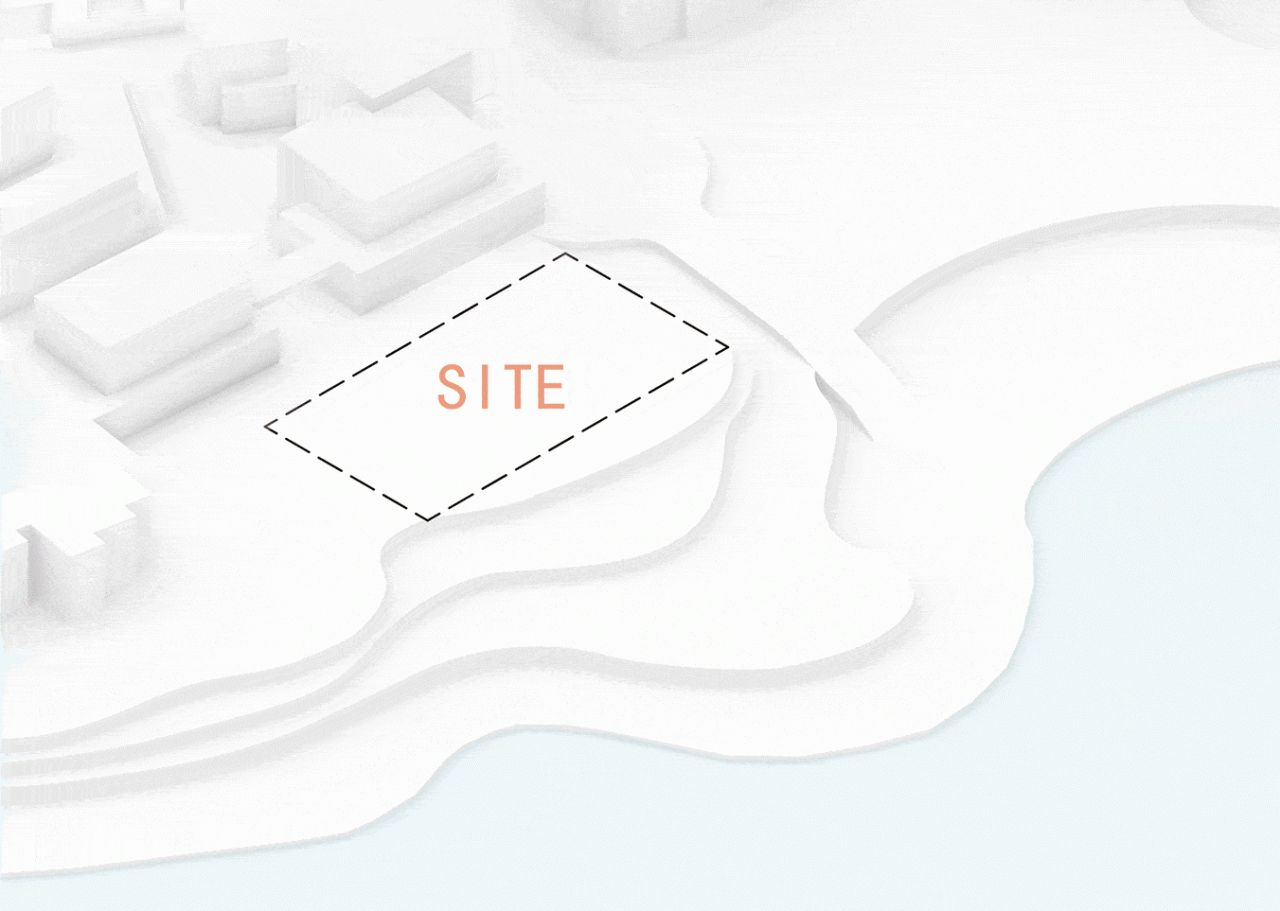
△ Generation diagram
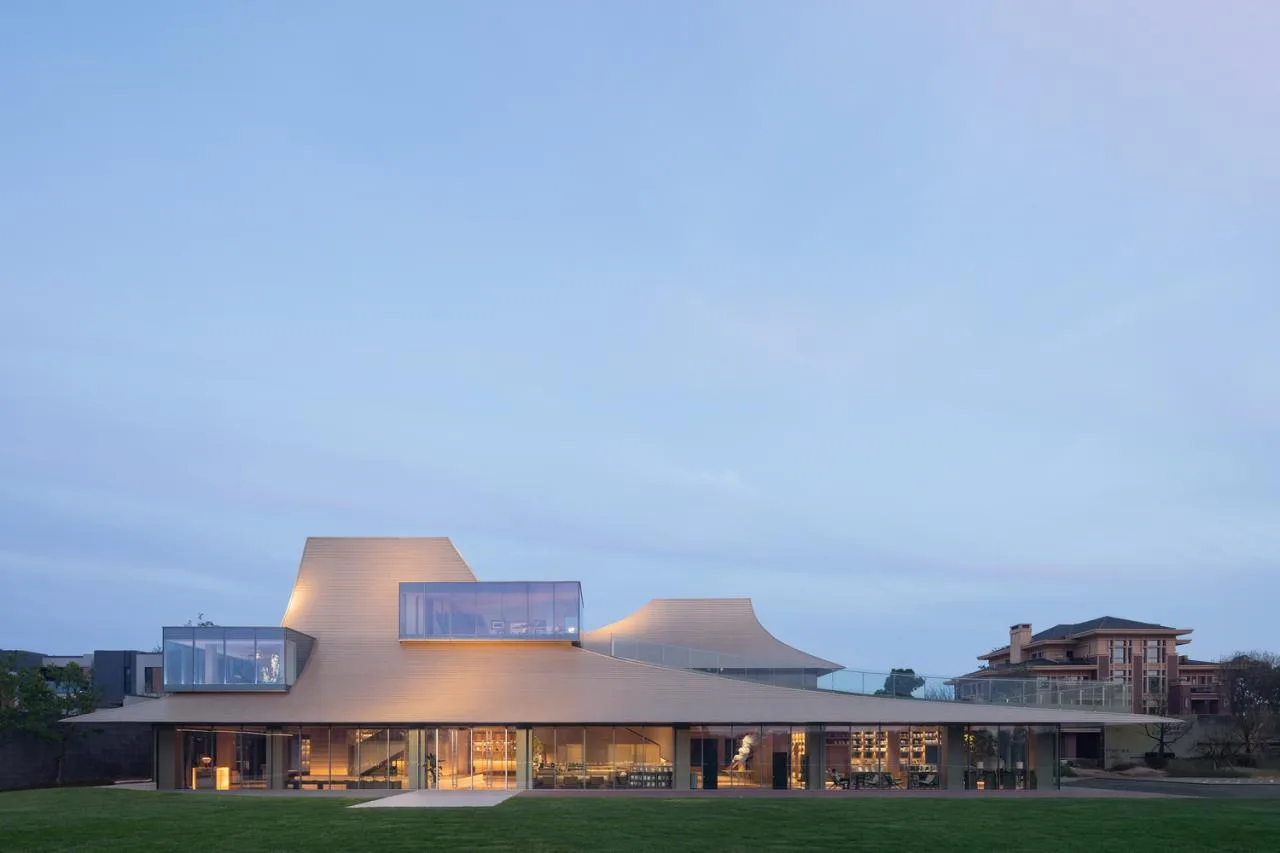
Under the roof, layered deep eaves create a rich gray space for indoor activities, emphasizing a shared sense of presence beneath a single canopy.
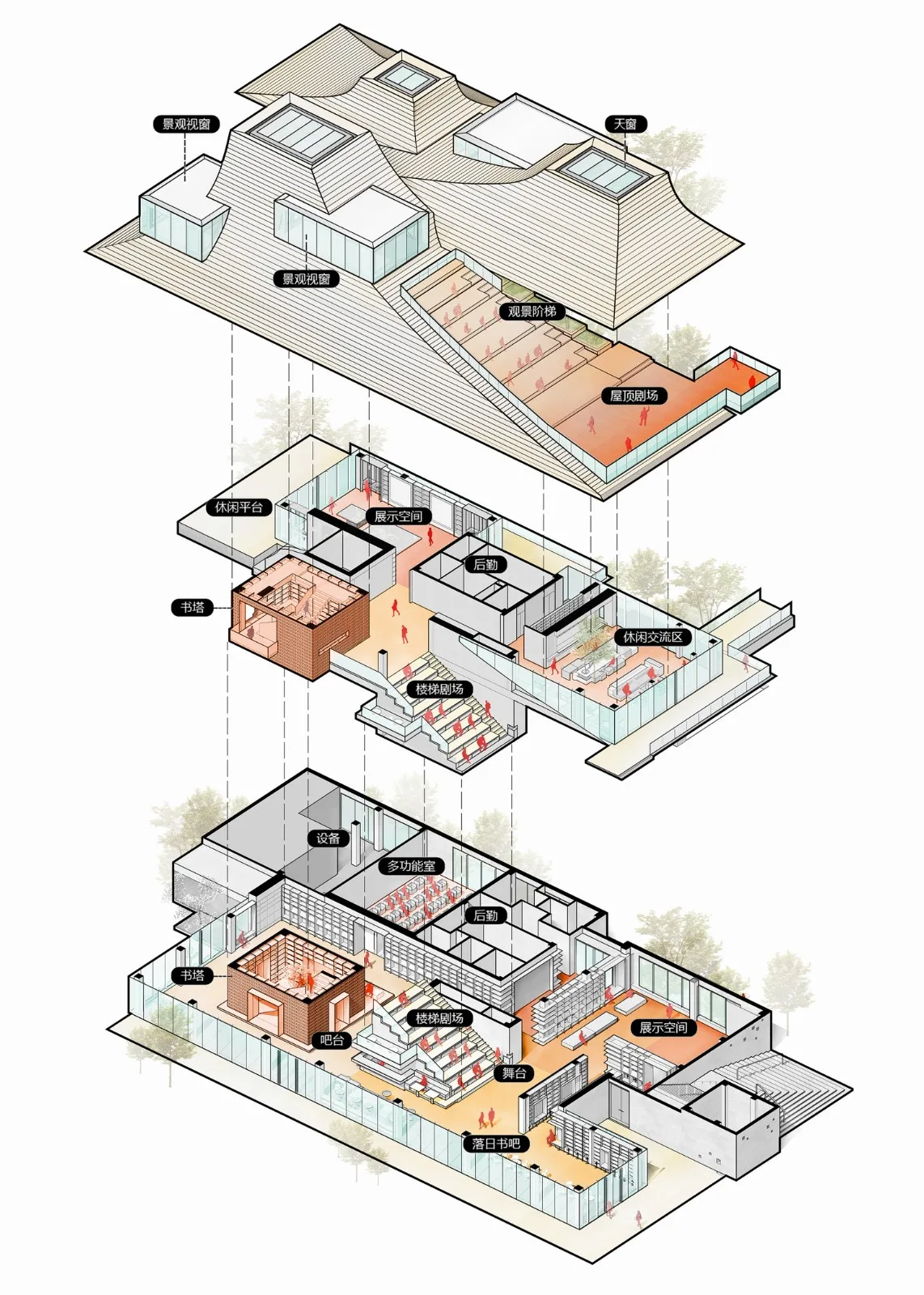
△ Functional analysis axonometric diagram
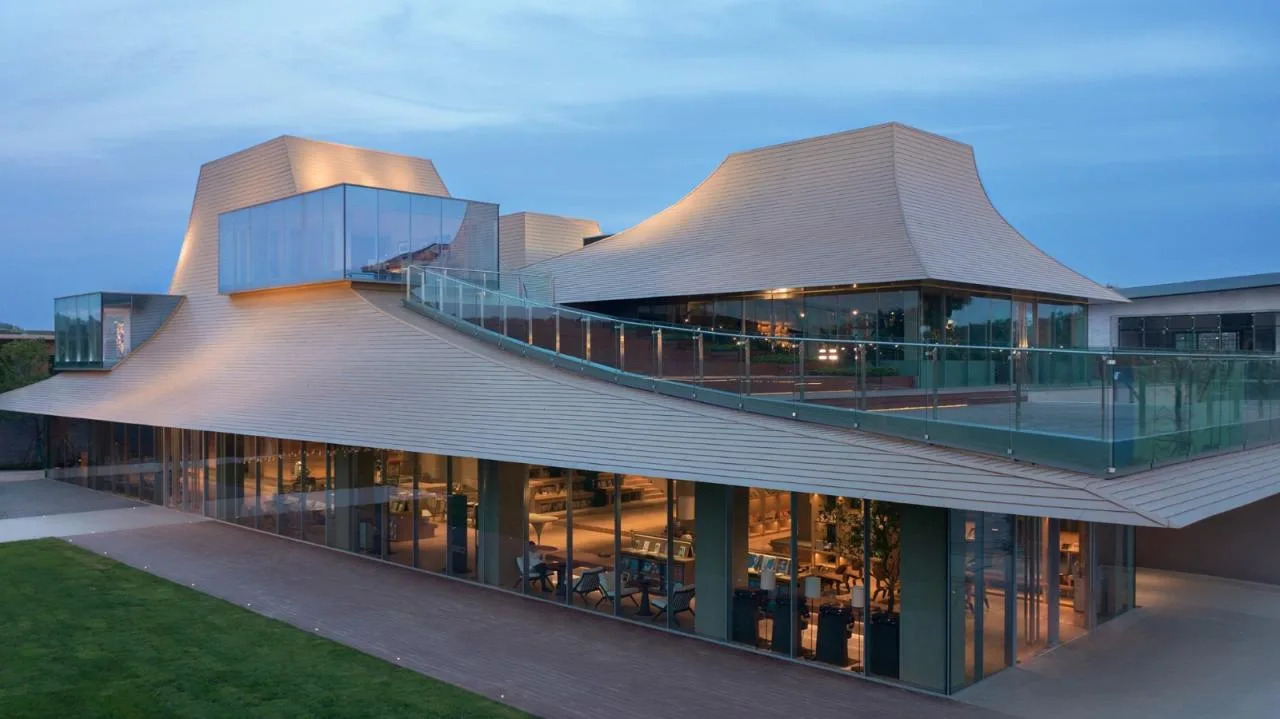
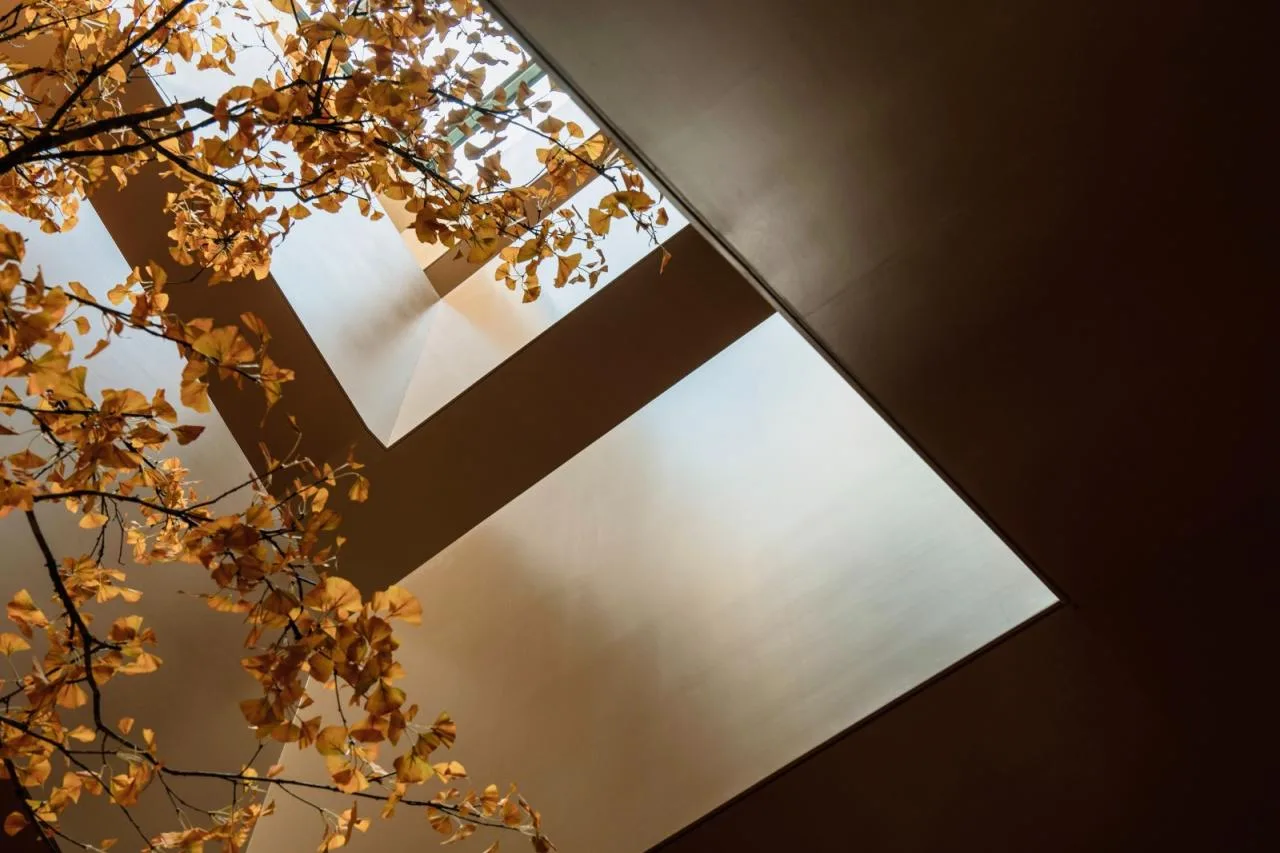
Above the roof, gentle slopes and dynamic forms emerge through uplift and extension. Small-scale volumes like skylights and lake-view windows bring natural light and scenic views indoors.
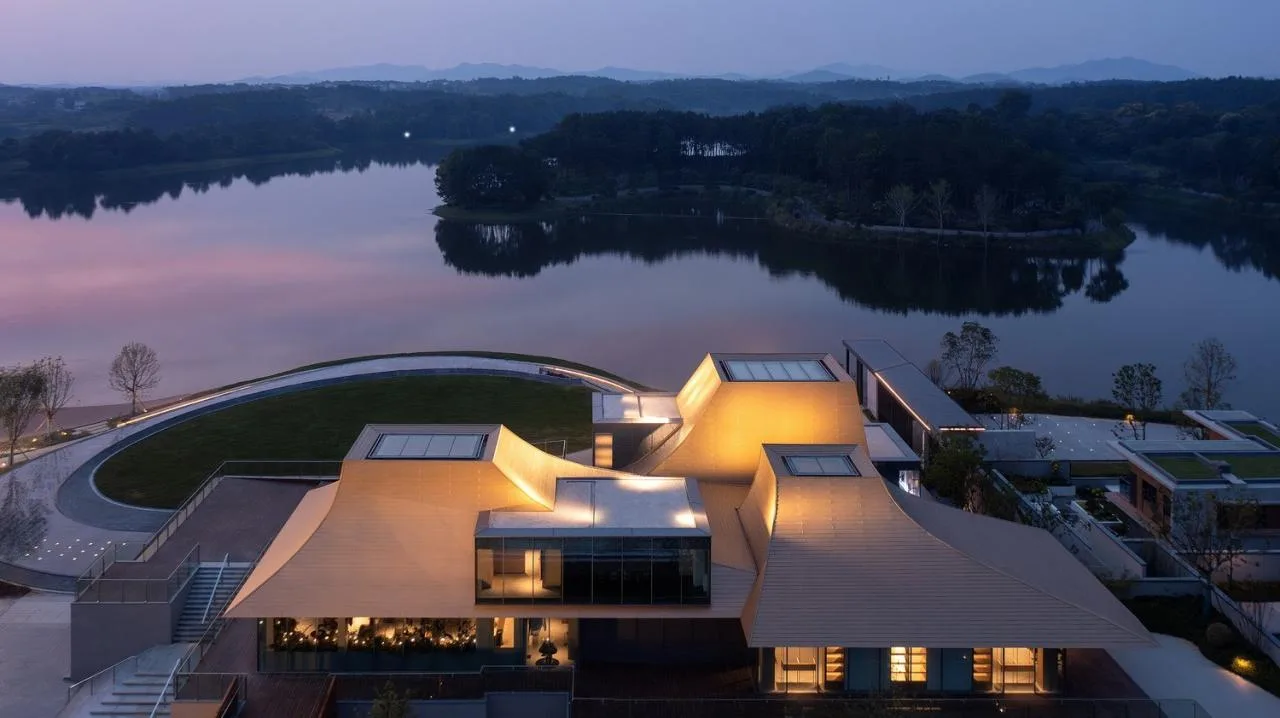
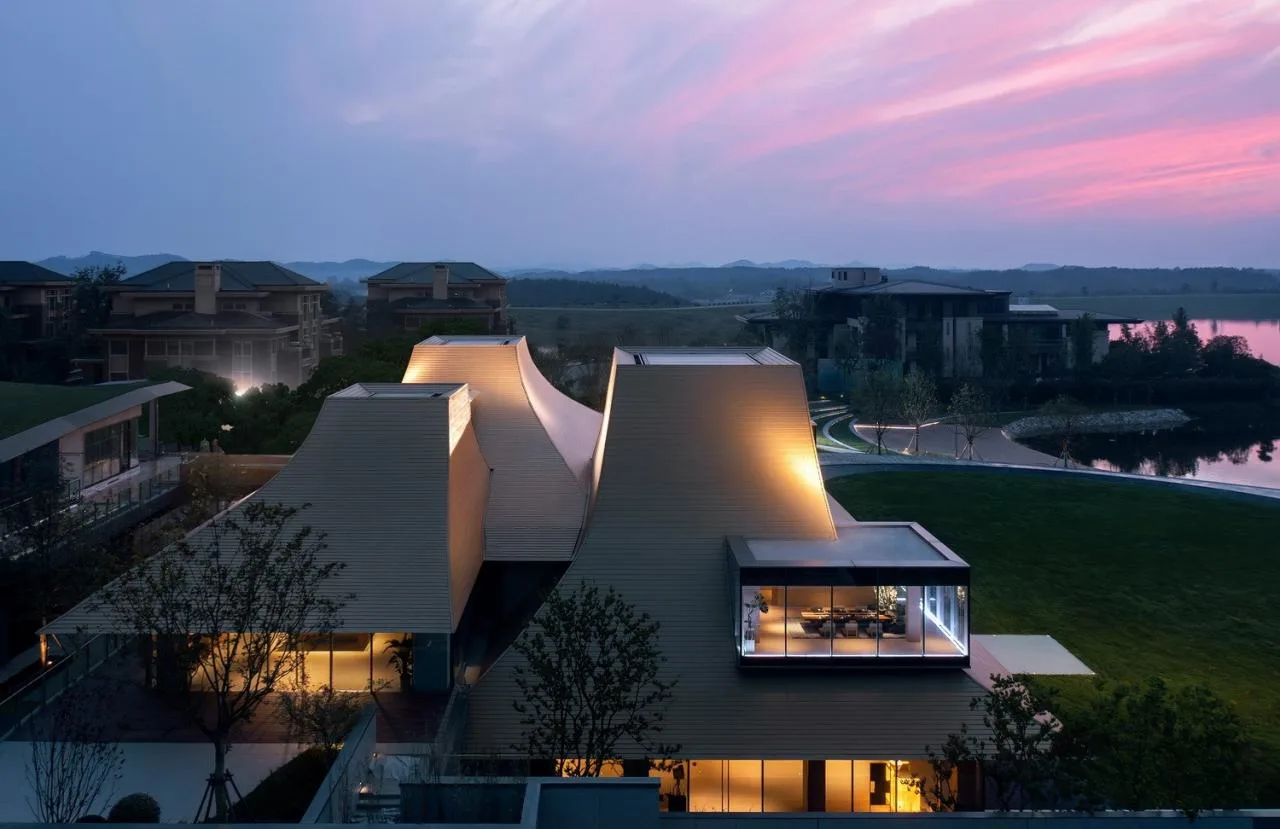
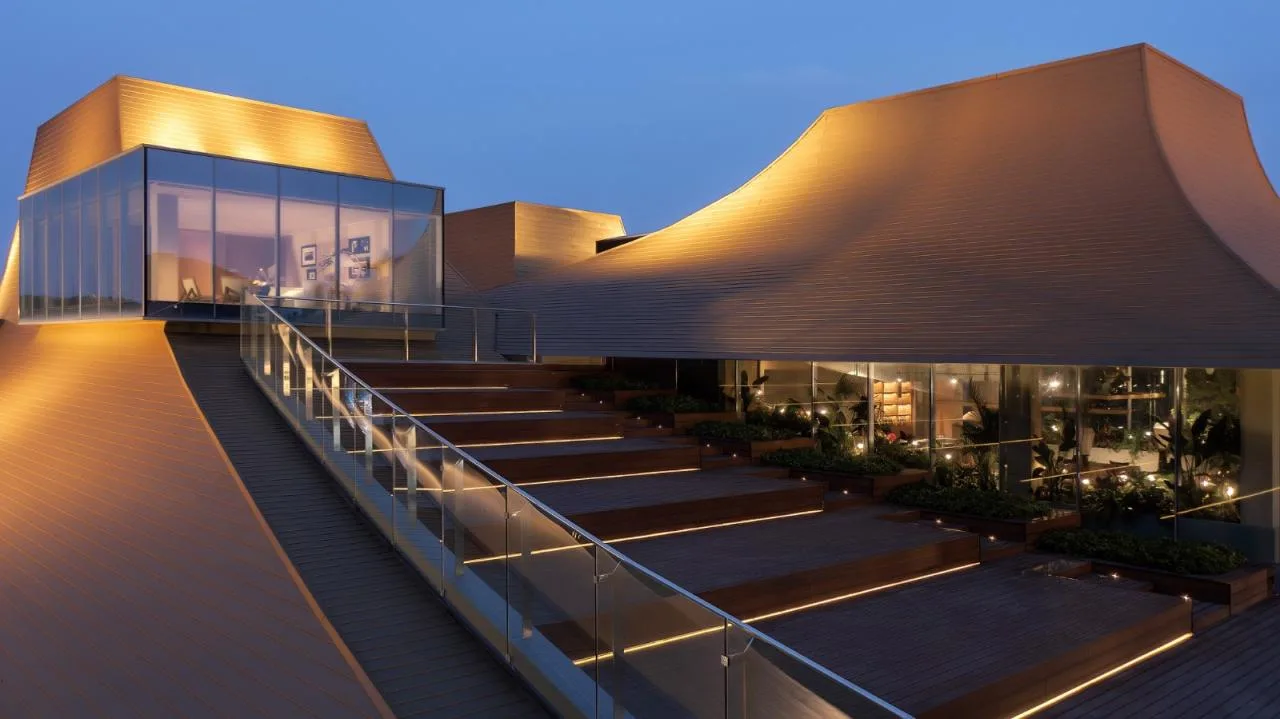
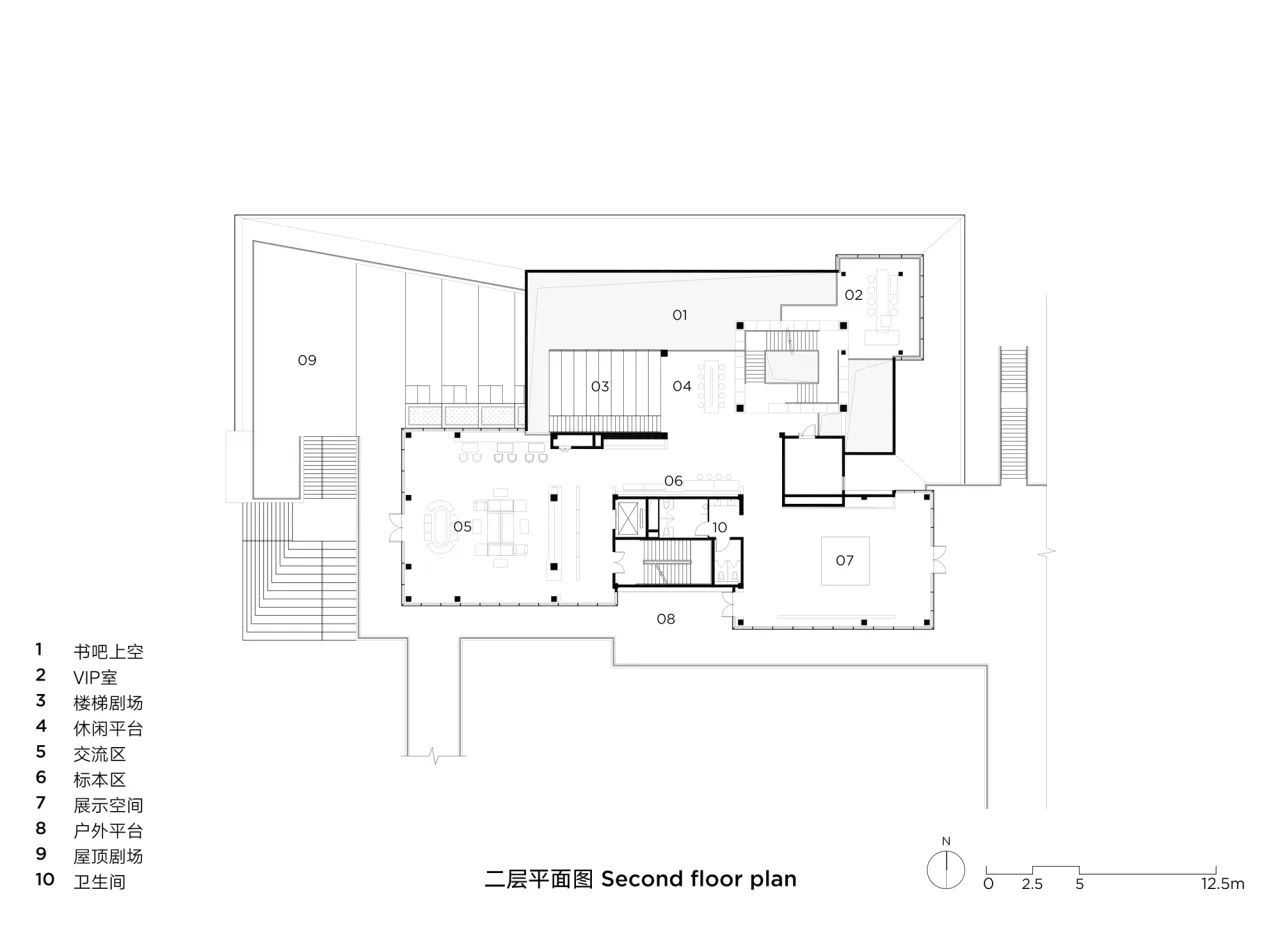
The western roof slope connects to a second-floor outdoor platform, forming a rooftop theater—a versatile space for diverse activities. The surrounding lakes and mountains, paired with the dusk and sunset, create a living scene as dynamic and engaging as a play. Walking through it, one experiences a dramatic interplay between nature and daily life.
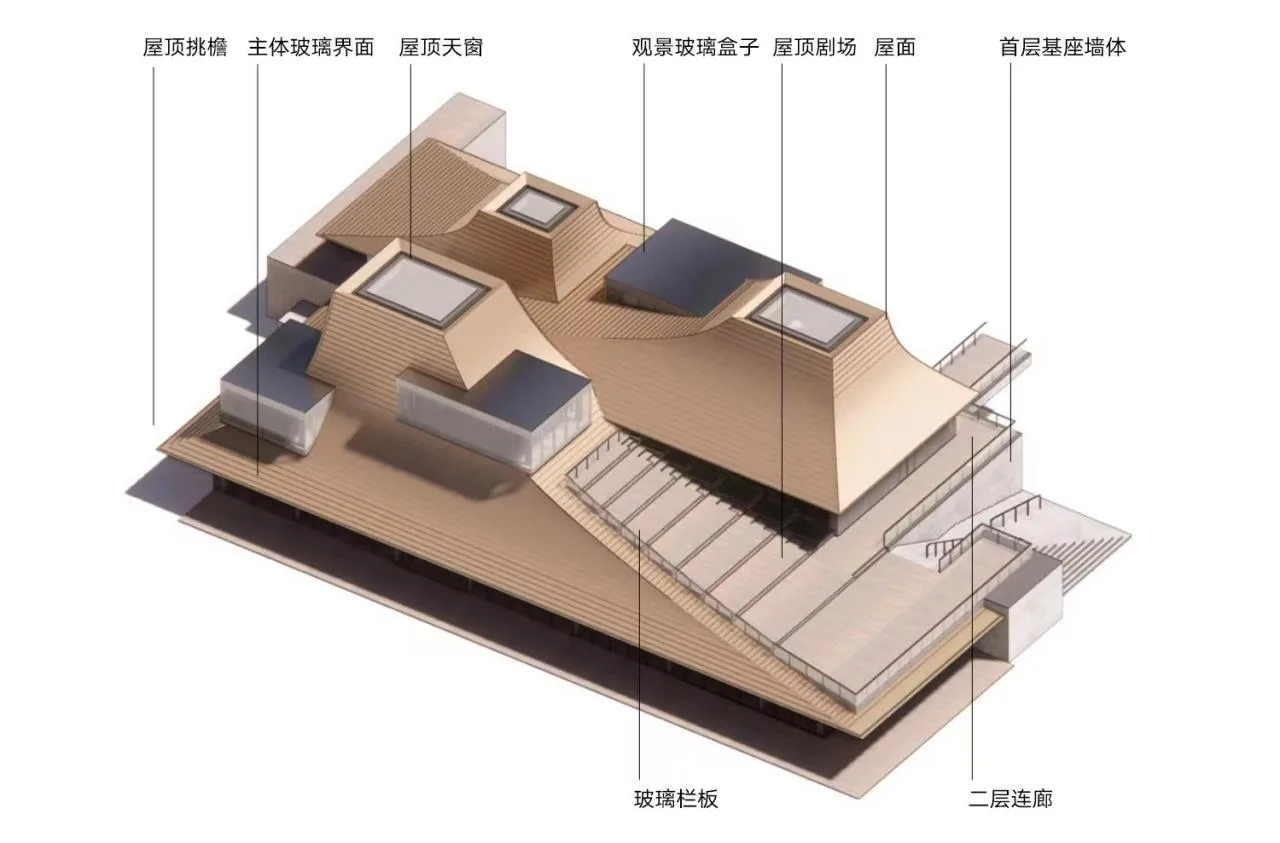
△ Wall analysis diagram
02 Center ²
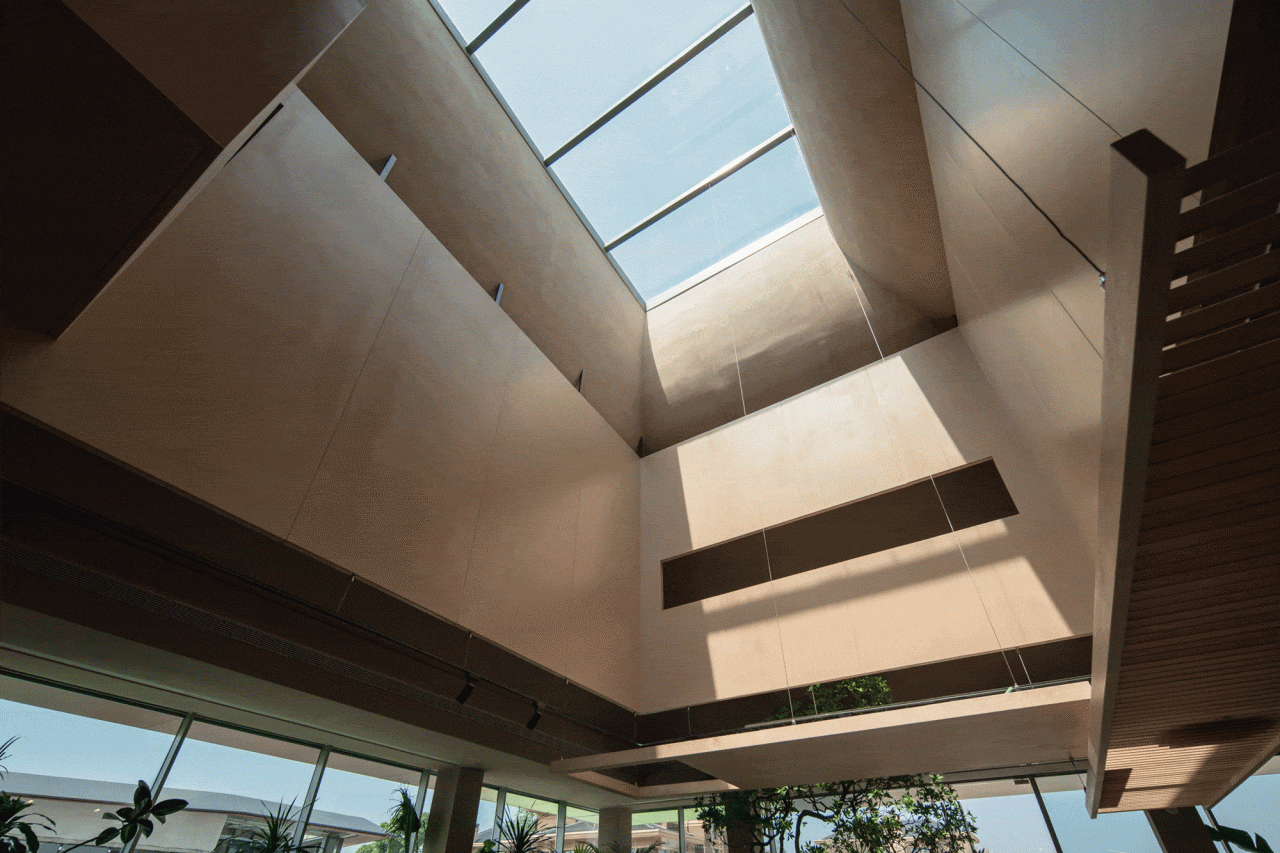
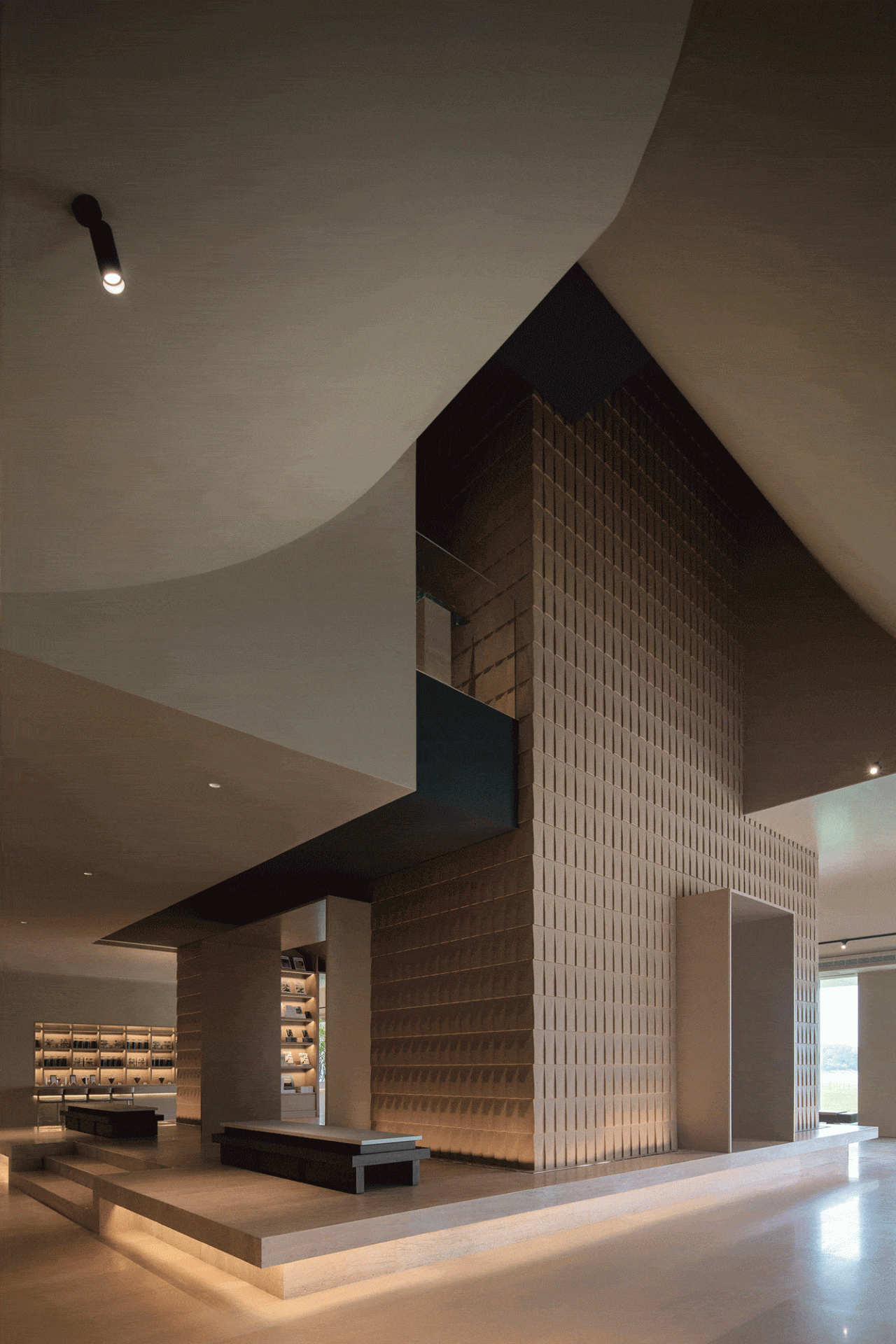
The building’s structure combines reinforced concrete foundations with a partial steel roof. The three elevated roof centers require robust structural components to support and shape the roof, anchoring three distinct dynamic lines across the rectangular plan. This inspired the design concept of the “book tower” and “light courtyard,” integrating larger structural elements and a curved frame beam atop the roof. The vertically cantilevered atrium, bathed in natural light, creates a unique inward atmosphere that harmonizes structure and space.
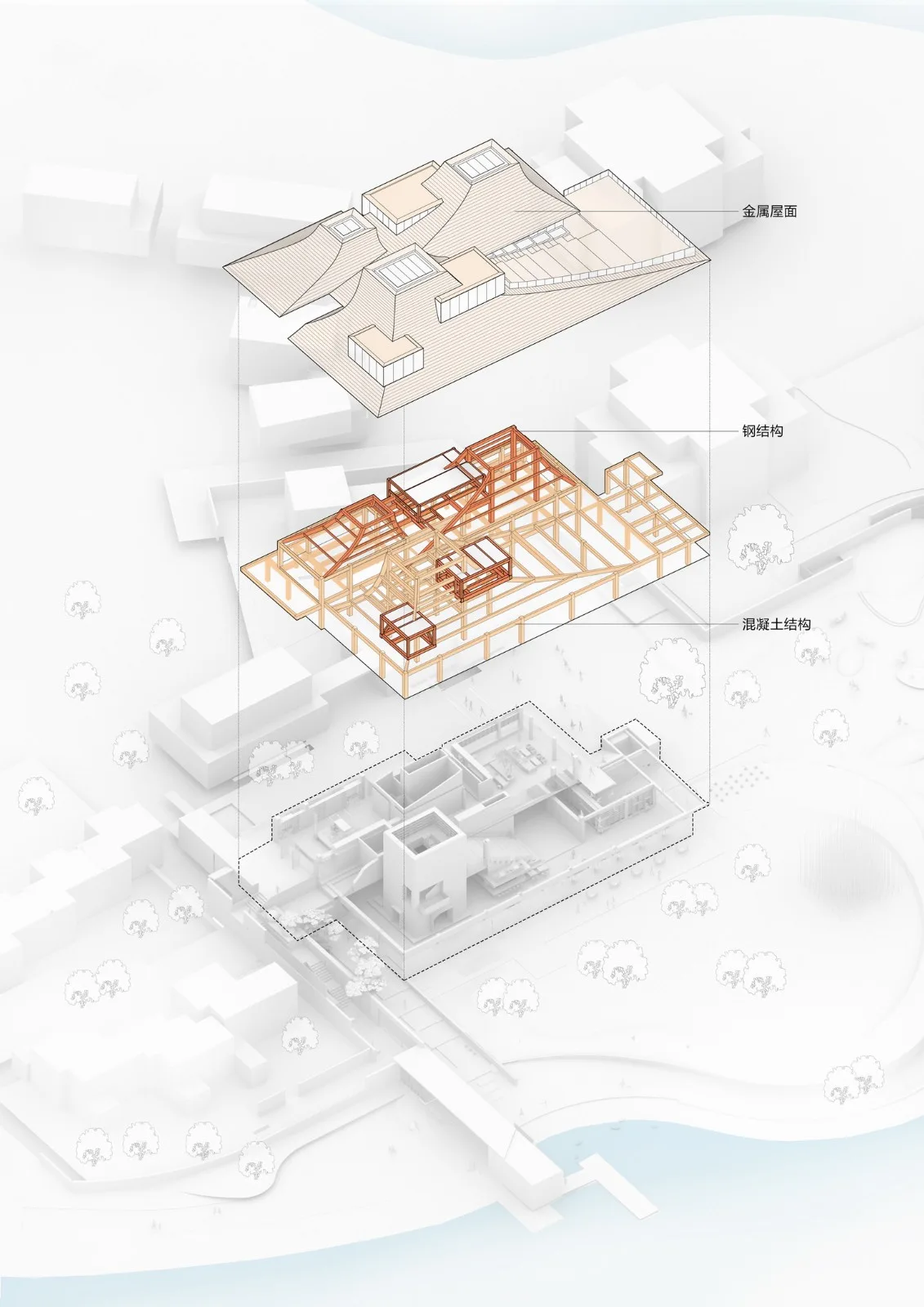
△ Structural exploded view
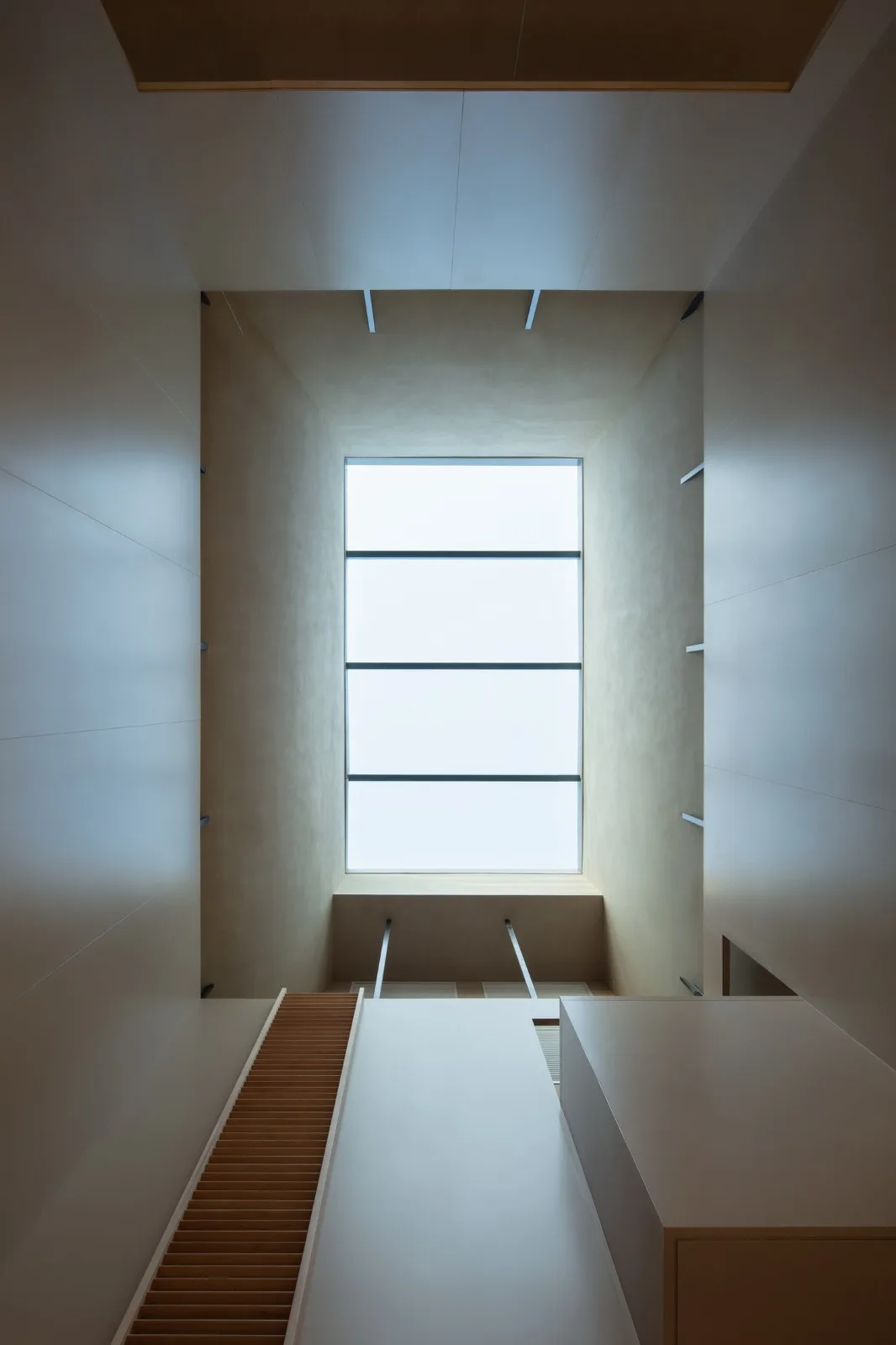
The north side of the book tower emphasizes an inward focus. Its spiraling upward path connects to the outside only through skylights, centering attention and perception inward.
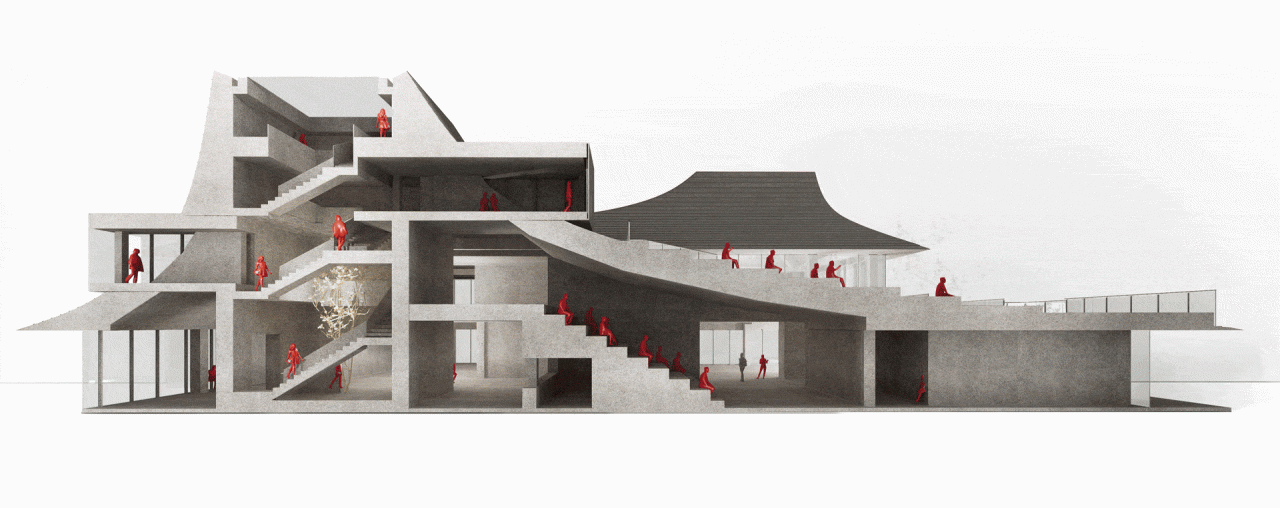
△ North side sectional view
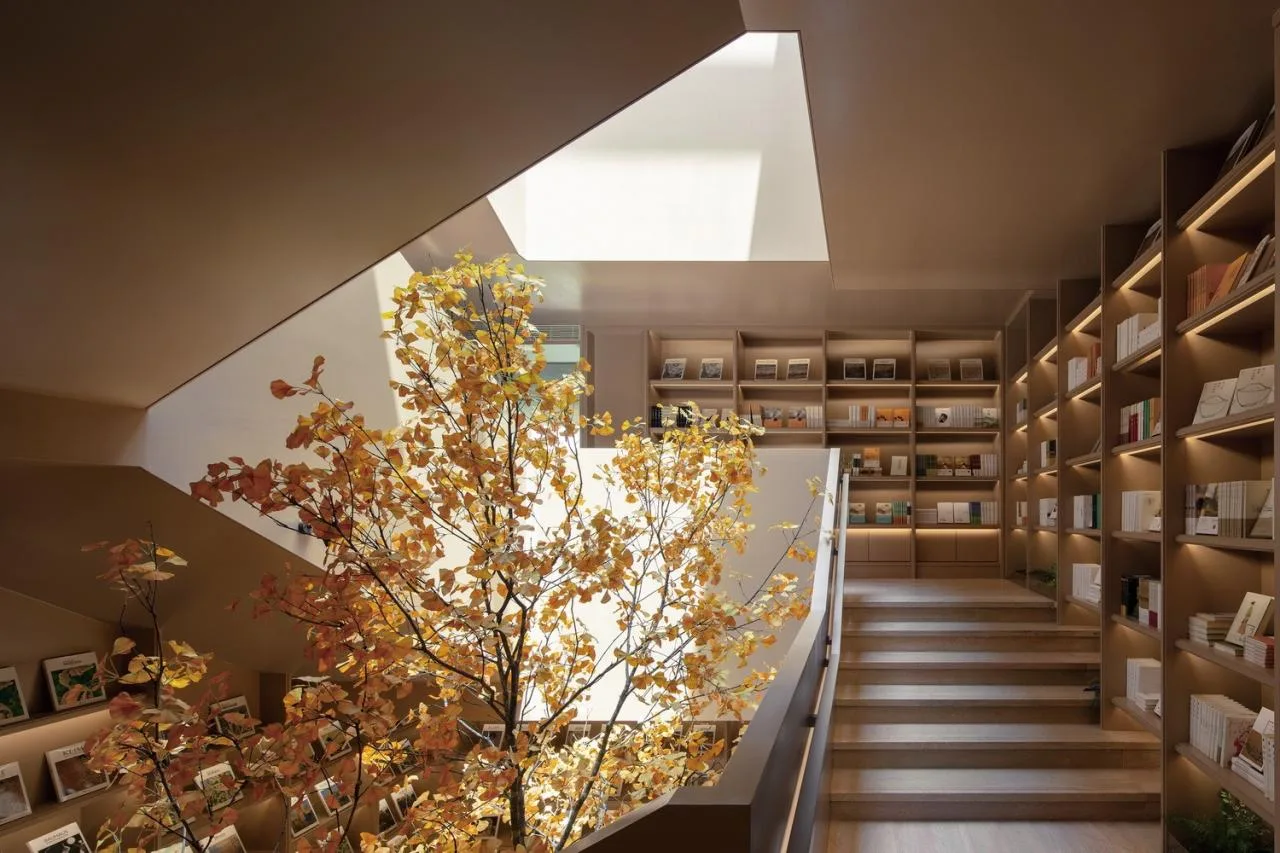
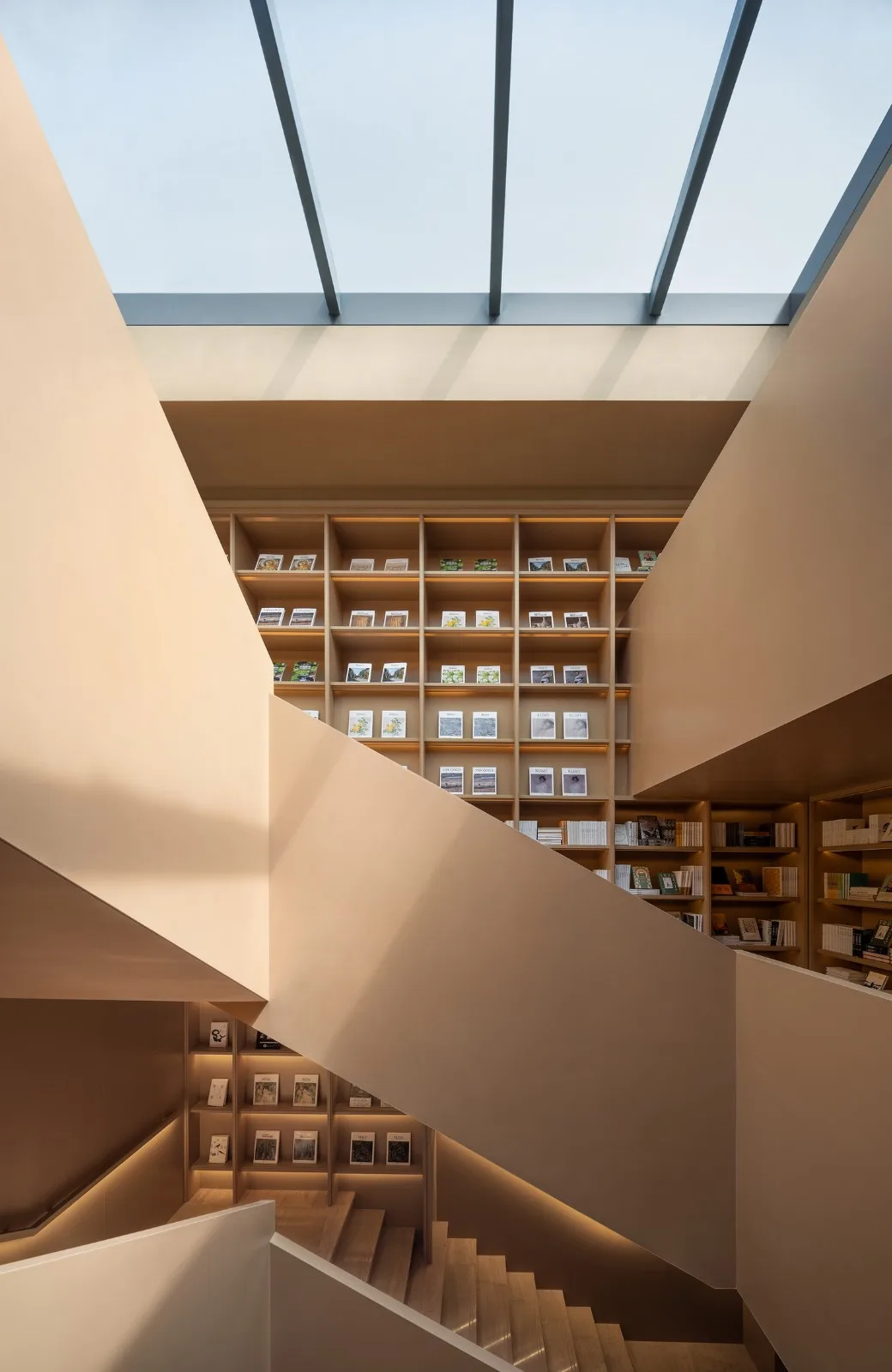
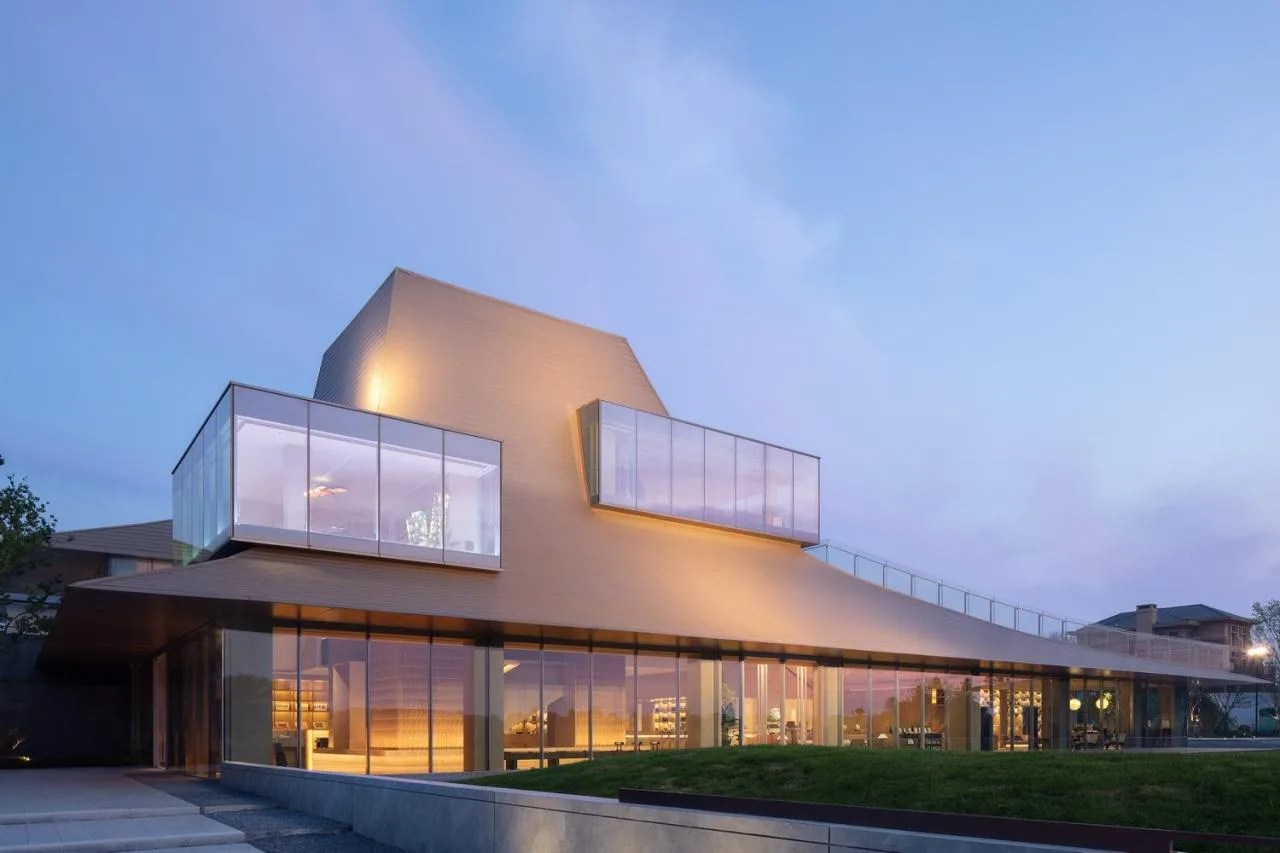
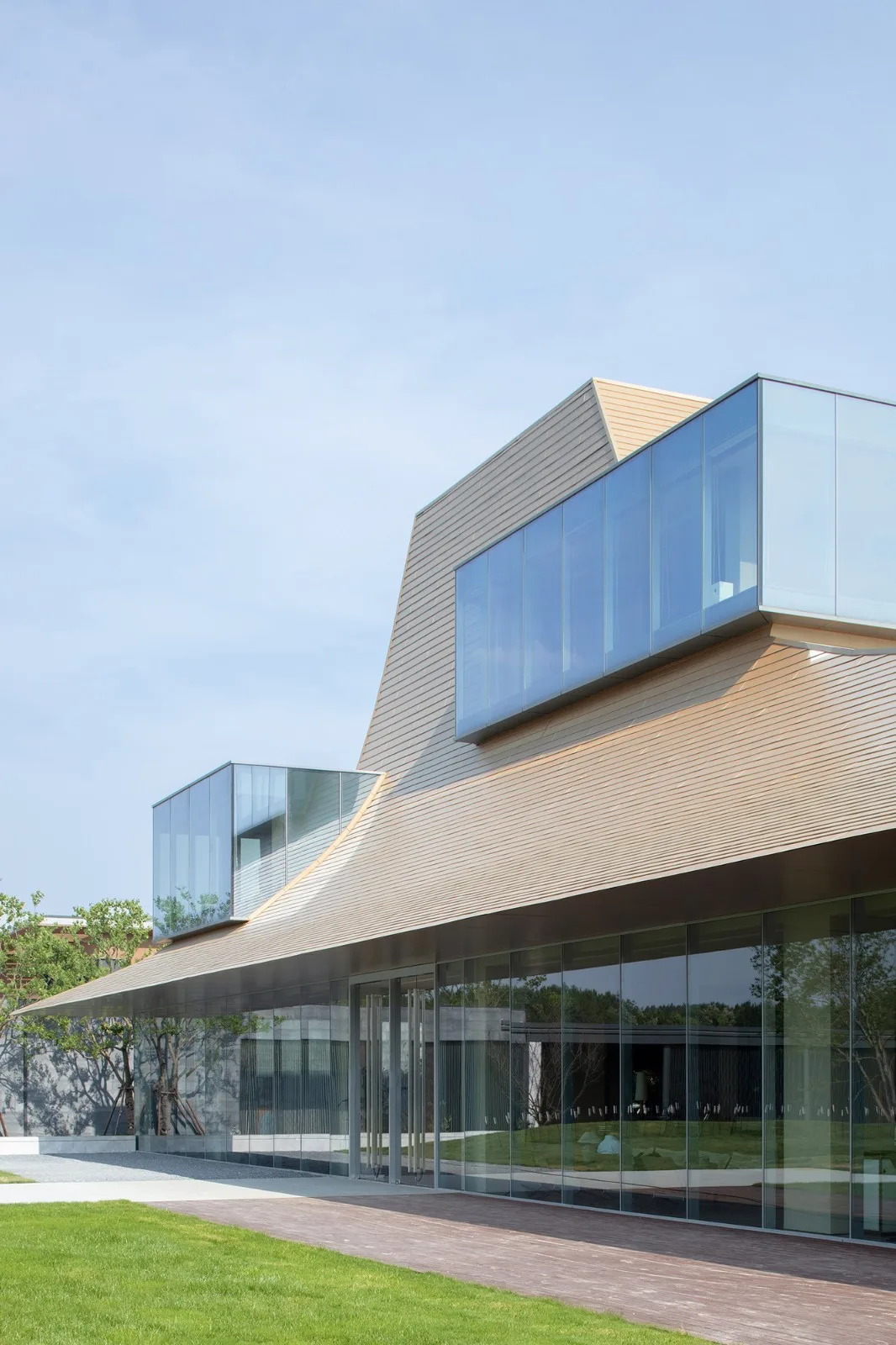
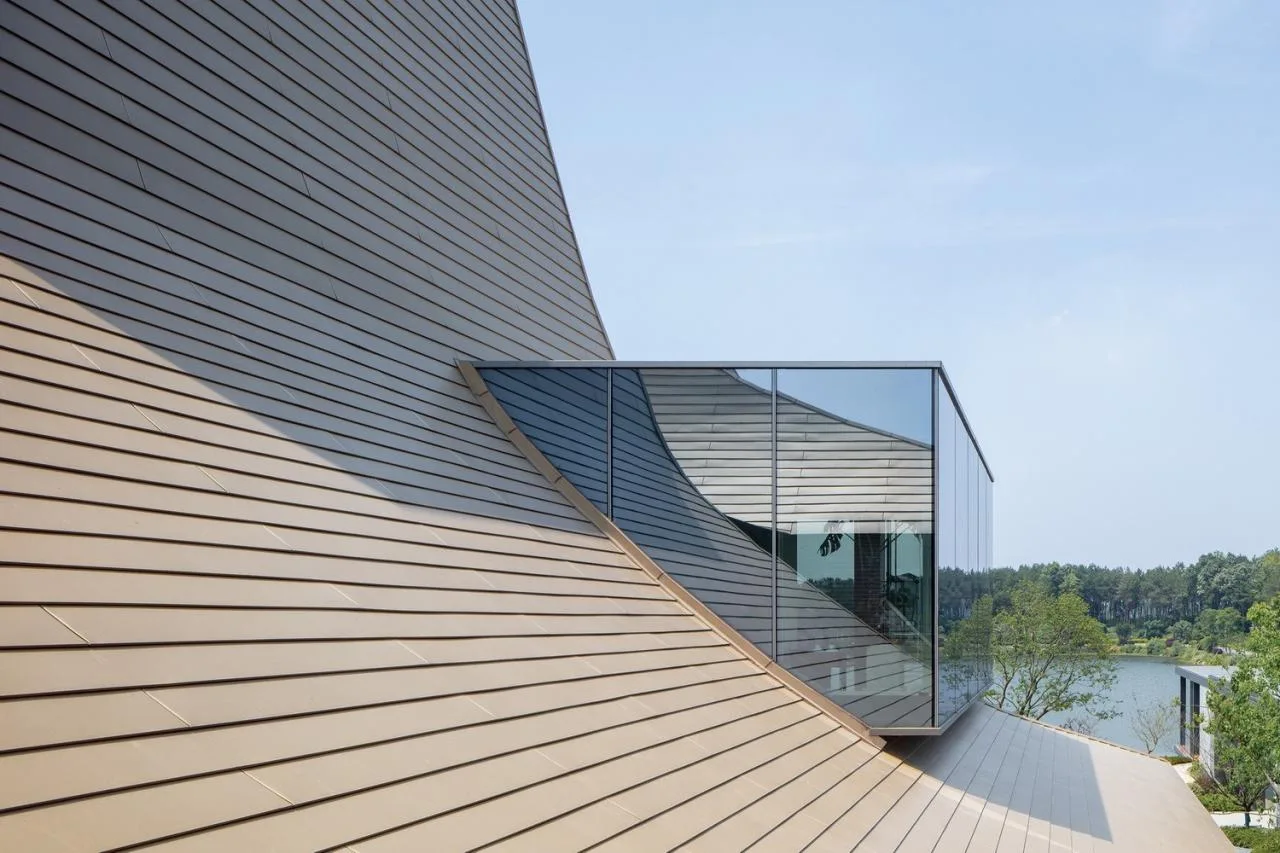
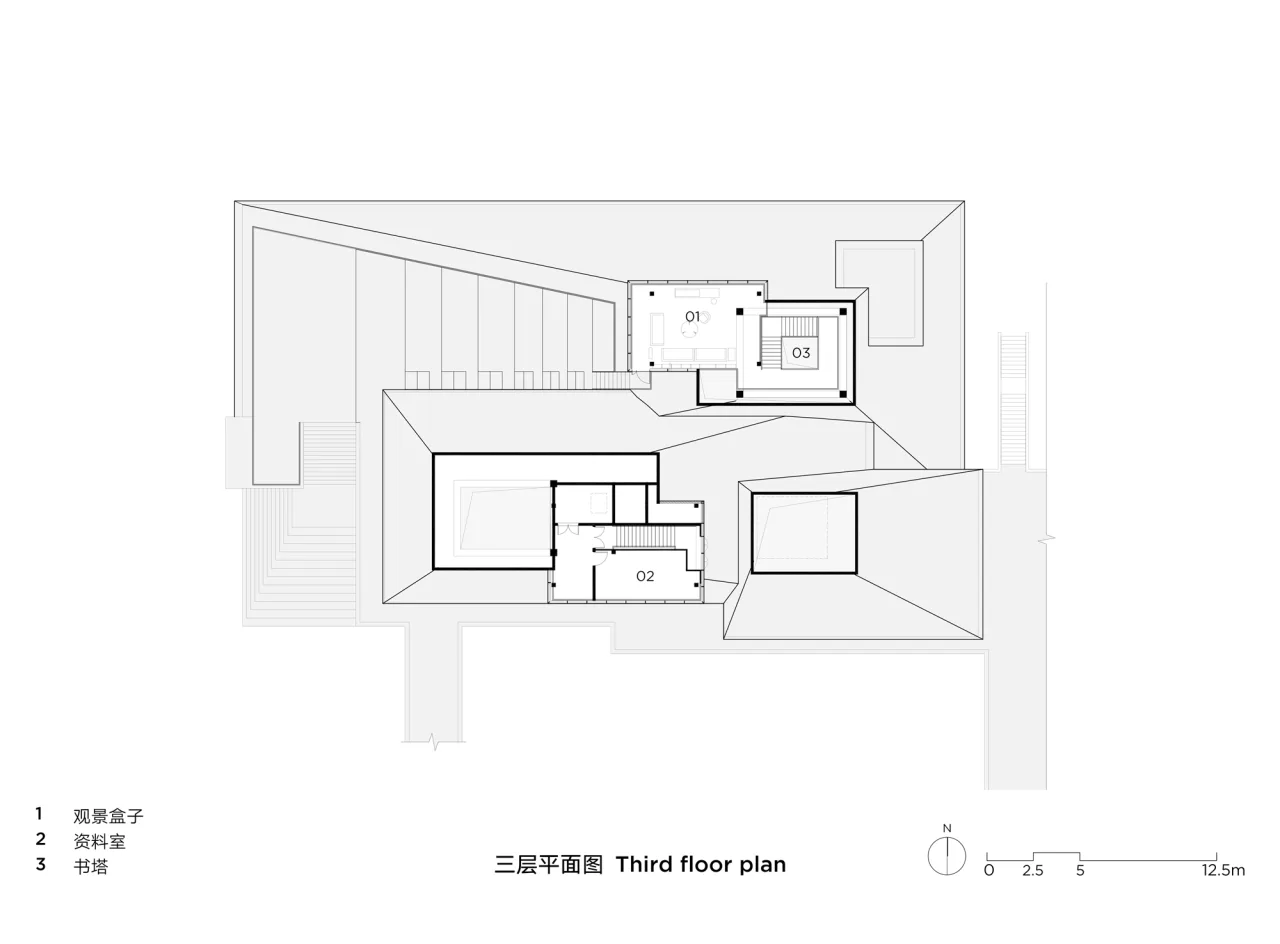
The second and third floors of the book tower connect to two glass boxes that are open and transparent yet subtly concealed. These glass boxes, made with medium-high anti-hidden-frame glass featuring ultra-narrow frames, present a sleek facade and appear to float within the metal roof, offering panoramic views throughout the building.
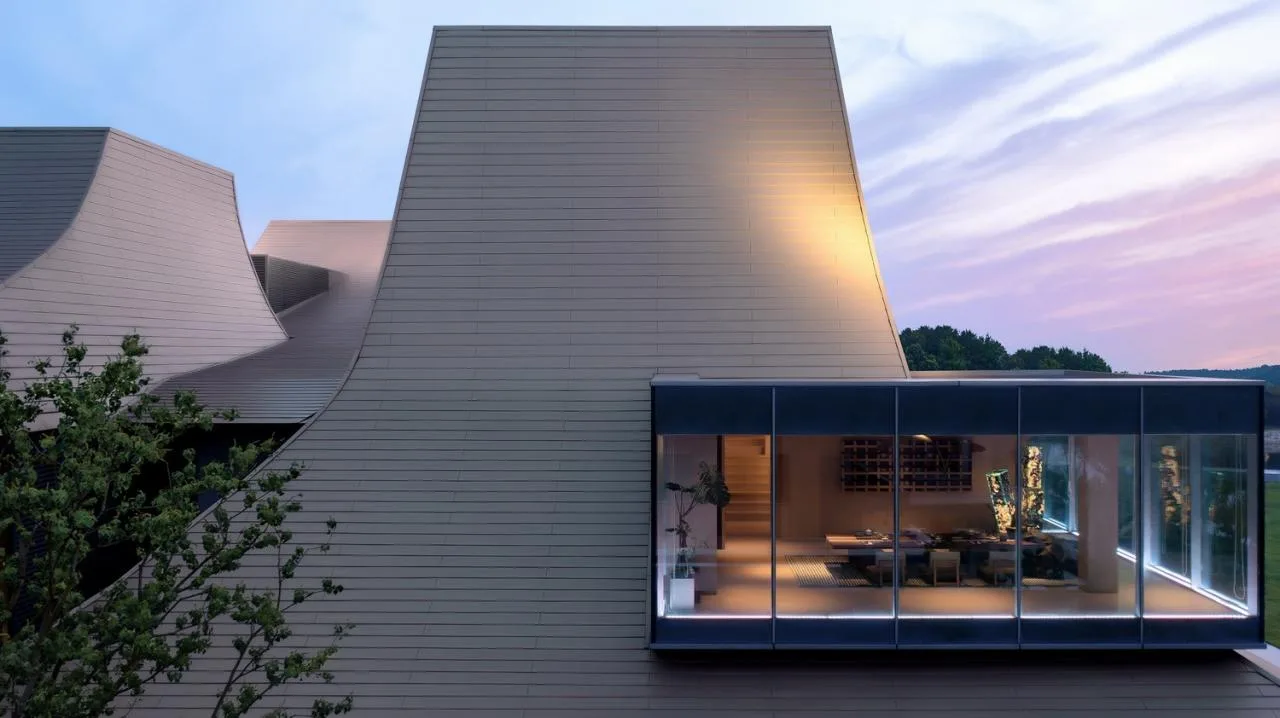
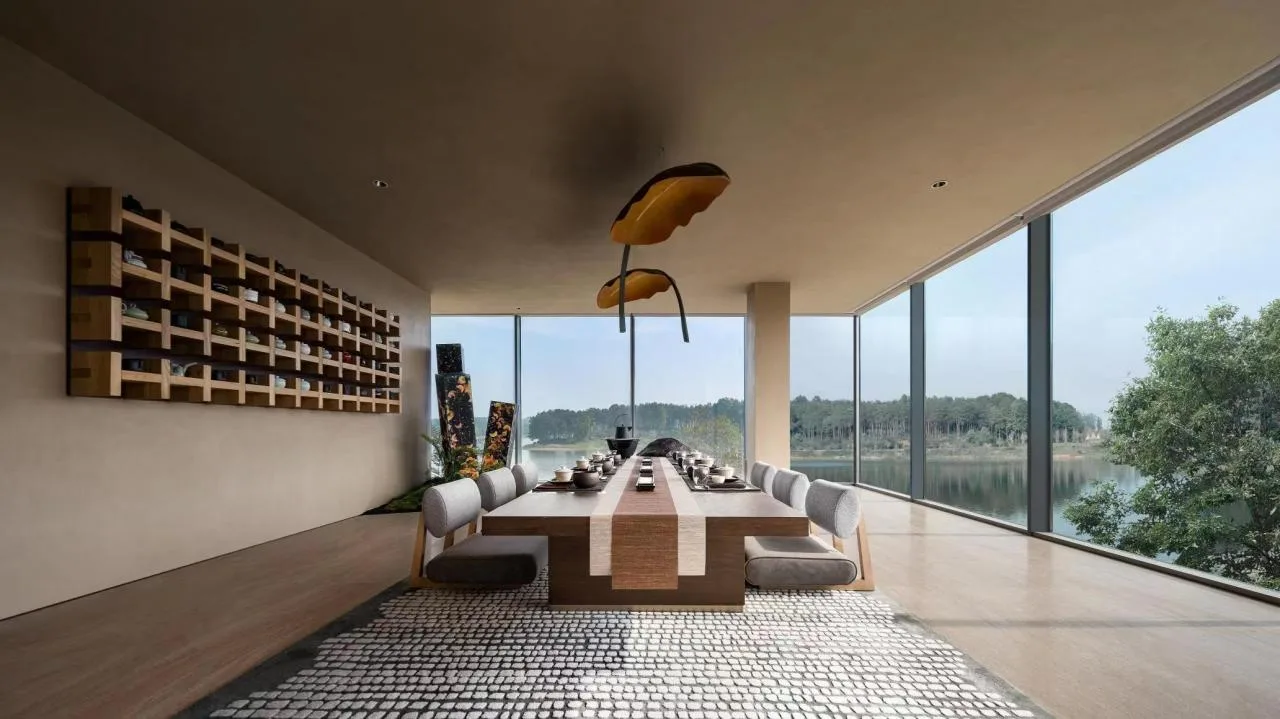
The western side of the Guangting (light pavilion) emphasizes openness. Its supporting structure allows ample flow space beneath, enabling unobstructed sunlight to flood through, creating a transparent and expansive atmosphere.
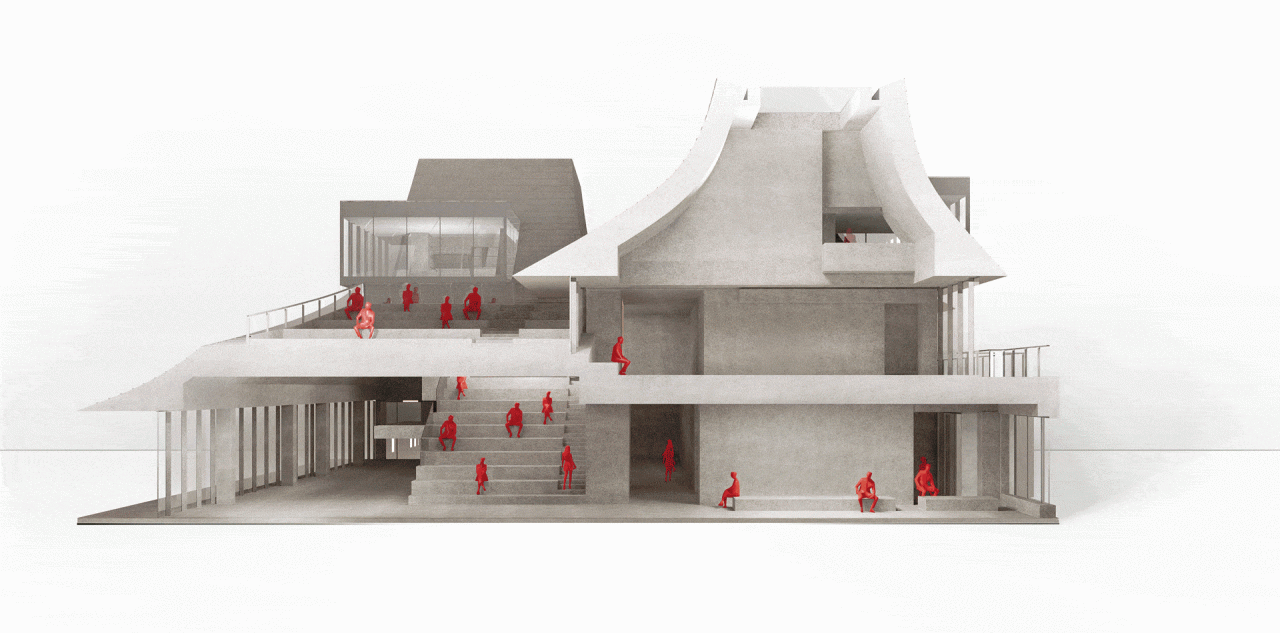
△ West side sectional view
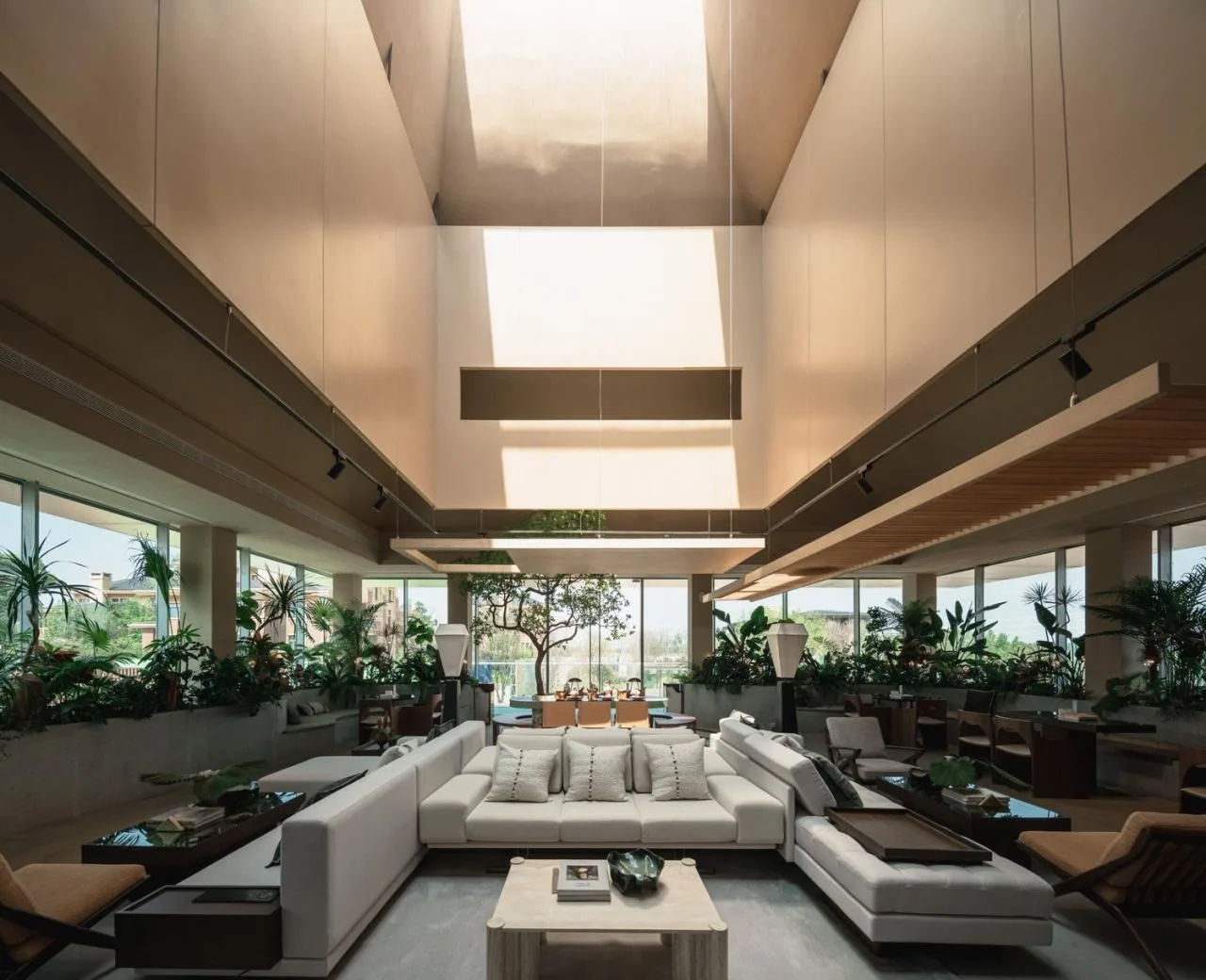
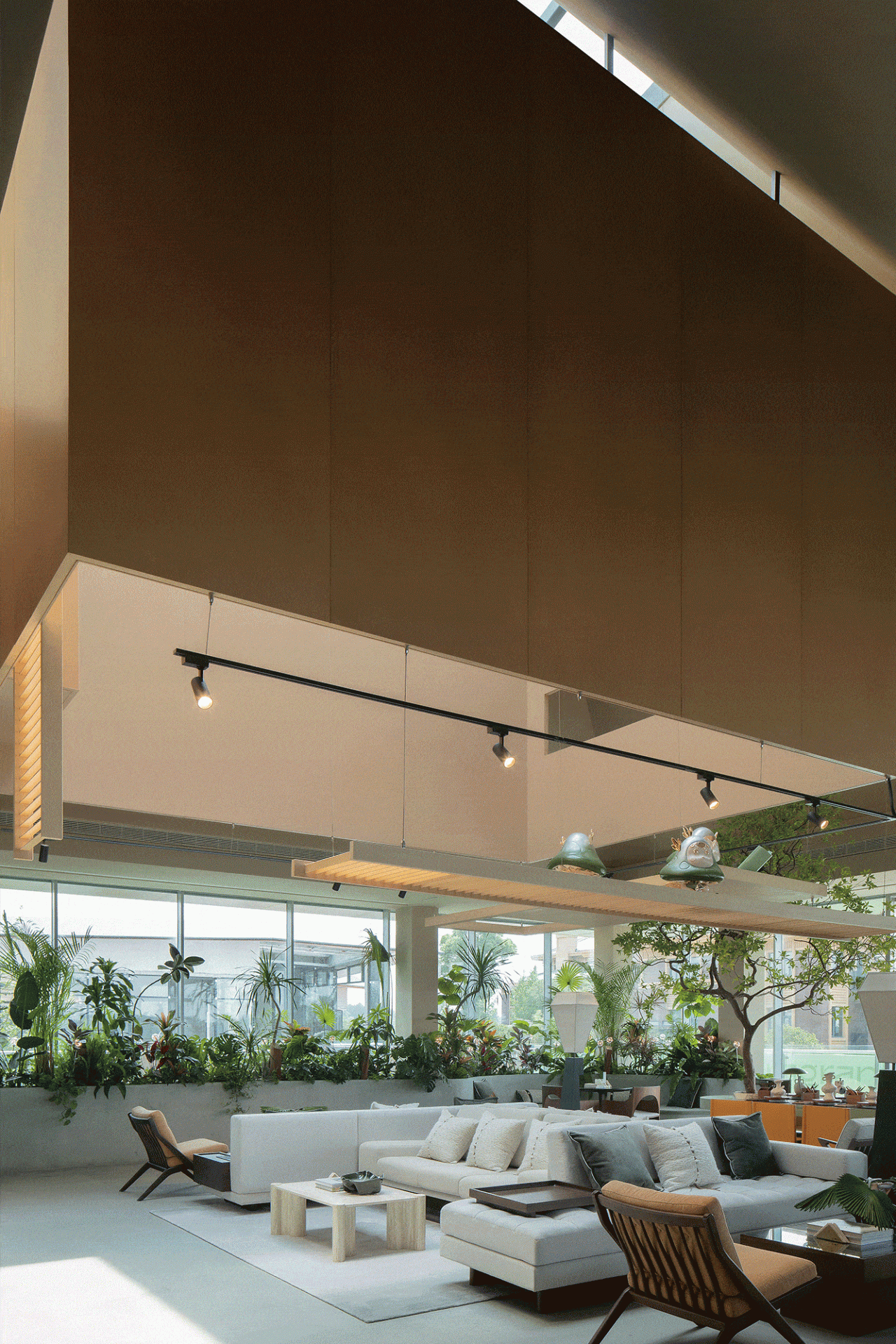
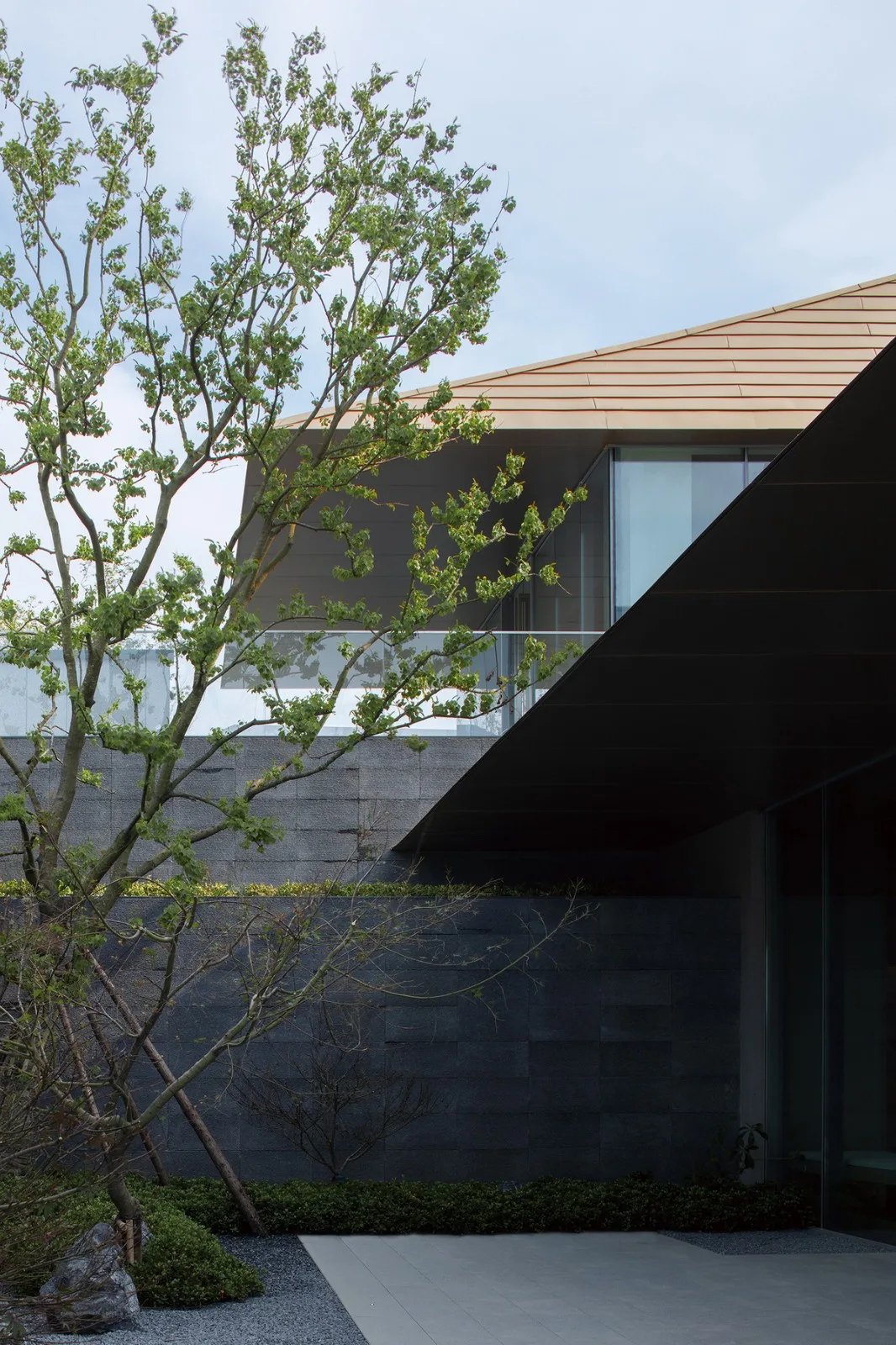
The eastern courtyard nestles within the forest and community, creating a rich spatial experience by partially shielding the environment and establishing a one-way viewing corridor that interacts with the shifting daylight.
03 Roofing Constraints
The main interior space eliminates clear wall boundaries, instead being defined directly by the sloping roof. This design fosters a unified spatial flow and seamless scene transitions, cultivating a strong sense of place. By manipulating materials and lighting, the relationship between interior space and the surrounding environment is finely tuned to create a multidimensional atmosphere.
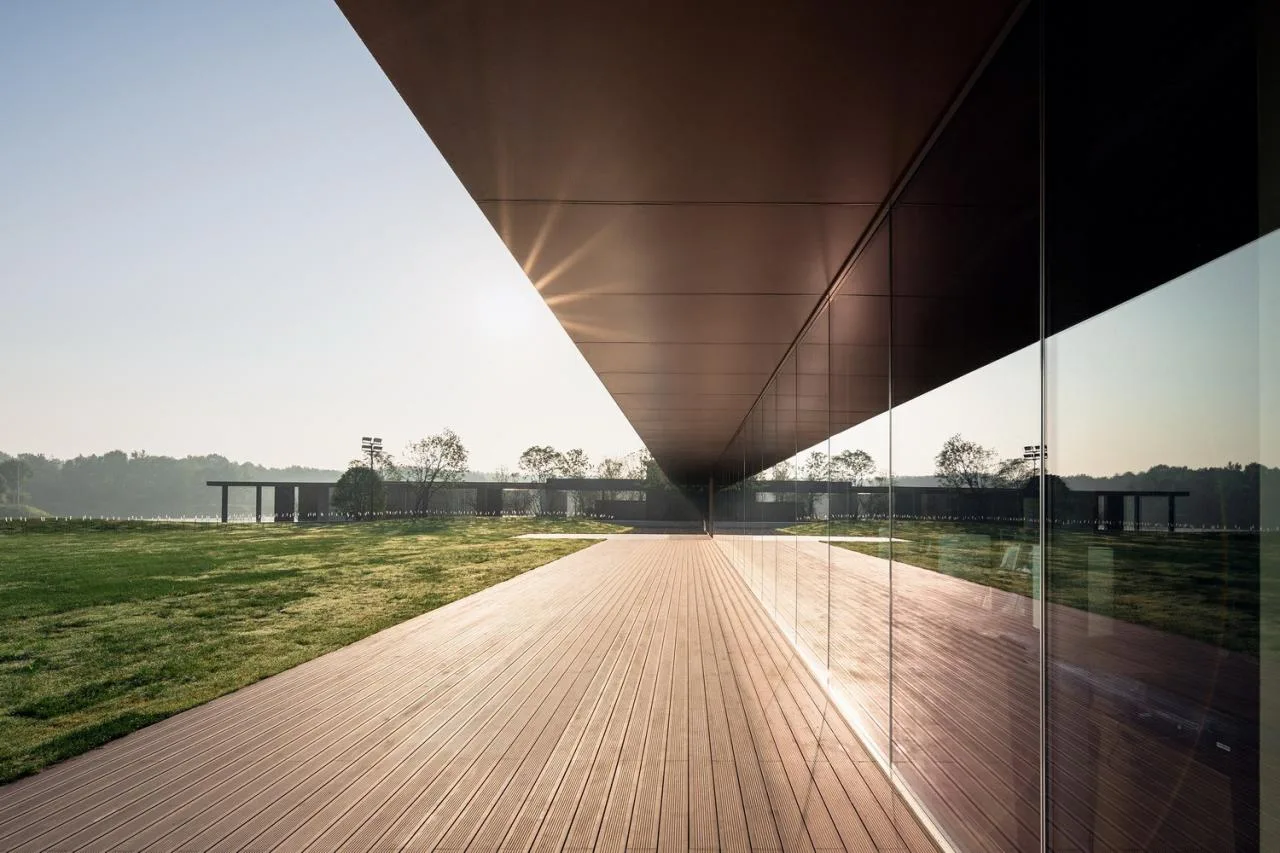
A large glass window on the first floor’s north side deliberately frames the wilderness, creating a tension between inside and outside. The natural landscape becomes both the visual focus and the backdrop of everyday life.
The first and second floors connect via a large staircase that doubles as an indoor theater. The gently sloping roof opens westward, guiding the eye toward the lake and creating a visual dialogue with the rooftop theater.
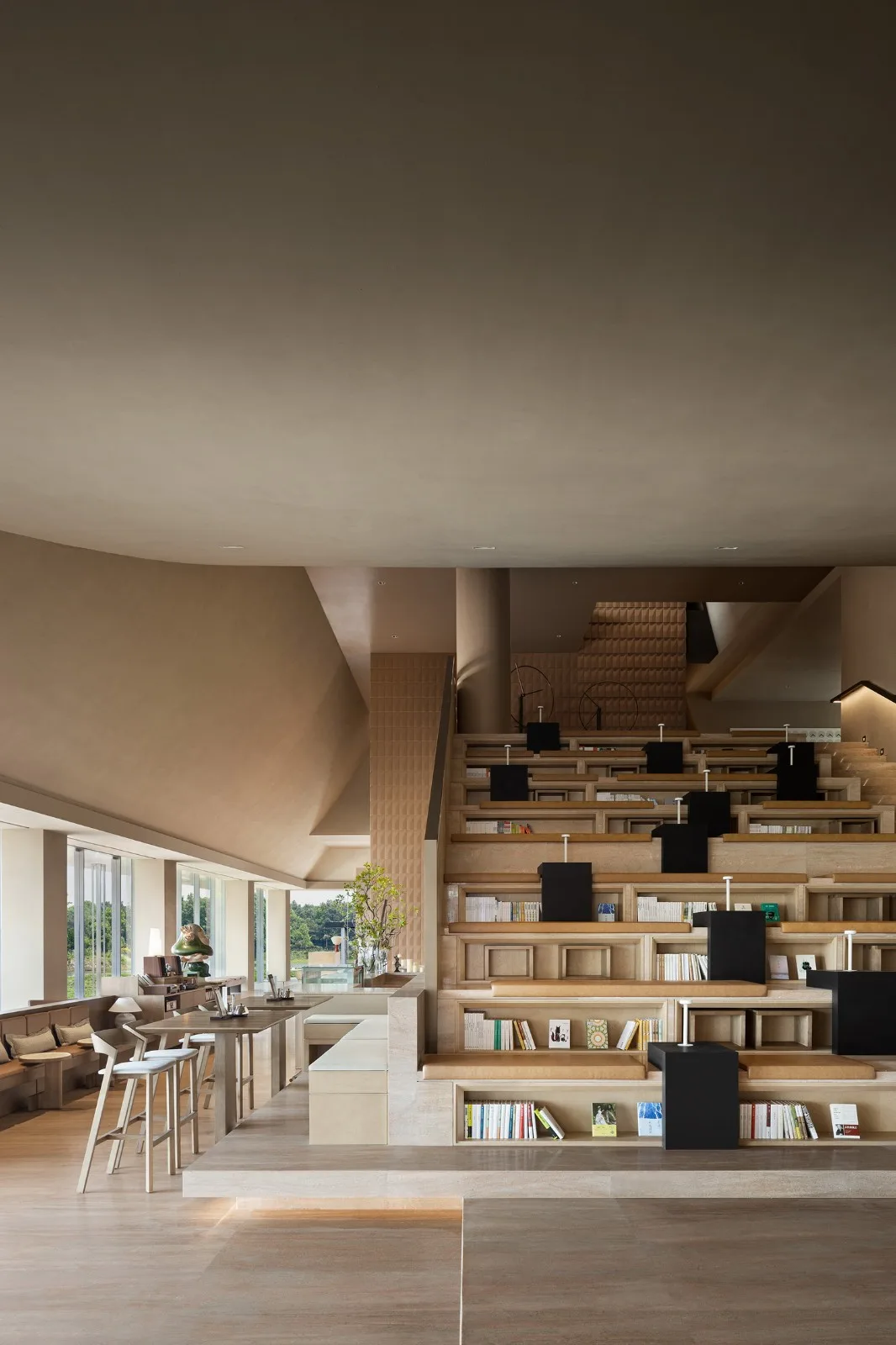
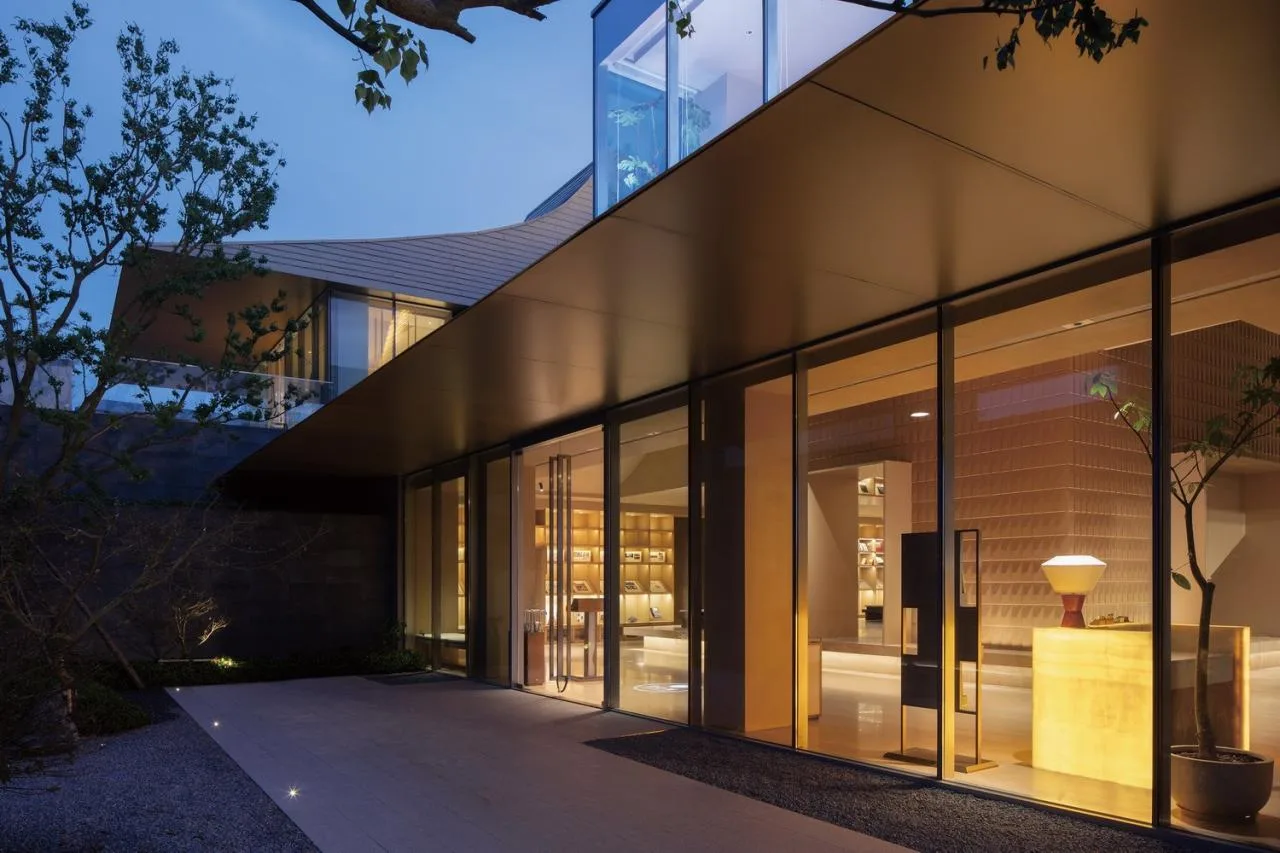
The interior features a modular, integrated design where the staircase theater incorporates bookshelves, handrails, and a coffee bar. This ensures a highly cohesive, simple, and refined interior space.
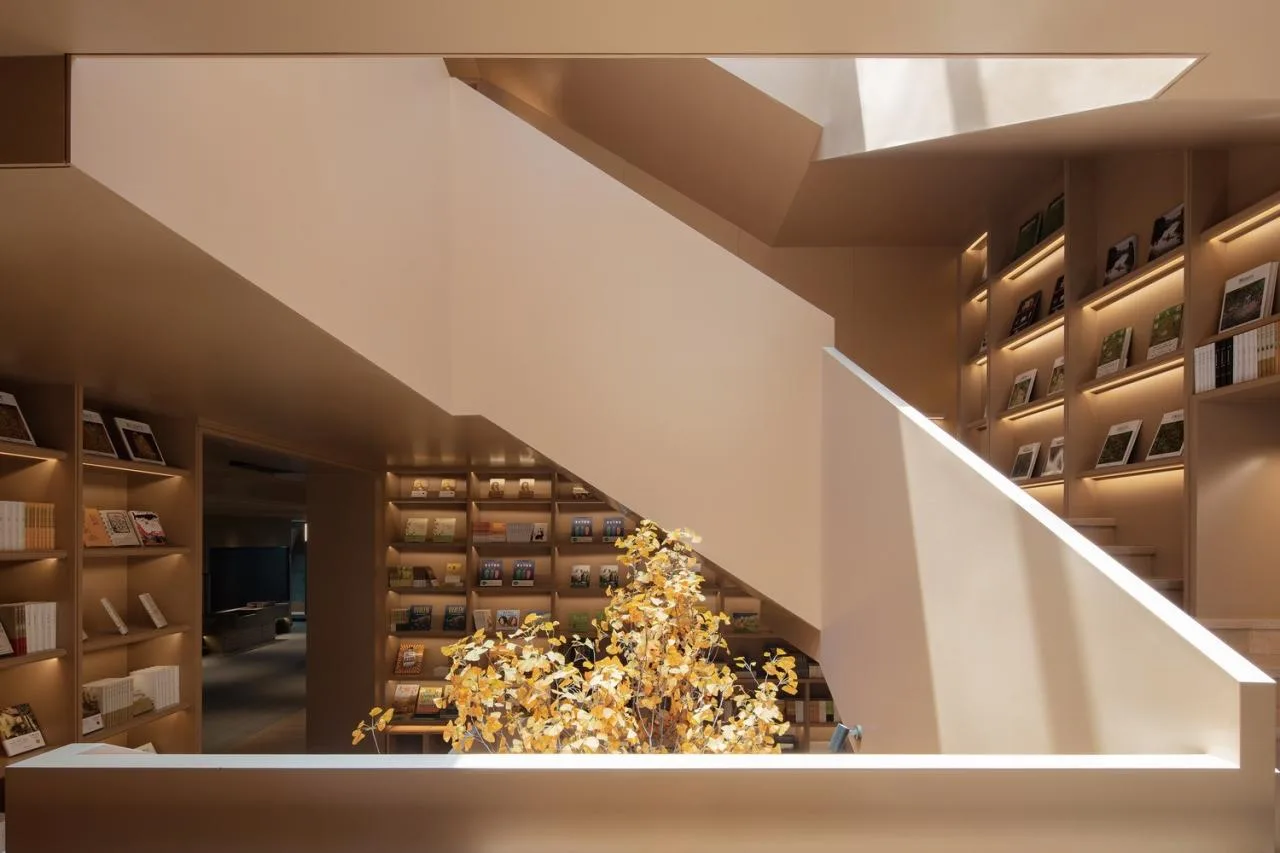
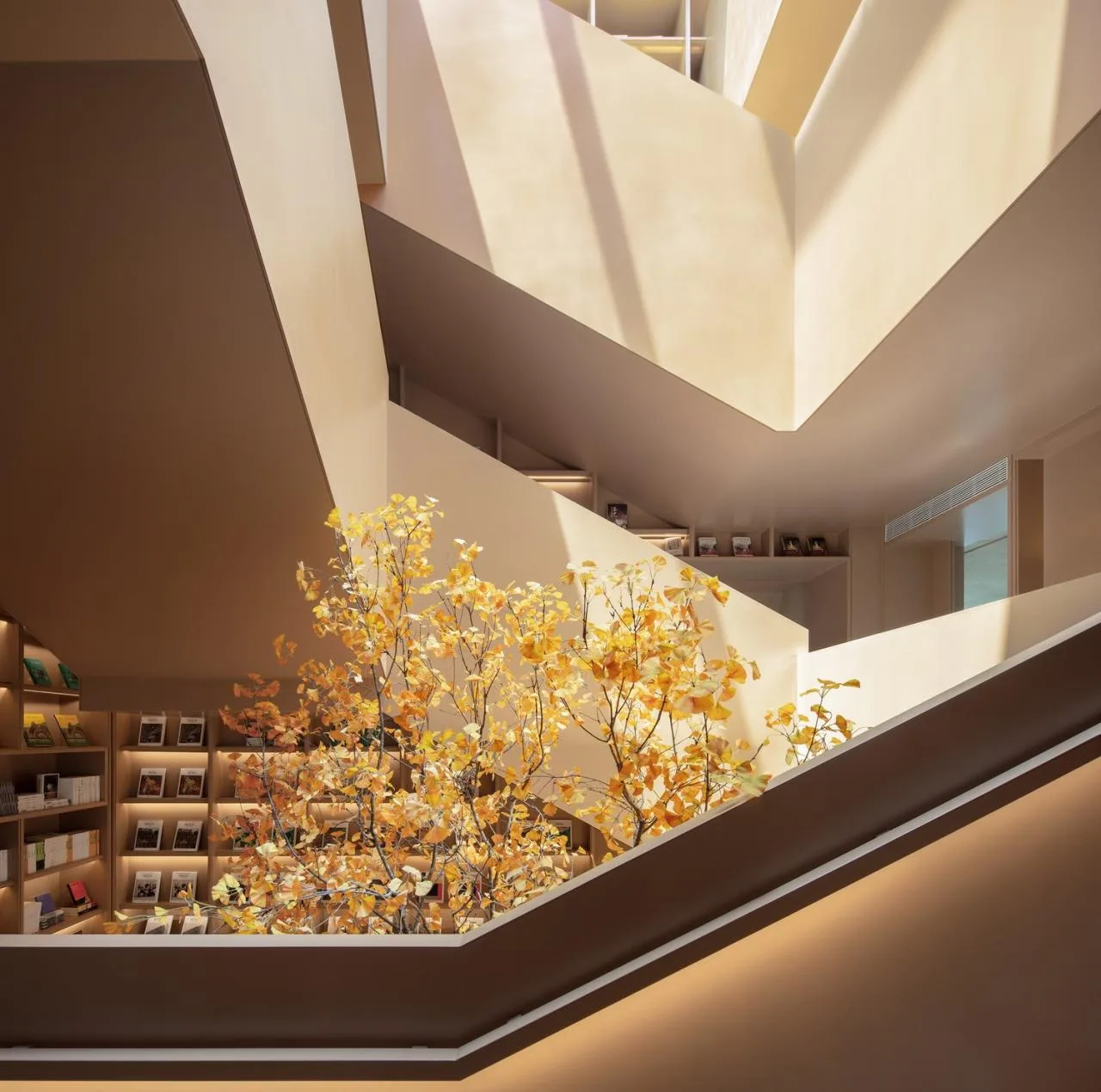
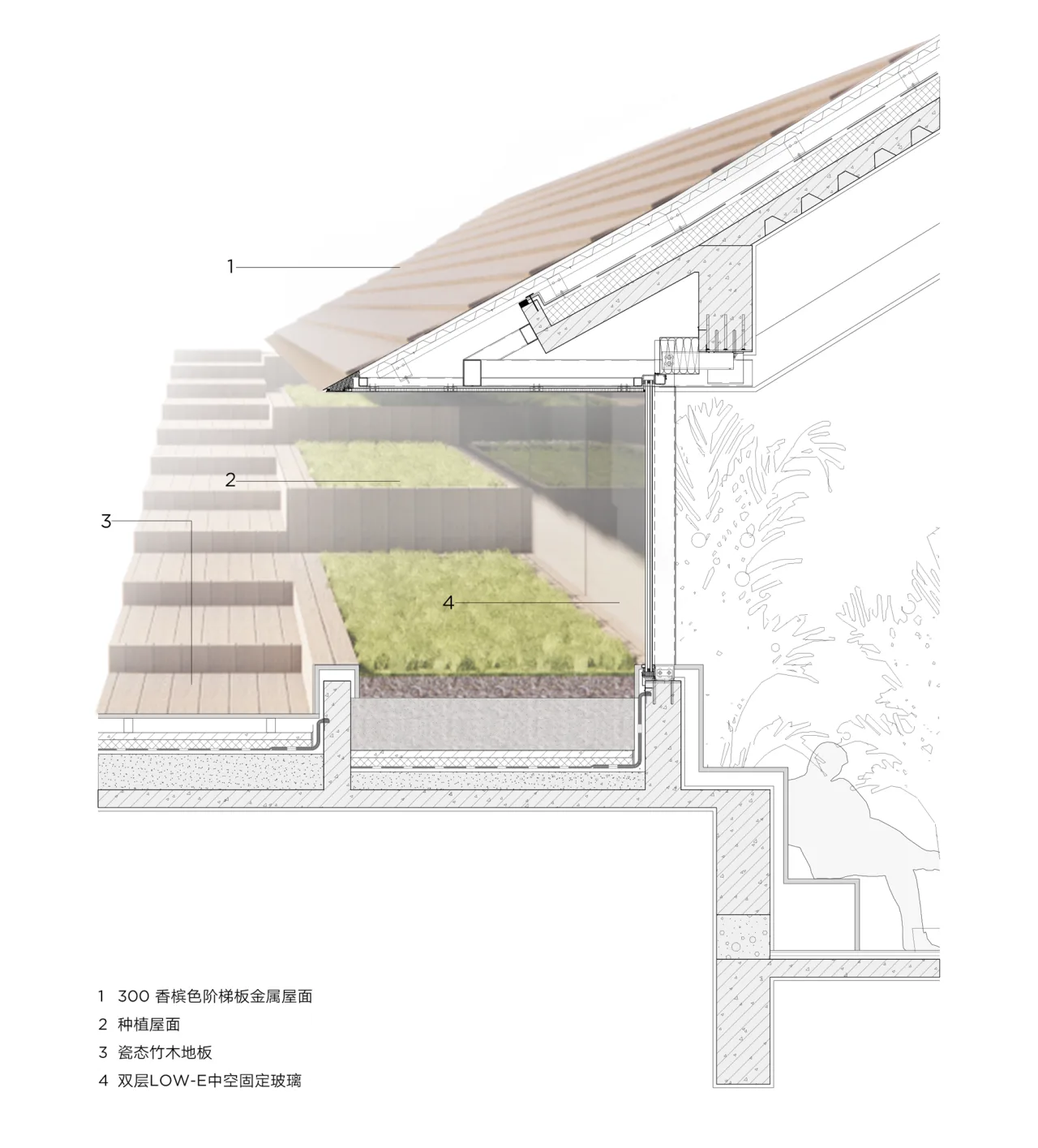
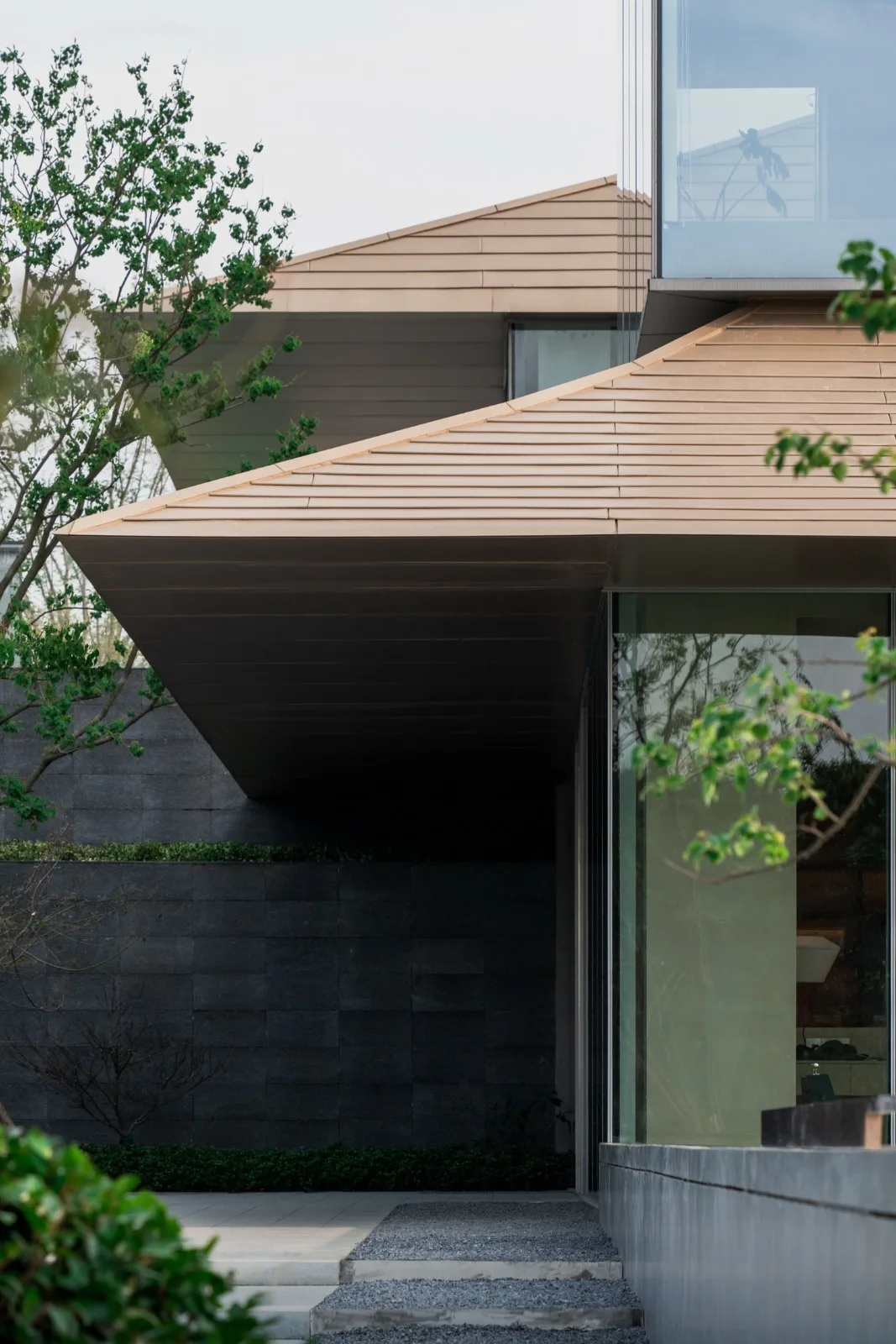
The roof uses a stepped metal panel system featuring clear vertical lines and a warm, glossy finish that reflects sunlight. The rooftop theater is outfitted with bamboo and wood flooring and greenery, seamlessly integrated with the metal roofing. The roof eaves continue with matching metal panels, creating a continuous and complete roof-ceiling connection. Lightweight, slender eaves combined with large hidden-frame ultra-white glass curtain walls evoke a deep, borderless feeling that merges the building into the surrounding wilderness and mountains.
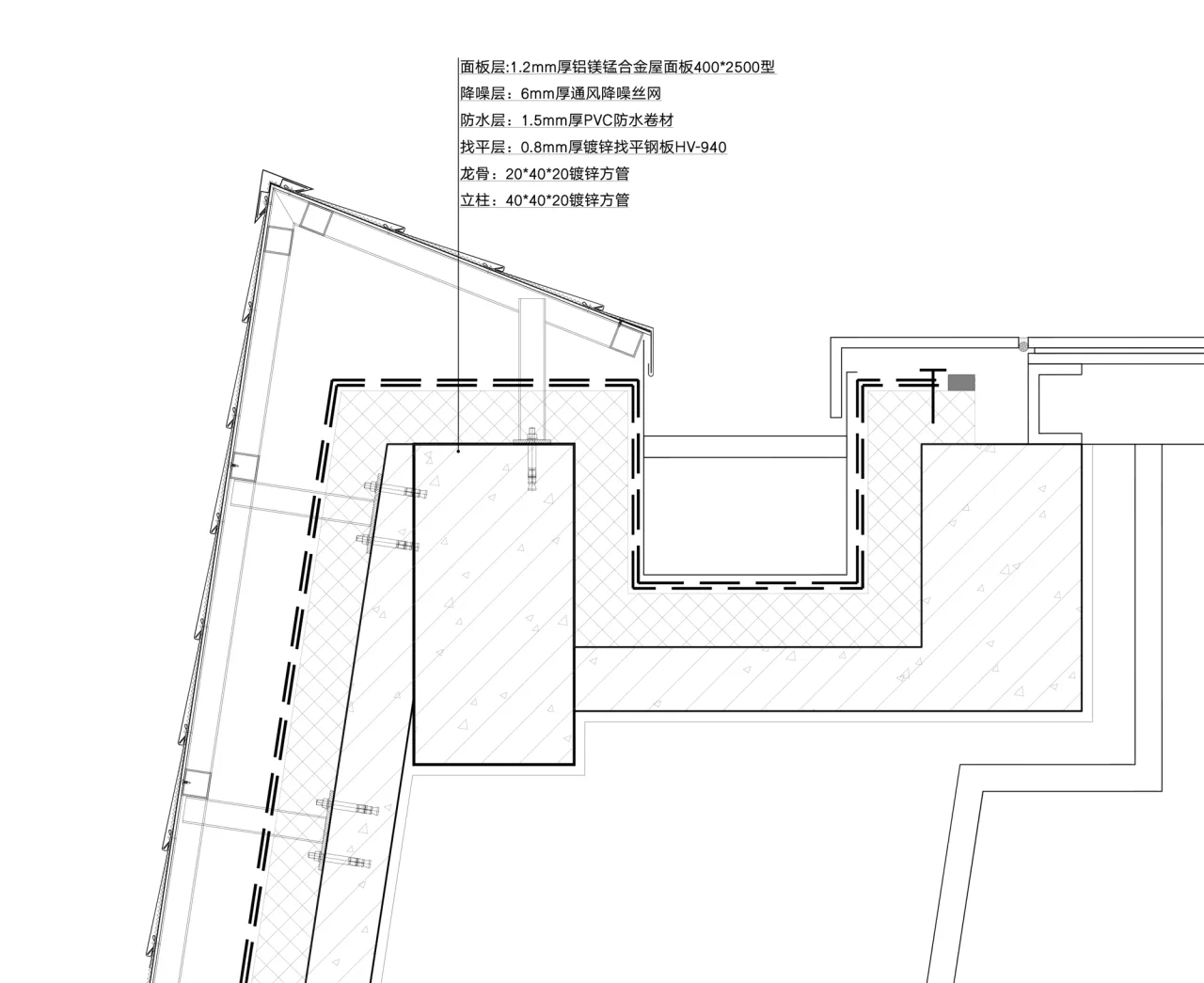
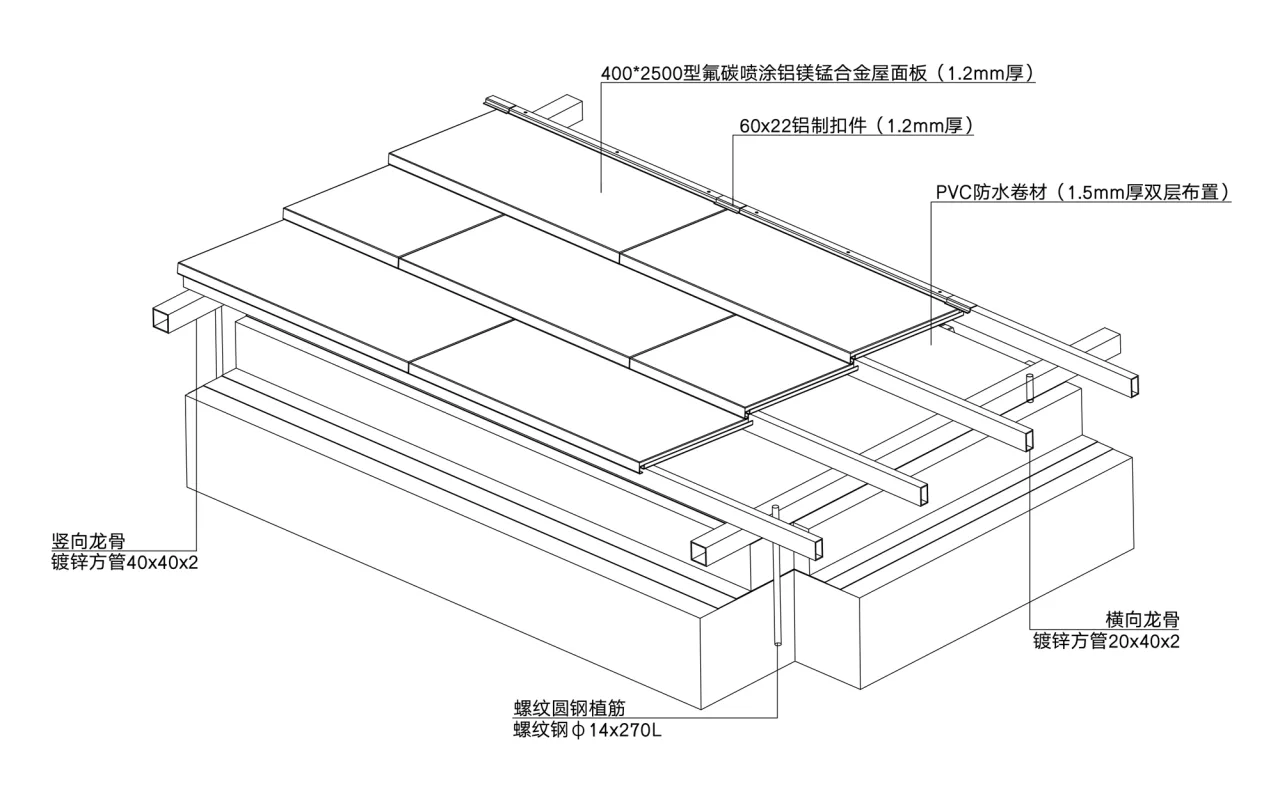
△ Metal roof panel construction
04 Conclusion
Set against a backdrop of lakes, mountains, and forests, the Boxinyu Community Center stands out with three continuous large roofs that envelop a soft, sunlit spatial core. This creates a cultural landscape deeply intertwined with the natural environment.
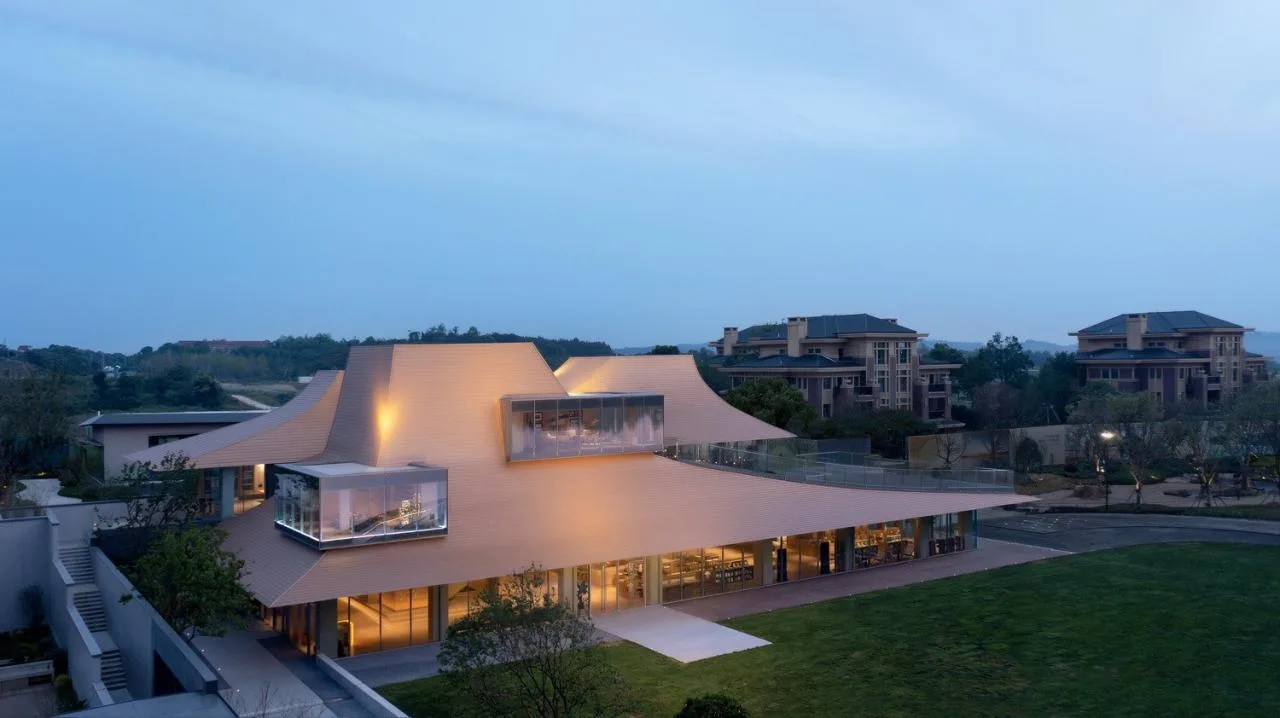
Light permeates refined, pure spaces and diverse, vibrant scenes, creating a graceful flow of atmosphere over time and rekindling poetic living. The project aspires to use public space as a vessel and community life as a medium to foster deeper emotional connections and spiritual richness—breathing with light and shadow, dancing with the sunset over the lake.
Project Drawings
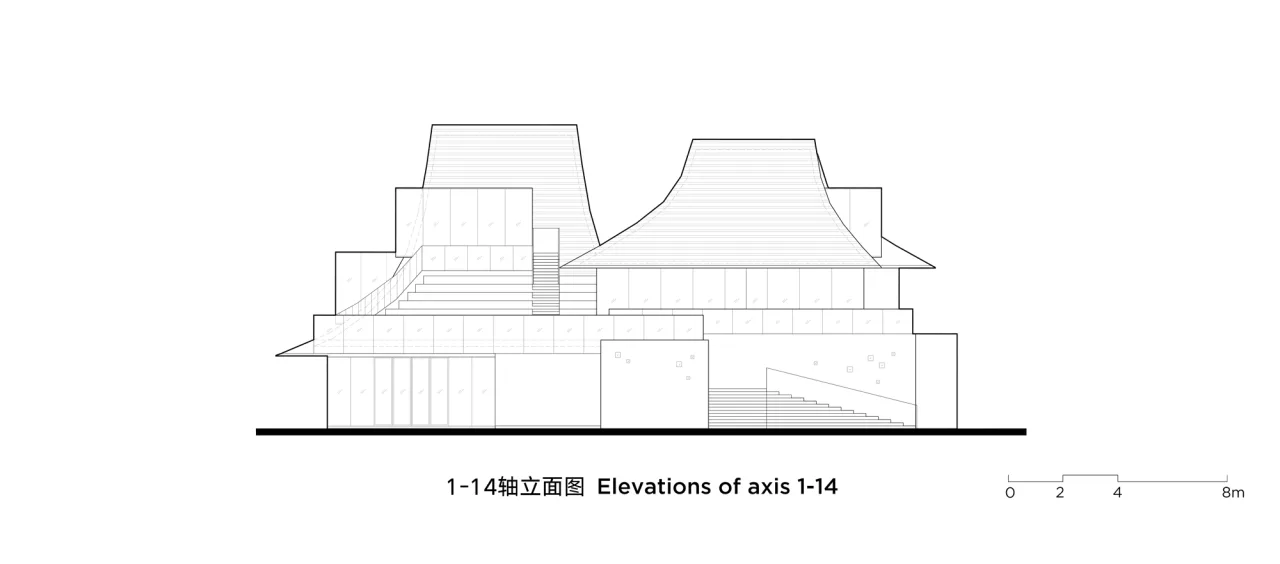
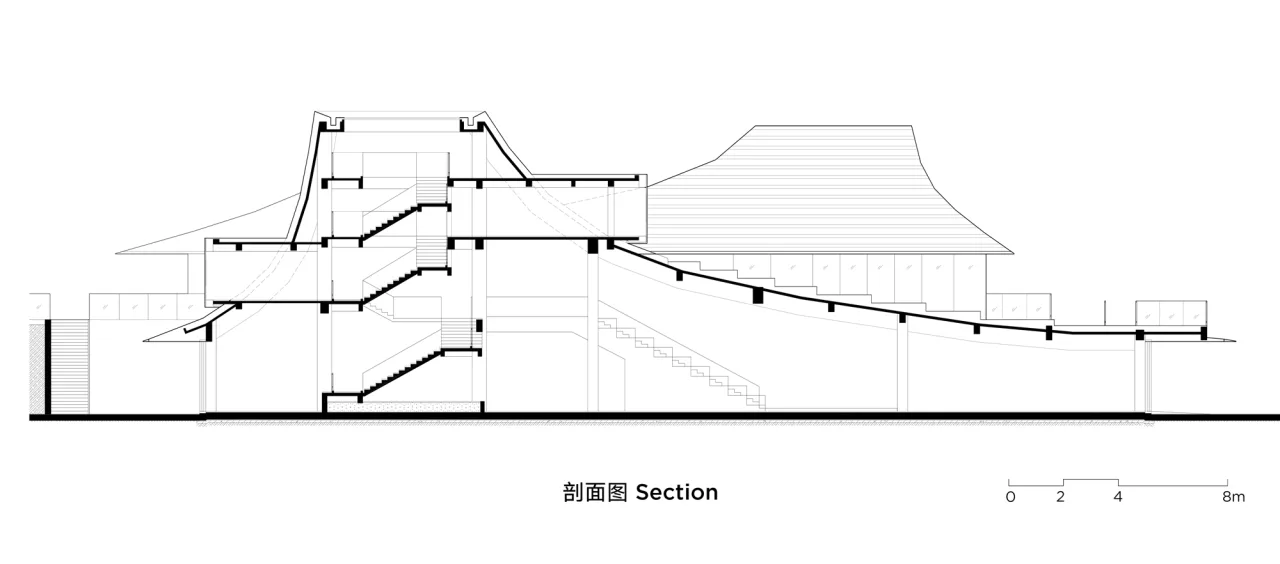
Project Information
Project Name: Boxinyu Community Neighborhood Center
Planning and Architectural Design: Line+ Architectural Firm
Lead Architect / Project Creator: Meng Fanhao
Project Leader: Su Kelun
Design Team: Yang Hanyue, Shen Rui
Investor: Hong’an Fushan Real Estate Co., Ltd.
Co-Builder: Blue Green Twin Cities Technology Group Co., Ltd.
Development Management Team: Hu Xiaofang, Huang Zhican, Tao Lin, Ru Zhe, Guo Cheng, Ni Yunbiao
Construction Drawing Cooperation Unit: Wuhan Benchmark Fangzhong Architectural Design Co., Ltd.
Interior Design: LSD InteriorDesign
Landscape Design: Shanghai Landau Landscape Planning and Design Co., Ltd.
Curtain Wall Design: Hangzhou Zhongchuang Joint Curtain Wall Design and Research Institute
Lighting Design: Hangzhou Sunlux Lighting Design Co., Ltd.
Project Location: Hong’an County, Huanggang, Hubei Province
Building Area: 2,284 square meters
Design Period: January 2022 – May 2022
Construction Period: June 2022 – June 2023
Structure: Reinforced concrete structure + steel structure
Materials: Aluminum magnesium manganese alloy plate, honeycomb aluminum plate, aluminum veneer, stainless steel plate, bamboo wood board, plain concrete coating
Photography: Summer Solstice line+, Ten Views – Zhao Hongfei















Must log in before commenting!
Sign Up