
Project Background
Dongcun is situated at Shangqing Temple in Chongqing, atop the Jialing River Bridge. It was once the former residence of Xianying. The site features a striking elevation difference characteristic of Chongqing’s unique terrain. The original building complex, owned by the Chongqing Light Industry Design Institute, comprises four buildings arranged according to the mountain’s contours. One building forms a U-shape, flanked by three others positioned above and below, with the U’s opening facing the expansive Jialing River. Beneath the complex lies a preserved air raid shelter from the Anti-Japanese War period, connecting Jialing River Riverside Road at the mountain’s base to Dongcun at the summit.
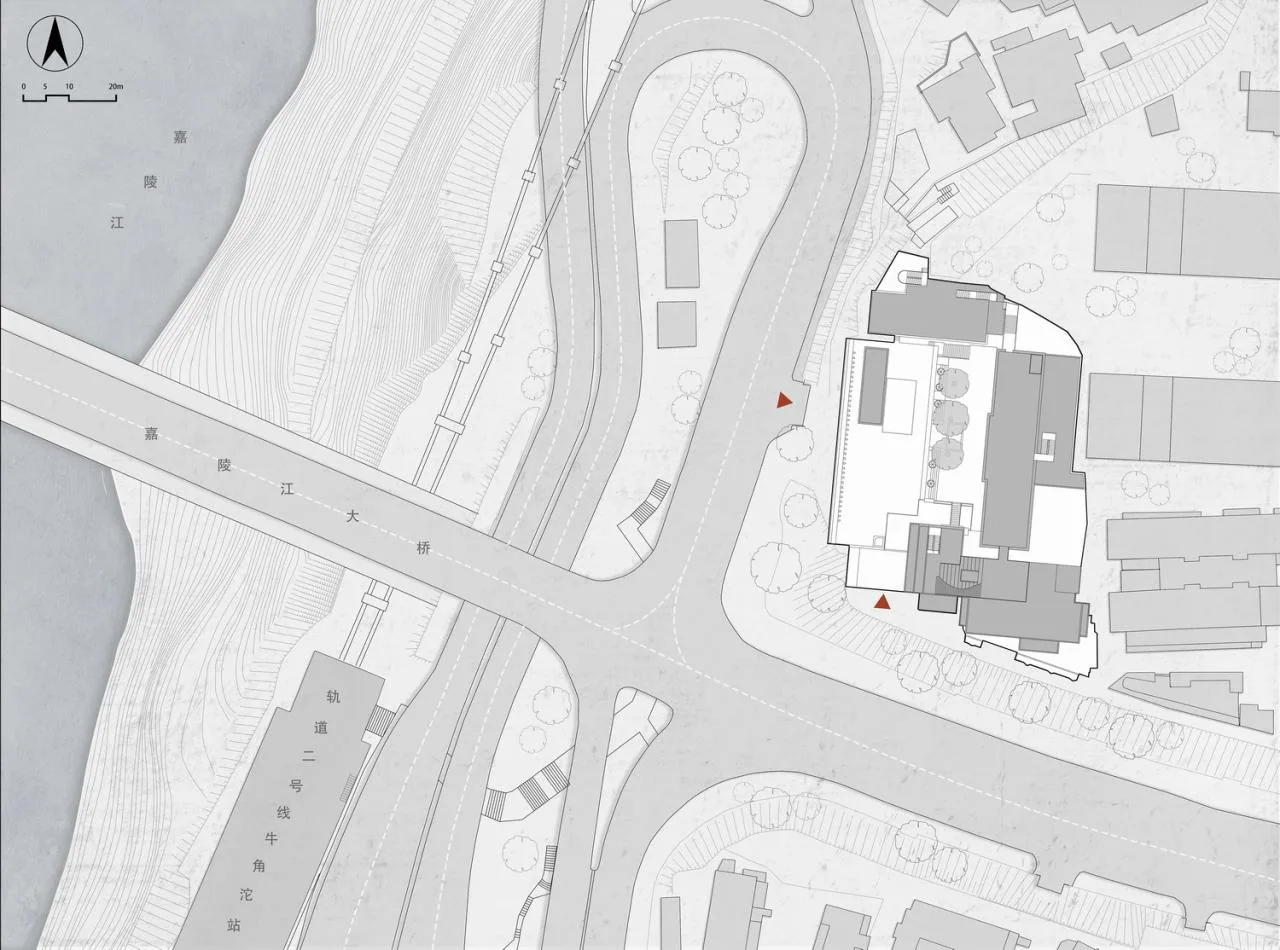
△ Overall project plan © No building seen
The site occupies a prominent location resembling a bridgehead, offering sweeping river views. However, poor transportation access has made it a physical “house elephant.” Despite its large presence in the cityscape, it struggles to capture the attention of passersby, hanging like a solitary cloud over the busy bridgehead. This unique characteristic inspired the architect’s initial concept: the Sky City, a realm beyond daily life that overlooks the ordinary bustle below.
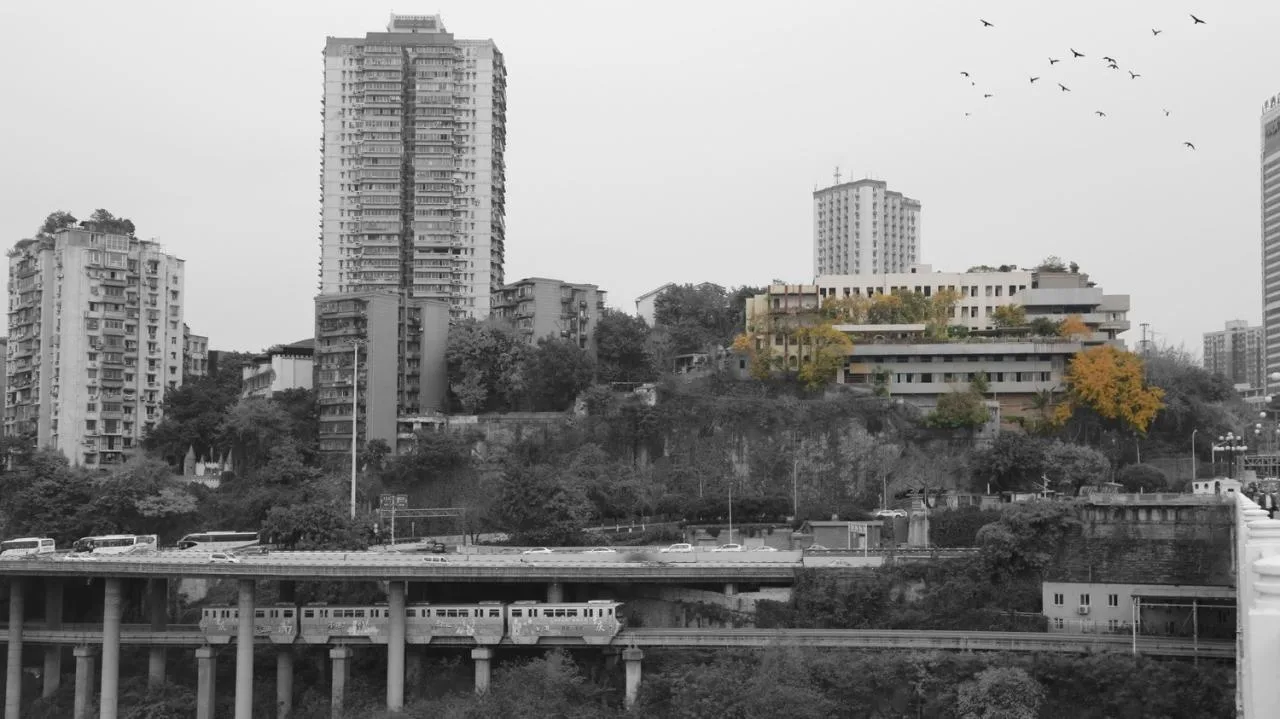
Before the project renovation © No building seen
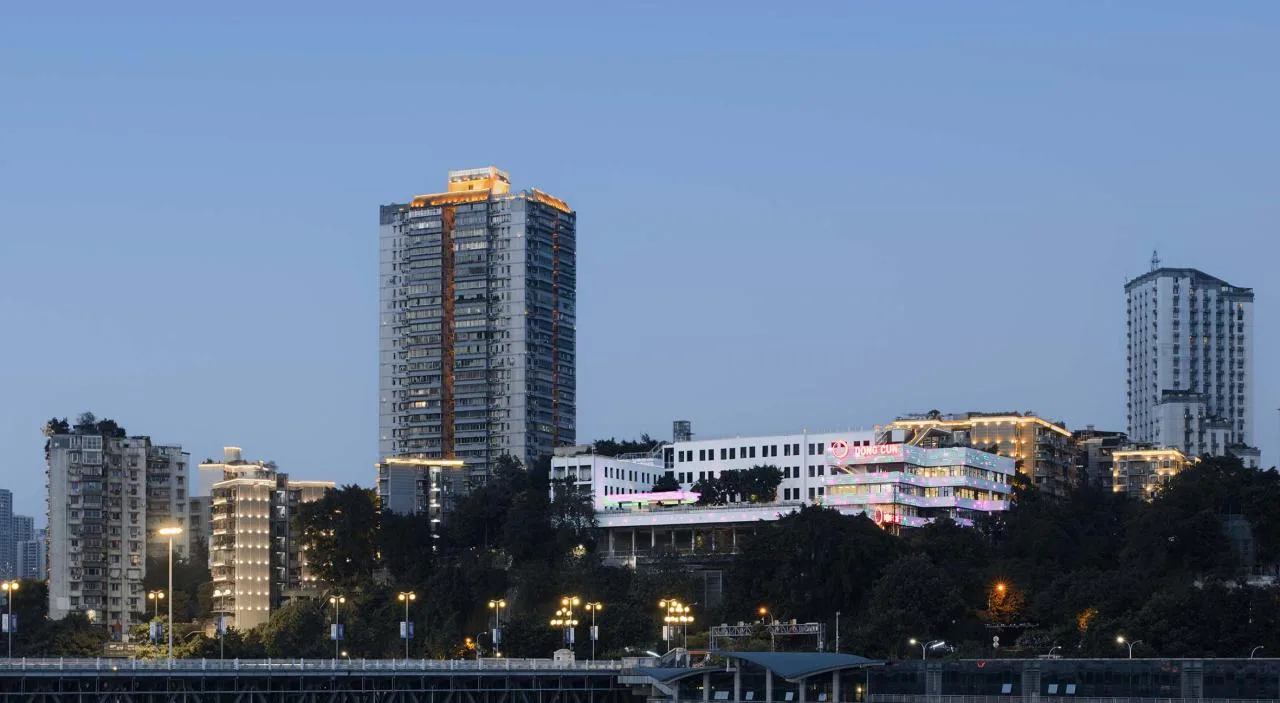
△ After project renovation © No building seen
Project Concept
The goal is to fuse art with historical exhibitions, enabling visitors to experience a journey through Chongqing’s past, present, and future via underground pathways (past) and above-ground systems (present and future). Additionally, the Sky City concept has been woven into the commercial layout and design, offering visitors a chance to escape the city’s pressures and reconnect with themselves.
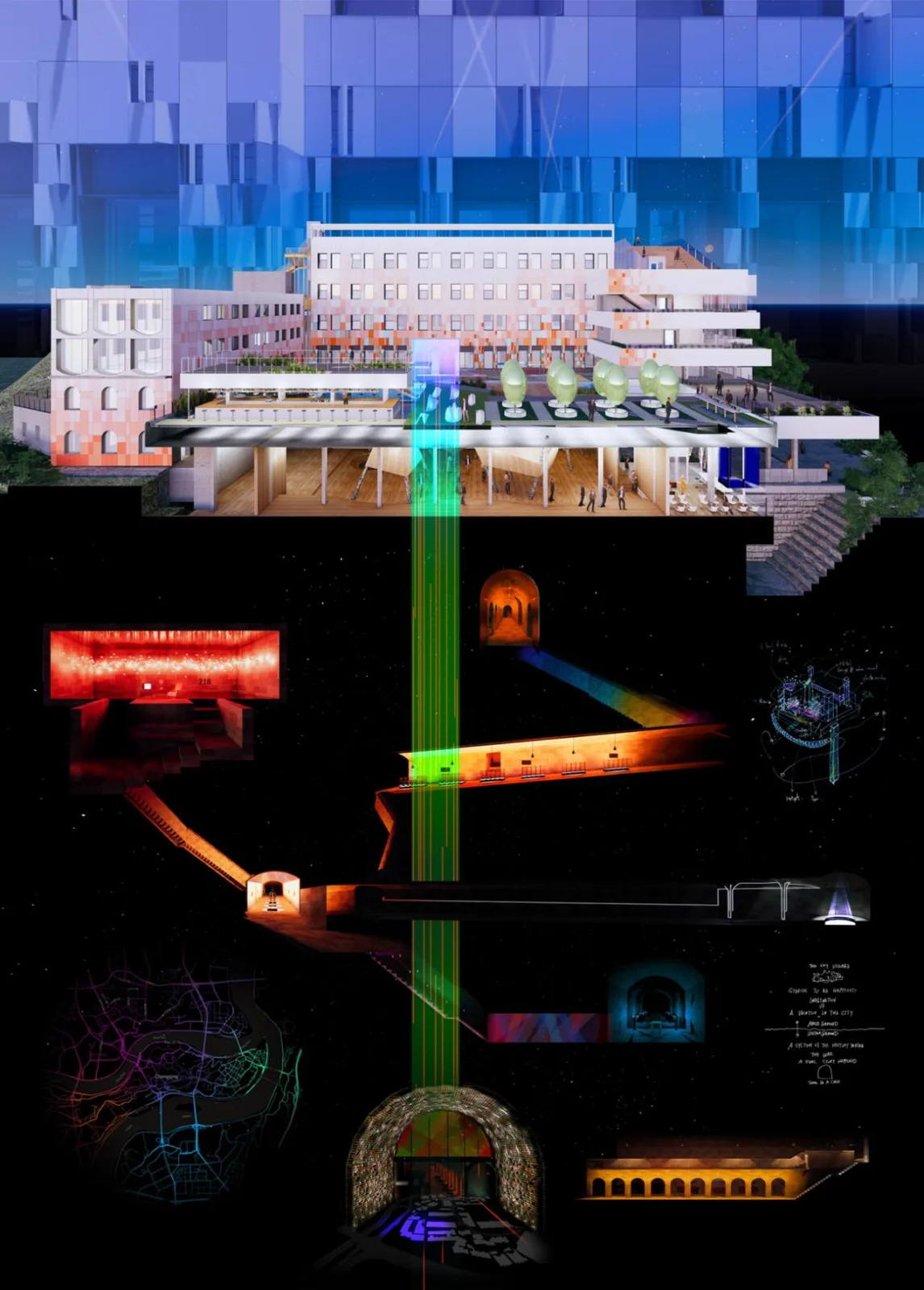
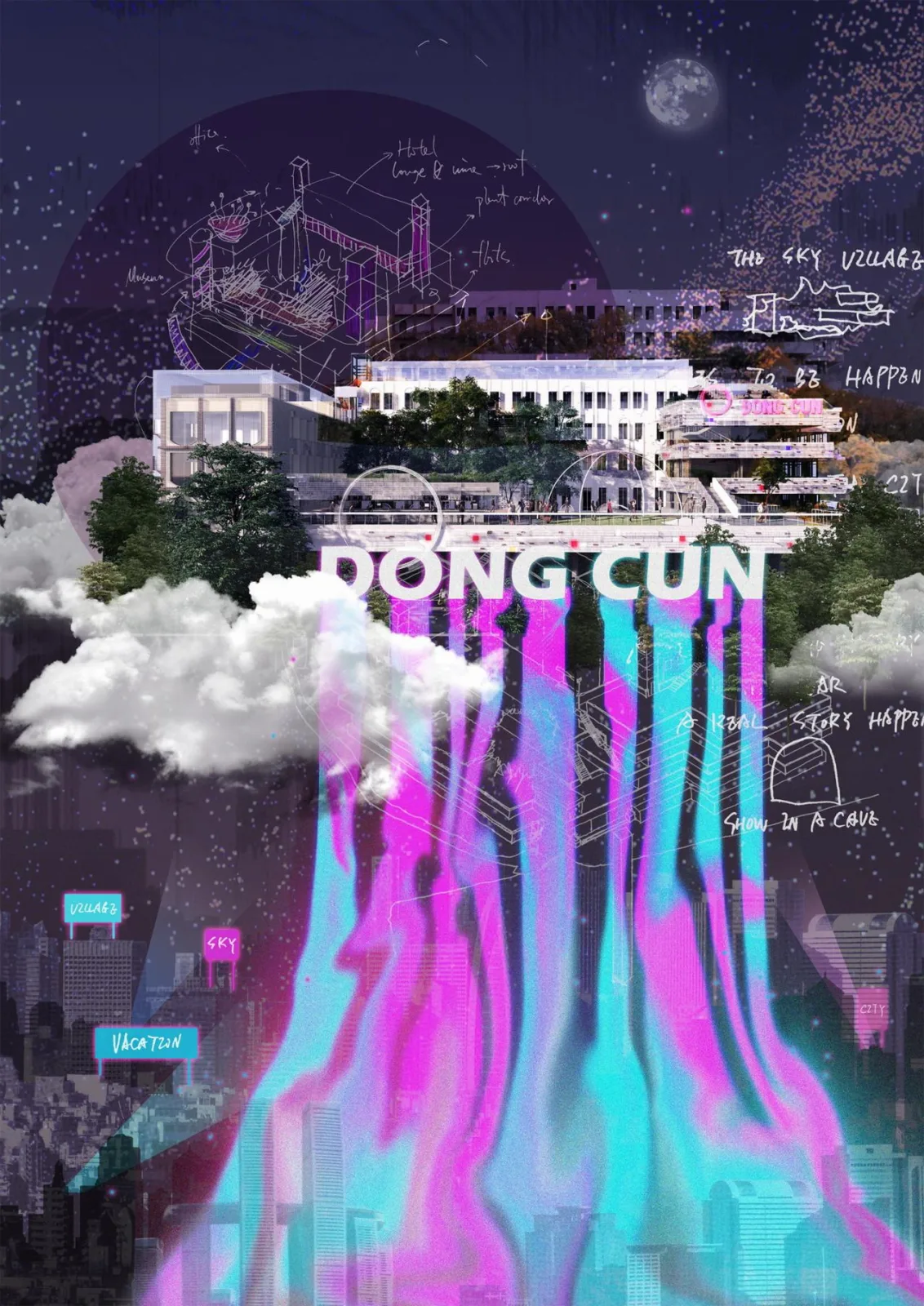
△ Dongcun Conceptual Design Poster © No buildings have been seen; No Zhuwu Yue seen
Placemaking
Line Renovation
The renovation began by reorganizing several routes leading to the sky-viewing platform, introducing two primary access paths. The first follows the existing trail, allowing visitors to ascend slowly through the lush trees of Dongcun via the original hiking path.
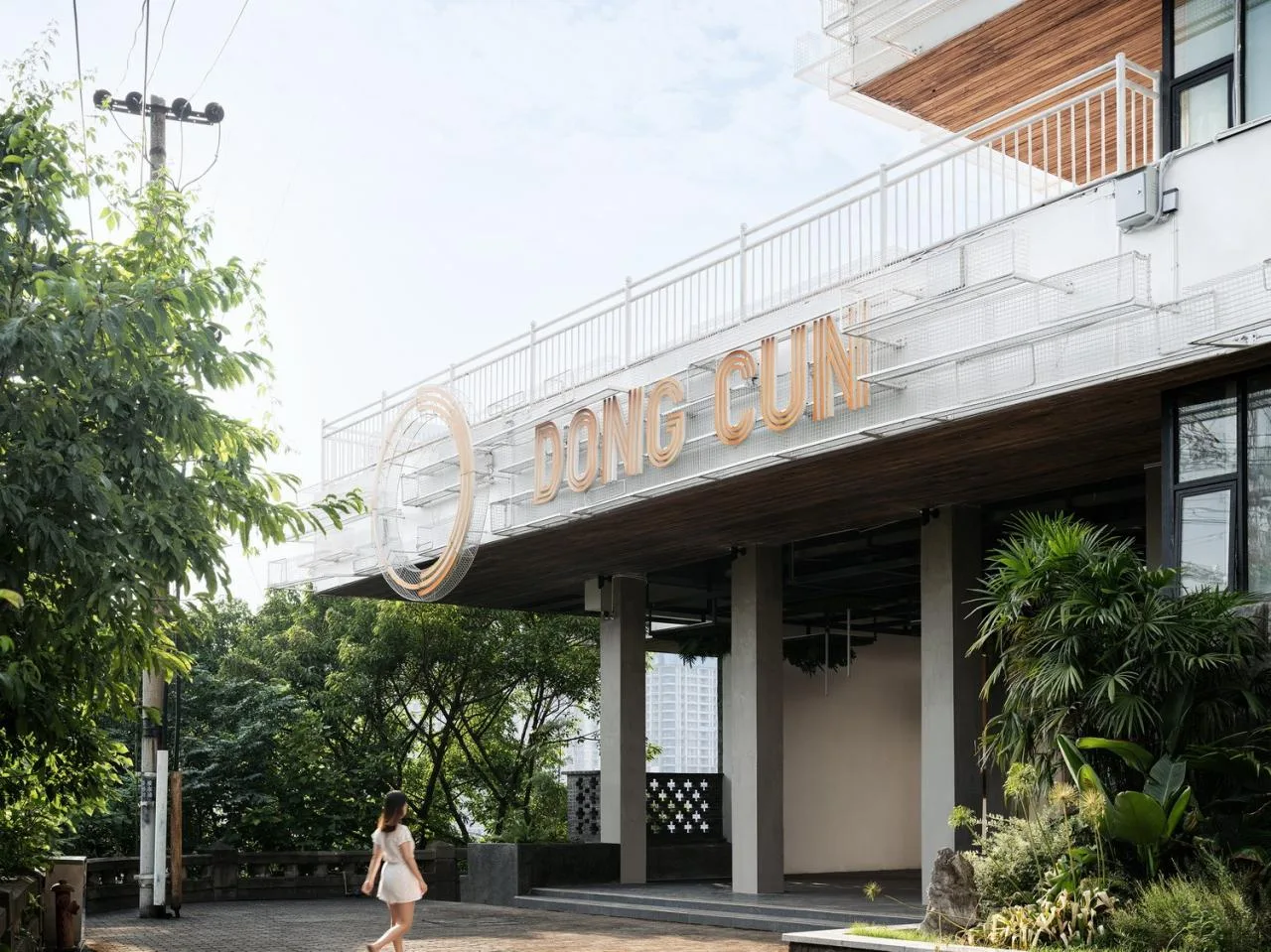
△ Yan Yu Architectural Space Photography
The second unique path repurposes the existing air raid shelters as entrances, with two vertical elevators installed inside the mountain to connect the road below to the square above. This solution not only addresses transportation challenges but also creates a symbolic journey from the ground to the sky, from history to the future.
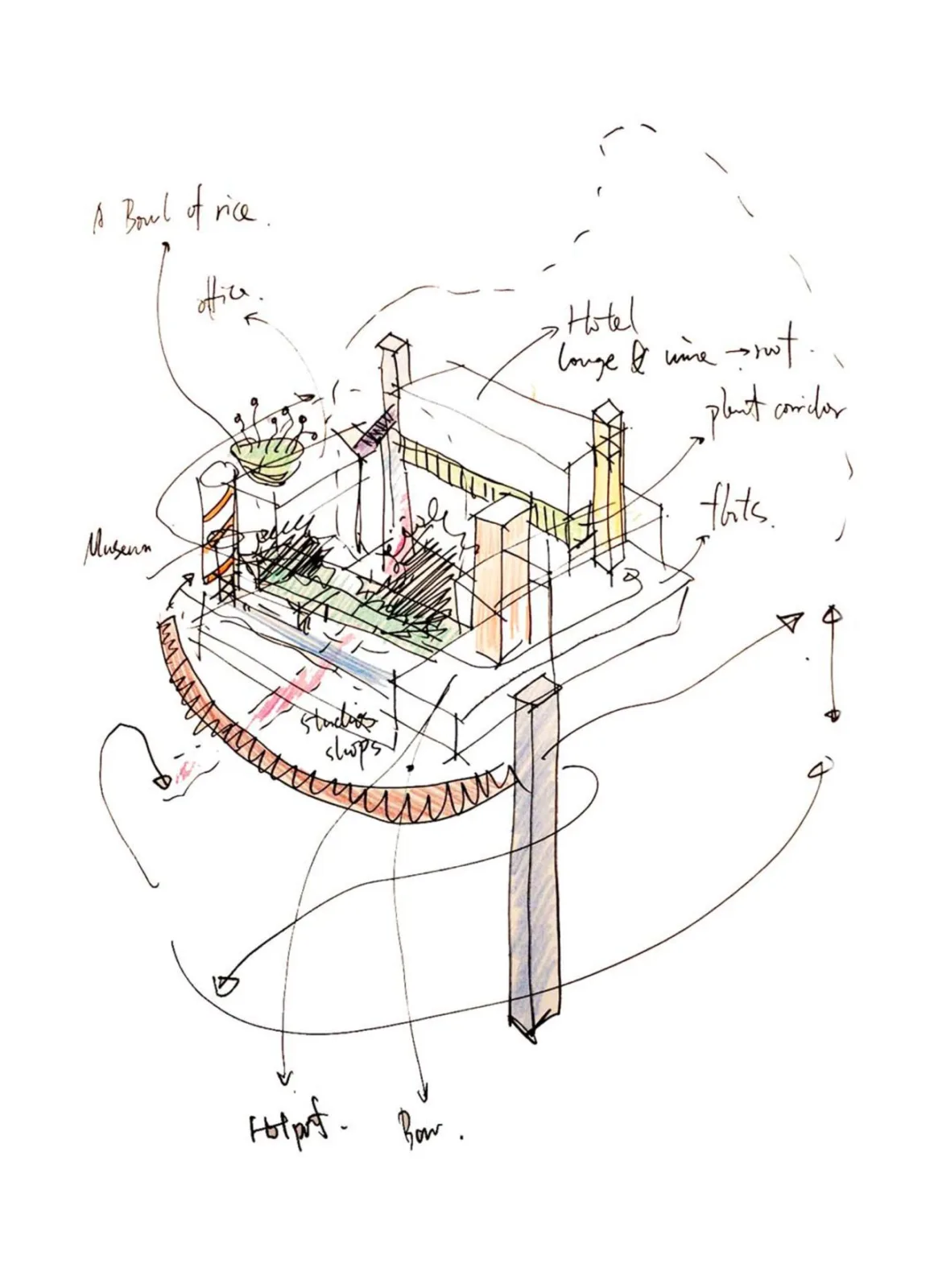
△ Design sketch © No building seen
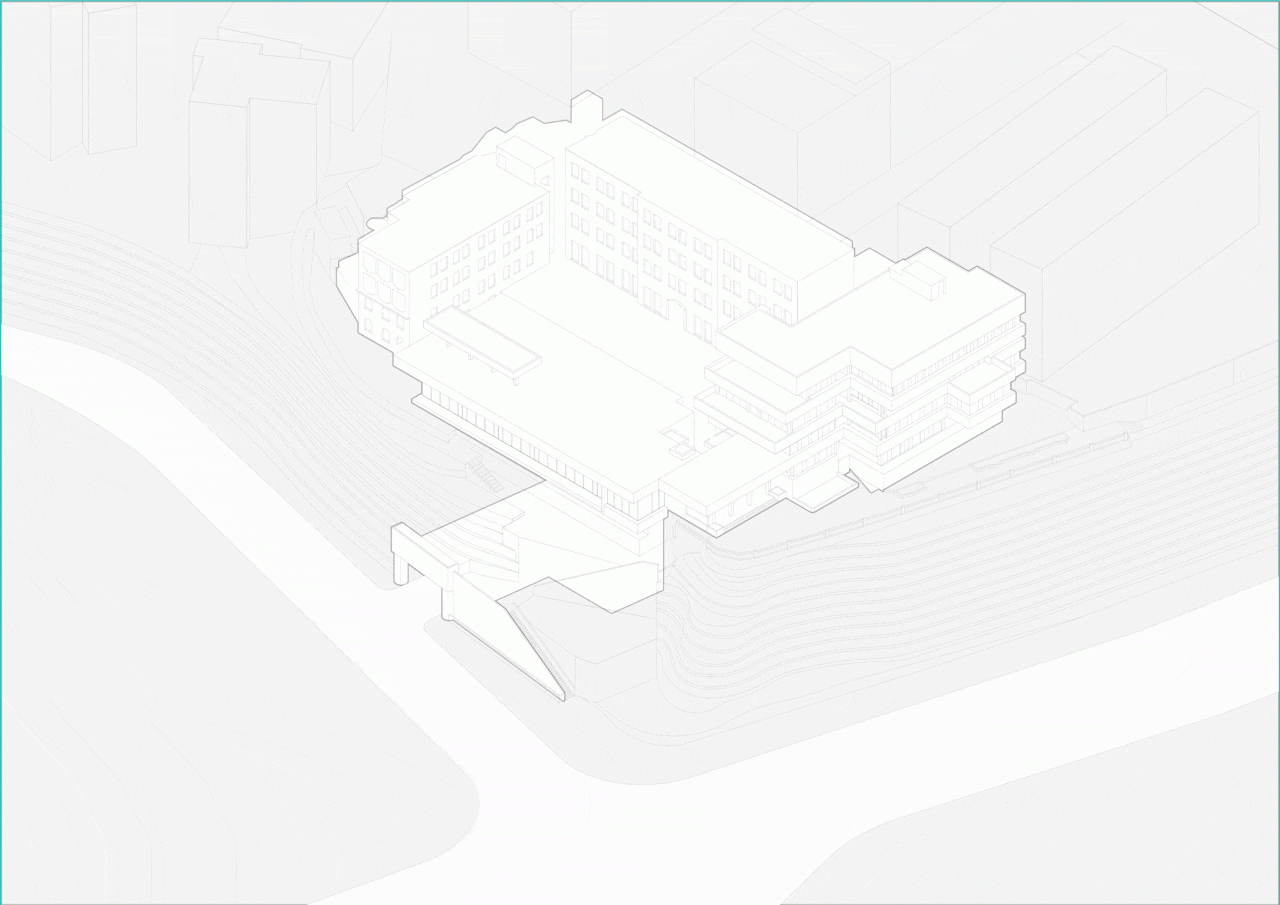
△ Design Generation © No building seen
On the mountain, the design team reimagined the flow and viewpoints of the settlement. New aerial corridors and staircases connect all rooftop platforms, expanding the river-viewing area from the central U-shaped Riverside Square to the rooftops of the entire complex. This creates a continuous route linking upper and lower levels, maximizing use of the original buildings’ river views.
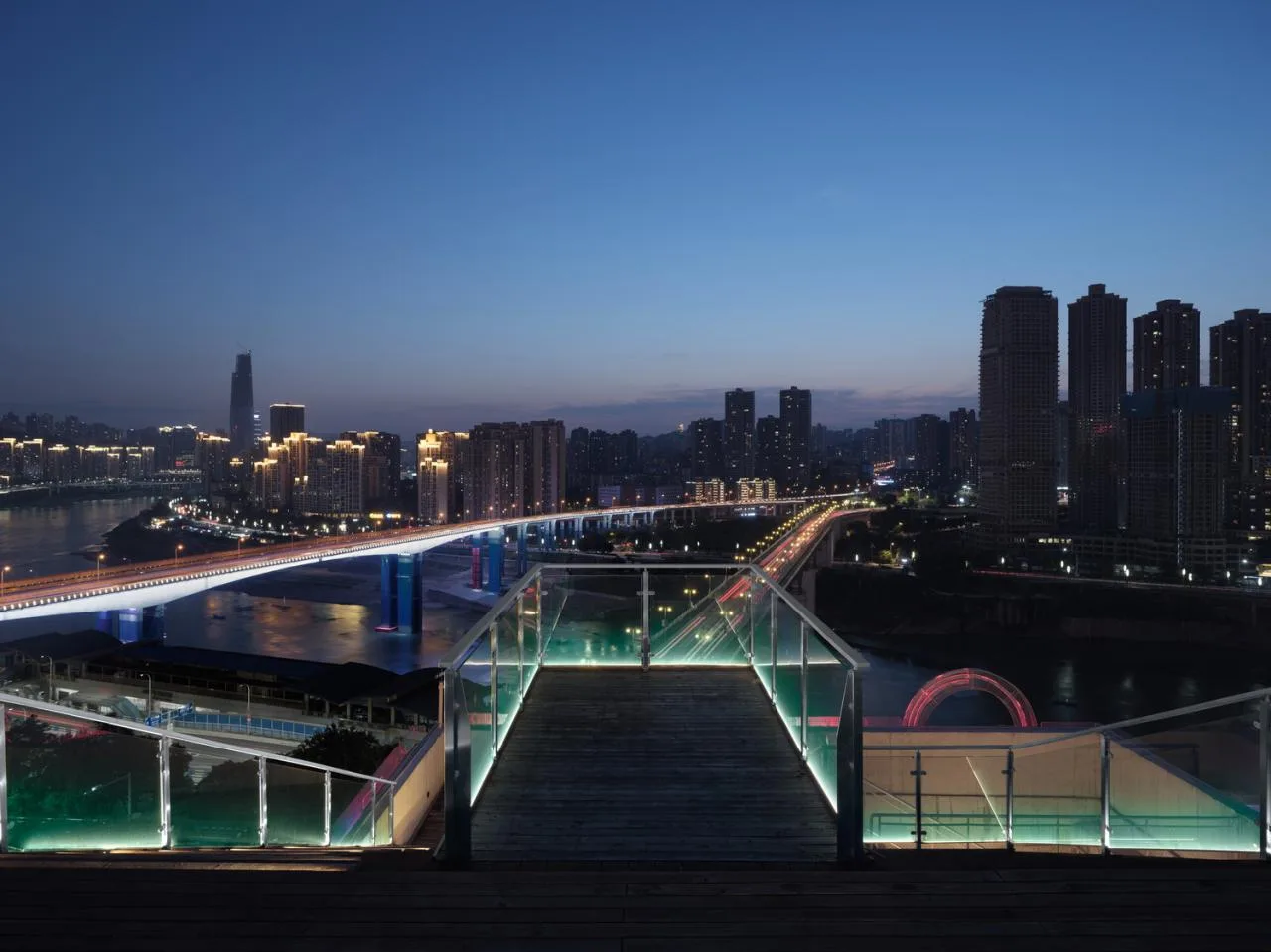
△ Observation Deck – © Yan Yu Architectural Space Photography
Structural Modification
While the exterior offers open river views, the original building interiors feel enclosed and dim due to load-bearing wall construction. This limited structural system restricted spatial openness and natural light inside.
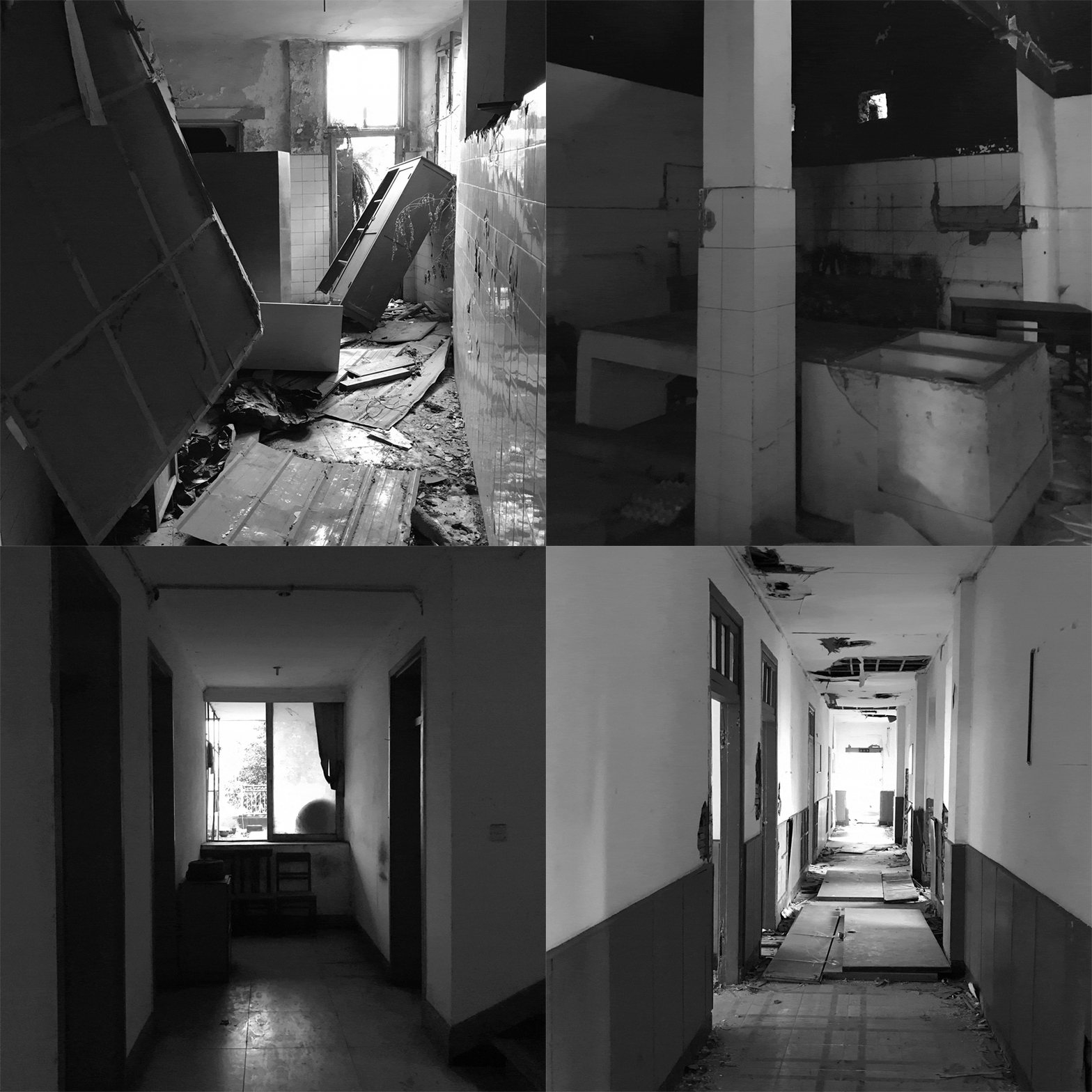
△ Original appearance before structural renovation © No building seen
To accommodate future commercial functions, a comprehensive structural transformation involving “beam stealing and pillar replacement” was essential. This approach replaced the closed load-bearing wall system with a segmented, transparent modern frame structure. Selective demolition and reorganization of riverside walls aimed to maximize internal views of the river.
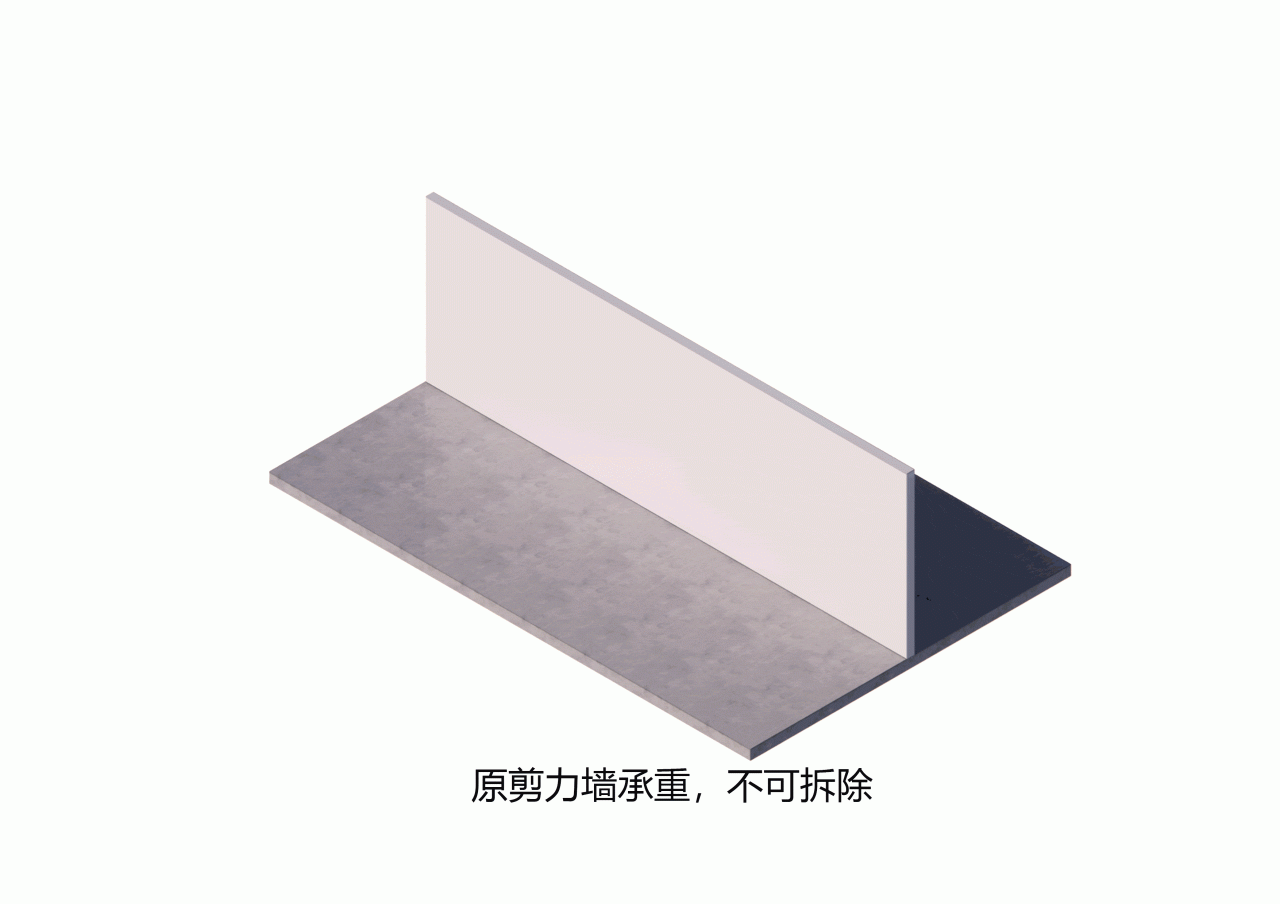
△ Structure replacement GIF © No building seen
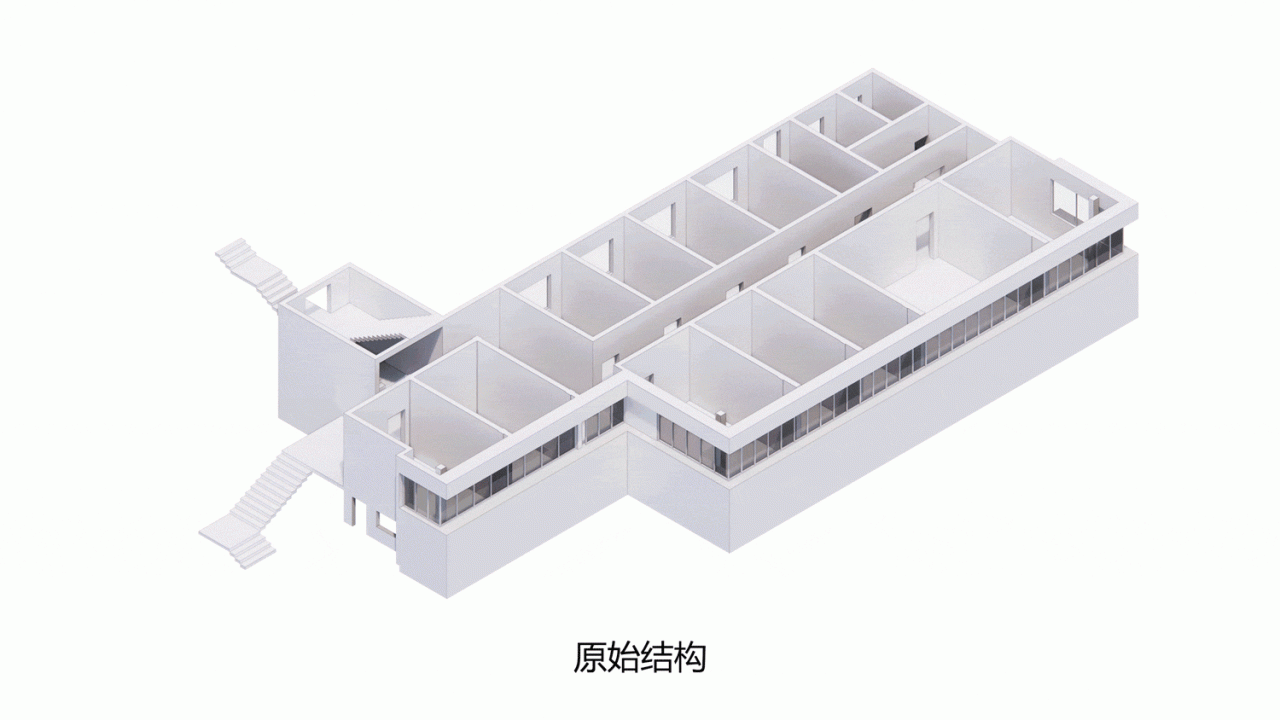
GIF of Structural Renovation of Building 1 © No building seen
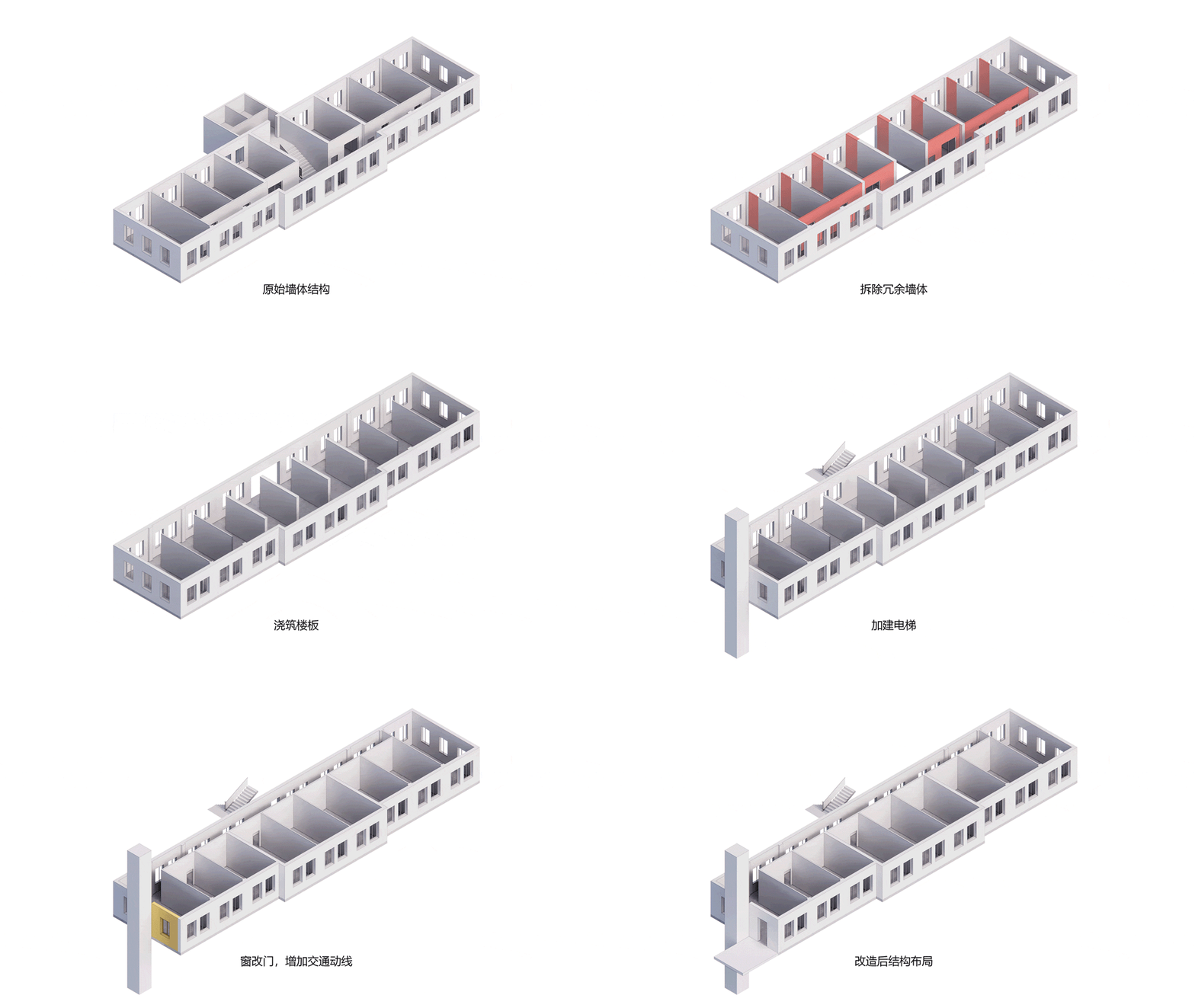
GIF of Structural Renovation of Building 2 © No building seen
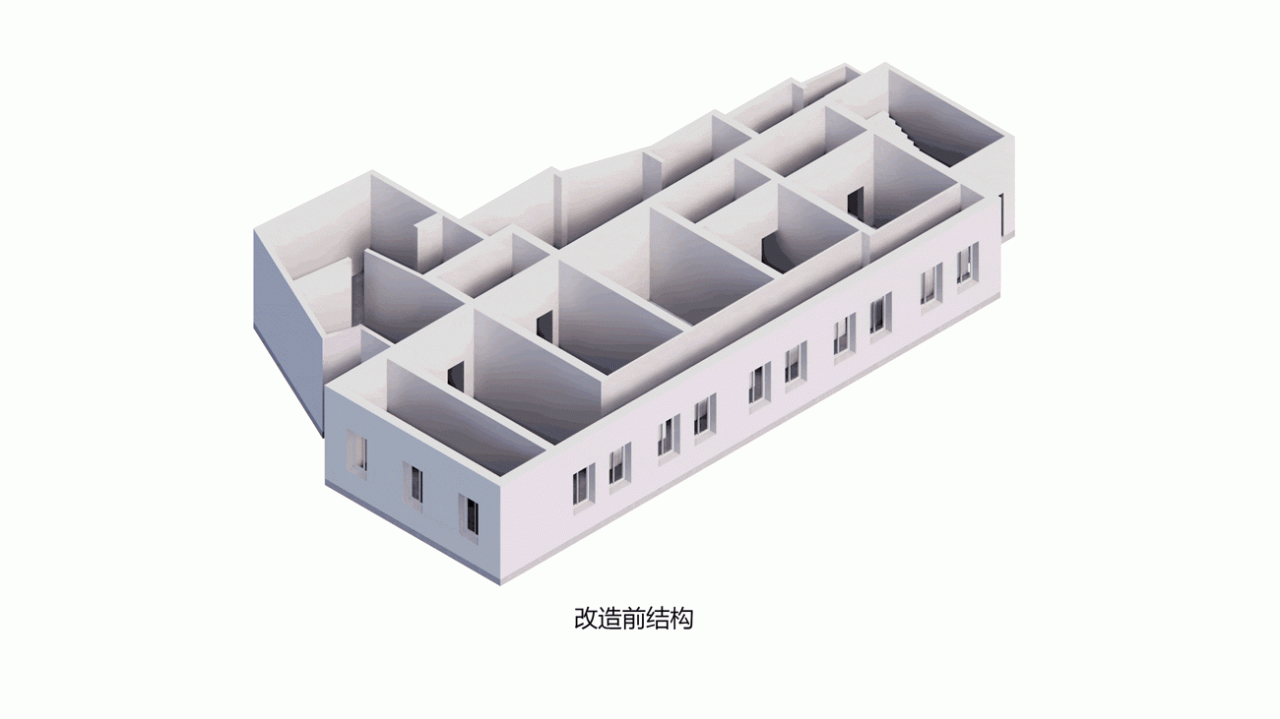
GIF of Structural Renovation of Building 3 © No building seen
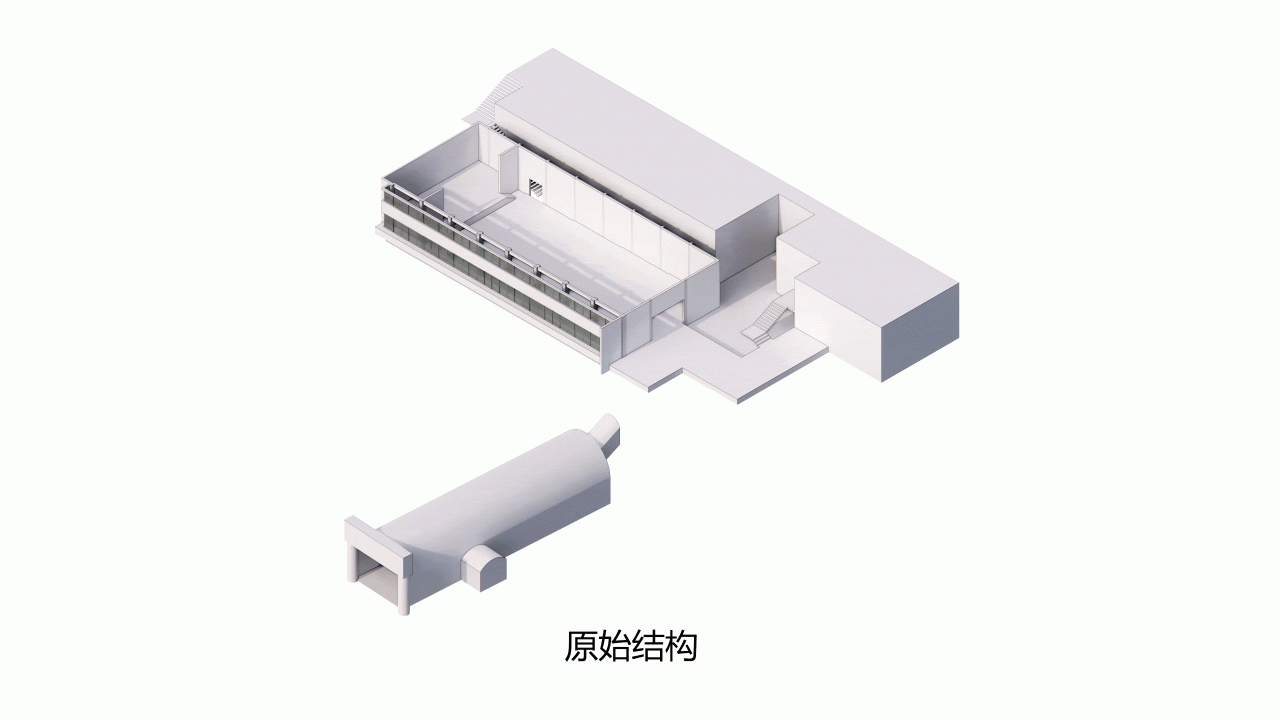
GIF of Structural Renovation of Building 4 © No building seen
Facade Renovation
What if a massive structure were placed at the bustling Jialing Bridge? Perhaps it should resemble nothing more than a cloud.
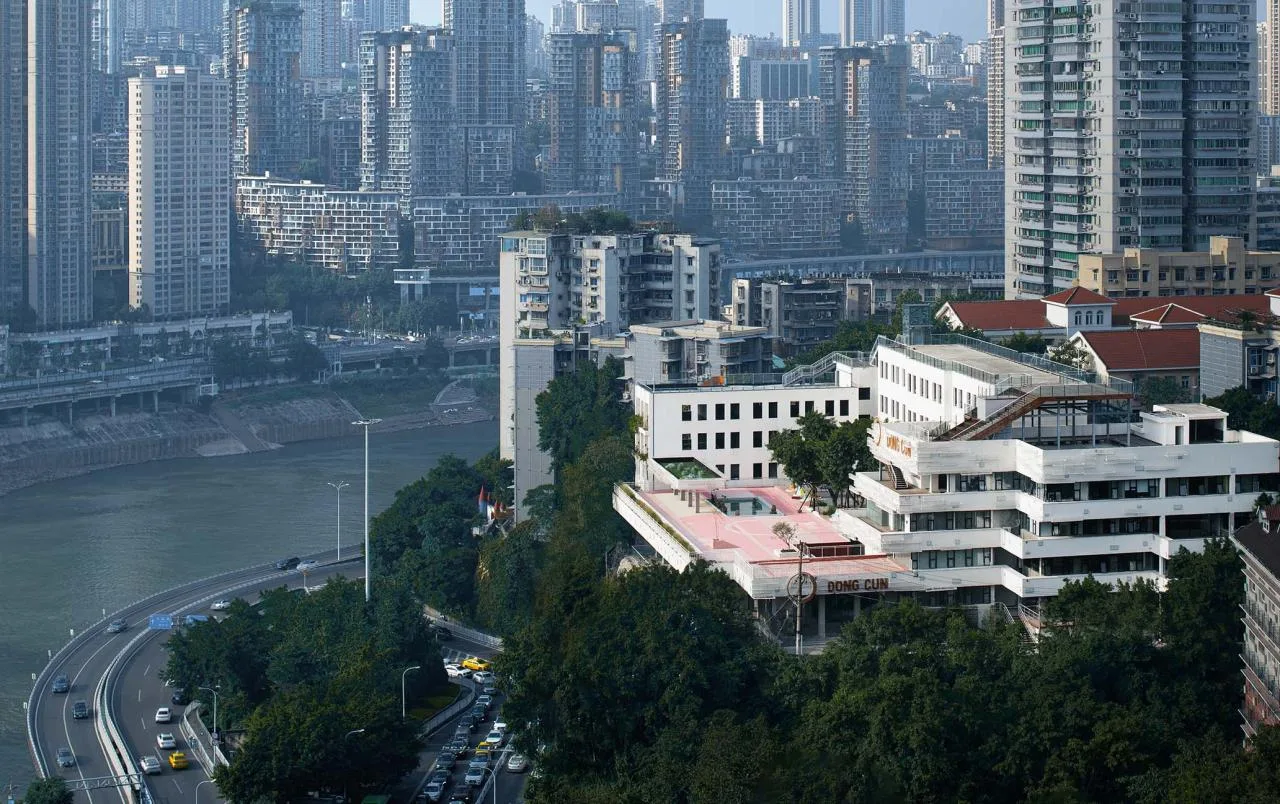
△ Building facade – © Yan Yu Architectural Space Photography
Rather than striving for uniqueness or to compete with the environment, the facade embraces a “disappearing” strategy. Hundreds of white metal mesh cages hang variably across the facade, softening the building’s edges and blending it into the sky. Only when visitors approach closely do the intricately detailed contemporary installations awaken their interest.
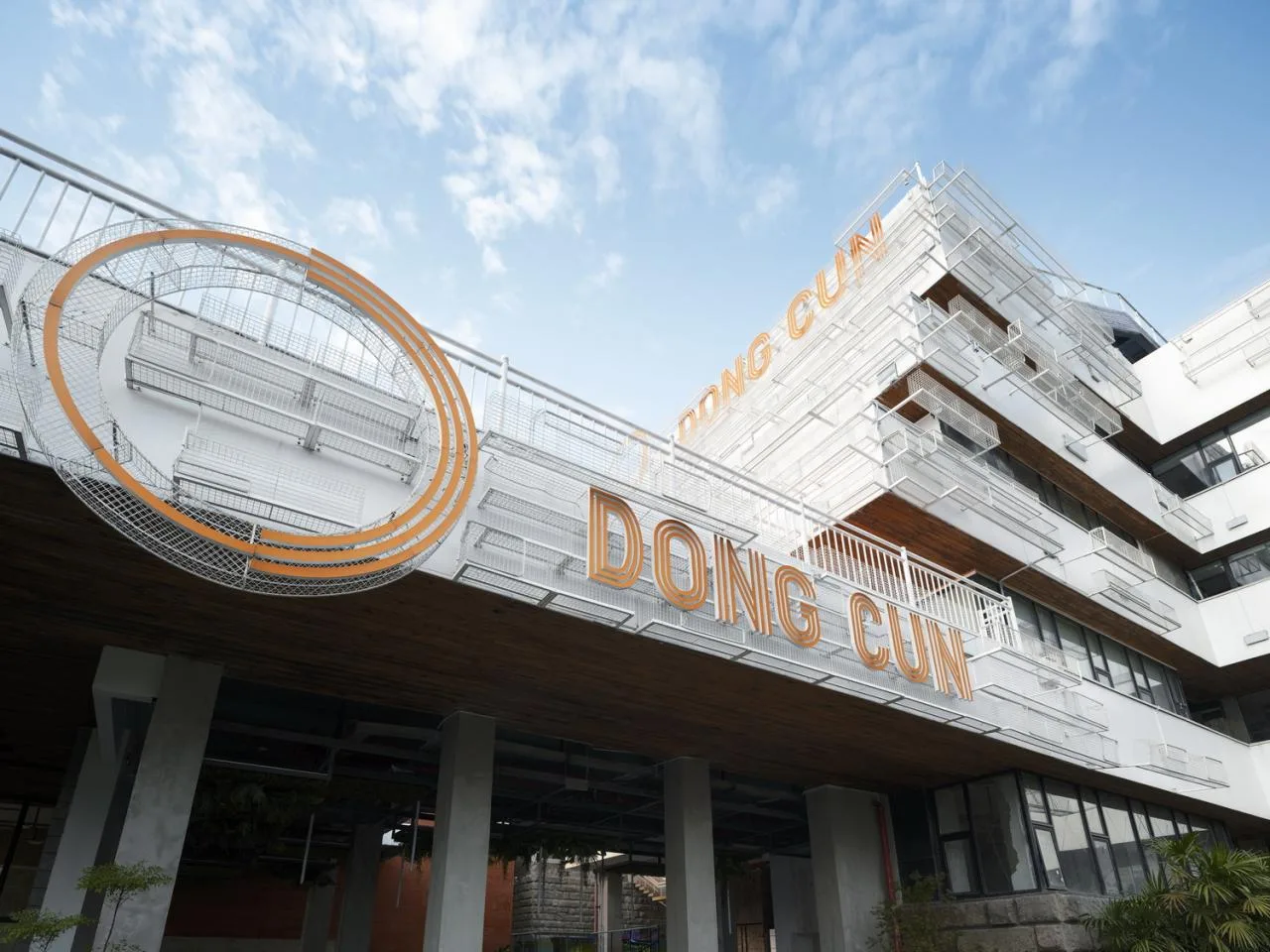
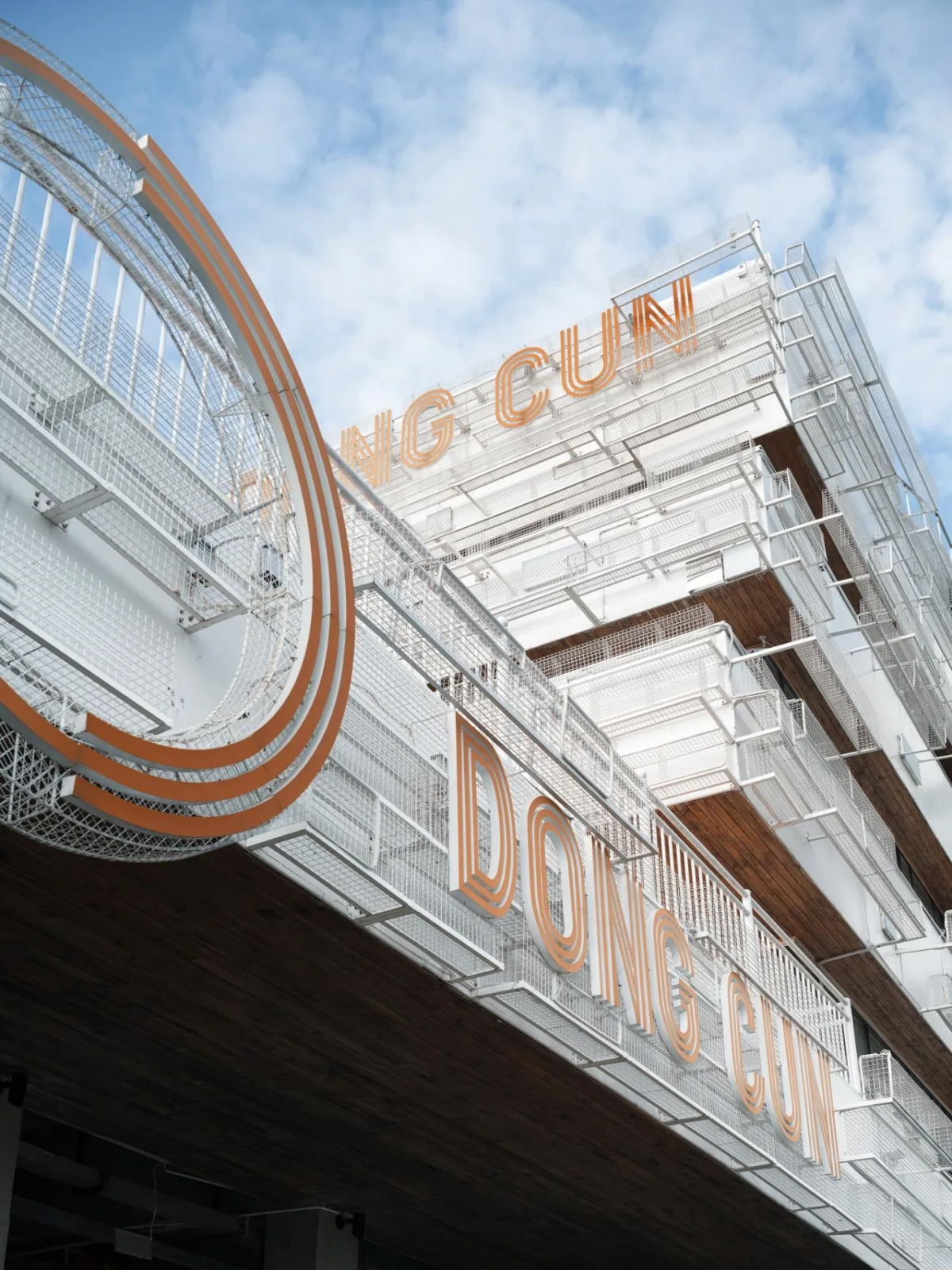
△ Building facade – © Yan Yu Architectural Space Photography
The design team discarded traditional facade techniques like panels and coatings, opting for a low-tech intervention. To prevent corrosion, the metal mesh cages are coated with sprayed steel wire rather than stainless steel, significantly reducing costs.
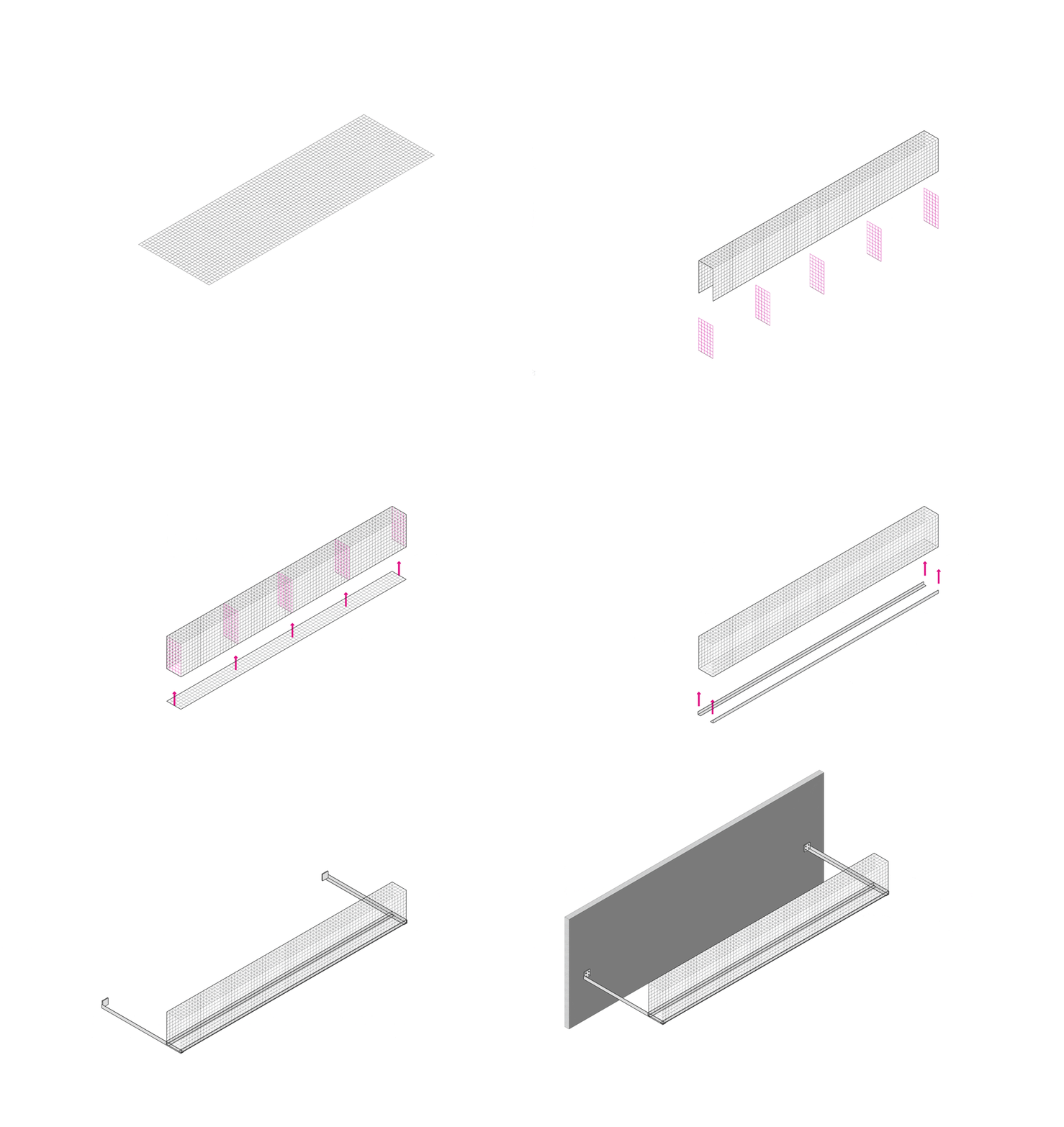
△ Facade cage installation demonstration GIF – © No building seen
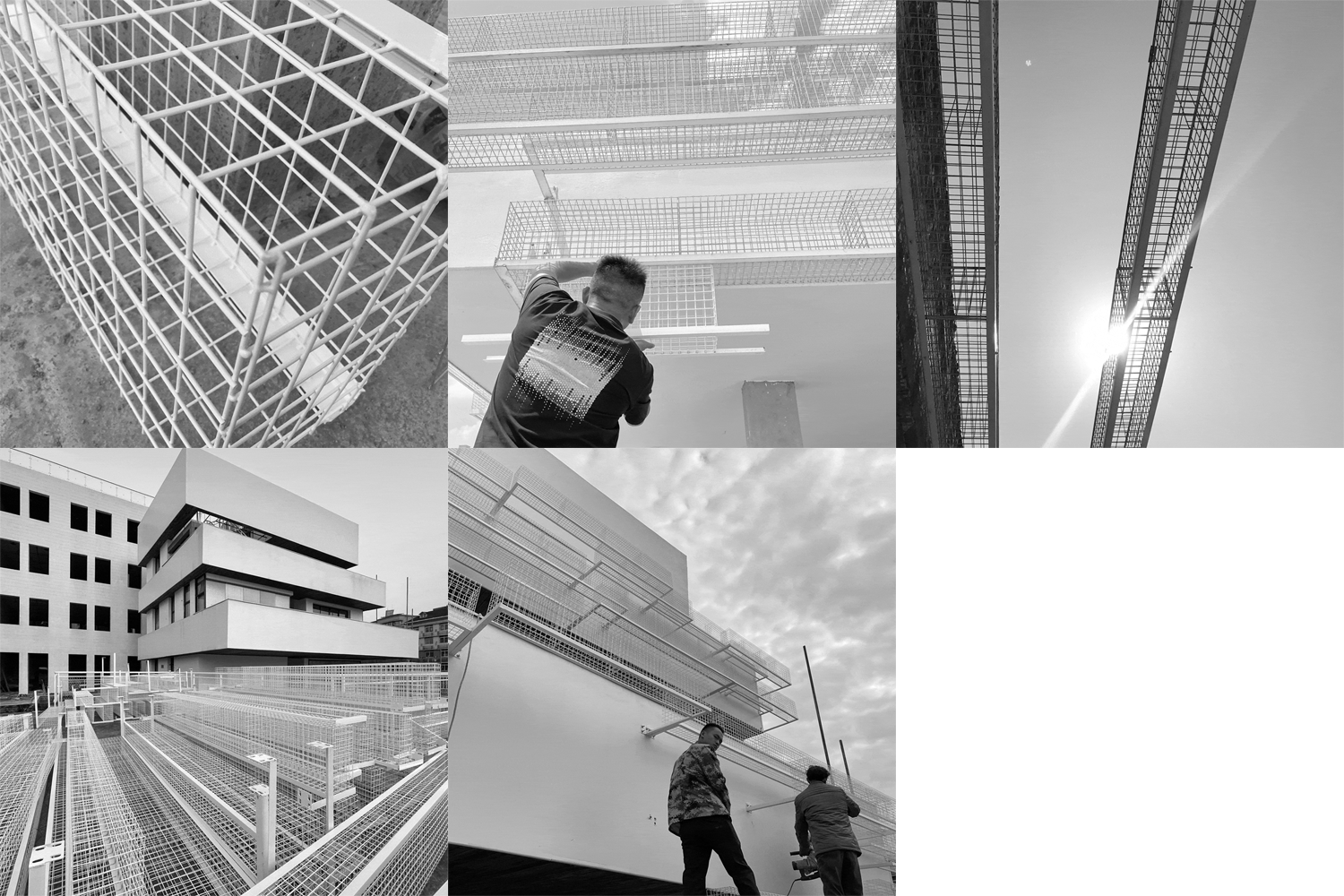
△ Facade white cage sampling to installation process GIF
Combined with lighting design, the buildings appear as soft, floating clouds during the day, blending into the blue sky. At night, illuminated lights create colorful mirages that blur the line between reality and illusion.
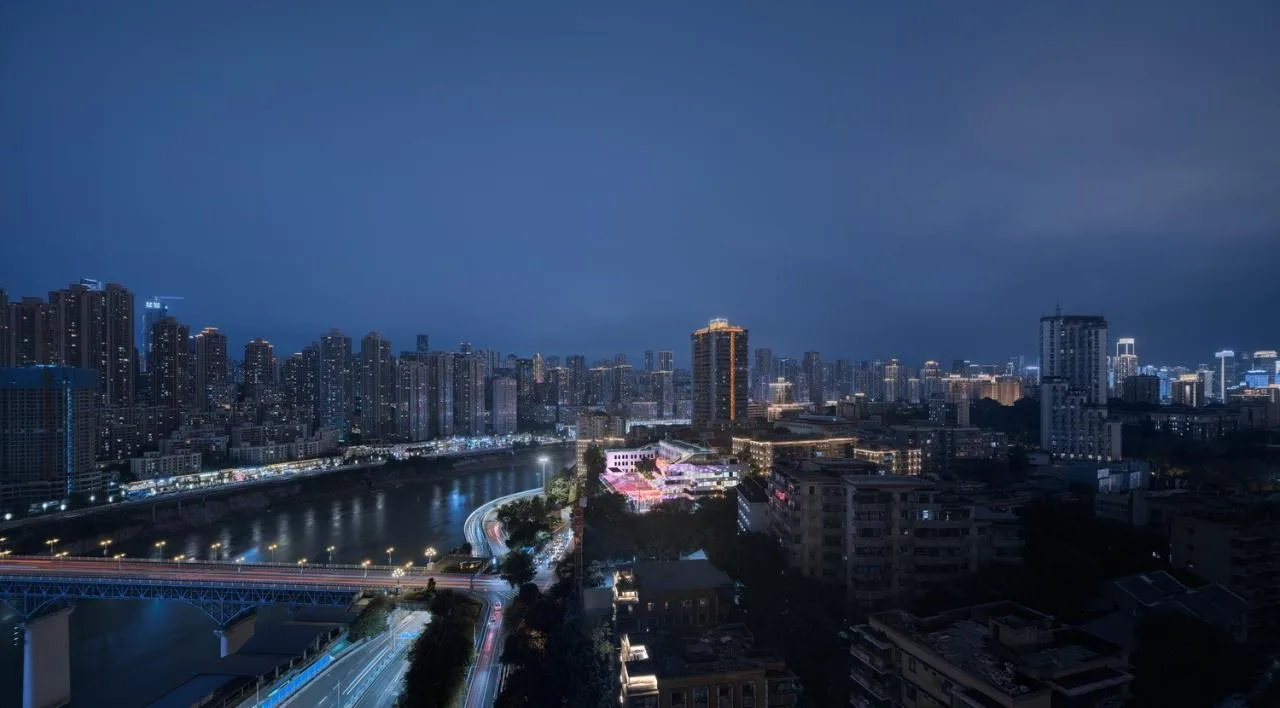
△ Aerial Night View of Dongcun – © Yan Yu Architectural Space Photography
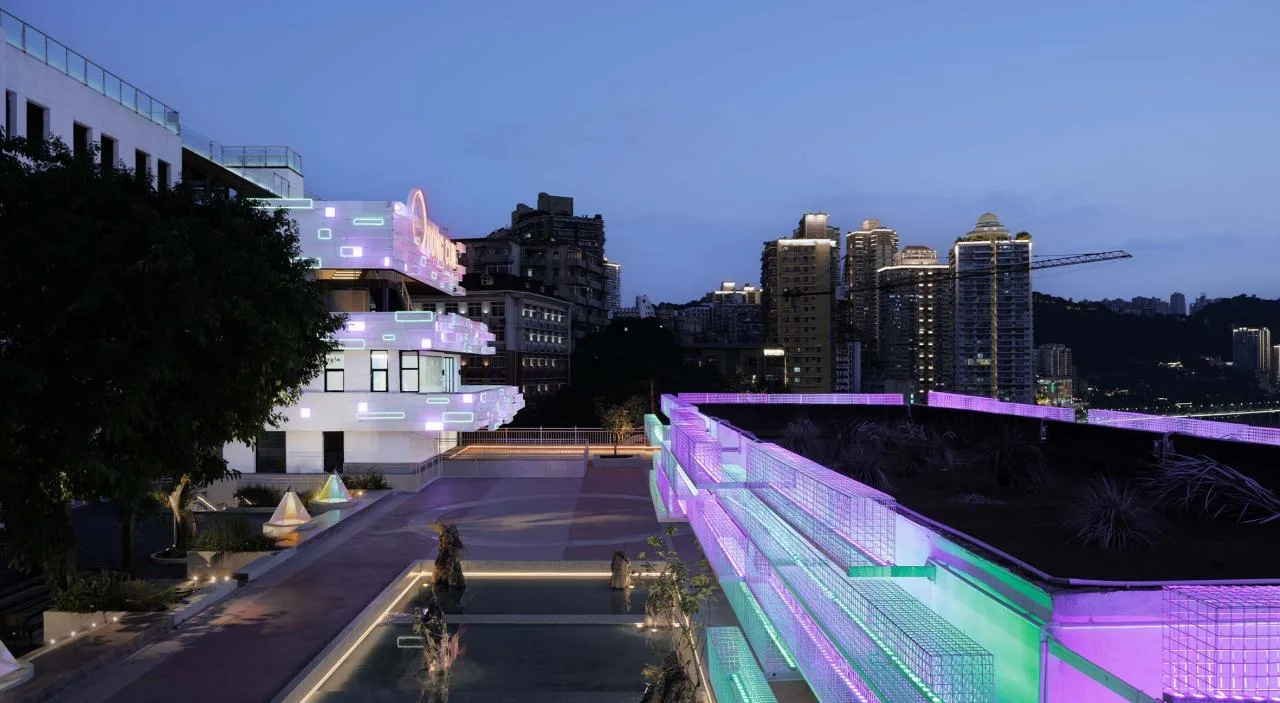
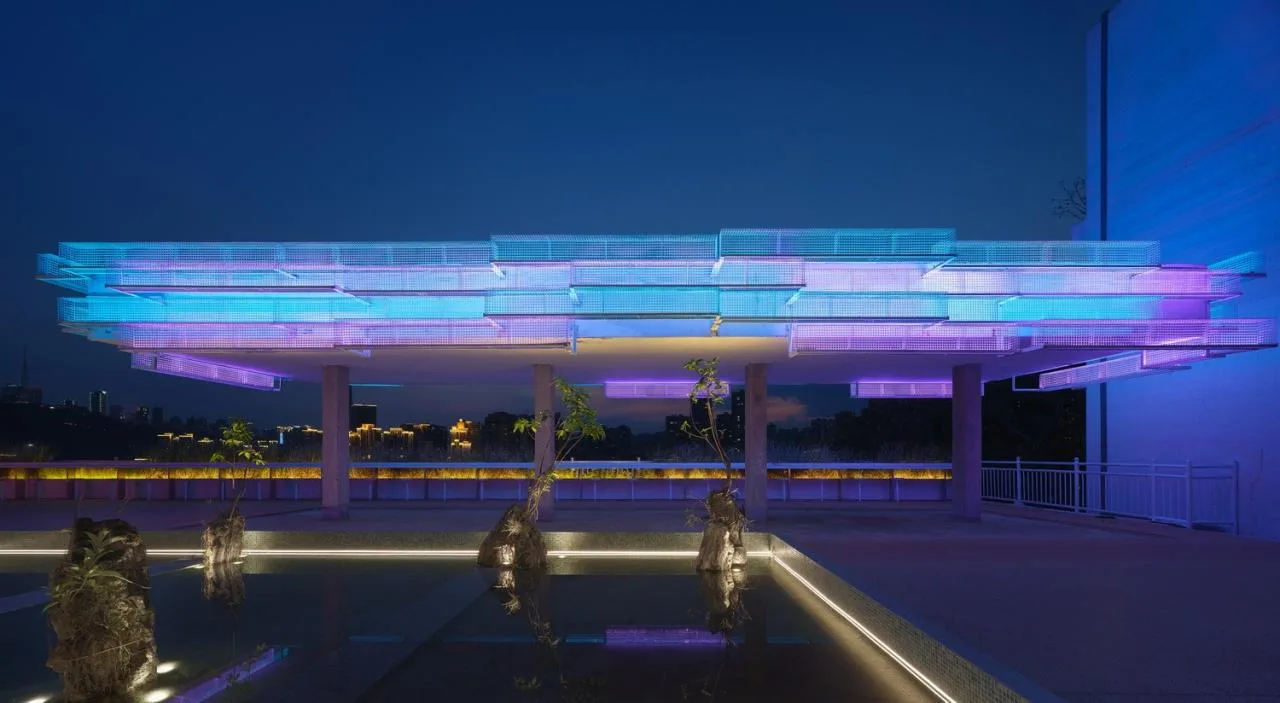
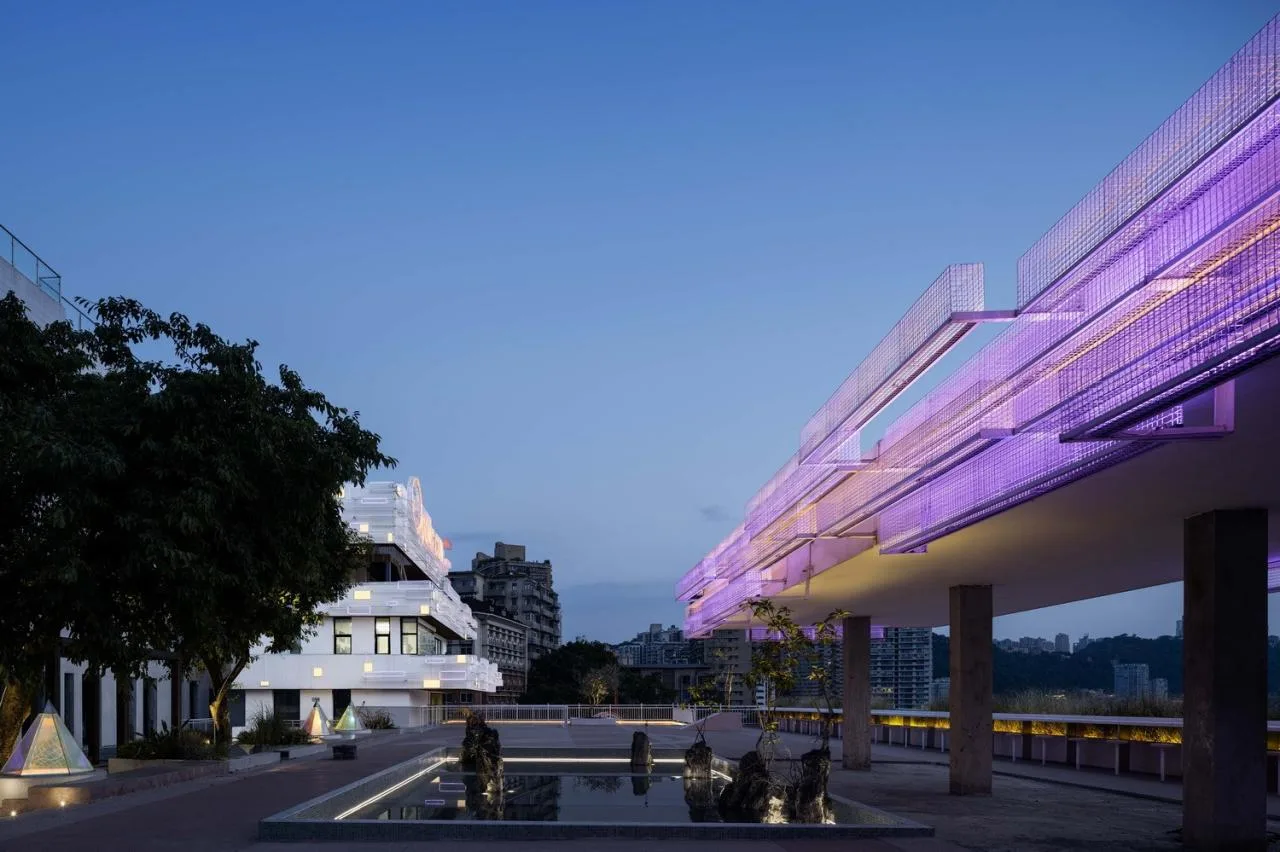
△ Night view of metal mesh cage – © Yan Yu Architectural Space Photography
Landscape Renovation
The original landscape resembled a typical Chongqing rooftop filled with potted plants and tree pools. To enhance river views and reduce soil load on the aging buildings, the landscaping was redesigned. The previously chaotic vegetation was organized into distinct visual layers, creating a graduated effect from near to far.
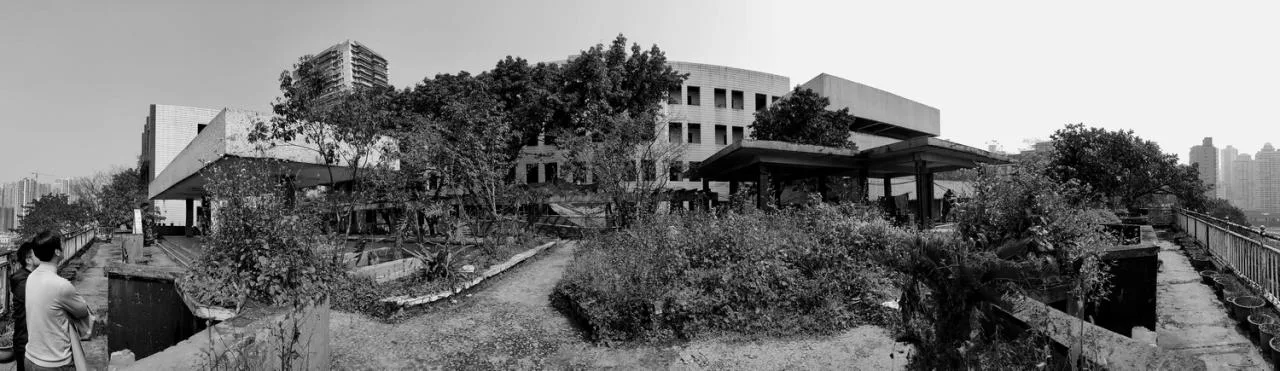
Original appearance before landscape renovation (black and white)
A 43-meter-long observation bar was installed at the western edge of the square facing the river, separated from the Jialing River by gently swaying grasses beyond the counter.
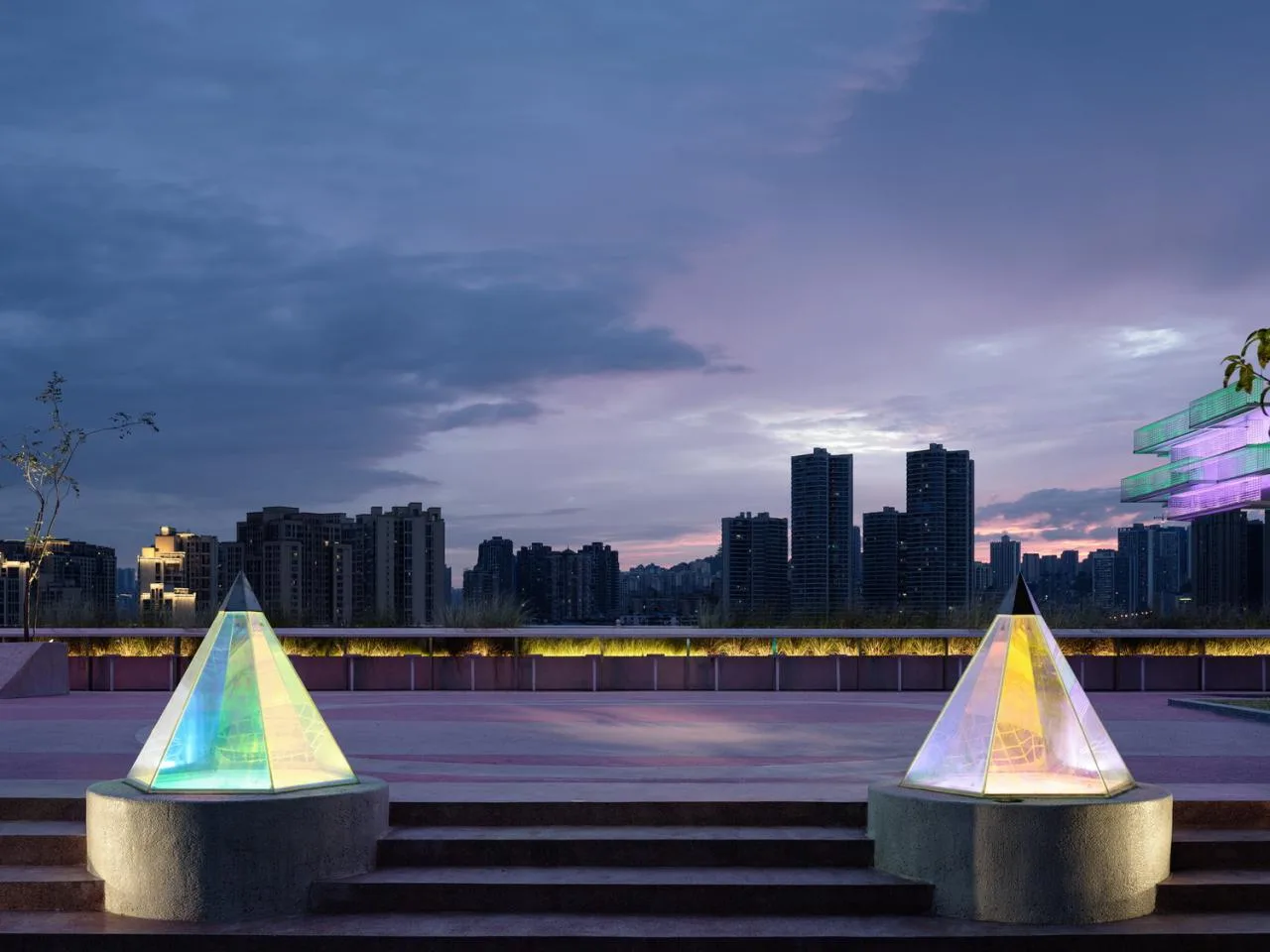
△ Night view of long bar counter – © Yan Yu Architectural Space Photography
Vegetation in the square is arranged in a dotted pattern to subtly divide the space. The original water pool and pavilion were preserved and renovated, along with the ornamental tree roots within the pool.
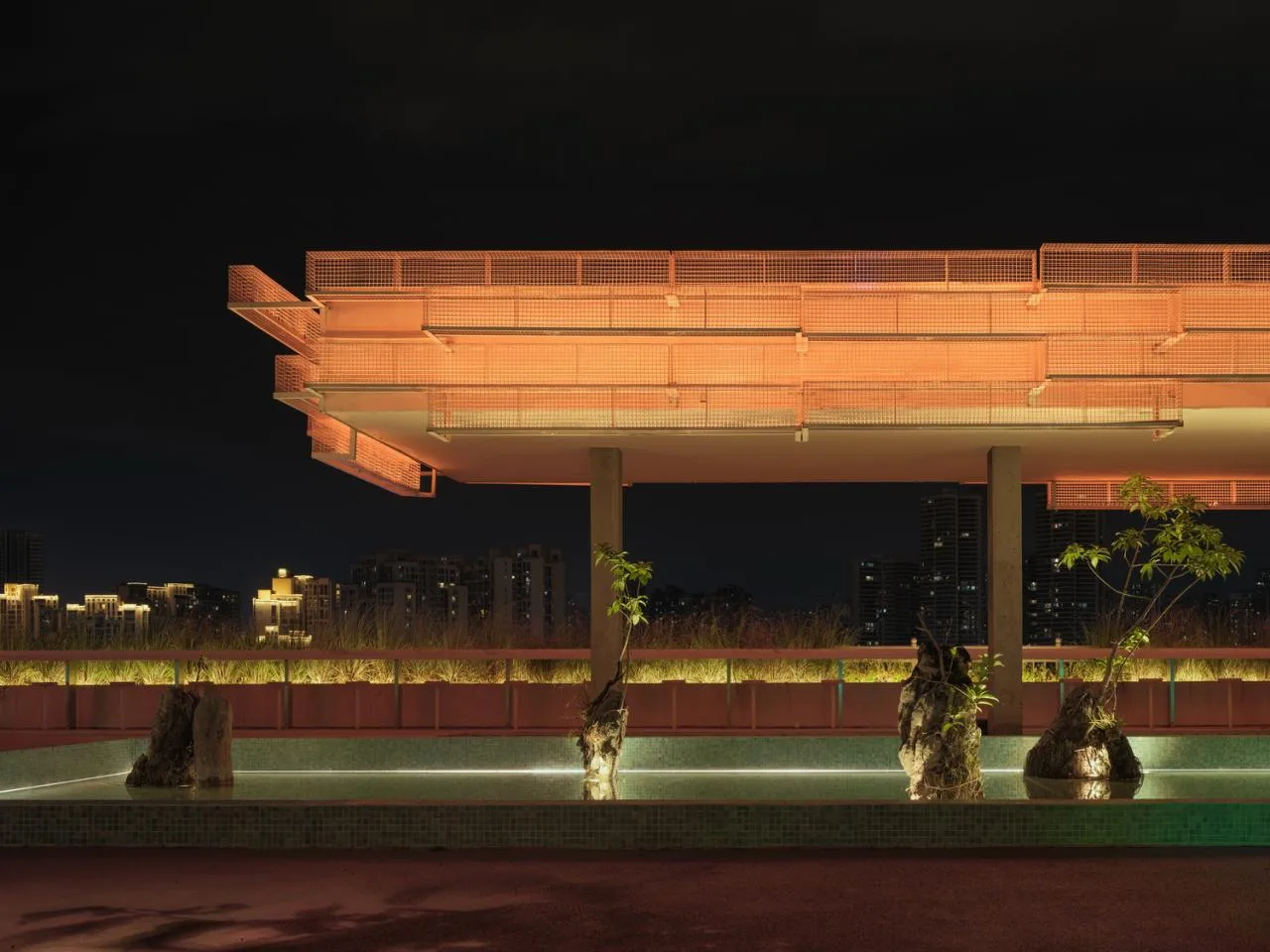
△ Changting – © Yan Yu Architectural Space Photography
The three large trees on the easternmost side of the square were preserved, allowing building occupants to enjoy river views through their semi-shaded canopies. In contrast to the understated building facades, the square and indoor public areas feature bold contemporary techniques, adding vibrant colors to Chongqing’s otherwise muted cityscape.
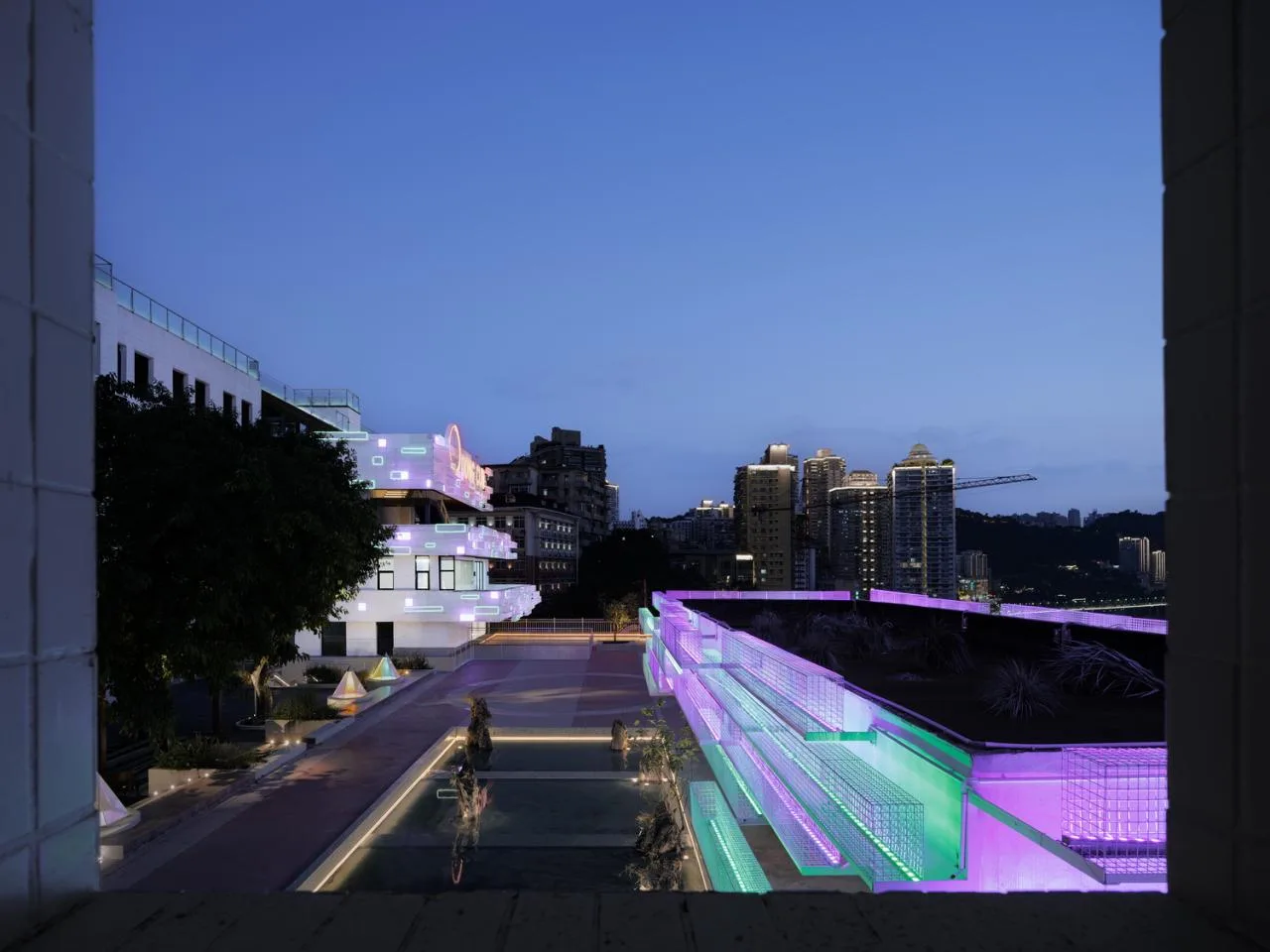
△ Yan Yu Architectural Space Photography
Under the everyday sky, the rose-red terrazzo square, colorful metal pools, and bright skylights create an extraordinary place for all visitors.
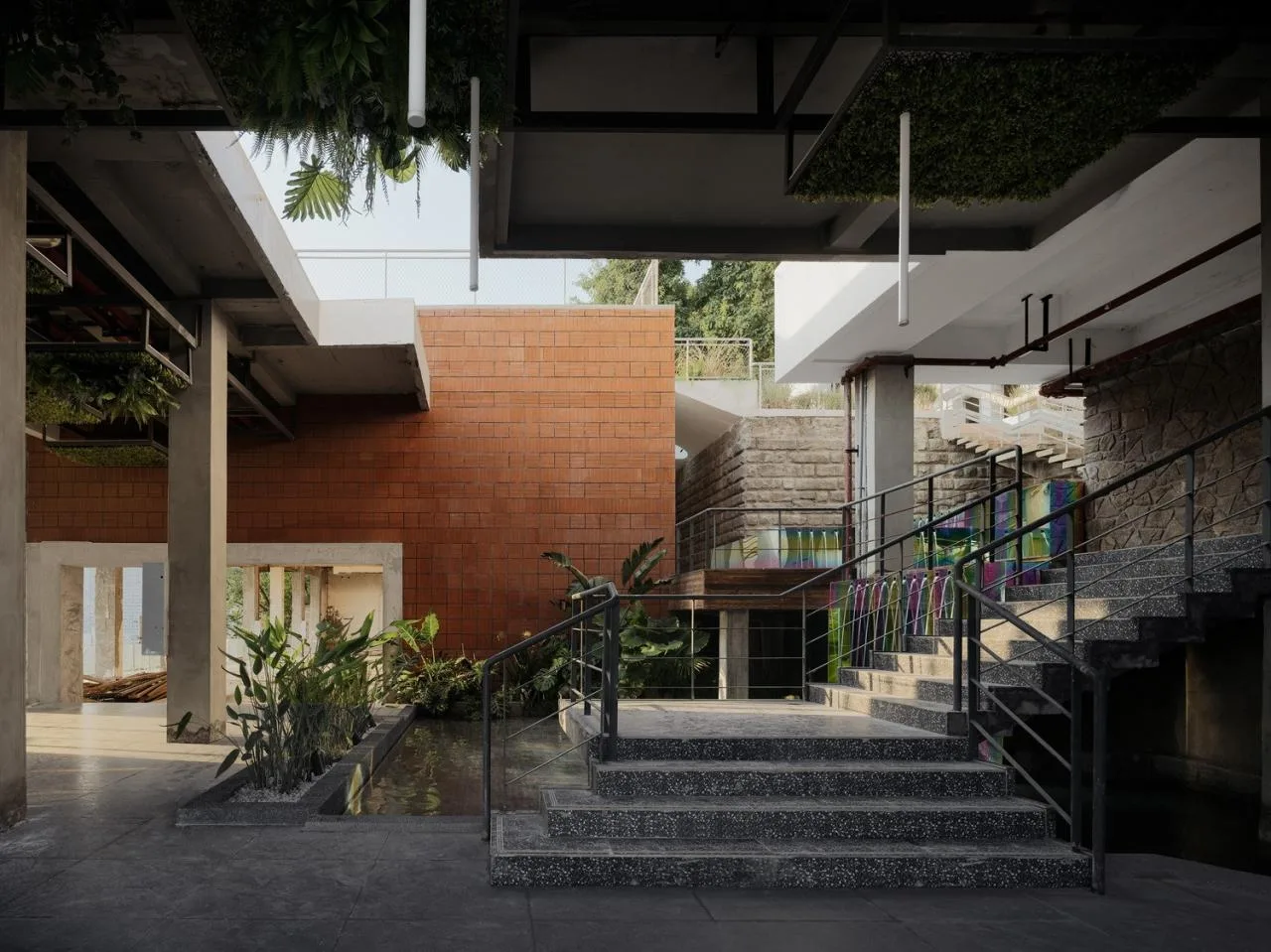
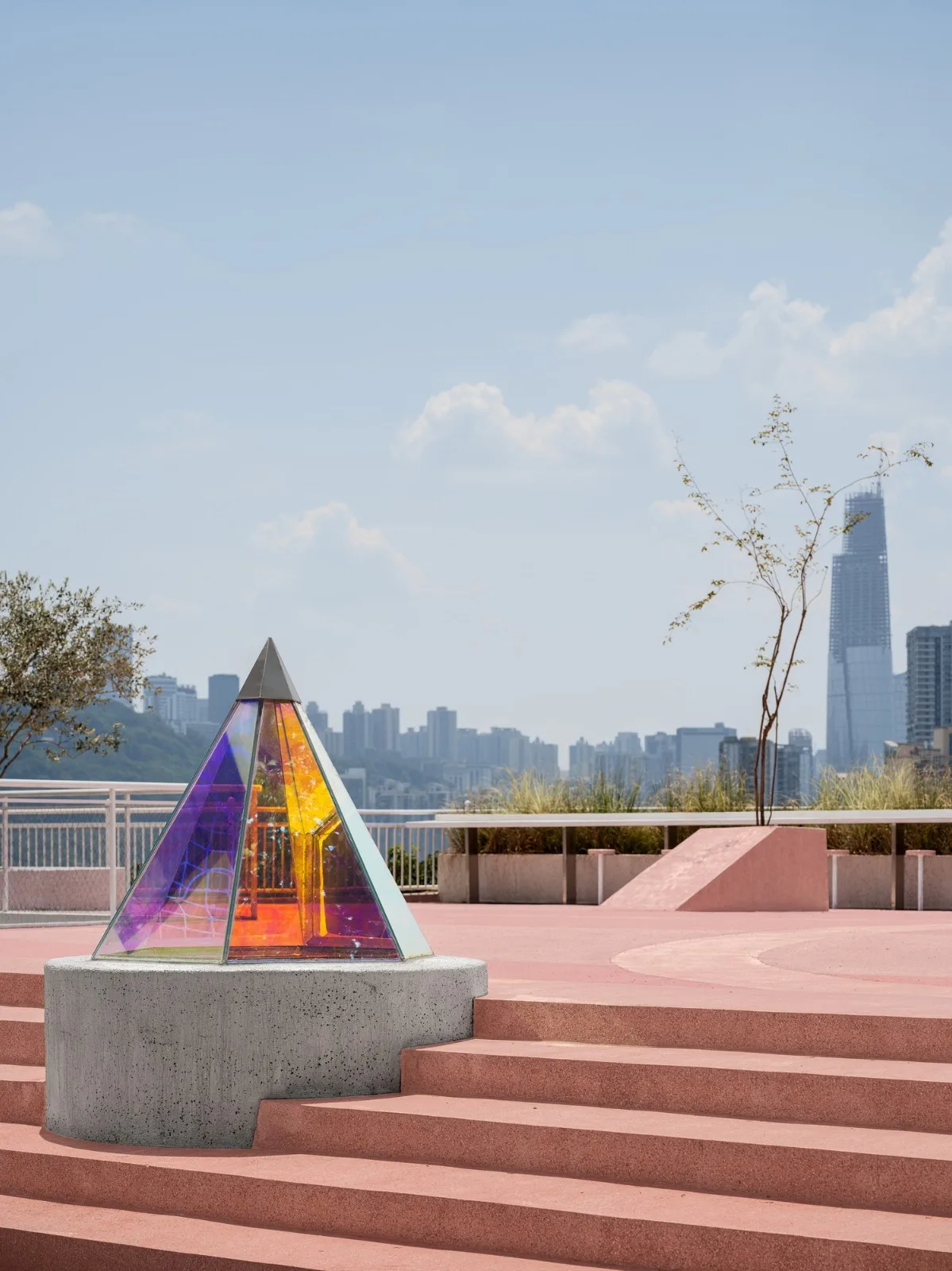
△ Rose Red Square © Yan Yu Architectural Space Photography
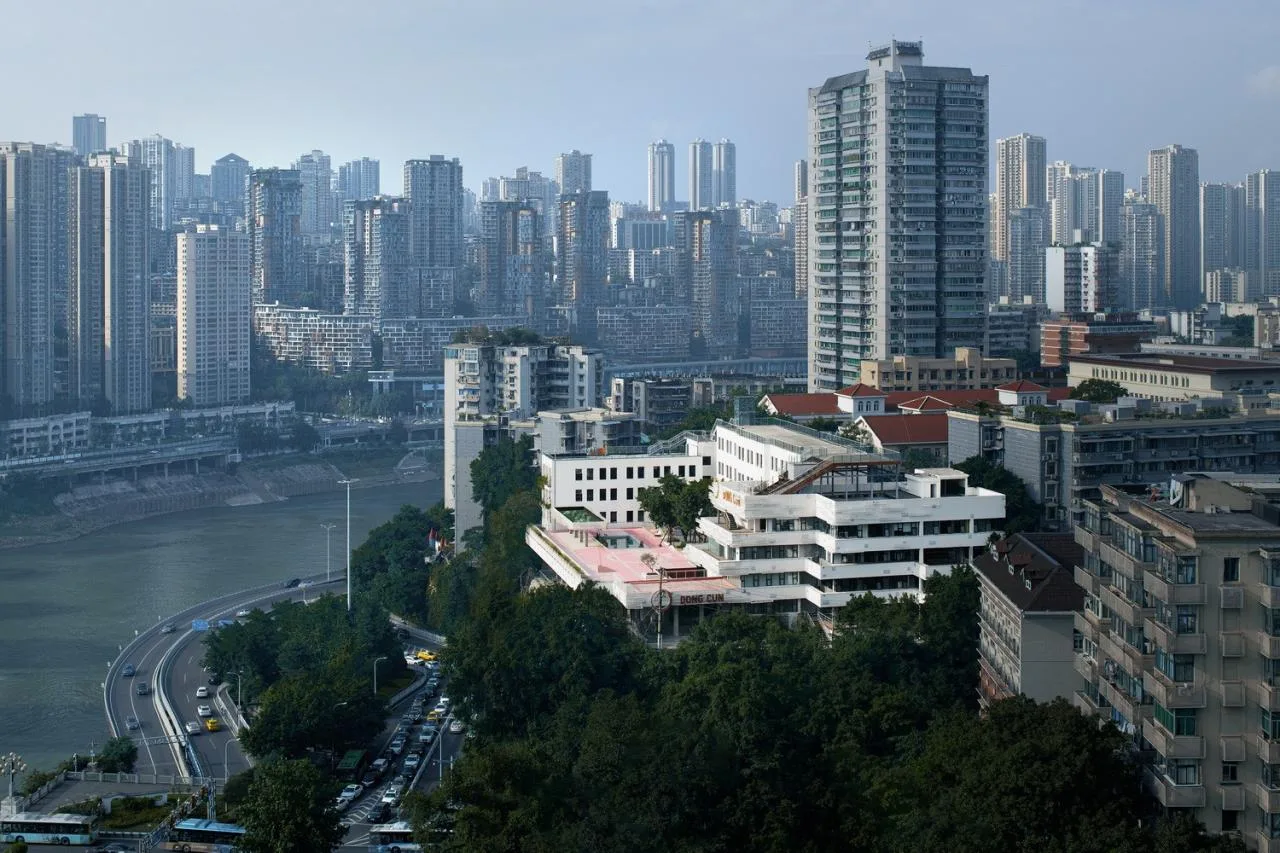
△ Yan Yu Architectural Space Photography
Project Drawings
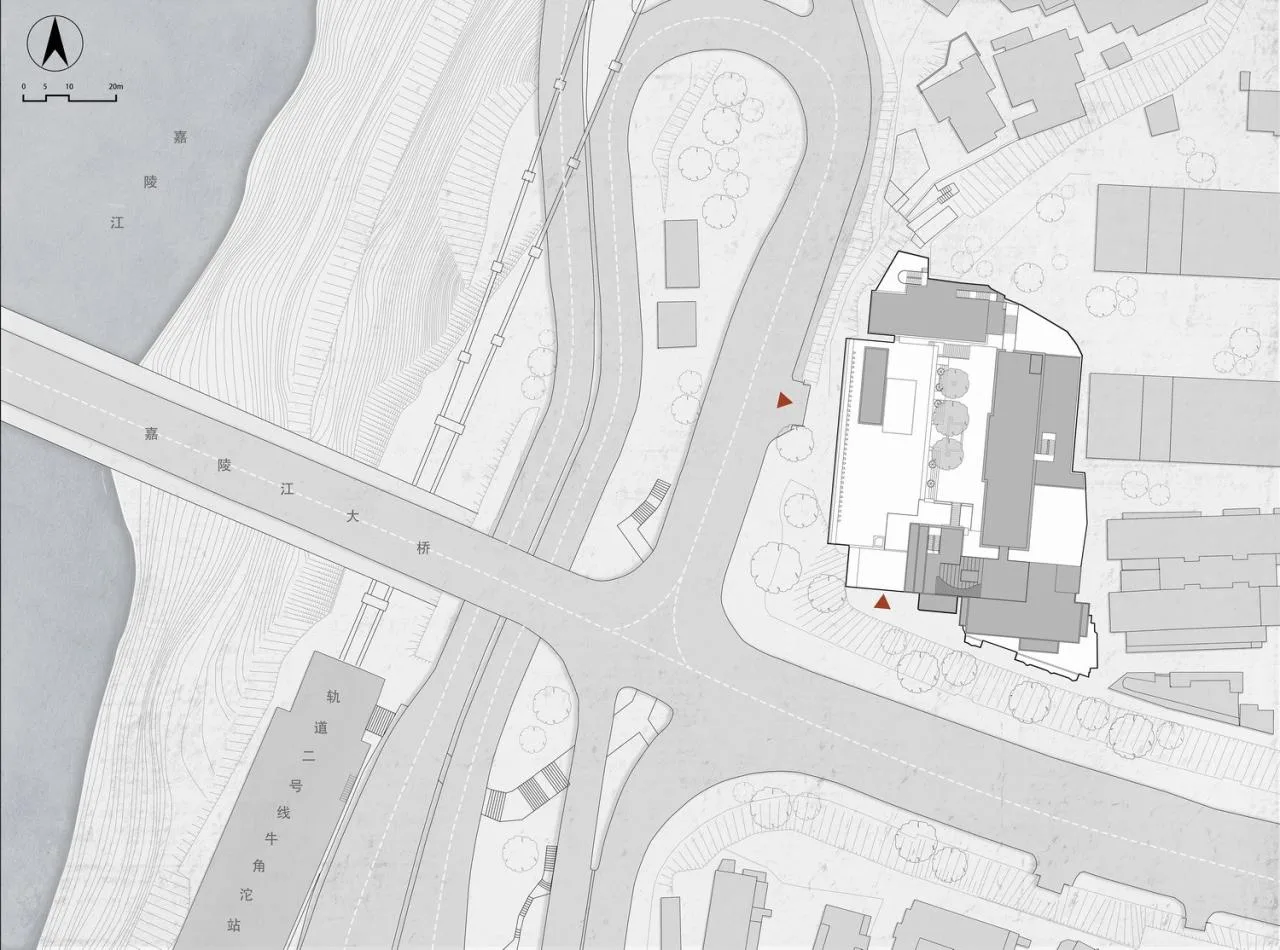
△ Project Overall Plan – © No building seen
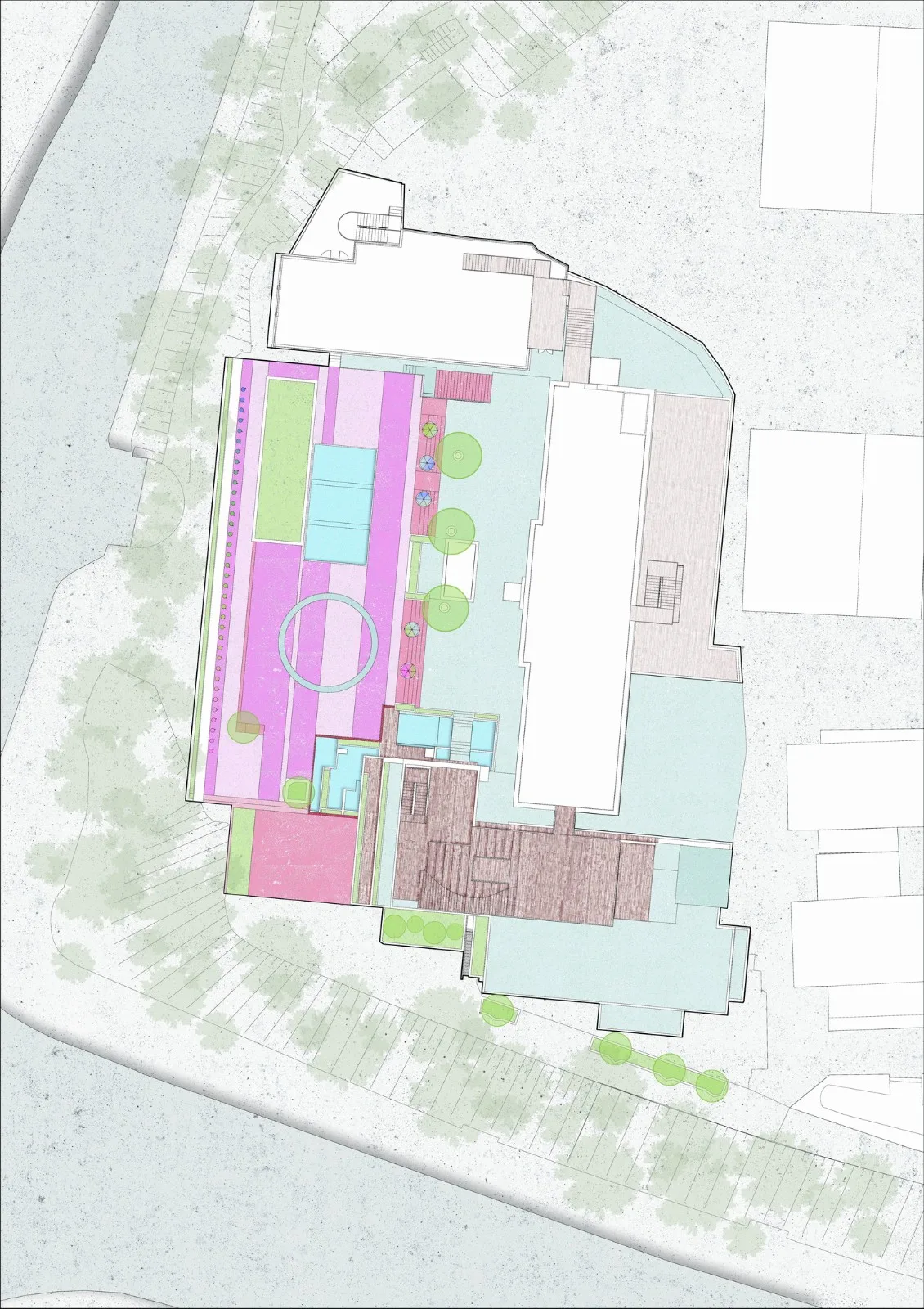
△ Landscape Plan – © No building seen
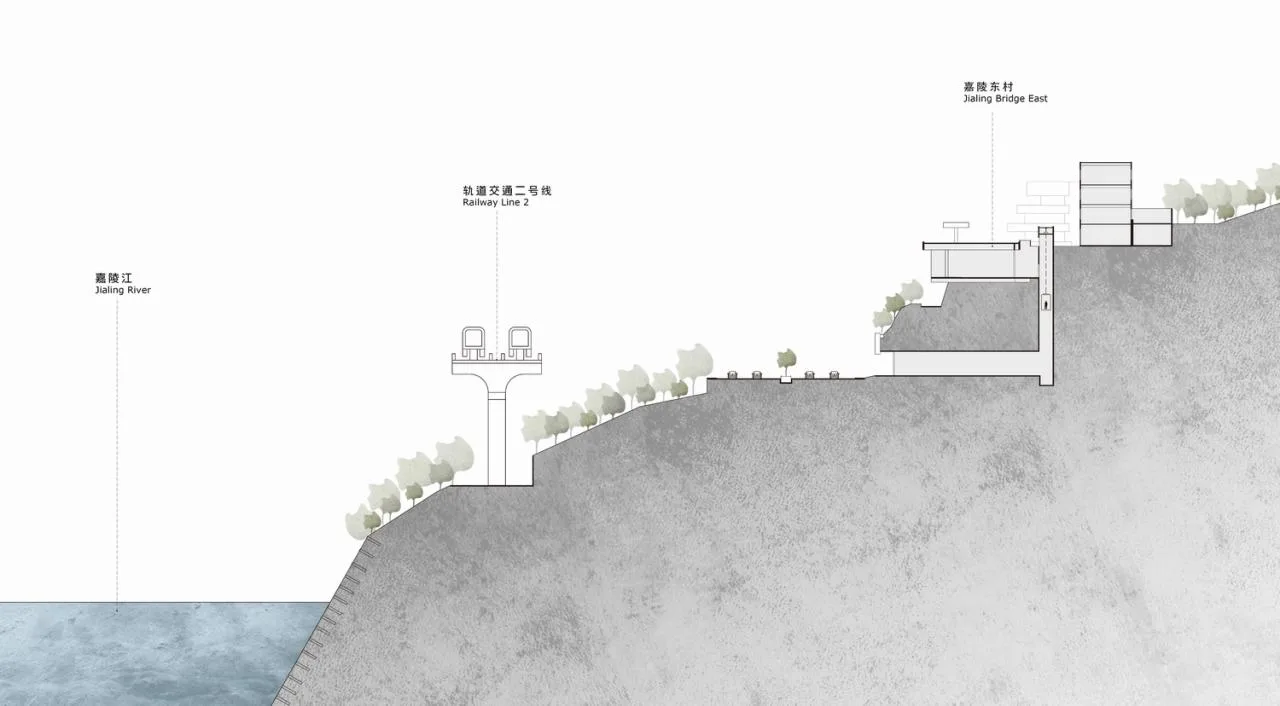
△ Sectional schematic diagram – © No building seen
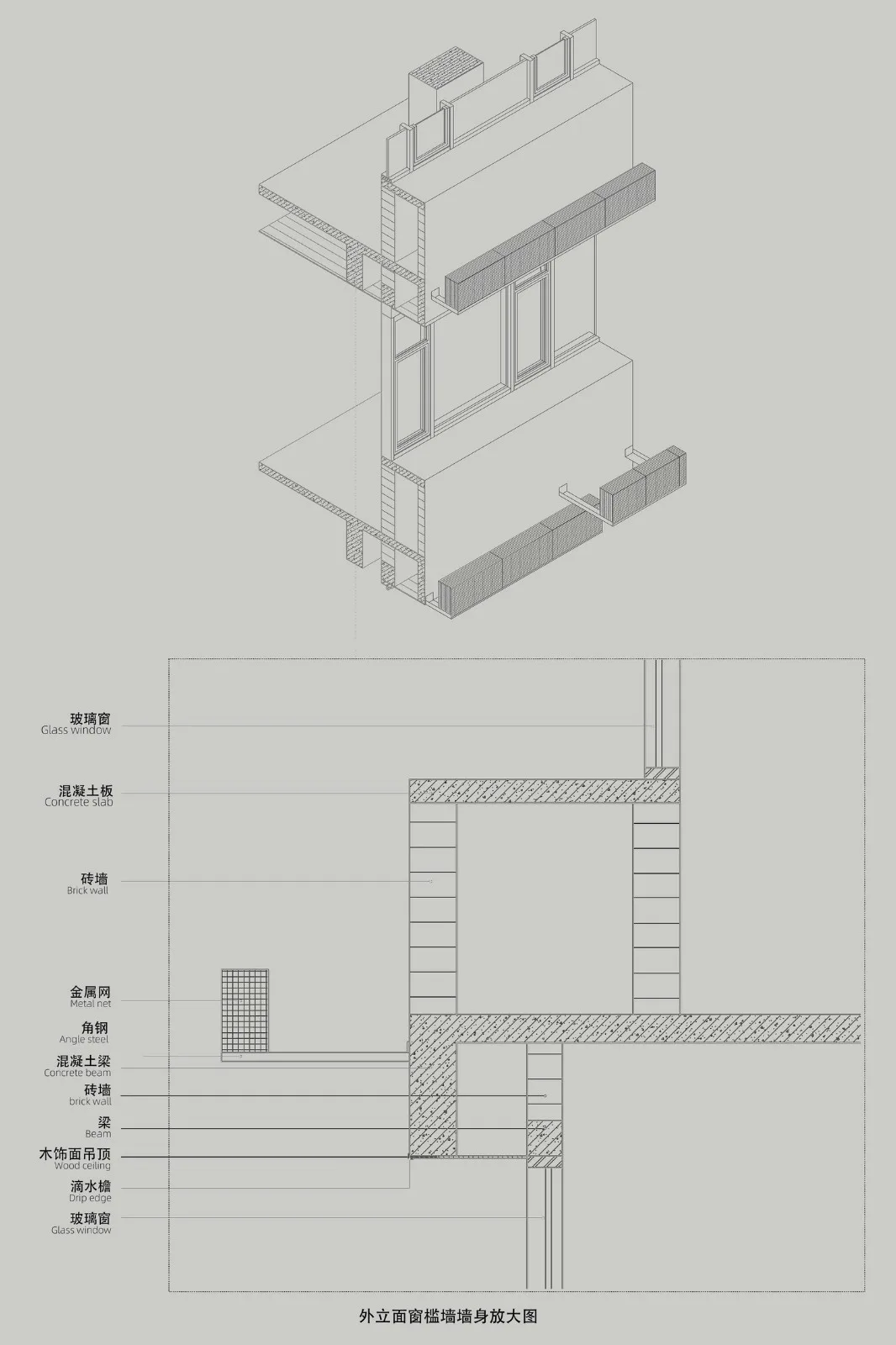
△ Facade white cage construction diagram – © No building seen
Project Information
Project Name: Dongcun Urban Tiantai
Location: Jialing East Village, Yuzhong District, Chongqing
Owner: Chongqing Dongcun No.56 Cultural and Creative Industry Co., Ltd
Design Firm: No architectural design firm has been found
Scope: Architectural Renovation, Landscape Renovation, Space Renovation
Building Area: 7,000 square meters
Landscape Area: 1,500 square meters
Design Period: June 2019
Completion Date: August 2022
Lead Architects: Li Weitao, Li Bo
Project Designer: Ding Mingxin
Design Team: Yi Siqi, Chen Yuxian, Wang Yulian, Shu Hongqiao, Yang Liangling, Zhang Ying, Wu Yue
Landscape Plant Design: Ding Mingxin
Lighting Design: Hanrun (International) Lighting
Brand Design: 10 Design Masterpieces
Photography: INSPACE STUDIO Architecture Space Photography
Poster: No architectural design firm seen, Wu Yue
Translation: No architectural design firm has been seen, LuLu















Must log in before commenting!
Sign Up