
Today, the term BIM is widely recognized in the construction industry. Its powerful capabilities in data integration, analysis, and processing effectively address the challenges of information silos and gaps commonly found in the traditional CAD era. BIM enhances communication efficiency across various disciplines and project stages, strengthens collaboration among team members, and significantly boosts building productivity. But what exactly are the defining characteristics of BIM? Let’s explore.
BIM technology relies on rich parameter data to create 3D models, emphasizing parametric design as its core principle. These models support the smooth progression of construction projects. In summary, BIM offers the following key features:
1. 3D Visualization Model
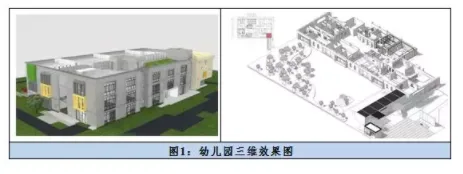
BIM has evolved the construction industry’s visual representation from traditional 2D drawings to dynamic 3D models. This advancement allows project team members to identify potential issues early on and foster effective discussions. Owners can also easily communicate with architects to ensure the 3D model aligns with their requirements. Moreover, it simplifies design understanding for professionals across various engineering disciplines.
2. Parametric Design
Parametric design is the fundamental difference between BIM and traditional design methods. Instead of dealing with basic geometric shapes like points, lines, and surfaces, BIM works with building components—such as walls, doors, and windows—that carry specific parameters. These components include geometric definitions alongside associated data rules, containing their own parameters and relational information. This approach not only improves visual representation but also enables practical applications like quantity takeoffs, lighting analysis, and energy evaluations.
3. Consistent Data
BIM supports interconnected design data. When objects are added or modified, the entire building model updates accordingly, ensuring drawing consistency and reliable quantity calculations. This linkage allows projects to quickly adapt to design changes, maintaining accuracy throughout the process.
4. Lifecycle Application
BIM goes beyond traditional CAD as a design tool; it spans the entire building lifecycle. From planning and design phases through to operation and maintenance, BIM models grow richer with consistent information that serves multiple purposes. During the operational stage, BIM data can be leveraged to support efficient facility management and maintenance planning.
With these insights, you now have a clearer understanding of BIM’s features. You might wonder how I gained such in-depth knowledge of BIM. I owe it to my BIM engineer course instructor, whose expert guidance enabled me to master this vital field.














Must log in before commenting!
Sign Up