
How can we truly understand BIM? It’s a challenging question because everyone’s perception of BIM varies. With 100 people, you’ll find 100 different interpretations. Each person views BIM through the lens of their own work, experience, qualifications, and expertise. Here, I will share my perspective on this topic.
1. Visualization
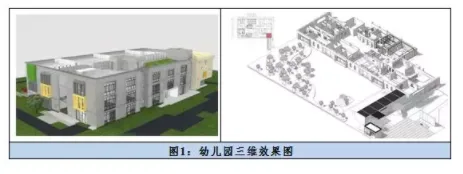
I believe visualization has always been one of BIM’s most outstanding features. Traditional 2D drawings focus on representing elements such as points, lines, surfaces, and symbols in two-dimensional space. In contrast, BIM visualization uses real-world building components like doors, windows, beams, and ceilings.
Through BIM models, design intent is clearly communicated, construction processes are accurately conveyed, and operation and maintenance can be effectively managed. Moreover, BIM visualization is not just about converting 2D drawings into 3D models. It allows for 360-degree rotation, enabling detailed inspection of the entire project and its individual parts.
This approach exposes traditional errors, omissions, and deficiencies that might otherwise go unnoticed. Building performance becomes visible to all stakeholders, and construction processes, key stages, on-site layouts, and methods are shared transparently. This fosters a unified understanding and knowledge of the project among everyone involved.
2. Information Carrier
In the past, building information was primarily carried through 2D drawings. However, limitations of these media and tools restricted the amount of information that could be stored. Outdated workflows often caused information gaps, losses, and even regressions.
BIM addresses these issues by supporting the entire building lifecycle and integrating with multiple tools to expand information capacity significantly. By establishing a BIM database and platform, enterprises can collect data during the design, construction, and operation phases, consolidating diverse information into a comprehensive BIM model.
These databases or platforms store all project models and data, enabling the creation of enterprise-level repositories. By summarizing, referencing, and comparing this data, companies can develop their own BIM standards, control data effectively, and achieve real-time tracking, monitoring, and adjustments.
3. Collaboration
Collaboration is another key aspect that sets BIM apart from traditional 2D models. Collaboration has long been a challenge in 2D workflows due to information gaps, silos, and fragmentation.
With BIM technology, a collaboration platform is built around the project. It imports data from various stages and specialties into a unified environment where everyone can share information seamlessly. This ensures information symmetry, eliminating the need for multiple layers of communication.
By breaking down communication barriers, BIM prevents information loss or backflow. It transforms traditional workflows and significantly improves the efficiency of design, construction, and operation processes.
In summary, this is my current understanding of BIM, though it is by no means exhaustive or definitive. Some may view BIM from an application standpoint, others through management. Ultimately, how one understands BIM depends on personal perspective. How do you perceive BIM?














Must log in before commenting!
Sign Up