
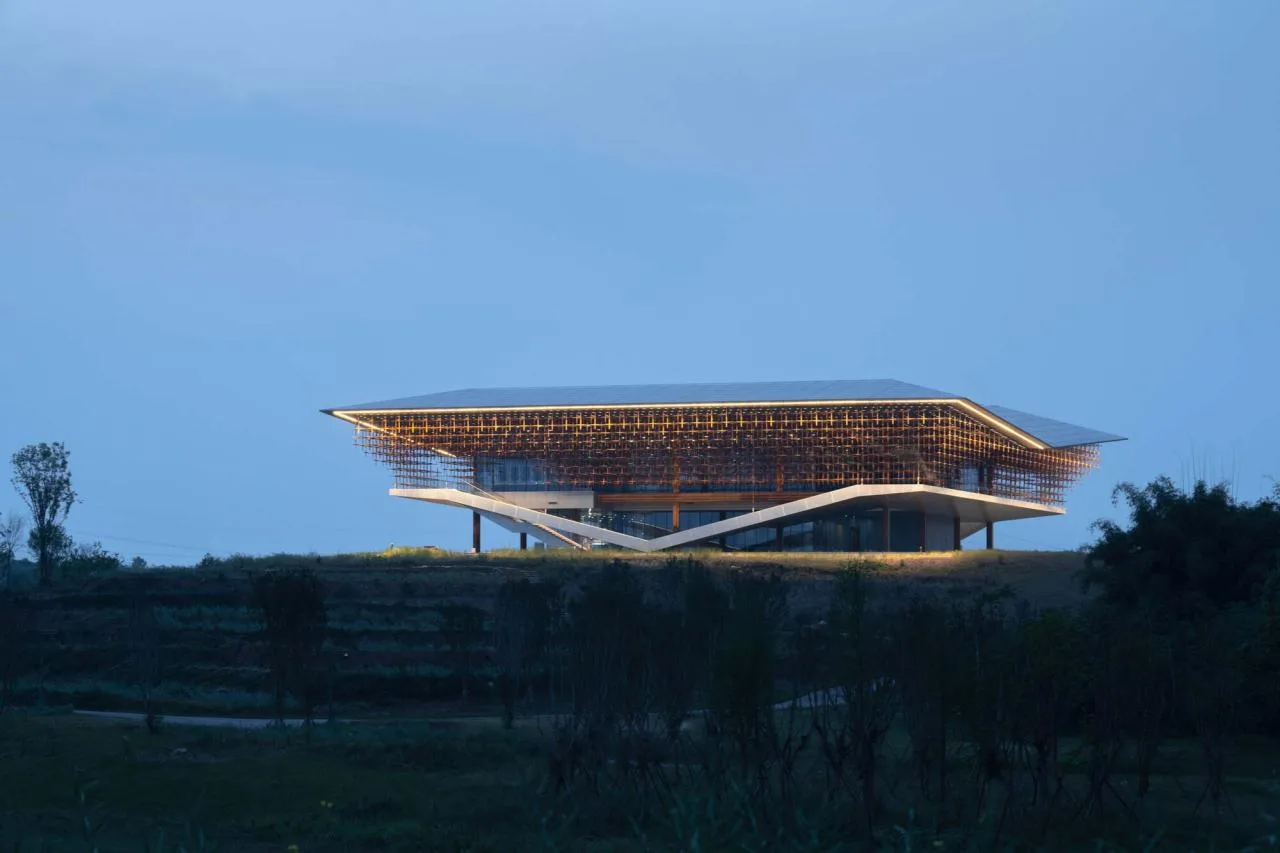
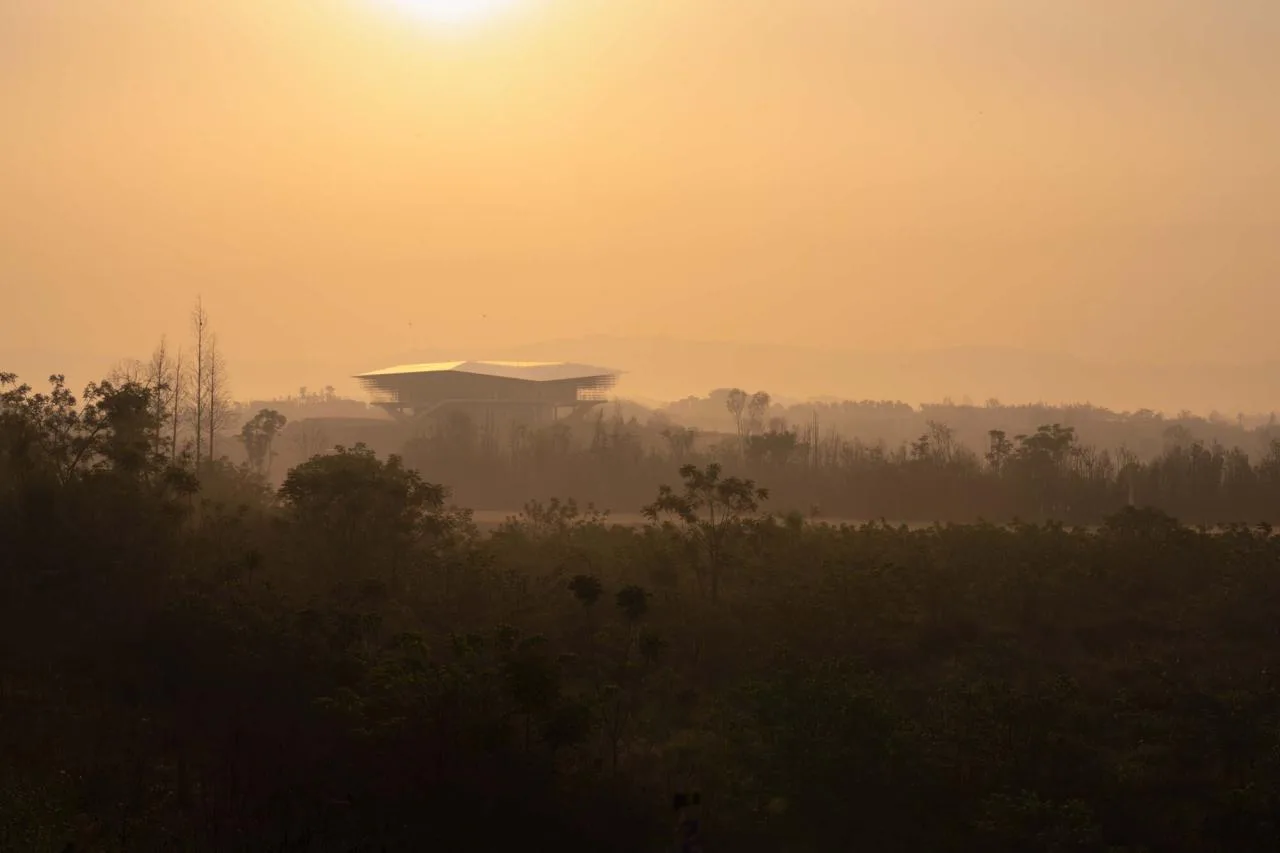
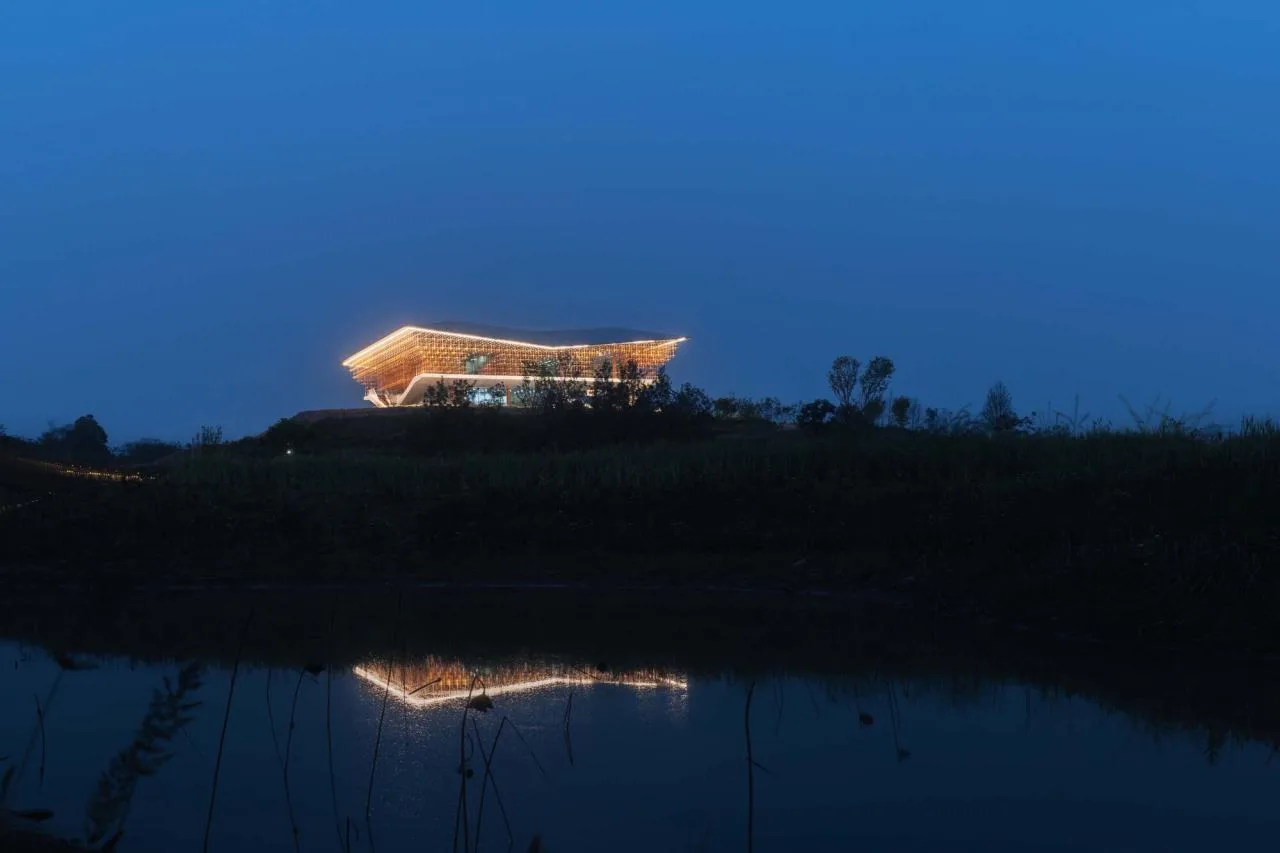
Located along Tianfu Avenue, the main transportation artery on Chengdu’s central axis, the Tianfu New Area lies to the south, surrounded by wetlands and dotted with forests. This area is a peaceful landscape of countryside, gentle hills, forests, and rivers. The Tianfu Cultural and Creative City Planning Exhibition Hall, also known as the “Feather of Geese,” is gently positioned atop Yanqi Wetland Mountain. It appears to emerge naturally from its environment and is set to become an iconic symbol of the Tianfu New Area.
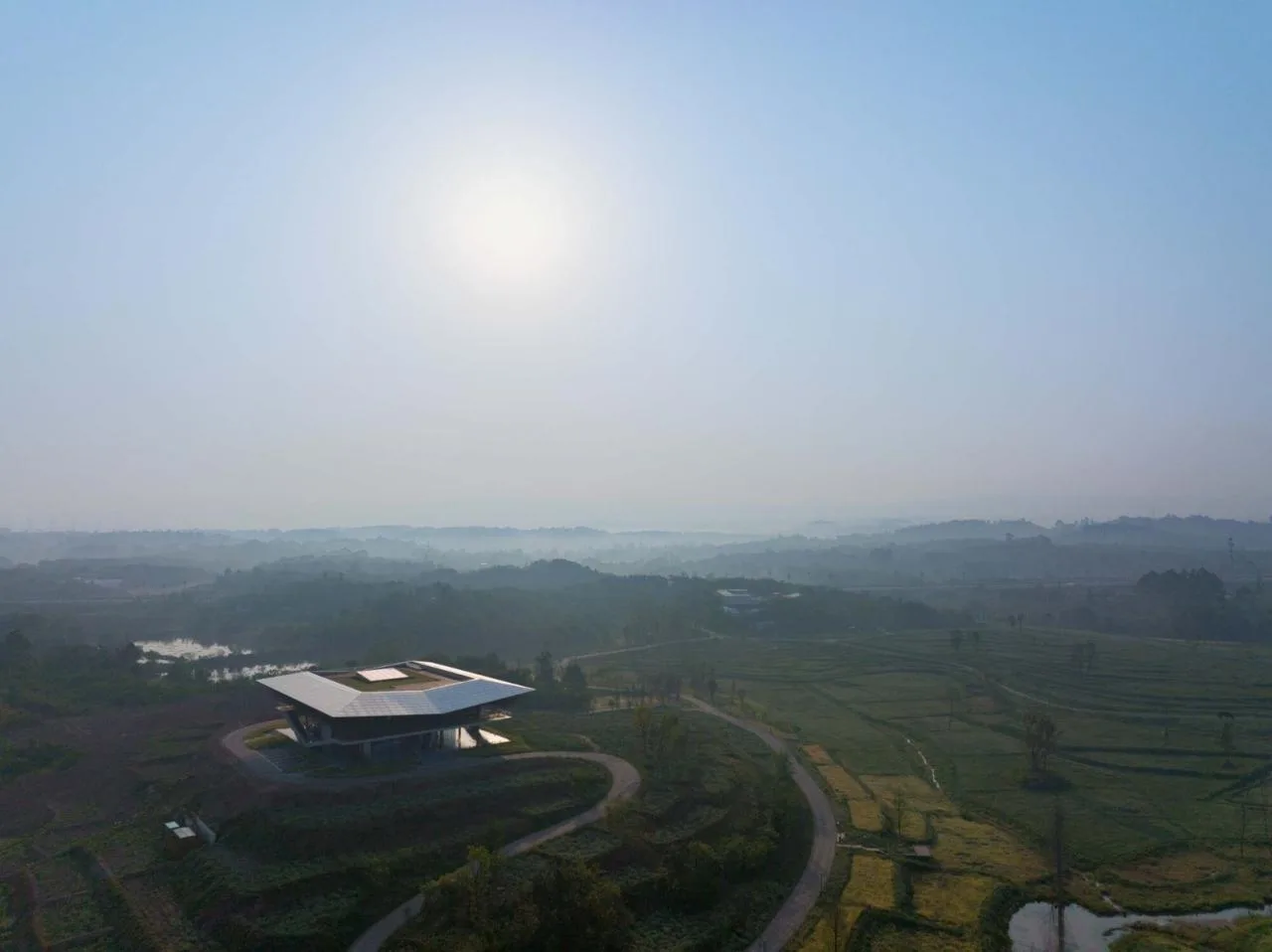
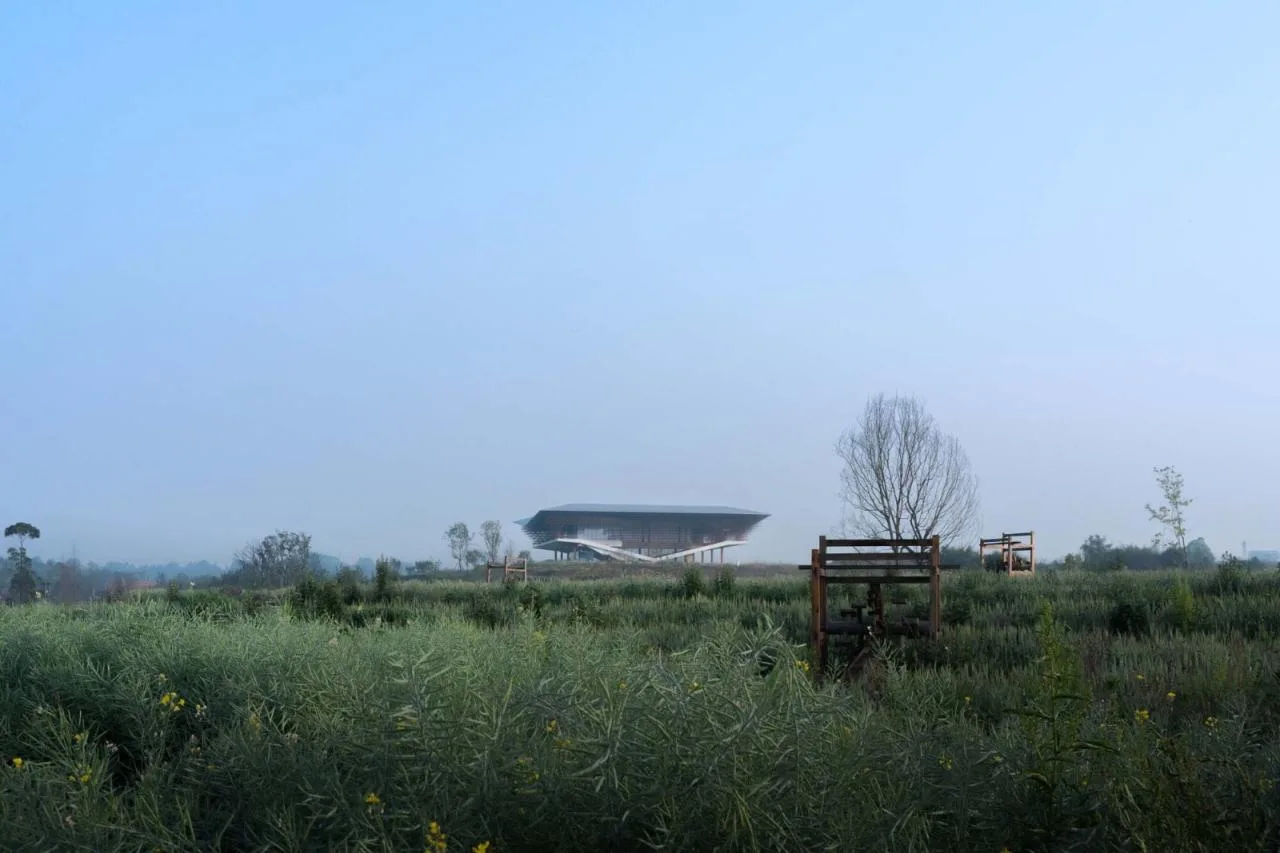
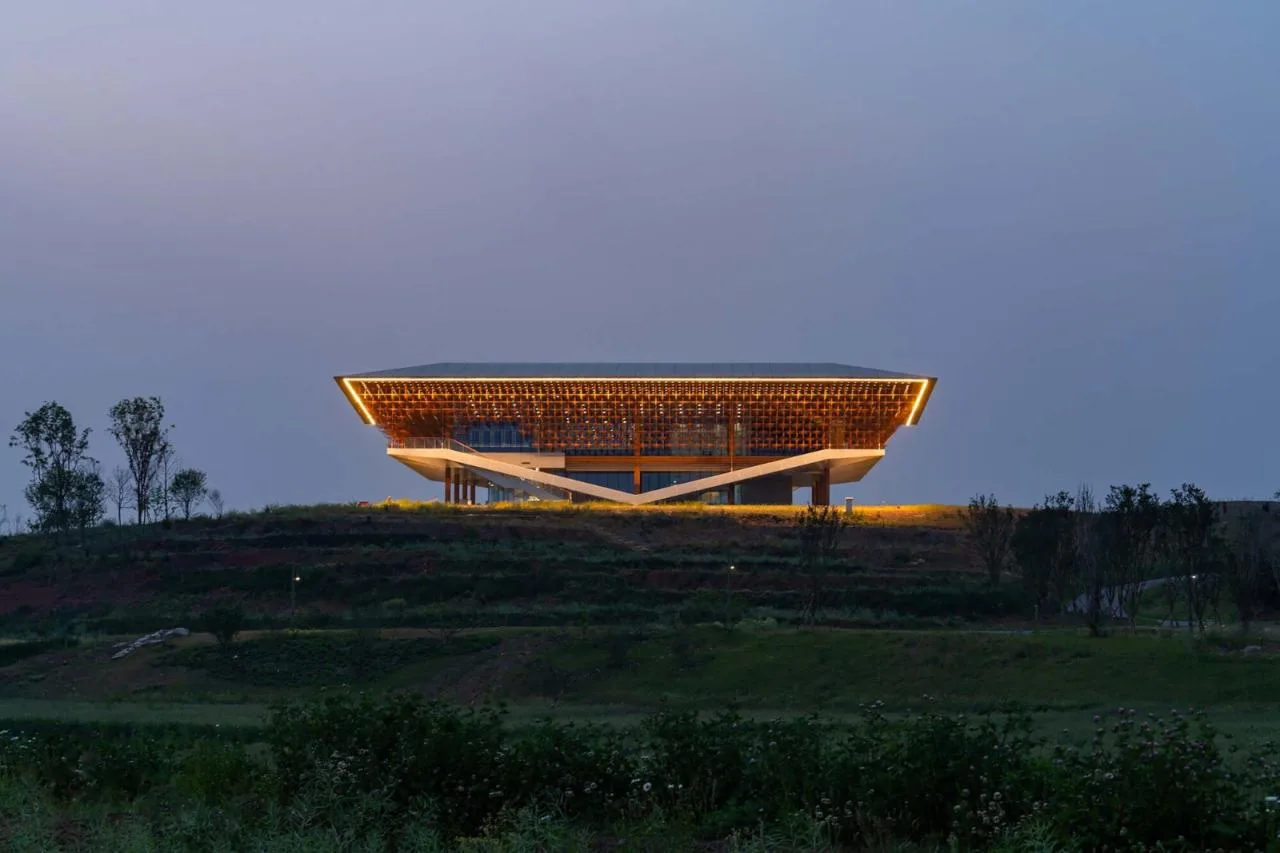
The design draws inspiration from the concept of wild geese residing in mountains and forests—majestic birds that fly south and rest atop mountain peaks. Chief architect Wang Ning explains, “A transparent glass box alone doesn’t convey a strong presence from a distance, and highly reflective glass clashes with the natural surroundings. From the start, we aimed to create a ‘virtual’ form, like bird feathers that breathe, allowing sunlight and views to pass through.”
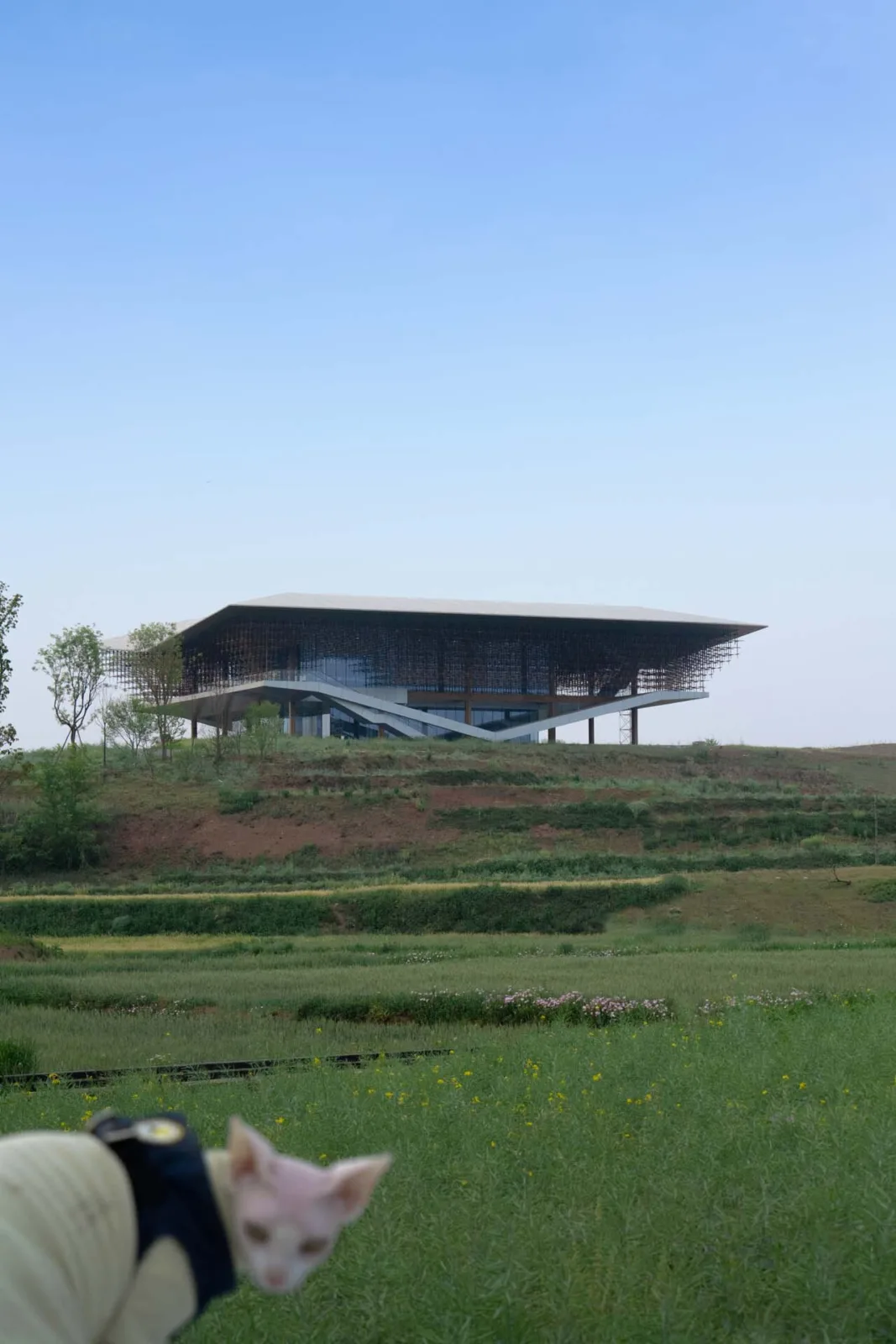
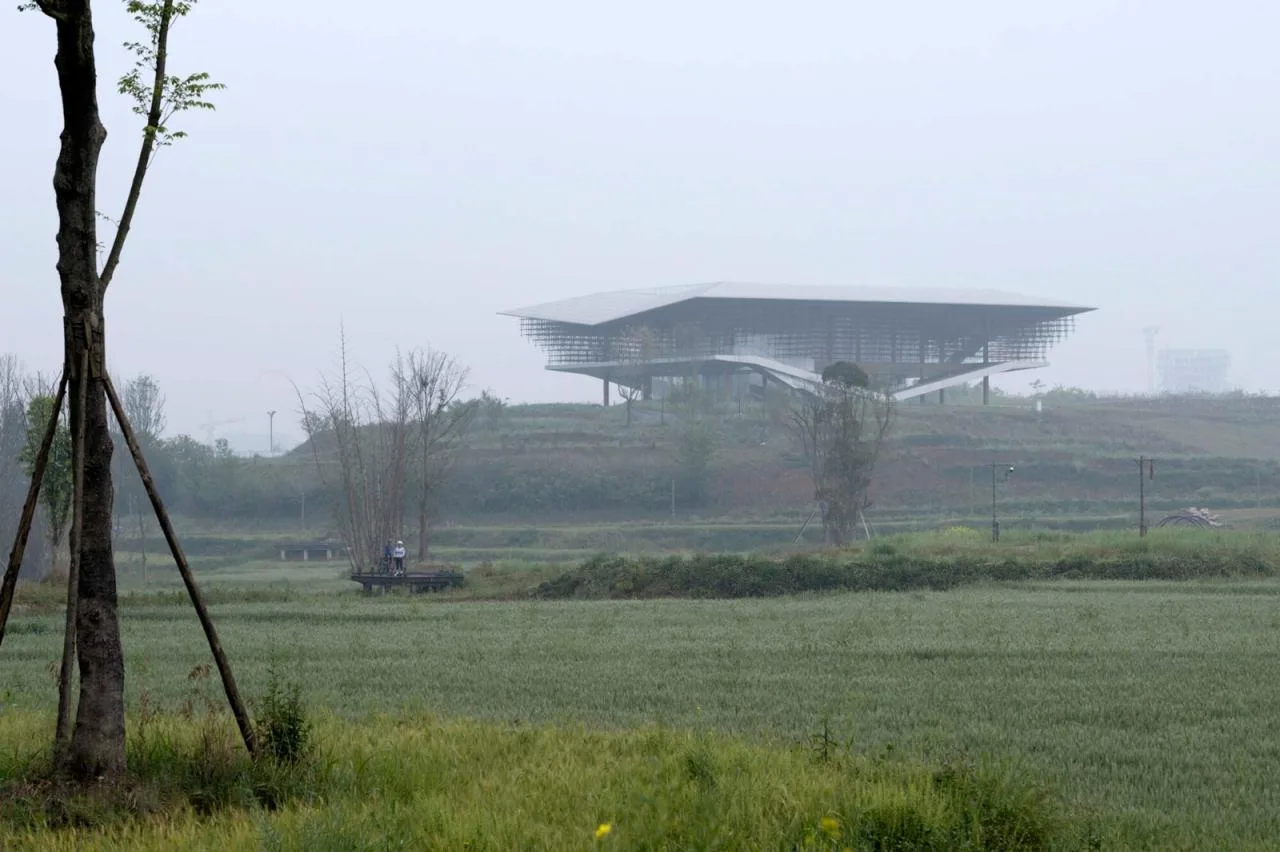
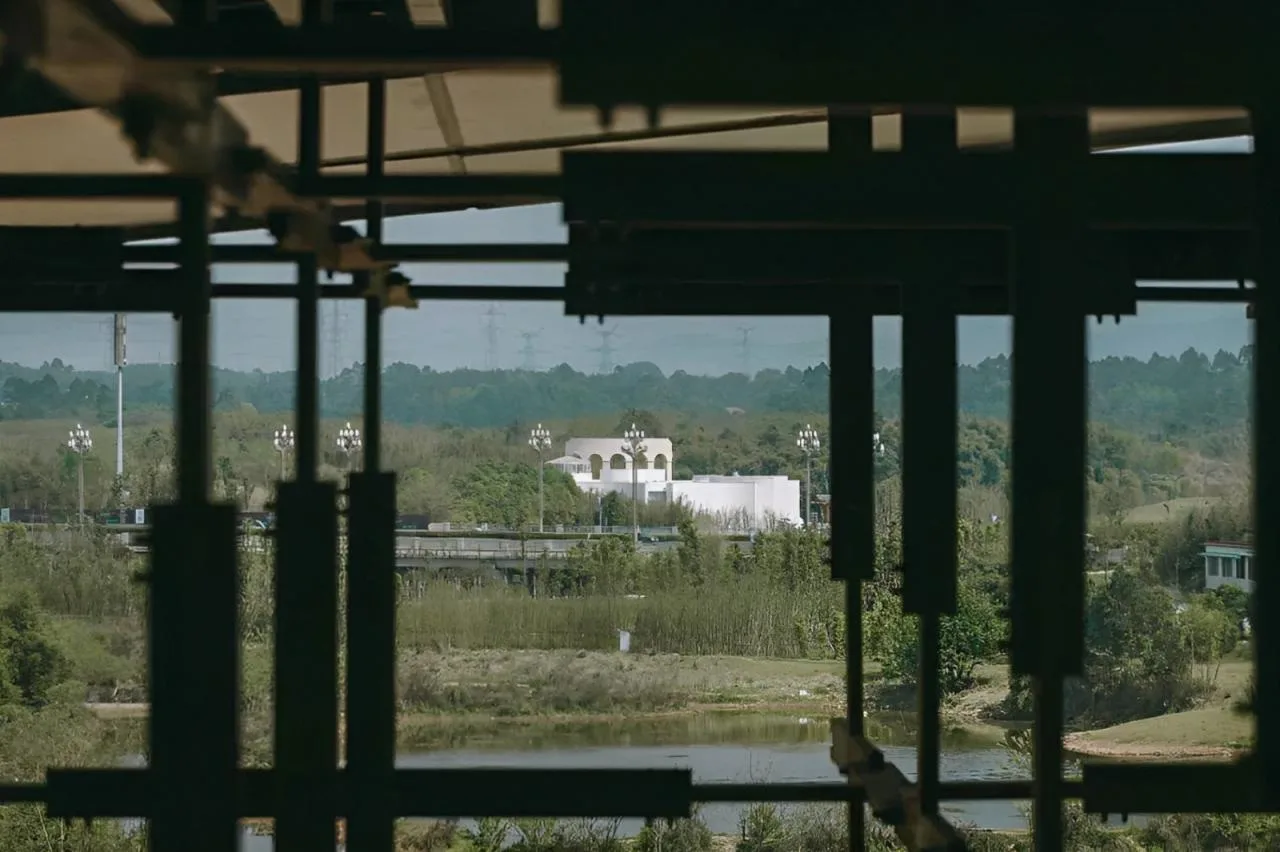
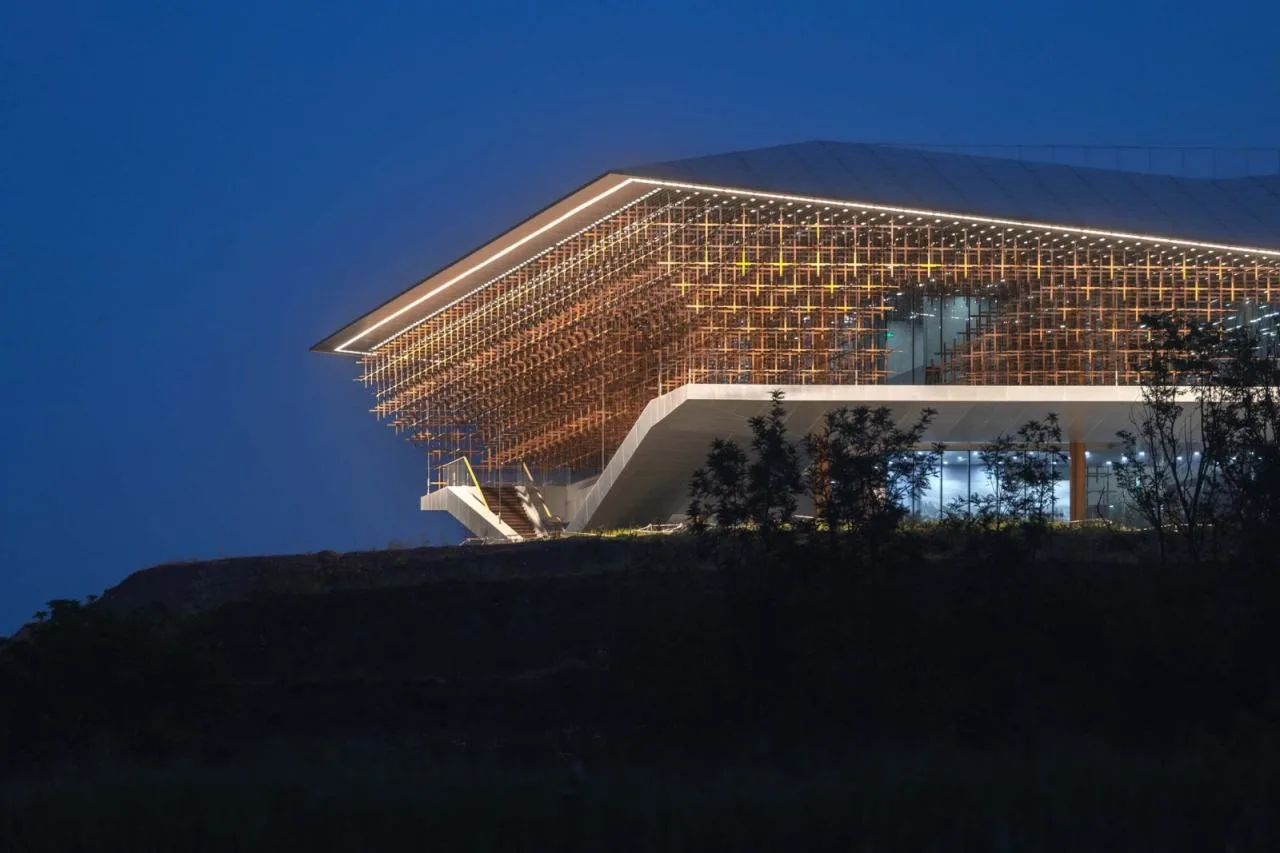
The building’s base, designed to harmonize with nature, features an elevated colonnade with slender roof eaves that diagonally rise upward, inviting visitors to stroll beneath. The facade incorporates extensive hidden-frame glass ribbed curtain walls, seamlessly extending the Yanqi pastoral wetland scenery indoors and blurring the lines between architecture and nature.
Inside, the courtyard-like atrium welcomes natural light and showcases a bamboo forest landscape on the first floor, allowing visitors to experience the natural environment even indoors. From the observation deck on the second floor, guests can enjoy panoramic views of lush greenery and lakes.
The accessible rooftop offers sweeping vistas of the entire Tianfu Cultural and Creative City core area’s planning and development. Looking back toward Tianfu Avenue, amidst the concealed wetland landscape, the light, curved roofs resemble the feathers of geese resting in their habitat.
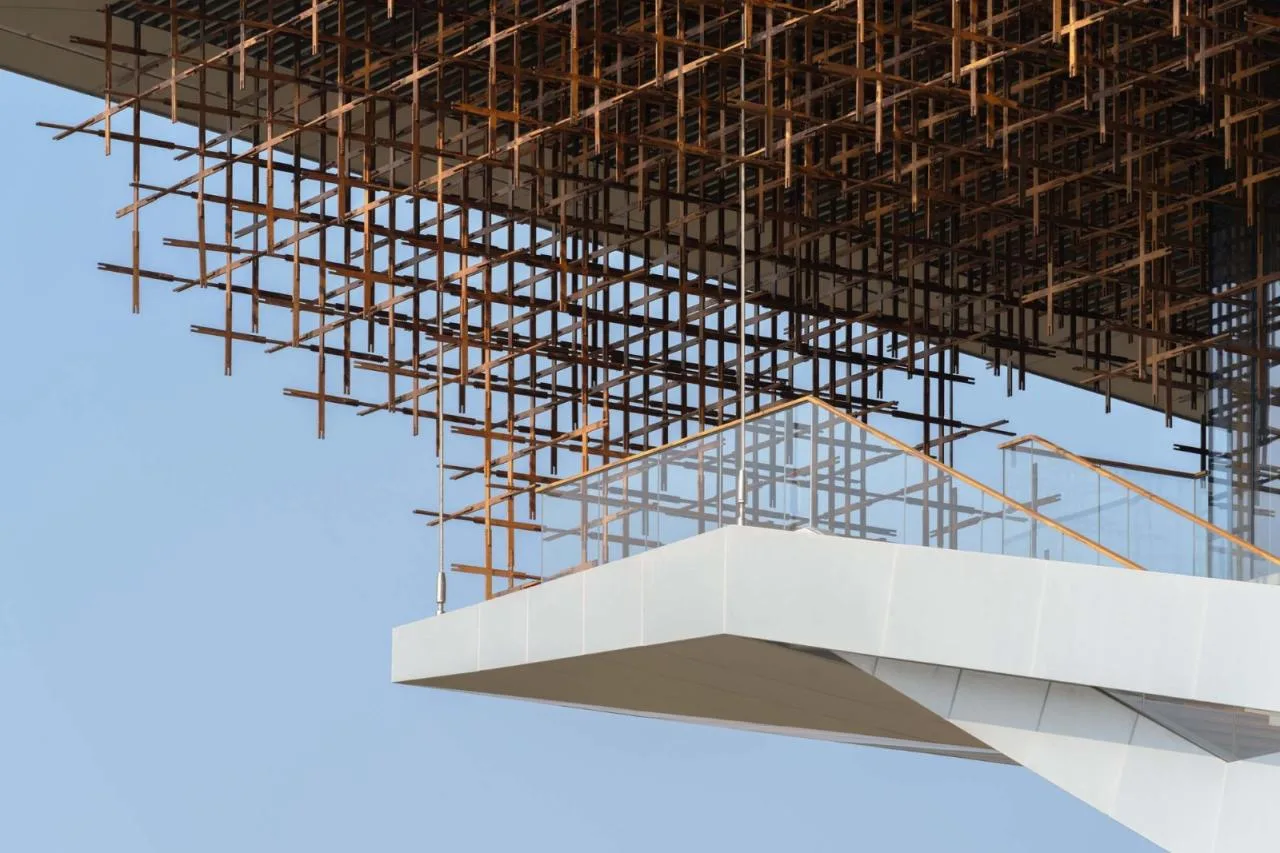
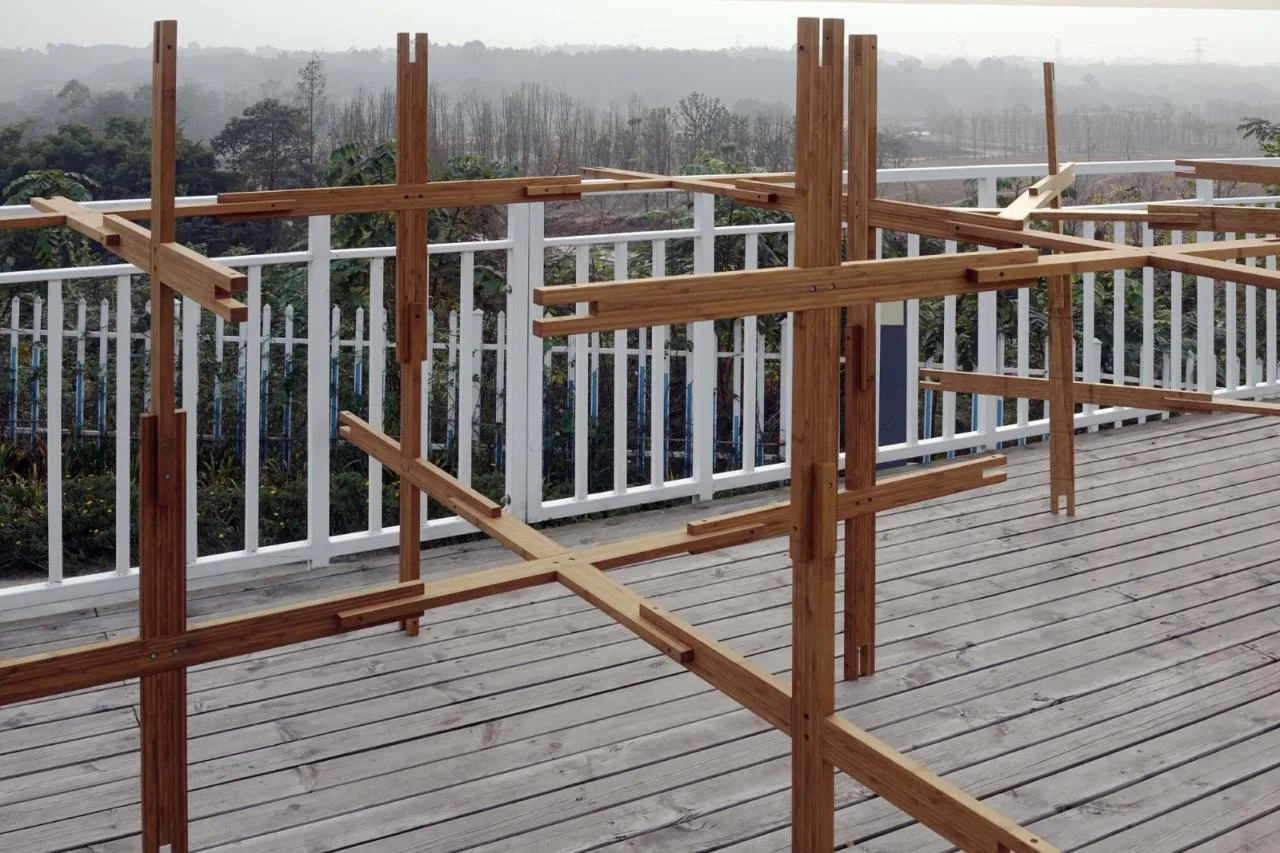
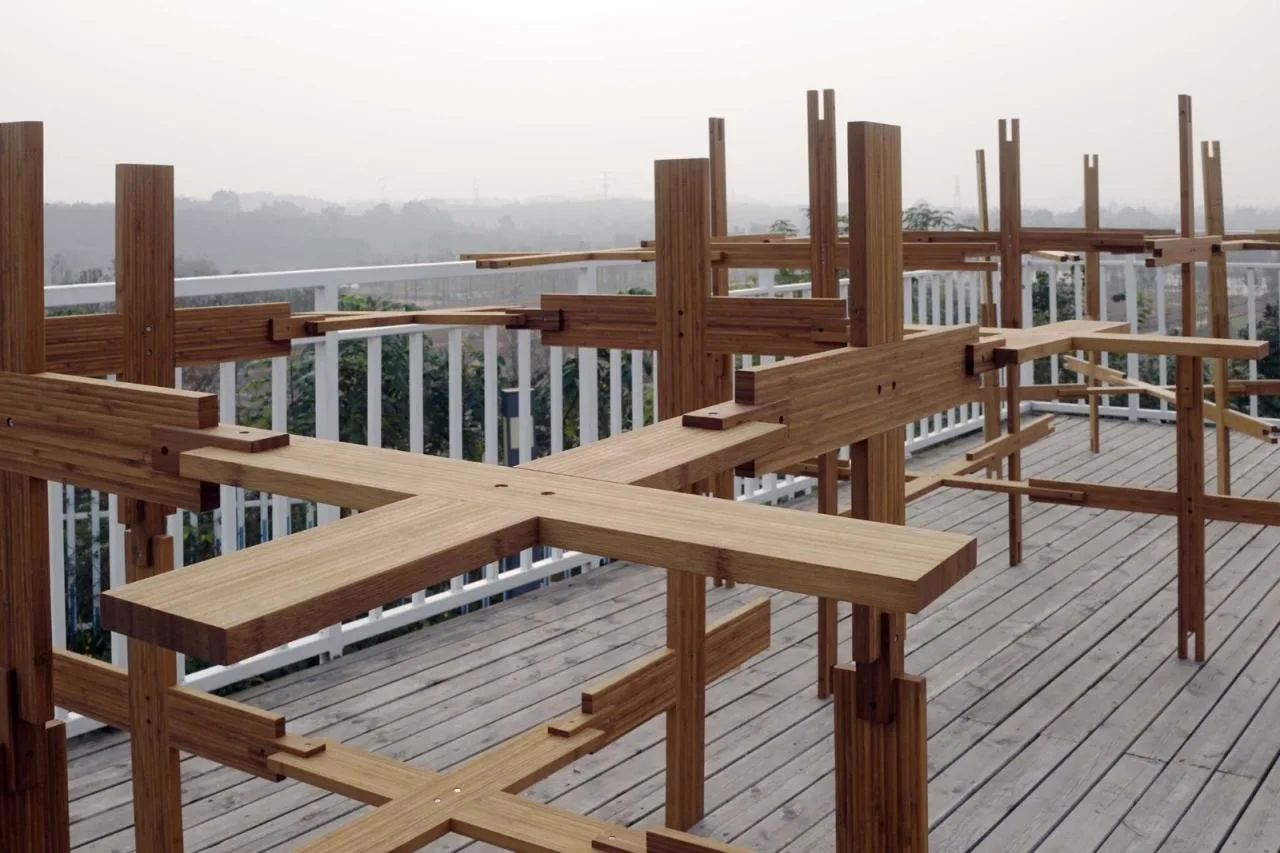
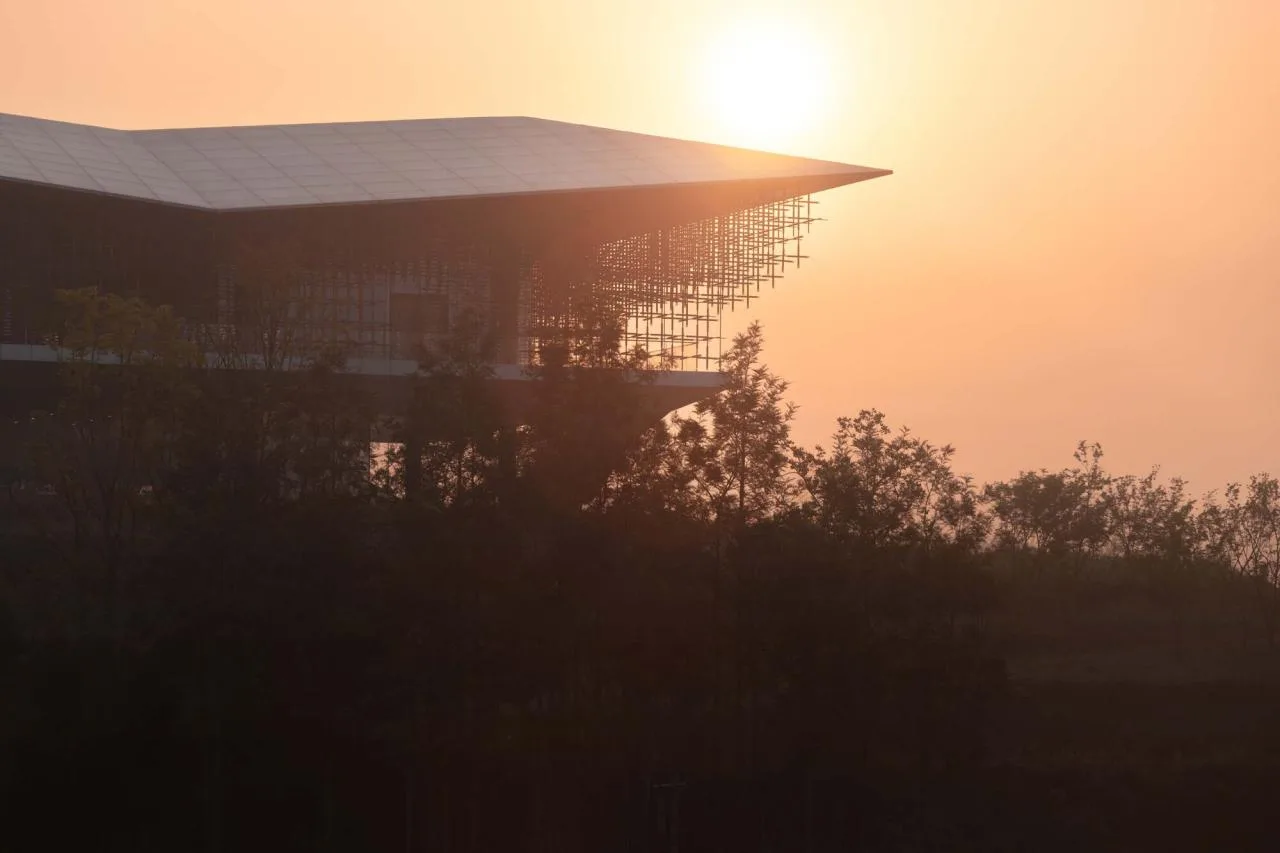
In line with low-carbon environmental protection and sustainable construction principles, the roof decoration reflects Sichuan and Shu cultural heritage by using bamboo as a traditional material. Through innovative technology, bamboo is transformed into a bamboo-steel composite material.
This material is modularized using bamboo-steel cross components with mortise and tenon joints and bolted connections, creating a layered, soft wooden space. After refining the structural connections and the building’s overall aesthetic, 20 columns and approximately 30,000 pendants were assembled using interlocking cross connections to achieve the final effect.
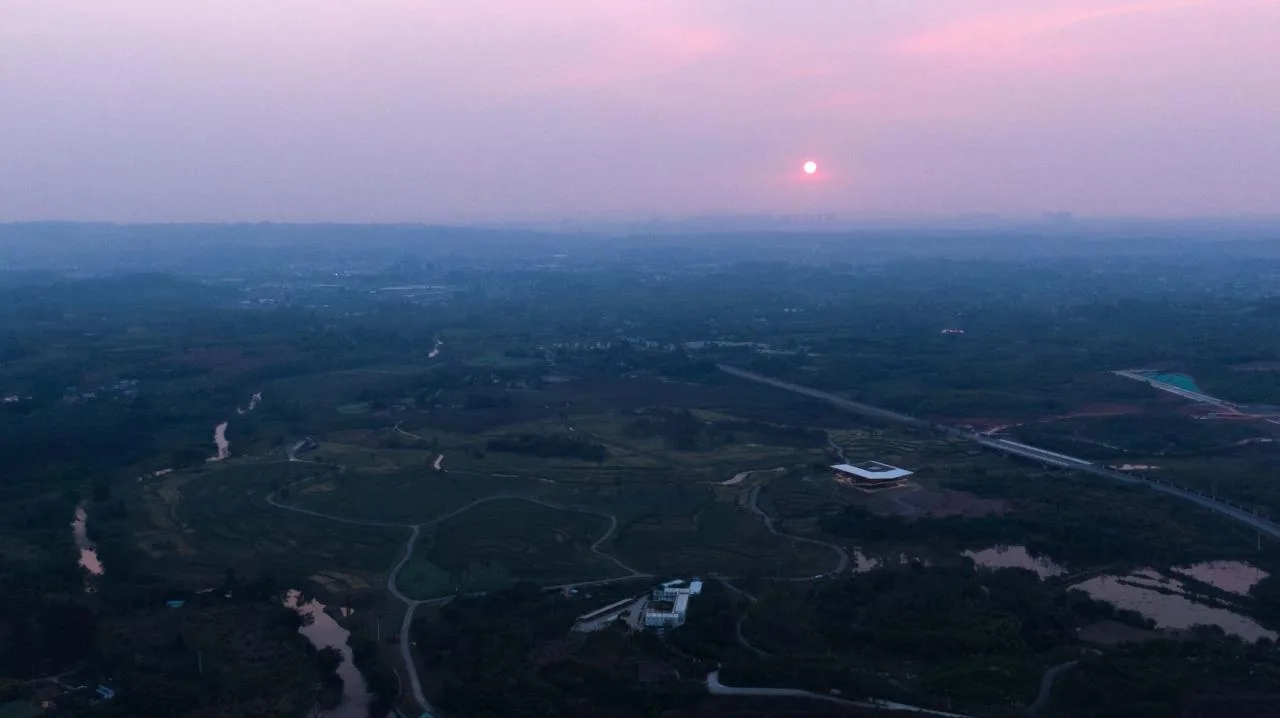
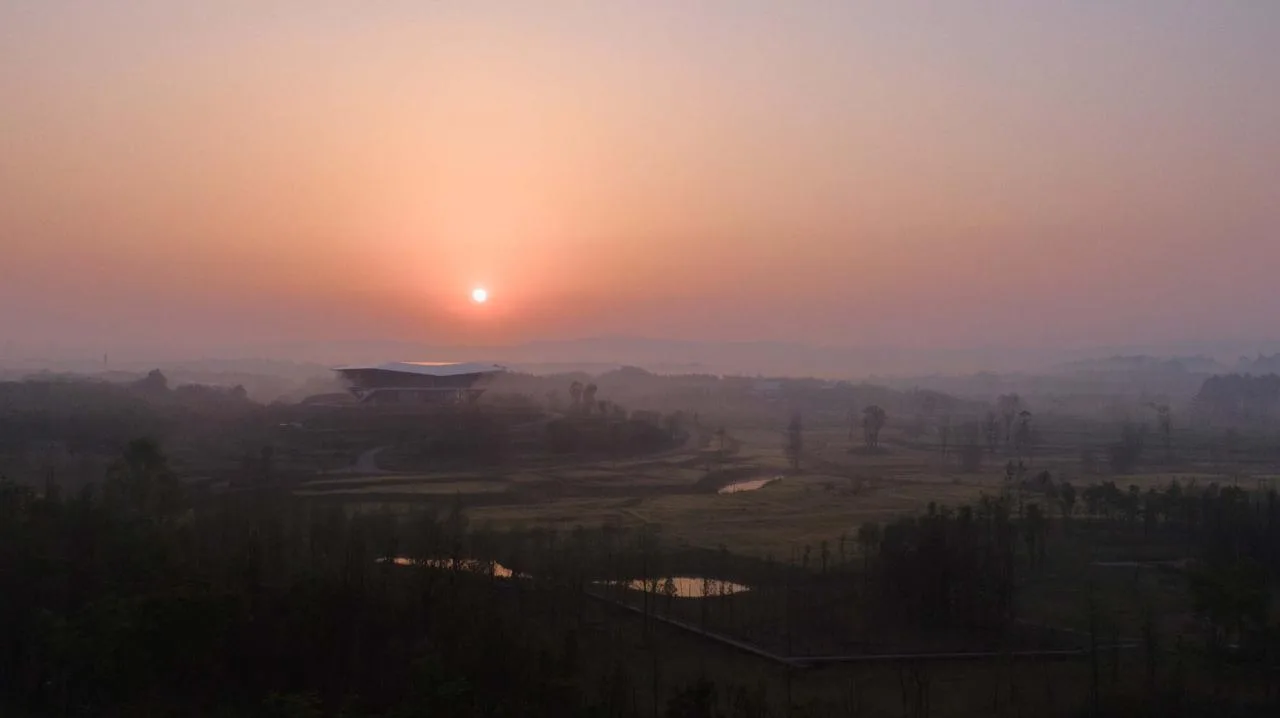
The design team has explored a new lightweight construction approach tailored to the western Sichuan Plain. Wang Ning notes, “I believe this approach perfectly suits the lifestyle of Chengdu residents: relaxed, grounded, diverse, and flexible.”
Project Drawings
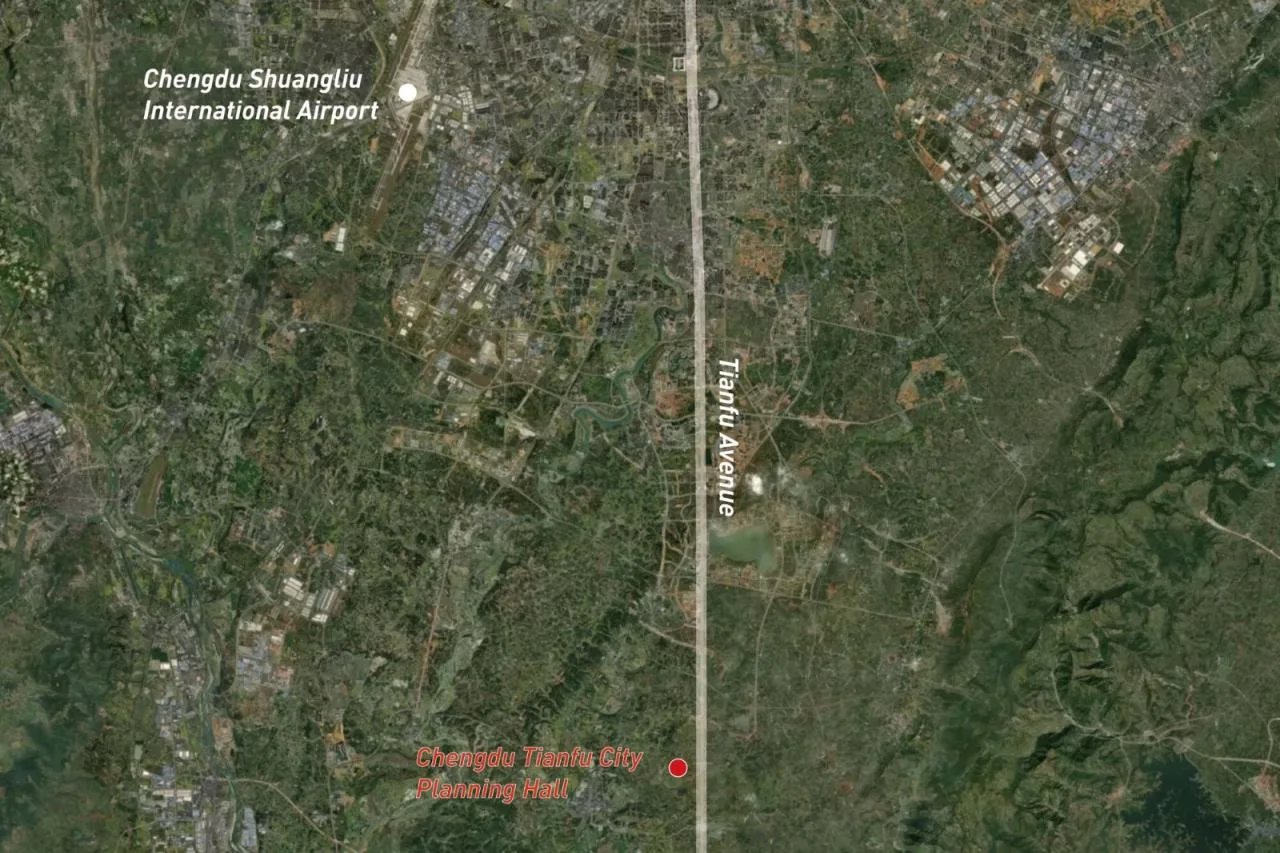
△ Project Base Diagram
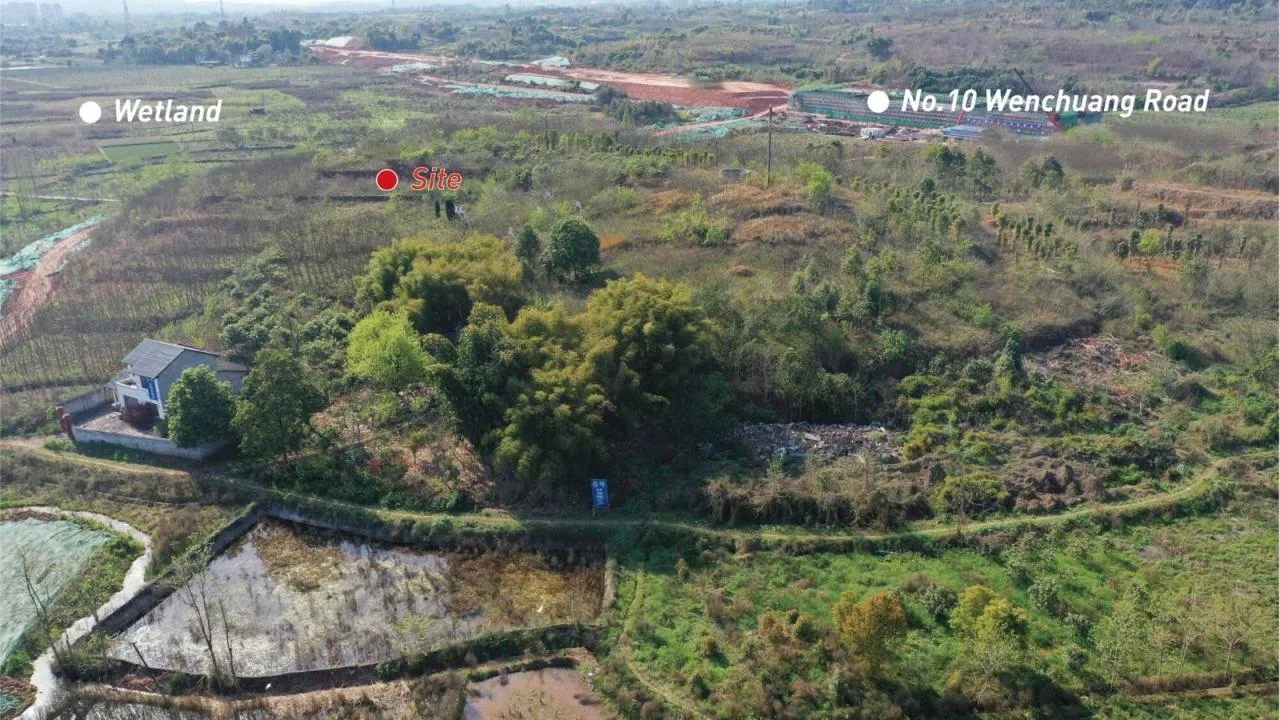
△ Project Base Diagram
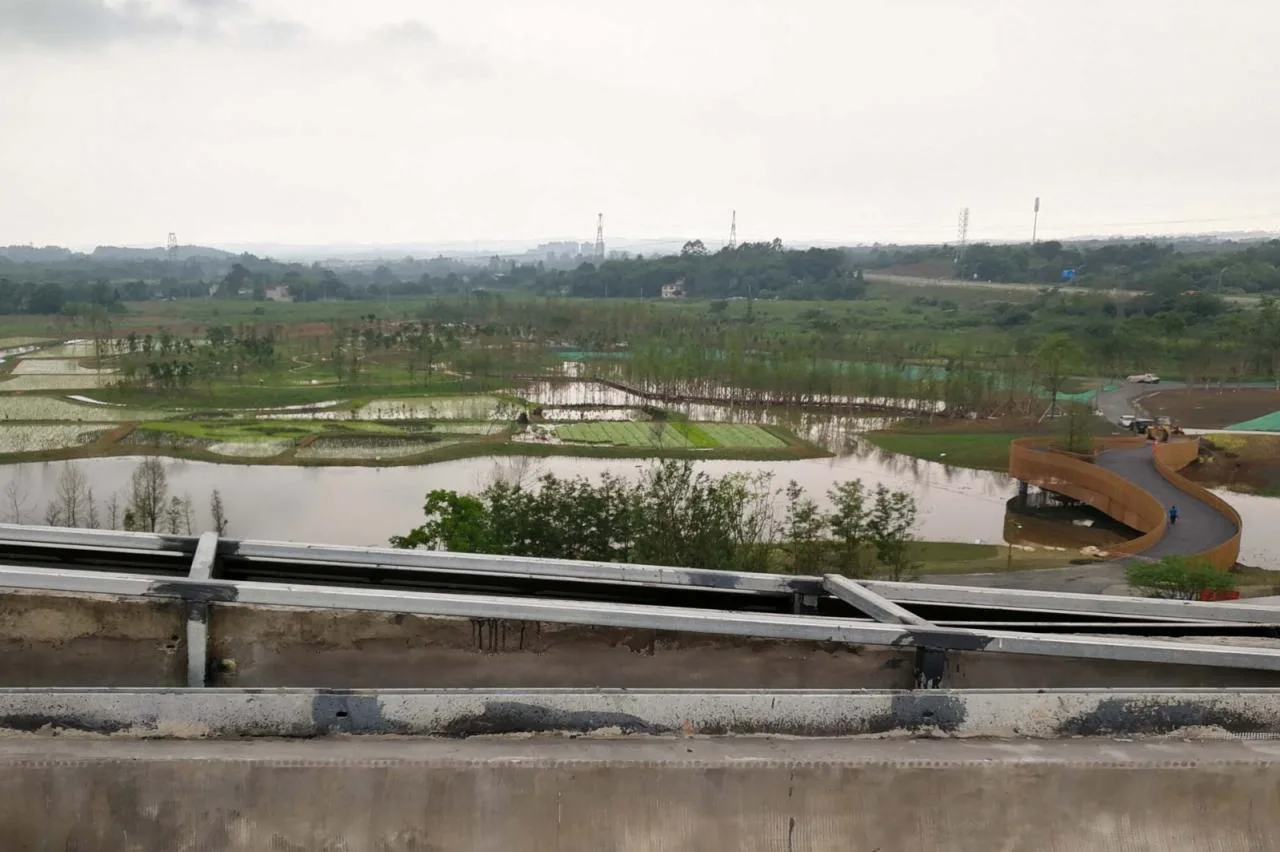
△ Project Base Diagram
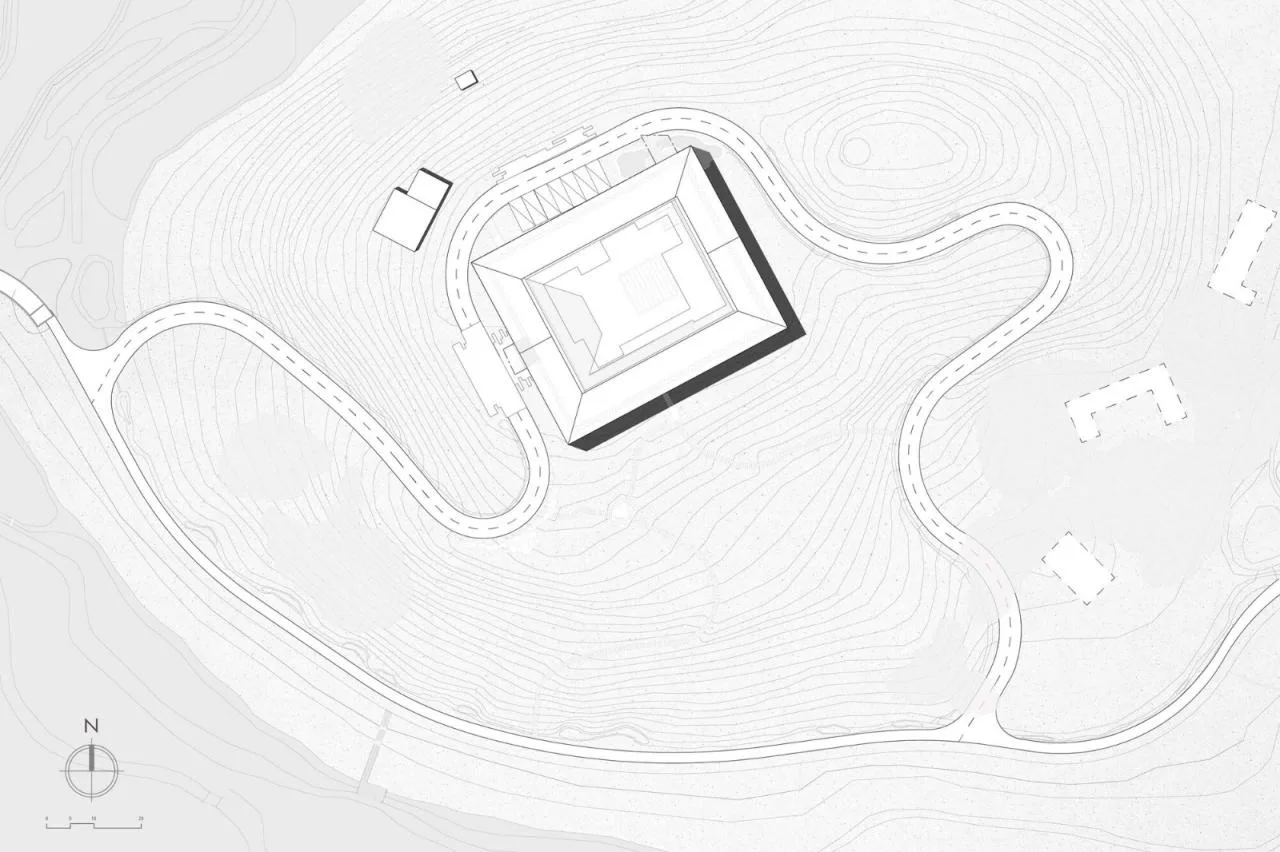
△ General Layout Plan
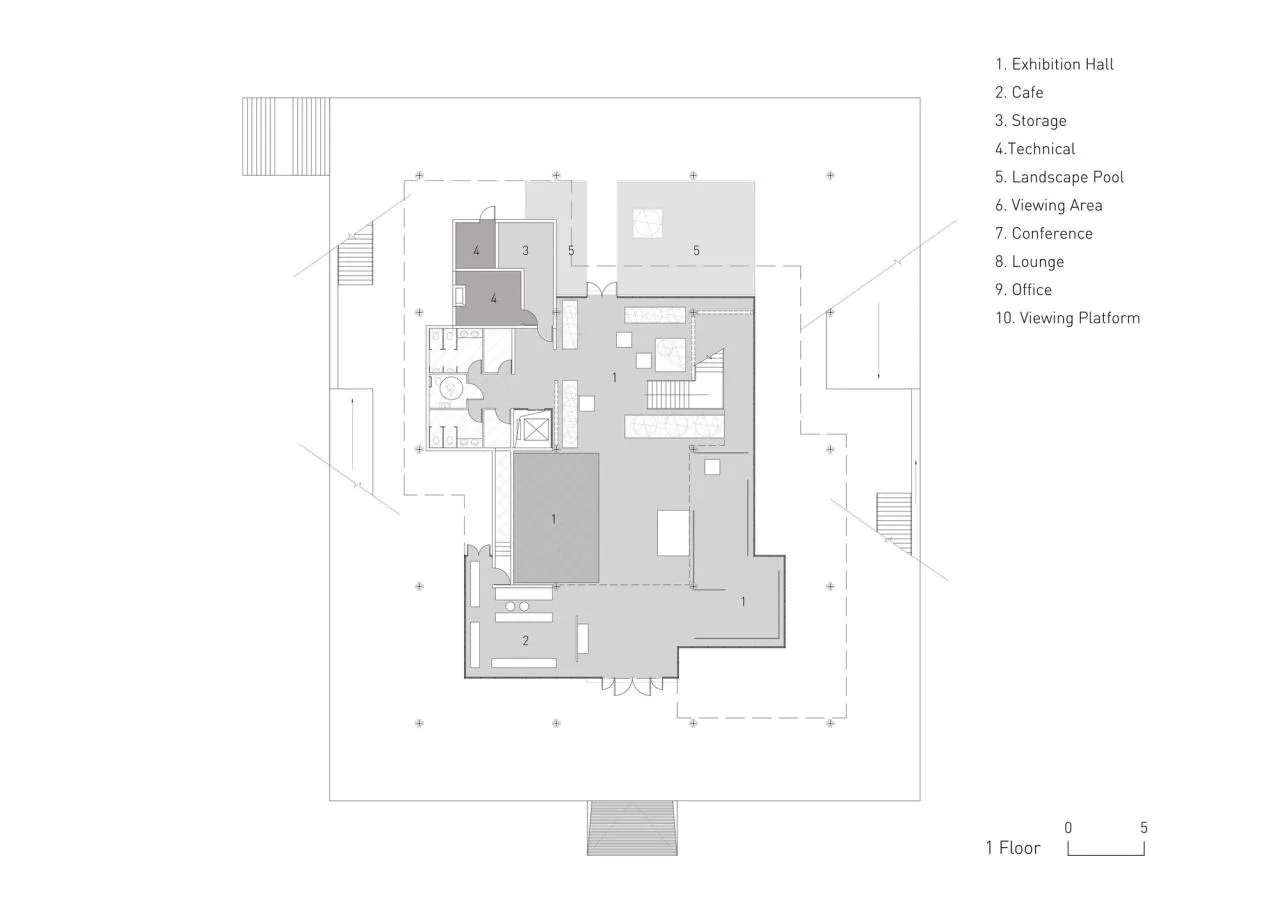
△ First Floor Plan
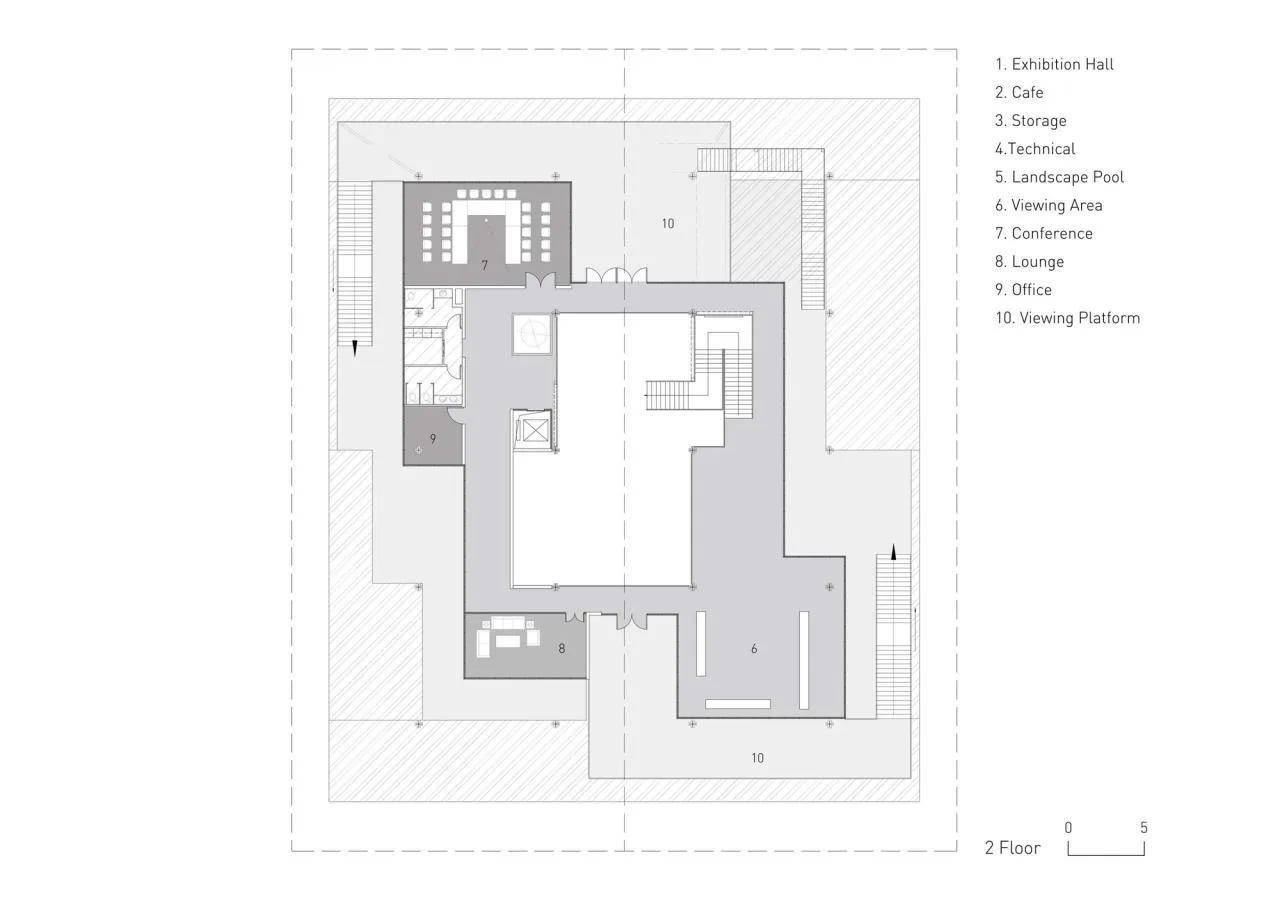
△ Second Floor Plan
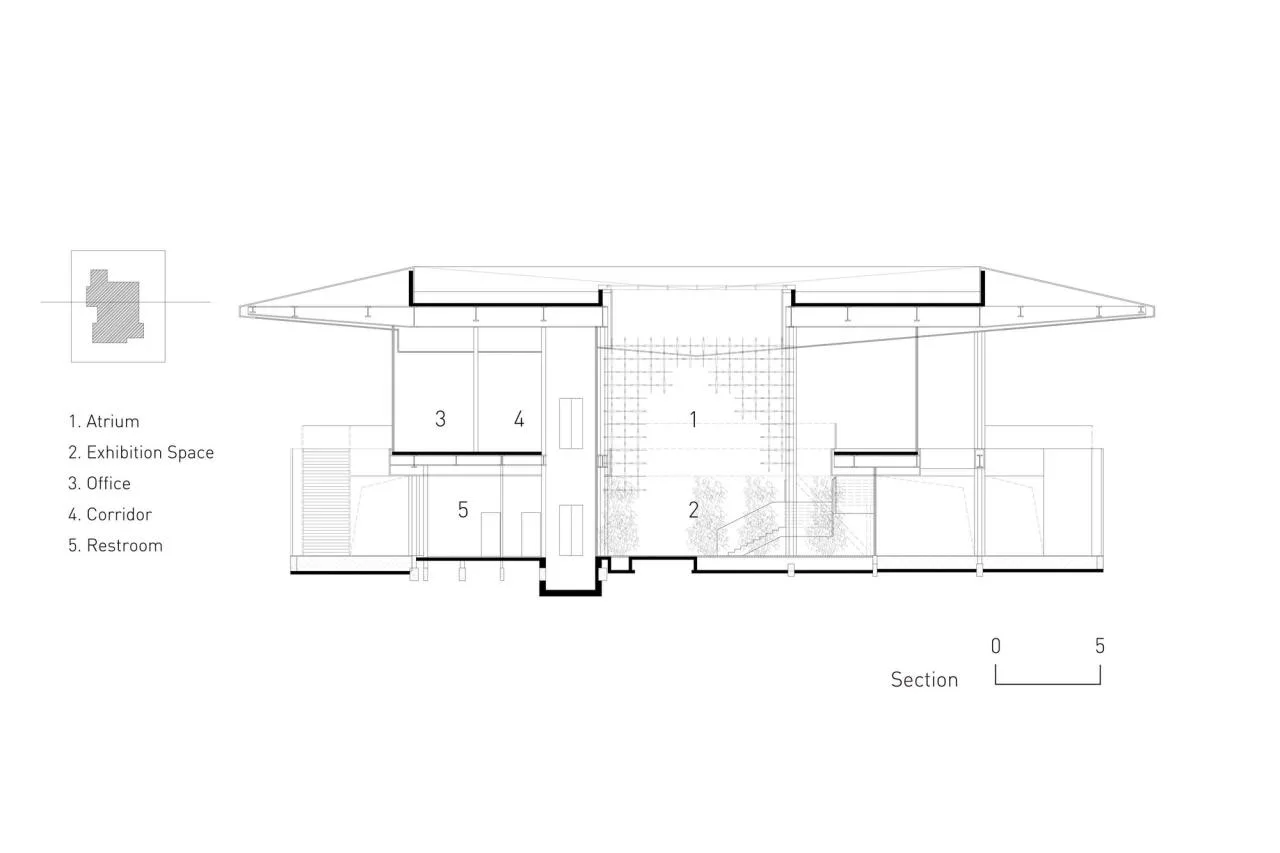
△ Section Diagram
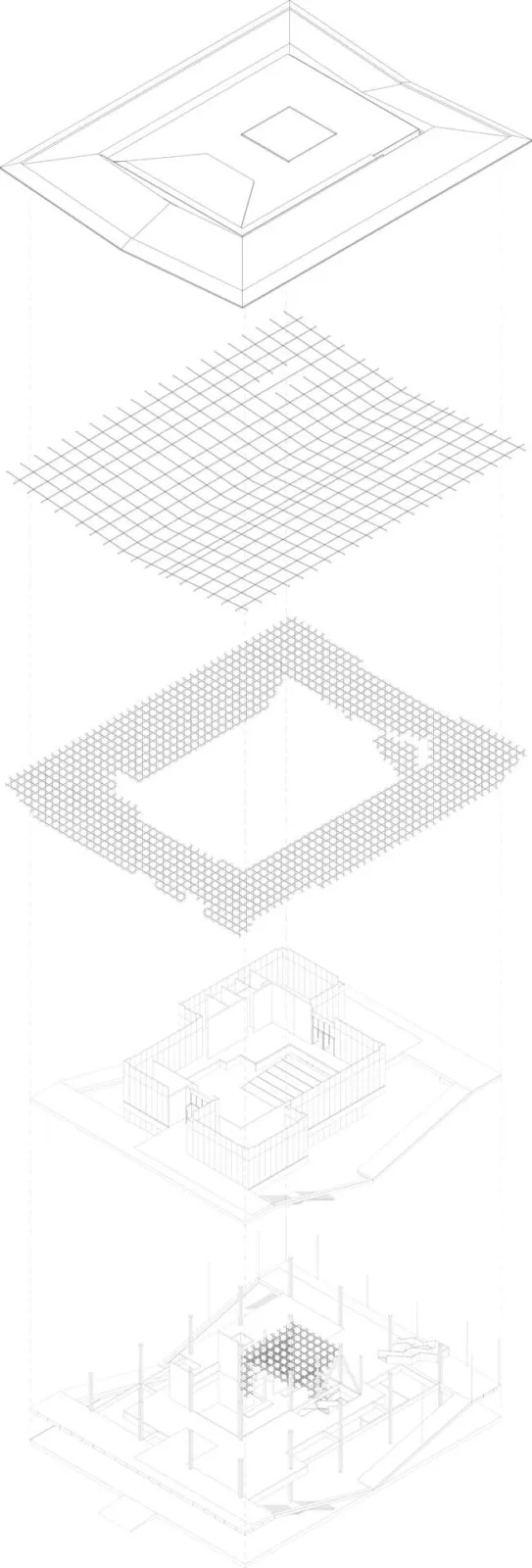
△ Exploded Diagram
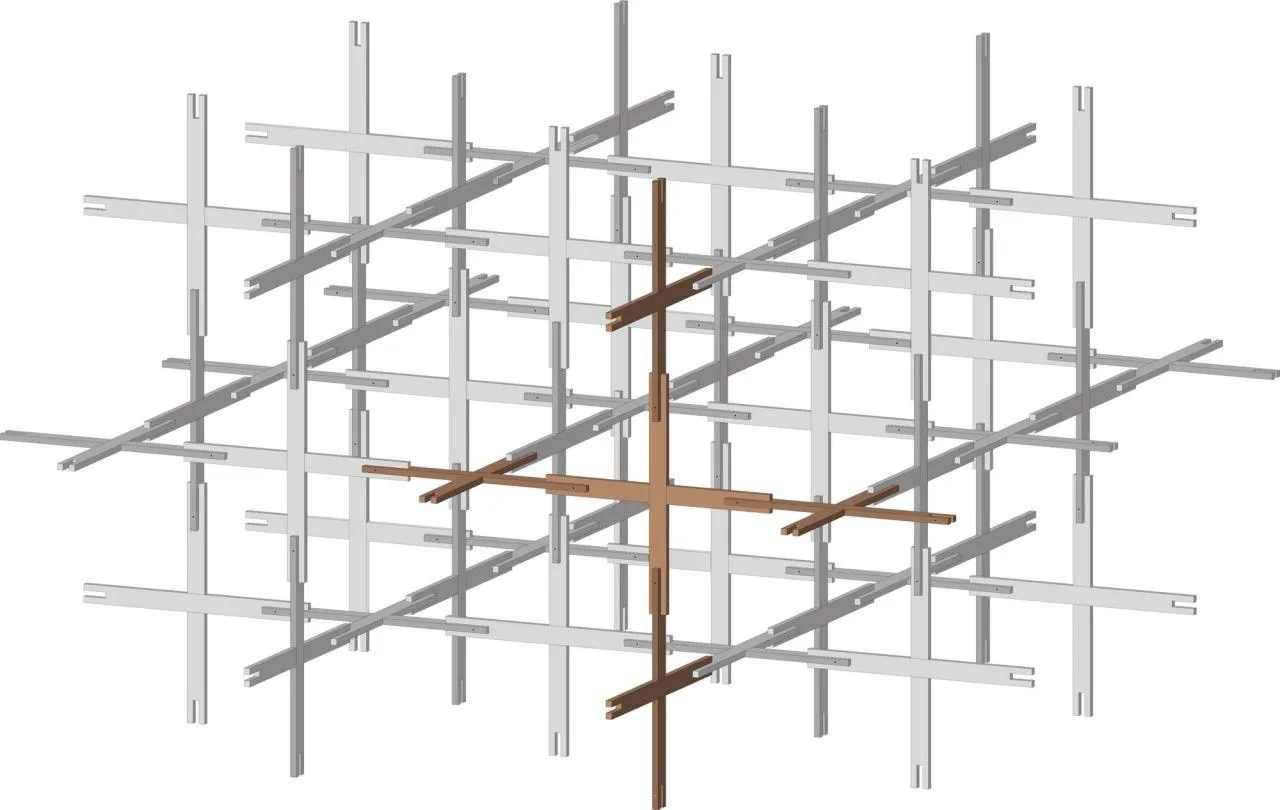
△ Construction Schematic
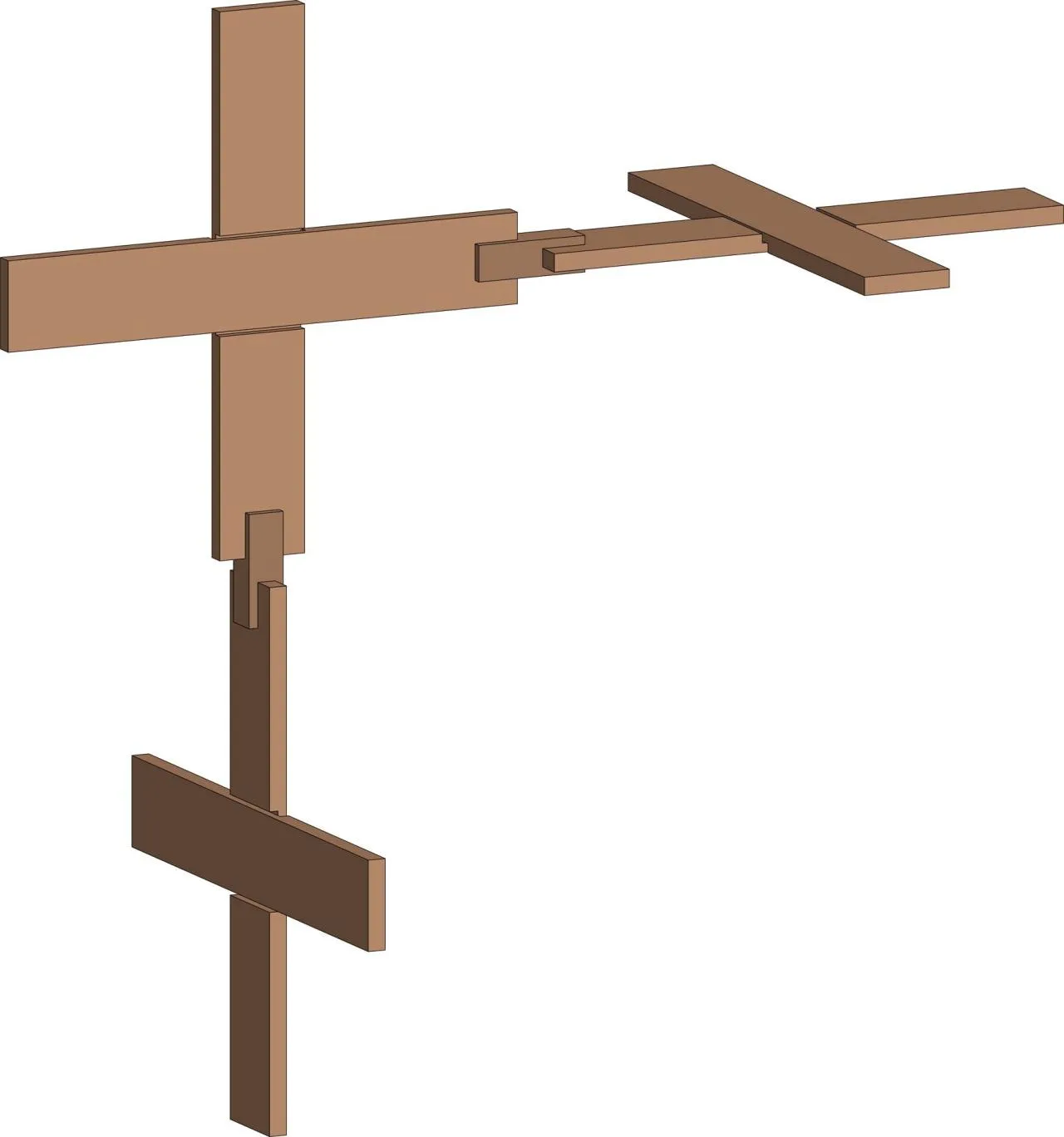
△ Construction Schematic
Project Information
Architect: An Di Architectural Design
Area: 1,190 m²
Project Year: 2022
Photographer: Existence Architecture – Architectural Photography, Tianfu Cultural and Creative City
Manufacturers: Inner Mongolia Baogang Steel Union Co., Ltd., Sichuan Nanbo Energy Saving Glass Co., Ltd., Hongya Zhuyuan Technology Co., Ltd.
Lead Architect: Wang Ning
Design Team: Li Qinyi, Tien, Ma Yutong, Sui Xin
Collaborative Designer: China Northwest Municipal Engineering Design and Research Institute Co., Ltd.
Structural Design: China Municipal Engineering Northwest Design and Research Institute Co., Ltd.
Design Consultant: China Municipal Engineering Northwest Design and Research Institute Co., Ltd.
Construction Party: Chengdu Construction Engineering Group Co., Ltd.
Client: Tianfu Investment Group Co., Ltd.
Location: Chengdu















Must log in before commenting!
Sign Up