
BIM software serves as a tool or medium for implementing BIM concepts and achieving BIM outcomes. The author believes that the quality of BIM application in projects is, to some extent, influenced by the quality of software usage. Traditional CAD software has become a bottleneck, especially in today’s large-scale and structurally complex projects. In this article, I will discuss the advantages of BIM software.
Advantage 1: Visualization
Visualization is a key strength of both BIM itself and BIM software. Traditional CAD drawing software typically represents projects using points and lines, relying heavily on the imagination and expertise of personnel to interpret complex structures and spatial dimensions. Moreover, 2D drawings often lack intuitive clarity, making it difficult for all project stakeholders to fully understand the design.
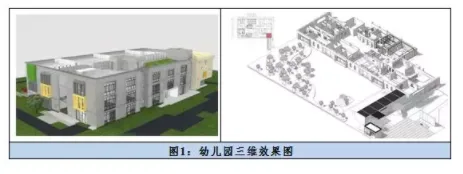
BIM software, on the other hand, uses object-oriented concepts to create detailed 3D models of projects. These models visually convey the shape, appearance, and other characteristics of a building, providing all parties involved with a clear and intuitive understanding. Additionally, through informatization and parameterization, BIM software presents not only the visual aspects but also the information and attributes of building components and equipment, enabling participants to grasp the overall performance of the project beyond just its appearance.
Advantage 2: Comprehensive Functionality
Traditional 2D drawing software offers limited functionality, often requiring only one program throughout the project lifecycle. However, with the increasing specialization and division of labor in the construction industry, relying on a single software from start to finish is no longer feasible.
BIM software addresses this by catering to the specific needs of various disciplines within a project. For example, there are specialized tools for architecture, structural engineering, plumbing, and electrical work. BIM also supports physical analyses, such as energy consumption and environmental impact assessments, as well as geometric analyses like structural and force evaluations.
Beyond design and analysis, BIM software extends to project schedule simulation, cost control, project management, and even operation and maintenance. Tasks that were once challenging—such as clash detection and construction simulation—now have dedicated software solutions. As a result, BIM software is not only more advanced and specialized compared to the CAD era, but it also offers a broader range of functionalities, significantly supporting the industrialization of construction.














Must log in before commenting!
Sign Up