
The adoption of BIM (Building Information Modeling) has become a significant trend among domestic construction companies, with more firms entering the BIM industry. BIM demonstrates clear advantages over traditional tools during the bidding phase. Today, we will explore how BIM is applied in the bidding process.
1. Bidding Phase
During the bidding stage, BIM is primarily used to create an information-rich 3D model that enables accurate and comprehensive quantity takeoffs and generates detailed quantity lists. Since BIM models contain extensive engineering data, they function like a small database, with information directly corresponding to the actual project. This includes physical, geometric, and spatial data.
Leveraging this data within BIM models allows for quick and precise calculations and analysis of building component quantities and costs. This significantly reduces manual work and improves accuracy. At this stage, companies can either utilize existing design models or develop separate BIM computational models. From a process standpoint, this approach minimizes manual labor and reduces errors that might result from remodeling.
Moreover, the computational complexity inherent in BIM models is a critical focus during bidding. Automating quantity calculations through BIM moves beyond traditional reliance on human experience. It frees quantity surveyors from tedious tasks, allowing them to dedicate more time to project risk assessment and inquiries, thus creating greater value.
BIM models serve as databases that store detailed project component information, providing cost estimators with essential data for preparing cost estimates. This drastically cuts down the workload involved in manually extracting information from drawings and reduces the potential for errors. Consequently, BIM’s automated quantity calculation eliminates human error factors, delivering more objective and reliable data.
2. Bidding Presentation and Planning
BIM tools facilitate model creation, data import, virtual demonstrations, and walkthroughs, enabling all project stakeholders to collaboratively discuss the overall plan’s feasibility. This process particularly highlights two critical factors: schedule and cost.
By integrating time and cost dimensions into the BIM model, construction and installation plans can be simulated and optimized according to the project timeline. Simulating key activities such as procedures and construction methods helps guide subsequent on-site operations.
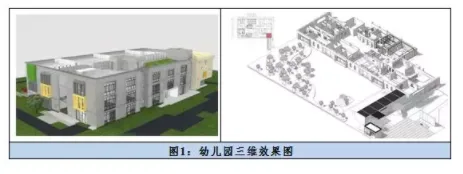
Furthermore, the visual nature of BIM models provides clients with an intuitive understanding of the construction effects during bidding, enhancing the company’s impression.
The application of BIM 4D is also a vital component of the bidding evaluation. By linking progress data with spatial information, BIM 4D vividly illustrates the construction process and virtual progress of the entire building over time.
Additionally, BIM 4D supports more accurate construction planning, progress tracking, scheme optimization, and site arrangement. These visual presentations allow clients to clearly see how the bidding team controls the main construction, balances construction scheduling, and develops a reasonable overall plan. This transparency enables effective assessment of the bidding company’s construction experience and capabilities.
In conclusion, BIM plays a crucial role in the bidding process. Its application enhances the quality and efficiency of bids, ensures comprehensive and accurate quantity takeoffs, promotes scientific and reasonable pricing, and strengthens detailed bidding management. Furthermore, BIM reduces risks and encourages a more standardized, market-driven bidding environment.














Must log in before commenting!
Sign Up