
The design phase is a crucial part of the early stages in construction projects. Issues arising at this stage often lead to significant challenges during downstream construction and operation. Today, the use of BIM (Building Information Modeling) technology elevates traditional CAD models to a higher standard, enhancing the design process. In this article, we will explore how BIM supports and improves design work.
1. Enhanced Visualization and Meeting Project Needs
In traditional 2D design, communication between designers and project stakeholders relies heavily on flat drawings composed of points, lines, surfaces, symbols, and standards. For a comprehensive understanding, participants need to study detailed drawings, sections, and perspectives, which can be overwhelming—especially for non-professionals like owners. This often results in misunderstandings due to information asymmetry.
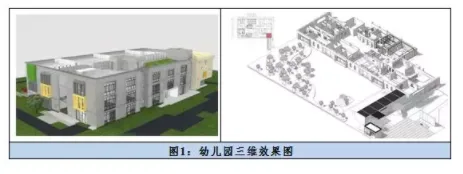
With BIM software, 3D visualization models replace these 2D drawings, transforming points, lines, and surfaces into fully interactive three-dimensional representations. Additionally, attribute information can be embedded into building components within the model. This greatly enhances expressiveness and allows all participants to better understand and convey design intentions. Owners, in particular, benefit from an intuitive, holistic view of the project, ensuring seamless information flow.
2. Collaborative Workflow to Minimize Errors
Traditionally, designers worked independently within their disciplines, communicating only when necessary. This siloed approach often resulted in information gaps and hidden conflicts due to the limited expressiveness of 2D designs and individual limitations. These factors frequently caused errors, omissions, and clashes during construction.
By adopting BIM technology, professionals can create detailed models for various disciplines, embedding comprehensive information about building components. Through BIM software, collision detection can identify spatial conflicts—both hard and soft—that might otherwise go unnoticed during design. This reduces costly design revisions and enhances overall quality.
Moreover, establishing a BIM collaborative platform allows models from multiple disciplines to be uploaded and shared. This common data environment breaks down information silos, accelerates the design process, reduces communication barriers, and significantly improves efficiency.
3. Visual Review to Enhance Communication
Previously, design reviews depended on 2D drawings reviewed separately by each discipline. While individual reviews might appear flawless, integration often revealed numerous mistakes. BIM introduces a shared 3D data model, enabling all parties to collaborate within a unified framework.
This shared model facilitates faster and more accurate information exchange between disciplines. It also serves as an effective communication platform, allowing stakeholders to visualize the project’s prototype, component styles, and equipment properties directly within the model—eliminating the need to interpret complex technical drawings and greatly improving communication efficiency.
In conclusion, the benefits of BIM in design are clear. The integration of BIM technology from the early design stage is a growing trend and has been widely validated by practical applications. Designers and firms still relying solely on traditional methods are encouraged to adopt BIM early, as it offers substantial advantages and paves the way for greater success.














Must log in before commenting!
Sign Up