
With the rapid growth of China’s construction industry, an increasing number of large-scale and structurally complex projects have emerged. Traditional drawing management methods no longer meet the demands of representing and storing vast amounts of information. This often leads to unclear descriptions, poor communication, inaccuracies, and challenges in long-term preservation. The BIM model, developed through BIM technology, effectively addresses these issues. So, what are the advantages of BIM models compared to traditional drawings?
Advantage 1: Rich information and enhanced expressiveness
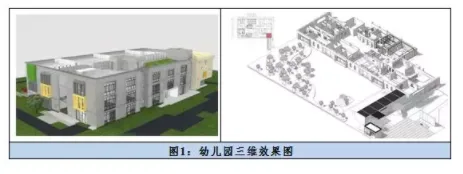
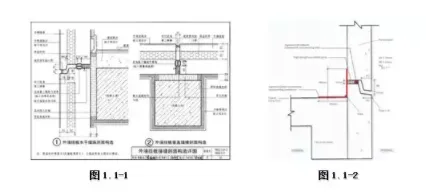
Traditional drawings rely heavily on annotations that require coordination with other drawings and often lack intuitive clarity. These are usually represented by points, lines, surfaces, and symbols. Additionally, the concept of drawing parameters is limited and primarily serves the purpose of drafting. In contrast, BIM uses specialized software to create models for various disciplines and processes, embedding detailed data directly into the model. This allows a true-to-life representation of the building, moving beyond traditional point-line-surface drawings.
For instance, instead of depicting cables as parallel line segments, BIM design tools create instances of cable classes. Each instance carries its own properties, including position, dimensions, composition, and a 3D model. The depth of information contained in such models far exceeds that of conventional floor plans and cable inventories.
Advantage 2: Faster, more accurate, and easier collaboration
Traditional drawings require significant time and expertise to locate specific building components and to fully grasp the architectural intent. By comparison, BIM models offer a more intuitive and precise visualization of the relationships between different building elements and specialties within a project. All stakeholders can quickly and accurately access detailed information about objects and understand the onsite environment.
This eliminates the tedious process of searching, flipping through documents, and interpreting graphics. Moreover, BIM excels at enabling cross-disciplinary collaboration by providing a unified platform for information exchange and sharing, significantly boosting work efficiency. Additionally, the extensive change data generated throughout the construction cycle—from design to completion—can be stored within the BIM model and updated in real time, ensuring accuracy and consistency.














Must log in before commenting!
Sign Up