
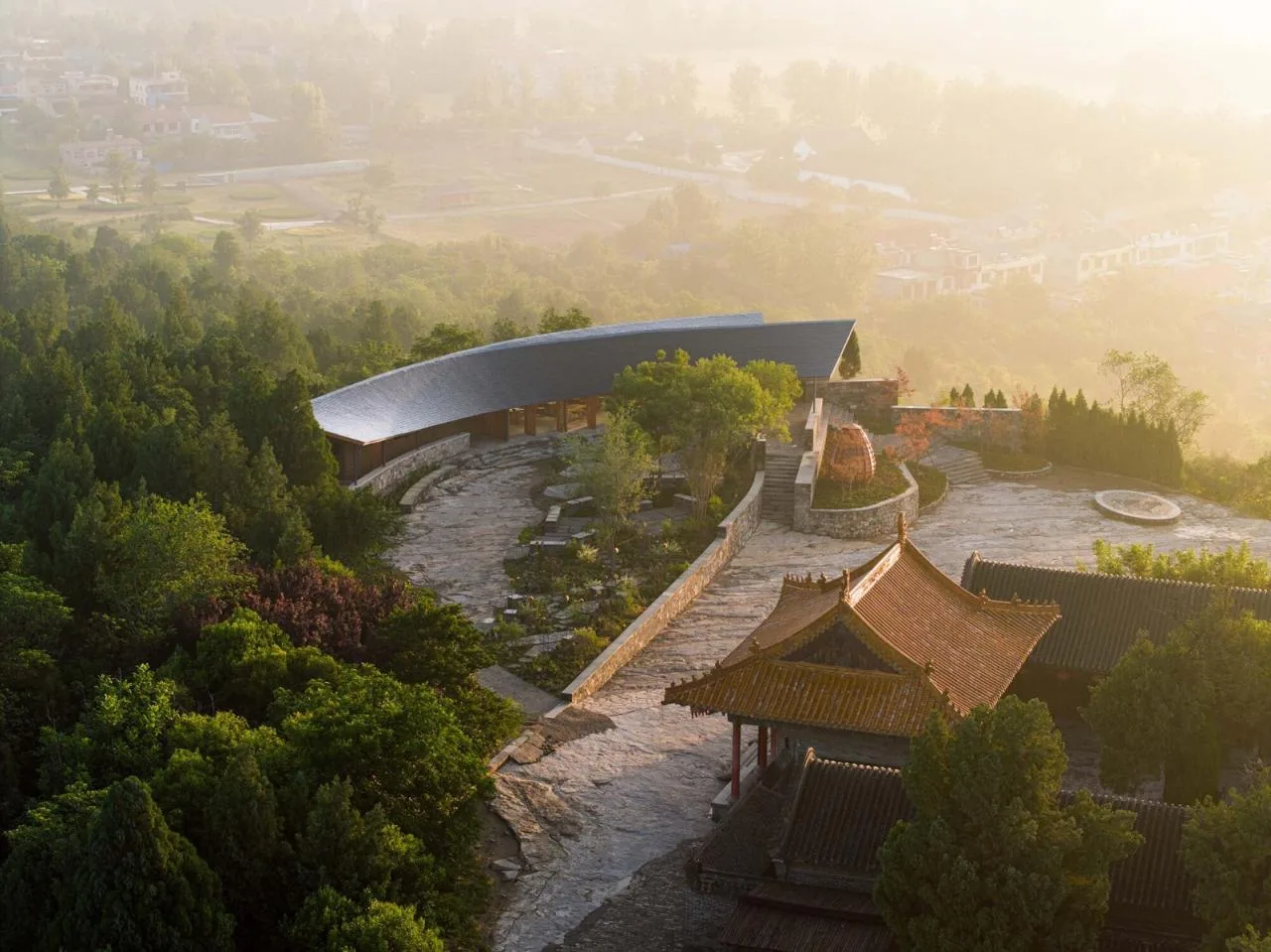
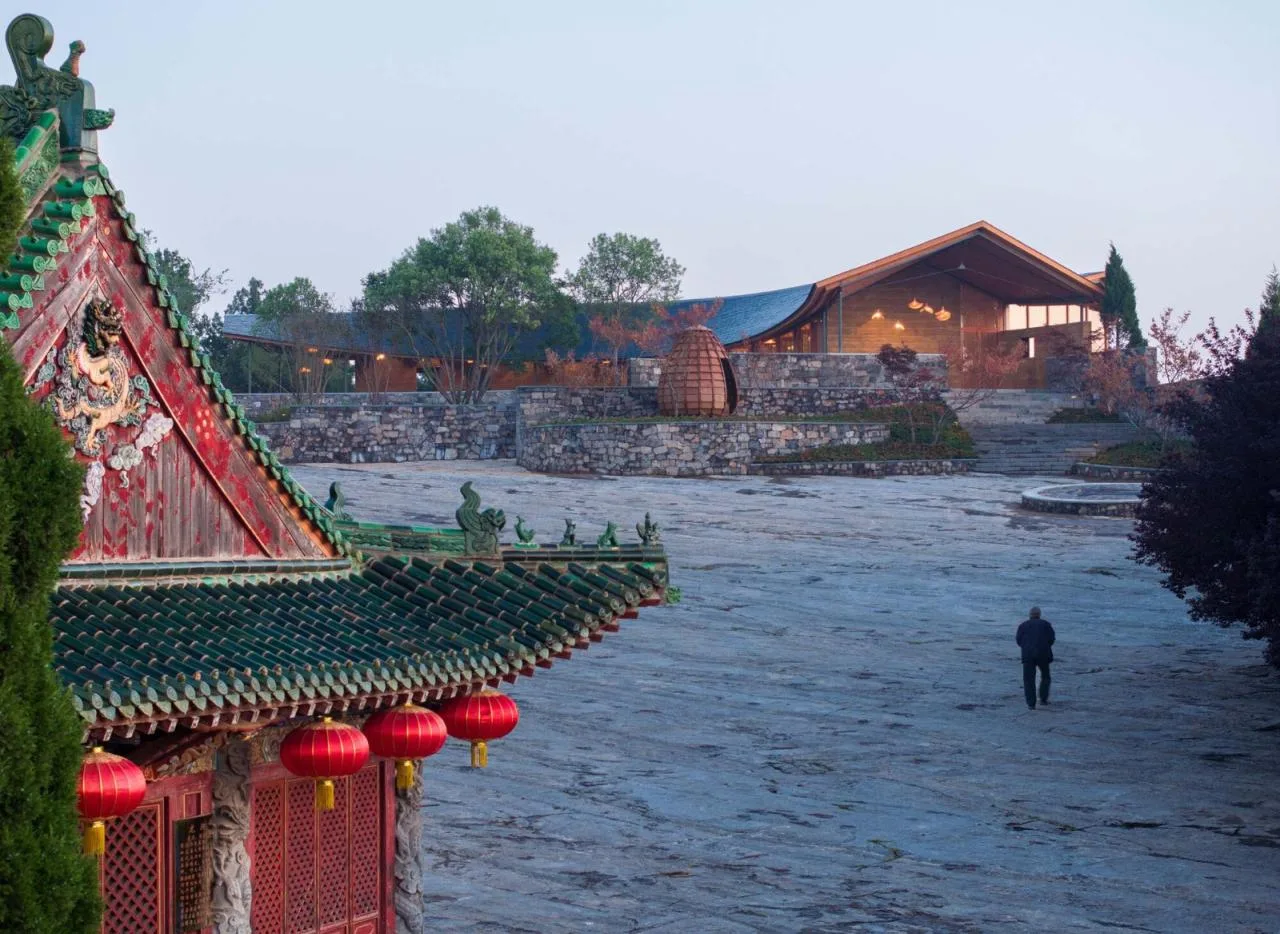
“When we first climbed Dapi Mountain, we were surrounded by endless rocks, moss covering the ground, green pines guiding the way, and ancient temples stretching out before us. Standing near these temples, we deeply felt that the new building needed to play a supporting role, blending humbly into the historical atmosphere shaped by thousands of years of heritage.”
In early summer 2022, we were invited to participate in the “Lighting Up Our Hometown Henan with Intangible Cultural Heritage” project. Henan’s endless wheat fields, rich agricultural culture, and ancient heritage left a profound impression on us. With reverence and anticipation, we boarded a train heading north to embark on a simple architectural journey.
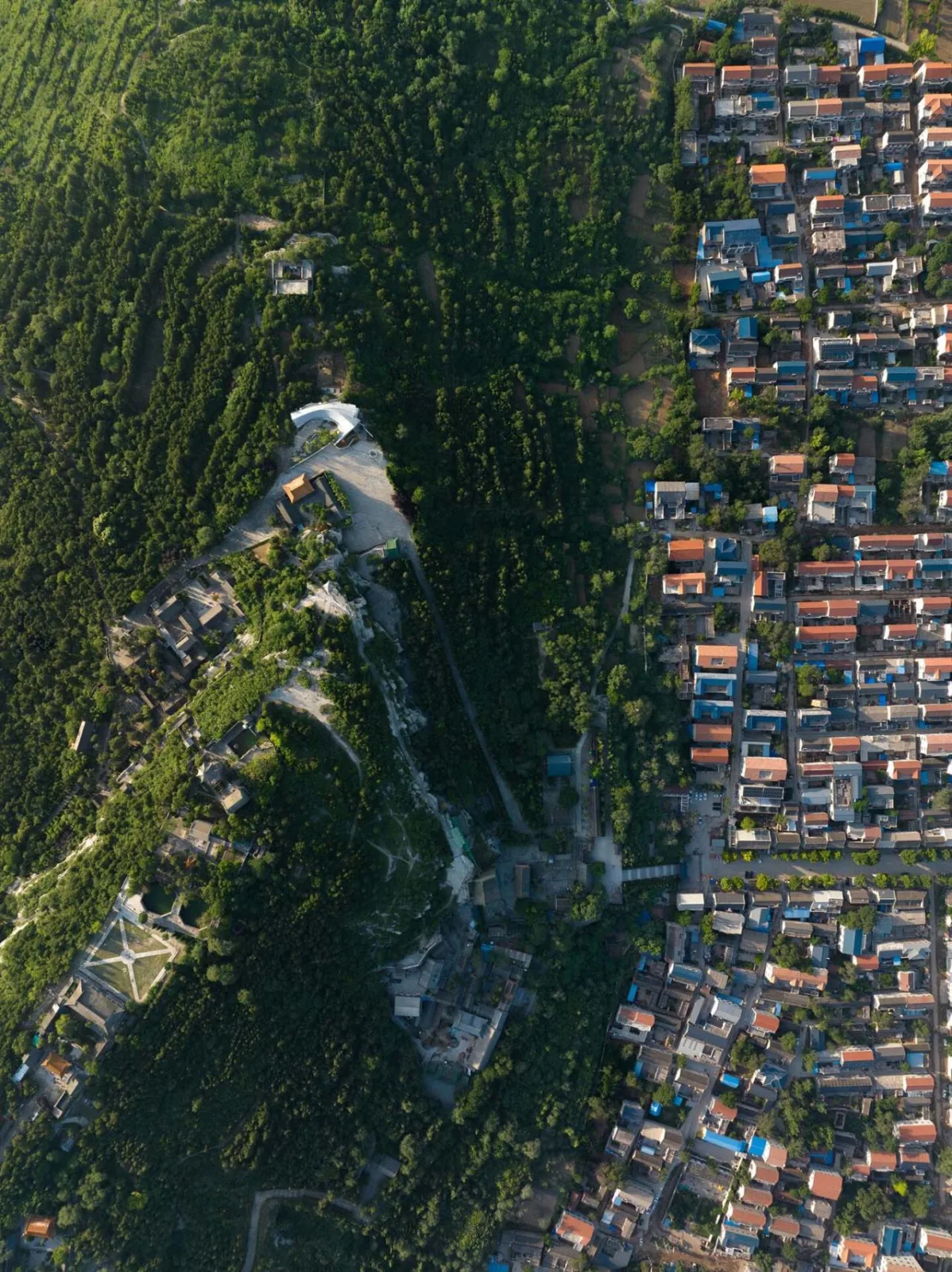
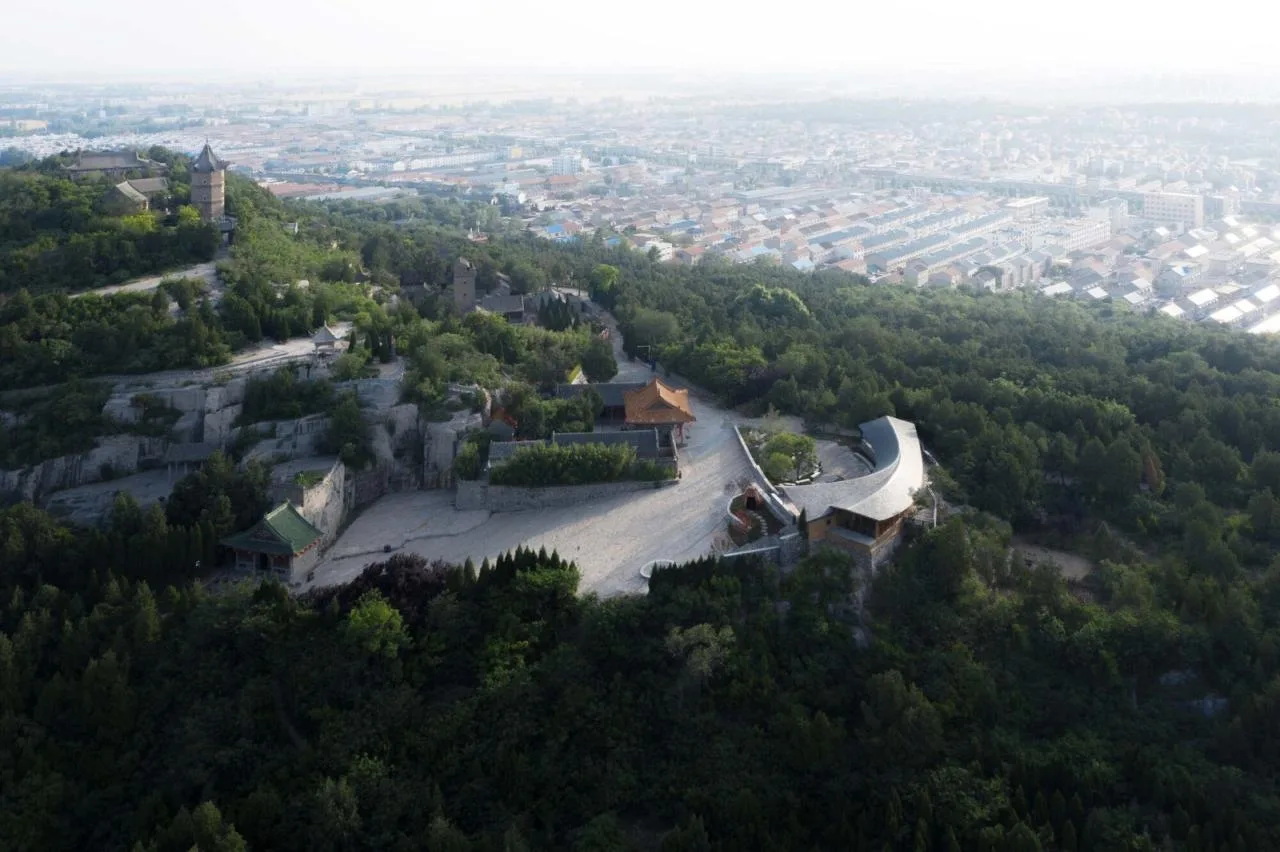
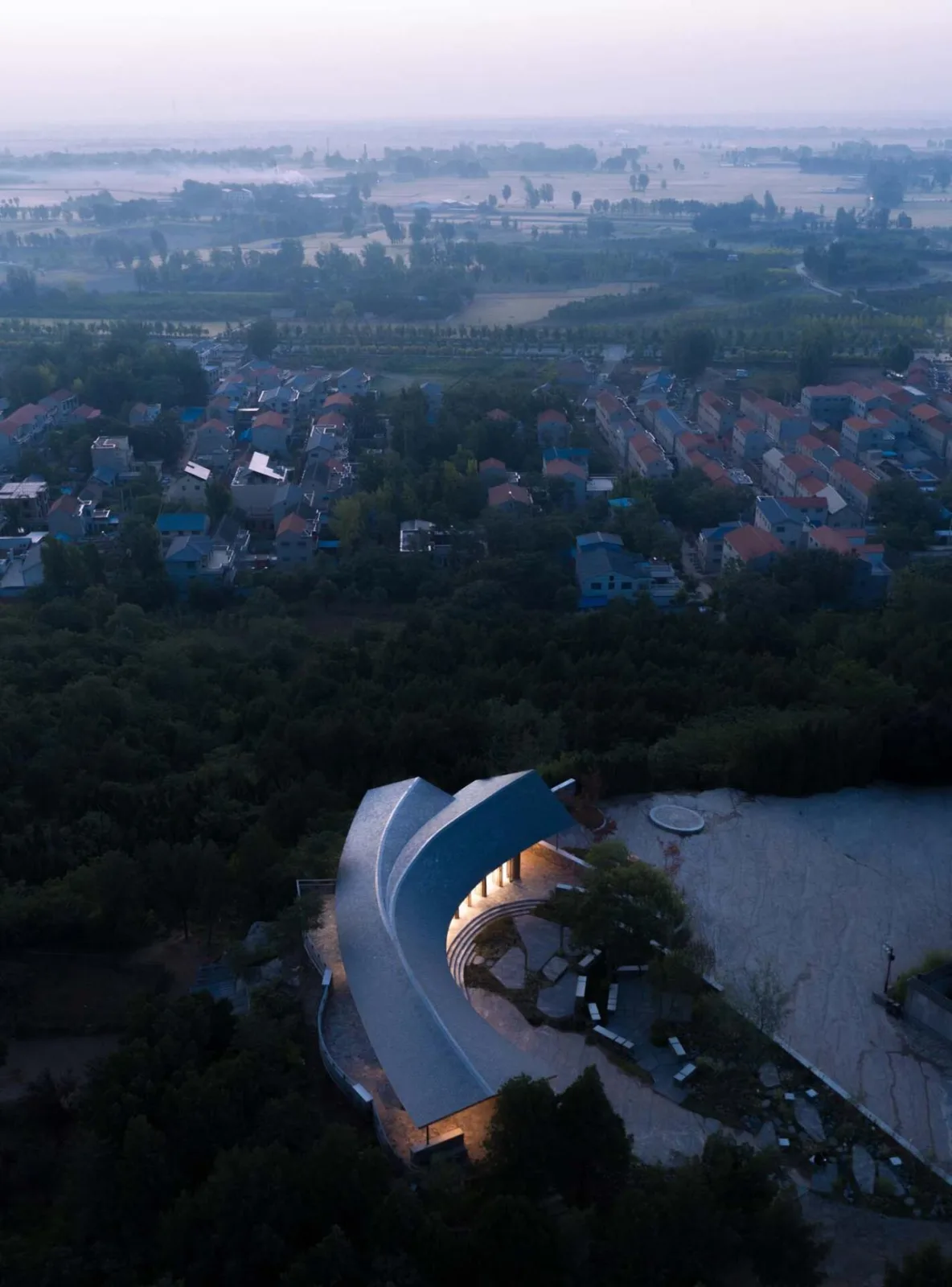
Dapi Mountain, located in Jun County, Hebi City, Henan Province, is renowned for hosting the earliest and largest cliff-carved Buddha in northern China. North of the mountain stands Guanyin Temple, originally built during the Yuan Dynasty, surrounded by towering ancient cypress trees. On the first and fifteenth days of each lunar month, pilgrims climb the mountain to pray and burn incense.
The project site is located on the cliff edge north of Guanyin Temple, where a long-abandoned bungalow once served as a rest stop for tourists. The owner hopes to rebuild a post station here to enhance the visitor experience and promote local intangible cultural heritage and crafts through the architecture itself.
Upon initial inspection, we found that Dapi Mountain is 135 meters high—not a towering range, but a solitary peak rising from flat land. The mountain is composed entirely of bluestone, with natural stone steps that create a serene, elegant atmosphere shaded by greenery. Notably, no artificial paths exist near the base; the raw stone dominates the landscape. This natural setting inspired us to design architecture that responds sensitively to the mountain’s character.
Standing on site, gazing into the distance, we focused on practical design questions: How can a space showcase intangible cultural heritage on this historic mountain? How should the architecture respond to the natural mountain terrain? How can we maximize northern views for visitors? And how can the building engage in a subtle, respectful dialogue with Mount Tai?
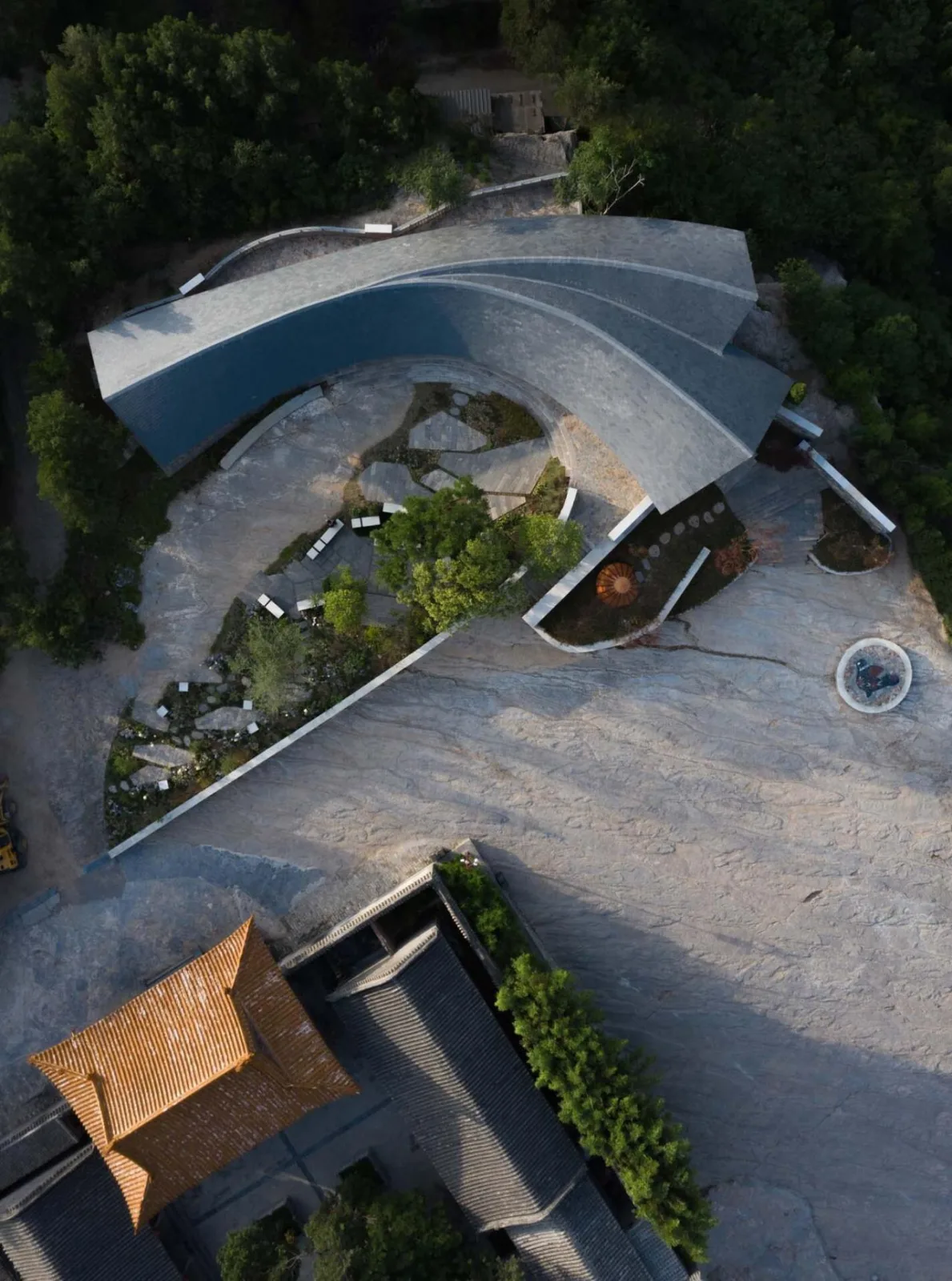
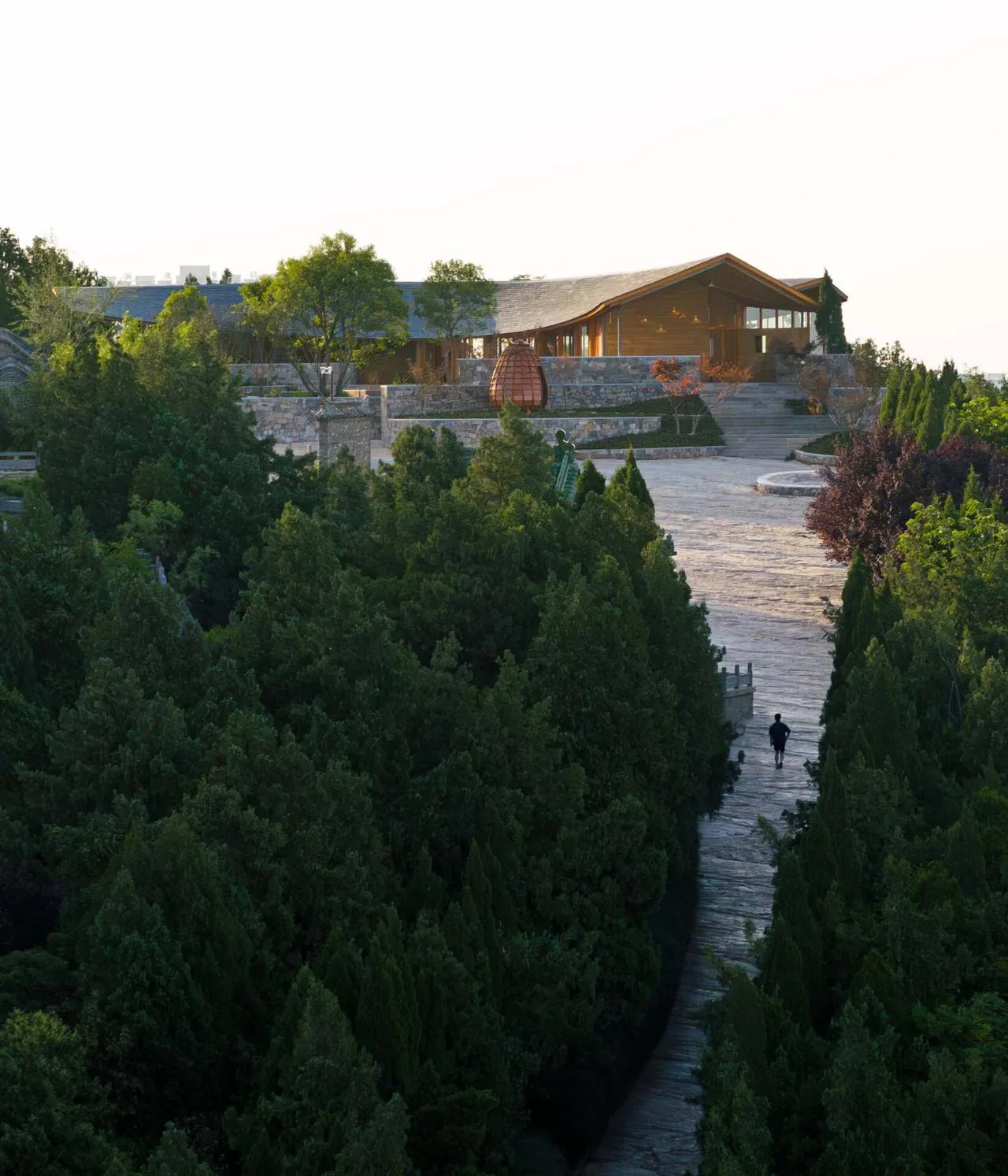
The original site entrance was located on the west side—relatively hidden and narrow—with only one double-sloped bungalow featuring a folded roof line. After analyzing the terrain and pedestrian flow, we relocated the main entrance to the east side, where the mountain’s form changes dramatically, creating a height difference of about two meters. Incorporating a sequence of entrance stairs, the building aims to welcome visitors up the mountain in an inspiring way.
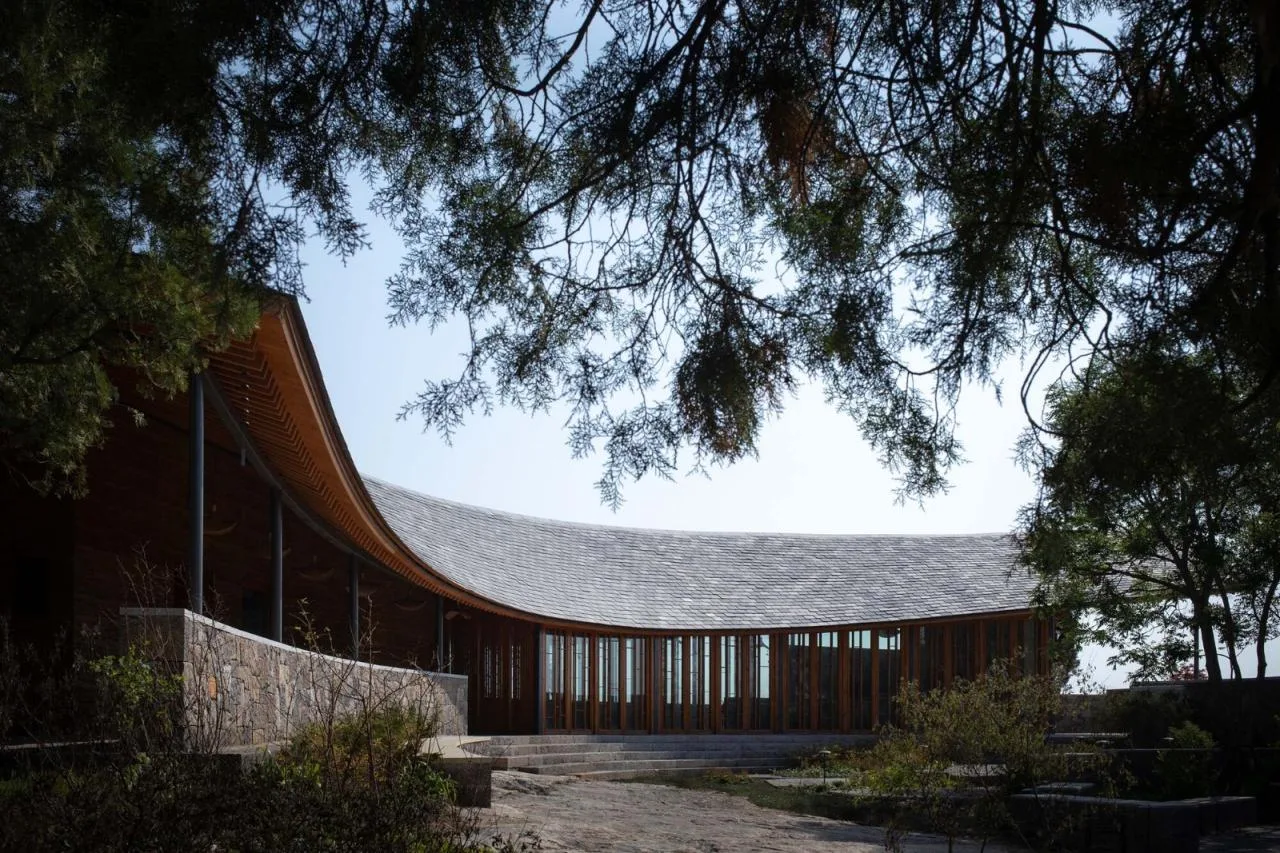
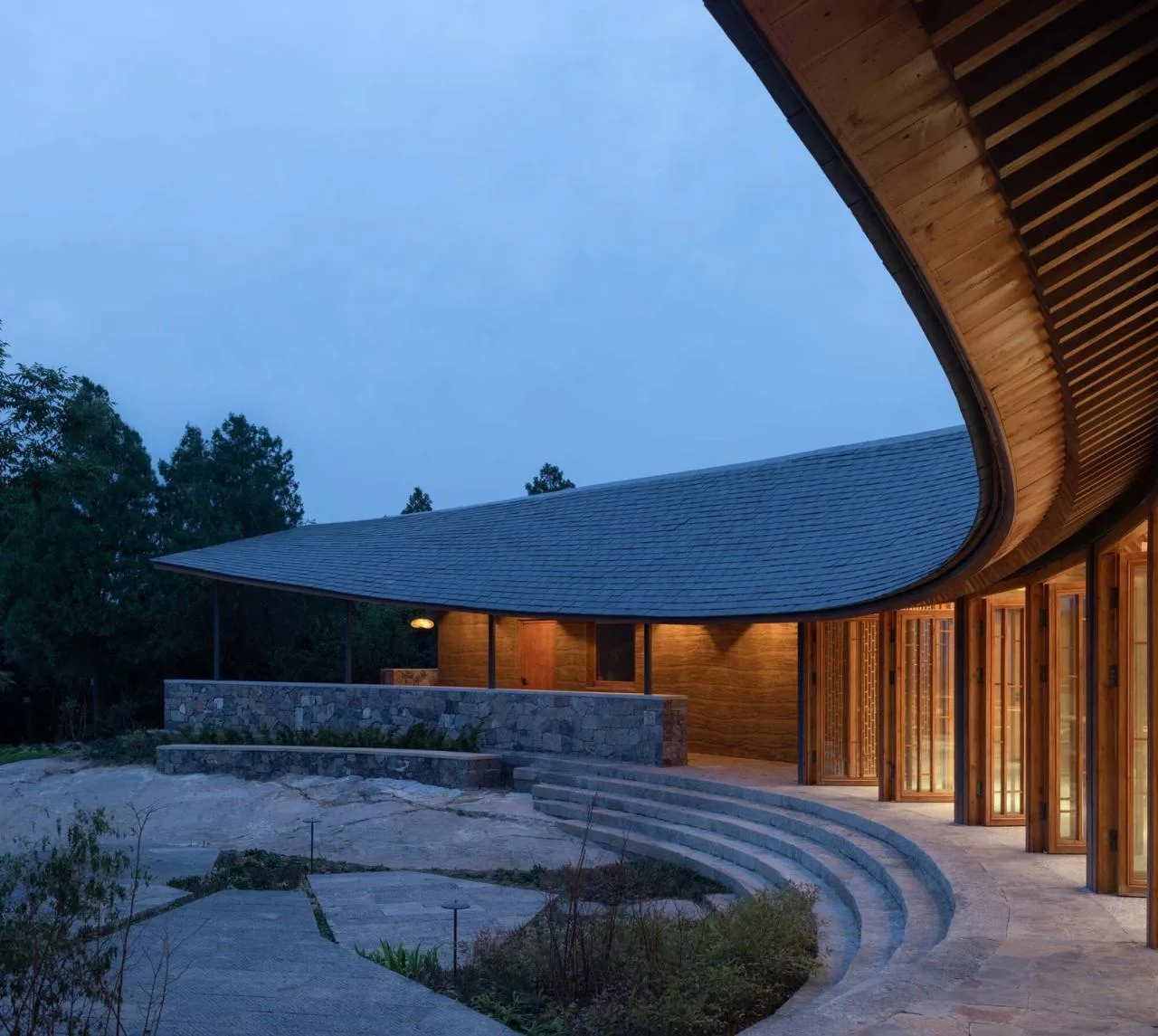
The design adopts the original site’s enclosed layout, connecting the east and west entrances with a softly curved volume. This arrangement also leaves ample courtyard space on the south side for rest. To avoid a cramped interior, we added a small volume on the north side with the best views, seamlessly integrated with the main structure. This creates a varied composition at the east entrance, with one façade front and back, and differing heights. The complex transition of volumes—with three ridges intersecting—balances formal richness with practical drainage considerations.
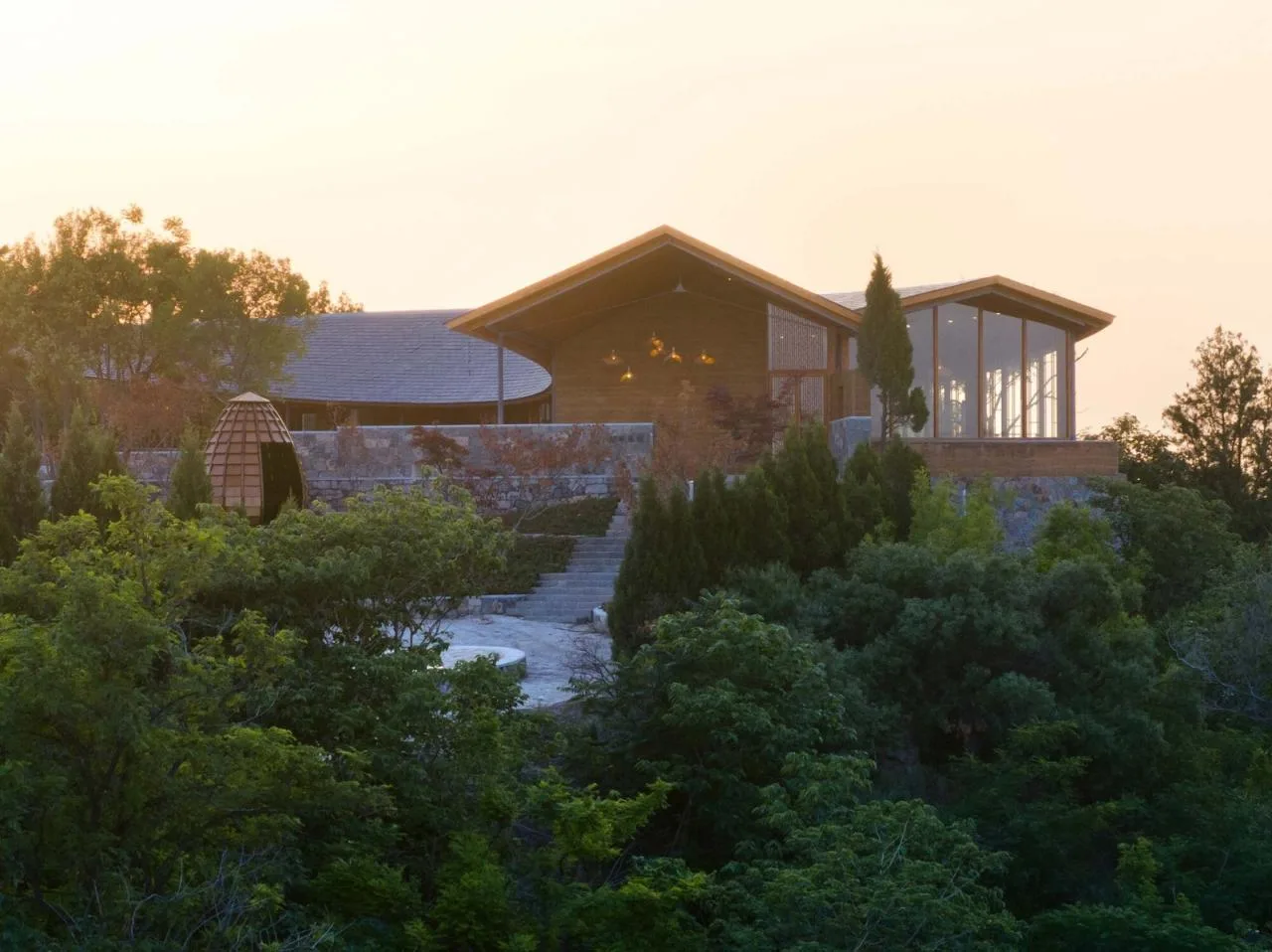
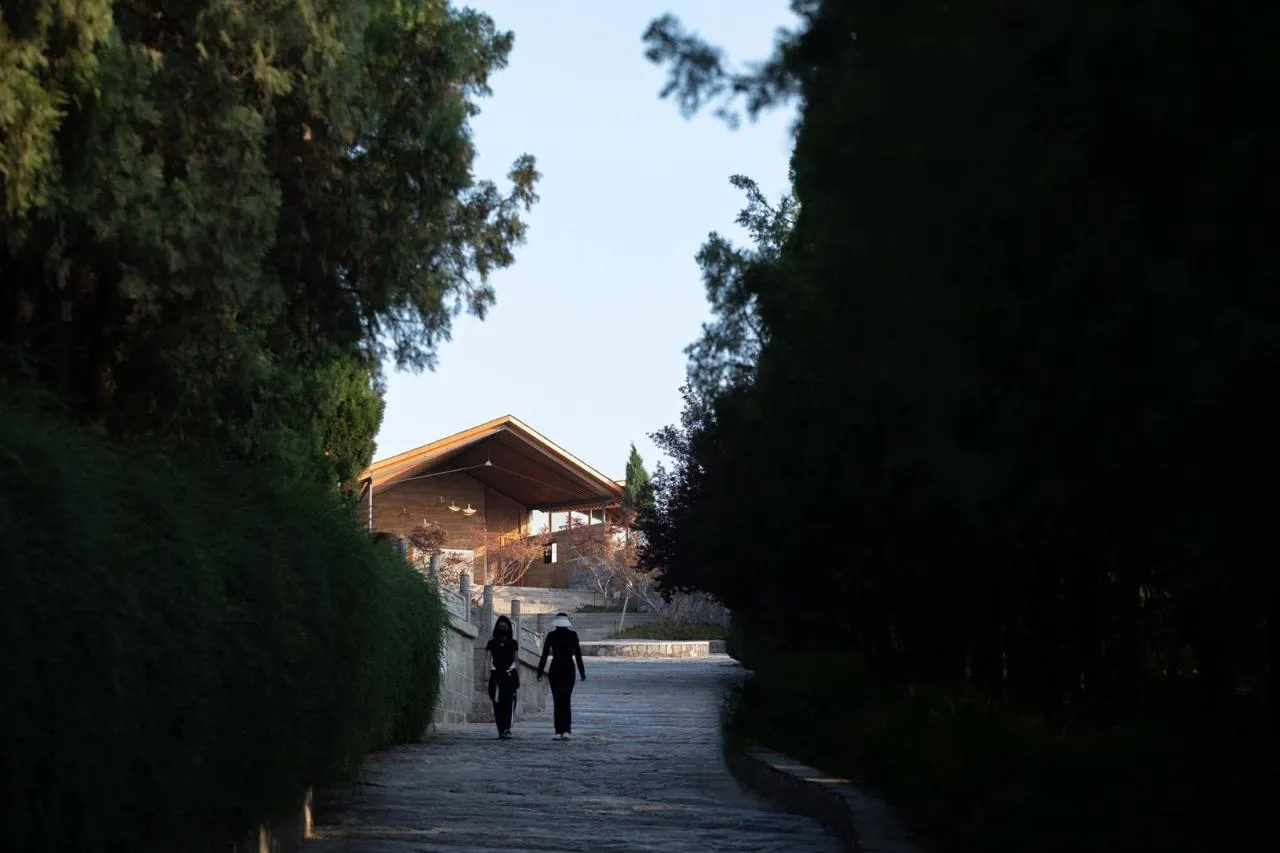
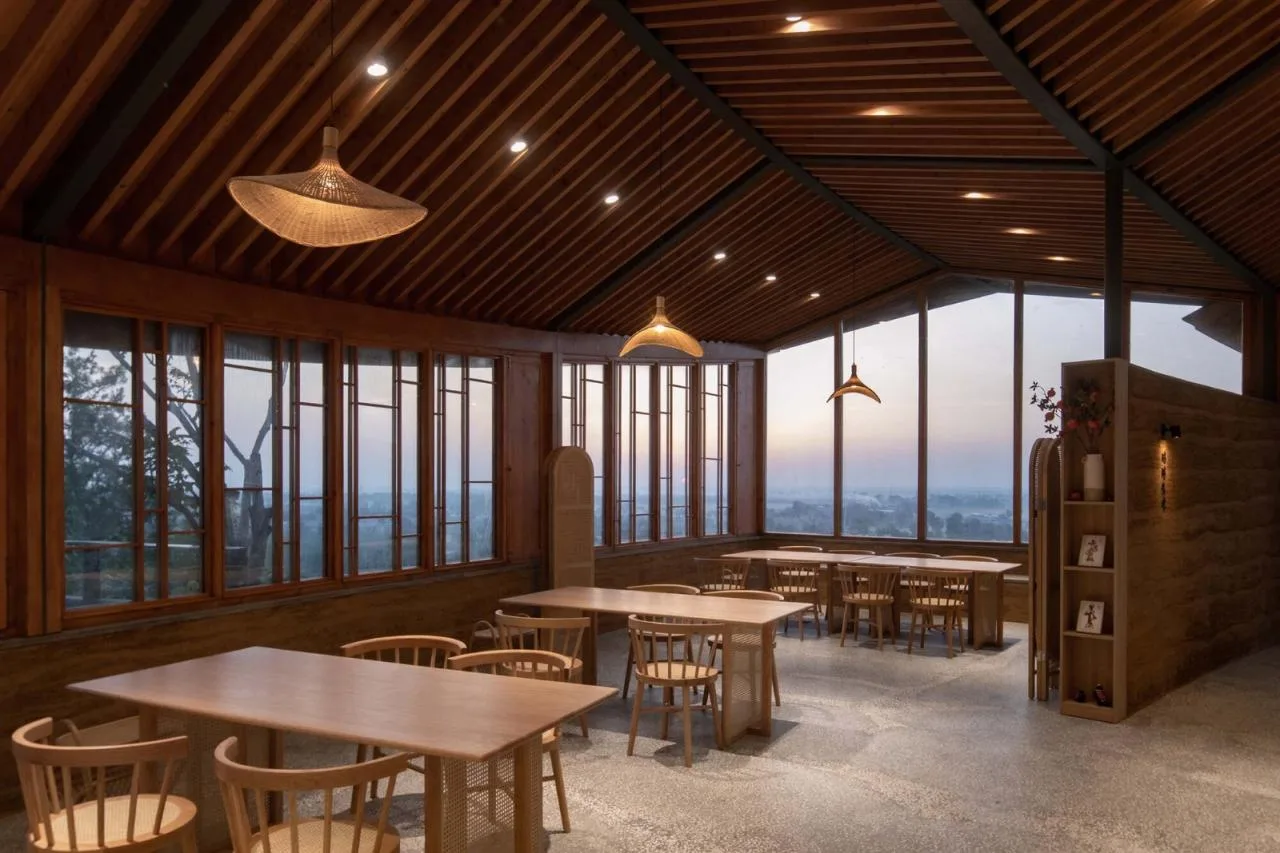
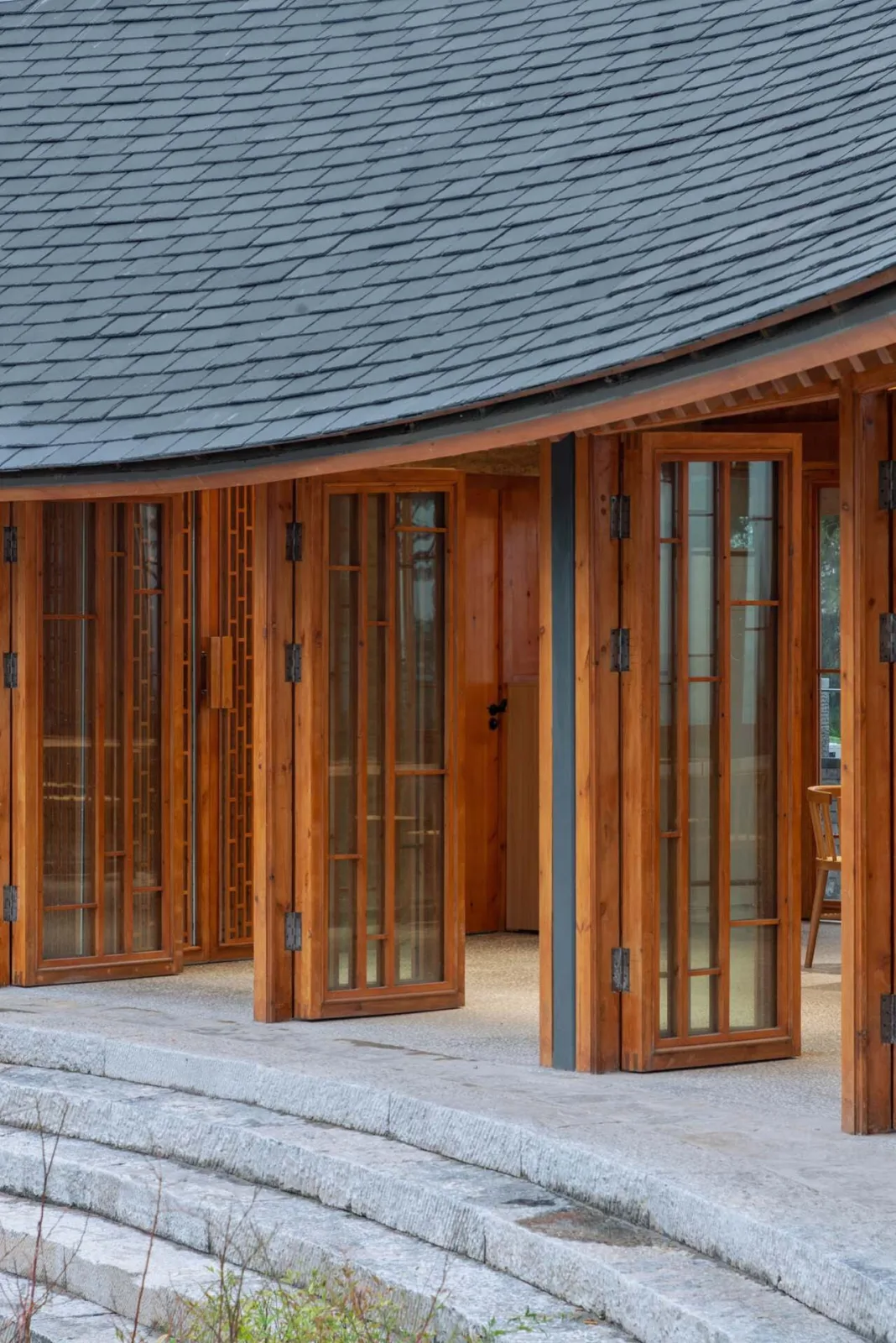
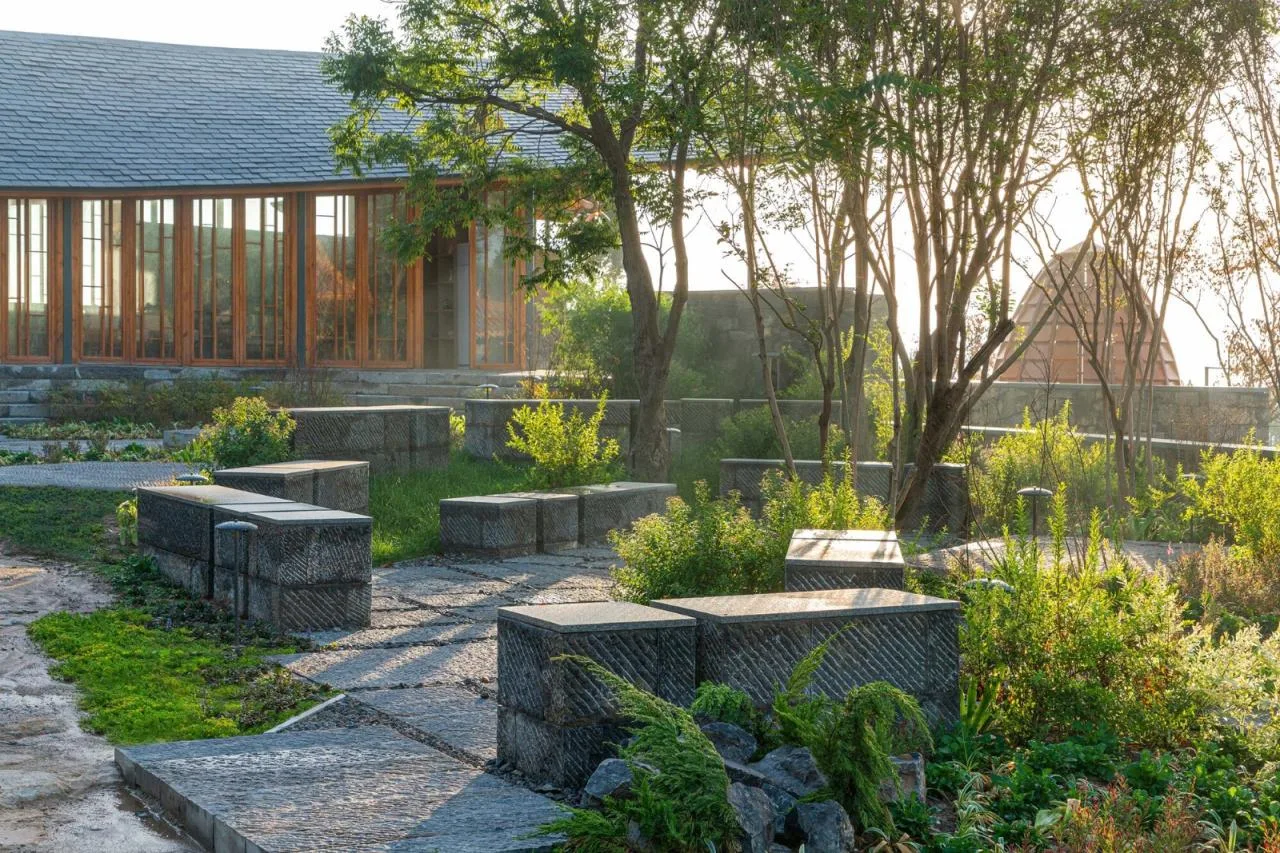
Climbing the stairs at the main entrance, visitors pass through a red maple-covered cobblestone wall into an open rest area. The southern side features continuous solid wood panels, and through elegant window frames, visitors can see the outdoor garden courtyard. The northern windows provide a panoramic view of the mountain landscape. Opening the door leads to a terrace where one can lean against the railing and enjoy the mountain breeze.
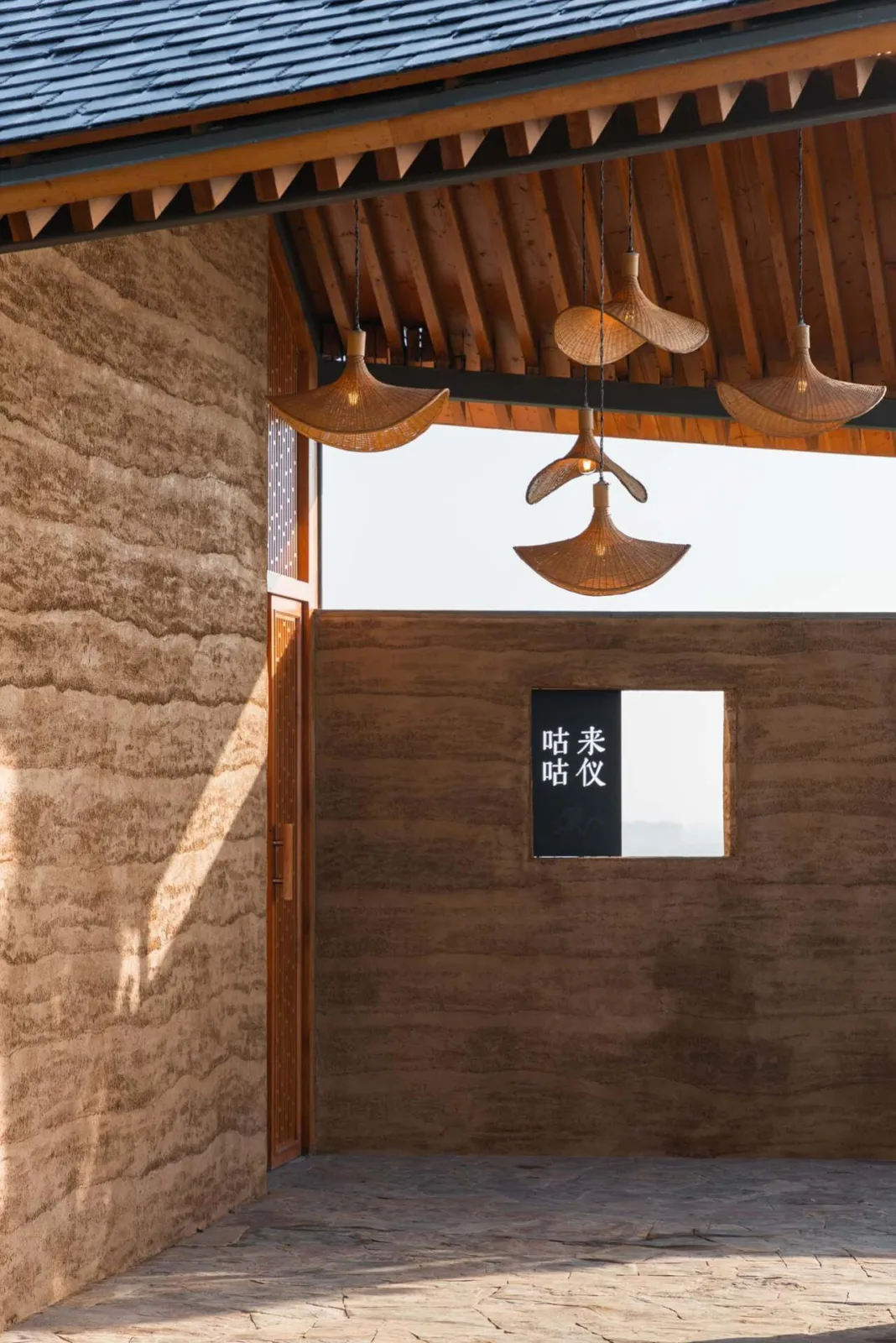
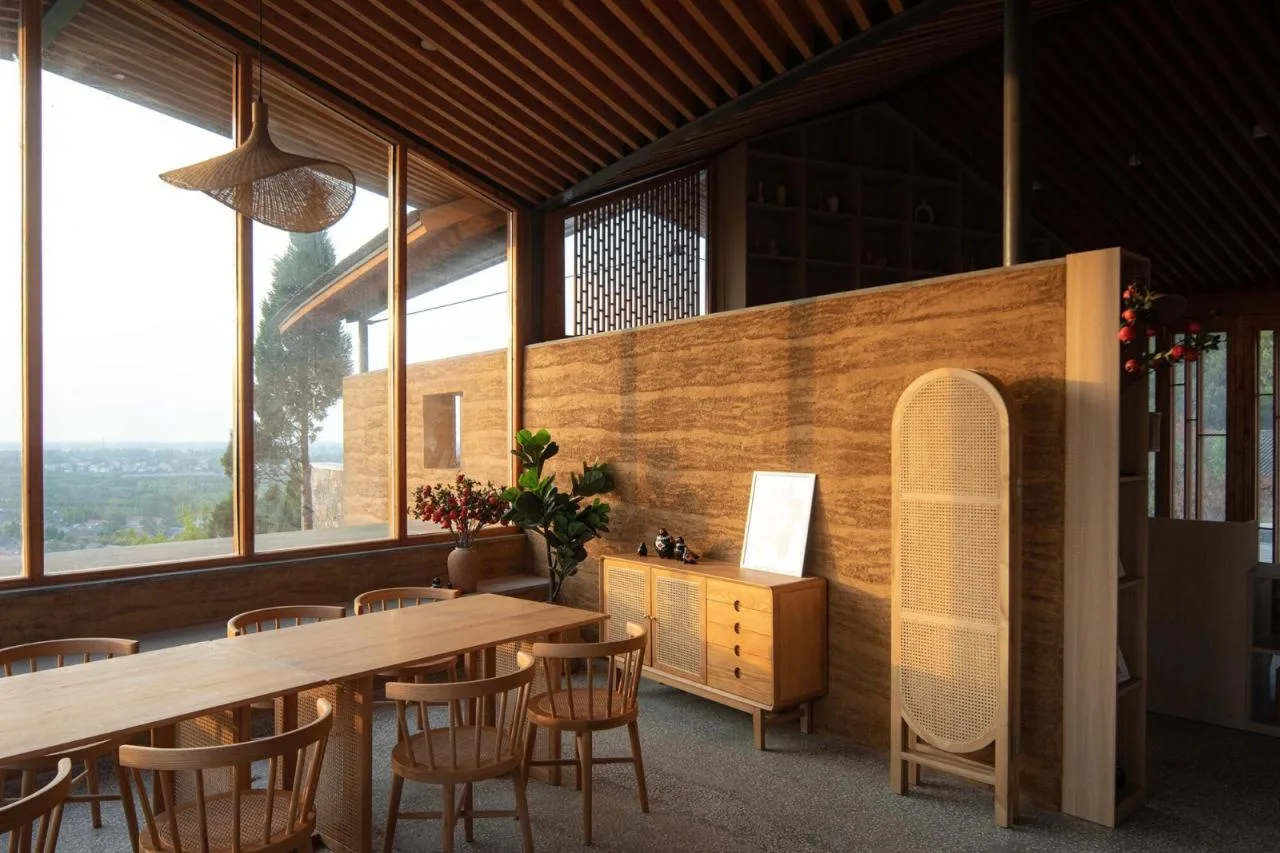
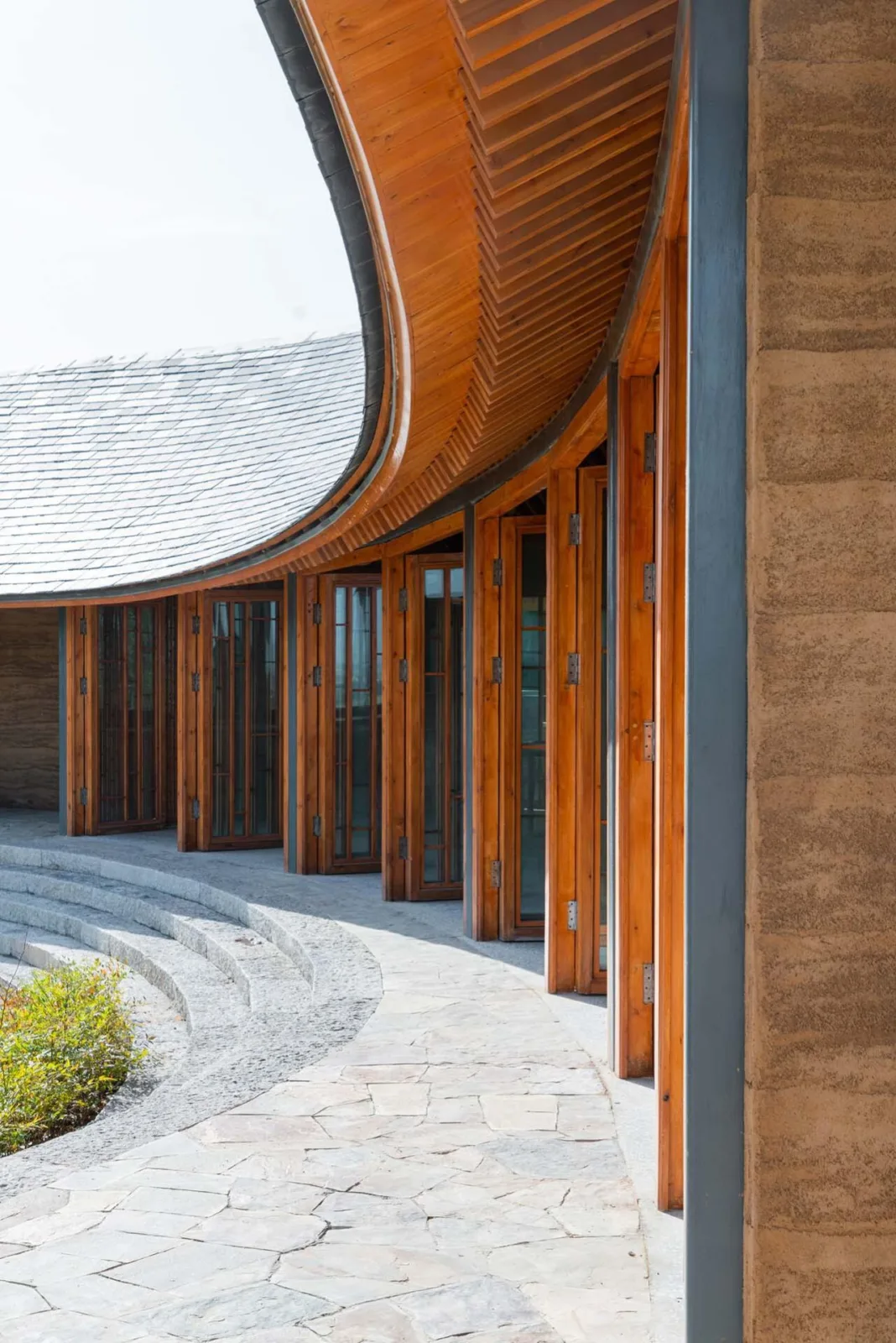
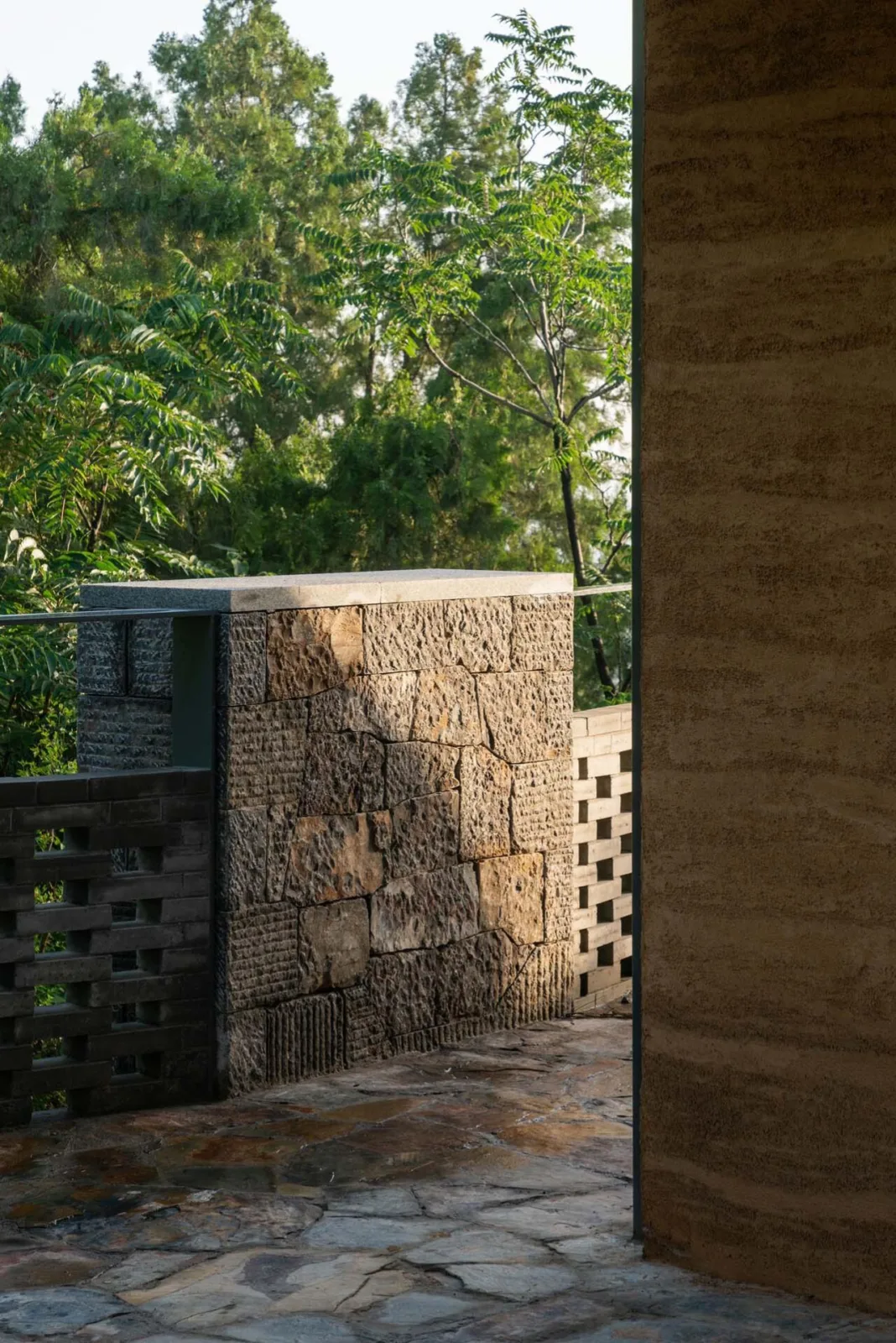
Entering through the secondary entrance offers a different experience. Visitors walk up stone steps through a cypress forest, along a long corridor beneath eaves. On the left is a textured, curved rammed earth wall; on the right, a courtyard offers wide views framed by a half-height rubble wall. This gradual descent into the post station space softens the presence of service areas behind the rammed earth wall.
Inside the station room, furniture is an extension of the walls. Bookshelves, the reception desk, and storage units continue the wall’s lines, emphasizing spatial limitations. While the roof integrates various design elements, the furniture structures the space, using a consistent vocabulary to express subtle shifts. From exterior to interior, the design transitions from enclosed to transparent, blending the landscape into the indoor environment.
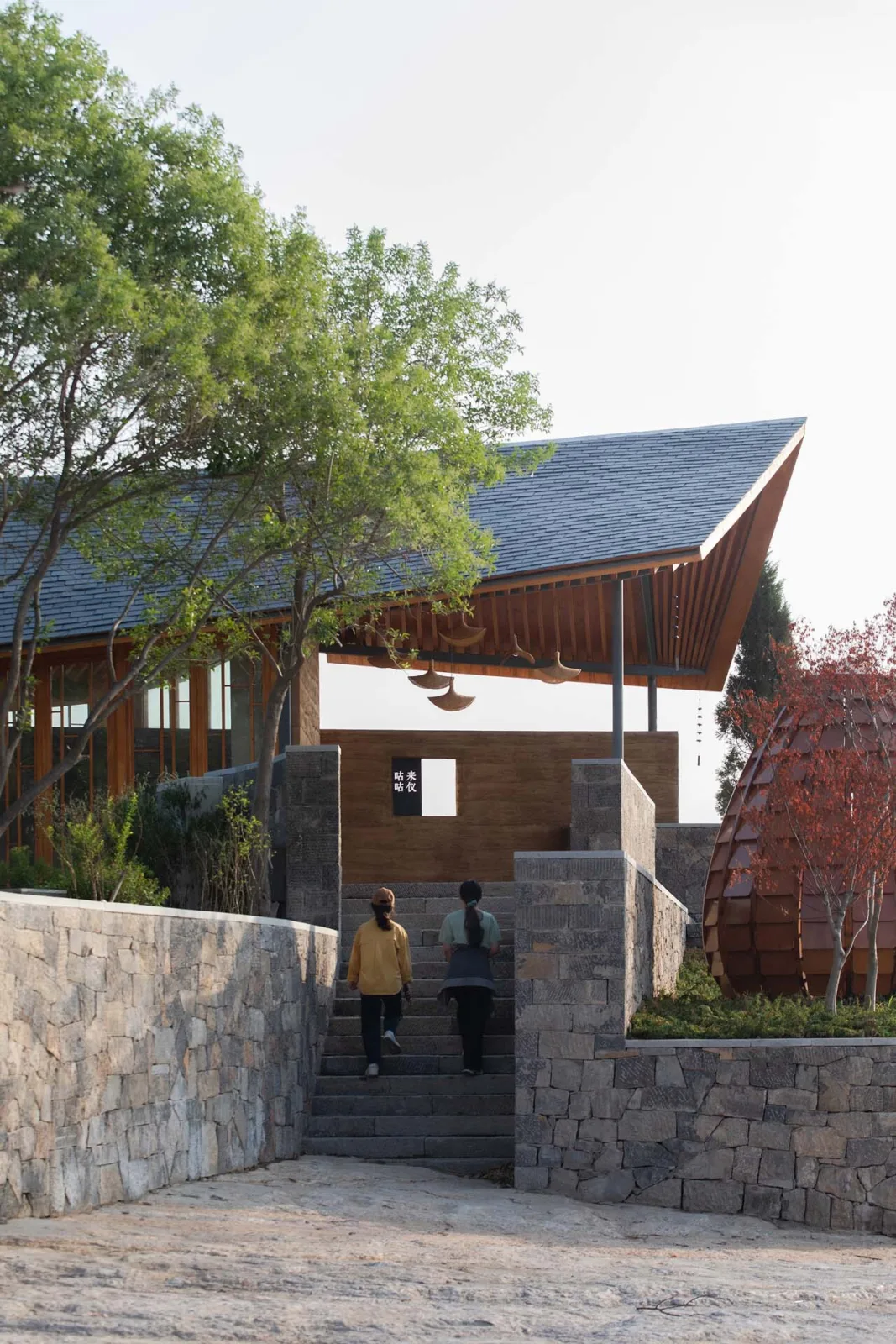
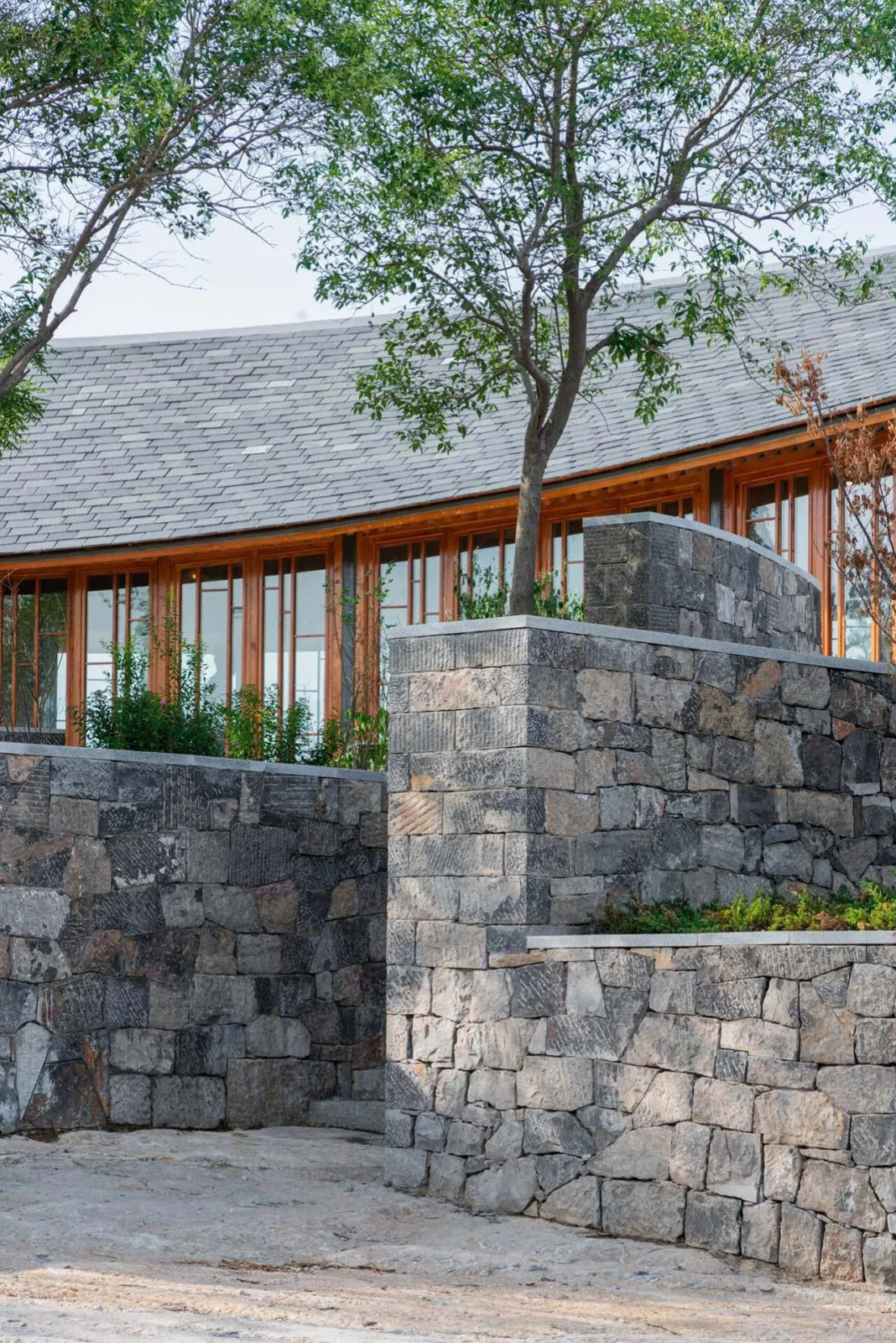
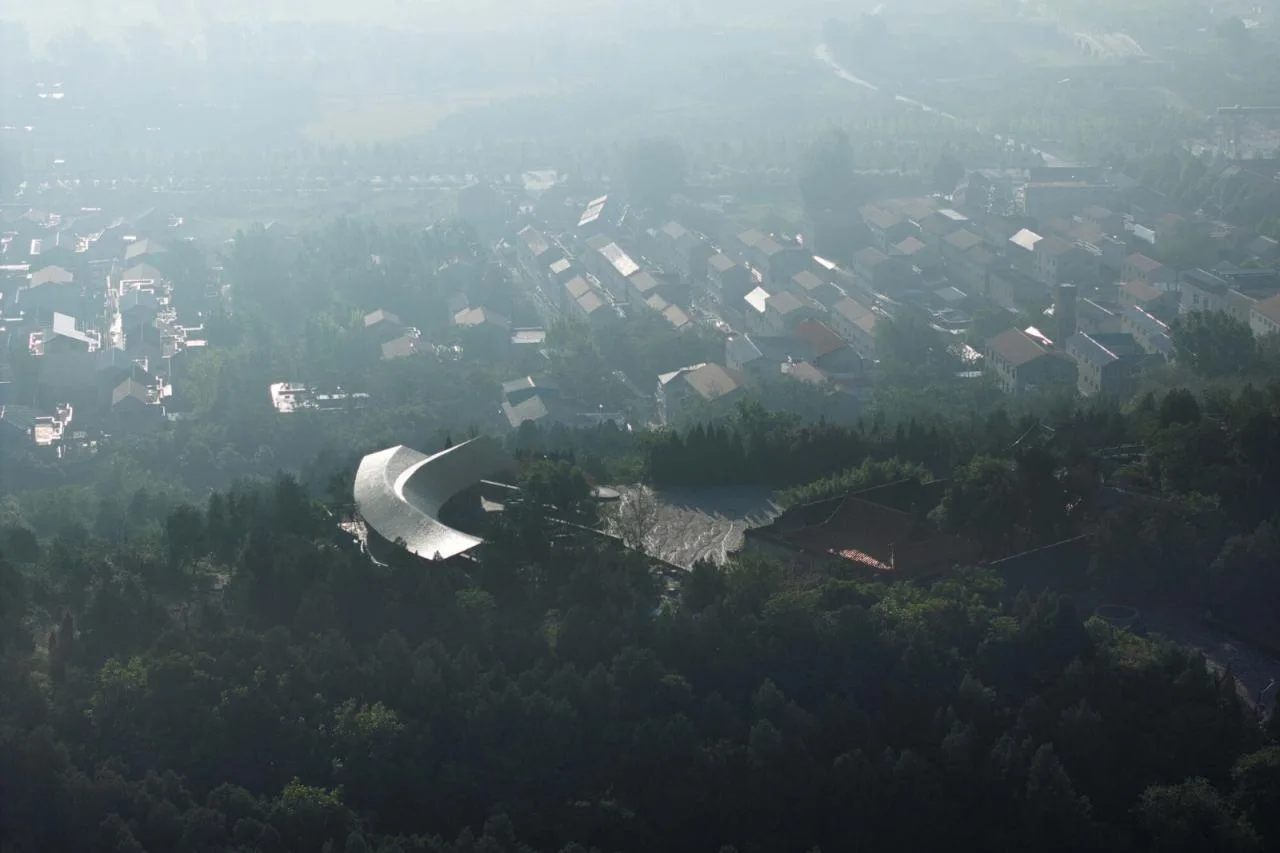
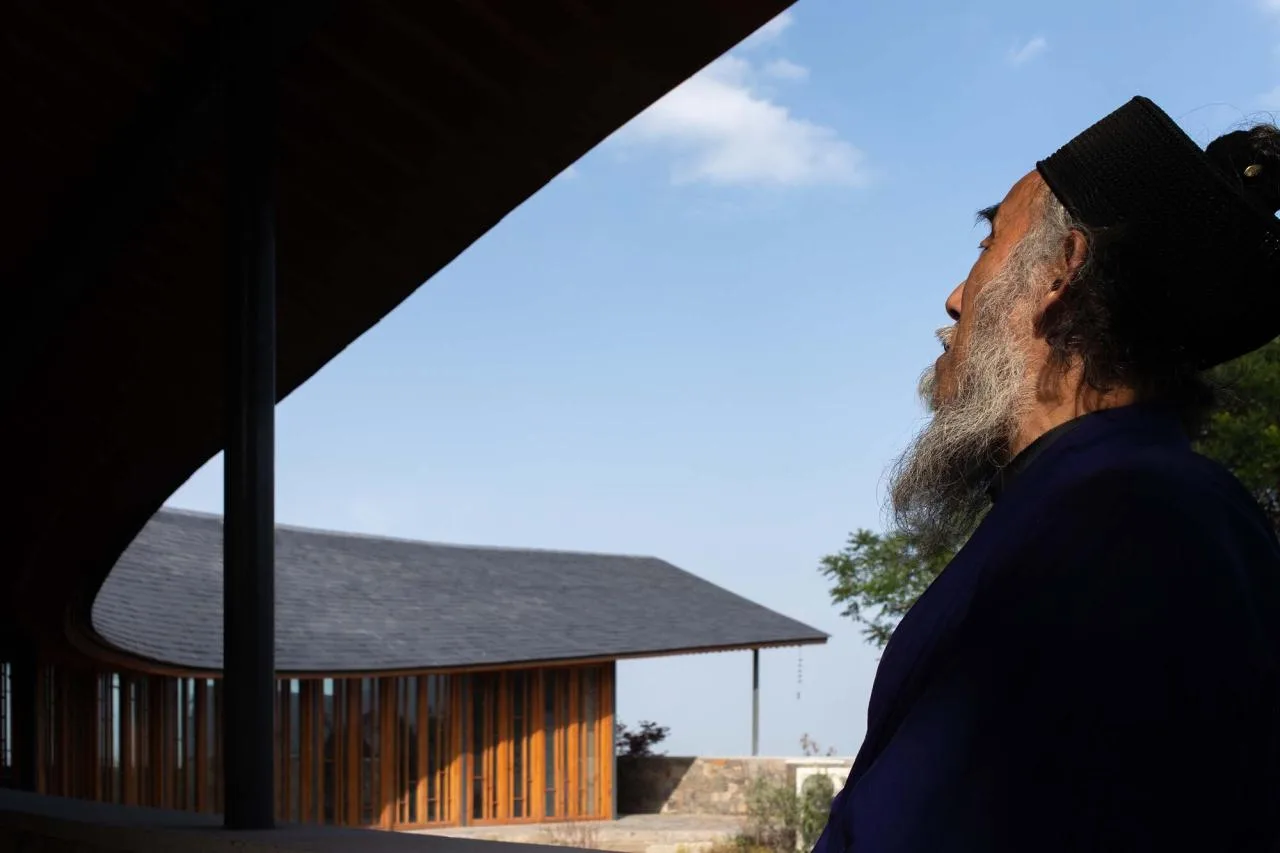
Viewed from a mountain retreat perspective, the architecture presents a humble presence on this historic mountain, harmonizing with century-old buildings like Guanyin Temple and Bagua Tower nearby. The sloped roof form echoes surrounding ancient structures, while modern construction techniques lend the building a lightweight form.
The design continues the architectural language of ancient buildings with upturned eaves, gradually raising the eave heights at the east and west entrances to create a central low point, avoiding a direct meeting in the middle. In contrast, the mountain’s highest rocks peak in the center and decrease toward the sides, running opposite to the building’s forms, creating a dynamic tension between natural and built elements.
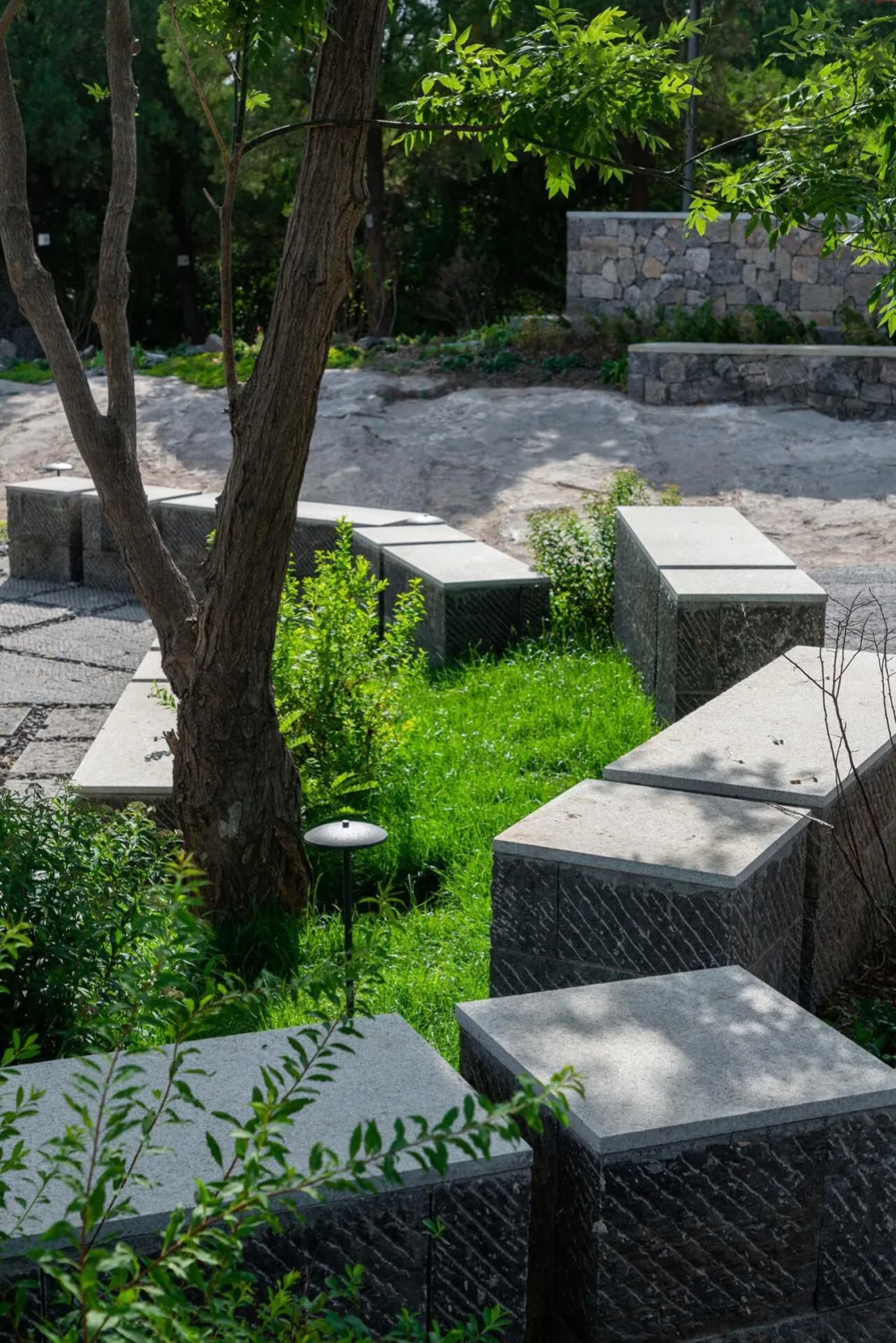
To integrate seamlessly with the environment, the building’s height is precisely controlled to remain below the height of Guanyin Temple’s mountain gate, adopting a modest posture before the ancient structures. The materials chosen emphasize local character—Taihang Mountains’ bluestone, corrosion-resistant wood typical of local ancient architecture, rammed earth walls with regional flavor, and slate tiles enhancing roof texture. The use of natural materials and varied techniques allows the architecture to blend gracefully into its surroundings.
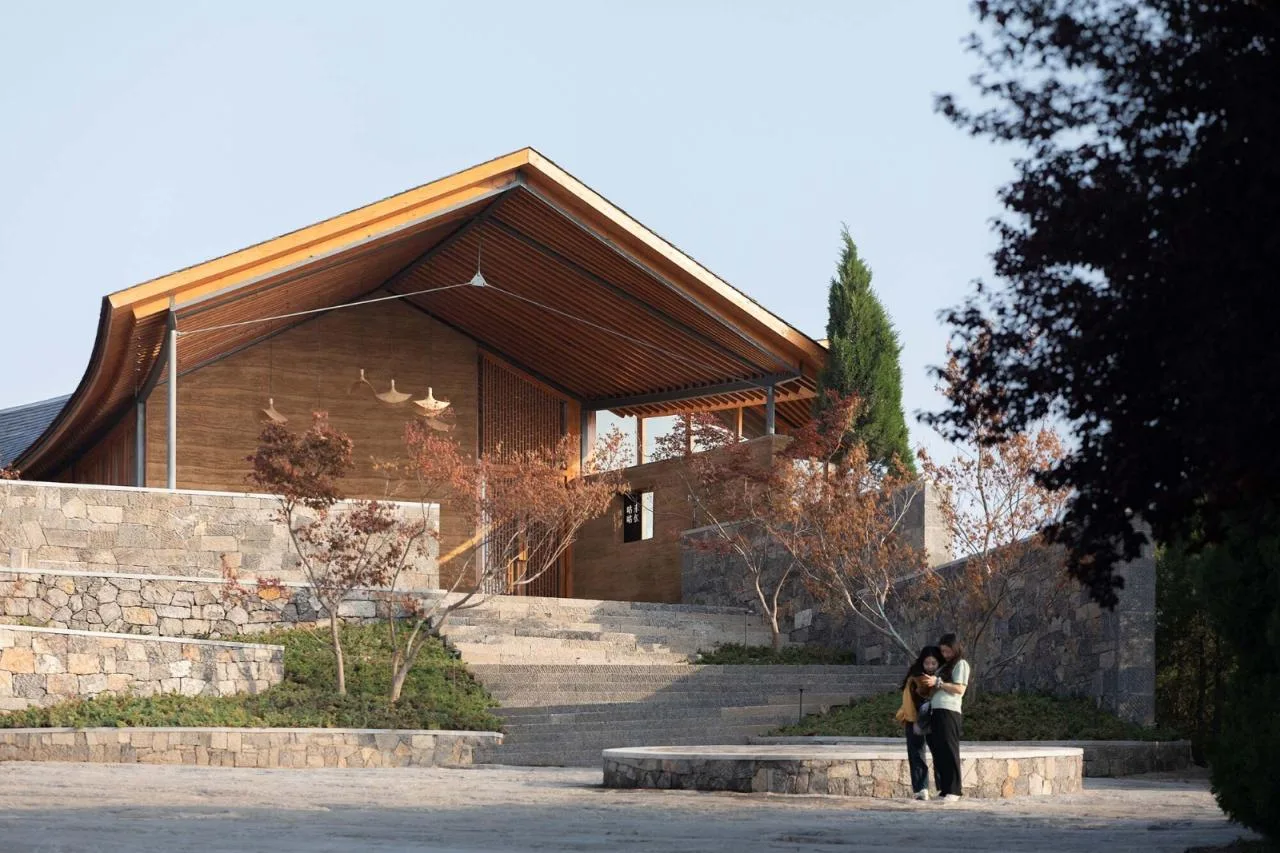
The “Nigugu” heritage was chosen as the thematic focus of this project, a semi-open brief from the owner aiming to promote local intangible cultural heritage. After reviewing many local crafts, we selected “Nigugu,” a traditional folk mud toy shaped like a cuckoo bird that produces a “cuckoo” sound when blown into. This handmade craft, passed down for thousands of years, reflects the artisans’ craftmanship and aligns with the spirit of craftsmanship in architectural construction.
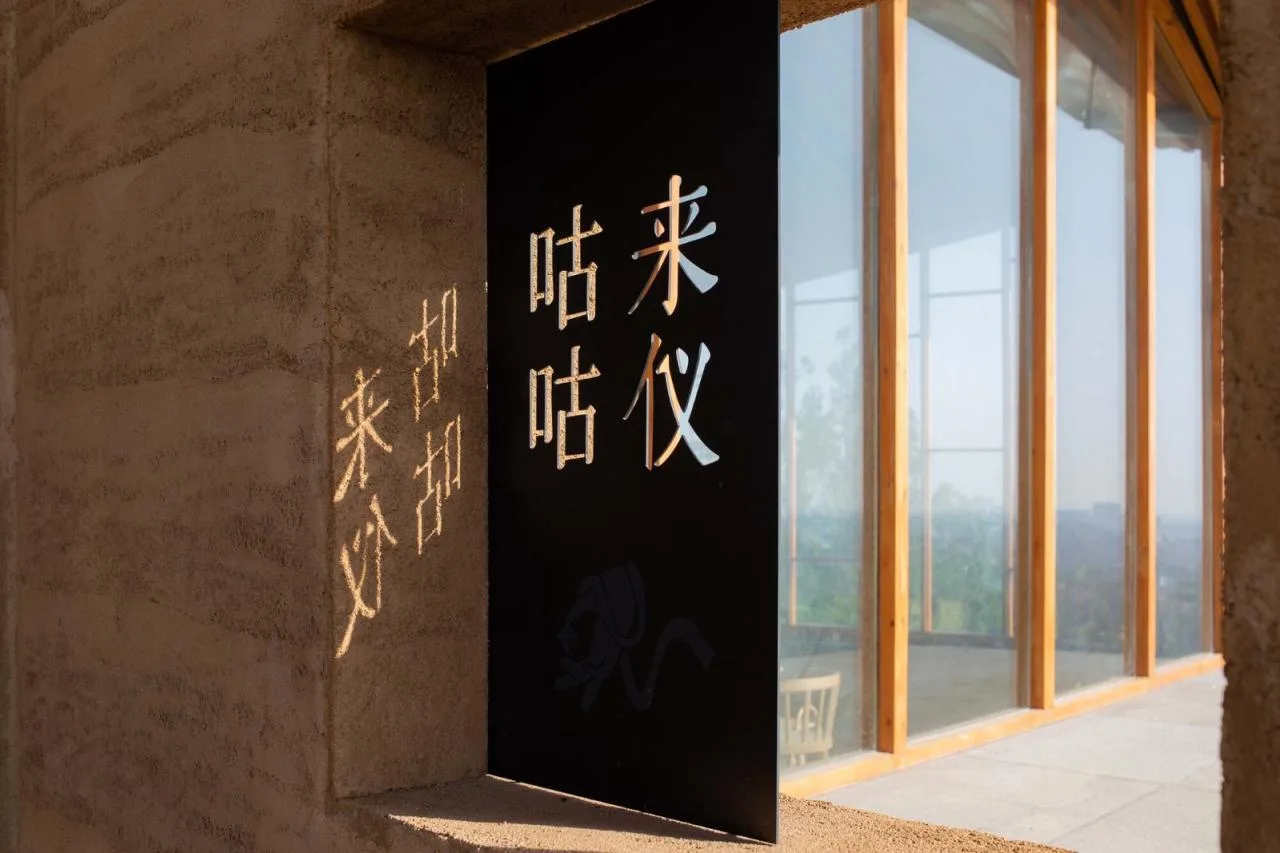
We aimed for every detail of the architecture to convey intangible cultural heritage. At the entrance, the cuckoo stone platform opens, symbolizing the design theme. Next to a large rammed earth wall, visitors can sense the skillful shaping of soil by local craftsmen, reminiscent of clay gourds shaped by hand. Within the enclosed garden courtyard, a collection of real and imitation mud cuckoo devices is arranged, as if a cuckoo bird has just flown down from the mountain peak to rest beside the ancient temple.
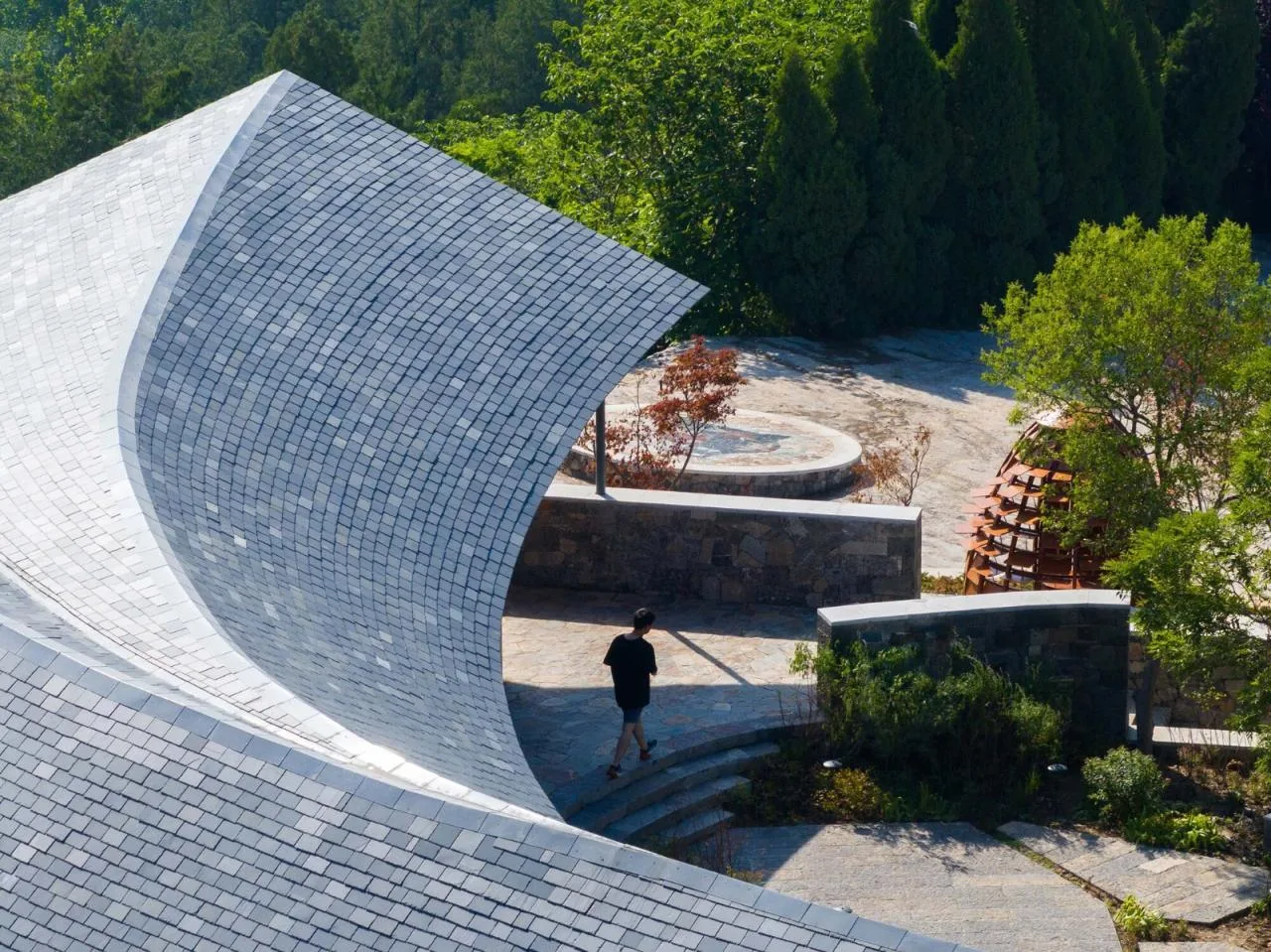
Notably, the roof is finished with slate tiles that match the ground’s color, creating a light, bird-like appearance. While cement and ceramic tiles come in various colors and designs, their thinnest thickness is about 2 centimeters. Slate tiles are thinner and sometimes have slight edge imperfections, closely resembling the mountain’s surface texture.
During construction, we repeatedly coordinated with the team on roof assembly, eave overhangs, and gutter drainage to maximize the stone tile coverage while minimizing metal edges or gutters. Throughout the day, sunlight shifts from east to west, causing the roof tiles to shimmer and reflect like fluttering bird feathers.
Rooted halfway up the mountain, the project’s unique location posed significant challenges for structural design and construction. Dabishan Mountain is a geological heritage site where deep foundation excavation is prohibited. Therefore, each column’s position was excavated individually, with foundation depths calculated according to varying rock heights.
On-site photography, numbering, measurement, and calculations were carefully conducted for each foundation pit. After multiple adjustments and optimizations, construction proceeded smoothly. Foundation depths vary from a shallow 300mm to a deep edge near a 2-meter cliff. The foundation resembles a finger, firmly gripping the mountain.
While based on Mount Daji, we engaged closely with the construction team onsite, resolving nearly every design detail—from roof structural hierarchy to ridge waterproofing; from eave panel detailing to rafter-to-gate plate connections; from on-site steel structure bending to slate tile layering simulations. On-site control was vital for project success.
During our stay, we also witnessed the craftsmanship of local artisans. Their stonework technique called “inch three track” involved cutting and tightly assembling each stone for the rough stone walls. They skillfully installed solid wood doors and windows and arranged wooden tiles for the landscape pavilion. Rejecting the precision of factory mass production, their work added subtle, varied handcrafted touches. Ultimately, this building was crafted by hand.
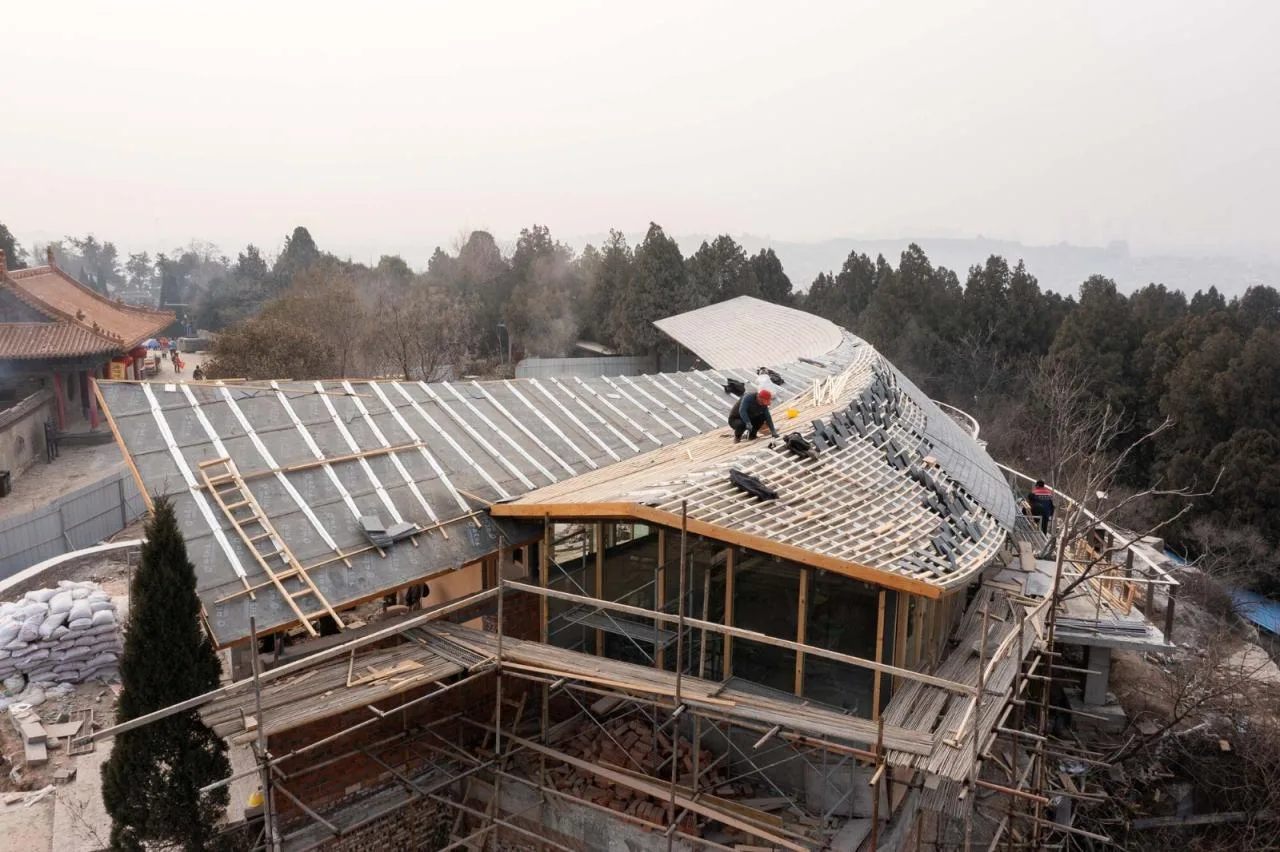
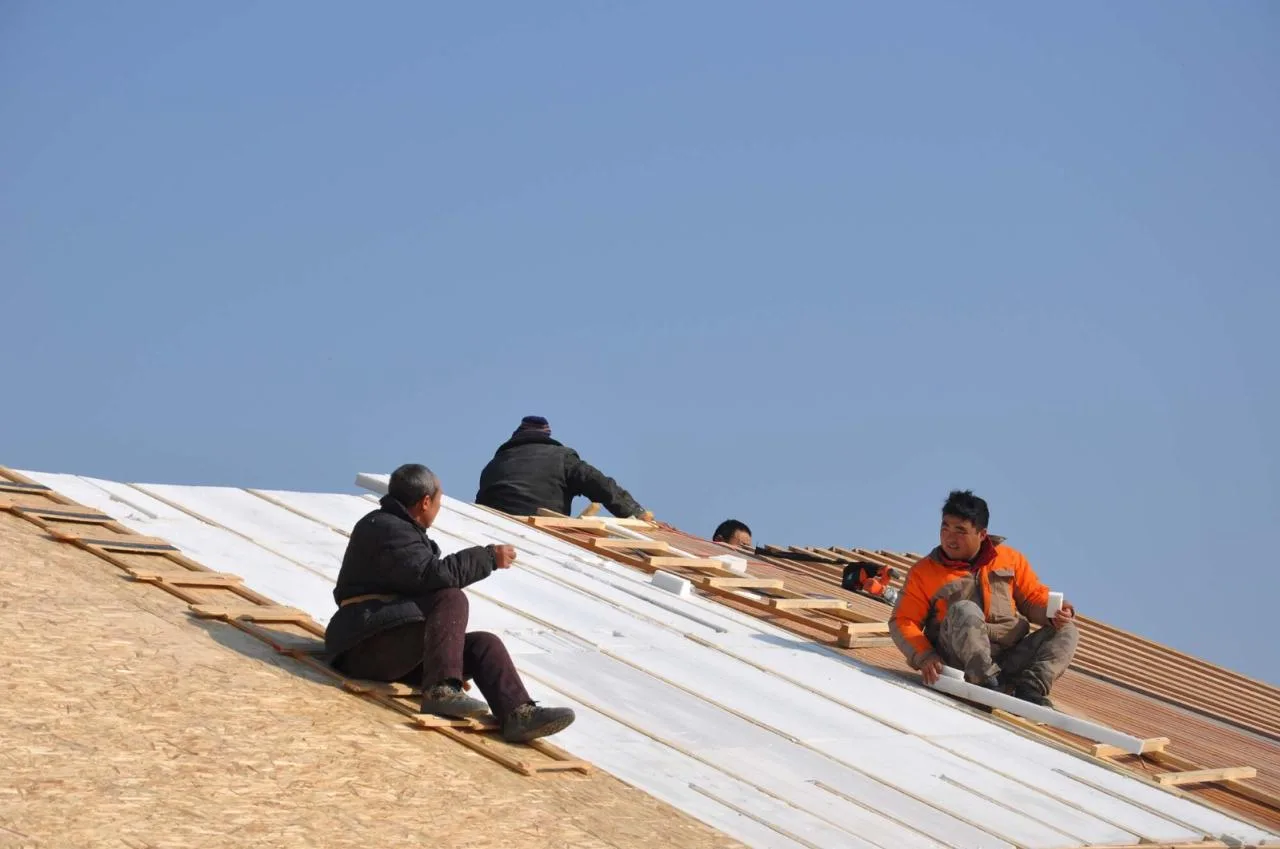
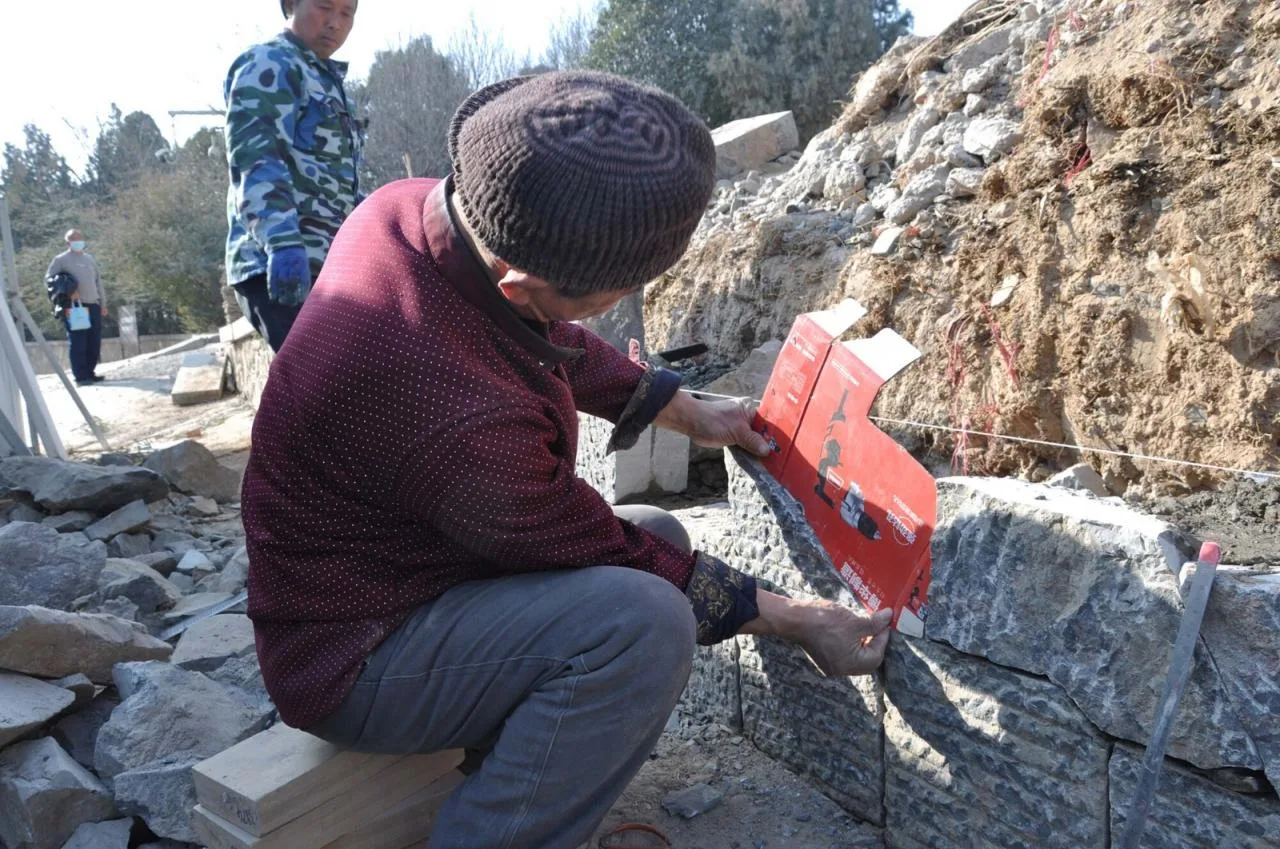
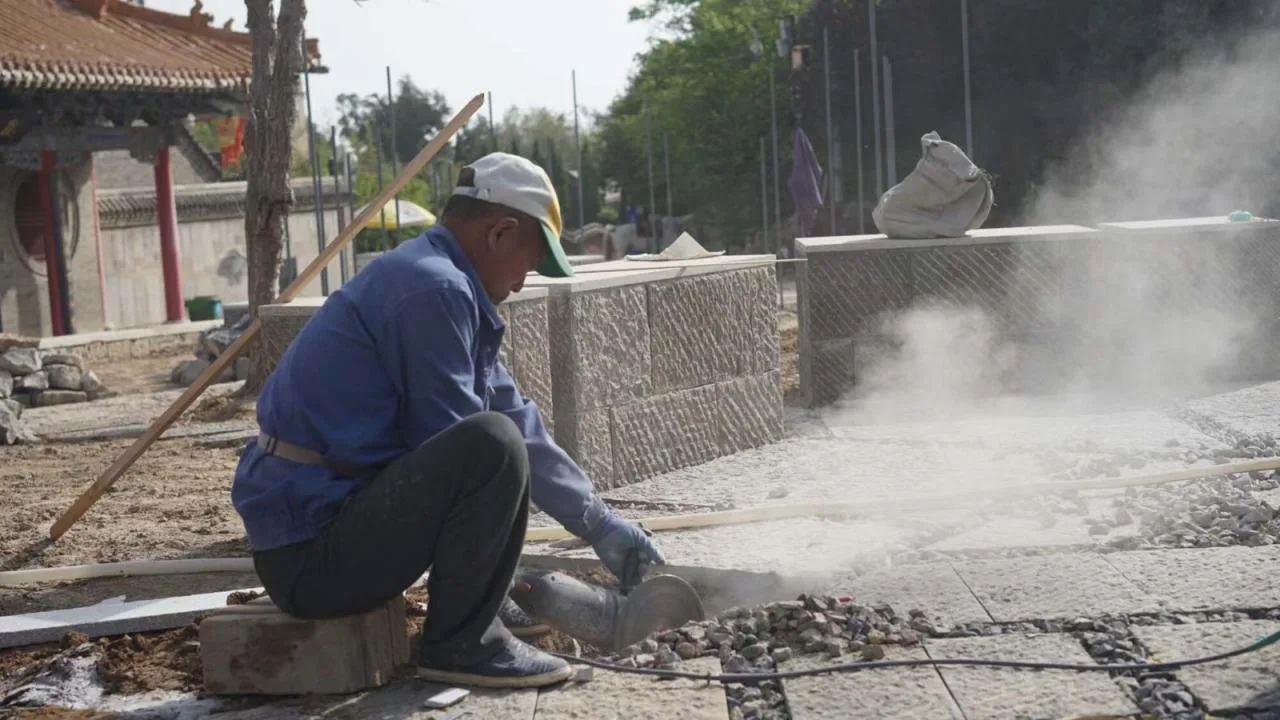
From design to construction and operation, the Gratitude Station has spanned all four seasons. When we first arrived at Dabishan in the height of summer, the beautiful mountain scenery and rich culture moved us deeply. As construction progressed into deep winter, the harsh conditions highlighted the tension between nature’s ruggedness and human craftsmanship’s delicate precision.
We learned to respect the mountain, carefully carrying out construction while utilizing the mountain’s stones to our advantage. Now near completion, with spring’s warmth and blooming flowers, the project breathes new life. New leaves grow on branches and buildings alike, welcoming a fresh summer at Great Wall Mountain.
Gugulaiyi stands as a collaborative architectural achievement, uniting local government, construction teams, and craftsmen. Many have contributed, hoping this cultural platform will shine and continue to promote local intangible cultural heritage for years to come.
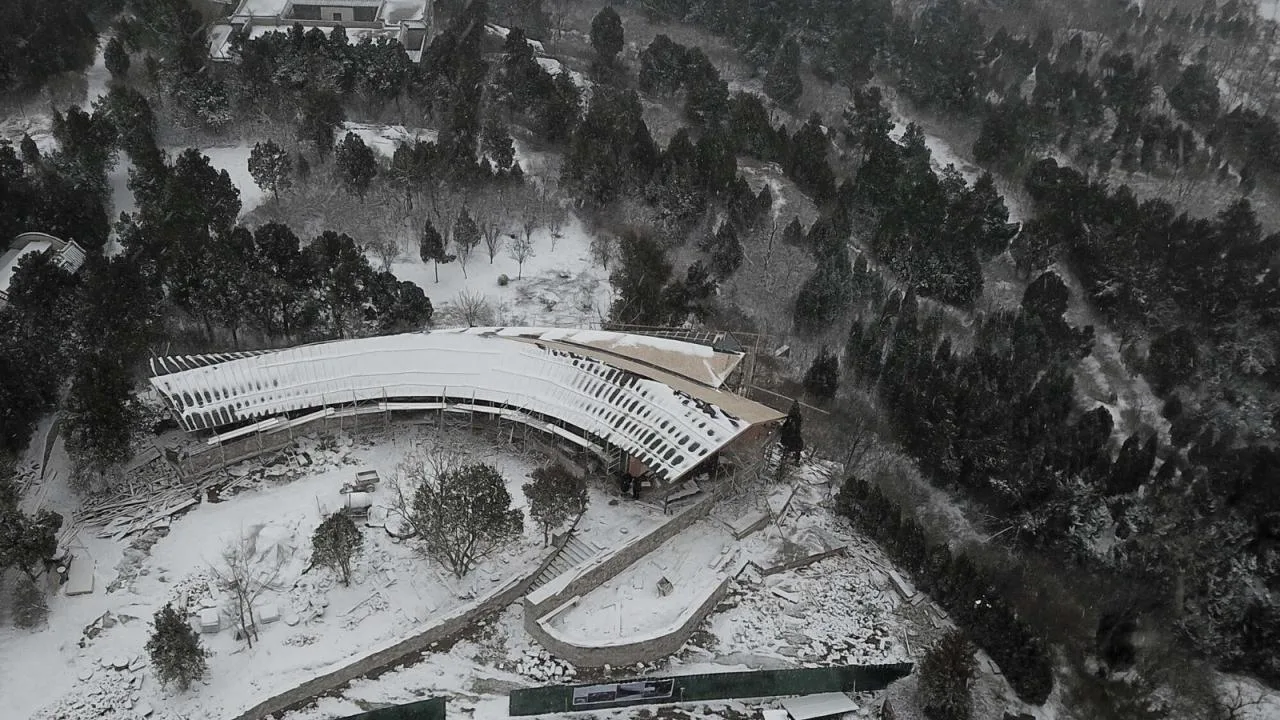
△ Construction Process Diagram
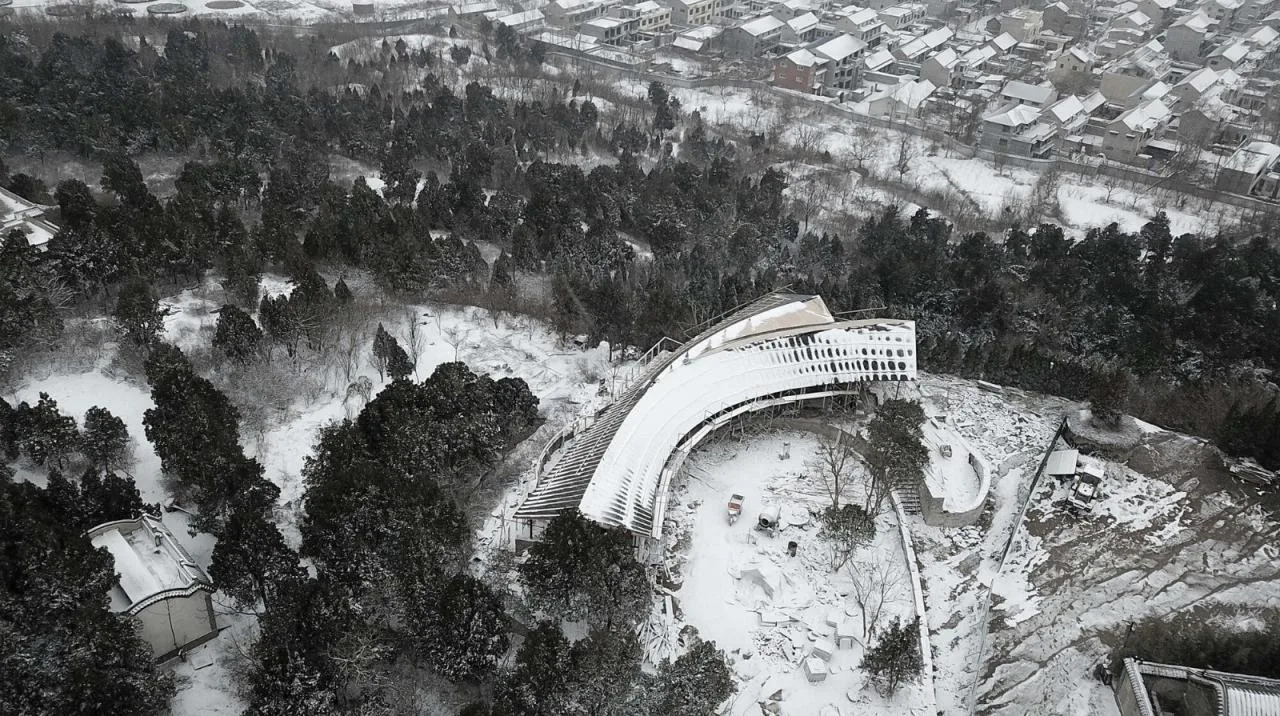
△ Construction Process Diagram
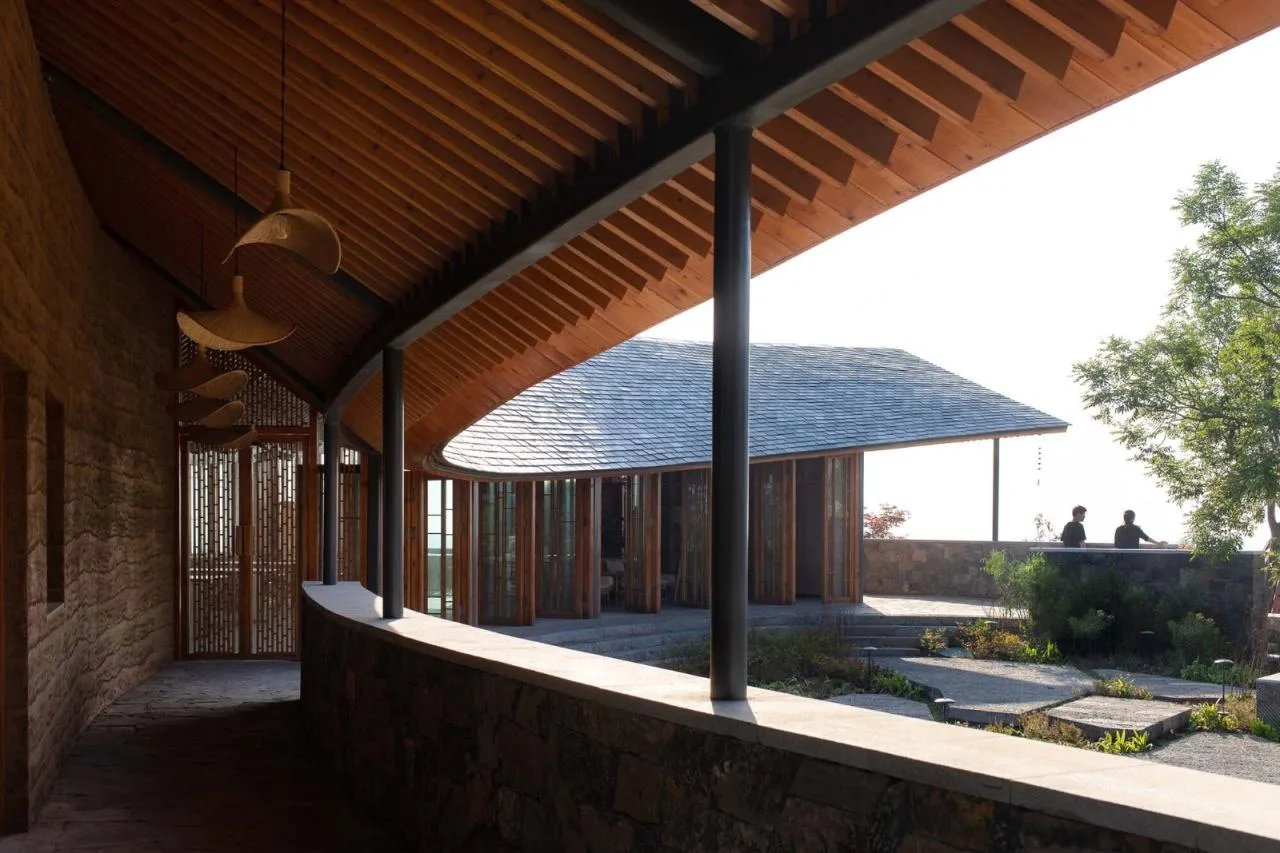
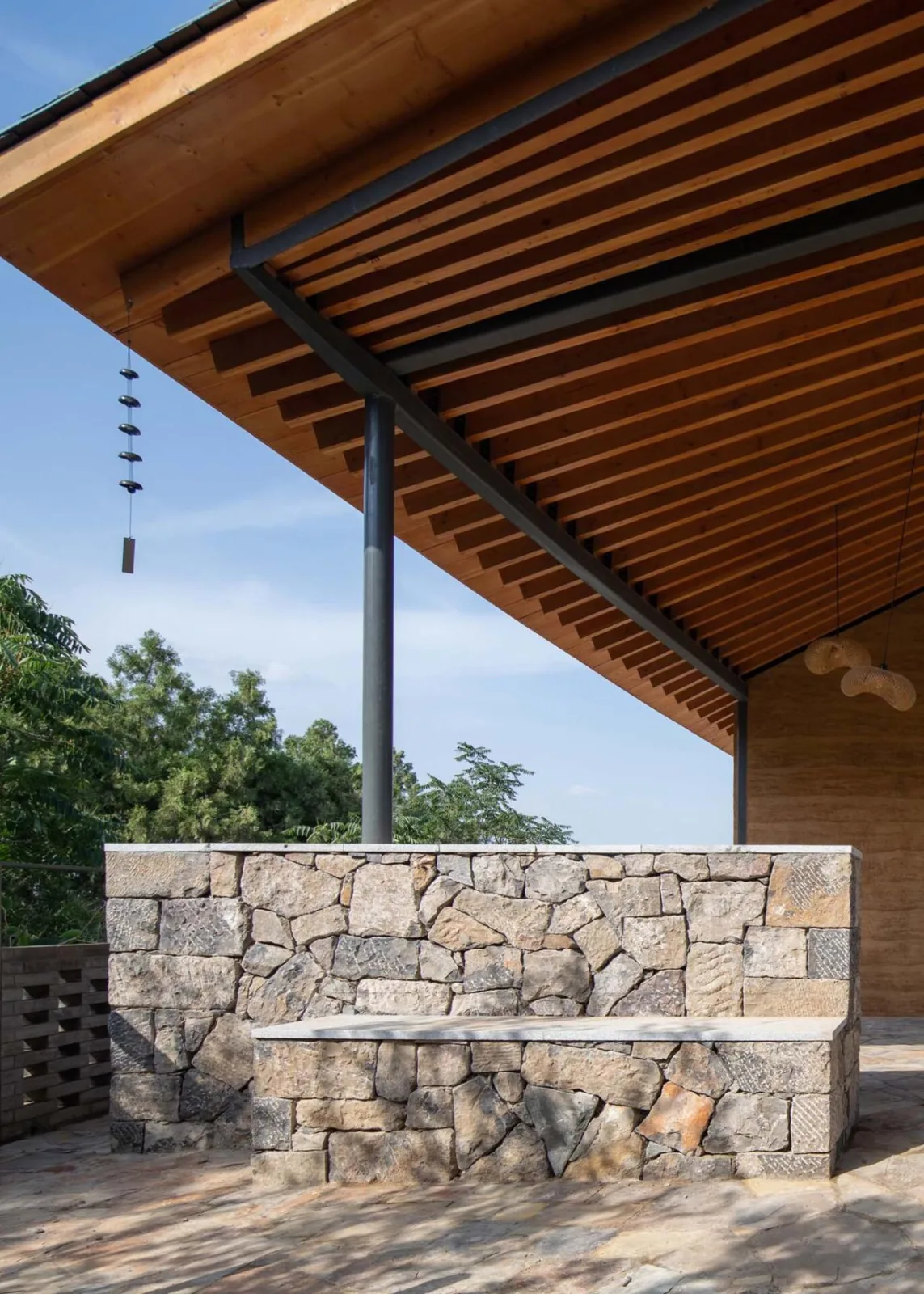
Project Drawings
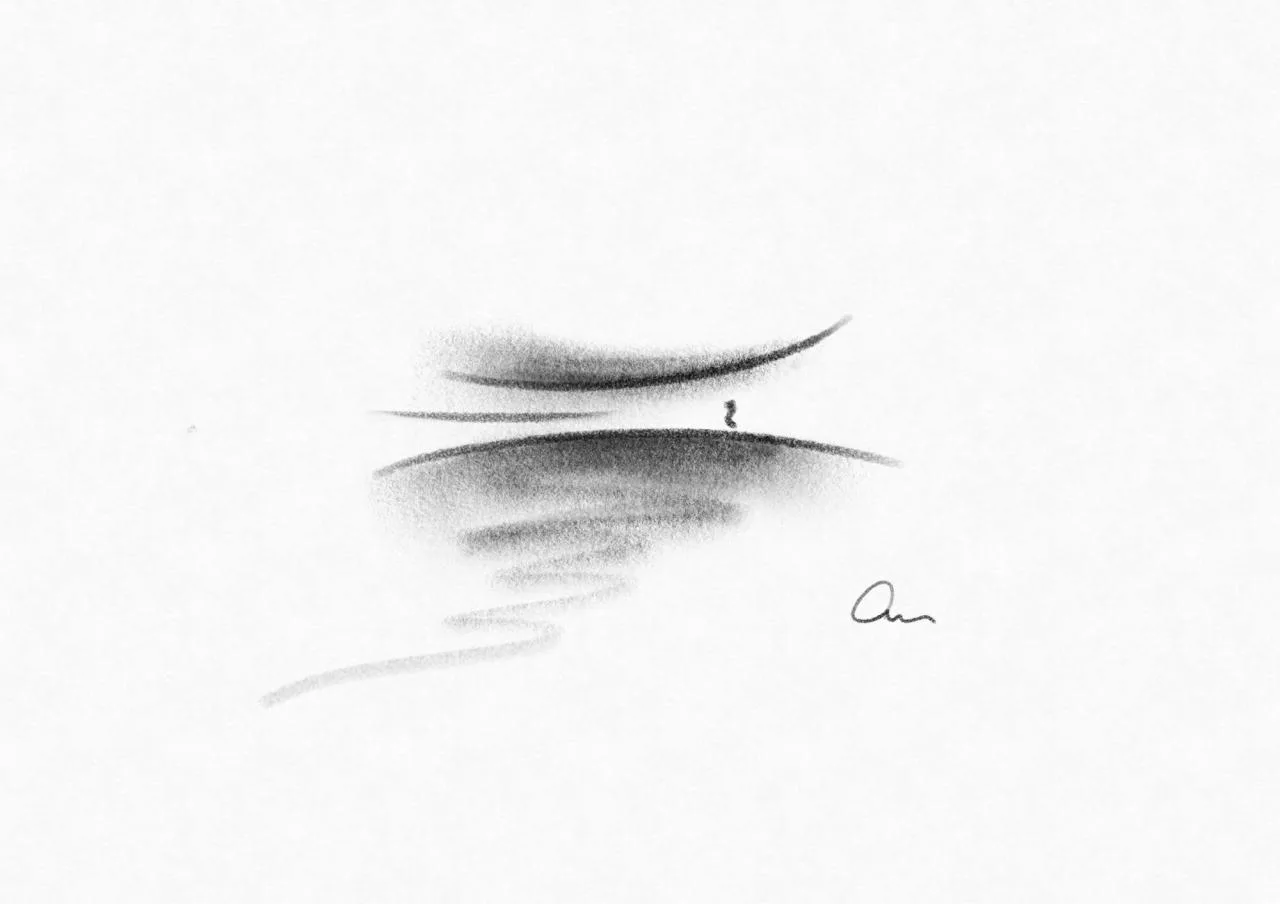
△ Design Sketch
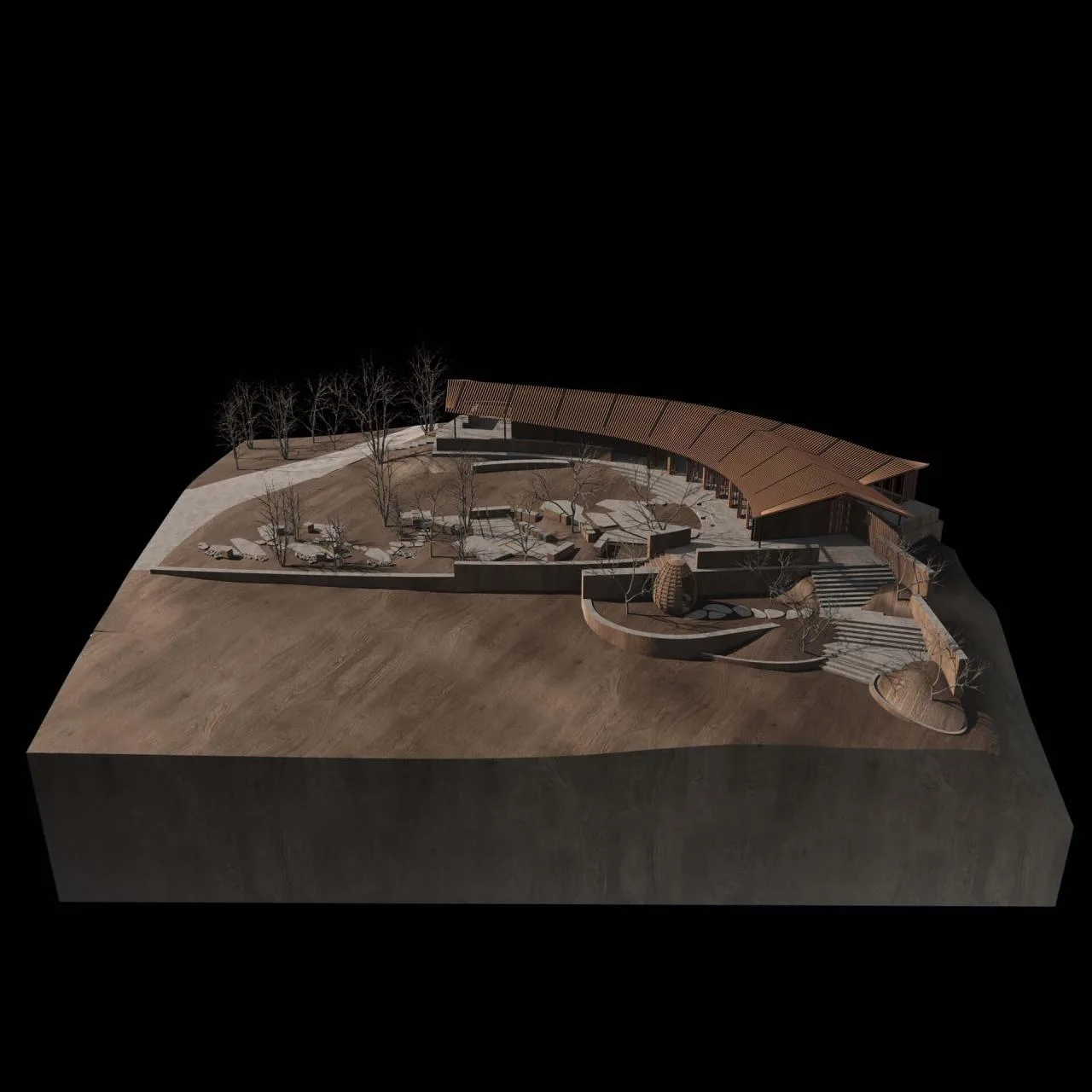
△ Model Diagram
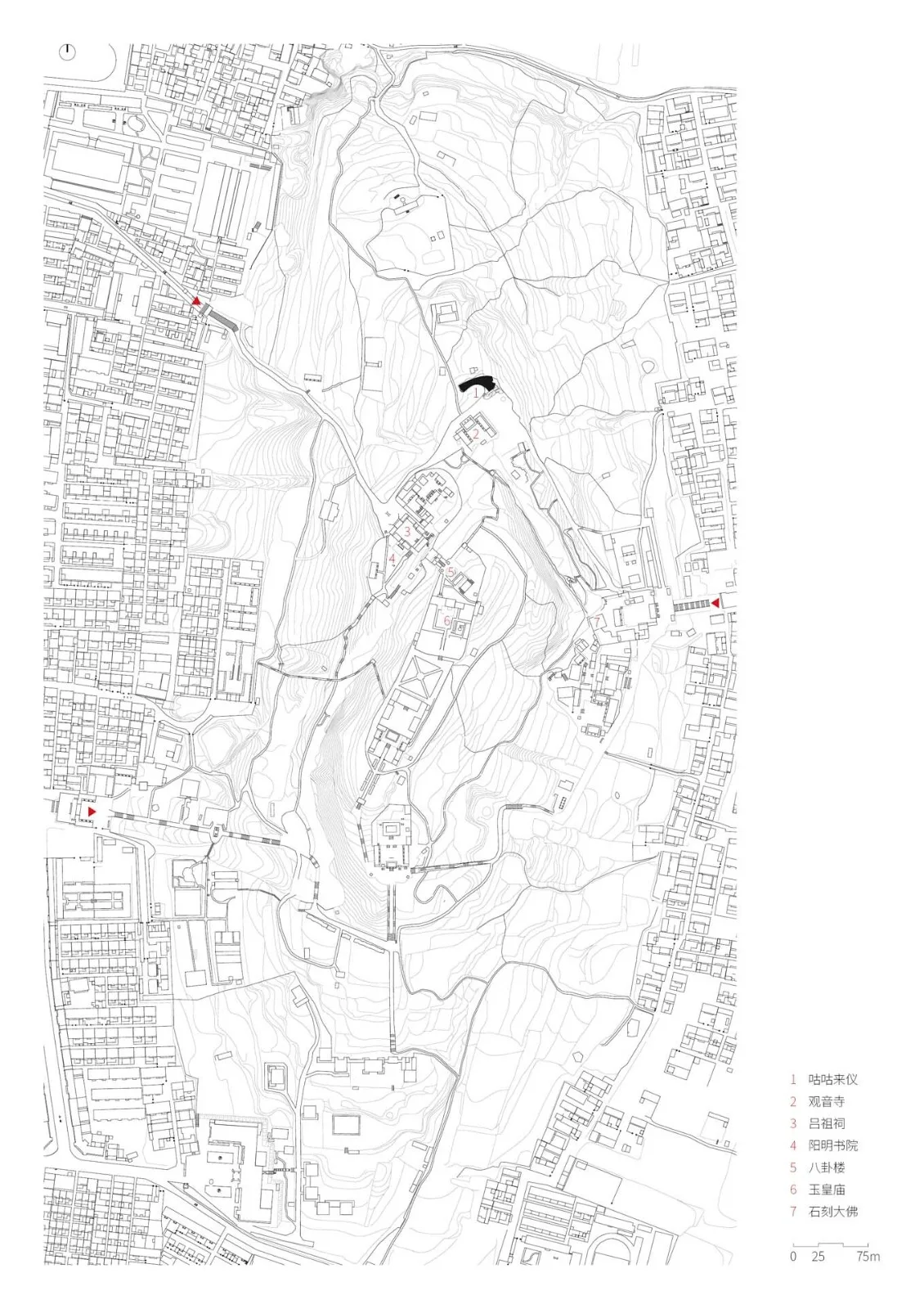
△ Base Schematic Diagram
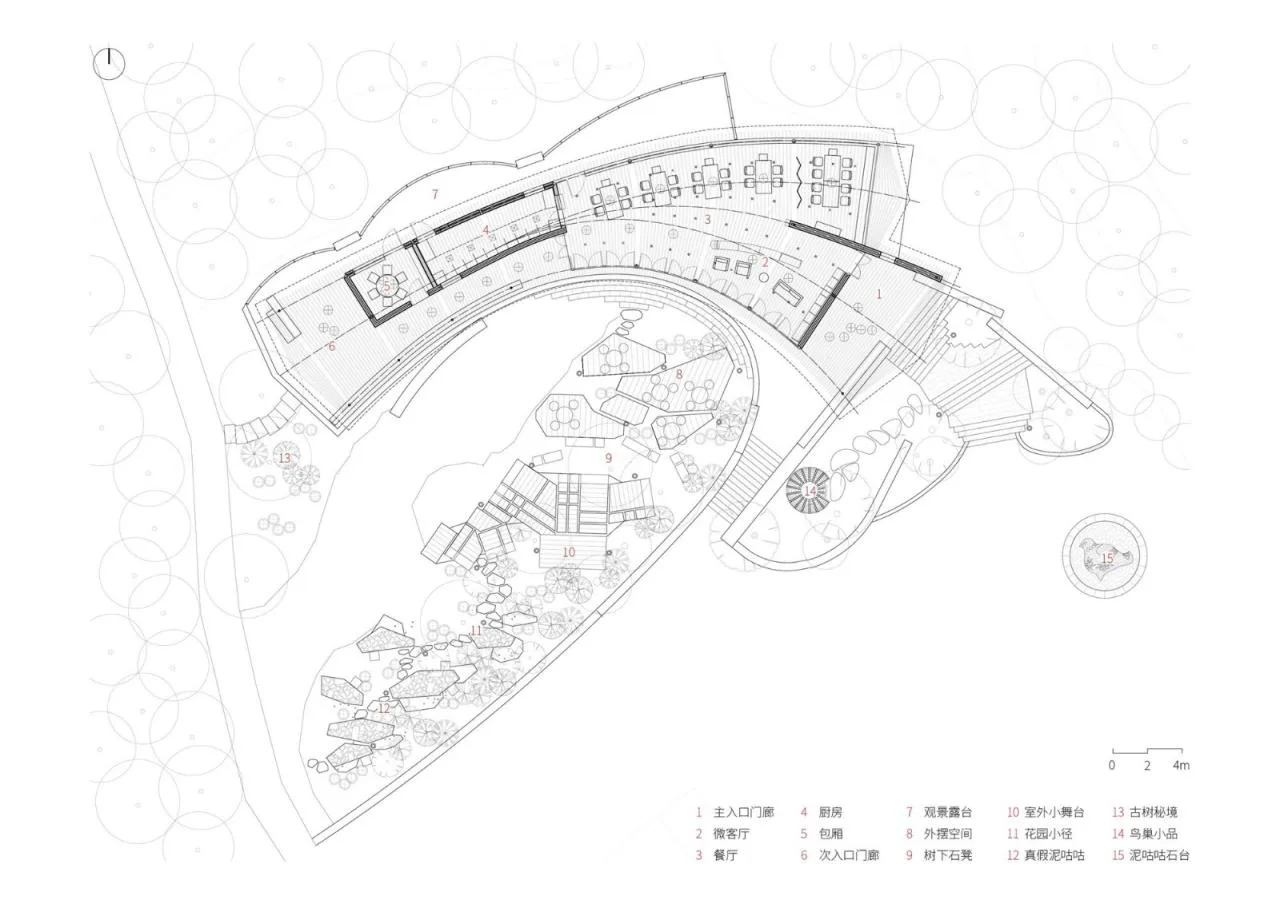
△ Plan View
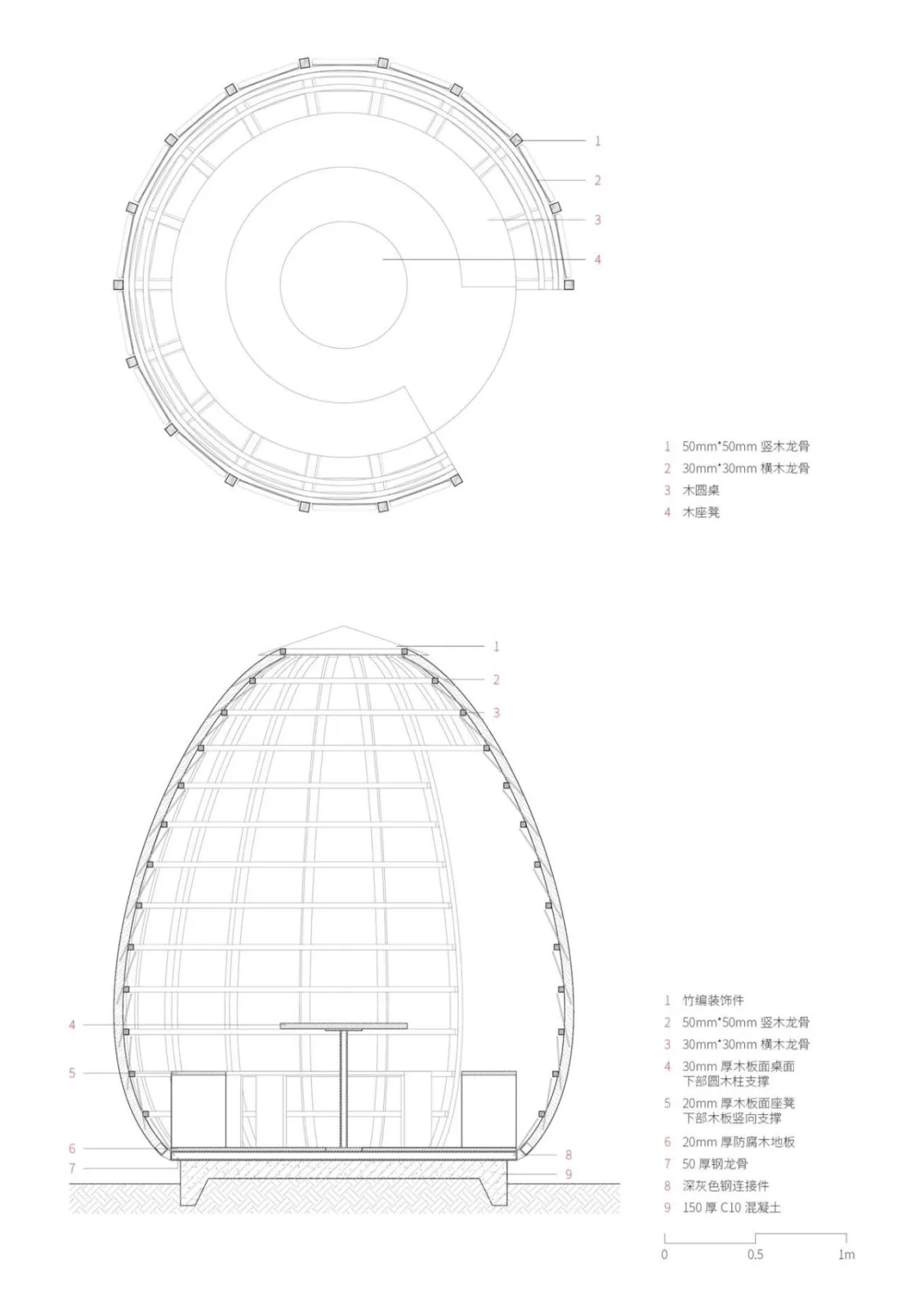
△ Structural Schematic Diagram
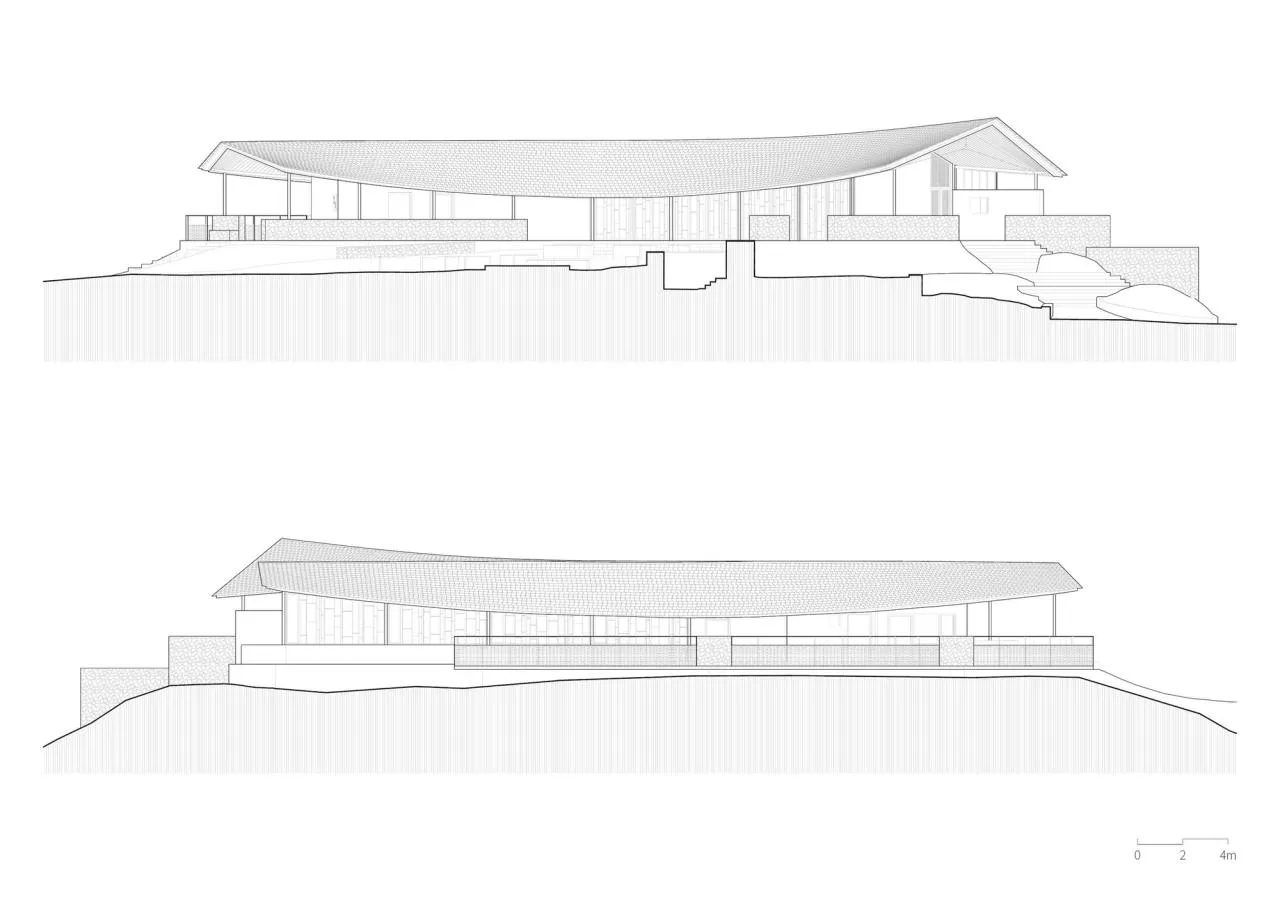
△ Elevation Drawing
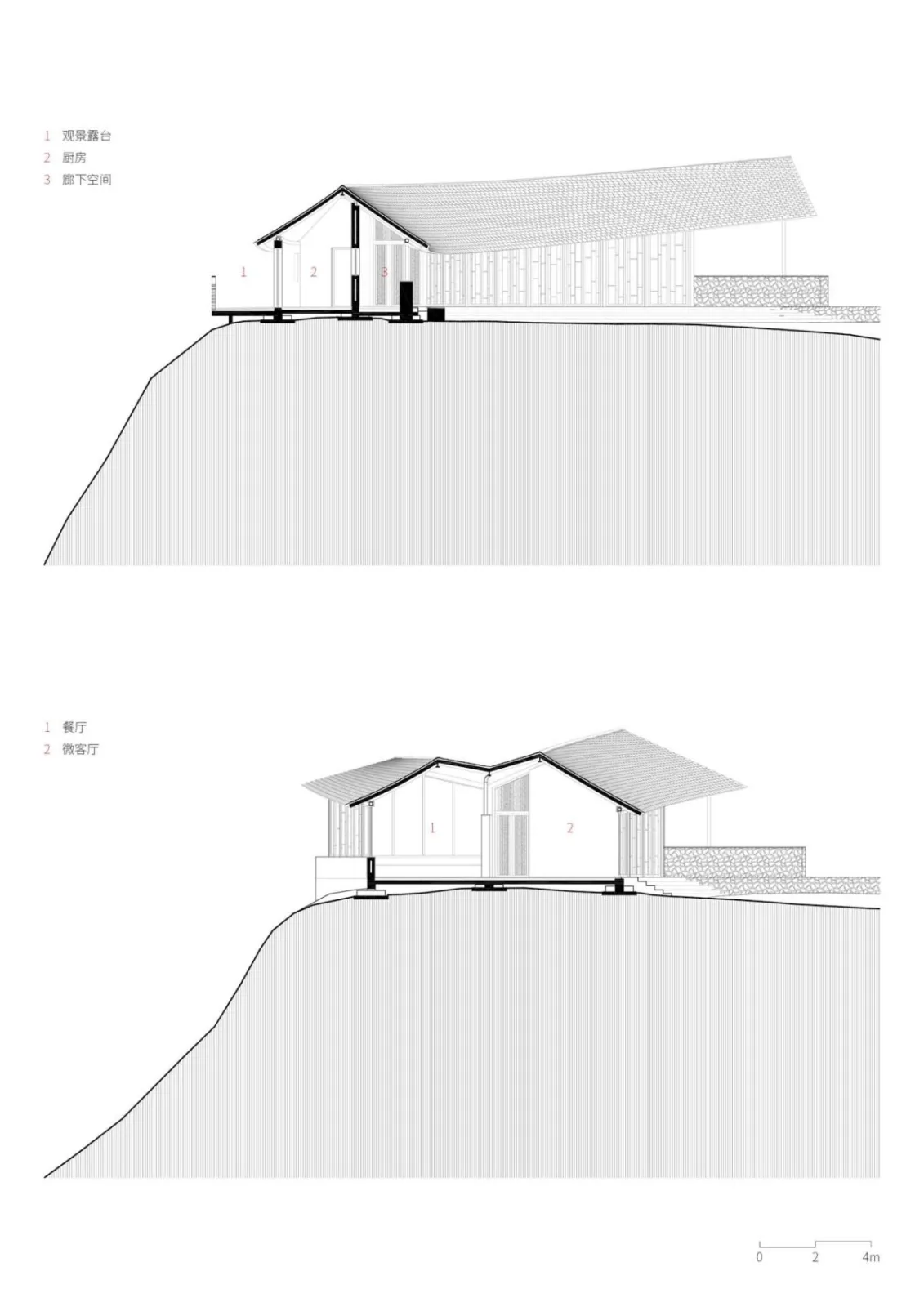
△ Section Diagram
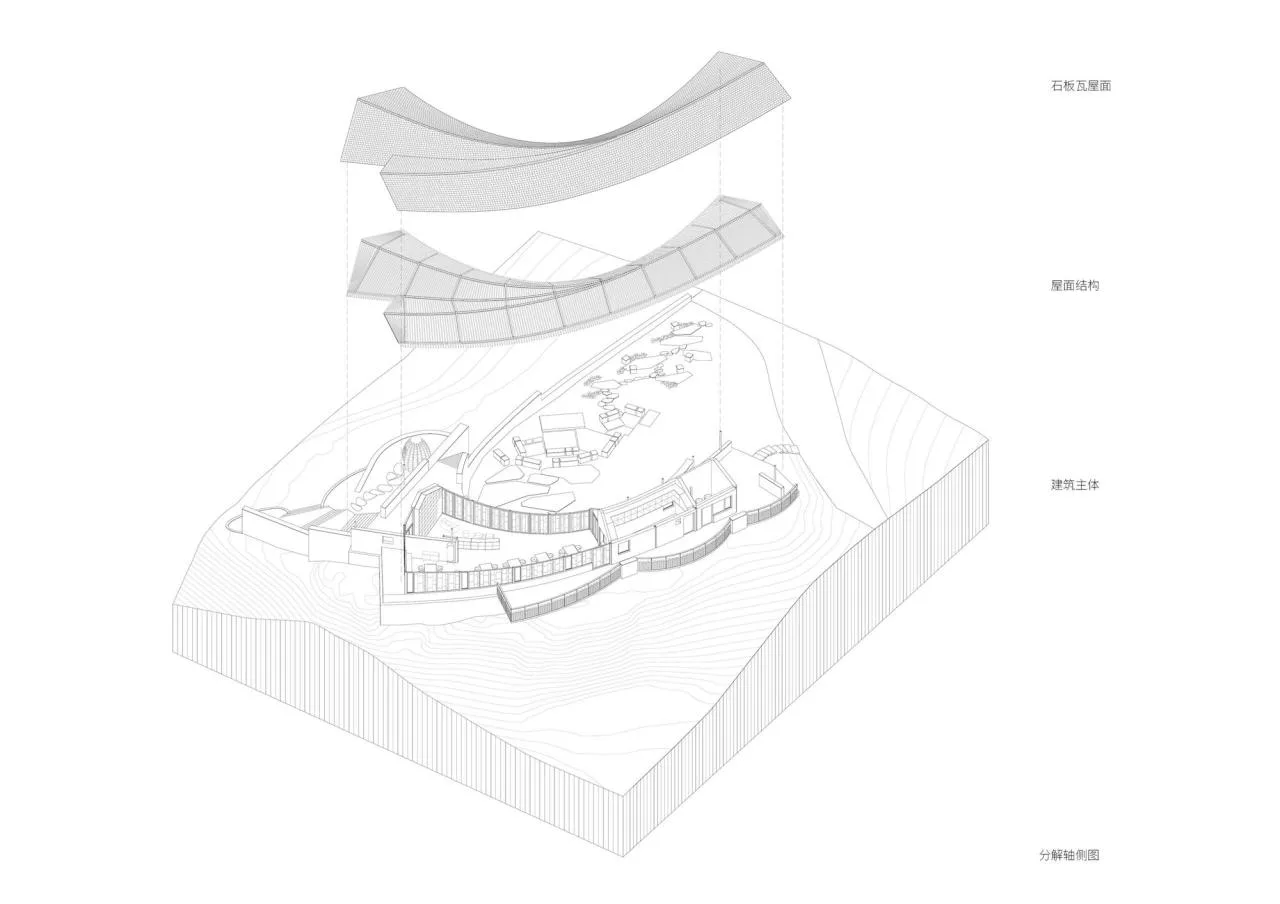
△ Exploded Diagram
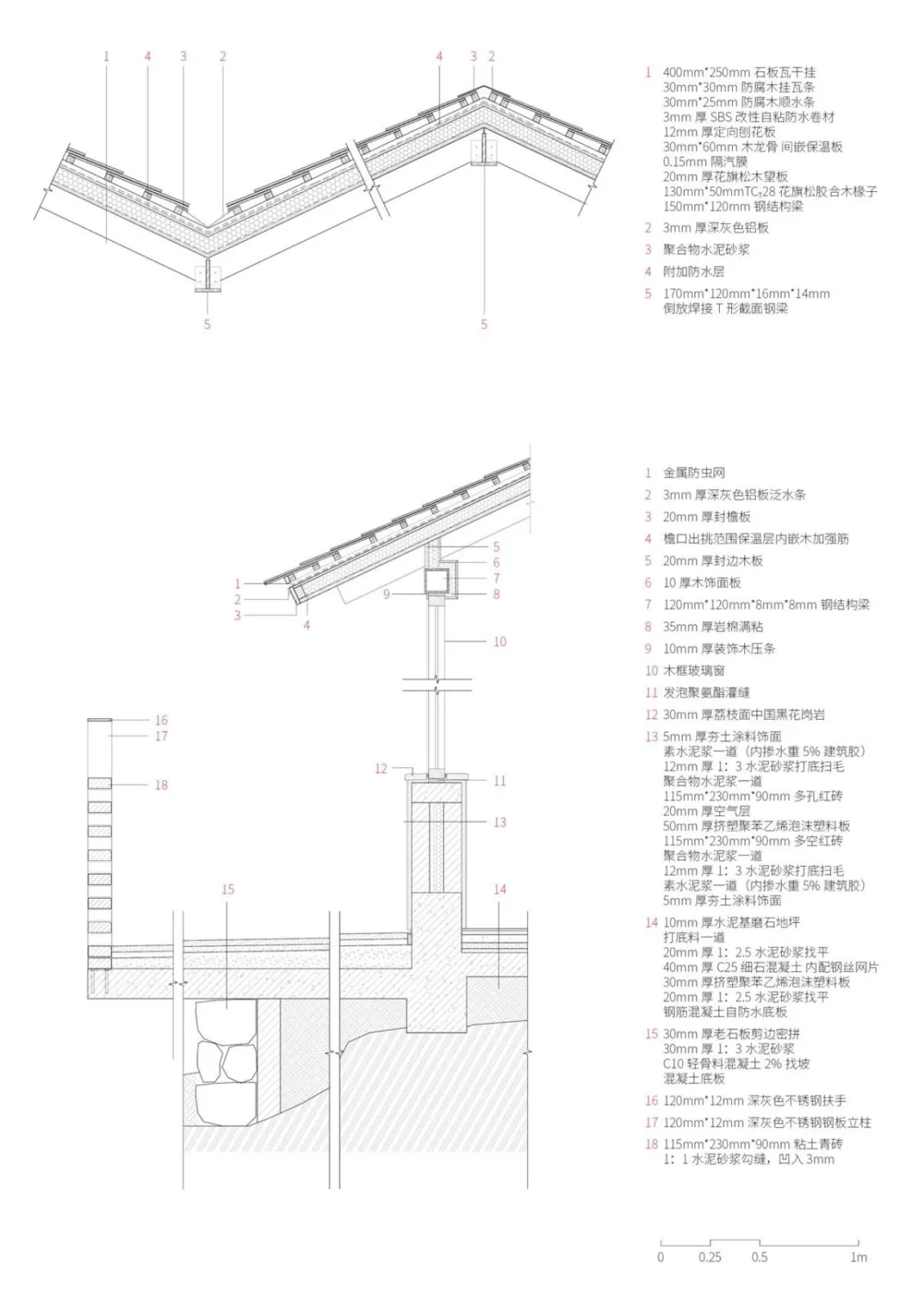
△ Detailed Structural Drawing
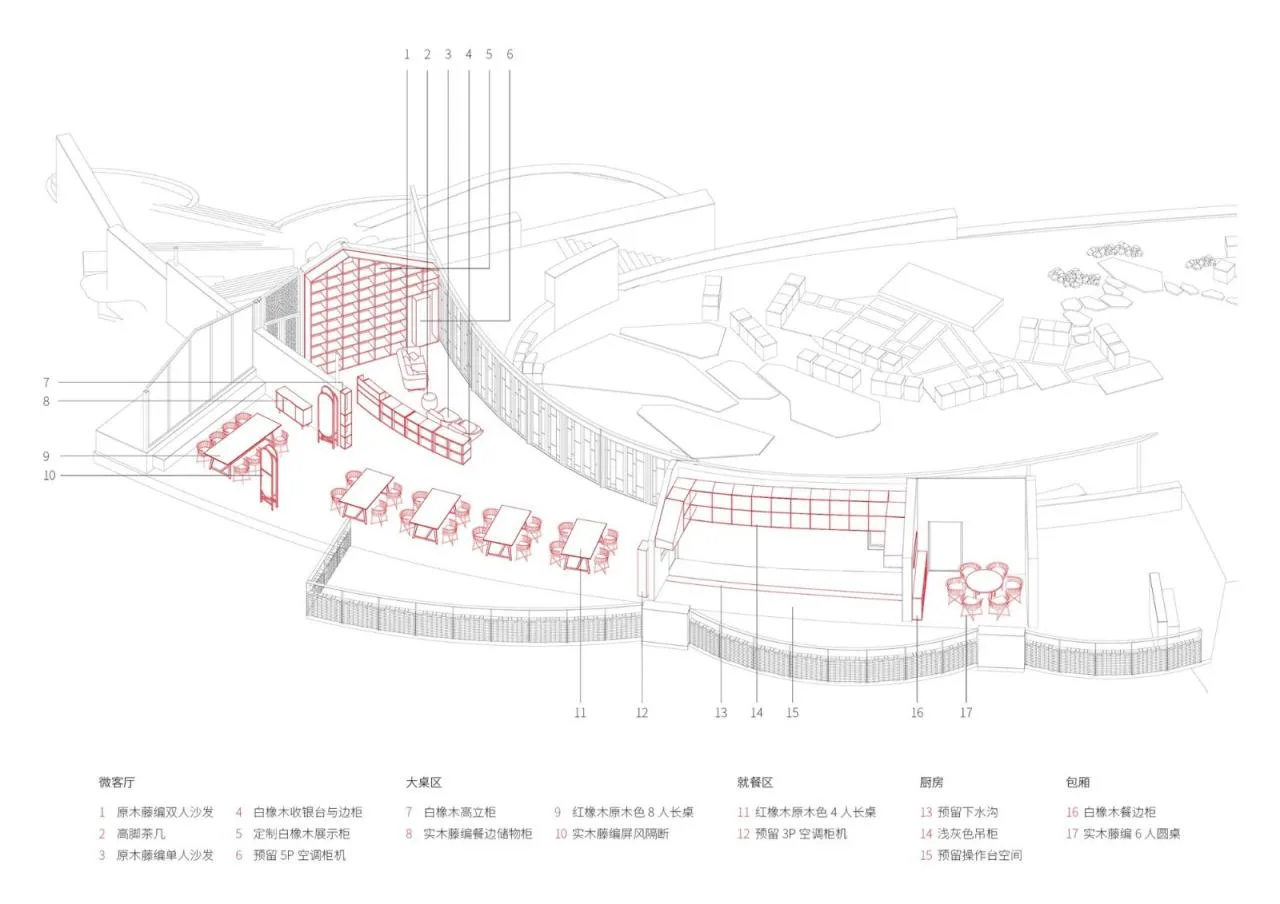
△ Functional Zoning Diagram
Project Information
Architect: Starry Sky Architecture Studio
Area: 210 square meters
Project Year: 2023
Photographer: Lv Xiaobin, Architecture – Architectural Photography
Manufacturer: Fu Shuo Rammed Earth, Lushan Hongfeng Stone Co., Ltd
Principal Architect: Ji Xin
Design Team: Ji Xin, Ge Jiaqi, Chen Chao, Xi Ting
Structural Design: Yang Xiaotian, Wu Kunying
Interior Design: Ji Xin, Ge Jiaqi
Landscape Design: Wang Zhi
Logo Design: Ji Xin, Ge Jiaqi
VI Design: Zou Congfei, Chen Haoxiang
Construction Party: Henan Zhengjue Construction Engineering Co., Ltd
Client: Junxian Tourism Development Service Center
Location: Hebi City














Must log in before commenting!
Sign Up