
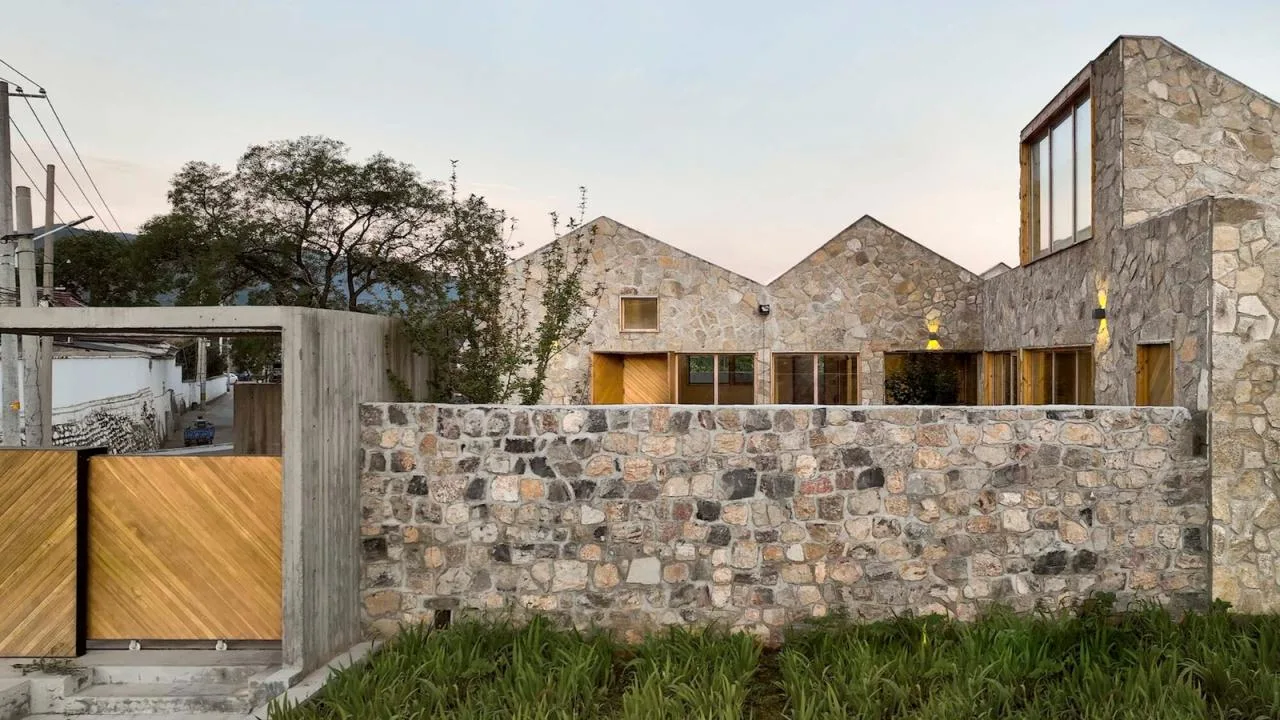
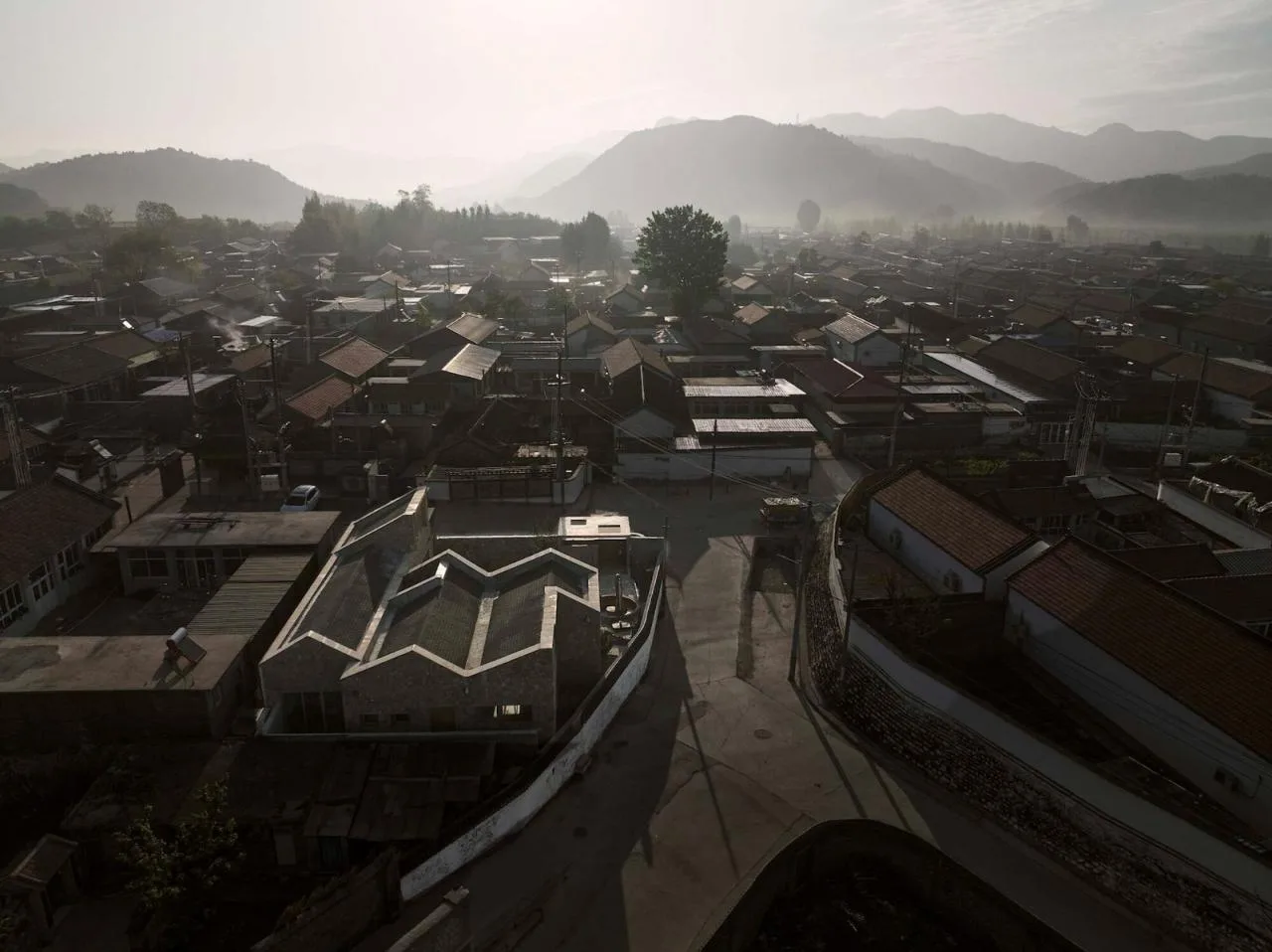
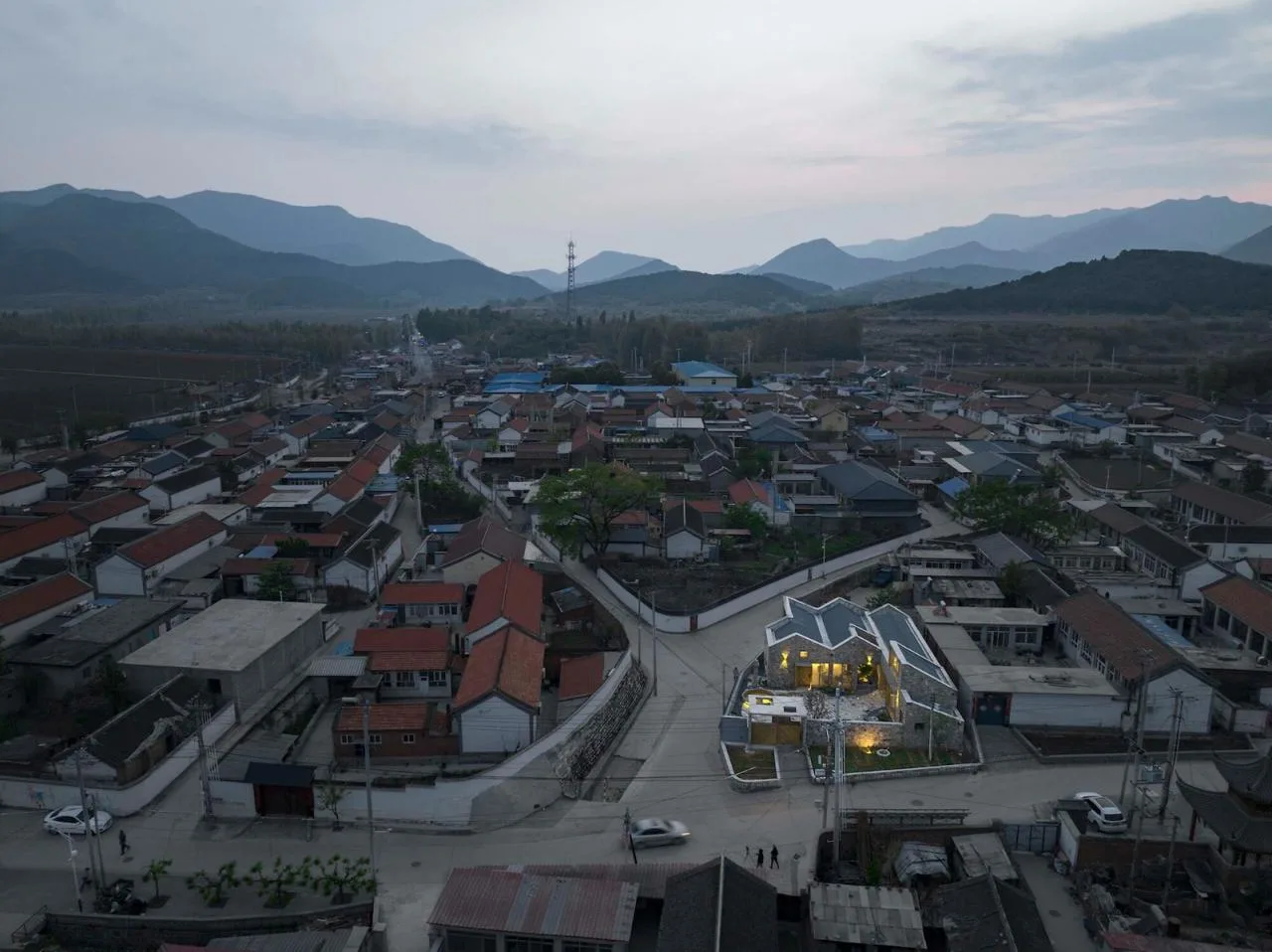
Zhe Shan Yuan is situated in Xishaoqu Village, Miyun District, Beijing. This expansive village is embraced by mountains on three sides, where most existing homes are traditional northern farmhouses. The project owner collaborates with the village to revitalize numerous vacant courtyards, transforming them into leisure and weekend homestay destinations managed by local villagers. Zhe Shan Yuan is one such courtyard, designated for public reception and workshop activities due to its convenient transportation access.
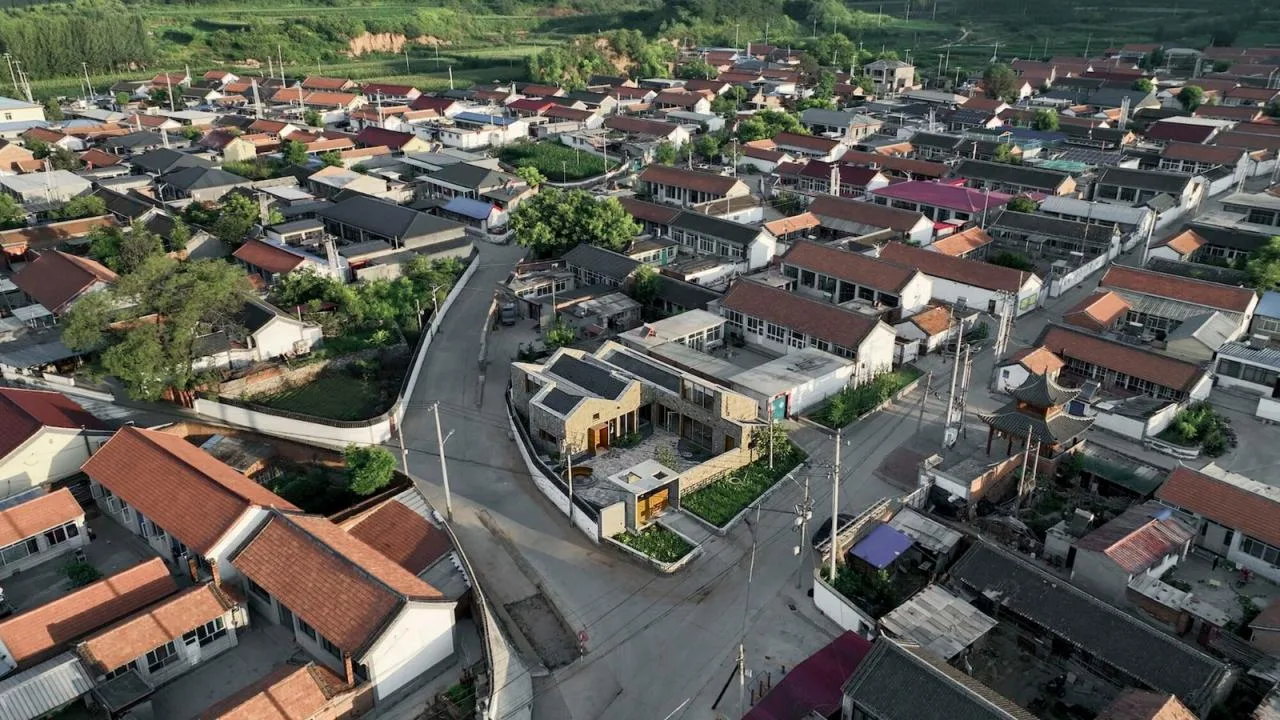
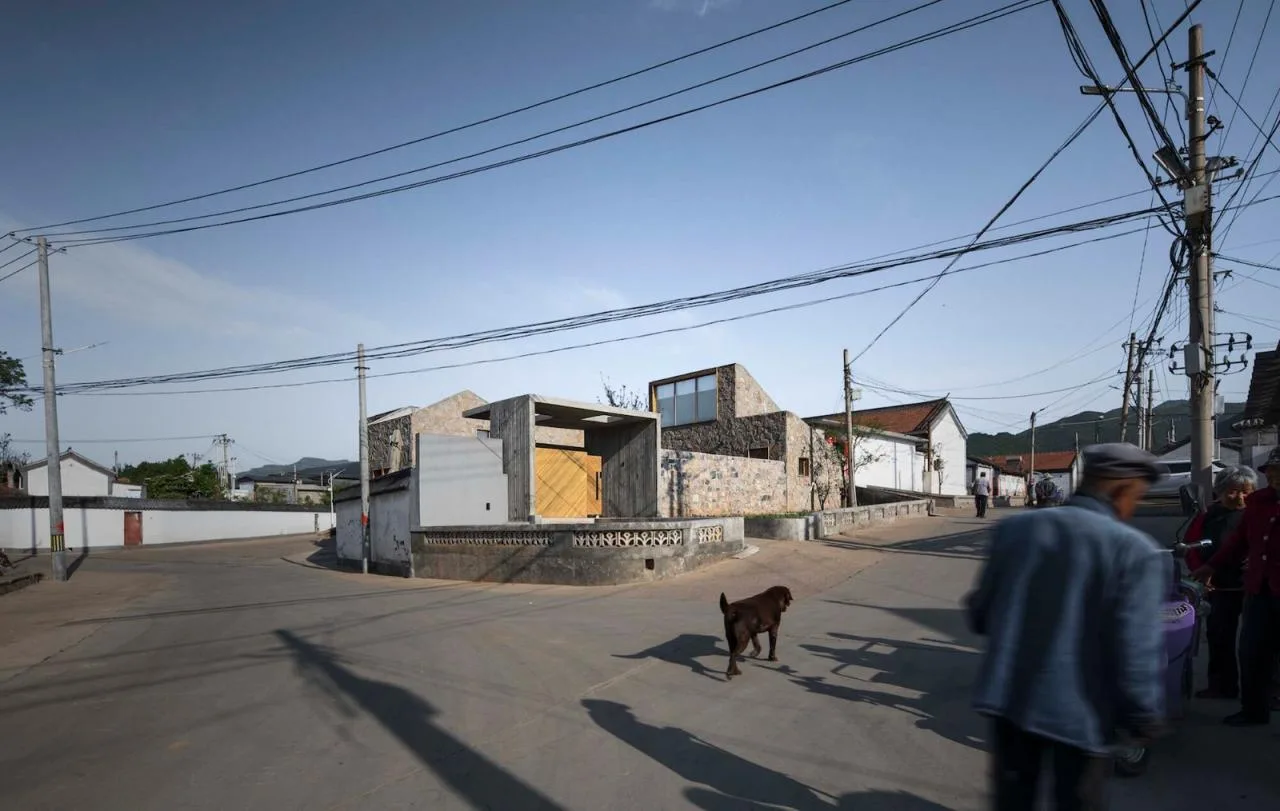
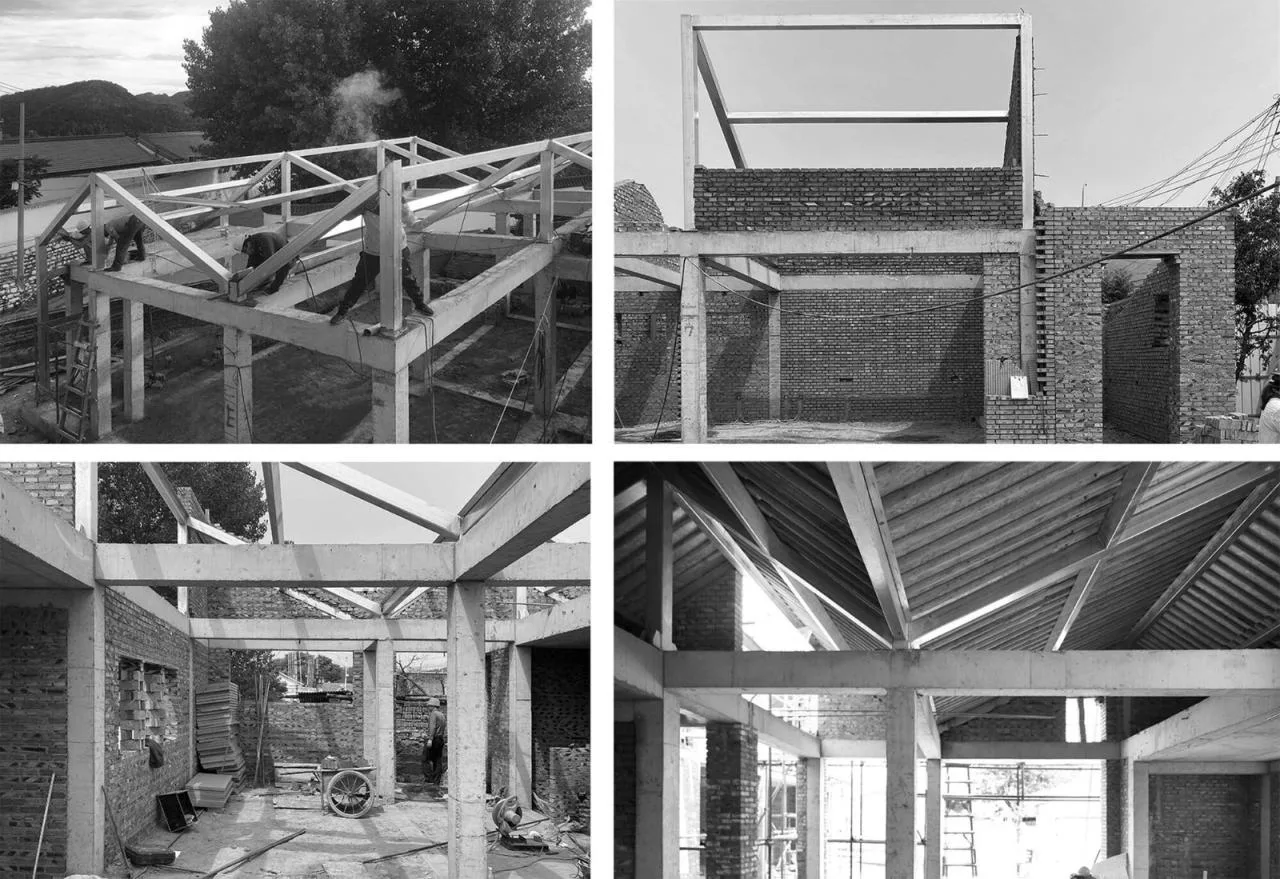
The courtyard had previously undergone partial reconstruction, and when we received the commission, the main concrete frame and some roofing were already in place. The building spans roughly 180 square meters and includes a main room plus a wing room. Both feature double-pitched roofs of equal height, aligned along an east-west axis. However, the wing room is deeper than the main room, resulting in an unbalanced proportion.
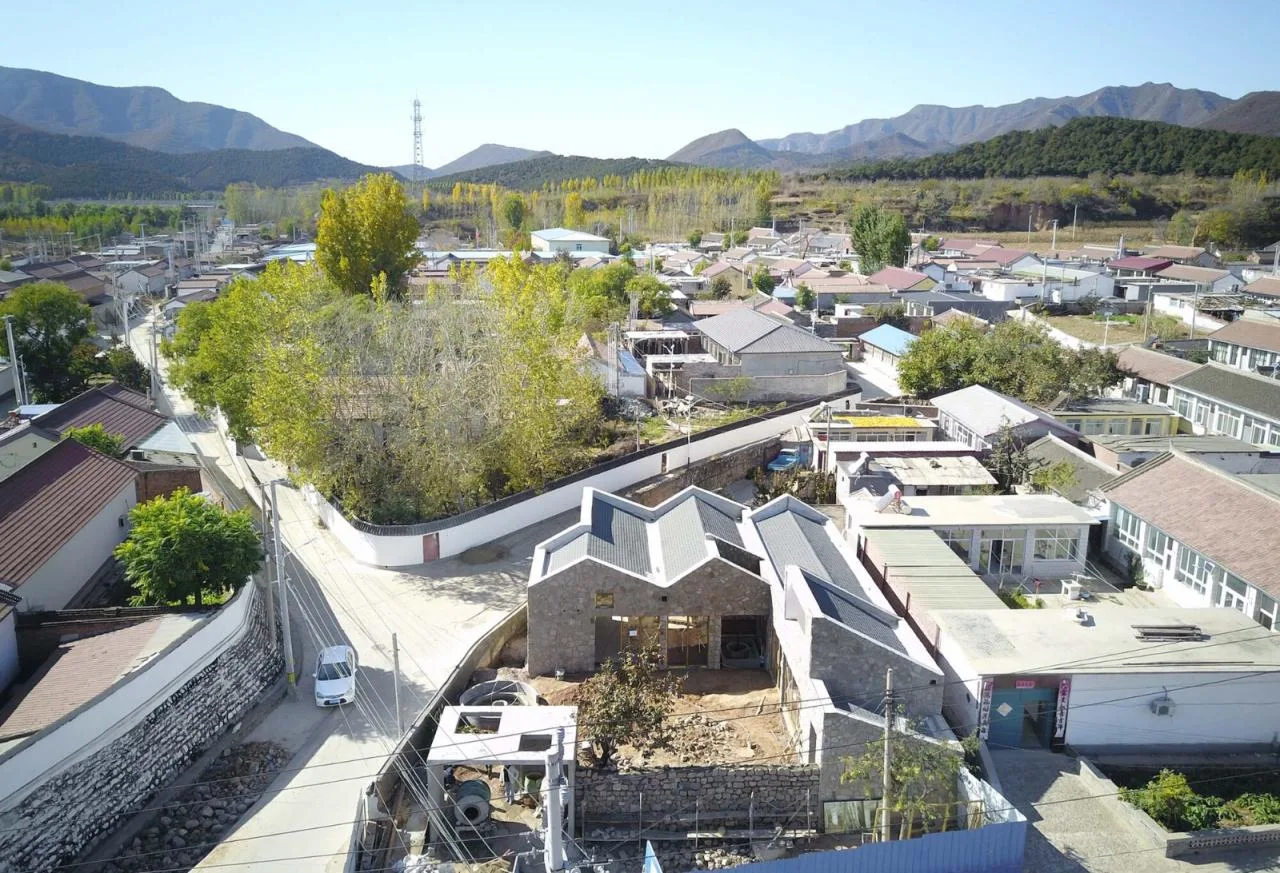
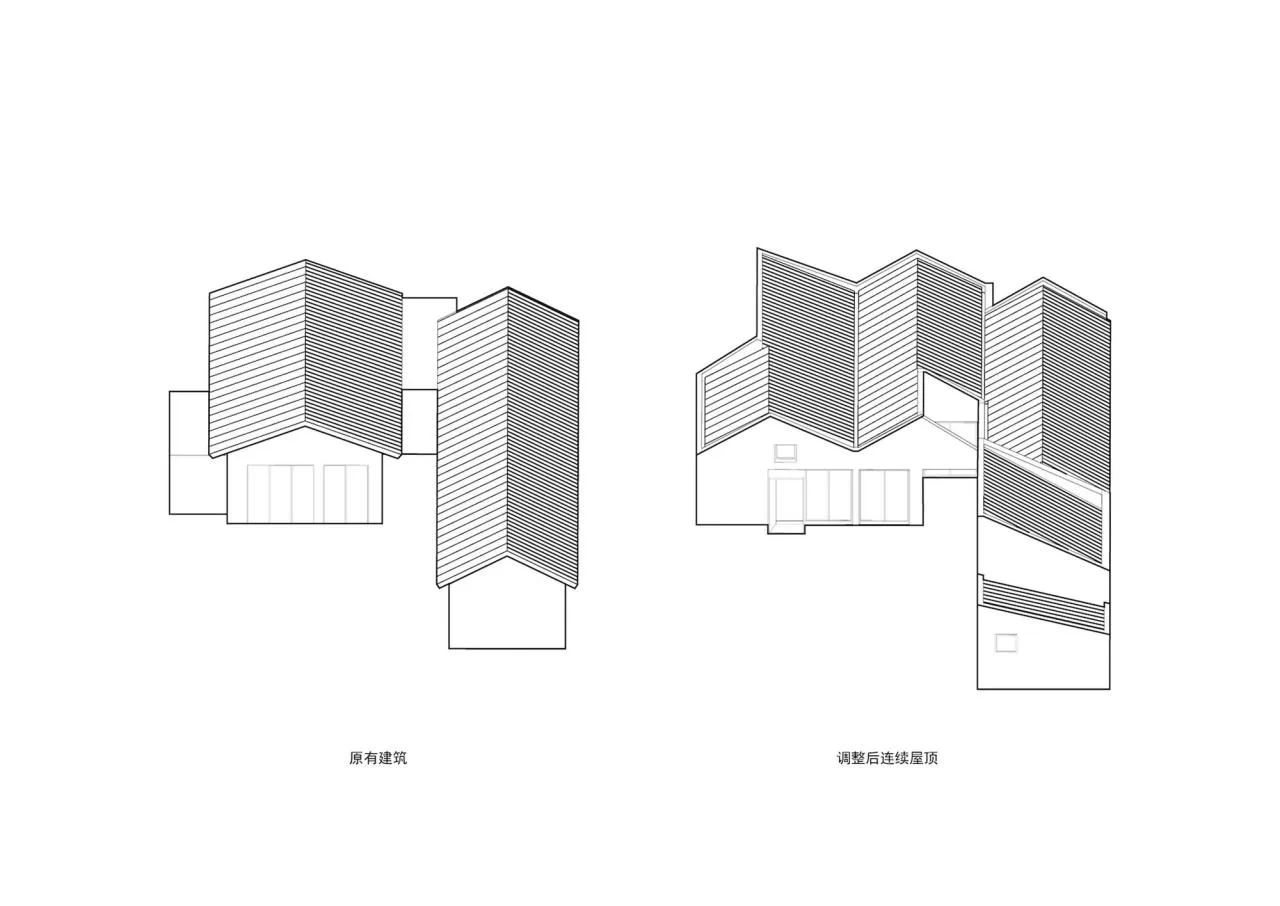
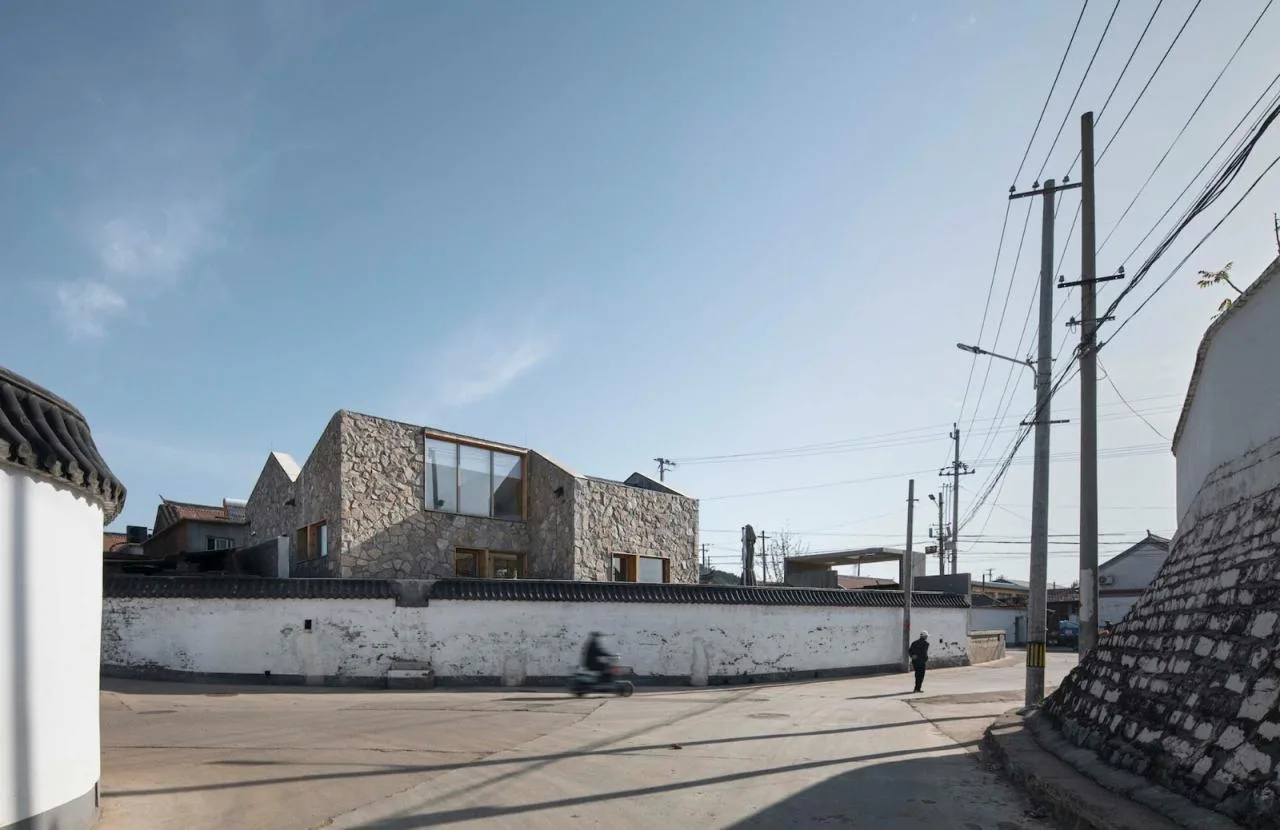
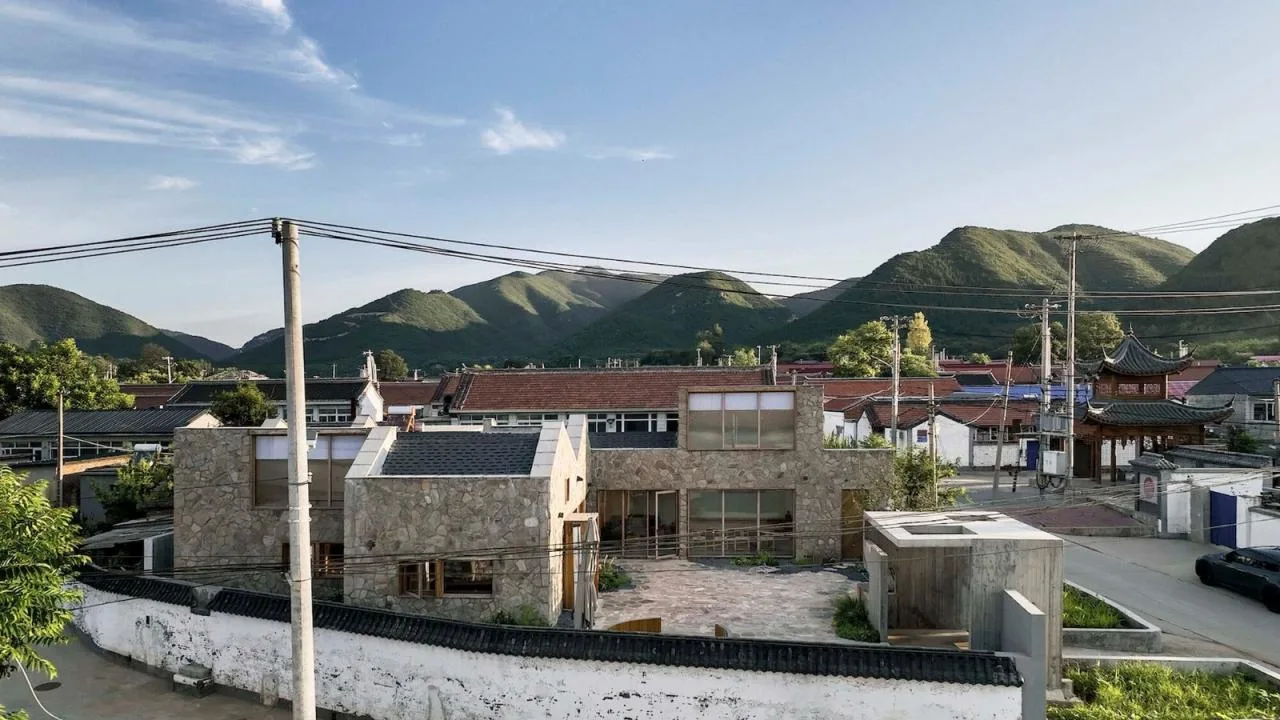
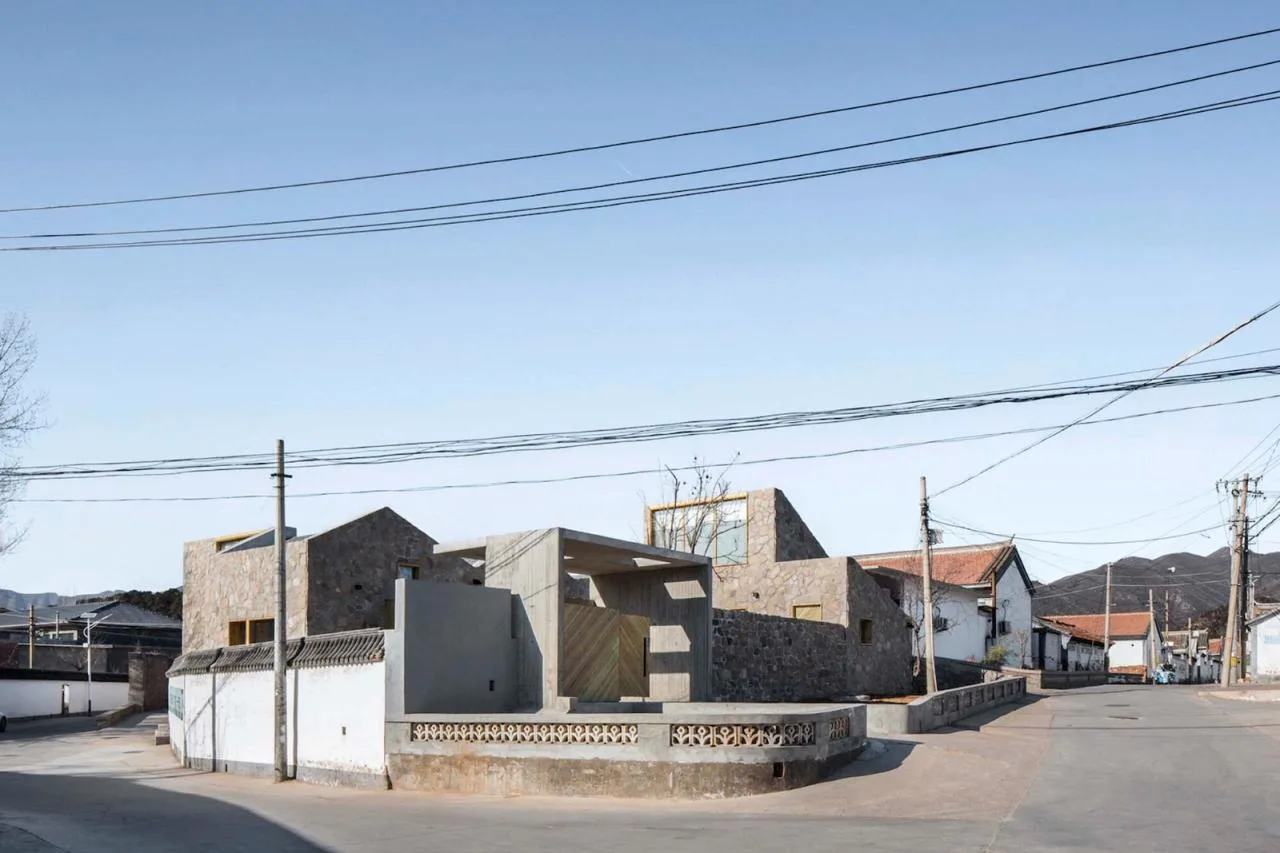
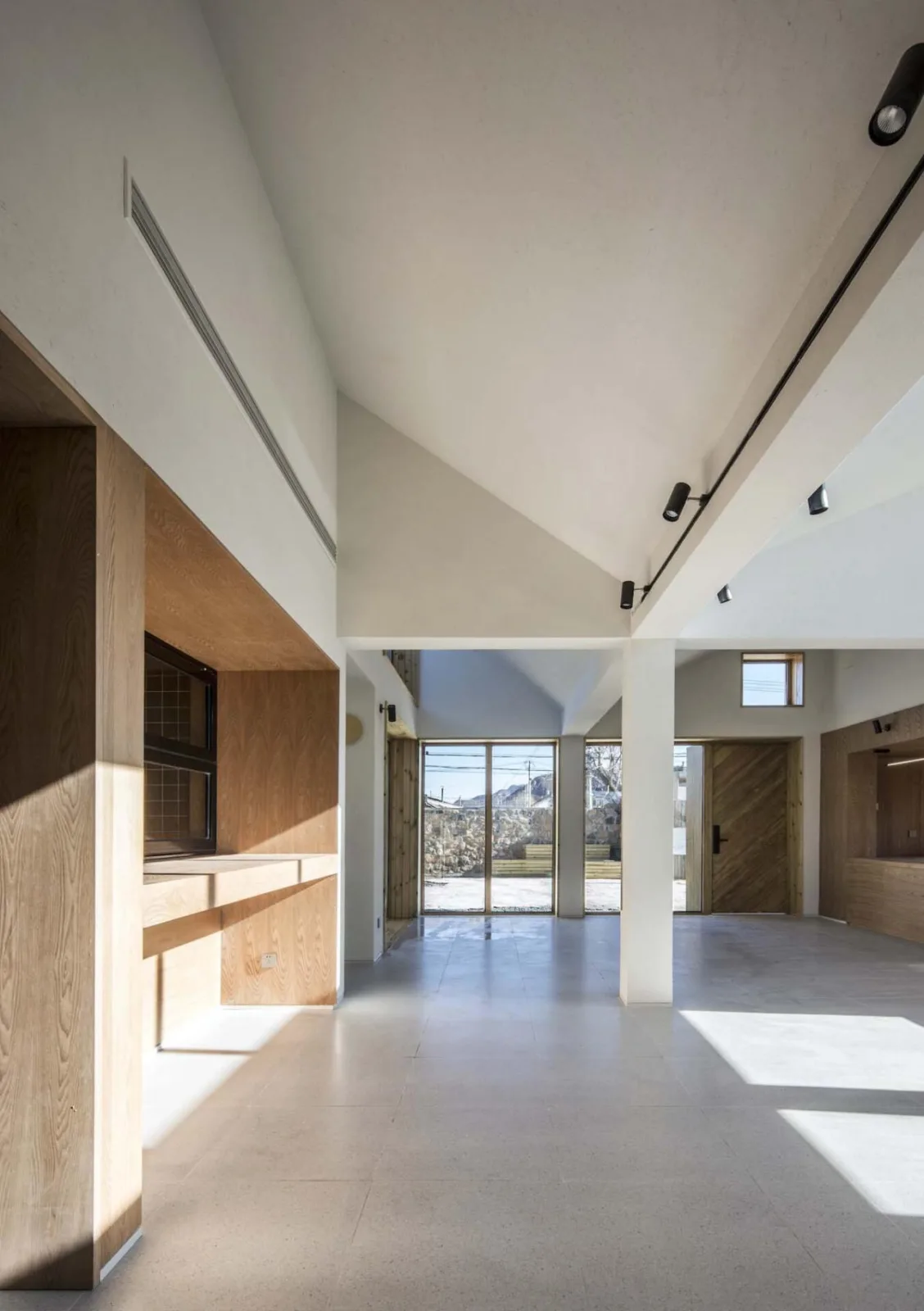
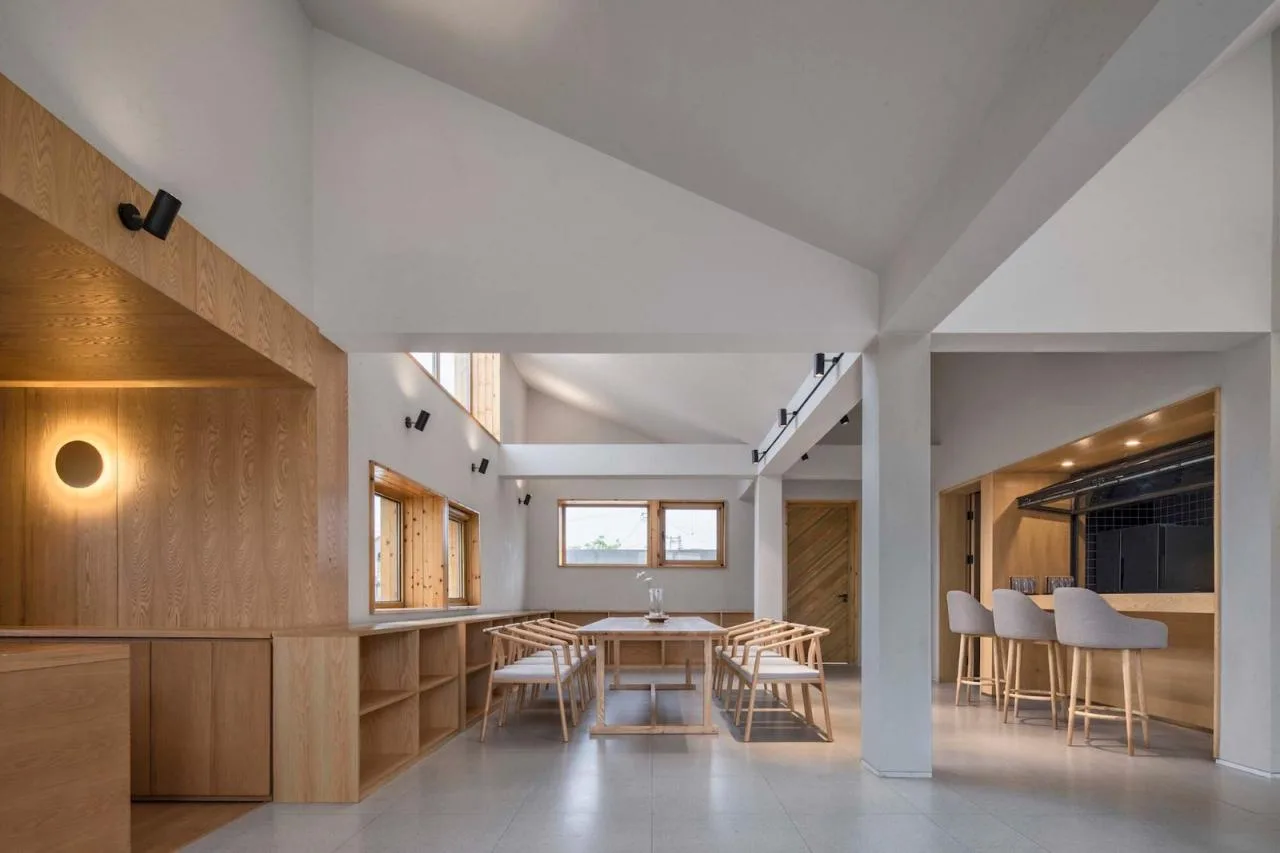
Our design approach focused on adapting renovations to local conditions. Building on the existing concrete frame, we redefined the hierarchy and architectural form through a continuous folded roof: the main room was partially elevated, and the wing room’s roof transformed from two slopes to four. This continuous roof echoes the ridgelines surrounding the village and introduces tall windows on the building’s north and south sides.
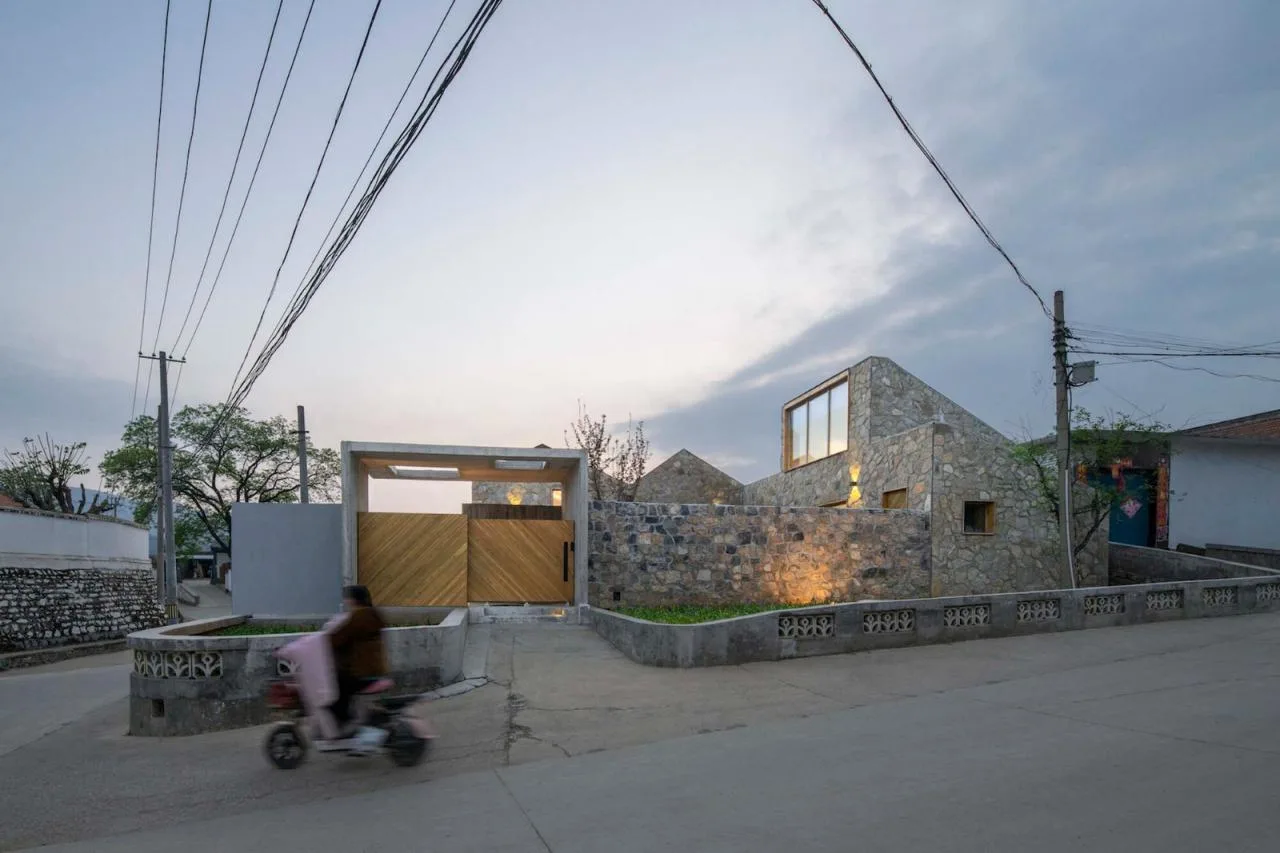
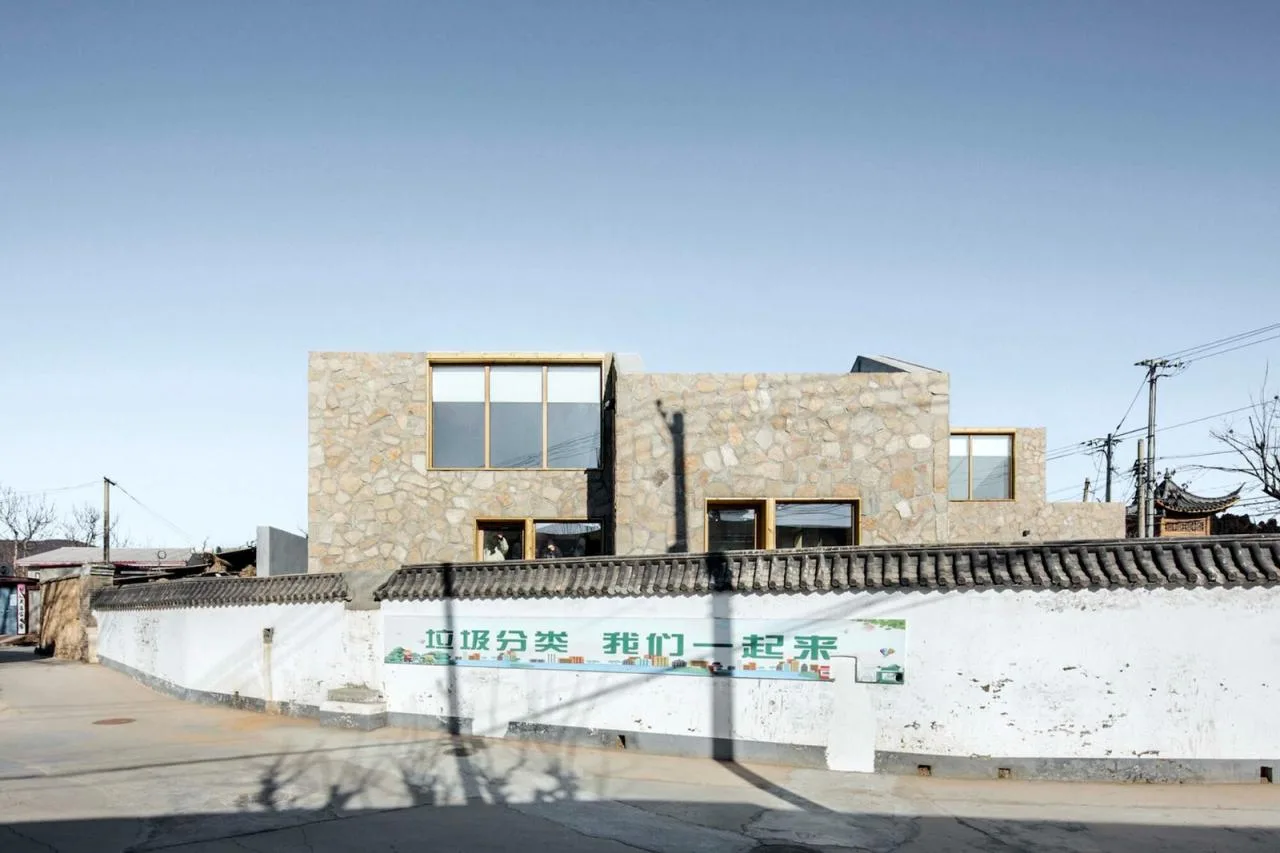
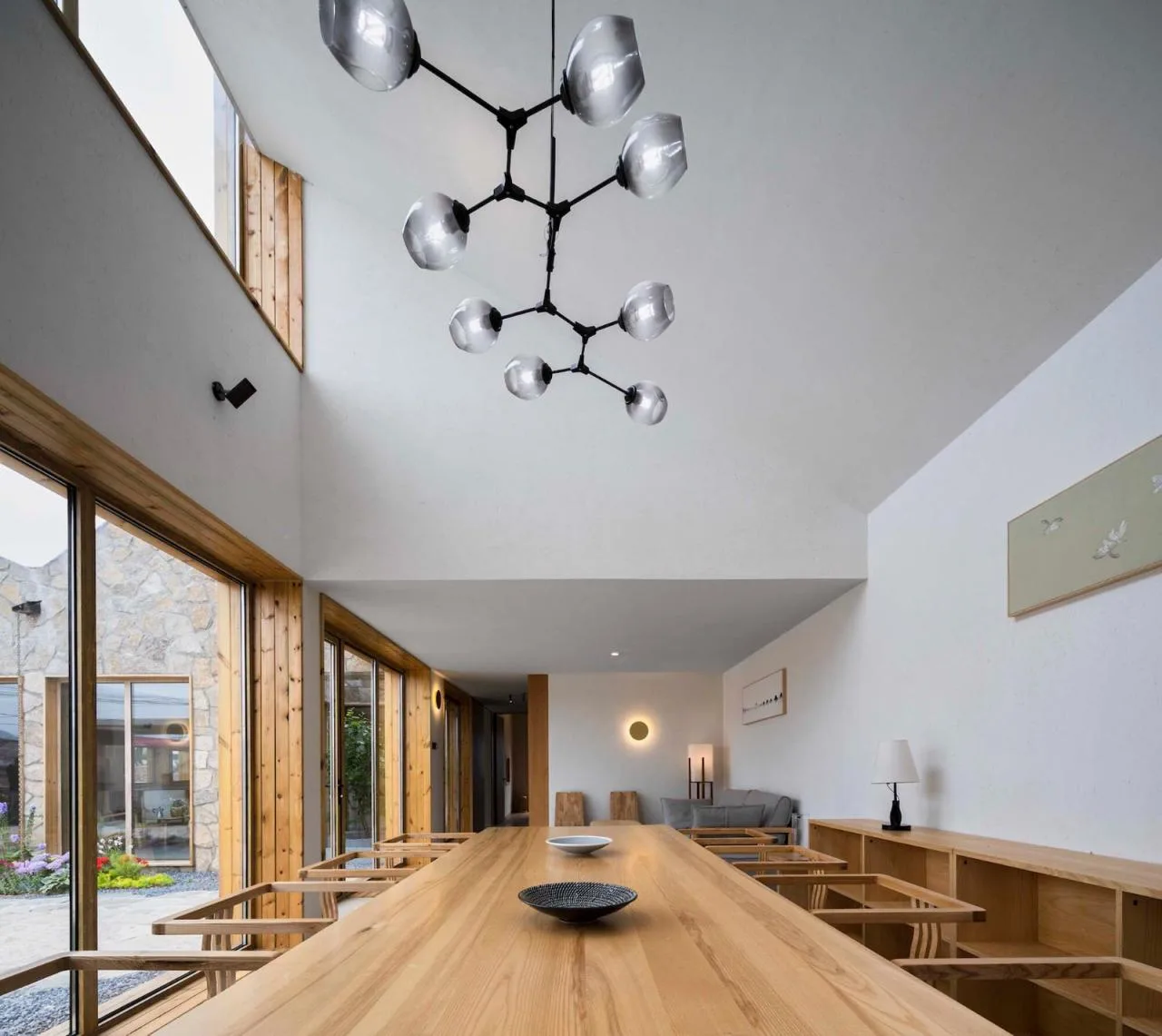
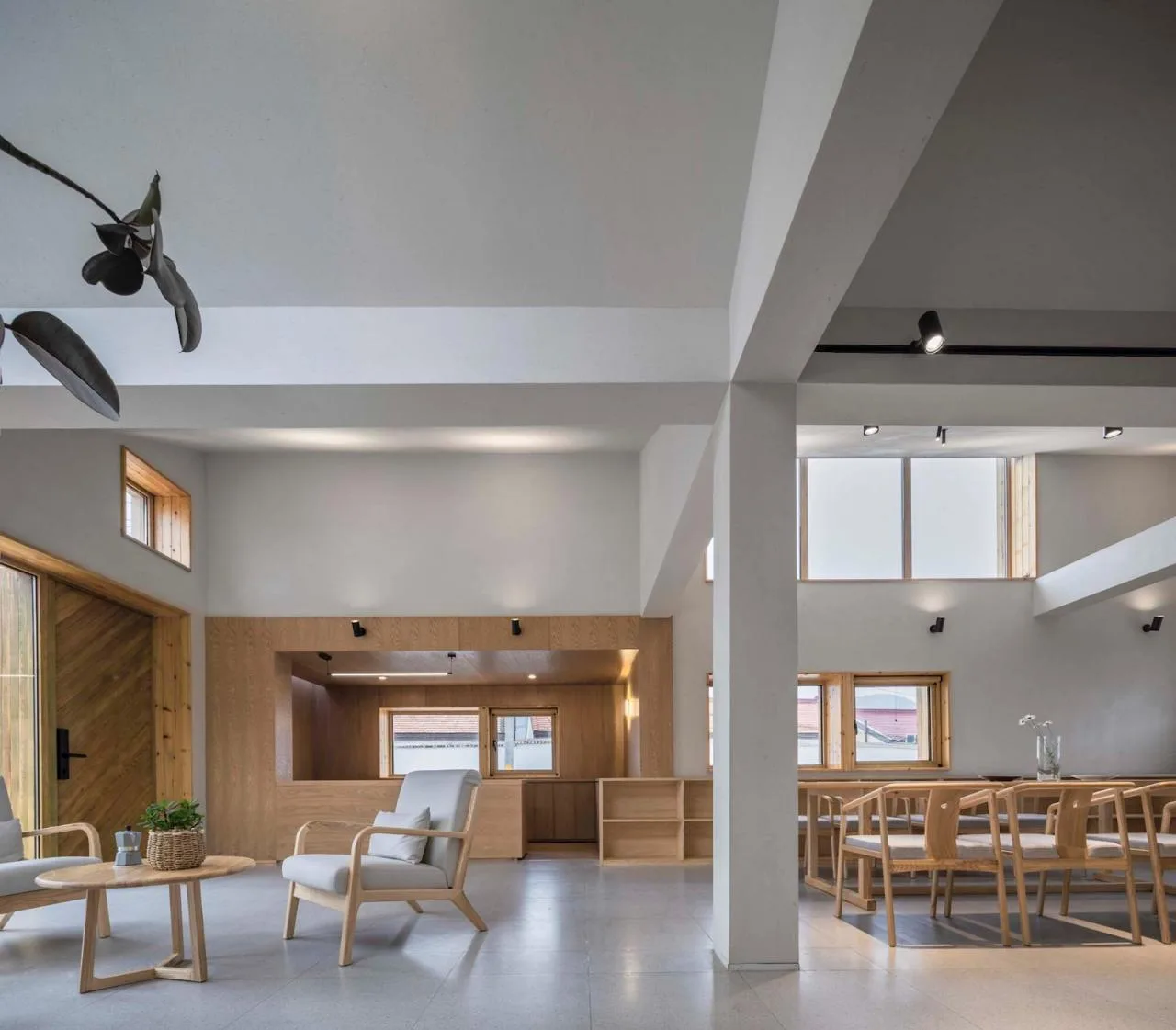
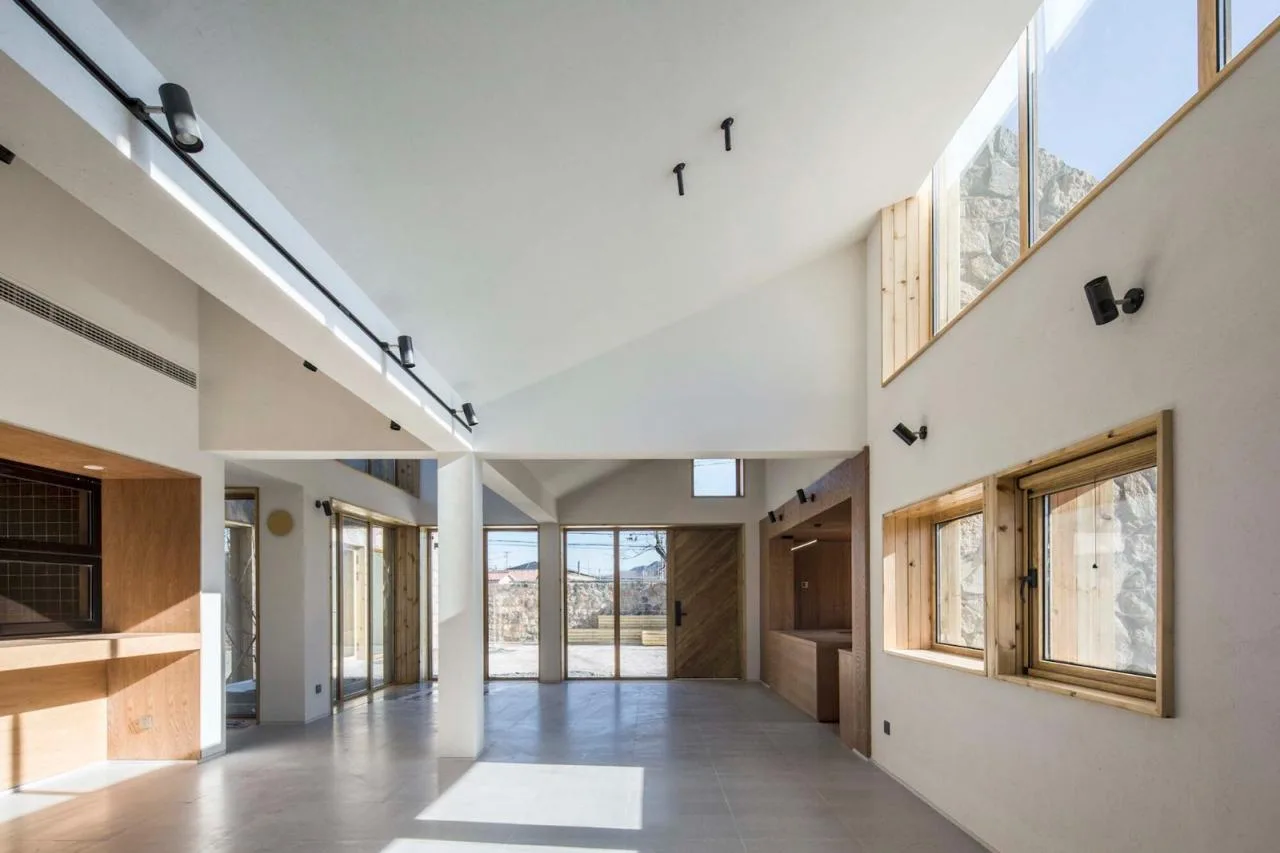
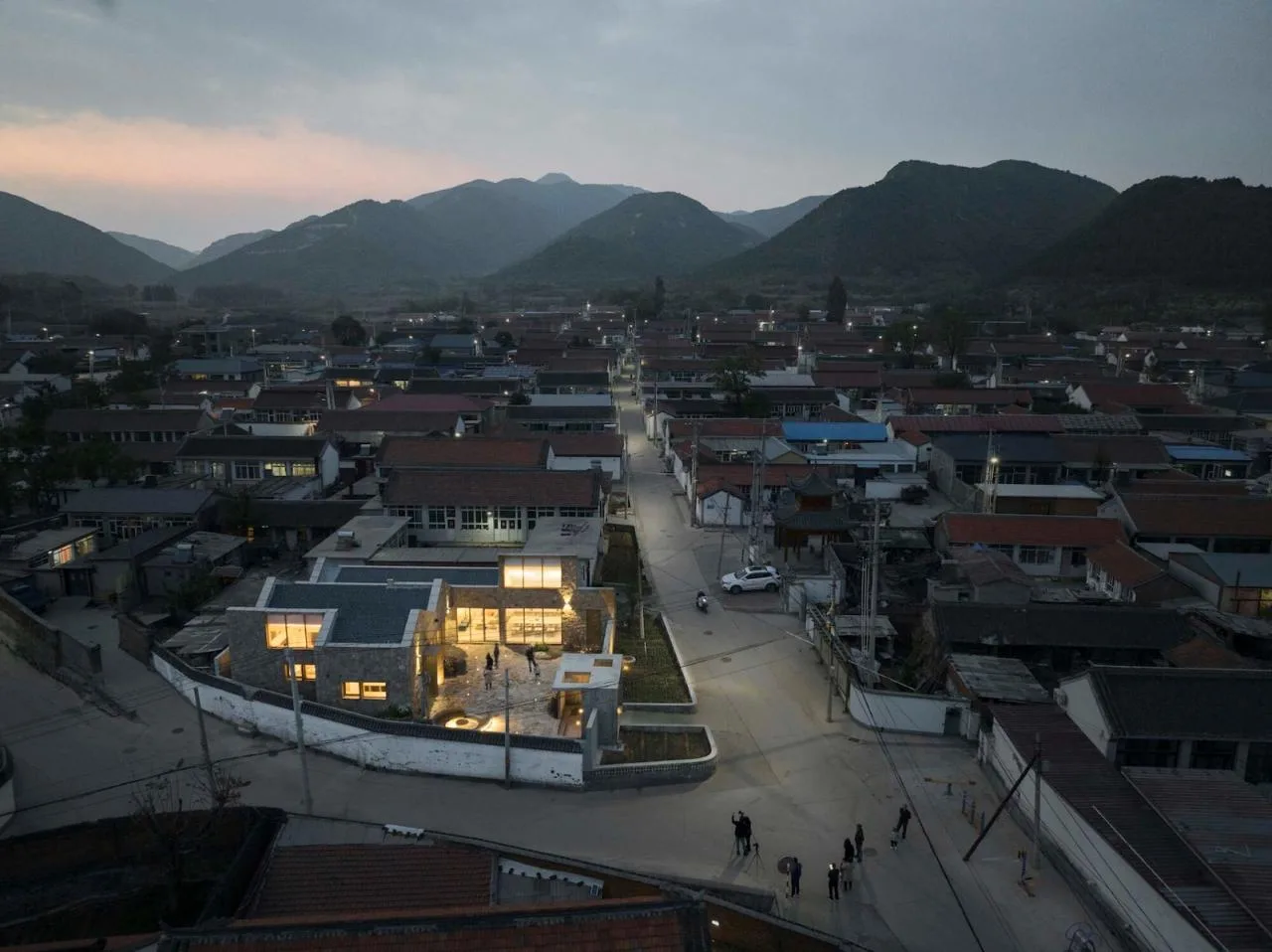
From the village exterior, a prominent high window on the south facade highlights the building’s public function and offers effective nighttime signage. Inside, the tall north and south windows create lofty ceilings and flood the workshop space in the wing room with natural light.
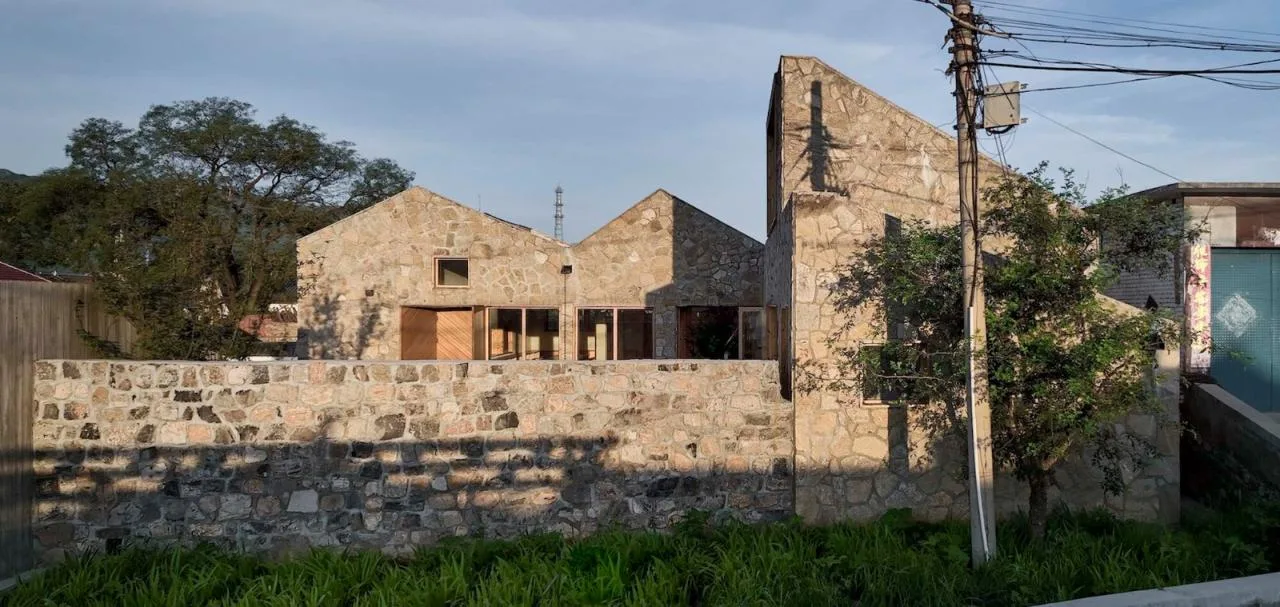
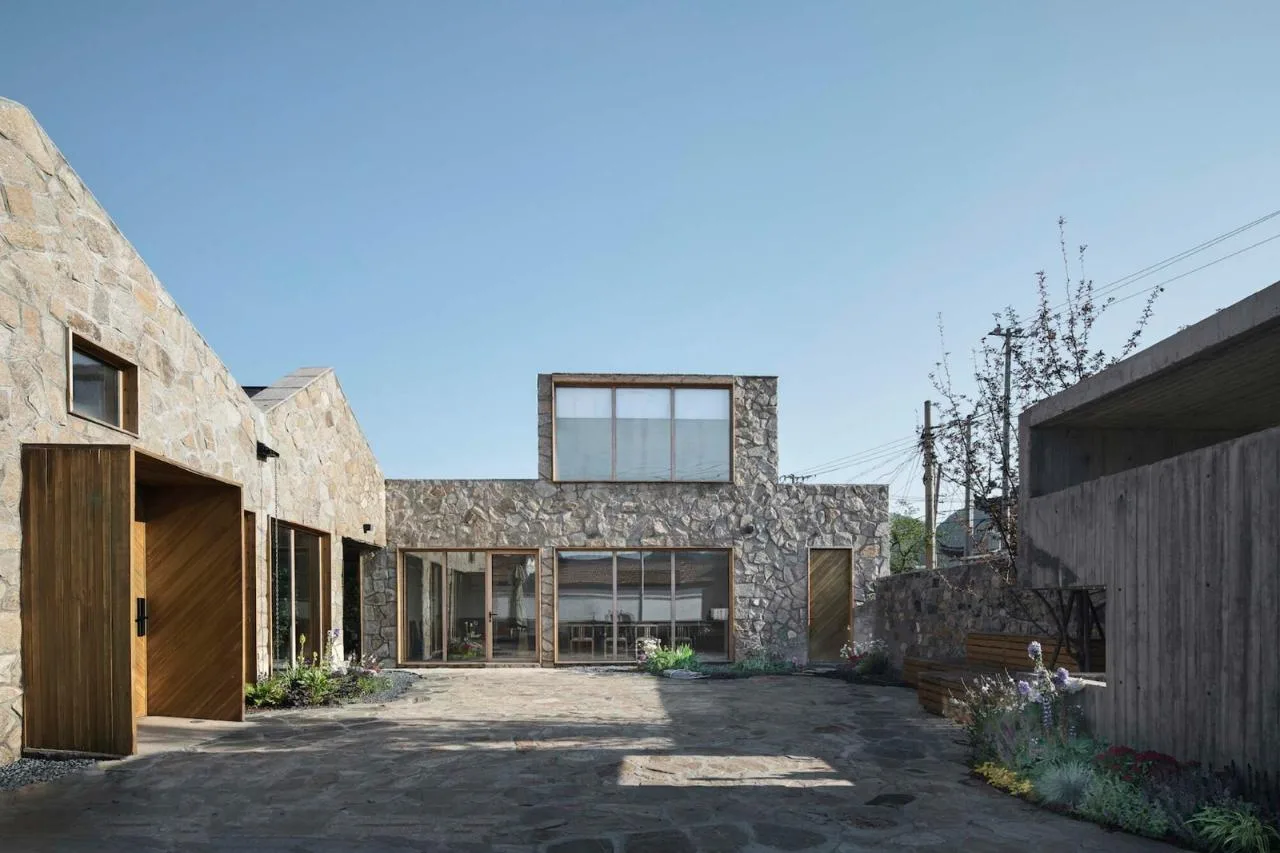
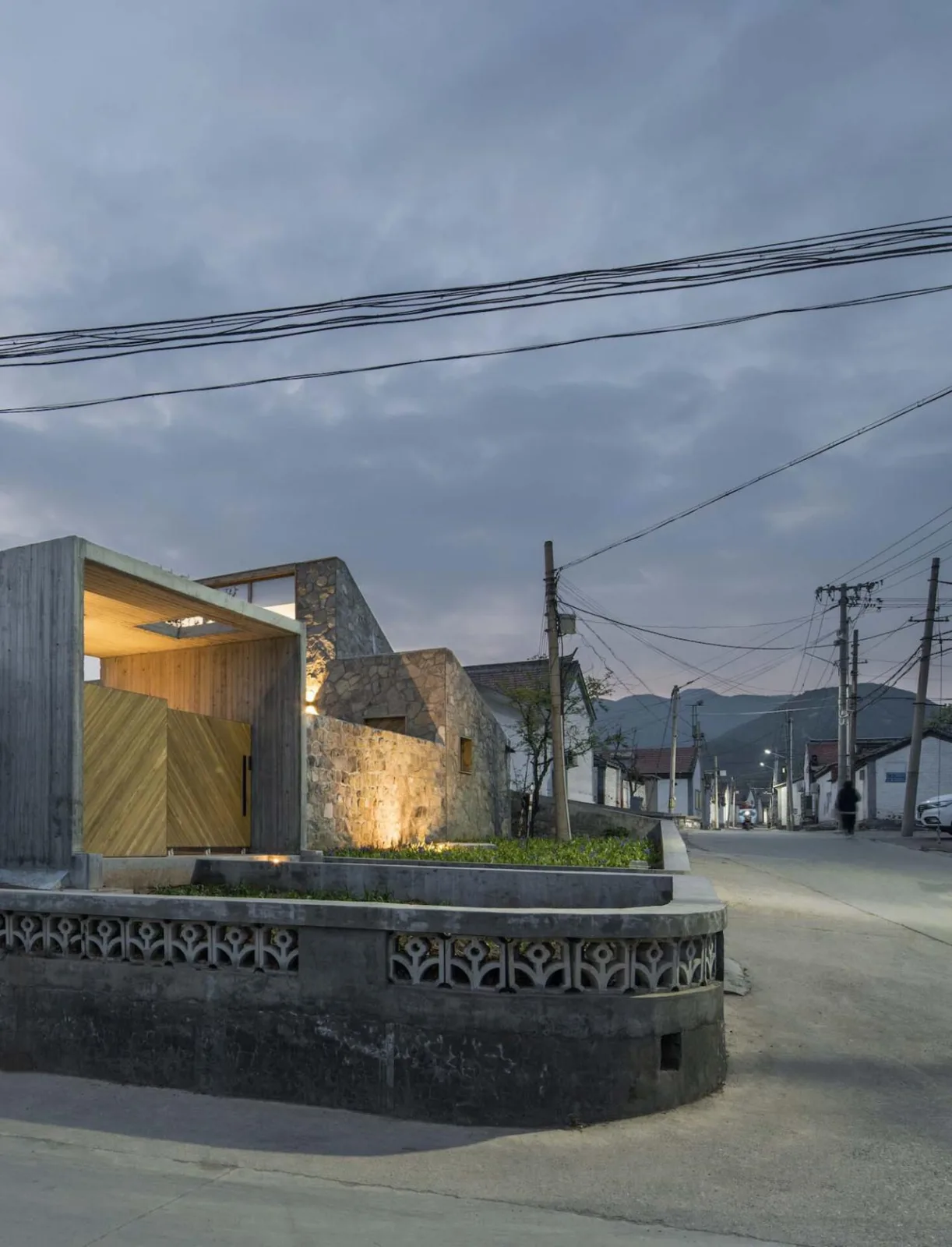
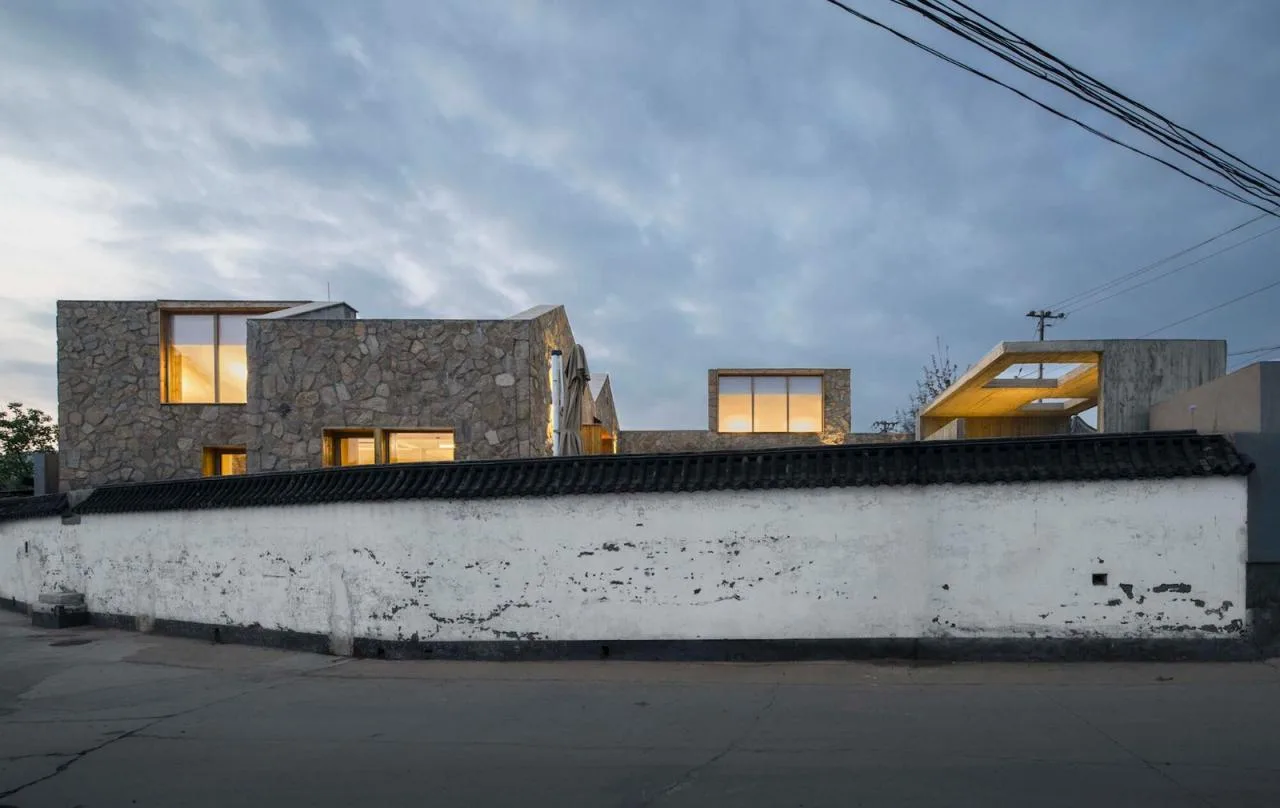
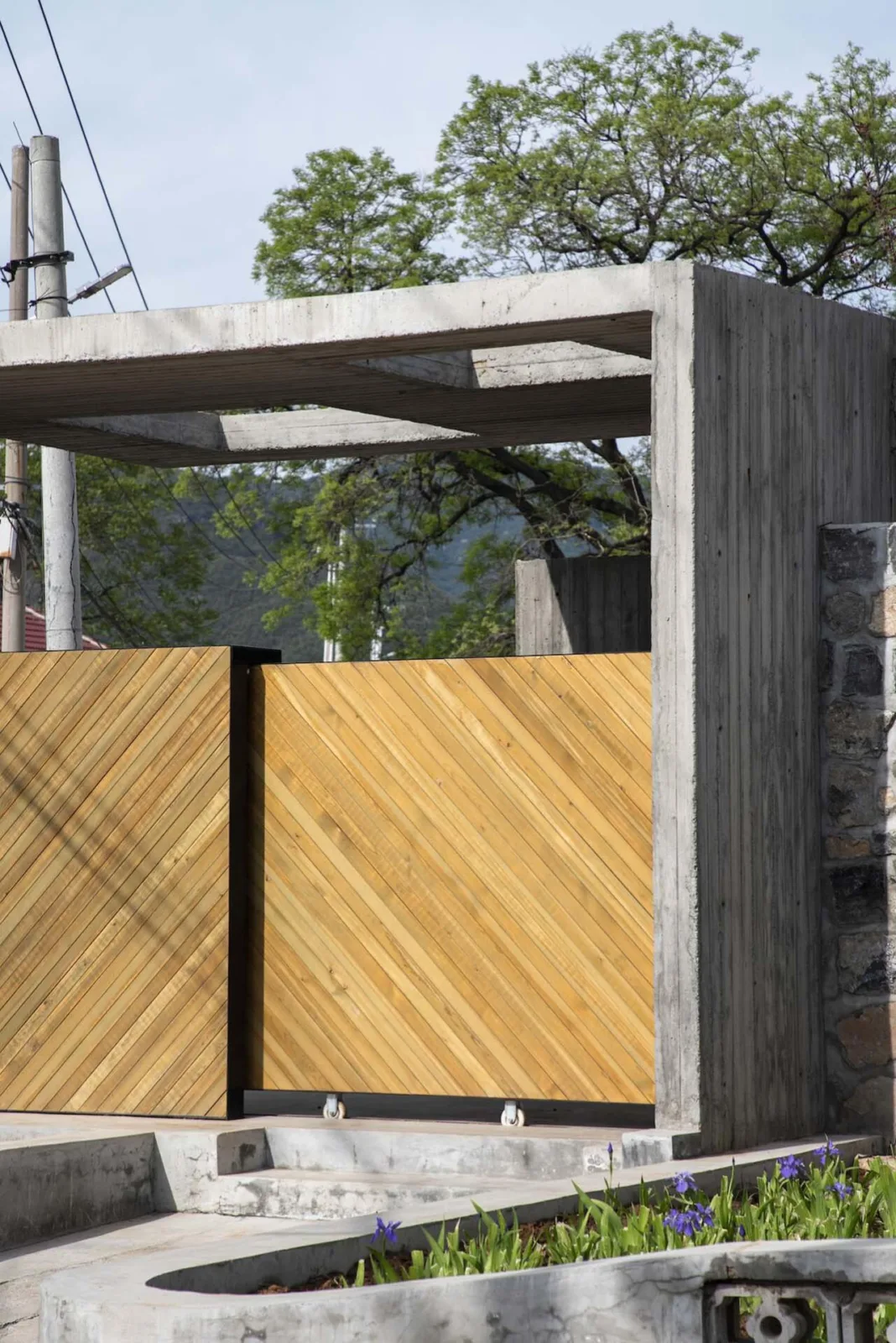
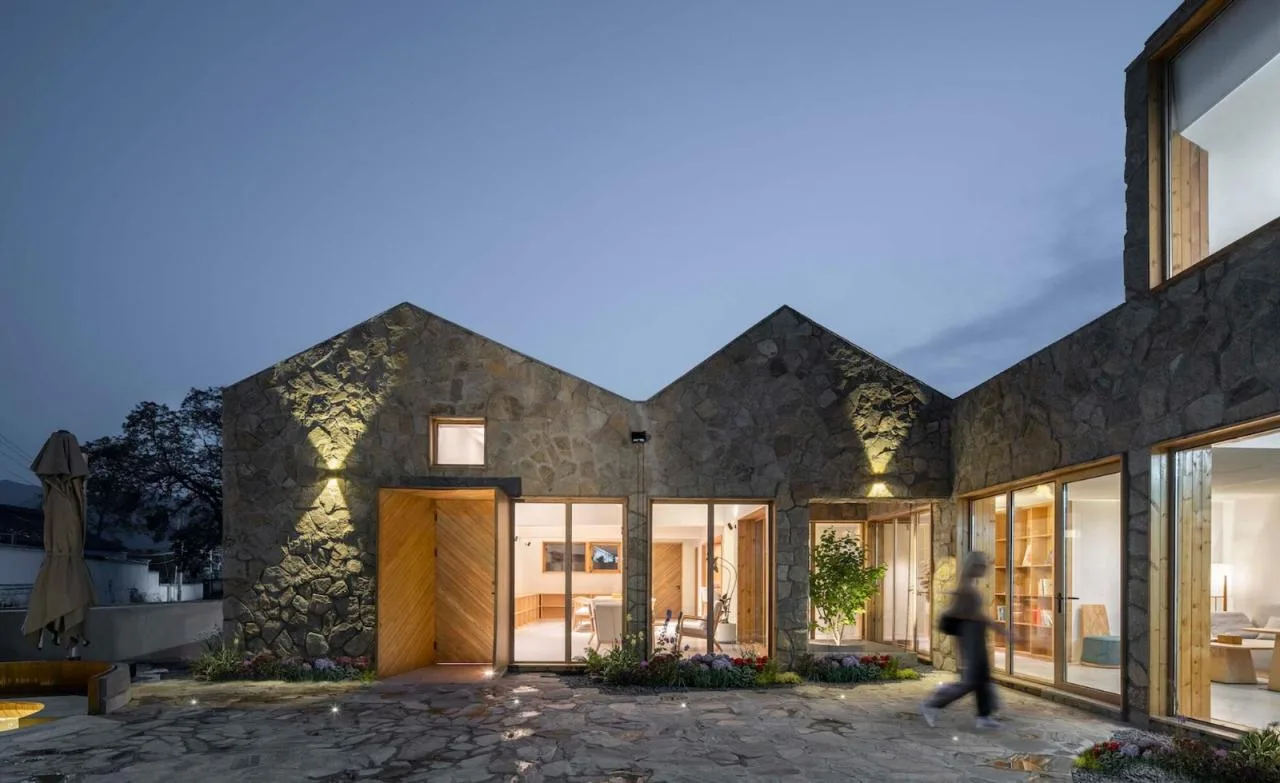
For materials, slate was chosen for the exterior walls and landscape ground surfaces, complementing the earthen masonry of the rubble walls. This blend creates seamless integration between the building, landscape, and surrounding environment, while preserving the robust architectural character typical of northern China’s rural areas. The entrance features an extended canopy made from small wooden formwork and poured concrete in a single pour, conveying a raw texture that harmonizes with the village’s common gray and white walls.
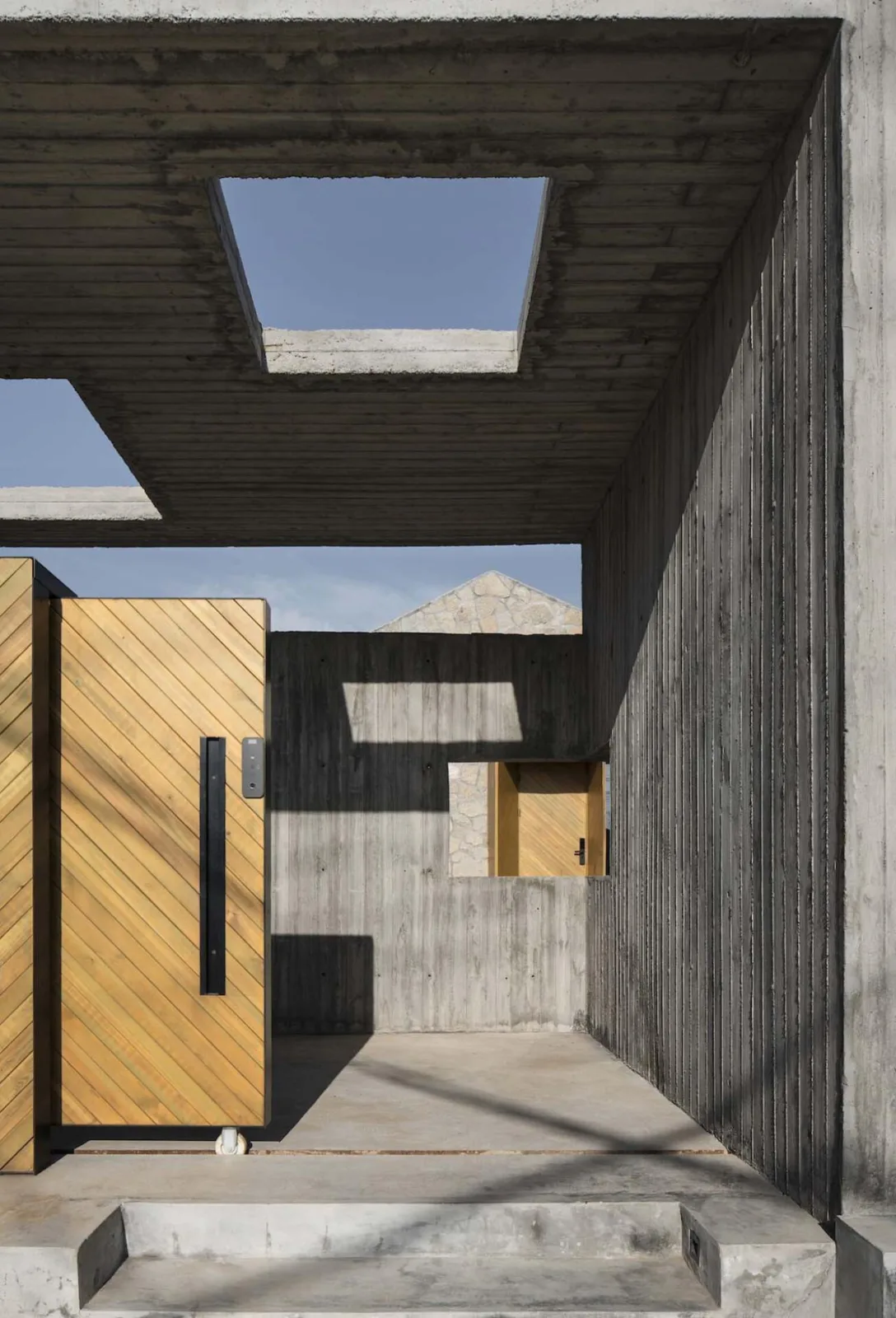
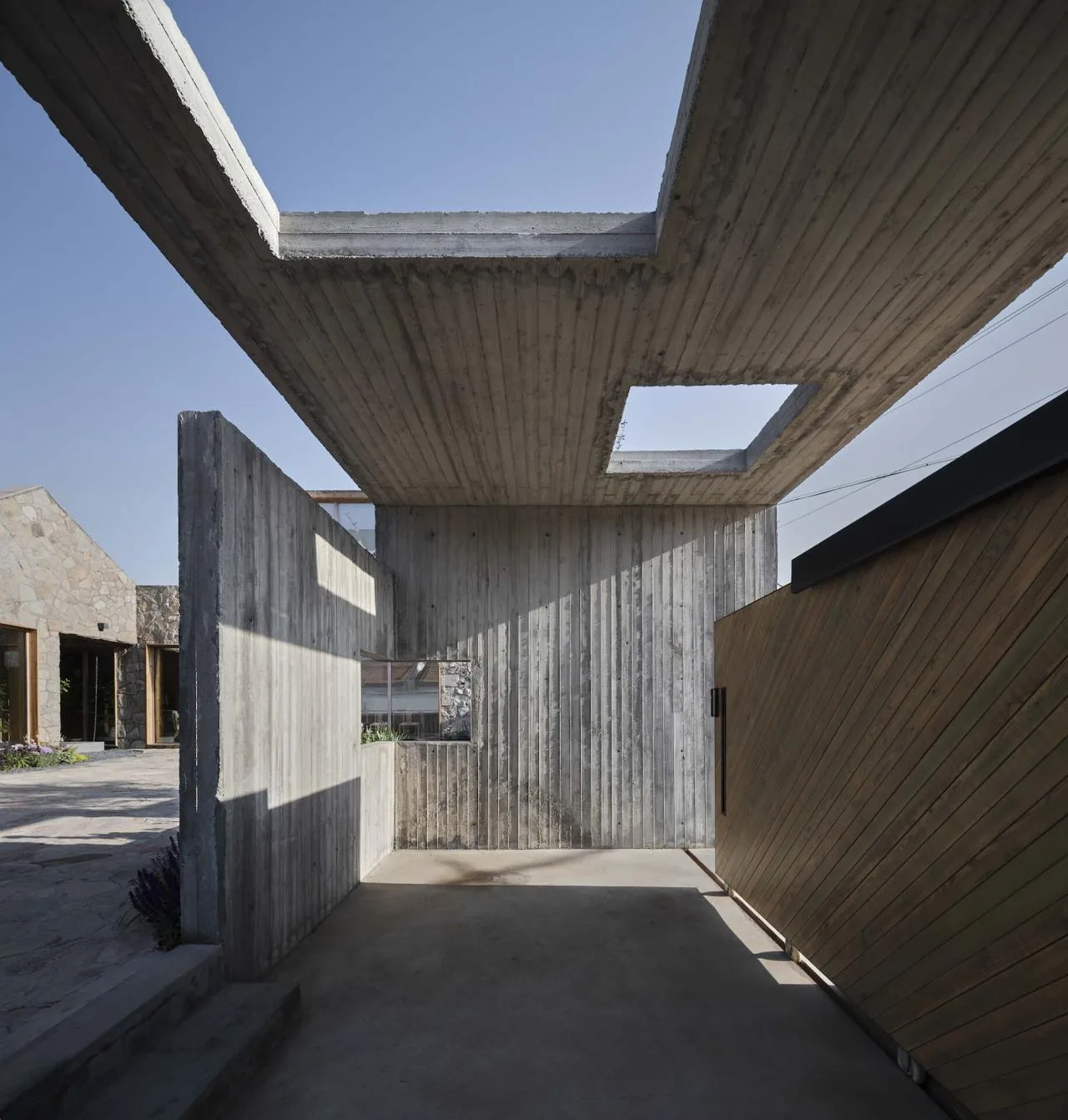
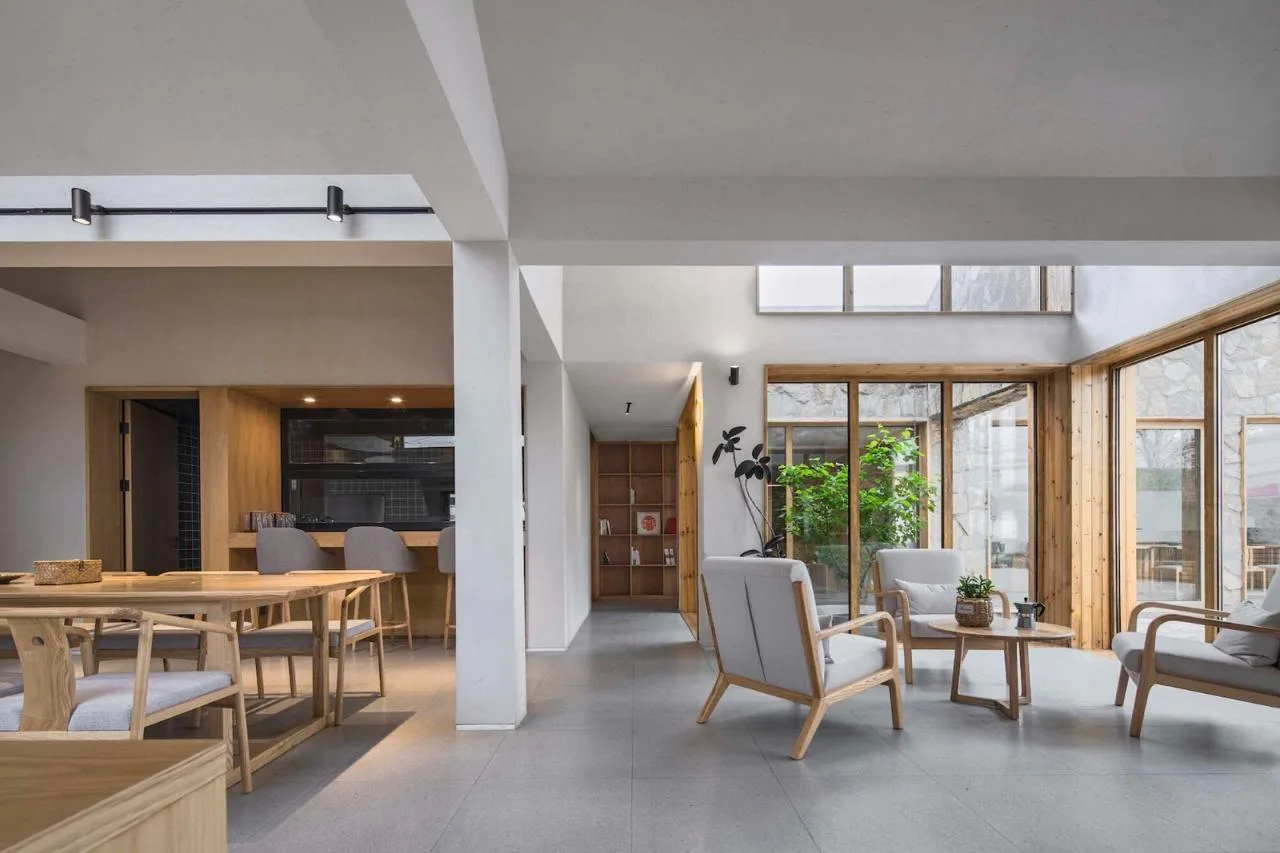
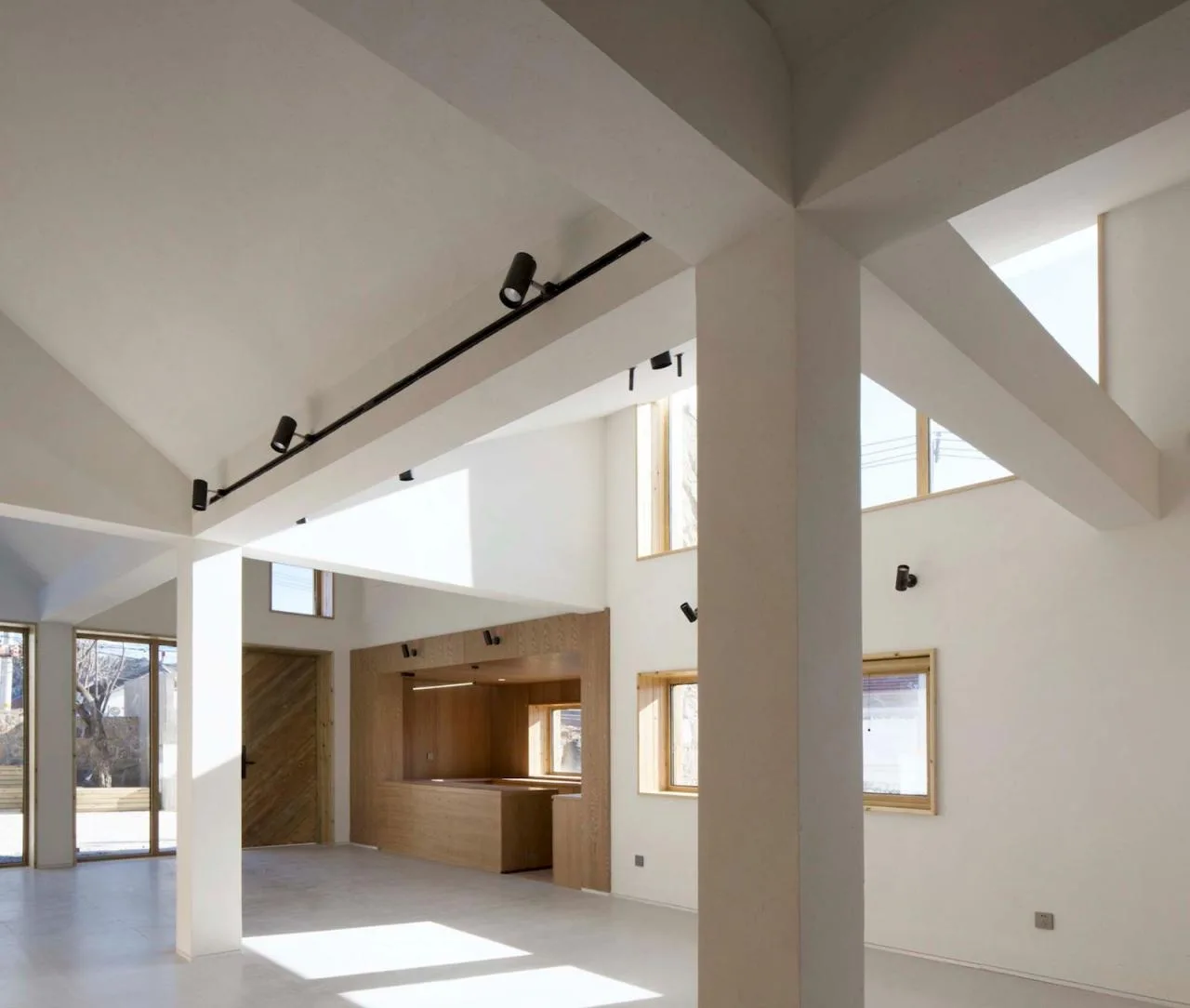
The newly added roof structure is steel, resting atop the existing concrete frame. The continuous folding of the roof creates single and reverse slopes, offering varied spatial experiences inside Zhe Shan Yuan. The original reinforced concrete beams and columns in the wing room work cohesively with the square and reverse-sloped roof above, generating a rational structural logic. Externally, the forward-sloping roof transforms internally into a reverse-sloping space. This interplay of lines and surfaces introduces architectural abstraction through its asymmetry, unpredictability, and lack of predetermined form.
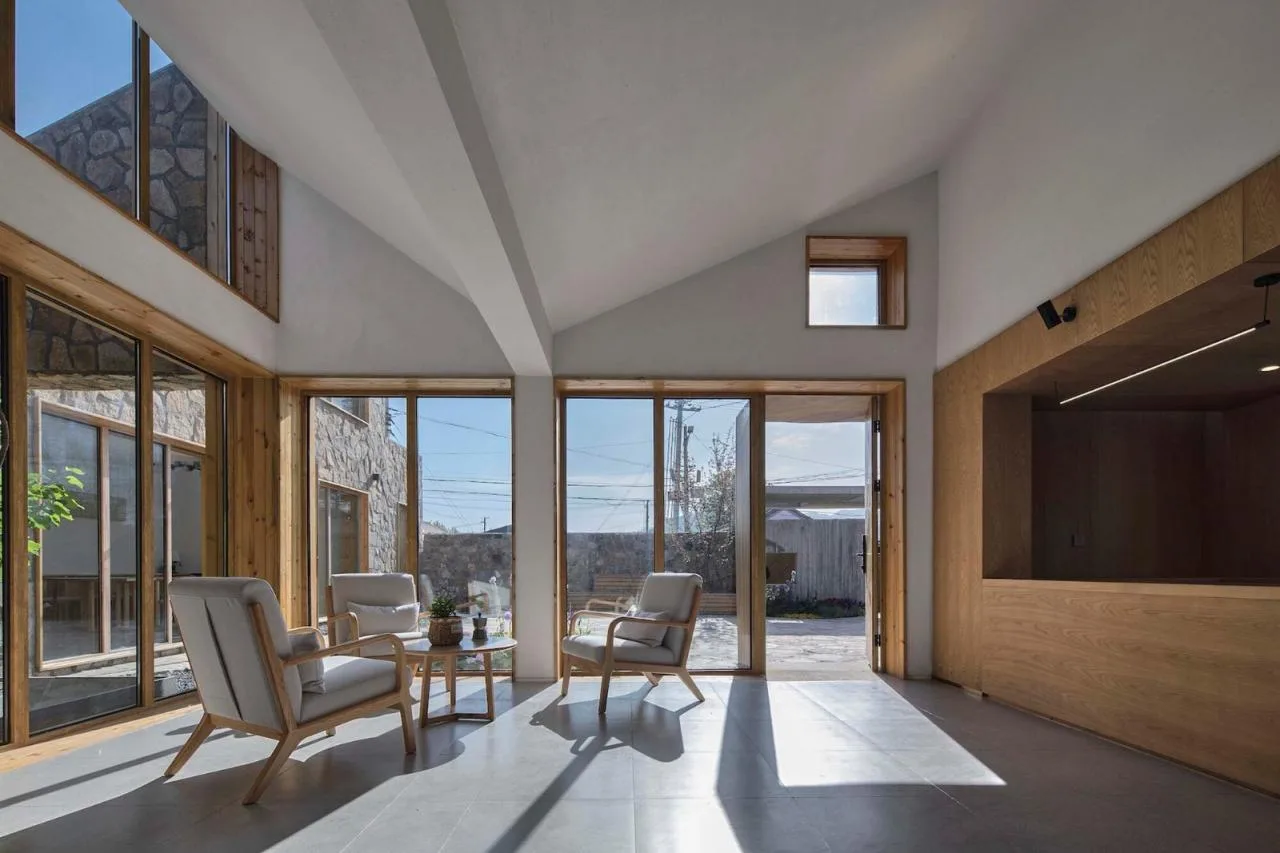
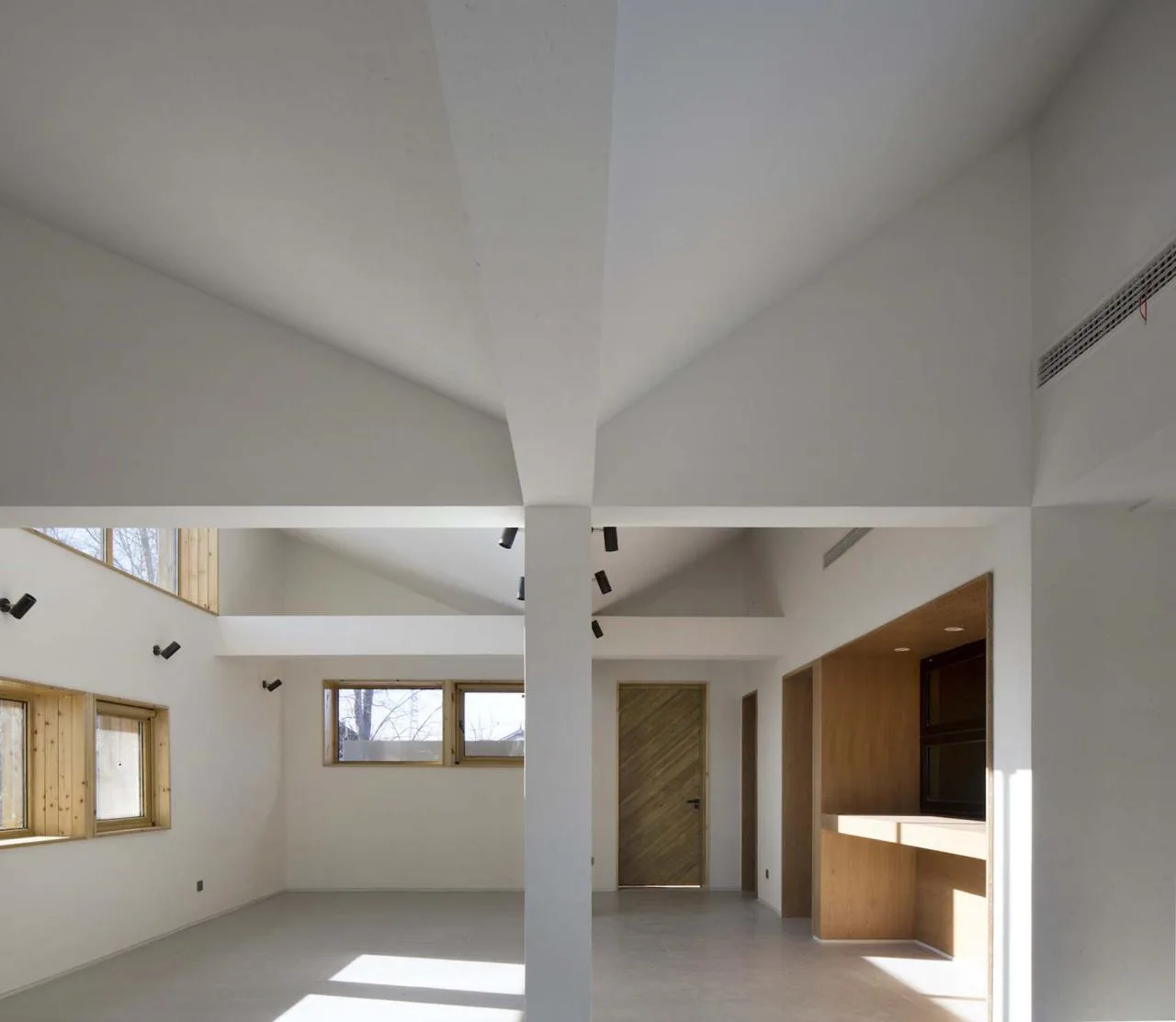
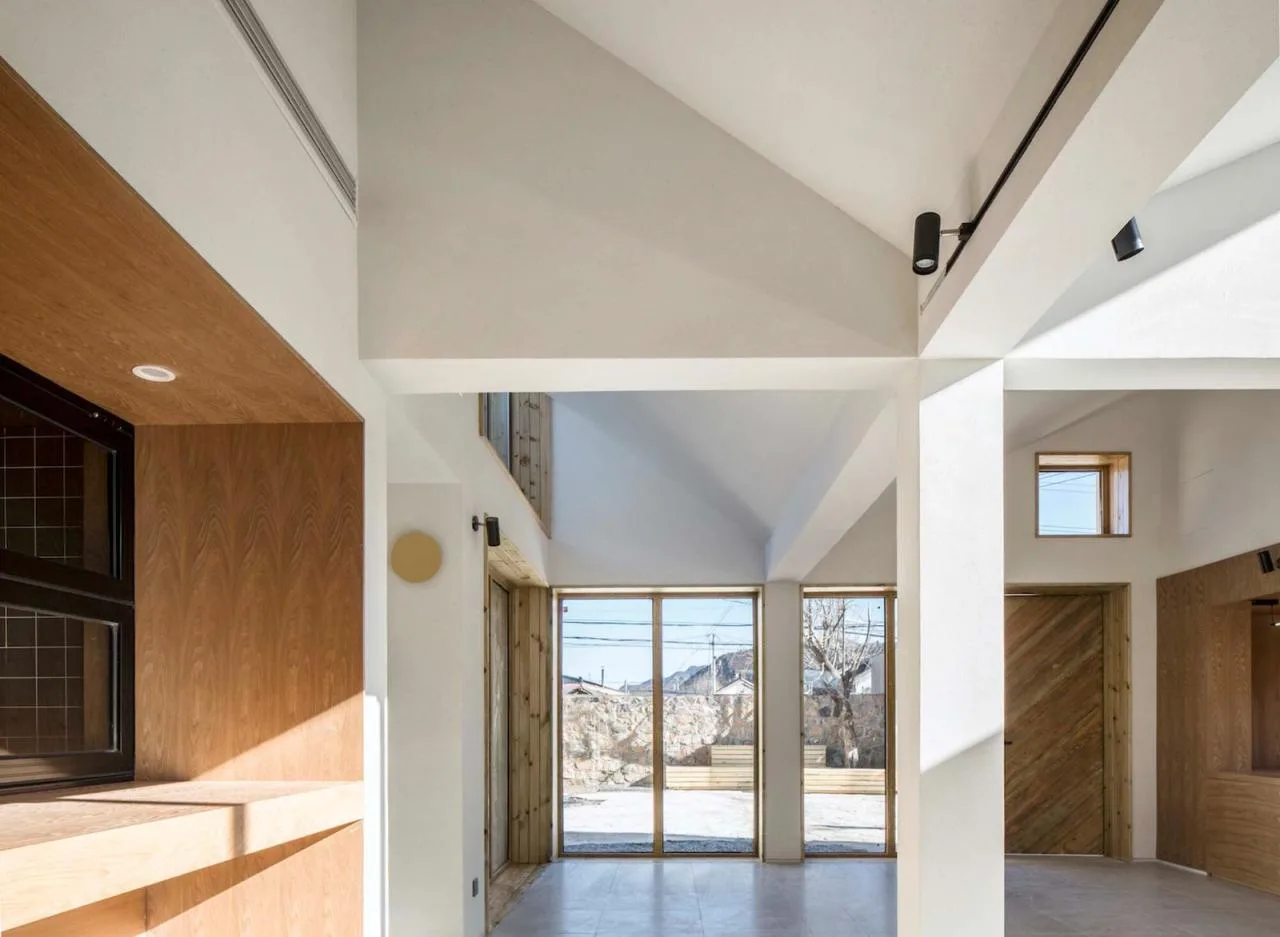
Unlike typical residential courtyards, the window system at Zhe Shan Yuan primarily serves public functions. The design significantly increases window openings to foster interaction and visual connection between the interior and exterior spaces. Four window types were created based on usage: large tall windows beneath the reverse slopes on the north and south facades, French doors opening onto the courtyard, combined windows for views and ventilation, and small square windows for high-level lighting. This variety ensures that every corner of the building offers views of nearby forests and distant mountains.
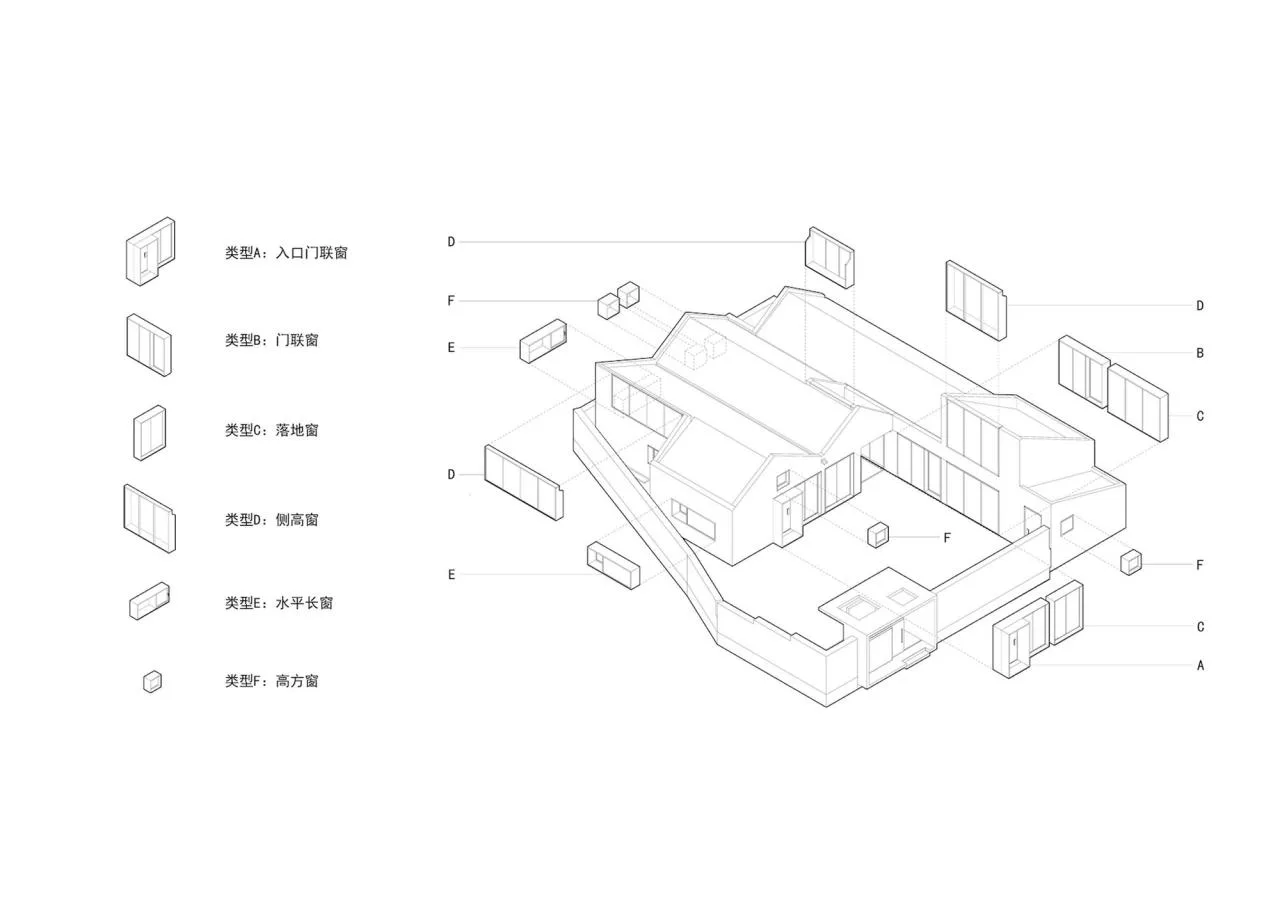
△ Window analysis diagram
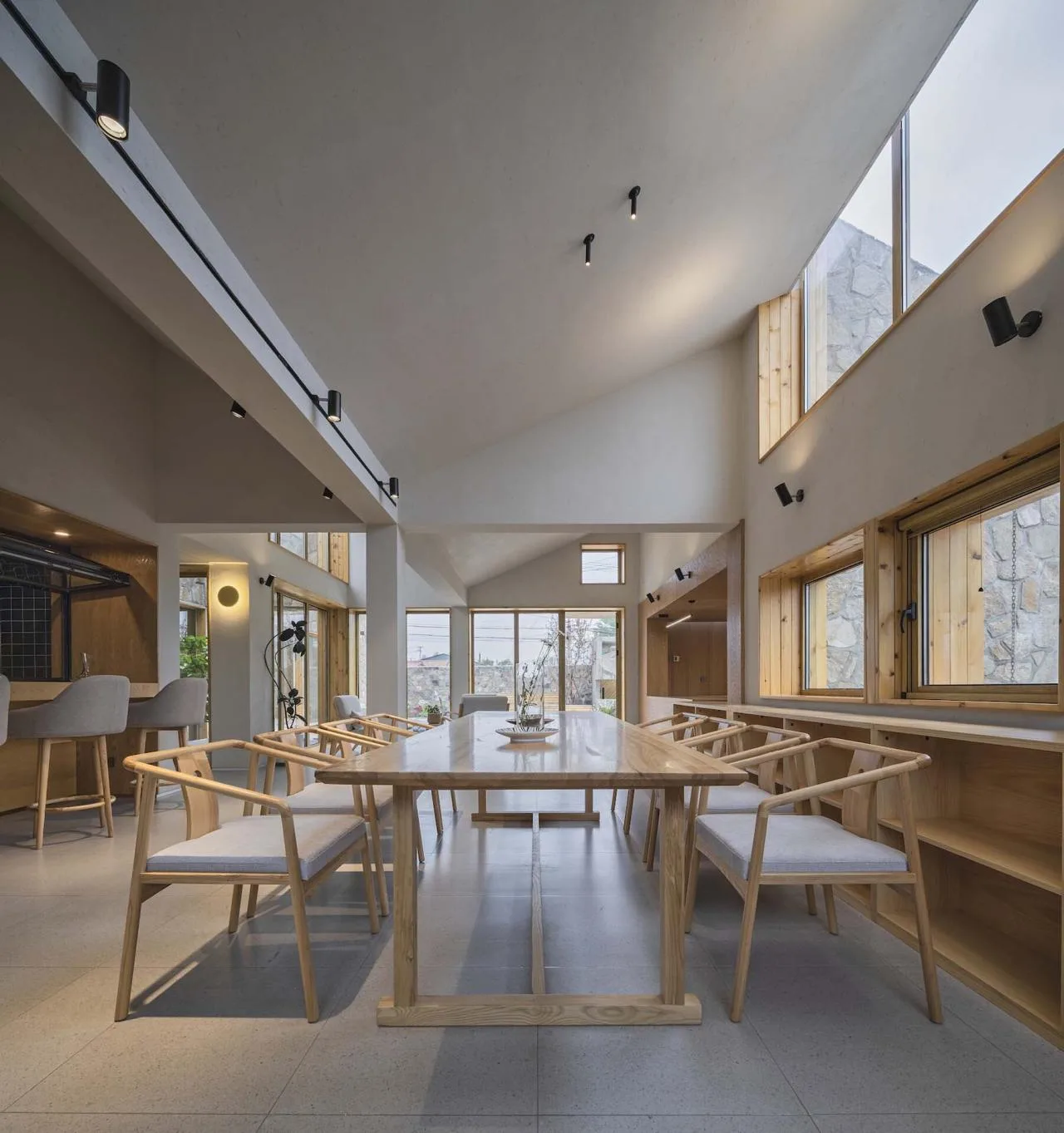
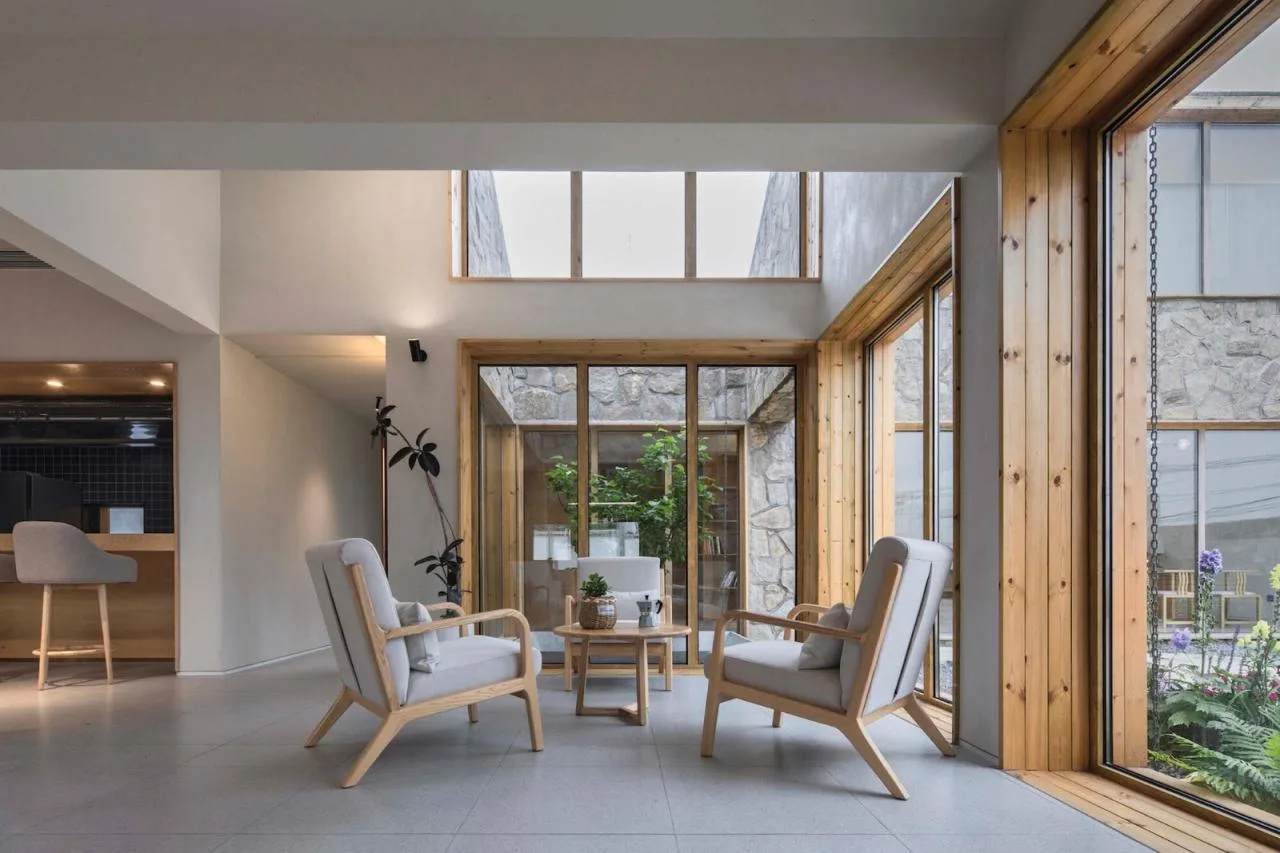
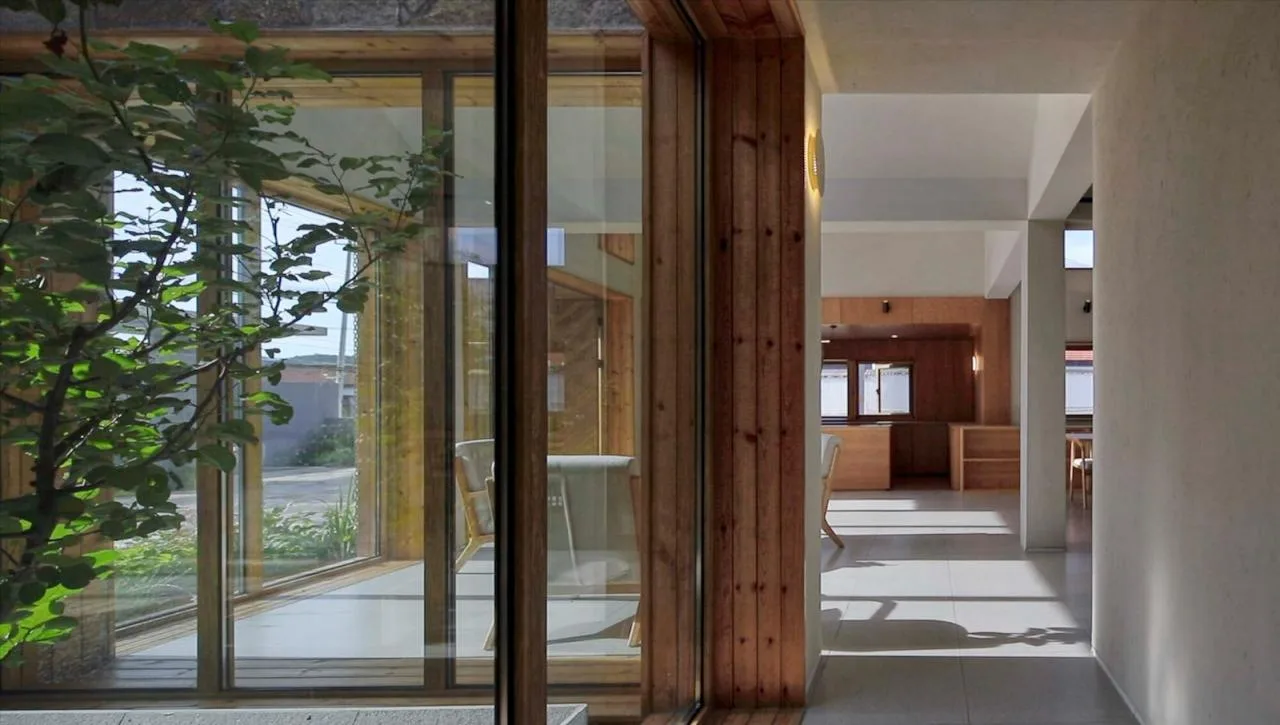
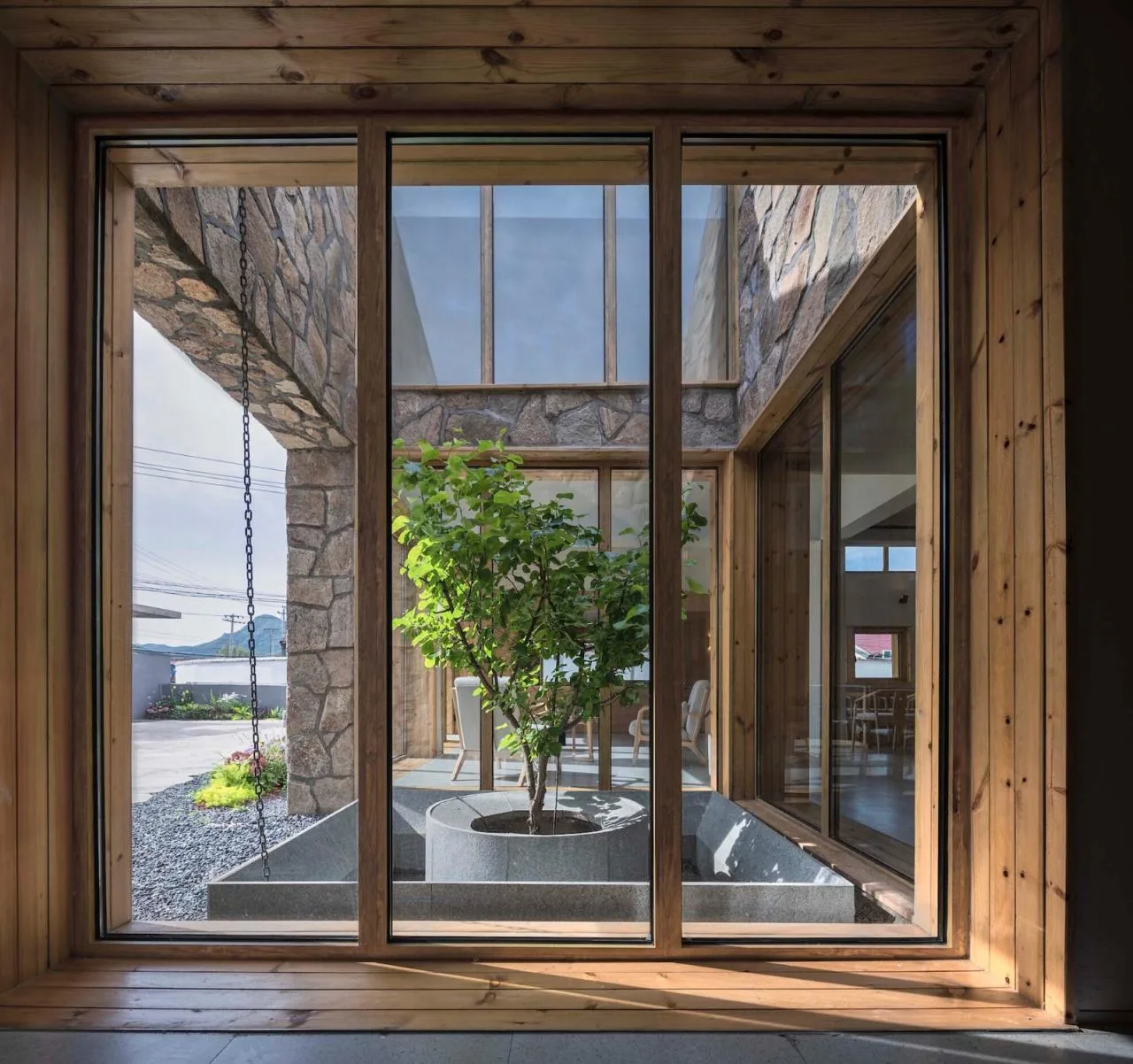
When designing in rural areas outside urban centers, our goal was to achieve a transformation that combines traditional materials with contemporary architectural language and construction techniques. This balances consumer demands, the rural environment, and architectural form. Zhe Shan Yuan reshaped its form through the continuous folded roof, introducing varied window openings that enhance lighting and views, along with a unique spatial experience beneath the sloping roof.
The design connected two originally separate courtyard houses into a cohesive cluster, creating a solid, distinctive form that reflects the character of a northern mountain village and presents a refreshed face for the community.
Project Drawings
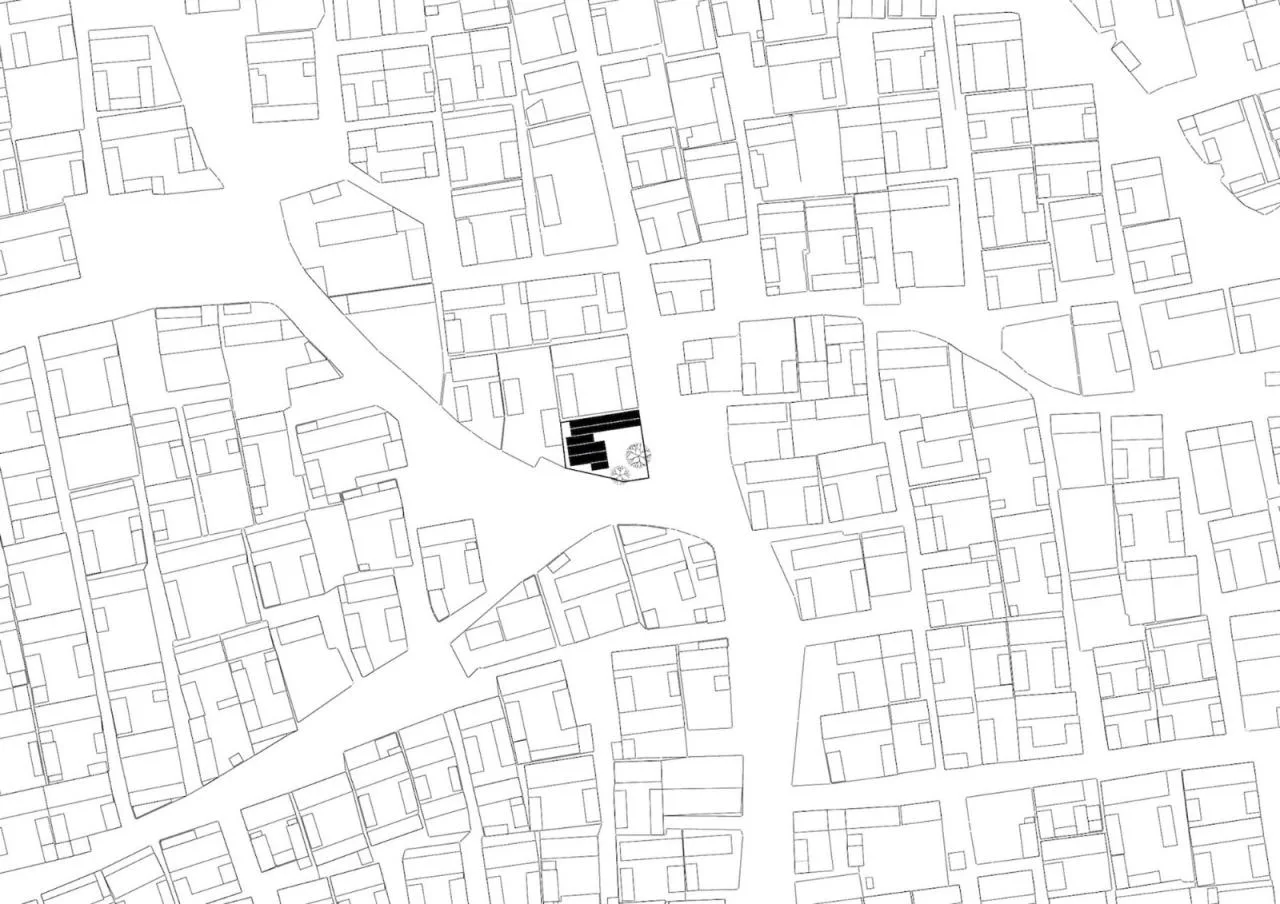
△ Base schematic diagram
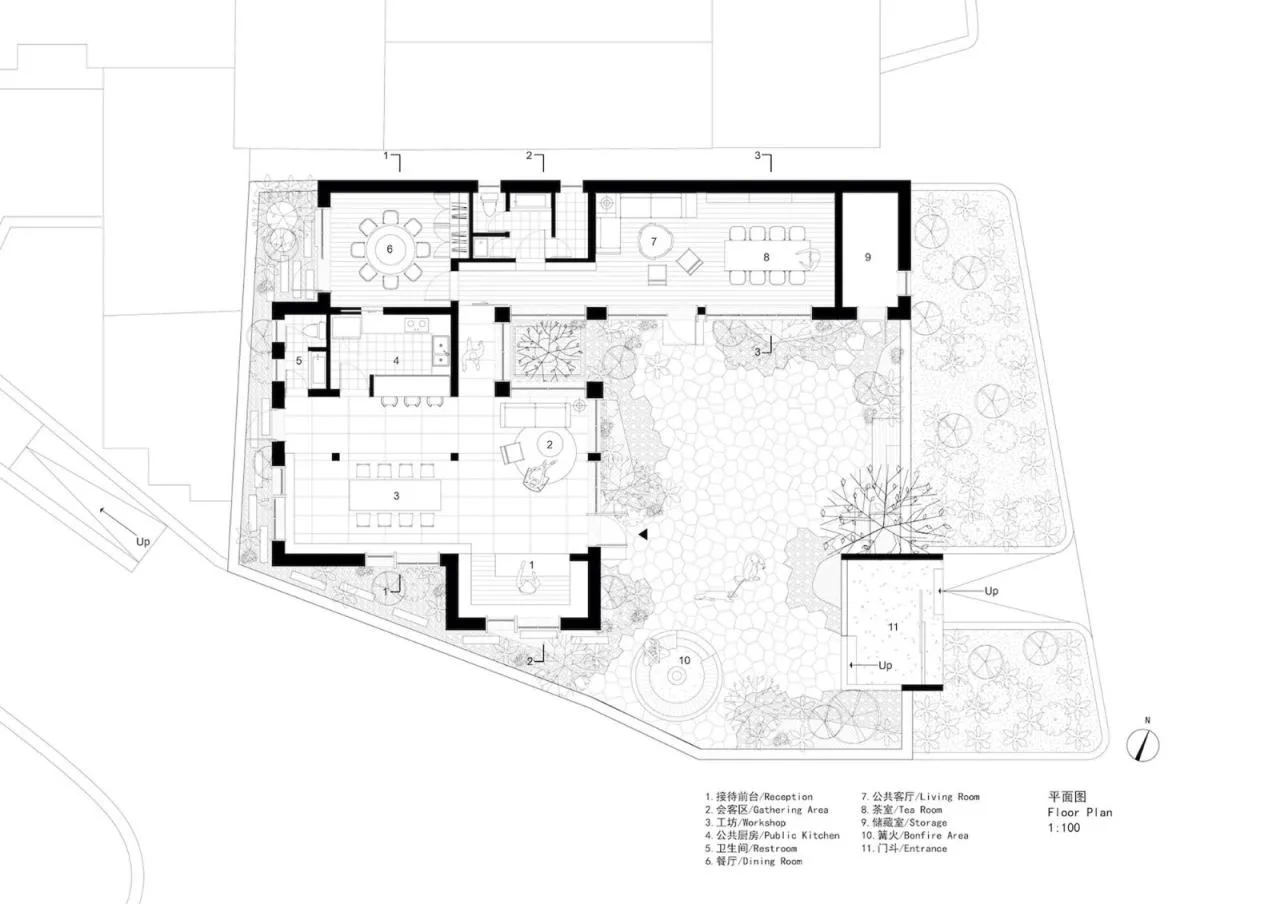
△ First floor plan
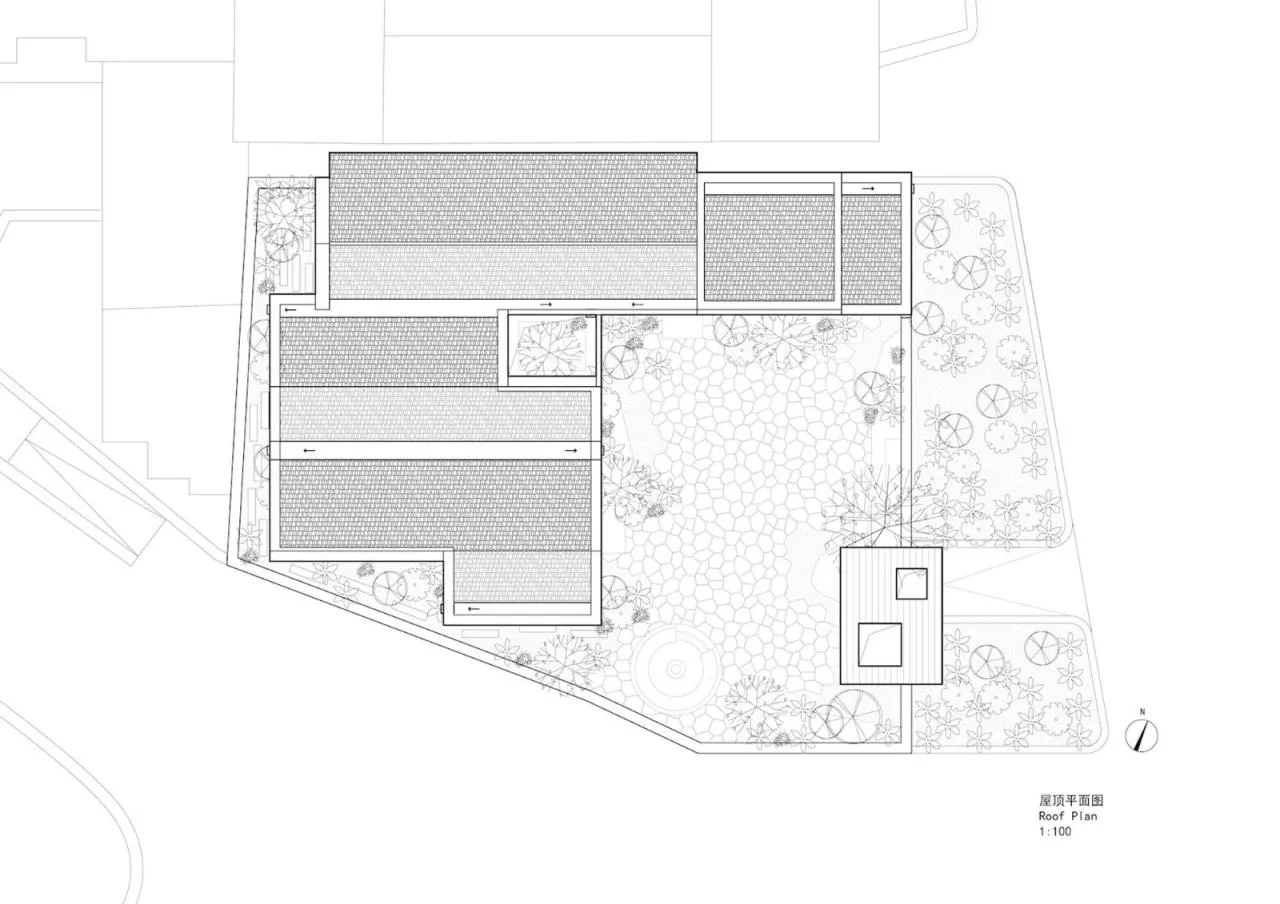
△ Roof plan
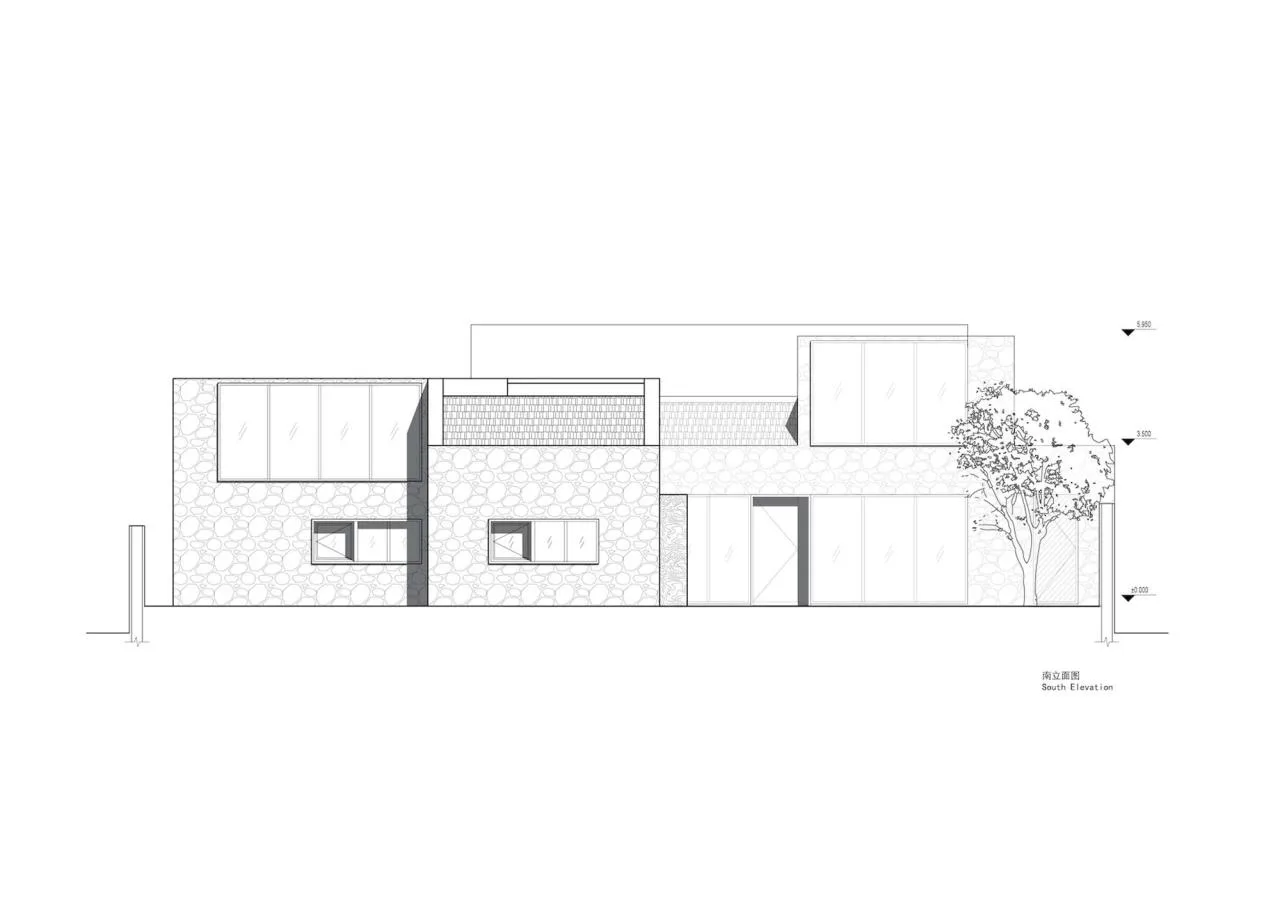
△ Elevation drawing
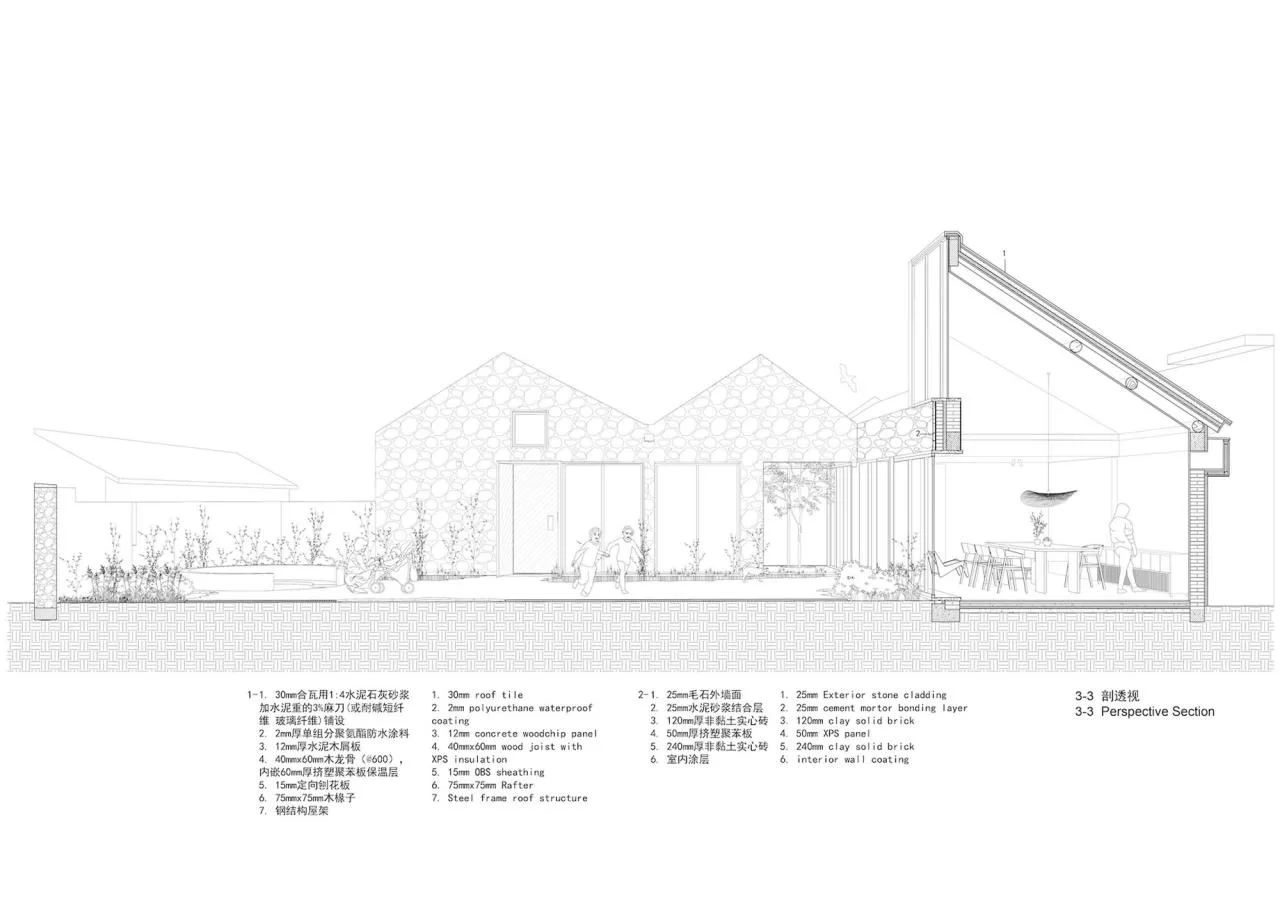
△ Section diagram
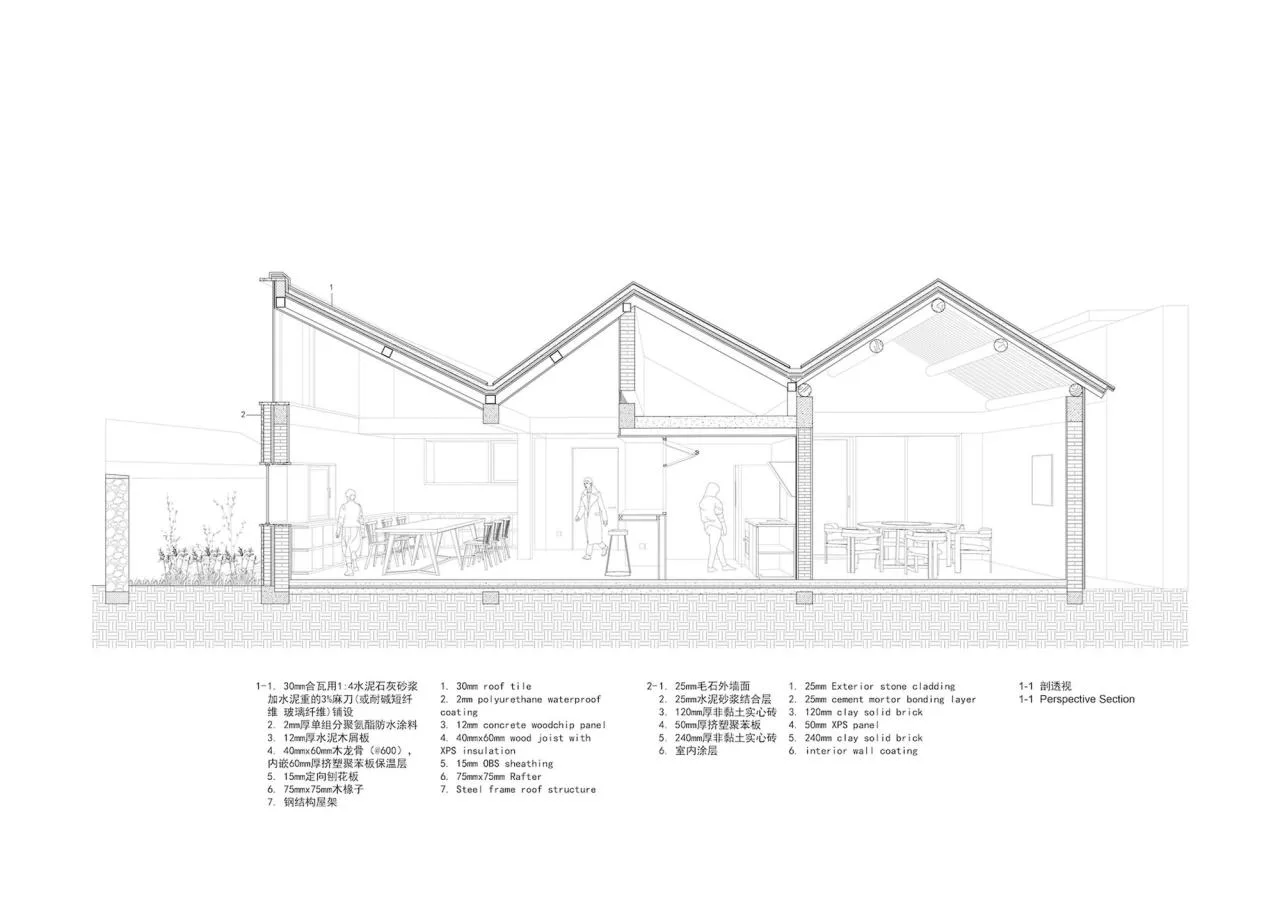
△ Section diagram
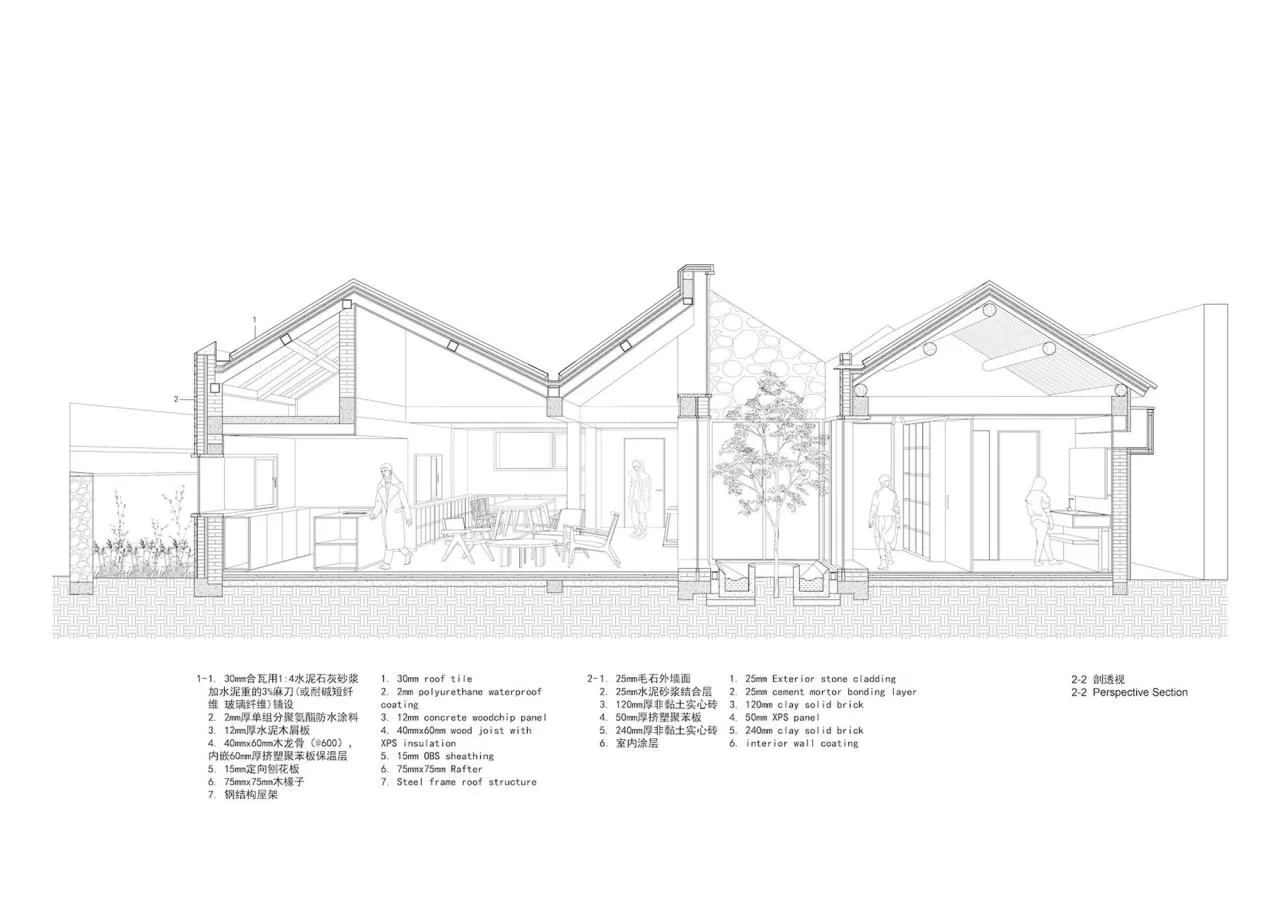
△ Section diagram
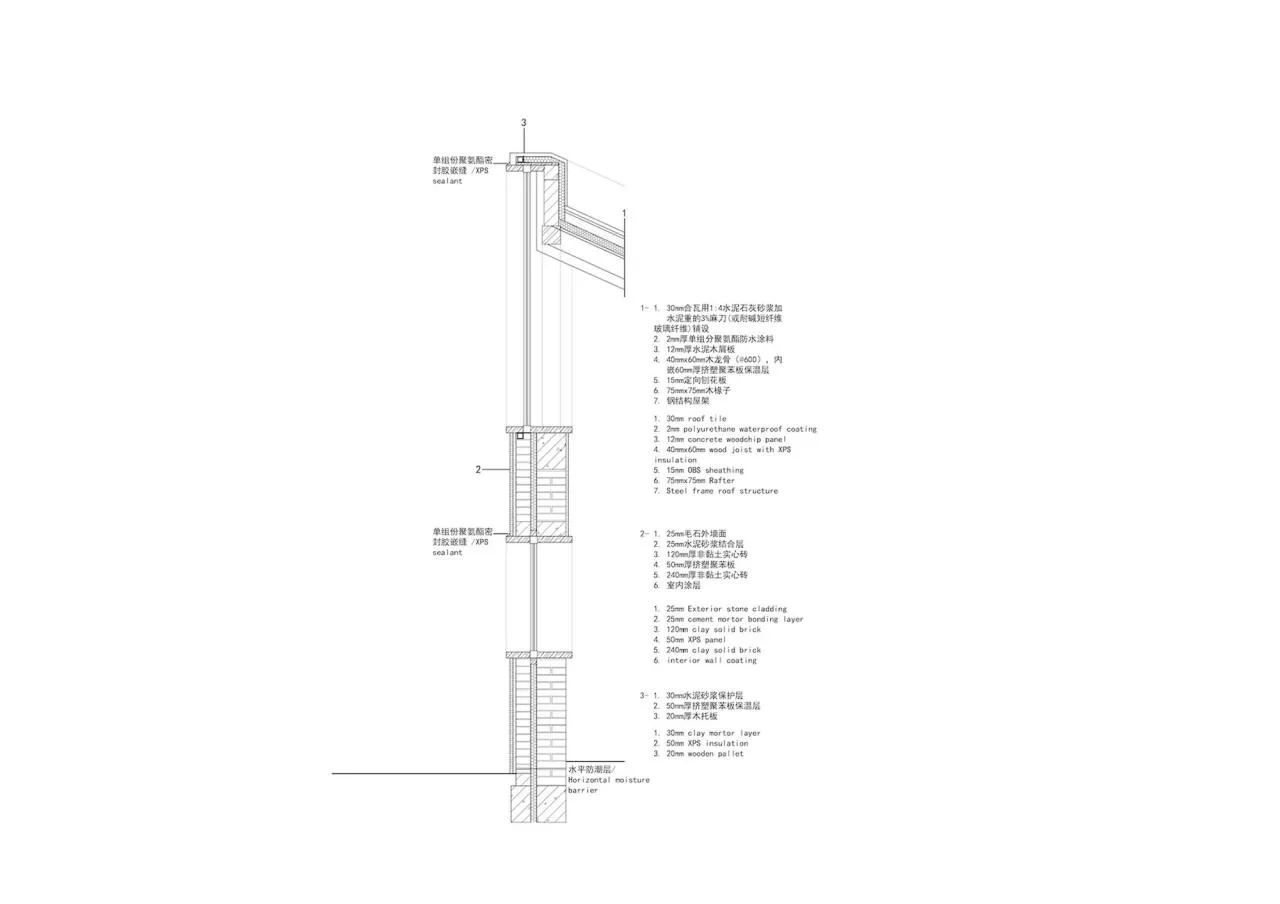
△ Detailed structural drawing
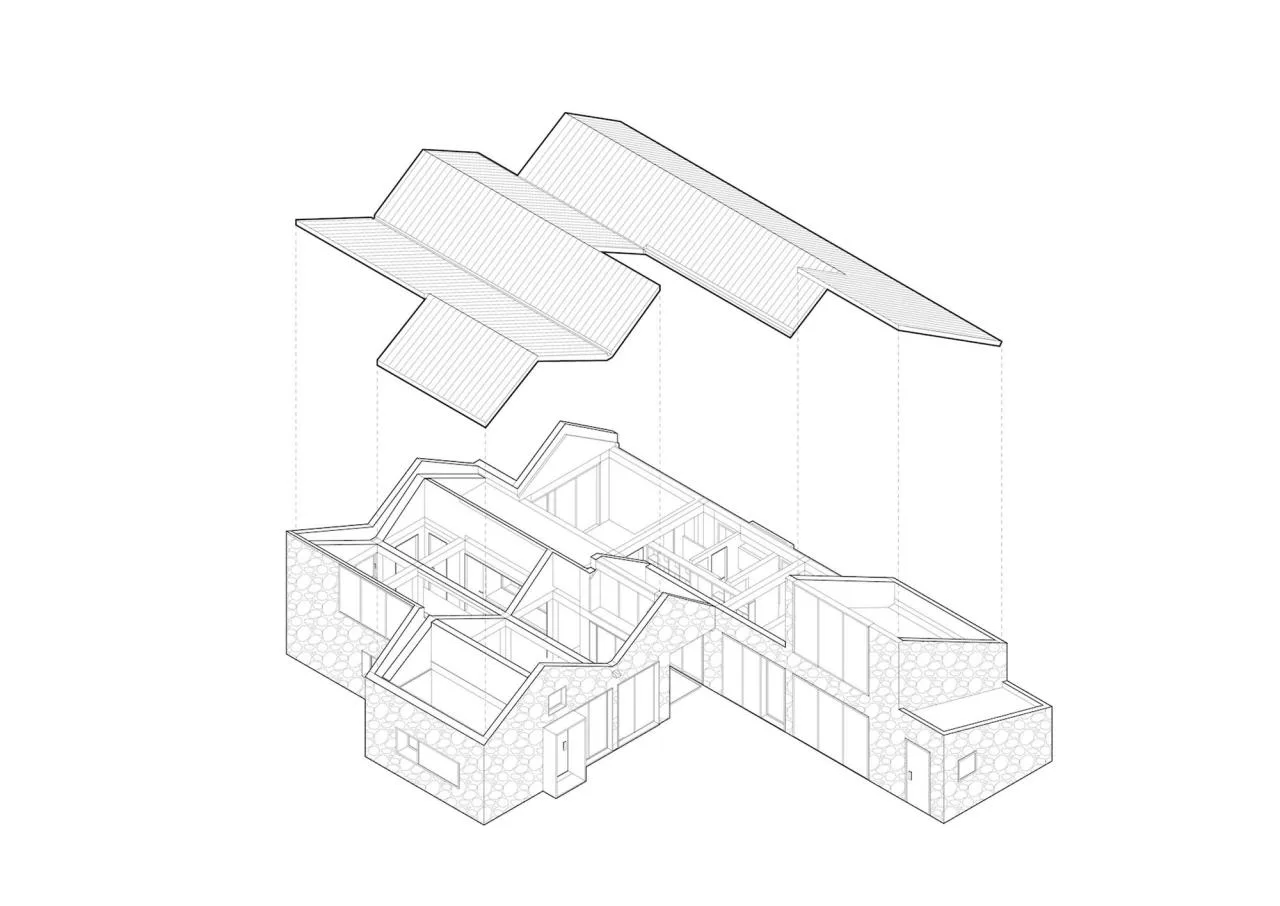
△ Roof schematic diagram
Project Information
Architect: MAT Super Architecture Firm
Area: 180 square meters
Project Year: 2021
Photographer: UK Studio
Design Team: Tang Kangshuo, Zhang Miao, Liu Youpeng, Tan Xiaodan, Wei Yating (design expression)
Location: Beijing















Must log in before commenting!
Sign Up