
The ground beneath your feet conceals another profound world—an “Under the Earth” realm.
The Concrete Hall, designed by Wutopia Lab and also known as the Eye of the Museum Art Palace of the Pseudo Manchurian Palace Museum in Changchun, stands as the first completed plain concrete building in Jilin province. It is the largest plain concrete structure across the three northeastern provinces of China and also the largest hyperbolic thin-shell, large-span underground building in the country. After six years of design and construction, the building was officially completed and inaugurated on International Museum Day, May 18, 2023.
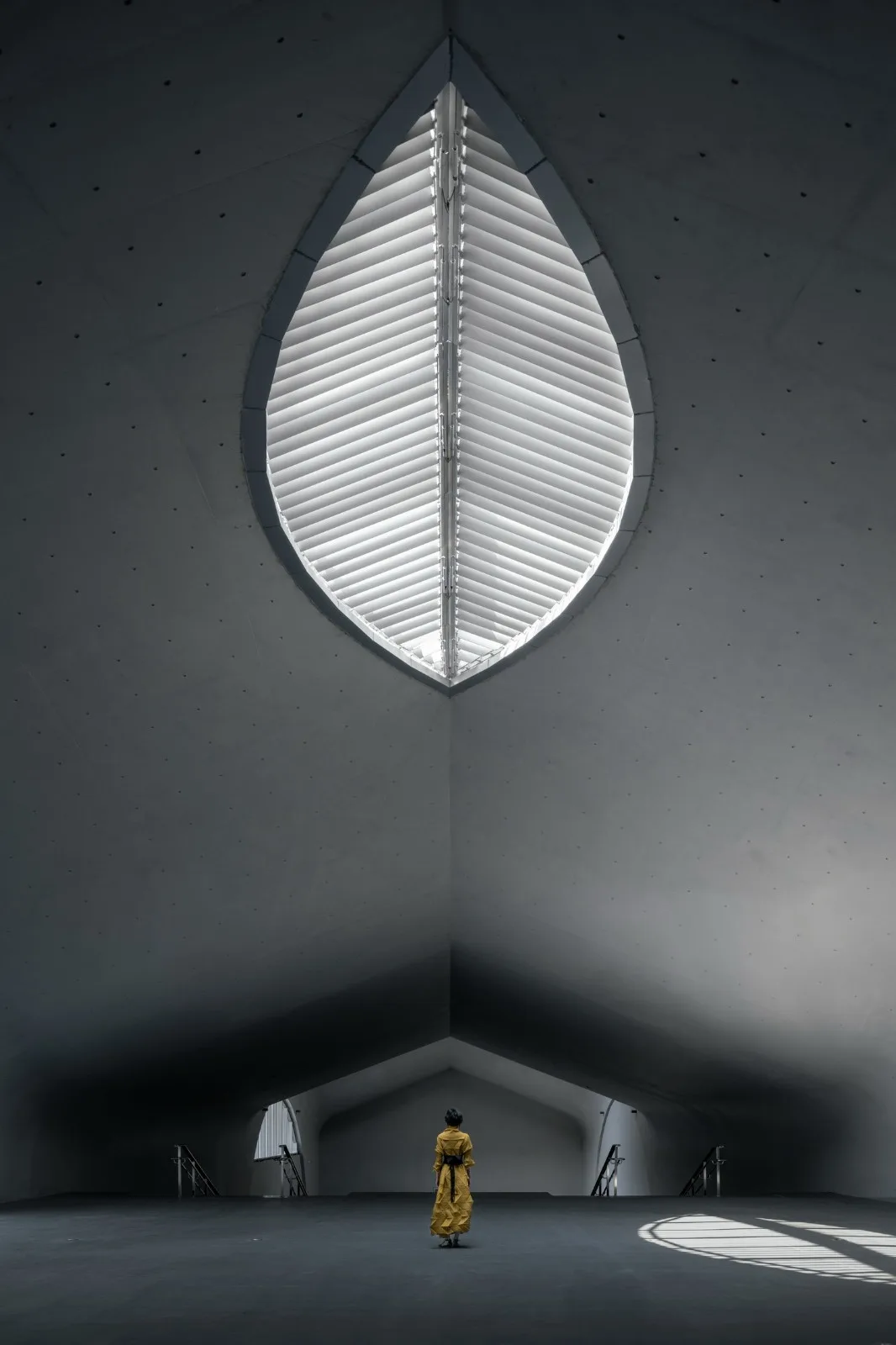
△ Entrance Hall
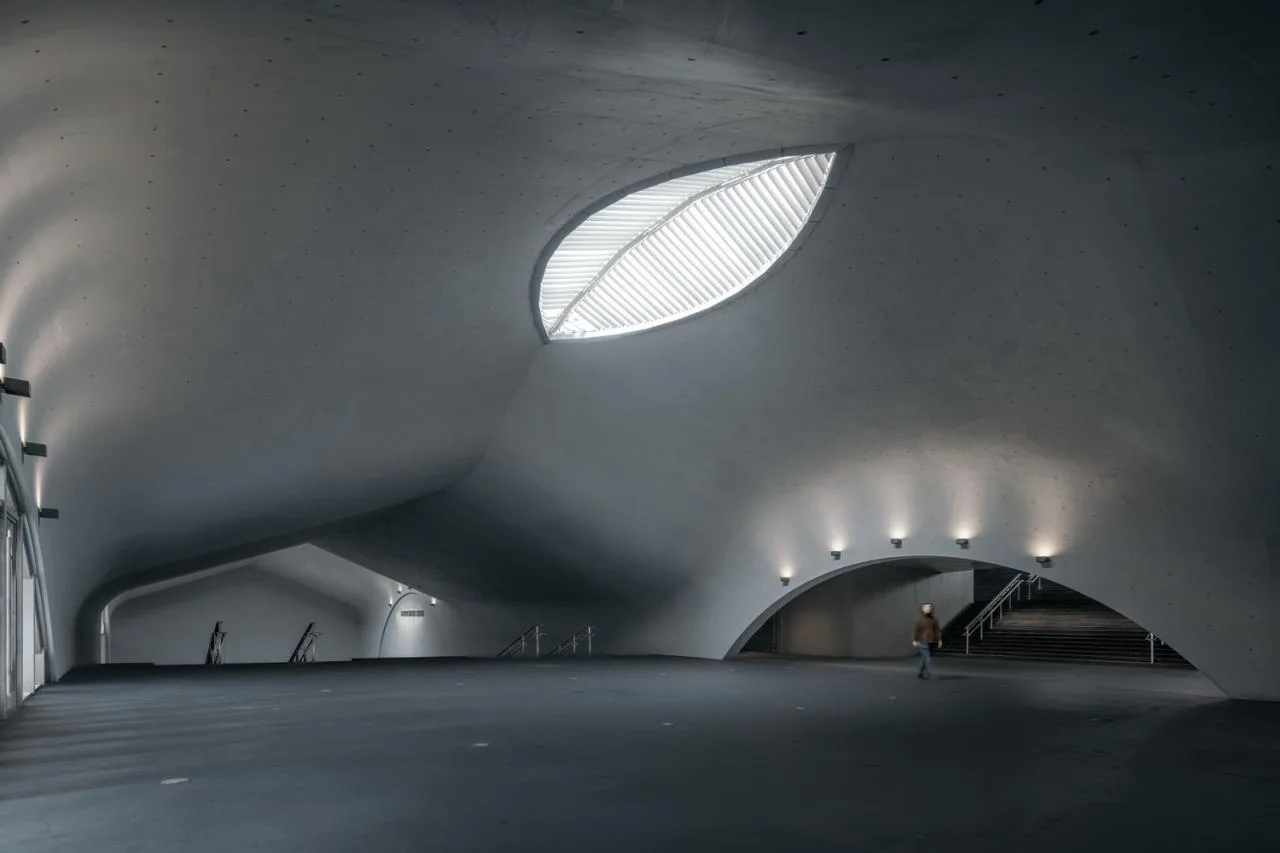
△ Entrance Hall
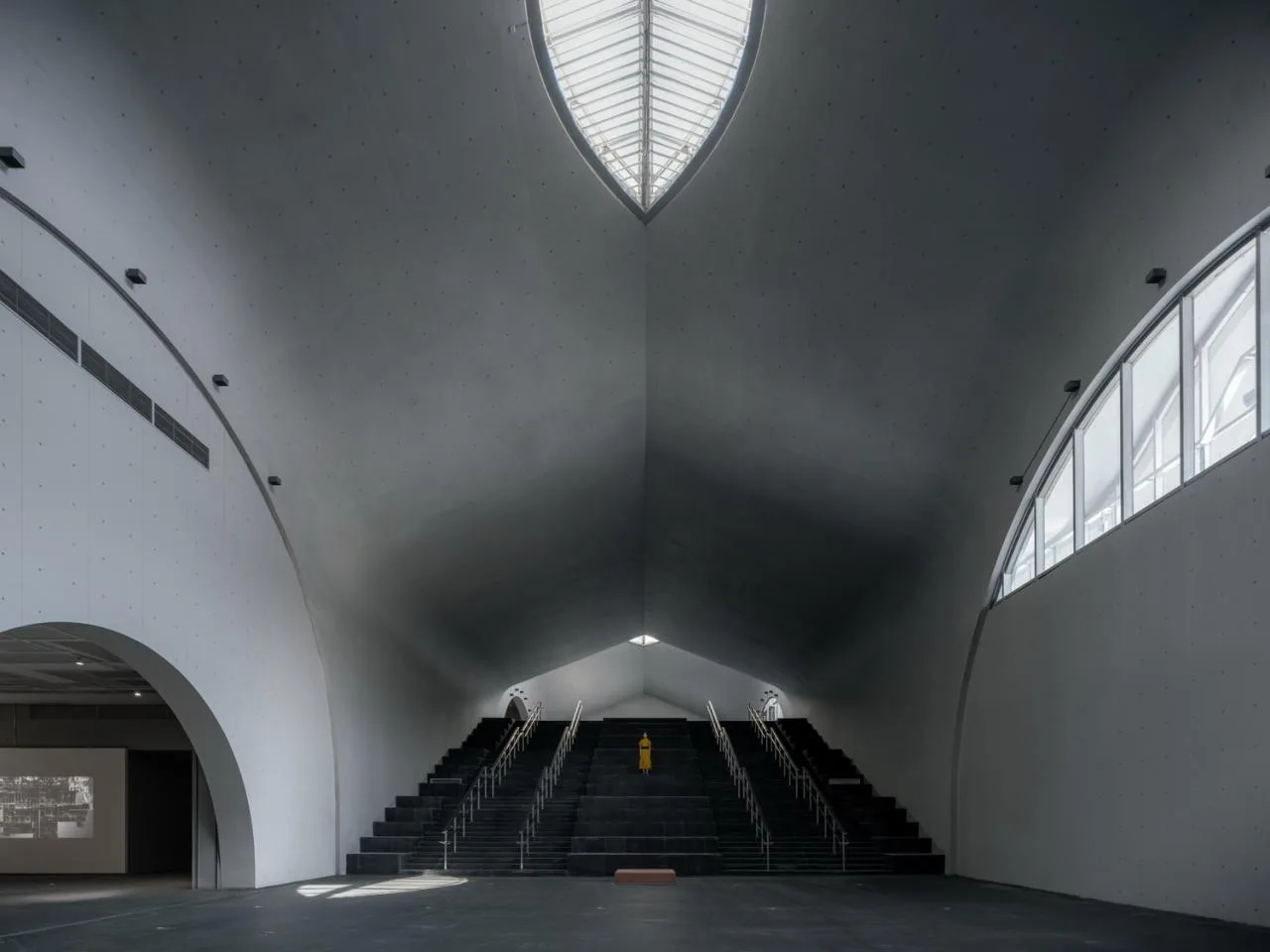
△ Underground second floor elevated exhibition hall (south side)
On April 30, 2017, Museum Director Wang, exhausted after more than twenty rounds of unsuccessful proposals, approached me hoping for a compelling design that could represent Changchun. My career often unfolds in moments of urgency, and I gladly embraced the challenge. Although Changchun was unfamiliar to me, I aimed to resonate with the city’s auspicious spirit.
Fragments: Symbols, Metaphors, Dualities, and More
Once the most developed city in East Asia, Changchun remains an important industrial hub, celebrated for its elegance and rich tradition in orchid cultivation. The city embodies pride and optimism, refusing to stagnate.
The Manchukuo Imperial Palace occupies a modest footprint, which I see as a transitional palace. Its exquisite construction combines a grand roof with Western classical forms and restrained, refined decoration. Nearby, the White Northeast Occupation History Exhibition Hall, designed by Master Qi Kang, sits humbly at the palace’s northeast corner with a gently sloping roof lower than the palace’s main ridge.
I gathered these fragments into a cohesive vision: the future Art Palace should be humble, preserving the museum’s existing landscape. Thus, I concealed the Art Palace underground. Given the conventional structure of the palace and exhibition halls, I introduced large-span industrial architectural structures to create vast indoor spaces expressing inherent pride.
Using elegant curves and rhetorical devices like symbolism, metaphor, and association, I sought to capture the confidence of a great city aspiring to new glory in a new historical era. The Art Palace is a contemporary expressionist architecture that liberates the soul from the constraints of time, inviting us to reconsider history and memory, thereby understanding the meaning of life’s existence.
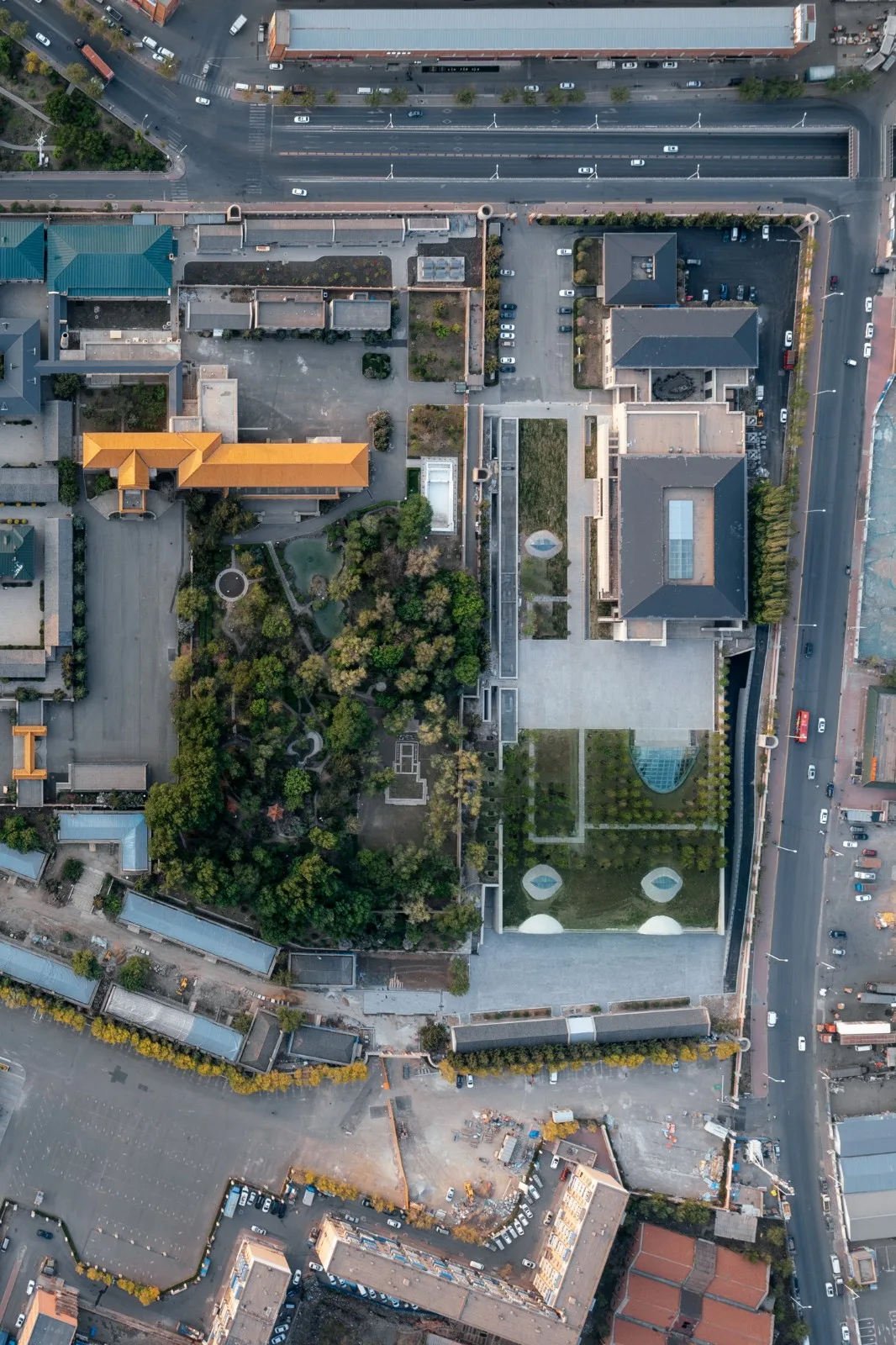
△ Top view
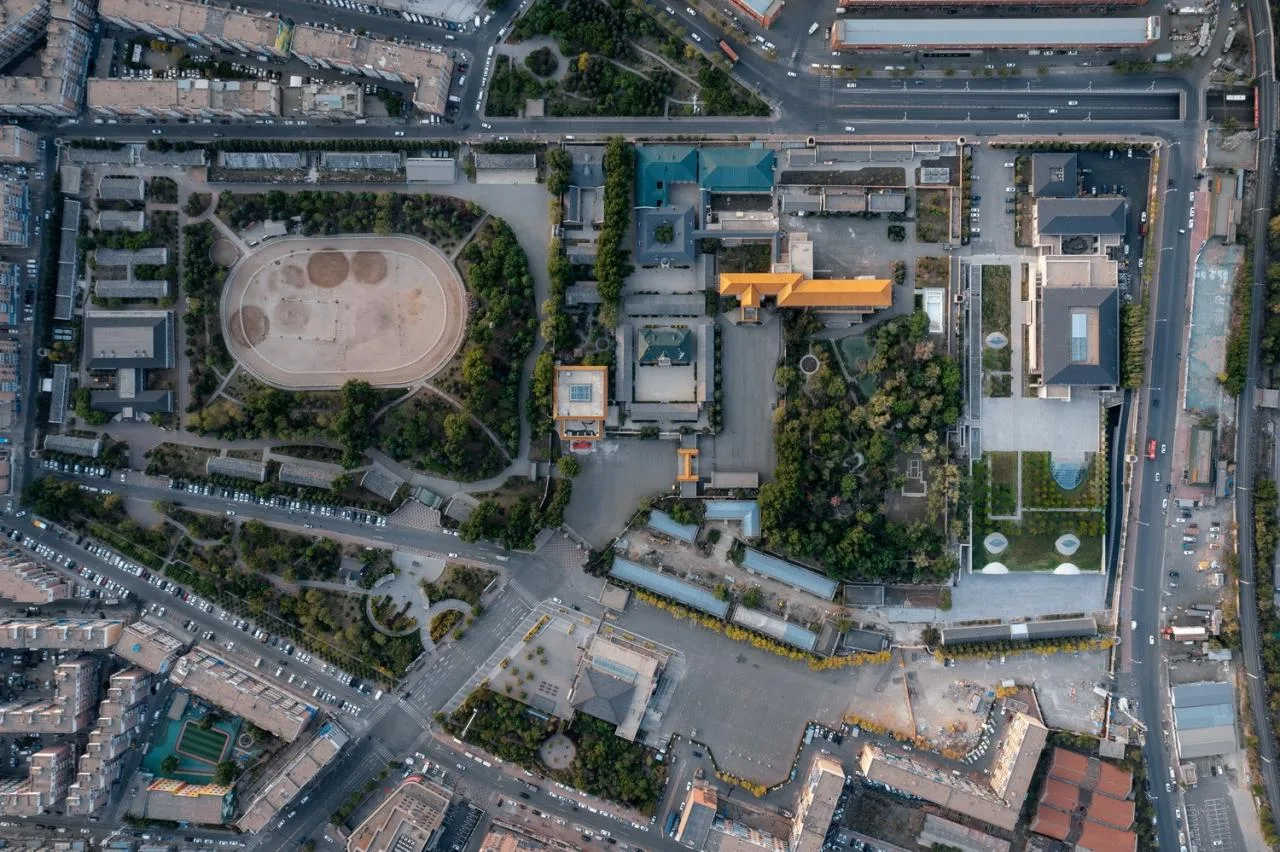
△ Top view
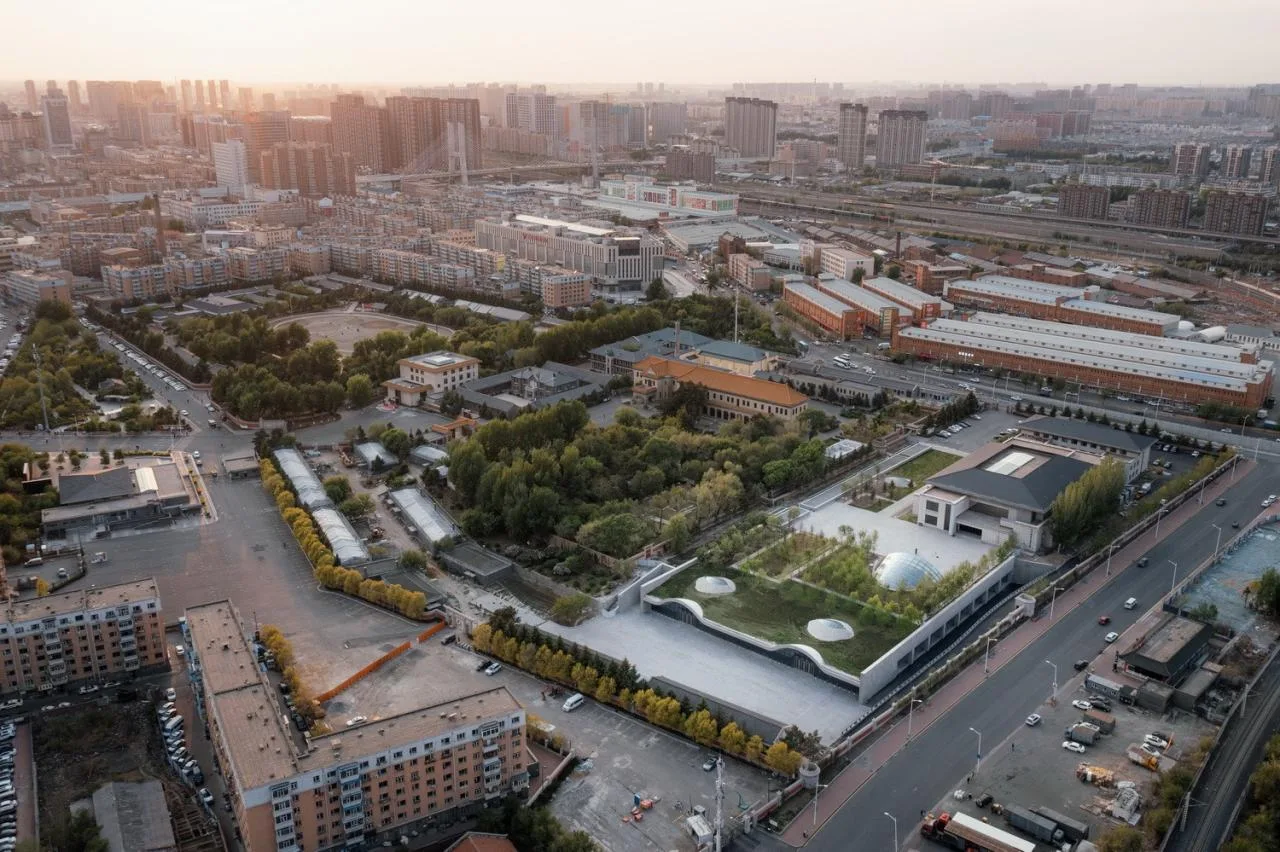
△ Aerial View (Southwest Perspective)
Releasing Concrete from Steel Constraints
The choice of plain concrete was straightforward and industrial. However, in terms of understanding and showcasing this material, I am no match for Liu Gongzi or Dong Gongzi. I decided to revisit the distant 1930s and early expressionism by freeing concrete from the confines of neat formwork. Using steel as a familiar template, we shaped a large-span hyperbolic thin-shell concrete dome.
When project architect Huang He worried that the protective agent was applied too thickly—blurring the precise cicada joints, visible seams, and bolt holes as revealed by BIM visualization—I reassured him. This effect is actually beneficial. Similar to the concrete of Erosharining or the mortar of Cobb, imperfections need not be expressed. The protective agent forms a transparent boundary, creating a halo effect on the concrete’s surface. As light changes, highlights travel along the curves, revealing a subtle exuberance—an enchanting form of expressionism.
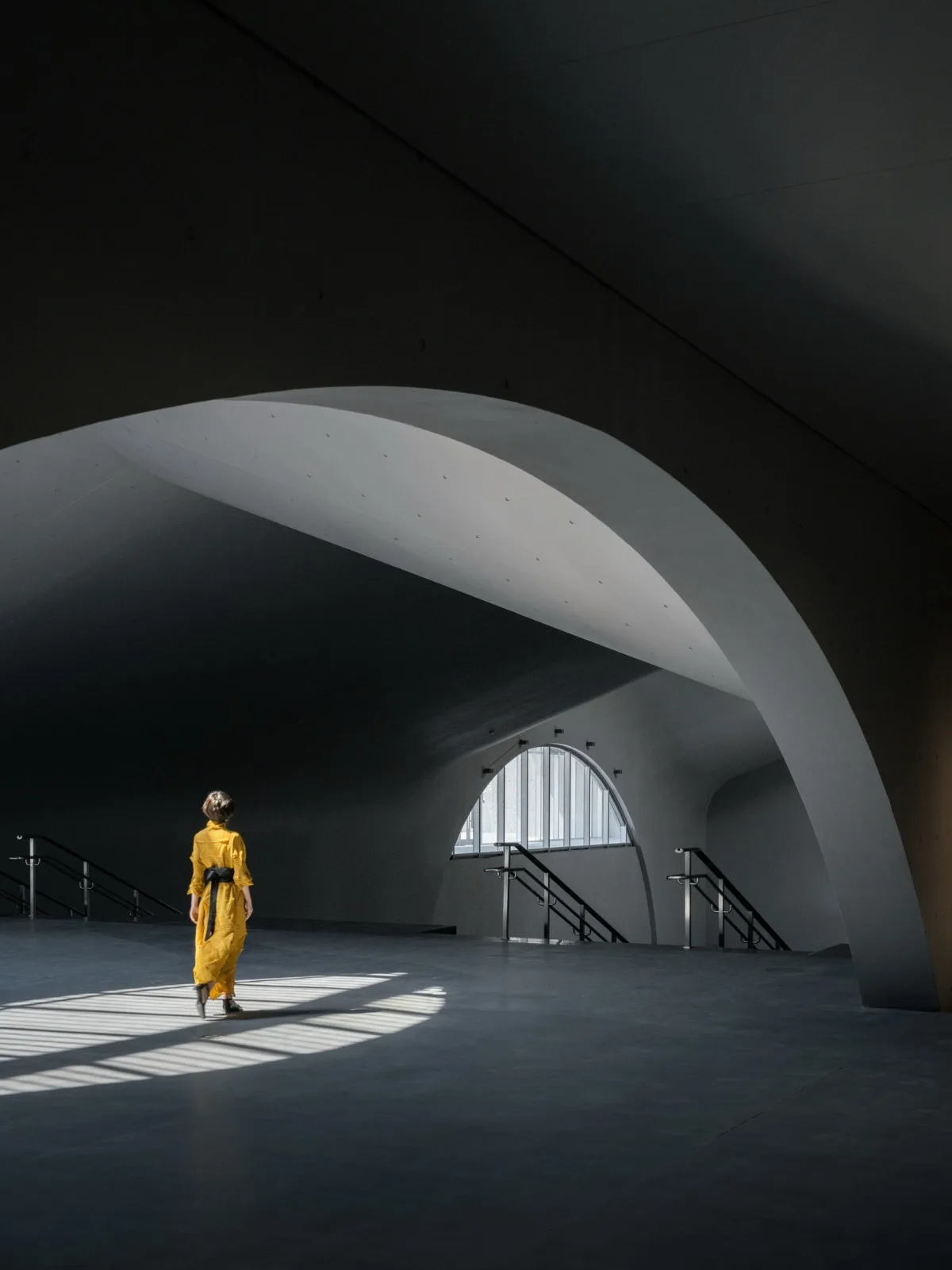
△ Entrance Hall
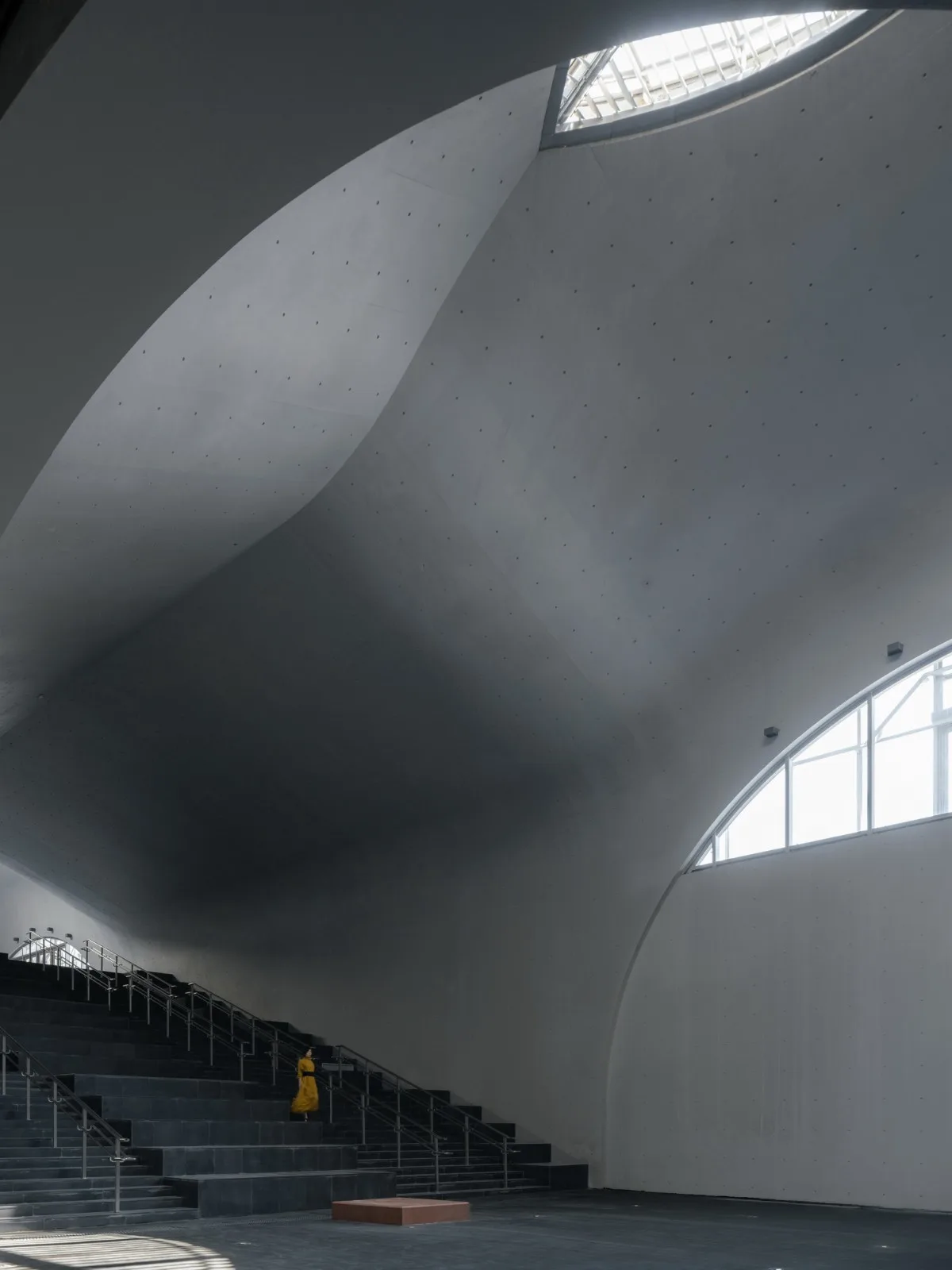
△ Underground second floor elevated exhibition hall (south side)
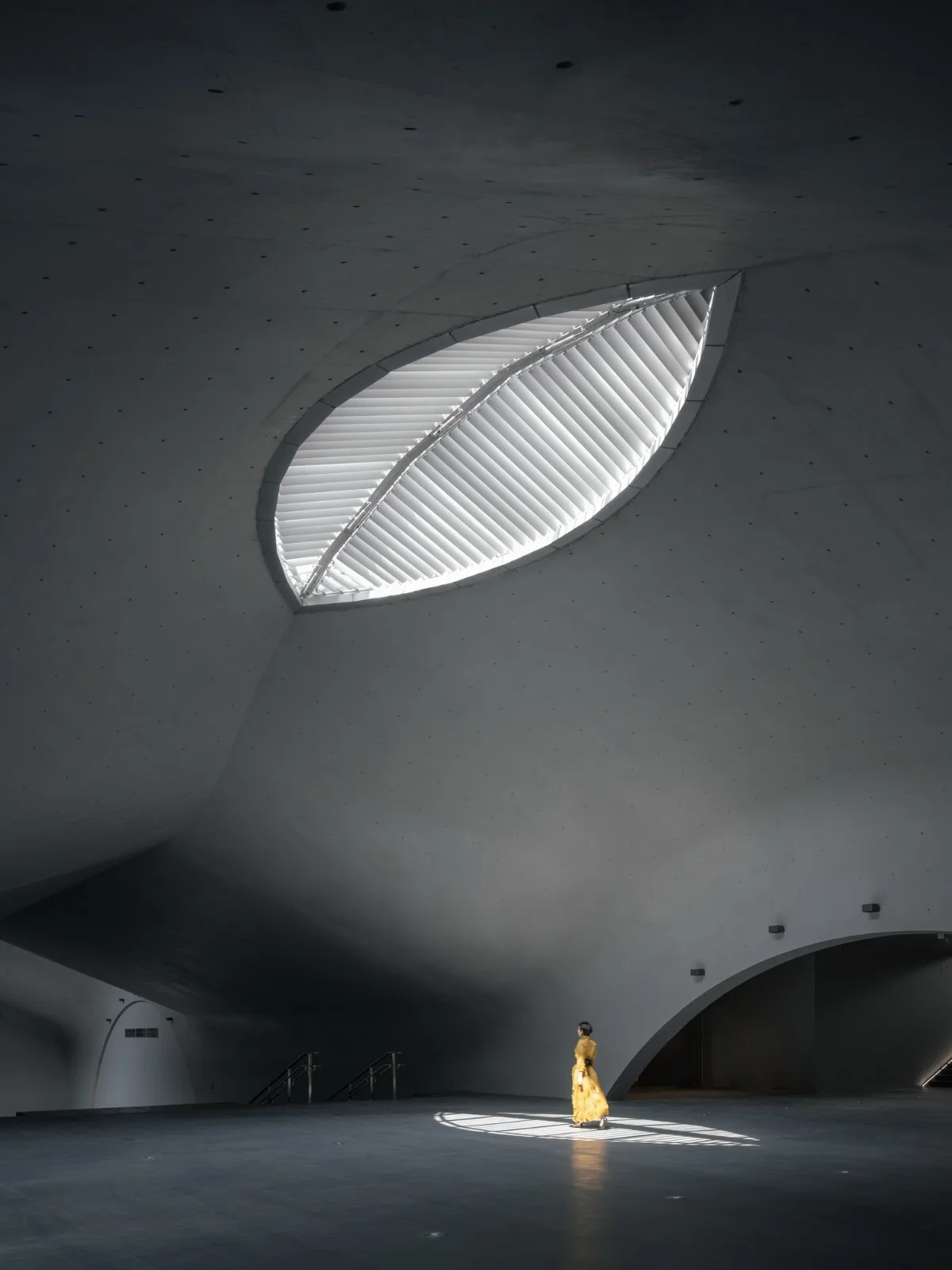
△ Entrance Hall
The Constantly Delayed Schedule
The project’s complexity surpassed ordinary expectations—not only because Changchun’s frozen soil restricts construction to only two-thirds of the year before the structure is capped, but also because of numerous sudden shutdowns during construction. I even doubted whether completion was possible. This hidden giant structure demanded exceptional construction techniques and meticulous organization to realize its grand vision.
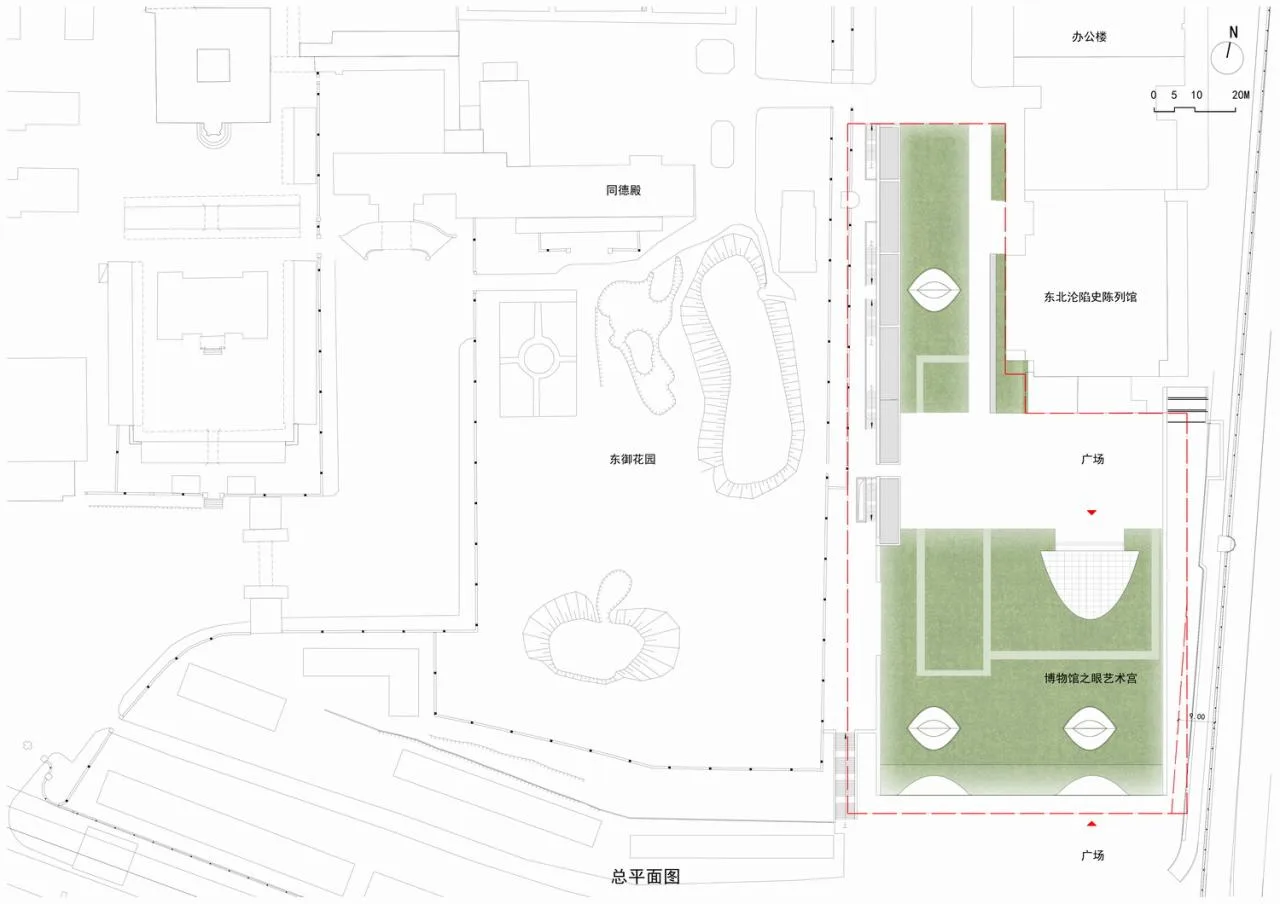
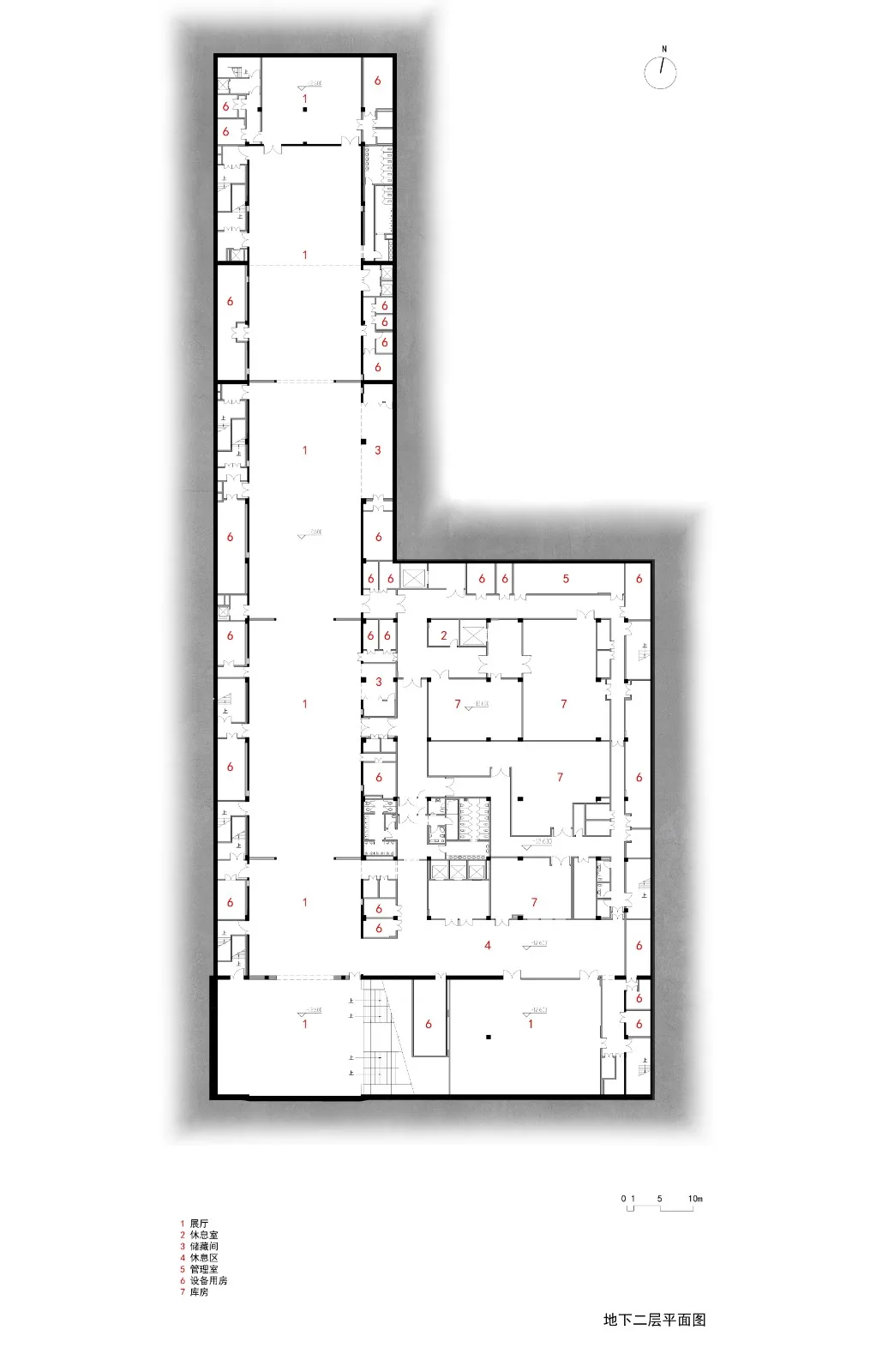
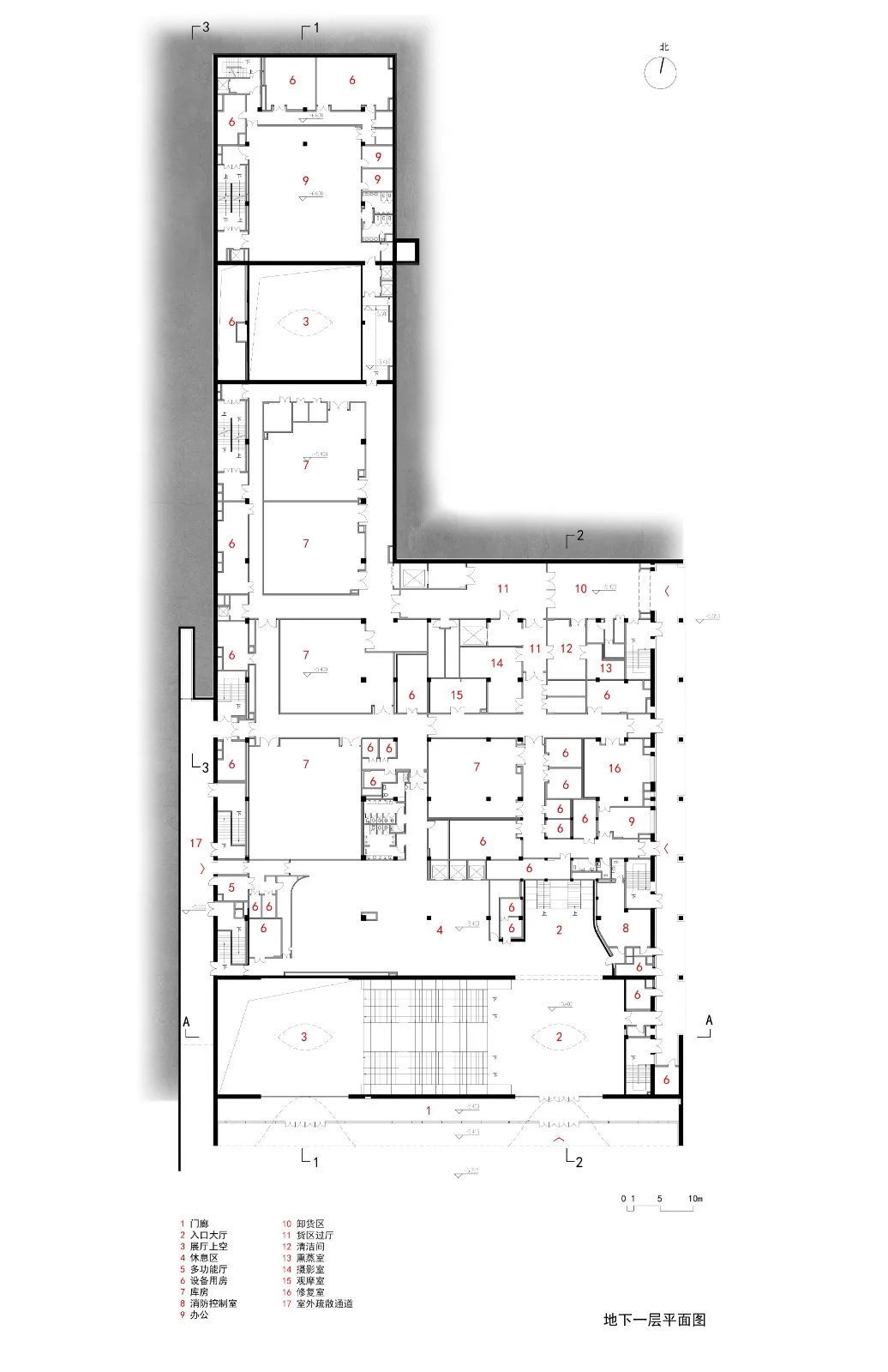
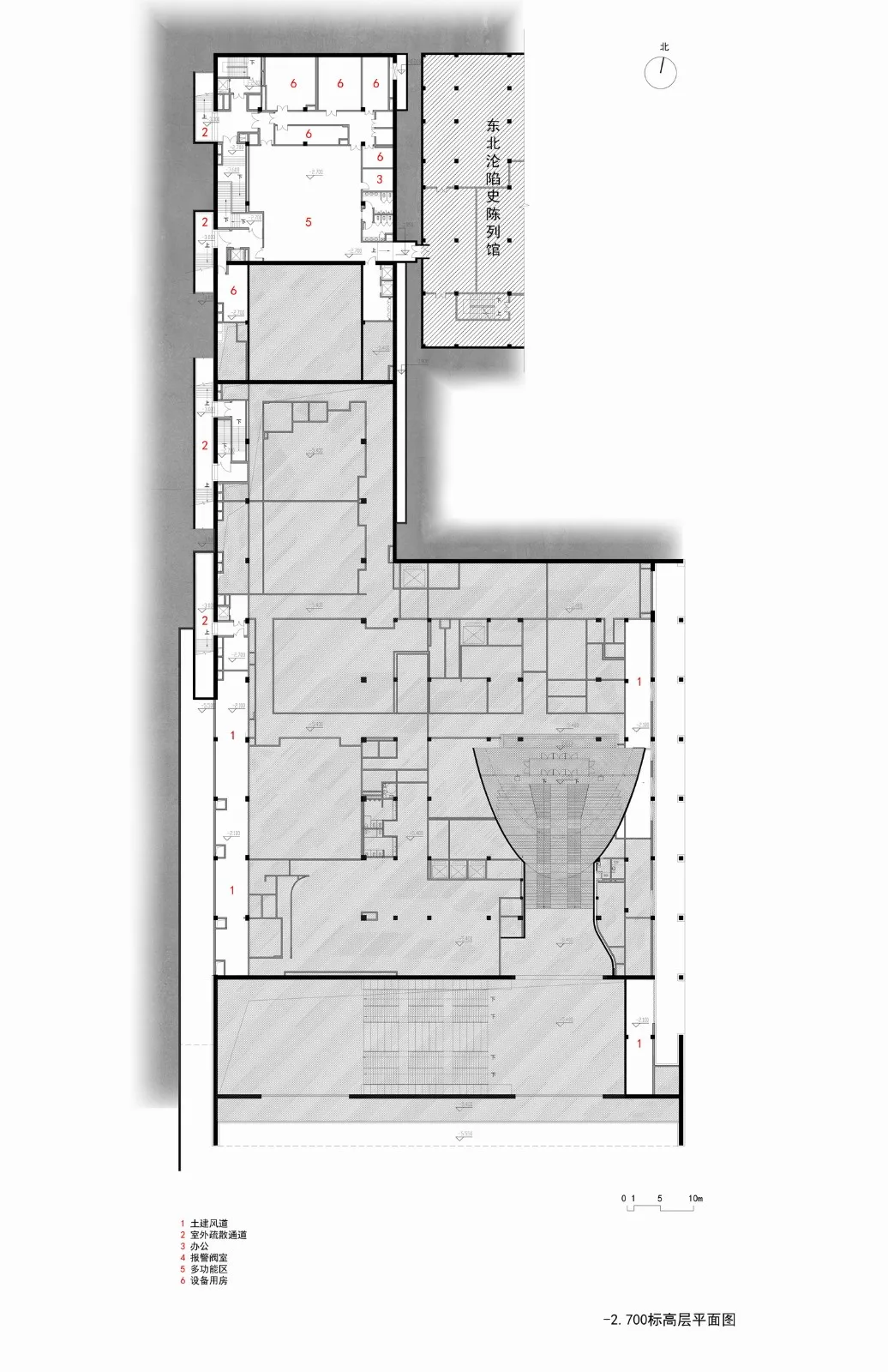
The Art Palace sits on a knife-shaped plot between the Manchukuo Imperial Palace and the Northeast Occupation History Exhibition Hall. The site’s north-south elevation difference is 7.2 meters, with a total construction area of 16,650 square meters. The maximum burial depth is 17.67 meters on the north side and 10.47 meters at the south square entrance. The building includes two underground floors.
The closest distance between the deep excavation pit and the original palace walls and bunkers is only 450 mm. To ensure structural stability, support piles, anchor cables, anchor rods, and static pressure piles were installed on one side of the exhibition hall to balance both sides. Additionally, a new underground passage connects the Art Palace to the exhibition hall basement.
The finished surface features over 10,000 square meters of high-quality plain concrete formwork. All necessary museum equipment and pipelines were pre-planned and embedded, meeting strict requirements for temperature and humidity control, wind and disaster resistance, security, theft prevention, and fire safety. The Art Palace’s roof serves as a 2,000-square-meter activity square, parking lot, and green space.
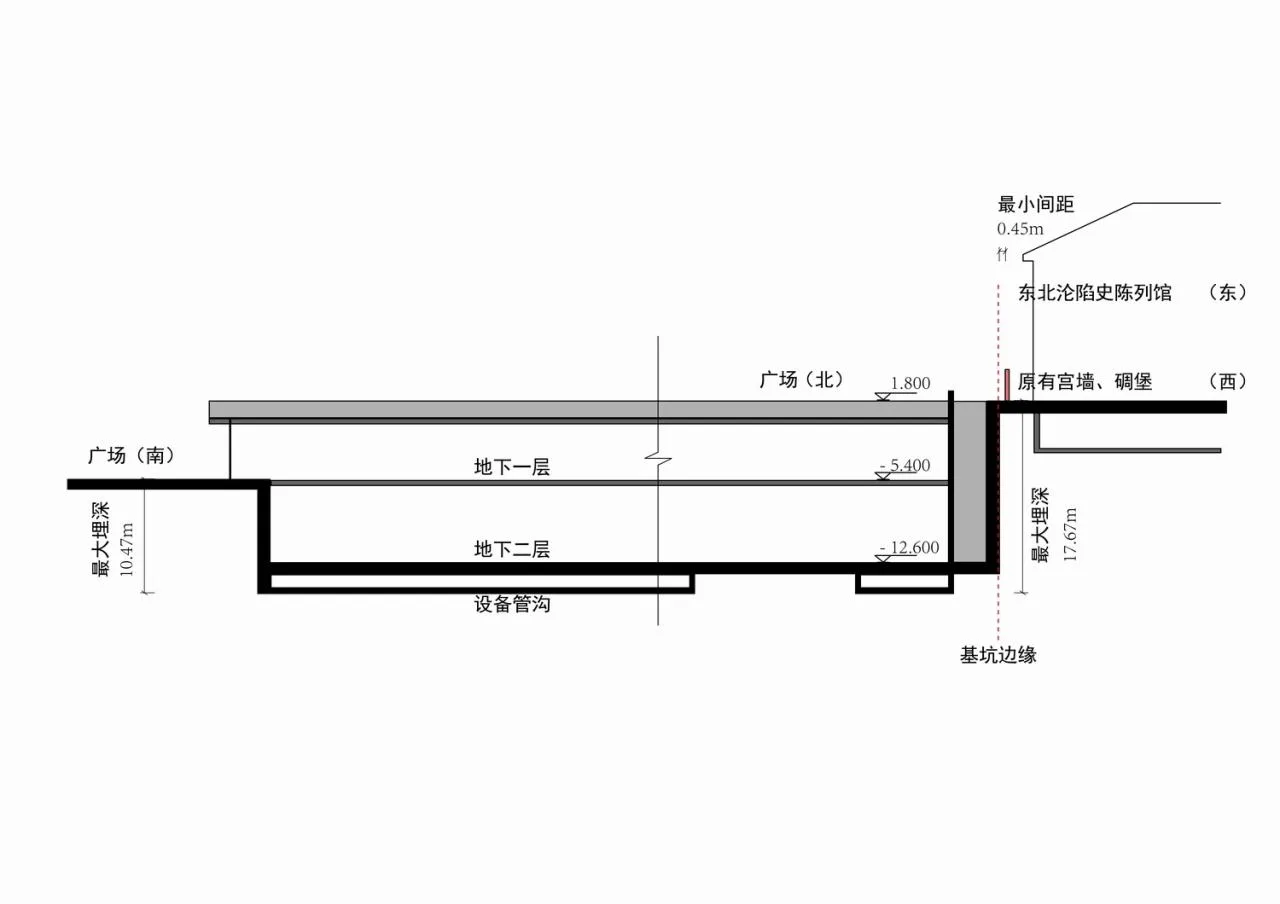
△ Profile analysis diagram
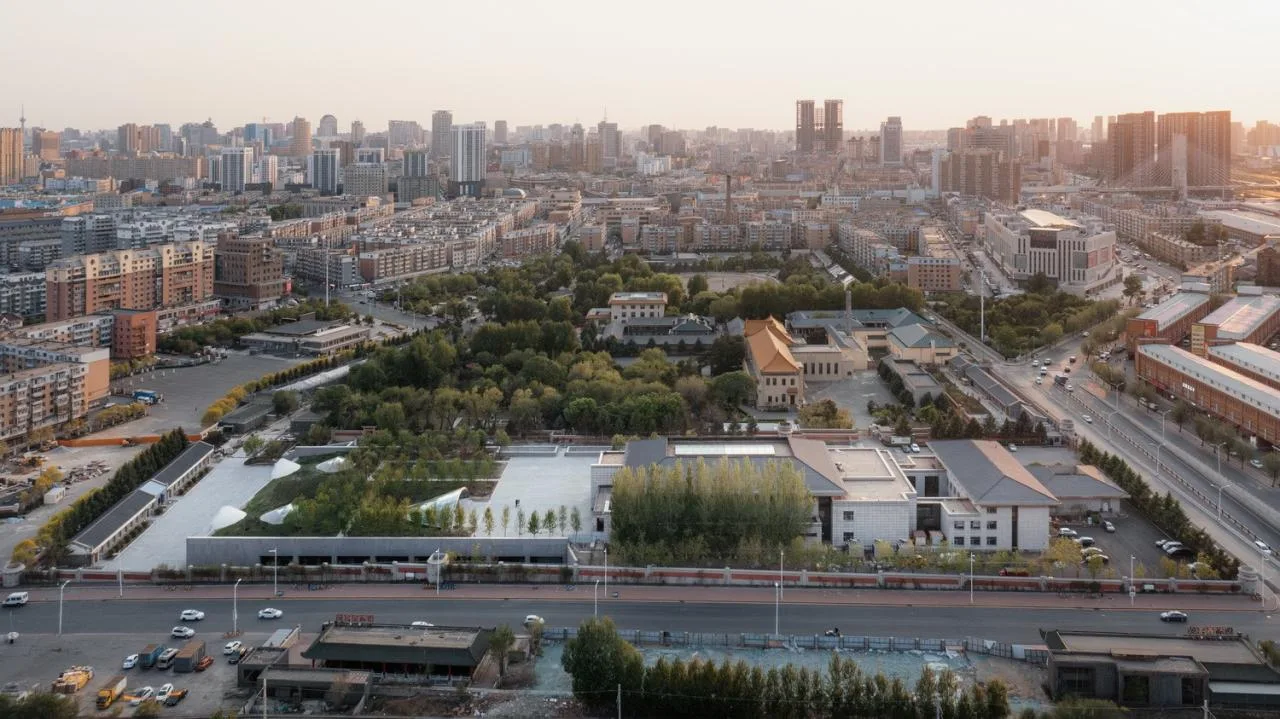
△ Aerial View (East Side Perspective)
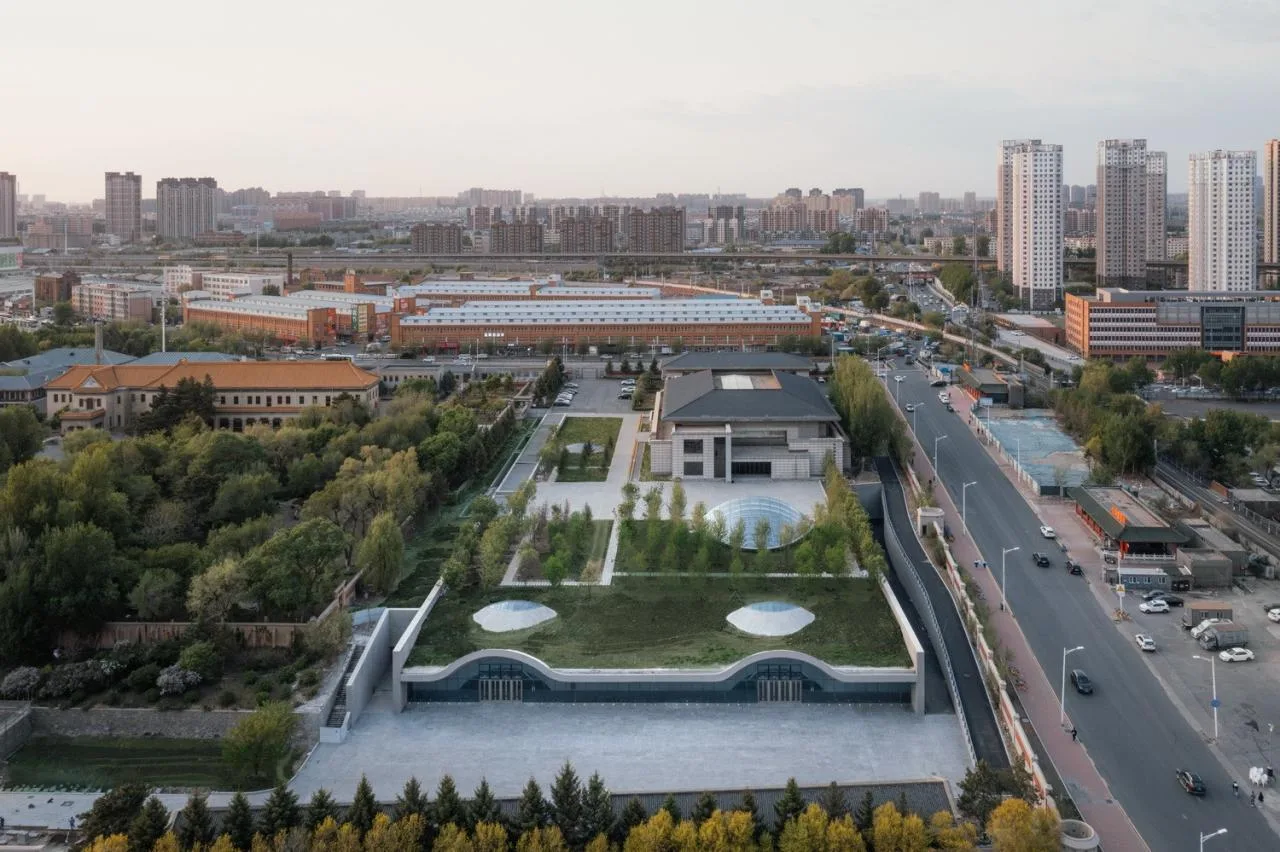
△ Aerial view (from the south perspective)
In front of the exhibition hall’s main entrance, we designed a single-layer steel mesh shell with a curved glass body inserted underground. Descending the stairs leads to the Art Palace’s main hall; looking back, the exhibition hall is framed by an arched view.
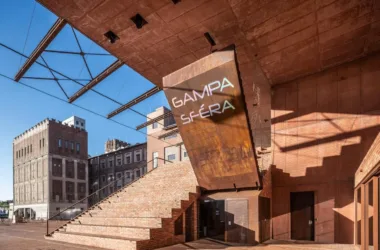
The continuous roof abruptly ends at the South Square, forming the facade. The view in front of the exhibition hall is unobstructed. The earth in the South Square seems lifted at one side. At first glance, visitors would not realize there is a vast palace buried beneath the ground—hidden in the earth’s crevices—offering a fascinating and enchanting experience.
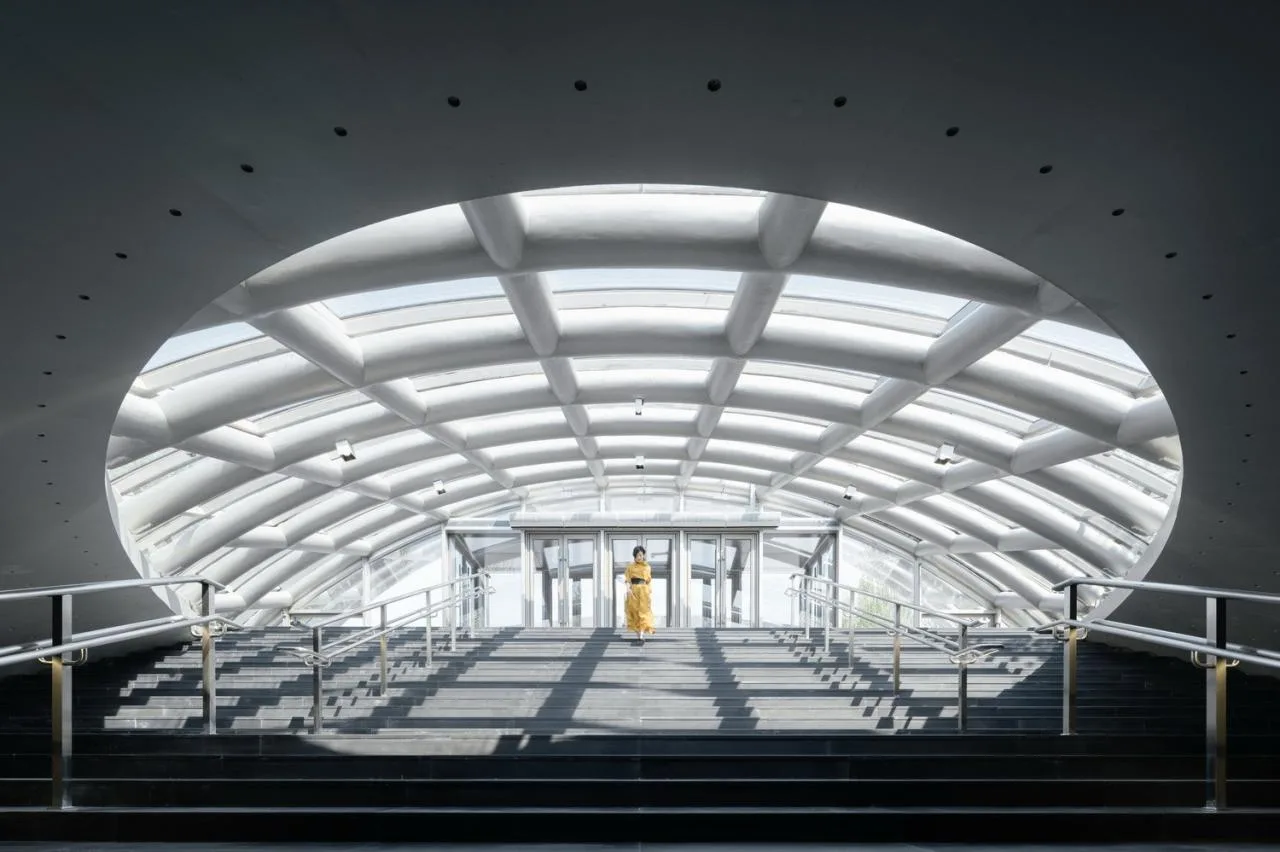
The staircase leading to the Northeast Occupation History Exhibition Hall
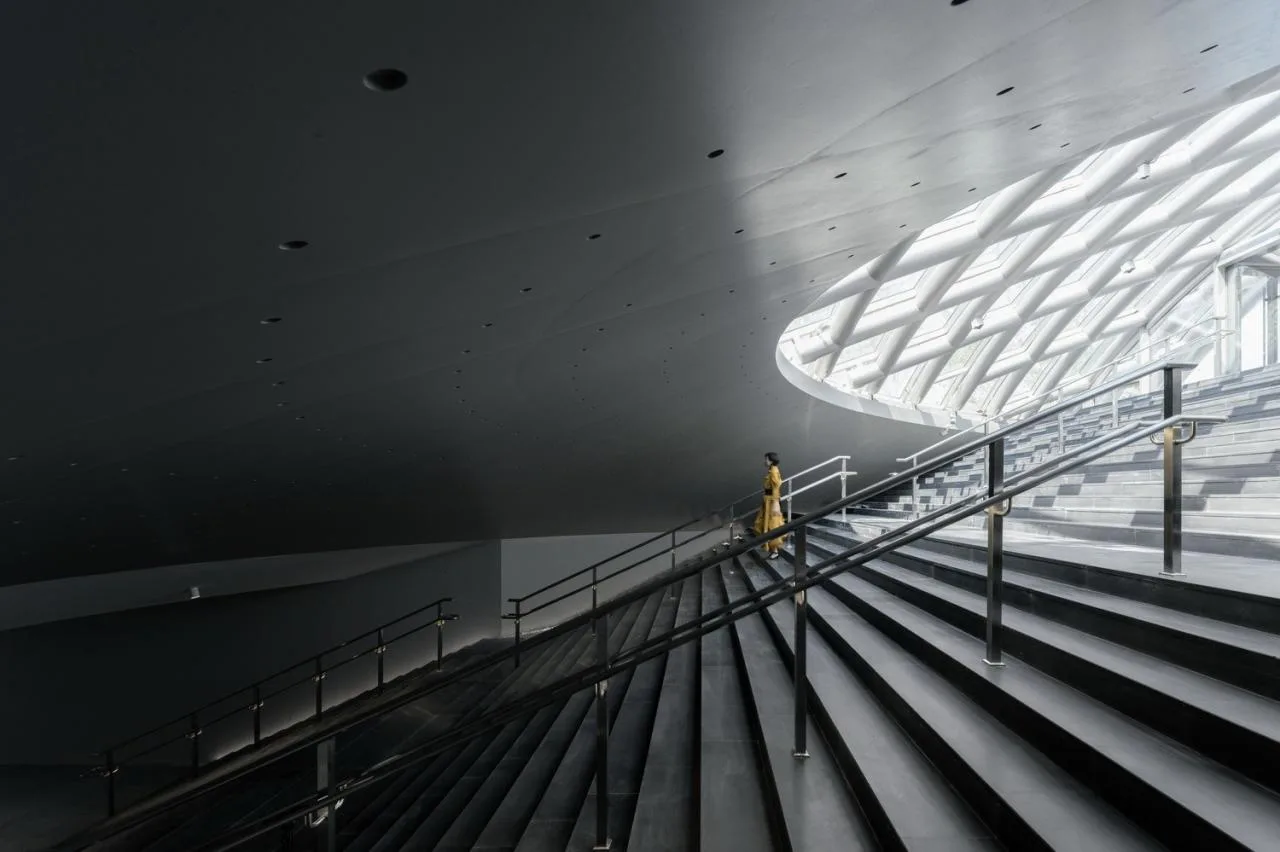
The staircase leading to the Northeast Occupation History Exhibition Hall
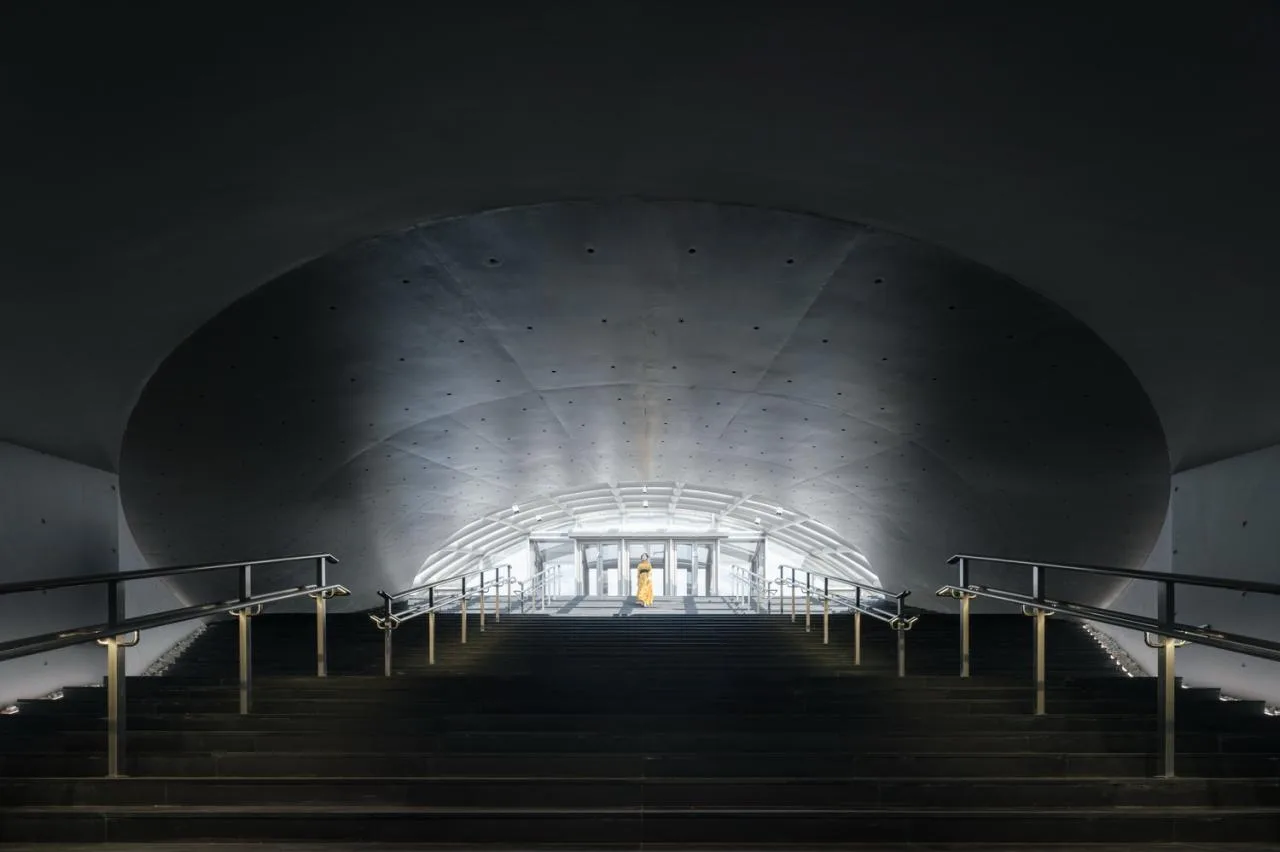
The staircase leading to the Northeast Occupation History Exhibition Hall
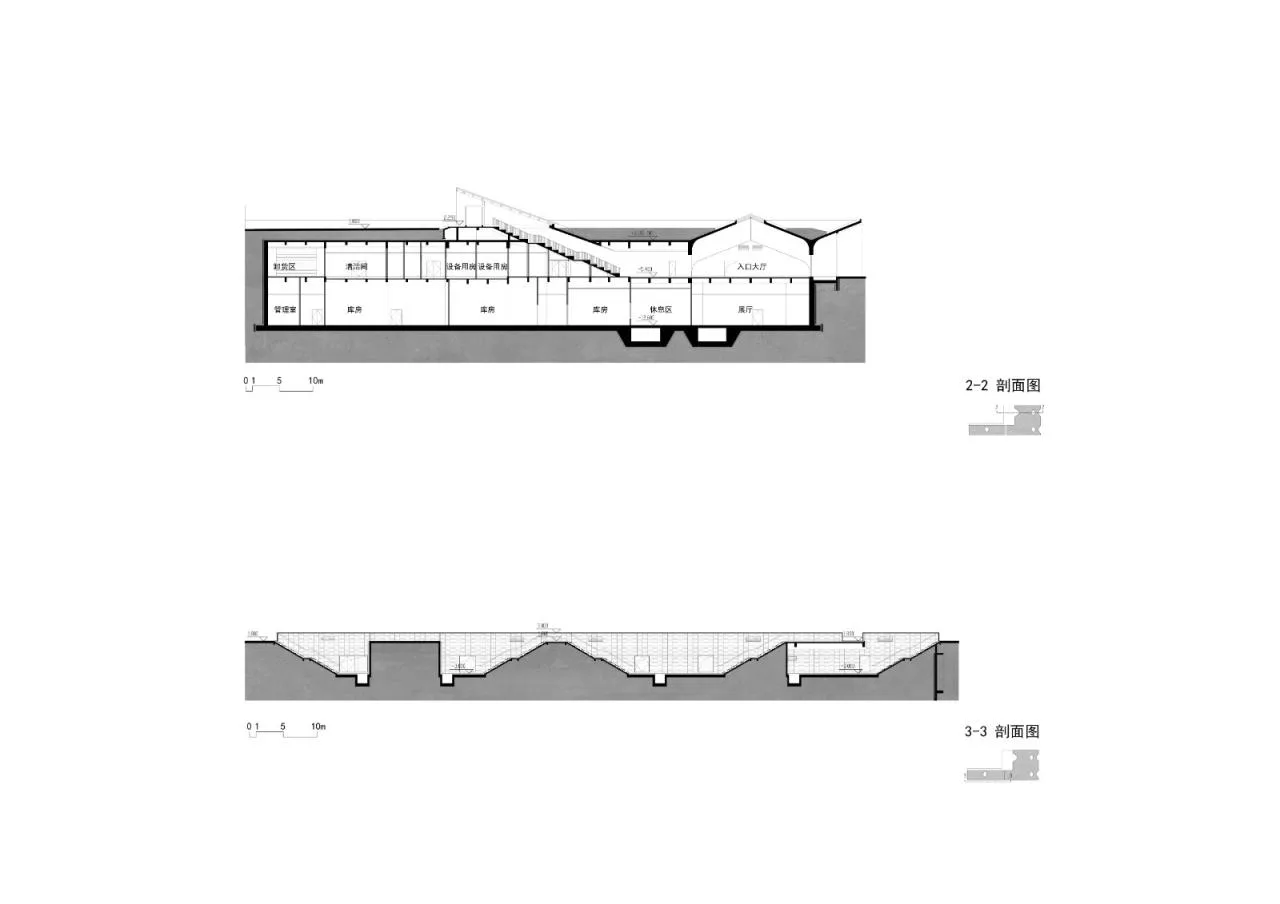
△ Section diagram
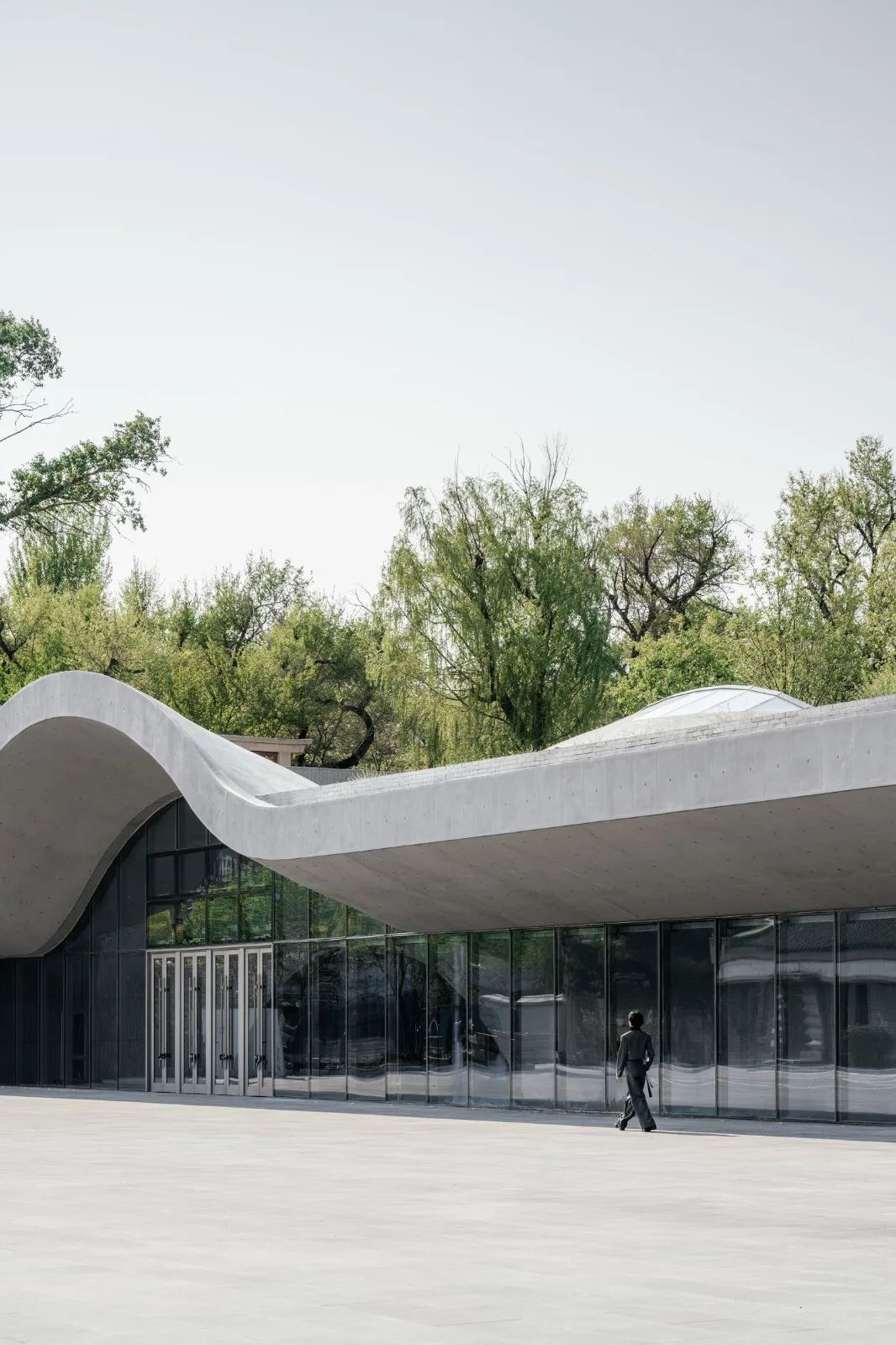
△ South entrance square
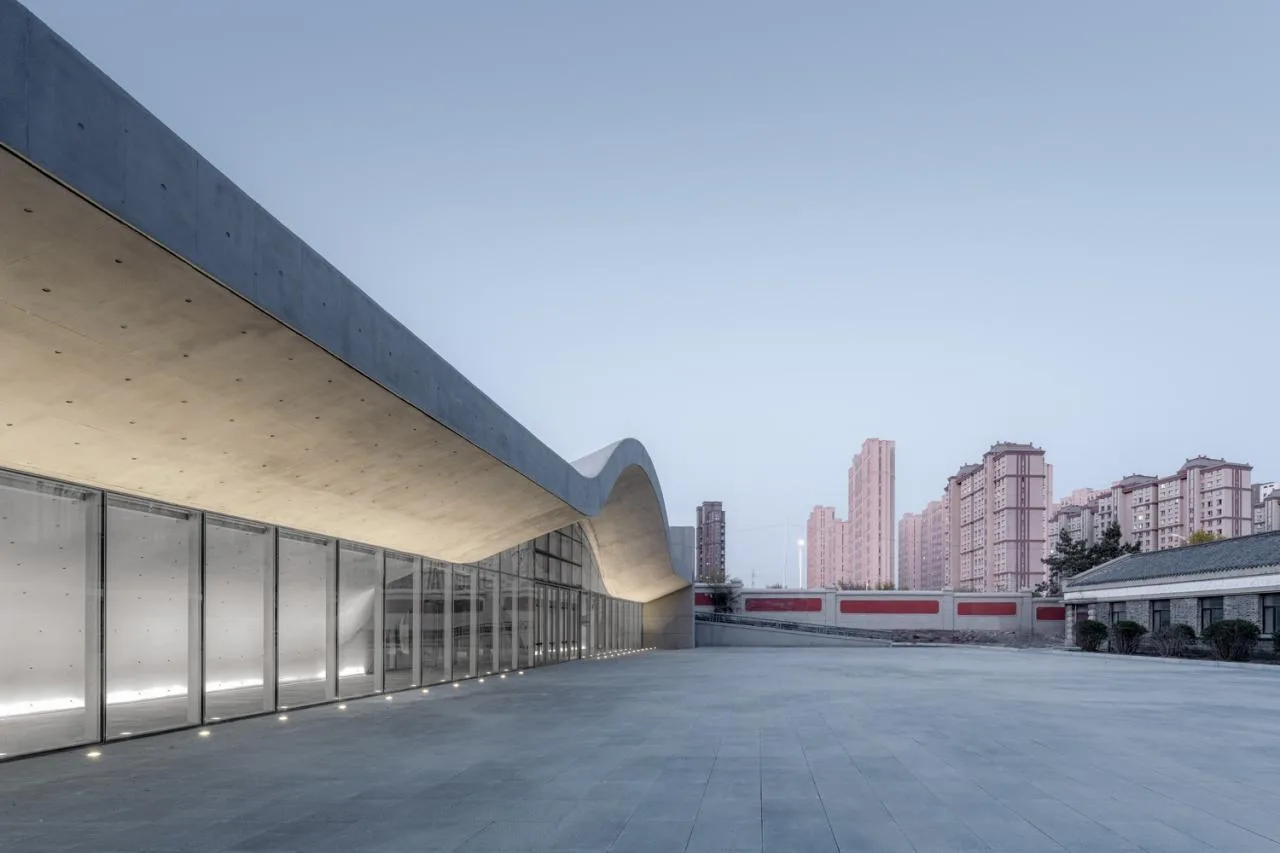
△ South entrance square
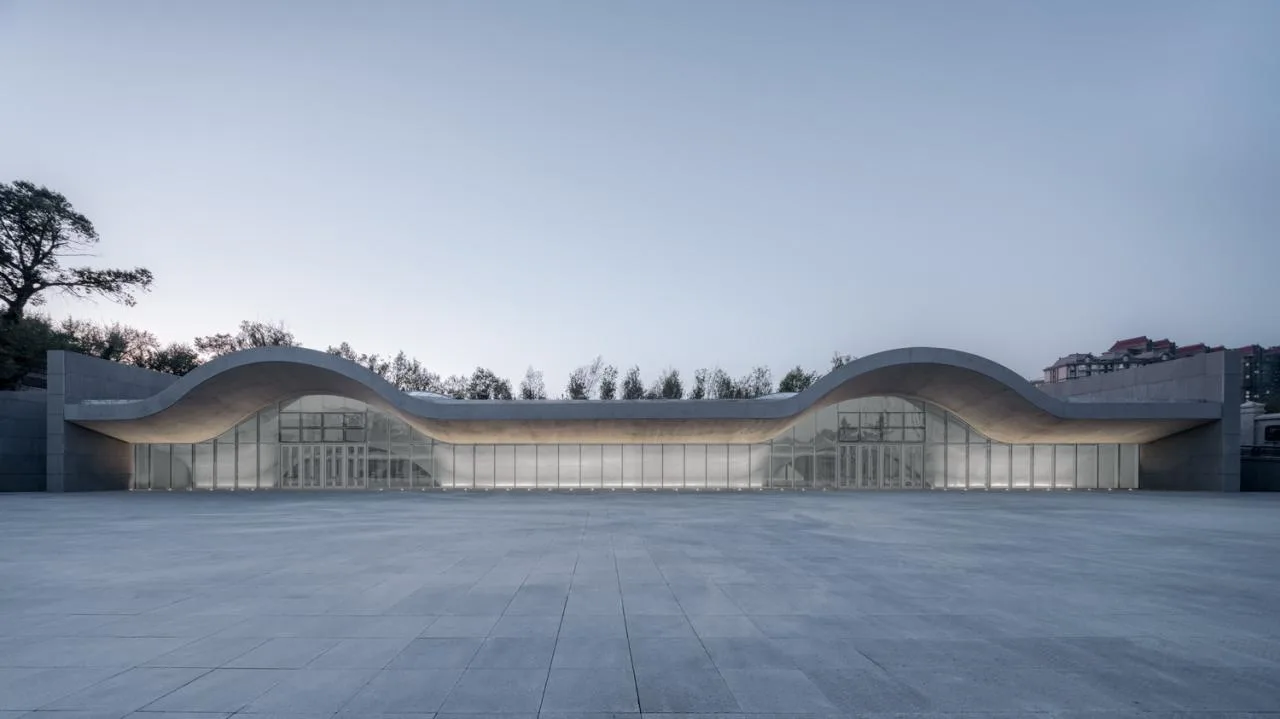
△ “Make elevation with profile”
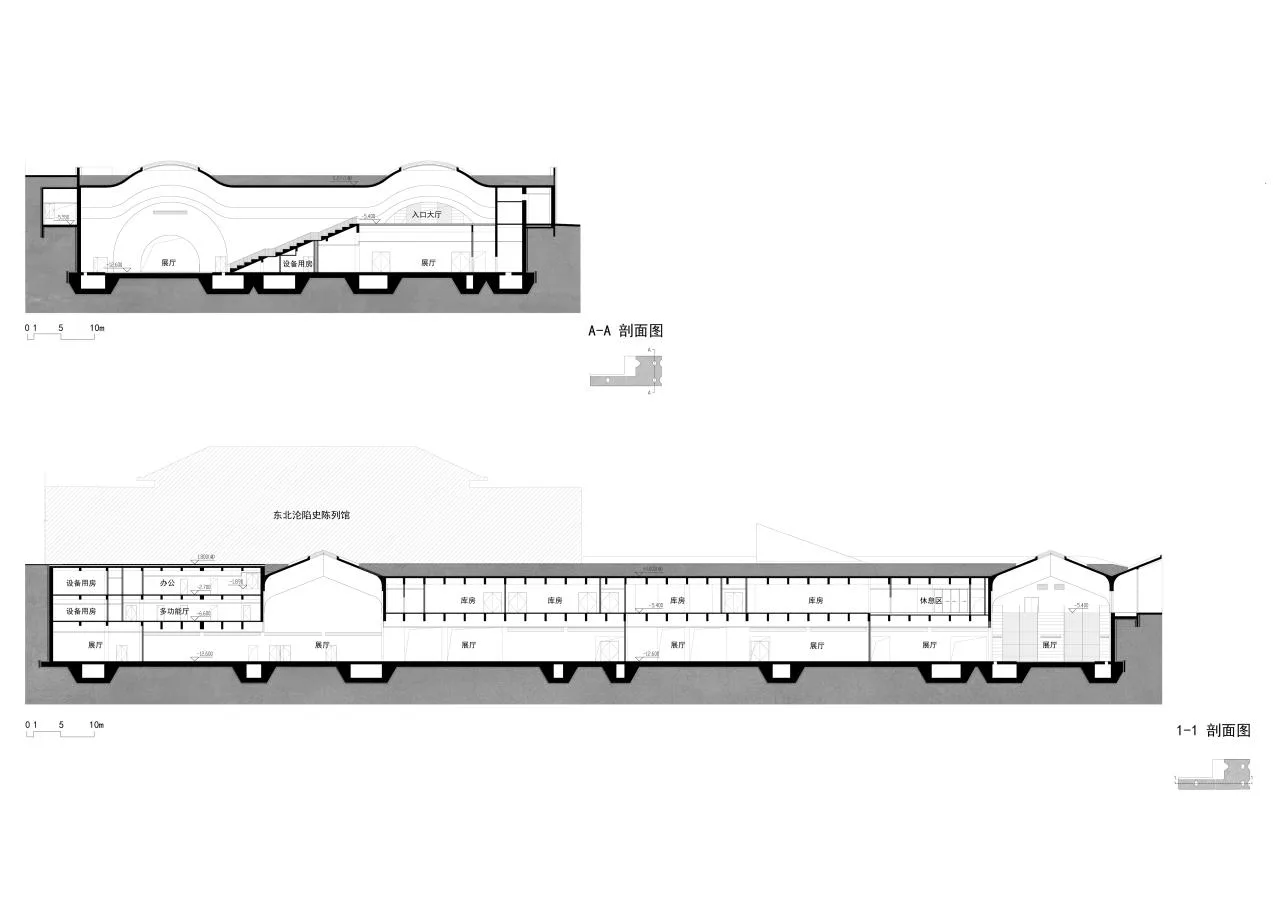
△ Section diagram
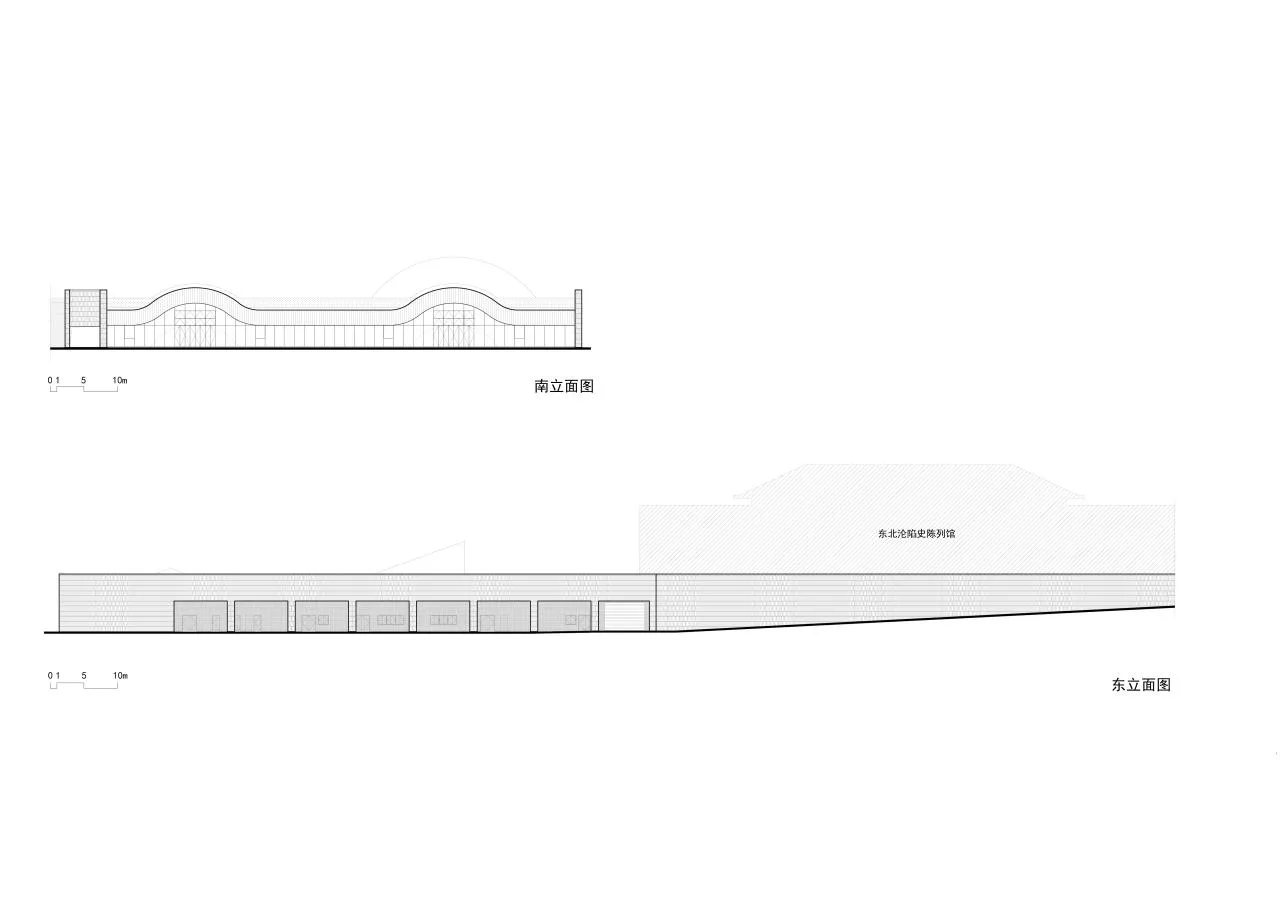
△ Elevation drawing
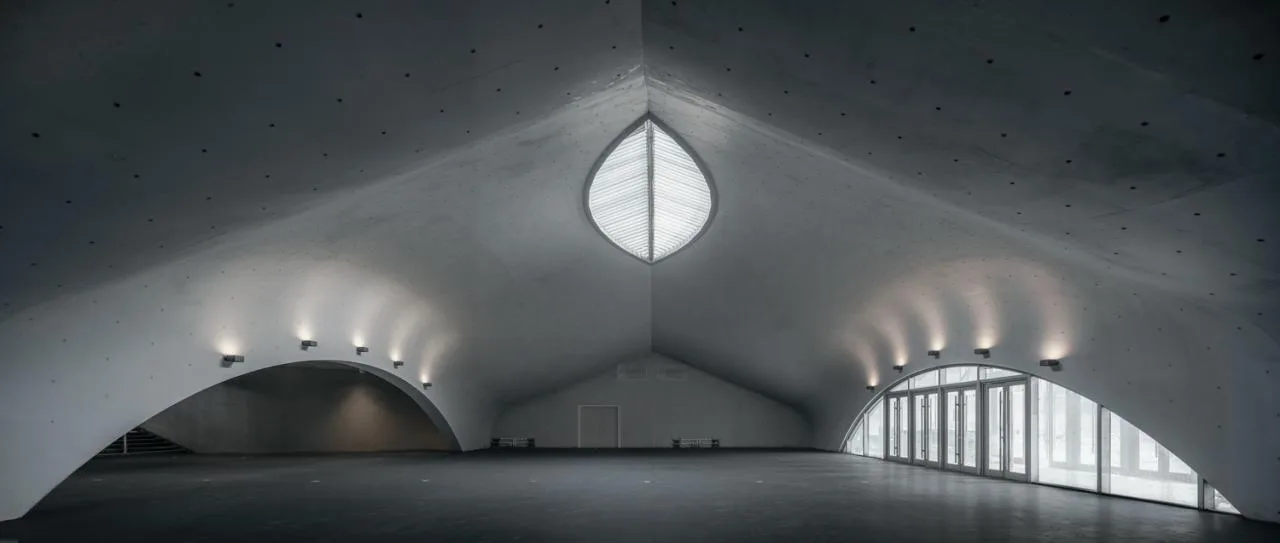
△ Entrance Hall
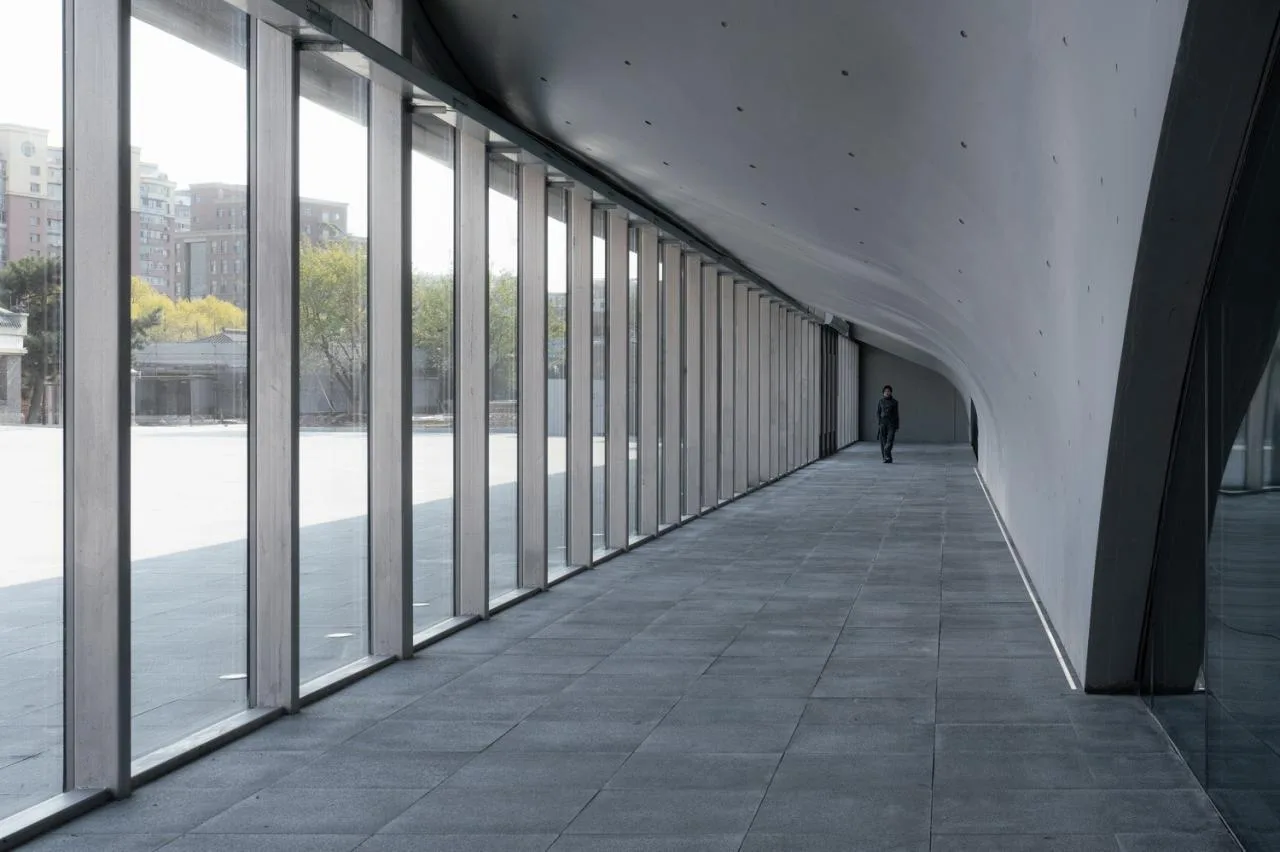
△ Porch
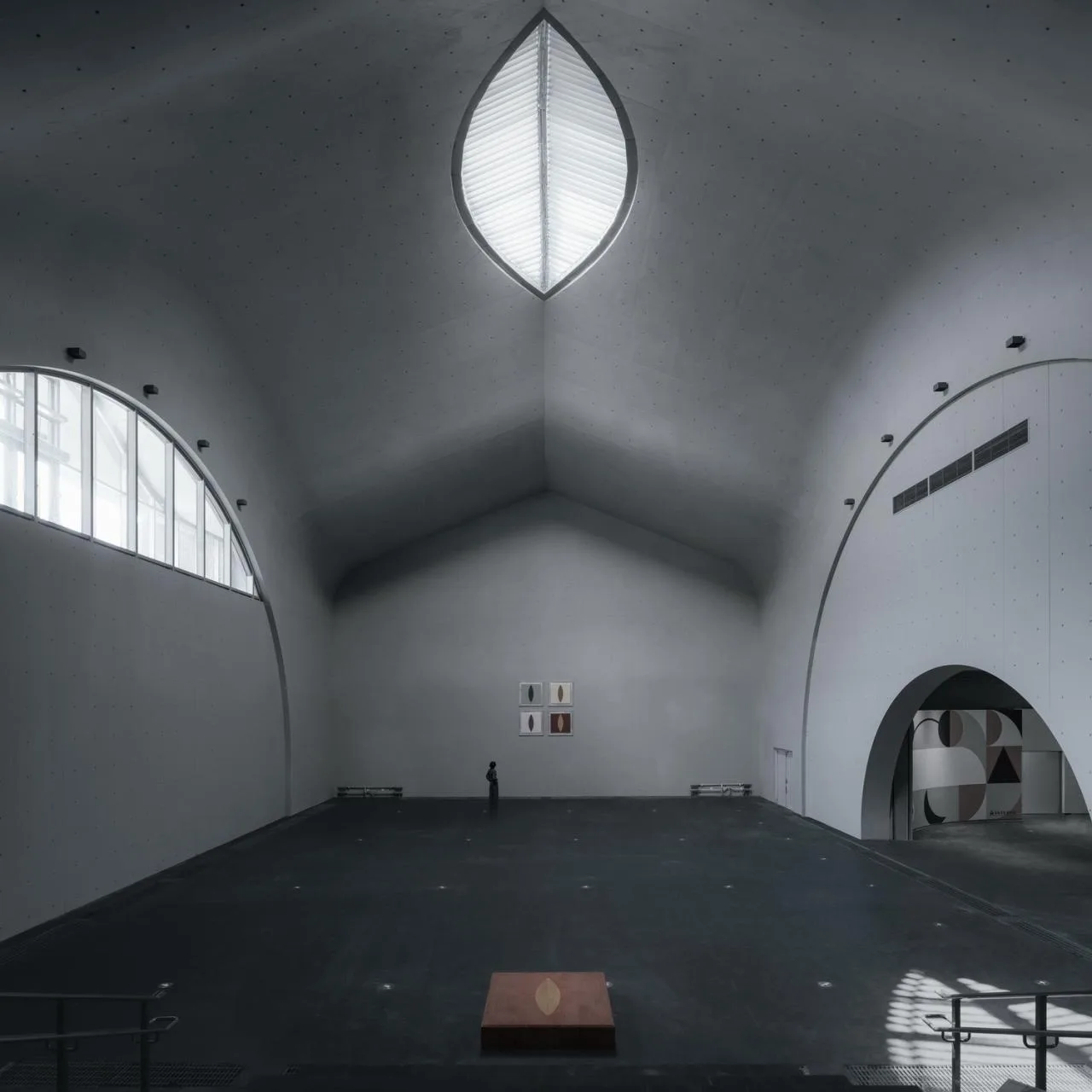
△ Underground second floor elevated exhibition hall (south side)
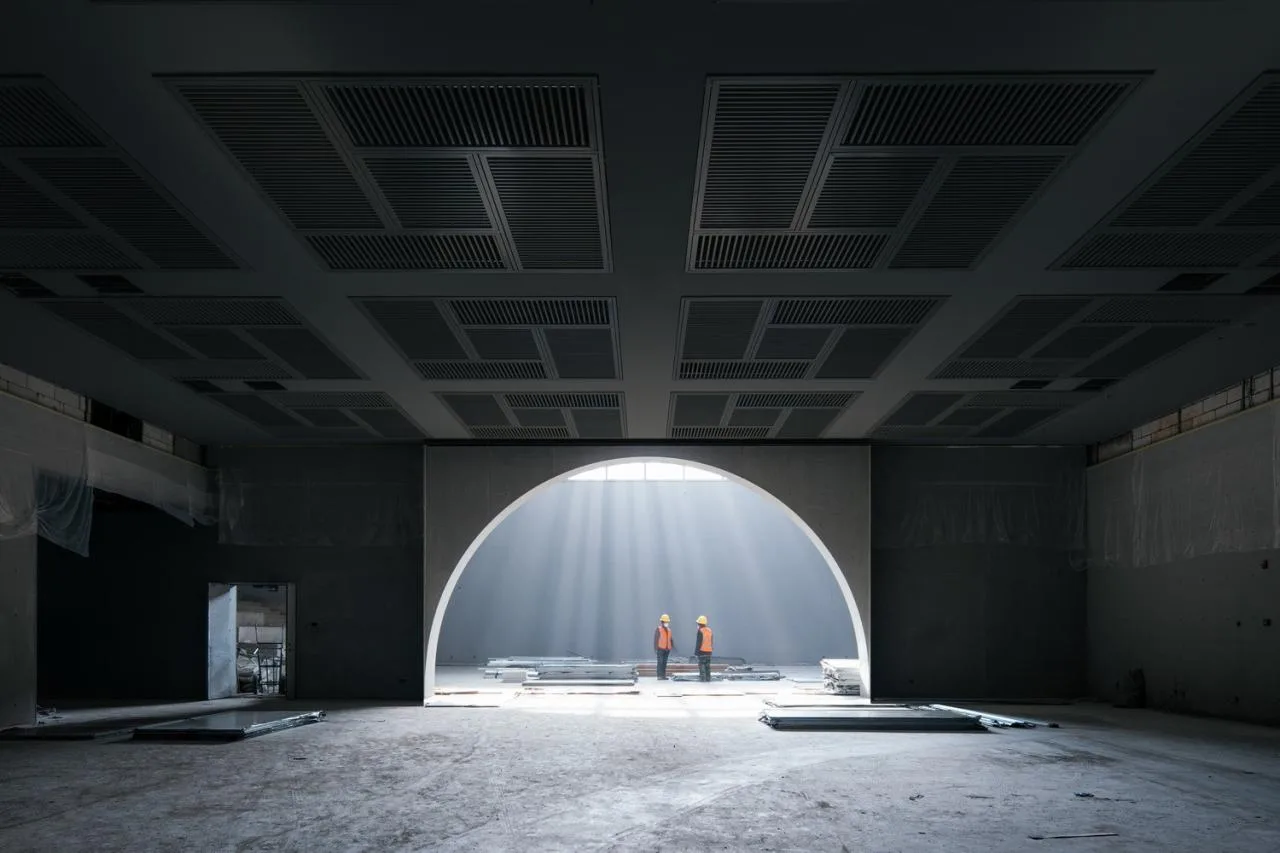
Exhibition Hall (Construction Record Photos)
Deep Time
Museums have evolved beyond simply researching and displaying human history. The term “museum” itself seems outdated as new disciplines emerge. Today, museums explore life and the relativity of time on an expansive scale, spanning the entire 4.6 billion-year history of Earth—far beyond human timelines. Different time scales offer varied perspectives on history, a concept known as Deep Time.
In conceptualizing this space, I chose underground architecture to express ‘depth’. The vast scale disorients visitors, rewriting the straight-lined timeline we are accustomed to. The structural unit is centered around a hyperbolic dome with wings, measuring 18 m by 27.5 m, rising to 16.5 m at its highest point. The Art Palace consists of three interconnected spatial nodes, designed to guide visitors to understand the relationships between life, history, environment, and society within the context of Deep Time, prompting reflection on the future of humanity, survival, and lifestyle.
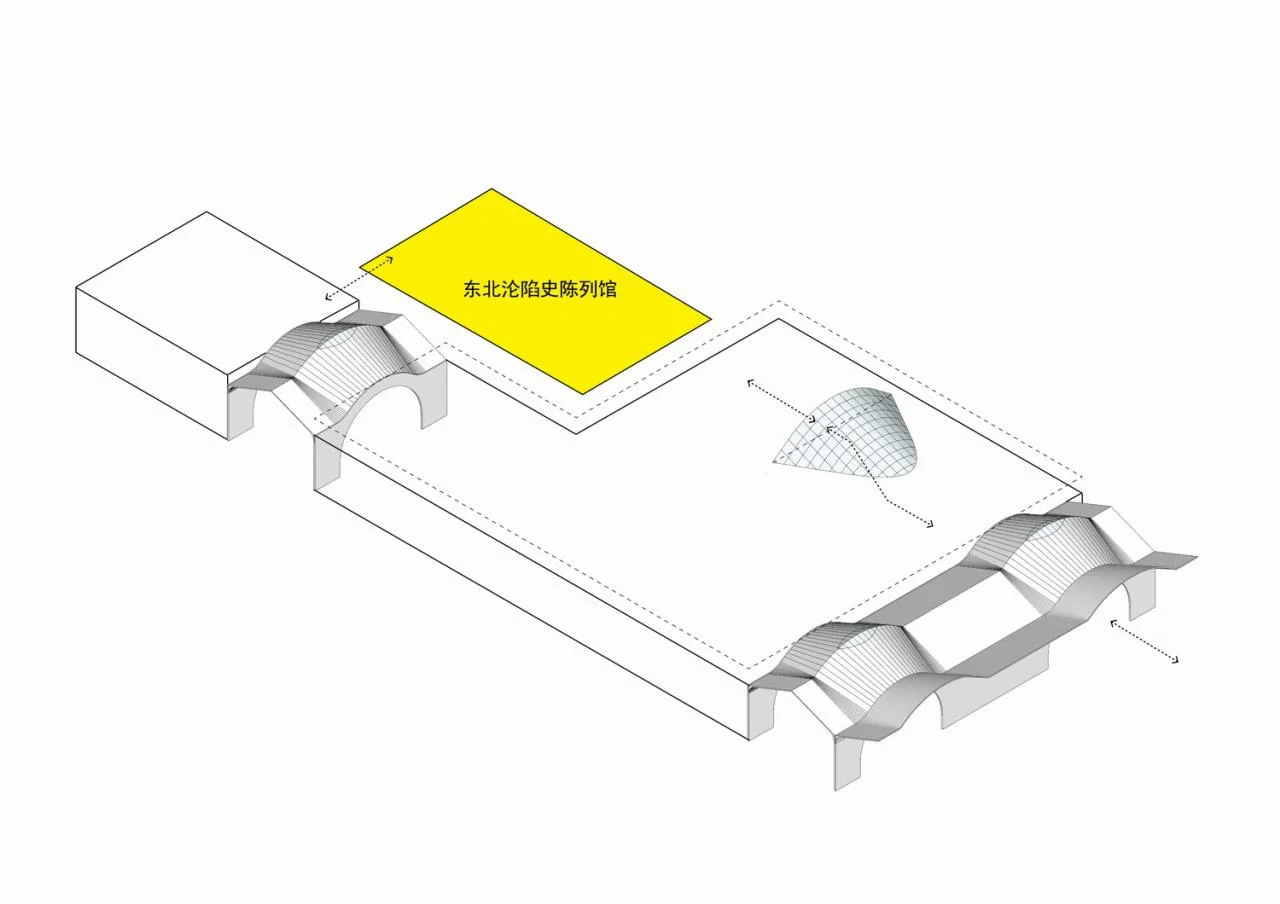
△ Axis Measurement Analysis Diagram
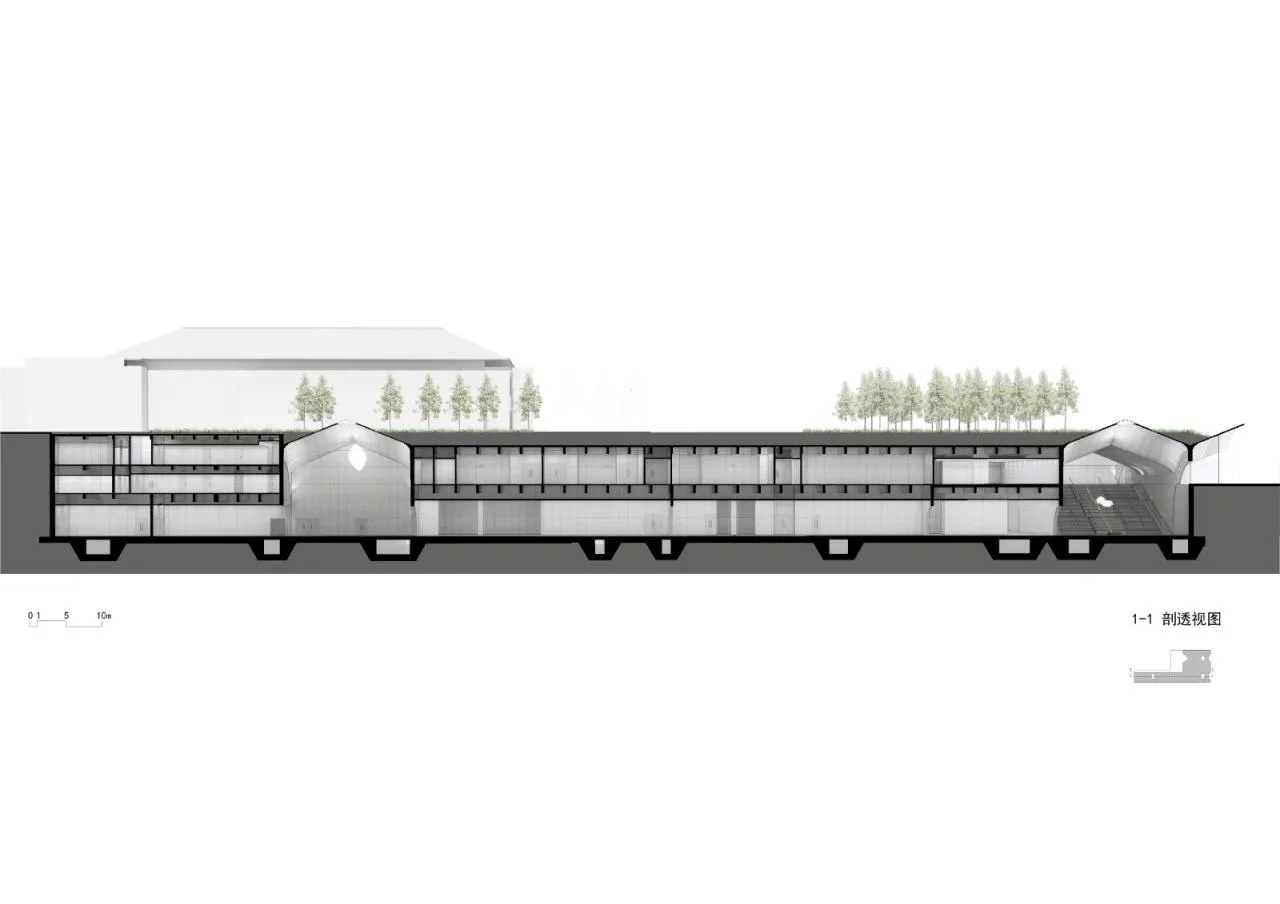
△ Sectional perspective view
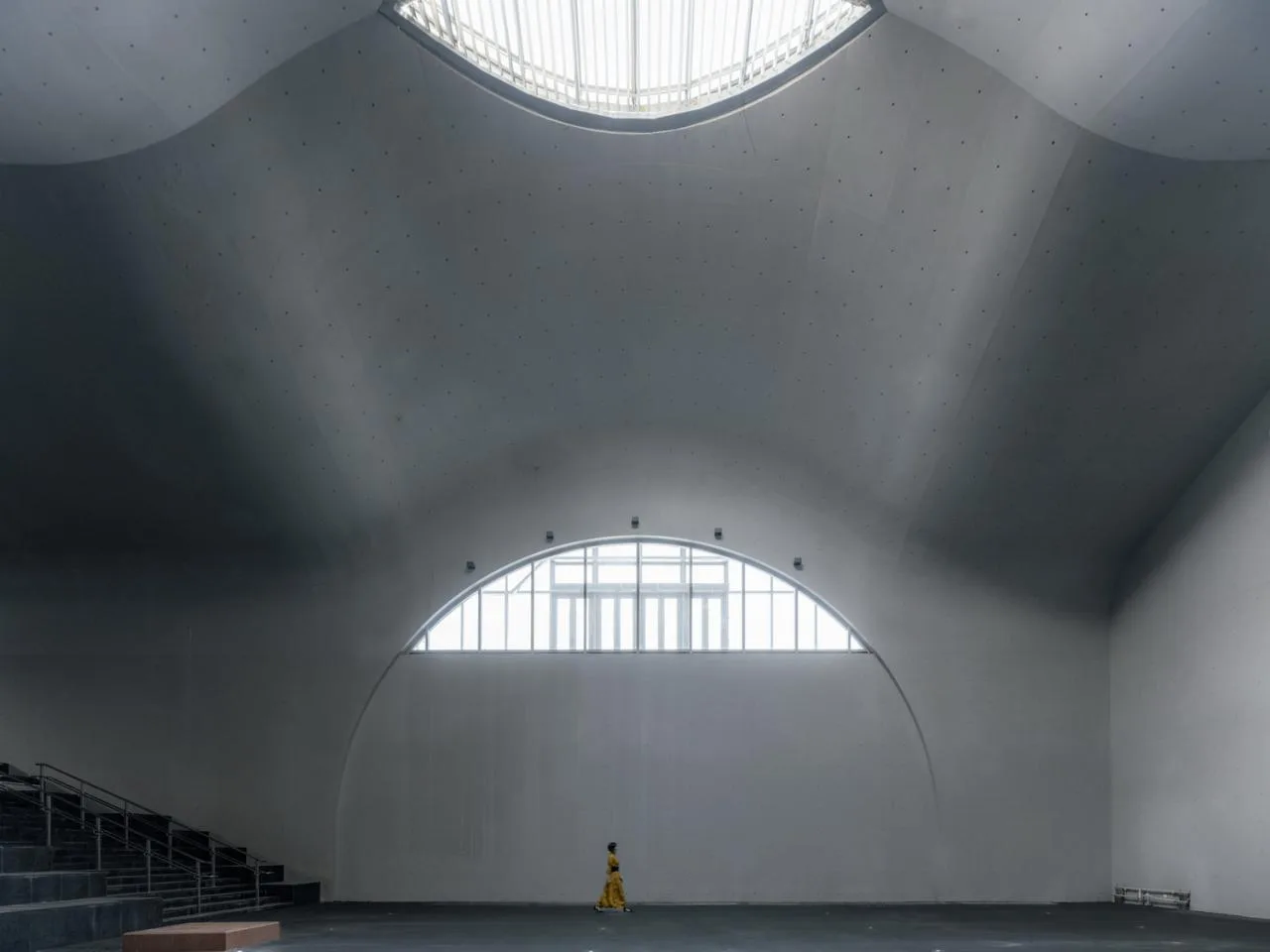
△ Underground second floor elevated exhibition hall (south side)
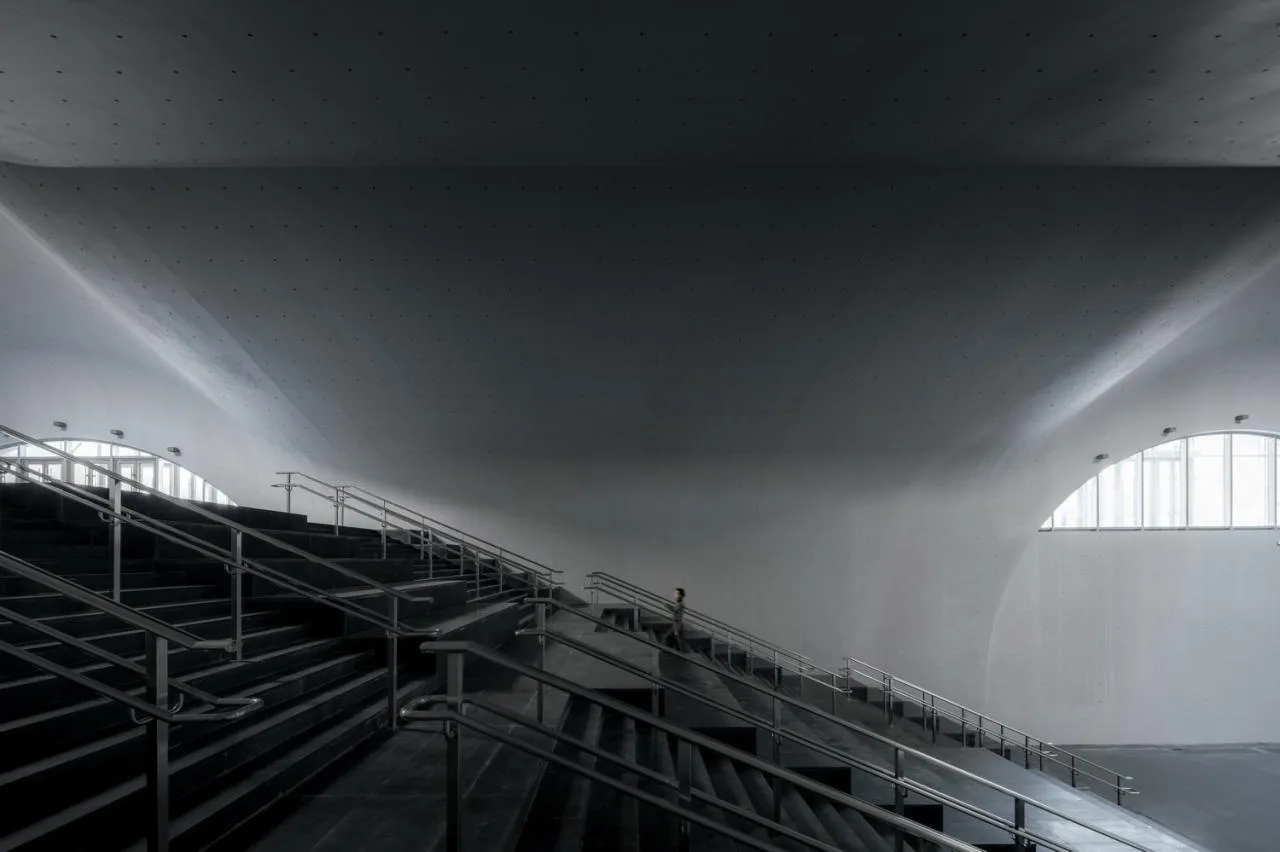
△ Large staircase connecting the entrance hall to the underground second floor exhibition hall (south side)
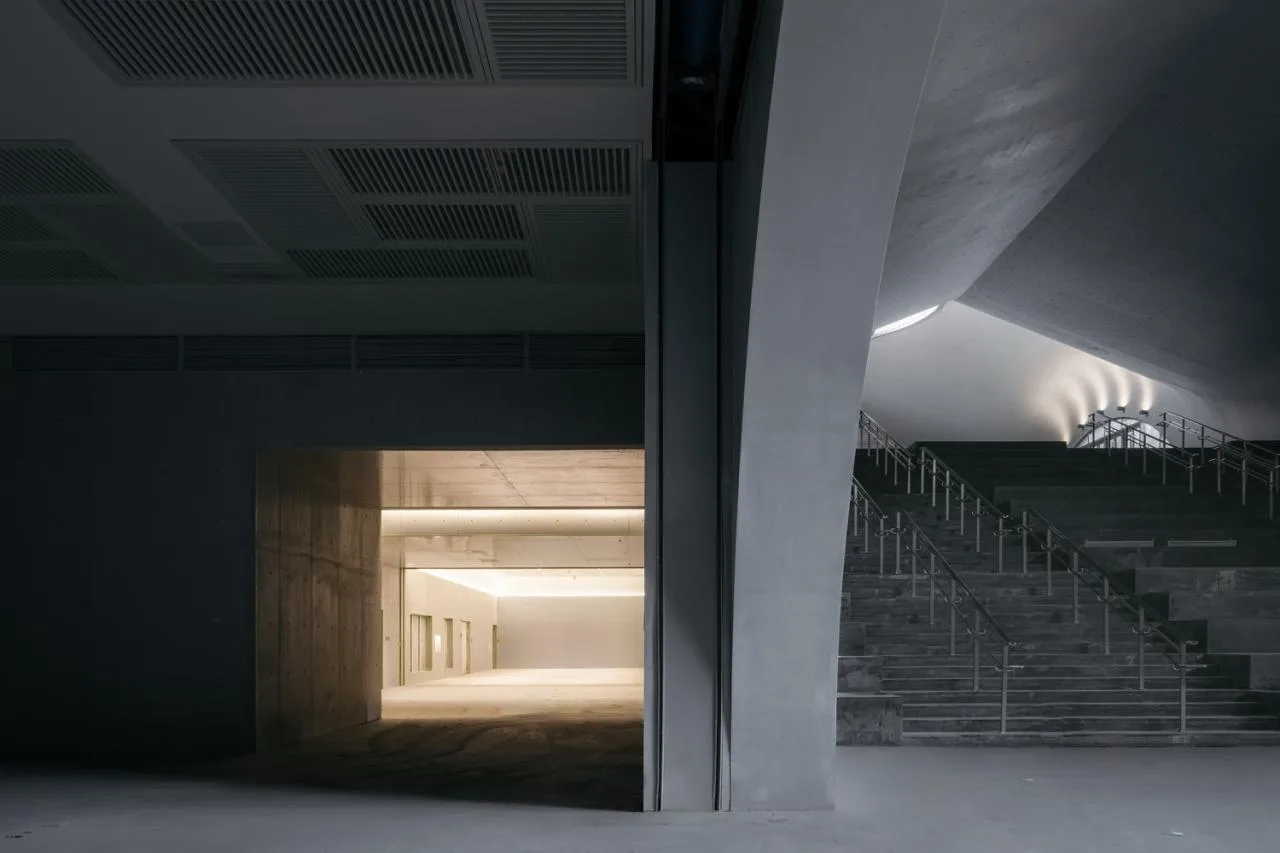
△ Exhibition Hall (Underground Second Floor)
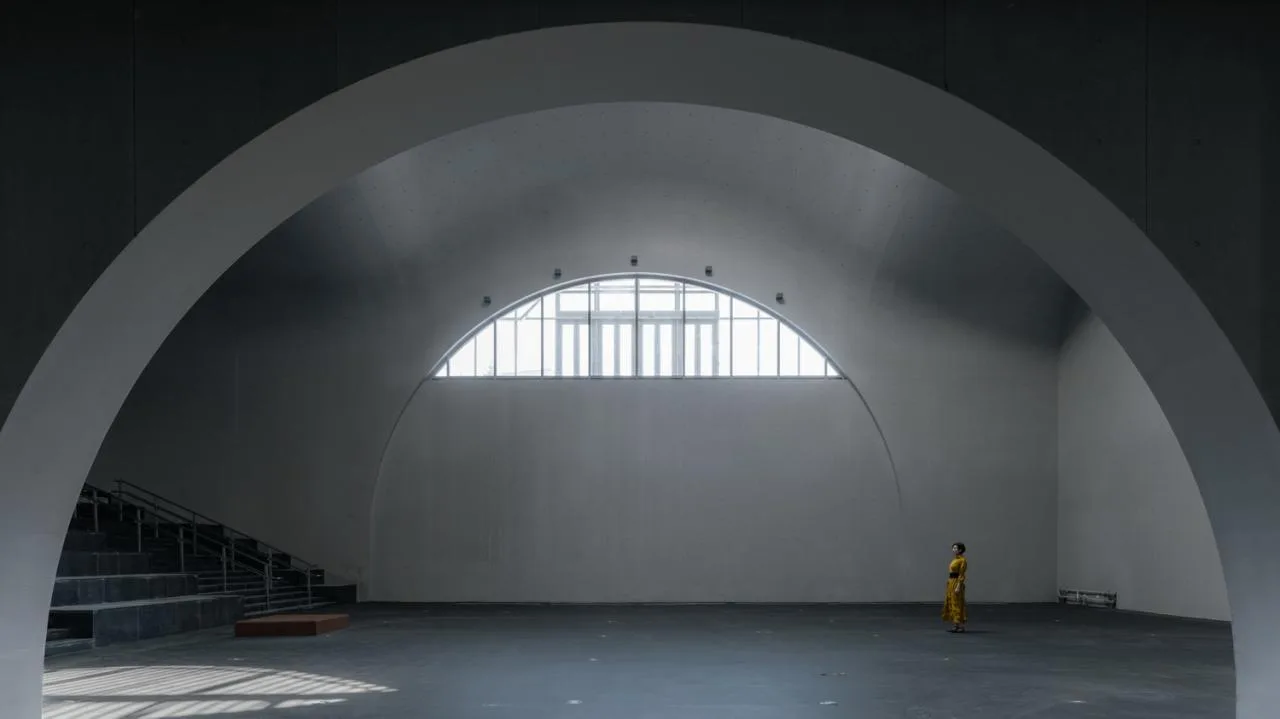
△ Underground second floor elevated exhibition hall (south side)
The word “examine” reminds me of an eye. I decided to create an eye-shaped skylight on the hyperbolic thin-shell dome breaking through the ground, channeling light from the sky to the earth. The eye carries symbolic meaning, enhancing visitors’ experience and conceptions through sky light. It invites visitors to reconsider different perspectives on time within their brief lifetime.
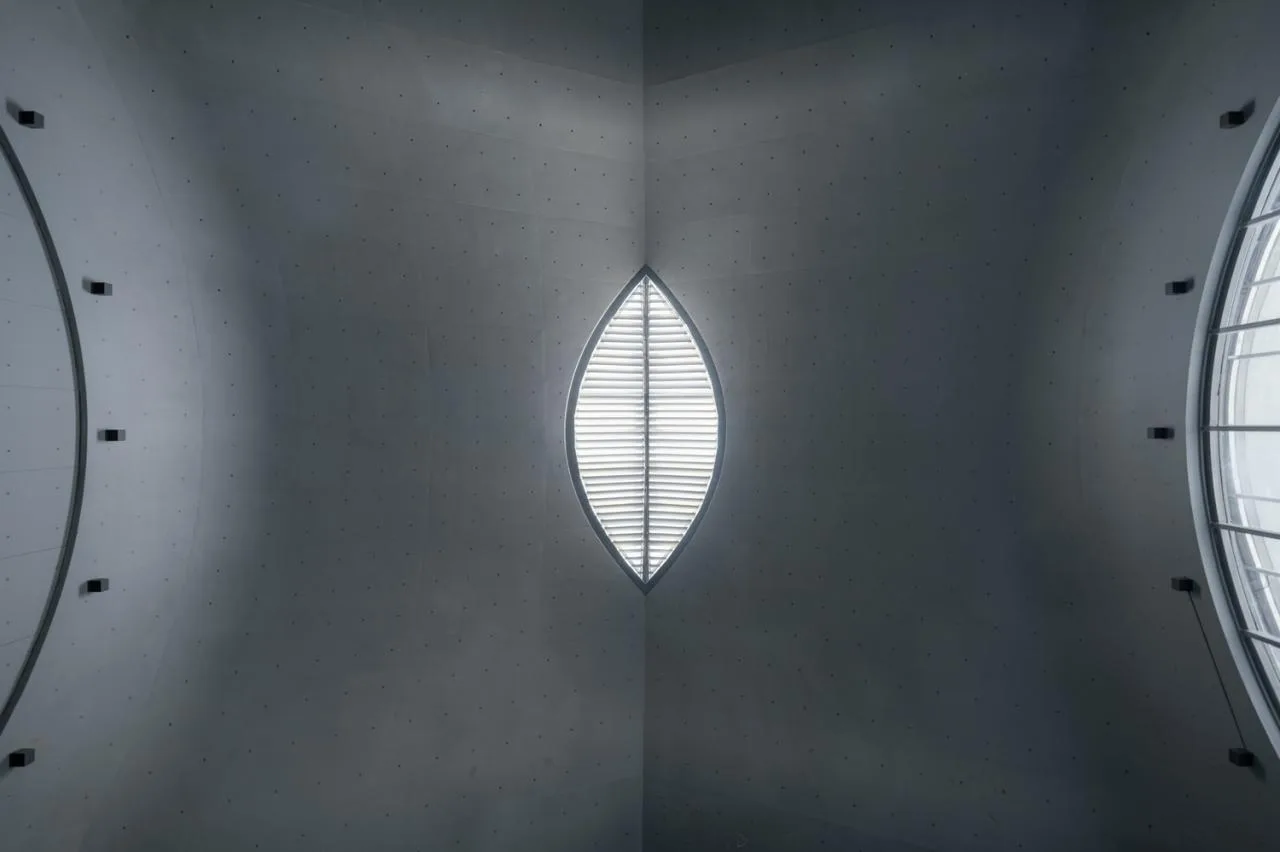
△ Skylight
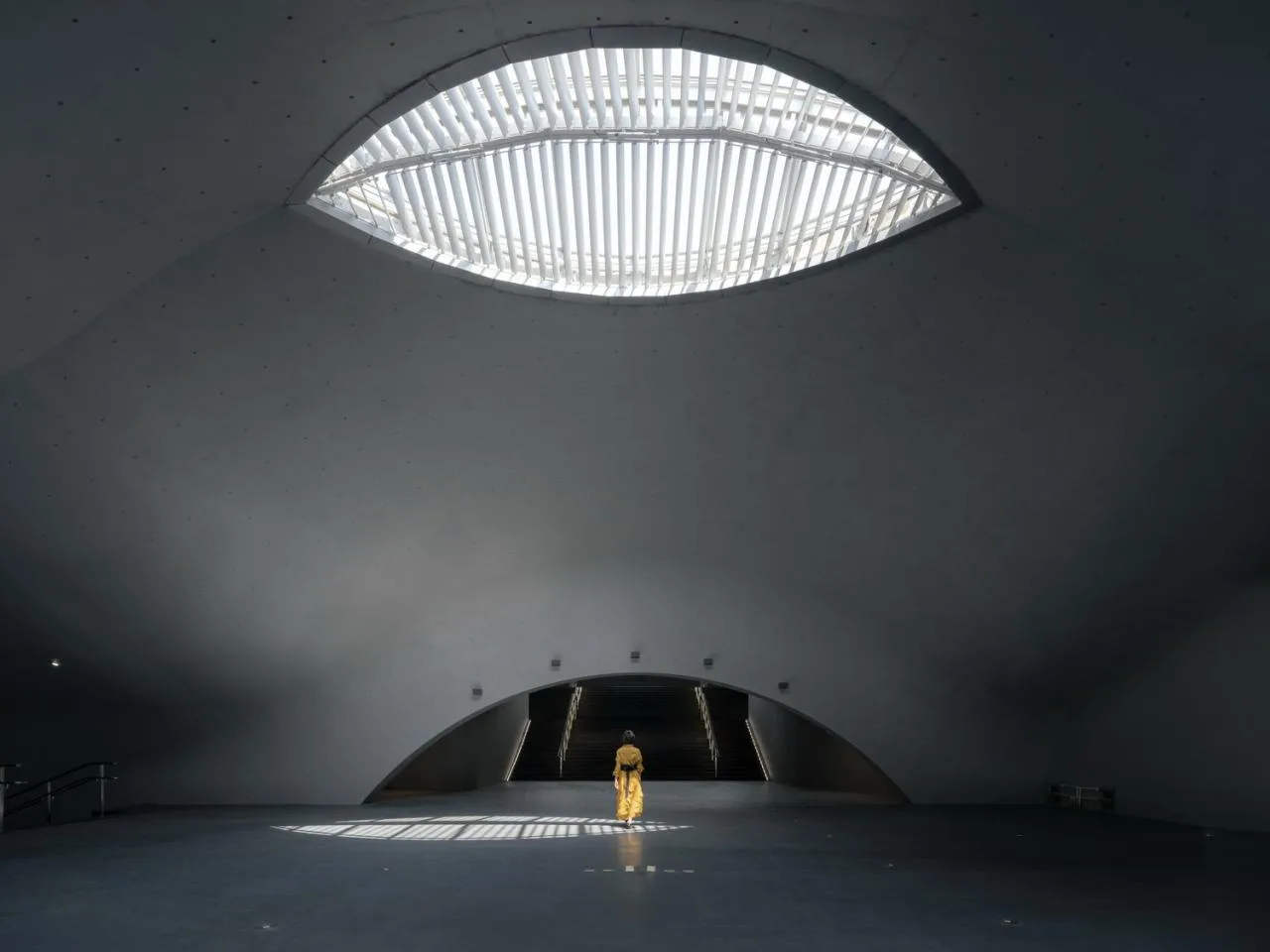
△ Entrance Hall
The Sun Shaping the Soul
Undoubtedly, the sky shapes the soul of the Art Palace. Unlike typical underground structures that feel like shelters, the skylight reveals the “depth” behind the vast hall, endowing the space with a spiritual and sacred quality. Standing beneath this light, one might feel infinite time or simply time itself. Deep time disorients us, and the arrow of time that we have no choice but to follow from birth seems to lose direction. The shifting shadow of the sky on the ground lingers. Initially, this may cause anxiety, then a slight helplessness. Yet, the beautiful, familiar or unfamiliar, light captivates. Though the sky cannot be touched, its projection reminds us: before and after your existence, there is darkness. In this, you sense pain, loneliness, and marvel at life’s wonders. You may feel compelled to recite poetry or dance softly.
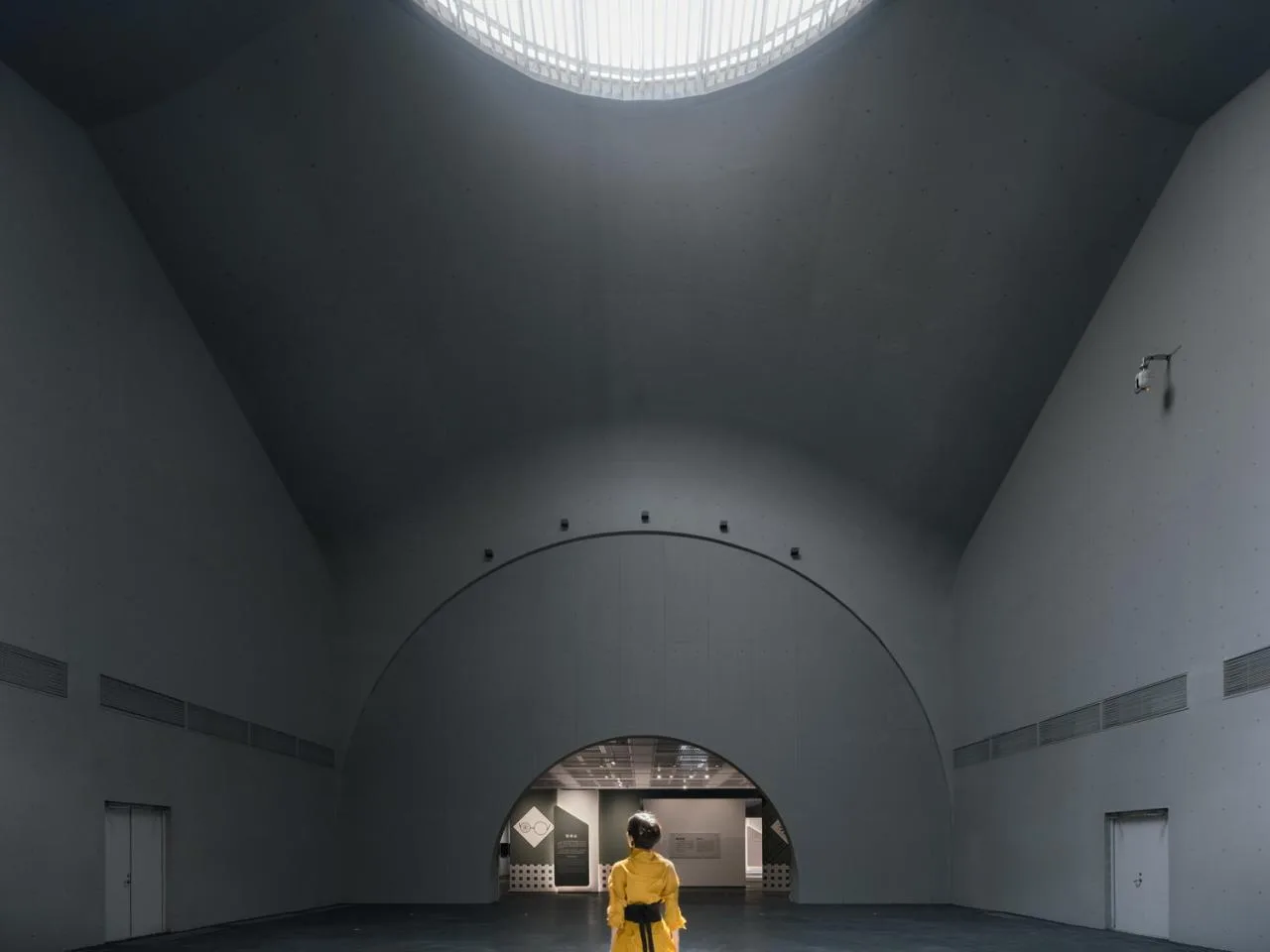
△ Underground second floor elevated exhibition hall (north side)
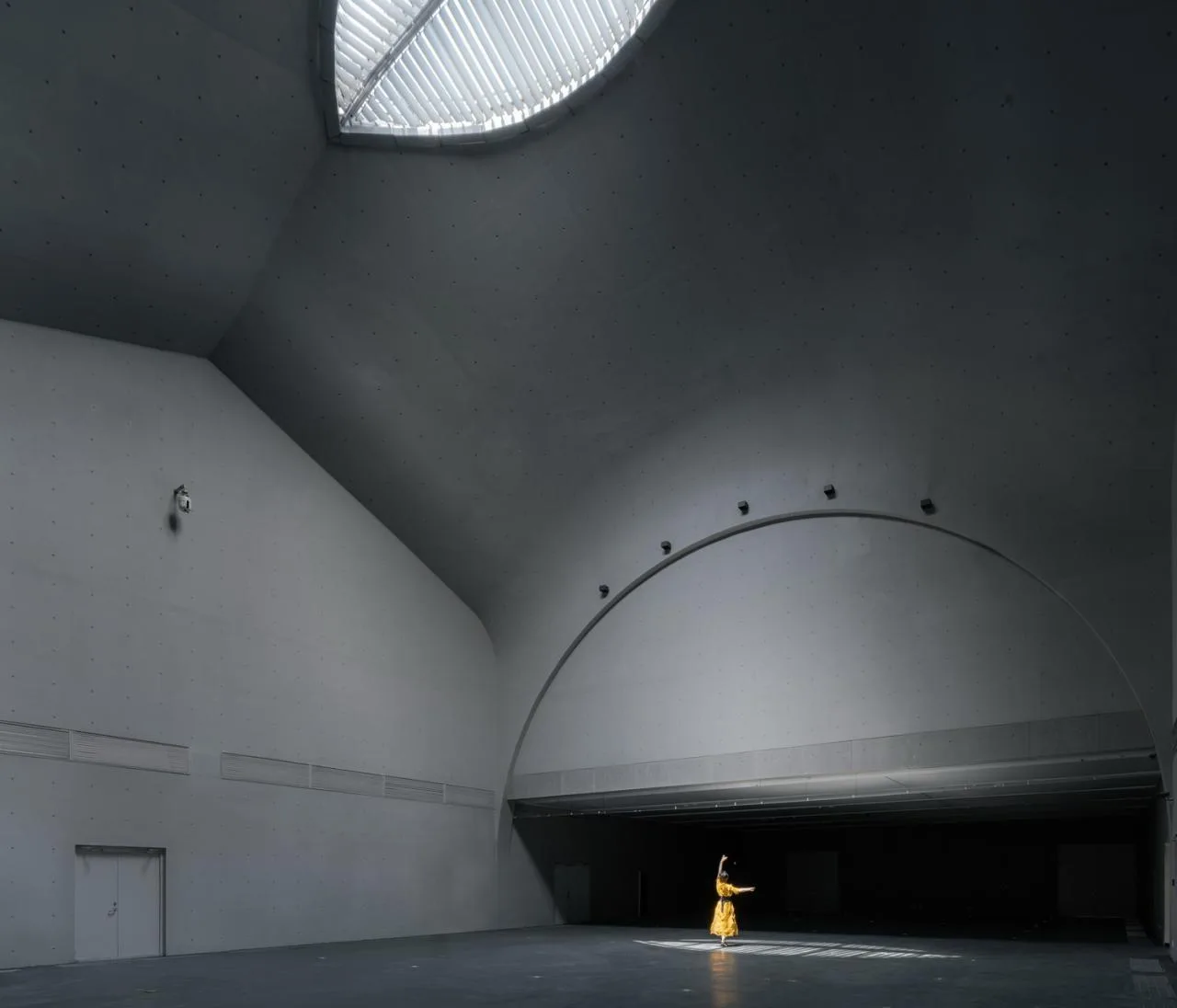
△ Underground second floor elevated exhibition hall (north side)
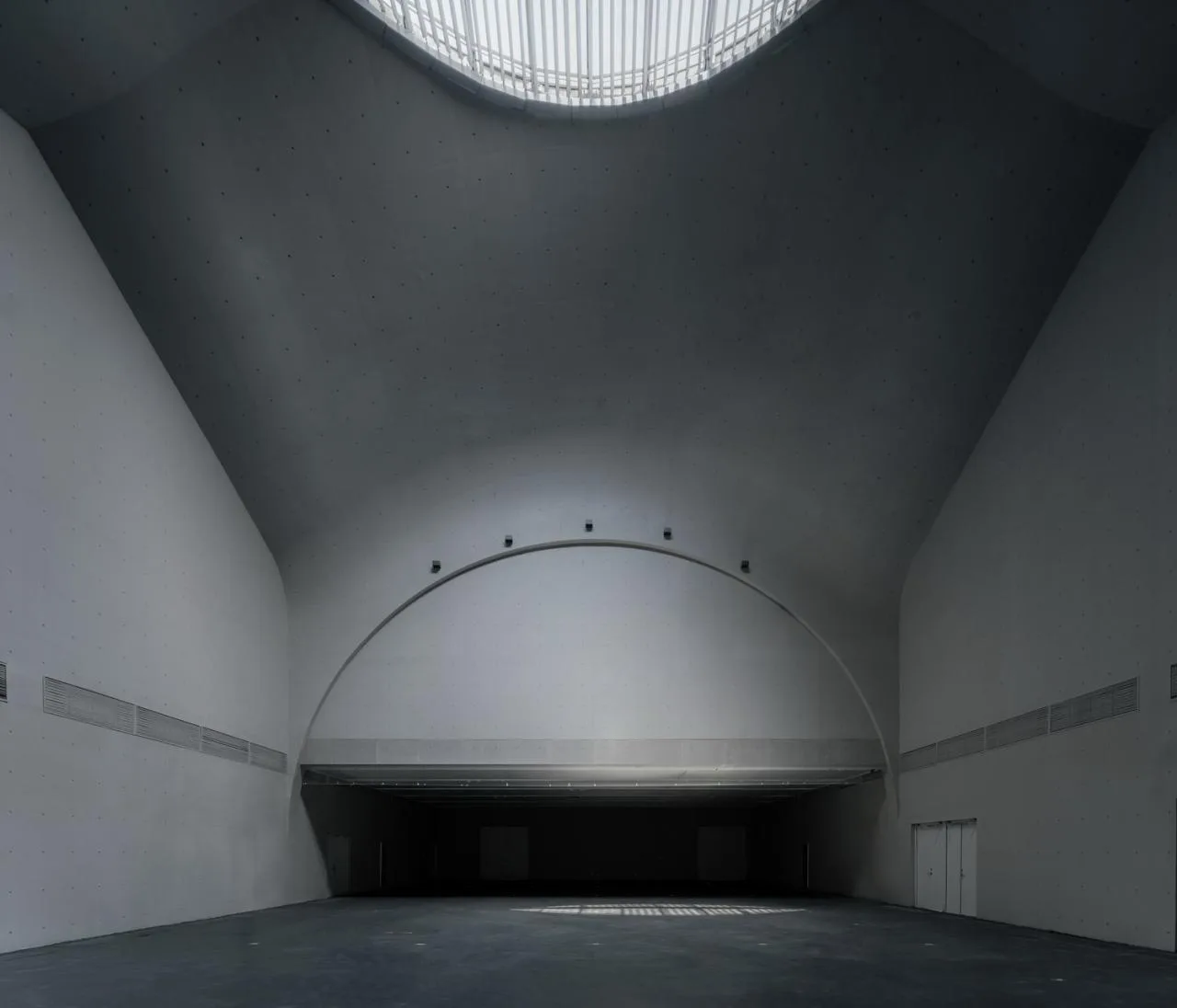
△ Underground second floor elevated exhibition hall (north side)
This beam of light actually dates back 20 years. In 2003, I left the crowded Girls’ Spring army and arrived alone at the Pantheon. The weather was cloudy, and the entire Pantheon appeared as a dark, black BDO standing in the center of a marble complex. Inside, I was lost in shadows and lost my sense of direction. Suddenly, sunlight pierced through the dome, breaking the darkness and striking my head. That moment triggered deep reflection.
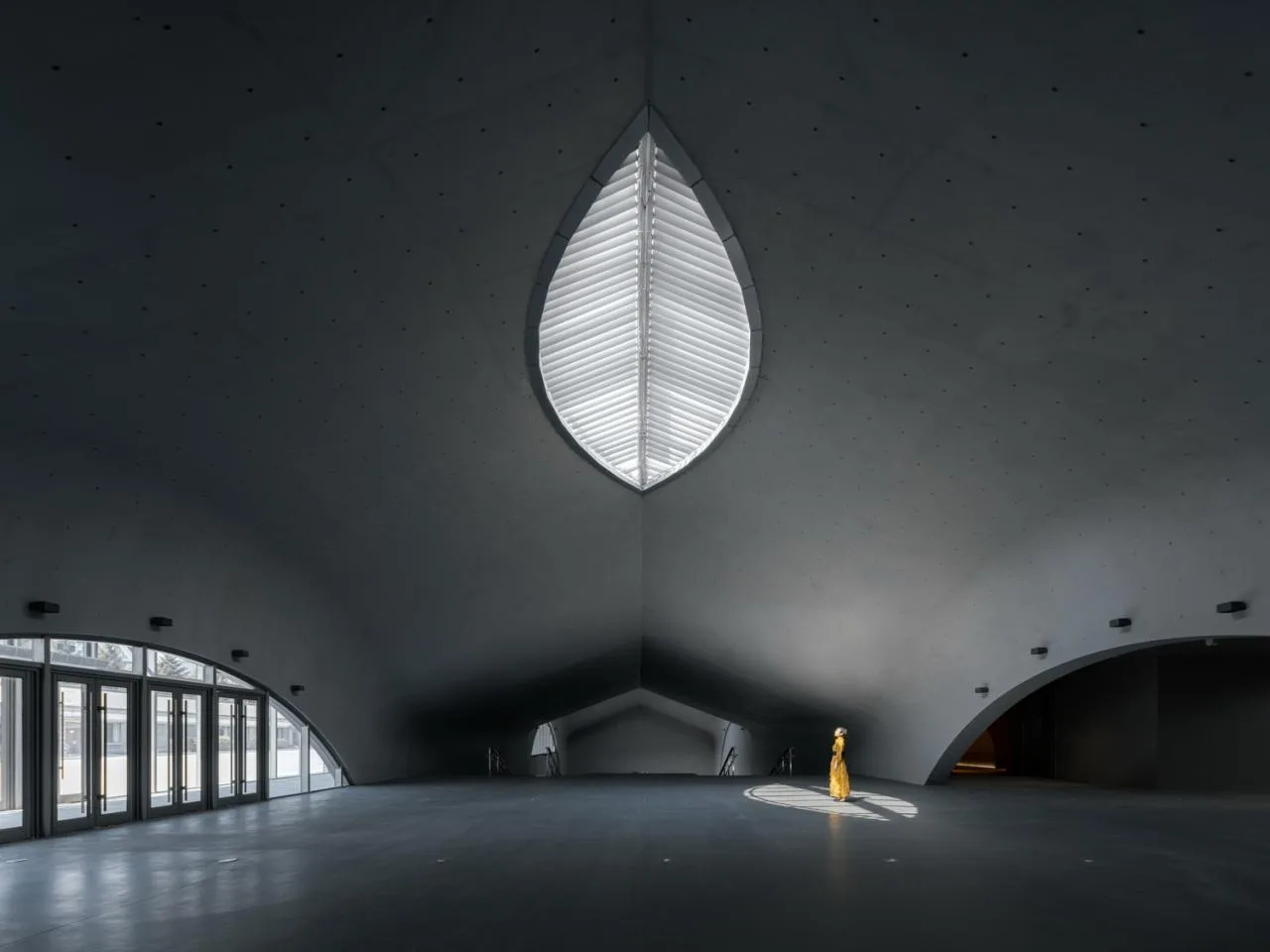
△ Entrance Hall
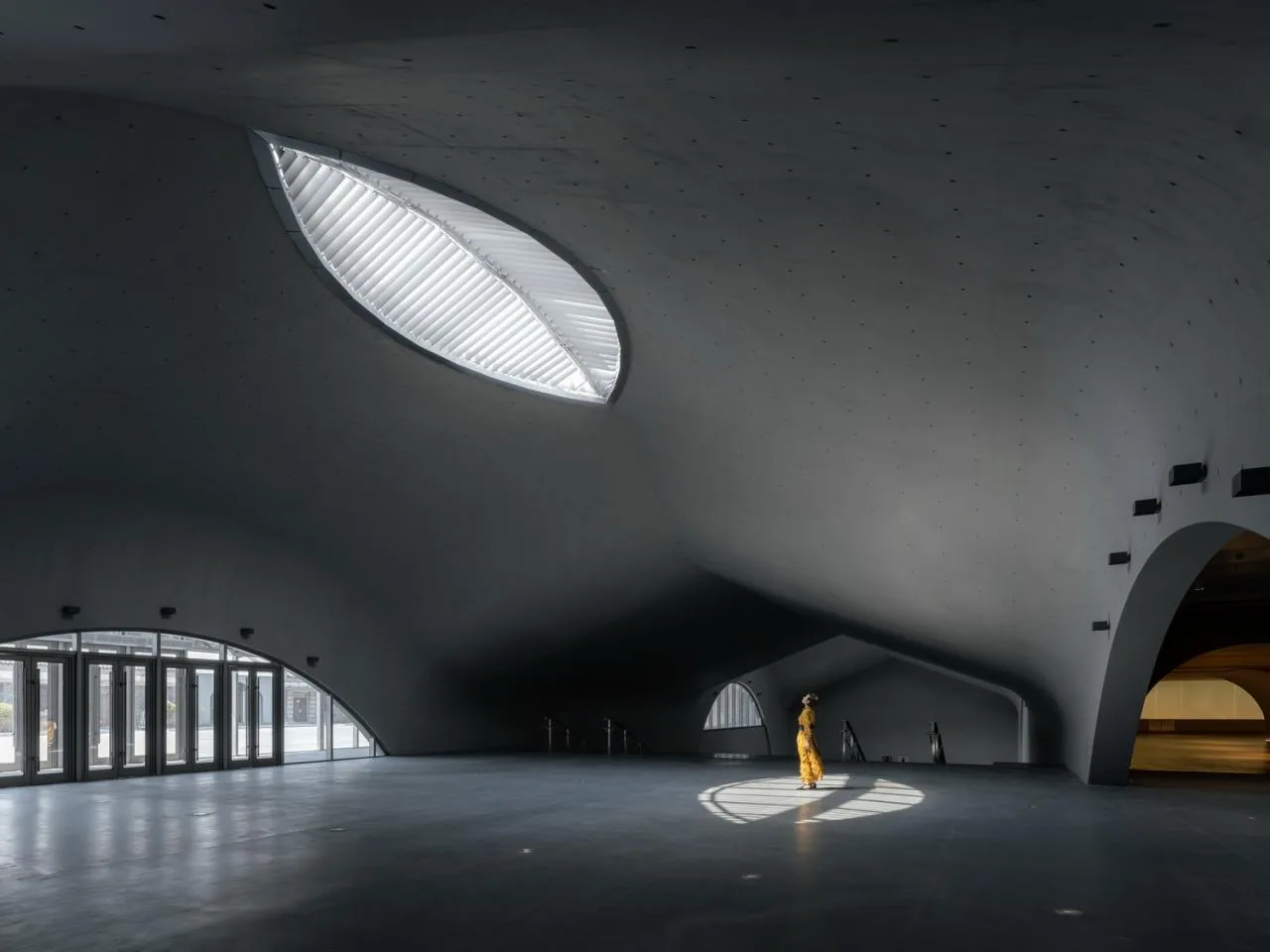
△ Entrance Hall
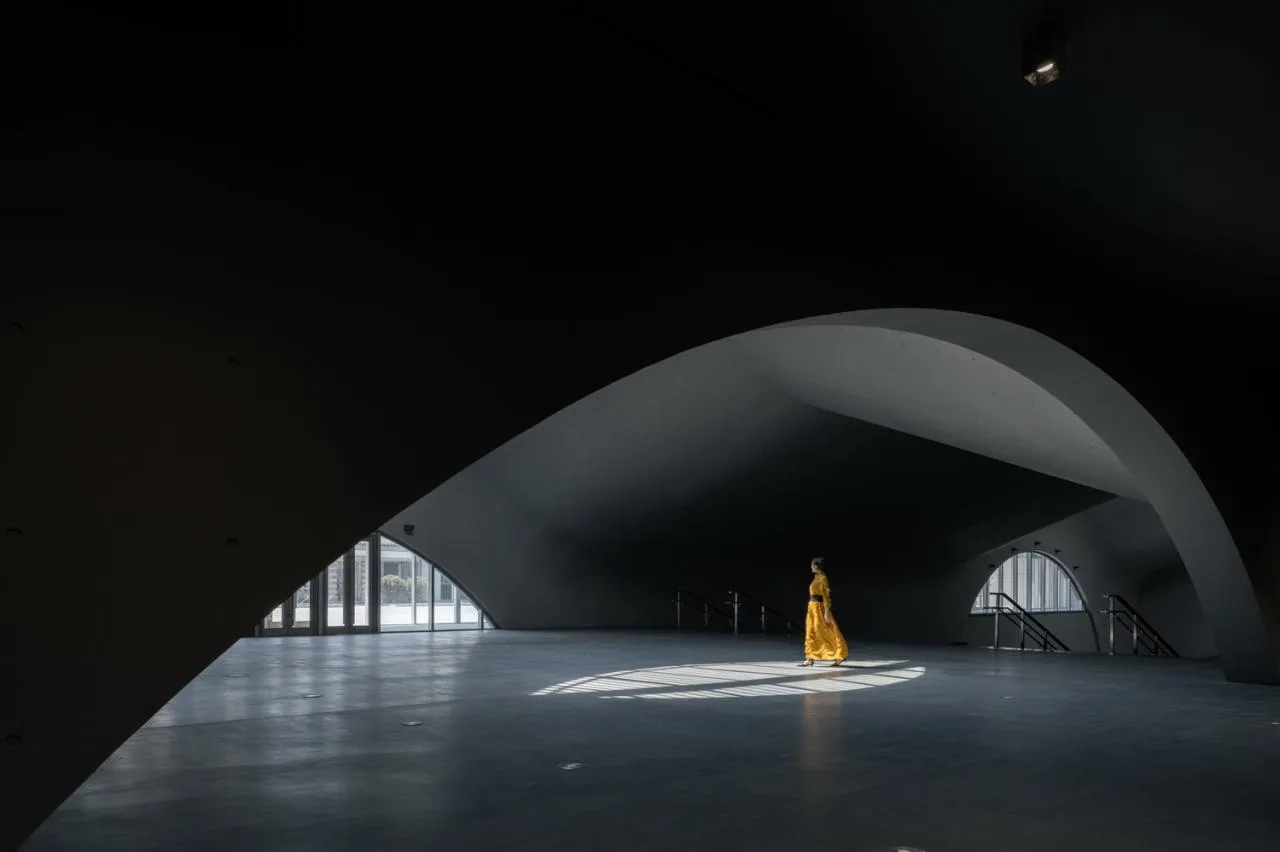
△ Entrance Hall
Underground, Above the Sky
I concealed the museum’s complex functions on both sides of the main space to emphasize the purity of the central area, inviting visitors to connect with the most universal concept of time—eternity. Yet, eternity has always been a concept I question. Perhaps, because of the brevity and fragility of life, people use large, sturdy structures to symbolize eternity, but this may be an illusion.
Within the brief moments spent beneath the underground skylight, pursuing connection with the distant, ever-changing sky, personal insights may attain a form of eternity. For individuals, this might last only minutes, but the countless similar and differing perceptions across time—unbound by location—constitute eternity. The Concrete Hall captures these fleeting eternities within its vast, seemingly static concrete space.
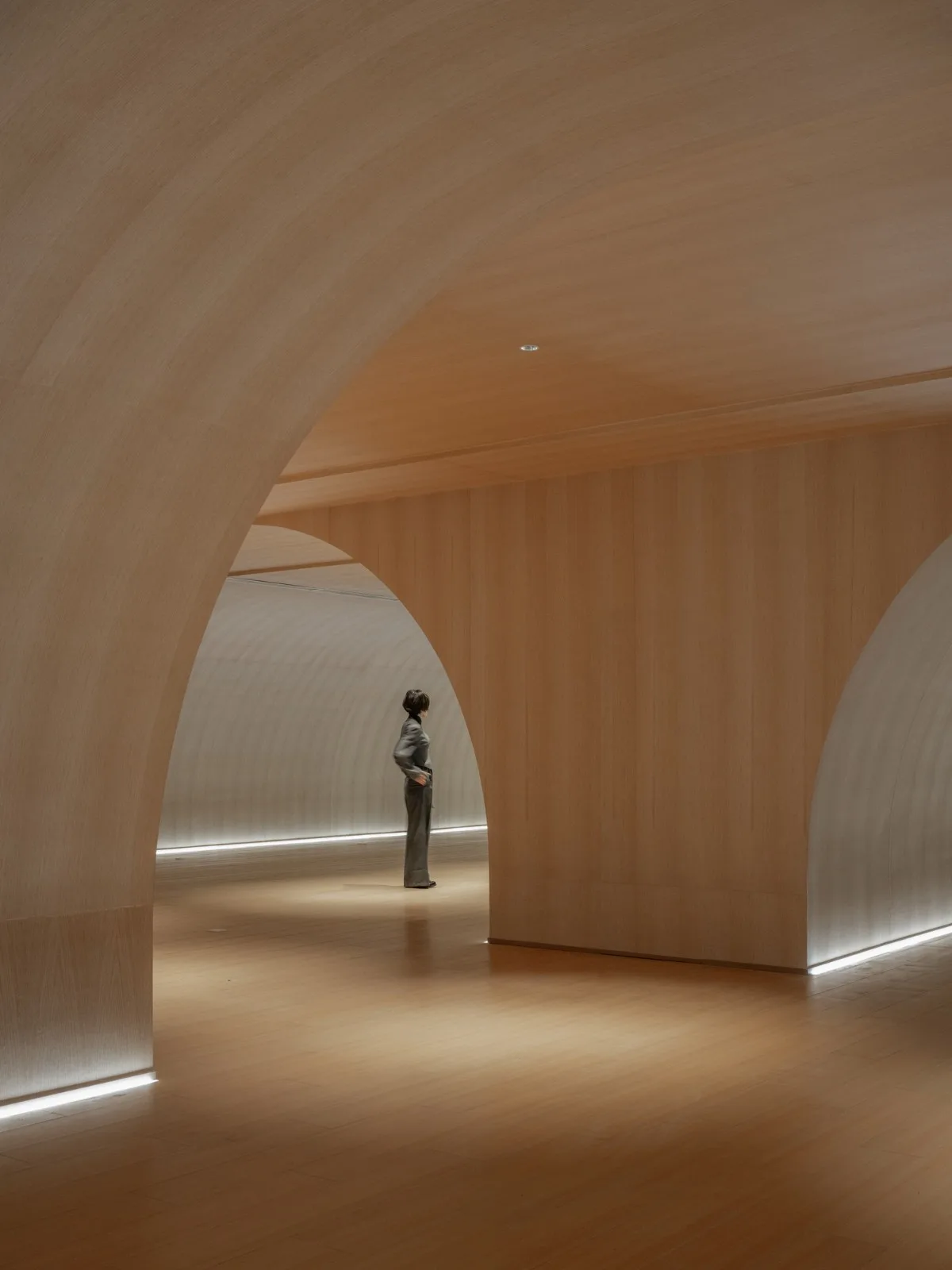
△ Lounge (basement level)
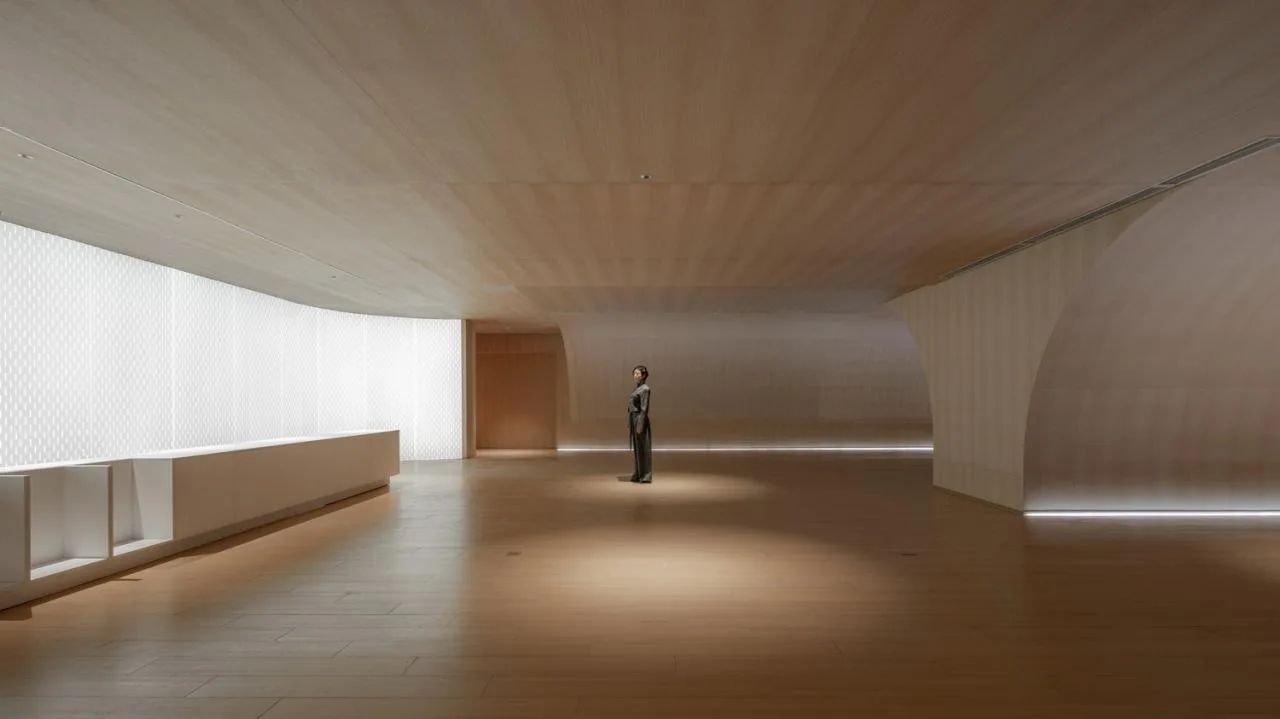
△ Lounge (basement level)
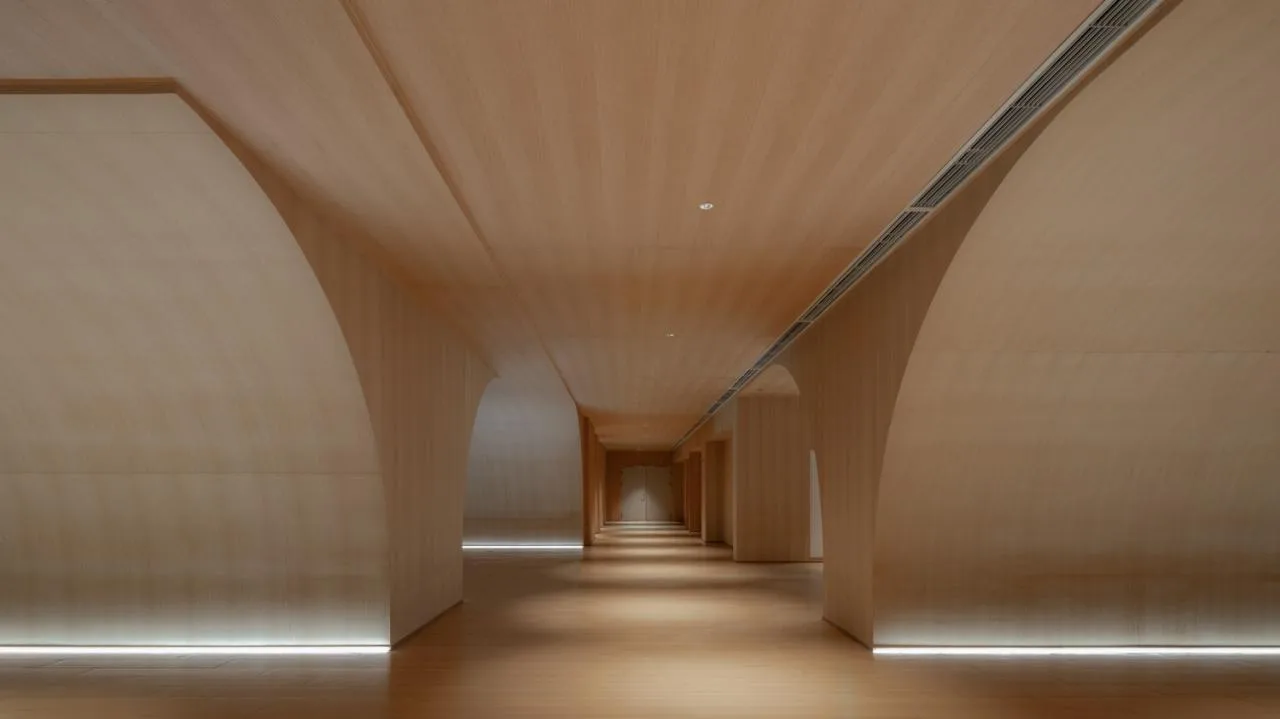
△ Lounge (basement level)
Everything Sparks
Before the opening, I wandered through the exhibition hall to the museum’s deepest point, concealed in darkness, watching morning sunlight filter through my eyes. After a while, I thought I heard breathing. The curved dome seemed to transform into enormous wings, slowly flapping. The Art Palace stirred, as if about to break through the earth. In life, there are moments on ordinary days when a powerful force suddenly shakes the ground and mountains—these are moments of fortune.
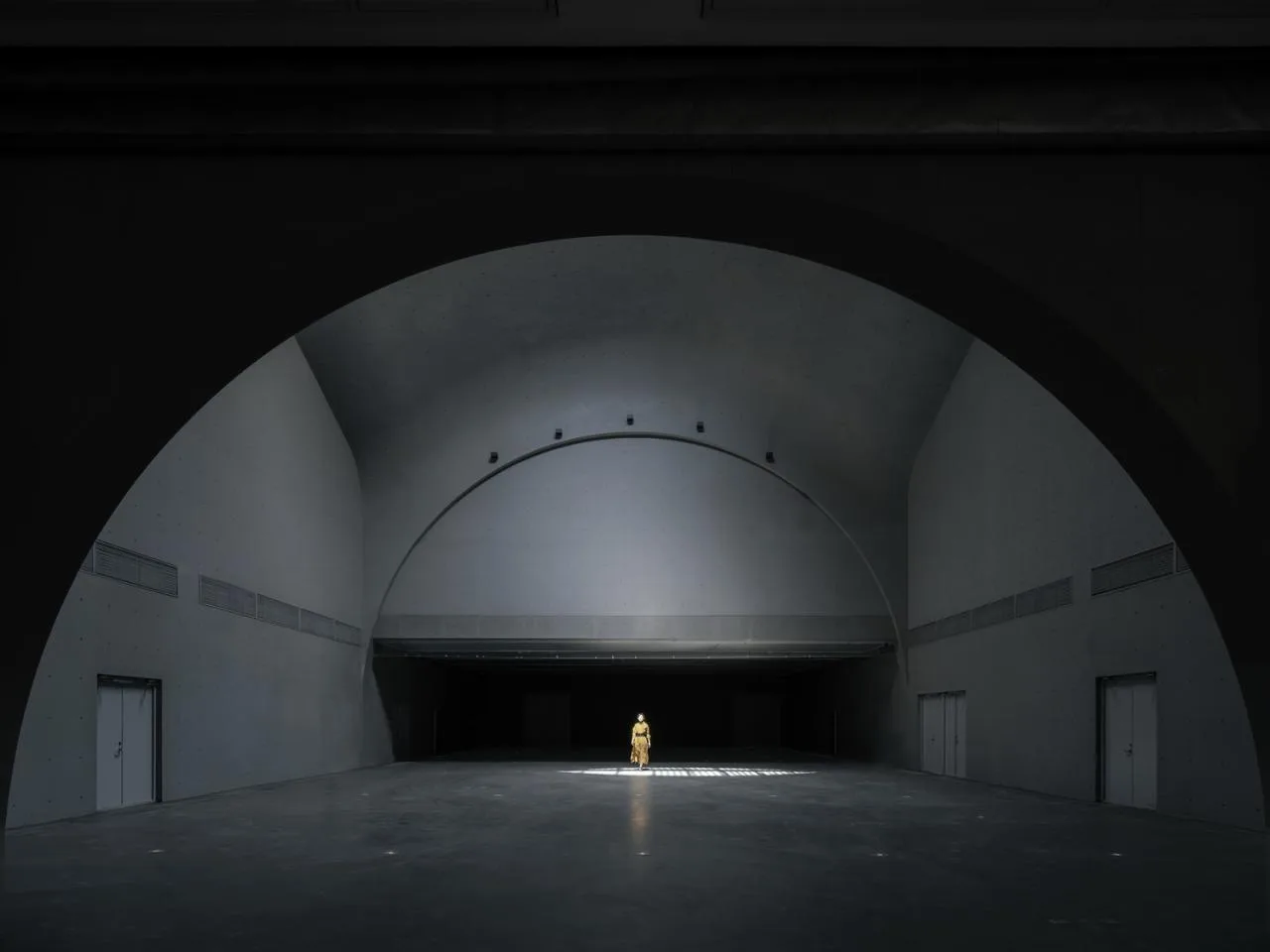
△ Underground second floor elevated exhibition hall (north side)
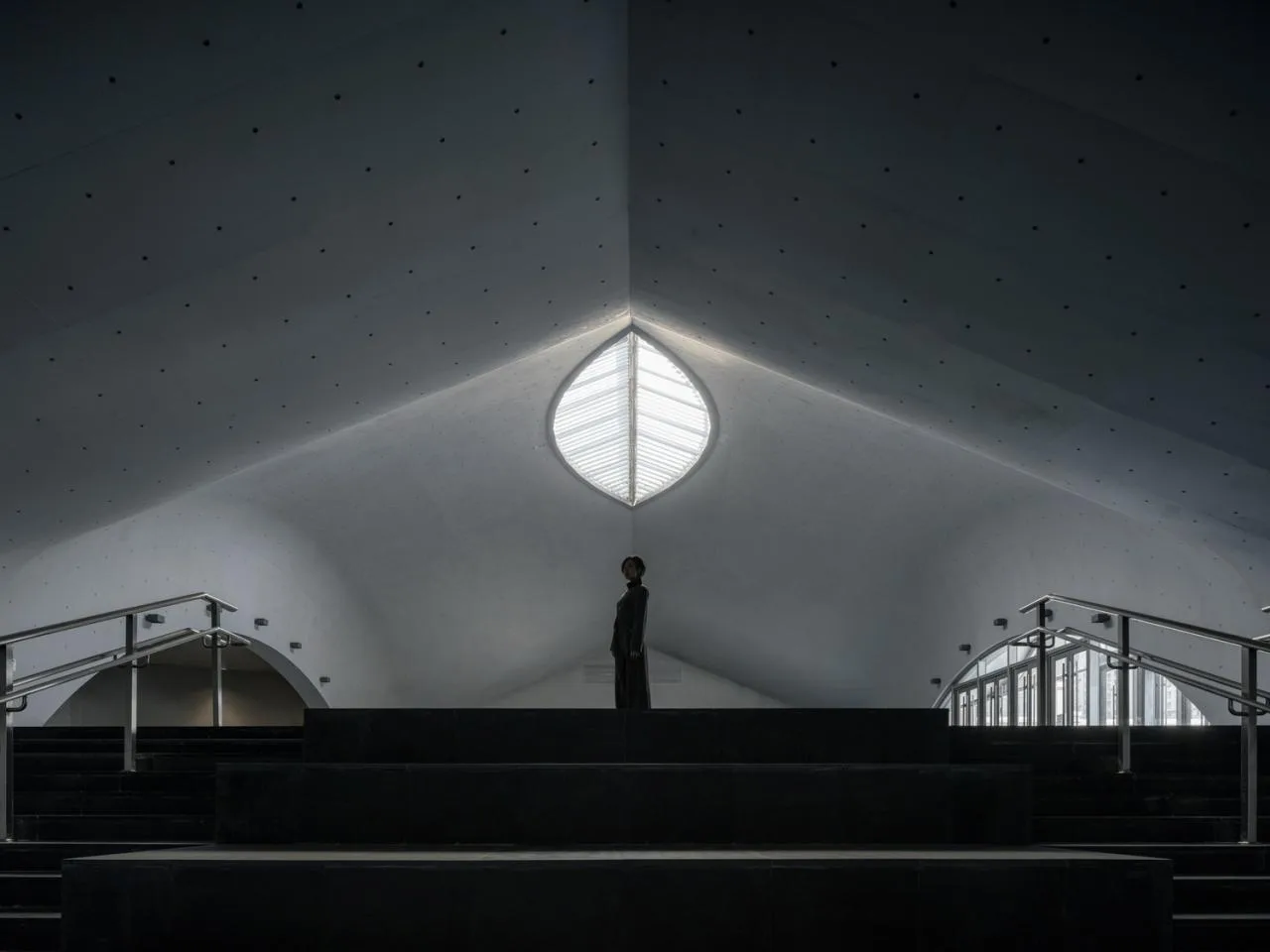
△ Entrance Hall
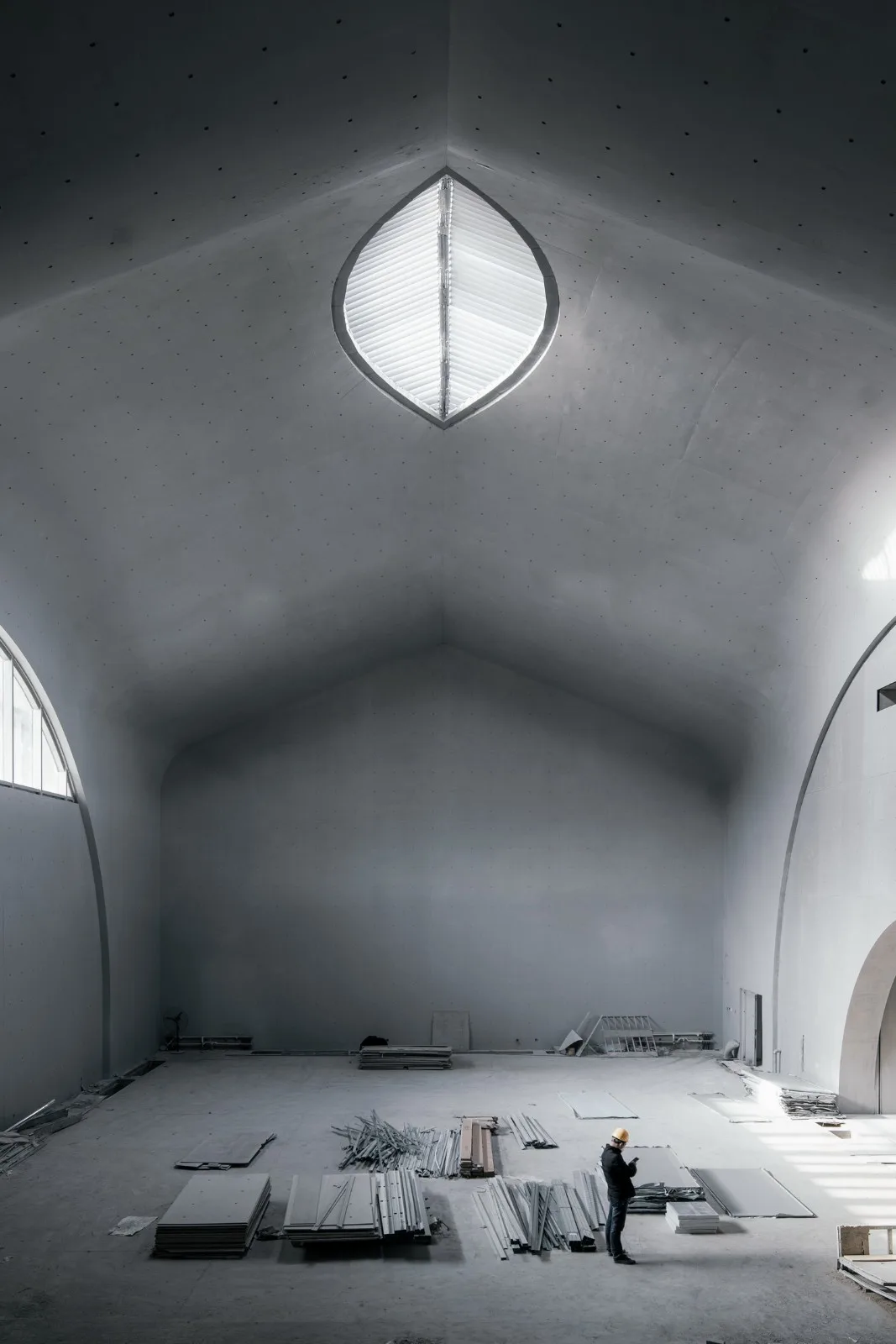
△ Underground Second Floor Elevated Exhibition Hall (South Side) (Construction Record Photo)
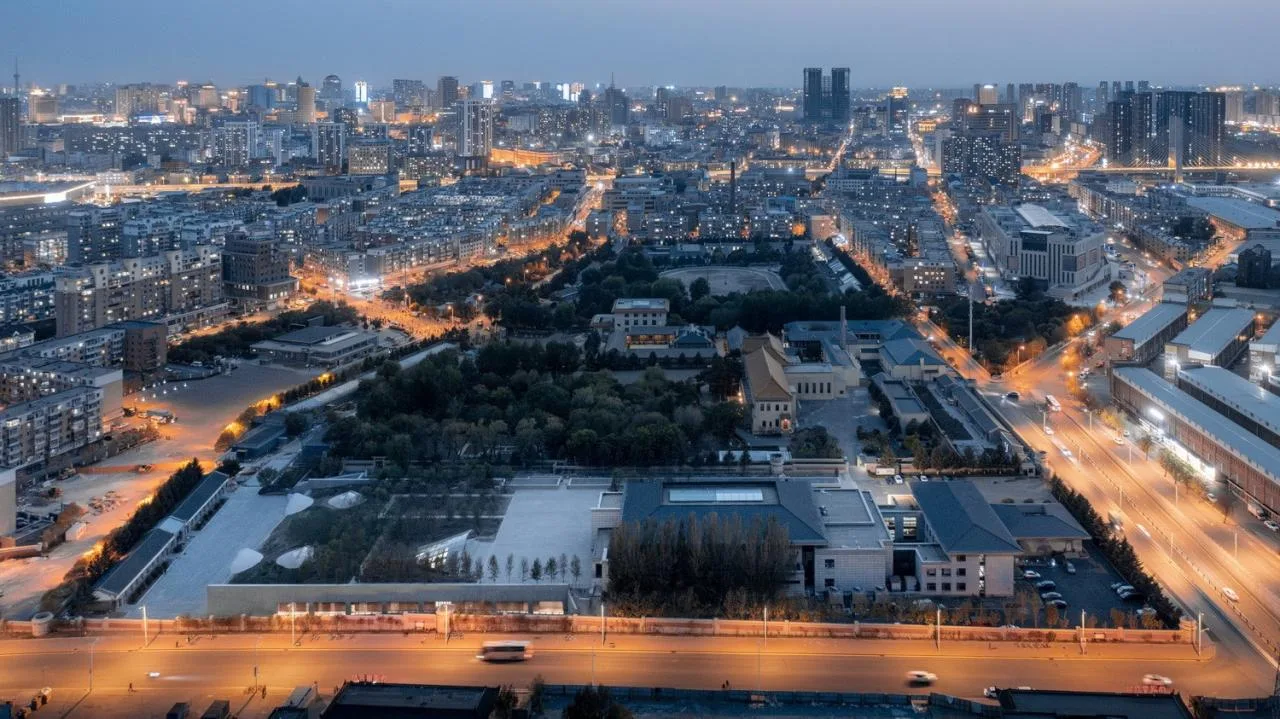
Aerial view of night scene (southwest perspective)
Thinking at such a deep temporal scale doesn’t allow us to escape the challenges of the present; instead, it urges us to reimagine it, using the slow, ancient cycles of creation and destruction to resist the rapid greed and turmoil of our times. It compels us to ask: What legacy will our actions leave for those who come after us? For future generations? Under the Earth.
Easter Egg
On May 18, Wutopia Lab also unveiled the newly installed Eye of the Museum flat installation at the Wuto Art Museum, crafted with Yu Ting’s expertise in perforated aluminum panels. Going forward, Wuto Art’s customized themed perforated aluminum panel installations and digital derivative products will feature across all Wutopia Lab buildings. Completion is not the end, but the start of a new cycle.
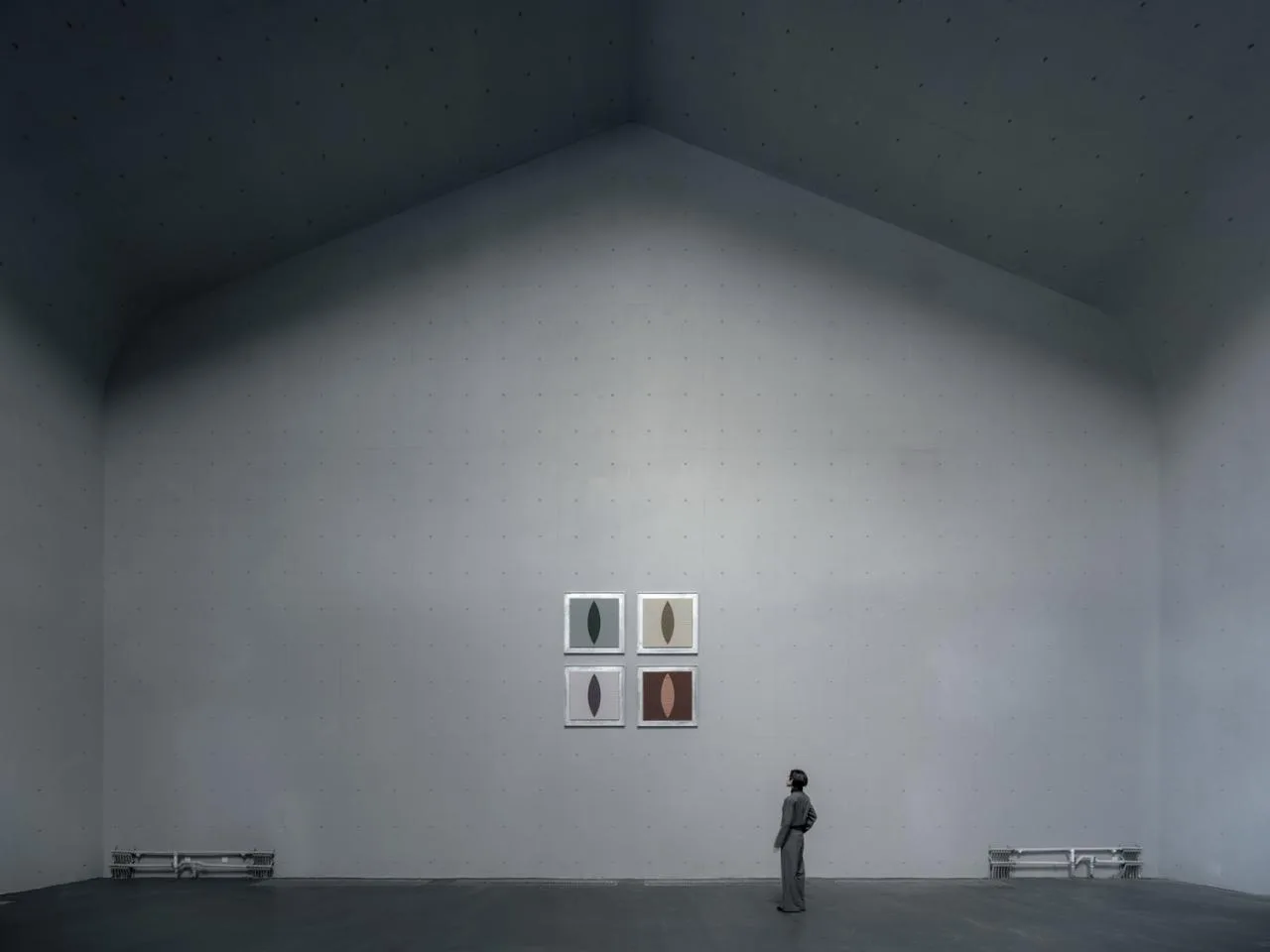
△ Underground second floor elevated exhibition hall (south side)
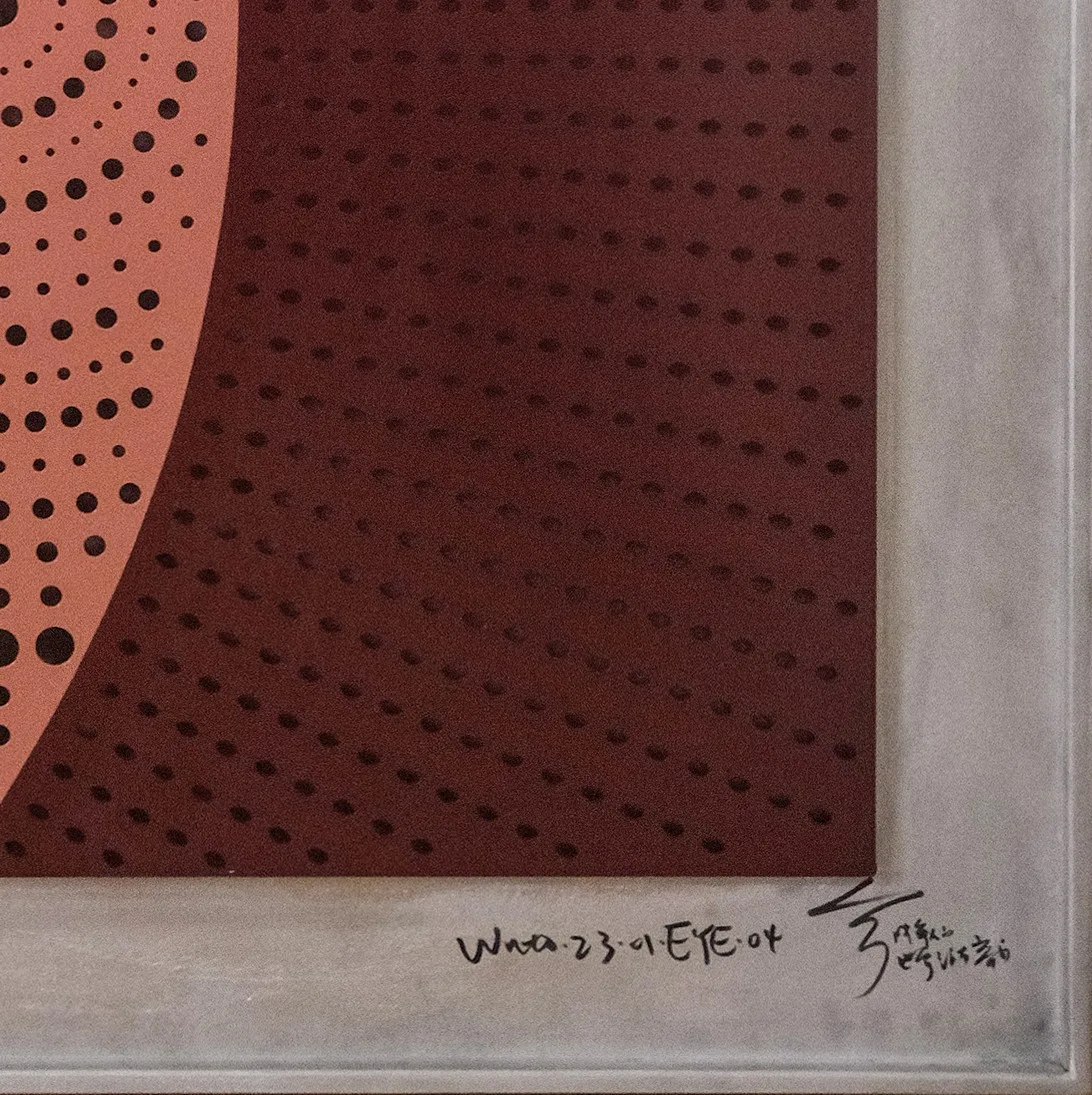
Details of perforated aluminum panel installation (Photo by Zhang Yucheng) © Wuto-Art
Project Drawings
Project Information
Design Company: WutopiaLab
Lead Architect: Yu Ting
Project Architect: Yellow River
Project Manager: Pu Shengrui
Design Team: Pu Shengrui, Pan Dali, Sun Liran (conceptual design stage), Xie Jialin (drawing organization stage)
Device Design: Kuang Zhou, Yellow River, Xie Jialin
Owner: Manchukuo Palace Museum
Construction Committee: Wang Zhiqiang, Hu Hailong, Zhou Bo, Ai Xuesong, Su Zhenda, Liu Yongwei, Wei Wei
Construction Agency: Changchun Municipal Government Investment and Construction Project Management Center
Construction Drawing Design: Tianjin Architectural Design and Research Institute Co., Ltd.
Construction Unit: China Construction Eighth Engineering Division Co., Ltd. North China Company
Design Consultants: Wei Minfei, Miao Binhai, Zhang Zhun, Qian Yanmin, Lin Xingchun, Zhang Kejie
Lighting Consultant: Gerui Lighting Design – Zhang Chenlu, Zang Yanting, Deng Xiaodan
Interior Design (non-plain concrete areas): Jilin Wuyi Construction Group Co., Ltd., Shanghai Black Bubble Building Decoration Design Engineering Co., Ltd. (scheme)
Weak Current Design: Jilin Beihua Electric Power Technology Design and Research Institute
Landscape Design: Changchun Landscape Planning and Design Institute Co., Ltd.
Location: No. 5 Guangfu North Road, Kuancheng District, Changchun City
Total Construction Area: 16,650 square meters
Design Period: May 2017 to July 2018
Construction Start: May 2023
Main Material: Clear water concrete
Photography: CreatAR Images
Video: CreatAR Images















Must log in before commenting!
Sign Up