
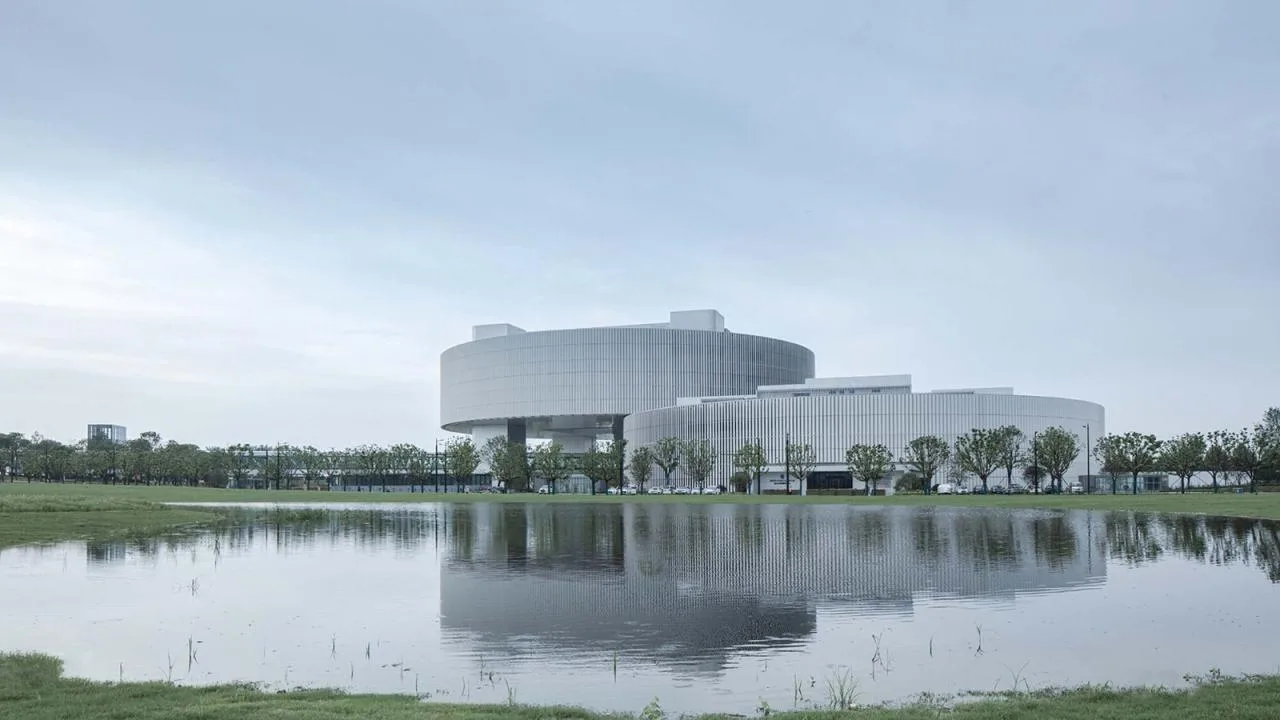
Nanjing, the ancient capital of the Six Dynasties, has traditionally focused its modern urban development on the south bank of the Yangtze River. In 2015, to leverage Nanjing’s role as a model in innovation-driven development and new urbanization, and to promote growth in southern Jiangsu and the Yangtze River Economic Belt, the government officially established the Jiangbei New Area. This marked the beginning of large-scale urban construction on the north bank of the Yangtze River.
The Jiangbei New Area spans nearly 788 square kilometers, with its core business and social district located centrally, bounded by the Yangtze River and screened by Laoshan Mountain. This area serves as the starting point for the new district’s development. Alongside infrastructure development, the local government aimed to accelerate growth by introducing public cultural buildings, with the Civic Center as one of the first key projects.
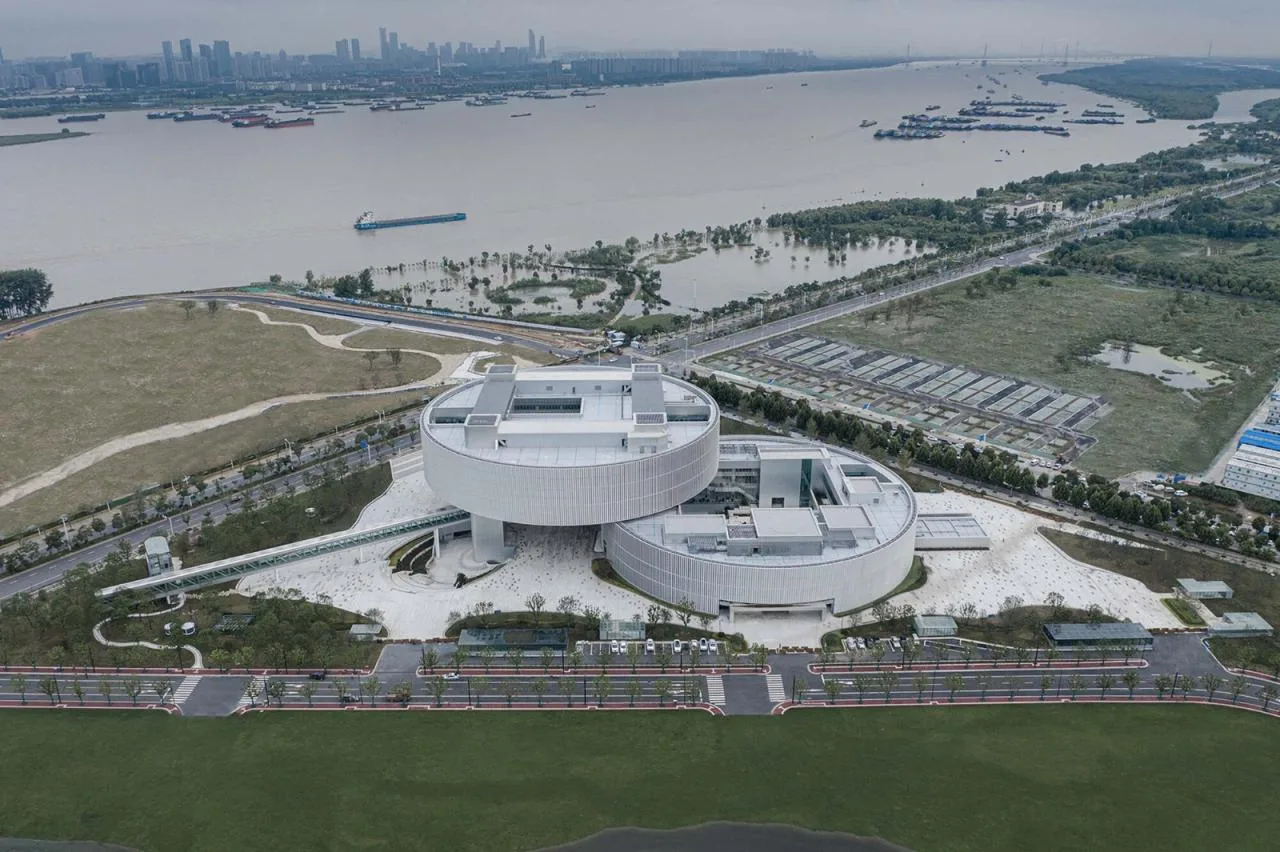
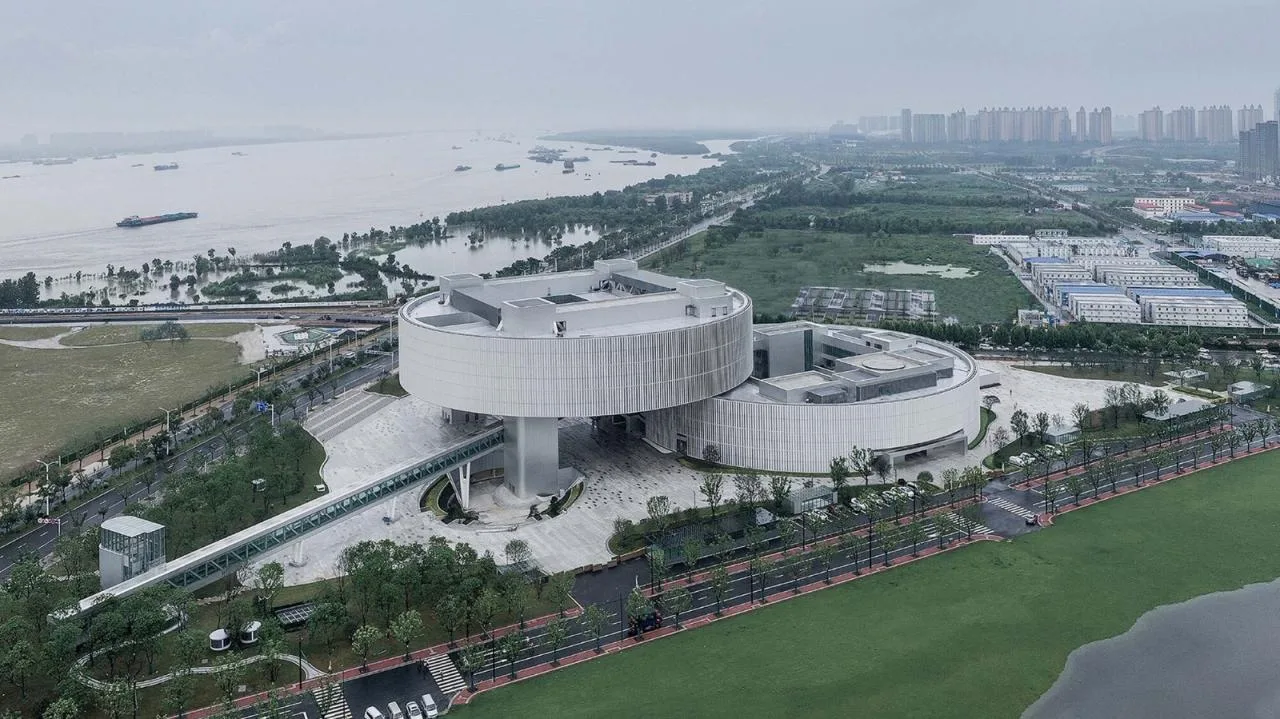
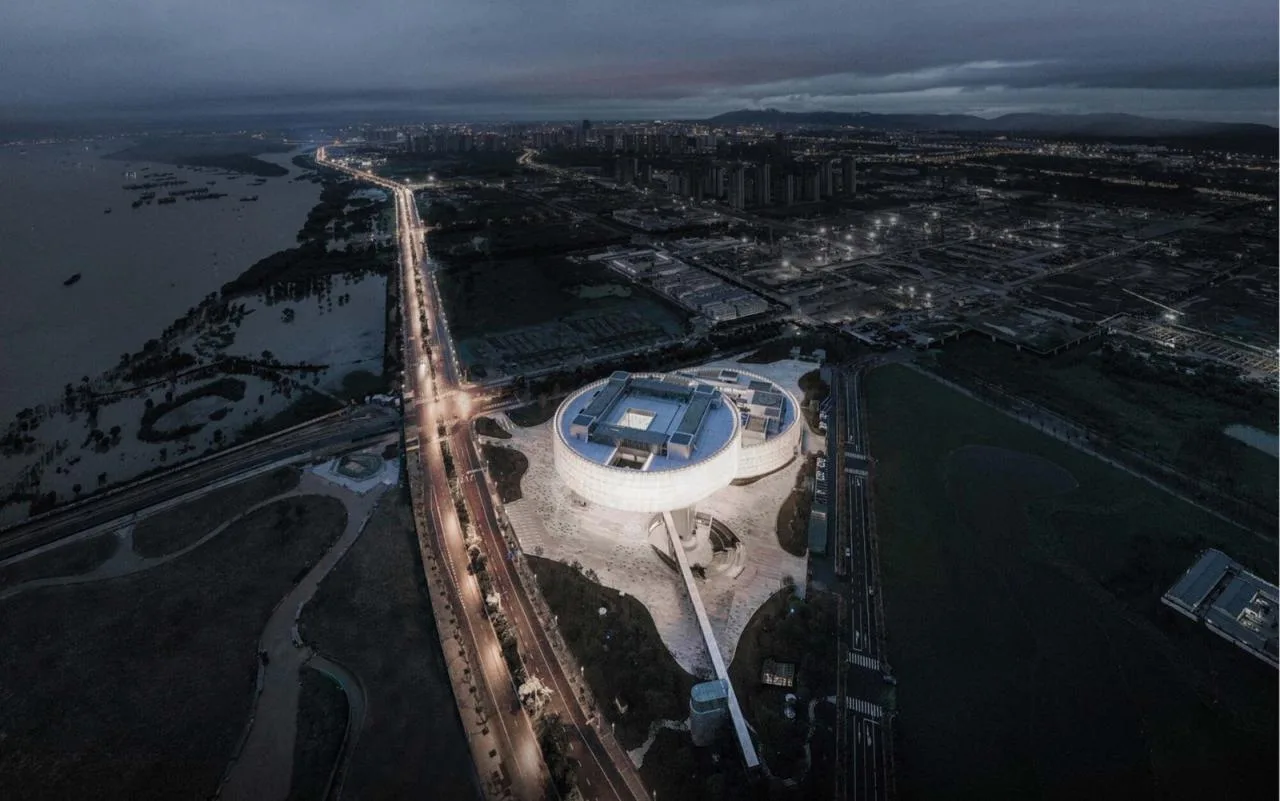
Situated at the urban open space where Central Avenue (now Dingshan Street) intersects with Binjiang Avenue, the project lies at the gateway of the new district. It is backed by a cluster of super high-rise buildings in the central business and social district and faces Nanjing’s main urban area across the river. The site serves as the starting point for a north-south urban corridor, offering unique urban and natural landscapes. Covering around 5.5 hectares, the originally planned construction area was approximately 53,000 square meters, later adjusted to about 75,600 square meters based on functional needs.
At the outset of the design competition, the stakeholders expressed the desire to integrate multiple functions—citizen activities, public services, and planning exhibitions—into a comprehensive facility serving both residents and businesses in the new area. They envisioned the Civic Center as an “urban living room” for the community.
Traditional public buildings often suffer from rigid, uninviting forms due to limited functionality and accessibility. Compared to the vibrant urban scenes, activities within such buildings tend to feel “formal” and “restrained.” Therefore, the design aimed not only to create a highly recognizable urban landmark but also to respond to the real daily needs of citizens, fostering diverse activities and becoming a source of urban vitality.
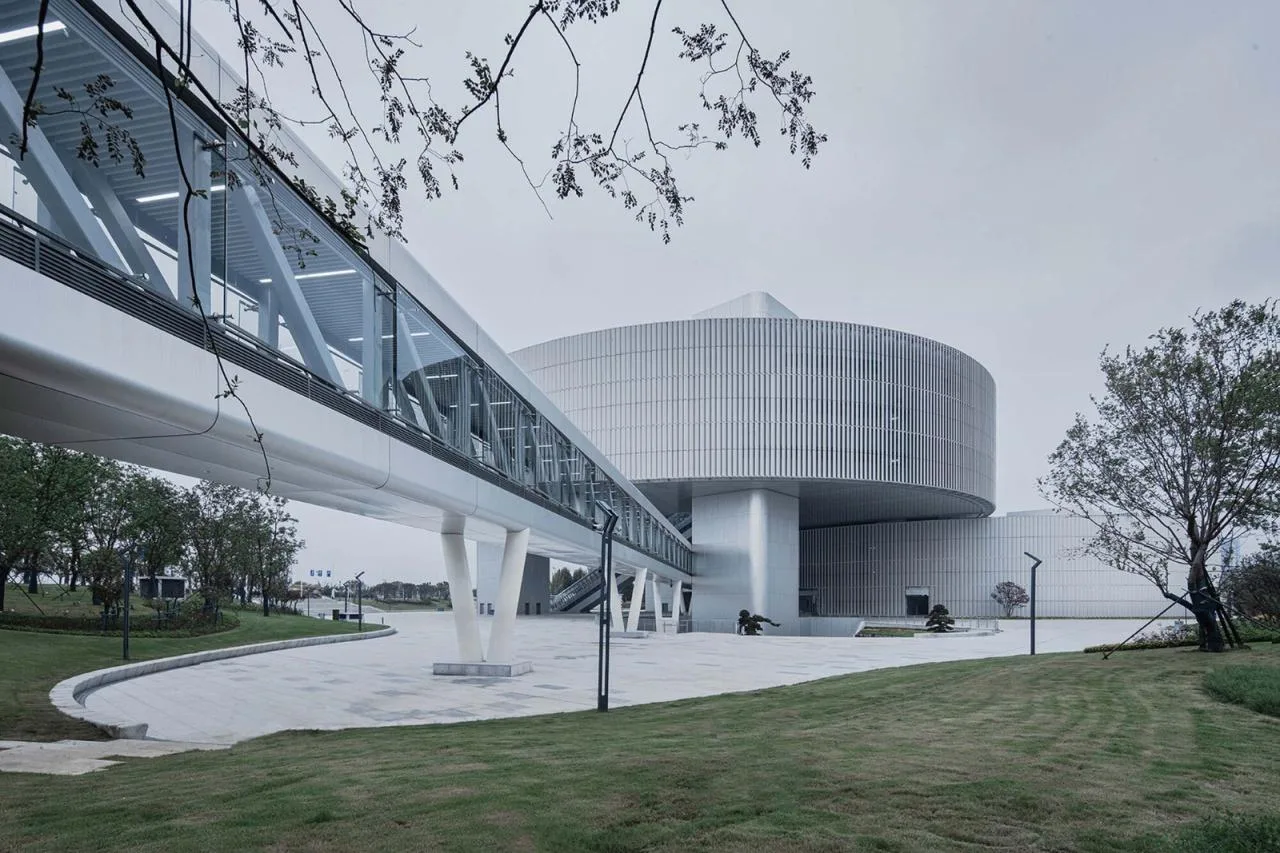
The site is a triangular plot near the Yangtze River scenic belt, with an elevation about 3 meters below the river embankment. Addressing this height difference while creating an open, spacious, and welcoming environment became a key design challenge. The concept centers around a circular theme, softening the relationship between the surrounding urban fabric and extending the open riverside scenery into the site through natural slopes and landscaping. This approach constructs a continuous landscape link connecting the old mountains, the Yangtze River, the city, and its citizens.
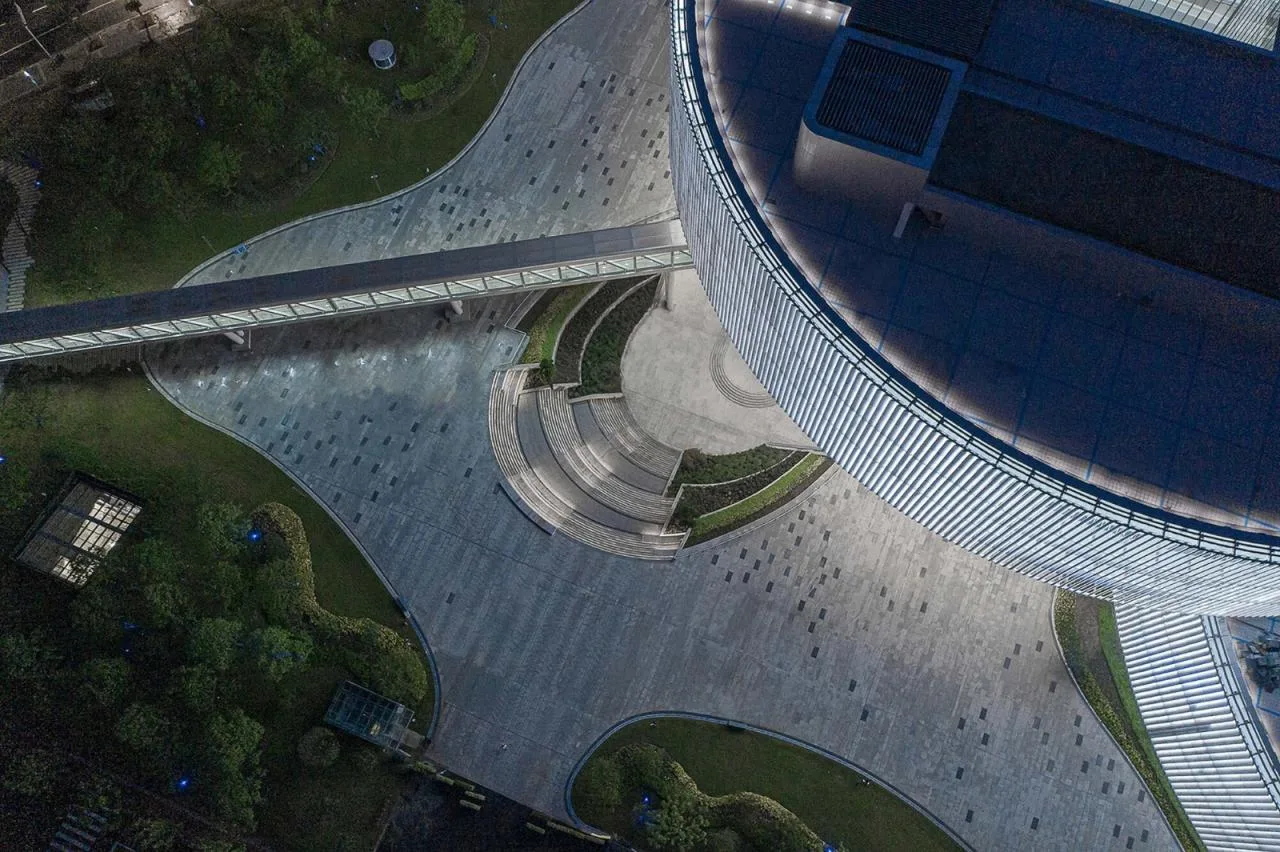
The majority of the site is designed as an open urban park featuring winding grassy areas, rolling green hills, and gentle slopes that soften the site’s artificial boundaries. This continuous landscape cleverly resolves the elevation difference, while the absence of walls encourages free access from all directions, providing rich spatial experiences. The fusion of natural scenery and modern architecture creates a dynamic setting for diverse civic activities.
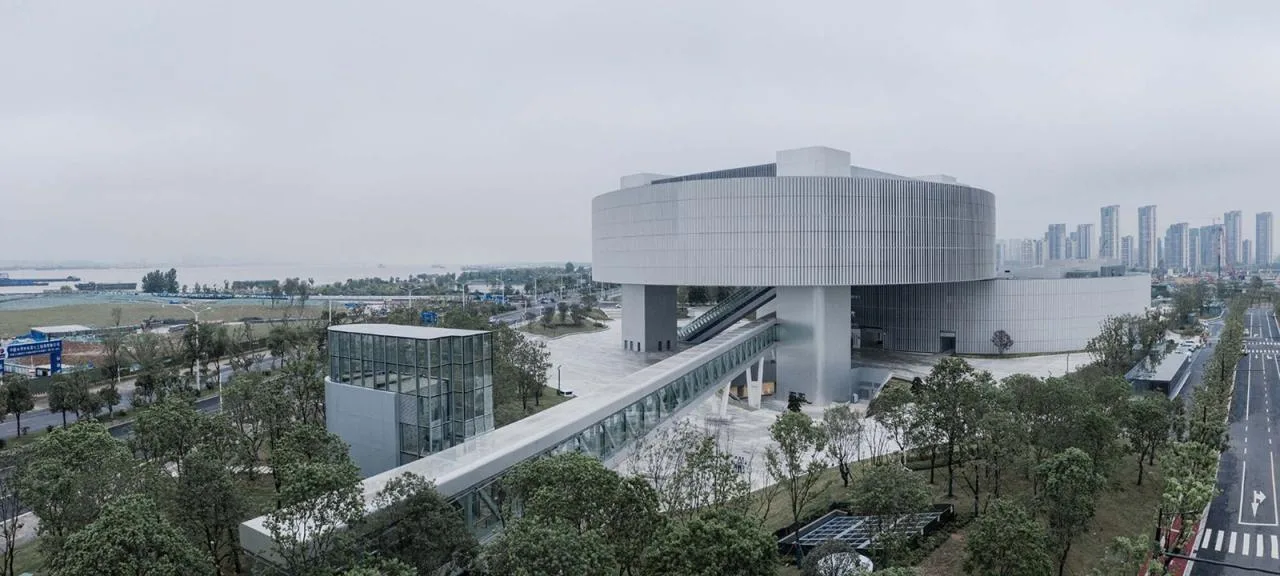
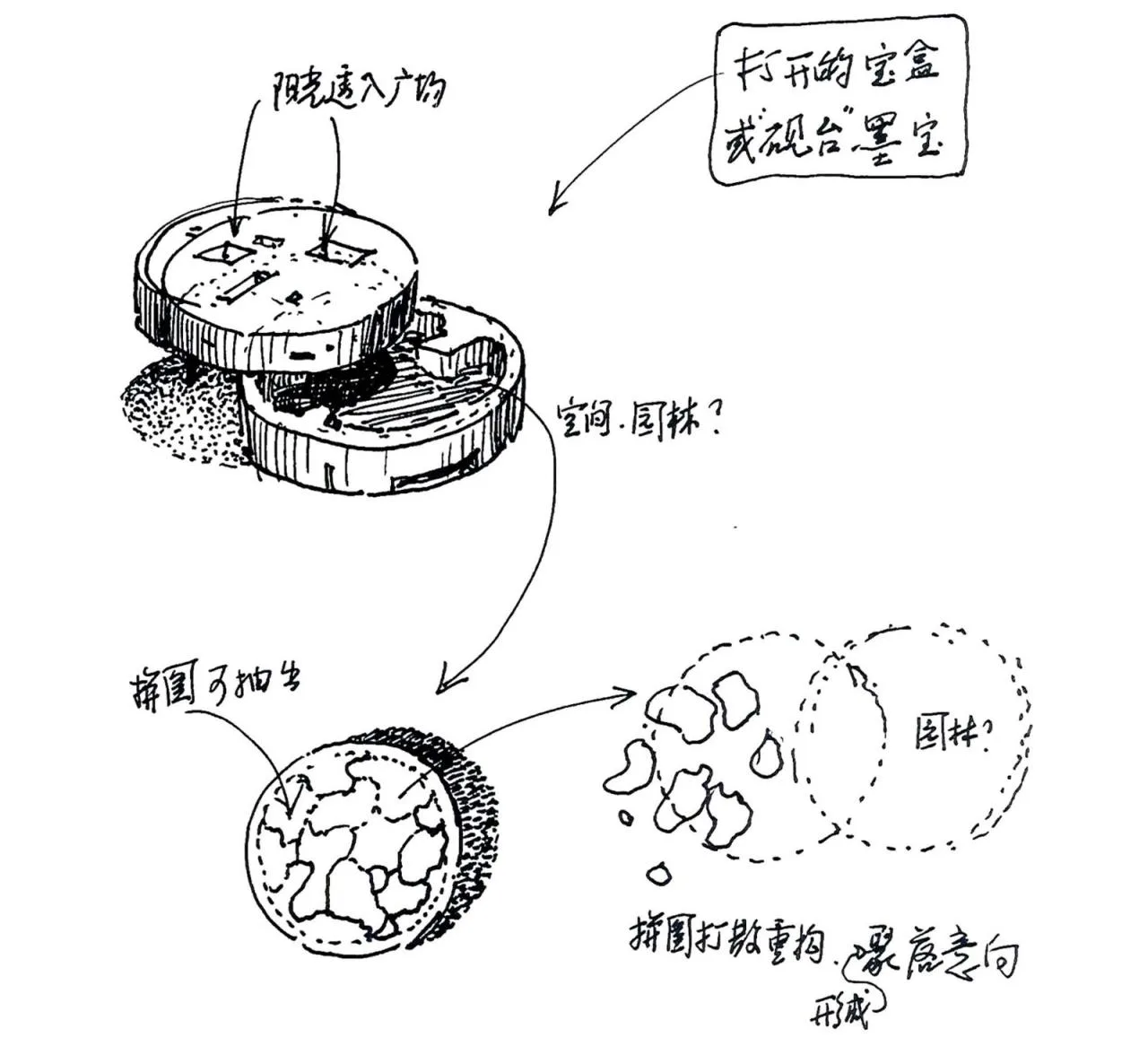
The design draws inspiration from the metaphor of a “slowly opening treasure box,” embodied by two massive circular forms—each 104 meters in diameter and 16 meters high. These two “round boxes” are stacked and gradually opened, creating a distinctive urban icon and open public space.
Functionally, the lower circular volume houses public services, citizen activities, and science education. During the design process, the program was refined in collaboration with the client to include art exhibitions, performing arts training, children’s science education, creative spaces, and other functions closely linked to citizens’ daily lives, forming a functional cluster that truly caters to the community.
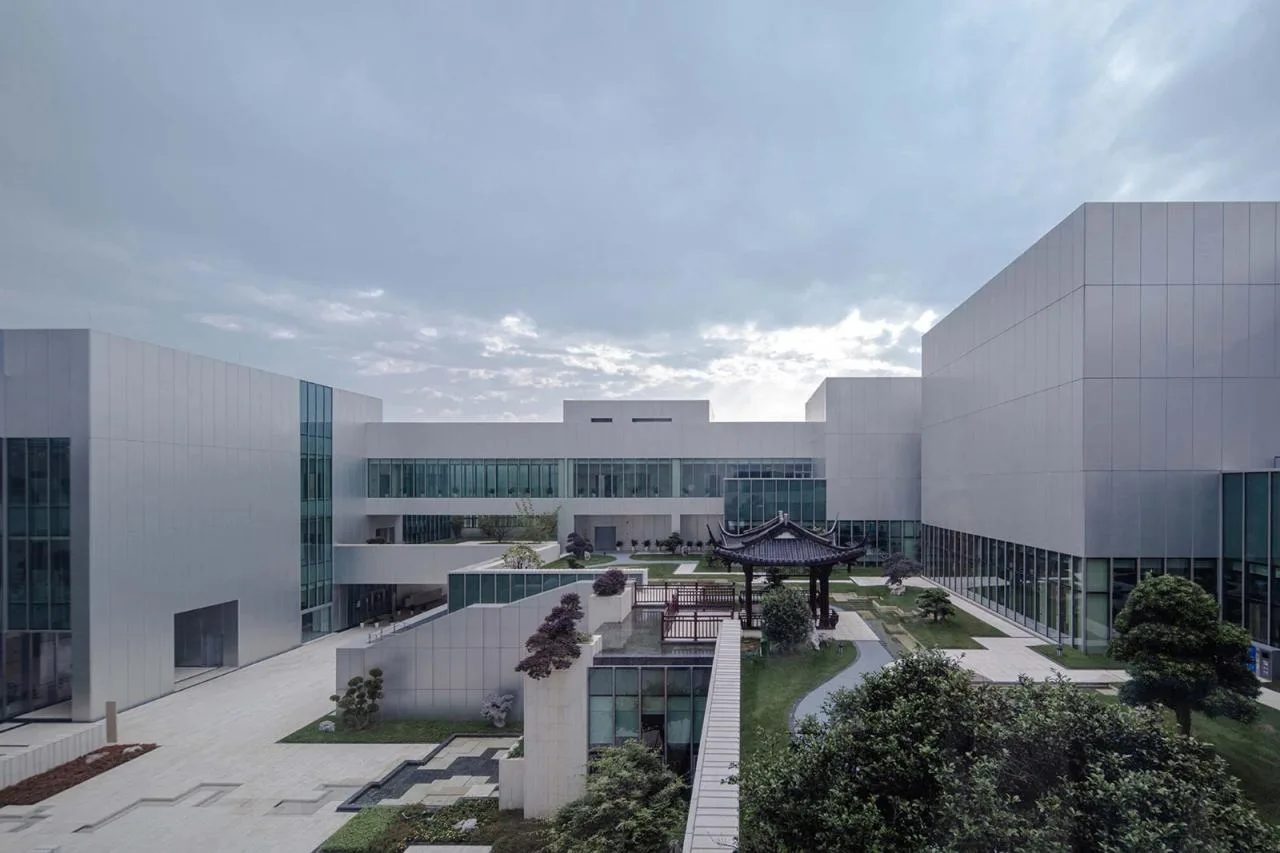
To express regional characteristics, a three-dimensional garden with strong Eastern cultural elements is incorporated inside the lower circle. Features such as small bridges, flowing water, pavilions, and towers connect seamlessly to the adjacent city park via open channels, creating a natural, continuous landscape inside and out. A traditional corridor element links modern functions like training, creative workshops, science exhibits, and bookstores, offering visitors a unique garden stroll experience with changing scenery. The courtyard replaces the traditional gathering hall, providing a secondary activity space for citizens and enhancing the garden’s openness.
This approach seeks to revive spatial elements of traditional Chinese gardens, fostering a dialogue between modern design and cultural heritage.
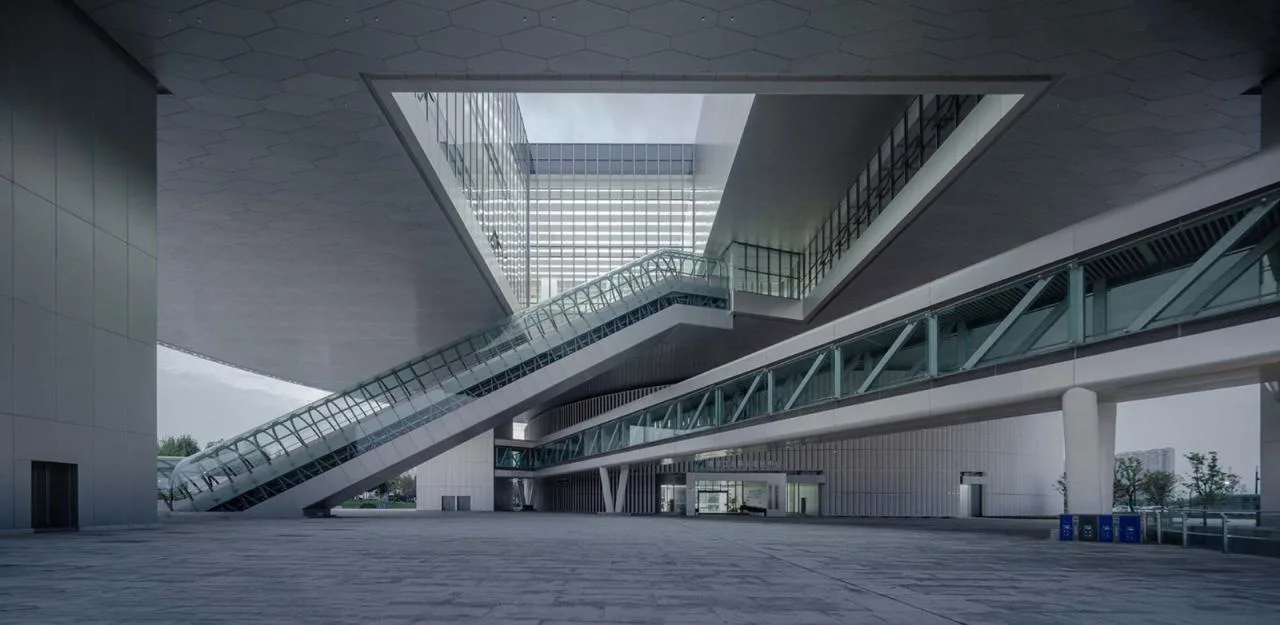
The upper circular form serves as the urban planning exhibition hall, accessible via a long escalator. This volume accommodates display functions, with a rigorous architectural and spatial logic. It is supported by four symmetrical giant column core tubes suspended in the atrium at its center, around which spaces are organized in a “street and alley” layout linking physical models, digital sand tables, conventional exhibition halls, and supporting conference and office areas.
Visitors can wander through these varying spaces as if exploring a sprawling urban neighborhood. The 16-meter-high suspended exhibition hall offers a unique “aerial” perspective, allowing visitors to explore the district’s future while enjoying panoramic views of the Yangtze River and downtown Nanjing.
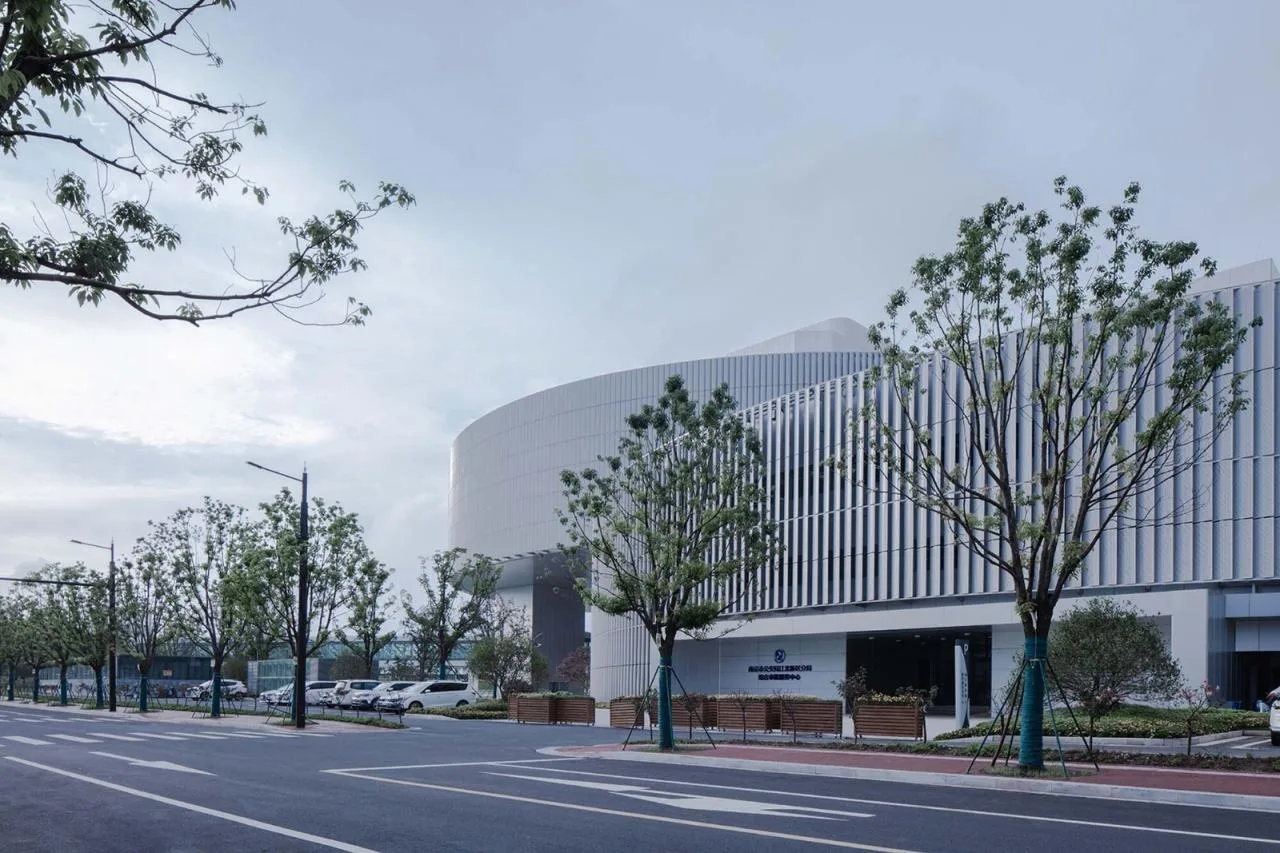
Both circular volumes are wrapped in white louvers, creating a “white and hazy” effect. At different times of day, the Civic Center resembles a slowly opening “moonlight treasure box,” projecting a light, dreamy image that invites exploration.
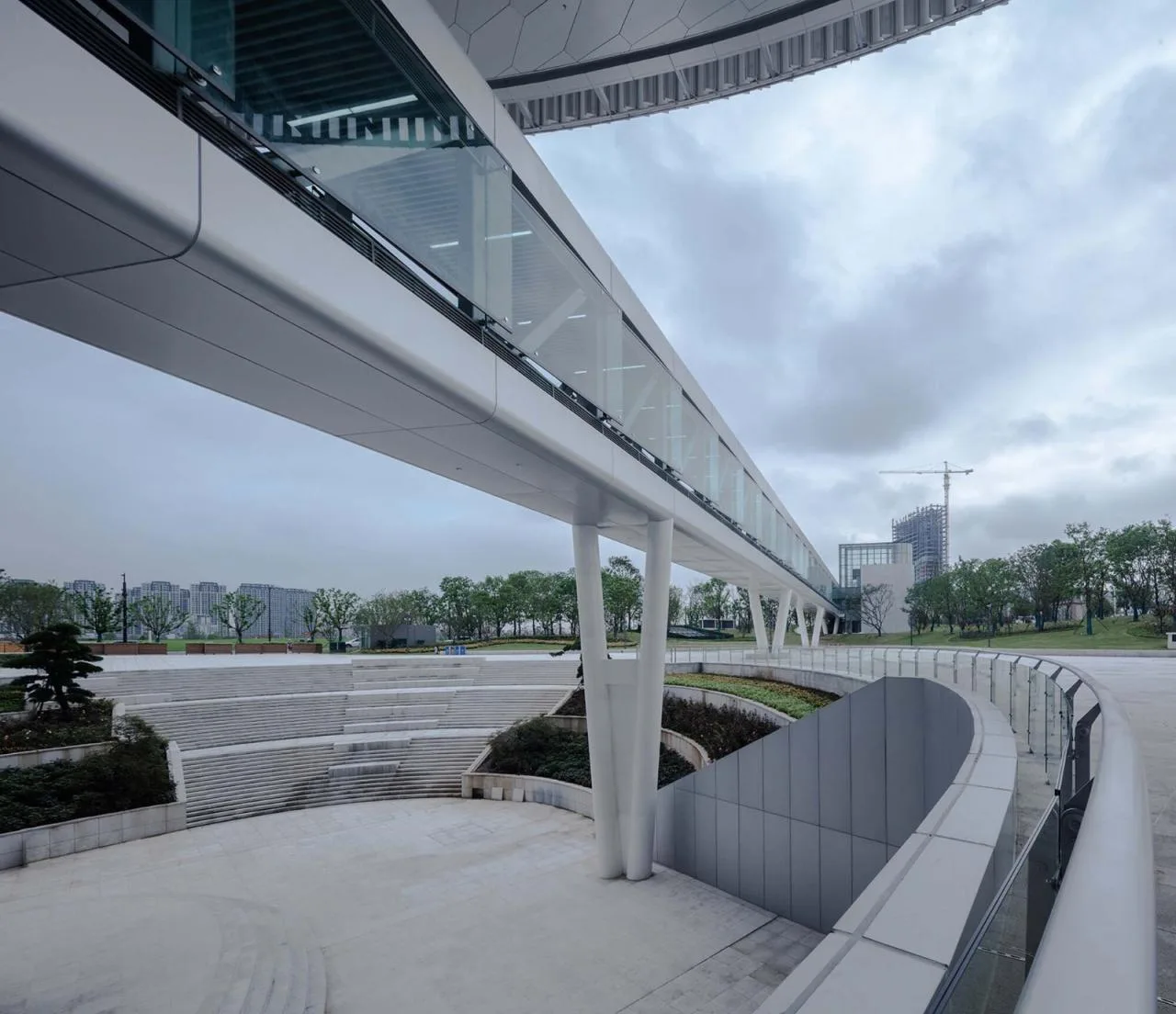
To enhance citizen convenience, commercial, dining, service, and support functions have been integrated into the underground levels. Two sunken plazas connect these underground spaces to the inner courtyard and the main square, ensuring good ventilation and natural light. This vibrant “market” atmosphere supports a 24/7 operation model, adding functional vitality and avoiding the cold, detached feel common in traditional public buildings. The design thus provides accessible citizen services while offering unique and innovative spatial experiences.
Throughout the design process, the team remained committed to creating diverse urban scenes. The enduring vitality of cities often stems from varied spatial experiences, a pattern evident throughout history across cultures. The famous Chinese painting “Along the River during Qingming Festival” captures the vibrant urban life of Bianjing city through continuous fragments—suburbs, gardens, streets, markets—depicted in a two-dimensional format, yet conveying timeless vitality.
Inspired by this, the design seeks to reconstruct Eastern life fragments within the Civic Center’s three-dimensional space, highlighting Nanjing’s unique urban charm. The main functions are vertically arranged with decreasing public access and usage frequency. This creates a complex spatial community inside and outside the building, featuring scenes reminiscent of suburbs, gardens, markets, and streets and alleys.
As the “treasure box” building slowly opens, people can enter from all directions—hiking through pastoral spaces, strolling gardens, wandering streets, or enjoying the market. This approach transforms traditional Eastern cultural elements from flat paintings into tactile architectural forms, celebrating Nanjing’s rich history and promising future.
The project has received strong support from government agencies, the client, Southeast University Architectural Design and Research Institute, China Construction Second Engineering Bureau, and many other collaborators. It overcame numerous technical challenges, including China’s first super heavy, large-diameter, rigid-flexible integrated steel truss lifting operation. It also pioneered the use of static level devices with hanging points for dynamic process monitoring.
Additionally, the project team worked with specialists to develop patented shuttle-shaped aluminum louvers that combine shaping, sun shading, floodlighting, and media curtain wall functions. These louvers faithfully realize the “white and hazy” design concept, enabling the “treasure box” vision to be elegantly expressed within the cityscape.
Project Drawings
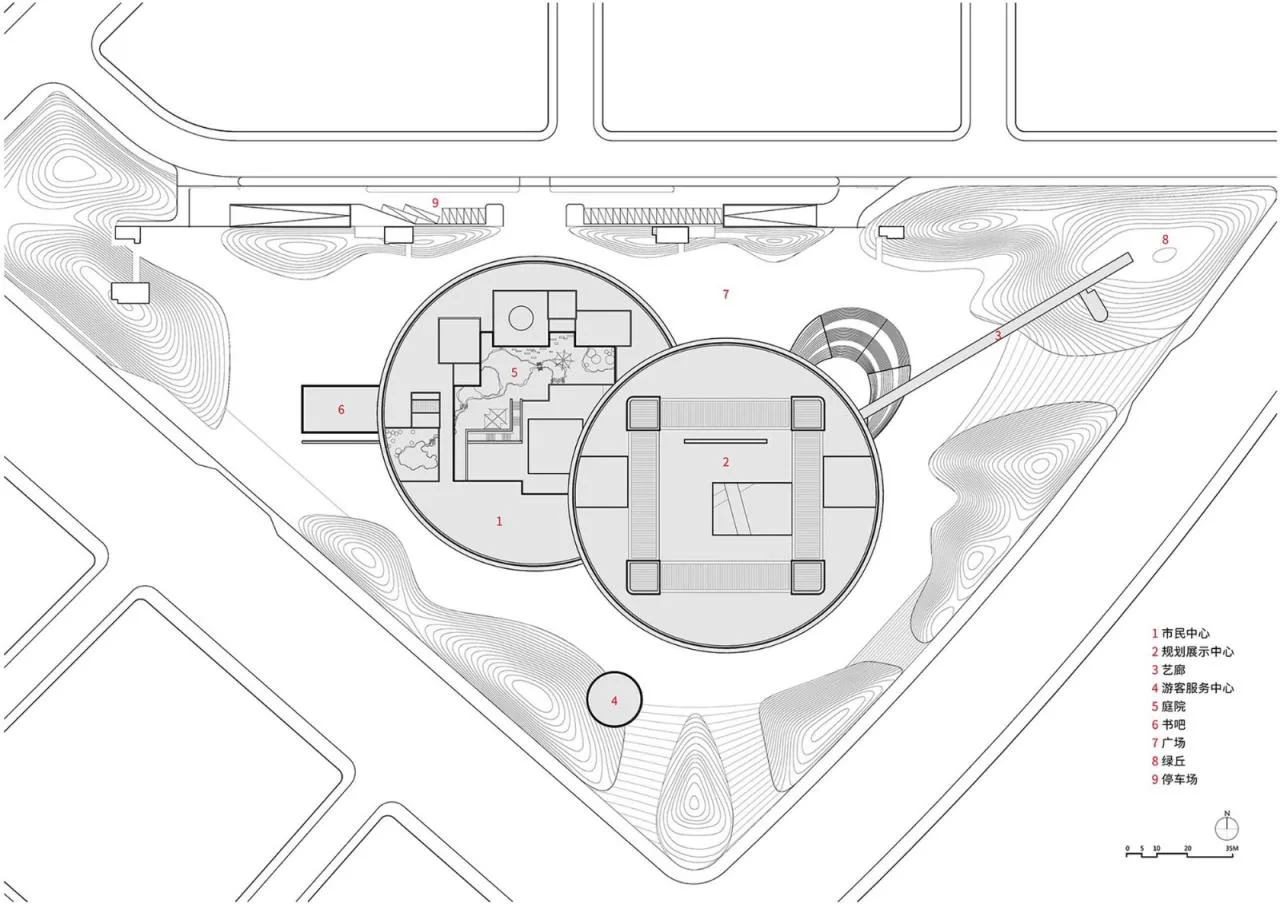
△ General layout plan
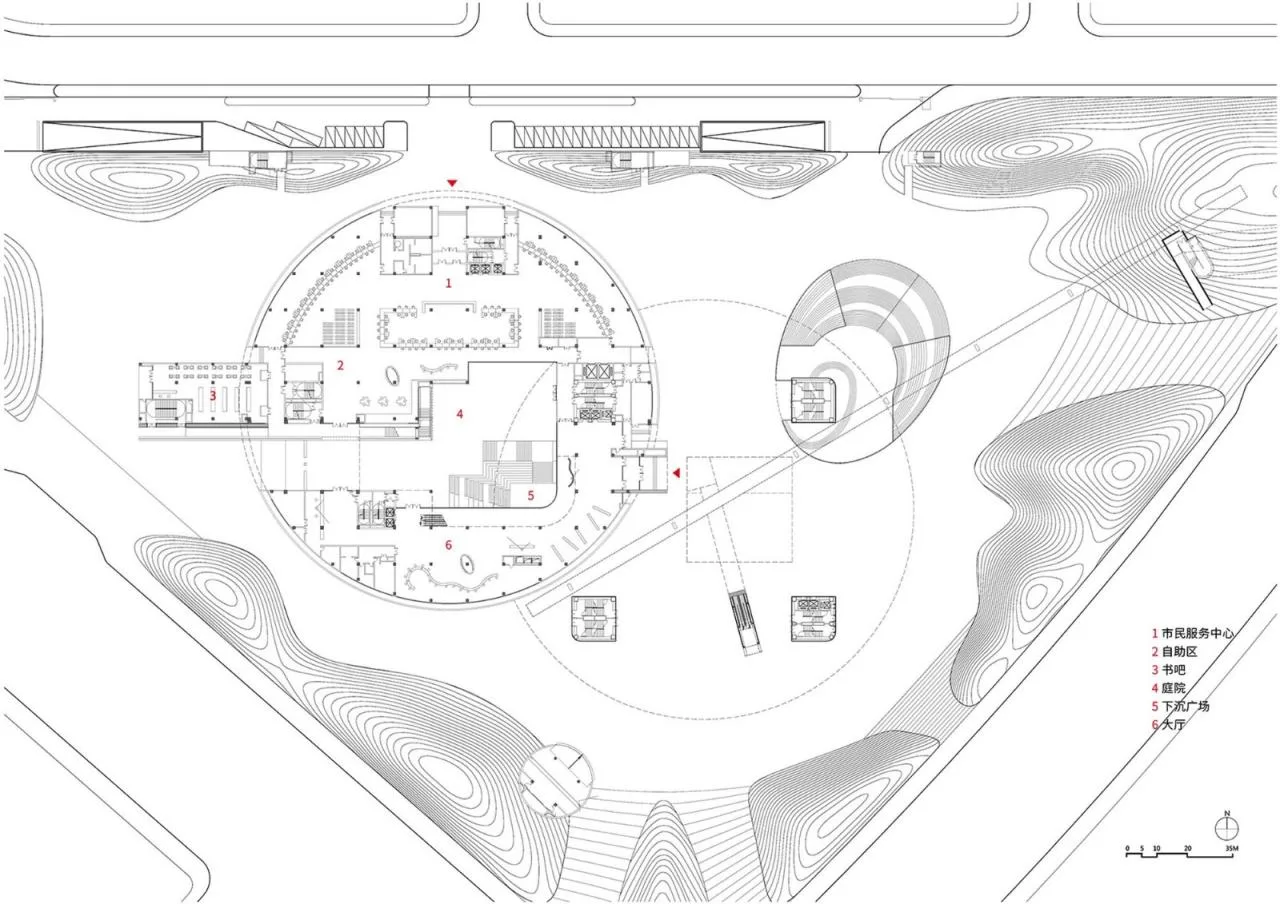
△ First floor plan
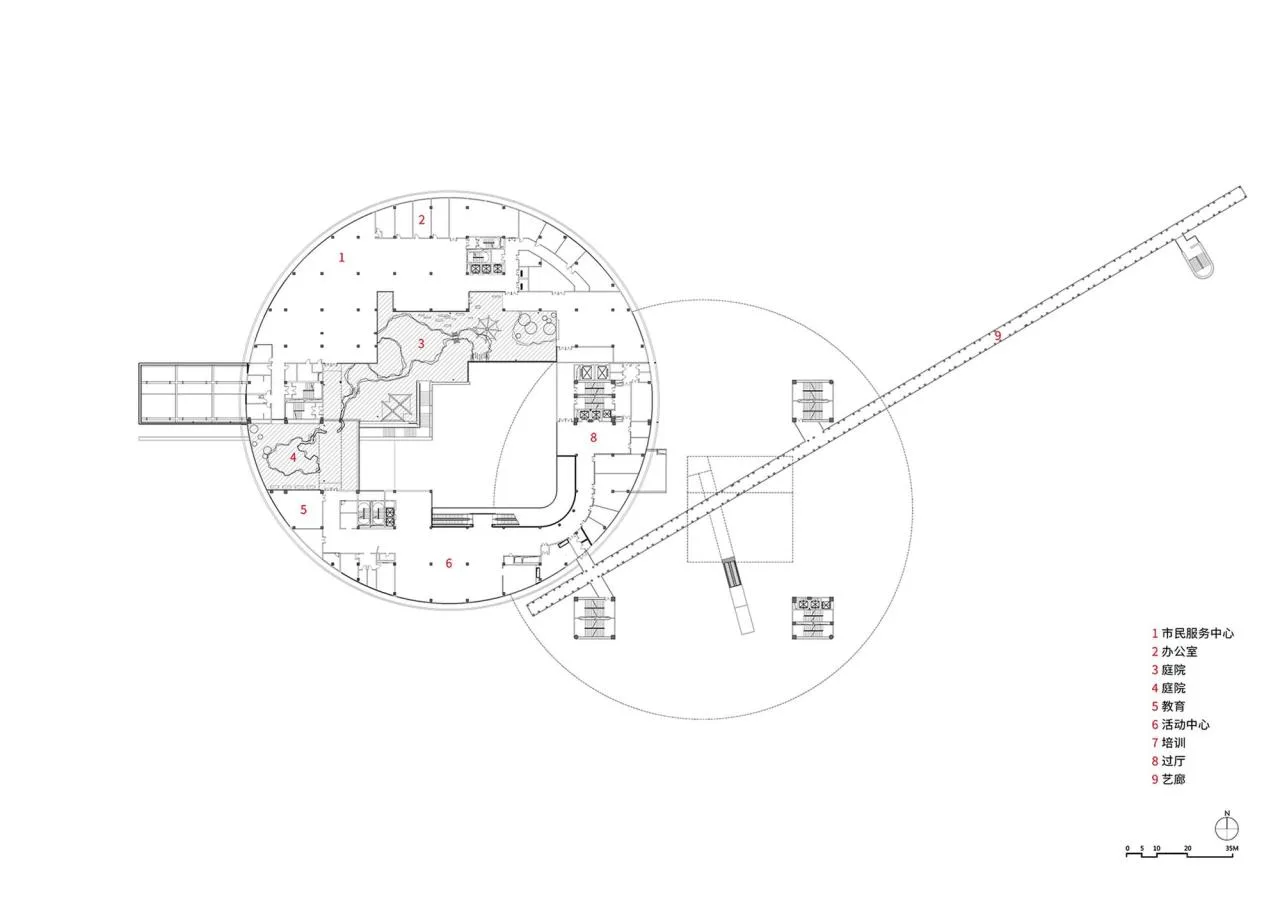
△ Second floor plan
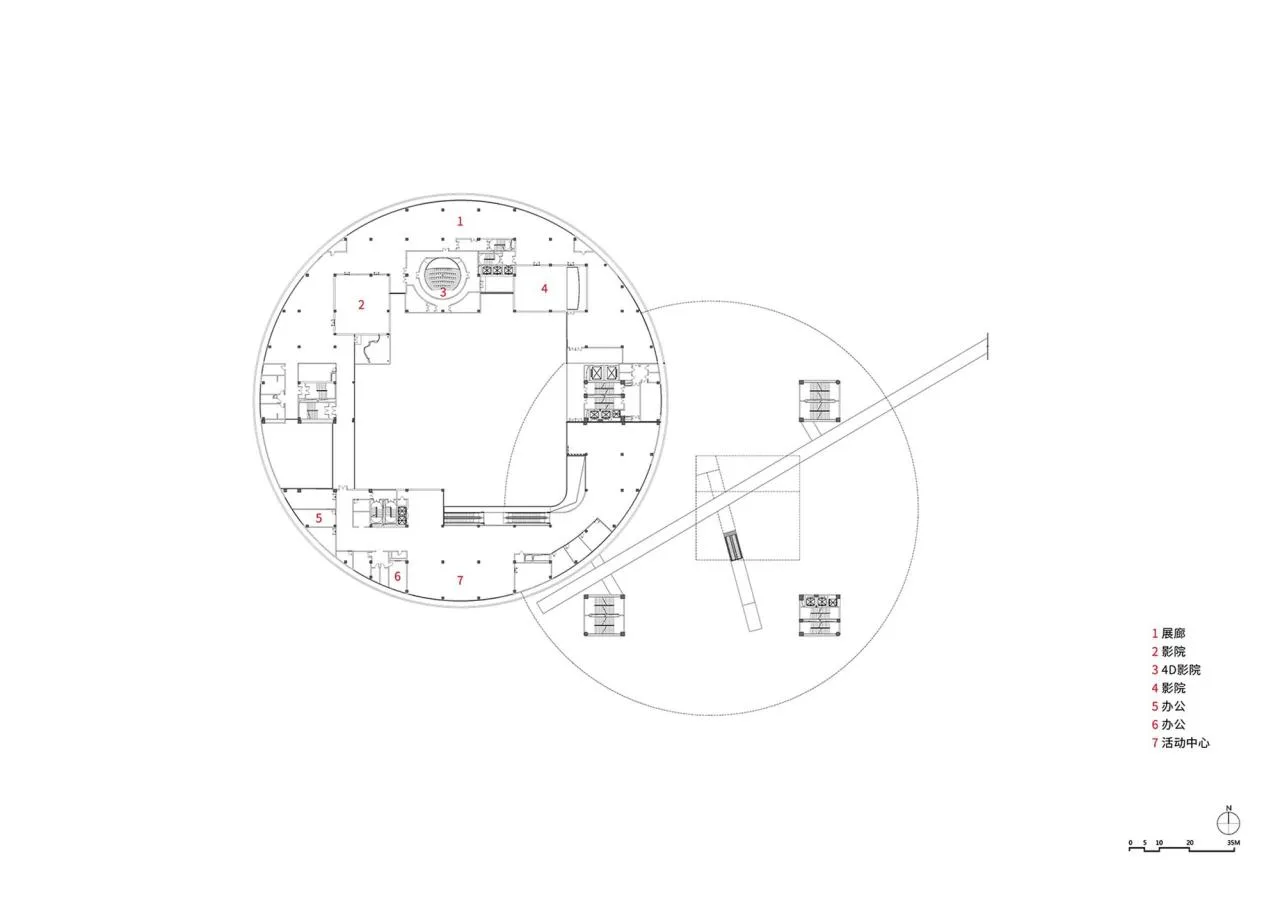
△ Third floor plan
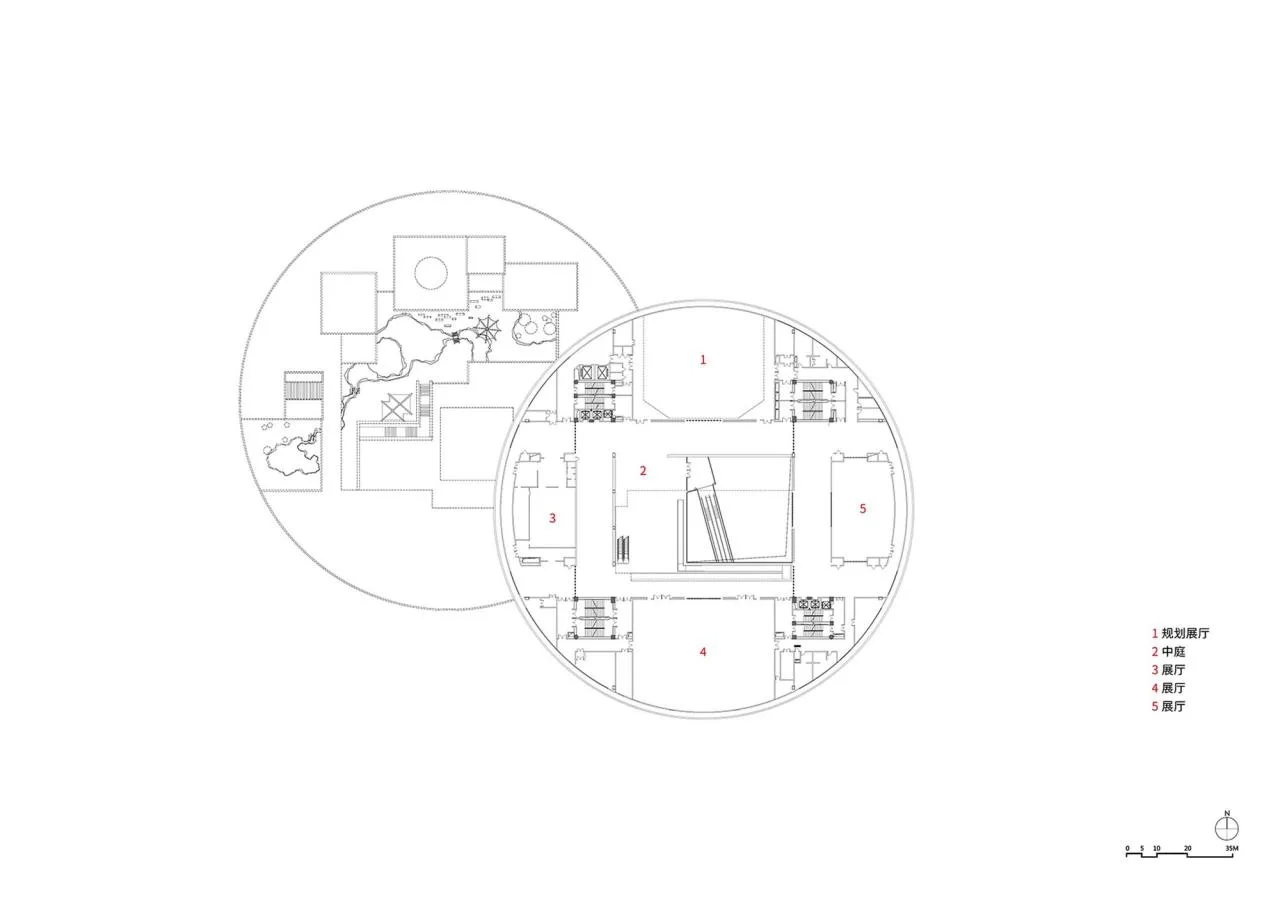
△ Fourth floor plan
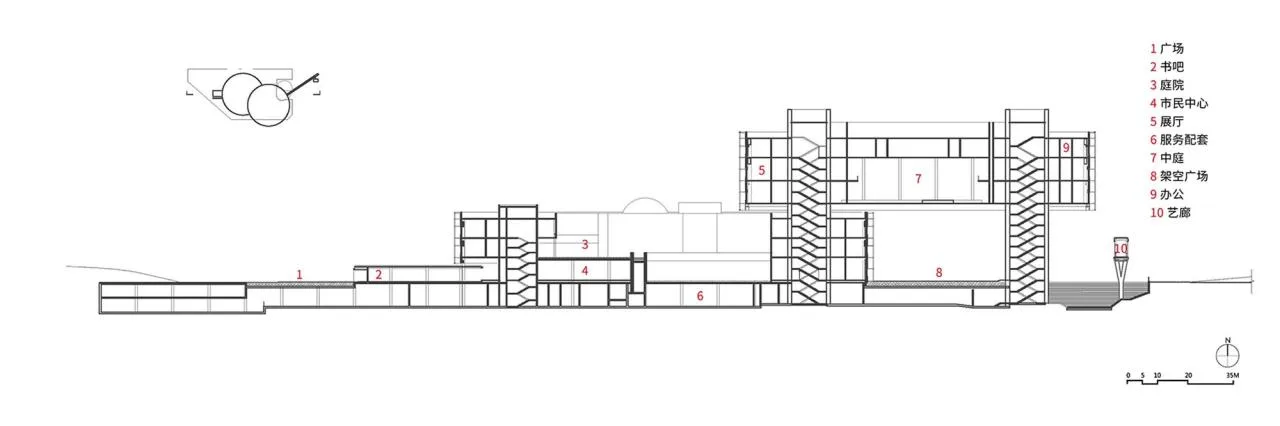
△ Section diagram
Project Information
Architect: MENG Architectural Creation Institute
Area: 75,614 m²
Project Year: 2020
Photographer: Xu Haohao
Lead Architects: Meng Jianmin, Yang Xu, Li You
Design Team: Wu Changhua, Li Lijia, Xu Hao, Zheng Qing, Liu Wenxu, Li Luobing, Zhao Rencai, Zhang Xiao, Zhong Xianfeng, Han Baofeng, Zhuansun Weiqing, Zhu Li, Liu Hebing, Sun Yang, Yu Zhijian, Wu Kang, Quan Quan, Cheng Lan, Ji Tongyue, Pu Jun
Construction Drawing Design: Southeast University Architectural Design and Research Institute Co., Ltd
Owner: Nanjing Pukou New City Development and Construction Co., Ltd
Location: Nanjing















Must log in before commenting!
Sign Up