
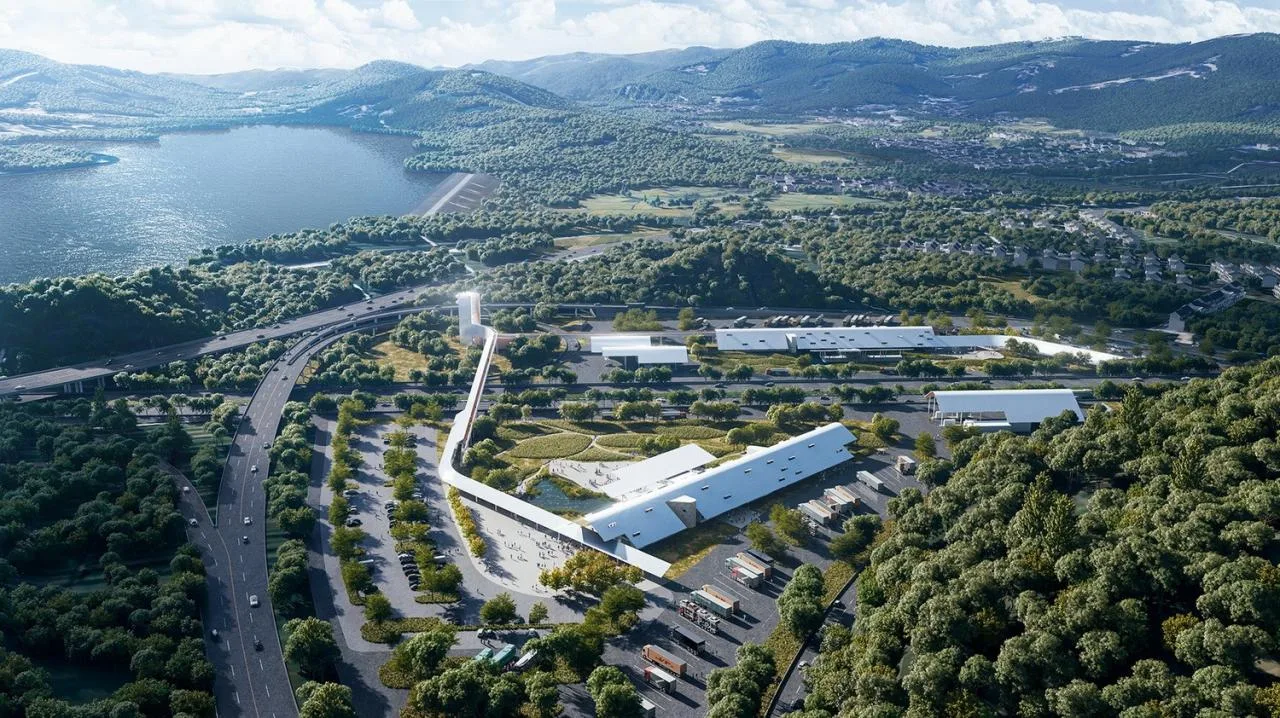
Introduction:
In March 2022, we discovered the bidding opportunity for the Yuanqiao Service Area on the Yongtaiwen Expressway in Taizhou City through a prominent Chinese construction media platform. Highway service area buildings rarely appear in such open bidding invitations, and our strong interest in public infrastructure motivated us to participate in this unique project.
1. Site Selection: An Exceptional Location
The bidding covers two service areas along the Yongtaiwen Expressway within Taizhou City: the “Taizhou Service Area,” with approximately 17,000 square meters, situated in the city center, and the “Yuanqiao Service Area,” about 8,000 square meters, located in the southern suburbs. After thorough analysis, we determined that these two sites should serve distinctly different purposes. The larger Taizhou Service Area will operate as a comprehensive commercial hub highlighting local culture, while the Yuanqiao Service Area requires a unique approach.
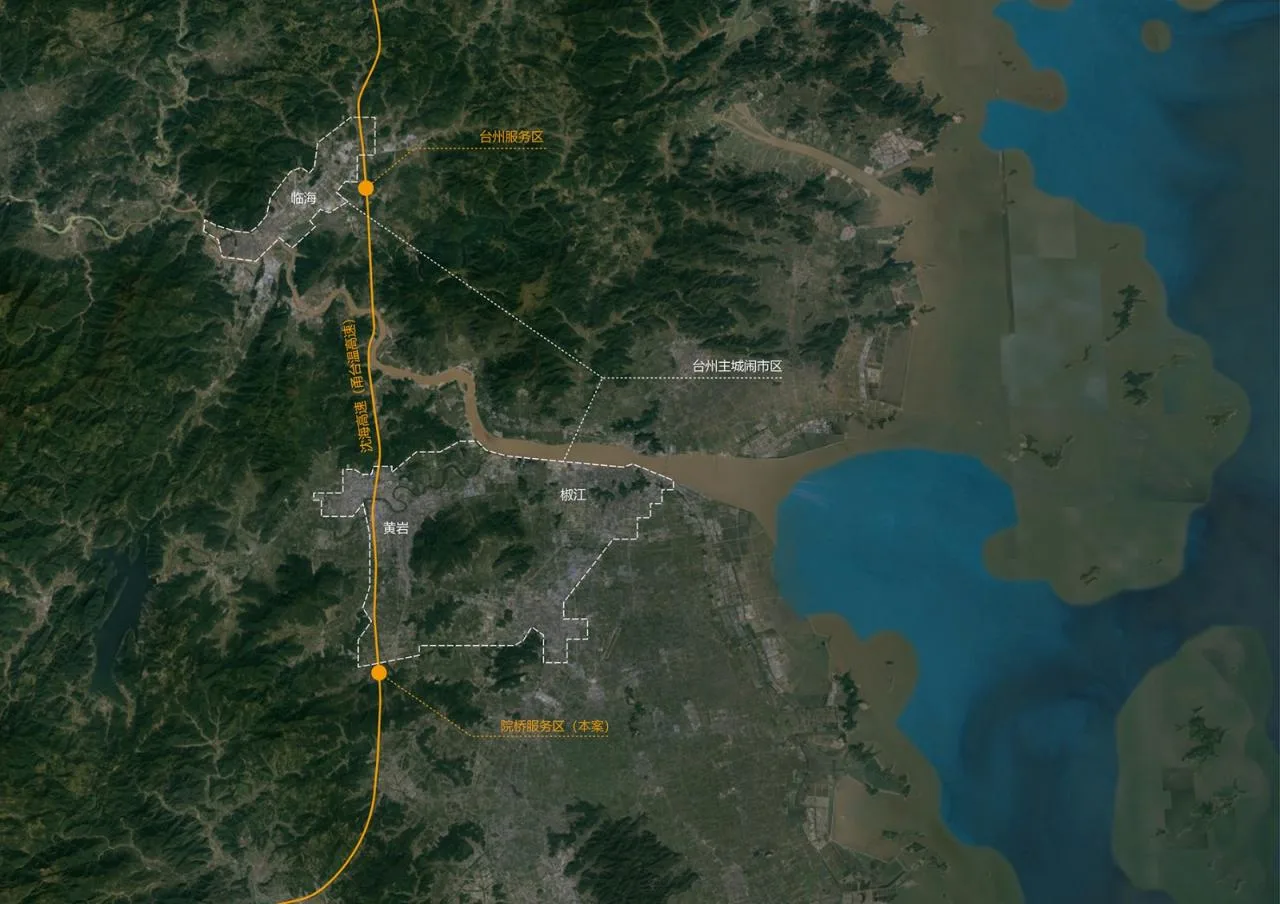
Analysis of the Taizhou City Site
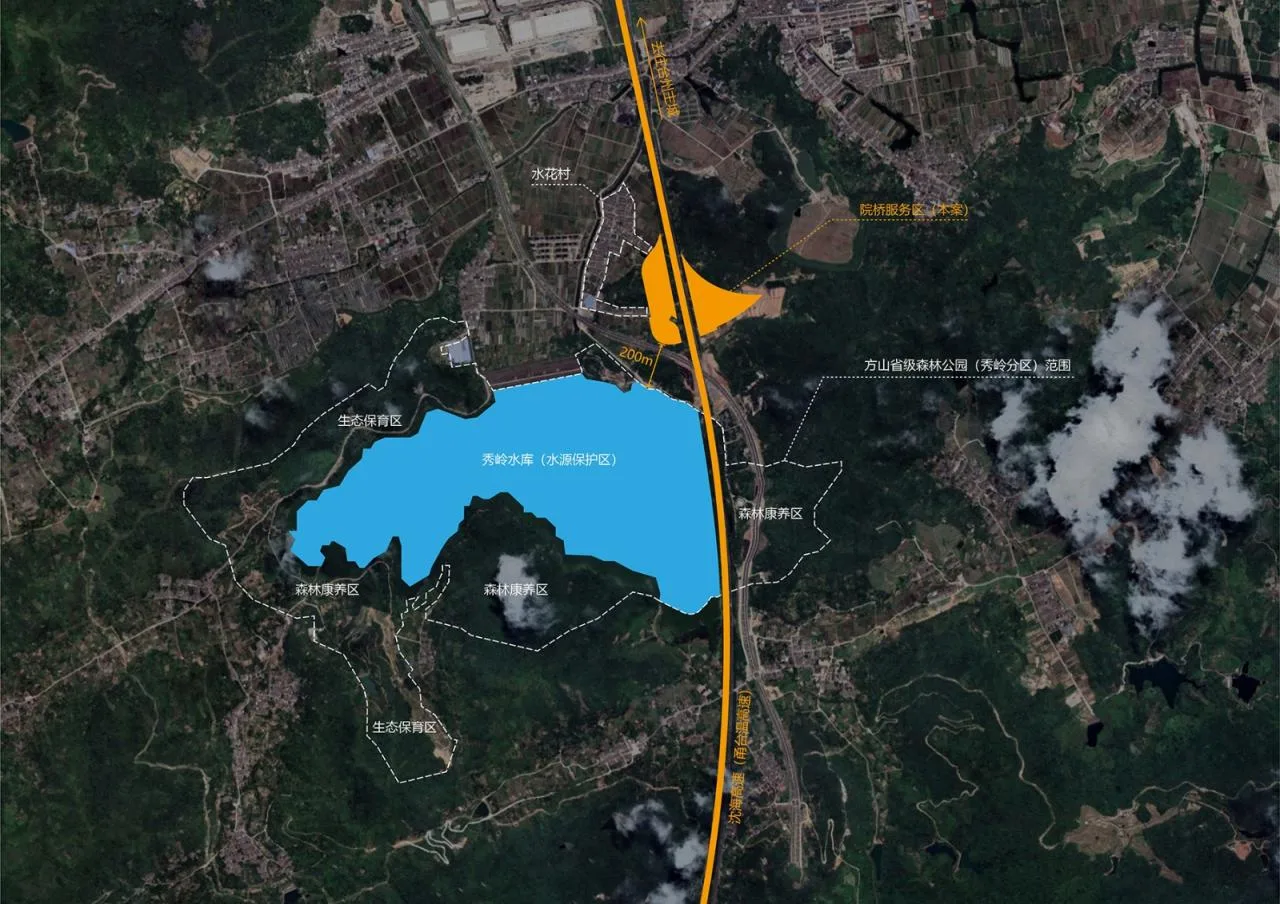
A Site Surrounded by Mountains and Rivers
The Yuanqiao Service Area is located north of Xiuling Reservoir, an important protected water source and a sanctuary for white egrets in Taizhou, recognized as an “excellent city for green development.” According to the 2020-2029 master plan for Taizhou Fangshan Provincial Forest Park, the park will center around Xiuling Reservoir, combining health and conservation efforts.
Data from the China Bird Watching Record Center indicates that over 40 bird species have been observed near Xiuling Reservoir, with as many as 112 species inhabiting Huangyan District where the site lies. With the park’s completion and conservation zones clearly defined, the ecological environment around Xiuling Reservoir is expected to improve significantly.
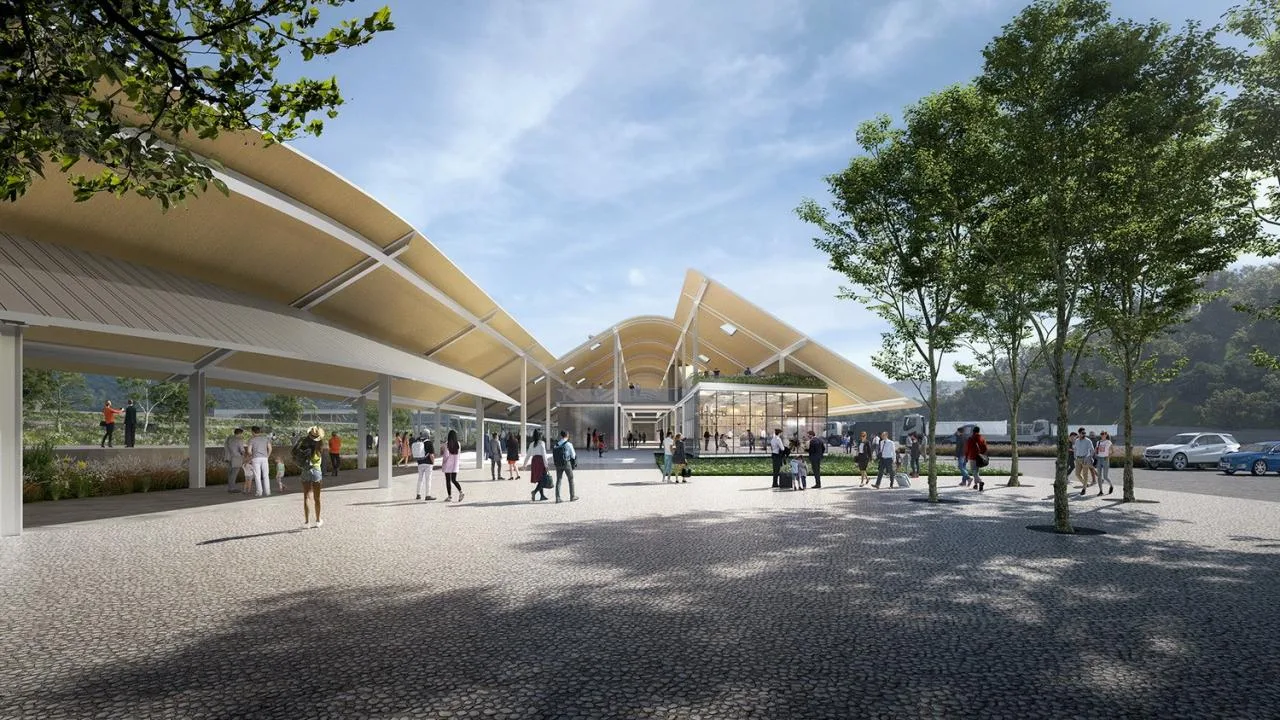
Our vision is for the Yuanqiao Service Area to contribute to the ecological protection of Xiuling Reservoir. This poses a unique challenge: highway service areas in China typically resemble suburban shopping centers, consisting of centralized air-conditioned buildings surrounded by expansive paved parking lots.
By comparing eleven highway service areas in Taizhou with local parks, we observed that the growing “paved areas” rival the size of carefully maintained green spaces. This insight inspires us to rethink service areas as potential ecological bridges that integrate meaningfully with the local environment, rather than mere urban enclaves.
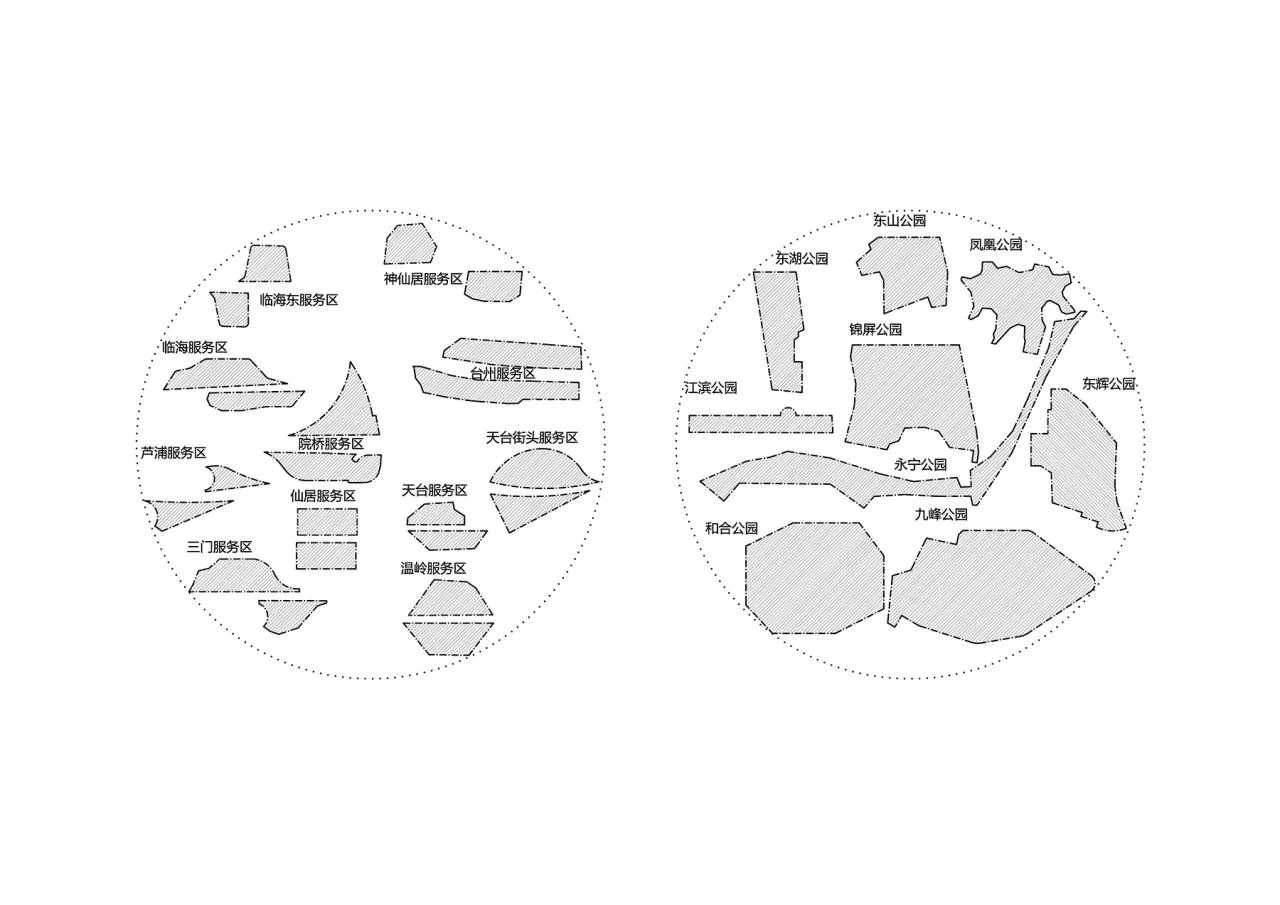
Scale Comparison: Taizhou Expressway Service Area vs. Urban Parks
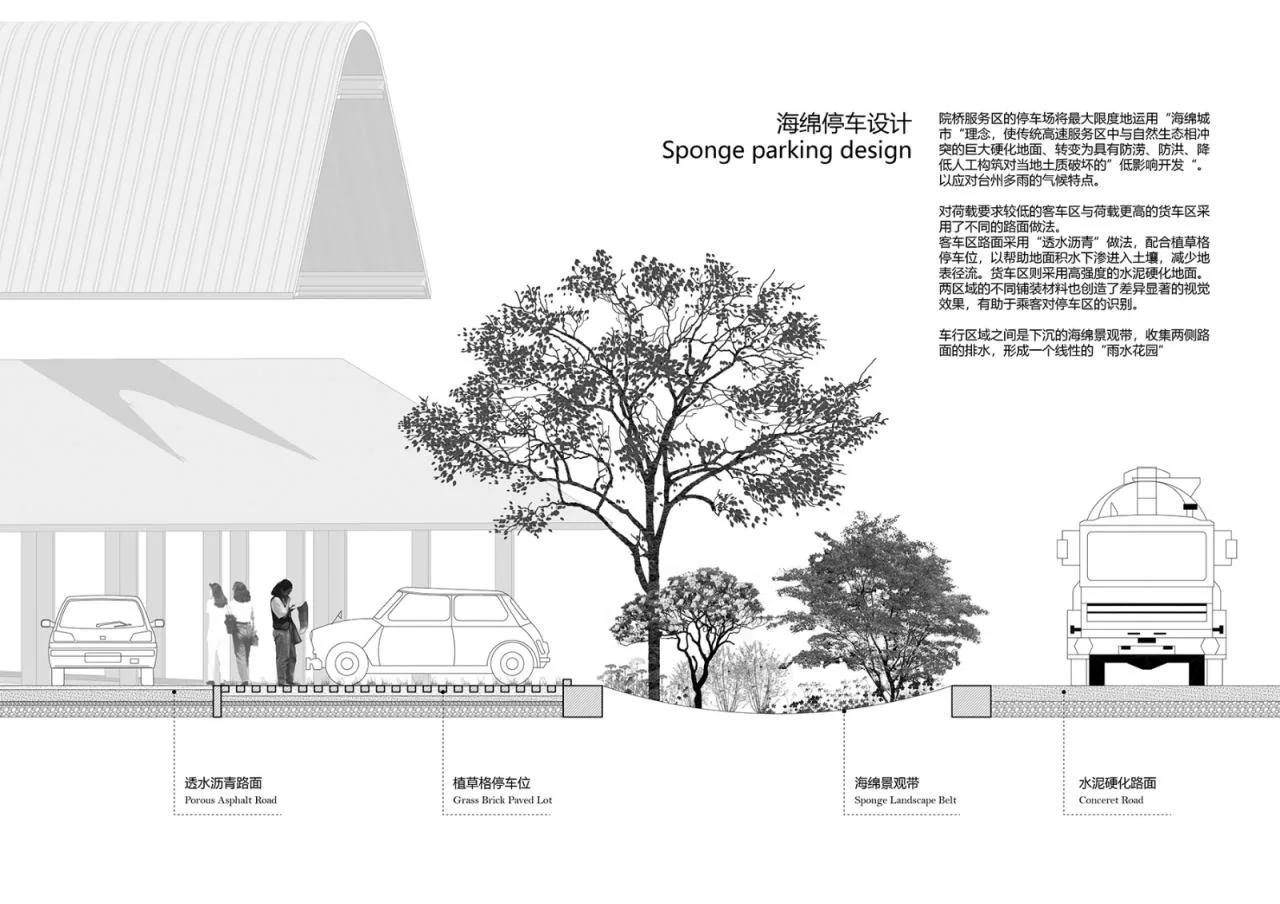
“Sponge” Style Parking Area
2. Planning: Forward and Backward
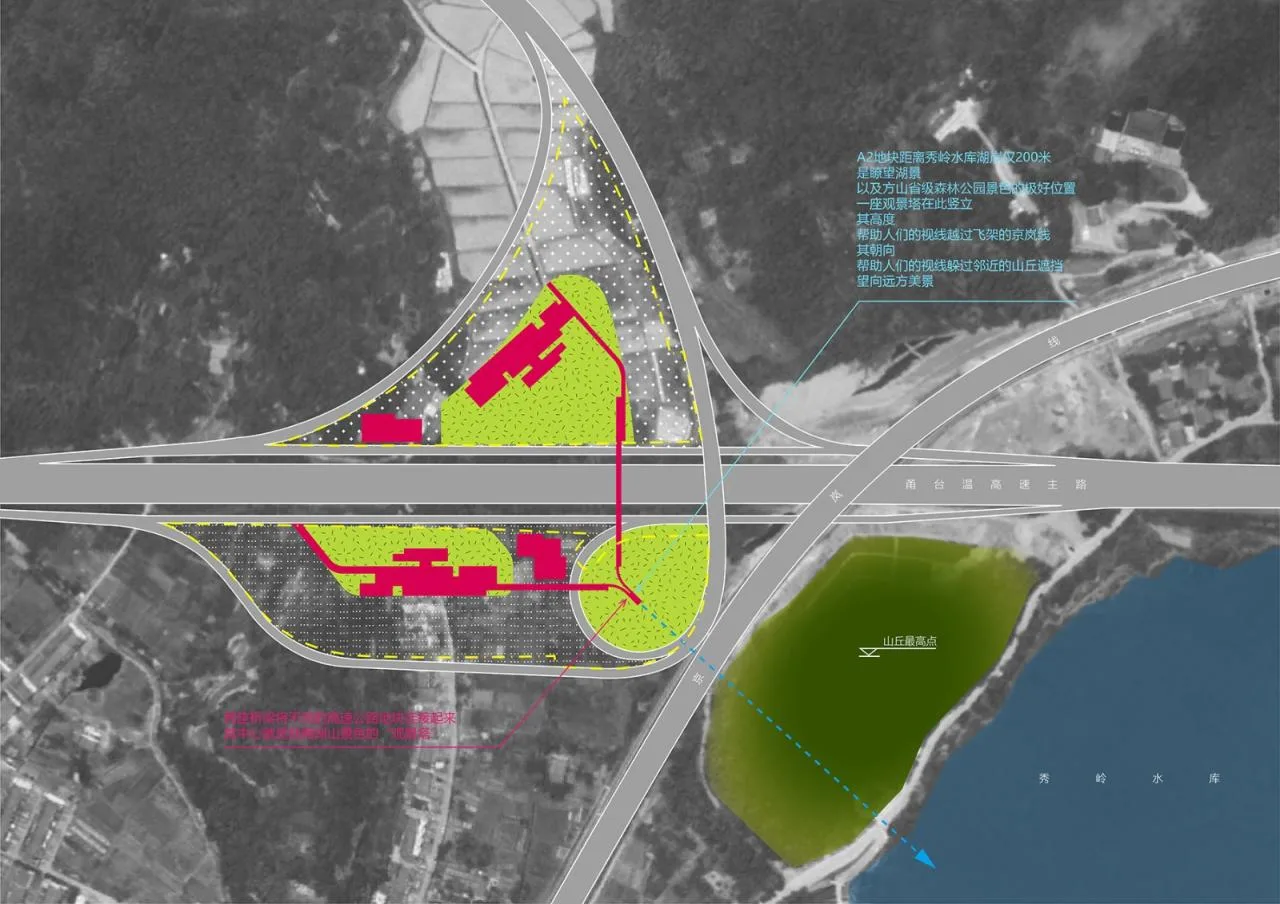
The towering highway cuts through mountains and lakes, dividing the land into three segments and disrupting the formerly connected natural landscape. We designed three ‘green spaces’ within the site as focal points to restore this fractured terrain.
These three “green islands” redefine the conventional image of “hardened ground” typical of highway service areas. Their elongated edges create fleeting impressions of parks for drivers speeding by. By carefully selecting plants and installing conservation facilities, these green spaces may also serve as stepping stones for wildlife migration between the natural and agricultural areas on either side of the highway.
This approach also changes the traditional layout of service area facilities. The parking lot, typically positioned at the entrance as a welcoming space, is relocated behind the entry zone, while the area usually reserved as a “backyard” is placed adjacent to the highway. This shift creates two distinct zones: one “vehicle-centered” and one “pedestrian-centered,” with the buildings acting as the interface between them.
The linear building, bordering the park around the green islands, forms the primary visual identity of the service area.
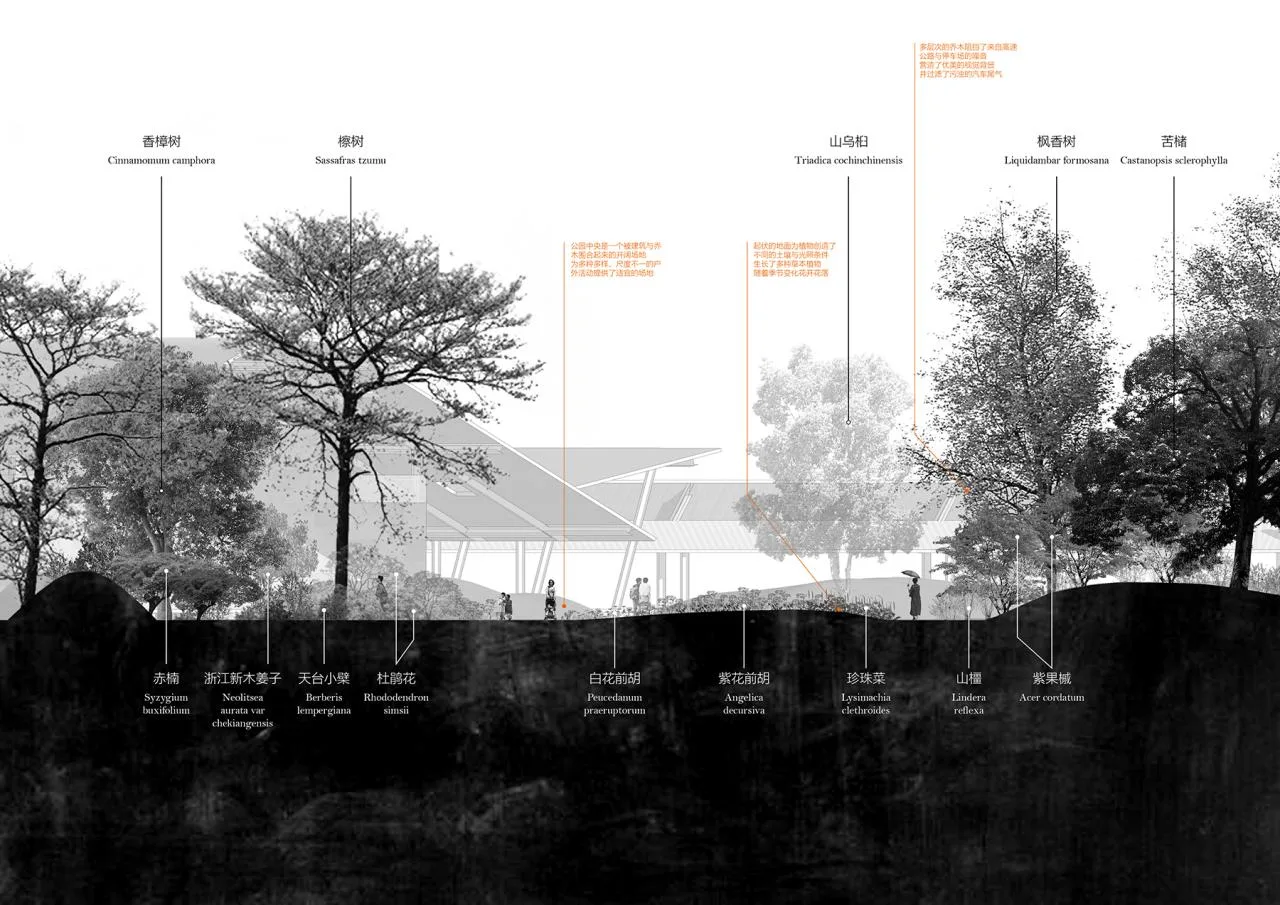
△ Local Plant Selection
3. The Park: Restoring the Earth
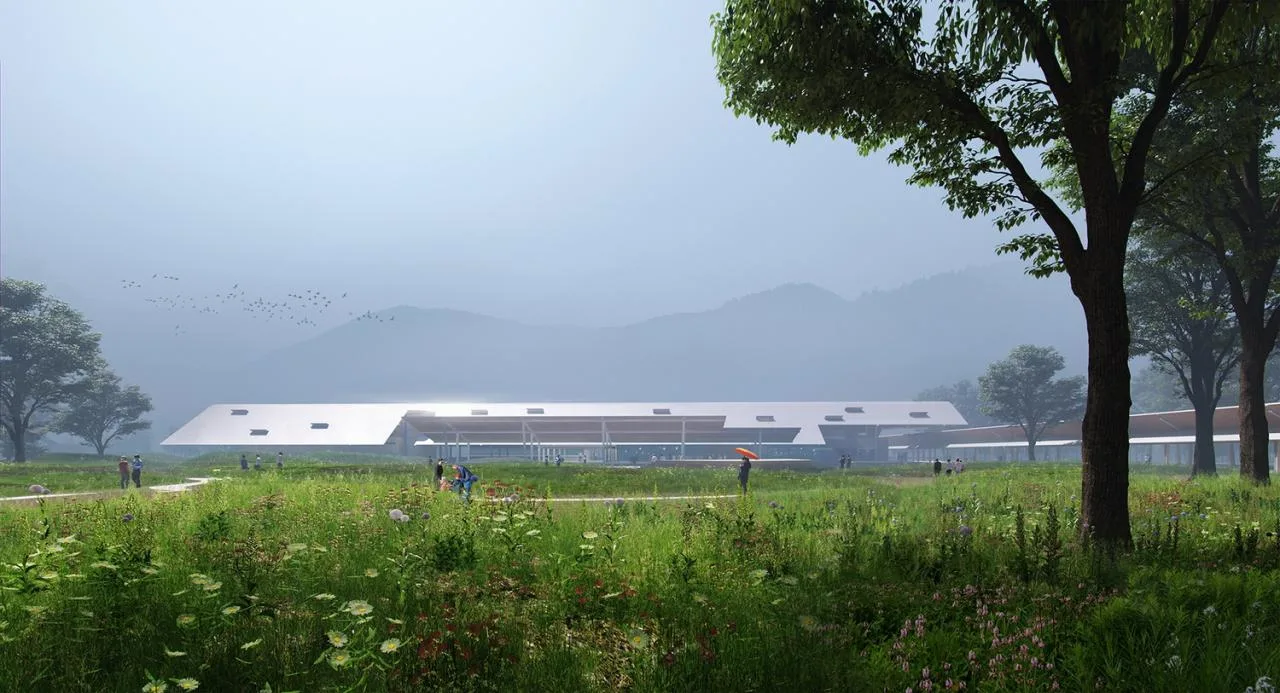
Here, landscape design transcends simple decoration or accompaniment for buildings and parking. It becomes the core public space of the entire service area. Embracing the concept of “rewilding,” permeable paving materials are extensively used to rehabilitate hardened ground caused by construction.
The landscape avoids overly geometric shapes, favoring visually inclusive forms that reduce maintenance needs. Native Taizhou plants dominate this “artificial wilderness,” creating a richly layered, climate-adapted environment that evolves with the seasons.
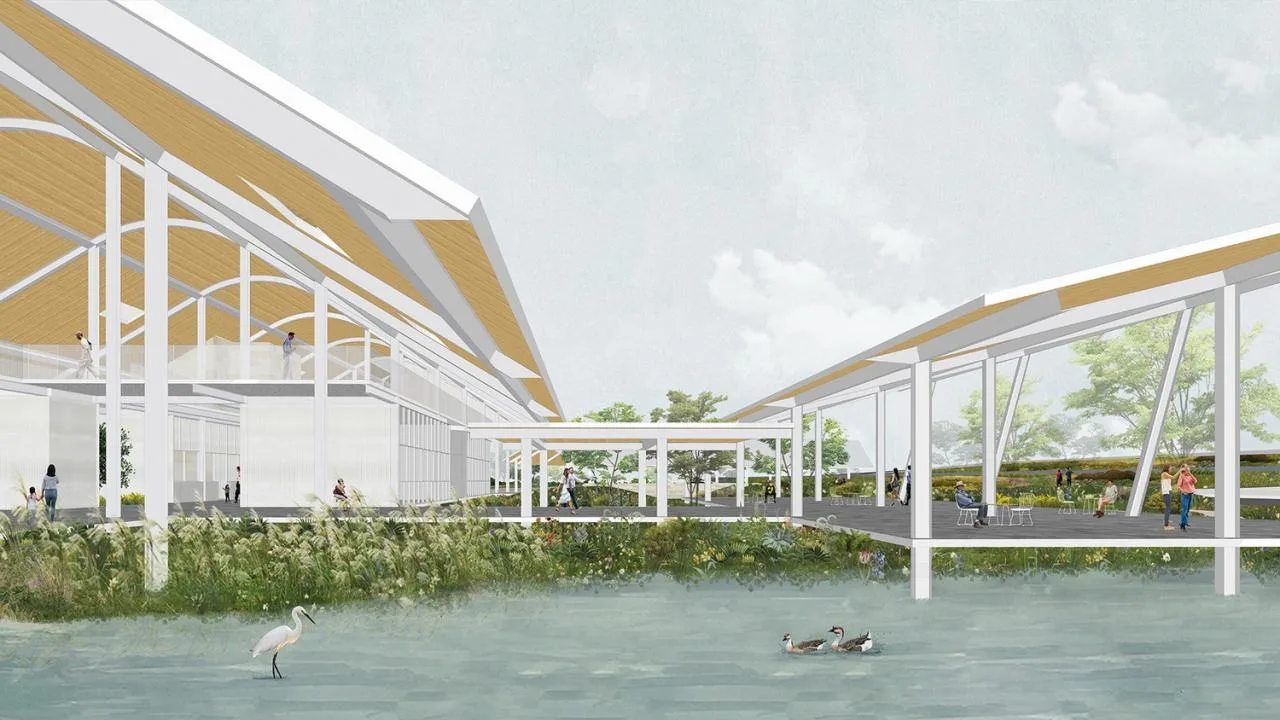
△ Architectural Forms Integrated with the Landscape
The parking area applies the “sponge landscape” concept to transform vast paved surfaces into a low-impact development that manages flood risks. Continuous sponge belts and grass-grid parking spaces enhance site permeability, addressing Taizhou’s rainy, coastal climate.
These strategies highlight Taizhou’s pleasant climate as a unique feature for visitors. Travelers feel as if they have arrived at an oasis, stepping out of confined, air-conditioned vehicles into a natural setting of forest parks and lakes, where they can breathe freely and unwind.
All landscape features promote a “slow walking system” to encourage leisure and connection with nature.
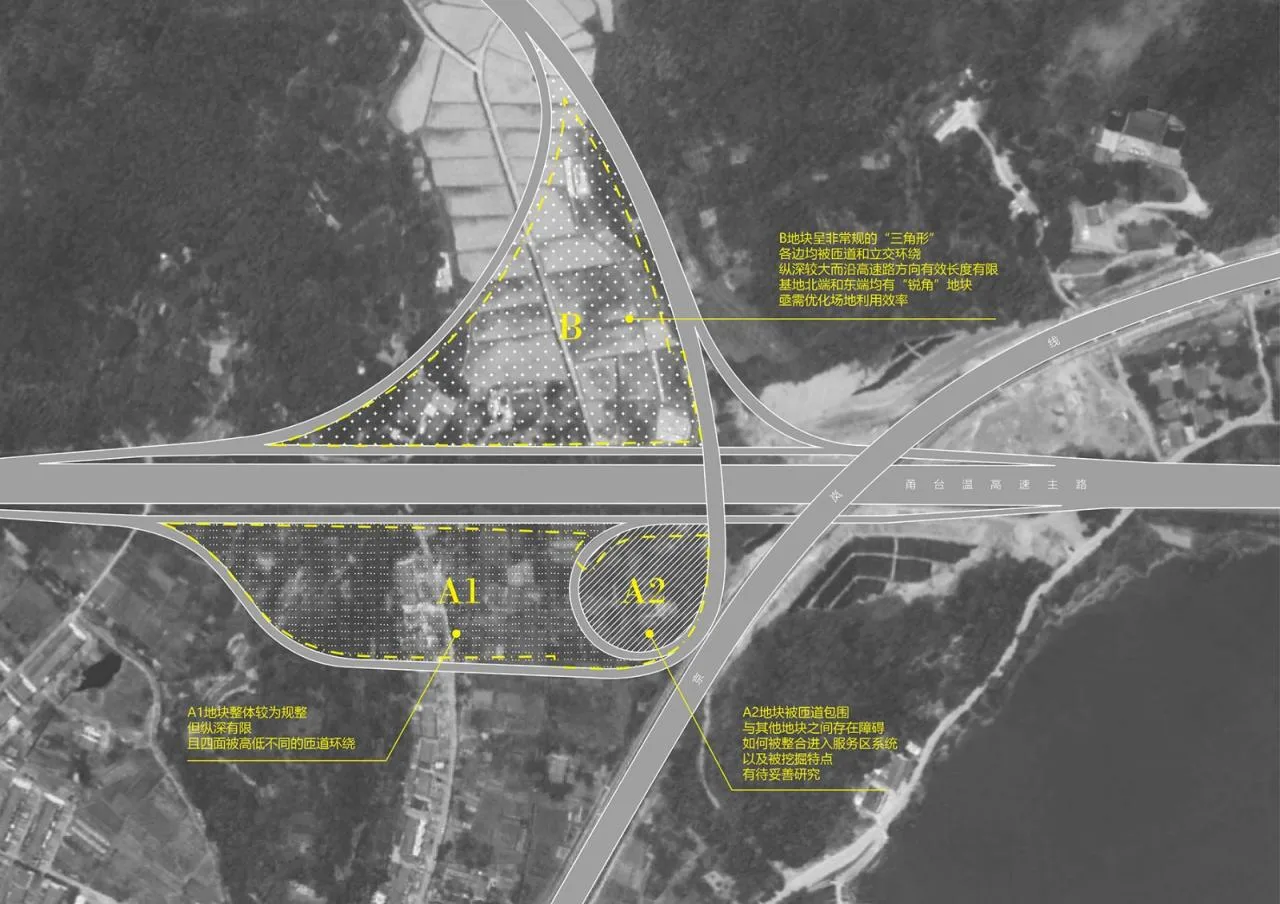
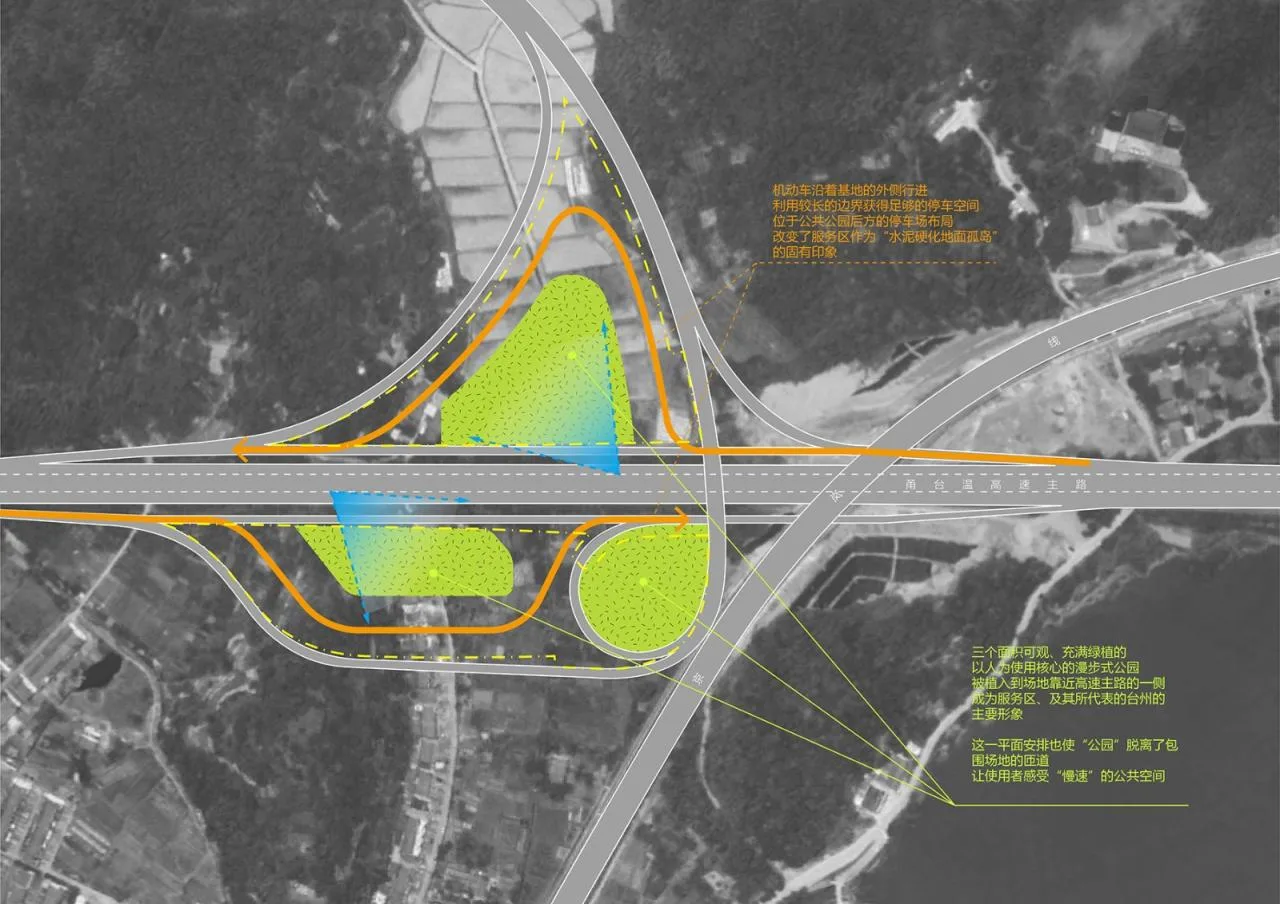
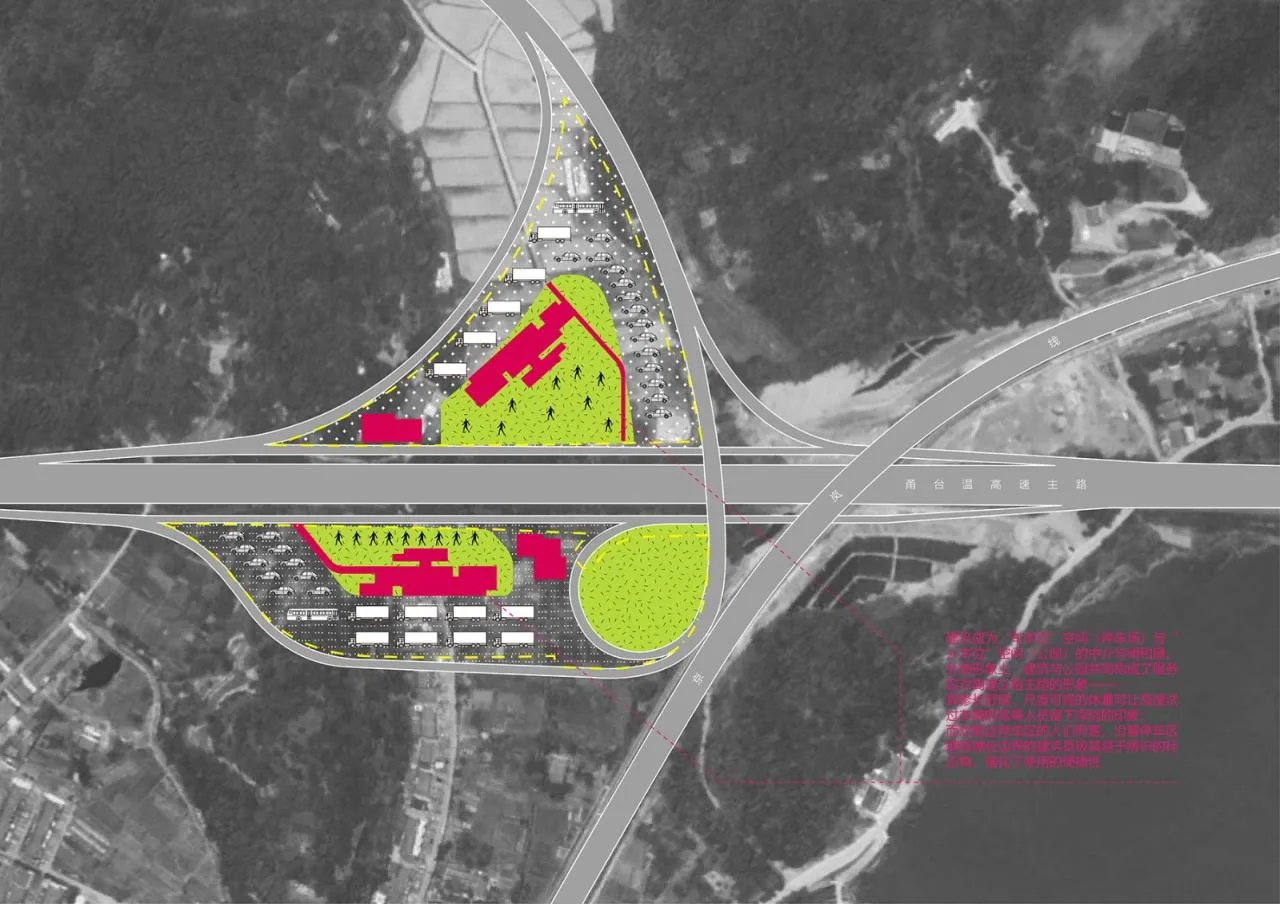
4. Architecture: Fast Form Meets Slow Space
The service center building forms the operational heart of the service area and must balance two contrasting demands: it needs a visually impactful form for fast-moving drivers while providing comfortable, walkable spaces for visitors.
Inspired by the traditional “Wufeng Tower” architecture in Taizhou, the building features a large, layered, and extended roof creating a strong visual presence. Beneath this roof, a sequence of clearly defined functional spaces—outdoor, semi-outdoor, and indoor—are interwoven to offer an engaging experience.
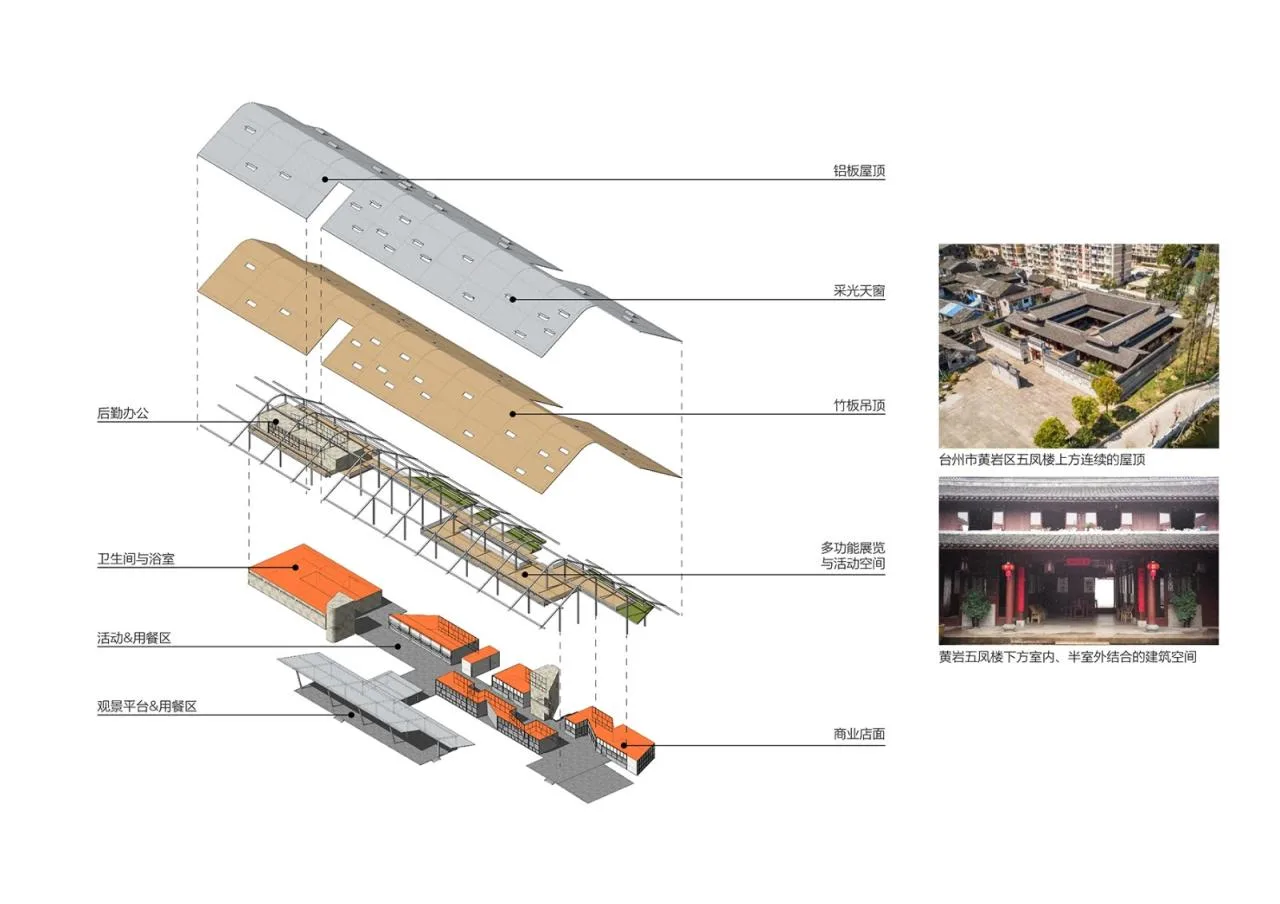
△ Building System Analysis
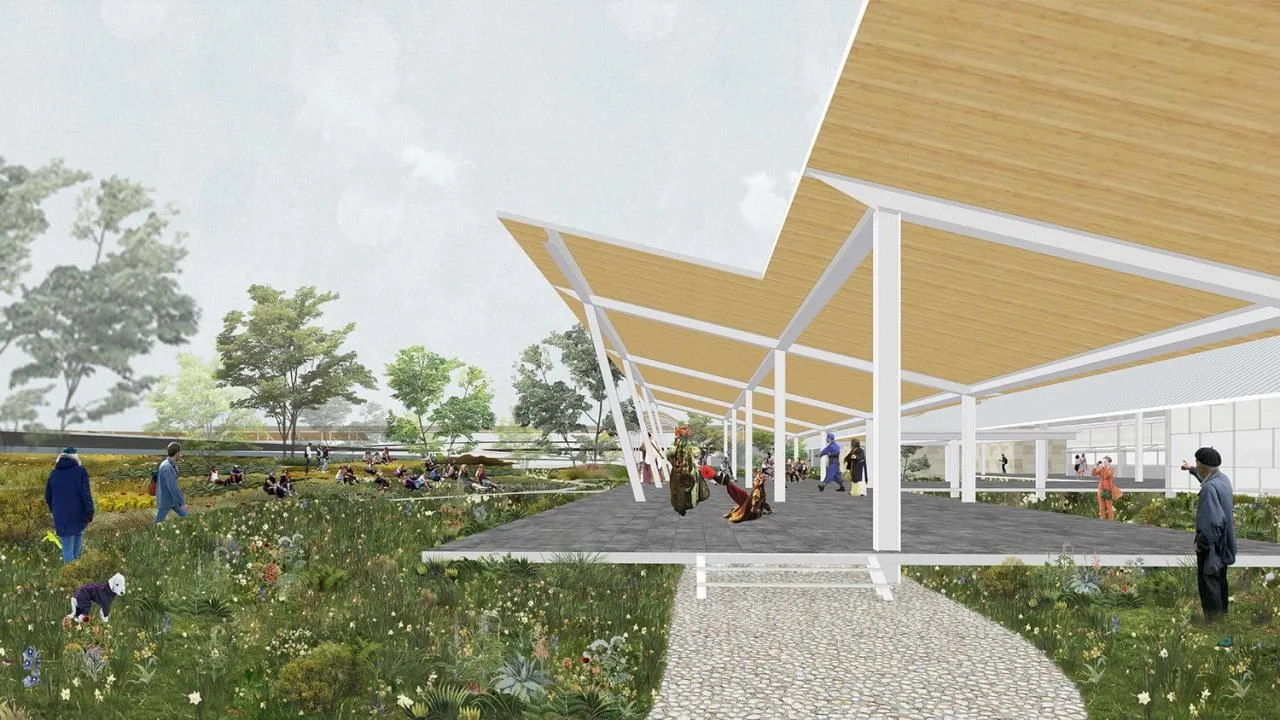
The buildings at Yuanqiao comprise two main elements: a massive aluminum roof that shimmers under sunlight, symbolizing the “fast form,” and a series of modestly sized rooms and platforms representing the “slow space.”
The expansive semi-outdoor “borderless space” beneath the roof leverages Taizhou’s favorable climate by allowing fresh breezes to circulate and dissipate heat and humidity. Roof skylights diffuse sunlight, providing natural lighting while preventing heat buildup. This design minimizes the need for air conditioning to enclosed rooms only, significantly reducing the building’s energy consumption.
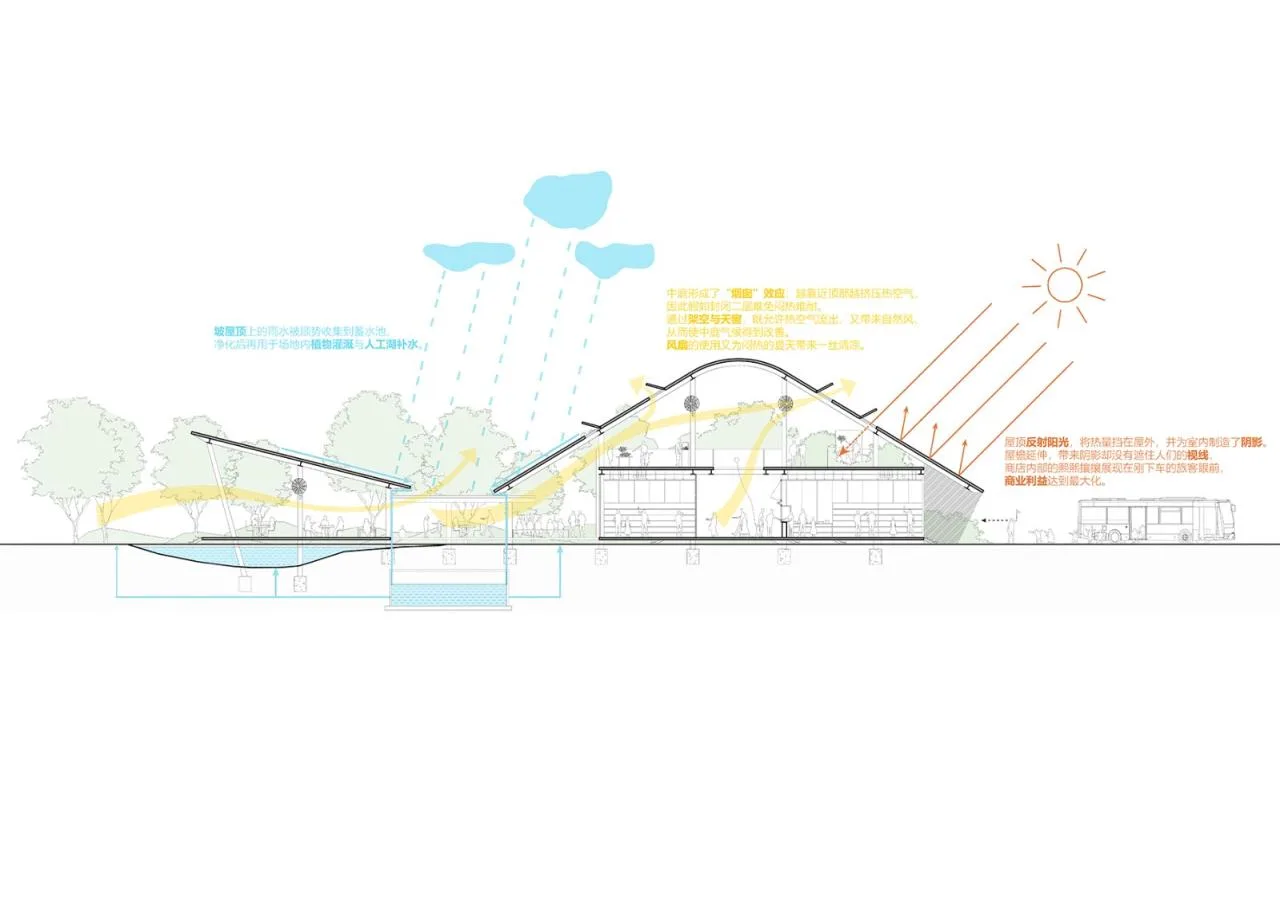
△ Green Energy Saving Analysis
Inside, a street lined with shops evokes the architectural style of Taizhou’s Huatan Ancient Town and Ziyang Street. These traditional commercial facades have inspired a design that adapts historic urban energy to modern commercial needs, preserving public vitality.
This standardized facade allows for prefabrication, potentially including the entire building, which reduces environmental impact during construction and throughout the building’s lifecycle.
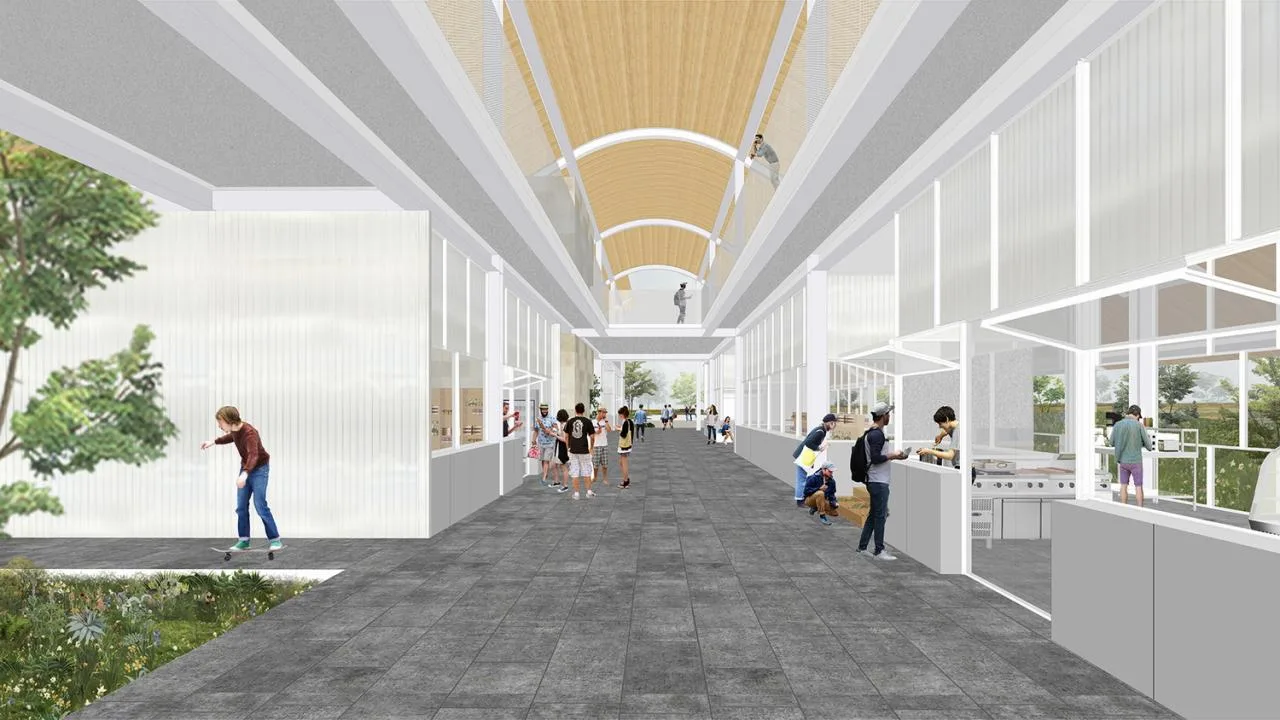
△ Shopping Street
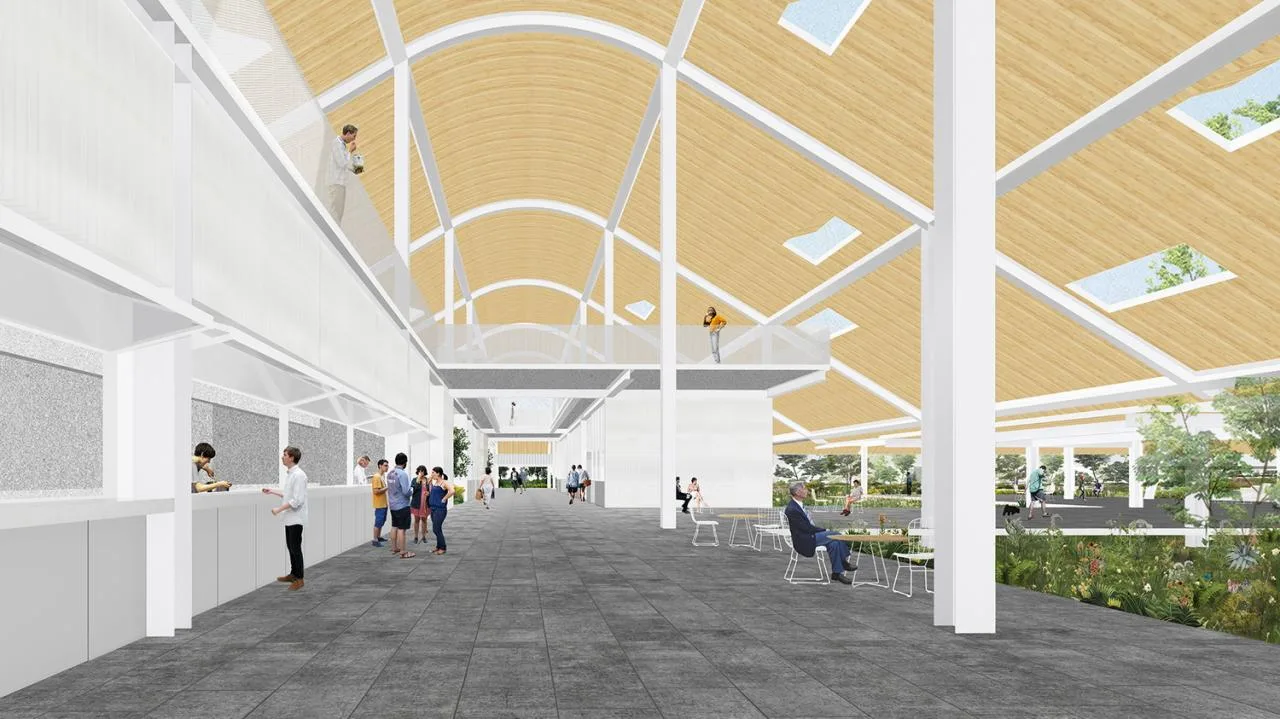
△ Restaurant
The striking observation tower emerges where two bridges intersect, reflecting the service area’s connection to its natural surroundings. Visitors access the tower via an aerial corridor and enjoy panoramic views of Xiuling Reservoir and Fangshan Forest Park from the observation deck.
The tower doubles as a vertical conservation exhibition hall, offering an immersive way to understand the local ecology and Taizhou’s conservation achievements during the ascent. It has become a prominent landmark visible from the highway.
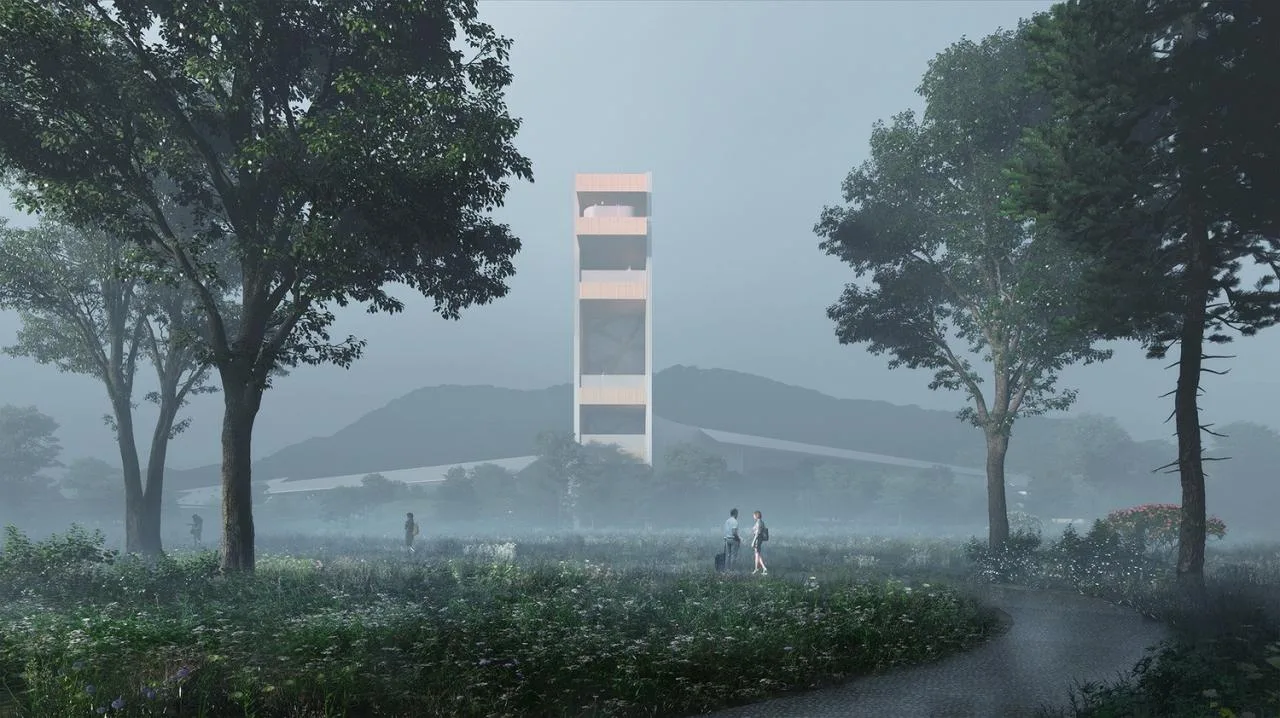
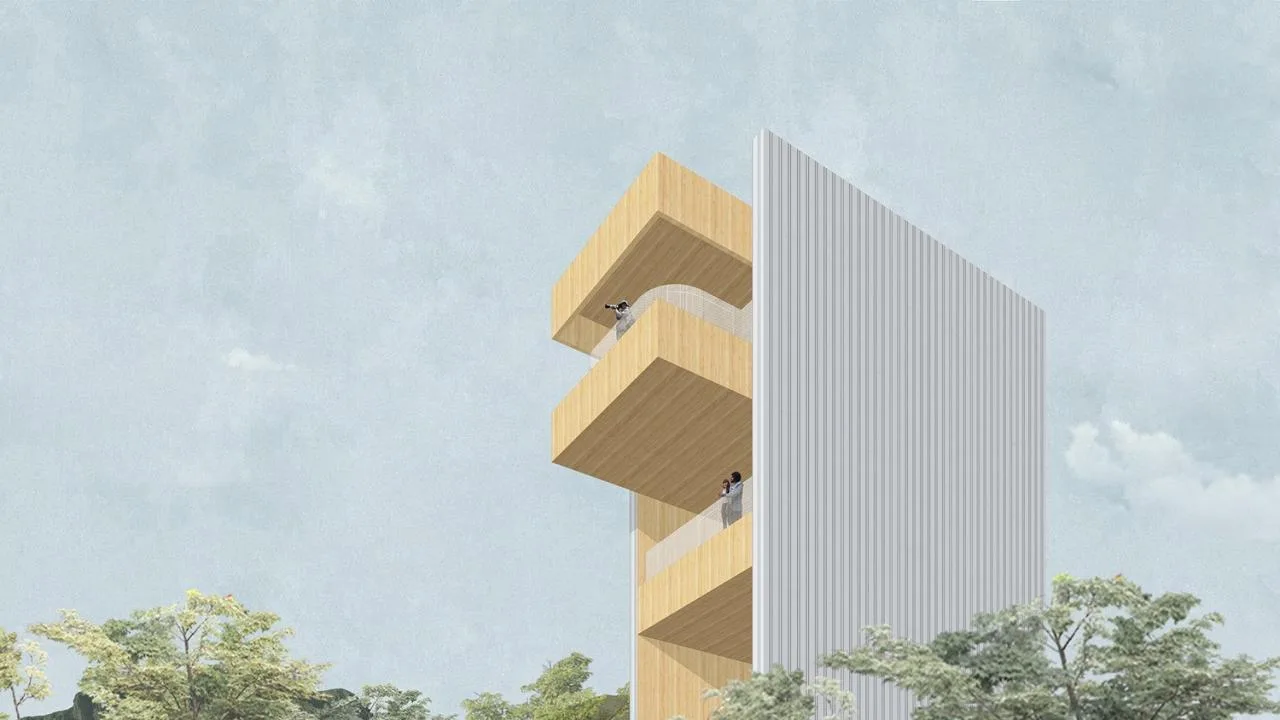
The observation tower’s top platform
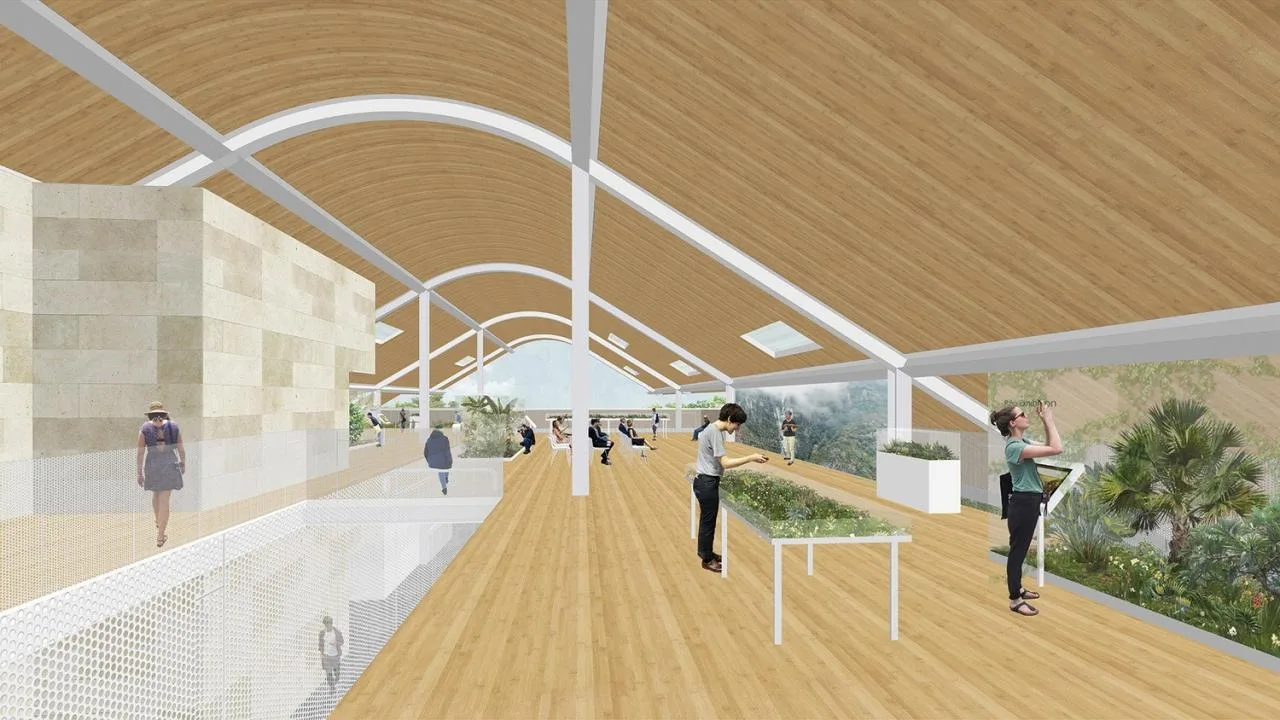
△ Multi-functional Conservation Exhibition Hall
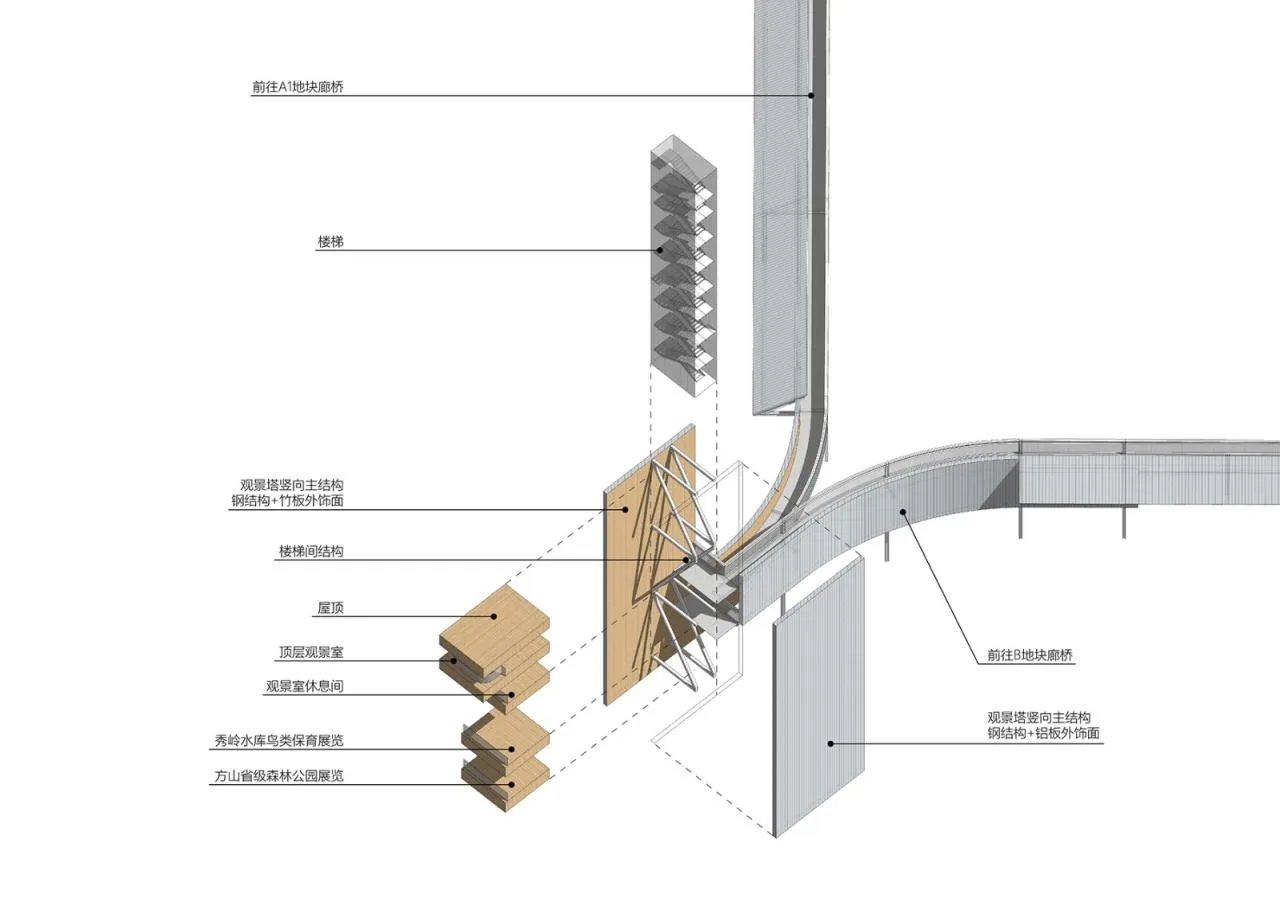
Observation Tower System Analysis
Project Drawings
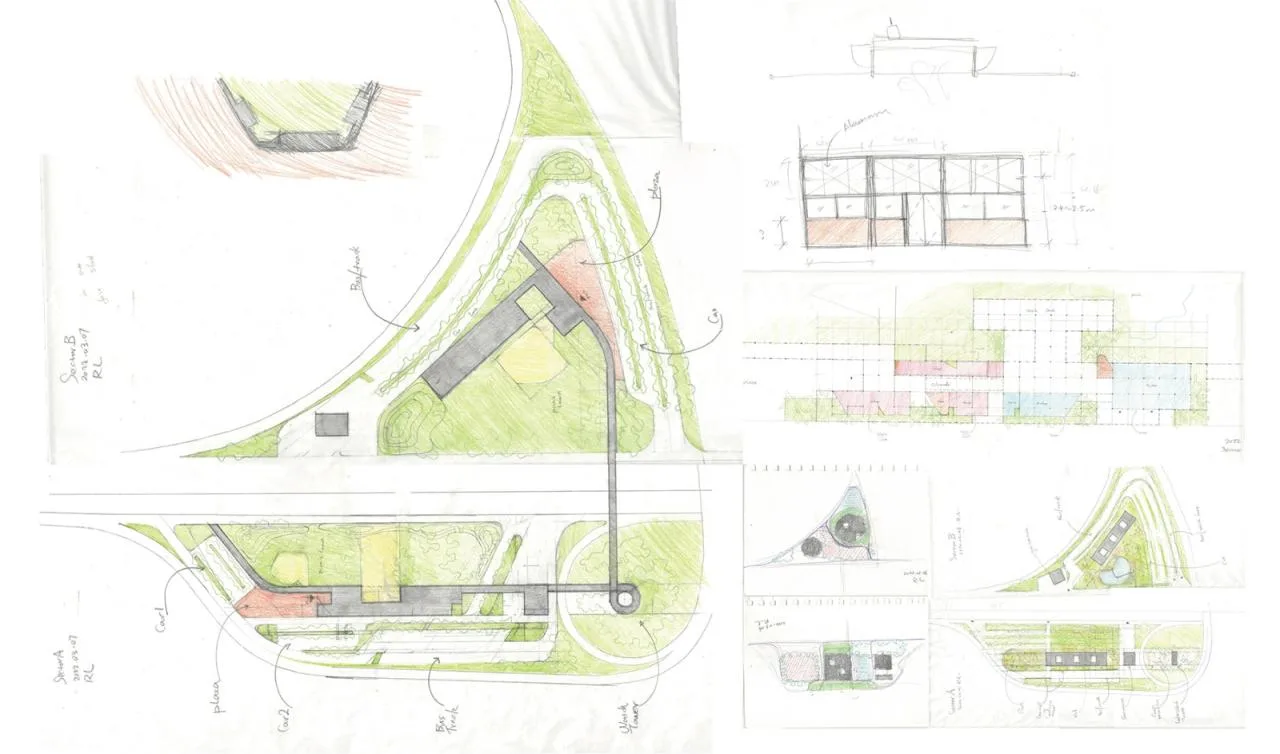
△ Design Sketch
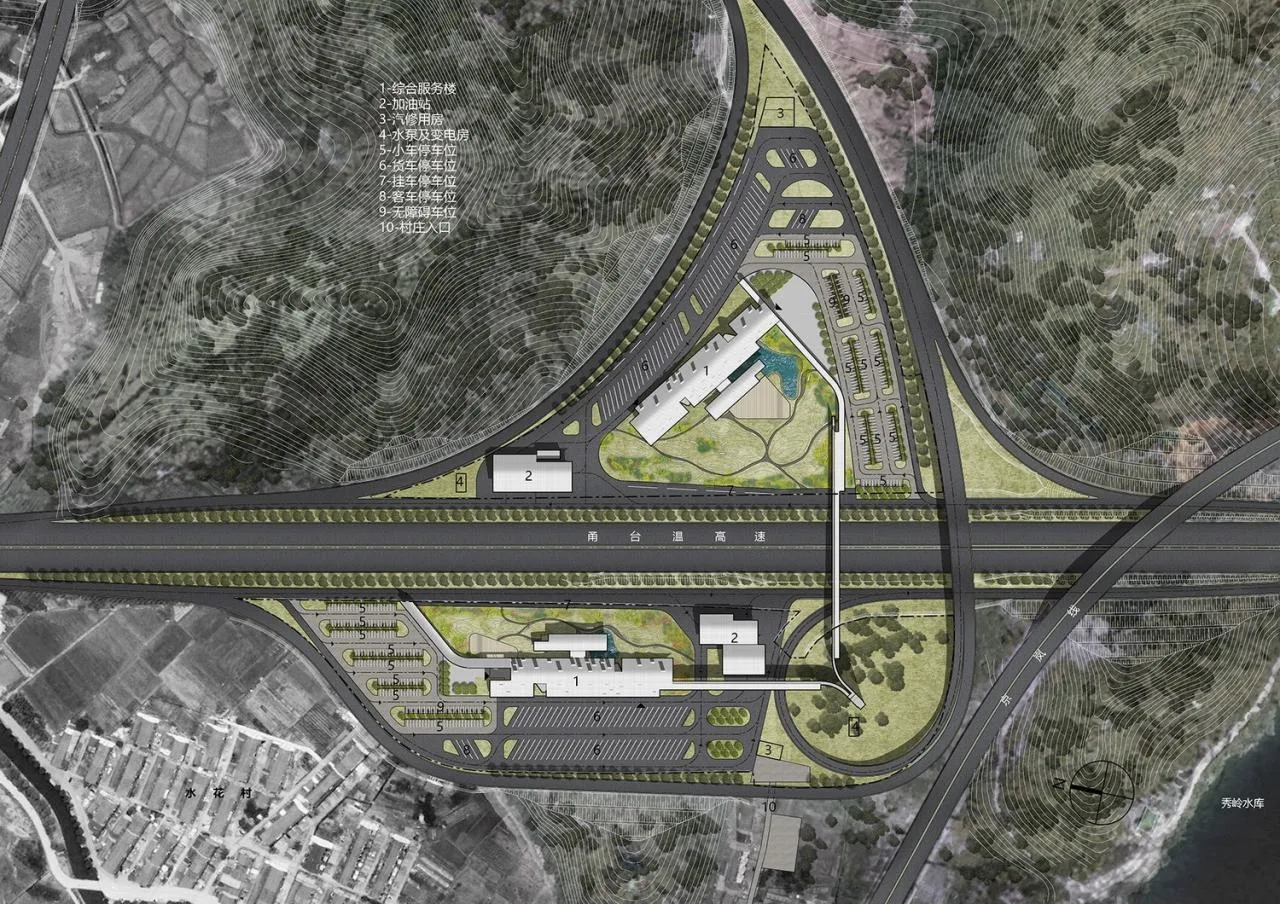
△ General Layout Plan
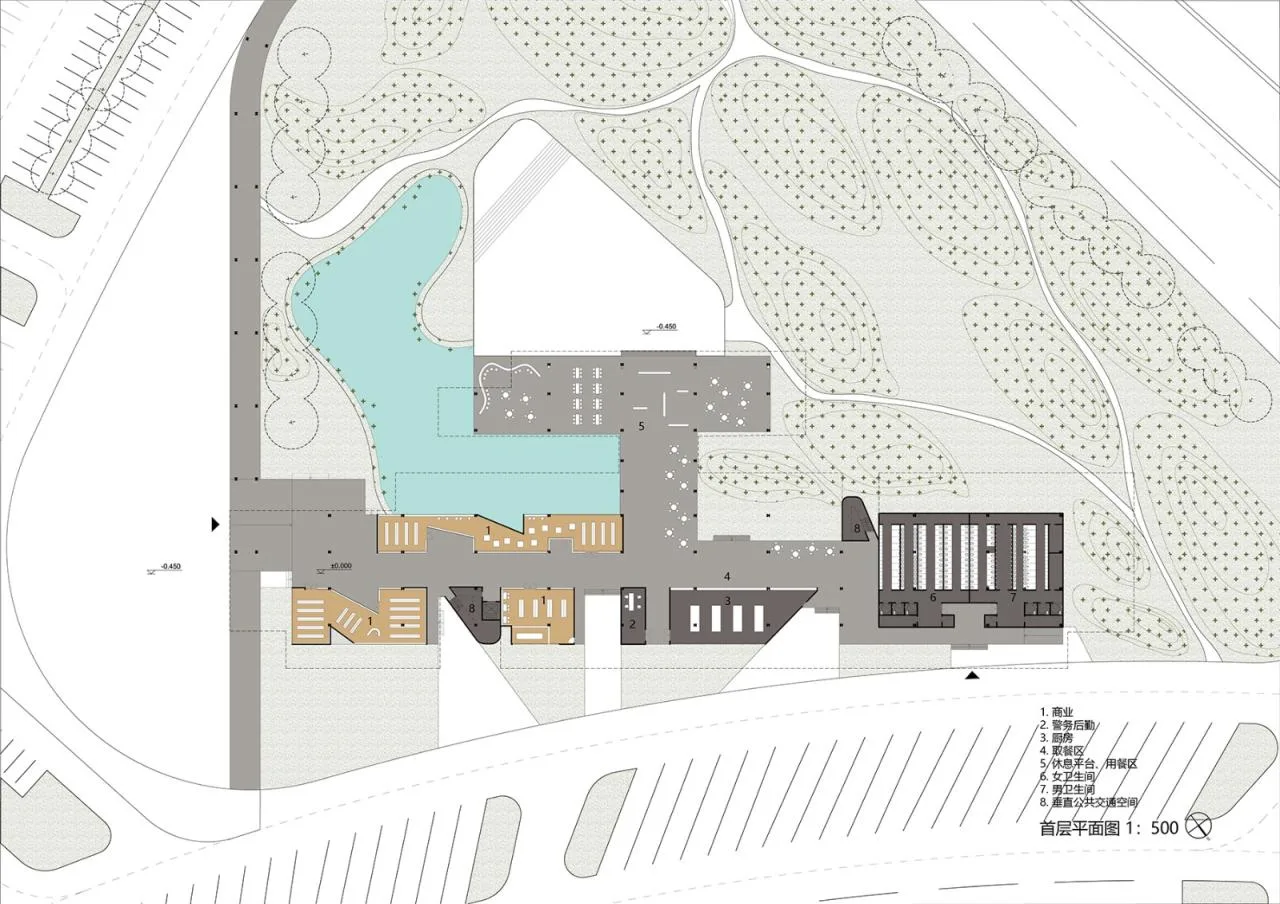
△ First Floor Plan of the Comprehensive Building in the East Service Area
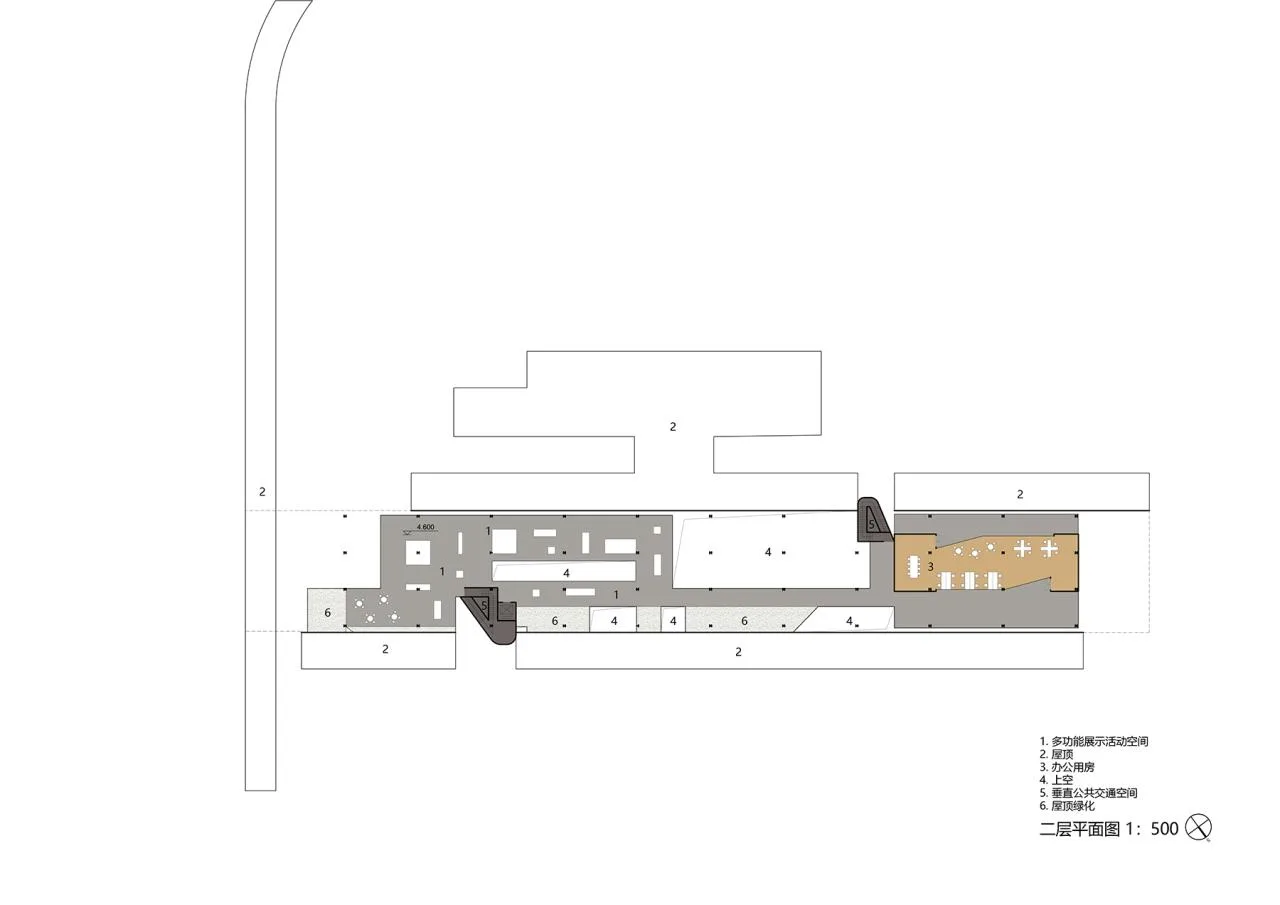
△ Second Floor Plan of the Comprehensive Building in the East Service Area
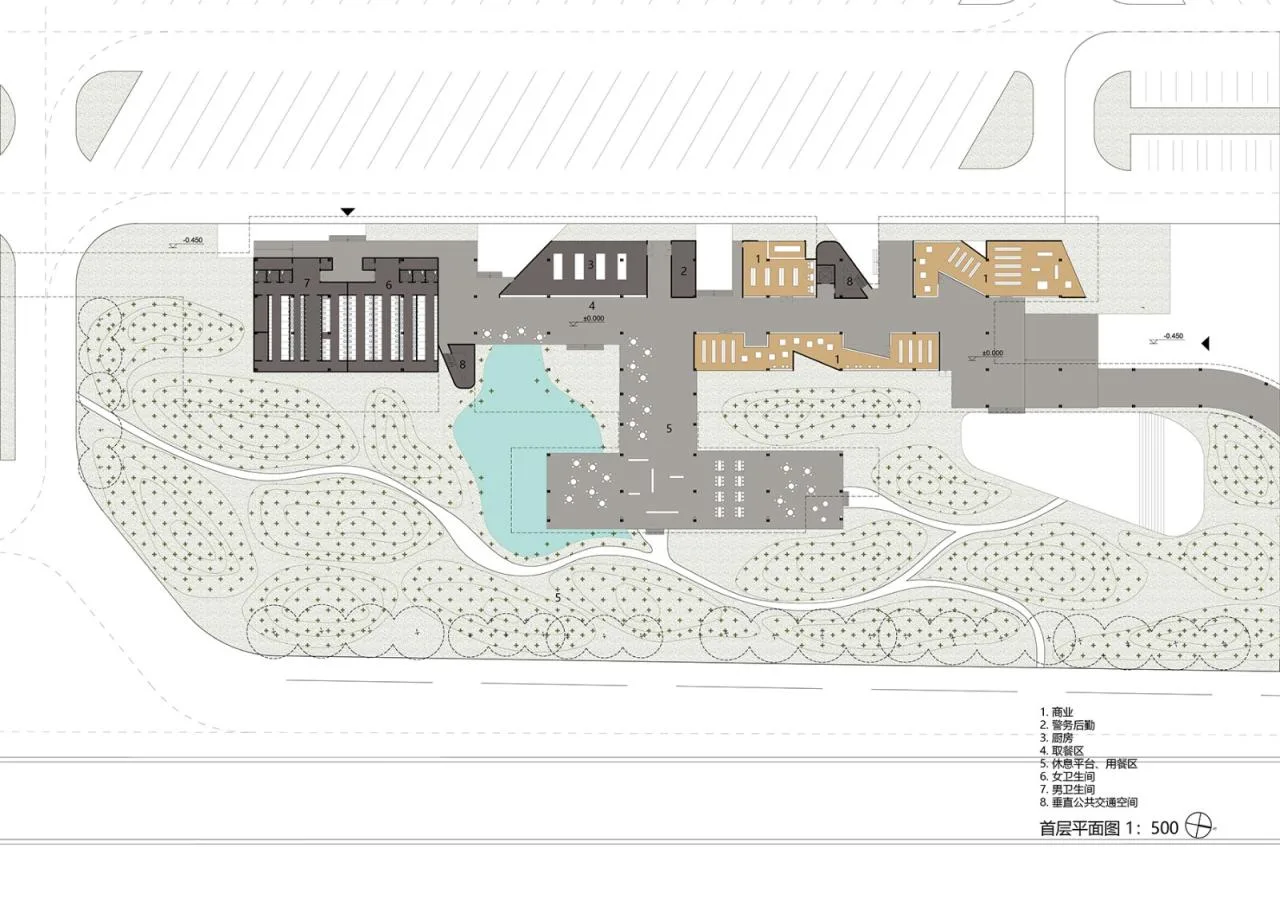
△ First Floor Plan of the Comprehensive Building in the West Service Area
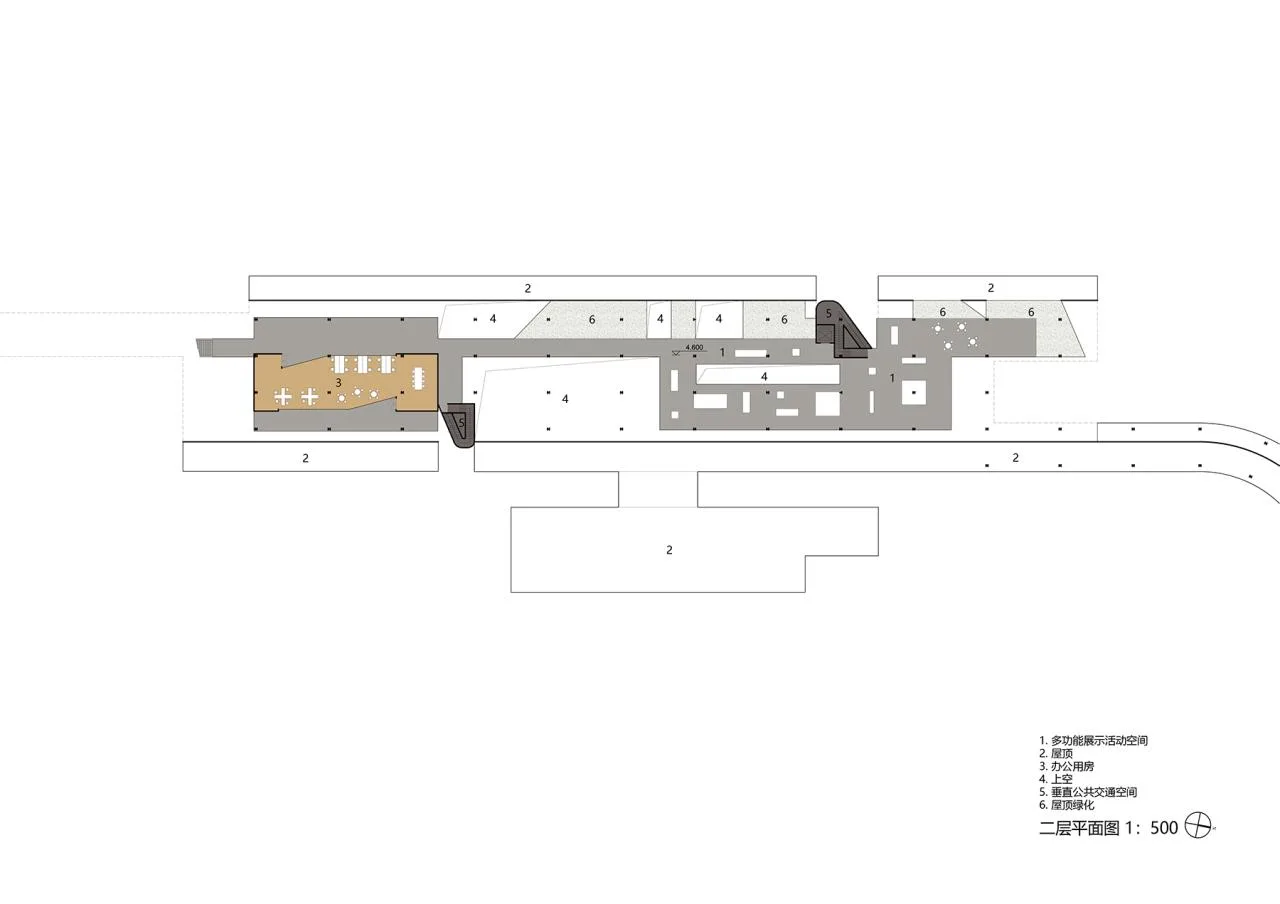
△ Second Floor Plan of the Comprehensive Building in the West Service Area
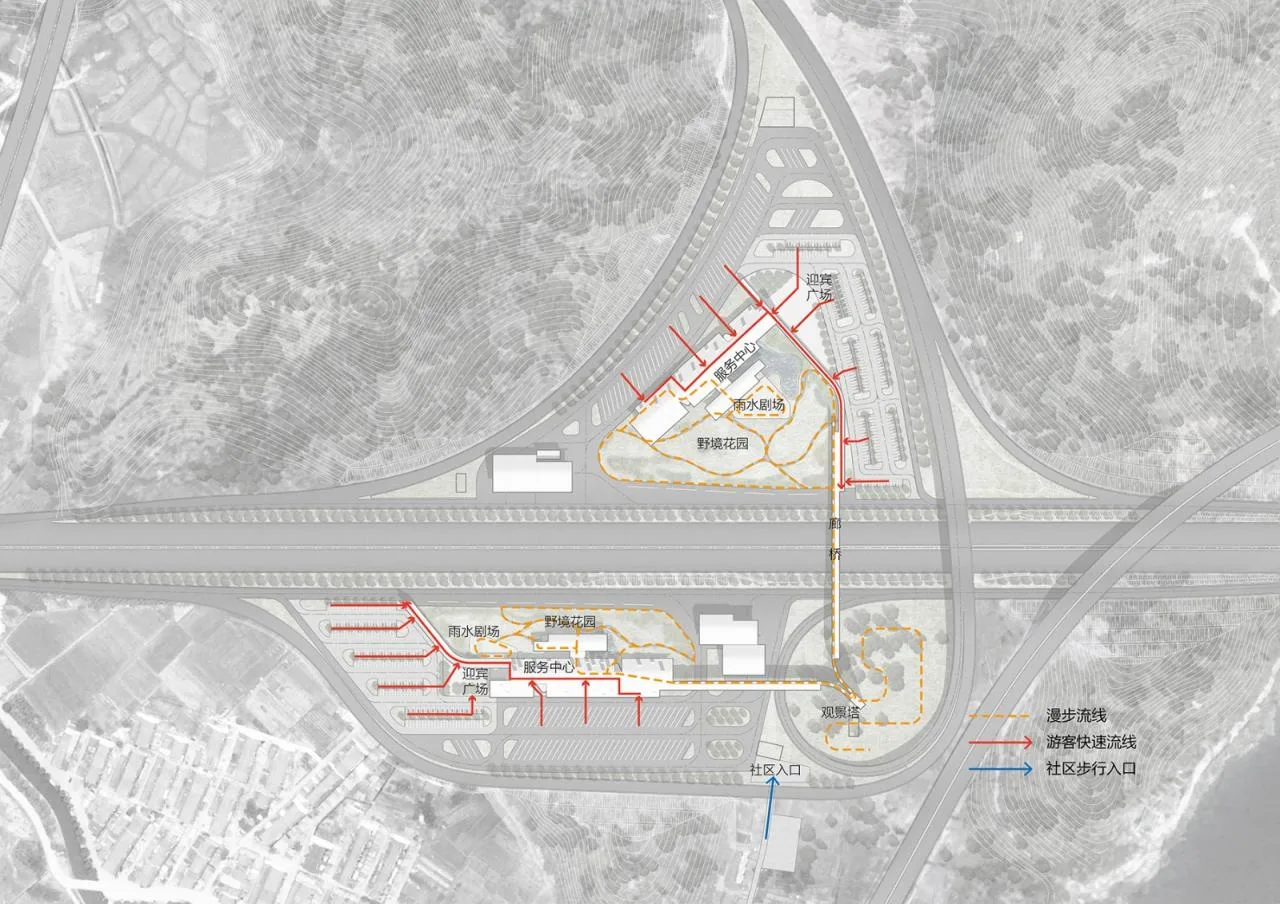
Pedestrian Flow Analysis
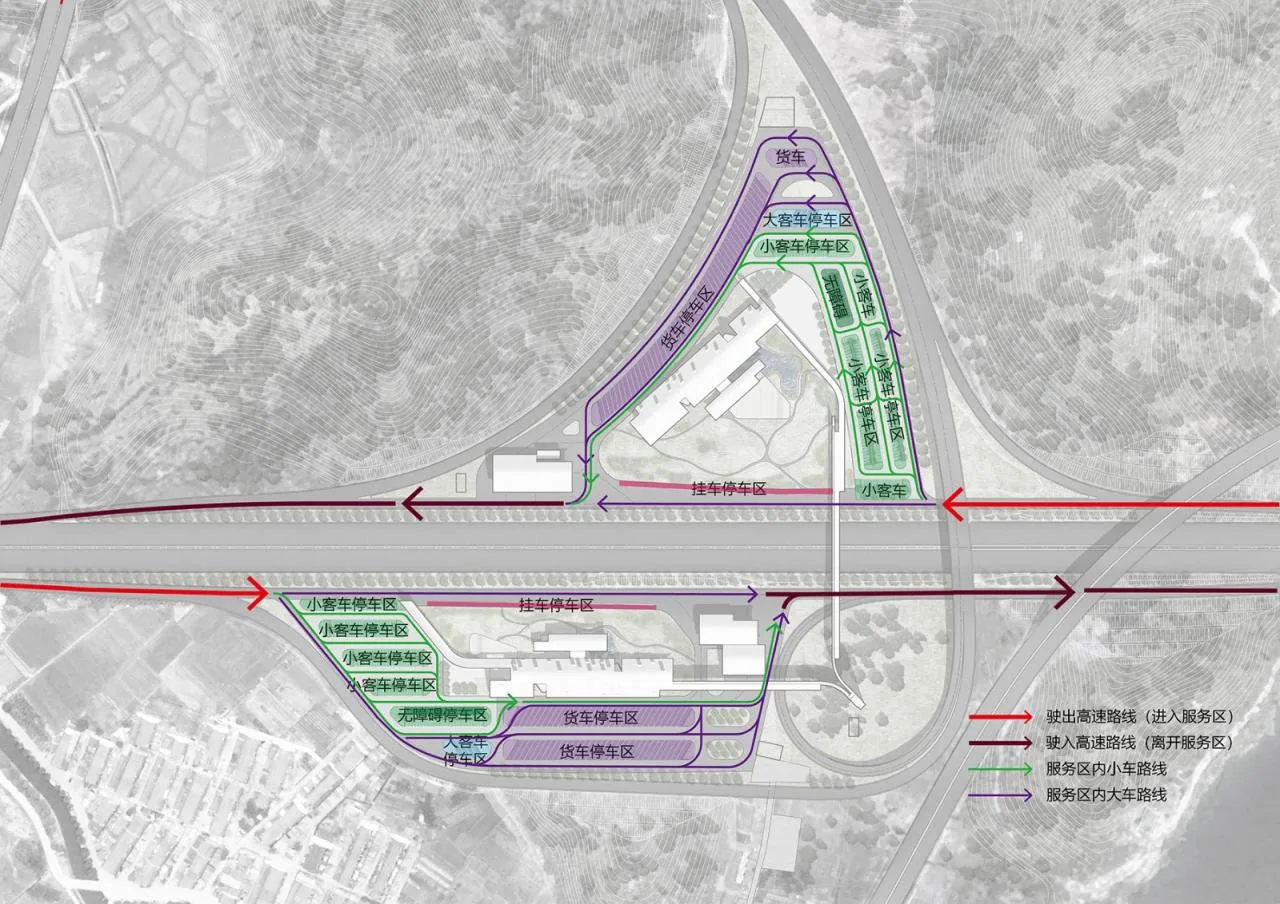
△ Vehicle Flow Analysis
Project Information
Location: Taizhou, Zhejiang
Year: 2022
Status: Conceptual Proposal
Type: Comprehensive Highway Service Facilities
Functions: Conservation, Leisure, Commercial, Dining, Gas Station, Parking
Total Construction Area: 8,000 square meters
Total Land Area: 11.822 hectares
Team: Similar to Architecture + China Railway First Survey and Design Institute Group Co., Ltd
Lead Architects: Luo Ren, Zhao Yao
Design Team: Wang Yingli, Wu Chenyu, Wen Yifan















Must log in before commenting!
Sign Up