
In traditional CAD workflows, component information in 2D models primarily consists of planar elements such as points, lines, and surfaces. Construction engineering tasks are typically performed in two dimensions—length and width. However, this limited dimensionality makes it challenging to store comprehensive component information and hampers effective communication across different disciplines and project stages. The introduction of Building Information Modeling (BIM) has significantly improved this situation. So, what exactly can BIM models offer? Let’s explore.
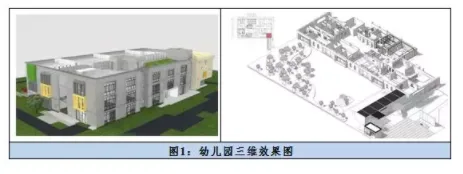
First and foremost, the key advantage of BIM lies in its transformation from 2D to 3D, coupled with enriched information content. While traditional CAD models can be converted into 3D visualizations using software like 3D MAX, these models are primarily for display purposes and lack integrated data. BIM models, on the other hand, not only provide a visual 3D representation but also embed detailed information, attributes, and data for each project component. This makes the BIM model both visible and functional, greatly enhancing communication among all stakeholders. For example, architects can directly create a 3D digital information model using BIM software and present it to clients for clear, physical understanding—eliminating the need to translate 3D models back into complex 2D drawings and saving clients time and effort in interpretation.
Secondly, component data within a BIM model extends well beyond geometric (spatial) and physical (attribute) information. It encompasses data from all stages of a construction project’s lifecycle, from planning and design through operation and maintenance. As the project advances, information about each component is continuously stored within the BIM model, enabling stakeholders to access and analyze relevant data anytime and anywhere. This comprehensive data management supports improved project quality and decision-making. Furthermore, BIM models serve as a central data platform by integrating various system models—such as architectural, structural, curtain wall, mechanical, electrical, and plumbing systems. Using specialized BIM software, conflicts and inconsistencies between these systems can be identified and resolved. When combined with 4D, 5D, and 6D BIM models, which link scheduling and cost control data, project implementation can be managed holistically. This platform breaks down traditional data silos, fosters collaboration, and significantly boosts work efficiency.
Additionally, BIM models enable real-time updates and changes across the entire project. In contrast, traditional CAD drawings require starting from scratch whenever a change occurs, leading to increased workload, slower design and construction speeds, and potential quality issues. With BIM’s associative capabilities, only the affected components need to be adjusted when issues arise, and all related building elements are automatically updated, ensuring model consistency. This intelligent, responsive approach is far more efficient and less error-prone than manual drawing revisions.
Finally, traditional 2D models are inherently limited in their ability to express and describe information due to their two-dimensional nature. BIM models expand on this by not only representing length, width, and height but also incorporating additional dimensions such as 4D (time) and 5D (cost). This multidimensional approach elevates project economics, comfort, and sustainability to new levels. Especially with the growing emphasis on low-carbon and green building practices, BIM facilitates applications like comfort simulations, energy consumption analysis, green building assessments, and sustainability evaluations. These capabilities help meet the evolving social demands of project owners and the construction industry.
That wraps up our overview of what BIM models can do. We hope this insight proves valuable to everyone interested in modern construction technologies.














Must log in before commenting!
Sign Up