
The traditional construction industry has long relied on CAD drawings to communicate information throughout various project stages. However, with the advancement of BIM technology, the process has become more sophisticated and efficient. Different BIM software can be applied to specific components such as steel reinforcements, architectural appearances, and mechanical and electrical systems. This allows for flexible view angles and more streamlined design approaches. Today, let’s explore the key differences between BIM and CAD.
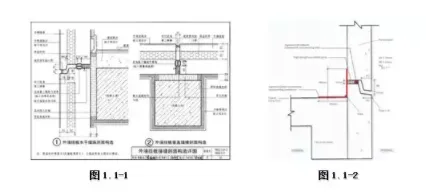
Several decades ago, architectural designers primarily used CAD drawings and scaled physical models to convey their design concepts to clients. As a result, CAD drawings served as transmission files containing standards, components, specifications, and other essential data. Yet, relying on CAD often meant generating hundreds or even thousands of separate files per project. Each file was independent and lacked integration within a centralized information database. Consequently, interpreting this scattered information required significant manual effort, deeply dependent on an individual’s expertise and professional background.
Unlike traditional CAD projects, BIM projects use lines, arcs, and text that can be adjusted based on parameters such as floor plans, elevations, sections, schedules, 3D representations, and cost estimates. These elements are integrated into a comprehensive information database, which is then applied throughout the architectural design process.
Moreover, traditional CAD’s method of information transmission tends to be fragmented and disconnected, making it challenging to communicate effectively from design to construction. Issues such as information backflow and data silos are common, hindering collaborative workflows across different disciplines and departments. In contrast, BIM establishes a unified data platform and database that consolidates information from multiple disciplines and project phases. This enables all project stakeholders to access and analyze data anytime, anywhere, fostering better collaboration and interaction.
Another significant advantage of BIM over traditional CAD is its dynamic linking capability. In the past, any design change required extensive manual reviews, where numerous workers had to check hundreds or thousands of drawings individually to assess the impact. This process was time-consuming, resource-intensive, and prone to errors. With BIM’s linkage feature, modifying the model automatically updates all related components, ensuring consistency and unity across the entire project. This not only reduces workload but also significantly enhances work efficiency.
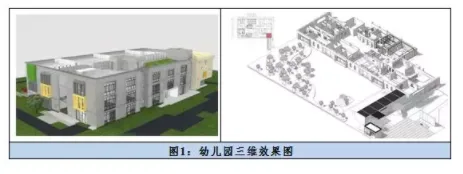
In summary, the differences between BIM and CAD are substantial. Compared to traditional CAD drawings, BIM enables the creation of 3D visualization models that effectively assist in reviewing and resolving engineering issues throughout the project lifecycle. By integrating BIM into the workflow, construction errors and redundant work can be greatly minimized.














Must log in before commenting!
Sign Up