
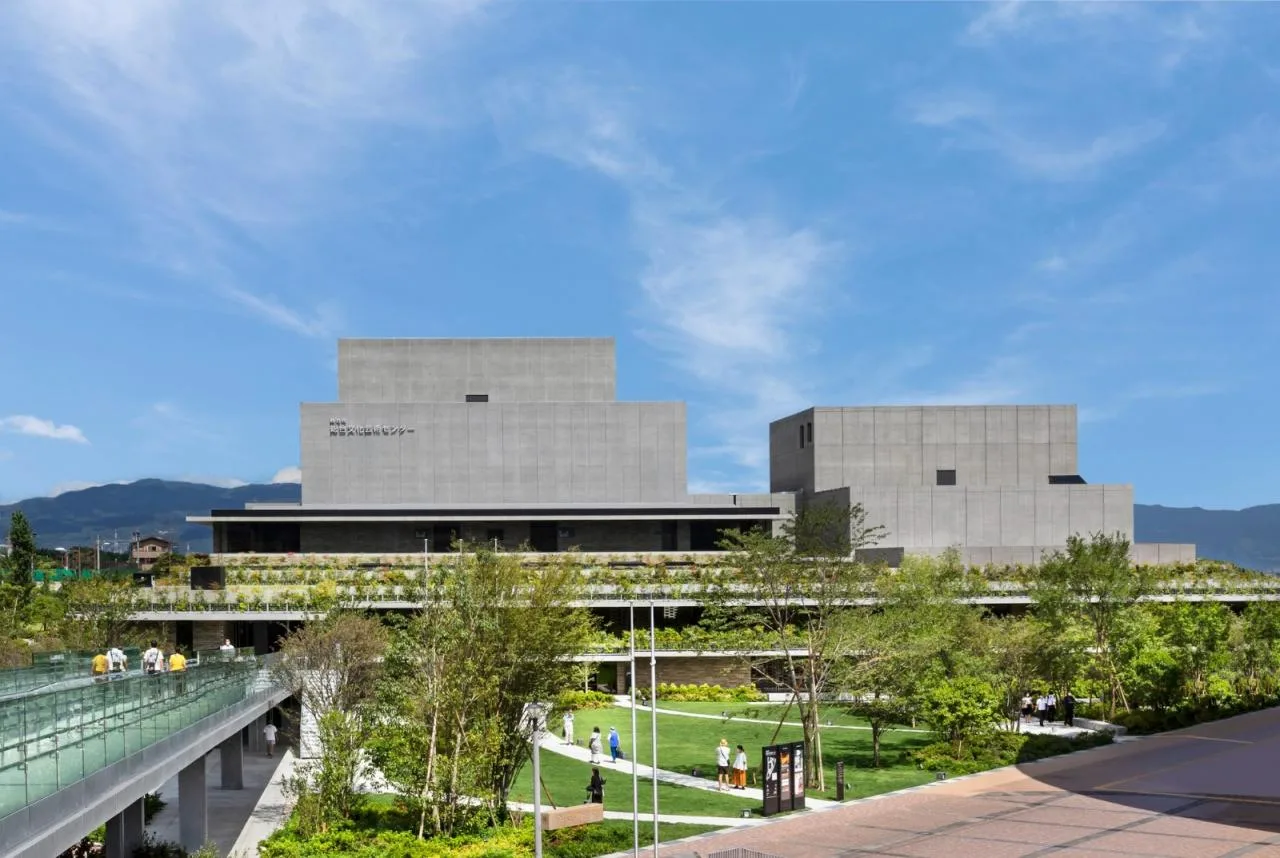
The Meifang Performance and Visual Arts Center is a cultural hub that seamlessly blends art and nature. Located in the heart of Meifang City, Osaka Prefecture, Japan, it is conveniently accessible—just a 30-minute train ride from Osaka and Kyoto, and a 5-minute walk from Meifang Station. This center comprises three museums and art galleries, designed to create a new urban landmark beloved by the local community.
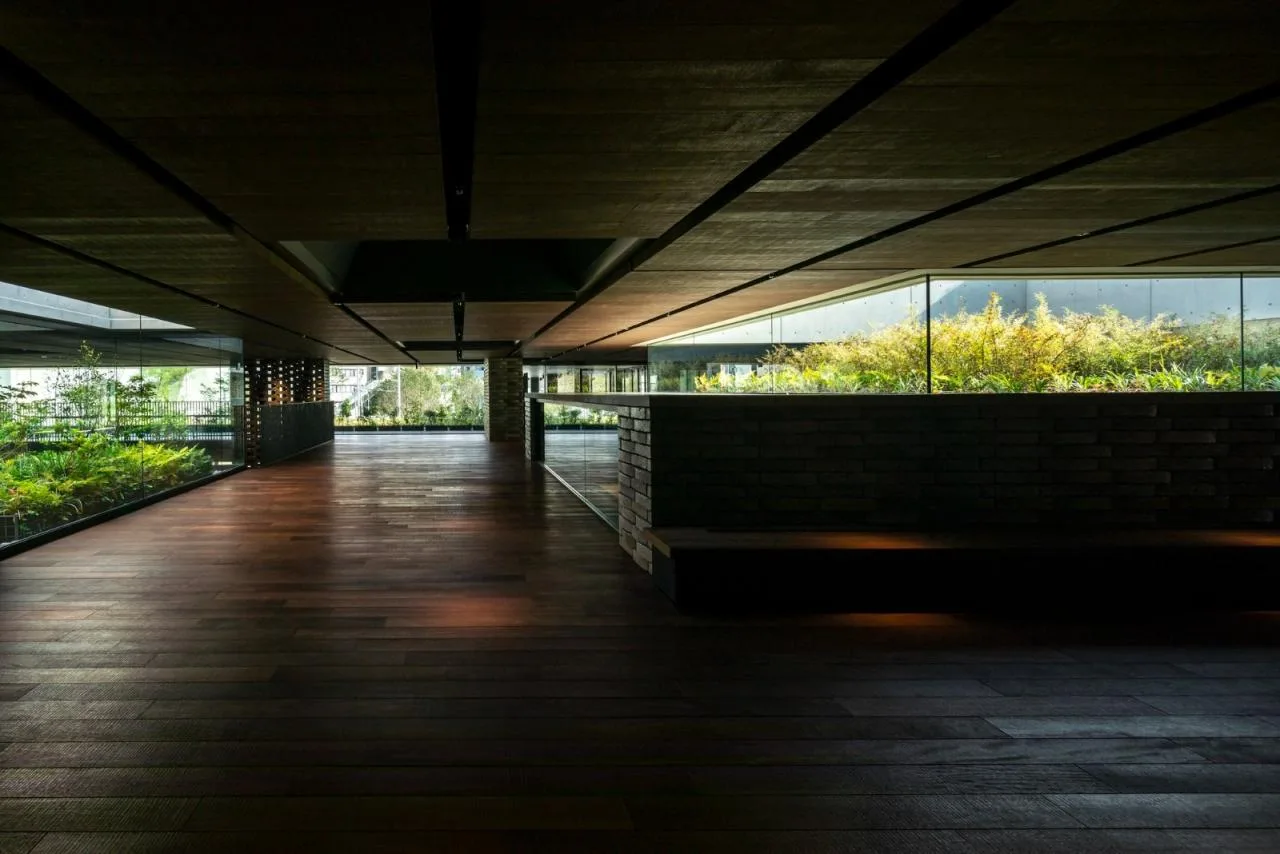
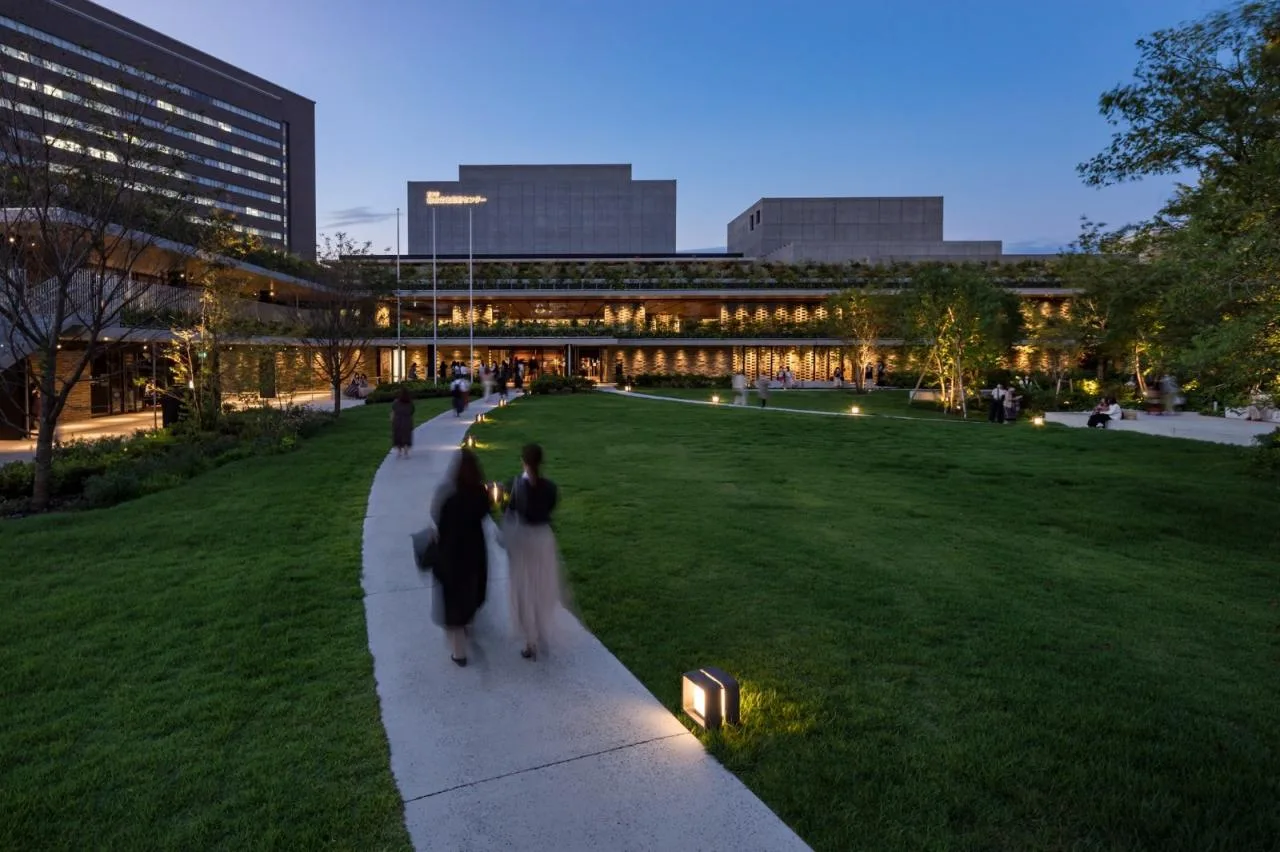
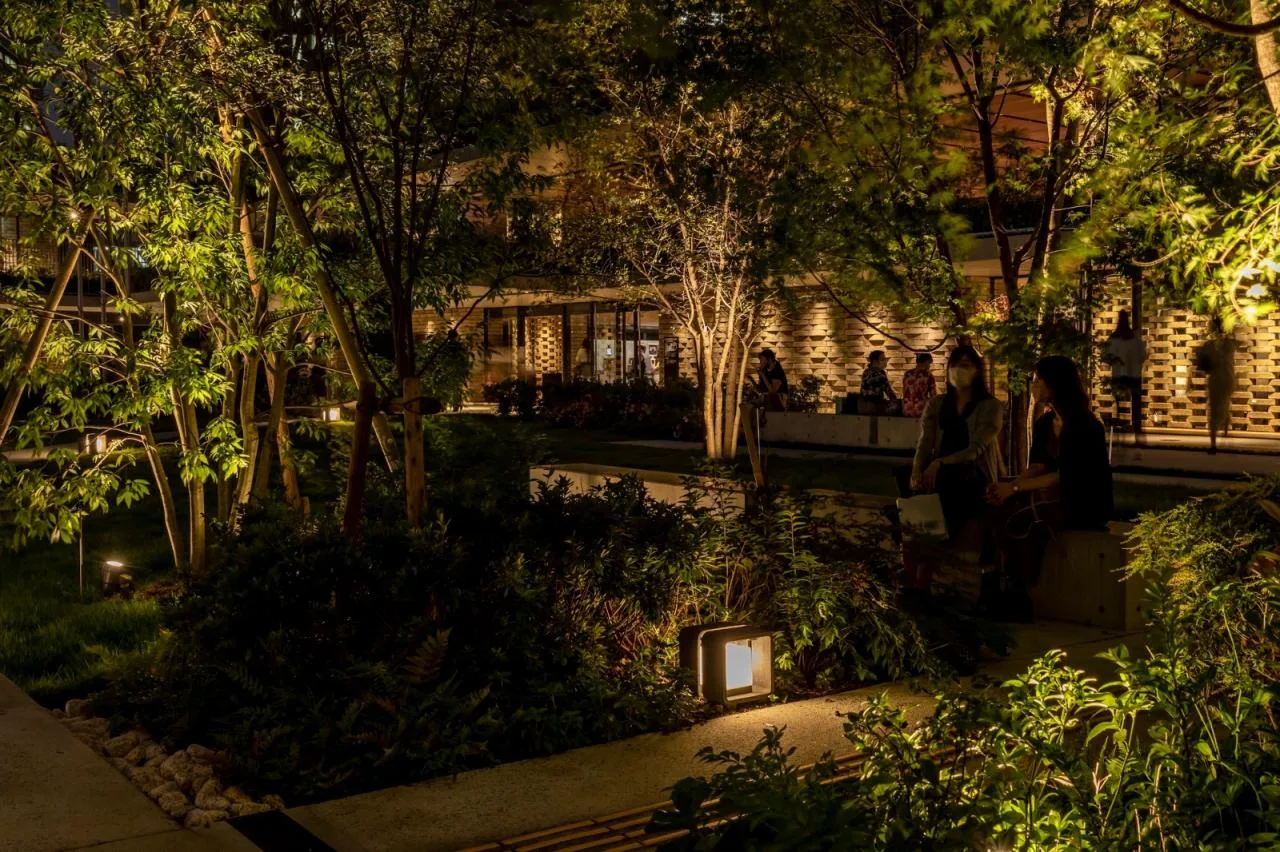
Outside the building, cultural and artistic spaces are thoughtfully distributed across the plaza. These include grassy areas, shaded spots, and stages that encourage citizens to gather and engage. The architects emphasized spatial continuity between the interior and the surrounding environment. Features such as the building’s courtyard and green eaves foster a naturally bright and inviting atmosphere. The intention is for the indoor and outdoor spaces to function as one integrated area that supports and enhances the artistic activities of the community.
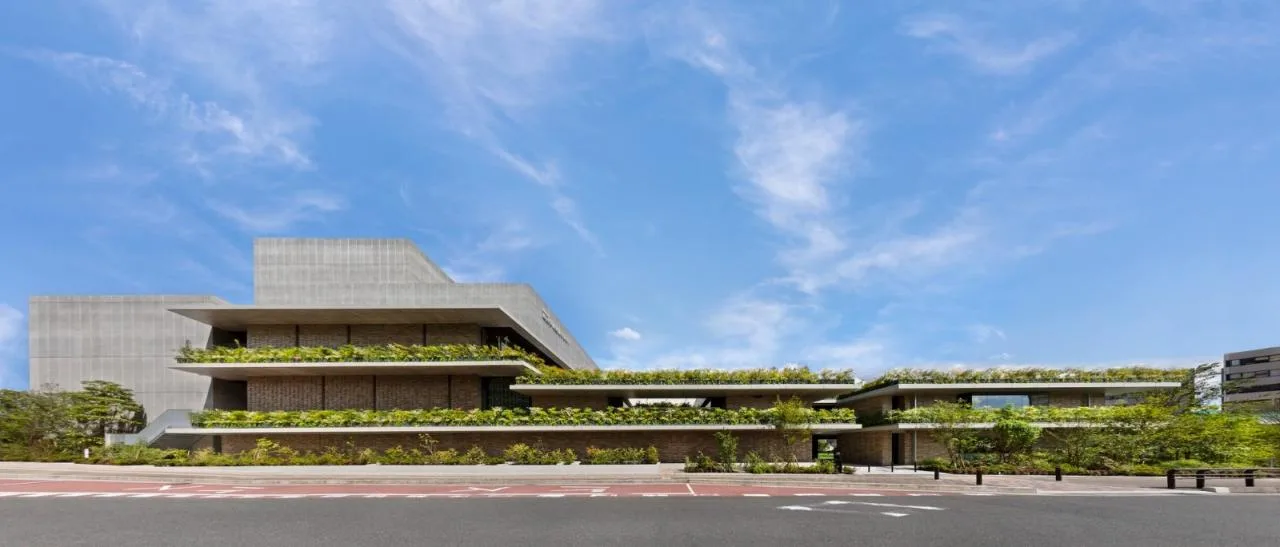
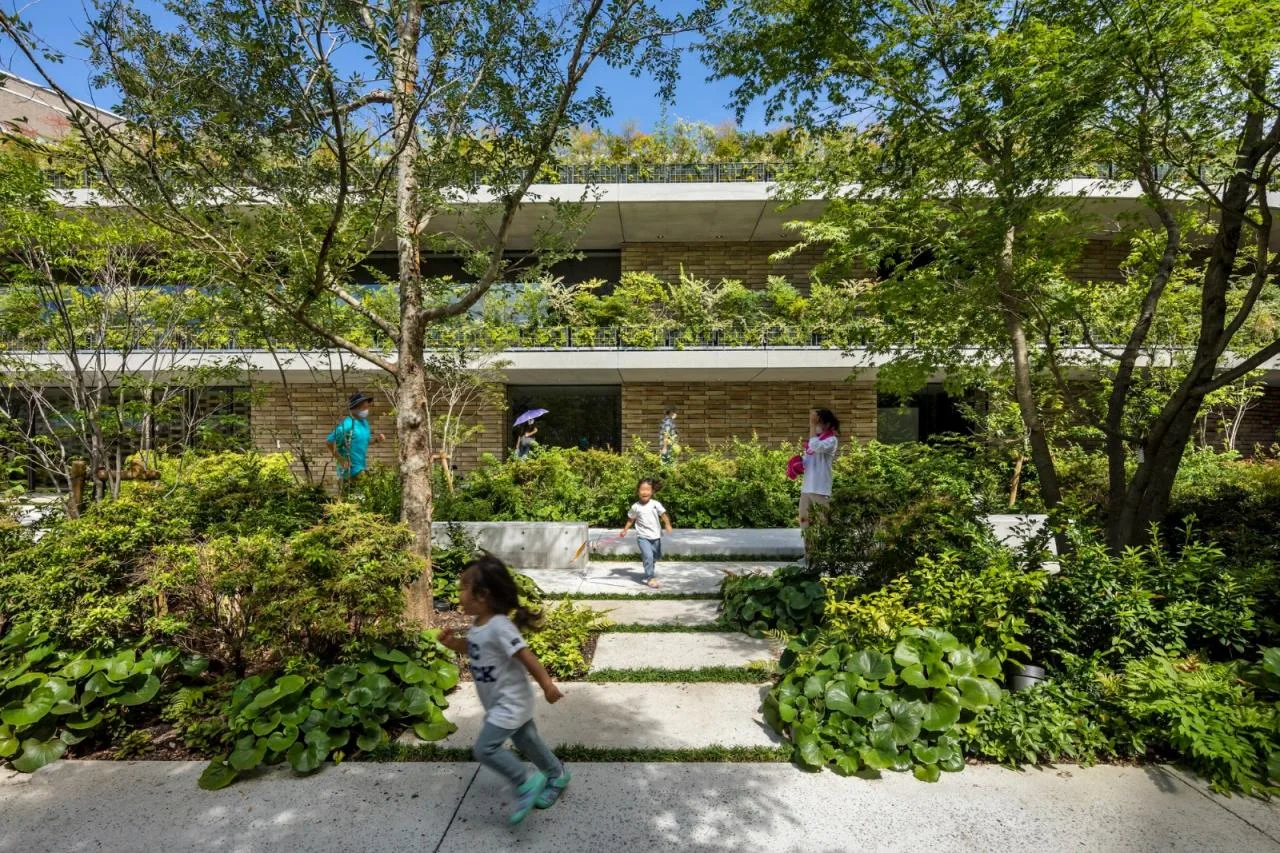
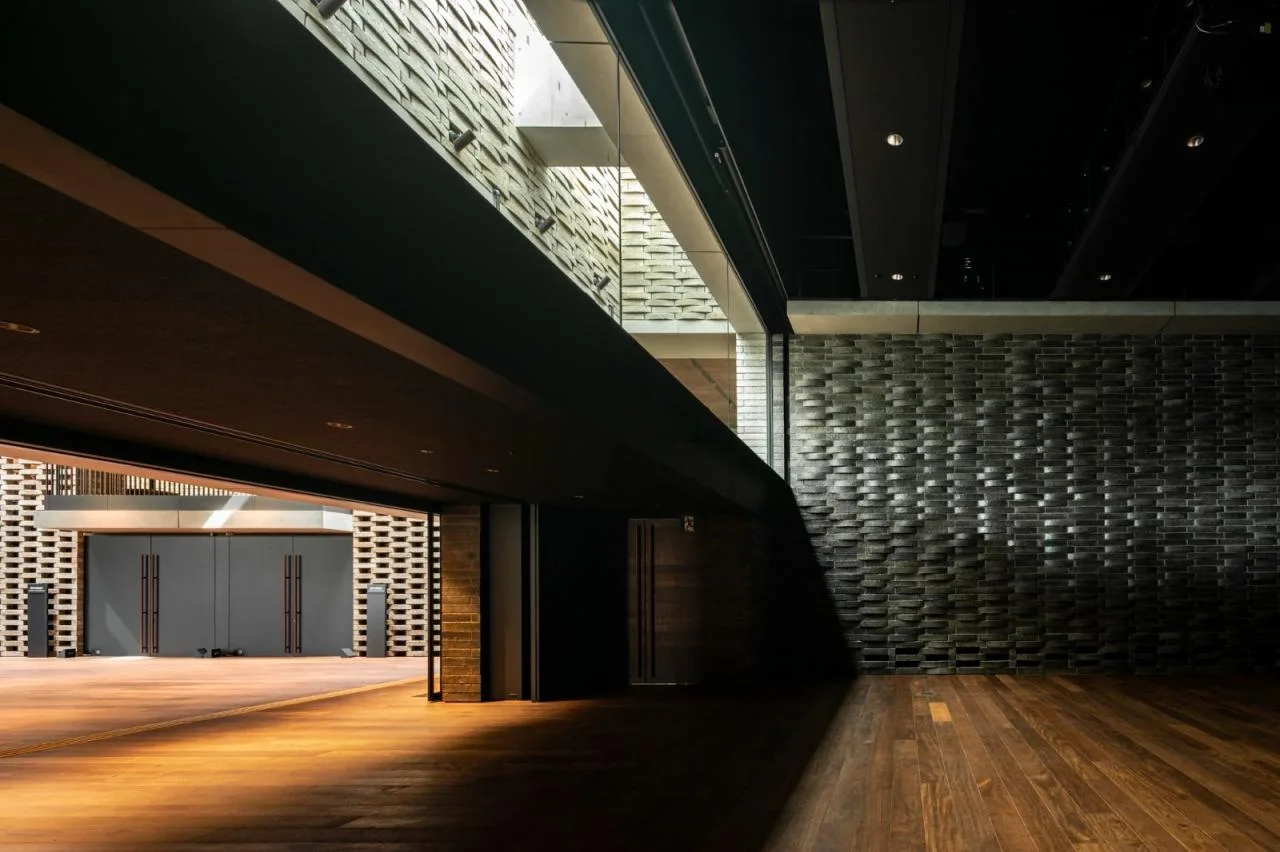
The architect’s design of the compact hall focuses on elegance and refinement, reflecting the cultural center’s identity while ensuring the space is user-friendly. Unlike the grand entrances of many cultural venues, the Meifang Center’s lobby and hall feature lower ceilings, creating an intimate and approachable atmosphere. The careful consideration of ceiling heights, corridor widths, and room distances enhances visibility and fosters a sense of closeness within the building.
This design allows visitors to feel connected to the activities happening around them and to appreciate the abundance of greenery. The building’s modest scale blends quietly amidst the surrounding trees, offering a sense of security and welcoming all visitors to freely enjoy the facility and the public square outside.
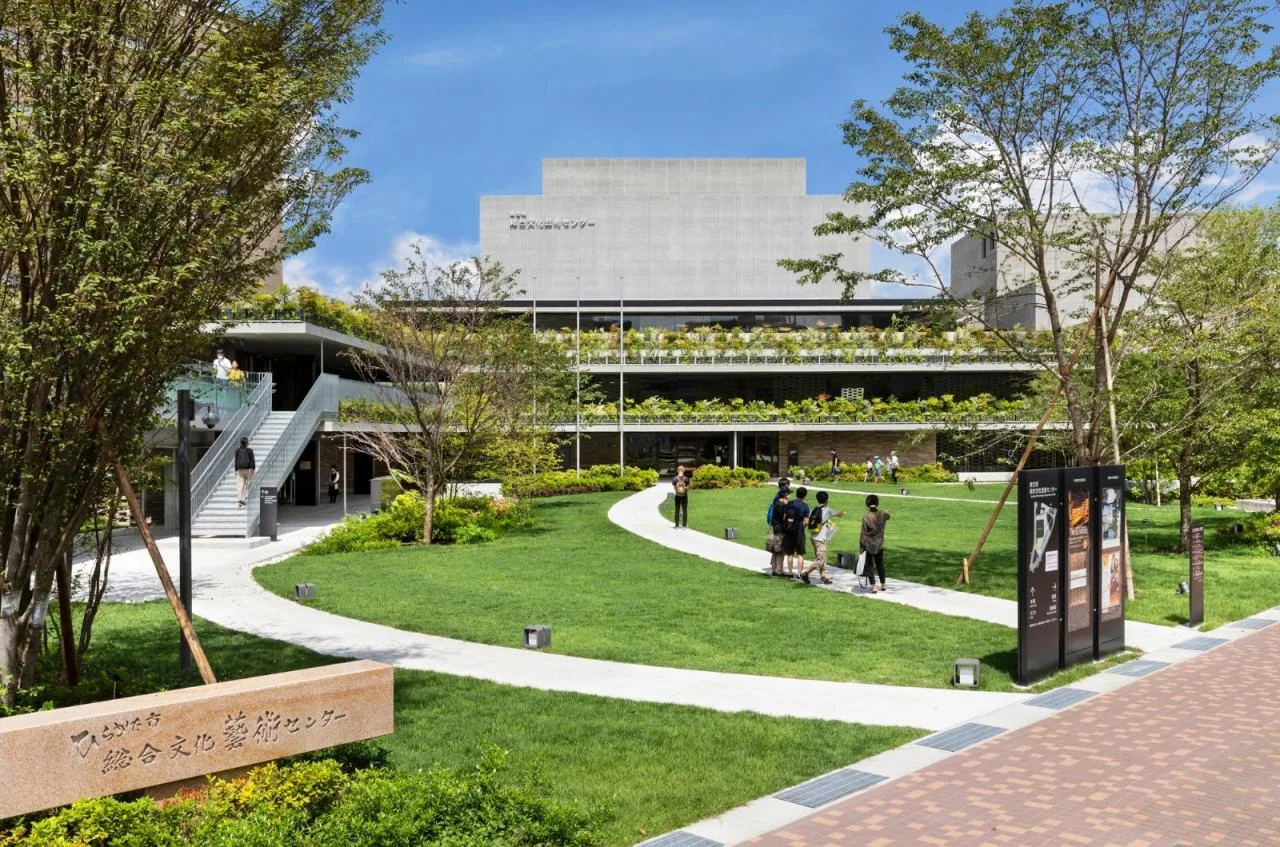
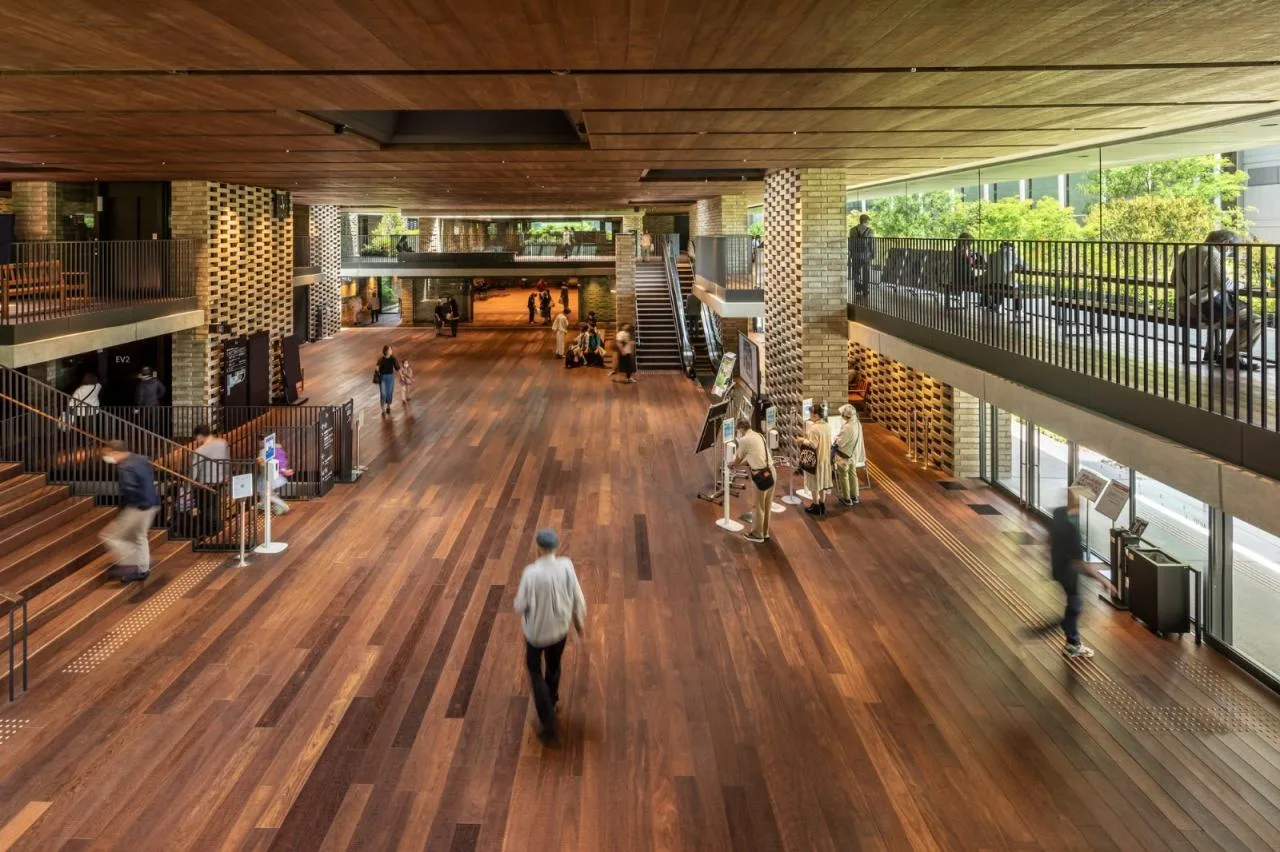
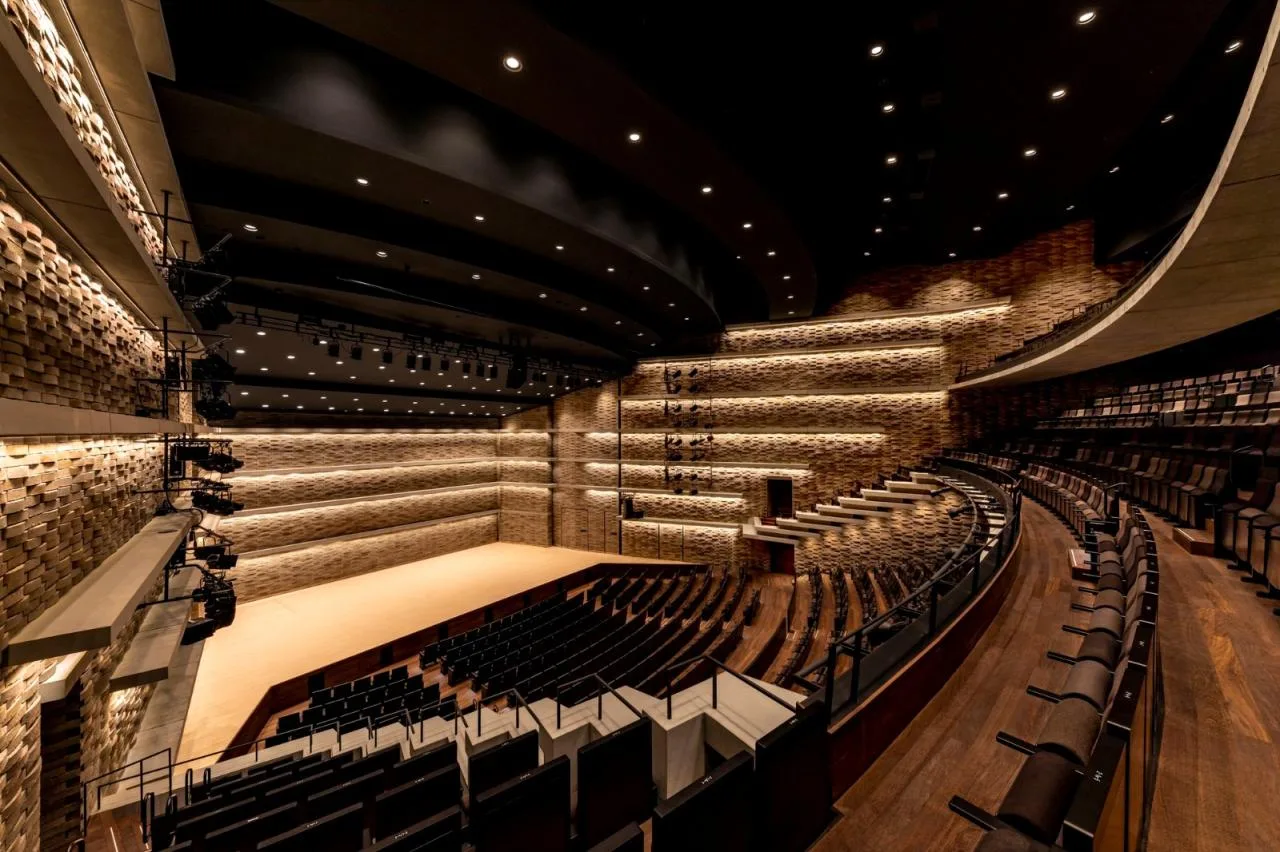
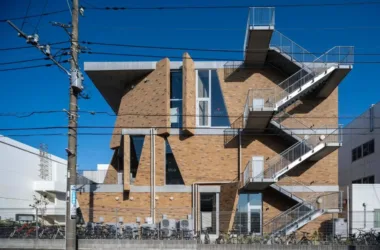
The design thoughtfully combines functionality with aesthetics in both indoor and outdoor spaces. The glazed bricks used throughout the building feature four distinct cross-sectional shapes, enhancing sound diffusion and reflection within the museum environment. This attention to detail fosters a high-quality atmosphere in the spacious hall, the wooden and brick entrance, and other areas. The architects envision this building as a place where citizens can fully immerse themselves in art.
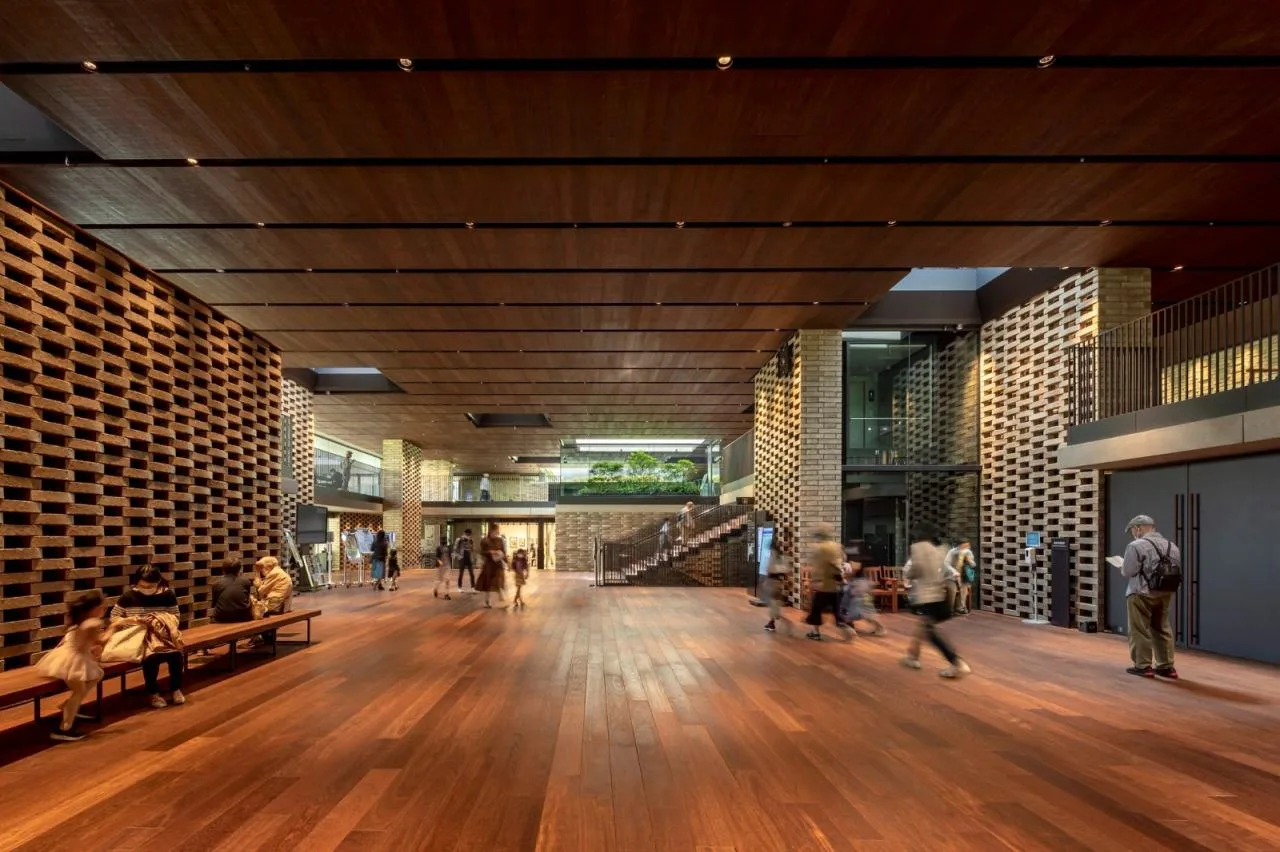
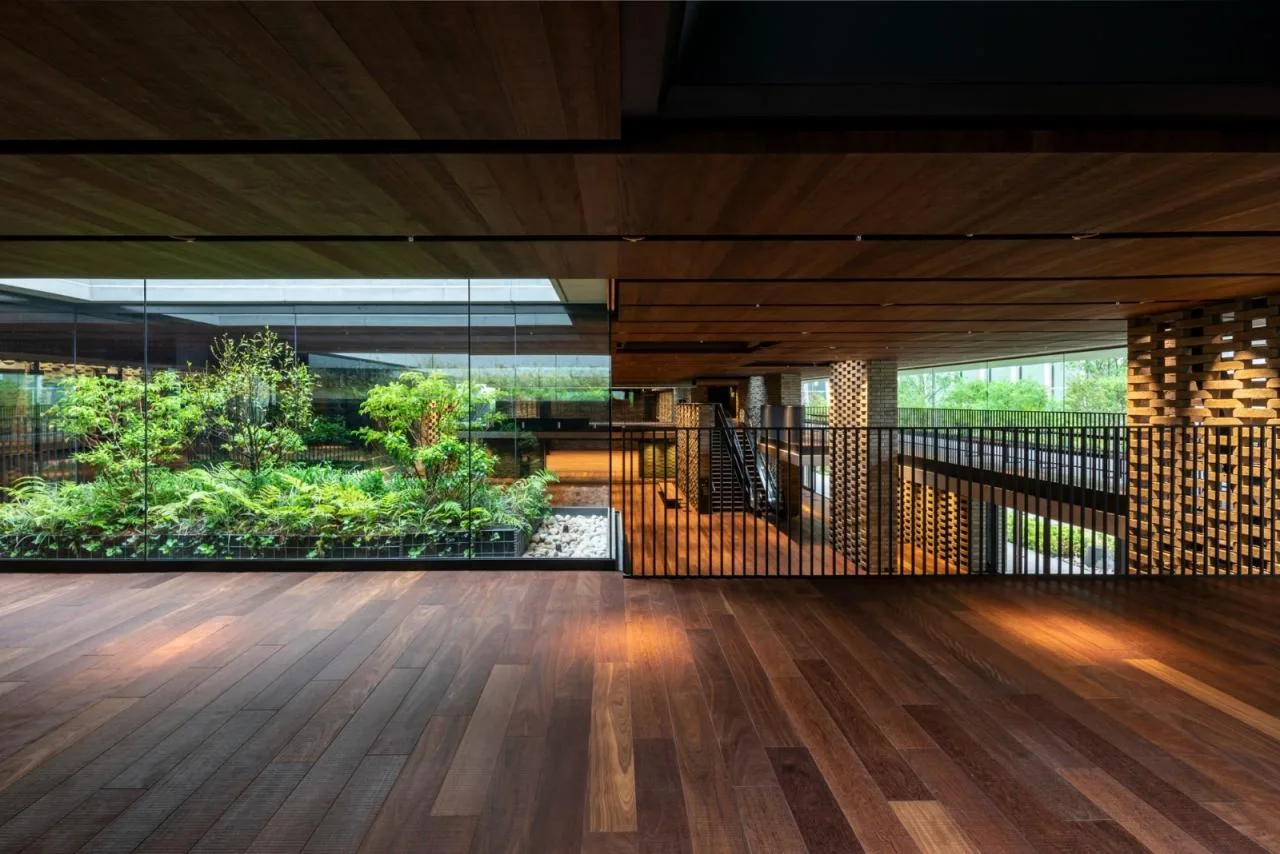
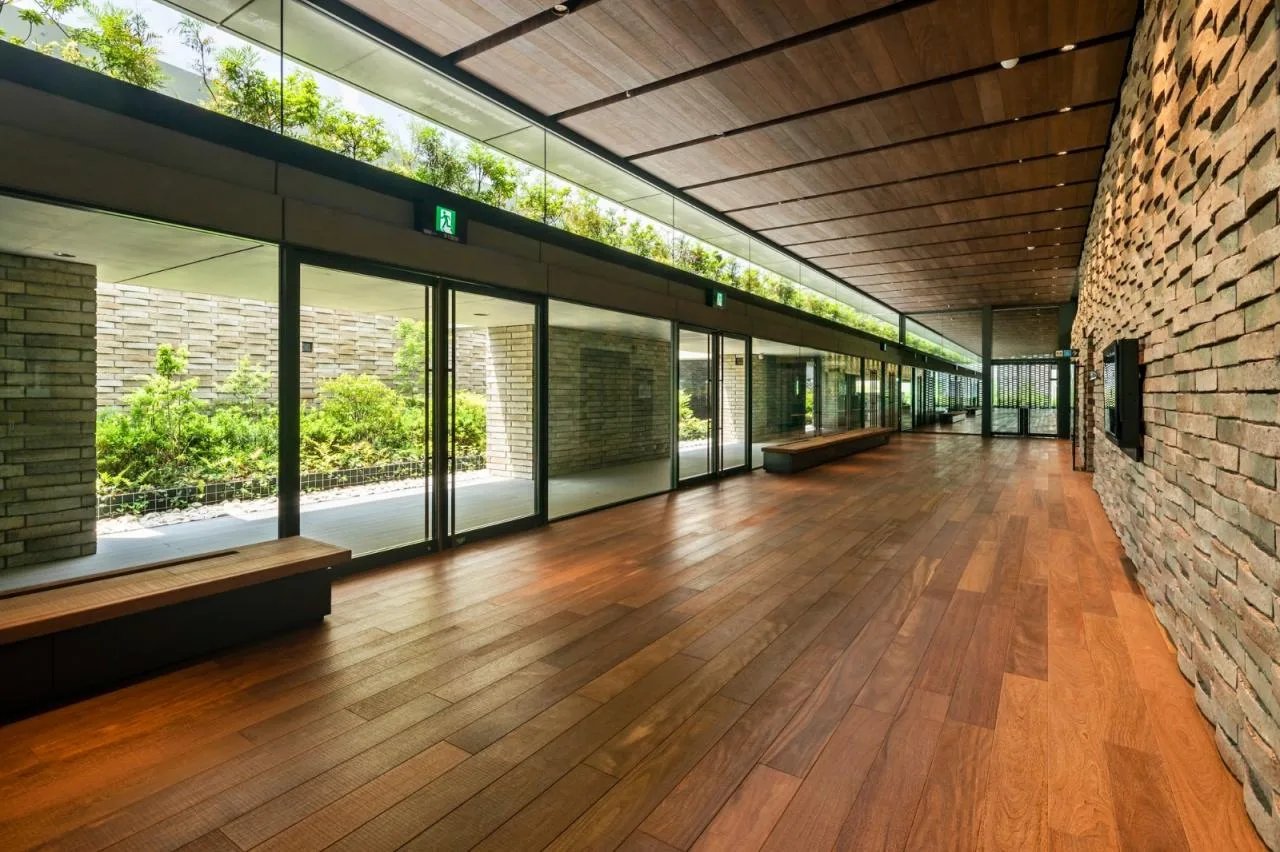
To address environmental and comfort challenges, radiant air conditioning was implemented for the first time in the lobby. Large halls typically require significant air conditioning, which can cause uneven airflow and temperature differences due to varying ceiling heights. This system uses heat dissipation panels installed behind seat backs, above first-floor seating ceilings, and behind seats in lower-ceiling areas on the second floor.
Additionally, the system provides the minimum necessary outdoor air for ventilation while minimizing noticeable airflow. The architects ensured thermal comfort through extensive simulations during the design phase, laboratory testing, and rigorous construction oversight.
After completion, a survey evaluated the comfort of the space with options ranging from “comfortable” to “uncomfortable.” Over 95% of respondents rated the environment as “normal” or “comfortable,” confirming the success of the design in creating a pleasant setting.
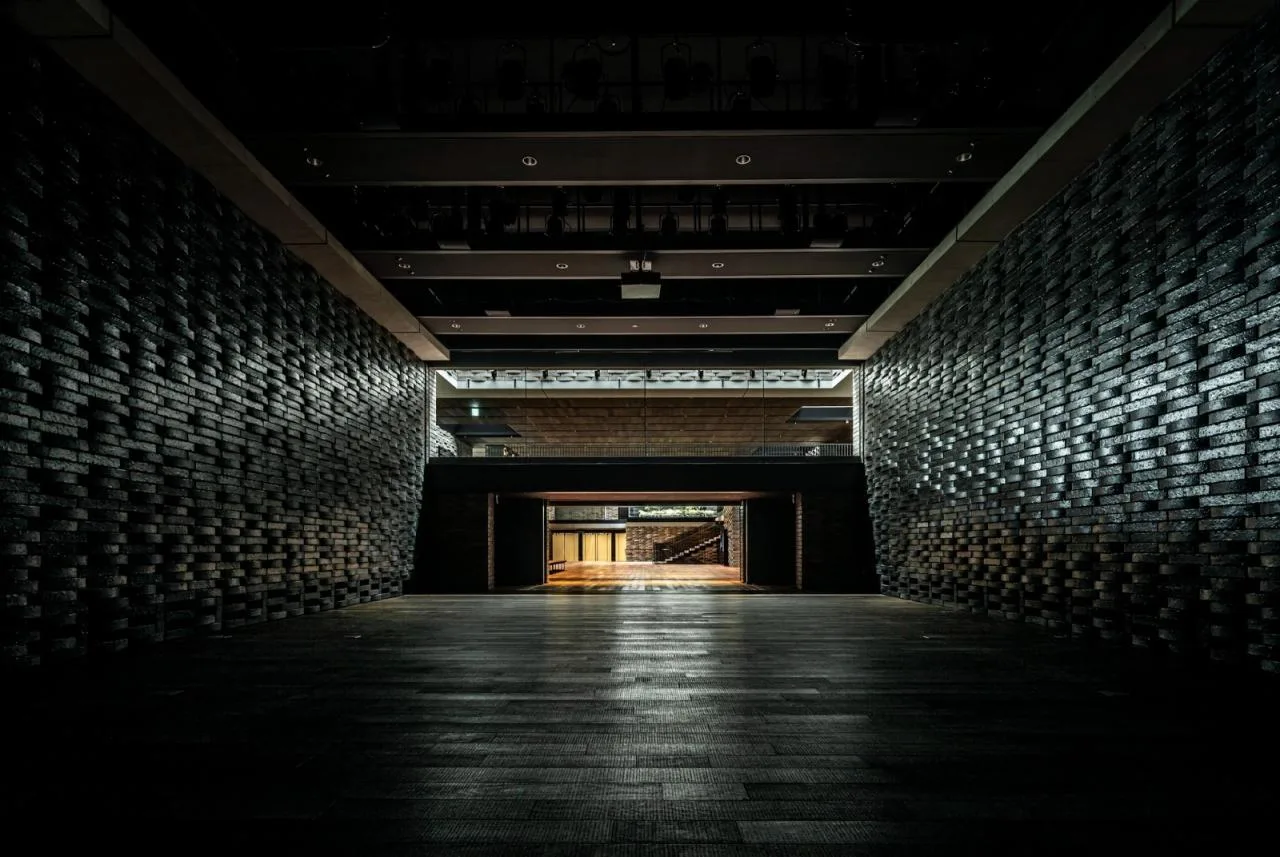
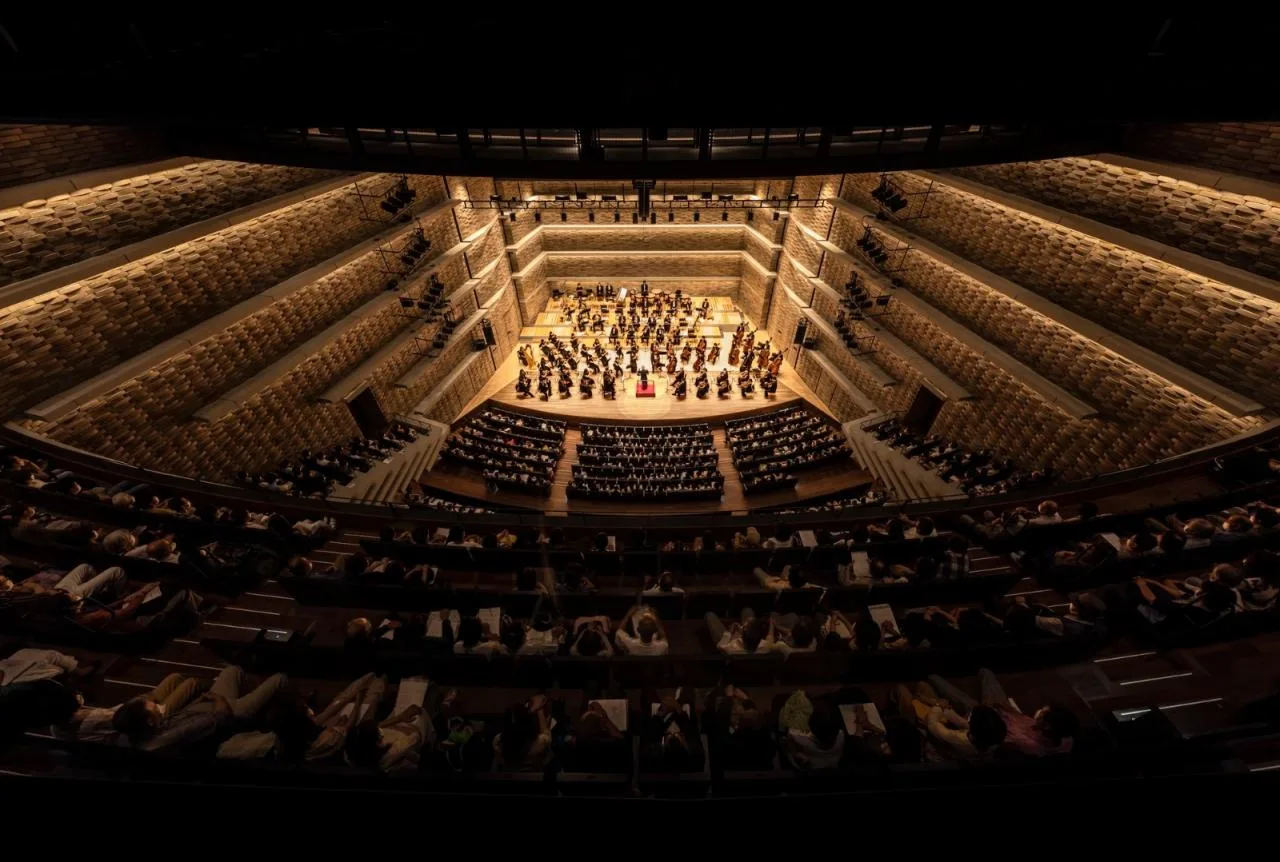
The solid brick veneer enhances acoustic resonance throughout the halls. The basic design of the two halls supports ample early sound reflections, ensuring smooth continuity between the stage and audience seating. The floor plan and sections were carefully determined based on the ratio of ceiling height to seat width.
Key reflective surfaces—including the main reflector, acoustic reflectors, and side walls—are constructed from brick, providing the necessary rigidity for low-frequency sound reflection and creating appropriate surface texture. To improve sound diffusion, the architect employed various brick stacking and arrangement techniques.
In the main hall, continuous eaves-shaped reflective surfaces extend from the stage to the seating area, increasing sound reflectivity. The activity hall features uneven brick walls to prevent vibration echoes, further enhancing acoustic quality.
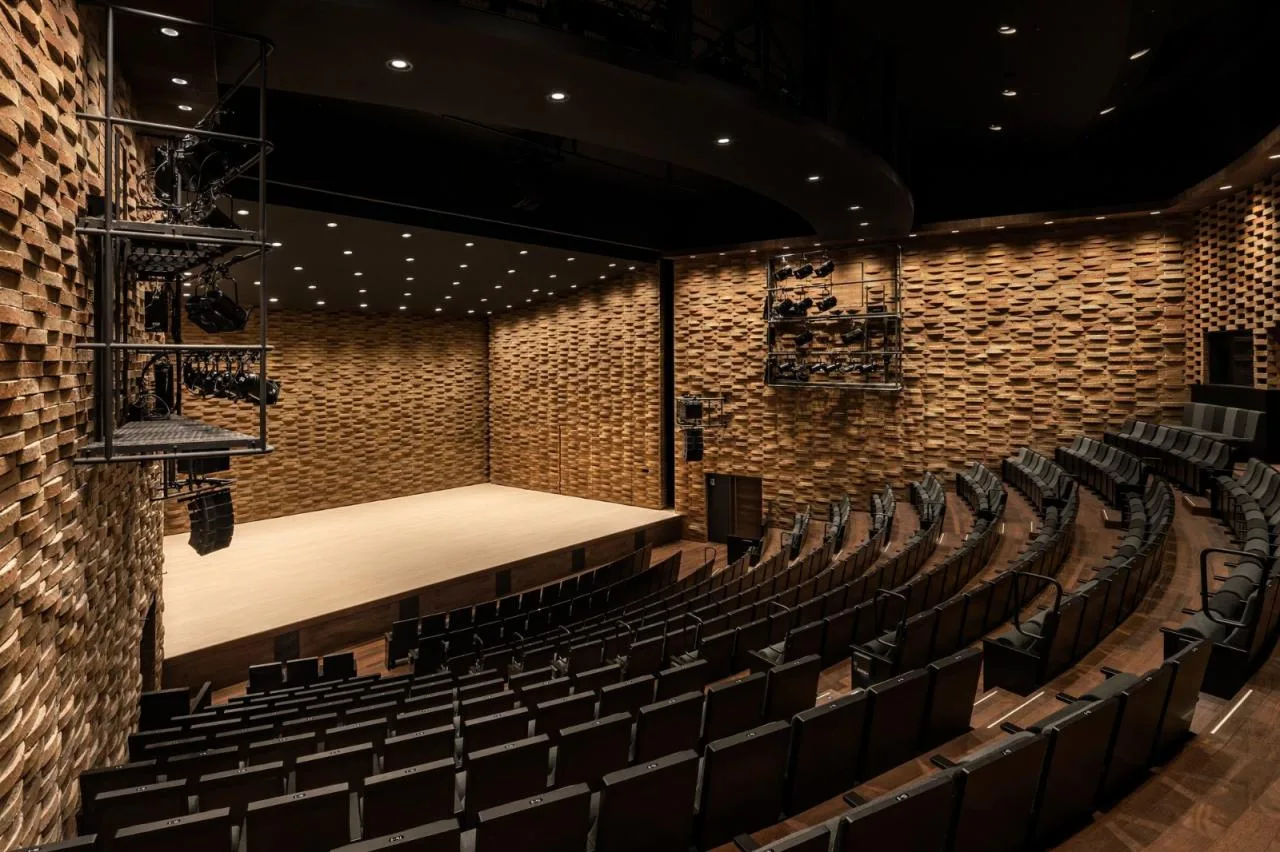
The small hall is equipped with vibration and sound insulation structures along its edges, including expansion joints, ensuring excellent sound isolation for both large and small halls. This allows each space to be used for loud or quiet events as needed.
The small hall’s brick walls provide sound insulation and vibration isolation. On the first floor, windows allow the event hall to blend seamlessly with the entrance hall. Double-layered movable partition walls and entrance/exit doors offer additional soundproofing. The second-floor space uses 15mm + 15mm laminated glass for sound insulation.
The rehearsal room, located diagonally below the main hall, also incorporates sound insulation and vibration isolation. The main hall’s cooling panels were thoroughly tested during design and construction phases to ensure that even loud music does not cause vibration noise.
Project Information
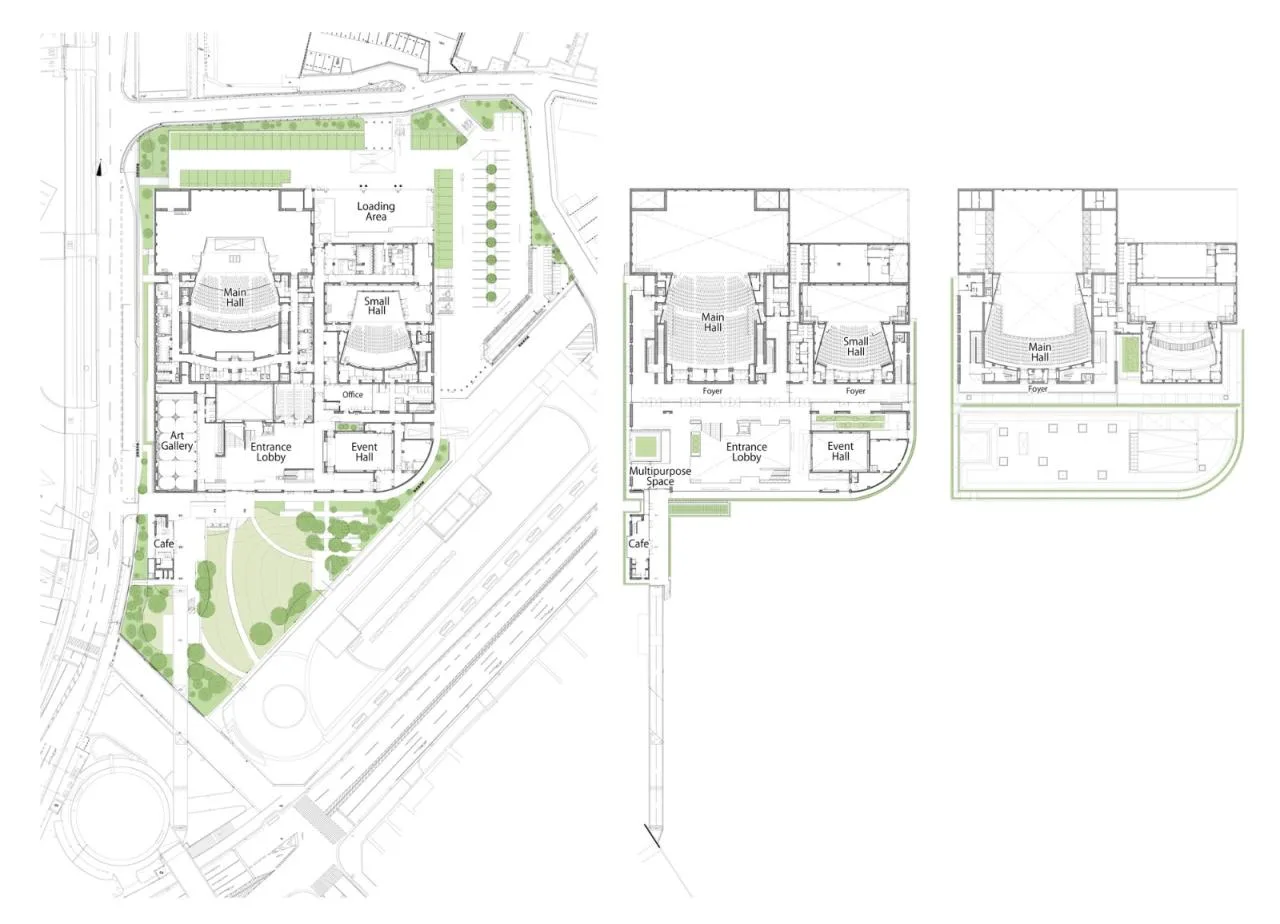
△ Plan view
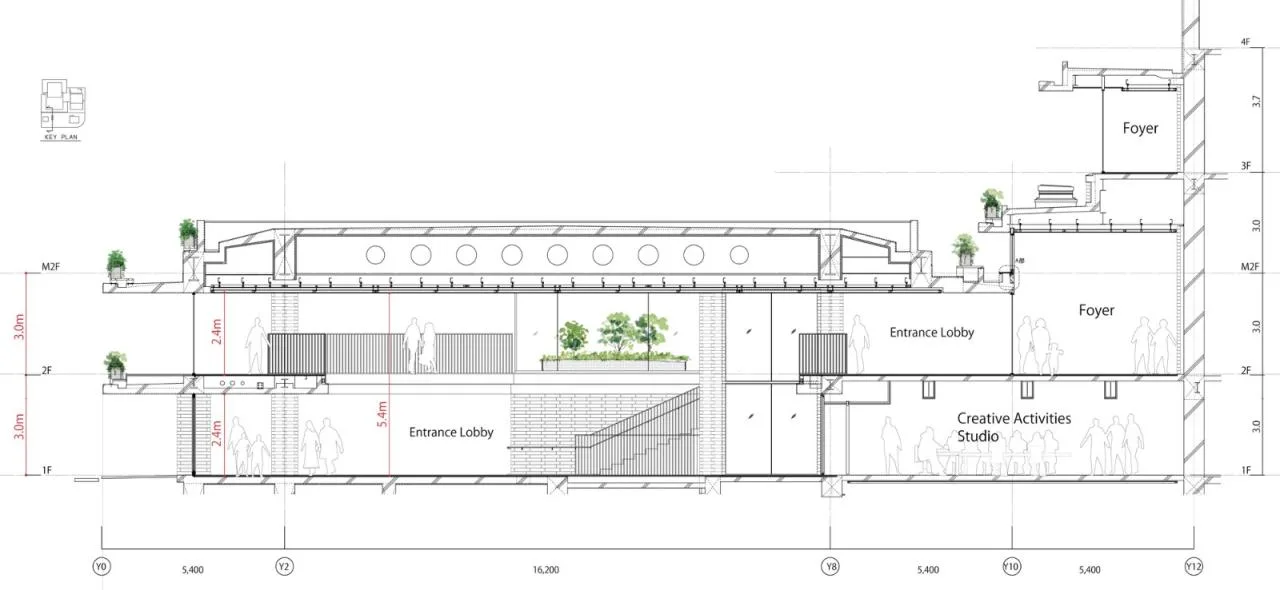
△ Section diagram
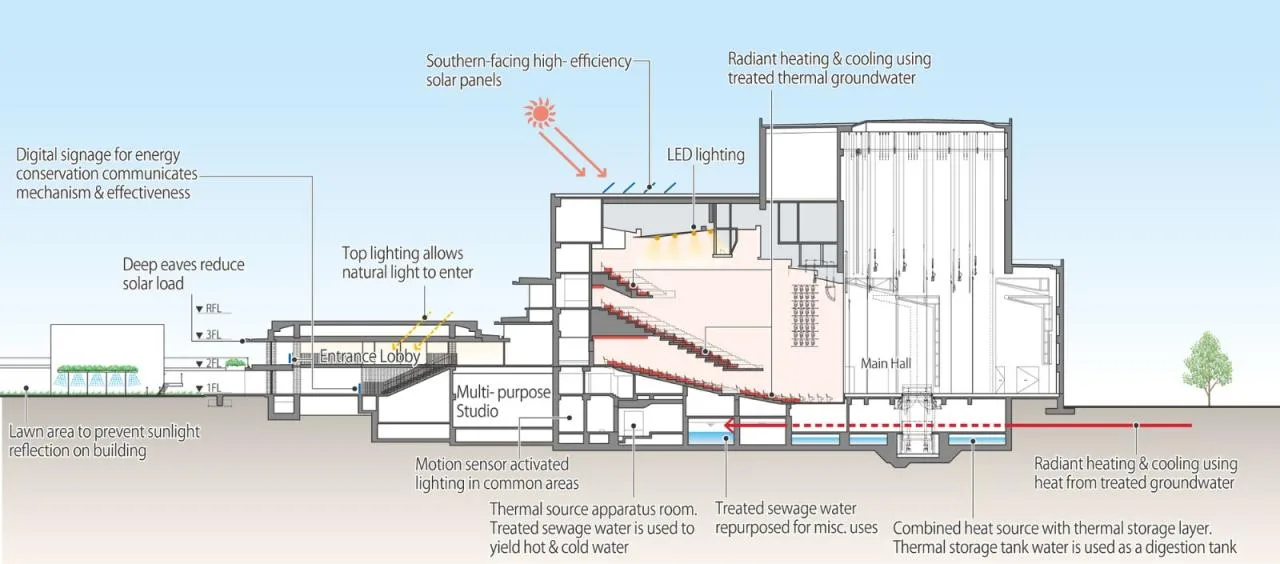
△ Analysis chart
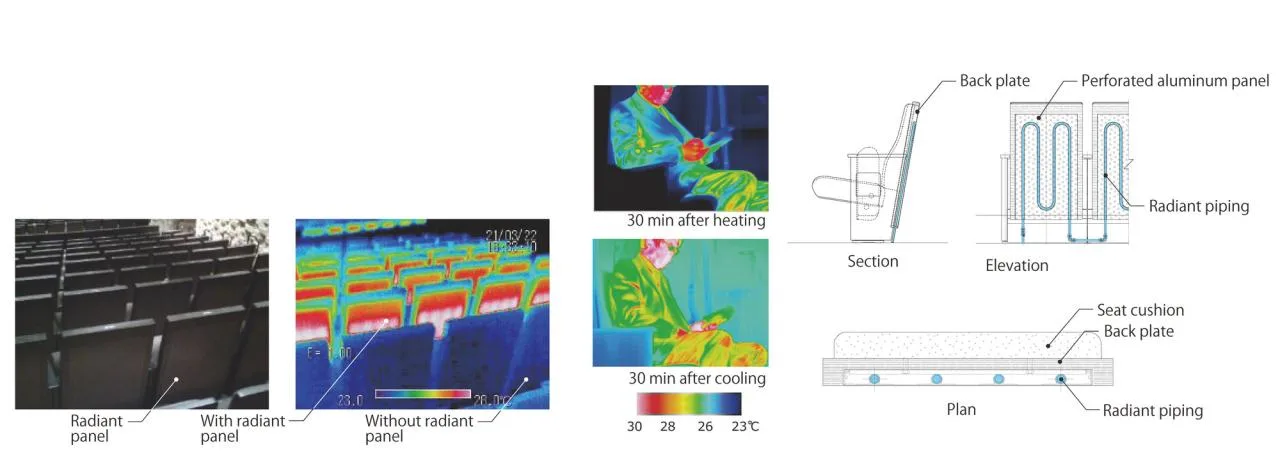
△ Analysis chart
Project Details
Architect: Nikken Design
Area: 13,146 m²
Year: 2021
Photographer: Akira Ito
Manufacturers: Fujiyogyo Co., Ltd, Oshirox Co. Ltd., SHOWA YOTAL Co., Ltd.
Owner: Meifang City
Construction: Maeda Construction Industry
Location: Meifang City, Japan















Must log in before commenting!
Sign Up