
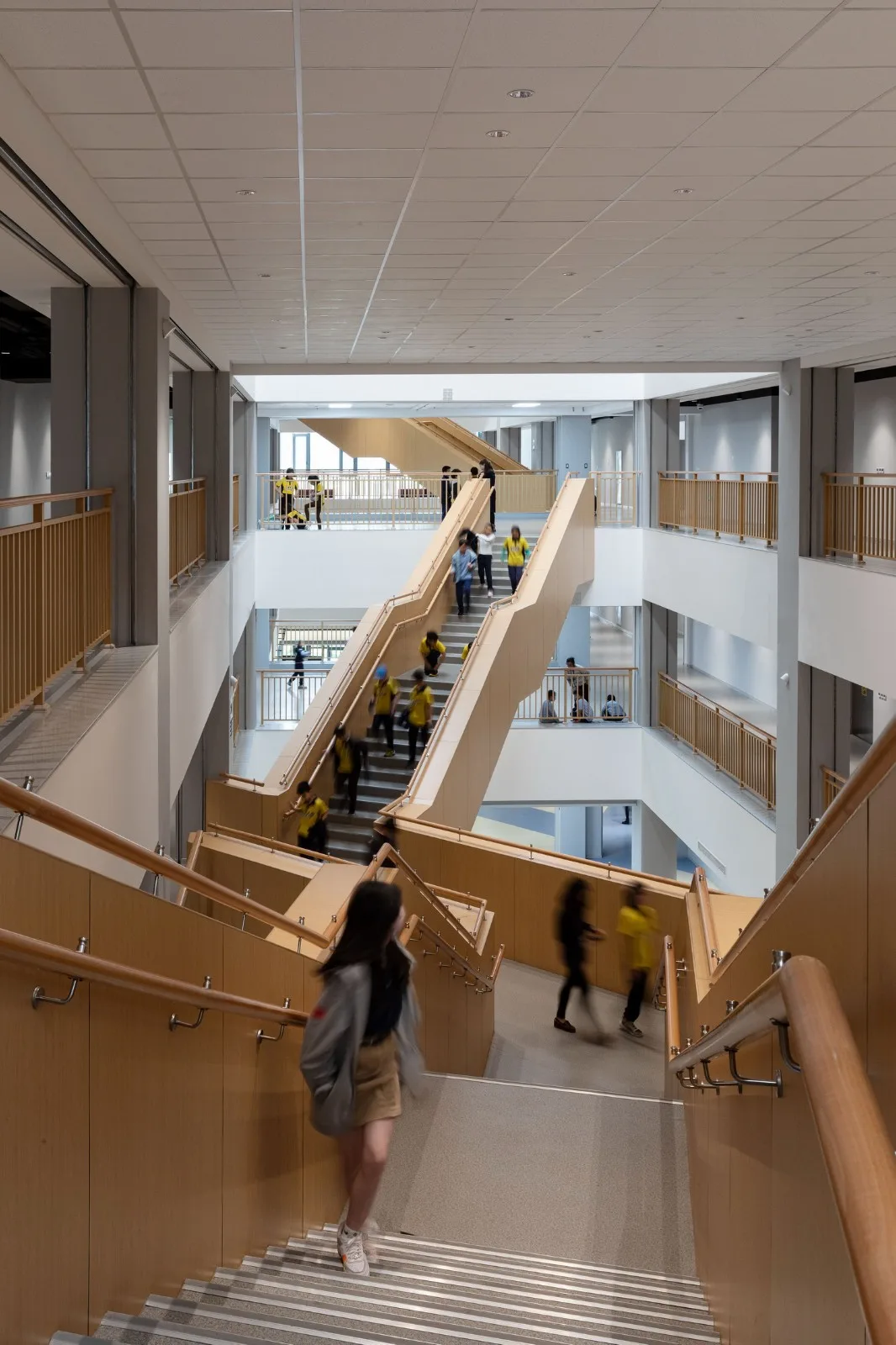
“The new educational environment we envision for the future should be a community where knowledge, information, and vitality are intertwined, embracing sharing, diversity, and complexity.” – Zhu Peidong
In today’s wave of campus construction, educational buildings often display typical architectural forms and spatial patterns, mainly guided by linear functional logic and constraints such as sunlight, lighting, and spacing. These result in conventional layouts like unit style, determinant style, fishbone style, or courtyard style. As architects, tasked with resolving the conflict between educational and land resources and implementing emerging educational concepts, we continuously push the boundaries of education.
Responding to the school’s demand for non-traditional educational concepts, site limitations, and architectural reflection, we propose a new approach at HIS Hangzhou International School. By reinterpreting the educational purpose, we aim to create a new teaching environment that features intensive land use and efficient space, prioritizing sharing and communication as the key spatial characteristics.
01 New Teaching Environment Configuration
— Education Hub
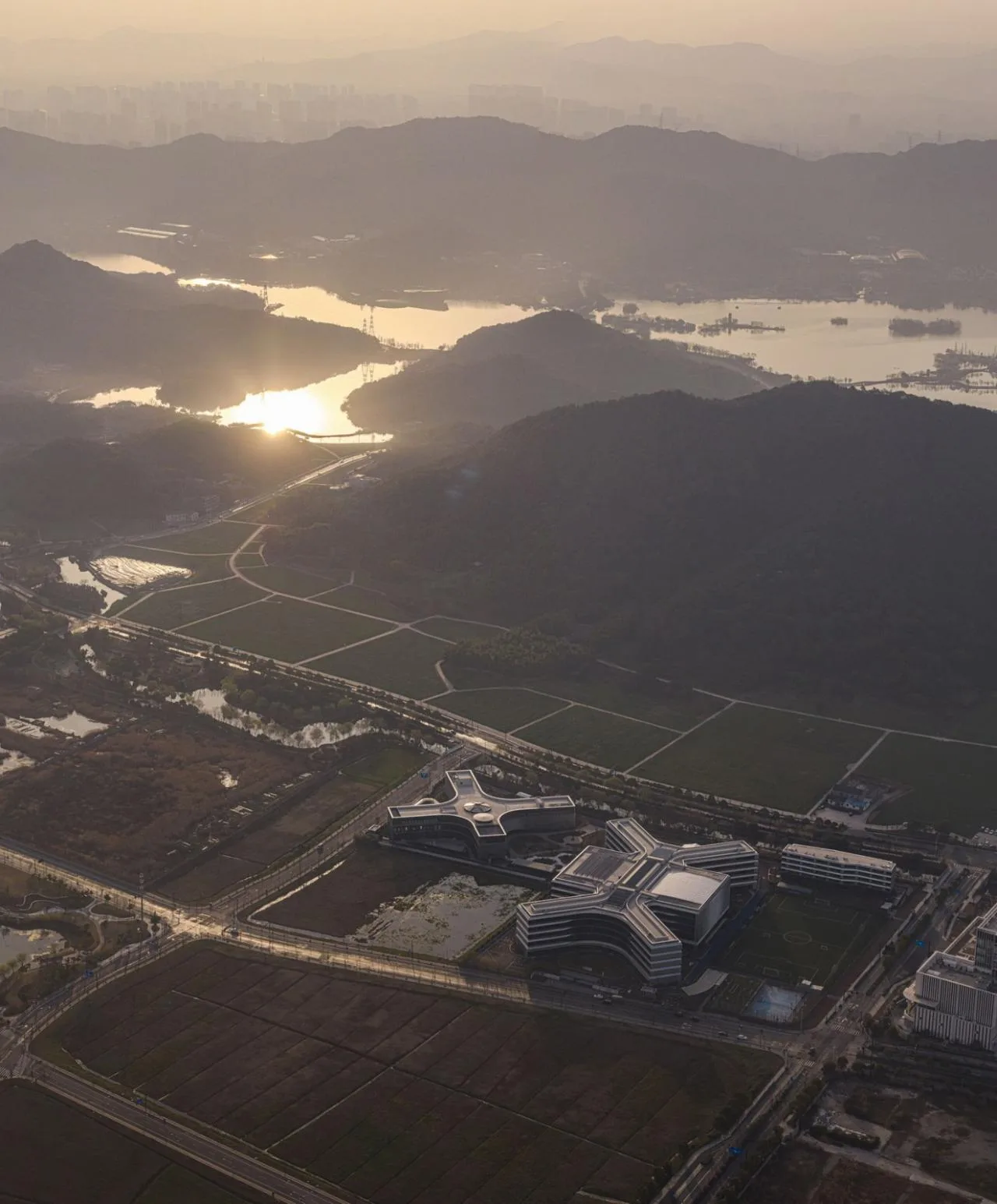
HIS Hangzhou International School was the first K-15 international school to be established in Hangzhou and the first in Zhejiang Province exclusively admitting children of foreign nationals, as well as residents from Hong Kong, Macao, and Taiwan. Founded and managed by the Foundation for International Education (IFS) from the United States, a new campus was built in 2018 along the banks of White Horse Lake near the southern foot of the Qiantang River. The campus houses three departments—primary, junior high, and high school—along with an independent early childhood education center (ECE).
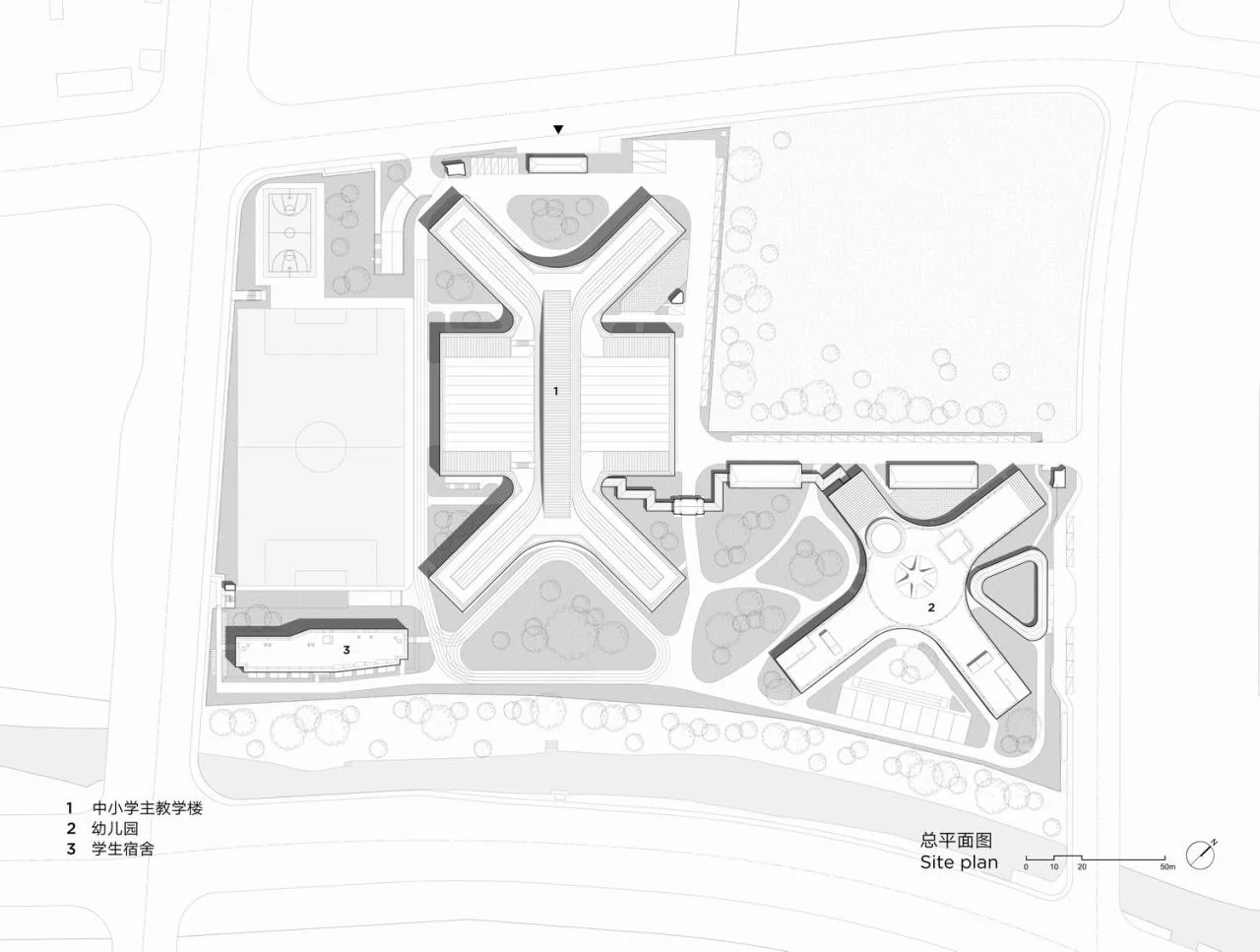
△ General layout plan © line+
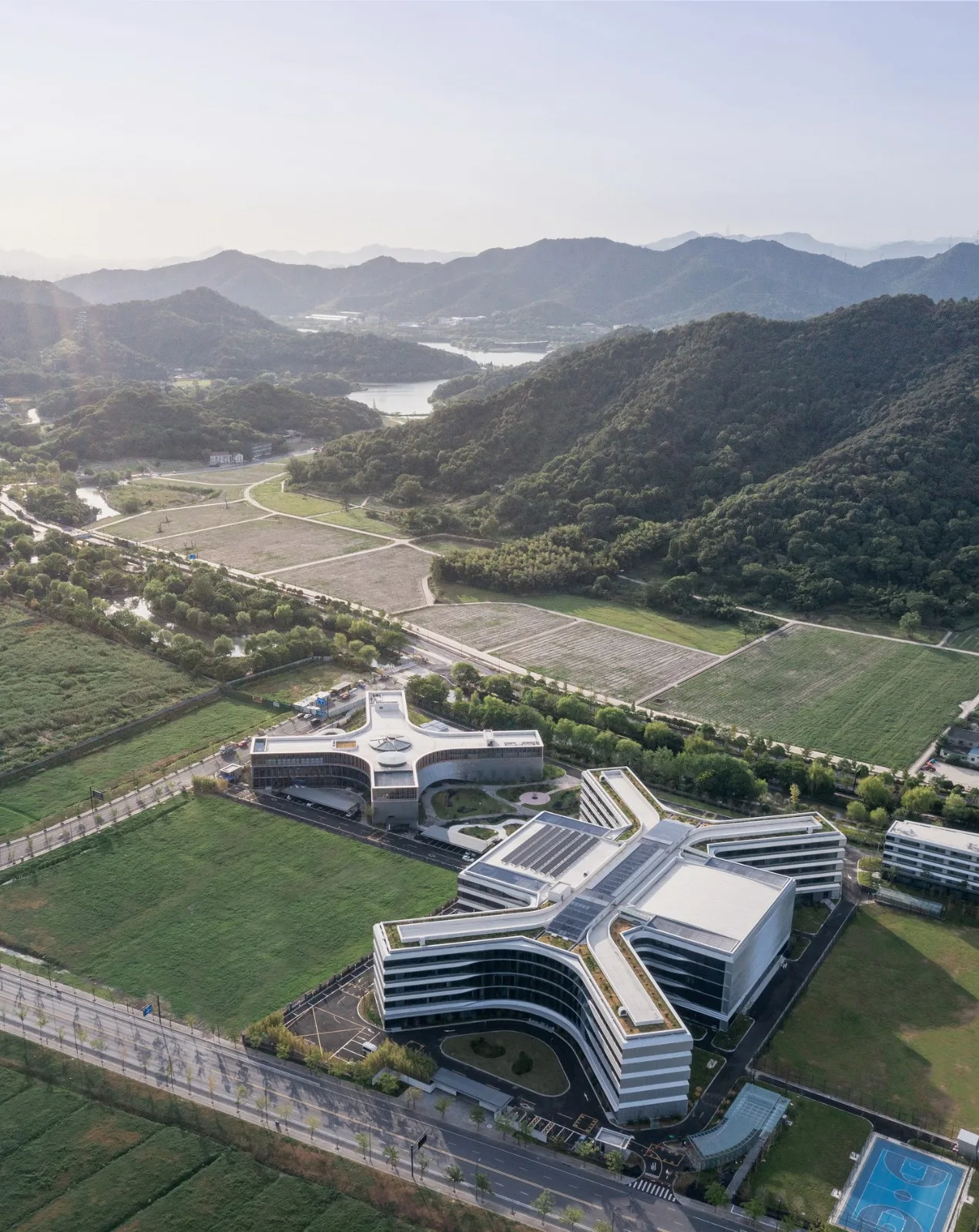
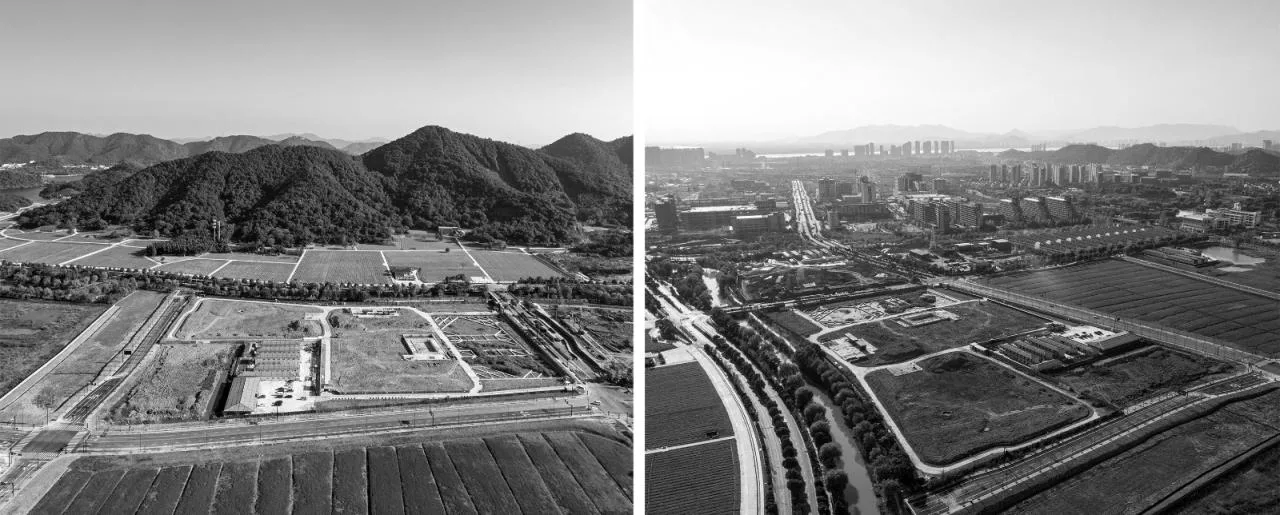
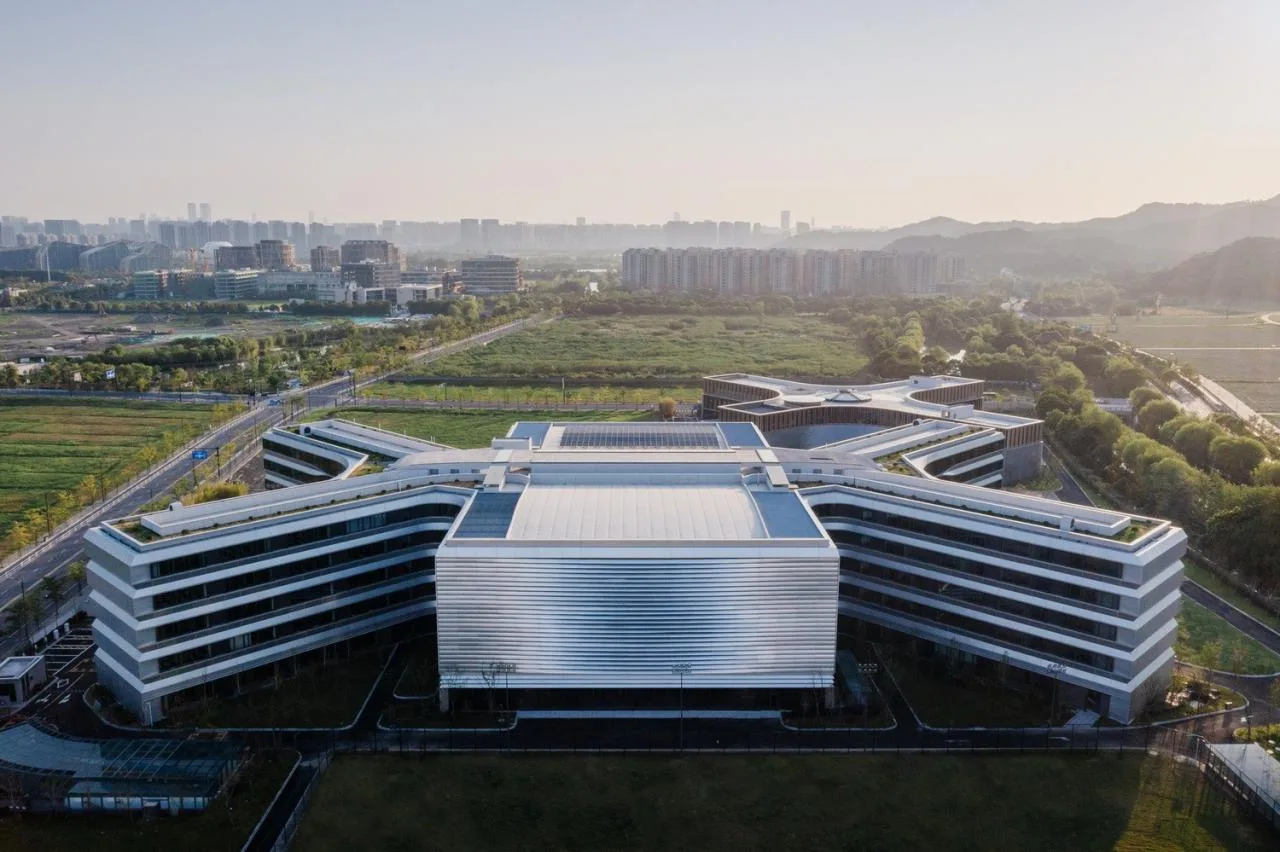
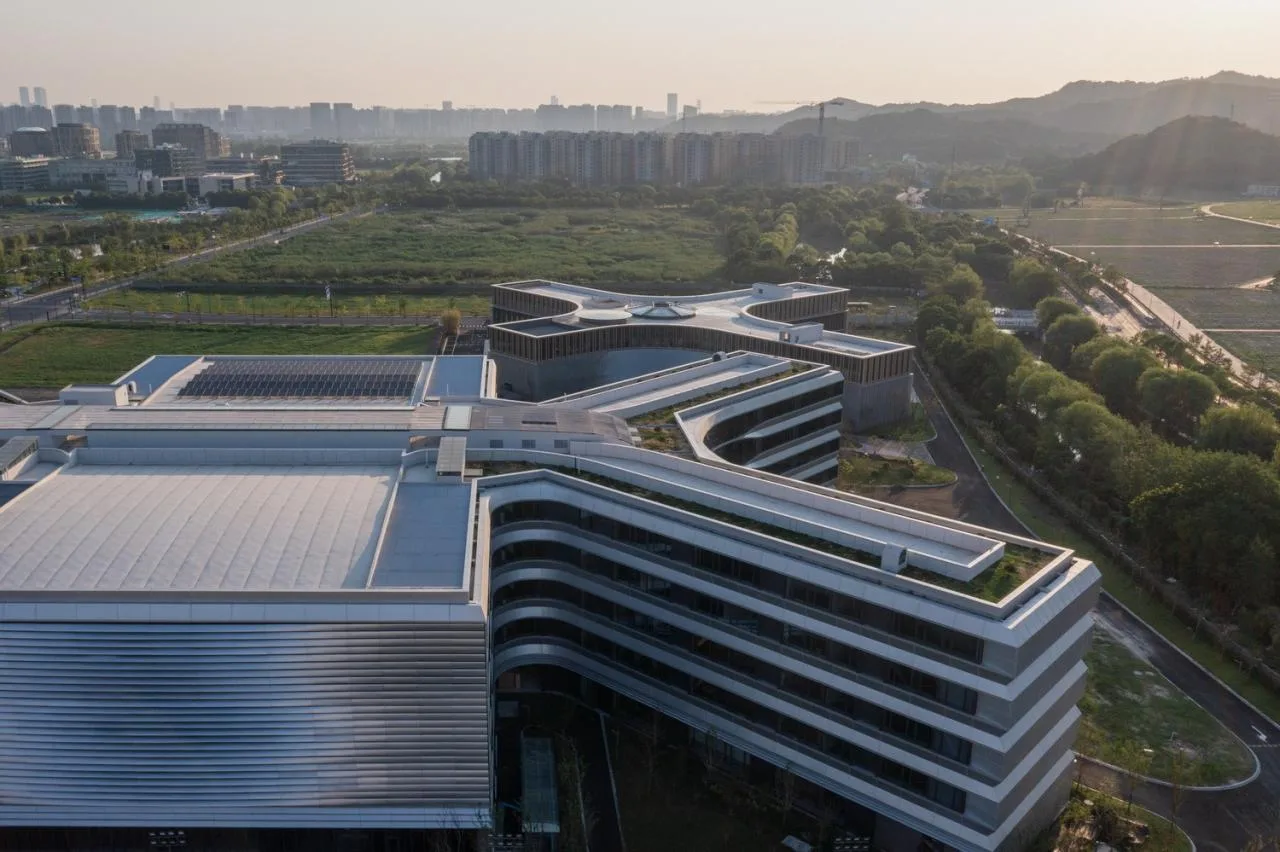
△ Aerial view of Hangzhou International School © line+
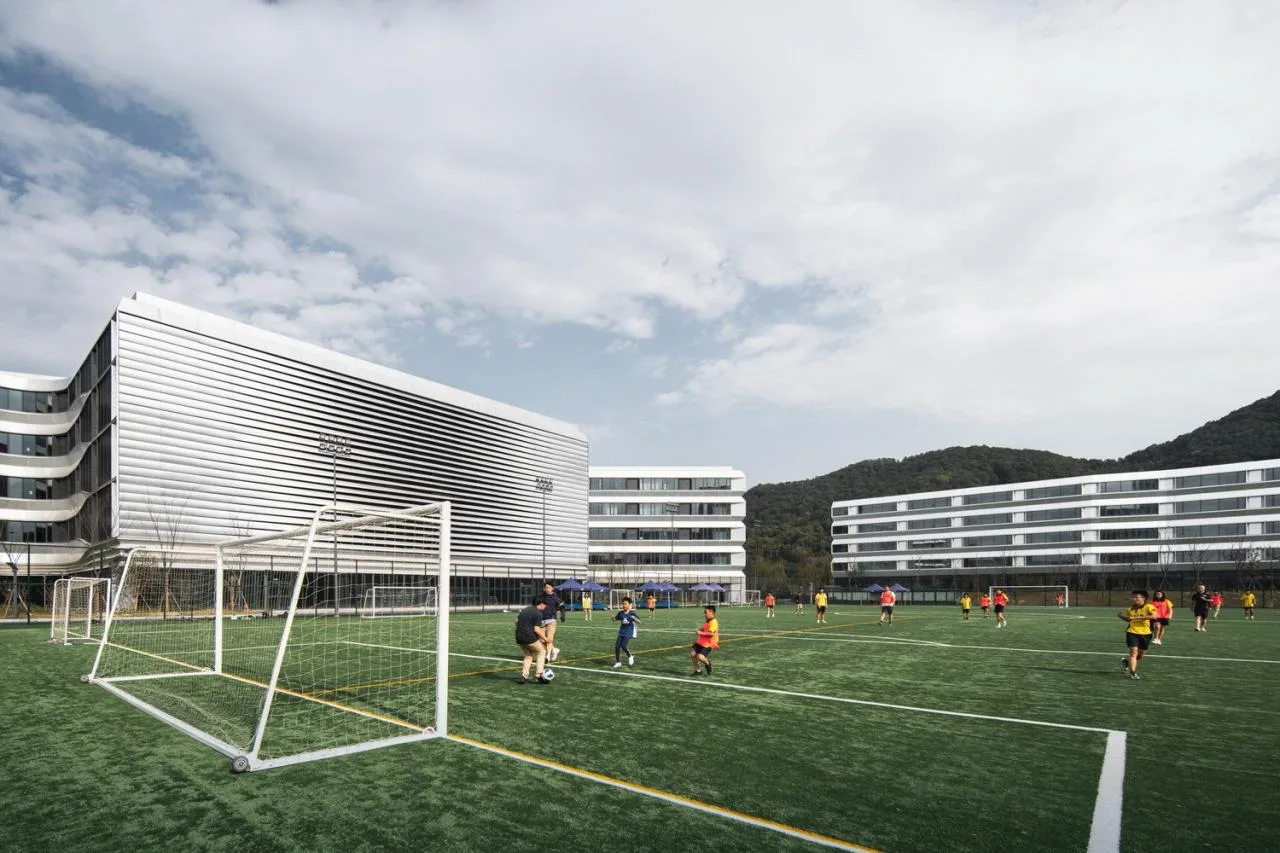
The campus is situated on an L-shaped plot oriented approximately 45 degrees off the north-south axis. The client specified that the main school building and kindergarten be separated within the site. With the early childhood education area isolated, tight land usage challenges the feasibility of traditional school layouts, which are constrained by sunlight, spacing, and standard regulations. Such constraints considerably reduce outdoor activity and sports spaces, resulting in notable functional and experiential shortcomings. Moreover, a linear layout diminishes opportunities for spontaneous interactions between teachers and students on campus.
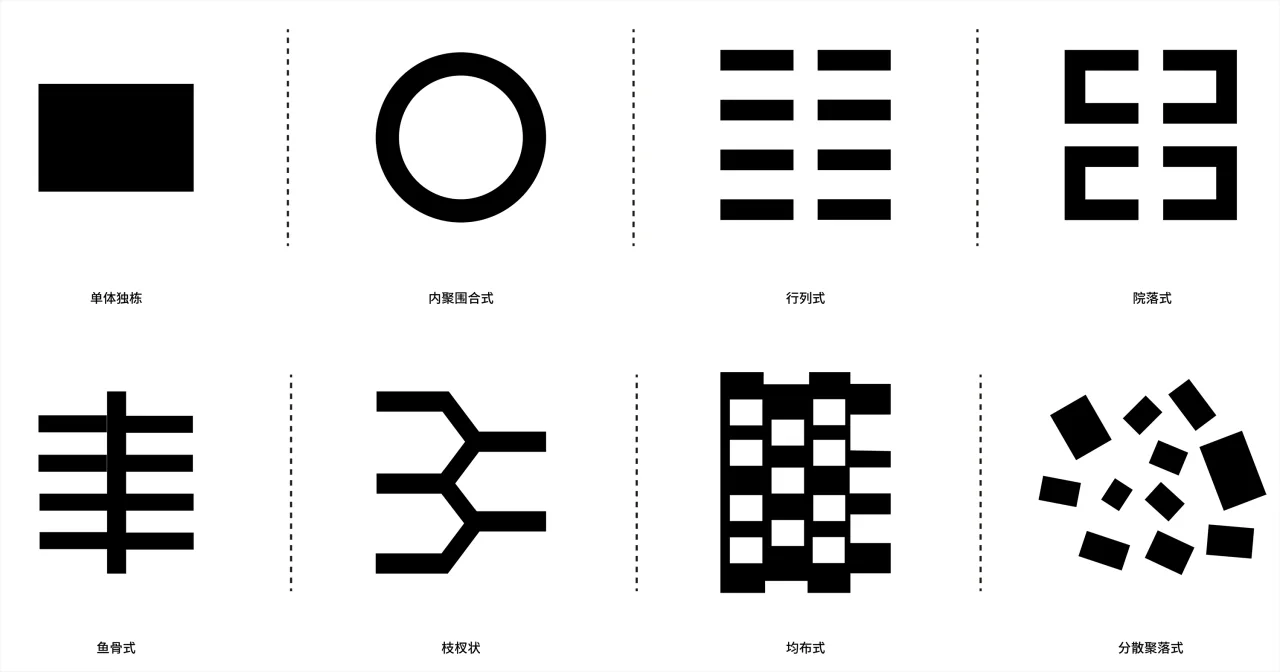
Typical campus layout © line+
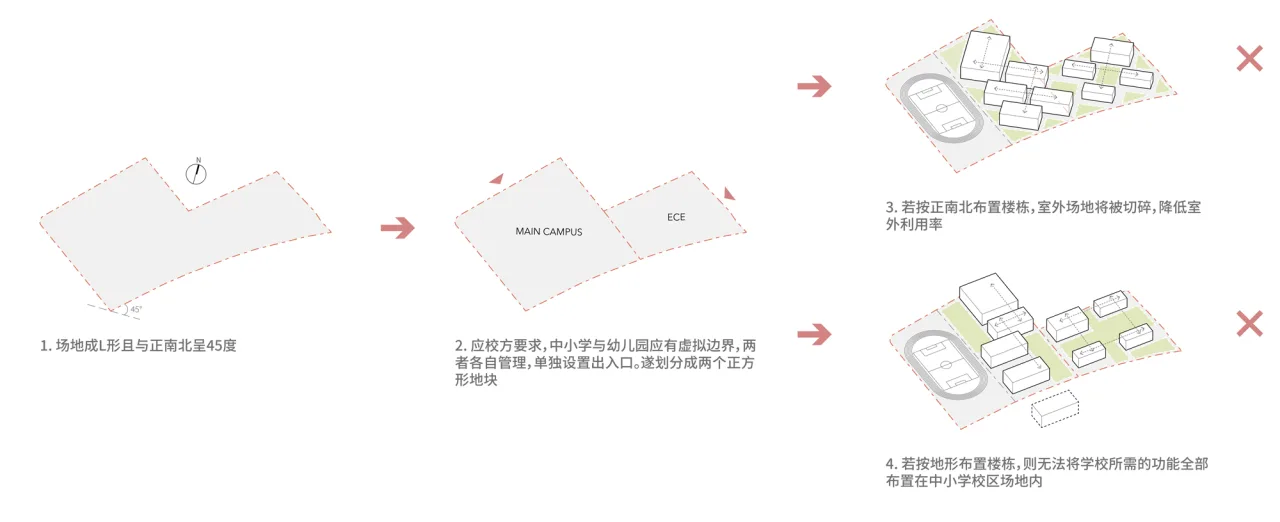
△ Site layout refinement © line+
The new campus must accommodate diverse cultural backgrounds and an international education system. Beyond standard classrooms for each grade, it includes various public facilities such as innovation labs, two sports halls, two theaters, cafeterias, a swimming pool, and a library. The school operates on a “shift-based” teaching model, fostering student autonomy but leading to significant time lost in class selection. Therefore, the design’s primary goal is to maximize students’ time efficiency, allowing more opportunities for extracurricular communication and activities.
International schools emphasize students’ emotional experiences and open communication. Their teaching systems highlight quality education alongside extracurricular activities, imposing new demands on campus functional modules and teaching scenarios.
Following in-depth discussions with the school and gaining insight into students’ learning experiences, we recognized that future teaching environments should be vibrant, encouraging spontaneous communication and interaction among children—much like a harmonious neighborhood community. As sociologist Ivan Illich noted in Deschooling Society, learning exists in a dynamic relationship continuously formed between learners and resources, including teachers, peers, materials, and the environment.
Facing tight land constraints and diverse mixed-use demands, the design seeks to fulfill both international educational philosophies and local standards. We thus depart from traditional campus layouts, exploring new possibilities with the “Education Hub.” This concept integrates teaching spaces non-linearly and on multiple platforms to create a more efficient, shared, and equitable learning environment. Physically, the complex organizes campus circulation compactly, accommodating international school teaching needs in all weather while maximizing outdoor area availability.
Within the main teaching building, a centralized layout places a shared activity space for all teachers and students at its core. This space—encompassing dining, communication, performances, sharing, and physical exercise—is contained within a large box volume. To satisfy sunlight needs, avoid obstruction, and maintain grade independence, four equally long teaching wings connect to the central Hub at 45-degree angles. This arrangement fosters public activity development, encourages gathering, and promotes communication. The kindergarten building centers on shared spaces for gathering, play, and educational entertainment, with activity zones oriented towards four outdoor interfaces.
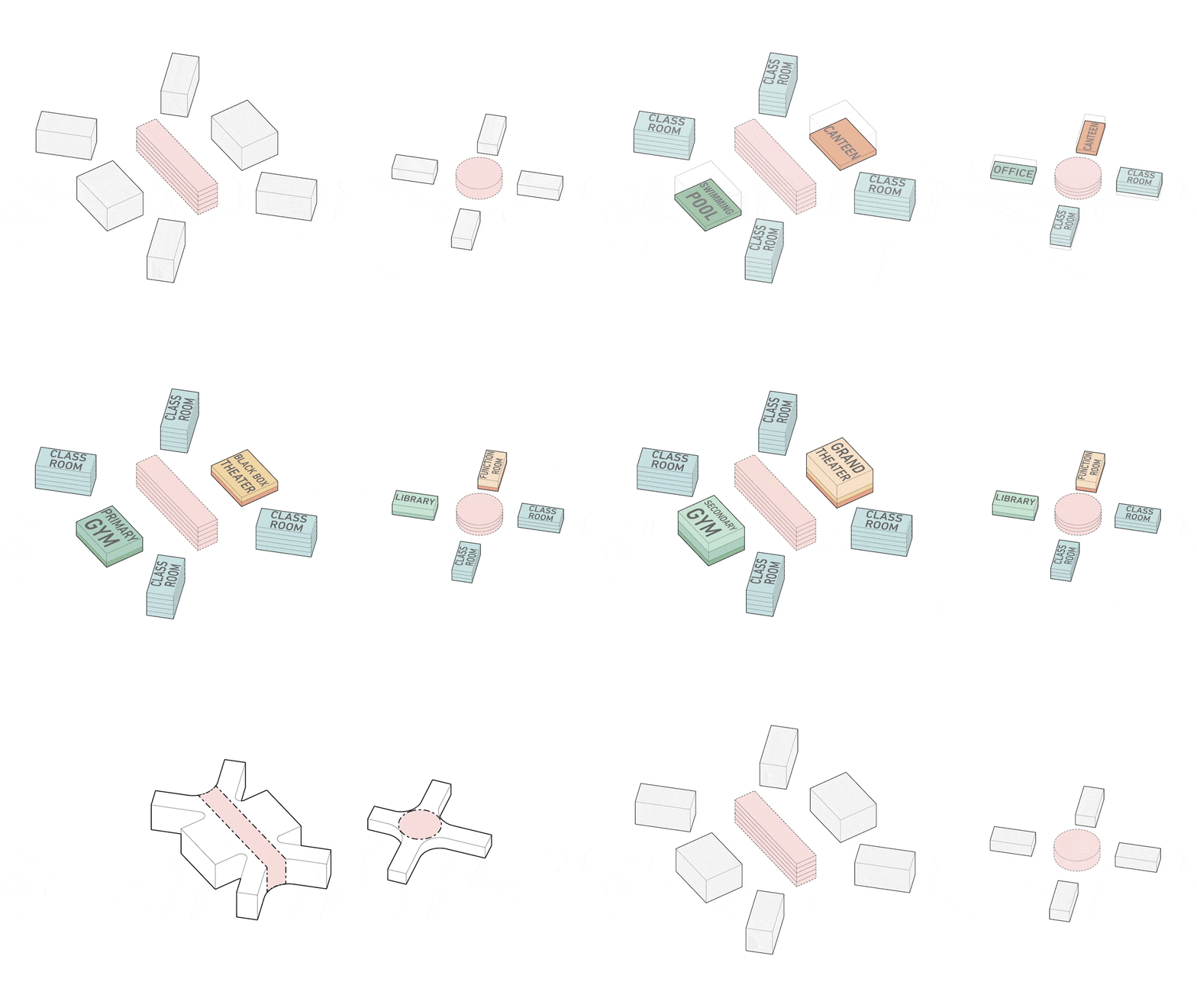
△ Prototype translation of school buildings © line+
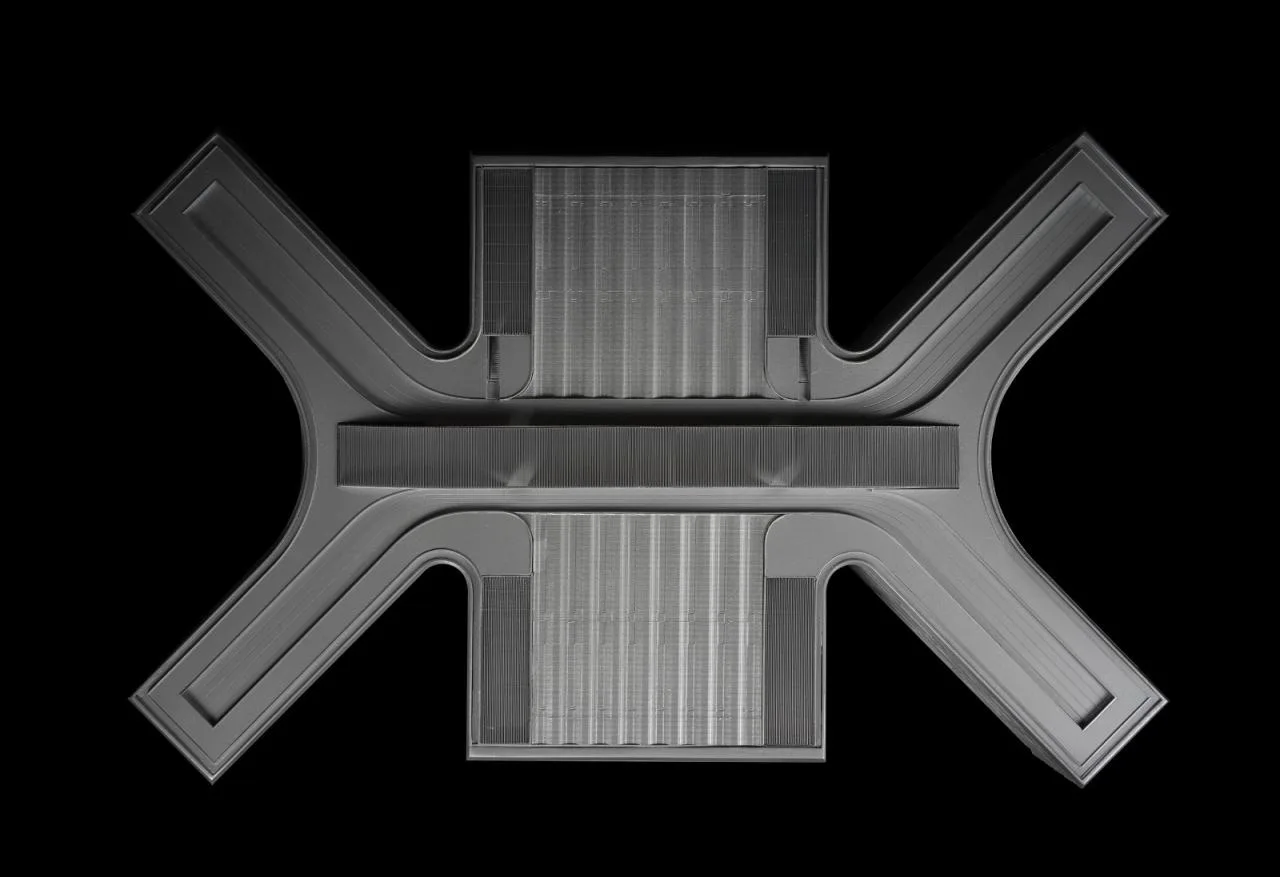
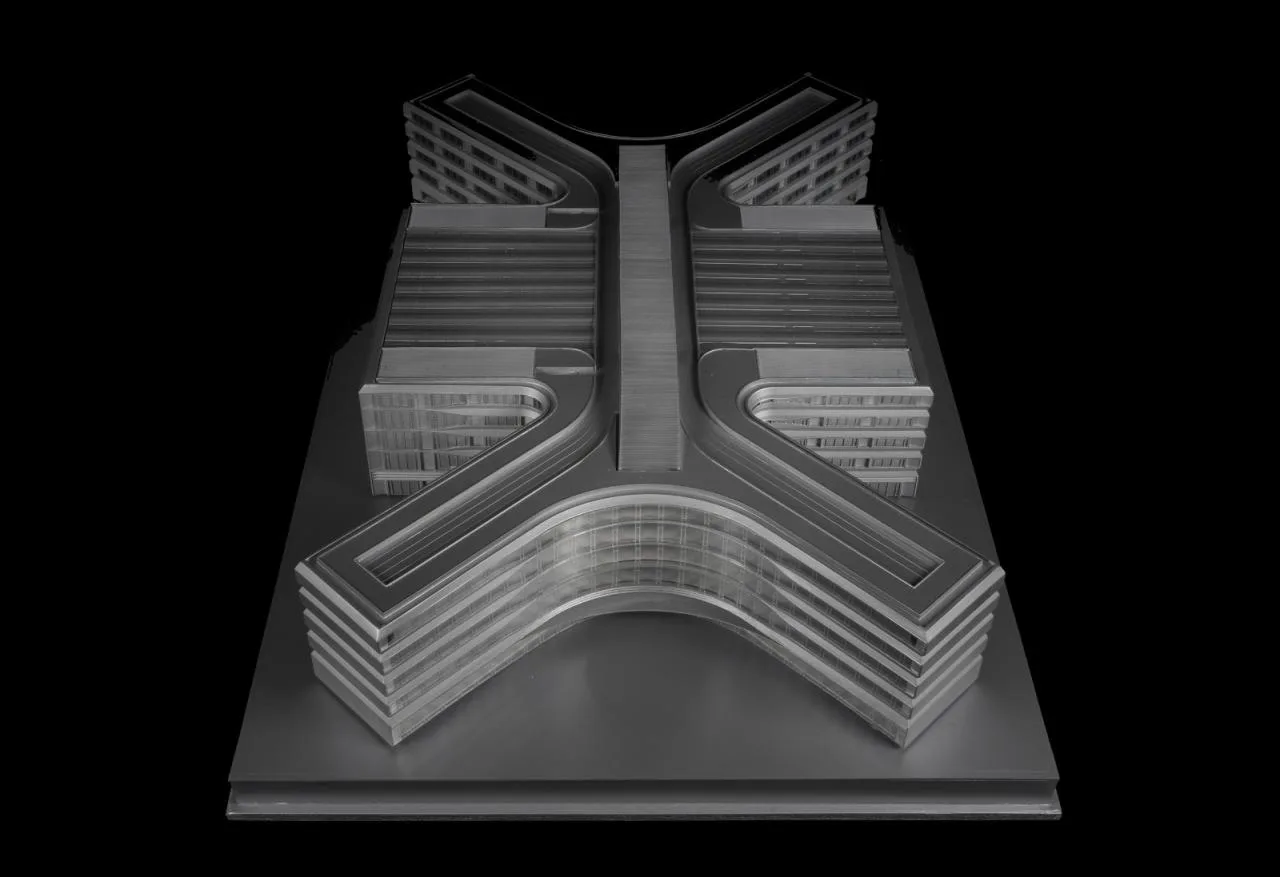
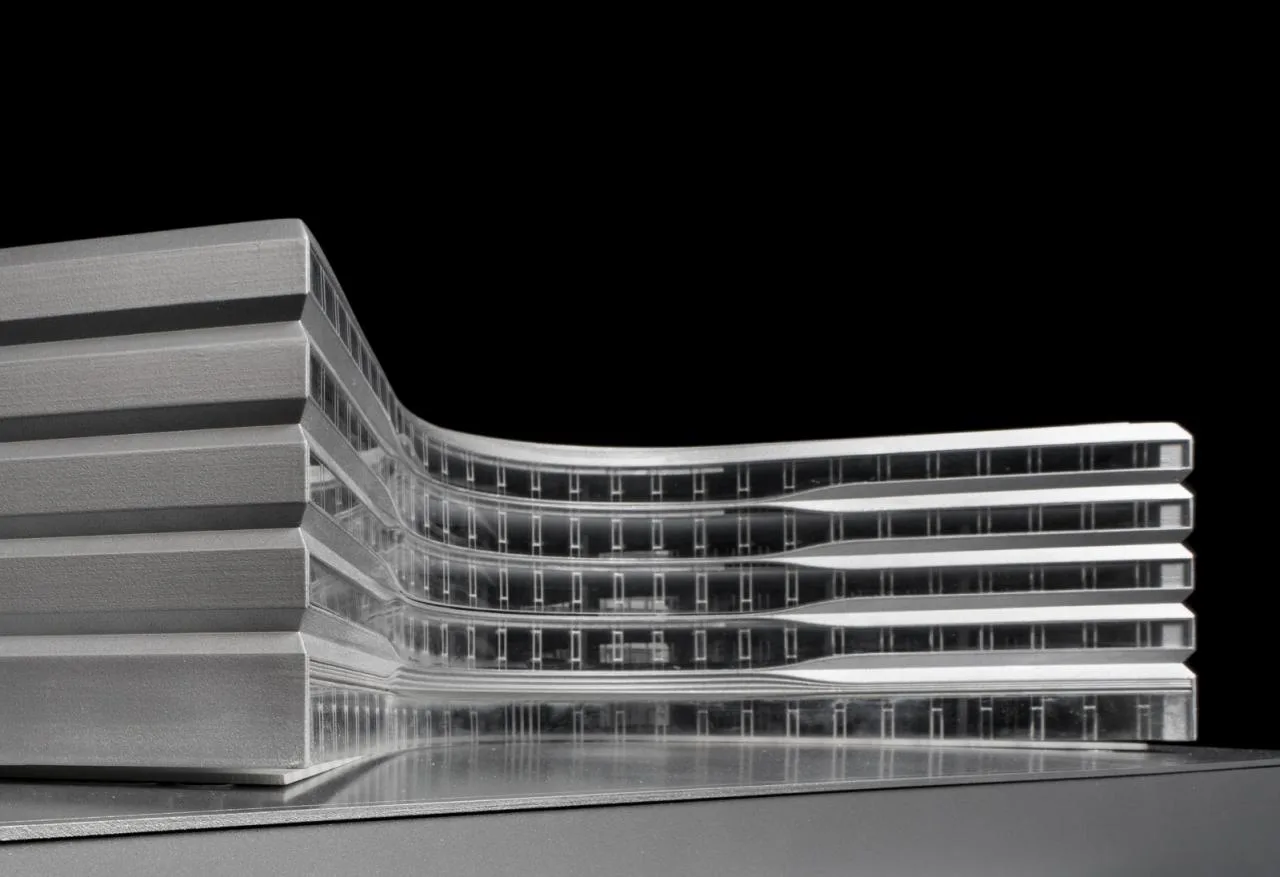
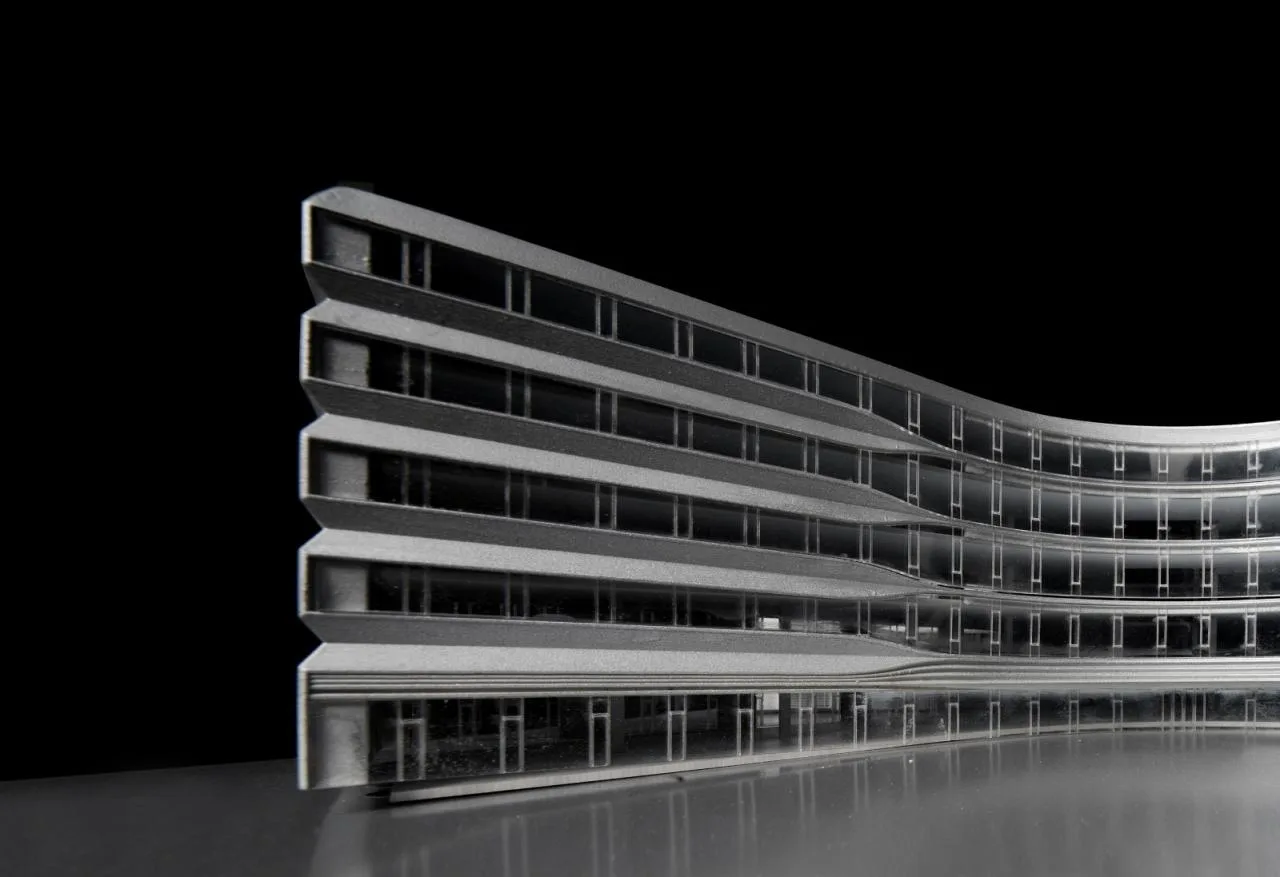
△ Model photo of the main school building
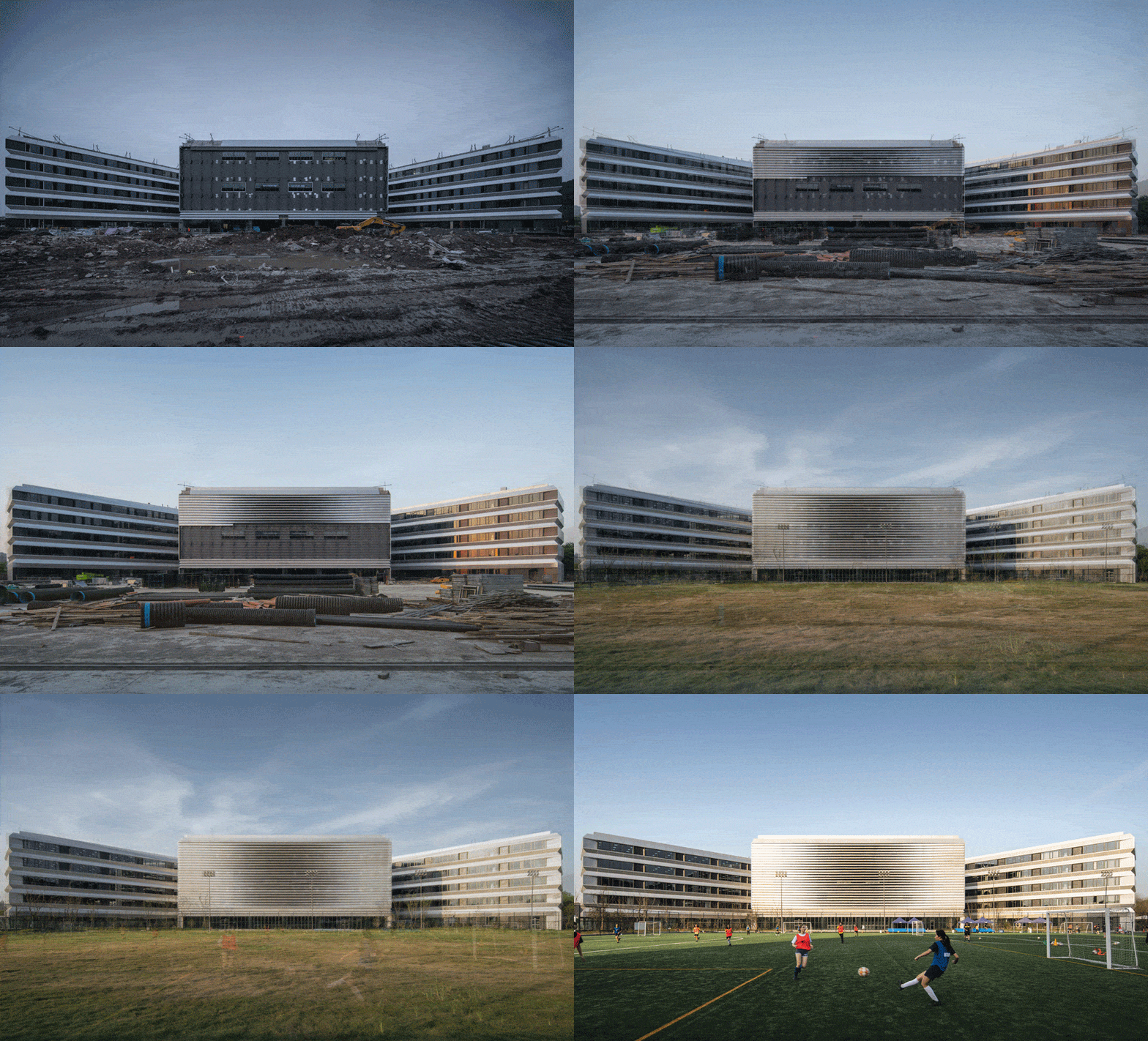
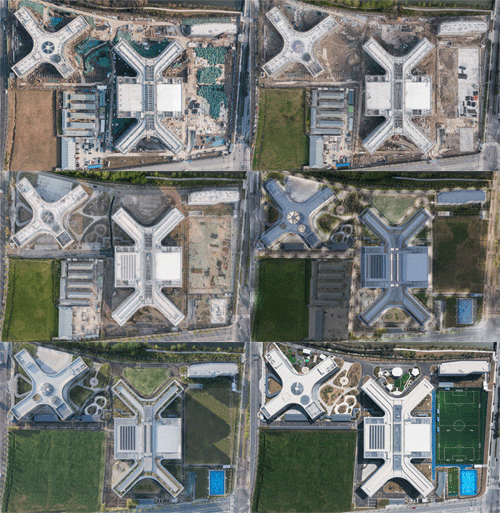
The main school building construction has been completed and is now in use.
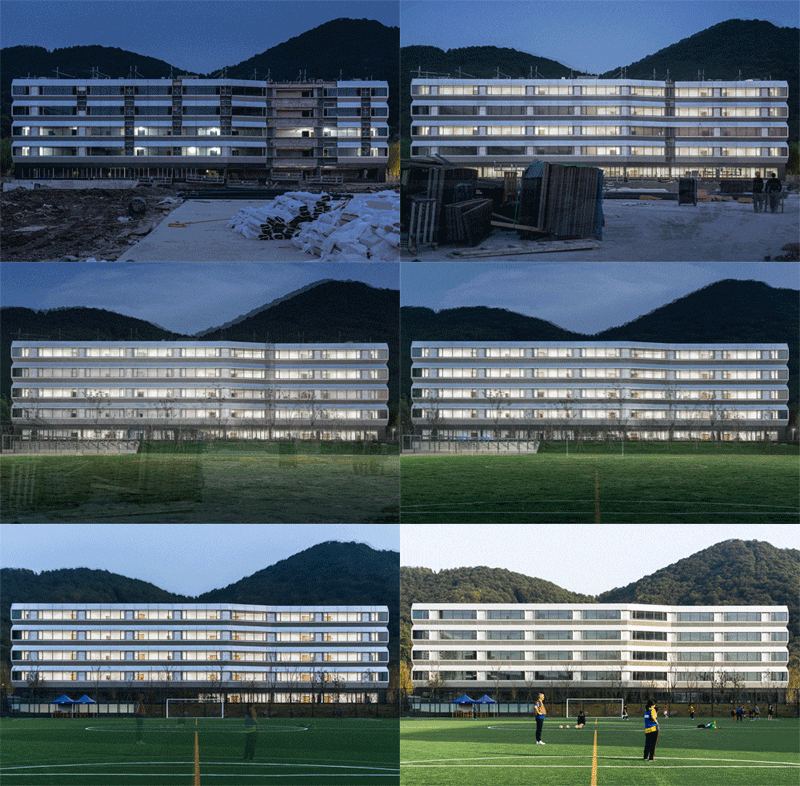
△ Dormitory building under construction and now in use
02 Space as an Educational Experience
— New Scenes and Experiences
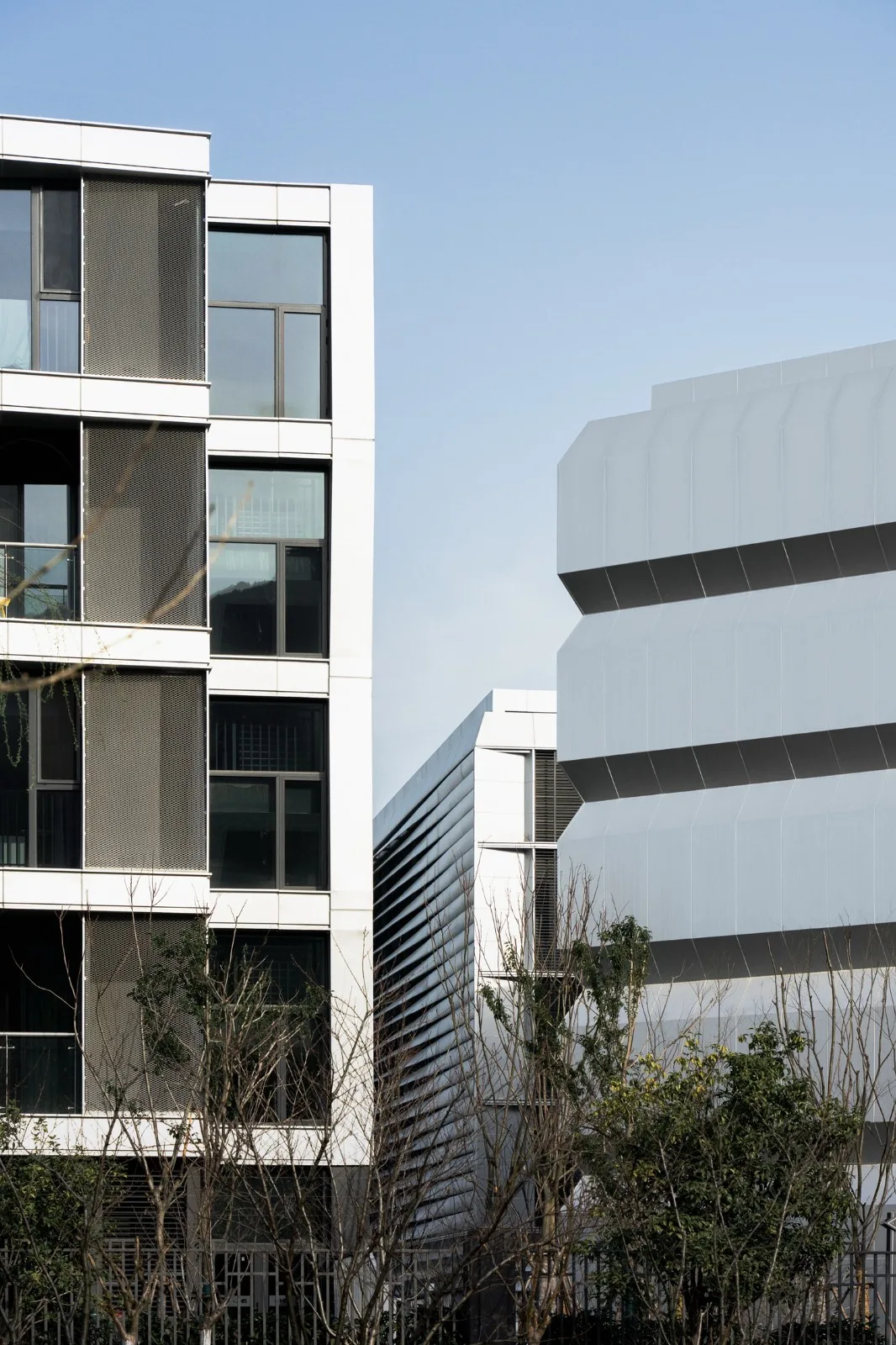
We emphasize the richness and fluidity of interior spaces, designing environments that align with the behaviors of different age groups. These spaces stimulate curiosity and spatial experience, fostering connections among people, architecture, environment, and education. Through spontaneous use and multiple interpretations by teachers and students, these flexible teaching spaces realize the concept of open education through spatial experience.
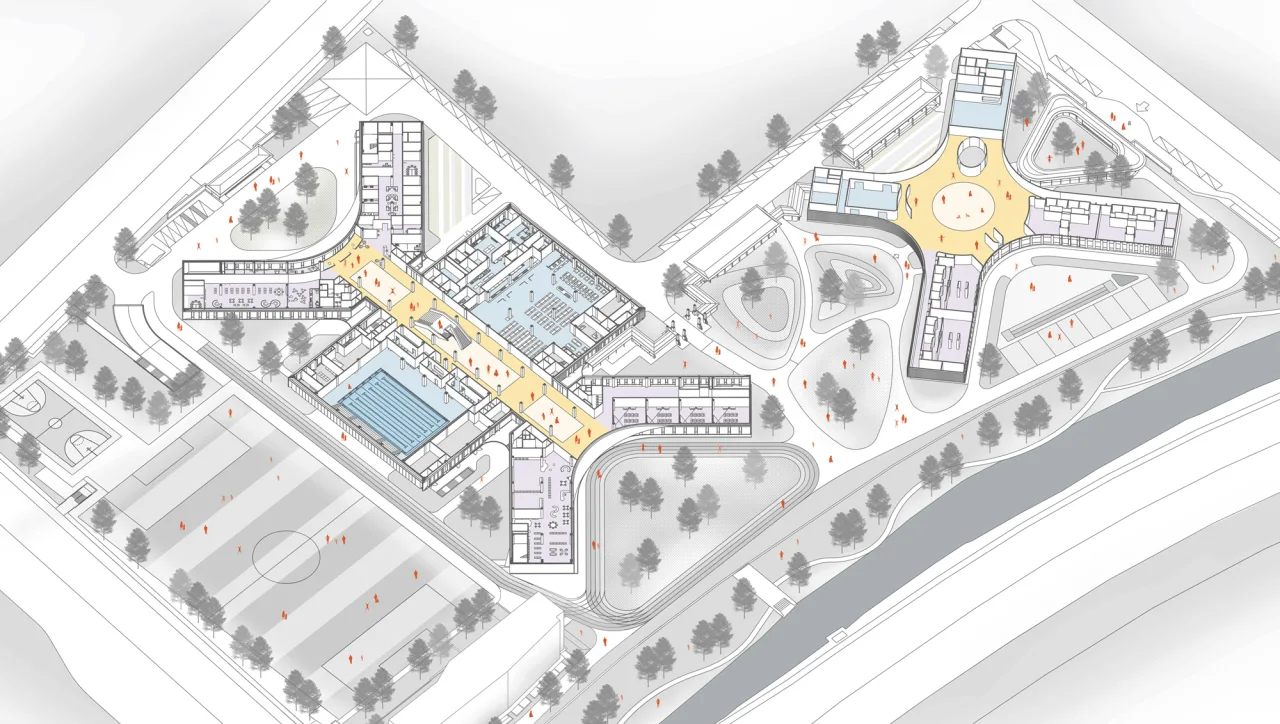
△ First floor axonometric diagram © line+
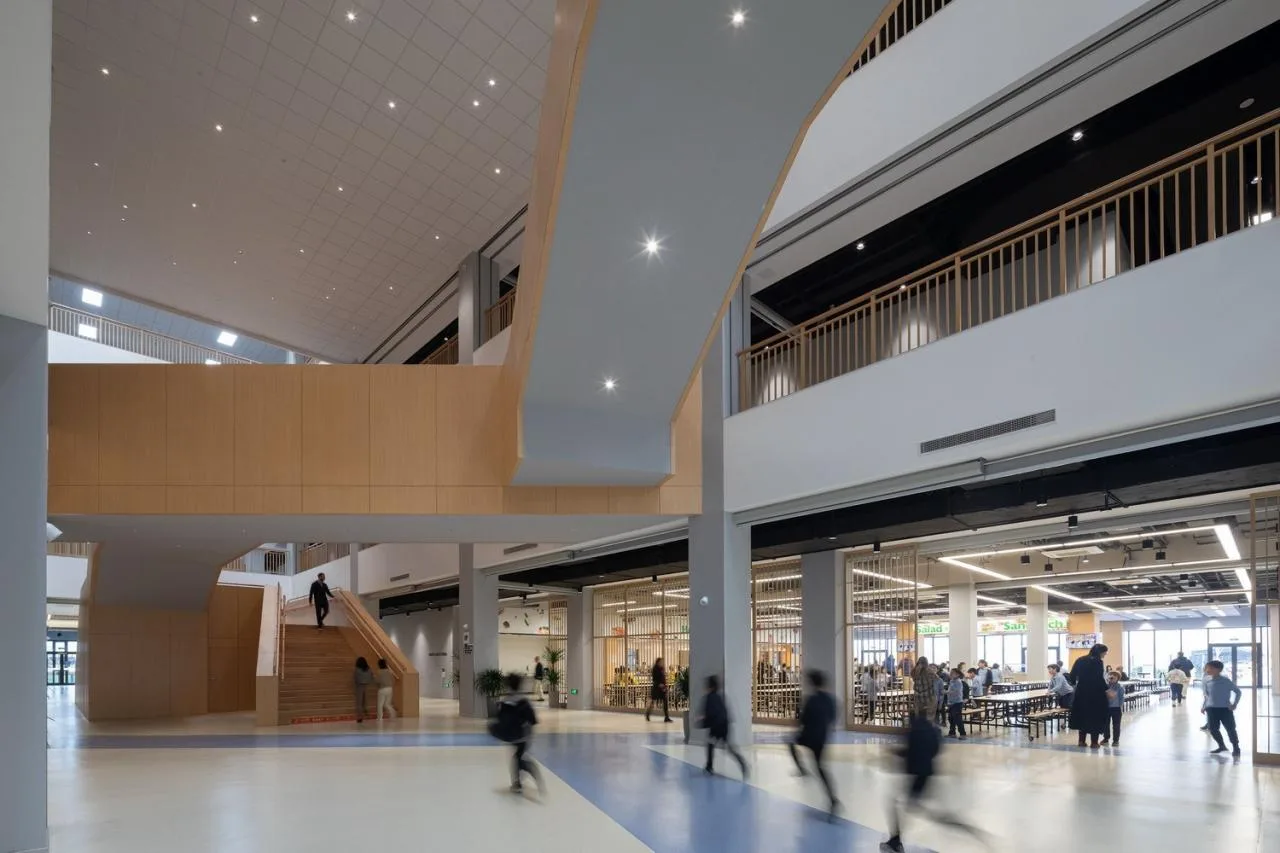
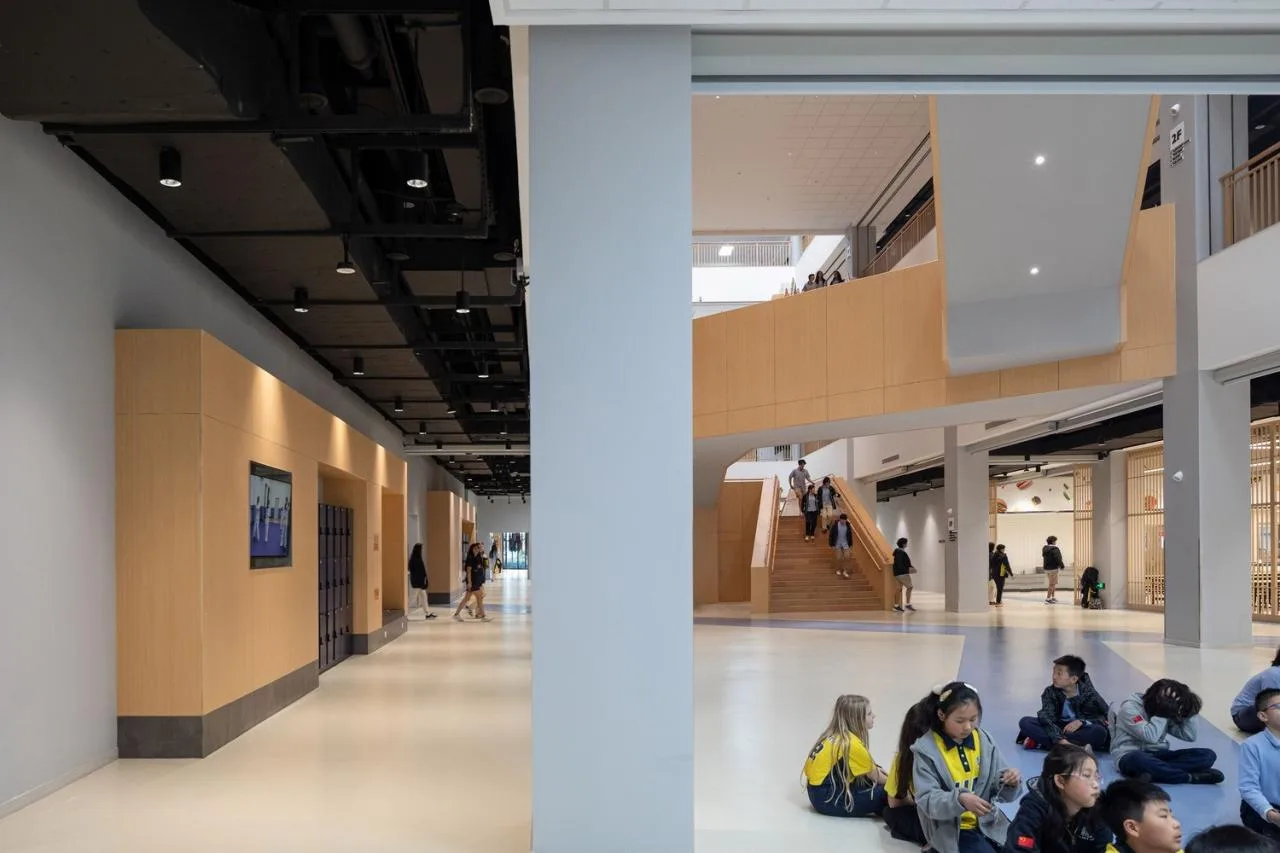
As a Social Hub Platform
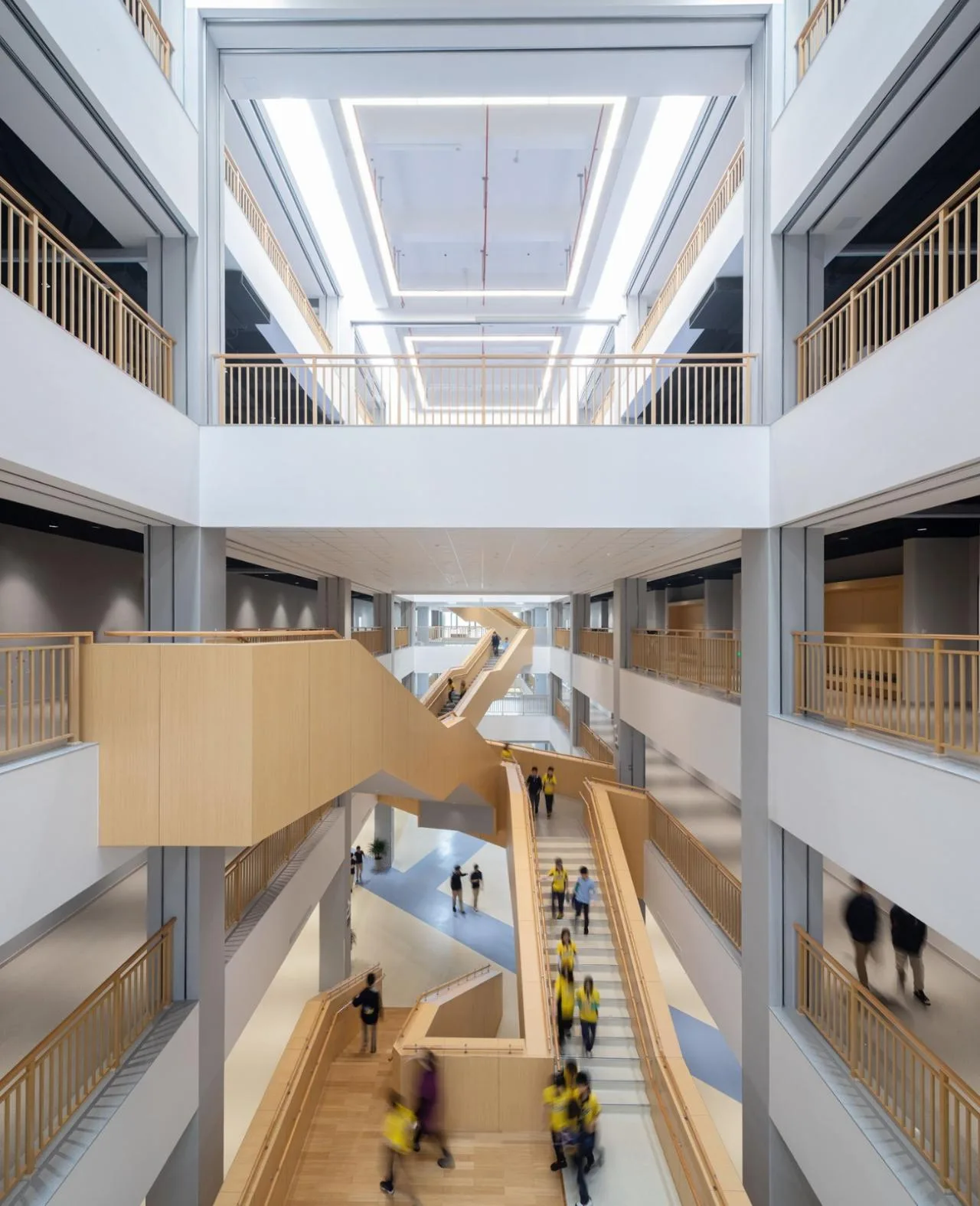
The atrium staircase acts as a spatial guide and organizer for the Hub, connecting with lobby staircases and corridors within teaching clusters to create a cohesive social platform. This arrangement offers numerous opportunities for interaction among teachers and students from diverse cultural backgrounds.
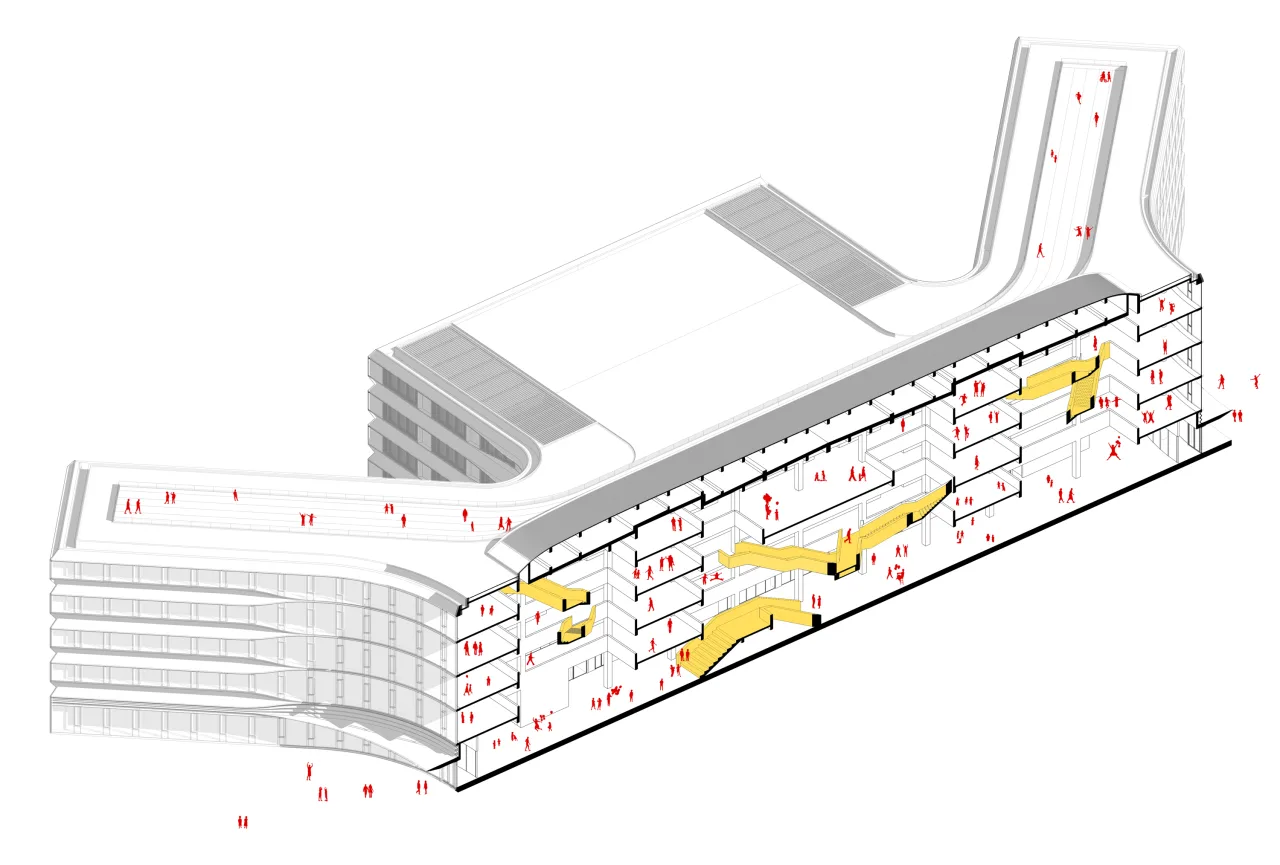
△ Axial measurement of the long side of the main teaching building © line+
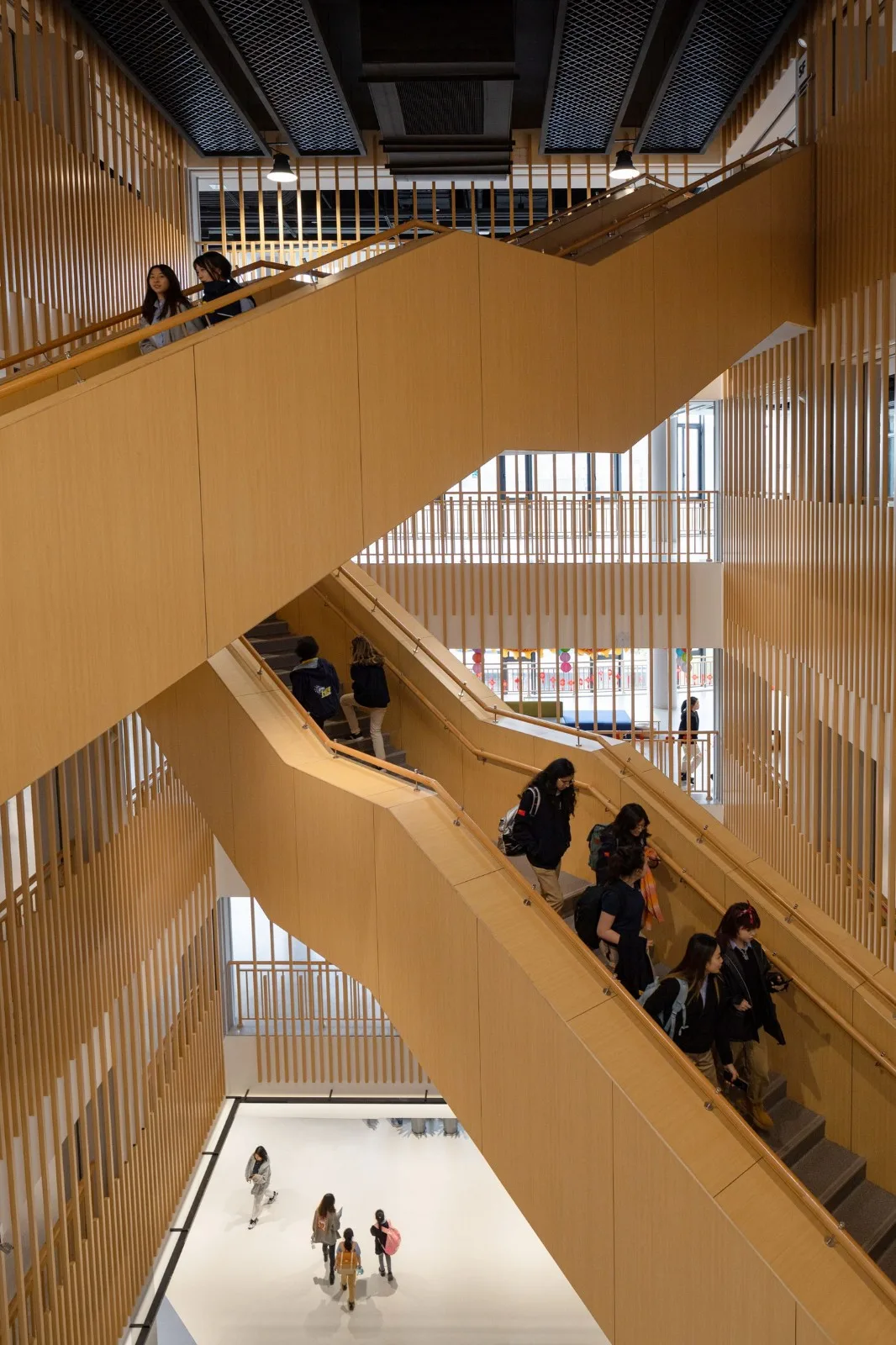
Within the rectangular, regular box volumes, interlocking and dialogue-inspired structural variations create engaging spatial landscapes. This breaks up long circulation paths and integrates them into the shared Hub.
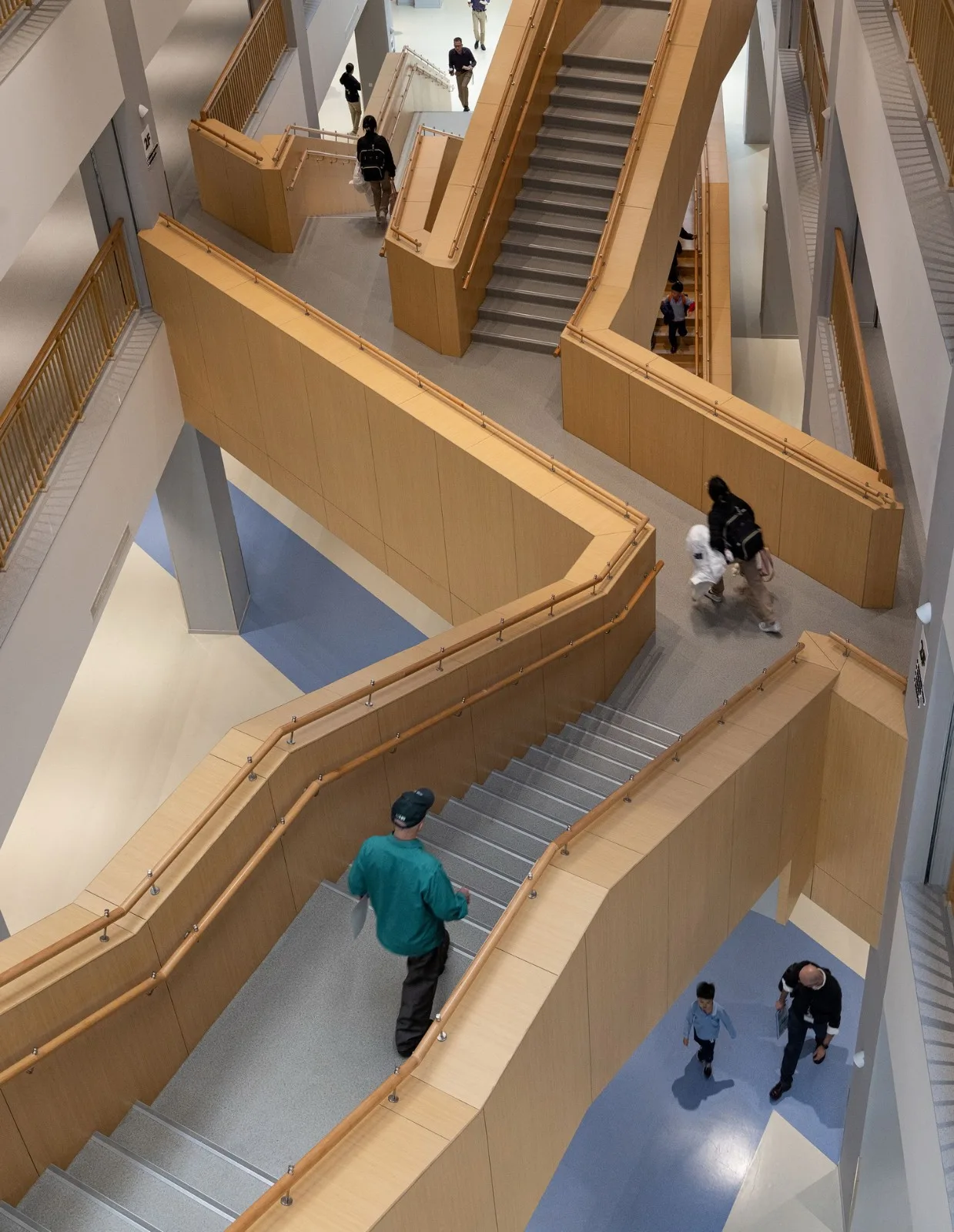
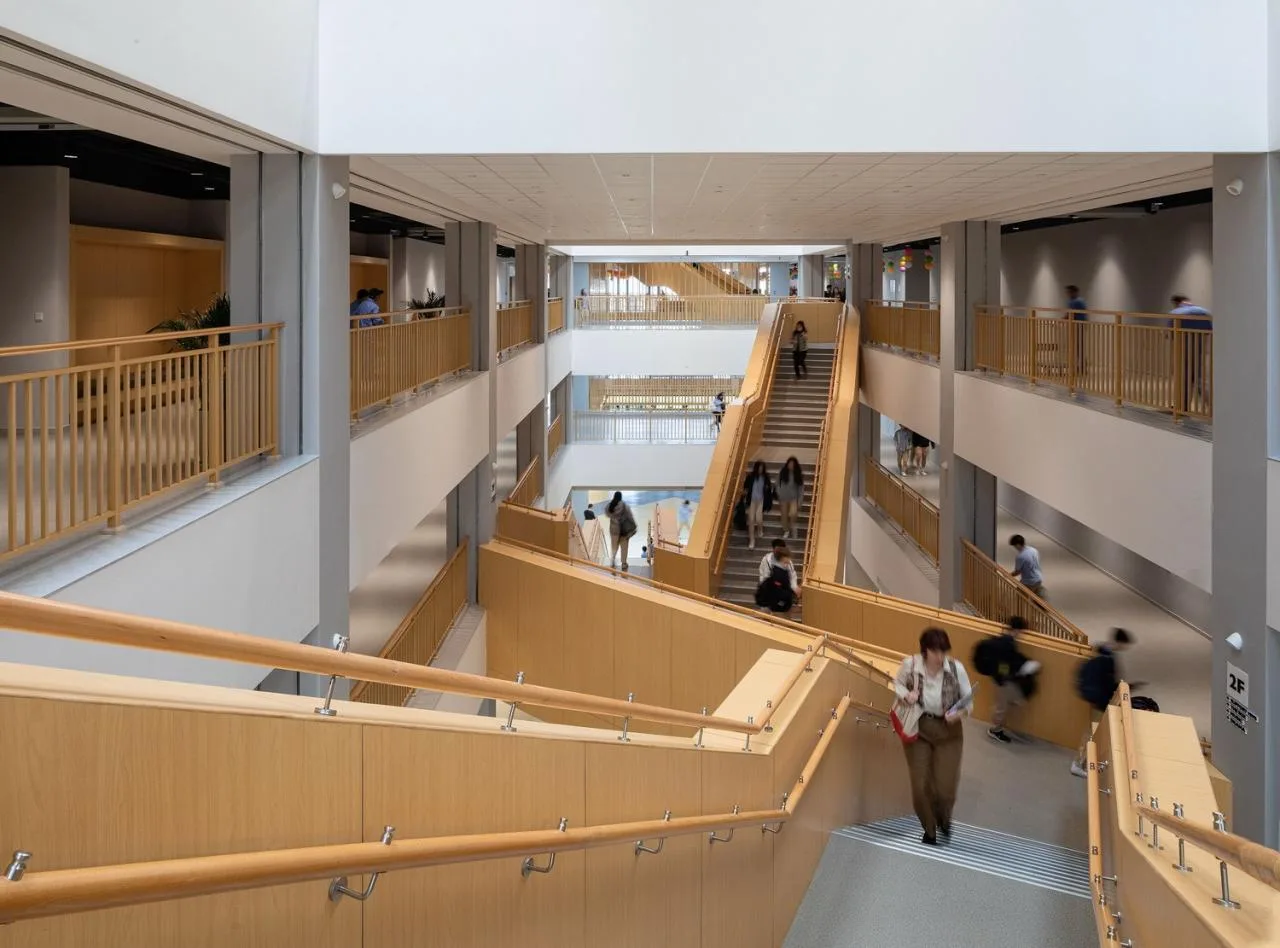
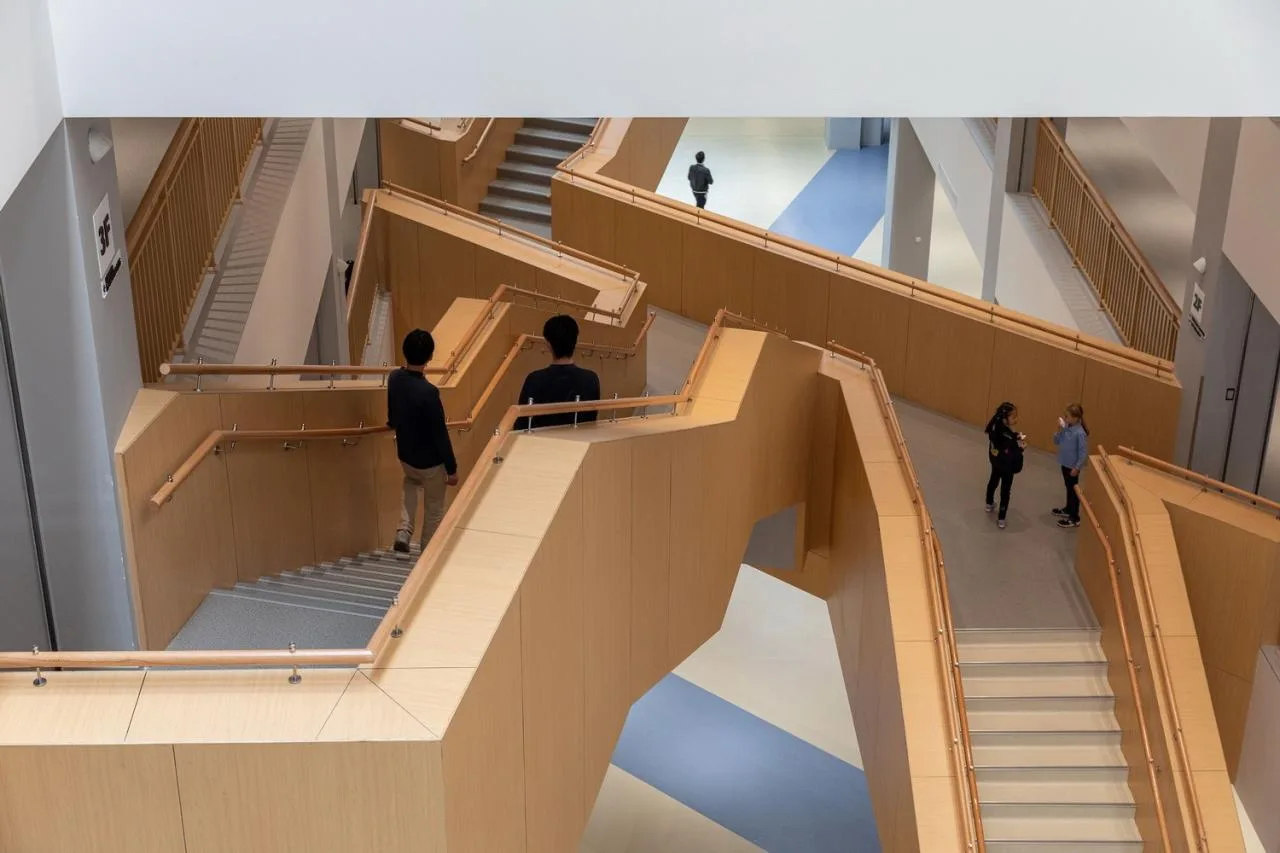
Similarly, the kindergarten’s courtyard staircase adopts a slide-like form connected to a circular corridor, creating an engaging activity and communication platform suitable for young children. For safety and spatial efficiency, the staircase uses two or three layers of tie bars, enabling the upper part to be under tension and the lower under compression, eliminating the need for column supports.
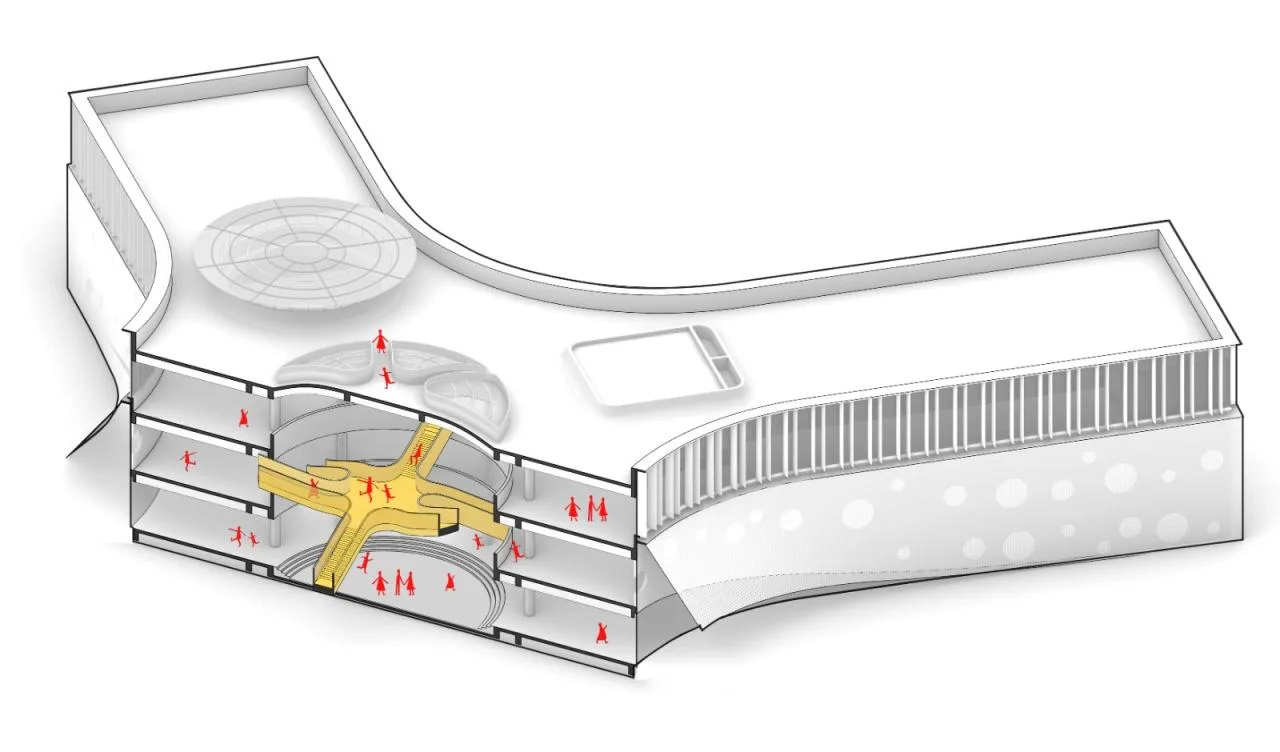
△ Kindergarten axonometric survey © line+
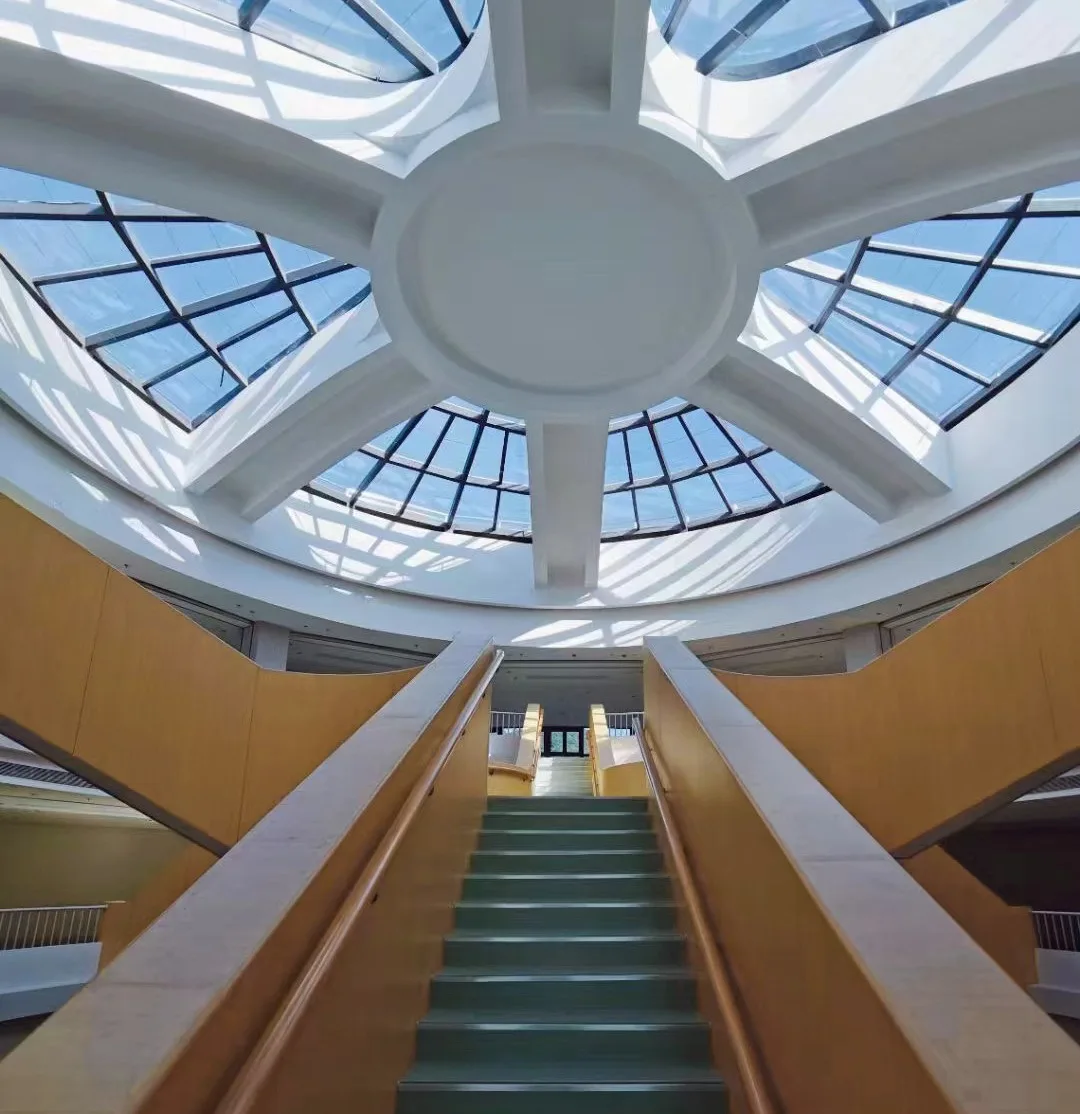
As an Event Platform Hub
The Hub is a vertical complex stacking public functional spaces including physical exercise, gaming, performance rehearsals, and dining. Movement flows from teachers and students across departments converge here, fostering deep communication and sharing.
Unlike typical school schedules, club activities centered on the Hub take place daily after 3 pm. Through interaction, cooperation, and competition with peers, students grow confident, taking center stage—the core intention behind the Hub’s design.
The Hub’s functional layout is divided east-west by atrium stairs, accommodating two main uses: cultural performances and physical activities, spread across six major volumes that emphasize balanced physical and mental development.
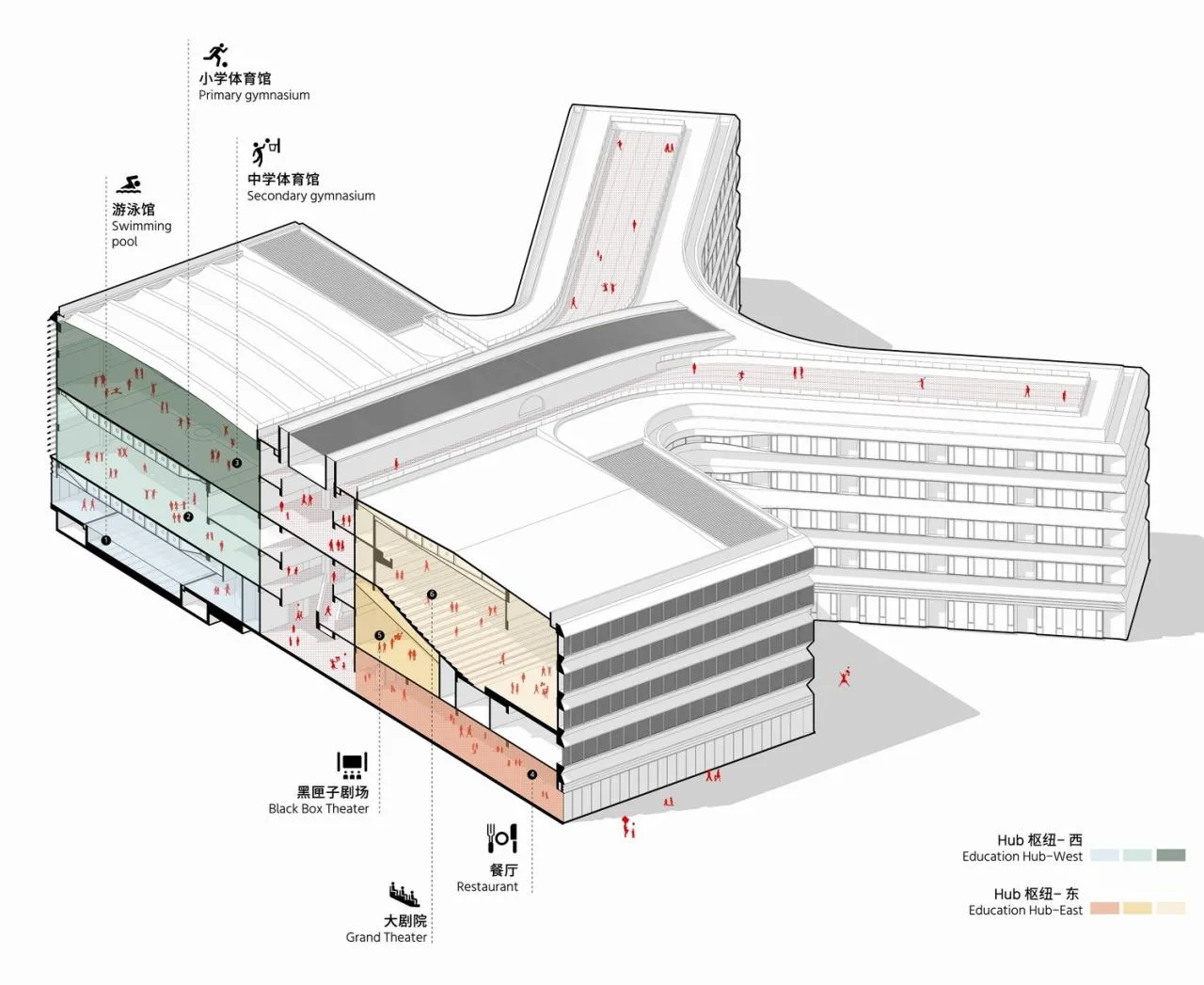
The western section houses a 25m x 6-lane swimming pool (1F), a primary school gymnasium (2-3F), and a secondary school gymnasium (4-5F). Gymnasium dimensions are tailored to students’ sizes. The primary gym includes an indoor activity room and a grandstand. The secondary gym contains two regulation-sized basketball courts for competitions.
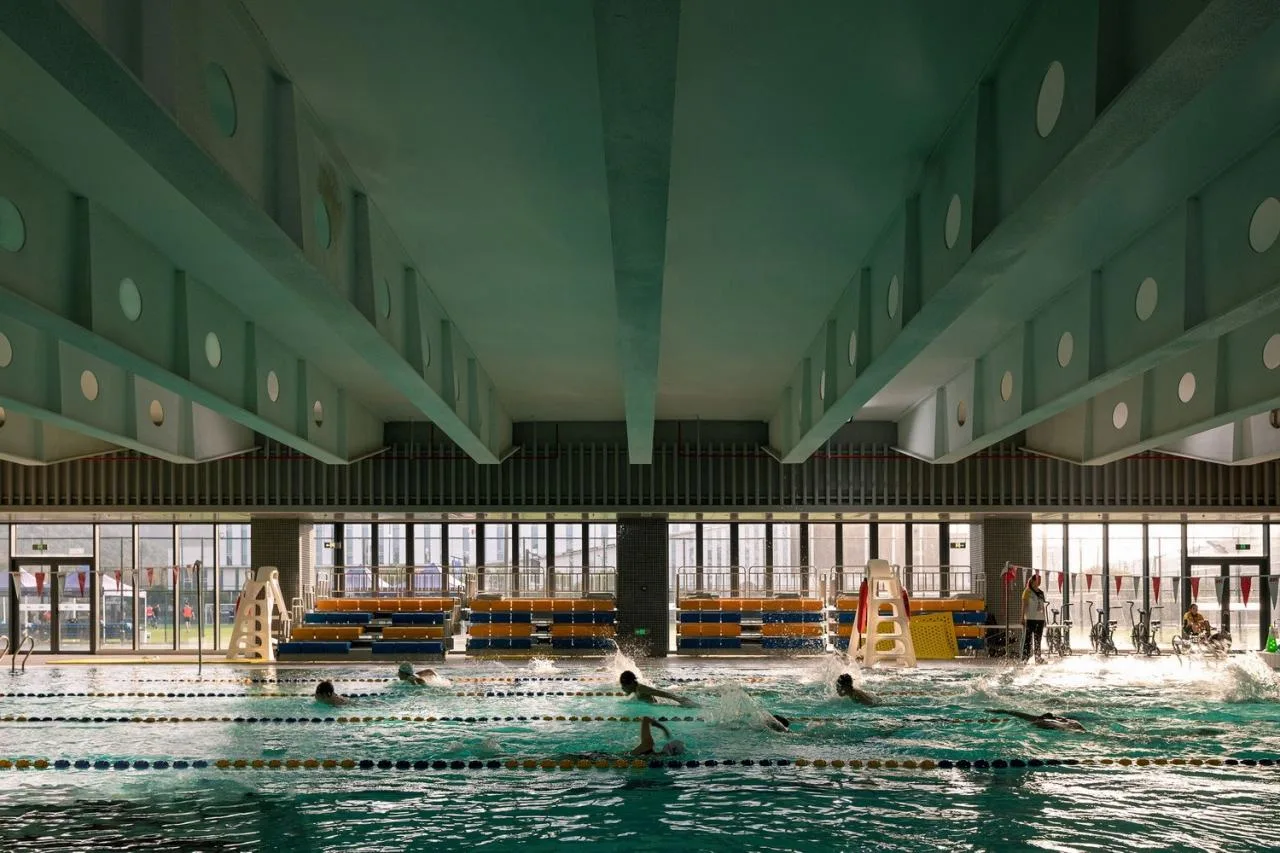
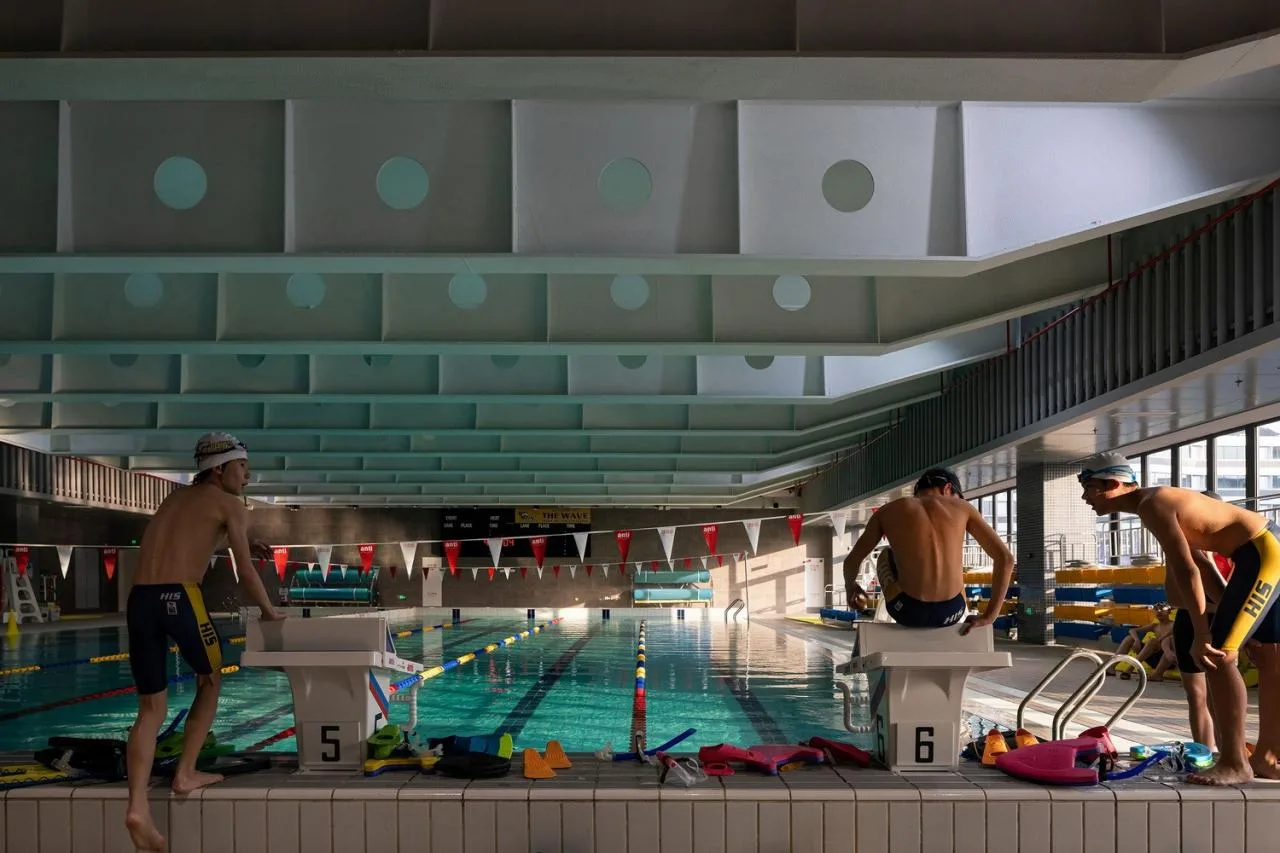
△ Swimming Pool (1F)
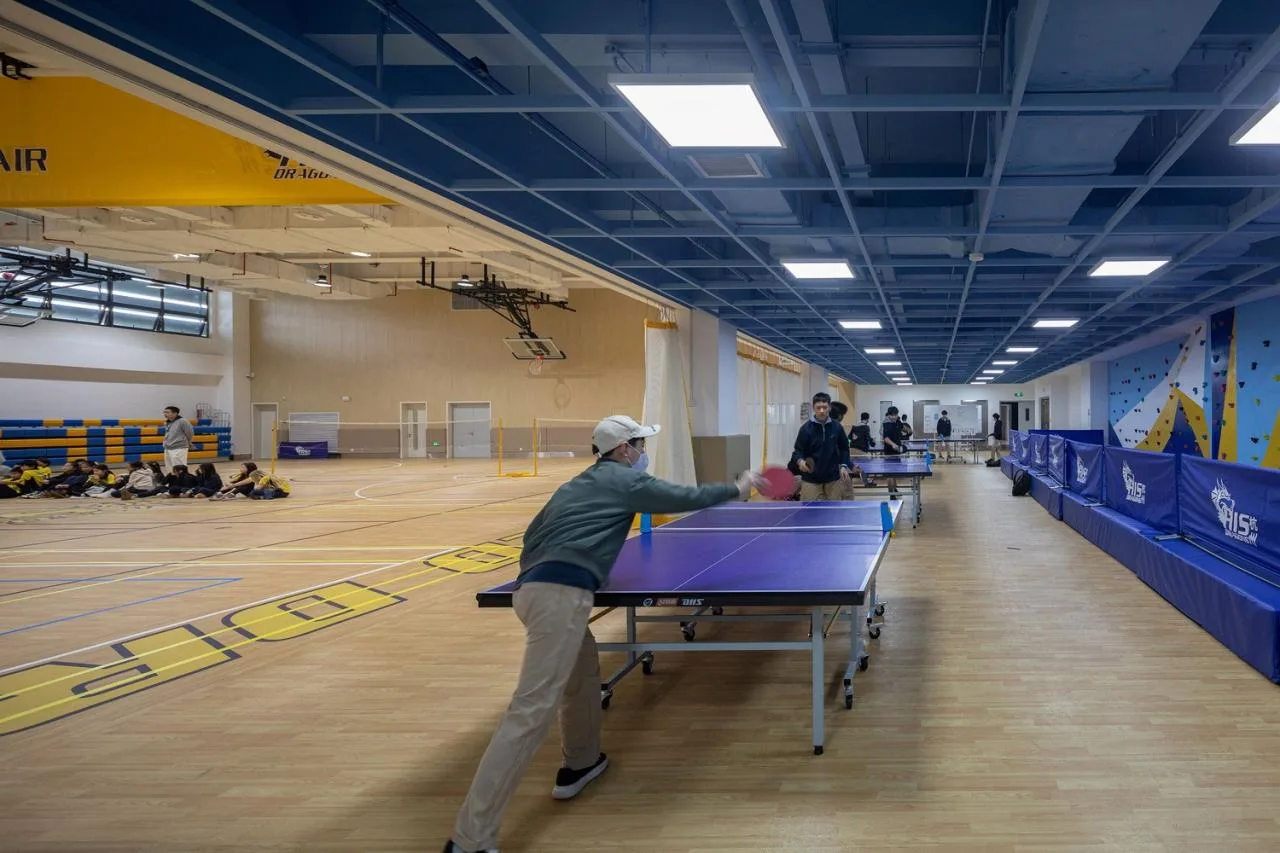
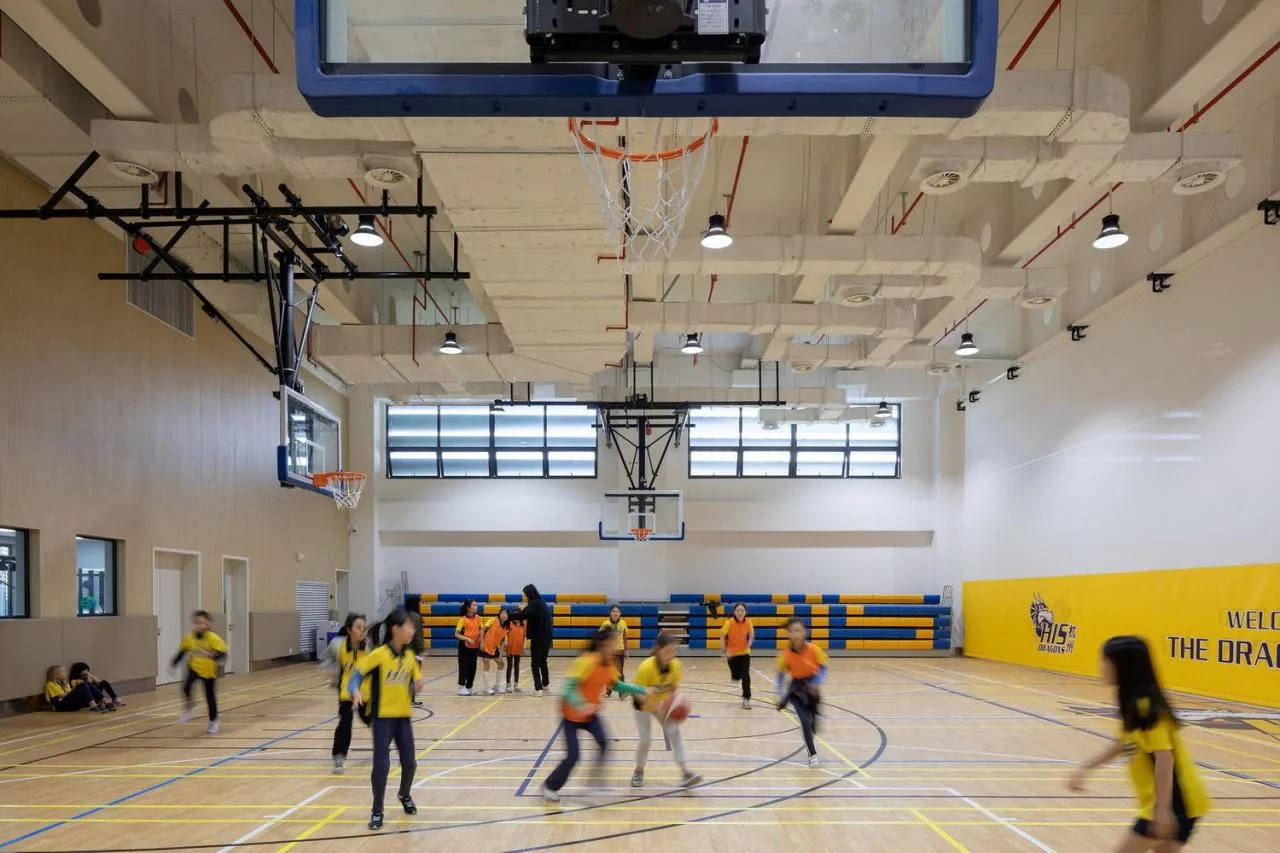
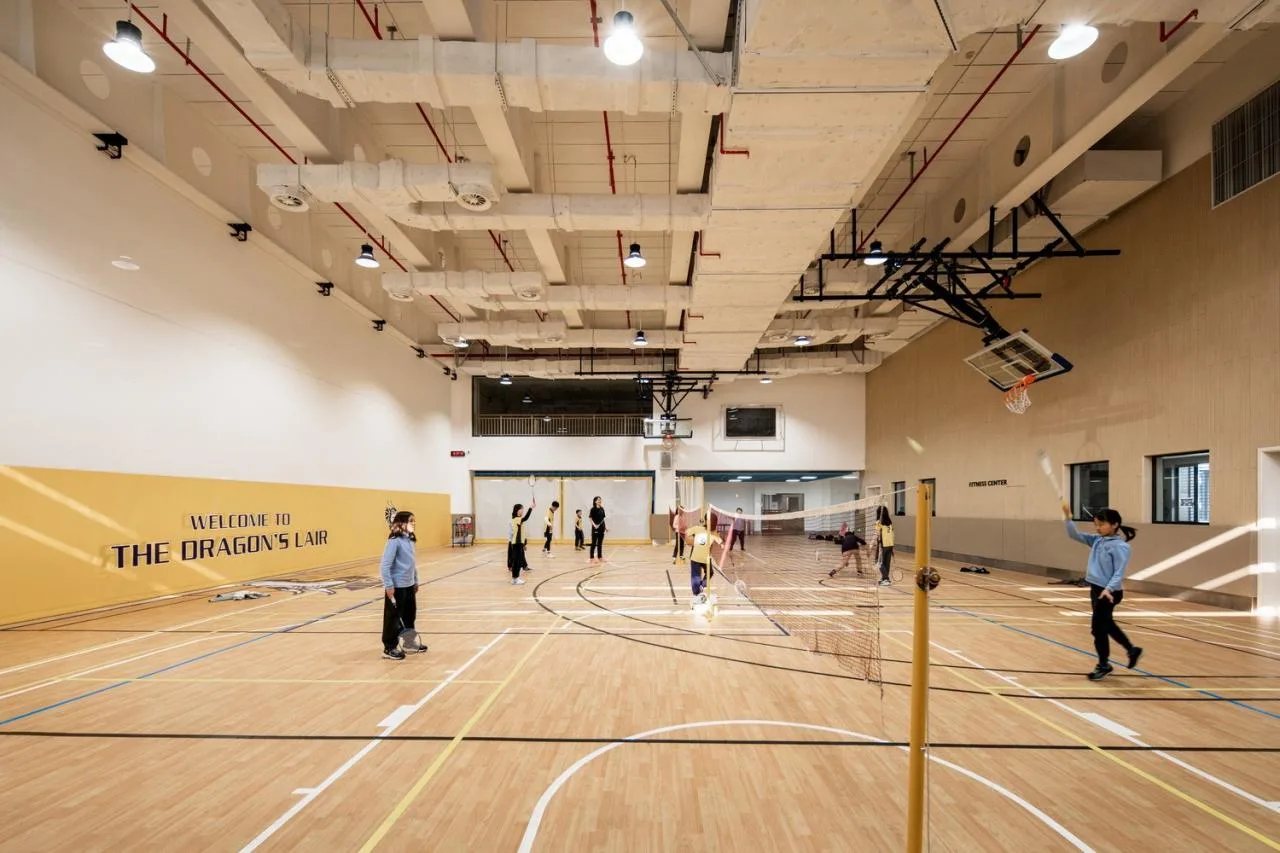
Primary School Gymnasium (2-3F)
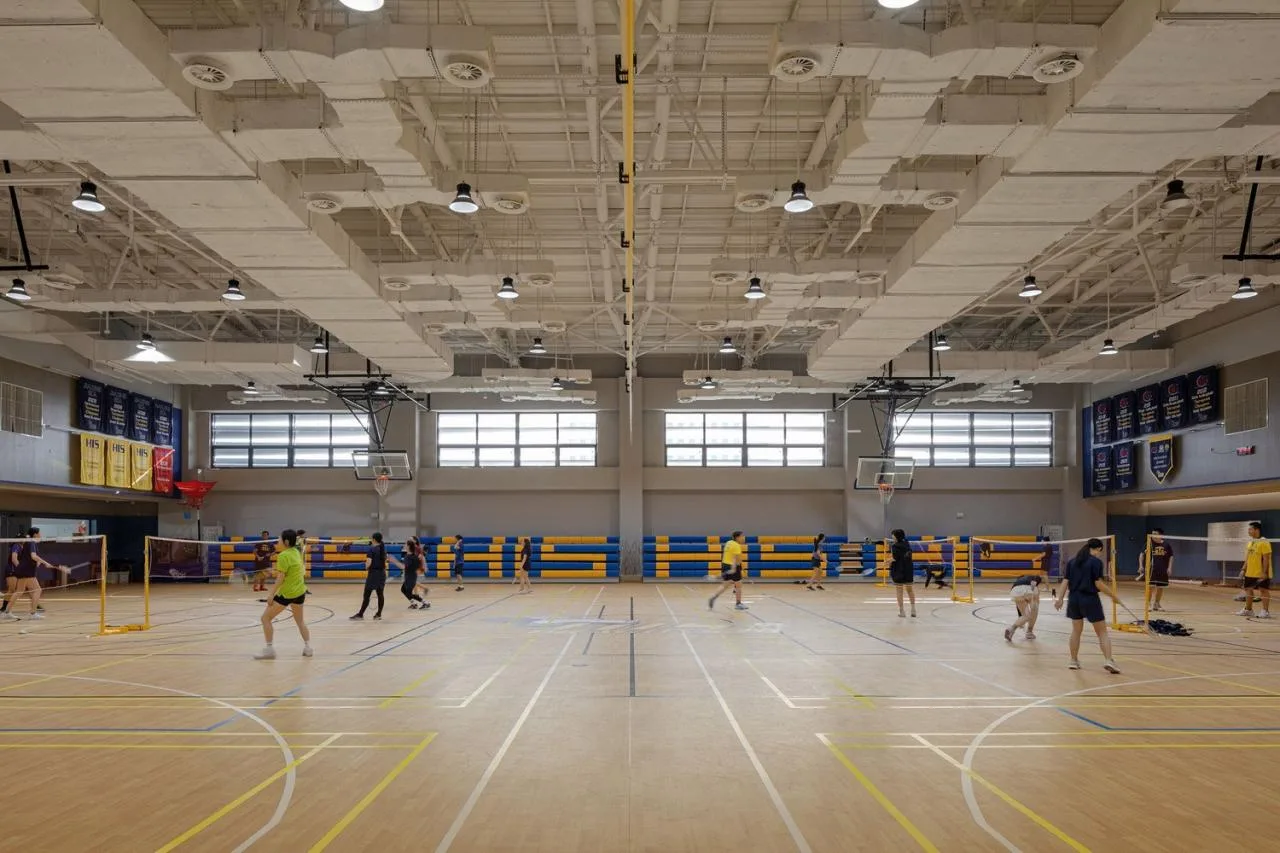
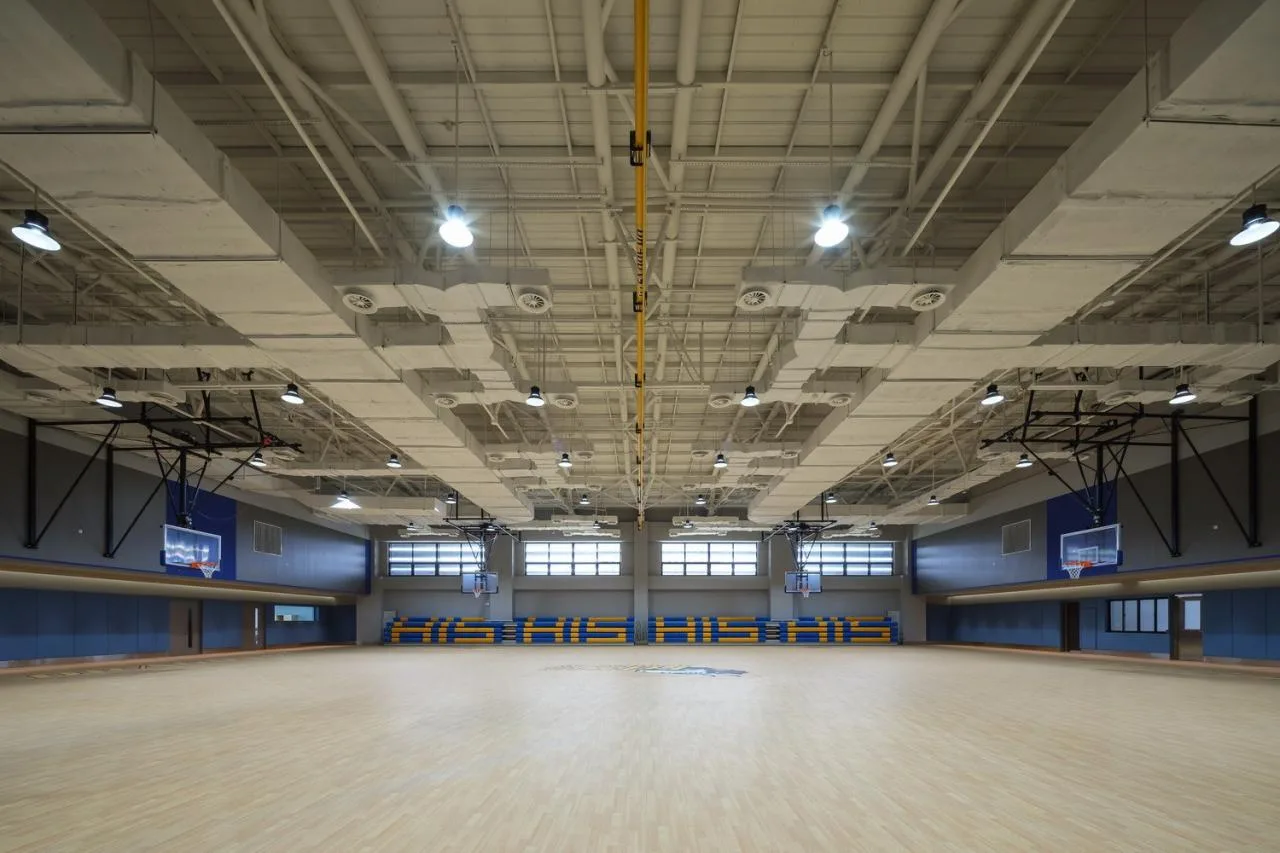
△ Middle School Gymnasium (4-5F)
The primary gymnasium features flexible partitions designed through spatial planning and structural load calculations. It can be fully opened or semi-opened to accommodate diverse, unstructured teaching activities as needed.
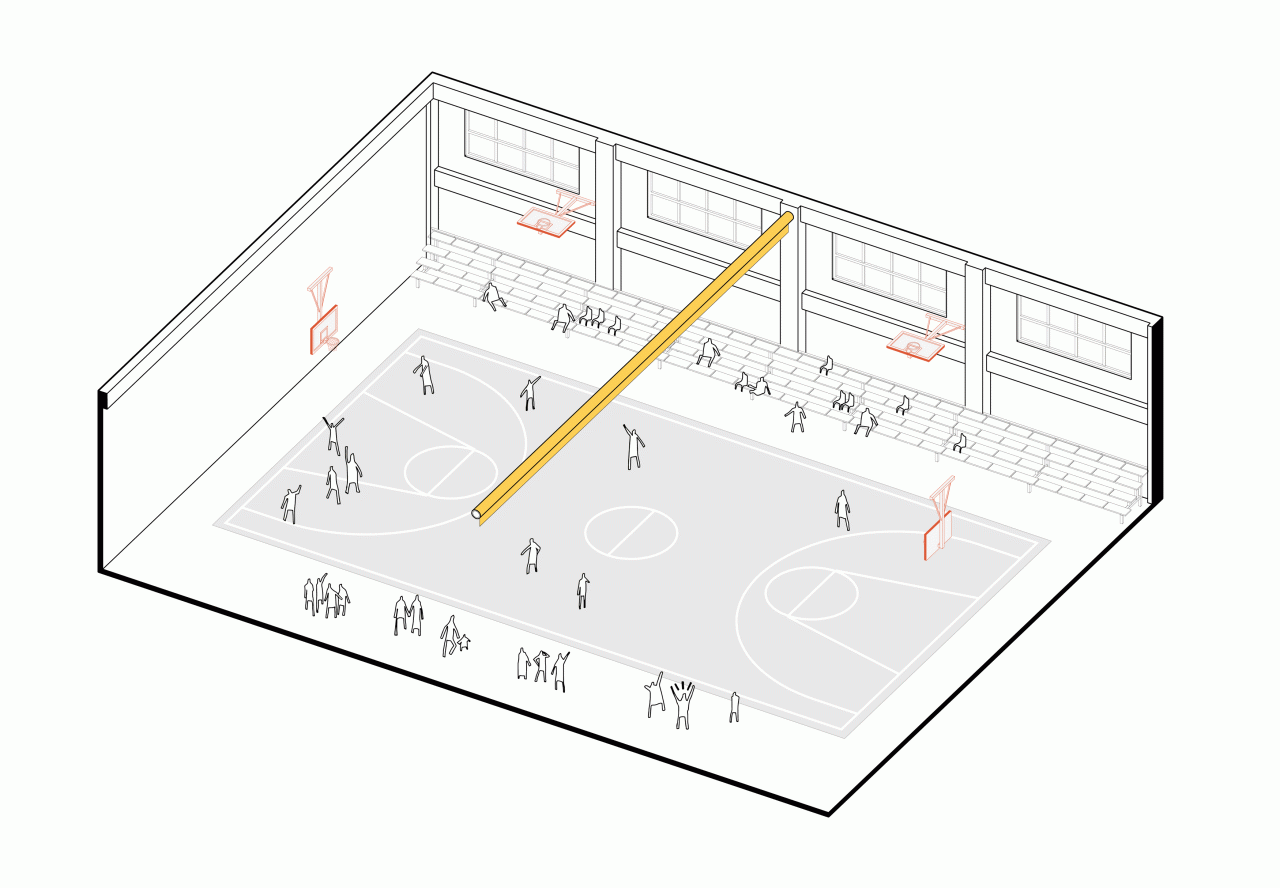
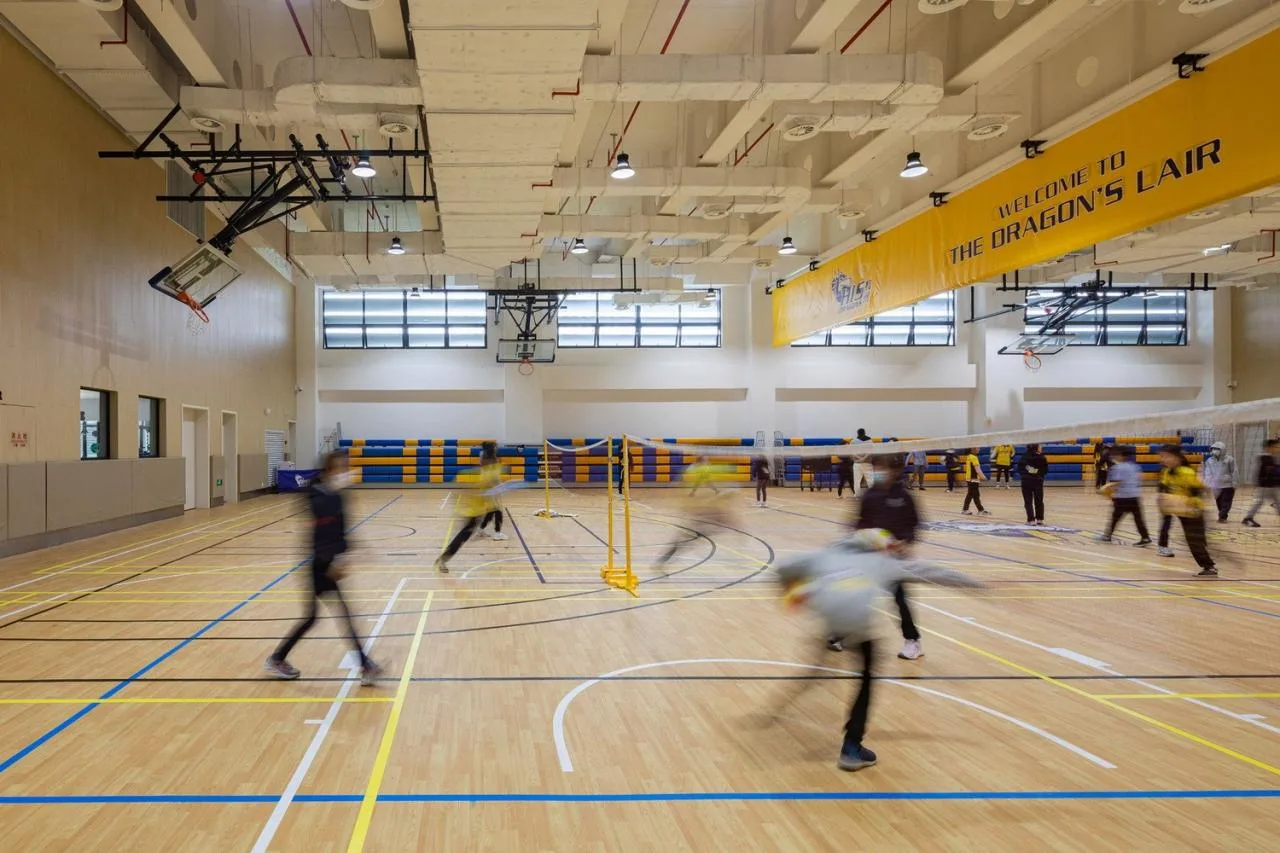
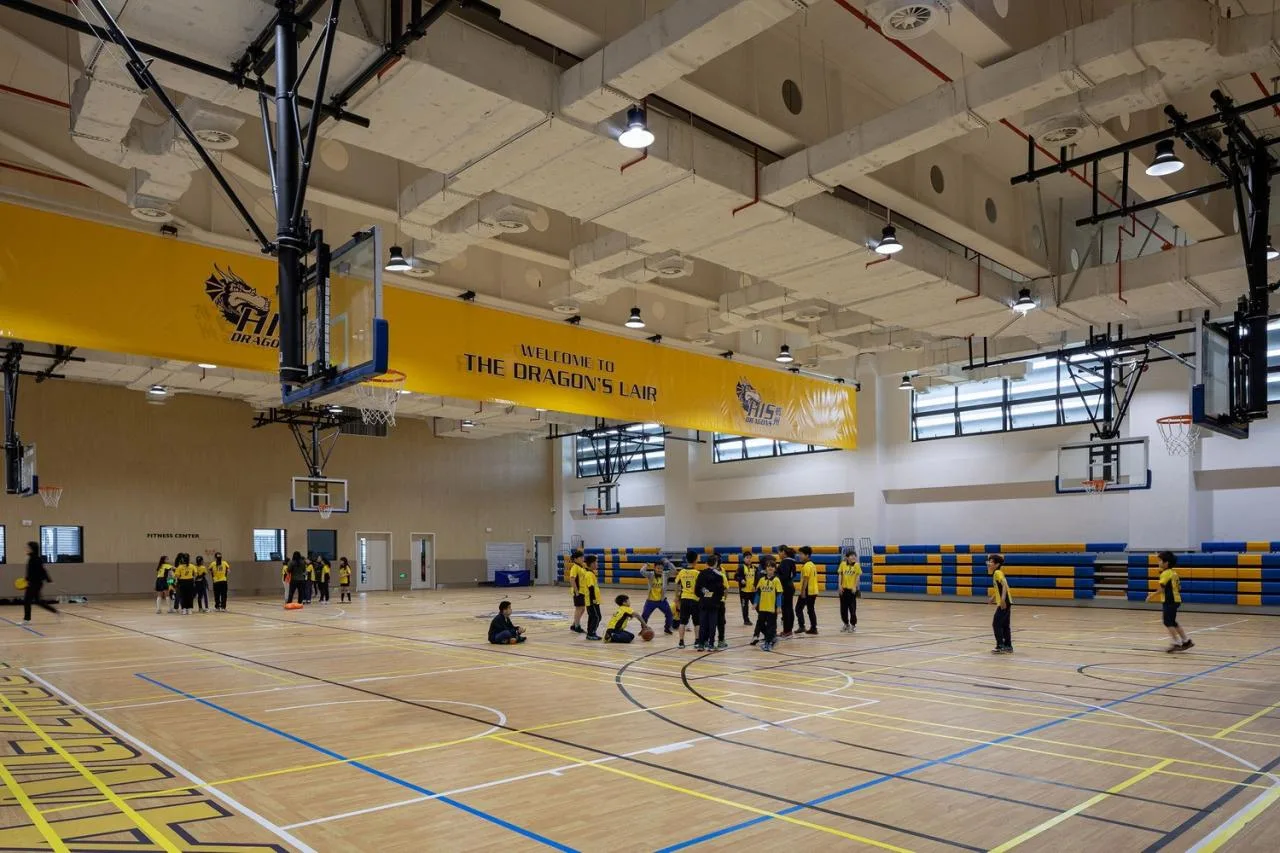
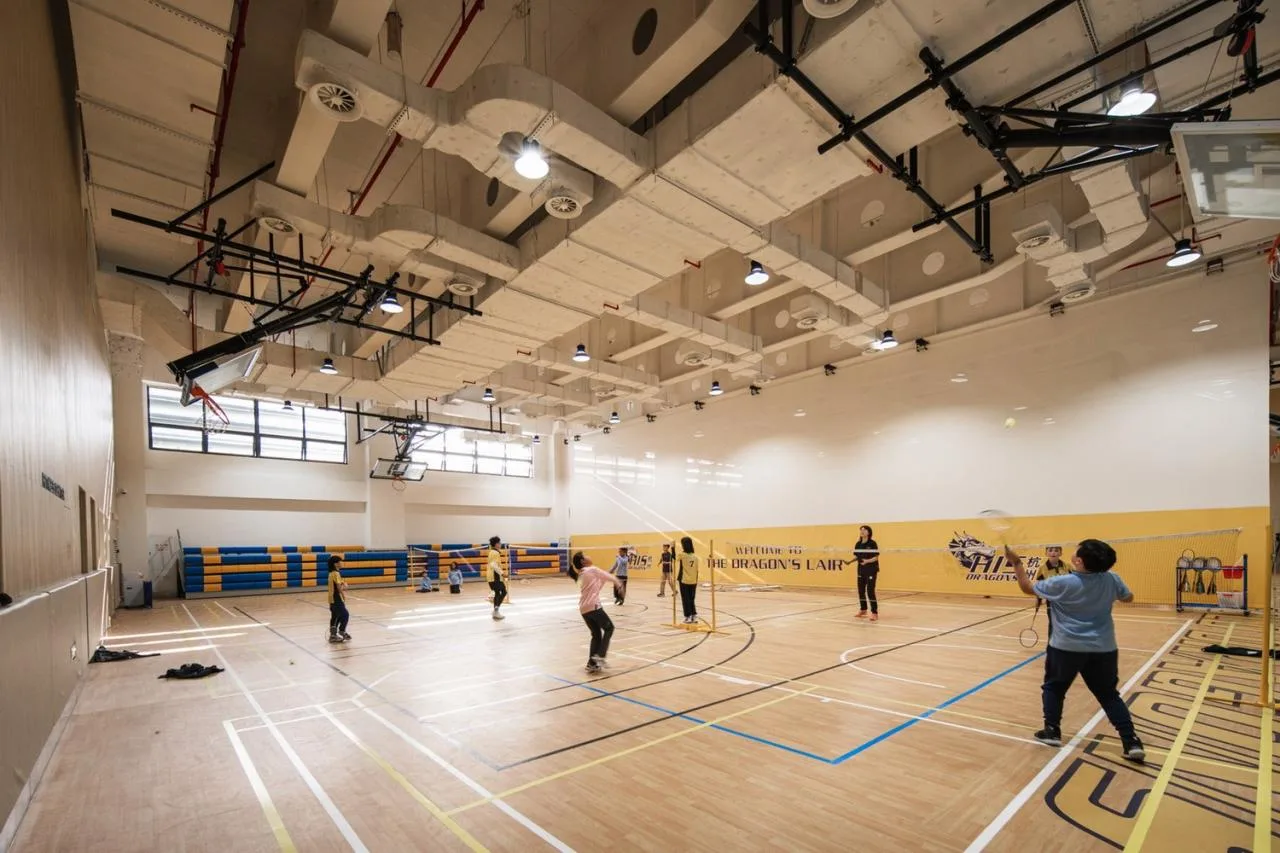
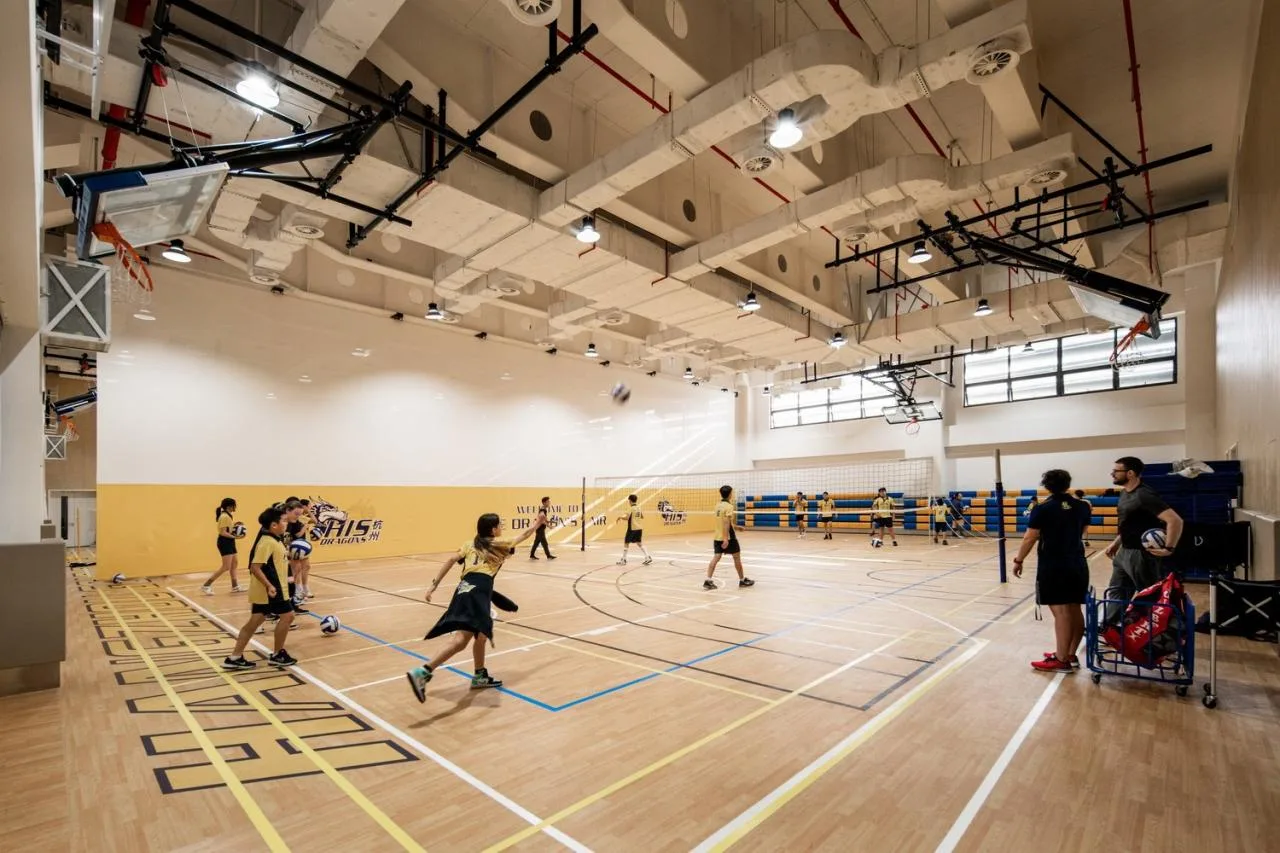
Various configurations of the primary school gymnasium
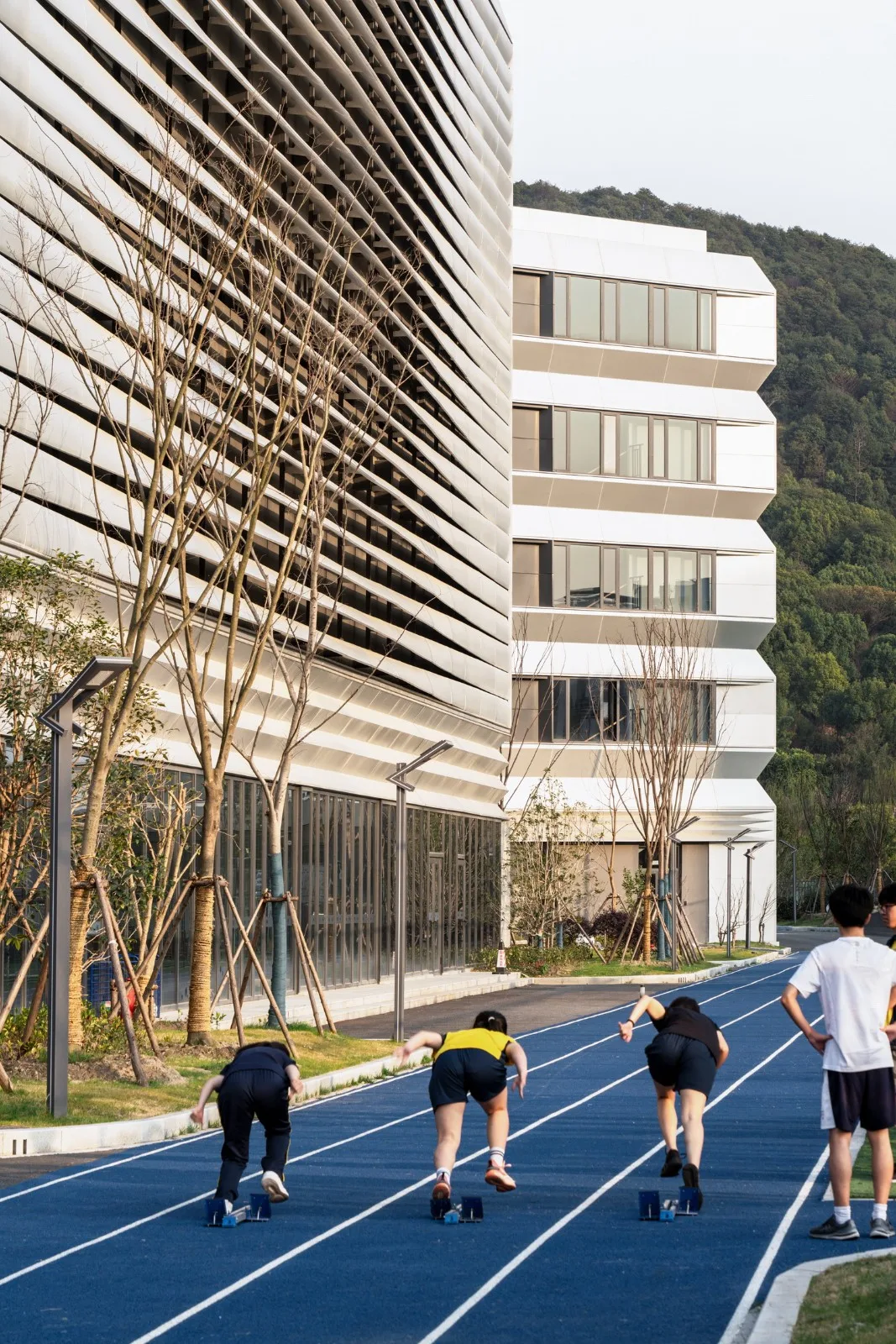
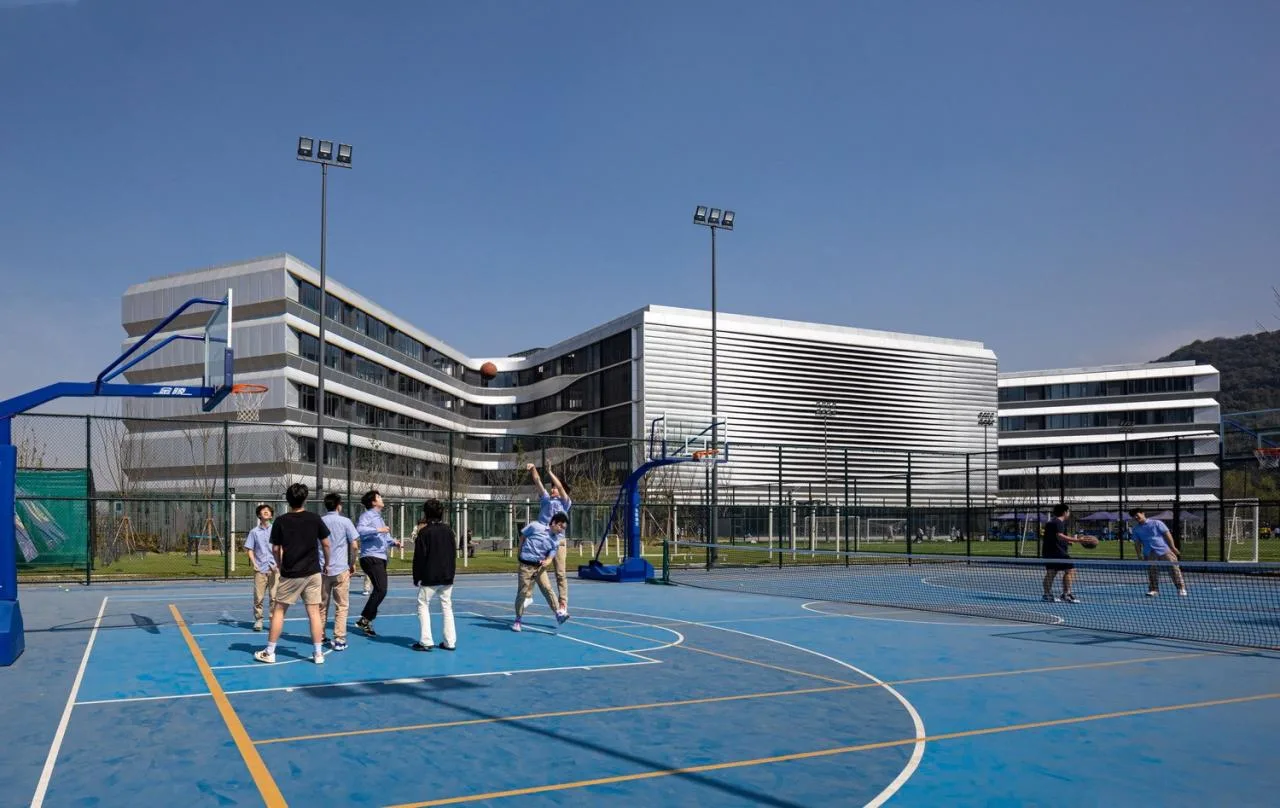
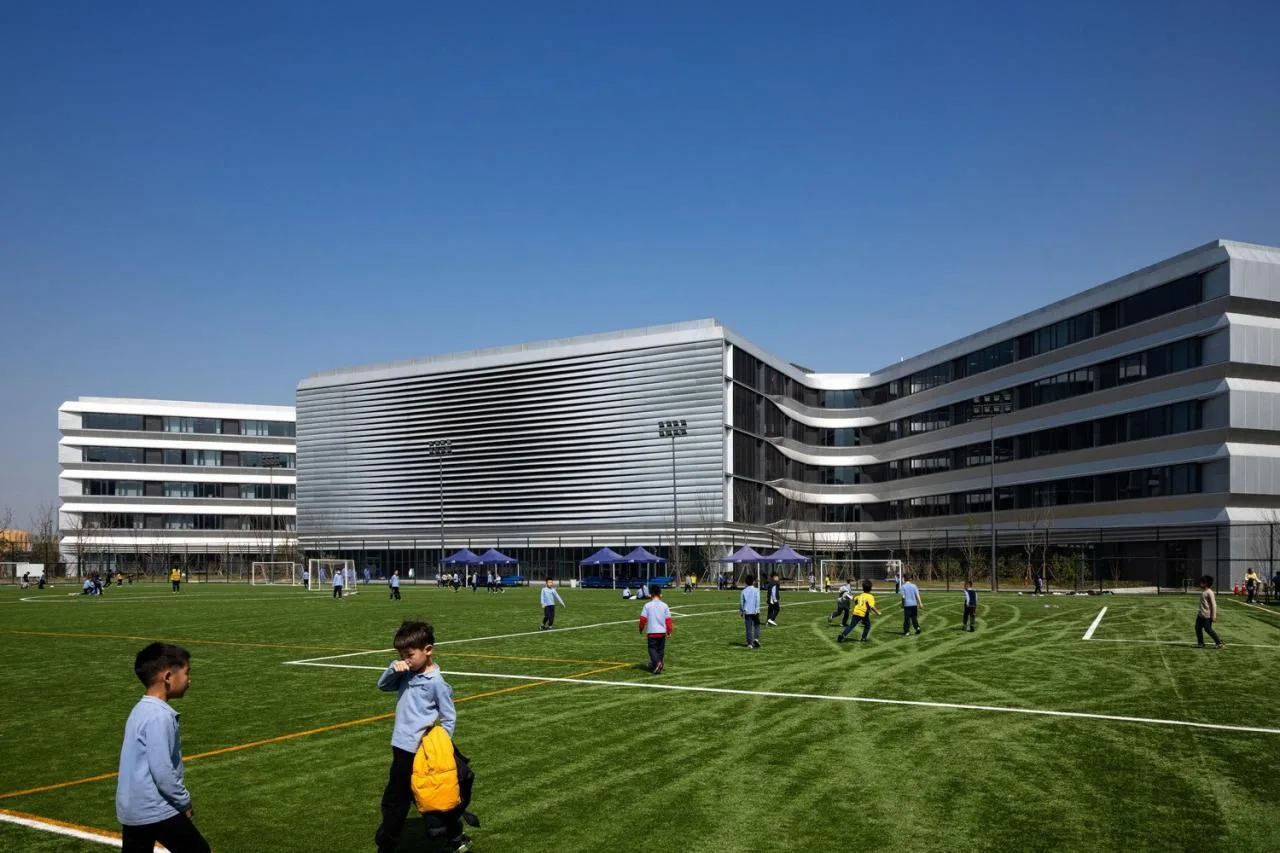
The east and west facades of the main school building feature horizontal perforated sunshade louvers, angled to create multiple light reflections. This design ensures soft, even, and ample natural light inside the gymnasium.
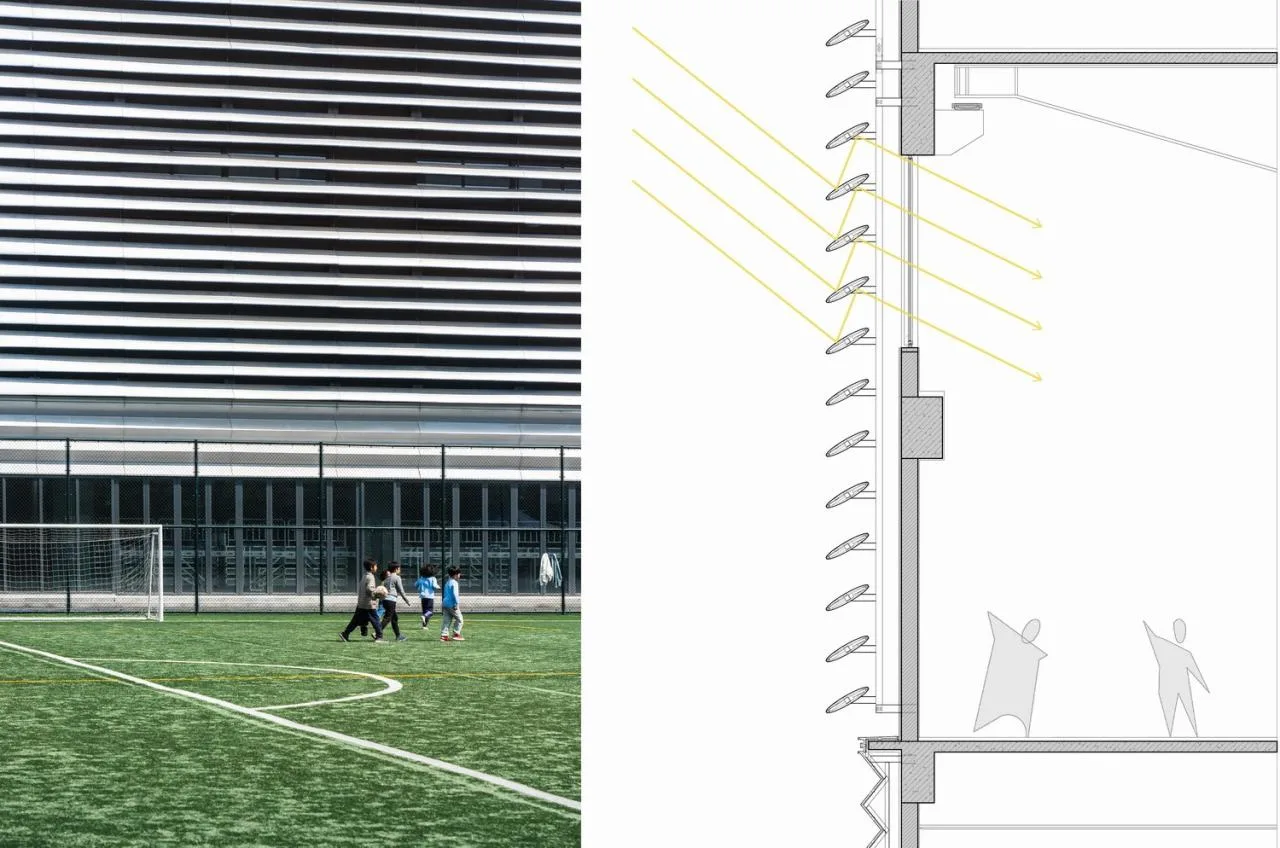
Lighting analysis of the Sports Center facade © line+
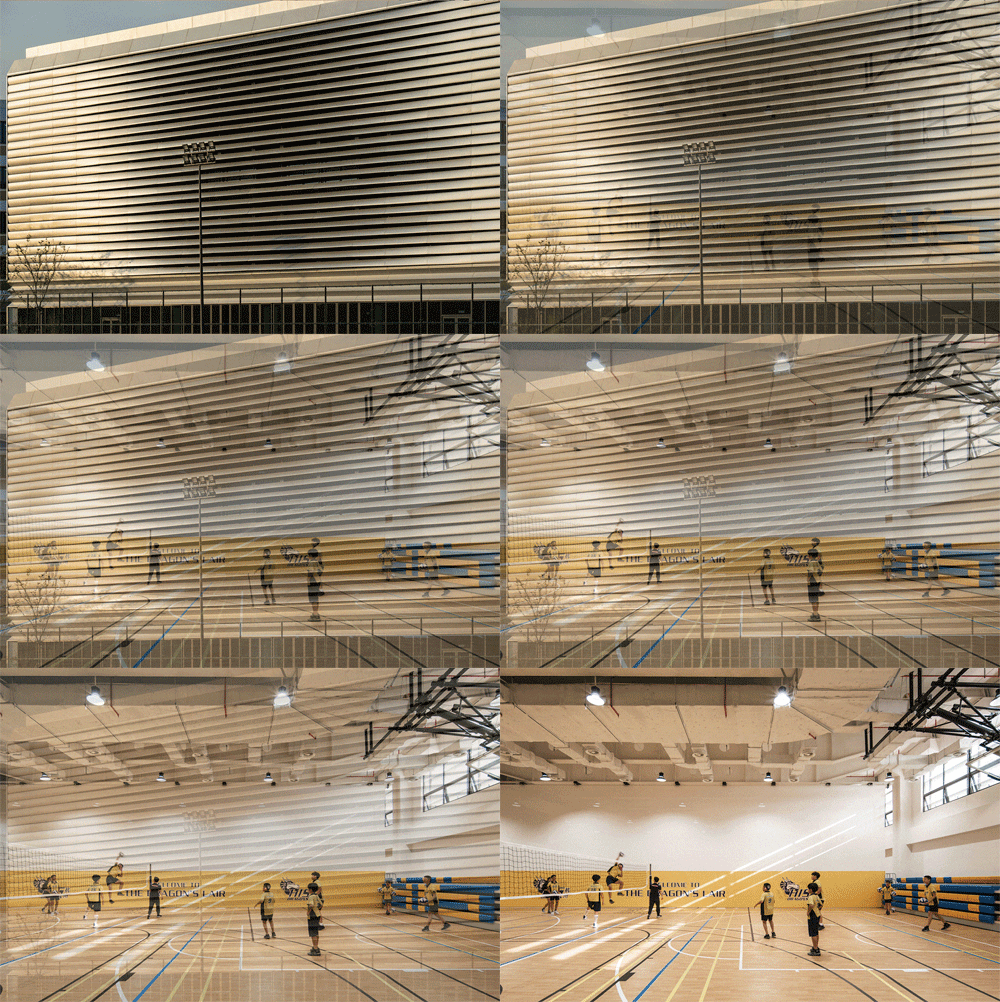
Sufficient and uniform lighting in the sports arena © line+
The eastern section of the Hub includes a restaurant (1F), a black box theater (2-3F), and a grand theater (3-5F). The grand theater spans three floors and meets standards for formal performances, large gatherings, and events. It is equipped with dressing rooms, backstage areas, and more. A variable black box theater is located beneath the sloped floor of the auditorium.
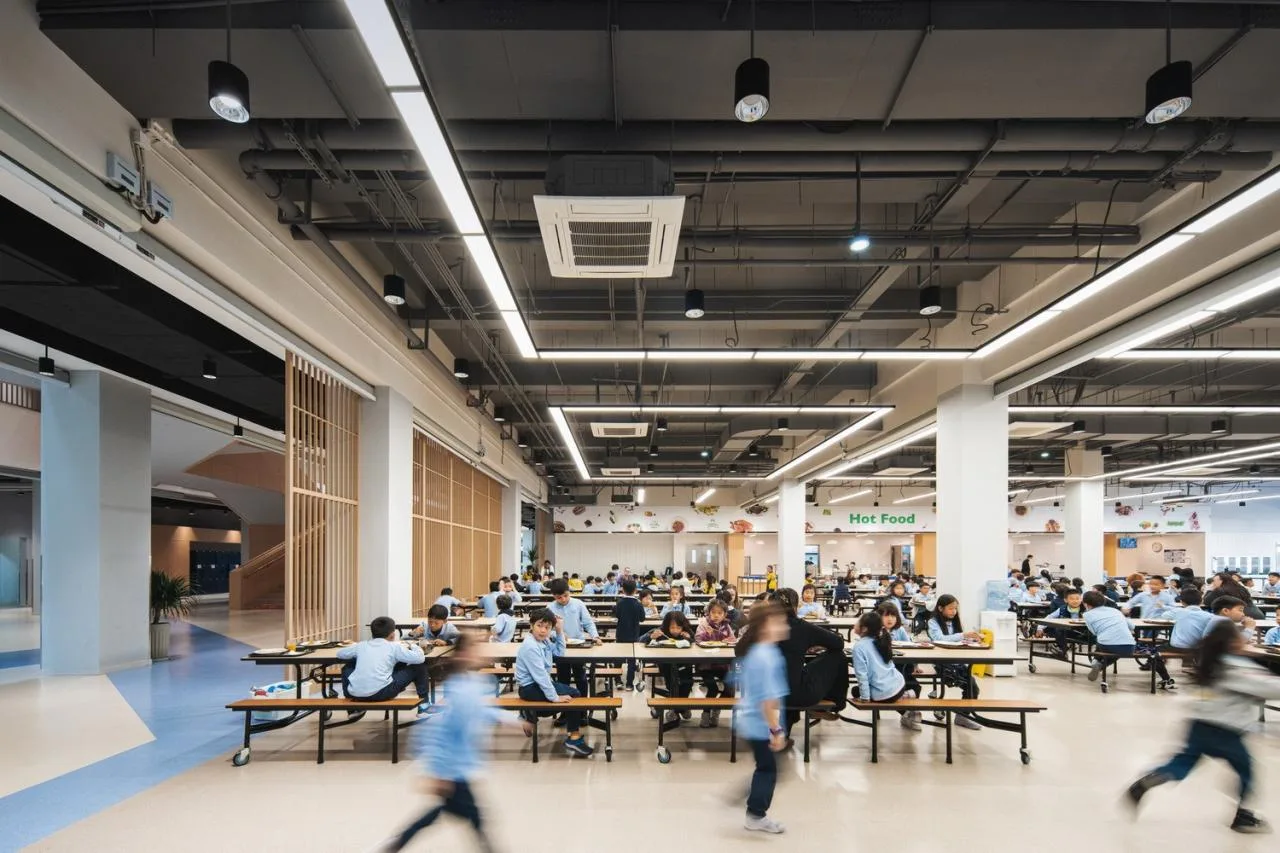
△ Restaurant (1F)
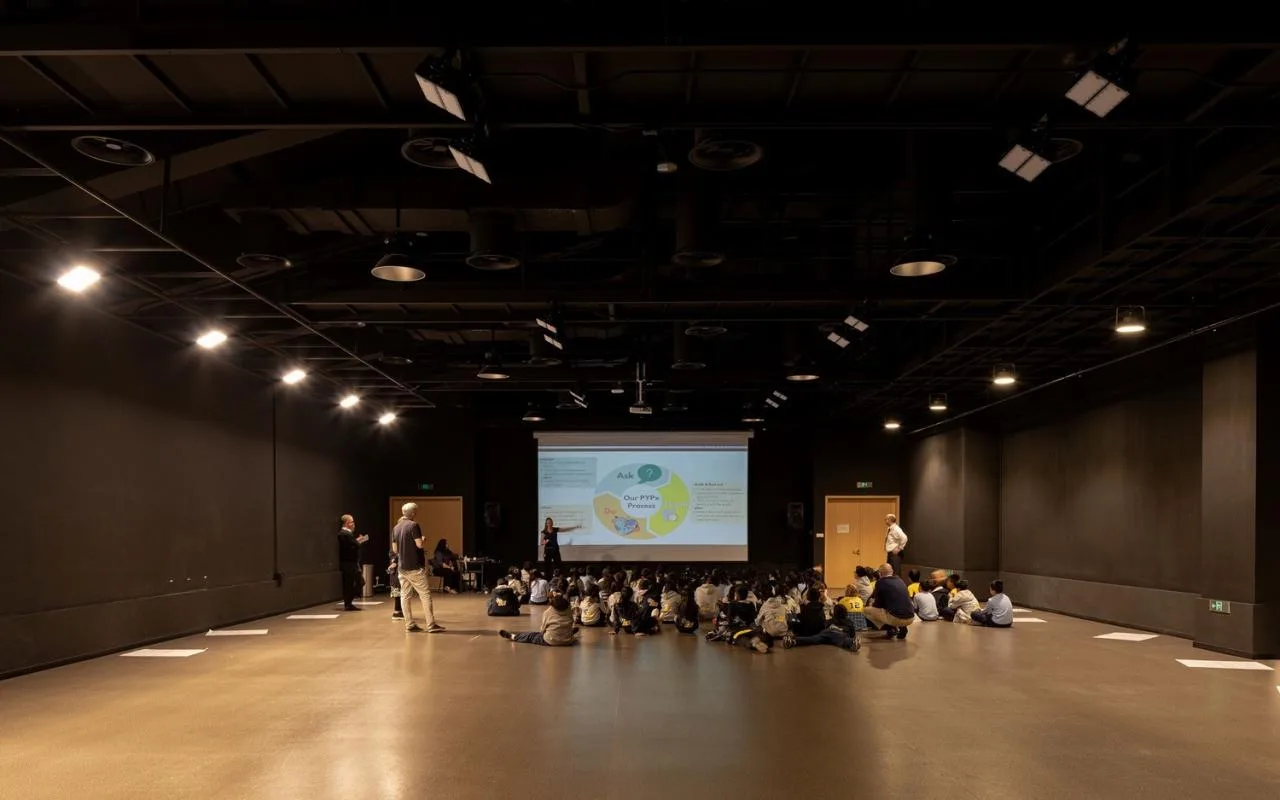
△ Black Box Theater (2-3F)
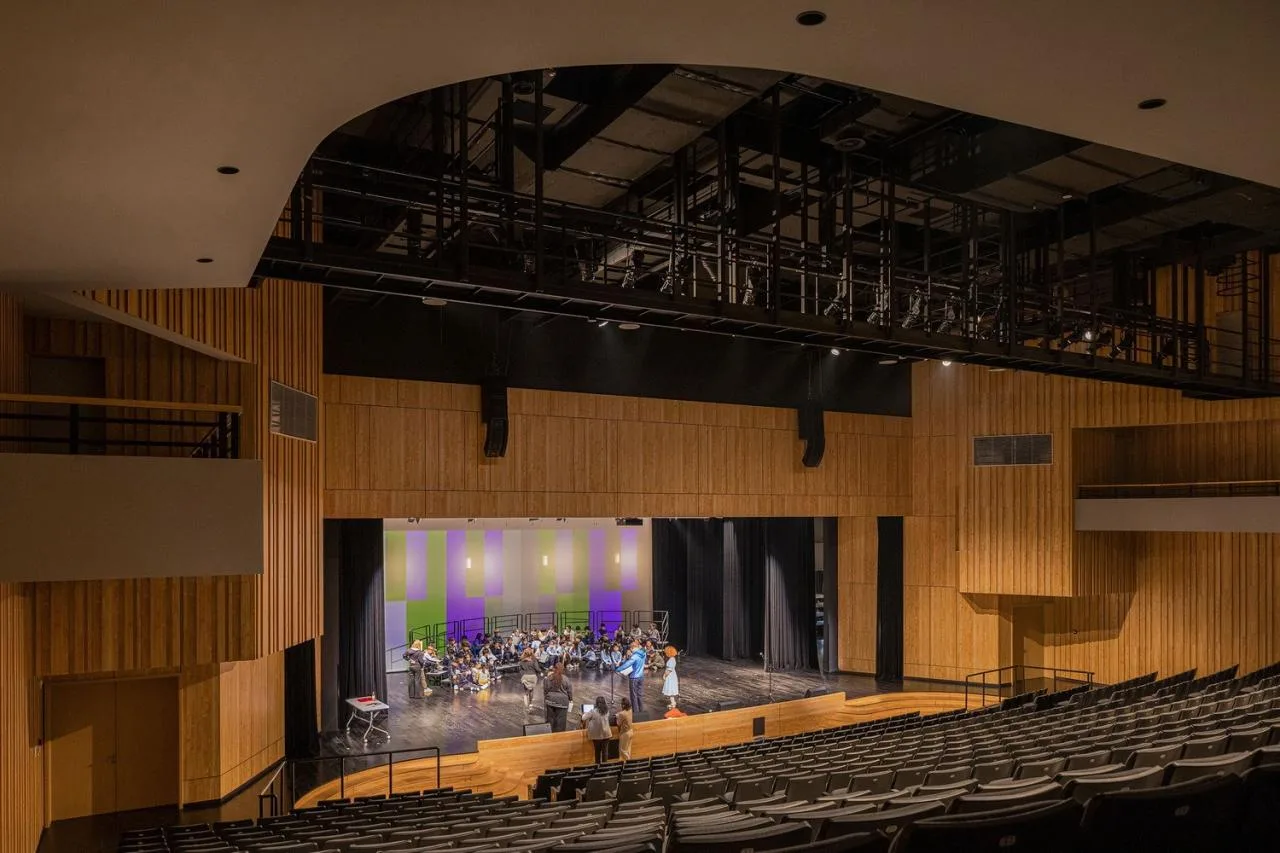
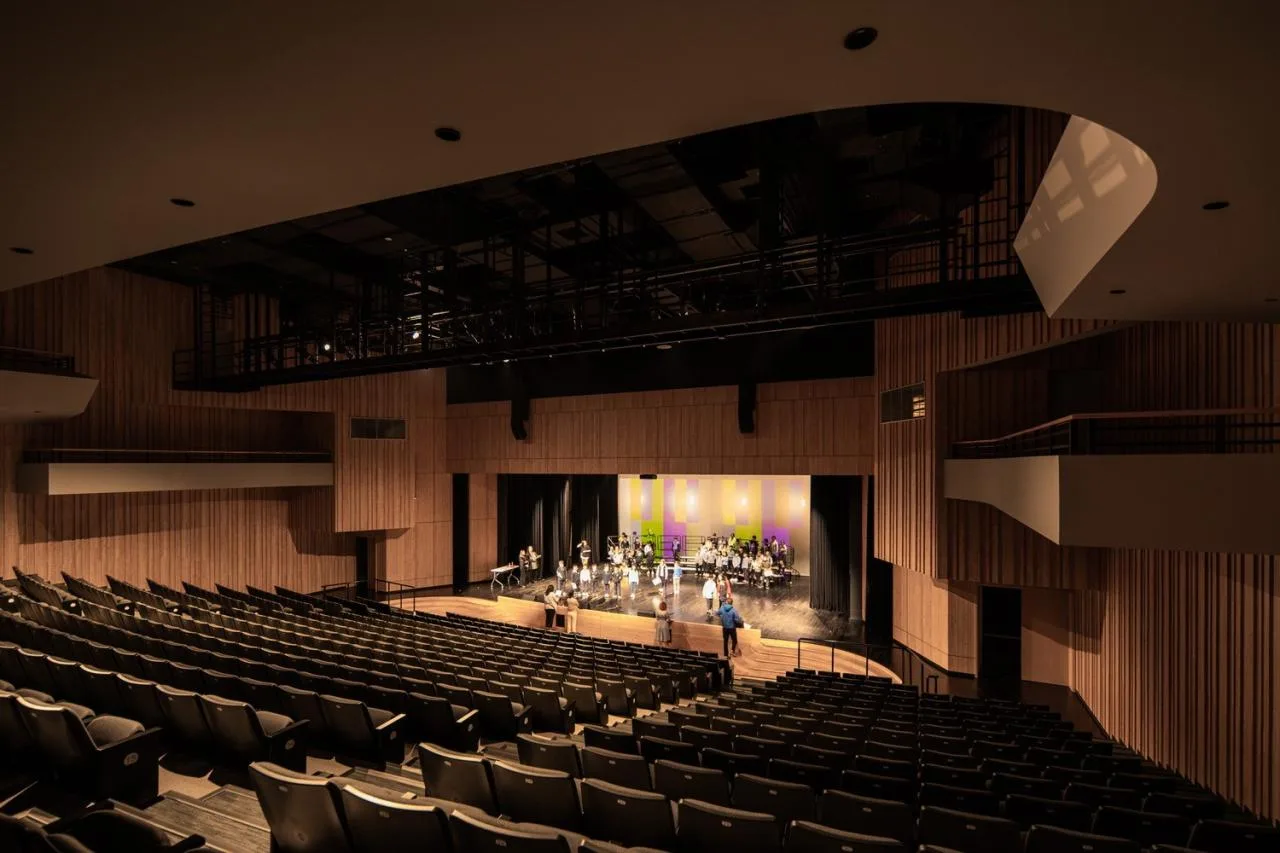
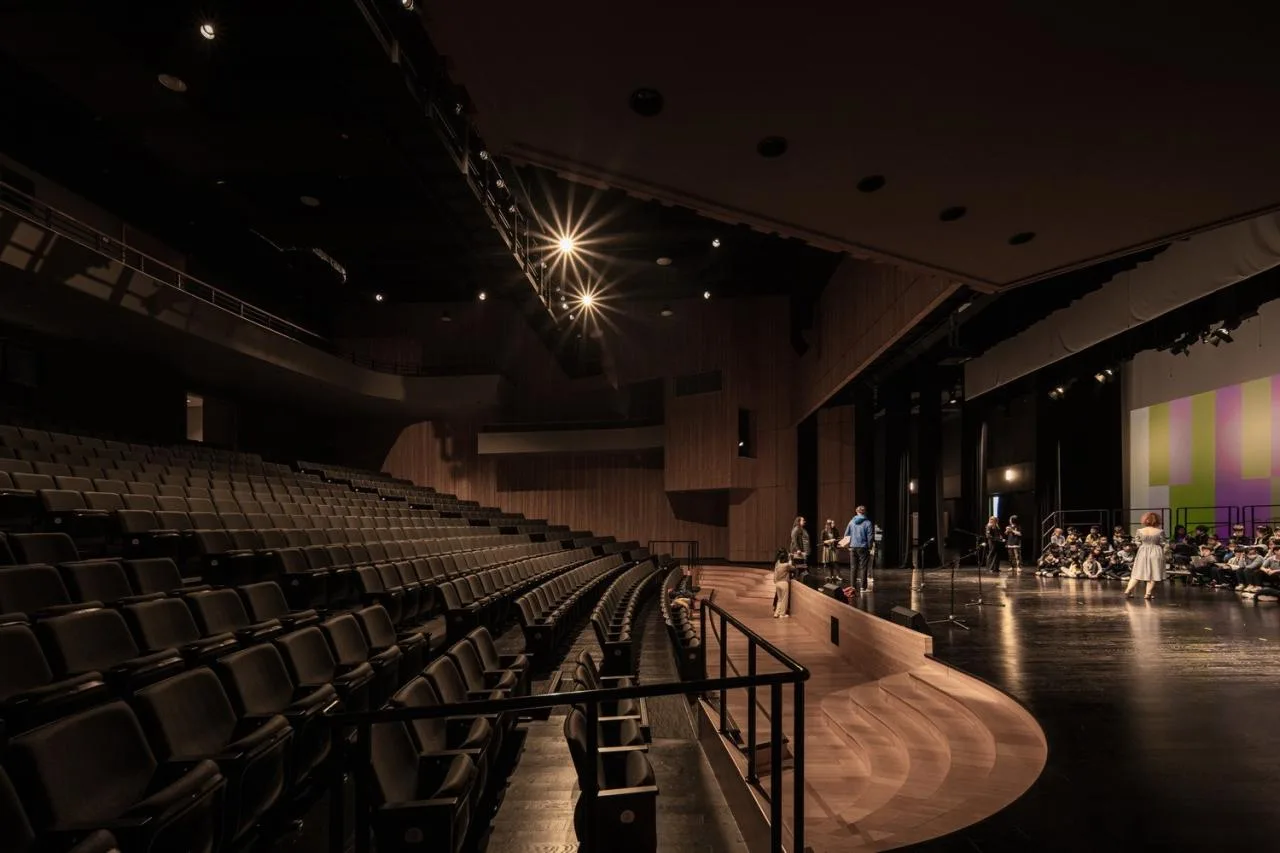
Grand Theater (3-5F)
Integrated and Communicative Teaching Clusters
The four teaching clusters in the main building position standard classrooms on the south side to maximize natural light and scenic views. On the north side, specialized classrooms, administrative offices, libraries, and laboratories are located to maintain integrated communication.
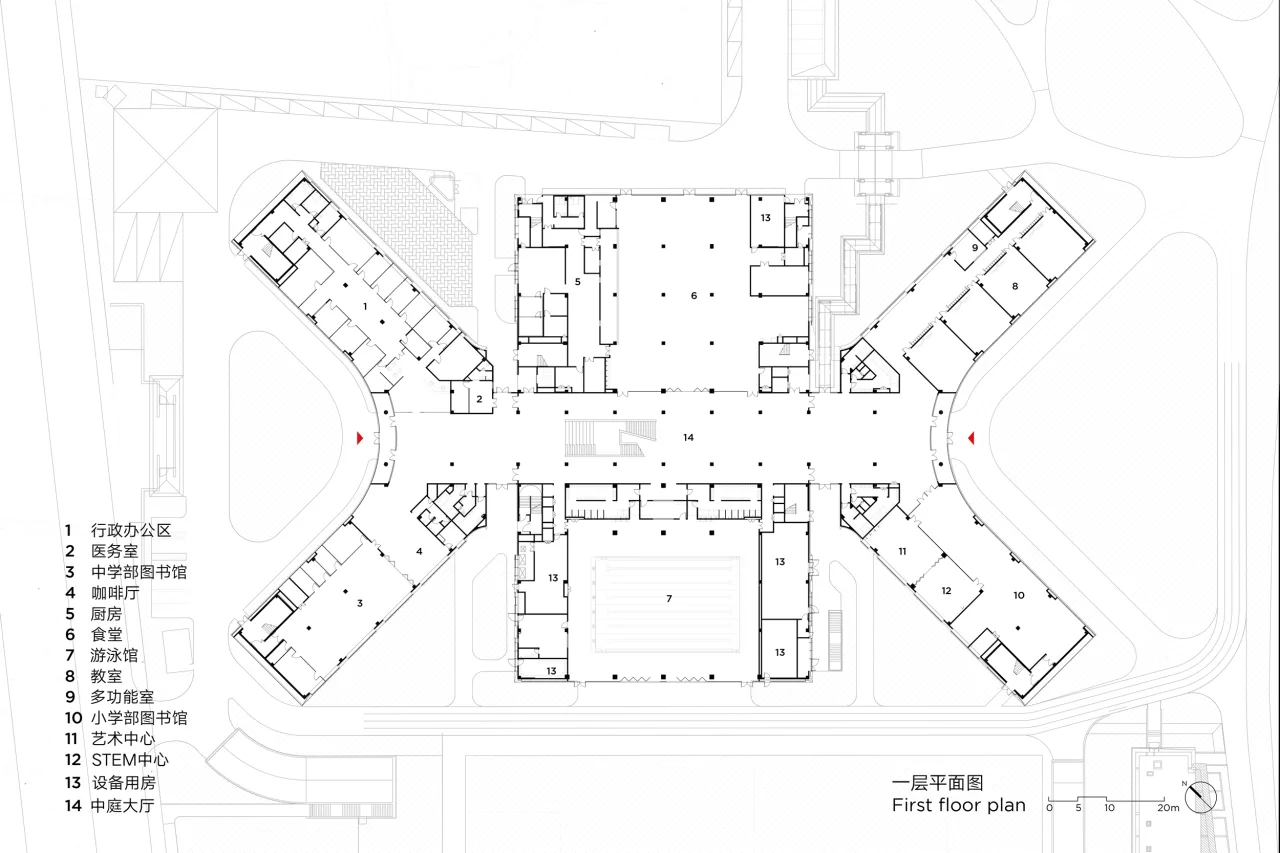
△ First floor plan of the main teaching building © line+
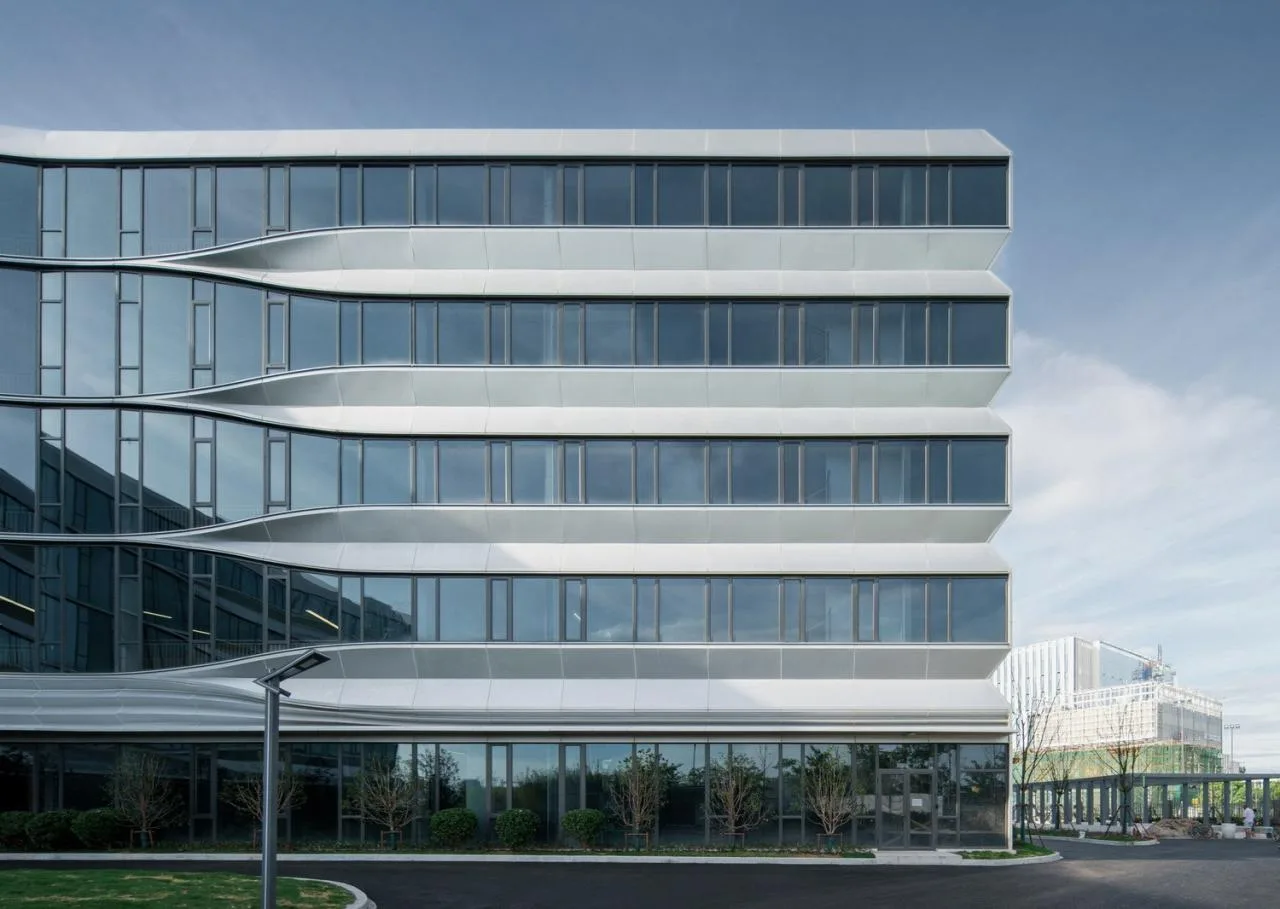
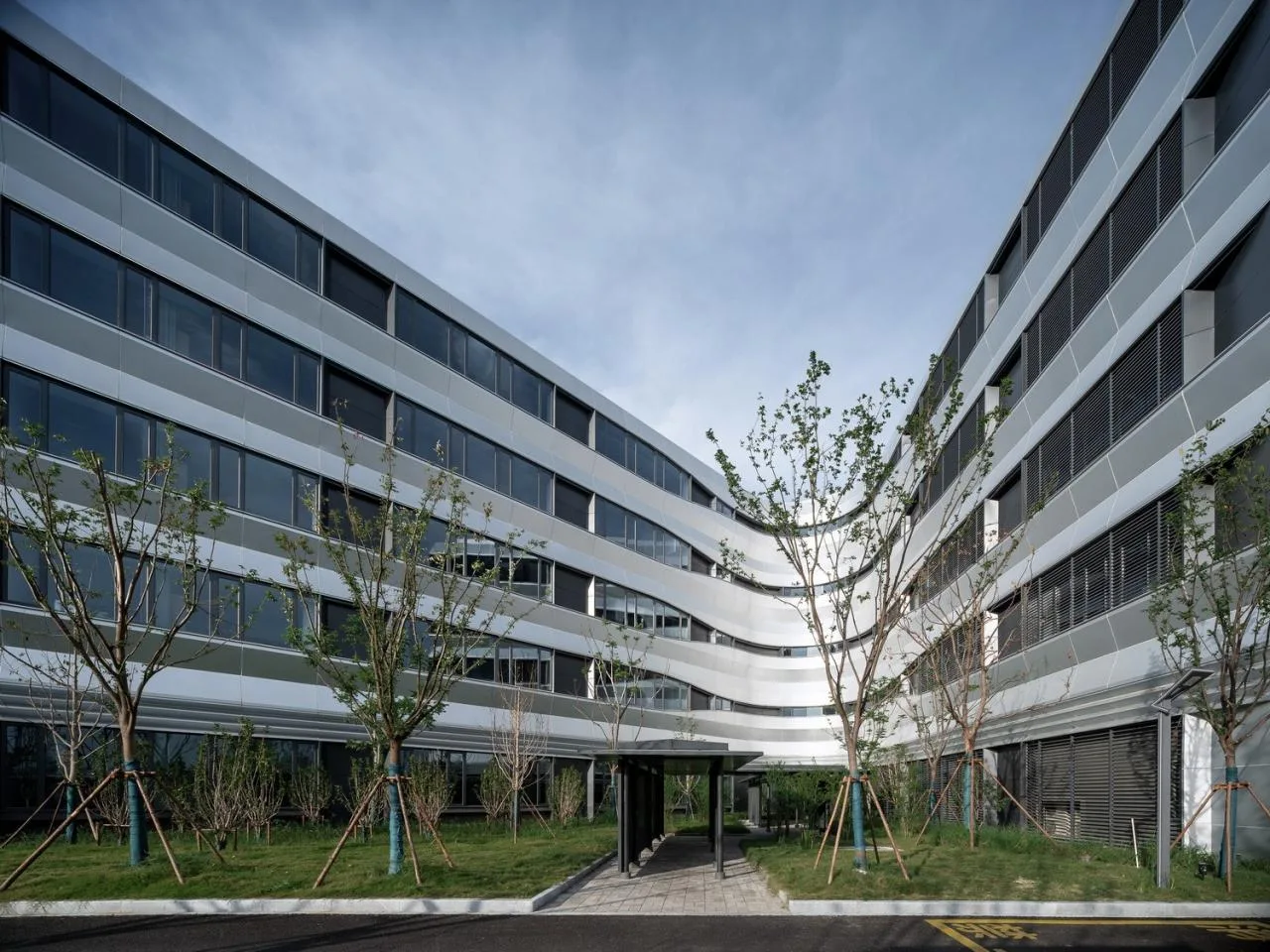
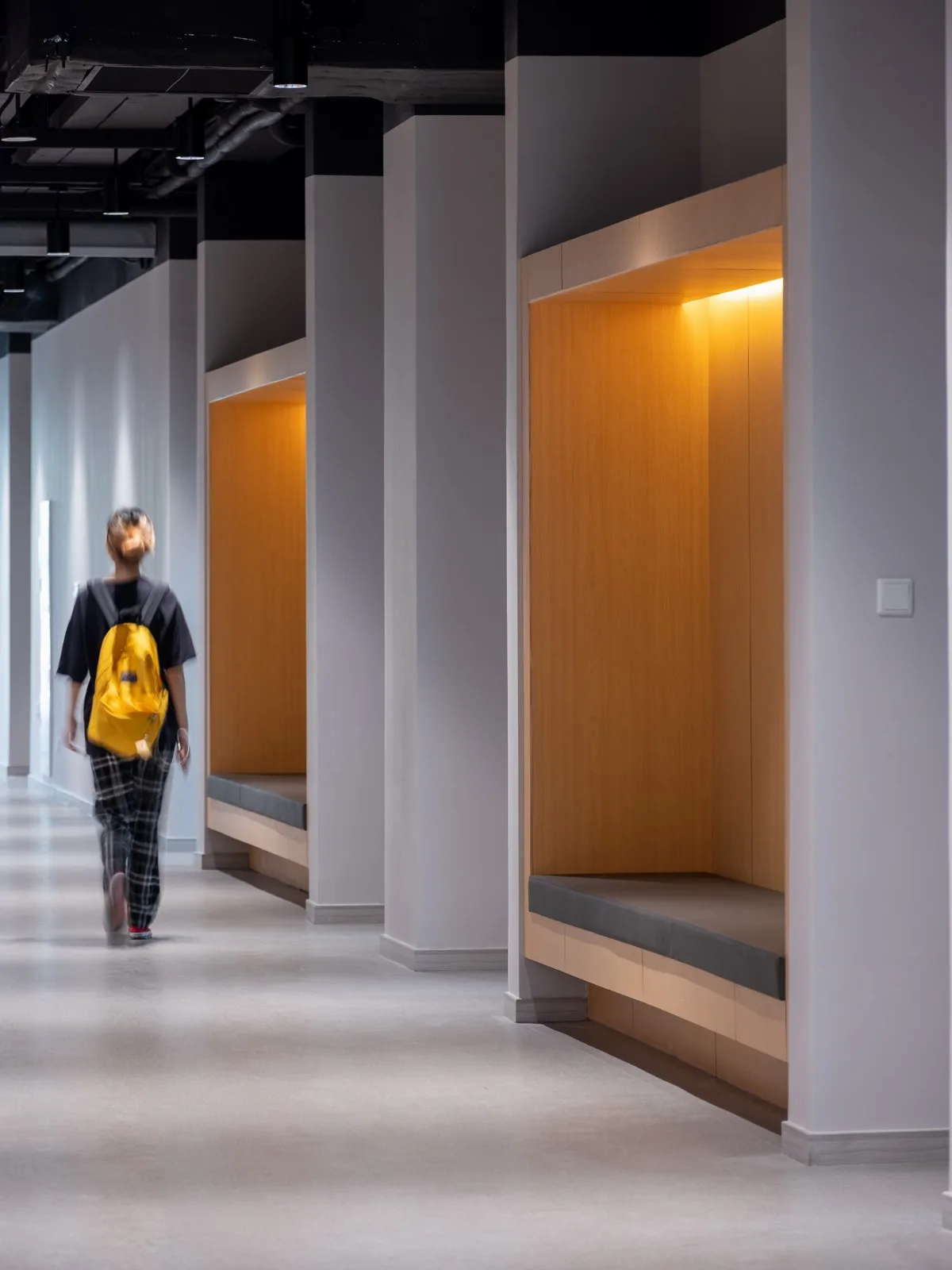
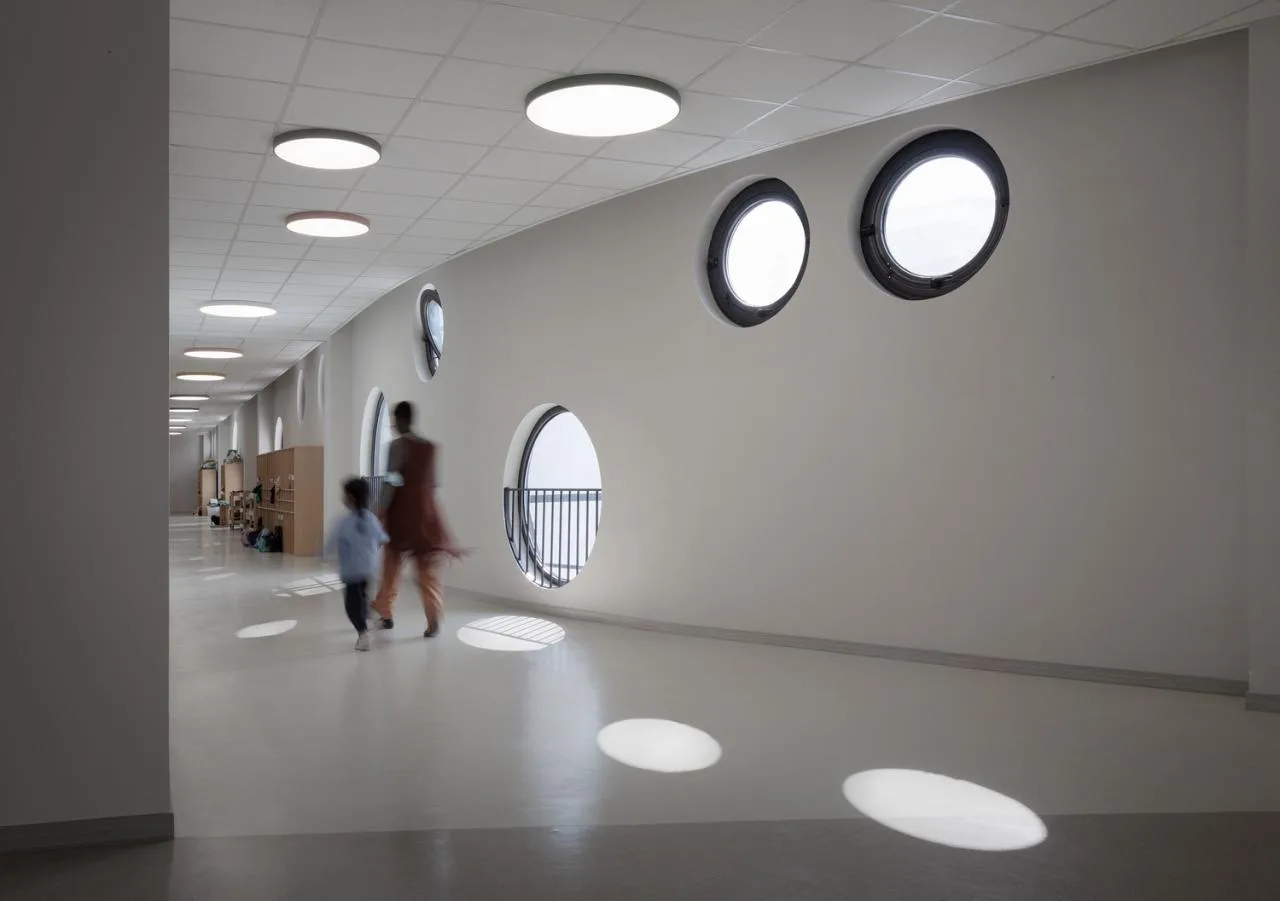
Classrooms are arranged on one side of the corridor, leaving a 4.2-meter-wide informal communication space opposite. This design creates multiple spatial nodes for gathering and activities, encouraging encounters and spontaneous discussions while maintaining smooth connection to the Hub. The blend of formal and informal functions supports diverse teaching modes in line with non-linear educational philosophies.
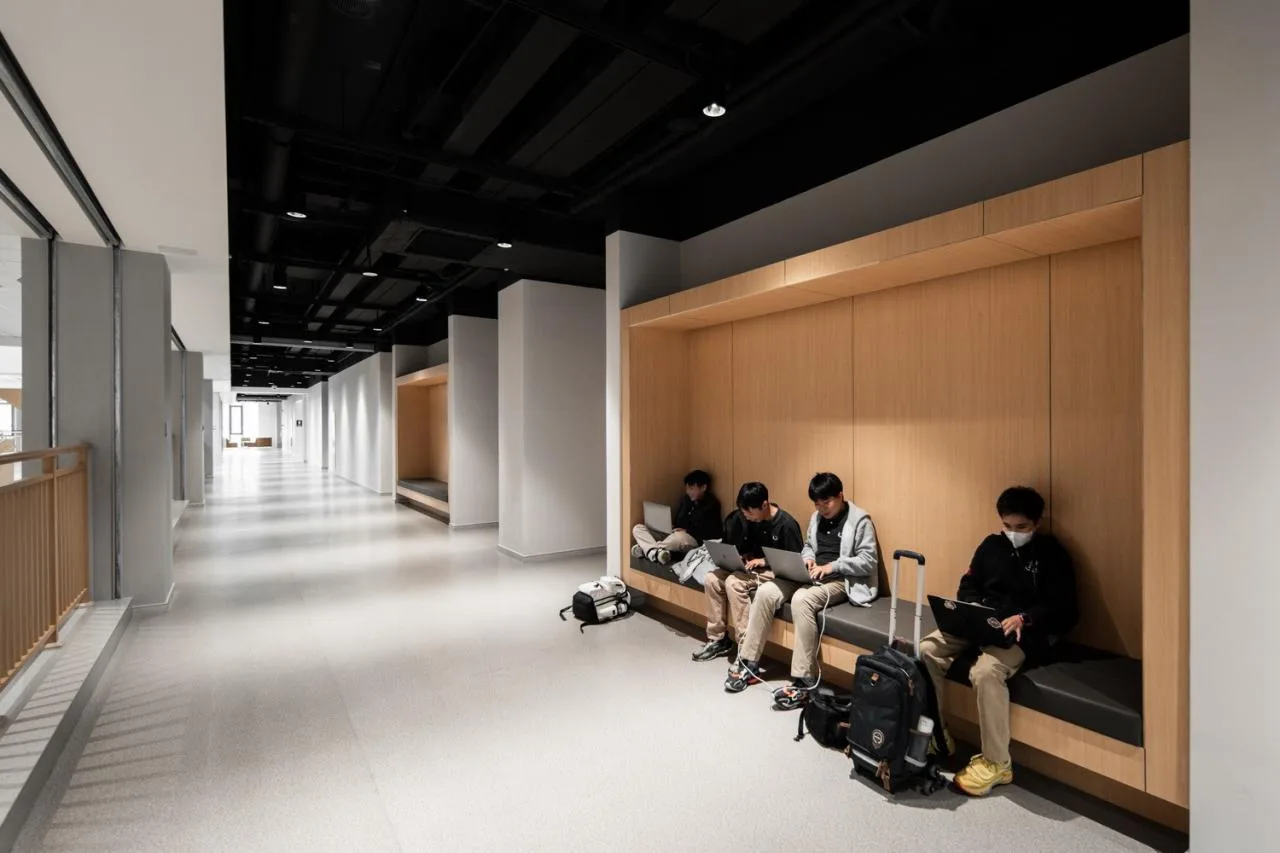
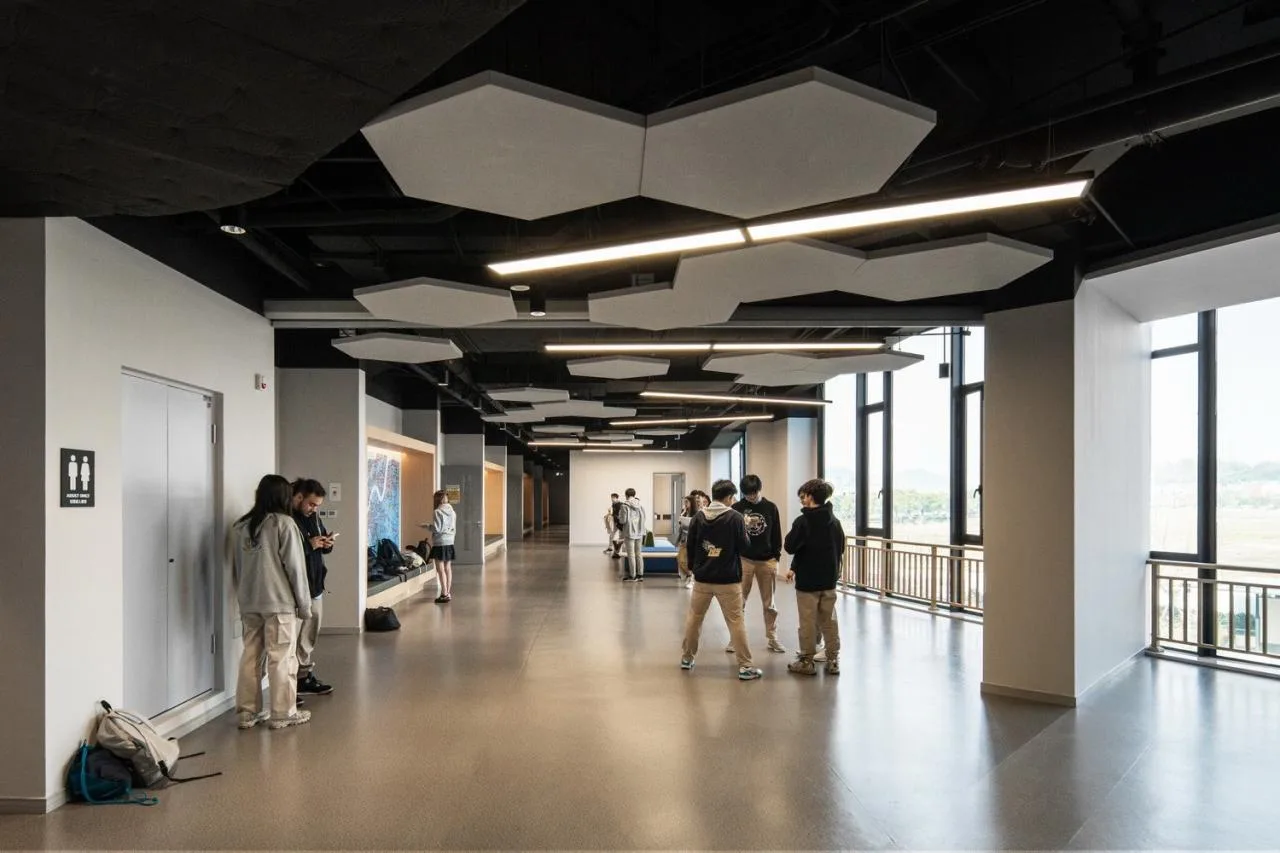
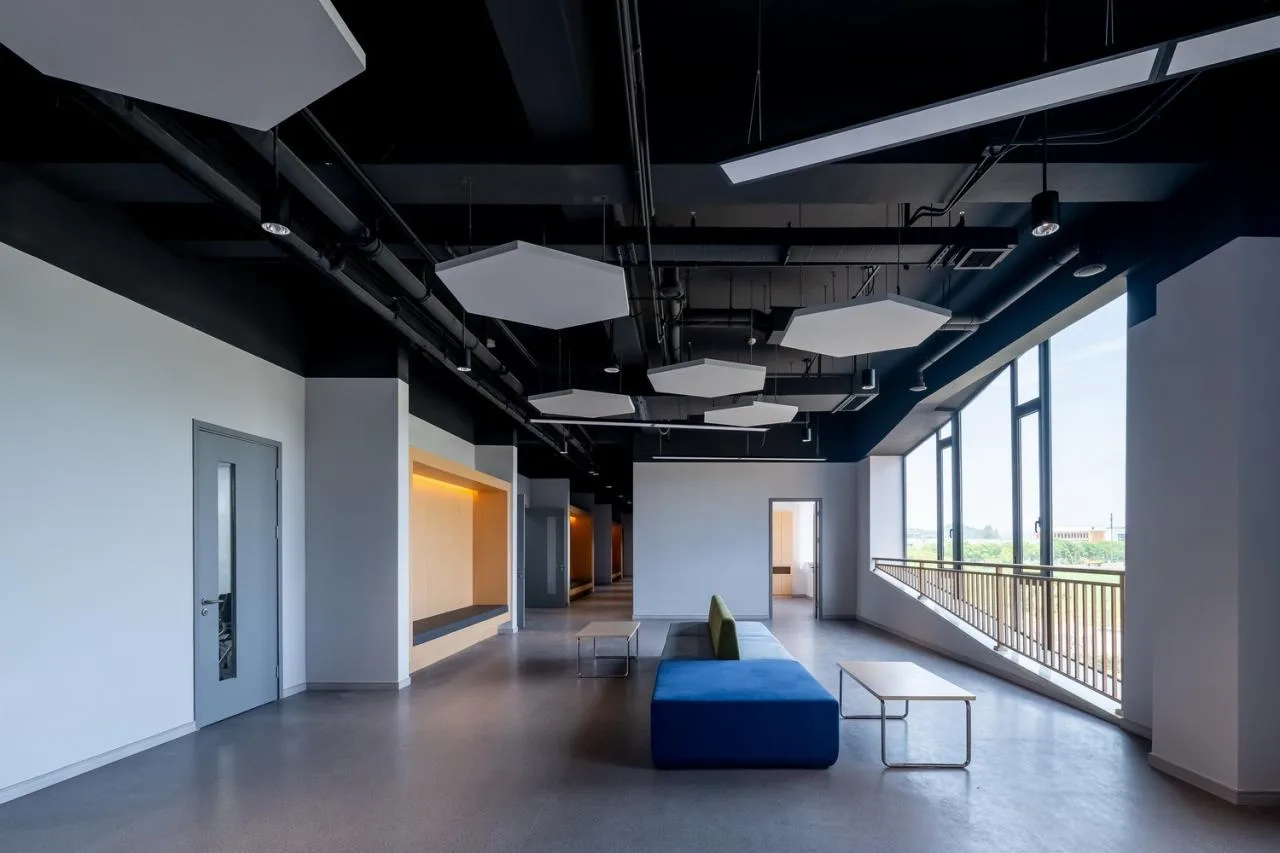
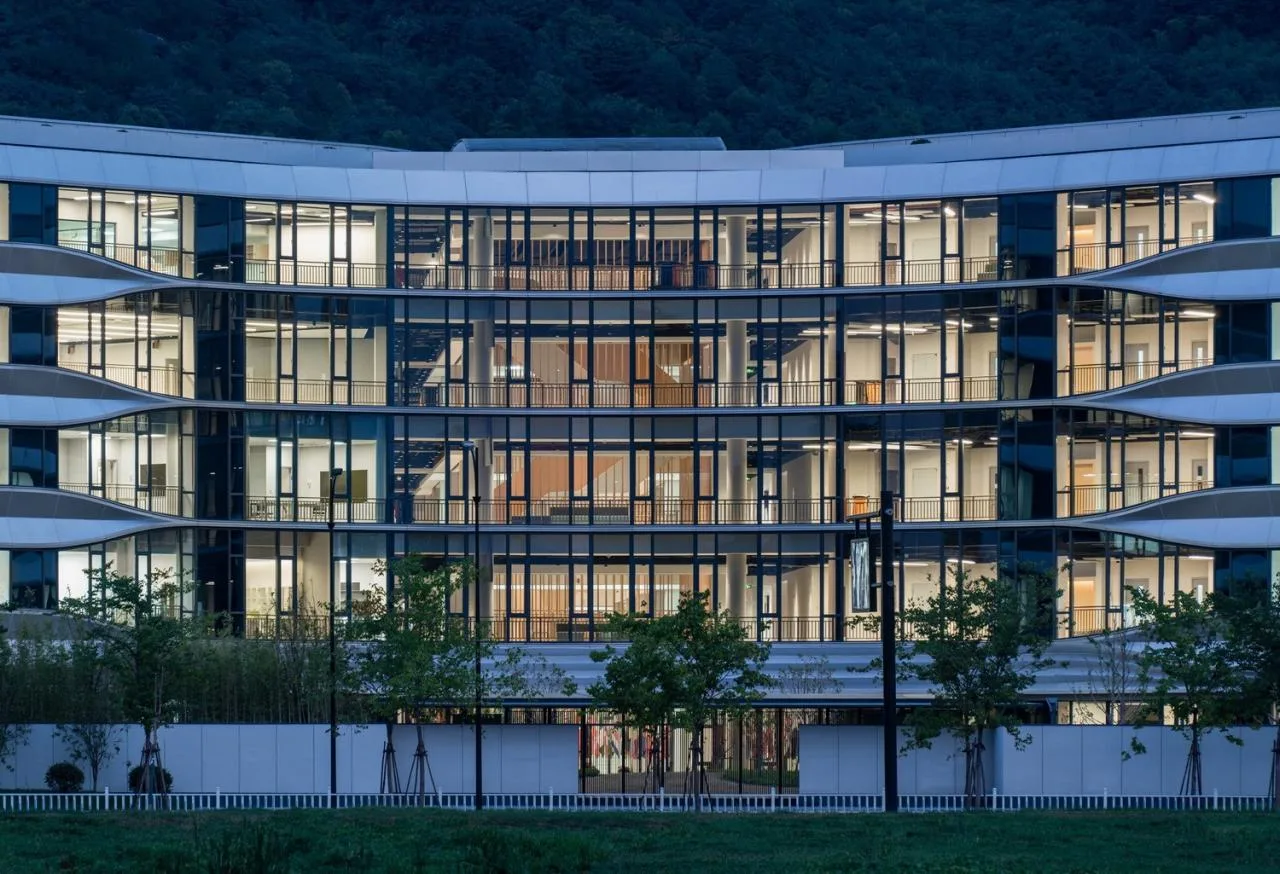
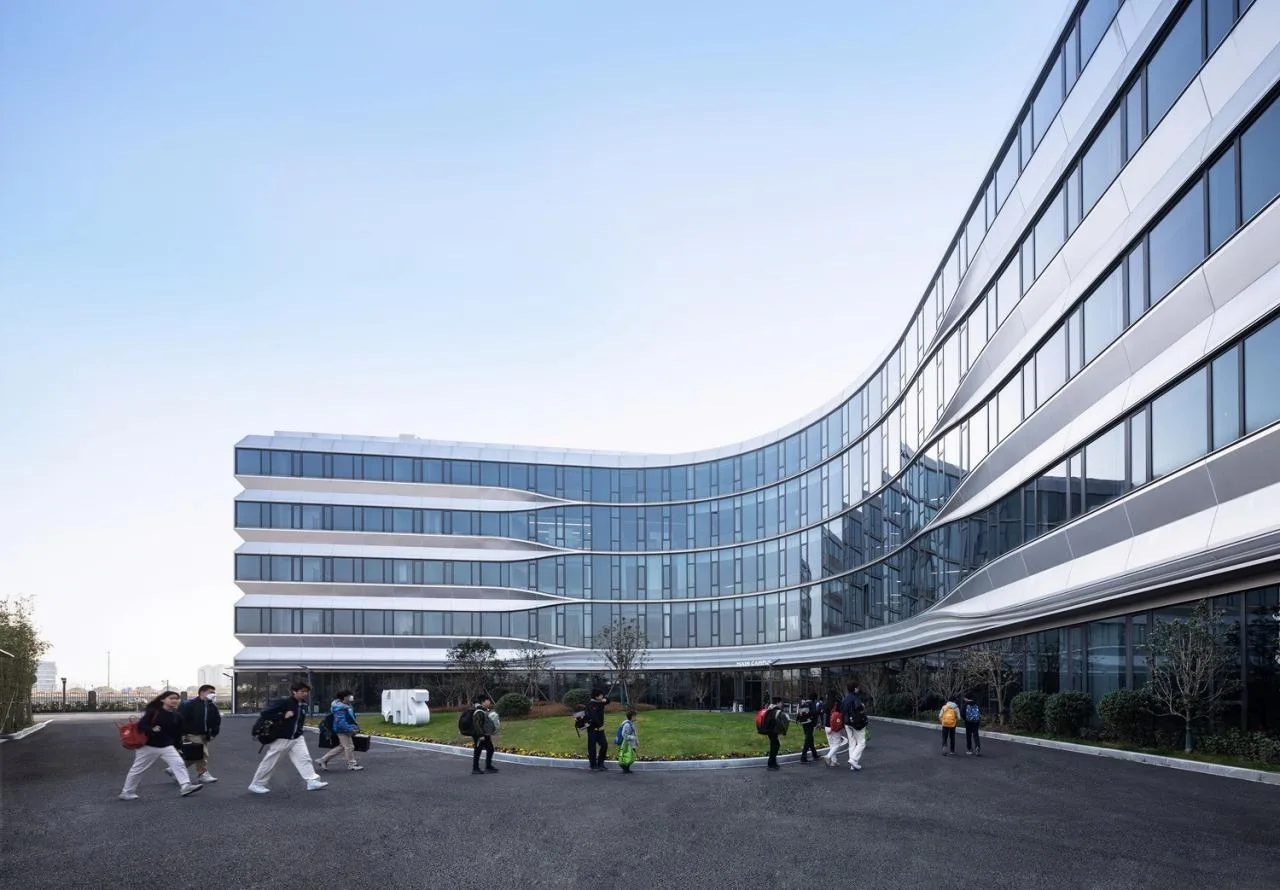
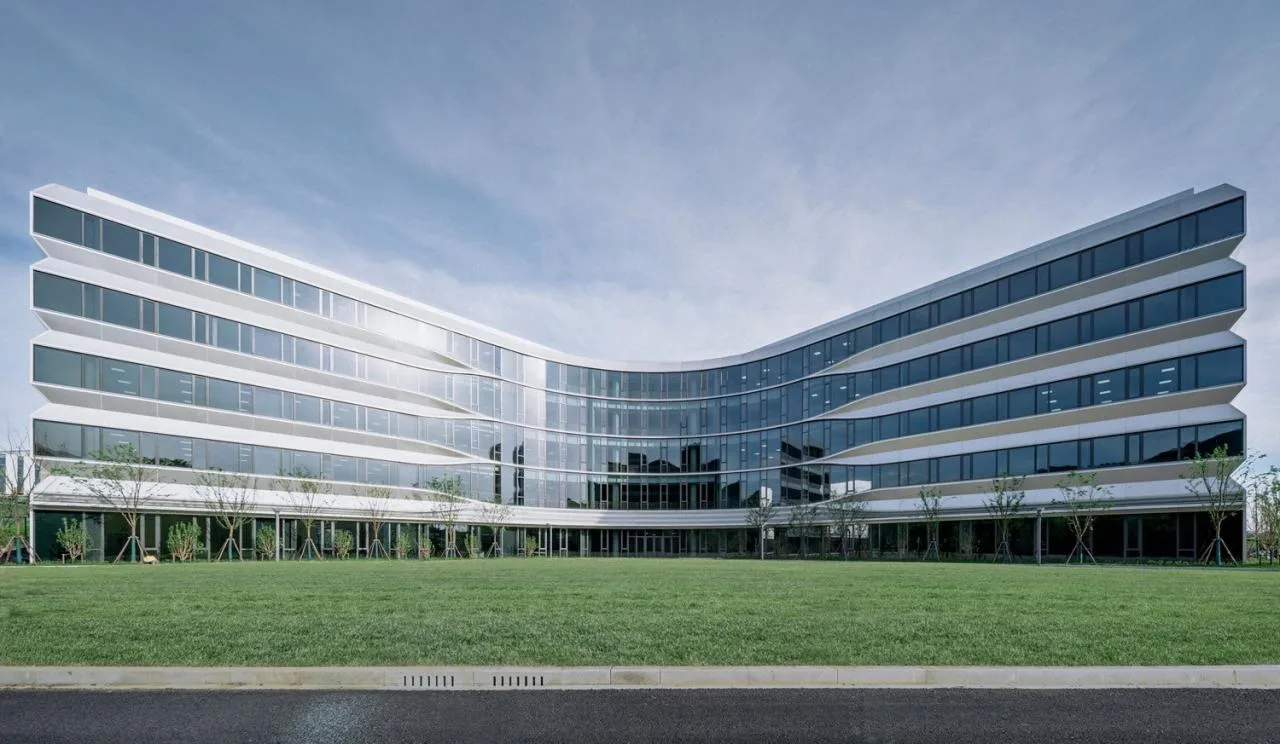
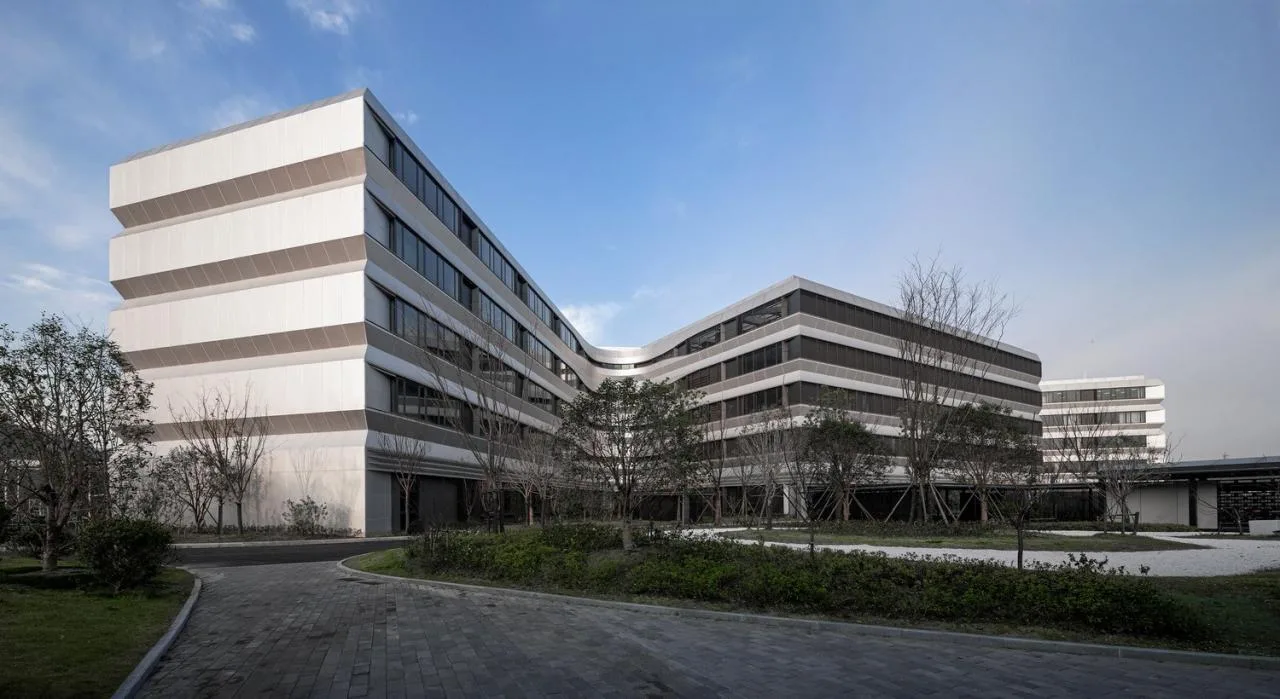
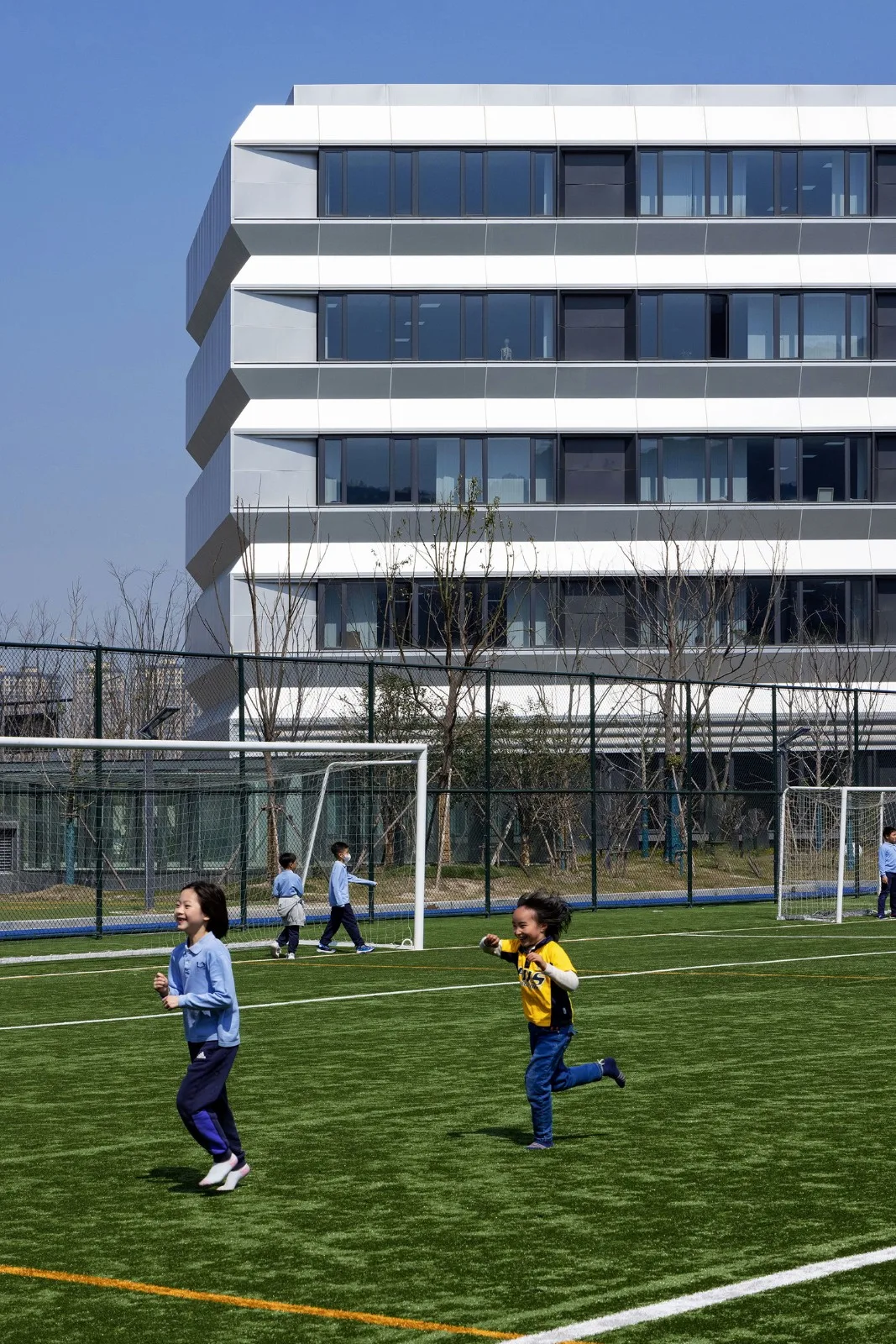
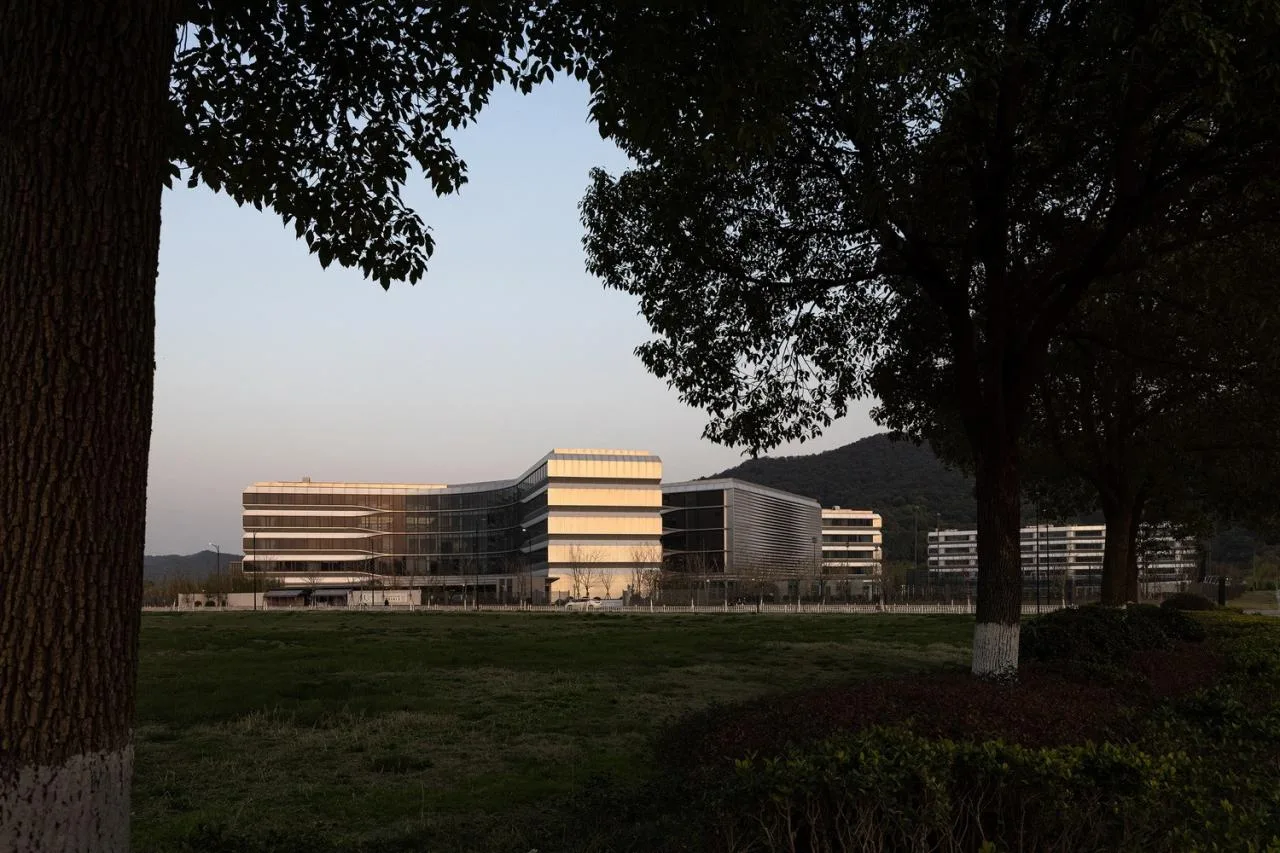
The teaching cluster facade emphasizes horizontal lines, combining silver-white aluminum panels with crystal gray glass. Concave horizontal folds create a modern, futuristic architectural appearance.
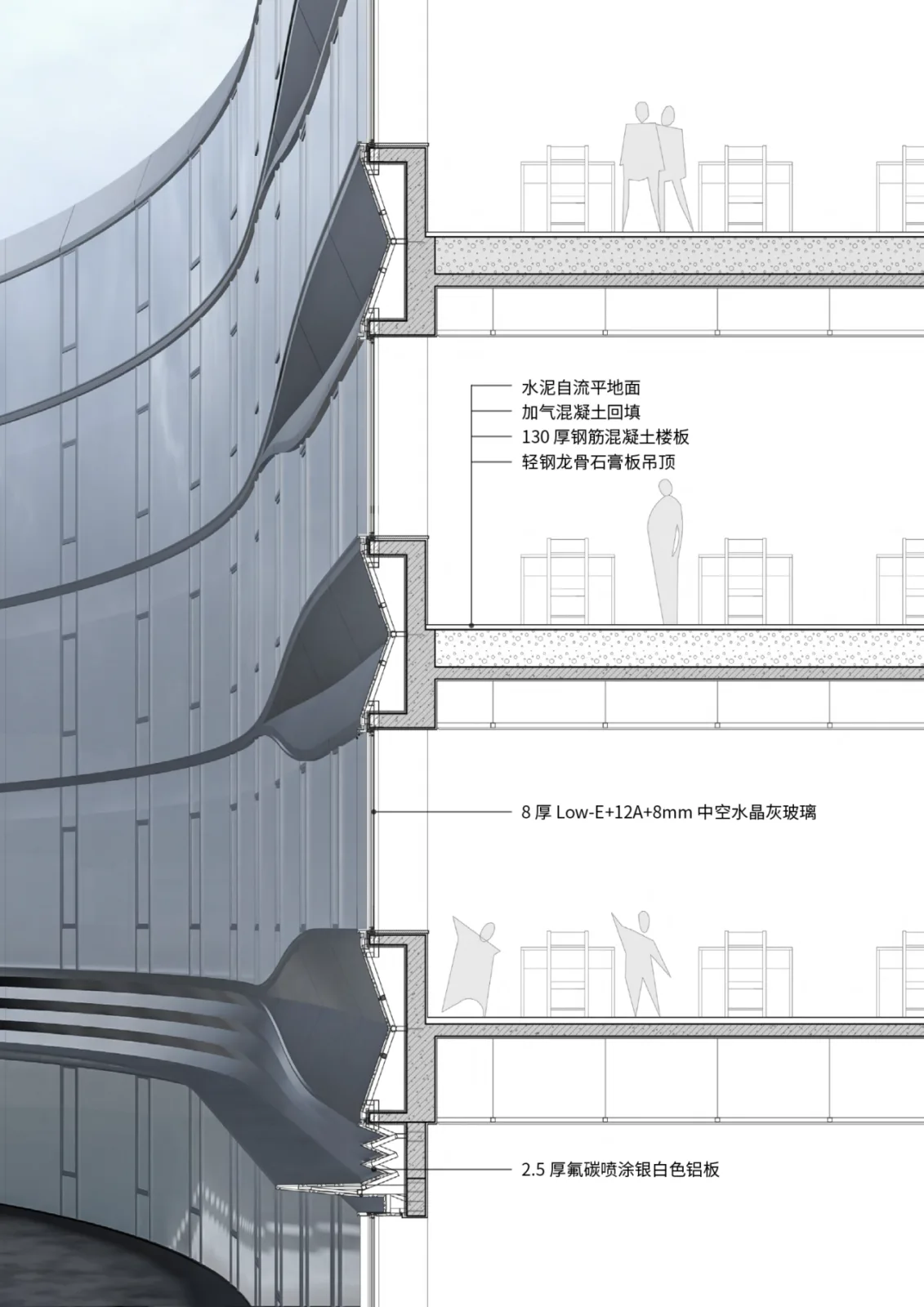
△ Main School Building Wall Detail © line+
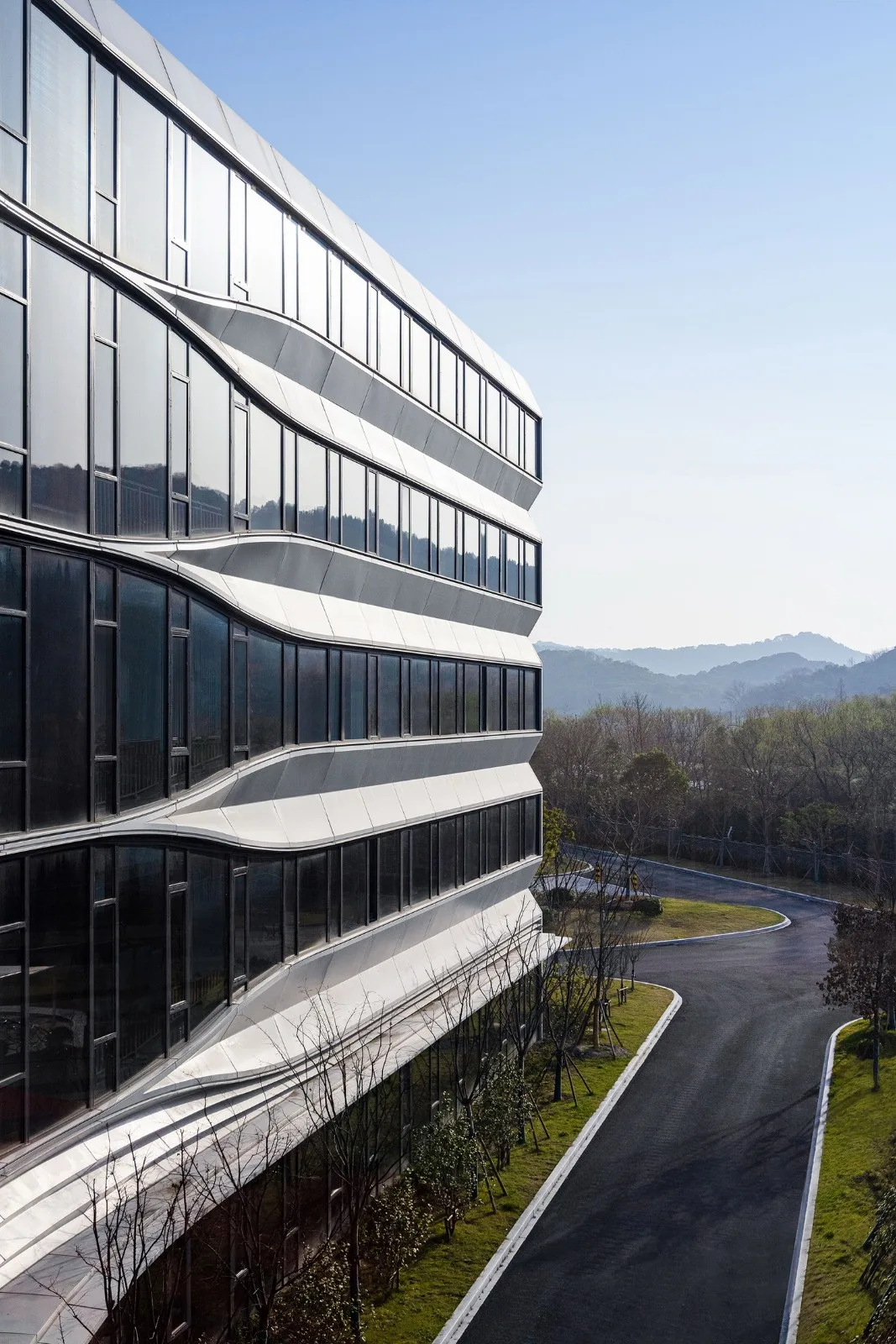
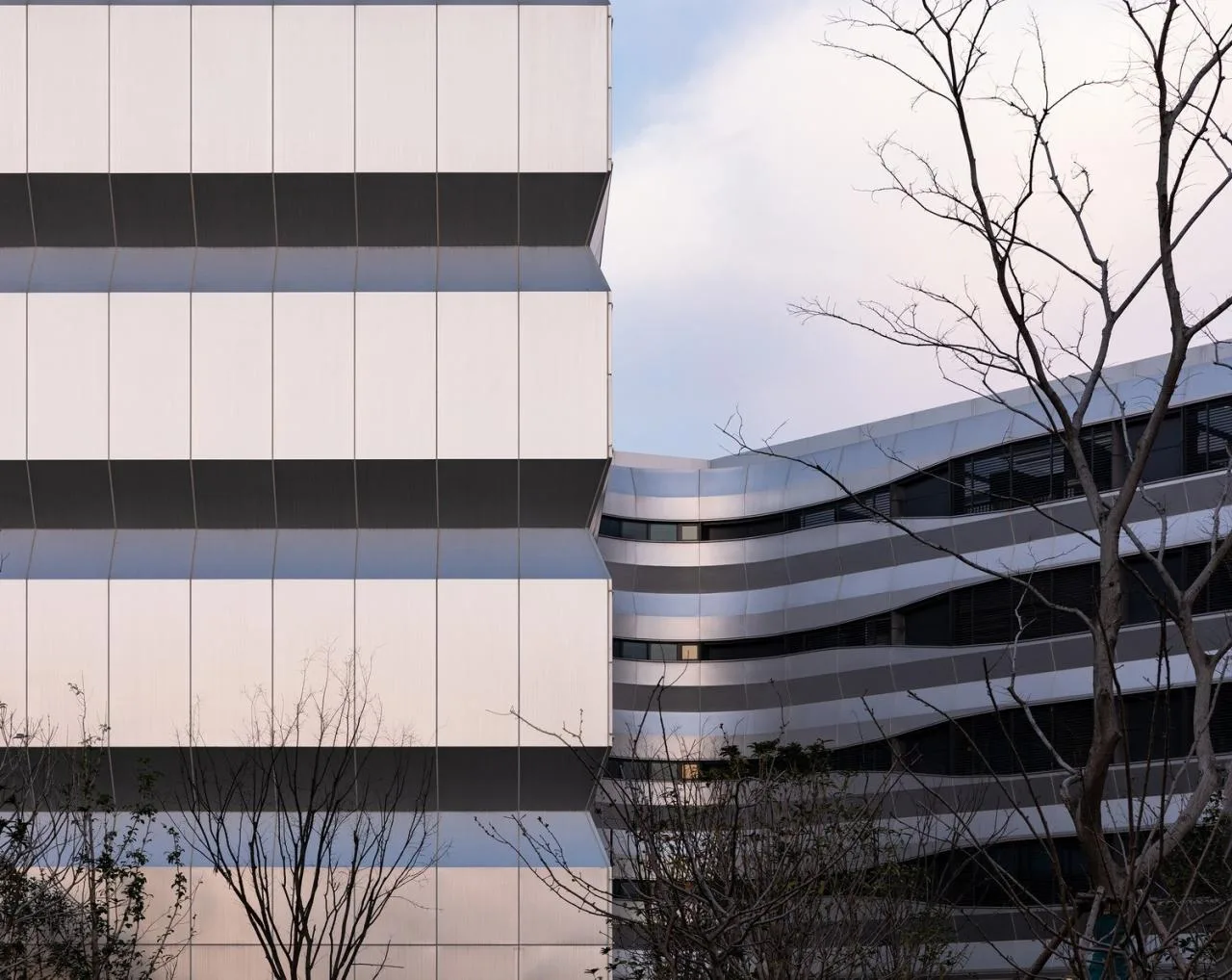
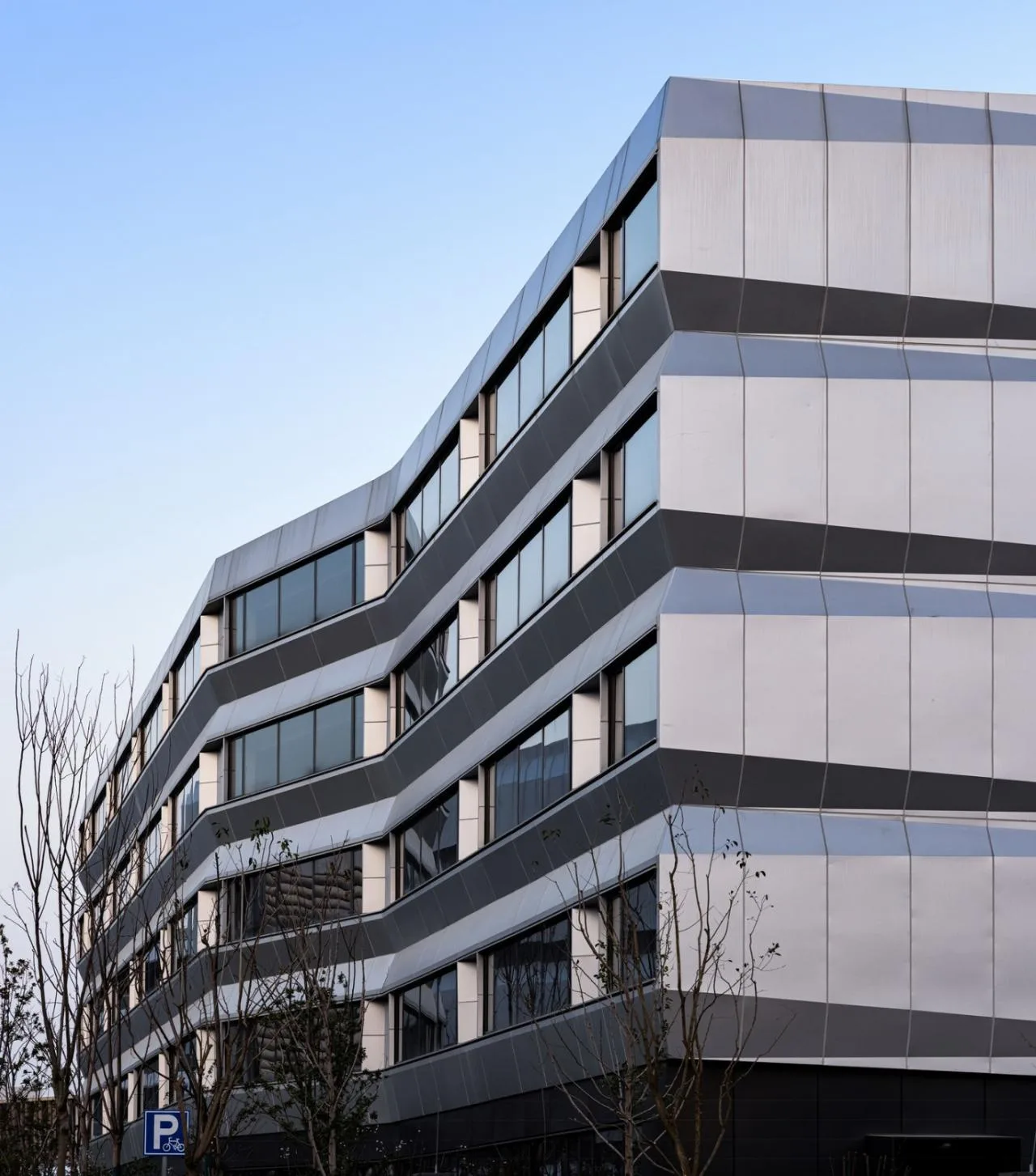
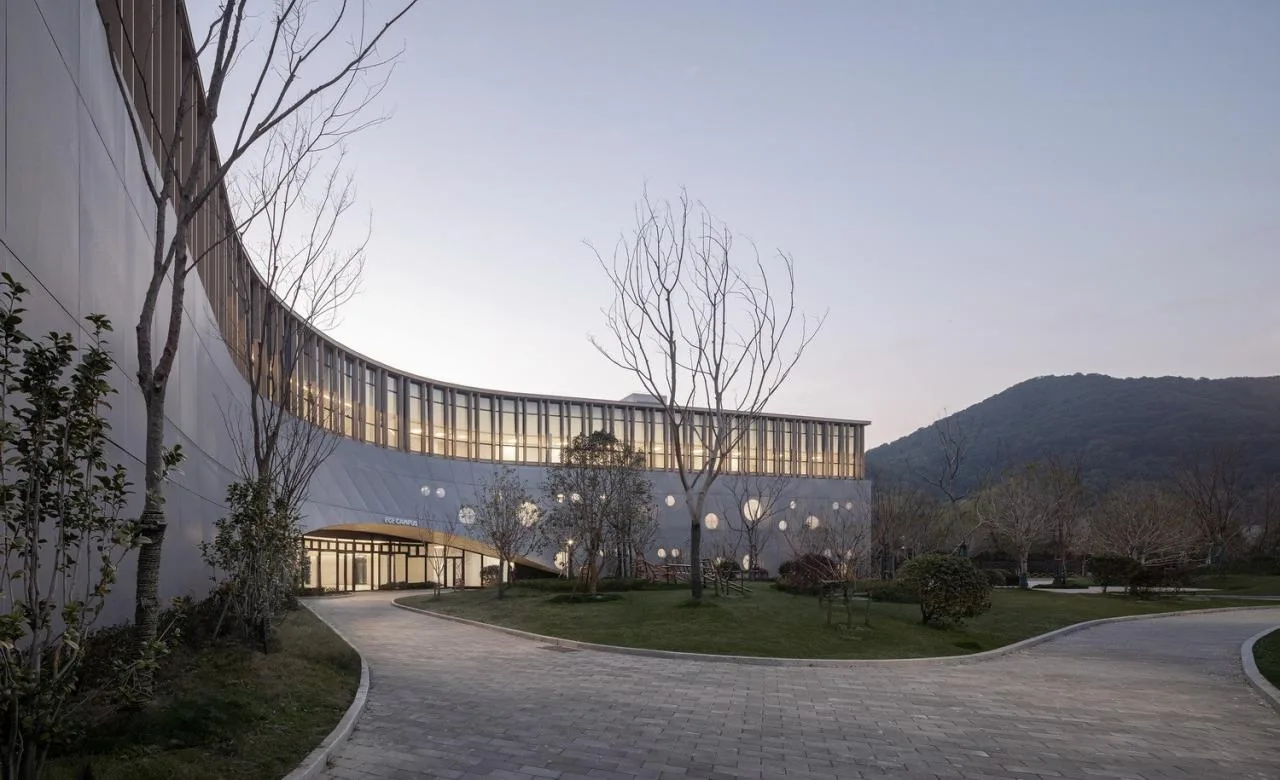
The kindergarten facade features large French windows and perforated metal panels to provide appropriate lighting for indoor activities. The combination of louvers and metal exteriors creates a visually infinite horizontal extension effect.
03 New Teaching Space Prototype Experiment
— Central Radiating Plan Configuration
The Education Hub’s central radiating plan at HIS Hangzhou International School draws inspiration from urban planning, museums, and transportation hubs—such as Paris’s Arc de Triomphe and Beijing’s Capital T3 and Daxing International Airports—though it is rarely applied in educational buildings.
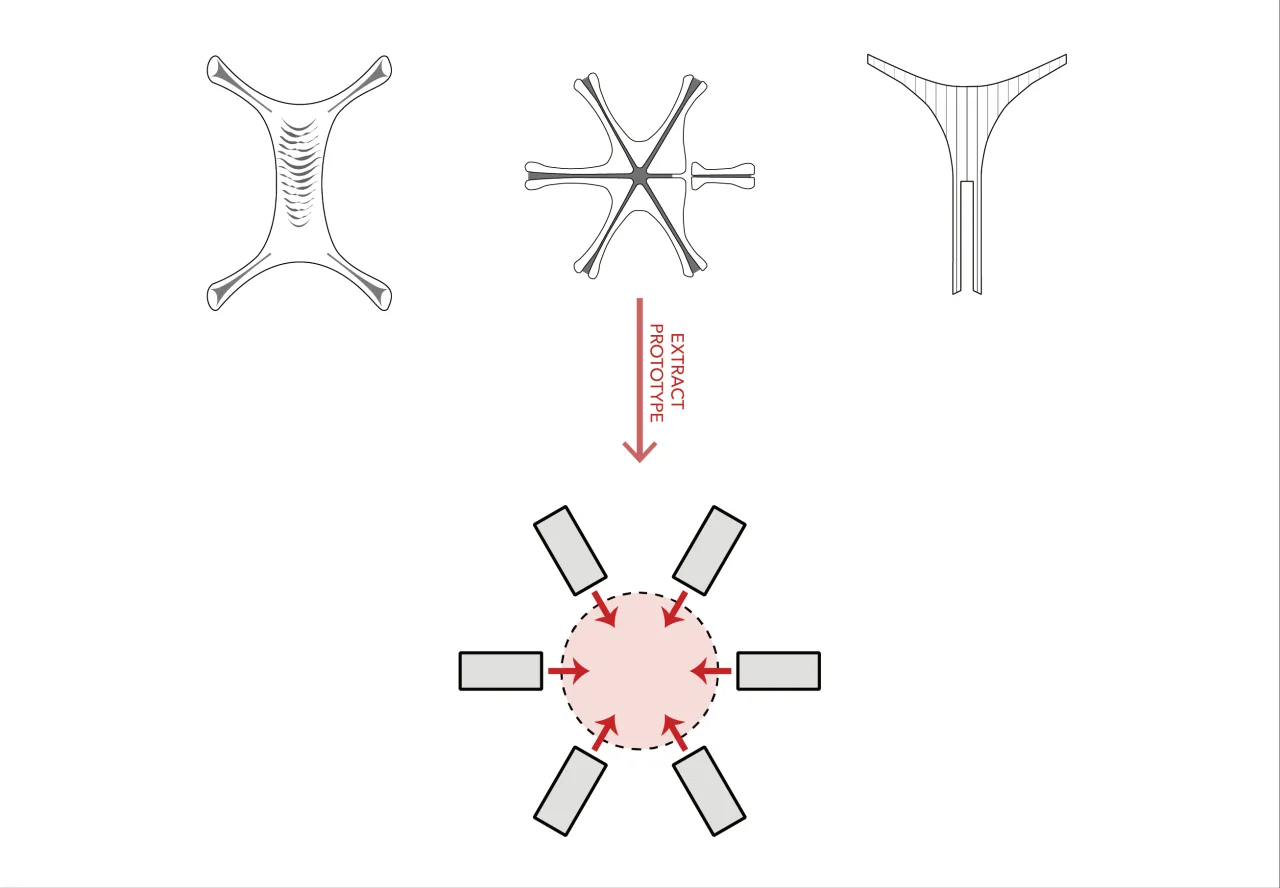
Abstract spatial prototypes of hub buildings © line+
Our layout leverages the flexibility and shared facilities typical of modern hub buildings to enhance spatial utilization and flexibility for intensive land use. The efficient sharing and integrated spatial experience provide a prototype foundation for Education Hubs. Adapting to the school’s functional logic and scale, we customize the design to meet the needs of new teaching space usage, efficiency, and status.
Unlike traditional radial plans that create visual or power centers, the Education Hub places shared spaces for non-traditional teaching at the center. This replaces “monumental” spaces with a vibrant social center filled with activity, transforming one-way observation into multi-directional communication of views, information, and content. This fosters a decentralized, more equal relationship between teachers and students on campus.
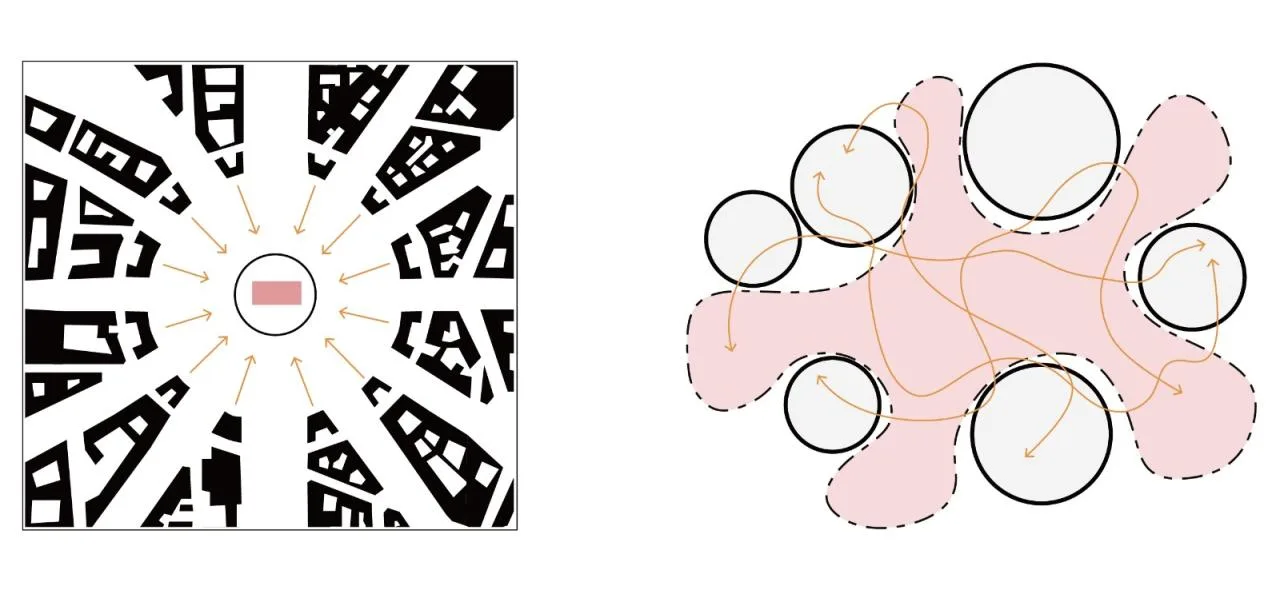
Centralized centripetal layout (left), decentralized centripetal layout (right) © line+
Education Hub represents not only a vision for future teaching environments but also a prototype for teaching spaces optimized for intensive land use—maximizing open activity areas on limited land to create a more efficient and shared campus experience.
04 Conclusion
After nearly four years of design and construction, HIS Hangzhou International School welcomed 800 teachers and students from over 50 countries in August 2022. In the six months since its opening, frequent social media posts showcase children engaged in activities across various spaces, bringing the Education Hub vision to life through active use by teachers and students.
We hope this spatial prototype experiment yields positive results, supports educators in fulfilling their goals, and becomes a “little airport” where children at home and abroad can take off pursuing their dreams.
Project Information
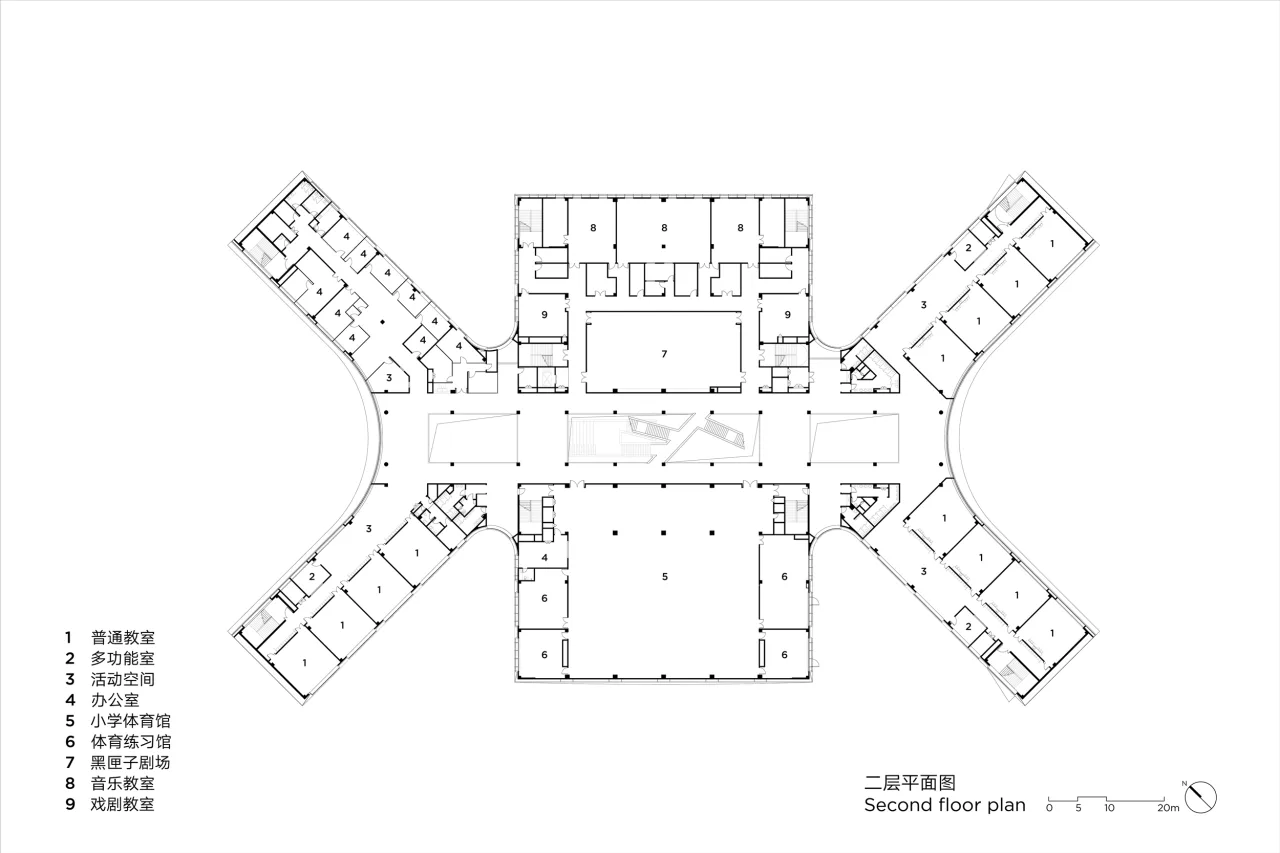
Second Floor Plan of the Bishop’s School Building © line+
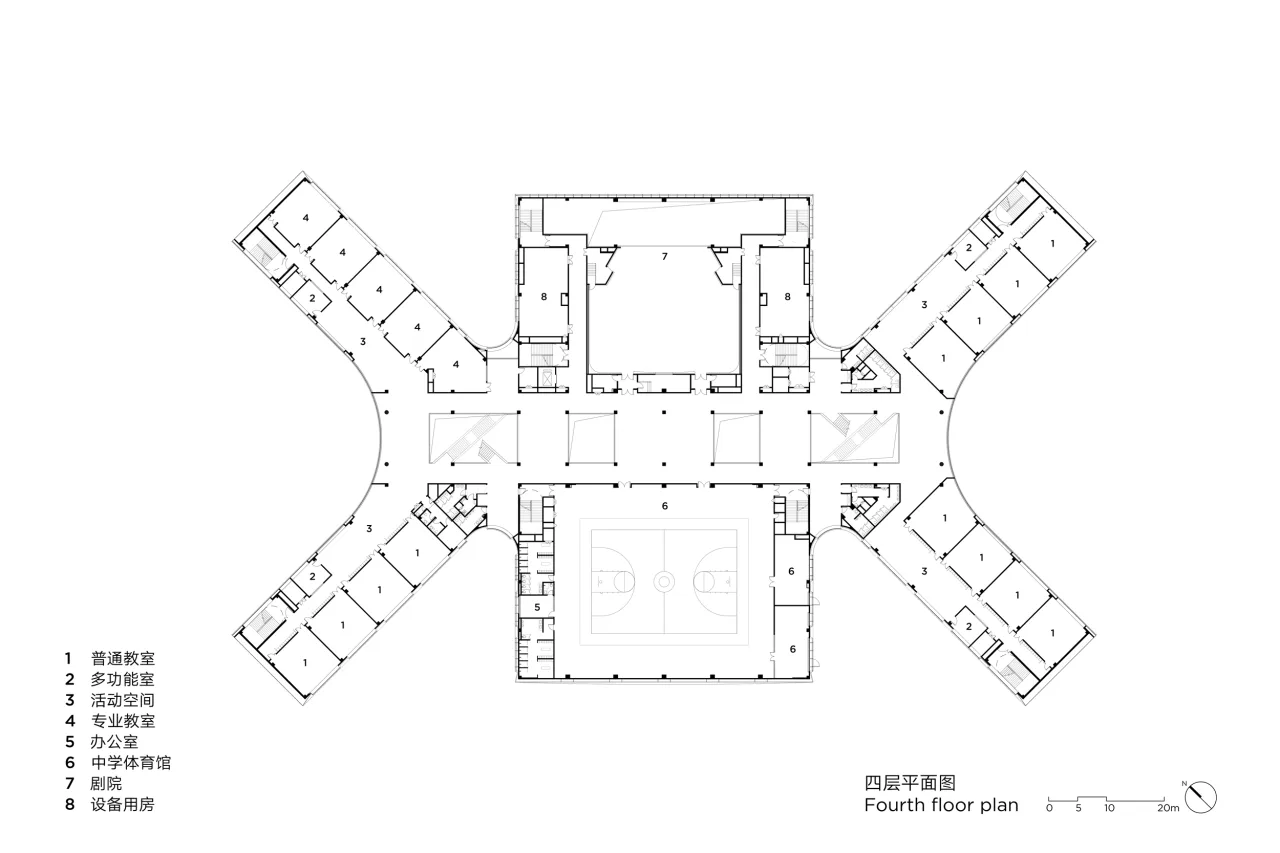
△ Fourth Floor Plan of the Main Teaching Building © line+
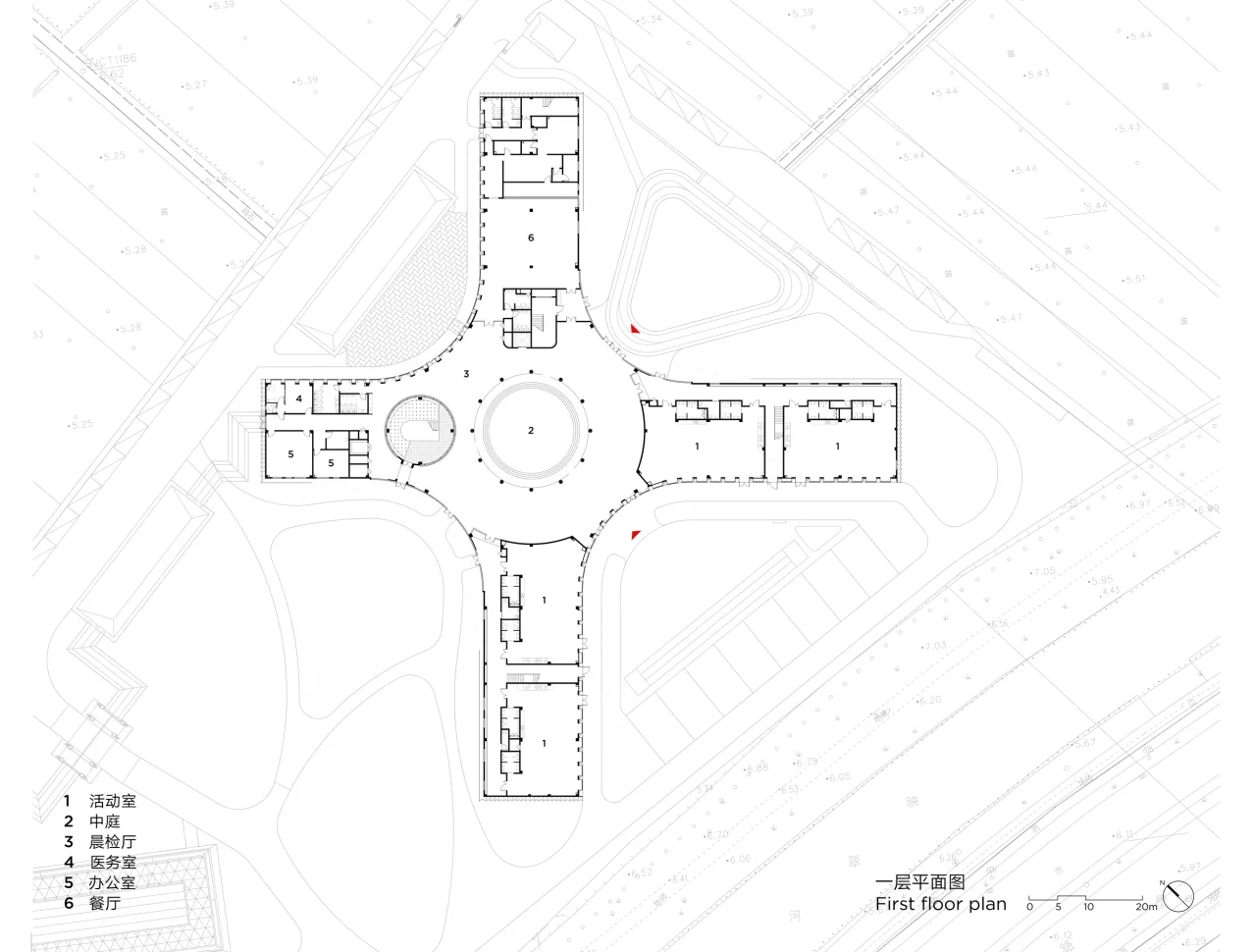
First Floor Plan of the Kindergarten © line+
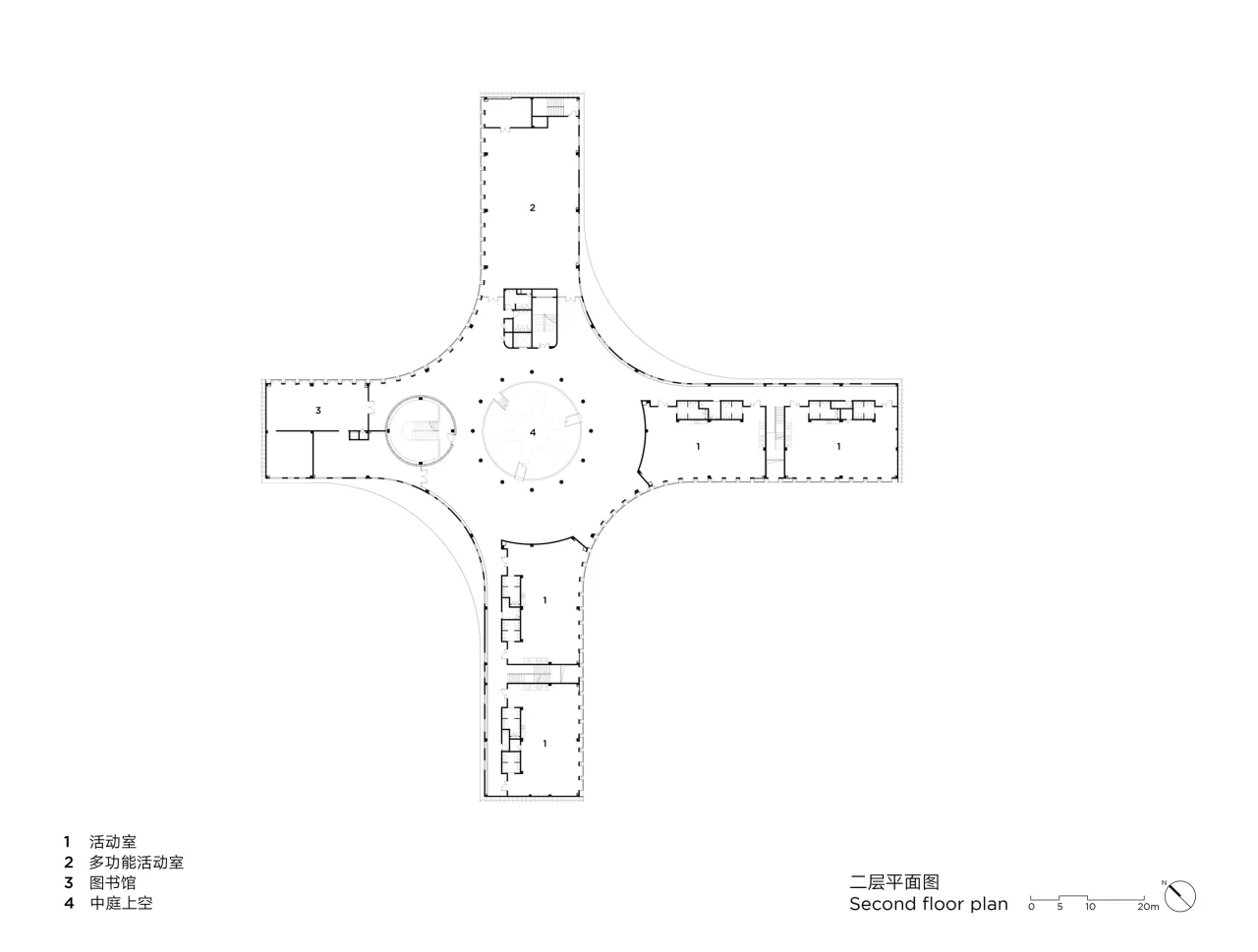
△ Second Floor Plan of the Kindergarten © line+
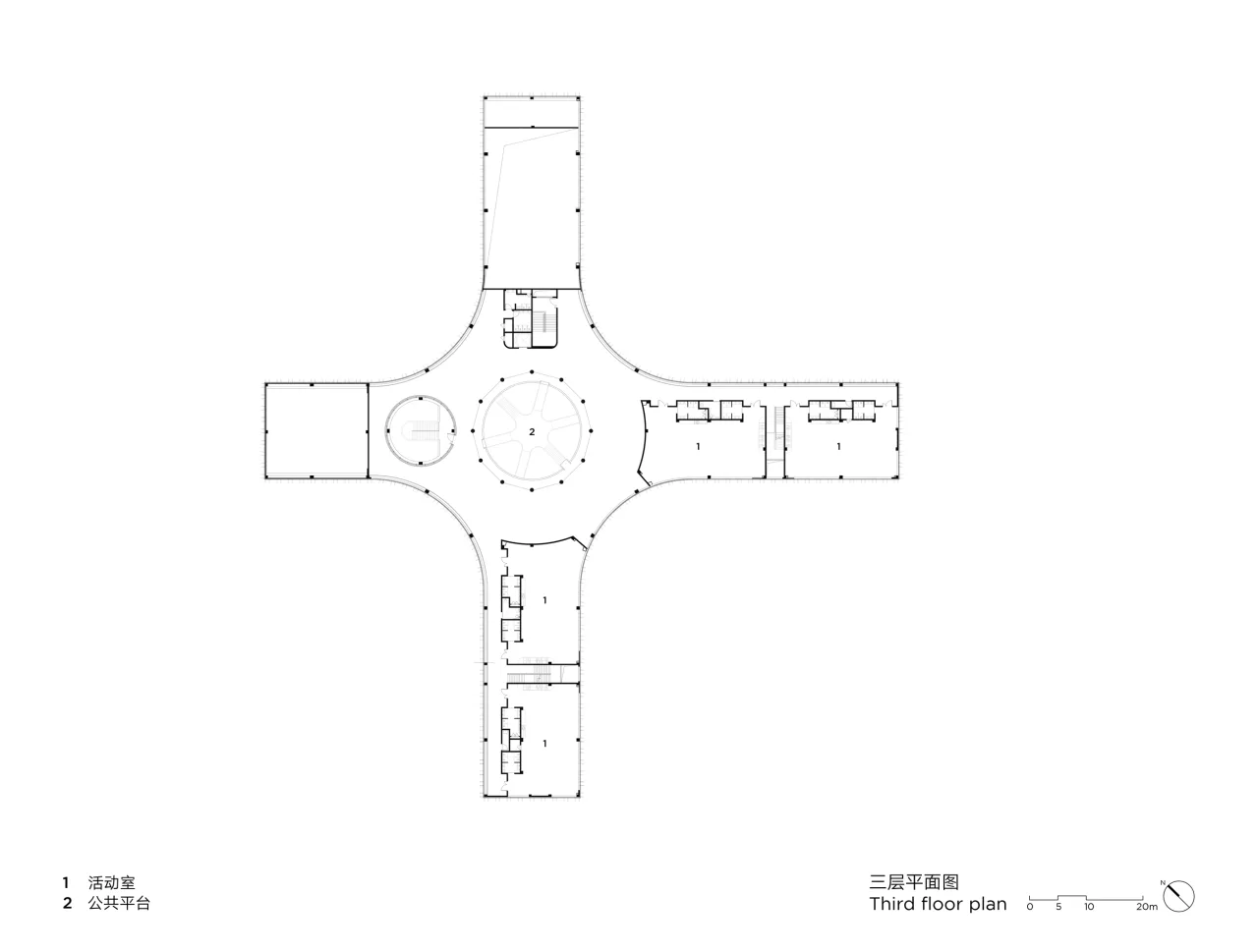
△ Third Floor Plan of the Kindergarten © line+
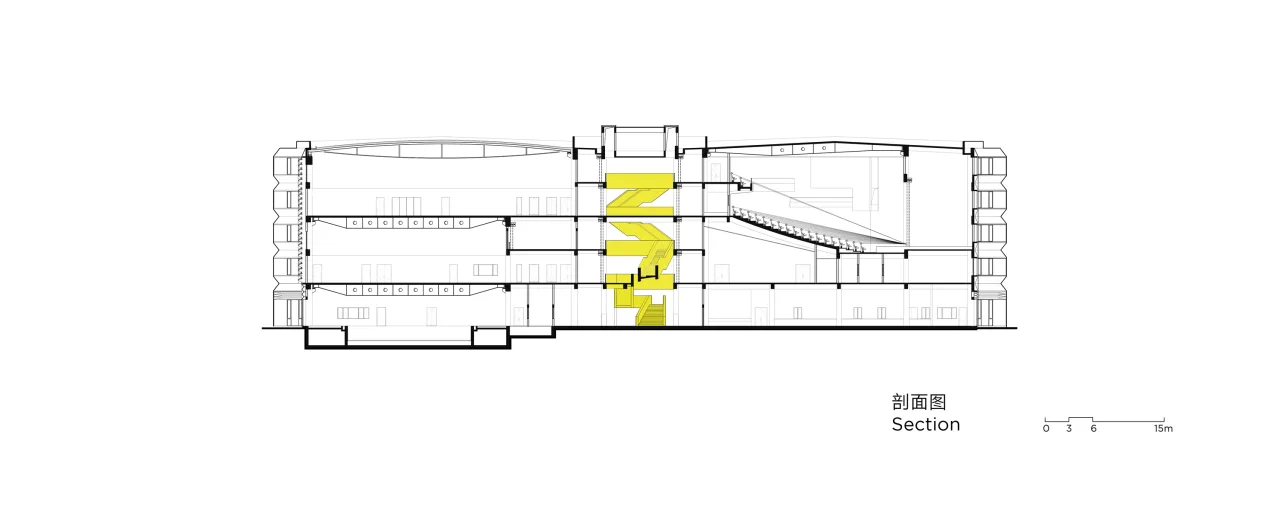
△ Section of the Bishop’s College Building © line+
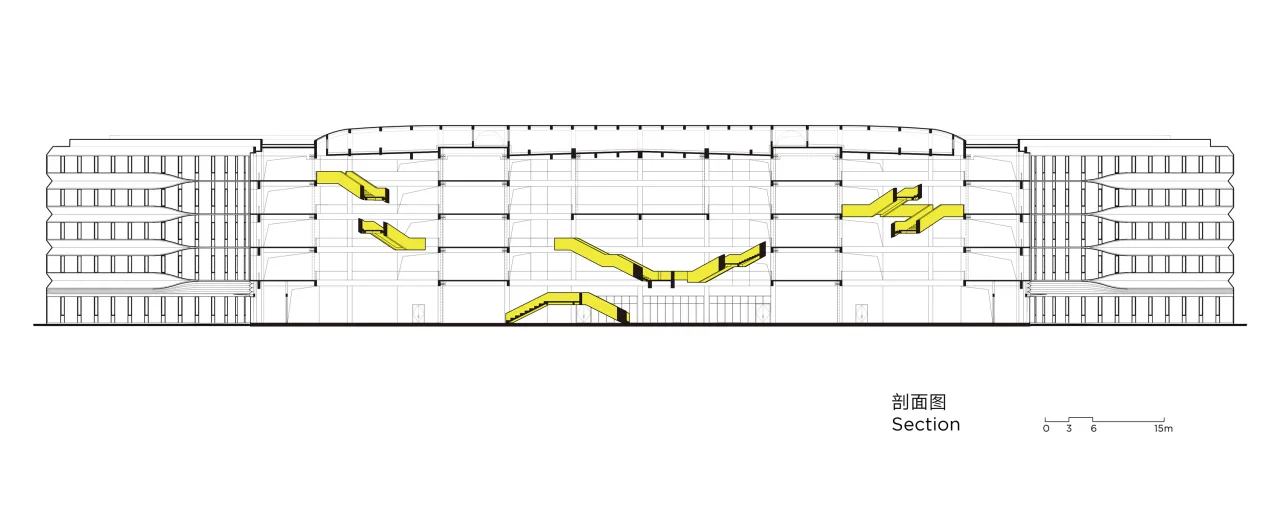
△ Section of the Bishop’s College Building © line+
Project Details
Project Name: Hangzhou International School
Design Firm: Line+ Architectural Firm gad
Lead Architect / Project Creator: Zhu Peidong
Design Team: Sun Xiaoyu, Wu Haiwen, Huang Yunting, Du Mengying, Yang Xiaoyu
Structural, Mechanical, and Electrical Design: Zhejiang Greentown Architectural Design Co., Ltd
Design Team: Yao Kaiming, Zhu Qi, Shen Xiaodong (Structure), Shen Xiaowei, Gong Hai, Hu Min, Qian Zijun (Water Supply and Drainage), Jiang Tao, Chen Guoping, Cao Jun (Electrical), Ji Mingxing, Yao Guocai (HVAC)
Owner: Hangzhou International School
Curtain Wall Consultant: Zhejiang Construction Engineering Curtain Wall Decoration Co., Ltd
Interior Consultant: R+S (China), Qingdao Times Architectural Design Co., Ltd
Landscape Consultant: Shanghai Tianxia Landscape Planning and Design Co., Ltd
Municipal Consultant: Zhejiang University Architectural Design and Research Institute Co., Ltd., Municipal Branch
Assembly Deepening Unit: Shanghai Yan Concrete Architectural Design Co., Ltd
Location: Hangzhou, Zhejiang, China
Building Area: 49,083.5 square meters (above ground)
Design Period: June 2018 – August 2019
Construction Period: August 2019 – August 2022
Structure: Steel structure combined with reinforced concrete frame
Materials: Aluminum panels and crystal gray glass
Photography: Su Shengliang, Zhu Runzi line+














Must log in before commenting!
Sign Up