
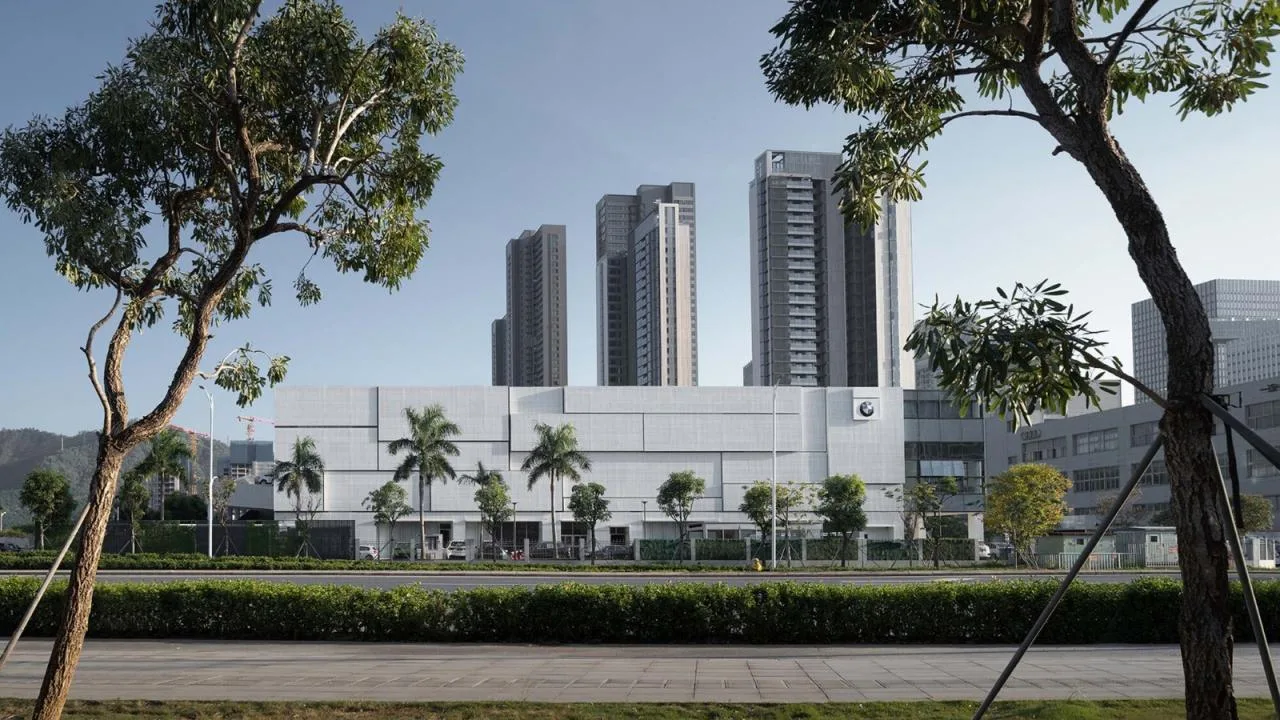
Situated at the forefront of Shenzhen’s innovative new economic zone, Qianhai embodies over two decades of reform and openness, rooted in its unique maritime culture. This spirit of innovation and inclusiveness defines the urban character here. The BMW Customer Experience Center is located at the intersection of Zhenhai Road and Gangcheng Road within Shenzhen’s Qianhai Cooperation Zone. The design thoughtfully responds to the local hot and humid climate, aligning with the urban spirit and character, while reimagining the existing workshop building with sustainability as a core principle.
The relationship between the building and the urban fabric balances objective reality with subjective interpretation. Successful integration is not merely about matching exterior styles, but also about harmonizing internal spirit, synchronized lifestyles, and future growth. The project revitalizes the former workshop by addressing key challenges such as building façade, noise, shading, ventilation, and lighting, breathing new life into the entire structure.
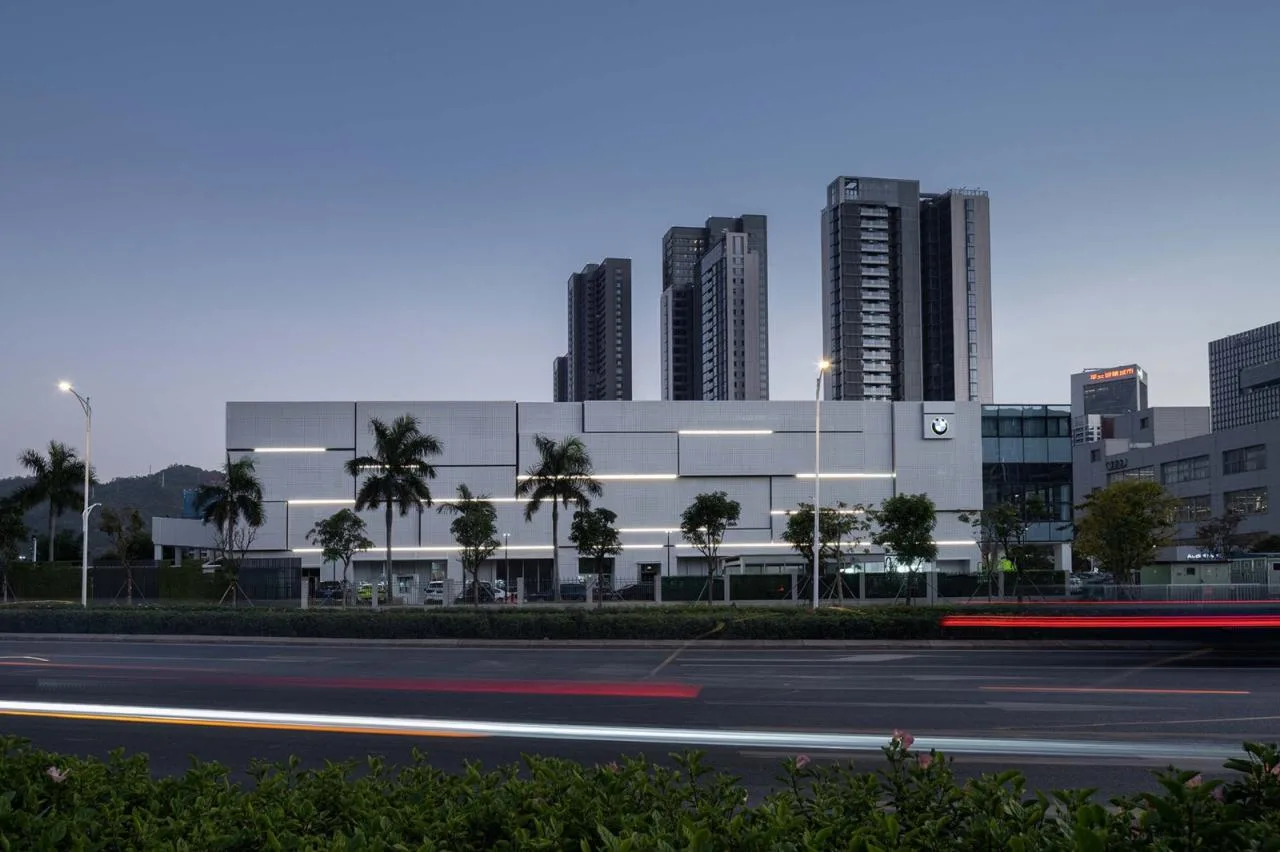
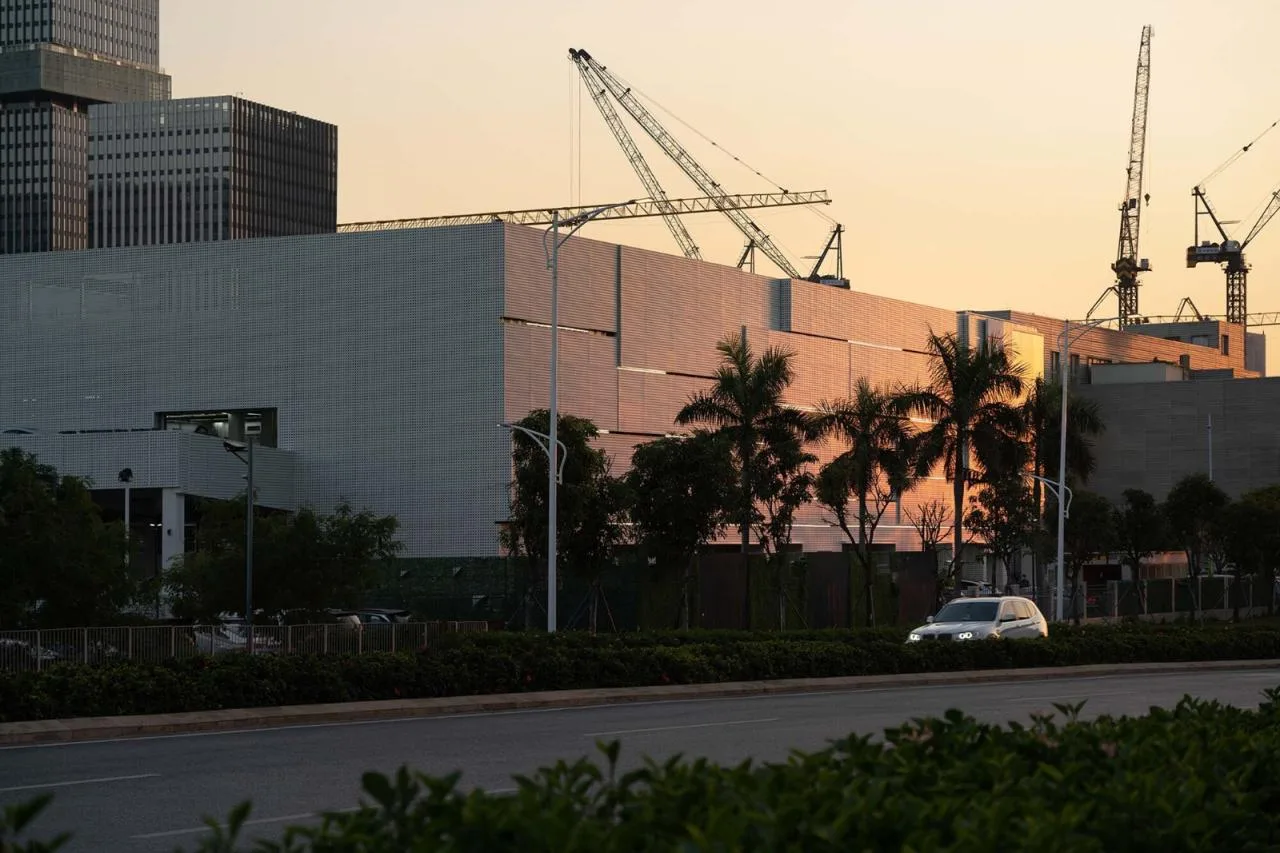
The exterior façade is the centerpiece of the renovation. Embracing Qianhai’s role as a cutting-edge economic zone, the design abandons exaggerated or irregular forms in favor of simple, efficient cubic volumes stacked into blocks. The architecture resembles a collection of geometrically arranged boxes, integrating modern industrial aesthetics seamlessly into the urban streetscape. Buildings with vitality should resonate with their urban context while adapting naturally to the shifting light of dawn and dusk and the changing seasons.
Given Shenzhen’s maritime location and its hot, humid climate, the design confronts these environmental realities head-on to create a space that harmonizes work and life within Qianhai’s unique regional characteristics.
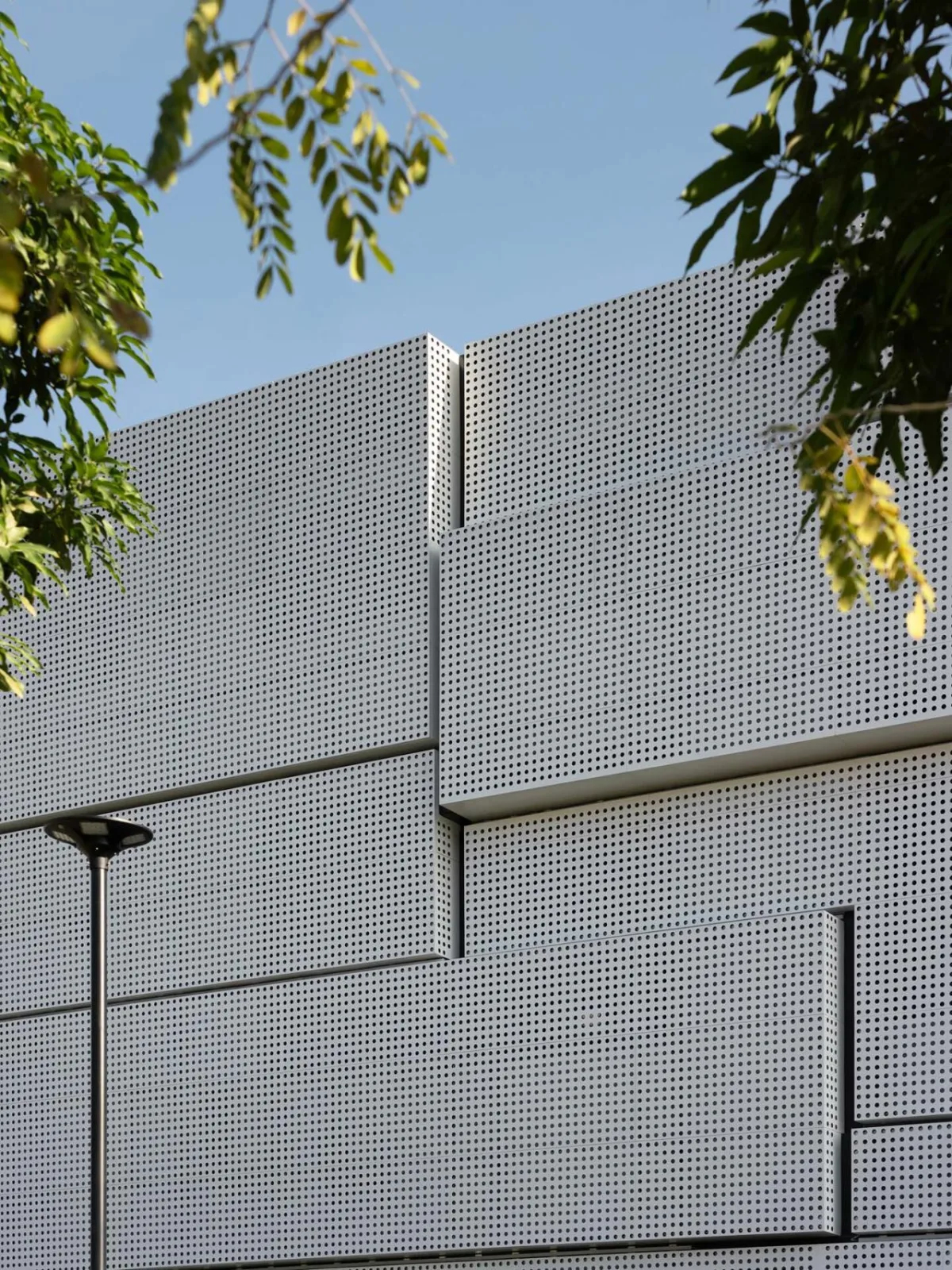
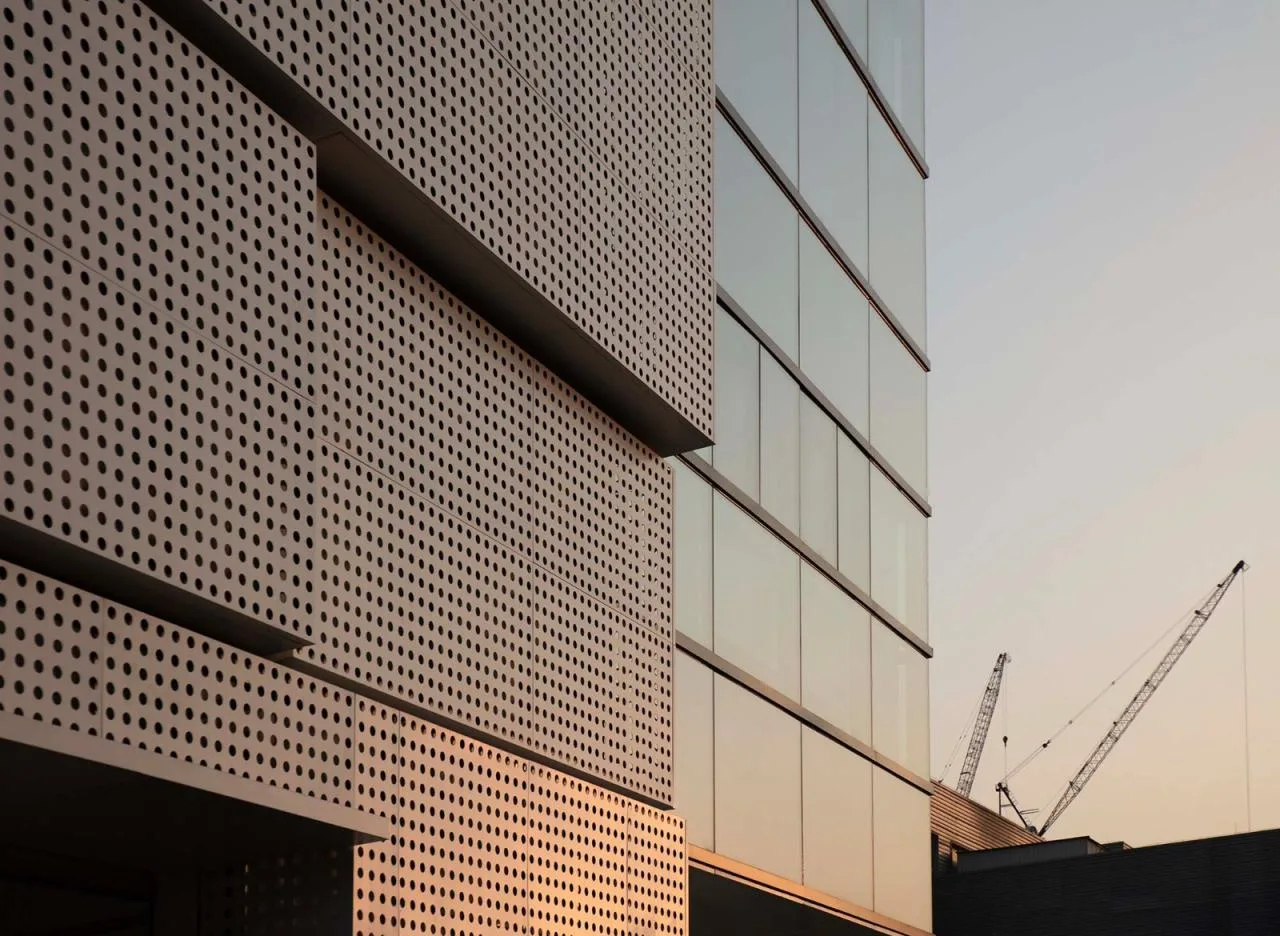
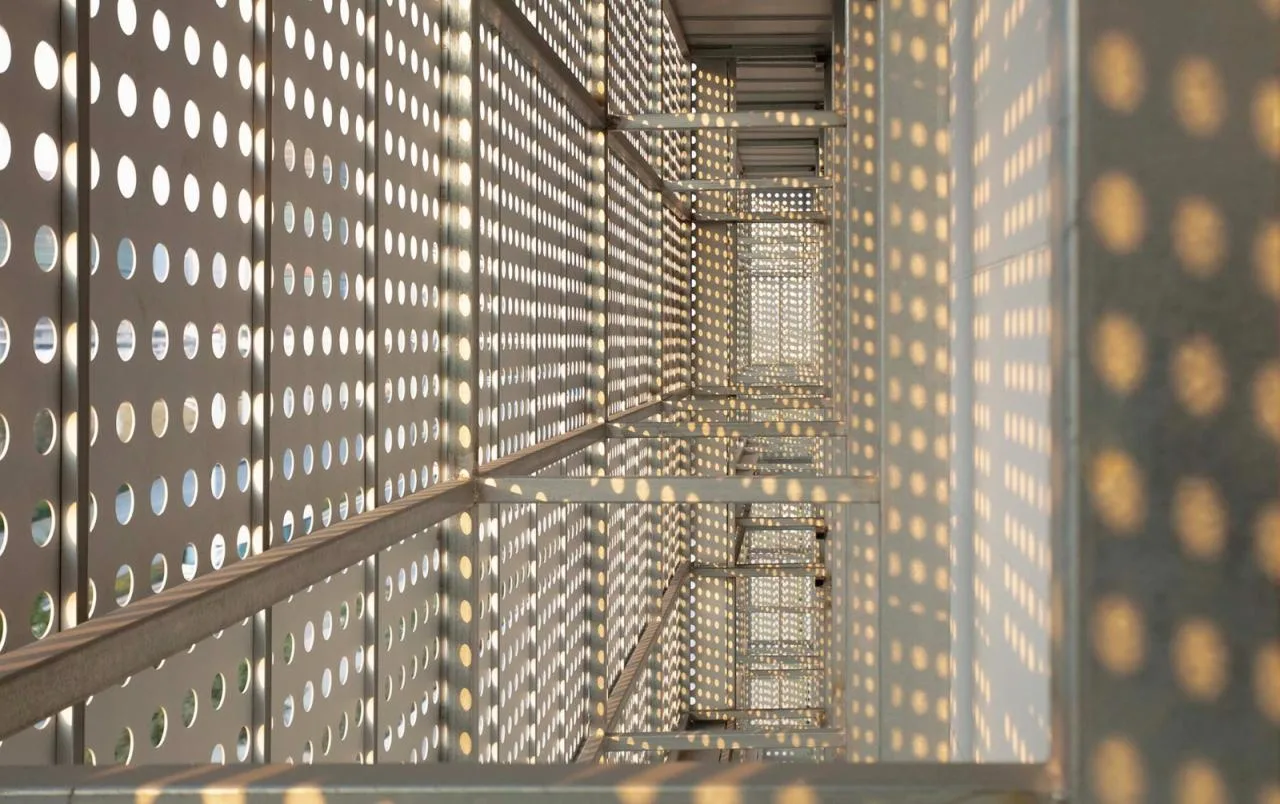
To address the climate challenges, the design team employed a passive heat protection strategy by using PVDF fluorocarbon painted perforated panels, aluminum panels, and circular perforated elements to create a layered building skin. This “composite skin,” featuring double-layer curtain walls, filters sunlight into soft, diffused light and promotes natural ventilation, maintaining stable indoor temperatures.
Perforated panels also allow for varied textures and distinct block shapes by adjusting material density and patterns. This design not only maximizes natural lighting but also adds a veil-like layer to the building, evoking a mysterious, futuristic atmosphere. Responding to the city’s sunrise and sunset, the building’s façade intuitively reflects the changing light, highlighting the interplay of light and shadow.
Emphasizing sustainable growth, the design integrates development goals with architectural concepts, ensuring buildings and the city evolve together. To support the economic zone’s growth and accommodate expanded office and logistics needs, additional office spaces were added above the original overhang. The exterior façade uses double-layer low-e insulated glass to prevent heat influx during summer and retain warmth in winter, significantly enhancing indoor comfort.
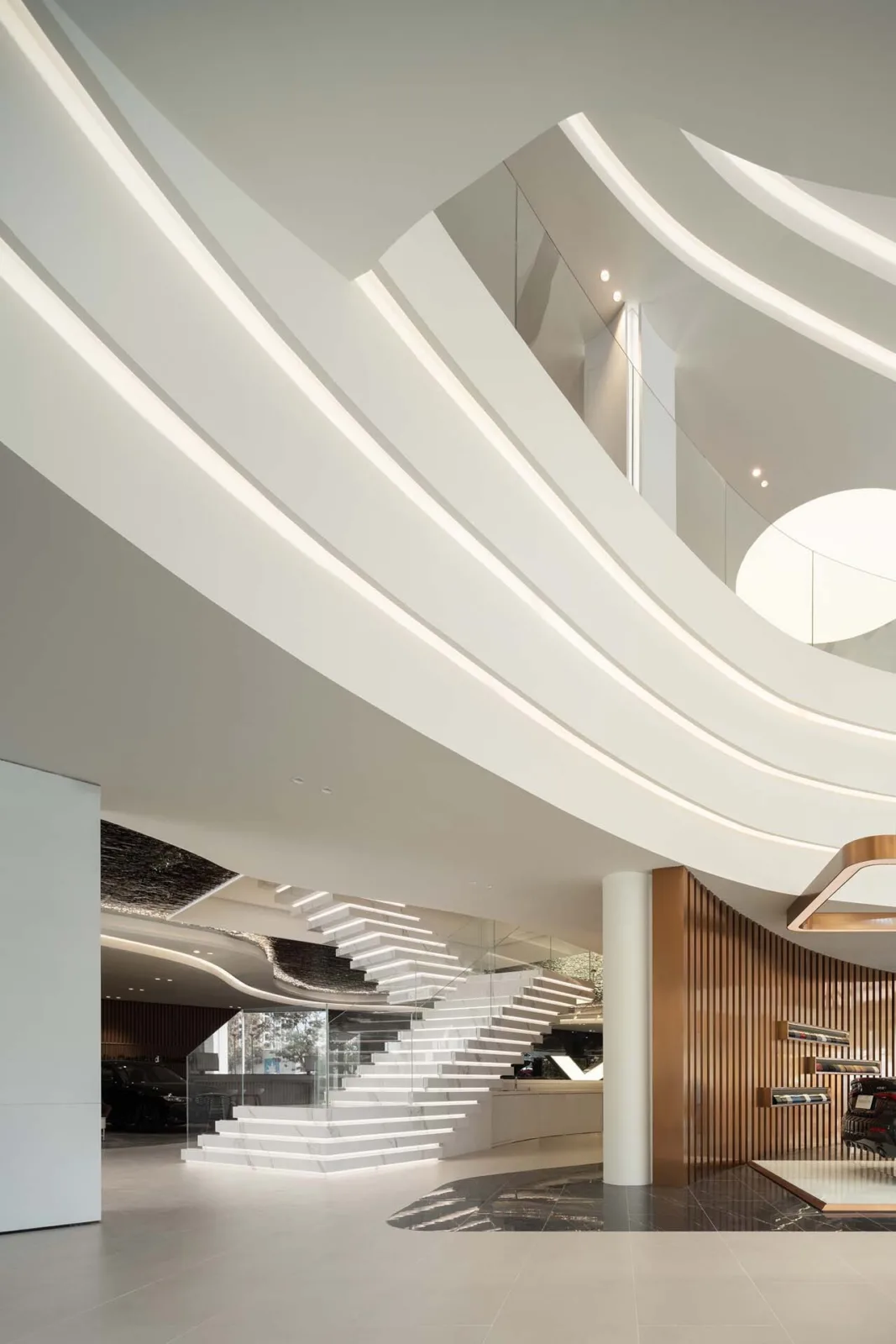
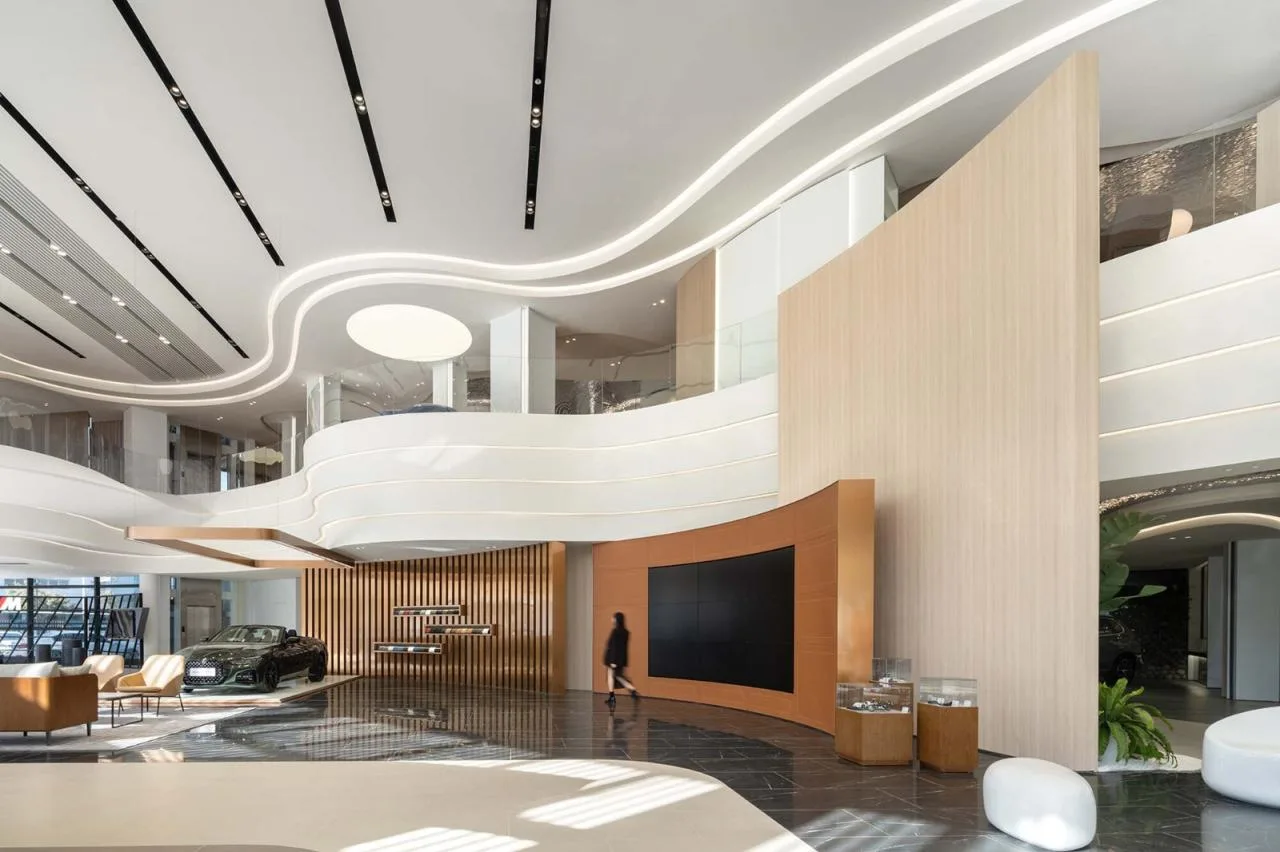
While the building’s exterior presents a rigid, container-like urban texture, the interior adopts a softer, more fluid design inspired by the region’s coastline. This approach captures the deeper spiritual essence of the Greater Bay Area, where the sea and waves embrace all life. The interior concept, titled “Setting Sail,” draws from the imagery of floating coastlines and wind sails.
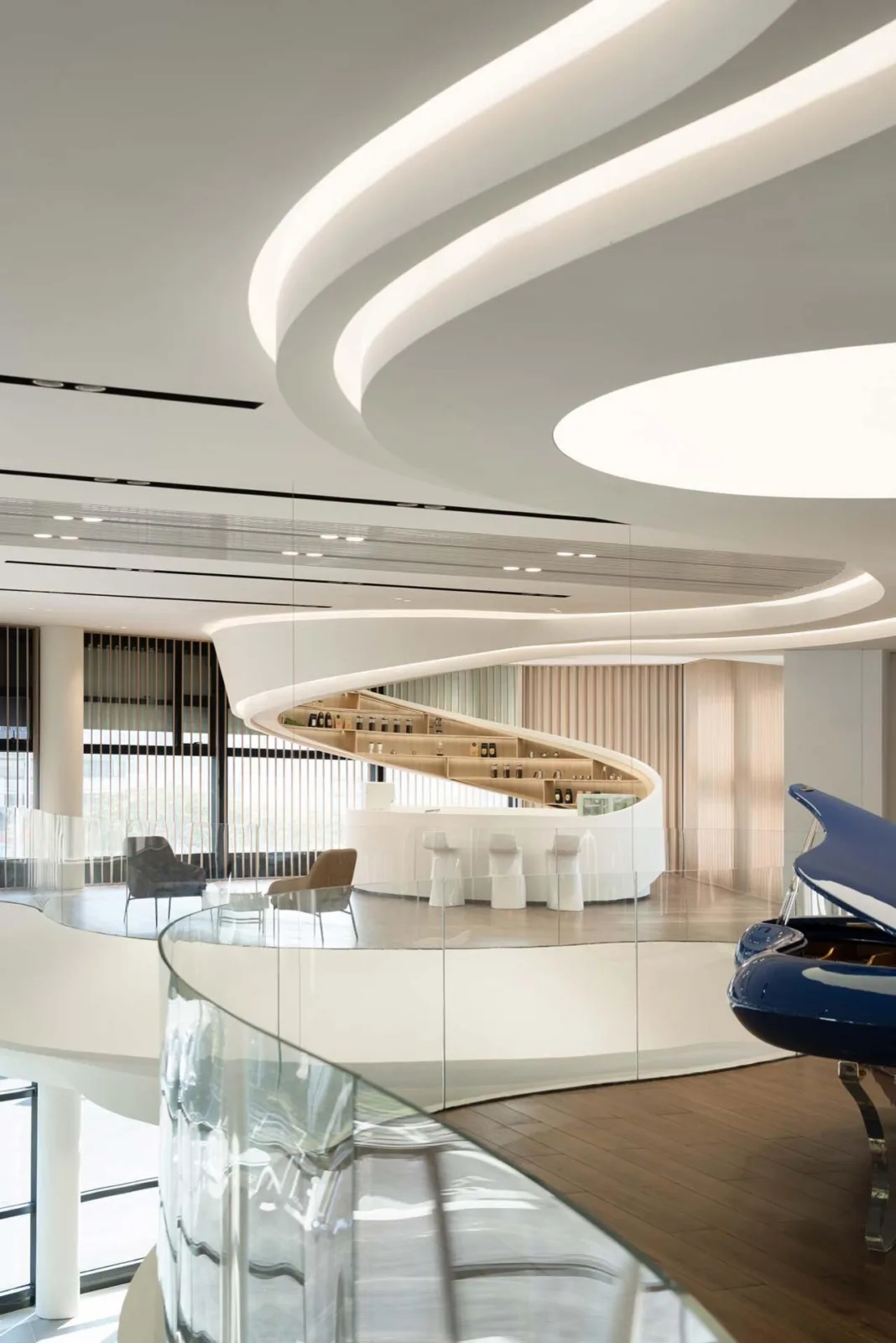
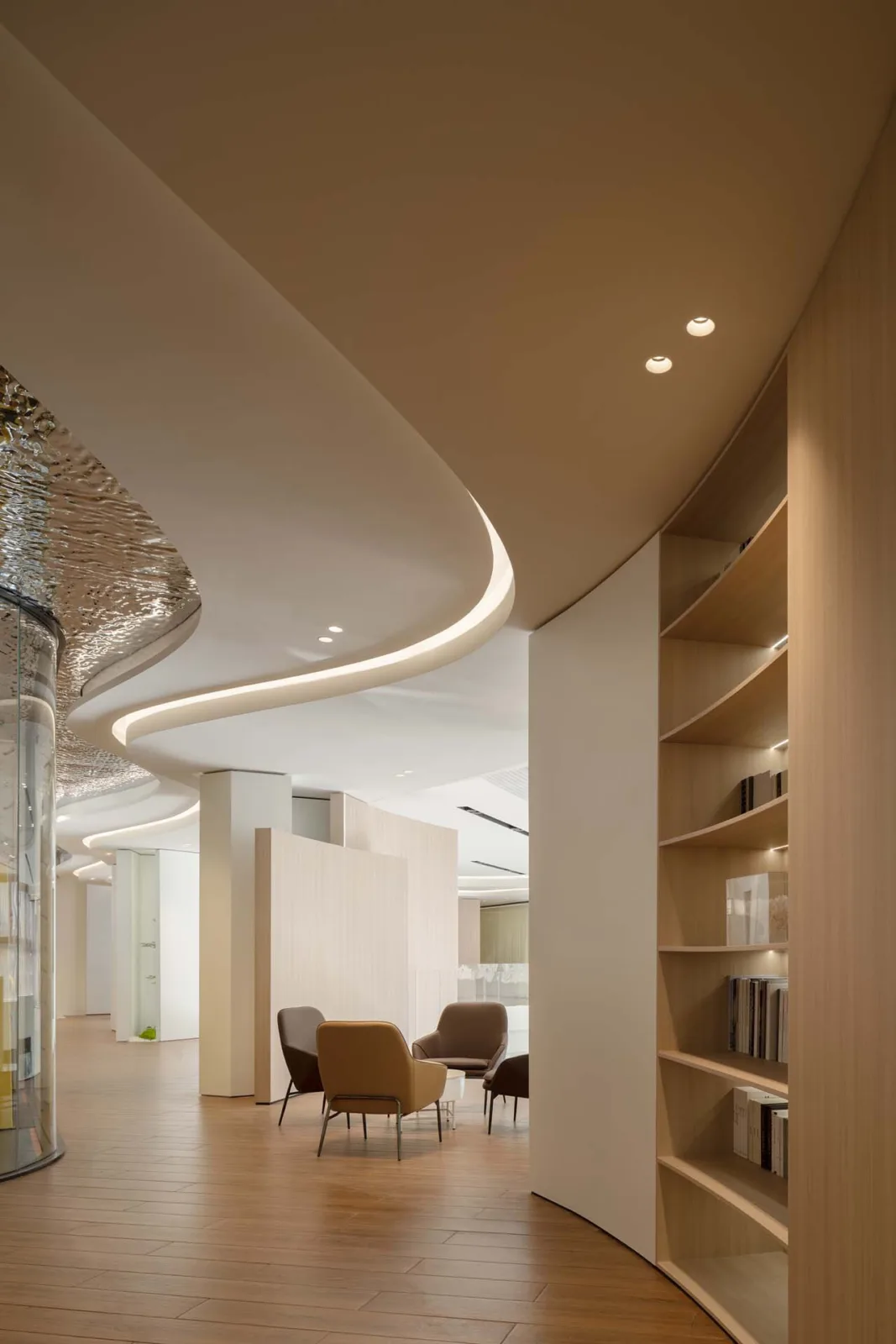
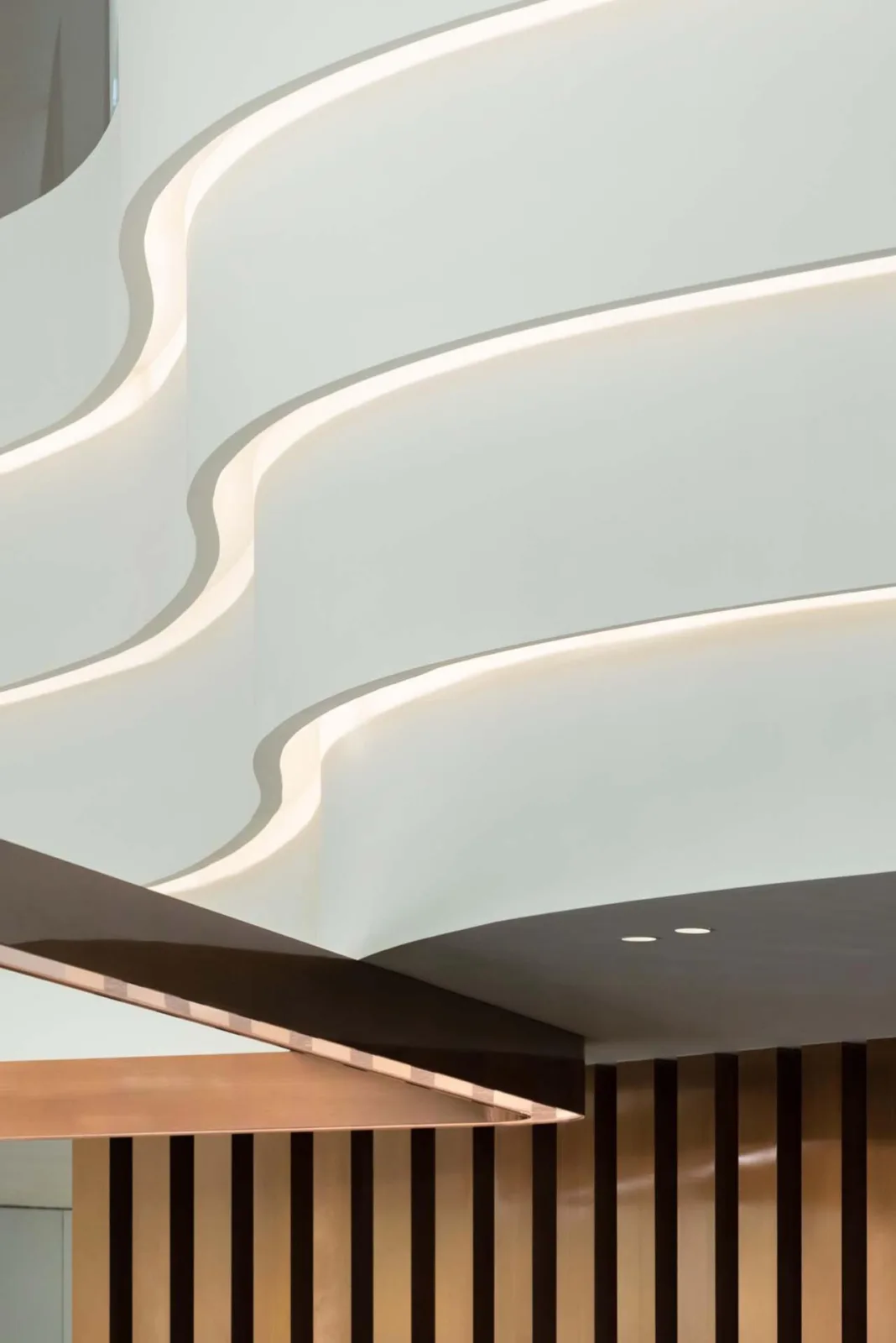
The ceiling mimics the natural curves of waves, creating a layered visual of stacked waves and foam. The façade incorporates curved sail shapes that echo the dynamic waves above, offering visitors expansive views of the sea and sky, with sails seemingly racing through the air. To resolve structural challenges, particularly the large number of columns where two original structures joined, the design transforms these columns into curved walls integrated within the sail-shaped framework.
This clever use of floating materials and spatial boundaries blurs the line between presence and absence, effectively mitigating the disorderly, staggered appearance of the original columns.
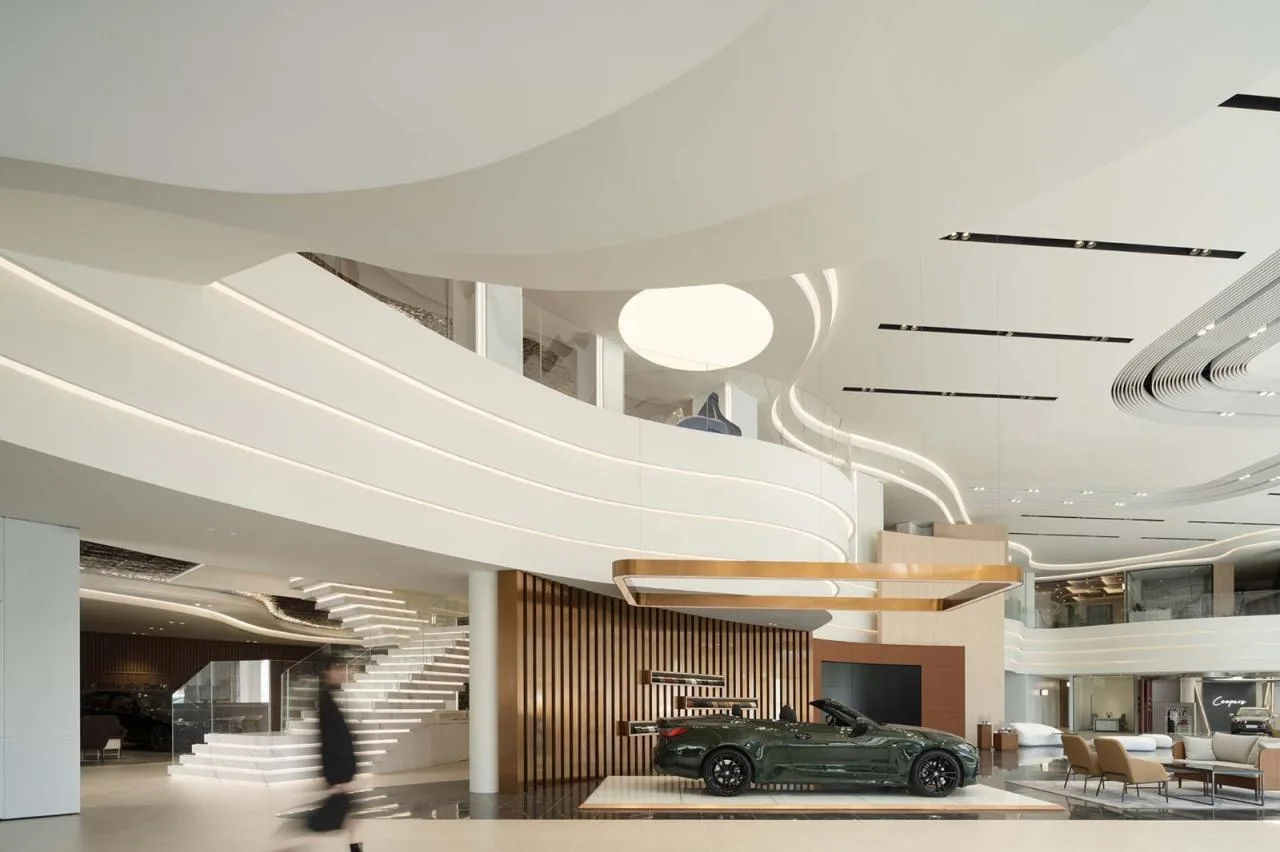
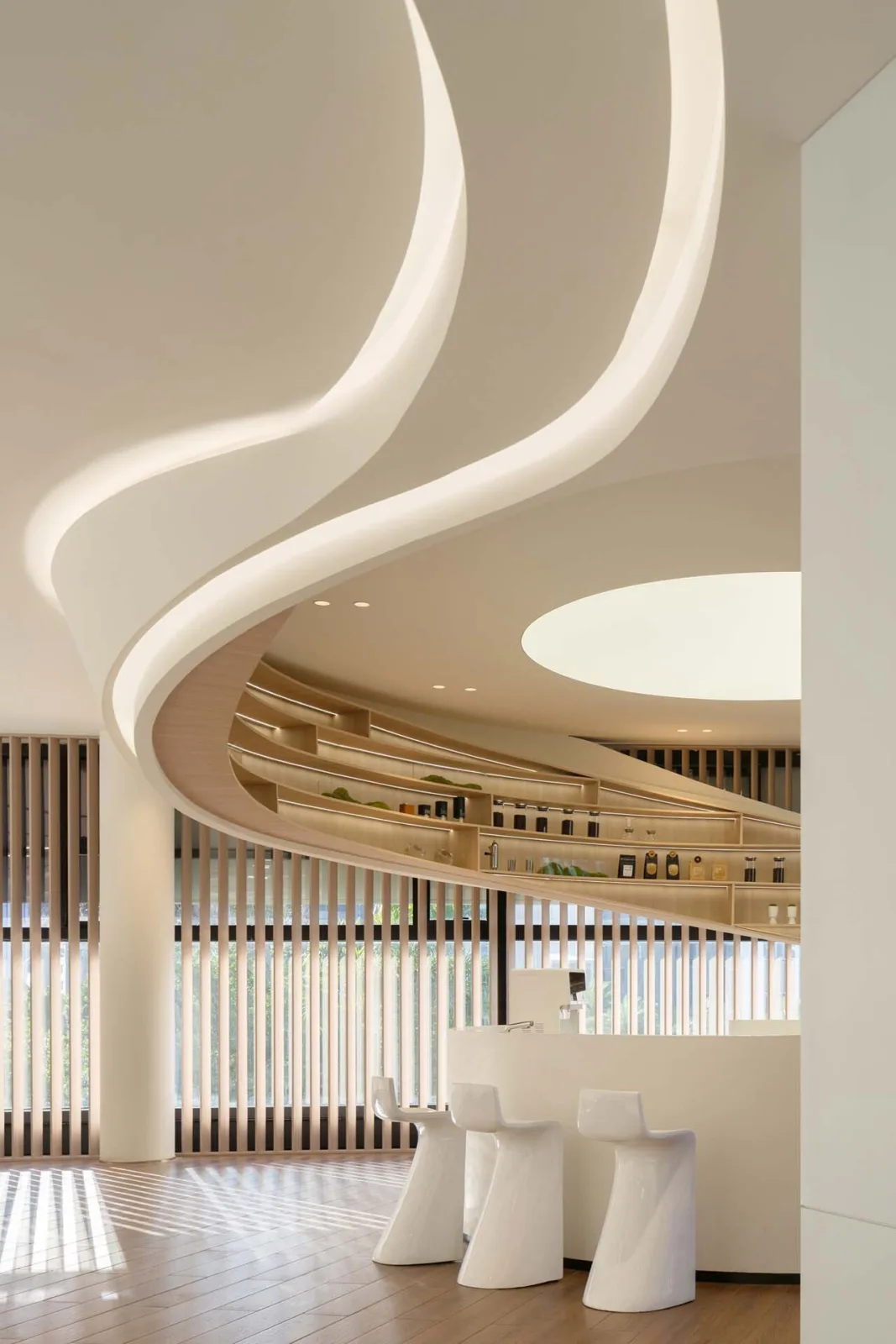
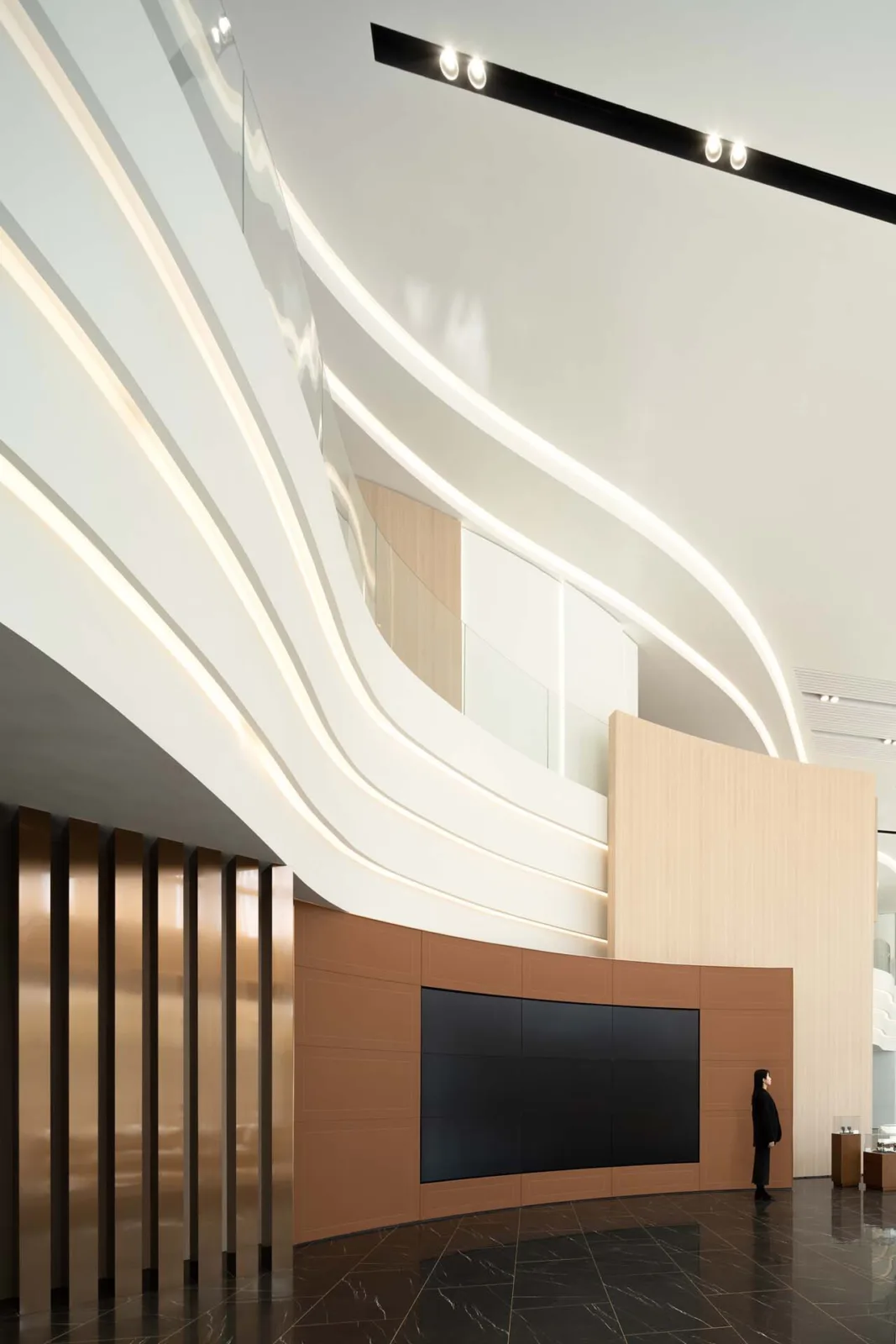
Walking along the coastline, one finds no straight lines or sharp corners in nature. Reflecting this, the building’s interior avoids rigid geometry, favoring organic, undulating forms inspired by the winding coastline. The layout transitions from isolated functional zones to a fluid spatial experience, enhancing interaction and offering visitors the freedom and comfort to “drift with the flow.”
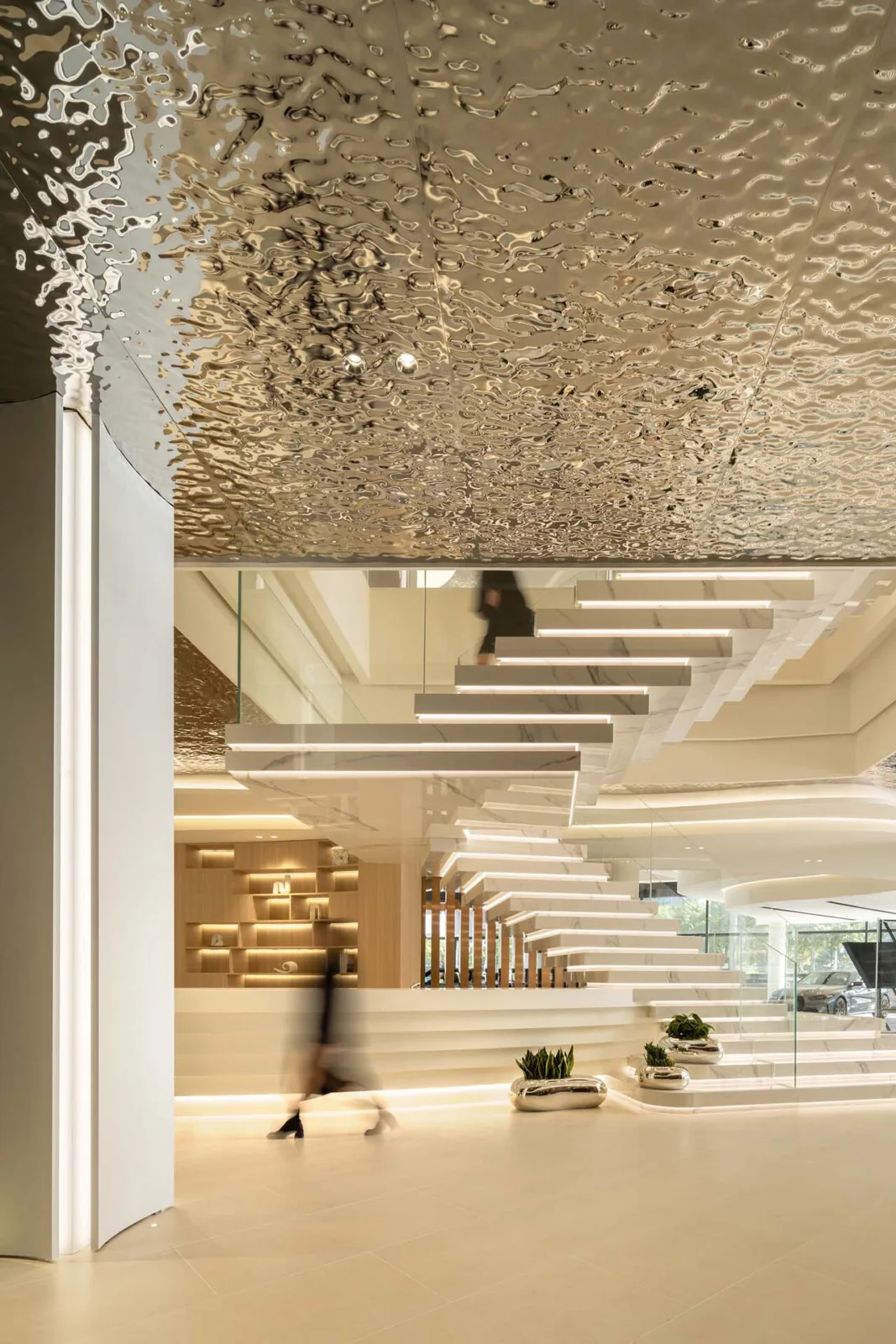
The first floor features a distinct sales flow, while the second floor caters to after-sales services, clearly separating visitor paths to improve circulation. This thoughtful planning diverts passenger flow effectively and enhances operational efficiency and customer experience.
Ascending through the layered, wave-like ceiling, visitors reach a space where sea and sky seem to converge. The second floor includes a beverage bar and a customer lounge. The bar’s spiral, wave-inspired design integrates seamlessly with the ceiling’s undulating form, embodying the essence of “water.” Patrons can relax beside the bar while enjoying natural light filtering through the grille gaps, blending interior and exterior vistas in a harmonious interplay of reality and illusion.
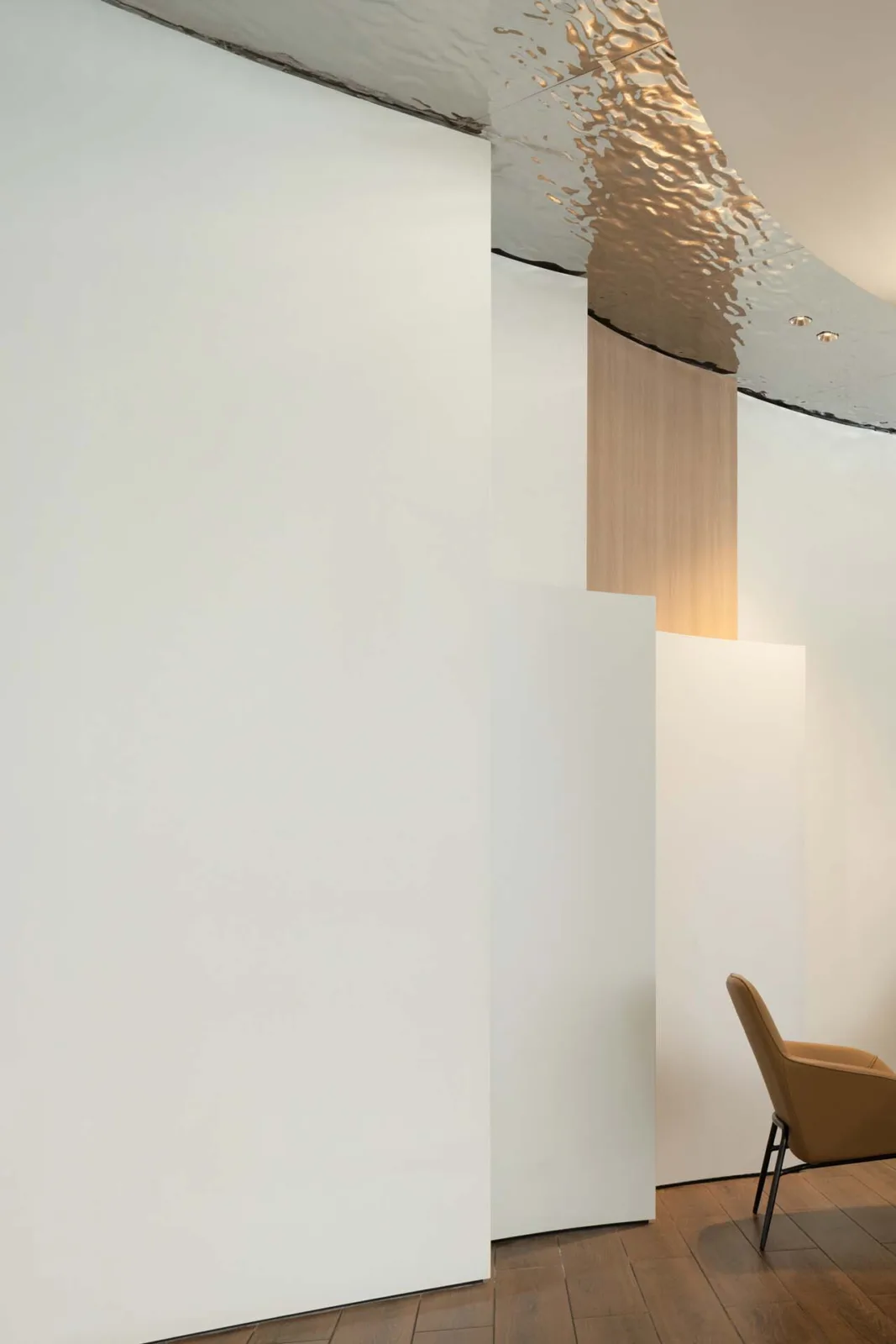
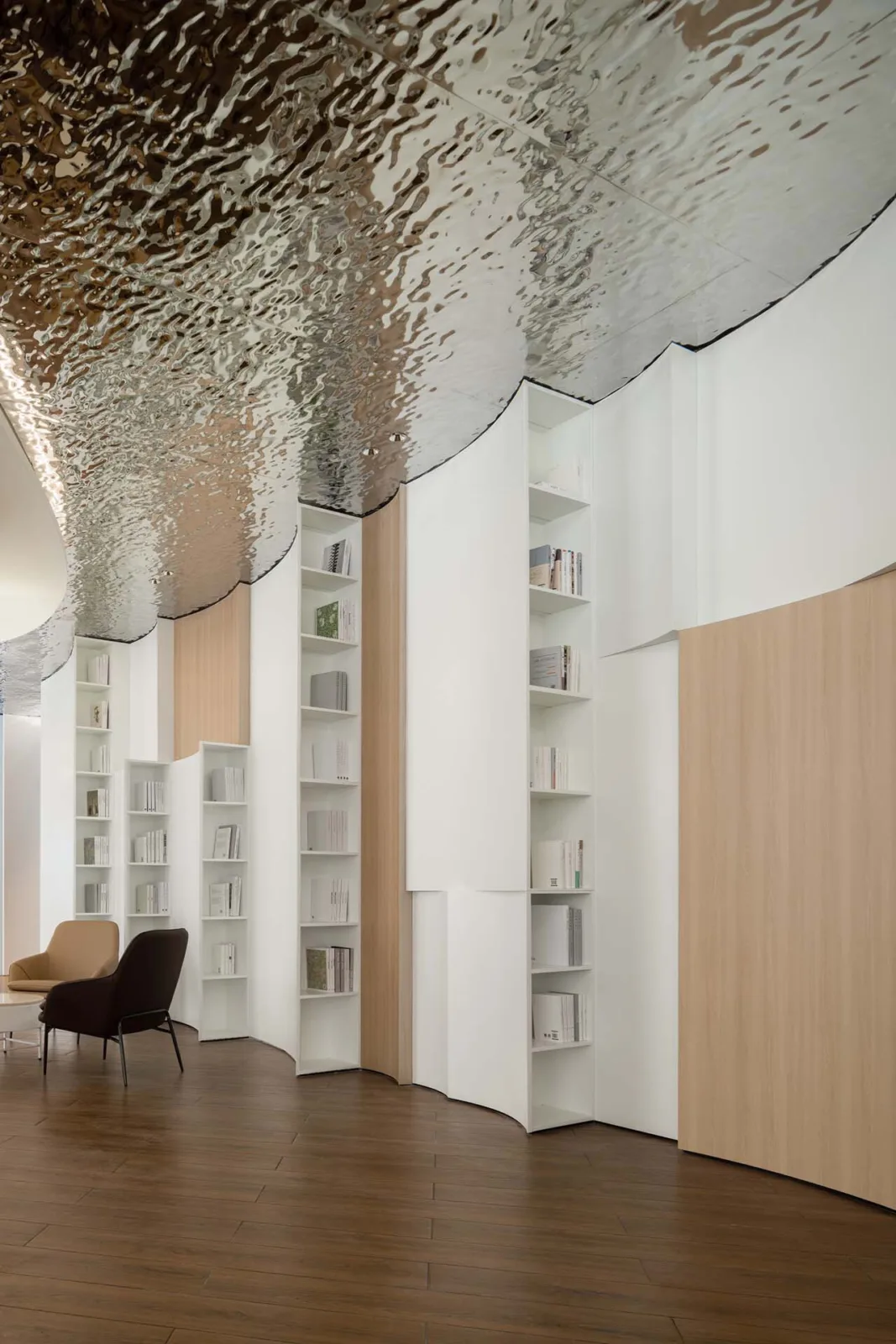
The spatial aesthetics reflect the designer’s mastery over materials, techniques, and imagination. Water ripple stainless steel complements the glass guardrails, infusing the space with a dynamic yet serene “water” atmosphere, reminiscent of “floating light dancing on gold, still shadows sinking into jade.”
The lounge area is thoughtfully divided by bookshelves, providing quiet nooks for visitors to relax, read, or gaze at distant views uninterrupted. As evening falls, the building’s strong exterior and gentle interior glow with the warm afterglow of sunset. Exterior lights shimmer, echoing the flowing tail lights of cars captured under slow shutter speeds.
This evolving urban metabolism parallels the daily and seasonal cycles of dawn and dusk, embodying a sustainable design philosophy that integrates the spirit and form of the Qianhai Greater Bay Area into the vision of a future-ready special economic zone city.
Project Drawings
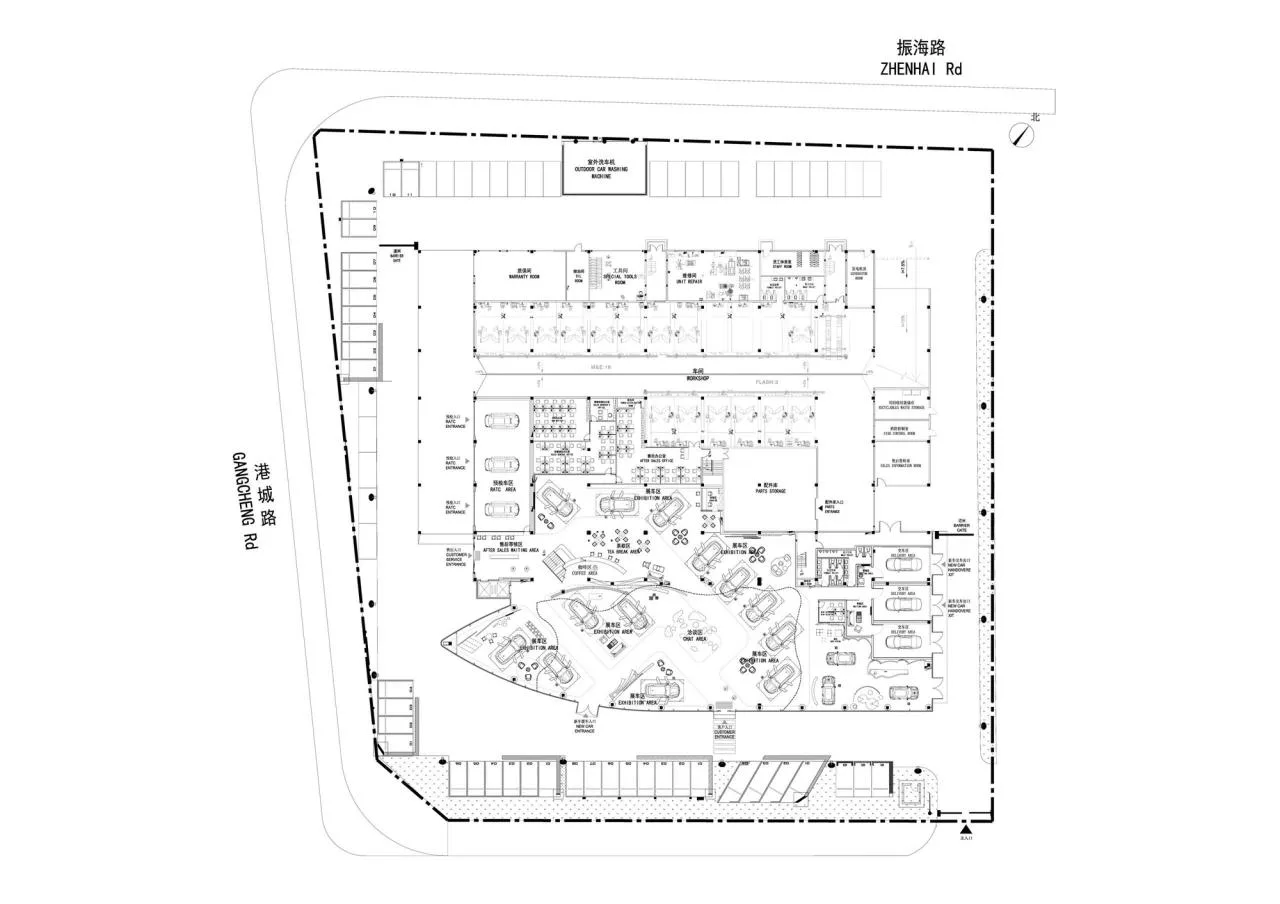
△ Plan View
Project Information
Architect: Zhu Haibo Architectural Design Firm
Area: 8,155 m²
Project Year: 2022
Photographer: Wu Jianquan
Lead Architect: Zhu Haibo
Design Team: Fang Jie, Xu Chang
Detailed Design Team: Tan Chuanli, Zhao Qing, Deng Guanying, He Mengjun
Location: Shenzhen















Must log in before commenting!
Sign Up