
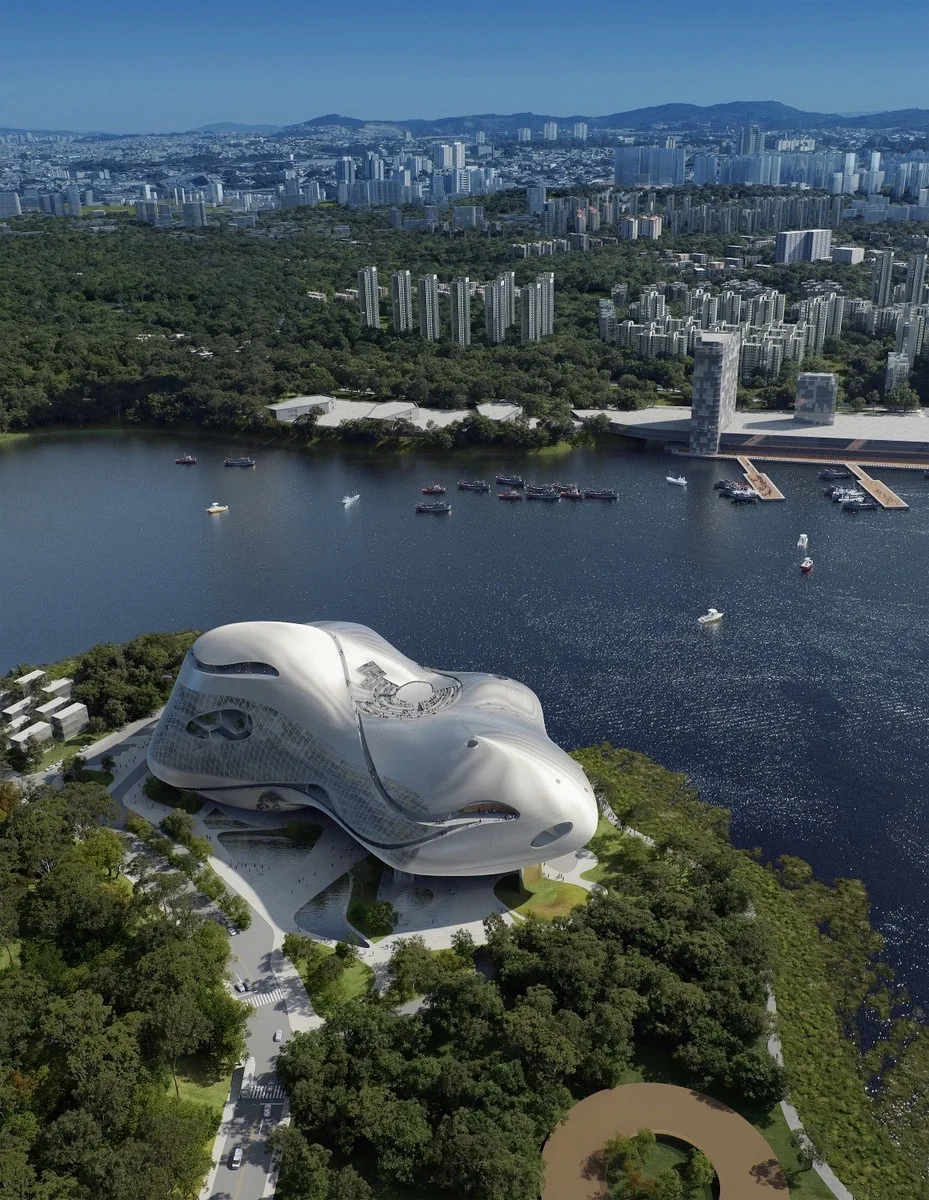
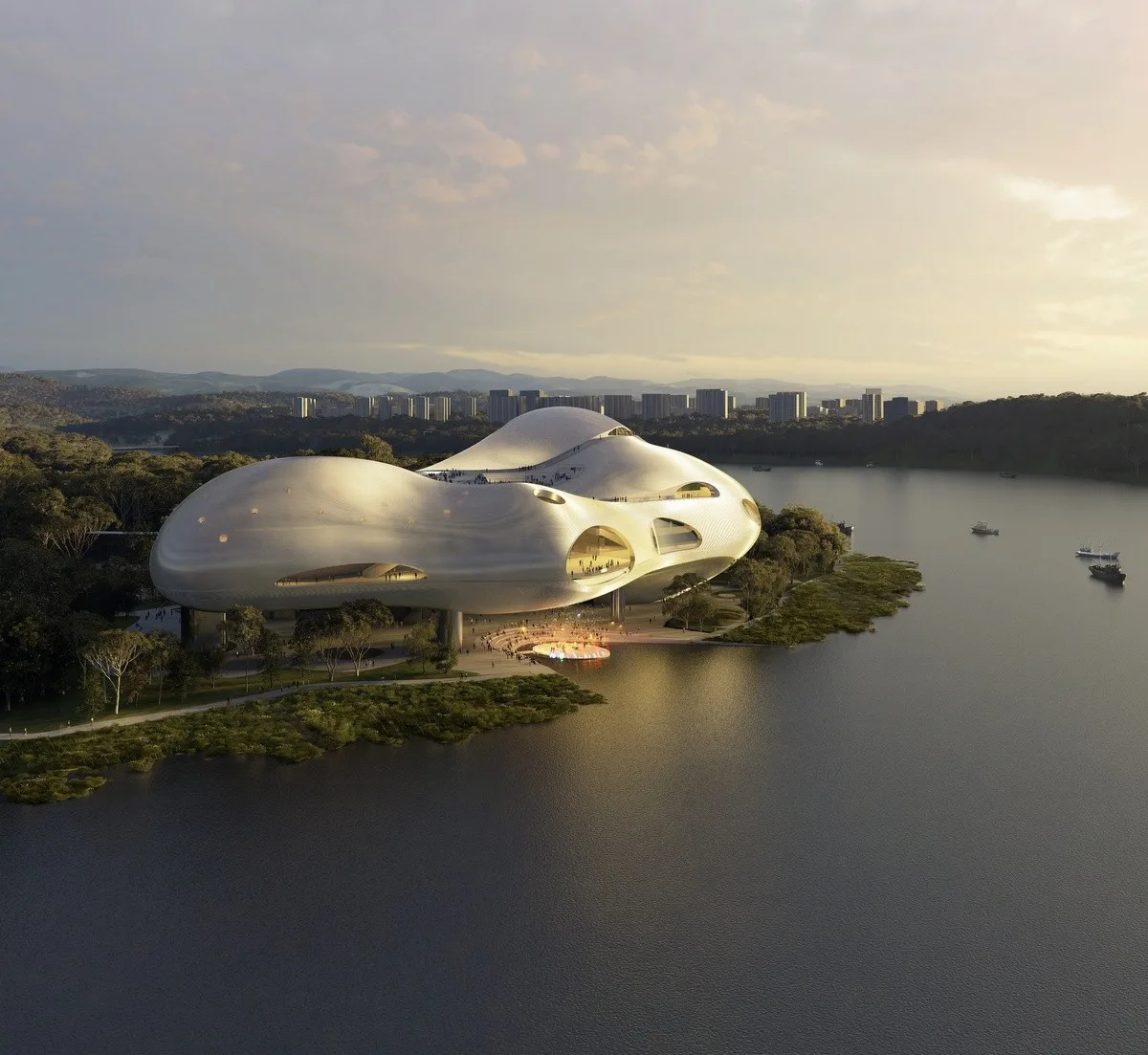
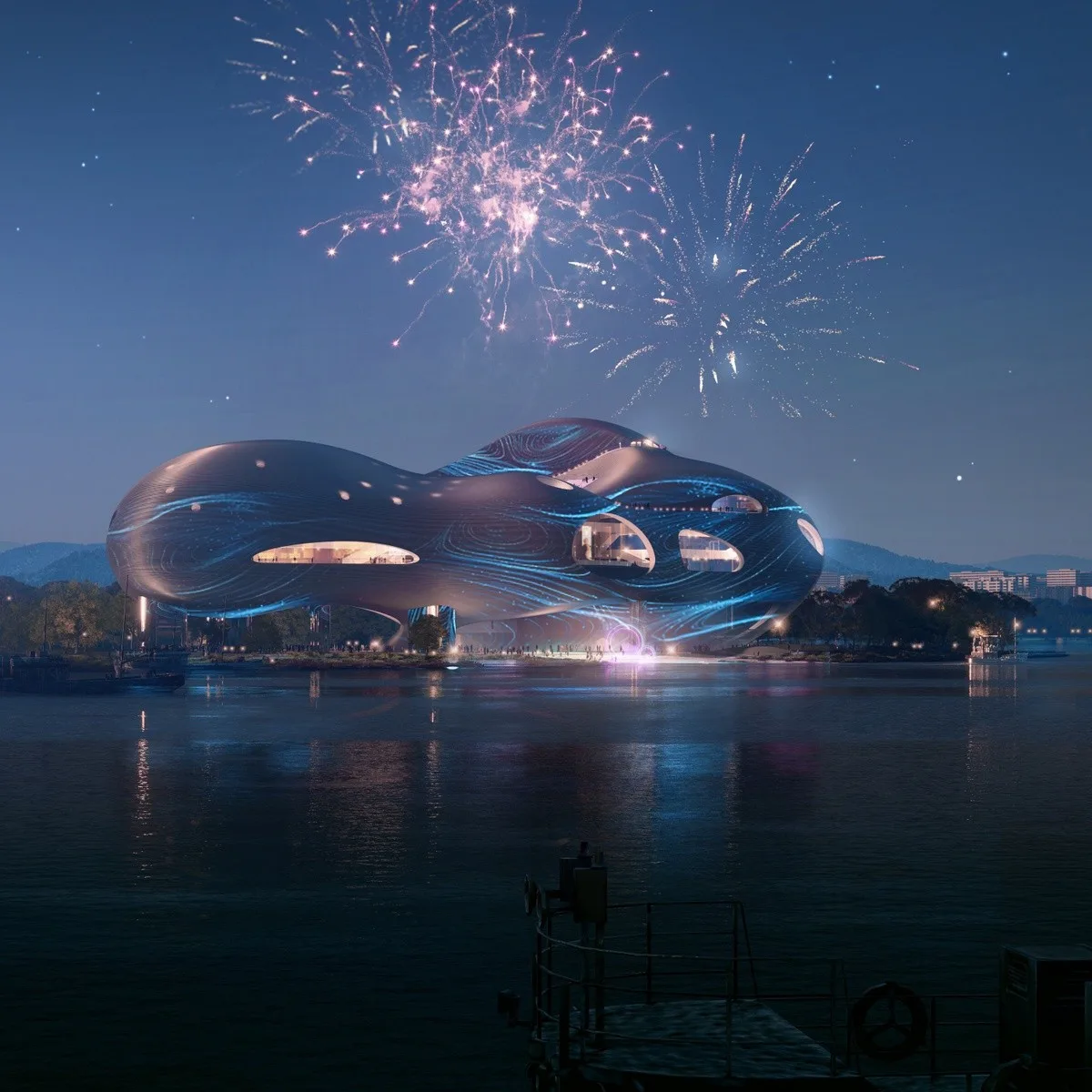
At the end of 2022, OPEN secured the winning bid for the Yichang Grand Theater project. Situated on Pinghu Peninsula island, where the Yangtze River meets its tributary, the Huangbai River, in Yichang City, Hubei Province, the theater faces the Three Gorges Cruise Home Port across the river. The total construction area spans approximately 70,000 square meters.
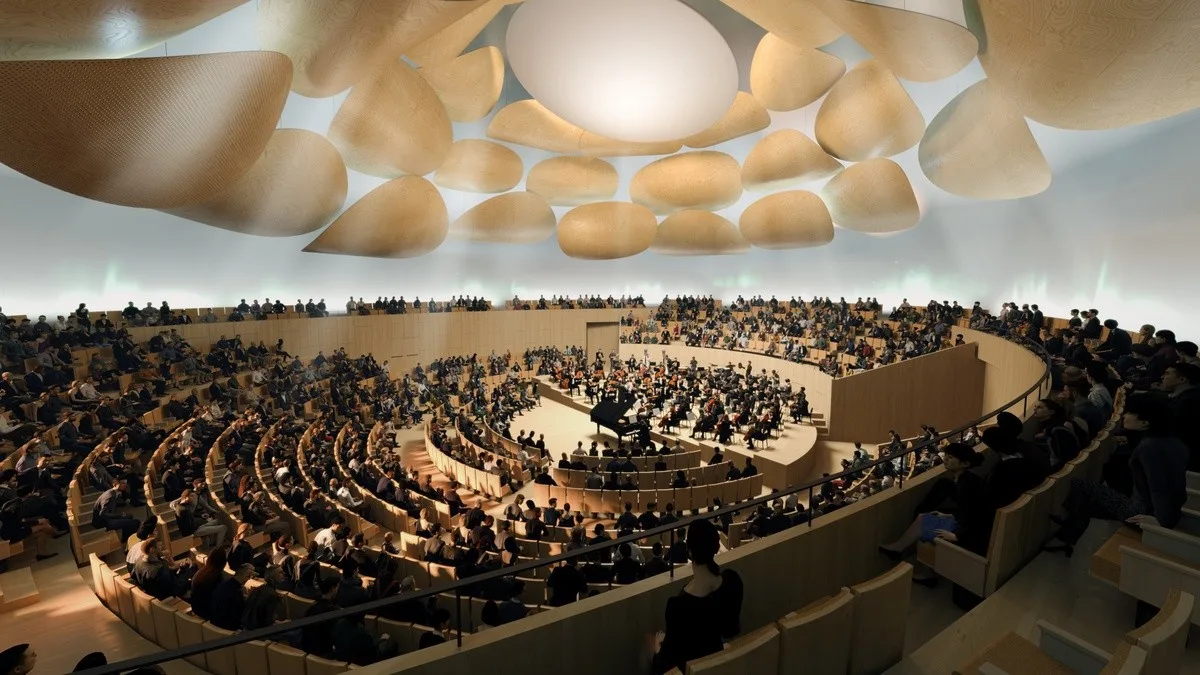
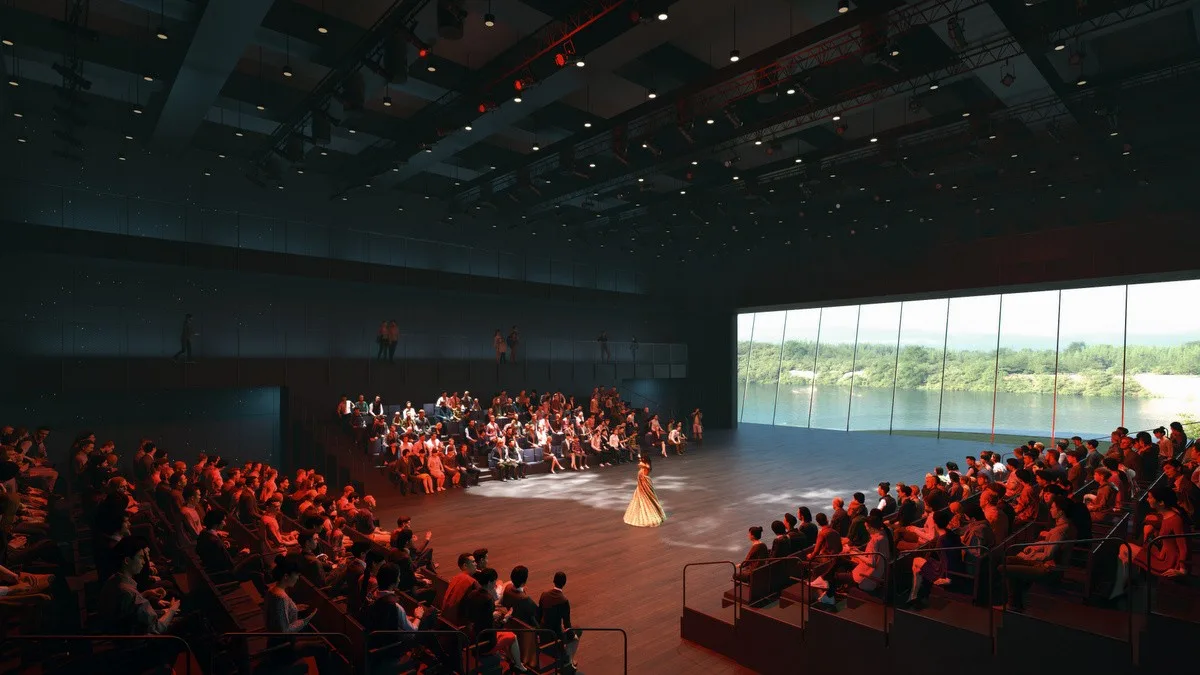
The facility includes a 1,600-seat grand theater, a 1,200-seat concert hall, a 400-seat black box theater, as well as two outdoor theaters—a rooftop theater and a water theater. Beyond performance spaces, the building hosts various functions such as educational programs, activities, rehearsals, exhibitions, cafés, restaurants, and scenic viewing areas. This design transforms the Grand Theater into a vibrant, open cultural hub, active around the clock.
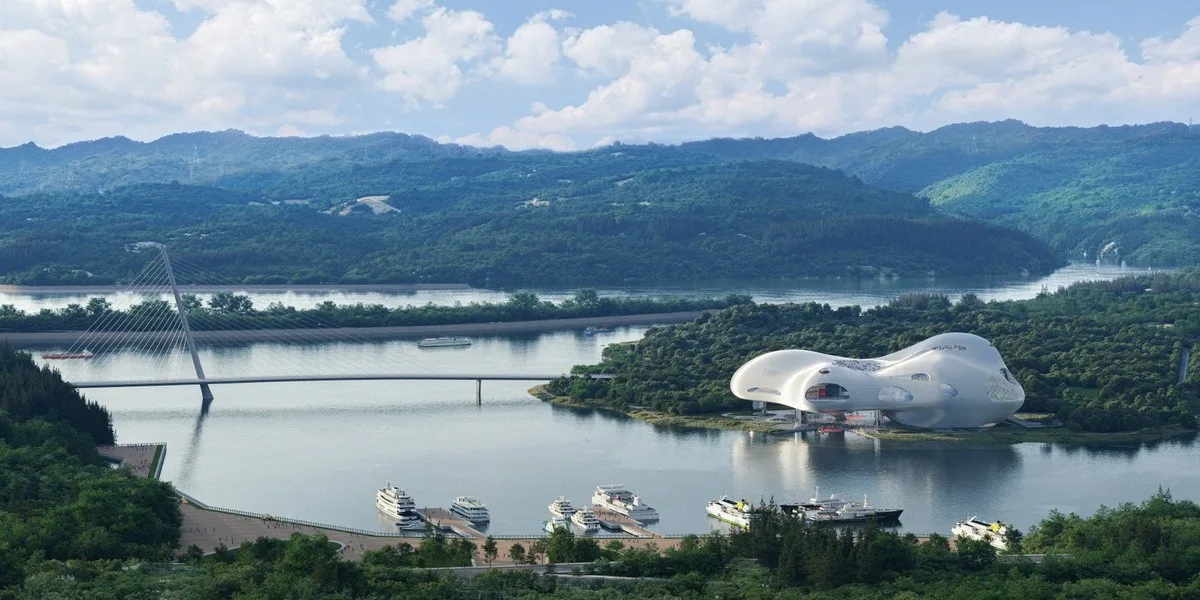
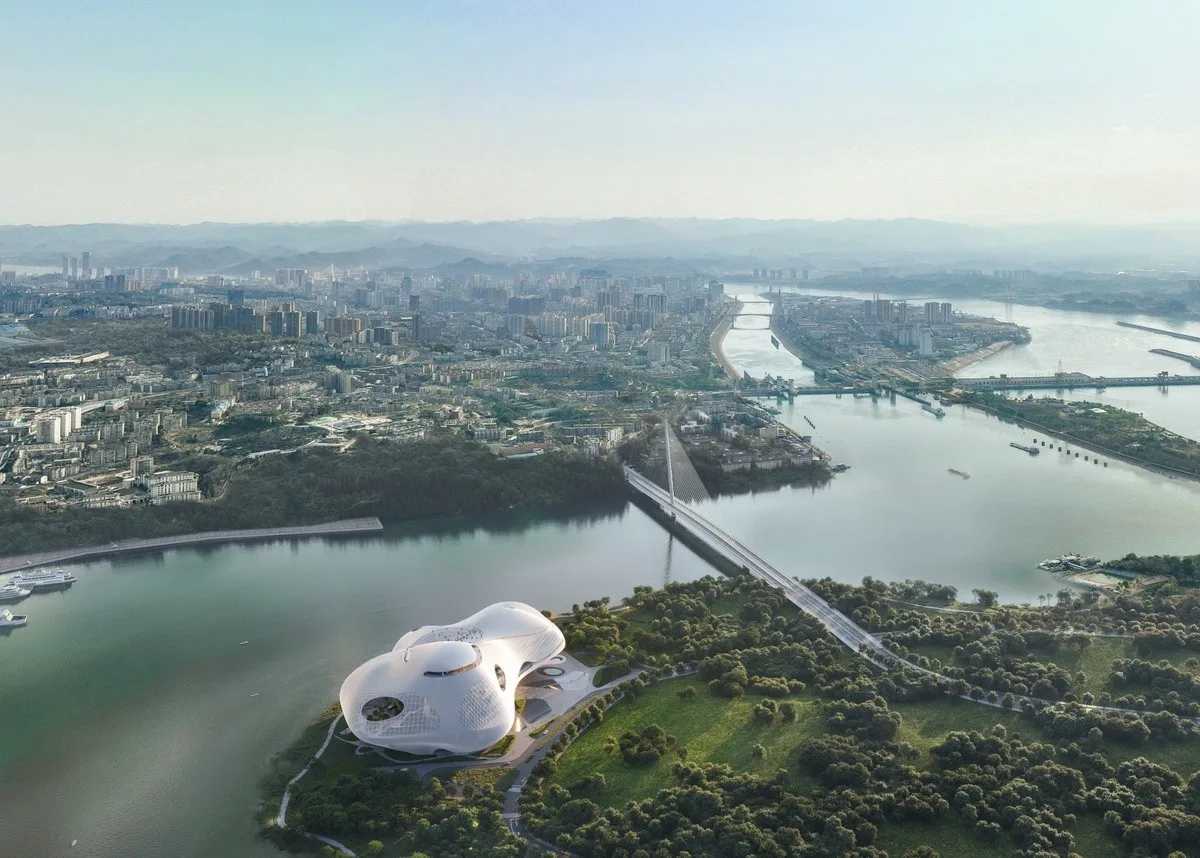
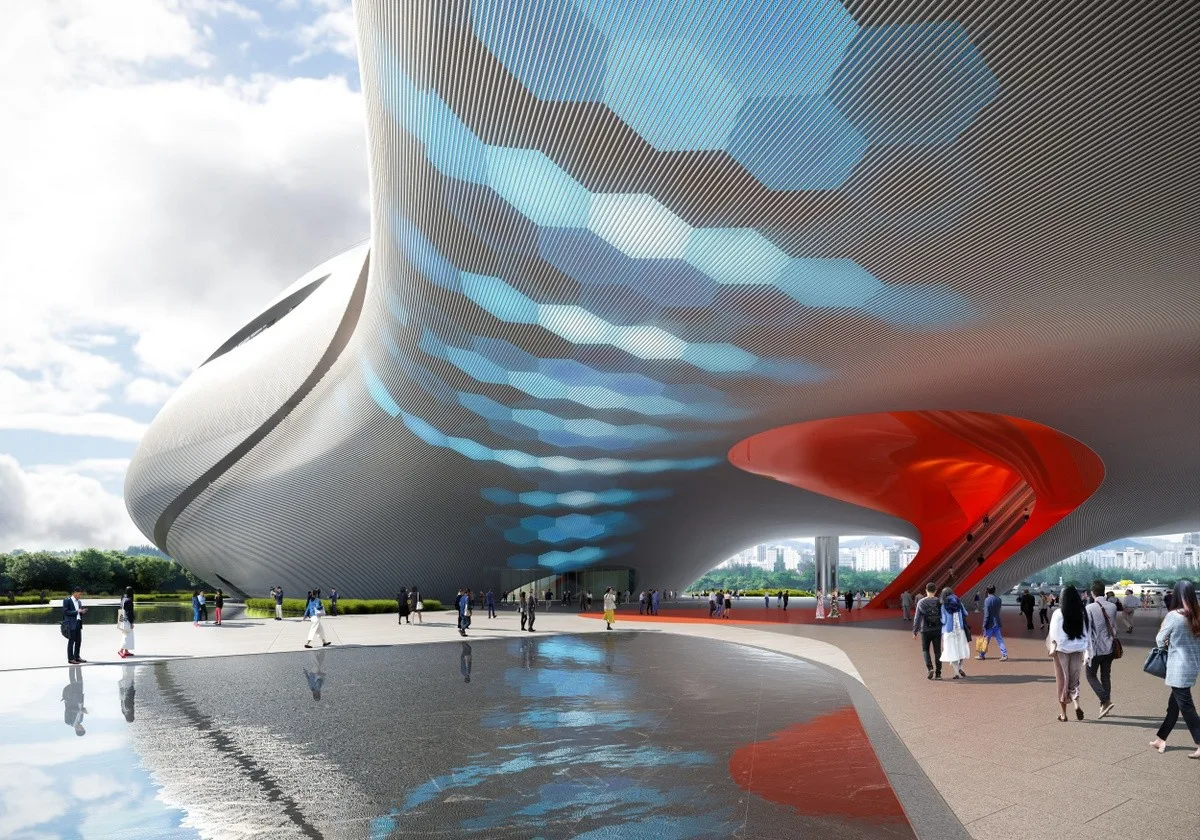
The building’s form evokes the fluidity of water waves, the majesty of mountains, and the lightness of clouds—transcending fixed shapes. It embodies movement and transformation, revealing different perspectives from varying viewpoints. Architecture here mimics the dynamic nature of flowing water.
Li Hu, OPEN’s founding partner, explains, “The design inspiration for the Grand Theater flows from Yichang’s river waters. Although seemingly soft, water holds immense power and is the soul of Yichang, a unique city where mountains and water intertwine.” This architectural flow is generated through the harmonious interaction of internal functions, external environmental factors, and public activity spaces that connect interior and exterior areas, creating a balanced and inclusive environment.
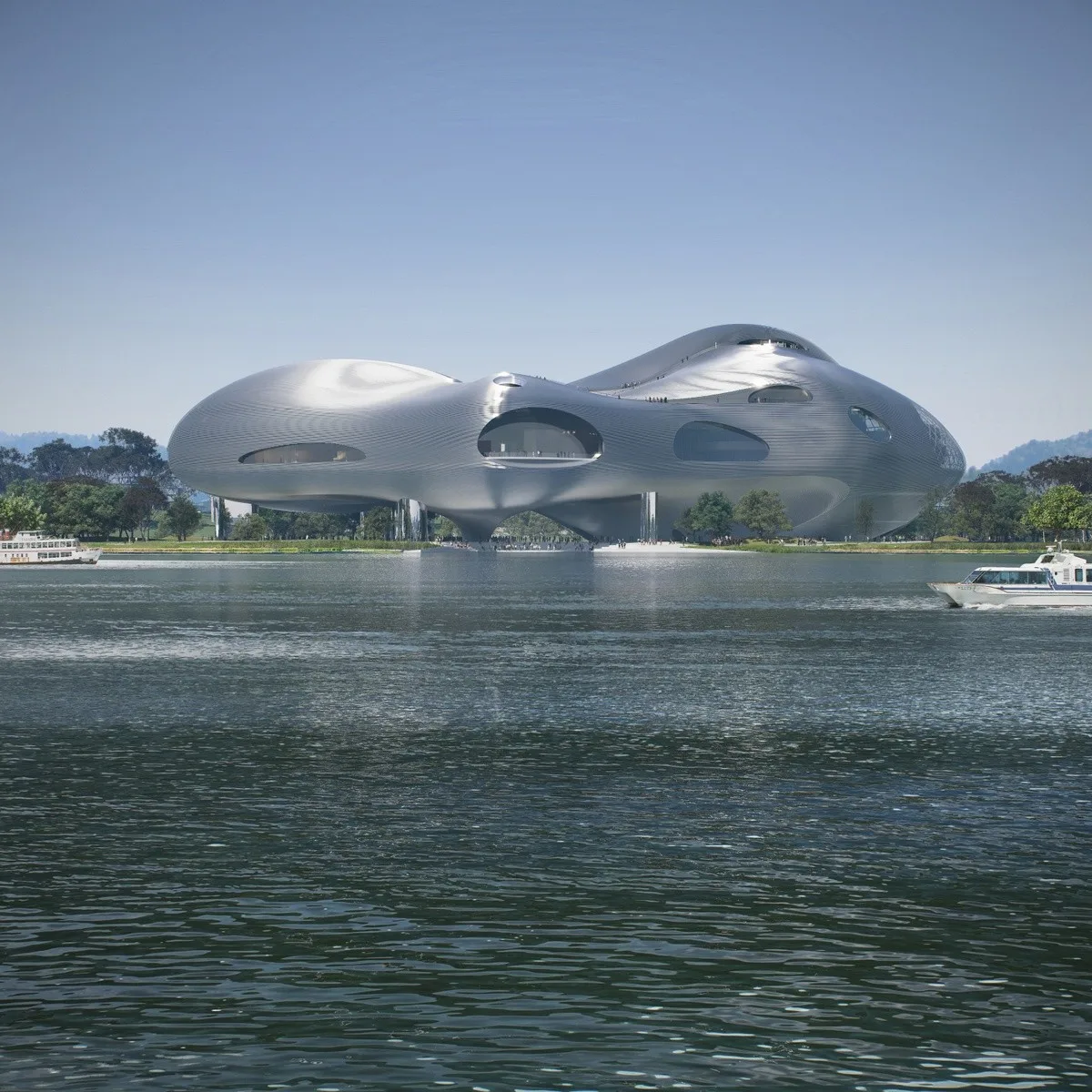
Responding to the broader context of Yangtze River conservation and the global ecological crisis, the Grand Theater’s construction is especially sensitive to its natural surroundings. Huang Wenjing, OPEN’s founding partner, states, “This project is a rare opportunity to restore a site previously damaged by human activity, reestablishing a healthy and sustainable balance between nature and architecture.”
To address the high groundwater levels along the river, the building is partially elevated on a floating structure, lifting the main functional areas above the ground. This design facilitates airflow from the mountains to the water, minimizes the construction footprint and soil excavation, and leaves the ground free for local vegetation and public spaces featuring permeable paving. The landscape acts as a vital link, seamlessly connecting natural elements within the peninsula to green corridors along the riverbank in a flowing, organic manner.
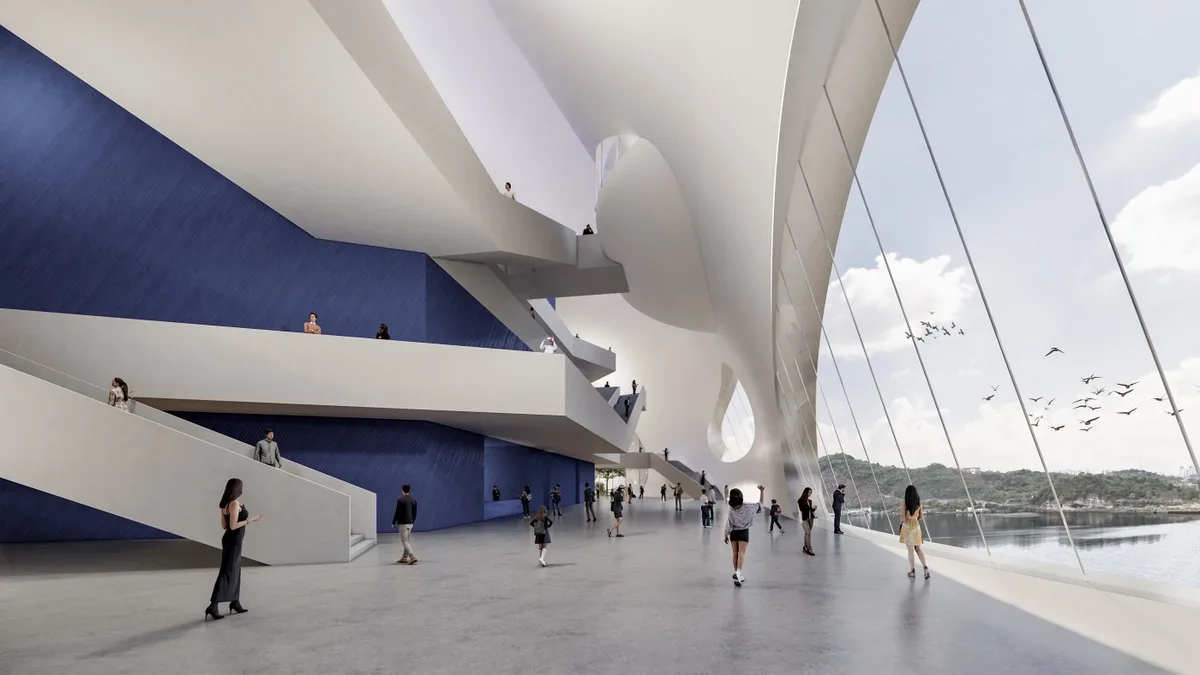
Combining multiple passive and active design strategies, the building becomes an integral part of the peninsula’s sustainable ecological system. The floating Grand Theater offers natural ventilation and daylight for artists and staff, greatly enhancing their work environment and fostering interaction between performers and the public.
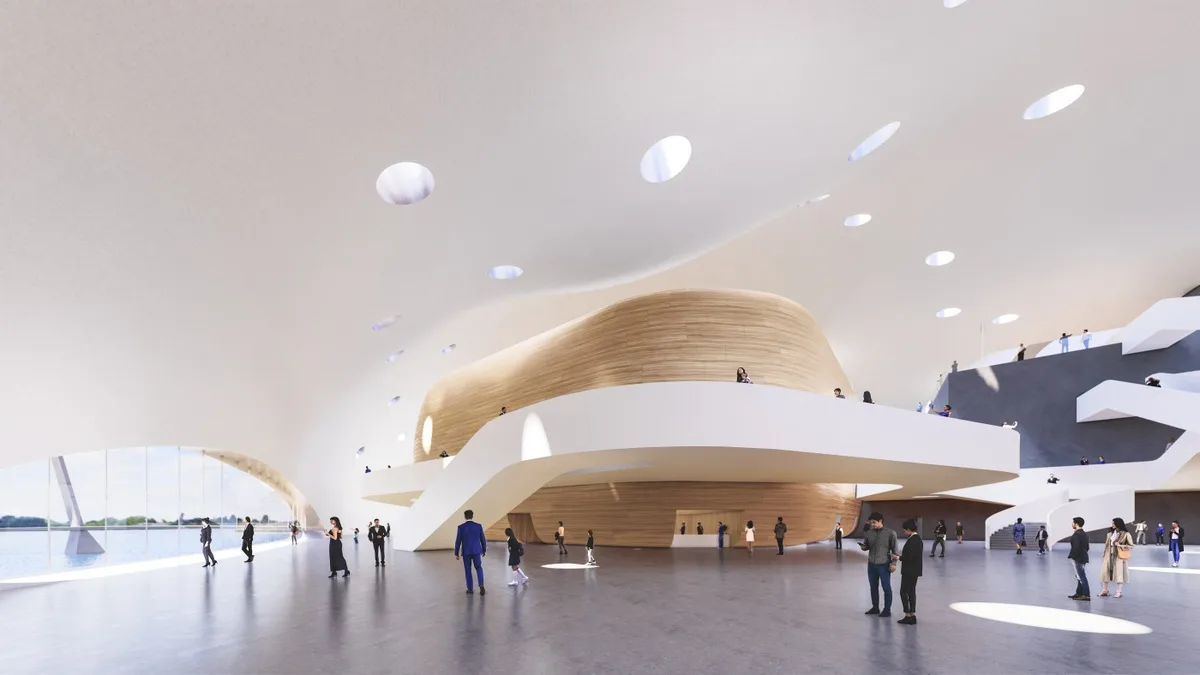
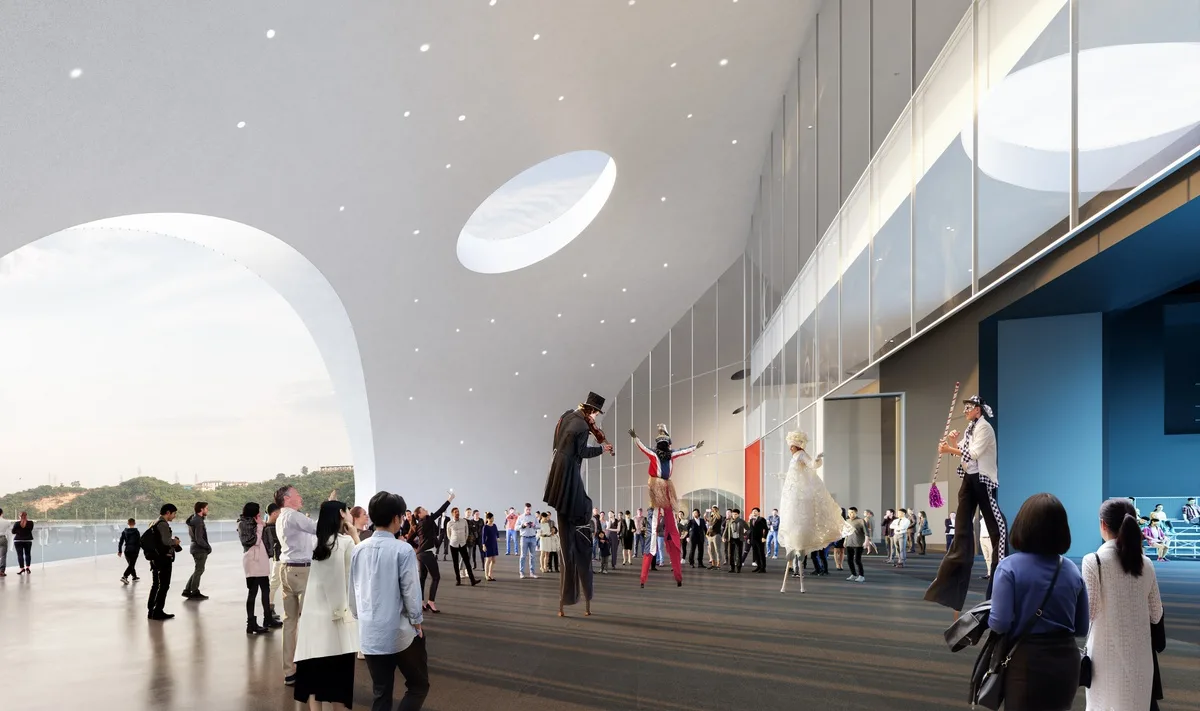
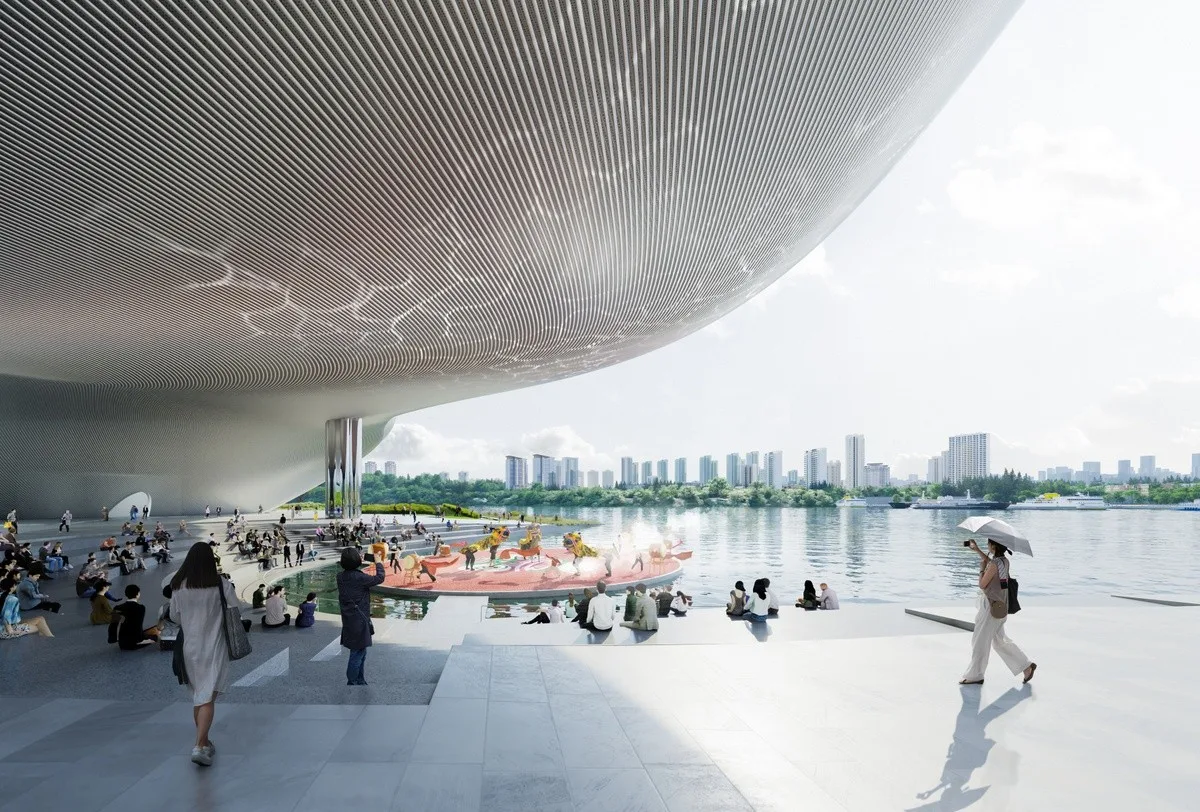
The building’s organic shape features carefully arranged openings of varying forms, creating a rich visual language. Its exterior is clad in matte anodized aluminum tubes, whose subtle metallic sheen reflects the sky’s brightness, resembling flowing liquid metal.
The side facing the peninsula includes a double-layered façade: an inner layer with simple yet complex geometric shapes tailored to functional needs, and an outer aluminum tube skin that seamlessly integrates with the overall structure. The varying distance between these layers forms a dynamic grey space that moderates the building’s microclimate, hosting a large semi-outdoor garden and multiple stacked terrace gardens.
On the river-facing side, the façade introduces natural ventilation into the grand theater’s entrance hall and circulation areas. This “breathing” design leverages the site’s unique conditions. A winding public walkway links the ground-level water theater, the rooftop aerial theater, and the highest observation deck overlooking Xiling Gorge. These roaming trails and outdoor public spaces are open to all, offering a glimpse of futuristic architecture alongside breathtaking bay views.
The project owner emphasizes inclusivity: “The future Grand Theater welcomes everyone, including scavengers.” Under OPEN’s leadership, the design process exemplifies precise collaboration, involving a team of like-minded consultants from Europe, the United States, and Asia. Experts in theater architecture, acoustics, structure, façade design, sustainability, and electromechanical systems work together to push the boundaries of innovation. Each team applies their expertise to create a tightly integrated, dynamic, and organic whole.
Founded by Li Hu and Huang Wenjing, OPEN Architecture has contributed to numerous urban and landscape projects across China. Among their notable works is the Gehua Camp Experience Center, a youth cultural hub located in Beidaihe, a coastal city rich in historical and cultural heritage.
In 2022, OPEN unveiled the design for the Suzhou Shanfeng Academy, a new campus center in Suzhou city housing a K-12 international school. They also designed the Yantai Time Tower in the coastal city of Yantai, a landmark building aimed at reconnecting visitors with nature.












Must log in before commenting!
Sign Up