
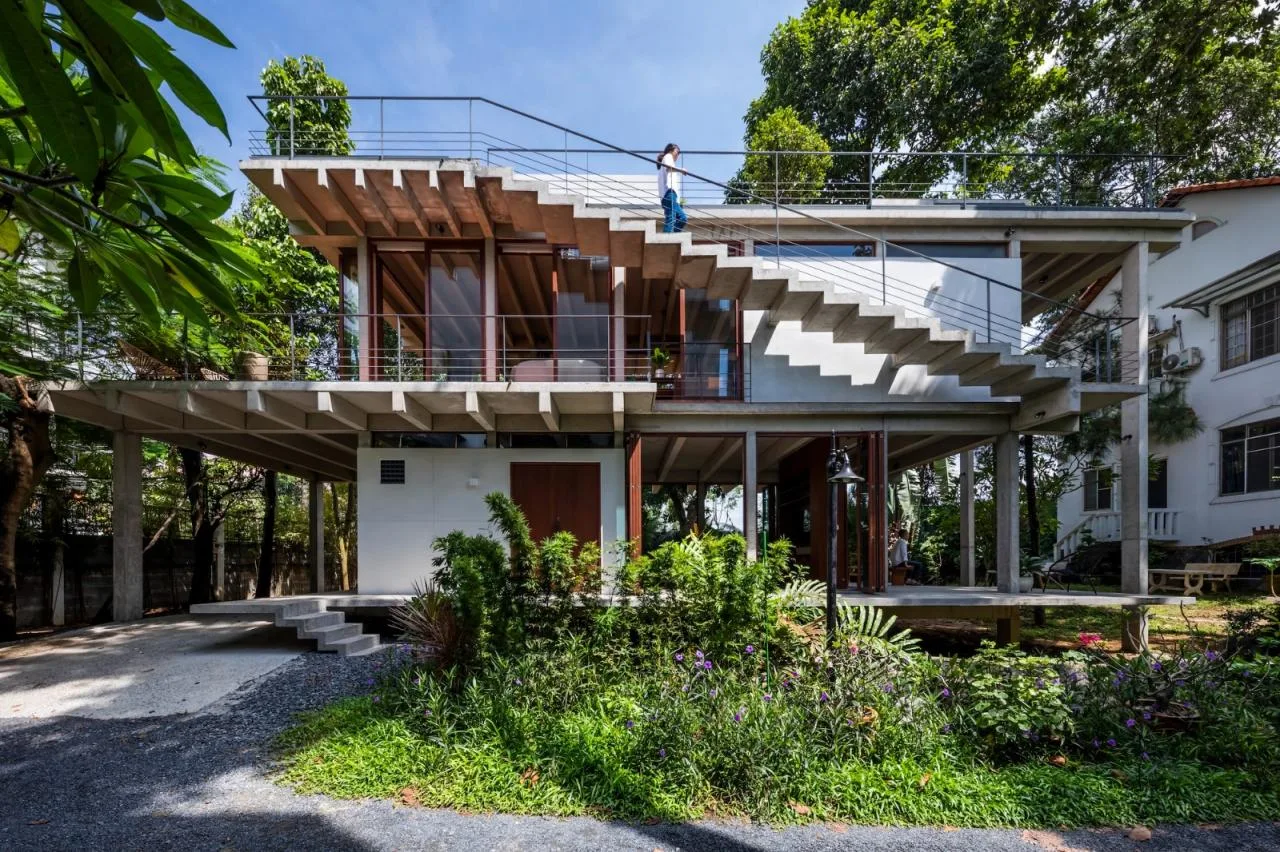
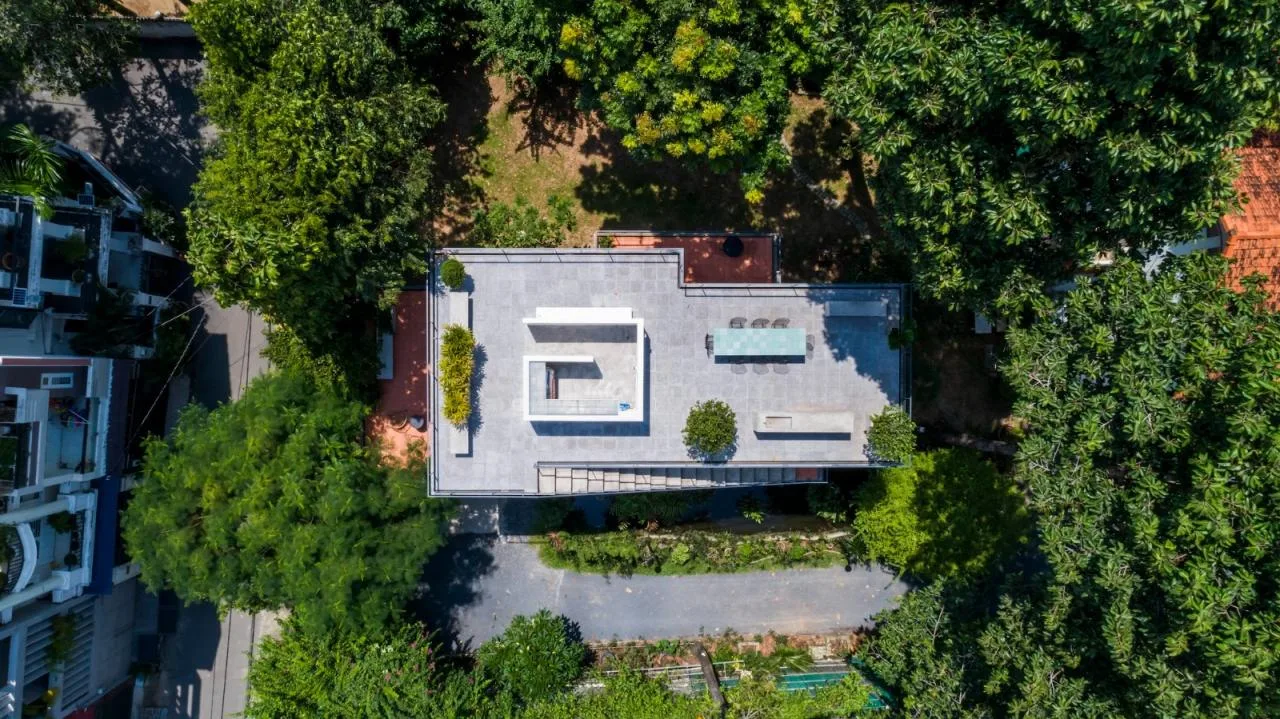
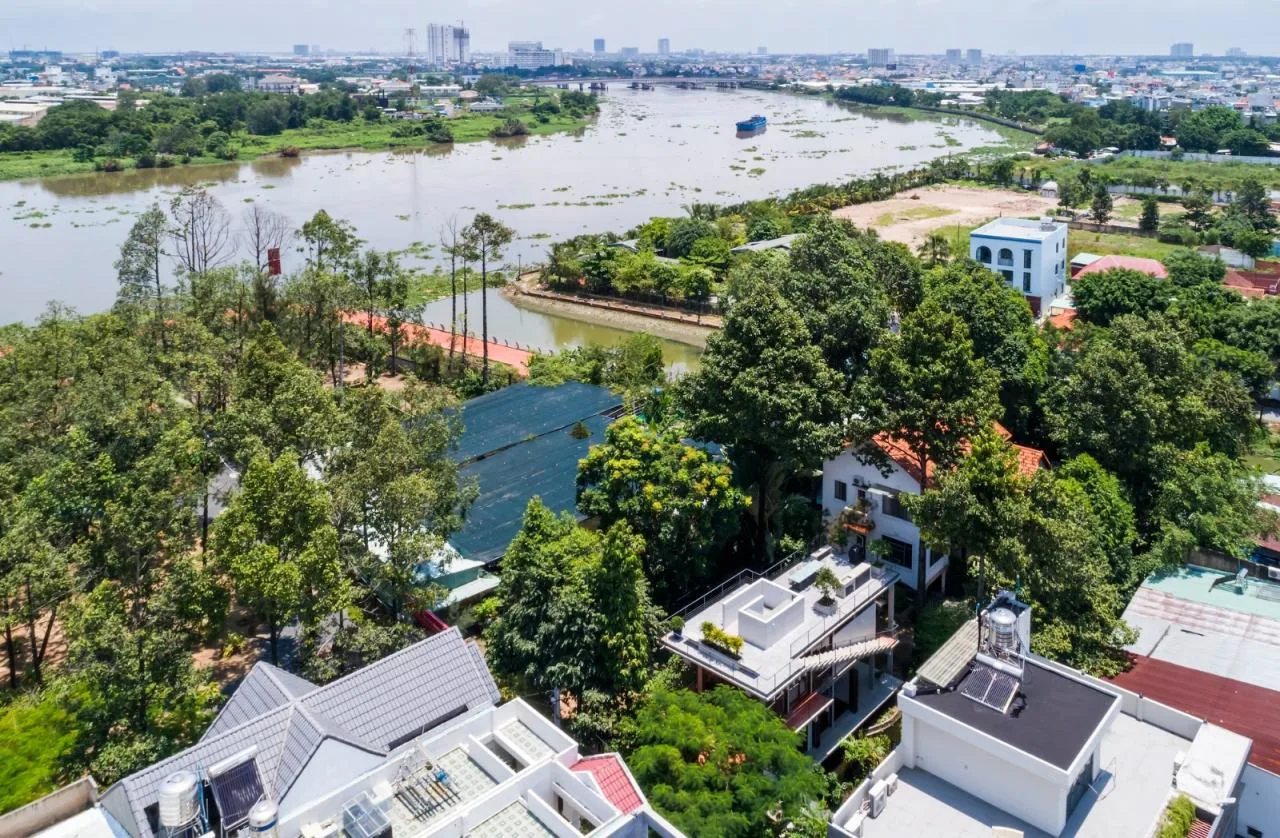
This residential building, designed for a young Vietnamese couple, is located in the suburb of Thu Duc, Ho Chi Minh City. The design emphasizes outdoor living, with almost the entire space conceived as “blank space.” The site features a garden lush with tropical vegetation, although it is frequently flooded by nearby rivers.
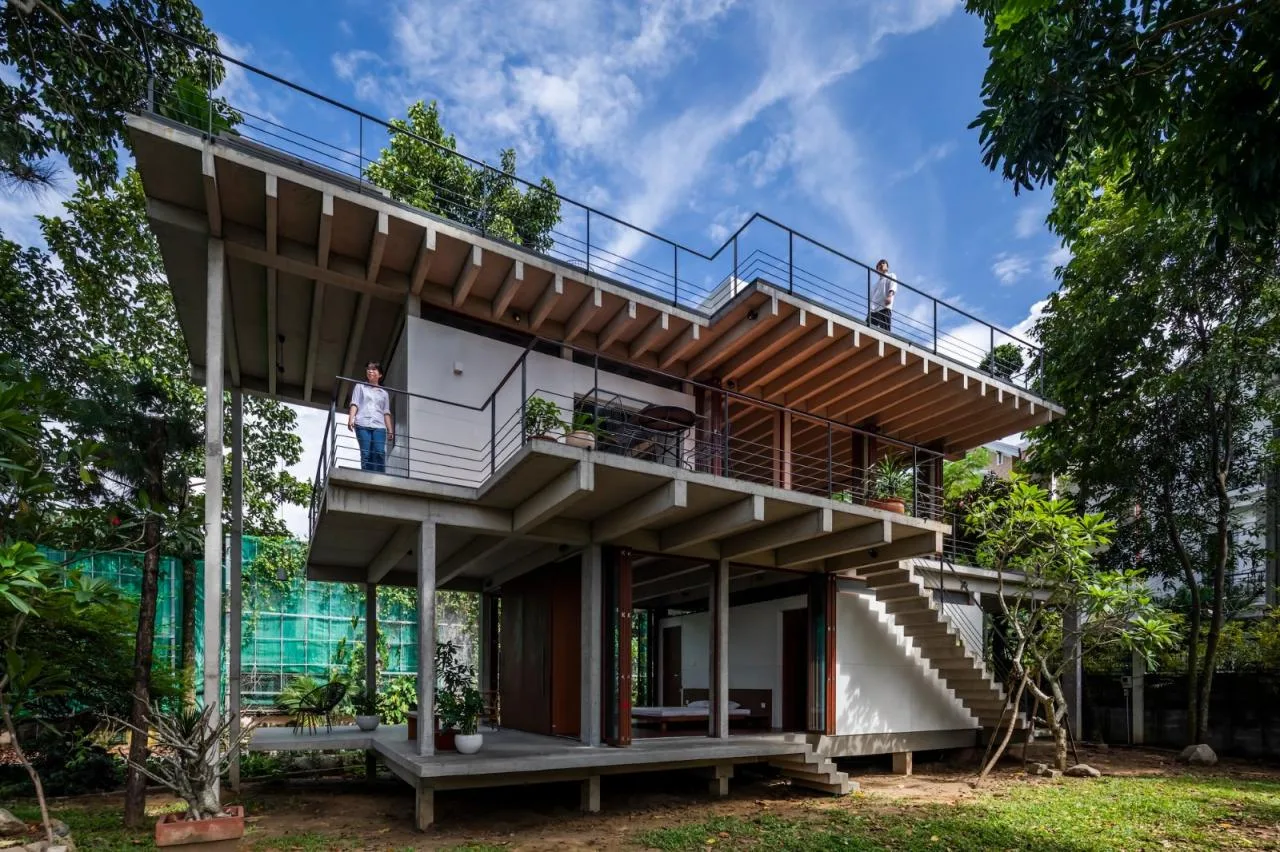
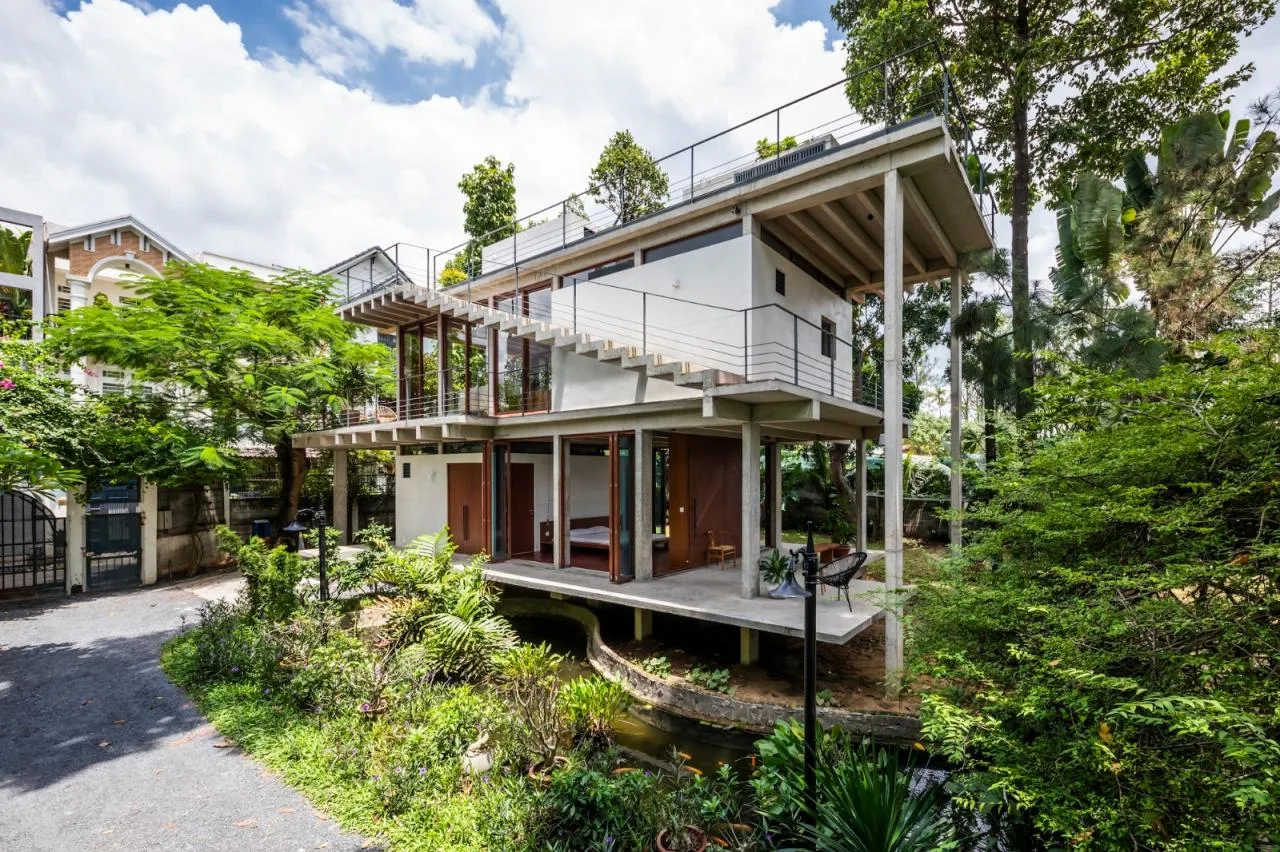
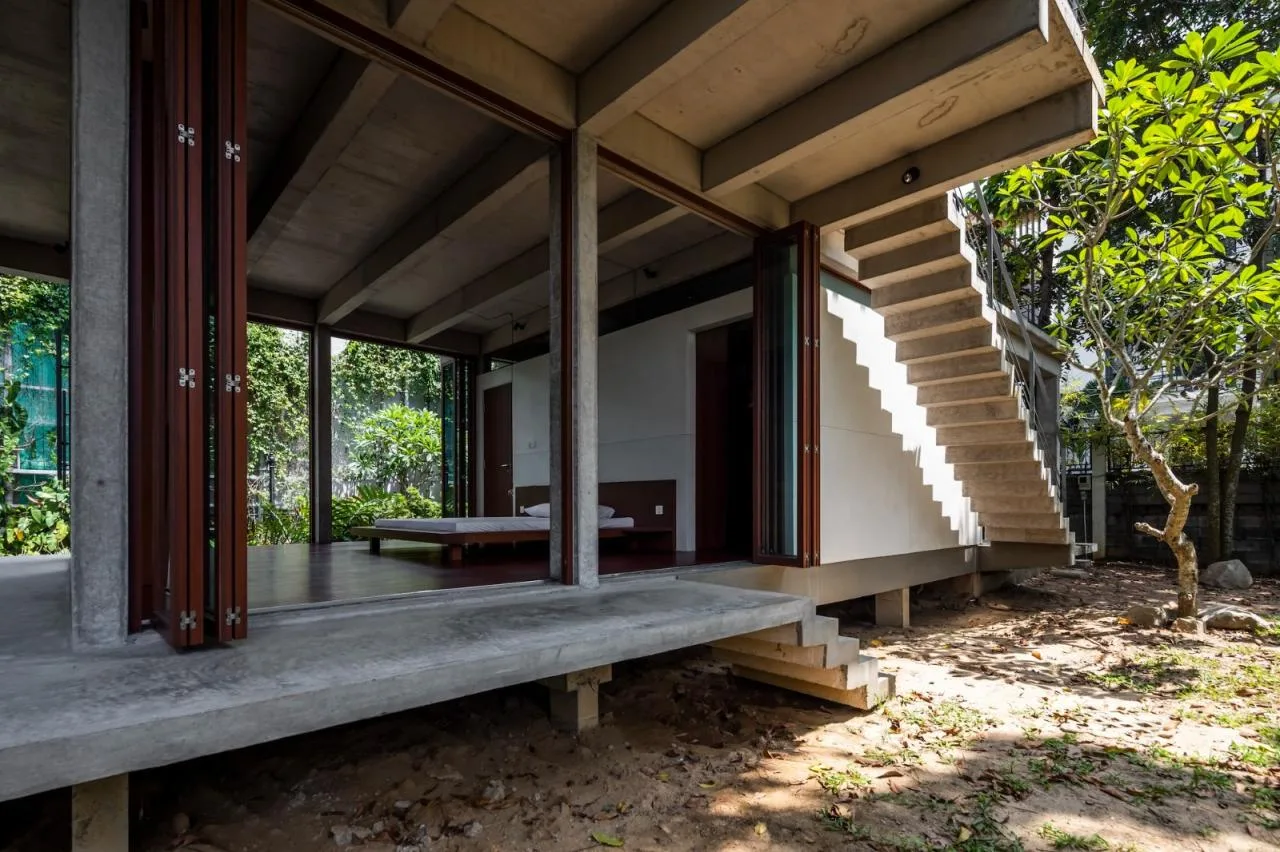
To address flooding, the first floor has been elevated over 80 centimeters above ground level, meeting the owners’ request to raise it to 1 meter above street level. The residence, surrounded by lush gardens, faces the river, allowing the owners to enjoy a close connection with nature.
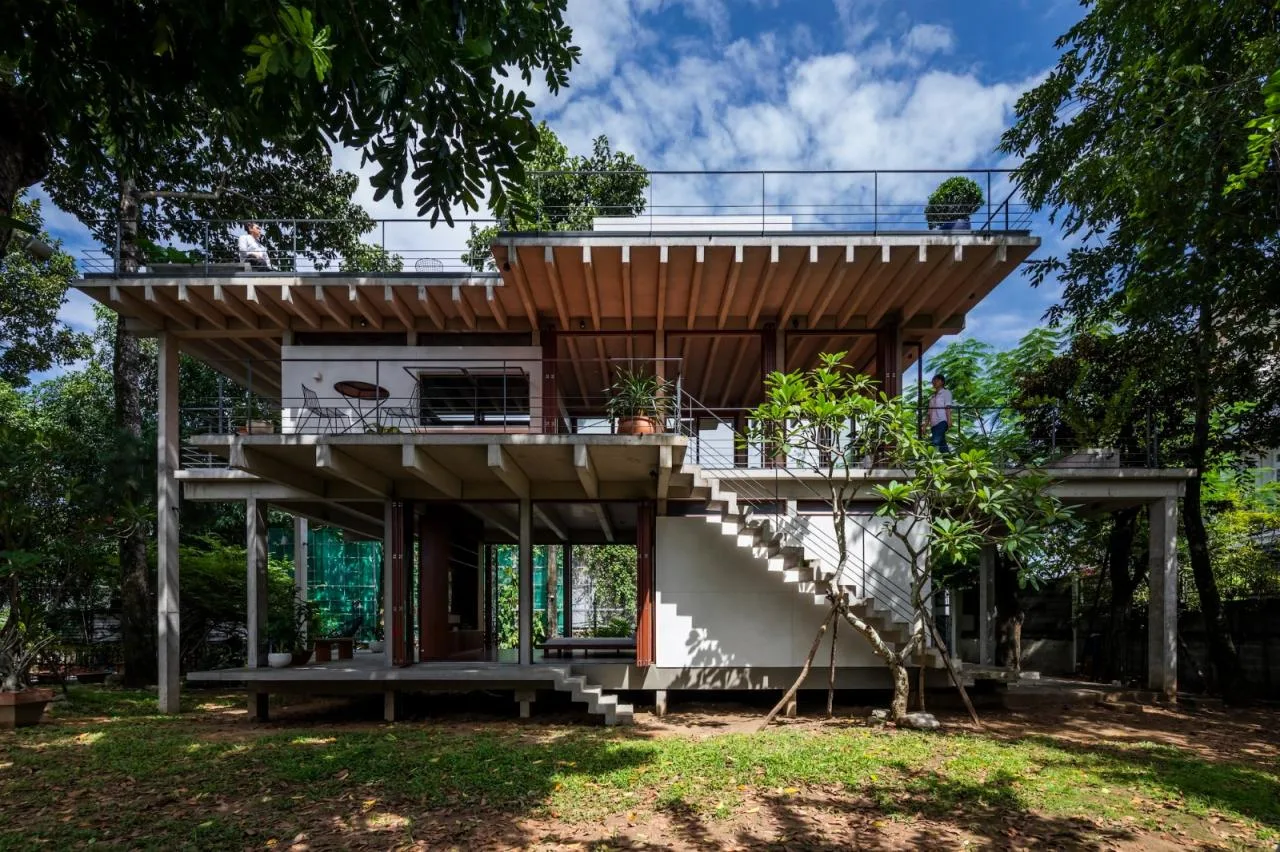
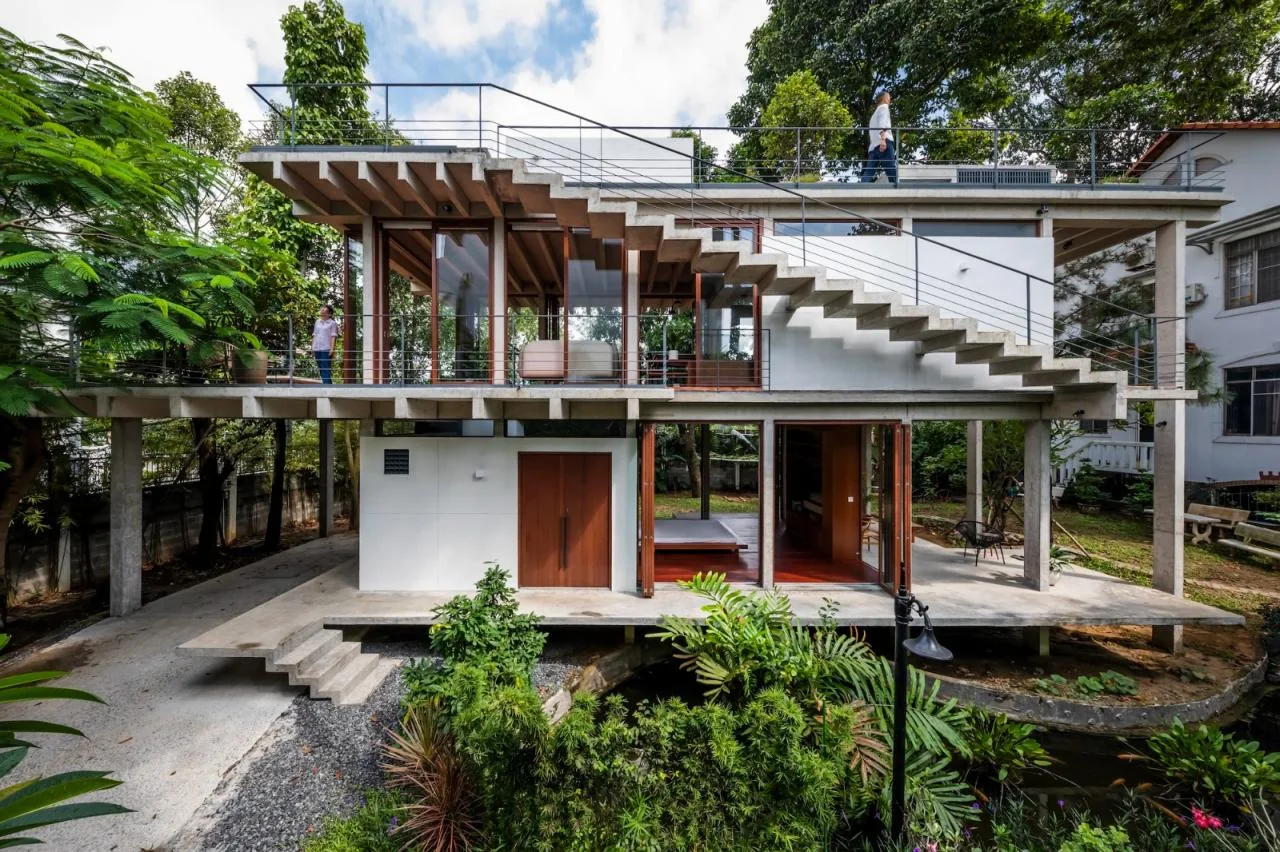
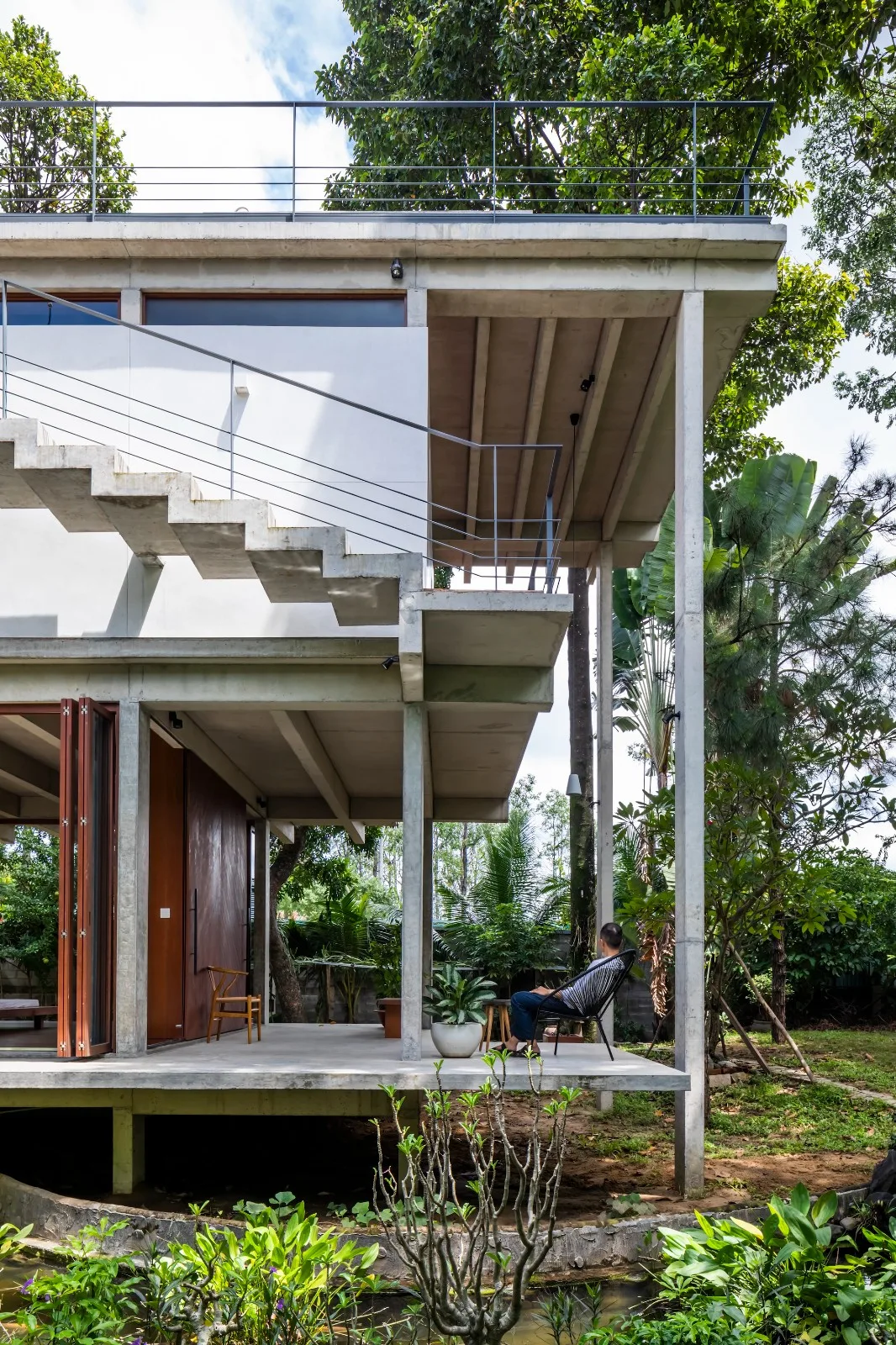
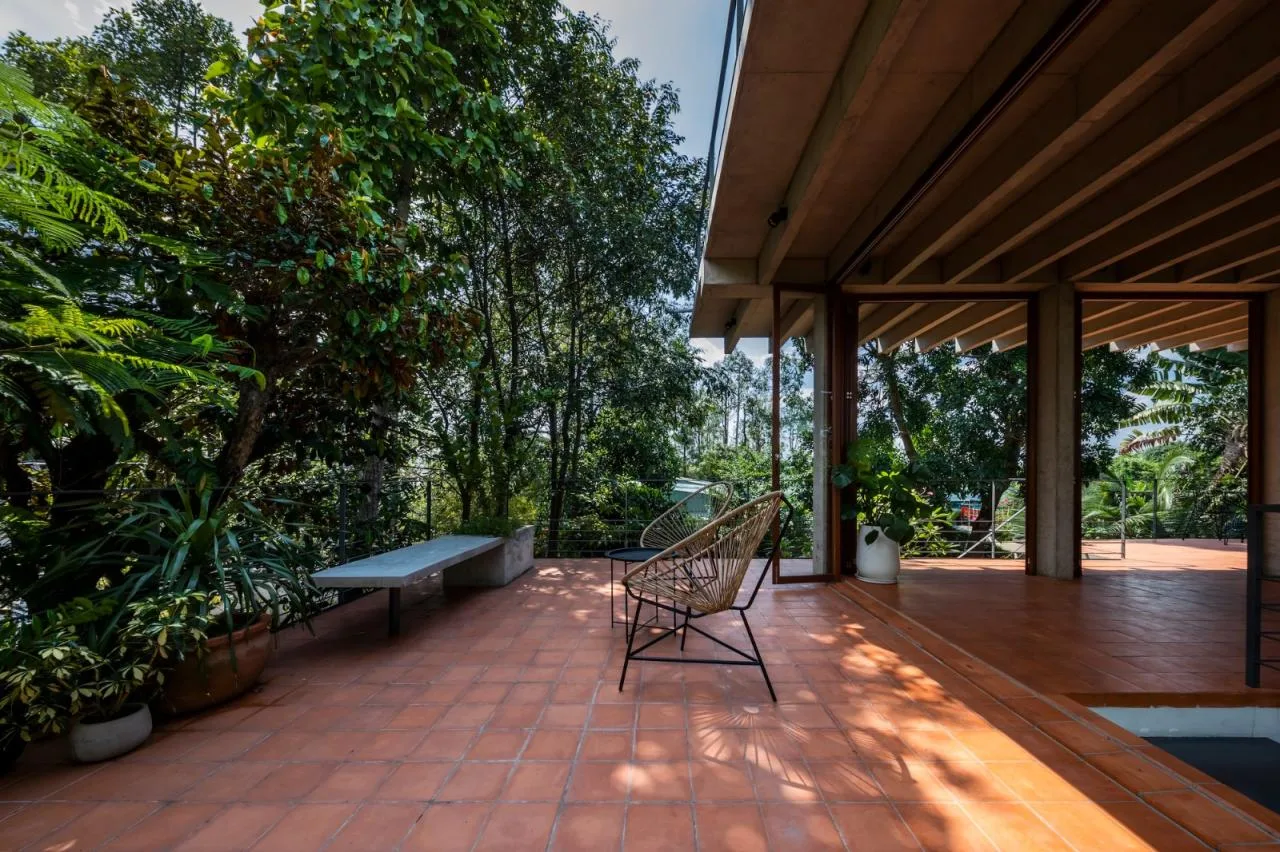
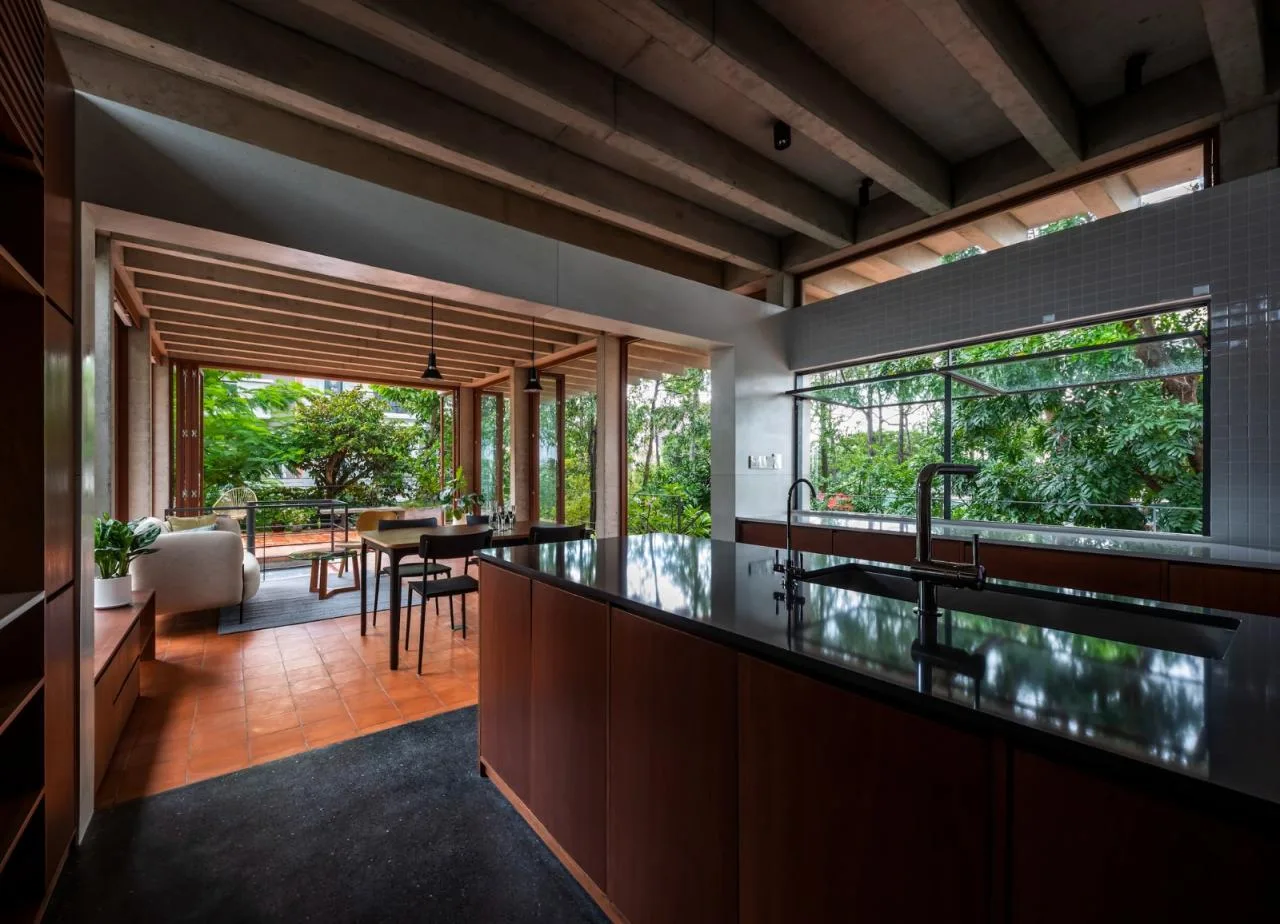
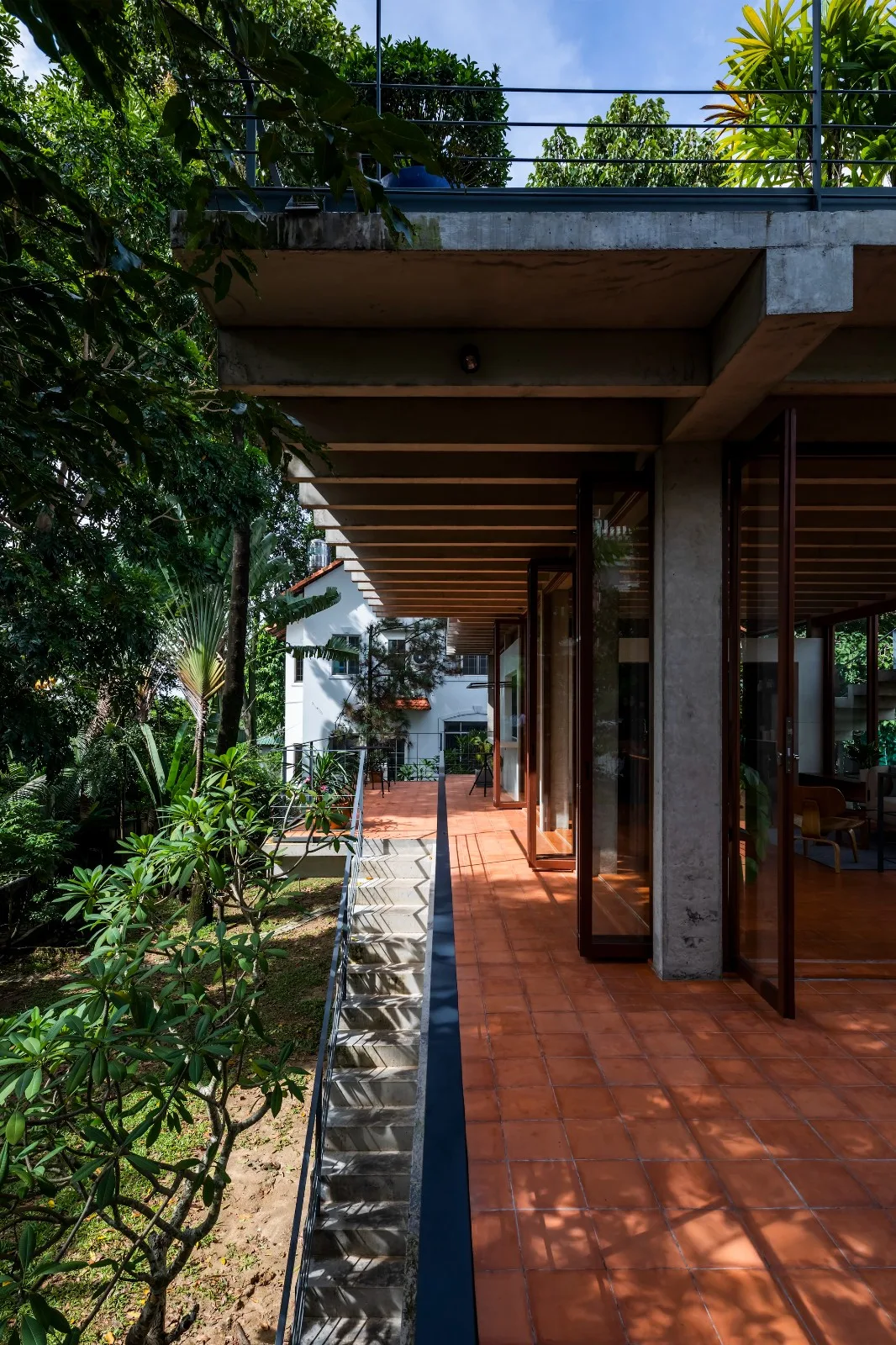
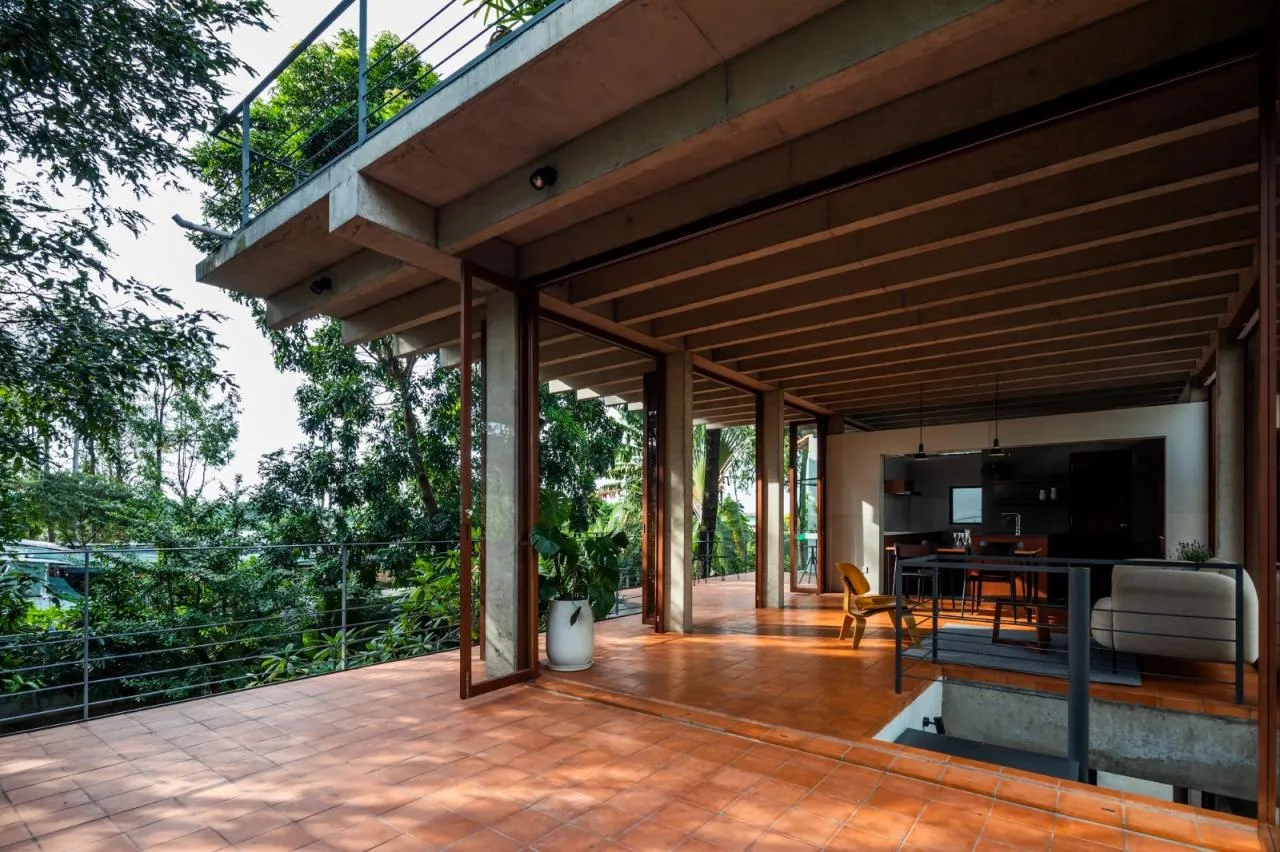
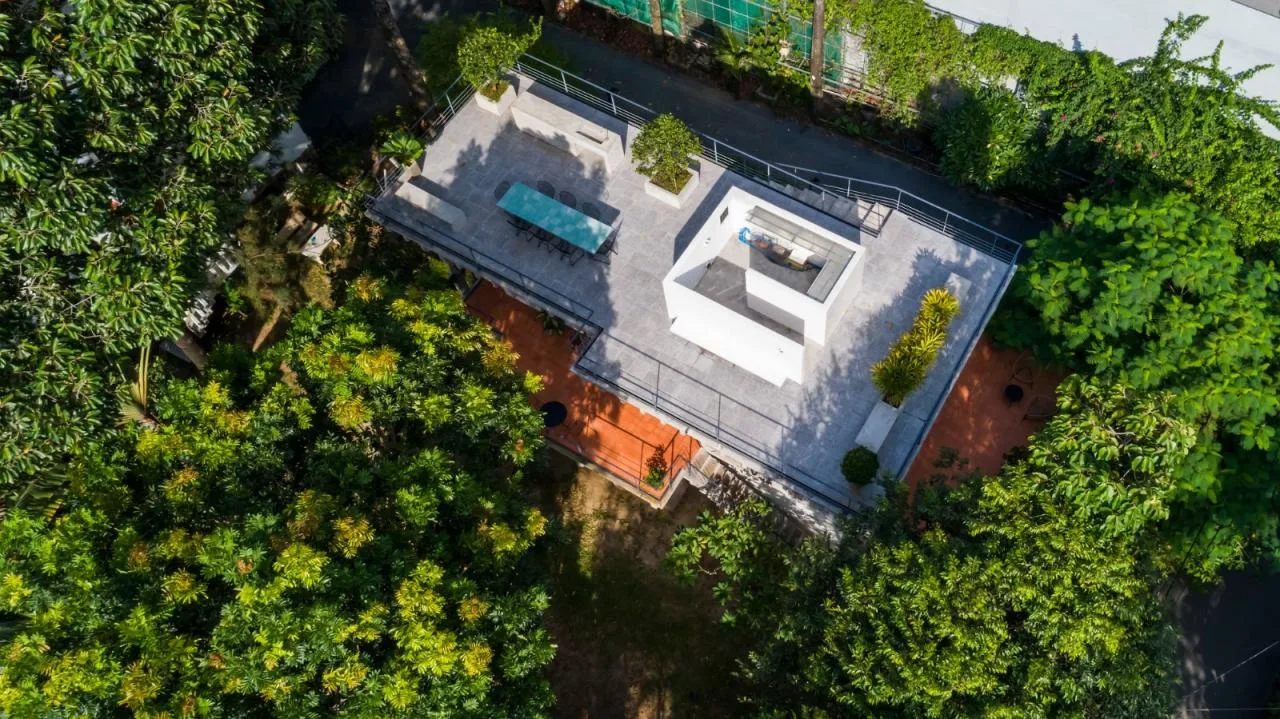
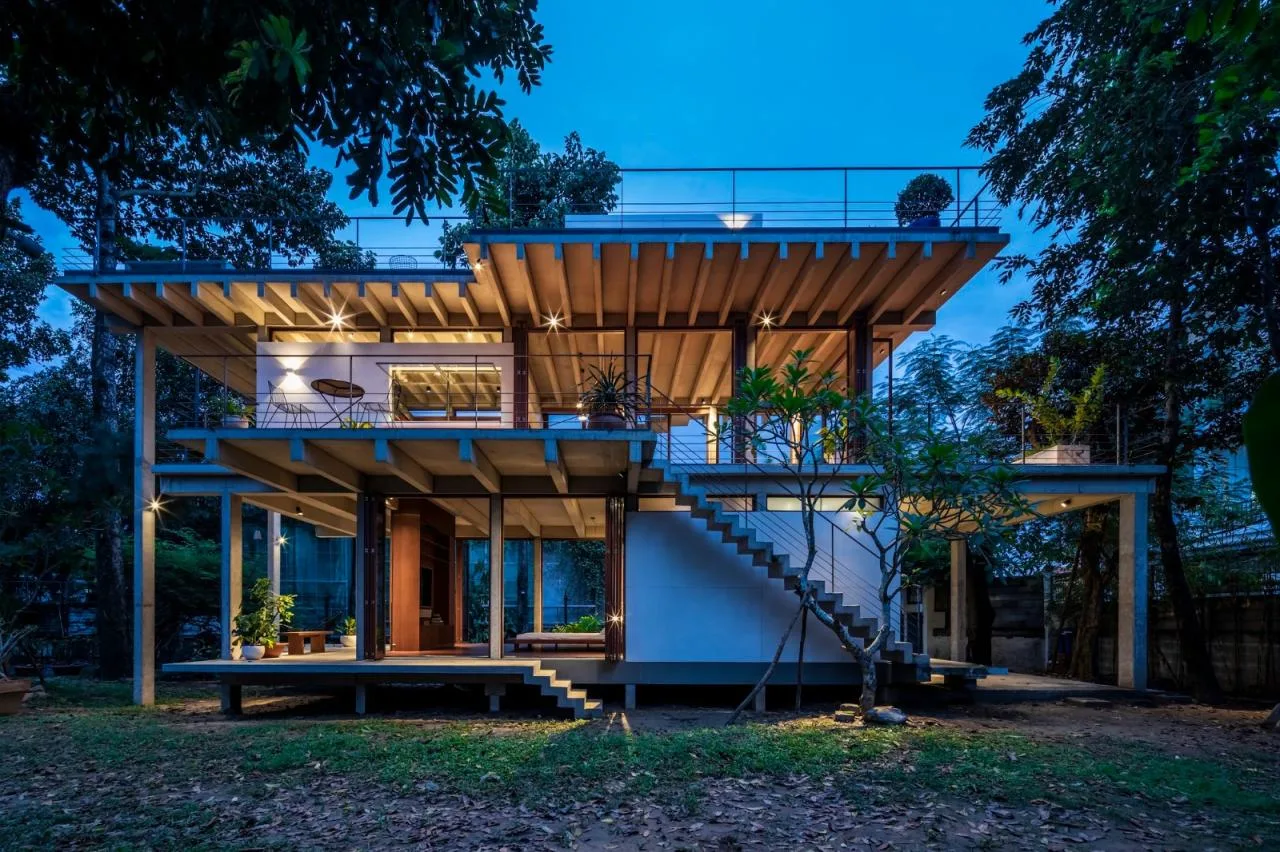
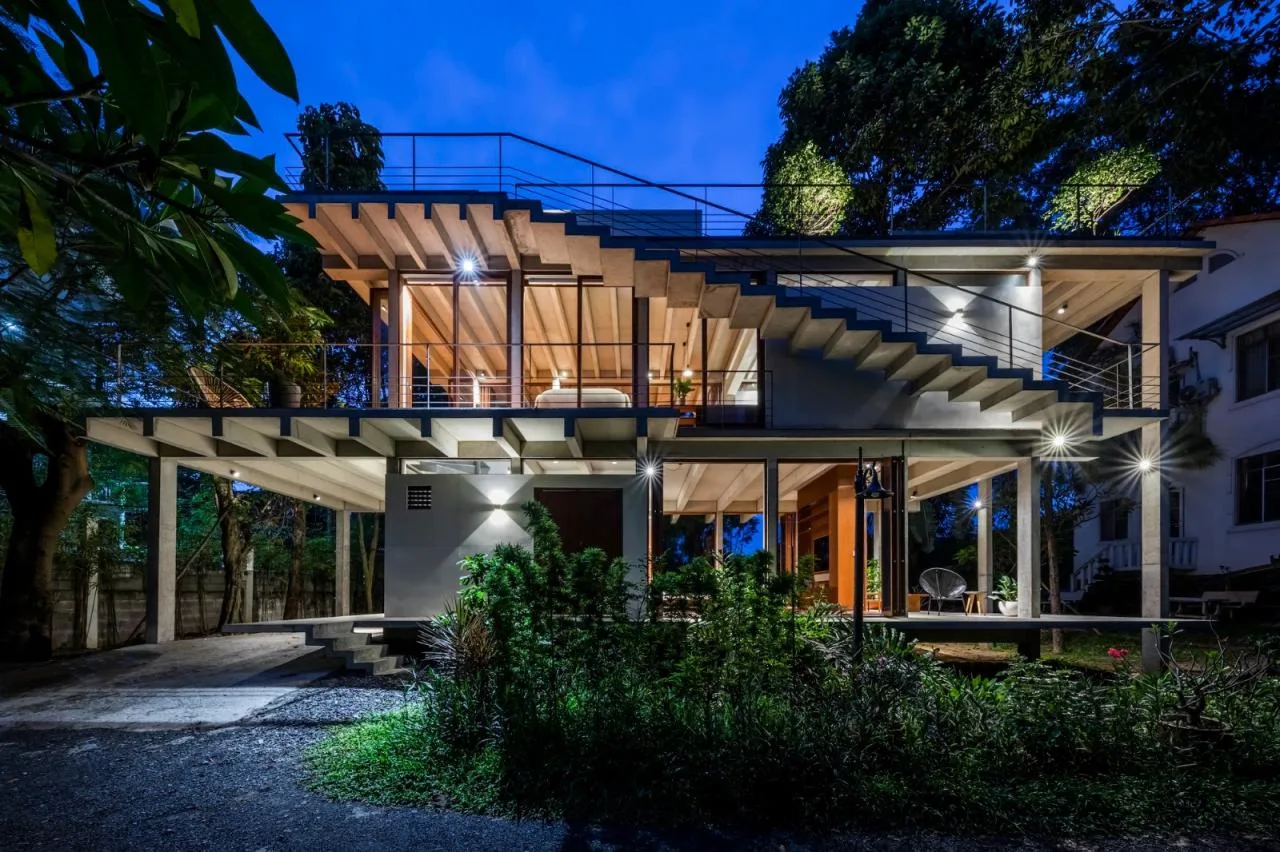
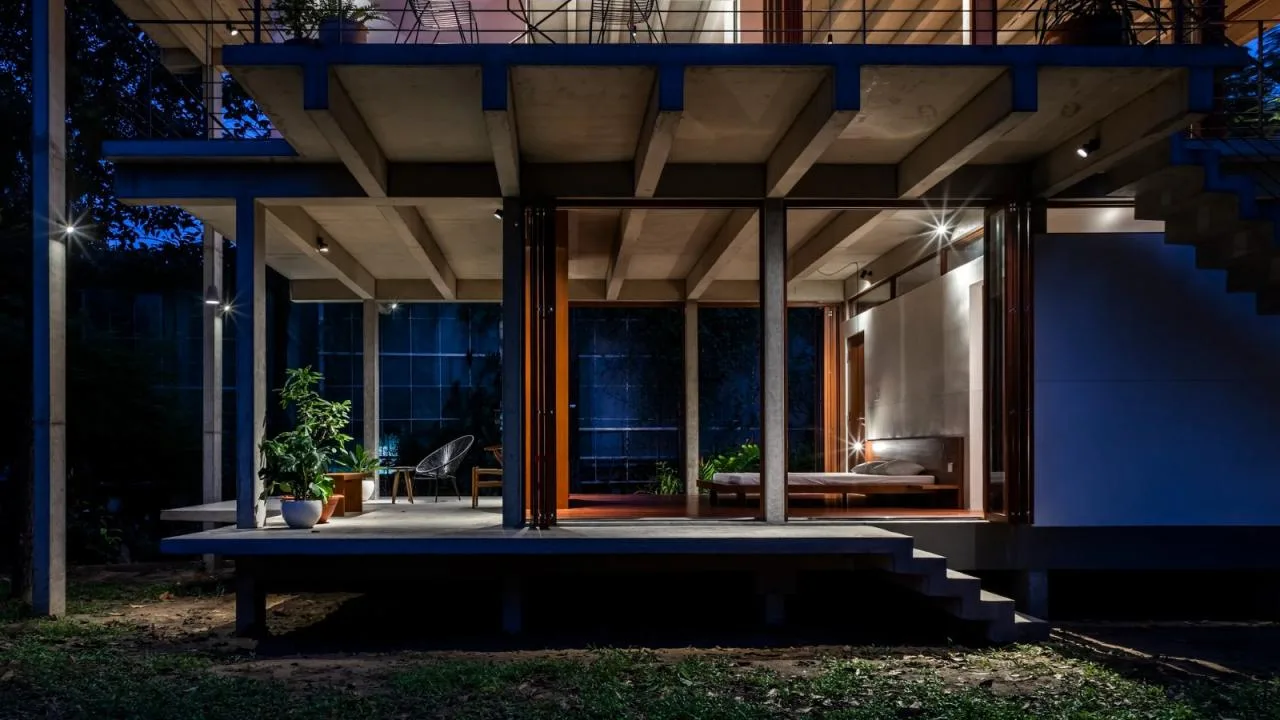
The unique site reflects a geological characteristic of Vietnam’s underwater landscape. The house features three floating floor slabs above the ground. Each floor slab has a distinct shape, creating a diverse interplay between indoor and outdoor spaces. The slabs extend towards the garden, creating terraces, overhangs, eaves, and roof coverings for outdoor stairs. These three slabs are interconnected with all outdoor areas, including the roof, via independent outdoor staircases. This design ensures that movement throughout the house occurs primarily through outdoor spaces without passing through indoor areas.
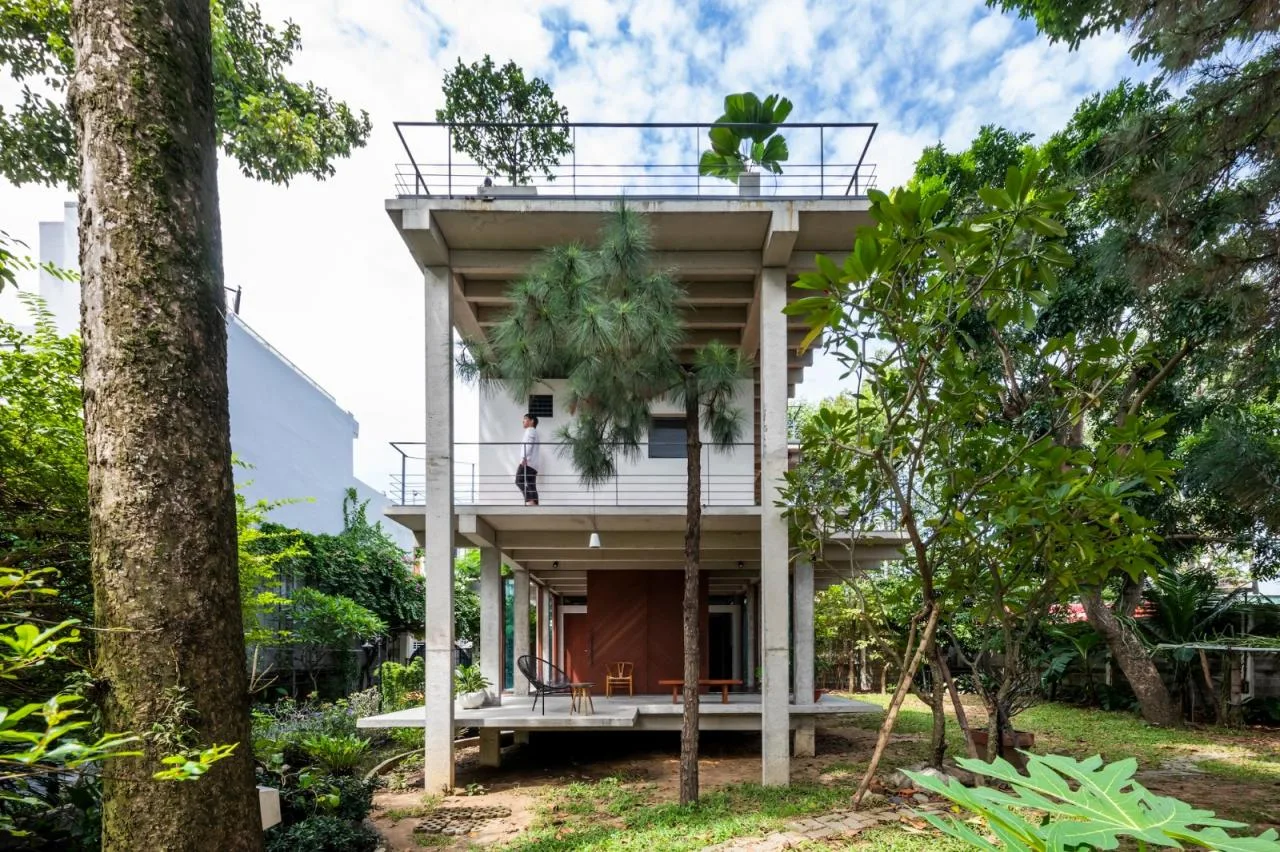
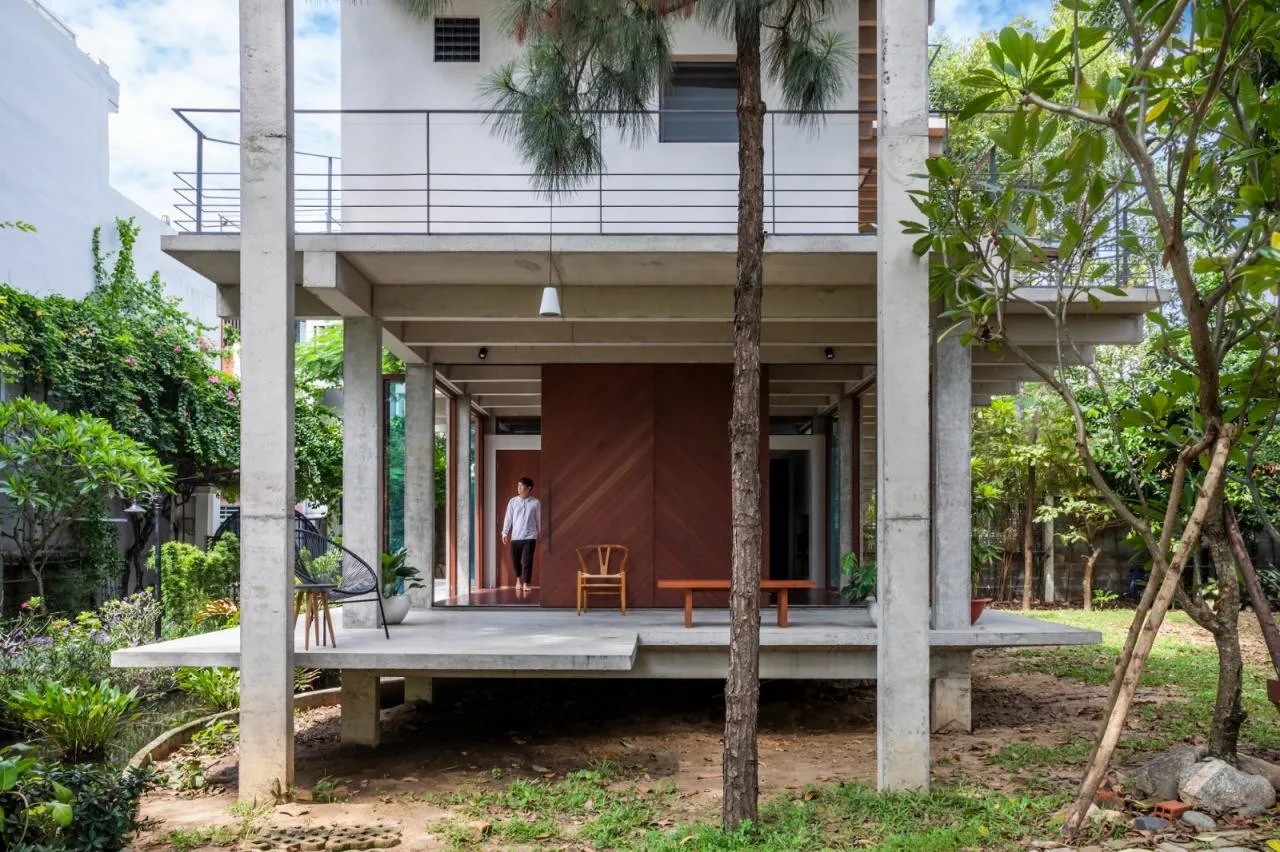
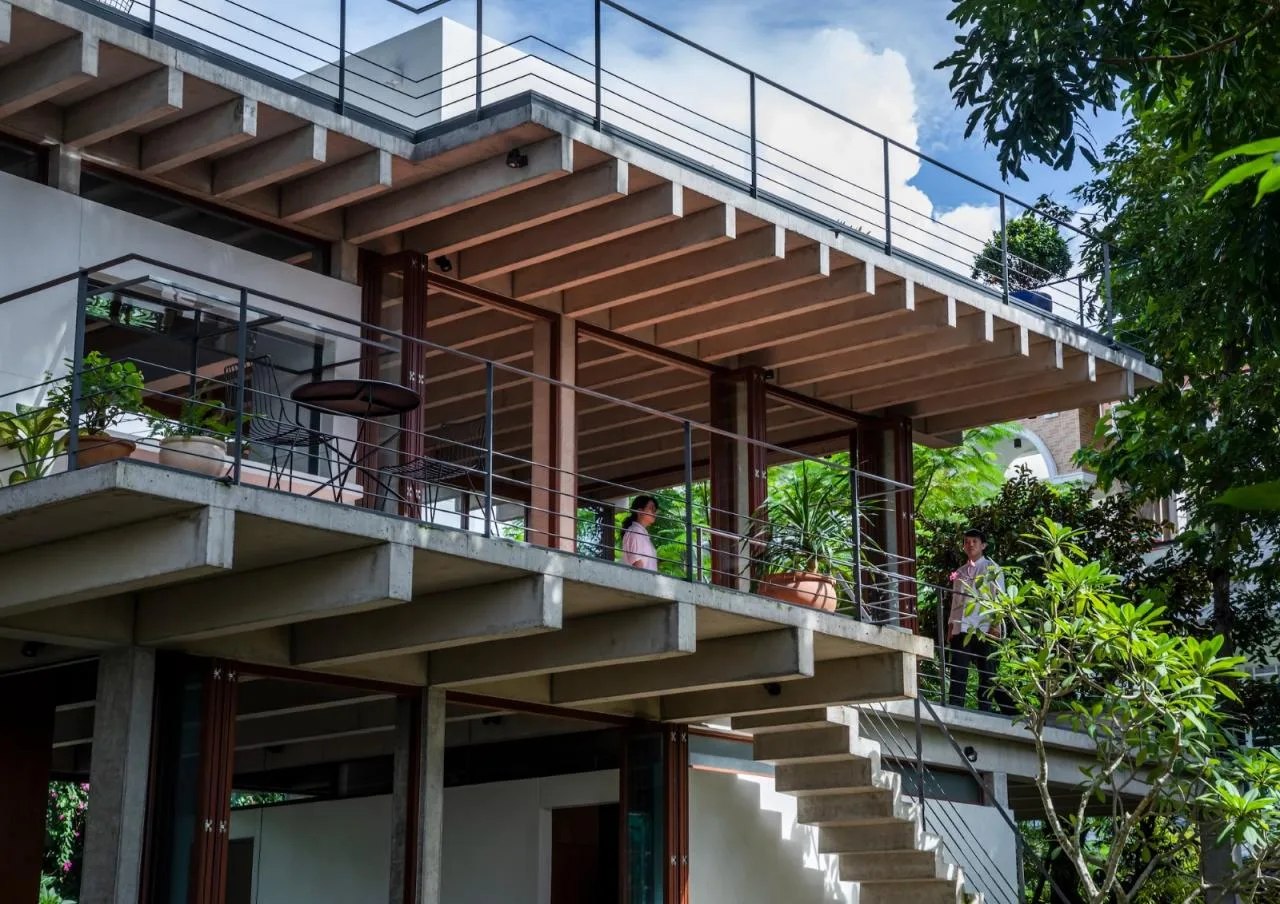
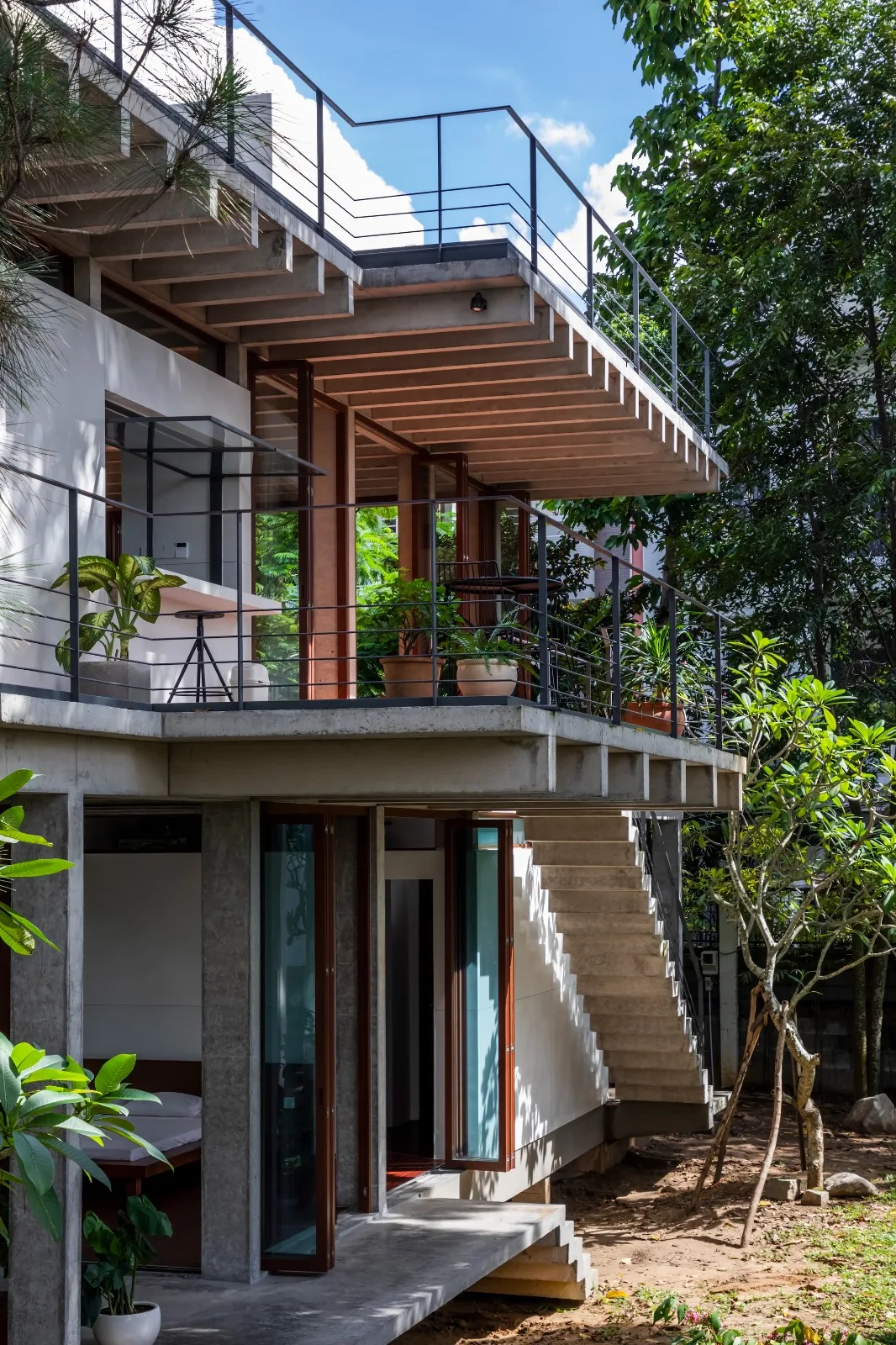
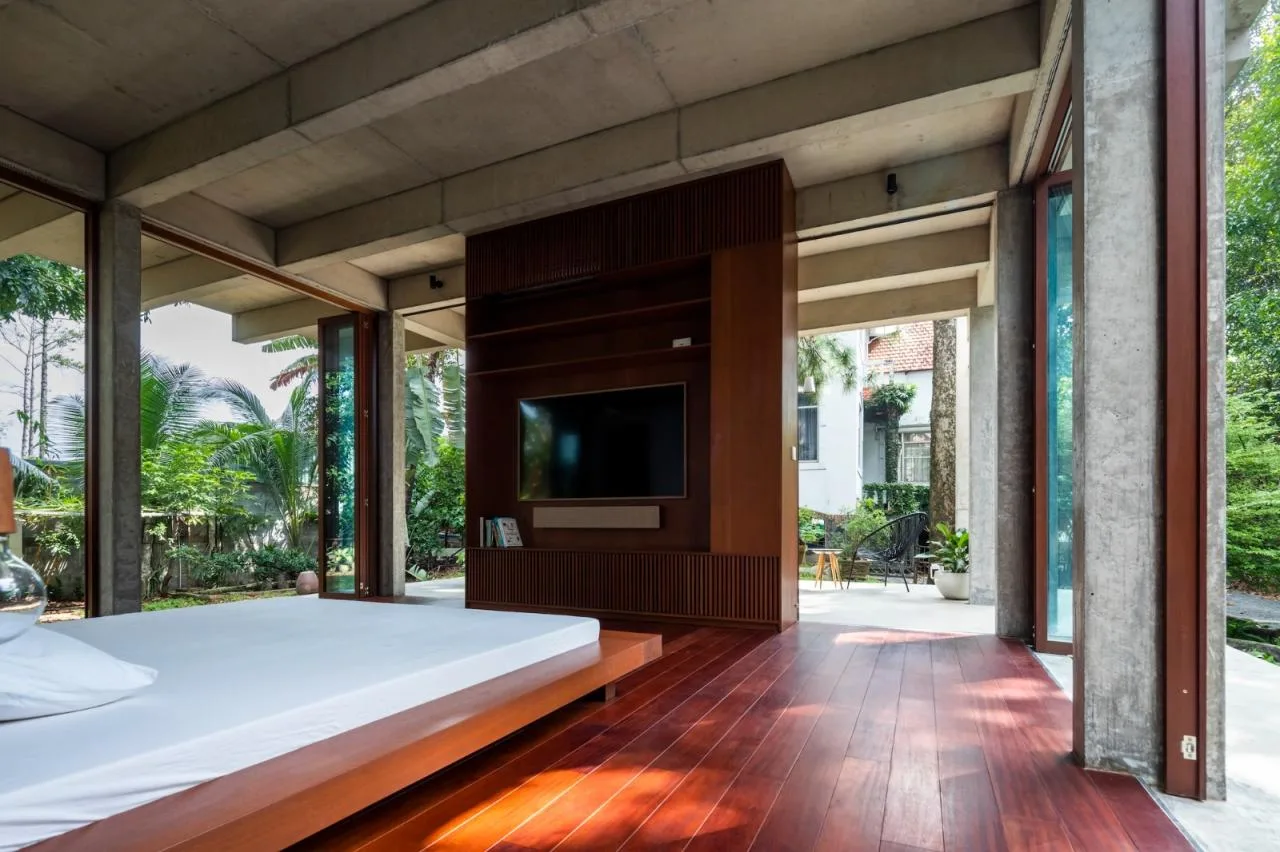
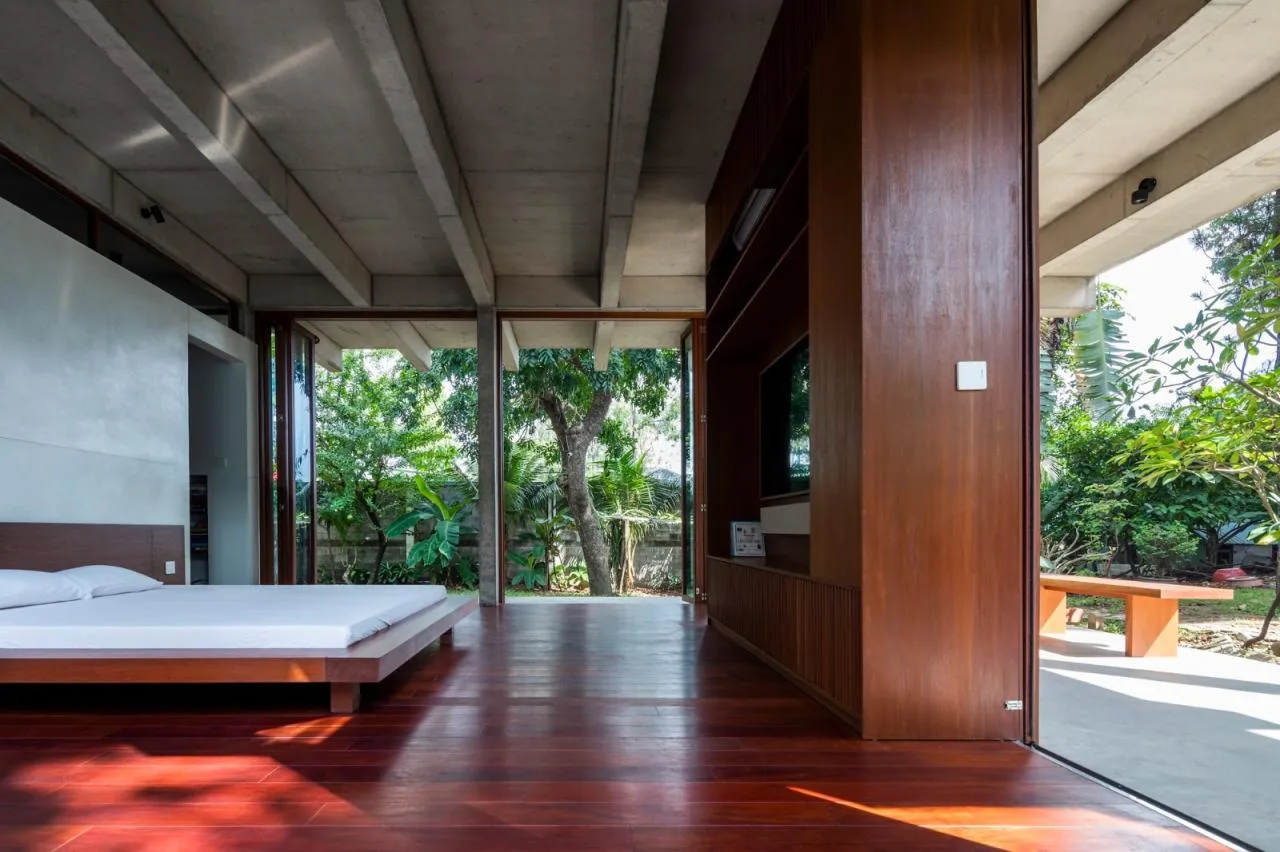
In this project, the architect reinterprets the traditional Vietnamese concrete frame construction. Ribbed panels extend the floors to create overhangs, supported by slender columns. Columns measure just 300 × 150 millimeters, with a beam width of 150 millimeters on the second floor, resulting in very thin floor slabs. This approach creates a lightweight structure that connects interior and exterior spaces seamlessly, giving the impression that the floors are floating above the surroundings.
The design aims to improve on concrete frame foundations, which are cost-effective and widely applicable throughout Southeast Asia. It follows conventional forms and construction methods without requiring specialized techniques.
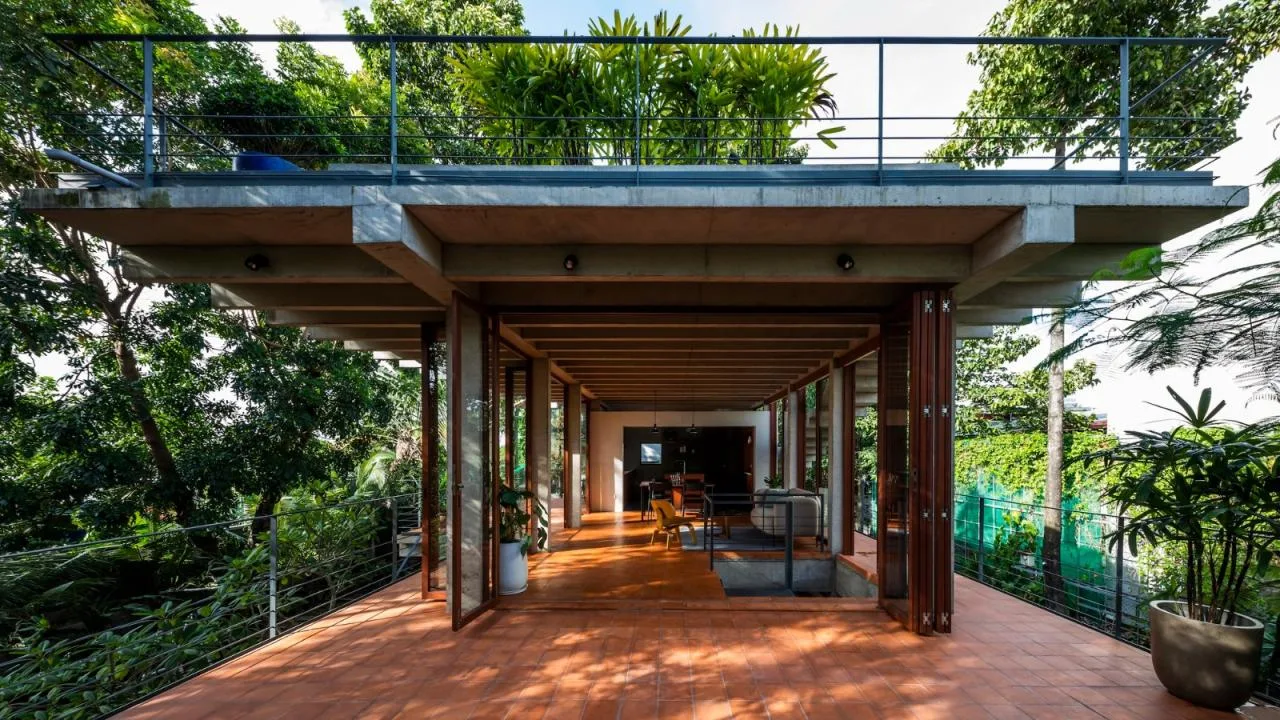
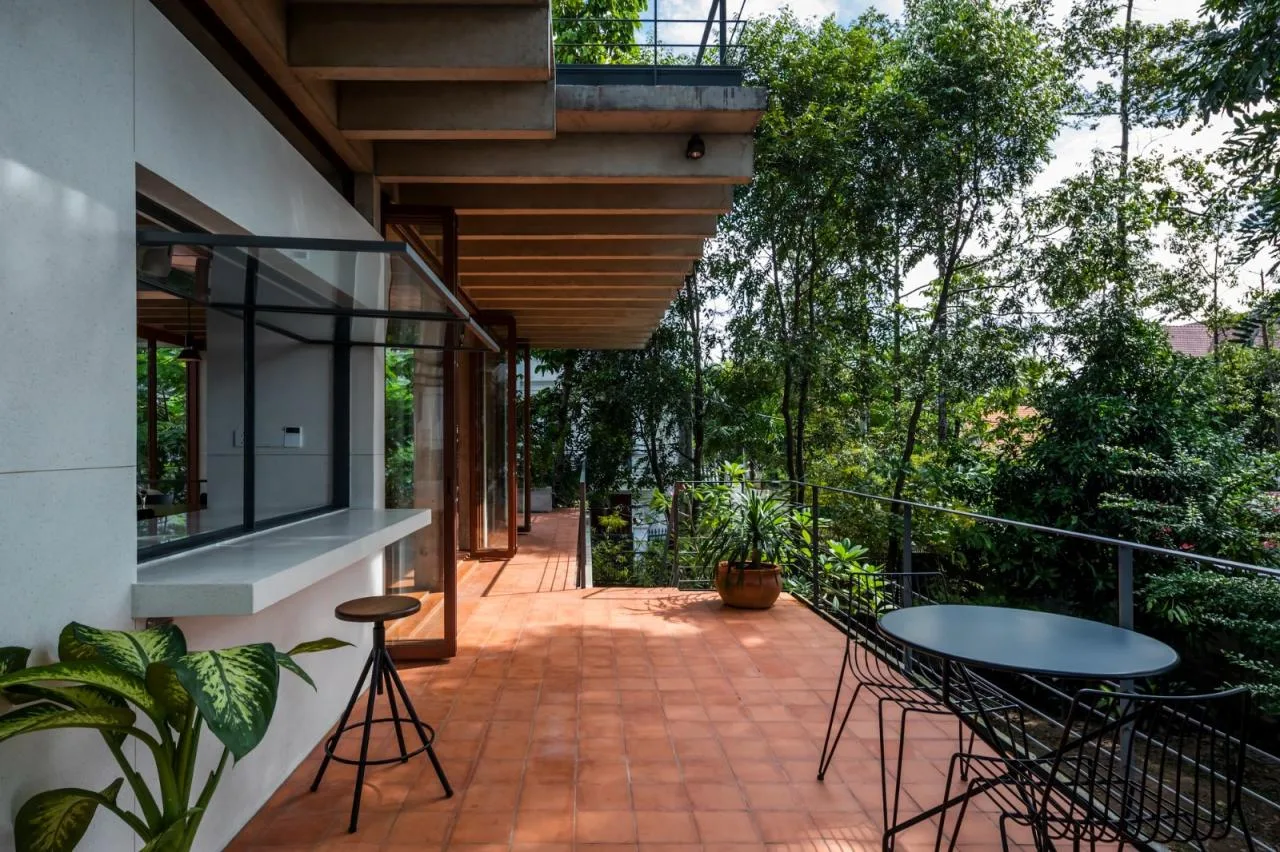
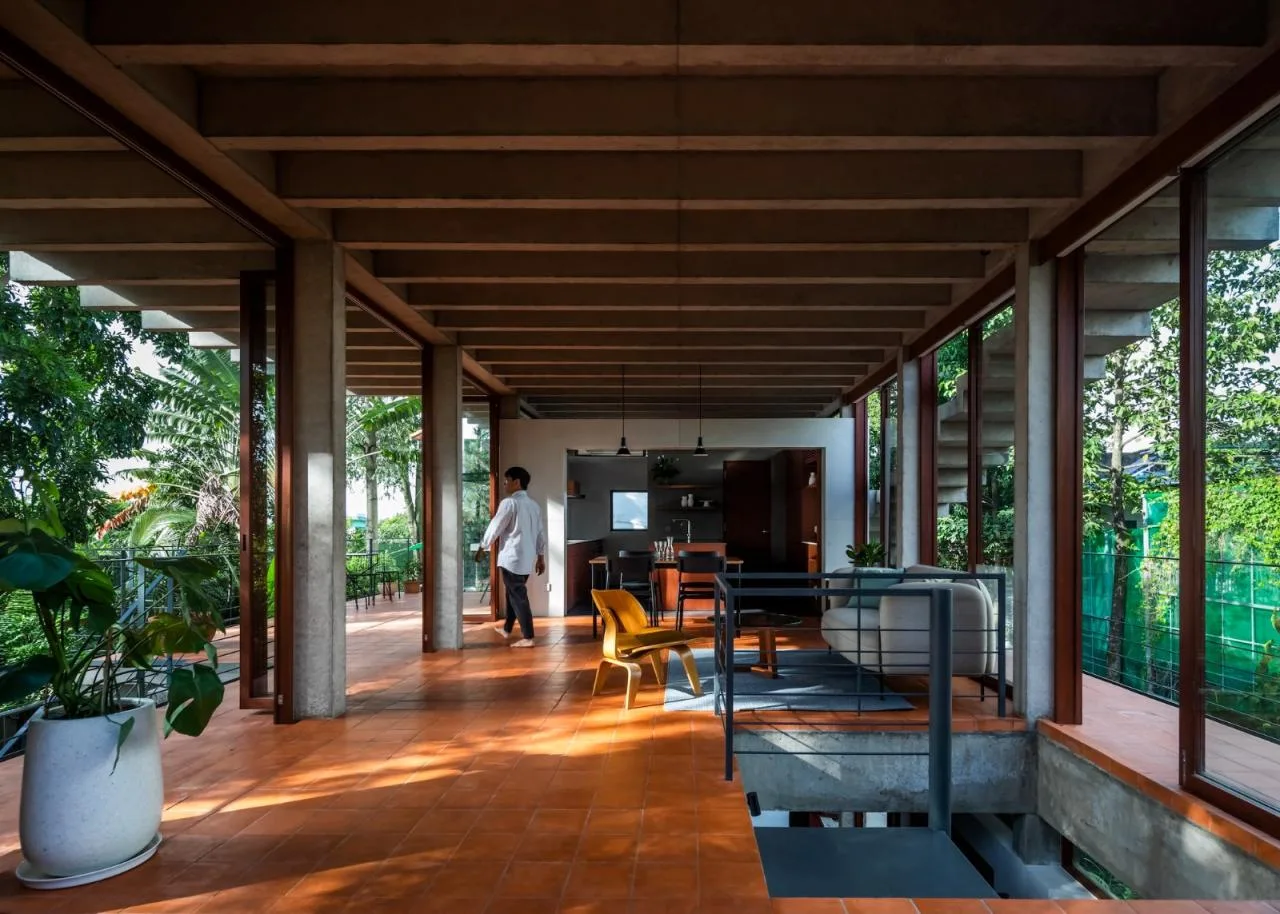
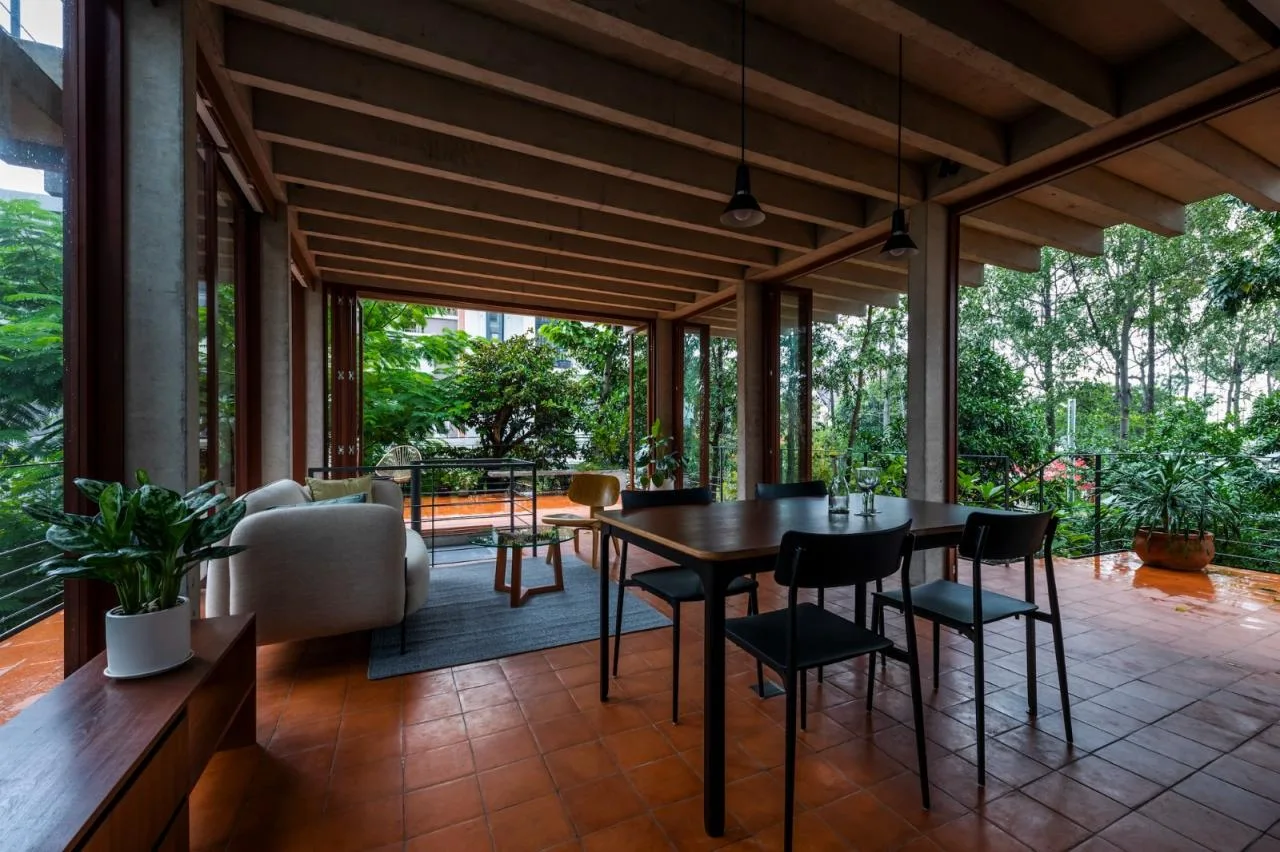
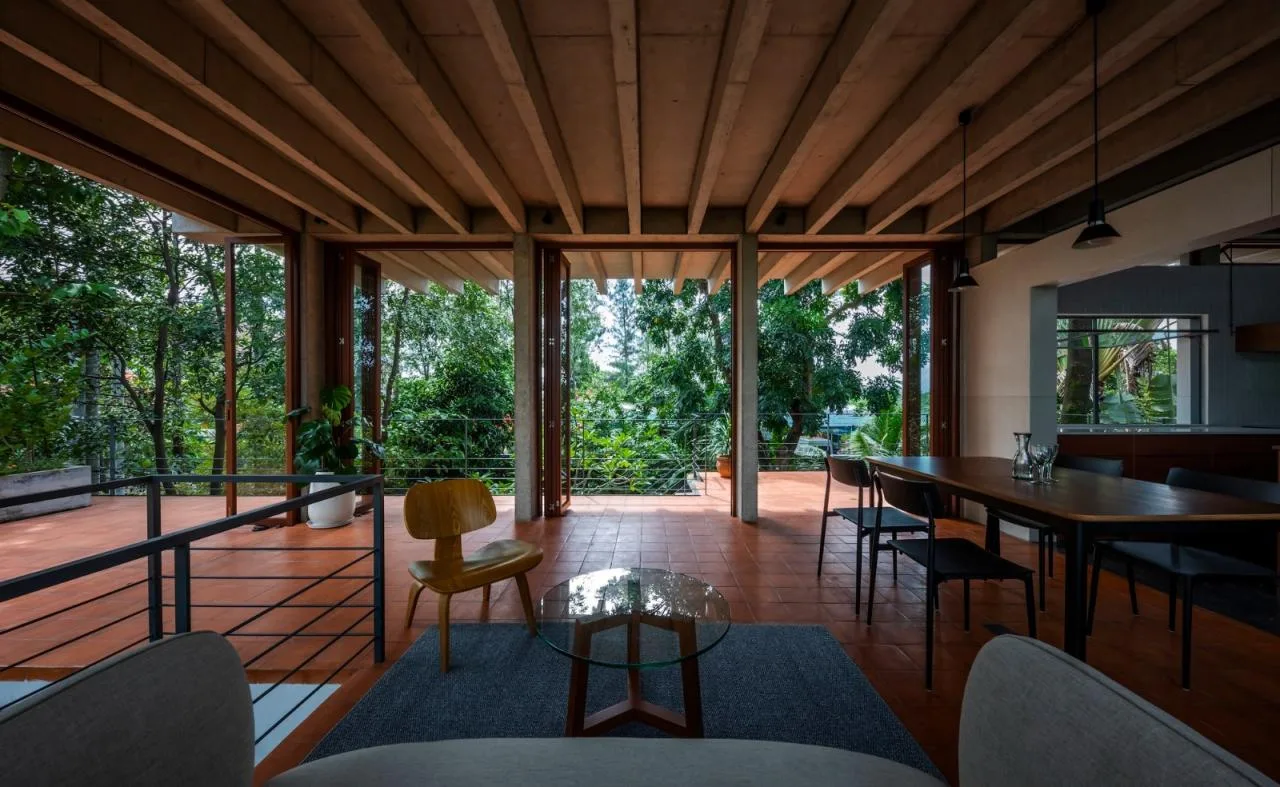
Nearly 70% of the house’s floor area, including the roof, is exposed to the outdoors. When folding doors are fully opened, almost all spaces except the bathing area become open-air. This allows cool breezes to flow through on hot days, while rain cools the air instantly through evaporation. This open design embraces the tropical climate of Vietnam, enabling the homeowners to feel closely connected to nature at all times.
In Vietnam, the connection between people and their environment is deeply intertwined. The architects emphasize the importance of designing outdoor spaces as “blank spaces” to foster an active outdoor lifestyle. This residence introduces a new structural framework to support that vision.
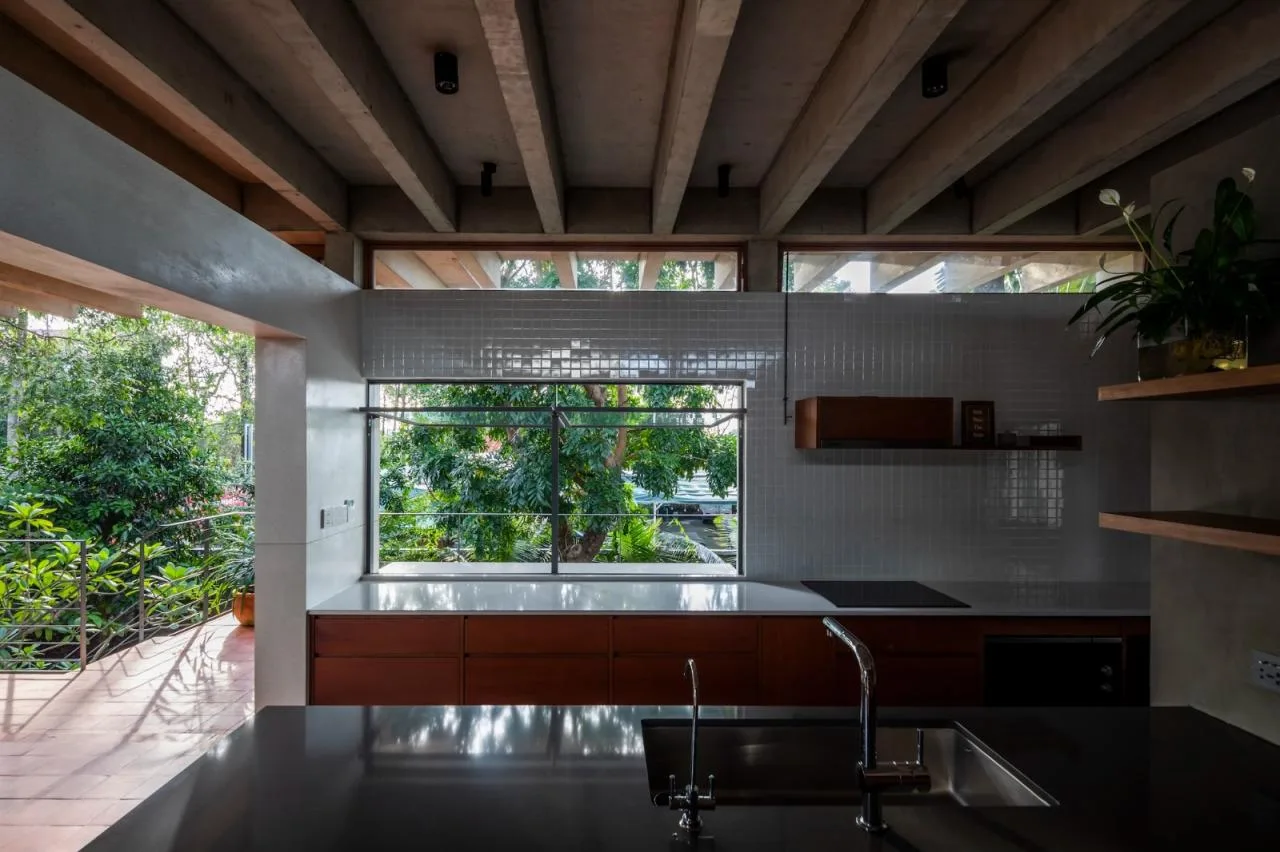
Project Drawings
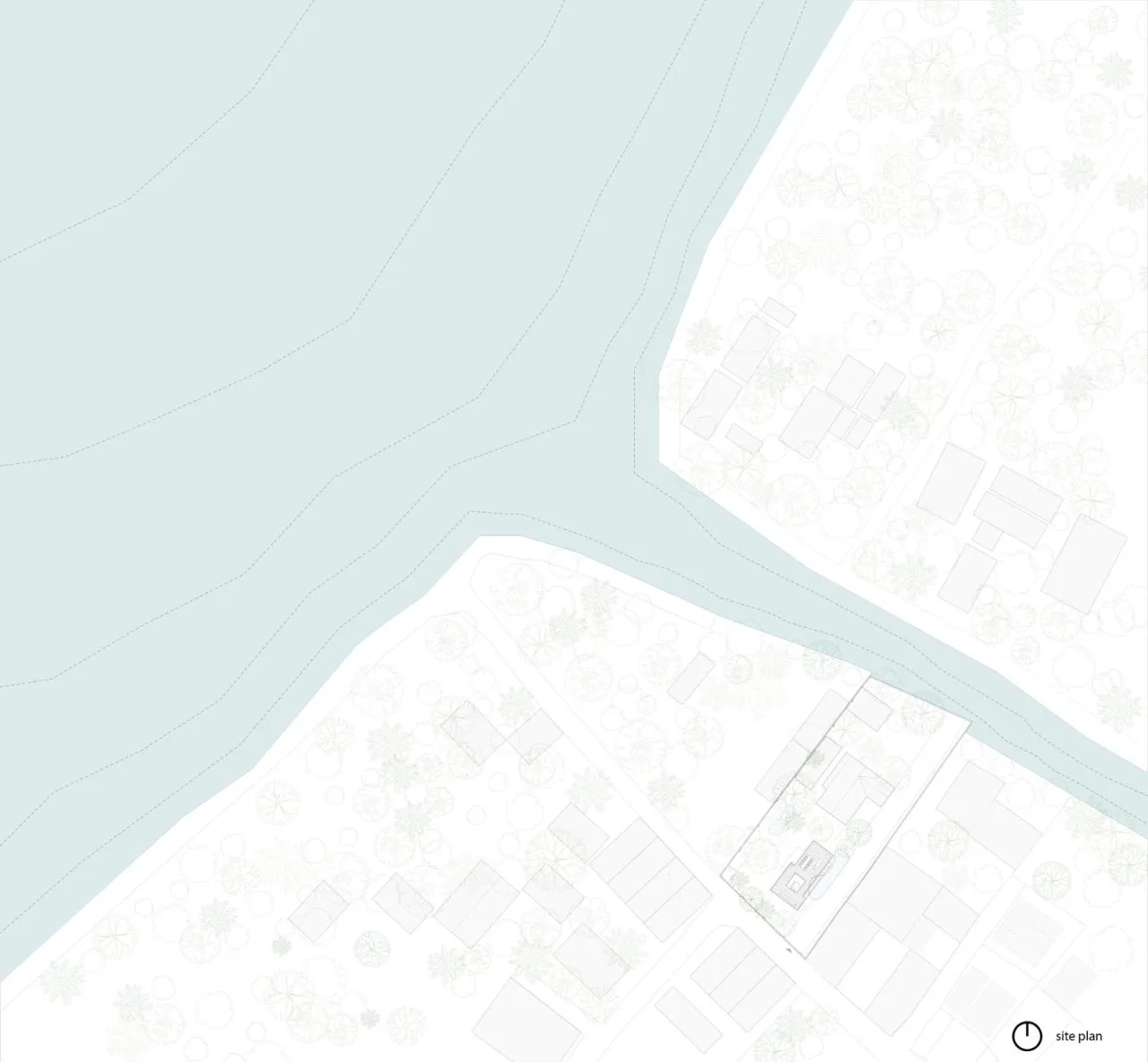
△ Base schematic diagram
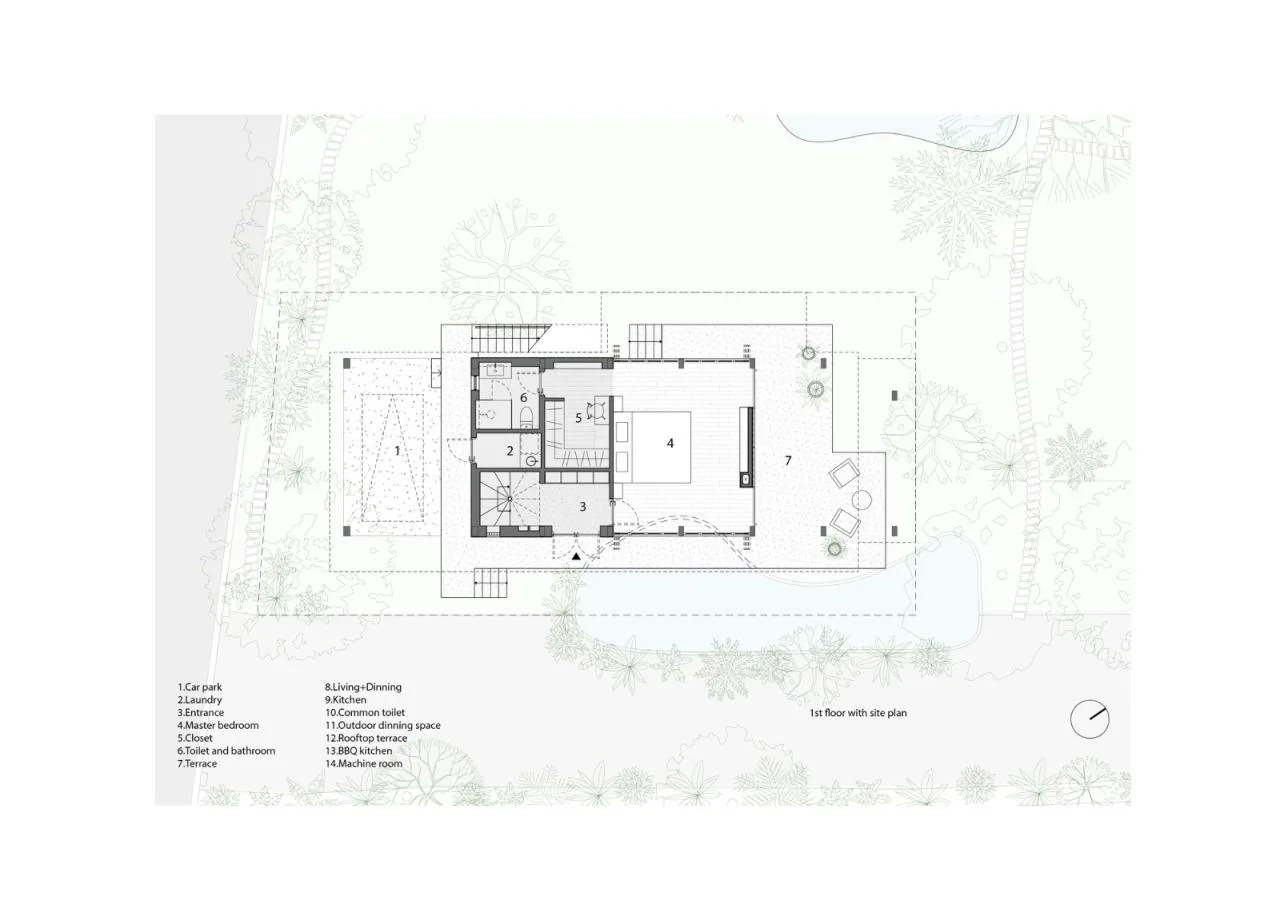
△ First floor plan
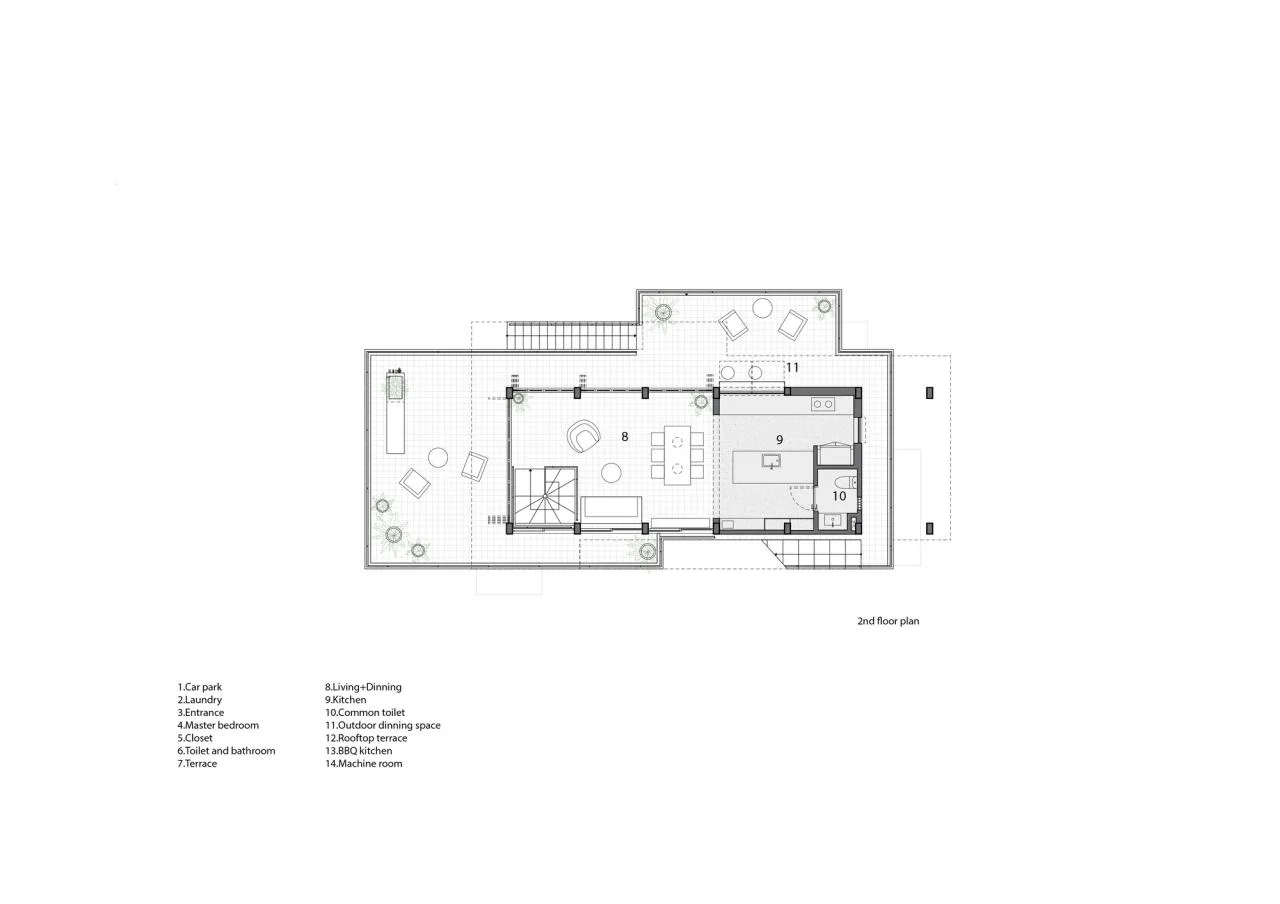
△ Second floor plan
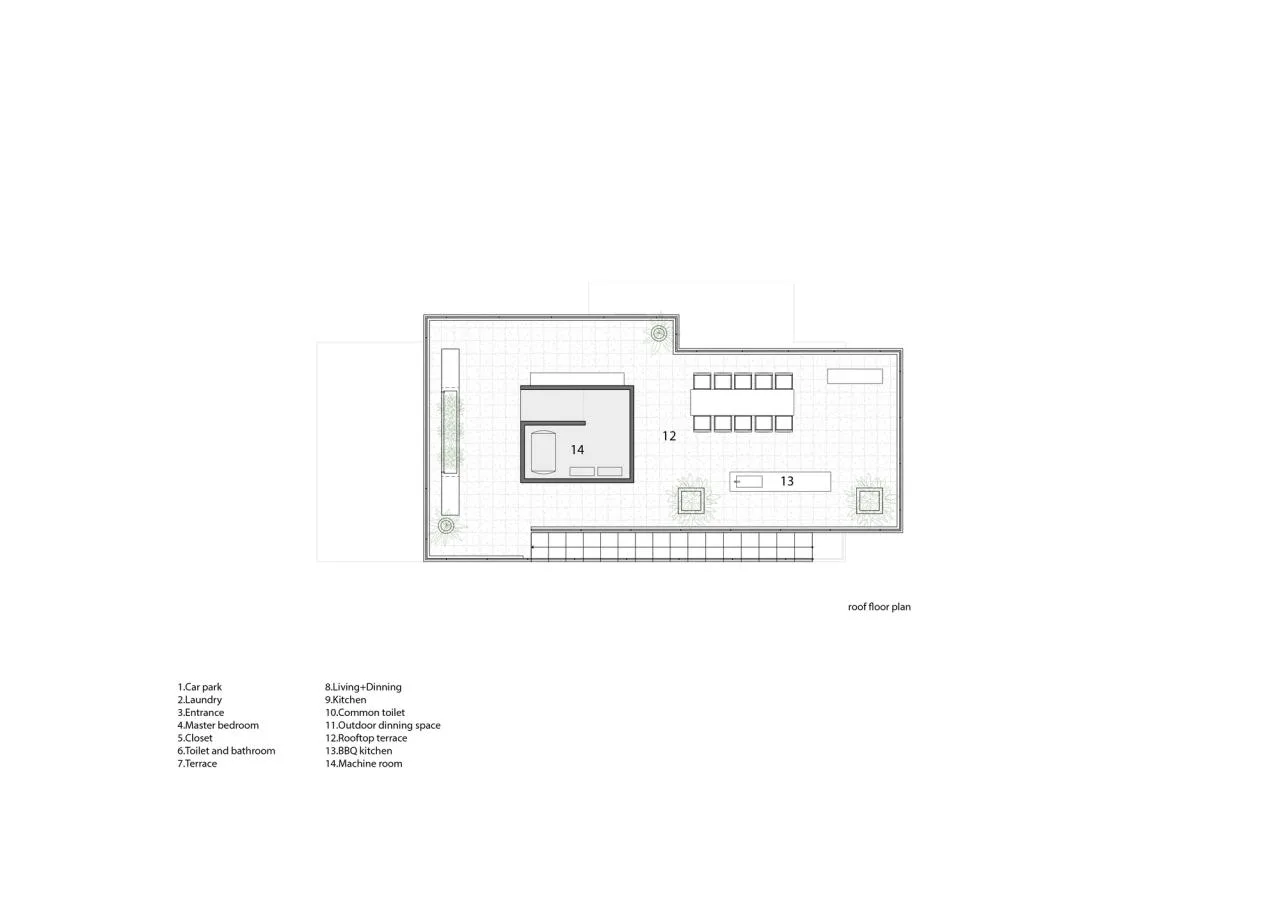
△ Roof plan
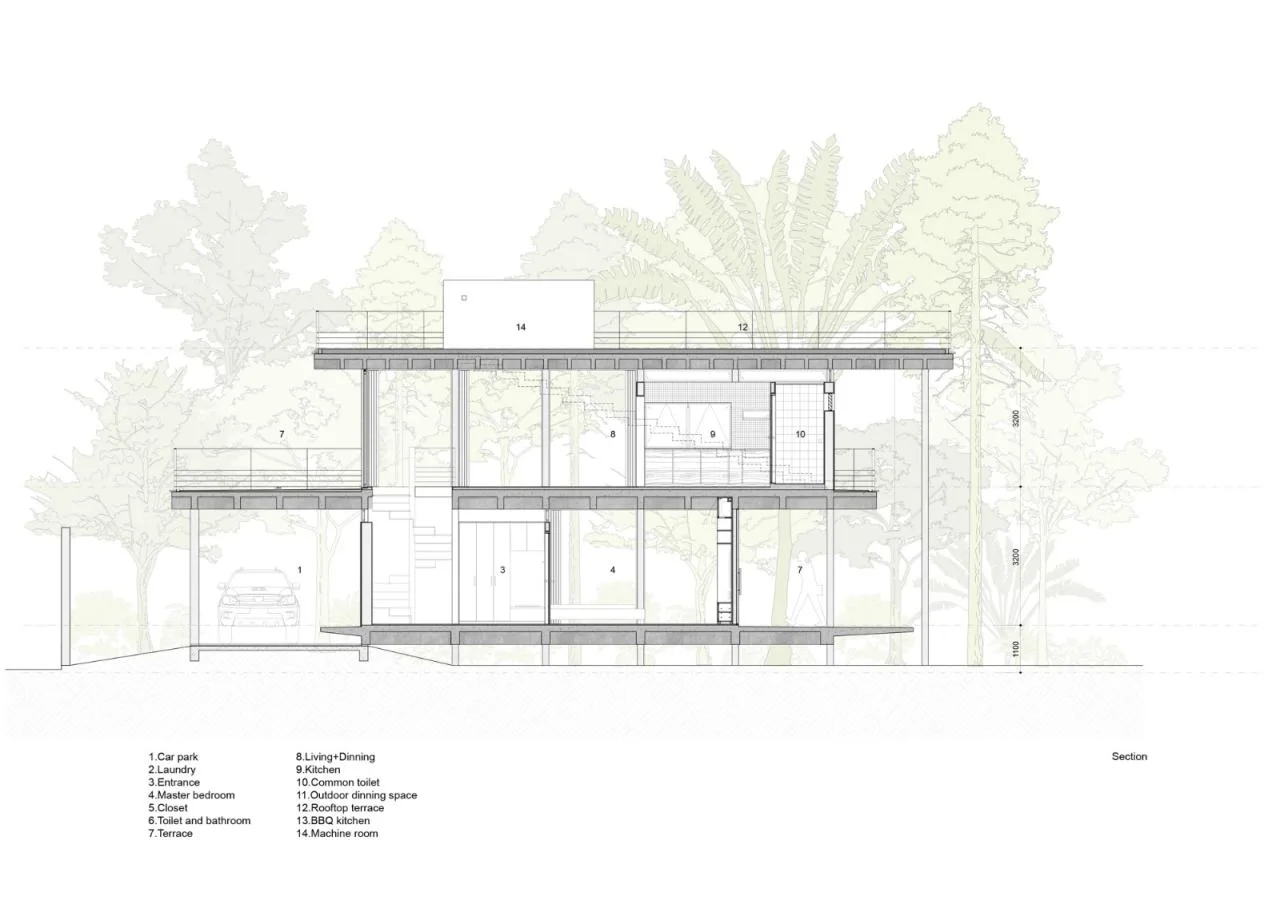
△ Section diagram
Project Information
Architect: Sanuki Daisuke Architects
Area: 325 square meters
Year Completed: 2022
Photographer: Hiroyuki Oki
Manufacturer: Toto
Lead Architect: Sanuki Daisuke
Architect: Nguyen Huynh Bao Ngoc
Architectural Design: sda SANUKI DAISUKE Architects
Structural Design: THANH CONG FOUNDATION DESIGN CO. LIMITED
Contractor: Coppha Builders
Location: Vietnam












Must log in before commenting!
Sign Up