
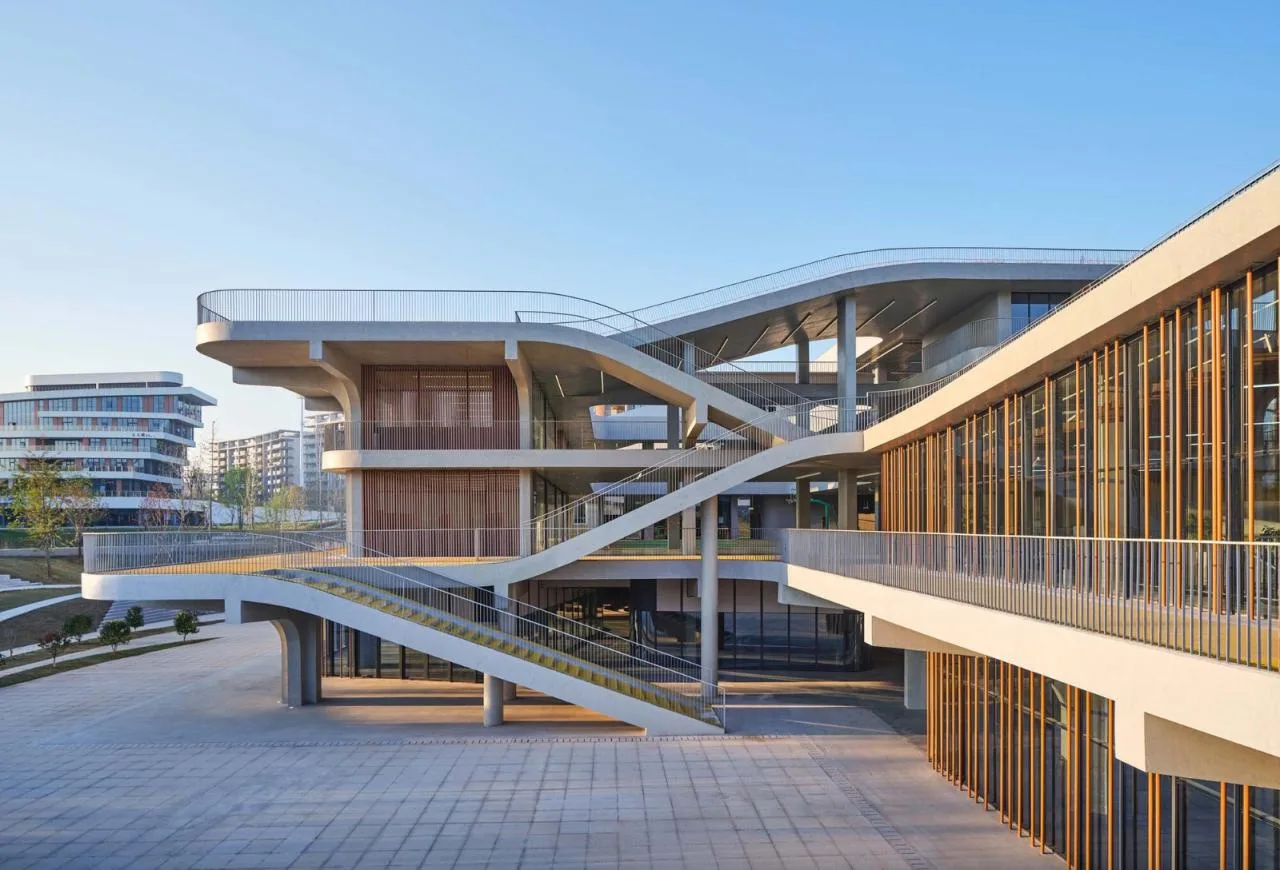
In an era defined by efficiency, convenience, and diversity enabled by smart interconnectivity, students have mastered the art of “having everything at their fingertips” without leaving their homes. Yet, this shift toward virtual student life inevitably diminishes the vibrancy of physical campus spaces. Consequently, designing environments that encourage students to return from the online world to the real one has become essential.
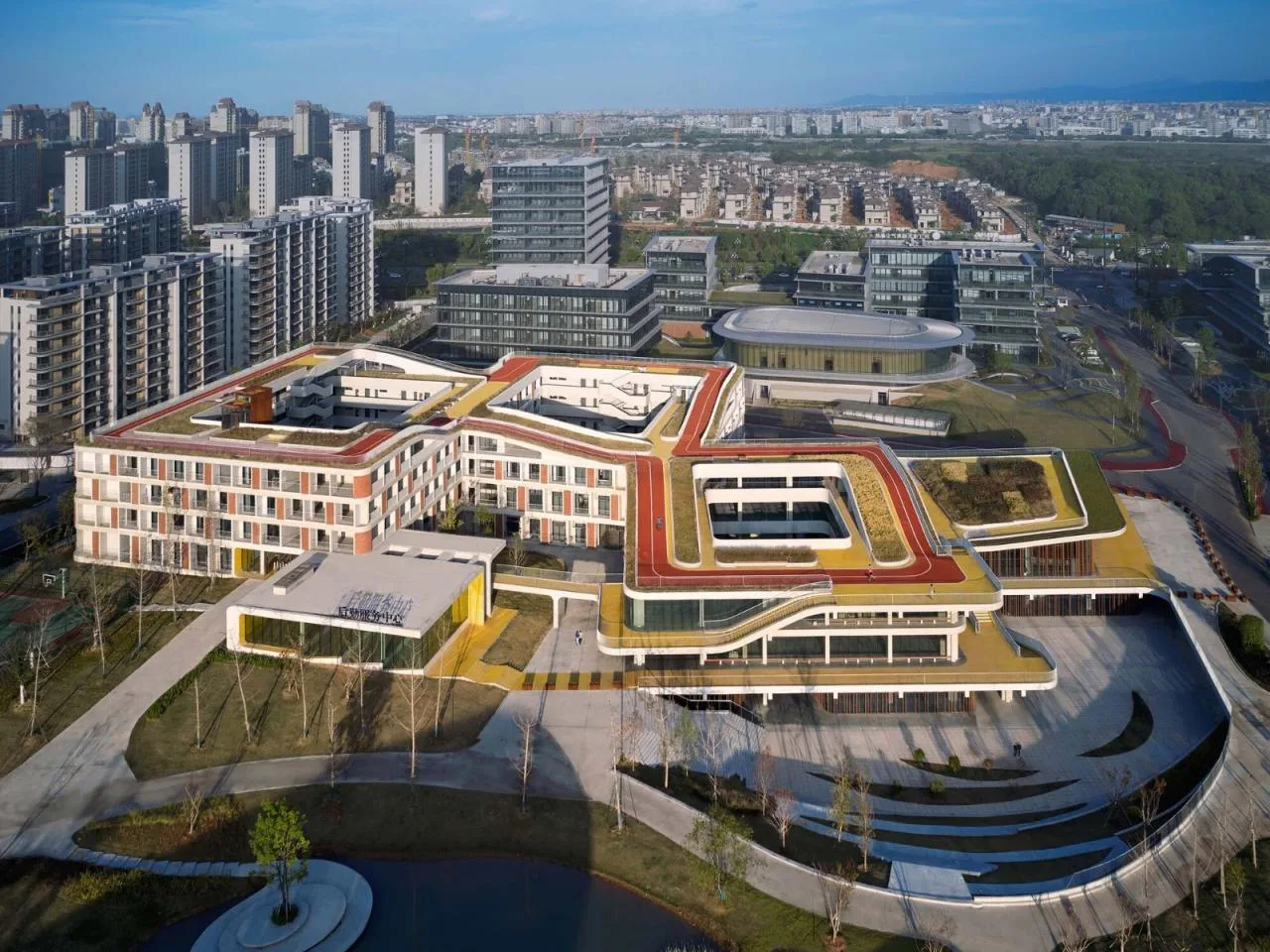
Design Background: The integrated complex and micro-terrain research institute is situated in Quzhou High-Speed Railway New City. Due to limited outdoor sports facilities and underdeveloped surrounding commercial services, the 20,000-square-meter Life Center has been designed as a key project. It offers accommodation, social spaces, activity areas, dining, study, and entertainment options, creating a truly comprehensive and self-sufficient hub for the institute.
Bridging the Physical and Digital Worlds: Functional Integration and Network Building
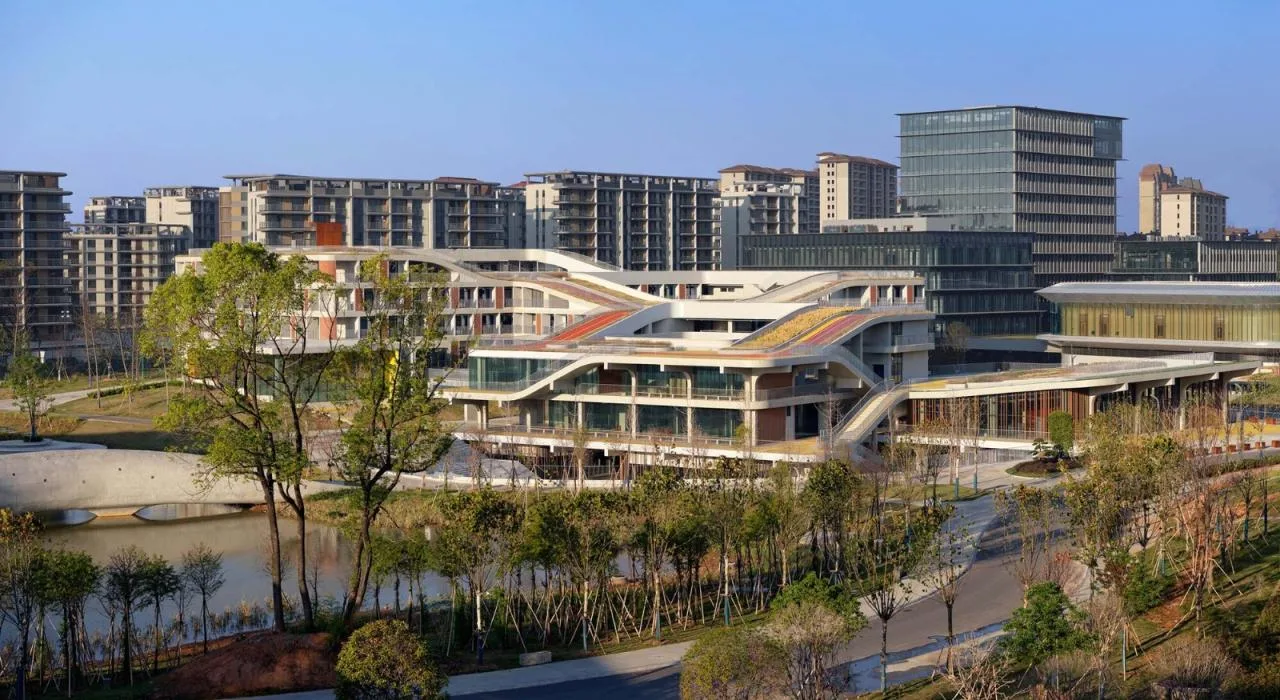
The internet fascinates us because it breaks down barriers of physical space and time, bringing everything together on a single platform. This aggregation of information captivates and overwhelms the senses. Facing the shortage of outdoor sports facilities and the lack of mature commercial services nearby, the Life Center’s design leverages this challenge as an opportunity to create a multifunctional complex.
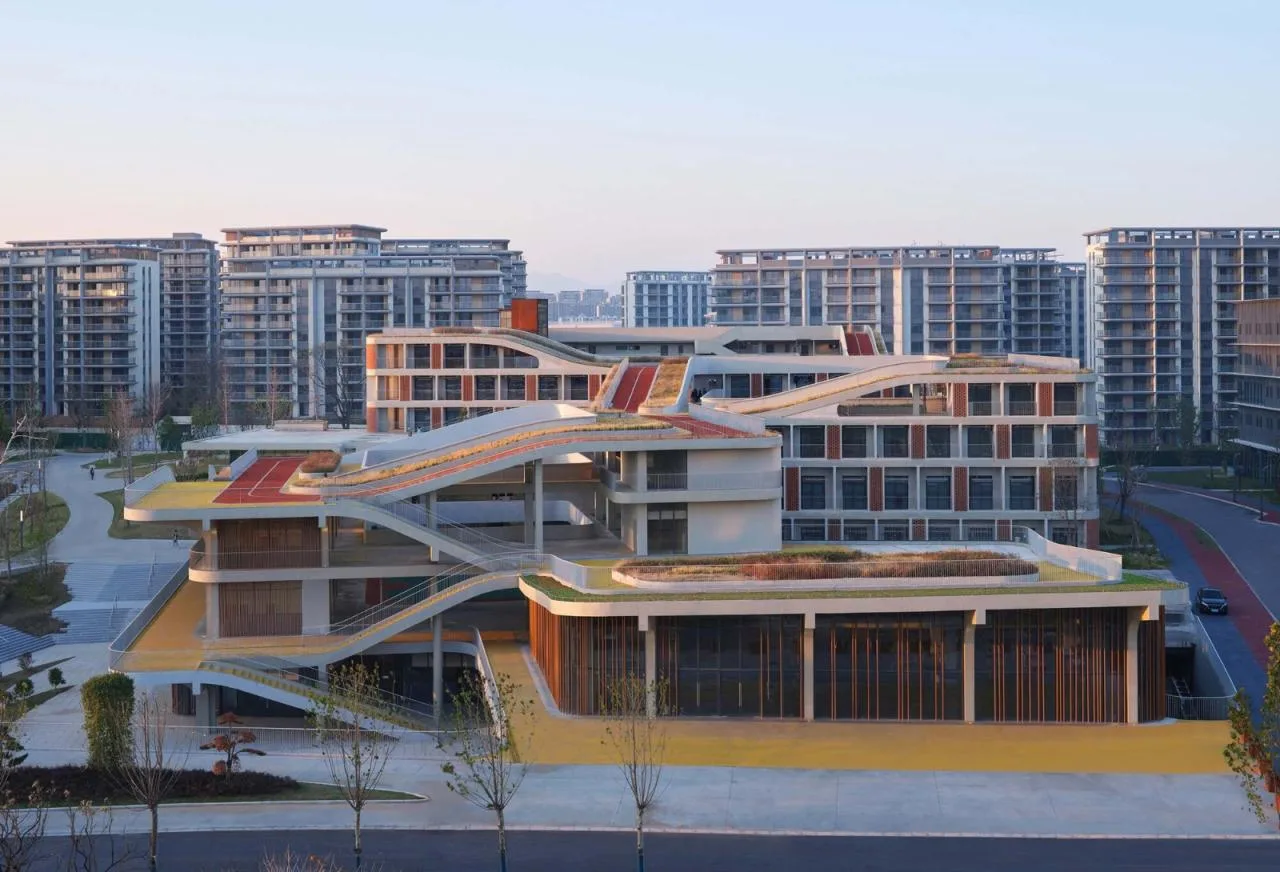
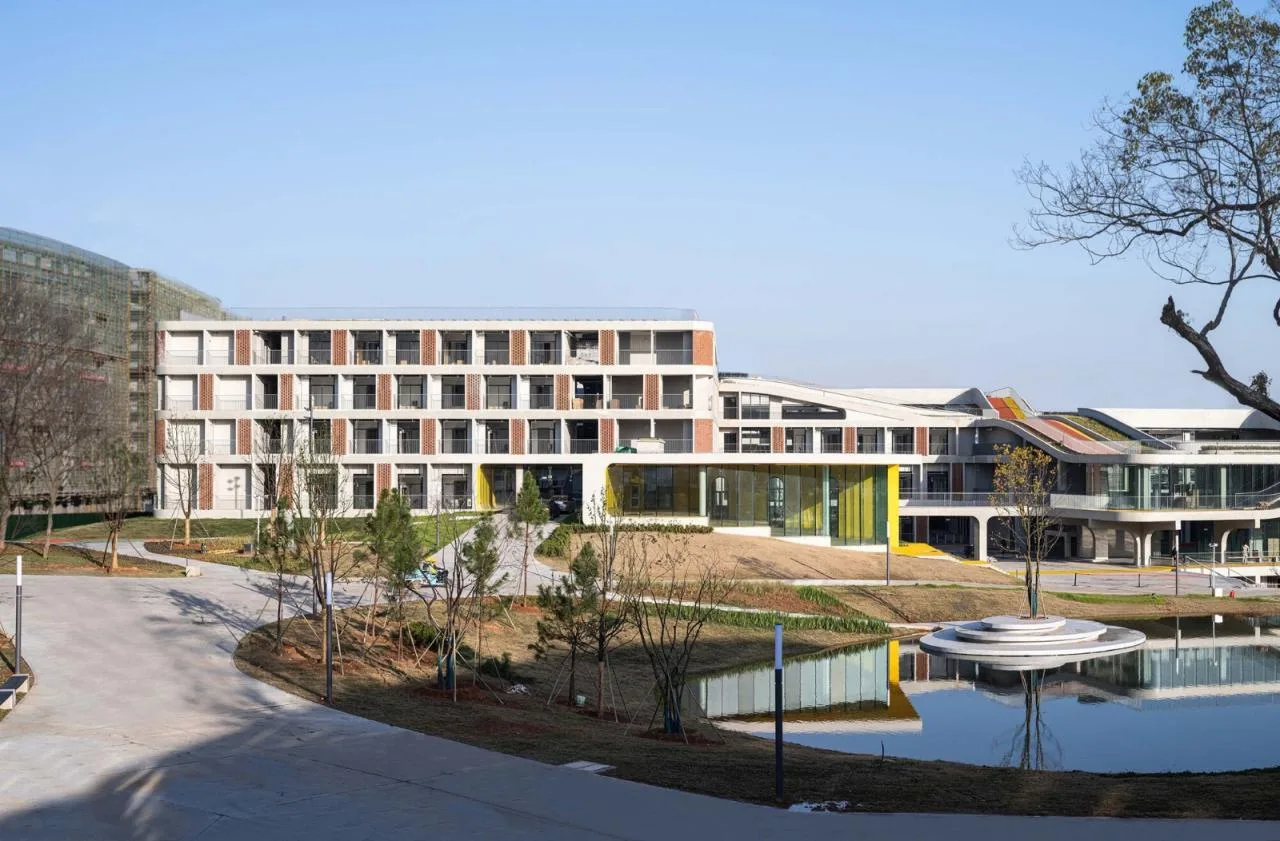
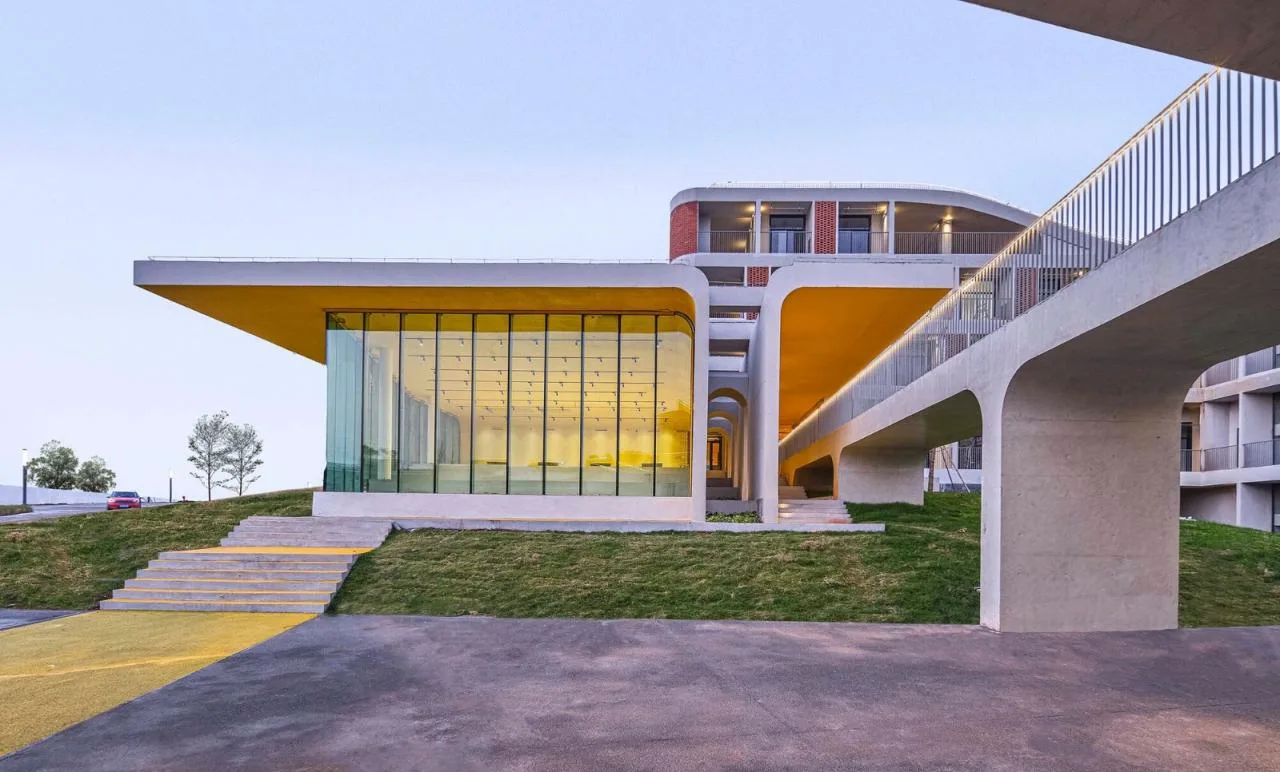
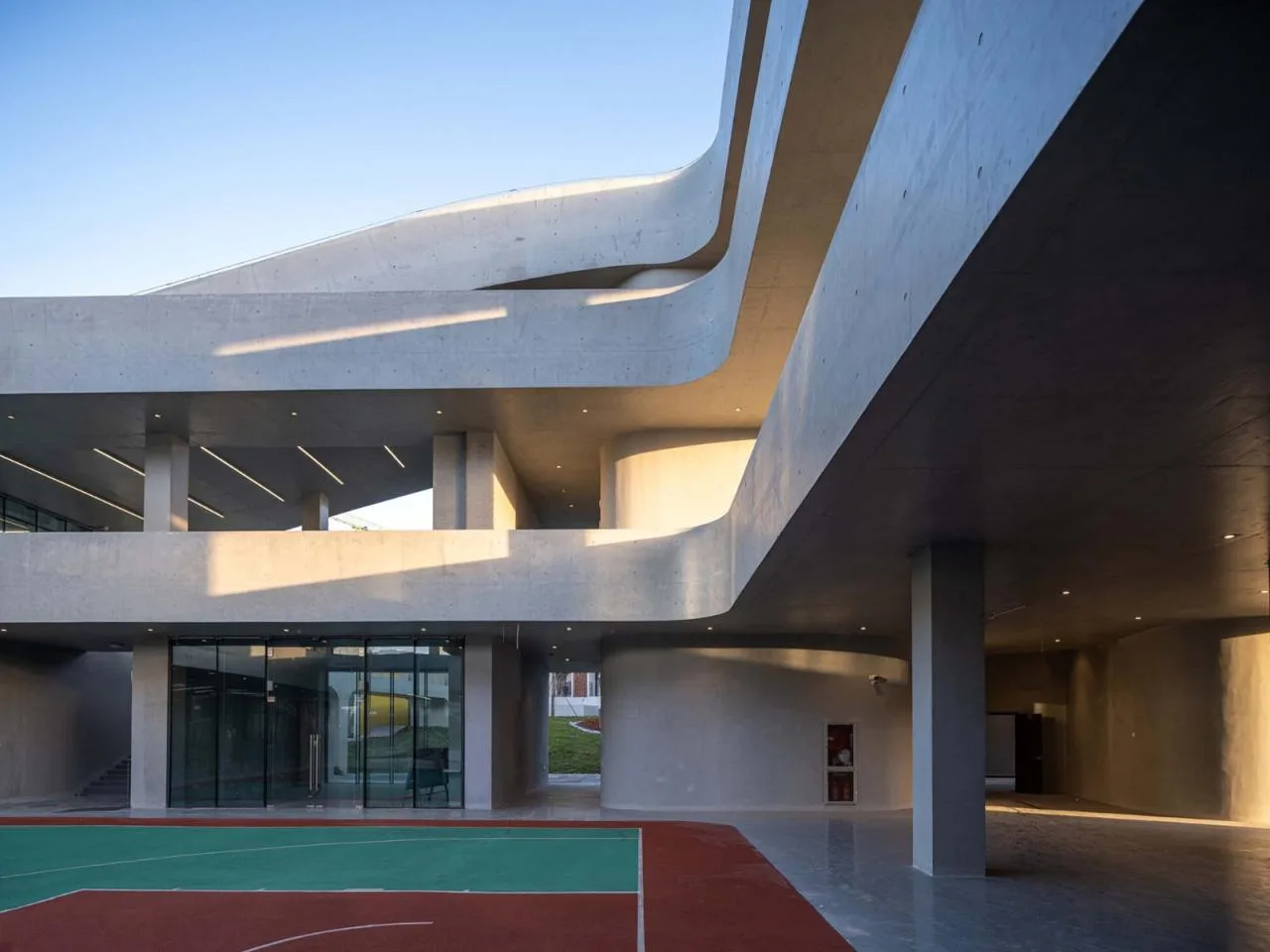
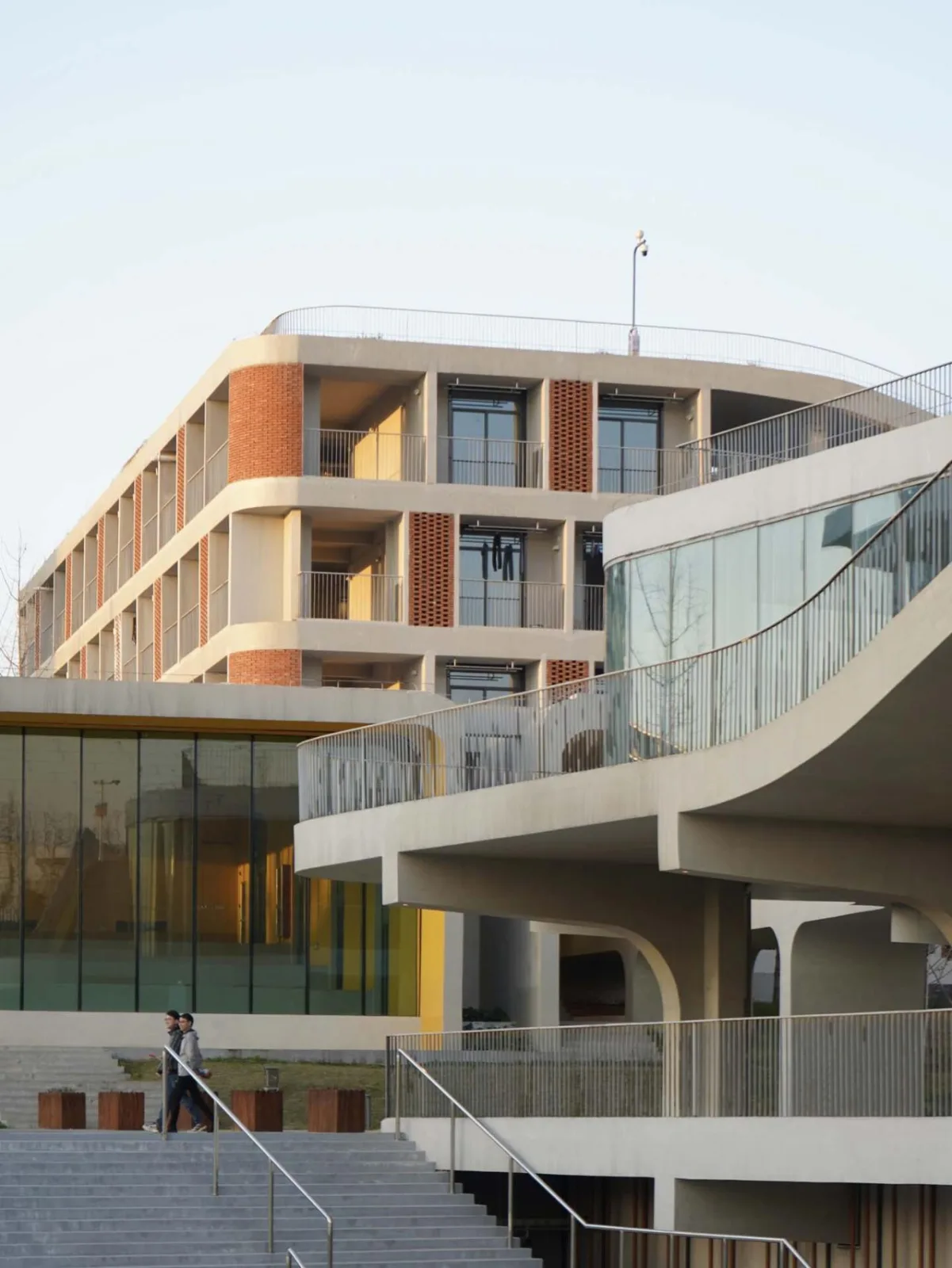
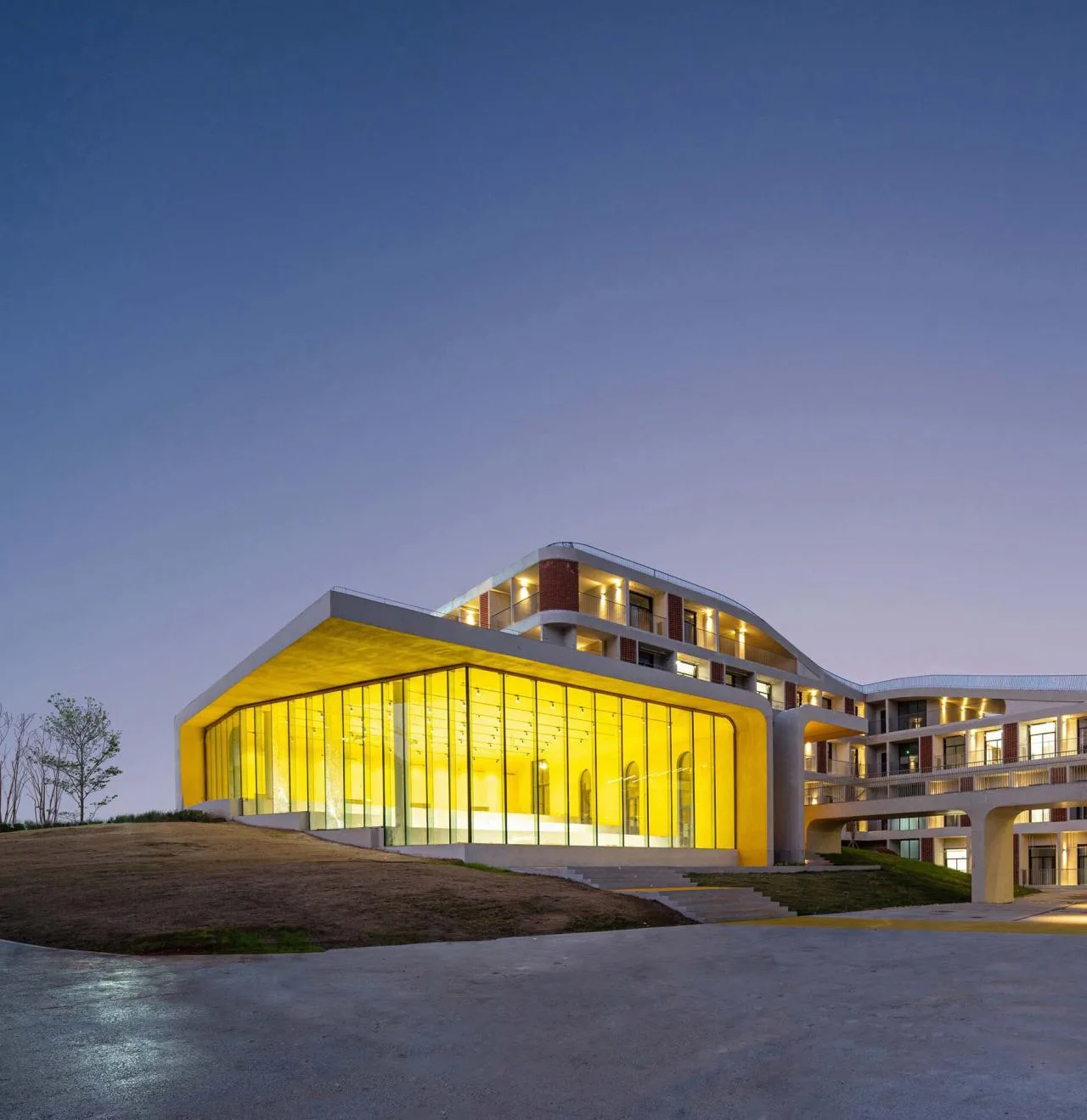
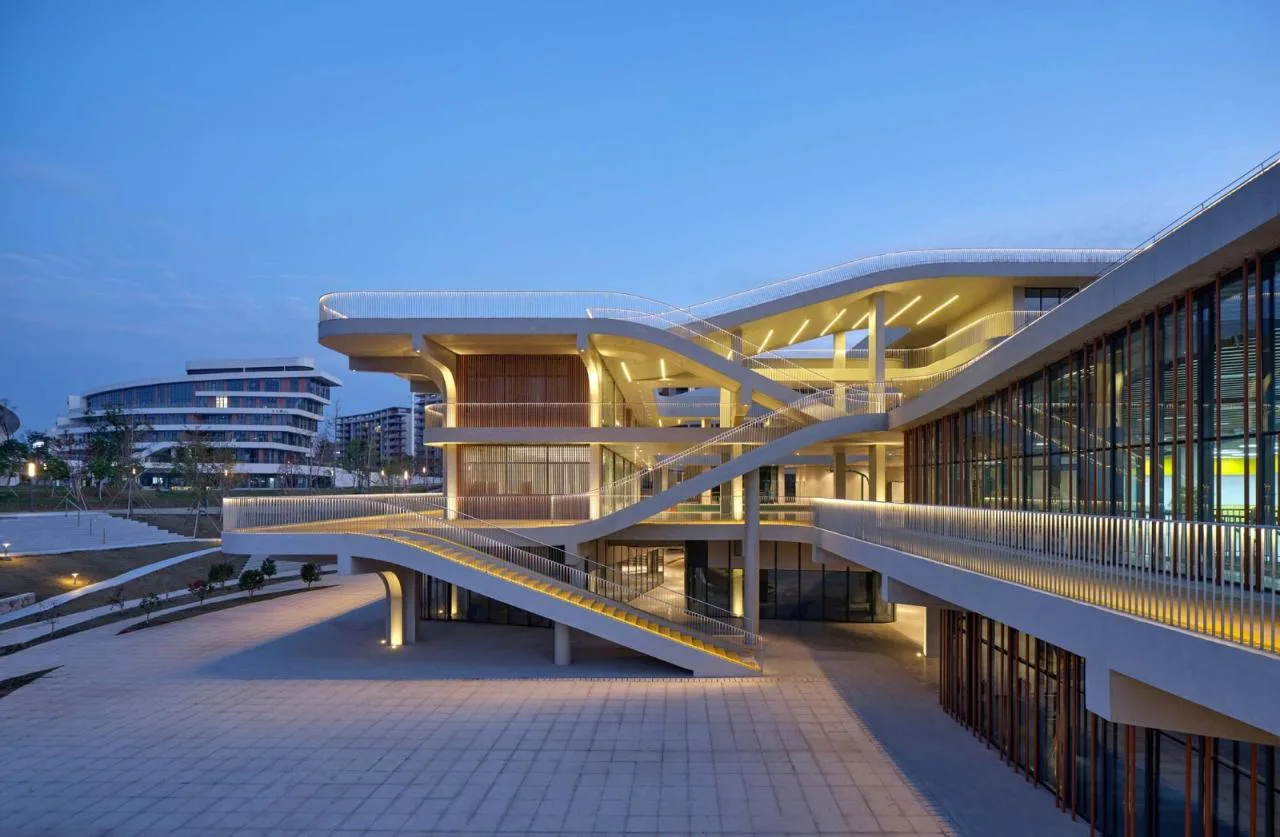
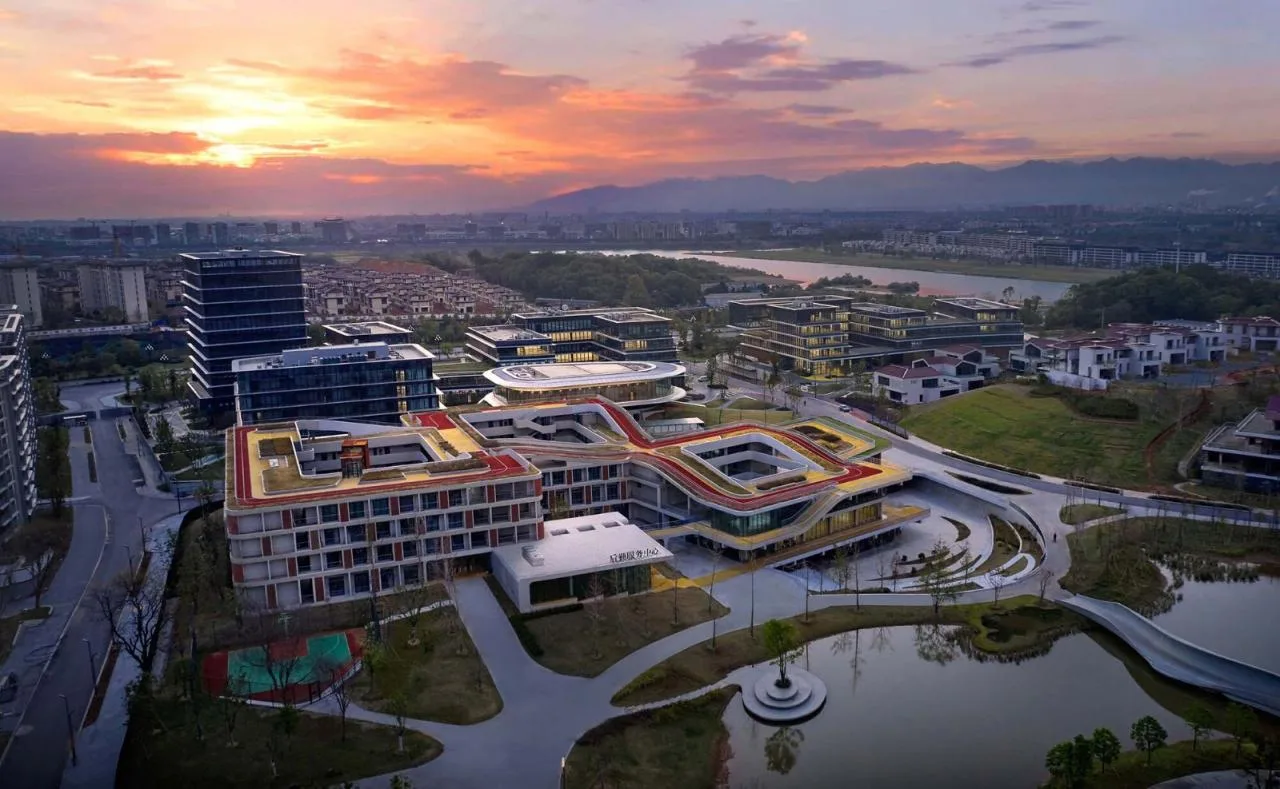
The Life Center adopts a modular “box” concept, repeating five identical volumes to reorganize scattered functions into a large, open complex. The dormitory area features dark red brick louvers forming staggered balconies, while the commercial and dining spaces use wood-colored metal circular tube grilles, evoking a bamboo forest ambiance. The sports center and study rooms showcase floor-to-ceiling glass and exposed concrete, emphasizing the purity of activity. These five “platforms,” controlled by the modular dormitory layout, create a harmonious and unified living settlement.
Creating a Physical Network: A 3D Circulation Path Accessible Anytime
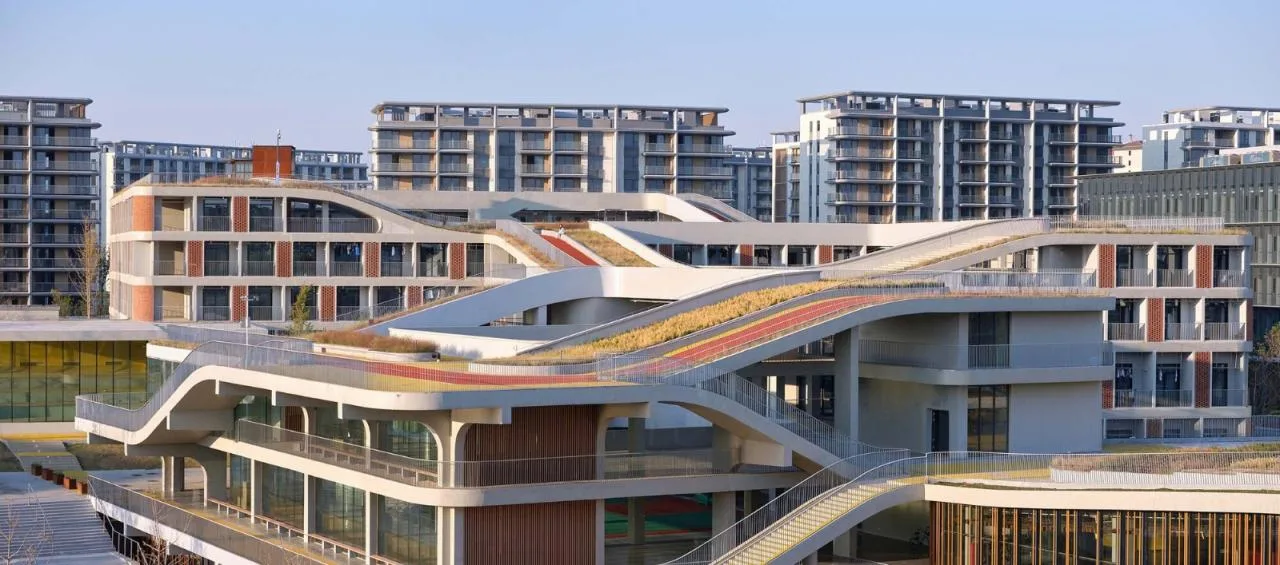
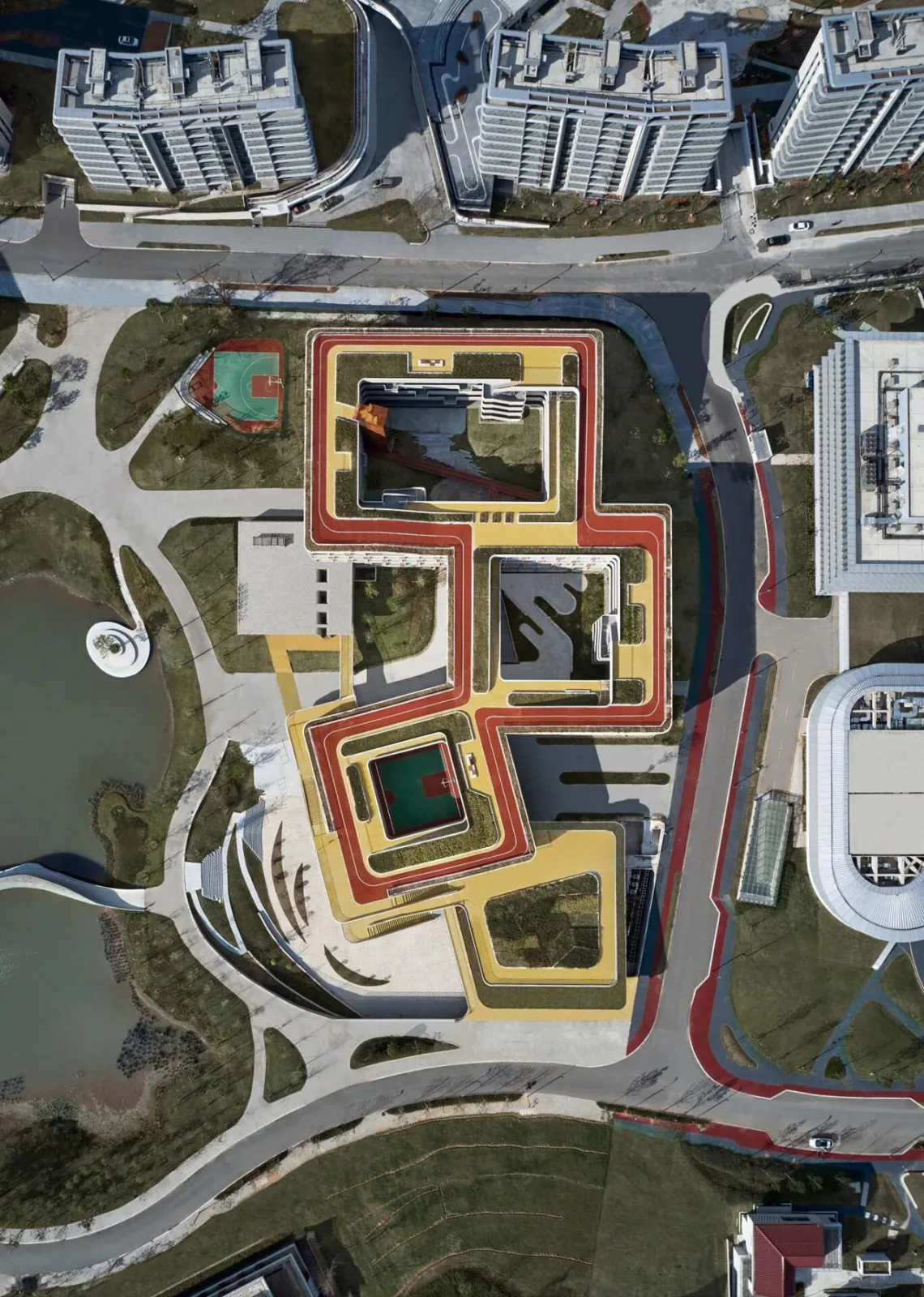
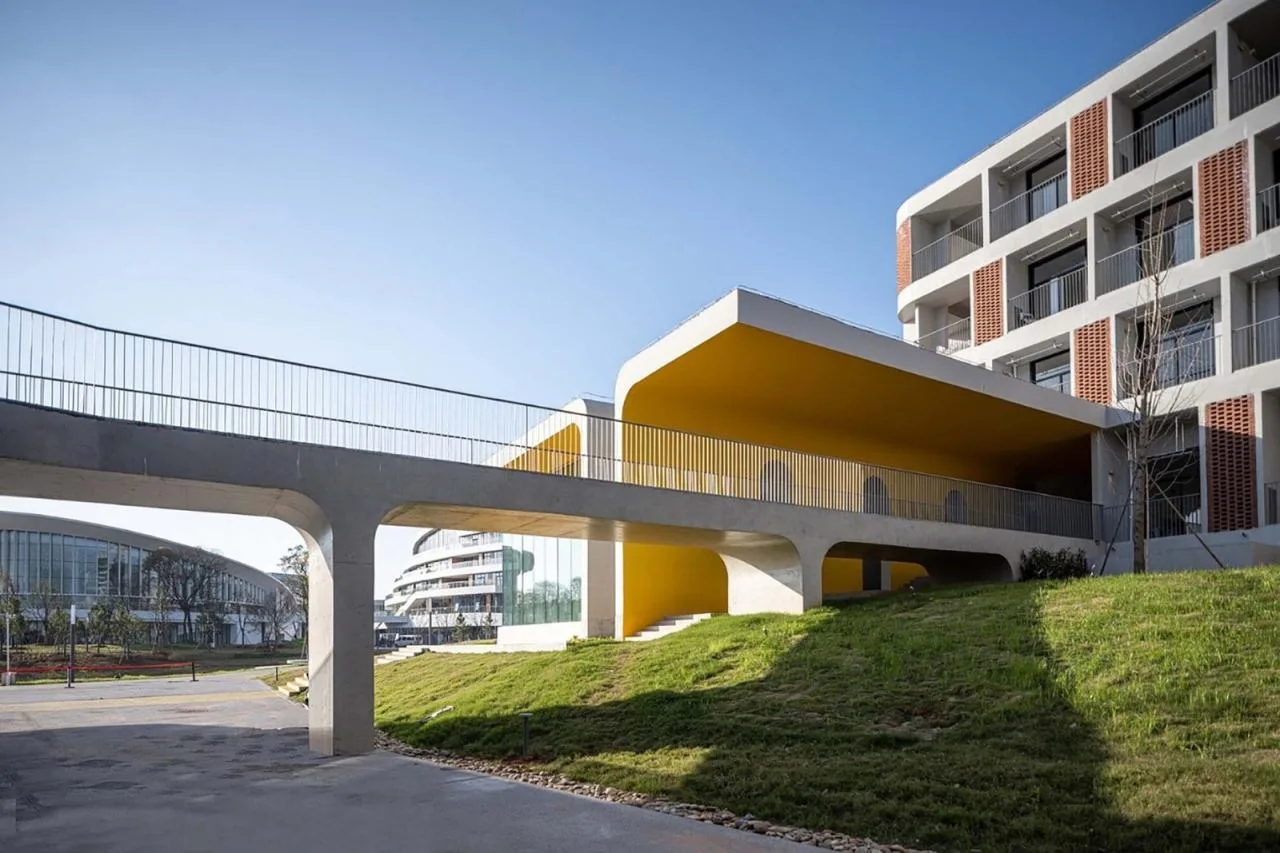
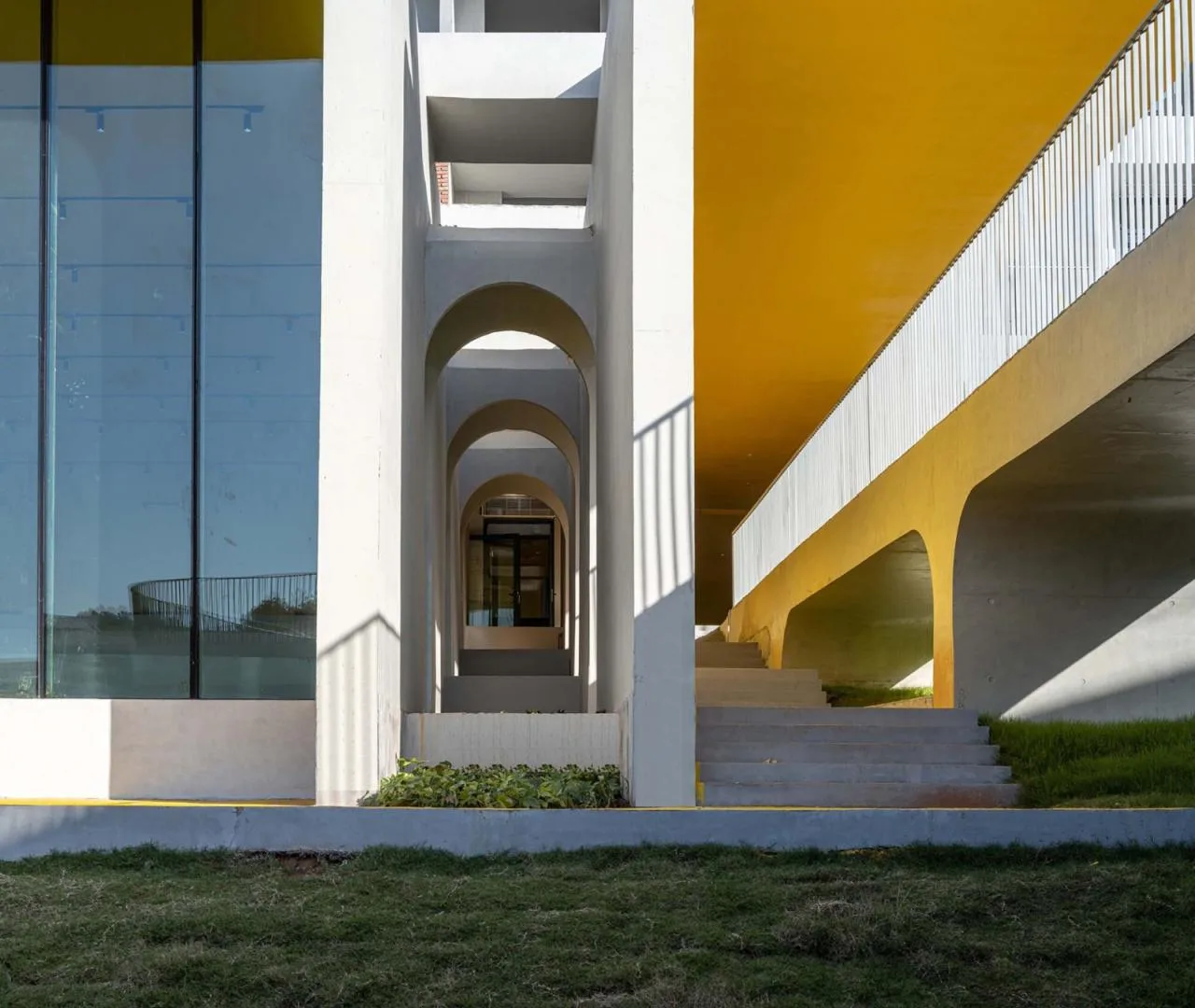
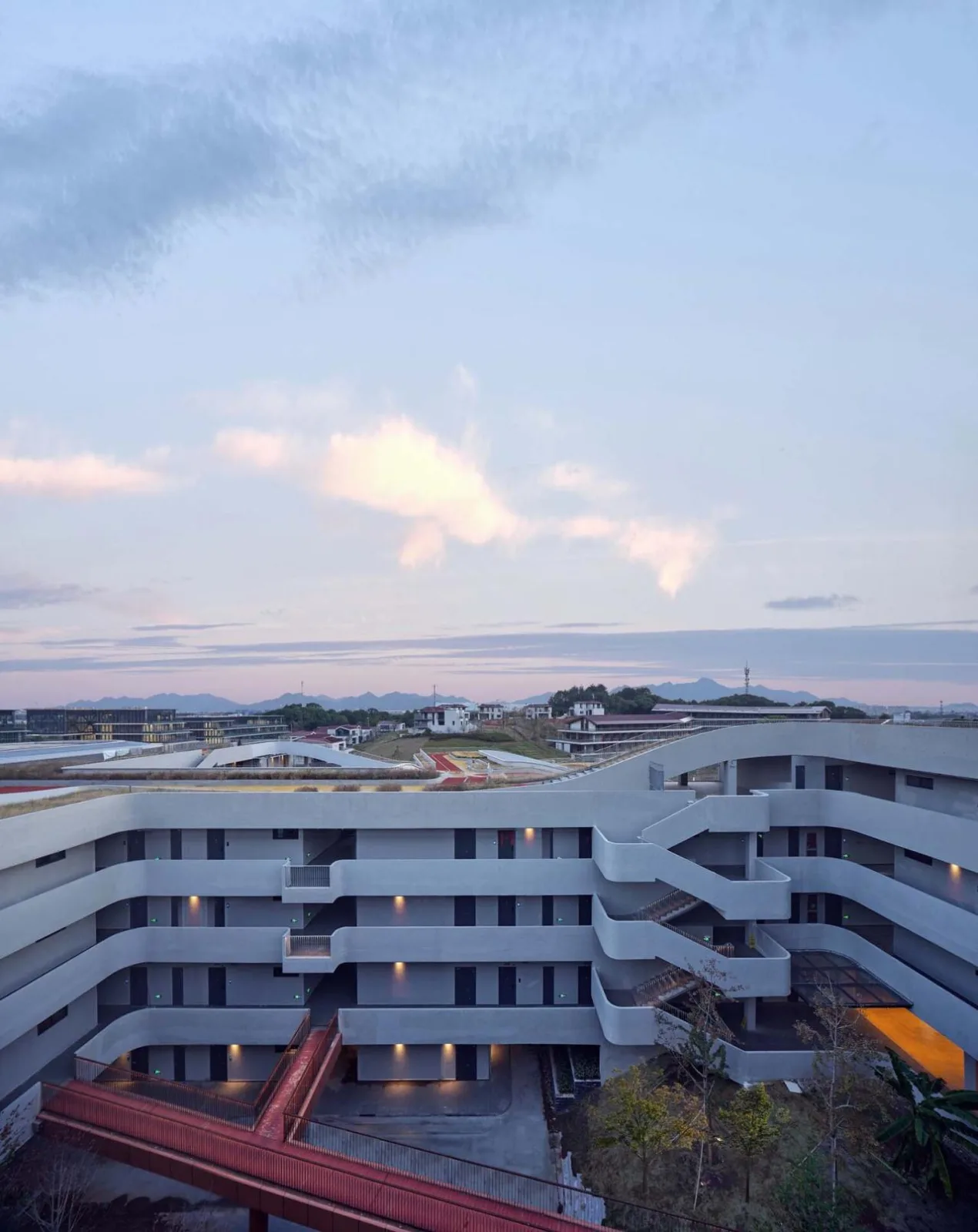
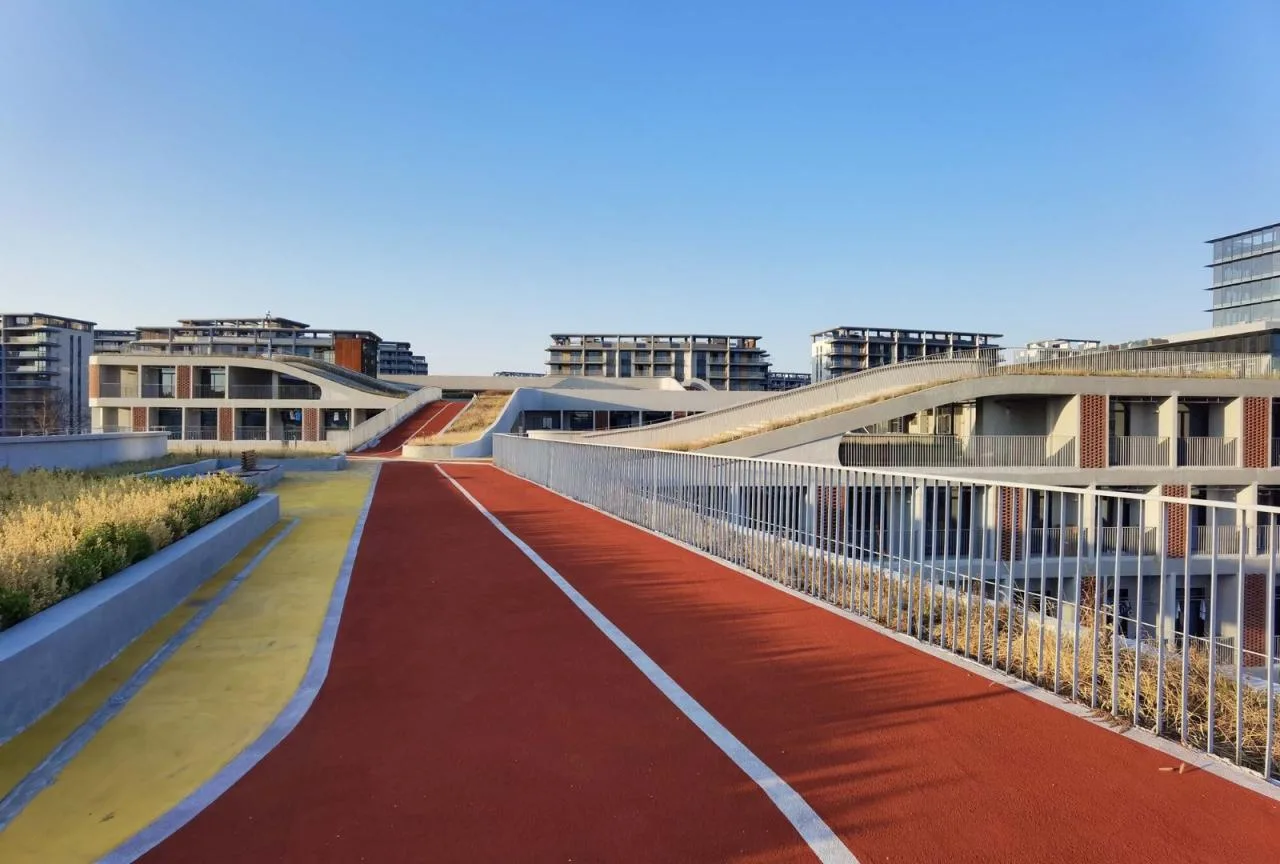
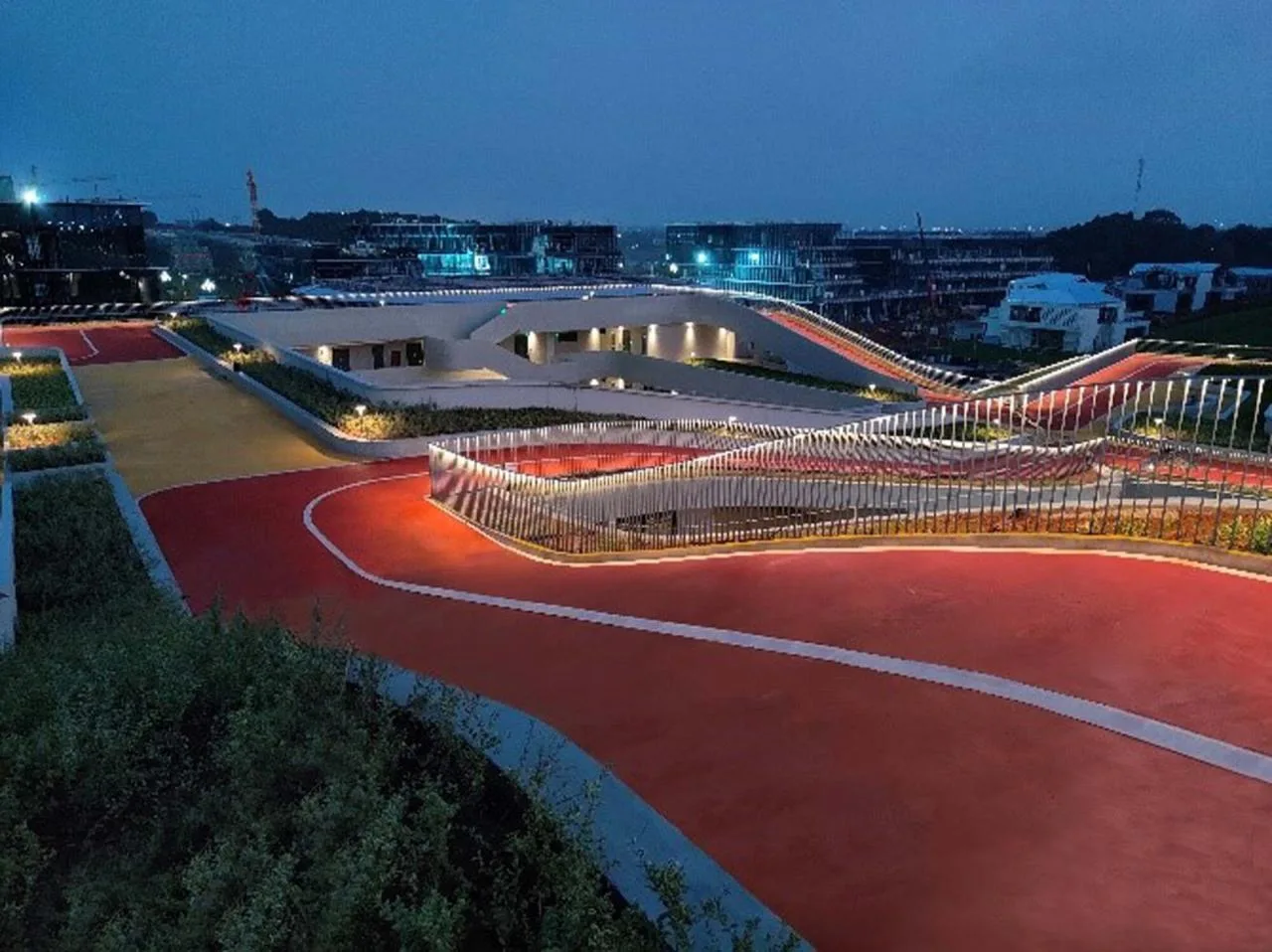
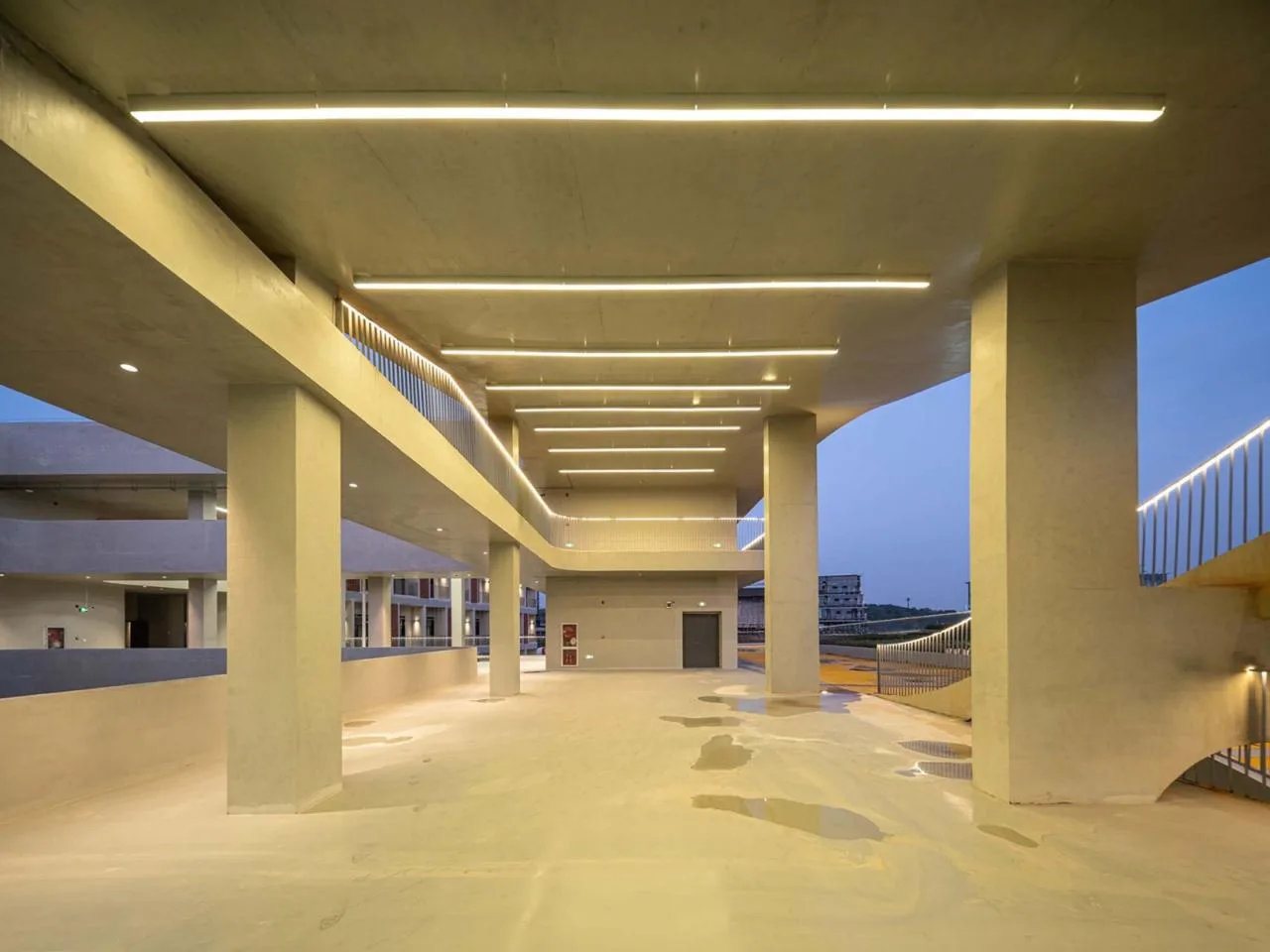
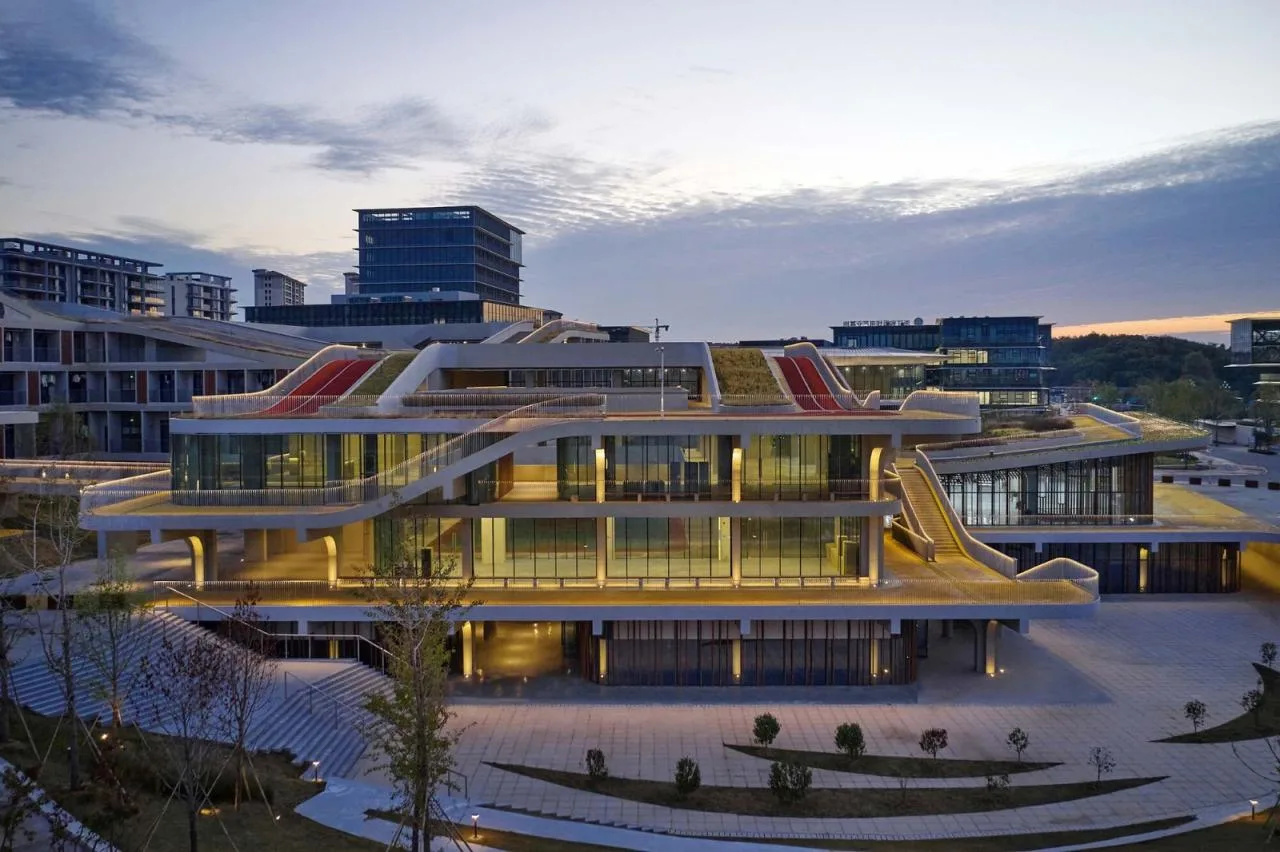
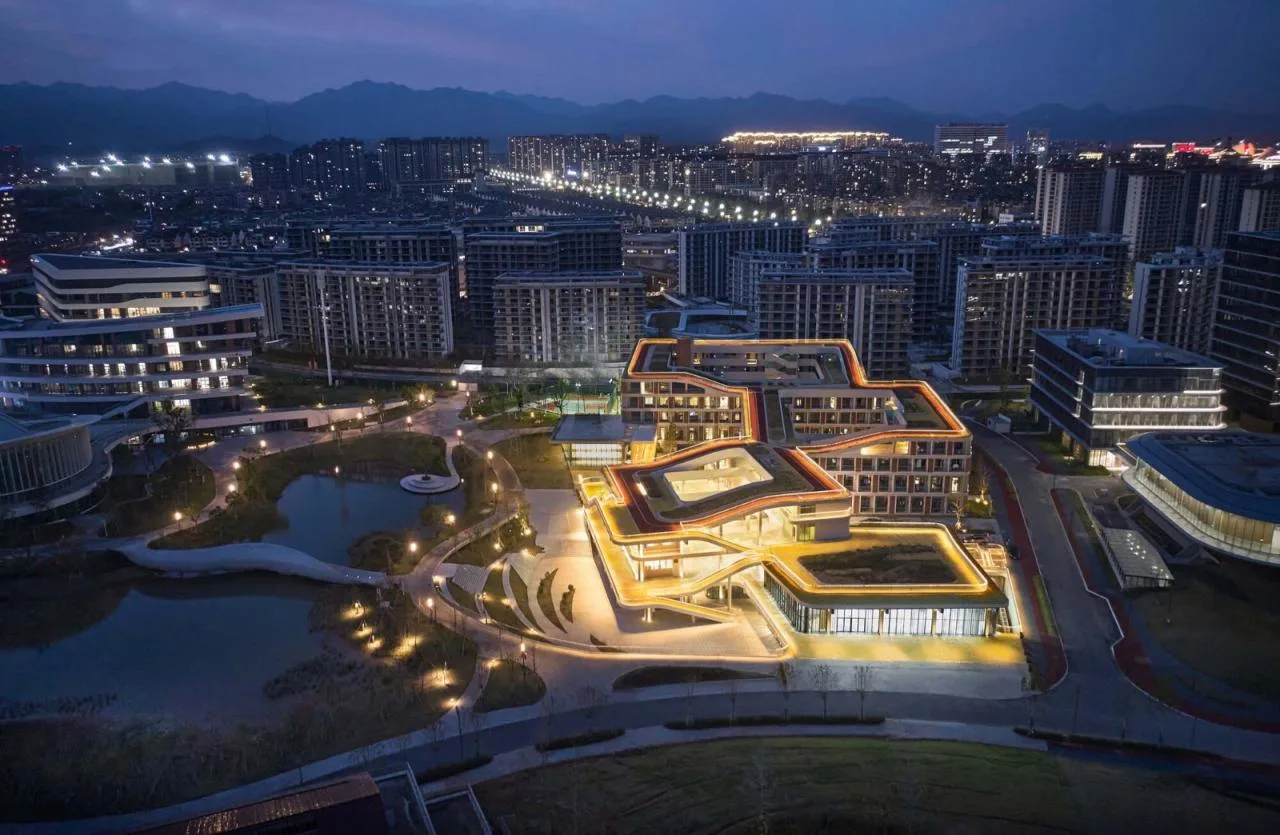
Traditionally, roofs of dormitories and living areas are underutilized spaces, often hosting equipment pipelines. Contrarily, the Life Center at the Yangtze River Delta Research Institute uses roof volumes and cascading elevations to form a three-dimensional walking network. The architect divided this path into two rings: an “inner diameter” and an “outer diameter,” weaving together a dynamic circulation system.
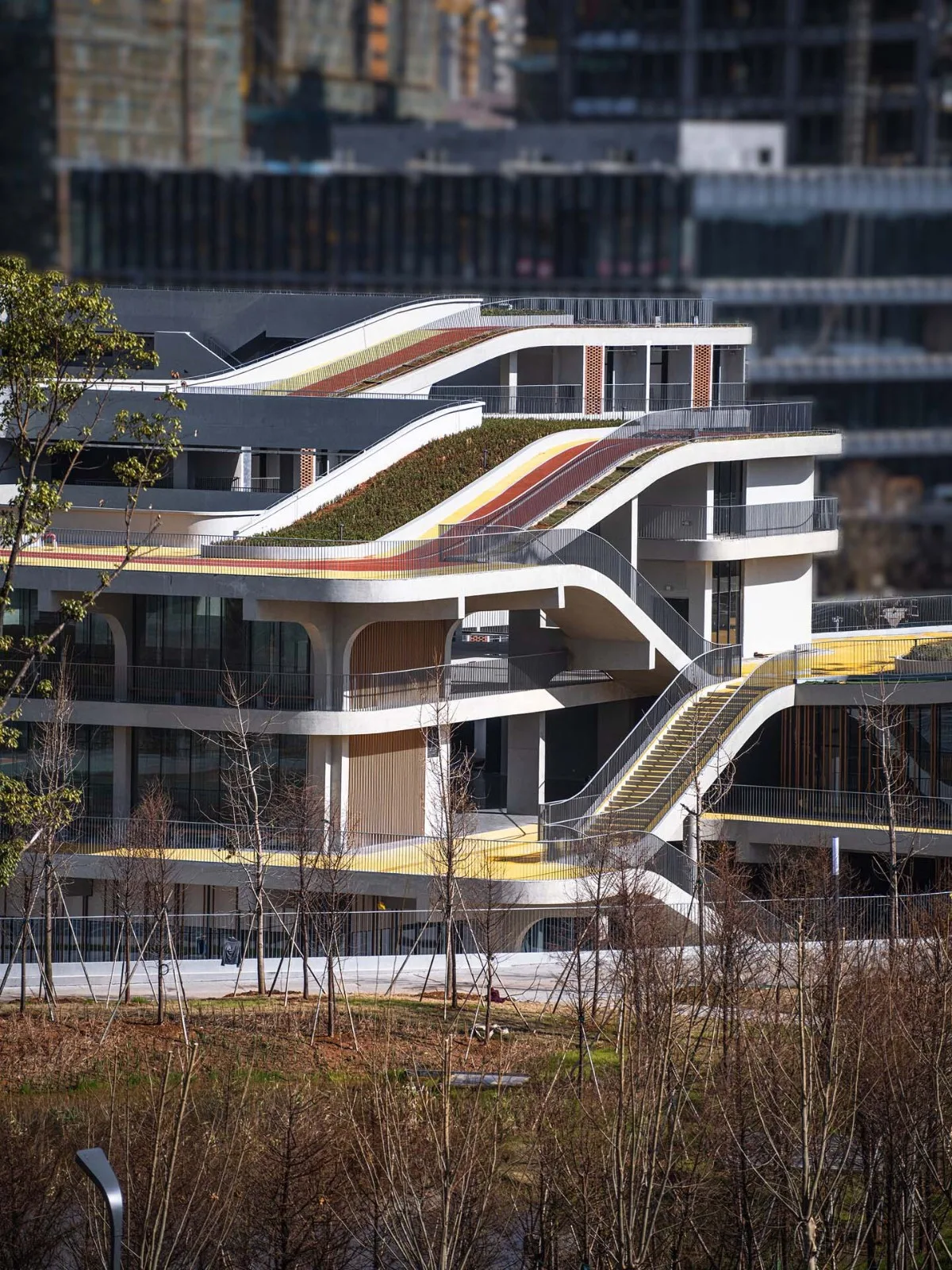
The inner diameter runs through the core functional areas, ensuring efficient circulation, while the outer diameter connects five courtyards and links with the dormitory roofs, forming a complete loop. From any building block, one can embark on this path to explore various parts of the complex. A red circular plastic track, combined with rough yellow acrylic, extends from the sports center to the northern dormitory roofs, standing out against the smooth concrete. Surrounded by greenery, this narrow rooftop space transforms into an outdoor sports and activity platform, inviting both students and faculty to engage.
Strengthening Material Connections Through Multi-node Physical Spaces
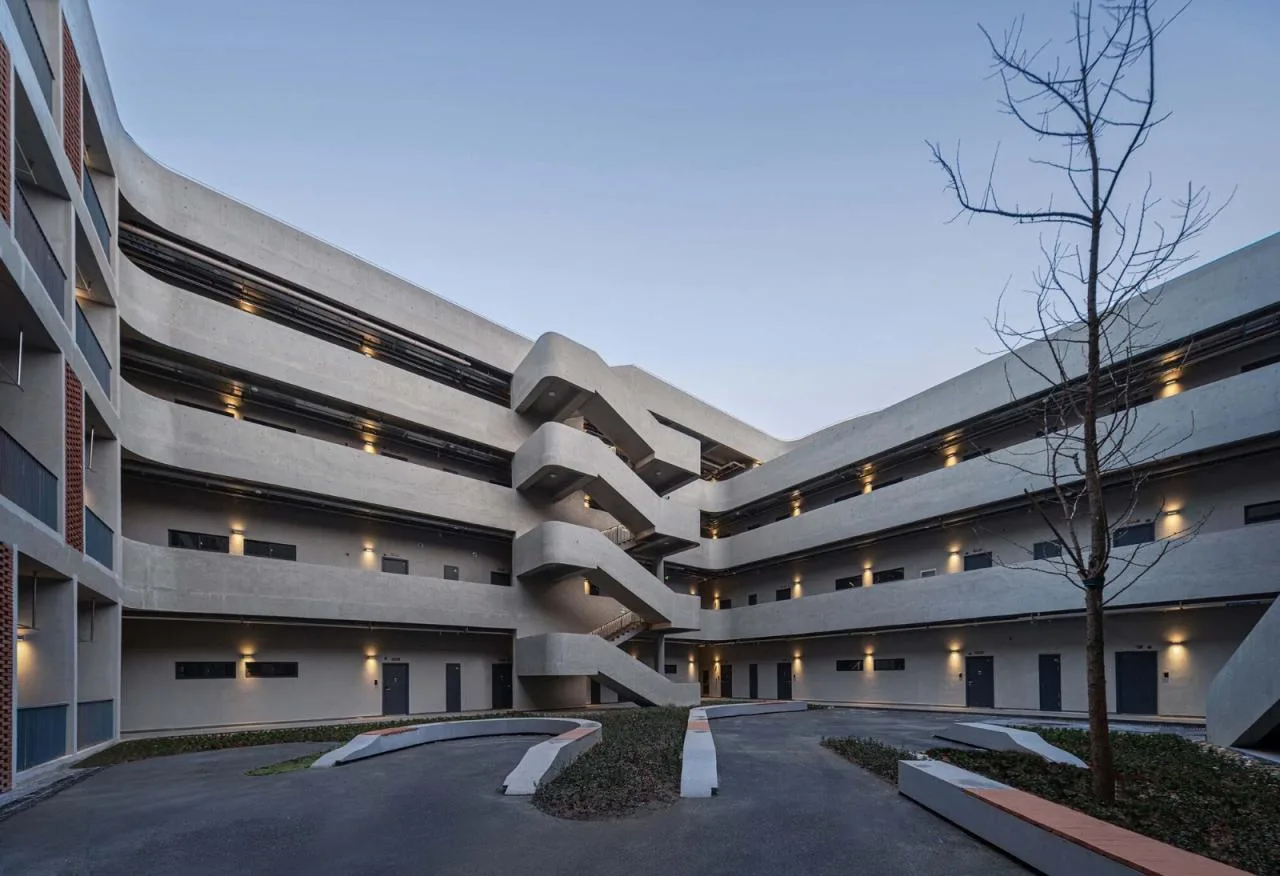
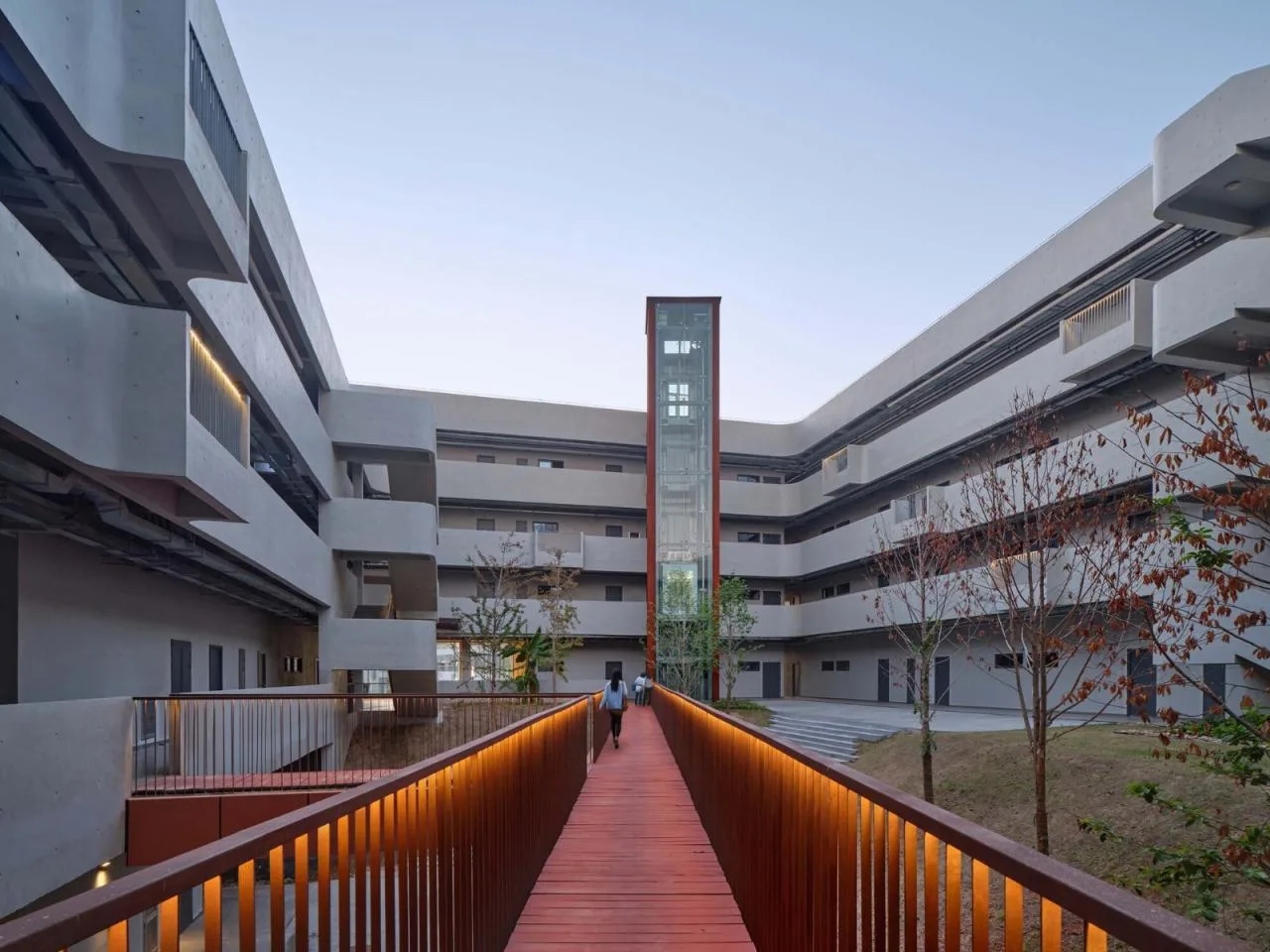
By focusing on the relationships between people and nature, as well as between individuals and public spaces, the Life Center creates an environment that encourages students to reconnect with real-life experiences. Its interconnected courtyards offer a wealth of natural elements, daily life, events, and immersive experiences.
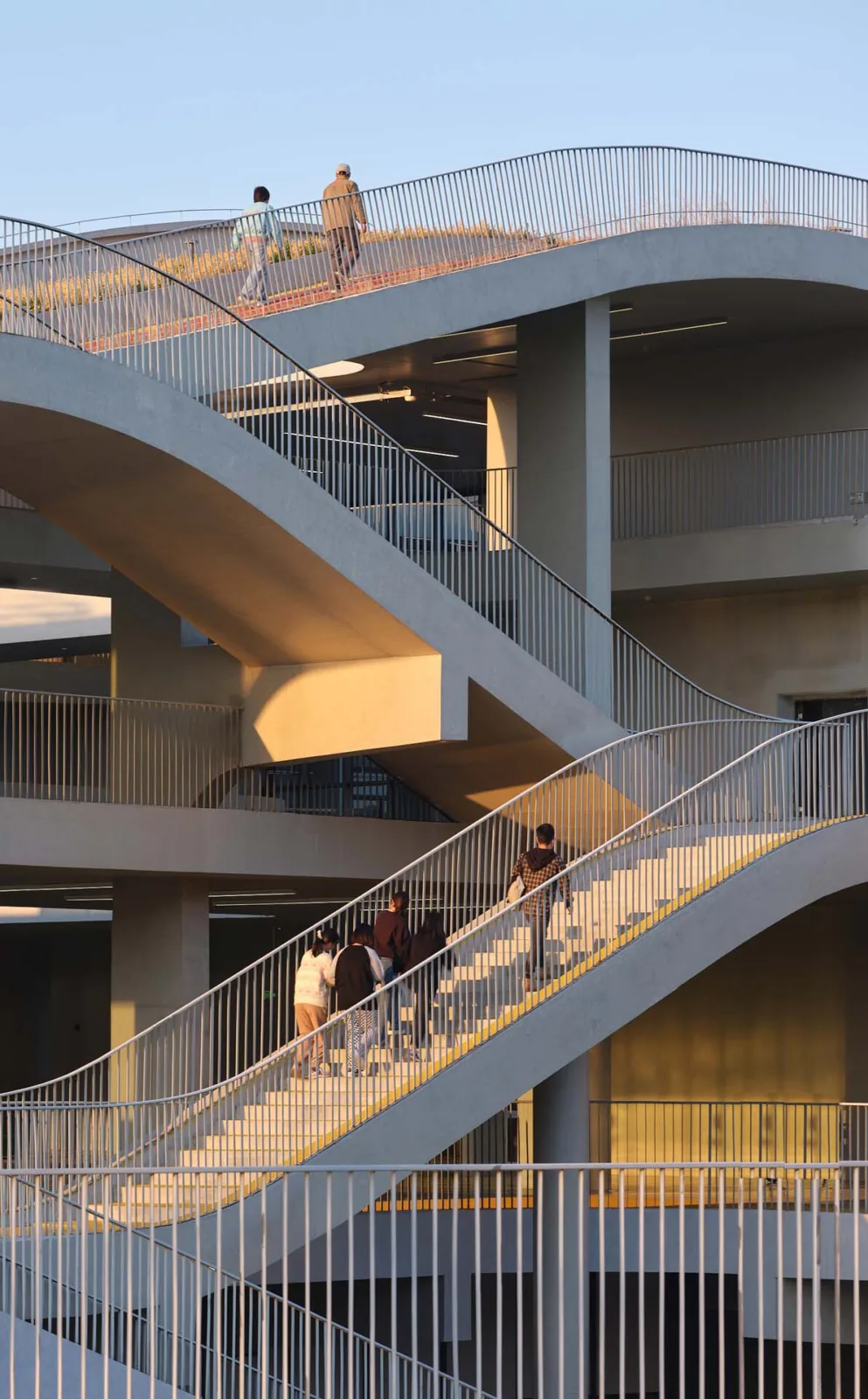
The dormitory dean’s area measures 36m by 24m, centered around a vertical rusted elevator as a spatial anchor. This, combined with a sunken courtyard corridor, divides the space into two sections. The dormitory courtyard, a 24-meter square, features a sculptural clear water staircase with a continuous “ribbon-like” railing connecting to the corridor, inspiring exploration.
The South District Sports Academy revolves around half a basketball court, surrounded by walkways that serve as stands integrating boards and corridors. Facilities such as the gym, badminton rooms, and table tennis rooms are housed between clear water floor slabs within “glass box” structures. Quiet self-study areas are created through the division of spaces, forming a “courtyard of seams” that enhances visibility and interaction among students and faculty.
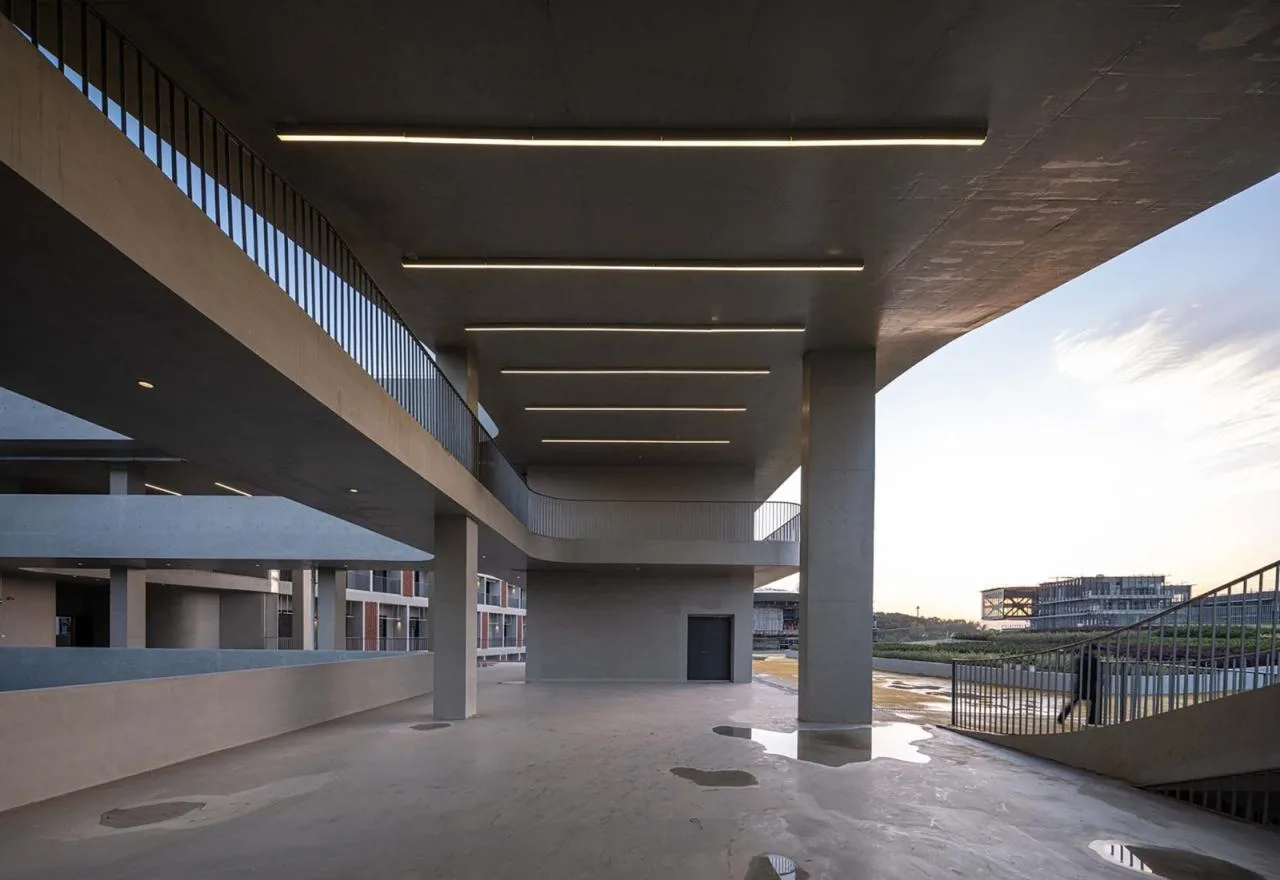
Conclusion: The Life Center connects physical spaces and objects through a tangible network, increasing the presence and engagement of people on campus. By creating multiple engaging points within the landscape and public areas, it strengthens the emotional bond between students and the campus, fostering opportunities for faculty and students to reengage with campus life.
Project Drawings
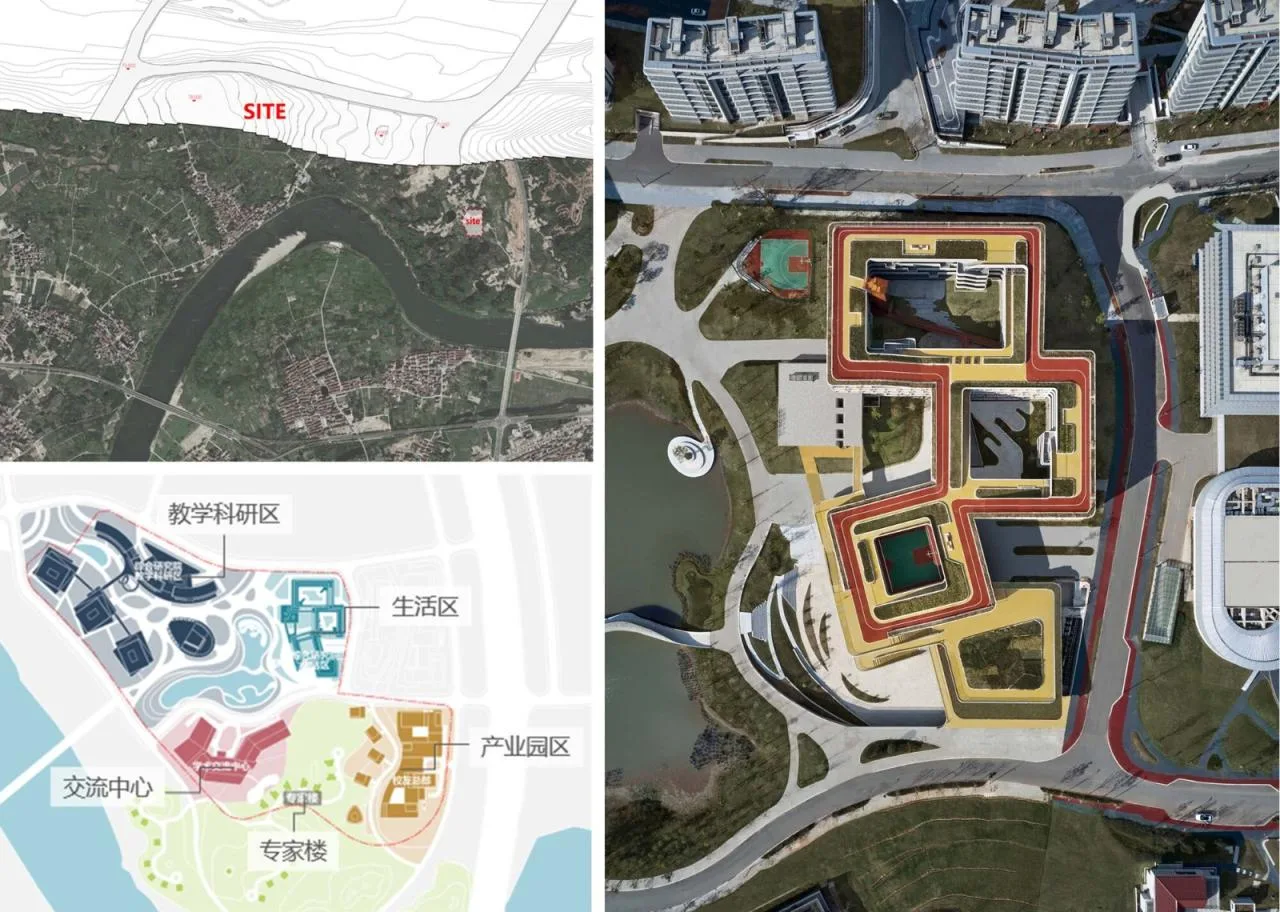
△ Base schematic diagram
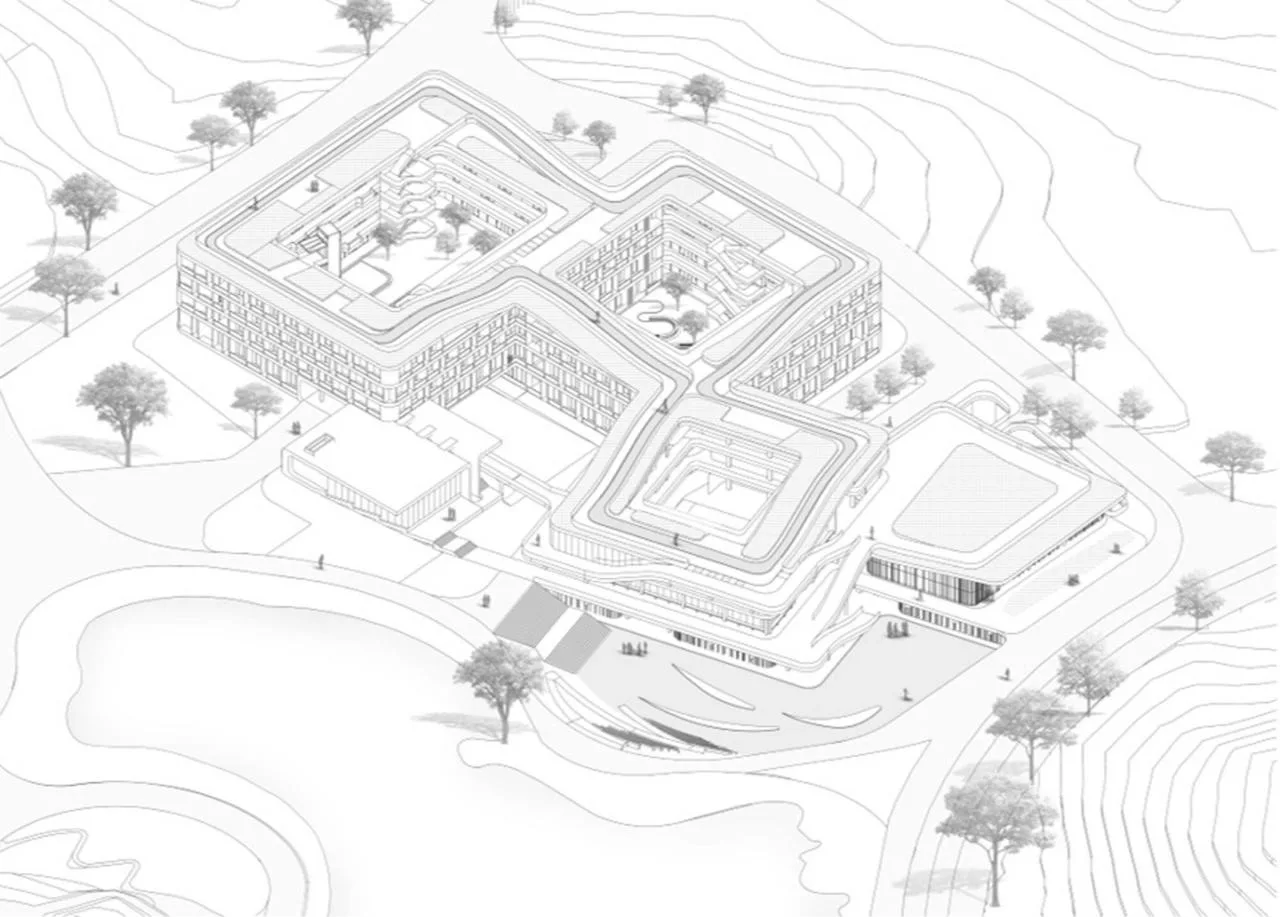
△ Axonometric diagram
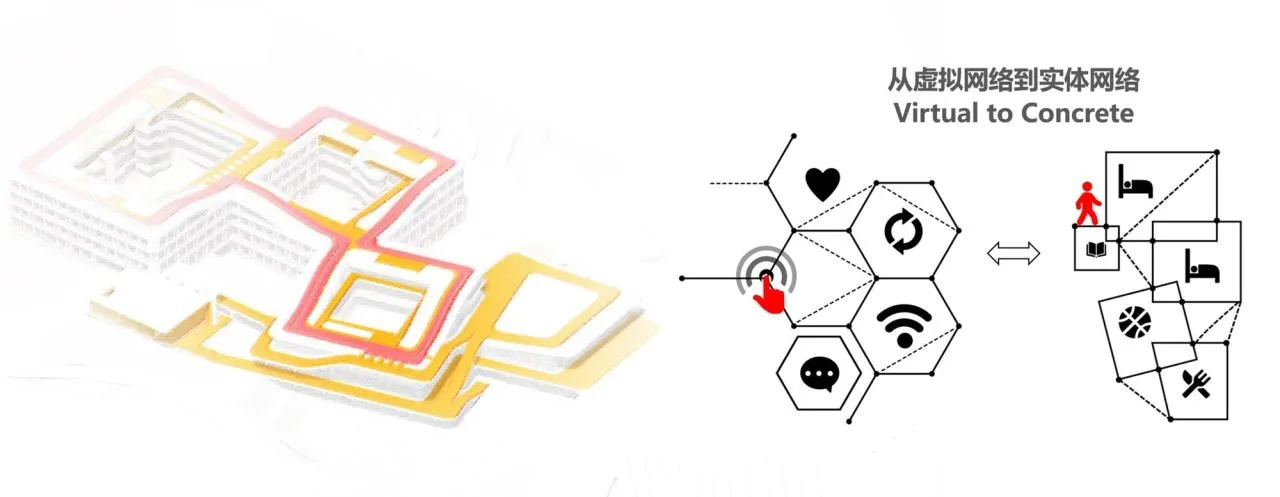
△ Concept diagram
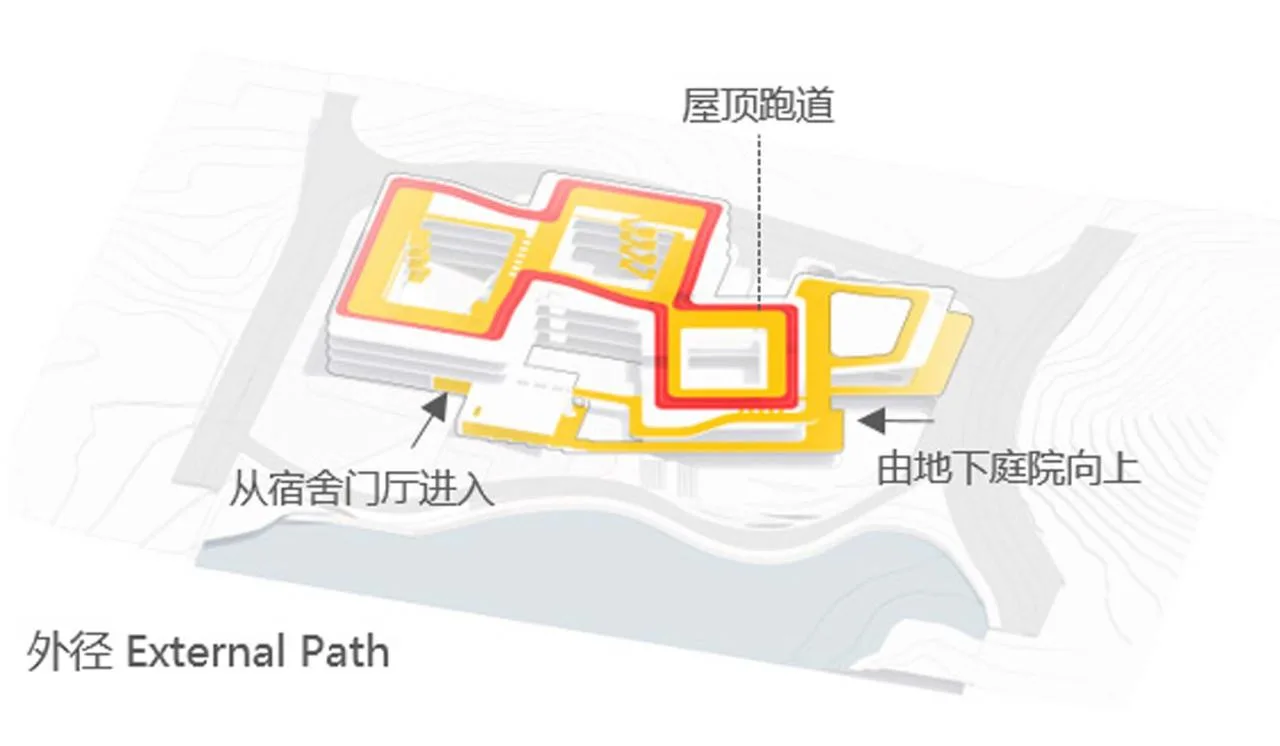
△ Analysis chart
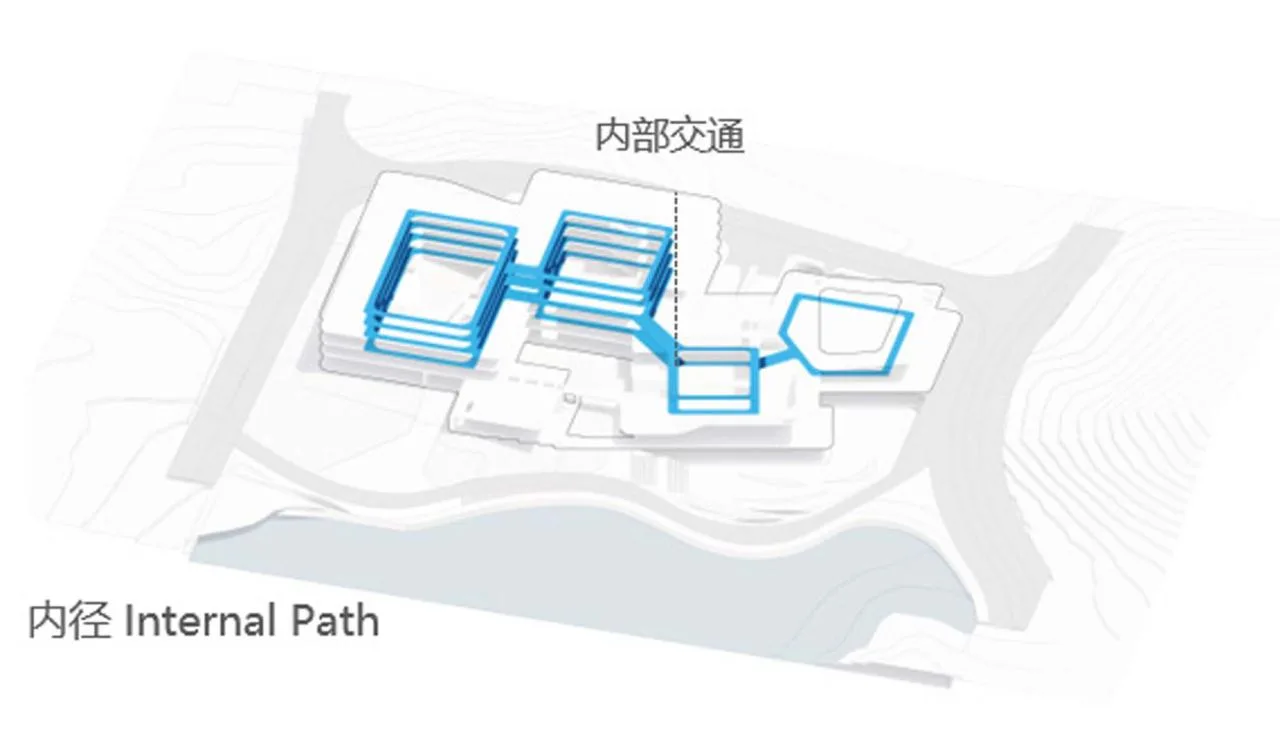
△ Analysis chart
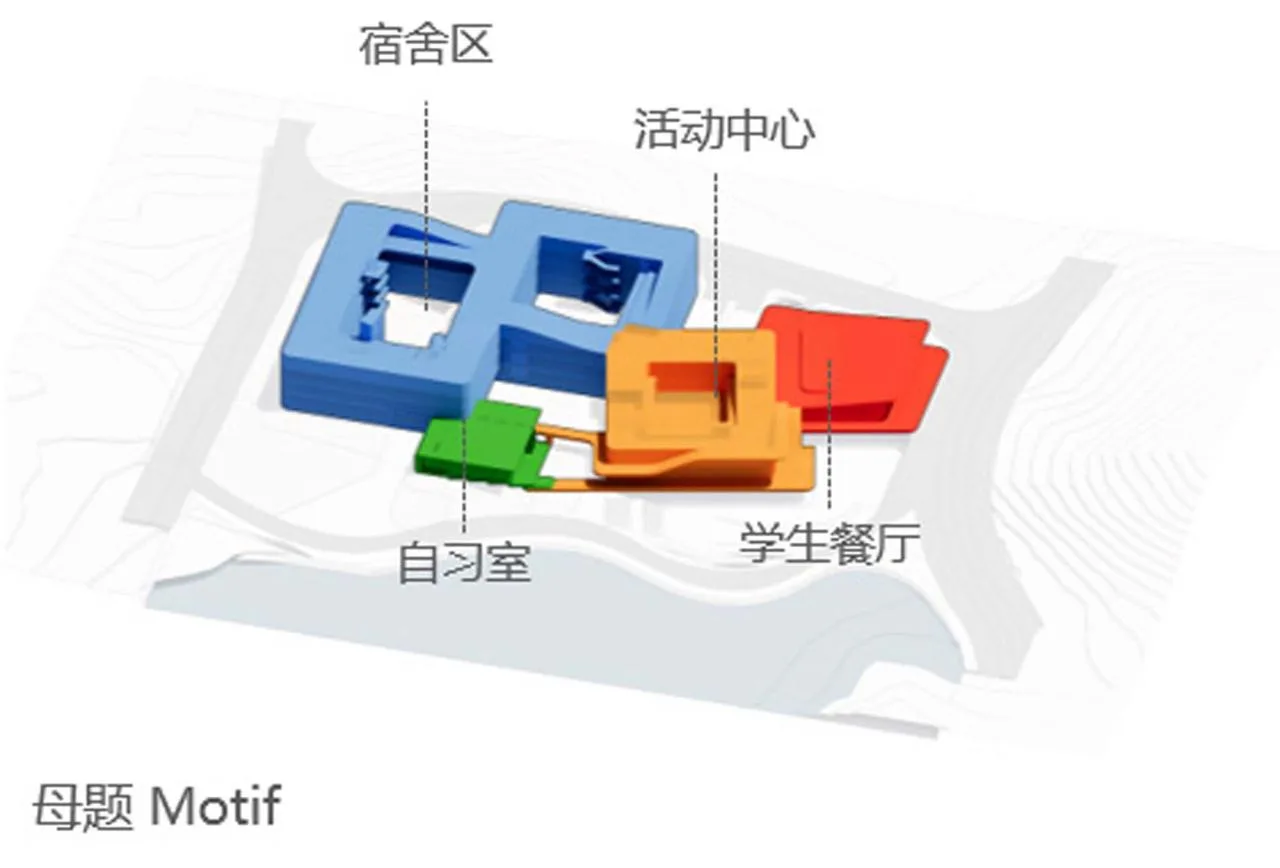
△ Concept diagram
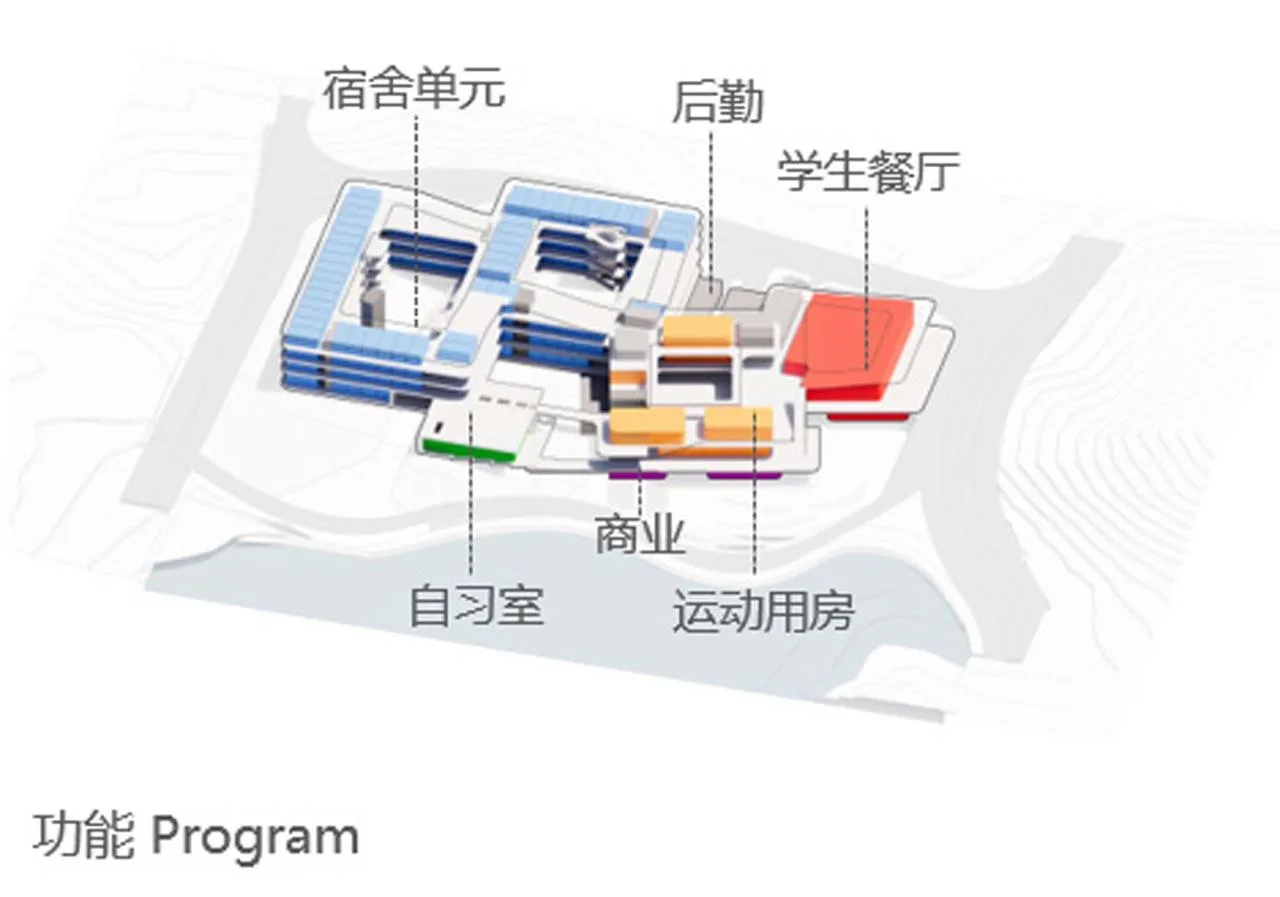
△ Functional zoning diagram
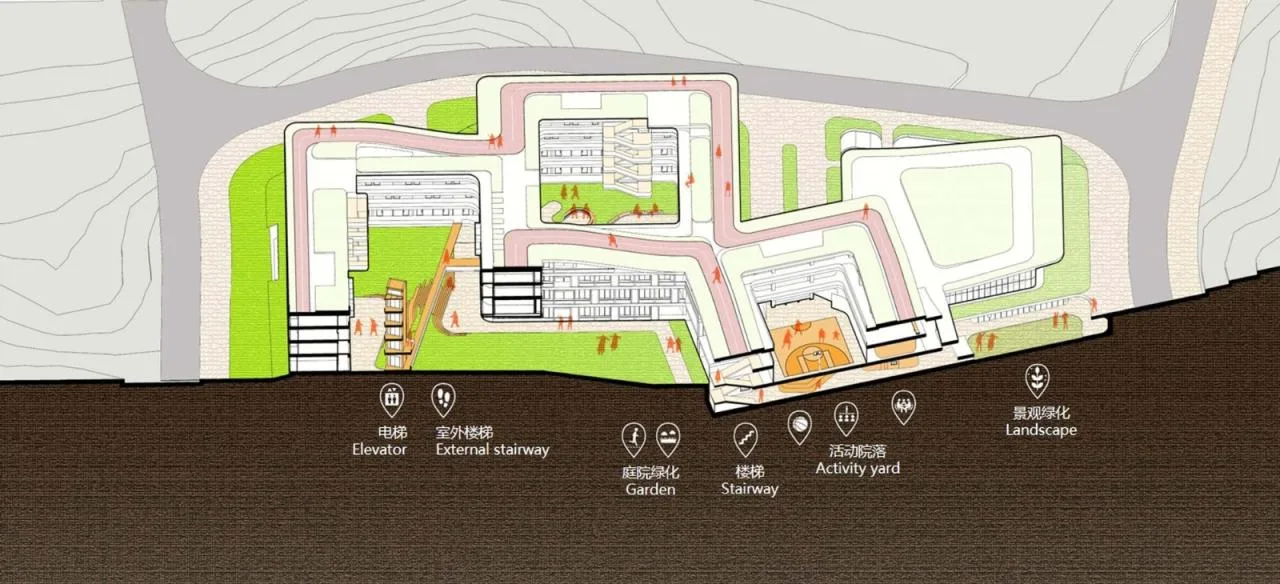
△ Sectional perspective view
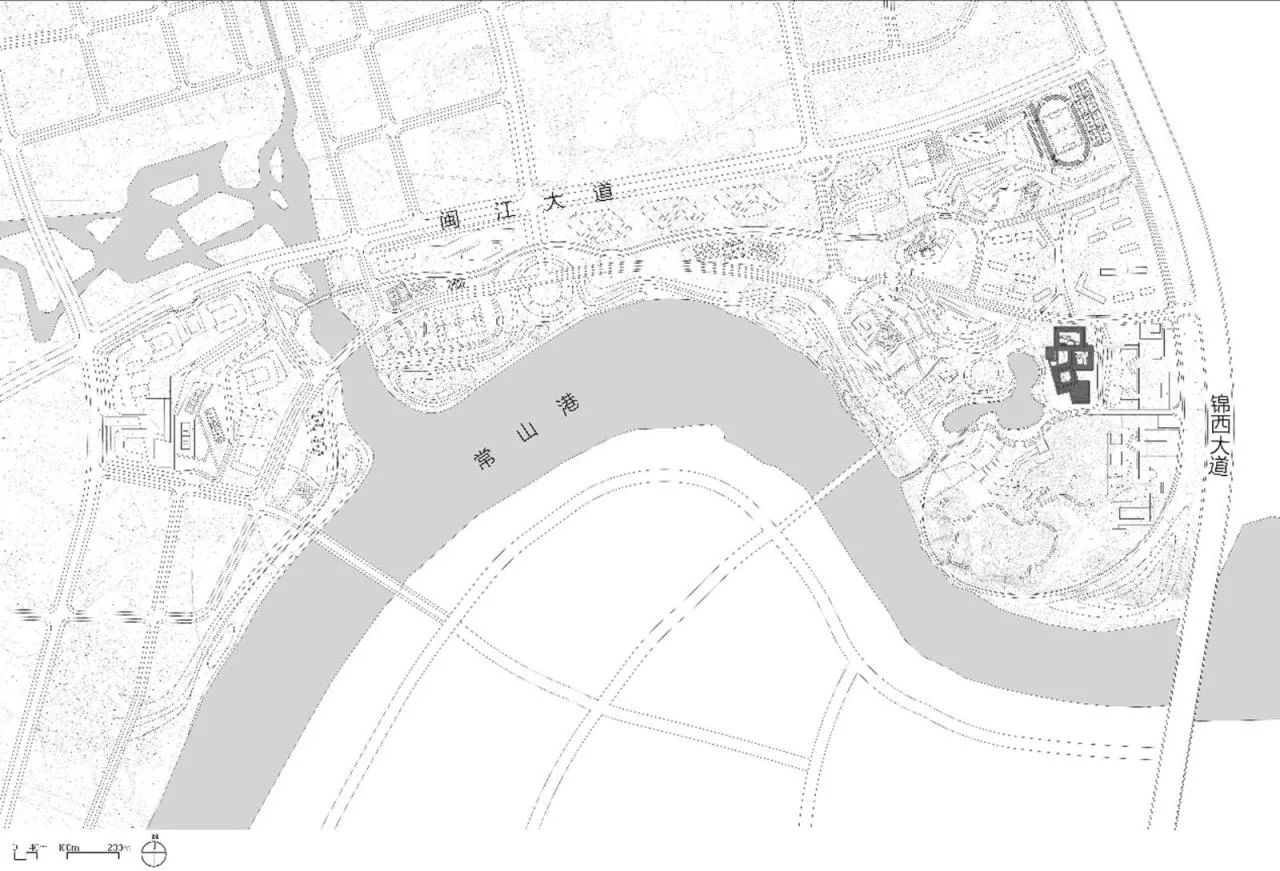
△ Base schematic diagram
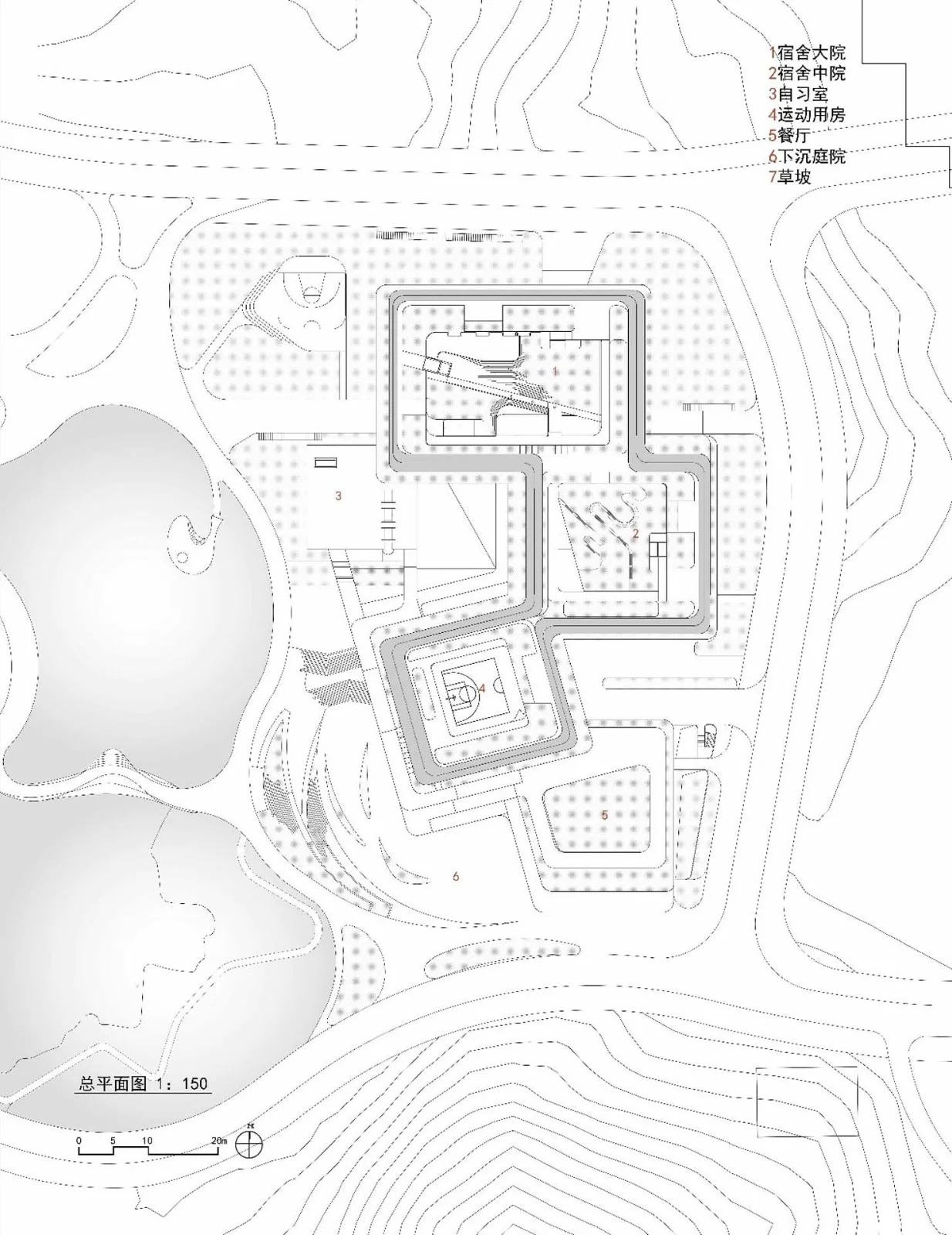
△ General layout plan
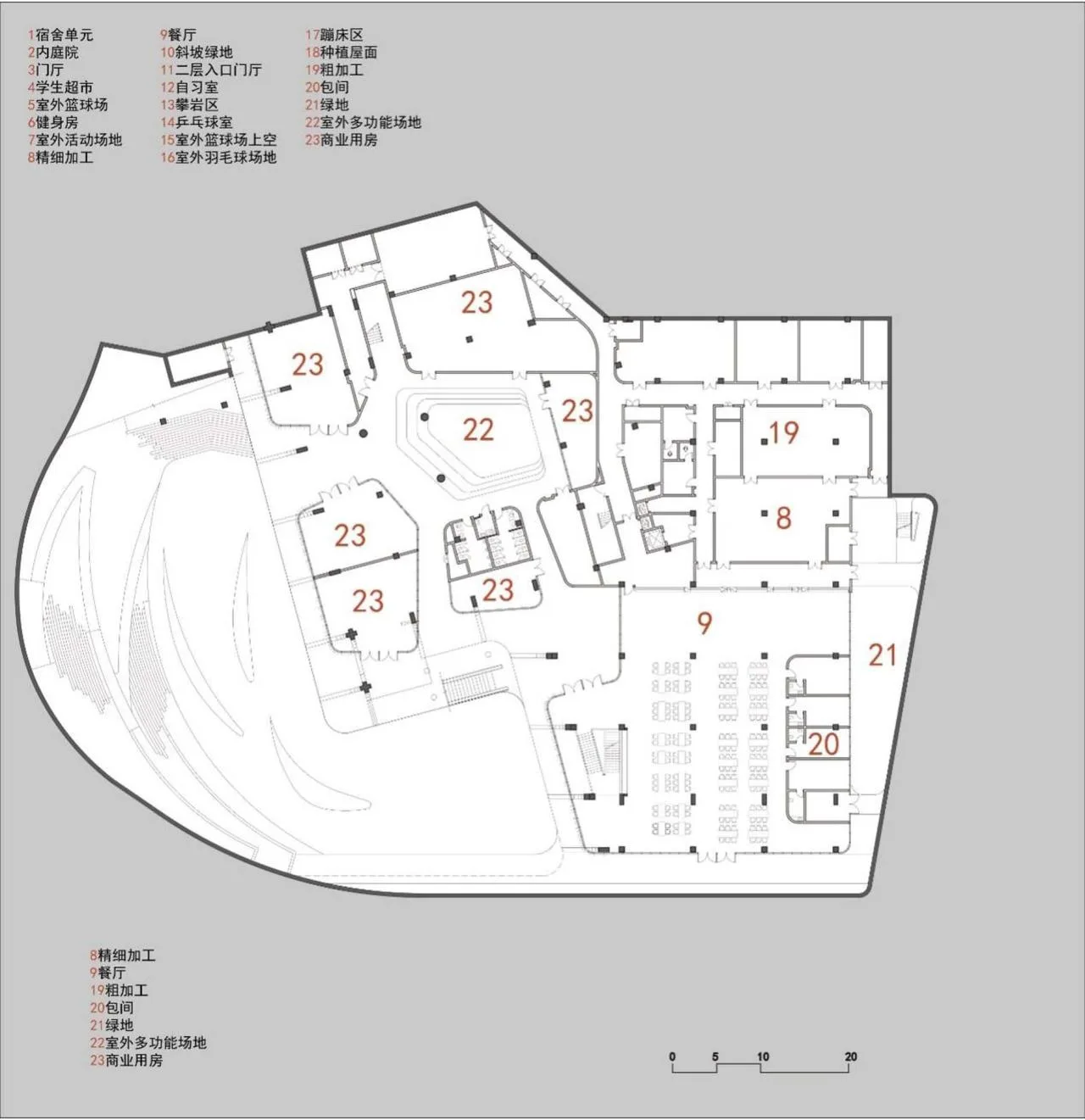
△ First floor plan
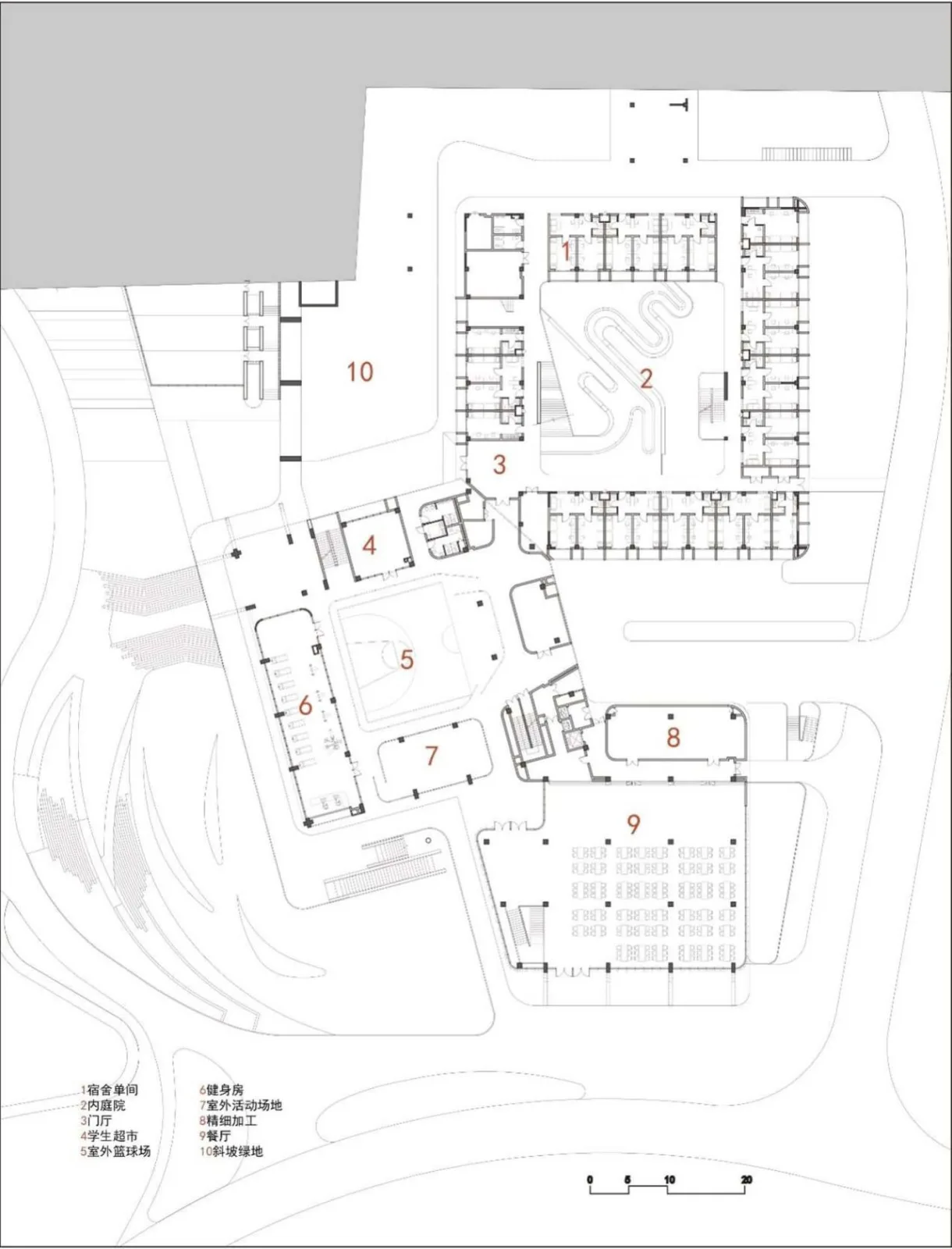
△ Second floor plan
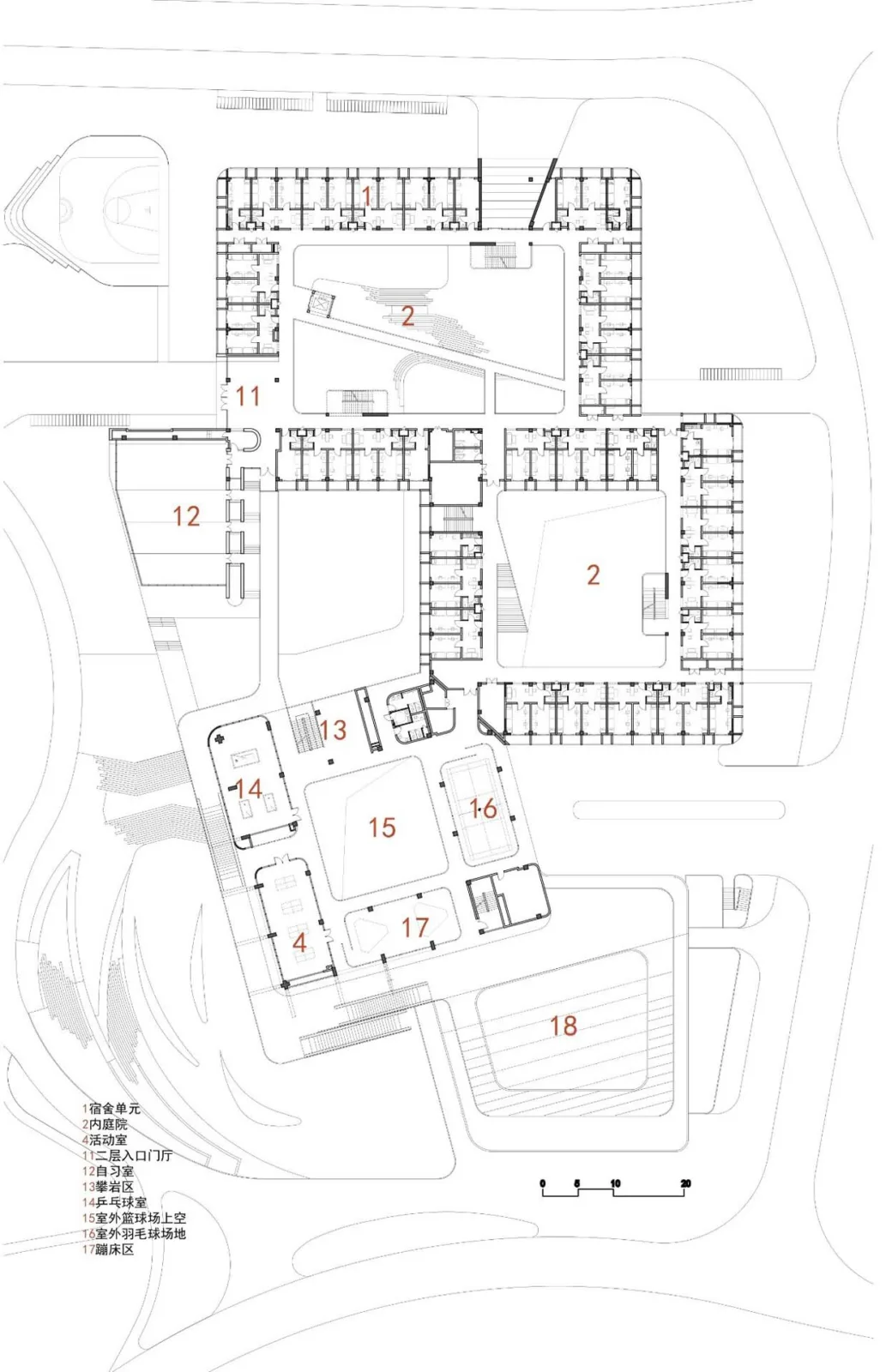
△ Third floor plan
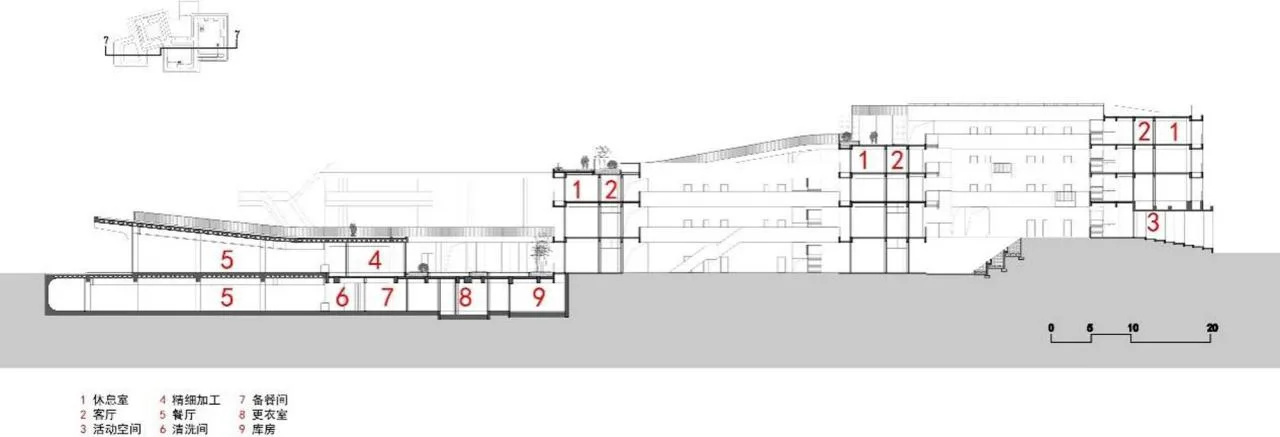
△ Section diagram
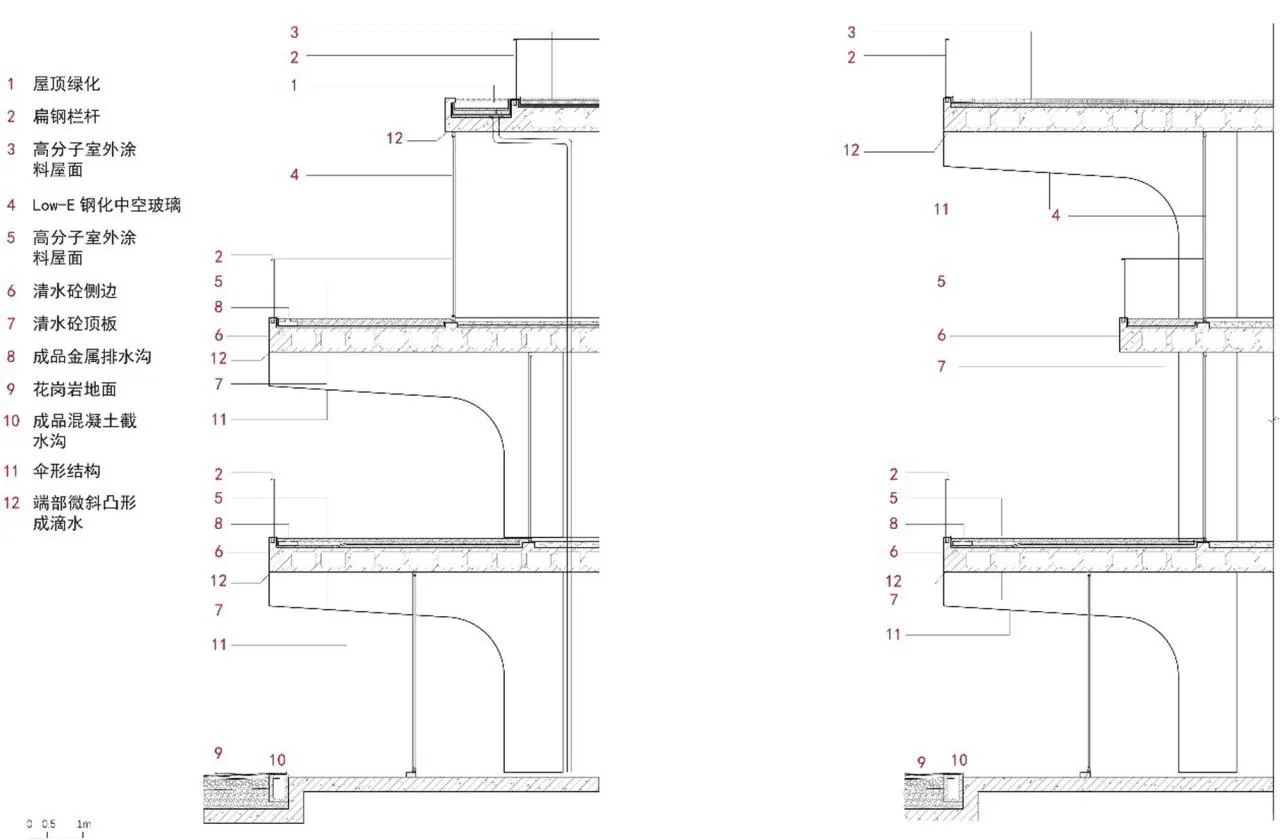
△ Structural detail drawing
Project Information
Architect: TJAD Time & Space Architecture Studio
Area: 19,488 m²
Project Year: 2022
Photographers: Octopus Architecture, Ma Yuan, Yin Ming
Manufacturers: Hangzhou Guanhong Industrial Co., Ltd., Zhejiang Jingchuang Commercial Concrete Co., Ltd., Zhejiang Baohong Construction Industrial Manufacturing Co., Ltd., Yingkou Zhonglinlin Products Co., Ltd., Quzhou Shanhe Building Materials Co., Ltd.
Lead Architects: Jiang Limin, Gui Yaoguo
Project Leaders: Jiang Limin, Lian Jin
Design Team: Zhang Jia, Gui Yaoguo, Li Zemin, Wang Yan
Water Supply and Drainage Team: Li Liping, Ren Jun, Zhang Baodi, Tang Yuyan, Yuan Fang
Electrical Team: Song Haijun, Zhang Ying, Gu Yuhui, Luo Yan, Cai Menglong
HVAC Team: Qin Zhuohuan, Qian Bihua, Wu Hubiao, Yu Xiaoming
Flood Lighting: Yang Xiu, Xu Xiaqing
Green Building Team: Xu Xiaoyan, Xue Fanghui, Zhu Cuiwen, Ju Chen, Wu Guo, Tang Chengyu, Zhang Xian, Li Pengfei
Curtain Wall Design: Lan Lijun, He Qian
Structural Design: Hu Guangliang, Shen Kui, Zhang Shuo, Yang Fuquan
Landscape Design: He Qiang, Xiao Hong, Lian Letong, Zhang Jie, Huang Zhengtao, Zhou Yaohui, Zhan Liwen
Construction Party: China Construction First Engineering Group Co., Ltd. Beijing Branch
Principal: Quzhou Qutong Development Group Co., Ltd.
Location: Quzhou














Must log in before commenting!
Sign Up