
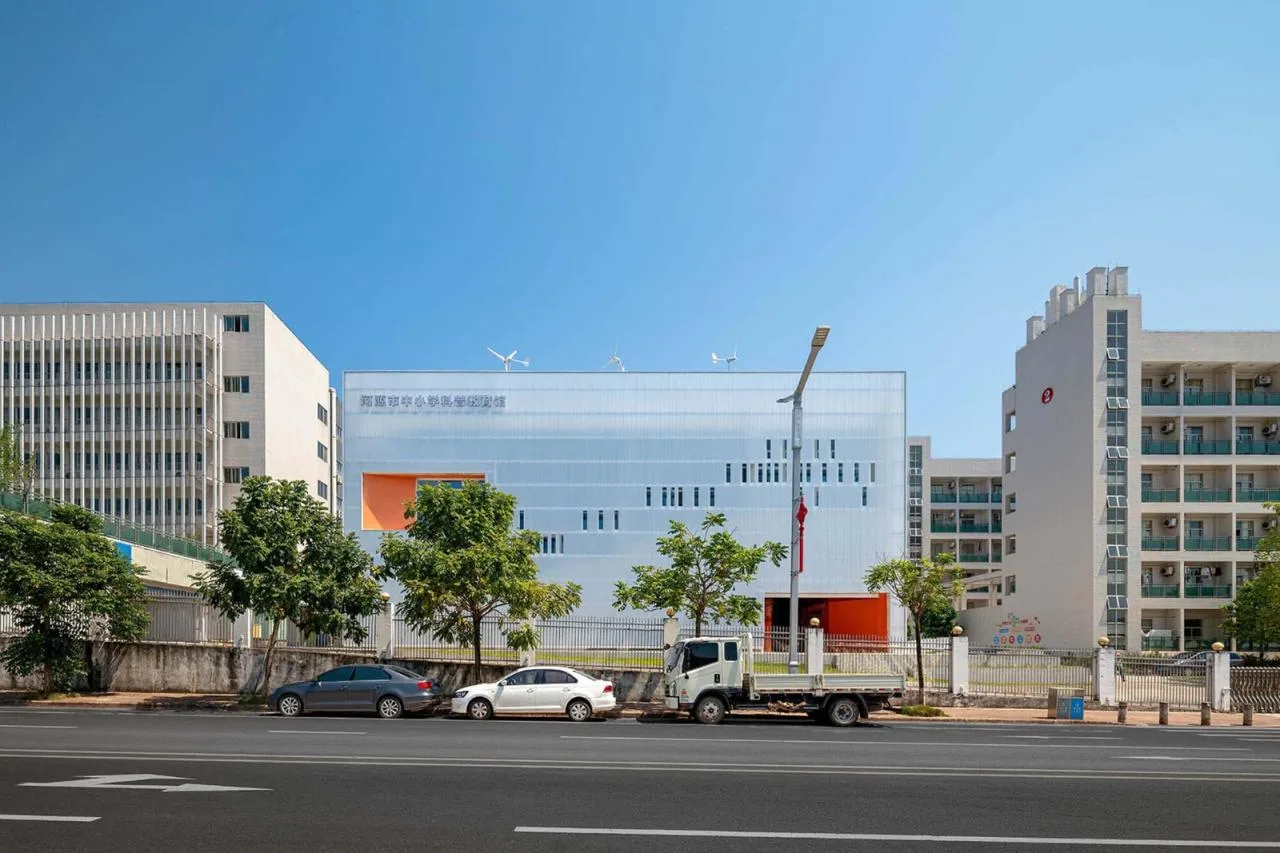
Future education, especially in primary and secondary schools, has become a prominent topic within the educational and architectural fields. Recent advancements have introduced new requirements for learning environments. For example, STEAM education emphasizes interdisciplinary, collaborative, engaging, experiential, and contextual learning. Such approaches demand teaching spaces that are open, flexible, diverse, and adaptable to different scenarios. The Science Popularization Education Museum for Primary and Secondary Schools in Heyuan City exemplifies this experimental approach.
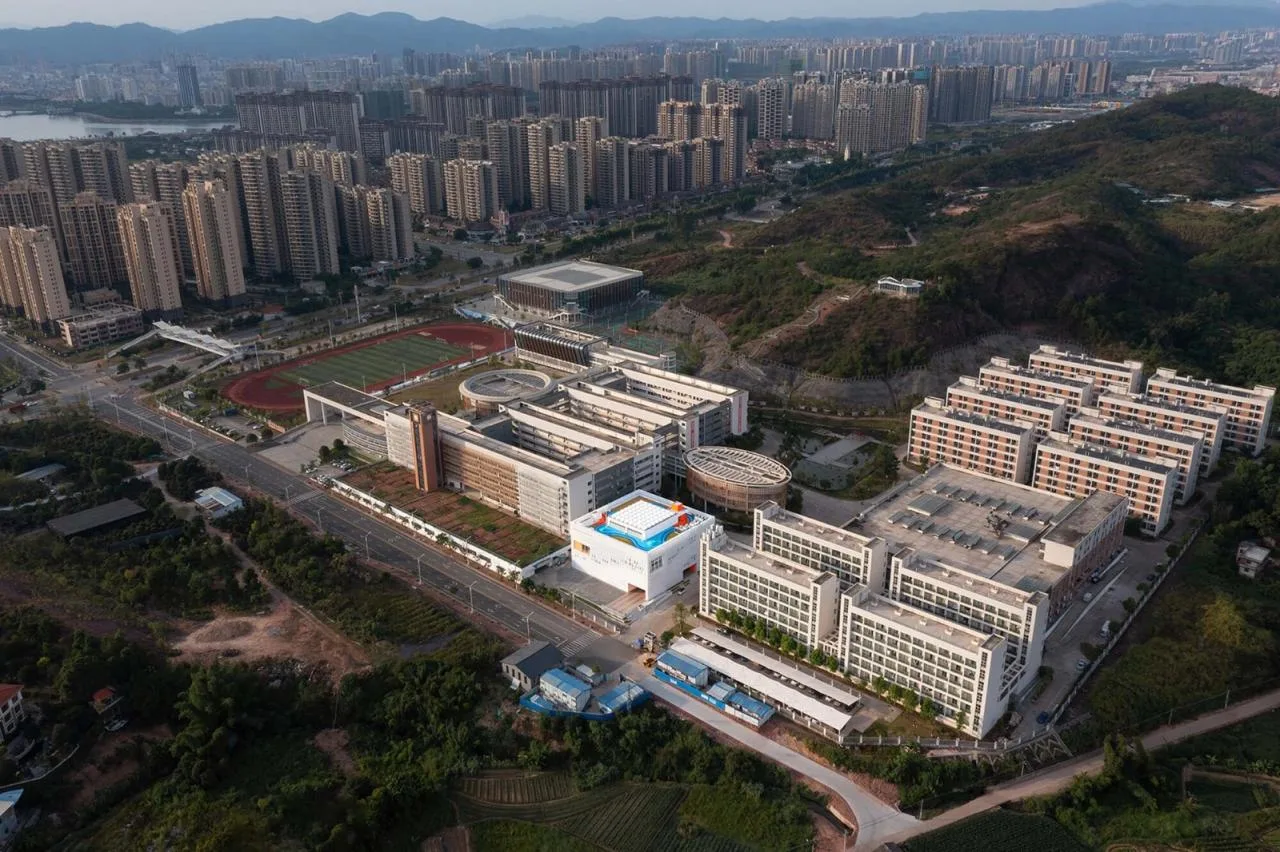
Situated within the existing campus, this project covers a building area of 3,577 square meters. Despite its modest size, it holds significant demonstrative, benchmark, and thematic value. The provincial government strongly supports the initiative, aiming to establish a first-class science popularization education museum in China. This facility will serve as a model for similar institutions across the province, offering primary and secondary students opportunities to explore and learn. Notably, few small science museums target this demographic, making this project a valuable reference for future developments.
The museum focuses on thematic science popularization rather than comprehensive exhibitions due to its scale. Future venues will tailor their themes to align with individual school curricula, ensuring unique and distinctive experiences rather than mere replication. Beyond serving as an educational space, the design team envisions the museum as a dynamic venue for developing innovative teaching methods, enhancing utilization by functioning as an “informal classroom” outside traditional school settings.
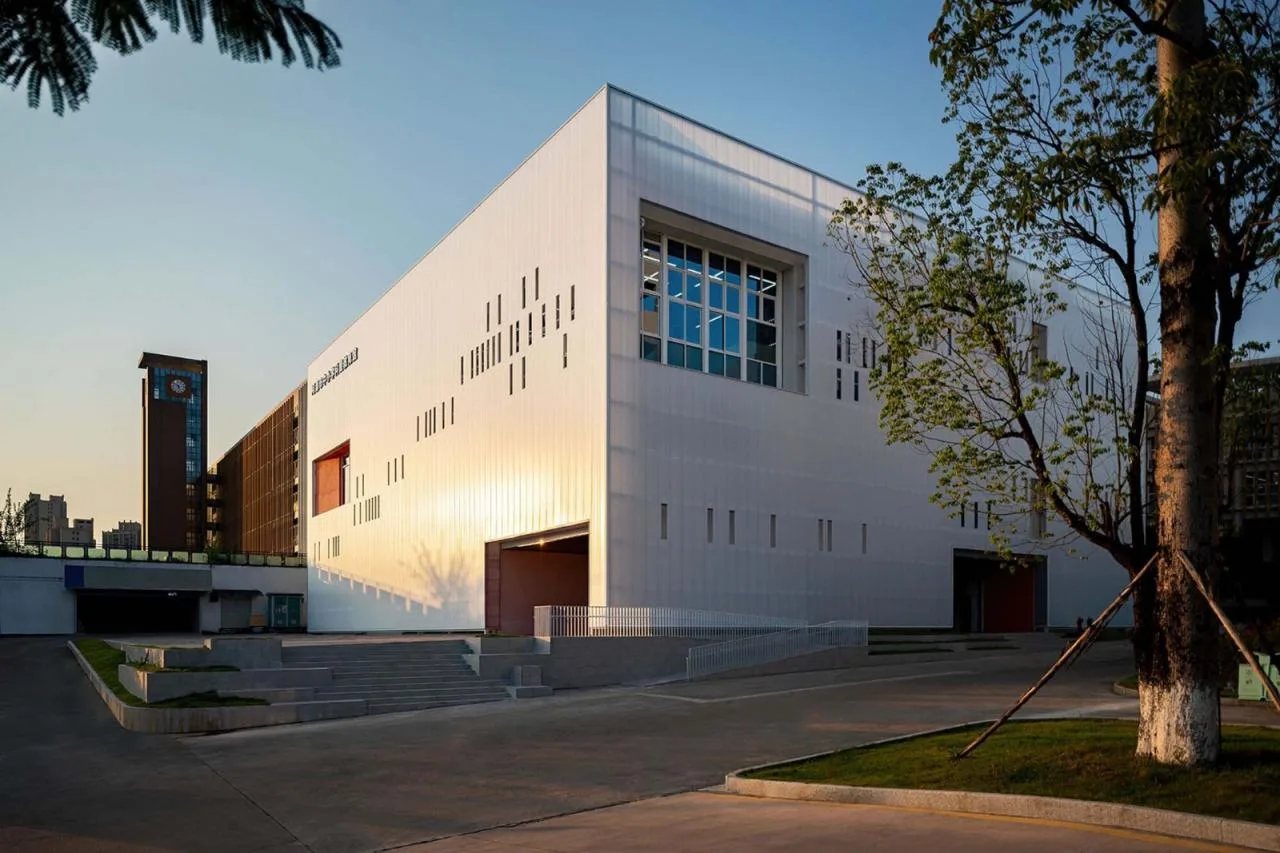
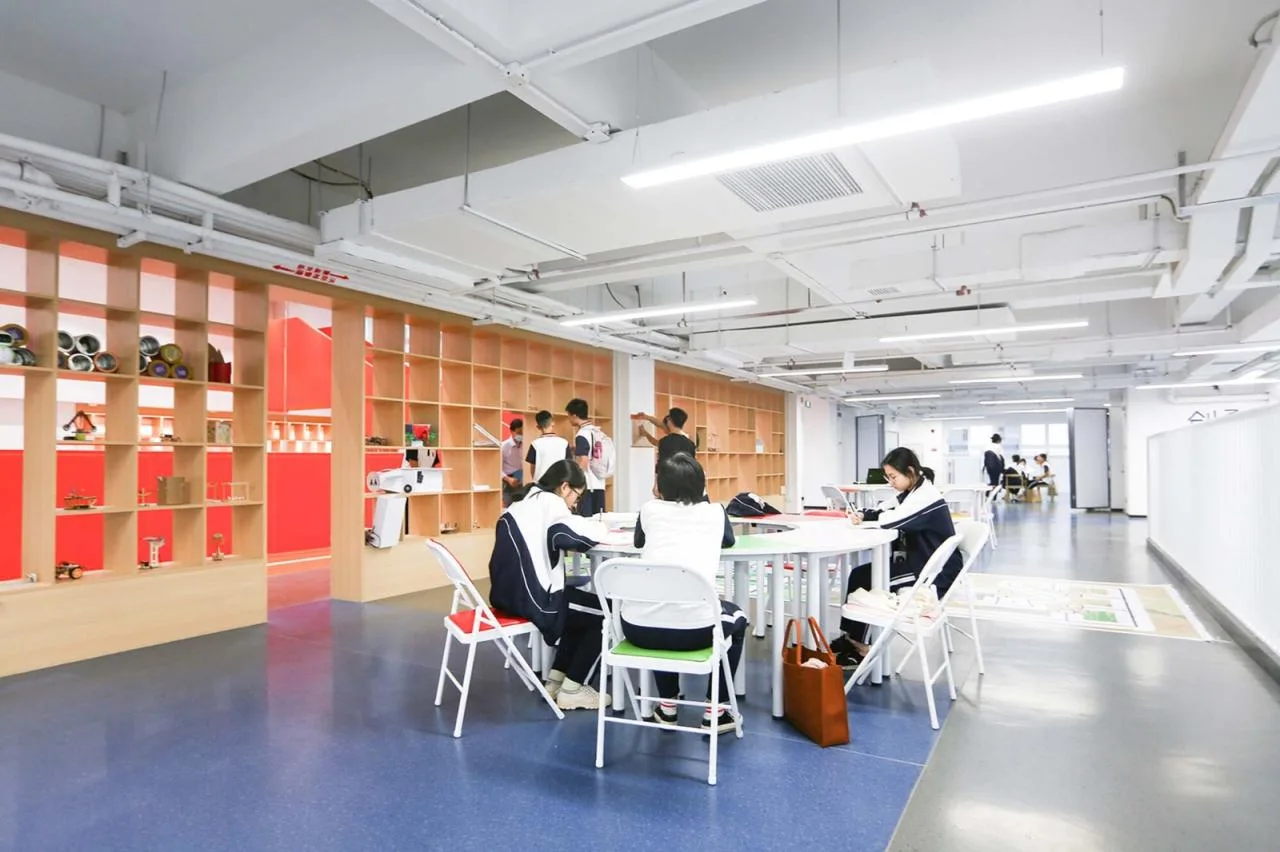
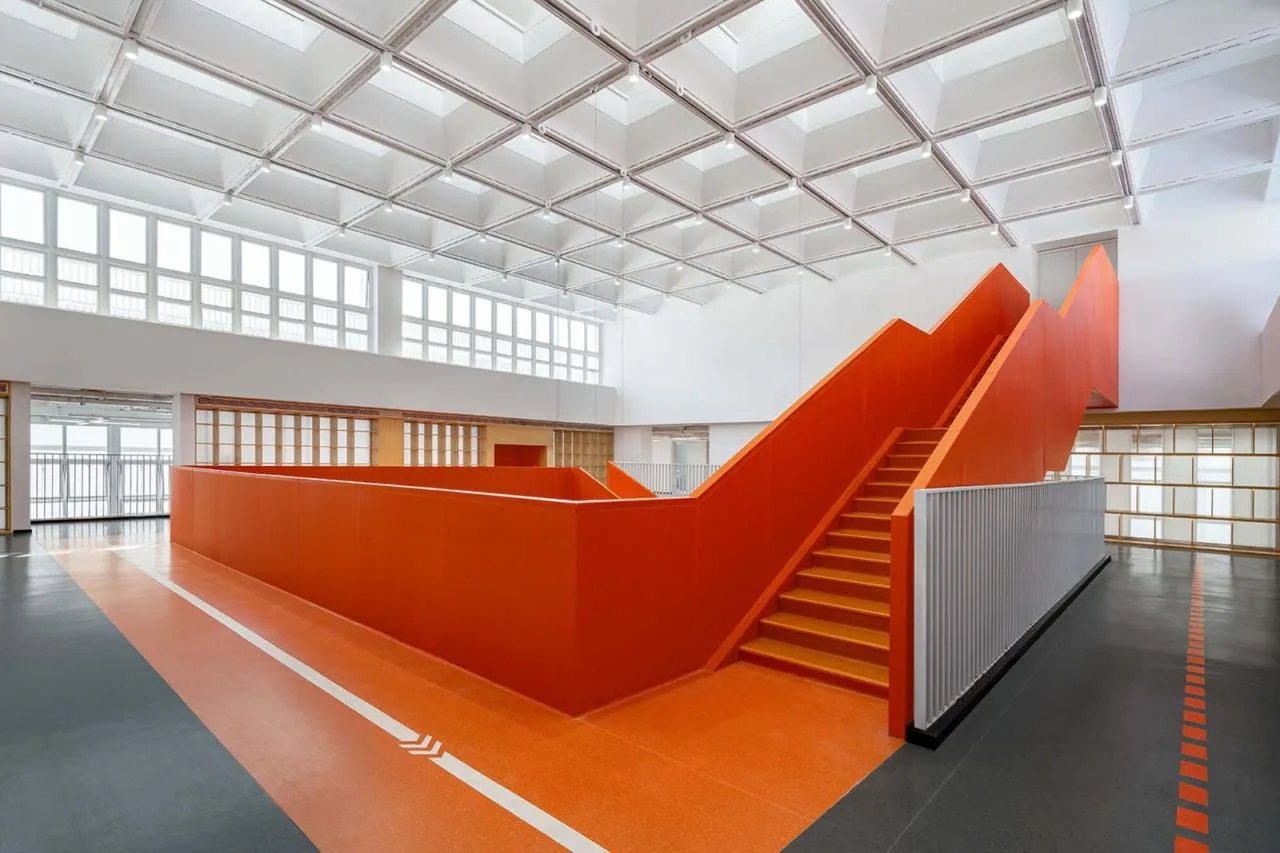
To maximize efficiency within the limited building scale, functional integration is key. Instead of assigning fixed functions to numerous small rooms, the design divides the venue into two main zones: a self-contained, enclosed science popularization exhibition area and an open, flexible teaching area. The exhibition zone houses observation halls, while the teaching area remains adaptable, allowing teachers and students to reorganize the space according to evolving educational needs.
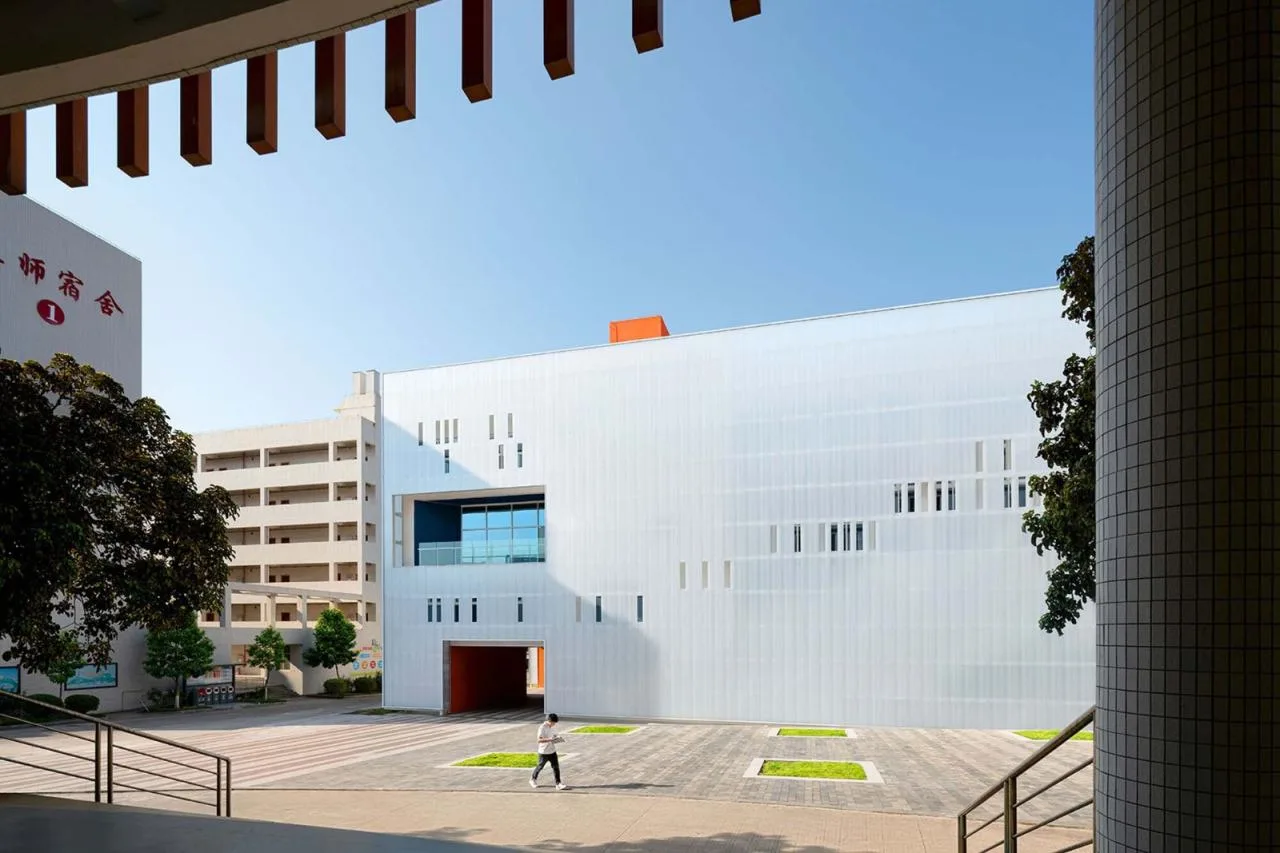
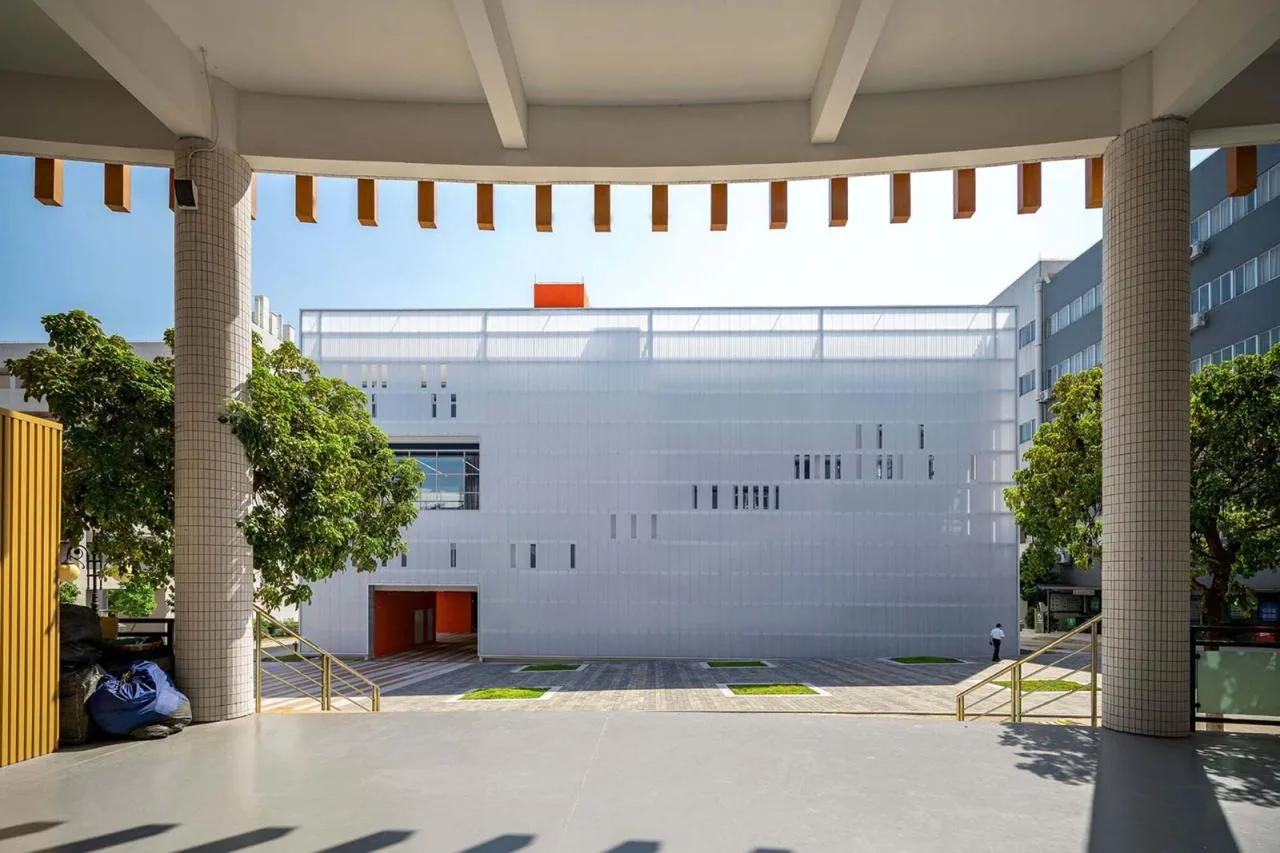
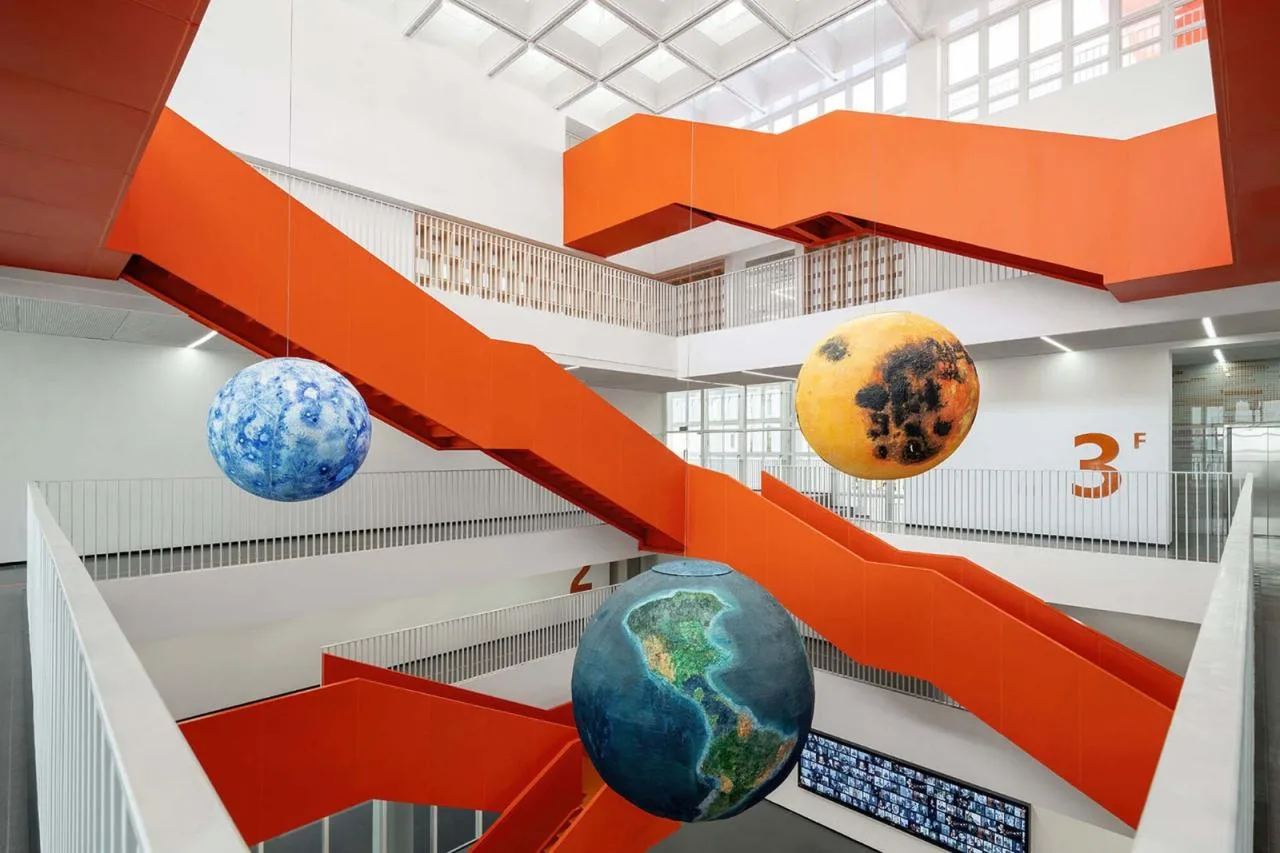
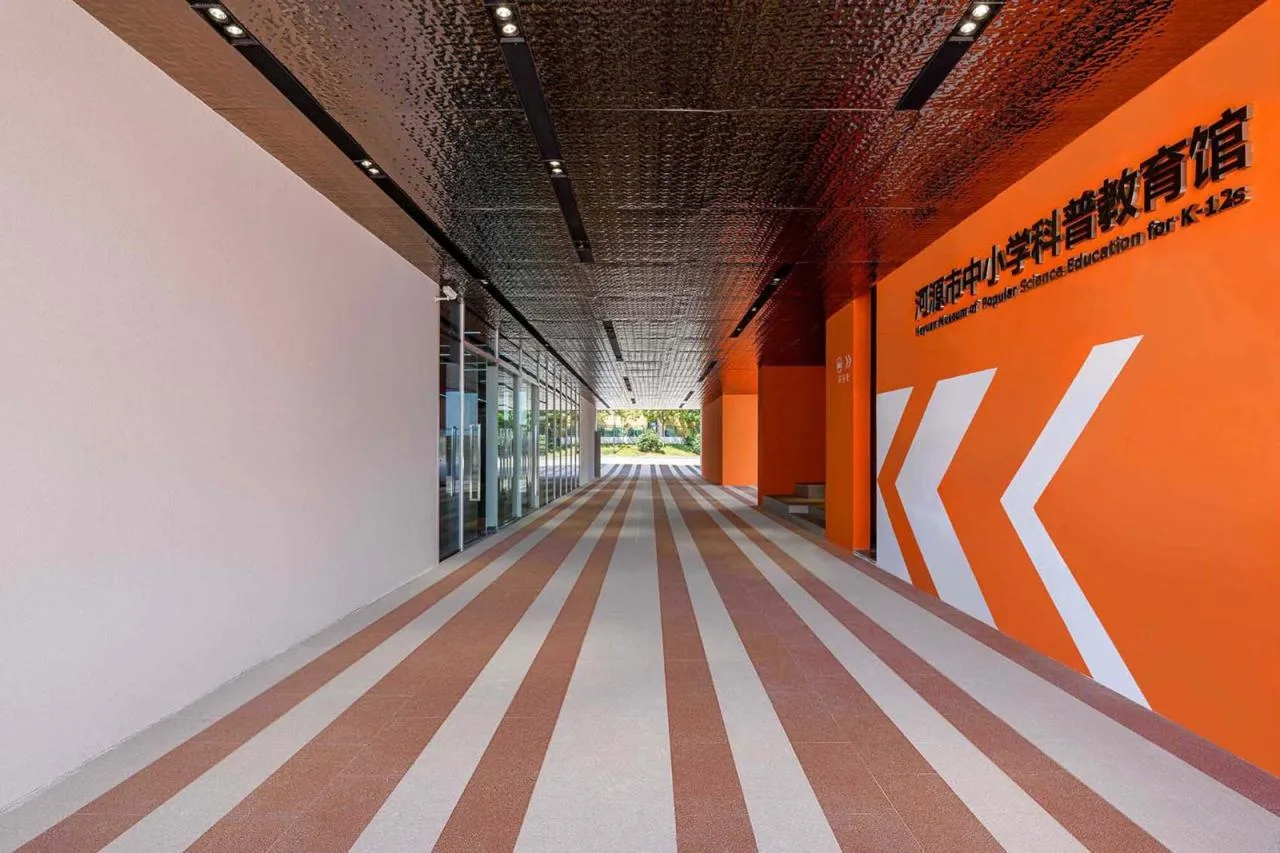
The visitor circulation is designed as a dual-track, three-dimensional flow system. Traditional exhibition paths are usually flat and linear; however, this approach can disrupt continuity in a multi-floor small building. To address this, the design incorporates two separate ground-floor entrances, directing visitors along distinct routes. Vertical circulation then connects these paths, allowing visitors to complete a comprehensive science popularization experience. This spatial “double helix” arrangement enables simultaneous flows without interference, enhancing visitor capacity and experience.
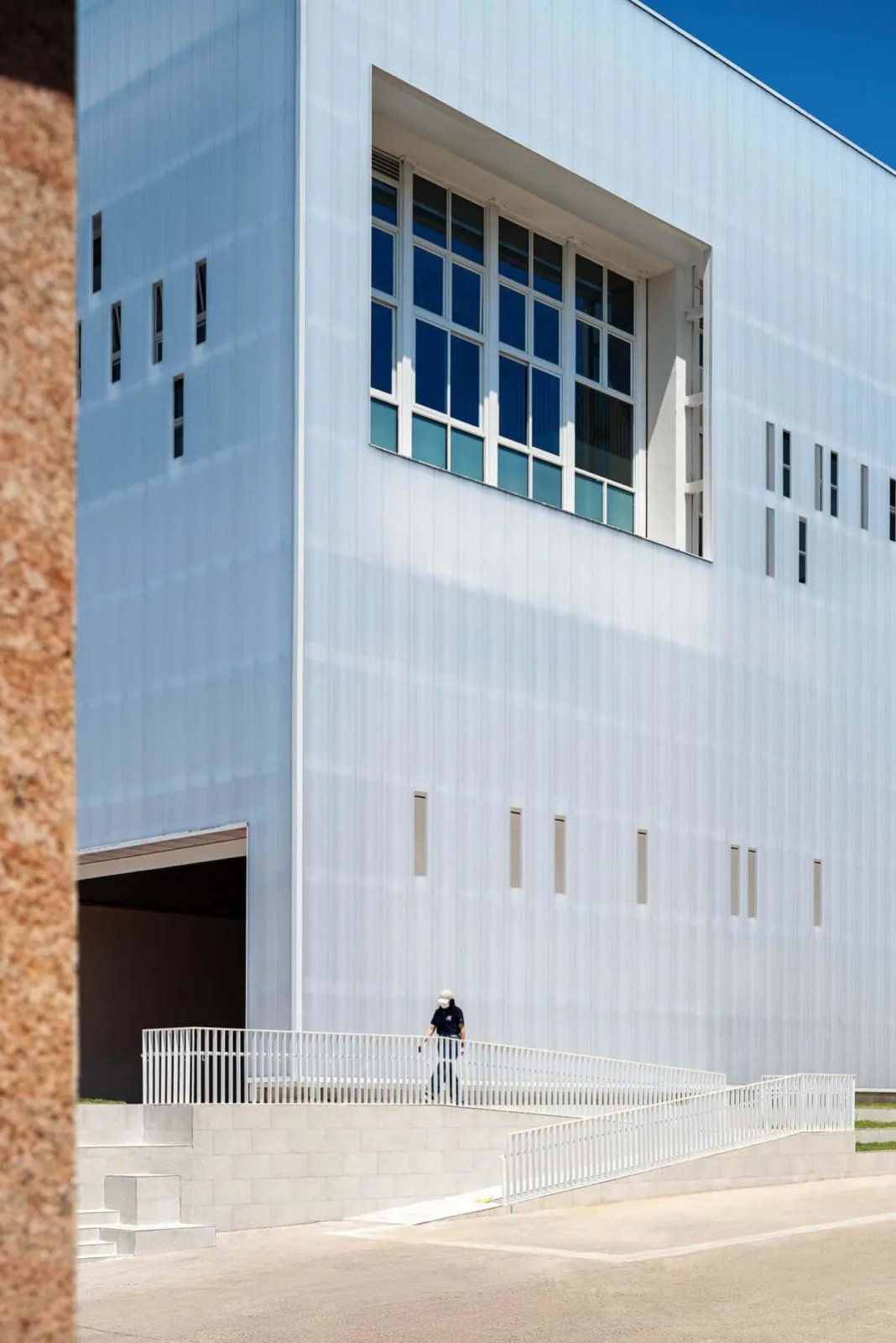
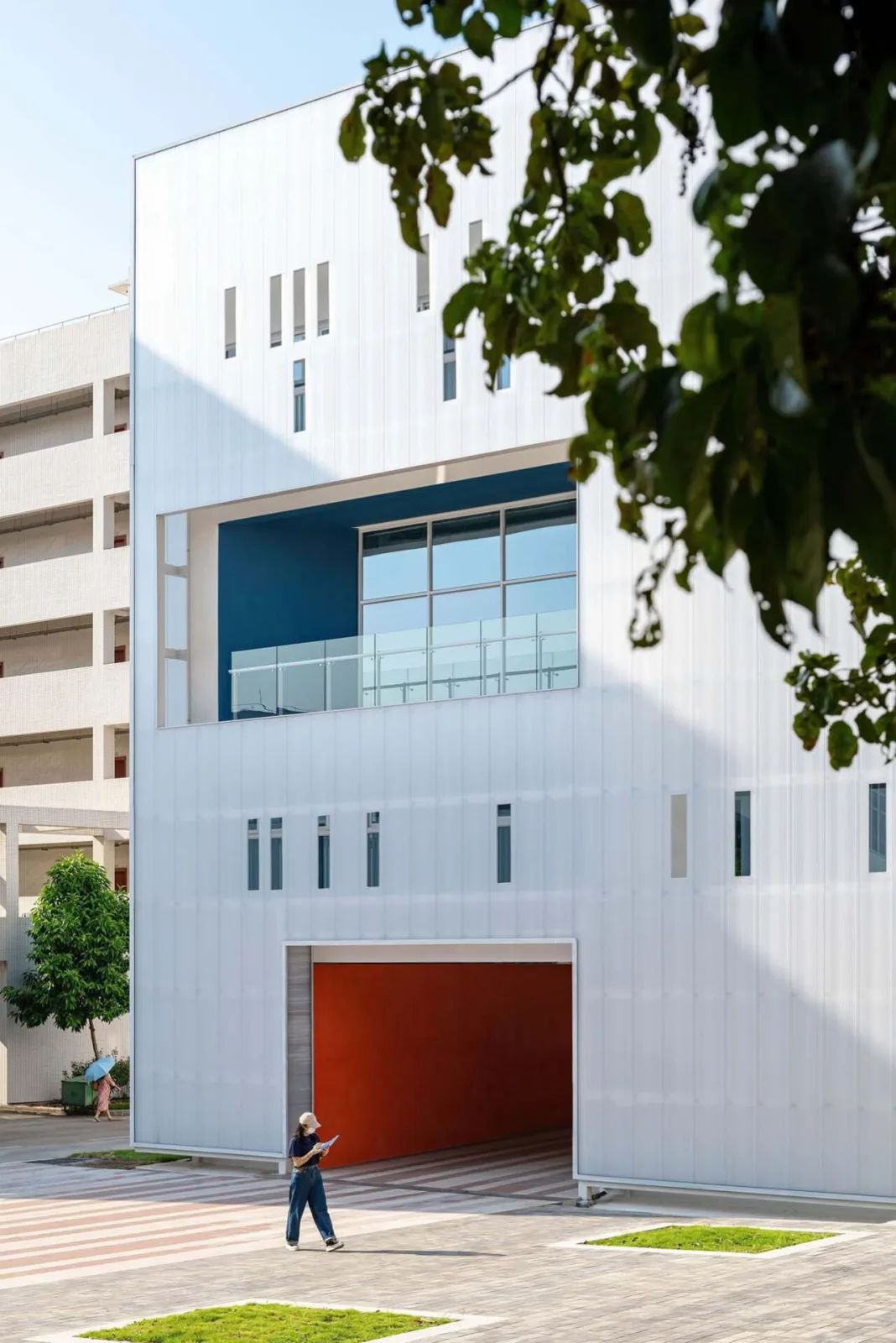
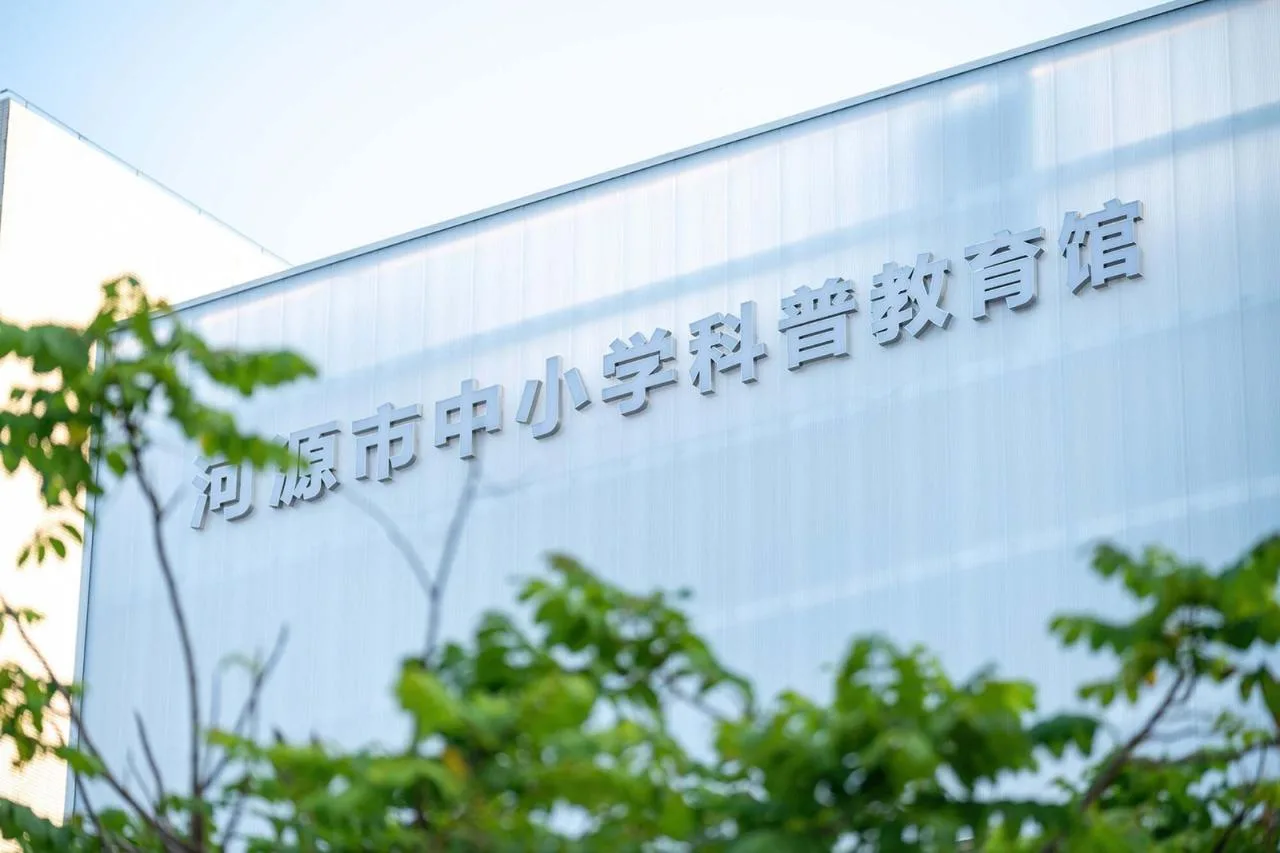
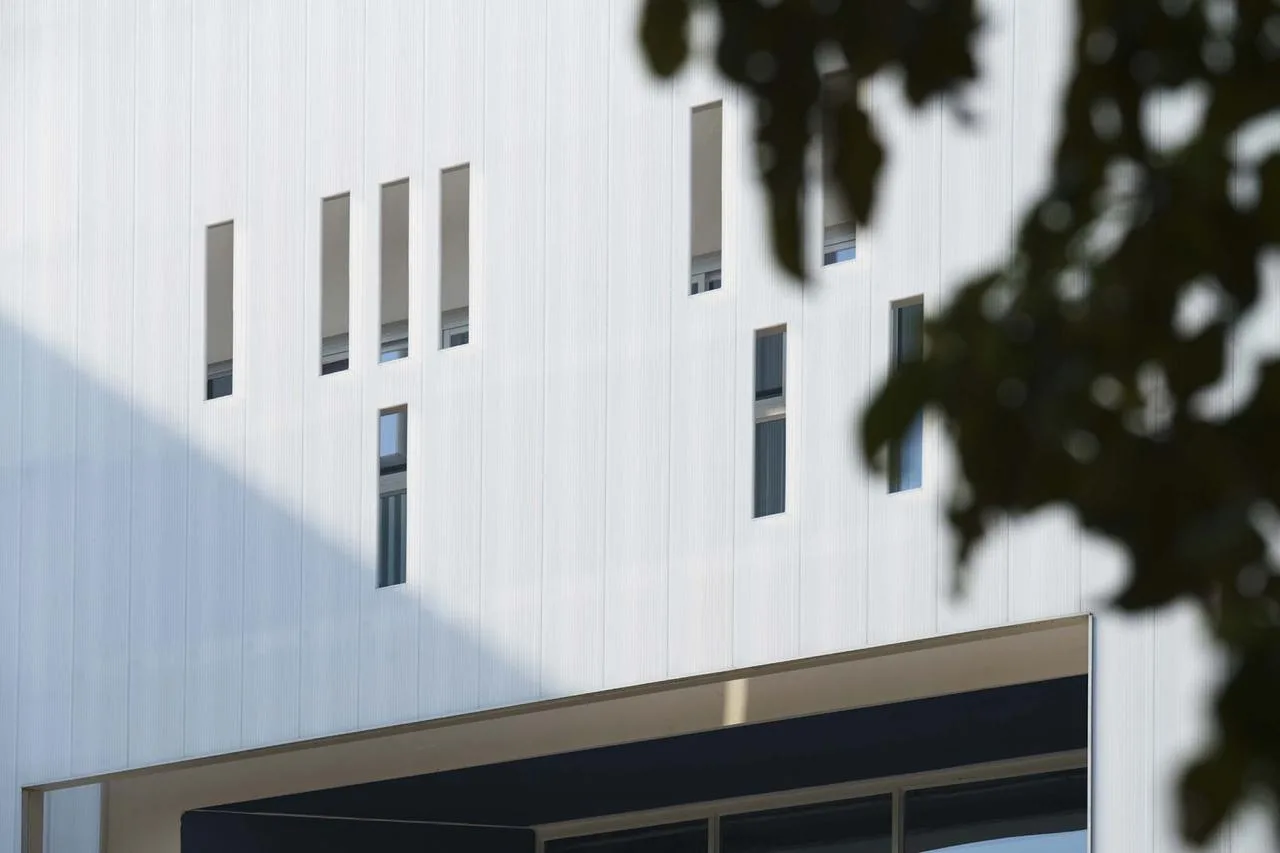
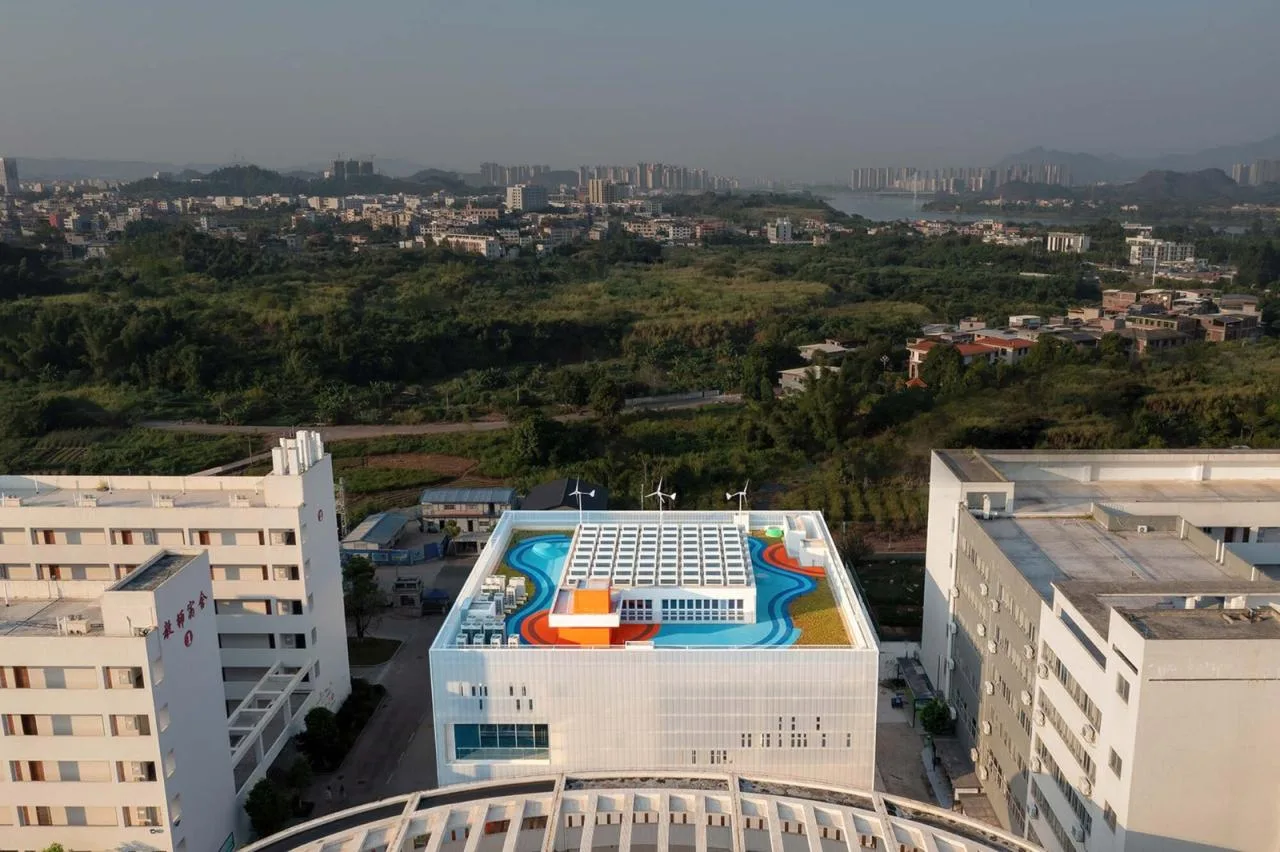
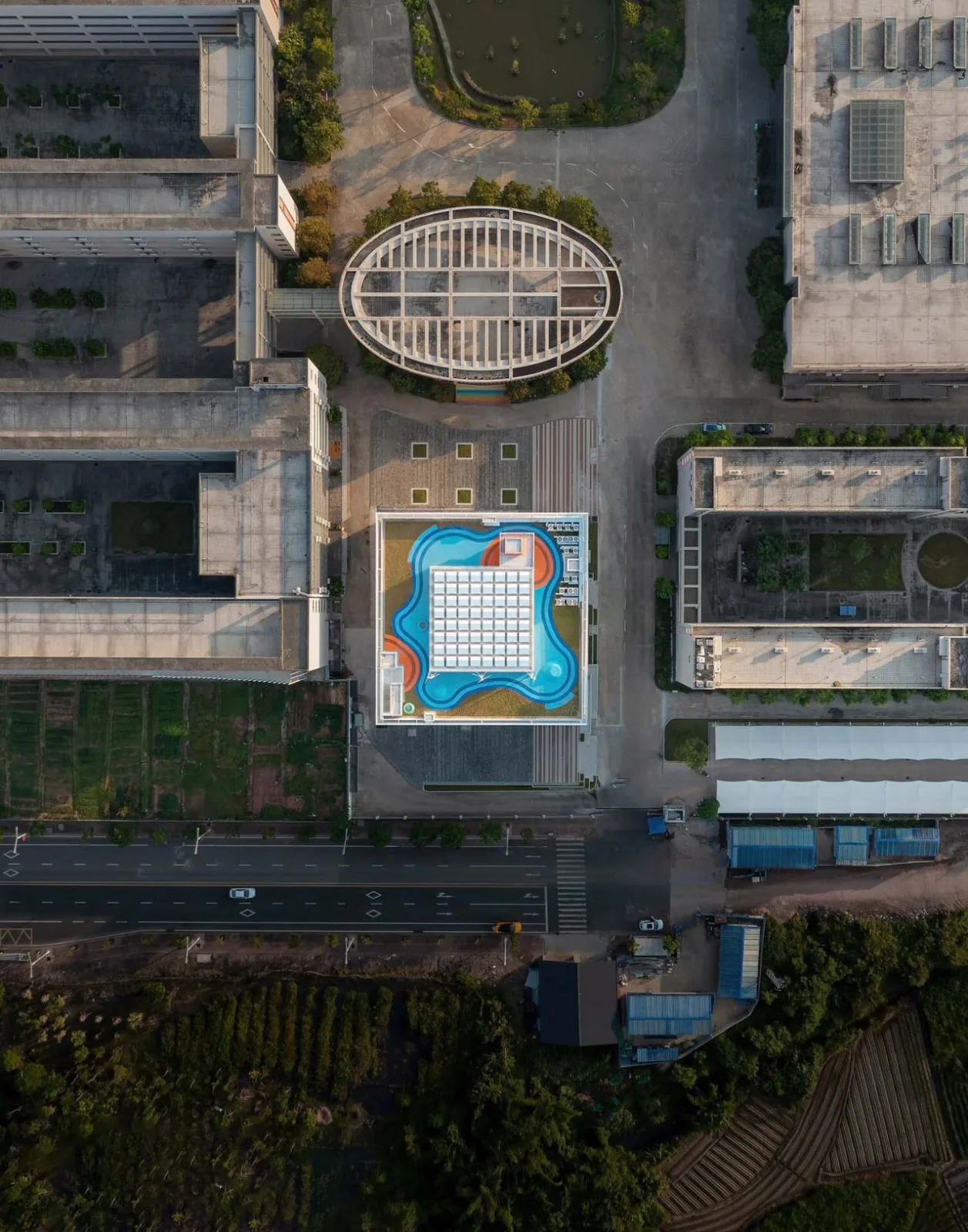
The spatial design further integrates functional zoning and visitor flow into the building’s form. The structure is essentially a square box, with two enclosed, spiraling exhibition halls occupying part of the space, while the remainder serves as open teaching areas. The façade is clad entirely in slightly translucent polycarbonate panels, punctuated by openings over main spaces to reflect the interior spatial dynamics.
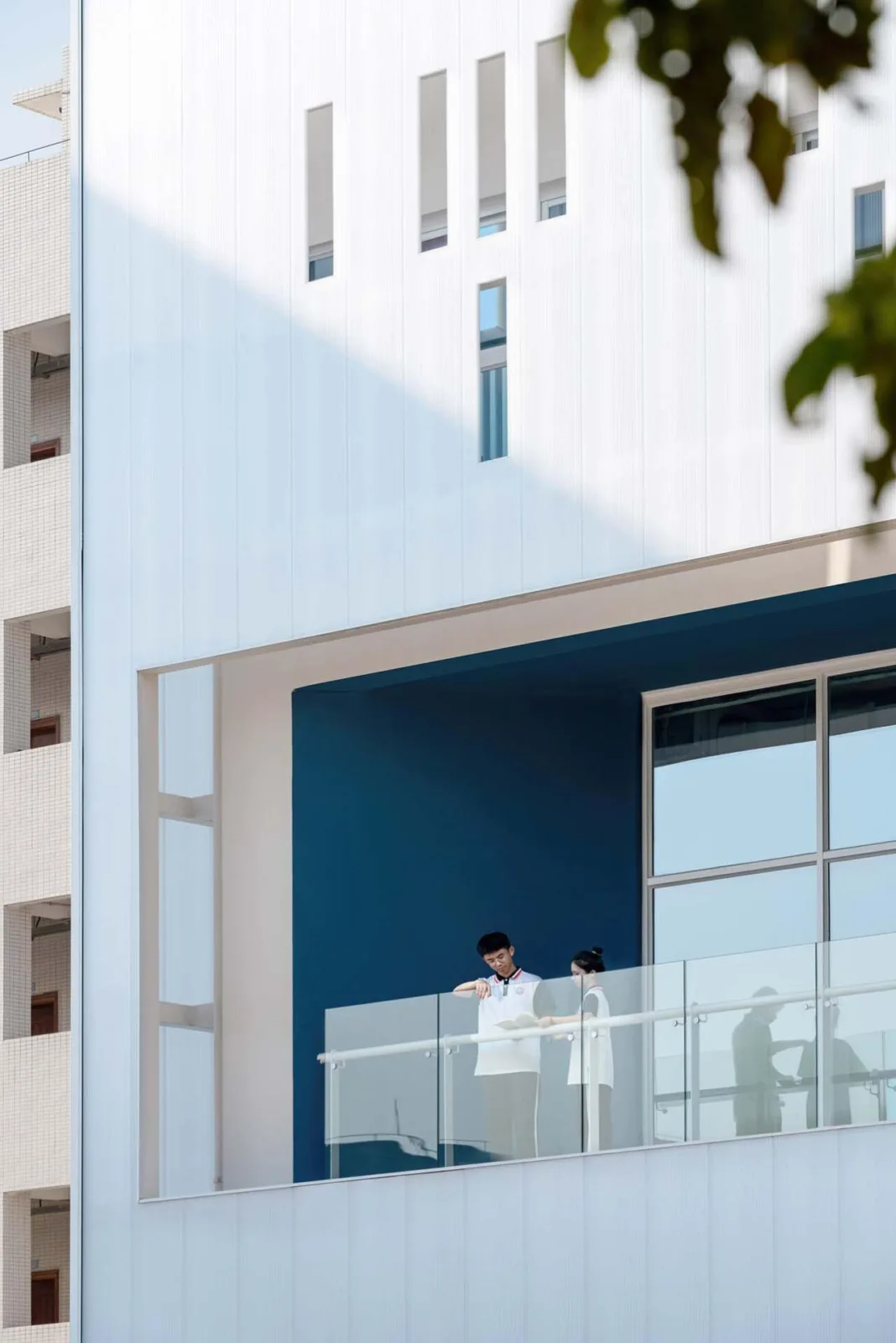
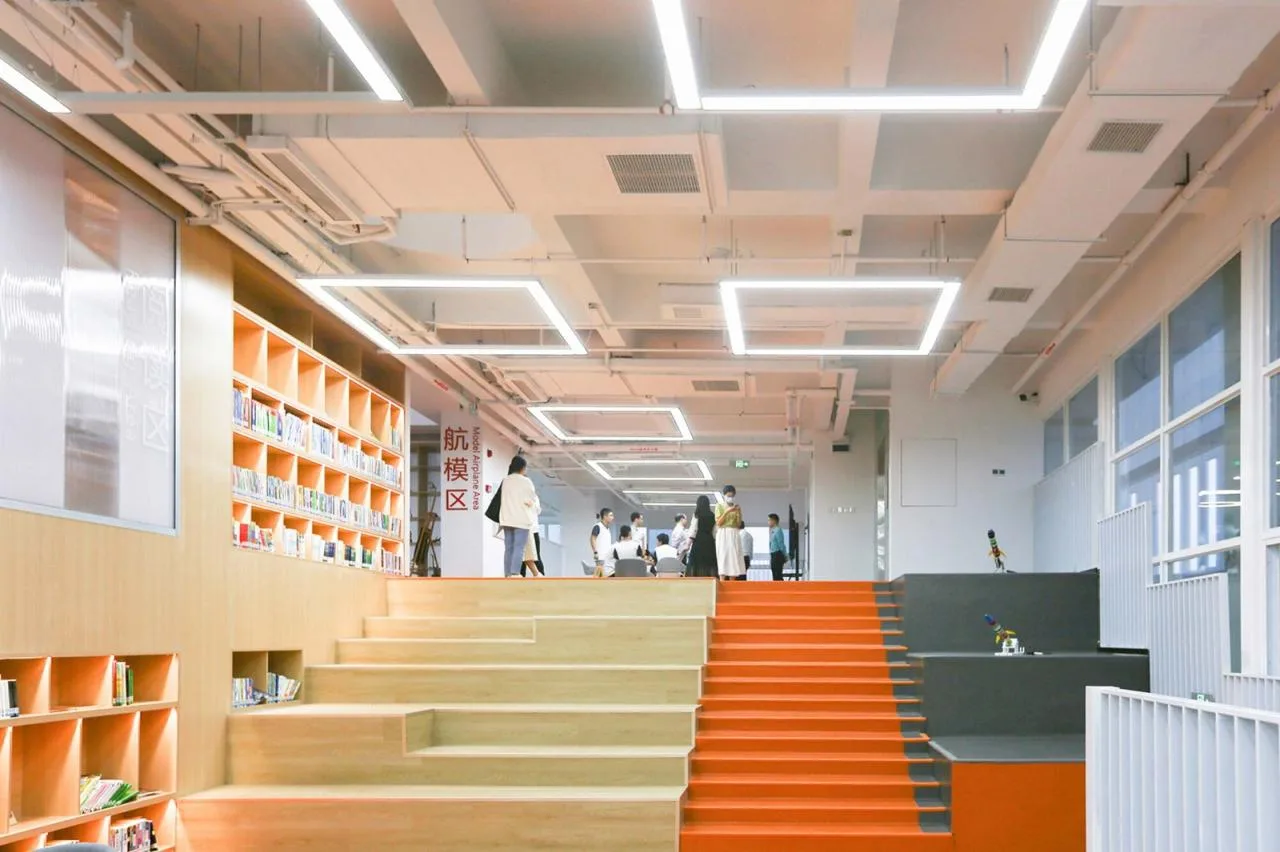
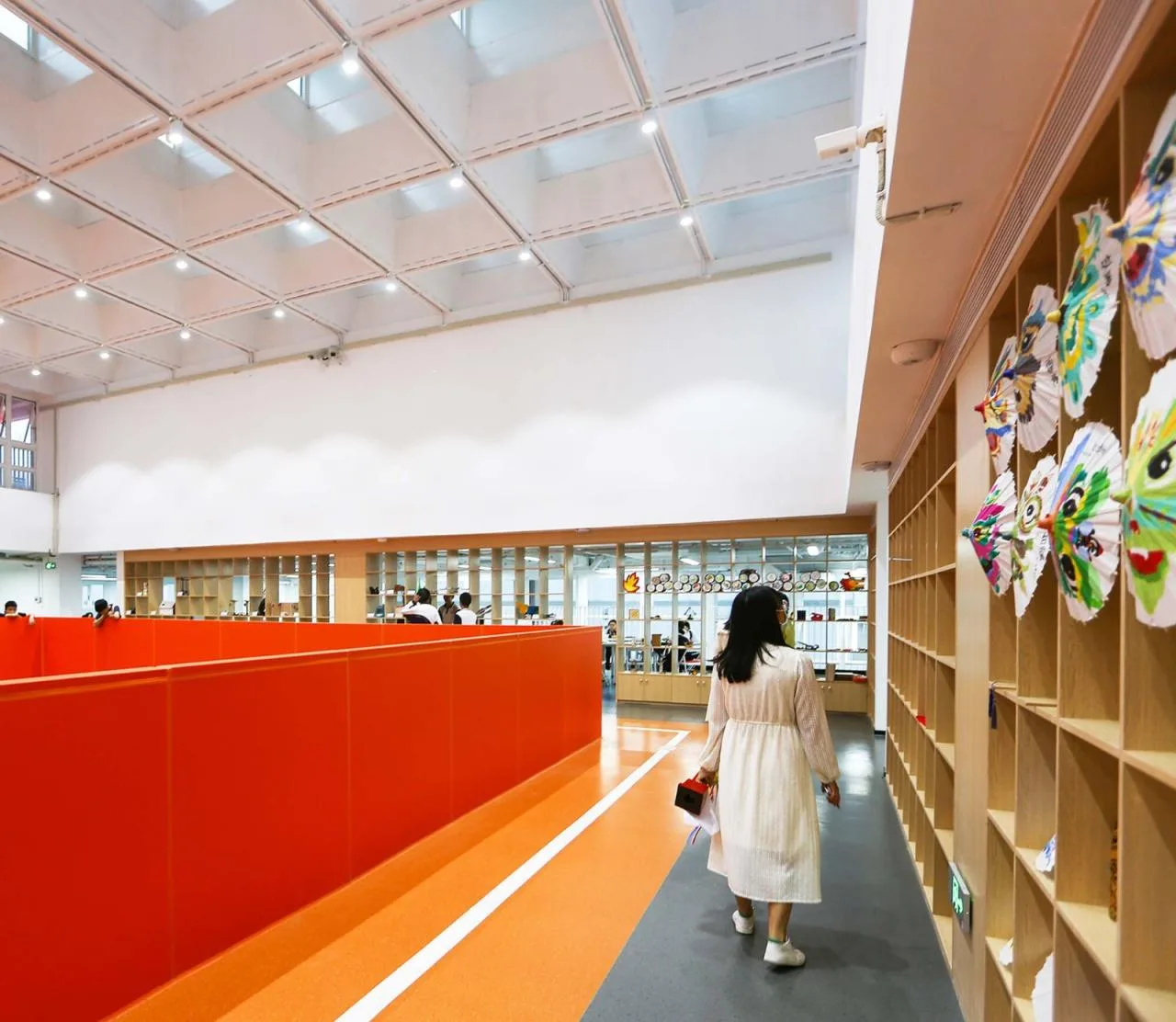
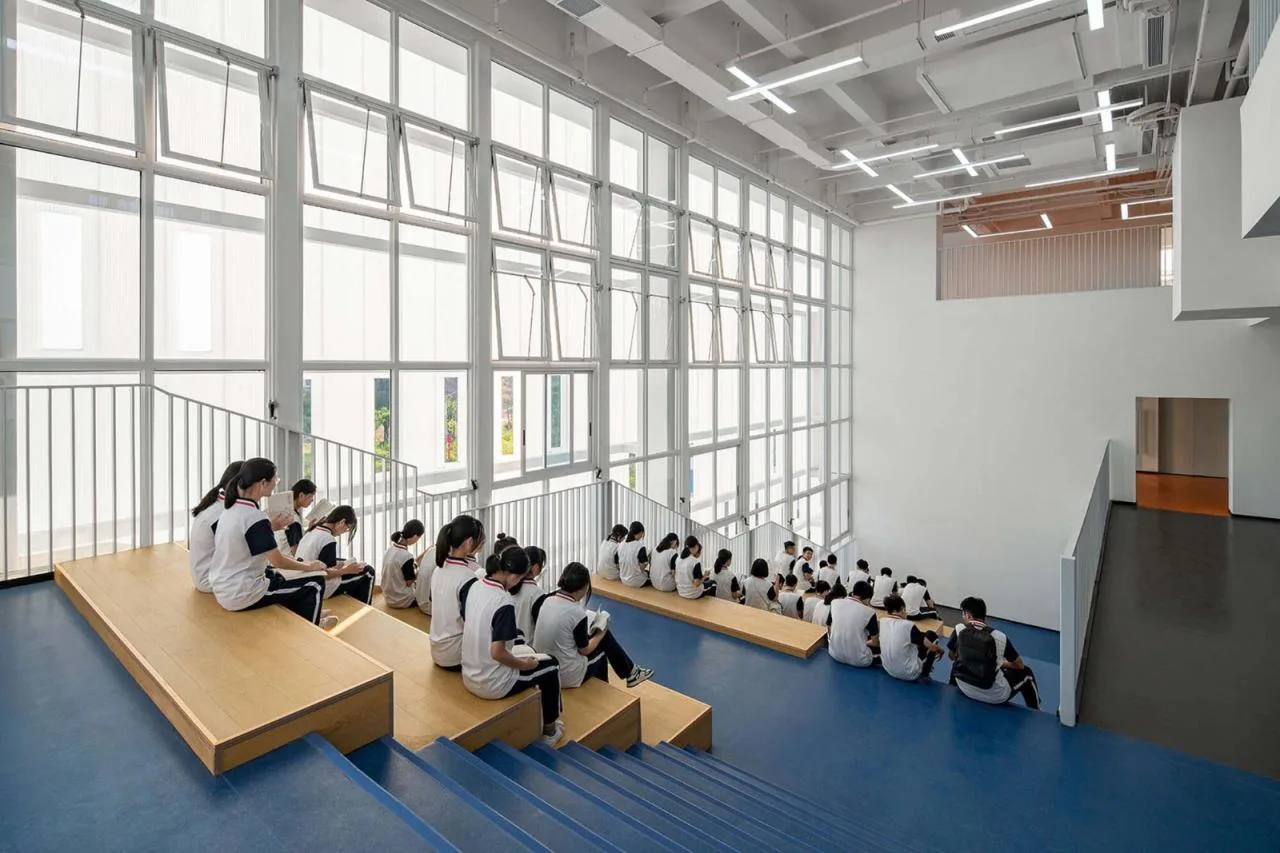
The building offers a range of diverse spaces suitable for teaching. Alongside the exhibition halls, there are various open spaces designed for group discussions, creative activities, and large gatherings. The overlapping arrangement of large and small spaces, combined with staggered floor levels, creates multiple spatial scales. This adaptability supports dynamic teaching activities anywhere and anytime.
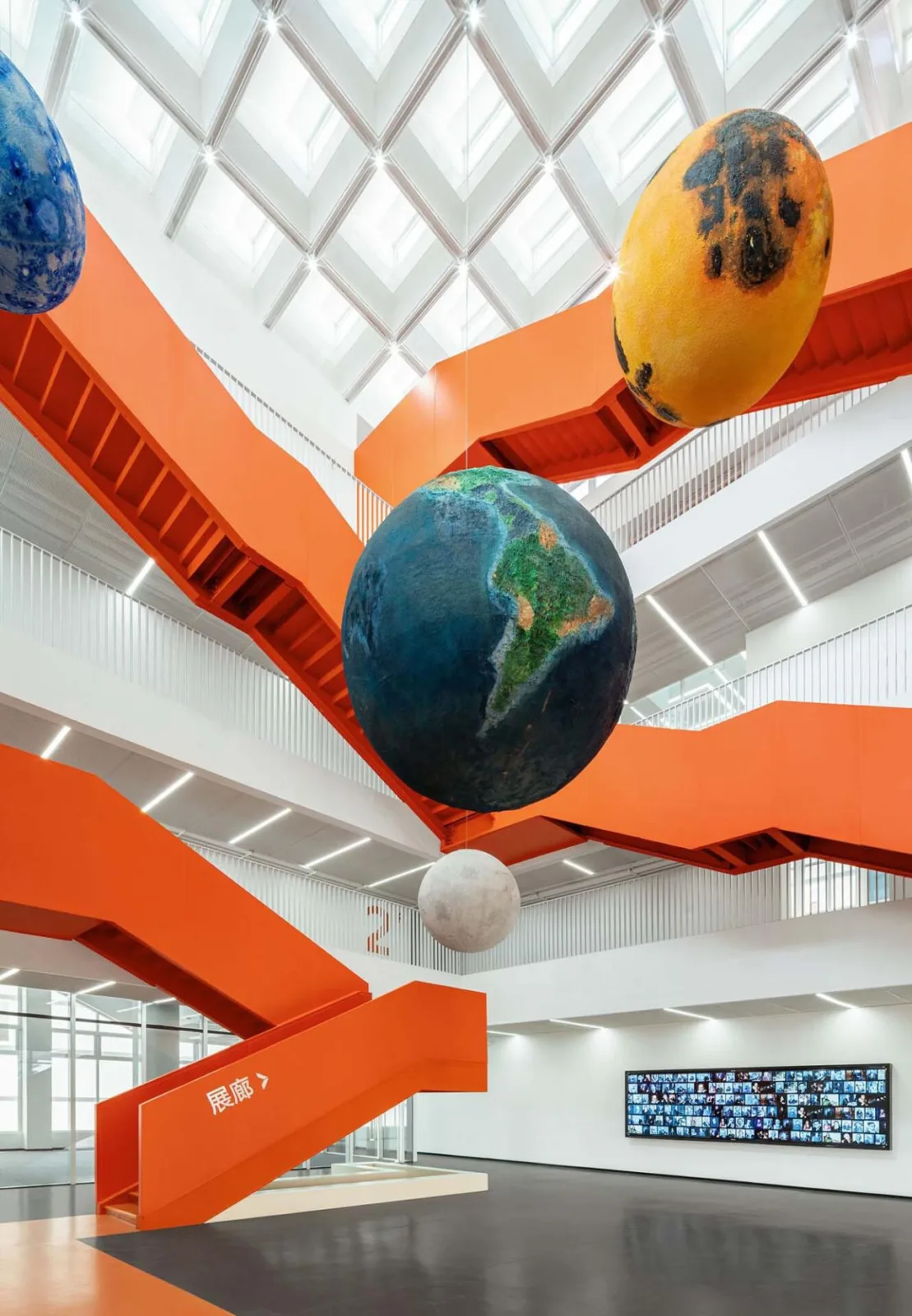
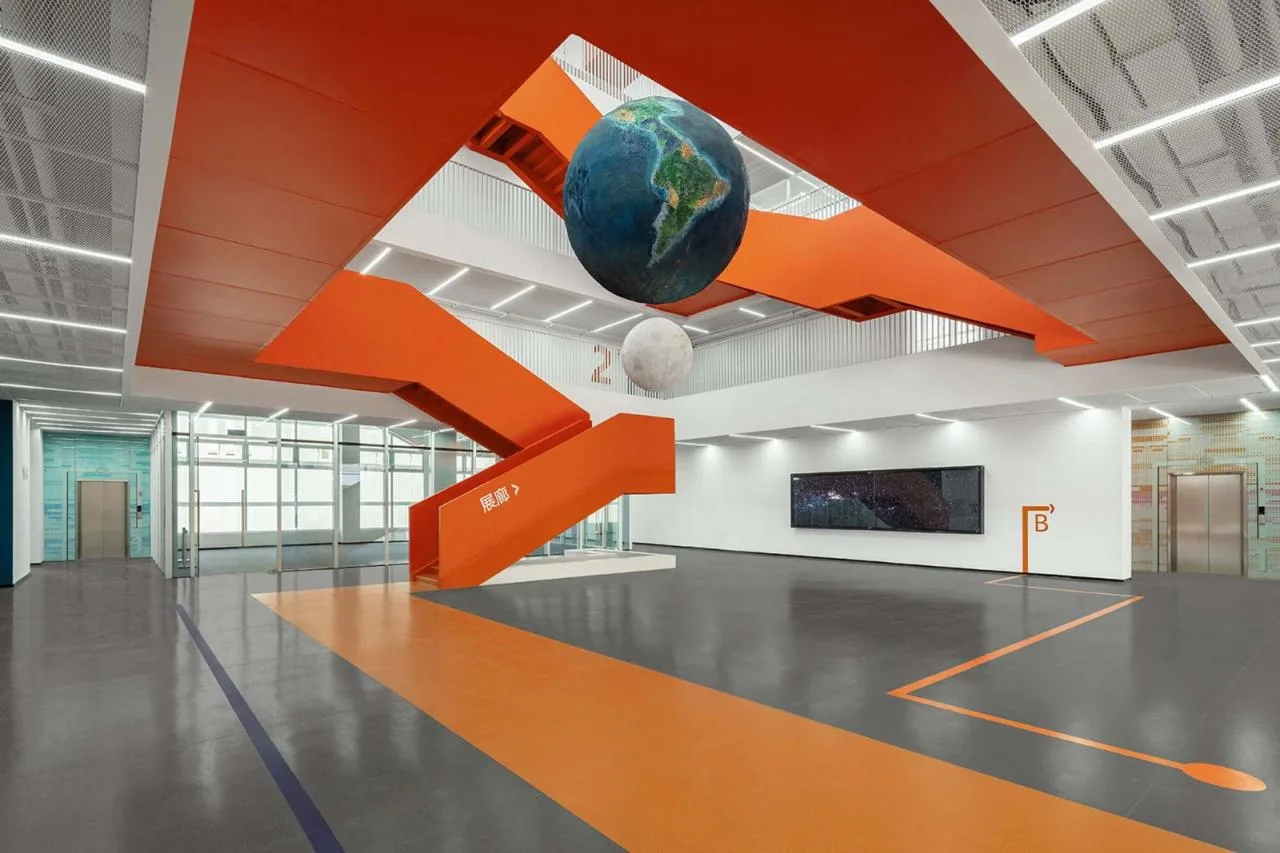
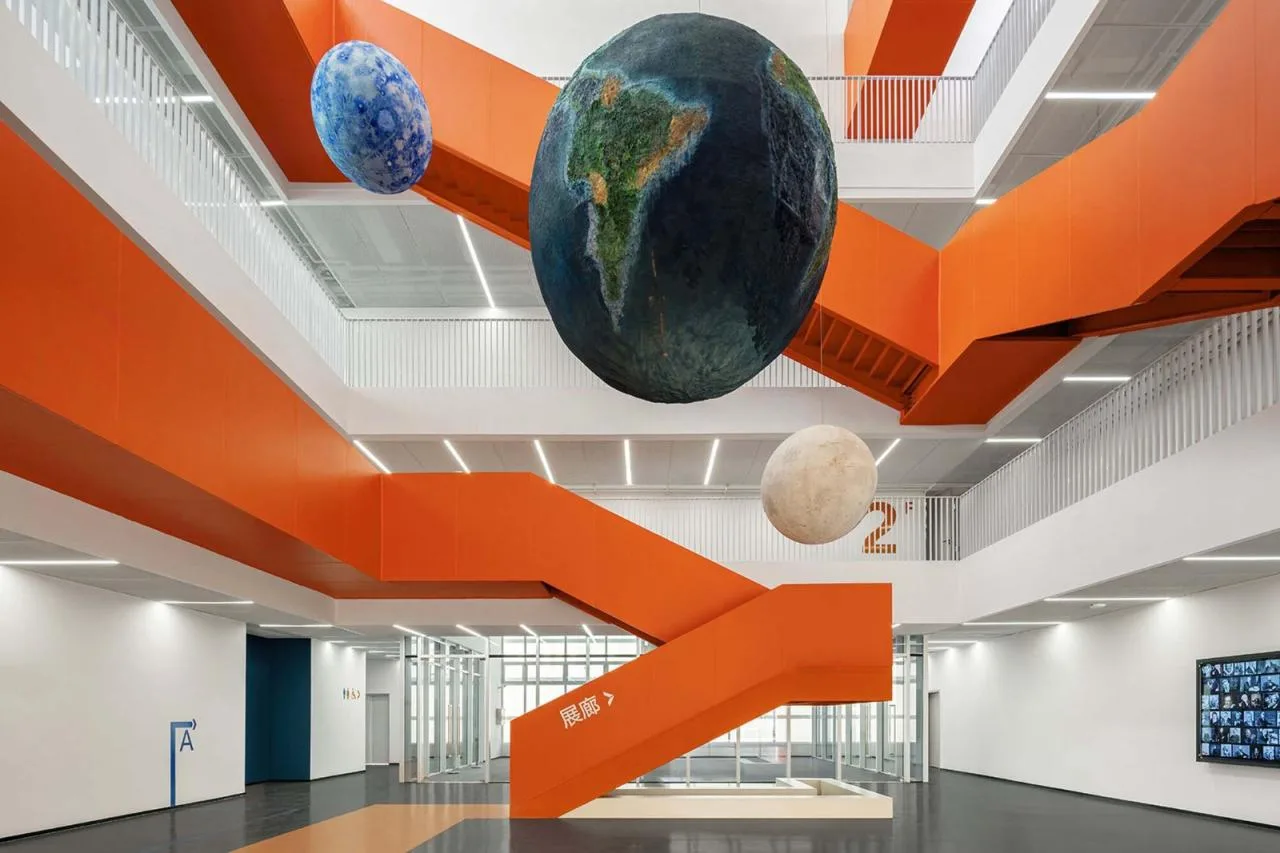
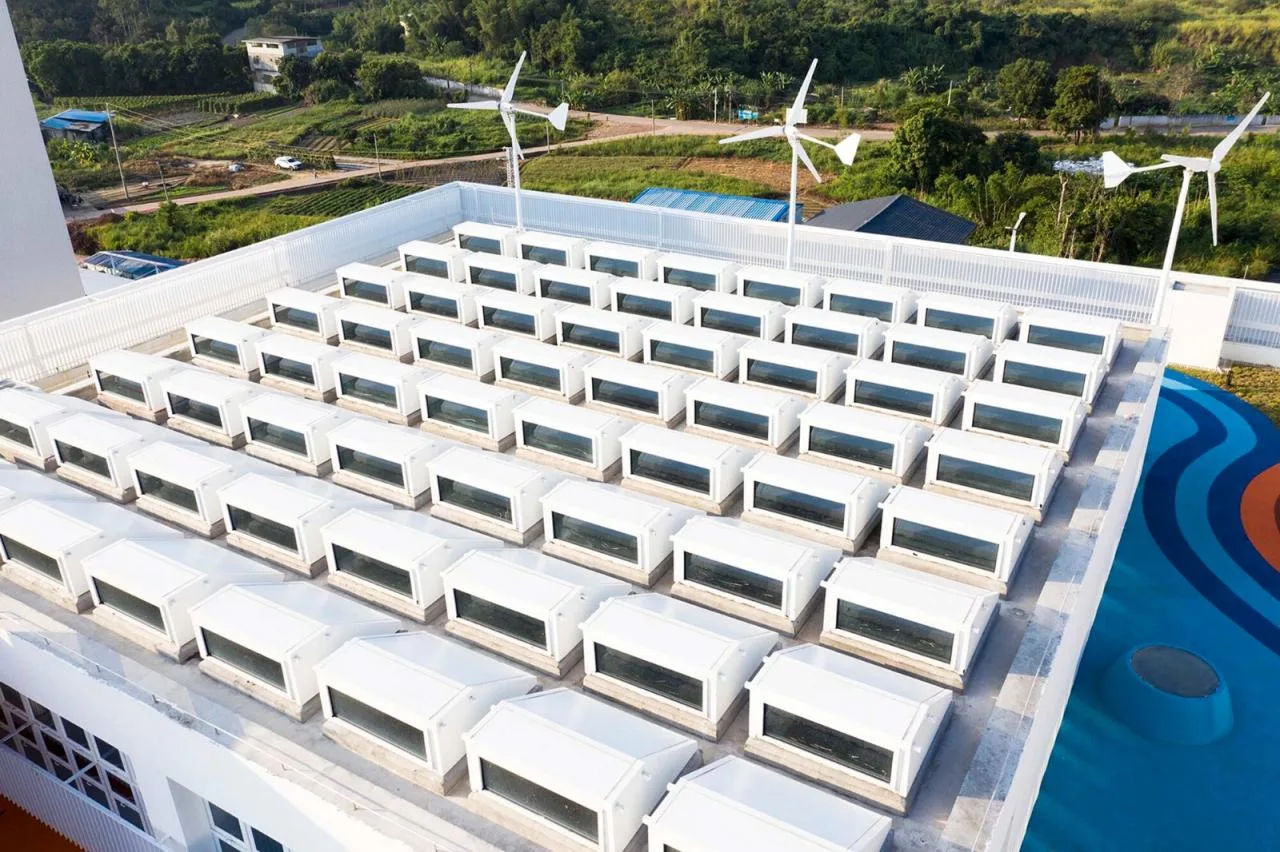
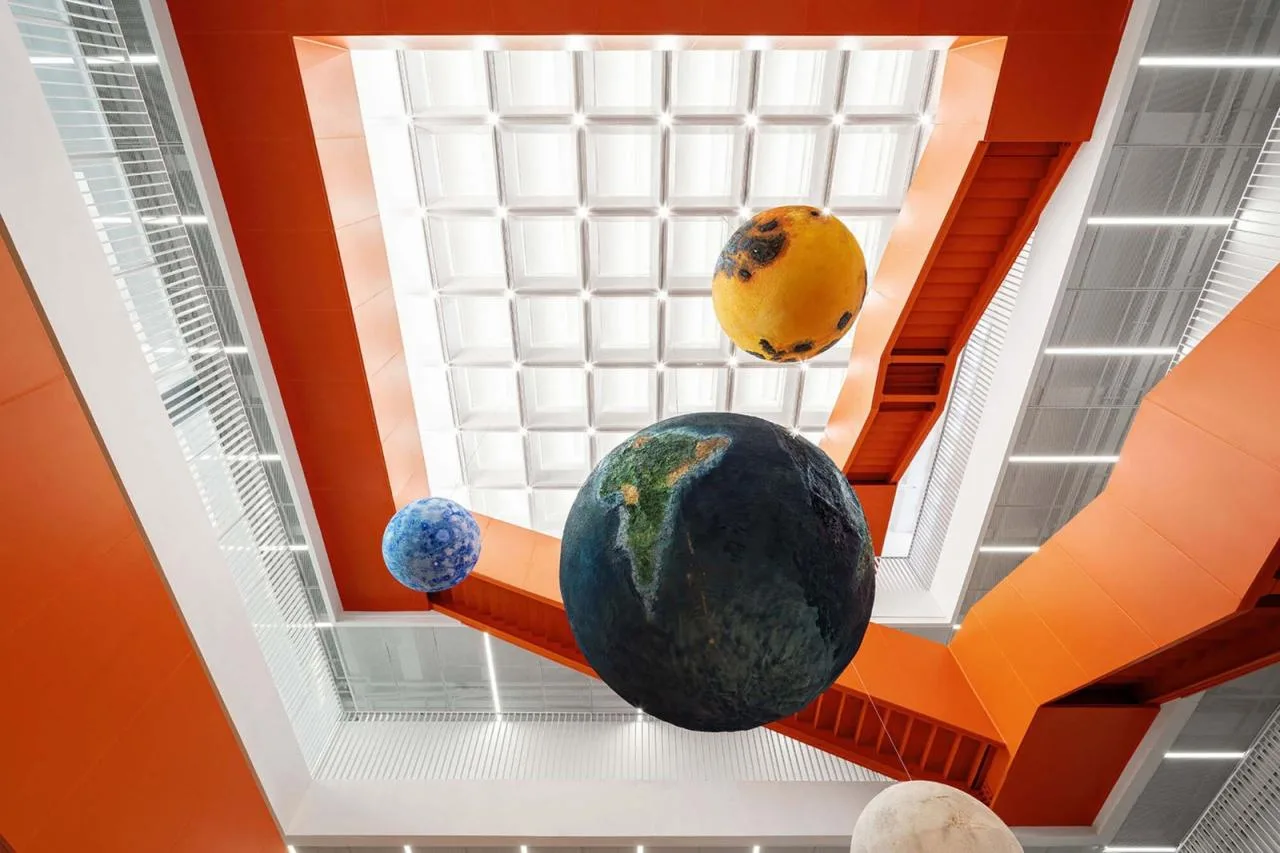
Energy efficiency and sustainability are core principles throughout the design. Early consultation with specialized firms guided the integration of green technologies. A skylight above the atrium can be opened to enable natural ventilation while maintaining indoor environmental stability, reducing energy consumption.
The polycarbonate exterior facade provides effective shading and diffuses natural light softly to support teaching activities. Ventilation openings along the façade further reduce air conditioning needs. Renewable energy solutions such as photovoltaic panels, small wind turbines, and thermochromic glass are incorporated to strive toward zero-carbon building goals. This project has earned the “Near Zero Energy Building” certification from the China Building Energy Conservation Association.
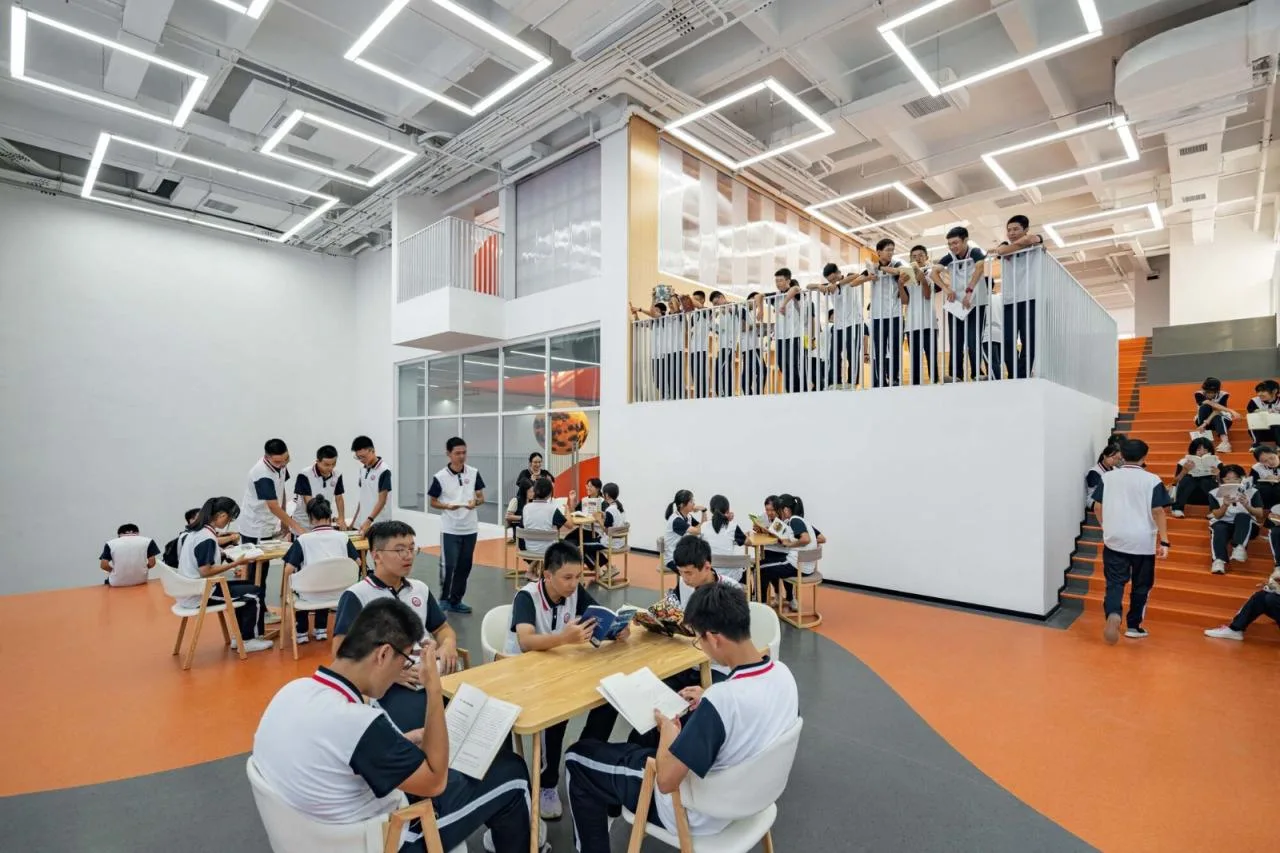
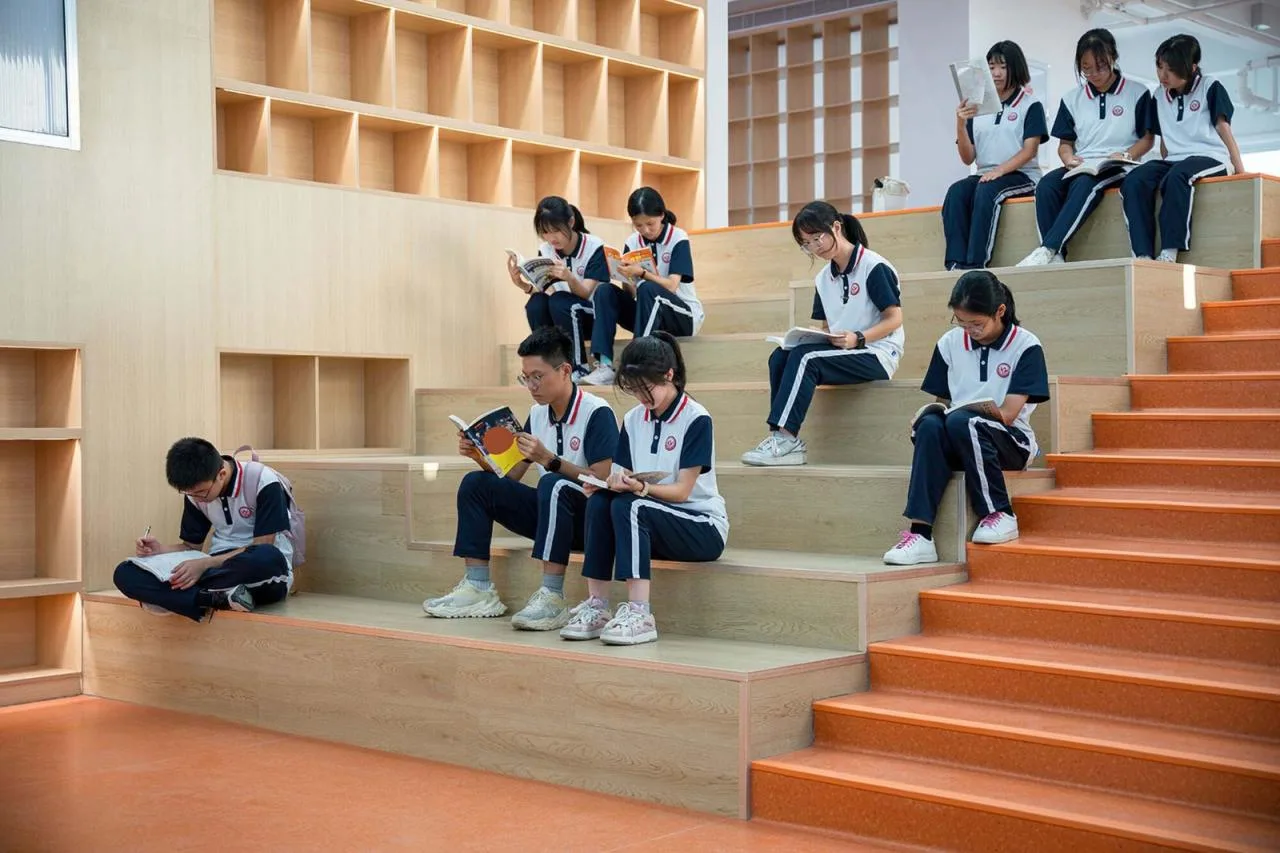
The concept of “the entire building as an exhibit” extends beyond space to include structural and mechanical elements. Equipment pipelines and structural nodes are exposed to students, transforming the building itself into a teaching tool. Ceiling equipment is intentionally visible indoors, creating an immersive learning environment, while rooftop HVAC and green technology installations serve as educational exhibits.
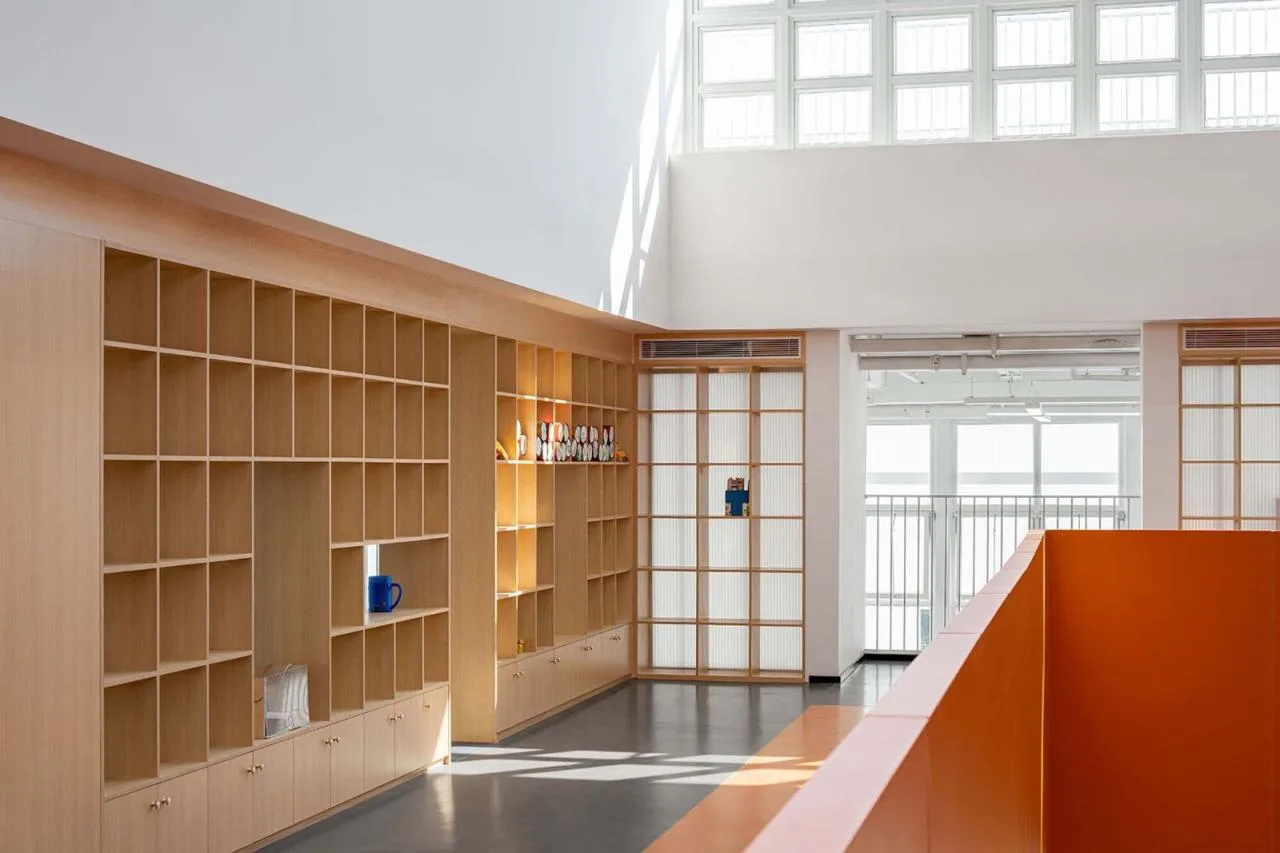
The rooftop garden and outdoor classroom extend the learning environment beyond the interior. A visitor walkway, botanical garden, equipment zones, and public activity spaces activate the roof as an outdoor educational venue.
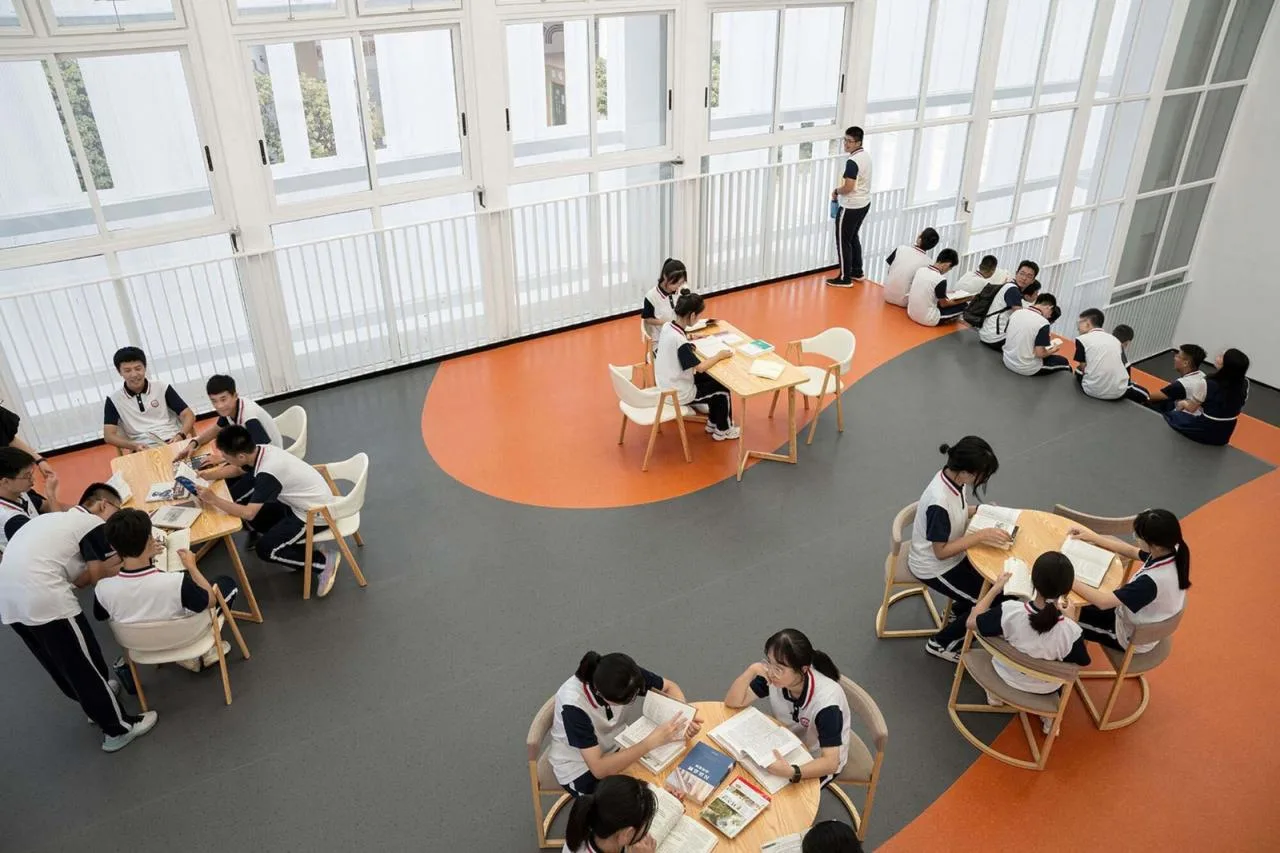
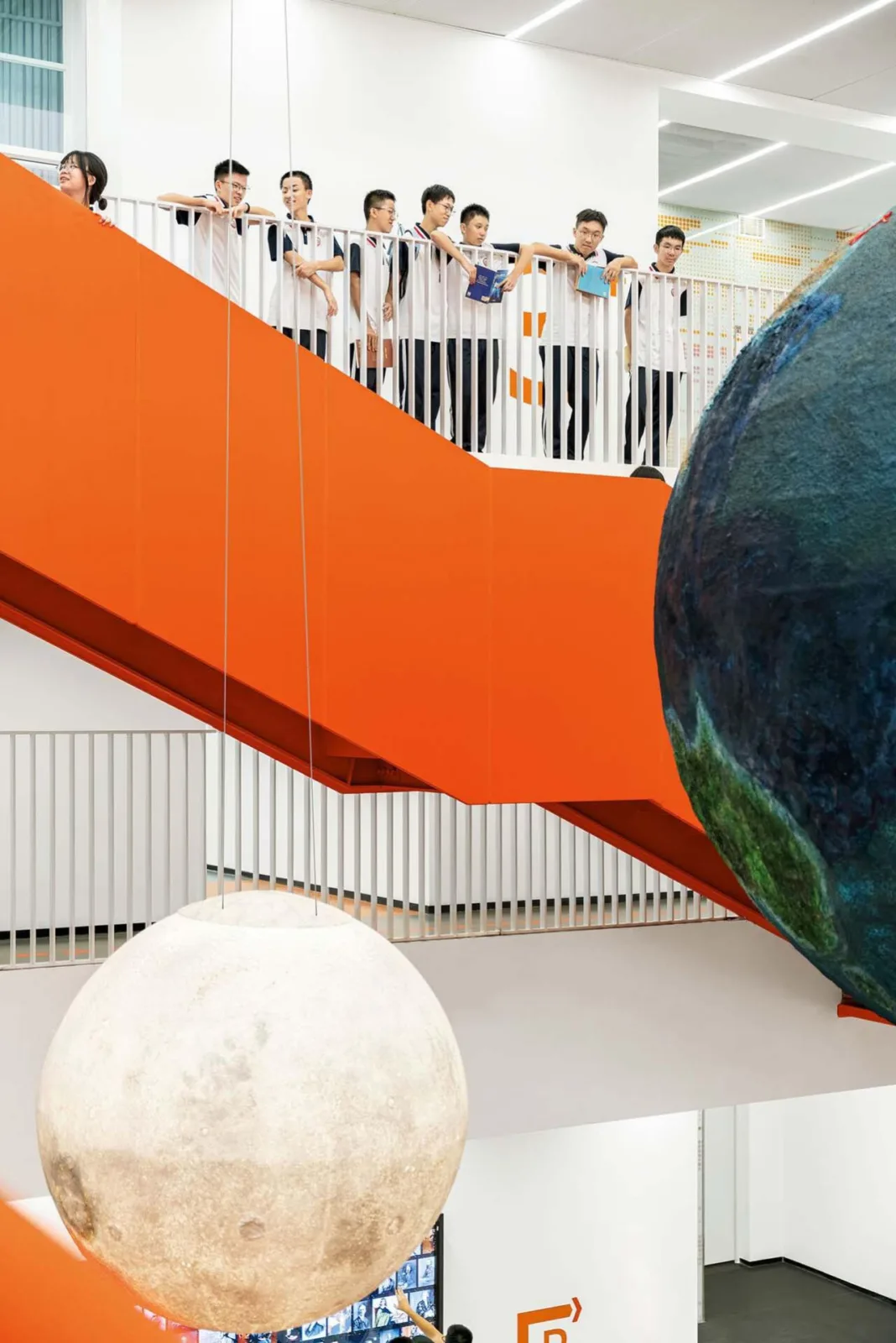
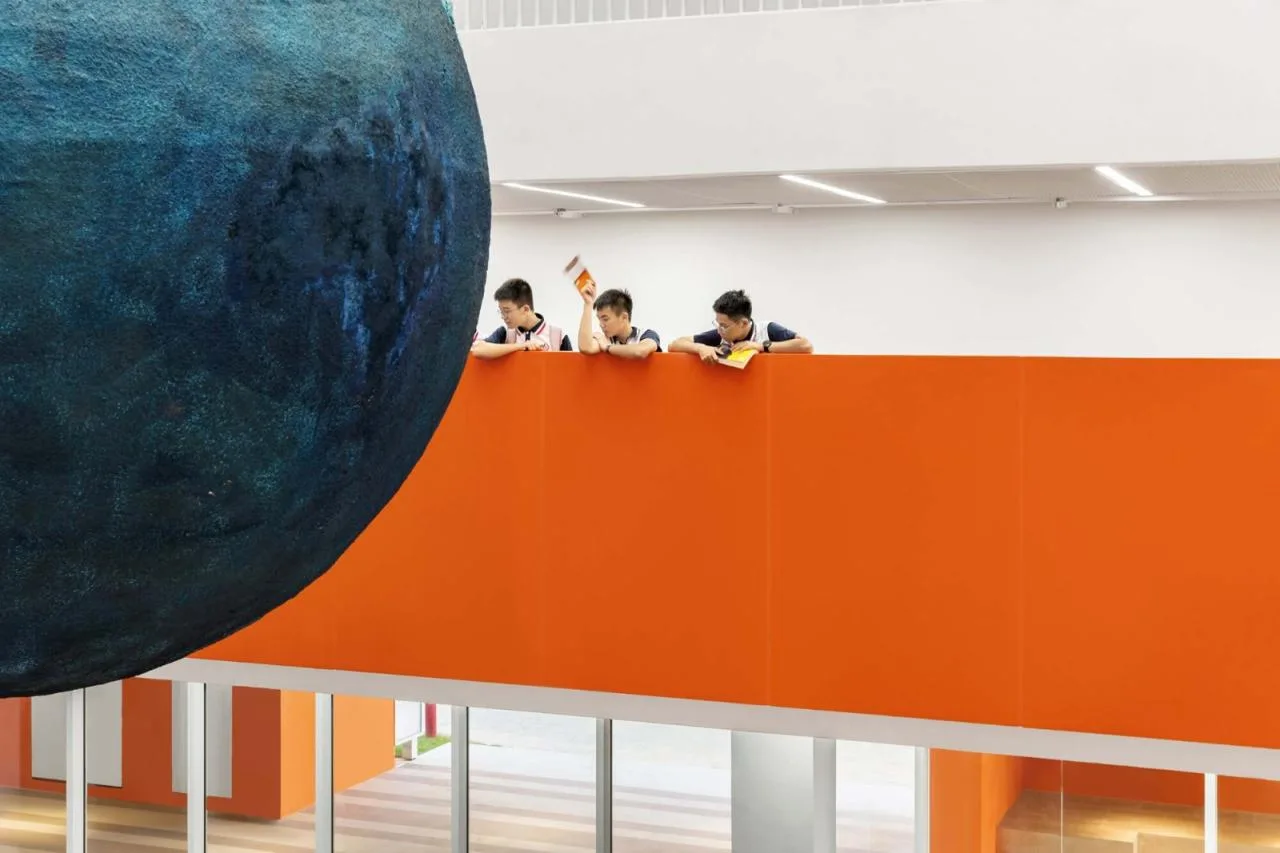
Although the museum is completed, it remains intentionally “unfinished.” As an experimental project by the design team, it also serves as a testing ground for the school’s evolving educational methods. The venue is envisioned as a hub for piloting new curriculum designs and teaching techniques, which, upon proving successful, will be integrated into regular classroom instruction, fostering continuous improvement.
Project Drawings
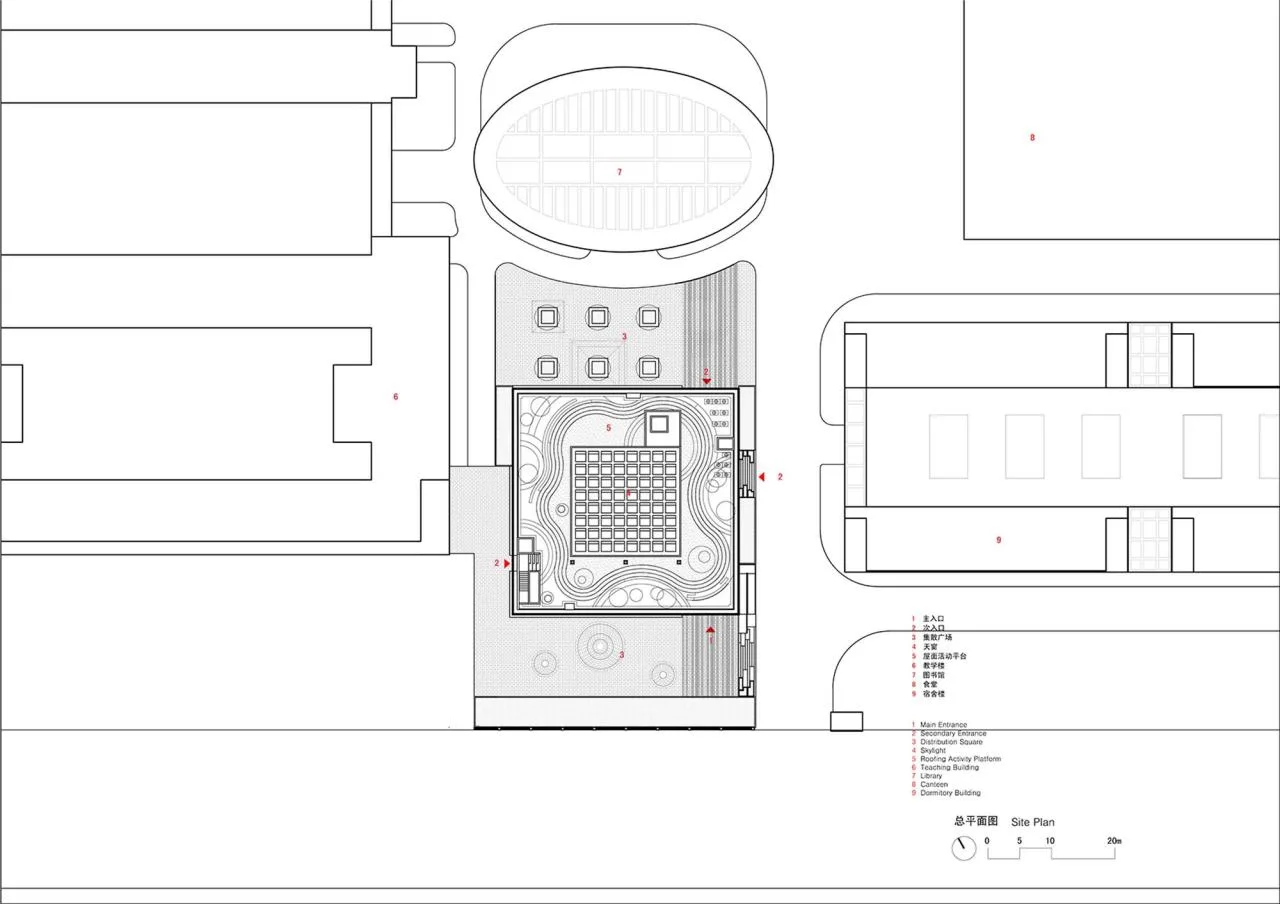
△ General Layout Plan
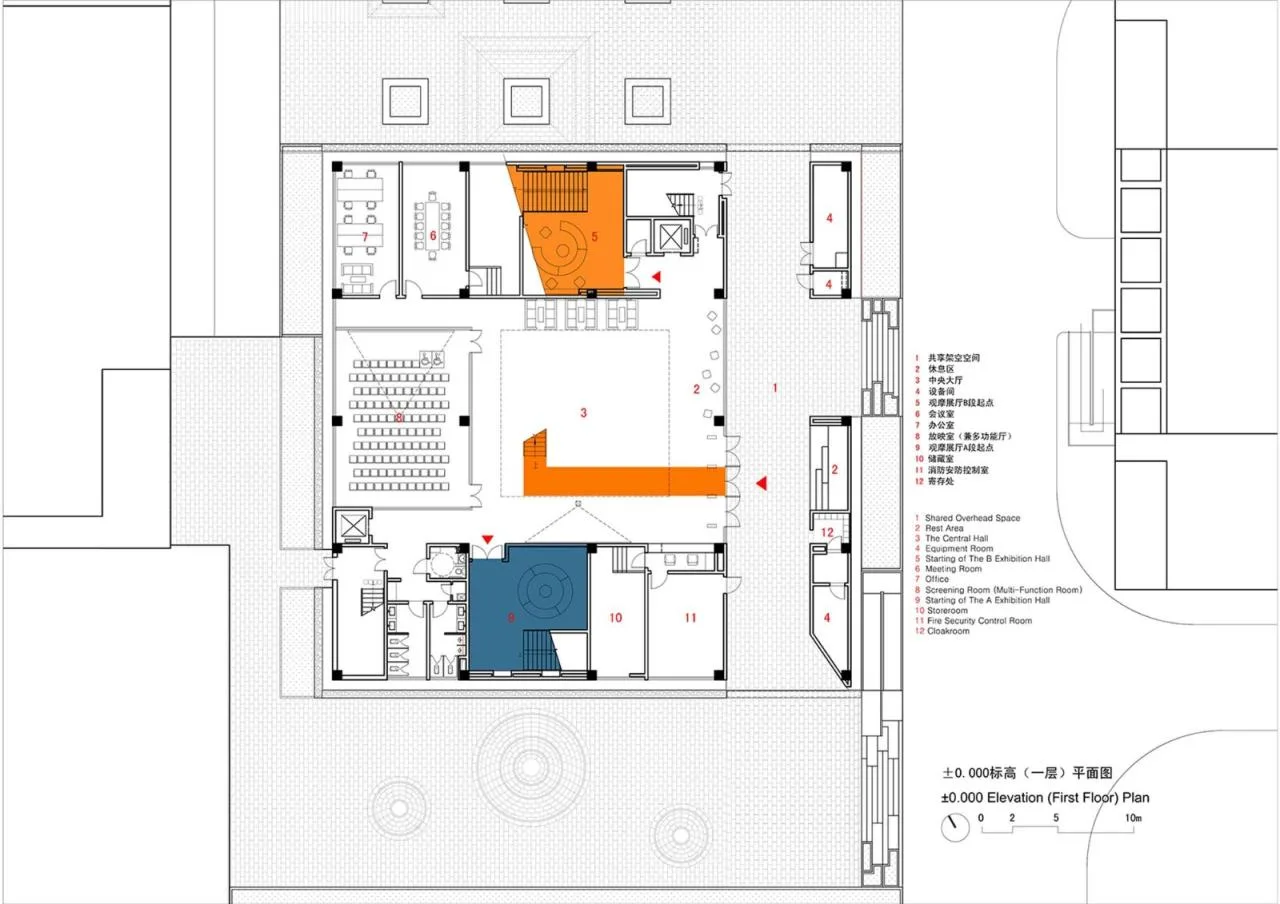
△ First Floor Plan
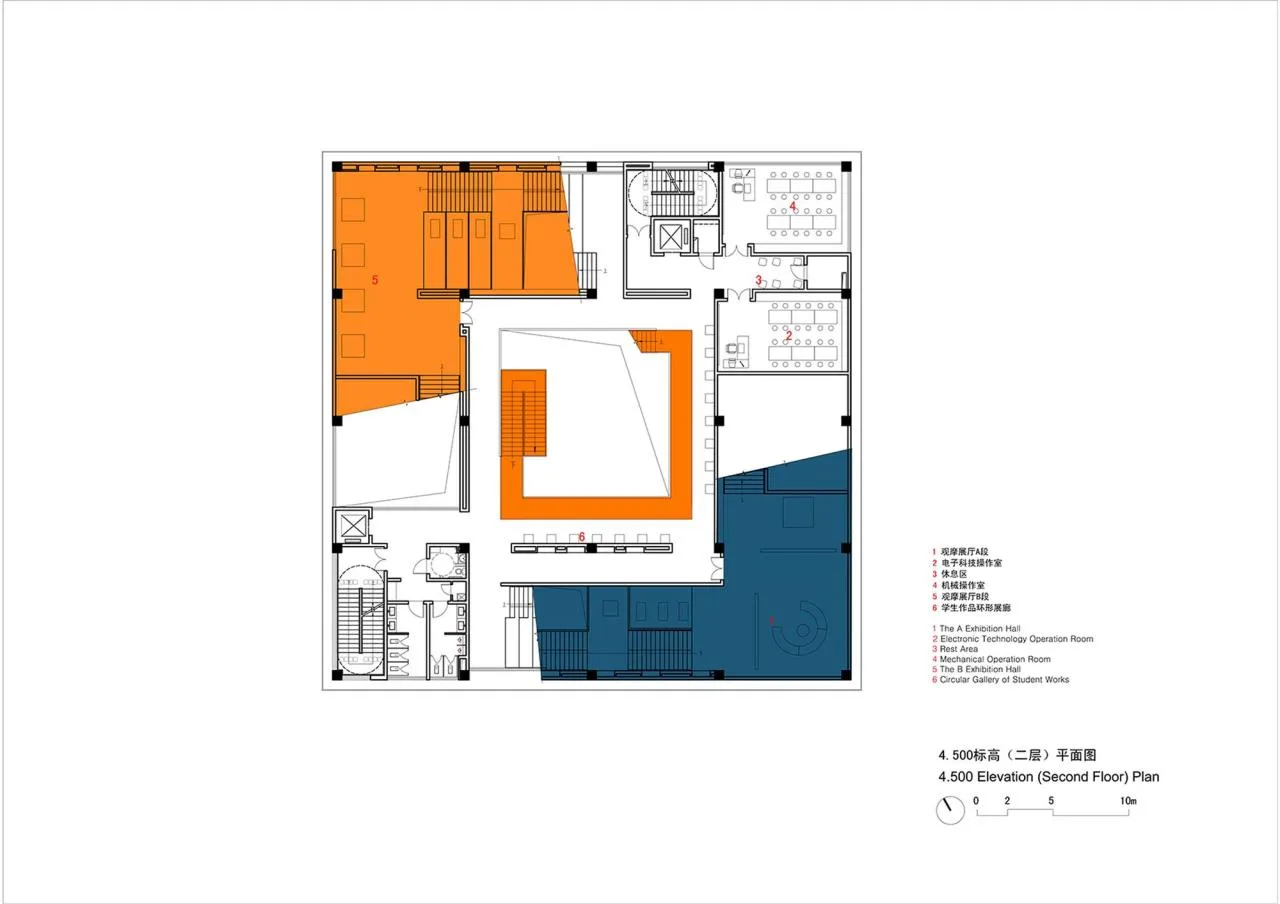
△ Second Floor Plan
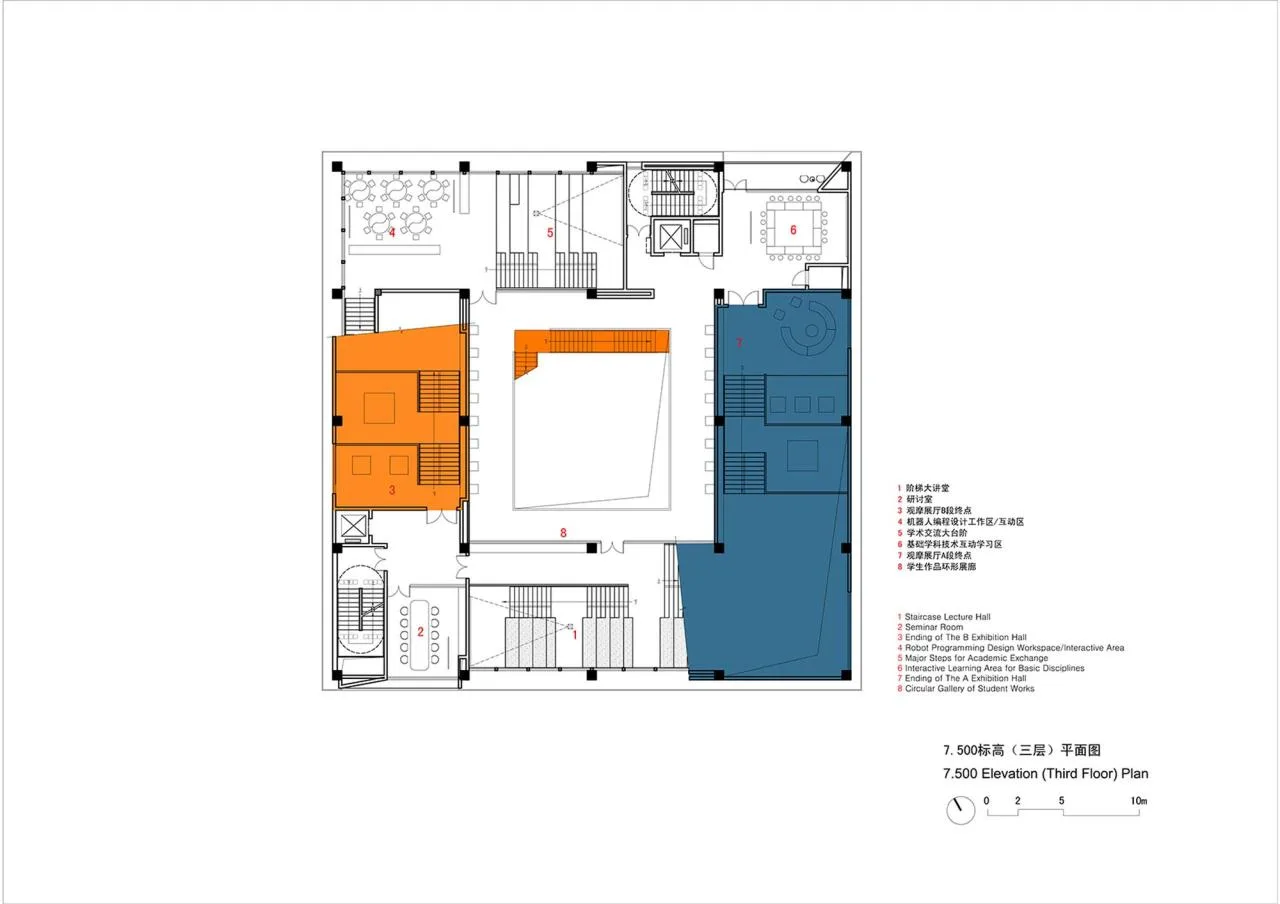
△ Third Floor Plan
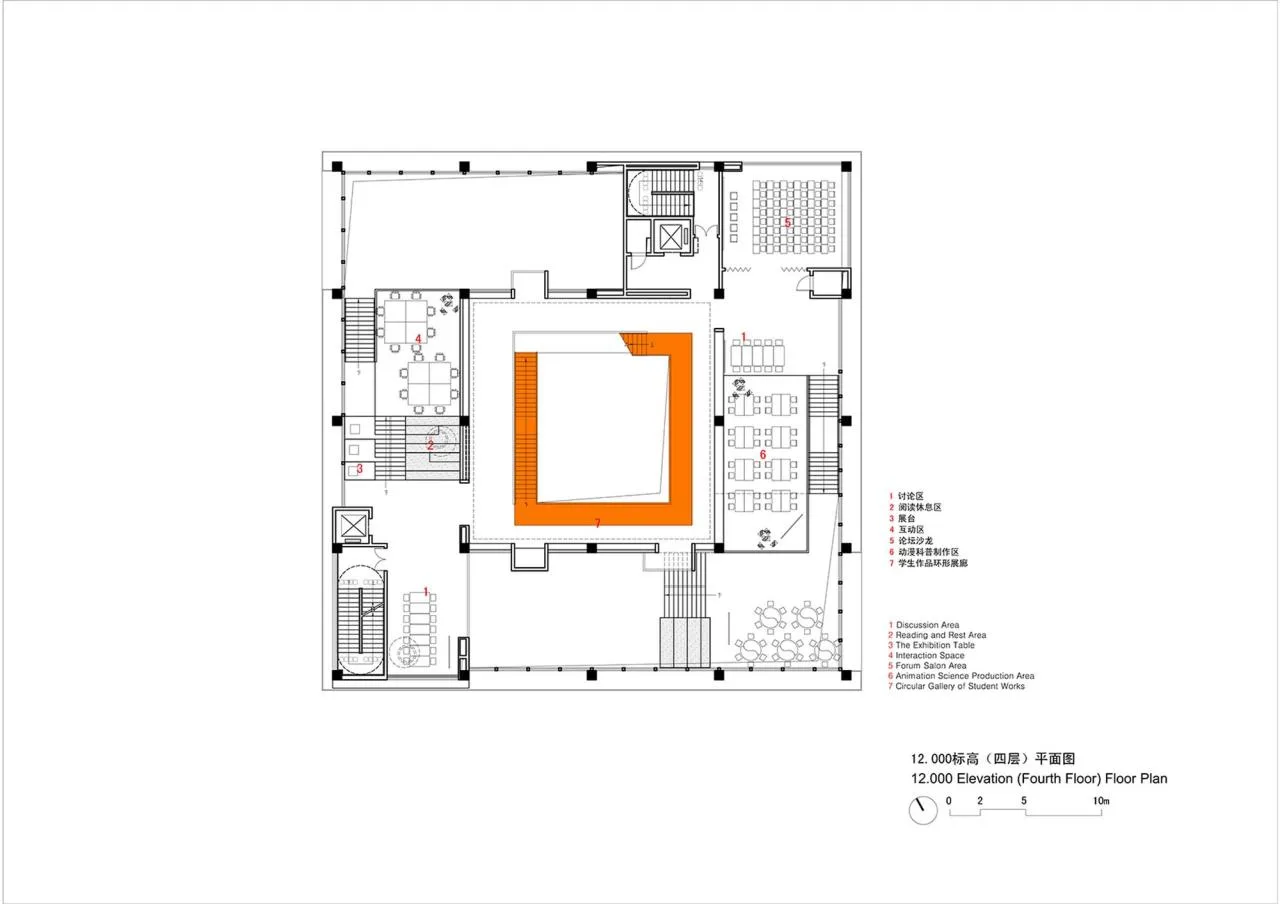
△ Fourth Floor Plan
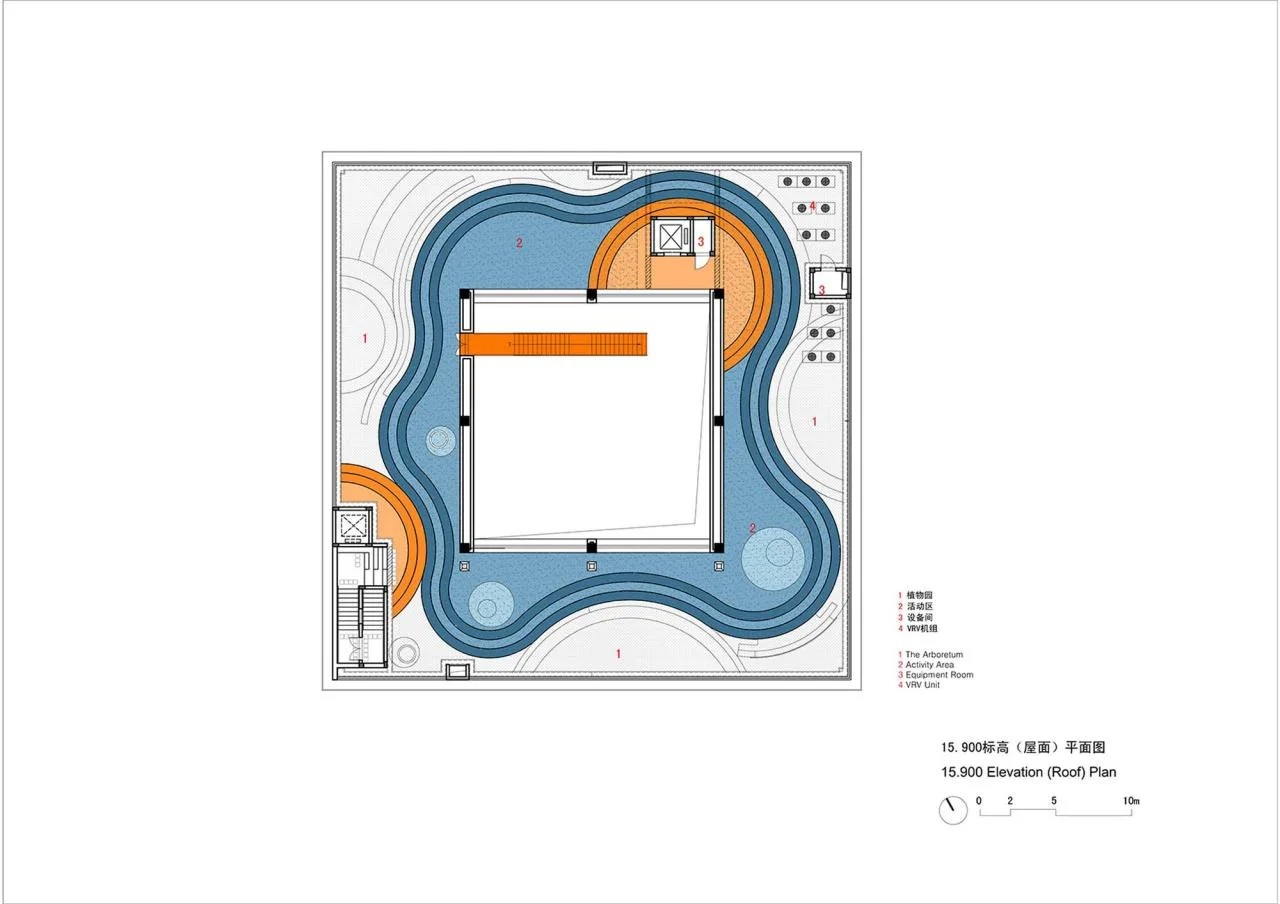
△ Roof Plan
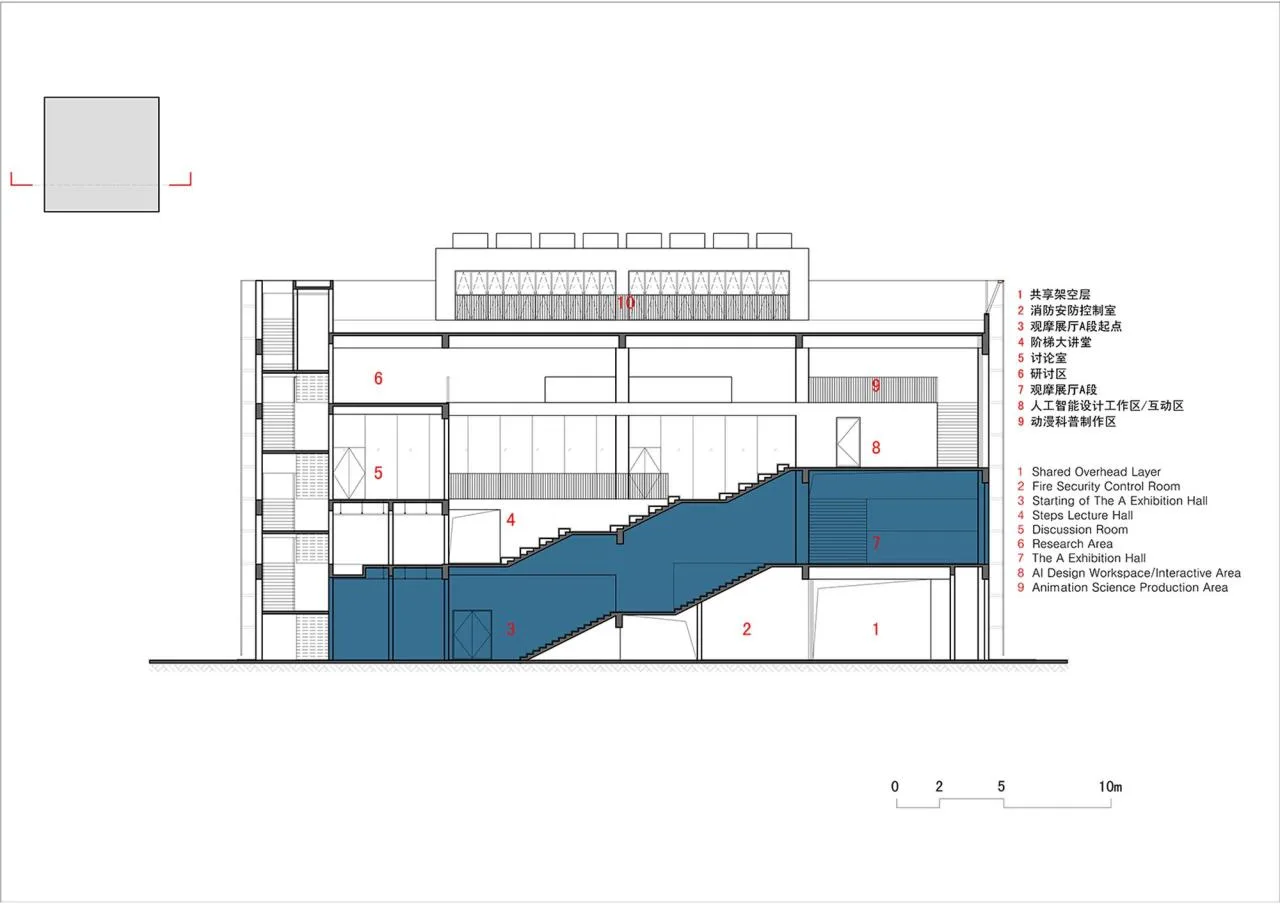
△ Section Diagram
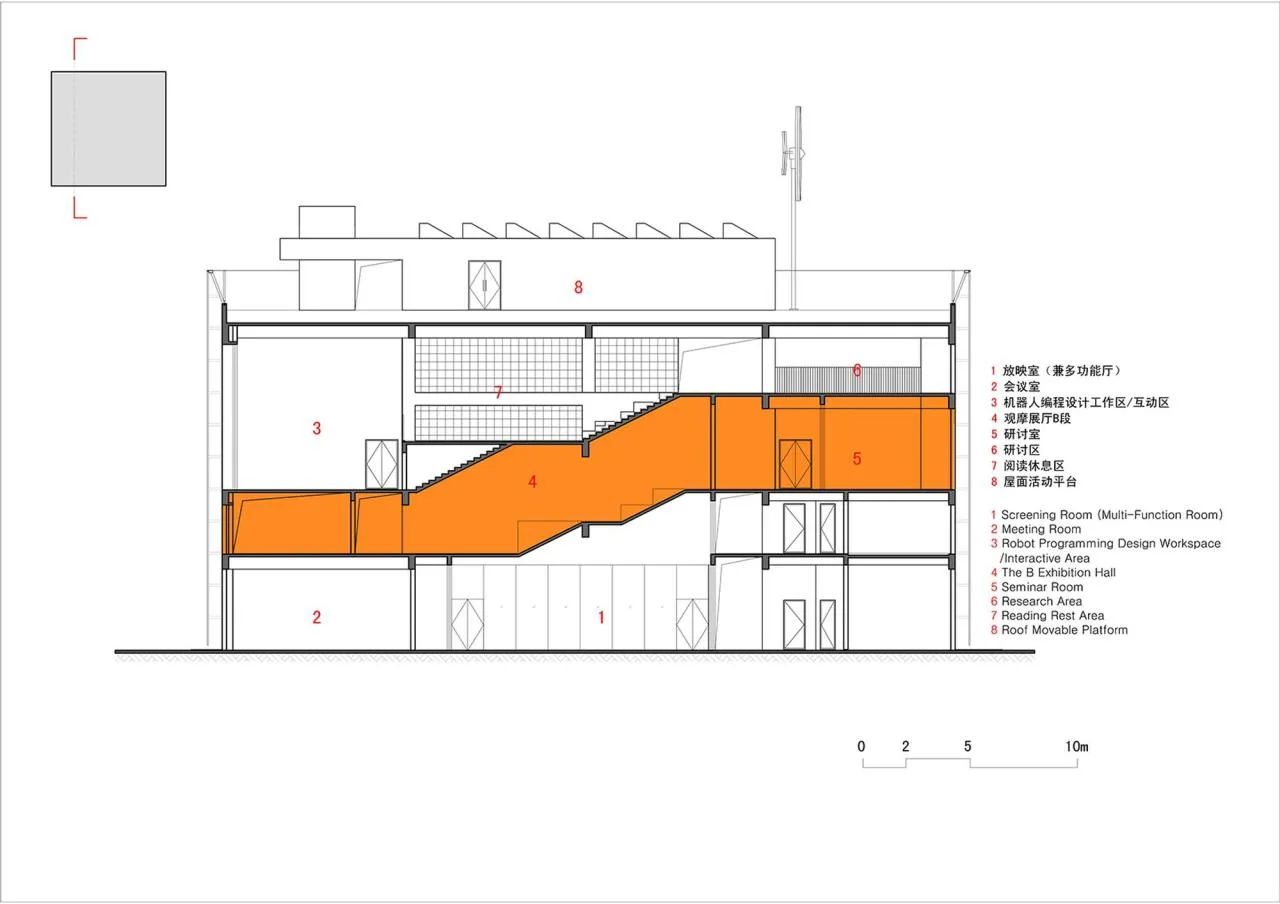
△ Section Diagram

Project Information
Architect: Architectural Design and Research Institute of South China University of Technology
Area: 3,578 m²
Year: 2022
Photographers: EVI Eagle Vision Impressions (Tan Haoxian), Deng Yangyang
Design Leader: Deng Shoupeng
Lead Architect: Su Xiaoyue
Architectural Design Team: Chen Guo, Lei Kongwu, Huang Xin, Cheng Shuying, Dai Yajing
Structural Team: Tang Jiamin, Lai Hongtao, Peng Xiuzhong, Huang Yong, Liang Yuelin, Yin Ying
Water Supply and Drainage Team: Cen Hongjin, Jiang Fan, Zhong Wenyong
Electrical Team: Huang Xiaofeng, Chen Tao, Ye Ying
HVAC Team: Wang Zhao, Cheng Guozhen, Su Heyang
Low Voltage Team: Huang Xiaofeng, Chen Weibin, Huang Zhiwei, Su Ruichang
Landscape: Chen Tianning
Energy Saving Consultant: Zhang Xinxin
Data Compilation: Yu Wencai
Construction: Heyuan Chenhui Construction Engineering Co., Ltd.
Near Zero Energy Design Consultant: Zhuhai Zhongjian Xingye Green Building Design and Research Institute Co., Ltd. (Deng Xin)
Interior Design Consultant: Guangzhou Zhongyi Decoration Design Co., Ltd. (Huang Xiaoqing, Lin Bokai, Huang Qinzhi)
Exhibition Consultant: Guangzhou Sanchuantian Culture and Technology Co., Ltd. (Wang Qinming, Deng Yangyang, Zhu Lingling, Zhang Wenquan, Kong Lingtao)
Exterior Wall Design Consultant: Guangzhou Perliyou Material Technology Co., Ltd. (Yang Haijun, Tan Le)
Thermal Glass Consultant: Zhongshan Zhongjia New Materials Co., Ltd.
Owner: Education Bureau of Heyuan City
Location: Heyuan City














Must log in before commenting!
Sign Up