
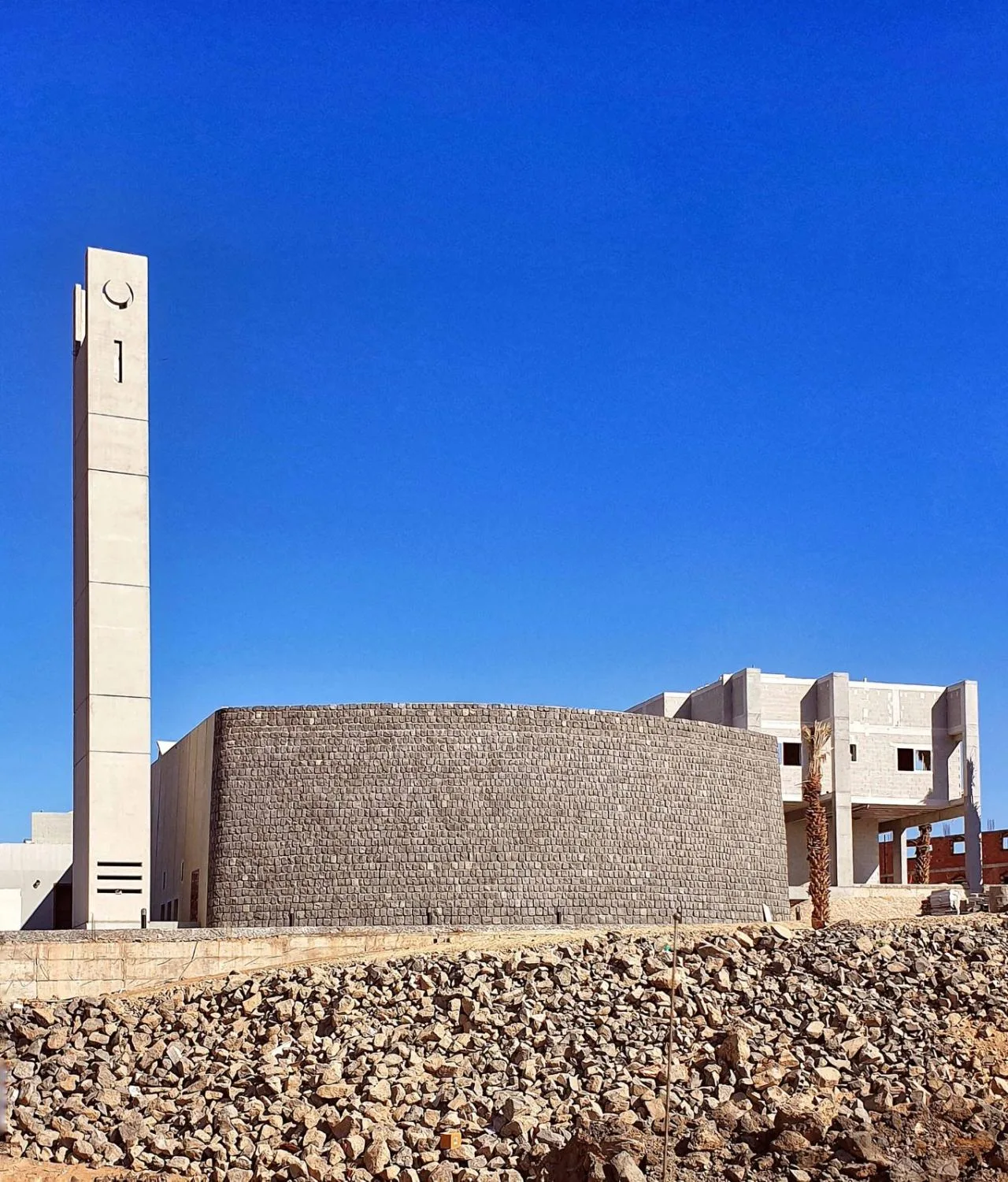
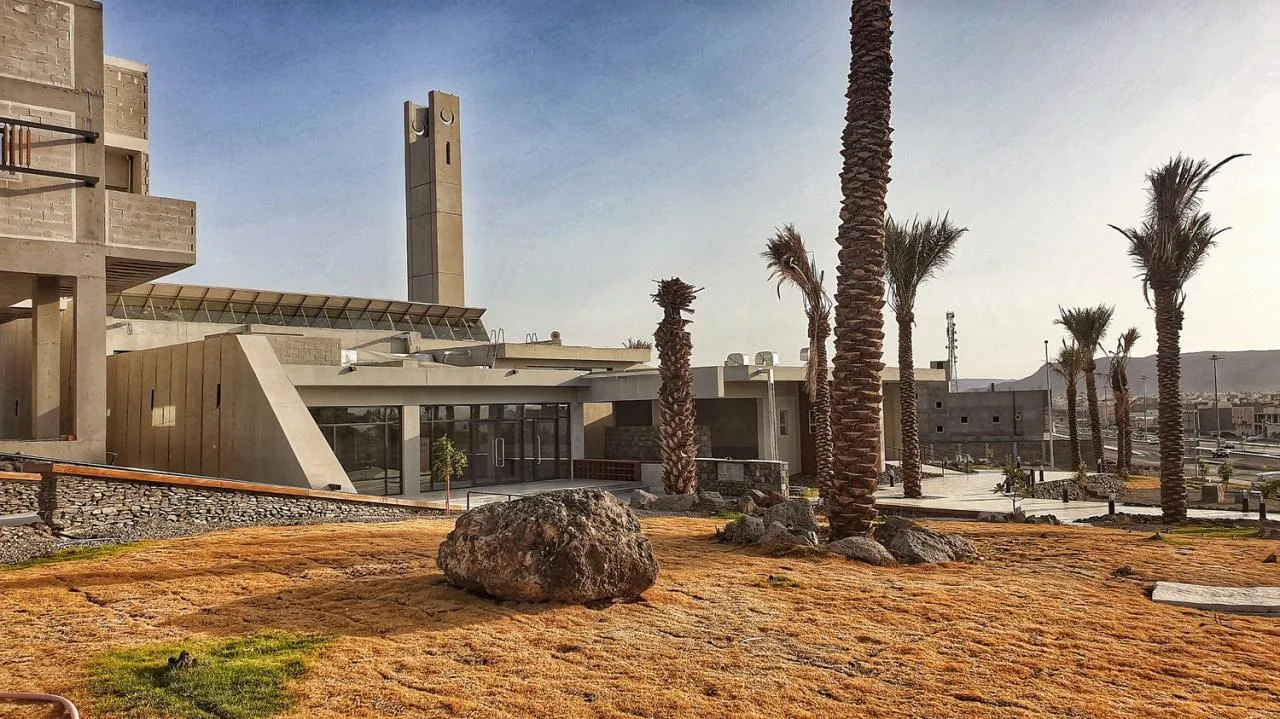
The Al Gharra Mosque breaks away from the overly traditional design approaches commonly seen in other Prophet mosques in Al Medina. The architects embrace the concept that the essence of a mosque is its core purpose—a “house of Allah” as defined during the time of Muhammad—rather than its ornate architectural form. While local mosques often emphasize intricate geometric worship spaces, Al Gharra Mosque stands apart by reinterpreting this tradition with a fresh perspective.
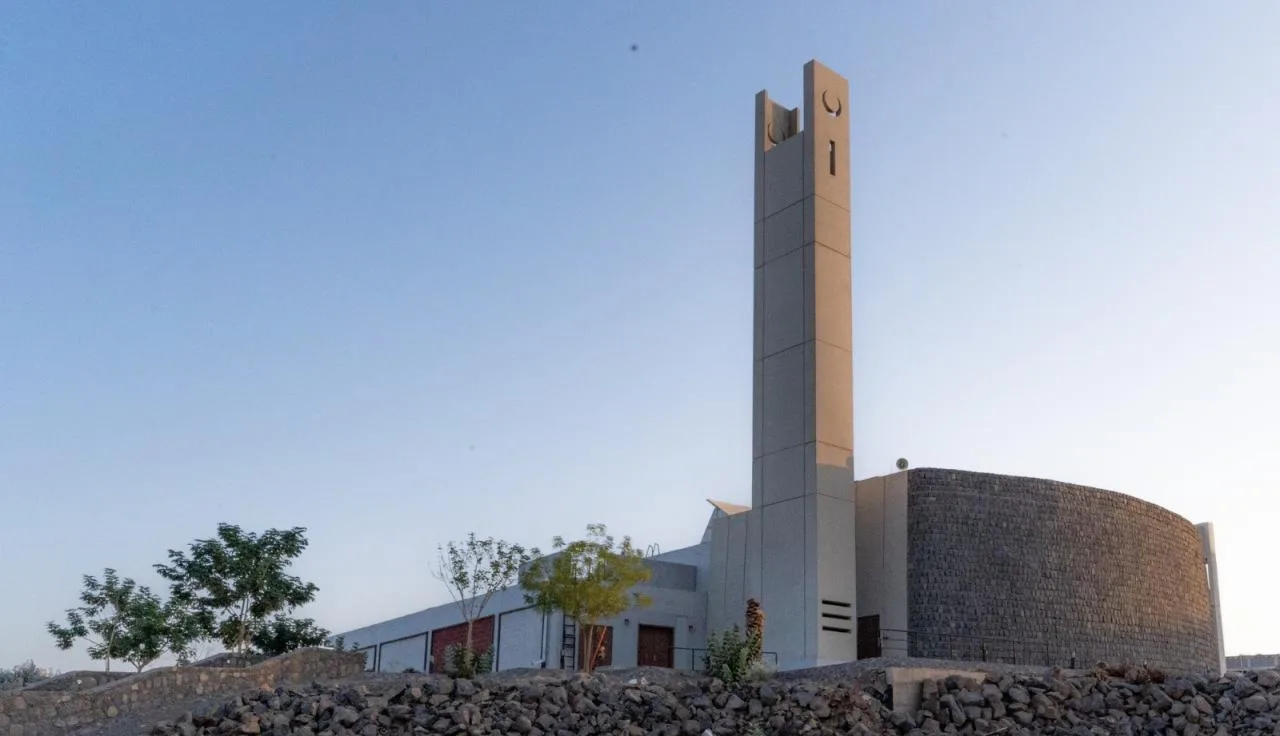
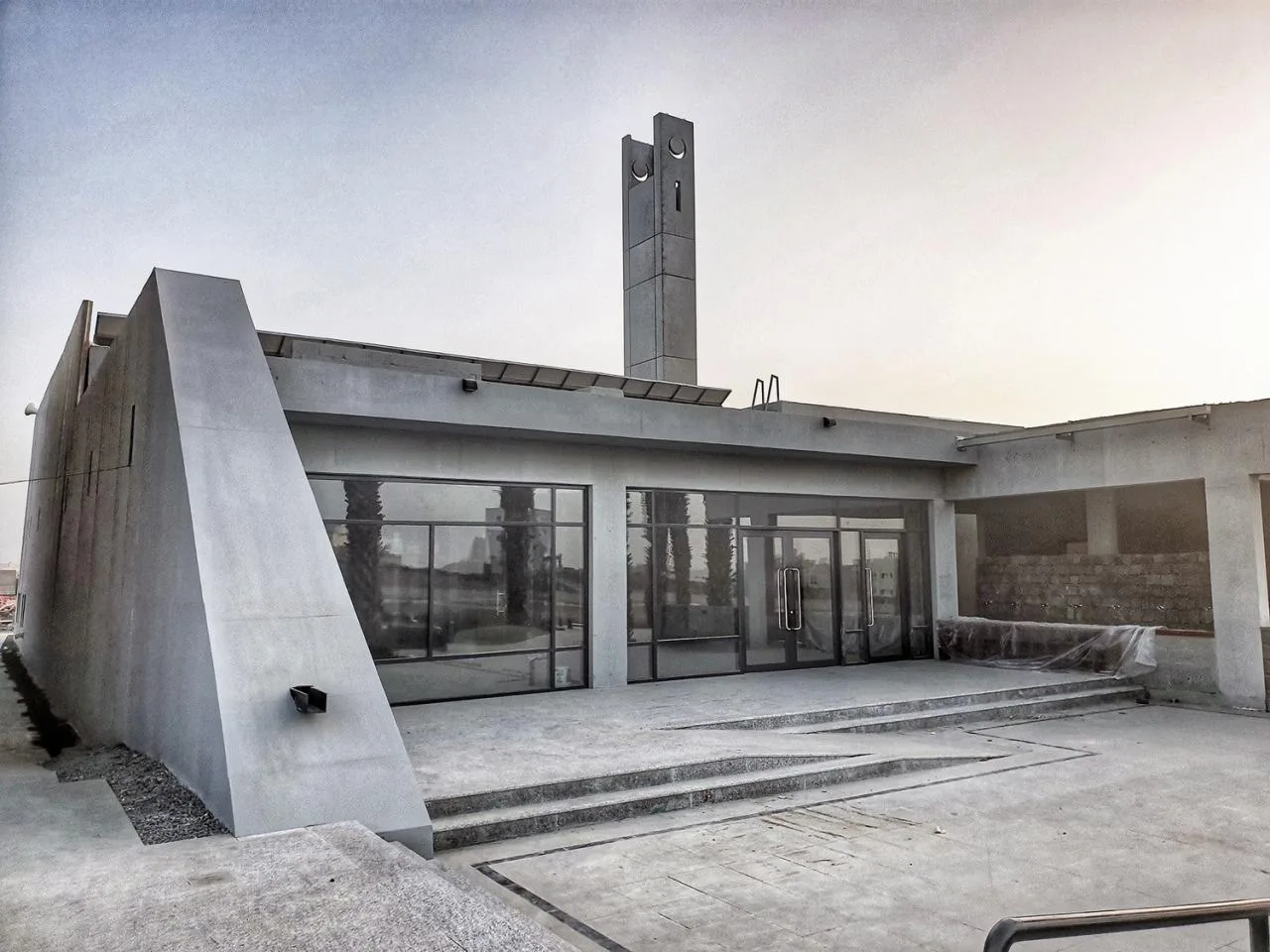
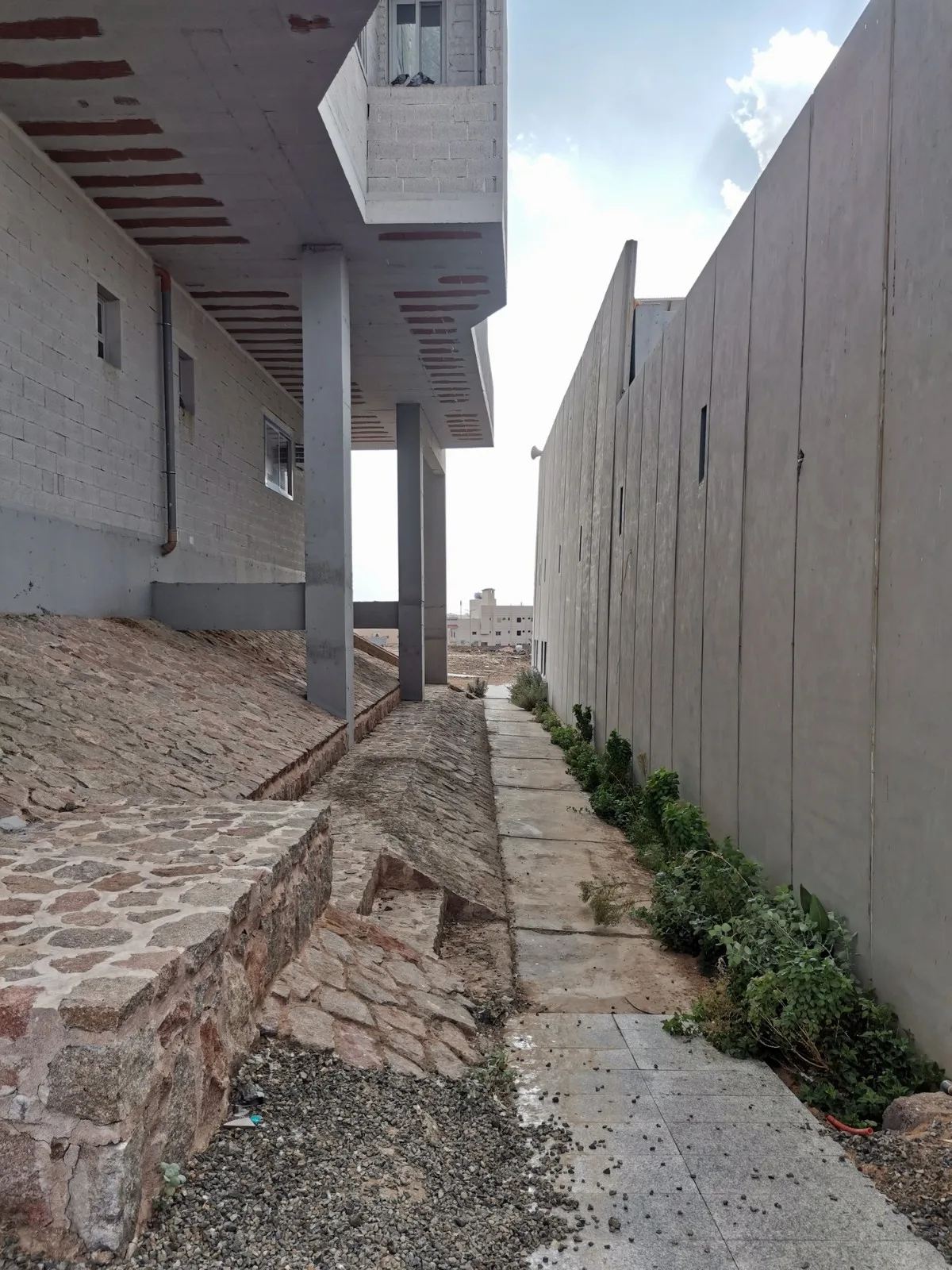
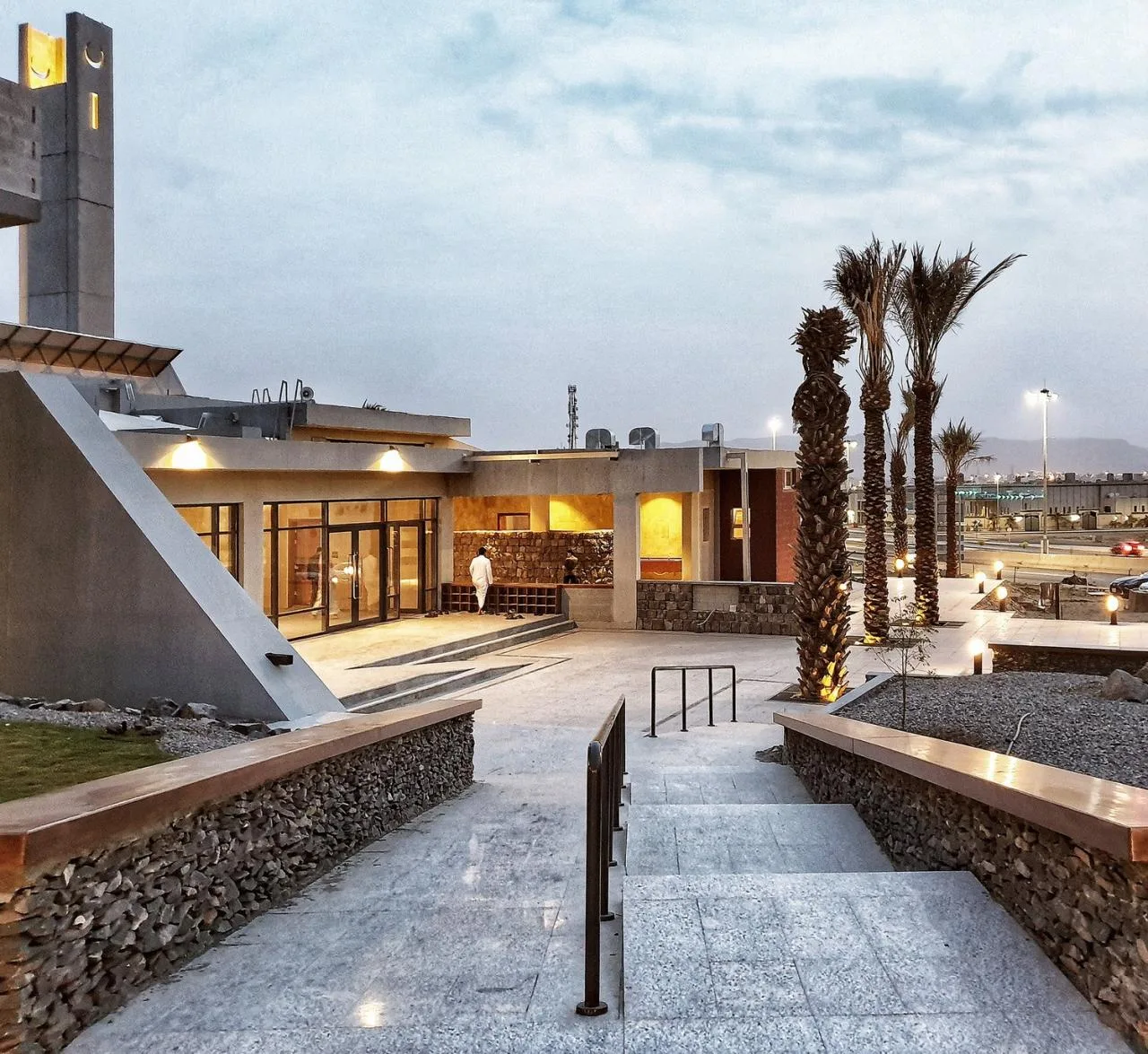
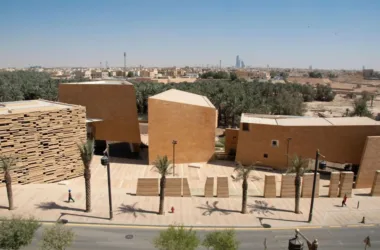
Situated on a raised rocky site, the mosque’s architectural form faces Mecca with a maximum elevation difference of 7 meters from its surroundings. The surrounding landscape seamlessly connects various neighborhood levels, integrating the mosque harmoniously into its environment. Visitors approach the mosque via a winding linear staircase that leads to the front courtyard (Sahan), providing direct access to the prayer hall or an alternative path to a secluded area. This design thoughtfully blends architecture and landscape, creating a contrast to traditional structures and expressing religious states such as Al Zahir, Taharah, and Al Batin.
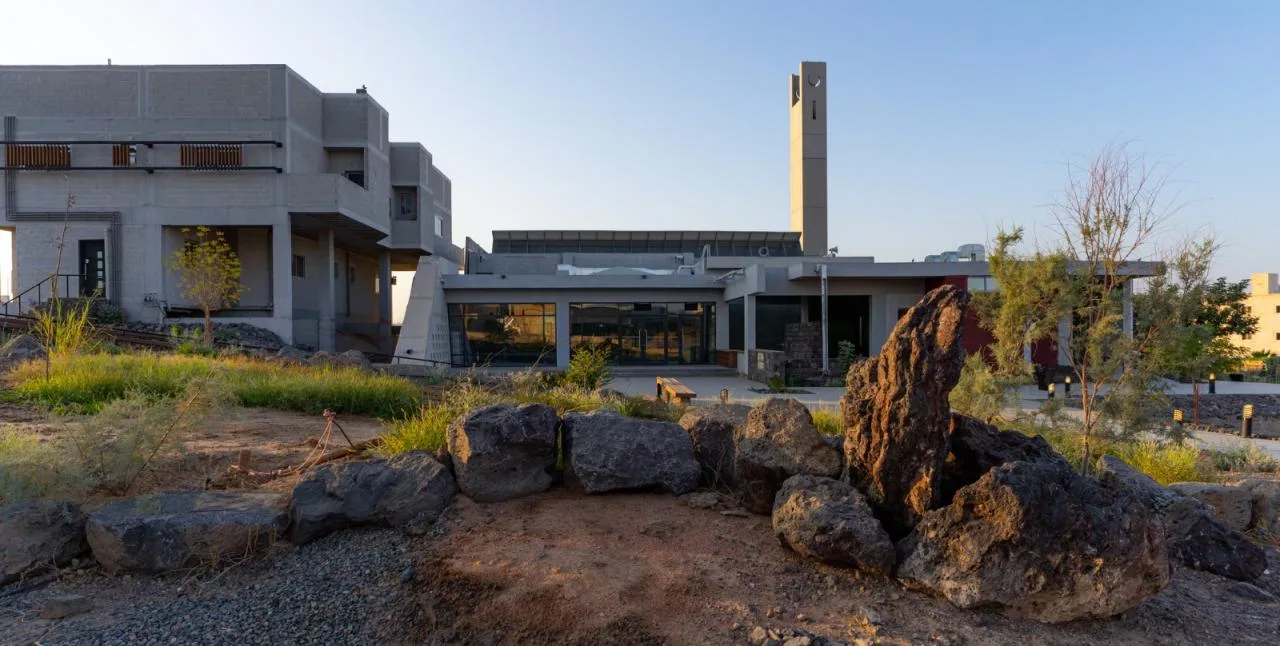
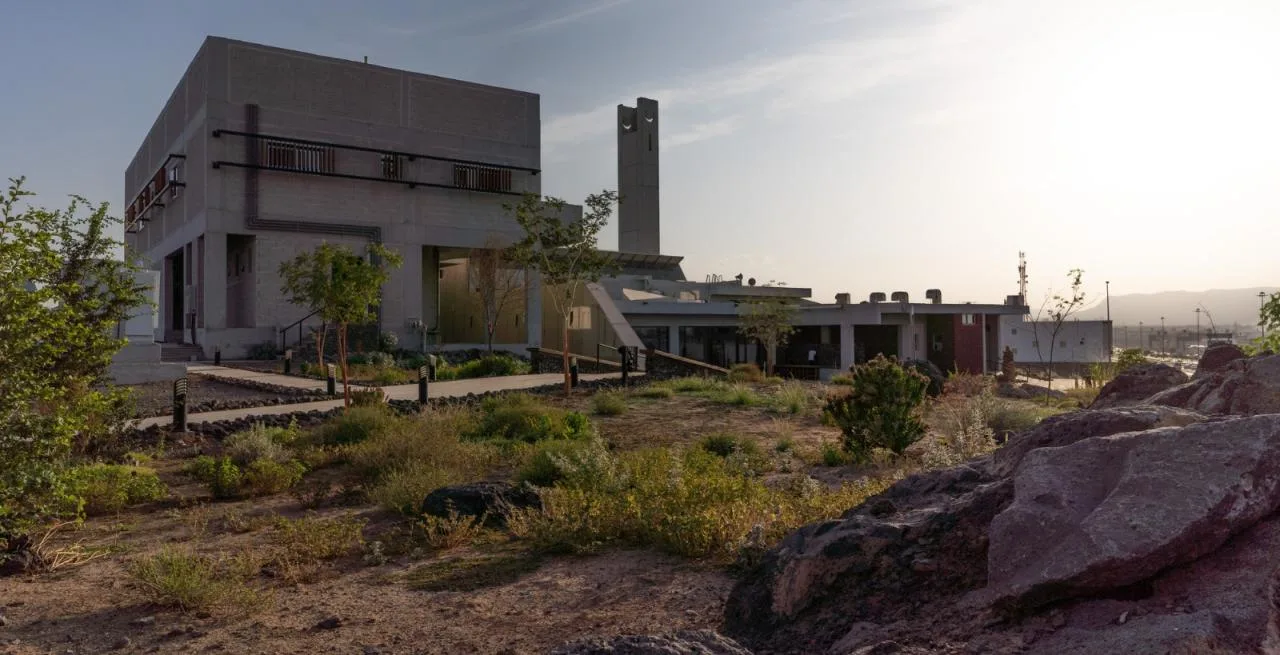
Al Zahir: Represents a state of outward harmony between the call to prayer and the act of prayer itself. The path, lined with gardens and trees, is marked by contemplative fallen leaves and a gentle fading light.
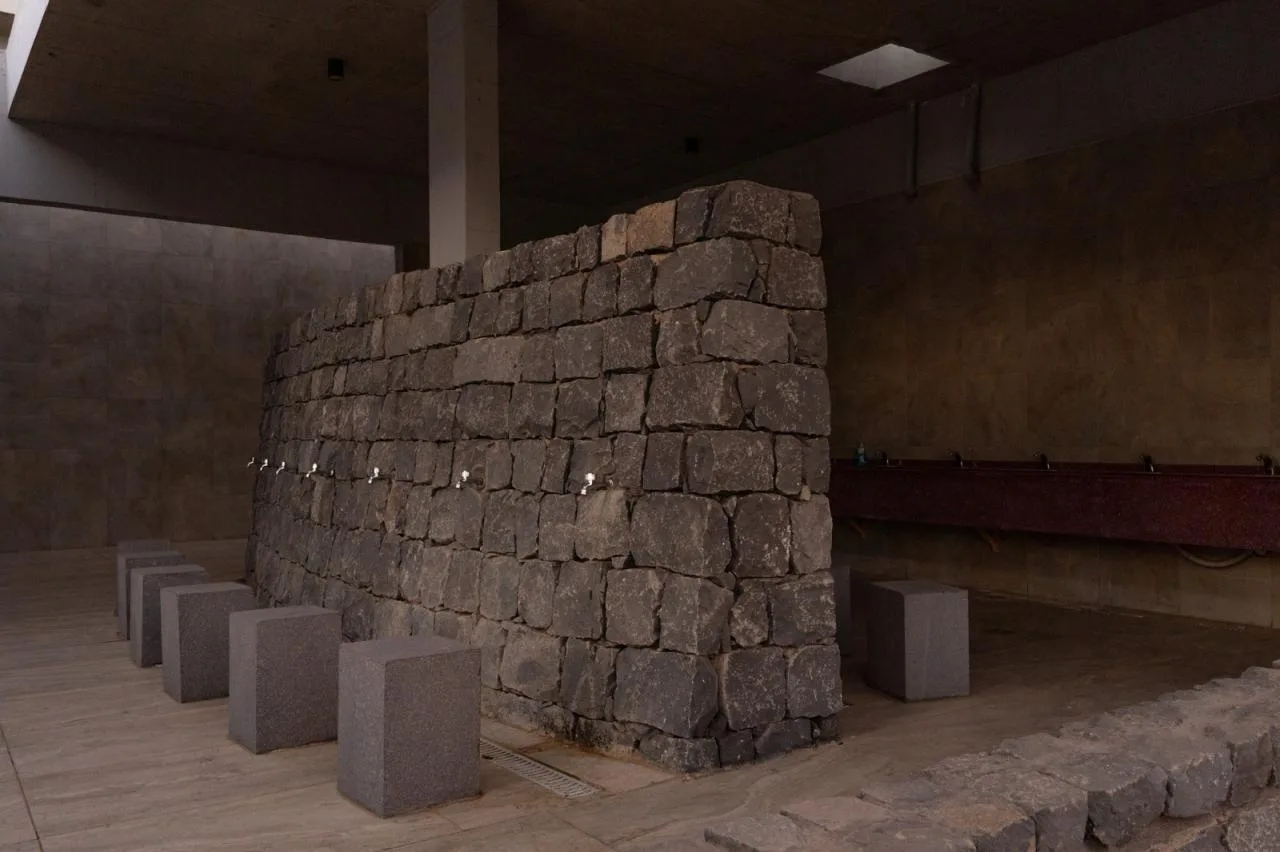
Taharah: Symbolizes ritual and bodily purity. This state allows one to rise above worldly concerns (“Donia”) and temporarily pursue spiritual devotion (“Deen”), accompanied only by the sound of dripping water.
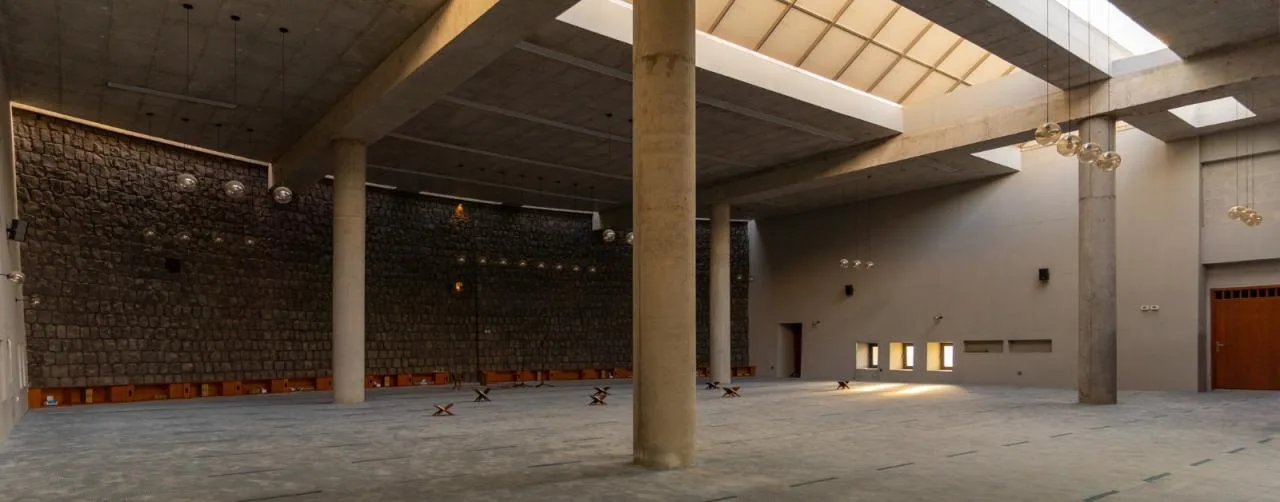
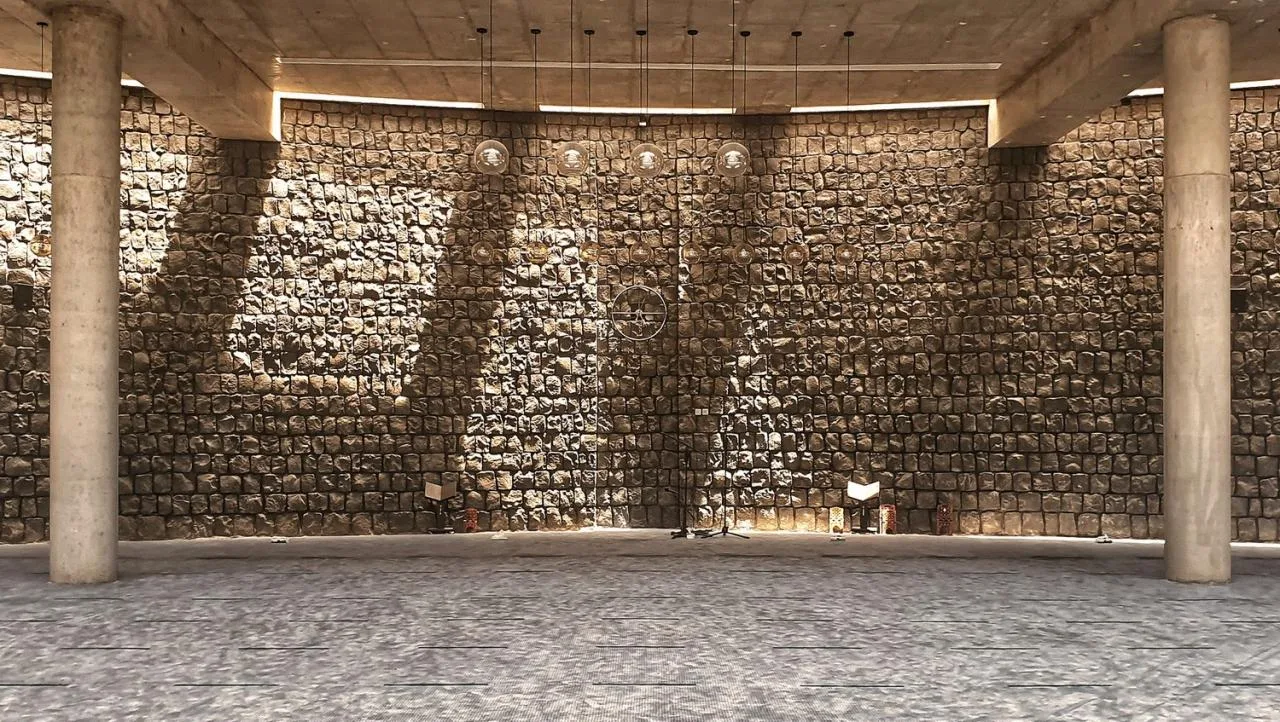
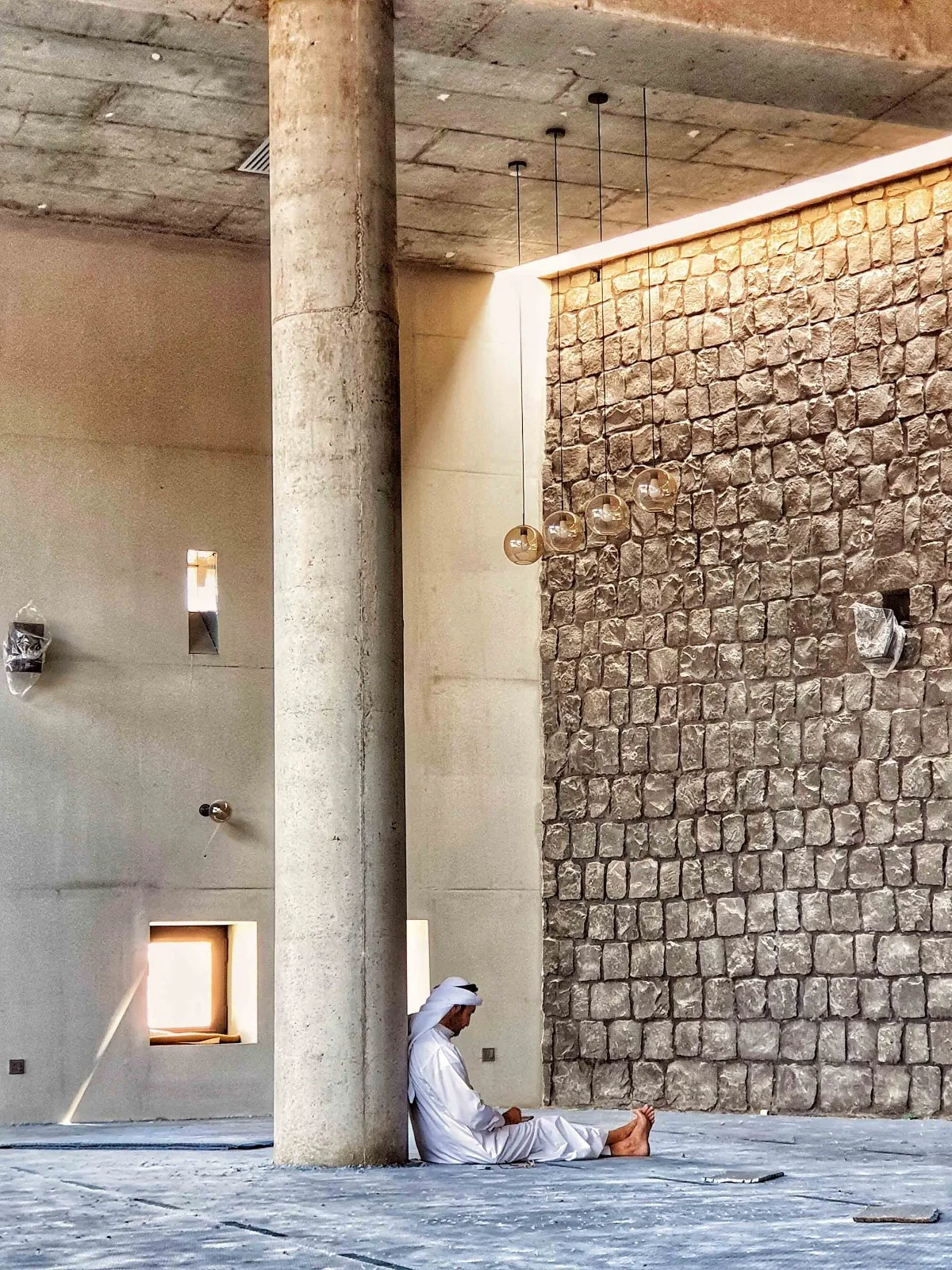
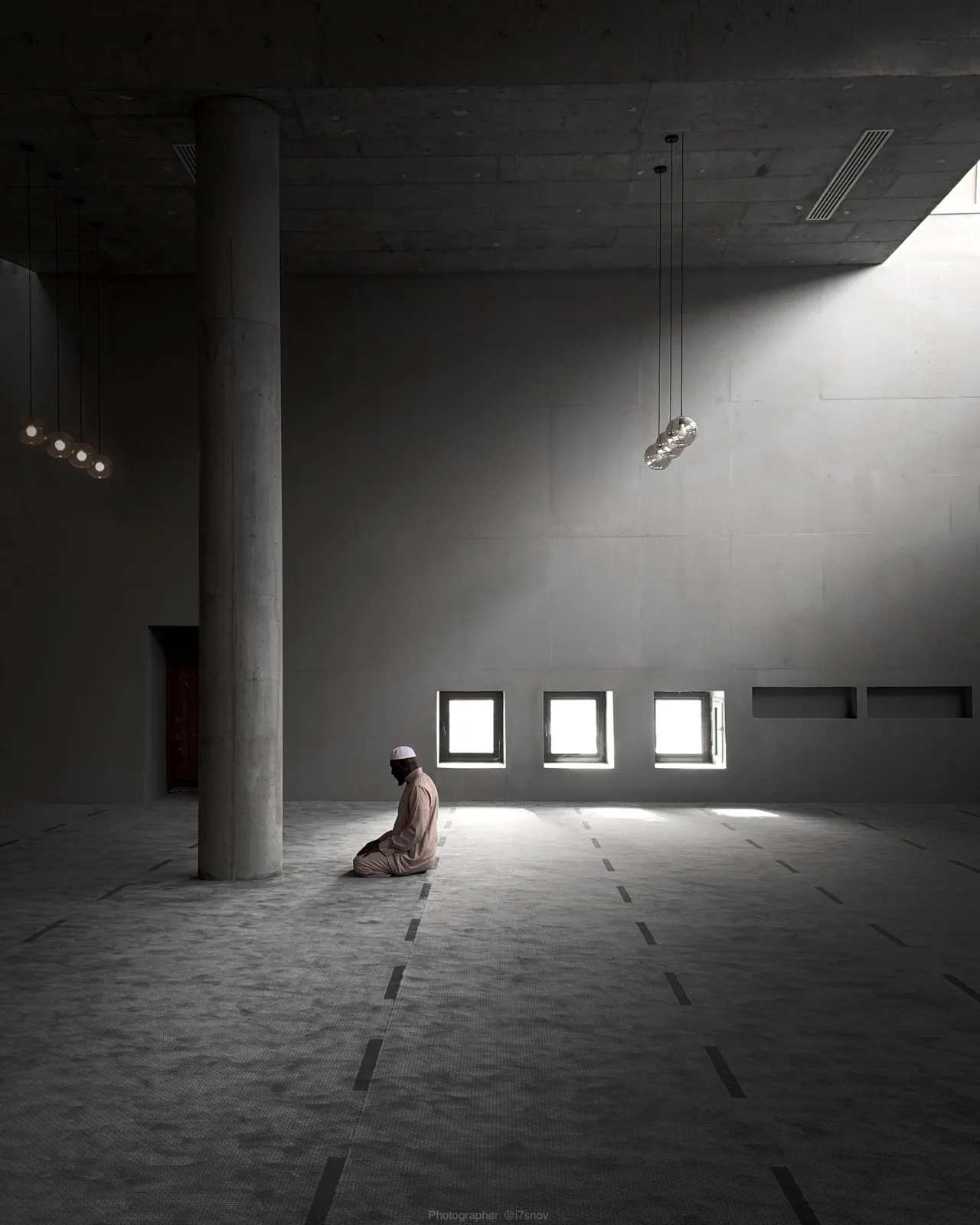
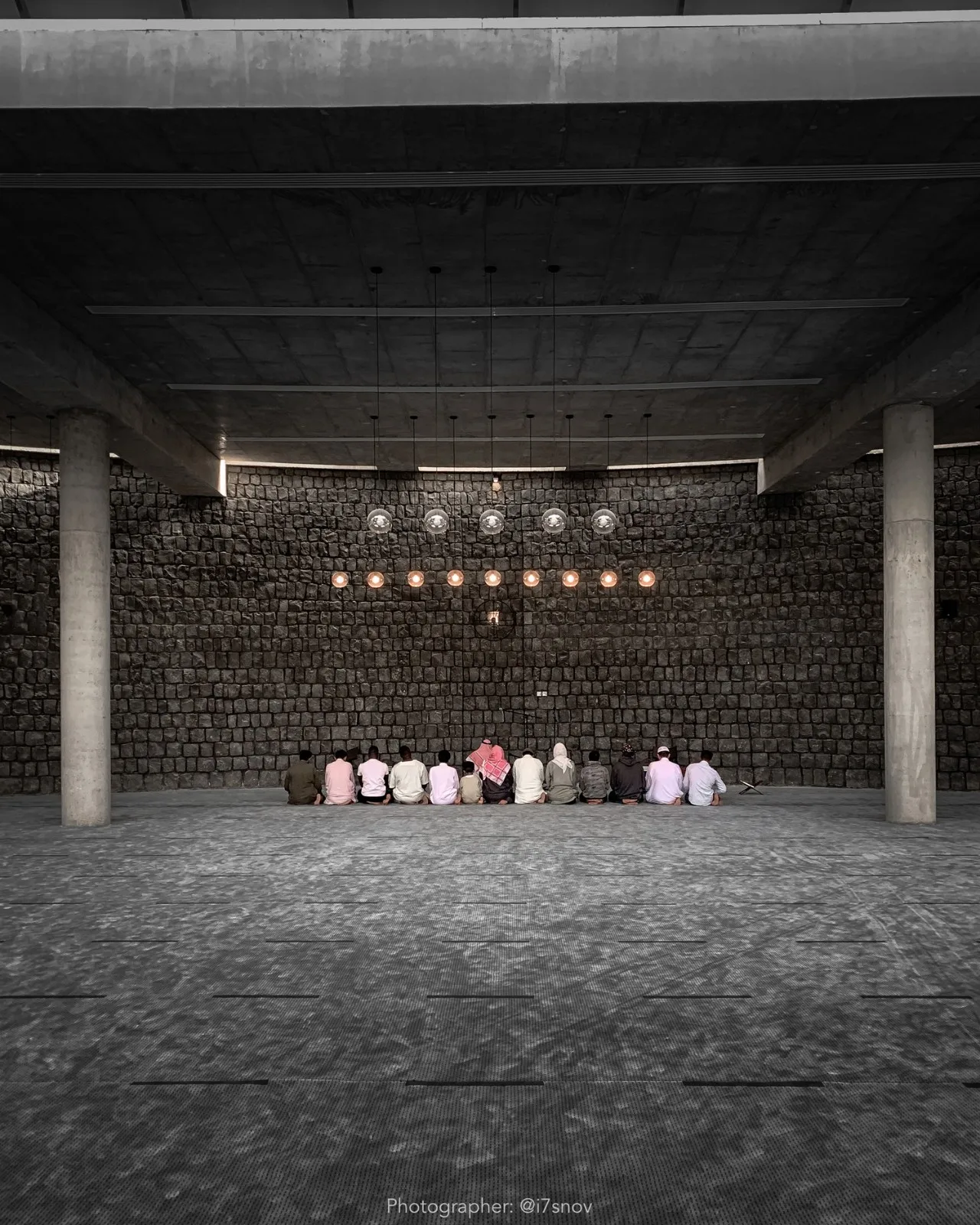
Al Batin: Reflects inner prayer and spiritual connection. It enables one to transcend life’s hardships and commune with the all-knowing and omnipotent Allah, inspired by the Prophet Muhammad’s practices in the historic Al Masjid an Nabawi. This design seeks to harmonize natural light and stone elements oriented toward the Qiblah.
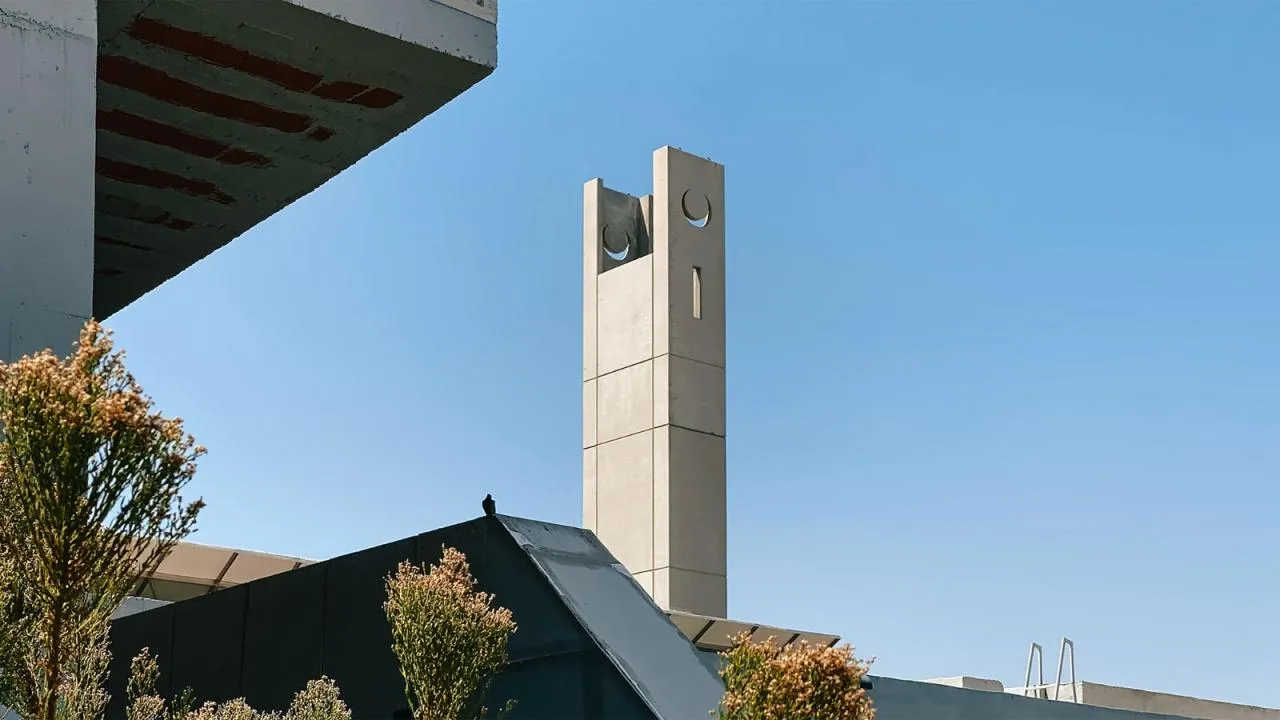
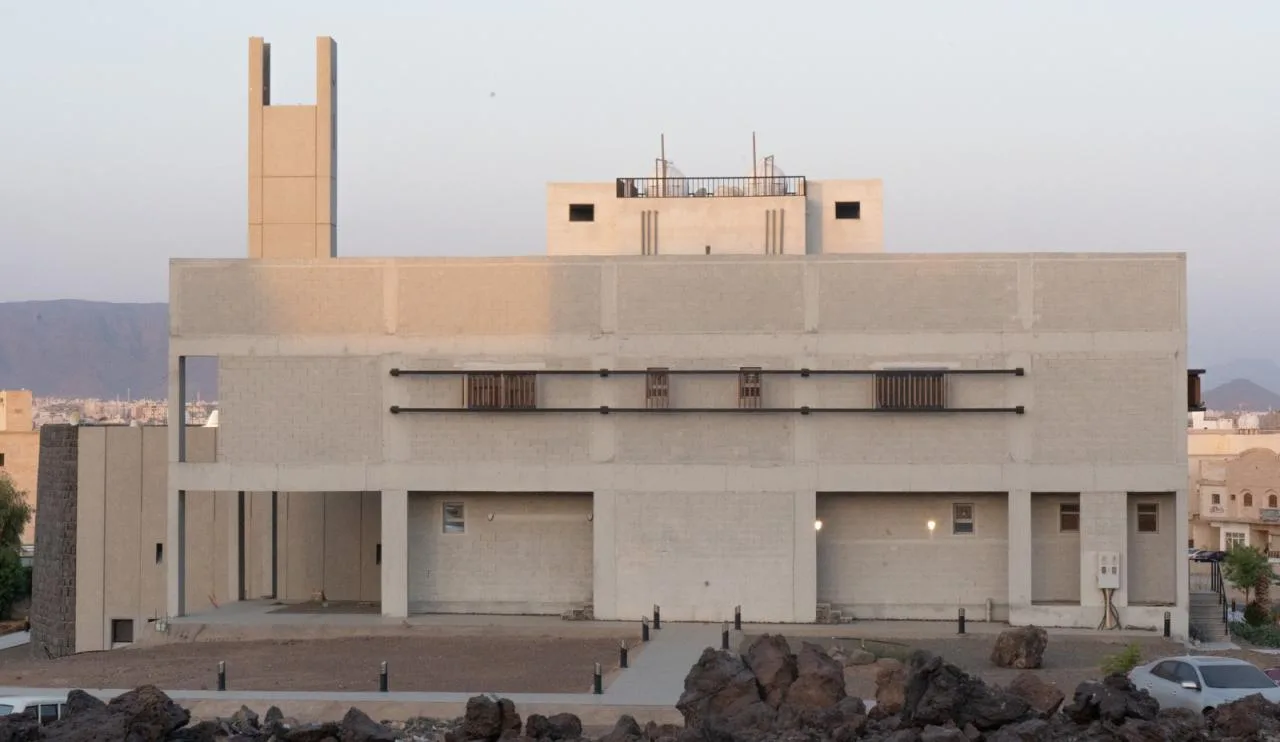
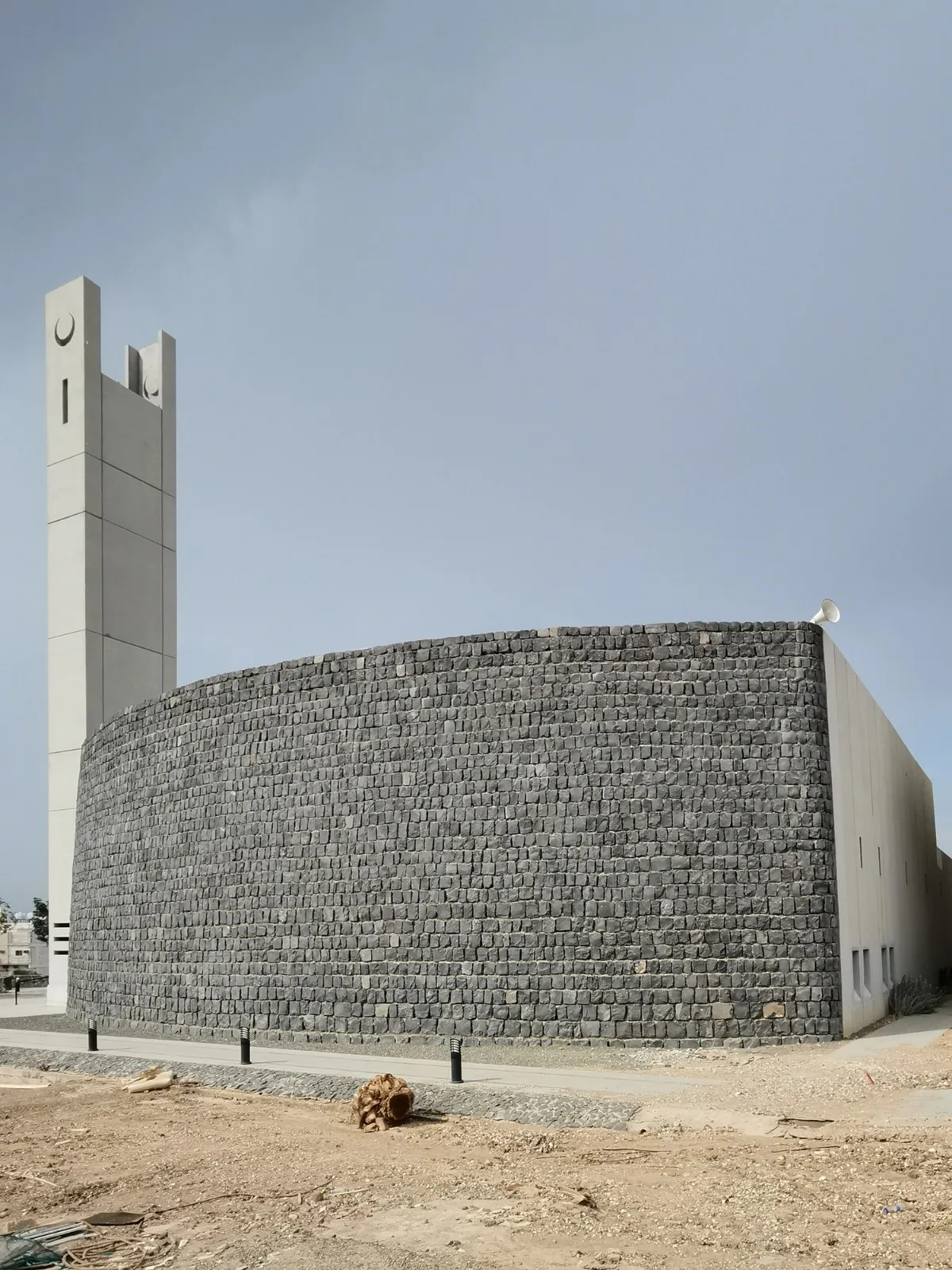
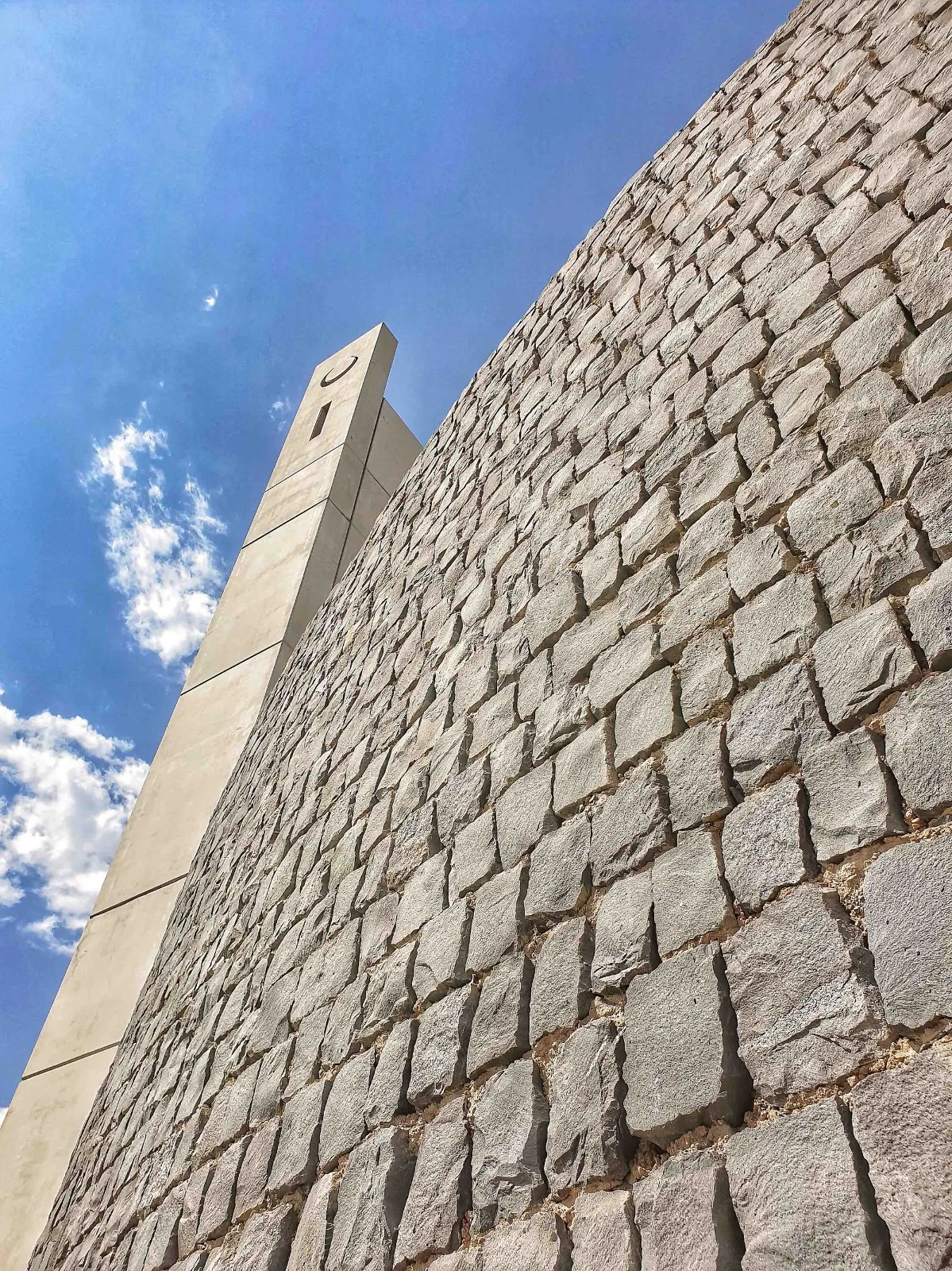
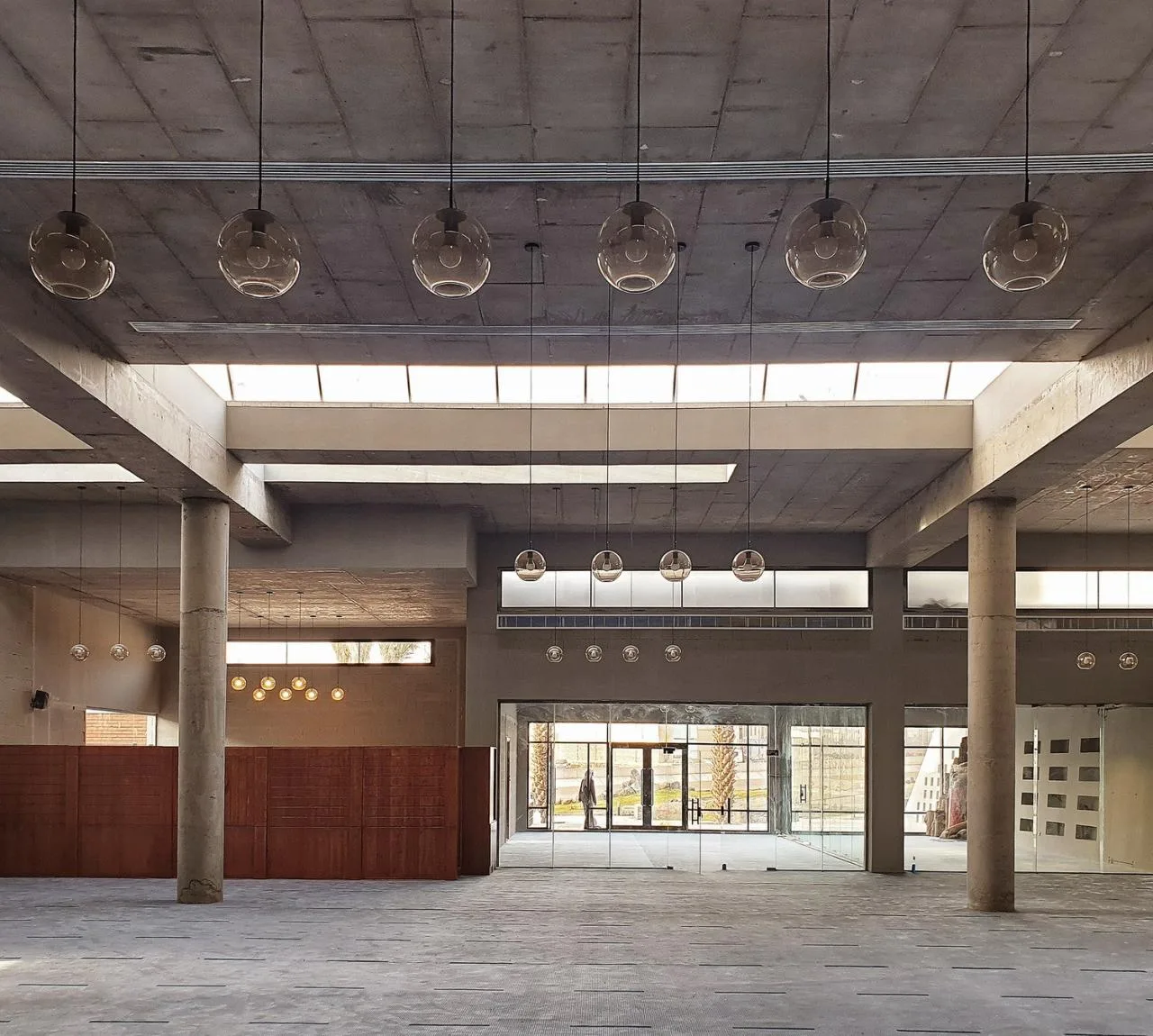
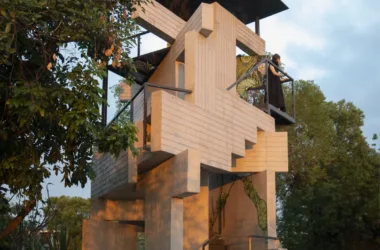
The elegant design of Al Gharra Mosque is intricately intertwined with beams of light. Asymmetrical worship figures are etched onto concrete surfaces illuminated by sunlight. Black stones bear the subtle marks of crescent moons, while the brick pathways are adorned with mottled hues of gray and white. The architecture narrates a story of parallel lines, reminiscent of tram tracks, inviting worshippers to express their prayers within these guiding lines.
Project Drawings
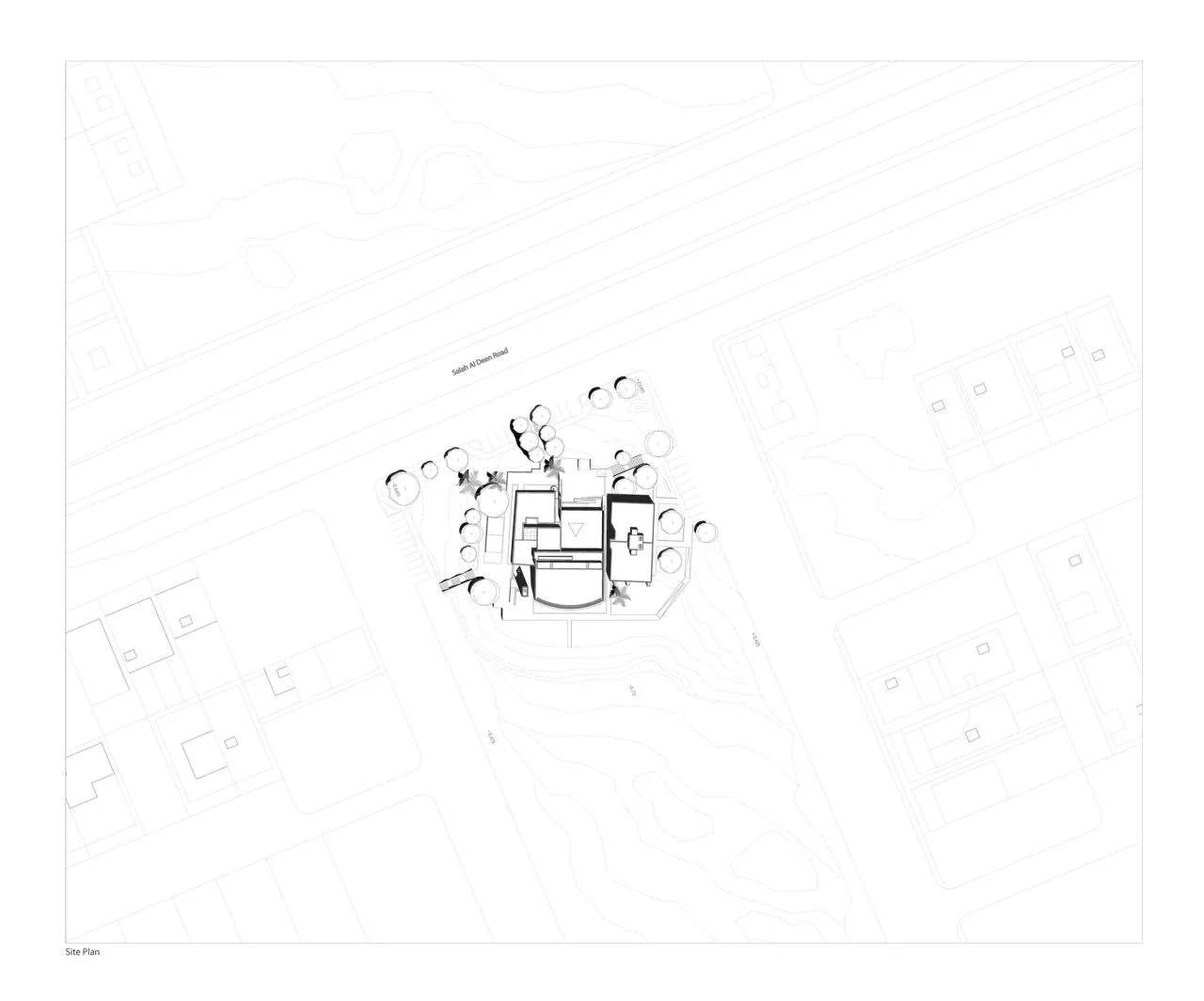
△ General Layout Plan
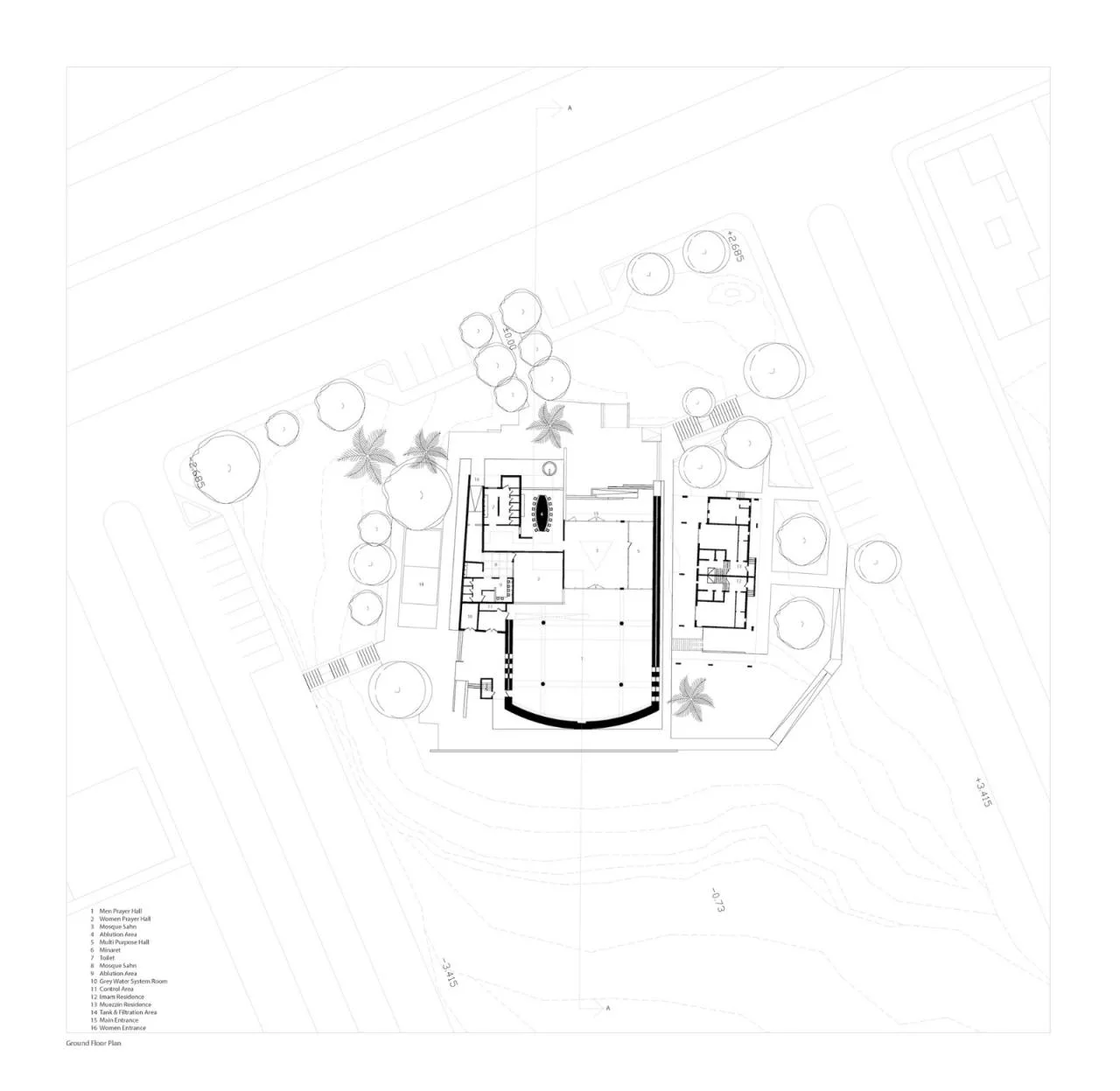
△ First Floor Plan
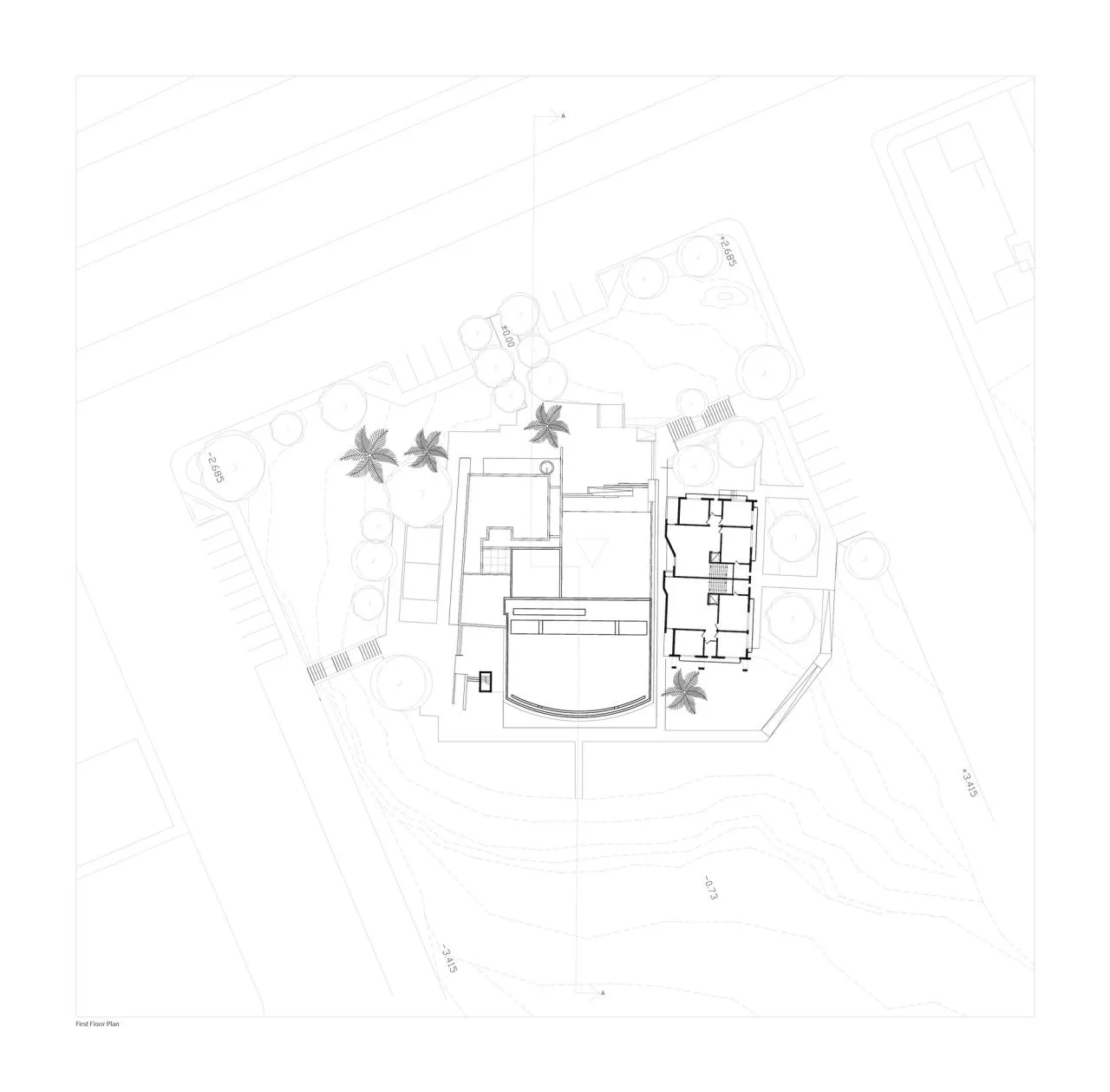
△ Second Floor Plan
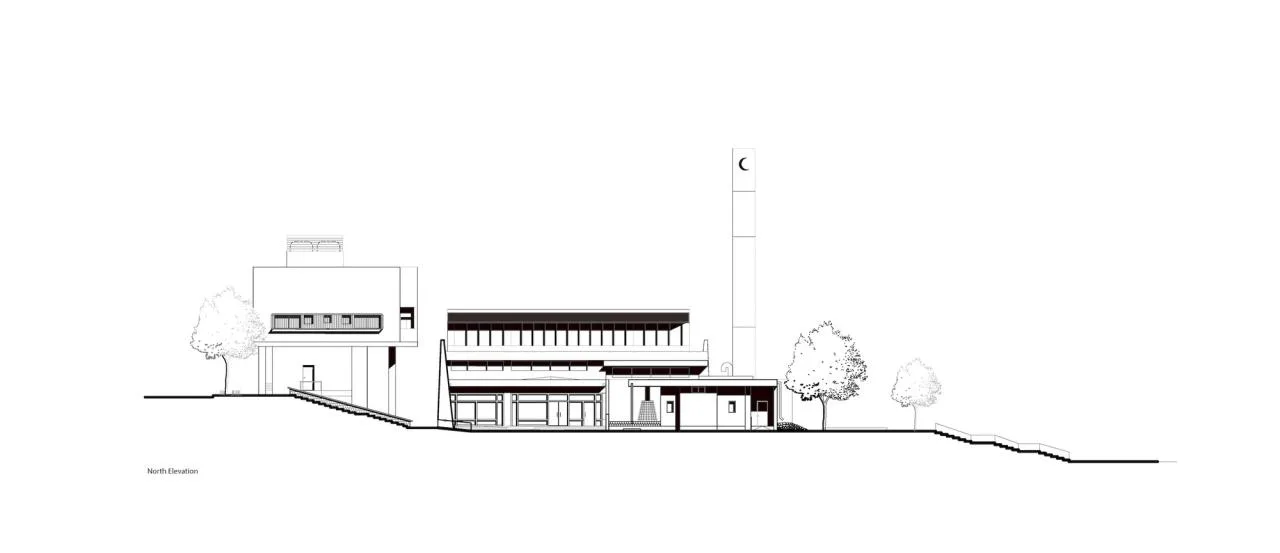
△ Elevation Drawing
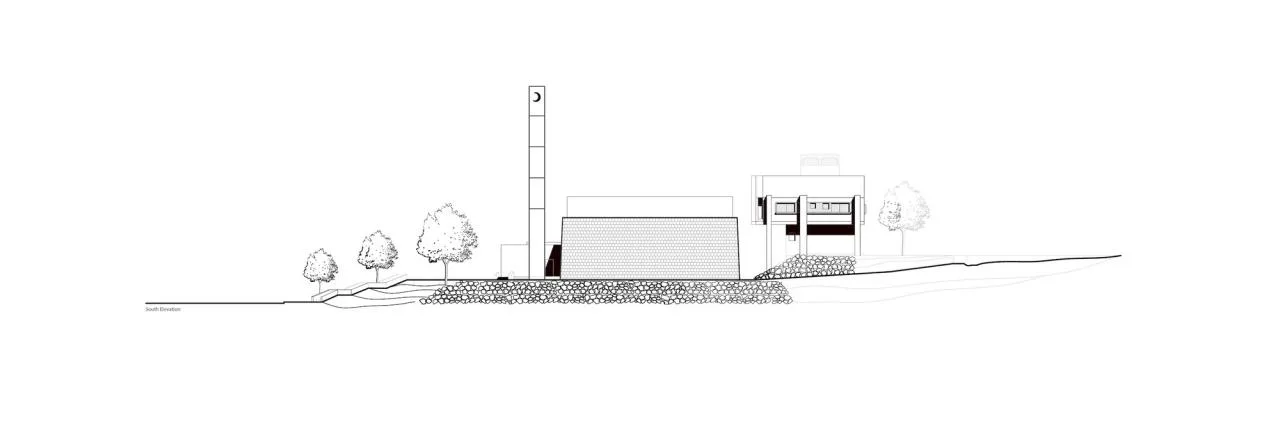
△ Elevation Drawing
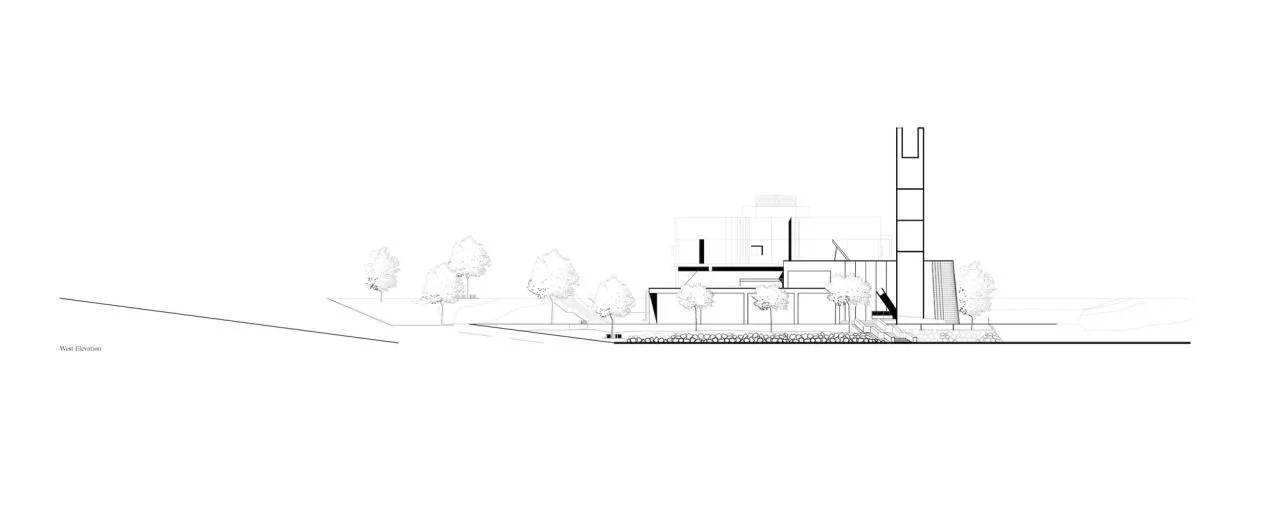
△ Elevation Drawing
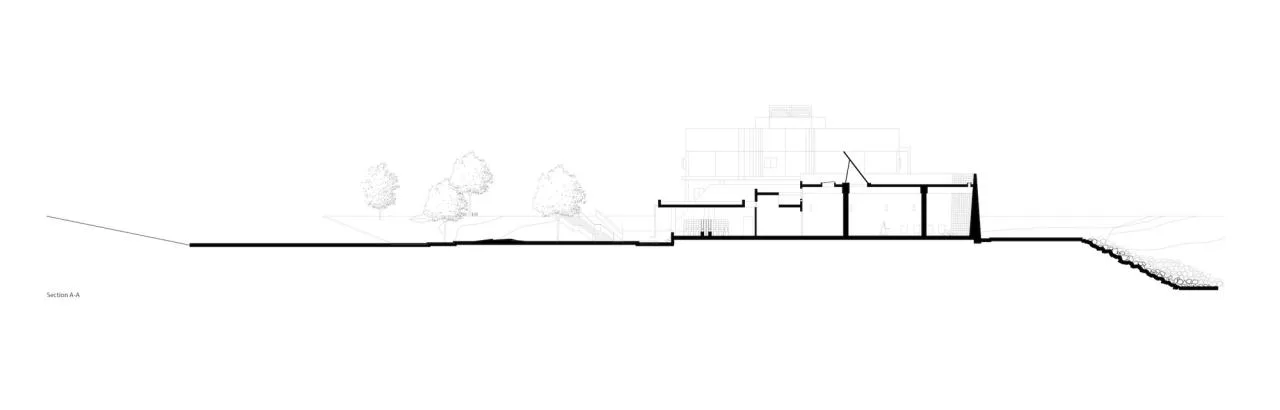
△ Section Diagram
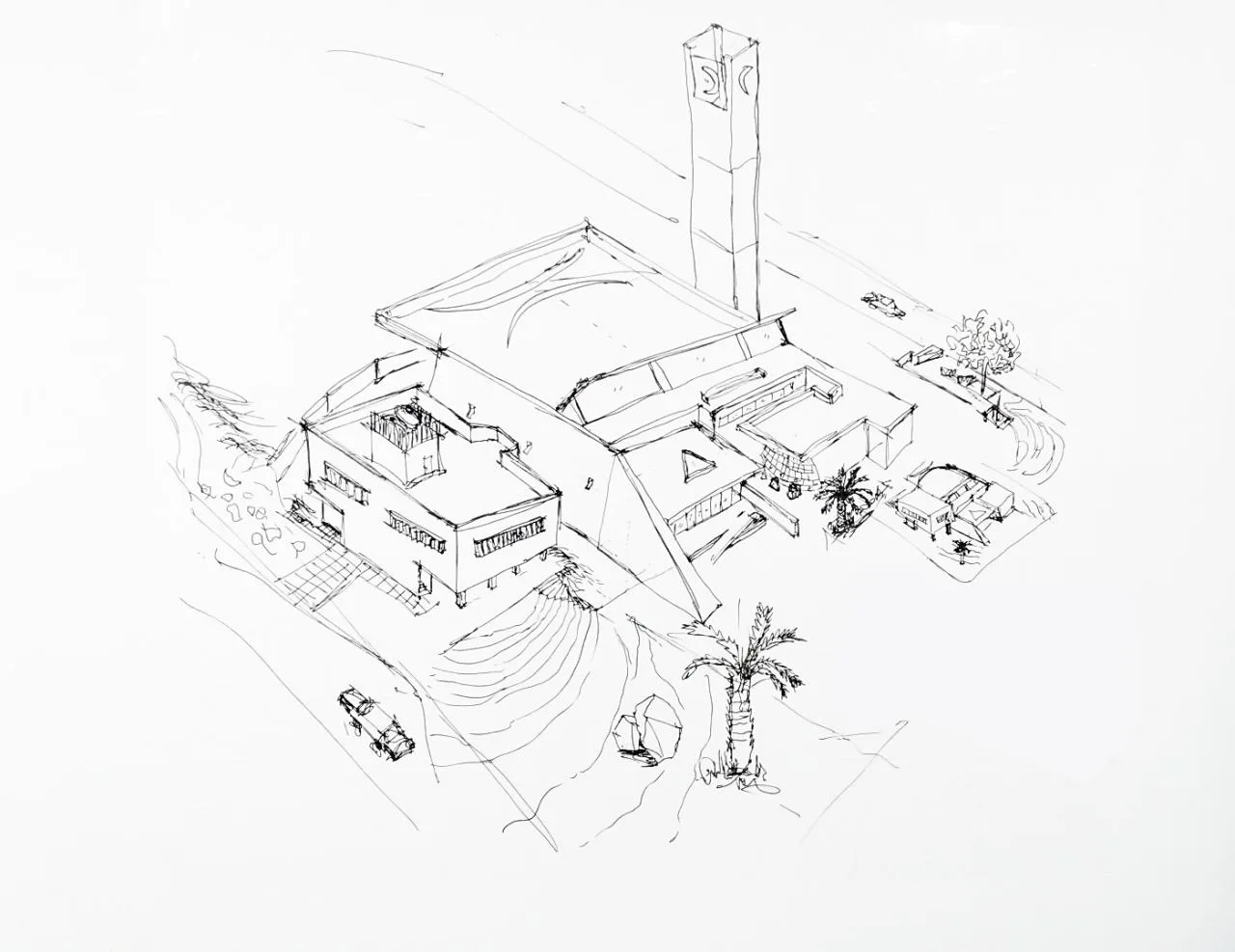
△ Hand-drawn Illustration
Project Information
Architect: Mohammed Ibrahim Shafee Architectural Office
Area: 1,500 square meters
Project Year: 2020
Photography: Saleh Al Hawasawy Photography, Mohammed Ibrahim Shafee Architectural Office, Hasan Ahmad, Abdulrahem Shafea
Suppliers: Arpioneer, Jotun, Light Scape, Sajco, Squire Building Construction, Thawabit Constructions for Aluminum-Glass Systems, York
Architectural Design and Drawings: Mohammed Ibrahim Shafee
Reviewed by: Yousif Al Saeed
Text: Yousif Al Saeed
Structural Engineering: Ashraf Yousif
Function/Purpose: Mosque / Religious Architecture
HVAC Engineering: Al Nuha HVAC Services
Location: Medina Munawara, Saudi Arabia













Must log in before commenting!
Sign Up