
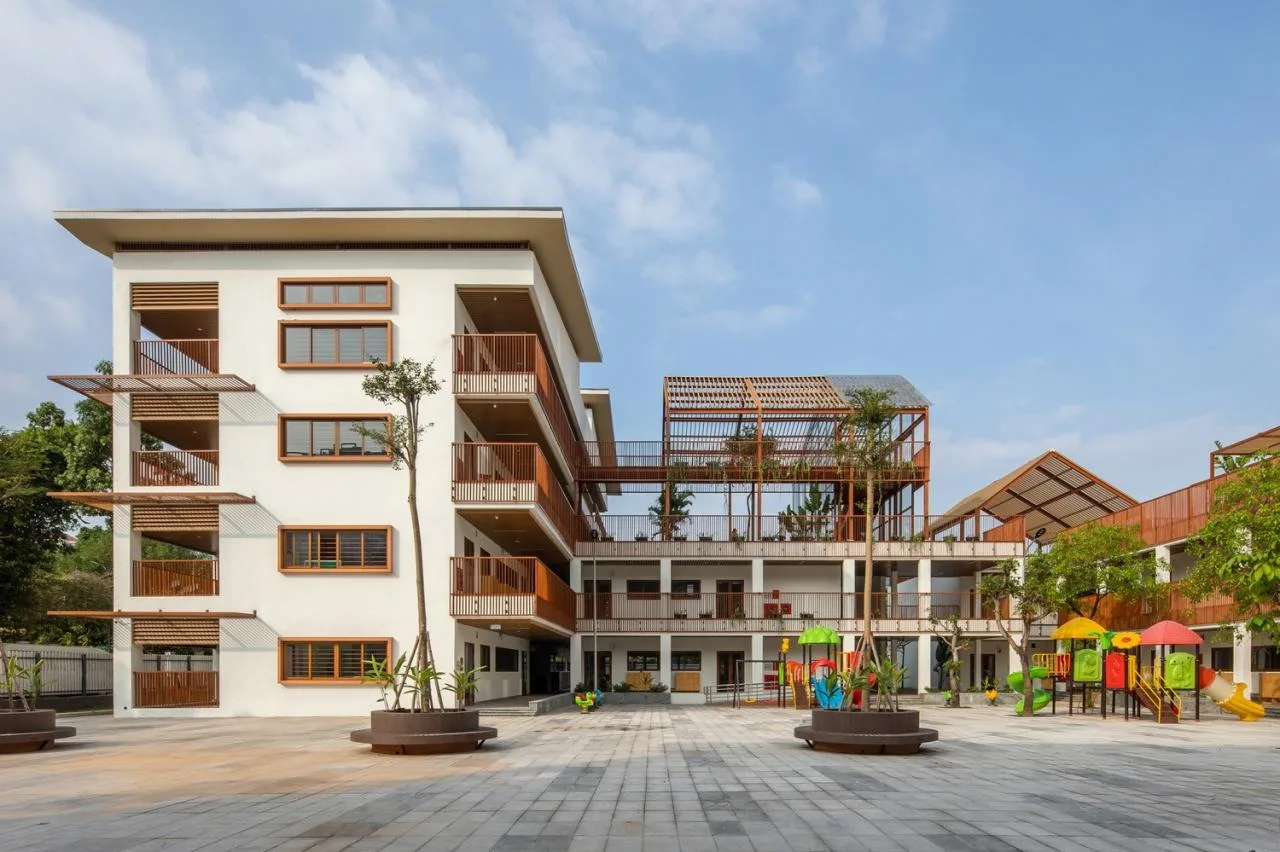
These schools, built 20 years ago, are situated in suburban areas characterized by low building density and sparse population. Currently undergoing urban expansion and development, they have been renovated to meet modern land use planning standards and updated educational requirements, reflecting the evolving needs of the community.
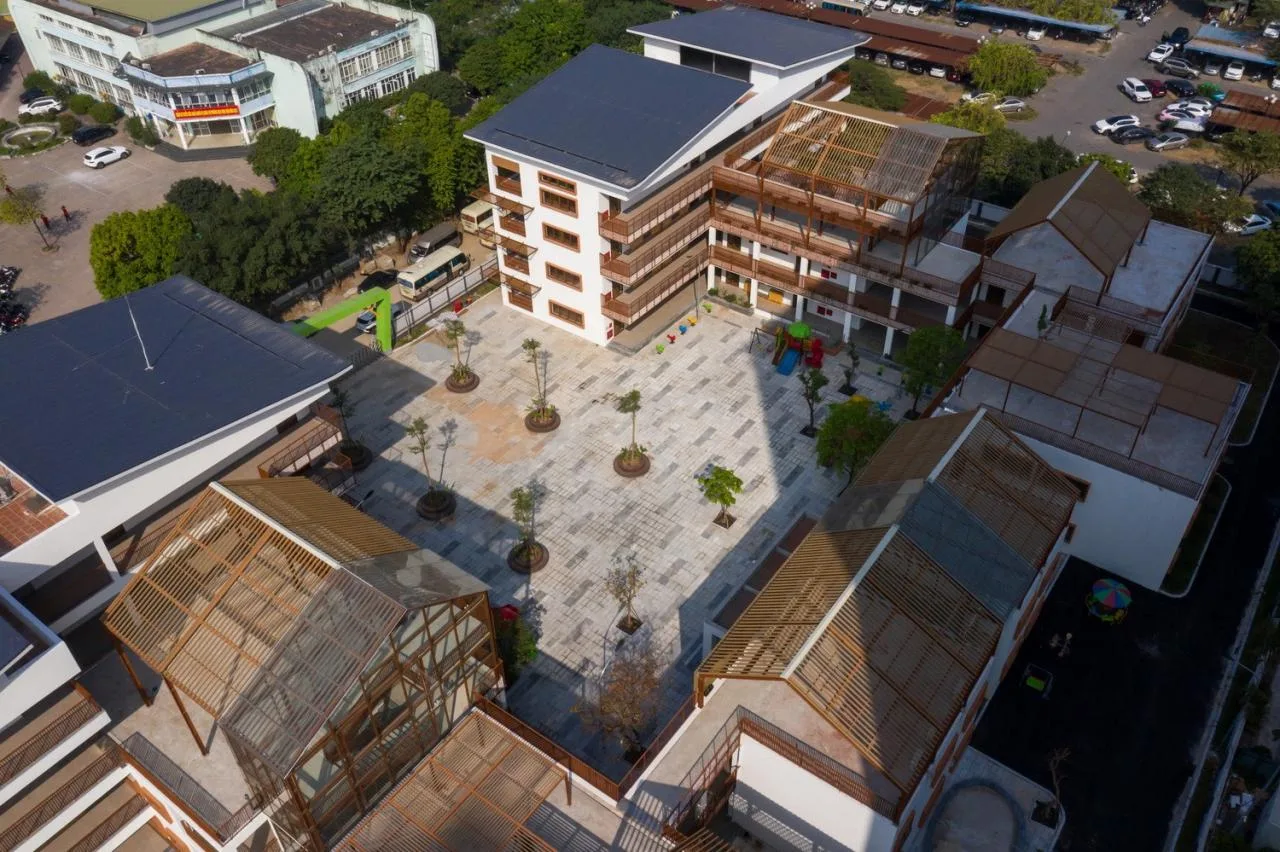
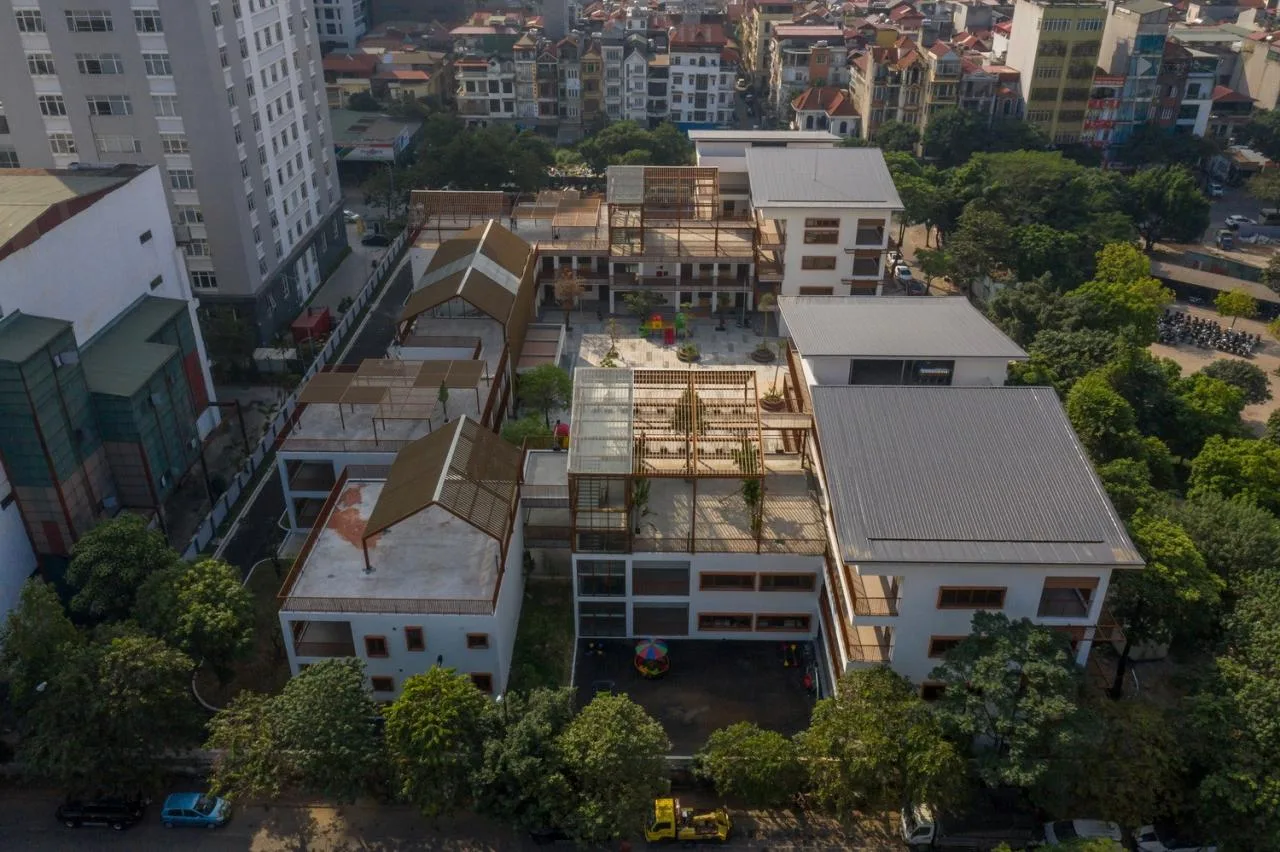
The site covers an area of 6,540 square meters. The existing two-story teaching building, which includes 10 classrooms and some auxiliary spaces, is in a state of disrepair. It lacks adequate teaching and learning facilities, features a monotonous architectural style, and offers limited indoor and outdoor play areas.
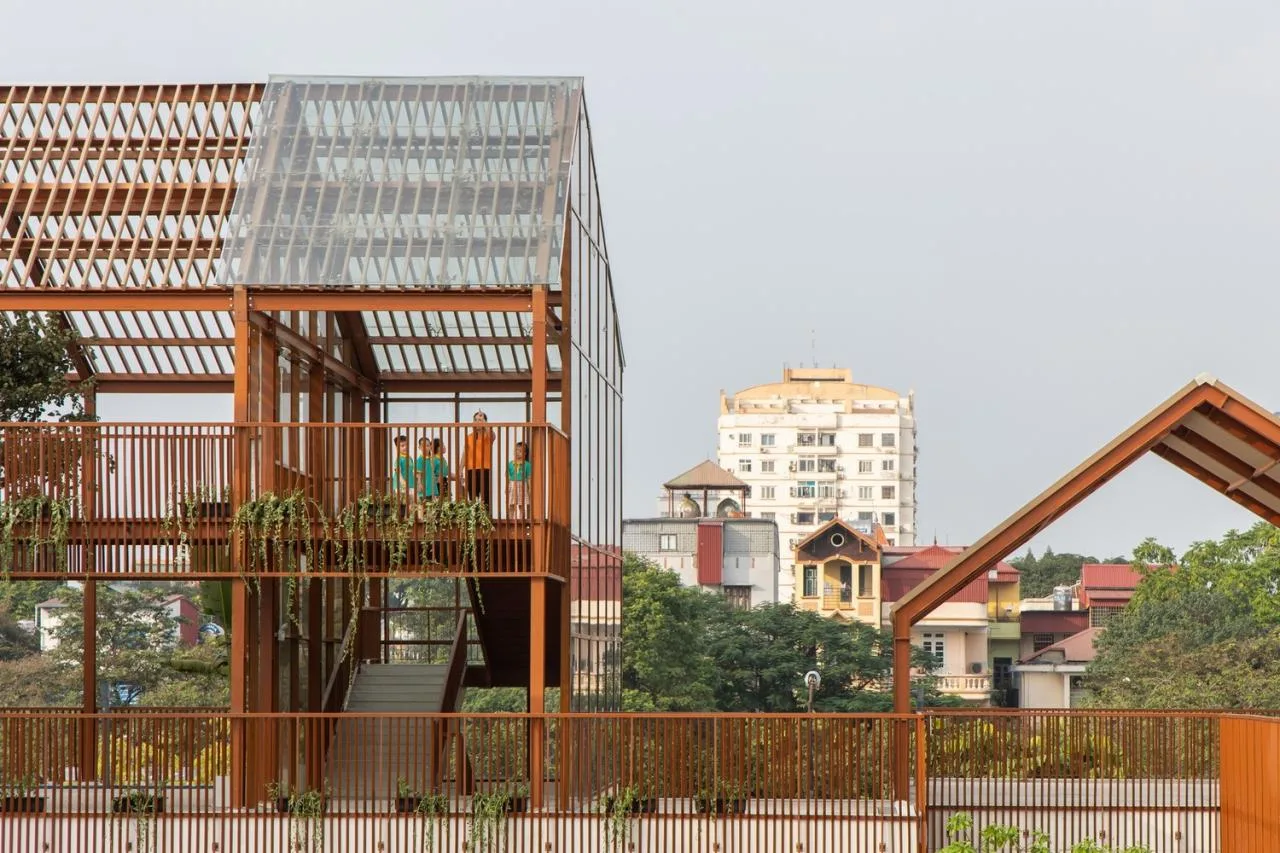
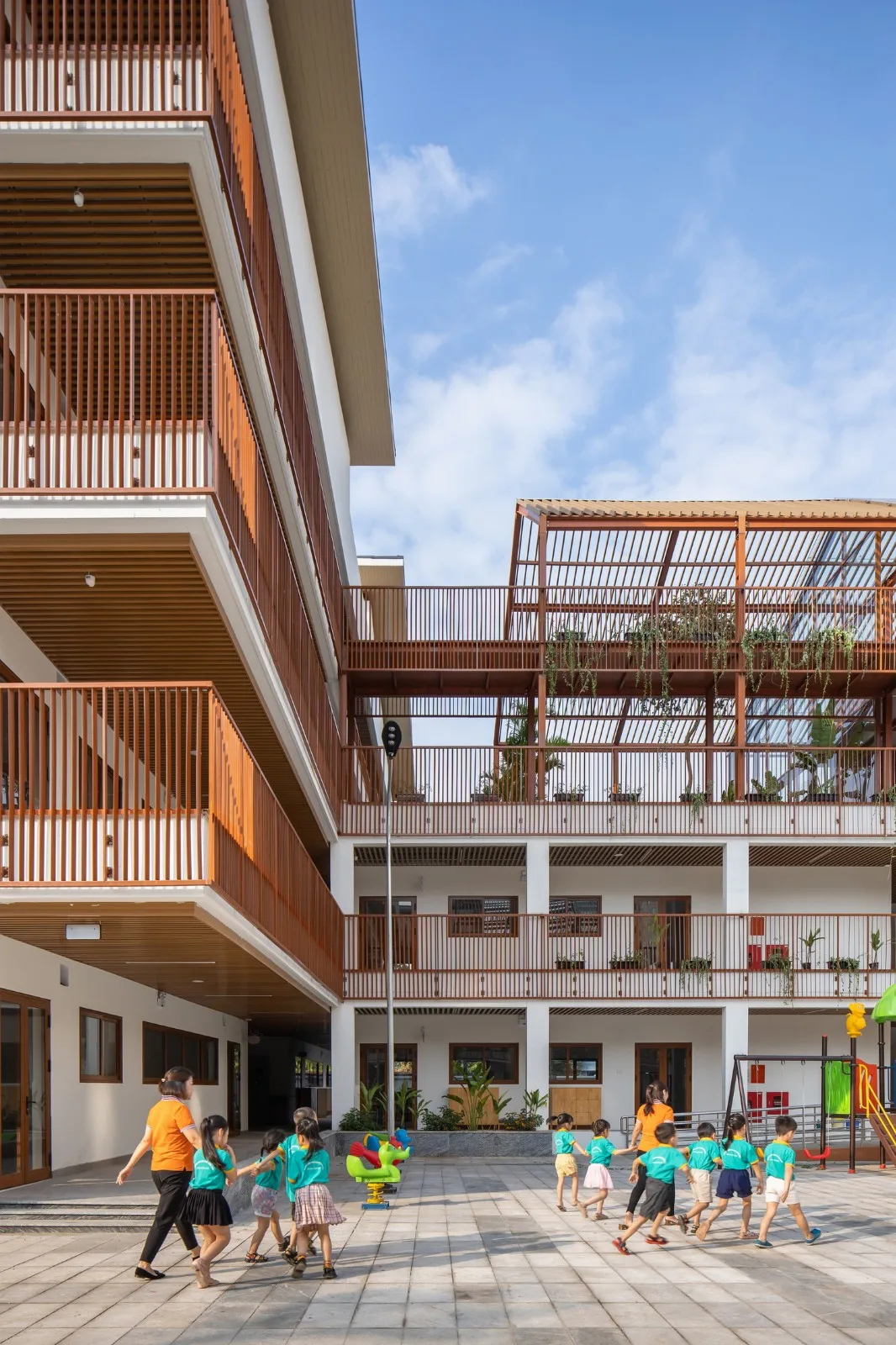
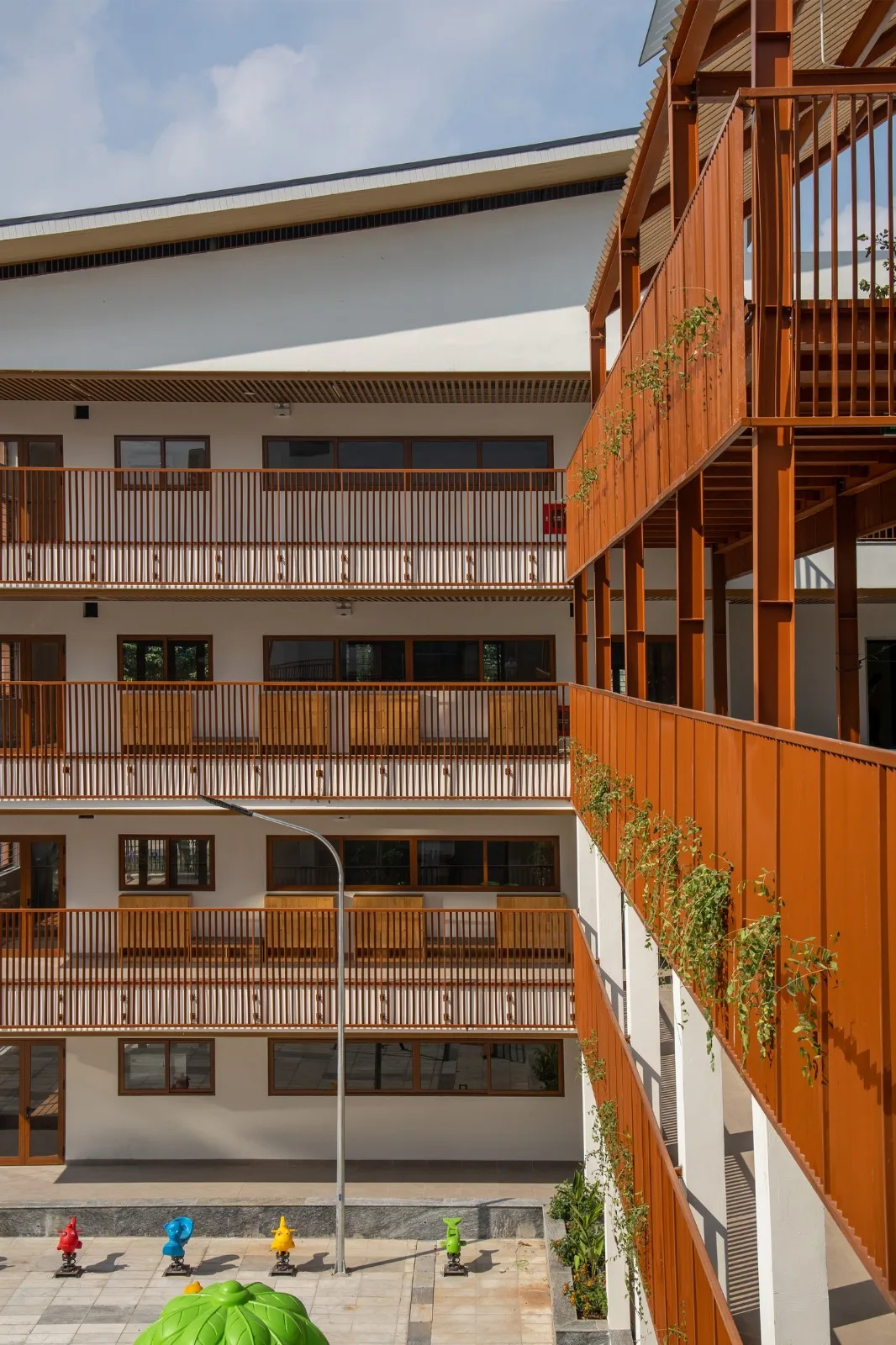
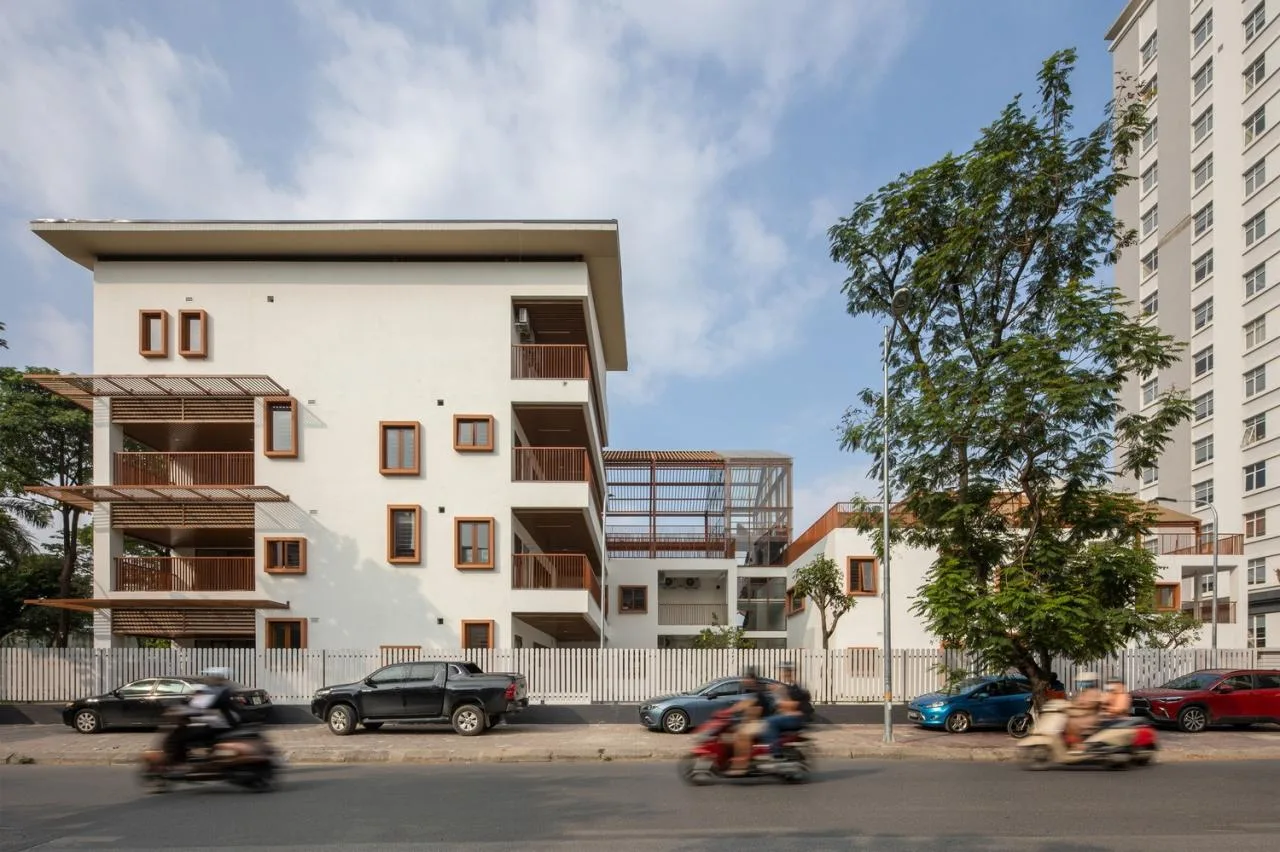
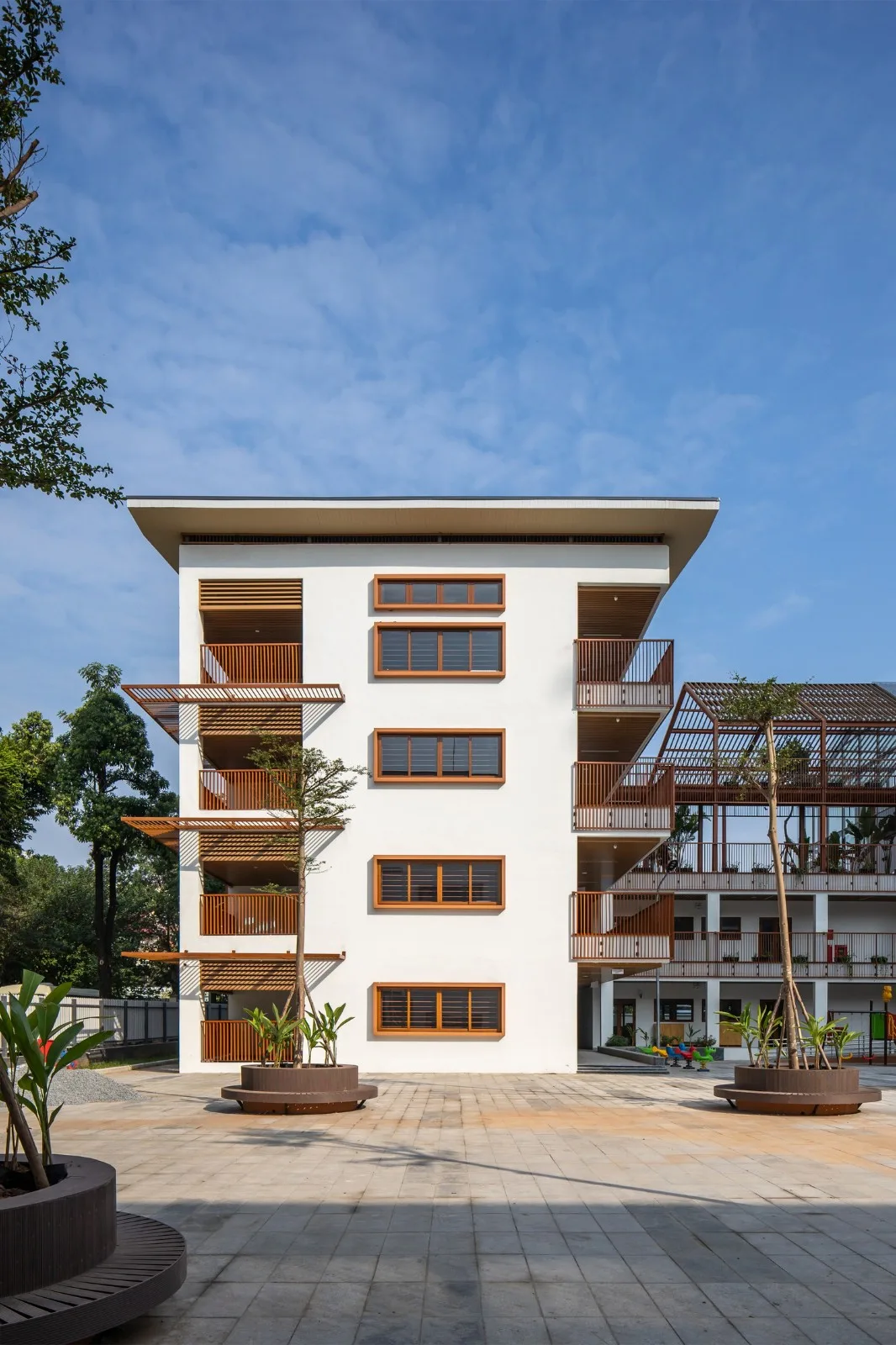
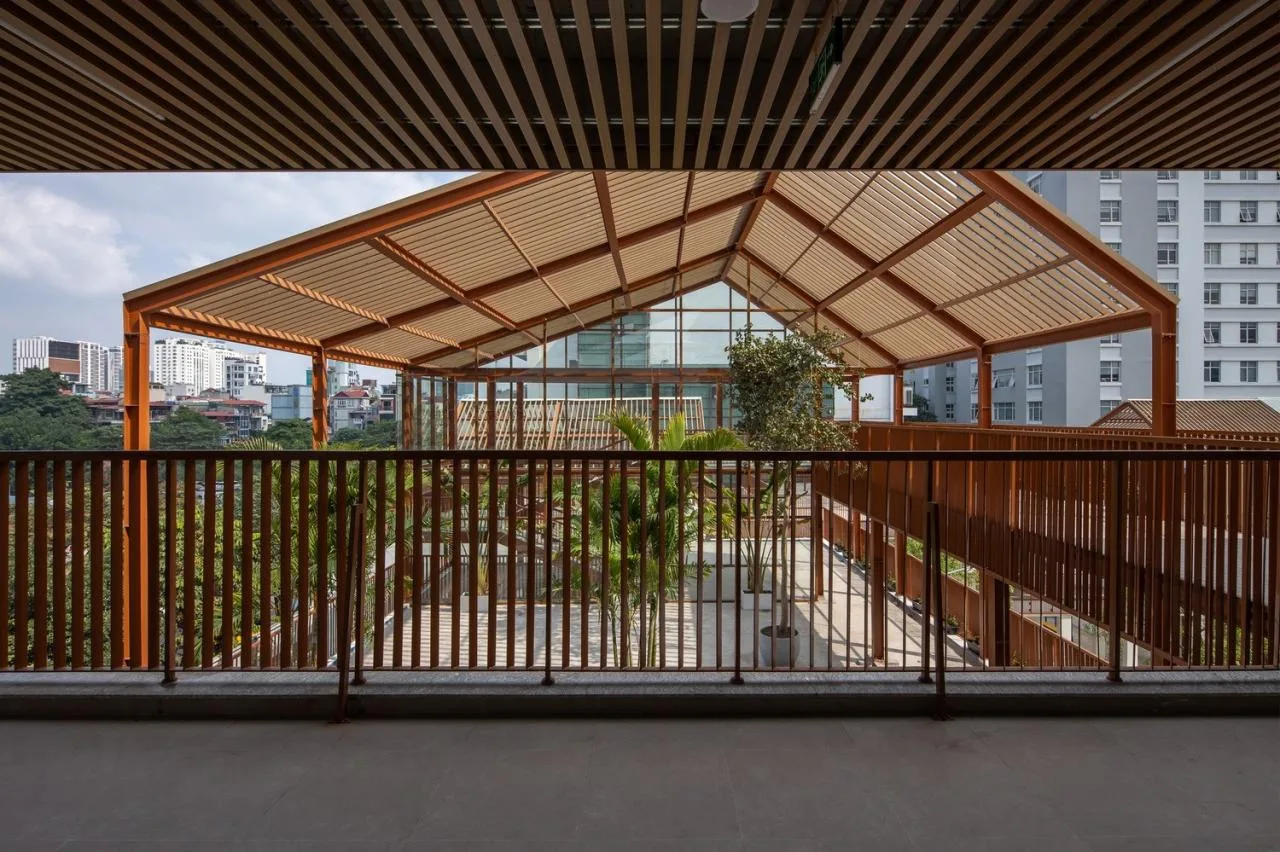
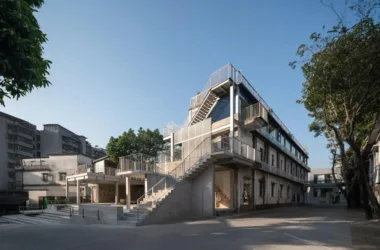
Following a “student-centered” design philosophy, the renovation plan involves adding a steel frame structure on the roof while preserving the original building. The roof will be clad with plastic wood panels, raising the building to three floors. Additionally, two new four-story buildings will be constructed on the west side. This combination of old and new structures creates a central, secure playground serving as a large courtyard, enhancing natural ventilation on each floor.
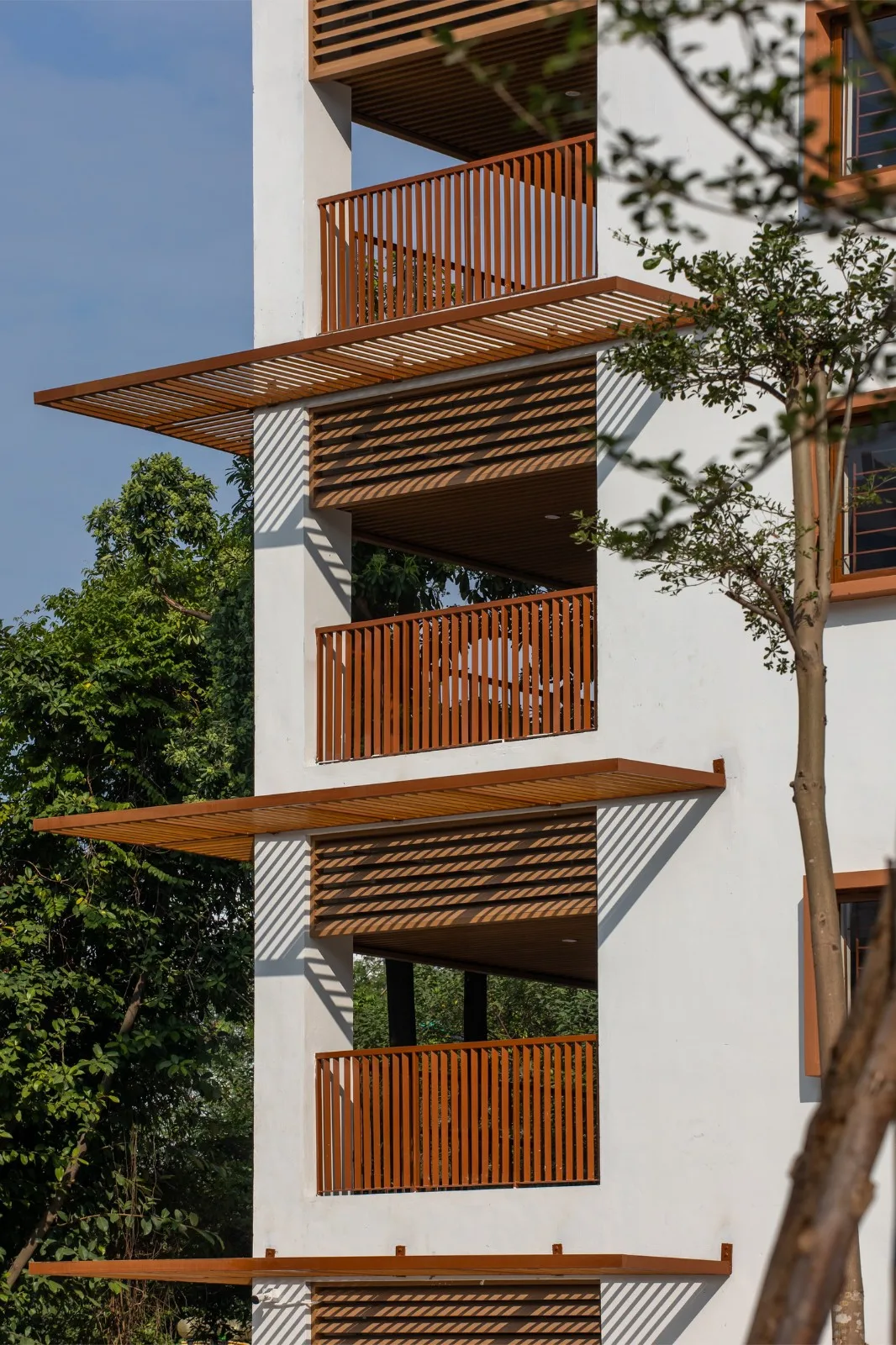
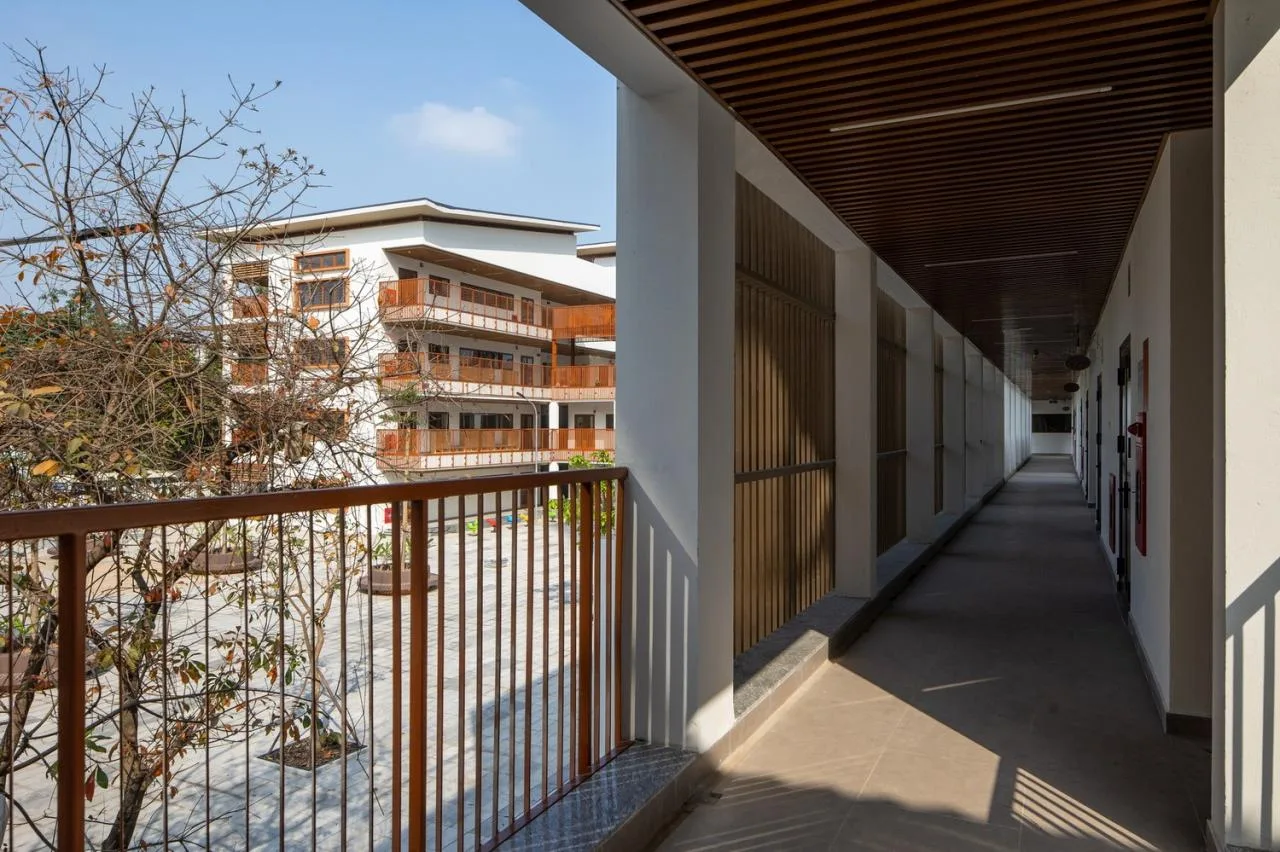
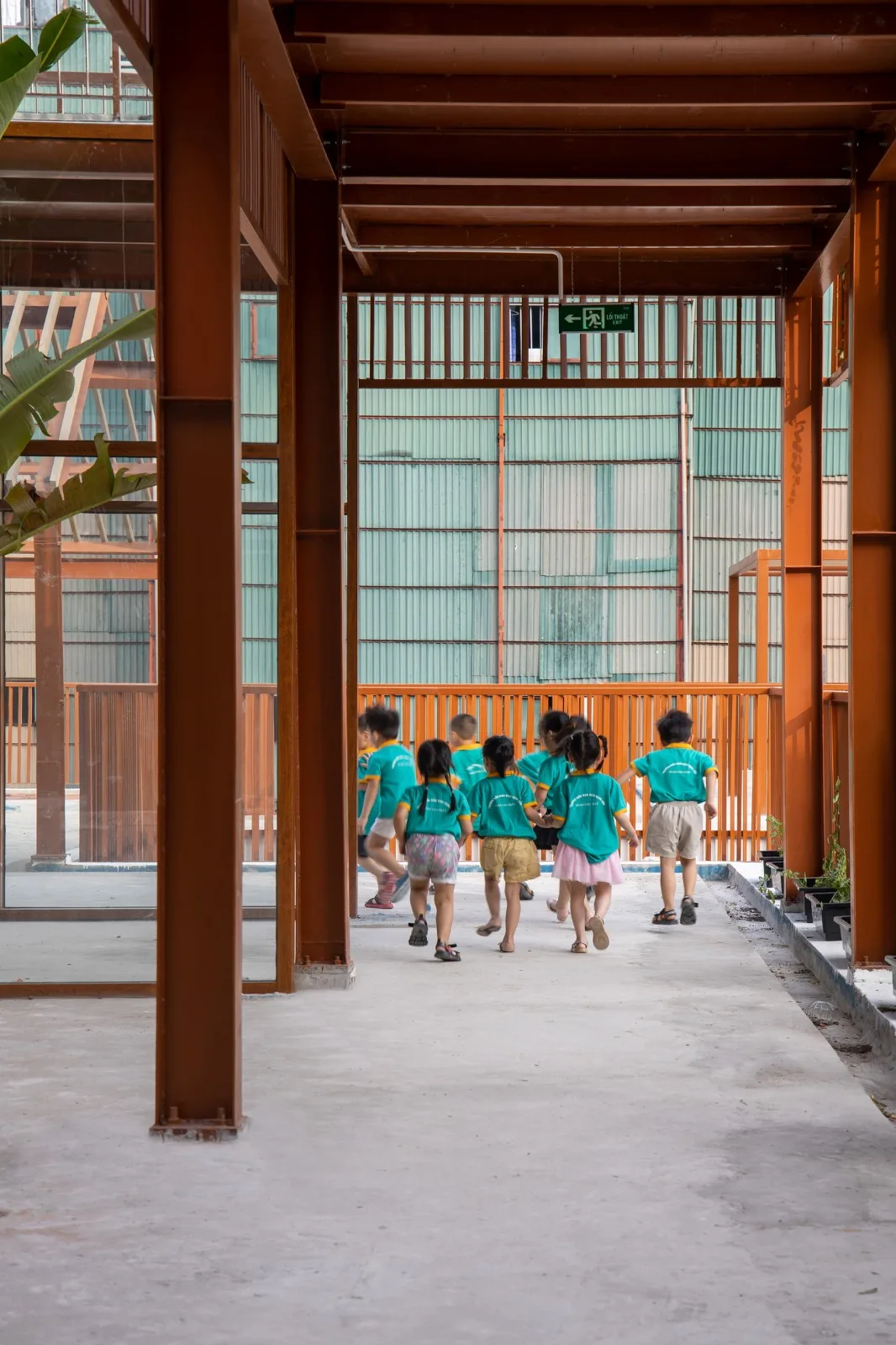
Restrooms, storage areas, and corridors are strategically placed at the front of these buildings to insulate classrooms from noise and to provide shade, while also facilitating restroom disinfection.
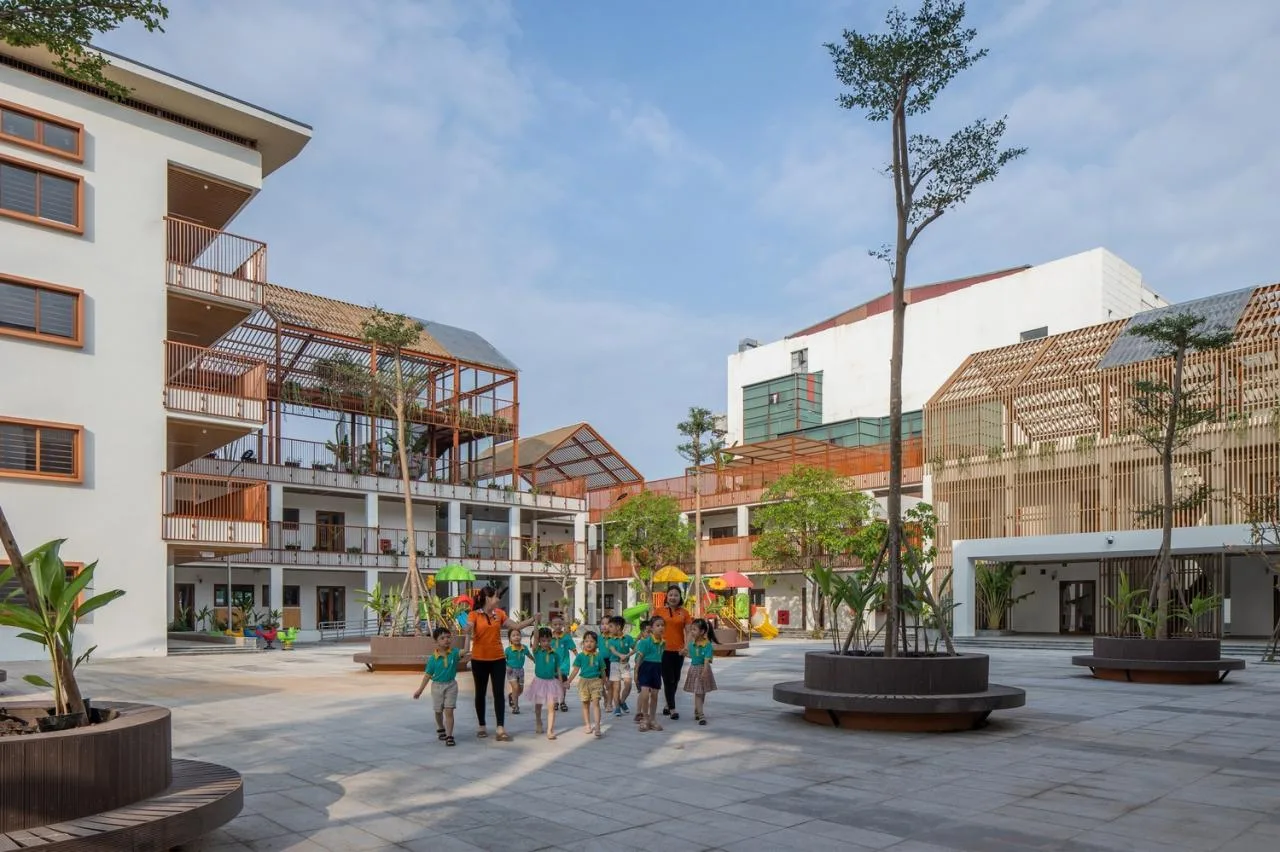
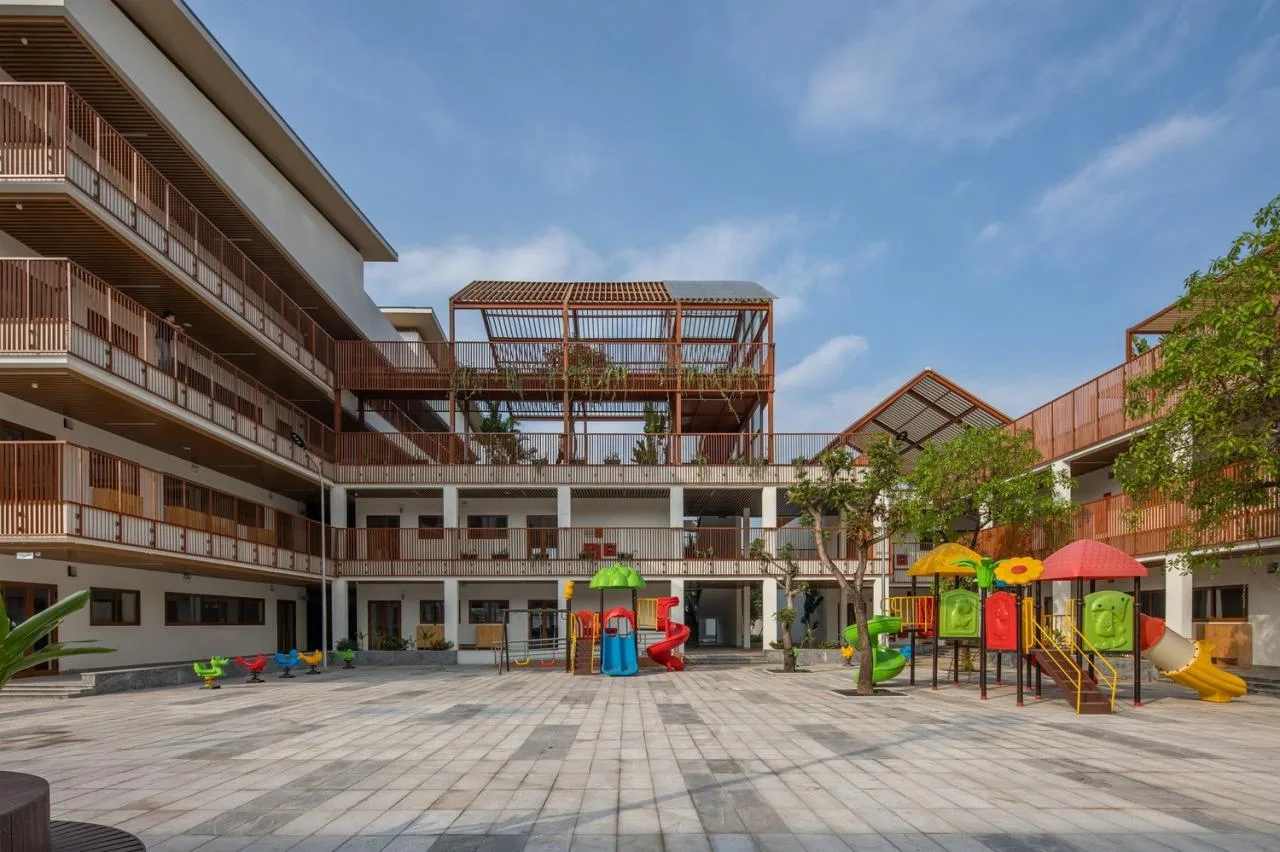
The classroom layout has been reconfigured to expand the original space by 1.5 times. Optimal ventilation and natural lighting are achieved through a comprehensive window system and an internal enclosed playground. Each classroom is designed like a villa with 3-4 open sides, surrounded by naturally ventilated green gardens to protect from direct sunlight and cold winds during winter.
Bathrooms and balconies are positioned on the west side to buffer the classrooms. Auxiliary functions occupy the top floor (4th floor), prioritizing age-appropriate classrooms for preschoolers on the lower floors.
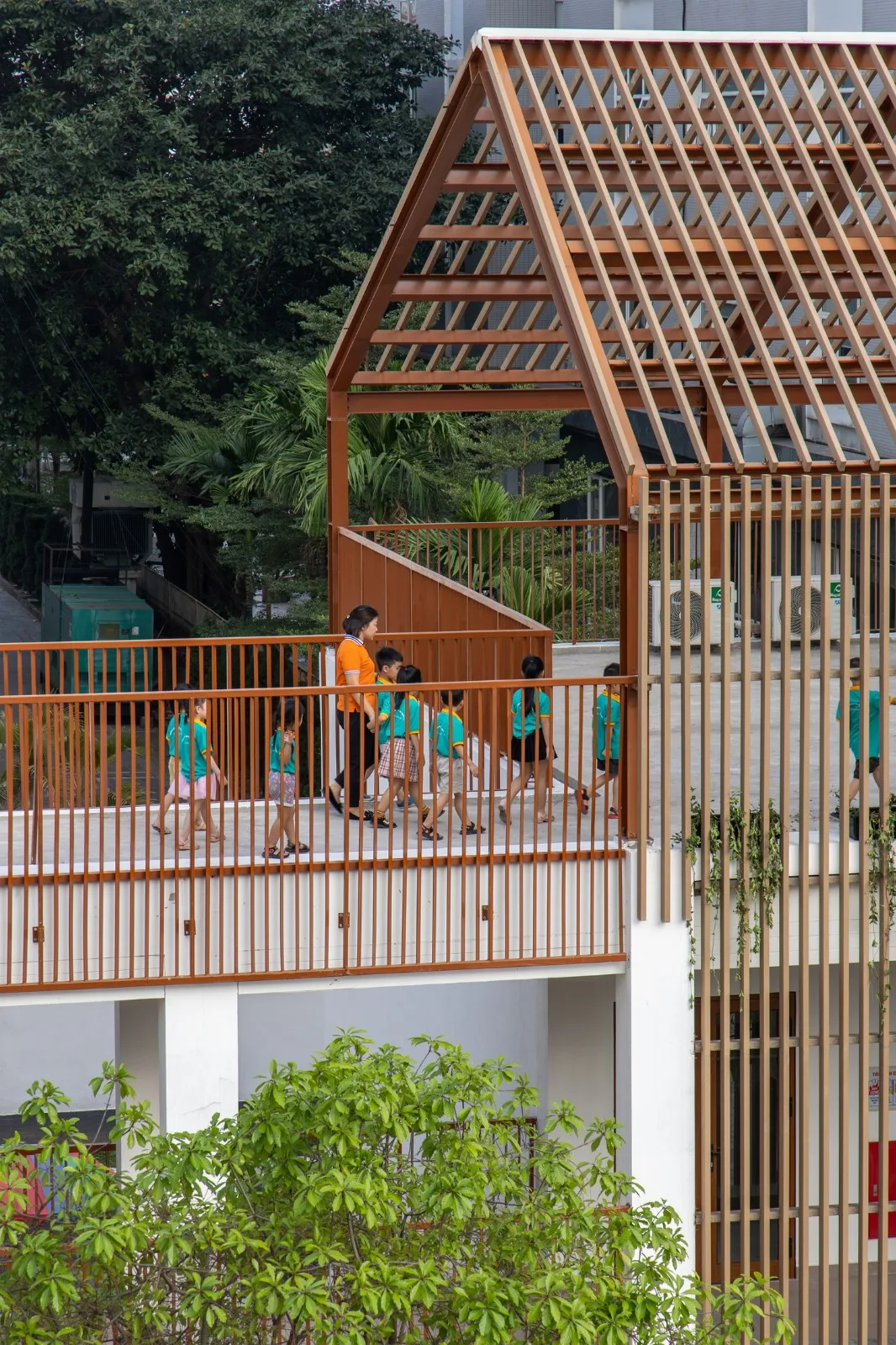
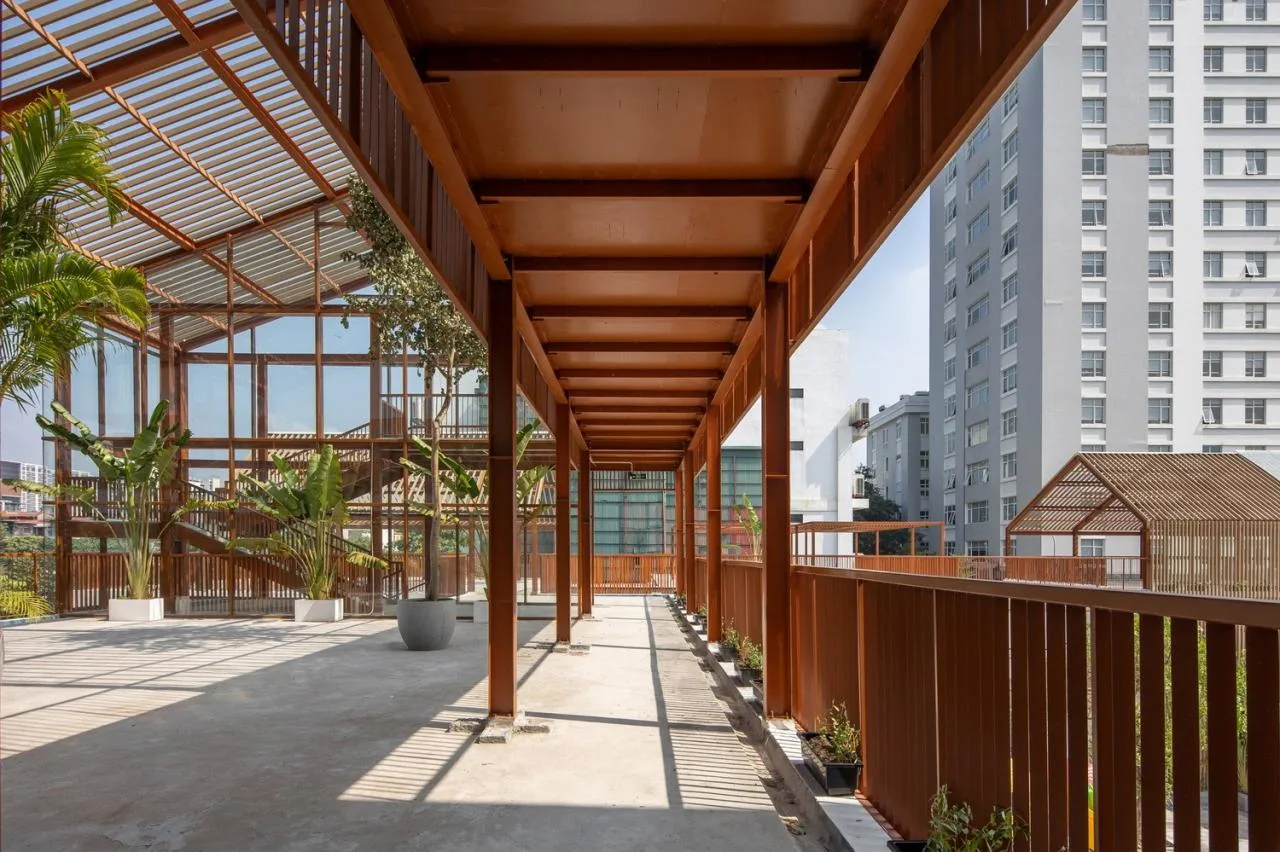
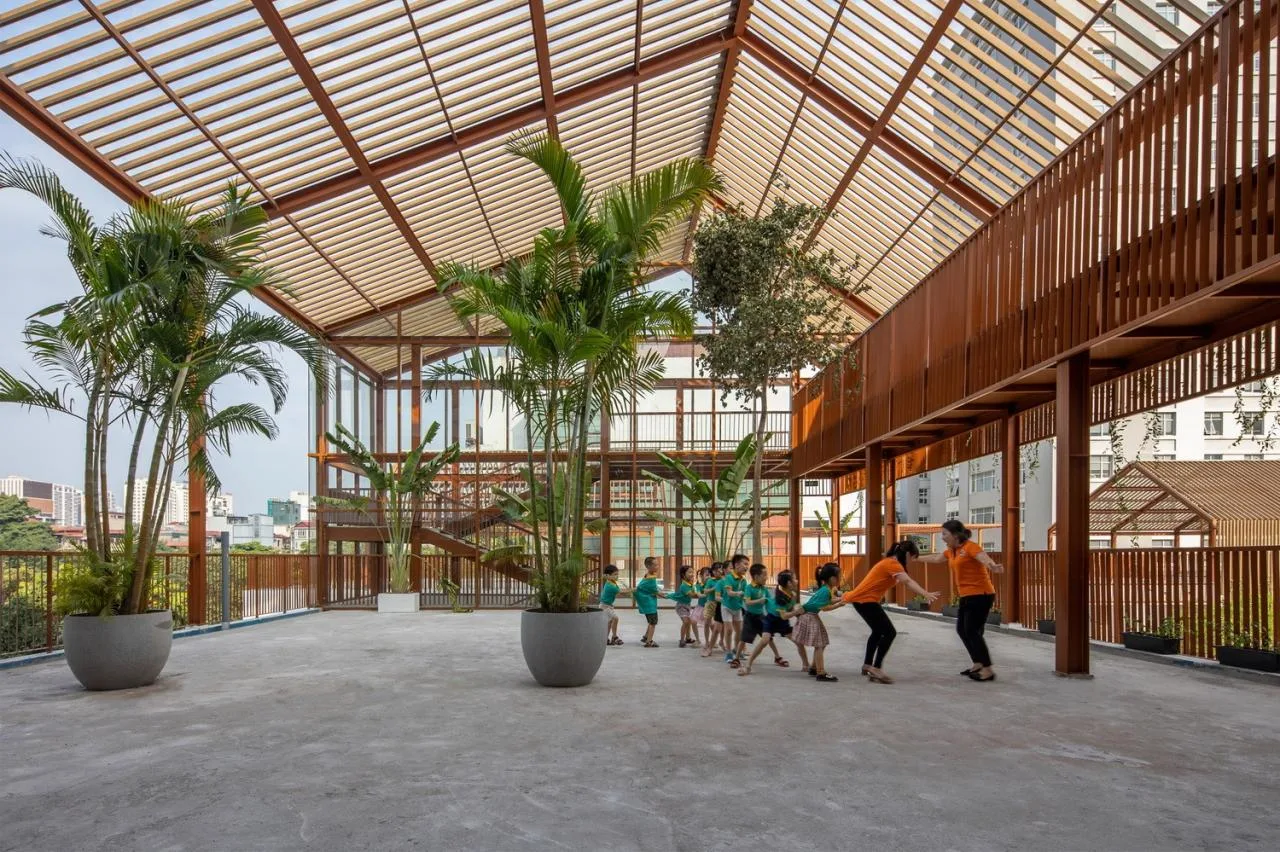
The design embraces the concepts of “learning through interaction” and “encouraging physical activity by integrating play and education.” Private recreational areas are tailored to the students’ age, gender, and individual personalities.
The rooftop maximizes the use of greenery, creating an engaging learning and play environment while promoting ecological benefits. This green roof reduces heat radiation and adds valuable green space to the urban landscape. The rooftop garden aims to be largely self-sufficient, potentially supplying 50% to 80% of the school’s vegetable needs.
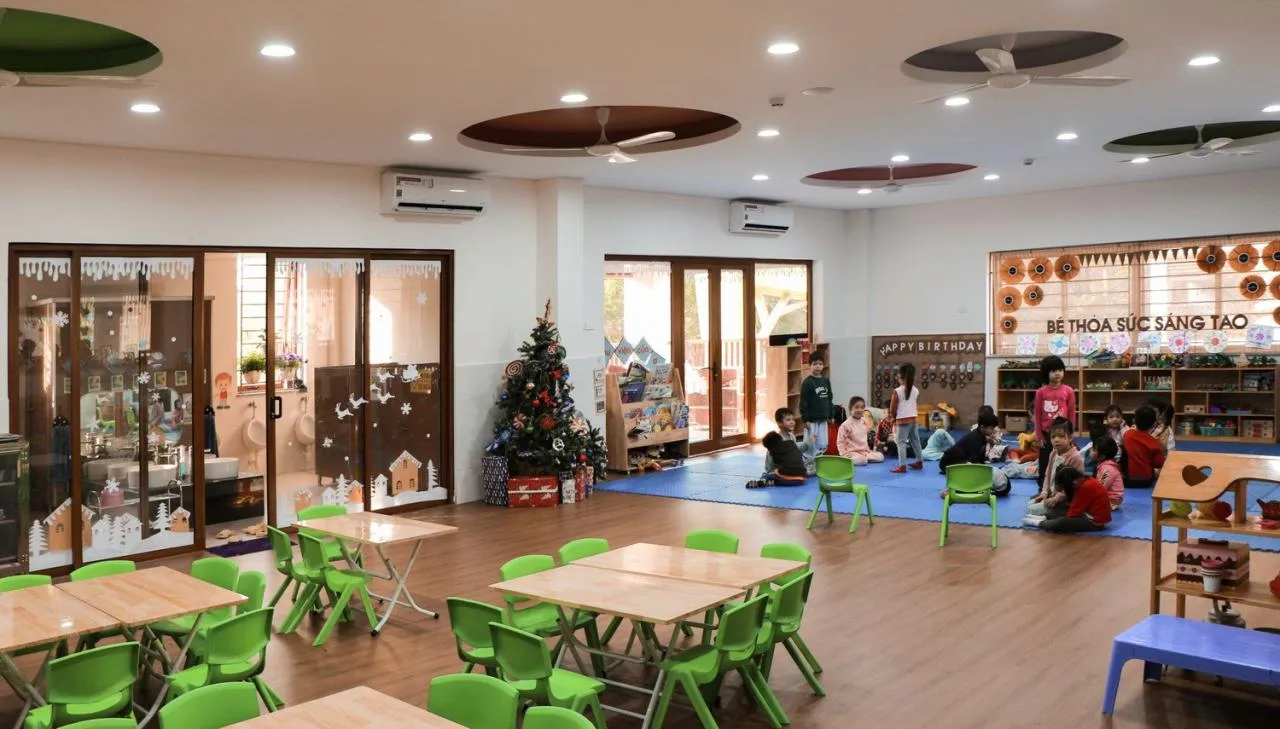
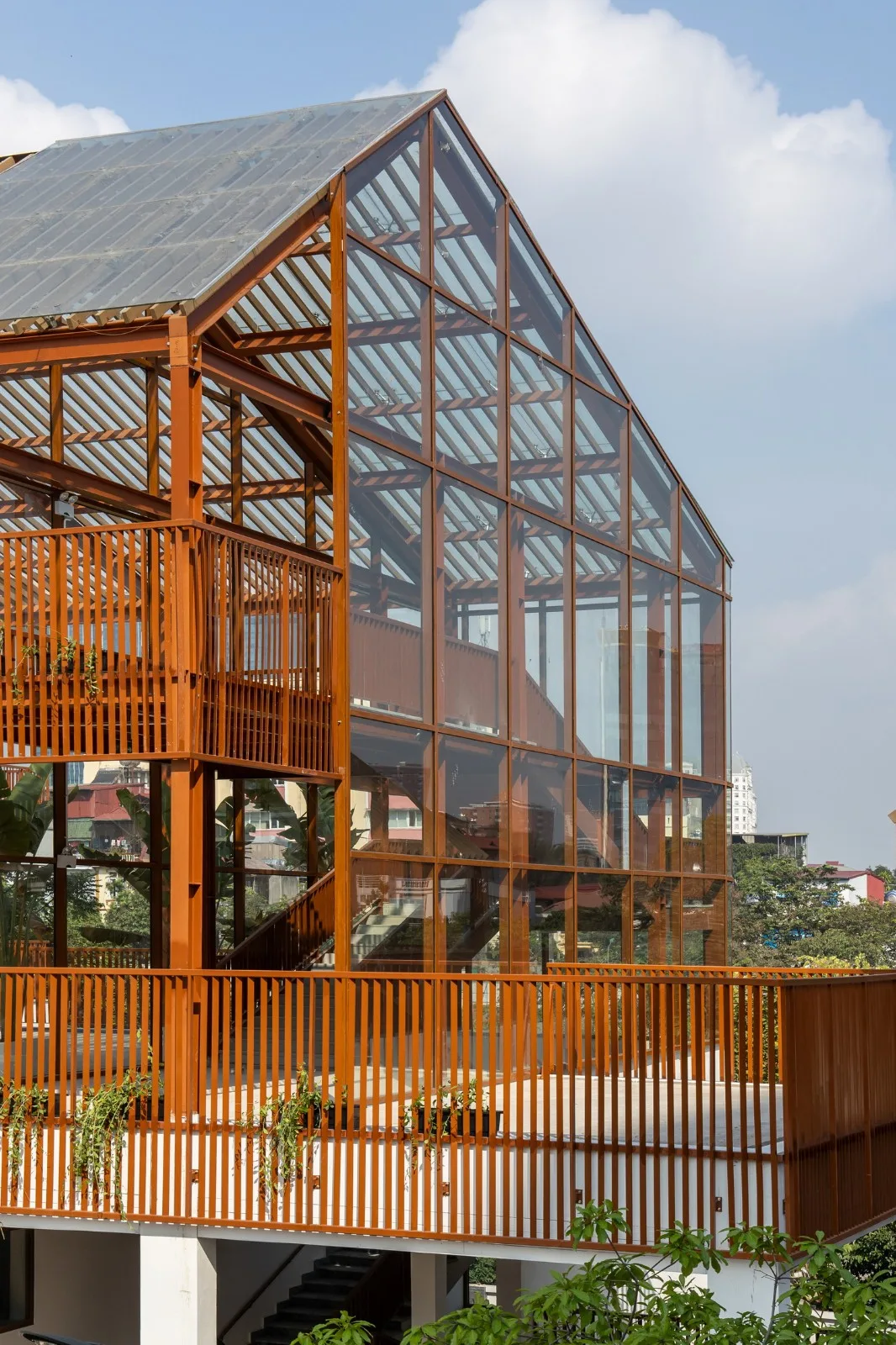
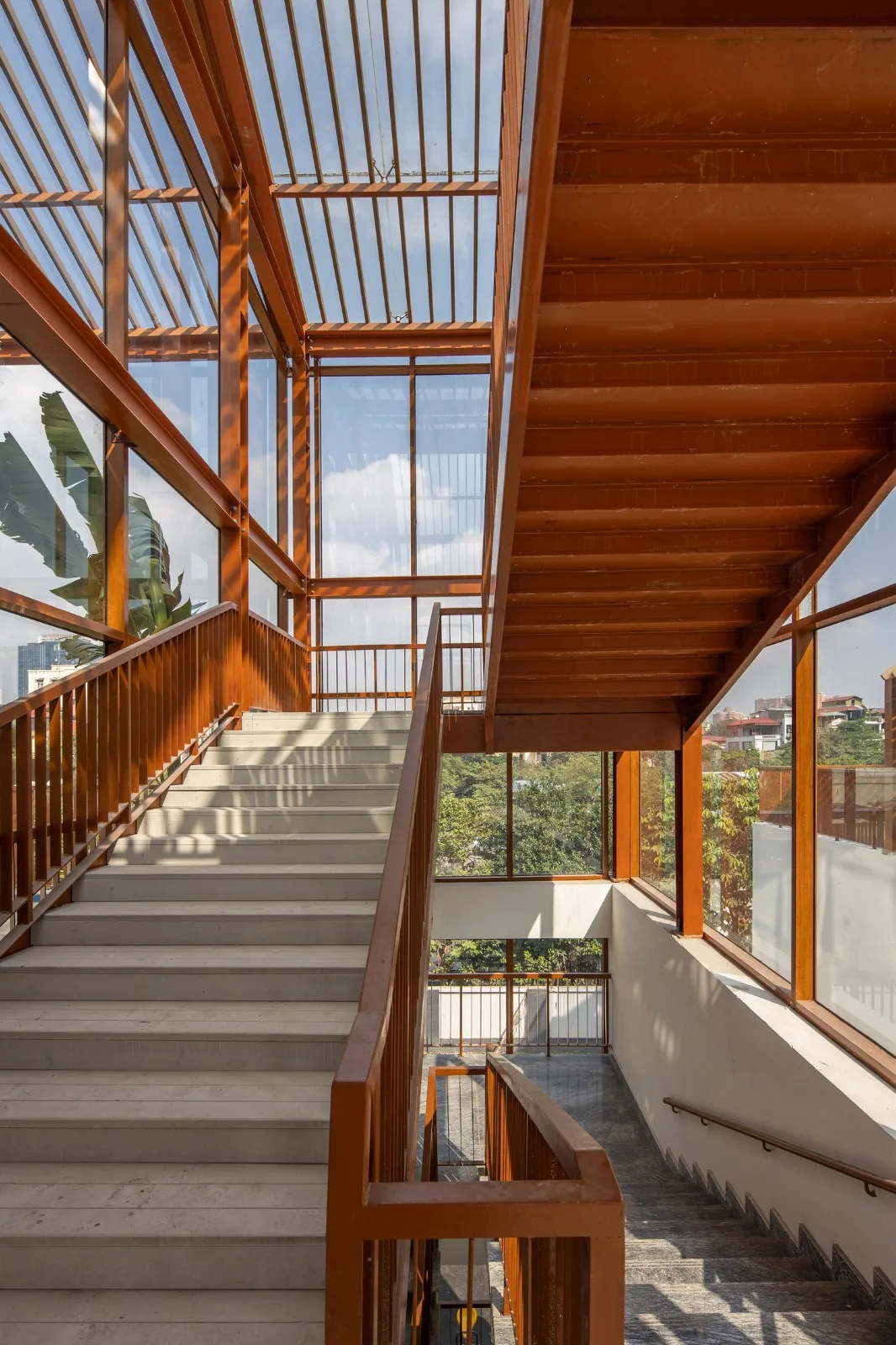
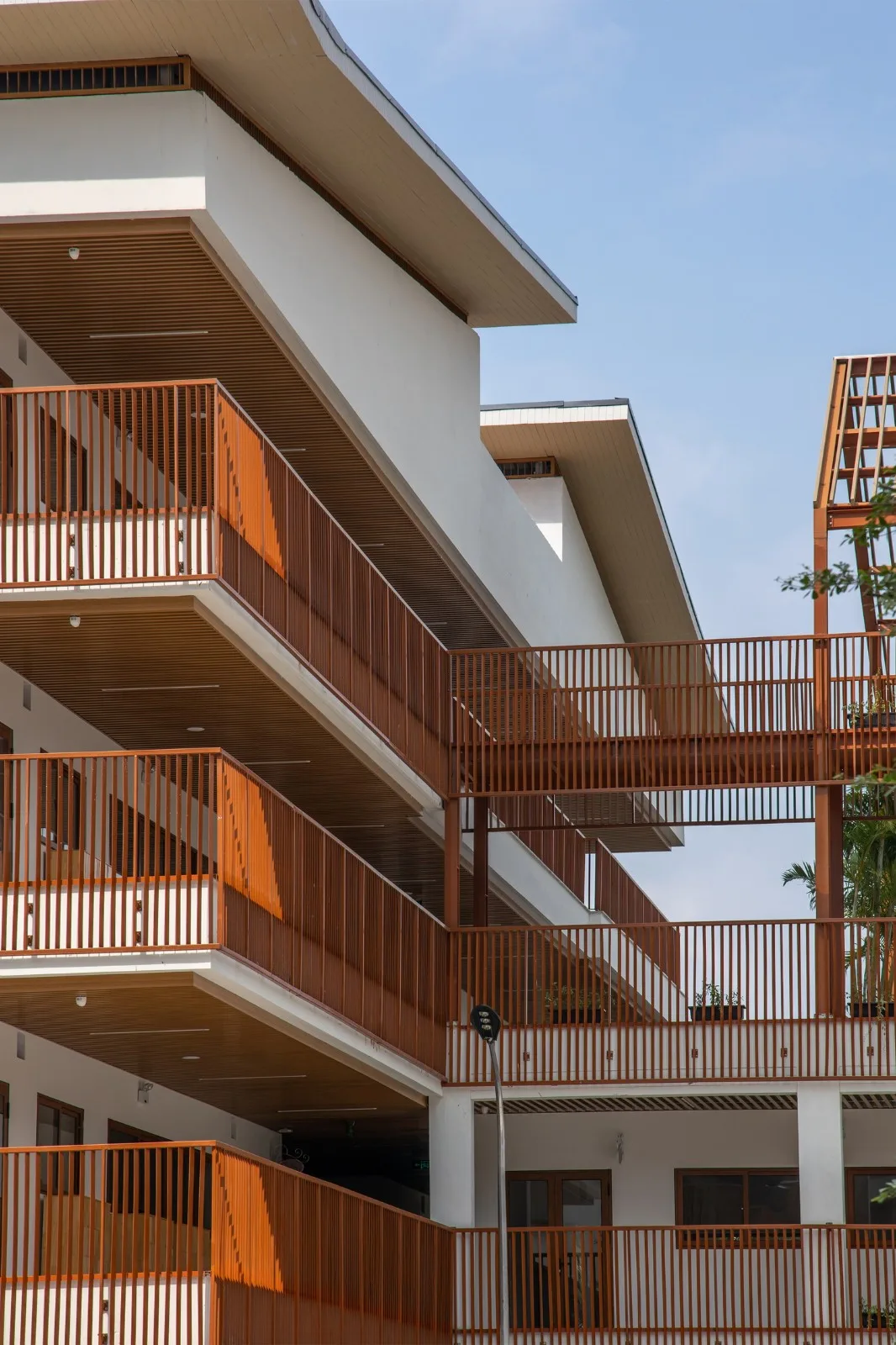
The design ensures that the facilities support innovative educational approaches and accommodate the psychological and physiological needs of preschool children. It aligns with both regional and international advanced education standards.
Moreover, the project emphasizes energy efficiency, cost-effective building investment, and sensible public spending, benefiting the surrounding community.
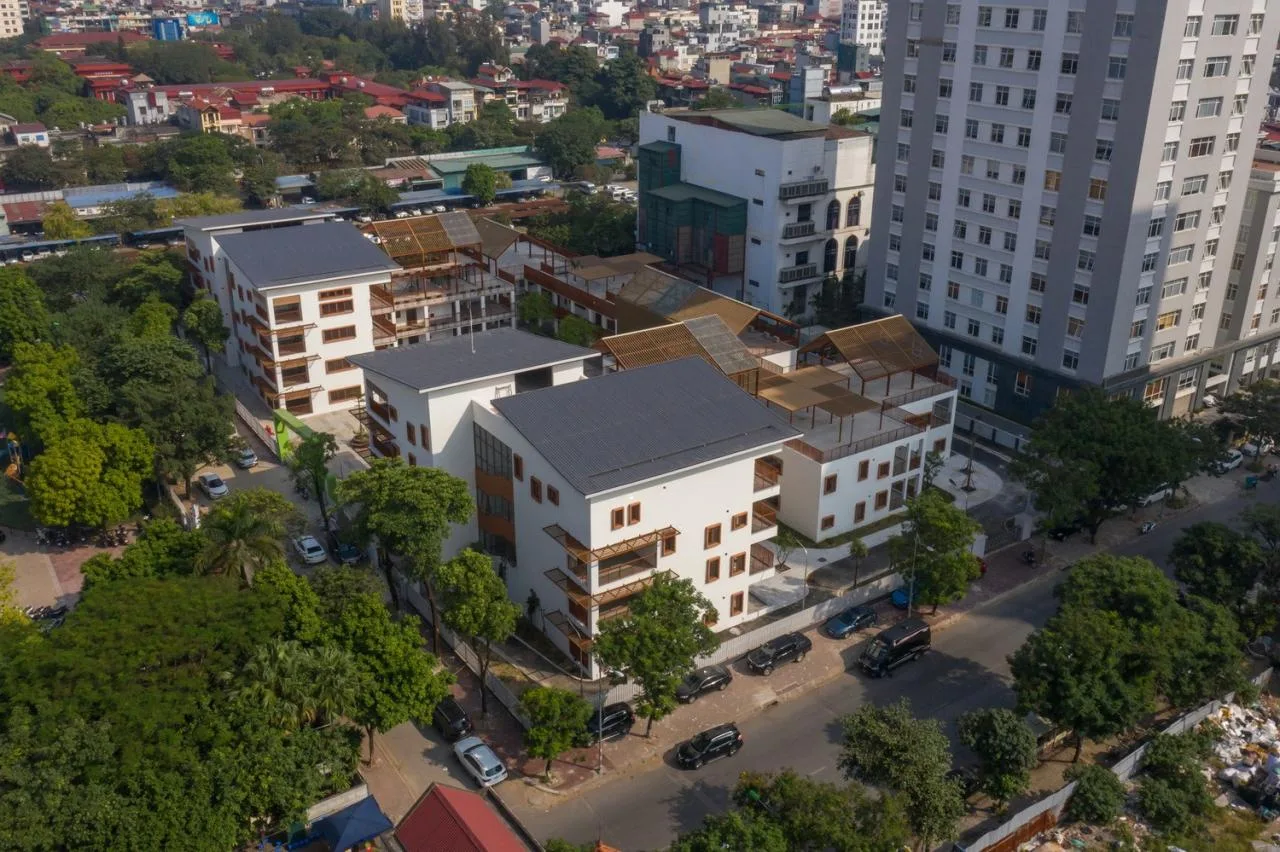
Project Drawings
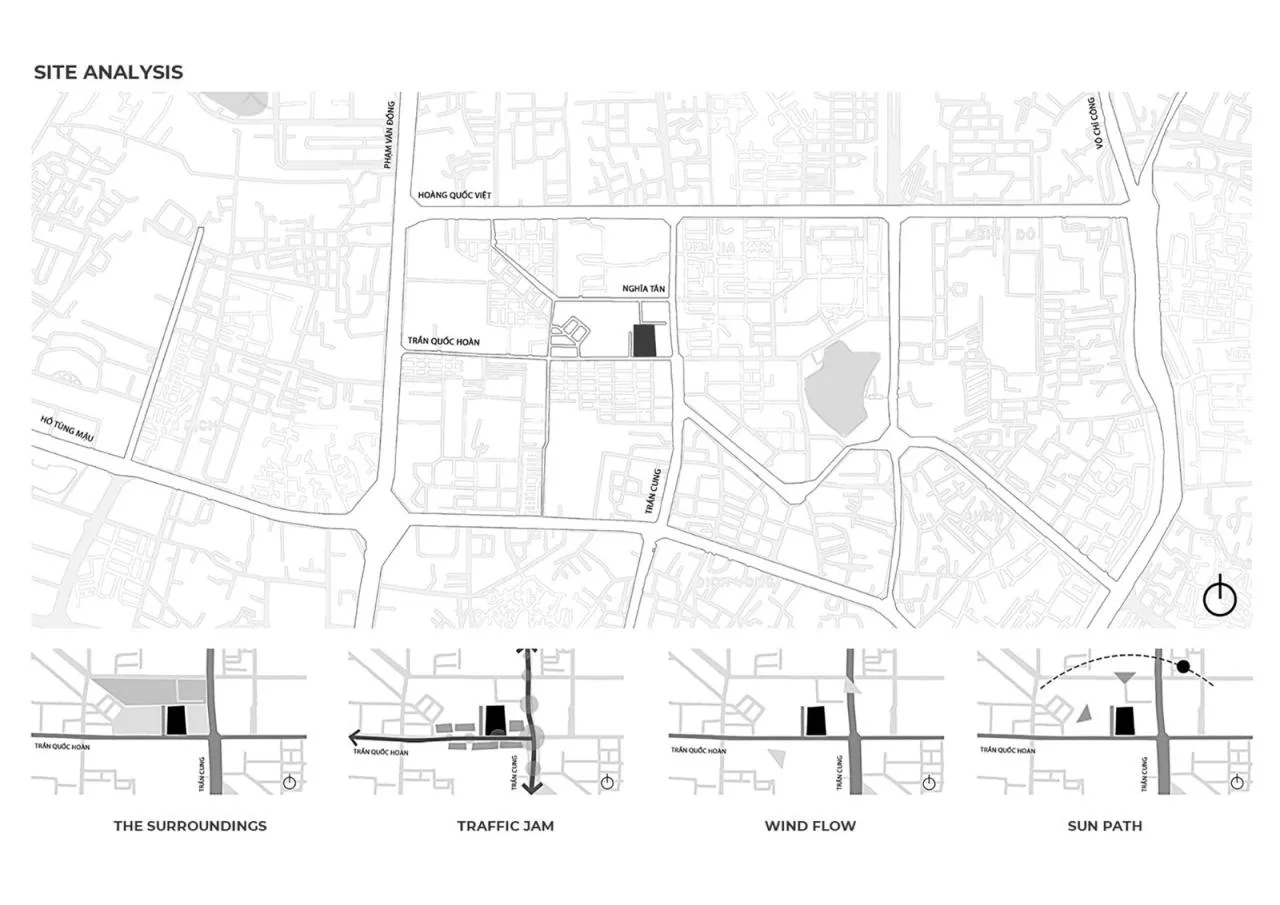
△ Base schematic diagram
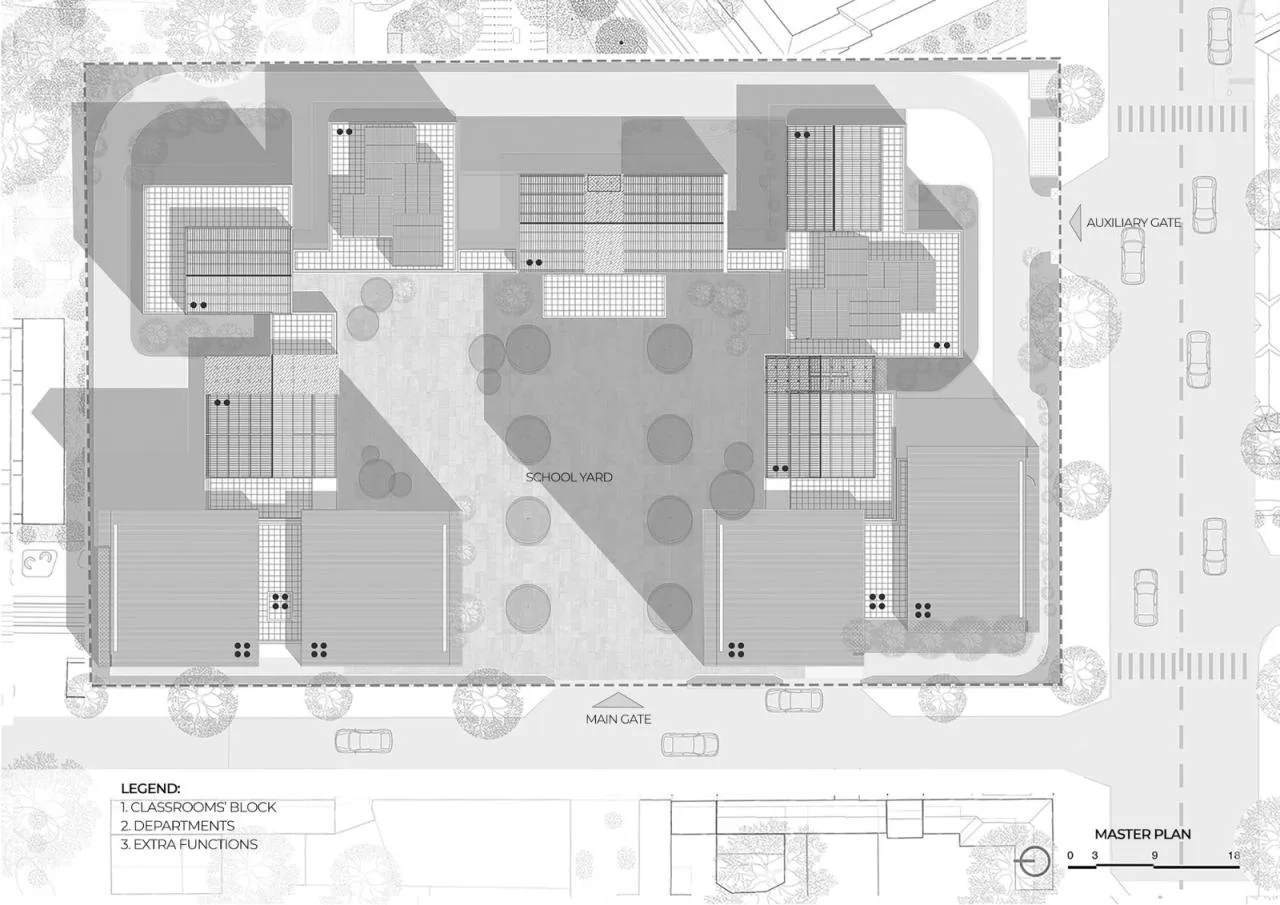
△ General layout plan
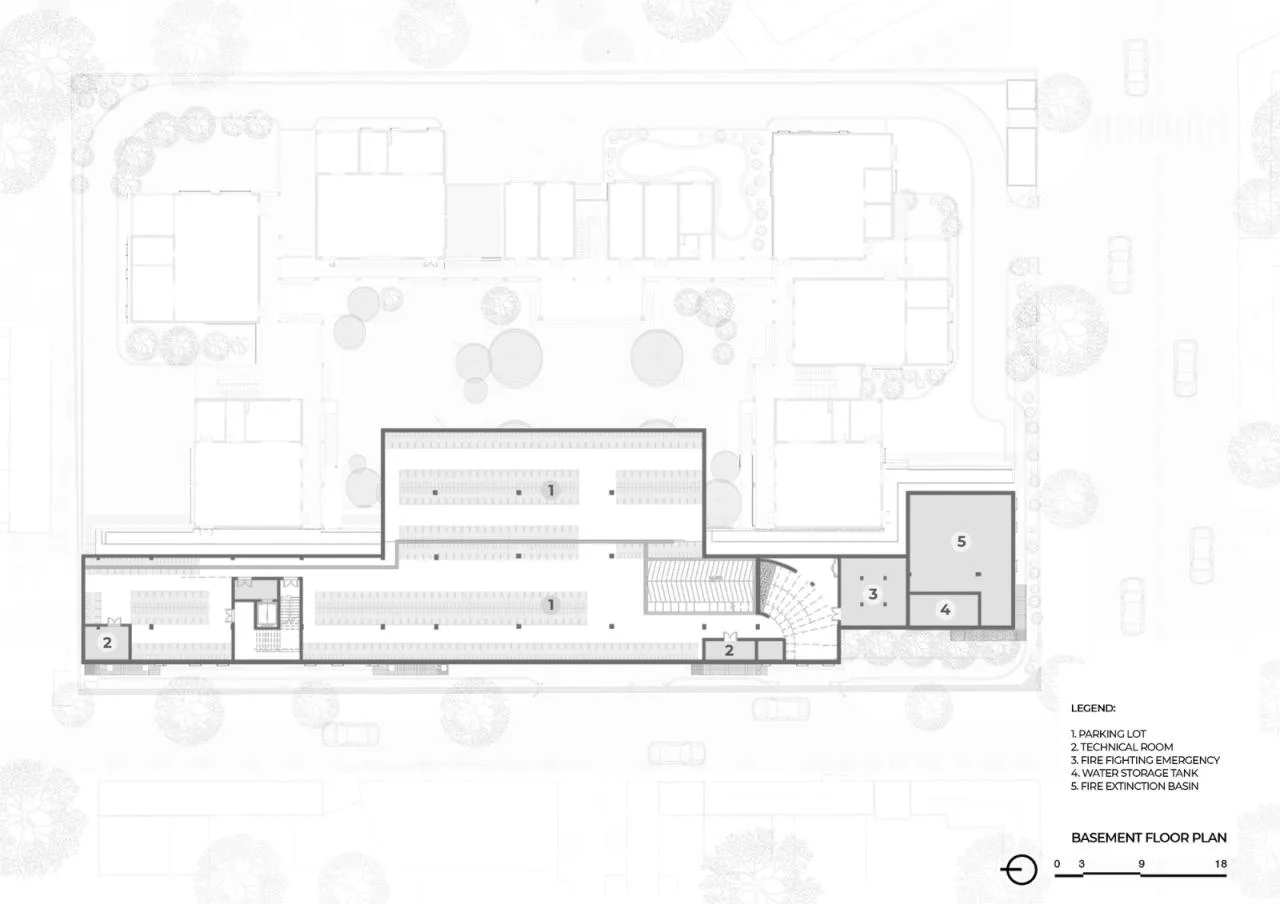
△ Underground floor plan
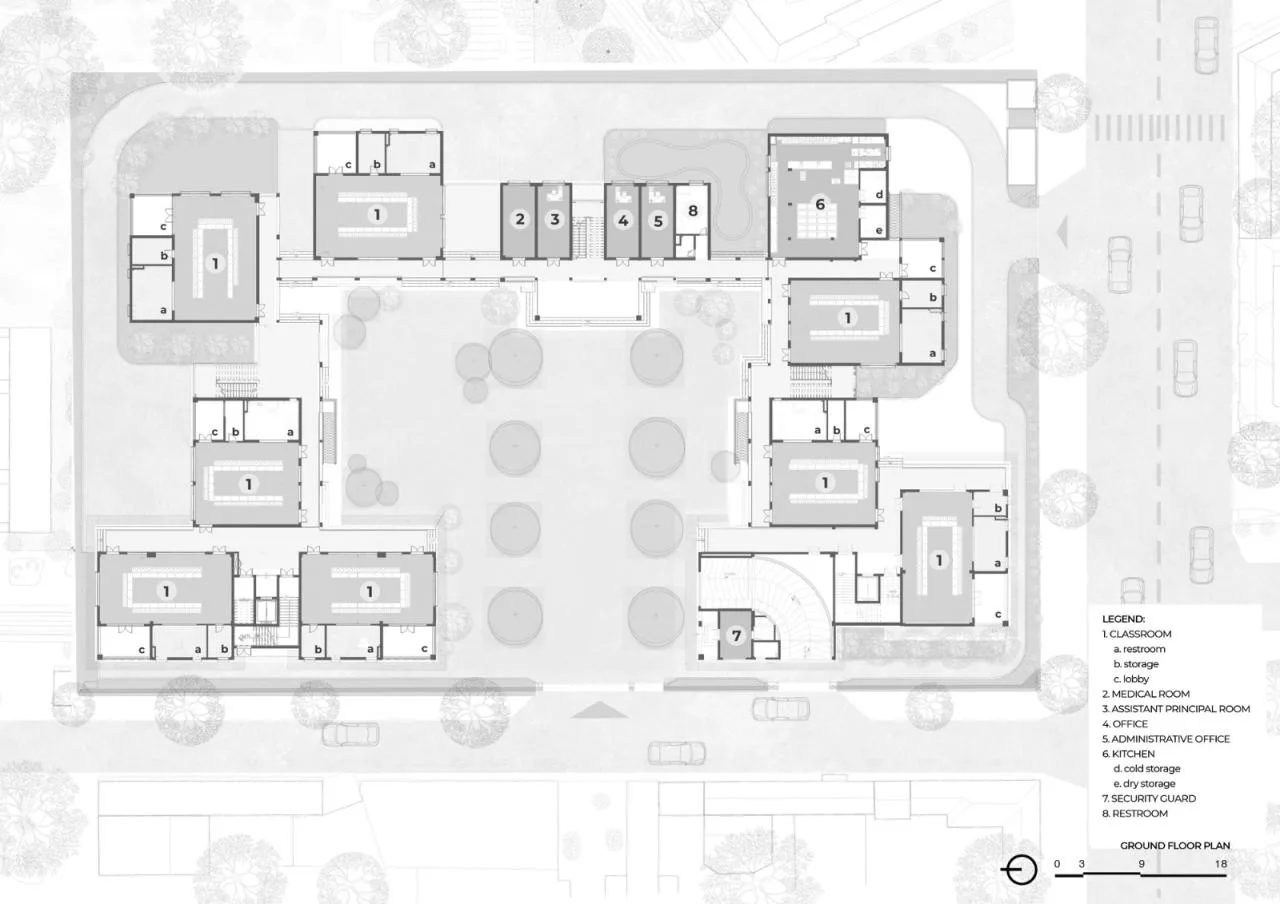
△ First floor plan
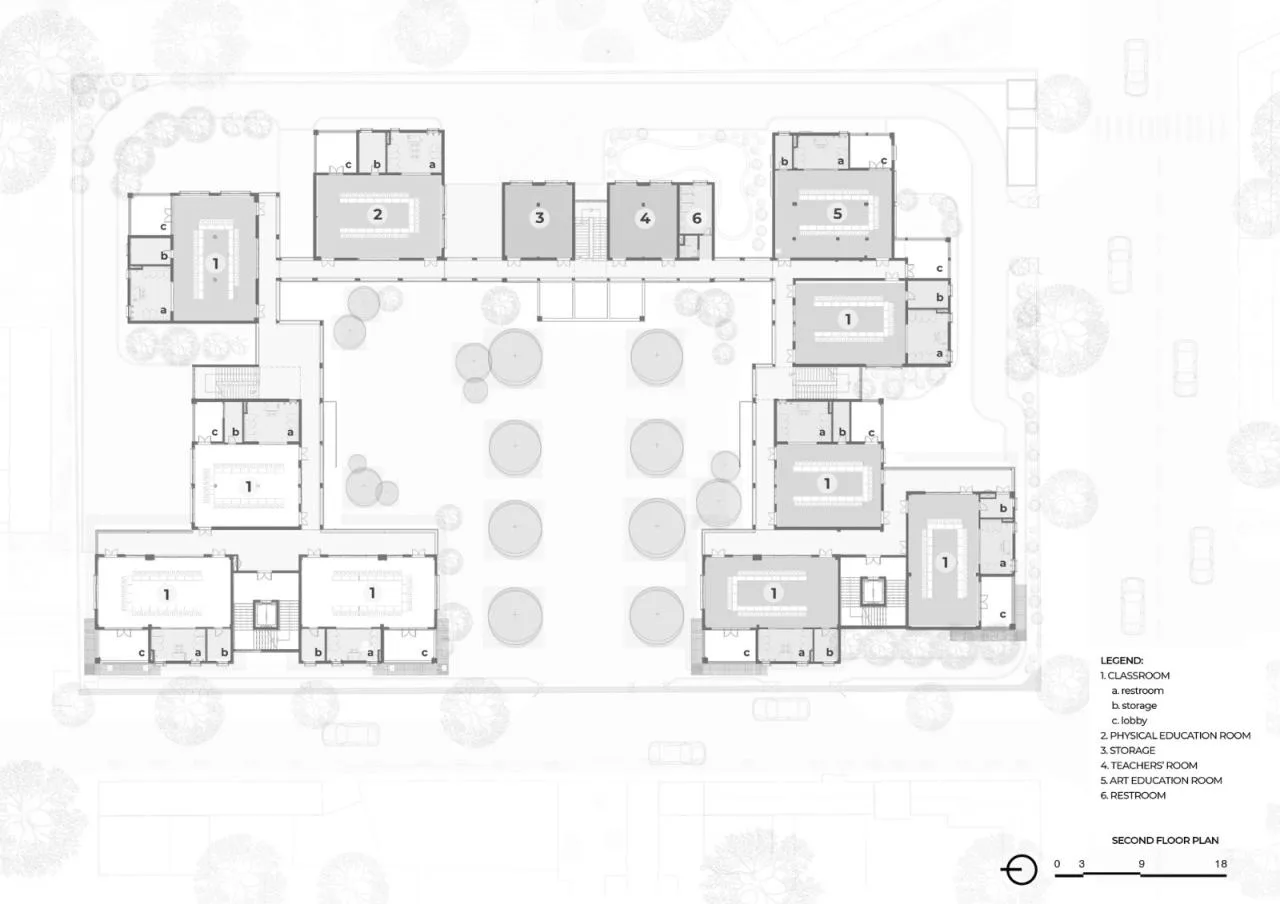
△ Second floor plan
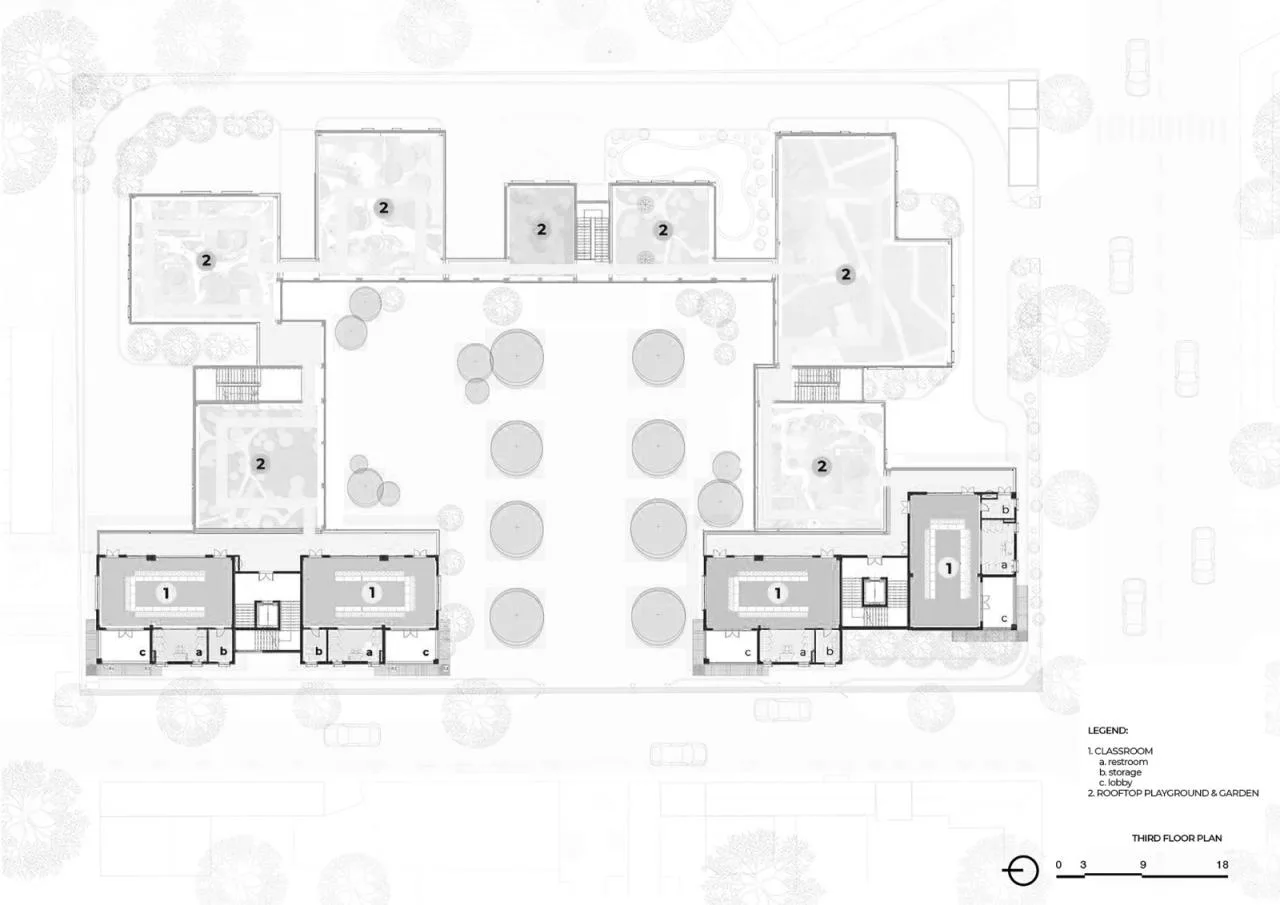
△ Third floor plan
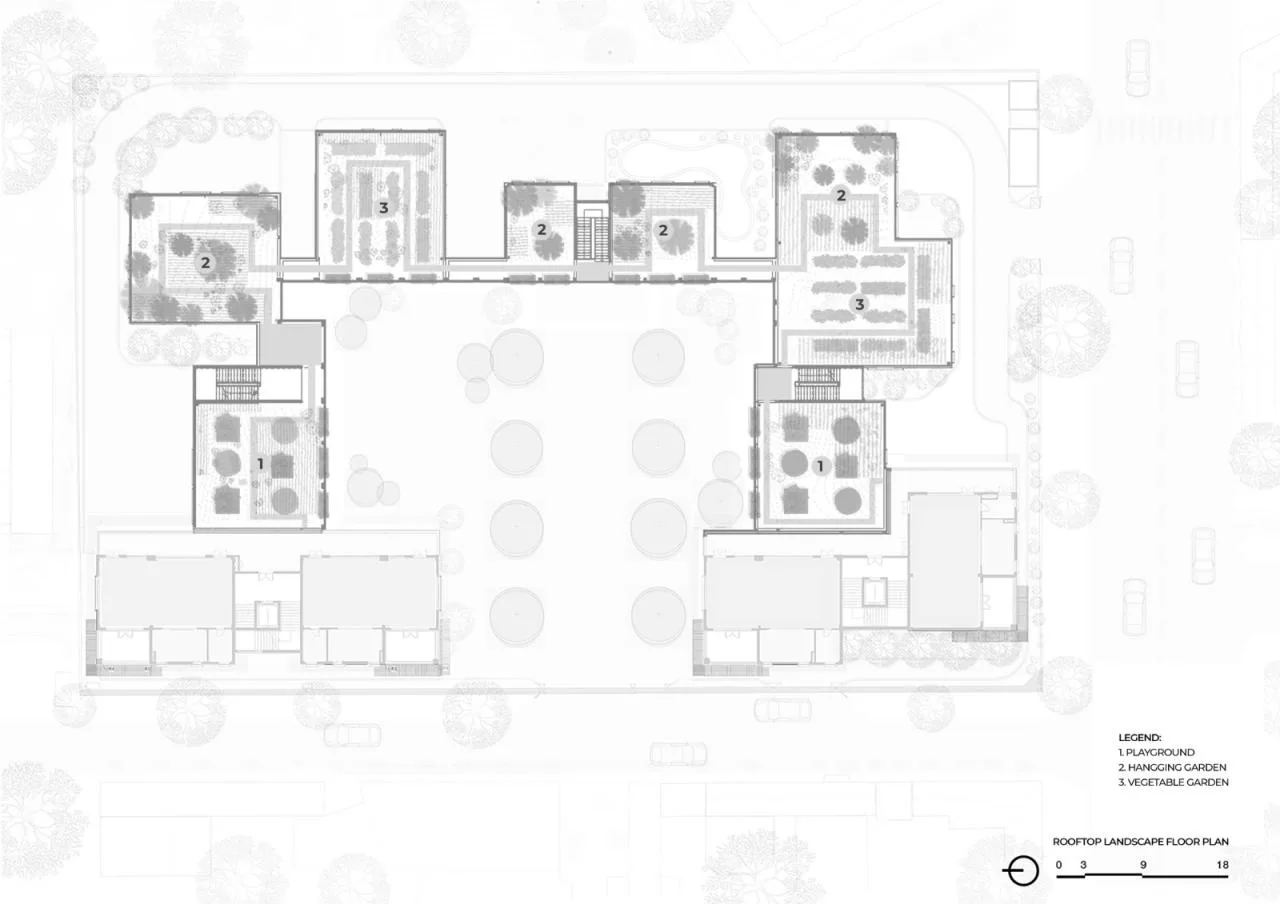
△ Roof plan
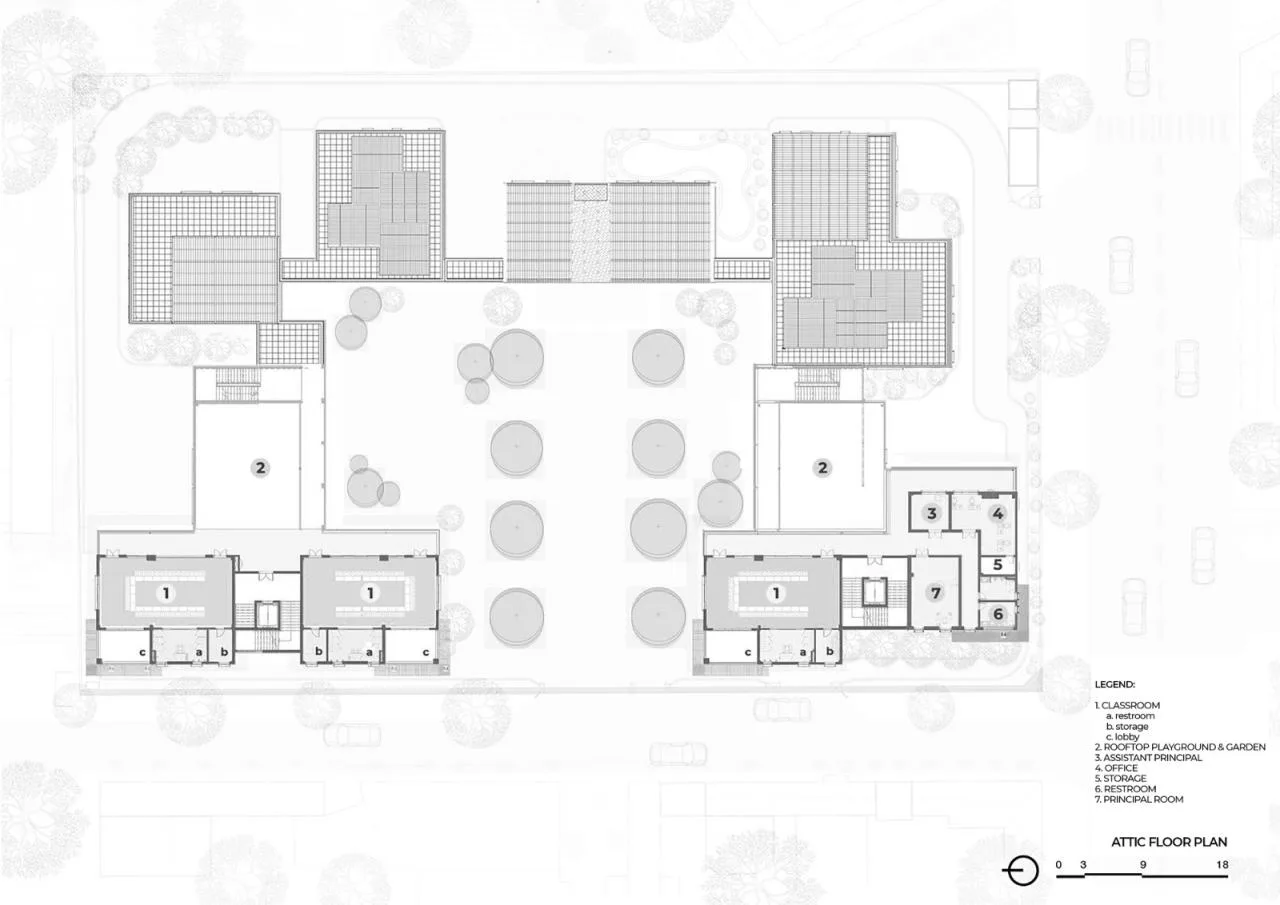
△ Attic roof plan
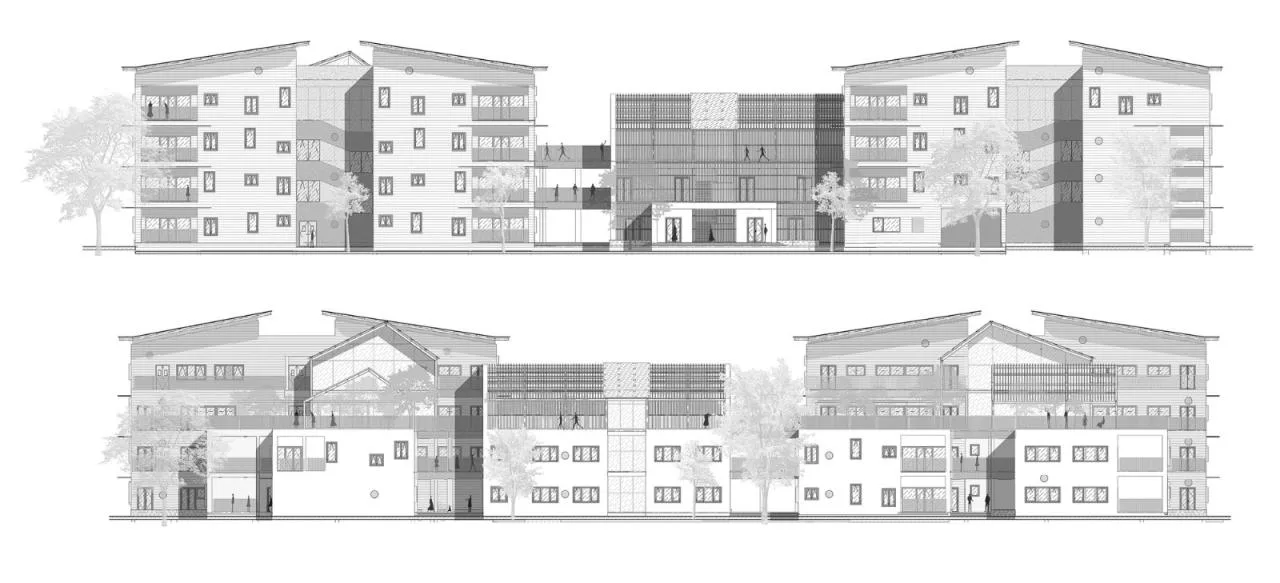
△ Elevation drawing
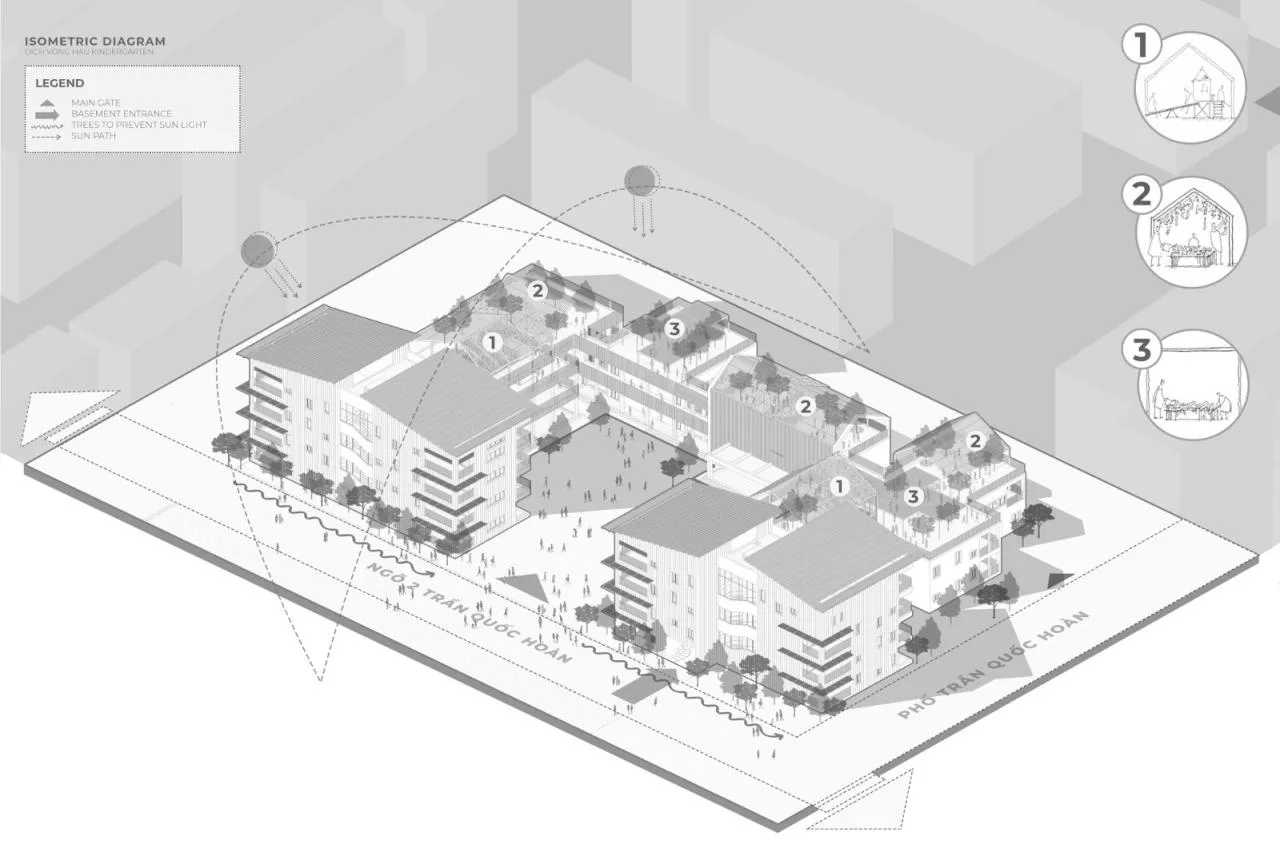
△ Sunshine analysis chart
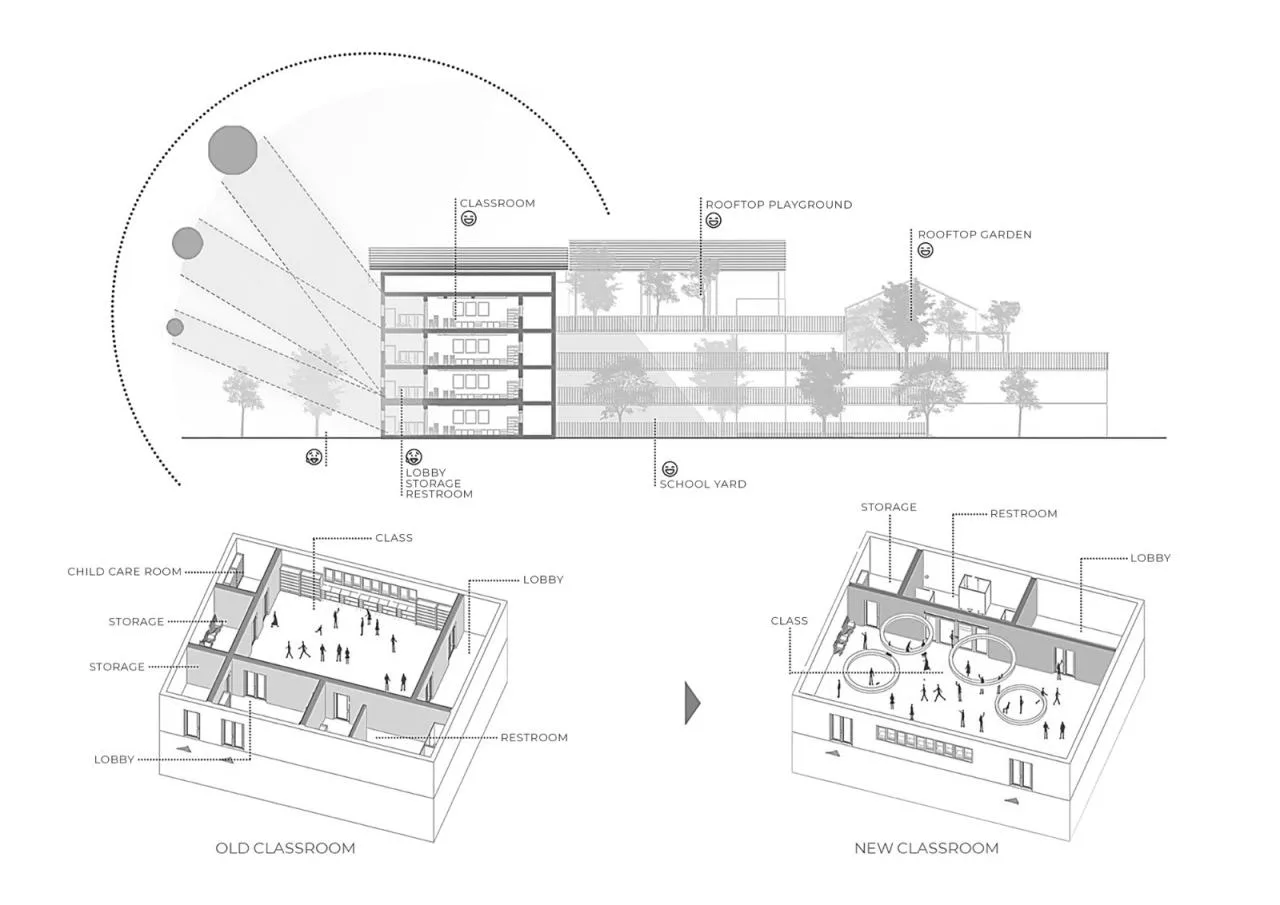
△ Sunshine analysis chart
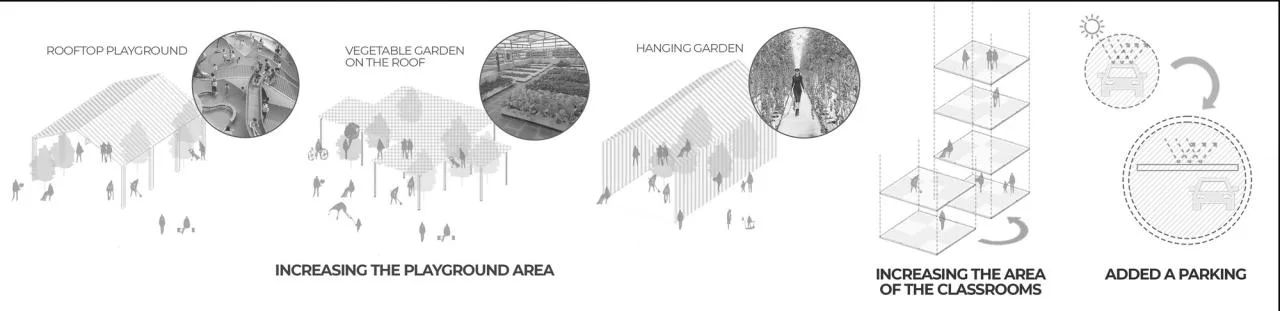
△ Analysis chart
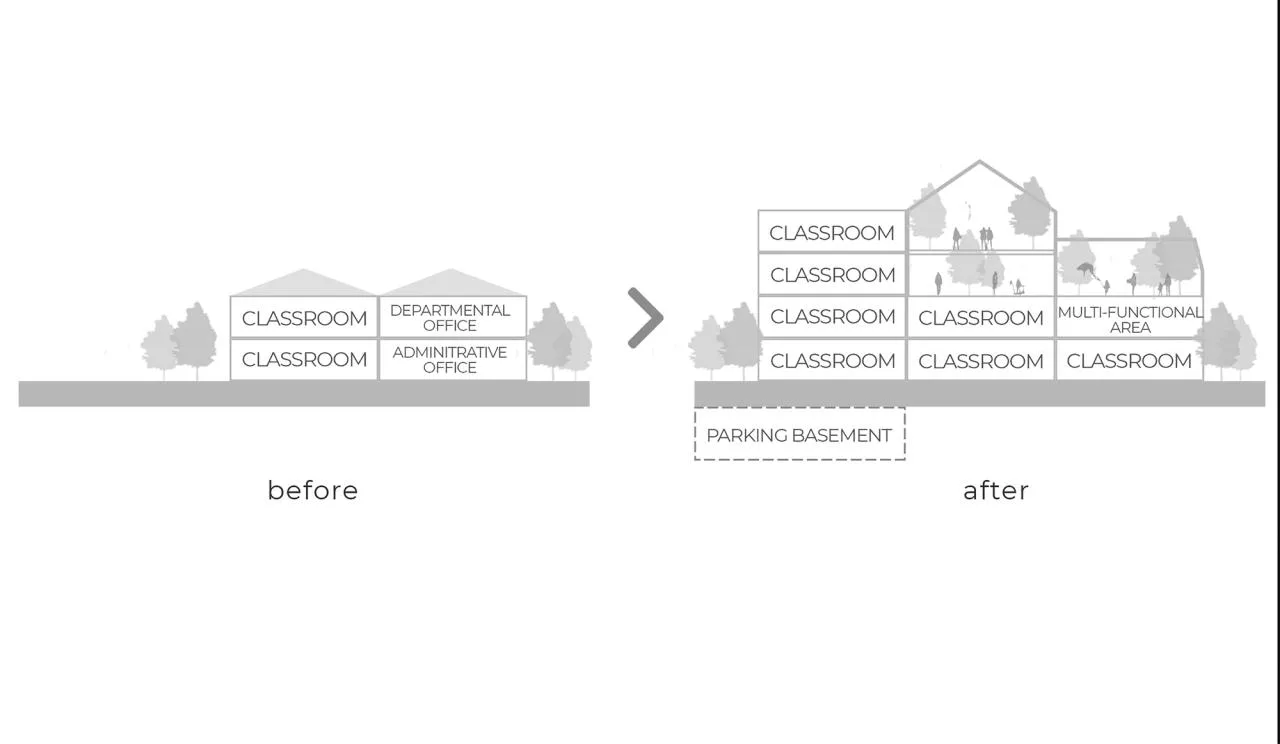
△ Analysis chart before and after renovation
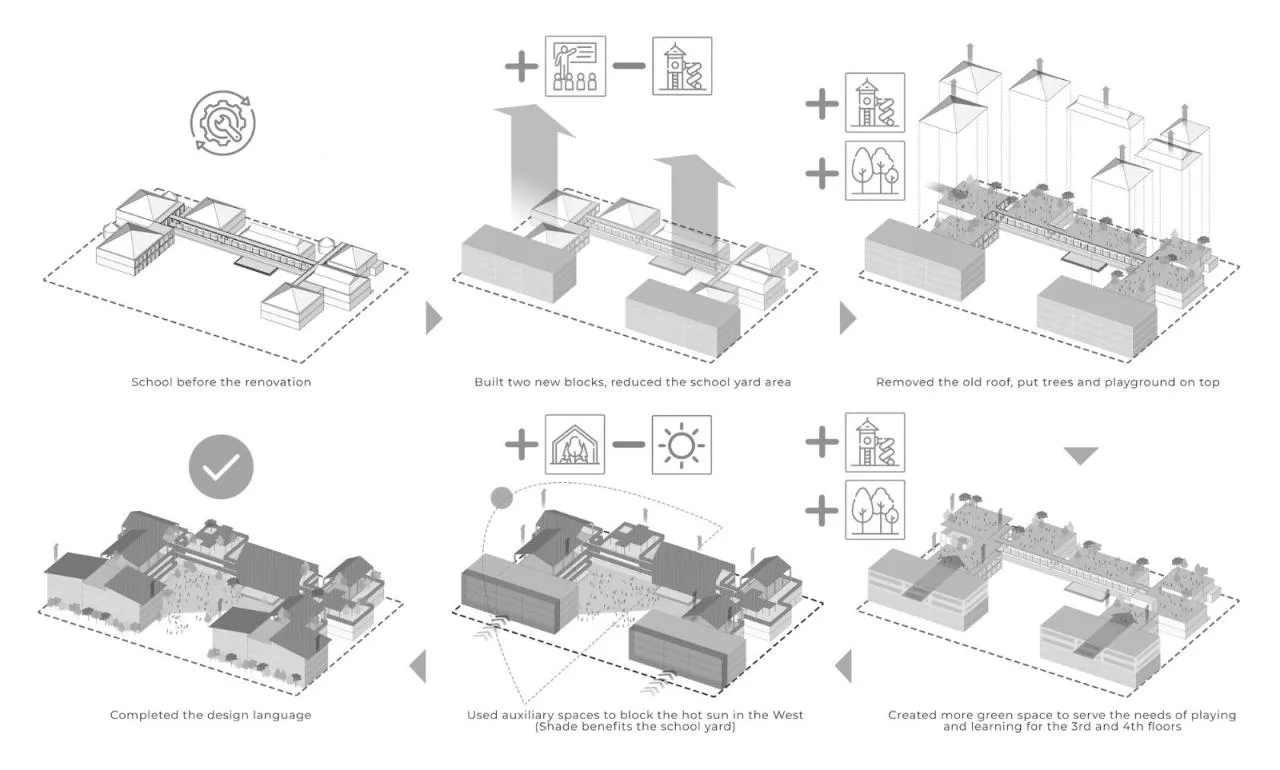
△ Analysis chart
Project Information
Architect: Sunjin Vietnam Joinventure Company
Area: 7,349 m²
Project Year: 2022
Photographer: Chimnon Studio
Manufacturers: Austrong, AutoDesk, Conwood, LIXIL, Mitsubishi, East China, Vietnam, Japan
Architect in Charge: Nguyen Quang Hai
Creative Design: Tran Nguyen Quang, Dinh Van Thanh
Architectural Interior Design: Dinh Van Truong
Landscape Design: Nguyen Hoang Hiep
Architectural Detail Design: Hoang Thi Thu Hang
Architectural Drawings: Nguyen Anh Duong, Vu Duc Khiem
Structural Engineer: Tran Thanh Tung
Air Conditioning and Ventilation System: Nguyen Tu Ha
Budget Management: Luong Thi Nguyen
Location: Hanoi, Vietnam













Must log in before commenting!
Sign Up